Of all the rooms in a home, the bedroom holds a unique, almost sacred, status. It’s more than just a place to sleep—it’s our sanctuary, the first space we see in the morning and the last one we retreat to at night. It should be a room that tells our story. And frankly, nothing tells a story quite like art.
Choosing art for this intimate space isn’t about following trends or filling a blank wall. Not at all. It’s a deeply personal act of curating a feeling. It’s about understanding how colour, story, and texture can come together to create a room that calms your mind and reflects who you are. Whether you’re staring at bare walls or feeling uninspired by your current setup, let’s explore how to bring art into your bedroom in a way that feels authentic, sophisticated, and genuinely you.
1. Crafting a Dreamy gallery wall
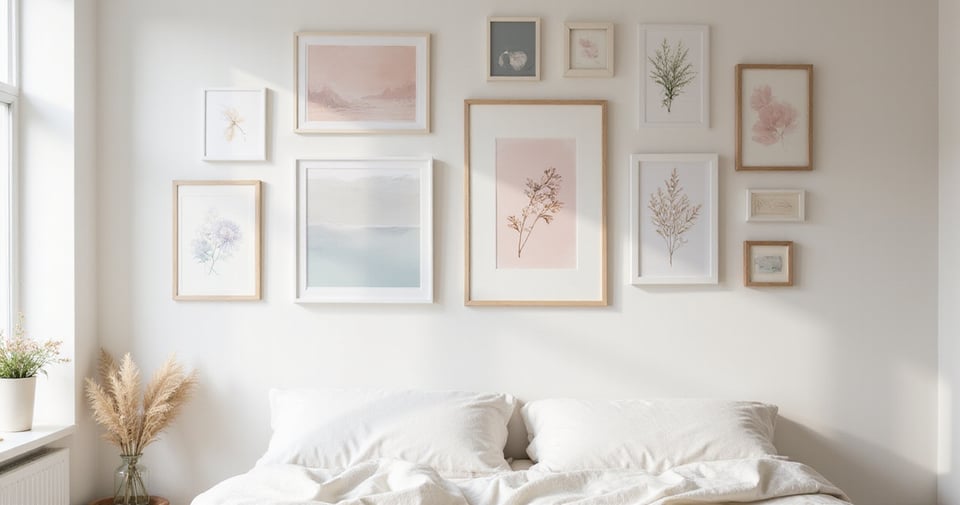
A gallery wall can so easily feel like a jumble of random pictures. In a living room, that eclectic energy can be fantastic, but in the bedroom? It needs a softer touch. The goal here is a collection that whispers, not shouts. It’s about creating a personal constellation of images and objects that feels cohesive and calming.
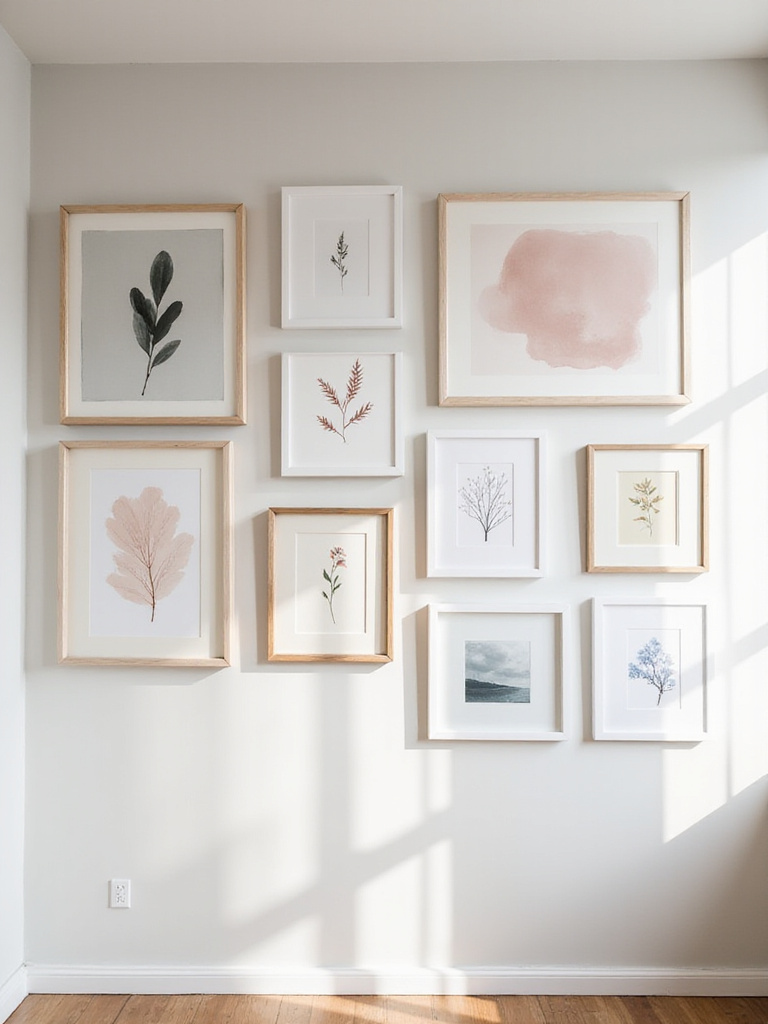
Think of it as visual poetry. The magic is in the mix. I often guide my clients to blend framed prints with something unexpected—a delicate woven hanging, a small brass mirror that catches the morning light, or even a framed piece of embroidery. For one couple blending their heritage, we mixed contemporary black-and-white photos of London with a series of small, antique Indian miniature paintings. The common thread wasn’t the style, but the soft, sepia-toned palette that unified them. It told their story beautifully while keeping the mood serene. It’s this organic, slightly imperfect arrangement that feels more like a memory and less like a store display.
What’s really key is finding that subtle through-line—be it a wash of gentle colour, a shared theme like “skies” or “botanicals,” or even a particular feeling. Don’t be afraid to let it breathe.
This is where the real artistry begins—not just in the pieces you choose, but in how you give them a stage. Often, the most important stage is the one right above your bed.
2. Choosing Your Perfect Single Statement Piece
Sometimes, one piece is all you need. A statement piece is the artistic anchor of your room, the first thing your eye is drawn to. It sets the tone, defines the mood, and frankly, does a lot of the heavy lifting. But here’s a common misconception: a statement piece doesn’t have to be massive or shout-y. It just has to have presence.
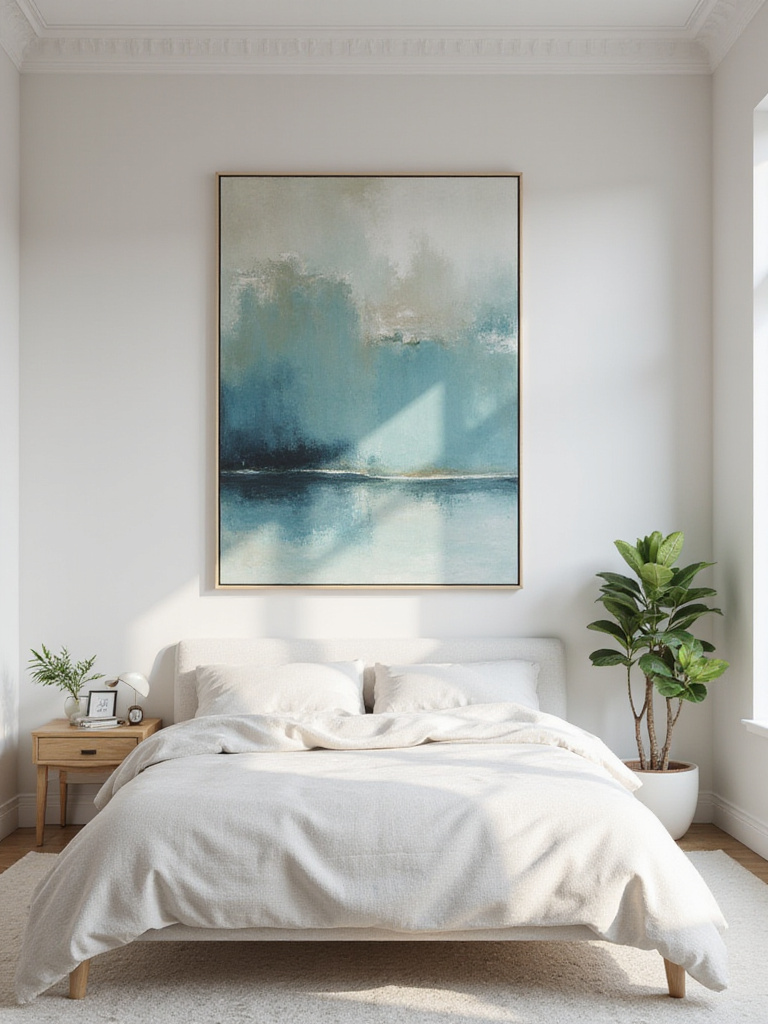
The power of a singular piece lies in its confidence. It can be a large-scale abstract with bold, sweeping gestures or something with incredible texture—like a heavily impasto-ed painting that changes as the light shifts throughout the day. I remember installing a stunning piece by a contemporary artist in Mumbai; it was an abstract canvas layered with pigments and gold leaf that evoked the feeling of a monsoon sky. It was placed on the wall opposite the bed, so it was the first thing my client saw when she woke up. It completely defined the room’s soulful, contemplative energy.
A great place to start is the wall above your headboard. Aim for a piece that’s about two-thirds the width of your bed; it’s a rule of thumb that just works, creating a sense of balance without overwhelming the space. This is your chance to be bold and choose something that you truly, deeply love.
Let’s be honest, that wall is practically begging for something beautiful. It’s the natural focal point, so making an impact here can transform the entire feel of your sanctuary.
3. Making an Impact with Art Above the Bed
The space above the bed is the room’s centre stage. It’s prime real estate. Leaving it blank can make a room feel unfinished, but the wrong choice can throw everything off balance. This is where you can establish a strong visual anchor that grounds the entire design.
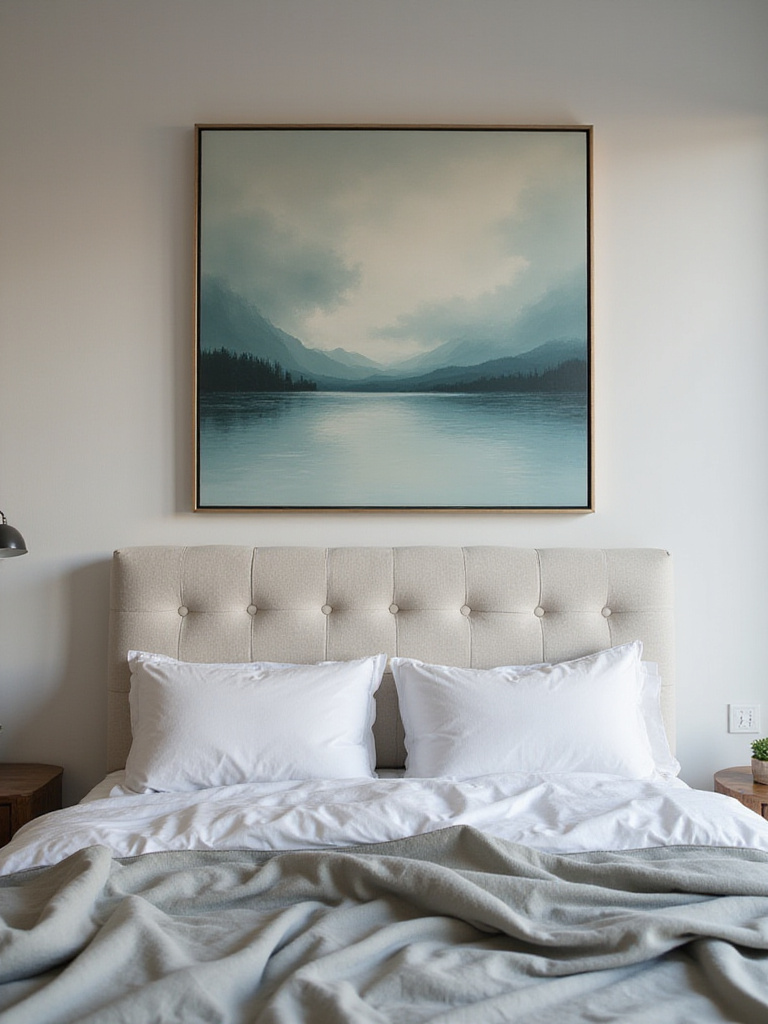
Scale is everything here. You need something proportionate—again, that two-thirds rule is your friend. But just as important is security. The last thing you want is to worry about something heavy hanging over your head while you sleep. So please, use the proper hardware! Once that’s sorted, hang it so the bottom edge is about 6-8 inches above your headboard. This creates a deliberate connection between the art and the furniture, making them feel like a single, composed unit.
The trickiest part for many people is just getting started. But don’t see that wall as a problem to be solved. See it as an invitation, a canvas waiting for you to define what this sanctuary means to you.
Of course, not every wall in a bedroom is a grand stage. Sometimes the most interesting opportunities are tucked away in the quietest spots.
4. Smart Art Solutions for Cosy Corners
Ah, the cosy corner. That little nook by a reading chair, the small stretch of wall next to the wardrobe…these spaces are so often neglected, but they are full of potential. Decorating a corner is a totally different game than tackling a big wall. It’s about creating a small, intimate moment just for you.
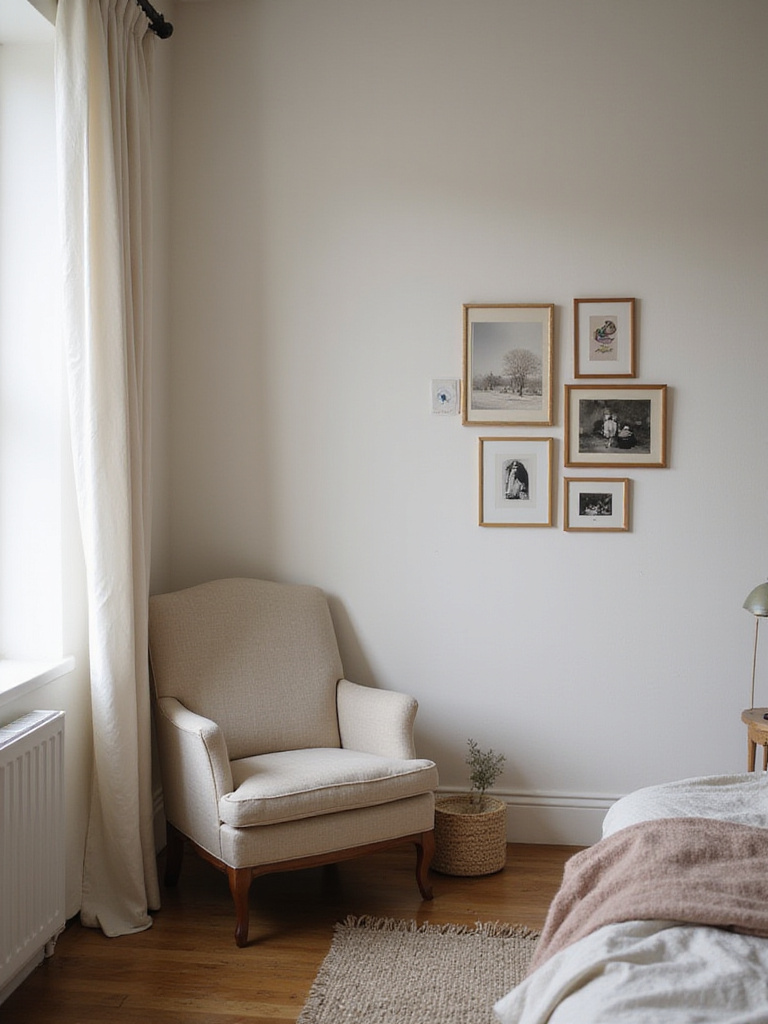
Here, smaller art that might get lost on a larger wall can truly shine. I love creating a vertical stack of small, framed prints to draw the eye upward, making the corner feel taller. Think about personal mementos, like a single, beautifully framed vintage postcard or a textile scrap from a beloved garment. In my own home, I have a small corner with a framed piece of bandhani silk—a traditional tie-dye from Gujarat. Its intricate pattern and rich indigo colour are so detailed that you need to be close to appreciate it. It turns a forgotten corner into a little point of discovery.
The art you choose for a nook becomes a secret gem, adding a touch of personality and warmth that makes the space feel complete. A small lamp and a single piece of art can turn an awkward corner into an intentional, inviting retreat.
From the smallest corners, we turn to the opposite challenge: those vast, intimidatingly large walls that can make any piece of art feel lost at sea.
5. Filling Expansive Walls with Style
A huge, empty wall in a bedroom can feel cold and impersonal. Hanging a single, small frame there only seems to emphasize its emptiness. This is where you need to think about proportion and scale on a grander level.
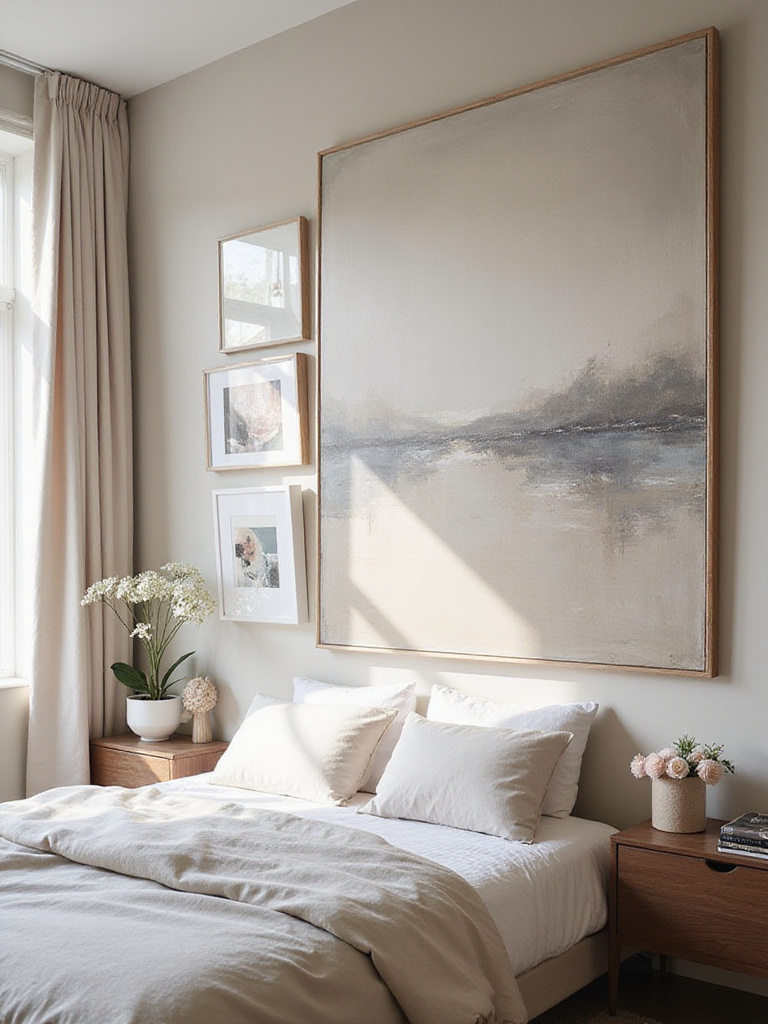
One effective strategy is, of course, a single oversized piece of art that can confidently command the space. But that’s not the only way. A large, beautifully woven tapestry or a piece of hand-blocked kalamkari fabric can cover a large area while adding softness and sound absorption. Another of my favourite approaches is to create a large, structured gallery wall—perhaps nine identical frames in a simple grid. It fills the space with the impact of a single large piece, but with more nuanced detail.
Before you even think about hammering a nail, try using painter’s tape to map out the dimensions of your potential art on the wall. Live with it for a day or two. Does it feel right? It’s a simple step that saves a lot of headaches and misplaced holes.
Filling a big wall with a grid of frames brings us to another powerful concept: using matched sets to create instant harmony.
6. Harmonising with Matching Art Sets or Diptychs
There’s a reason diptychs (a set of two pieces) and triptychs (a set of three) are so beloved by designers. They offer an instant, undeniable sense of cohesion. Because they are designed to be displayed together, they create a visual rhythm that is incredibly calming to the eye—perfect for the bedroom.
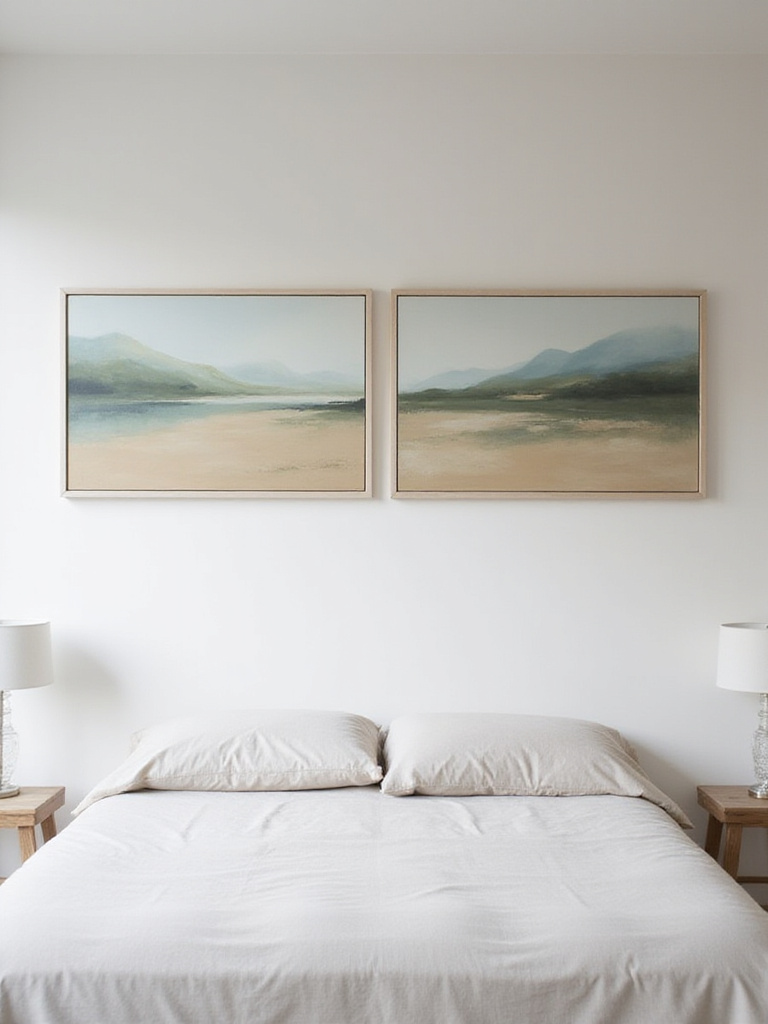
These sets are brilliant for reinforcing a design story. A pair of abstract prints in serene blues and greys can immediately establish a tranquil, coastal mood. Two matching botanical illustrations can bring a sense of refined, natural order. It’s about the interplay between the pieces. The negative space between them—usually 2 to 4 inches—is just as important as the art itself. It creates a pause, a breath, that connects them into a single, graceful statement.
This is a nearly foolproof way to create a high-impact, professional-looking display without the challenge of curating a mismatched gallery wall from scratch. It feels intentional, balanced, and deeply restful.
While sets provide a beautiful sense of order, sometimes what a room really needs is a touch of mystery and personal interpretation.
7. Adding Intrigue with Abstract Creations
I adore using abstract art in bedrooms. Because it doesn’t depict a specific thing, it allows for a much more personal, emotional connection. It’s a conversation starter, even if the conversation is just with yourself. What one person sees as a tumultuous sea, another might see as a peaceful dreamscape.
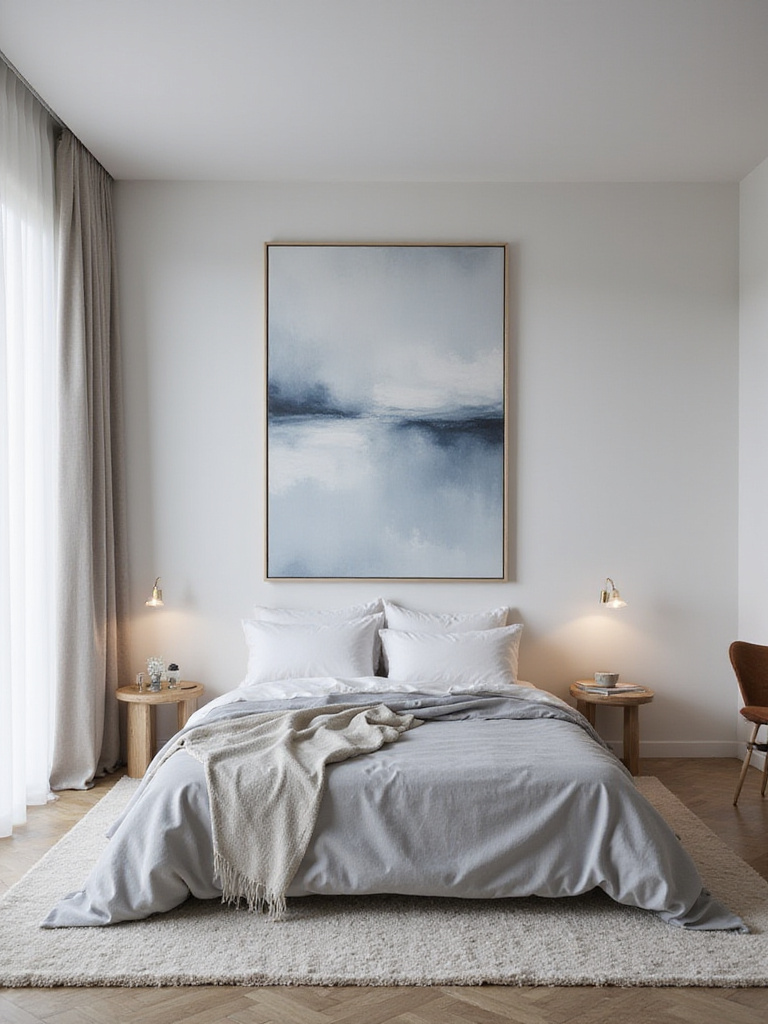
What surprises many of my clients is just how versatile abstract art is. A minimalist bedroom can be warmed up by a piece with soft, organic shapes and a simple colour palette. A more bohemian space comes alive with a layered, textured piece that feels raw and energetic. The key is to listen to the art. Does its energy match the feeling you want in your room? Is it calming, inspiring, thought-provoking?
Don’t be intimidated by it. Forget trying to “understand” what it’s supposed to be. Instead, just focus on how it makes you feel. An abstract piece can be the soul of a room, providing a focal point that is both dynamic and deeply personal.
From the beautiful complexity of abstract art, we can swing the pendulum to the other extreme: the profound power of simplicity.
8. Embracing Serenity with Minimalist Art
Minimalist art is like a deep, cleansing breath for your walls. It’s defined by what’s left out: no clutter, no complex narratives, just pure line, form, and often, generous negative space. This isn’t about being boring; it’s about being intentional.
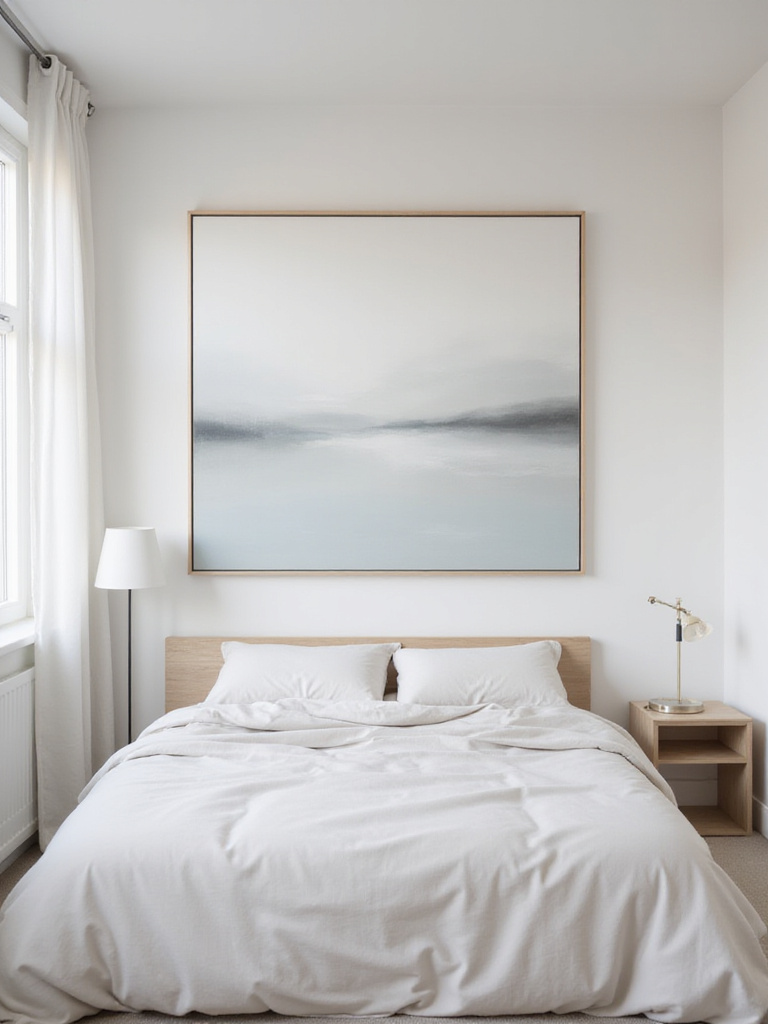
In a space designed for rest, reducing visual noise is a gift you give yourself. Where a busy piece of art can keep your mind whirring, a simple line drawing, a monochromatic colour field painting, or a textured piece with a single tone allows the mind to settle. The ample white space around the subject creates a sense of openness, of room to think and just be.
These pieces don’t shout for attention. They act as quiet, grounding anchors. For those who are hesitant about bold patterns or find colour overwhelming, minimalist art is an incredibly sophisticated way to add style without sacrificing an ounce of serenity.
But art doesn’t have to be lines and shapes. It can capture a moment in time, a real place, or a feeling frozen forever.
9. Capturing Moments with Photography Prints
Photography brings a uniquely personal dimension to a bedroom. It connects us to real-world places, people, and emotions in a way no other medium quite can. Whether it’s a breathtaking landscape from a memorable trip or a quiet, personal moment, a photograph can make a room feel immediately more intimate.
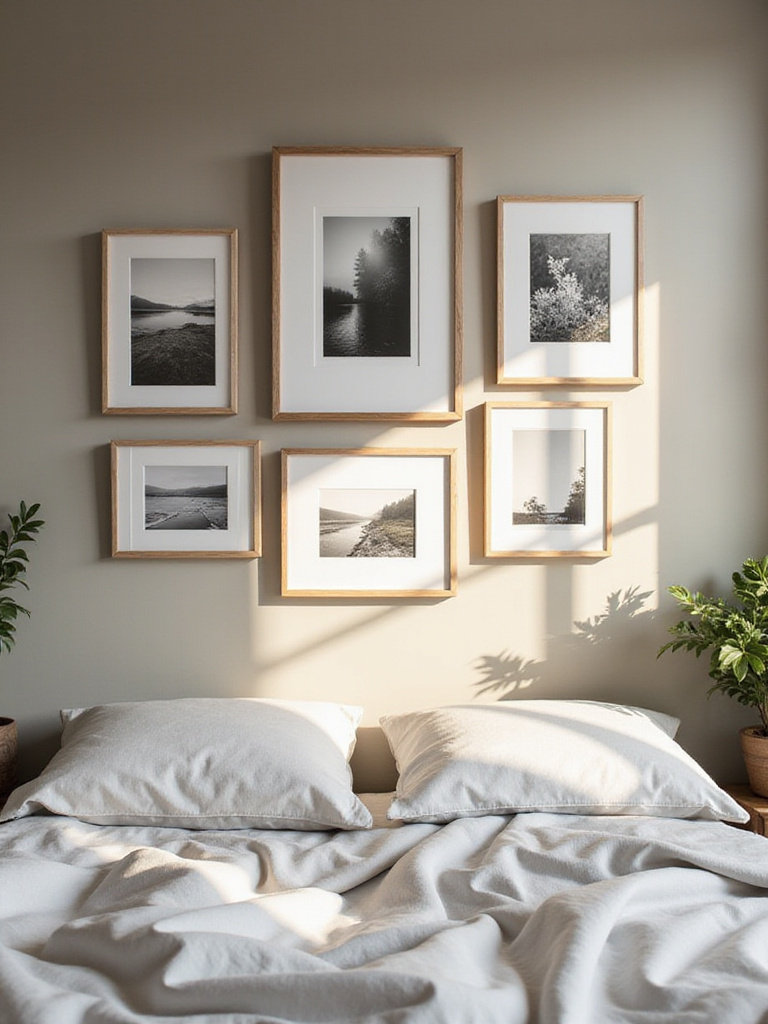
For the bedroom, I find that photography evoking a sense of calm works best. Sweeping, misty landscapes; soft-focus florals; or timeless black-and-white cityscapes. They create a mood of tranquil escapism. Personal photos can be wonderful, but here’s the secret: treat them like art. A quick tip I always share is to convert your favourite personal snaps to black and white or a soft sepia. It unifies them instantly, gives them a timeless quality, and prevents them from clashing with your colour scheme.
Give them a proper frame and mat. When you elevate your personal photos this way, they transition from simple snapshots to meaningful pieces of your room’s story.
While photography brings the wider world in, some of the most serene images come from the quiet, intricate beauty of the natural world.
10. Bringing Nature Indoors with Botanical Beauties
There’s a reason we instinctively feel better when we’re around nature. It’s a concept called biophilia—our innate human need to connect with the living world. Bringing botanical art into the bedroom is a simple, beautiful way to tap into that.
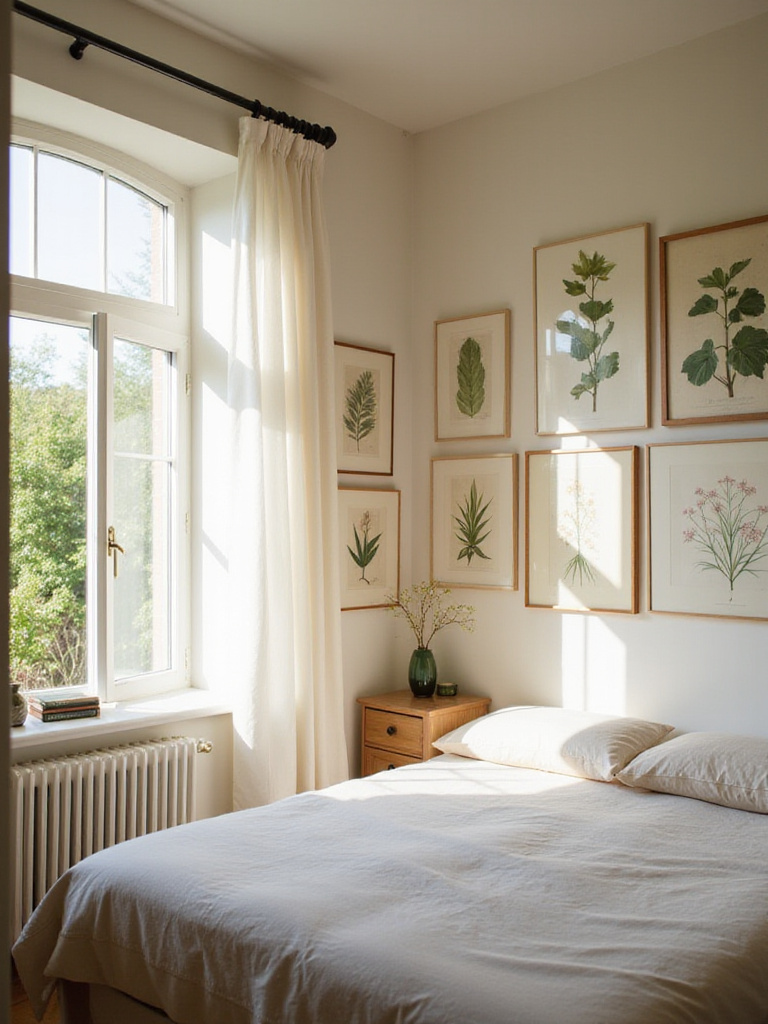
This isn’t just about pictures of flowers. Think of the incredible variety: vintage scientific illustrations with their elegant, scholarly feel; modern macro-photography that turns a simple leaf into a mesmerising abstract pattern; or the delicate, ethereal beauty of pressed flowers framed in glass. They soften the hard lines of architecture and bring in a sense of life and organic growth.
On a deeper level, having these natural forms around us is linked to reduced stress and an improved sense of wellbeing. It’s a visual escape, a gentle reminder of the calm and order of the natural world, right within your most personal space.
This connection to natural forms and materials is precisely why textile art has such a profound impact on a bedroom.
11. Adding Texture with Textile Art & Tapestries
There’s a fundamental difference between art you just look at and art that you can almost feel with your eyes. That’s the power of textiles. Unlike a flat print, a woven wall hanging, a plush tapestry, or a piece of macrame has a physical depth that adds incredible warmth and softness to a room.
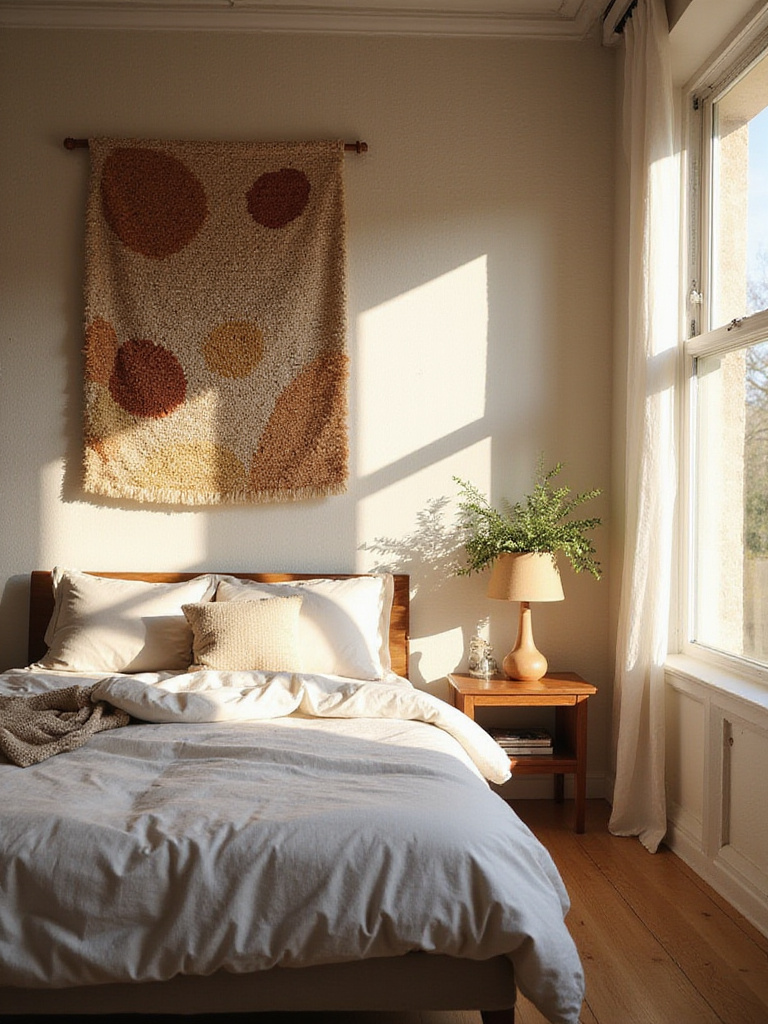
And I’m not just talking about the typical macrame hanger. Think of a large, vintage wool dhurrie rug from India hung on the wall, its geometric patterns and deep colours creating a focal point that is both art and insulation. Or a delicate, framed square of vintage silk with shimmering zari threadwork. You can run your hand across these pieces and feel the hours of craftsmanship. That tactile quality adds a layer of comfort and soul that a printed canvas just can’t replicate.
Beyond the aesthetics, textiles are brilliant at absorbing sound, which can instantly make a room feel quieter, calmer, and more cocoon-like. It’s a multisensory experience that deepens the feeling of a sanctuary.
Texture and story don’t have to be expensive. Even something as simple as a poster can be elevated into a piece of true art.
12. Framing Your Favourite Posters with Flair
Let’s be clear: a poster thumb-tacked to the wall is temporary. A framed poster is a deliberate design choice. The simple act of putting a poster behind glass and within a frame lends it importance, sophistication, and a sense of permanence. It signals that you value the image.
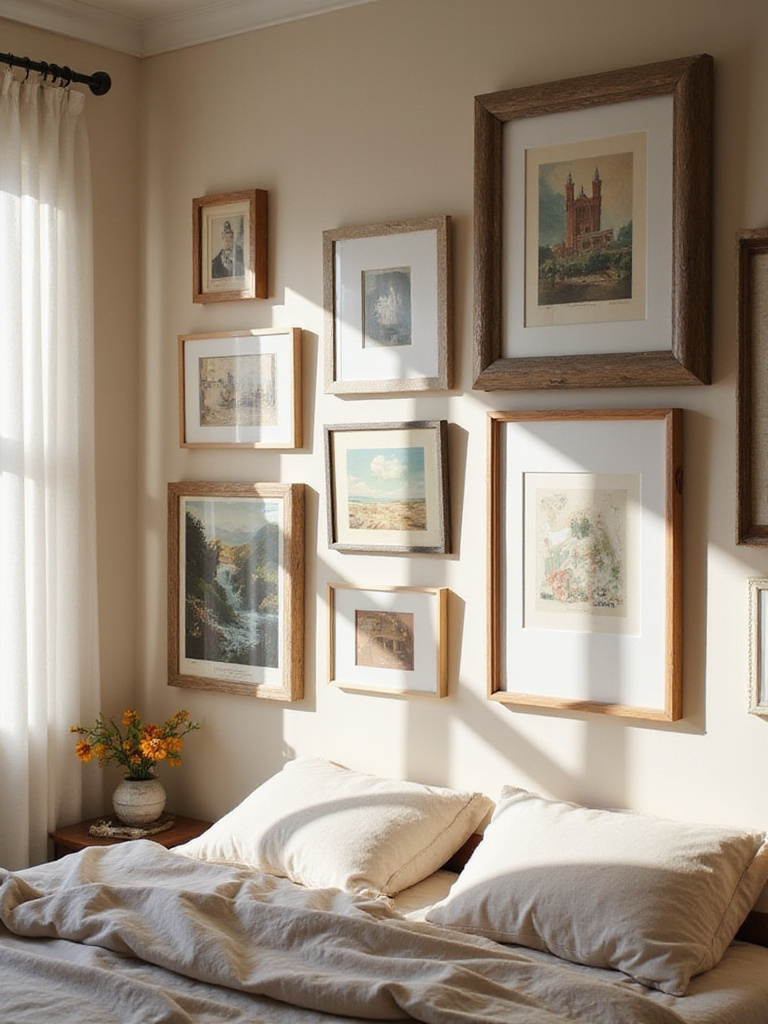
But we can go far beyond a standard black frame. Here’s where you can get really creative. Using a wide, oversized mat (that cardboard border inside the frame) can make even a standard-sized poster feel like a high-end gallery piece. Float mounting—where the poster sits on top of the mat board so its edges are visible—is a great contemporary look for posters with unique or deckled edges.
Don’t be afraid to play with the frame itself. A vintage travel poster in a rustic, distressed wood frame; a modern graphic print in a sleek brass frame that picks up on the hardware in your room. These details are what transform a simple print into an integral, polished part of your bedroom’s design story.
And if you love the idea of art with history, why stop at a vintage-style frame? The real magic lies in the art itself.
13. Curating Character with Vintage Finds
There is a soul to vintage art that you just can’t find in something mass-produced. Each piece has lived a life before it came to you. An old oil painting might have faint crackling in the paint; a vintage print might have a lovely, subtle patina. These aren’t imperfections; they are marks of history, and they bring an incredible sense of character and individuality to your room.

For the bedroom, I look for pieces that feel personal and calming. This could be an antique map of a city you love, a faded landscape painting, or an old portrait of a subject with a gentle, intriguing expression. One of my favourite projects involved a client who fell in love with a set of antique botanical illustrations from a flea market on Portobello Road. The paper was beautifully aged, and the colours had softened over time. We framed them simply and hung them in a grid, and they instantly gave her modern bedroom a sense of history and quiet intellect.
Hunting for these pieces—in antique shops, at flea markets, or online—is part of the joy. It takes patience, but when you find that perfect piece, it feels like it was waiting just for you.
Finding that perfect piece can be a thrill. But you know what can be even more rewarding? Creating it yourself.
14. Personalising Your Space with DIY Art Projects
If you want art that is truly, 100% you, there’s no better way than to make it yourself. Please, banish the thought that you have to be an “artist” to do this. DIY art is about personal expression, not technical perfection. It’s your chance to create something that perfectly matches your colour scheme, uses materials that are meaningful to you, and fills a wall in a way that feels utterly unique.
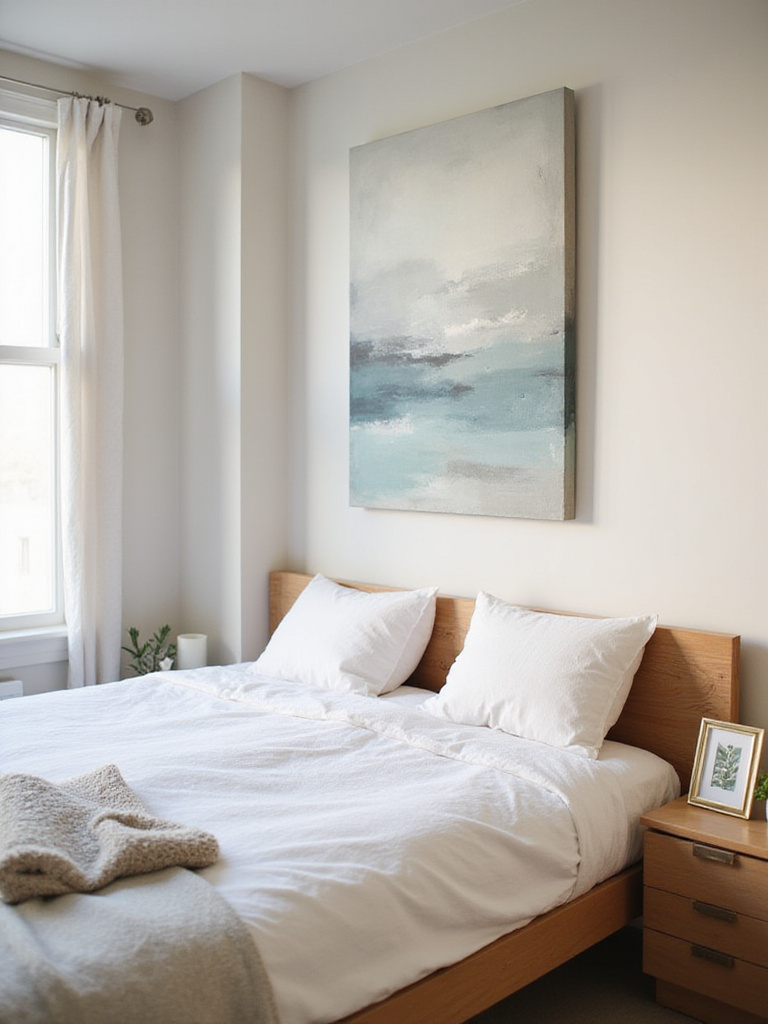
It can be wonderfully simple. You can create a stunning abstract piece with just a canvas, a few sample pots of paint in your room’s palette, and a couple of hours to play with colour and texture. No plan needed—just intuitive mark-making. Another beautiful idea is to frame something personal: pressed flowers from your garden, a swatch of fabric from a special piece of clothing, or even a collection of beautiful papers.
What’s wonderful is that the process itself infuses the art with memory and meaning. Years from now, I promise the pieces you’ll treasure most won’t be the most expensive ones, but the ones you created with your own hands.
Whether you buy it, find it, or make it yourself, your art is not complete until it can be seen properly. And that’s where lighting comes in.
15. Highlighting Your Pieces with Thoughtful Lighting
You could have a masterpiece on your wall, but if it’s poorly lit, its magic is lost the moment the sun goes down. Thoughtful lighting is what makes your art truly shine and brings your design to life in the evening.
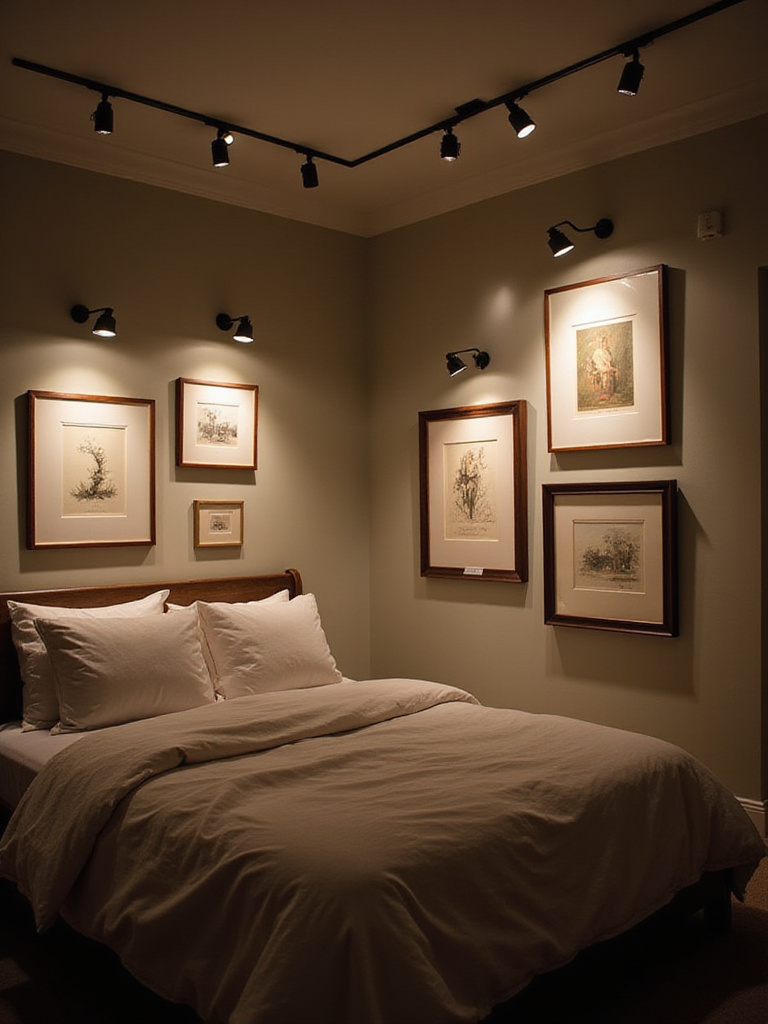
Picture lights mounted directly above a frame are a classic for a reason—they provide a beautiful, focused glow. But for more flexibility, track lighting with adjustable heads is brilliant for a gallery wall. The key is the bulb itself. You’ll want an LED bulb with a high Colour Rendering Index (CRI) of 90 or more, which ensures colours look true and not washed out or yellowed. For a bedroom, a warm colour temperature (around 2700K) creates that cosy, intimate feeling we’re after.
The most common mistake I see is lighting art from the wrong angle, creating a distracting glare on the glass. The light should graze the surface, not hit it head-on. Putting your art lighting on a dimmer switch is a non-negotiable for me. It allows you to create a soft, gallery-like glow in the evening that makes the whole room feel more luxurious and considered.
Lighting enhances art, but some objects can be both art and a source of light themselves. Which brings us to the humble mirror.
16. Using Mirrors to Reflect Style and Light (as art)
A mirror is so much more than a practical object for checking your reflection. When chosen and placed with intention, a mirror is art. The frame itself can be an incredible artistic element, from an ornate, gilded antique to a sleek, minimalist metal design. The shape—circular, arched, or an unexpected organic form—adds its own sculptural quality.
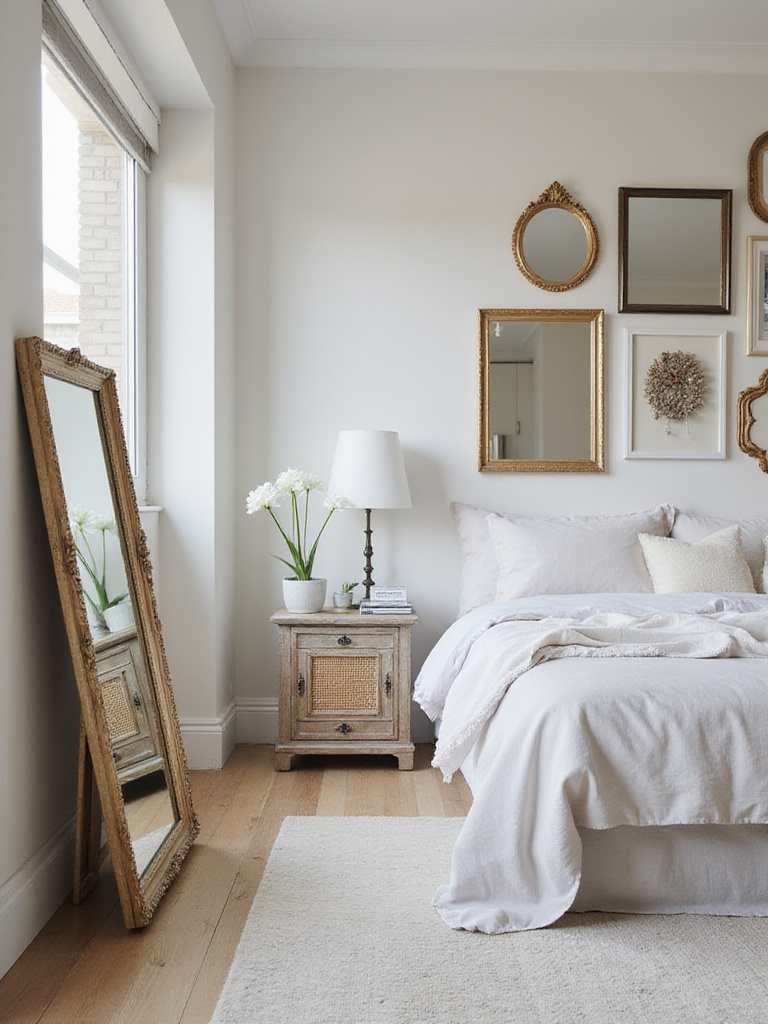
But the true artistry of a mirror is in its reflection. Placed opposite a window, it essentially becomes a living painting of the outdoors, bringing in light and views of the sky and trees. Placed in a darker corner, it can catch light from a lamp and bounce it around, making the entire room feel brighter and more expansive. I love using a collection of small, mismatched vintage mirrors as a gallery wall; it creates a captivating, dynamic display that glitters as the light changes.
In the bedroom, a mirror can make a small space feel larger, a dark room feel brighter, and a simple wall feel infinitely more interesting. It’s one of the most versatile and impactful pieces you can choose.
Just as a mirror reflects the room, your art should reflect your room’s colour palette, tying all the elements together.
17. Coordinating Art with Your Room’s Colour Scheme
Coordinating your art with your room’s existing colours is what creates that sense of harmony and polish. It makes the space feel cohesive and thoughtfully designed, rather than a collection of random objects. It’s the difference between a room that feels ‘decorated’ and one that feels ‘designed’.

You can approach this in a few ways. The easiest is to choose art that features colours already present in your textiles or paint. But for a more sophisticated look, think about a complementary colour (one from the opposite side of the colour wheel) to create a vibrant, energetic pop. Or, your art can be the element that introduces a new accent colour. If you do this, just make sure to repeat that colour in at least two other small places in the room—a cushion, a vase—to make it feel intentional.
Sometimes, the art comes first. I often start a design for a room with a single piece of art my client adores—a vintage rug, a vibrant painting—and pull the entire colour palette from there. Either way, creating this visual link ensures your art feels like it truly belongs.
Beyond colour and composition, the most powerful quality of art is its ability to make us feel something.
18. Setting the Mood with Emotion-Evoking Art
Art has a direct line to our emotions, which is why it’s such a powerful tool for shaping the atmosphere of your bedroom. The colours, the subject, the style—it all contributes to the emotional frequency of a room. This is less about theory and more about your personal gut reaction.
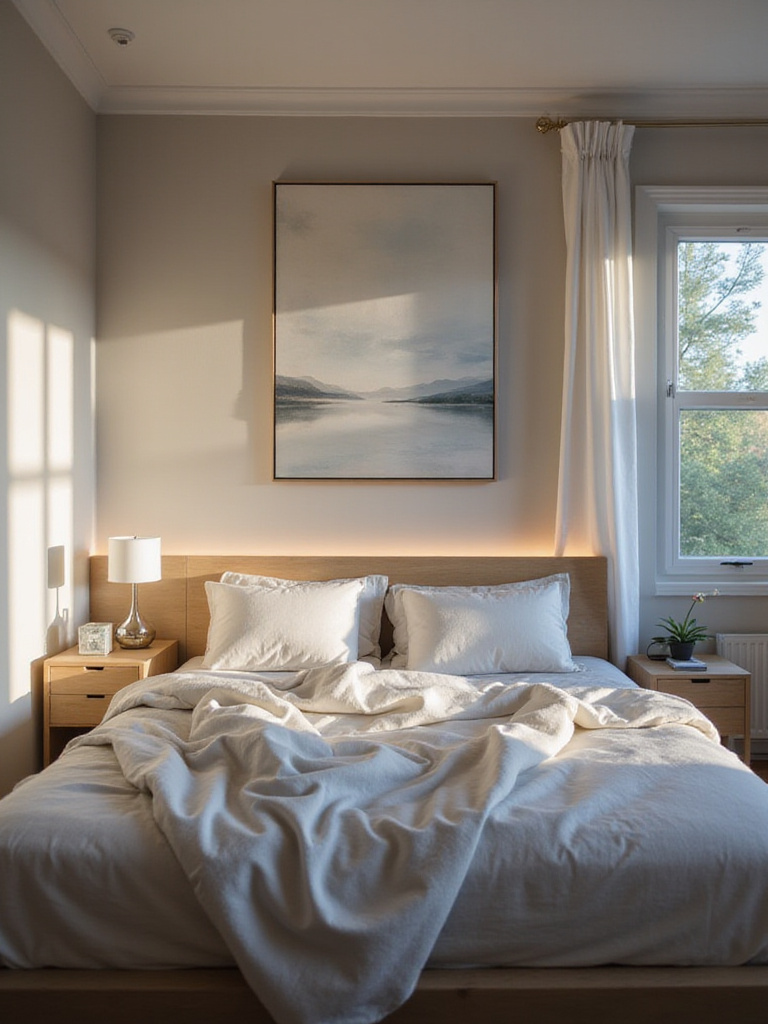
Generally, cool colours like blues and greens are associated with calm and tranquility, which is why they are so popular for bedrooms. Subject matter matters, too. A peaceful landscape or seascape can be incredibly soothing. But it’s also deeply personal. For one person, a stormy sea might feel dramatic and inspiring; for another, it might feel unsettling. There are no right or wrong answers.
The goal is to choose art that cultivates the emotions you want to feel in your sanctuary: peace, comfort, romance, gentle inspiration. Take a moment to stand in front of a piece you’re considering. Close your eyes for a second. When you open them, what is your first, unfiltered feeling? Trust that.
Once you’ve found that perfect piece, remember that its placement doesn’t have to be permanent or predictable. Sometimes the most stylish statement is no statement at all.
19. Styling with Leaning Art on Surfaces or the Floor
There is an effortless, relaxed sophistication to leaning your art instead of hanging it. It feels less formal, more lived-in, and gives your room a cool, studio-like vibe. And practically speaking, it’s a brilliant solution for renters or for those of us who love to change things up frequently without patching nail holes.
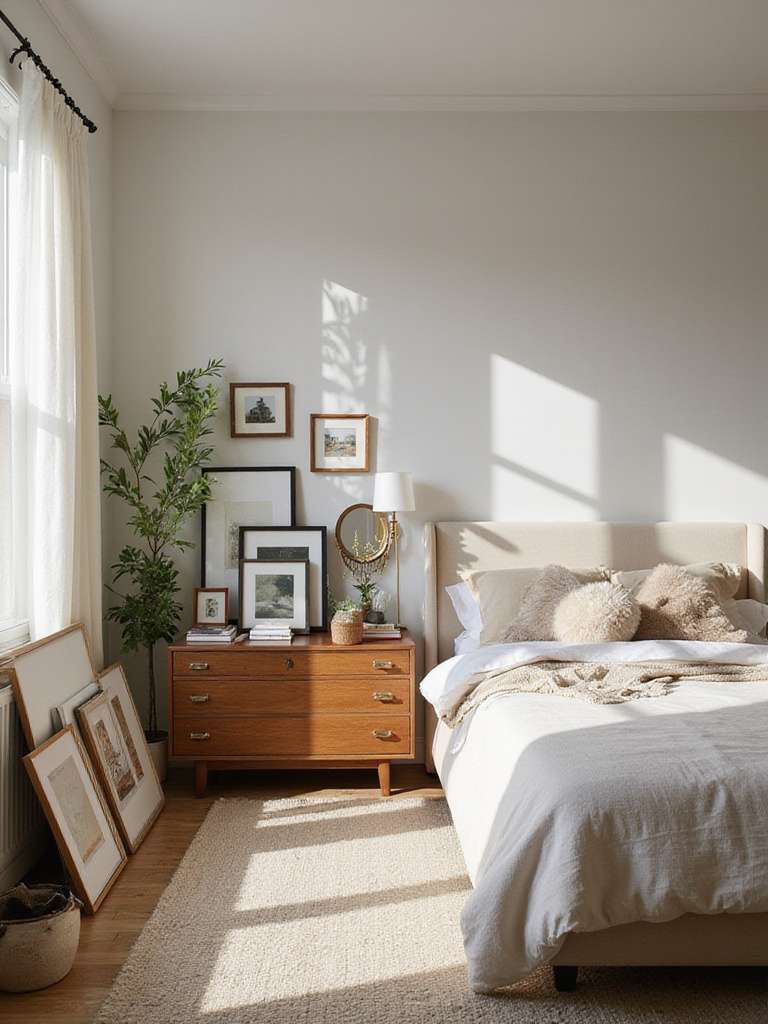
Larger pieces look fantastic leaned against a wall on the floor, perhaps tucked behind a nightstand or an armchair. Medium and smaller pieces are perfect for layering on top of a dresser or a chest of drawers. You can create a beautiful, curated vignette by leaning a framed print and layering it with a smaller piece, a vase, and a decorative object. A picture ledge is also a wonderful tool for this—it gives you the leaning aesthetic with a bit more security.
This approach gives your art a chameleon-like quality, allowing it to adapt and move as your style evolves. It’s a casual, contemporary way to display your collection that feels both intentional and beautifully impermanent.
Conclusion
Ultimately, decorating your bedroom with art is a journey, not a destination. It’s an exploration of your own taste, your history, and the atmosphere you need to feel most at peace. From a single, powerful statement piece to a quiet story told in a forgotten corner, the art you choose becomes part of your daily ritual—the last thing you see at night and the first thing that greets you in the morning.
Let your walls be a reflection of your story. Mix the old with the new, the handmade with the high-end, the personal with the abstract. There are no rules, only opportunities to create a sanctuary that is utterly and completely your own. A space that not only nurtures your rest, but also inspires your waking hours.