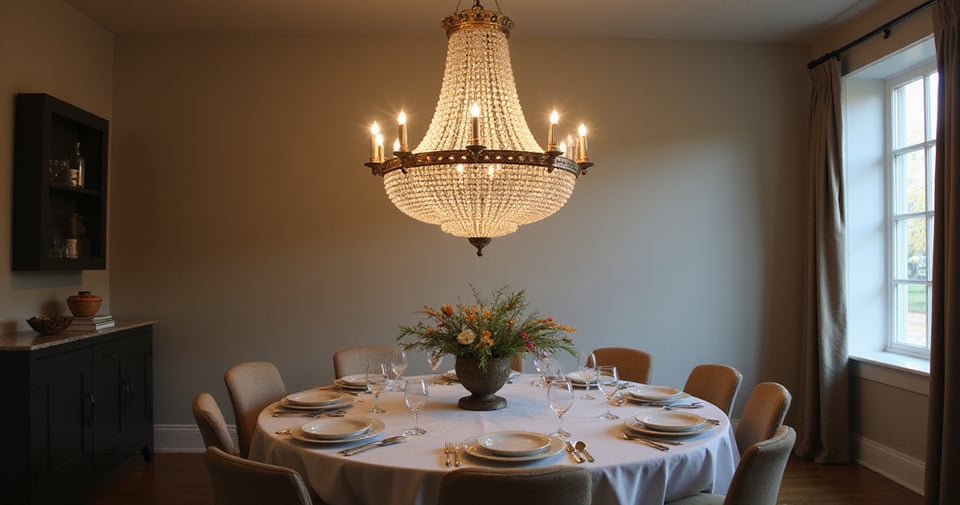
In both the sun-drenched courtyards of the Middle East and the light-starved homes of Scandinavia, light is more than just a utility. It’s a sacred element, a tool for shaping mood, and the silent guest at every gathering. It dictates the rhythm of the day and has the power to turn a simple meal into a ceremony. Your dining table is the heart of this experience, and the light above it is the soul.
Yet, I’ve walked into so many beautiful homes where the dining light feels like an unfortunate accident. A harsh, single bulb that casts sharp shadows and makes everyone feel on display. Or a fixture so dim you can barely see your food. These are more than design missteps; they are missed opportunities for connection. What should be a warm, welcoming space becomes uncomfortable, and conversations never quite find their flow.
The art of illuminating a dining space isn’t just about brightness. It’s about designing a feeling. It’s about creating layers of light that honor the life lived around the table—flexible enough for a child’s homework, intimate enough for a quiet anniversary, and always, always inviting. Think of it as choreographing warmth. Let’s explore how you can shape light to create a space that feels considered, harmonious, and truly yours.
1. The Real Story on Proportion
Designers often lean on the “two-thirds rule”—choosing a fixture that’s between half and two-thirds the width of your table. For a 60-inch table, that’s a 30- to 40-inch fixture. It’s a fine starting point. But honestly, it’s not the whole story. Numbers don’t account for visual weight, which is far more important.
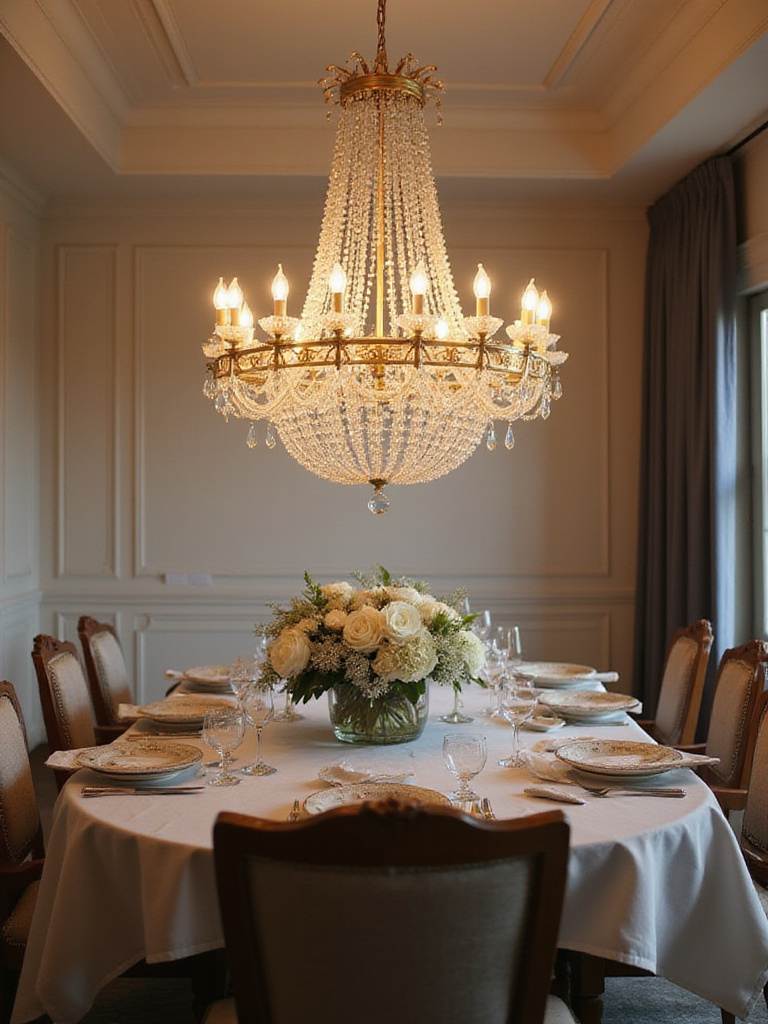
I once worked on a desert home with a heavy, reclaimed timber table. A spindly, 40-inch metal fixture, though technically “correct” in size, looked completely lost. We replaced it with a slightly smaller, 36-inch chandelier made of substantial, hand-thrown clay beads. Suddenly, the space felt grounded and balanced. The clay’s mass could hold its own against the table’s heft. A gauzy, open-weave pendant, on the other hand, might need to be larger to have the same presence. Don’t just measure; feel the balance. Look at the piece and ask: Does it feel substantial enough? Does it cower, or does it command the space with quiet confidence? That’s where the true art lies.
Before you even think about buying, consider the conversation between the table, the fixture, and the room itself. High ceilings can handle more vertical drama, while a cozy room asks for something that doesn’t scream for attention. This initial choice sets the stage for everything else.
2. Finding the Perfect Hanging Height
The distance between your light and your table surface defines the intimacy of your dining experience. The standard advice is to hang the bottom of the fixture 30 to 36 inches above the tabletop. Again, this is a guideline, not gospel. The real test is a simple one: sit down.
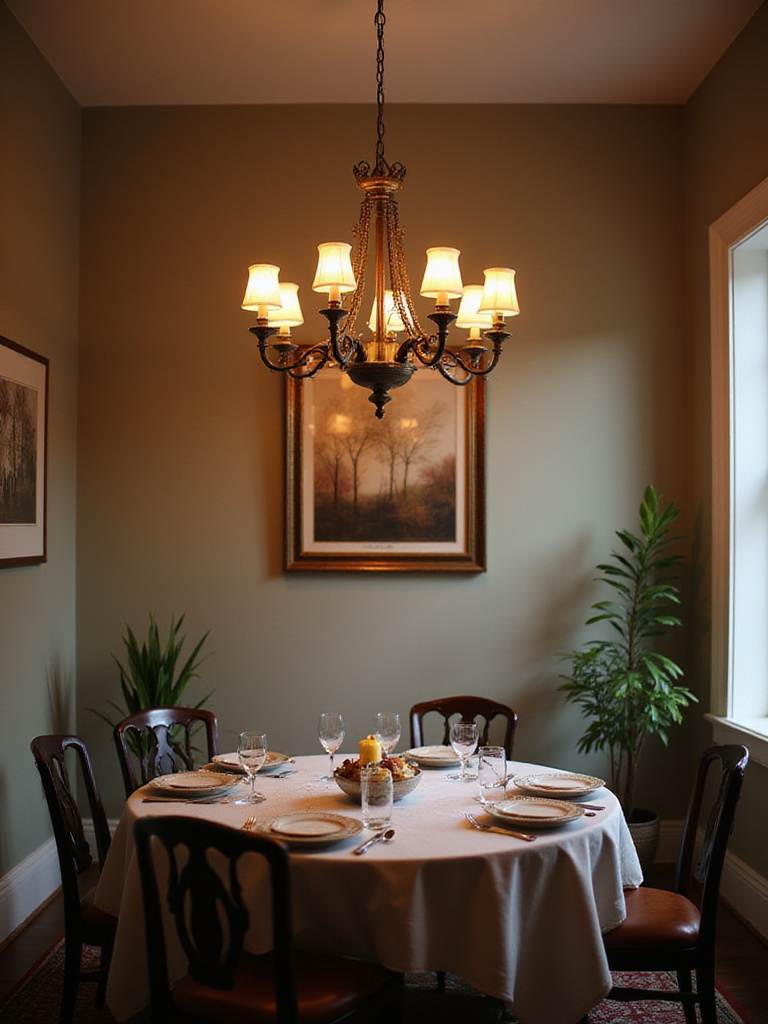
Sit in every chair at the table. Can you see the person across from you without the fixture blocking your view? Does the light hit your eyes directly, or is it diffused and comfortable? A light hung too high feels disconnected, like a lobby light, failing to create that essential “pool” of intimacy. One hung too low becomes an obstruction, literally getting in the way of connection. For rooms with soaring ceilings, a good rule of thumb is to add about three inches of hanging length for every foot of height above eight feet. This maintains the relationship between the light and the table, even in a grander space.
It’s this invisible bubble of light that transforms a table into a destination. The height is what determines the boundary of your gathering, defining the space without building a wall.
3. Let’s Talk Lumens (Without the Headache)
The term “lumens” can feel overly technical, but it’s really just a way to measure the amount of light. Getting it right is the key to flexibility. You need enough light for practical tasks, but the ability to scale it way down for mood. For me, this mirrors the light in a desert climate—intense and bright during the day, then incredibly soft and gentle as the sun sets.
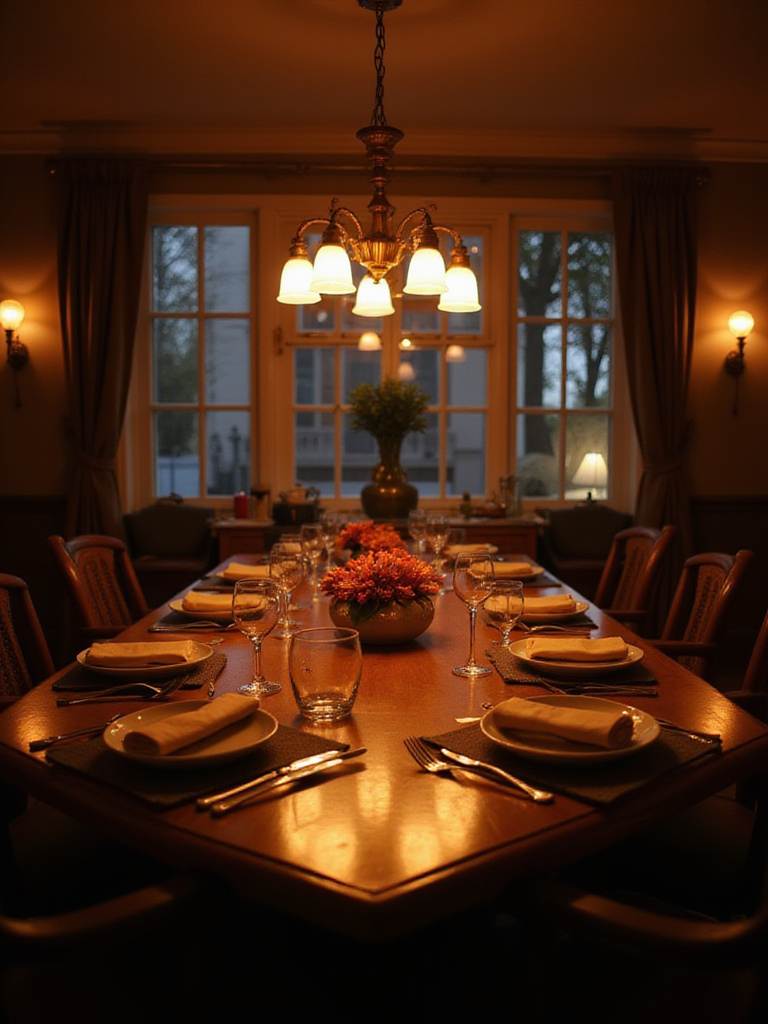
A simple calculation is a good starting place: multiply your room’s square footage by 30. A 10×12 room (120 sq ft) would need around 3,600 lumens for good general light. But here’s the critical part: that’s your maximum. For dinner, you’ll want to dim down to maybe 800-1,200 lumens to create atmosphere. Equally important is the quality of that light. Look for a Color Rendering Index (CRI) of 90 or higher. This is non-negotiable for me. A low CRI can make a beautiful, fresh salad look dull and unappetizing. A high CRI means the colors on your plate, and in your room, will look true and vibrant.
Your lighting shouldn’t have just one setting; it should be as adaptable as the life that happens beneath it. Bright for morning coffee and reading the paper, soft and warm for a lingering dinner conversation.
4. Color Temperature: The Secret to Warmth
The color of the light itself has a profound emotional and even psychological impact. This is measured in Kelvin (K), and for a dining space, this choice is everything. You’re aiming for the sweet spot between 2200K and 3000K. Anything higher starts to feel clinical and harsh, like an office. Anything lower can be too dim and orange.
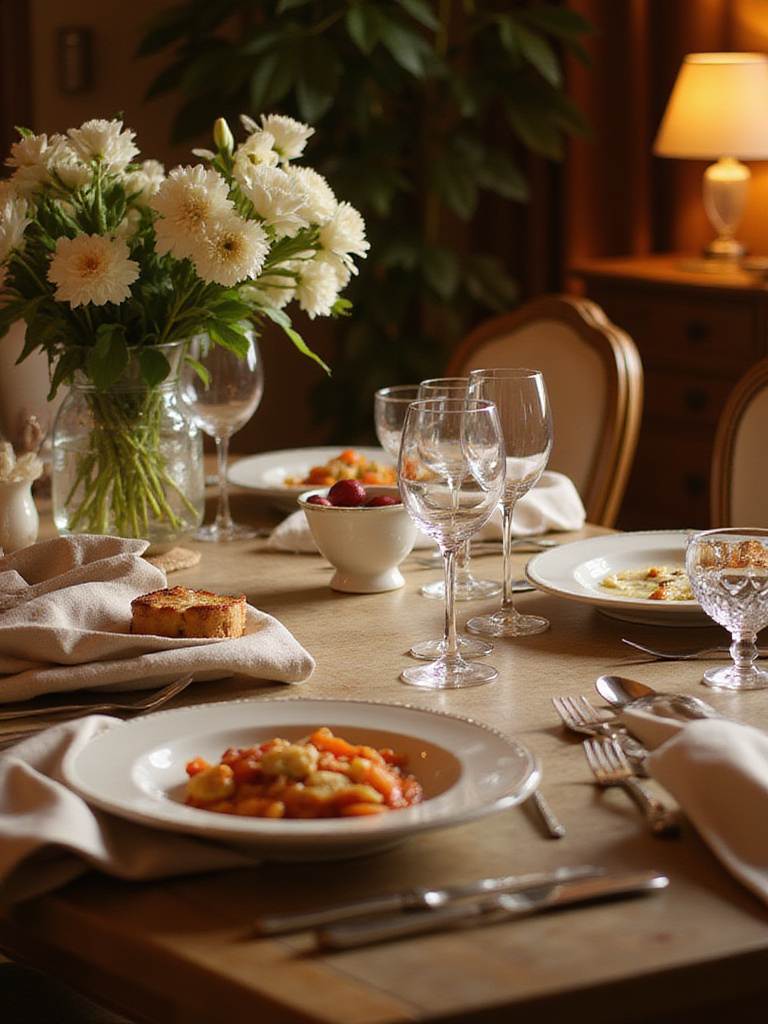
I always gravitate toward 2700K. This is the temperature of warm, incandescent-like light—think of the glow just after sunset or the flicker of a candle. It’s universally flattering and makes food look delicious by enhancing the natural warmth in reds and golds. There’s a reason high-end restaurants use this exact temperature; it encourages people to relax, settle in, and connect. It works in perfect harmony with the natural materials I love—it makes wood tones richer, travertine warmer, and clay positively glow. In a minimalist space, this warmth is what keeps it from feeling sterile.
Think about how your chosen light temperature will speak to the materials in your room. If you have cool-toned grays and blues, a slightly crisper 3000K might feel more cohesive, but for most homes seeking a welcoming feel, 2700K is a safe and beautiful bet.
5. Dimmers Are Non-Negotiable
If you take only one piece of advice from this, let it be this: install a dimmer. It’s the single most effective tool for transforming a one-dimensional space into a dynamic one. A dining room without a dimmer is a room with only one mood. With a dimmer, you have infinite possibilities. It’s the key to making a space work for both a bustling family breakfast and a quiet, romantic dinner.
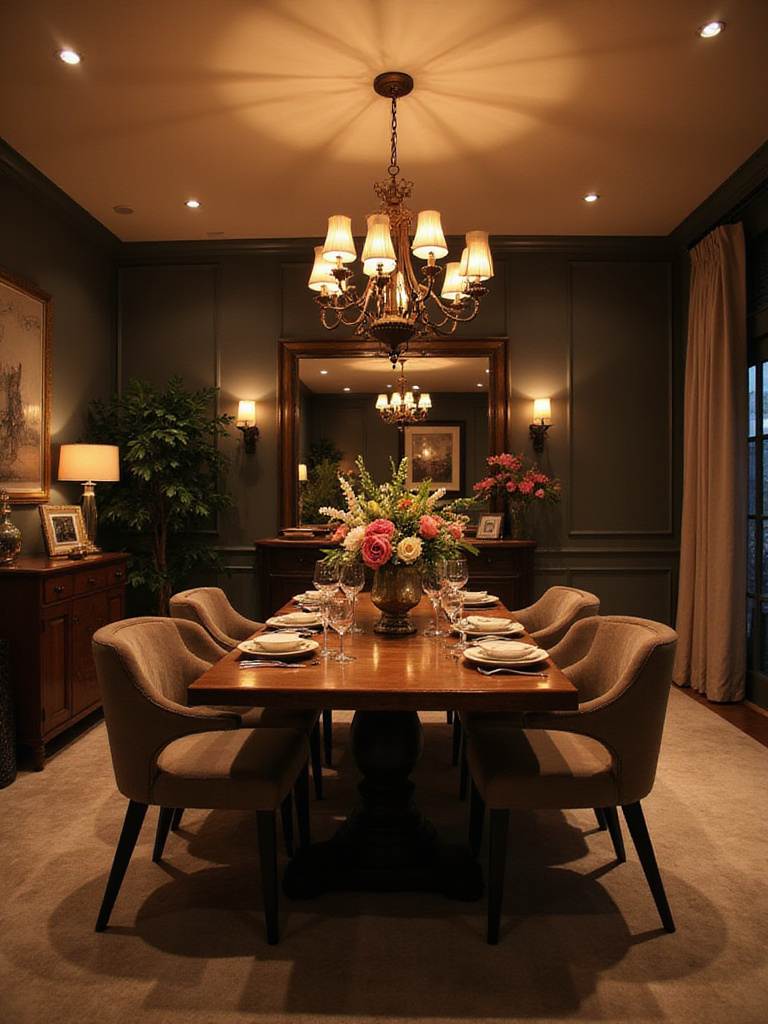
Modern dimming technology is a game-changer. Look for “dim-to-warm” (or “warm-dim”) LEDs. These are fantastic. As you dim them, the color temperature also lowers, perfectly mimicking the way an old incandescent bulb or a candle flame gets warmer and more golden as it dims. This feature alone adds a layer of sophistication that’s hard to beat. Just be sure your switch is compatible with your LED fixtures to avoid any annoying buzzing or flickering.
The real designer secret? Don’t just dim your main fixture. If you have layers of light (and you should, we’ll get to that), put everything on a separate dimmer. This control is what allows you to “paint” with light, creating depth and focus.
6. Choosing a Style That Tells Your Story
The light fixture is the focal point, the piece of jewelry that completes the outfit of your room. It should be a deliberate choice that reflects the story you want your home to tell. Is your home a clean, Scandinavian-inspired haven? A linear fixture in oak and matte black might be perfect. Does it lean toward a warmer, earthier modernism? Perhaps a collection of pendants in unglazed ceramic or hammered brass.
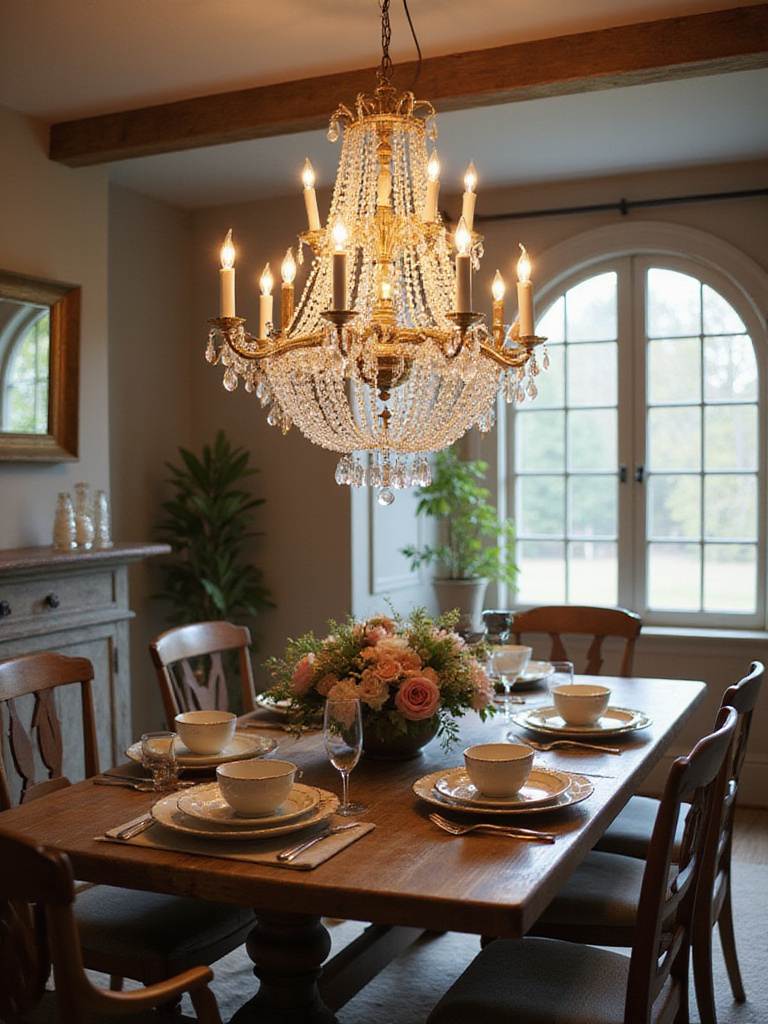
This is where I love to fuse my influences. I look for pieces that have the clean lines and functionality of Scandinavian design but are made from the warm, textural materials common in Middle Eastern architecture—stone, clay, natural metals. It’s about finding that balance between warmth and simplicity. A fixture can be a minimalist sculpture by day and a source of warm glow by night.
Don’t just chase a trend. Ask yourself if a fixture resonates with the architectural bones of your home and your personal aesthetic. Does it feel like a natural extension of the space? A piece with integrity will feel just as right in ten years as it does today.
7. The Rhythm of Multiple Pendants
Over a long rectangular table, a single pendant can feel a little lonely, leaving the ends of the table in shadow. Using a series of pendants is a beautiful, modern solution that offers excellent light distribution and a wonderful sense of visual rhythm. Think of it as creating a pattern of light, a concept central to so much of the world’s great architecture.
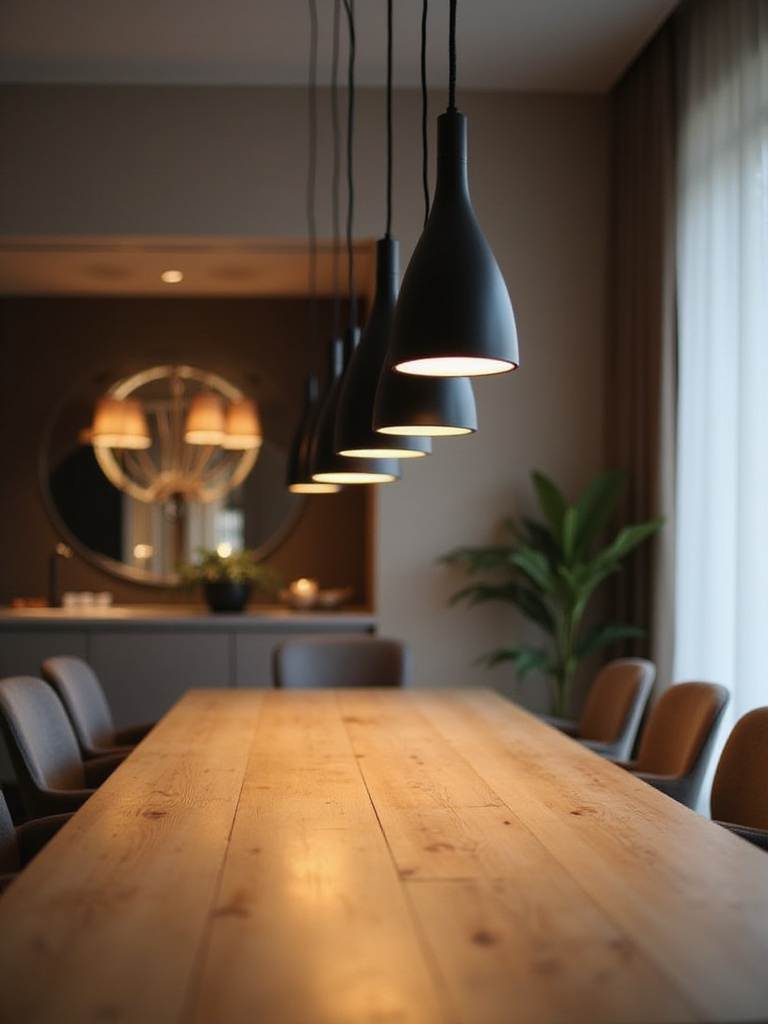
A row of three or five small pendants creates a clean, graphic statement. The key is in the spacing—you generally want about 24 to 30 inches between fixtures to ensure the pools of light overlap slightly, providing even illumination without dark spots. This approach feels intentional and gallery-like. I especially love using an odd number, as it creates a more dynamic and less static composition.
And here’s where you can play a bit. While the spacing should be consistent for functional reasons, you can vary the hanging heights ever so slightly to create a subtle sense of movement and energy. It’s a small touch that makes the whole arrangement feel more organic and alive.
8. The Unity of a Linear Fixture
For very long tables, a linear fixture is often the most elegant and effective solution. It does the work of multiple pendants in a single, cohesive form, casting a unified field of light that brings everyone at the table together. It visually reinforces the length of the table and creates a strong, clean line that works beautifully in modern and transitional spaces.
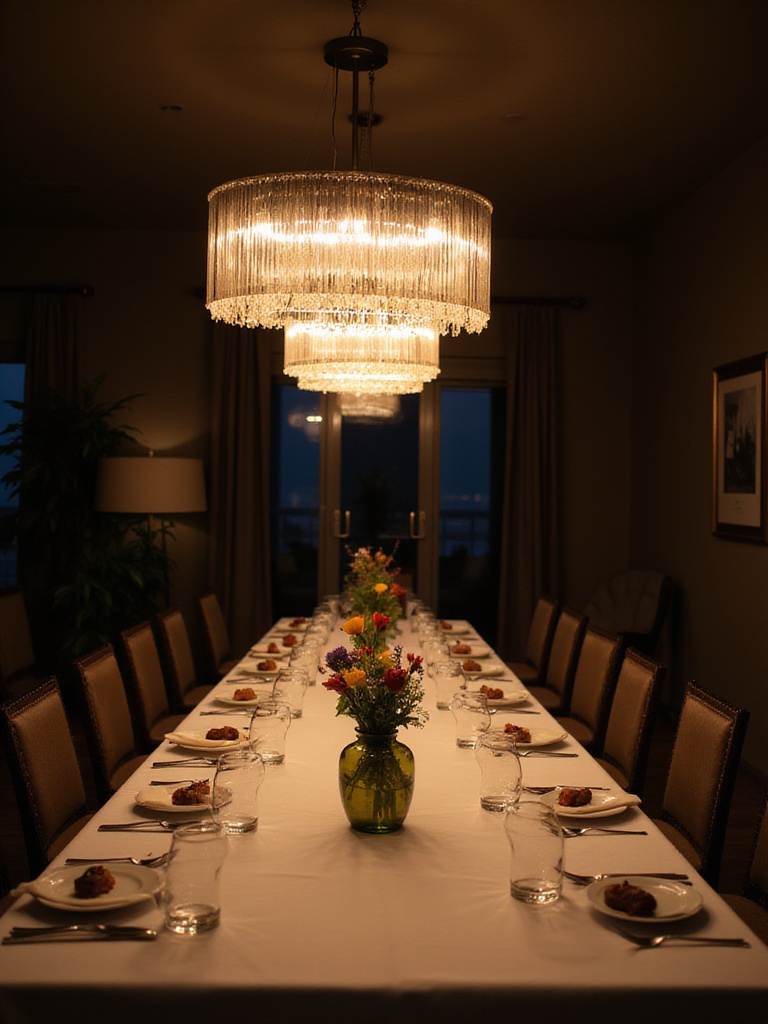
The same sizing principle applies: aim for a fixture that’s about half to two-thirds the length of your table. A nine-foot table is beautifully complemented by a five- or six-foot linear fixture. It’s about balance; the light shouldn’t be the exact same length as the table, as that can look too matched and heavy-handed. You want to leave some breathing room at the ends.
Many of the best new linear fixtures feature integrated LED technology, which gives them an incredibly sleek profile and offers sophisticated options like adjustable color temperature. This blend of precise engineering and refined aesthetics is a hallmark of great contemporary design.
9. Harmony Between Shapes
There should be a natural conversation between the shape of your table and the shape of the light fixture above it. This isn’t a strict rule, but when these geometries are in harmony, the entire room feels more coherent and settled. A round or square table is a natural companion for a circular fixture, a classic chandelier, or a cluster of pendants. The radial symmetry of the light echoes the shape below, creating a very pleasing and centered composition.
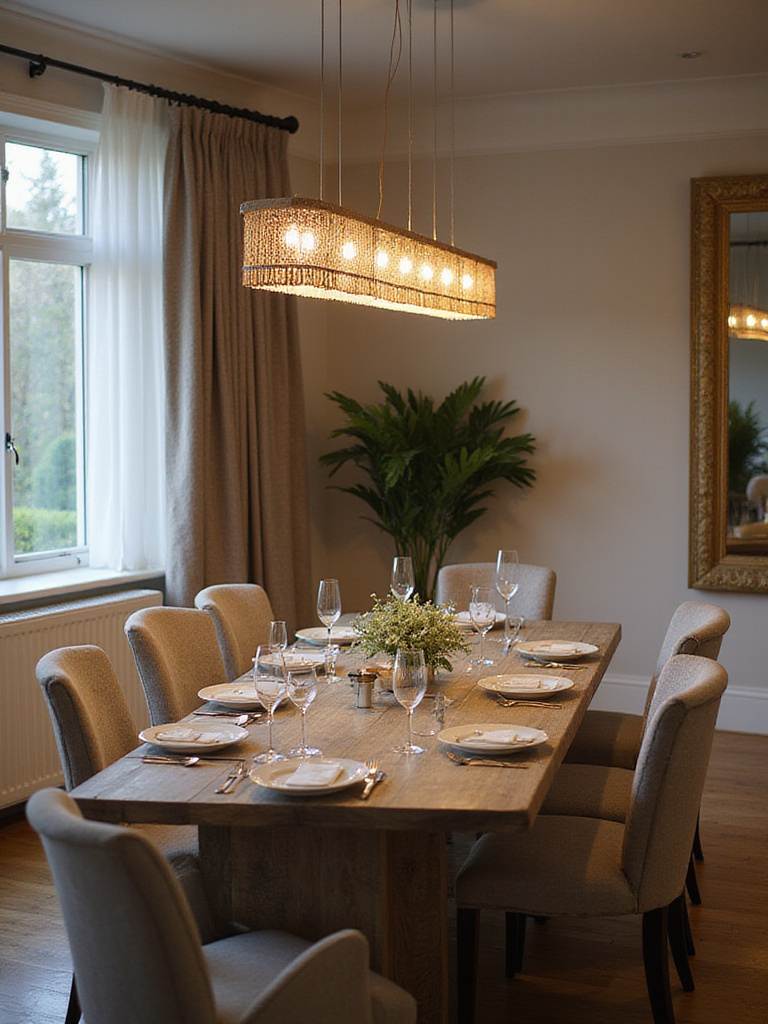
Rectangular and oval tables are where you have a bit more freedom. A linear fixture, as we’ve discussed, is a natural choice that reinforces the table’s elongated form. But you can also create a compelling sort of tension by placing a large, round fixture over the center. I did this in a recent project over a very long, minimalist oak table, and the round, sculptural light became a dramatic focal point, a soft counterpoint to the hard lines of the room.
It’s a balancing act. If your table is very simple, you can afford a more complex, ornate fixture. If your table itself is a statement piece, perhaps a more understated light is in order so the two aren’t fighting for attention.
10. The Art of Layering Light
A truly sophisticated and functional room is never lit by a single source. Relying only on an overhead fixture is the number one mistake I see. Instead, think in layers, just like natural light filters through a building. In traditional Middle Eastern homes, light doesn’t just flood in from one window; it bounces through courtyards, filters through screens (mashrabiya), and creates deep, cooling shadows. We can replicate this feeling by layering three types of light.
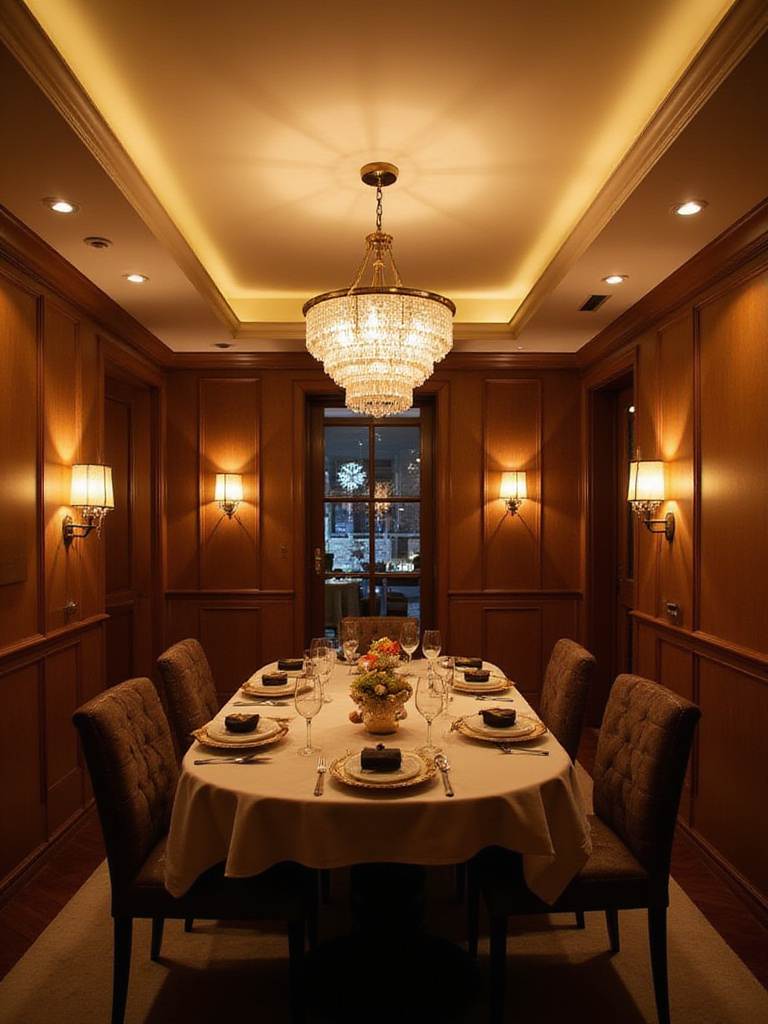
First is ambient light, the general, overall glow, often from your main pendant or chandelier on a dimmer. Second is task light, focused on a specific purpose, like a small lamp on a sideboard or under-cabinet lights illuminating a serving area. Finally, and perhaps most importantly, is accent light. These are wall sconces, picture lights, or uplights behind a plant. They add depth, wash walls with a soft glow, and eliminate the stark shadows that a single overhead source creates.
When you control each of these layers on separate dimmers, the magic happens. You can create a scene for any activity—bright for cleaning up, low and moody with only the sconces and accent lights on for after-dinner drinks. This is what gives a room soul.
11. Diffusing Light to Eliminate Glare
Nothing ruins a dinner faster than a bare bulb glaring in your eyes. Comfort is paramount, and that means controlling glare. The goal is to diffuse the light, softening its edges so it illuminates without being harsh. The shades and materials you choose are your primary tools for this.
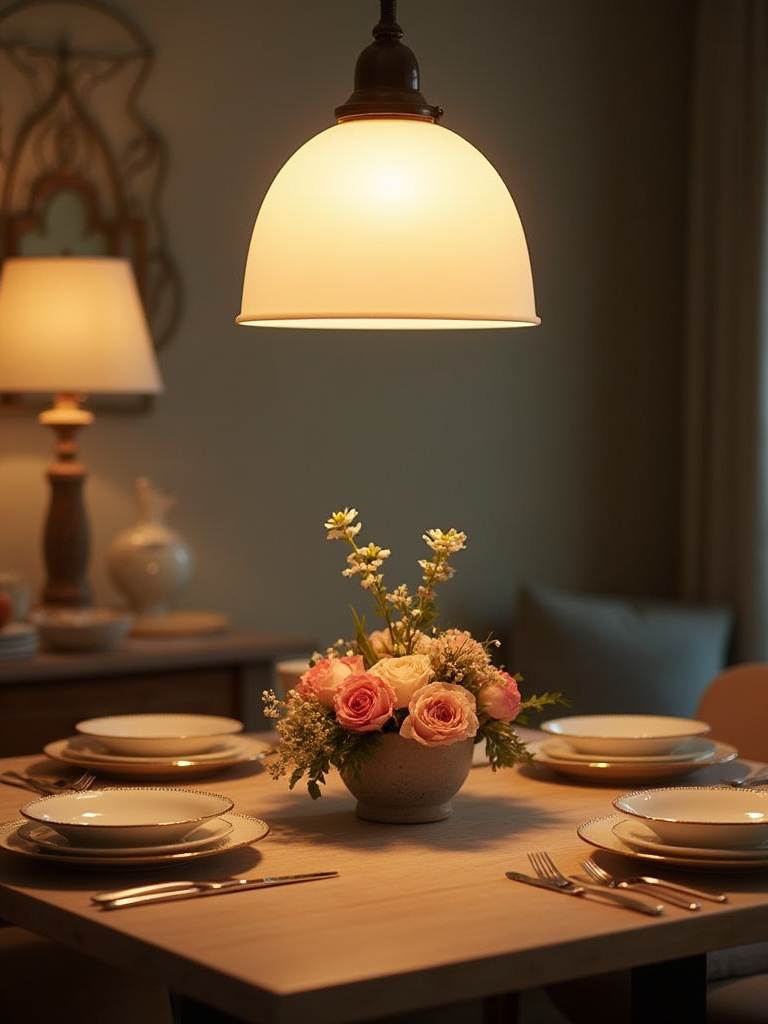
Opaque materials like metal or ceramic are excellent because they completely shield the bulb and direct the light downwards, creating a beautiful, focused pool on the table. For a softer, all-over glow, look to shades made from fabric like linen, or translucent materials like frosted glass or alabaster. Alabaster, a form of natural stone, is one of my favorite materials for lighting; it glows from within with a warm, gentle light that is simply unmatched.
The bulb itself matters, too. Even inside a great shade, a clear, bright bulb can create hot spots. I almost always opt for frosted or pearl-finish LED bulbs. They offer a baseline level of diffusion before the light even hits the shade, ensuring the final effect is soft, even, and supremely comfortable.
12. Making the Switch to Quality LED
Let’s be clear: not all LEDs are created equal. The technology has come a very long way from the cold, blueish-white light that gave early LEDs a bad reputation. Today’s high-quality LEDs are a marvel of efficiency and quality, using up to 85% less energy and lasting for years, which aligns perfectly with a sustainable design ethos.
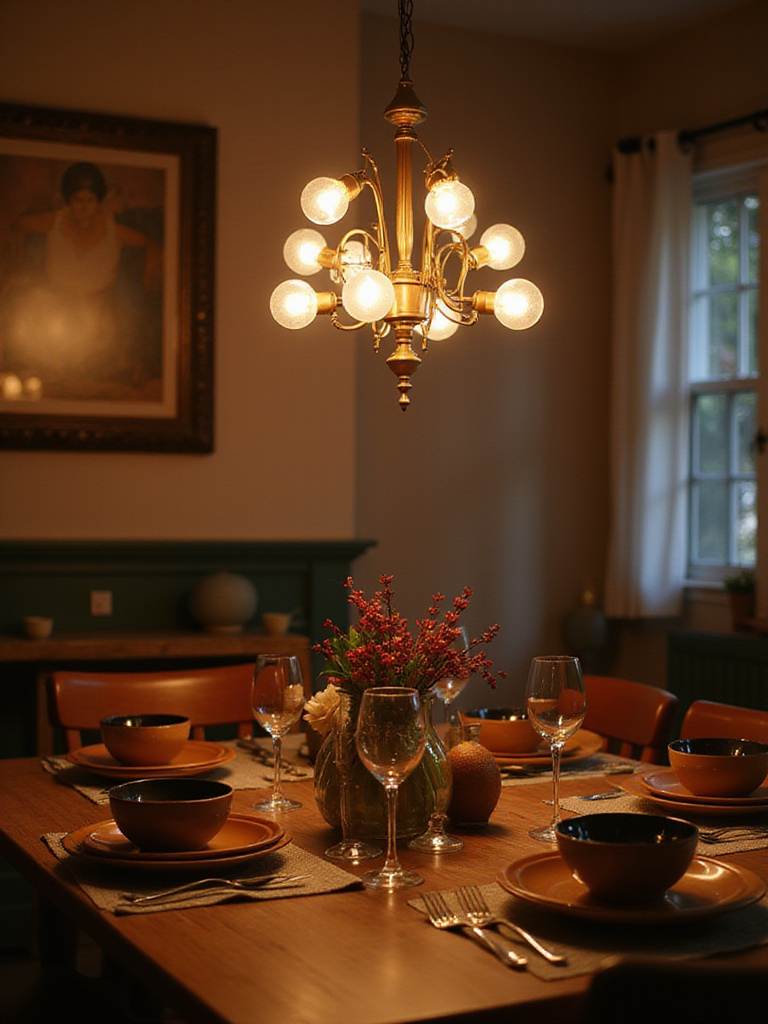
When choosing LEDs for your dining room, focus on those two specifications we talked about: a high CRI (90+) for true color, and a warm color temperature (2700K) for ambiance. The new “dim-to-warm” technology I mentioned earlier is the final piece of the puzzle, providing the flexibility and warmth that make a space feel truly inviting.
Yes, it means you’ll need to ensure your dimmer switch is a modern, LED-compatible one to avoid flickering. But this is a small and worthwhile investment. Upgrading to high-quality LED isn’t just an environmental choice; it’s a quality-of-life improvement. You get better light, more control, and less maintenance. It’s a win on every front.
13. Respect the Craft: The Importance of Professional Installation
This may seem like a practical footnote, but it’s critically important. A beautiful, expensive light fixture improperly installed is not only a safety hazard but also a waste of its potential. This is especially true for heavier fixtures like chandeliers or those made of stone or metal, which may require additional support in the ceiling.
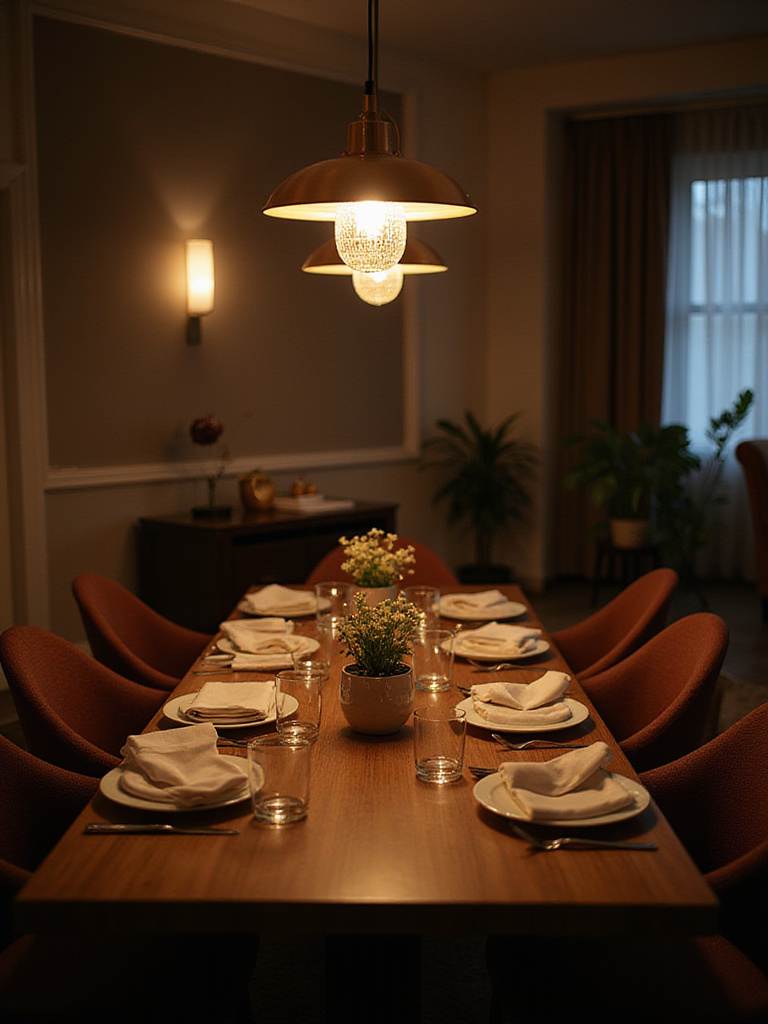
A licensed electrician will ensure your junction box can handle the weight, your wiring is up to code, and everything is securely mounted. But a good installation is also about precision. It’s about getting the fixture perfectly centered over your table. It’s about getting the height just right. It’s about ensuring a series of pendants are hung perfectly level and spaced with mathematical accuracy.
These are the fine details that separate a DIY-looking project from a polished, professional result. You are investing in a central feature of your home; it’s worth the extra step to ensure it’s installed with the care and precision it deserves.
14. Using Wall Sconces to Create Atmosphere
Wall sconces are one of the most underutilized tools in residential lighting design. By supplementing your overhead fixture, they provide a gentle, human-level wash of light that makes a room feel complete. In minimalist spaces, sconces are especially powerful because they can warm up a large, blank wall, preventing it from feeling stark or cold.
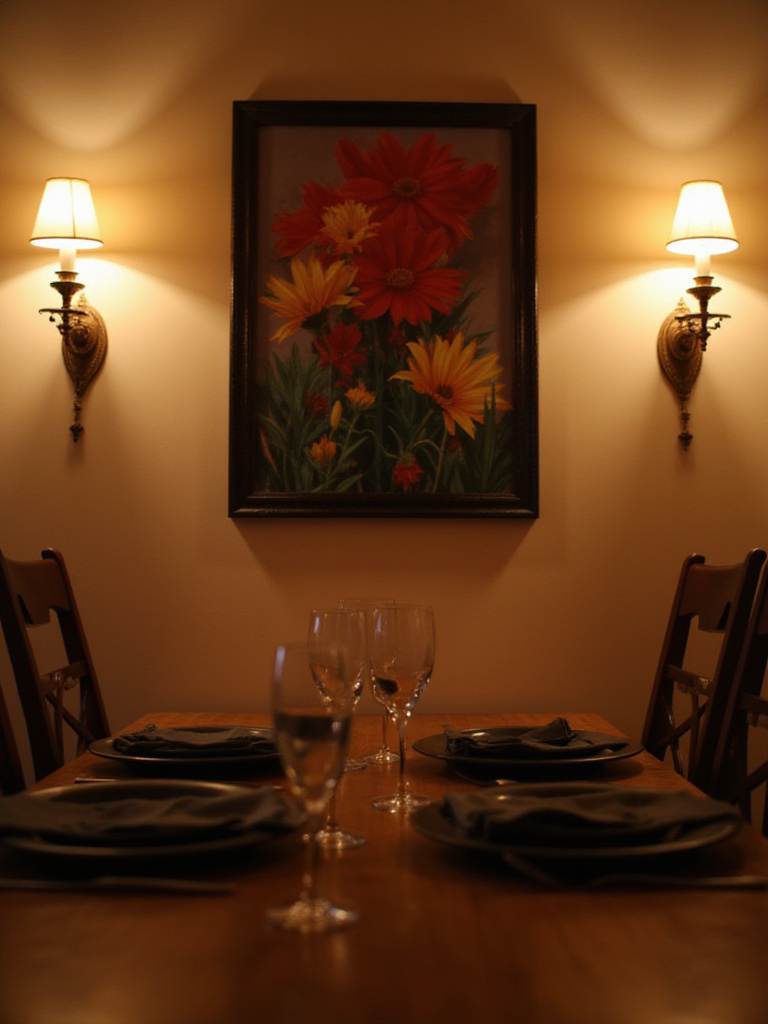
I love placing them at about eye level, roughly 60 to 66 inches from the floor. A pair flanking a buffet, a piece of art, or a doorway creates a wonderful sense of symmetry and balance. They work by bouncing light off the wall, creating a soft, indirect glow that is much more comfortable than direct overhead light alone. This is particularly effective on textured walls—imagine a soft light grazing across the surface of a limewash or tadelakt finish, highlighting its subtle variations.
Put them on their own dimmer switch, separate from your main fixture. This allows you to turn the overhead light way down (or even off) after dinner, leaving just the soft, atmospheric glow of the sconces. This simple trick completely changes the mood of the room.
15. Scaling Fixtures to Celebrate Your Ceiling Height
The volume of your room is a key player in your lighting decision. Standard eight-foot ceilings and soaring twelve-foot ceilings are entirely different canvases and require different approaches. In both Scandinavian and Middle Eastern architecture, height is often used to great effect—in one, to maximize light, and in the other, to dissipate heat. Your lighting should honor this volume.
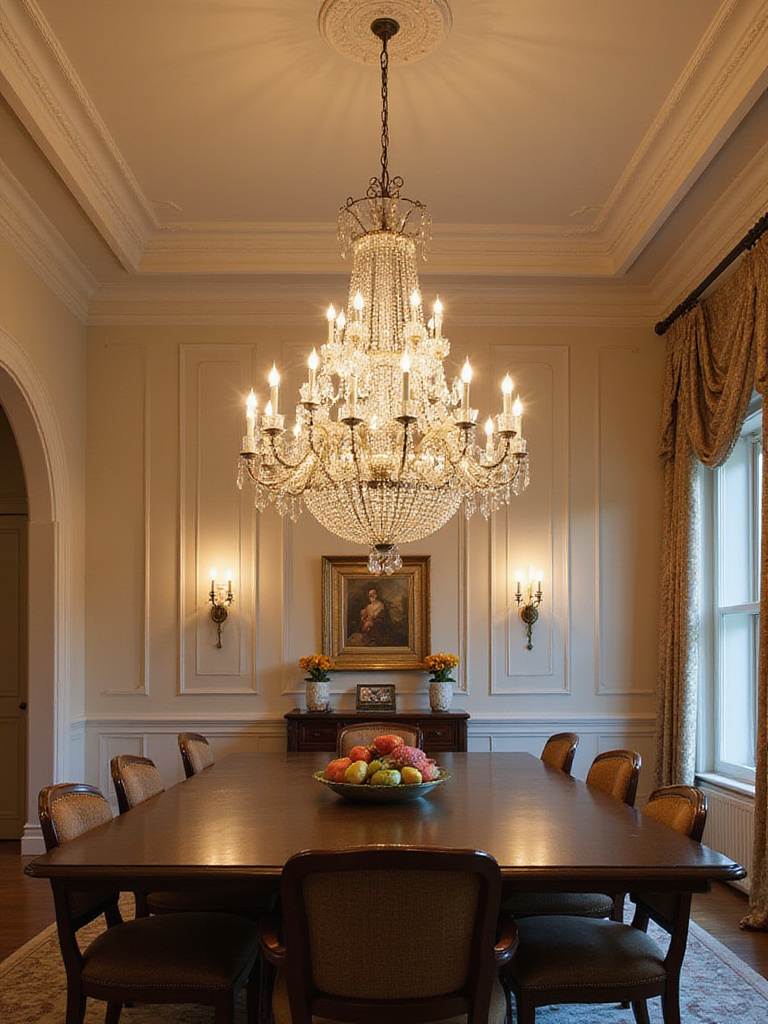
With high ceilings, you have an opportunity—a responsibility, even—to be more dramatic. You can choose fixtures with more vertical presence, like multi-tiered chandeliers or long, cascading pendants. This helps to fill that empty vertical space and brings the scale of the light down to a more human level, connecting the ceiling to the living space below.
With lower ceilings, the challenge is to provide ample light without making the room feel crowded or cluttered. This is where semi-flush or even flush-mount fixtures can be beautiful and effective. Look for designs that have a wide spread of light, or pair a more modest central fixture with recessed lights or well-placed sconces to ensure the entire room feels bright and open.
16. The Poetry of Materials
A fixture’s materials should speak to the other elements in the room. This doesn’t mean everything has to match. In fact, some of the most beautiful spaces mix metals and materials with confidence. It’s about creating a cohesive palette. I often work with natural, “honest” materials—those that show the hand of the maker and age with grace.
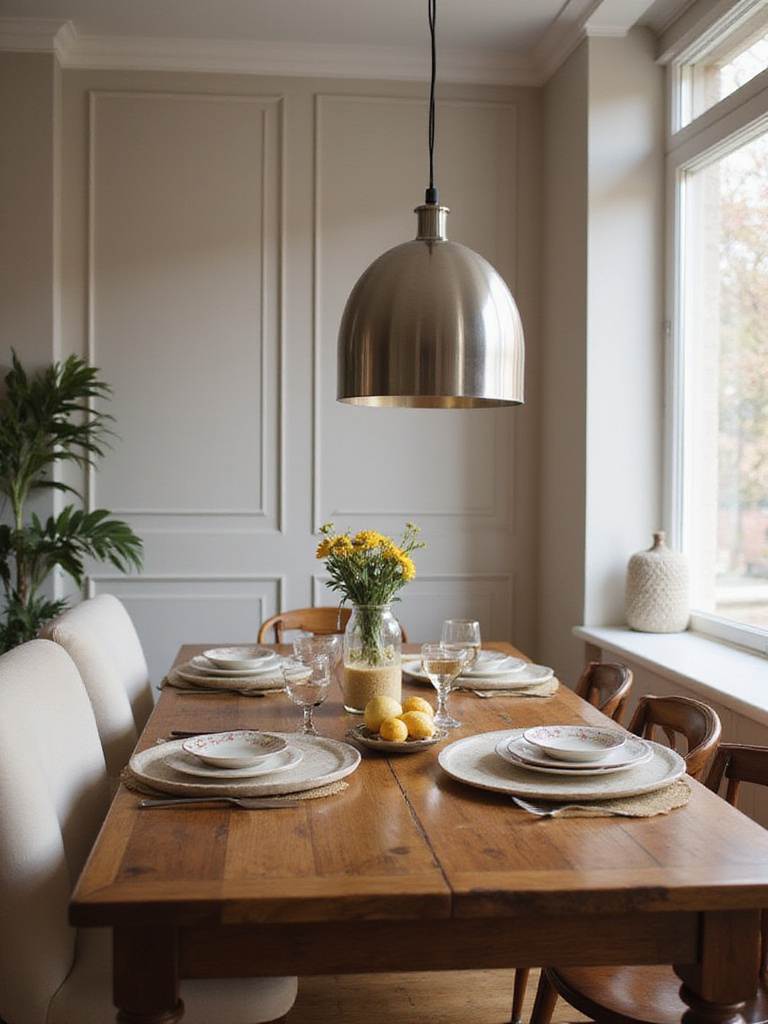
Think of the dialogue between a brushed brass fixture and the dark wood of your dining chairs. Or the way a pendant made of light, translucent stone like alabaster can pick up on the veining in a marble countertop nearby. The materials are an opportunity to add a layer of texture and warmth. I love using fixtures made of wood, unglazed ceramics, hand-blown glass, or metals that develop a natural patina over time. These materials connect a modern space to ancient craft traditions and add a soulful, tactile quality.
Establish a palette of two or three primary finishes and use them intentionally. A matte black fixture can be a stunning graphic element, especially when echoed in window frames or chair legs. This coordination is what makes a design feel intentional and whole.
17. The Ritual of Maintenance
A beautiful light fixture deserves to be cared for. Over time, a fine layer of dust and kitchen residue can accumulate, dimming your light output by as much as 30% and dulling the finish of the materials. Proper maintenance is not a chore; it’s a small act of stewardship for the objects that bring beauty to your home.
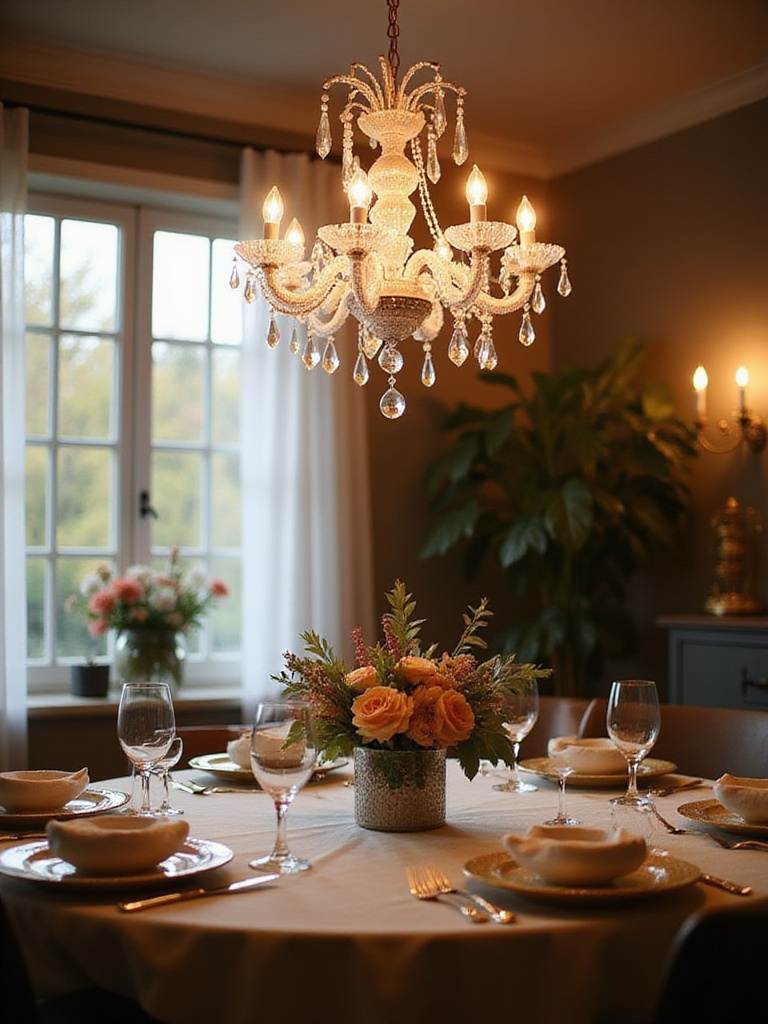
A regular dusting with a soft microfiber cloth is often all that’s needed. For a deeper clean, be sure to use the right products for the material—a gentle cleaner for crystal, a specific polish for brass—and always, always turn the power off at the circuit breaker first.
A clean fixture doesn’t just look better; it performs better. Light is reflected and refracted as it was designed to, and there’s no buildup of heat that can shorten the life of your bulbs. It’s a simple practice that ensures your investment continues to be a source of pride and beautiful light for years to come.
18. Averting Common Design Missteps
We learn best from our mistakes, or better yet, from the mistakes of others. There are a few common pitfalls I see time and time again that can compromise an otherwise beautiful dining room. The first, as we’ve covered, is sizing the fixture to the room instead of the table, resulting in a light that’s comically large or pitifully small.
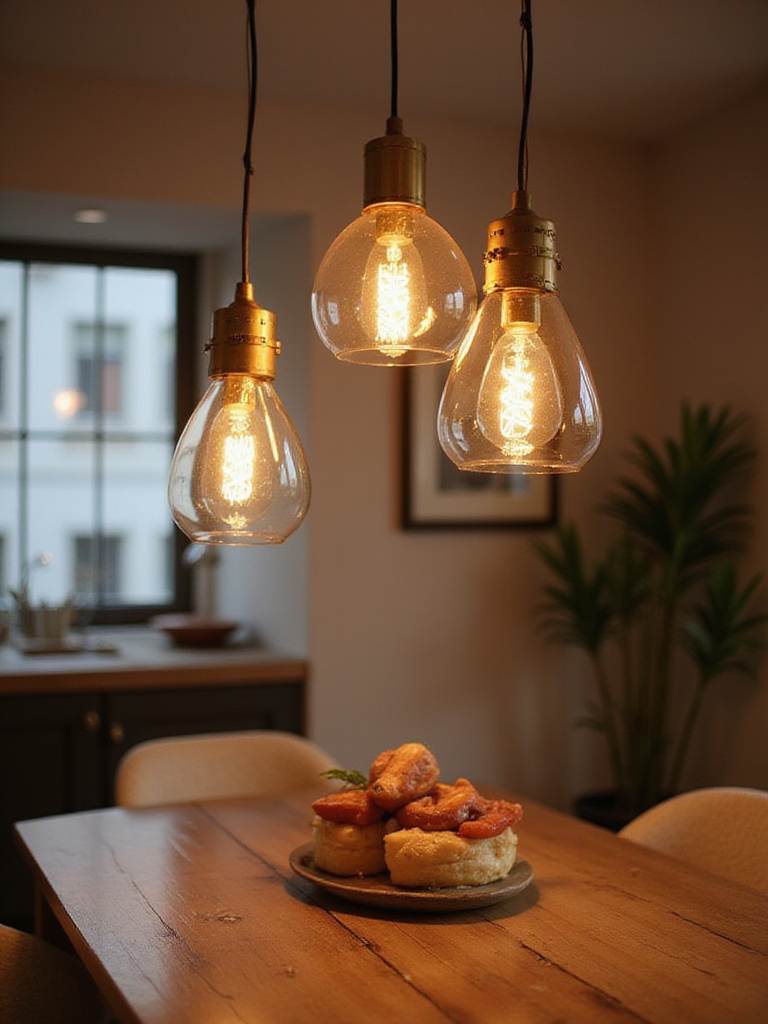
The second is hanging the light without ever sitting down at the table, leading to blocked sightlines or uncomfortable glare. But perhaps the most common mistake is forgetting flexibility. Installing a stunning, expensive chandelier without a dimmer is like buying a performance car and only ever driving it in first gear. You’re missing out on 90% of its potential.
At first, I used to think of lighting as a final, decorative touch. But I soon realized it’s a fundamental architectural element. It’s not an accessory; it’s part of the structure of the experience. Thinking this way from the beginning helps you avoid these simple but costly errors.
Conclusion
Ultimately, lighting your dining table is an act of deep consideration for the people who will gather there. It goes far beyond lumens and dimensions. It’s about shaping an environment that fosters connection, warmth, and memory. Each choice—from the raw texture of a ceramic shade to the gentle warmth of a dimmed LED—contributes to a feeling.
You’re creating a space that adapts to the shifting needs of your life. By layering your light, choosing materials with soul, and embracing control, you move from simple illumination to something much more meaningful. You create a haven that reflects your unique perspective, a luminous heart for your home where the best moments of life can unfold.