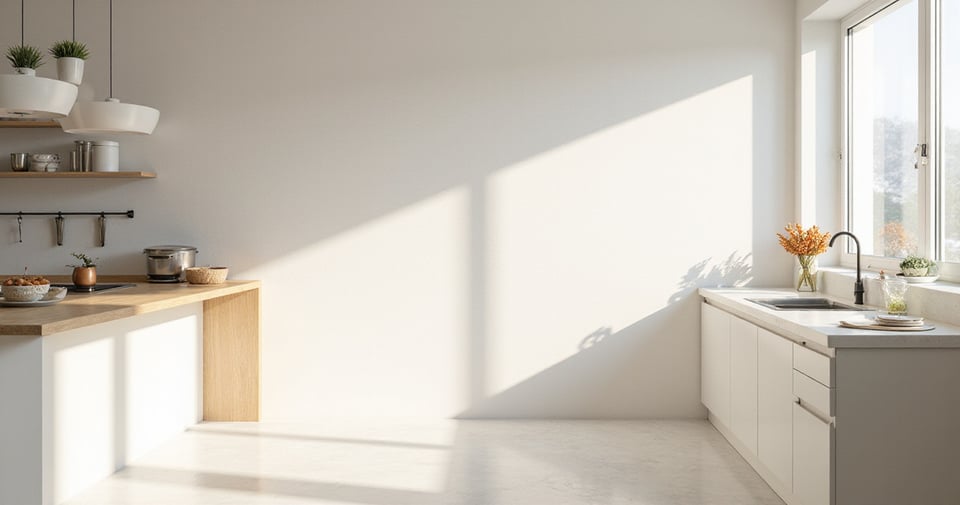
I’m often asked where my passion for Japanese design intersects with other aesthetics. And the answer, almost always, is Scandinavia. At first glance, they seem worlds apart. One speaks of cherry blossoms and tatami; the other of long winters and cozy fires. But the more you look, the more you see the same core principles reflected back: a deep respect for natural materials, an obsession with function, and a belief that simplicity is the ultimate sophistication.
What the Nordics call lagom—the art of “just enough”—resonates deeply with the Japanese concept of Shibumi, or unobtrusive beauty. It’s a quiet confidence in design. It’s the creation of a space that supports your life without screaming for attention.
So, when we talk about a Scandinavian kitchen, we’re not just talking about an aesthetic trend. We’re talking about an operating system for a calmer, more intentional life. It’s a space where technology is integrated, not celebrated; where cooking can feel like a meditation, and where the morning ritual of making coffee becomes a moment of genuine peace. Let’s walk through how to build this kind of sanctuary, one intentional choice at a time.
1. Start with a Canvas of White—But Not Just Any White
The first move in any Scandinavian-inspired kitchen is almost always a pure white wall. But here’s the thing—it’s not about creating a sterile, blank box. In Japanese design, we have a concept called ma (間), which is the beauty of negative space. A white wall is the ultimate expression of ma. It’s not an absence of color; it’s the presence of potential. It creates a visual pause, a place for your mind to rest.
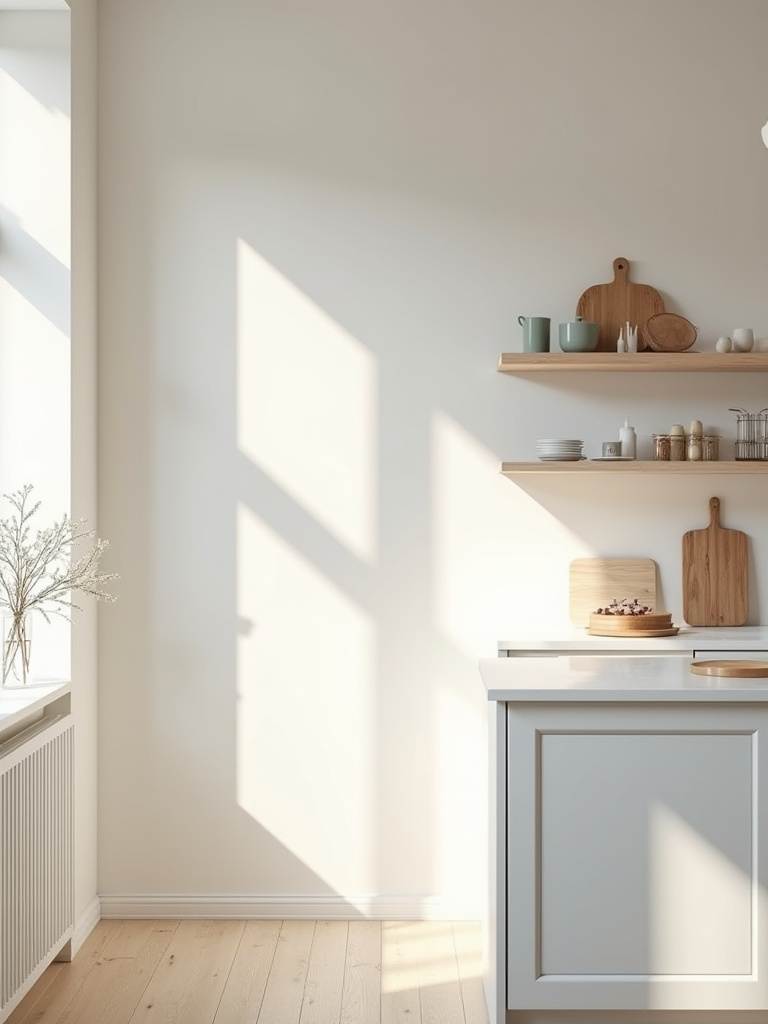
For anyone who works from home, staring at screens for hours, this is non-negotiable. Your eyes need a place to land that isn’t demanding. The right white reflects natural light, making a small kitchen feel expansive and open, but it also provides a quiet backdrop that reduces mental fatigue. A client of mine in a city apartment once described the change as “turning down the volume on the world.” Don’t just grab the first can of white paint you see. Test large swatches. See how a cool, crisp white (like Benjamin Moore’s Chantilly Lace) behaves in the morning light versus a softer, warmer white (like Farrow & Ball’s Wimborne White) in the evening. It’s a small detail that changes everything.
With your walls acting as this clean, quiet canvas, the next step is to consider the most powerful design element of all: what you allow to pass through it.
2. Let the Light In
In the Nordic countries, daylight is a precious, fleeting commodity for much of the year. This scarcity fosters a deep reverence for natural light, and their design reflects it. Heavy drapes and complex blinds are non-existent. Instead, you’ll find windows that are either completely bare or dressed in the most minimal of treatments. The goal isn’t just to light the room; it’s to blur the line between inside and out.
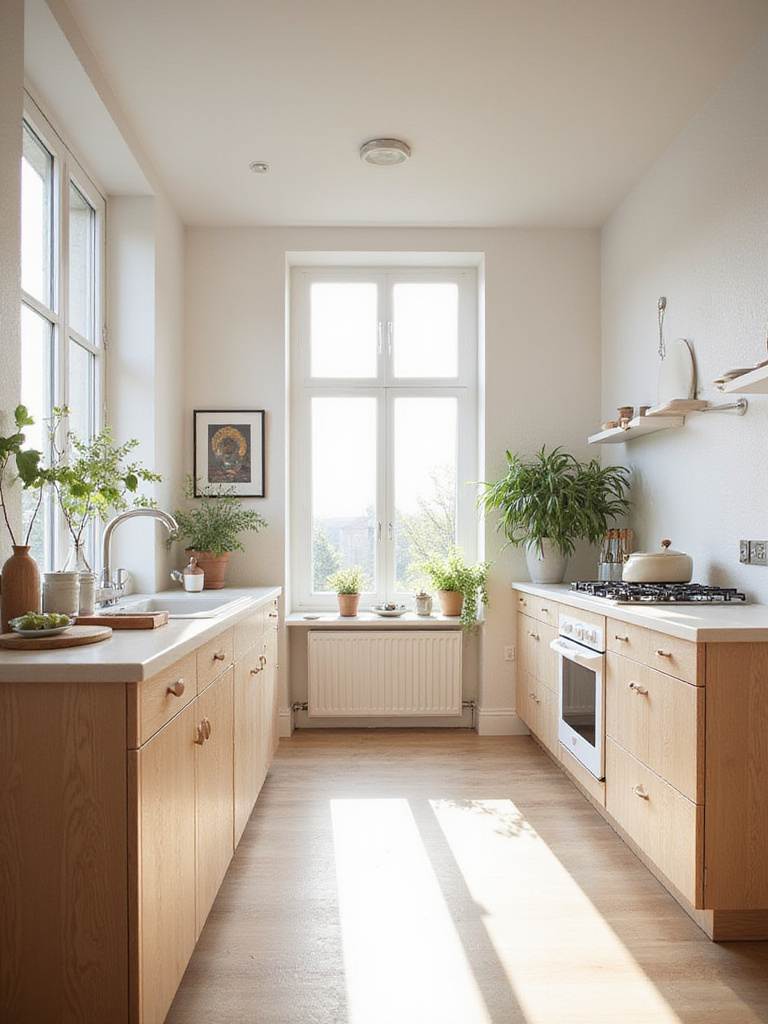
This principle is something I deeply appreciate from my study of traditional Japanese architecture, where shōji screens don’t block light but diffuse it, connecting the inhabitants to the passing of time and the changing of seasons. You can achieve a similar feeling with a single, sheer linen panel that softens the afternoon glare without obscuring the view. If privacy isn’t a concern, I urge you to try living with bare windows for a week. Notice how your body’s rhythm starts to align with the sun. It’s a simple change that can have a profound impact on your sleep and energy, especially if your kitchen is also your workspace.
Letting that light pour in naturally leads us to the materials that will receive and reflect it. This is where the warmth comes into play.
3. Bring in the Warmth of Light Wood
A Scandinavian kitchen without the warmth of wood is just a white room. Pale woods like ash, birch, or white oak are the heart and soul of this aesthetic. They prevent the space from feeling clinical and introduce an essential organic element. I once worked on a project where we simply swapped dark, heavy cherry cabinets for flat-panel ash. The room didn’t just look bigger; it felt happier. The entire energy of the home shifted.
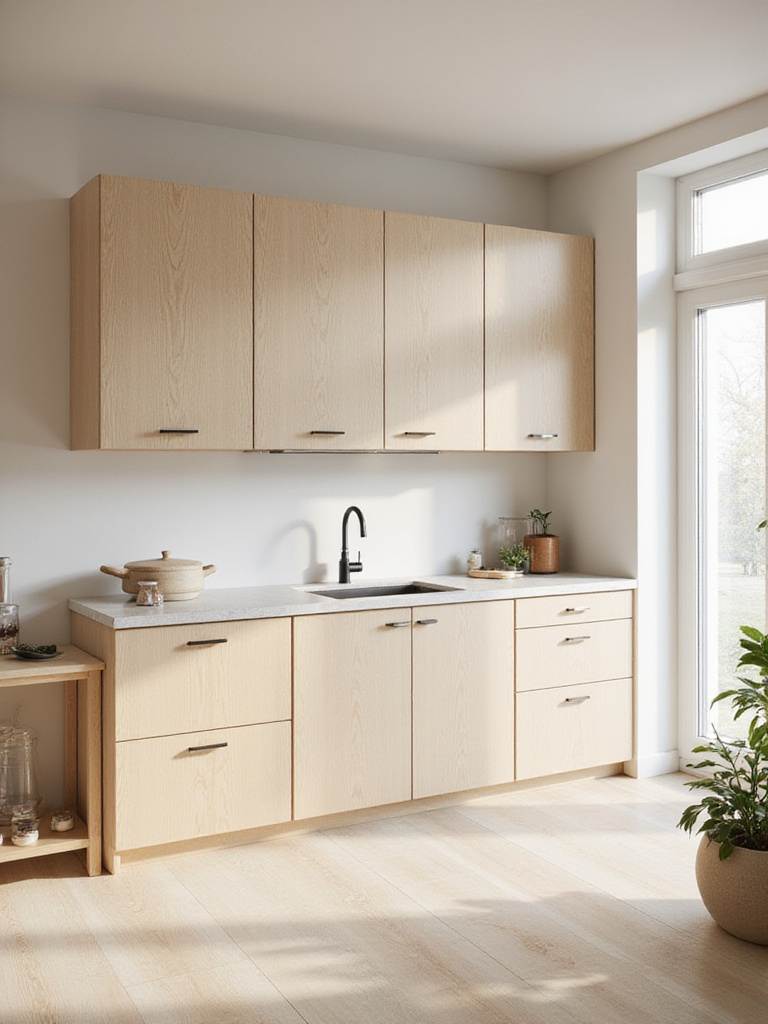
This isn’t just about the color. It’s about texture. The subtle grain of birch or the more pronounced patterns in ash connect the space back to the forest, a cornerstone of both Scandinavian and Japanese life. When you run your hand over a well-made wooden cabinet, there’s a tactile satisfaction that synthetic materials can never replicate. It’s a quiet reminder of nature in the heart of your home. It’s real.
And we can refine those beautiful wood surfaces even further by subtracting the elements that aren’t absolutely essential—starting with the hardware.
4. Go Handleless for an Unbroken Flow
Handleless cabinets are the epitome of minimalism. They aren’t just a stylistic choice; they’re a declaration of intent. By removing the visual clutter of pulls and knobs, you create a seamless, uninterrupted surface. This allows the quality of the wood grain or the perfection of a matte finish to speak for itself. It’s a practice of kanso, or simplicity, that clears away distraction.
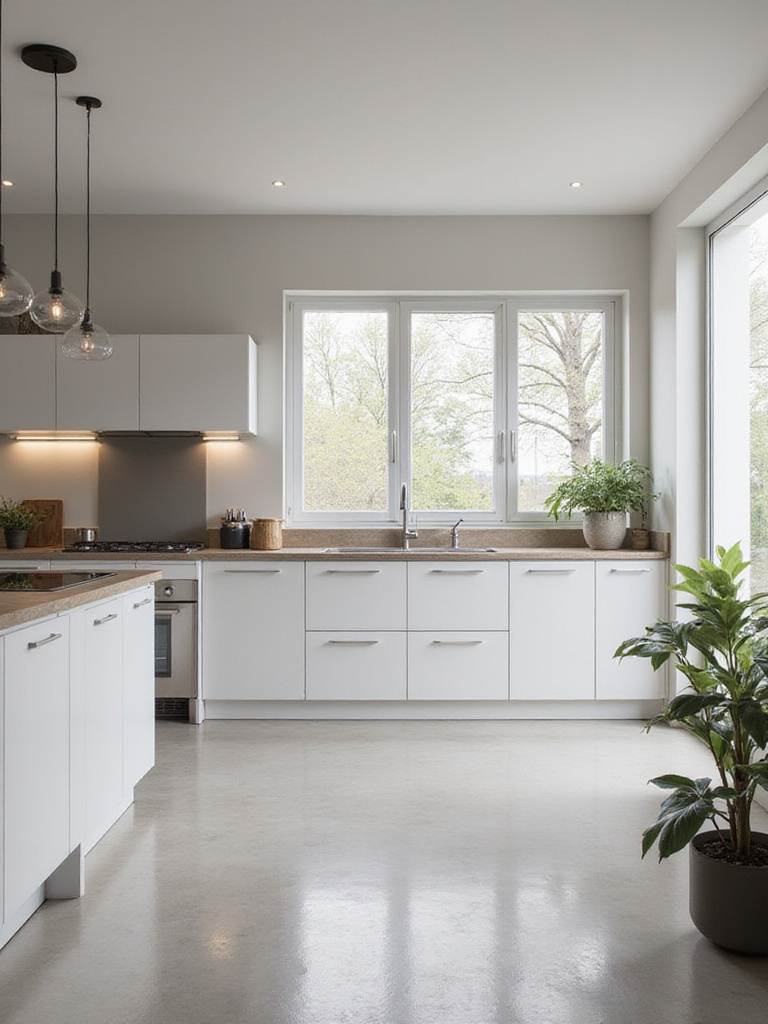
From a practical standpoint, this is a game-changer in smaller kitchens, which are common in both dense European cities and Japanese urban centers. The unbroken lines create a powerful illusion of spaciousness. Technologically, these systems have come a long way. A high-quality push-to-open mechanism offers a satisfying, muted click with just a gentle touch. For lower cabinets, an integrated J-pull (a continuous channel routed into the top of the door) provides an ergonomic grip without adding any visual noise. It’s technology used in service of serenity.
With the larger elements stored away behind these clean facades, we can now think about what deserves to be seen.
5. Use Open Shelving as a Curated Display
Open shelving is a test of discipline. In both Zen philosophy and Nordic design, the idea is that an object must justify its existence through either beauty or utility. On an open shelf, it must do both. This isn’t a place for your mismatched Tupperware. It’s a carefully curated display of your most beautiful, most-used items: a stack of handmade ceramic bowls, a collection of uniform glassware, your pour-over coffee setup.
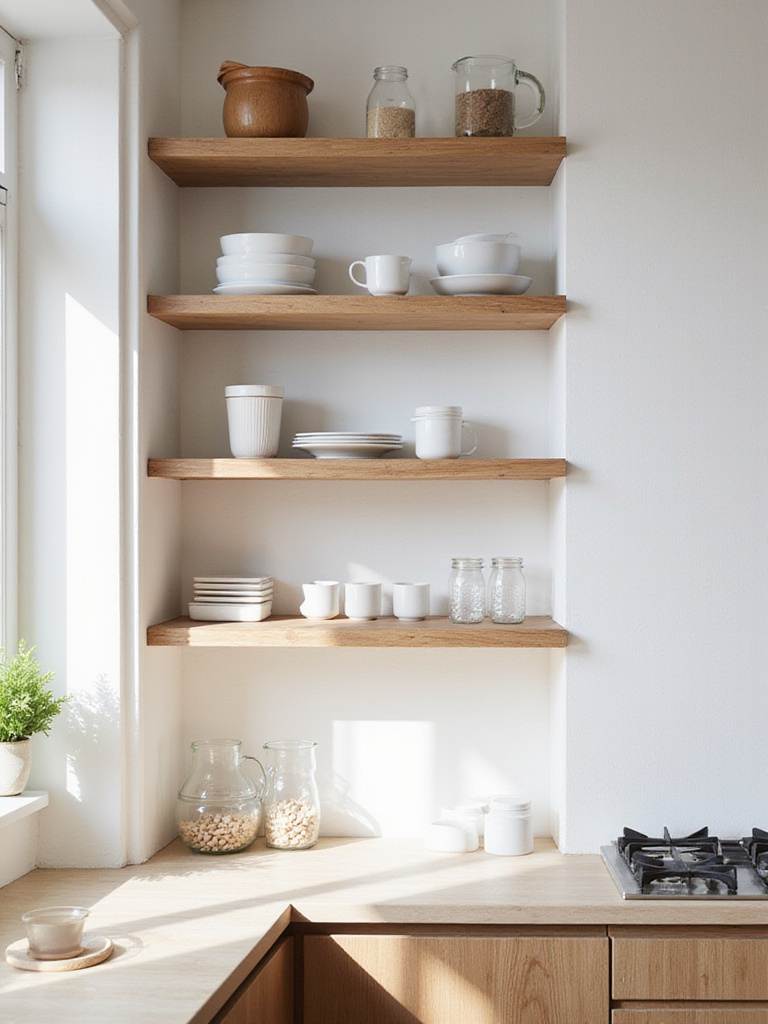
The secret is negative space. You must resist the urge to fill every inch. A crowded shelf screams chaos; a sparsely populated one whispers calm. For a client who was struggling with this, I advised them to remove everything and only put back one item per day for a week. It forced a mindful curation process. What did they truly need at arm’s reach? What genuinely brought them joy to see? This approach transforms storage from a mere utility into a form of personal expression.
This floating display needs a solid surface to stand on, which brings our focus down to the very foundation of the room.
6. Lay the Foundation with Light Wood Flooring
A continuous floor of light wood is what unifies the kitchen with the rest of your living space. It’s the visual thread that ties everything together, particularly in modern open-plan homes. White oak, maple, or ash are classic choices, offering the durability needed for a high-traffic area while maintaining that bright, airy feel.
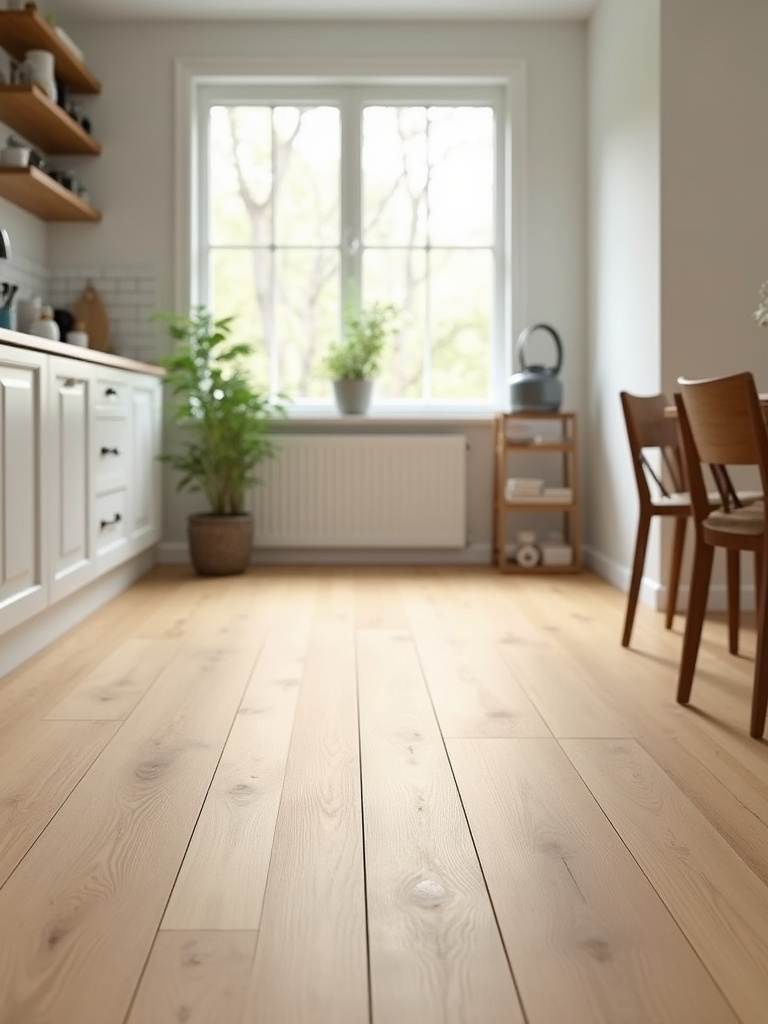
I recommend wider planks if you can. Fewer seams mean less visual clutter, making the space feel more expansive and serene. And think about the finish. A modern matte or natural oil finish feels much more authentic to this style than a high-gloss polyurethane. It’s less about a perfect, reflective shine and more about feeling the honest texture of the wood under your feet. This choice also has a hidden wellness benefit: low-VOC finishes contribute to healthier indoor air, a core value in sustainable design.
Of course, a kitchen floor is a hard surface by necessity. That’s why the next layer is so important for adding softness and comfort.
7. Layer Texture with Natural Fiber Rugs
Hard surfaces are clean and practical, but they can also create a room that feels cold and echoes. A simple, natural fiber rug is the antidote. It introduces a crucial layer of texture and warmth, absorbs sound, and provides comfort underfoot where you stand the most, like in front of the sink or stove.
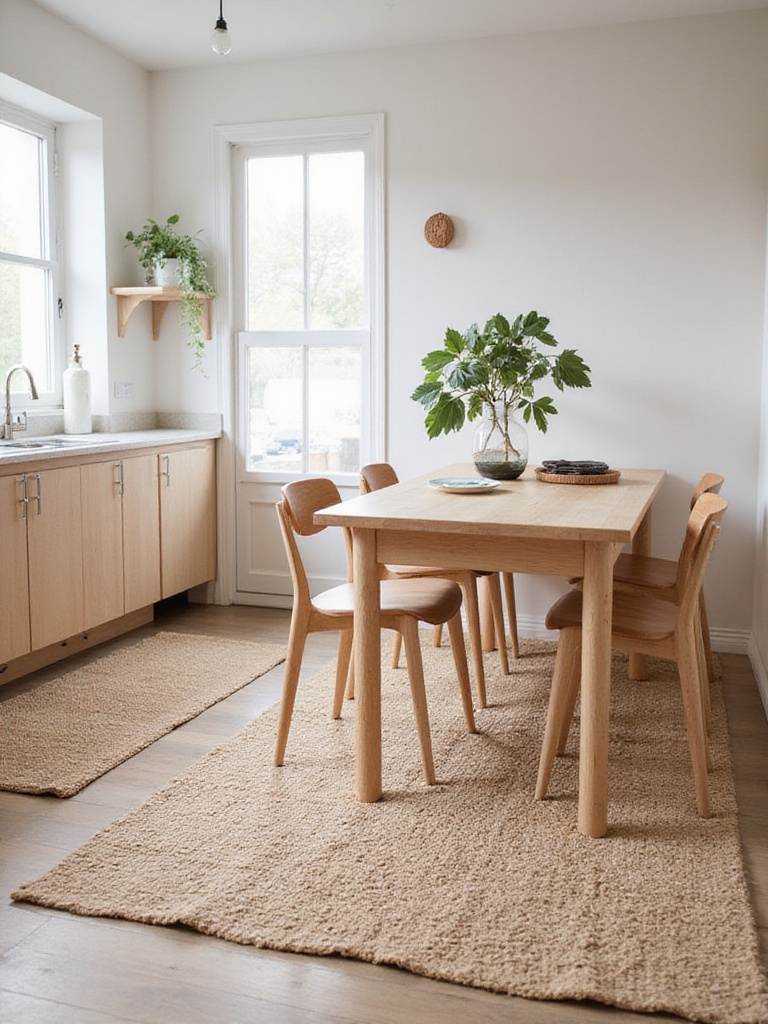
I gravitate toward jute or wool. Jute and sisal offer incredible durability and a rustic, organic texture that contrasts beautifully with sleek cabinets and smooth countertops. Wool is softer, naturally stain-resistant, and feels wonderful on bare feet. In either case, stick to neutral tones—creams, grays, undyed natural browns—or simple geometric patterns. The rug isn’t meant to be the star of the show. Its job is to support the overall feeling of comfort and quiet.
With softness underfoot, let’s now bring that same sense of life and nature up into the room itself.
8. Add Life with Greenery
A Scandinavian kitchen without a living plant feels incomplete. Plants are living sculptures. They introduce organic shapes that break up the hard, straight lines of a kitchen, and they provide that vital connection to the natural world. In Japanese culture, this practice, called ikebana, is a high art form. But in your kitchen, it can be much simpler.
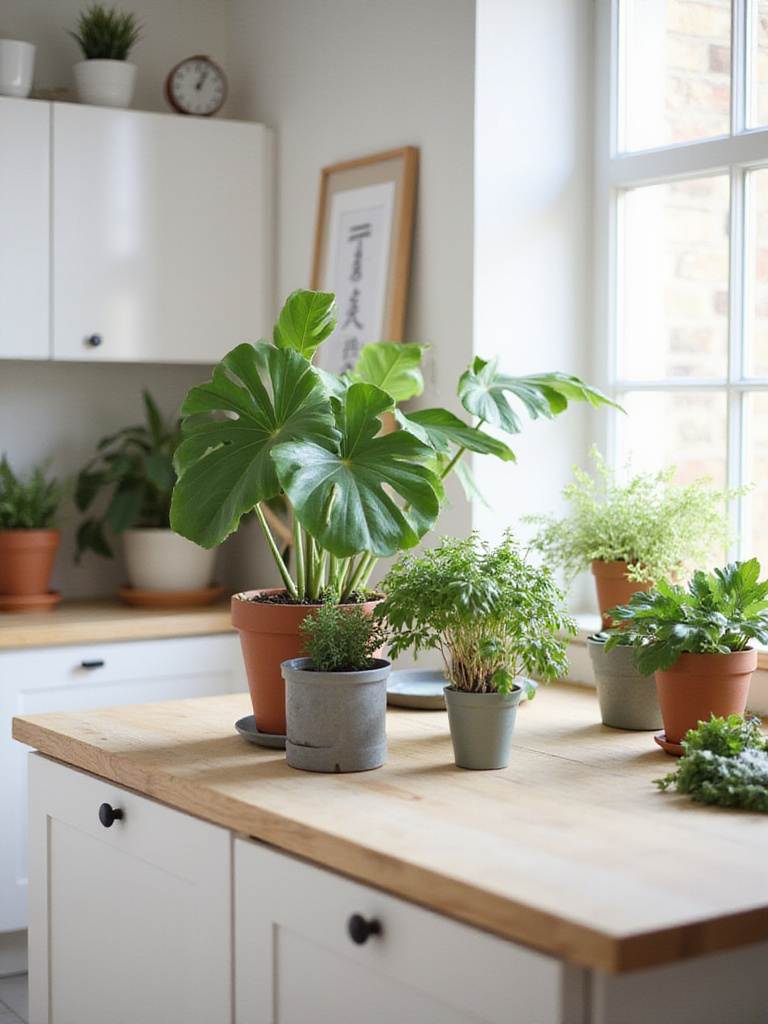
You don’t need a jungle. A single fiddle leaf fig in a corner can anchor the entire room. A pot of herbs on a sunny windowsill is the perfect marriage of form and function—a small kitchen garden that provides fresh basil for your pasta while looking beautiful. Or a trailing pothos on an open shelf can add a lovely, cascading movement. The key is to choose planters that align with the aesthetic: simple terracotta, ceramic, or light wood. The plant is the art; the pot is just the frame.
That touch of green adds a beautiful point of focus during the day. As evening draws in, our attention turns to how we illuminate the space.
9. Hang Minimalist Pendant Lights
Lighting in a Scandinavian kitchen does two jobs: it must be a functional tool for tasks like chopping and cooking, but it must also be a beautiful object in its own right. Minimalist pendant lights, hung over an island or a dining table, are the perfect solution.
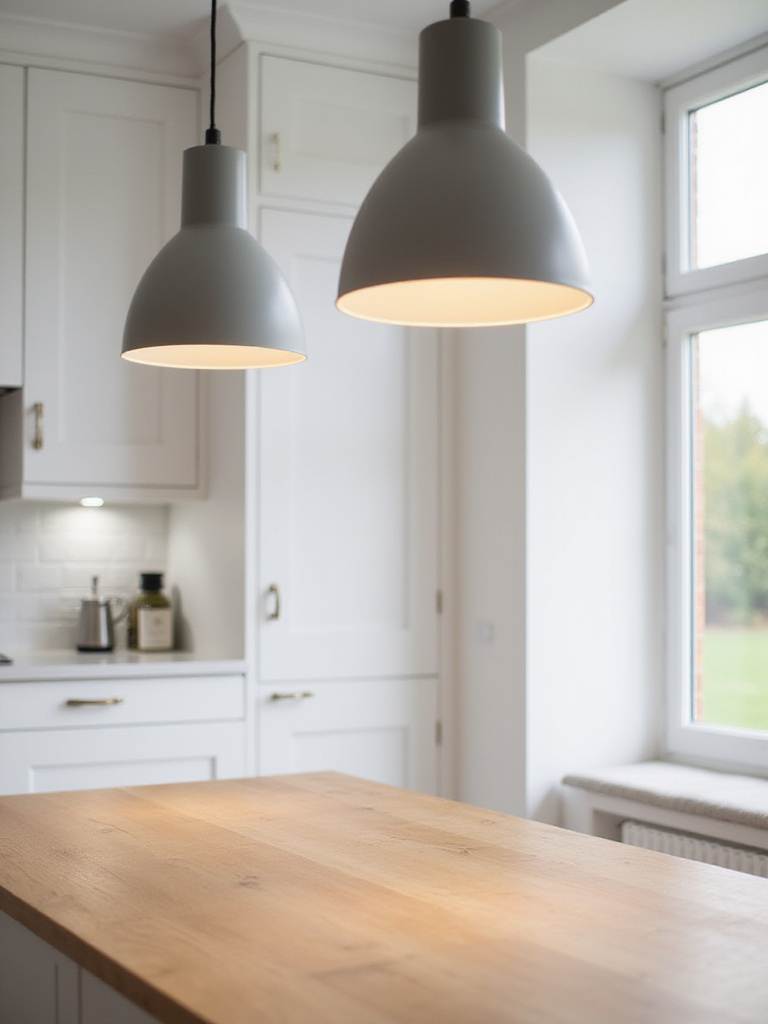
The design should be simple—think clean geometric shapes like spheres, cones, or cylinders—in honest materials like matte metal, wood, or hand-blown glass. Scale and placement are critical. A common mistake is hanging them too high. They should be low enough to light your workspace effectively (typically 30-36 inches above the counter) but not so low that they obstruct your view. I also recommend installing them on a dimmer switch. This allows you to have bright, clear light for cooking and then a soft, warm glow for dining or relaxing in the evening. It’s about creating layers of light that adapt to the changing rhythm of your day.
With the primary lighting in place, our attention naturally shifts to the surfaces it illuminates.
10. Master the Art of the Clear Countertop
This might be the single most important—and most difficult—discipline to maintain. A clear countertop is the physical embodiment of a clear mind. In our design studio, we have a principle: if it doesn’t have a “home,” it doesn’t belong. Your countertop is a workspace, not a storage shelf.
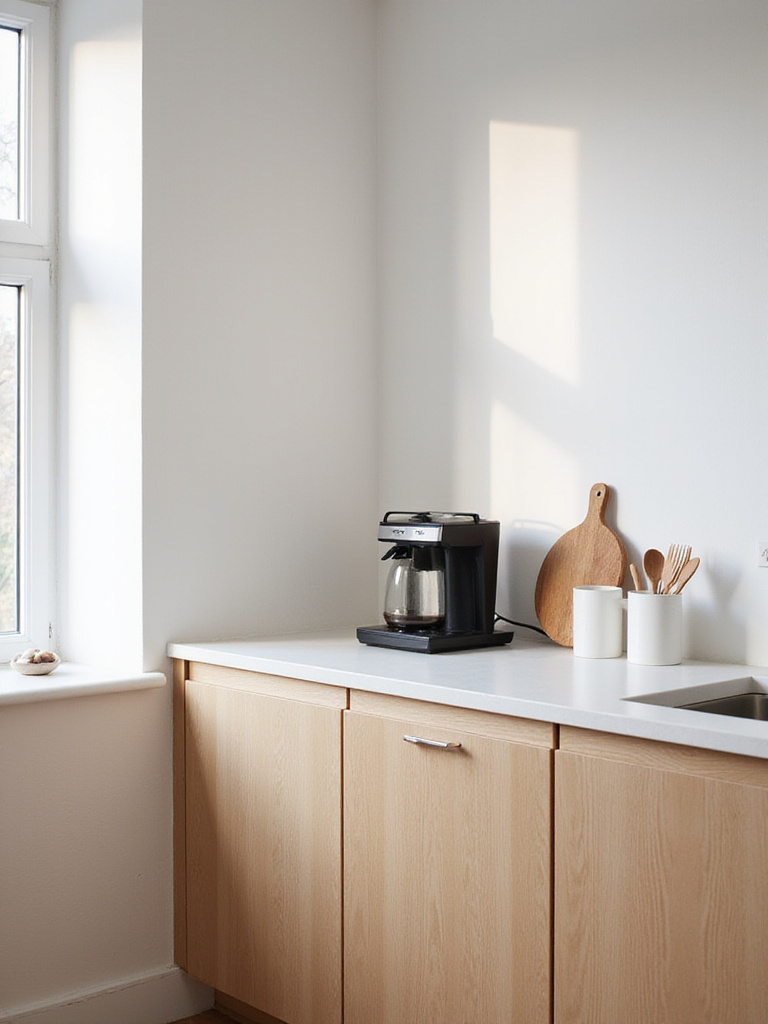
This requires ruthless honesty. Do you really use that stand mixer every day? Or could it live in a cabinet? The goal isn’t to have completely empty surfaces, but to be incredibly intentional about what earns a place there. A beautiful wooden cutting board, a vessel with your most-used utensils, a high-quality coffee machine. That’s it. I encourage my clients to try a “nightly reset.” Before going to bed, take five minutes to clear the counters and return everything to its designated home. It’s a small ritual that makes waking up to a calm, orderly space a daily reality.
The key to achieving this, of course, is having a place for everything else to go—and that often means getting clever with your largest items.
11. Choose Integrated Appliances
The ultimate expression of seamlessness in a modern minimalist kitchen is integrated, panel-ready appliances. This is where you conceal the dishwasher, the refrigerator, and even the ventilation hood behind custom panels that match your cabinetry. It’s a significant investment, but the result is transformative. The kitchen stops looking like a collection of machines and starts feeling like a cohesive, tranquil piece of architecture.
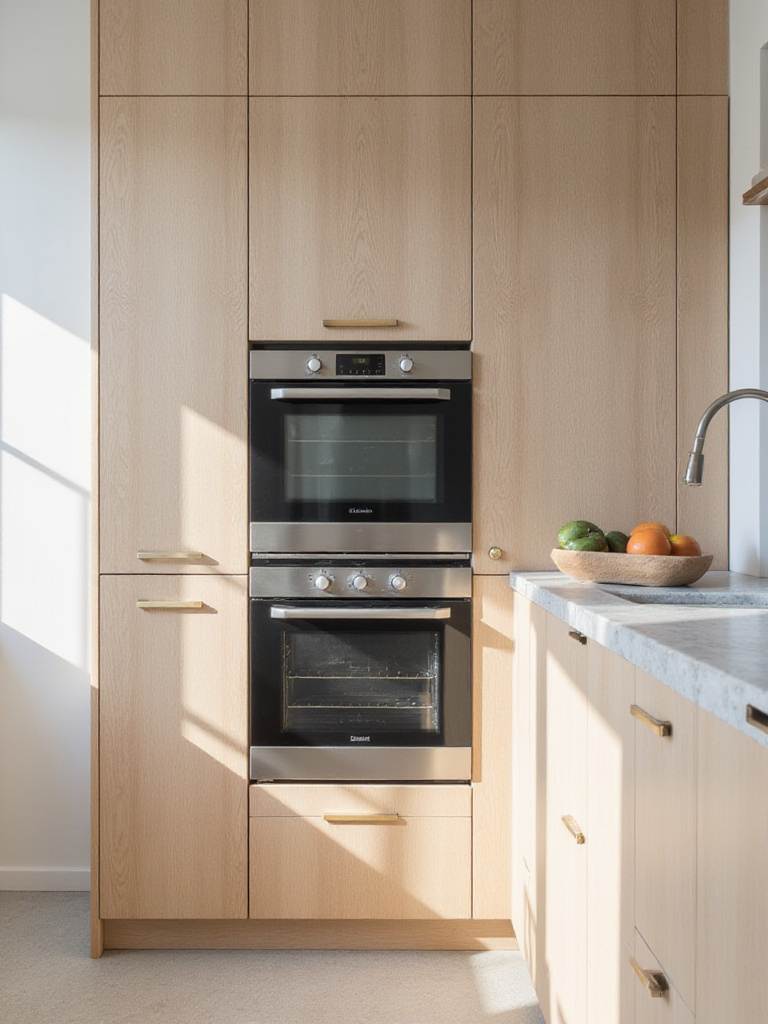
Frankly, this is where a tech-savvy approach pays off. High-end brands like Miele or Gaggenau excel at this, creating powerful, efficient appliances that are designed to disappear. When you can’t see the technology, you can better appreciate the craftsmanship of the room. If a fully integrated kitchen isn’t in the budget, the next best thing is to choose all of your appliances from a single brand and line. A consistent finish and handle design will go a long way toward creating that cohesive, uncluttered feel.
Once your large appliances are harmonized, it’s time to consider the places where people will gather.
12. Select Ergonomic and Elegant Seating
The kitchen island is often the social heart of the home, and the bar stools you choose can either support or undermine that. The goal is to find seating that balances visual lightness with genuine comfort. After all, what’s the point of a beautiful island if no one wants to sit there for more than ten minutes?
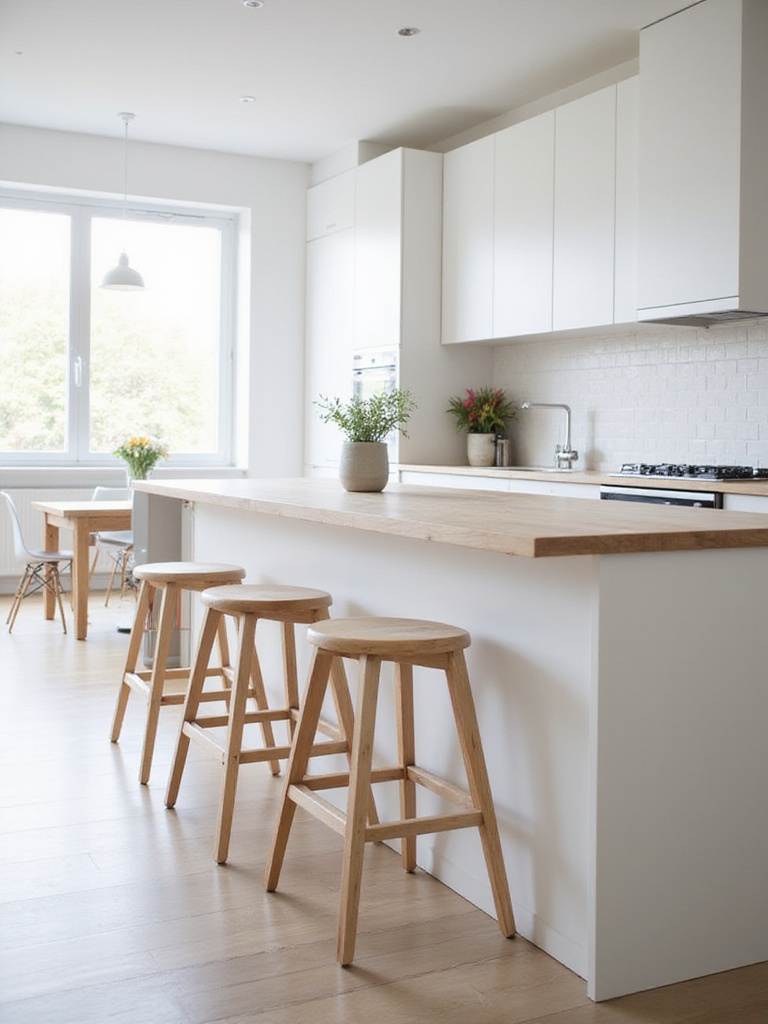
Look for stools with simple lines and natural materials—molded wood, woven seats, or slender metal frames. Pay close attention to ergonomics. A contoured seat and a footrest make a world of difference. Backless stools are great for tucking completely under the counter to maintain a clean sightline, but if you expect people to linger, a low-back design provides crucial support without adding much visual bulk. Measure carefully: you want about 10-12 inches of space between the seat and the bottom of your countertop for comfortable legroom.
With a comfortable place to sit, you can turn your attention to the objects you interact with every day.
13. Display Artisanal Ceramics
Ceramics are where the soul of this design lives. They bring in the essential human touch. In Japanese aesthetics, the concept of wabi-sabi finds beauty in imperfection—the slightly irregular shape of a hand-thrown bowl, the unique pattern of a glaze. Mass-produced, identical dishes feel sterile in comparison.
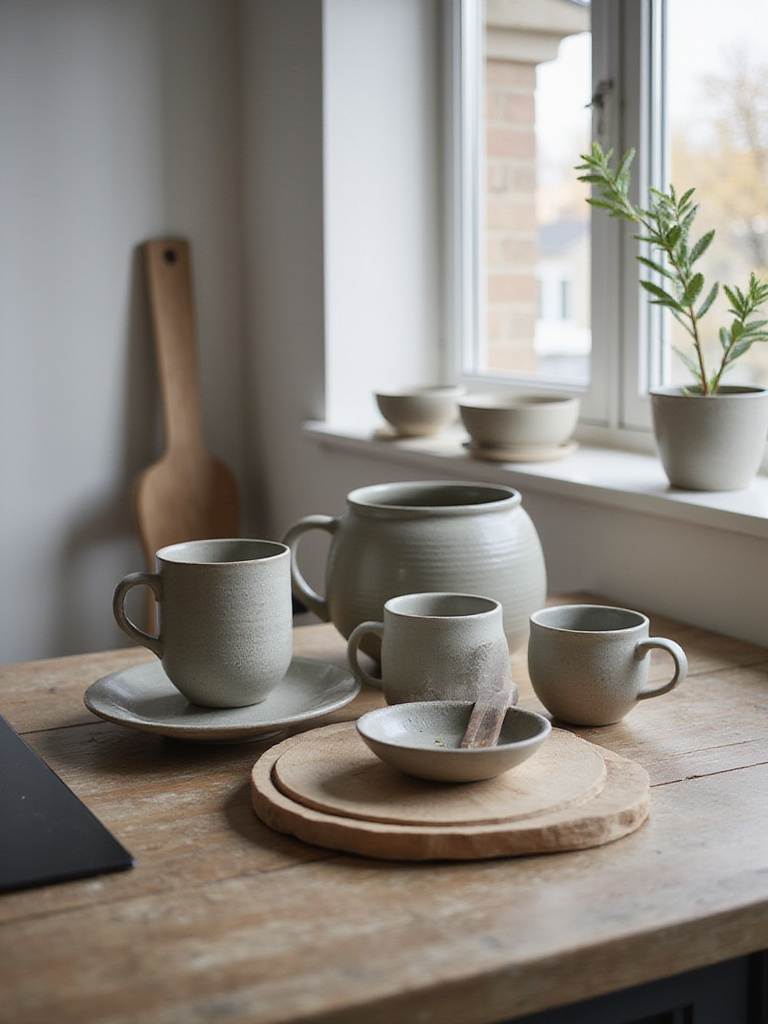
You don’t need an extensive collection. A few well-chosen pieces can have a huge impact. Group them on your open shelves or a small tray on the counter. Think about a cohesive story—maybe you collect pieces in a single color, like a moody gray or soft white, or you focus on a specific texture. These items serve a dual purpose: they are beautiful objects to be admired, and they are functional vessels for your morning tea or evening meal, elevating a daily routine into a small, pleasing ritual.
To keep these beautiful pieces organized, you’ll need a system that’s just as thoughtful.
14. Embrace Smart Drawer Organization
True serenity in a kitchen isn’t just about what you can see; it’s about knowing that behind the calm facade, everything has its place. A chaotic “junk drawer” can radiate a surprising amount of stress. This is where smart organization becomes the invisible architecture of your kitchen’s tranquility.
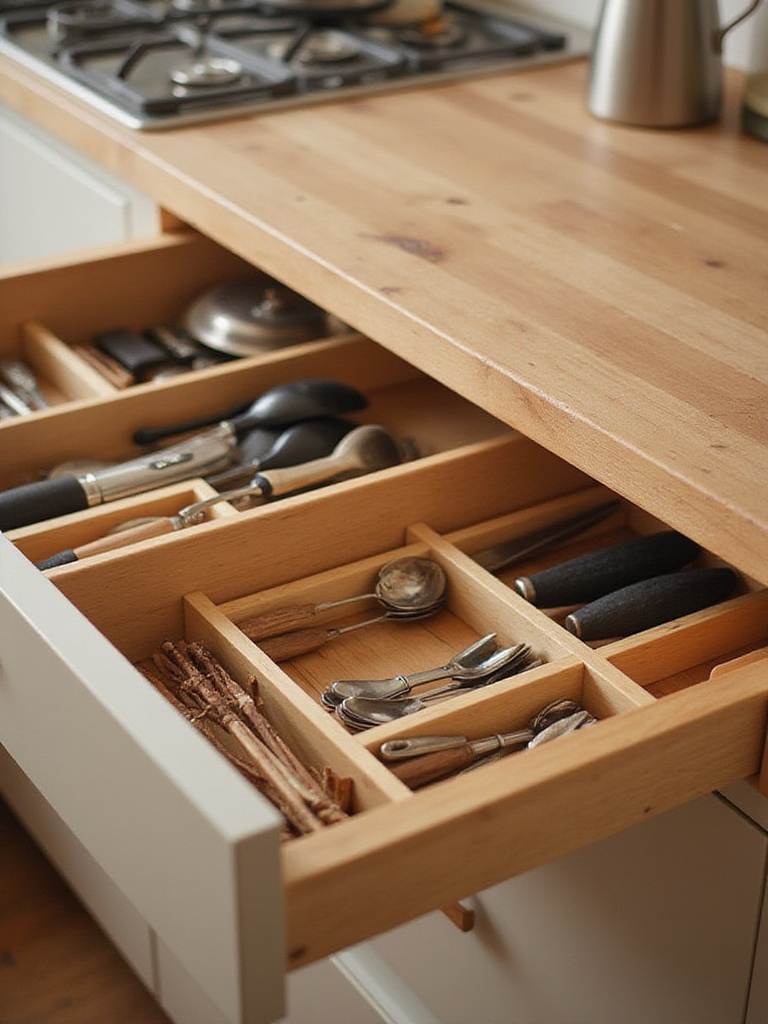
Start by emptying a drawer completely. Group like with like, and be honest about what you actually use. Then, invest in good quality dividers. I love adjustable bamboo inserts; they’re sustainable and bring that warm wood texture into the drawer itself. For utensils, a diagonal divider can often fit more than a traditional grid. Use vertical storage for knives and spice jars to take advantage of the drawer’s full depth. When you open a drawer and see order instead of chaos, it’s a small, private moment of satisfaction that contributes to the overall calm of the space.
With the core elements in place, we can now add subtle layers of personality.
15. Weave in Subtle, Cool-Toned Accents
A purely white-and-wood kitchen can sometimes feel a little one-note. The solution isn’t to add a loud “pop of color,” but to layer in subtle, cool-toned accents. Muted grays, dusty blues, and soft sage greens act as a sophisticated counterpoint to the warmth of the wood. They provide visual depth and have a psychologically calming effect.
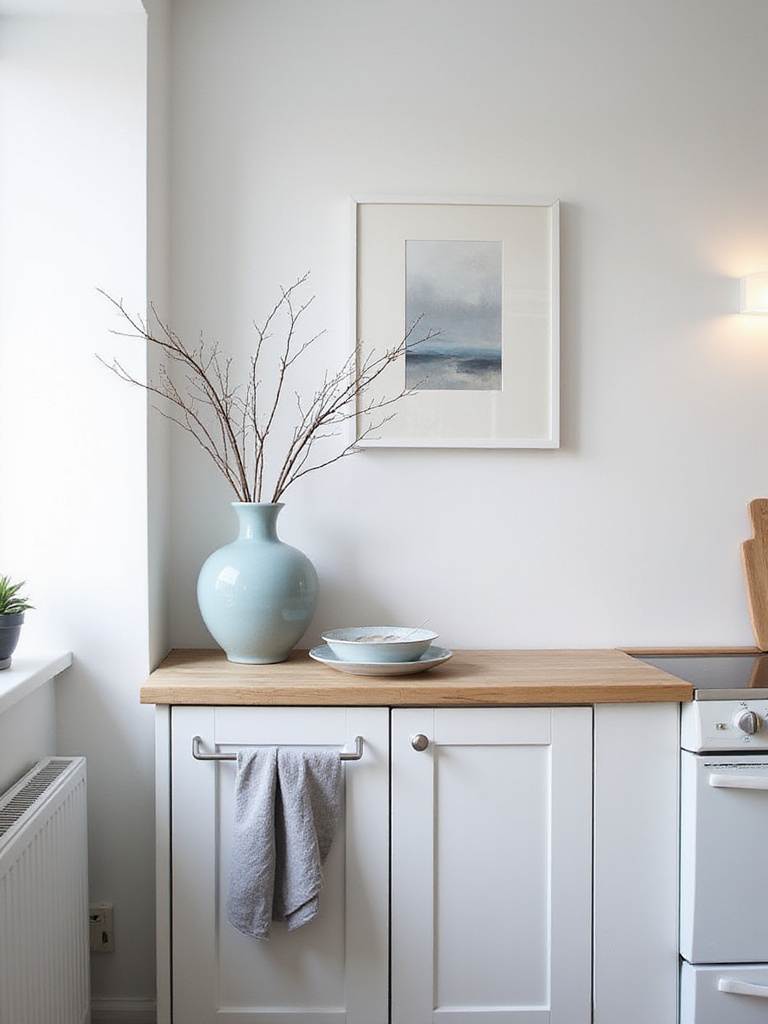
Restraint is key. This isn’t a feature wall. It’s a set of linen tea towels in a soft gray, a single ceramic vase in a faded blue, or placemats in a subtle, cool-toned pattern. These accents are wonderful because they’re low-commitment. You can swap them out seasonally or as your tastes change, refreshing the space without any major renovations. The effect is a palette that feels layered, complex, and deeply serene.
This same principle of subtle addition applies to what you hang on the walls.
16. Hang Abstract, Minimalist Art
Choosing art for a kitchen can be tricky. It’s a functional space, and you don’t want something that feels out of place or thematically “loud.” The Scandinavian approach, which aligns perfectly with Japanese principles, is to opt for abstract or minimalist art. It adds a touch of sophistication without demanding attention.
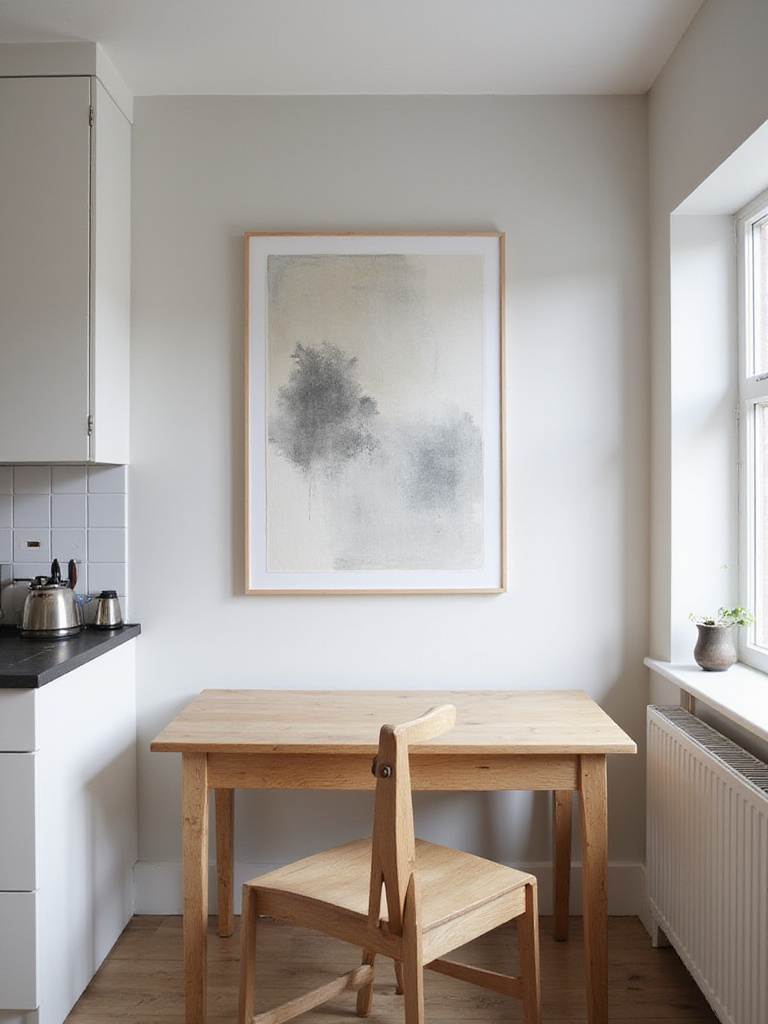
Look for pieces with simple geometric shapes, subtle textural elements, or a muted color palette that complements your existing finishes. A single, well-scaled piece often has more impact than a gallery wall of smaller items, which can start to feel cluttered. Frame it simply in natural wood or a thin white frame. The goal is to create a moment of quiet contemplation, something beautiful to rest your eyes on while the kettle boils.
Beyond decoration, the a core feature of the modern Scandinavian kitchen is its central hub.
17. Design a Multi-Functional Island
In many homes today, the kitchen island has replaced the formal dining table. It’s a workspace, a breakfast bar, a homework station, and a social hub. A well-designed island in a Scandinavian kitchen embraces this multi-functionality while maintaining clean, uncluttered lines.
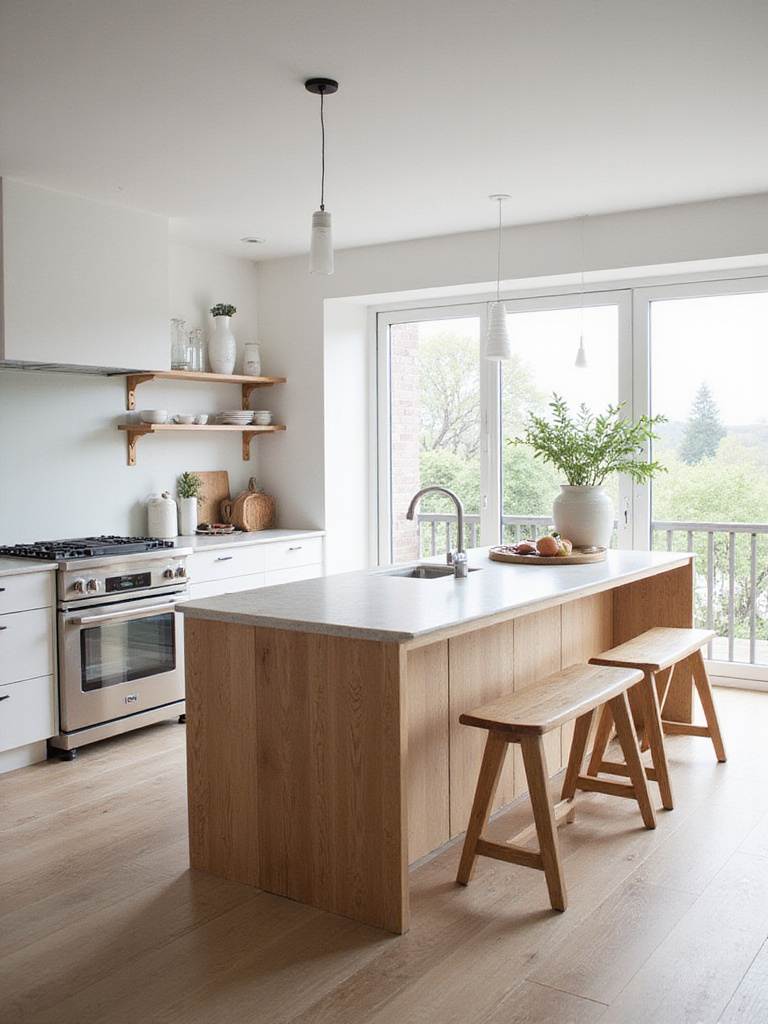
Planning is crucial. You need to consider workflow and clearance, ensuring there’s enough space to move around it comfortably even when people are seated. Storage is paramount: deep drawers are far more useful than cavernous cabinets. I often design islands with a “waterfall” countertop, where the surface material wraps down the sides. It creates a beautiful, solid, architectural form. The island should feel less like a piece of furniture and more like an integral part of the room’s design.
To soften these hard, architectural elements, we turn again to textiles.
18. Use Natural Linen Everywhere
If there is one textile that defines this aesthetic, it’s linen. It has a beautiful, organic texture and a relaxed, lived-in quality that perfectly captures the spirit of hygge. And unlike crisp cotton, linen’s natural tendency to wrinkle is part of its charm. It signals comfort and ease, not rigid formality.
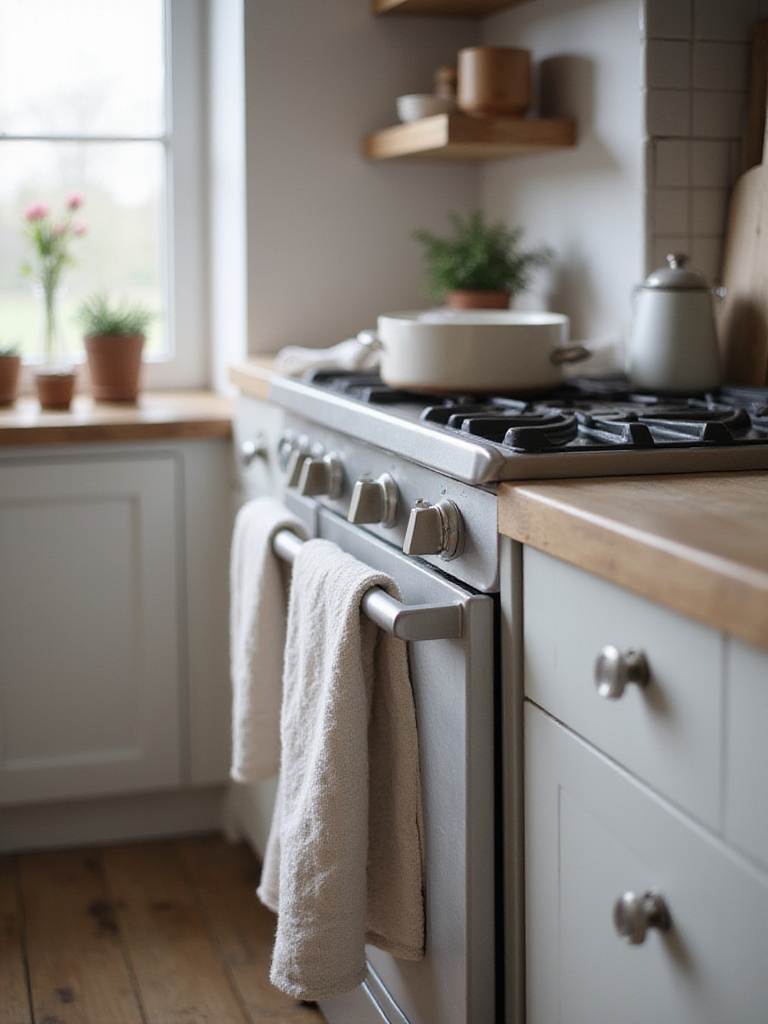
Use it for tea towels, napkins, placemats, and table runners. Stick to a palette of natural, undyed tones, soft whites, or muted stripes. There’s a humble honesty to linen that feels just right. A casually folded linen napkin or a beautifully rumpled tea towel hanging from an oven door adds a necessary layer of softness and humanity to the kitchen. It’s also incredibly durable and becomes softer with every wash—a perfect example of buying fewer, better things.
As your collection of items grows, you’ll need to think beyond just cabinets and shelves.
19. Think Vertically with Your Storage
In any small-to-medium-sized kitchen, wall space is valuable real estate. Using it effectively is key to maintaining those clear countertops. Scandinavian design excels at turning vertical surfaces into elegant and functional storage.
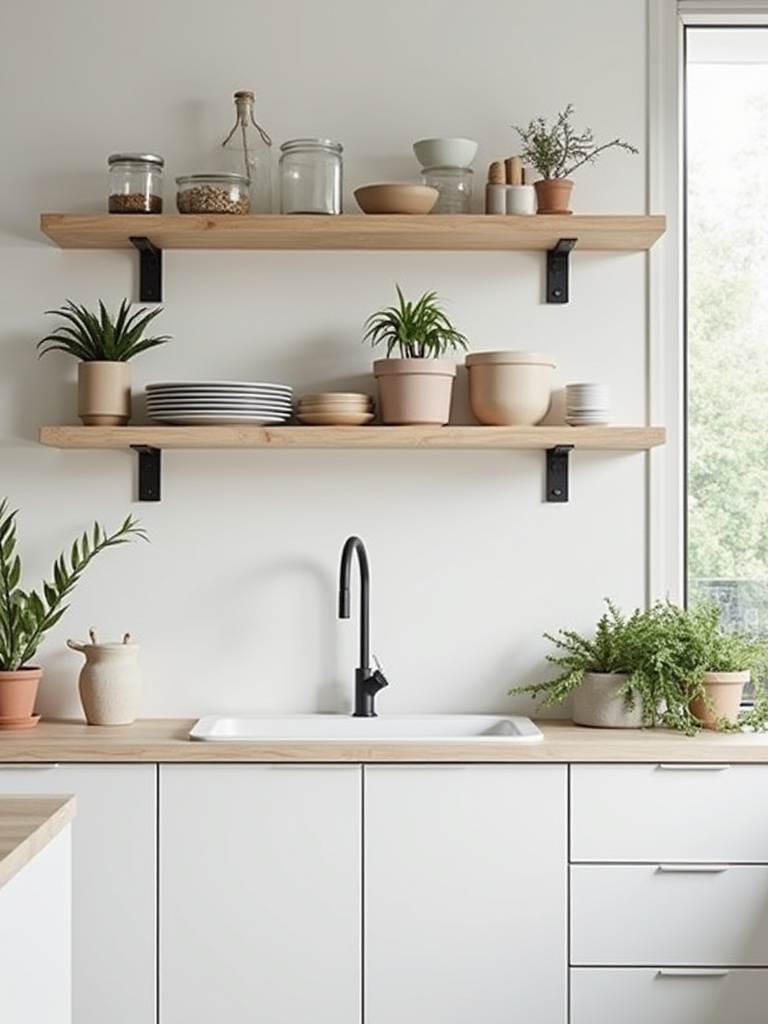
This might mean running your cabinets all the way to the ceiling, creating a seamless look while maximizing storage for less-frequently used items. Or, it could be a simple, wall-mounted rail system with hooks for mugs and utensils. My favorite is a sleek, magnetic knife strip. It frees up counter or drawer space, keeps your knives in top condition, and displays them like functional art. The trick is to ensure these solutions are as beautiful as they are practical, maintaining the overall visual calm.
Underpinning all of these choices is a fundamental respect for where our materials come from.
20. Prioritize Sustainable Materials
A core tenet of both Nordic and Japanese cultures is a profound respect for nature. This isn’t just an aesthetic—it’s a philosophy that should guide your material choices. This means looking for woods that are FSC-certified, ensuring they come from responsibly managed forests. It means considering countertops made from recycled materials or long-lasting composites that won’t need to be replaced in a decade.
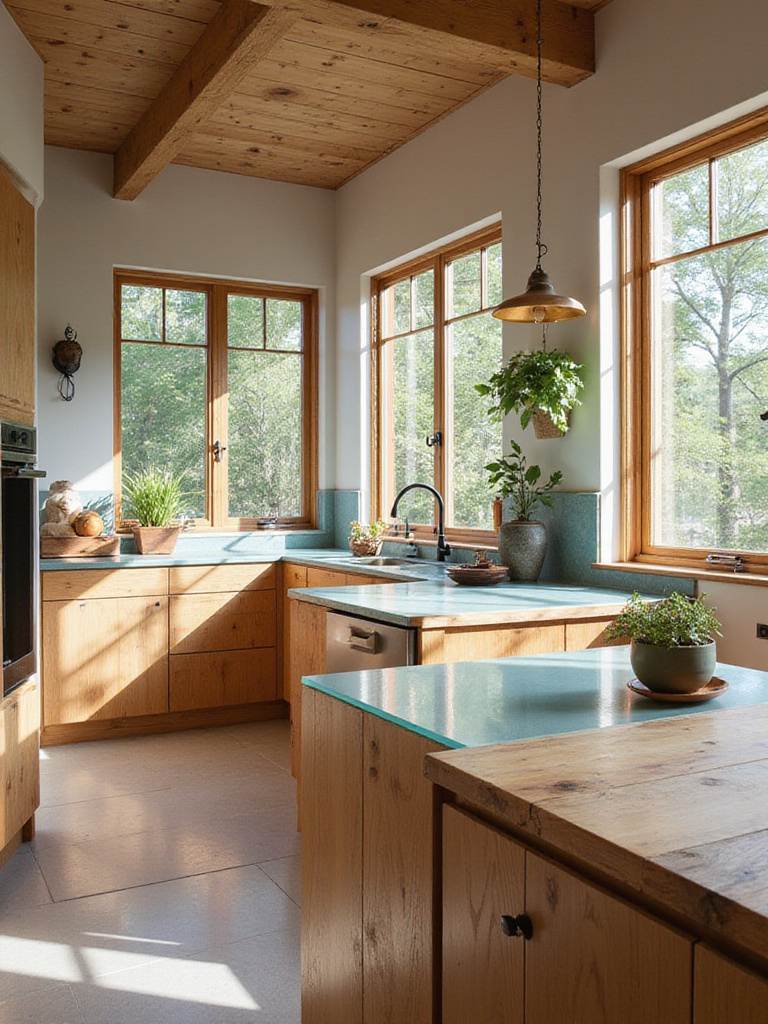
It’s about choosing quality that lasts. This is the antidote to our throwaway culture. When you invest in a solid wood table or a well-crafted set of cabinets, you’re not just buying an object; you’re buying a piece that will age gracefully, develop a patina, and serve your family for years to come. It’s a quieter, more thoughtful approach to consumption that creates a space with integrity and soul.
And within this thoughtful space, you can carve out small pockets of pure comfort.
21. Carve Out a Cozy Breakfast Nook
The breakfast nook is the physical embodiment of hygge—that untranslatable Danish word for a feeling of cozy contentment. It’s a small, intimate space designed for simple, daily rituals: sipping your morning coffee, sharing a quiet meal, reading a book while something simmers on the stove.
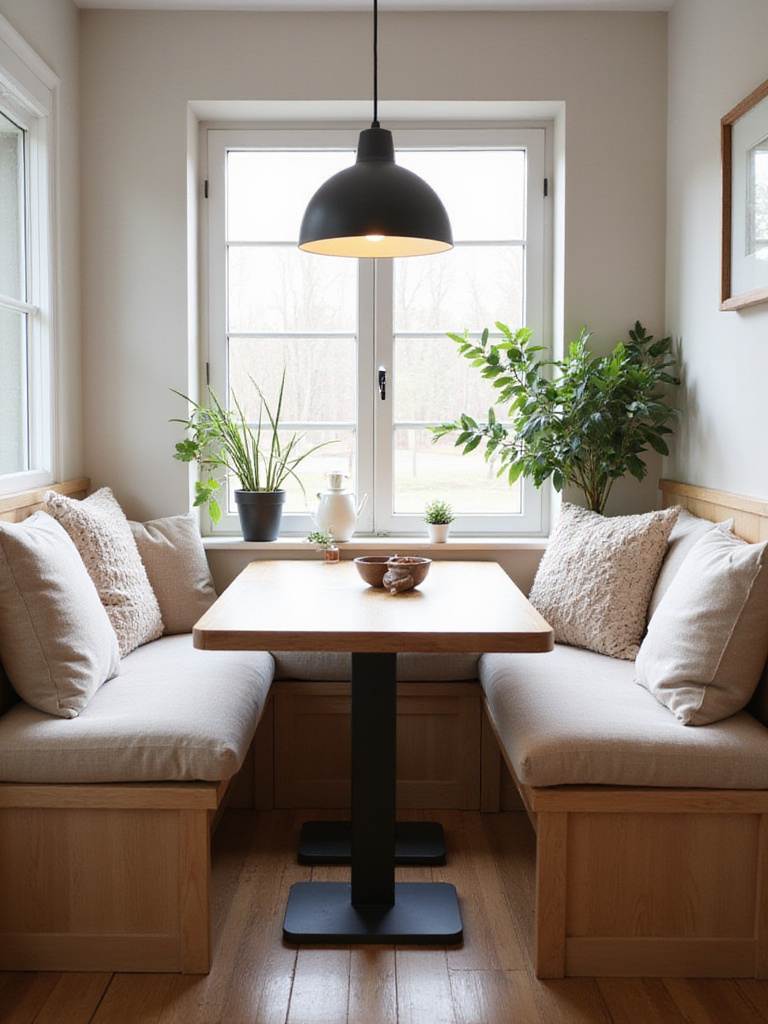
Look for an underutilized corner, perhaps by a window, and create built-in bench seating. This is incredibly space-efficient, and you can design the benches with lift-up tops for hidden storage. Pair it with a simple pedestal table and soften the space with cushions and a sheepskin throw. Add a small pendant light on a dimmer. It becomes a magnet, a cozy retreat within the larger, functional space of the kitchen—a reminder to slow down and savor the small moments.
That same “savor the moment” mentality extends to the very tools you use.
22. Invest in Tools That Last a Lifetime
Scandinavian and Japanese cultures share a deep appreciation for craftsmanship. This applies as much to a humble cooking spoon as it does to a chair. The idea is to move away from cheap, disposable gadgets and instead invest in a small collection of heirloom-quality utensils. These are tools that feel good in your hand, perform their function perfectly, and are beautiful enough to be displayed.
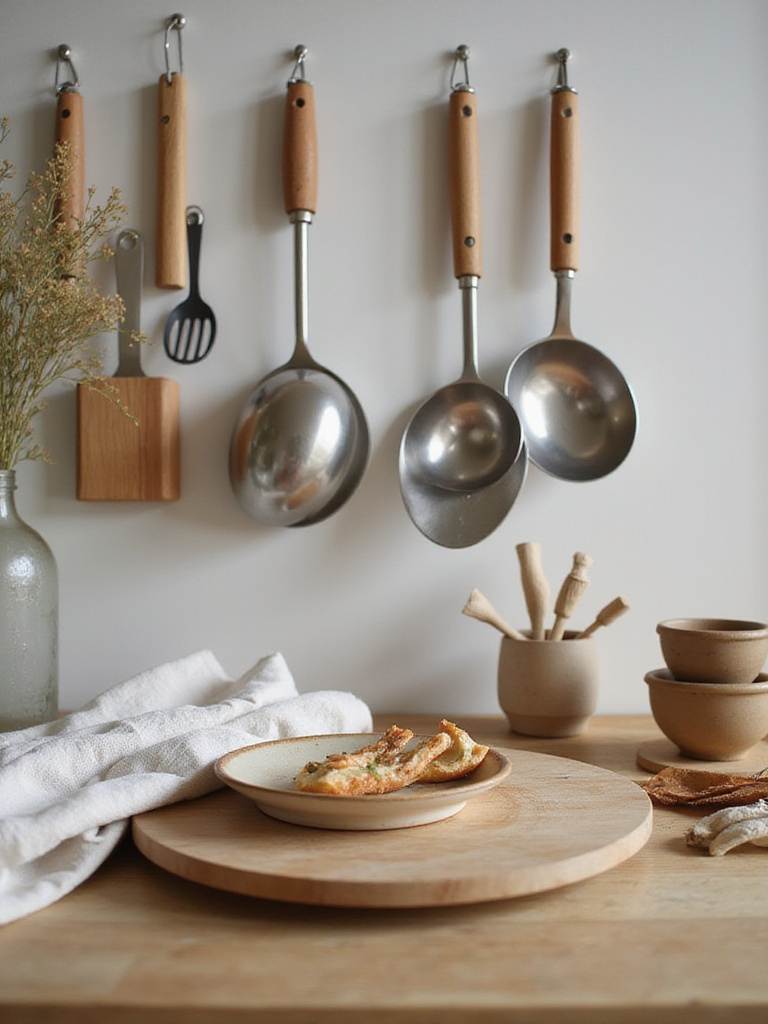
Think of a chef’s knife from a respected maker, a heavy-bottomed cast iron pan that will outlive you, or wooden spoons carved from a single piece of hardwood. These objects may cost more upfront, but they eliminate the waste and frustration of constantly replacing inferior products. They develop a patina with use, telling the story of the thousands of meals they’ve helped create. Cooking with well-made tools transforms a daily chore into a deeply satisfying craft.
To store the things that don’t deserve a place on an open shelf, turn to one of nature’s most versatile materials.
23. Organize with Woven Baskets
Woven baskets are the perfect solution for things you need to keep handy but don’t necessarily want to see—like root vegetables in a pantry, extra linens, or recycling. They conceal clutter while introducing that essential organic texture that softens all the hard lines of a kitchen.
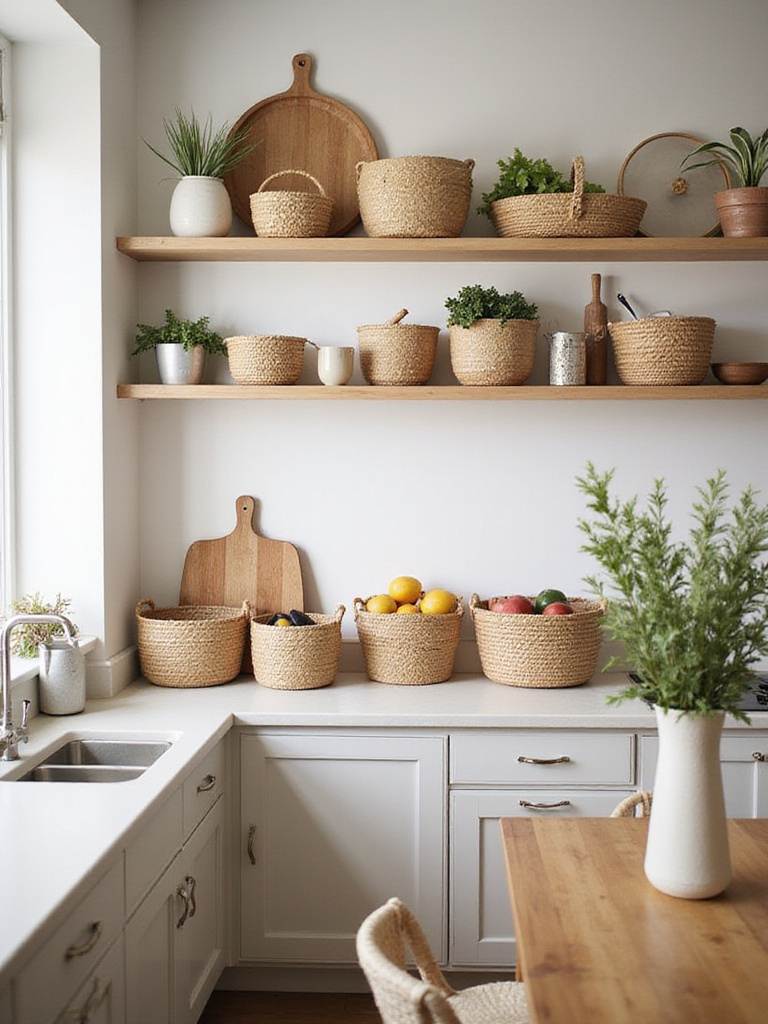
Use materials like seagrass, water hyacinth, or rattan. The key to making them look cohesive, rather than chaotic, is to stick to one or two material types. A row of identical baskets on a pantry shelf or a large one tucked into a corner looks intentional and calm. They are the quiet, hardworking partners to your sleek cabinetry, bringing a touch of rustic, handcrafted warmth to the most practical parts of your kitchen.
Finally, all these elements must be arranged into a coherent, functional whole.
24. Plan for an Intuitive Workflow
A beautiful kitchen that’s frustrating to cook in is a design failure. The final, invisible layer of a great Scandinavian kitchen is an intuitive workflow. This starts with the classic “work triangle” connecting the sink, stove, and refrigerator, but it goes deeper. Think about creating logical zones.
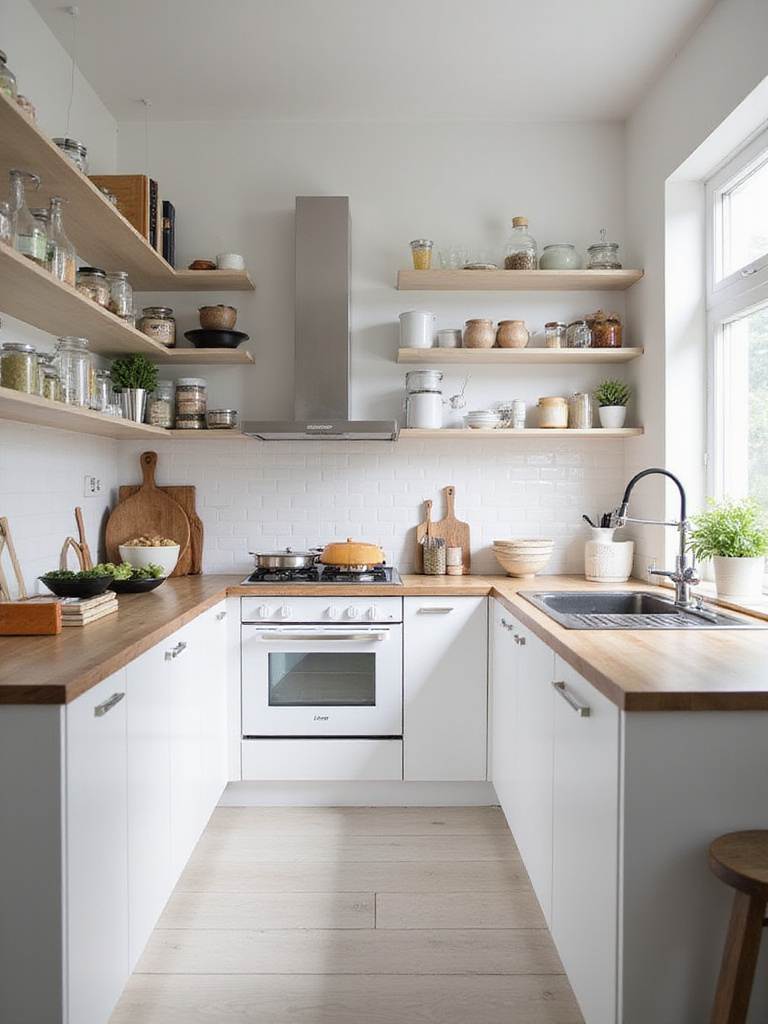
A “prep zone” should have clear counter space, with knives, cutting boards, and compost nearby. A “cooking zone” should have spices, oils, and pots and pans within easy reach of the stovetop. A “coffee zone” can gather your grinder, mugs, and machine into one efficient station. When your kitchen is laid out logically, your movements become fluid and effortless. The space anticipates your needs. This is the ultimate goal: a kitchen that is so well-designed, you don’t have to think about it at all. You can simply exist, create, and connect within it.
In Closing
Building a Scandinavian kitchen isn’t about perfectly recreating a photo you saw in a magazine. It’s about absorbing a philosophy. It’s a journey toward stripping away the non-essential to make room for what truly matters: light, nature, craftsmanship, and connection.
There’s a clear parallel here to how we try to manage our digital lives—deleting old files, turning off notifications, curating our feeds to create a calmer mental space. Your kitchen can be the physical extension of that practice.
Don’t feel like you have to do everything at once. Start small. Clear your countertops tonight. Buy one beautiful, handmade mug and use it for your tea tomorrow morning. Add a single plant. Notice how that one small, intentional change feels. True design begins there—not with a grand plan, but with a quiet, mindful choice that makes your daily life just a little bit better.