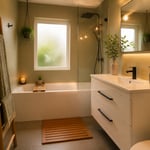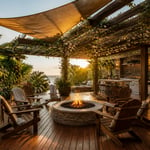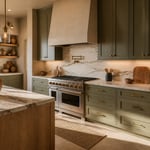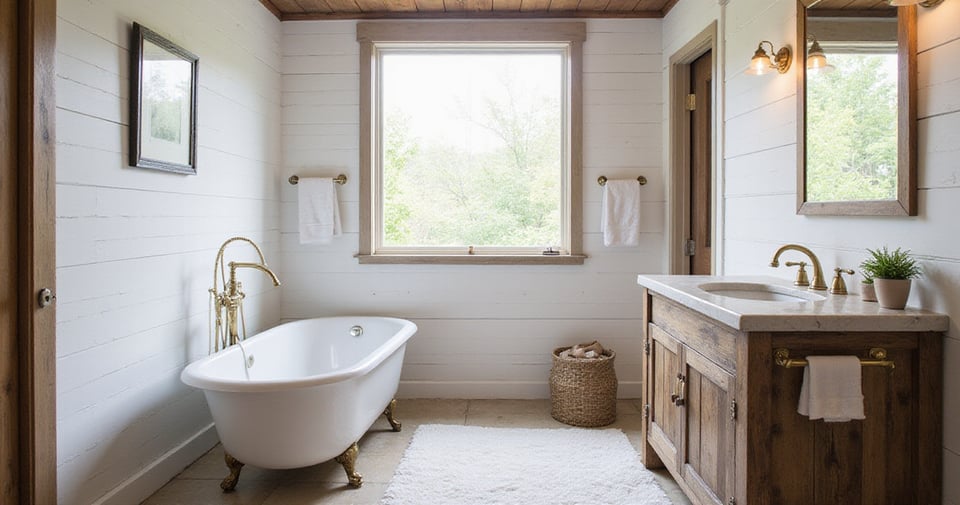
Imagine this: The day begins not with an alarm, but with sunlight filtering through slatted wood shutters, tracing patterns across the floor. You step barefoot onto cool, river-tumbled stone—a gentle massage just to get to the sink. The air, fresh from a private courtyard, smells of rain-soaked earth and jasmine. This isn’t just a bathroom; it’s a sanctuary. It’s the seamless transition between the world outside and your most personal space, where elemental design isn’t just an aesthetic, but a way of living.
For too long, we’ve treated bathrooms as purely functional, sealed-off boxes. But in our search for wellness and a deeper connection to nature, these rooms are crying out for a transformation. I’ve built my career on the belief that blending the raw luxury of Latin American design with clean, contemporary lines can create spaces that are both restorative and responsible. It’s about taking the essence of what some call “rustic”—the honesty of materials, the touch of the human hand—and infusing it with tropical soul.
What I want to show you isn’t a prescriptive guide. Think of it as a series of conversations about how to weave natural character, sustainable choices, and a bit of jungle modernism into a bathroom that feels less like a room and more like a retreat. A space that grounds you, every single day.
1. Define Your Sanctuary: Tropical Bungalow, Coastal Modern, or Jungle Luxe?
Before you pick a single tile, we need to set the scene. The term “rustic” is so broad it’s almost meaningless. A rugged log cabin in Montana and a breezy beach bungalow in Brazil might both use wood, but they speak entirely different languages. For those of us living in or inspired by warmer climates, our dialect of rustic needs to breathe. It needs to stand up to humidity and embrace the light.
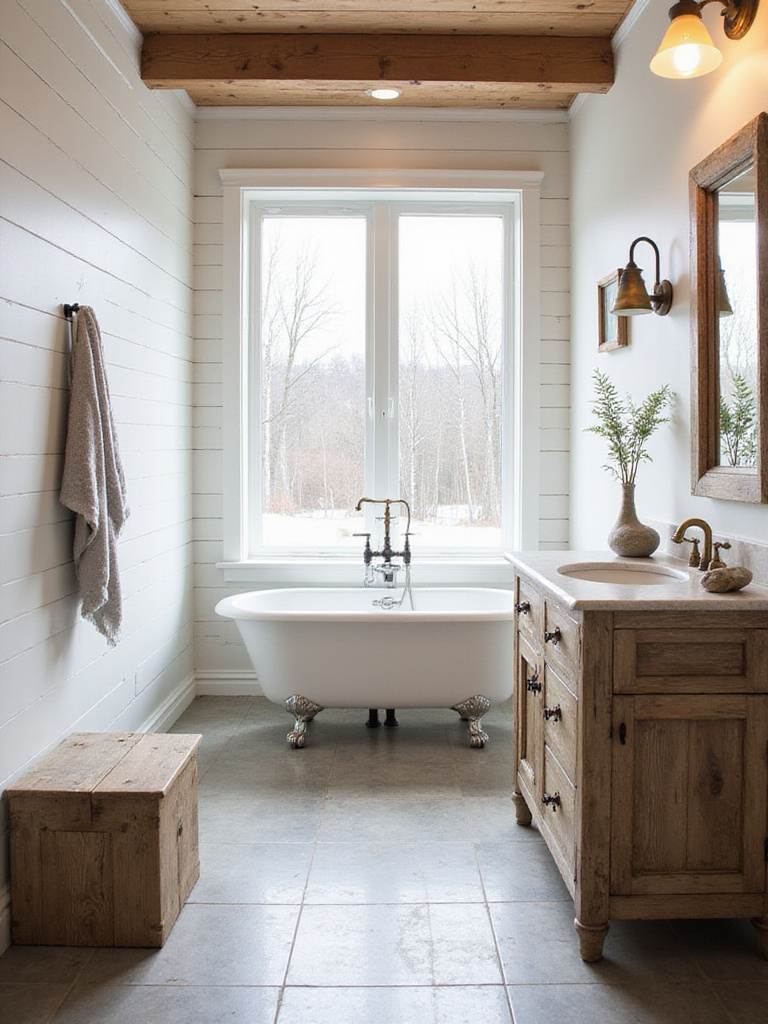
So, where do you see yourself? Is it a Coastal Modern retreat, defined by sun-bleached woods, woven textures, and the clean lines of off-white walls? This style is about lightness and air. Or perhaps you’re drawn to Jungle Luxe—a moodier, more immersive experience with dark tropical hardwoods, volcanic stone, and an abundance of living plants that blur the line between indoors and out. A third path is a kind of Modern Tiki style, which frankly gets a bad rap. I’m not talking about kitsch; I’m talking about its sophisticated roots—beautifully carved woods, bamboo accents, and a playful yet refined connection to island life.
Your choice here dictates everything that follows. The light woods of a coastal design call for brushed brass or even white fixtures, while a jungle luxe bathroom can handle the drama of blackened bronze and a massive, carved-stone sink. Nailing this foundation is the first step to creating a space that feels cohesive and intentional, not like a Pinterest board that lost its way.
2. A Reclaimed Wood Vanity: The Soul of the Space
Every room needs a heart, and in our tropical bathroom, it’s the vanity. Forget the standard-issue particle board. I’m talking about a solid piece of reclaimed timber that carries a history within its grain. This isn’t just about being eco-friendly (though that’s a huge part of it); it’s about character you simply can’t manufacture.
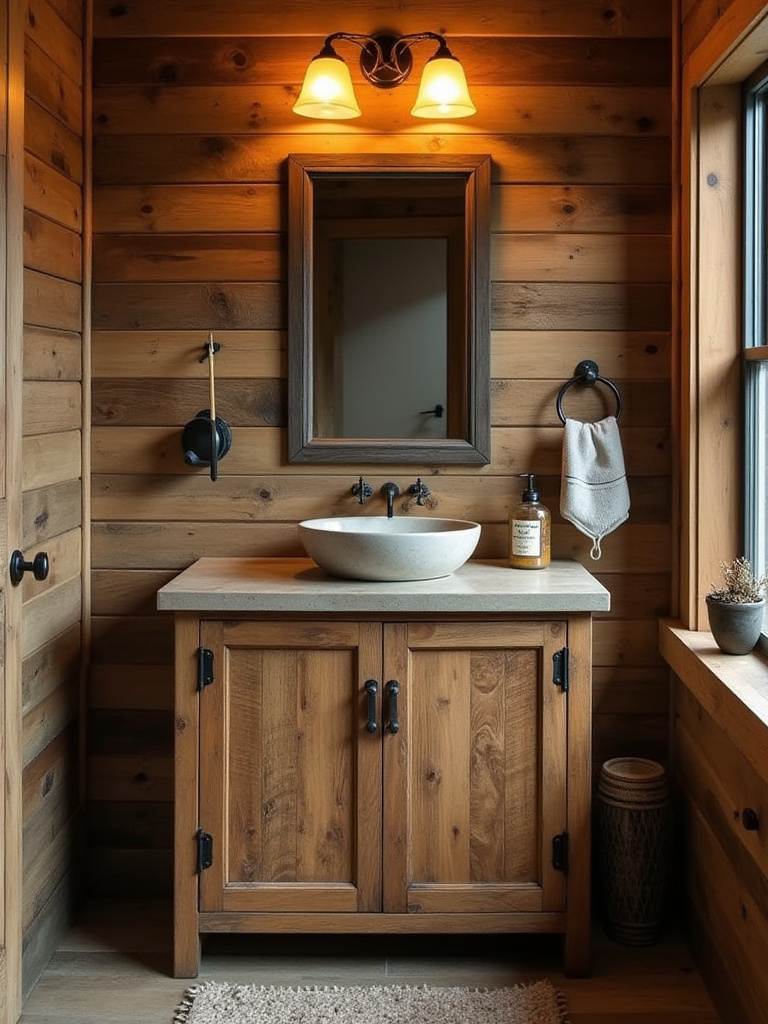
On a project in Bahia, Brazil, we sourced Peroba Rosa wood from a dismantled 100-year-old coffee plantation. The timber had these incredible nail holes and a deep, rosy patina from a century of sun and rain. We sealed it with a marine-grade, low-VOC finish, and it became the undeniable centerpiece of the bathroom. This kind of wood isn’t just beautiful—tropical hardwoods like Teak or Ipe are naturally resistant to humidity and insects, making them a far smarter choice for a bathroom than something like pine.
When sourcing, here’s what’s important:
- Find a reputable dealer who can tell you the story of the wood. Where did it come from? How was it dried? Provenance is part of its soul.
- Make sure it’s sealed for a wet environment. You want a finish that penetrates the wood, not one that sits on top like a plastic film.
- Why not consider a floating design? It shows off the beautiful wood and makes a small bathroom feel so much more open and airy.
This piece does more than hold your sink. It grounds the entire room in authenticity and tells a story of conscious, beautiful design.
3. Embrace Natural Stone for an Elemental Connection
If wood provides the warmth, stone provides the cool, grounding counterbalance. It connects your space to the earth in a primal way. Walking on a natural stone floor or splashing water into a carved stone sink is a tactile experience that man-made materials can never replicate. The key is choosing the right stone that speaks the language of the tropics.
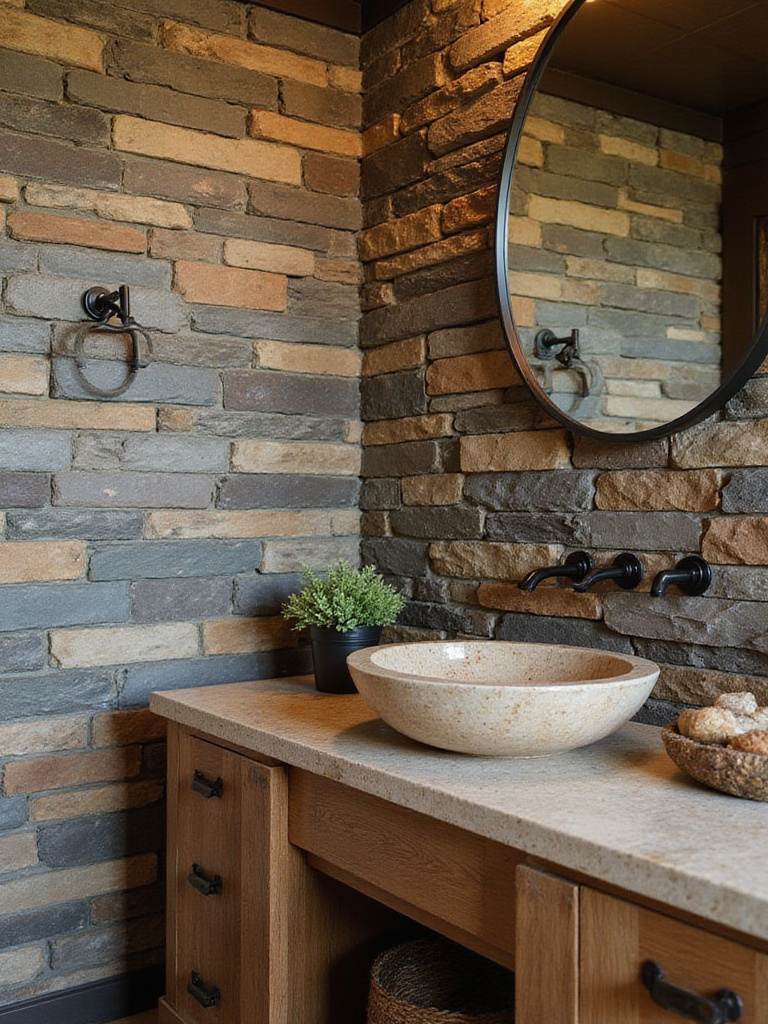
I’m drawn to materials like lava stone or basalt for their dramatic, porous texture that feels incredible underfoot (when properly sealed, of course). Travertine offers warmer, sandy tones that are perfect for a coastal vibe. And for a shower floor? Nothing beats the feeling of smooth, tumbled river rock. It’s a mini foot massage every single morning. I remember one client hesitated, worried it would be hard to clean. The secret? Use a darker, high-quality epoxy grout and a good sealer, and it’s practically indestructible.
What you need to keep in mind:
- Stone is porous. Sealing is not optional; it’s essential maintenance you’ll do every year or two to protect your investment.
- Think beyond the floor. A single, dramatic slab of quartzite behind the vanity can be a work of art.
- Consider the thermal properties. In a warm climate, stone floors feel deliciously cool underfoot—a bit of nature’s air conditioning.
The beautiful thing about stone is that it doesn’t show wear; it develops a patina. It settles into your home and becomes more a part of it over time, telling the story of your life in its subtle changes.
4. The Modern “Barn Door”: Designing for Airflow
Let’s ditch the phrase “barn door”—it brings to mind a heavy, rustic door that might feel out of place in a light-filled tropical home. Instead, let’s think of it as a sliding architectural panel. This is one of the best moves you can make, especially in a tight space, because it eliminates the need for door-swing clearance.
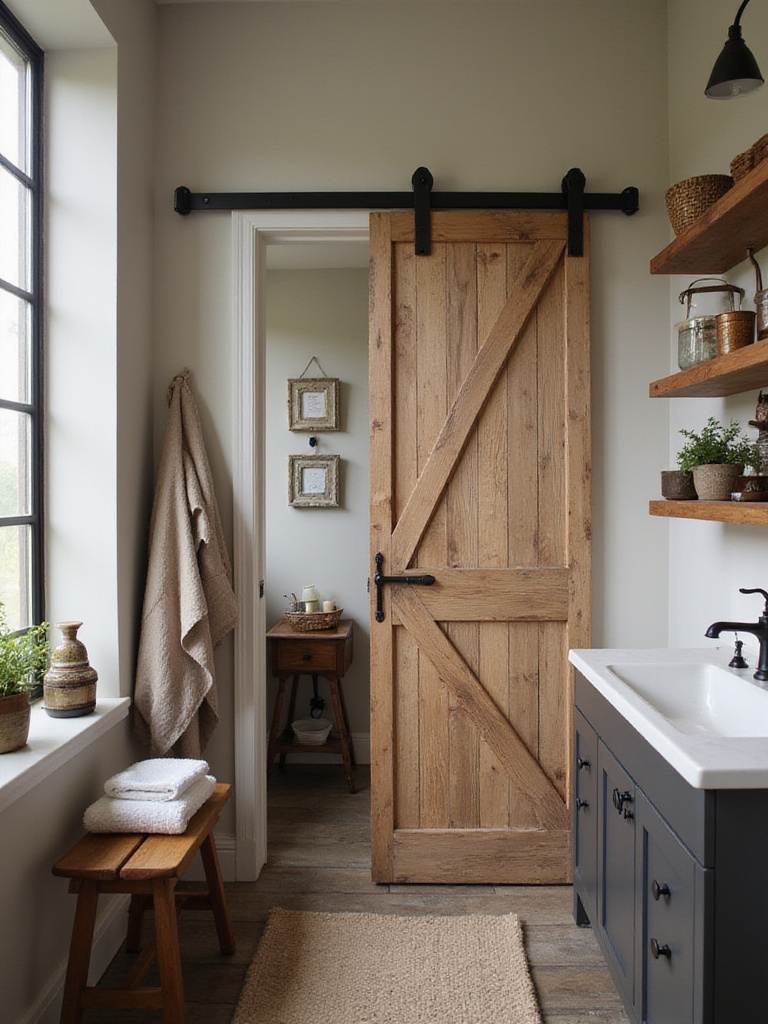
But this is where we can get really creative and climate-responsive. Instead of a solid plank of wood, imagine a door made from louvered slats of Ipe, allowing air to move freely even when the door is closed for privacy. It’s a classic technique from pre-air-conditioning architecture in the Caribbean and Southeast Asia. Or, what about a panel of woven rattan or cane set within a sleek timber frame? It adds incredible texture and pattern while feeling light and breezy.
A few practicalities to consider:
- You obviously need a clear wall for the door to slide across. Make sure you don’t have light switches or outlets in the way.
- The hardware is critical. A high-quality, soft-close track is a must. I prefer minimalist tracks in blackened steel or even matte white to keep the focus on the door itself.
- This sliding panel becomes a piece of wall art. Think about how it looks from the hallway or bedroom when it’s open or closed. It’s a design element in both positions.
This isn’t just a door. It’s an active part of your home’s ventilation system, a functional sculpture that enhances your design and your comfort.
5. Living Finishes: The Beauty of a Natural Patina
Fixtures are the jewelry of the bathroom, and here, I urge you to embrace imperfection. Forget the sterile chrome that shows every single fingerprint. Let’s talk about living finishes—metals that evolve with you and your environment.
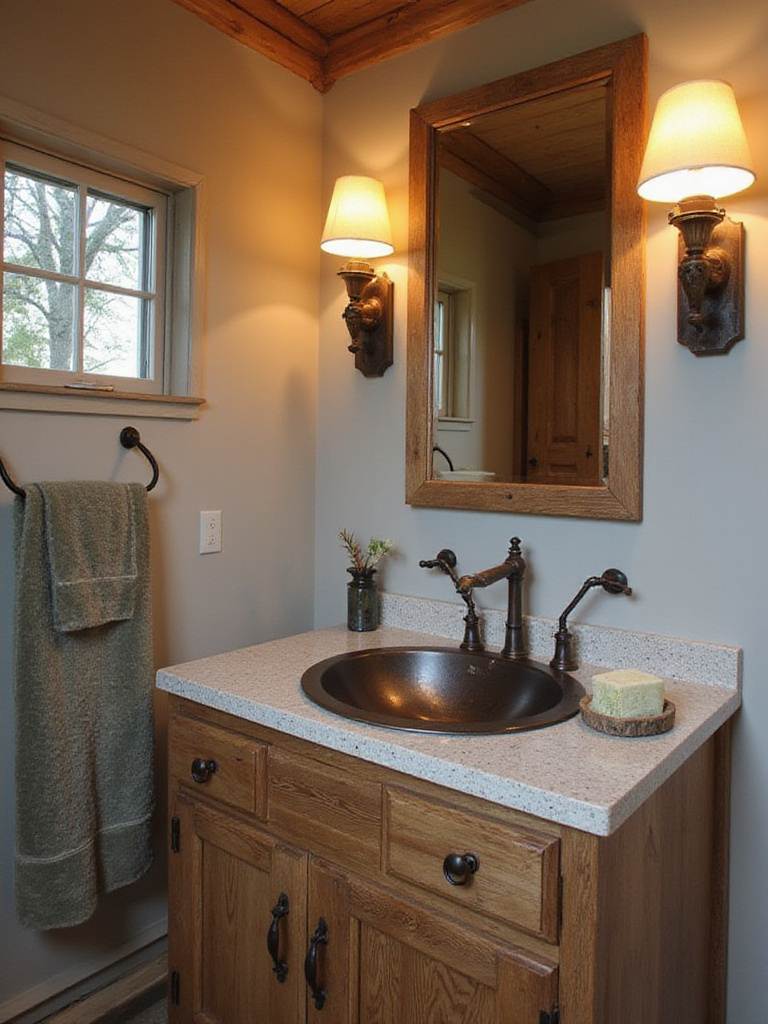
My absolute favorite is unlacquered brass. When you first install it, it’s bright and shiny. But over time, especially in a humid or coastal environment, it deepens to a rich, warm, complex gold. It tells a story. The same goes for oil-rubbed bronze and copper. These materials aren’t just “weathered”; they are actively reacting to their world. What really gets me is when I see “weathered” finishes that are just a factory-applied paint. That’s faking the story. The real magic is in letting it happen organically.
Here’s how to do it right:
- Be patient. A true patina doesn’t happen overnight. It’s a slow, beautiful process.
- Mix your metals, but with intention. The warm tones of unlacquered brass for a light fixture pair beautifully with the dark depth of oil-rubbed bronze on faucets and towel bars. The key is to keep the number of finishes to two or three so it looks curated, not chaotic.
- Understand you’re signing up for change. If you are someone who needs everything to look brand new forever, this is not the path for you. And that’s okay! But if you love things that show their age gracefully, there is nothing better.
This choice is a philosophical one. It’s about celebrating the beauty of time and use, turning everyday objects into things that hold a personal history.
6. The freestanding tub: Your Sculptural Soaking Vessel
If you have the space, a freestanding tub is a non-negotiable anchor for a luxury sanctuary. It immediately signals that this room is for more than just a quick shower—it’s for lingering, soaking, and unwinding. While a classic clawfoot tub is beautiful, for a modern tropical aesthetic, I lean towards more sculptural, clean-lined forms.
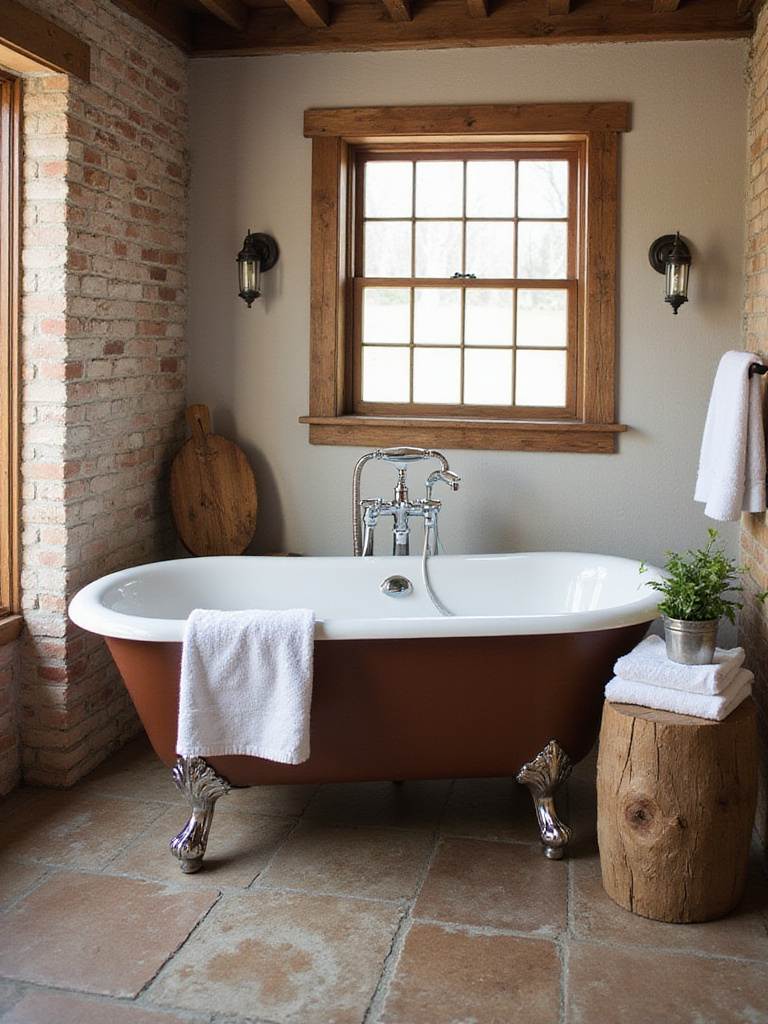
Think of a deep soaking tub with a simple, elegant silhouette in matte white solid-surface or even honed stone. The best installations I’ve done have positioned the tub to take advantage of a view—whether it’s overlooking a lush private garden or placed under a skylight where you can watch the stars. This is a core tenet of indoor-outdoor living. It’s about breaking down the barriers between the built environment and the natural one.
Here’s the thing—it’s a commitment:
- These things are heavy. Your floor structure needs to be properly reinforced, especially for cast iron or stone.
- Plumbing is more complex. You need a floor-mounted tub filler, and all the plumbing is exposed, so it has to be beautiful. It’s an extra expense, but it’s worth it.
- Placement is everything. Don’t just cram it in a corner. Let it breathe. It’s a sculpture, so give it the space a sculpture deserves.
The right tub in the right place transforms the simple act of bathing into a ritual. It’s the ultimate statement of personal luxury and a commitment to your own well-being.
7. River Rock Shower Floors: A Daily Spa Ritual
This is one of my signature moves, and it’s an absolute game-changer for the daily shower. Forget cold, flat tile. A floor of smooth, natural river rock brings an organic, textural element into the space that’s pure biophilic design. It’s a direct connection to nature that you feel, literally, under your feet.
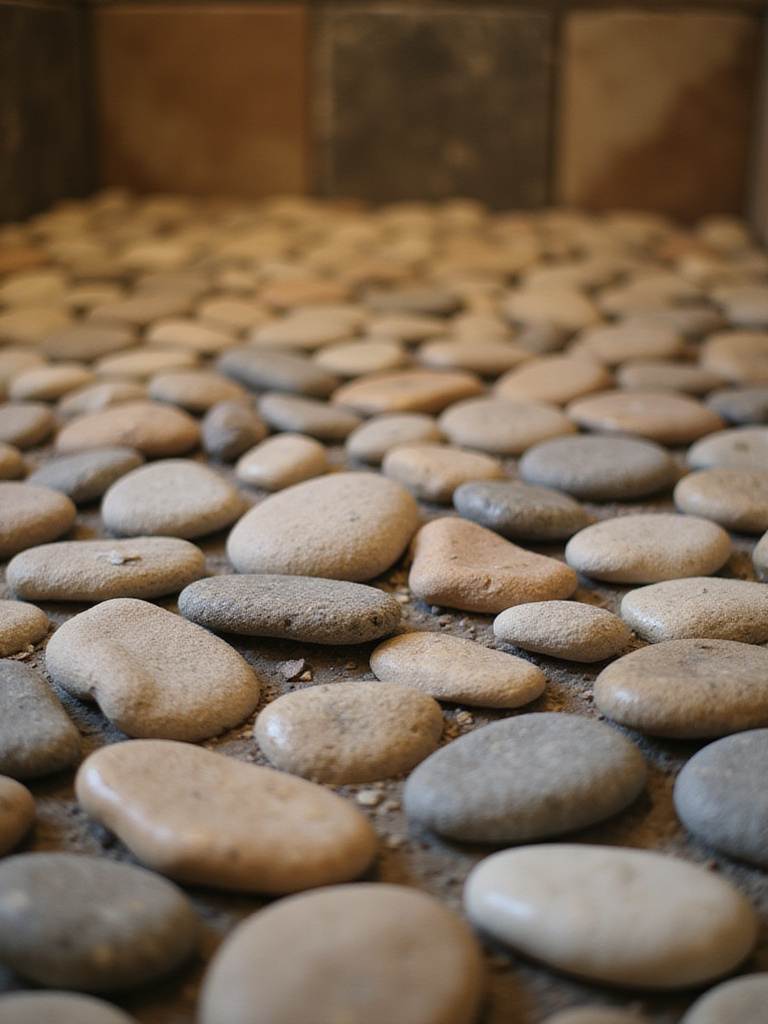
The gentle, uneven surface provides a constant, subtle massage, and the look is incredible—like you’ve discovered a hidden waterfall spring. It’s surprisingly practical, too. The textured surface is naturally slip-resistant, which is a huge bonus in a wet area. I’ve found the key is to choose the “sliced” or “flat-top” pebble tiles. You get the beautiful organic pattern without the potentially uncomfortable feeling of sharper stones.
To make it work, you need a great installer:
- The sub-floor has to be sloped perfectly to a central drain to prevent any water from pooling. This is not a job for a beginner.
- Grout color matters. I almost always recommend a darker gray or earth-toned grout that recedes visually, making the stones the star of the show. White grout is a maintenance nightmare.
- Sealing is crucial. Just like with stone floors, a good quality sealer will prevent staining and make cleaning a breeze.
Paired with a sleek, frameless glass enclosure, the contrast between the raw, organic floor and the clean, modern glass is just stunning. It’s sophisticated, earthy, and feels amazing.
8. A Tropical Palette: Beyond Beige
When we talk about an “earthy” or “natural” color palette, let’s push beyond the expected tans and grays. The tropical world is bursting with rich, saturated, yet soothing colors. We’re not talking bright, loud tourist colors; we’re talking about the sophisticated hues found in nature.

Think about the deep, moody green of a monstera leaf, the rich terracotta of wet clay, the soft, chalky white of sun-bleached coral, or the warm gray of volcanic rock. These are your foundations. My approach is to build a layered, tonal palette. Start with a calming neutral for the majority of the walls (the 60%), then choose a richer earth tone for a feature wall or the vanity (the 30%), and finally, add pops of a more vibrant color through textiles or a piece of art (the 10%).
What I’ve learned about color in the tropics:
- Light is everything. The intense tropical sun can wash out pale colors and intensify dark ones. Always, always test a large paint swatch on the wall and observe it throughout the day.
- Matte finishes are your friend. They absorb light and create a soft, velvety texture that feels much more luxurious and hides imperfections better than glossy finishes.
- Let the materials provide color. The warm tones of Teak, the green-blue patina of copper, the charcoal gray of a slate wall—these are all part of your palette. You don’t need to rely on paint alone.
A thoughtful color scheme does more than look pretty. It sets the emotional tone for the space, creating a sense of calm and quiet refuge from the world outside.
9. Curated Shelving: Beyond the Mason Jar
Open shelving is fantastic for making a space feel airy and for keeping daily essentials within reach. But we can elevate this beyond the typical “farmhouse” look of mason jars and rough-hewn pine. Let’s think like a curator in a boutique hotel.
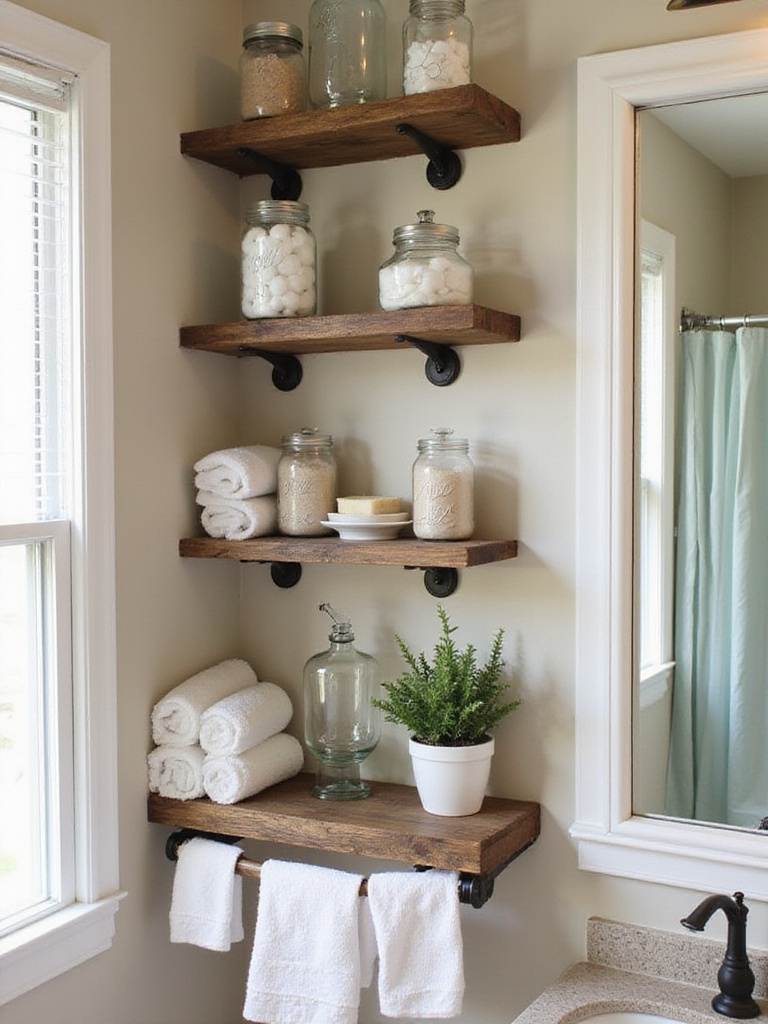
Instead of standard shelves, consider thick floating slabs of the same reclaimed wood as your vanity for a cohesive look. Or for a more contemporary edge, slim, blackened steel shelves that almost disappear against a dark wall. And for what goes on them? This is your chance to display beautiful, functional objects. Instead of plastic cotton ball containers, what about a hand-thrown ceramic vessel from a local artist? Or beautiful amber glass apothecary bottles for soaps and lotions?
Here’s how to make open shelving feel luxurious, not cluttered:
- Edit ruthlessly. This is for beautiful things and daily essentials only. The backup toilet paper and cleaning supplies go in a closed cabinet.
- Combine textures. Roll plush towels and place them in a woven basket on a shelf. The contrast between soft textile, smooth wood, and perhaps a small, trailing plant is what creates visual interest.
- Mind the brackets. If you’re not doing floating shelves, the brackets are part of the design. Choose ones that match your other hardware—forged iron for a more rustic feel, or slim brass for a touch of modern elegance.
The goal is to turn storage into a “shelfie” moment—an artful display that is both personal and practical.
10. Lighting the Mood: Warm, Layered, and Smart
Lighting can make or break a bathroom. Harsh, overhead lighting is a mood killer and wildly unflattering. What we need are layers. Think of it like a lighting recipe: a base layer of ambient light, a focused layer of task light, and a little bit of magic from accent lighting.
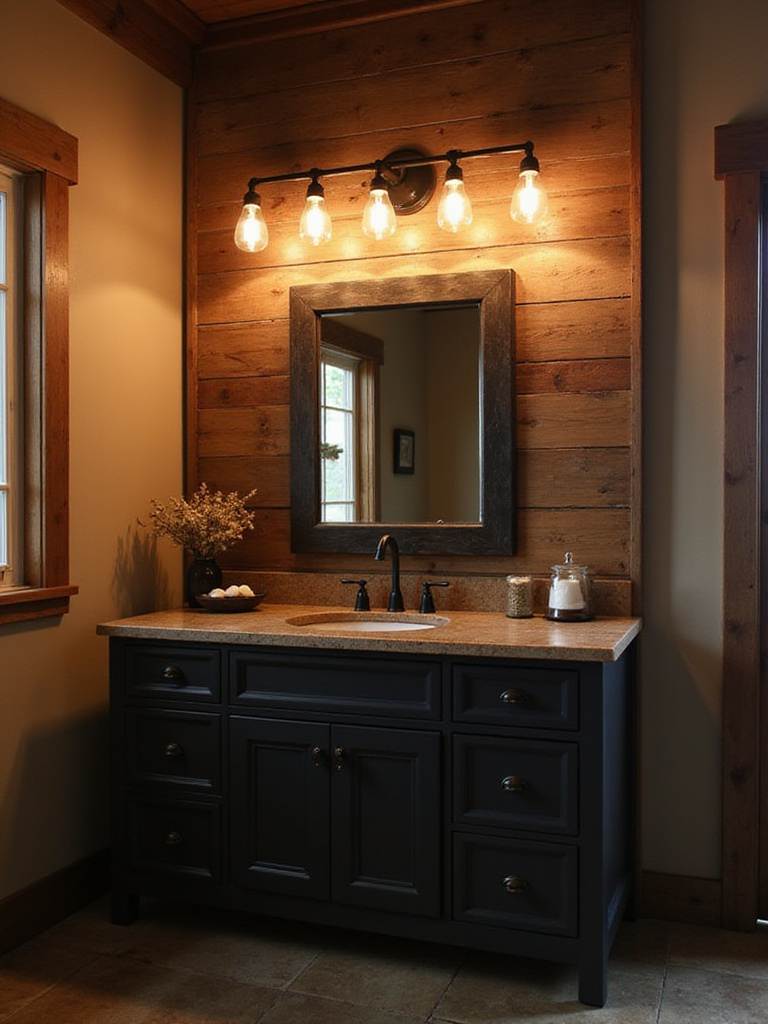
The Edison bulb had its moment, but frankly, it’s a bit overplayed and not very energy-efficient. Today, we have much better options. For that warm, intimate glow, look for LED fixtures with “warm dim” technology, which mimics the golden hue of an incandescent bulb as you dim it down. This is crucial. My go-to strategy involves placing wall sconces on either side of the mirror—this provides even, shadow-free light on your face for grooming. An overhead light can fill in the rest of the room, and perhaps a small, waterproof accent light in the shower niche or aimed at a plant.
Key takeaways for lighting:
- Put everything on a dimmer. This is the single most important, and least expensive, way to control the mood of the room. Bright for the morning rush, low and warm for an evening soak.
- Pay attention to color temperature. Look for bulbs in the 2700K to 3000K range. Anything higher starts to feel clinical and sterile, like an office.
- Showcase your design with light. A wash of light down a textured stone wall or uplighting a large plant creates drama and depth that makes the room feel so much more considered.
Good lighting is a form of wellness design. It supports your daily rhythms and helps transform your bathroom from a functional box into an adaptable, emotional sanctuary.
11. The Smart Imposter: Wood-Look Porcelain Tile
I love real wood. But even as a purist, I have to admit there are places it just doesn’t make sense. The floor of a heavily used, wet bathroom is one of them. The risk of water damage, warping, and constant maintenance is just too high. And this is where technology has given us a truly fantastic solution: wood-look porcelain tile.
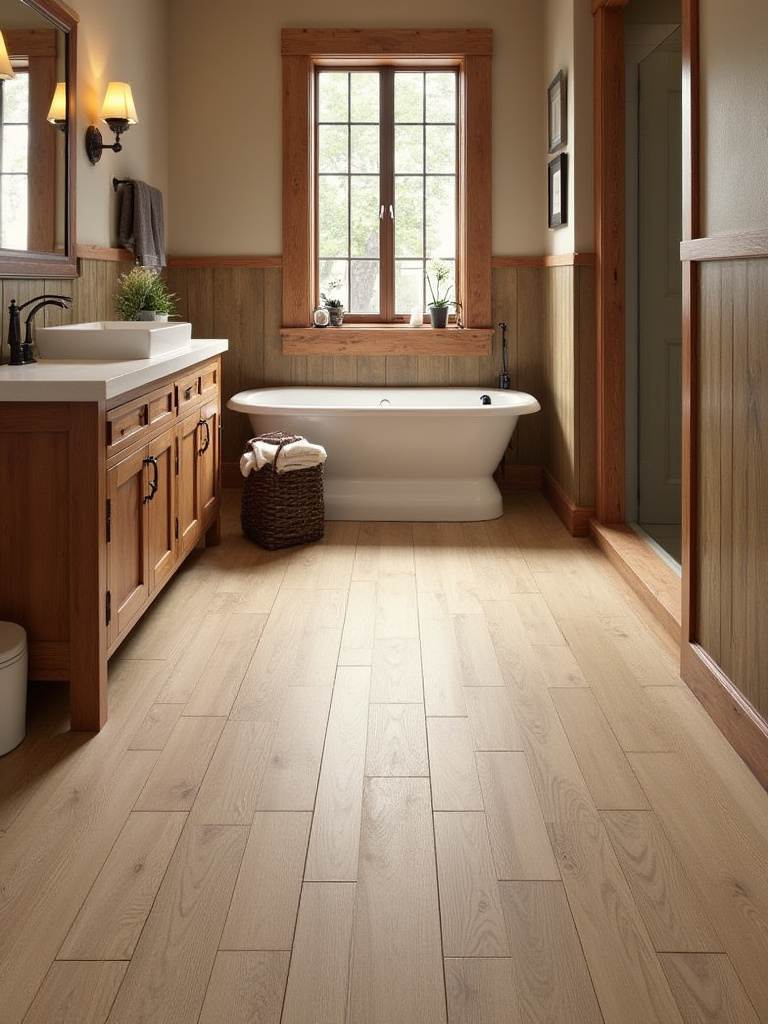
At first, I was skeptical. But the quality today is absolutely astounding. I’m not talking about the shiny, obviously fake stuff from a decade ago. Modern porcelain tiles have incredible textural realism—you can feel the grain—and stunning print variation, so you don’t get that repeating pattern that screams “fake.” It gives you the visual warmth of wood with the bomb-proof durability of porcelain. It won’t scratch, stain, or warp. Ever.
If you go this route, here’s my advice:
- Go for rectified tiles. This means their edges are perfectly cut, allowing for super-thin grout lines (1/16″), which makes the illusion of real wood planks much more convincing.
- Vary the plank sizes. Just like real wood flooring, using a mix of widths and lengths creates a more organic, authentic pattern.
- It’s the perfect partner for radiant heating. Tile conducts heat beautifully, making for an incredibly luxurious experience.
It’s the best of both worlds—the timeless look we want, with the modern performance we need. It’s a choice that is both beautiful and incredibly practical.
12. The Live-Edge Mirror: Nature’s Sculpture
This is one of the most effective ways to inject a powerful dose of biophilic design into your bathroom. A live-edge mirror frame isn’t just a frame; it’s a cross-section of a tree’s life. It preserves the natural, irregular outer edge of the wood slab, complete with its unique curves and textures.
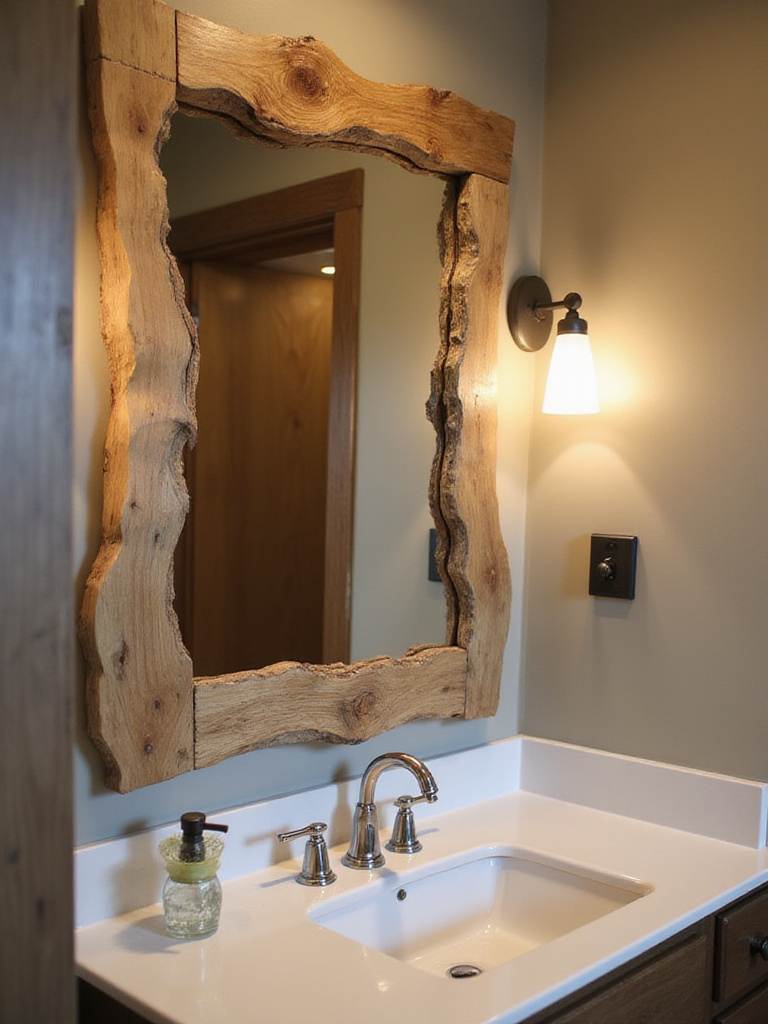
Each piece is, by its very nature, a one-of-a-kind sculpture. I’ve used dramatic, dark walnut with deep figure and more subtle, pale maple. The key is to see it not just as a mirror, but as a piece of art that also happens to be functional. It immediately breaks up the hard, straight lines of a typical bathroom with an organic form.
Things to consider:
- Work with an experienced woodworker who knows how to properly seal wood for a high-humidity environment. This is crucial for preventing mold and warping.
- Proportion is everything. The thickness of the wood slab and the size of the mirror need to be in harmony with the size of your vanity and the height of your ceilings.
- Consider backlighting it with a soft LED strip. This creates a stunning glowing effect, silhouetting the natural edge and turning it into a dramatic focal point, especially at night.
A live-edge mirror is a statement. It says you value uniqueness, craftsmanship, and the untamed beauty of the natural world.
13. Forged and Cast Hardware: The Finishing Touch
It’s a detail many people overlook, but the hardware—your towel bars, hooks, and cabinet pulls—is the point where you physically interact with the design every single day. The weight, the texture, the temperature of these pieces matter. This is a place to invest in quality.
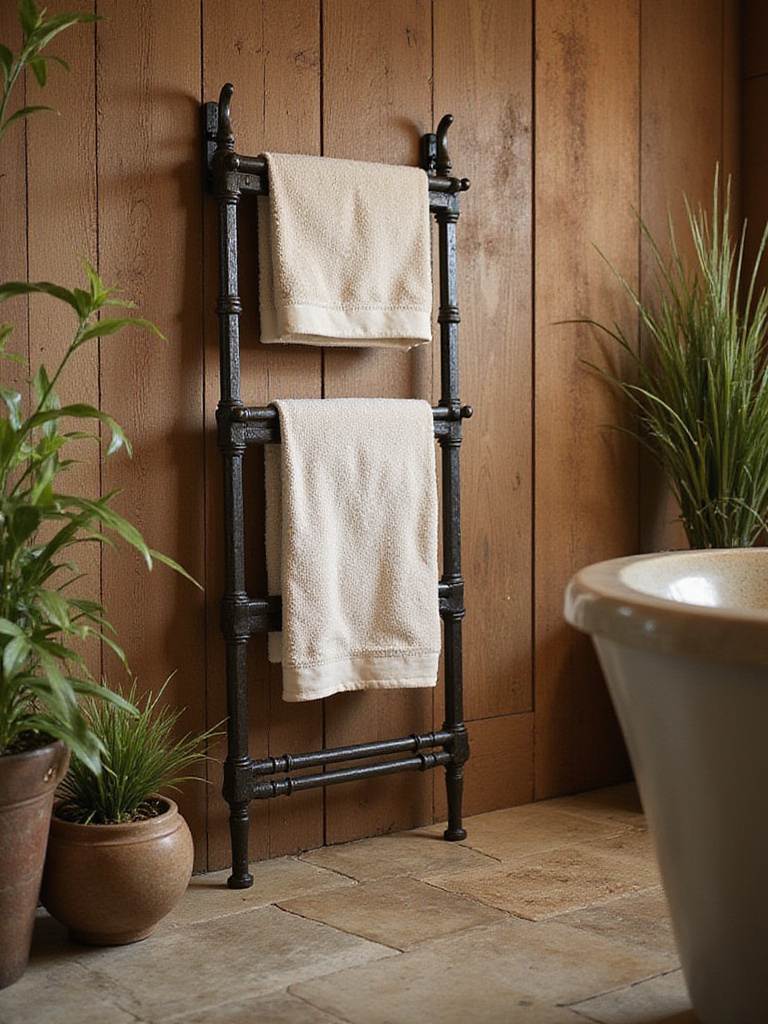
While forged iron is a great option for a more rugged feel, for a refined tropical look, I’m also a huge fan of sand-cast bronze or brass. The casting process leaves behind a subtle, soft texture that is a world away from a cheap, machine-made piece. You can feel the substance and the hand of the maker in it. These are pieces that feel good in your hand.
My advice:
- Find an artisan. There are incredible small foundries and blacksmiths creating stunning hardware. You’re not just buying a hook; you’re supporting a craft.
- Embrace the patina. Like your faucets, high-quality, unlacquered hardware will age gracefully, developing a character that reflects its life in your home.
- Consistency is key, but it doesn’t have to be boring. You can use the same finish (e.g., oil-rubbed bronze) across different styles of hardware—a simple bar for the towels, a substantial pull for the drawers.
This is that final layer of authenticity that elevates a design from good to truly special. It’s a small detail that makes a huge impact on the daily experience of the space.
14. The Story of Upcycling: Soulful & Sustainable
Here’s where your bathroom gets its unique personality. Upcycling isn’t about being cheap; it’s about being creative and sustainable. It’s about finding an object with a past and giving it a new future in your home. This is what infuses a space with a soul that you can’t buy off a showroom floor.
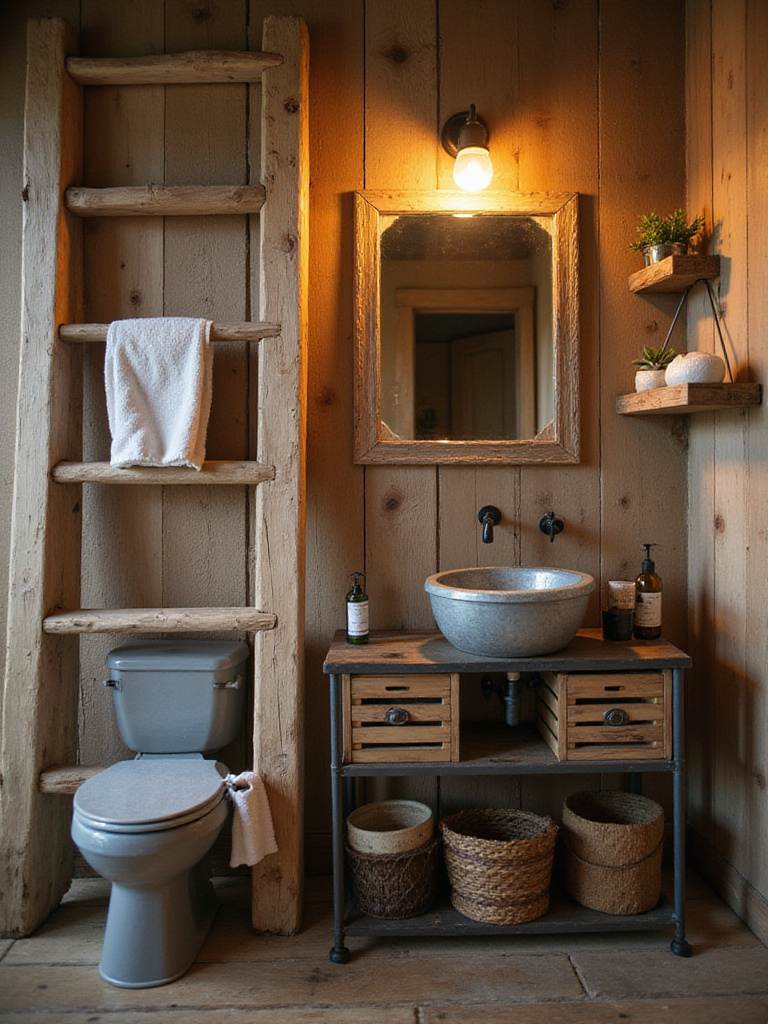
Maybe it’s a vintage wooden ladder, leaned against a wall and used for draping towels. I once used a section of a retired dory (a small fishing boat) found on a beach in Panama as a set of incredibly unique wall shelves. Or what about repurposing an old, marble-topped console table as a vanity base? You just need to have a plumber retrofit it for the sink and faucet.
A few thoughts on making this work:
- Choose items with “good bones.” The piece needs to be structurally sound enough for its new purpose.
- Balance is key. One or two carefully chosen upcycled elements are charming and soulful. An entire room of them can feel cluttered and chaotic. Pair them with new, clean-lined pieces for a beautiful contrast.
- Don’t be afraid to modify. Sometimes a piece needs a good sanding, a fresh coat of low-VOC sealer, or some new hardware to make it truly functional in its new role.
These pieces become the conversation starters, the elements that tell a personal story about your creativity and your values.
15. Slatted Walls: A Modern Take on Texture
While shiplap has become a bit of a cliché, its ancestor—the slatted wood wall—is a timeless feature of tropical modernism for a very good reason. It’s all about creating texture, shadow, and a sense of rhythm.
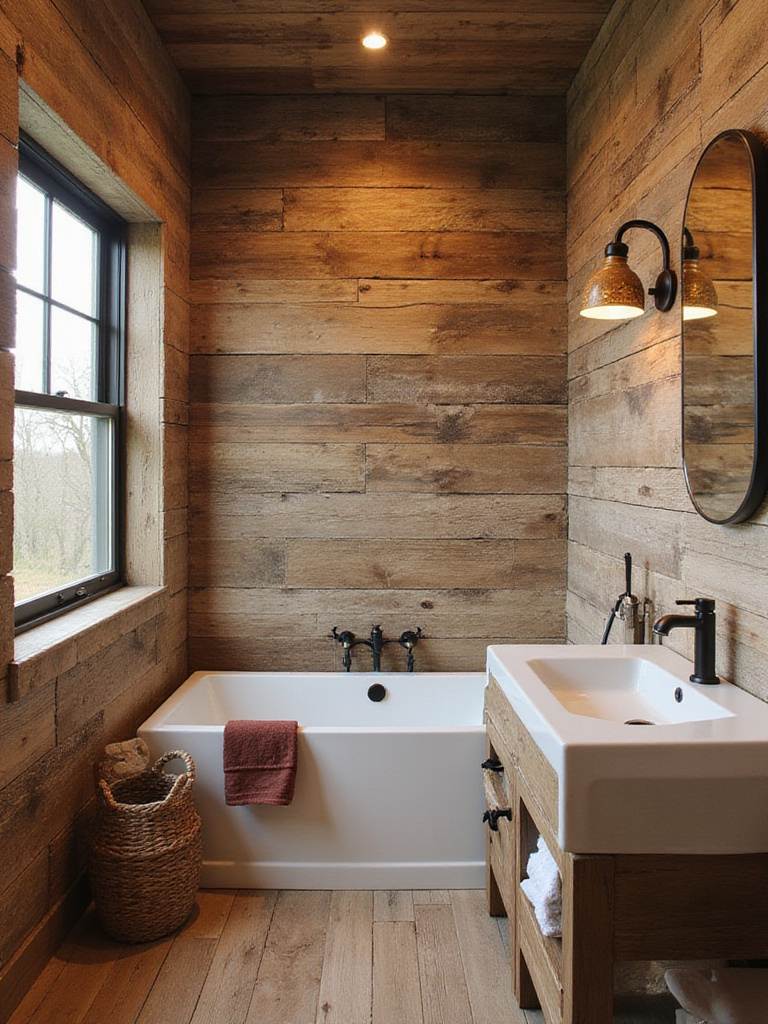
Instead of overlapping boards, think of slim, evenly spaced planks—often of a beautiful tropical wood like teak or cumaru—installed vertically or horizontally. This creates subtle shadow lines that add incredible depth and warmth to a wall, far more than paint alone ever could. I love using it on the wall behind the vanity or as the feature wall in a shower (when using a suitable material like porcelain tile or properly sealed wood outside the main wet zone).
The professional tip:
- The wood must be acclimated to the bathroom’s humidity for at least 72 hours before installation to prevent future warping or shrinking.
- Installation on one feature wall is almost always more powerful than doing the whole room. It creates a focal point without overwhelming the space.
- For a truly modern and sleek look, have the slats stained or painted the same color as the surrounding walls. This makes the texture the star, not the color, which is an incredibly sophisticated and subtle move.
This architectural detail adds a layer of crafted luxury that makes the entire room feel custom and thoughtfully designed.
16. The Stone Vessel Sink: A Functional Sculpture
This is where you make a statement. A natural stone vessel sink, sitting atop your vanity, is pure functional art. These sinks, often carved from a single boulder of river rock, granite, or onyx, are each utterly unique. You’re not just washing your hands; you’re interacting with a piece of geologic time.
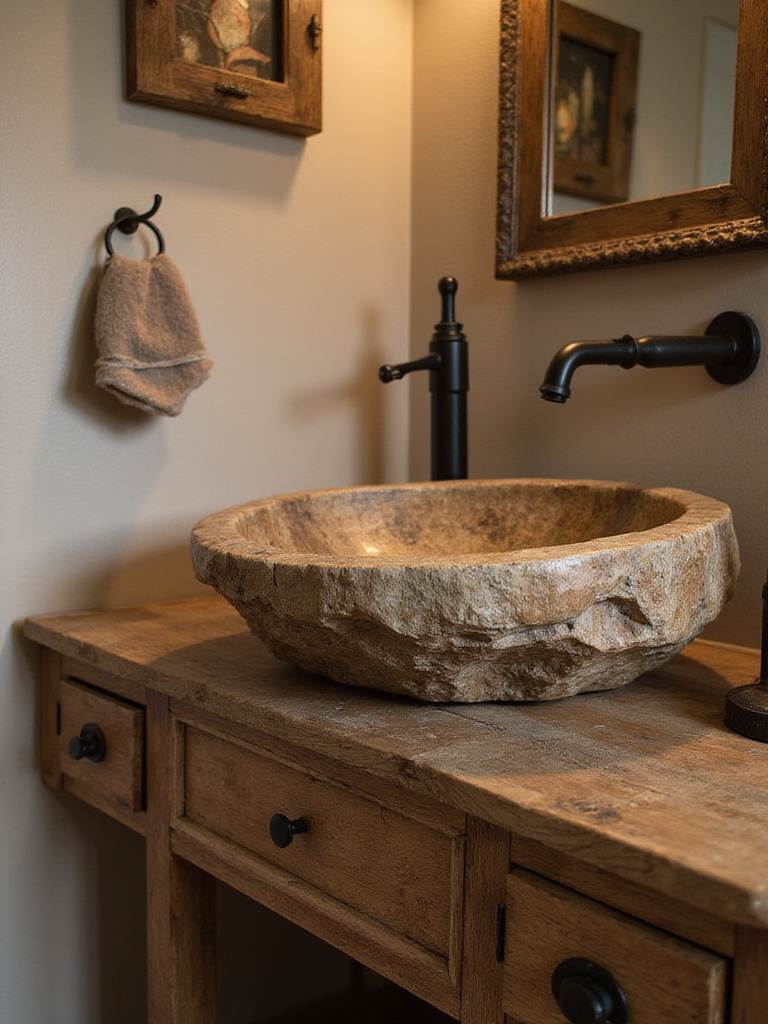
I’m particularly drawn to sinks that maintain the raw, rugged exterior of the boulder but have a smoothly honed and polished bowl inside. That contrast between the wild exterior and the refined interior is captivating. It embodies the entire philosophy of refined, raw luxury.
But you have to plan for it:
- These sinks are heavy. Your vanity needs to be solid enough to support it without question.
- You’ll need a tall “vessel” style faucet that can reach up and over the rim of the bowl. Plan your plumbing accordingly.
- Like all natural stone, it will need to be sealed periodically to prevent staining and to keep it looking its best. It’s a small price to pay for having a one-of-a-kind piece of nature in your bathroom.
This isn’t just a sink. It’s a focal point, a sculpture, and a daily reminder of the raw, enduring beauty of the natural world.
17. Lighting as Wellness: Task, Ambient, Accent
We’ve talked about lighting fixtures, but let’s talk about the strategy. Truly great lighting design isn’t about one bright light in the middle of the ceiling. It’s about creating different “scenes” for different needs. I think of it in three layers.
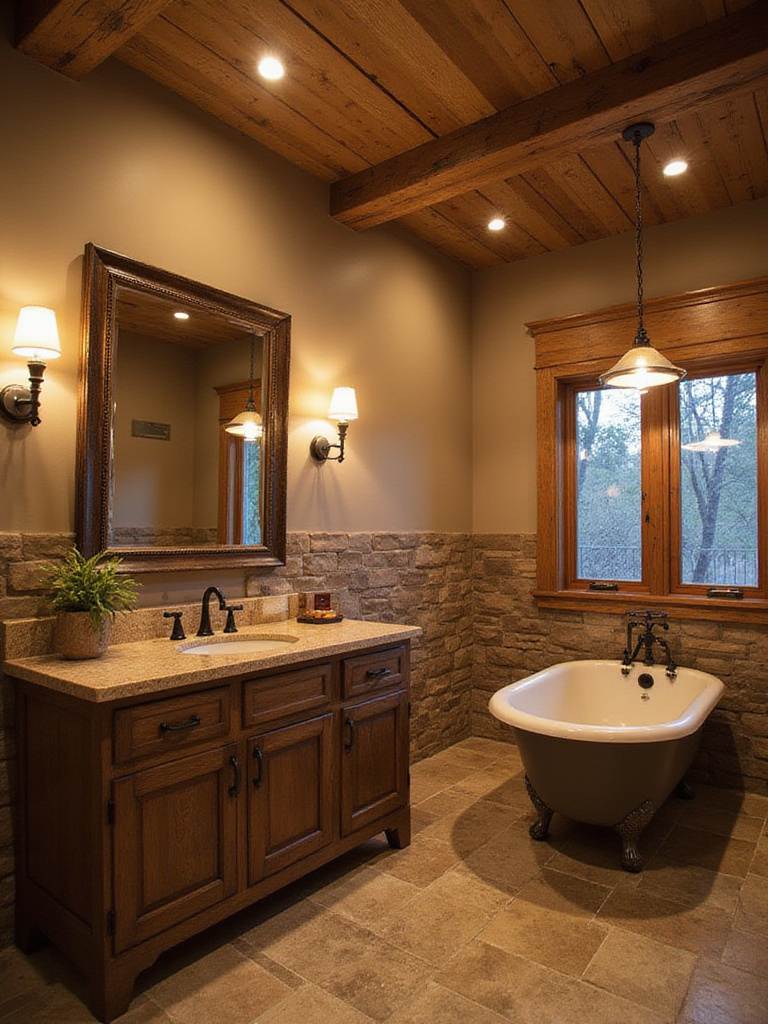
First, Ambient light: This is your general, room-filling light. It could be a central flush-mount or recessed lighting, but it should be warm and on a dimmer. Its job is just to make the room safely navigable. Second, Task light: This is the most important light. These are the fixtures that do the real work—the sconces beside the mirror for grooming, a pendant over the vanity. This light needs to be bright and clear, but never harsh. Third, Accent light: This is the magic. It’s the small, hidden spotlight that grazes a textured stone wall, the LED strip under a floating vanity, or the light placed inside a shower niche.
The power of this layered approach:
- Put each layer on a separate switch and dimmer. This gives you complete control. In the morning, you might have task and ambient lights on full. For a relaxing evening bath, you might only have the accent light on, creating a soft, spa-like glow.
- This approach is also more energy-efficient. You’re only using the light you actually need for a specific purpose.
- Good lighting makes a space feel larger and more dynamic. It creates highlights and shadows, adding depth and dimension to your design.
By thinking in layers, you transform lighting from a simple utility into one of the most powerful tools for shaping the mood and function of your sanctuary.
18. Custom Craftsmanship: The Opposite of DIY
While there’s a certain satisfaction in DIY, for a truly luxurious and lasting space, let’s talk about commissioning work from local craftspeople. Instead of a weekend project, think of it as investing in a future heirloom.
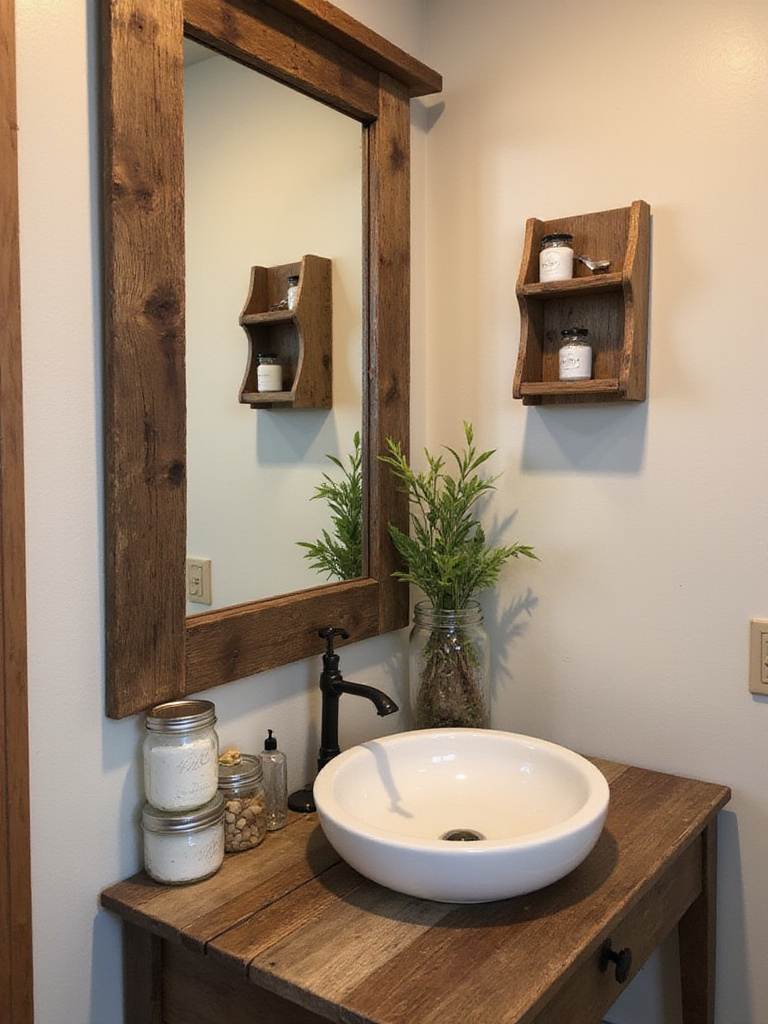
This is about creating solutions that are perfectly tailored to your space and your needs. Perhaps it’s a custom vanity built to an unusual dimension, a set of floating shelves made from a specific local wood you love, or a medicine cabinet with a door crafted by a local artisan. This is how you get a design that is truly yours and supports your creative community at the same time.
At first, clients sometimes think commissioning is just an indulgence, but then they realize it’s also about problem-solving. A custom storage tower can be built to fit a weirdly shaped alcove perfectly, maximizing every inch of space in a way no off-the-shelf product ever could. It’s the ultimate fusion of form and function.
The journey of collaborating with a skilled maker—selecting the materials, refining the design—becomes part of the story of your home. The final piece isn’t just a cabinet; it’s a testament to skill, quality, and a shared creative vision.
19. Invisible Luxury: Radiant Heat Underfoot
Now, stay with me here, because this one might seem counterintuitive for a tropical environment. Radiant floor heating in a warm climate? It sounds crazy, but it’s one of those unexpected touches of ultimate luxury that my clients adore.
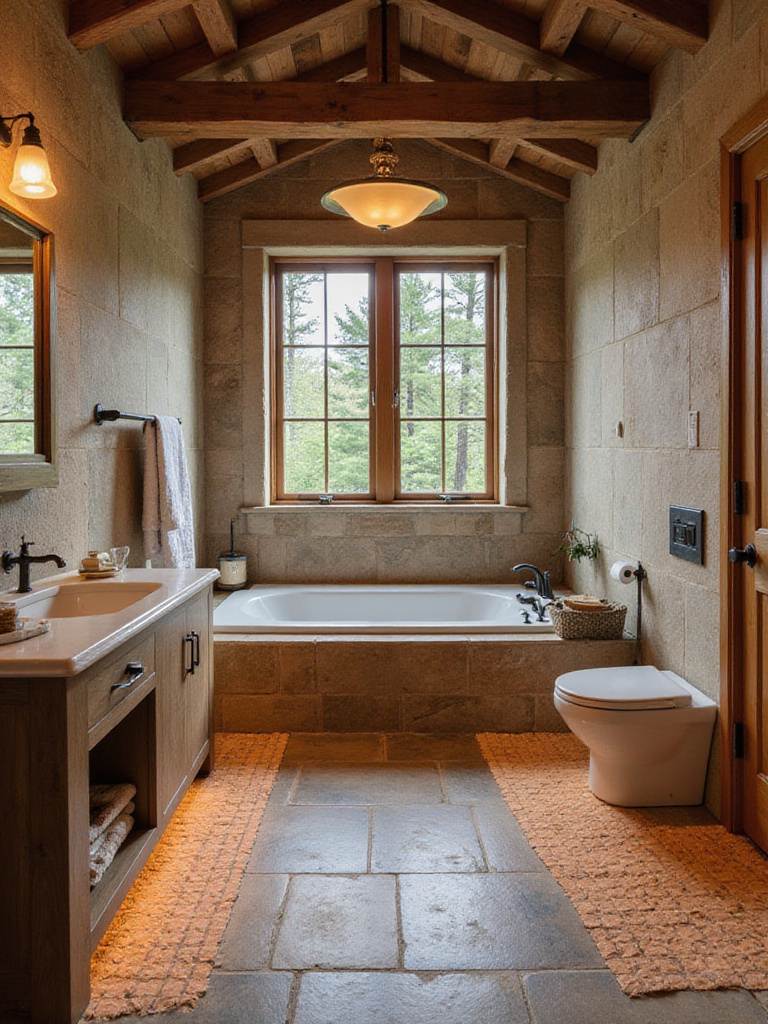
It’s not about heating the room. It’s about taking the chill off the stone or tile floor for those early mornings or on a cooler, rainy day. Or it’s for that moment when you step out of a warm shower or bath, and instead of a cold floor, your feet touch a surface that is just subtly, pleasantly warm. It’s an incredible spa-like sensation. Because the heat is so gentle and even, it doesn’t affect the ambient air temperature. It’s a completely silent, invisible comfort.
The best part?
- It’s incredibly efficient when used this way, consuming very little energy just to maintain a minimal, comfortable surface temperature.
- It works perfectly with the natural stone and porcelain tiles we love in these designs, as they are excellent heat conductors.
- Programmable thermostats mean you can have it turn on for just an hour or two in the morning and evening, right when you’ll appreciate it most.
This is that final, secret layer of comfort. It’s a luxury that isn’t about showing off, but about how a space makes you feel. It’s the kind of thoughtful detail that transforms a beautiful bathroom into an unforgettable experience.
Your Daily Retreat Is Within Reach
Creating a bathroom sanctuary is more than a remodeling project; it’s an investment in your daily well-being. It’s a declaration that your personal spaces should actively nurture you, connect you to the natural world, and reflect your deepest values—all while being unforgettably beautiful.
From the grounding weight of a stone sink to the smart, silent warmth of a heated floor, each choice is a brushstroke in a larger picture. A picture of a life that values authenticity over imitation, sustainability over disposability, and quiet moments of restoration over the noise of the outside world. This journey is about trusting your intuition and having the courage to blend materials and ideas into something that is uniquely yours.
So begin. Start with the element that speaks to you most. Is it the story of a piece of reclaimed wood? The feel of river rock under your feet? Your daily routines are sacred. They deserve a space that honors them. They deserve a sanctuary.