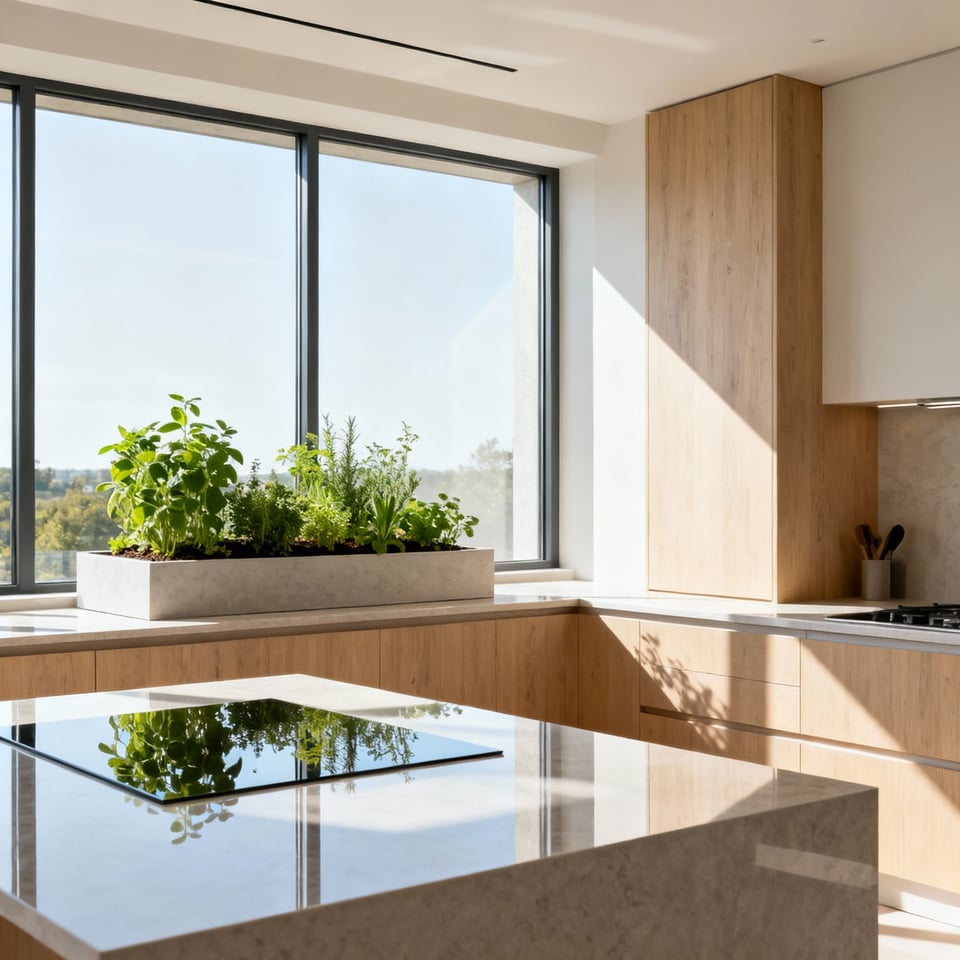
The most successful home designers I know spend only a fraction of their time—maybe 15%—on pure aesthetics. After years of integrating urban agriculture into homes, I figured out the framework that makes a space truly alive. It’s not about just picking expensive appliances or trendy backsplash tile. It’s about systematically designing your kitchen as a living, breathing ecosystem. These 20 kitchen remodel ideas will teach you to think beyond décor and cultivate a space that actively nourishes you and the planet.
Too often, kitchen remodels chase trends that fade, leaving you with a pretty space that doesn’t really work for a sustainable life. Traditional design completely misses the kitchen’s potential to be a dynamic hub of productivity and wellness. I’ve seen it firsthand: when you weave in principles from urban farming and circular design, you unlock a deeper connection to your food and an incredible sense of efficiency. Your kitchen stops being just a place to cook. It becomes a vibrant ecosystem that supports healthier living, saves resources, and pulls nature right inside.
This guide will walk you through that shift, starting with the basics and building up to more advanced integrations. We’ll kick things off with the absolute essentials for a sustainable kitchen. Then, we’ll elevate the approach with smarter resource management. For those ready to go all-in, we’ll explore sophisticated strategies like greywater recycling. And finally, we’ll master biophilic design, turning your kitchen into a living sanctuary with its own dedicated growing zones. Get ready to see your kitchen in a whole new light.
Essential Kitchen Ecosystem Fundamentals (Part 1)
Before we get into the high-tech stuff, we have to nail the fundamentals. Transforming your kitchen into a productive ecosystem starts with smart, foundational choices. This is about working with natural resources, not against them, and choosing materials and systems that are healthy for both you and the environment.
1. Maximize Passive Solar Gain and Natural Lighting Integration
Before you even think about light fixtures, think about the sun. The simplest, most effective way to create an energy-efficient kitchen is to design around natural light. The most accessible starting point is to orient your primary workspaces—your main prep counter, for example—to catch the best daylight. If you’re lucky enough to have south-facing walls (in the Northern Hemisphere), that’s where you want your biggest windows. It’s a move that instantly reduces your need for artificial light, which honestly just makes any space feel better.
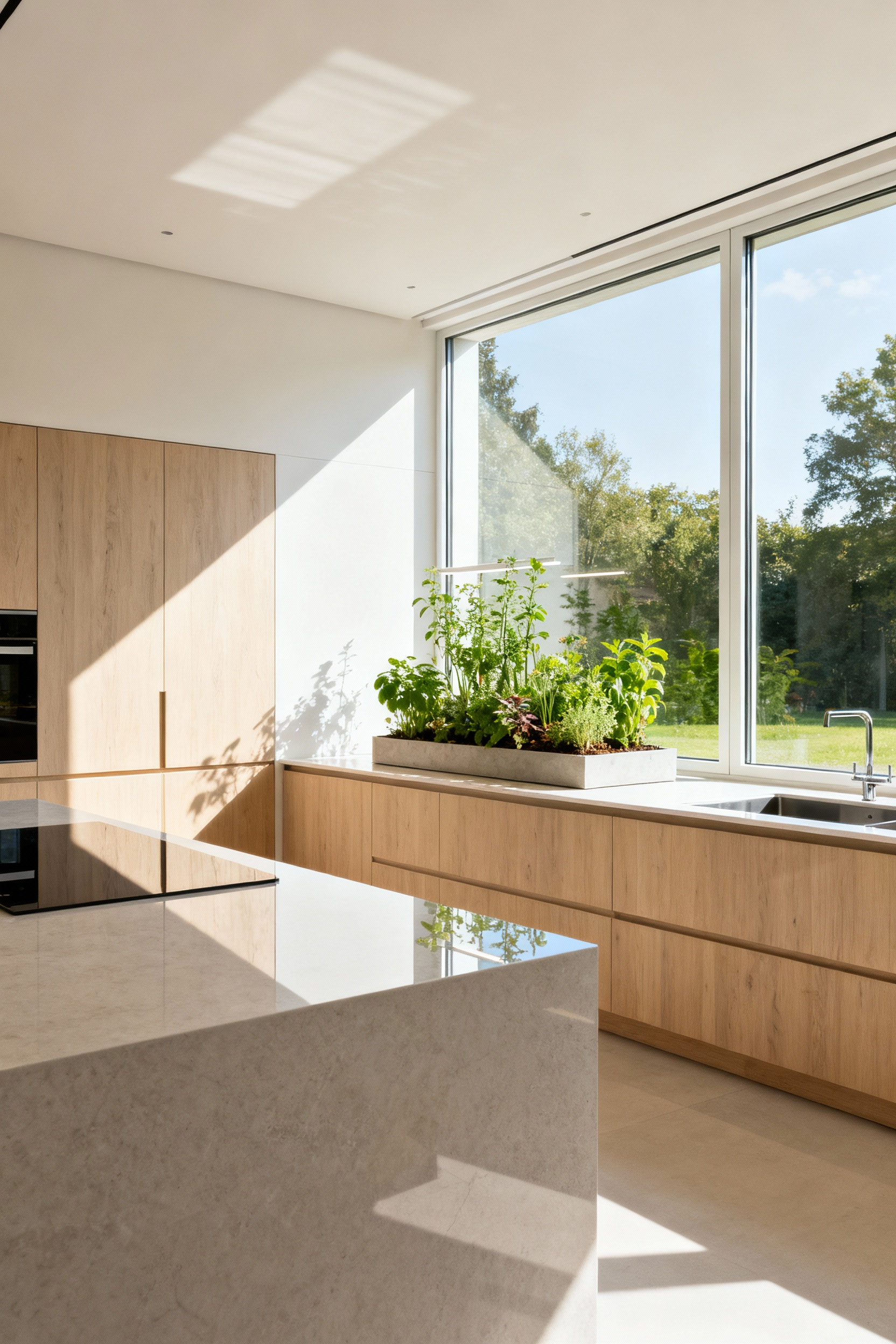
Once you’ve captured that light, you can start playing with it. Bouncing light deeper into the room with light shelves or using reflective materials for countertops and backsplashes can amplify what you’ve already got. But here’s what’s interesting: it’s not just about light for you, it’s about light for your plants. I always design with indoor cultivation in mind. That might mean choosing specific window glazing that doesn’t block the parts of the light spectrum your herbs need, or planning for supplemental grow lights to kick in on cloudy days. You’re turning sunlight into real food.
2. Prioritize Low-VOC, Recycled, and Sustainably Sourced Building Materials
The materials you build with become the air you breathe. It’s that simple. A non-negotiable starting point for any healthy kitchen remodel is to use low-VOC (Volatile Organic Compound) paints, sealants, and finishes. Standard materials can off-gas toxins for years, but choosing low-VOC options ensures a healthier home from day one. And please, opt for solid wood or formaldehyde-free cabinetry over cheap particleboard. It’s one of the most impactful choices you can make.
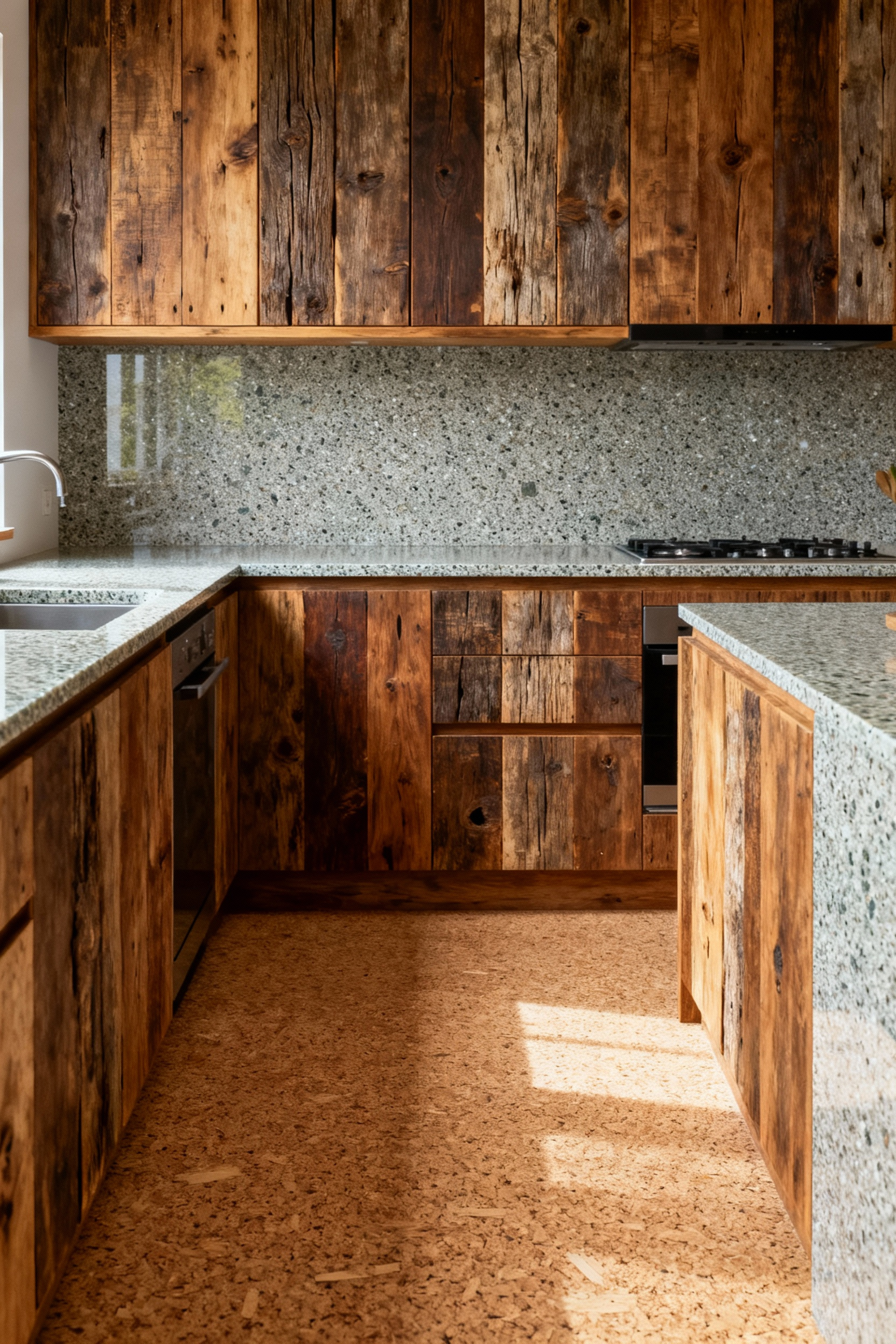
From my work in urban agriculture, I’ve learned that a healthy ecosystem has no waste, and that should apply to our building materials, too. Look for countertops made from recycled glass or paper, reclaimed wood flooring, or bamboo cabinetry. For wood, make sure it’s FSC (Forest Stewardship Council) certified, which guarantees it came from a responsibly managed forest. The goal is to think in circles—choosing materials that are either recycled or can be safely returned to the earth, creating a kitchen that’s regenerative from its very bones.
3. Integrate Smart, Energy-Star Certified Appliances for Reduced Consumption
Your appliances are the workhorses of your kitchen, and they can be huge energy hogs. The absolute baseline here is choosing ENERGY STAR certified models. That label isn’t just marketing; it’s a guarantee of superior energy and water efficiency, which translates directly to lower utility bills and a smaller carbon footprint. This is probably the easiest win in any eco-conscious kitchen remodel.
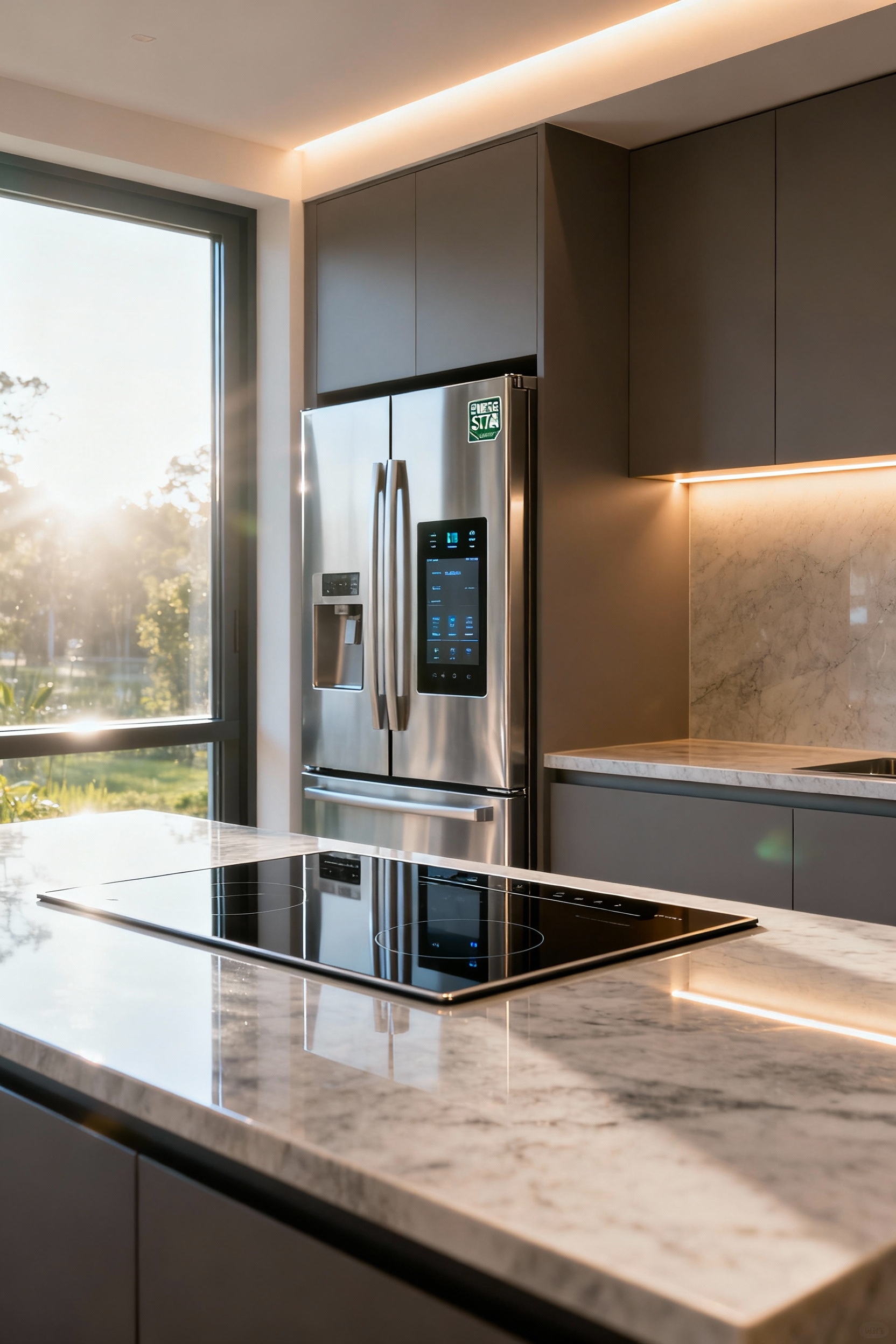
But we can do better than just the label. An induction cooktop, for instance, is phenomenally efficient and keeps your indoor air cleaner than a gas stove. And smart appliances aren’t just a gimmick. A fridge that tracks inventory to help you reduce food waste or a dishwasher that runs automatically during off-peak energy hours is a genuinely powerful tool. I’ve noticed clients get excited when their appliances become active partners in an efficient home ecosystem, not just passive machines.
4. Design Effective Multi-Stream Waste and Composting Solutions
A truly sustainable kitchen doesn’t produce “trash”—it produces resources. The first step is designing an elegant, intuitive system for separating waste streams. I’m talking about more than just a recycling bin under the sink. Think integrated pull-out drawers with clearly labeled bins for compost, recycling, glass, and the tiny amount of actual landfill waste you’ll be left with. Making it easy and beautiful is key to making it a habit.
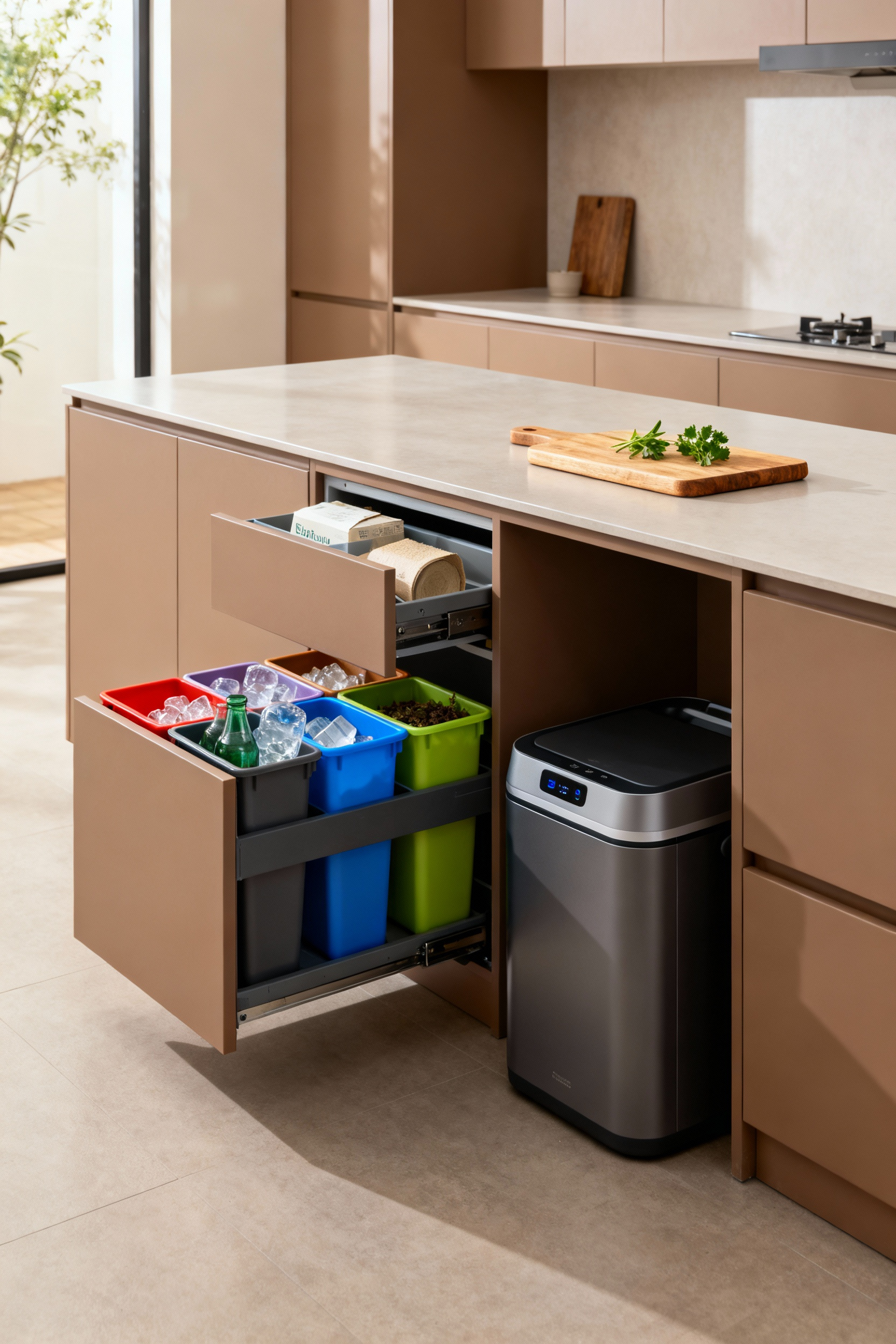
Ready to take it a step further? Let’s talk about active composting indoors. I’ve seen some incredible, compact electric composters that turn food scraps into nutrient-rich soil amendment in just 24 hours, right in your kitchen. Or consider a vermicomposting (worm bin) setup neatly integrated into a cabinet. A project I learned a lot from involved designing a kitchen where the under-sink composting system fed liquid fertilizer directly to a vertical herb garden built into the backsplash. That’s a closed loop. That’s ecosystem thinking.
Essential Kitchen Ecosystem Fundamentals (Part 2)
Now that we’ve covered the core structure and systems, let’s talk about the lifeblood of any ecosystem: water. Optimizing how you use, filter, and even reuse water is a game-changer for creating a kitchen that’s truly regenerative.
5. Optimize Water Filtration for Superior Hydration and Reduced Bottled Water Dependence
The quality of your water directly impacts the quality of your health and your food. Moving beyond a basic pitcher filter is one of the most foundational kitchen remodel ideas I recommend. Installing a high-quality under-sink or even a whole-house filtration system should be a top priority. The immediate goal is to completely eliminate the need for single-use plastic water bottles, which saves money and significantly reduces your environmental impact.
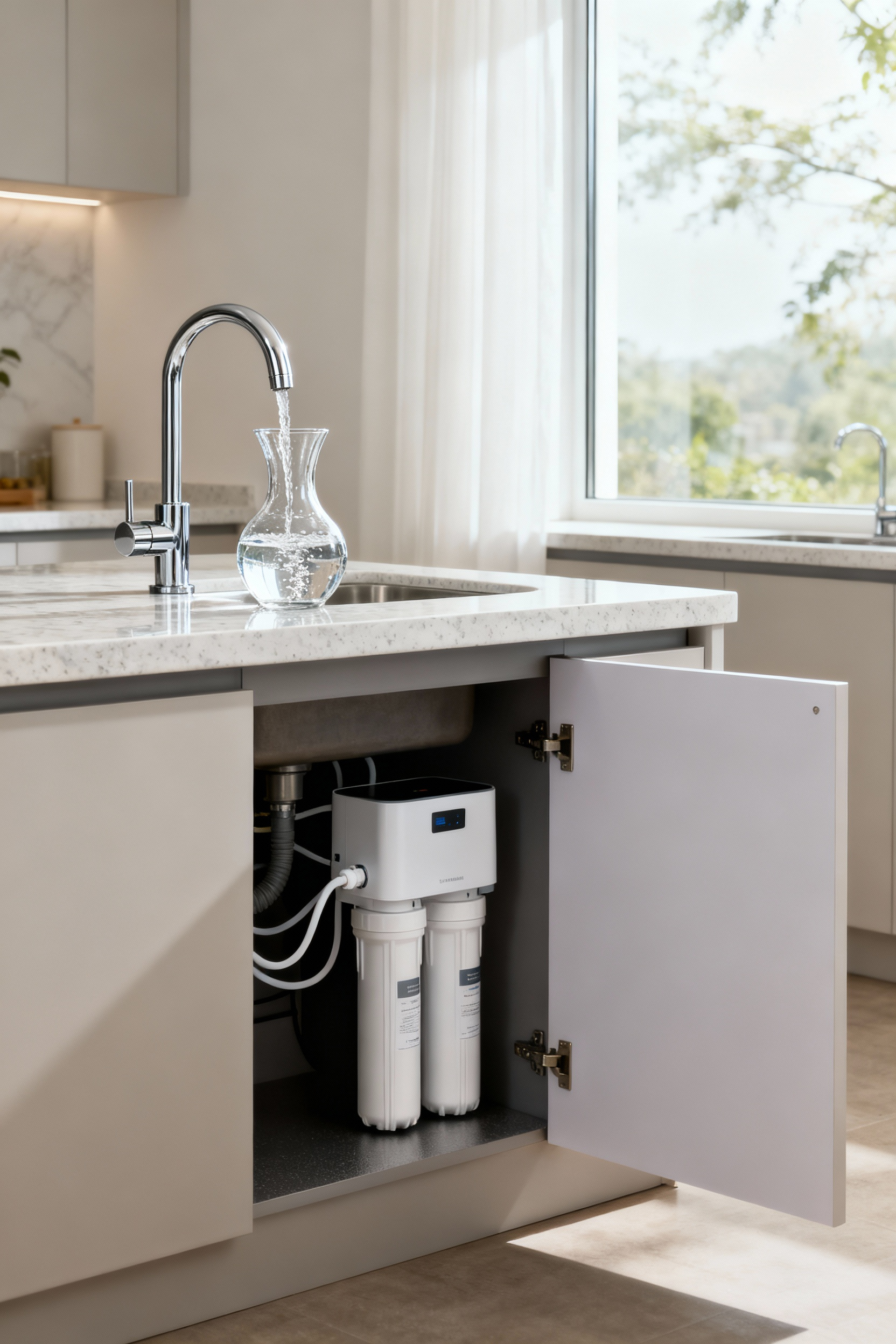
For a more sophisticated approach, it’s about tailoring the filtration to your specific needs. What I tell my environmentally conscious homeowners is to get their water tested. That way you know exactly what you’re filtering—chloramines, heavy metals, pharmaceuticals—and can choose a system like reverse osmosis (RO) that targets those specific contaminants. You can then add a remineralization cartridge to put beneficial minerals back in. Your tap water becomes a premium resource, improving everything from the taste of your morning coffee to the health of your sourdough starter.
Elevating Your Sustainable Kitchen Approach (Part 1)
With the fundamentals in place, we can start layering in more sophisticated strategies. This is where we elevate the kitchen from merely sustainable to truly high-performance, using intelligent design to enhance workflow, improve efficiency, and build in flexibility for the future.
6. Implement Dynamic Zoned LED Lighting for Adaptive Ambiance and Efficiency
Lighting does more than just help you see—it sets the mood, guides your energy levels, and can be a huge energy drain if not done right. Shifting entirely to LEDs is the obvious first step, as they use a fraction of the energy and last for years. But the real magic is in ‘zoning’ your light. You need bright, cool task lighting over your prep surfaces, but warm, ambient light for dining and relaxing. Designing these zones separately gives you incredible control.
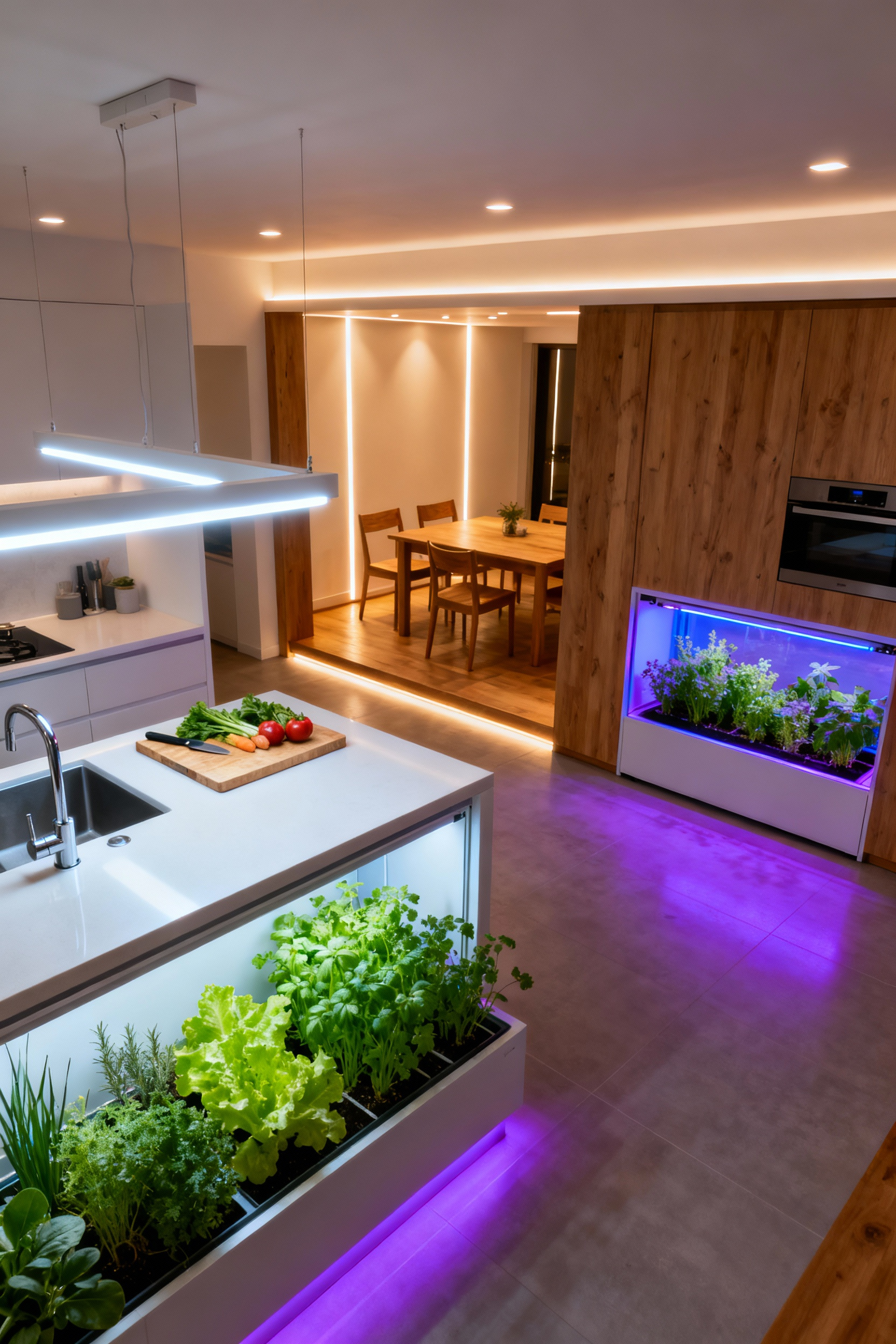
Here’s what’s really exciting: human-centric lighting. This means installing tunable LEDs that can change their color temperature throughout the day, syncing with your body’s natural circadian rhythm. You can have crisp, energizing blue-toned light in the morning and a warm, calming amber glow in the evening. From my work in eco-conscious design, I’ve seen how this not only saves energy with sensors that adjust to natural daylight but also tangibly improves well-being. It turns lighting into a tool for wellness.
7. Develop a Strategic Layout for Enhanced Workflow and Resource Minimization
The classic ‘work triangle’ is a good start, but a modern, productive kitchen needs more thoughtful choreography. A strategic layout minimizes wasted steps and makes sustainable practices feel effortless. Think about your workflow: where do you bring in groceries? Where do you chop vegetables? The compost bin should be right there, integrated into your prep station, not an afterthought across the room. Grouping your wash station (sink, dishwasher) near your dish storage just makes sense.
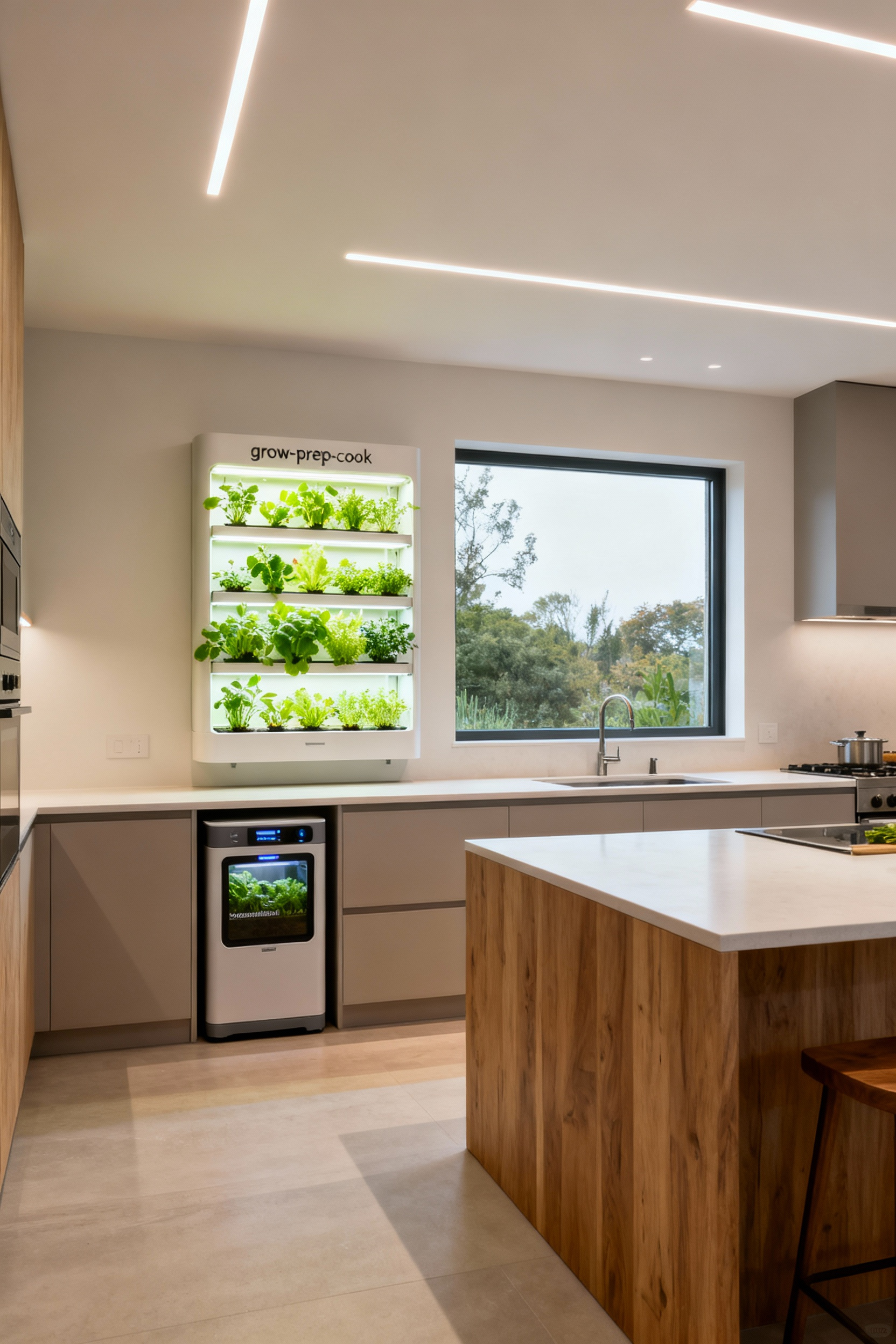
Once you nail the basic flow, you can optimize the invisible infrastructure. Clustering your plumbing onto a single ‘wet wall’ reduces material use and potential leak points. A client of mine loved how this approach simplified the build and made future maintenance so much easier. A truly strategic layout anticipates your movements and organizes resources around them, turning the entire kitchen into an intuitive, efficient machine.
8. Configure a Bioremediation Under-Sink System for Organic Waste Processing
Ready to get serious about closing the loop on food waste? Instead of just collecting compost, let’s process it right where it’s created. I’m a huge fan of under-sink bioremediation systems. The most accessible option is a compact vermicomposting (worm) bin. These systems are odorless, self-contained, and use red wiggler worms to efficiently break down food scraps into incredible organic fertilizer—’worm tea’ and castings—for your indoor or outdoor plants.
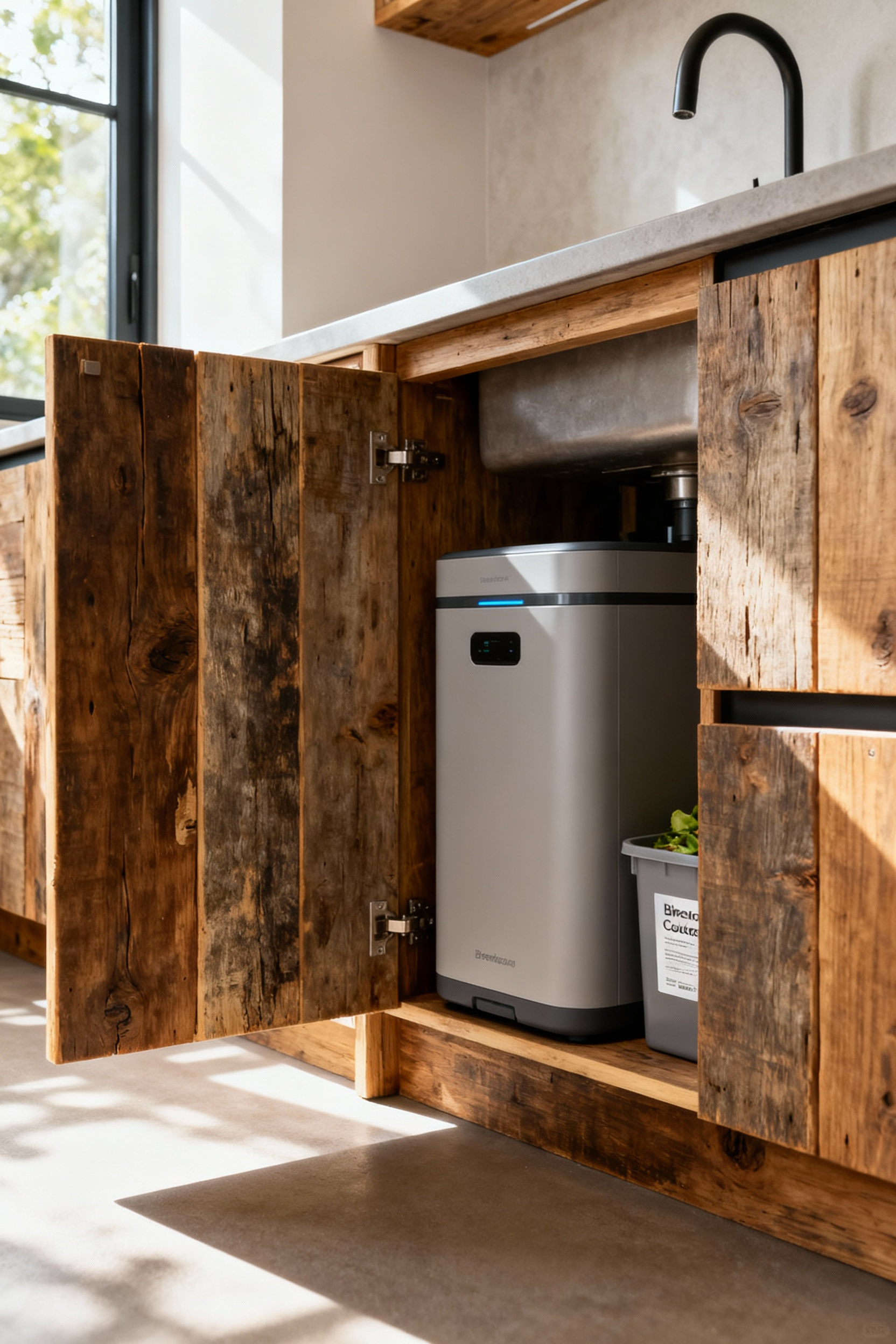
This moves your kitchen from a place of consumption to one of production. It’s a small-scale ecological engine humming away right under your sink. I learned this when designing for a zero-waste advocate: the satisfaction of turning tonight’s carrot peels into next month’s basil fertilizer is immense. It’s a powerful, tangible connection to the cycles of nature and a cornerstone of a truly regenerative kitchen.
9. Explore Adaptive Cabinetry and Modular Storage for Future Flexibility
The problem with most kitchen remodels is that they’re static. They’re built for your life today, not for your life in ten years. The solution is adaptive cabinetry and modular storage. At a basic level, this means fully adjustable shelving and pull-out drawers. But the next step is a truly modular system where entire cabinets or workstations can be reconfigured, moved, or swapped out without a full demolition.
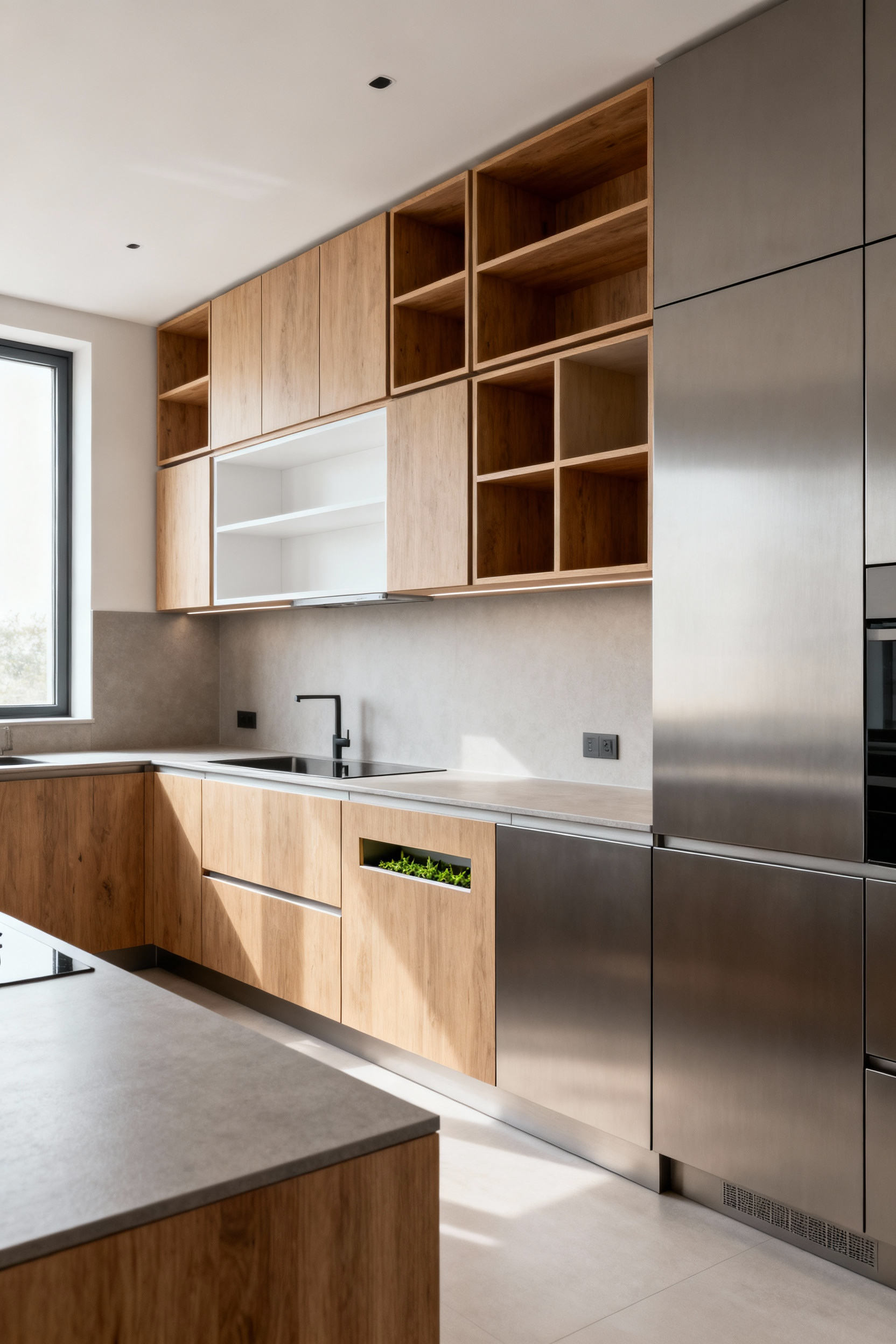
This “future-proofs” your kitchen. Imagine your pantry needs change, or you decide to integrate a new vertical growing unit. With a modular system, you just reconfigure the components. What really gets me is the sustainability angle: this is ‘design for disassembly.’ Instead of throwing out a whole kitchen in 15 years, you can repair, replace, or repurpose individual modules. It’s a fundamental shift from a disposable mindset to one of enduring, flexible design.
Elevating Your Sustainable Kitchen Approach (Part 2)
Now we’ll get into some of the integrated technologies that can really amplify your kitchen’s efficiency. This is about making smart, systemic choices that work behind the scenes to conserve resources and make your daily routines smoother and more conscious.
10. Integrate Smart Faucets with Flow Control and Temperature Memory
Water is one of our most precious resources, and the kitchen sink is where a lot of it gets wasted. A smart faucet is a surprisingly powerful tool for conservation. The touchless activation is great for hygiene and convenience, but its real power lies in precision. You can pre-set flow rates—a gentle stream for rinsing berries, a stronger one for filling pots—and program specific temperatures. No more running the tap for a minute waiting for the water to get hot.
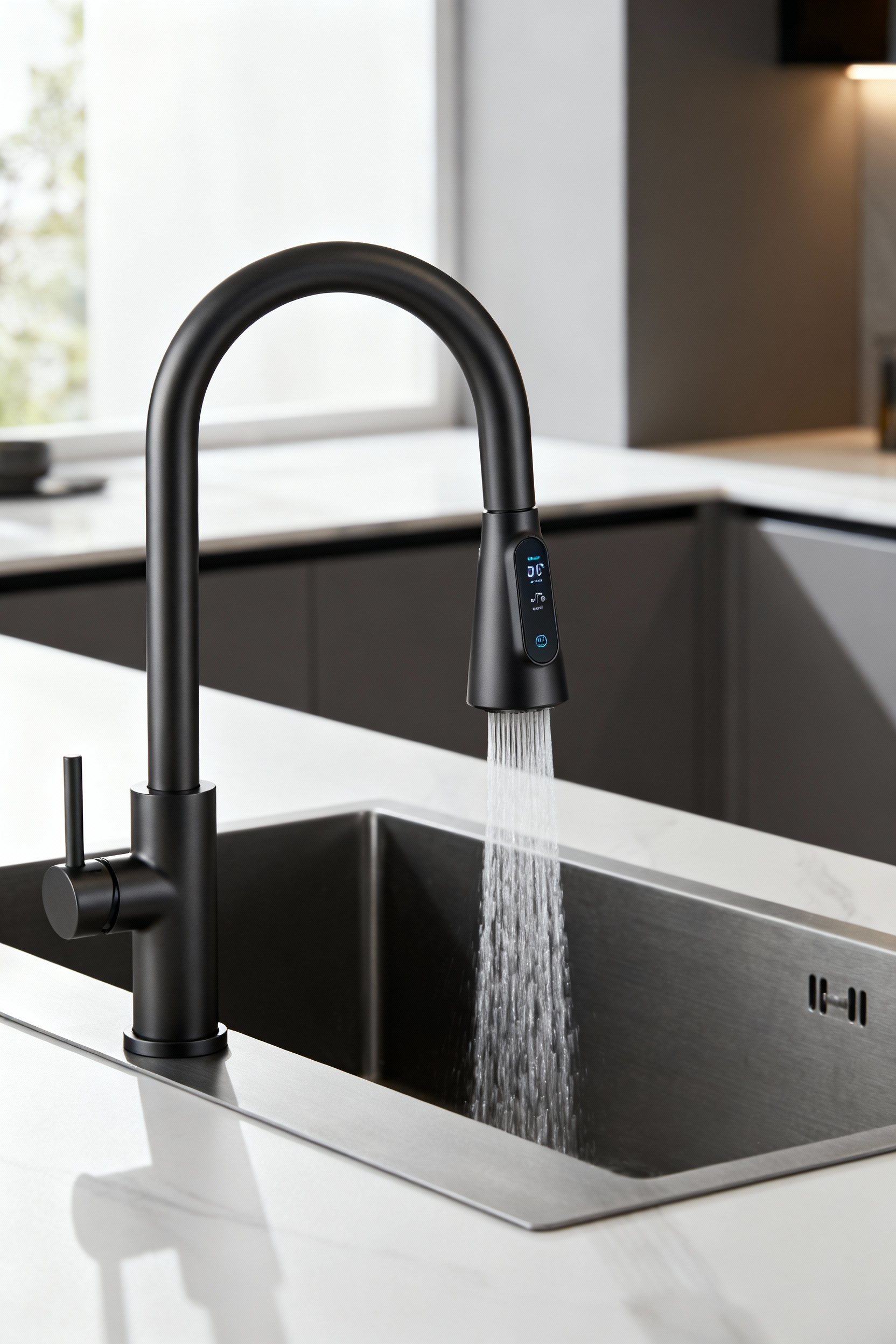
I’ve noticed that when people can see their usage data on an app connected to their faucet, their behavior changes. They become more mindful. Some advanced systems can even detect leaks and shut off automatically. When you integrate a smart faucet, you’re not just upgrading a fixture; you’re installing an intelligent water management node in your kitchen ecosystem.
Advanced Culinary Ecosystem Strategies (Part 1)
Now we’re moving into the realm of truly integrated, high-performance systems. These are the strategies that turn a sustainable kitchen into a symbiotic part of your home and property, creating closed loops for resources like water and ensuring the healthiest possible indoor environment.
11. Engineer a Comprehensive Greywater Recycling System for Garden & Toilet Flushing
Greywater recycling is where your home starts to function like a true ecosystem. It’s the process of capturing gently used water from your showers, laundry, and bathroom sinks and reusing it for things like irrigating your garden or flushing toilets. This can cut your household water consumption by up to 40%, which is just incredible. The systems can range from simple diverters for outdoor watering to more complex setups with multi-stage filtration for indoor reuse.
Designing this into a kitchen remodel requires careful planning, especially if you want to include kitchen sink water, which needs a grease trap. But the payoff is huge. From my work in urban agriculture, seeing a home’s “waste” water nourishing an edible landscape is one of the most satisfying examples of circular design in action. It’s a powerful step toward water independence and resilience.
12. Implement Climate-Responsive Passive and Active Ventilation Strategies
Air quality in the kitchen is paramount, especially with modern, airtight homes. Good ventilation is more than just a range hood. A truly climate-responsive strategy starts with passive design: windows placed for effective cross-ventilation and leveraging the ‘stack effect’ (hot air rises) to pull stale air out. It’s about working with nature first.
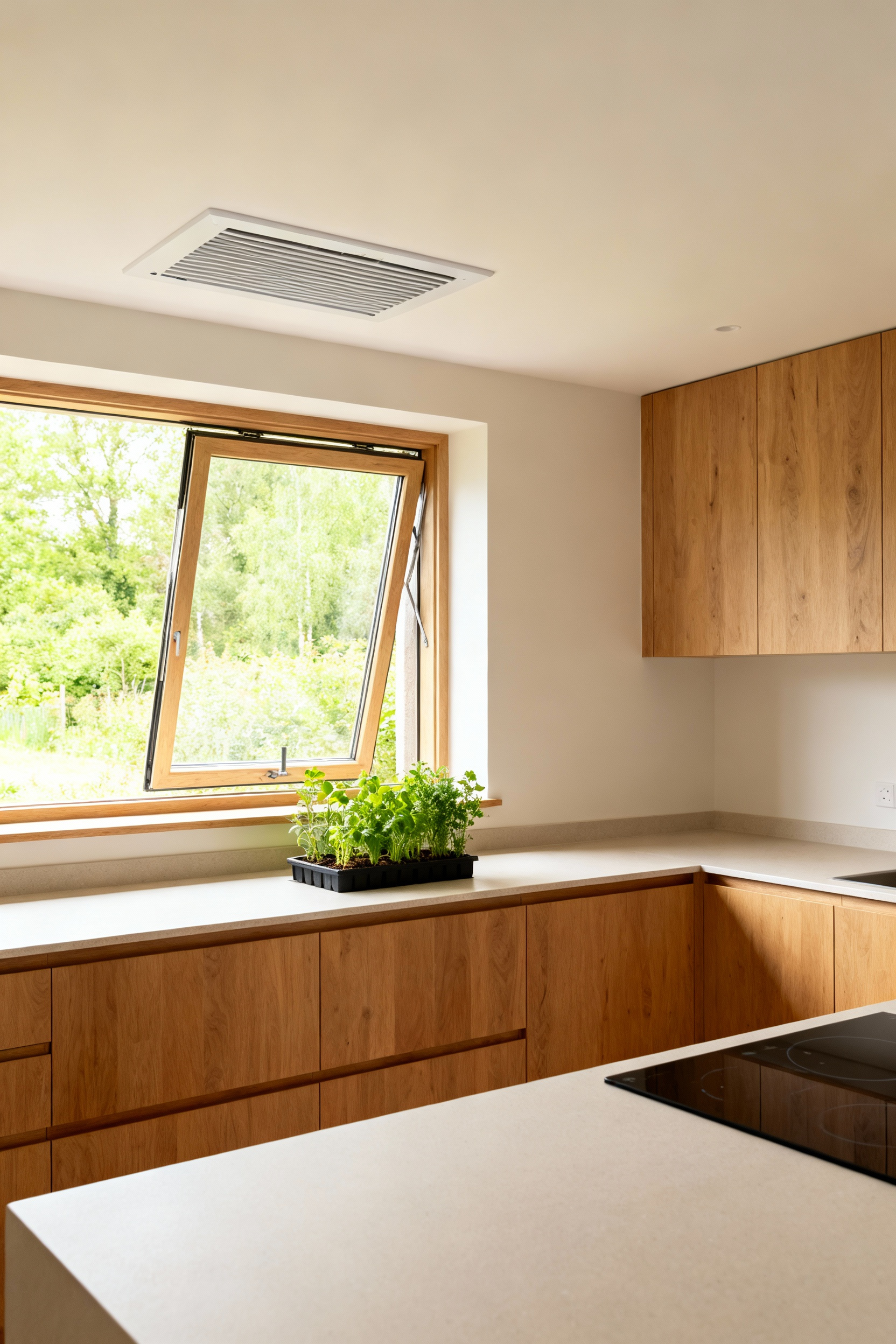
For a more active approach, an Energy Recovery Ventilator (ERV) is a brilliant piece of technology. It continuously exchanges stale indoor air with fresh outdoor air while transferring heat and humidity in the process, so you’re not wasting energy. Systems I’ve specified for health-conscious clients have smart sensors that monitor CO2 and VOCs, automatically ramping up ventilation when you’re searing a steak or using cleaning products. This creates a kitchen that literally breathes.
13. Commission Custom, Non-Toxic Cabinetry from Verifiable Sustainable Forest Certifications
When you get to a more advanced level of sustainable design, you start scrutinizing every single material. Commissioning custom cabinetry allows you to control the entire supply chain. This means specifying not just FSC-certified wood, but also formaldehyde-free plywood and zero-VOC finishes and glues. You’re eliminating any potential sources of indoor air pollution right from the start.
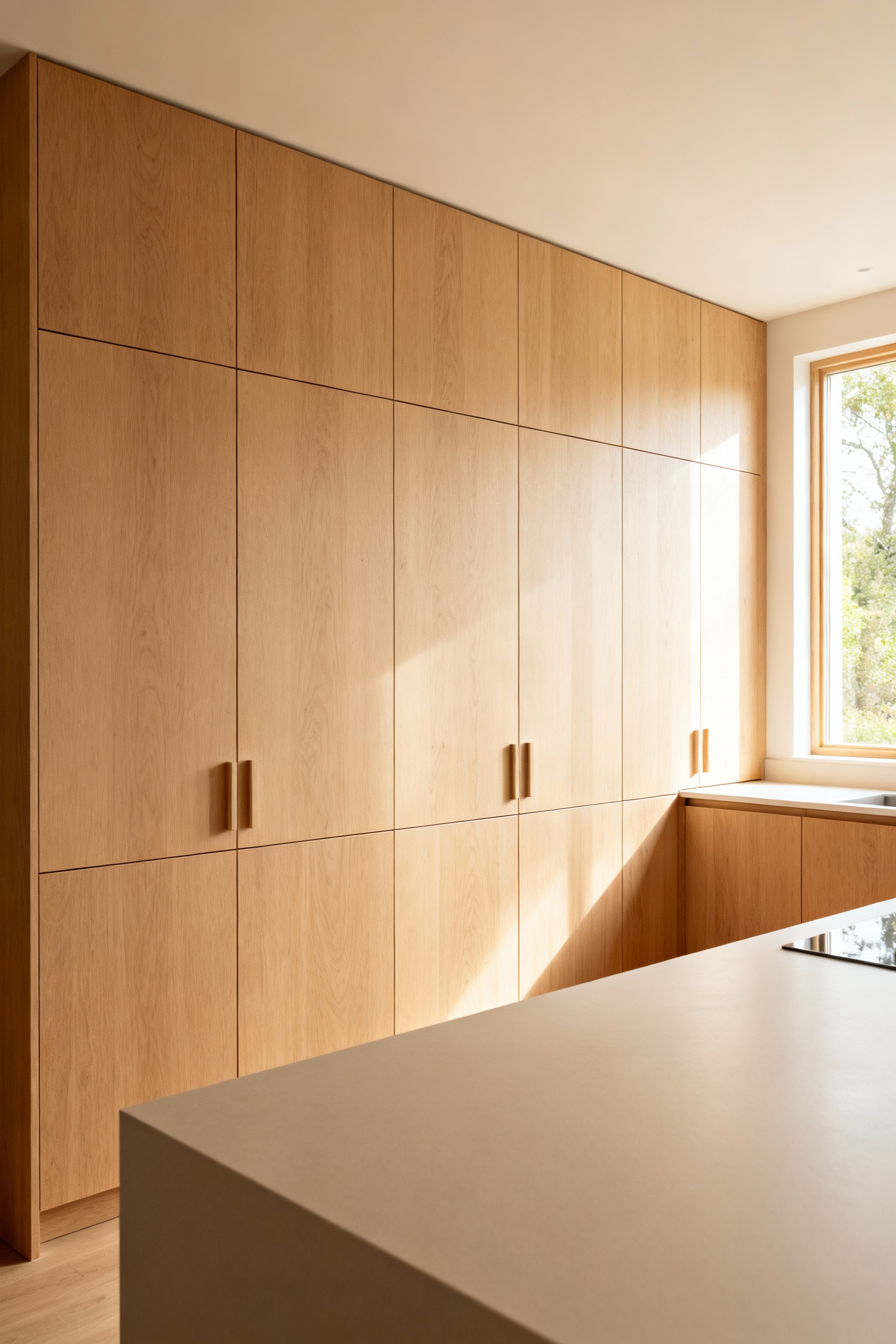
Years of eco-conscious design taught me to always ask for the paperwork. A good cabinet maker who is committed to sustainability will be able to provide chain-of-custody documentation for their wood and material safety data sheets for all their finishes. You can also explore beautiful options like reclaimed timber or locally sourced wood to reduce the project’s carbon footprint. Your cabinets stop being just boxes for storage and become a testament to health and craftsmanship.
14. Design an Integrated, High-Efficiency Pantry System for Bulk & Zero-Waste Storage
A high-efficiency pantry is the backbone of a zero-waste kitchen. This is about creating a system, not just shelves. Think modular, airtight containers for bulk goods; cool, dark bins for root vegetables; and even a climate-controlled zone for things like home-brewed kombucha or fermented foods. The goal is to dramatically extend the shelf life of your food and eliminate packaging waste.
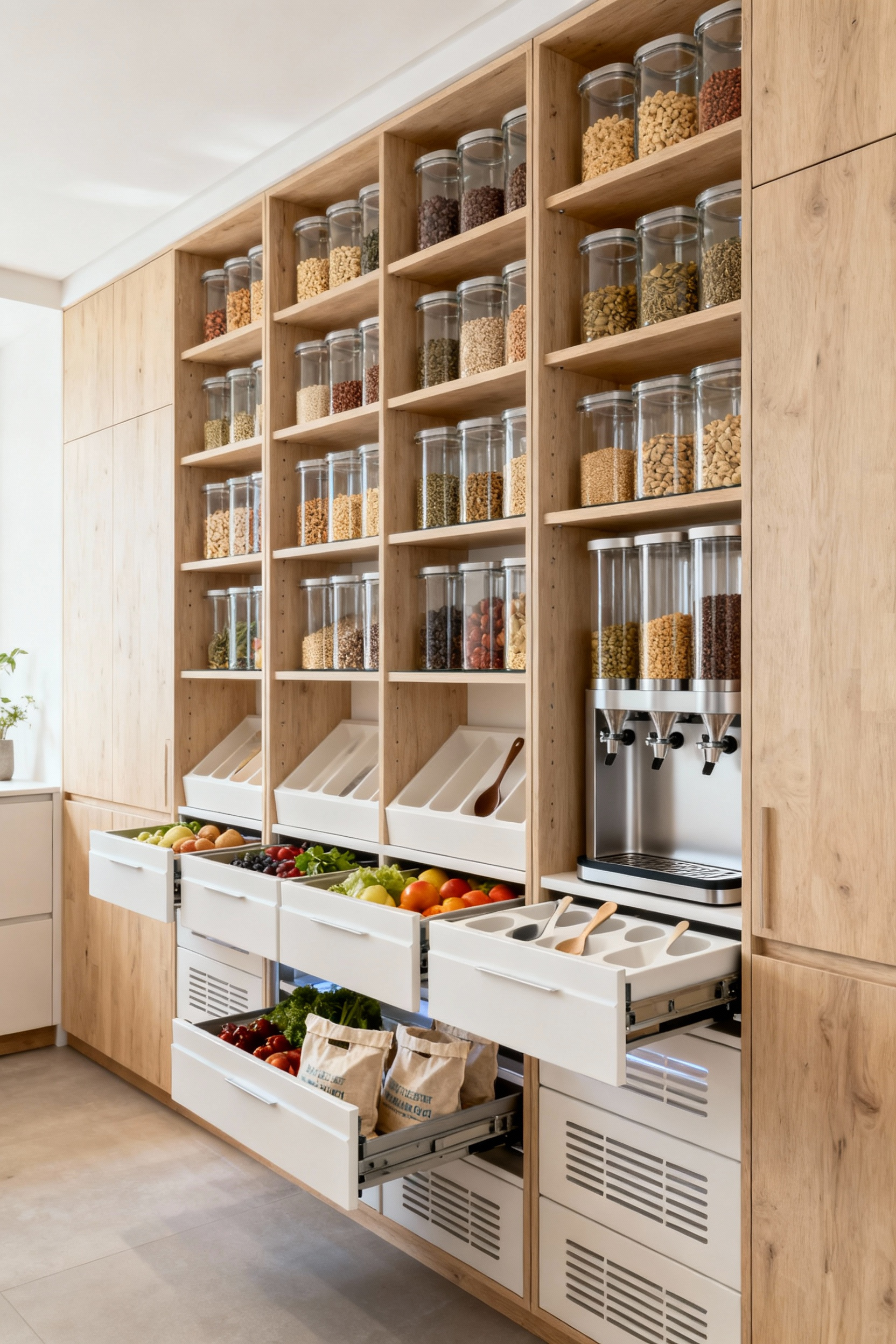
I’ve designed pantries that include a small grain mill, a vacuum-sealing station for food preservation, and even integrated digital inventory systems that track what you have and add items to a shopping list automatically. It’s an intelligent food hub that empowers you to buy in bulk, reduce spoilage, and have total control over your food supply.
Advanced Culinary Ecosystem Strategies (Part 2)
Here, we explore a sophisticated technological integration that leverages a free, abundant resource—the sun—to tackle one of the kitchen’s biggest energy demands. This is about thinking holistically and using smart engineering to create a truly efficient home.
15. Incorporating Solar Thermal Pre-Heating Systems for Hot Water Appliances
Most people think of solar as electricity-generating PV panels, but solar thermal is a brilliantly simple and effective technology for heating water. A solar thermal system uses rooftop collectors to absorb the sun’s heat, which then pre-heats the water going into your main water heater or dishwasher. This means your conventional heater has to do far less work, which dramatically cuts your energy consumption.
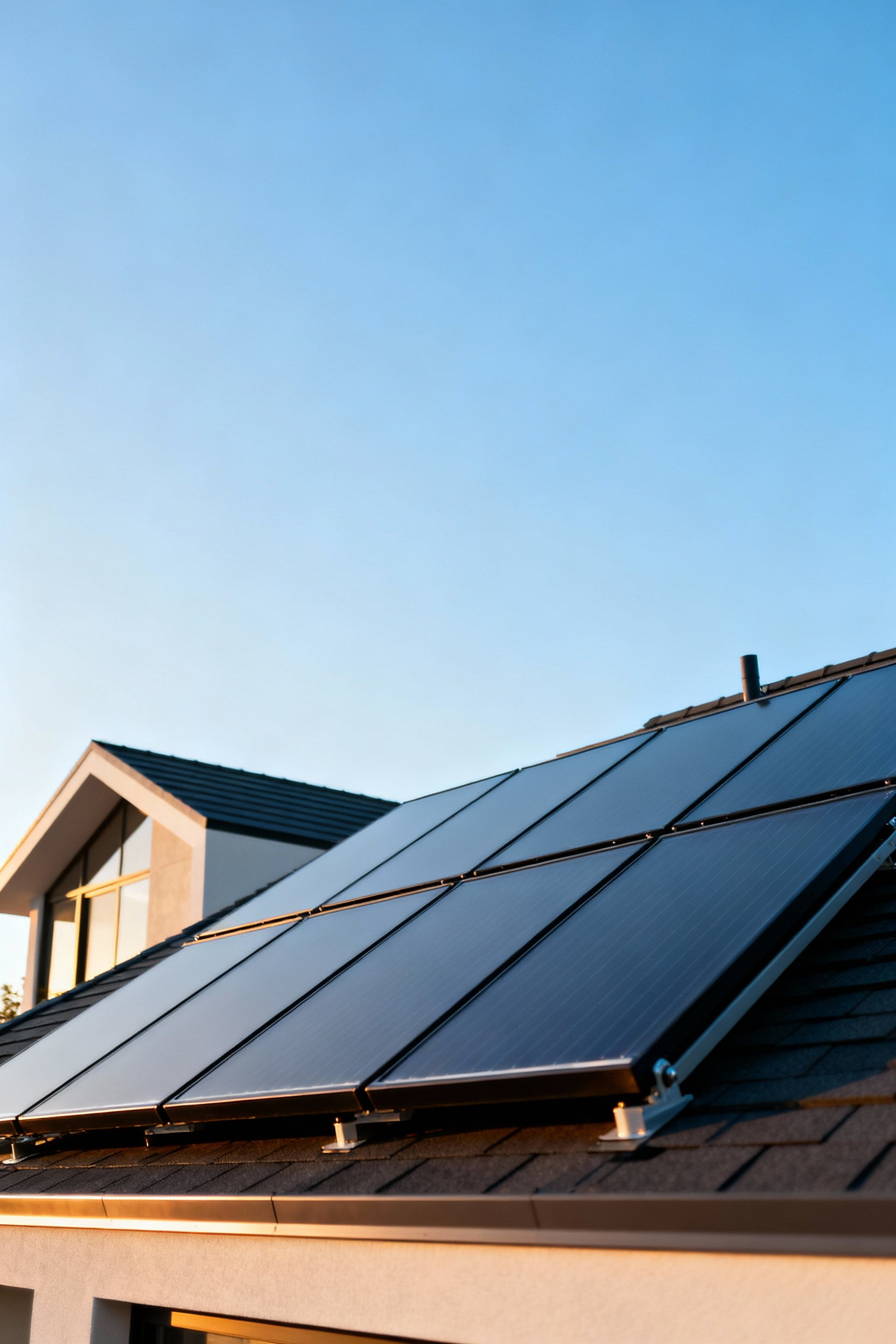
For a kitchen remodel, this is a strategic upgrade. I’ve seen these systems cut water heating bills by 50-80%. When you pair a solar thermal system with a high-efficiency tankless heater and smart controls, you create an incredibly resilient and cost-effective hot water system. It’s a perfect example of using elegant, appropriate technology to solve a major energy problem, turning your roof into a functional part of your kitchen’s infrastructure.
Mastering Biophilic Kitchen Integration (Part 1)
This is where my two worlds—interior design and urban agriculture—truly merge. Mastering biophilic design means seamlessly weaving living, growing systems into the fabric of your kitchen. It’s about creating a space that is not just inspired by nature, but is an active participant in nature.
16. Integrate a Dedicated Indoor Cultivation Zone with Automated Hydroponics or Aeroponics
This is the ultimate dream for many urban gardeners: a dedicated, year-round indoor farm right in your kitchen. We’re moving beyond a few pots on the windowsill to fully automated hydroponic or aeroponic systems. These soil-free systems deliver water and nutrients directly to the plant’s roots, allowing you to grow greens, herbs, and even small fruiting plants up to 50% faster than in soil, using about 90% less water.
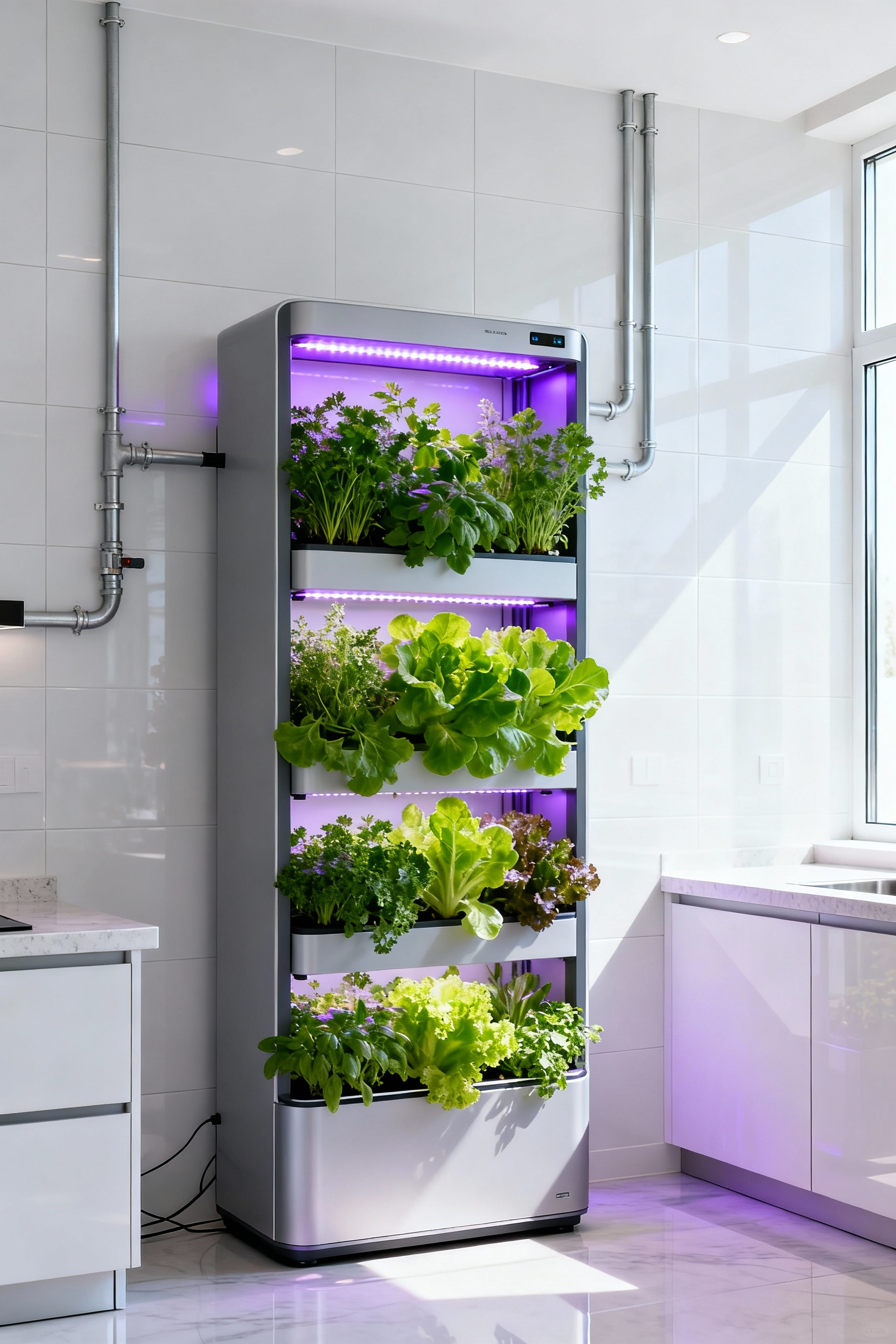
Imagine harvesting fresh basil for pesto or crisp lettuce for a salad just moments before you eat. It’s the peak of freshness and nutrition. I love designing these systems to be beautiful features in their own right—a sleek vertical tower integrated into cabinetry, or a living wall of greens that serves as a stunning, edible backsplash. It turns your kitchen into a source of life and sustenance.
17. Create a Strategic Living Wall or Biophilic Display for Enhanced Air Quality & Wellbeing
While an indoor farm is focused on food, a living wall is about creating a healthy atmosphere. A vertical garden filled with air-purifying plants like Pothos, Snake Plants, and ferns acts as a natural bio-filter, scrubbing common household toxins from the air. It’s a living, breathing part of your home’s HVAC system.
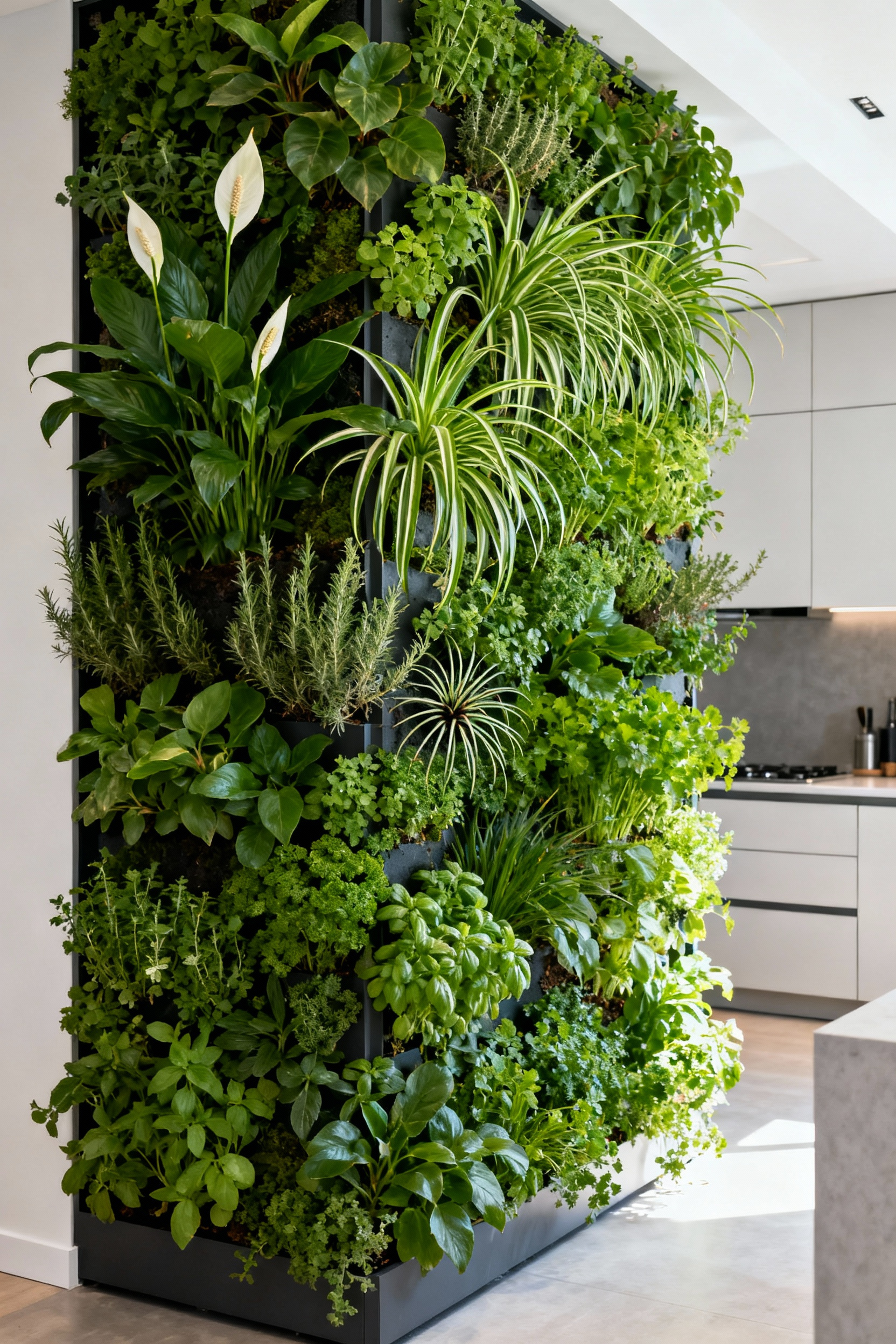
But the benefits go deeper. Studies show that being around plants reduces stress, improves mood, and can even boost creativity. What I tell my clients is that a living wall brings a sense of calm and vitality to a kitchen that no other design element can match. With automated irrigation systems, they are surprisingly low-maintenance. It’s an investment in your home’s air quality and your own mental wellbeing.
18. Embed Data-Driven Energy & Water Monitoring Systems for Consumption Awareness
You can’t manage what you can’t measure. A truly intelligent kitchen gives you real-time data on your resource consumption. By embedding energy and water monitors on your main lines and key appliances, you can see exactly where your resources are going via a simple app. This information is transformative.
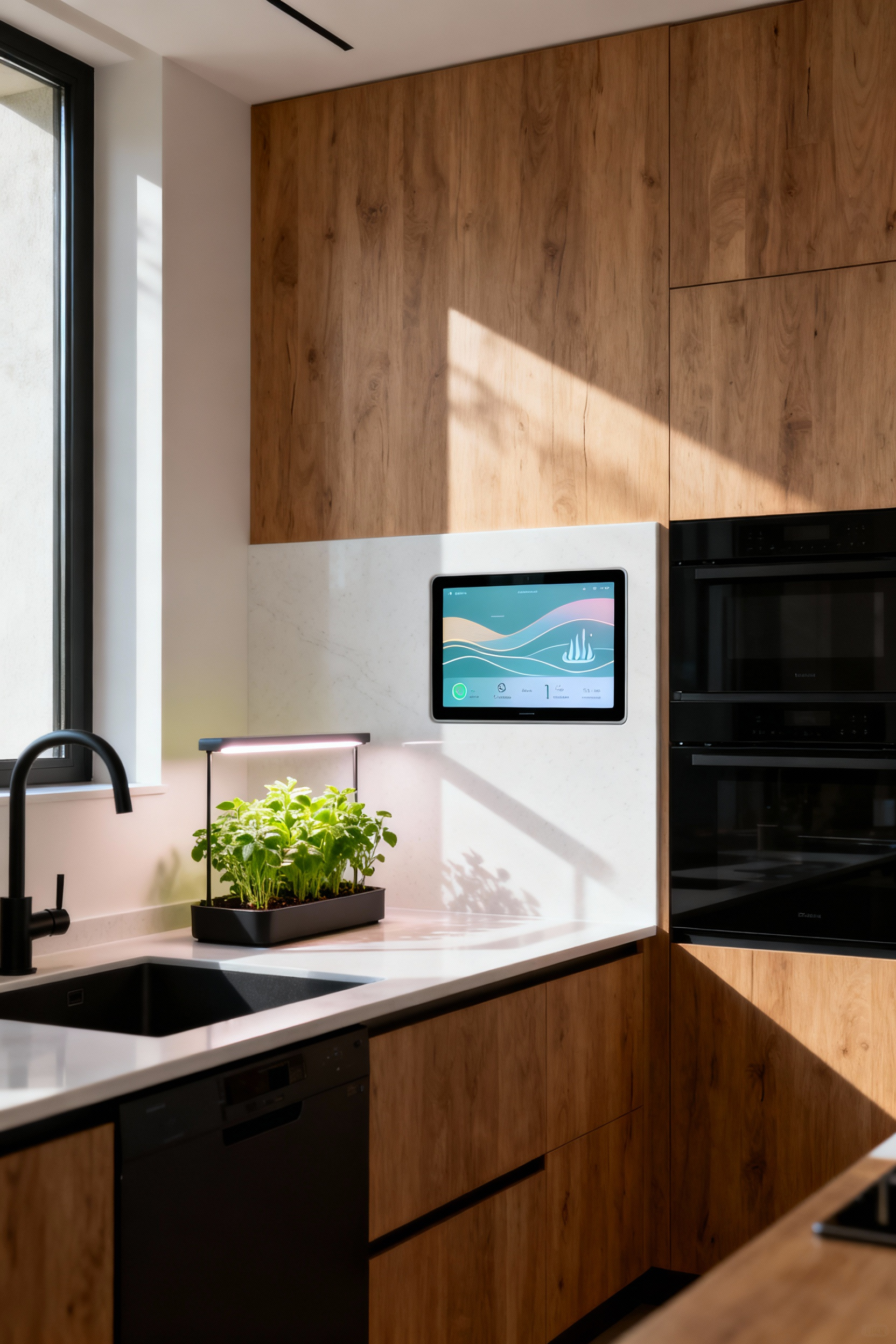
Once you can see that your old fridge is a massive energy hog or that a dripping tap is wasting dozens of gallons a day, you are empowered to make changes. This moves sustainability from an abstract concept to a series of concrete, actionable choices. For the data-driven client, seeing those consumption graphs go down is incredibly motivating and turns resource management into an engaging, ongoing project.
19. Design an Intelligent Food Preservation Hub (Smart Refrigeration, Vacuum Sealing, Fermentation Station)
To close the loop on a productive kitchen, you need an intelligent system for preserving your harvest and minimizing waste. This is a food preservation hub. It starts with a smart refrigerator that helps you track inventory and has precise climate zones to keep produce fresh for longer.
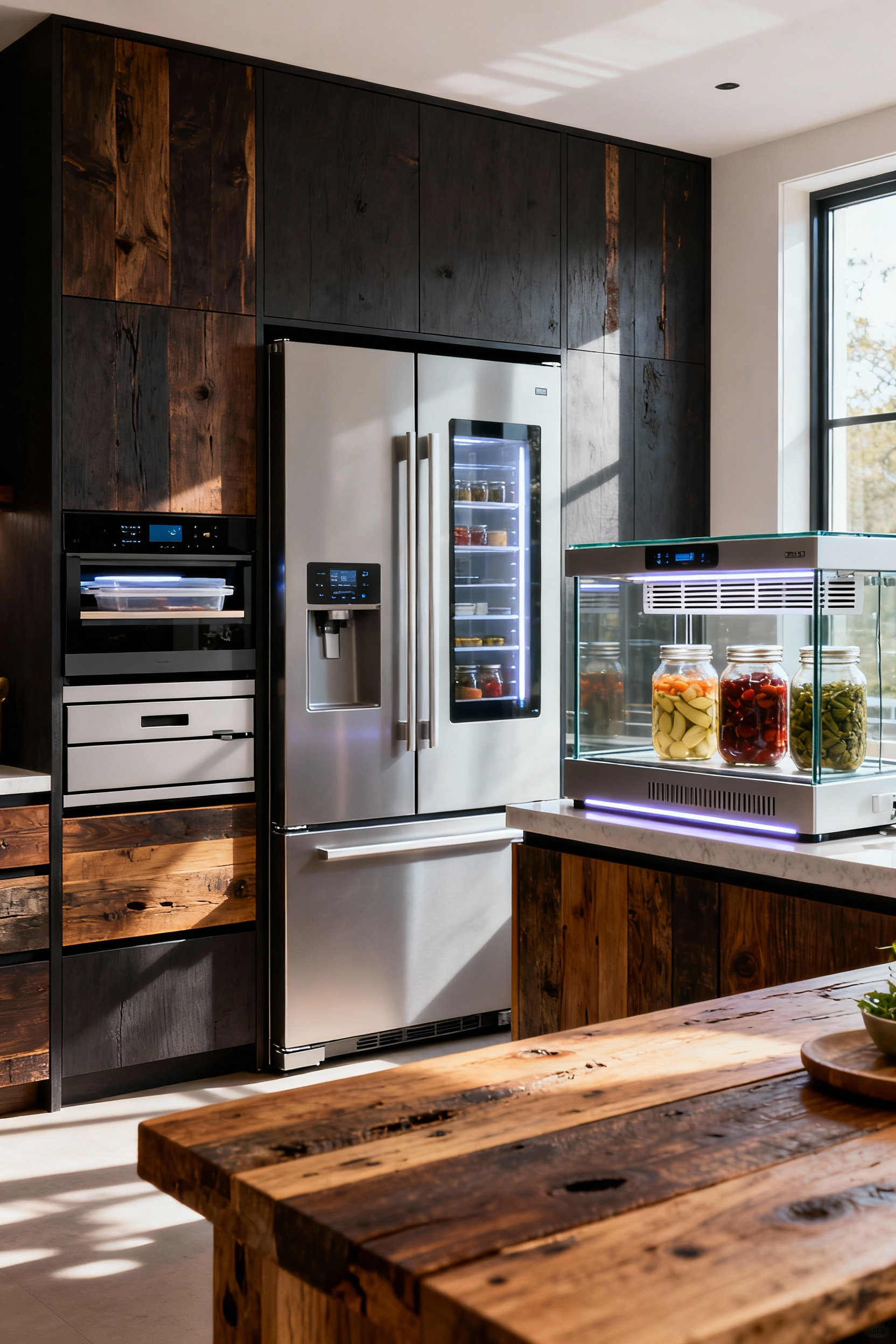
Then, you build out from there. An integrated vacuum sealer is perfect for preserving bulk purchases or garden harvests for the freezer. And a dedicated fermentation station—a temperature-controlled cabinet for your kombucha, kimchi, and sourdough—is a dream for anyone passionate about gut health and traditional food arts. This hub turns your kitchen into a place that not only grows and prepares food but also intelligently manages and preserves it, honoring the entire food cycle.
Mastering Biophilic Kitchen Integration (Part 2)
In this final section, we look at the ultimate principle of sustainable design: building for the long term. This is about creating a kitchen that is not only beautiful and productive today but is also designed to adapt, evolve, and last for generations.
20. Future-Proof the Kitchen with Modular Design Elements for Lifecycle Adaptability
The most sustainable design is one that can adapt over time. A modular kitchen is the opposite of a static, built-in one. It’s composed of individual components—cabinets, workstations, even appliance pods—that can be easily moved, reconfigured, or replaced without a complete tear-out. This drastically reduces future renovation waste.
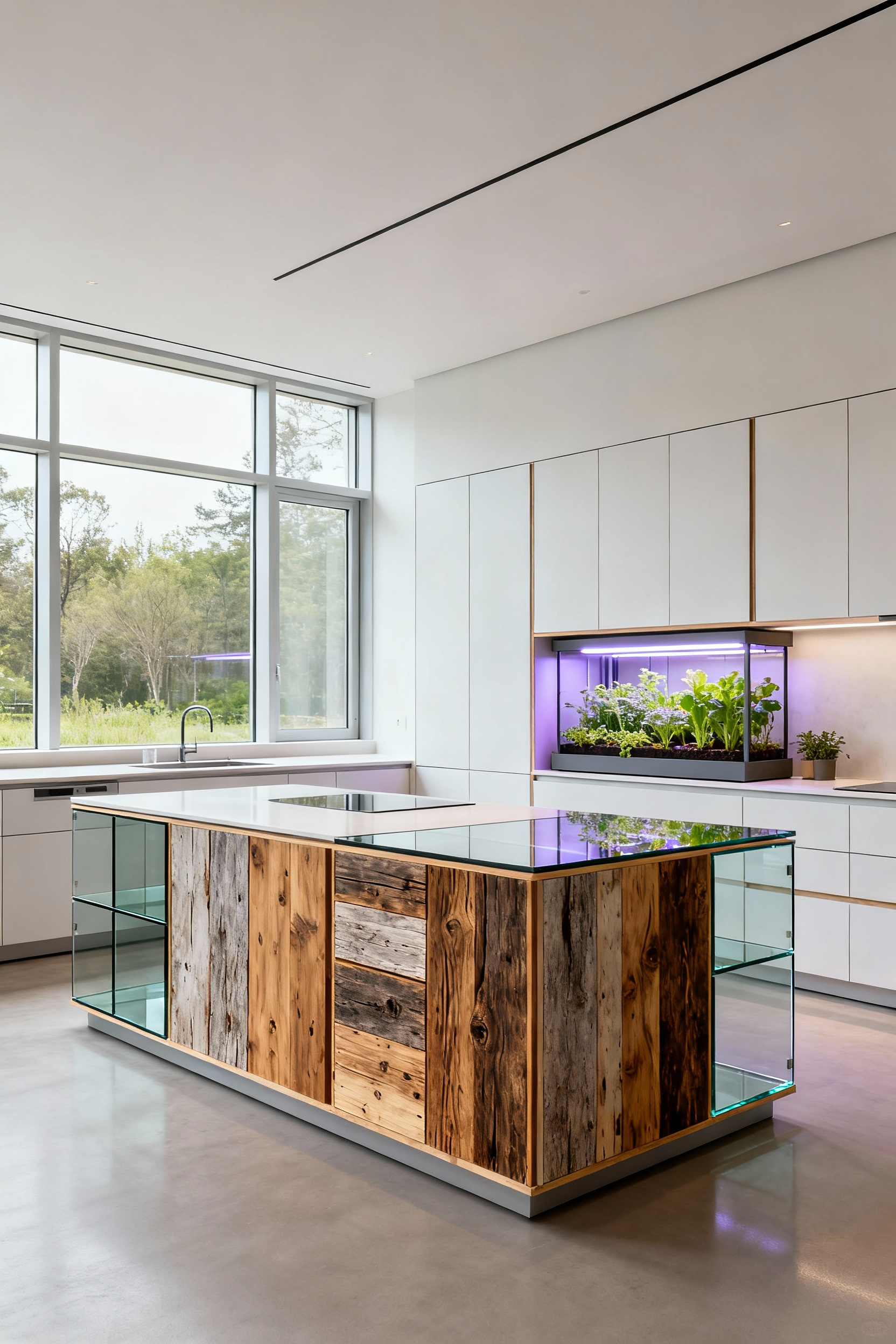
The deeper principle here is “design for disassembly.” This means that every element is constructed in a way that allows it to be easily taken apart at the end of its life, so materials can be repaired, repurposed, or properly recycled. A project I’m particularly proud of used a modular system where the client could literally re-arrange her kitchen layout for a big party, and then switch it back. This flexibility ensures your kitchen can evolve with your life, making it a truly long-term investment.
Conclusion
Remember that surprising insight we started with? The best kitchen design isn’t about aesthetics; it’s about creating a living system. We’ve journeyed through 20 ideas that build on each other, moving from simple, foundational choices to a fully integrated culinary ecosystem. This isn’t some far-off fantasy—the path to a regenerative, productive, and truly beautiful kitchen is right here.
You now have the blueprint to move beyond a conventional remodel. Whether you’re integrating smart composting, installing a living wall, or planning a full greywater system, you are taking an active role in your food cycle and resource management. I want you to see your kitchen not just as a room, but as the vibrant, beating heart of your home’s ecosystem—a powerful statement of how you choose to live in this world. Now go create something that truly nourishes you.