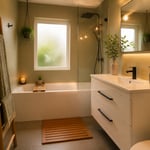
To design a space is to reveal something fundamental about ourselves—every choice reflects not just a passing preference, but deeper values about how we wish to live. The most compelling rooms aren’t merely decorated; they are authored, telling a coherent story of heritage, purpose, and a quiet appreciation for beauty. These twenty principles are my guide for moving beyond superficial trends to capture the authentic spirit behind timeless farmhouse bathroom decorations.
In my work designing desert homes, I’ve learned that the most enduring forms of beauty arise from a thoughtful response to landscape and history. The farmhouse vernacular, like any honest architectural style, is rooted in this same principle of place. It’s about more than shiplap or a specific type of sink; it’s about warmth, utility, and an integrity of materials that feel connected to the earth. To get it right, we must look past the imitations and curate elements that possess their own quiet narrative, crafting a sanctuary that feels both deeply personal and universally serene.
This exploration will move through four distinct stages. We will begin with the philosophy of a rustic space, understanding its core ideas. From there, we will explore the materials that give it tactile life, then orchestrate how those forms function within the room, and finally, we will layer in the personal accents that animate the space with soul.
Deconstructing the Rustic Vernacular: The Philosophy of an Elevated Farmhouse Design
Before a single object is chosen, we must understand the “why.” An elevated farmhouse design is a philosophy rooted in honesty, purpose, and a connection to history. It is a mindful turning away from the mass-produced, a quiet celebration of materials that tell a story, and an embrace of simplicity that creates, rather than removes, a sense of soul.
1. The Narrative of Provenance
An object without a story is merely an object. The true soul of a refined farmhouse aesthetic is found in pieces with a past—reclaimed wood that holds the memory of a barn, antique brass whose patina was earned through generations of touch, not a chemical process. This isn’t about creating a museum but about grounding a modern space with the weight and wisdom of history. Think of it as inviting ancestral spirits into the room
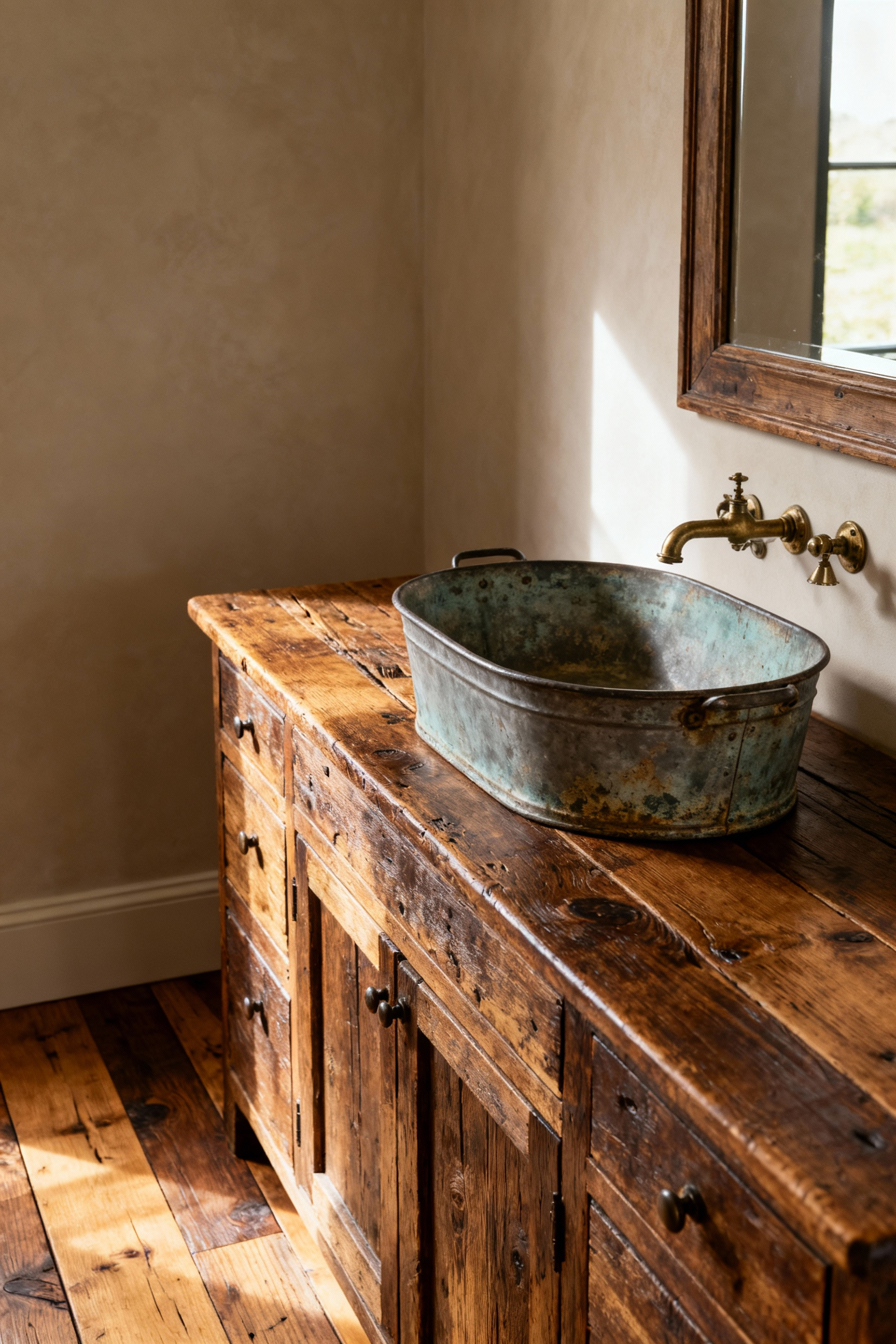
When you bring a salvaged dresser into the bathroom to serve as a vanity, each of its scratches and fades tells a story that no new piece ever could. In my work, whether using ancient stone from a desert quarry or reclaimed timbers from an old warehouse, the goal is the same: to infuse the space with a narrative that transcends its construction. These items are anchors, connecting our daily rituals to a lineage of craftsmanship and time.
2. The Art of Deliberate Imperfection
The relentless pursuit of flawlessness creates sterile, unlivable spaces. True beauty, I believe, lies in imperfection—the subtle crackle in a ceramic glaze, the uneven texture of a hand-plastered wall, the way wood silvers as it ages. This principle celebrates the natural lifecycle of materials, finding character in their evolution. It’s an ethos of acceptance that fosters a deep sense of calm.
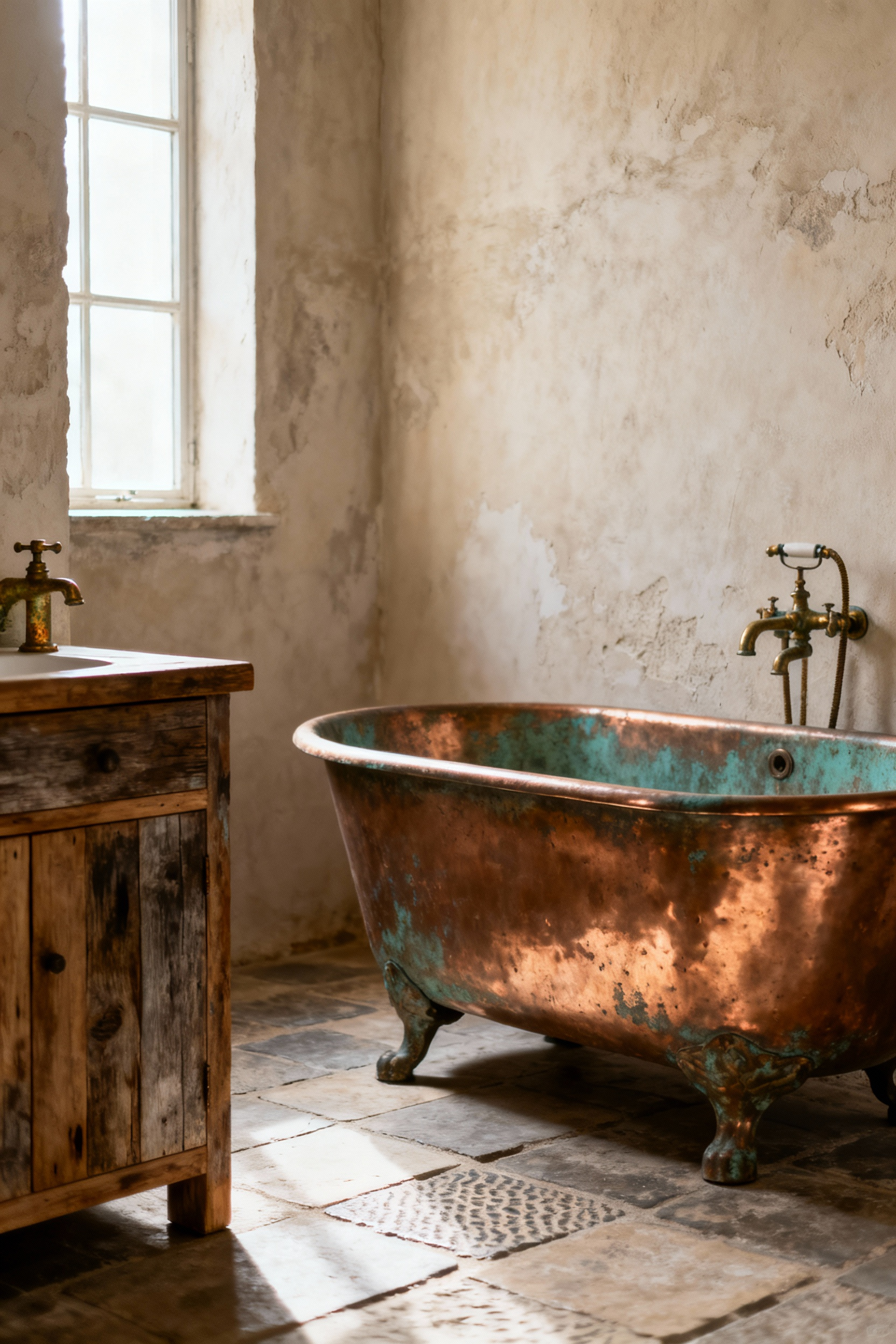
Look for materials that are allowed to be themselves: honed marble that etches softly with use, linen towels that wrinkle, and unlacquered metals that slowly tarnish. It’s a quiet act of rebellion against the manufactured world. What I tell my clients is that these “flaws” are what prevent a room from feeling like a showroom; they are the marks of life, turning a house into a home.
3. Curating Negative Space
What is left out is as important as what is put in. This is a core principle of minimalism, whether in the spare landscapes of Scandinavia or the vast expanse of the desert. Negative space gives architectural forms, natural light, and chosen objects room to breathe. It’s a commitment to clarity, removing visual noise to amplify the significance of what remains. A room with breathing room is a room that soothes the mind.
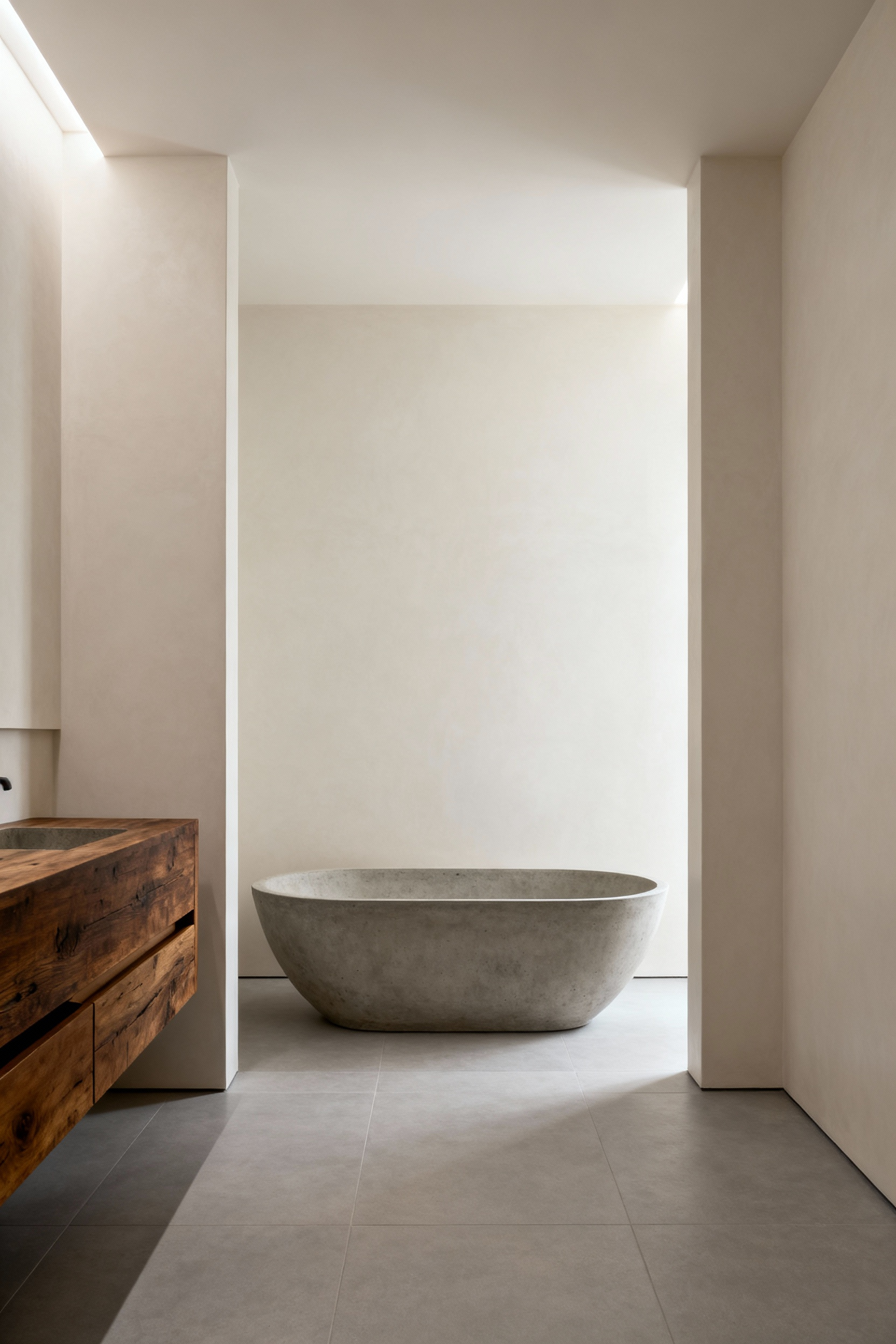
In a farmhouse bathroom, this might mean a single, sculptural tub against an empty wall or open shelves holding just three beautiful, useful objects. Light becomes a material in itself, tracing shadows across a clean surface. It’s not about emptiness; it’s about making the emptiness potent. By resisting the urge to fill every corner, you give each element—each towel, each jar, each ray of light—a profound sense of purpose.
4. Beyond Whitewash: A Muted Earth Palette
While white can be beautiful, it has become a default that often mutes the true potential of the farmhouse style. An elevated palette is drawn from the landscape—the dusty greens of sage, the warm grays of river stone, the soft ochre of sun-baked earth. These are colors that ground a space, giving it a weight and history that stark white often lacks.
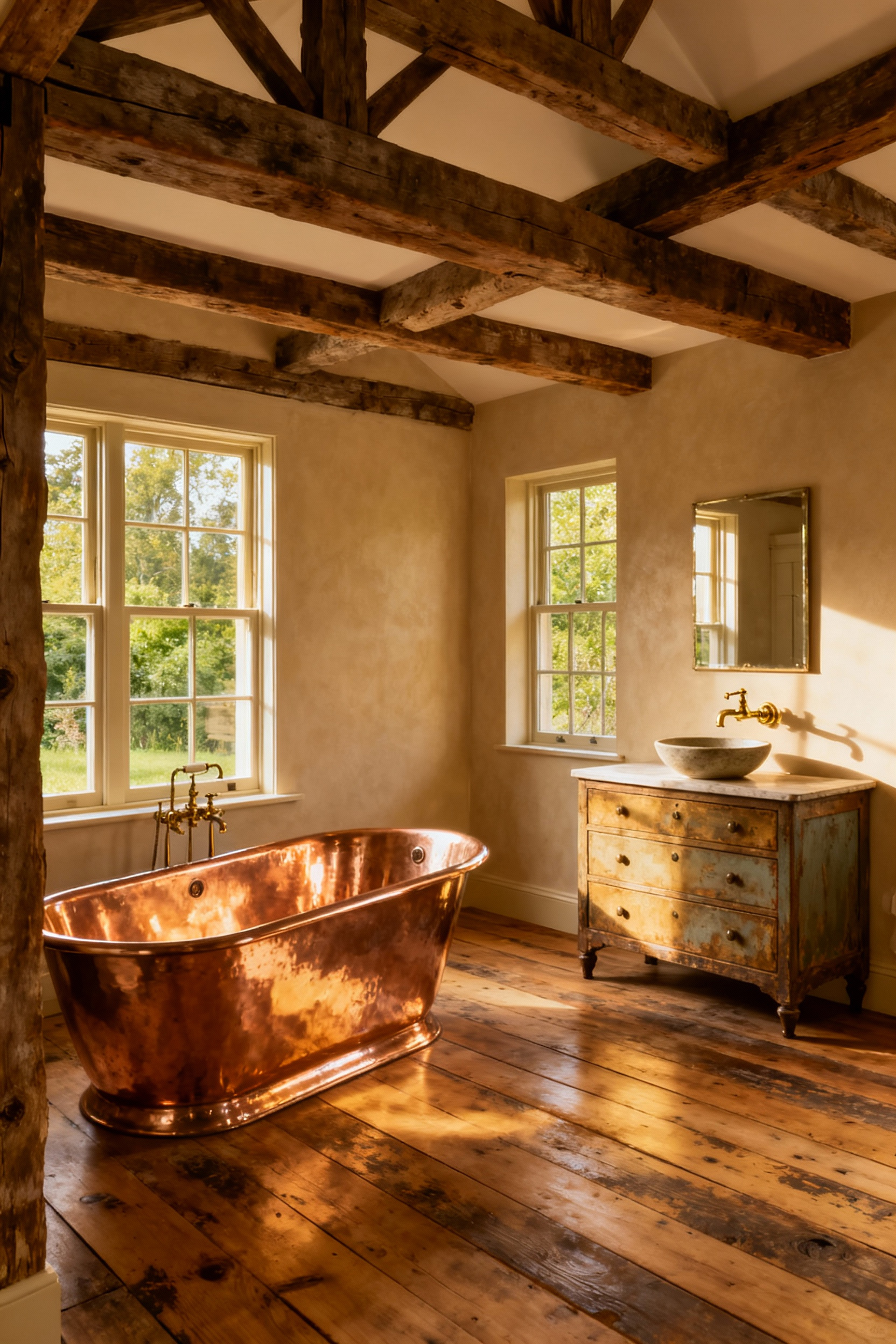
These muted tones provide a sophisticated backdrop that makes natural textures—wood grain, the weave of a textile, the veining in stone—truly come alive. They absorb light with a soft, velvety quality, creating an enveloping sense of sanctuary. From my professional experience designing in climates with intense sun, I know that these mid-tones are far more restful on the eye than brilliant white, offering a more nuanced and tranquil environment for daily rituals.
Tactile Textures & Enduring Elements: A Deep Dive into Materiality
A space is ultimately defined by what it is made of. Materiality is the language of authenticity. Here, we move beyond appearances to explore the honest, enduring elements that provide tactile satisfaction and age with a quiet grace, forming the very foundation of a refined farmhouse aesthetic.
5. Honed natural stone
A polished, glossy countertop reflects light; a honed one absorbs it. That single distinction makes all the difference. Honed stone, with its matte or low-sheen finish, has a quiet, tactile quality that begs to be touched. It reveals the stone’s character with an understated elegance, showcasing subtle veining and texture without the distraction of a high-gloss sheen. It feels ancient and elemental.
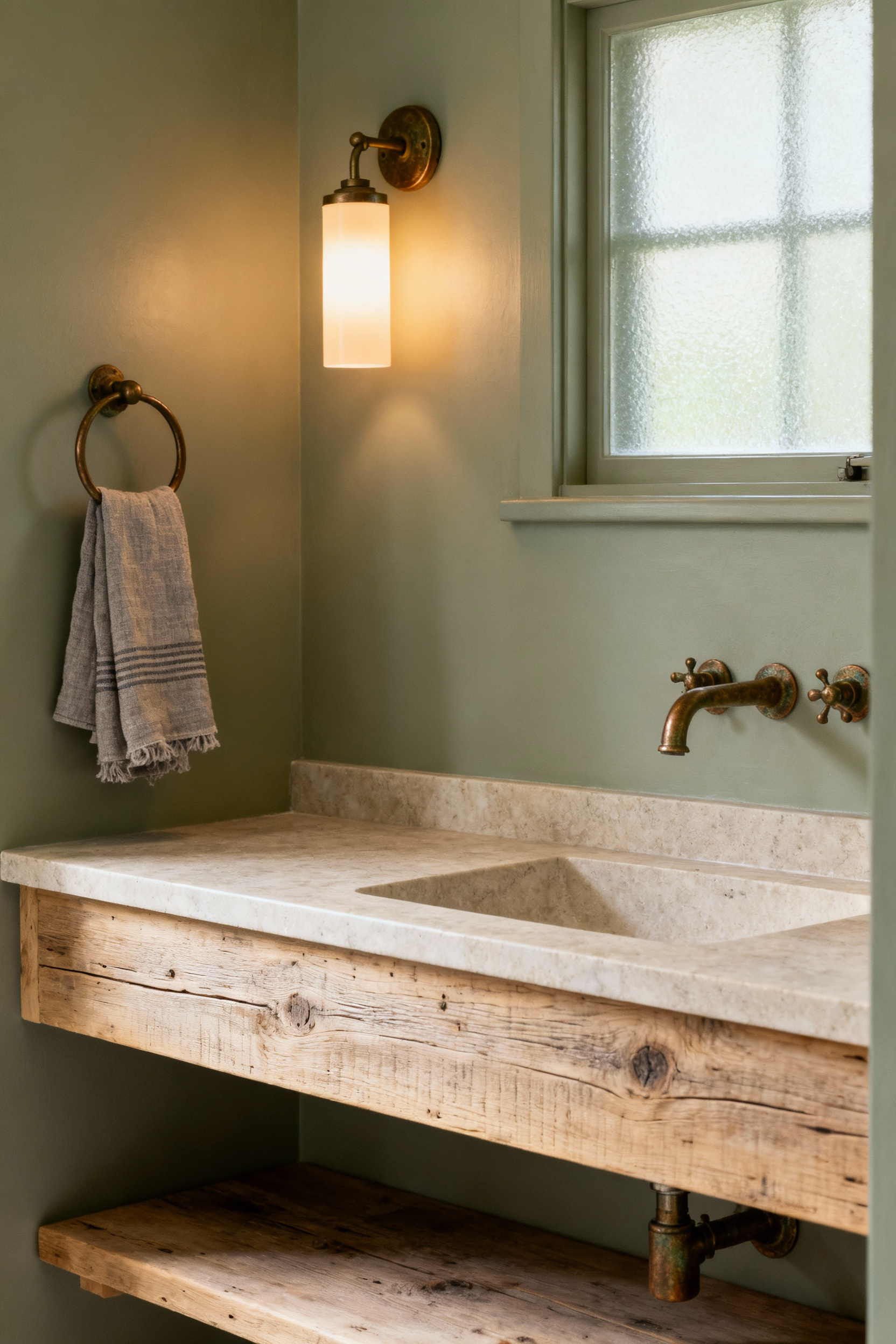
In the bathroom, a honed marble or soapstone vanity top feels soft, almost velvety. It harmonizes with wood and metal rather than competing with them. While it will patina and mark over time, those marks become part of its story, adding to its character. I’ve noticed this preference for honest materials across cultures—people are drawn to surfaces that feel authentic to their geological origins.
6. Reclaimed Wood as a Structural Statement
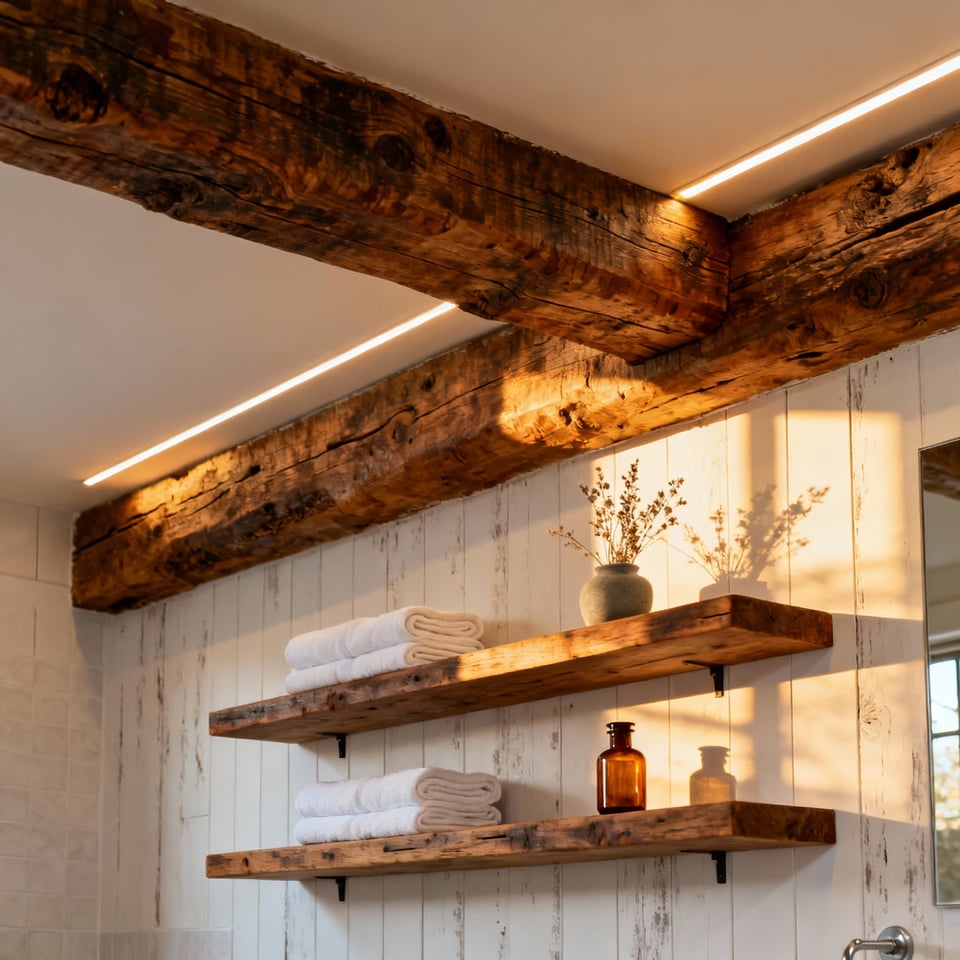
Reclaimed wood brings more than just rustic texture; it brings a structural narrative. Its deep, aged patina, old saw marks, and inherent imperfections are badges of authenticity that new timber can never replicate. Using it for exposed beams, substantial shelving, or a custom vanity infuses the room with a sense of grounded history.
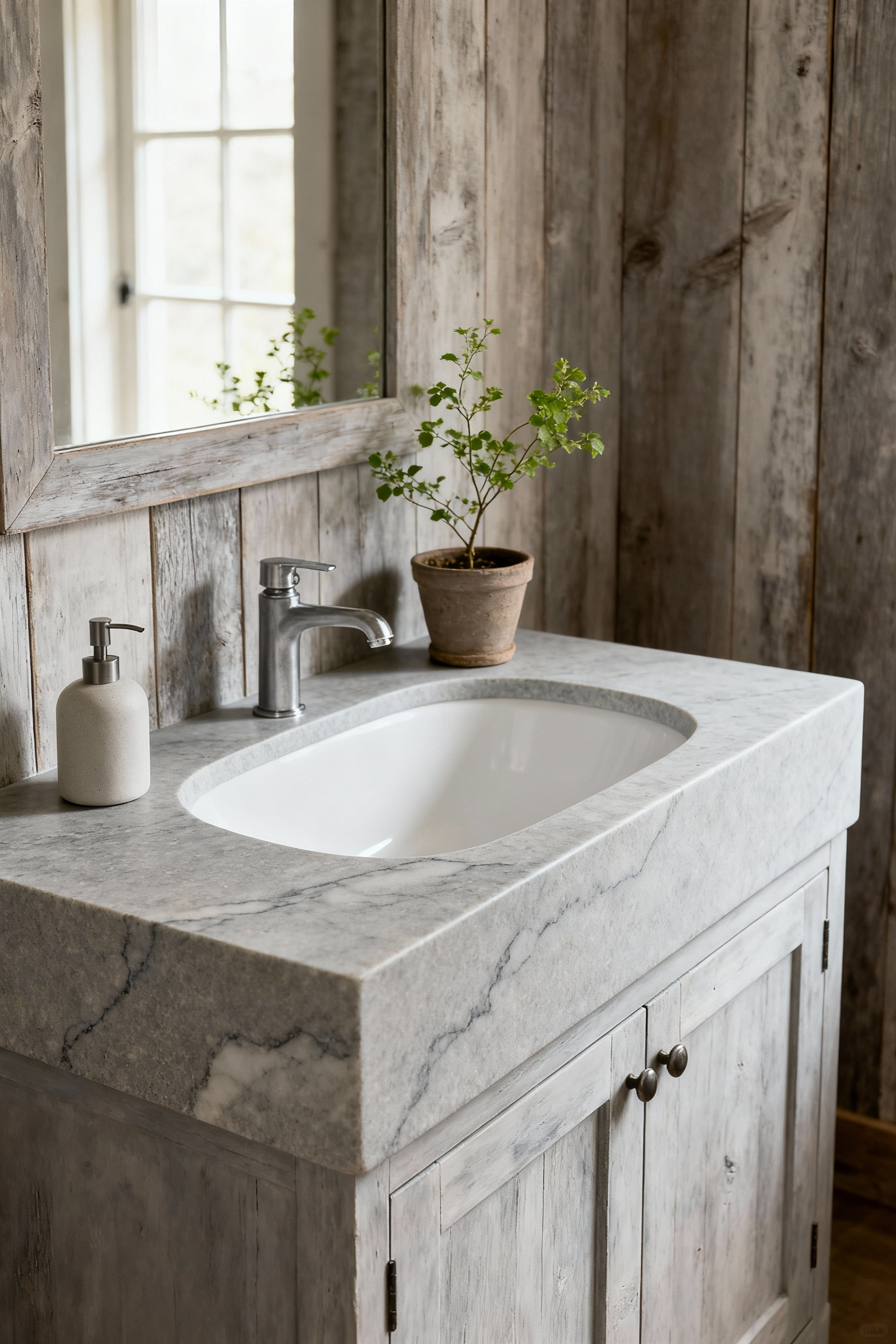
It’s also an act of sustainability, giving beautiful old material a second life. I learned this when designing a desert home where we repurposed heavy beams from a dismantled city warehouse; they immediately gave the new construction a sense of permanence and soul. In the bathroom, these elements stand as a testament to resilience and continuity, connecting the present moment to a rich past.
7. Living Finishes: Unlacquered Brass & Oil-Rubbed Bronze
The most beautiful materials are often those that evolve with us. Unlacquered brass and oil-rubbed bronze are “living finishes,” designed to change with time, touch, and atmosphere. Unlacquered brass begins with a bright, warm gold but slowly deepens into a rich, complex patina. Oil-rubbed bronze wears in high-touch areas, revealing hints of the lighter metal beneath. They are designed to age, not just exist.
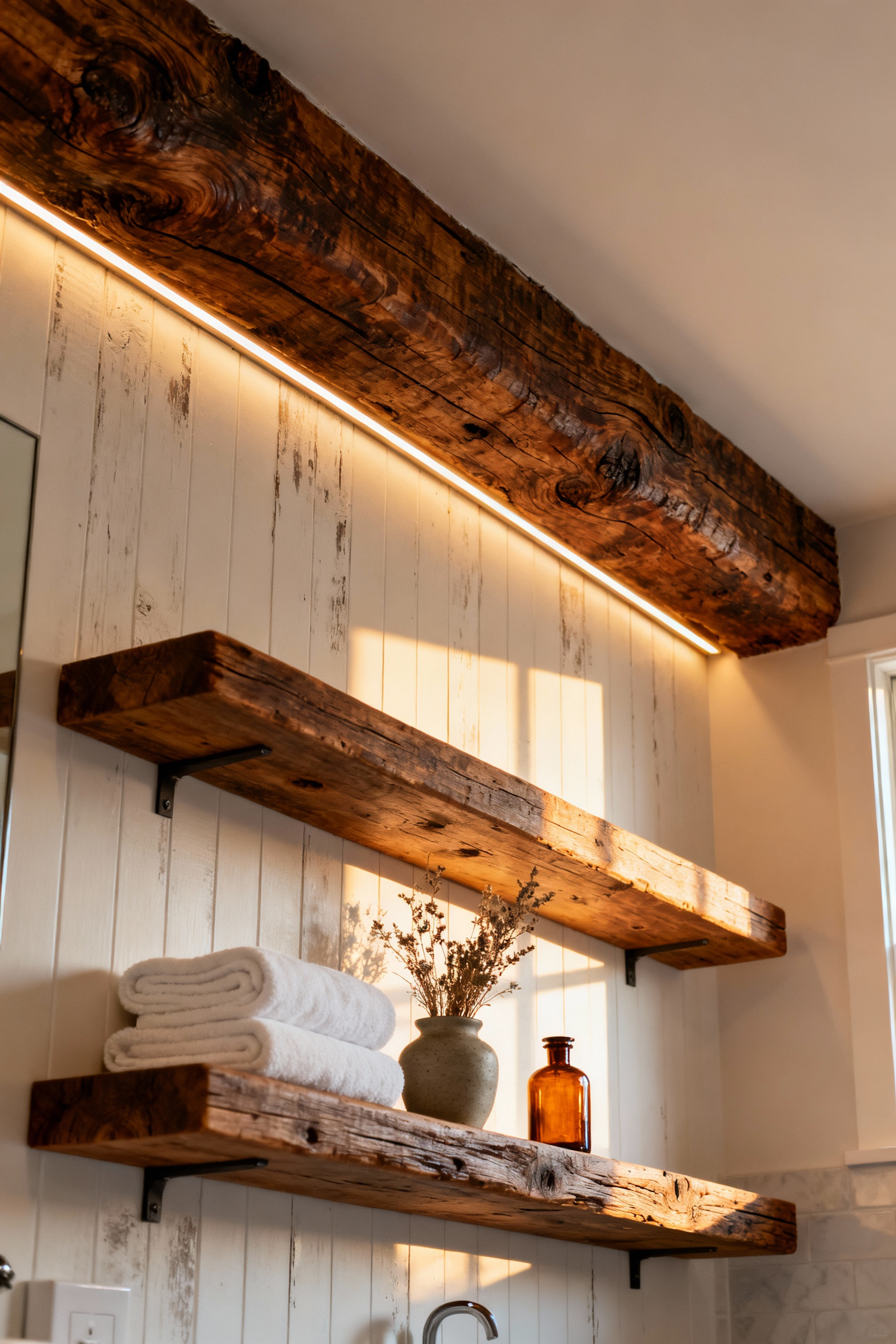
Choosing these fixtures is an embrace of process over perfection. Every drop of water, every touch of a hand contributes to their unique story. They reject the static nature of chrome or nickel, instead offering a surface that is dynamic and responsive. In this way, the very hardware of your bathroom becomes a quiet record of daily life.
8. The Breathability of Organic Textiles
The soft elements of a bathroom should be chosen for their sensory experience and their ecological integrity. Organic linen and hemp are perfect examples. These natural fibers possess a raw, textural beauty and soften wonderfully with each wash. More importantly, they are breathable and naturally antibacterial, making them ideal for a humid environment.
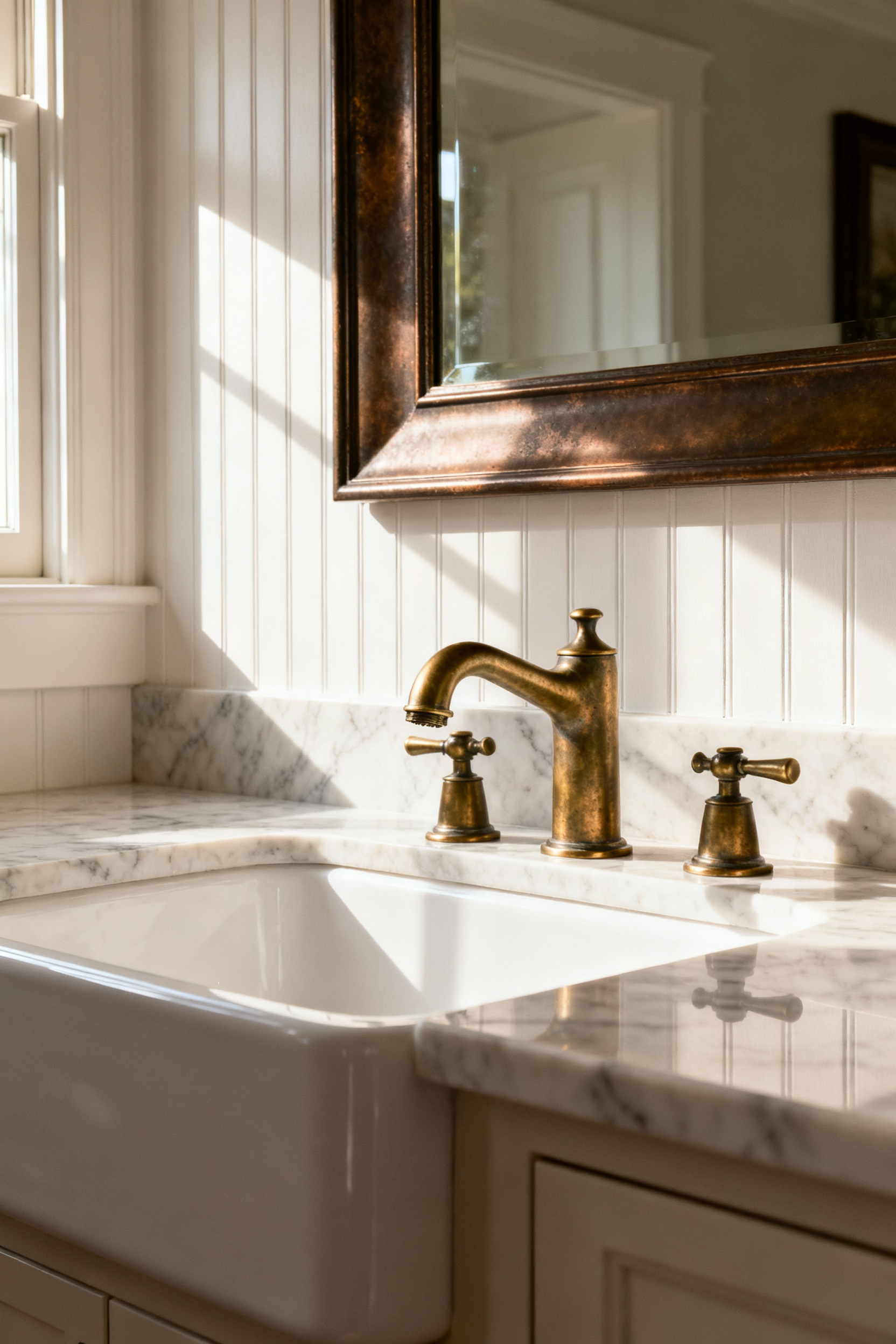
Their connection to the earth is tangible. In my climate-adaptive design practice, materials that manage moisture and feel cool to the touch are essential. A voluminous linen shower curtain that billows softly or a stack of absorbent hemp towels on a simple wooden rack are small luxuries that ground the daily ritual in natural comfort. They offer softness and sustainability in equal measure.
9. Glazed Ceramic and a Return to Traditional Grout
The appeal of tile like glazed ceramic or subway tile lies in its history of utility and craftsmanship. For an elevated look, choose tiles with slight handmade imperfections—a subtle undulation on the surface or an imperfect edge. This detail celebrates the hand of the artisan and moves the design beyond sterile uniformity.
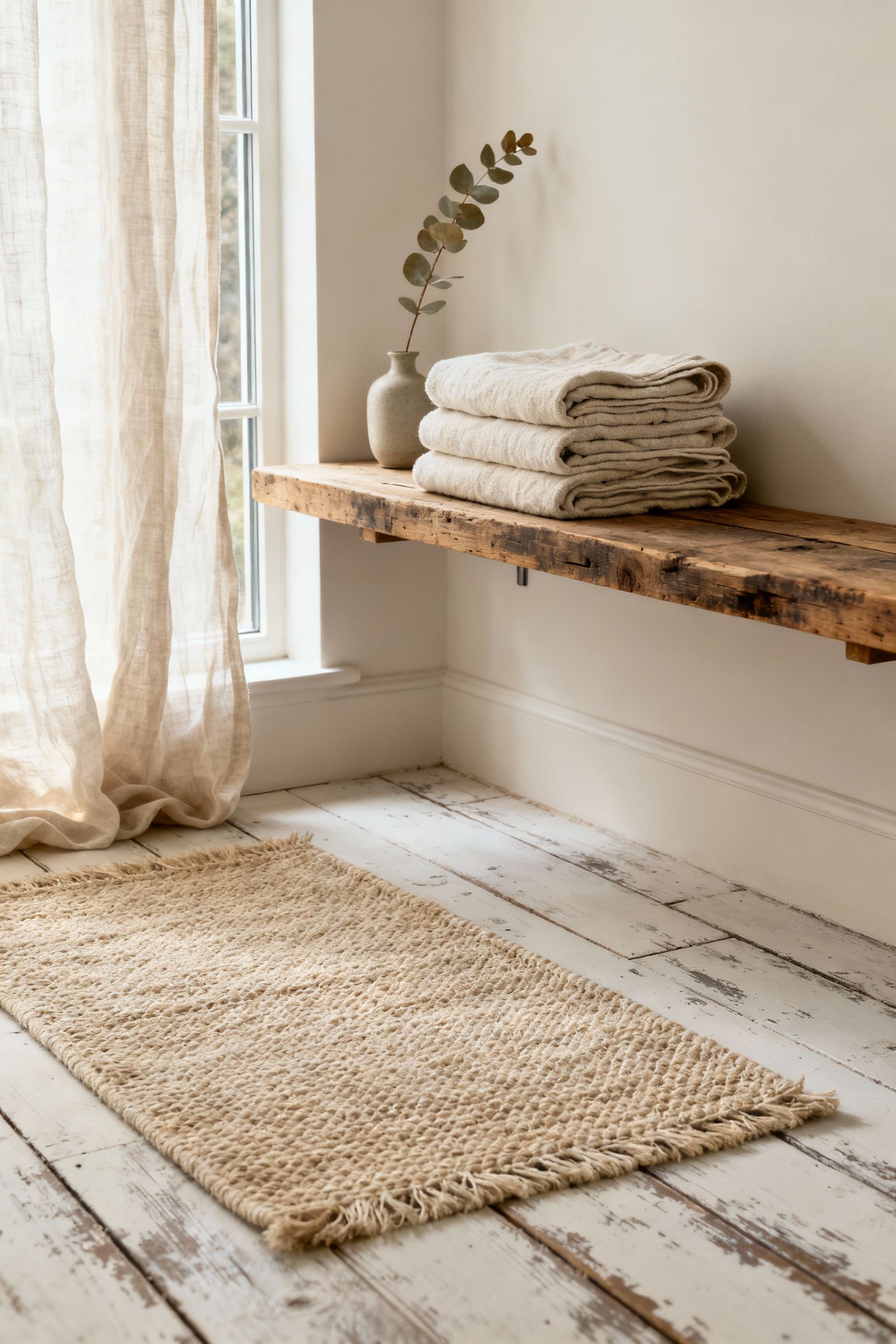
And here’s a critical detail: embrace a slightly wider, more traditional grout line. Instead of trying to make the grout disappear, use it to create a subtle grid that celebrates the form of each individual tile. I am often inspired by the artistry of Moroccan zellige, where the beauty comes from the slight variation from tile to tile. Allowing the grout to create a quiet, rhythmic pattern adds texture and an architectural quality that feels both classic and authentic.
Orchestrating Form & Function: Navigating Layout, Light, and Flow
The soul of a space is found not just in its parts, but in the harmony between them. How we arrange elements, sculpt light, and create intuitive flow is the invisible architecture of good design. Here, function is elevated into an art form, where every practical necessity enhances the room’s tranquil character.
10. Architectural Lighting as Sculpture
Lighting should do more than just illuminate; it should sculpt. In the farmhouse bathroom, this means moving beyond a single overhead fixture to a layered approach. Sconces framing a mirror provide clear, shadow-free task lighting, while a central pendant might offer a soft, ambient glow. The goal is to create pools of light that craft an atmosphere of intimacy and calm.
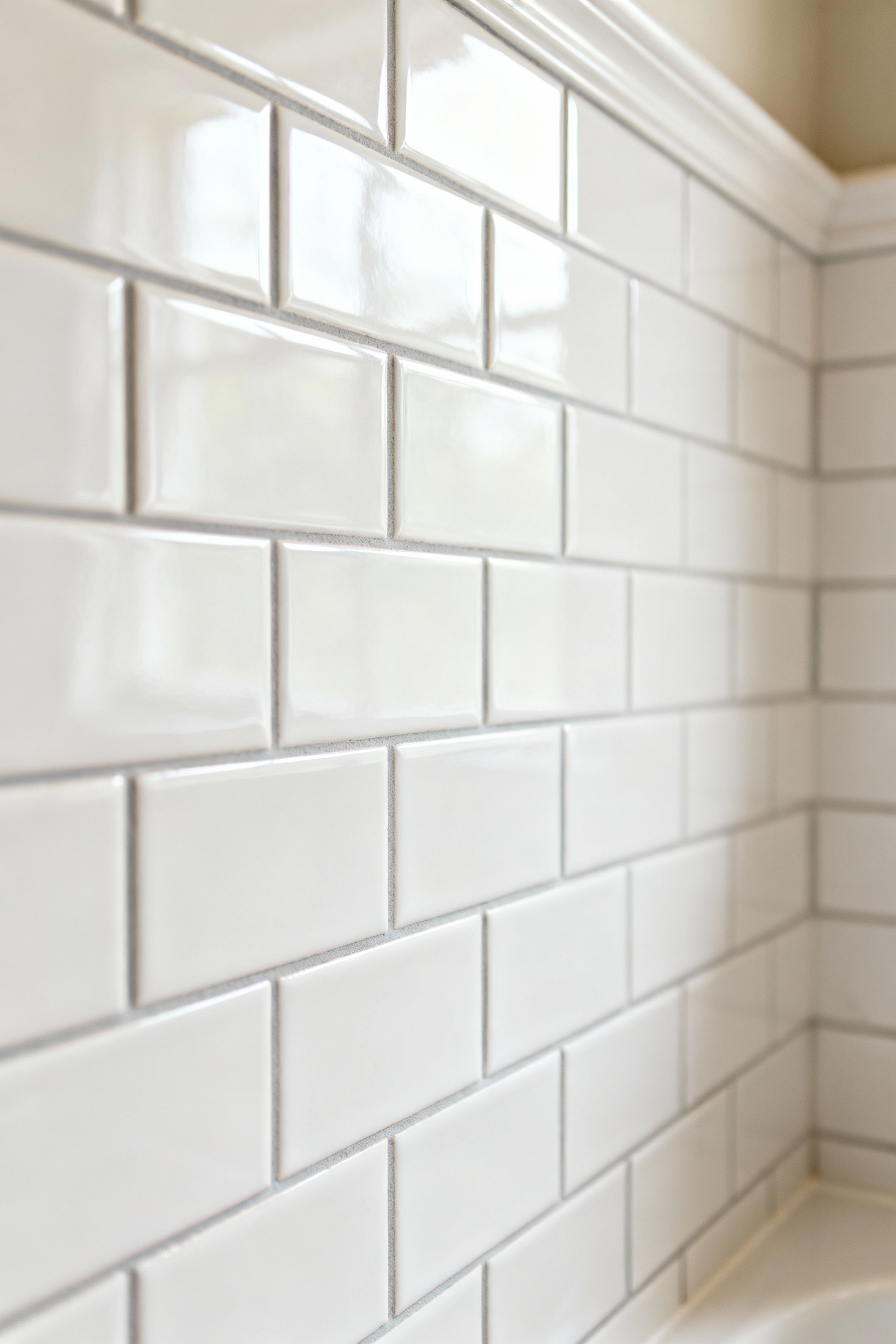
The fixtures themselves are sculptural opportunities. Look for articulated arms, aged metal finishes, and seeded or frosted glass shades that diffuse light beautifully. What really gets me is the way light can be used to highlight texture. Think of a light washing down an exposed stone wall or up-lighting a set of reclaimed wood beams. It’s how you make the materials of the room come alive after the sun goes down.
11. The Honesty of Foundational Plumbing
Plumbing presents a fascinating design choice: to conceal or reveal? The answer depends on the story you want to tell. Concealing pipes within walls creates clean lines and a serene, uncluttered look—an approach that aligns with minimalist sensibilities. This is especially powerful in smaller spaces where every inch of visual peace matters.
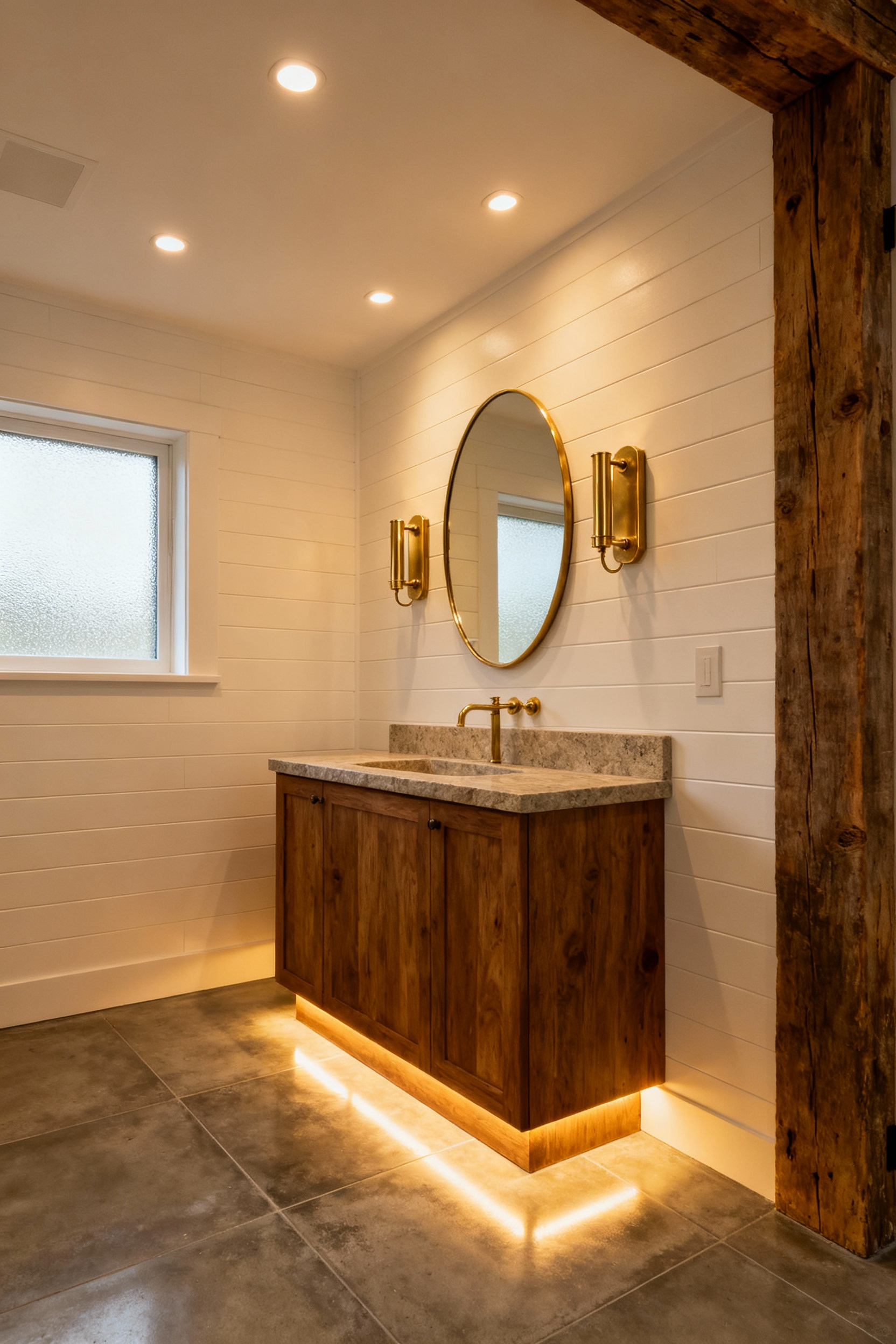
Conversely, intentionally exposing elements like the elegant pipes of a bridge faucet or the robust connections of a shower system celebrates the honest mechanics of the space. This nod to industrial heritage requires impeccable craftsmanship—the exposed elements must be beautiful in their own right, crafted from quality materials like raw copper or matte black steel. This is a design that values transparency and the beauty of well-made things.
12. The Strategic Power of a Vintage Mirror
A vintage mirror is an incredible design tool. It is simultaneously a functional object, a piece of art, and a manipulator of light and space. The frame itself adds a layer of history—a rustic wood surround brings warmth, while a tarnished gilded frame can introduce an unexpected touch of faded elegance. The story is in the details.
Placed opposite a window, a mirror can effectively double the natural light in a room, making it feel larger and more open. This is a simple but powerful technique I use often in creating airy interiors. More than that, the reflection itself—perhaps softened by slightly foxed antique glass—adds a dreamy, soulful quality. It’s not just a reflection of you, but a reflection of the room’s quiet character.
13. The freestanding tub as Lyrical Anchor
A freestanding tub, especially one of cast iron, is less a fixture and more a piece of habitable sculpture. It is an unapologetic commitment to the ritual of bathing. Its substantial form acts as a lyrical anchor for the room, demanding to be placed with intention—perhaps beneath a window or in the center of the space, as a focal point.
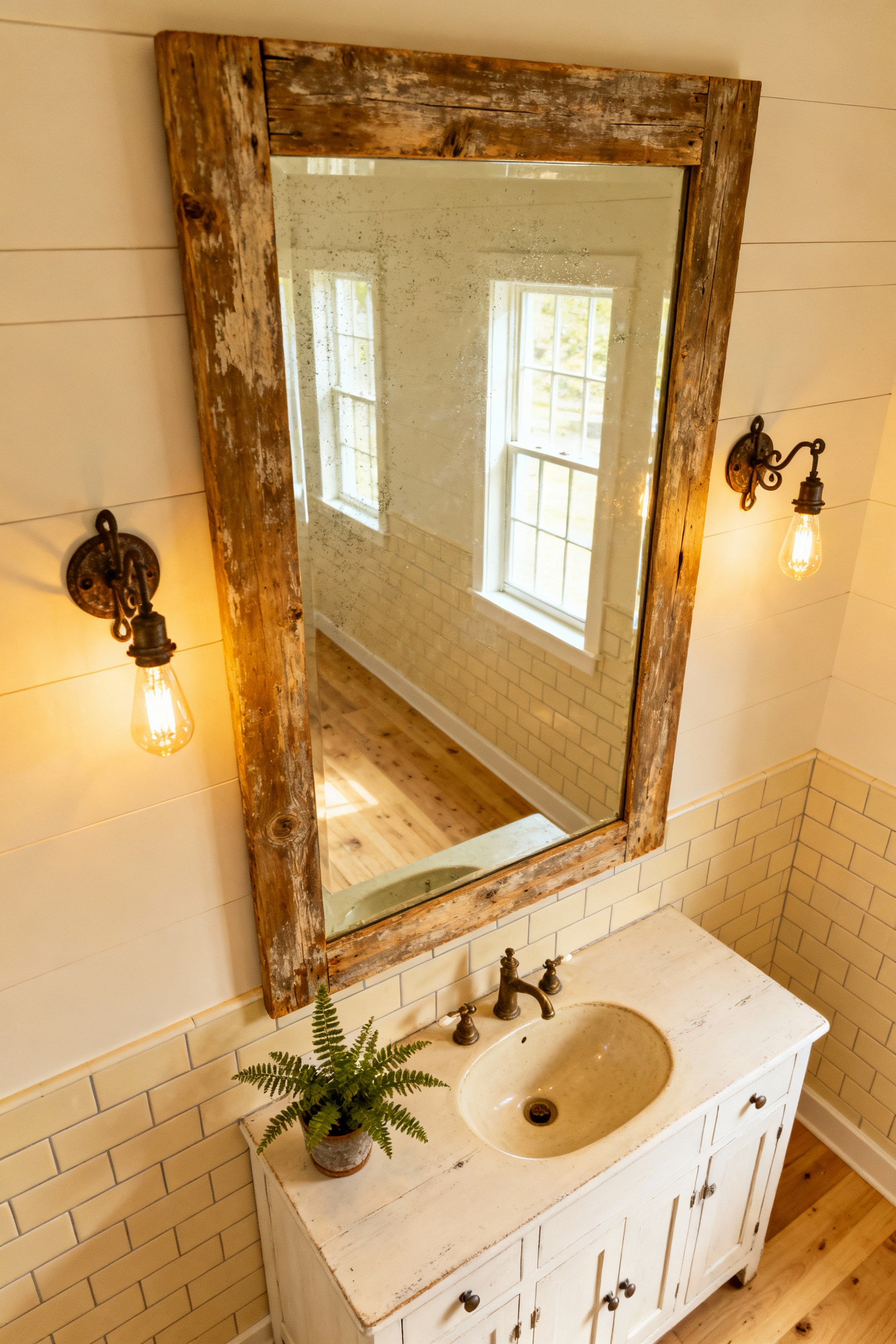
Its weight and permanence provide a satisfying contrast to the lighter elements of the room. A cast-iron tub’s ability to retain heat turns a simple bath into a prolonged, luxurious soak. It embodies a philosophy of slowing down and is a powerful statement about valuing moments of restorative solitude in our daily lives.
14. Bespoke Millwork: The Ultimate Integration
Nothing elevates a space like custom cabinetry. Bespoke millwork allows you to harmonize function and form perfectly, creating storage solutions that feel like an integral part of the architecture rather than an addition. It’s an investment in seamlessness and a rejection of the one-size-fits-all mentality.
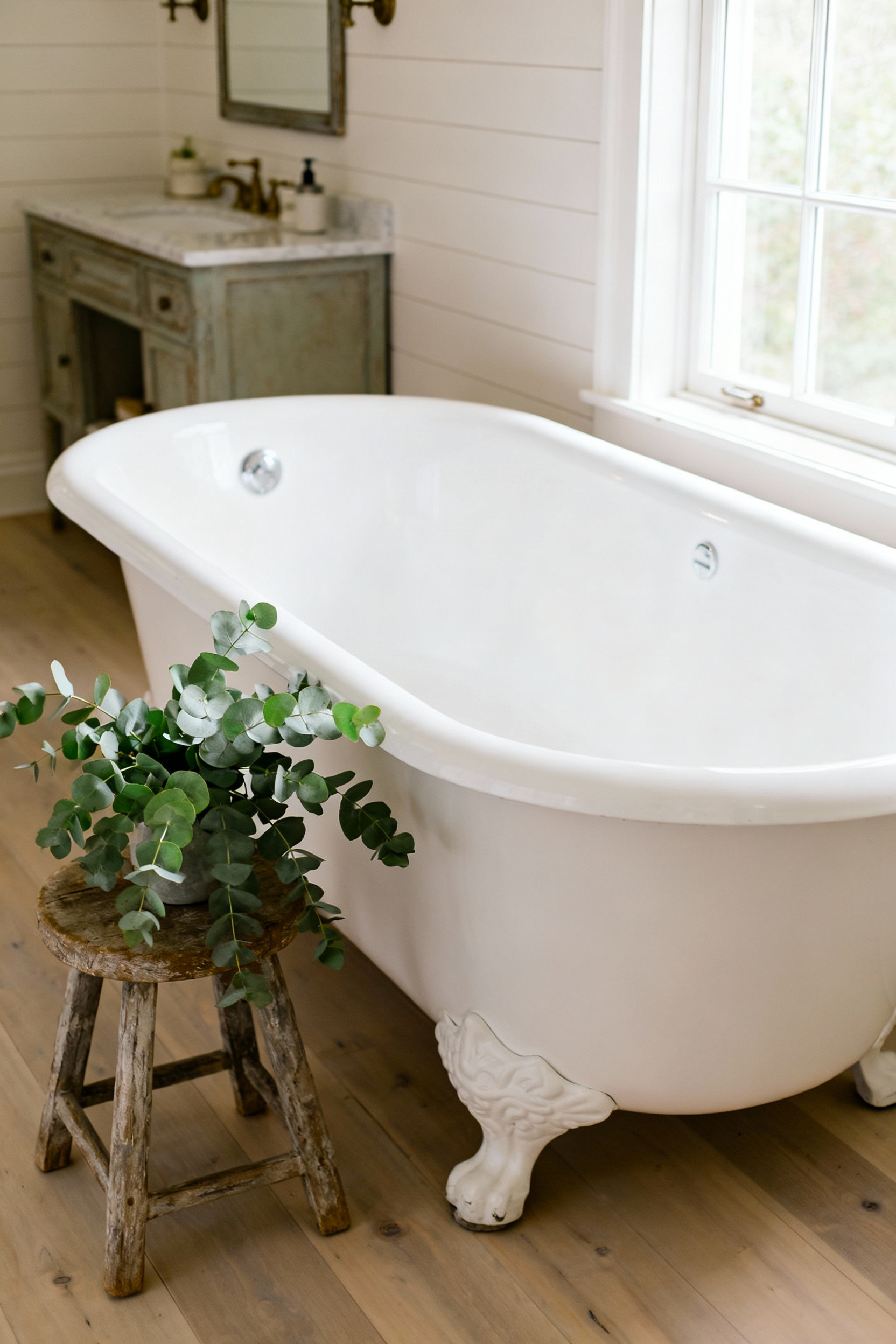
A vanity can be designed to the exact proportions of the room, or awkward niches can be transformed into intelligent, concealed storage. This allows the visible surfaces of the room to remain calm and uncluttered, preserving that crucial sense of negative space. When crafted from solid, honest wood and finished with thoughtful hardware, custom millwork becomes a quiet, foundational luxury that enhances the daily experience of the room for years to come.
Cultivating Personal Resonance: Accents that Animate the Lived Experience
A room is not complete until it reflects the life lived within it. The final layer of design involves a thoughtful curation of accents that infuse the space with personality, warmth, and a unique narrative. These are the details that transform a beautifully designed bathroom into your sanctuary.
15. Living Greenery for Natural Vibrancy
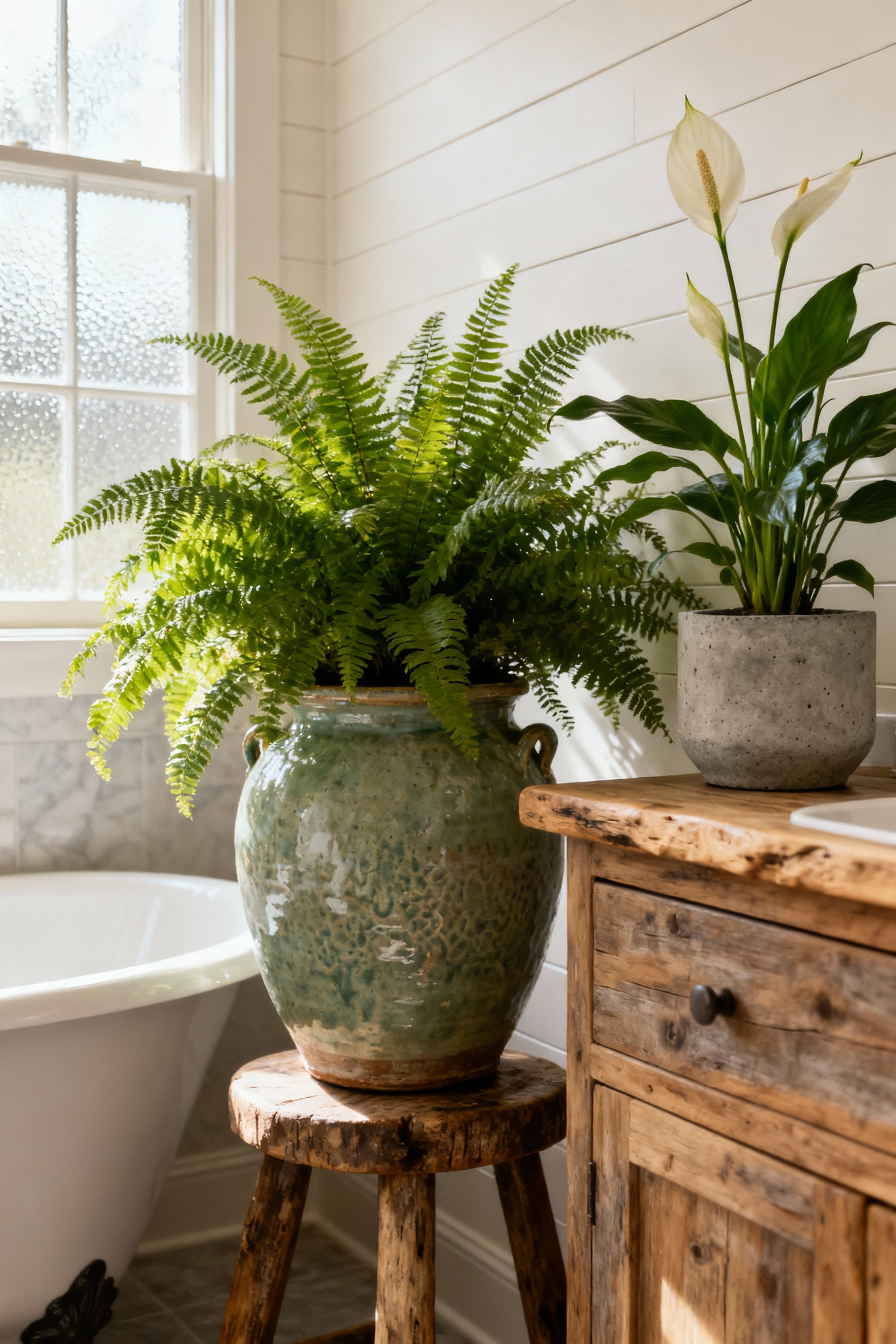
Even the most minimalist space needs life. Introducing botanical elements is the simplest way to infuse a bathroom with vitality and connect it to the natural world. The key is to select greenery that feels authentic to a mindset of resilience and calm—not just a token ficus. Think hardy snake plants, sculptural succulents, or a few branches of dried eucalyptus in a simple vase.
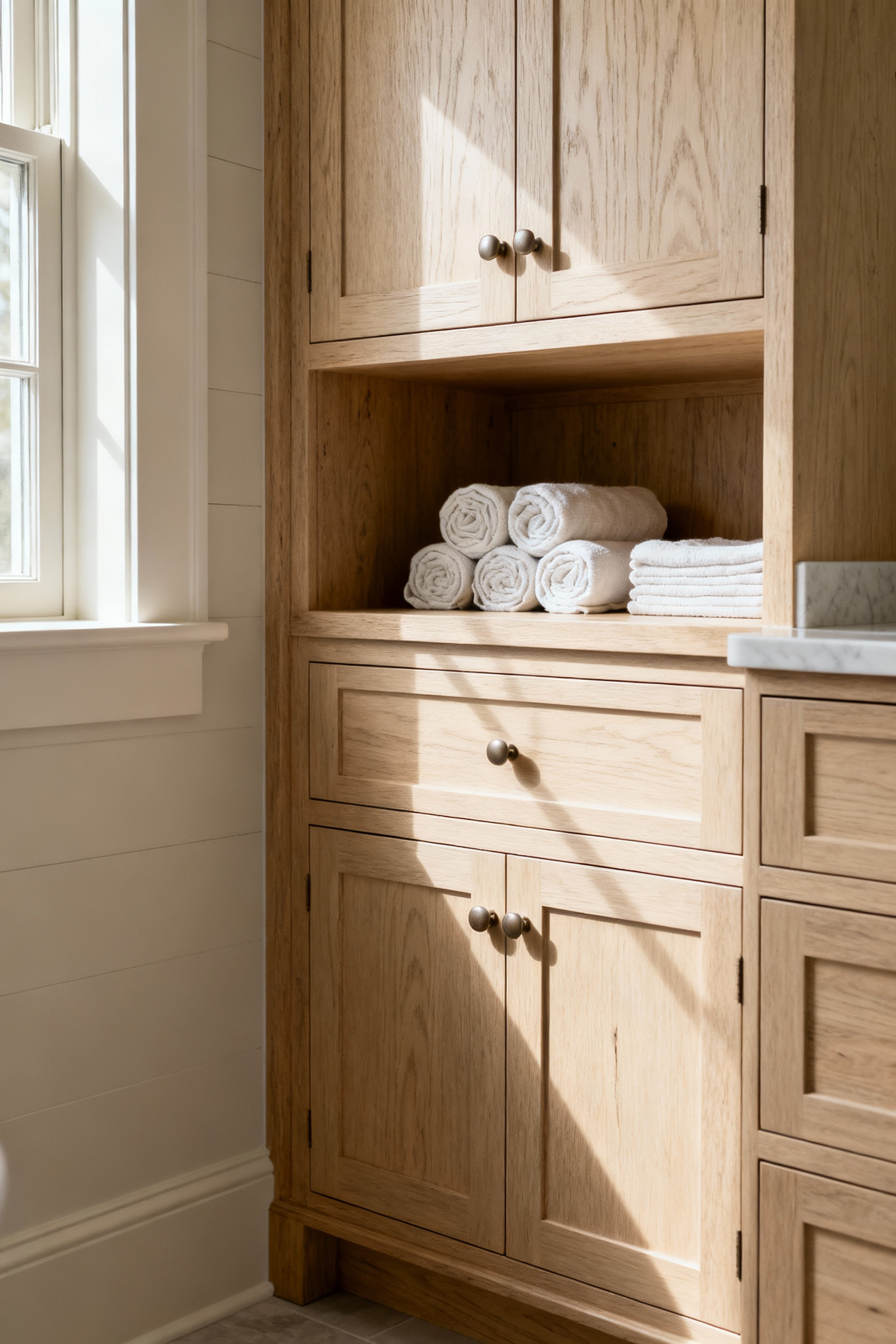
Greenery softens the hard lines of tile and porcelain, and the interplay of natural light on leaves creates a subtle, dynamic beauty. In my desert modern designs, I rely on plants that thrive with little intervention, reflecting the adaptive strength of the landscape. Choosing a plant is choosing a living sculpture that will grow and change with the space.
16. The Humility of Artisanal Ceramics
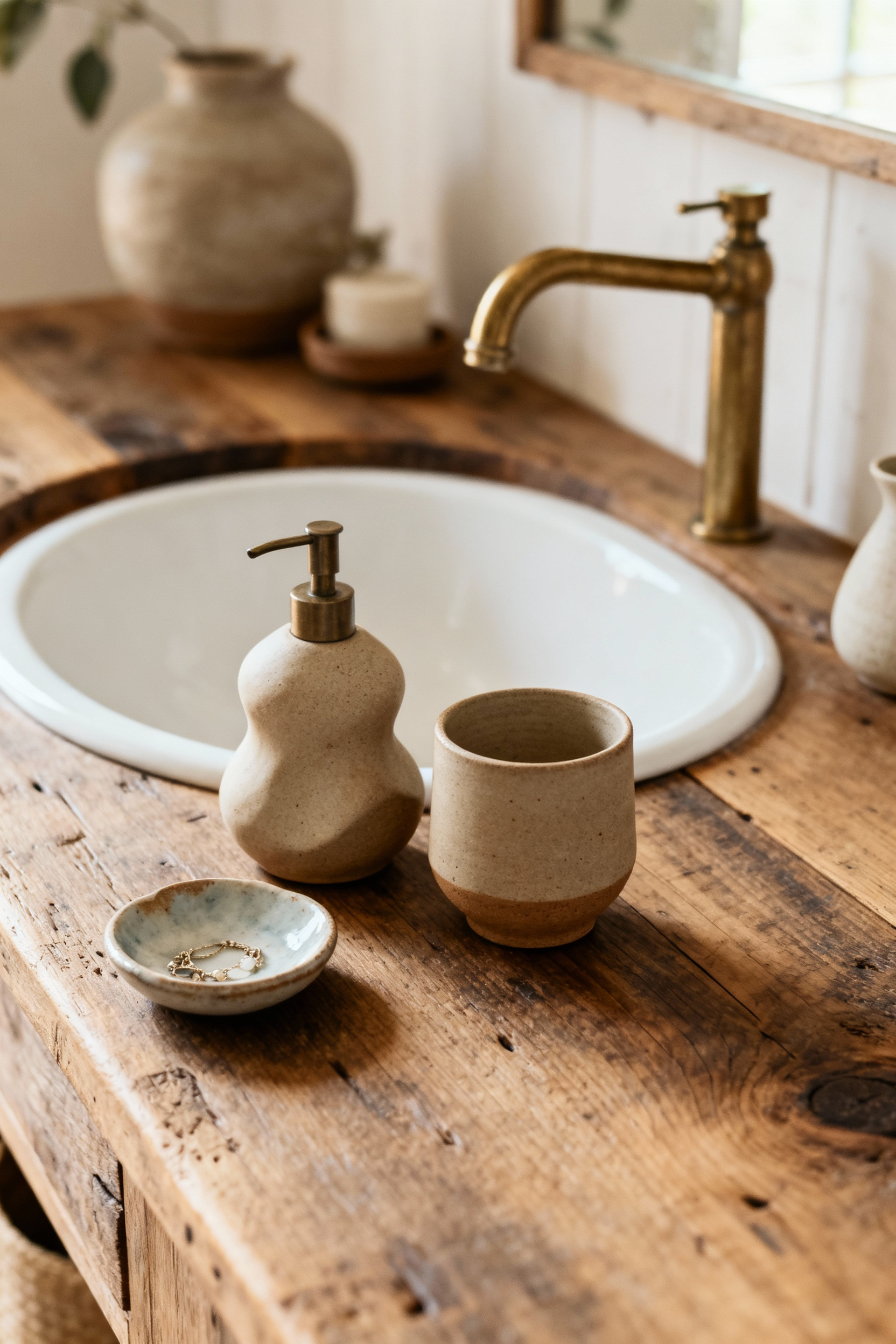
Everyday rituals are elevated by the objects we use. Replace generic plastic holders with artisanal ceramic vessels—a hand-thrown tumbler for toothbrushes, a shallow, imperfect dish for a bar of soap. These pieces bring the touch of the maker’s hand into the room, imbuing mundane moments with a sense of ceremony.
The beauty of these functional artworks lies in their humility and texture. A matte, unglazed finish feels earthy and elemental, while a subtly speckled glaze catches the light with quiet complexity. These vessels are more than just farmhouse bathroom decorations; they are a daily connection to craftsmanship, a reminder to find beauty in the simplest of things.
17. The Charm of Vintage Apothecary Jars
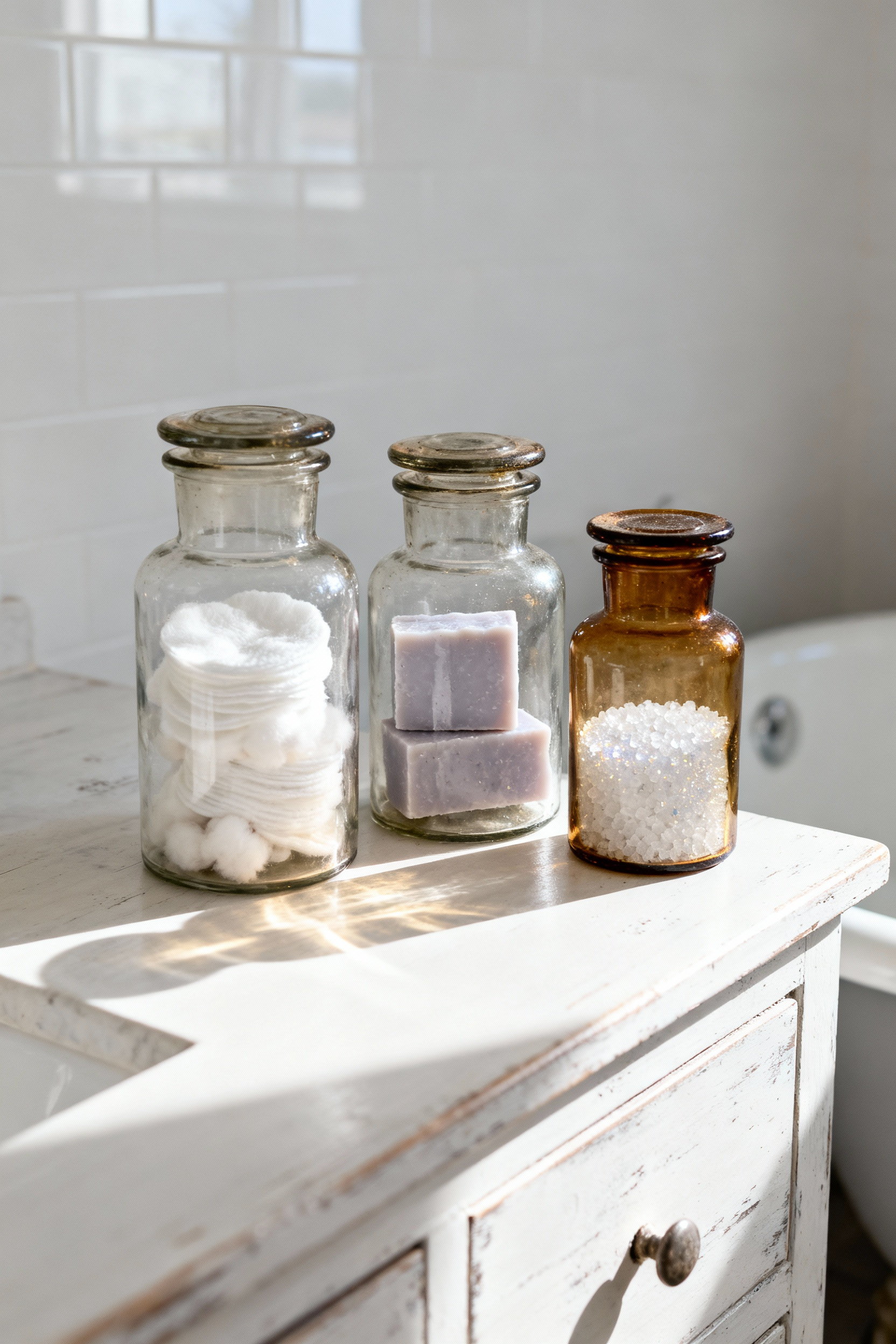
Vintage apothecary jars offer a perfect blend of utility and nostalgic charm. Grouped on a shelf or vanity, they organize sundries like cotton balls, bath salts, or q-tips with an enduring sense of style. The slight imperfections in the old glass—tiny bubbles or subtle waves—filter light beautifully.
Whether clear, amber, or pale green, these jars introduce a sense of order without feeling sterile. They suggest a slower time, a reverence for potions and remedies. They transform everyday essentials into a curated display, proving that even the most practical storage can contribute to the room’s layered narrative.
18. Understated Narrative Through Curated Art
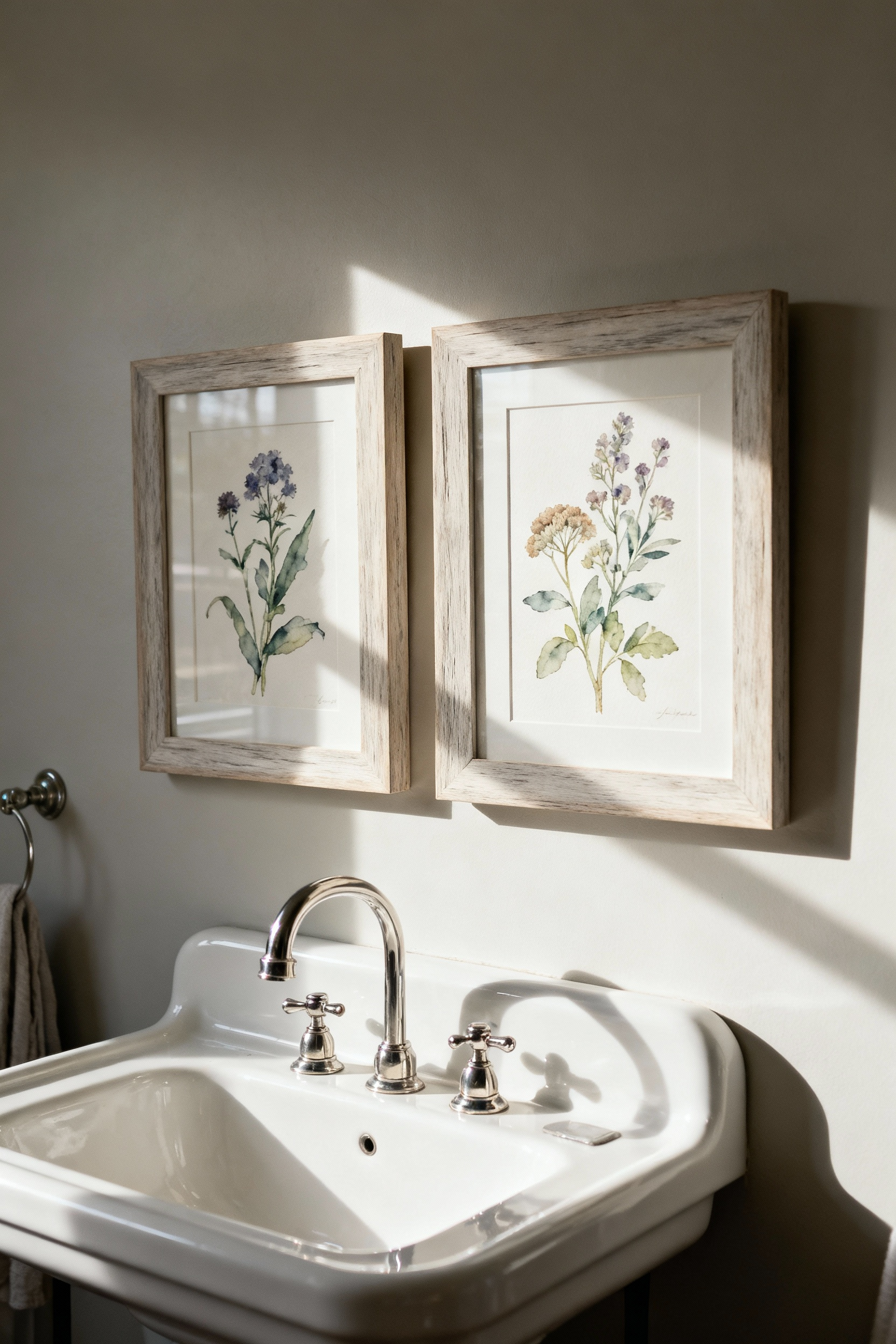
Art has a place in every room of the house. In the bathroom, it injects personality and a focal point for quiet contemplation. The choice should be personal, but the tone should align with the sanctuary-like feel of the space. Consider serene landscape etchings, abstract forms, delicate botanical illustrations, or even architectural sketches.
The framing is just as important as the art itself. A simple frame of natural wood or thin black metal keeps the focus on the piece. Whether it’s a single, impactful print or a small gallery of related images, art is what makes the space uniquely yours. It is the final layer of storytelling, a window into your own soul.
19. The Heirloom Rug as a Softening Anchor
Placing a rug in a bathroom is a transformative act. An heirloom-quality textile—a vintage Turkish kilim or a faded Persian runner—provides a soft, warm counterpoint to the hard surfaces of tile and porcelain. It grounds the space with color, pattern, and a deep sense of history that new rugs simply cannot replicate.
This is a detail I draw directly from Middle Eastern design, where the rug is the heart of a room. In the bathroom, it defines a space—perhaps in front of the vanity or alongside the tub—and adds an unexpected layer of comfort and sophistication. It turns a purely functional room into a deeply inviting and personal space.
Conclusion
The principles we’ve explored are not a set of rules, but a way of seeing. Crafting a refined farmhouse bathroom is less about acquiring specific items and more about cultivating a specific feeling: one of authenticity, tranquility, and timeless comfort. It’s an understanding that true luxury lies not in expense, but in the integrity of materials and the thoughtfulness of their assembly. From the structural honesty of reclaimed wood to the personal narrative held in a single piece of art, every choice contributes to a sanctuary that feels both classic and deeply alive.
The ultimate goal is to create a space that endures, not because it follows a trend, but because it is built on a foundation of quality, history, and personal resonance. It should be a room where daily rituals feel less like routines and more like moments of quiet restoration. Let these ideas guide you not to a perfect replica, but to your own unique expression of this beautiful and enduring style—a space that tells your story with grace and soul.