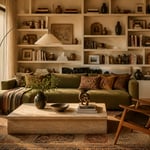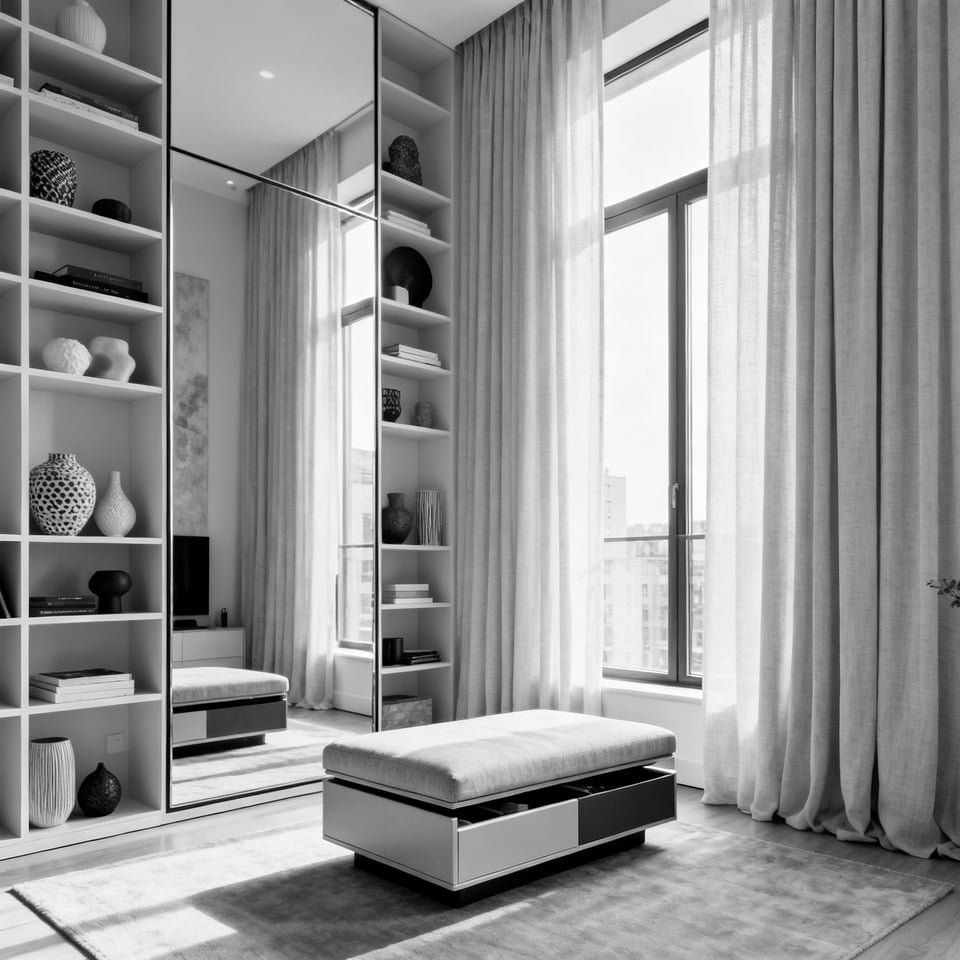
So you think your apartment is too small for serious style? I hear it all the time. Mainstream design blogs and TV shows love to preach the gospel of ‘small space solutions,’ which usually means cramming in tiny furniture and painting everything builder’s beige. Frankly, it’s uninspired advice. As a working artist who specializes in designing live-work studios, my professional experience has taught me something crucial: your apartment’s supposed limitations are actually its greatest creative assets.
The conventional wisdom that less space equals less style is, honestly, the opposite of the truth. The tight parameters of an apartment demand a more thoughtful, resourceful, and ultimately more interesting approach. This isn’t about finding tricks to make a room look bigger; it’s about making the space feel better—more intentional, more personal, more you. Forget the sterile white box. These 20 strategies are my field-tested methods for transforming a standard rental into a sophisticated and functional home, proving that true style is about intelligent design, not square footage. Let’s get to work.
Essential Living Room Decor Apartment Fundamentals (Part 1)
Before you can break the rules, you need to understand them. These aren’t just tips; they are the foundational principles that allow creativity to flourish. Getting these right sets the stage for a space that is both functional and a true reflection of your aesthetic vision.
1. Reframe the Space: Think Vertically, Not Horizontally
Forget the floor plan for a second and look up. Most people fixate on the square footage they don’t have, but that’s a losing game. I tell my clients to think like a sculptor and consider the entire volume of the room—the air, the height. Your walls aren’t just boundaries; they are your biggest, most underused canvases for creating a sense of expansiveness.
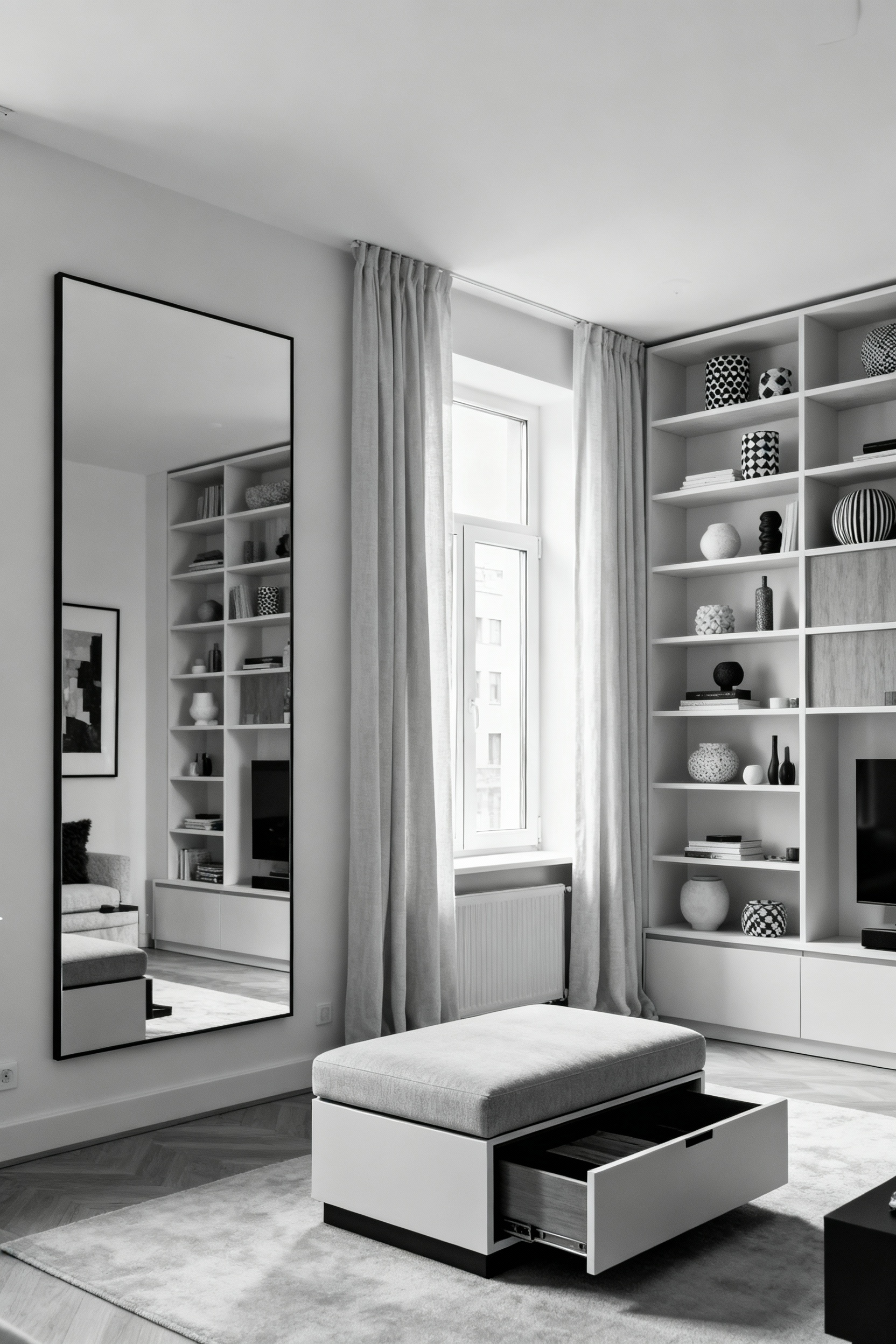
Going vertical is the most powerful move you can make. A tall, slender étagère or open-backed shelving unit pulls the eye skyward, making ceilings feel higher. I learned this firsthand when I hung simple linen drapes just an inch below the ceiling line in a client’s cramped studio; the effect was immediate, adding a sense of grandeur that completely transformed the room’s humble proportions.
2. Master the Art of the Double-Duty: Multi-Functional Furniture is Non-Negotiable
In a thoughtfully designed apartment, no piece of furniture gets a free ride. Every item must earn its keep. A static object that serves only one purpose is a missed opportunity, a squandered bit of real estate. So, think beyond the obvious coffee table and consider one that has hidden storage or lifts up to become a dining or work surface.
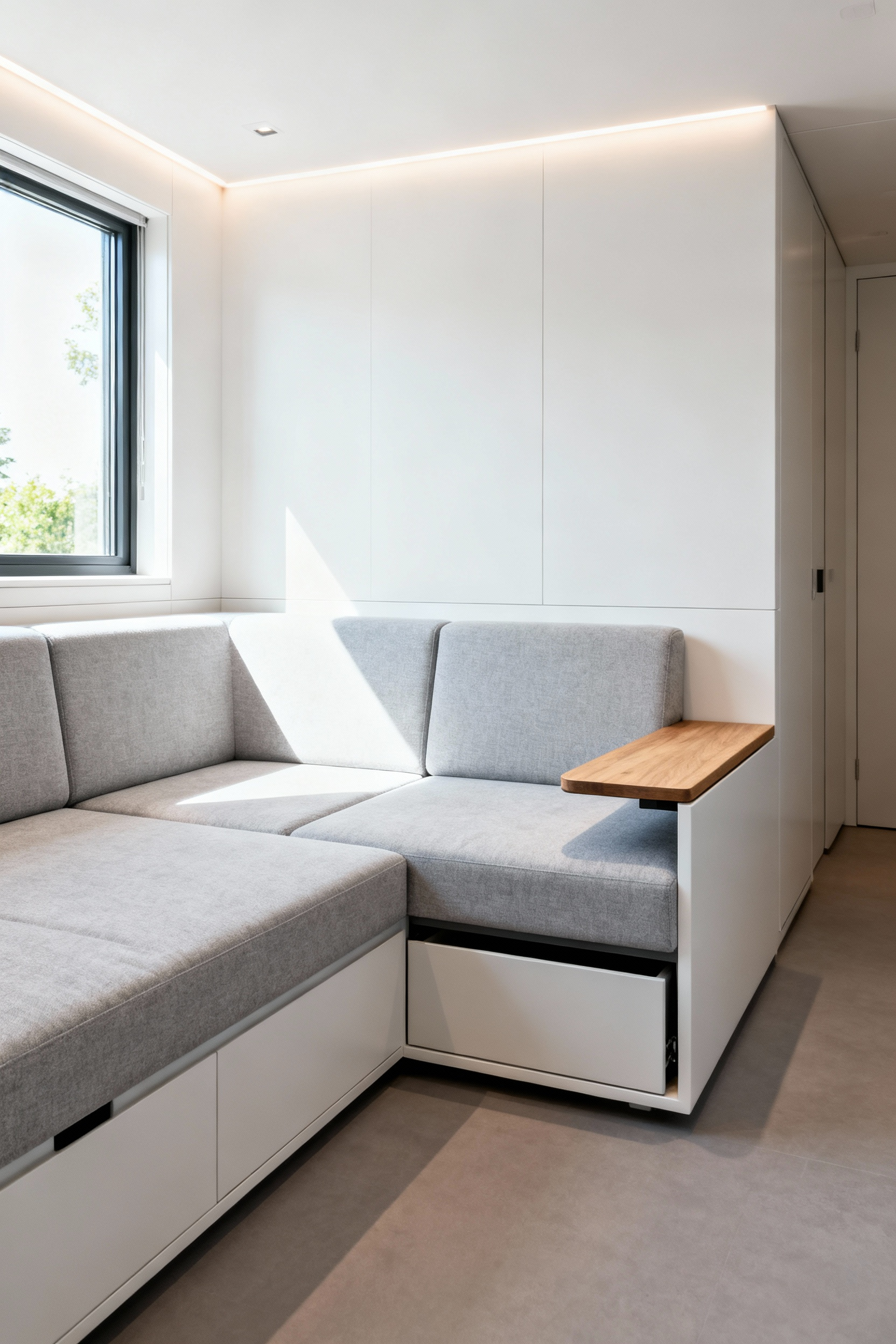
In my art studio home integration expert practice, I often recommend nesting tables instead of a single coffee table. They offer incredible flexibility—you can spread them out for guests or tuck them away for a morning yoga session. It’s about creating a dynamic layout that can shift and adapt with your life, not a rigid showroom setup. A beautiful ottoman that secretly stores your paint supplies or extra blankets is the very definition of smart, resourceful design.
3. Layer Your Light: Sculpting Atmosphere and Mood
A single overhead light—the dreaded ‘boob light’—is the fastest way to make a space feel flat and uninviting. Good lighting is about creating layers and depth, just like a good painting. You need three types: ambient (your overall illumination), task (for reading or working), and accent (to highlight art or architectural details).
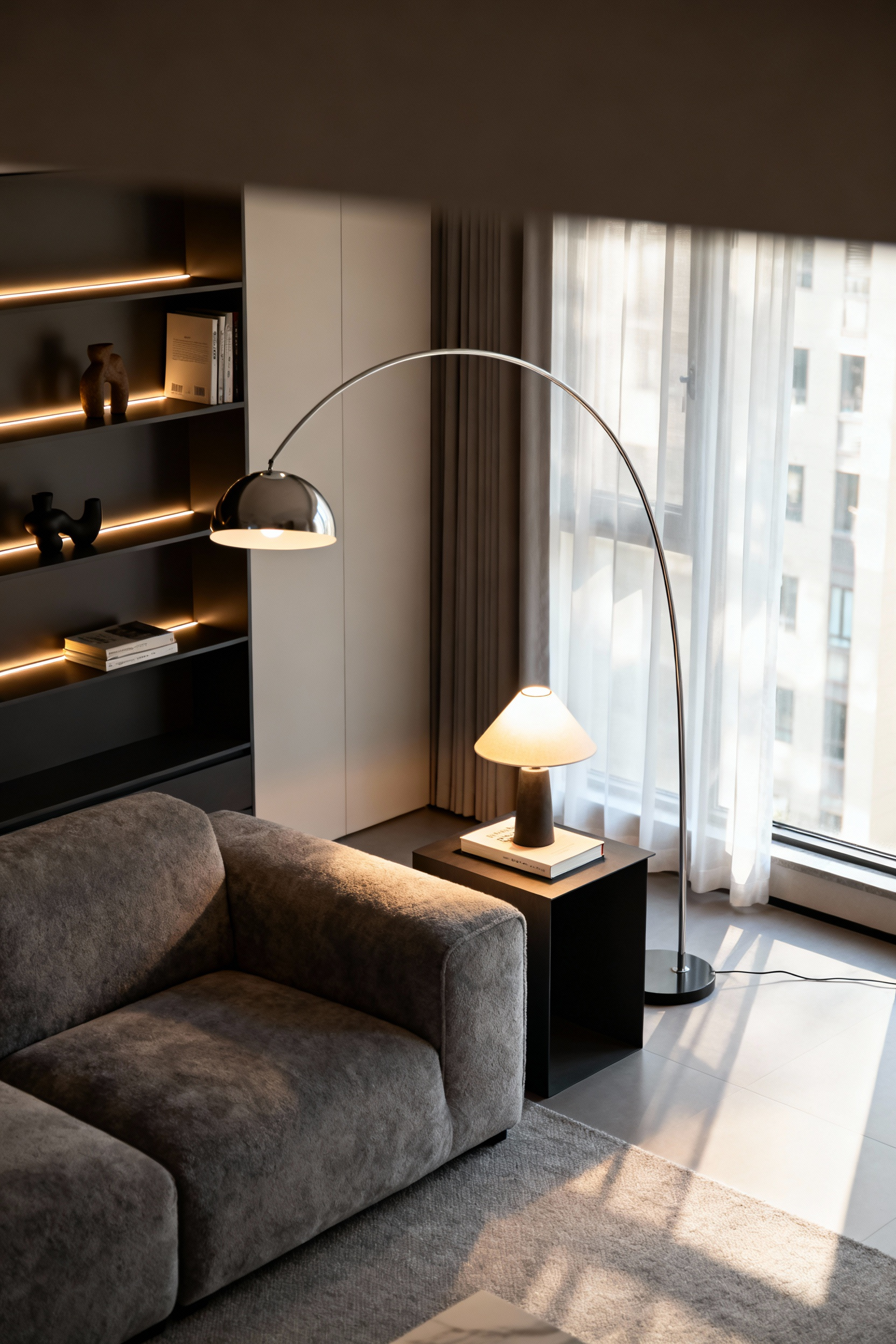
What really gets me is when people forget the power of a dimmer switch. It’s an inexpensive upgrade that gives you complete control over the mood. I insist on them for every project. A well-placed floor lamp arching over a reading chair creates a cozy nook, while a small uplight behind a plant can create dramatic shadows that add intrigue. You’re not just lighting a room; you’re sculpting it with light and shadow.
4. Use Color with Intention, Not Fear
The old rule that you must paint small rooms white to make them feel bigger is tired—and often wrong. A light, neutral palette can be beautiful, of course, but deep, saturated colors can also create an incredible sense of depth and intimacy. A dark, moody color can make walls recede, creating a cozy, jewel-box effect that feels incredibly sophisticated.
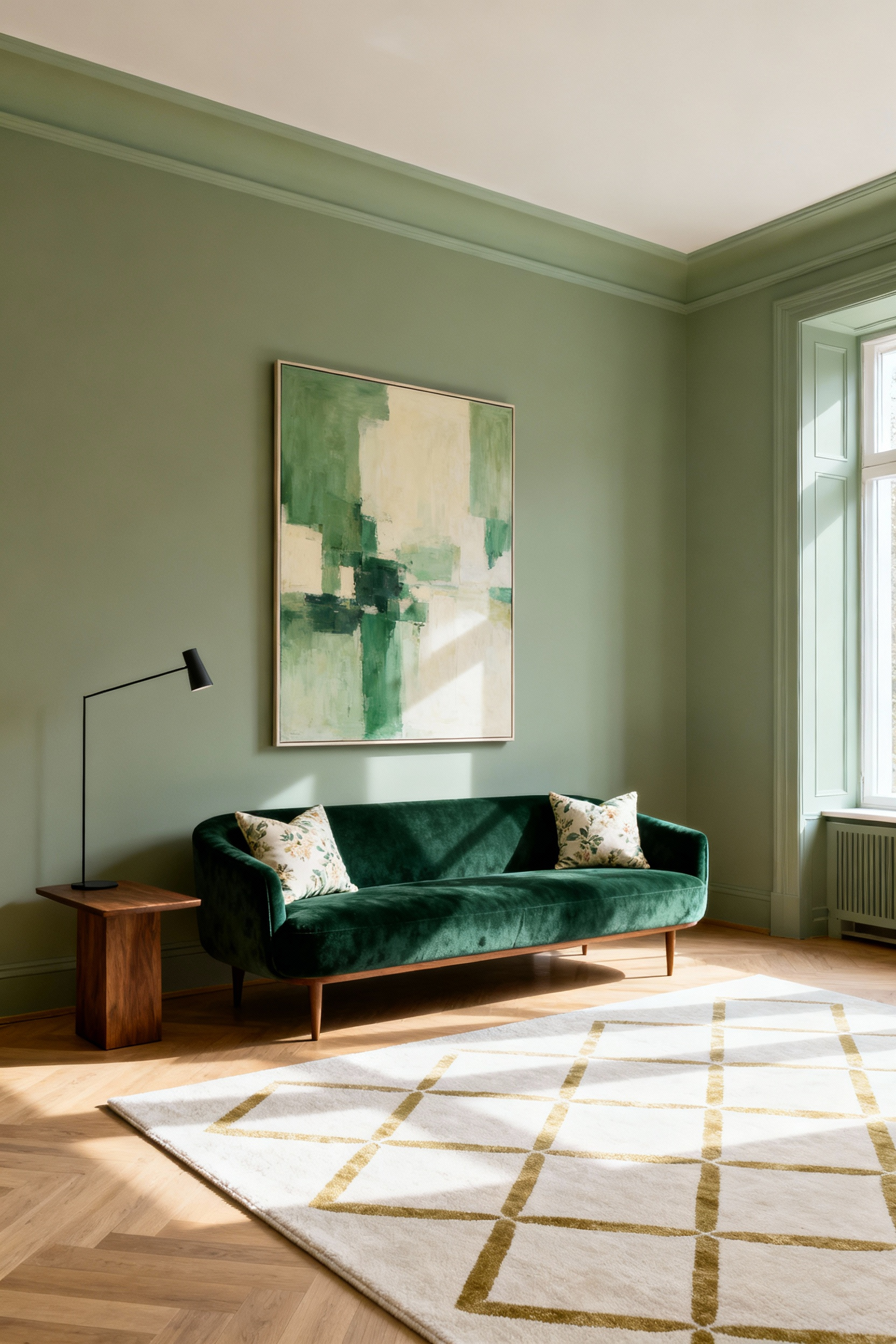
The real key is cohesion. Sticking to a monochromatic or analogous color scheme (colors next to each other on the wheel) creates a seamless flow that tricks the eye into seeing one continuous, larger space. I once painted a client’s tiny living room—walls, trim, and even the ceiling—in a rich, soft charcoal. Far from feeling small, it felt boundless and elegant, proving that confidence with color is a designer’s best tool.
Essential Living Room Decor Apartment Fundamentals (Part 2)
We continue with a foundational element that, when mastered, becomes the anchor of your entire space. This isn’t just about accessories; it’s about architecture on a smaller scale, and getting it right is crucial for any successful living room decor apartment design.
5. Demystify the Rug: Your Room’s Essential Anchor
A rug isn’t just a decorative afterthought; it’s the architectural foundation of your living area. It defines the zone, grounds the furniture, and adds a necessary layer of texture and warmth. A common mistake I see constantly is the “postage stamp” rug—a tiny carpet floating aimlessly in the middle of the room. It visually shrinks the space and makes the furniture feel disconnected.
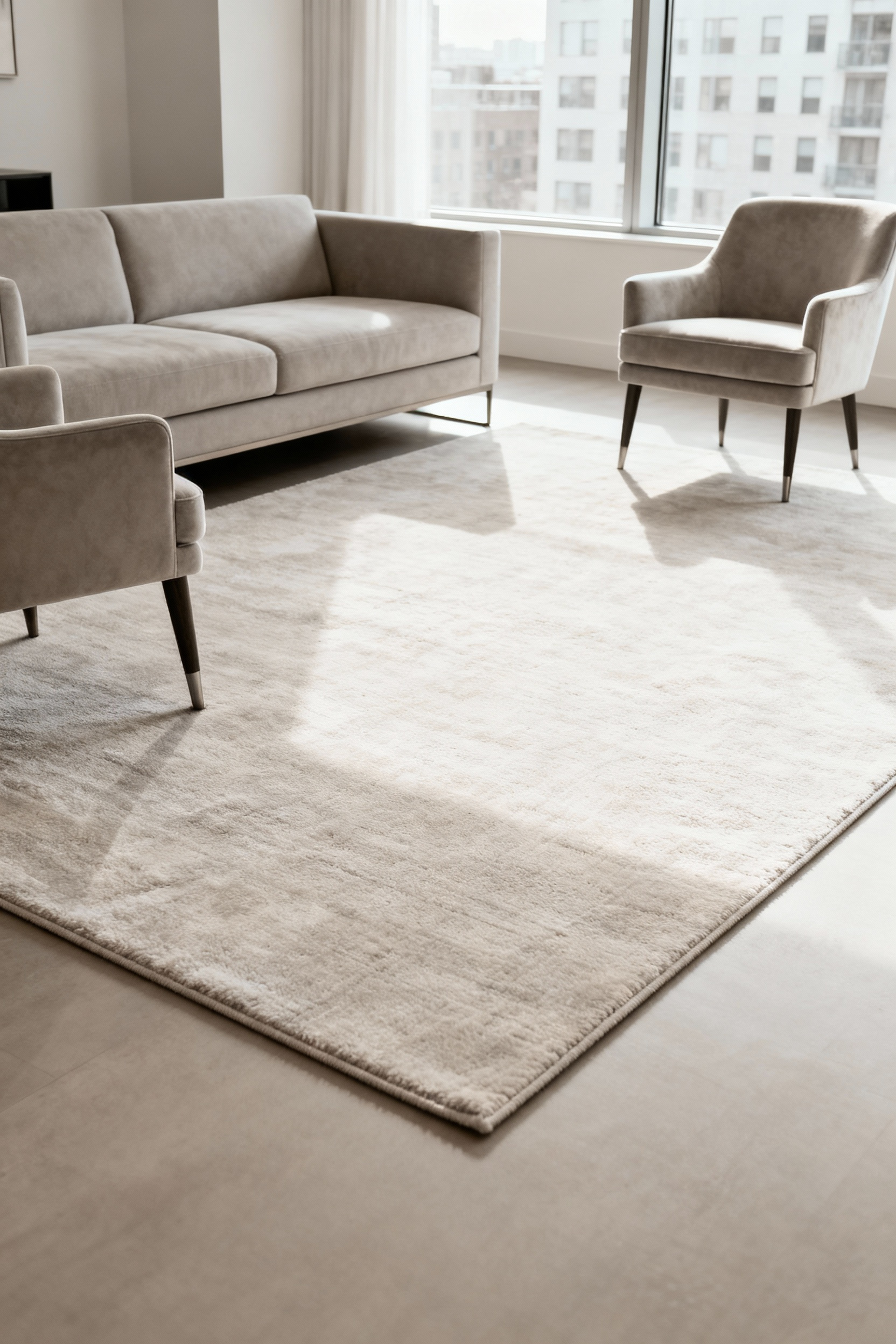
Here’s the rule: at least the front two legs of your sofa and any armchairs must be on the rug. This simple move connects the pieces into a cohesive, intentional grouping. In my professional experience, going as large as your budget allows is almost always the right answer. A generously sized rug makes the entire room feel more expansive and luxurious, unifying the entire composition and creating a clear, defined living space.
Elevating Your Apartment Living Room Decor Approach (Part 1)
With the fundamentals in place, it’s time to add layers of sophistication. These strategies are about moving beyond pure function and infusing your space with personality, artistry, and the clever illusions that elevate a room from merely furnished to thoughtfully designed.
6. Curate Your Walls: Hang Art with Purpose
Please, stop hanging art in a straight line, smack in the middle of the wall. Your walls are not a shooting gallery. The placement of art and decor is about creating visual flow and composition. Think of your main seating area: the art above the sofa should feel connected to it, not floating miles above. A good rule of thumb is to hang a piece so the bottom edge is about 6-8 inches above the furniture.
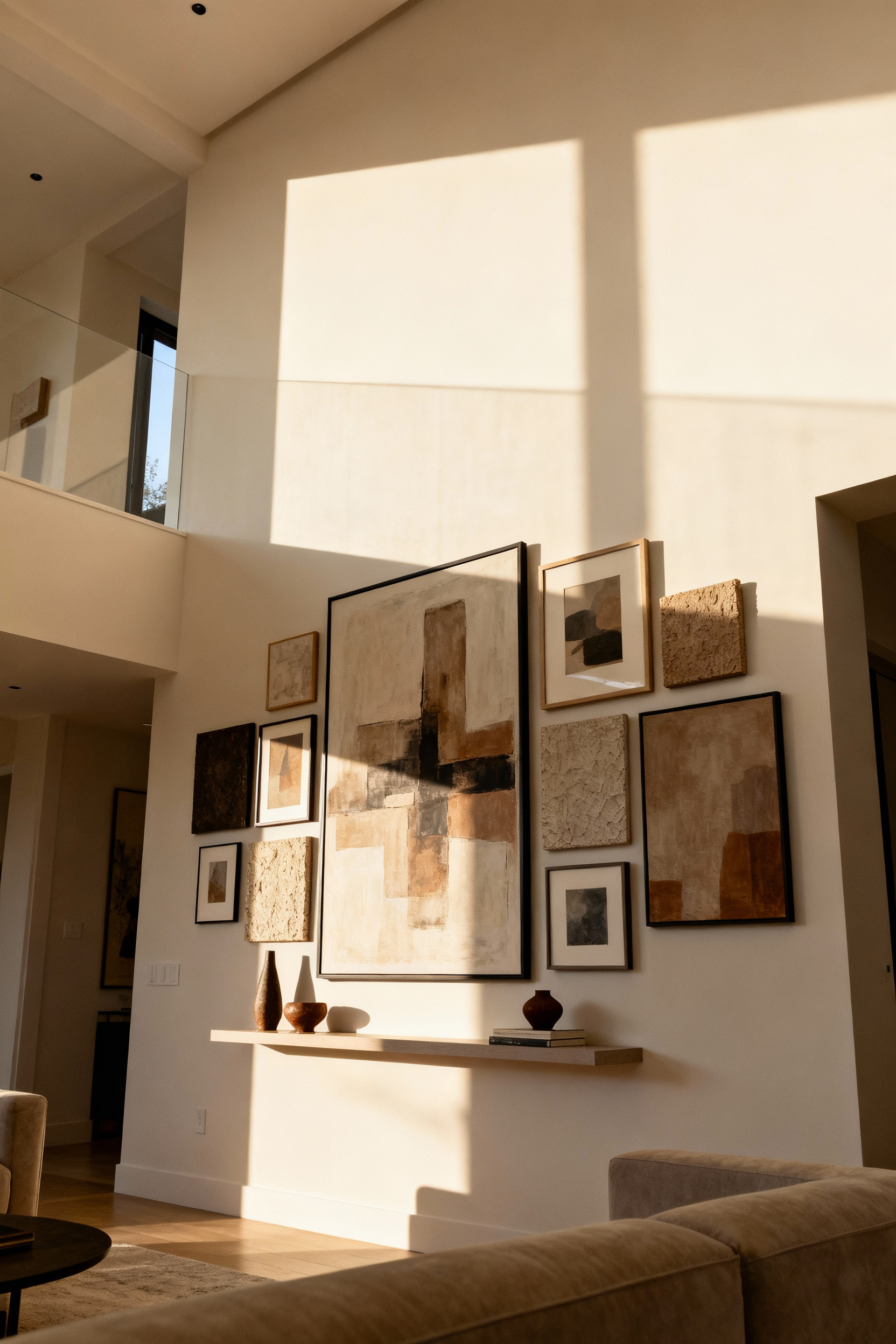
I’ve noticed that people are often afraid of scale. Don’t be. A single, large-scale piece of art creates a powerful focal point and can make a small room feel grander and more confident than a collection of tiny, scattered frames. If you prefer a gallery wall, lay it out on the floor first. Treat the collection as one large shape, ensuring it has a balanced and interesting silhouette.
7. Leverage Mirrors: The Ultimate Tool of Illusion
Mirrors are the oldest trick in the book for a reason, but their power goes way beyond just making a room look bigger. Of course, placing a large mirror opposite a window will double your natural light and create a sense of depth. It’s an easy win. But you can be more creative than that.
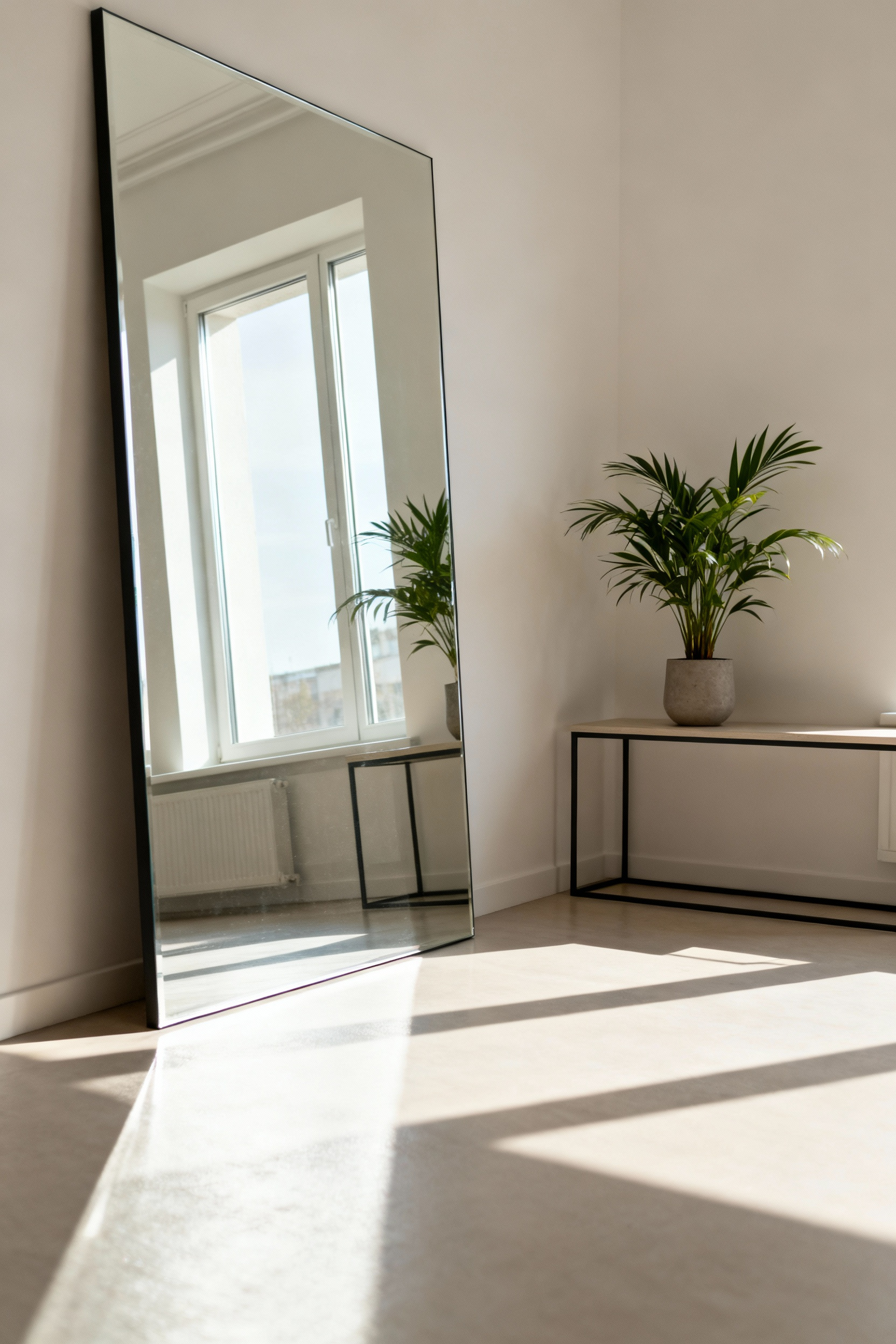
What’s really interesting is using mirrors to reflect something beautiful—a favorite piece of art, a stunning light fixture, or a view into another room. This creates a sort of living, changing artwork within the reflection. I’ve used antiqued mirror panels to cover an awkward structural column, turning a flaw into a chic, light-reflecting feature. Mirrors are tools for manipulating perception, so use them with intention.
8. Integrate Storage as Decor: Functionality is Beautiful
Storage should never feel like an apology. Instead of trying to hide it, integrate it as a key design element. A beautiful credenza, a sculptural bookshelf, or a set of floating shelves aren’t just for stuff; they are opportunities to create a curated display and add architectural interest.
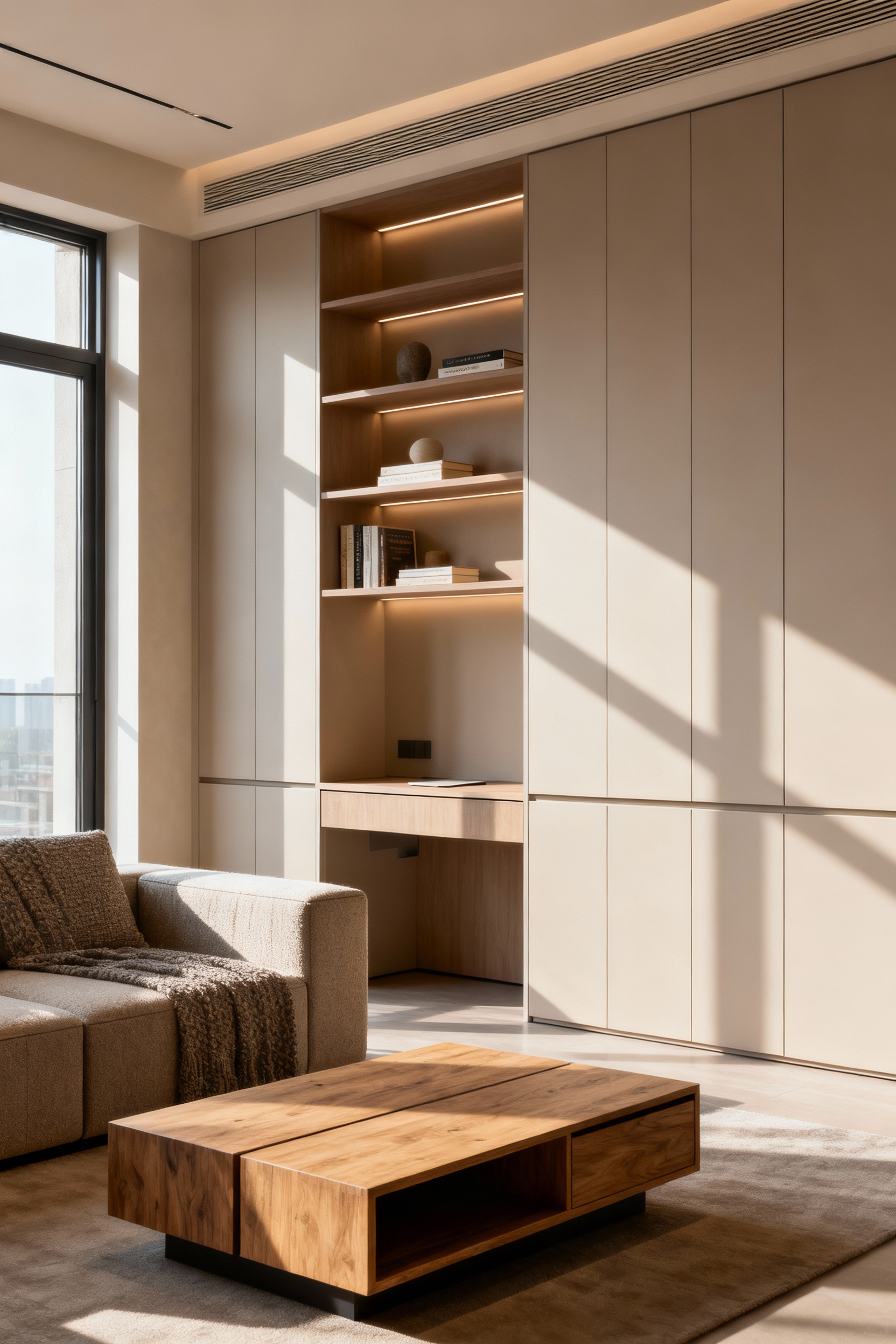
One of my favorite solutions for artist live-work spaces is using modular systems, like the classic String Shelving, which can be configured to hold books, display art, and even incorporate a small desk. It feels light and airy but works incredibly hard. The goal is to make your storage so beautiful that it feels like a deliberate and celebrated part of your aesthetic, not a necessary evil.
9. Create Zones: Defining Space Without Walls
In an open-concept apartment or studio, creating distinct functional zones is critical to making the space feel calm and organized. You don’t need walls to do this. An area rug, as we discussed, is your first move. It immediately signals “this is the living area.”
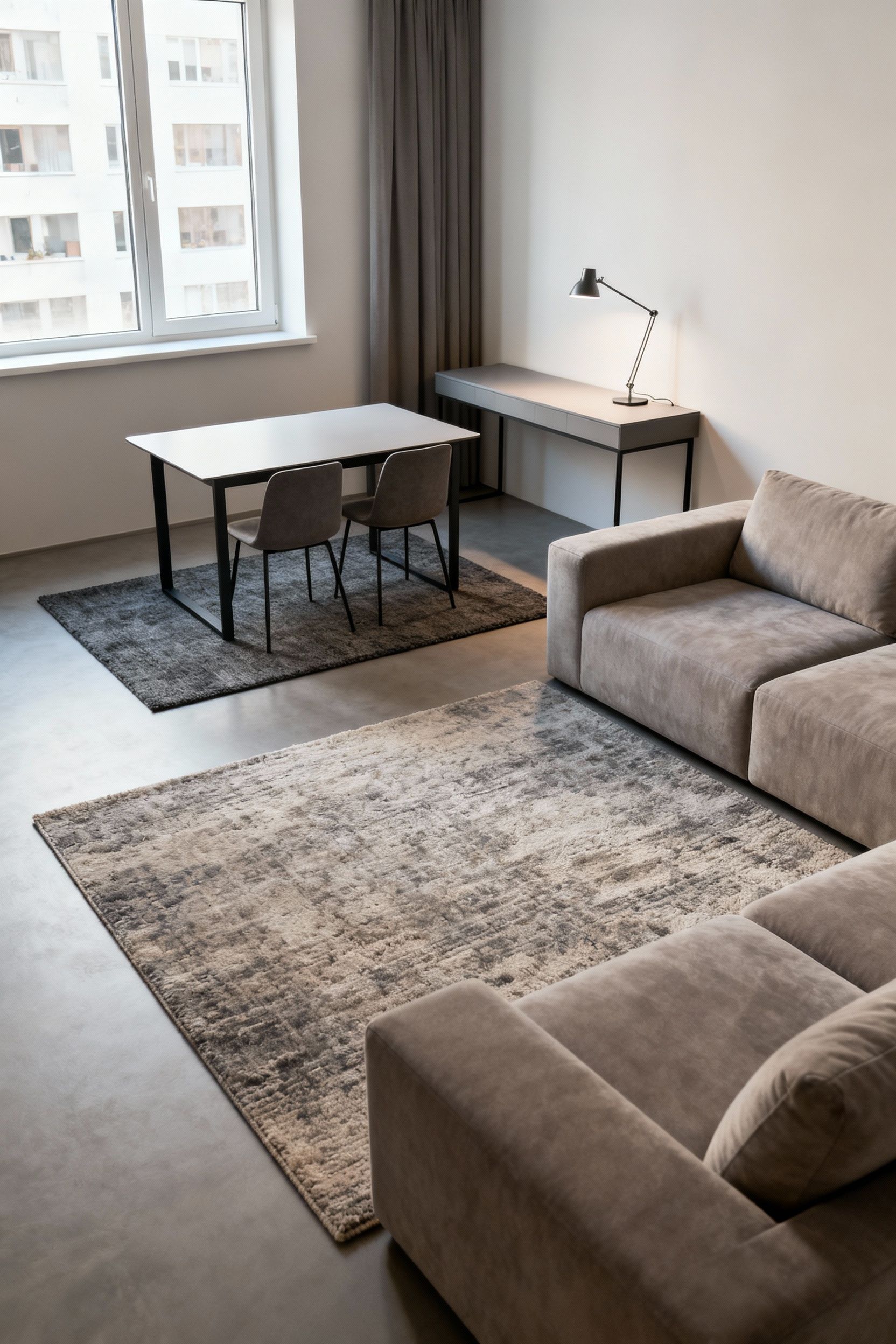
Next, use furniture placement as a soft barrier. Float your sofa away from the wall and place a slim console table behind it. This not only provides a surface for a lamp or books but also creates a subtle “hallway” that guides traffic flow and separates the seating area from, say, a dining nook. Thoughtful lighting helps, too—a low-hanging pendant light over a small dining table immediately gives that spot its own distinct identity.
Elevating Your Apartment Living Room Decor Approach (Part 2)
This next set of strategies focuses on the sensory details that create a rich, layered environment. It’s about engaging more than just the eye, cultivating a space that feels as good as it looks and reflects a deep appreciation for the subtle elements of design.
10. Bring Nature In: The Power of Biophilic Design
Plants are not accessories; they are living sculptures that add vitality, texture, and organic shape to a room. Bringing natural elements indoors—known as biophilic design—is essential for making a sterile apartment feel like a sanctuary. A fiddle-leaf fig in a corner can add dramatic height, while a cascade of pothos from a high shelf softens hard lines.
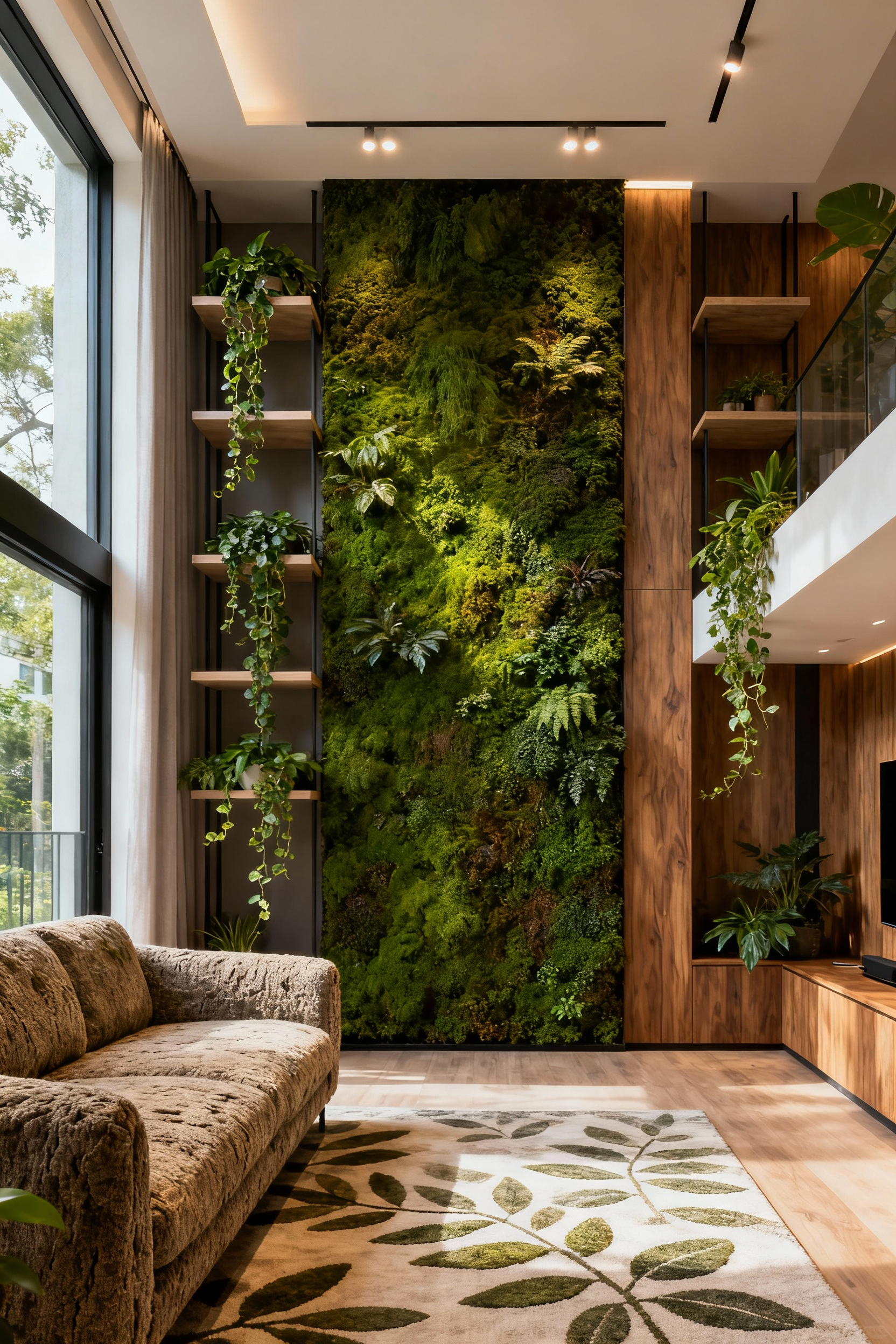
But it’s about more than just plants. Incorporate natural materials like wood, linen, jute, and stone. The texture of a wool throw, the grain of a wooden side table, a collection of found stones in a ceramic bowl—these elements ground the space and connect us to the natural world. It’s a simple way to make your apartment feel more alive and restorative.
11. Layer Textures: Sensory Richness without Clutter
In a space with a tight, cohesive color palette, texture does the heavy lifting. It prevents a room from feeling flat and one-dimensional. The interplay of different surfaces—the smoothness of a leather chair, the roughness of a linen pillow, the plushness of a velvet curtain, the coolness of a marble tabletop—creates a rich, tactile experience.
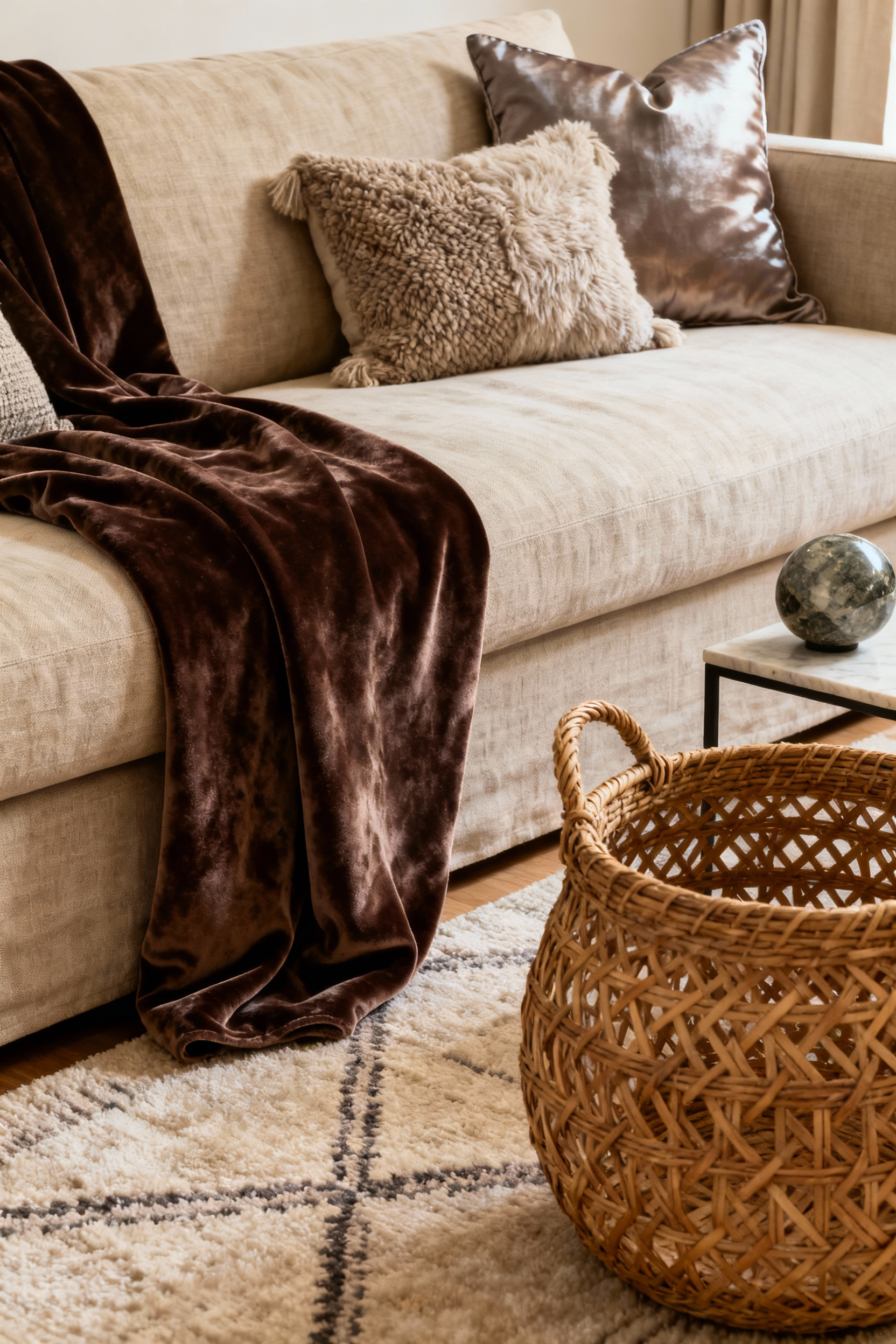
A design feels sophisticated when it engages more than just the eye. When I’m designing a space, I’m constantly thinking about how different materials will feel to the touch. It’s not about adding more stuff. It’s about choosing each piece with its textural quality in mind, ensuring your room has a sensory depth that feels curated and comforting.
12. The Rule of Three: Your Guide to Balanced Vignettes
There’s a reason designers and artists love odd numbers. Groupings of three (or five, or seven) are inherently more dynamic and visually interesting than even-numbered arrangements. This is your secret weapon for styling any surface, from a coffee table to a bookshelf.
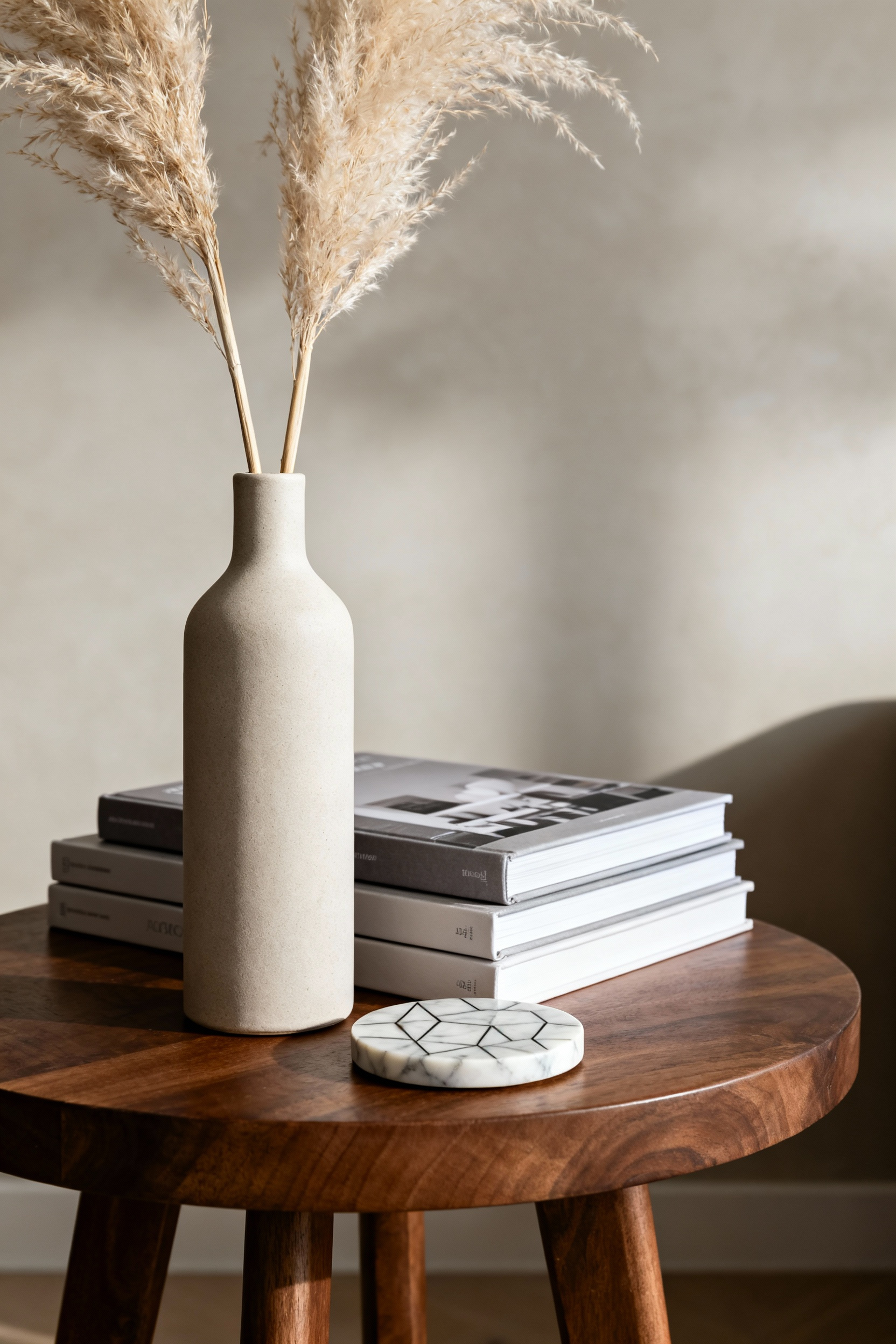
Instead of two identical vases, try a grouping of three objects with varying heights, shapes, and textures: a tall candlestick, a low, wide bowl, and a medium-sized stack of books, for instance. Arranging them in a loose triangle creates a sense of balanced asymmetry that feels natural and composed. Once you start seeing in threes, you’ll never style the same way again.
Advanced Apartment Living Room Design Strategies
Now we move into the realm of philosophy. These concepts require a more nuanced eye and challenge you to think about your space in a fundamentally different way. This is where you transform a well-decorated room into a work of spatial art.
13. Wield Negative Space: The Art of Leaving Things Out
The most underrated element in any design composition is negative space—the empty areas. In an apartment, the instinct is to fill every inch, but that only leads to visual chaos. A strategically empty wall or an uncluttered corner gives the eye a place to rest, making the pieces you have chosen feel more important and impactful.
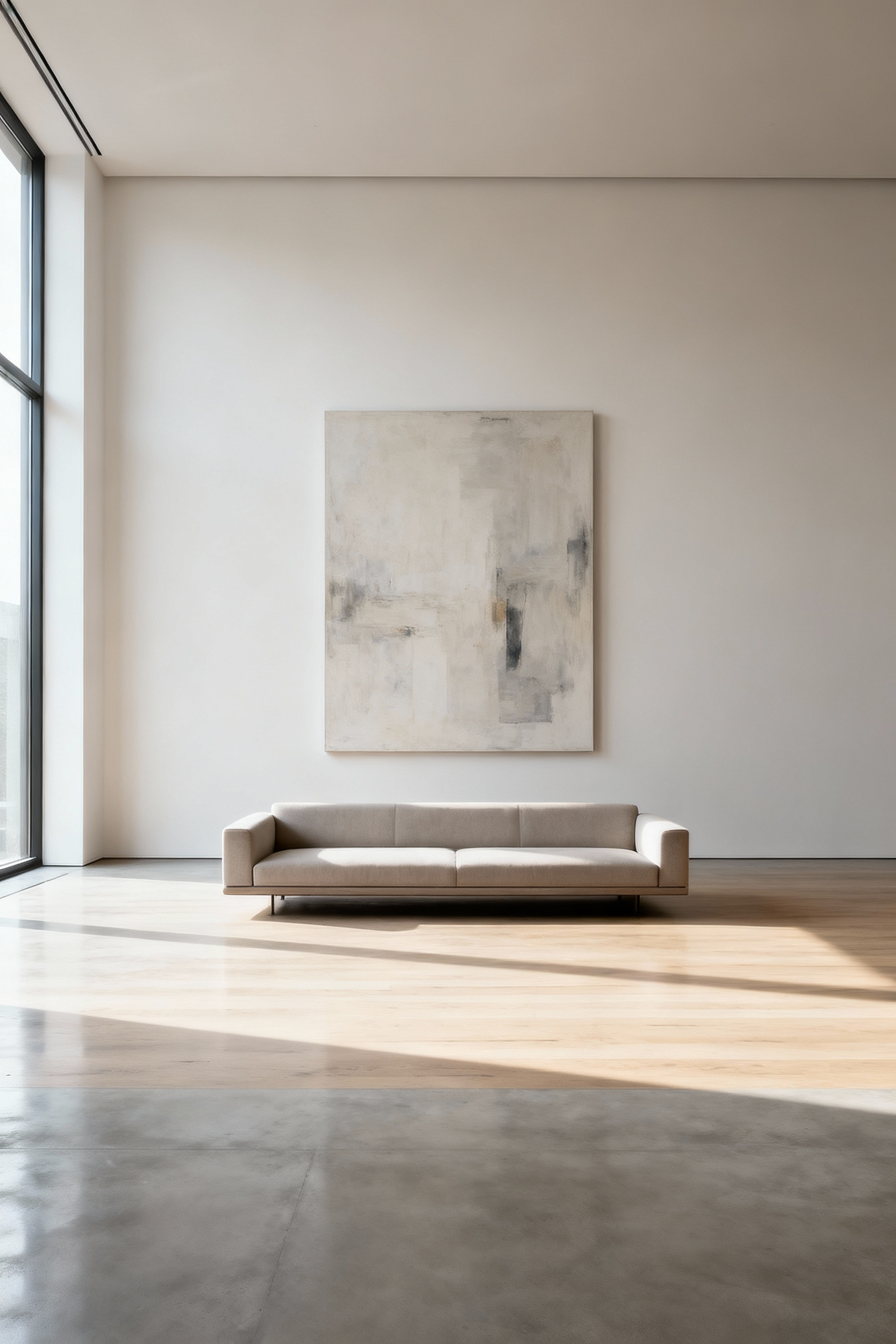
Think of it as visual punctuation. By leaving space around a beautiful armchair or a piece of art, you’re essentially putting a spotlight on it. It’s an act of restraint that signals confidence and sophistication. I learned this when I took half the objects off a client’s over-stuffed bookshelf; the remaining pieces suddenly looked like treasures in a gallery. What you don’t include is just as important as what you do.
14. Embrace the Quirk: Turn Architectural Flaws into Features
That awkward column, the weirdly-shaped nook, the exposed pipe you wish would disappear—stop fighting them. These architectural oddities are what give your apartment character. Your job is to reframe them as assets.
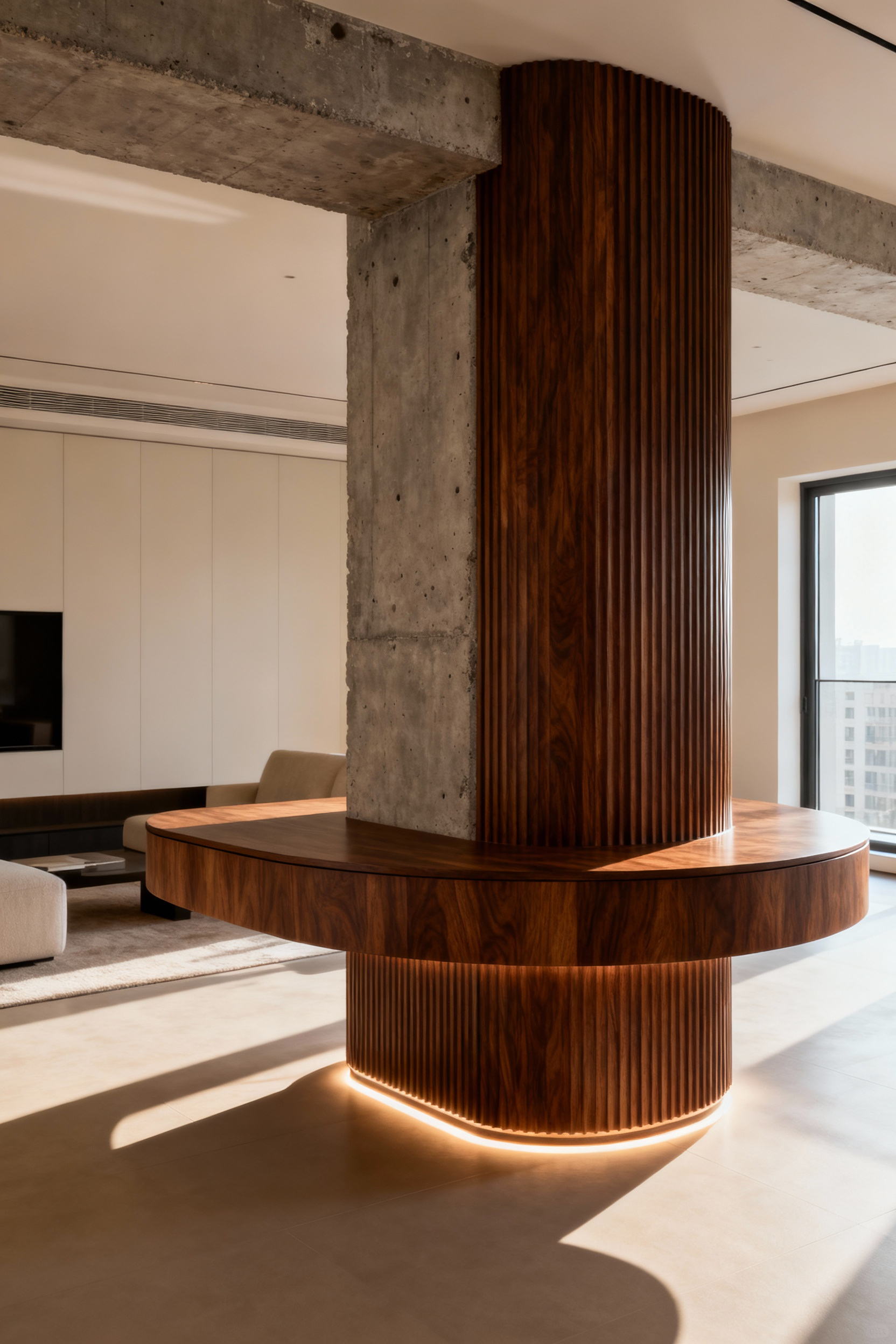
That strange niche? It’s the perfect spot for custom-built floating shelves or a small built-in reading bench. The exposed column? Paint it a dramatic, contrasting color and treat it like a piece of modern sculpture. One of my favorite projects involved a studio with a low, intrusive soffit. Instead of trying to hide it, we painted it a deep black and used it to define the “bedroom” zone, turning it into a powerful architectural feature.
15. Orchestrate Flow and Sightlines: Guiding the Eye
“Flow” is about how you physically move through a space. Are the paths clear and intuitive? “Sightlines” are about how your eye moves through it. When you walk in, where does your gaze land first? A masterful layout considers both.
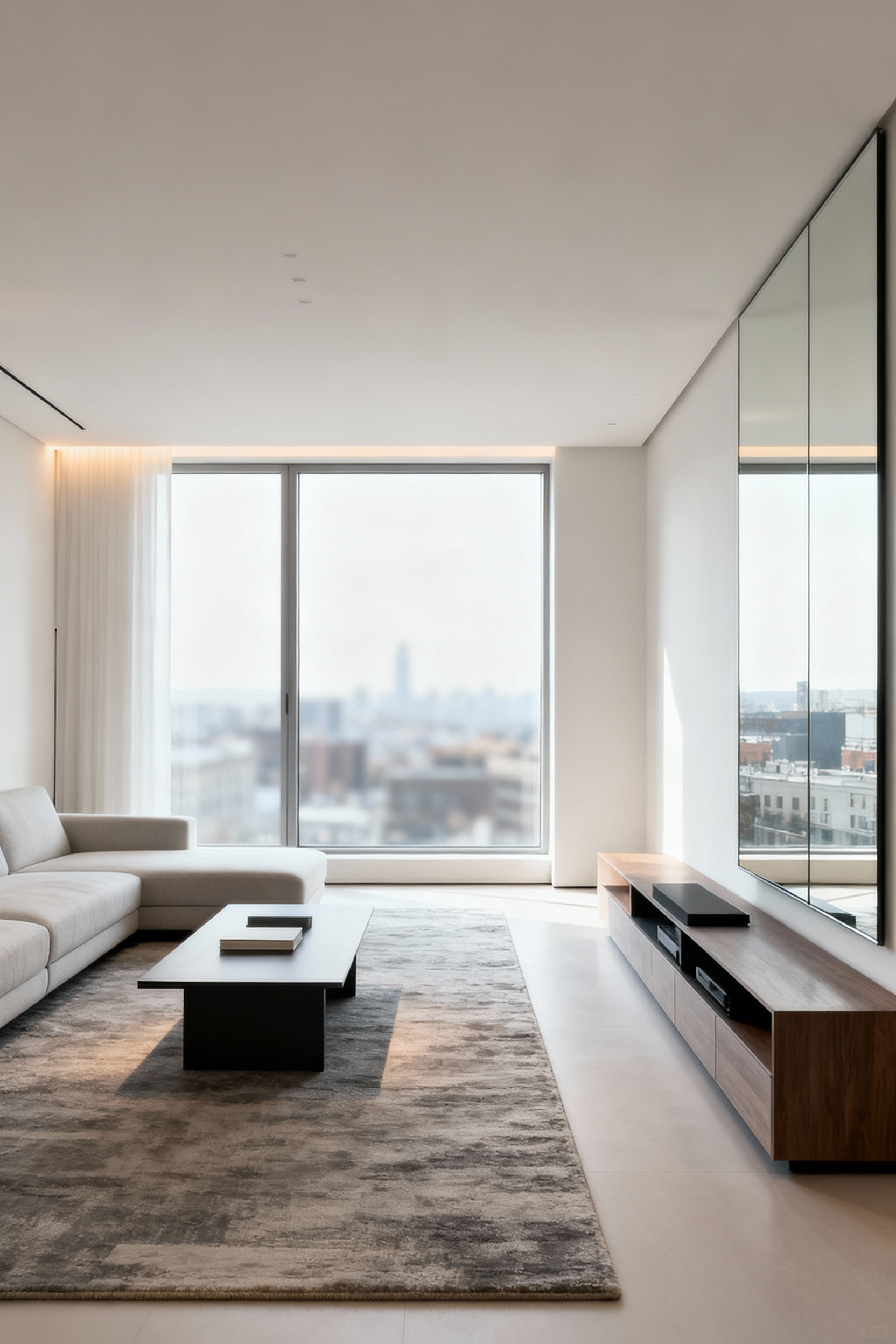
Arrange your furniture to create clear pathways, but also to frame your best views. The main sightline from the doorway shouldn’t be the side of a bulky sofa. Instead, it should lead to a window, a beautiful piece of art, or an inviting seating arrangement. You are, in essence, the director of your space, telling people where to look and how to experience the room.
16. Master Scale and Proportion: Go Big, Even in a Small Space
The idea that you must use tiny furniture in a small room is one of the most persistent—and misguided—myths in decorating. A room full of small, leggy furniture can actually feel more cluttered and restless than a room with a few larger, well-chosen pieces.
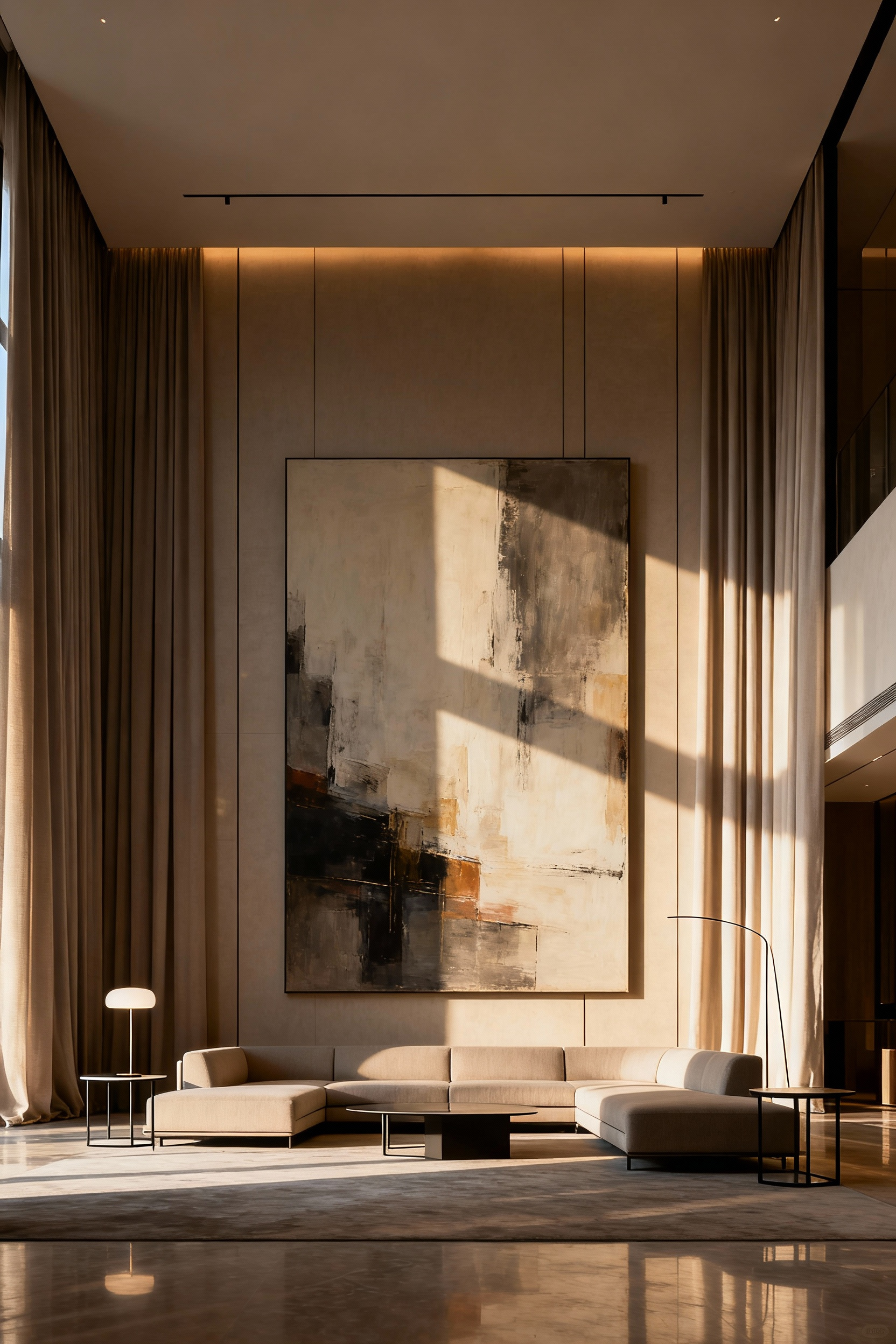
Don’t be afraid to use a generously sized sofa or a single, substantial armchair. One or two large-scale items can anchor the room and make it feel more expansive and grounded. It’s all about balance. A big sofa can be balanced with a visually light coffee table made of glass or acrylic. The key is to create a dynamic interplay between scales, not to make everything uniformly small.
Expert Living Room Decor Integration and Philosophy
Finally, let’s talk about the soul of your space. Decor is not about following trends; it’s about crafting a home that supports your life and tells your unique story. This is the ultimate goal of any design project.
17. Tell Your Story: Curate a Personal Narrative
Your home should be a biography of you. Don’t just buy generic decor to fill a shelf. Every object should have a story—a piece of pottery from a memorable trip, a stack of books on a subject you’re passionate about, a piece of art made by a friend. This is what transforms a house into a home.
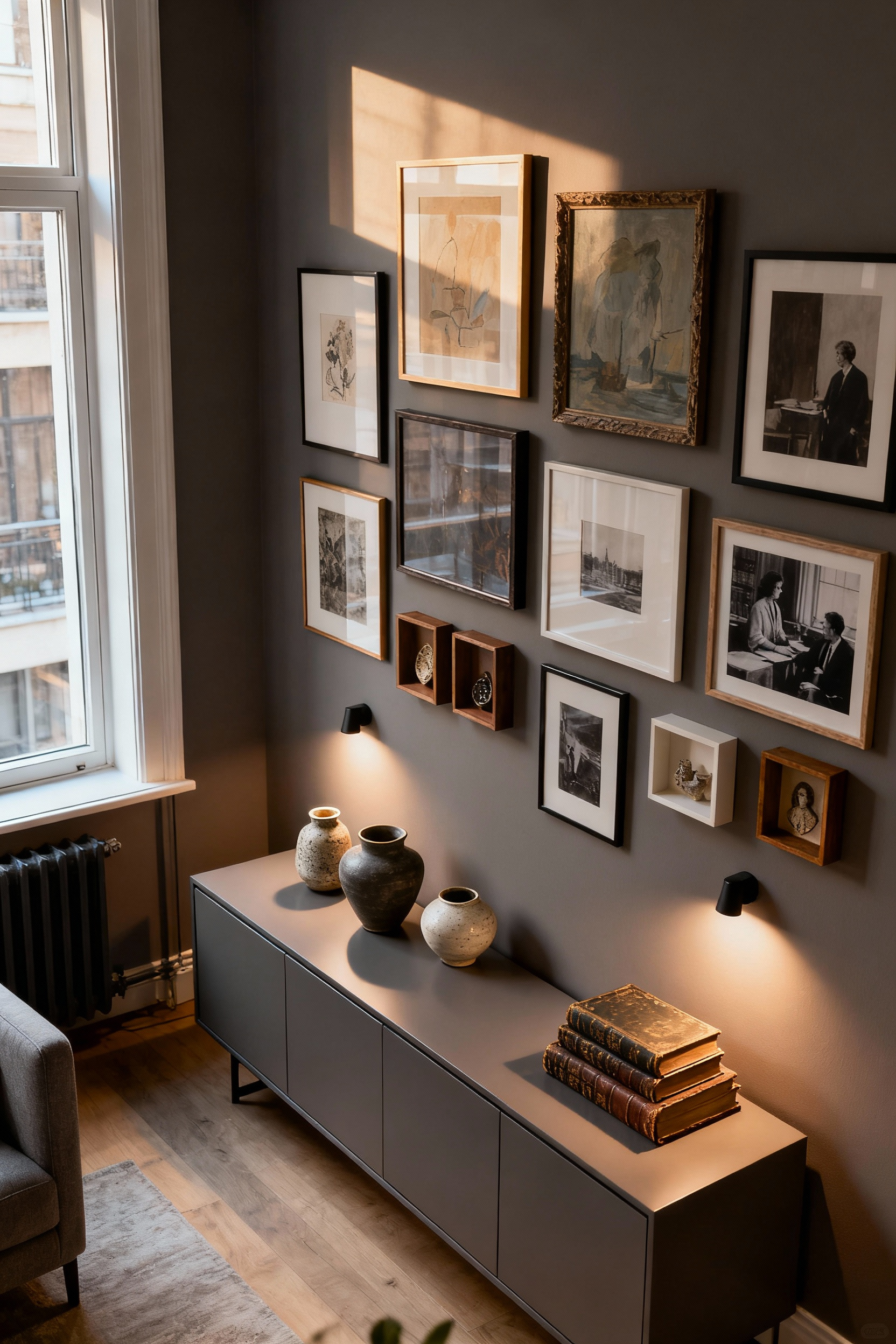
In my artist live-work designs, this is paramount. The space needs to reflect the person’s creative practice and personal history. Let your passions and experiences guide your choices. This approach ensures your space is a one-of-a-kind reflection of who you are, creating an environment that feels deeply authentic and resonant.
18. Embrace Iteration: Your Space is a Process, Not a Project
A room is never truly “finished.” It should evolve with you. Give yourself permission to experiment, to move things around, to try new arrangements. Live with a change for a week and see how it feels. This iterative process is how you truly learn your space and how to make it work best for you.
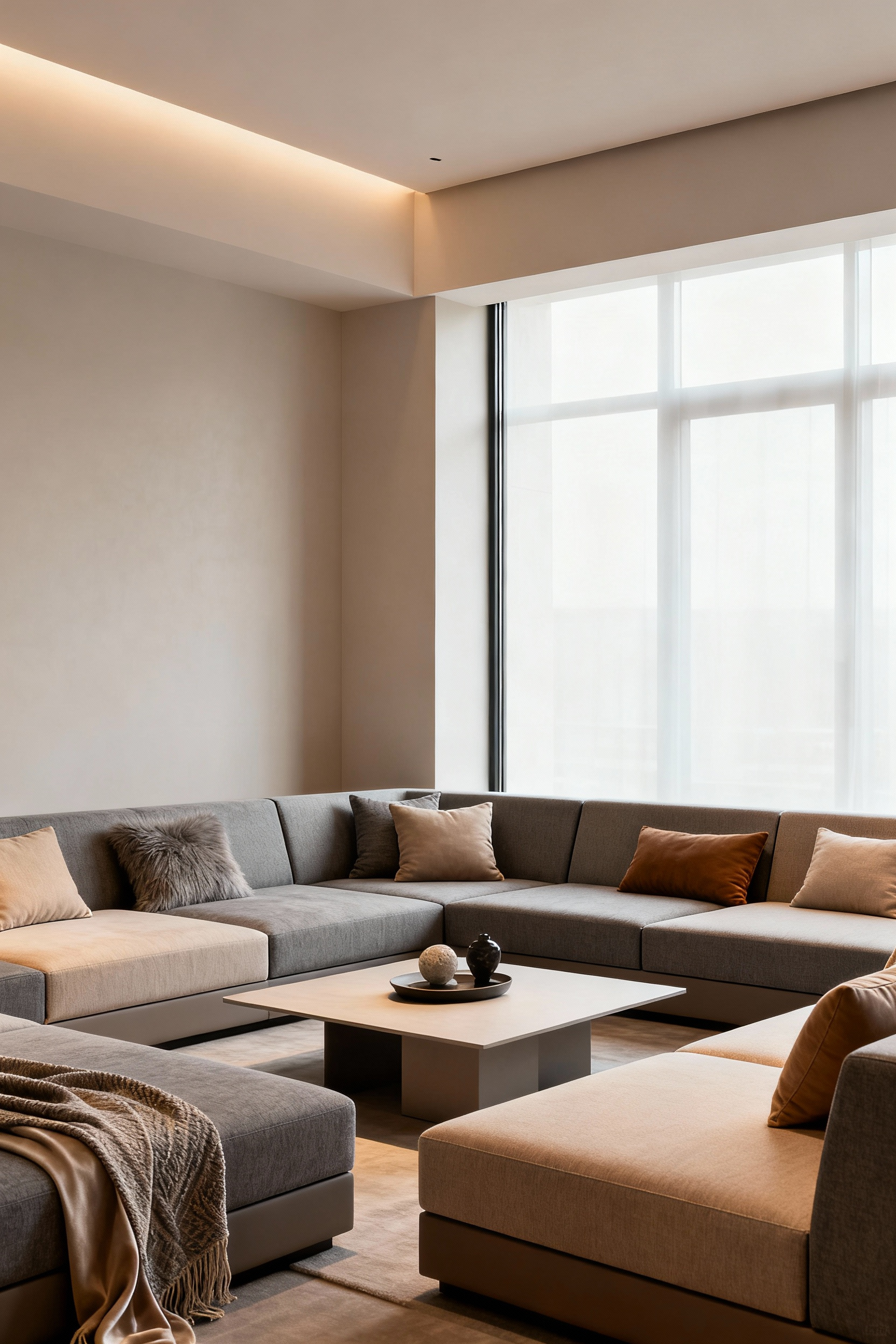
Too many people feel pressured to get it perfect on the first try, but design is a dialogue. At first I thought a particular layout would work for a client, but then I realized it hindered their creative workflow. We tweaked it. And tweaked it again. Your home is a living canvas, not a static photograph in a magazine. Enjoy the process of its evolution.
19. Adopt ‘Less But Better’: Quality Over Quantity
This philosophy will change your life. In a small apartment, you don’t have the luxury of excess. Every single thing you own takes up valuable real estate, so make it count. It is far better to have one beautifully made, comfortable sofa that you truly love than a room full of cheap, disposable trend pieces.
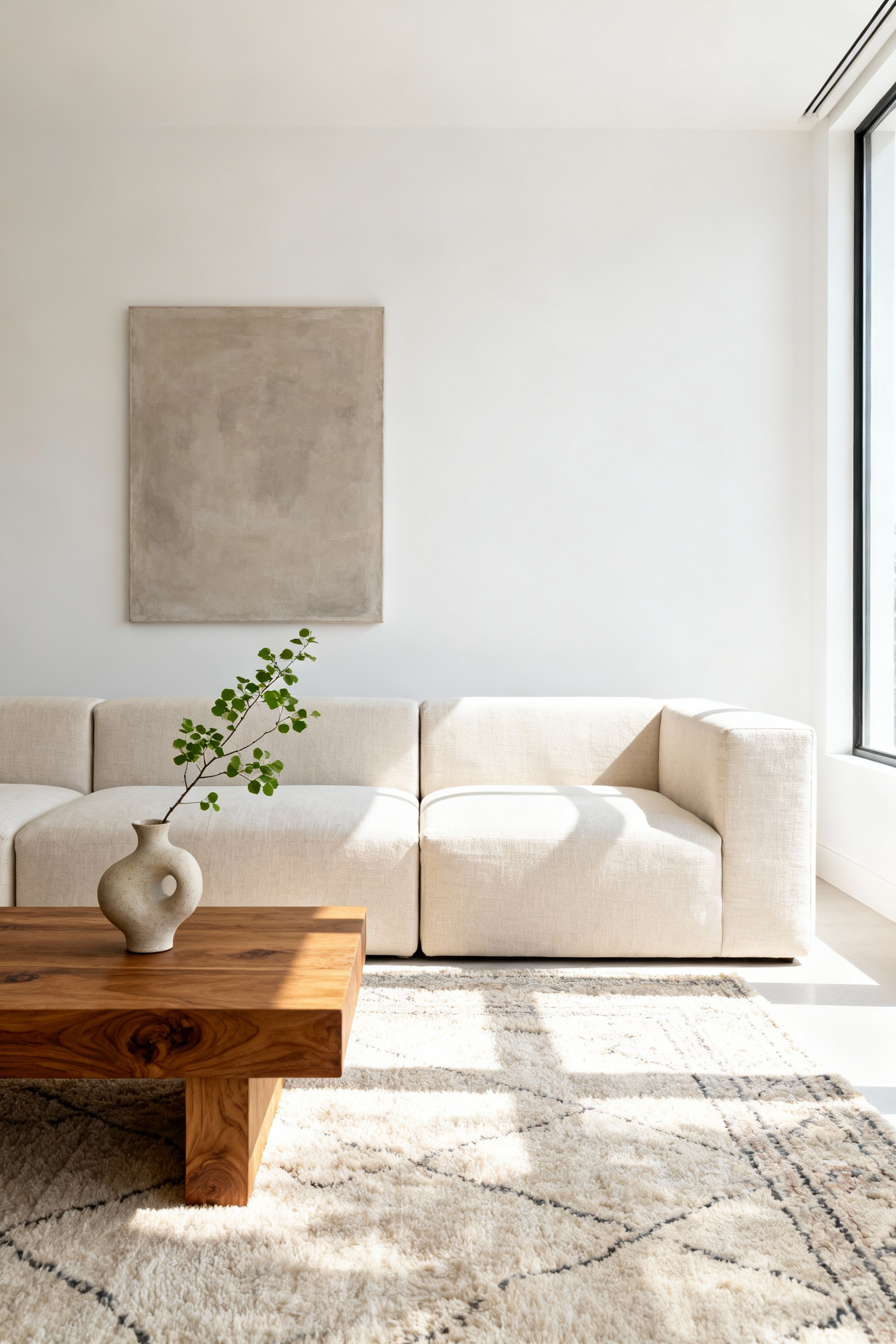
This isn’t about snobbery; it’s about resourcefulness and intention. Save up for pieces with timeless design, quality materials, and solid construction. These items will not only last longer but will bring a deeper sense of satisfaction and permanence to your home. It’s a quiet, confident luxury that comes from choosing well, not choosing a lot.
20. Seamless Smart Tech: Integrate, Don’t Intrude
Technology should make your life easier and your home more comfortable, not clutter it with wires and ugly black boxes. When incorporating smart tech, the goal is seamless integration. Think about smart bulbs you can control from your phone to adjust lighting, a sleek soundbar that blends in below your TV, or a smart thermostat that learns your habits.
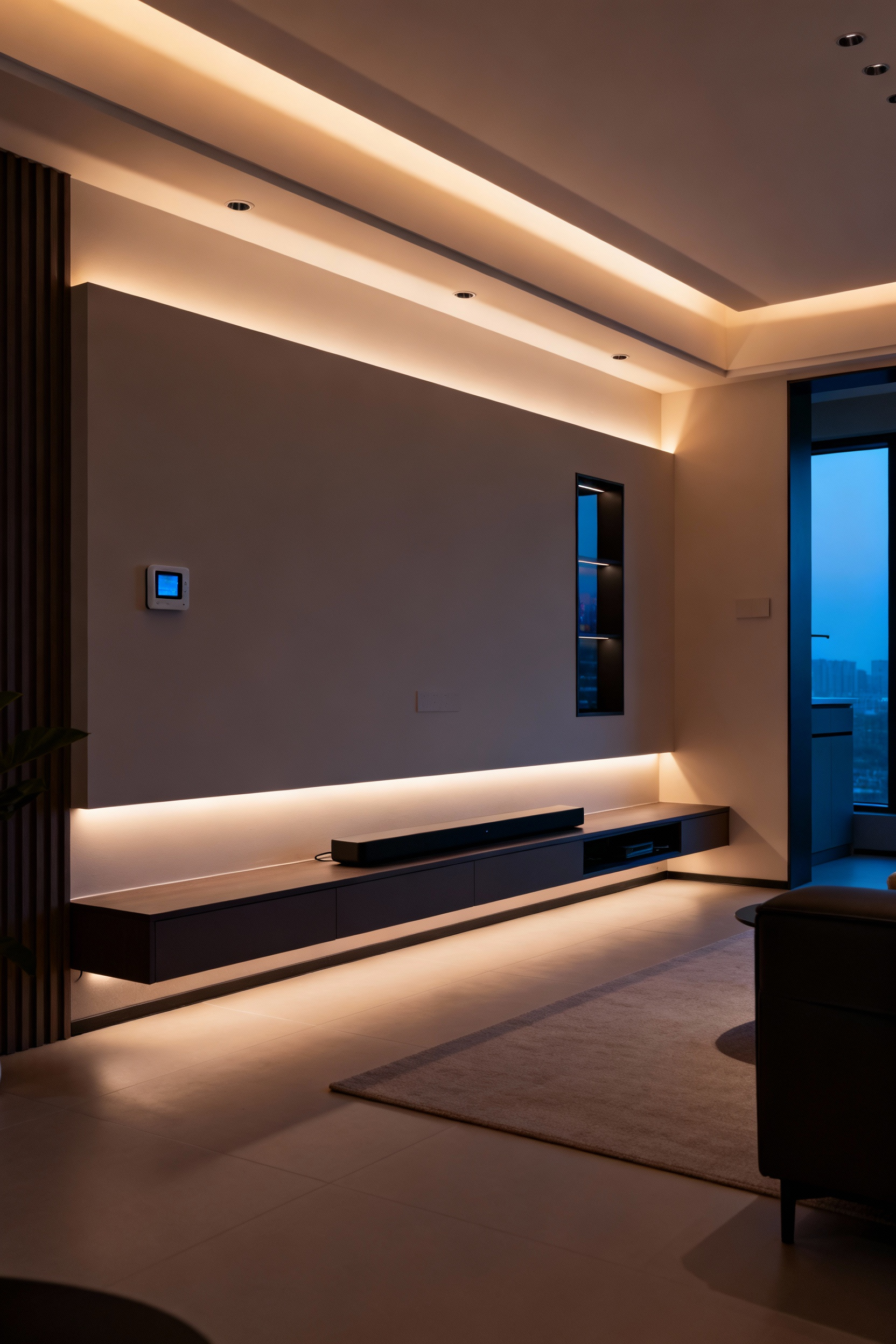
The best technology is invisible; it works its magic in the background without demanding attention. Hide wires, choose devices with minimalist design, and focus on tech that enhances the atmosphere of your home—like a speaker that blends in on a bookshelf—rather than detracting from it. It’s the final layer of modern, functional, and sophisticated living.
Conclusion
Let’s go back to where we started—the myth that your apartment is a design handicap. We’ve just walked through 20 strategies that prove the opposite. These principles aren’t about tricks; they are a fundamental shift in perspective. They are evidence that constraints breed creativity and that sophistication is born from intention, not from having a massive budget or endless square footage.
The most important takeaway from all my years designing these incredibly personal, hard-working spaces is this: an apartment is a canvas, not a cage. You now have the tools and the philosophy to move beyond the beige-box clichés. See your living room not for its limitations, but for its potential. Start with one thing—raise your curtain rod, group three objects on your coffee table, buy one great plant. Dare to make a bold choice. Create a home that is an intelligent, resourceful, and beautiful reflection of you, proving that the most compelling design stories are often told in the most intimate of spaces.