Since the 19th century, the bohemian spirit has served as a philosophy of living, an embrace of artistic freedom that evolved from the counter-cultural currents of Paris to become a global design language. Today, its most sophisticated expressions move far beyond mere decoration. They understand a dual principle: a space must earn its visual presence through mindful curation while also fostering genuine well-being. The eight core principles that separate an authentic, soulful retreat from a cluttered assembly of trends haven’t changed in over a century. They are rooted in an appreciation for the handmade, a connection to the earth, and the stories we gather along the way.
Embracing the Soulful Aesthetics: Foundations of a Conscious Boho Sanctuary (Part 1)
Before a single object is placed, a true sanctuary begins with a philosophy. The soul of a bohemian space lies in its celebration of artistry, nature, and the beauty of an imperfect, authentic life. This first exploration is about the foundational aesthetics—the essential ideas that give the room its spirit and transform it from a collection of things into a place of deep resonance.
1. Decode the Global Nomad Spirit: Weaving Cultural Narratives Through Intentional design elements
The “global nomad” spirit, at its best, is an act of deep reverence, not appropriation. It’s about honoring the provenance of an object and understanding that a pattern or a carving carries with it the story of a people and a climate. In my desert modern design practice, I always emphasize that this isn’t about creating a theme park of cultures; it’s about weaving a personal story through objects acquired with respect and admiration for their makers.
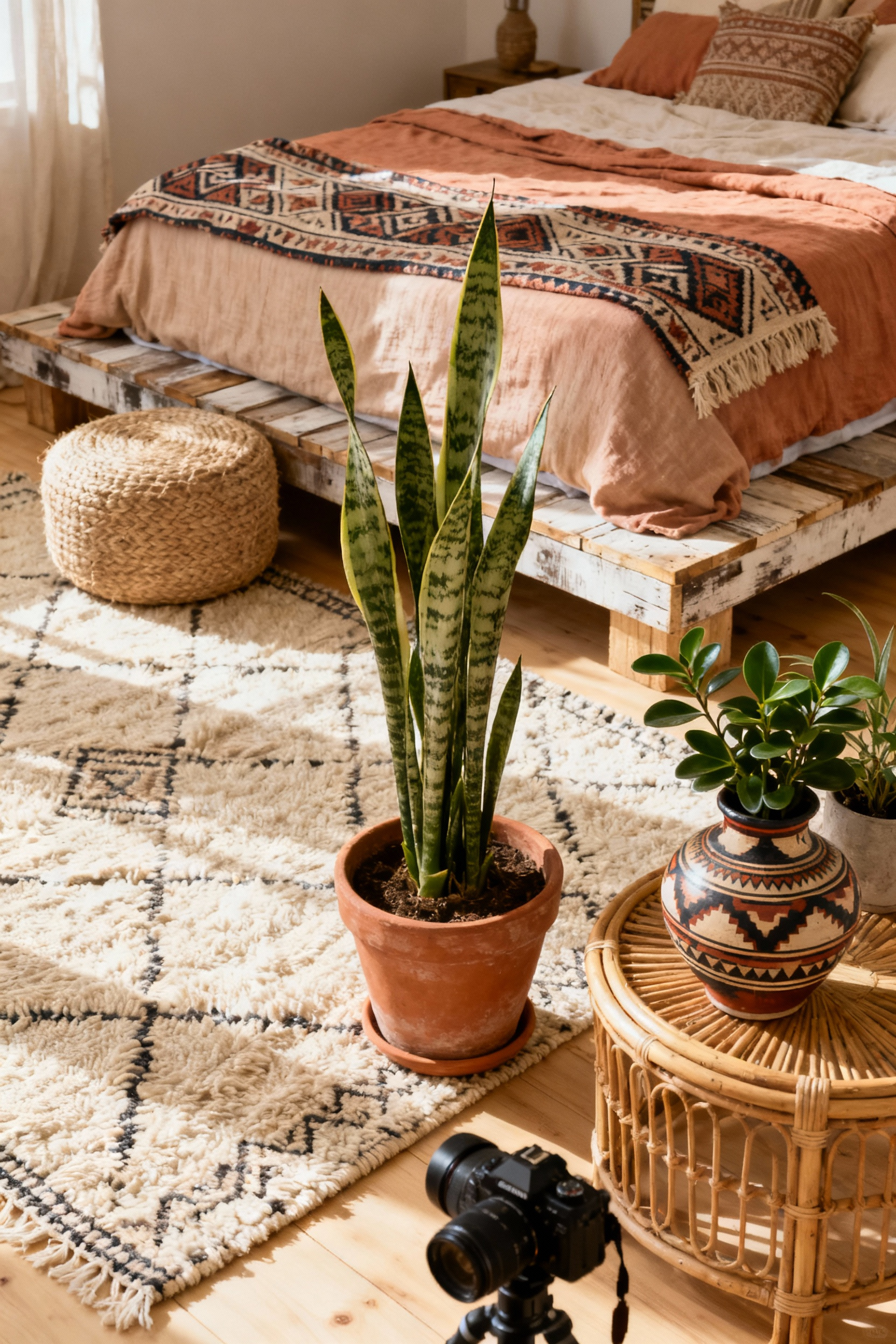
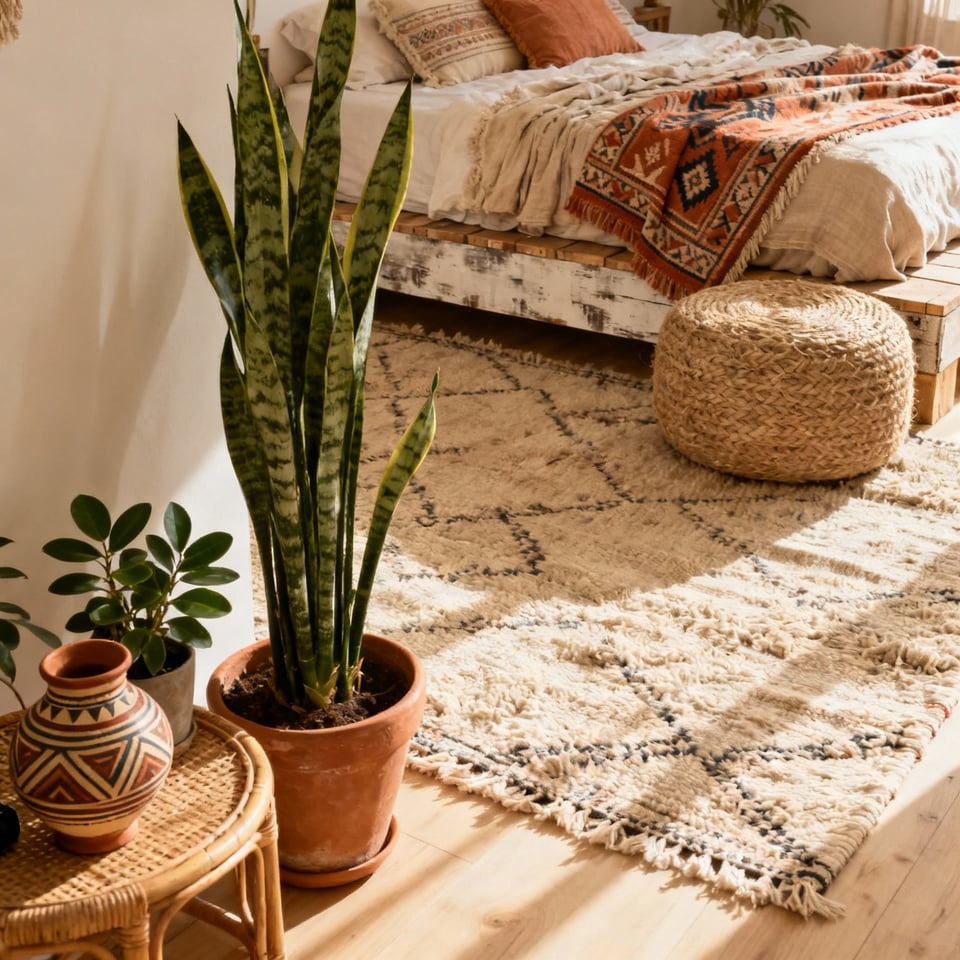
True nomadic style is born from function and heritage. Look for a hand-knotted Berber rug from the Atlas Mountains, its abstract symbols telling a story while the thick wool provides insulation against cool desert nights. Consider the airy quality of Indian block-printed cottons or the heft of a Turkish kilim. These textiles aren’t just patterns; they are ancient solutions to climate and comfort. Their presence in a room should feel like a quiet conversation with a distant place, not a shout.
2. Harmonize with Biophilic Principles: Infusing Verdant Life to Enhance Well-being and Air Quality
The human need to connect with nature—biophilia—is a principle I see beautifully expressed in both Scandinavian design and traditional Middle Eastern architecture. While a Scandinavian home might use large windows to invite the forest in, a Moroccan riad creates an inward-facing oasis, a lush courtyard hidden from the harsh sun. The goal is the same: to create a life-affirming refuge. A bohemian bedroom should feel like a personal oasis.
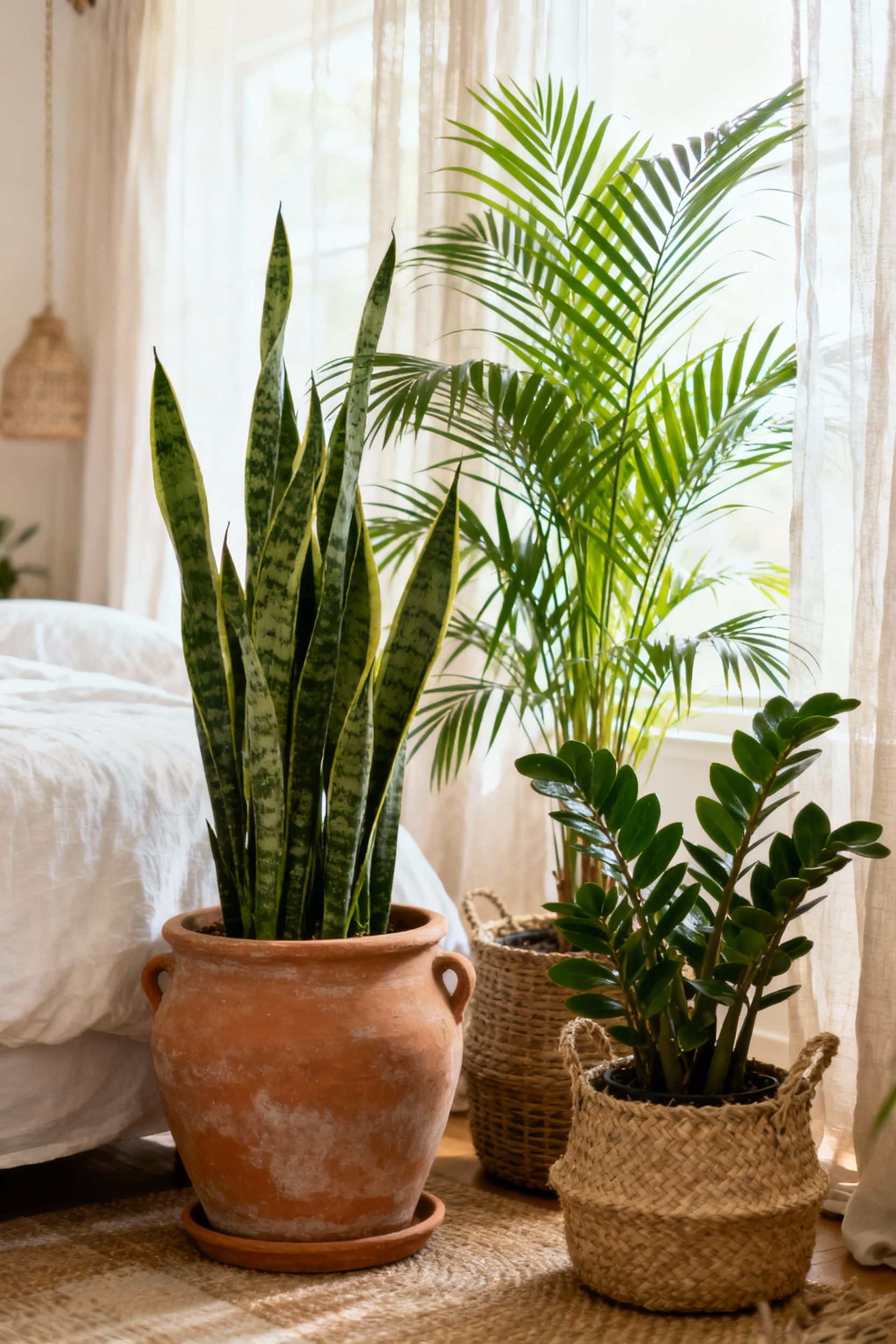
Introduce plants not just as accessories, but as living architecture. A tall fiddle-leaf fig can soften a corner and draw the eye upward, while trailing pothos from a high shelf creates a gentle, living curtain. Think beyond the pot. I often recommend integrating planters into shelving or choosing vessels made of unglazed terracotta, which allows the roots to breathe. This fosters an active, nurturing relationship with your environment, turning simple care into a mindful daily ritual.
3. Embrace the Art of Intentional Imperfection: Celebrating Wabi-Sabi Through Handcrafted and Organic Forms
In a world of mass production, there is profound beauty in the mark of the human hand. The Japanese philosophy of wabi-sabi—finding beauty in imperfection and transience—resonates deeply with the bohemian ethos. It’s the slightly uneven glaze on a ceramic cup, the soft fraying at the edge of a linen throw, the weathered patina on a reclaimed wooden bench. These are not flaws; they are markers of a life lived.
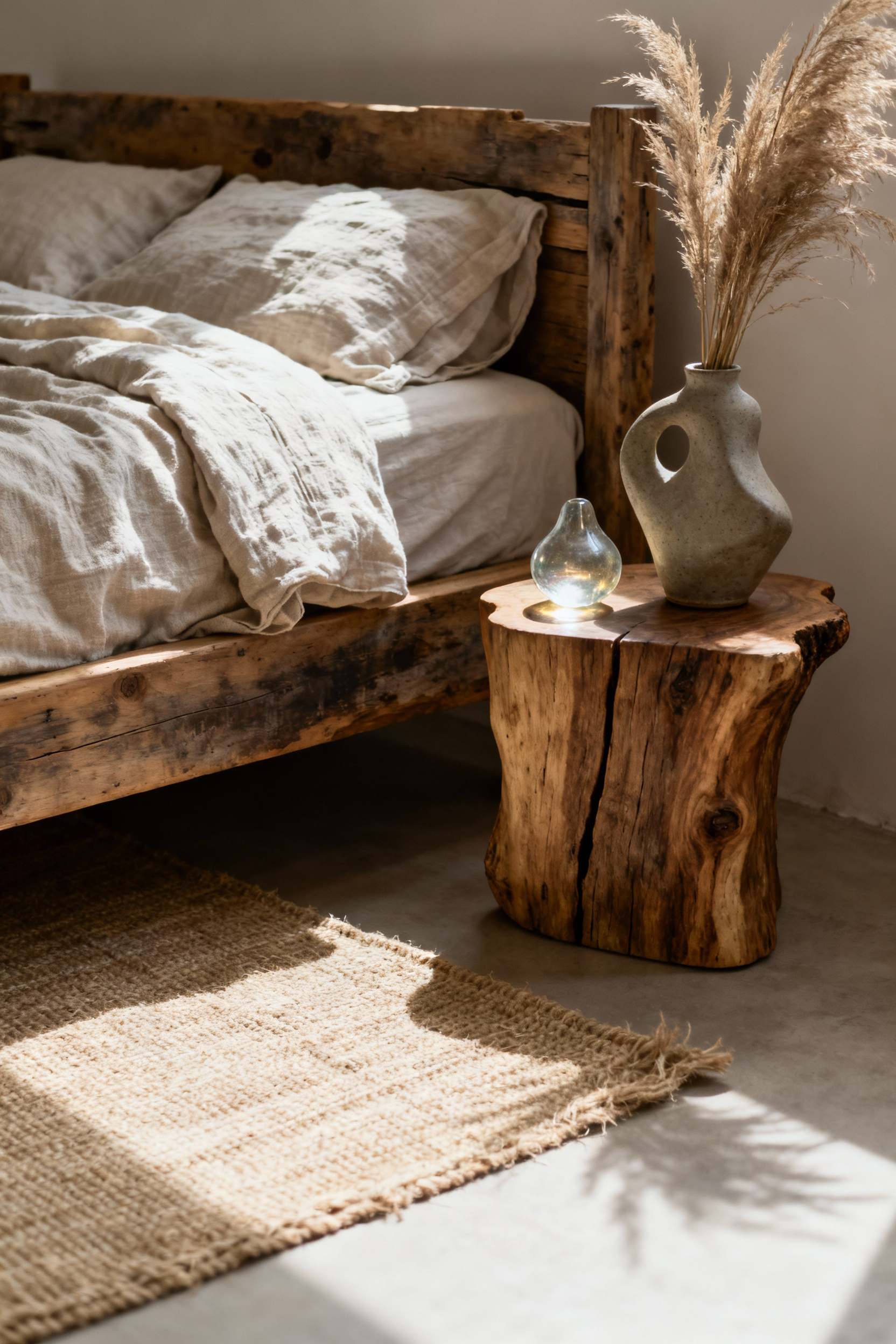
Seek out materials that tell a story of their making. Hand-thrown pottery, with the faint imprint of the artist’s fingers, brings a quiet soulfulness to a nightstand. Choose furniture made from reclaimed wood, where old nail holes and gentle scuffs speak of a past life. This approach requires a shift in perspective. Instead of seeking flawlessness, you begin to appreciate the character that comes from age and use, creating a space that feels deeply comforting and real.
4. Curate a Desert-Inspired Color Alchemy: Harnessing Sun-Drenched Hues for Earthy Modern Tranquility
Color is not an afterthought; it is the atmosphere. A desert palette is a masterclass in subtlety, reflecting the way light moves across a vast landscape. It’s a language of warmth, resilience, and profound calm. Think less of bright, saturated tones and more of the sun-baked pigments of the earth: terracotta, sand, ochre, and the soft, dusty green of desert sage.
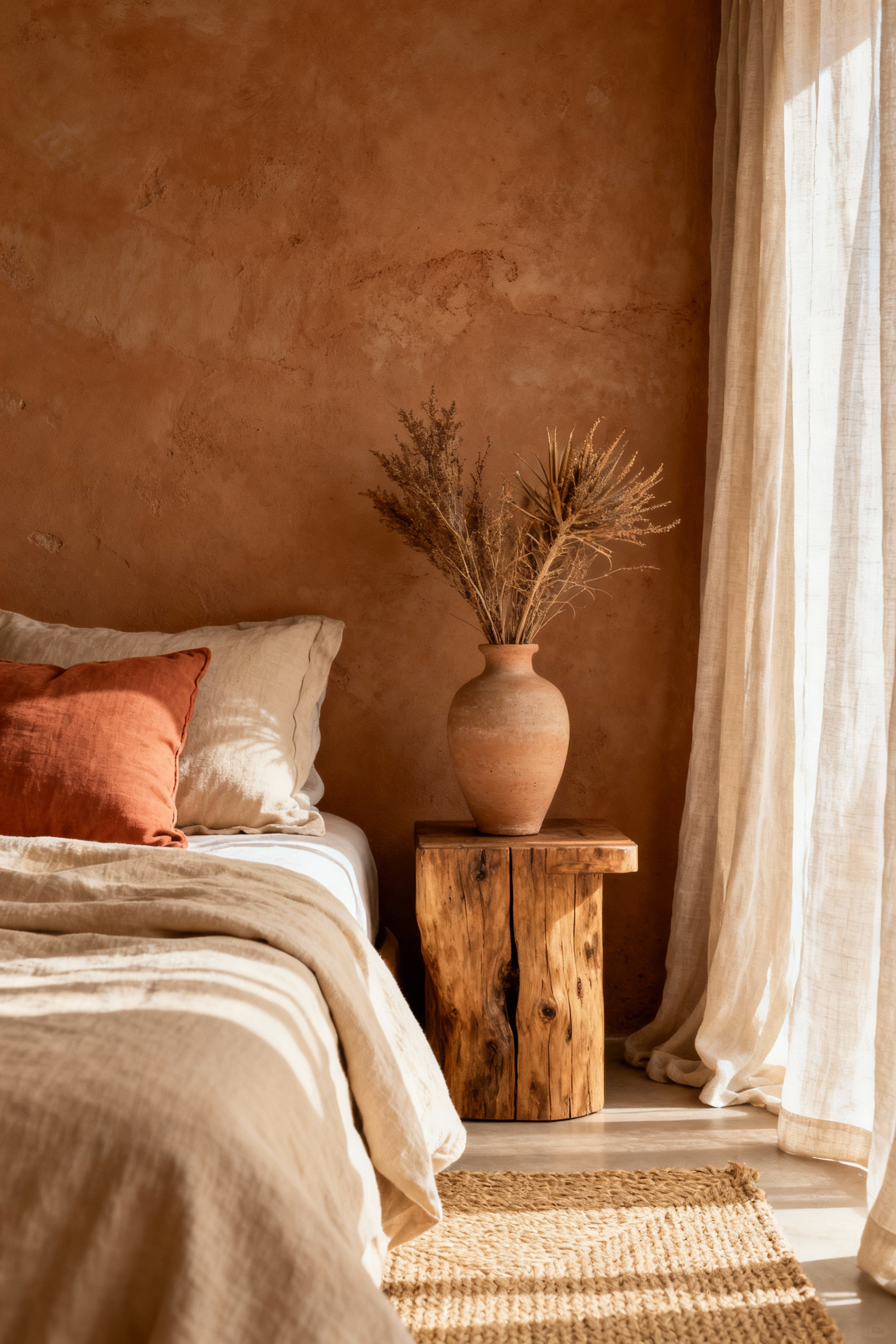
What I’ve learned from designing in warm climates is that these colors manage light beautifully. Walls painted a warm, sandy off-white reflect a soft, gentle glow, while a deep rust or terracotta accent wall can create an intimate, enveloping feeling without absorbing too much heat. Layer these tones through natural textiles—a linen duvet in a muted clay hue, wool throws in shades of stone and olive. This alchemy of color creates a sanctuary that feels both expansive and deeply grounding.
Embracing the Soulful Aesthetics: Foundations of a Conscious Boho Sanctuary (Part 2)
Building on a foundation of soulful aesthetics, we now turn to an element that is both invisible and all-powerful: light. How we shape and invite light into a space defines its energy. A conscious bohemian sanctuary knows how to harness the sun’s ephemeral dance to create a serene and open atmosphere.
4. Optimize Natural Light Integration: Maximizing Diffused Illumination for an Airy, Expansive Ambiance
Light is a building material. In Scandinavian design, where daylight is precious, windows are often left bare to capture every last ray. In the Middle East, light is filtered through intricate mashrabiya screens, transforming harsh glare into a thousand delicate patterns. Both traditions understand that the quality of light is what shapes a room’s spirit. The bohemian bedroom thrives on this soft, diffused illumination.
Forget heavy, opaque curtains. Instead, opt for floor-to-ceiling sheers made of linen or organic cotton voile. They maintain privacy while allowing the room to be bathed in a gentle, forgiving glow that softens every surface. A large, simply framed mirror placed opposite a window can work wonders, amplifying the light and reflecting the view of the sky or trees, effectively blurring the boundary between indoors and out. Let your bedroom breathe with the rhythms of the day.
Crafting Tactile Narratives: Elevating Design Through Organic Materials and Artisanal Textures (Part 1)
A room should be felt as much as it is seen. The story of a bohemian sanctuary is told through texture—the rough weave of jute underfoot, the smooth coolness of clay, the soft embrace of aged linen. This section is about crafting a narrative through touch, layering organic materials and artisanal fabrics to create a space that feels rich, authentic, and deeply inviting.
5. Layer Sumptuous Textile Vignettes: Blending Raw Cottons, Lush Linens, and Artisanal Woven Fabrics
Textiles are the soul of a bohemian room; they are the most immediate way to introduce comfort, pattern, and story. It’s about creating a layered “textile landscape.” The goal is a rich, tactile experience that feels collected over time, not purchased as a set.
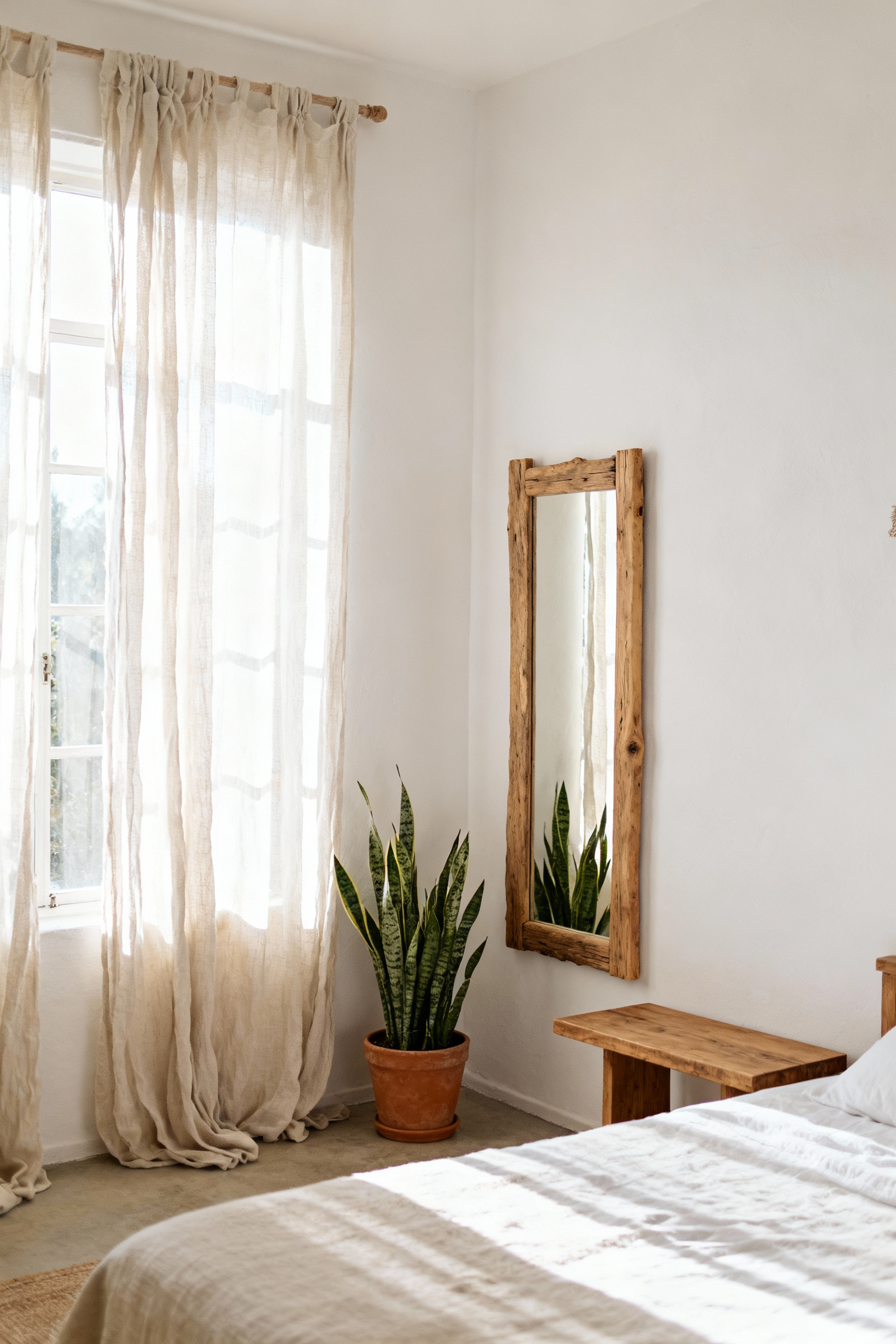
Start with a base of high-quality, natural fibers for bedding—I always favor the relaxed elegance of linen or the crisp comfort of organic percale cotton. From there, layer textures. Drape a chunky hand-knit wool throw over a finely woven Moroccan wedding blanket at the foot of the bed. Add throw pillows covered in fabrics from different traditions: a silk velvet, a mudcloth, a block-printed cotton. This interplay of textures is what creates visual and sensory depth.
6. Anchor with Grounding Wood Elements: Selecting Reclaimed Timbers and Rattan Furnishings for Organic Warmth
Amidst the softness of textiles, grounded wood elements provide essential structure and warmth. They connect the space to the earth and give it a sense of permanence. Each type of wood offers a different energy. Reclaimed timber brings history and rugged character, while woven rattan offers a lighter, more tropical ease.
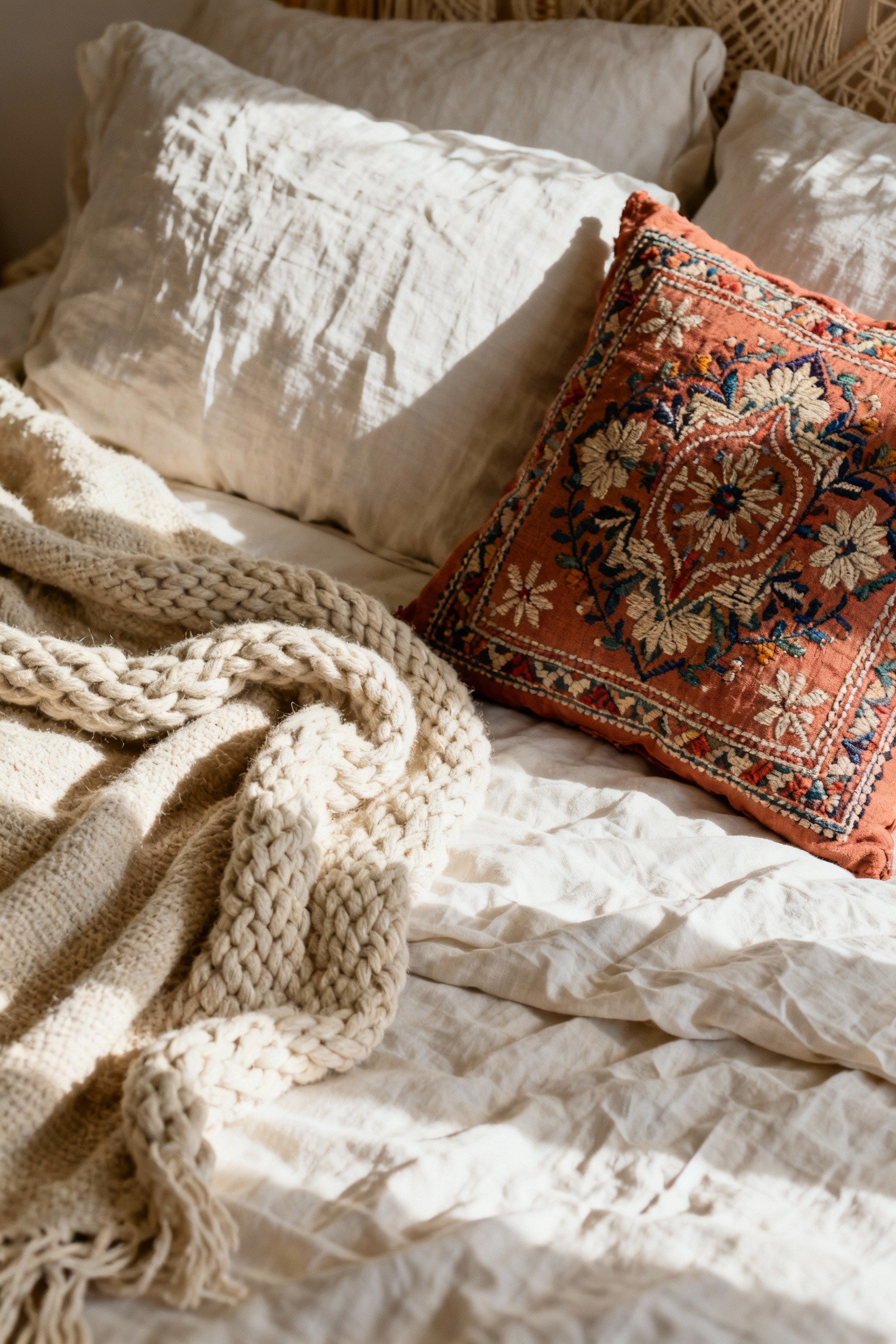
A low platform bed frame made from reclaimed beams can be a powerful, grounding focal point, its rough-hewn texture a beautiful contrast to soft linens. A rattan armchair or pendant light introduces an element of breezy elegance and intricate craftsmanship. What’s important here is the balance. I’ve noticed that combining the weight of solid wood with the lightness of woven pieces creates a dynamic harmony that is central to modern bohemian design.
7. Introduce Textured Rugs with Purpose: Employing Jute, Sisal, or Wool to Define Zones and Enhance Acoustic Comfort
In many cultures, the rug is the heart of the room—it defines the space for living. A textured rug does more than just decorate; it grounds the furniture, absorbs sound to create a quieter atmosphere, and provides a tactile foundation for the entire space. It’s the first and last thing your feet touch each day.
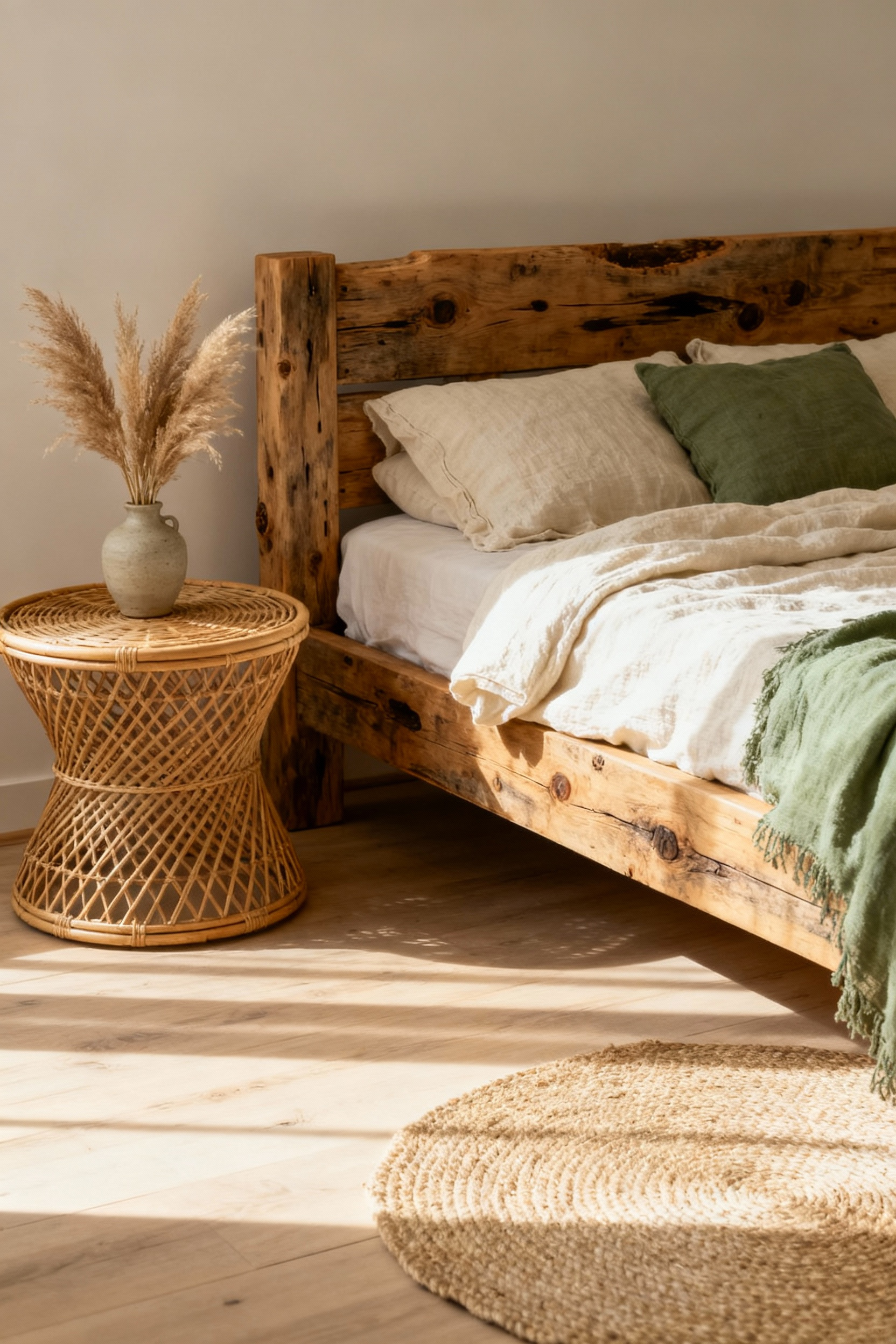
A large, neutral rug made of natural jute or sisal is a versatile and sustainable starting point, defining the primary sleeping area. You can then layer a smaller, more precious rug on top—perhaps a vintage Turkish or Persian piece with a rich, faded pattern. This layering adds incredible depth and tells a more complex story. The natural fibers offer a subtle, earthy scent, further enhancing the sensory experience of the room.
8. Incorporating Earthenware and Terracotta Vessels: Adding Sculptural Form and Primal Connection
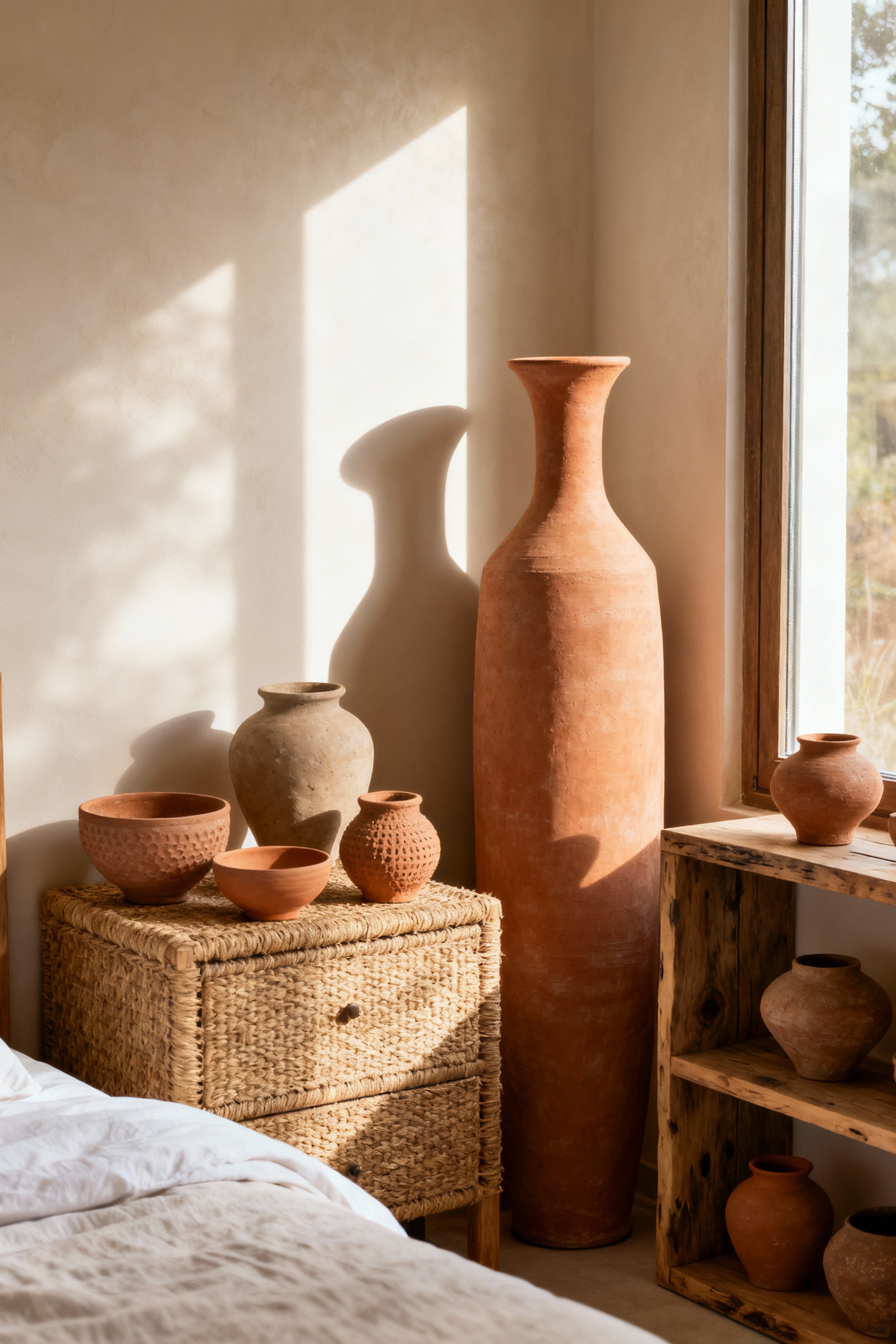
Before there was plastic or metal, there was clay. Earthenware and terracotta vessels connect us to one of the most ancient and primal forms of human craft. Their simple, sculptural forms and earthy textures offer a quiet counterpoint to the patterns and softness elsewhere in the room. They are not just containers; they are grounding objects.
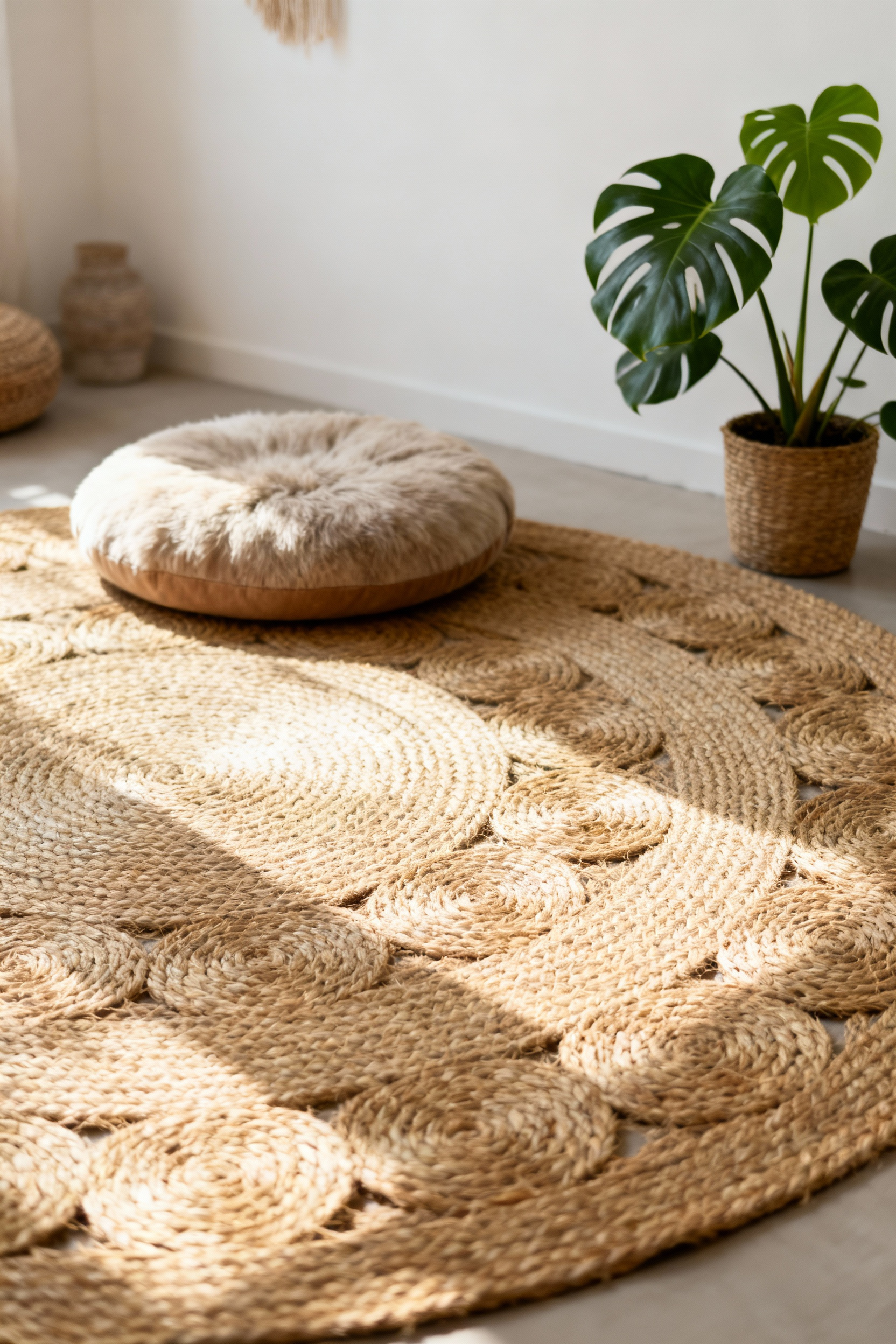
In my own work, I often use a cluster of empty terracotta vessels of varying sizes in a corner, treating them as pure sculpture. Their warm, reddish hue is a perfect complement to living greenery. A simple earthenware bowl on a nightstand becomes a beautiful, tactile place to keep small personal items. These pieces remind us of the beauty in simple, functional forms drawn directly from the earth.
Crafting Tactile Narratives: Elevating Design Through Organic Materials and Artisanal Textures (Part 2)
We continue our journey into tactile narratives by looking at how vertical surfaces can be transformed from blank planes into canvases of artistry. Hand-wrought details bring a human scale and story to our walls, infusing the space with a palpable soul that mass-produced art cannot replicate.
9. Utilize Macrame and Woven Wall Hangings: Infusing Dimensional Artistry and Softening Vertical Spaces
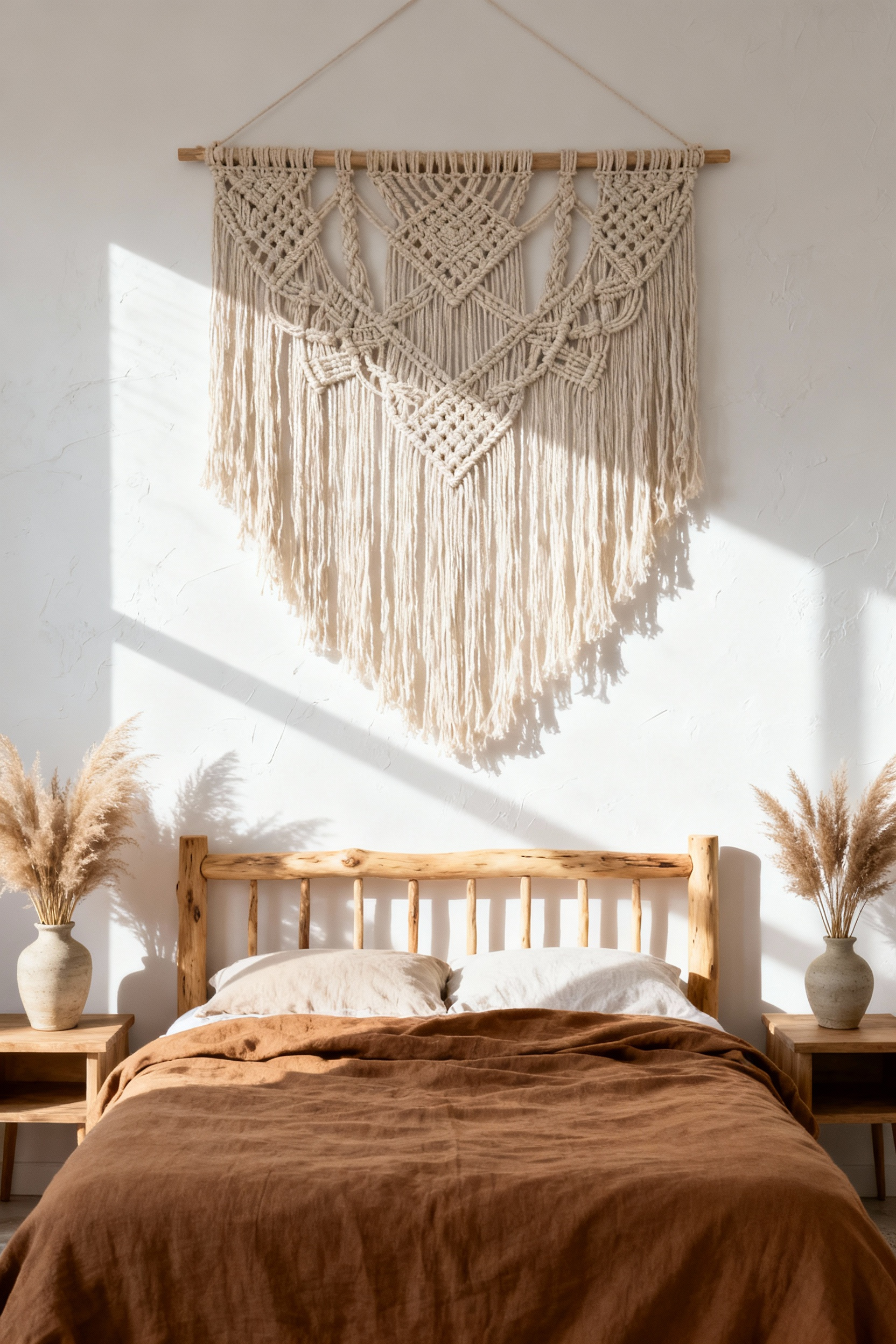
Walls need warmth and texture just as much as floors do. Macrame and woven wall hangings are more than just decoration; they are a celebration of slow craft. Each knot and thread is a mark of time and human intention, and this energy softens a room’s architecture and acoustics in a beautiful way.
A large macrame piece hung above a headboard can create a stunning focal point, its intricate patterns casting subtle shadows that change with the light. Don’t be afraid to think beyond traditional placement. A narrow woven runner hung vertically can add interest to an awkward sliver of wall space. These pieces are art, but they’re an approachable, tactile kind of art that invites you to come closer.
Orchestrating Sanctuary: Strategic Spatial Design for Harmonious Flow and Personal Expression (Part 1)
A true sanctuary is orchestrated, not just decorated. It requires intentional choices about how we arrange our space to support how we want to live. This section explores how strategic decisions about furniture, art, and lighting can transform a simple room into a harmonious haven that flows with purpose and expresses a unique personal story.
10. Implement Low-Profile Furnishings: Fostering an Intimate, Grounded Atmosphere
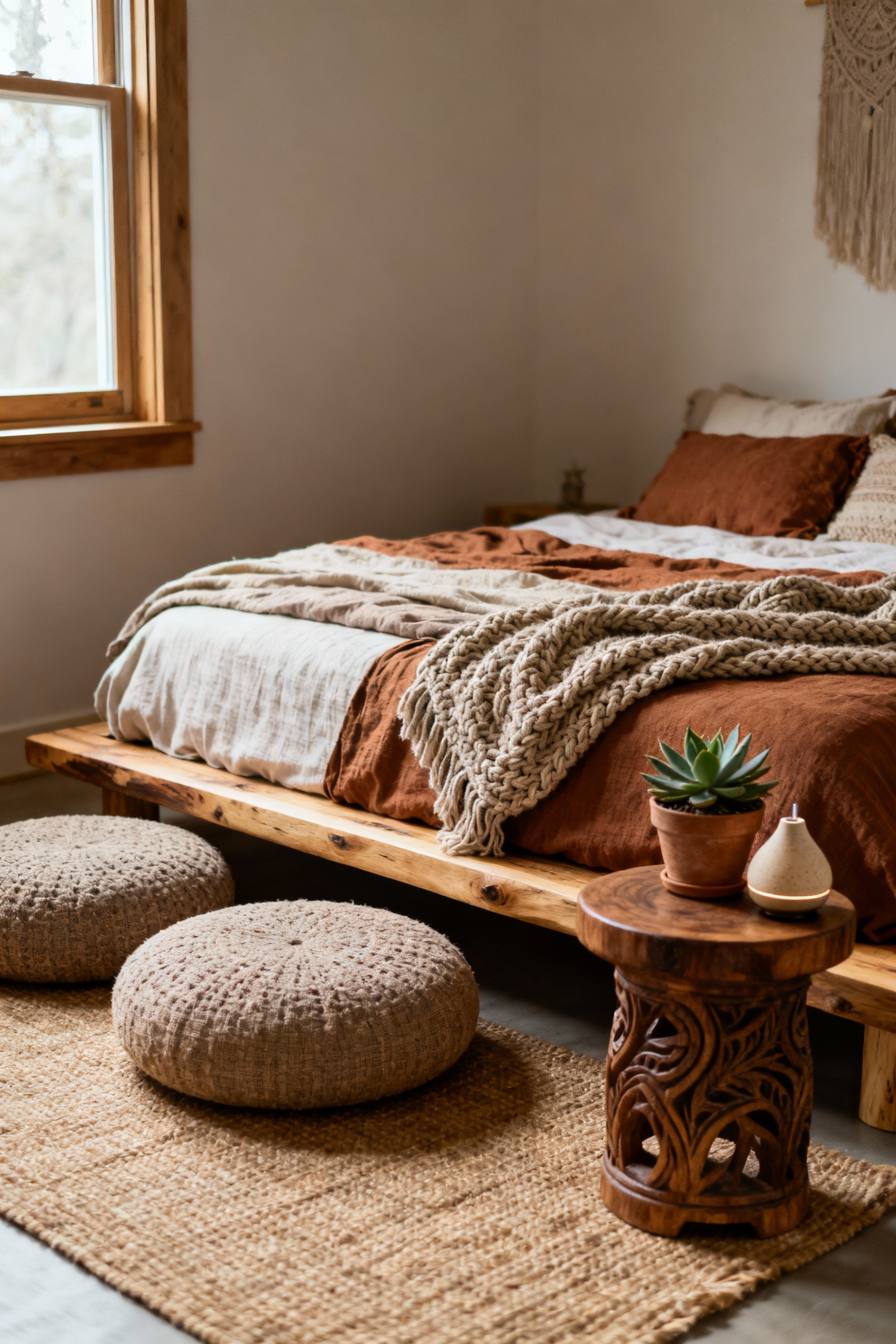
There is a powerful psychological effect to being closer to the ground. It fosters a sense of intimacy and connection. Think of the traditional Middle Eastern majlis, where floor cushions encourage conversation and community. Low-profile furnishings—a platform bed, floor cushions, low-slung side tables—can bring this grounded feeling into the bedroom.
This approach creates a more relaxed, informal atmosphere. It visually opens up the vertical space in a room, making it feel larger and less constrained. A low bed draped in beautiful textiles feels more like a serene nest than a formal piece of furniture. It’s an invitation to slow down, unwind, and reconnect with a more elemental way of being.
11. Develop an Eclectic Gallery Wall: Curating a Narrative of Wanderlust with Global Art and Mementos
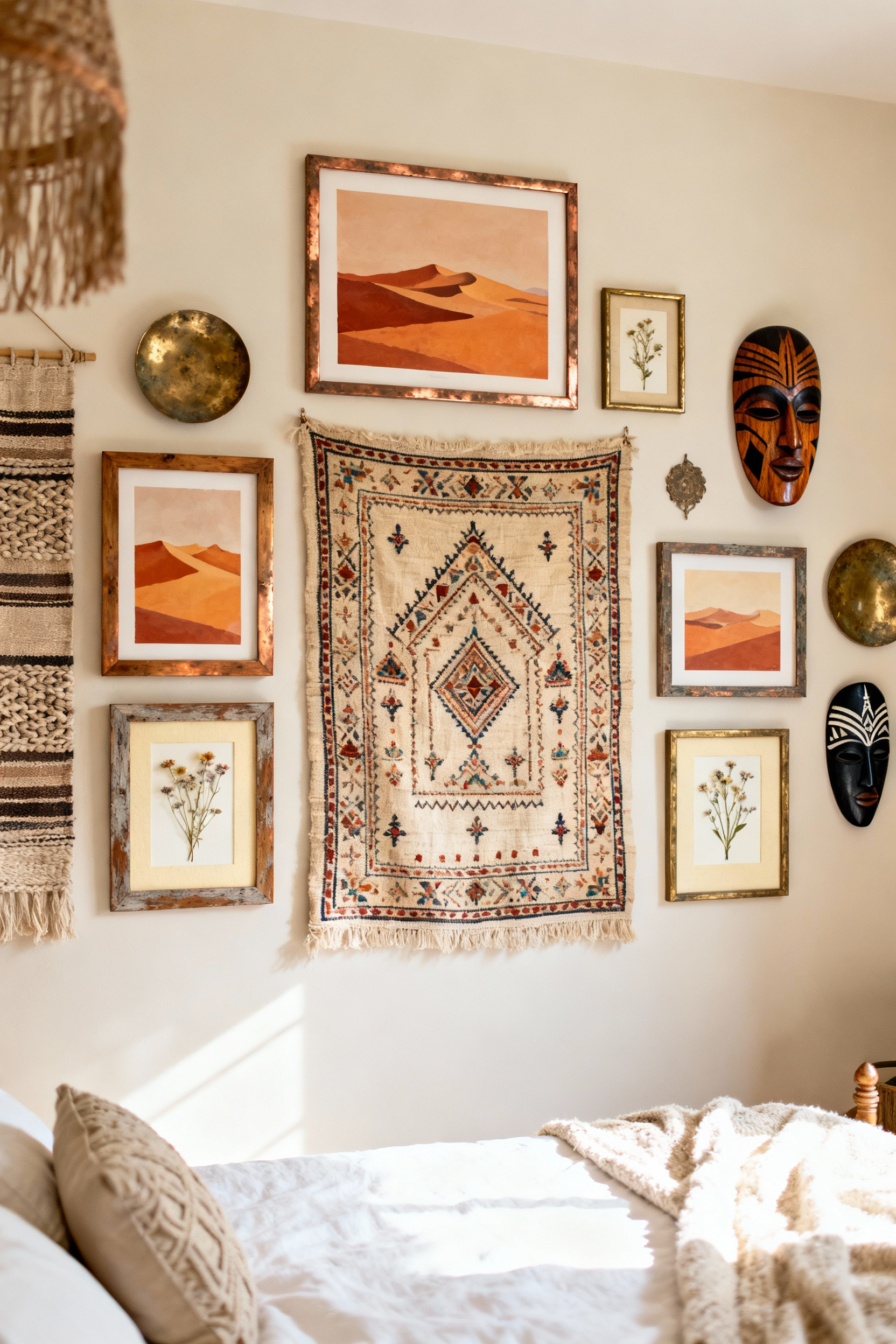
A gallery wall should be a window into your life. In the context of a bohemian bedroom, it’s a visual story of your travels, your passions, and the things that move you. The key is curation, not accumulation. This is about creating a composition that feels personal and cohesive, even if the individual pieces are wildly different.
Mix mediums. Combine framed prints and photographs with more dimensional objects: a small woven textile from Peru, a handcrafted wooden mask, a beautiful pressed leaf. Vary the frames, or use no frames at all. The arrangement should feel organic and evolving. Lay everything out on the floor first to find a balance that feels right to you. This is your personal museum.
12. Establish a Designated Reading Nook: Crafting a Cozy Retreat with Cushioned Seating and Ambient Lighting
Every sanctuary needs a smaller sanctuary within it. A designated reading nook is a commitment to yourself—a physical space carved out for quiet, contemplation, and escape. Even the smallest corner can be transformed into a cozy retreat.
All you really need is a comfortable chair—perhaps a low-slung butterfly chair or even a generous pile of floor cushions—a soft throw, and good light. This part’s important. The lighting should be warm and focused, like a floor lamp with a linen shade that casts a gentle glow. Add a small table for a cup of tea, and you have created an intentional haven for restorative solitude.
13. Employ layered lighting Strategies: Combining Ambient, Task, and Accent Fixtures for Atmospheric Depth
Lighting is everything. A single, harsh overhead light can ruin the most beautifully designed room. What a sanctuary needs is layered lighting—a flexible combination of sources that allows you to sculpt the atmosphere to suit your mood. From my professional experience, this is one of the most transformative yet overlooked elements of design.
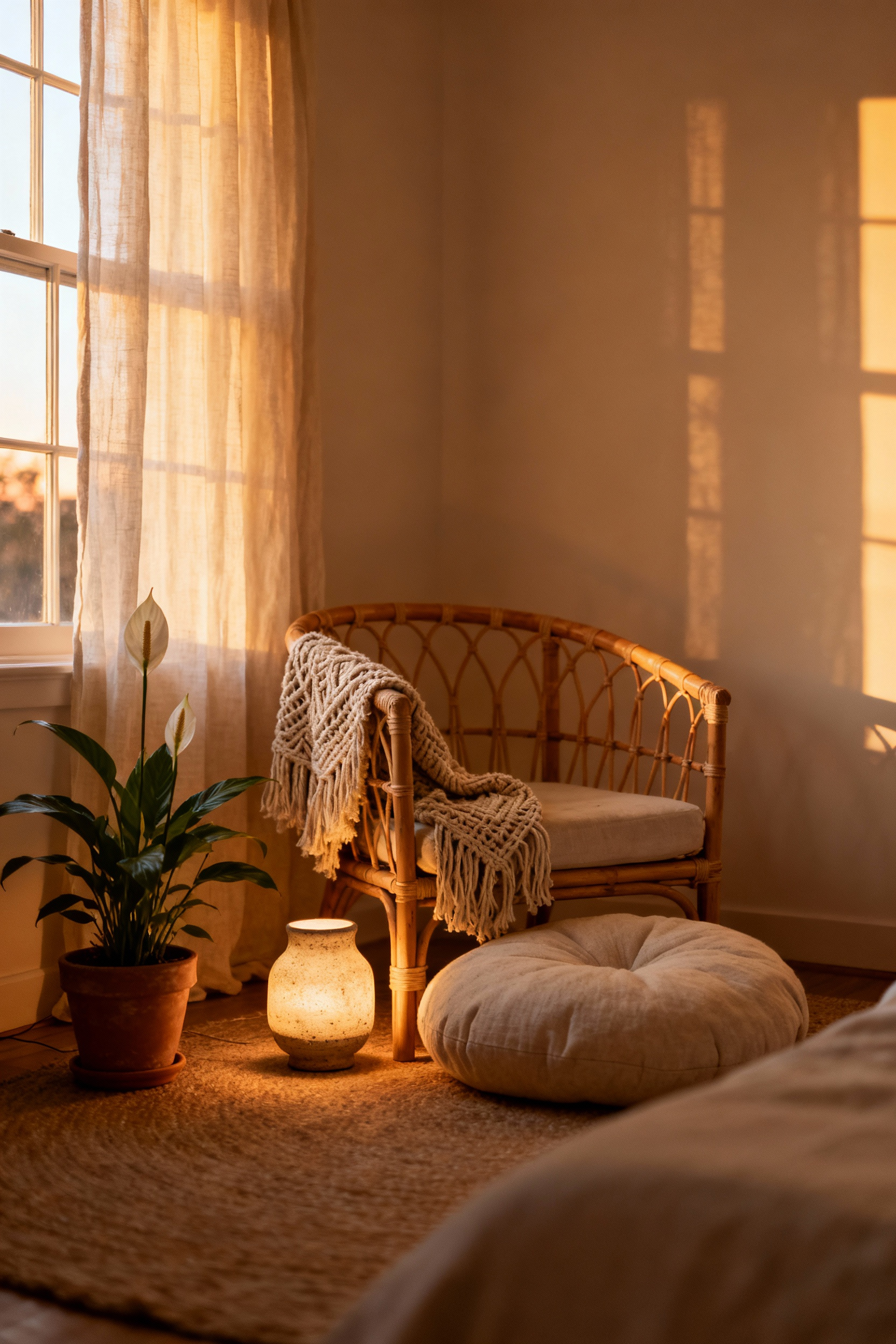
Start with a soft, general ambient light, perhaps from a rattan pendant fixture that diffuses a warm glow. Add focused task lighting where you need it, like a small, adjustable lamp for reading. Finally, introduce accent lighting for magic: a string of delicate fairy lights draped over a headboard, a salt lamp casting a rosy hue, or even candles. Every light should be on a dimmer. This gives you complete control to create a bright, energizing space in the morning and a soft, intimate retreat at night.
Orchestrating Sanctuary: Strategic Spatial Design for Harmonious Flow and Personal Expression (Part 2)
Our orchestration of sanctuary continues by exploring how pieces with a past can ground our present. Infusing a space with objects that carry their own history creates a room that feels lived-in, soulful, and deeply personal—a core tenet of both sustainability and the authentic bohemian spirit.
14. Integrate Vintage and Repurposed Pieces: Adding Unique Character and Sustainable Elegance
A room filled with only new things can feel a little sterile, a little soulless. Vintage and repurposed pieces bring with them a sense of history and character that cannot be manufactured. They are also a beautiful expression of sustainability—a choice to honor the craftsmanship of the past rather than contribute to a cycle of disposal.
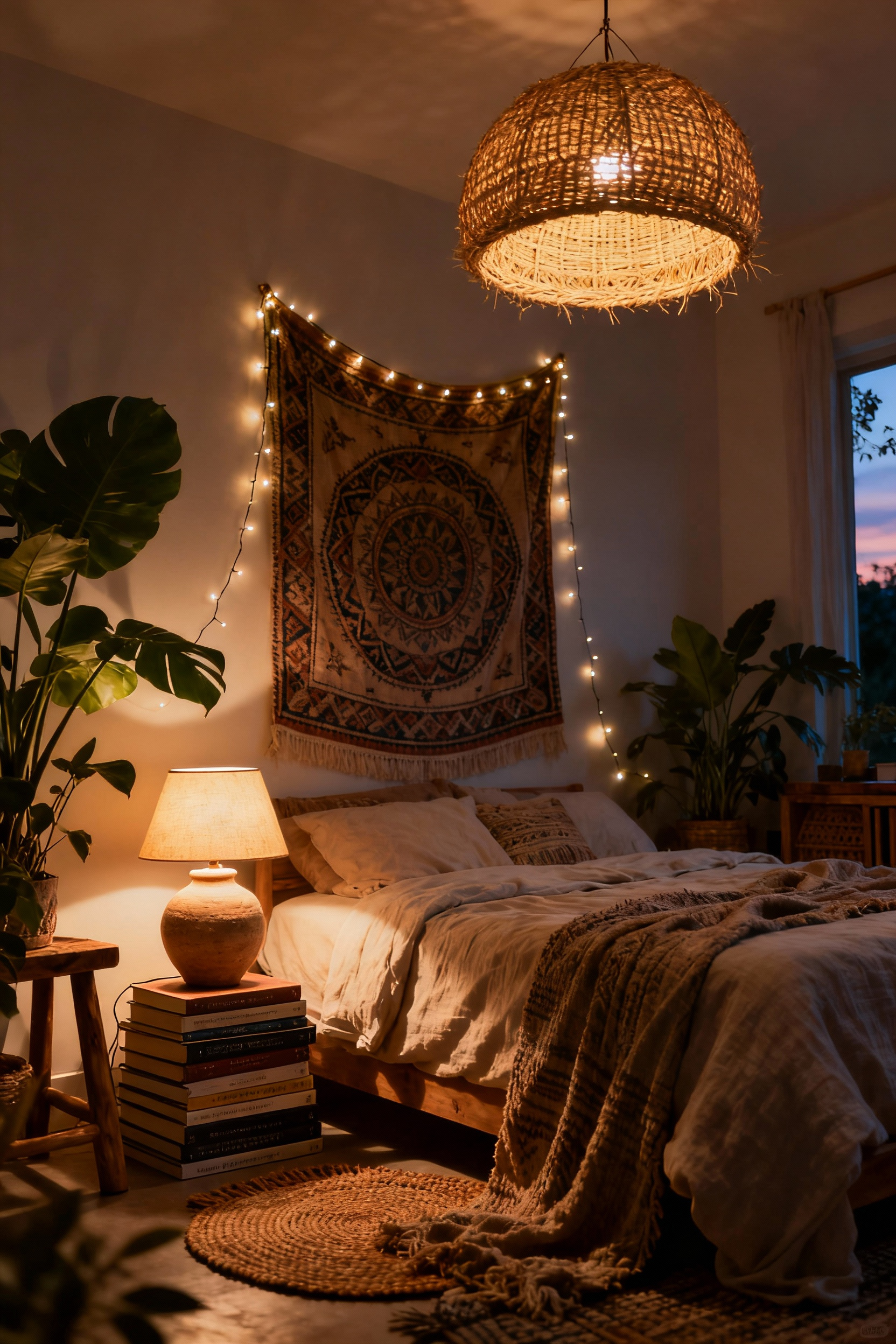
An antique wooden trunk at the foot of the bed offers both beautiful character and invaluable storage. A pair of mismatched, time-worn chairs can serve as unique nightstands. The beauty often lies in the juxtaposition: placing a sleek, modern lamp atop a distressed, vintage dresser. This blend of old and new is what gives a space its unique personality and timeless appeal.
Beyond Decoration: Nurturing Well-being and Personal Storytelling within Your Boho Retreat (Part 1)
A truly successful bohemian bedroom transcends aesthetics to become a space that actively nurtures your well-being. It is a room that tells your story, supports your rituals, and helps you live with greater intention. Here, we move beyond decoration to explore how to create a retreat that genuinely replenishes your spirit.
15. Curate a Personalized Wellness Altar: Incorporating Aromatherapy, Crystals, and Sacred Objects for Serenity
An “altar” doesn’t have to be religious; it is simply a small, dedicated space for reflection and intention. It’s a physical focal point for your wellness rituals. This could be a small corner of a dresser or a floating shelf, arranged with objects that bring you a sense of peace.
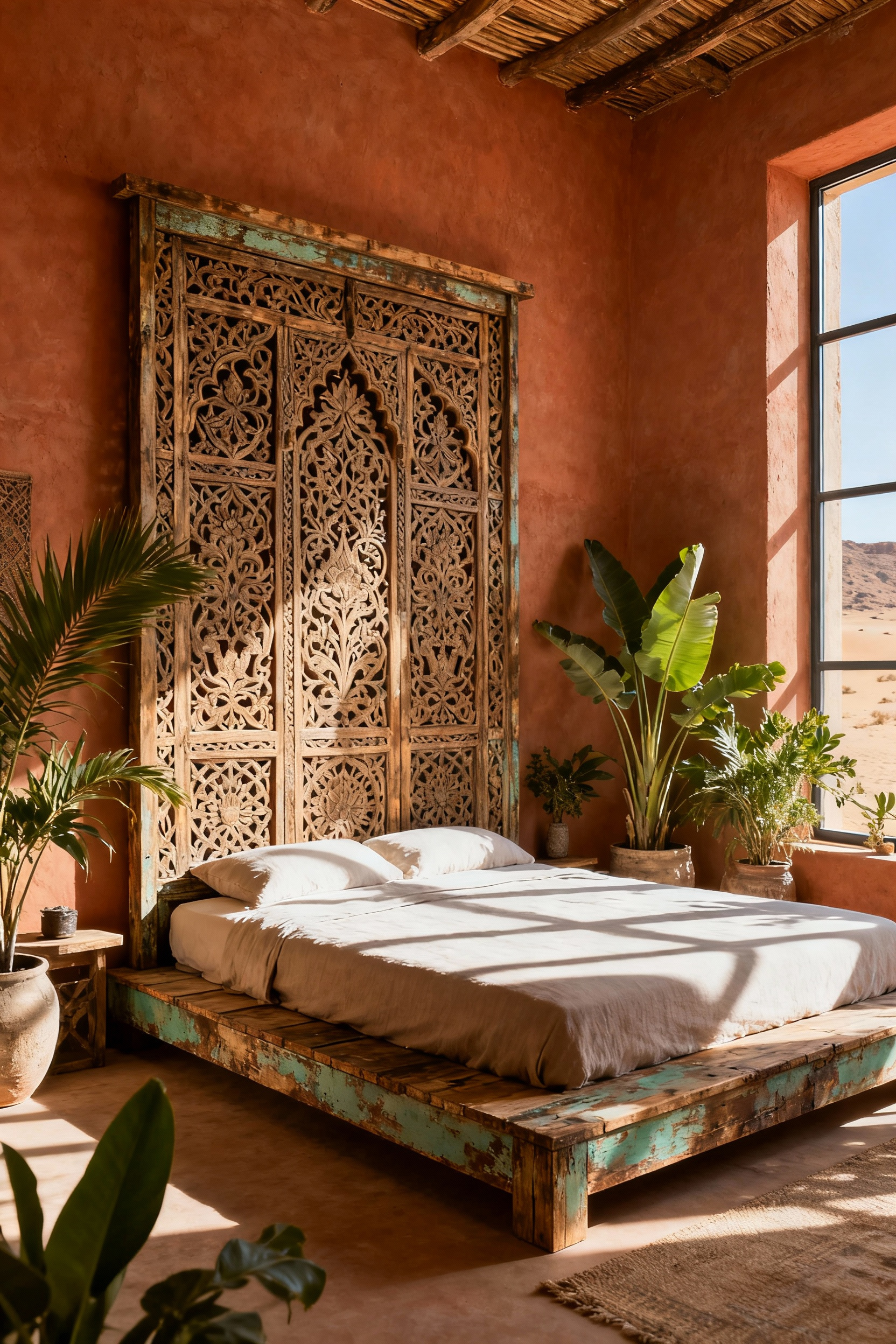
Incorporate elements that engage all the senses. An essential oil diffuser for aromatherapy, a few beautiful crystals whose textures and colors resonate with you, a meaningful object from your travels, a candle. This isn’t for display. It’s a functional space to anchor your morning meditation or your evening wind-down routine, a gentle reminder to connect with yourself.
16. Showcase Artisan Crafts and Souvenirs: Telling a Story of Global Adventures and Mindful Acquisition
Your bedroom should be a gallery of your life’s journey. Displaying artisan crafts and souvenirs is about honoring the memories and human connections they represent. But here’s the thing: this must be done with intention to avoid creating clutter. It’s about mindful acquisition—choosing pieces that have a real story and supporting the artisans who made them.
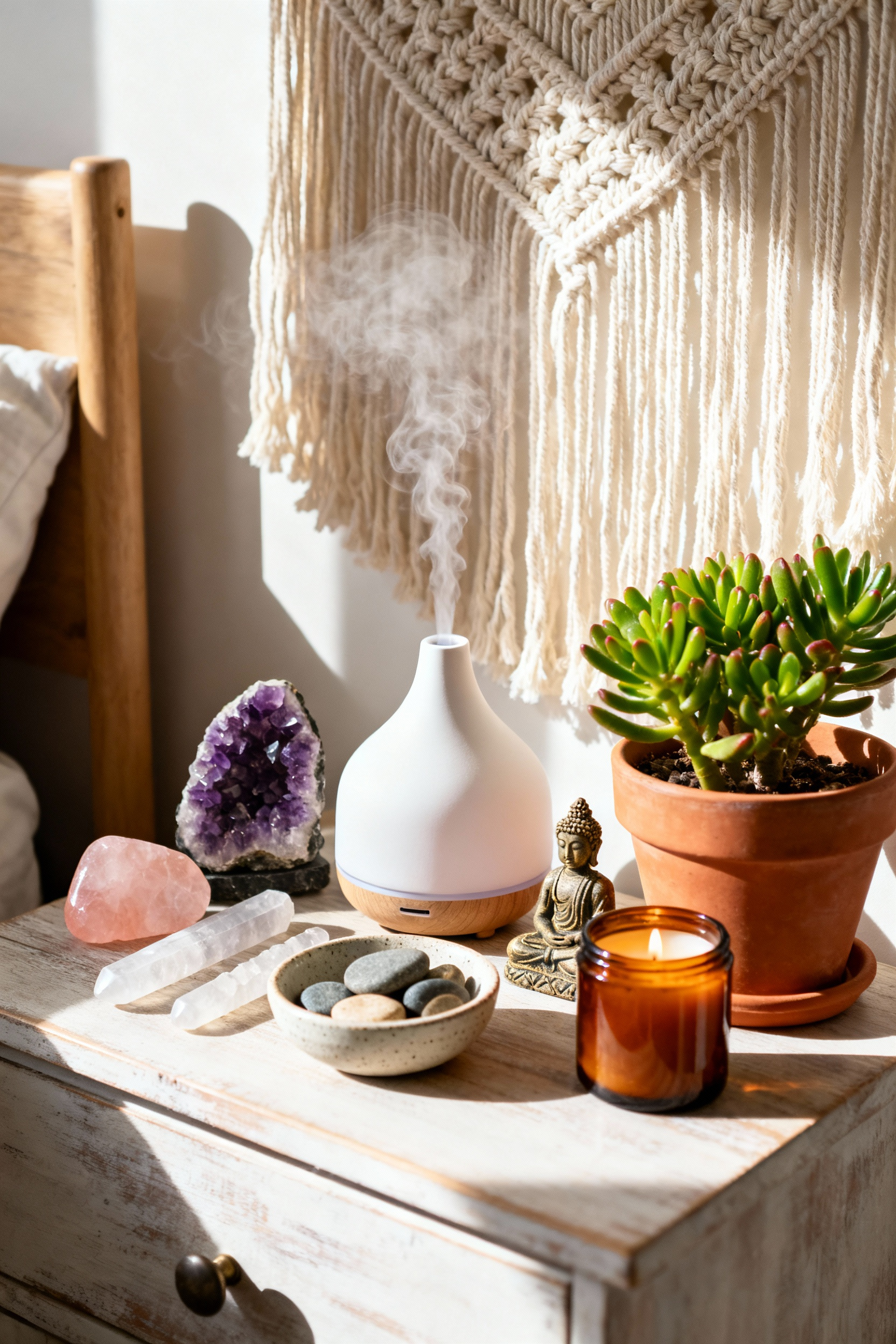
Instead of scattering items randomly, create curated vignettes. A collection of small, hand-painted bowls on a shelf, a striking piece of pottery on a dresser, a beautiful textile hung on the wall. Grouping items gives them greater impact and allows their individual stories to be seen and appreciated. This transforms your room into a living scrapbook of your adventures.
17. Optimize Storage with Natural Solutions: Utilizing Woven Baskets and Organic Containers for Decluttered Harmony
Visual clutter creates mental clutter. A serene sanctuary must be an organized one. The bohemian approach to storage is to use beautiful, natural solutions that become part of the decor. There is nothing more satisfying than seeing function and beauty merge perfectly.
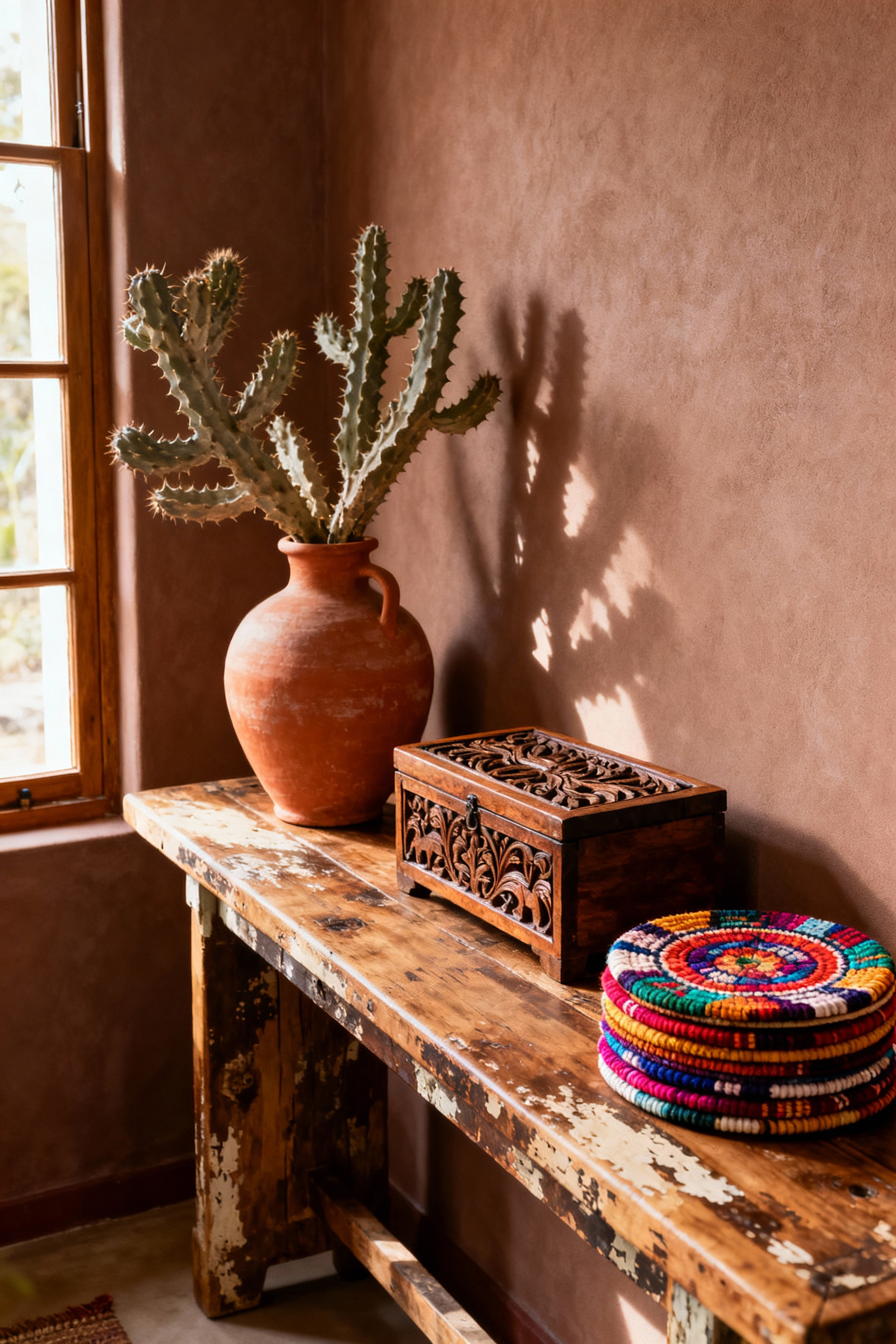
Woven baskets are your greatest ally. Large seagrass or water hyacinth baskets are perfect for holding extra blankets, laundry, or even a potted plant. Smaller baskets on shelves can corral books, electronics, and other odds and ends. They bring a wonderful, soft texture to the room while keeping your space feeling calm and orderly. It’s an effortless, organic approach to organization.
18. Design for Adaptive Use: Creating Flexible Zones for Meditation, Creativity, or Relaxation
Our bedrooms are no longer just for sleeping. They need to be flexible spaces that can adapt to our changing needs for rest, work, creativity, and contemplation. A truly well-designed room can transform its function with a few simple adjustments.
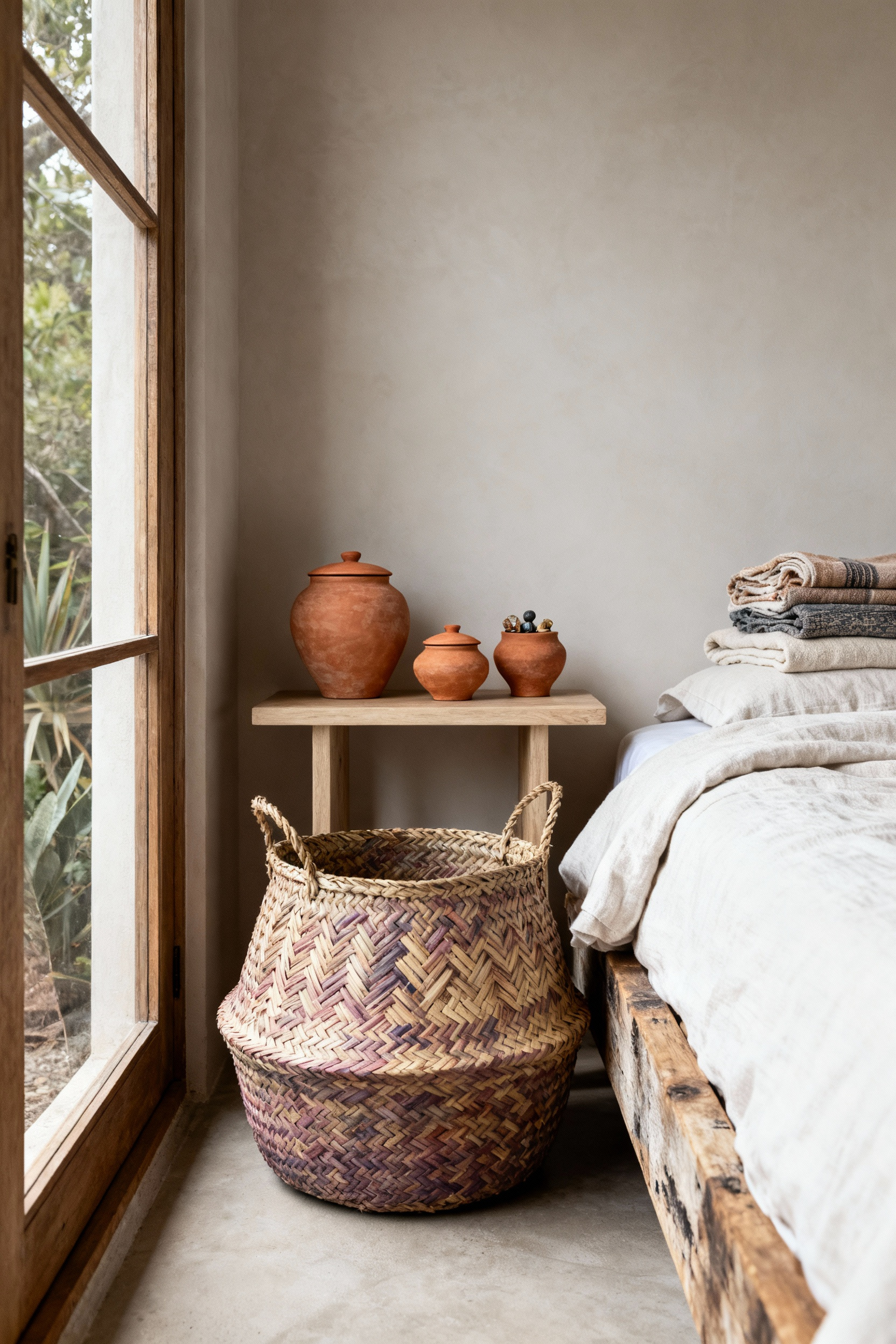
This is about creating zones. A comfortable floor cushion can easily be moved to catch the morning sun for meditation. A small, lightweight lap desk allows you to journal in bed. Modular seating or poufs can be rearranged for guests. The key is to choose furnishings that are light and versatile, empowering you to shape your environment to support whatever activity brings you peace.
Beyond Decoration: Nurturing Well-being and Personal Storytelling within Your Boho Retreat (Part 2)
In this final section, we explore the most fundamental connection of all: the bond between our indoor sanctuary and the world just outside its walls. A bohemian space doesn’t shut out nature; it finds clever and beautiful ways to invite it in, creating a living, breathing environment that nourishes the soul.
19. Foster a Connection to the Outdoors: Strategically Placing Planters and Reflecting Natural Vistas
The bohemian spirit has a deep reverence for the natural world. Fostering a connection to the outdoors is about more than just adding a few plants; it’s about blurring the line between your indoor retreat and the wildness of nature. This connection is essential for our well-being.
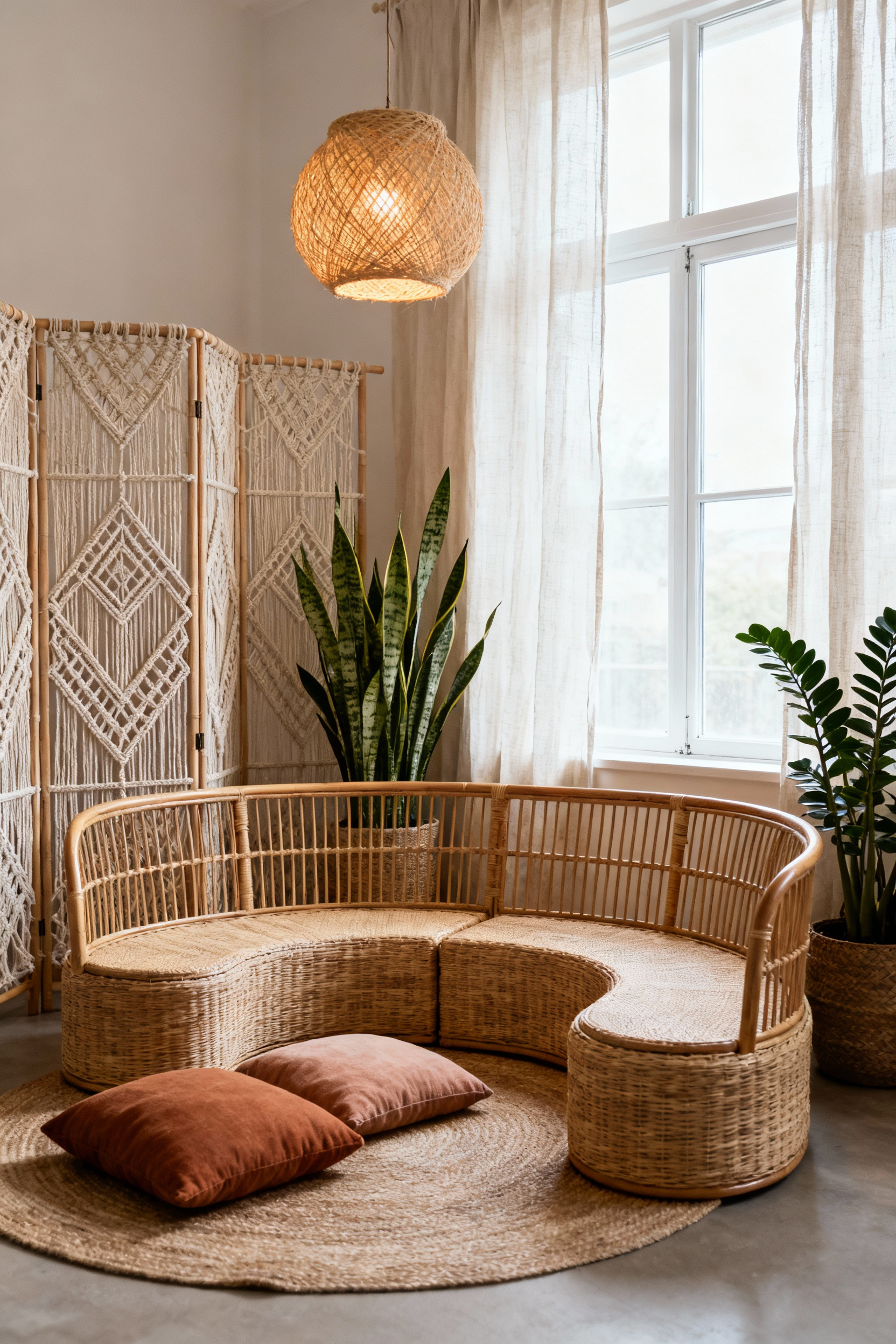
Strategically placed planters can frame a view or bring life to a forgotten corner. Think about creating layers of green at different heights: a large floor plant, a smaller one on a stand, and a trailing plant hanging from the ceiling. Position a mirror where it can reflect a view of the sky or trees outside, effectively bringing that vista into the room. This makes your space feel larger, brighter, and more alive.
Conclusion
The journey through these boho bedroom ideas reveals a simple truth: this aesthetic is not a style to be copied, but a philosophy to be lived. It is a dialogue between the artisanal traditions of our global heritage and the intimate narrative of your own life. From the sun-baked colors of the desert to the filtered light of a Scandinavian forest, the principles of mindful creation remain the same. It is about choosing materials that are honest, honoring the hands that made them, and curating a space that provides a deep and restorative sense of peace.
In my work, I have found that the most beautiful spaces are those that reflect a respect for both culture and climate. A true sanctuary is not built from trends, but from authentic choices that resonate with your personal story and connect you to the wider world. May you approach the creation of your own haven with the curiosity of a traveler and the heart of an artist. Let your bedroom be more than just a room; let it be a testament to a life thoughtfully lived, a serene and timeless embrace.