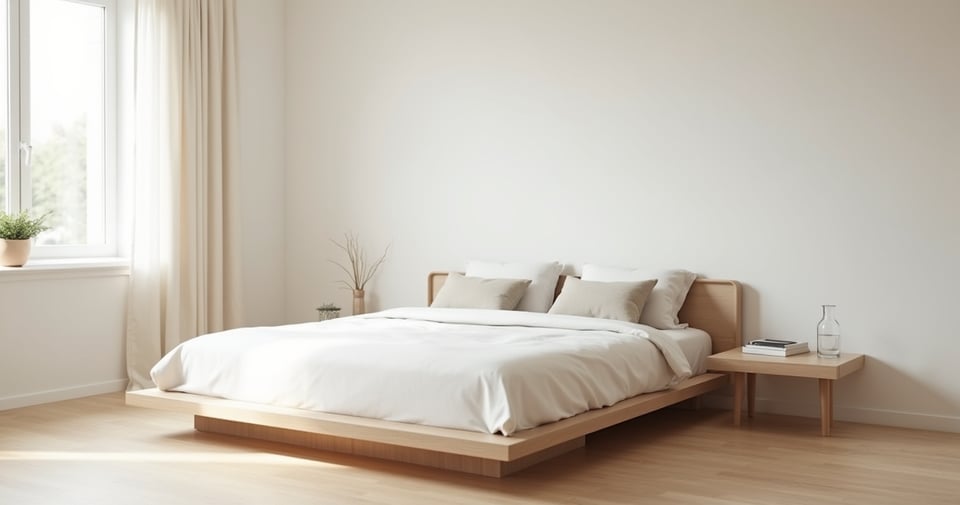
You know what people always ask me? They see these stark, white rooms in magazines labeled “minimalist” and they ask, “Amara, how could anyone actually live in a space so cold?” It’s my biggest pet peeve, because that’s not minimalism. That’s a sterile showroom.
Real minimalism, the kind I learned to appreciate from my family in the Middle East and studying in Scandinavia, isn’t about emptiness. It’s about serenity. Picture a traditional riad in Fes. The streets outside are a whirlwind of noise and color, but step through a simple wooden door and you’re in a cool, quiet courtyard. There are very few things—a fountain, perhaps a few cushions, intricate tilework—but the space feels incredibly full, calm, and sheltering. It’s a sanctuary built to respond to its environment. That is the feeling we’re after. It’s not about having less; it’s about making everything you have mean more. Forget the corporate-speak about “optimizing your space.” Let’s talk about how to create a room that truly lets you breathe.
Foundational Principles & Planning for Simplicity (Part 1)
Before you buy a single linen pillowcase, you have to lay the groundwork. This is the part everyone wants to skip, but it’s the most important. A truly serene space doesn’t happen by accident; it’s the result of quiet, intentional decisions that honor the room’s purpose: to be a place of rest. Think of it as preparing the soil before you plant a garden.
This is about clearing the noise, not just physically but mentally. We’ll set a foundation so strong that every choice you make later will feel simple and right, adding to the harmony instead of creating more chaos. It’s about designing a space that serves you, not the other way around.
1. Conduct a Radical Decluttering Audit of Your Bedroom
Forget those checklists that have you sorting paperclips for an hour. This isn’t about tidying; it’s about an honest conversation with yourself. What in this room is genuinely serving your peace? In the desert, everything has a purpose because you simply cannot afford to carry what is not essential. That is the mindset. We aren’t just making space, we are making room for air, for light to move, for your mind to settle.
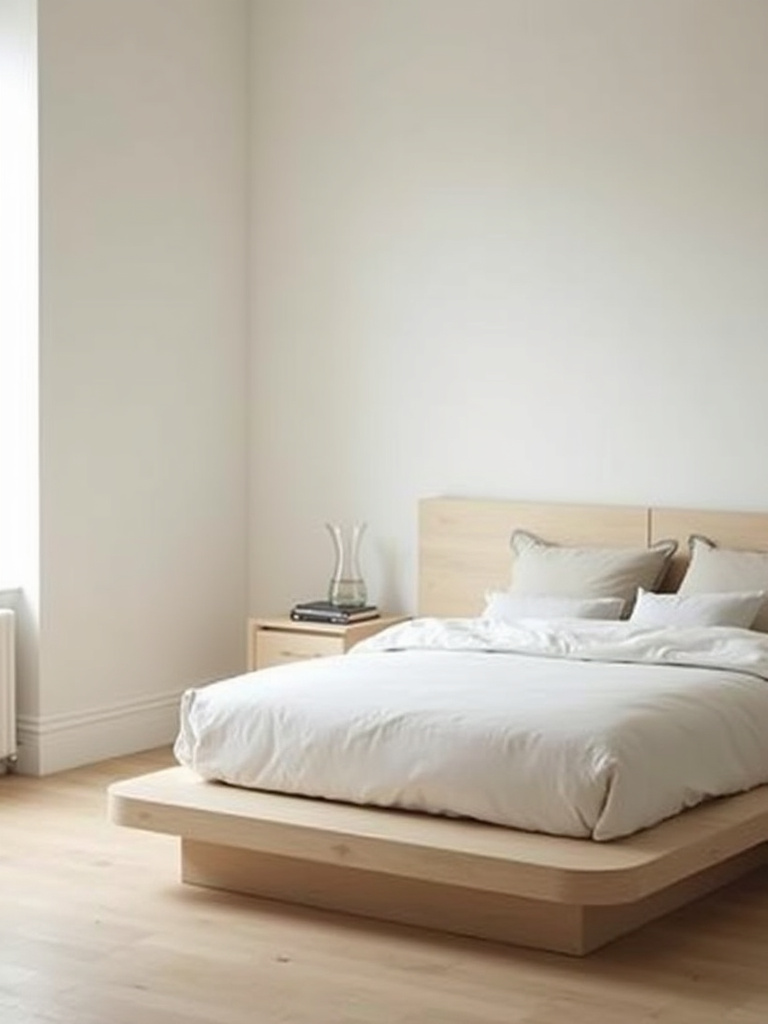
Start by asking a different question. Instead of “Does this spark joy?”, ask “Does this serve my rest?” That antique clock from your aunt that ticks all night? It doesn’t serve your rest. The pile of work documents on the chair? It actively fights your rest. Be ruthless in service of your tranquility. The goal isn’t an empty room; it’s a room where every single object is silently supporting your well-being.
Once you understand what truly serves your rest, you’ll see how little you actually need. This step is the most difficult, but it’s also the most liberating, setting the stage for everything that follows.
2. Define Your Personal Minimalist Style and color palette
Most people think a minimalist palette is just 50 shades of grey and white. And if that’s what calms you, wonderful. But for me, it’s about looking to the natural world. Think of the desert at dawn—the colors are subtle but so rich. You have the soft warmth of sand, the dusty blush of distant mountains, the pale green of a hardy succulent, the deep, earthy terracotta. These are colors that ground us.
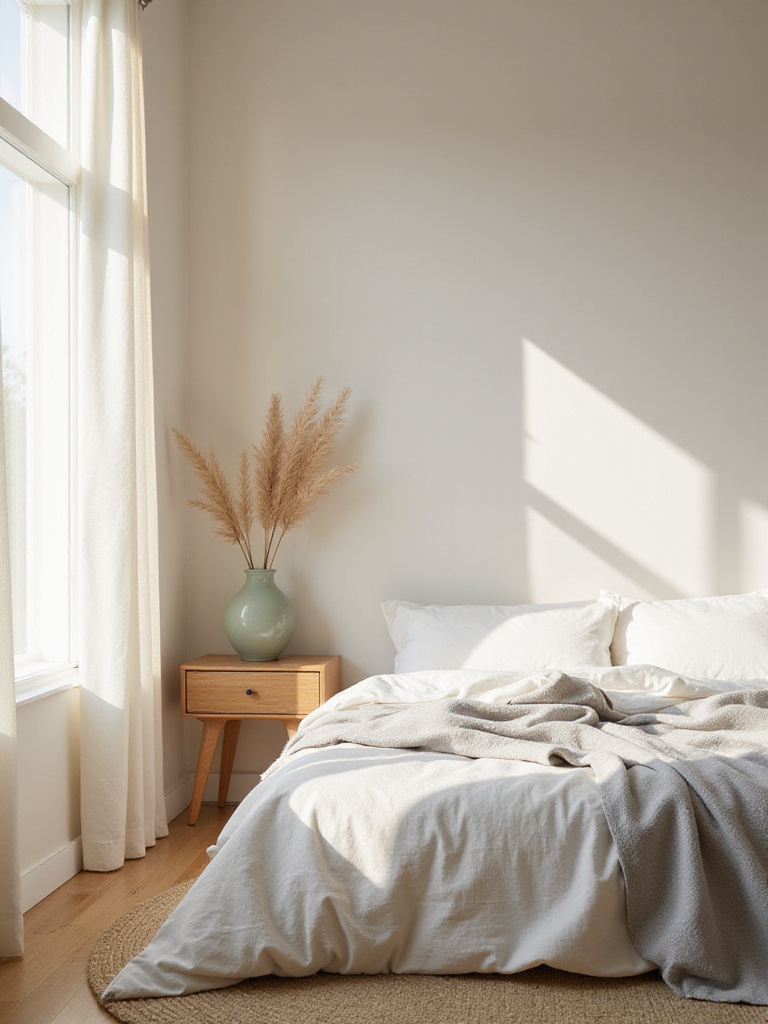
Your palette should feel like a deep, quiet breath. It should be inspired by a landscape that brings you peace. Go outside. Look at the bark of a tree, the stone on a path, the clouds after a storm. Pull 3-4 of those natural, muted tones to build your core palette. This isn’t about following a trend; it’s about curating a feeling. A client of mine who loved the Pacific Northwest chose a palette of stone grey, deep moss green, and the warm brown of cedar. Her bedroom now feels like a calm walk in the forest.
With your palette defined, every other decision becomes simpler. You’re no longer choosing from a million options, but from a handful that you know will create harmony.
3. Evaluate Room Layout for Optimal Flow and Openness
In traditional Middle Eastern architecture, the flow of a home is paramount. The way you move from a bright, open courtyard into a cool, shaded room is a journey. Your bedroom layout should feel the same—an effortless path. The real luxury in minimalism isn’t an expensive object; it’s uncluttered space. Negative space is where your eyes, and your mind, can rest.
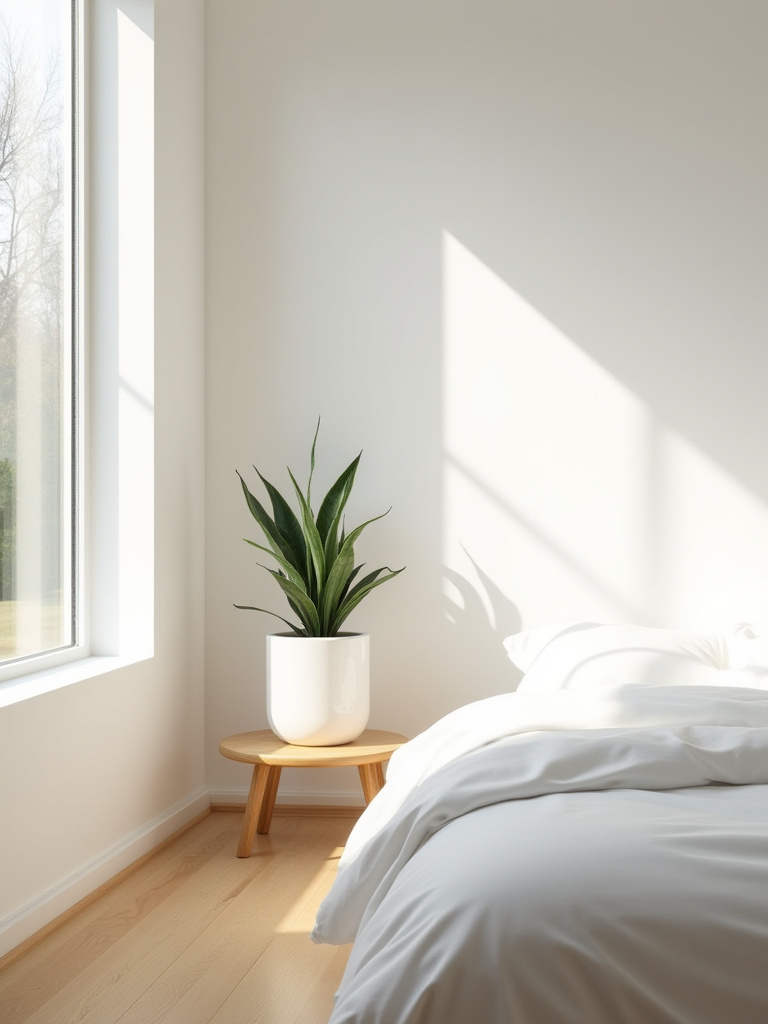
Grab a piece of paper and sketch your room. Draw the paths you walk every day: from the door to the bed, from the bed to the closet. Are they clear? Or are you navigating around a misplaced chair or a dresser that’s just a bit too large? Your furniture should serve these natural pathways, not obstruct them. Your goal is to create a layout so intuitive and open that moving through your room feels like a gentle, subconscious glide.
This focus on flow ensures your room feels larger and calmer. It also improves air circulation, which is a key tenet of climate-conscious design, helping to keep the space comfortable and fresh.
4. Prioritize Function Over Form for Every Essential Piece
Here’s a hard truth: many things marketed as “design objects” are just beautiful clutter. In both Scandinavian and desert cultures, the most beautiful objects are often the most useful ones. A hand-carved wooden spoon, a perfectly woven textile, a simple clay pot for holding water—their beauty is inseparable from their purpose. This is the principle that must guide every choice for your bedroom.
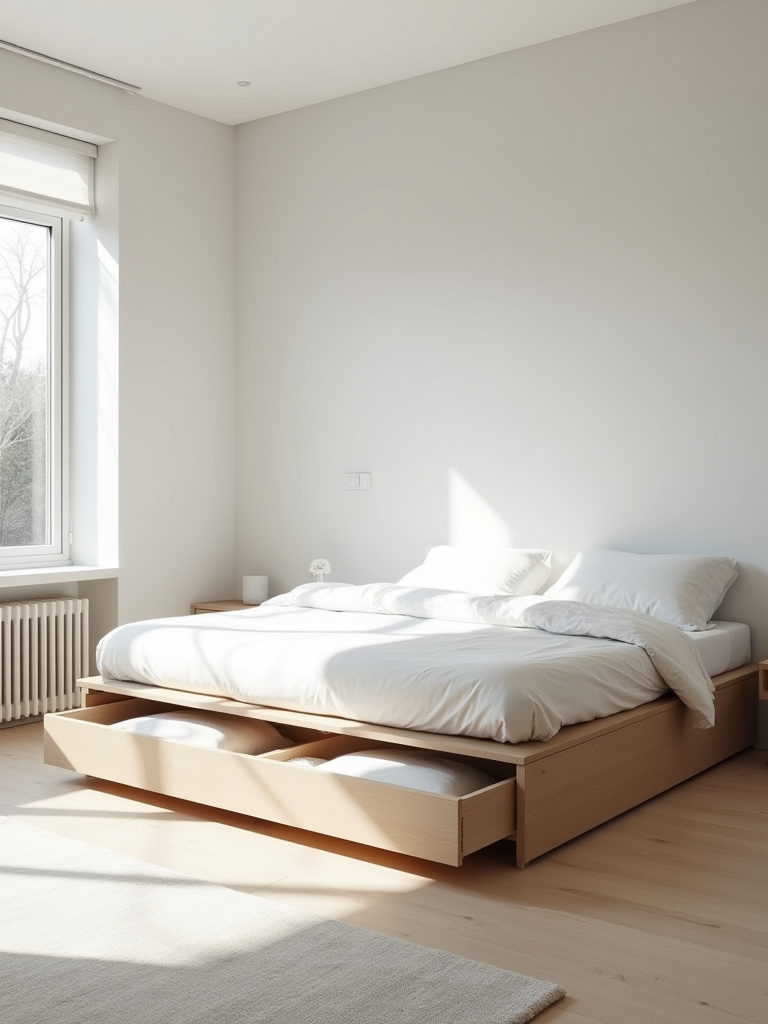
Before you bring anything in, ask: What is its primary job? And does it do that job beautifully and simply? A bed must provide a solid, quiet foundation for sleep. A nightstand must hold the few things you need at arm’s length. A lamp must provide the right kind of light for reading or relaxing. If an object doesn’t have a clear and necessary function, it has no place in your sanctuary.
I had a client who had this elaborate, sculptural chair in her bedroom. It looked incredible, but it was uncomfortable to sit in, so it just became a place to dump clothes. We swapped it for a simple, beautifully crafted wooden bench that served as a place to sit and put on shoes and had a hidden compartment for a single extra blanket. One piece, two functions, zero clutter. That’s the goal.
Foundational Principles & Planning for Simplicity (Part 2)
Once the foundation is set, the challenge shifts from a single, large effort to a series of small, mindful actions. True minimalism is a practice, not a project. It’s like tending a garden; you can’t just plant it and walk away. You have to gently weed and prune to maintain its health and beauty. This is where we create a simple but powerful habit that will protect the serenity you’ve just established.
This next principle is your shield against the constant pressure to accumulate more. It’s the simple commitment that transforms minimalism from a design style into a way of living, ensuring your bedroom remains a haven of calm for years to come.
5. Establish a “One-In, One-Out” Rule for New Acquisitions
This isn’t a restrictive rule; it’s a liberating practice of curation. It turns you from a passive consumer into the active, thoughtful curator of your own life. When you commit to letting something go every time you bring something new in, you start making very different decisions. Suddenly, that impulse-buy sweater or trendy decorative object has to be worth it. It has to be better, more useful, or more beautiful than something you already own.
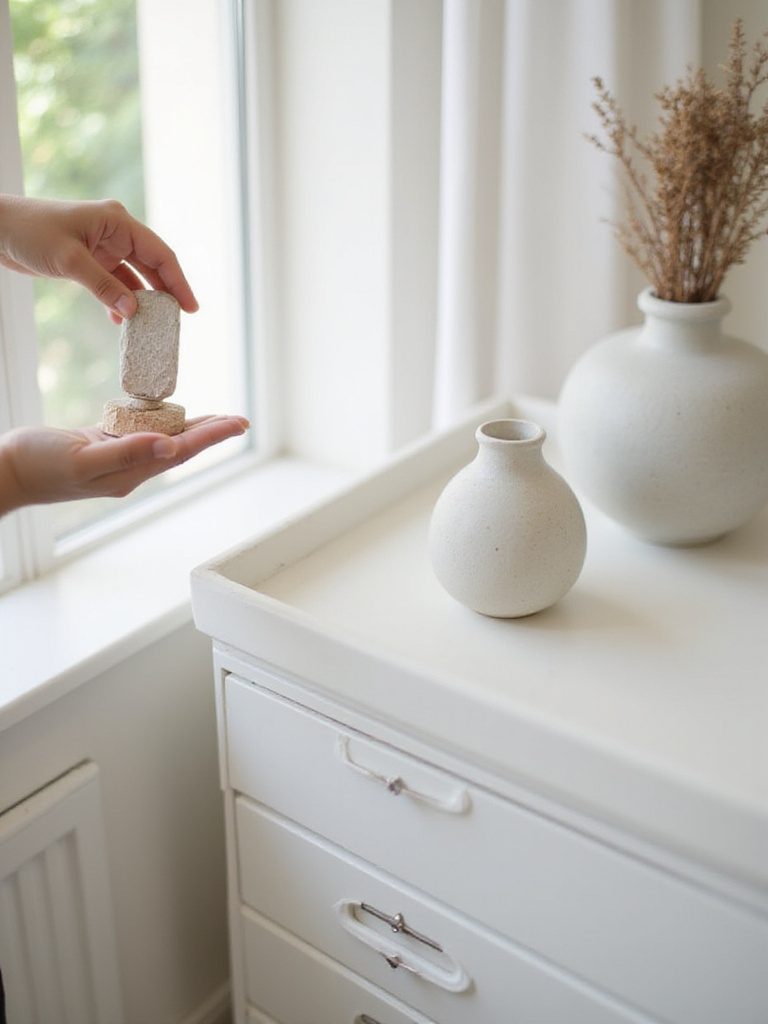
Most of the time, it isn’t. This single habit dramatically slows the tide of incoming stuff. It forces you to pause and be intentional. Before I buy a new book, I think about which one on my shelf I’m ready to pass on to a friend. Before considering a new vase, I look at the simple, beloved one I already have. This practice keeps your space in a state of balanced equilibrium, honoring what you have while making mindful room for anything new.
This simple discipline is the secret to lasting serenity. Without it, even the most perfectly designed minimalist space will slowly revert back to clutter.
Essential Furniture & Smart Storage Selection (Part 1)
Now we can talk about furniture. Your choices here are critical because these are the largest objects in the room, the anchors of your sanctuary. Each piece must be simple, functional, and beautifully made from honest materials. We’re looking for things that don’t shout for attention but rather provide a quiet, strong foundation for the entire space.
Think of each piece as a character in a story. It needs to play its part perfectly without trying to steal the show. This section is about choosing that core cast—the bed, the storage, the bedside surfaces—with intention and foresight.
6. Invest in a High-Quality, Streamlined Bed Frame
The bed is the heart of the room. It’s not the place to compromise. Forget ornate, massive headboards that dominate the space. Your bed frame should be a quiet anchor. Look for a simple platform style made from a solid, natural material like oak, walnut, or maple. The warmth and grain of real wood add a layer of organic texture that prevents the room from feeling cold.
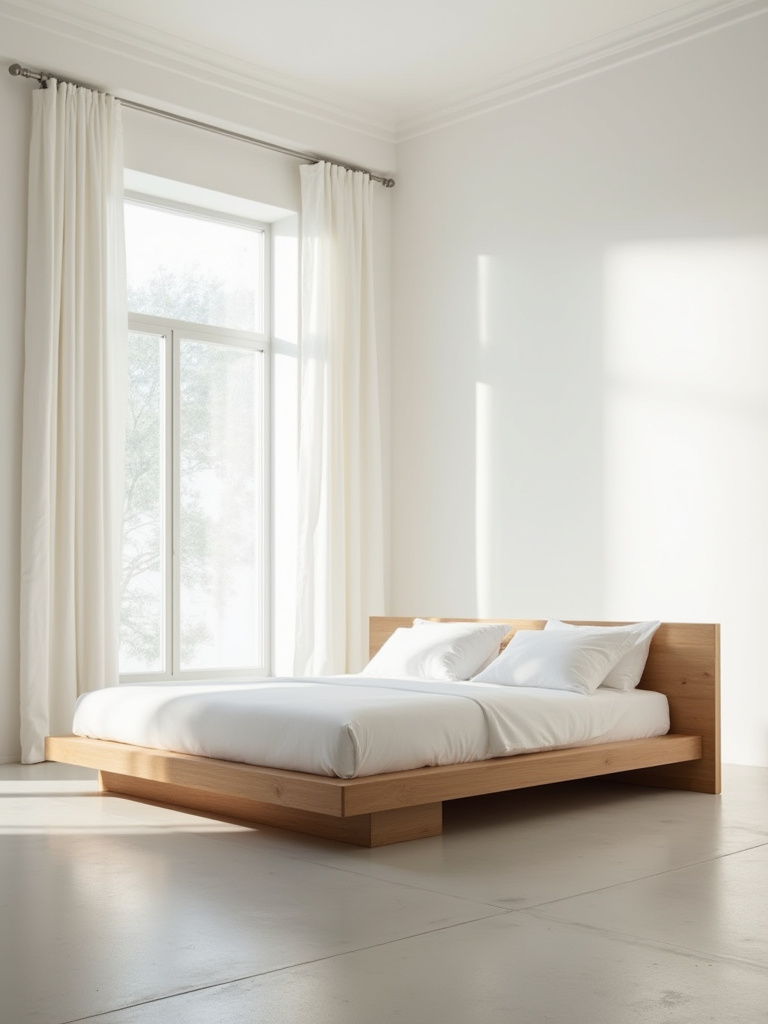
A low profile helps create a sense of openness, making the ceiling feel higher and the room more expansive. It also grounds the space, giving it a stable, serene energy. The most important thing is that it’s silent and sturdy. A creaky bed frame is the enemy of rest. I tell my clients to invest as much as they can in a great mattress and a simple, rock-solid frame. It is the single most important investment you will make for your well-being.
Its purpose is to elevate your mattress and quietly recede into the background, letting your rest be the focus. Nothing more, nothing less.
7. Select Multifunctional Furniture to Maximize Utility
This idea comes from ancient wisdom, born of necessity. In nomadic cultures or small, compact homes, every object had to earn its keep, often in multiple ways. A beautiful wooden chest was used for storing textiles, but it was also the primary seating in a room. We can bring that same intelligence into our modern bedrooms.
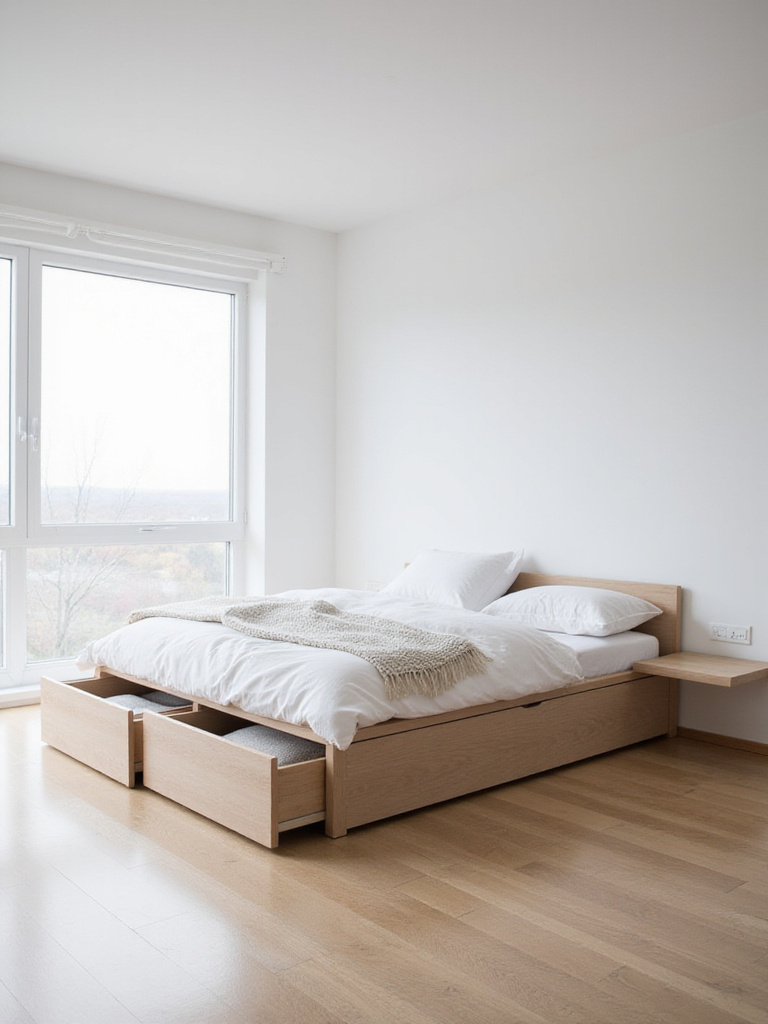
Look for opportunities to combine functions. Can your bed frame include built-in drawers, eliminating the need for a separate dresser? Can a simple bench at the foot of the bed also store your extra linens? In smaller spaces, this isn’t just a clever trick; it’s essential for maintaining a sense of openness. It allows you to have the function you need without sacrificing precious floor space to a crowd of single-use furniture.
By choosing pieces that work harder, you can have fewer of them. And fewer objects always translates to a more peaceful, uncluttered visual landscape.
8. Opt for Closed Storage Solutions to Conceal Clutter
Here we take a lesson from the mashrabiya, the intricate latticework screens found in traditional Islamic architecture. Their purpose is to conceal, to create privacy and a visual barrier while still allowing for the flow of air and light. Your storage should function in the same way—as a calm, uniform facade that conceals the visual “noise” of your personal belongings.
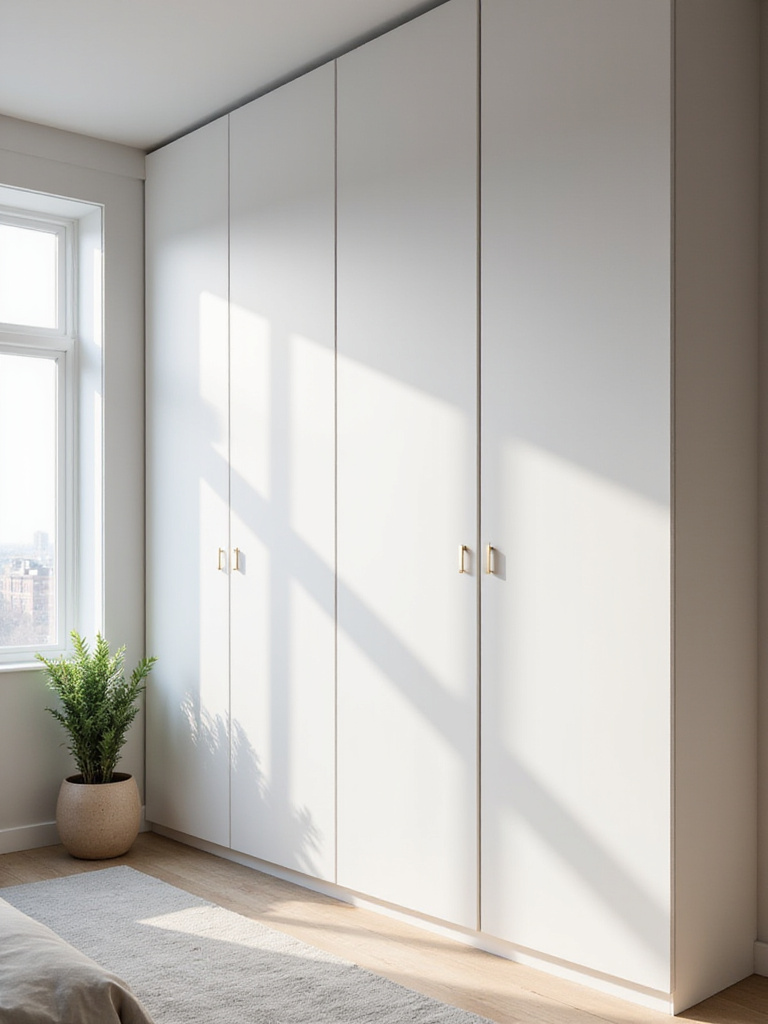
Even the most organized open shelving can feel chaotic because your eye has to process every single object. Closed storage, like a simple dresser with flat-front drawers or a wardrobe with solid doors, creates a clean, uninterrupted surface. This instantly quiets the room. It’s not about hiding a mess; it’s about giving your neatly organized things a serene and restful home. The outside should be calm and minimal, while the inside is perfectly organized for function.
I always advise clients to choose storage that blends into the wall, perhaps in the same color, with minimal hardware. The goal is for your storage to disappear, allowing the feeling of spaciousness to be the main event.
9. Choose Simple, Purposeful Nightstands or Floating Shelves
The space next to your bed is sacred ground. It should hold only the essentials for your transition into sleep and waking. The last thing you want is a large nightstand that becomes a magnet for clutter—old water glasses, charging cords, piles of books. The surface should be just large enough for what you truly need: a small lamp, a glass of water, perhaps a single book.
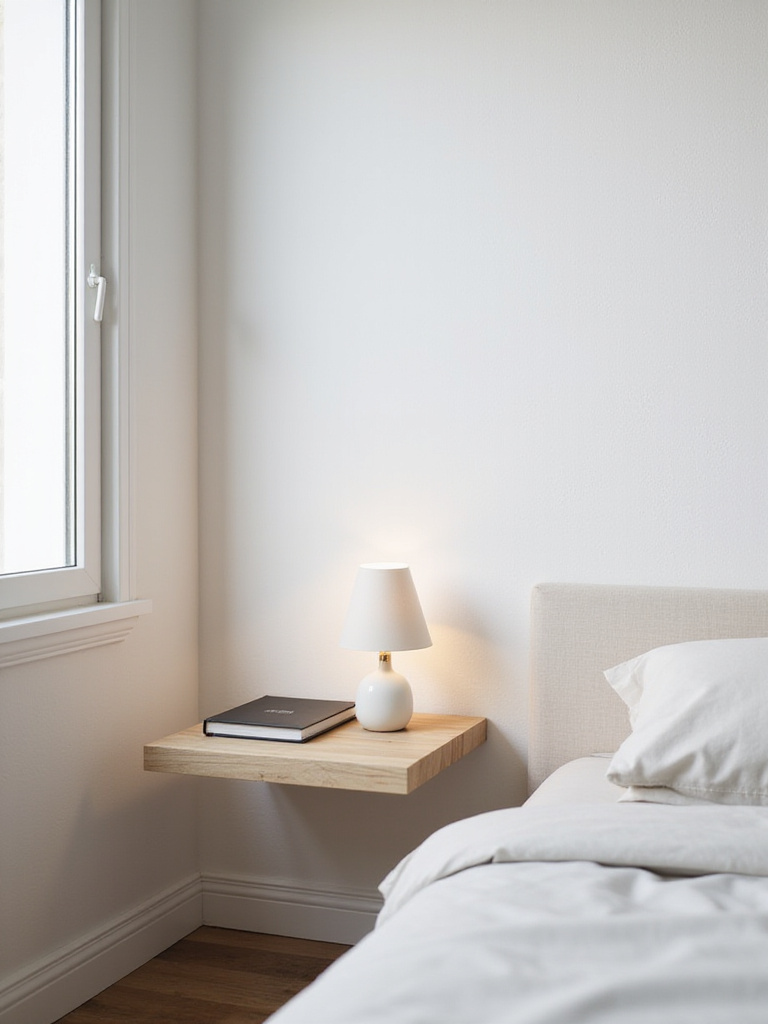
I am a huge advocate for floating shelves instead of traditional nightstands. They keep the floor space completely clear, which visually expands the room and makes it incredibly easy to clean—a major benefit in dusty desert climates. A simple, solid piece of wood mounted on the wall is often all you need. If you require a little storage, a floating nightstand with a single, small drawer is the perfect solution for tucking away essentials like lip balm or reading glasses.
This choice reinforces the idea that your bedroom is a functional sanctuary, not a storage unit. Keeping the area around your head clear and uncluttered while you sleep has a surprisingly powerful impact on your peace of mind.
Essential Furniture & Smart Storage Selection (Part 2)
We’ve chosen the essential anchors. Now comes the discipline of knowing when to stop. The default in modern design is often to fill a space, to add another chair or a console table just because there’s an empty wall. But true minimalism requires a different mindset. It celebrates that empty wall and the sense of calm it provides.
This next step is a philosophy more than an action. It’s a commitment to restraint and an appreciation for the profound luxury of open, unburdened space. This is often the hardest part for people, but it’s what separates a truly serene room from one that is merely uncluttered.
10. Resist Over-Furnishing with Only Truly Necessary Pieces
In a hot climate, space is an element of cooling. The more objects and heavy furniture you have, the more heat they retain. A room with less in it allows air to circulate freely and feels cooler and more breathable. This climate-conscious principle is at the heart of why you must resist the urge to fill every corner. Negative space is functional. It is a breathing room.
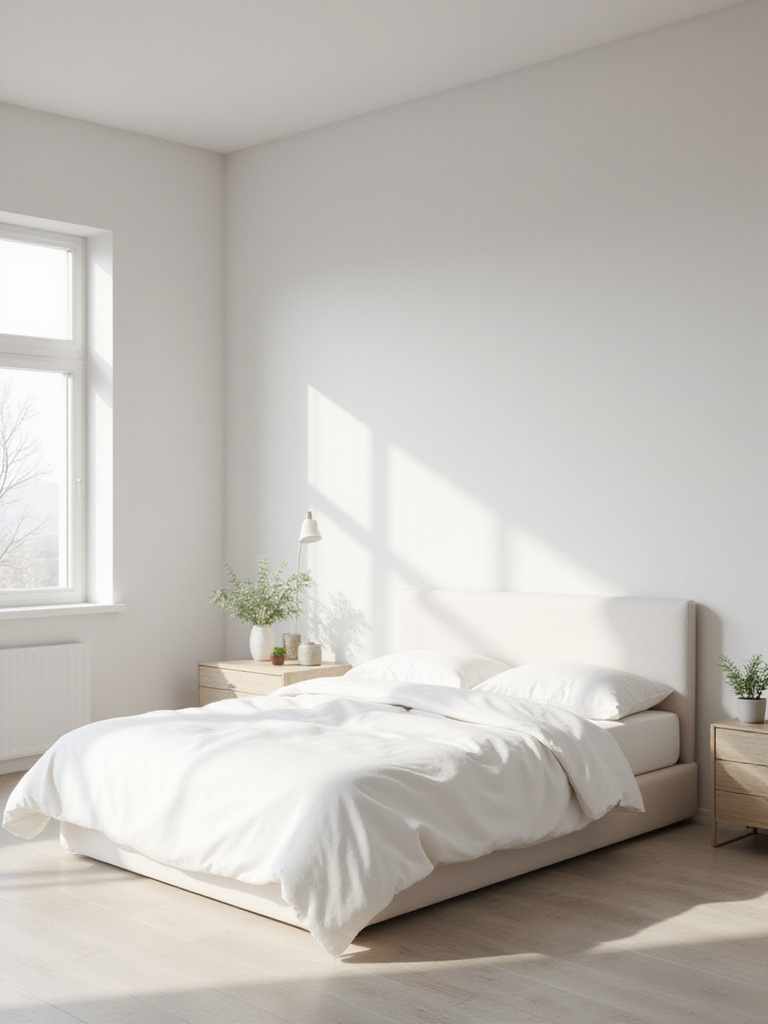
After you have your essentials—the bed, your core storage, a nightstand—stop. Live in the space for a while. Don’t rush to add a reading chair or an extra dresser unless you find you have a genuine, recurring need for it. An empty corner is not a problem to be solved. It’s an opportunity for calm. Most of the time, you’ll find you don’t need anything else.
One of the most transformative things I ever did for a client was to simply remove half the furniture from their bedroom. We didn’t add anything new. We just took away the unnecessary dresser, the two side chairs, and the large bookcase. The room was the same size, but it felt doubled. More importantly, they said it was the first time they could truly relax in there.
Thoughtful Styling, Lighting & Sensory Elements (Part 1)
Now that we have a clean, intentional foundation, we can begin to layer in the soul of the room. This is where we bring in warmth, life, and personality, but with the same level of intention we’ve applied to everything else. This isn’t about decorating; it’s about adding sensory elements that deepen the feeling of sanctuary.
These elements—light, texture, art, and life—are what prevent minimalism from feeling sterile. They are the details that make the space uniquely yours and transform it from a beautifully designed room into a deeply personal haven.
11. Embrace Natural Light with Unadorned Window Treatments
Light is the most important design element you have, and it’s free. But it must be managed. The Scandinavian approach is often to maximize every ray of light with bare windows, but in a place with intense sun, that’s not practical or comfortable. Here, we borrow from the desert, where light is filtered and softened to create a serene indoor glow.
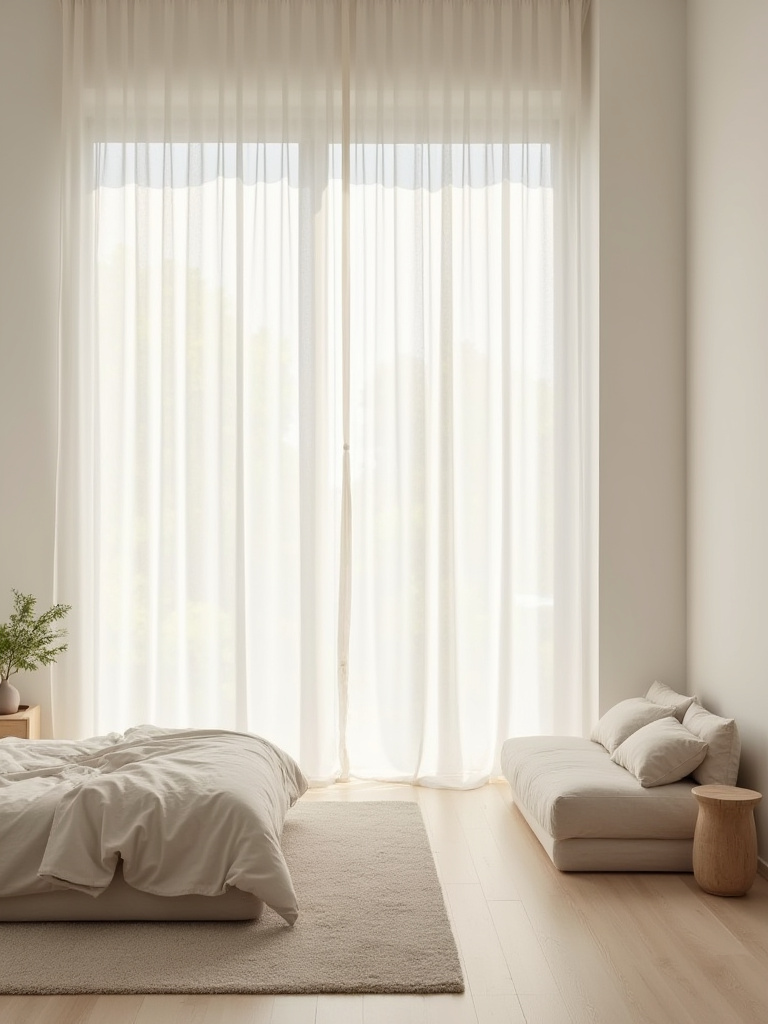
Forget heavy, fussy curtains. The best choice is almost always simple, sheer linen panels. They provide privacy while allowing a beautiful, diffused light to fill the room, softening shadows and reducing glare. They move gently with the breeze, adding a subtle sense of life and movement. Mount the curtain rod high and wide, extending well beyond the window frame. This makes the window feel larger and allows you to pull the curtains completely clear of the glass to let in maximum light when you want it.
Your window treatments shouldn’t be a major statement. They should be a quiet tool for shaping the light and mood of your room throughout the day.
12. Introduce Deliberate Textures for Depth and Warmth
This is the secret weapon against cold minimalism. When your color palette is quiet and your furnishings are simple, texture is what brings a room to life. It’s what makes a space feel warm, inviting, and human. I tell my clients to close their eyes and imagine touching every surface in the room. What does it feel like?
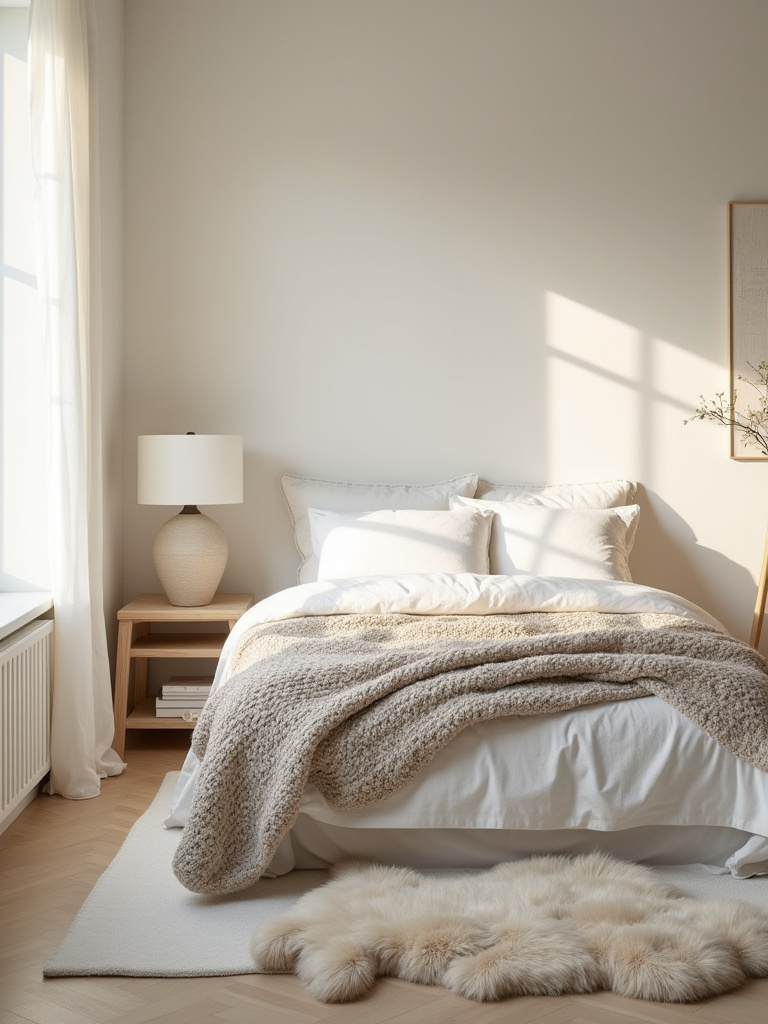
Layer natural materials generously. Think of a chunky wool knit throw on a bed of crisp linen sheets. The roughness of a handmade ceramic vase. The smooth, cool feel of a plaster wall. The worn softness of a vintage kilim rug underfoot. These tactile variations create a rich sensory experience that is deeply comforting. The interplay between smooth and rough, soft and hard, is what gives a minimalist space its soul.
It’s this focus on materiality that connects both Scandinavian and Middle Eastern design. Both traditions have a deep reverence for natural, honest materials that tell a story and engage the senses.
13. Select a Few Meaningful Art Pieces as Focal Points
Please, do not buy generic “hotel art” just to fill a wall. Art in a minimalist sanctuary should be deeply personal and used with incredible restraint. A single, large piece that you love is far more powerful than a cluttered gallery wall. Your art should be a focal point for contemplation, something that brings you a quiet sense of joy or peace when you look at it.
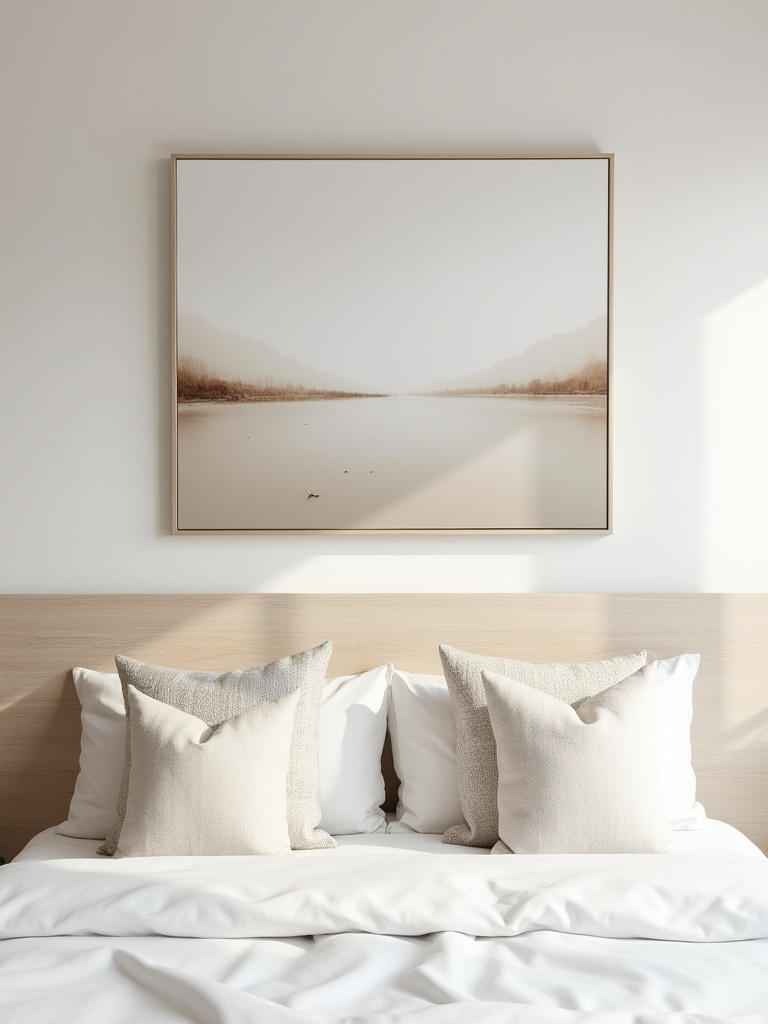
It doesn’t have to be a painting. It could be a beautifully framed piece of calligraphy, a large-scale photograph from a meaningful trip, or even a stunning textile or rug hung on the wall. The key is to give the piece room to breathe. Don’t crowd it. Let it be the singular star of the wall it occupies.
A client once told me she felt a new sense of calm after we took down seven small pictures in her bedroom and replaced them with one large, serene abstract canvas. “My eyes finally knew where to rest,” she said. That’s exactly it.
14. Incorporating Strategic Greenery for a Touch of Life
Every room needs a living element. It’s our connection to the natural world, a reminder of growth and vitality. But just like with art, the key is restraint. This isn’t the place for a dense indoor jungle. Choose one or two plants with beautiful, sculptural forms.
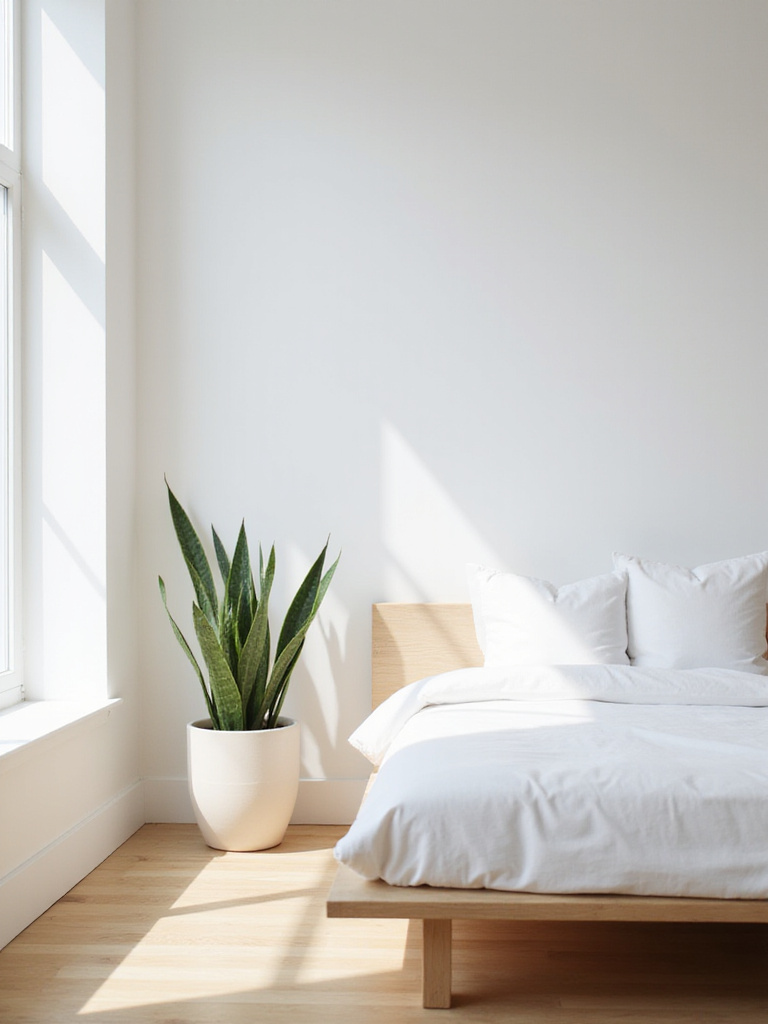
In keeping with a climate-conscious approach, I gravitate toward resilient, low-water plants like a Snake Plant or a ZZ plant. Their strong, clean lines work beautifully in a minimalist setting. An olive tree in a simple terracotta pot can also be a stunning statement if you have the light for it. The plant is one element; the vessel is another. Choose a simple, beautifully shaped pot made from a natural material like ceramic, stone, or concrete that complements your room’s palette.
Place your plant where its shape can be appreciated, perhaps in a corner where it can soften the architecture or on a dresser where it adds a touch of organic life. It’s a small detail that has an enormous impact on the feeling of the space.
Thoughtful Styling, Lighting & Sensory Elements (Part 2)
We’ve addressed the visible elements, but a huge part of a room’s atmosphere is created by something we often take for granted: artificial light. The wrong lighting can make even the most beautifully designed room feel harsh and stressful. The final sensory element we’ll perfect is the creation of a lighting scheme that supports your natural rhythms and fosters a deep sense of calm in the evenings.
This isn’t just about choosing a pretty fixture; it’s about understanding the psychology of light and using it to prepare your body and mind for rest.
15. Choose Minimalist Lighting Fixtures for Ambiance and Function
The goal of your lighting is to create a soft, warm, and layered glow, much like candlelight. You should never rely on a single, harsh overhead light. This is non-negotiable. Layering your light sources allows you to tailor the atmosphere to your needs. You’ll want at least two, preferably three, sources of light: ambient (overall), task (for reading), and perhaps a soft accent light.
For fixtures, choose forms that are simple and sculptural. A bare bulb on a beautiful cloth cord, a simple ceramic sconce on the wall, or a floor lamp with a clean, unadorned line. And most importantly, put everything on a dimmer. Dimmer switches are the single most effective tool for controlling the mood of a room. Being able to lower the lights in the evening sends a powerful signal to your body that it’s time to wind down.
Always, always choose bulbs that emit a warm light (around 2700K). The cool, blue-toned light from many LEDs is disruptive to our circadian rhythms and has no place in a restful bedroom. The light in your sanctuary should always feel like a gentle, warm embrace.
Maintaining Serenity & Avoiding Common Pitfalls
You’ve done the work. You’ve created a beautiful, serene, and intentional space. But the world will constantly try to push its way back in—in the form of mail, new purchases, and gifts. The final stage is about creating simple, graceful systems to maintain the sanctuary you’ve built and to avoid the common traps that lead back to clutter.
This is the gentle, daily practice that ensures your bedroom remains a source of peace, adapting and evolving with you over time instead of becoming a relic of a past decluttering project.
16. Master the Art of the “Invisible” Cord Management
Nothing shatters a serene illusion faster than a tangled mess of black and white plastic cords. They are the visual equivalent of static noise. Taking the time to properly conceal them is not a minor detail; it’s essential. This requires a bit of planning, but the payoff in visual calm is immense.
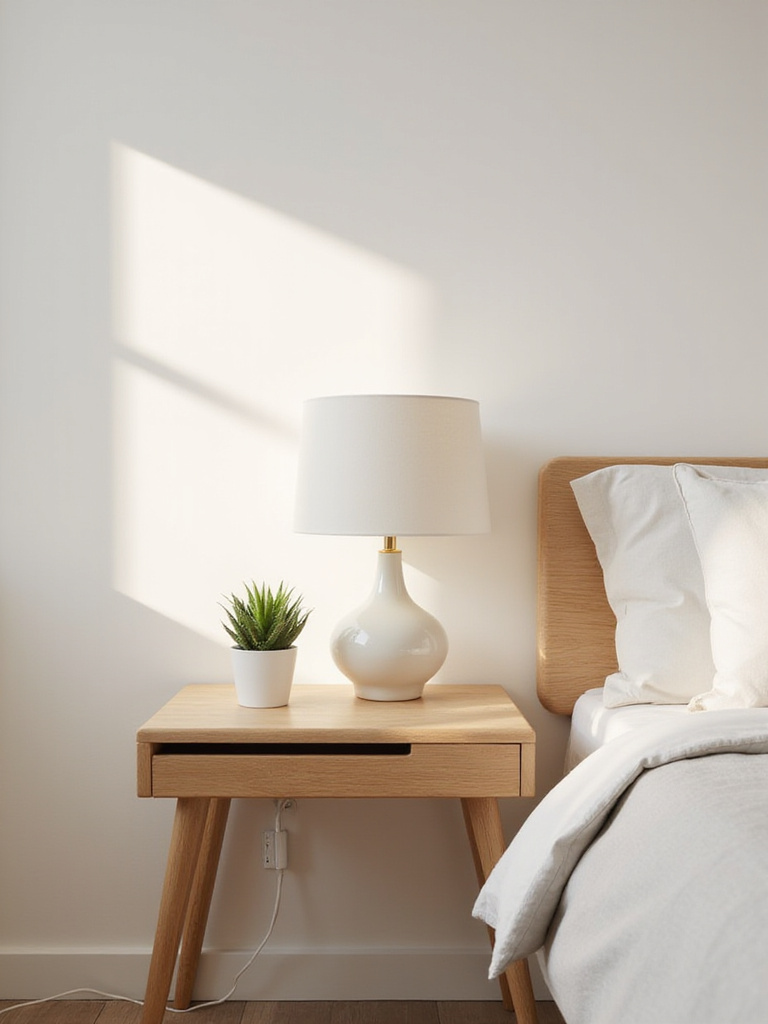
Use fabric cord covers that match your walls, adhesive clips to run cables neatly along the back of furniture or baseboards, or a simple cable management box to house a power strip. Whenever possible, opt for wireless solutions like a charging pad on your nightstand. Look for furniture with built-in cord management. When every wire is out of sight, the entire room feels more intentional and peaceful. It signals that every last detail has been considered in service of tranquility.
Think of it this way: you wouldn’t leave all the plumbing exposed in your walls. Wires are the plumbing of our digital lives, and they too should be gracefully concealed.
17. Establish a Daily “Reset” Routine to Prevent Accumulation
Your bedroom should be “put to bed” each night, just like you are. This is a small, five-minute ritual that makes a world of difference. Before you get into bed, do a quick sweep. Put the book back on its shelf. Place the clothes you wore in the hamper. Return the water glass to the kitchen. Smooth the duvet.
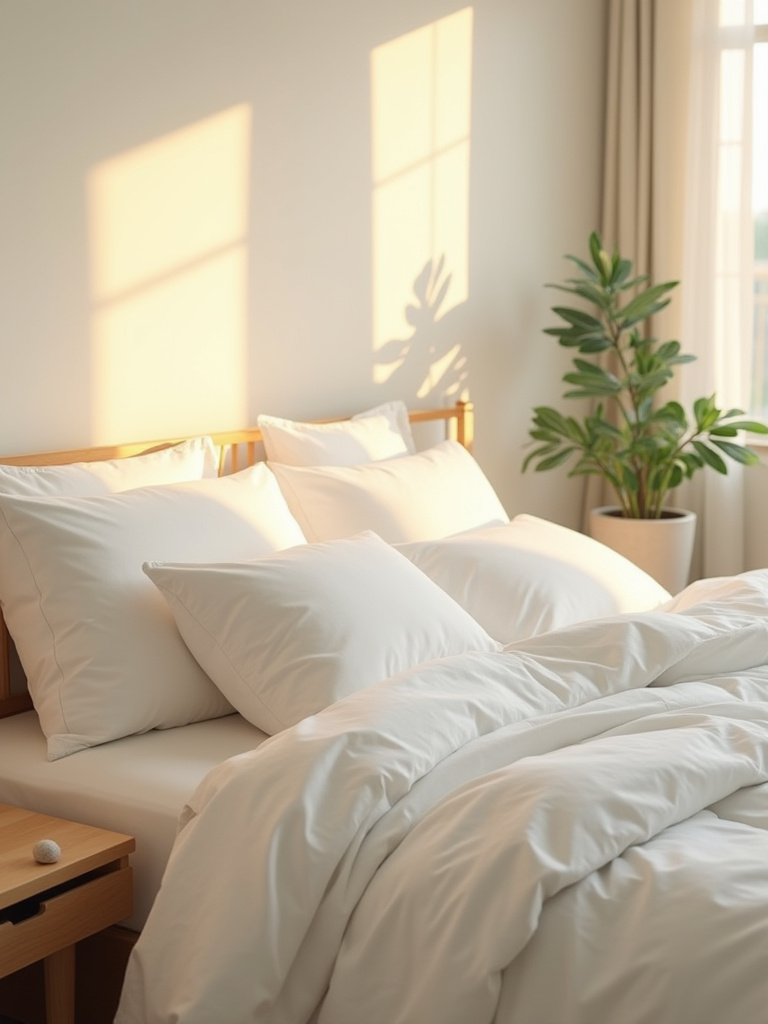
This tiny habit prevents the small accumulations that quickly grow into overwhelming messes. Waking up to a clean, calm, and orderly room is a gift you give to your future self. It sets a tone of peace and control for the entire day. It’s far more effective to spend five minutes resetting each evening than to spend two hours in a frustrated cleaning frenzy every weekend.
Think of it as a gesture of respect for your space and for your own well-being. It is a moment of mindfulness that closes out the day and prepares your sanctuary for a night of rest.
18. Avoid the Pitfall of “Fake Minimalism” with Hidden Clutter
Here’s the big secret: The state of your closets and drawers matters just as much as the state of your visible surfaces. “Fake minimalism”—where you have clear floors but drawers crammed so full you can’t shut them—is a lie you tell yourself. You may not see the clutter, but on a subconscious level, you know it’s there. That knowledge creates a low-grade, persistent stress.
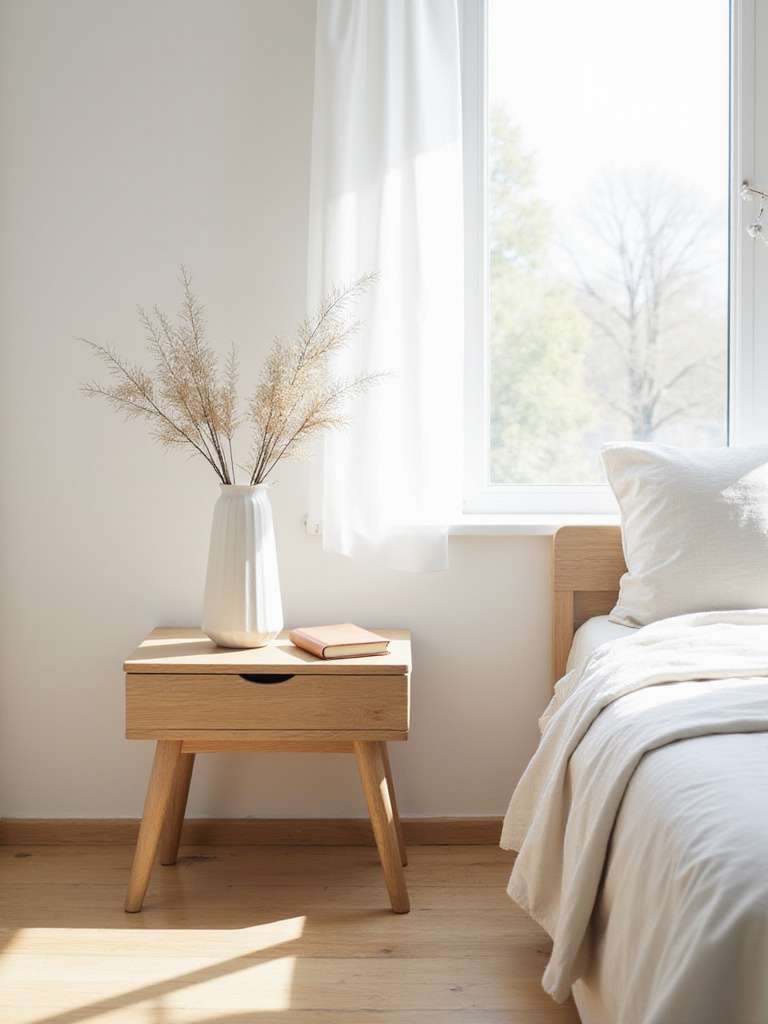
True serenity comes from knowing that every part of your space is orderly and intentional, seen and unseen. Use simple drawer dividers and beautiful boxes to organize the items inside your storage. Don’t use your closet as a dumping ground. The feeling of opening a drawer and seeing everything in its place, easy to find and peaceful to look at, is a profound and underrated pleasure.
It’s about bringing the same philosophy of intention and care to your private spaces as you do to your public ones. This is the difference between a room that looks minimalist and one that feels truly calm.
19. Continuously Re-evaluate Needs to Sustain Your Minimalist Aesthetic
Your life is not static, and your home shouldn’t be either. Minimalism is not a destination you arrive at; it’s an ongoing practice. The things that serve you today may not serve you in a year. A hobby might change, your work might evolve, your family might grow. It’s essential to check in with your space periodically.
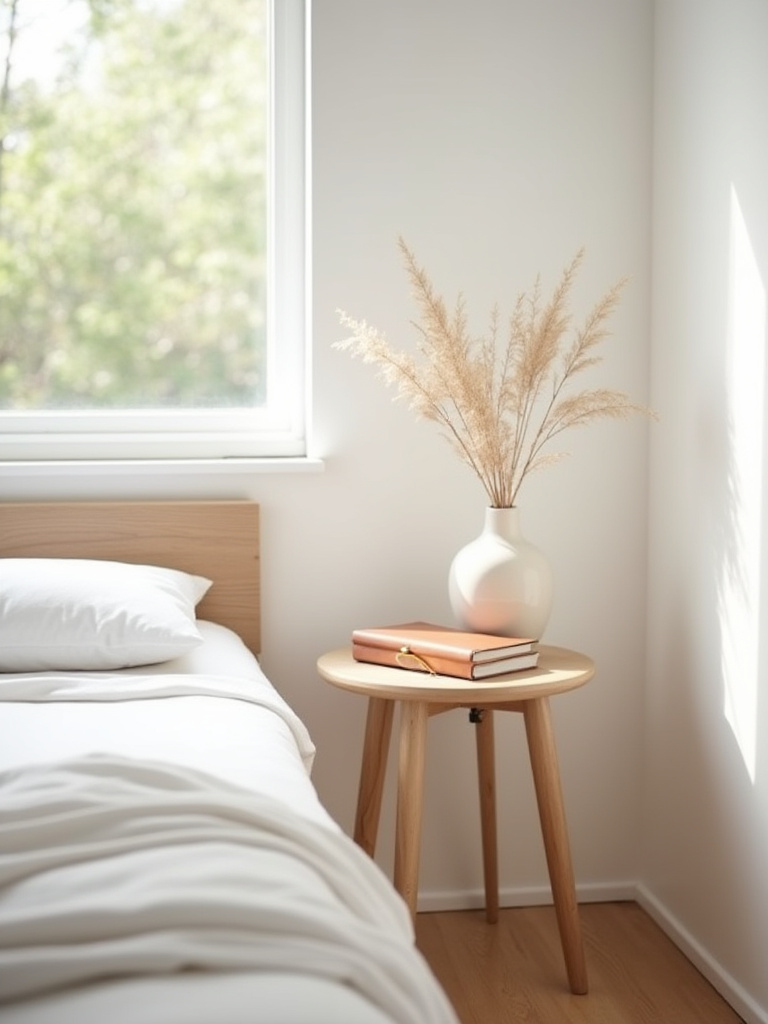
Once or twice a year, perform a gentle audit. Look through your wardrobe and your drawers. Are these things still aligned with your life right now? Or are they remnants of a past self? This isn’t about a massive, stressful purge. It’s a quiet, ongoing conversation. It’s about letting go of what is no longer needed to make space for what is to come.
This practice ensures that your bedroom remains a true reflection of you—a living, breathing space that supports you fully, not a museum to the person you used to be.
Conclusion
So you see, it’s not about white walls and empty spaces. It’s about warmth, intention, and creating a sanctuary that quiets the noise of the outside world. This isn’t a prescriptive set of rules but a philosophical guide. The goal is to build a deeply personal relationship with your space, to shape it into an environment that nurtures and restores you. By blending the climate-responsive wisdom of ancient traditions with the clean-lined simplicity of modern design, you can create a bedroom that is more than just beautiful—it’s essential.
Start small. Choose one principle that resonates with you and begin there. Maybe it’s clearing your nightstand, or maybe it’s finding the perfect sheer linen curtains. Each intentional choice is a step toward a calmer mind and a more restful life. Your bedroom is the most personal space you have. It deserves to be the most peaceful.