You know what people always ask me? They hold up their phone, scrolling endlessly through pictures, and say, “Which of these tiles should I choose for my bathroom?” And I always tell them they’re asking the wrong question.
Most people believe designing a bathroom starts with a visual hunt for the “perfect” tile. The internet shouts this idea from every design blog. But here’s the secret no one is telling you: A beautiful bathroom has very little to do with finding the perfect tile and everything to do with understanding your space, your climate, and your own need for sanctuary. For over a decade, I’ve designed desert homes—spaces where the heat of Dubai meets the calm of Scandinavian design—and I’ve learned that the right choices are born from function, not fleeting trends.
These 18 perspectives aren’t just a list of tile ideas. They are a new way of thinking. They will show you how to create a bathroom that not only looks stunning but feels deeply, fundamentally right—a space that works with the environment, not against it.
Laying the Foundation: Essential Planning for Modern Tile Choices (Part 1)
Before you fall in love with a single tile, we have to talk about the canvas itself. This is the part everyone wants to skip, but it’s where the magic truly happens. We’re not just measuring walls; we’re listening to the room, understanding its light, and defining its purpose. Think of it as creating the blueprint for a feeling.
1. Evaluate Bathroom Size and Layout for Optimal Tile Proportions
People love to repeat the rule that you should only use small tiles in small bathrooms. It feels intuitive, but it’s often wrong. The real story is about reducing visual noise. Countless grout lines create a busy, grid-like pattern that can make a small space feel even more constricted and chaotic.
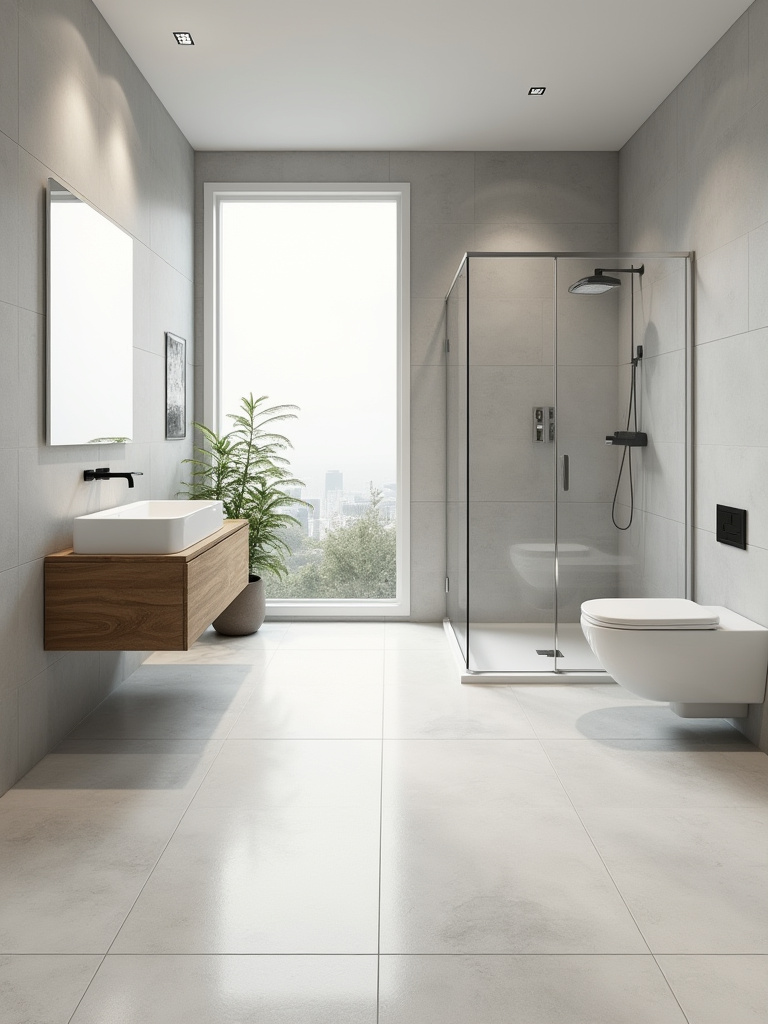
The shortcut I wish I’d known earlier is that large-format tiles—think 24×48 inches—can be a small bathroom’s best friend. With fewer grout lines, the walls and floor read as continuous, serene surfaces. This creates an illusion of expanse and calm that a mosaic of tiny tiles never could. It’s a principle I learned designing compact apartments in dense cities, where creating a sense of psychological space is just as important as the physical footprint.
It’s all about respecting the room’s inherent scale and helping it feel like the best version of itself.
2. Define Your Modern Aesthetic: Minimalist, Industrial, or Biophilic
Can we please talk about why everyone tries to cram every trend they’ve seen into one small room? You can’t have an industrial-biophilic-minimalist bathroom. That isn’t an aesthetic; it’s an identity crisis. The most beautiful spaces I’ve designed have a clear, singular voice.
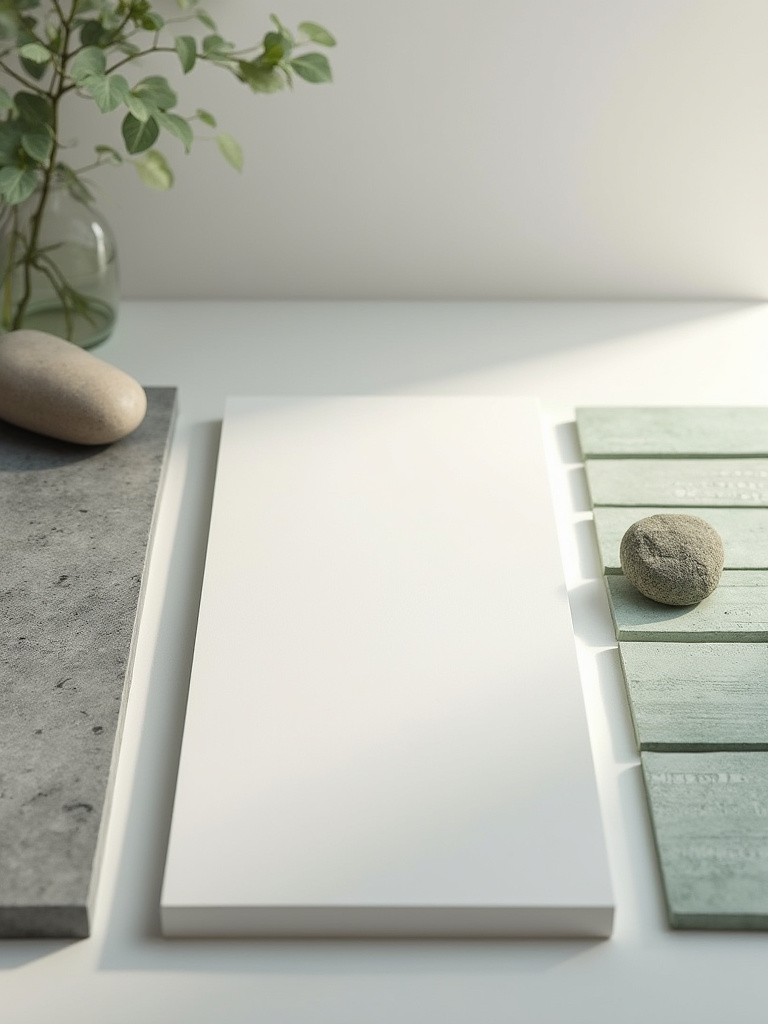
Before you look at tiles, decide on the feeling you want. Do you crave the quiet clarity of Scandinavian minimalism, with clean lines and zero clutter? Or the honest, raw texture of industrial design, inspired by the bones of a building? Or maybe the grounding connection of biophilic design, which brings the patterns and materials of the natural world inside. Let this one guiding principle inform every single choice, from the tile to the tapware. This focus is what separates a thoughtfully designed sanctuary from a jumble of nice things.
If you don’t know your style, you’ll end up with a room that feels like a stranger. Spend time here; it’s the most important step.
3. Consider Lighting’s Impact on Tile Finish and Reflectivity
Here’s a confession: I used to think of tile and light as two separate things. Then I spent time in Morocco, studying traditional riads. I saw how their handmade Zellige tiles, with their glossy, imperfect surfaces, captured and scattered the harsh sunlight, transforming it into something soft and magical. I realized that light isn’t something that just illuminates a tile; it’s a material you design with.
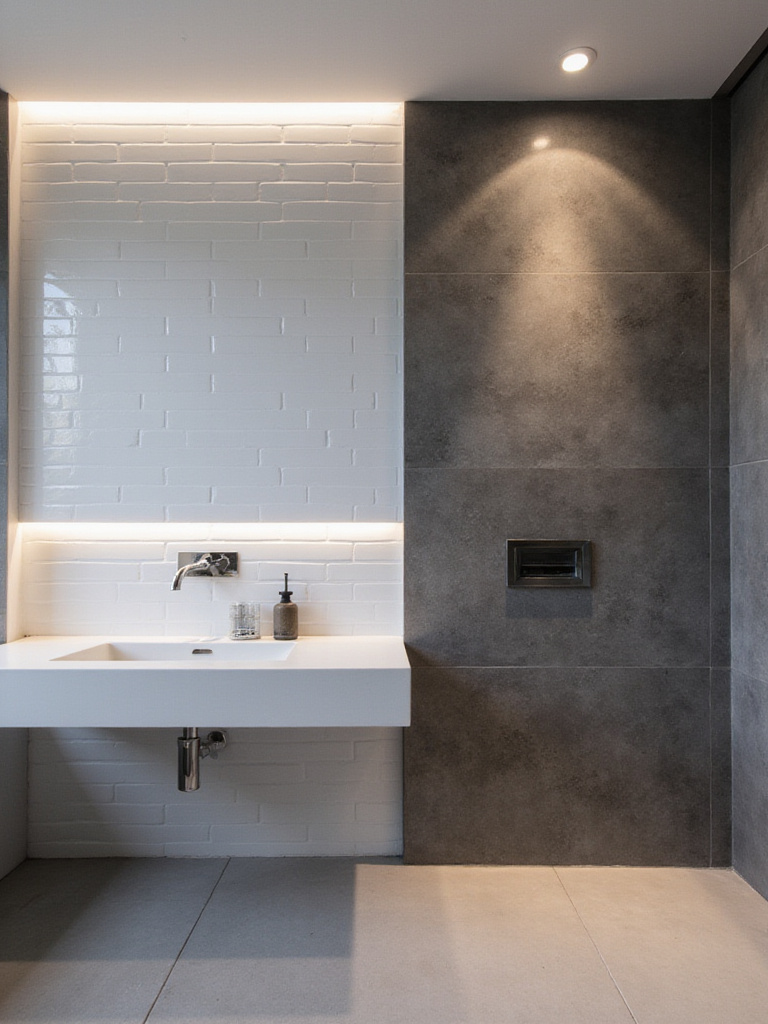
A high-gloss tile in a room with a direct spotlight will create a harsh glare. That same tile under soft, diffused light, however, can make the room glow. A matte, textured tile might disappear in a dimly lit room, but “graze” it with a hidden LED strip, and every subtle contour and shadow will come to life. Always test your tile samples in your actual bathroom, watching how they change from morning sun to evening artificial light. The tile you love in the showroom might be a monster under your bathroom’s vanity lights.
Don’t just light the room. Light the surfaces.
4. Prioritize Durability and Water Resistance for Bathroom Longevity
Let’s be honest, no one thinks about water absorption rates when they’re looking at a beautiful tile. But this is exactly what separates a bathroom that lasts for twenty years from one that fails in five. In climates with high humidity, like the coastal deserts I often work in, this is not just a detail—it’s everything.
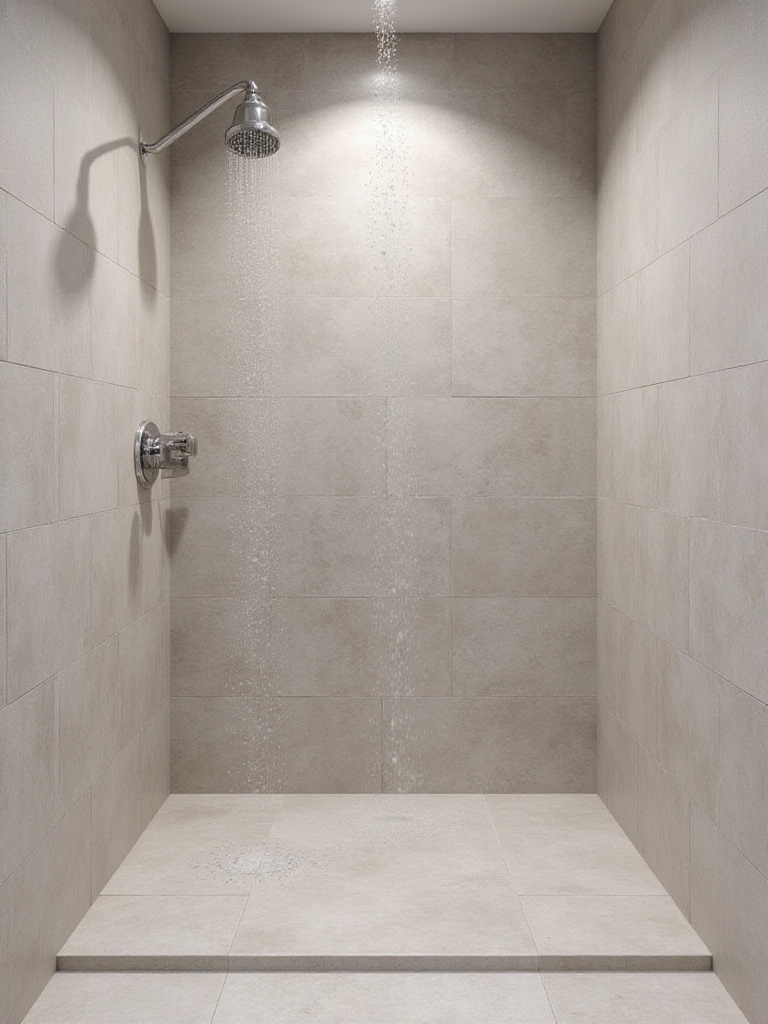
The tile and grout you see are just the pretty surface. The real workhorse is the waterproofing membrane installed behind it, a continuous sealed layer that protects your home’s structure. I once saw a client’s stunning marble shower have to be completely torn out because the installer skipped this step. The water got behind the stone, mold grew, and the wall started to rot from the inside out. For any wet area like a shower, you need porcelain tile (its water absorption is near zero) and a bulletproof waterproofing system. This isn’t a place to cut corners. It’s the very foundation of a healthy, long-lasting space.
Think of it as building a boat. The beautiful part is what you see, but the hull is what keeps you afloat.
5. Budgeting Smart: Balancing Cost with Desired Tile Quality and Lifespan
People get paralyzed by the per-square-foot cost of tile, but it’s noise. The real cost of your project is about 60% labor and materials you don’t even see, like thin-set and waterproofing. Focusing only on the tile price is a classic mistake that can cost you dearly down the line.
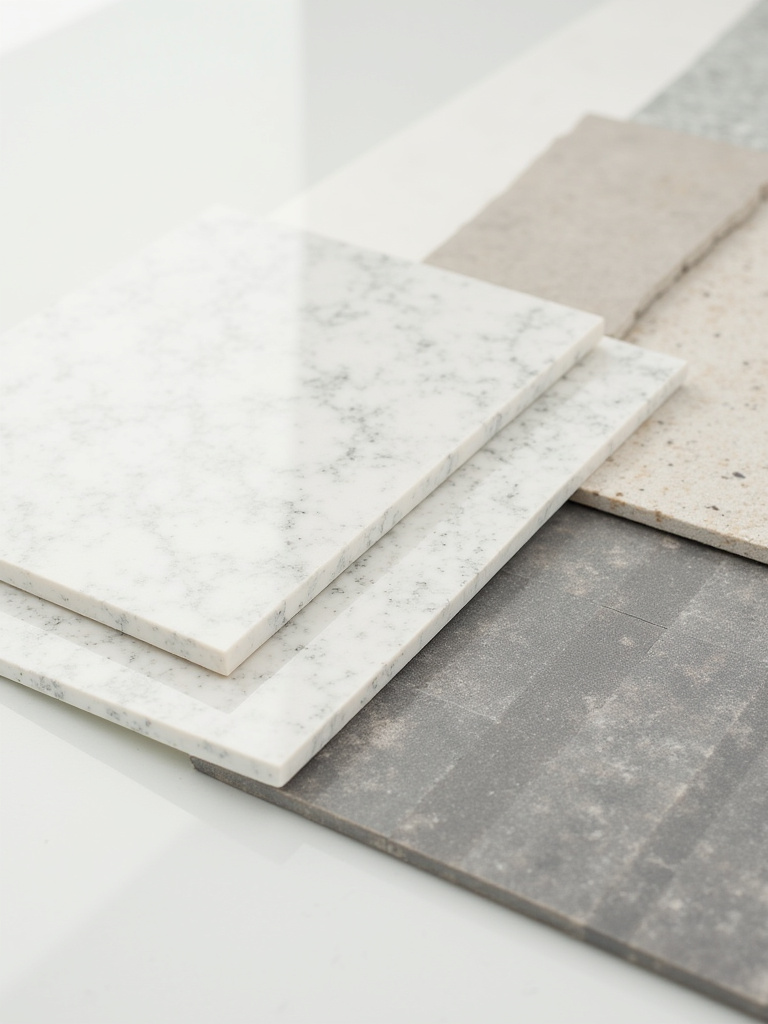
Here’s the shortcut: invest in quality for the floor and the wet areas. These are the surfaces that take the most abuse. A cheap ceramic floor tile will scratch and wear out, forcing a full renovation in a few years, negating any initial savings. I always advise clients to choose a high-quality porcelain for the floor—something durable and timeless. If you need to save money, do it on an accent wall behind the vanity, where a less-expensive ceramic can provide a beautiful decorative touch without needing the performance of a floor tile. It’s about being strategic, putting your resources where they provide the most long-term value and peace of mind.
Splurge on the function, save on the fashion.
Curating Your Style: Selecting & Installing Contemporary Tiles (Part 1)
Alright, you’ve done the foundational work. You know your space, your light, your aesthetic, and your budget. Now comes the exciting part—choosing the materials that will bring your vision to life. This isn’t just about picking patterns; it’s about composing a visual and tactile experience.
6. Embrace Large Format Tiles for a Seamless and Expansive Look
There’s a reason we’re seeing huge tiles everywhere now. It’s a direct response to our desire for spaces that feel calmer and less cluttered. In both Scandinavian design and Middle Eastern architecture, there’s a deep respect for monolithic forms—large, unbroken surfaces that feel solid and serene.
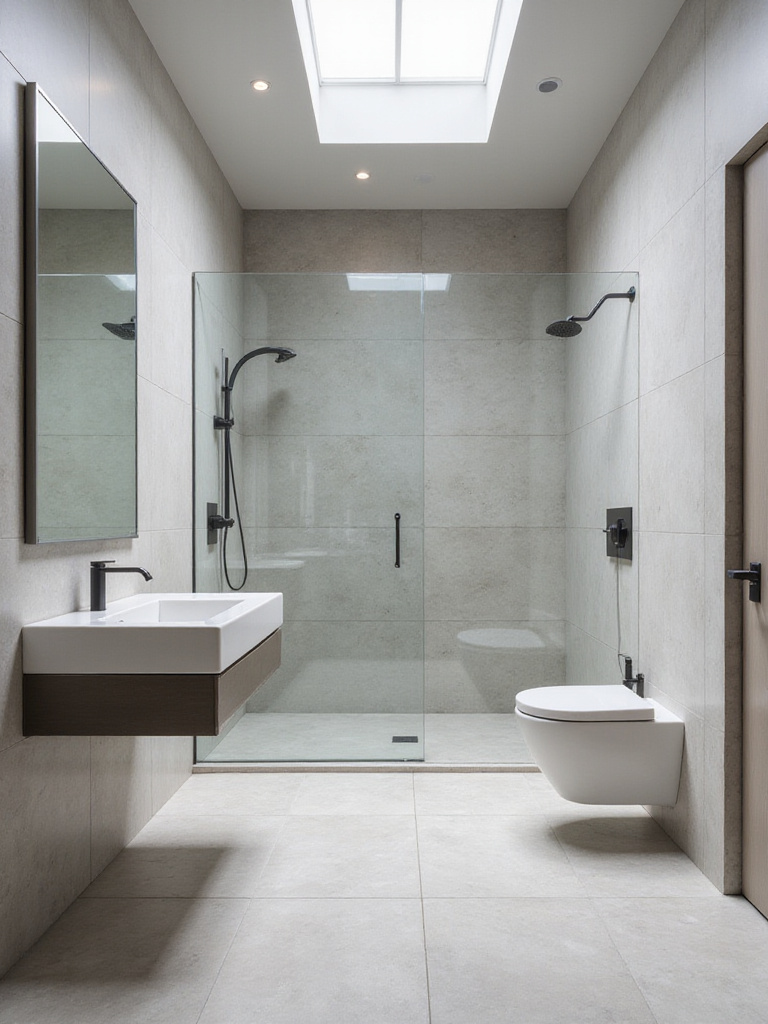
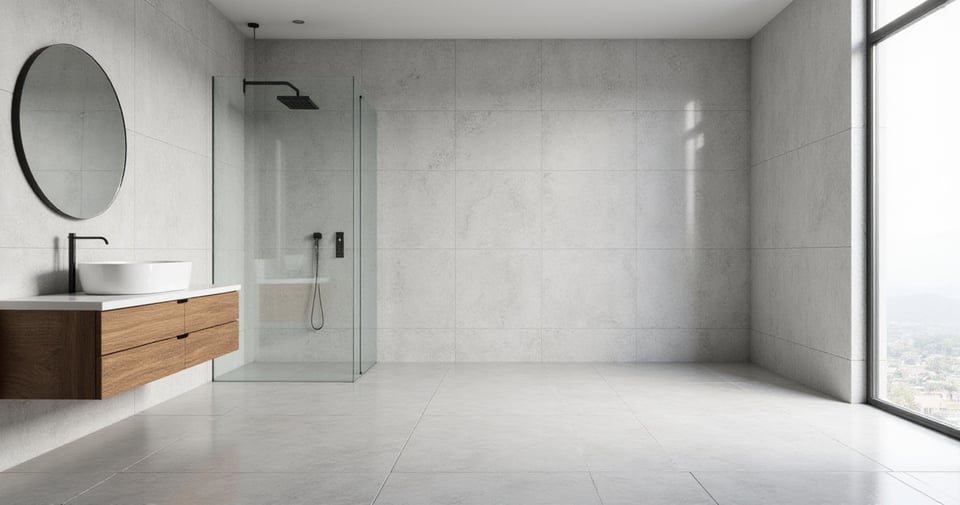
Large format tiles deliver this feeling. By minimizing grout lines, they create an uninterrupted visual plane. The wall or floor stops being a grid and becomes a single, beautiful surface. This is incredibly powerful in any bathroom, but especially in smaller ones, as it tricks the eye into seeing a larger, more cohesive space. It’s a modern interpretation of what ancient builders knew: simplicity at a large scale feels luxurious and calming.
It’s about making the tile disappear into a larger, more powerful whole.
7. Explore Unique Textures: Terrazzo, Zellige, and Concrete Effect Tiles
Picture this: You’re standing in a bathroom. Is it smooth and sterile, or does it have character? Texture is the soul of a material. It’s the difference between a space that feels manufactured and one that feels crafted and alive. This is where my cross-cultural background really comes into play.
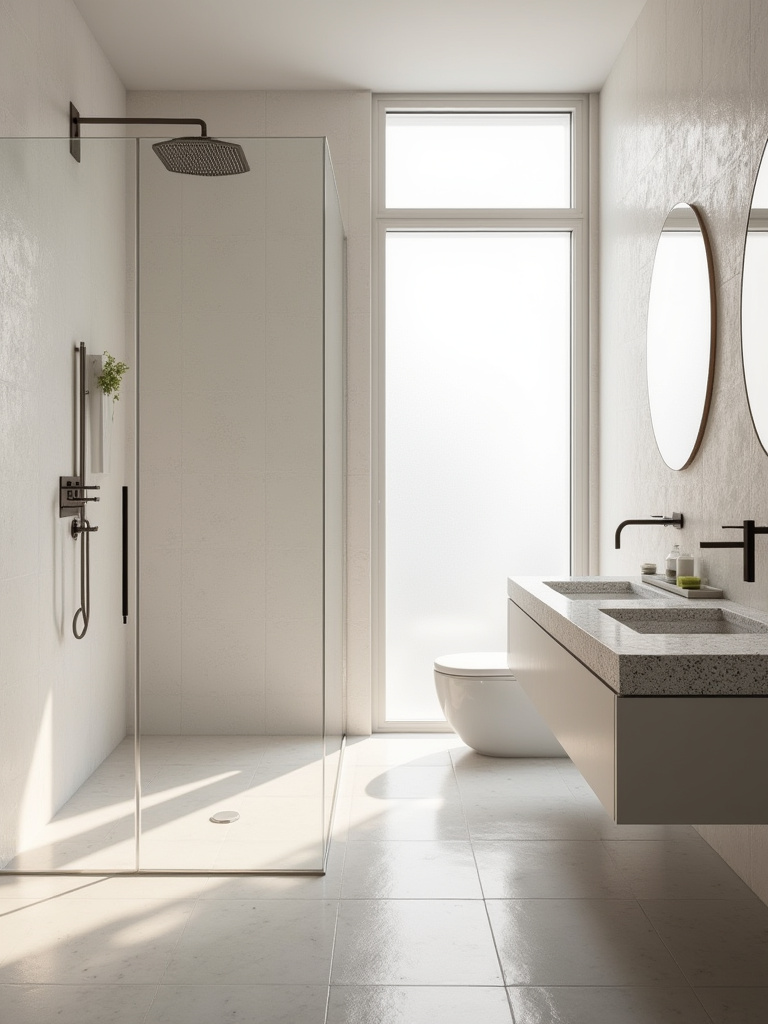
I love using materials that tell a story. Zellige tiles, with their handcrafted irregularities, bring the warmth and history of Moroccan artisanship. Concrete-effect porcelain provides the raw, honest texture found in minimalist architecture. And terrazzo, with its joyful specks of stone, offers a touch of playful modernism. I learned the hard way on an early project that a room without texture feels flat and lifeless, no matter how beautiful the colors are. Even a small accent wall with a richly textured tile can give the entire room a sense of depth and personality.
A room you want to touch is a room you want to be in.
8. Incorporate Geometric Patterns or Hexagons for Dynamic Visual Interest
Everyone says geometric tiles are a hot trend, but this is nonsense. Intricate geometric patterns are one of the oldest forms of art and architecture in the Middle East, used to create spaces that feel both ordered and infinite. They aren’t a trend; they are a timeless principle of design.
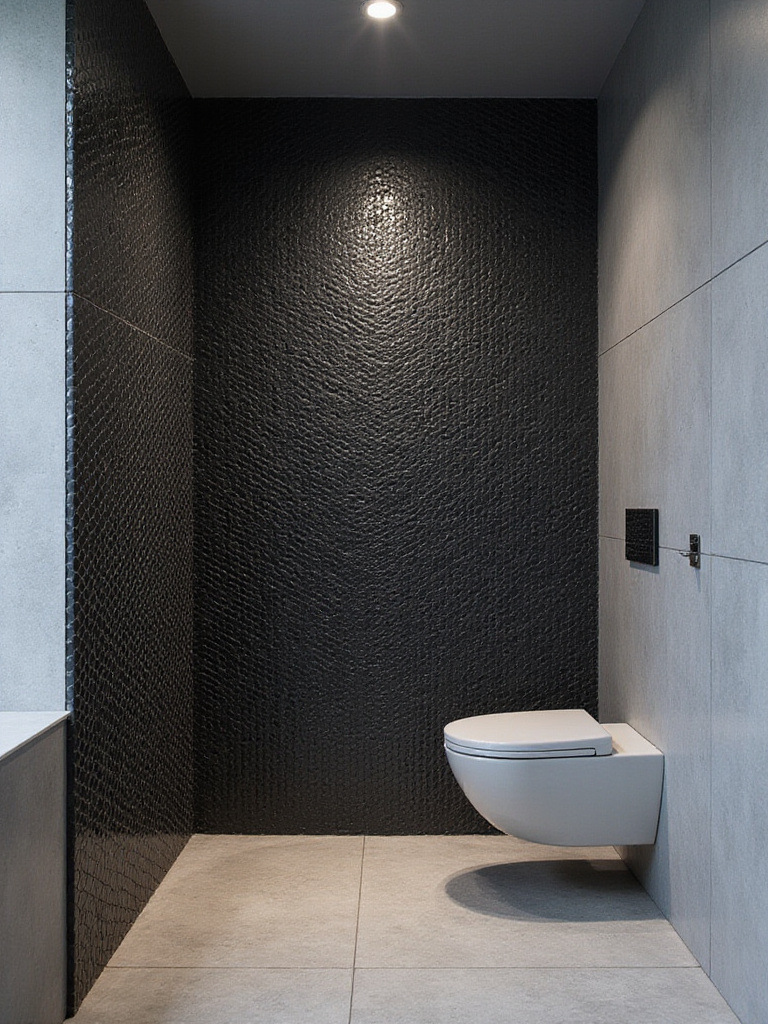
Using a geometric tile is about adding a layer of intelligent rhythm to a space. It can be a bold statement across a whole floor or a subtle detail in a shower niche. The key is to use it with intention. I once worked with a client who wanted to use a powerful star-and-cross pattern. We decided to contain it to the floor, like a beautiful rug, letting the walls remain calm and quiet. The pattern grounded the space and gave it a focal point without overwhelming it.
Think of it not as a pattern, but as a form of architectural music.
9. Choose the Right Grout Color and Width for a Unified or Contrasting Finish
This is one of my biggest pet peeves. People spend weeks choosing a tile and then 30 seconds picking a grout color, as if it’s an afterthought. But the grout is what defines the tile. It’s the frame for the picture. Get it wrong, and you can undermine the entire design.

Do you want the individual tile shape to be the hero? Use a contrasting grout. This works beautifully with simple shapes like subway tiles or hexagons, where the grid itself becomes the pattern. Do you want the tile’s texture or color variation to be the focus? Use a grout that matches the tile as closely as possible. This makes the grout lines recede, creating a more seamless, monolithic surface. A story I often tell is about a client who chose a beautiful handmade tile with subtle color variations. The installer used a bright white grout, which created a harsh, jarring grid that completely destroyed the tile’s soft, artisanal feel. We had to have it all scraped out and redone.
Test your grout. Always. It’s as important as the tile itself.
Curating Your Style: Selecting & Installing Contemporary Tiles (Part 2)
We’re moving from the visual to the experiential. A truly modern bathroom isn’t just about how it looks; it’s about how it functions and feels. These next steps integrate comfort, craftsmanship, and clever design to elevate the space from a room to a retreat.
10. Opt for Underfloor Heating for Enhanced Tile Comfort
The sensation of stepping onto a warm floor on a cold morning is a small but profound luxury. In a desert climate, nights can be surprisingly cool, and in Scandinavia, warmth is a necessity. Radiant floor heating is the most comfortable and efficient way to deliver it.
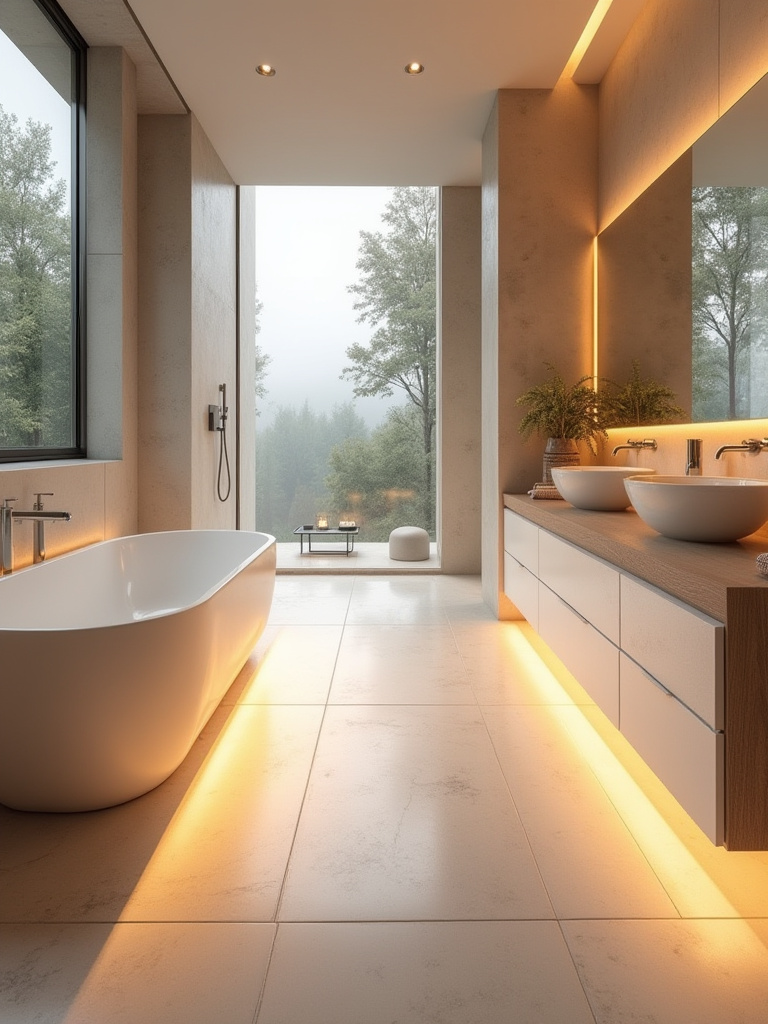
Unlike forced-air systems that blow hot, dry air around, radiant heat warms the objects in the room (including you) from the ground up. It’s a silent, even warmth that feels completely natural. I call it a “creature comfort.” Eliminating the need for bulky radiators also frees up wall space, allowing for a cleaner, more minimalist design. It’s an invisible technology that has a massive impact on how you experience the space every single day.
It’s a small investment in your daily well-being that pays dividends for years.
11. Ensure Professional Installation for Level Surfaces and Proper Sealing
Here’s the brutal truth: a high-end tile installed poorly will look cheaper and fail faster than a budget tile installed by a master craftsman. You can’t cheat on the installation. I once had to mediate between a client and an installer who had laid large-format tiles on an uneven floor. The edges of the tiles stuck up—a phenomenon called “lippage”—creating trip hazards and an ugly, unprofessional finish. The entire floor had to be ripped out.
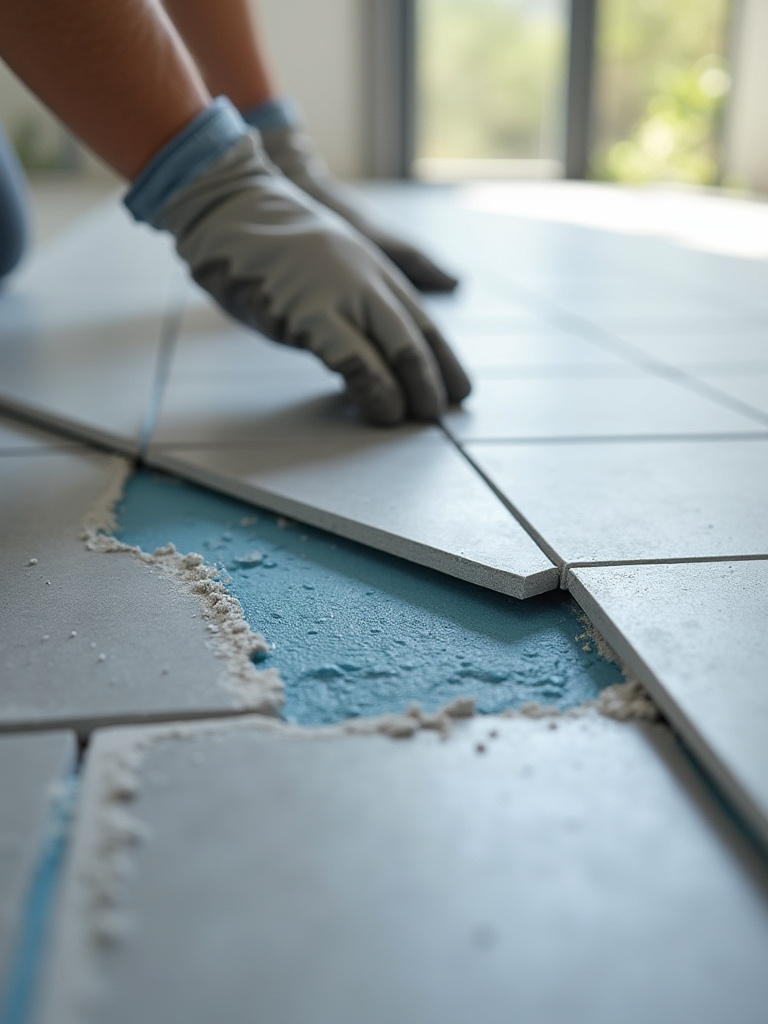
A true professional doesn’t just stick tiles to the wall. They prepare the substrate to be perfectly flat, they apply a flawless waterproofing system, they plan the layout to minimize awkward cuts, and they use the correct adhesives for the material. They are artisans. When you find a good one, treat them like gold. Their skill is the bridge between your vision and a beautiful, durable reality.
Pay for craftsmanship. It’s the best design insurance you can buy.
12. Utilize Niche and Accent Walls to Showcase Specialty Tiles Effectively
You fell in love with a breathtakingly expensive mosaic or a handmade tile that costs a fortune, but you can’t afford to do the whole room in it. This is where niches and accent walls come in. They are the perfect way to incorporate a precious material strategically.
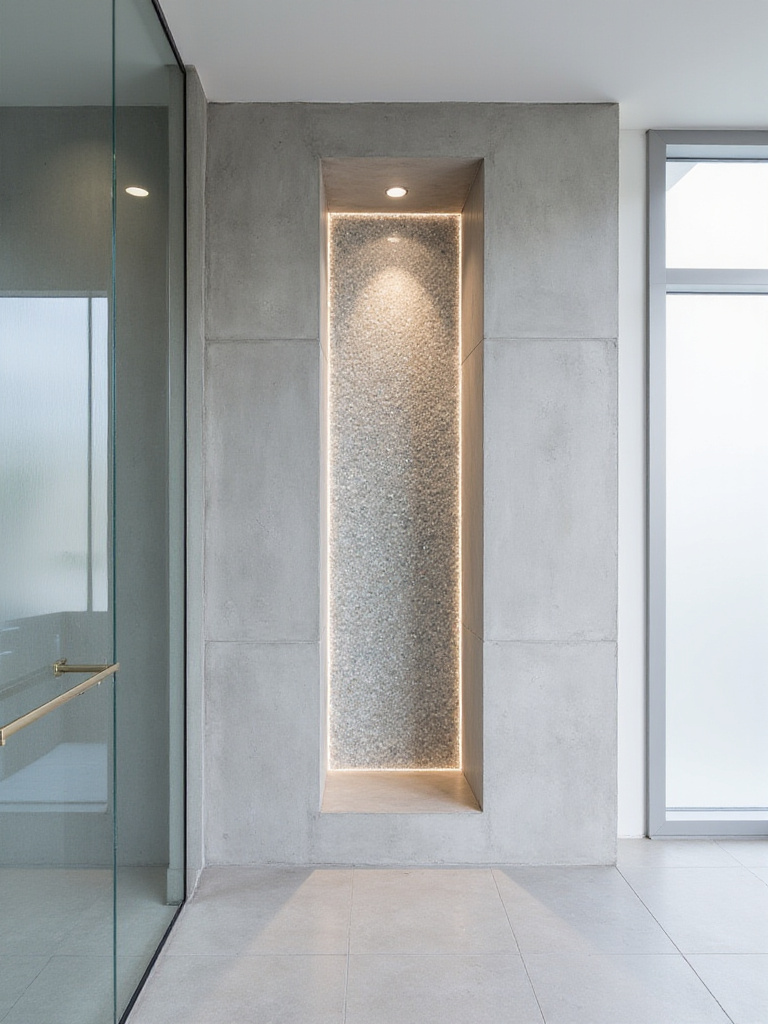
Think of a shower niche not just as a place for your shampoo, but as a small, curated art gallery. Lining it with a special tile transforms a purely functional element into a beautiful focal point. The same goes for the wall behind a vanity. By containing the high-end tile to one impactful area, you get all the design credit without the crippling cost. It’s a design shortcut that feels luxurious and intentional, turning a constraint into a creative opportunity.
It’s about making a small moment of beauty the hero of the room.
Elevating the Aesthetic: Styling, Maintenance, and Advanced Finishes (Part 1)
The tiles are in, but the work isn’t done. Now we add the final layers of sophistication. This is about using light, color, and clever design details to make the whole room sing. It’s also about understanding how to care for the space you’ve created so that it remains beautiful for years to come.
13. Integrate Strategic Lighting to Highlight Tile Textures and Features
We talked about considering light when you choose your tile, but now we’re going to use it as a tool to sculpt the finished space. Good lighting in a bathroom should be layered. You need bright, functional task lighting at the mirror, but you also need soft, ambient light for creating a relaxing mood.
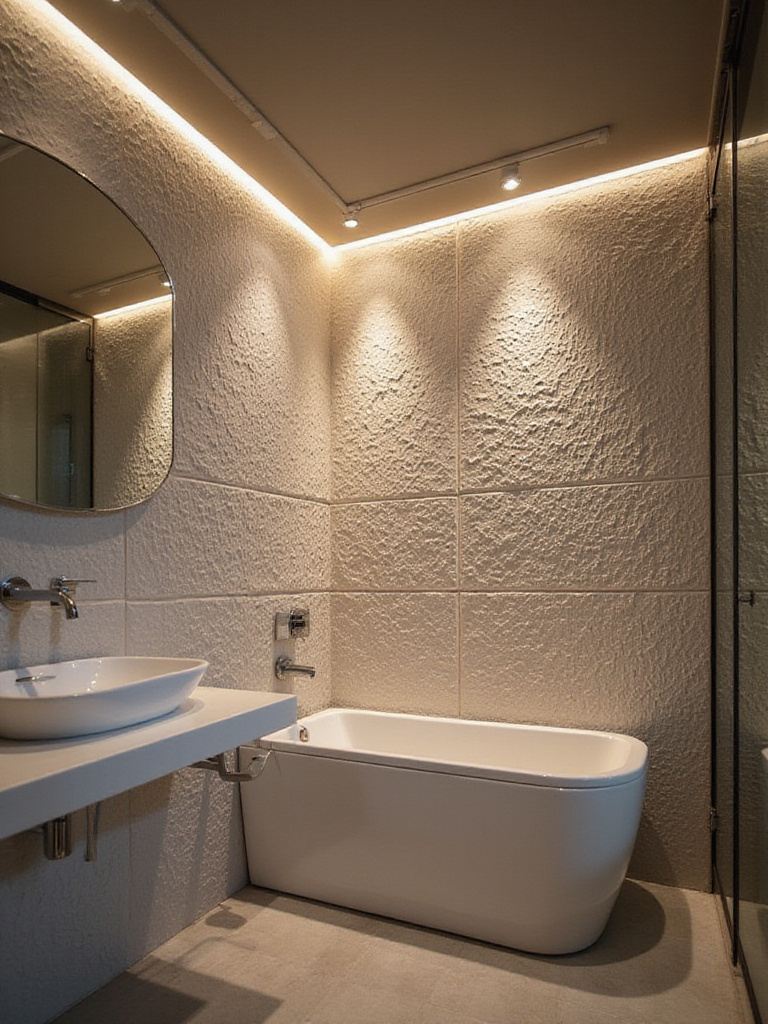
This is where you can get really creative. A low-level light washing across a textured floor can create a beautiful effect at night, providing a safe pathway without a jarring overhead glare. Placing a wash of light down a feature wall will highlight the unique texture of the tile, turning it into a piece of art. I always incorporate dimmers in bathrooms. The ability to control the intensity of the light gives you complete control over the room’s atmosphere, allowing it to be a bright, energetic space in the morning and a calm, spa-like retreat at night.
Good lighting makes good design look exceptional.
14. Employ Continuous Wall-to-Floor Tiling for a Sophisticated, Immersive Envelope
If you truly want a space that feels like a sanctuary, consider using the same tile on the floor and the walls. This technique creates a seamless, immersive envelope that blurs the boundaries of the room. It’s a concept drawn from traditional hammams and modern spas, where the continuity of material creates a powerful sense of tranquility.
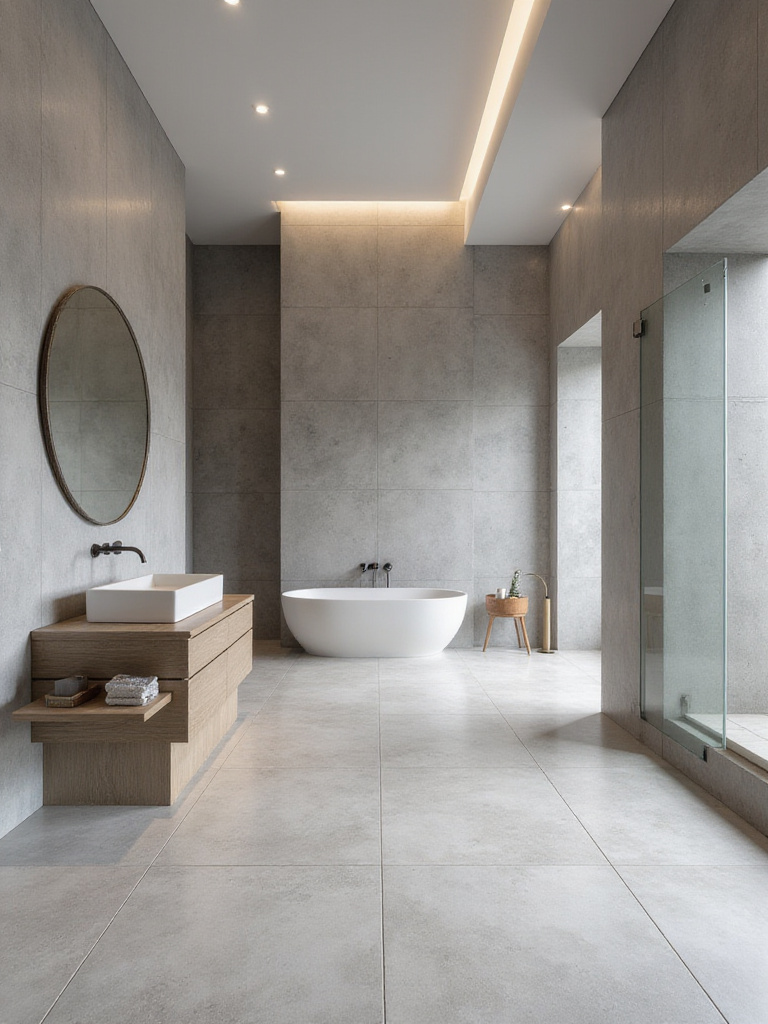
When the floor material flows directly up the walls, especially in a shower area, the room feels unified and often much larger. It’s a bold, minimalist statement that focuses attention on the form of the room and the quality of the light, rather than on a collection of different surfaces. This approach requires precision installation, but the result is a sophisticated, architectural space that feels like it was carved from a single block of stone.
It’s the ultimate expression of creating a room as a complete, singular experience.
15. Select Complementary Fixtures and Accessories for Cohesive Design Harmony
Everyone focuses on the tile, but mismatched fixtures can kill the entire vibe of a room. The finish on your faucet, showerhead, and cabinet hardware acts as the jewelry of the space. It needs to complement the rest of the design, not compete with it.
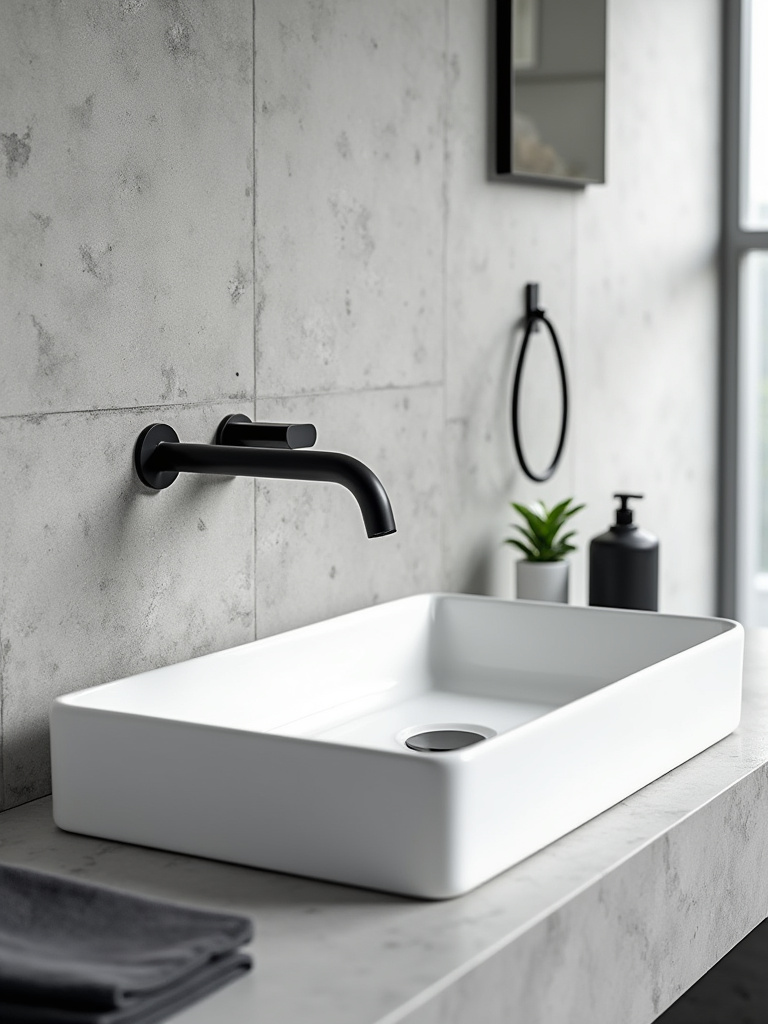
The BS everyone believes is that you have to match everything perfectly. You don’t. But you do need a consistent design language. If your tiles have a soft, organic feel, pair them with fixtures that have brushed or matte finishes rather than highly polished, flashy chrome. If you’ve created a stark, industrial look with concrete-effect tiles, matte black or gunmetal fixtures will complete the story. The key is to choose one dominant metal finish and carry it through the space. This creates a sense of order and intention, pulling the entire design together.
The fixtures are the finishing touch that tells the world this space was thoughtfully composed.
16. Mastering Grout Sealing and Cleaning for Hygiene and Enduring Beauty
This may be the least glamorous point, but it’s one of the most important. Dirty, mildewed grout will make the most expensive tile in the world look cheap and neglected. Sealing your grout is not optional; it’s a critical step in protecting your investment.
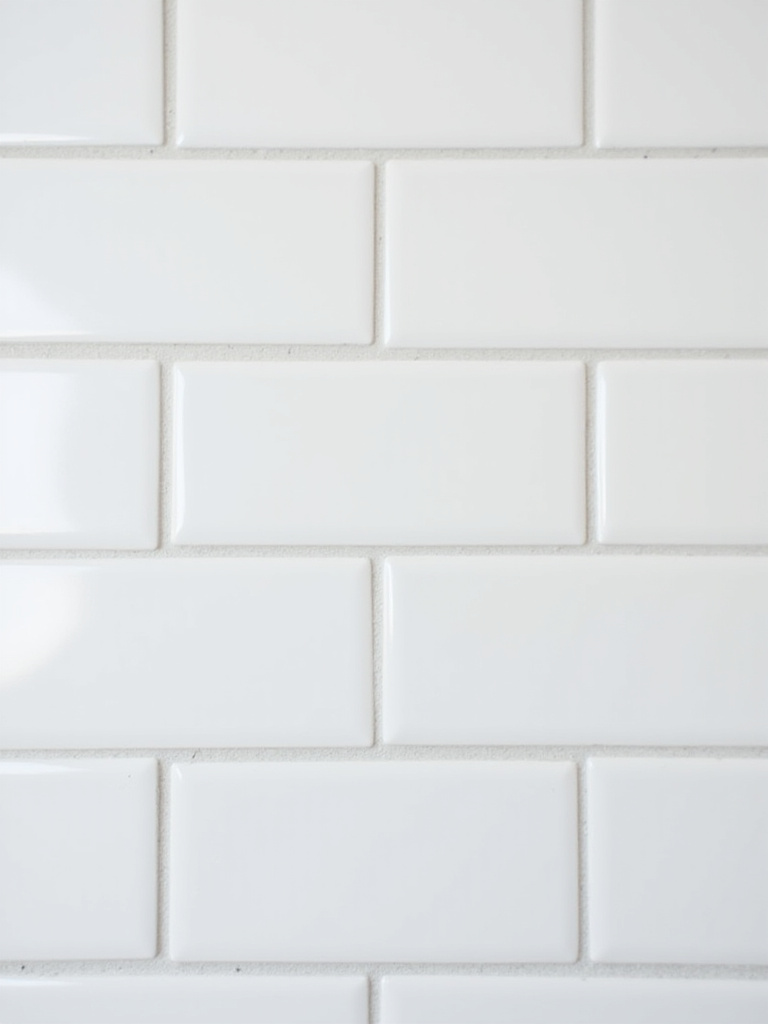
Unsealed cement-based grout is porous, like a sponge. It will absorb water, soap scum, and bacteria, leading to discoloration and mold. A good penetrating sealer fills those pores and creates an invisible barrier. It makes cleaning infinitely easier and keeps the grout looking fresh and new. I advise my clients to re-seal their shower grout once a year. It’s a simple Saturday morning task that preserves the beauty and hygiene of the bathroom for a decade or more. Think of it as preventative care for your home.
It’s the small act of stewardship that keeps beautiful things beautiful.
Elevating the Aesthetic: Styling, Maintenance, and Advanced Finishes (Part 2)
We’ve come to the final, most integrated level of thinking. This is about weaving function so deeply into the design that it becomes invisible. It’s also about making choices today that will still feel right in ten or twenty years, ensuring your sanctuary is built to last.
17. Consider Integrated Shower Niches and Bench Seating with Matching Tiles
There is nothing that disrupts the clean lines of a modern shower more than a plastic caddy hanging from the showerhead or a collection of bottles on the floor. Integrated niches and benches, built right into the structure of the wall and tiled to match, solve this problem with architectural grace.
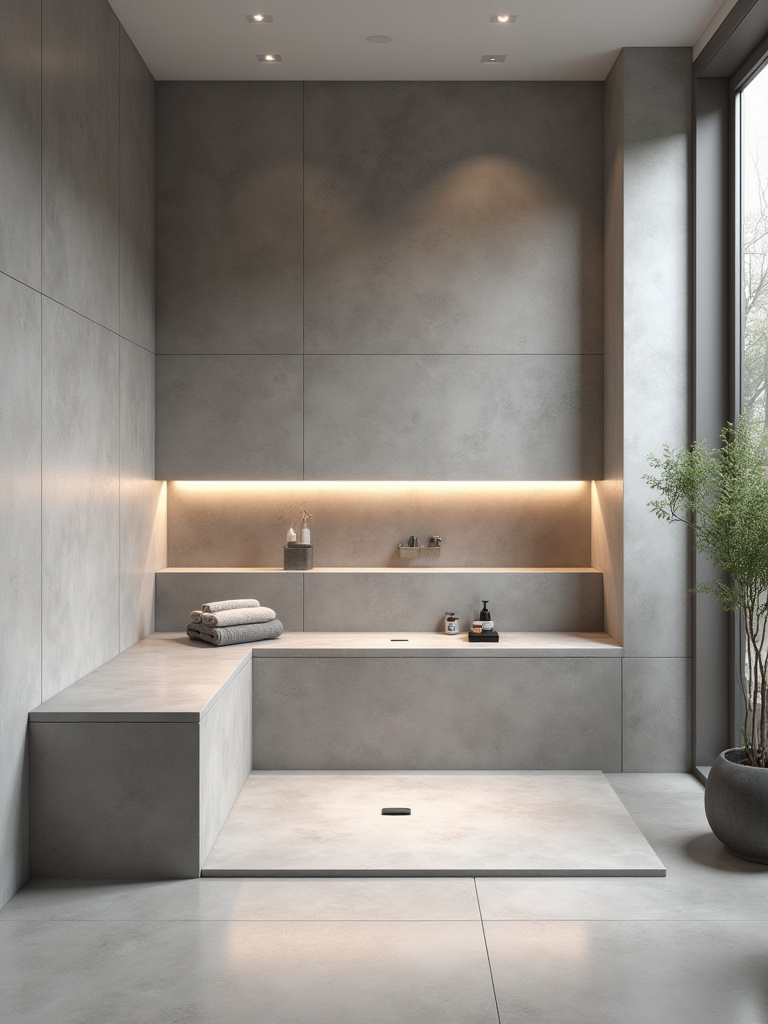
This approach speaks to both Scandinavian functionalism, where everything has its place, and the sculptural, built-in nature of Middle Eastern architecture. A well-placed niche keeps everything tidy and within reach, while a built-in bench offers a place to sit and relax, transforming a simple shower into a personal steam room experience. When these elements are tiled to match the surrounding walls, they blend in seamlessly, enhancing functionality without adding visual clutter.
It’s the embodiment of a core design principle: make useful things beautiful.
18. Plan for Future Trends: Versatility and Adaptability in Modern Tile Designs
X is broken. The idea that you have to constantly chase the latest trend is broken. The most sustainable design—both environmentally and financially—is one that lasts. When it comes to tile, which is a semi-permanent and costly material to replace, this means choosing a foundation that is timeless.
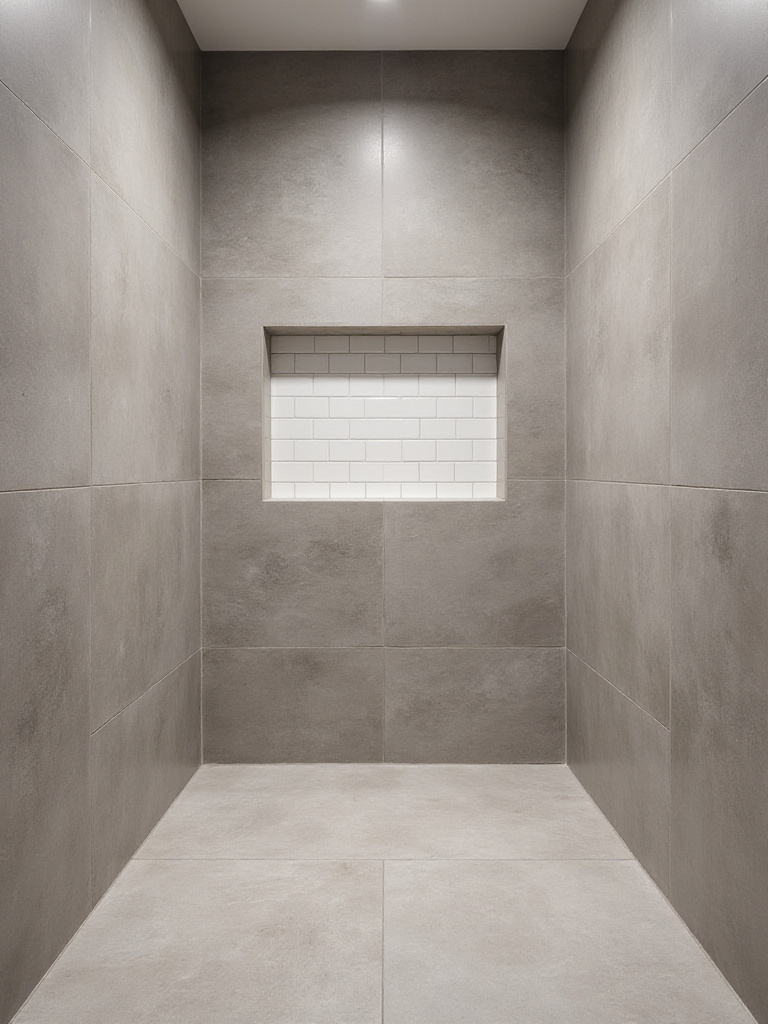
Here is how to fix it: commit to trendy colors or bold patterns only in things that are easy to change, like paint, towels, and accessories. For your tiles—especially the floor and main walls—choose something with enduring appeal. High-quality porcelain that mimics natural stone, concrete, or subtle linen textures will never go out of style. This creates a versatile, neutral canvas that can adapt to changing tastes over the decades. A bathroom with classic, well-installed tile can be updated and refreshed again and again without the need for a full demolition.
This isn’t about being safe. It’s about being smart. It’s about creating a space with such strong bones that it transcends trends entirely.
Conclusion
So you see, the conversation about tile is never really just about tile. It’s about creating a space that nurtures and restores you. It’s about texture that grounds you, light that uplifts you, and a layout that brings a sense of order to your day. By moving beyond trends and focusing on these deeper principles, you can create a bathroom that is more than just a room—it becomes a personal sanctuary.
The power to do this is in your hands. Take these perspectives, trust your instincts, and start building a space that feels right for you. Don’t just pick tiles; make thoughtful choices. By doing so, you’re not just renovating a room; you are investing in your own well-being and creating a haven that will support you for years to come.