You know what people always ask me? They show me a picture on their phone—usually some stark, beautiful bedroom—and they ask, “How do I get this?” But what they’re really asking is, “How do I get the feeling this picture gives me?” The peace. The quiet. The sense that everything is in its right place.
The mistake everyone makes is thinking it’s about buying a specific bed or the right shade of beige. It’s not. That’s just noise. A truly modern bedroom, one that feels like a sanctuary in this chaotic, notification-driven world, is built on a foundation of intention. It’s about creating a space that calms your mind and supports your life, not just one that looks good for a photo. So, let’s talk about how to actually do that.
The Modern Foundation: Planning Your Minimalist Retreat (Part 1)
Before you even think about buying a single pillow, you need to lay the groundwork. This is the unsexy part that everyone tries to skip, and it’s precisely why most designs fail. Think of this as creating the operating system for your room; without it, all the beautiful “apps” and accessories you add later will just feel chaotic and disconnected.
1. Define Your Modern Aesthetic: Minimalist, Scandinavian, or Industrial
Can we just admit that “modern” is a nearly useless word on its own? It’s a huge umbrella. Before you do anything, you need to decide which specific language you’re speaking. Are you drawn to the absolute bareness of Minimalism, the warm woods and cozy textures of Scandinavian design, or the raw, honest materials of Industrial? This is your single most important decision.
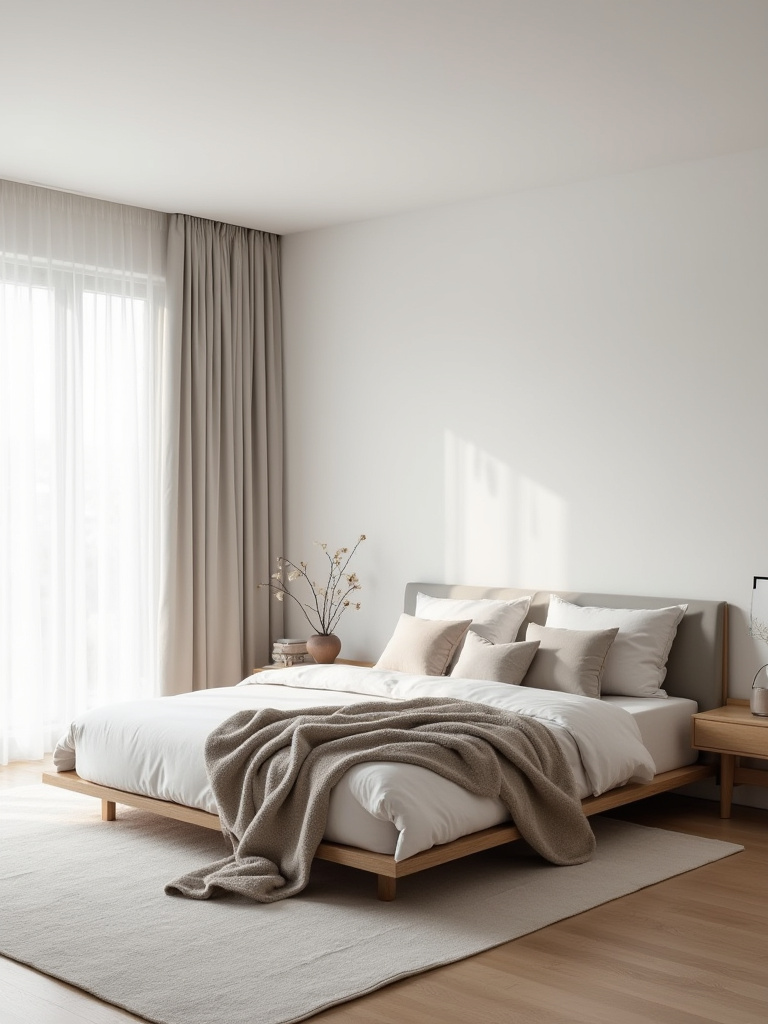
Most people get this wrong by trying to do a little of everything, and their room ends up with a personality crisis. The shortcut? Create a very focused mood board. Don’t just pin anything “modern.” Pin only things that feel like they belong to the same family. Once you see a clear pattern emerge, that’s your guide. It tells you what to say “yes” to and, more importantly, what to ignore. This isn’t about limiting you; it’s about giving you clarity.
With a clear aesthetic, you can move on to the color that will support it.
2. Embrace a Neutral color palette with Purposeful Accents
A neutral palette isn’t about being boring; it’s about being smart. Think of your walls and large furniture as the quiet canvas. Whites, greys, beiges, and charcoals create a calm backdrop that doesn’t scream for your attention. In a world full of visual noise, this gives your brain a place to rest, which is exactly what a bedroom is for.
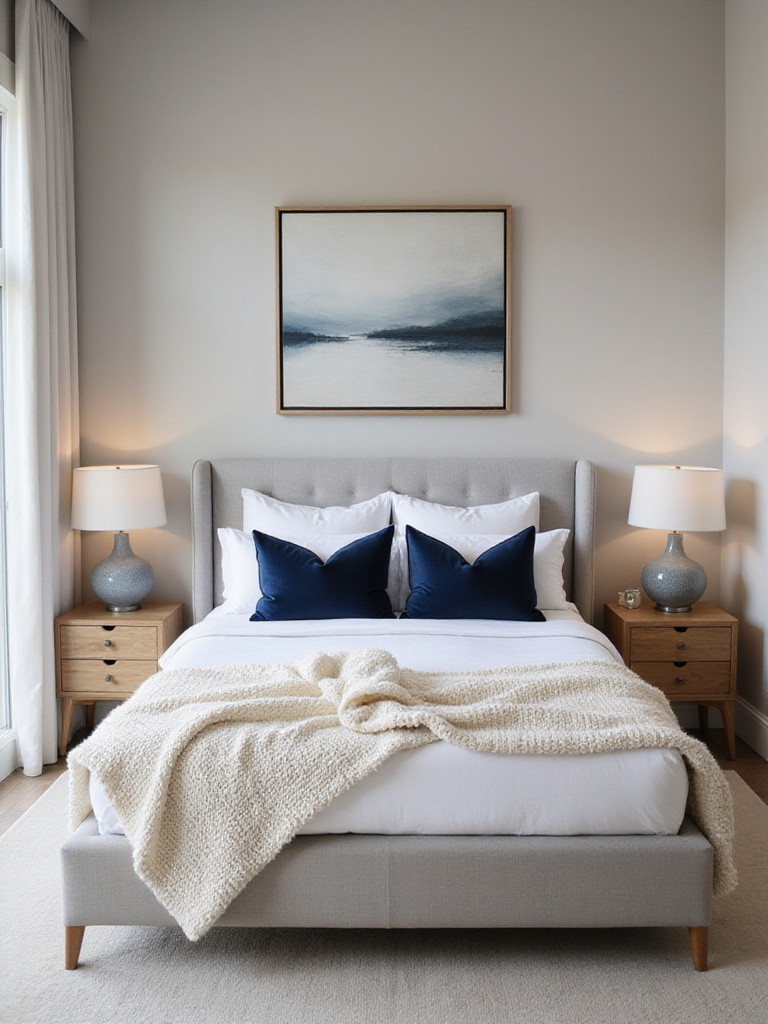
The BS everyone tells you is that a neutral room is cold or lacks personality. That’s only true if you forget the second part of the rule: purposeful accents. Once you have your calm foundation, you introduce small, powerful pops of color through things you can easily change—a pillow, a vase, a single piece of art. The shortcut is the 60-30-10 rule: 60% is your dominant neutral, 30% is a secondary neutral (maybe a slightly darker shade or a different texture), and 10% is that one accent color. It’s a foolproof recipe for balance.
And that balance depends entirely on how you arrange things.
3. Optimize Layout for Flow and Functionality with a Floor Plan
I know, floor plans sound like something an architect does. But trust me, five minutes with a tape measure and a piece of paper (or a simple app) will save you so much pain later. Your bedroom’s layout is its user interface. Is it easy to navigate? Can you open drawers without bumping into the bed? A room with bad flow feels subconsciously stressful, no matter how beautiful it is.
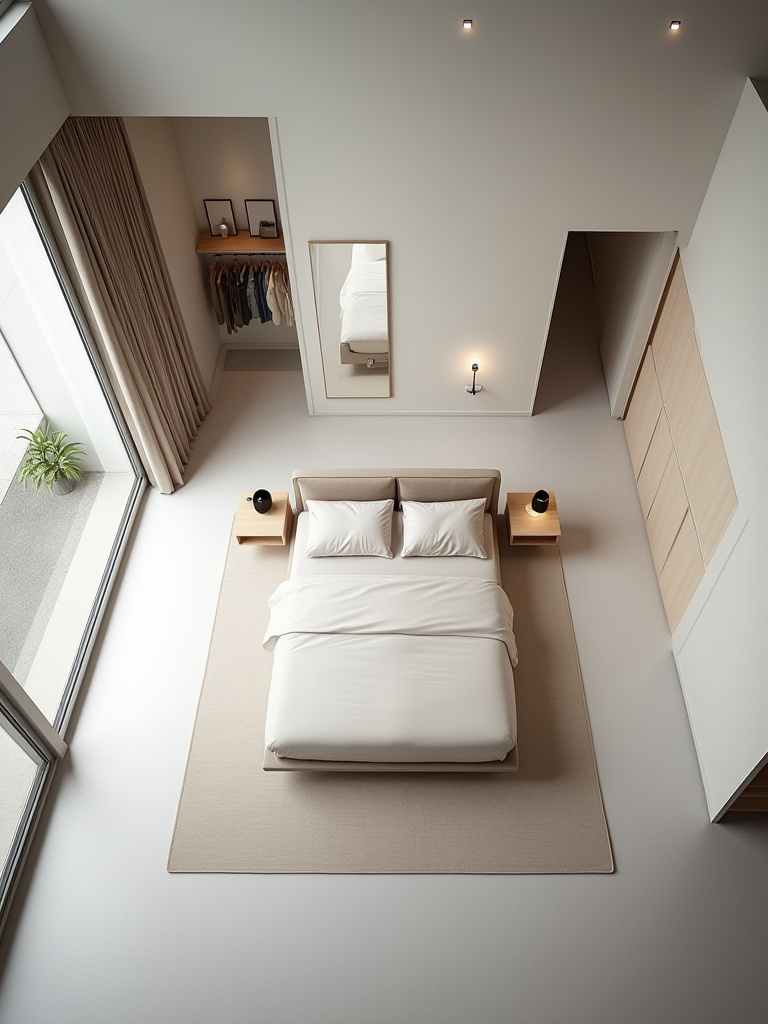
The biggest mistake is buying furniture because you love it, then trying to cram it into a space where it just doesn’t fit. The result is a beautiful piece that makes your entire room feel awkward and cramped. A shortcut I learned the hard way is to use painter’s tape on the floor. Before you buy that bed or dresser, tape its exact dimensions onto the floor. Walk around it for a day. See how it feels. This simple act of prototyping your space is a game-changer.
Once your layout is set, you can focus on the surfaces within it.
4. Prioritize Clean Lines and Uncluttered Surfaces in Design
Here’s what’s really happening when you keep surfaces clear: you are closing open tabs in your brain. Every object sitting out is a small visual task that your mind has to process. A pile of mail, a tangle of chargers, yesterday’s coffee mug—it’s all low-grade static. Prioritizing furniture with clean, simple geometry and keeping your surfaces clear is the physical act of creating mental quiet.
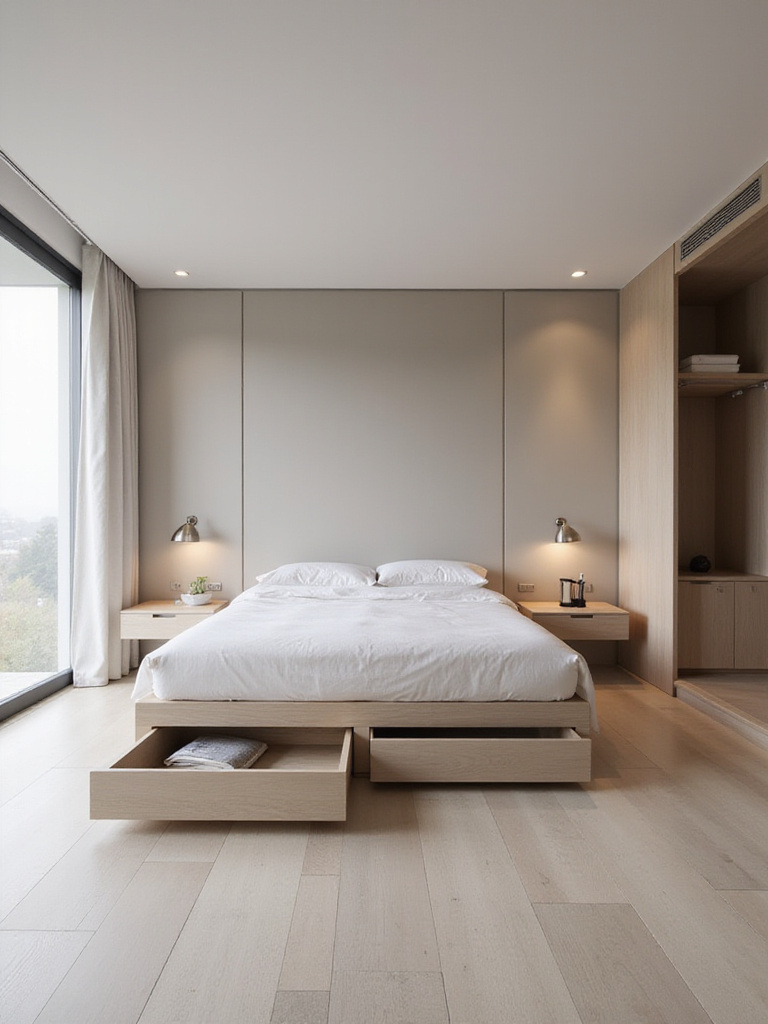
I had a client who was an incredibly busy tech founder, and their bedroom was just another place for work to spill over. We switched their ornate furniture for simple pieces and made a rule: nothing on the dresser except one small plant, and nothing on the nightstand except a book and a lamp. A month later, they told me their sleep had improved dramatically. They said, “It’s like my brain finally has permission to turn off.” That’s the power of an uncluttered surface.
The Modern Foundation: Planning Your Minimalist Retreat (Part 2)
Now that we have the invisible architecture in place—the aesthetic, the palette, the flow—we can start choosing the foundational pieces that bring it to life. These are the big-ticket items that anchor the entire room, and getting them right is non-negotiable.
5. Invest in a Quality Platform Bed as Your Room’s Modern Anchor
Your bed is the anchor of the room. A platform bed, with its low profile and clean lines, is the quintessential modern choice because it accomplishes two things beautifully. First, it eliminates the need for a bulky box spring and fussy bed skirt, instantly reducing visual clutter. Second, its low height makes the room feel taller and more spacious. It’s an optical illusion that works every time.
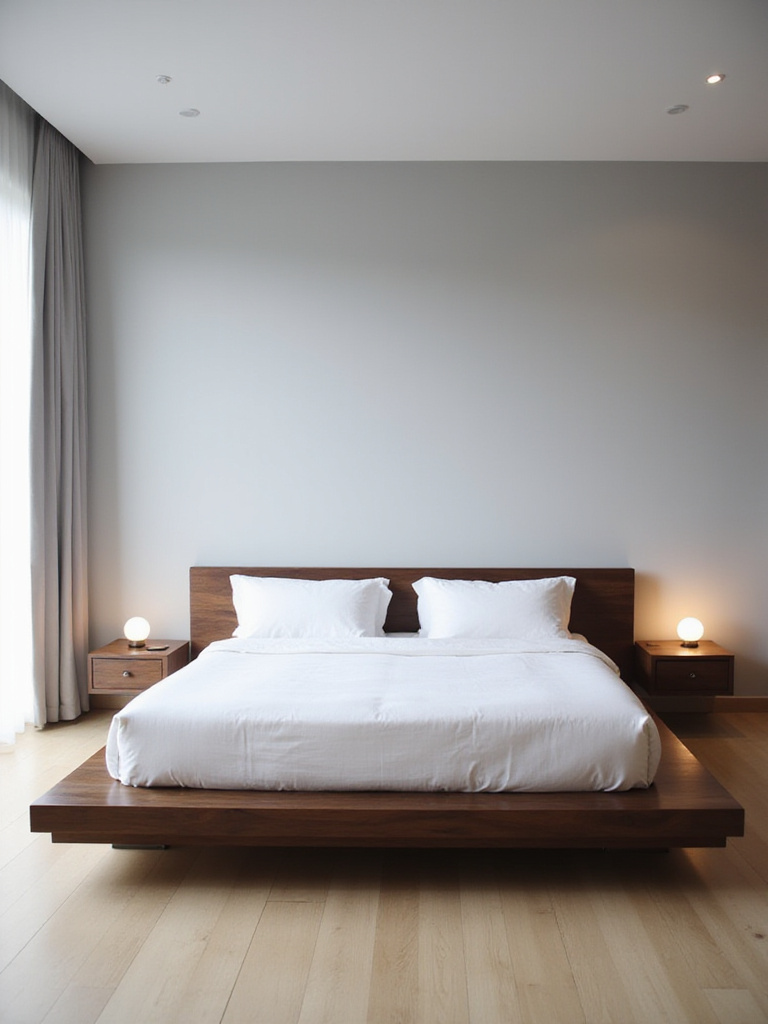
Don’t just buy the first one you see that looks good. A lot of cheap platform beds have poorly spaced slats that will ruin your mattress and your back. You must check that the slat spacing is compatible with your mattress type (usually under 3 inches for foam or hybrid). My shortcut advice: if you can, invest in a model with built-in storage drawers. It’s the most seamless way to hide things without adding another piece of furniture to the room.
And how that bed looks and feels depends entirely on the light hitting it.
6. Evaluate Natural Light to Inform Material and Color Choices
You cannot, and I repeat, cannot choose a paint color or a fabric under the fluorescent lights of a store and expect it to look the same in your home. Light is a living element in your room, and it changes everything. A warm grey in a sunny, south-facing room can look beautiful, but that same grey in a cool, north-facing room can look like sad, sterile concrete.

I used to think this was overly dramatic until I made the mistake myself. I chose a “perfect” soft white for a client’s bedroom without testing it on-site. When we painted, the afternoon sun made it look jarringly yellow. We had to repaint the entire room. The shortcut I wish I’d known is to get large sample boards (or just paint a big patch on a piece of drywall). Move them around the room at different times of the day—morning, noon, late afternoon. Watch how the light interacts with the color. Only then do you truly know what it will look like.
Mastering Modern Elements: Furniture & Fixtures (Part 1)
With the foundation set and your big-ticket items chosen, we move to the supporting cast. These are the pieces that add function and layers to your modern sanctuary, turning it from a concept into a livable, breathable space.
7. Select Sleek Nightstands with Integrated Storage Solutions
Your nightstand is prime real estate. The common mistake is to treat it like a beautiful but useless pedestal for a lamp. The modern approach is to see it as a functional workhorse disguised as a minimalist object. The single most important feature? Storage. A drawer, a cabinet, something to hide the hand cream, the charging cables, the sleep tracker, and the half-read book.
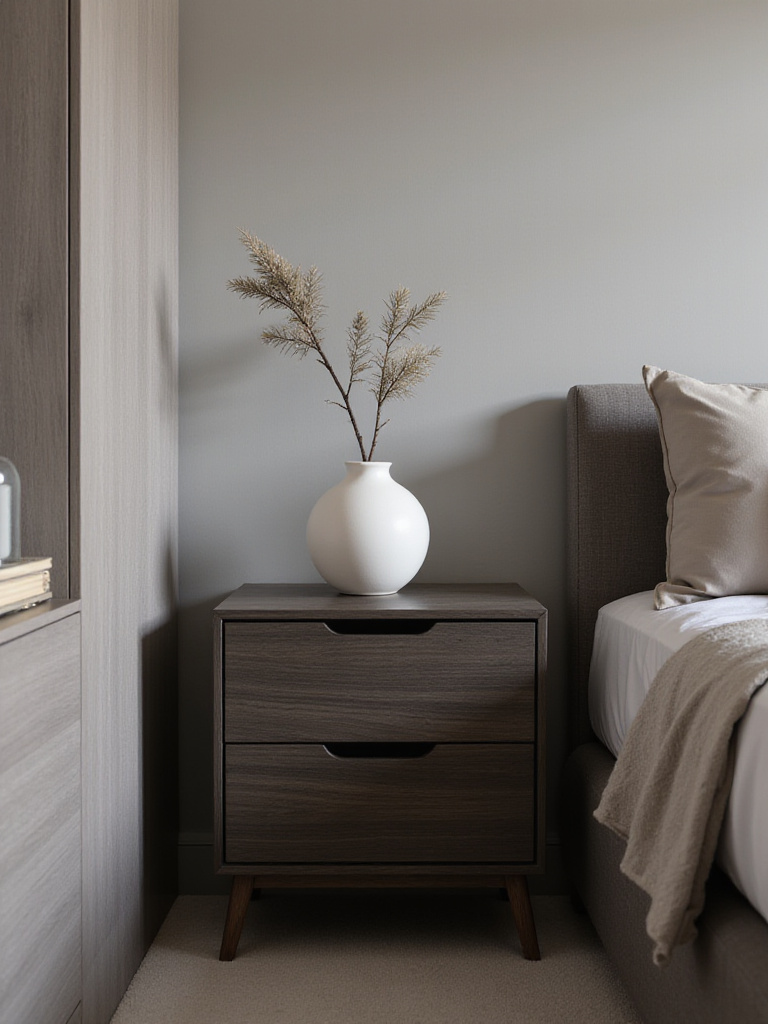
A client once told me their goal was to have a nightstand that looked as empty as a hotel’s. We found them simple, floating nightstands with a single deep drawer. Everything—from their iPad to their medication—had a home inside. It immediately made the entire bed area feel calmer and more intentional. The pro move here is to find one with integrated charging—a hidden USB port or wireless charging pad on top—to eliminate cable clutter completely.
The same principle of blending form and function applies to your lighting.
8. Choose Purposeful Lighting Fixtures: Pendants, Sconces, and Lamps
Please, I beg you, do not rely on a single, sad overhead light. This is what I call “interrogation lighting”—it’s harsh, creates weird shadows, and is flattering to absolutely no one. A well-lit modern bedroom has layers. Think ambient (overall), task (for reading), and accent (for mood). This is what creates that soft, sophisticated glow you see in designer spaces.
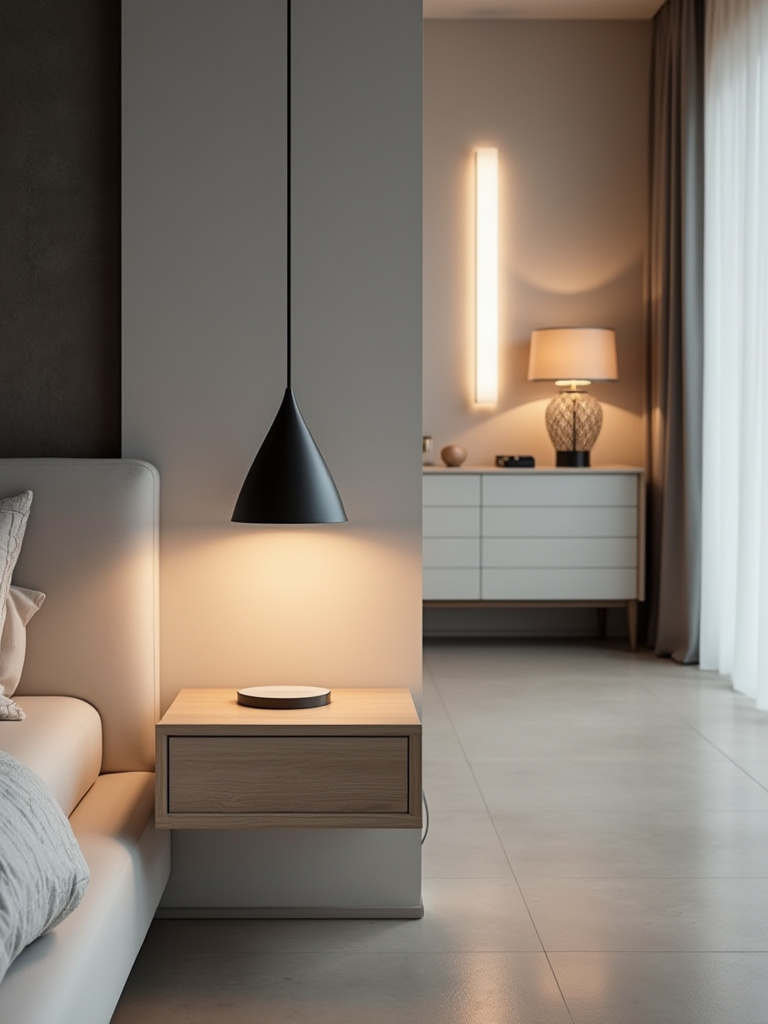
The most common mistake is thinking you need a lamp on every surface. But that just adds clutter. The shortcut is to go vertical. Use wall-mounted sconces on either side of the bed to free up nightstand space, or hang a single, beautiful pendant light in a corner to create a reading nook. My personal favorite is adding an LED strip behind the headboard for a soft, diffused backlight. It feels incredibly luxurious but is surprisingly simple to install.
And beneath all that beautiful light, you need to ground the space.
9. Incorporate a Statement Rug to Define Zones and Add Warmth
Modern design can sometimes feel a bit cold, especially with hard floors. A rug is the single fastest way to add warmth, texture, and acoustic softness to your room. It’s not just a decoration; it’s an architectural tool. It defines the sleeping zone, anchors the furniture, and provides a soft place for your feet to land in the morning.
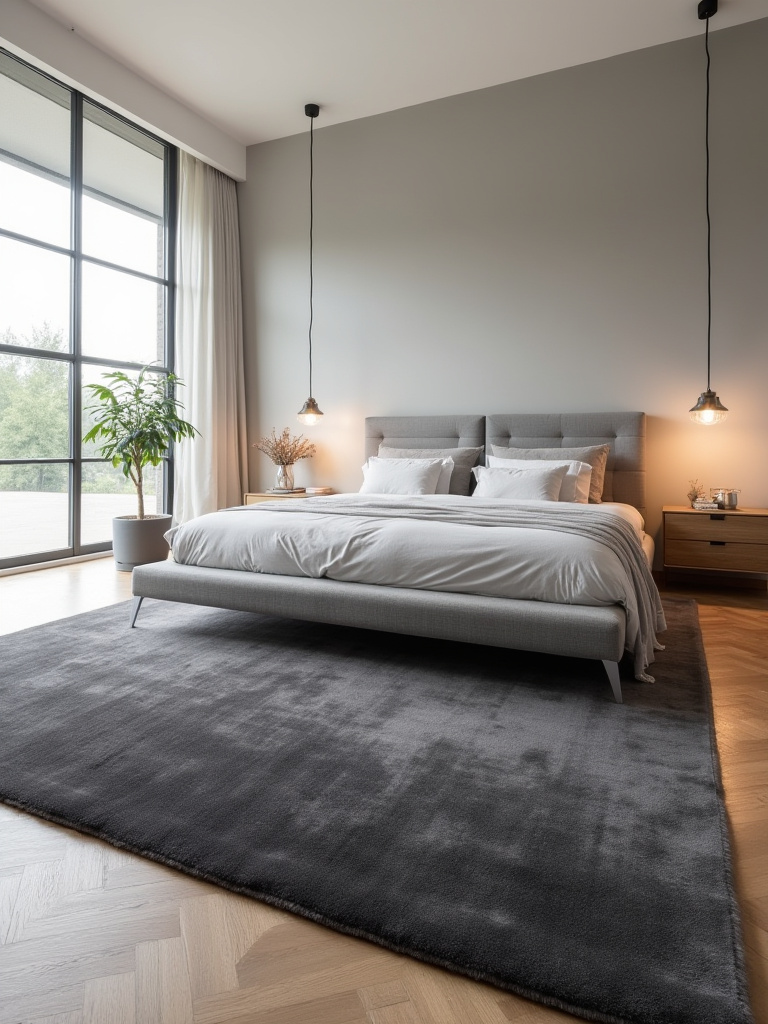
The cardinal sin of rug placement is buying one that’s too small. A tiny rug floating in the middle of the room just makes everything look disconnected and cheap. The rule is simple: the rug should be large enough to sit under at least the bottom two-thirds of your bed and extend 18-24 inches on either side. It should unify the bed and nightstands into a single, cohesive unit. That’s what gives it that grounded, intentional look.
Now, let’s talk about where to put all the stuff you actually own.
10. Integrate Concealed Storage to Maintain a Seamless Look
The secret to a serene, minimalist bedroom isn’t owning less stuff (though it helps). It’s having a smart, invisible place for everything you own. Concealed storage—like a platform bed with drawers, a wardrobe with flat-paneled doors, or an ottoman that opens up—is the engine that makes minimalism livable. It allows you to maintain those beautiful, clean surfaces we talked about.
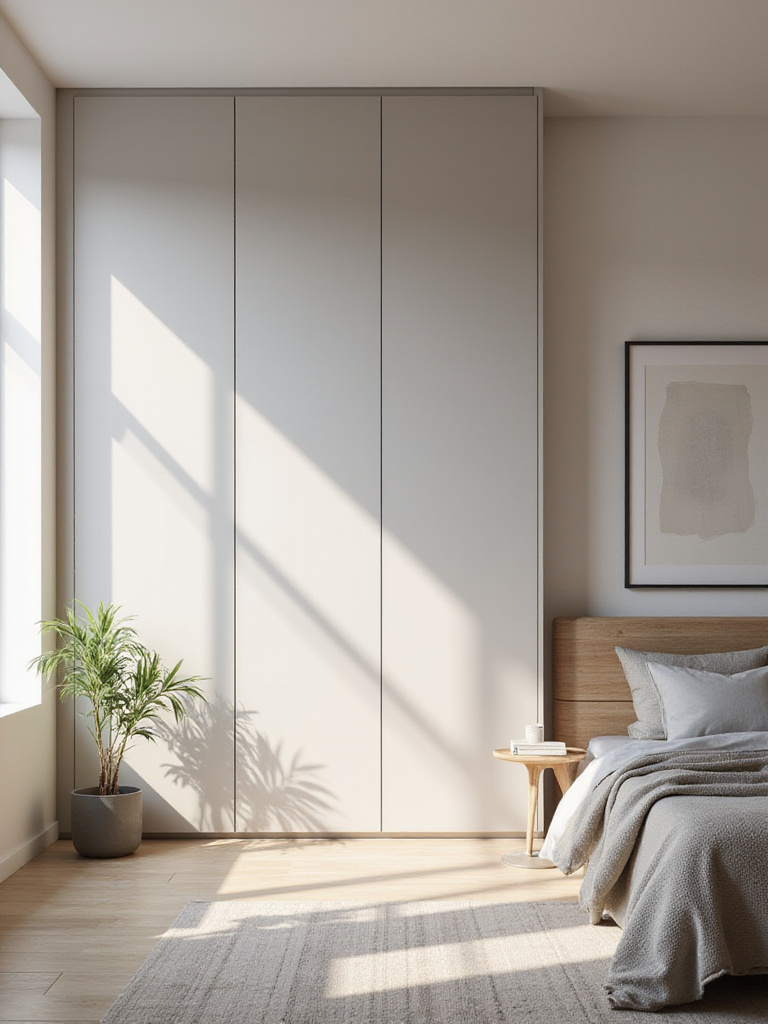
Everyone thinks they need a big, statement dresser. But often, the better solution is a floor-to-ceiling built-in wardrobe that matches the wall color. It provides twice the storage but visually disappears into the architecture of the room, making the space feel larger and far less cluttered. I’ve seen this single change transform a room from feeling chaotic to feeling impossibly serene. It’s about storing your life without letting it visually take over your sanctuary.
Mastering Modern Elements: Furniture & Fixtures (Part 2)
We’re diving deeper into the details that separate a “nice” room from a truly refined one. The smallest hardware choices and the use of vertical space have an outsized impact on the final feeling of your modern retreat.
11. Opt for Handleless or Integrated Handle Cabinetry and Dressers
This is one of those subtle details that makes a huge difference. By removing traditional hardware, you create an uninterrupted visual plane. Your dresser or wardrobe stops being a collection of drawers and becomes a single, sculptural form. It’s a small change that massively reduces visual noise and contributes to a sleek, sophisticated feel.
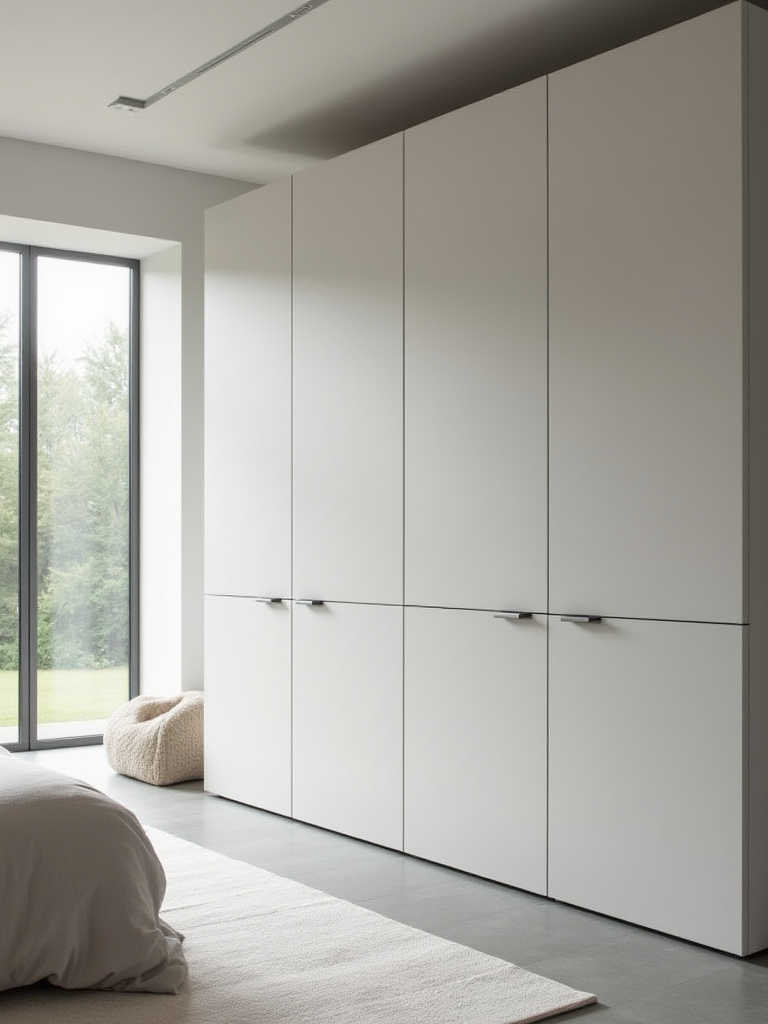
The fear is that it will be impractical, but modern mechanisms are fantastic. Push-to-open hardware gives you a completely seamless look, while integrated handles (like a J-pull or a recessed channel) are both functional and minimalist. My advice is to go for a high-quality matte or fingerprint-resistant finish. There’s nothing less serene than a beautiful handleless cabinet covered in smudges. It’s the ultimate marriage of form and function.
And this idea of streamlining isn’t limited to cabinets.
12. Explore Wall-Mounted Shelving for a Floating, Minimalist Feel
Want to make a room feel bigger and more open instantly? Get your storage off the floor. Wall-mounted or “floating” shelves leverage vertical space, creating an airy feeling that a traditional bookshelf just can’t match. It draws the eye upward and preserves that clean, uncluttered floor that is so crucial to modern design.
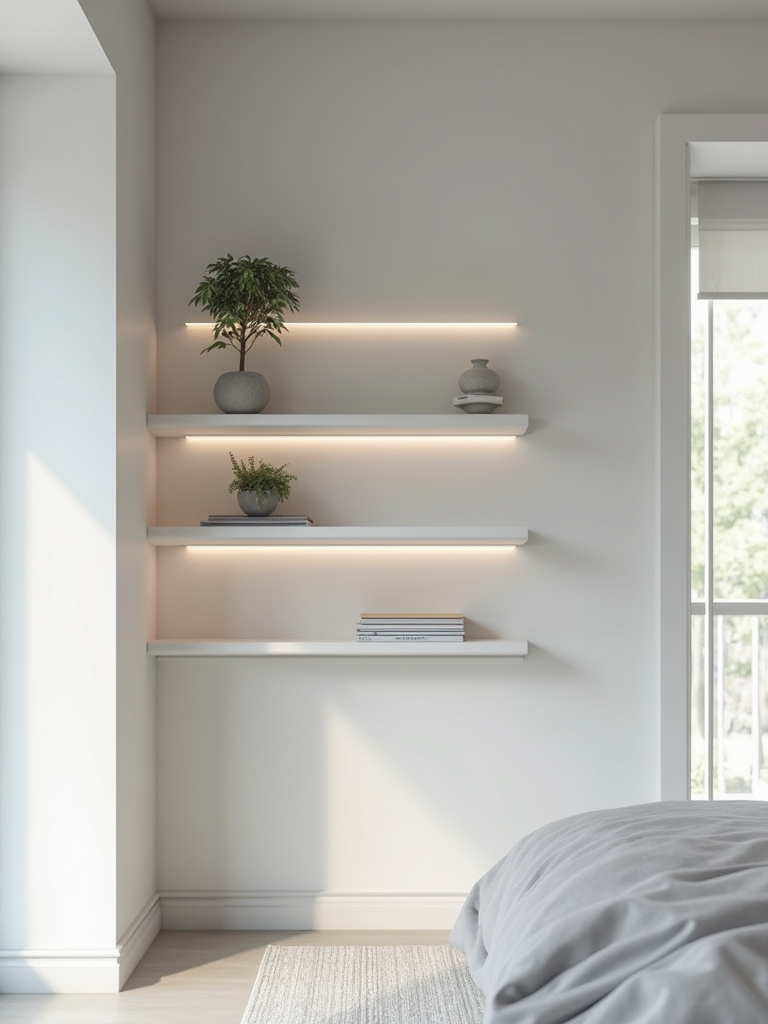
But here’s the key: treat floating shelves like a gallery, not a storage unit. The biggest mistake is to cram them full of books, knick-knacks, and clutter. That just moves the mess from the floor to the wall. The ‘less is more’ rule is critical here. Curate a few meaningful objects—a beautiful book, a small plant, a single ceramic piece—and give them room to breathe. The negative space around the objects is just as important as the objects themselves.
Elevating Style: Textures, Art & Smart Solutions (Part 1)
Now for the fun part. The foundation is built, the furniture is in place. This is where we inject personality, warmth, and intelligence into the space, turning it from a room into a retreat that is uniquely yours.
13. Introduce Diverse Textures Through Linens, Throws, and Cushions
Texture is the secret weapon of minimalist design. In a room with a neutral color palette, texture is what keeps it from feeling flat and sterile. It’s how you create richness and depth. Think about the difference between crisp cotton percale sheets, a chunky wool knit throw, a soft velvet pillow, and a natural linen duvet. Each one reflects light differently and feels different to the touch. This is what makes a room feel inviting and luxurious.

I once worked with a client who loved the idea of an all-white bedroom but was afraid it would feel like a hospital room. The solution was all texture. We used a rumpled linen duvet, a plush bouclé armchair, a hand-knotted wool rug, and gauzy linen curtains. The room was entirely monochromatic, but it felt incredibly warm, complex, and sophisticated. Don’t underestimate the power of how things feel.
Next, you need a focal point.
14. Curate Thoughtful Wall Art to Add Visual Interest (Less is More)
Your wall art is not just a placeholder. It is the soul of the room. And like a good conversation, it’s about quality, not quantity. One large, impactful piece of art that you genuinely connect with is infinitely better than a gallery wall of ten small, random prints you bought just to fill the space.
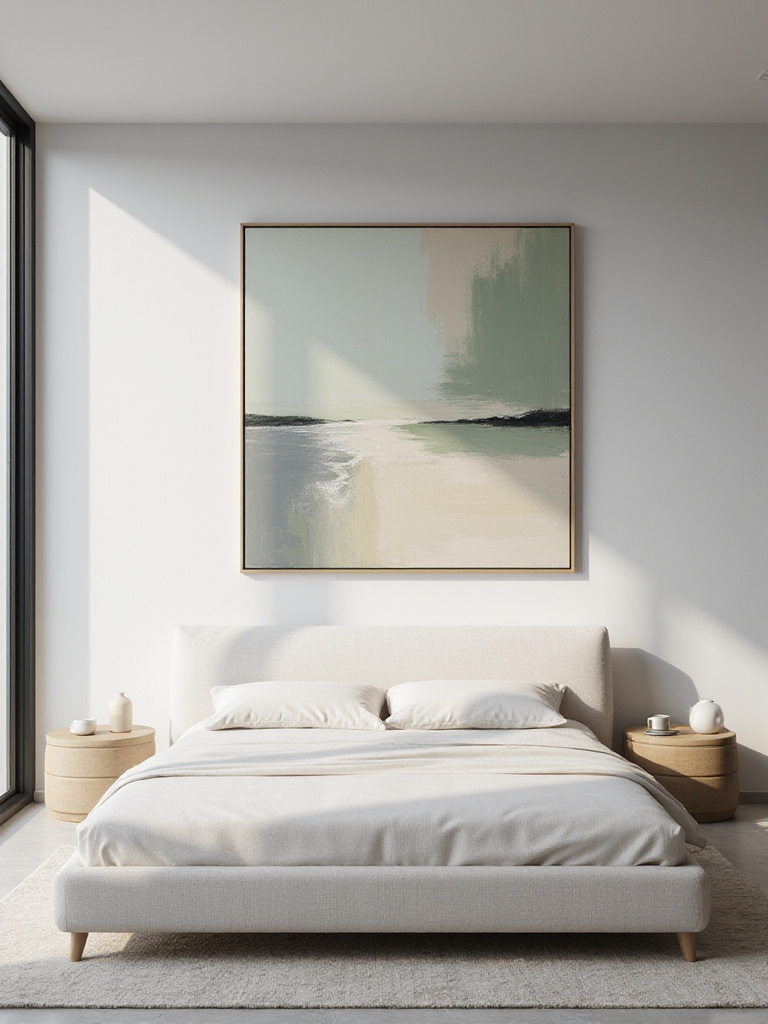
The mistake I see all the time is art that is hung too high or is too small for the wall. The shortcut is this: the center of the piece should be at eye level (about 57-60 inches from the floor), and if it’s hanging over furniture like a bed or dresser, it should be about two-thirds the width of the furniture below it. This creates a sense of balance and makes the art feel intentionally placed, not like an afterthought.
Just as art reflects light, mirrors can multiply it.
15. Maximize Reflective Surfaces with Strategically Placed Mirrors
A mirror is the oldest trick in the book for a reason: it works. It can visually double the size of your space and amplify natural light like nothing else. But placement is everything. A poorly placed mirror just reflects more clutter or a boring blank wall. A strategically placed mirror, on the other hand, can create magic.
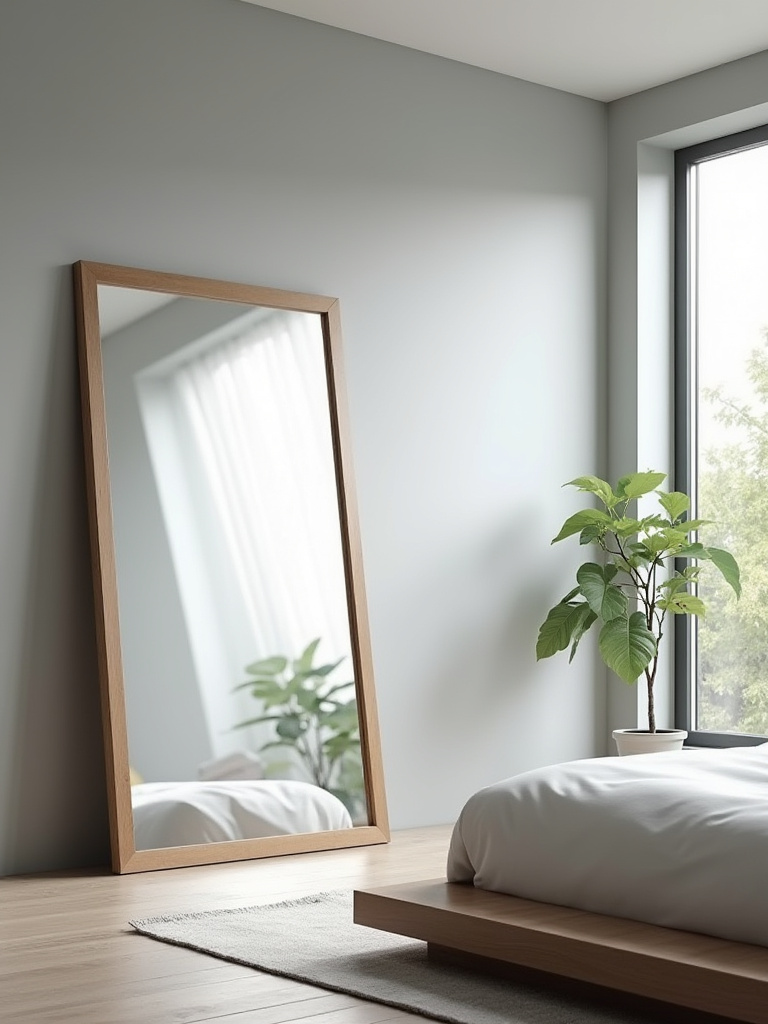
Here’s the secret: place your mirror opposite a window. It will capture the outdoor view and bounce all that beautiful natural light back into the room, effectively creating a second window. An oversized leaning floor mirror is a fantastic modern choice—it feels casual yet dramatic and requires no installation. It’s an instant fix for a small or dark room.
And for controlling that light, we need modern solutions.
16. Incorporating Smart Home Technology for Seamless Ambiance Control
This is where traditional zen principles meet the digital age. Good technology should be invisible. It should serve you without demanding your attention. In the bedroom, this means automating serenity. Smart lighting, thermostats, and speakers can create the perfect environment with a single word or tap.
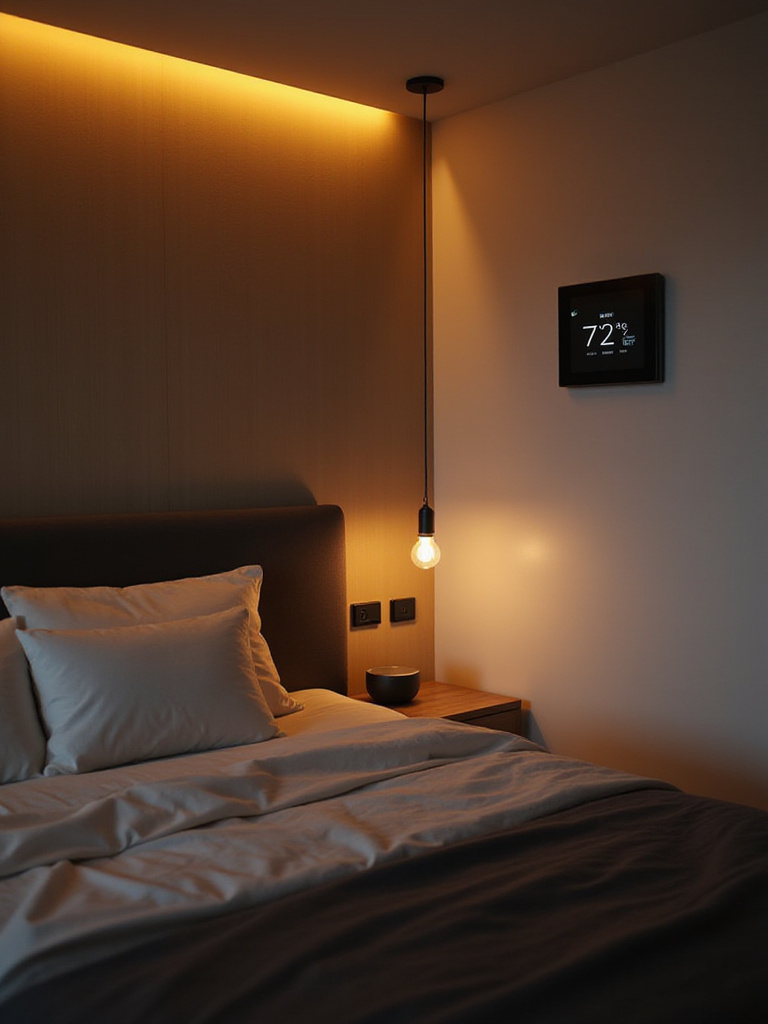
Imagine a “Good Night” routine: you say the words, and the lights slowly dim to a warm glow, the thermostat lowers to the perfect sleep temperature, and a gentle soundscape begins to play. This isn’t a gimmick; it’s using technology to create rituals that signal to your body and mind that it’s time to rest. The key is to keep it simple. Start with smart bulbs, as they’re the easiest way to have a huge impact on the mood of your room.
Elevating Style: Textures, Art & Smart Solutions (Part 2)
We continue to layer in elements that make the space feel alive and purposeful. These final touches are about creating zones for living, not just for sleeping, and infusing your sanctuary with organic life.
17. Bring Life with Low-Maintenance Indoor Plants in Modern Planters
Every room needs something alive in it. Plants are the easiest way to bring organic texture, color, and vitality into a modern space. They literally breathe life into a room, purifying the air and softening the hard lines of minimalist design. And you don’t need a green thumb to make it work.
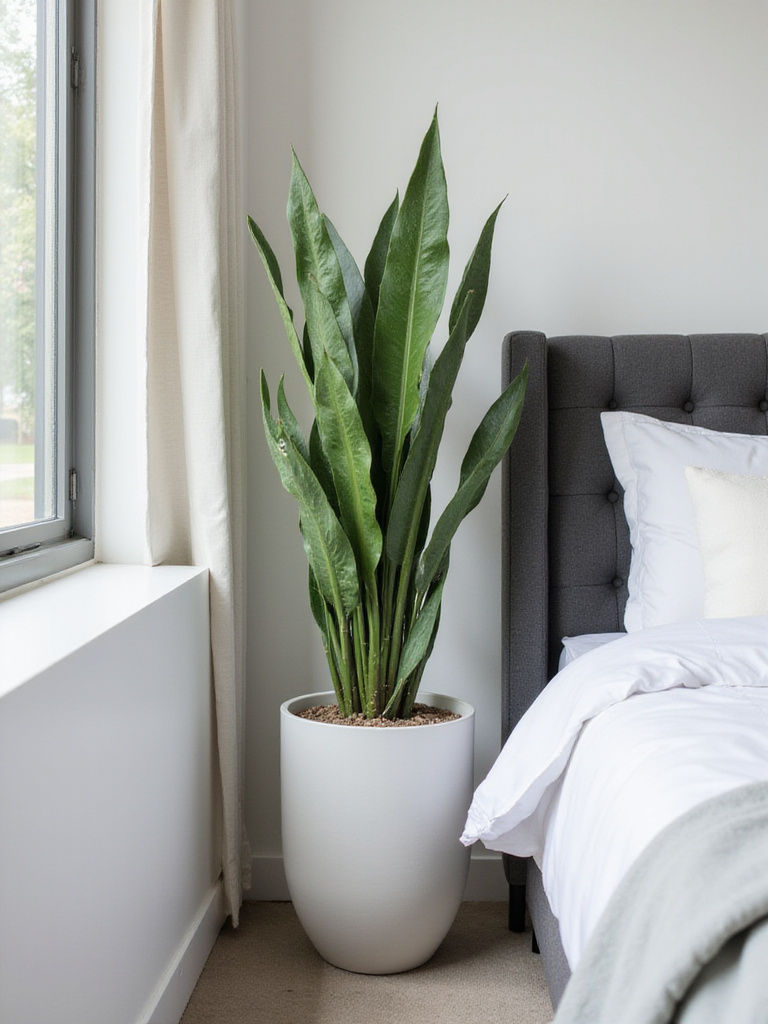
The key is to choose the right plant for the right spot. Low-maintenance heroes like Snake Plants, ZZ Plants, and Pothos can tolerate lower light and infrequent watering, making them perfect for bedrooms. But please, don’t forget the planter. The planter is as important as the plant itself. Choose one with a simple, sculptural shape and a material that complements your aesthetic—matte ceramic, concrete, or metal are always good choices. It elevates the plant from a simple object to a piece of living art.
Just as a plant creates a focal point, a chair can create a destination.
18. Design a Dedicated Seating Nook for Relaxation or Reading
Your bedroom shouldn’t just be for sleeping. By carving out a small corner for a comfortable chair and a good light, you create a dedicated zone for quiet activities. This is your personal space to read, meditate, or simply sit with a cup of tea, away from the demands of the rest of the house. It transforms your bedroom from a utility space into a true retreat.
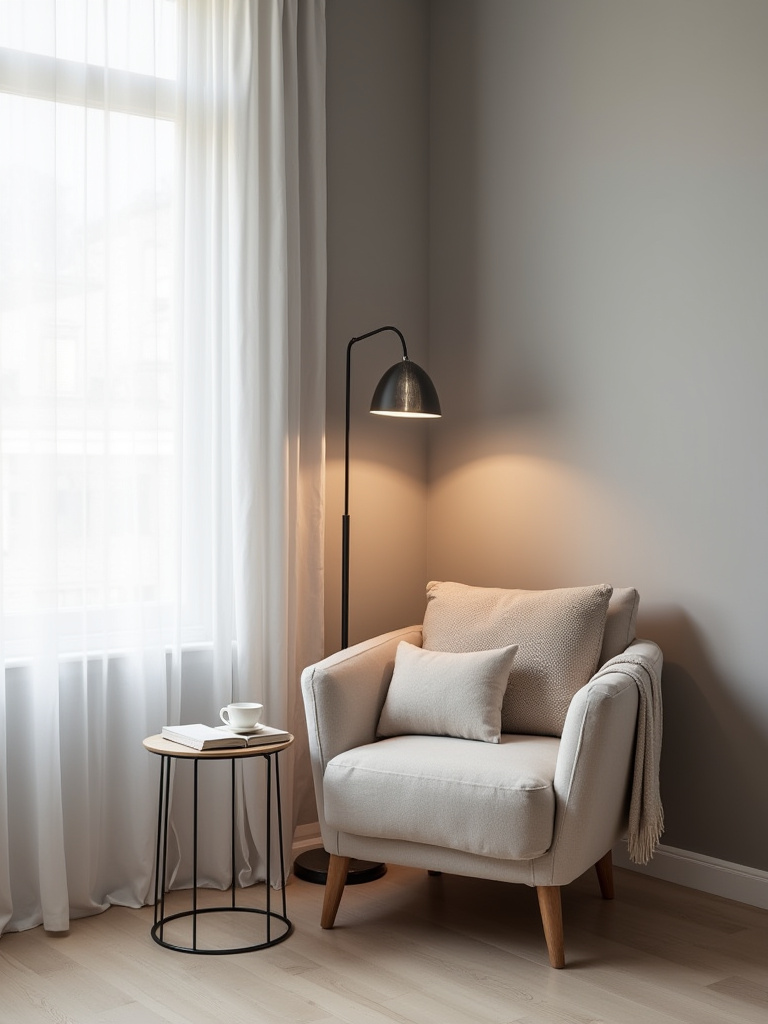
I once had a client with a small bedroom who thought they didn’t have room for this. We found a slim armchair and a tiny C-shaped table that could slide over the arm. We placed it by the window with a simple wall-mounted reading light above it. It instantly became their favorite spot in the whole apartment—a place to decompress from the day before ever getting into bed. It’s a signal to your brain that this room is for more than just unconsciousness; it’s for restoration.
Refined Living: Accessorizing & Sustaining Modern Aesthetics (Part 1)
A beautiful modern bedroom is one thing. Keeping it that way is another. This is about building the habits and systems that sustain the serenity you’ve worked so hard to create. It’s about making mindful living an effortless part of your daily routine.
19. Master the Art of ‘Pared-Down’ Decor for Impactful Styling
This goes beyond just decluttering. This is about curating. It’s the art of having fewer things, but better things. Instead of ten small, forgettable objects on your dresser, have one beautiful, sculptural vase. Instead of five different pillows, have two made from luxurious, tactile material. By removing the noise, you allow the quality and form of your chosen pieces to truly shine.
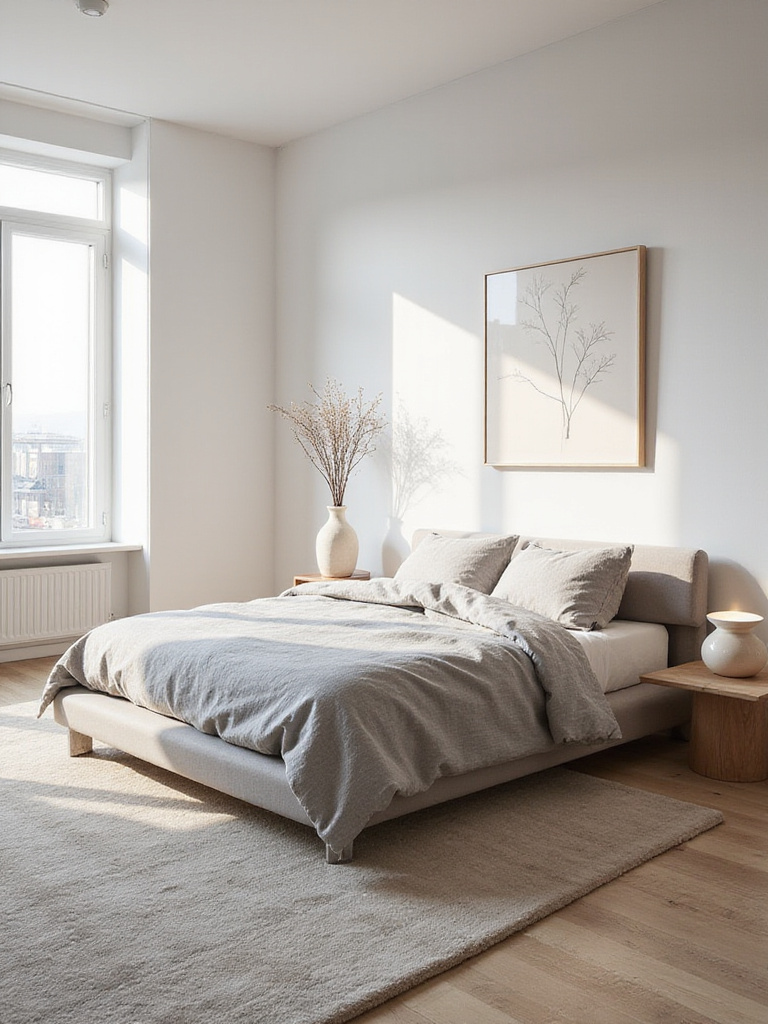
Think of your surfaces as a gallery. Each item should earn its place. A good way to test this is to remove everything from a surface. Live with it being empty for a day. Then, slowly add back only the items that feel essential or bring you genuine joy. You’ll be surprised at how little you actually need. This practice celebrates negative space, giving your eyes—and your mind—a place to rest.
This is the very essence of modern sophistication.
20. Select Minimalist Window Treatments for Privacy and Light Control
Bulky, ornate curtains can kill a modern aesthetic instantly. Your window treatments should be clean, functional, and almost invisible. Their job is to control light and provide privacy without drawing unnecessary attention to themselves. Simple roller blinds, cellular shades, or streamlined panels are perfect choices.
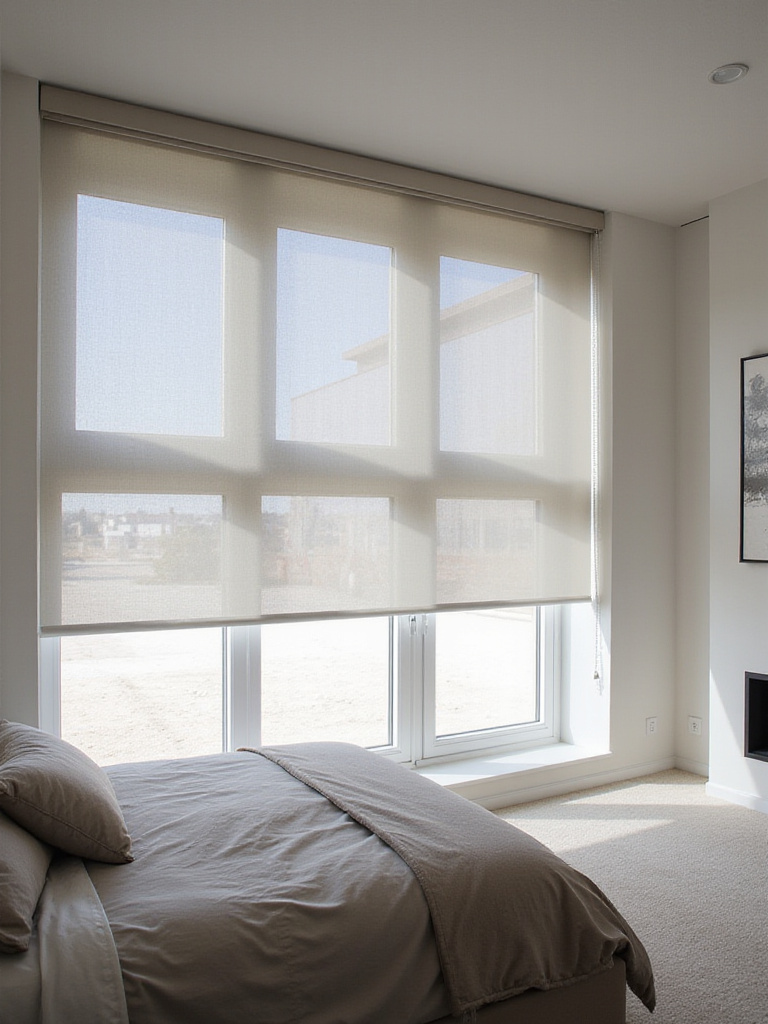
The pro move here is to consider a double system. I often recommend installing two roller blinds on the same window: one that’s sheer or light-filtering for daytime privacy, and one that’s a full blackout shade for sleeping. This gives you maximum flexibility with a minimal footprint. And if you can, go motorized. There’s something undeniably modern and serene about shades that glide up or down silently with the press of a button.
Of course, the most common source of visual clutter isn’t decor at all.
21. Create a Clutter-Free Zone Around the Bedside Table
Your bedside table is the last thing you see at night and the first thing you see in the morning. If it’s a chaotic mess of charging cables, old receipts, and water glasses, you are starting and ending your day with a small dose of stress. Creating a clutter-free zone here is non-negotiable for good sleep hygiene.
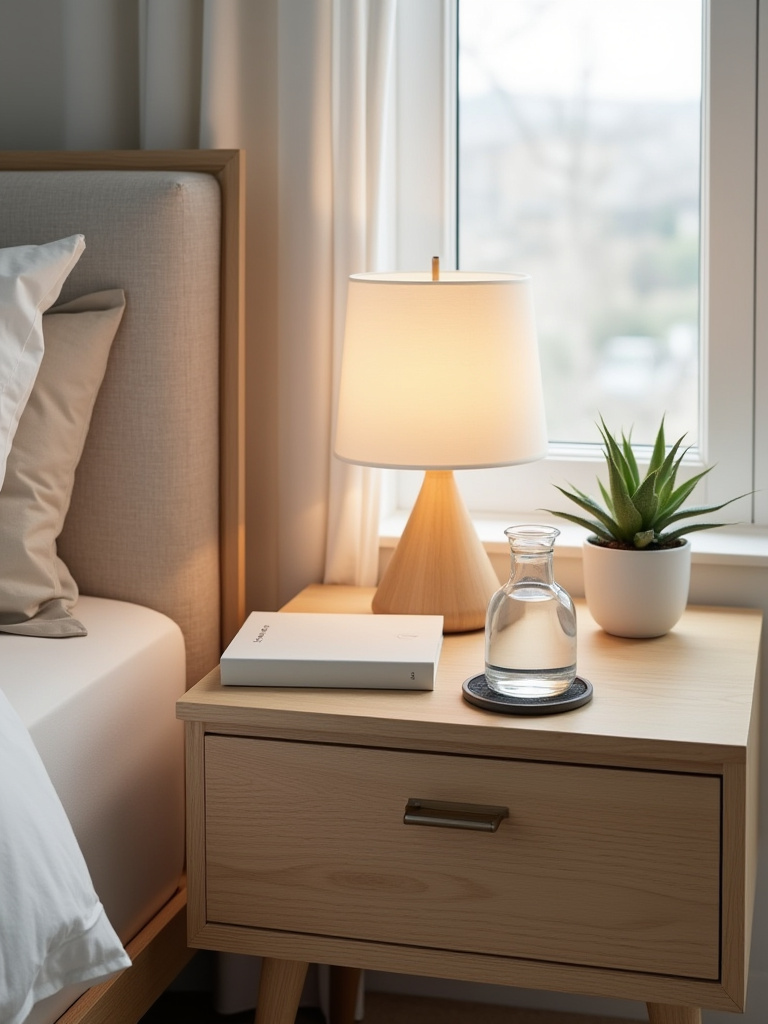
The system is simple. Have a home for everything. Your book goes on the shelf or in the drawer. Your phone charges on a discreet wireless pad. Small items like lip balm or reading glasses go into a small, beautiful tray or a lidded box. It’s not about having nothing there; it’s about having everything contained and organized. This small ritual of tidying your nightstand before bed is a powerful way to signal to your brain that the day is done.
And the biggest enemy of a clean bedside is the cable monster.
22. Implement Cable Management for an Uninterrupted Aesthetic
Nothing shatters the illusion of serene, modern living faster than a tangled mess of wires. It’s the digital equivalent of dust bunnies. Managing your cables is not a fussy extra step; it is an essential part of creating a calm environment. Hiding them behind furniture, bundling them into a fabric sleeve, or running them through a painted-to-match cord cover is absolutely crucial.
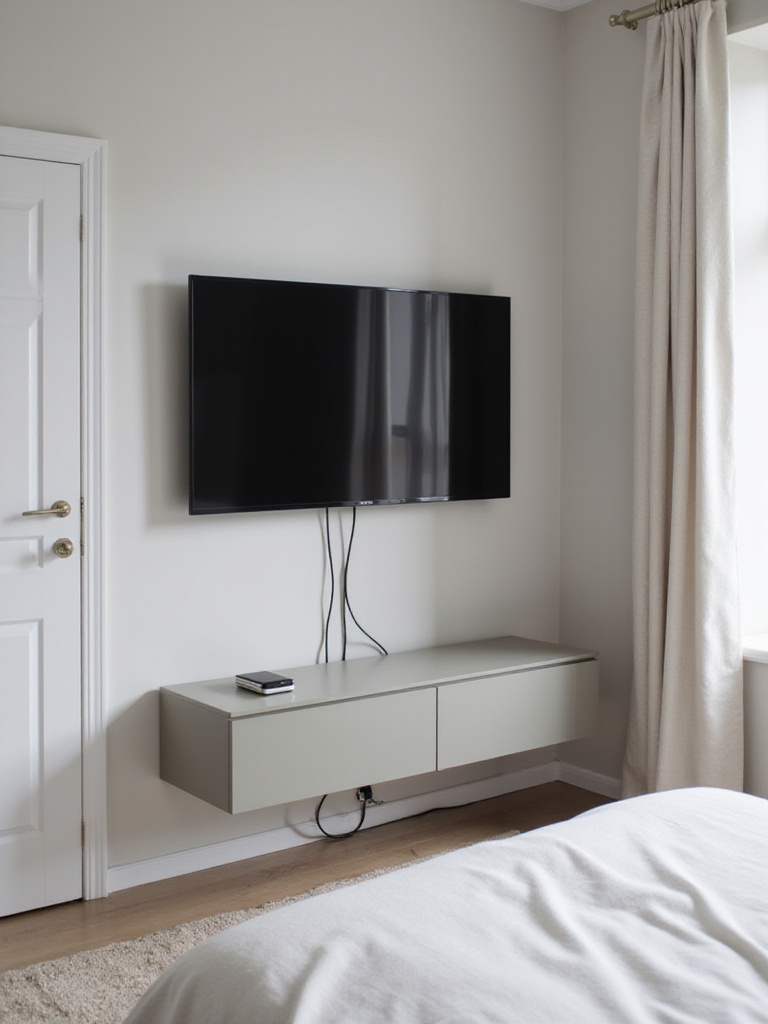
I had a client whose desk was in their bedroom, and the “cable spaghetti” under it was a constant source of low-level anxiety. We spent 30 minutes with a pack of adhesive clips and a cable management box that hides the power strip. The transformation was immediate. It wasn’t just visually cleaner; they said it made them feel more focused and in control. Don’t underestimate the psychological impact of taming your tech clutter.
Refined Living: Accessorizing & Sustaining Modern Aesthetics (Part 2)
Finally, we ensure your modern sanctuary doesn’t become a static museum piece. A truly well-designed space evolves with you and with the seasons, and is supported by simple, sustainable habits that keep it feeling fresh and calm.
23. Rotate Seasonal Accents to Refresh Your Modern Space Easily
A modern bedroom doesn’t have to be seasonless. In fact, acknowledging the time of year is a core principle of traditional Japanese design. But you can do it without cheesy, themed decor. A simple rotation of small accents is all it takes to keep your space feeling fresh and connected to the world outside.
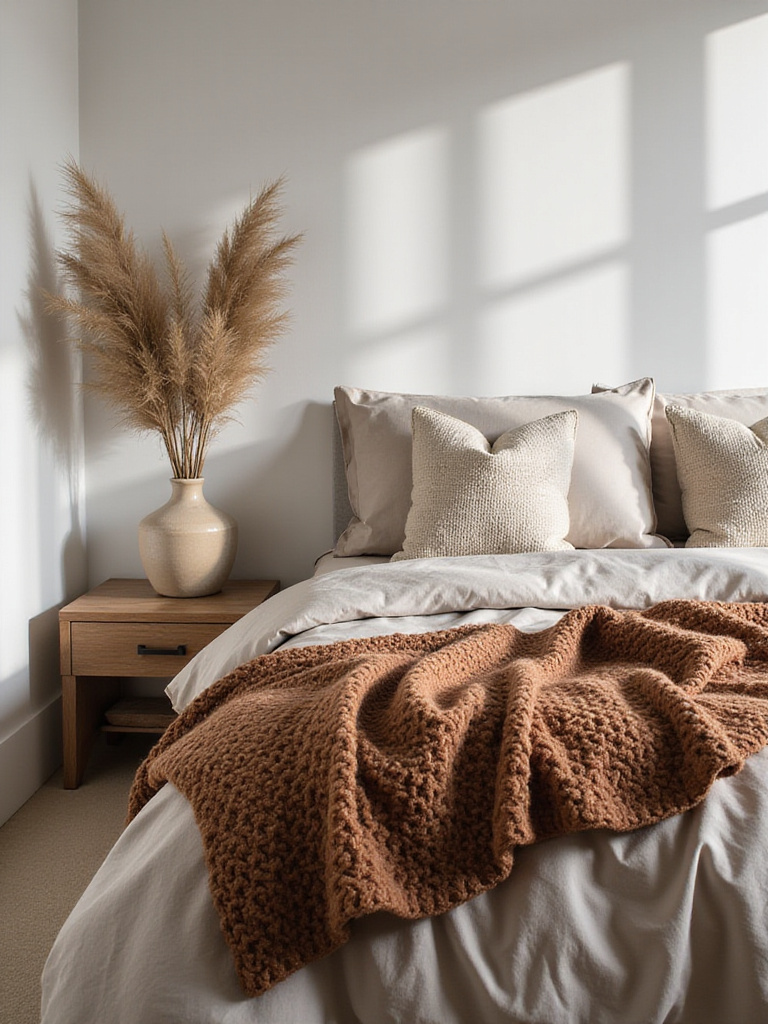
Here’s the system: have a small bin for each season. In the fall, swap out your lightweight linen throw for a chunky wool or cashmere one in a warmer tone. In the spring, switch the dried botanicals in your vase for a single fresh branch. This prevents decor fatigue and allows you to enjoy your space in new ways throughout the year. It’s a cost-effective, high-impact way to keep your sanctuary feeling alive and dynamic.
This all relies on one final, critical practice.
24. Establish a ‘Reset’ Routine for Daily Decluttering and Organization
This is the single most important habit for maintaining a serene space. A “reset” is not cleaning. It’s a 5-10 minute mindfulness practice at the end of the day where you simply put things back in their home. Fold the throw blanket. Put the book on the nightstand. Place the stray piece of clothing in the hamper. It is the act of closing all the physical tabs you opened during the day.
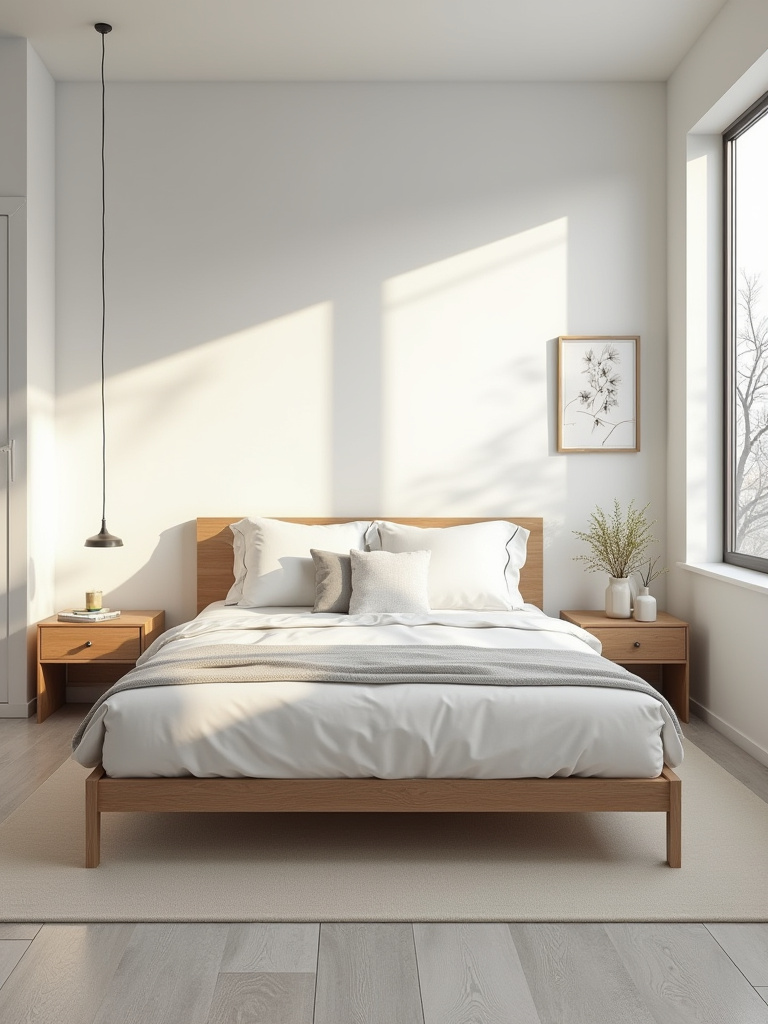
The biggest lie we tell ourselves is, “I’ll do it later.” Later becomes tomorrow, and tomorrow becomes a weekend spent wrestling back control from the clutter. A daily reset prevents this from ever happening. It is the small, consistent effort that ensures your bedroom remains the sanctuary you designed it to be, every single day. It is the most powerful tool you have.
Conclusion
So, that’s the real story. Creating a stunning modern bedroom isn’t about a shopping list. It’s about a series of intentional choices that support a calmer, more mindful way of living. It starts with a solid foundation of planning and builds layer by layer—with thoughtful furniture, purposeful lighting, and textures that feel as good as they look. It’s about creating a personal sanctuary that serves you, not just a room that impresses others.
The goal isn’t to do all 24 of these things tomorrow. The goal is to start with one. Pick the one that speaks to you the most—maybe it’s finally tackling your cable management, or maybe it’s finding one perfect piece of art. Take that first step. Because a truly modern space is one that evolves with you, and the process of creating it is just as important as the final result. You deserve a space that brings you peace. Go create it.