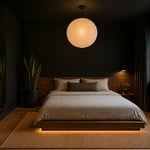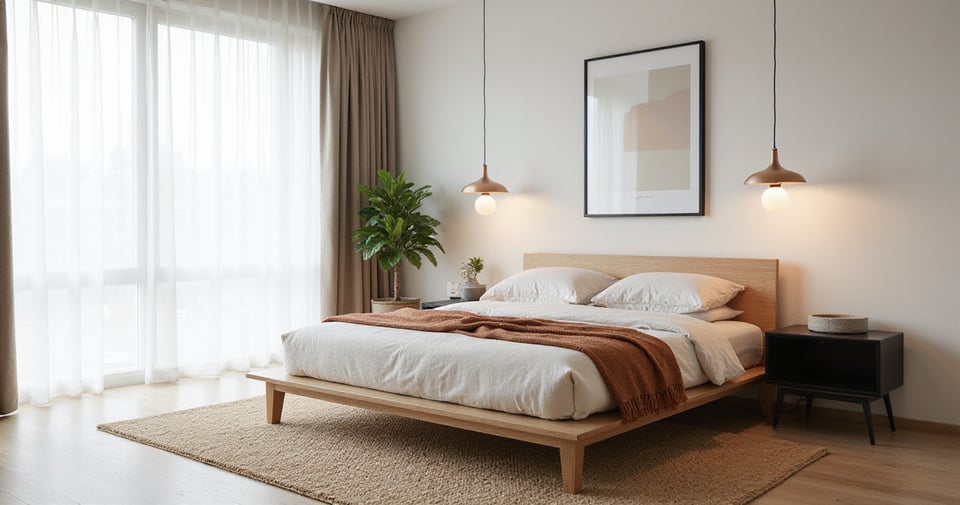
You know what people always ask me? It’s not just “How do I make my room look modern?” It’s something deeper. They want to know how to create a space that feels calm and restorative, a place where their mind can actually be quiet. But they also have phones, laptops, and smart speakers. They’re worried a “zen” bedroom means giving up the technology that makes their life easier. They think it has to be one or the other.
That’s the fundamental misunderstanding. The goal isn’t to create a cold, empty museum. The true art of modern Japanese-inspired design is about intentionality. It’s about making your space, and your technology, work for your well-being, not against it. It’s about creating a quiet backdrop for your life so you can finally unclench your jaw at the end of the day.
This isn’t about following a list of trends. It’s a philosophy. So, let’s go through the real principles—the things that actually matter.
Foundations & Planning: Defining Your Modern Space
Before you buy a single thing, the real work happens in your head. A truly serene space is planned with intention, not assembled by impulse. This is where we create the foundation for tranquility.
1. Define Your Modern Aesthetic for Cohesive Style
People hear “define your aesthetic” and think they need to pick a label off a menu—Minimalist, Japandi, Scandinavian. That’s corporate speak. What it really means is: Sit quietly and ask yourself what ‘calm’ looks like to you. Forget trends. The real goal is to create a visual language for your room that soothes your specific mind. When you have this, every decision that follows becomes simple.
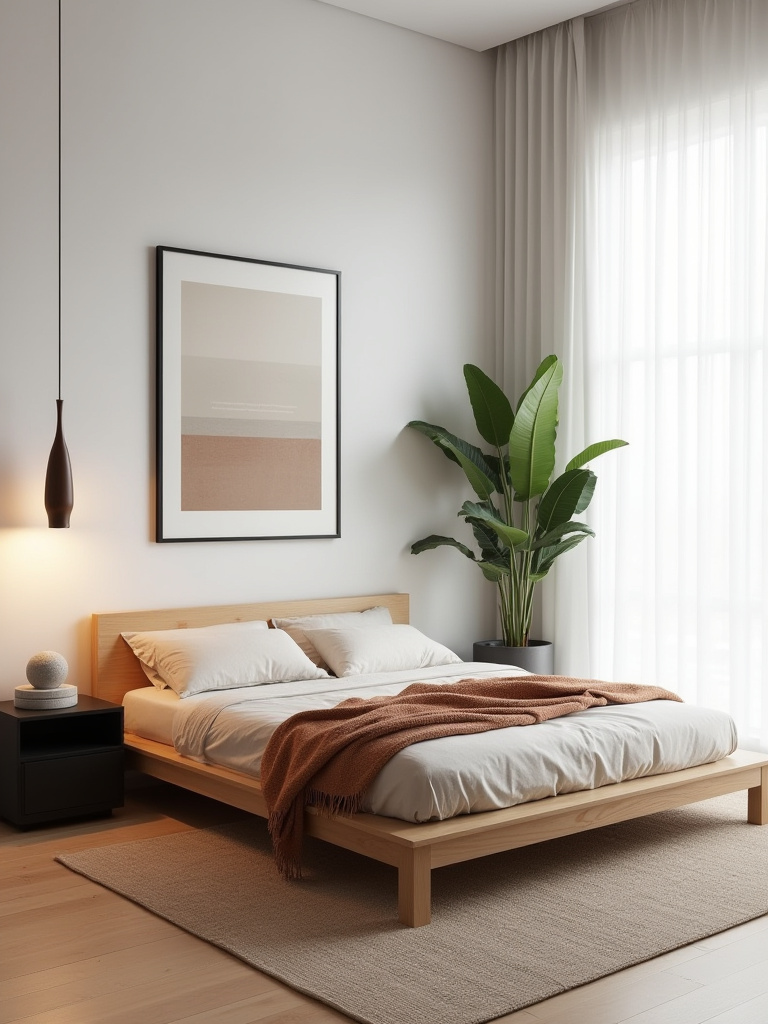
The biggest mistake I see is people making Pinterest boards full of rooms they like, but they never stop to understand why they like them. It’s a fast track to a room that looks fine, but feels hollow. Instead, deconstruct your inspiration. Is it the warm wood? The lack of clutter on the surfaces? The way the light hits a textured wall? Identify those core components. That’s your true aesthetic, and it’s a compass that will save you from expensive, mismatched purchases.
Once you have this clarity, your space will come together with a sense of purpose that feels deeply personal and truly calming. Next, we apply that clarity to what you already own.
2. Declutter Ruthlessly for an Instantly Sleeker Look
This is the most impactful and least expensive design move you can make. Every object in your room holds visual weight and sends a signal to your brain. Too many signals create noise, and that noise creates stress. Decluttering isn’t about ‘tidying up’—it’s about silencing that visual static so your mind has room to breathe. The feeling of spaciousness you get isn’t an illusion; it’s a real reduction in cognitive load.
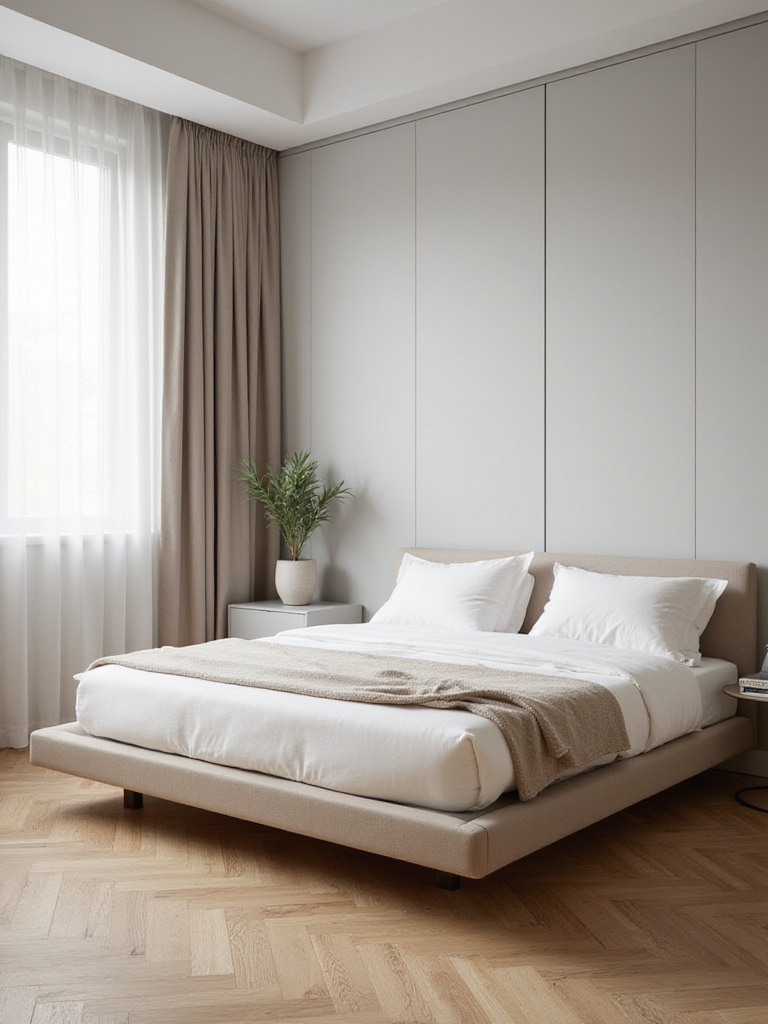
Can we talk about the biggest piece of BS in organizing? It’s the idea that you should buy storage containers to solve your clutter problem. No. You are just buying expensive boxes for your stress. Declutter first. Get rid of anything that doesn’t serve a distinct purpose or bring you a sense of quiet joy. Only then can you see what storage you actually need. Empty every drawer, every surface. Handle each item once. Keep, donate, or trash. Be merciless. Your serenity depends on it.
With the unnecessary gone, you now have a clean canvas to paint with a color palette that will maximize that newfound calm.
3. Choose a Sophisticated Neutral Palette to Maximize Serenity
A neutral palette is the bedrock of a serene space. Think of colors like off-white, soft grays, and warm beiges not as “boring,” but as a quiet stage for your life. Bright, saturated colors are active and demanding; they ask for your attention. Neutrals are passive. They reflect light, create an illusion of space, and give your eyes a place to rest, which in turn lets your mind rest. This is why high-end spas and meditation rooms don’t have screaming-red accent walls.
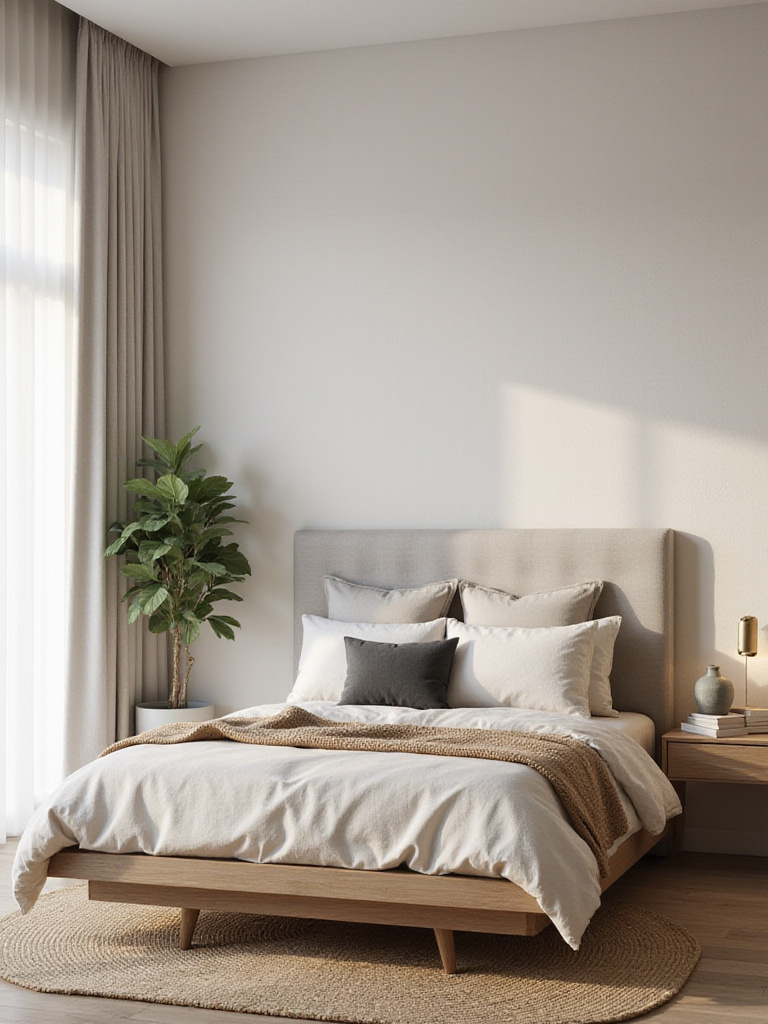
I used to think any “greige” would do. Then I learned the hard way about undertones. Mixing a cool, blue-toned gray with a warm, yellow-toned beige can make a room feel subtly ‘off,’ creating a low-grade visual tension you can’t quite put your finger on. The shortcut I wish I’d known earlier is to get paint swatches, put them on your wall, and look at them at different times of day. See how the light changes them. Choose a primary neutral and then layer other shades from the same temperature family to create depth without chaos.
This quiet, cohesive palette is the perfect environment for the most important design element you have: natural light.
4. Integrate Natural Light Effectively for Brighter Ambiance
Natural light is more than just illumination; it’s a vital connection to the outside world that regulates our energy and mood. A room flooded with daylight feels larger, cleaner, and more alive. In Japanese architecture, this is part of the concept of shakkei, or “borrowed scenery.” You’re not just lighting a room; you’re inviting the energy of the outside world in. Maximizing this is key to creating a space that feels both invigorating and calm.
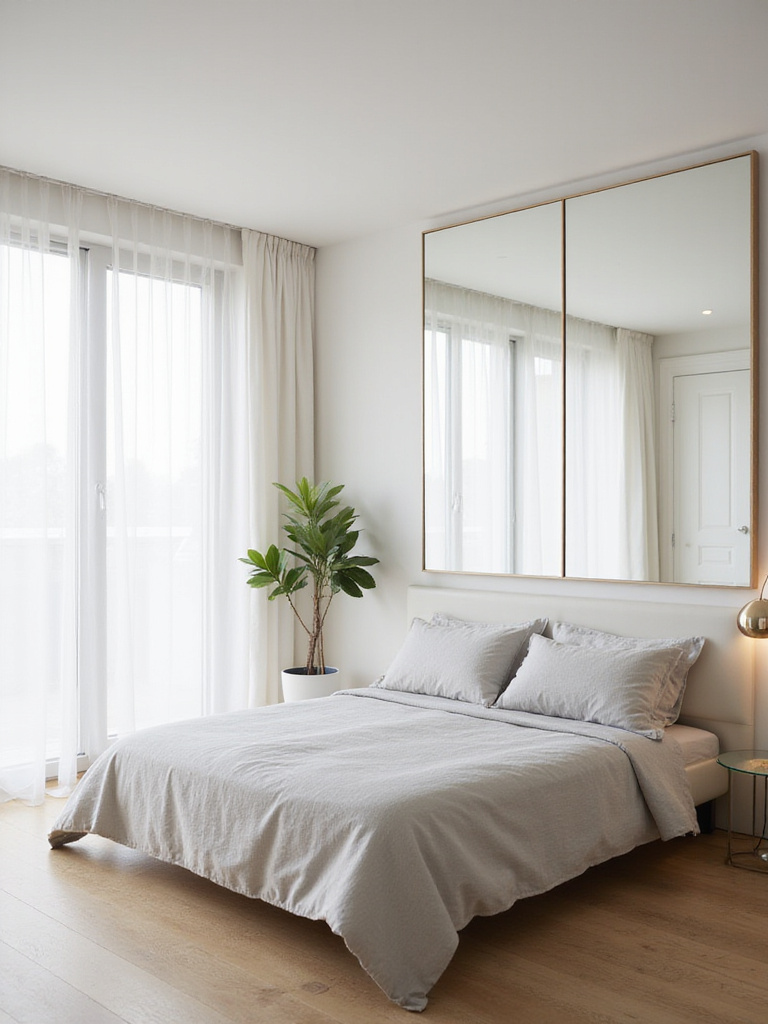
People often hang heavy, dark drapes that block a third of the window even when they’re open. This is a huge mistake. The fix is simple: use sheer or semi-sheer curtains in a light color and mount the curtain rod wider and higher than the window frame. When open, the curtains will frame the window, not cover it, maximizing every bit of glass. For the ultimate trick, place a large mirror on the wall opposite your main window. It literally doubles the light in the room.
Now that the room is bright and open, we need to ensure you can move through it with ease.
5. Plan Essential Furniture Layout for Optimal Flow
A good layout is an invisible luxury. You only notice a layout when it’s bad—when you’re squeezing past the bed or can’t open a dresser drawer all the way. A well-planned room allows for effortless movement, which creates a subconscious sense of ease. In design, we call this flow. It’s about respecting the empty space—the ma—as much as the objects in it. That negative space is what allows you to move and breathe freely.
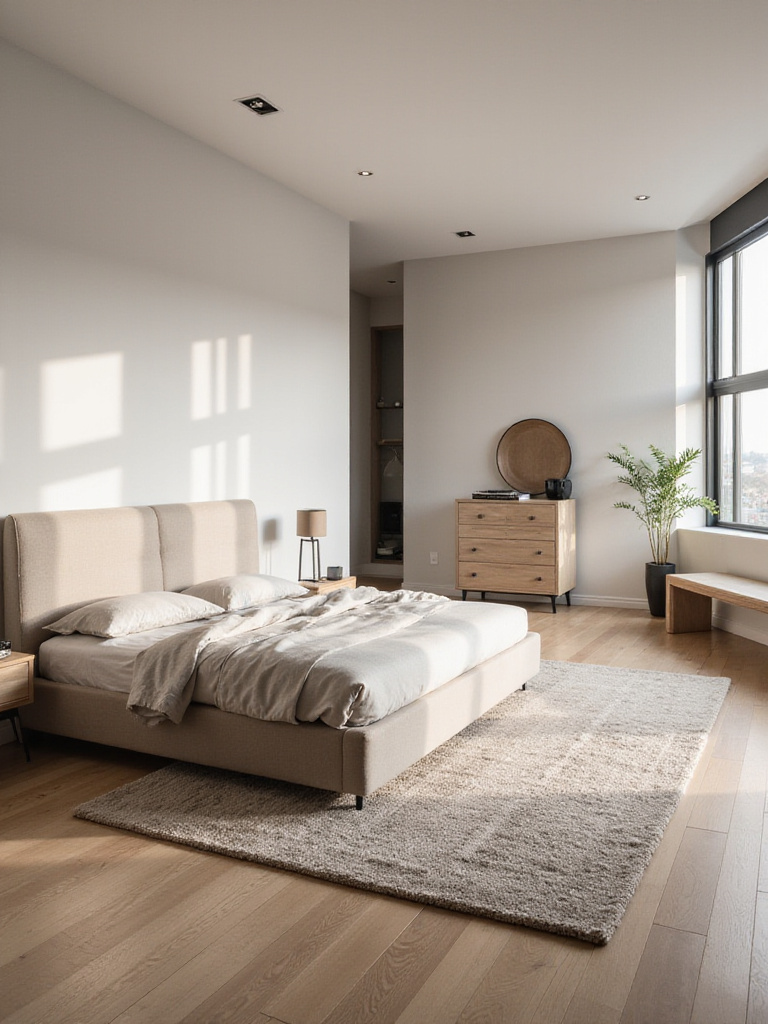
Before you move a single heavy object, do this. I’m serious. Go get a roll of painter’s tape. Measure your bed, your dresser, your nightstands, and tape their outlines onto the floor. Then walk through the space. Can you move from the door to the closet without issue? Is there enough room to get out of both sides of the bed? This five-minute trick has saved my clients hours of back-breaking work and prevents the classic mistake of trying to force too much furniture into a room.
With the blueprint for your space set, it’s time to choose the physical elements that will bring it to life.
Core Elements: Selecting & Arranging Modern Furniture
Furniture isn’t just functional; it’s the primary sculpture in your room. The right pieces define the space with quiet confidence. The wrong pieces add visual noise. Here, we choose with intention.
6. Select Low-Profile, Clean-Lined Furniture for Minimalism
Low-profile furniture—pieces that sit closer to the ground—creates a sense of stability and calm. By lowering the room’s visual center of gravity, it makes ceilings feel higher and the space more open and grounded. Think of a traditional Japanese room, where life happens closer to the floor. There’s an inherent tranquility in that. Clean lines, without ornate details or hardware, prevent the eye from getting snagged, allowing it to sweep across the room smoothly.
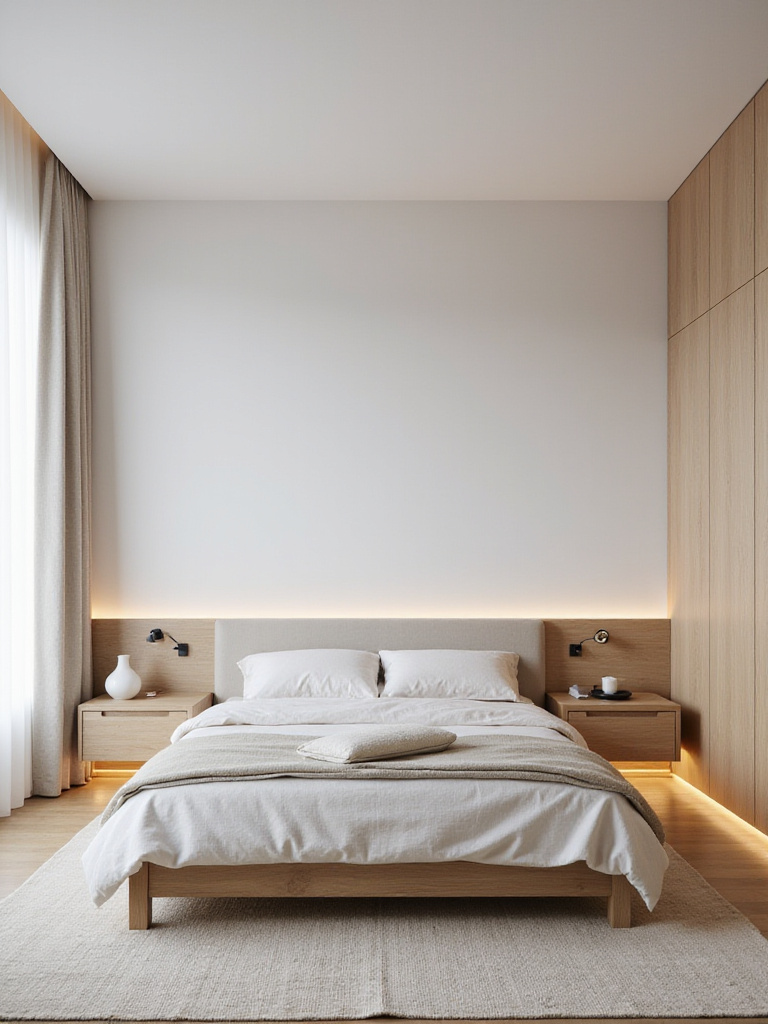
The most common misconception is that “minimalist” means uncomfortable or sterile. That’s just bad minimalism. The key is to balance the clean lines with texture. A sleek, low platform bed can feel cold on its own. But place it on a soft, high-pile wool rug and dress it with rich linen bedding, and suddenly it’s an inviting, warm sanctuary. It’s the interplay of hard and soft, smooth and textured, that creates sophisticated comfort.
This design philosophy is perfectly embodied in the modern platform bed.
7. Embrace Platform Beds to Elevate Modern Appeal
The platform bed is the hero of the modern bedroom. By its very design, it eliminates the need for a bulky, unnecessary box spring and fussy bed skirt. Instantly, your bed becomes a single, clean, integrated form. It’s a statement of simplicity. This immediately reduces visual clutter and contributes to that low-profile, grounded feeling we’re trying to achieve. It’s the epitome of “less is more.”
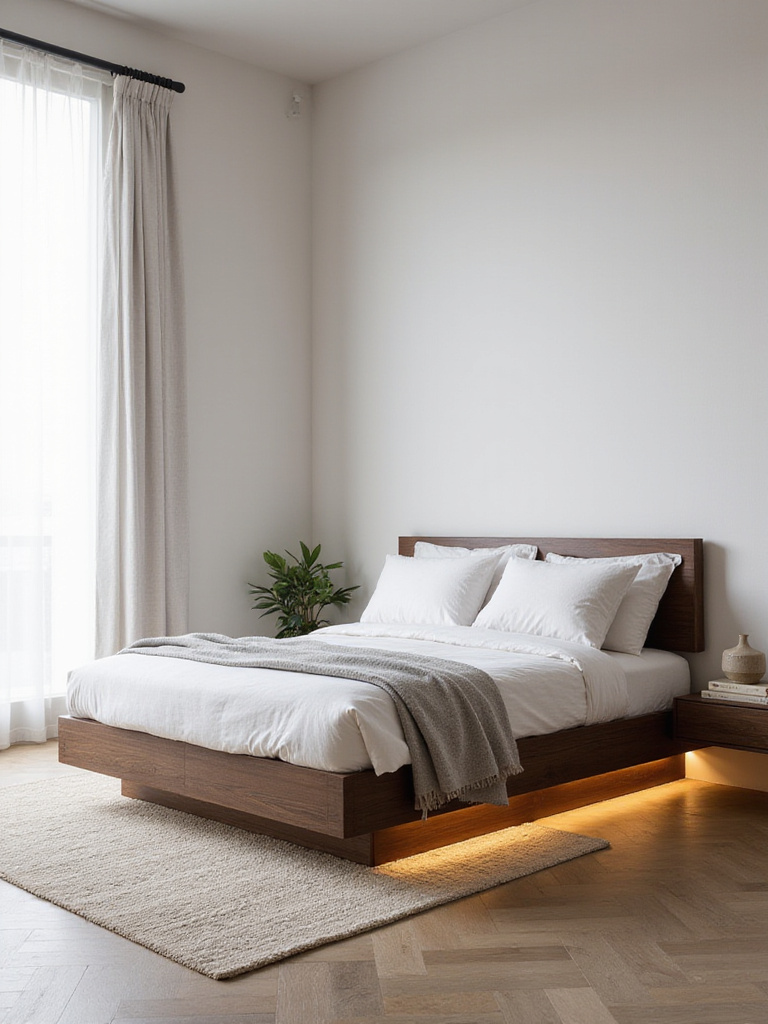
People often see a sleek platform bed and think it’s just for looks. But the function is just as important. I learned this the hard way with a beautiful antique bed frame that creaked with every slight movement. It was a nightly disturbance. A well-made platform bed, with its solid slat system, provides silent, unwavering support for your mattress. It’s a piece of furniture engineered for better sleep, not just for a magazine photo.
This clean, grounded centerpiece deserves to be flanked by equally elegant and functional pieces.
8. Optimize Bedroom Layout for Seamless Movement
This might sound like the earlier point on planning, but it’s the practical application of it. Now that you have the actual furniture, it’s about millimeters, not feet. It’s about ensuring there’s a minimum of 30 inches for major traffic paths. It’s about being able to make your bed without contorting your body. It’s the difference between a room that looks good and a room that feels good to live in, day in and day out.
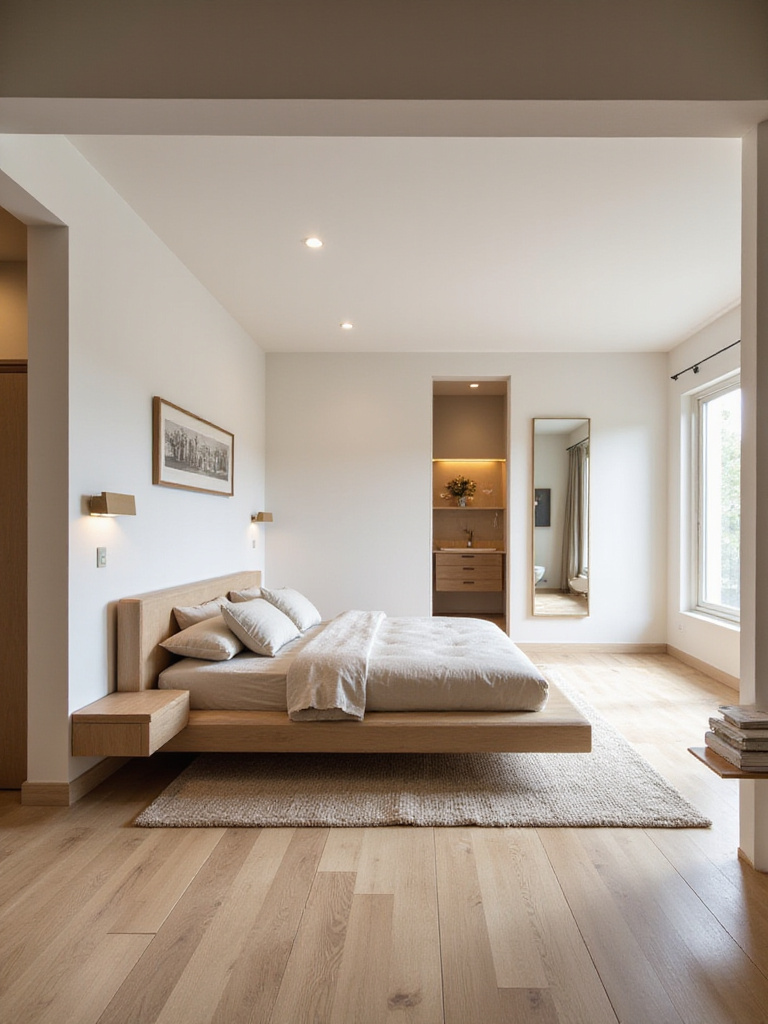
The noise here is the idea that you need to fill every wall. You don’t. That awkward corner doesn’t need a chair nobody will ever sit in. Letting it remain empty creates breathing room. One of the best shortcuts to better flow is to question every single piece of furniture. Is that oversized armchair really necessary, or would the room feel twice as large without it? Often, removing one non-essential item does more for the space than adding three new ones.
An optimized layout gives you space to breathe, and smart storage ensures that space stays clear.
9. Incorporate Hidden Storage Solutions for Uncluttered Spaces
Visual calm is impossible when your stuff is constantly in view. Hidden storage is the secret weapon of any serene modern bedroom. We’re not talking about shoving things under the bed. We’re talking about elegant, integrated solutions—a platform bed with built-in drawers, a bench with a lift-up top, or sleek wardrobes with flat-front doors that blend into the wall. These pieces work twice as hard, providing function while maintaining a minimalist aesthetic.
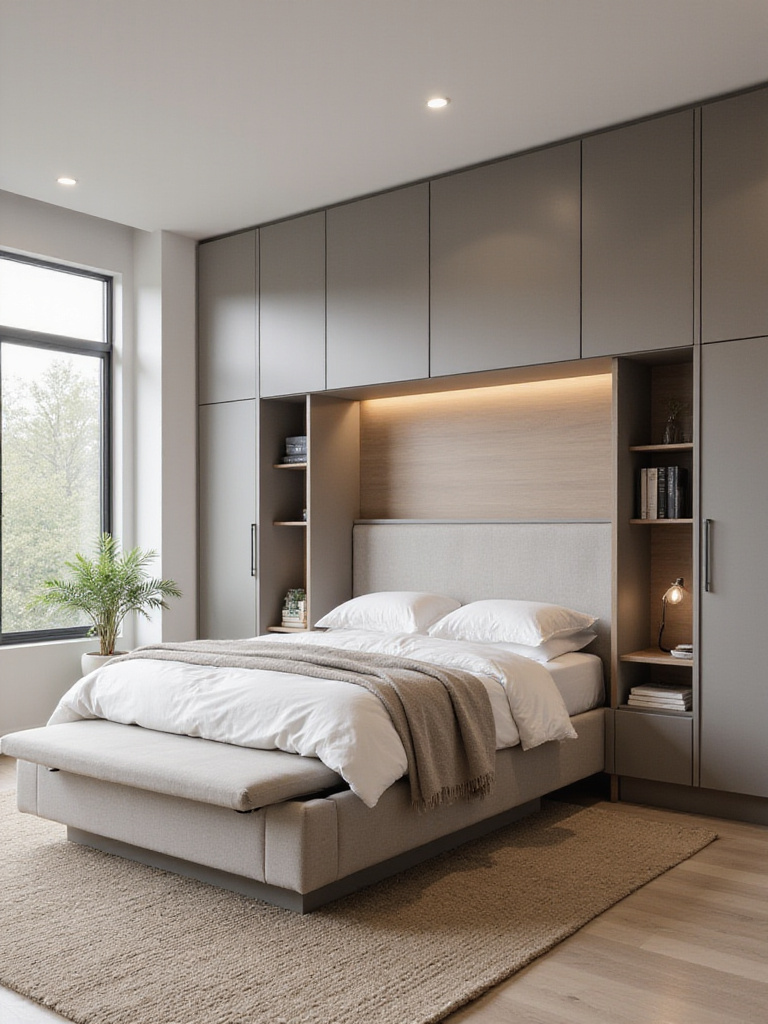
A client of mine had a beautiful, modern bedroom, but it was ruined by two plastic laundry hampers that were always overflowing in the corner. It was all you could see. We replaced them with a single, elegant storage bench at the foot of the bed that had two built-in hamper compartments inside. The visual chaos vanished overnight. It’s about finding solutions that conceal the mess of daily life behind a calm, beautiful facade.
Nowhere is this principle of visual lightness more apparent than with the choice of nightstands.
10. Use Floating Nightstands for Visual Lightness and Style
Traditional nightstands are boxes that sit on the floor, breaking up the visual line and collecting dust bunnies. Floating, wall-mounted nightstands are a game-changer. By lifting them off the floor, you create an uninterrupted line of sight along the floorboards, which makes the room feel wider and more expansive. It’s a simple change with a massive psychological impact. Plus, vacuuming underneath is effortless—a small but meaningful reduction of friction in your life.
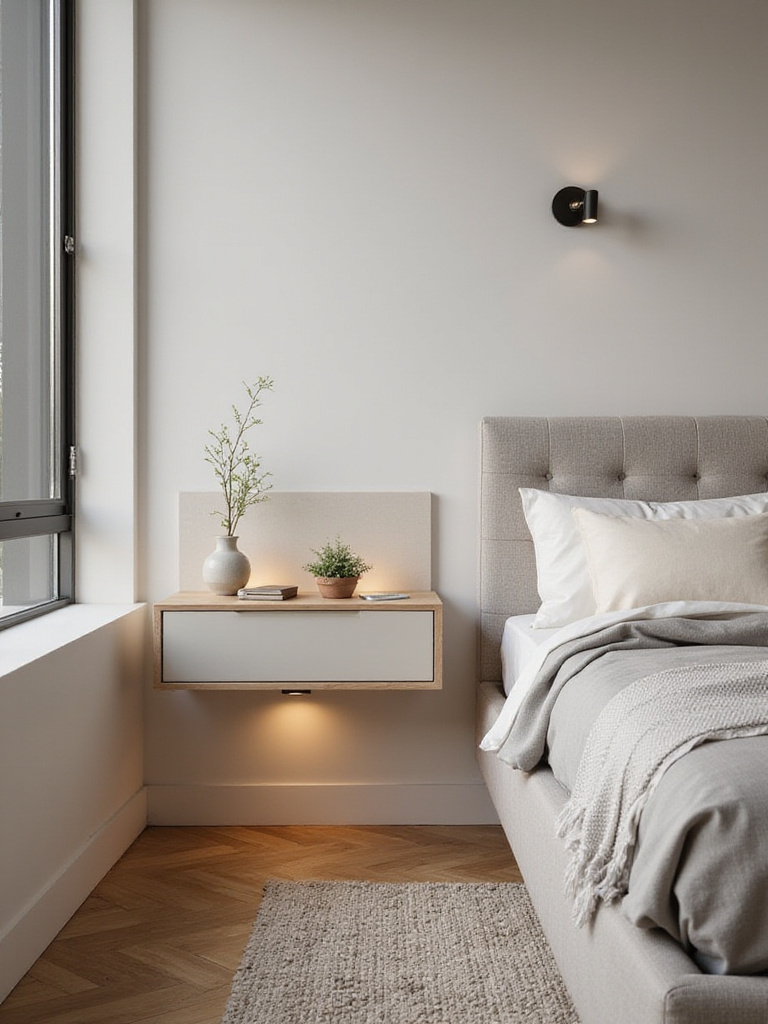
The key to getting this right is placement and cord management. You have to mount them at the right height—usually level with the top of your mattress—so they feel like a natural extension of your bed. And you absolutely must plan for your cords. A beautiful floating nightstand with a tangle of charging cables dangling beneath it completely defeats the purpose. Run the cords through the wall or conceal them with a sleek cable raceway painted the same color as the wall.
With our core furniture creating a foundation of calm, we can now add the layers that bring the space to life.
Enhancing Atmosphere: Lighting, Textiles & Art
This is where a room develops its soul. Furniture provides the structure, but lighting, textures, and art provide the mood, warmth, and personality.
11. Implement layered lighting for Versatile Ambiance Control
Relying on a single, harsh overhead light is the fastest way to ruin a bedroom’s ambiance. It’s functional, but it’s the equivalent of shouting when a whisper will do. Layered lighting is the answer. You need three types: Ambient (overall illumination, like recessed lights on a dimmer), Task (focused light for activities, like a bedside reading lamp), and Accent (soft, mood-setting light, like an LED strip under your bed frame). Having these on separate controls gives you complete power over the room’s energy.
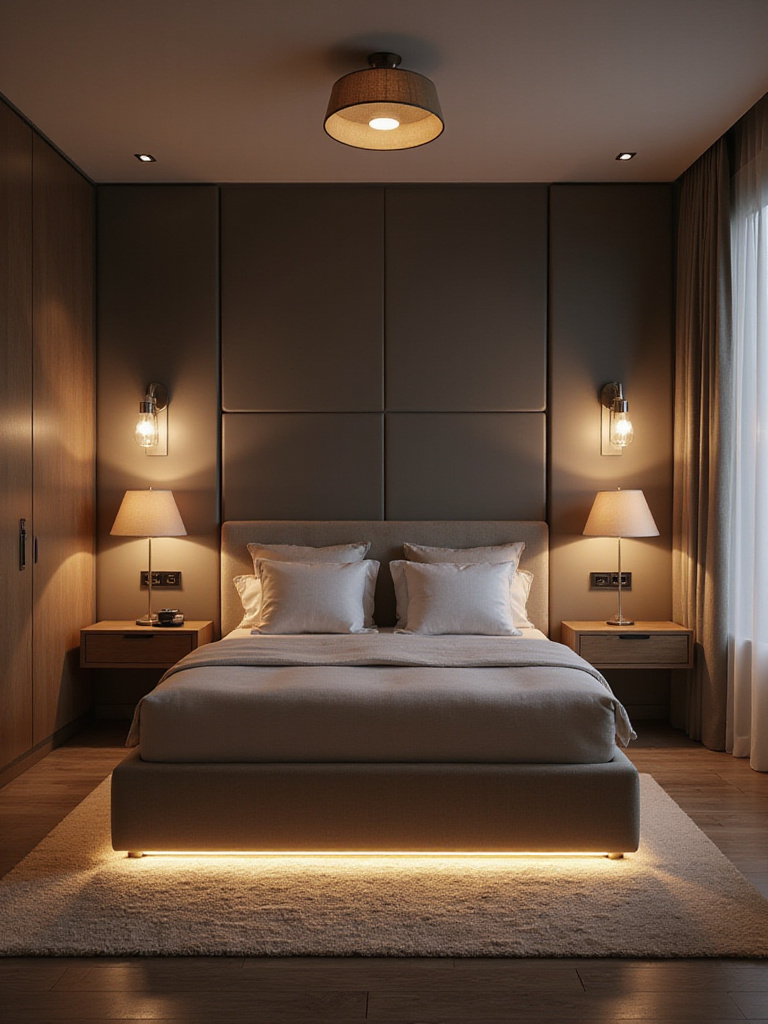
The secret I wish I’d known from the start is to prioritize warm light and put everything on a dimmer. Look for bulbs around 2700K—it’s the color of a sunset, not a hospital operating room. With dimmers and smart bulbs, you can create “scenes.” A “Good Morning” scene with slowly brightening, cool-toned light. A “Wind Down” scene with very dim, warm light. You’re not just lighting a room; you’re programming your environment to support your state of mind.
That perfect lighting will fall upon the most important textile in your room: your bedding.
12. Select Crisp, High-Quality Linens for Luxurious Comfort
Your bed is the largest object in your room, and your linens are what your body is in contact with all night. They are not a place to compromise. High-quality natural fibers like long-staple cotton or linen breathe better, feel better against your skin, and regulate your temperature, leading to deeper, more restorative sleep. They are an investment in your well-being.
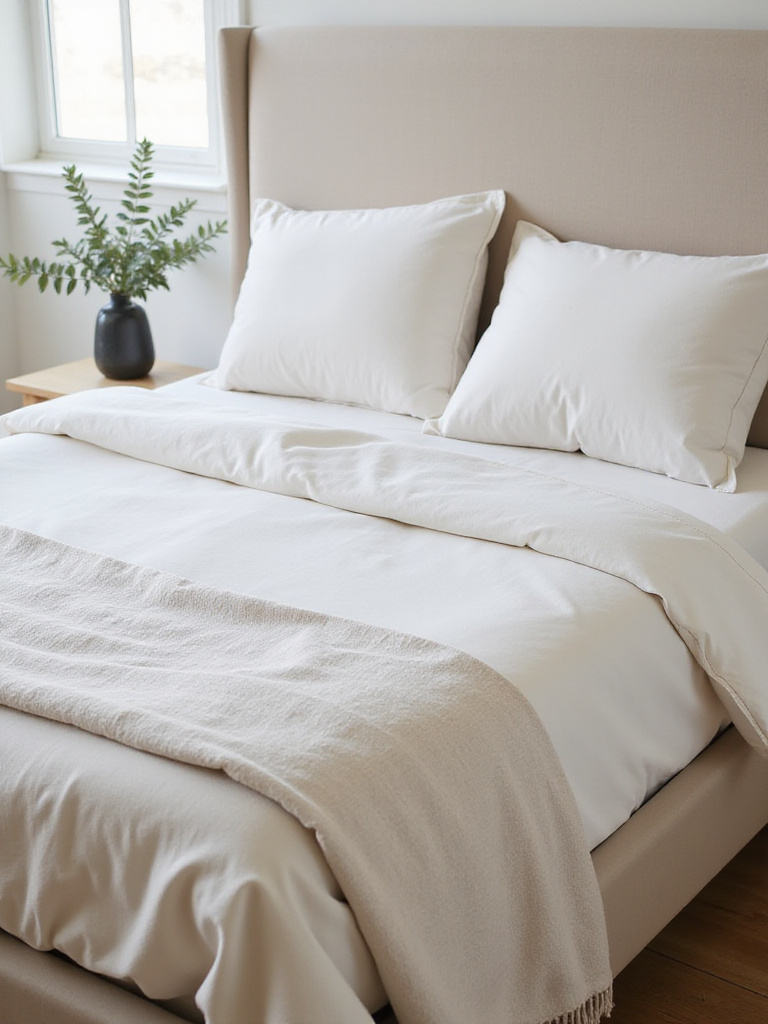
Forget the obsession with thread count. It’s mostly a marketing gimmick. A 1000-thread-count sheet made from short, low-quality cotton fibers will feel worse and fall apart faster than a 300-thread-count sheet made from premium, single-ply, long-staple cotton. Focus on the quality of the fiber—like Egyptian or Pima cotton, or genuine European linen. The difference in how they feel and how long they last is profound.
These beautiful linens form the base layer for adding even more sensory richness.
13. Add Textural Accents Through Rugs and Throws for Depth
A room with only smooth, flat surfaces can feel cold and unwelcoming. Texture is what makes a minimalist space feel rich and inviting. A high-pile wool rug underfoot, a chunky knit throw blanket at the end of the bed, the rough weave of a linen pillow—these elements engage your sense of touch and add visual depth. They absorb sound, making the room quieter, and provide warmth, making it cozier.
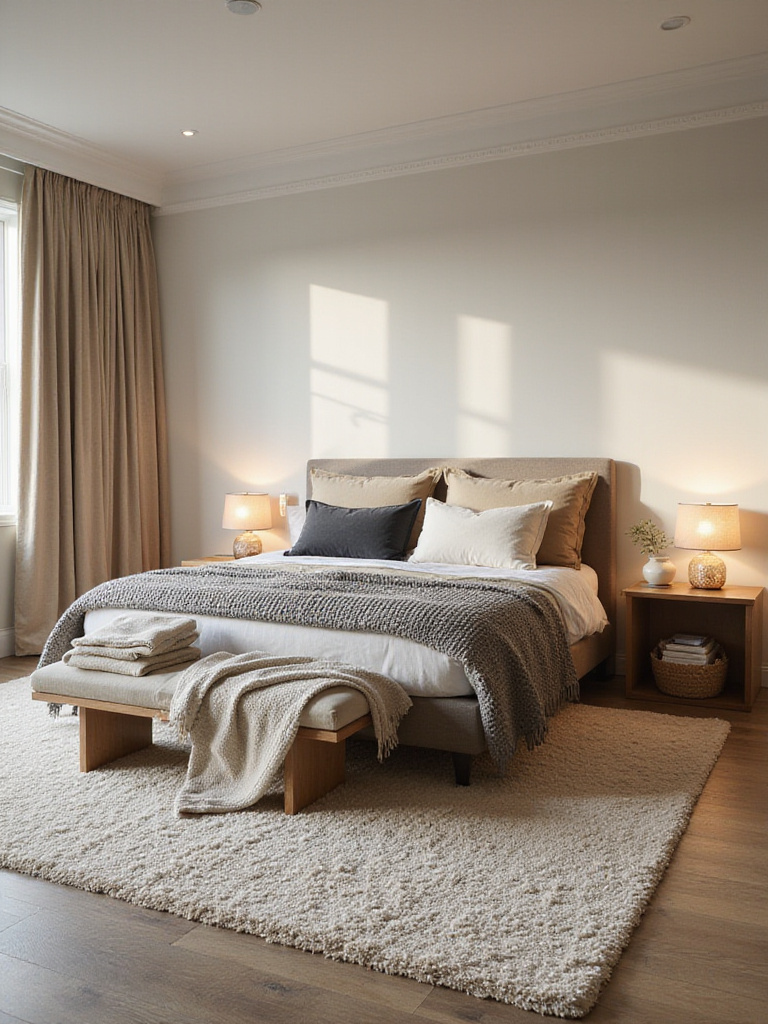
The common mistake is thinking texture has to be loud. It doesn’t. You can have a completely neutral, monochromatic room that feels incredibly rich simply by layering different materials. Imagine an all-white bed: crisp cotton percale sheets, a subtly ribbed matelassé coverlet, and a single faux-fur pillow. The variation in texture does all the work, creating a look that is both serene and deeply luxurious.
These textures provide a soft backdrop for the most personal elements of your decor.
14. Incorporate Minimalist Art Pieces for Sophisticated Wall Decor
Art in a serene bedroom should be a point of quiet contemplation, not a source of stimulation. One large, impactful piece with simple lines or a restrained color palette is far more powerful than a busy gallery wall. The goal is to create a focal point that calms the eye. Minimalist art values negative space—both within the frame and on the wall around it. This breathing room is essential; it amplifies the art’s power and reinforces the room’s uncluttered feel.

Here’s the thing everyone gets wrong: scale. A tiny picture floating on a huge wall looks timid and lost. A massive piece crammed into a small space feels overwhelming. A good rule of thumb is for the art to be about two-thirds the width of the furniture it’s hanging over. When in doubt, go bigger than you think you need. A single, confident piece of art tells a much more powerful story.
Another way to bring quiet life into your space is through greenery.
15. Integrate Greenery with Modern Planters for Freshness
Plants are living sculptures. They bring organic shape, natural color, and life into a room, softening the hard lines of modern furniture. Beyond aesthetics, they improve air quality and have a proven calming effect on our nervous system—a true biophilic design principle. A tall Fiddle Leaf Fig in a corner or a trailing Pothos on a shelf can make a room feel instantly more vibrant and healthy.
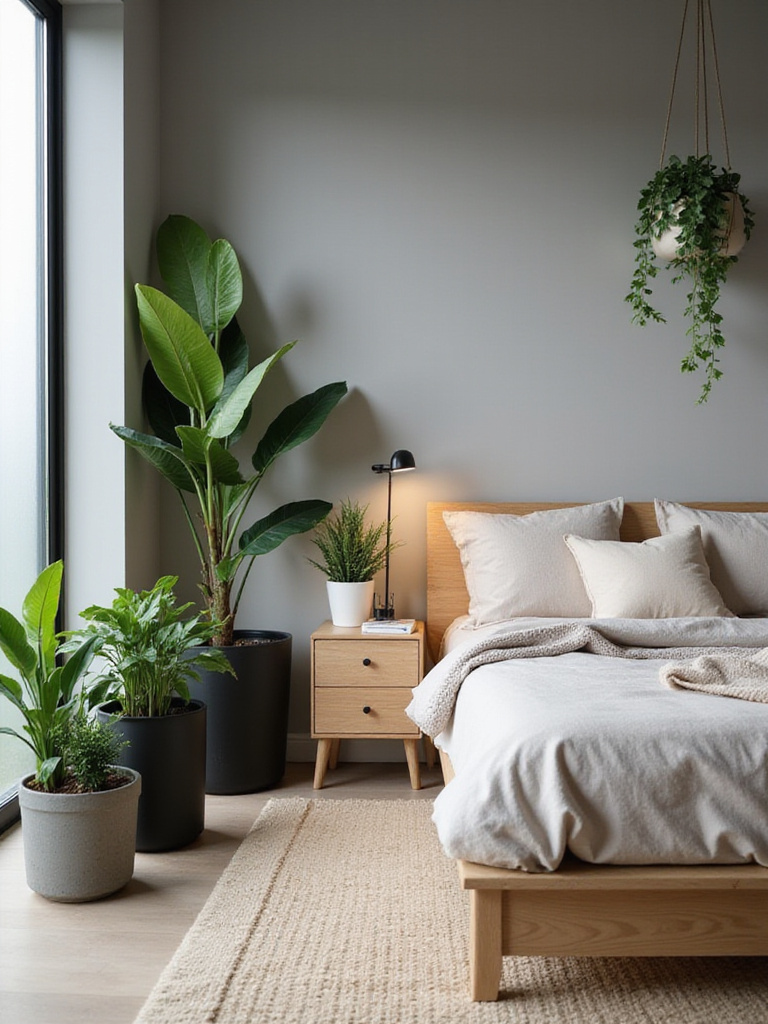
The planter is as important as the plant. A beautiful plant in a cheap plastic nursery pot undermines the entire aesthetic. Invest in planters that complement your decor—sleek ceramics, matte black metal, or warm concrete. I always recommend a Snake Plant for the bedroom. They are almost impossible to kill and, unlike most plants, they release oxygen at night, making them the perfect sleeping companion.
Now that we have this serene, natural foundation, we can add a single, powerful drop of energy.
16. Choose Bold, Single-Color Accents to Punctuate Spaces
After we’ve built this calm, neutral sanctuary, adding a single, intentional pop of bold color is like the final brushstroke on a painting. It demonstrates confidence and keeps the room from feeling one-dimensional. The key word here is single. Pick one vibrant hue—a deep emerald green, a burnt orange, a rich cobalt blue—and use it sparingly on two or three high-impact items. A velvet armchair, a single cushion, or a piece of abstract art.
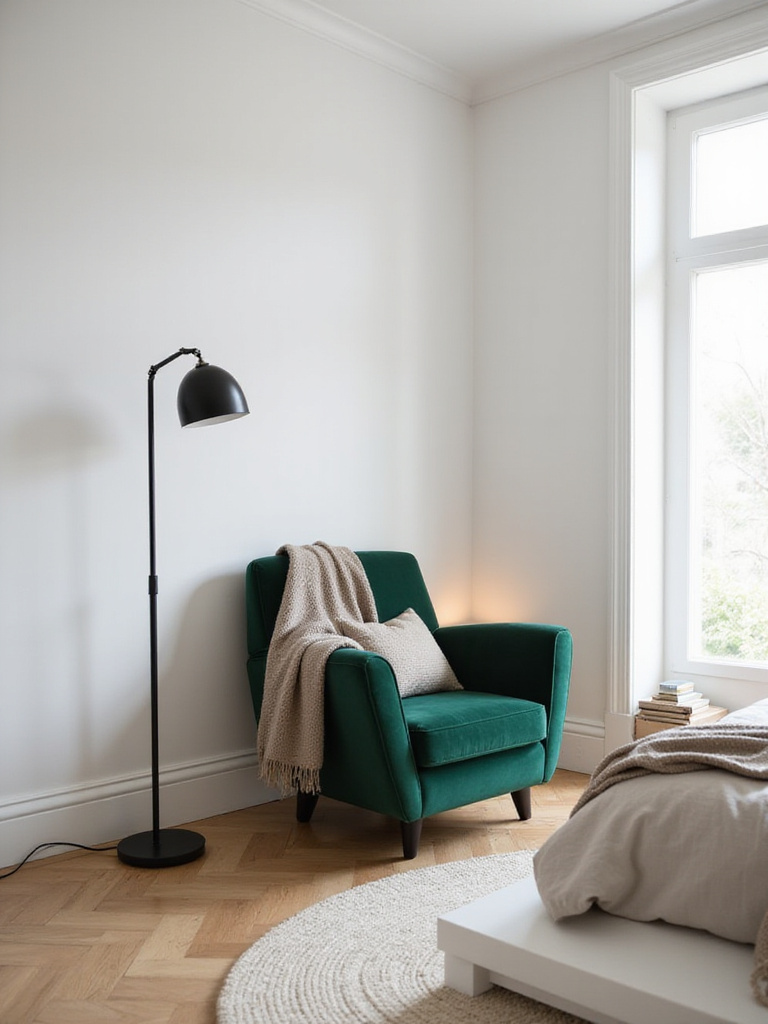
The mistake is what I call “confetti-bombing” a room. People get excited and add a pop of blue here, a pop of yellow there, a pop of red over there. This isn’t a strategy; it’s chaos. It negates the power of the accent and just creates more visual noise. The restraint of using only one bold color creates a sophisticated, cohesive thread that pulls the entire room together.
With the atmosphere perfectly set, we can integrate the final layers of modern functionality and personality.
Advanced Integration: Smart Features & Personal Touches
This is where your bedroom goes from being well-designed to being intelligently and intimately yours. It’s about leveraging technology for tranquility and infusing the space with your own story.
17. Explore Smart Bedroom Tech for Enhanced Comfort and Convenience
Smart tech in the bedroom shouldn’t be about gadgets and distractions. It should be invisible, working in the background to serve your comfort and well-being. I’m talking about smart blinds that open automatically to wake you with gentle, natural light. Or smart lighting that syncs with your sleep schedule, shifting to a warm, dim glow an hour before bed to signal to your body it’s time to wind down. This is technology in service of serenity.
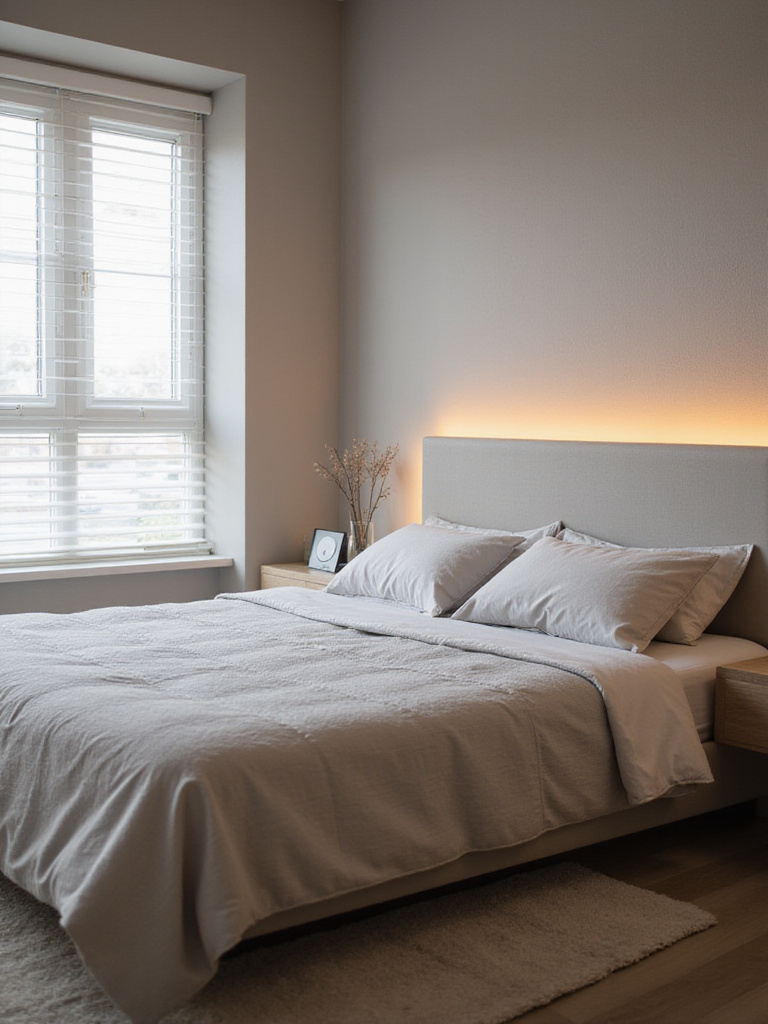
Don’t try to automate everything at once. You’ll just get frustrated. I tell my clients to start by solving one specific problem. Is your alarm jarring? Get a smart light and program a sunrise alarm. Is the room too cold in the morning? Get a smart thermostat. I once set up a simple “Good Night” routine for a client that, with one voice command, dimmed all the lights, turned on a white noise machine, and lowered the thermostat. It wasn’t fancy, but it removed three small points of friction from their nightly routine, which made a huge difference.
Smart tech enhances comfort, while another classic tool can enhance the perception of space itself.
18. Strategically Place Mirrors to Expand Visual Space
A mirror is the oldest design trick in the book for a reason: it works. By reflecting light and creating an illusion of depth, a large mirror can make a small or dark room feel twice as big and bright. It’s a way to add an extra window where one doesn’t exist. The strategic placement is key—you want to amplify what’s beautiful and spacious.
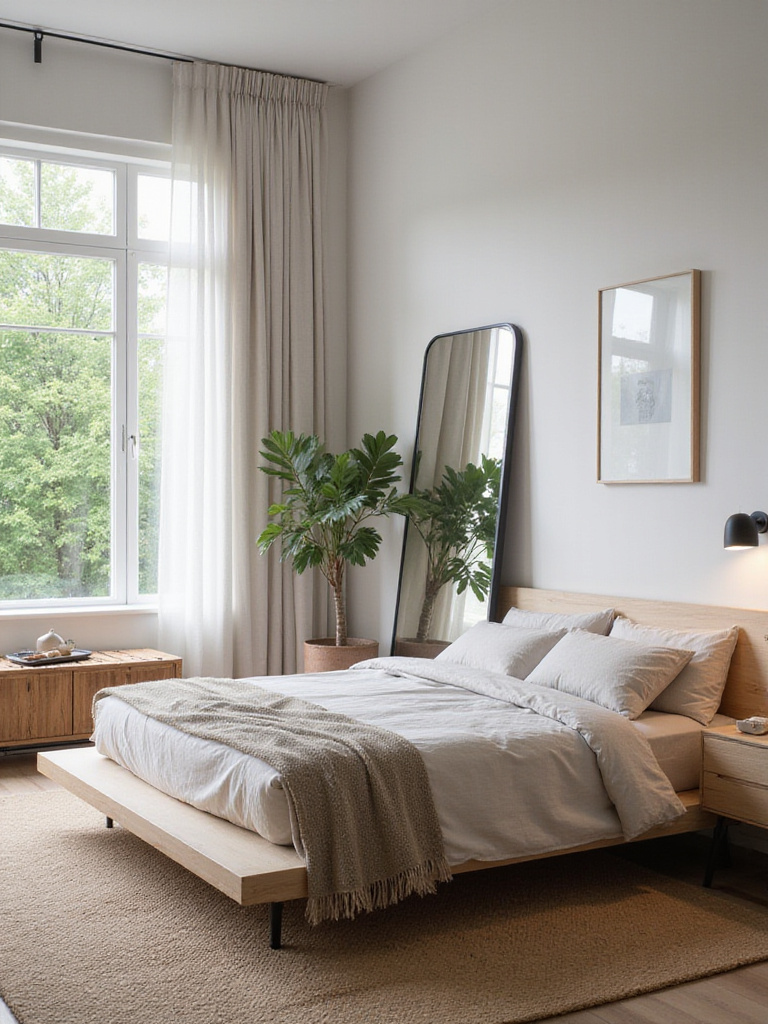
The biggest mistake I see is placing a mirror where it reflects clutter. If your mirror’s reflection is a messy pile of clothes, you’ve just doubled your clutter. Point it at a window to reflect the light and the view. Or point it at a simple, beautiful feature wall to create a sense of depth. Leaning a tall, full-length mirror against a wall is a great modern touch that feels less formal than hanging one.
Now that the room feels expansive, it’s time to carve out a space just for you.
19. Designate a Serene Reading Nook for Personal Retreat
In our hyper-connected world, creating a dedicated, tech-free zone is an act of self-preservation. A reading nook is more than just a chair; it’s a physical boundary against digital overwhelm. It’s a place you go to read a physical book, meditate, or simply sit in silence. Having this designated spot trains your brain to switch off, making it a powerful tool for reducing stress and improving sleep hygiene.
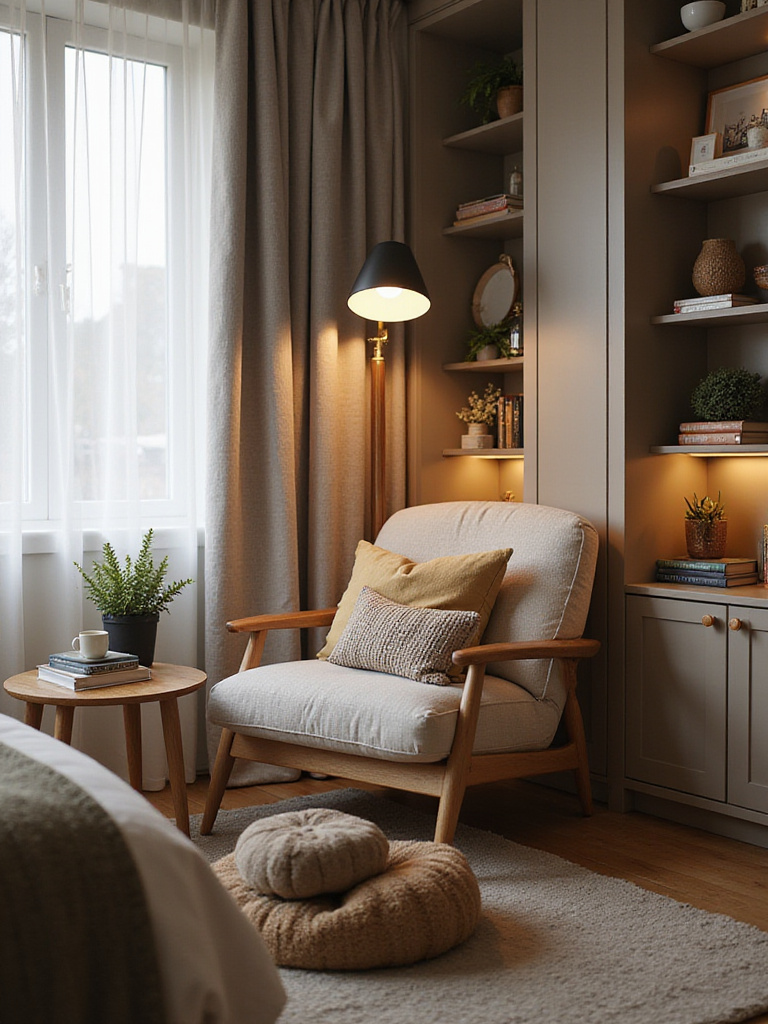
It doesn’t need to be a huge space. A comfortable chair in a quiet corner, a good task light, and a small side table are all you need. The most important rule is: no phones allowed. I helped a client who was a terrible sleeper create a nook in their bedroom. They committed to spending 20 minutes there every night reading a book instead of scrolling on their phone in bed. Within a week, they told me they were falling asleep faster than they had in years.
This personal retreat is one way to tell your story, but there are others.
20. Personalize Your Space with Thoughtful, Curated Keepsakes
A room without personal touches can feel like a hotel. A room with too many can feel like a cluttered antique shop. The art is in the curation. This is about selecting a very small number of objects that are deeply meaningful to you—a photo, a treasured book, a stone from a memorable trip—and displaying them with the same intention as a piece of fine art. Group them in small vignettes, often in odd numbers like one or three, and give them breathing room.
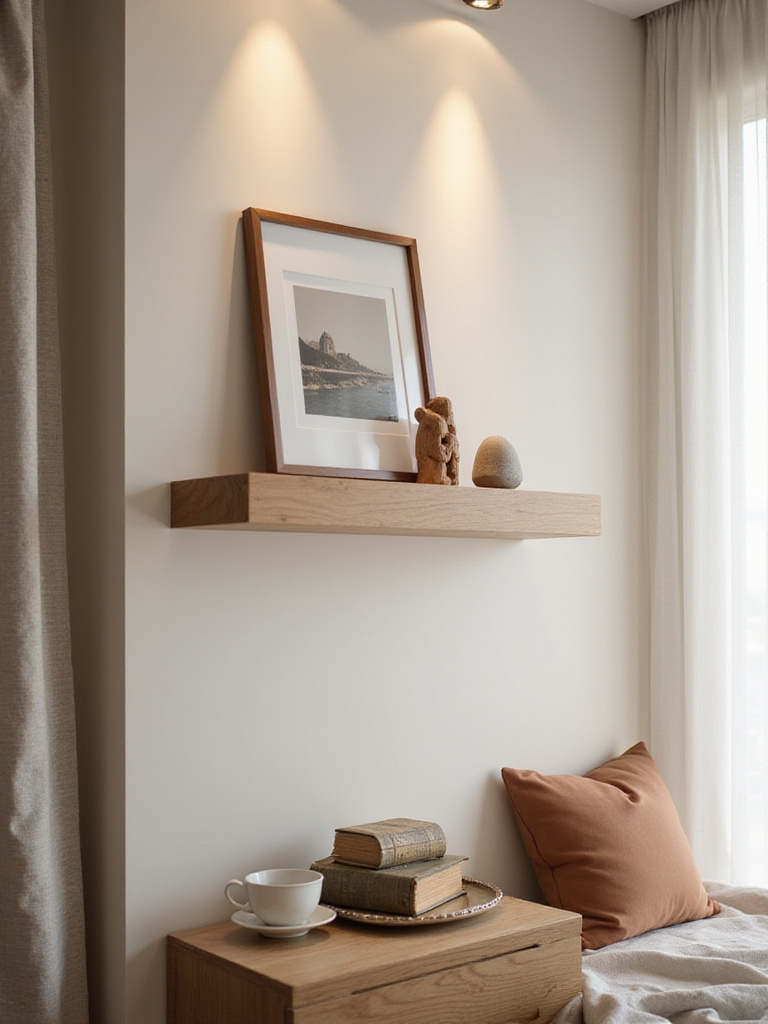
Most people overload every surface. Don’t. A single, beautiful tray on a dresser holding a framed photo, a small plant, and a scented candle is more impactful than 20 trinkets scattered about. You’re creating a quiet story. A client once showed me a box of dozens of souvenirs from her travels. We picked just three—a small ceramic bowl, a black and white photo, and a piece of weathered driftwood—and arranged them on her floating shelves. The room instantly felt more personal, sophisticated, and uniquely hers.
This leads us to the final, most crucial principle for creating a space that lasts.
21. Ensure Long-Term Style by Investing in Quality Pieces
Fast furniture is like fast fashion. It’s cheap, it’s trendy, and it falls apart in a couple of years, ending up in a landfill. Investing in quality, well-made foundational pieces—your bed frame, your dresser—is the most sustainable and stylish choice you can make. A solid wood dresser will outlive you. A particle board version will start to sag and chip within five years. Quality is about timeless design and durable materials that get better with age.
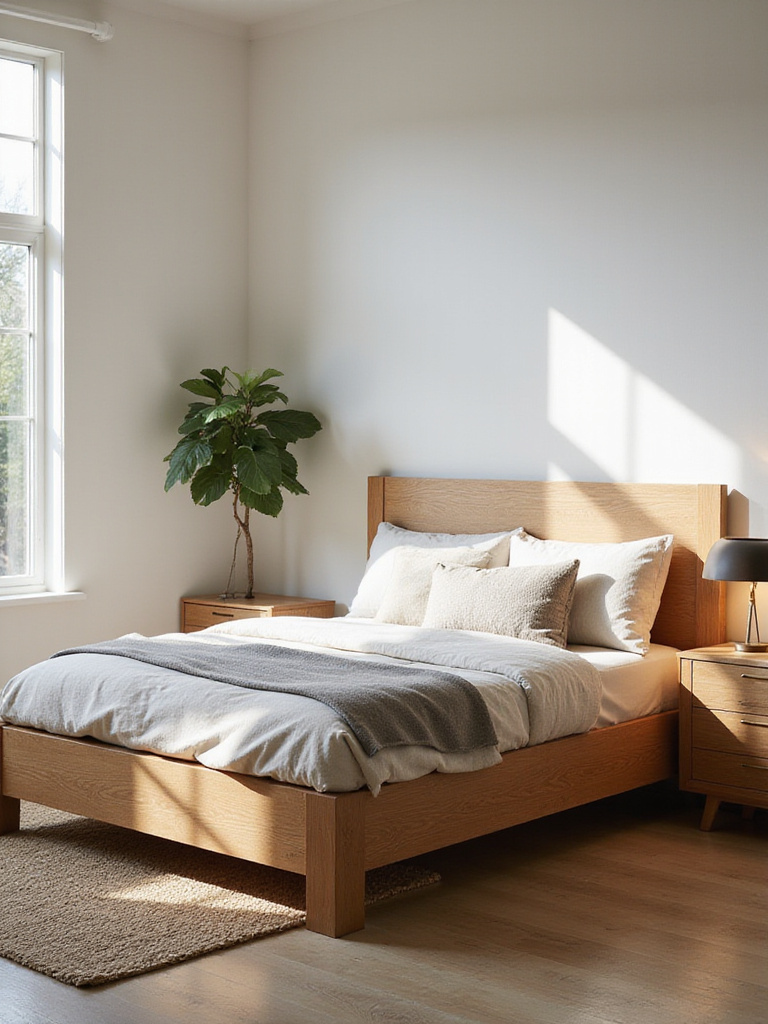
I get it, the upfront cost is higher. But it’s an investment that pays for itself. You buy it once. A friend of mine bought a cheap bed frame that started creaking within a year. A year after that, a slat broke. He ended up buying three different cheap beds over ten years. Had he bought one high-quality bed frame at the start, he would have spent less money and enjoyed a decade of silent, solid sleep. Look for solid wood, good joinery, and reputable brands. Or better yet, find a vintage piece. It’s often better made than new furniture and brings a unique soul to your space.
A Sanctuary for Your Future Self
Creating a modern, serene bedroom isn’t a weekend project; it’s an ongoing practice of intentional living. It’s about understanding that your environment is a powerful tool that can either add to your stress or actively soothe it. By starting with a clear vision, decluttering with purpose, and choosing every element for both its beauty and its ability to foster calm, you’re not just decorating a room. You’re designing a sanctuary.
You’re creating a space that respects your need for rest in a world that never stops. A space where technology serves you, not the other way around. A space that is a true and quiet reflection of you. So start small. Pick one thing. Clear your nightstand. Buy better sheets. Create a space that your future, well-rested self will thank you for.