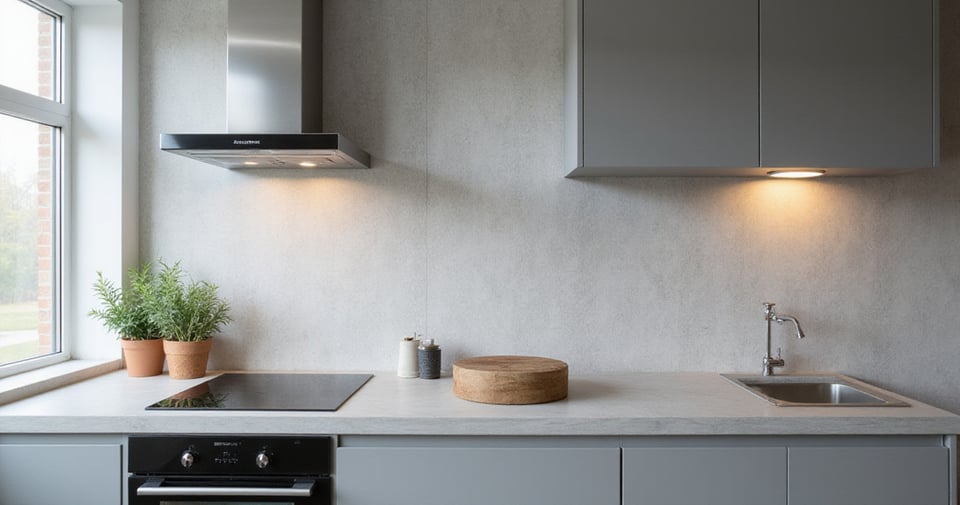
Picture this: You’re standing in a chic Notting Hill flat. The cabinetry is minimalist, sleek, and unmistakably British. But the wall behind the open shelving? It’s covered in a breathtaking, hand-blocked paisley from Jaipur. It’s a space that feels both perfectly modern and deeply personal, humming with history and character. That, my dear, is the magic of getting kitchen wallpaper right.
So many people are either terrified of wallpaper in the kitchen—imagining steamy, peeling florals from their grandmother’s house—or they just pick a safe, sterile geometric and call it a day. But a kitchen is the heart of the home, a place of spice and warmth and life. It deserves a backdrop that tells a story, your story. Blending contemporary design with cultural soul isn’t about slapping a pattern on a wall; it’s about weaving a narrative. Let’s get into how you can do it beautifully.
Planning Your Modern Kitchen Wallpaper Project: Foundational Decisions
Before you even think about falling in love with a pattern, we need to talk foundations. This is the unglamorous part that makes all the difference. It’s the impeccable tailoring inside a bespoke suit—no one sees it, but it’s why everything hangs so perfectly. Get this right, and you’ve already won half the battle.
1. Assess Kitchen Conditions: Humidity & Heat Resilience First for Durability
Does your kitchen feel like a tropical greenhouse every time you boil pasta or run the dishwasher? Let’s be honest. Before you let your heart settle on a delicate, grasscloth paper, you need to understand the environment you’re working with. This isn’t about charts and hygrometers; it’s about reality. Steam, grease, and heat are the mortal enemies of cheap wallpaper.
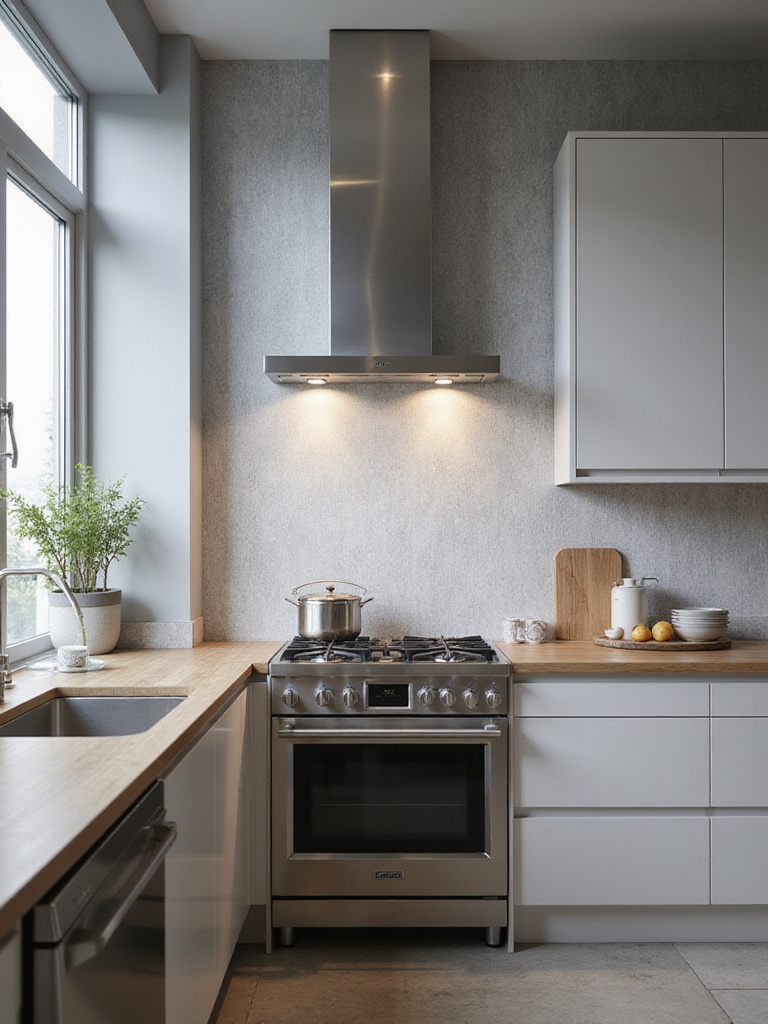
Ignoring this step is the fastest way to a heartbreaking design disaster. I’m talking about peeling seams within six months, bubbles that reappear no matter how many times you smooth them, and—worst of all—the potential for mould to grow behind your beautiful paper. This is where you choose function first, so that your beautiful form can last. It’s about honouring your investment and your design.
Now that we’ve accepted your kitchen’s personality, we need to find a wallpaper that can handle it.
2. Determine Durability Needs: Why Washable Vinyl or Non-Woven are Best Picks
Right, so we know kitchens can be a bit demanding. This means we must choose materials with strength and grace. The words you need to look for are washable vinyl and non-woven. Forget those lovely, paper-thin options for now; they belong in a quiet bedroom. Your kitchen needs something that can handle a splash of turmeric-laced curry or an accidental spray of olive oil and wipe clean without a fuss.
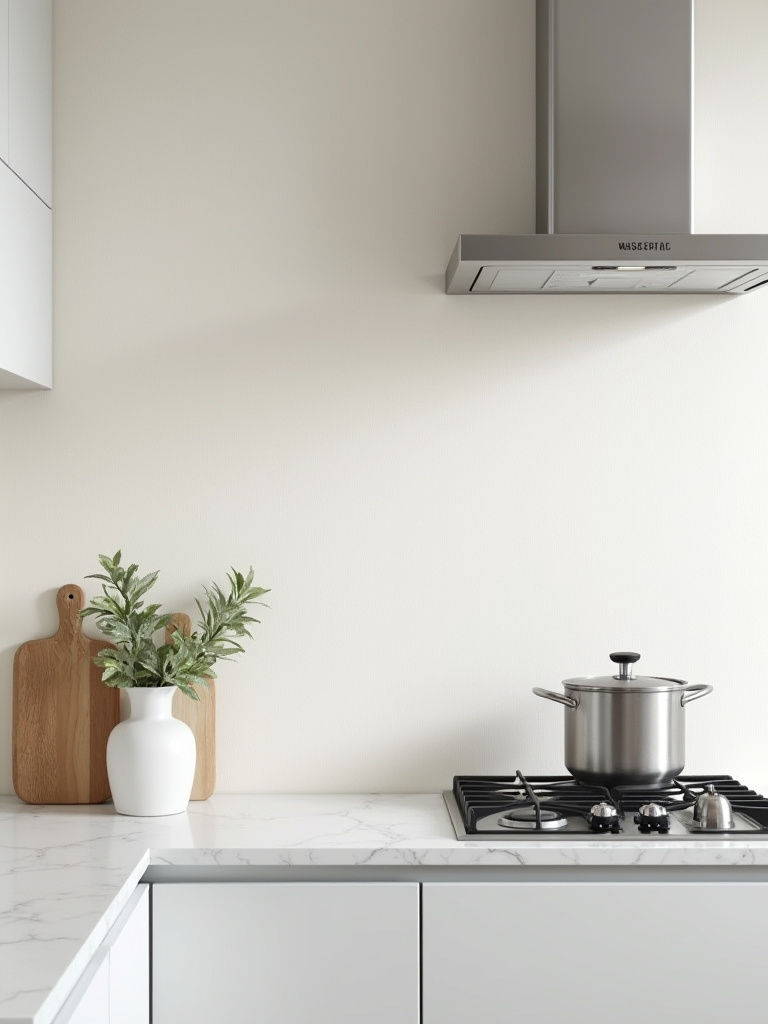
Think of it as the difference between a silk organza and a beautiful, high-quality linen. Both are stunning, but only one can truly live a life. These durable wallpapers are engineered for modern living. They have a substance and weight to them that feels luxurious, and their resilience means your kitchen will look as impeccable in five years as it does on day one. A designer I admire once said, “True luxury is beauty that isn’t afraid of life.” That’s what we’re aiming for.
Once you’ve settled on the right kind of material, it’s time for the maths—don’t worry, I’ll make it simple.
3. Accurately Calculate Wallpaper Rolls to Prevent Material Shortages or Waste
You know what true design panic is? It’s standing in a half-finished kitchen, realising you’re one roll short of a bespoke wallpaper that took eight weeks to be hand-printed in India. I once had a client, a lovely couple in Bristol, who did just that. The new roll we ordered from the same artisan was from a different dye lot, and the background colour was just a shade off. It was a costly, heartbreaking lesson.
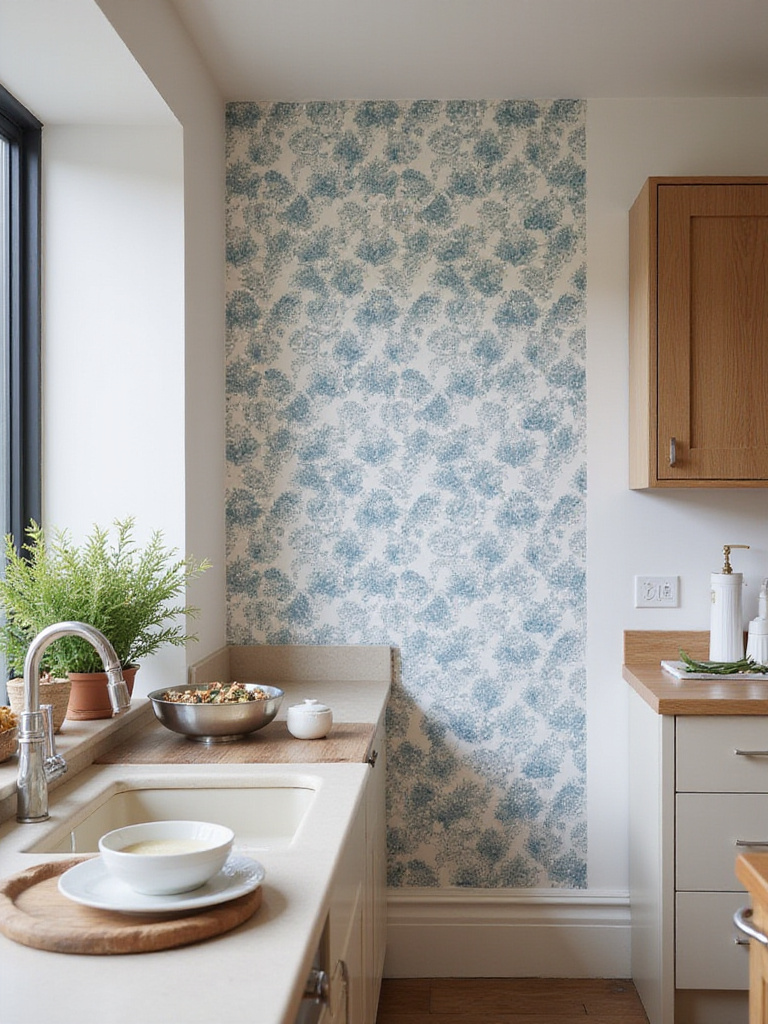
To avoid this, you need to be meticulous. Measure your walls, of course, but the crucial detail everyone misses is the ‘pattern repeat’. This little number on the label tells you how often the pattern repeats itself and dictates how much you’ll waste to get every strip to line up perfectly. Always, always buy at least 15% more than you think you need. And when you think you have enough, buy one extra roll and store it. A future repair from a leak or an accident will thank you for it.
With the perfect amount of paper on its way, we turn our attention to the canvas itself.
4. Prep Walls Perfectly for Seamless Peel-and-Stick or Paste-On Application
Let’s talk about the single most important step in this entire process: preparing your walls. You can have the most exquisite, expensive wallpaper in the world, but if you apply it to a poorly prepped surface, it will look cheap. I cannot stress this enough. Imperfections, grease, and bumps will show through, creating bubbles and seams that scream ‘amateur’.
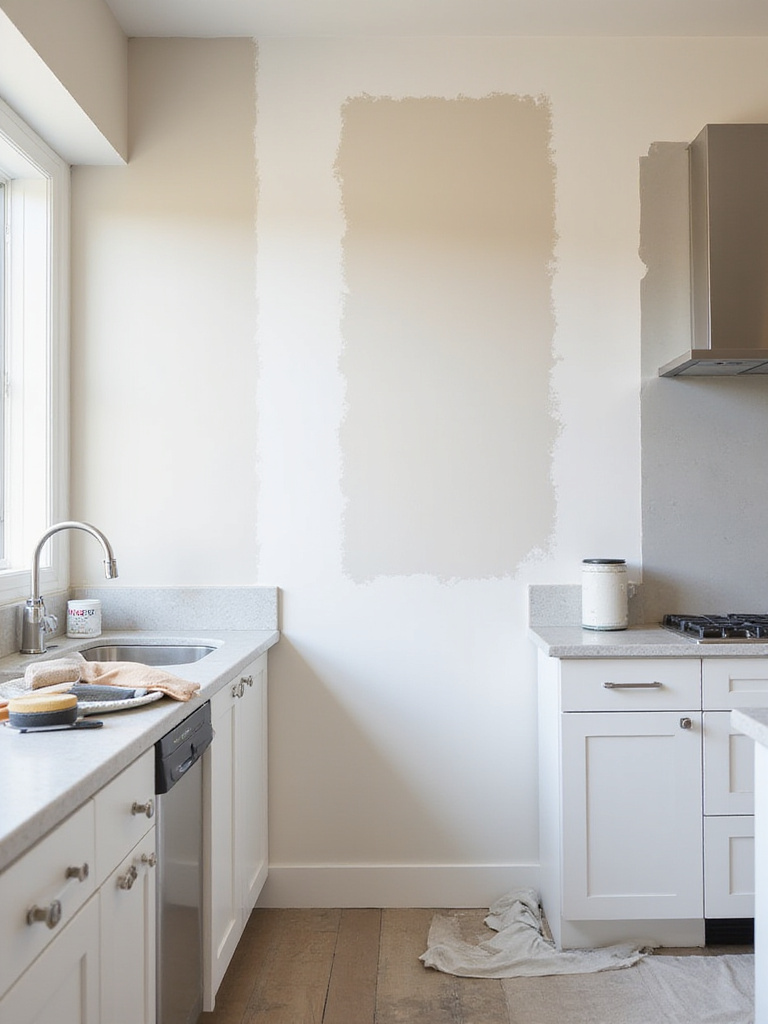
Getting this right is about creating a perfectly smooth, clean, and primed canvas. It’s like the difference between painting on rough cardboard and a beautifully gessoed linen. Take the time to wash the walls, fill every tiny hole, sand it smooth, and—most importantly—use a proper wallpaper primer. It creates the ideal surface for the adhesive to grip onto, ensuring a flawless, long-lasting finish. If you’re using a dark, dramatic wallpaper, ask your paint shop to tint the primer to a similar grey or neutral shade. It’s a little secret that makes any potential gaps at the seams completely disappear.
Now that your canvas is pristine, it’s time to decide on the masterpiece.
5. Defining Your Kitchen’s Core Style: From Minimalist to Industrial Chic Themes
Alright, this is where your soul comes into it. Before you get lost in a sea of patterns, take a moment. What is the story of your home? Are you creating a sleek, urban space that needs a whisper of ancestral warmth, perhaps with a pattern that hints at Moroccan tiles? Or do you have a cozy British cottage that can handle a bold, Chinoiserie-inspired botanical to shake things up a bit?
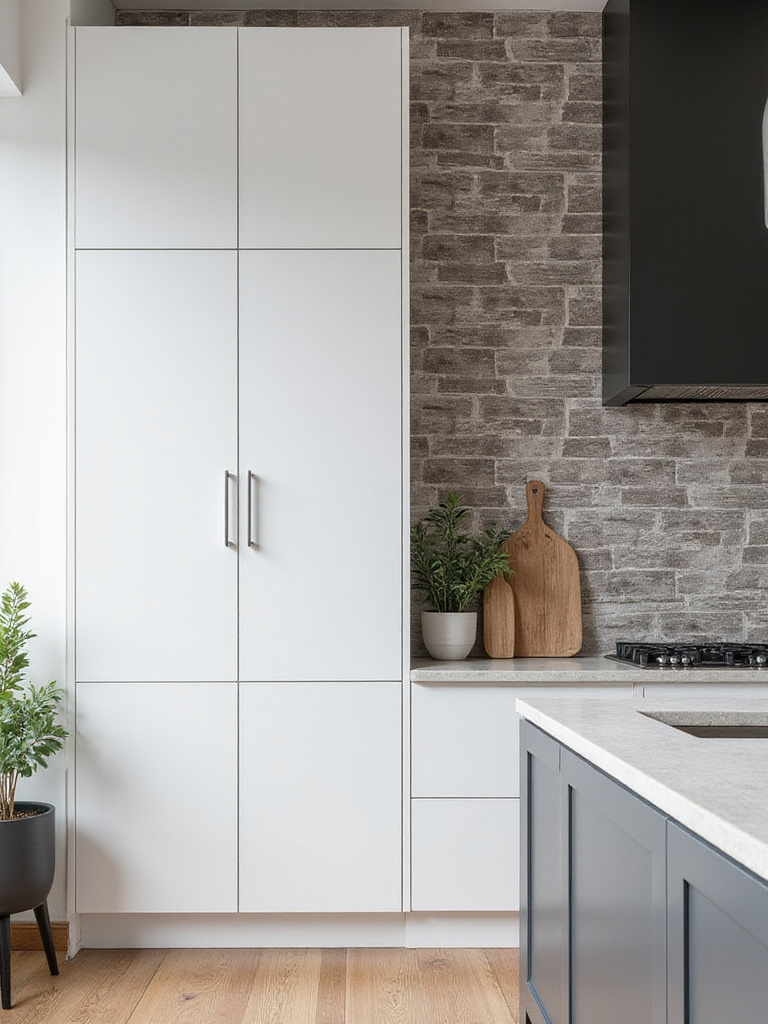
This isn’t about picking a “theme” from a magazine. It’s about creating a dialogue between your architecture, your belongings, and your heritage. Look at the fixed elements—your cabinets, your flooring, your view from the window. The wallpaper shouldn’t fight with them; it should dance with them. My philosophy has always been to find the tension between styles. Pair modern, flat-panel cabinets with a richly textured, organic pattern. Combine industrial-chic concrete floors with a wallpaper that has a soft, metallic shimmer. It’s in that beautiful contrast that your kitchen finds its unique voice.
With your style in mind, let’s explore the stunning visuals you can create.
Designing Your Dream Kitchen: Modern Styles & Visual Impact Aesthetics
This is the fun part—the sartorial equivalent of choosing the fabric. We’re moving beyond simple colour and diving into the patterns, textures, and illusions that will bring your kitchen to life. This is where you make a statement, whether it’s a bold shout or a sophisticated whisper.
6. Master Abstract Geometrics for a Bold, Dynamic Visual Statement in Modern Kitchens
Geometrics can feel so wonderfully modern and British—think David Hicks in the ‘60s. But they also have deep roots in global design, from the intricate tilework of the Alhambra to the bold block prints of the subcontinent. Using a geometric pattern in a kitchen is a way to create rhythm and structure. It can make a small space feel more expansive or add a dynamic energy to a large, open-plan room.
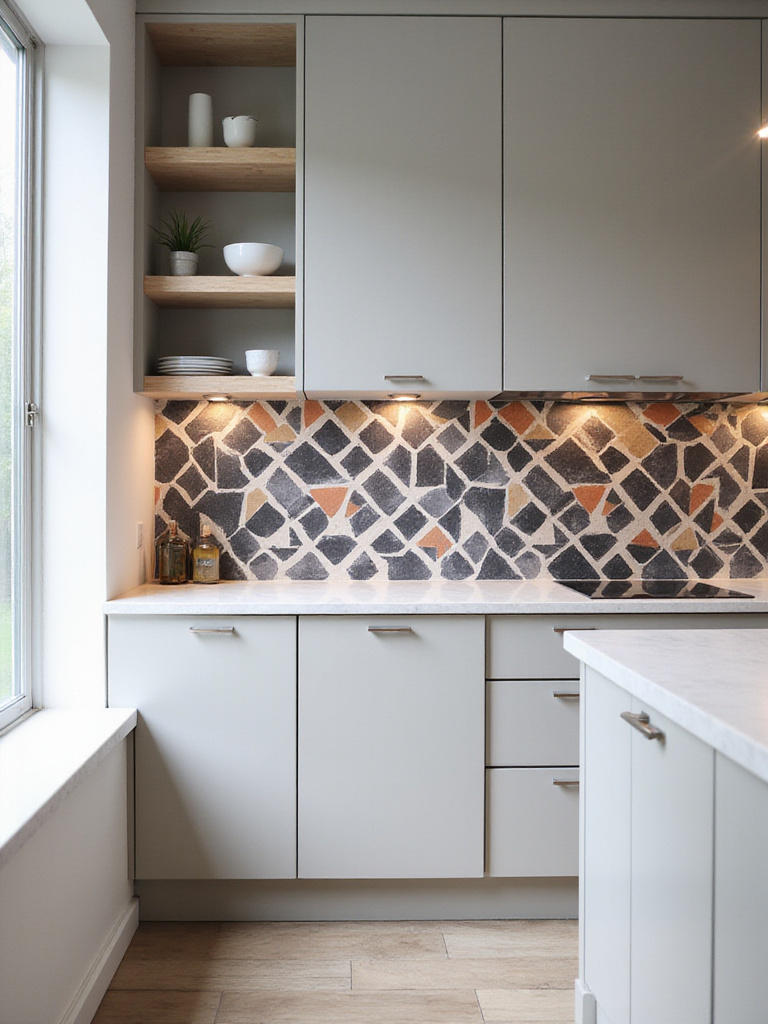
The key to keeping it chic, not chaotic, is balance. If you choose a large-scale, high-contrast geometric, let it be the star. Pair it with quiet, unadorned cabinetry and simple hardware. It’s a confident, powerful look that works beautifully as an accent wall, perhaps behind a breakfast bar or wrapping a kitchen island. It gives the space an architectural backbone that paint simply can’t replicate.
Moving from crisp lines, let’s explore something a little more organic.
7. Embrace Faux Textures: Realistic Concrete, Marble, or Wood Grain Effects for Depth
Can we just address the snobbery around “faux” materials for a moment? A high-quality textured wallpaper isn’t about being cheap; it’s about being clever. It’s about capturing the soul of a material—the cool, industrial depth of raw concrete, the luxe veining of Carrara marble, the gentle warmth of aged wood—without the immense cost, weight, and installation nightmare of the real thing.
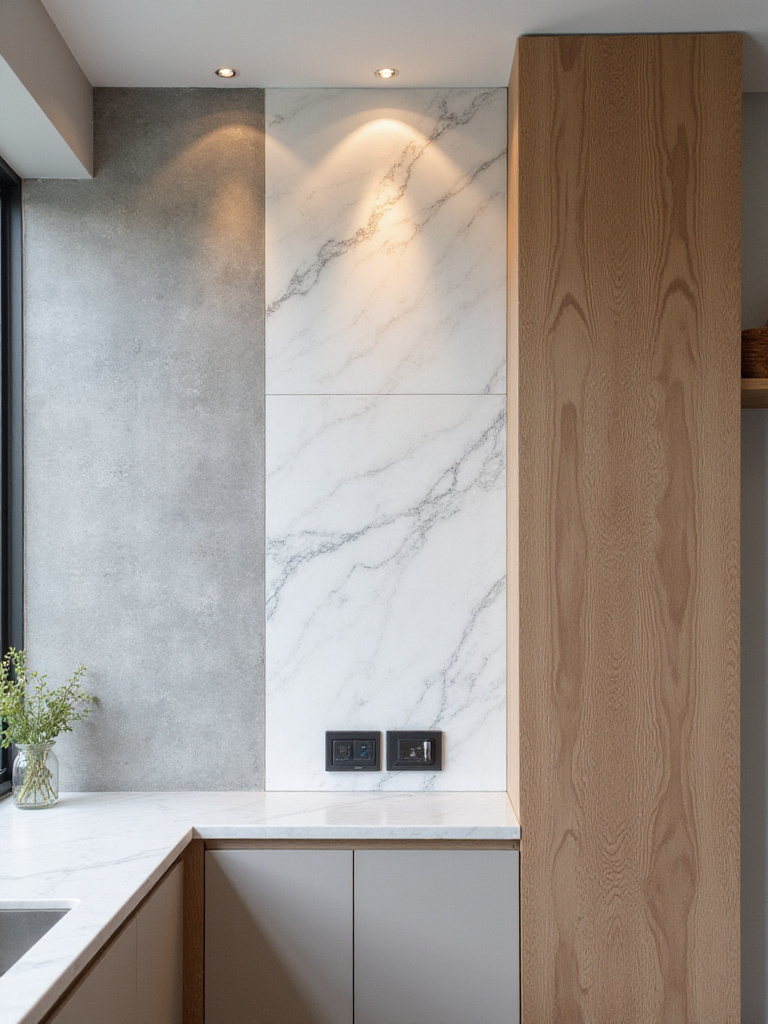
These wallpapers have come so far. Modern printing technology means the texture and realism are uncanny. They can add a layer of architectural character in an afternoon, giving a new-build flat the gravitas of a converted warehouse or lending a simple kitchen the glamour of a grand Italian villa. It’s a brilliant way to experiment with a strong look or to bring in a grounding, natural element that feels both raw and deeply sophisticated.
From the illusion of texture, we move to the magic of light.
8. Incorporate Subtle Metallic Accents for a Touch of Contemporary Luxury and Shine
There’s a wonderful saying that a touch of gold isn’t just decoration; it’s a blessing. In South Asian design, shimmer and light are woven into everything, from the threads of a sari to the hammered brass of a water vessel. Bringing subtle metallic accents into your kitchen wallpaper is a beautiful way to echo this tradition with a modern, elegant touch. It’s not about flashy glitter; it’s about a sophisticated, gentle glow.
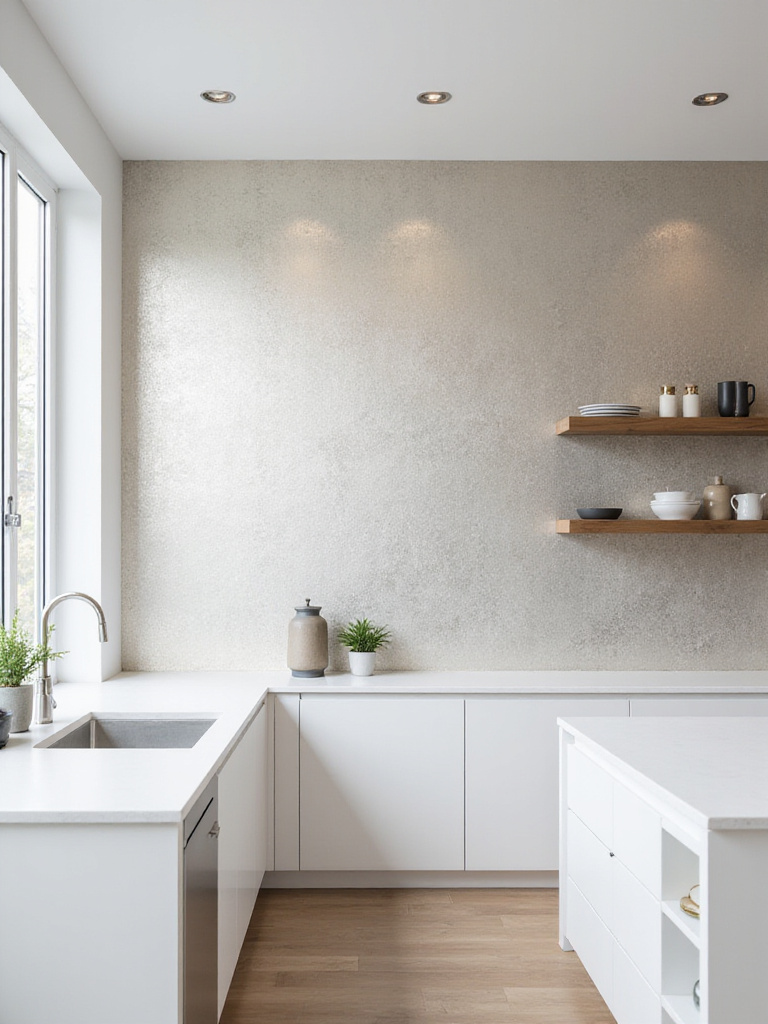
Look for papers with delicate, brushed gold lines, a soft silver-leaf background, or a coppery patina that looks like it has been aged for centuries. These papers are magical because they play with light. They will catch the morning sun and the evening lamplight, making your kitchen feel alive, brighter, and more spacious. Used on a feature wall or even in the back of a cabinet, a metallic detail adds a layer of quiet luxury and warmth that is utterly captivating.
From the glimmer of metal, let’s bring the garden inside.
9. Select Biophilic Prints to Infuse Serene Natural Elements Effortlessly Into Your Kitchen
The British have a love affair with their gardens, and many South Asian cultures are steeped in the symbolism of lush, tropical botanicals. biophilic design, which is simply the act of bringing nature indoors, feels less like a trend and more like a return to something essential. A wallpaper featuring leaves, flowers, or serene landscapes can instantly make a kitchen feel like a calming, restorative sanctuary.
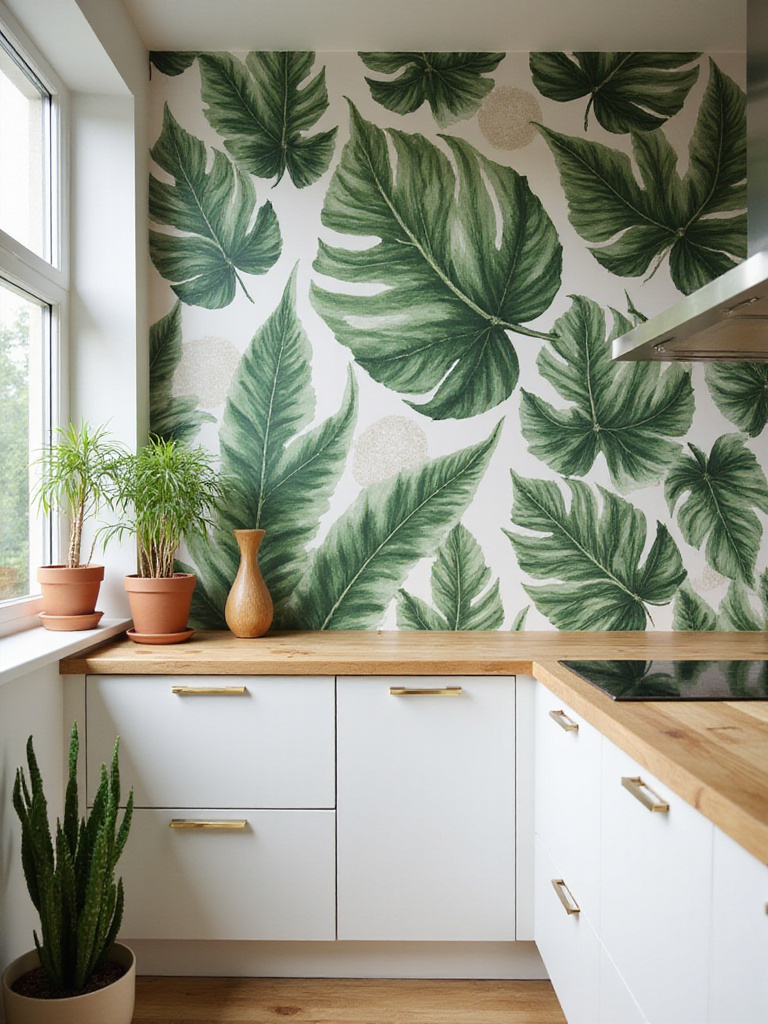
Whether you choose a dramatic, large-scale palm print or a delicate, William Morris-inspired floral, the effect is transformative. It can soften the hard edges of a modern kitchen, add a welcome burst of colour, and create a powerful connection to the outdoors. To make the look feel even more authentic, pair your wallpaper with real plants—a few pots of fresh herbs on the windowsill, a trailing ivy from a high shelf. This creates a beautiful, layered conversation between the representation of nature and the real thing.
With the pattern chosen, we need to think about how it sits with everything else.
10. Harmonize Kitchen Color Palettes for Visually Cohesive and Calming Spaces
Colour is emotional. The saffron yellow in a pattern might remind you of a bustling spice market; a deep indigo might recall a favourite silk scarf. When choosing your wallpaper, you need to think about its colour story and how it will converse with the other colours in your kitchen. It’s about creating a harmonious palette, not a collection of competing soloists.
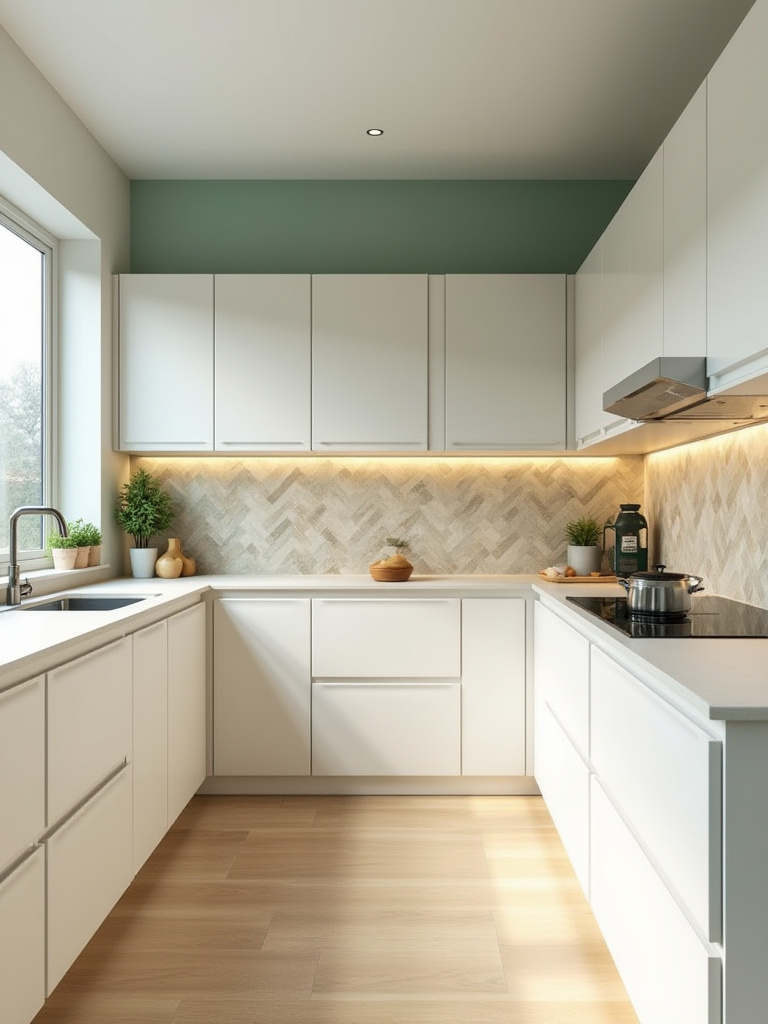
Pull out the secondary or tertiary colours from your chosen wallpaper and echo them in small ways around the room—in your tea towels, a ceramic vase, or even the colour of your kettle. A client of mine with a stunning de Gournay-style wallpaper featuring cranes and soft blues pulled that exact shade of blue and used it for her island cabinetry. The result was breathtakingly cohesive and looked incredibly high-end. It’s a simple trick that weaves everything together into one beautiful, intentional design.
Let’s look at a more subtle way to use colour for a dramatic effect.
11. Create Visual Depth with Subtle Ombre or Gradient Transitions for Unique Ambience
There is something so poetic about an ombre effect. It’s like watching the sky change at dusk or seeing the colour bleed from a piece of silk dipped in dye. A wallpaper with a subtle gradient of colour brings a serene, ethereal quality to a kitchen. It’s a very modern, artistic choice that adds immense visual depth without the busyness of a repeating pattern.
A vertical ombre, moving from a darker shade at the floor to a lighter one at the ceiling, can make your room feel dramatically taller, drawing the eye upwards. It’s a wonderful trick for kitchens with lower ceilings. A horizontal gradient can make a narrow space feel wider. The effect is soft, sophisticated, and deeply calming, turning a simple wall into a piece of abstract art that sets a unique and peaceful mood for the whole room.
Finally, a classic trick for any space, but especially the kitchen.
12. Maximize Light and Space Using Reflective or Lighter-Toned Patterns for Brighter Kitchens
This might be the oldest trick in the design book, but it’s a classic for a reason. In so many British homes, light is a precious commodity we want to capture and amplify. Using wallpaper in lighter tones—soft whites, pale greys, gentle pastels—is an instant way to make a kitchen feel bigger, brighter, and more airy.
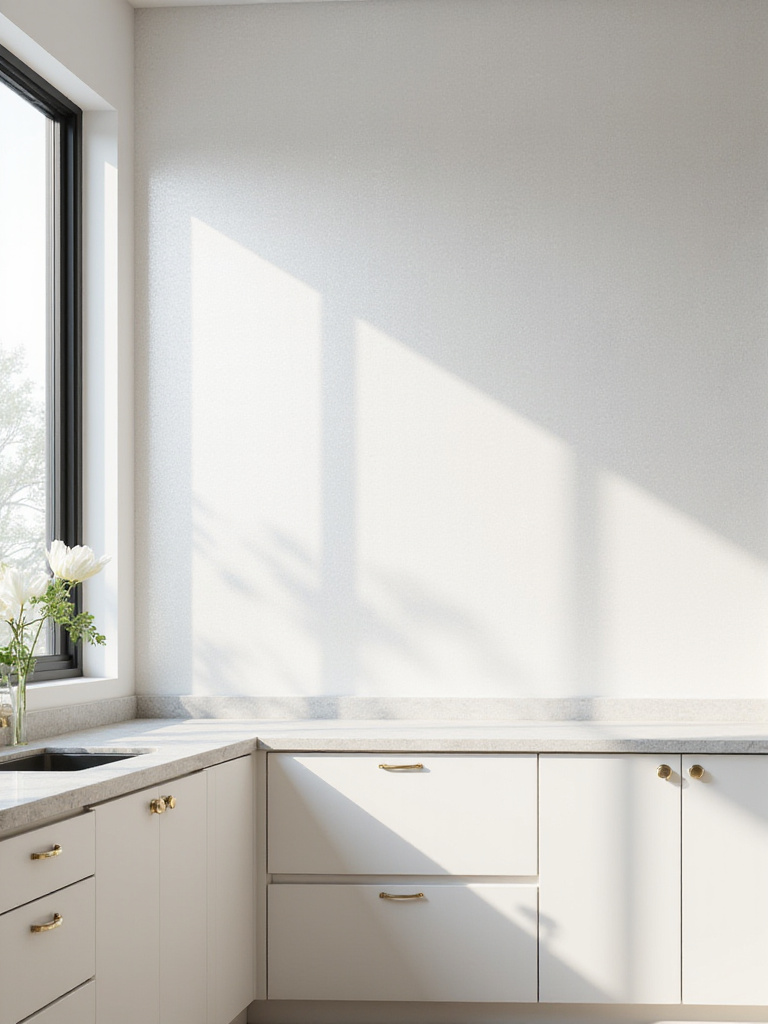
To take it a step further, choose a paper with a subtle sheen or a light-reflecting quality, like a pearlized finish or a delicate metallic thread. These surfaces will literally bounce light around the room. When a client in a basement flat was worried about her dark kitchen, we chose a pale cream wallpaper with a tiny, silver geometric pattern. The effect was immediate and astonishing. The room felt twice as bright and infinitely more welcoming. It’s a simple, powerful tool for transforming the very atmosphere of your space.
Now that you’ve got your design sorted, it’s time to get practical.
Smart Installation & Strategic Placement: Execution for a Flawless Finish
Here’s where the vision becomes reality. The way your wallpaper is installed and placed is just as important as the paper itself. This is about execution and attention to detail. A little bit of cleverness and care at this stage will ensure your kitchen looks less like a DIY project and more like a feature in a design magazine.
13. Deciphering Peel-and-Stick vs. Traditional Paste Methods for Easier DIY Success
Alright, let’s have a frank conversation about peel-and-stick. Everyone says it’s foolproof, but that’s not entirely true. It’s brilliant for renters or for a temporary update, but it’s incredibly unforgiving of imperfect walls. Every single lump and bump will show. And while it’s repositionable, sometimes that means the edges don’t have the same robust grip as a traditional pasted paper.
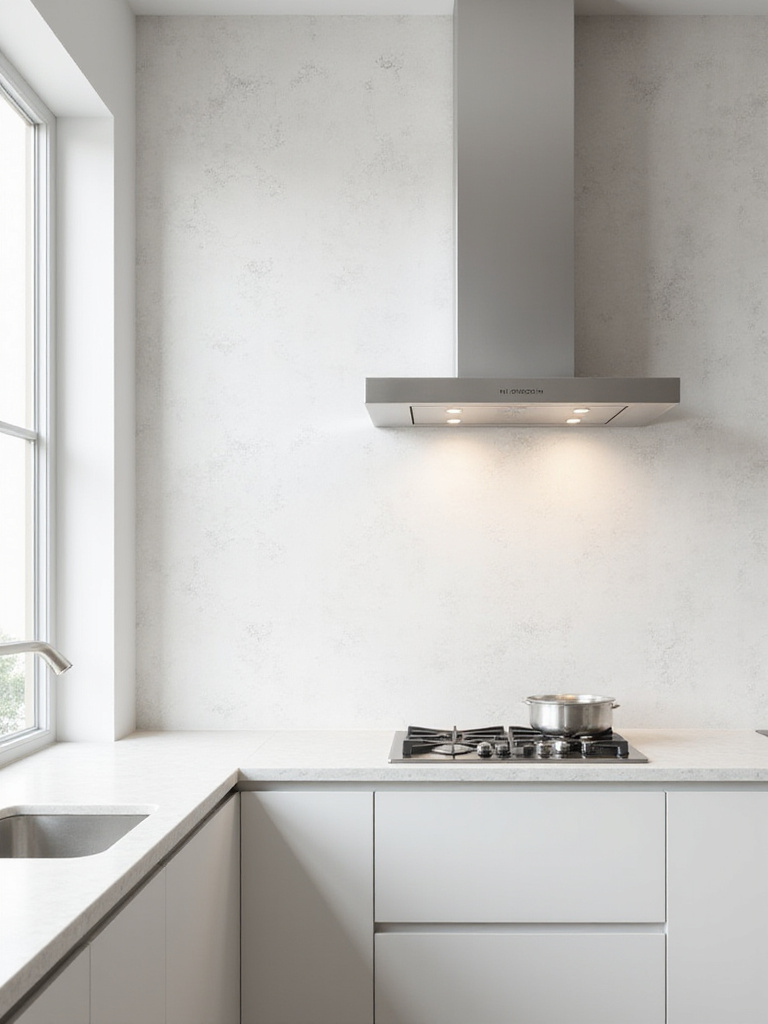
Traditional, paste-the-wall wallpaper feels more substantial for a reason. It has more ‘slip’, which allows you to slide it into perfect alignment, and the bond it creates with the wall is far more durable—essential for a high-traffic area like a kitchen. For a forever home and a truly professional finish, I will almost always advocate for the traditional method. It’s a craft, and the result is simply a higher-quality, longer-lasting finish.
Whichever method you choose, you’ll have to deal with life’s little obstacles.
14. Achieve Seamless Pattern Matching Around Tricky Architectural Elements and Outlets
The true mark of craftsmanship isn’t how the wallpaper looks on a big, empty wall; it’s how it navigates the tricky bits. How does the pattern flow around a window frame? Does the motif align perfectly above and below a light switch? This is where a beautiful installation becomes a work of art.
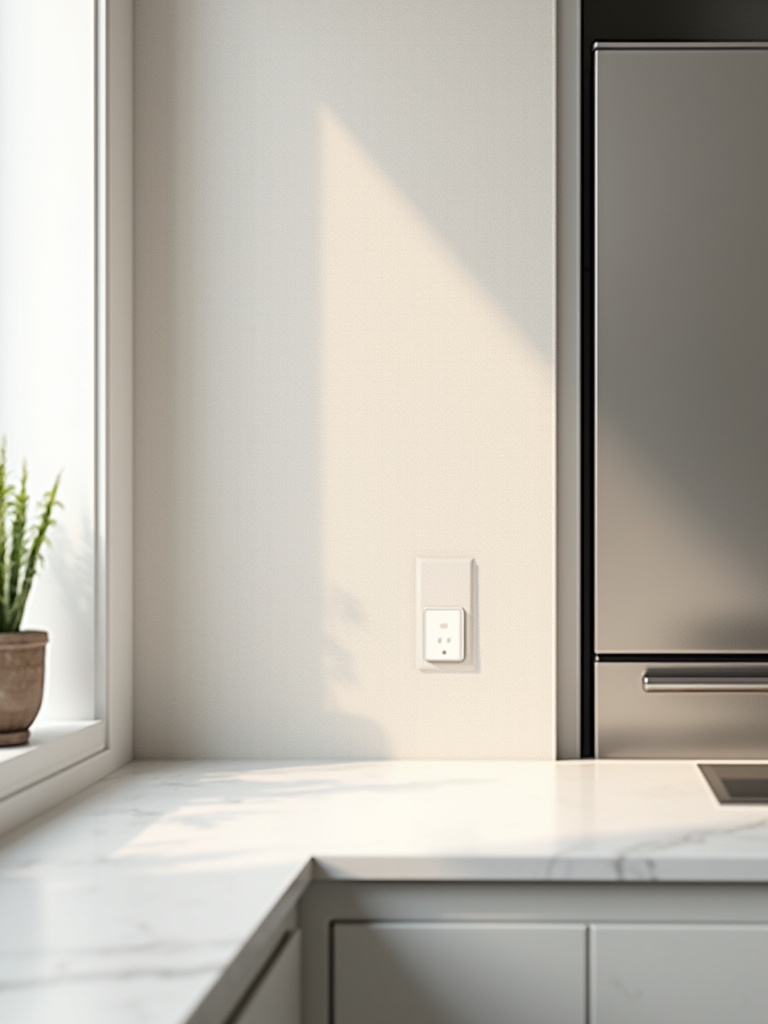
My advice is to plan it out like a military operation. Lay your strips out on the floor and map how the pattern will hit each obstacle. Always cut with a razor-sharp blade—a dull knife will tear the paper. And when it comes to outlets, turn off the power first, then hang the paper over the opening. Make small diagonal cuts from the centre outwards and then trim, leaving a tiny bit extra to tuck neatly behind the faceplate. It’s this painstaking attention to detail that separates a good result from a breathtaking one.
Now, let’s talk about where to create that “wow” moment.
15. Create a Striking Accent Wall Behind Key Features Like Islands or Hoods
You don’t need to wallpaper your entire kitchen to make a dramatic statement. In fact, sometimes, less is more. Choosing a single wall to be your “hero” is a powerful and sophisticated design move. The wall behind your range and hood, or the one facing your kitchen island, is the perfect candidate. It creates an instant focal point that anchors the entire room.
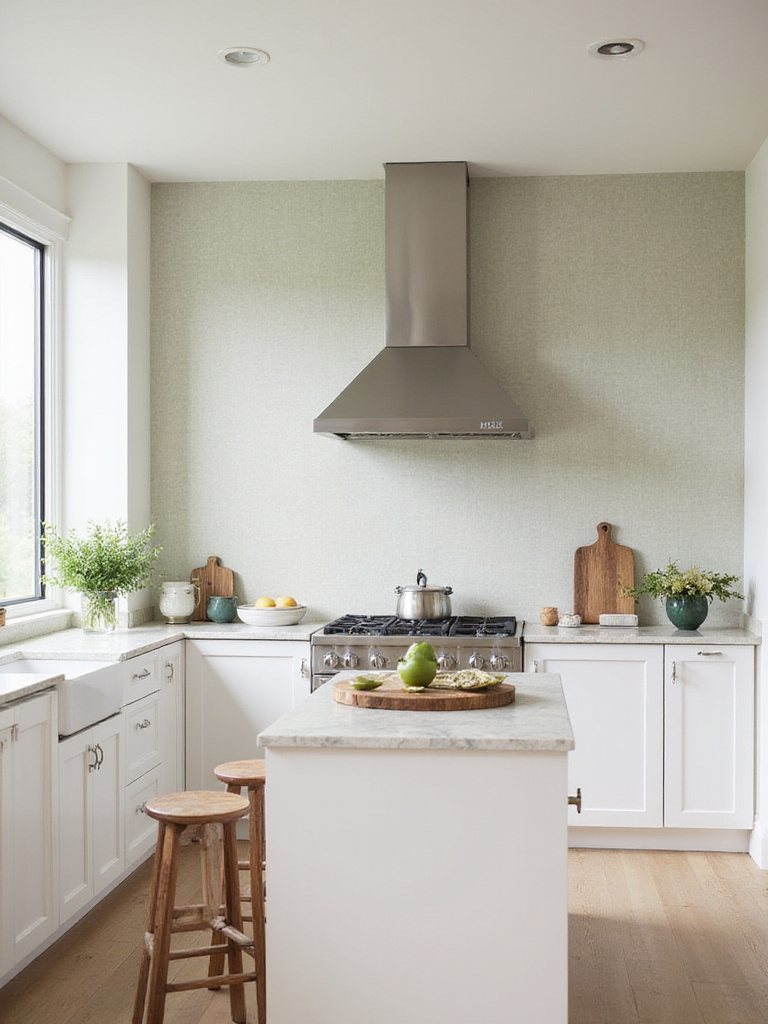
Think of it as creating a backdrop for the star of the show. A sleek, modern extractor hood against a rich, textural grasscloth? Divine. A beautifully crafted island against a backdrop of bold, botanical wallpaper? Unforgettable. This technique allows you to be brave with your pattern choice without it overwhelming the space, adding a layer of custom-designed luxury that feels both intentional and incredibly stylish.
Even with the best planning, little things can go wrong. Here’s how to fix them.
16. Troubleshoot Common Bubbles and Creases for a Flawless, Professional Finish
Even the most seasoned professional will sometimes find a small air bubble or a crease after the paper is up. The key is not to panic. If the paste is still wet, you can usually just smooth it out gently with a wallpaper brush. If it’s dried, there are simple tricks to fix it without a trace.
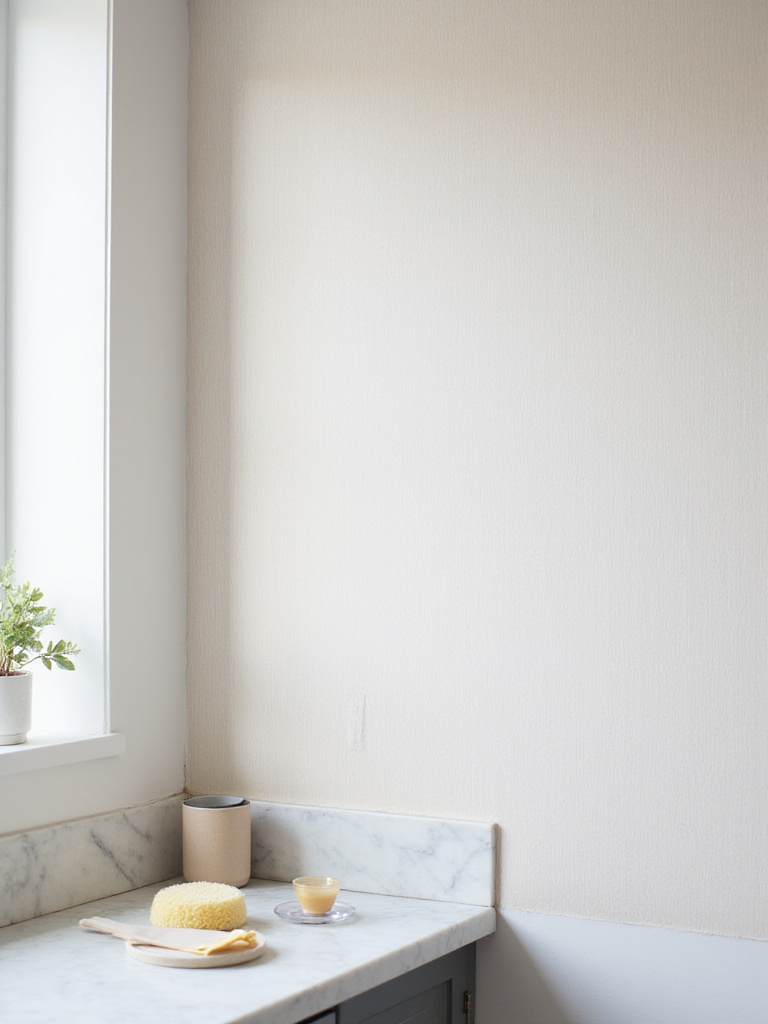
For a bubble, take a very sharp pin or the tip of a craft knife and make a tiny, invisible prick in the centre. Then, gently press the air out towards the hole. The paper will flatten and adhere to the wall perfectly. For a larger bubble or a lifting seam, a tiny syringe filled with a bit of wallpaper adhesive is your best friend. A little dab underneath, a firm press with a roller, and no one will ever know it was there.
Let’s zoom in on those little nooks and crannies.
17. Master Precise Cutting and Measurement for Custom Kitchen Nooks and Alcoves
Those charming but awkward nooks and alcoves are where your wallpapering skills are truly tested. Precision is everything. Rushing these areas results in crooked lines and mismatched patterns that will bother you every time you see them. The secret weapon here is creating a template.
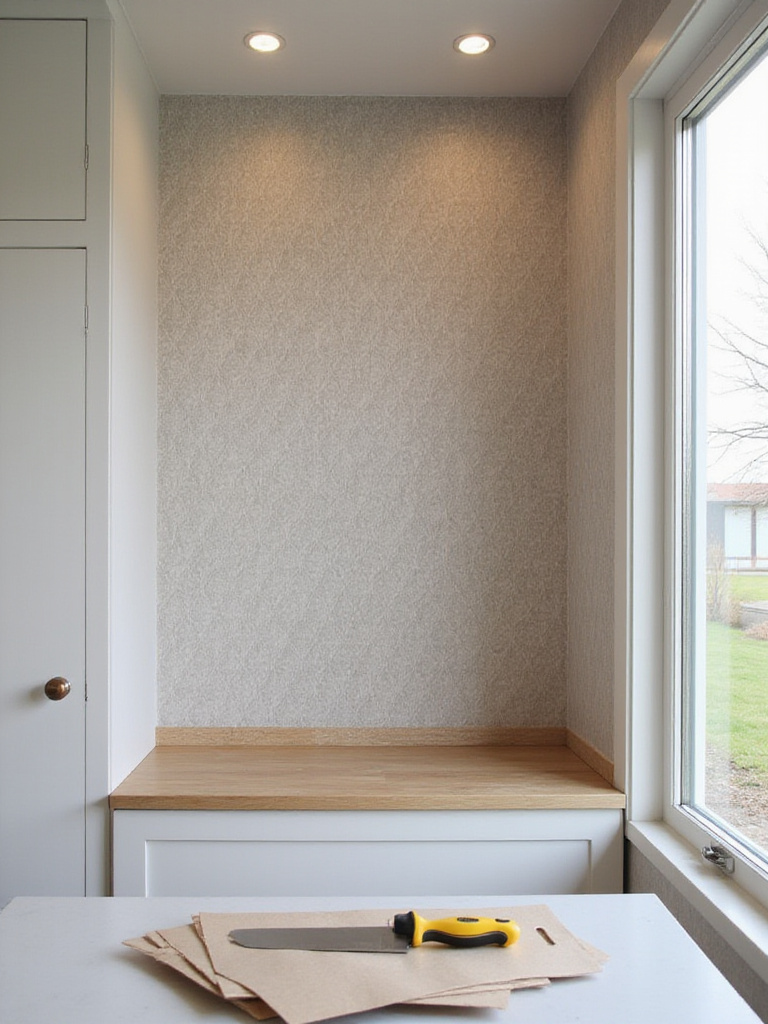
Instead of trying to measure a dozen different angles, take a large piece of paper—lining paper or even parchment paper works—and tape it into the nook. Trace the exact shape, including any curves or slopes. Then, lay this template over your wallpaper and cut it out, leaving a little extra around the edges for trimming. This method ensures a perfect fit every single time and transforms a tricky space into a beautifully finished, bespoke feature.
Once it’s all up, you need to protect your masterpiece.
18. Protecting Vulnerable Edges and Seams to Prevent Premature Peeling in High-Traffic Zones
The edges and seams of your wallpaper are its most vulnerable points, especially in a kitchen. They’re the places most likely to be knocked, splashed, or tempted to peel over time. Giving them a little extra protection is a non-negotiable step for long-term beauty.
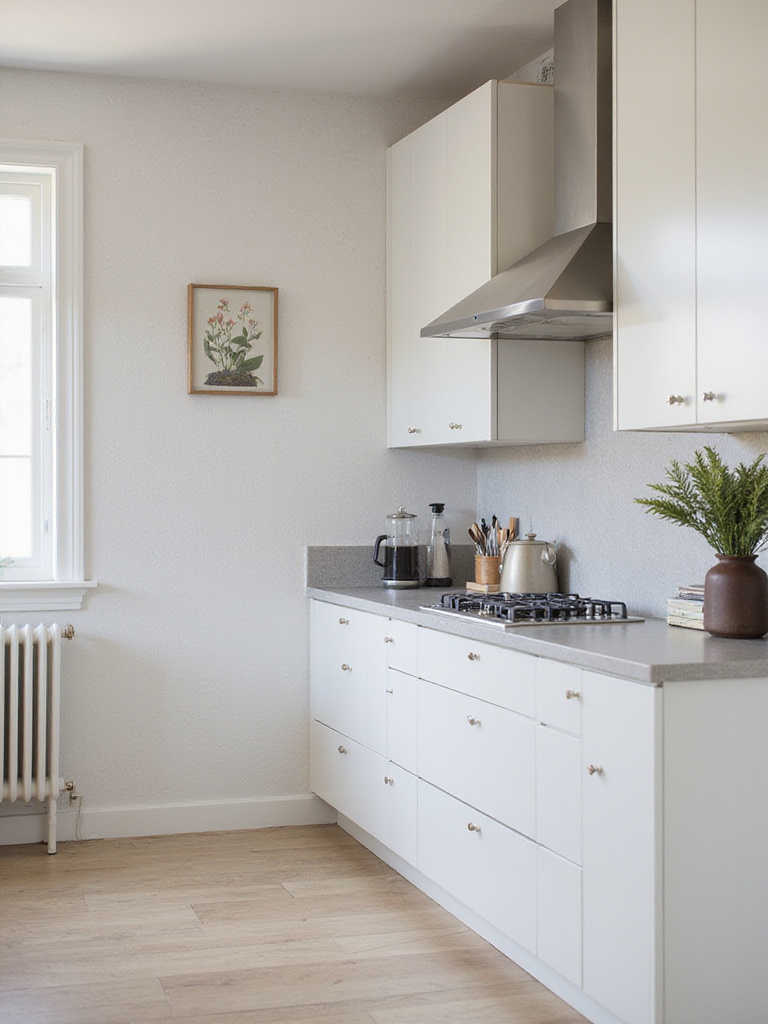
Once your wallpaper paste is completely dry (wait at least 48 hours), go along every single seam with a tiny artist’s brush and apply a clear, matte-finish wallpaper seam sealer. It’s invisible once dry but creates a waterproof, durable barrier that protects against moisture and everyday wear and tear. This simple, five-minute job can add years to the life of your wallpaper, ensuring it stays looking crisp and seamless. Think of it as the top coat for your manicure—the final, protective touch.
With the installation complete, let’s look at a few advanced tricks to elevate the final look.
Elevating & Maintaining Your Modern Kitchen Wallpaper: Advanced Use & Longevity
Your wallpaper is up and it looks fabulous. But we’re not quite done. These final touches are about creative application and thoughtful maintenance. This is how you take your beautiful kitchen and turn it into a truly cohesive, enduring, and personalised work of art.
19. Integrate Wallpaper Artfully Inside Glass-Front Cabinets or Open Shelving for Interest
This is one of my absolute favourite design secrets. Lining the back of glass-fronted cabinets or open shelves with wallpaper is like adding a beautiful silk lining to a classic coat. It’s an unexpected flash of colour and pattern that adds a layer of depth, personality, and bespoke luxury. It’s a “peekaboo” moment of delight every time you reach for a teacup.
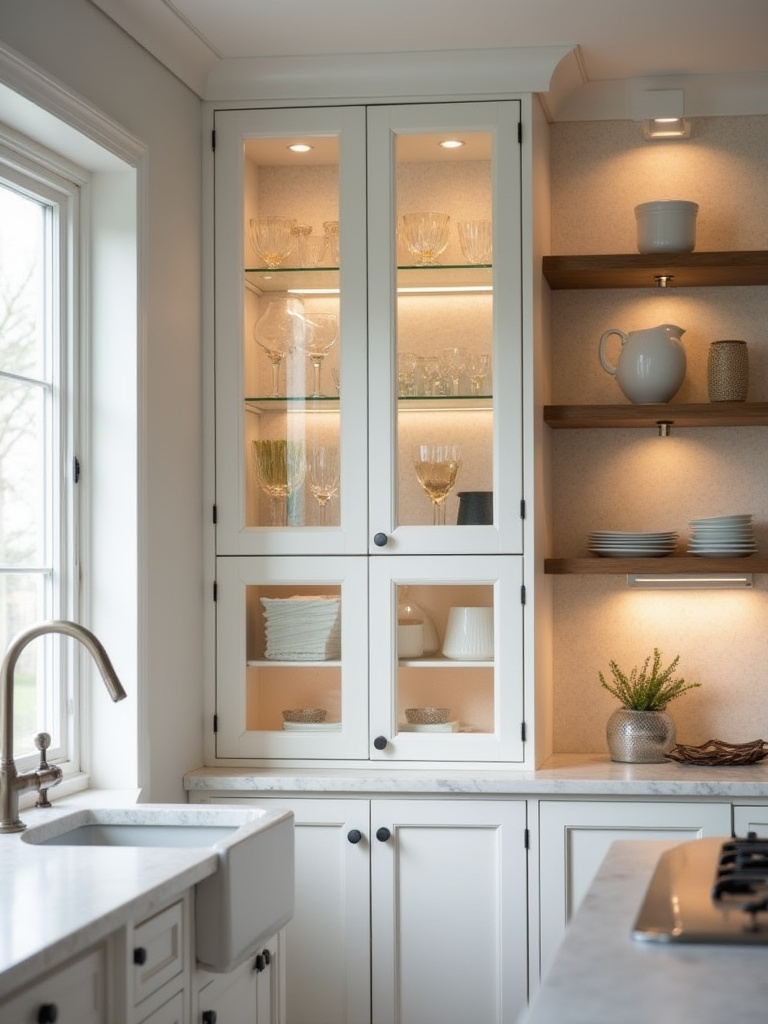
This technique is a brilliant way to use a leftover piece of a bold, expensive wallpaper you love. It transforms your everyday storage into a curated display case, creating a stunning backdrop for your favourite ceramics or glassware. It’s a small detail, but it makes your kitchen feel incredibly considered and custom. For an easy, commitment-free version, use a high-quality peel-and-stick paper.
From little secrets, let’s go big.
20. Define Open-Concept Kitchen Zones with Thoughtfully Placed Wallpaper Breaks
In an open-plan space, wallpaper can be a powerful tool for creating “invisible walls.” It can visually separate the kitchen from the dining area or the dining area from the living space, all without closing off the light and flow. You’re creating distinct “zones” or moods within a larger room, giving each area its own identity.
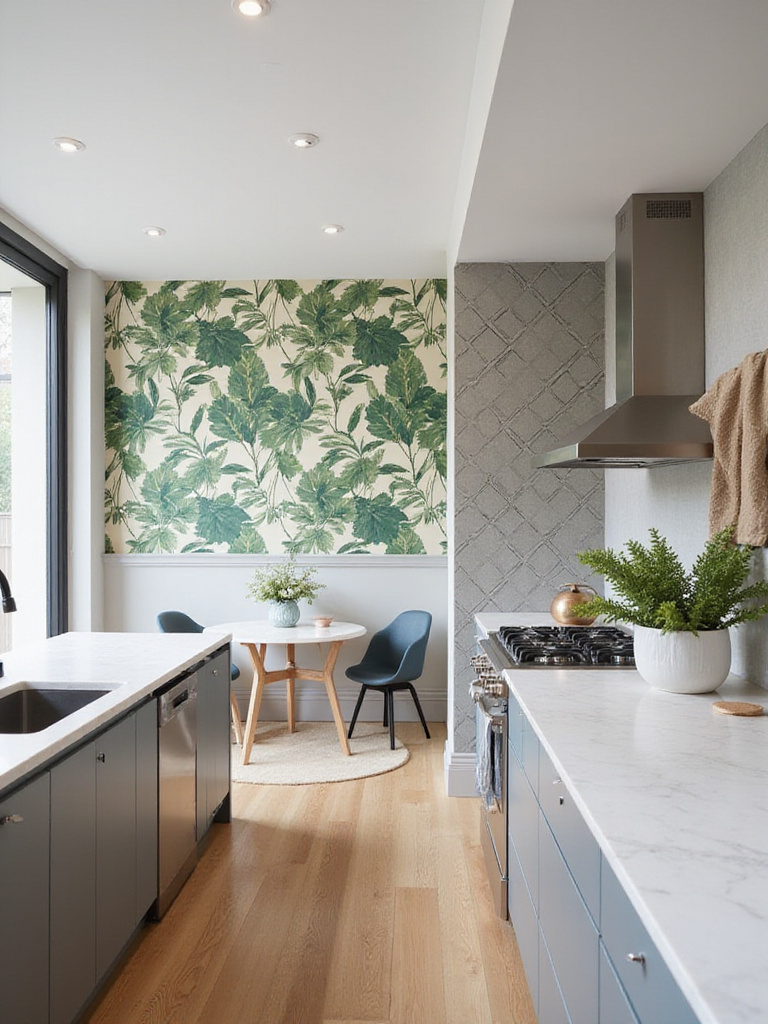
The trick is to make the transitions feel natural. Use an architectural feature, like an archway or the corner of a wall, as your natural stopping point. A client in a modern loft used a dramatic, dark floral wallpaper only on the wall behind their dining table. It instantly created a sense of intimacy and occasion, clearly defining the dining ‘room’ within the vast open space. It’s a very clever way to bring structure and design intent to an open-concept layout.
This brings us to the most important rule of all.
21. Balance Bold Wallpaper with Muted Cabinetry for Perfect Visual Harmony
This is the cornerstone of my design philosophy: balance. If you choose a bold, show-stopping wallpaper—a hero pattern—then the other elements in the room need to be the quiet, beautiful backup singers. You cannot have everything shouting for attention at once; it just creates noise.
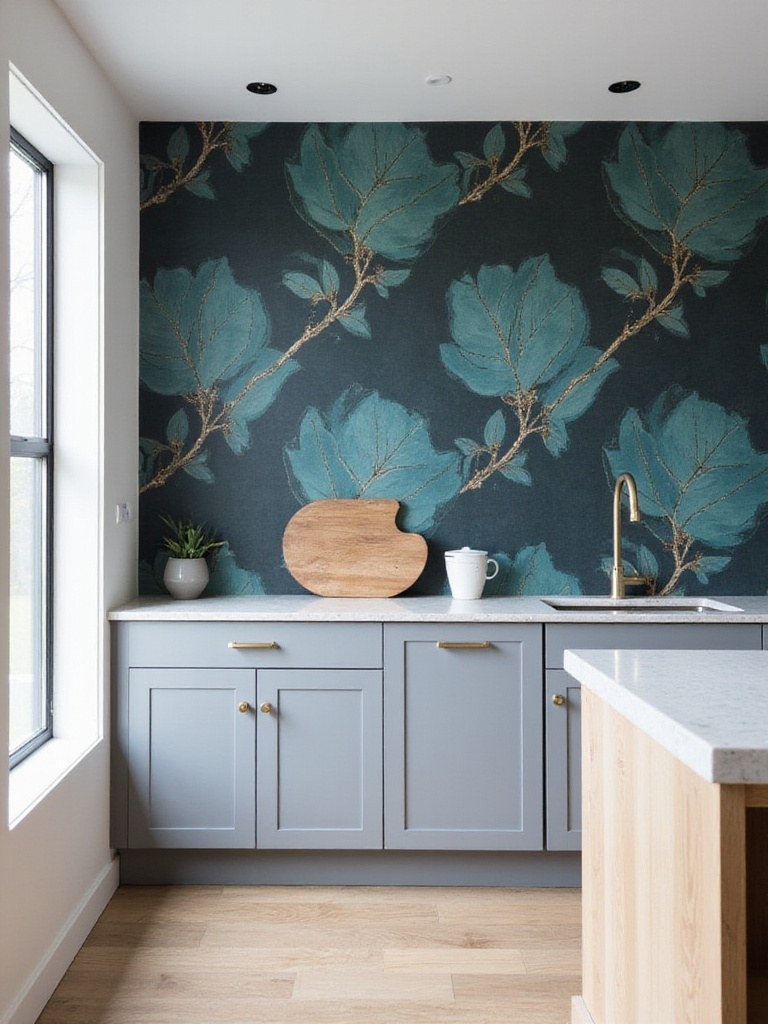
Pair that dramatic floral or vibrant geometric with simple, muted cabinetry in a soft white, a warm grey, or a natural wood. Keep the countertops and hardware understated. This allows the wallpaper to be the undeniable star of the show. It creates a dynamic tension between the ornate and the simple, the traditional and the modern, that is incredibly sophisticated. It’s a confident, curated look that feels both brave and beautifully balanced.
And now, for a truly bold, couture move.
22. Extend Wallpaper from Walls to a Faux Backsplash for Unified Kitchen Drama
If you’re feeling bold and want a truly seamless, high-impact look, consider extending your wallpaper all the way down to the countertop to act as the backsplash. It’s a dramatic, custom look that eradicates the harsh line between wall and backsplash, creating one continuous, fluid design statement. It’s a move that feels very European and incredibly chic.
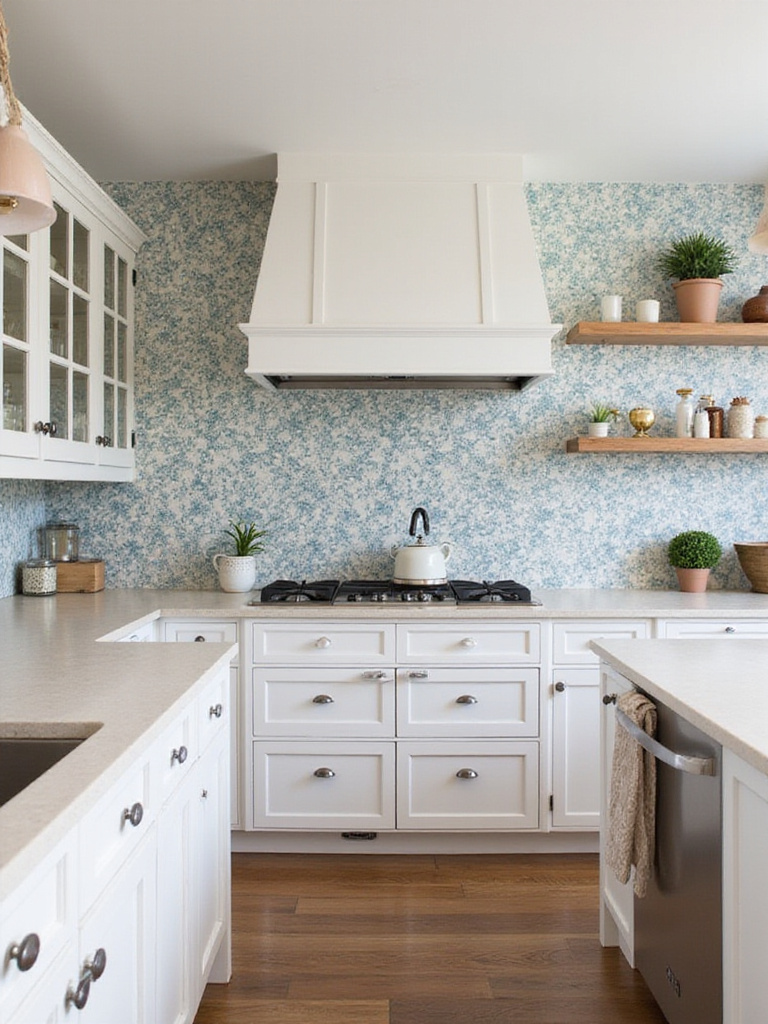
Obviously, this requires a few extra steps for protection. You must use a highly durable, scrubbable vinyl wallpaper. After it’s installed and fully cured, you absolutely must seal the backsplash area with several coats of a clear, water-based polyurethane in a matte or satin finish. For total peace of mind in the heaviest splash zones (like behind the sink), installing a custom-cut panel of clear glass or acrylic over the wallpaper gives you a completely waterproof, wipeable surface while letting the beautiful pattern show through.
Finally, a simple promise to keep your beautiful kitchen looking its best.
23. Implement Regular Wipe-Down Cleaning Routines for Lasting Vibrancy and Cleanliness
After all this effort, the last, most crucial step is simple: keep it clean. Accumulated kitchen grime, invisible grease, and dust are what dull a wallpaper’s vibrancy over time. A regular, gentle wipe-down is all it takes to keep your wallpaper looking as fresh and brilliant as the day it was installed.
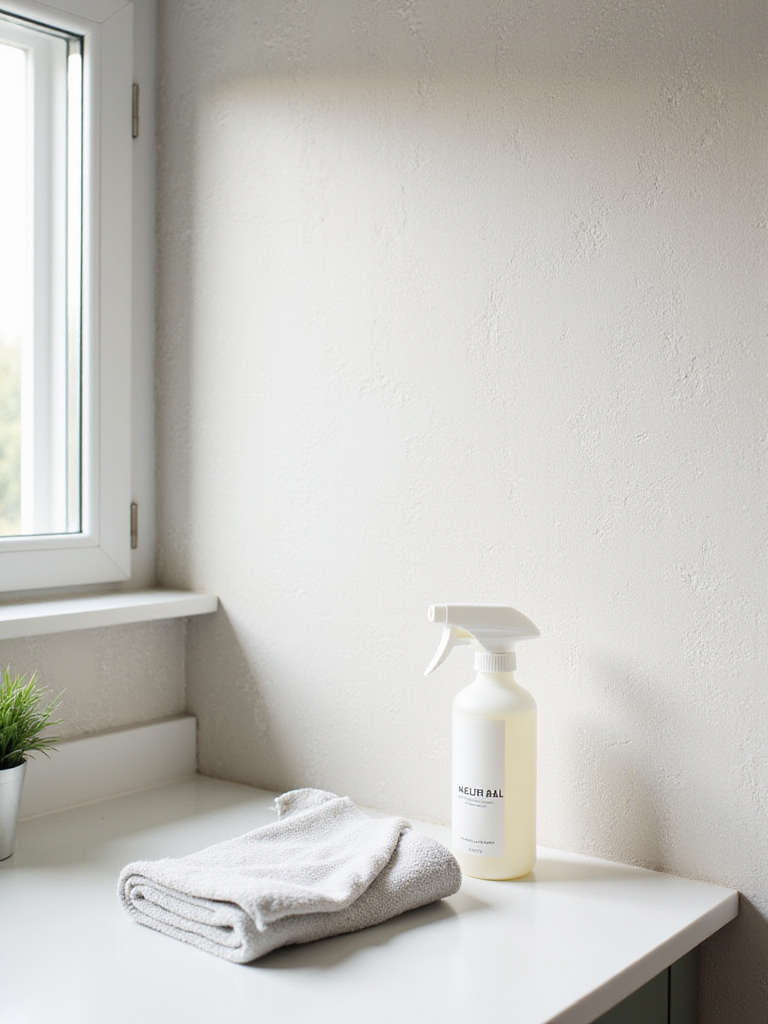
Don’t wait for a major spill. Once a week, take a soft, microfibre cloth slightly dampened with a tiny bit of mild dish soap and warm water, and gently wipe down the walls, especially around the cooking area. Immediately follow with a dry cloth. Never use harsh or abrasive cleaners. It’s a simple ritual of care that protects your investment and ensures the heart of your home continues to sparkle.
Conclusion
Your home, and especially your kitchen, should be a reflection of your life, your travels, your heritage, and your dreams. Modern wallpaper gives you an incredible palette to tell that story. It’s not just about covering a wall; it’s about infusing a space with personality, warmth, and a unique point of view.
By following these guidelines, you’re equipped to make choices that are not only beautiful but also smart, durable, and authentic to you. You can confidently blend a contemporary British aesthetic with influences from anywhere in the world that inspire you, creating a kitchen that is layered, soulful, and truly one of a kind. Now, go gather your samples and start dreaming. Your beautiful story is waiting to be told.