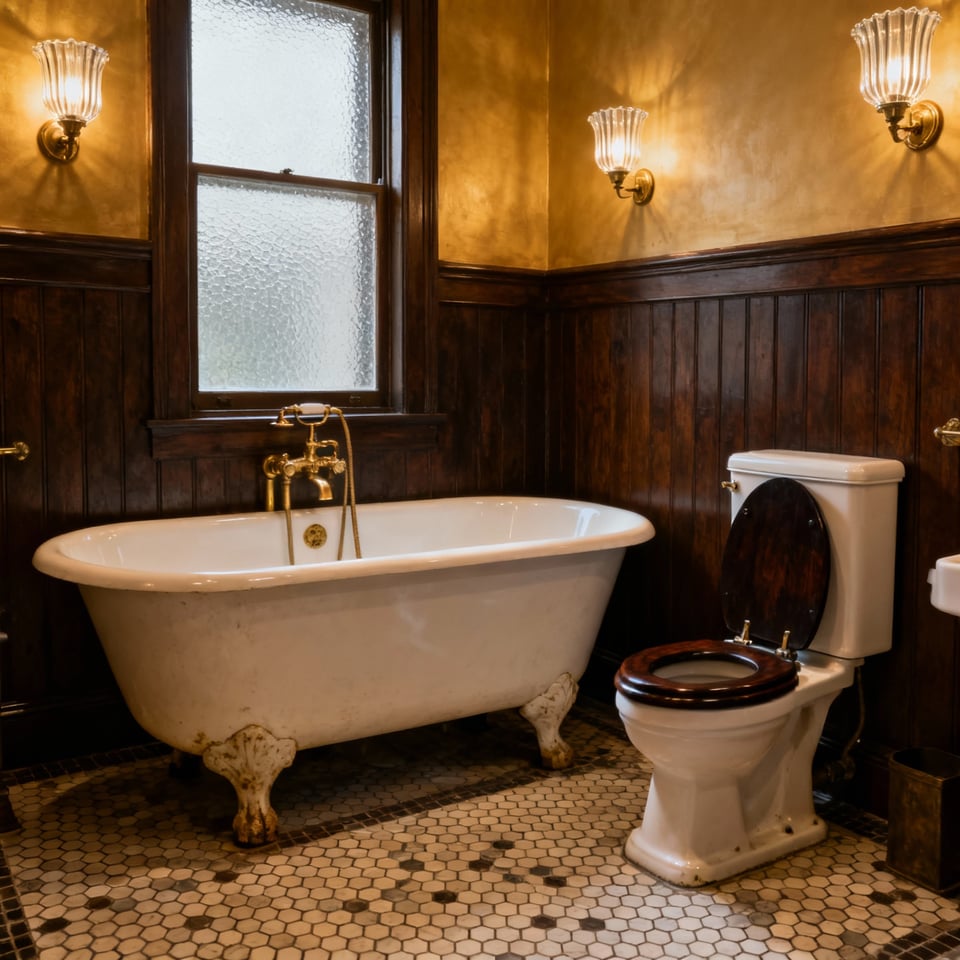
Since the first tiled sculleries of the Georgian era evolved into the dedicated bathrooms of the Victorians, this most private of rooms has chronicled our relationship with ritual and refuge. It began as a monument to newfound sanitation, but today, it has become a sanctuary. The most sophisticated spaces I see understand this dual legacy—they must be both functional havens and storytellers. For those of us drawn to the enduring character of the past, the twenty principles that separate a truly cultivated vintage space from a mere themed replica haven’t changed in a century. They are about dialogue, not dictation; about infusion, not imitation.
This exploration begins where all great design does: with a philosophy. We’ll start by Cultivating Timeless Elegance, understanding the quiet confidence that underpins these enduring aesthetics. From there, we move to the tactile soul of the room, Mastering the Palimpsest of Patina, where we learn to read the stories told by aged brass and heritage tiles. Then, with our principles and materials in hand, we can begin Orchestrating the Vestige, placing iconic forms like the clawfoot tub not just as objects, but as anchors of daily life. Finally, we arrive at the most personal layer, Embracing Anachronistic Grace, where the space truly becomes yours, infused with scents, memories, and light. Each step is a lesson in creating a space that feels not just designed, but gathered over a life well-lived.
Cultivating Timeless Elegance: The Philosophical Underpinnings
Before a single tile is chosen, we must grasp the ethos of the vintage aesthetic. This isn’t about creating a museum piece. It’s about understanding the design grammar of a period so that you can speak it fluently, with your own modern accent. Here, we delve into the principles that allow a room to feel both historically reverent and utterly alive.
1. Deciphering Period Authenticity: Unearthing an Era’s True Spirit
The secret to a space that resonates with historical depth lies not in just sourcing old things, but in understanding an era’s very soul. Why did Victorian design favour ornate detail and dark woods? It was a reflection of industrial prowess and a fascination with the exotic. Why did Art Deco celebrate streamlined forms and geometric patterns? It was a hymn to the machine age and a new, jazz-fueled modernity. Authenticity comes from respecting these underlying narratives.
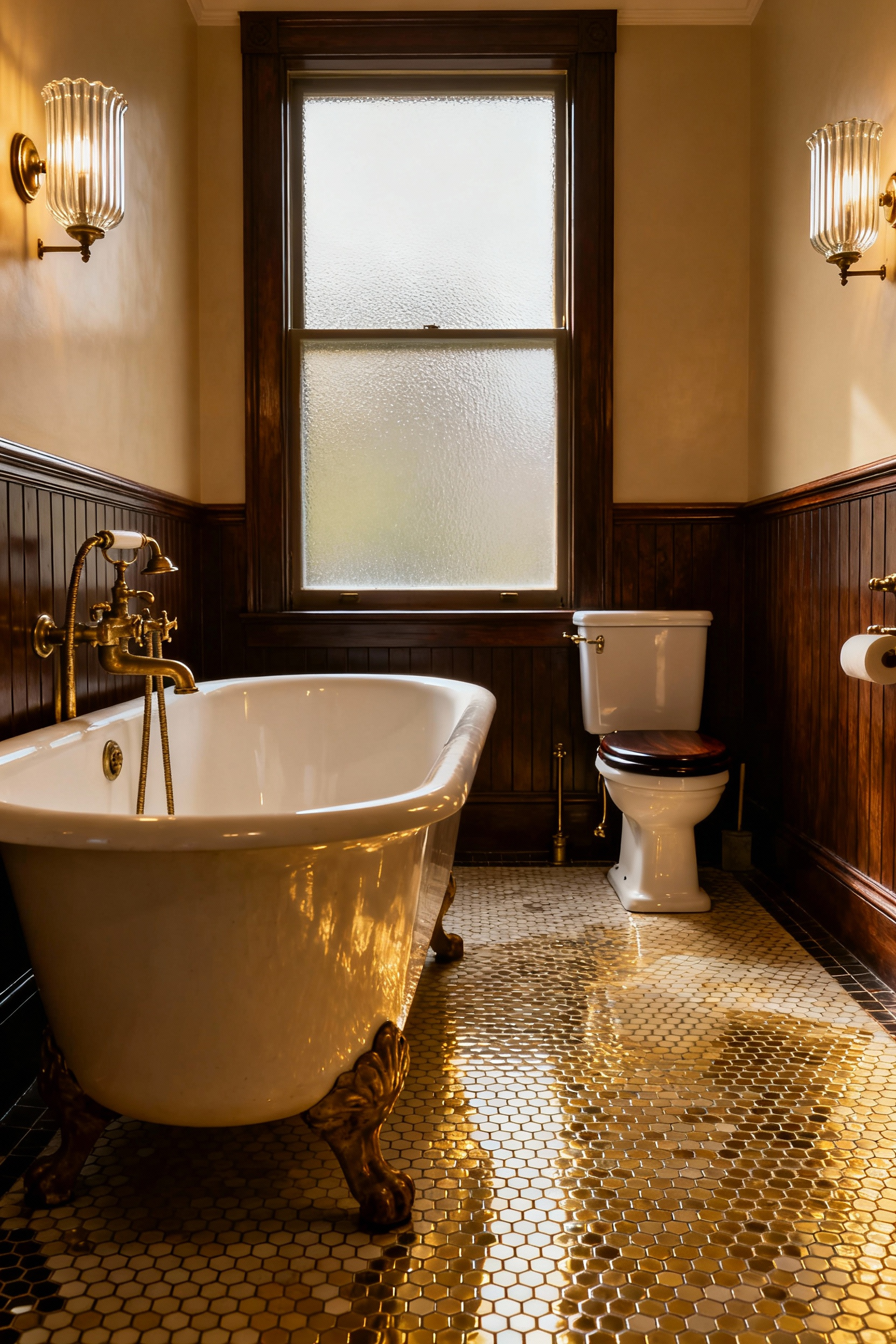
Instead of a generic ‘old-world’ look, commit to the specific story of an era. An Edwardian bathroom tells a tale of light and airiness, with its pedestal sinks and polished nickel. A 1930s bathroom speaks of glamour and precision, with its chrome fixtures and strong colour contrasts. By choosing a specific dialect—be it the formal posture of a Georgian design or the playful geometry of Deco—you create a space with integrity, one that whispers a consistent, captivating story.
2. The Art of Intentional Imperfection: Finding Beauty in a Lived-In Patina
In a world obsessed with the flawless and the new, there is a profound elegance in embracing imperfection. The Japanese call it wabi-sabi—finding beauty in the transient and incomplete. This is the quiet soul of vintage design. It’s the soft tarnish on an unlacquered brass tap, the fine crazing on a ceramic glaze, the gentle wearing of a pattern on a well-trodden tile. These aren’t flaws; they are temporal signatures.
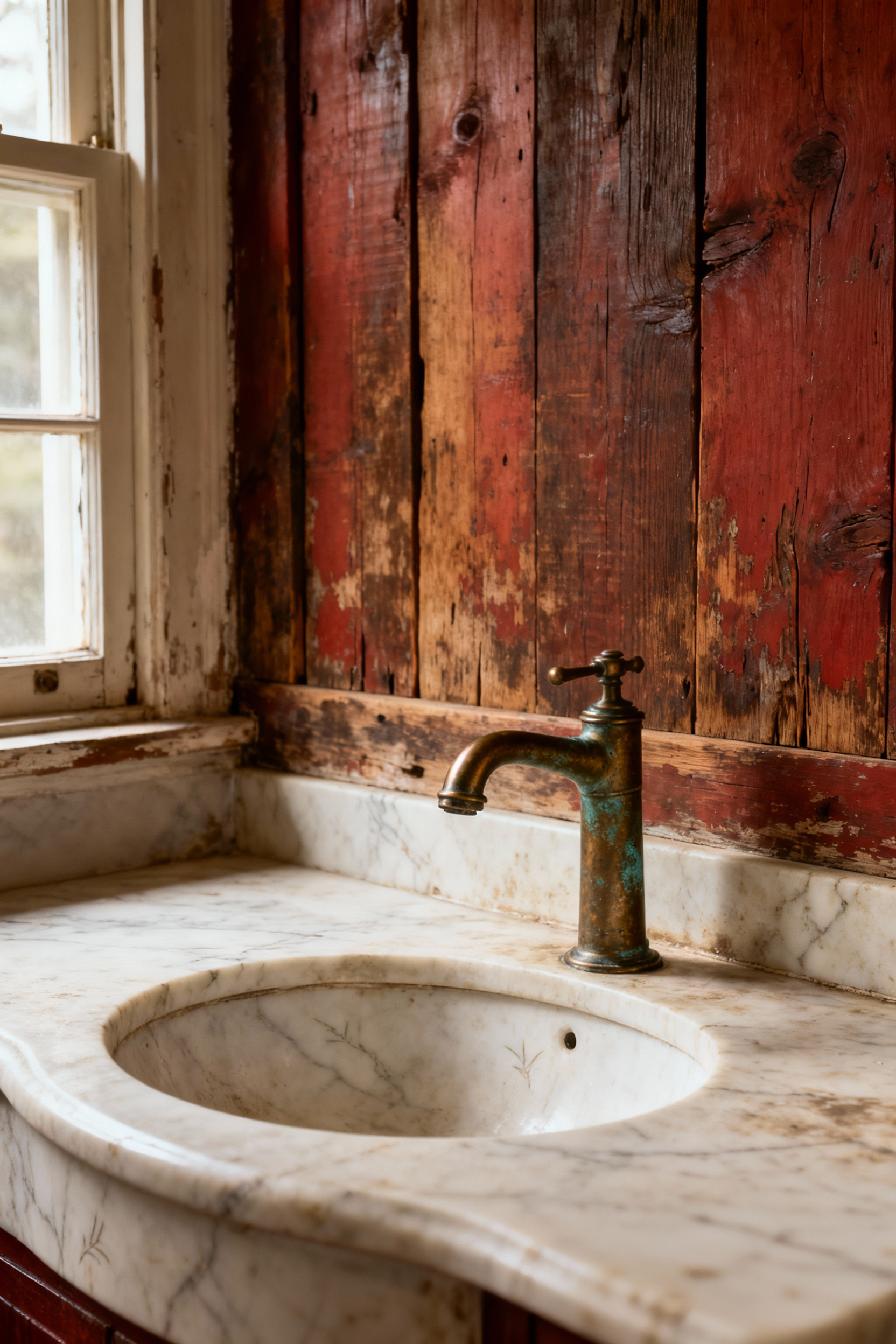
What I tell my clients and readers is this: a living finish tells a living story. In my work blending British and South Asian design, I’ve seen how the soft lustre of an inherited brass lota holds more emotional weight than any polished new vessel. Similarly, allowing the metals in your bathroom to age naturally invites a sense of warmth and history into the space. It is a confident choice, a rejection of disposability that allows your sanctuary to evolve and deepen with you.
3. Harmonizing Anachronisms: Weaving History with a Contemporary Hand
The most compelling interiors are rarely faithful historical reproductions. They are conversations between eras. The true art lies in harmonizing these anachronisms, creating a dynamic tension that feels curated and deeply personal. It’s about knowing the rules of a period well enough to know how, and when, to beautifully break them.

Imagine a razor-sharp, contemporary freestanding tap rising elegantly over a reclaimed marble basin. Or a sleek, minimalist glass shower screen that disappears against a wall of intricate Victorian-era tilework. This is not a clash, but a dialogue. By finding a common thread—a shared line, a complementary texture, or a balanced proportion—you create a space that honours its heritage while serving a thoroughly modern life. It’s the signature of a confident eye.
4. Beyond Replication: Cultivating a Personal Design Ethos
Ultimately, the goal is not to replicate a page from a history book but to reinterpret its spirit. This is about reverent reinterpretation—absorbing the essence of an era and translating it into a language that is uniquely yours. It is the final and most important step in creating a space that feels not just designed, but truly inhabited.

Perhaps you take the sinuous, organic lines of Art Nouveau and express them not through tile, but through the curve of a modern mirror or a sculptural light fixture. You might be inspired by the utilitarian honesty of early 20th-century design but render it in a palette of soft, contemporary neutrals. This approach ensures your bathroom is a reflection of your own cultivated taste—a living dialogue between history’s best ideas and your own.
Cultivating Timeless Elegance (Part Two): The Power of Restraint
5. Narrative Through Negative Space: The Eloquence of the Unsaid
In our quest to fill spaces, we often forget the profound power of what we leave out. Negative space—the uncluttered expanse of a wall, the clear sweep of a floor—is not emptiness. It is a deliberate pause, a moment of visual quiet that allows beautiful objects and architectural details to truly sing. In vintage design, it is the canvas that makes the artistry legible.

By resisting the urge to fill every surface, you create a sanctuary. A magnificent clawfoot tub commands more authority when it sits in a generous pool of space. An ornate, gilded mirror becomes a piece of sculpture when the wall around it is allowed to breathe. I’ve noticed that in both grand British manors and the airy courtyards of Indian havelis, the most luxurious feeling often comes from this generosity of space. It’s an aesthetic of quiet confidence, suggesting that what is present is so exceptional, it needs no chorus of supporting clutter.
Mastering the Palimpsest of Patina: Curating Textural Narratives
A vintage bathroom should be a feast for the senses, and that begins with texture. It is a story told not in words, but in the tactile language of materials—the cool slip of porcelain, the warmth of aged wood, the solid weight of cast iron. This is the palimpsest, where layers of history and use are written on every surface.
6. The Resurgence of Enamel: A High-Gloss Homage to Durability
There is a deep, liquid lustre to traditional vitreous enamel that modern materials struggle to replicate. Fused to a cast-iron core, it creates a surface that is both incredibly durable and visually profound. Its high-gloss finish acts like a mirror for light, subtly amplifying the brightness and sense of space in a room while exuding an air of pristine, hygienic elegance.
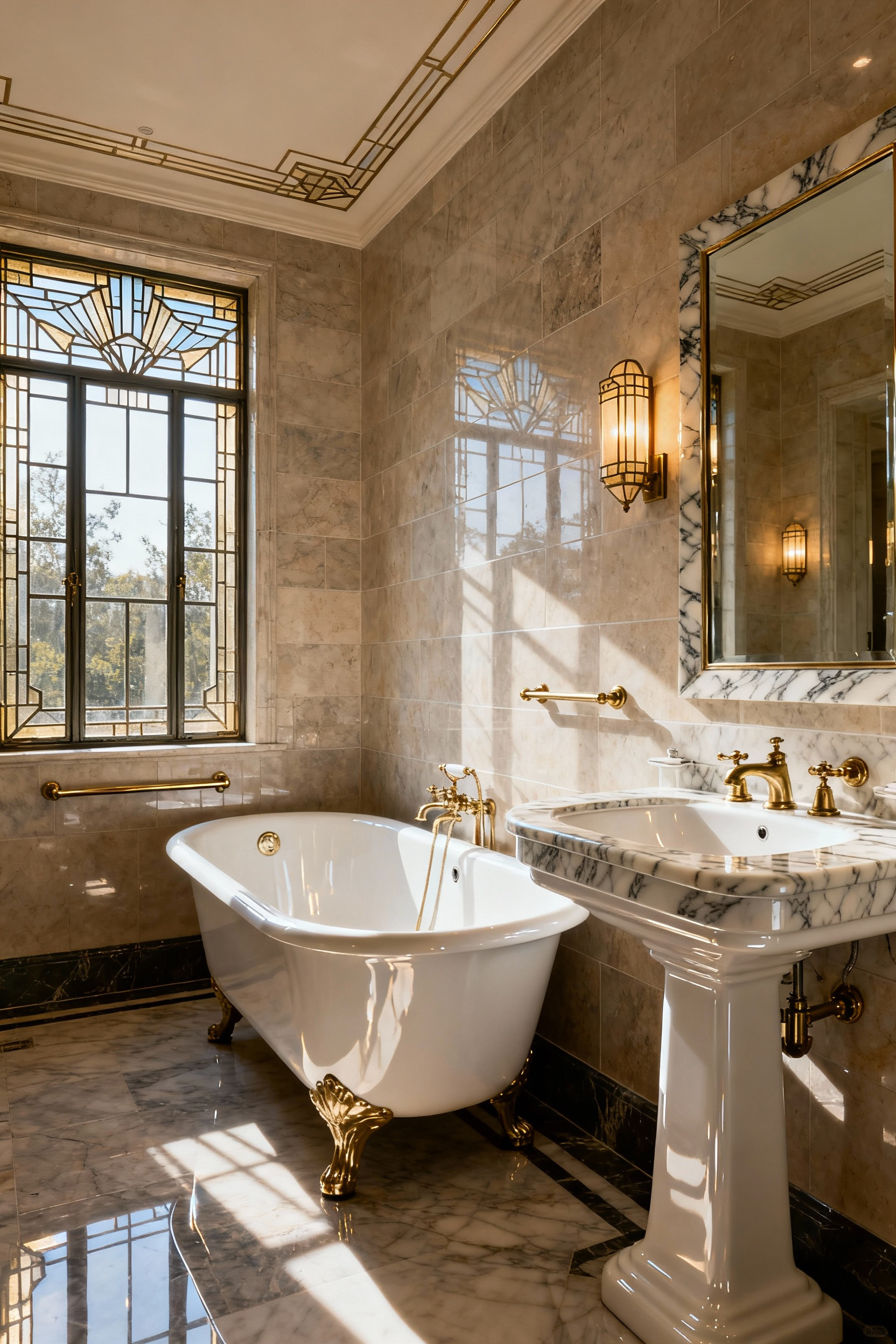
An enamelled clawfoot tub or a deep apron-front sink becomes the room’s sculptural anchor. Its pristine, reflective curves provide a brilliant counterpoint to the matte textures of stone or wood. Opting for classic white enamel is a timeless choice, creating a canvas against which vibrant tile or rich metallic fixtures can shine. It’s a commitment to a material that doesn’t just look the part—it embodies an era of quality and substance.
7. Porcelain & Hexagonals: The Enduring Geometry of Heritage Tilework
Long before sprawling modern tiles, the hexagonal mosaic was the geometric foundation of a clean and elegant bathroom. This is heritage tilework at its most honest and humble. Crafted from durable porcelain, these small, interlocking forms create a visual tapestry underfoot that is both dynamic and orderly, grounding the entire space with its quiet, repetitive rhythm.
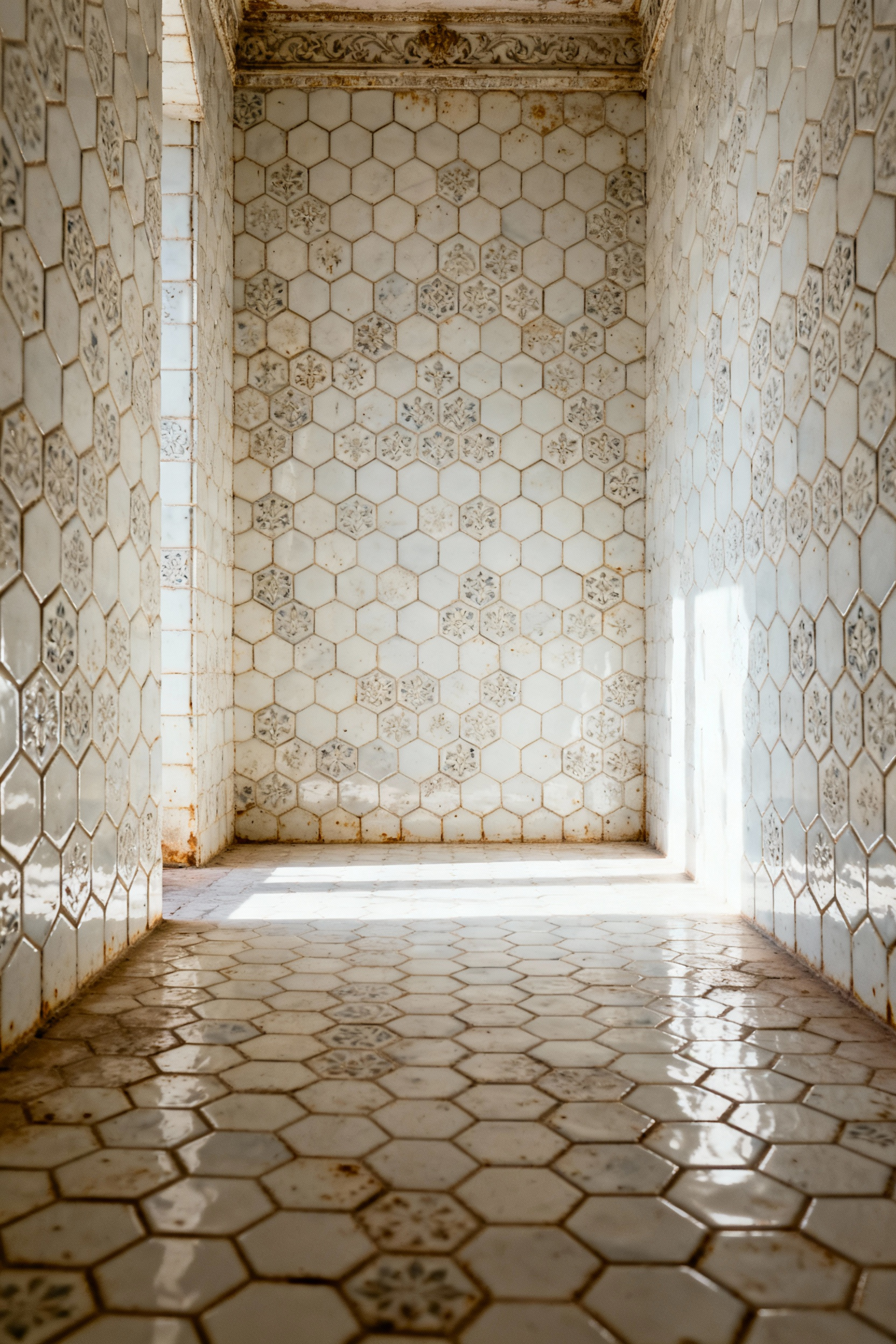
Don’t underestimate its versatility. A classic white hexagonal floor with dark grey grout creates a crisp, graphic statement that feels eternally fresh. But you can also find them in soft blues, greens, and blacks, allowing for custom patterns or simple, elegant borders. This choice isn’t about chasing trends; it’s about laying a foundation of timeless design that provides the perfect, resilient stage for the rest of your bathroom’s story.
8. Burnished Brass & Aged Nickel: Metals That Tell Time
In a truly soulful space, the metallic elements should be alive. Polished chrome has its place, but the real character is found in living finishes like unlacquered brass and aged nickel. These materials are not static; they interact with their environment, developing a rich, nuanced patina over time that tells a story of touch and use.
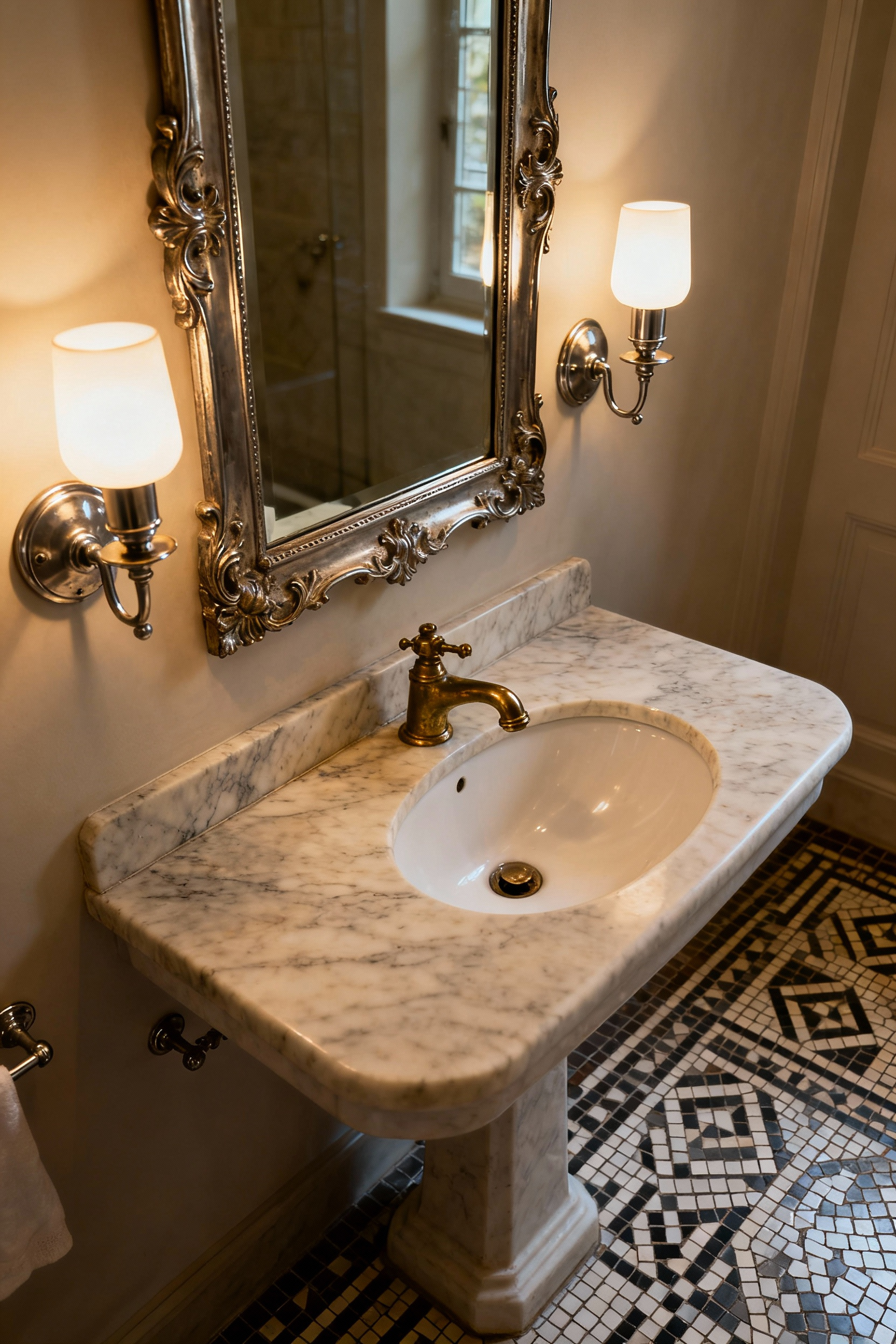
Burnished brass begins with a warm, golden glow and slowly deepens to a soft, velvety brown, adding a layer of incomparable warmth. Aged nickel offers a cooler, more restrained elegance, its silvery-grey hue softening into a pearlescent lustre. In my professional experience with artisanal integration, I find clients are increasingly drawn to these honest materials. They understand that the subtle evolution of the patina connects them to a long tradition of craftsmanship, where an object’s value deepens, rather than diminishes, with age.
9. Walnut & Dark Cherry: The Grounding Power of Stately Woods
To balance the cool, hard surfaces of tile and porcelain, a vintage bathroom needs the grounding warmth of wood. Rich, dark woods like walnut and dark cherry bring a sense of gravitas and permanence, lending the space the quiet dignity of a classic library or a gentleman’s study. Their deep tones and intricate grain provide a necessary organic counterpoint.
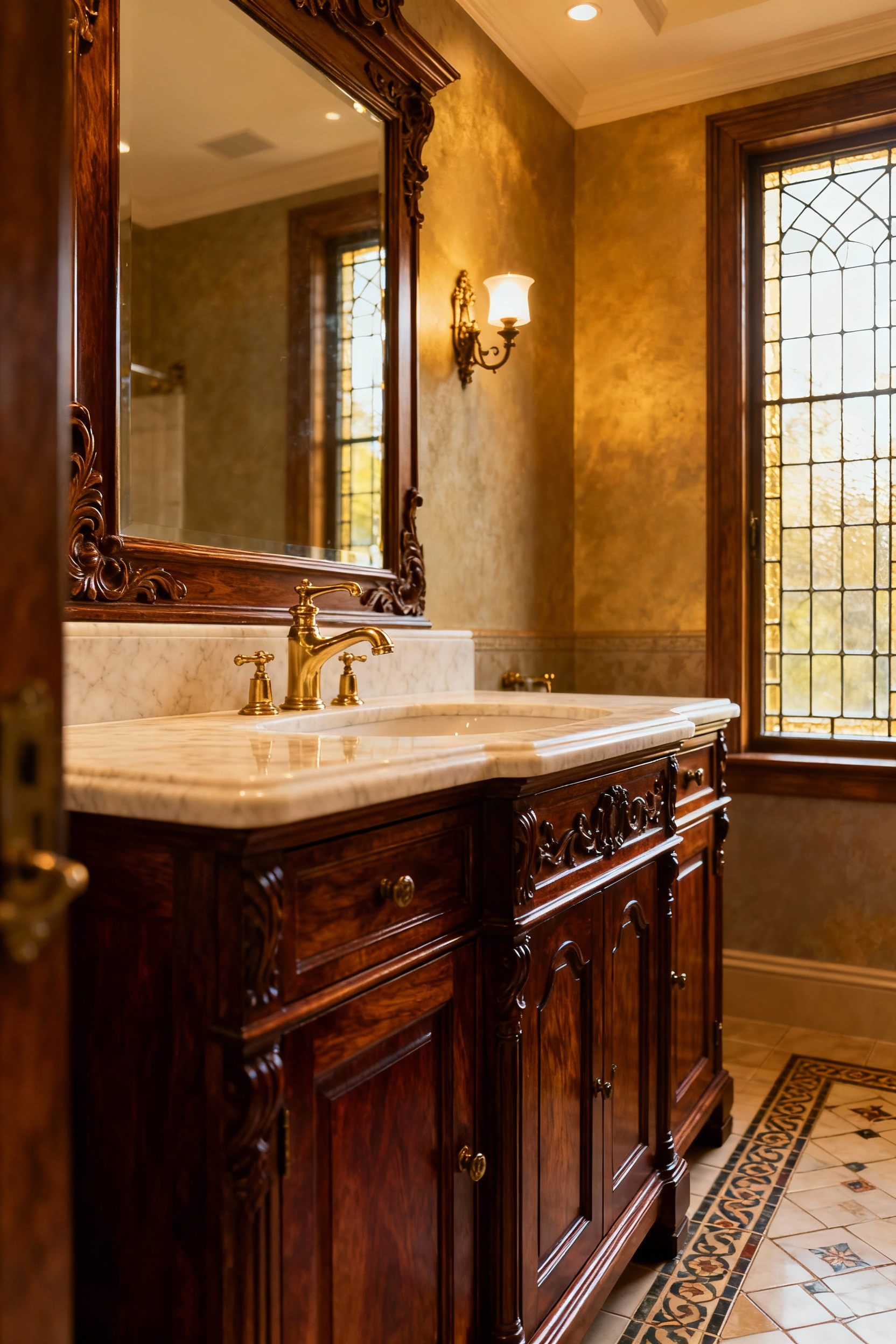
A finely crafted vanity in dark cherry, its colour deepening over time to a rich, reddish-brown, can become the room’s most stately piece of furniture. A mirror framed in the complex, swirling grain of walnut introduces an immediate touch of handcrafted luxury. When properly sealed, these woods are more than capable of withstanding the bathroom environment, offering a connection to natural materials that feels both deeply comforting and eternally sophisticated.
Mastering the Palimpsest of Patina (Part Two): The Art of Illumination
10. Fluted Glass & Prismatic Lights: Sculpting an Ethereal Ambiance
Light in a vintage bathroom should never be harsh or one-dimensional. It should be sculpted. The art of diffusing illumination through textured materials like fluted glass and prismatic shades is essential for creating an atmosphere that feels soft, flattering, and utterly enchanting. This isn’t just about lighting a room; it’s about giving the light itself a texture and a soul.
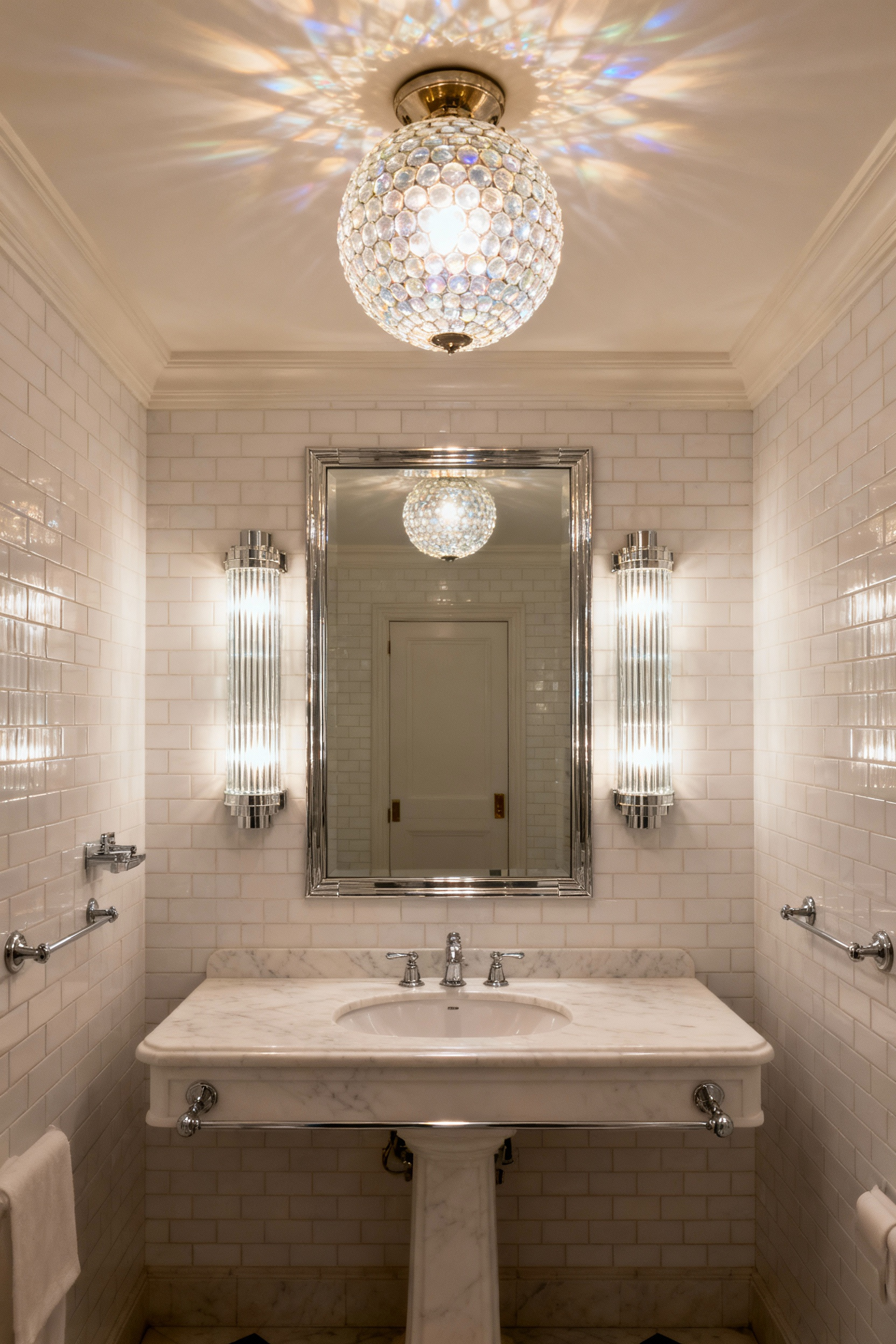
Fluted glass, with its elegant vertical ridges, offers privacy while turning light into a gentle, rippling glow. It’s perfect for a shower screen or cabinet doors, adding a layer of Art Deco glamour. Prismatic light fixtures, like classic Holophane pendants or schoolhouse sconces, are engineered to refract light, casting a warm, even luminosity that eliminates glare. What really gets me is how these elements create a ‘soft focus’ effect. They soften the edges of the room and the day, transforming a functional space into a cinematic, dreamlike retreat.
Orchestrating the Vestige: Sculpting Function within Historical Forms
Here, we turn to the grand personages of the vintage bathroom—the iconic fixtures that define its form. To orchestrate these vestiges of the past is to understand them not just as beautiful objects, but as functional sculptures that dictate the very rhythm and flow of the room.
11. Reinstating Pedestal Majesty: The Unburdened Elegance of a Freestanding Basin
There is a purity to the pedestal sink that no bulky vanity can ever match. Its singular, sculptural form is an essay in architectural honesty, celebrating the object itself rather than concealing it. By choosing a pedestal basin, you reclaim a sense of spaciousness and light, allowing the beauty of your floor and wall finishes to extend uninterrupted.
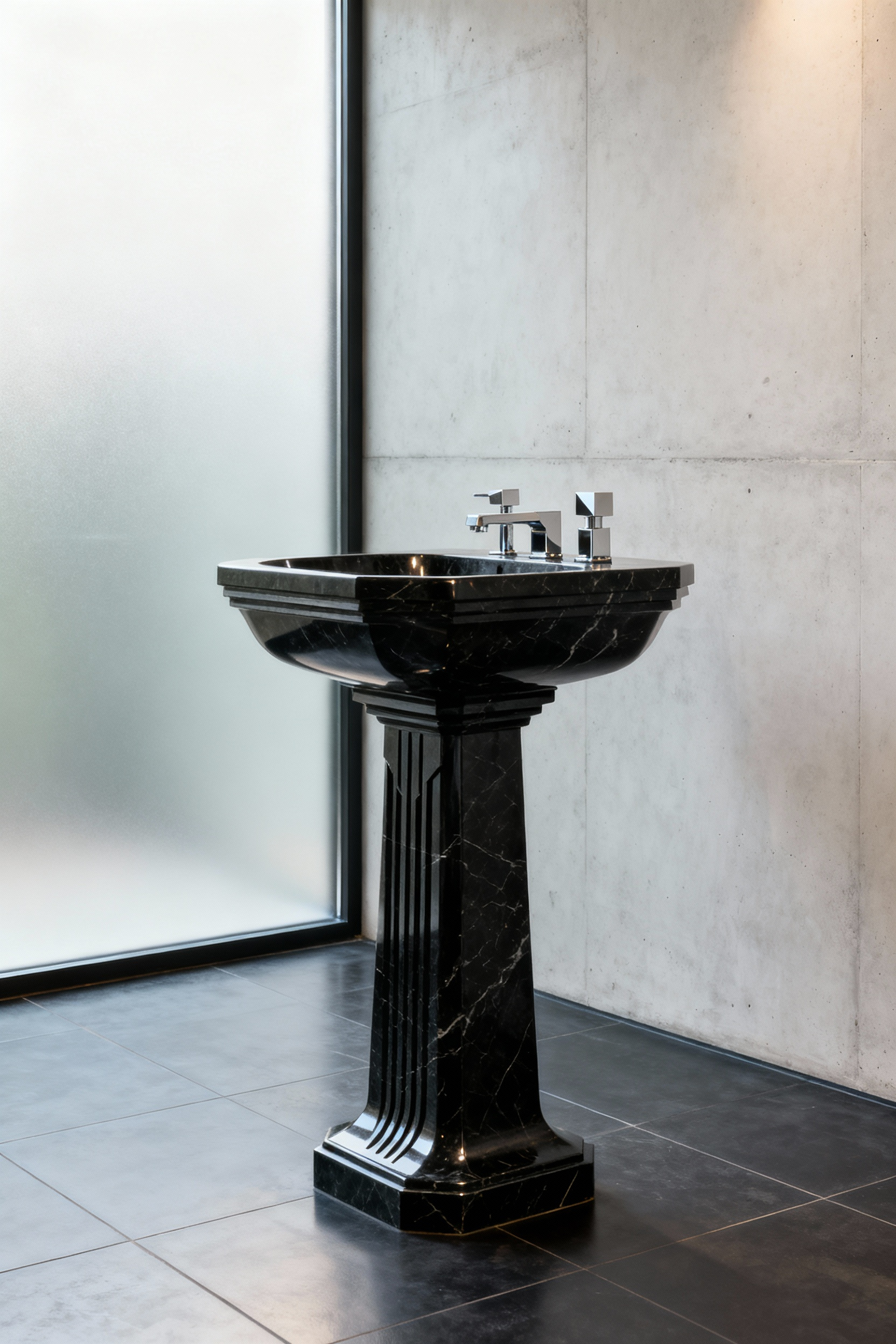
Rendered in crisp white porcelain or vitrified china, its simple form becomes a focal point of quiet elegance. The key is to celebrate its self-supporting nature. Don’t crowd it. Give it space to breathe and pair it with exquisitely crafted taps in a finish that complements its timeless form. It is a choice that favours elegance over excess storage, promoting a more curated, thoughtful approach to the bathroom.
12. The Art of Clawfoot Emplacement: Centering Grandeur
The clawfoot bathtub is not a fixture; it is a destination. As a freestanding sculpture, it defies the conventional wisdom of tucking a tub against a wall. Its rightful place is one of prominence, where its graceful curves and ornate feet can be appreciated from all angles. Placing it in the center of the room, or angled beneath a window, transforms it into an undeniable focal point.
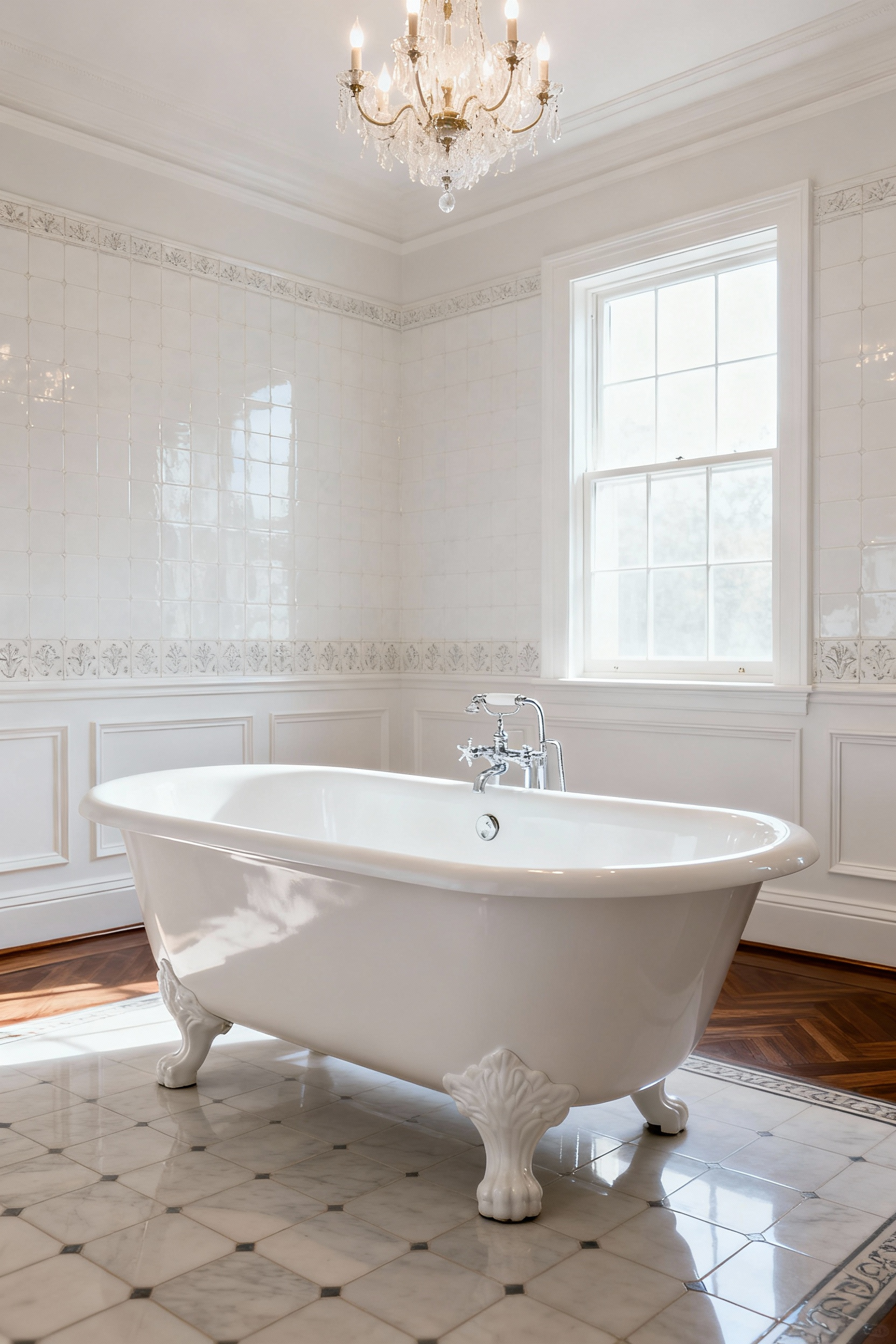
This single decision can define the entire space, creating an immediate sense of luxury and ritual. The material—heavy cast iron coated in deep enamel—not only feels substantial but also retains heat, enhancing the experience of a long, unhurried soak. The clawfoot tub isn’t just for bathing; it’s an invitation to pause, a centerpiece for a life that values repose.
13. Elevated Water Closets: A Lesson in Vertical Eloquence
The high-tank toilet, with its exposed pipe and pull-chain, is a masterclass in making a virtue of mechanics. Rather than hiding the function, it celebrates it with a playful, elegant flourish. Its distinct vertical silhouette draws the eye upward, adding a sense of height and drama to a room—a particularly effective trick in spaces with generous ceilings.
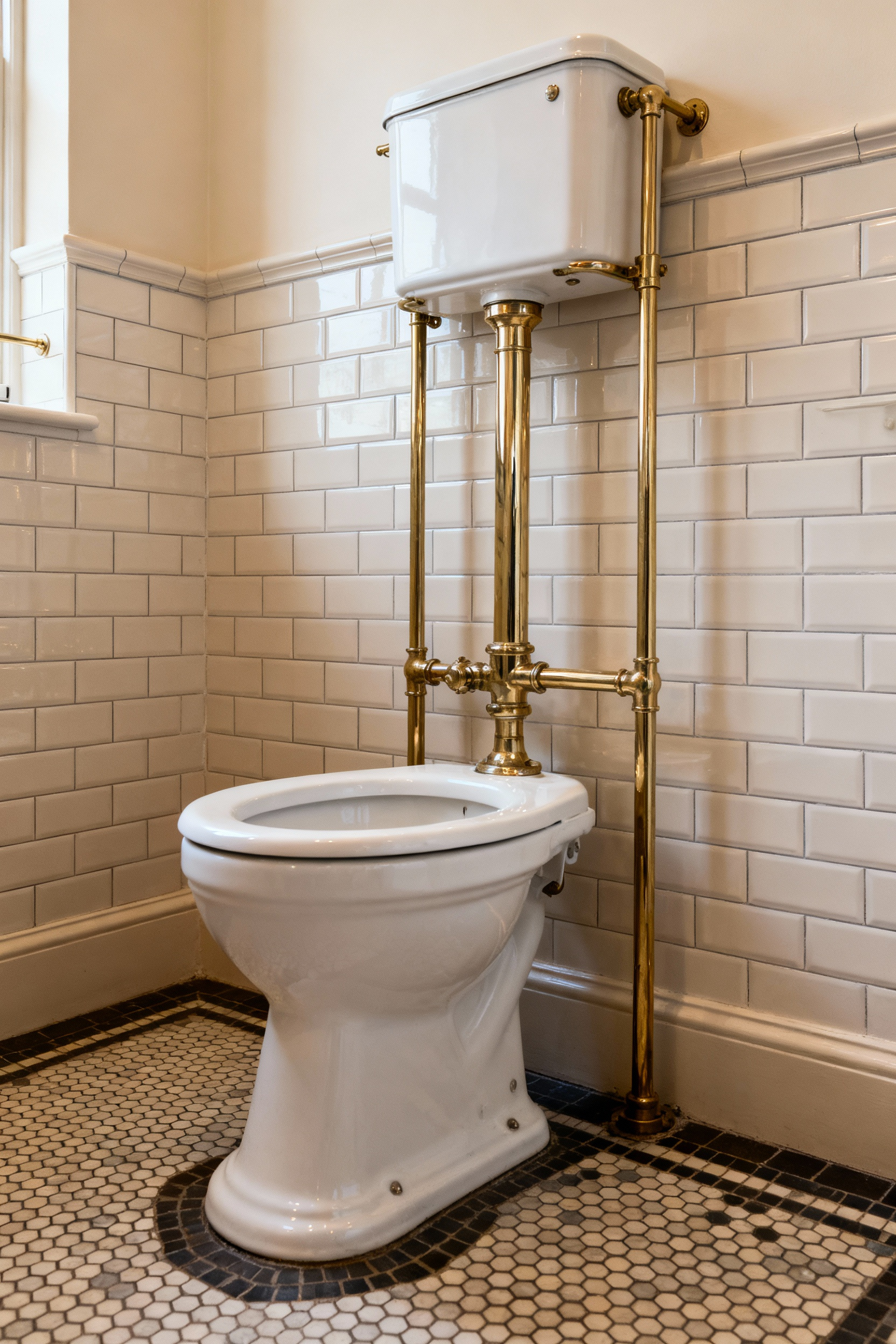
This isn’t just about nostalgia; it’s a design statement. The rich materials—a polished nickel pipe, a porcelain handle, a dark wood cistern—transform a utilitarian object into a piece of captivating design. In my work, I’ve seen this play out when clients want to add character without clutter. The high-tank toilet provides a strong architectural element that is both functional and full of personality, a charming nod to a time when even the most practical items were crafted with care.
14. Recessed Nooks & Beaux-Arts Shelving: The Intelligence of Integrated Storage
A vintage aesthetic thrives on a sense of order and calm, which makes clever storage paramount. The most elegant solutions are those that feel integrated into the architecture itself. Recessed nooks and classic Beaux-Arts shelving provide storage that is discreet, beautiful, and feels as though it has always been a part of the room’s bones.
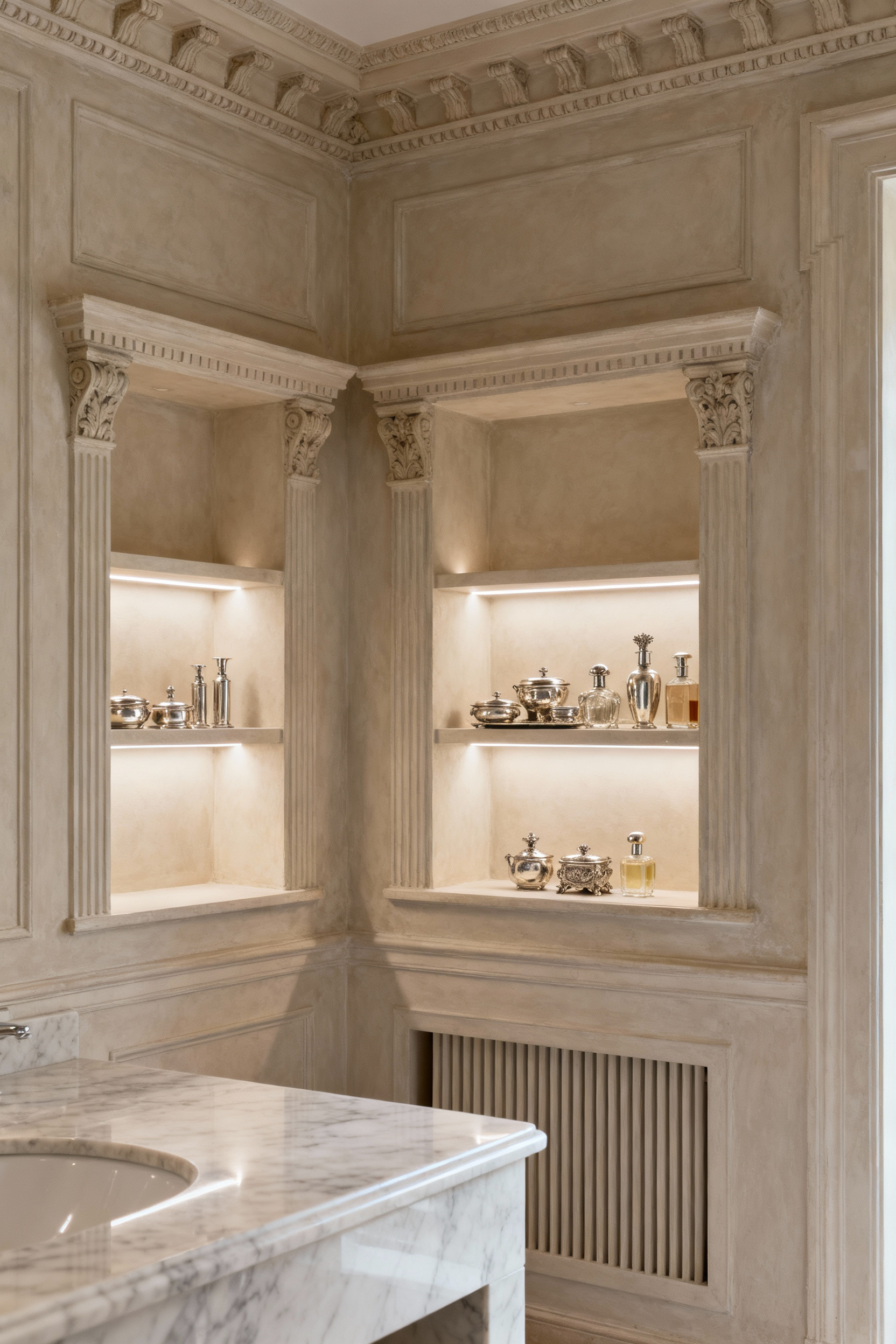
A tiled niche in the shower wall provides a seamless home for soaps and bottles, eliminating the need for ugly plastic caddies. A recessed medicine cabinet, flush-mounted and framed like a piece of art, offers hidden storage behind a beautiful mirror. For display, consider glass shelves supported by ornate brass brackets or a built-in cabinet with period-appropriate moulding. These details ensure that functionality doesn’t compromise the historical integrity of the space.
Orchestrating the Vestige (Part Two): The Poetry of Perception
15. Architectural Trompe L’oeil: The Magic of Mirror and Light
In smaller bathrooms, the greatest luxury one can create is the illusion of space. This is the art of trompe l’oeil—deceiving the eye with the clever interplay of mirror and light. A well-placed mirror does more than reflect your image; it reflects light, views, and the room itself, effectively doubling the perceived dimensions of the space.
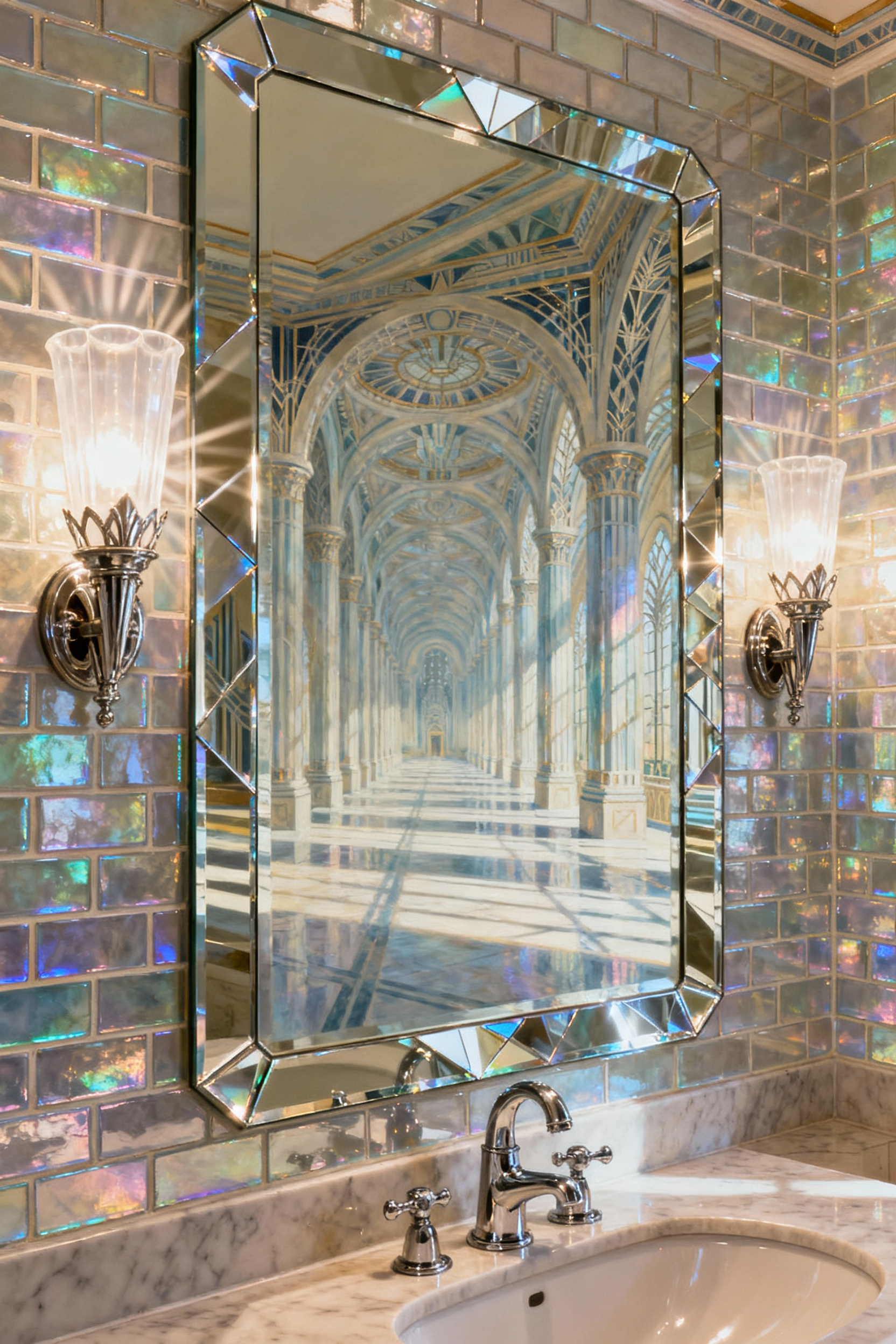
Instead of a small mirror over the basin, consider a large, floor-to-ceiling panel or an entire mirrored wall. The effect is transformative. Position a grand mirror opposite a window to invite the outside in, borrowing landscape and light to expand the room’s boundaries. Choosing mirrors with antique foxing or beveled edges adds another layer of character, turning this functional trick into a beautiful, shimmering feature in its own right. I learned this when working on a narrow Victorian terrace house in Chelsea; a single wall of antique mirror tile completely redefined the compact bathroom, giving it a sense of borrowed grandeur.
Embracing Anachronistic Grace: Infusing the Space with Soul
This final layer is where a beautifully designed room becomes a deeply personal sanctuary. It’s about moving beyond fixtures and finishes to infuse the space with your own story, engaging all the senses to create an environment that feels not just vintage in style, but timeless in spirit.
16. The Curated Vignette: Storytelling with Objects
A surface in a vintage bathroom is never just a surface; it’s a stage. This is where you tell your story through carefully curated vignettes—small, thoughtful arrangements of meaningful objects. A collection of antique perfume bottles, a silver-backed brush inherited from a grandparent, a small piece of coral from a memorable trip—these are the things that give a space its soul.
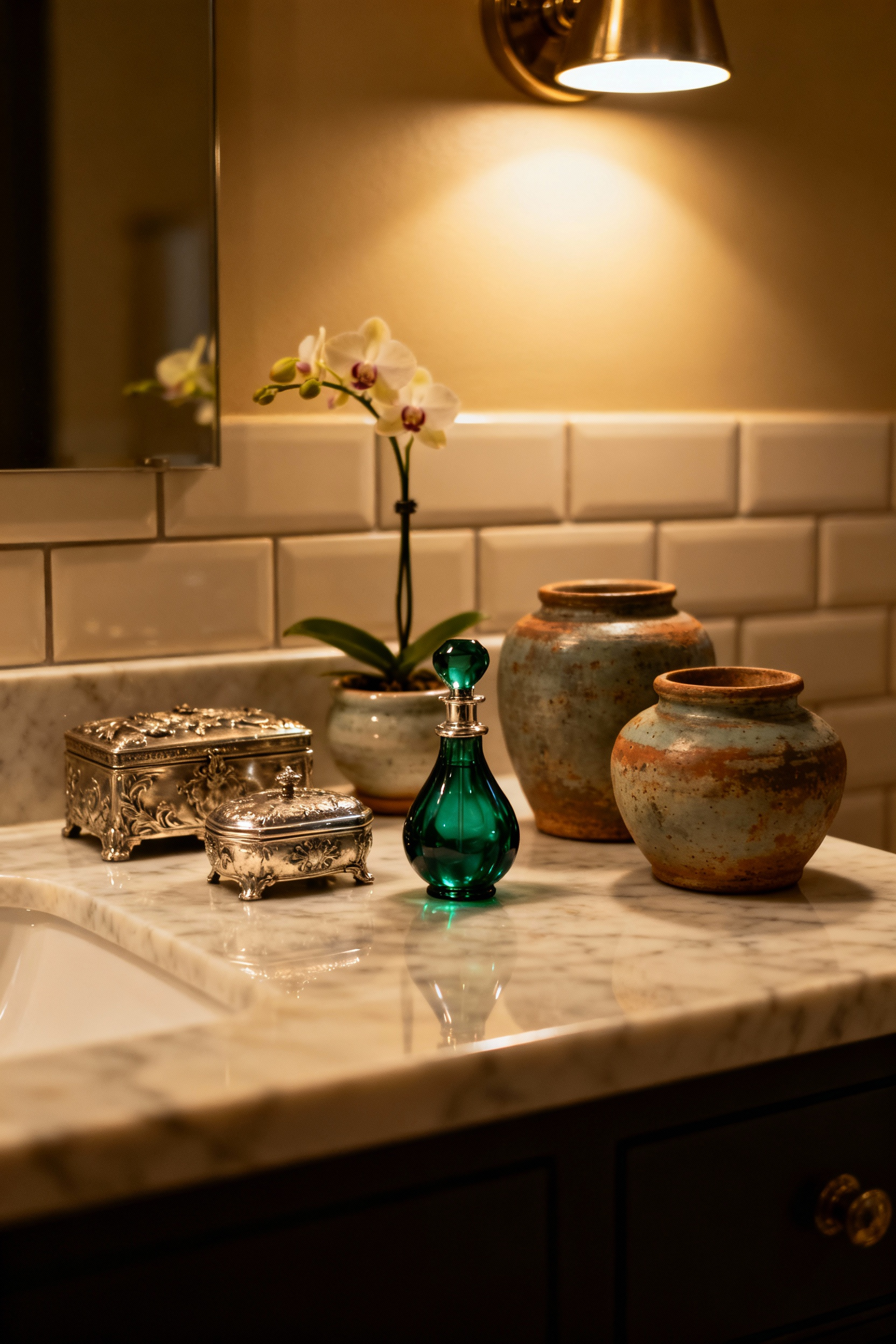
Arrange these treasures on a vanity tray, a windowsill, or the top of the toilet cistern. The key is curation, not clutter. Group items by theme, colour, or material to create a composition that feels intentional. These small, personal altars transform a bathroom from a showroom into a sanctuary that reflects a life rich with memories and experiences.
17. Sensory Tapestries: The Unseen Layers of Comfort
A truly luxurious space engages more than just the eyes. It’s about what you feel and smell. Weave a sensory tapestry through the rich layering of textiles and the subtle infusion of fragrance. This is how you create an atmosphere of enveloping comfort that is felt the moment you step inside.
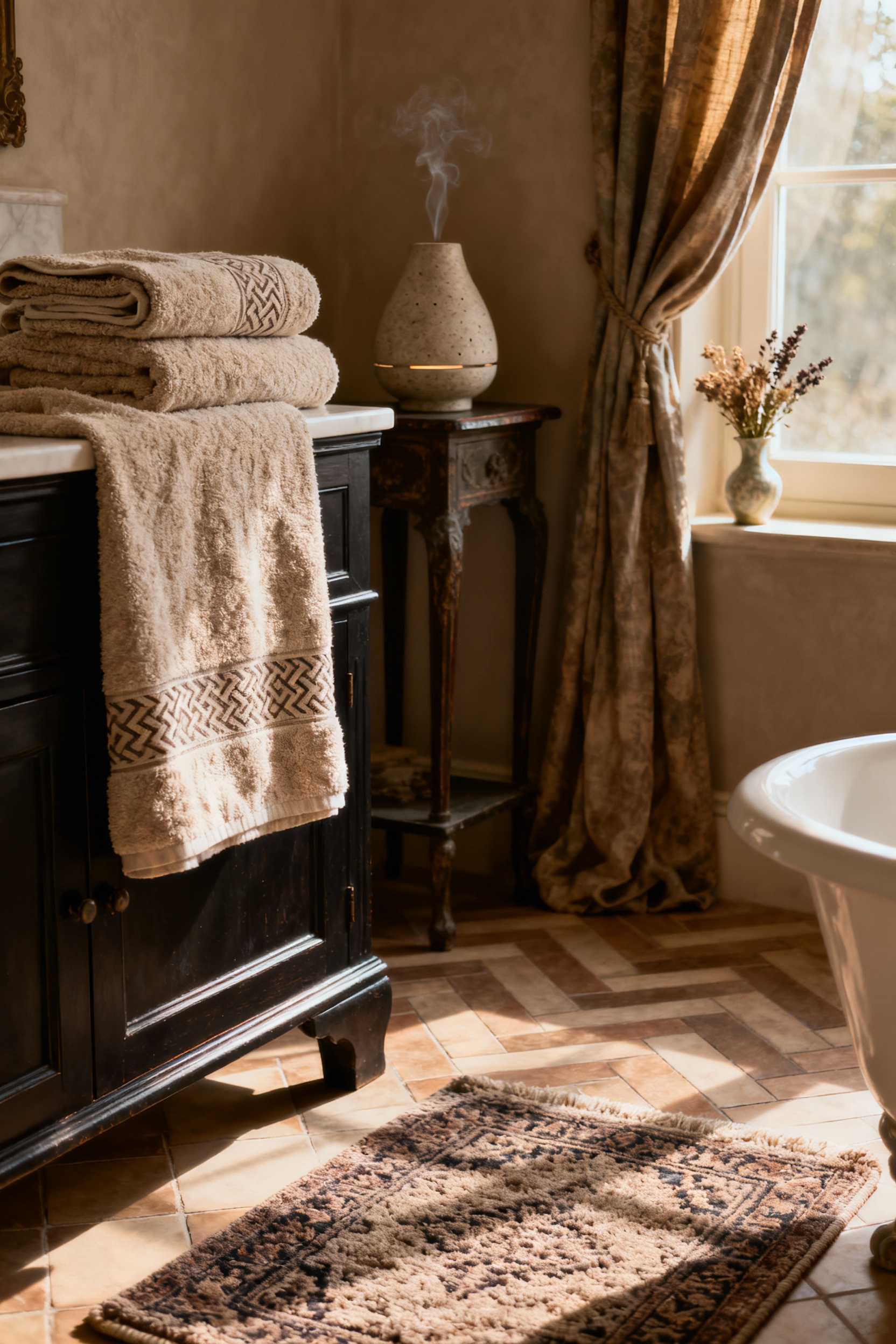
Instead of standard bathmats, consider a small, durable kilim rug for a splash of pattern and warmth underfoot. Invest in high-quality, generously sized towels in Egyptian or Turkish cotton that feel wonderful against the skin. For fragrance, avoid synthetic sprays and opt for natural sources: a diffuser with essential oils like sandalwood or cedar, a bundle of dried eucalyptus hanging in the shower, or a scented, handmade soap. What I’ve noticed is that scent is one of the most powerful tools for creating an emotional connection to a space. A signature, subtle aroma makes the room unmistakably yours.
18. Botanicals of Bespoke Origin: The Vitality of Living Things
Every room, no matter how steeped in history, needs a touch of living vitality. Botanicals bridge the gap between the curated interior and the natural world, breathing life and organic beauty into the space. The key is to select plants with a form and character that complements the vintage aesthetic.

A delicate maidenhair fern, with its soft, cascading fronds, feels perfectly at home in a Victorian-inspired setting. A sculptural orchid introduces a touch of Art Nouveau elegance. Place them in vessels with character—an aged terracotta pot, a glazed ceramic planter, or even a silver julep cup. A simple branch of flowering quince or blossom in a glass vase can be just as impactful, offering a moment of ephemeral, seasonal beauty.
19. Reimagining the Apothecary Cabinet: Elevating the Everyday
Transform your daily rituals by elevating your everyday essentials into objects of beauty. The spirit of the old-world apothecary was one of precision, care, and beautiful containment. Embrace this by decanting mouthwash into a crystal bottle, storing cotton balls in a glass jar, and choosing products with beautiful, considered packaging.

This practice encourages you to curate your necessities, choosing quality over quantity. A recessed medicine cabinet or a set of simple glass shelves becomes a stage for these functional treasures. A handmade ceramic dish for your soap, a natural bristle toothbrush, an artisanal shave brush—these small upgrades turn the mundane task of getting ready into a series of quiet, aesthetically pleasing moments.
Embracing Anachronistic Grace (Part Two): The Ritual of Light
20. Illumination as Ritual: Layering Light for Mood and Magic
Finally, lighting should be a layered, considered affair designed to adapt to the rituals of the day. A single, harsh overhead light simply won’t do. The goal is to create a flexible system that can be bright and energizing in the morning, and soft and atmospheric in the evening. This is illumination as an integral part of the room’s mood.
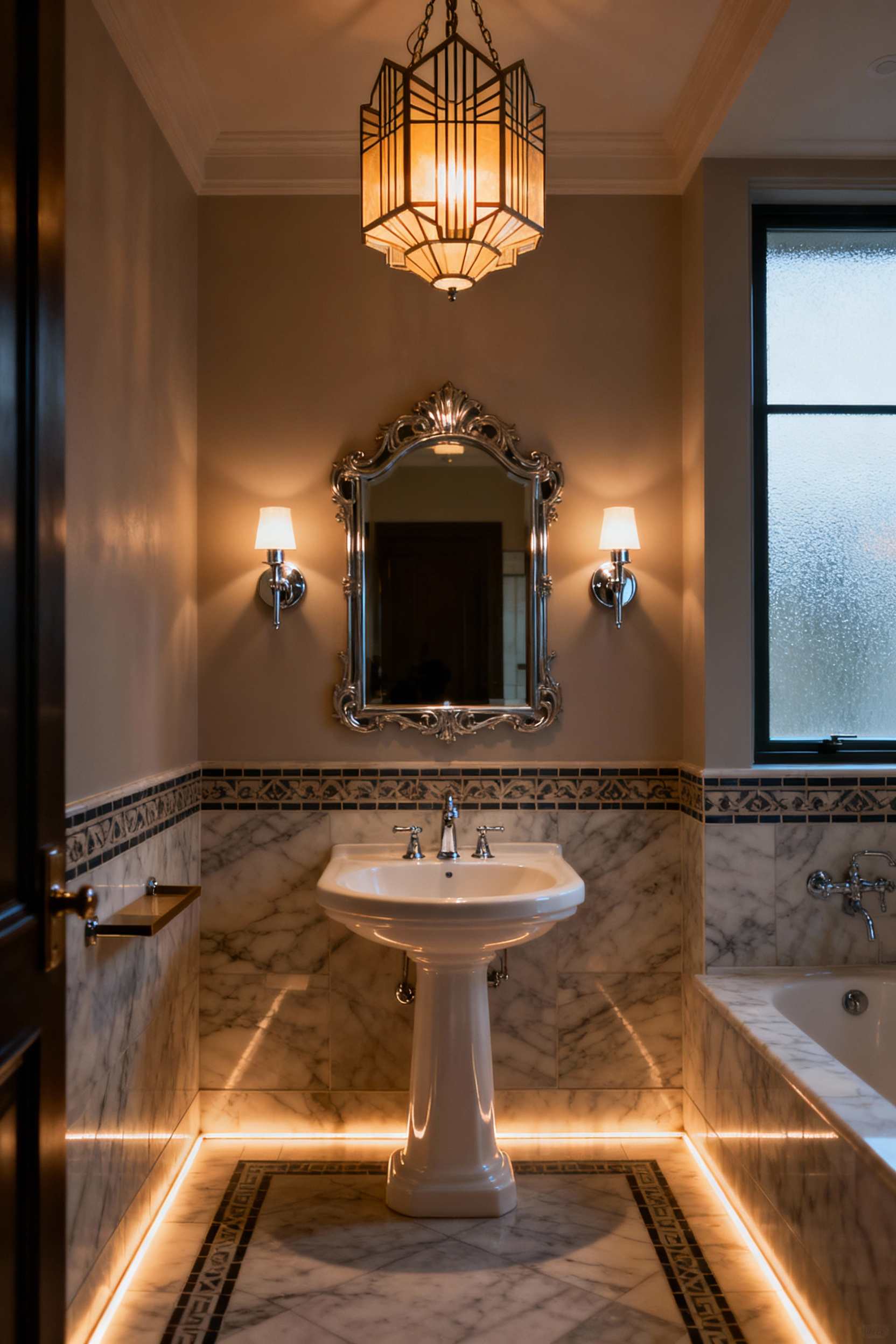
Start with a central ambient light, perhaps a modest chandelier or a semi-flush mount fixture. Then, add crucial task lighting: a pair of elegant sconces flanking the mirror at eye-level to provide flattering, shadow-free light. Finally, add an accent layer—a small picture light over a piece of art, or even a candle for the ultimate soft glow. In my contemporary South Asian fusion practice, manipulating light to create jalis-like shadows or warm, inviting glows is fundamental. Putting all layers on dimmer switches is non-negotiable. It gives you complete control, allowing you to transform the bathroom from a practical space into a restorative, magical retreat at the touch of a button.
Conclusion
We have journeyed through twenty expressions of vintage design, moving from the foundational philosophy of an era to the tactile pleasure of a patinated tap. What connects them all is a deep appreciation for storytelling. A vintage bathroom at its best is not a static replica of the past; it is a dynamic conversation with it. It understands that the graceful curve of a clawfoot tub speaks of a time when bathing was a luxurious ritual, and that the honest mechanics of a high-tank toilet celebrate an age of ingenuity.
As I’ve found in my work blending different design legacies, the most resonant spaces are those that carry echoes of history while serving the needs of today. They feel collected, not decorated. They are imbued with a sense of permanence that defies fleeting trends. This guide is meant to serve not as a rigid set of rules, but as an invitation—an invitation to become a curator of your own private sanctuary.
Use these principles as a lens through which to view your own space. Choose the elements that speak to you, that resonate with your own story. Weave them together to create a room that is not just beautiful, but soulful. By doing so, you participate in the long and wonderful history of design, crafting a deeply personal space where the elegance of the past provides a gracious and comforting backdrop for the rituals of your modern life.