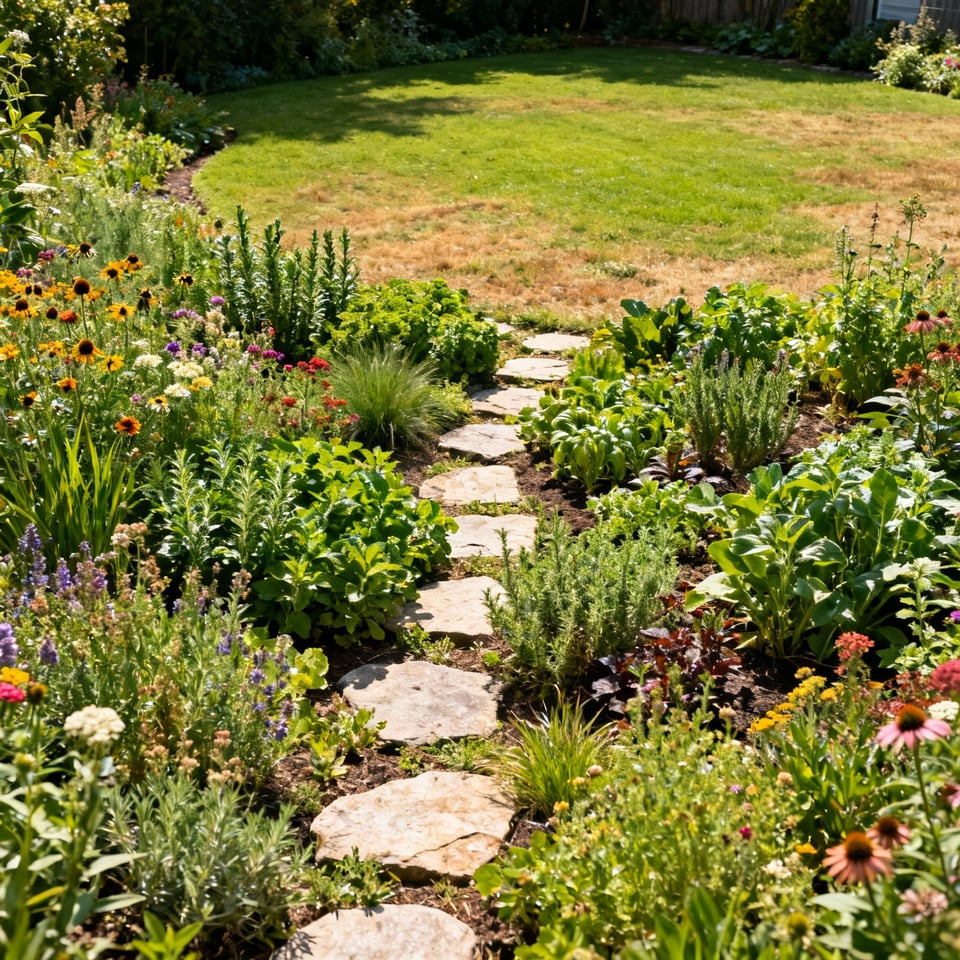
Most people believe a perfect yard is a flawless carpet of green grass. You see it everywhere—lawn care ads, home improvement shows, the whole suburban ideal is built on it. They all push for this pristine, weed-free monoculture. Here’s what they’re not telling you: in my work designing productive, living spaces, I’ve seen firsthand that this obsession creates ecological dead zones. It’s a system that takes and takes—water, time, chemicals—and gives almost nothing back.
It’s time we broke up with the high-maintenance turfgrass that starves our pollinators and pollutes our local water. After years of designing and implementing thriving outdoor ecosystems, I’ve compiled 20 regenerative strategies that prove an ecological lawn garden is not just possible, it’s profoundly better. These aren’t just theories; they’re practical applications I’ve used to help homeowners transform their yards into beautiful, productive ecosystems that are full of life. This guide will walk you through them, step-by-step, starting with the basics and building toward a truly self-sustaining space. Prepare to see your property in a completely new light. Let’s redefine what a lawn garden can be.
Essential Ecological Lawn Garden Fundamentals (Part 1)
Getting started on the path to a thriving ecological lawn garden means we have to unlearn a few things first. This is the groundwork. It’s about shifting our perspective on what a yard is for, revitalizing the very soil under our feet, being smarter about water, and welcoming in the native plants that belong here.
1. Ditching the Monoculture Mindset: Reimagining Lawn Aesthetic and Utility
The green carpet lawn is a deeply ingrained idea of what a yard should look like, but frankly, it’s an ecological void. It demands huge amounts of water and chemicals while offering virtually no habitat for anything. The first, and most important, step is to question that aesthetic. We have to decide that a yard humming with life is more beautiful than a silent, sterile patch of green.
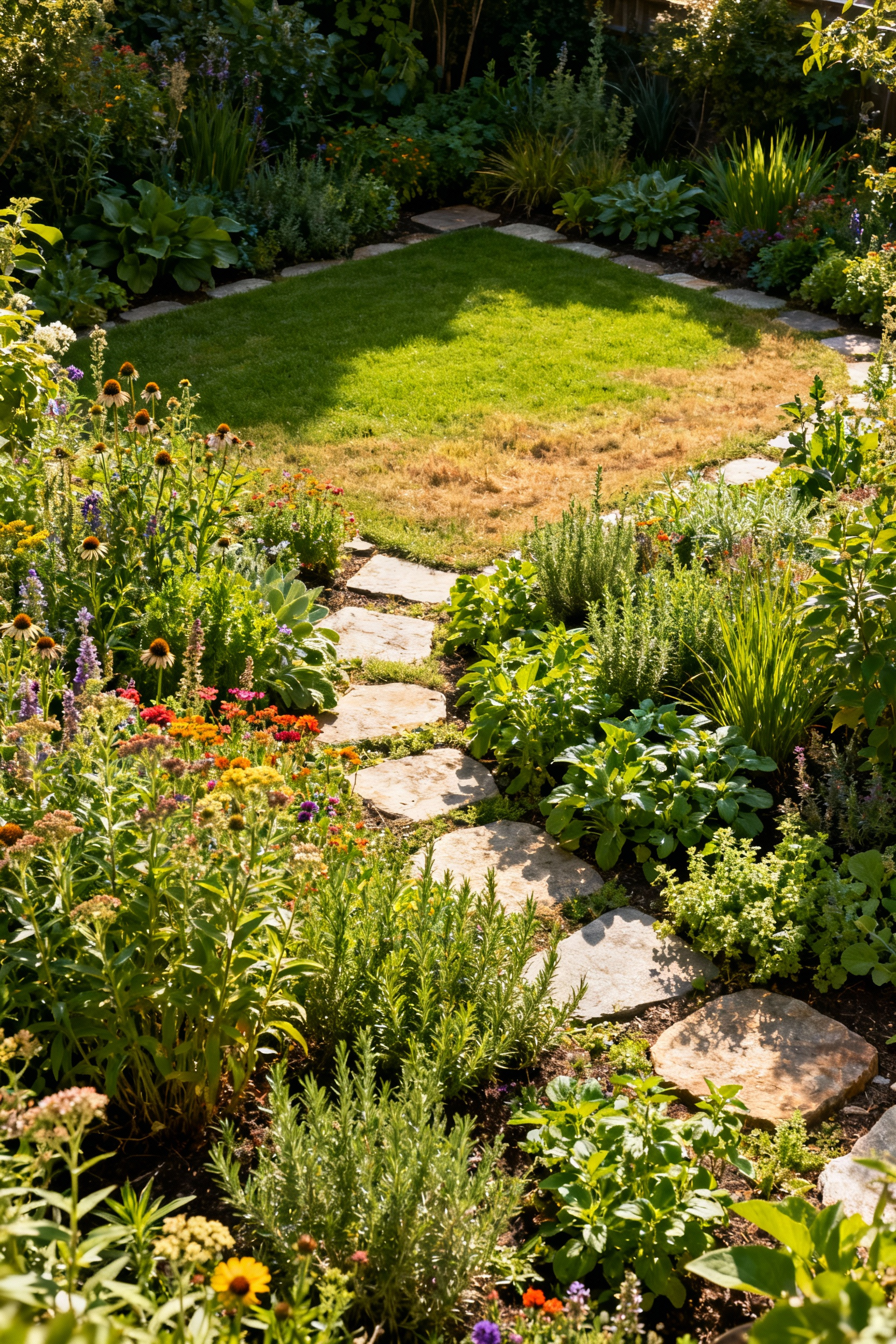
Instead of a uniform expanse, think of your lawn garden as a living mosaic. You can still have areas for play using durable, low-mow fescue blends or even a soft clover lawn, which is brilliant for fixing nitrogen in the soil. But other areas can become tapestries of creeping thyme, native violets, or sedums, offering different textures and colors. From my work in urban agriculture, the biggest ‘aha’ moment for clients is when they see a small patch of their lawn replaced with a pollinator strip of native wildflowers. Suddenly, the space is alive with bees and butterflies. It becomes an interactive, beautiful feature that proves utility and beauty are one and the same.
2. Nourishing the Substrate: Simple Soil Amendments for Vibrant Growth
True health in any garden doesn’t start with the plants; it starts underground. The soil isn’t just dirt; it’s a teeming, complex ecosystem that forms the foundation for everything you want to grow in your lawn garden. The simplest way to bring it back to life is by adding a layer of good, finished compost right on top. You don’t even have to dig it in. This single act feeds the entire soil food web—the beneficial bacteria, fungi, and earthworms that do the heavy lifting for you.
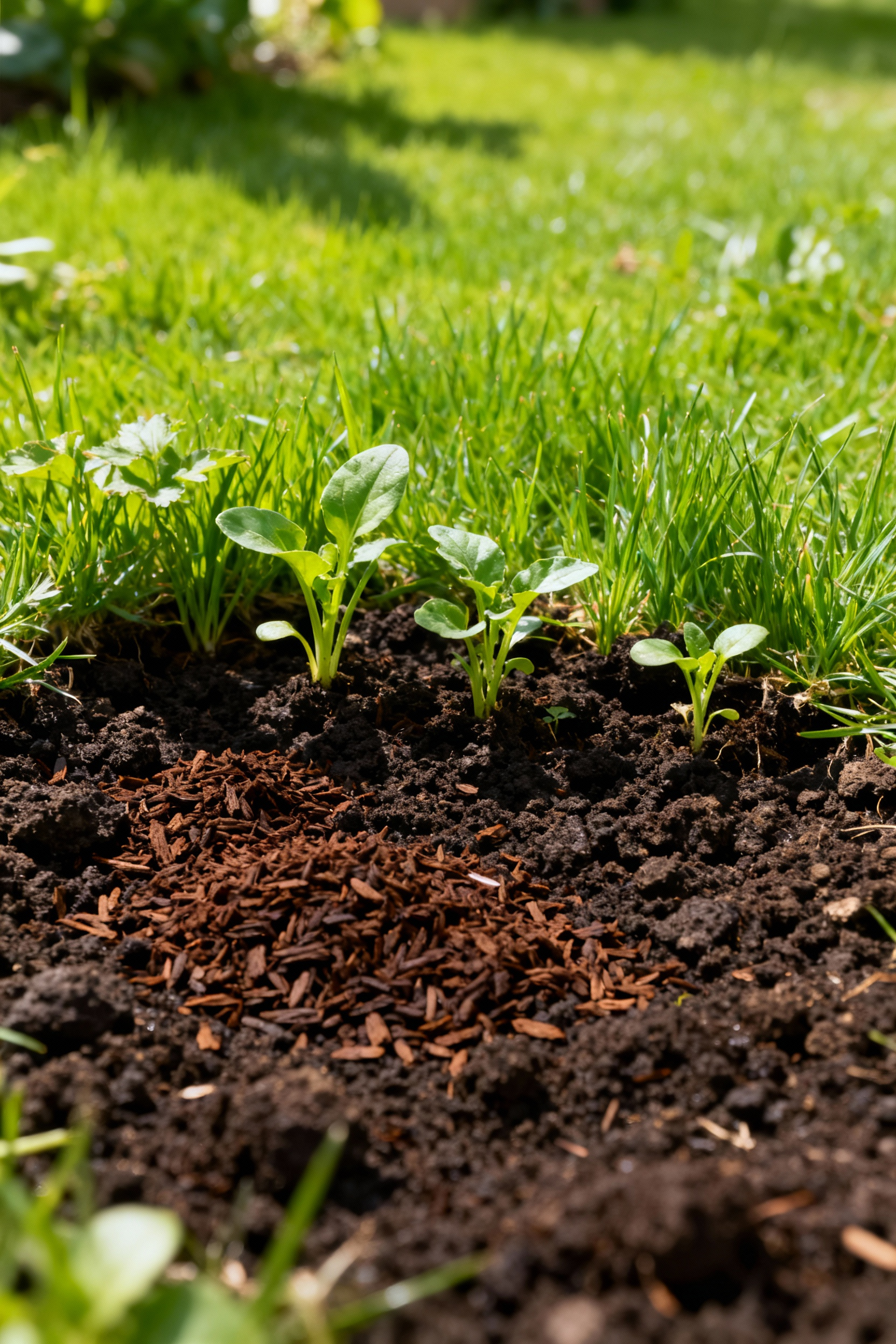
Once you’ve started with compost, you can introduce other amendments. Think of it as creating a custom diet for your soil. Aged manures, leaf mold, or worm castings add a much wider array of slow-release nutrients than any synthetic fertilizer. If you’re getting serious, a simple soil test can tell you exactly what’s missing. I learned this when a client with heavily compacted clay soil felt hopeless. We did a soil test, added biochar to create pockets for microbes and water, and topped it with compost. A year later, you could plunge your hand into what was once brick-hard earth. By focusing on feeding the soil, you grow plants that are naturally resilient to pests and disease.
3. Optimizing Hydration: Strategic Rainwater Harvesting and Irrigation Techniques
We pour shocking amounts of purified drinking water onto our lawns, which is incredibly wasteful. The first step to smarter watering is to water deeply, but less often. This encourages plant roots to grow deeper in search of moisture, making them much more resilient during dry spells. It’s a simple shift that completely changes your plants’ relationship with water and drastically cuts down on evaporation.
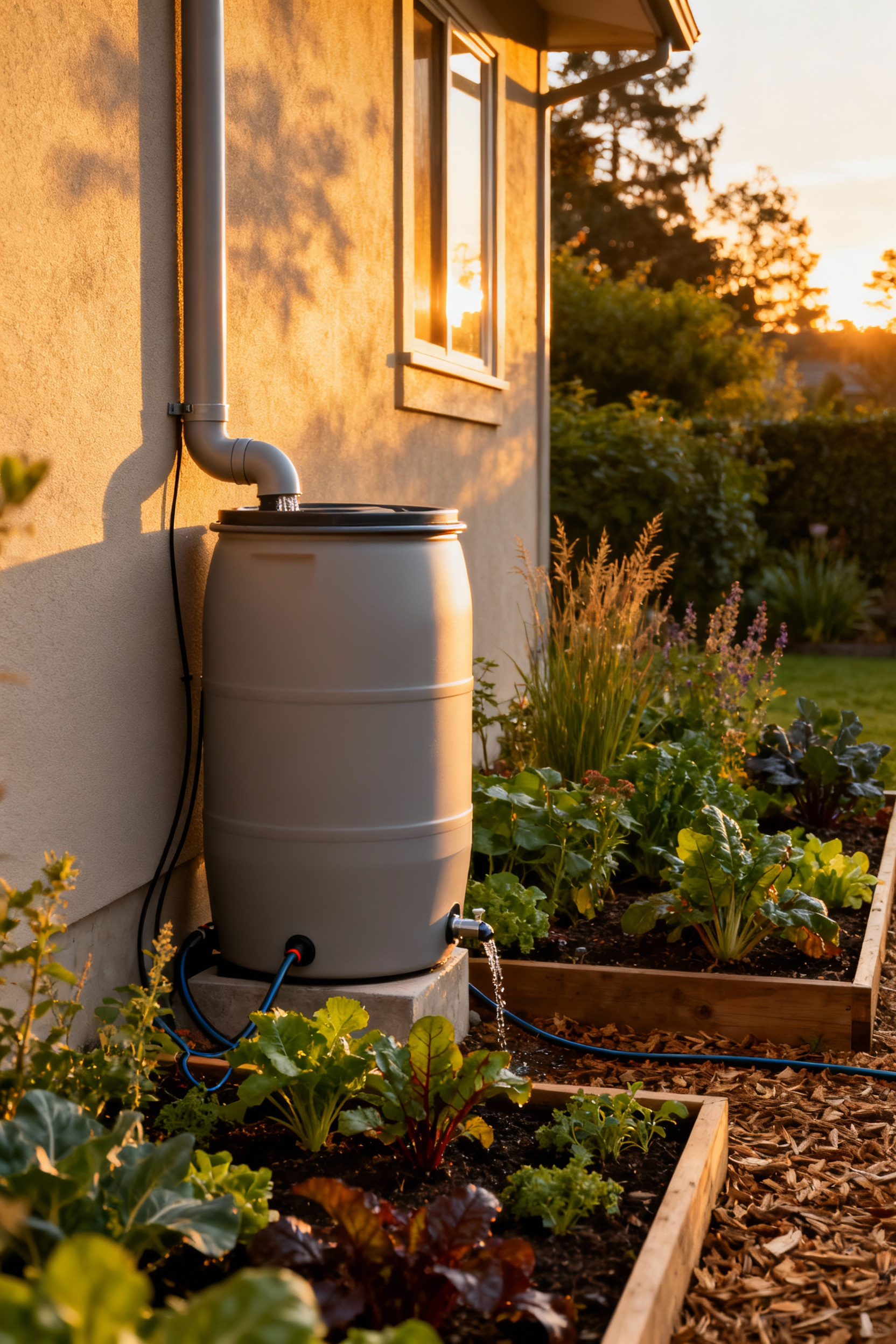
The next step is to stop relying on the tap and start catching the water that falls from the sky. Installing a rain barrel is an easy weekend project, and it provides you with chlorine-free water that your plants will love. For garden beds, switching from a sprinkler to drip lines or soaker hoses is a game-changer. Water goes straight to the roots where it’s needed. For a truly integrated lawn garden, you can even design features like rain gardens—shallow depressions filled with water-loving native plants that capture runoff, filtering it and recharging your local groundwater. You start to see rainwater not as a problem to be drained away, but as a precious resource to be captured and used.
4. Cultivating Indigenous Beauty: Selecting Foundation Native Species for Local Ecosystem Support
Choosing native plants is one of the most powerful things you can do for your local ecosystem. These are the plants that have co-evolved with your region’s insects, birds, and soil for thousands of years. They form the base of the local food web. Just swapping out a small patch of your turf for a native groundcover or a few wildflowers instantly creates a source of food and shelter for pollinators.
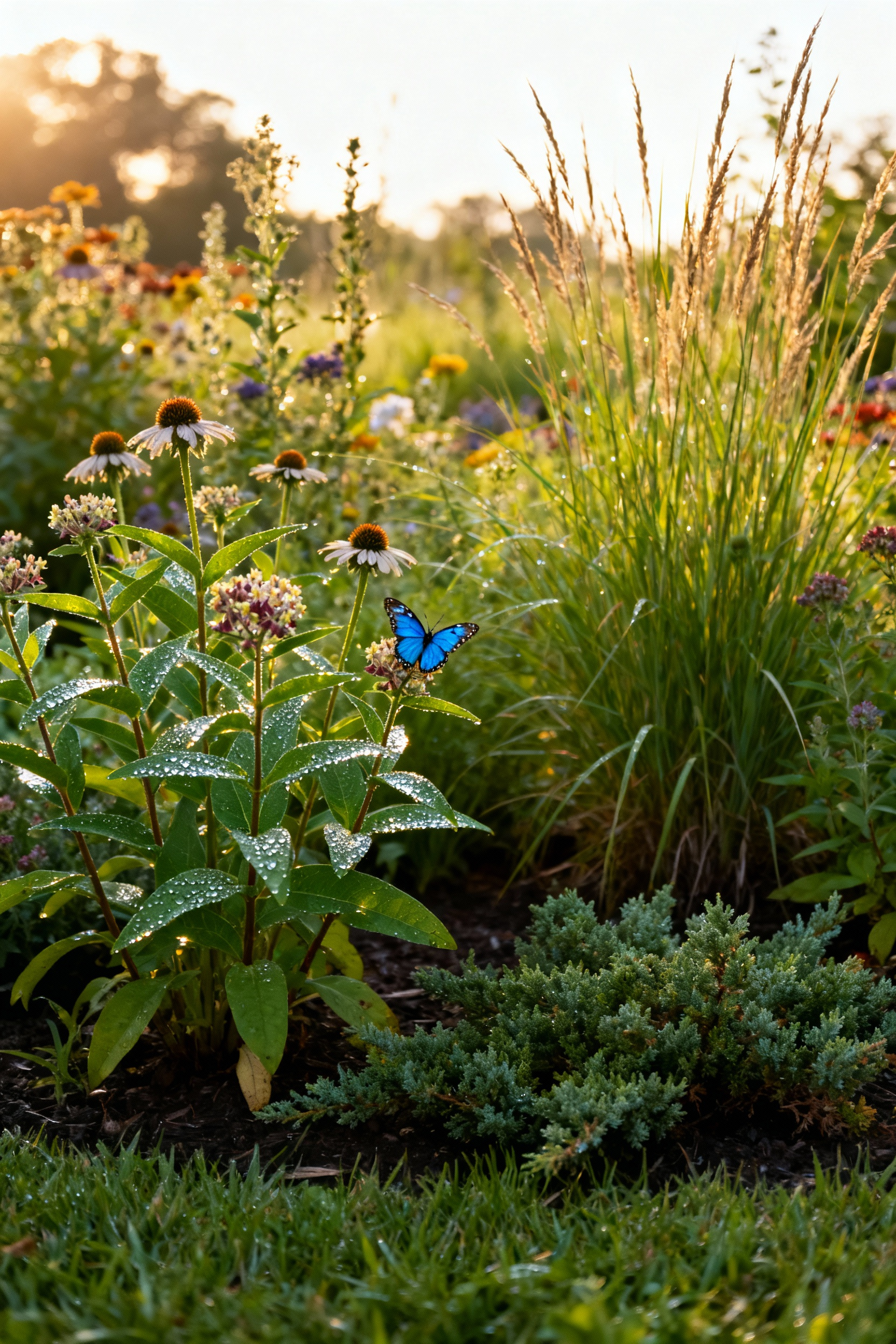
Go a little deeper by seeking out the “keystone” species for your area. These are the powerhouse plants that support a huge number of other species. An oak tree, for example, can be a host for hundreds of types of caterpillars, which are essential food for baby birds. Even if you don’t have space for an oak, planting native asters, goldenrods, or milkweed in your lawn garden will have a disproportionately huge positive impact. What really gets me is seeing a garden come alive in its second or third year. The layers start to work together—a ground layer of wild ginger, a mid-layer of coneflowers, a taller backdrop of serviceberry. You’ve not only designed a beautiful space; you’ve created a functional, life-sustaining habitat.
Essential Ecological Lawn Garden Fundamentals (Part 2)
As we continue to reshape our outdoor spaces, how we handle pests becomes a critical piece of the puzzle. Instead of reaching for a spray bottle at the first sign of trouble, a truly ecological approach is about creating a balanced system where nature largely takes care of itself.
5. Preempting Pest Pressures: Proactive Organic Strategies for Early Intervention
An explosion of pests isn’t a declaration of war; it’s a message. It’s your garden telling you that something is out of balance. Instead of reacting with chemicals, a proactive approach starts with building a resilient system from the ground up. Healthy plants growing in vibrant, living soil are far less attractive to pests and more resistant to disease. Choosing plant varieties that are known to thrive in your local conditions is another simple way to fortify your garden’s defenses.
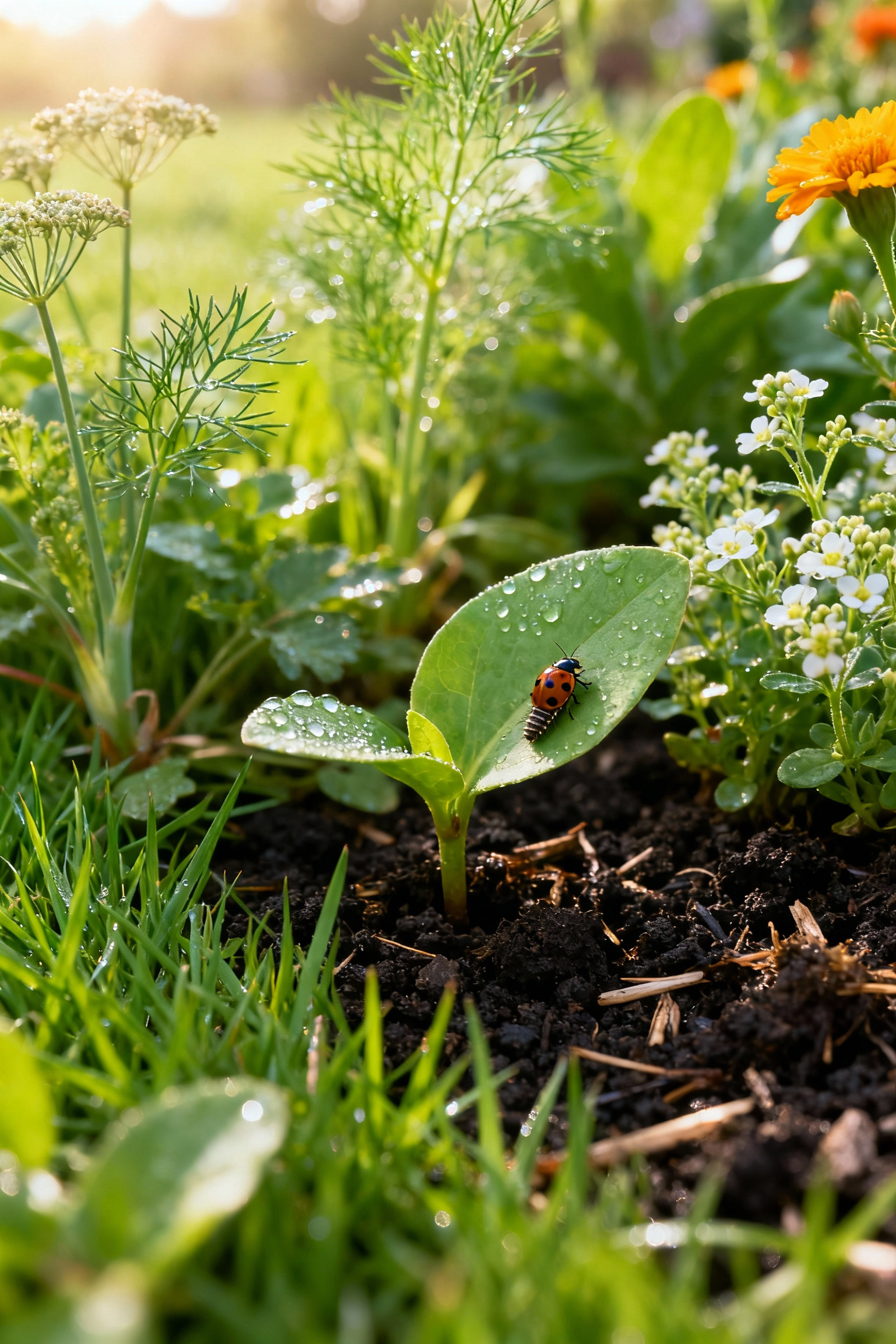
The next step is to actively invite nature’s own pest control crew into your lawn garden. You can do this by planting a diverse mix of flowering plants that provide nectar and pollen for beneficial insects like ladybugs, lacewings, and tiny parasitic wasps that keep pest populations in check. Think of plants like dill, yarrow, and cosmos as little cafes for these helpful critters. From my work in eco-conscious design, I encourage people to see their garden as a dynamic community, not a static painting. When you strategically place aromatic herbs like rosemary or basil among your vegetables, their strong scent can confuse pests looking for a meal. You’re not fighting nature; you’re orchestrating it to create a balanced, self-regulating ecosystem where pests rarely become a major problem.
Elevating Your Edible & Ecological Lawn Garden Approach (Part 1)
With the fundamentals in place, we can now start weaving in more sophisticated layers of design and productivity. This is where your lawn garden transitions from being simply “green” to becoming a truly integrated, life-giving ecosystem. We’ll explore intentional design, incorporating food production, and amplifying your garden’s natural defenses.
6. Designing Intentional Zones: Crafting Permeable Pathways and Functional Areas for Diverse Use
A monolithic lawn is an inefficient use of space. To create a truly functional lawn garden, we need to think like designers and create “rooms” outdoors, just as we do indoors. Start by breaking up the grass with pathways. But instead of impermeable concrete, use materials like bark mulch, gravel, or stepping stones that allow rainwater to soak into the ground right where it falls. This simple choice reduces runoff and helps recharge the soil.
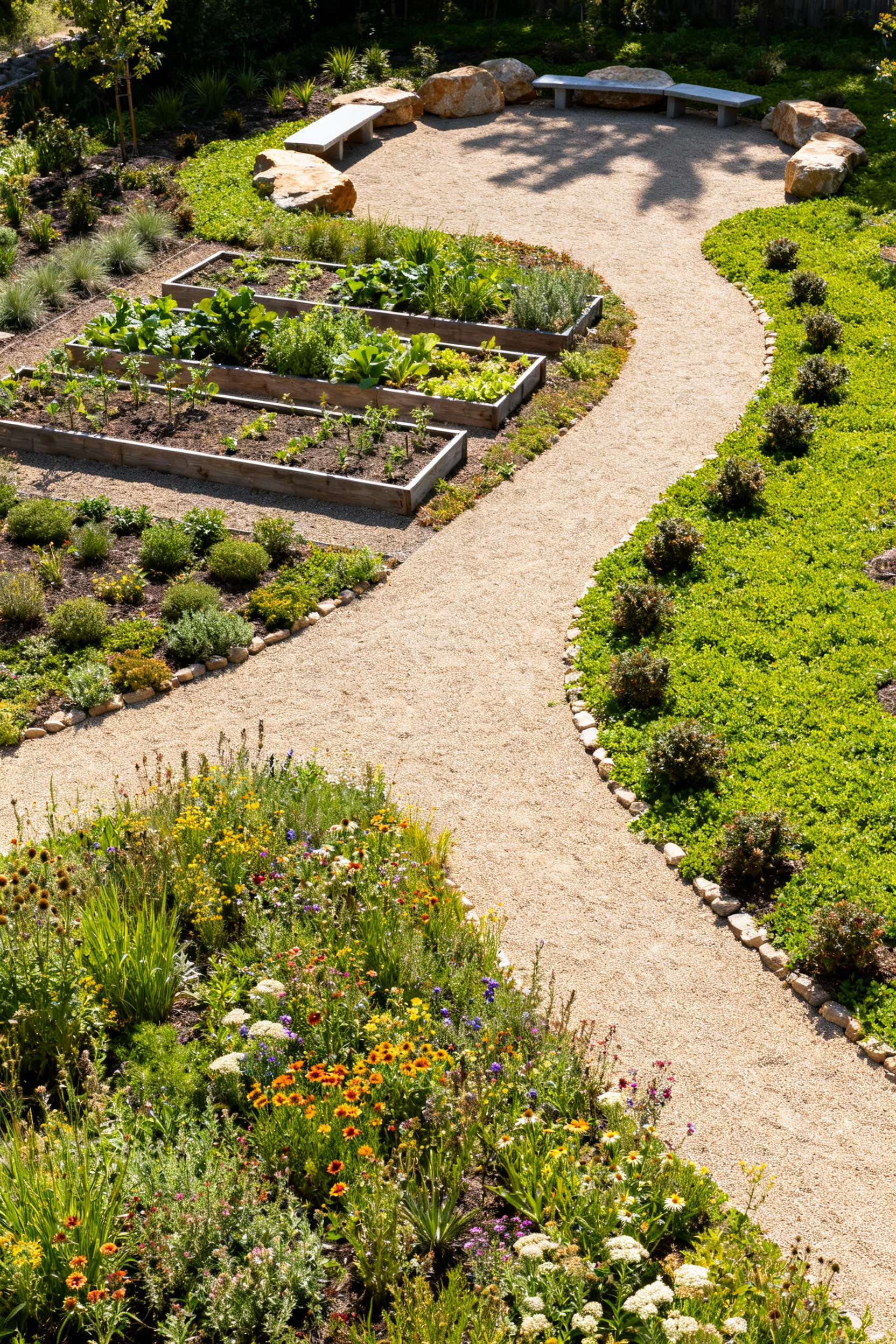
From there, get intentional about how you use your space. What I tell my environmentally conscious homeowners is to map out their daily patterns. Where do the kids play? Where do you want to sit with your morning coffee? This informs the design. You might create a soft, mulched play area, a quiet nook with a bench surrounded by fragrant native shrubs, and a productive zone with raised beds for vegetables. This approach, borrowed from permaculture, places high-use elements like your herb garden closest to the back door, making it effortless to snip some basil for dinner. It’s about creating a landscape that flows with your life, not one you have to constantly fight to maintain.
7. Integrating Productive Patches: Cultivating Culinary Herbs and Low-Impact Vegetables within Ornamental Designs
The idea that food gardens have to be separate, purely utilitarian plots is an outdated one. The easiest way to start is by tucking a few herbs or vegetables into your existing flowerbeds. Imagine the vibrant leaves of basil mixed with petunias, or a rosemary bush cascading over a wall. This immediately blurs the line between ornamental and edible, creating a more integrated and useful lawn garden.
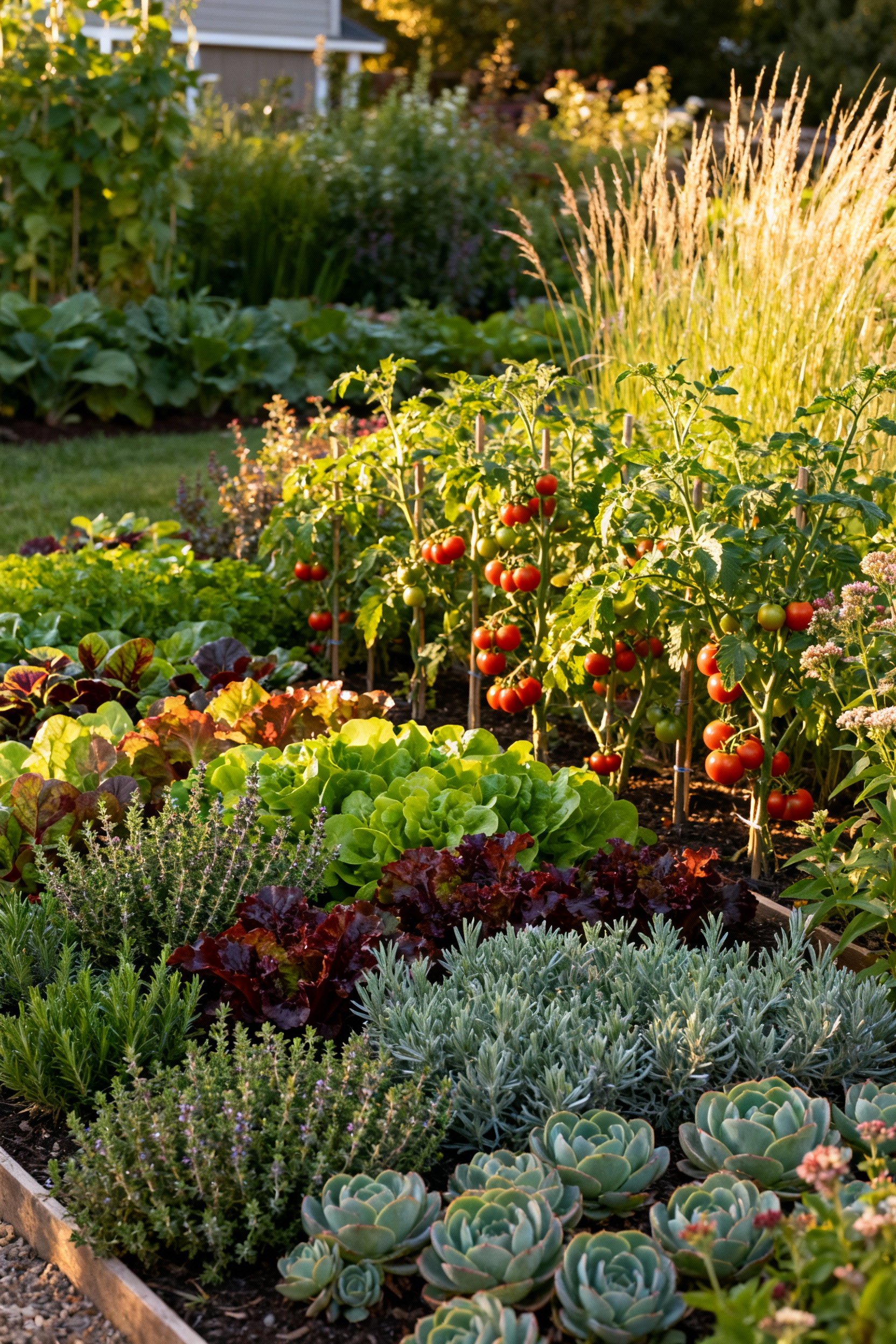
Take it a step further with deliberate “edible landscaping.” Choose plants for both their beauty and their bounty. The brilliant red and yellow stems of rainbow chard can be a stunning visual accent, an artichoke plant adds incredible architectural drama, and strawberries can serve as a delicious, fruiting groundcover. In smaller spaces, think vertically. Espaliered fruit trees trained flat against a fence or wall can produce an amazing amount of fruit while taking up almost no ground space. It’s a design challenge that pays off with fresh, healthy food right outside your door.
8. Amplifying Natural Defenses: The Synergy of Strategic Companion Planting for Pest Resistance
A resilient lawn garden leverages the power of teamwork between plants. At its most basic, this is companion planting—we’ve all heard that marigolds can help deter certain pests near tomatoes. It’s a simple, powerful acknowledgment that plants can help protect one another. It’s the beginning of designing a system that defends itself.
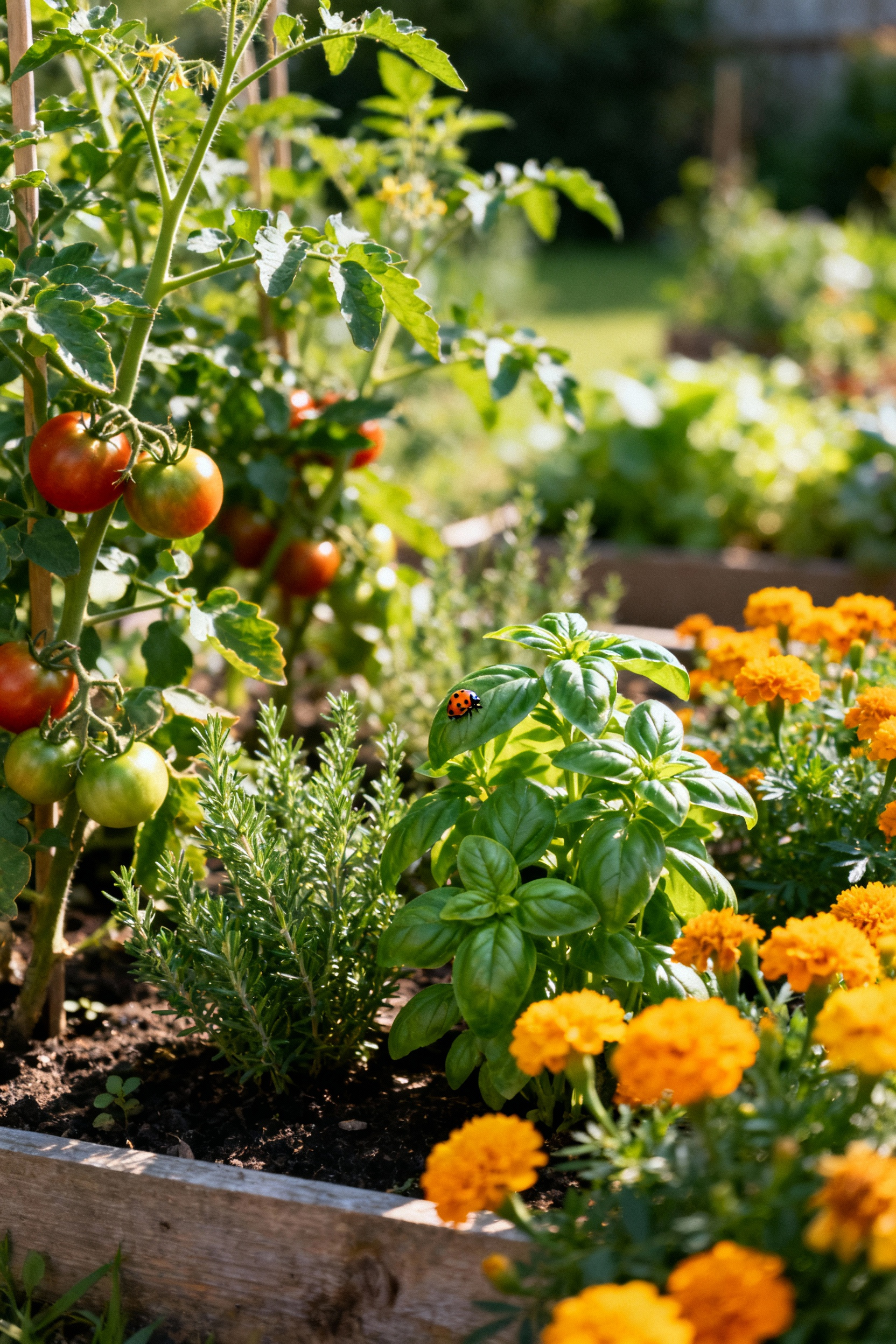
For a more sophisticated approach, you design a garden that actively recruits beneficial insects. This means planting “insectary” plants like sweet alyssum, cosmos, and dill specifically to provide food and habitat for the predators that prey on common garden pests. You’re creating a welcoming environment for your allies. You can also plant aromatic herbs to confuse pests and mask the scent of more vulnerable plants. I’ve seen this play out when a client’s brassicas were always decimated by cabbage moths. The next year, we interplanted them with onions and thyme, and the problem virtually disappeared. The goal is to create a complex, multi-sensory landscape where pests have a hard time getting established and their natural enemies are always nearby.
9. Closing the Nutrient Loop: Advanced On-Site Composting for Dynamic Soil Enrichment
A truly regenerative lawn garden doesn’t create waste; it creates resources. The most fundamental way to do this is by closing the nutrient loop through composting. Every scrap from your kitchen and every leaf from your yard is a potential building block for rich, healthy soil. A simple compost pile is the first step, transforming what you would have thrown away into black gold for your garden.
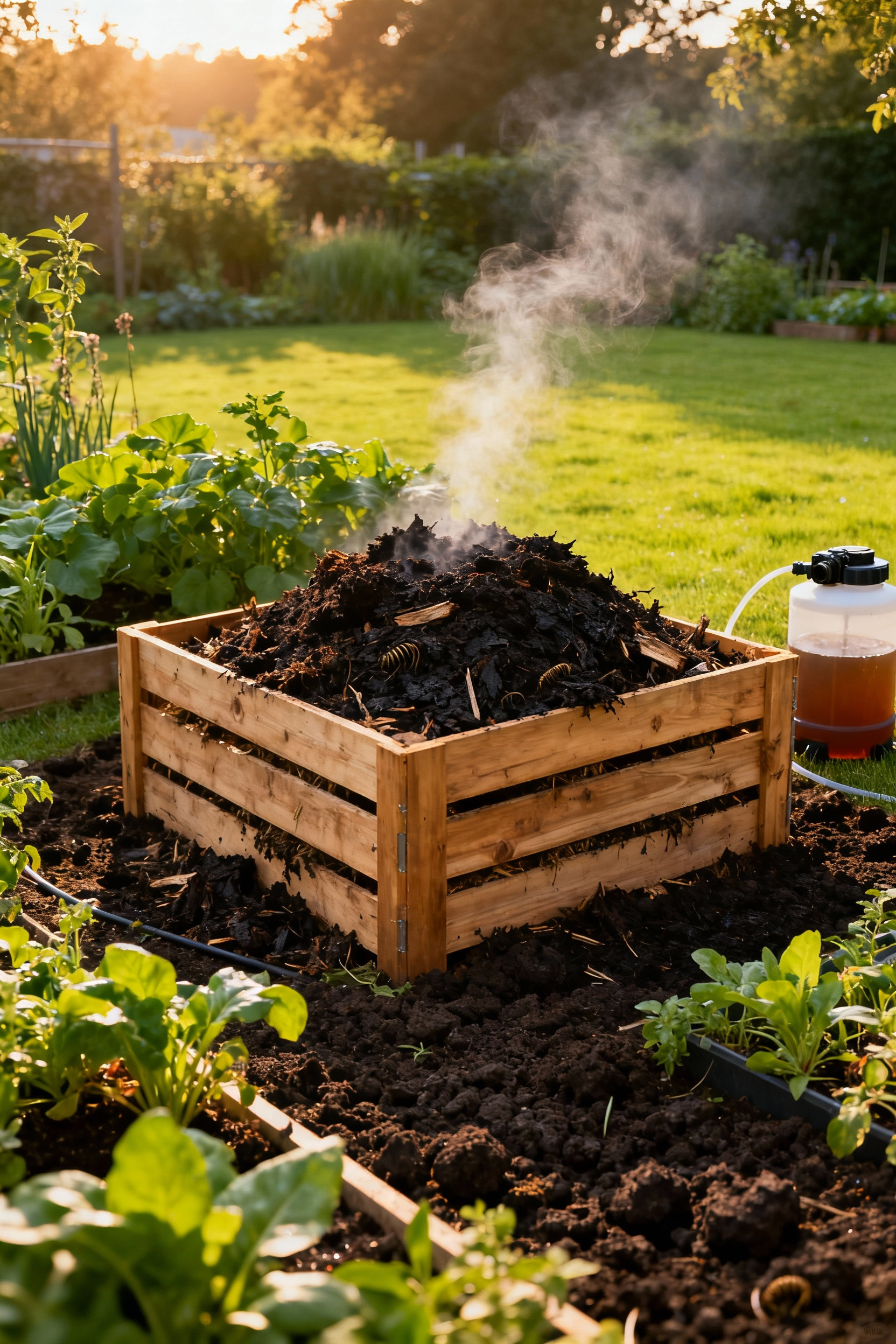
Once you’re comfortable with basic composting, you can explore more advanced methods to create higher quality amendments faster. A hot compost system, managed for the right balance of carbon and nitrogen, can produce finished compost in weeks. A worm bin (vermicomposting) turns kitchen scraps into incredibly potent worm castings. From my work in sustainable living, I’ve found that nothing connects people more to this cycle than seeing their ‘waste’ become food for their garden. Techniques like Bokashi or building a Hugelkultur bed—which is essentially a long-term composting mound made of buried wood—are next-level strategies. You become the architect of a closed-loop system where fertility is built on-site, year after year.
Elevating Your Edible & Ecological Lawn Garden Approach (Part 2)
Now we build on those integrated designs by focusing on the heart of ecological gardening: actively cultivating biodiversity and choosing the right tools for long-term resilience. This is about transforming your space into a true habitat and ensuring your practices are as sustainable as the garden you’re creating.
10. Attracting Beneficial Biota: Designing Diverse Pollinator and Wildlife Habitats with Layered Plantings
An ecological garden is more than just a collection of plants; it’s a community of living things. To get started, just add a few keystone native plants like milkweed or coneflowers to your borders. That single act is an invitation to local pollinators, providing an essential food source and signaling that your garden is a friendly place for wildlife.
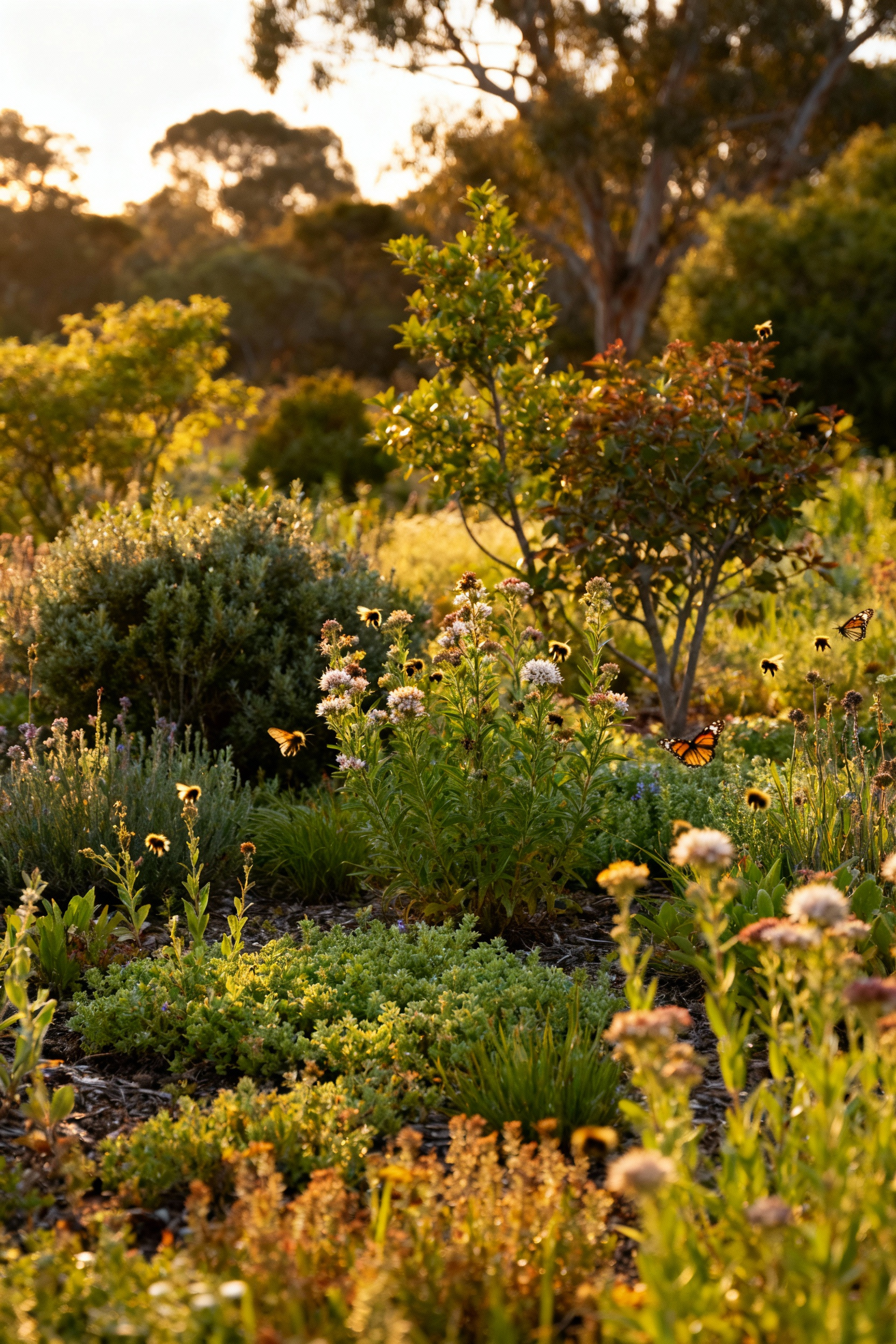
From there, you can design with layers to create a truly three-dimensional habitat. Think like a forest, even in a small space. A small native tree like a serviceberry can be your canopy, with shrubs like elderberry underneath, a layer of perennials like bee balm, and a groundcover of wild ginger. This structure provides continuous blooms throughout the seasons, offering varied food sources, nesting sites, and shelter for a huge range of birds and beneficial insects. Years of eco-conscious design taught me that when you create these complex habitats, the system starts to regulate itself. You’re not just planting flowers; you’re co-creating a self-sustaining habitat that dramatically reduces your need to intervene.
11. Investing in Sustainable Systems: Eco-Conscious Tools and Technology Selection for Long-Term Resilience
The tools you choose have a direct impact on the health of your lawn garden ecosystem. A great place to start is with high-quality hand tools. A good broadfork can aerate your soil without destroying its delicate structure, and a sharp scuffle hoe makes weeding almost effortless. Using manual tools reduces noise and air pollution and connects you more deeply to the physical act of gardening.
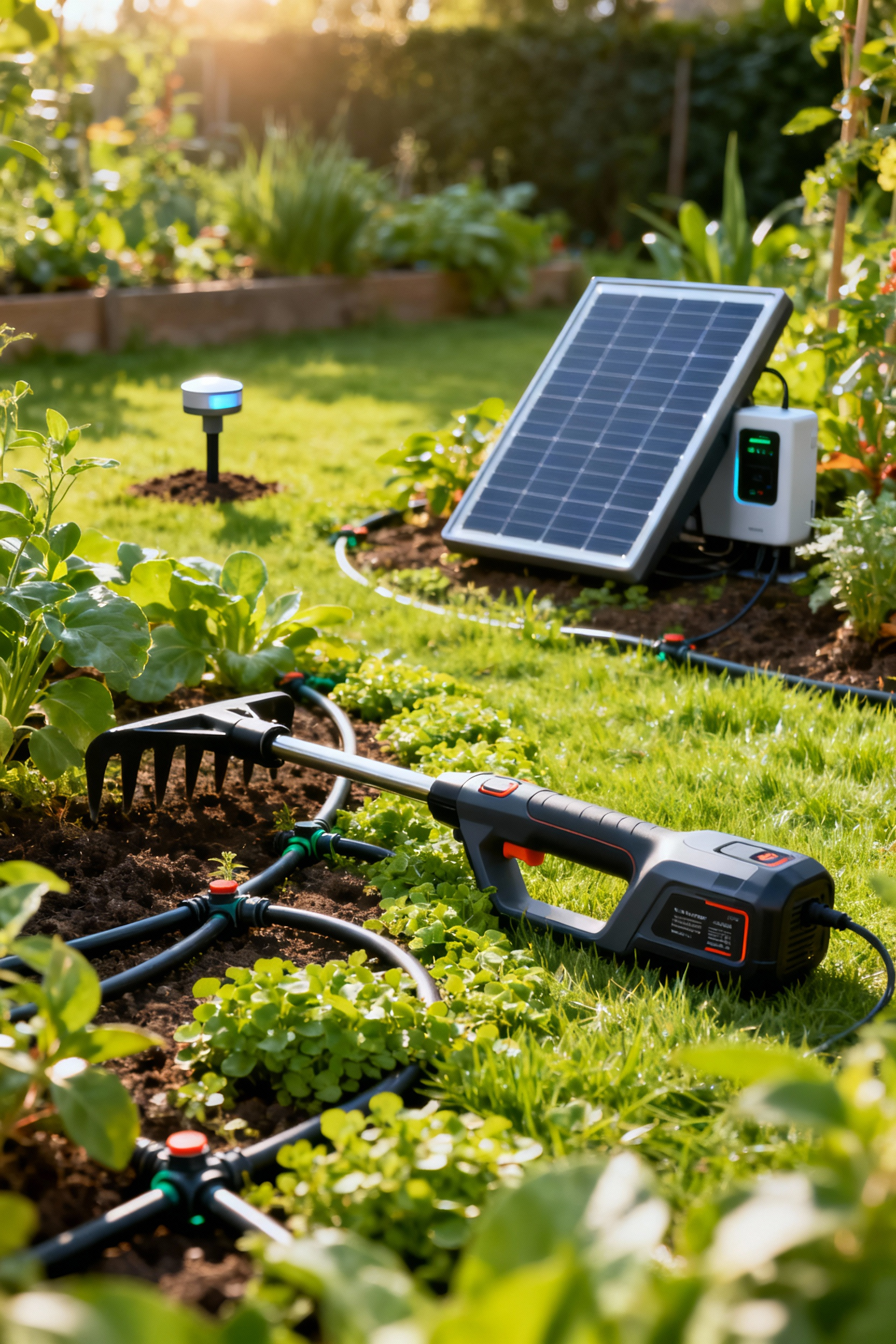
When you do need power, make conscious choices. Investing in a drip irrigation system on a timer will use a fraction of the water of a conventional sprinkler. Transitioning from gas-powered mowers and blowers to battery-electric models eliminates emissions and drastically cuts down on noise pollution, making your yard a more peaceful place for both you and the wildlife you’re attracting. The next level is thinking about the lifecycle of your tools. Choose durable, repairable items from companies with ethical practices. Your goal is a closed-loop system where your tools and technologies support your ecological goals, rather than undermining them.
Advanced Biocentric Lawn Garden Strategies (Part 1)
Now we move into more sophisticated strategies that require a deeper understanding of your site as a living, breathing ecosystem. This is about integrating advanced systems, pushing the boundaries of productivity, and building a landscape that is truly resilient in the face of environmental challenges.
12. Harnessing Ancillary Waters: Implementing Residential Greywater Recycling Systems for Sustainable Irrigation
For a truly water-wise lawn garden, we have to look beyond just rain. Residential greywater—the gently used water from your showers, sinks, and laundry—is an incredible, often overlooked resource. It makes up a huge portion of household wastewater and, with the right system, can be safely used to irrigate your landscape.
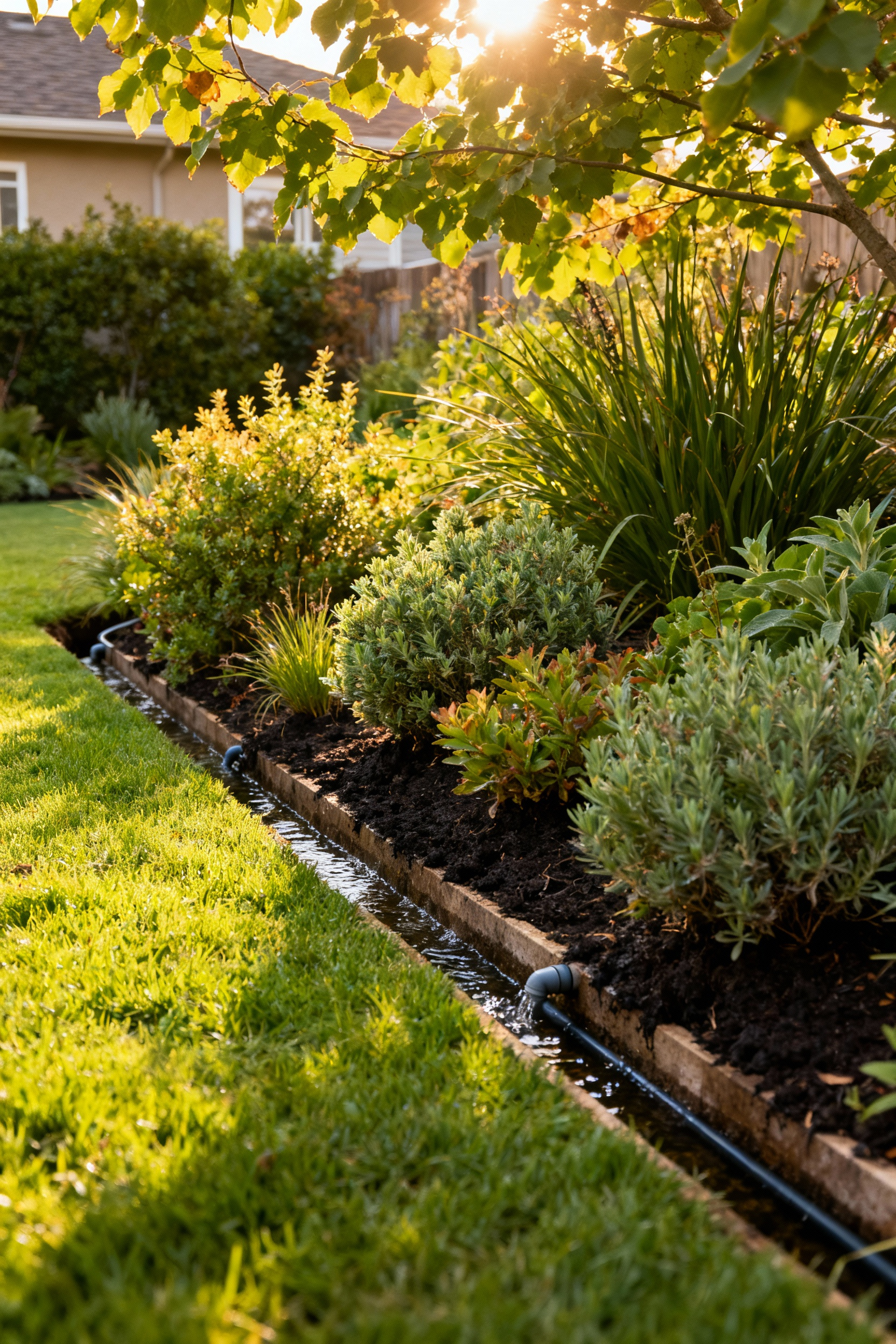
The most accessible way to start is with a “laundry-to-landscape” system, which diverts water from your washing machine directly to your fruit trees or perennial beds. It’s a surprisingly simple setup that can save thousands of gallons of potable water each year. For a more integrated approach, you can design a branched drain system that collects greywater from multiple sources for distribution. I’ve seen this play out when clients in drought-prone areas use greywater to keep their fruit trees thriving through the dry season. The key is to use plant-friendly, biodegradable soaps and detergents. This strategy transforms “wastewater” from a problem into a nutrient-rich solution, closing a major resource loop in your home.
13. Maximizing Verticality: Cultivating Living Walls and Multi-Tiered Green Infrastructures for Spatial Efficiency
When ground space is limited in a lawn garden, the only way to go is up. Most people are familiar with using a trellis for a climbing vine, but that’s just the beginning. The next step is creating intentionally designed vertical gardens or living walls. These aren’t just decorative; they are functioning ecosystems that can insulate your home, filter the air, and provide a surprising amount of habitat.
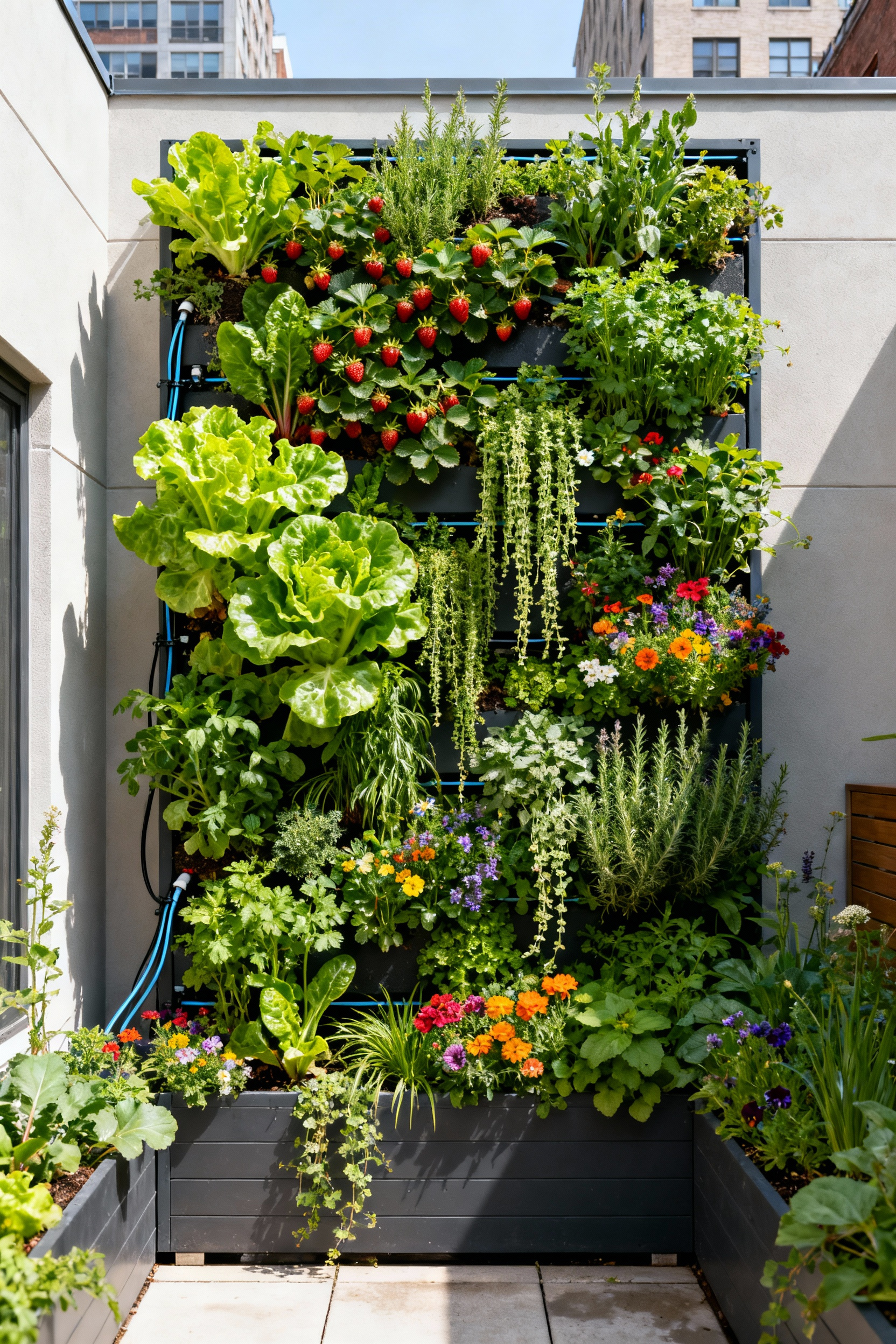
Imagine a wall covered not just in ivy, but in a mix of edible greens, herbs, and native perennials. A well-designed living wall can act as a thermal buffer, reducing your home’s heating and cooling costs. You can also think in tiers. Terracing a sloped yard, espaliering fruit trees against a fence, or building multi-level raised beds are all ways to maximize your growing area and light exposure. By thinking in three dimensions, you can radically increase the productivity and ecological impact of even the smallest urban space.
14. Establishing a Resilient Ecosystem: Designing Polycultural Forest Gardens for Abundant Yields
A forest garden is the pinnacle of a resilient, self-maintaining lawn garden. It’s a food-producing ecosystem designed to mimic the structure and function of a natural woodland. Instead of planting in rows, you create diverse communities of plants, or “guilds,” that support each other. It’s a shift from monoculture to a vibrant polyculture.
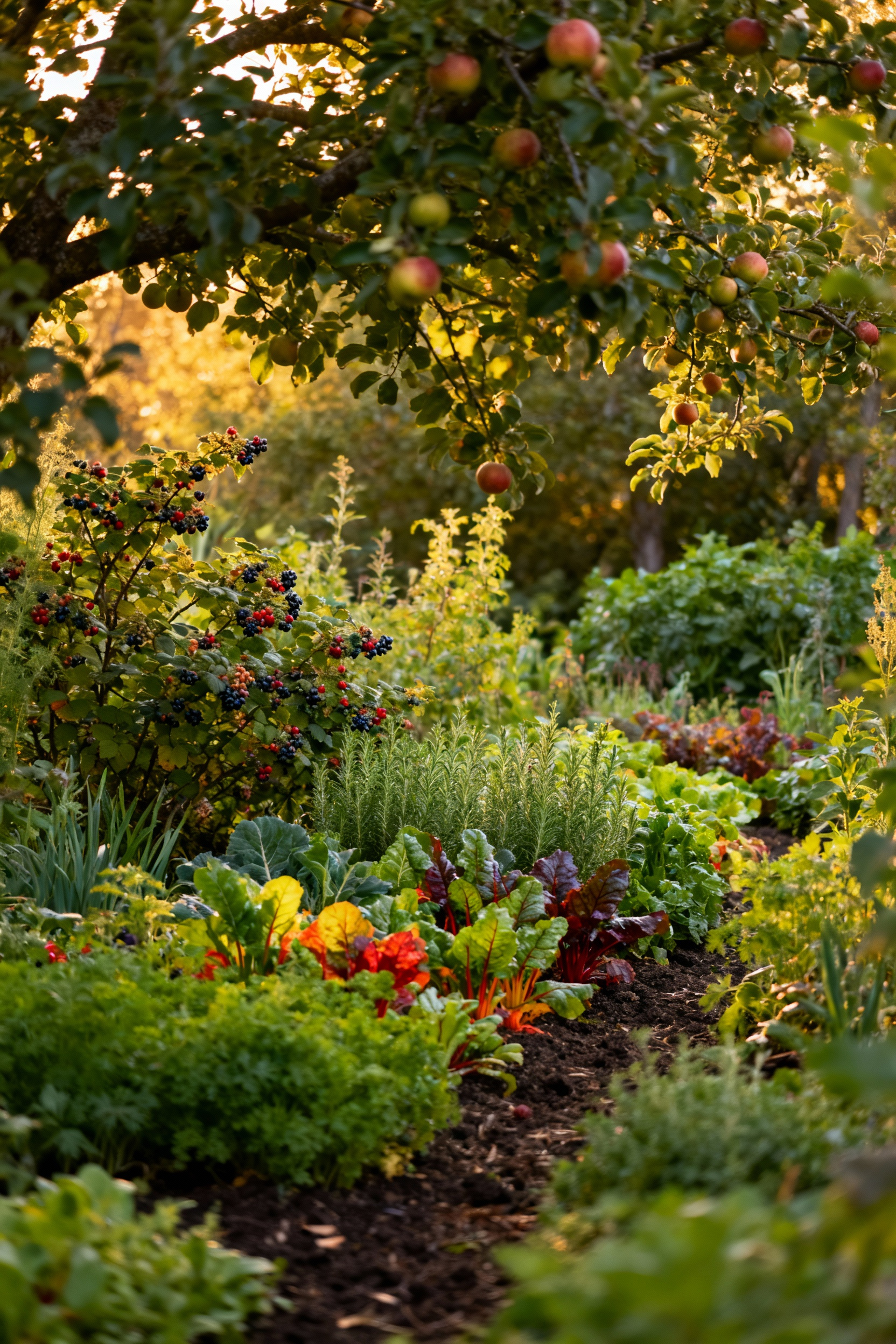
A mature food forest typically has seven layers: a tall canopy of nut or fruit trees, a lower layer of dwarf fruit trees, a shrub layer for berries, an herbaceous layer for perennials and herbs, a groundcover of spreading edibles, a root layer, and a vertical layer of vines. Each plant is chosen not just for what it produces, but for the role it plays—fixing nitrogen, attracting pollinators, or accumulating nutrients from deep in the soil. What I tell my clients is that a food forest is a long-term investment in abundance. It takes time to establish, but once mature, it requires very little maintenance and provides a continuous, diverse harvest.
15. Mitigating Environmental Extremes: Microclimate Manipulation for Enhanced Plant Vigor and Production
Every property has dozens of unique microclimates—little pockets where conditions are slightly different from the surrounding area. Learning to identify and even create these is a master-level skill for building a resilient lawn garden. You can start by simply observing where the snow melts first in spring or where the frost lingers longest in the fall.
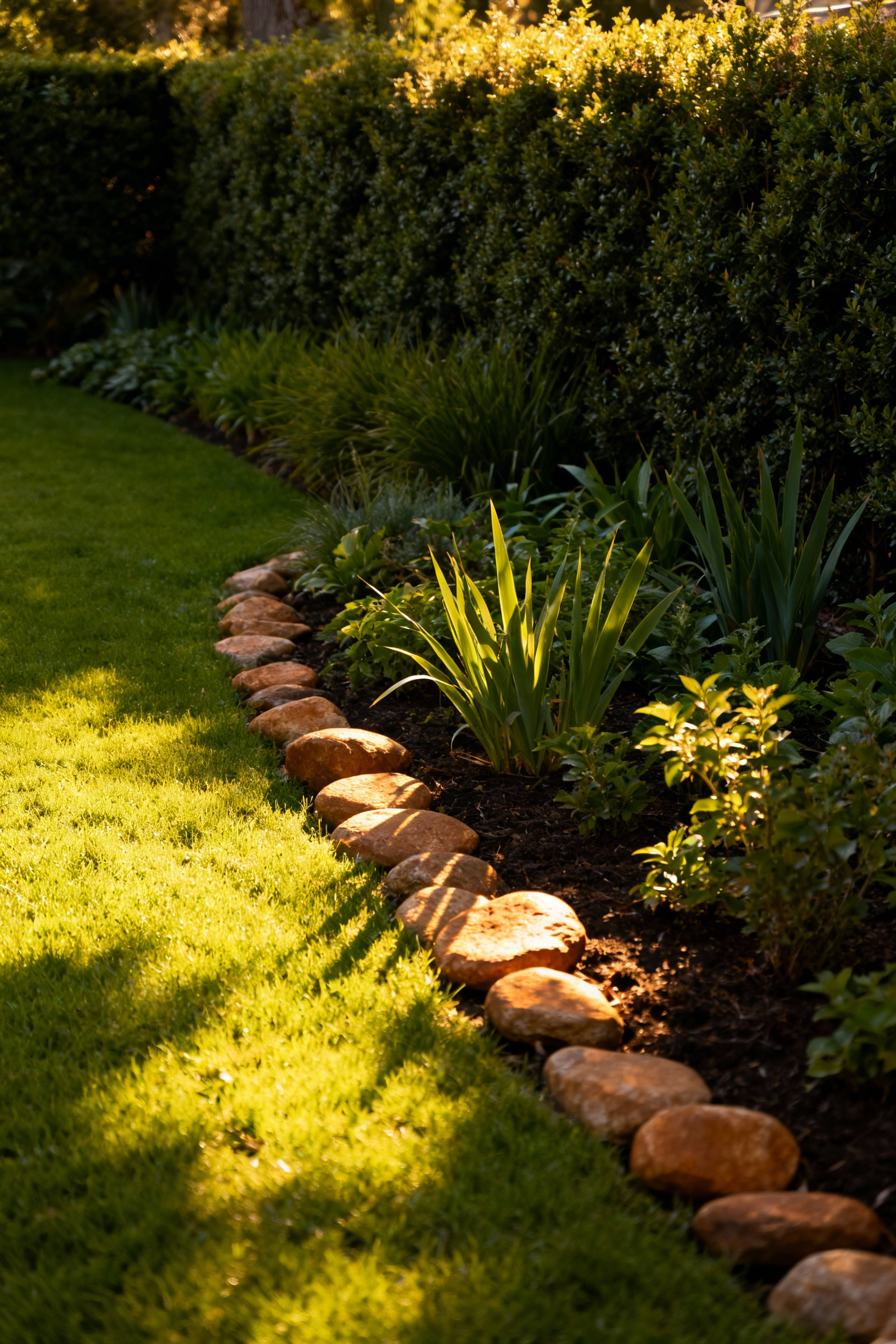
To take it further, you can actively shape these microclimates. A stone wall or a dark-colored fence can absorb heat during the day and radiate it back at night, creating a warm zone where you can grow plants that might not otherwise survive your climate. A strategically planted hedge can create a windbreak, protecting more delicate plants. Swales and berms can be used to direct and hold water, creating moist pockets in a dry landscape. By understanding and working with these subtle variations, you can significantly expand your planting options and build a garden that can better withstand unexpected heatwaves, cold snaps, and unpredictable weather.
Advanced Biocentric Lawn Garden Strategies (Part 2)
Here, we focus on maximizing yield in small spaces by applying precision techniques from urban agriculture. This is about seeing your lawn garden not just as a beautiful space, but as a hyper-efficient, productive landscape that can provide a surprising amount of fresh food.
16. Optimizing Small-Scale Production: Intensive Urban Agriculture Techniques for High-Yield Efficiency
An urban lawn garden has to be smart to be productive. The core idea of intensive agriculture is to maximize your harvest from every square foot. This starts with rejecting the idea of tidy rows with lots of empty space in between. We cultivate intensely in smaller, well-defined beds, creating a living matrix of plants.
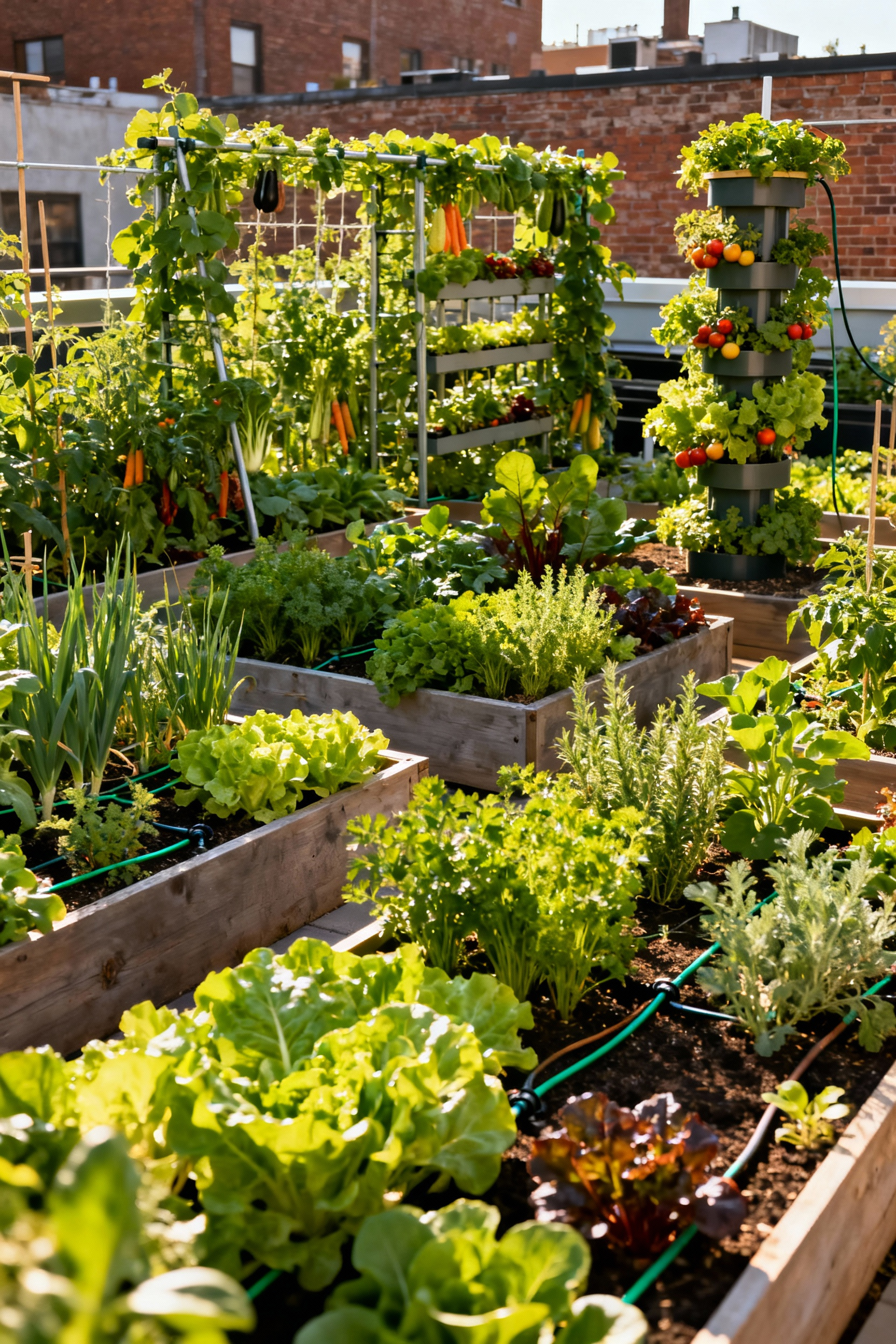
To boost your yield, use techniques like succession planting. As soon as you pull out your spring radishes, the summer beans are ready to go in their place. This ensures you have something growing and something to harvest continuously. Companion planting also plays a huge role here, as you can interplant mutually beneficial species. And don’t forget to grow up! A simple trellis for cucumbers or pole beans can dramatically increase your harvest without taking up any additional ground space. Years of work in urban agriculture taught me that small, intensively managed spaces can often out-produce much larger, conventionally farmed plots. It’s about smart design, not just sheer size.
Mastering Regenerative Lawn Garden Integration
Now we pull it all together. This final stage is about more than just applying individual techniques; it’s about seeing your lawn garden as a whole, integrated system. It’s about designing for self-sufficiency, connecting with your community, and planning for a resilient future.
17. Architecting a Closed-Loop System: Principles of Regenerative Garden Design for Self-Sustaining Environments
Mastering a regenerative lawn garden means designing it to function like a natural ecosystem—a closed-loop system where there is no waste. Everything is a resource. Composting is the most obvious example, but this philosophy extends to water, nutrients, and pest control. The goal is to minimize what you need to bring in from the outside and to keep all the value you create cycling within your property.
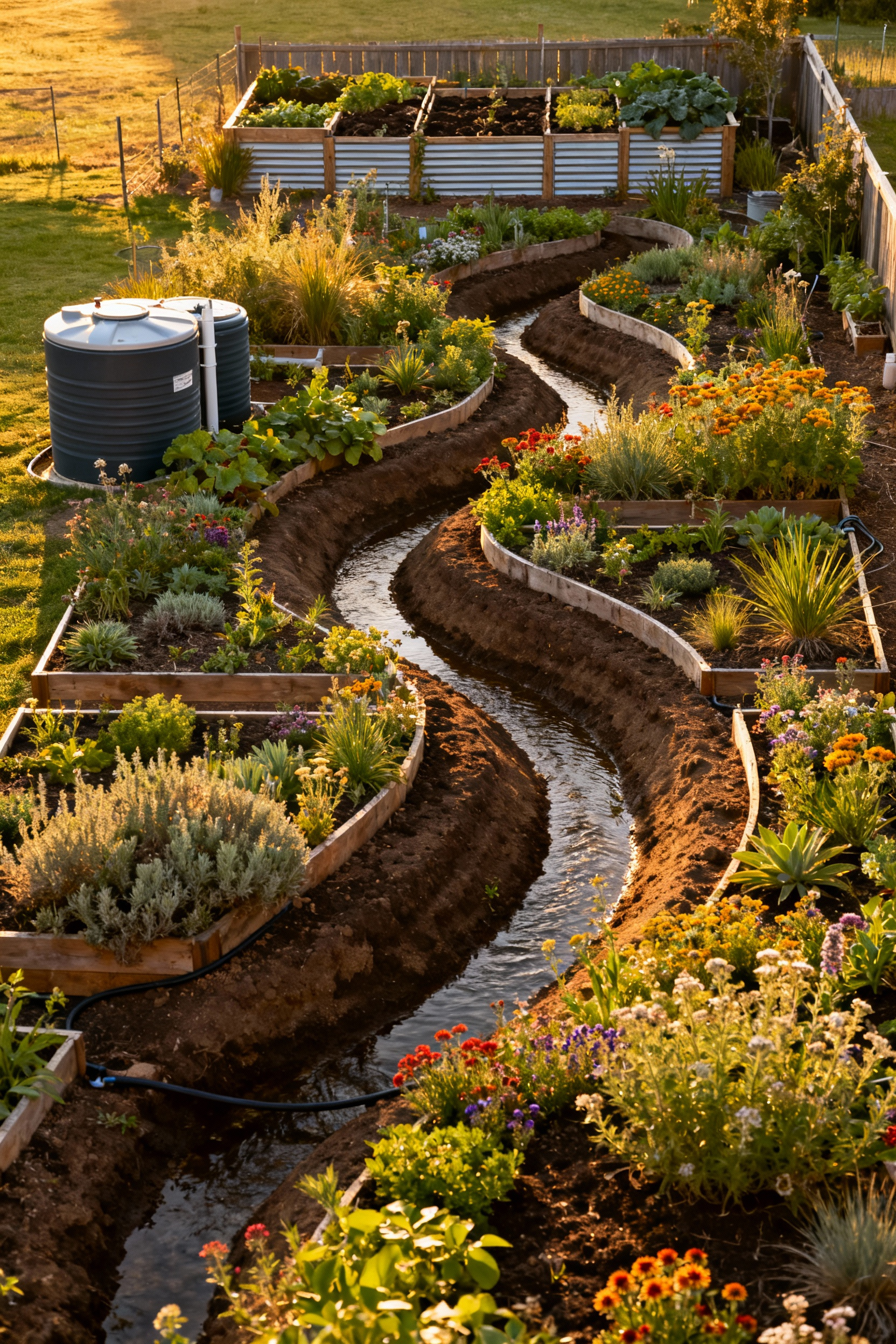
This means designing your landscape to capture every drop of rainwater in swales and rain gardens. It means considering a greywater system to recycle water from your home. It means planting a diversity of species that attract beneficial insects so you never have to think about buying pesticides. From a sustainability standpoint, a closed-loop system is the ultimate goal. It’s a fundamental shift from a consumer mindset to a regenerative one. Your garden becomes a place that creates its own fertility, manages its own water, and builds resilience from within.
18. Cultivating Community Resilience: Fostering Shared Green Spaces and Knowledge Exchange Networks
An individual regenerative lawn garden is powerful, but a community of them is transformative. The next step is to extend these principles beyond your property line. This can be as simple as organizing a seed swap with your neighbors or starting a community compost pile. These actions build a shared sense of stewardship and make regenerative living more accessible for everyone.
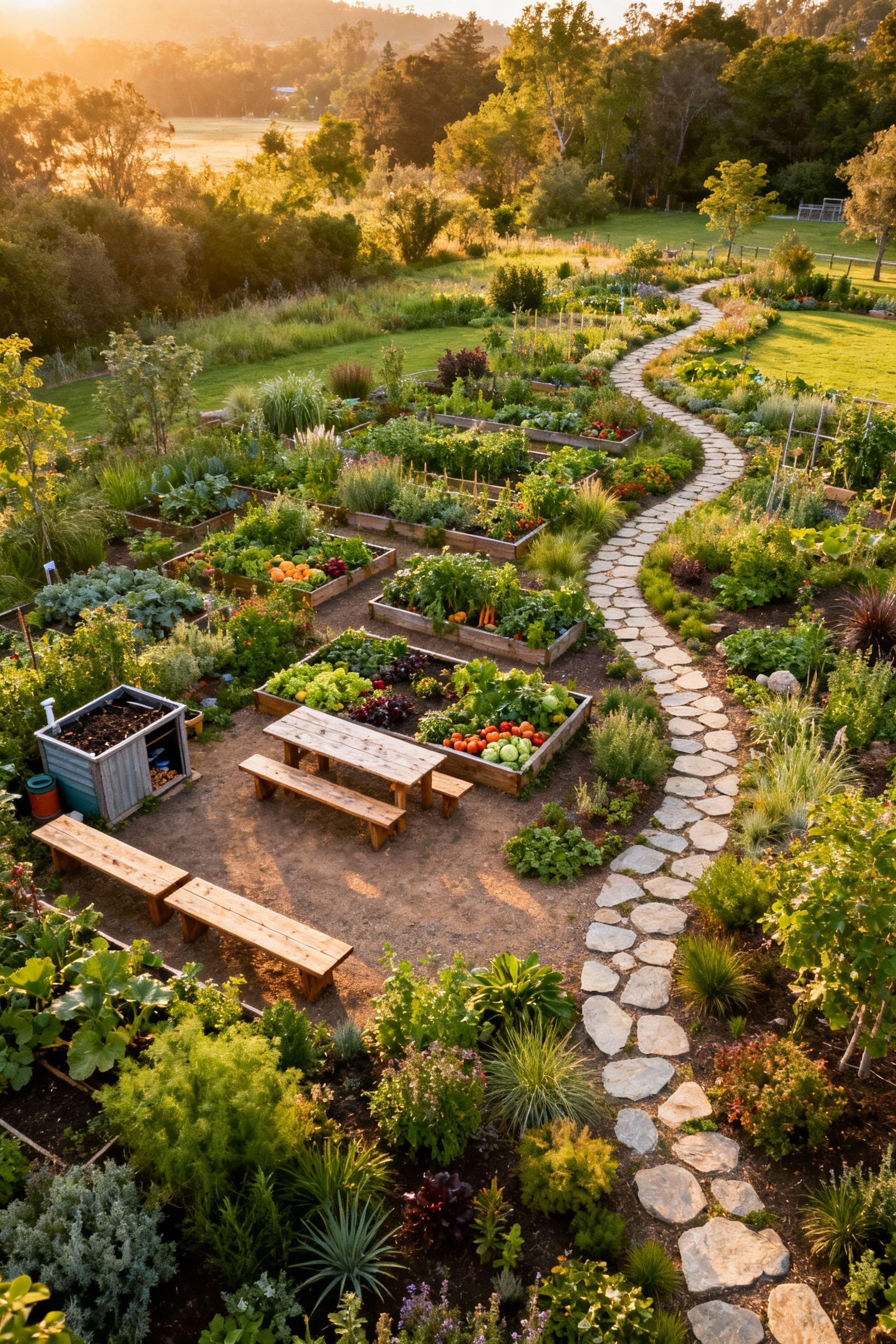
Think bigger: could a neglected strip of land in your neighborhood become a shared pollinator garden or a small community orchard? Can you create a local tool library so not everyone on the block needs to own a tiller? By fostering these networks, you share knowledge, resources, and the harvest. You move beyond individual self-sufficiency to build genuine community resilience. A web of interconnected, productive green spaces makes the entire neighborhood more beautiful, more biodiverse, and more food-secure.
19. Planning for Perpetuity: Understanding Ecological Succession in Long-Term Garden Design and Management
A truly advanced lawn garden design isn’t static; it’s designed to evolve. This means understanding and working with the natural process of ecological succession. Instead of constantly fighting to maintain a certain look, you guide your garden’s development over time, allowing it to mature into a more stable, self-regulating ecosystem.
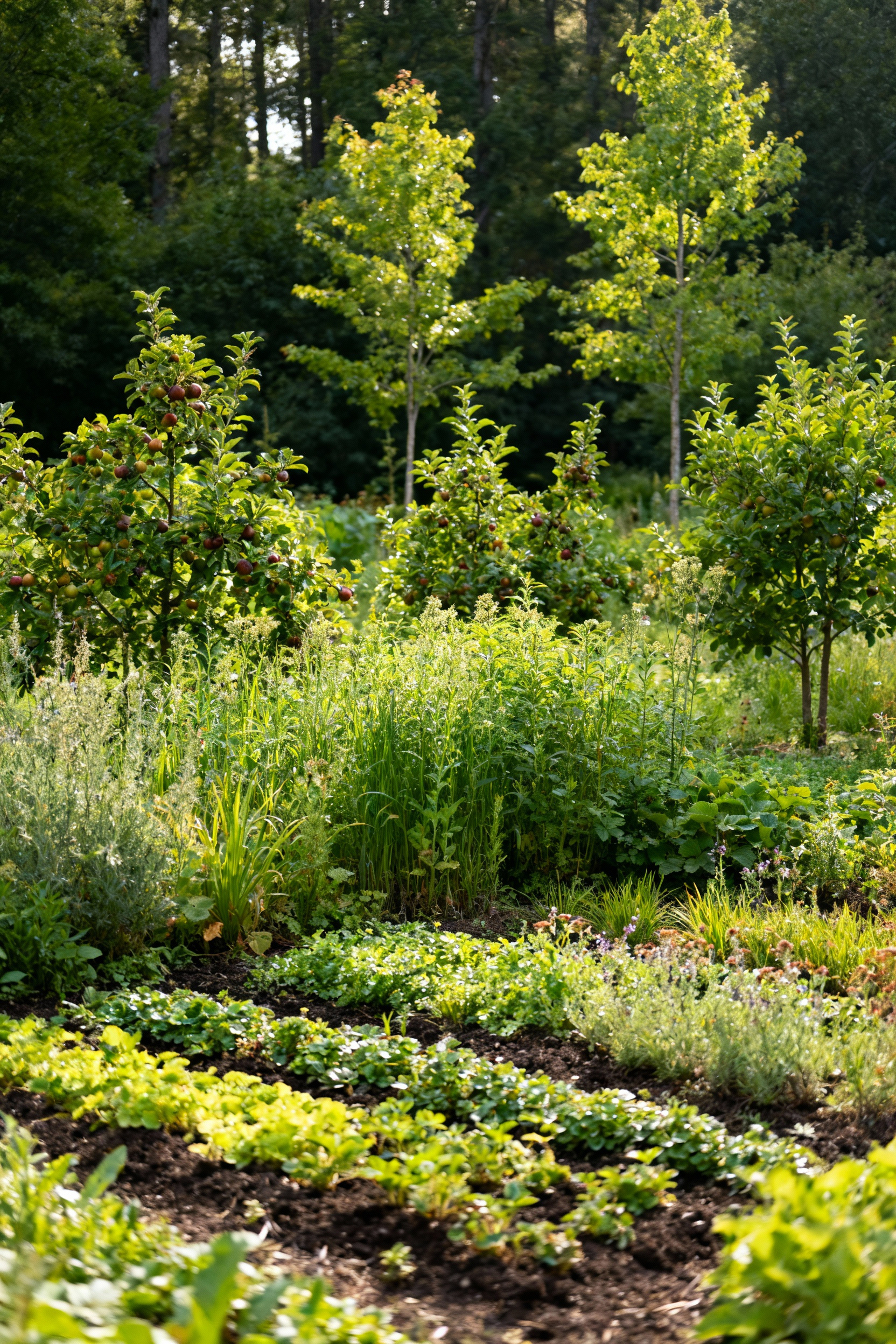
This involves thinking in layers and in decades. You might plant fast-growing “pioneer” species to quickly build soil and provide shelter, knowing that slower-growing, long-lived trees will eventually shade them out. It’s about placing a fruit tree not just for this year’s harvest, but for the shade it will cast in ten years. What really gets me excited is designing a space that will become more resilient and require less work over time. By anticipating how the ecosystem will grow and change, you co-create a legacy landscape that can sustain itself for generations.
20. Embracing Dynamic Adaptation: Sustaining the Living Lawn Garden through Environmental Change and Innovation
The final stage of mastery is realizing that the work is never truly “done.” A lawn garden is a living system in constant dialogue with a changing environment. Embracing dynamic adaptation means being a keen observer and being willing to adjust your strategies as conditions change. Our climate is becoming less predictable, and a resilient garden needs to be able to flex and adapt.
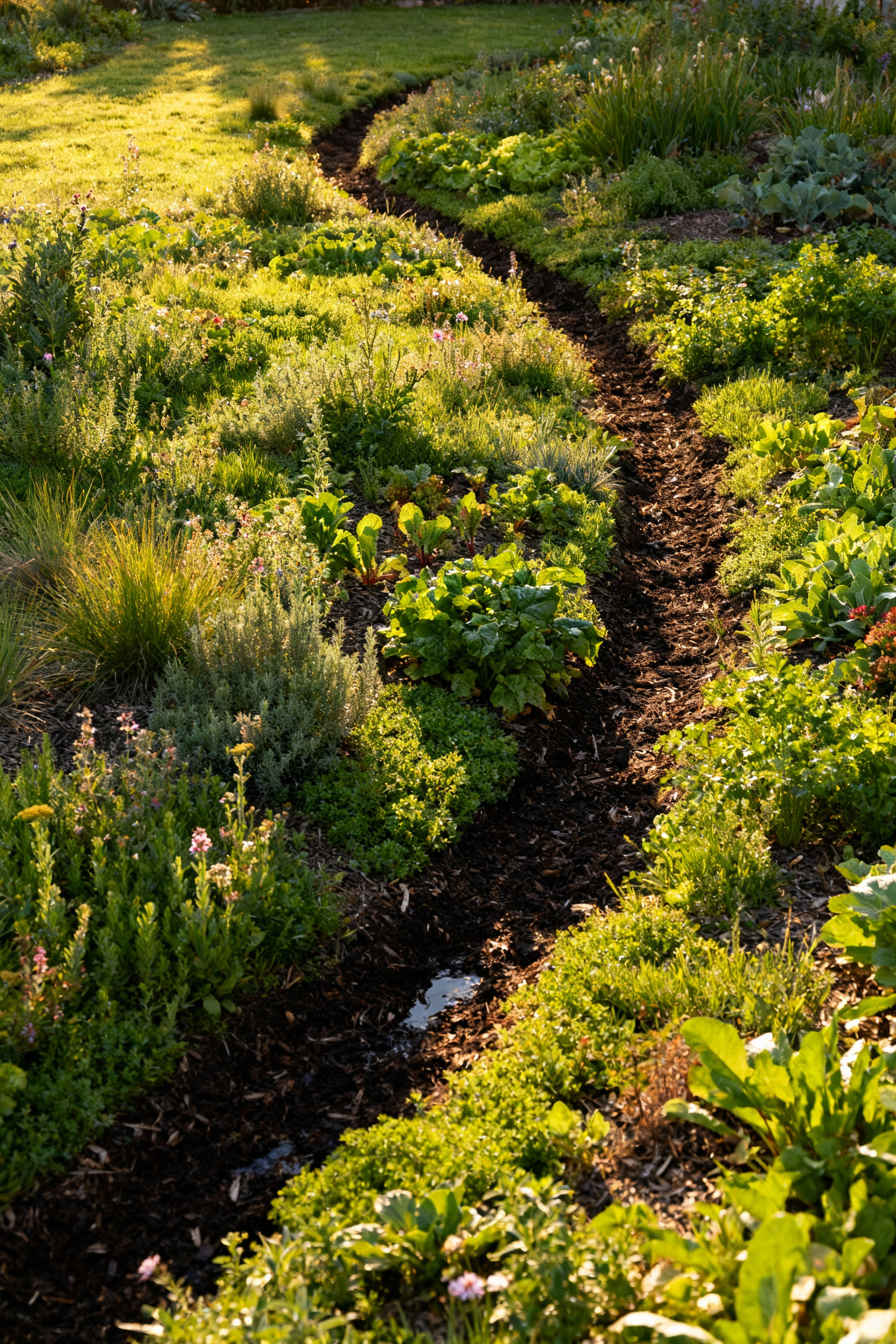
This means regularly monitoring your soil and making amendments based on what it actually needs. It means paying attention to which plants are thriving and which are struggling, and being willing to experiment with new, more resilient varieties. It might involve integrating smart irrigation technology that adjusts based on real-time weather data. This process of observation, learning, and iteration is what keeps your garden—and your skills as a gardener—alive and evolving. Your garden becomes a living laboratory for resilience.
Conclusion
We started by tearing down the old ideal of the perfect, sterile lawn—an idea that has cost us so much in water, time, and ecological health. Through these 20 strategies, we’ve built a new vision, one where an ecological lawn garden is not just a beautiful alternative, but a far superior one. This is a blueprint for creating a landscape that is resilient, productive, and truly alive.
What this journey proves is that true sophistication in design isn’t about imposing our will on nature, but about collaborating with it. We’ve seen how simple shifts, from nurturing our soil to welcoming native plants, can create profound change. Every strategy is a step away from a consumptive model and toward a regenerative one, one that builds biodiversity, sequesters carbon, and offers a deep sense of connection to the world right outside your door.
This is your call to action. You hold the power to transform your piece of the earth. Pick one strategy and start this weekend. See how it feels to work with your landscape instead of against it. Let your yard become a vibrant testament to a better way of living—a source of beauty, food, and life that proves a sustainable home starts the moment you step outside your door.