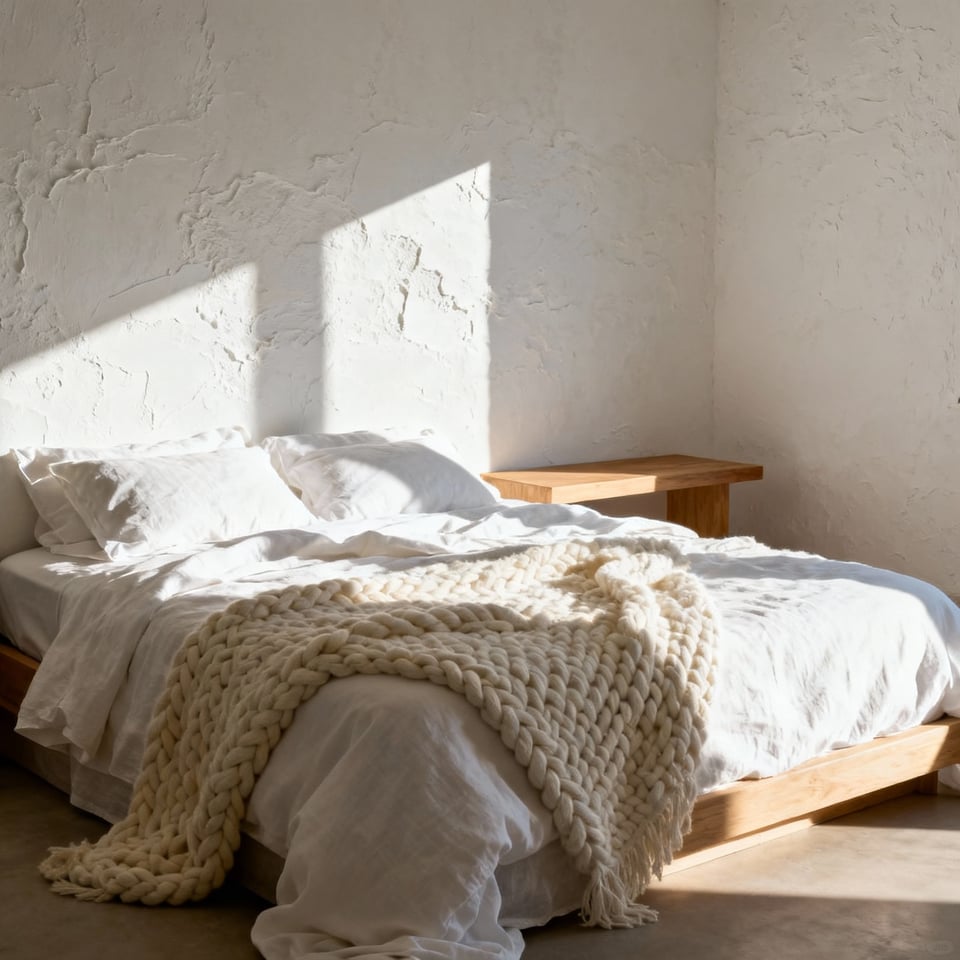
In desert architecture, white plaster serves a vital function by reflecting the relentless sun. However, I learned quickly that this functionality creates sterility without tactile intervention. To cultivate a “living” space, you must treat texture as your primary pigment. Layer materials to catch light and create shadow, transforming flat walls into a dynamic canvas. To avoid a clinical atmosphere, ground the room with organic essentials. These white bedroom ideas move beyond simple color to embrace texture and warmth:
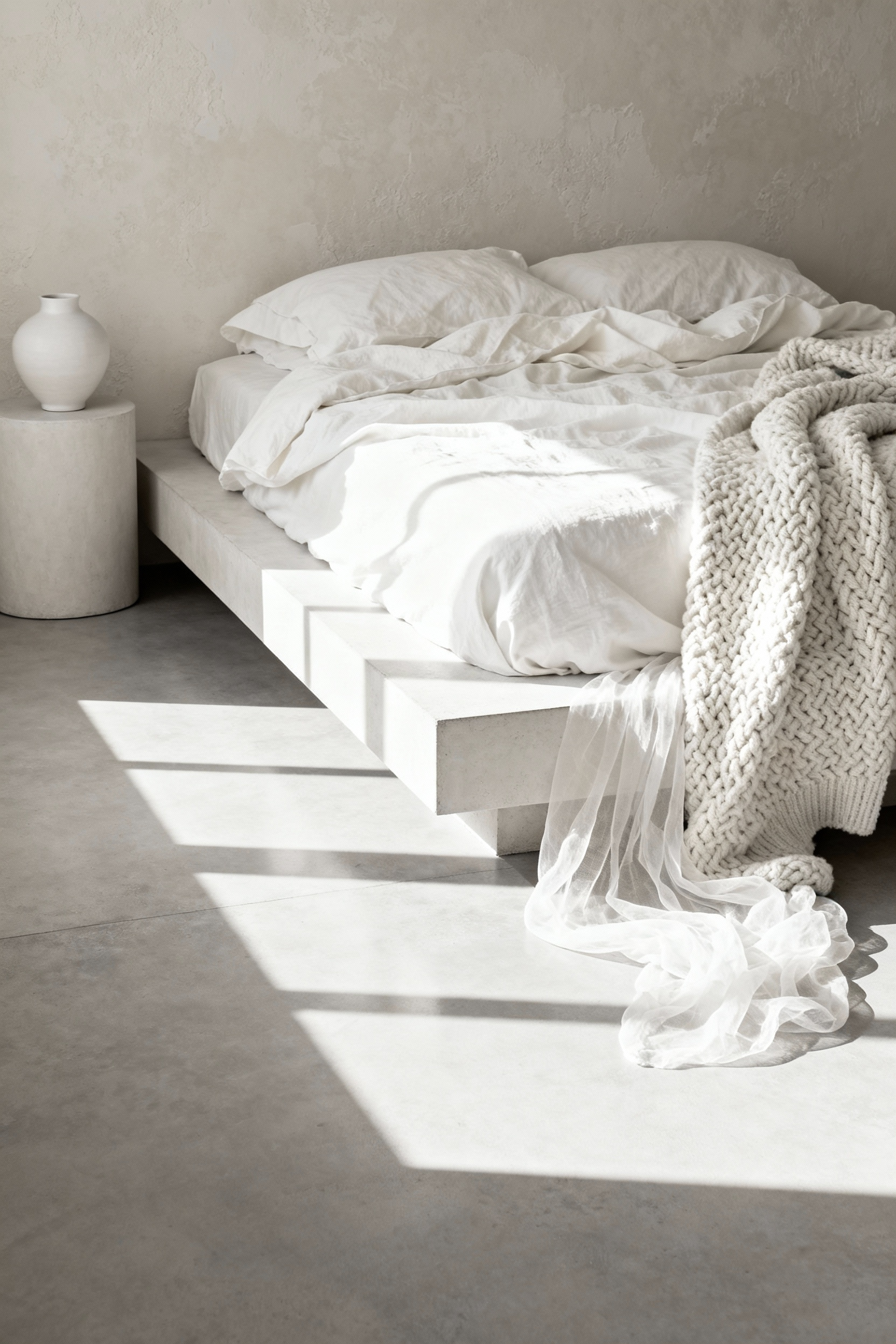
- Warm Timber: Introduce light oak nightstands or a rattan chair to immediately counter visual chill.
- Tactile Textiles: Combine crisp linen sheets with a chunky knit throw or a velvet headboard for depth.
- Living Contrast: Place a Fiddle Leaf Fig against a white corner for a burst of oxygen and color.
This strategic layering mimics the complexity of nature, ensuring your sanctuary feels curated and cozy rather than empty and cold.
In the blistering heat of my childhood home in the Middle East, white walls were never about emptiness; they were a survival strategy against the unrelenting sun. Yet, modern interior design often misunderstands this palette, reducing it to a sterile, clinical backdrop that feels more like a hospital than a sanctuary. Many homeowners shy away from monochromatic rooms for fear of coldness, missing a profound opportunity for serenity. True luxury does not rely on loud pigment. Instead, it lives in the tactile experience of the room.
The secret to mastering this aesthetic lies in looking past the paint chip and toward the landscape. Desert Modernism teaches us to trade stark, blue-based whites for the dusty warmth of sand, creamy ivory, and light taupe. These hues do more than just brighten a room; they capture the shifting light of the day and ground us in our environment. By stripping away visual noise, we allow the architecture and sustainable, raw materials to speak. A white room should never feel flat. It should feel like a deep, restorative exhale.
We will move beyond flat color to prioritize texture and tonal depth, exploring how to layer crisp linens against raw silk and anchor airy spaces with earthy elements like weathered oak and stone. You will learn to curate a palette that creates visual interest without the chaos of competing colors. Let’s banish the myth of the sterile white box and build a space that feels as warm as it looks refined.
Movement I: The Foundation — Architectural White Bedroom Ideas Focused on Retexturing the Canvas
True minimalism demands depth, not emptiness. Growing up between the sun-bleached limestone of the Middle East and the snowy expanses of Scandinavia, I learned that white surfaces must invite touch to feel alive. You must treat your bedroom as a landscape of shadows rather than a flat box. Blend distinct shades like ivory, cream, and bright white; this monochromatic variation adds necessary warmth without visual clutter. Ground this ethereal palette with raw, Earth-friendly materials to prevent the space from floating away.
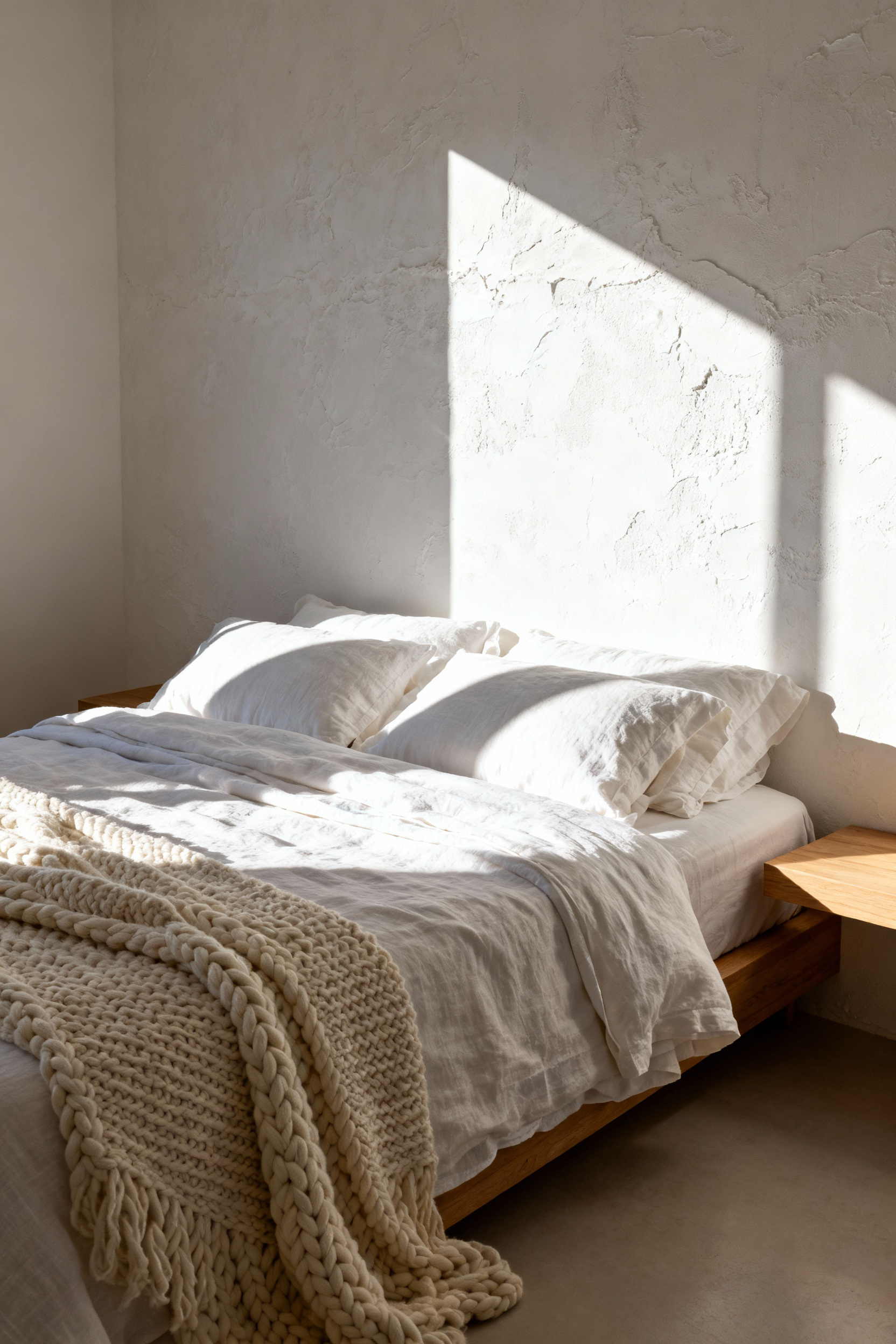
To effectively retexture your canvas and build a sophisticated foundation, apply these tactile principles:
- Create architectural interest by installing shiplap or grasscloth wallpaper to give plain walls physical dimension.
- Anchor the room with earthy elements, such as a woven jute rug or rich wood furniture, to introduce natural contrast.
- Mix at least four textile types on the bed, pairing crisp cotton sheets with a relaxed linen duvet and chunky knits for breathable luxury.
Ultimately, these choices transform a blank space into a sanctuary. By prioritizing natural fibers and structural depth, you create a room that feels curated, sustainable, and deeply comforting.
1. Swap Flat Paint for Limewash: Creating depth and movement on vertical surfaces
Standard flat paint often leaves white bedrooms feeling sterile and static. Unlike flat finishes, limewash creates a sophisticated, velvety matte texture that breathes. Drawing from my background in Middle Eastern architecture, I value how these lime-based surfaces diffuse harsh light into a soft, inviting glow. This material cures to become stone rather than plastic, offering an environmentally sound choice that ages gracefully. To capture this old-world elegance, bypass stark whites and select warm, creamy tones like sand or linen to ground the space in earthiness.
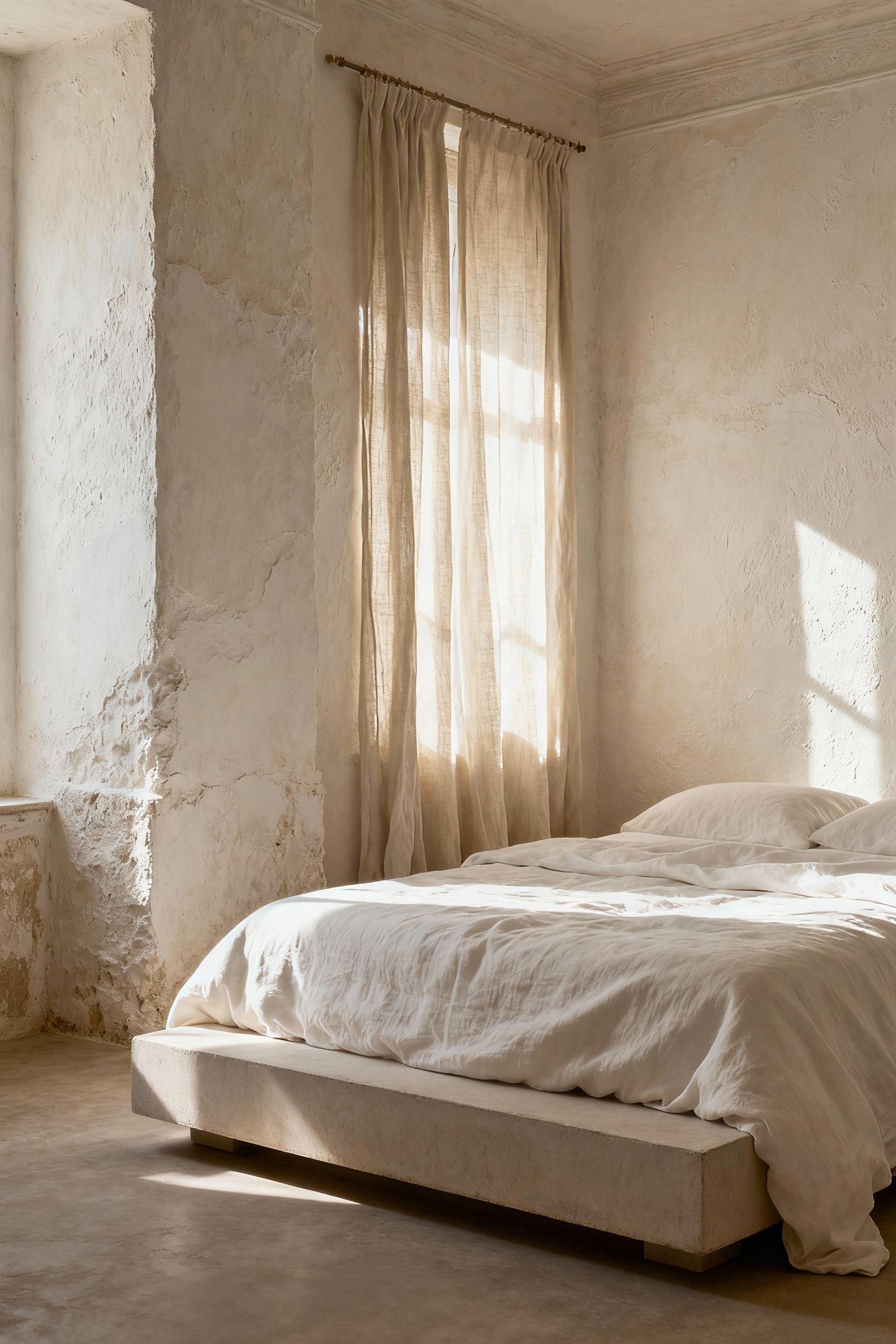
Achieving this signature depth requires a departure from standard rolling techniques. You must embrace the imperfection of the hand to create dynamic movement. Follow these rules for the best results:
- Embrace the ‘X’: Use a block brush in a random criss-cross pattern to layer the pigment organically and avoid manufactured streaks.
- Exercise restraint: Apply a maximum of two thin coats; adding a third layer often flattens the visual texture.
- Dilute for transparency: Water down the second coat to allow the bottom layer to peek through, enhancing the cloud-like effect.
By layering wisely, you transform a vertical surface into a living element that shifts beautifully with the changing daylight.
2. The Cool Touch of Tadelakt: Incorporating Moroccan water-resistant plaster for a sensory wall experience
Growing up between arid landscapes and minimalist studios, I learned that true luxury often feels cool to the touch. Tadelakt, a Moroccan lime-based plaster, introduces this functional beauty to white bedrooms through a seamless, “bone white” finish. Unlike flat paint, this hand-polished surface catches light with a subtle, shifting depth that mimics natural stone. Leverage its moldability to introduce organic architecture into your space. Round off sharp corners or sculpt a curved niche behind the bed to soften the room’s geometry and create a cocoon-like sanctuary.
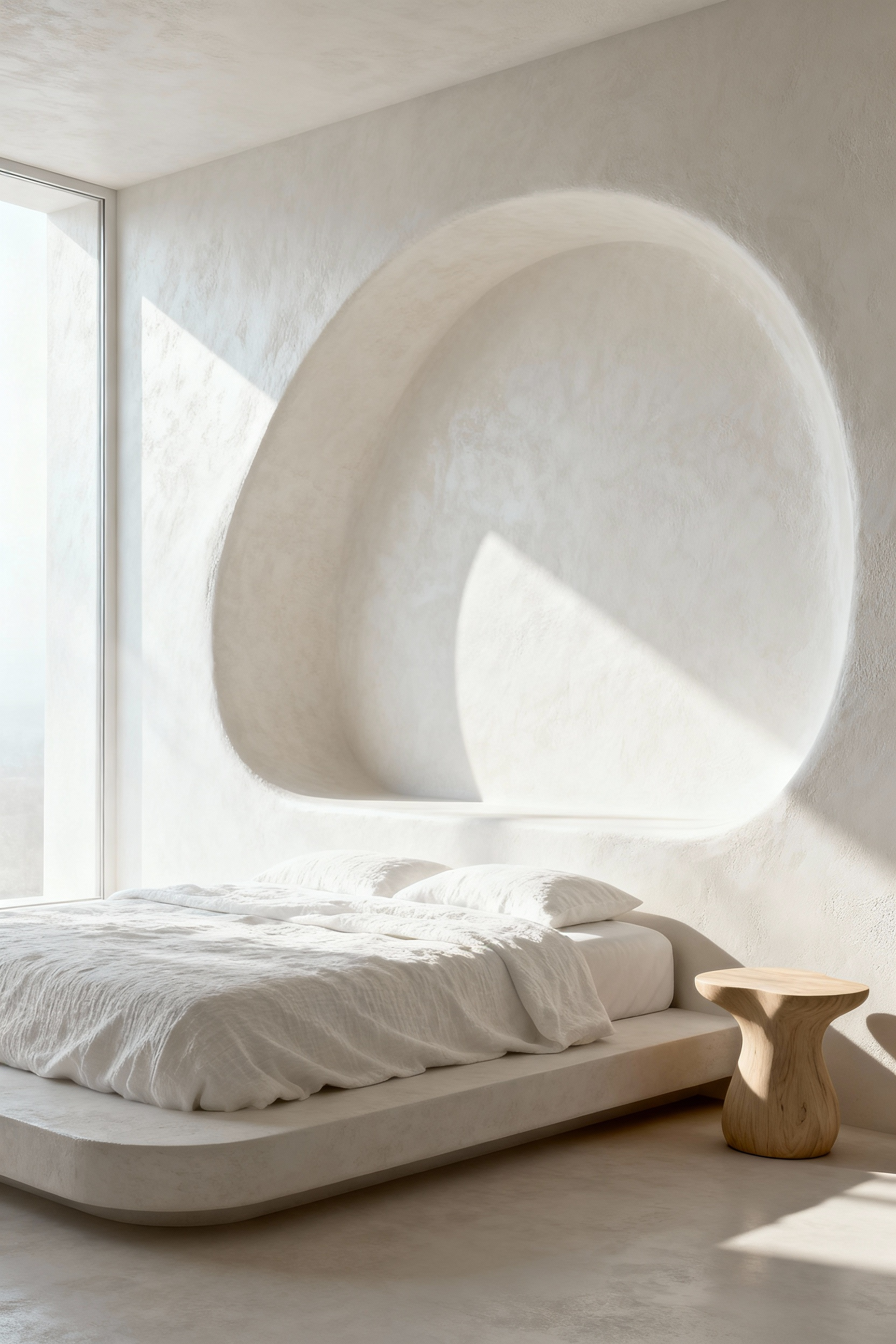
This ancient technique demands respect and expertise. Because the finish relies on rigorous stone polishing and sealing with olive soap, you must hire a specialized artisan rather than attempting a DIY fix. Treat the resulting wall as a living element of your home. To preserve its water-resistant, silky sheen:
- Wipe surfaces gently with plain water.
- Nourish the plaster periodically with a natural olive soap solution.
- Ban harsh chemical cleaners to protect the eco-friendly seal.
3. Soften the Edges: Replacing sharp corners with architectural curves and arches to mimic organic desert forms
Nature rarely builds in right angles. In the arid landscapes of my heritage, architecture mimics the wind-swept curve of a dune to encourage airflow and visual calm. Integrate this fluidity into your white bedroom to disrupt its stark minimalism. Start by softening structural rigidity with deliberate choices:
- Paint a faux arch behind the bed for an instant, cost-effective focal point.
- Install a recessed niche to replace bulky shelving units.
- Select rounded furniture, such as a half-moon rattan headboard or cylindrical nightstands.
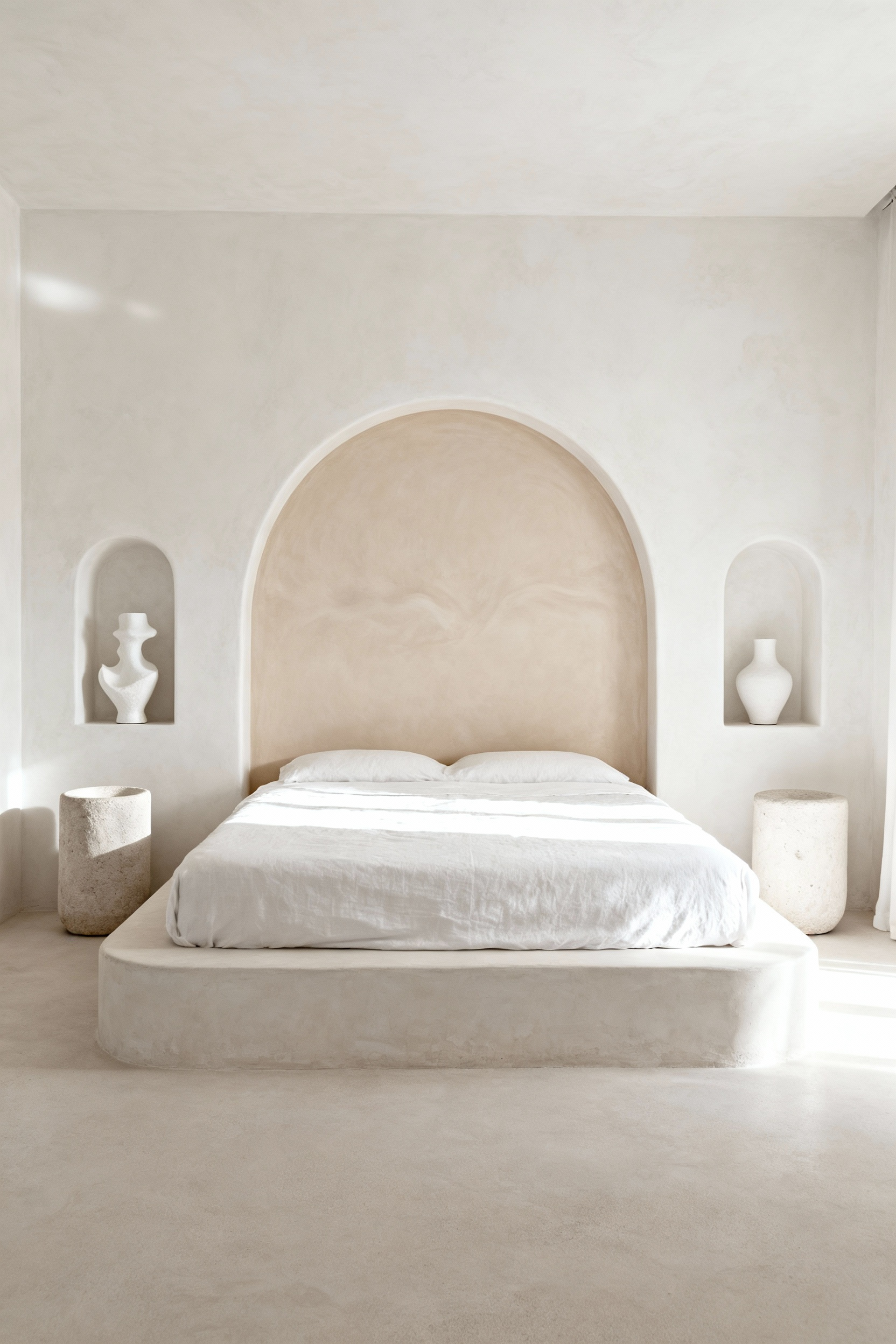
Anchor these curved forms with earth-born textures. Pair smooth, white architectural lines with rough sisal rugs or soft boucle fabrics. This juxtaposition mimics the desert floor, effectively grounding the brightness of the room. By replacing sharp corners with sculpted edges, you cultivate a sanctuary that feels timeless and instinctively safe.
4. Exposed and Bleached: Stripping ceiling beams to raw timber for structural warmth
In my work blending arid landscapes with Nordic simplicity, I often rely on raw timber to ground a space. Stripped beams offer organic contrast to pristine white walls, yet raw pine or oak often turns yellow or orange, disrupting a serene palette. To counteract this, apply a two-part wood bleach immediately after stripping. This chemical process lifts natural pigments, resulting in a sun-bleached, pale driftwood tone that echoes the desert sun rather than a rustic cabin.
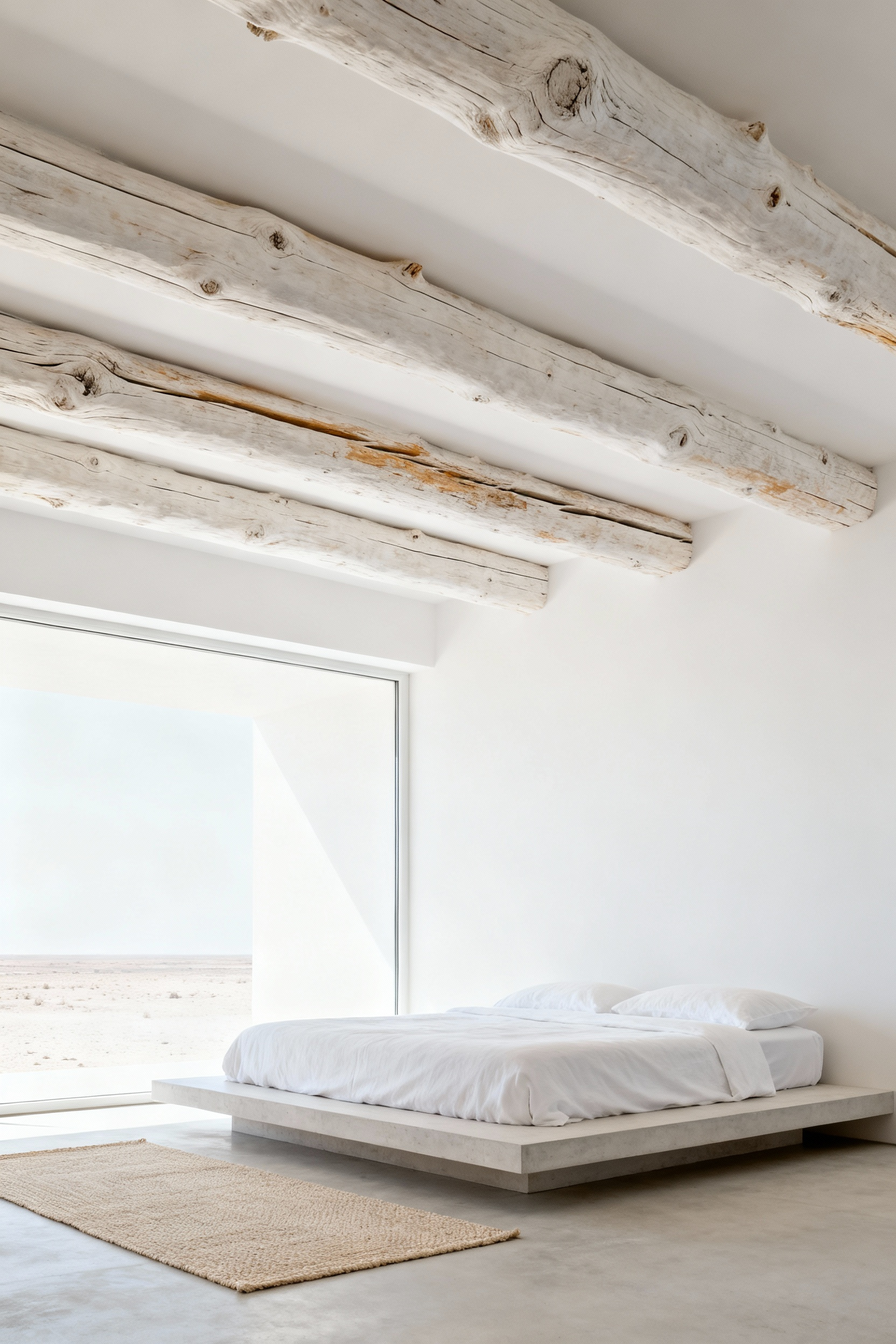
Preserving this pale hue requires careful selection of finishes. Traditional oils deepen color, which ruins the airiness of a white room. Instead, select specific finishes to maintain that raw aesthetic:
- Dead-flat water-based varnish: Seals the wood invisibly without ambering over time.
- White-pigmented hard wax oil: Adds a subtle wash while nourishing the grain.
- Raw wood veneer cladding: A low-waste alternative if stripping existing beams proves too toxic or labor-intensive.
Balance the architectural rigidity with plush linens or a deep-pile rug. This interplay between rugged structure and soft textiles creates a sanctuary that feels both ancient and modern.
5. The Limestone Floor: Using natural stone to ground the room and regulate thermal mass
Flooring dictates comfort as much as aesthetic. Limestone serves as the perfect anchor for a white bedroom, adding organic weight to crisp, monochromatic walls. Beyond its visual appeal, this natural stone acts as a powerful thermal battery. It absorbs solar heat during the day—or from radiant systems—and gently releases warmth as temperatures drop at night. Conversely, the surface remains refreshingly cool during summer months, passively regulating the room’s climate and reducing reliance on artificial energy.
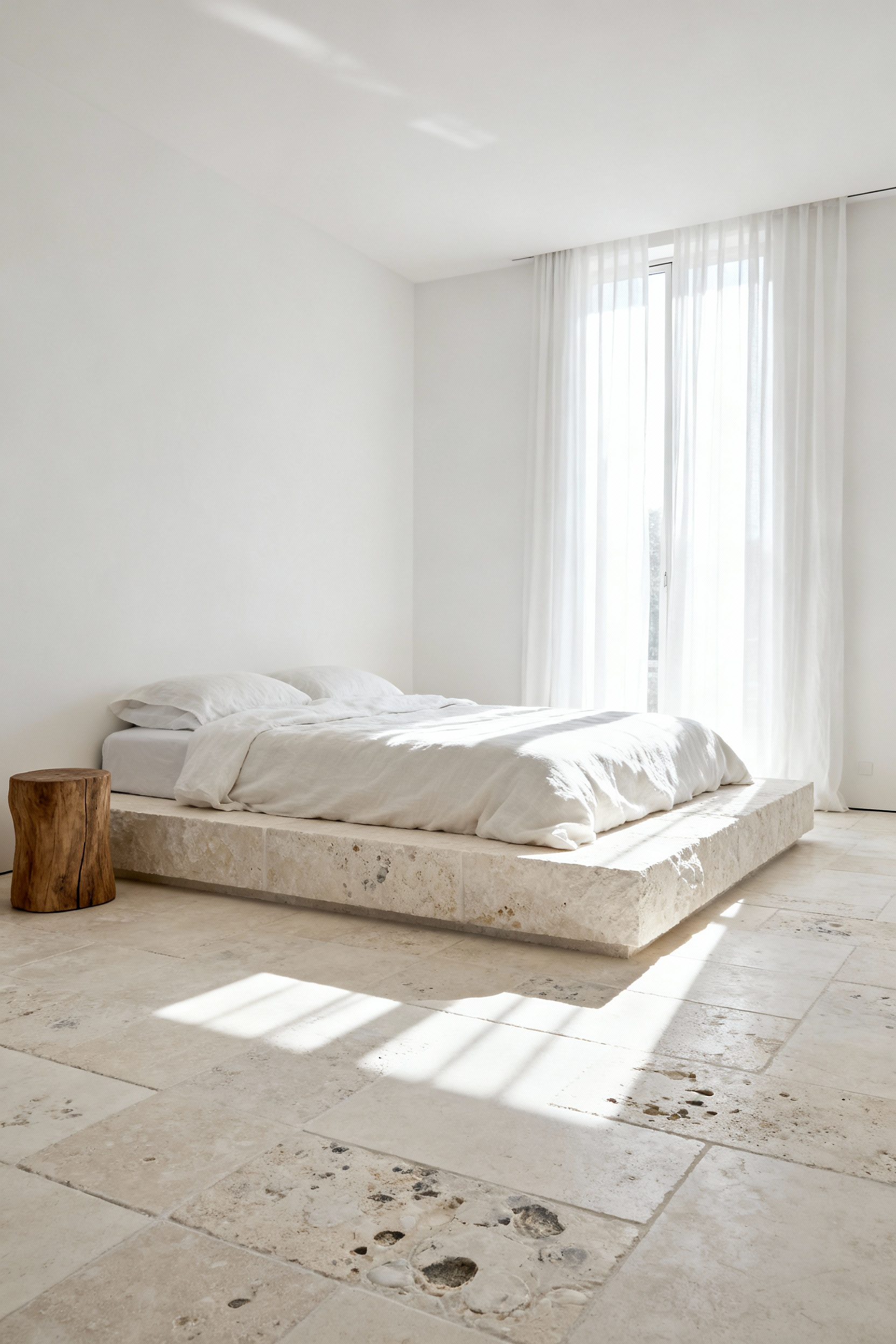
To maximize tactile comfort under bare feet, prioritize limestone over harder stones like granite. Its relative softness creates a forgiving, inviting surface essential for a restful sanctuary. Select carefully to achieve the right balance:
- Select warm tones like cream, beige, or soft grey to prevent the all-white palette from feeling sterile.
- Opt for tumbled or brushed finishes to provide a non-slip texture that feels organic rather than clinical.
- Seal immediately upon installation, as limestone’s natural porosity demands protection against stains.
Proper sealing allows the floor to develop a rich patina over time, preserving the room’s clean elegance while ensuring the material ages gracefully.
Movement II: Layering White on White for Sophisticated White Bedroom Ideas
Monochromatic design relies on texture, not emptiness. Without color to distract the eye, the quality of the weave takes center stage. To avoid a clinical hospital aesthetic, blend a spectrum of tones; mix stark architectural whites with softer, unbleached creams. This tonal layering creates warmth and mimics the organic complexity found in nature.
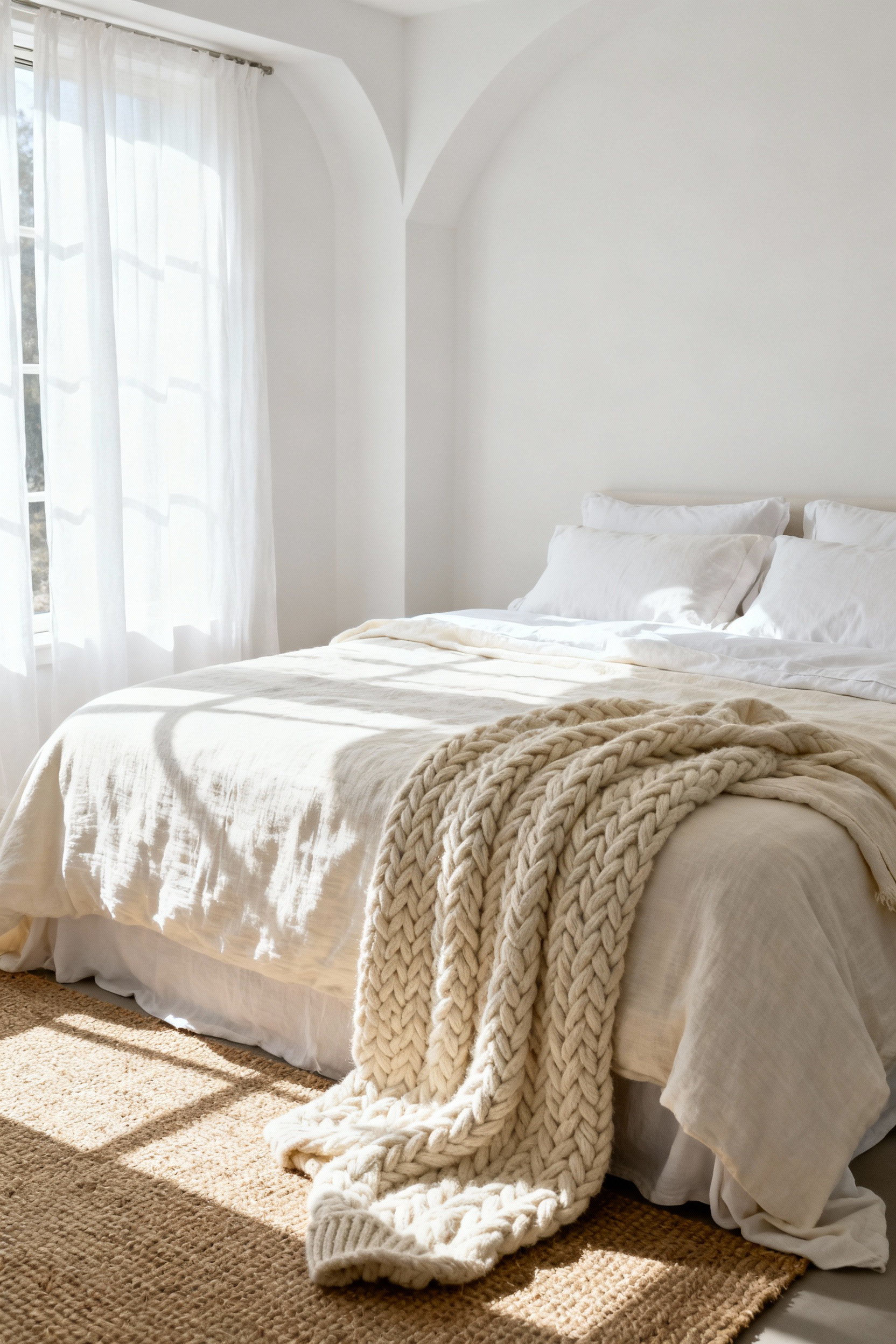
Next, focus on tactile contrast to build depth. In my work bridging arid desert landscapes and Nordic winters, I have learned that light interacts differently with every fiber. To master “The Weave,” you must manipulate how light hits your surfaces:
- Anchor with matte: Use a heavy linen duvet or flat-front joinery to absorb glare.
- Add sheen: Introduce silky sateen sheets or glass accents to reflect light and add movement.
- Finish with structure: Layer a chunky knit wool throw or a hand-loomed rug with subtle hemstitching.
These variations provide sensory satisfaction, ensuring your sanctuary feels curated, sustainable, and deeply restful.
6. The Unmade Bed Philosophy: Why crinkled, washed linen implies sophisticated relaxation
Reject the rigid perfection of hotel corners and embrace the “unmade bed philosophy.” In an all-white bedroom, the natural, crinkled texture of washed linen breaks the sterility of the space, replacing starkness with sophisticated, tactile warmth. This approach prioritizes “lived-in” authenticity over fussiness, saving you time on ironing while delivering an aesthetic that feels sumptuously wrinkled. Drawing from my experience designing for shifting desert climates, I value linen not just for its look, but for its ability to regulate temperature and improve sleep quality.
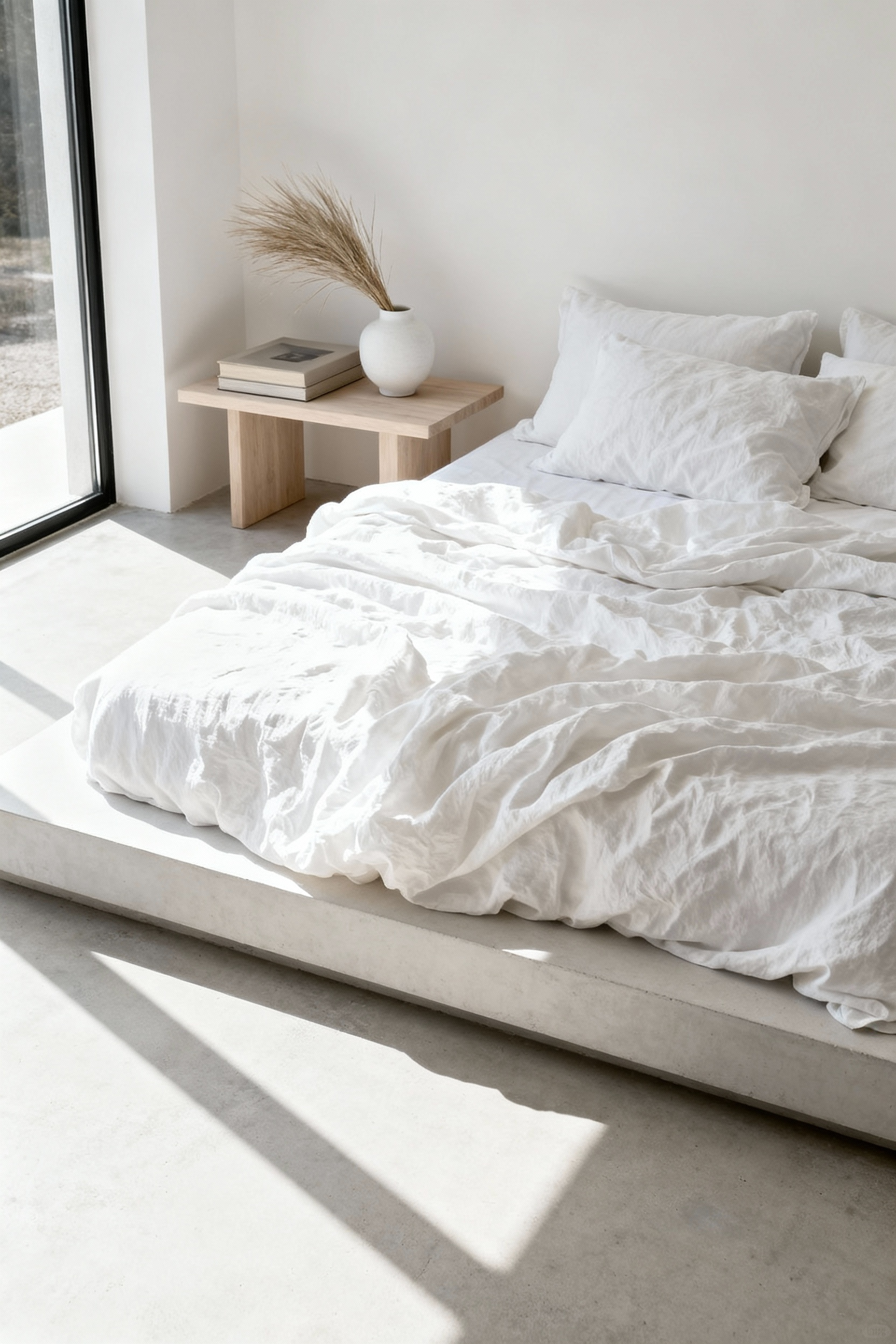
To master this monochromatic depth without adding clutter, focus on texture-on-texture layering. Since the palette remains white, your materials must do the heavy lifting:
- Start with a foundation of pre-washed, high-quality linen that softens with every wash.
- Add a chunky knit throw or soft wool blanket to introduce weight and contrast.
- Finish with velvet or linen pillows in slightly varying shades of off-white.
This combination creates a sanctuary that looks effortlessly elegant and respects the environment through durable, sustainable material choices. Your bedroom becomes a functional retreat that invites rest rather than demanding maintenance.
7. High-Pile Heritage: Anchoring the space with authentic Beni Ourain or Berber rugs
Authentic Beni Ourain rugs serve as more than simple floor coverings; they provide ancient, sustainable climate control. True desert design requires navigating extreme shifts in temperature, and nothing combats a night chill like hand-spun, high-pile wool. To truly anchor your white bedroom, reject modest sizing. Select an oversized rug that extends generously past the bed’s perimeter. This placement grounds your furniture and ensures the cloud-like texture greets you every morning.
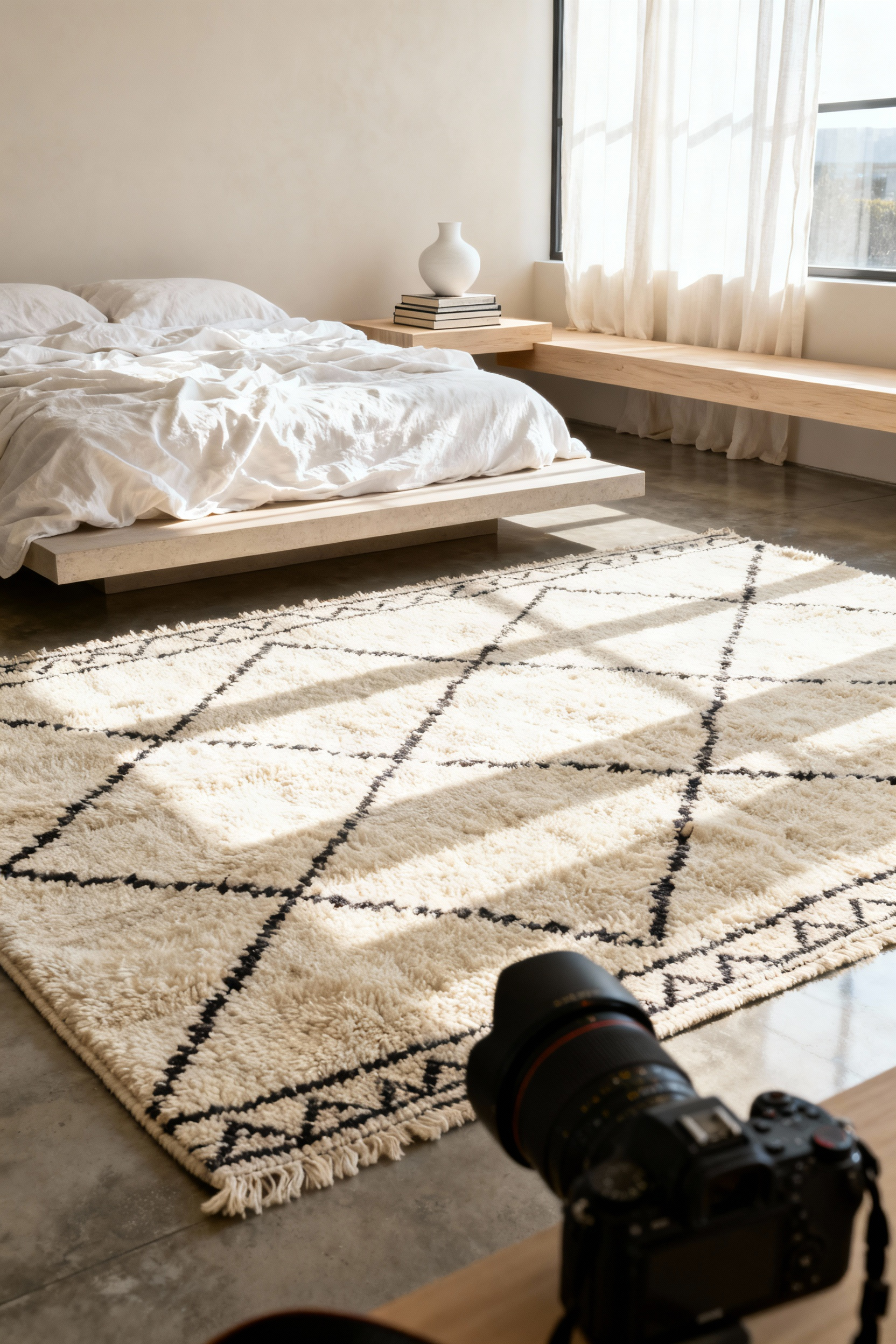
Rely on this plush foundation to counterbalance the coolness of minimalist white walls. Since the classic geometric diamond pattern remains neutral, create depth through tactile opposition rather than color saturation.
- Mix Materials: Offset the raw wool with sleek glass or cool metal fixtures.
- Layer Naturals: Introduce flat-woven linen bedding or rattan accents to prevent visual heaviness.
By honoring these handcrafted traditions, you introduce a layer of cultural storytelling that feels both luxurious and ethically grounded.
8. Bouclé and Shearling: Introducing ‘nubby’ textures to catch the changing sunlight
Without tactile variety, white interiors risk sterility. Bouclé and shearling solve this by acting as architectural landscapes for light. Their irregular, looped surfaces create micro-shadows that evolve as the sun arcs across the sky. I rely on these textures to mimic the shifting depth of sand dunes, selecting warm neutrals like ivory or cream over optic white. These tones soften the harsh glare of midday light while retaining a clean, sophisticated aesthetic.
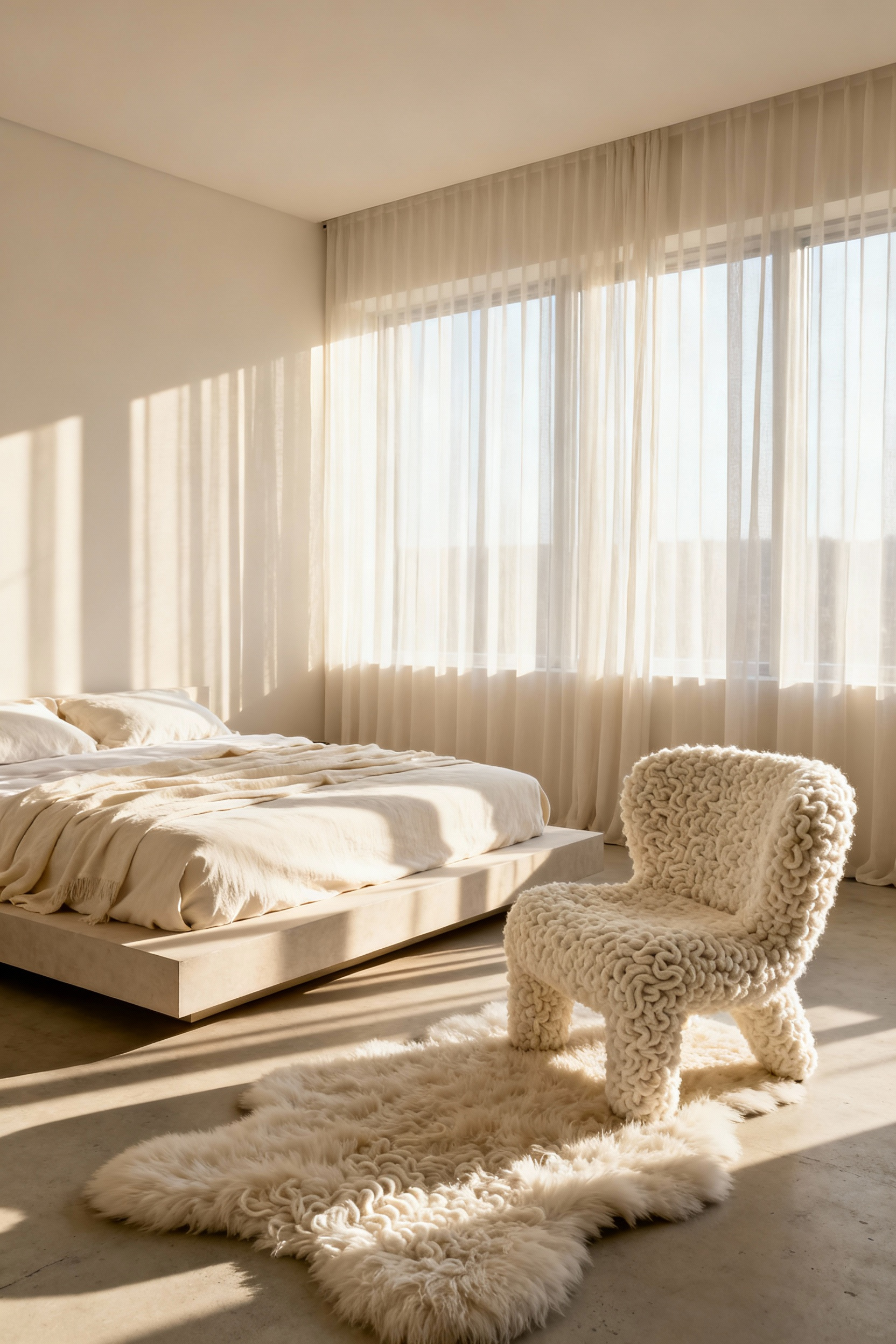
Maximize this effect through strategic contrast rather than volume. Place “nubby” textures against sleek, crisp surfaces to highlight their dimension.
- Catch the light: Position a sculptural bouclé chair near a window to trap the changing daylight.
- Create friction: Layer a rough shearling rug against smooth, glossy furniture or cool cotton sheets.
This interplay prevents visual fatigue. The pairing of rough against smooth grounds the space, offering a sensory experience that feels both curated and environmentally connected.
9. The Art of the Drape: Floor-to-ceiling sheer gauze to diffuse harsh midday glare
In regions where the sun strikes hard, direct light exhausts a room, but filtered light enlivens it. Transform harsh midday glare into a gentle, flattering glow by utilizing floor-to-ceiling sheer gauze. Opt for natural, sustainable fibers like linen blends or voile to introduce subtle texture. These breathable fabrics catch the light, adding essential depth to an all-white palette without breaking its serenity. The weave acts as a cooling filter, softening the environment while maintaining a connection to the outdoors.
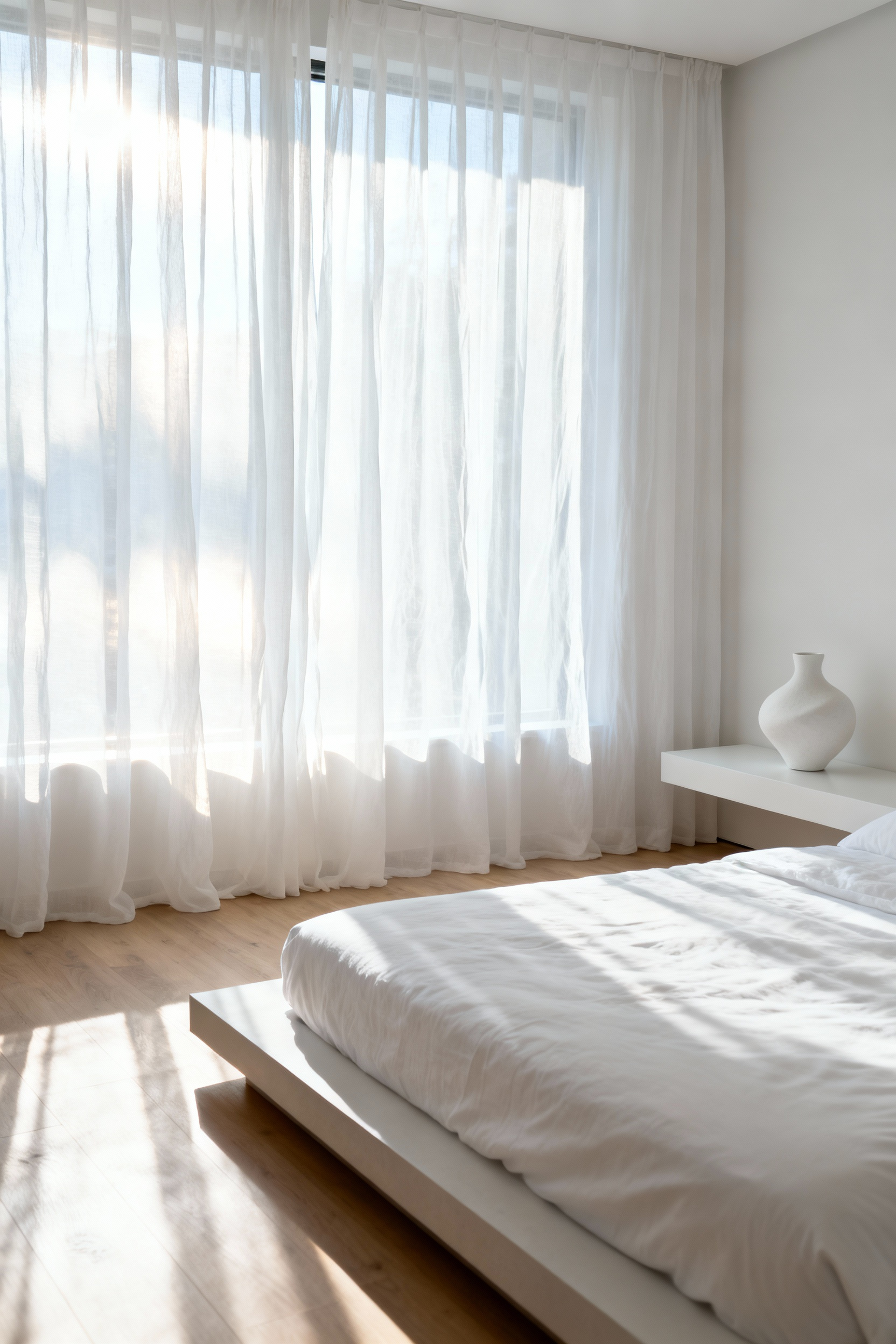
To master the room’s architecture, mount rods high near the ceiling rather than directly on the window frame. Let the fabric graze the floor to elongate the walls and evoke a sense of ethereal height. Since true rest requires darkness, prioritize functionality alongside beauty with a layered approach:
- Install a sturdy double rod system.
- Hang textured sheers on the outer rod for daytime diffusion.
- Layer opaque blackout panels behind for thermal insulation and privacy.
This method harmonizes the Scandinavian love for illumination with the desert’s wisdom of shelter, giving you total control over your sanctuary.
Movement III: Earth & Artifact — Desert Modern White Bedroom Ideas
Drawing from the sun-drenched courtyards of my childhood and the restraint of Nordic design, I urge you to abandon sterile, bleach-white paint. Harsh whites create blinding glare under strong natural light. Instead, envelop your sanctuary in warm cream, ivory, or unbleached linen. These sandy tones absorb brightness and mimic the cooling relief of a shaded dune. Texture becomes your primary design tool; without it, a monochrome room feels unfinished rather than curated.
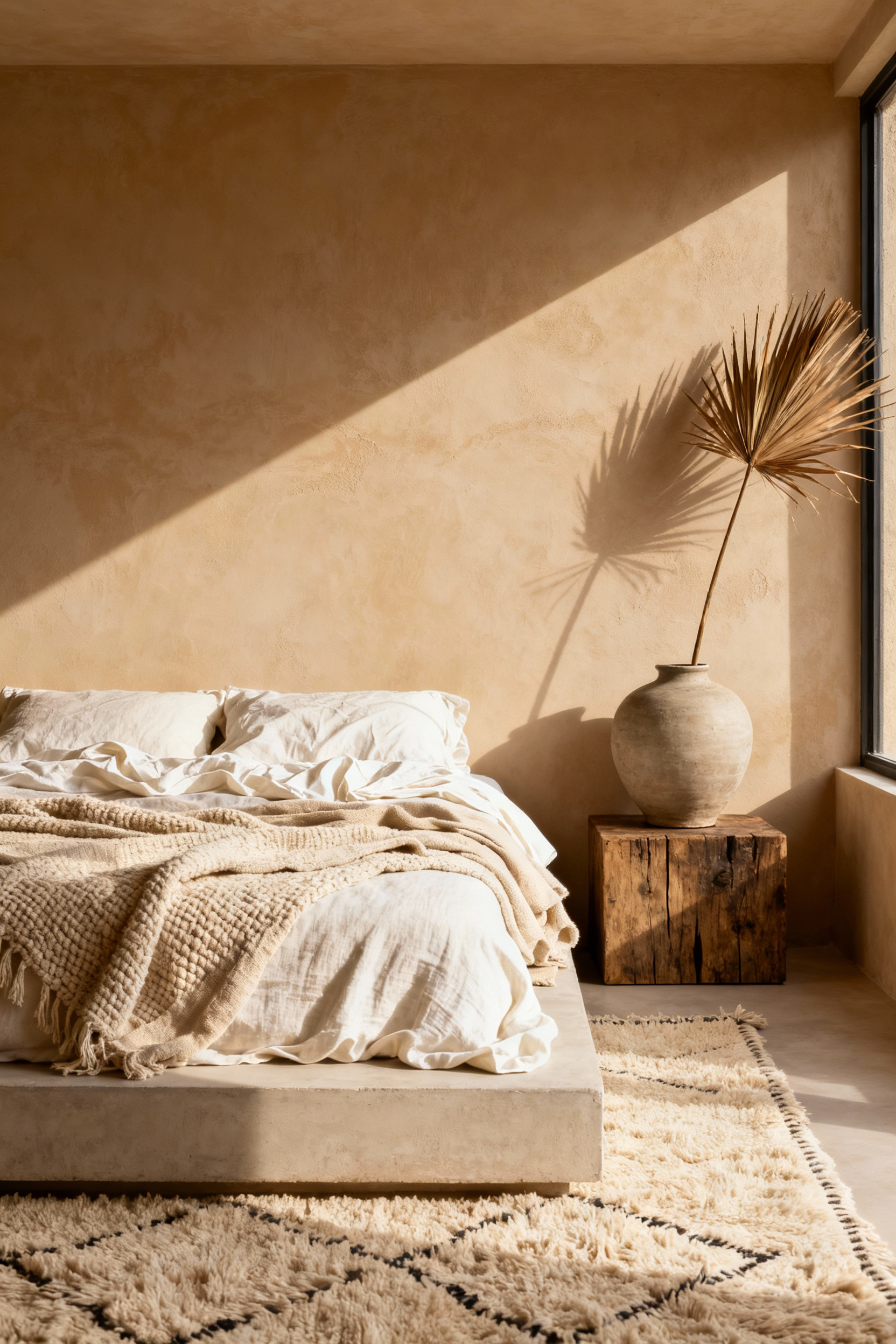
To achieve this sophisticated balance, treat your furnishings as functional artifacts. Anchor the space with a jute or seagrass rug to introduce rugged, natural grit against smooth walls. Select organic forms for furniture, such as nightstands with curved edges or live-edge wood that mimic wind-worn rock. Finally, inject earthy hues like terracotta, rust, or sage green through small ceramic vases or geometric throw pillows. By favoring clean lines and sustainable materials, you create a breathable oasis that honors the raw beauty of the landscape.
10. Pale Wood Profiles: Choosing white oak or ash furniture to maintain tonal continuity
To maintain a serene, white palette, select your timber carefully. Ash offers a straight, unobtrusive grain perfect for ultra-modern uniformity. Conversely, white oak brings an earthy narrative to the room. Its open grain introduces texture without breaking the monochromatic spell. In my own work blending desert heat with Nordic cool, I rely on these pale woods to ground a space without absorbing its light. This approach prevents the room from feeling sterile while keeping the aesthetic temperature cool and controlled.
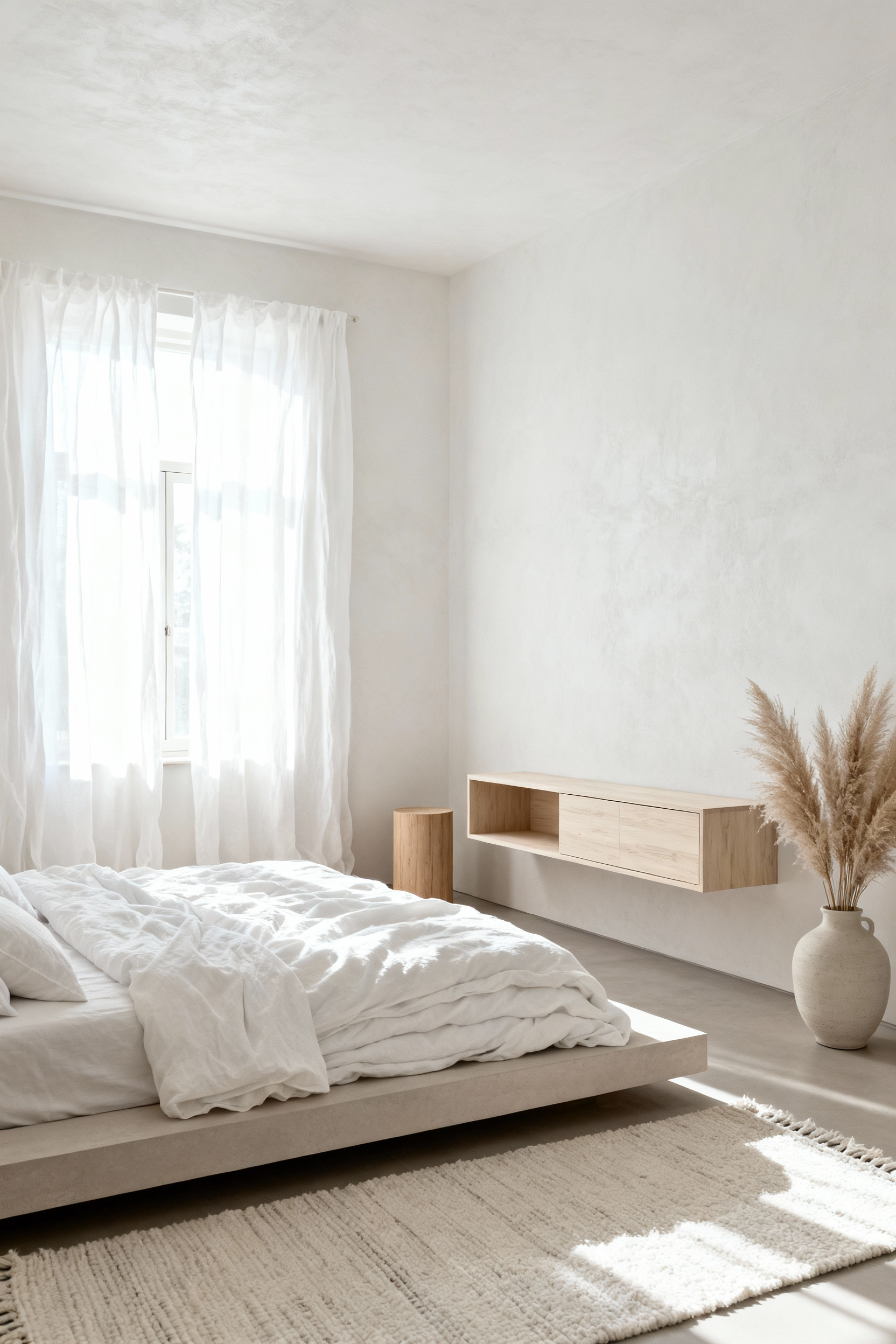
The finish dictates the final impact. Avoid deep honey or reddish stains that clash with crisp linens. Instead, prioritize treatments that honor the wood’s raw state and environmental footprint:
- Soap-washed finishes create a soft, traditional matte look.
- White-oiled treatments subtly brighten the grain for airy spaces.
- Clear matte lacquer protects durability while remaining invisible.
These choices preserve tonal continuity and allow the material’s natural beauty to breathe.
11. Travertine Tables: Using porous stone surfaces to introduce ancient geological textures
Travertine anchors a room with millions of years of geological history. I often rely on this stone to warm up minimalist white palettes. Its creamy, porous texture prevents a monochrome space from feeling sterile or cold. Select a honed finish for your bedside table. Unlike polished surfaces, a matte look feels soft and organic, creating a soothing atmosphere that perfectly suits a serene retreat.
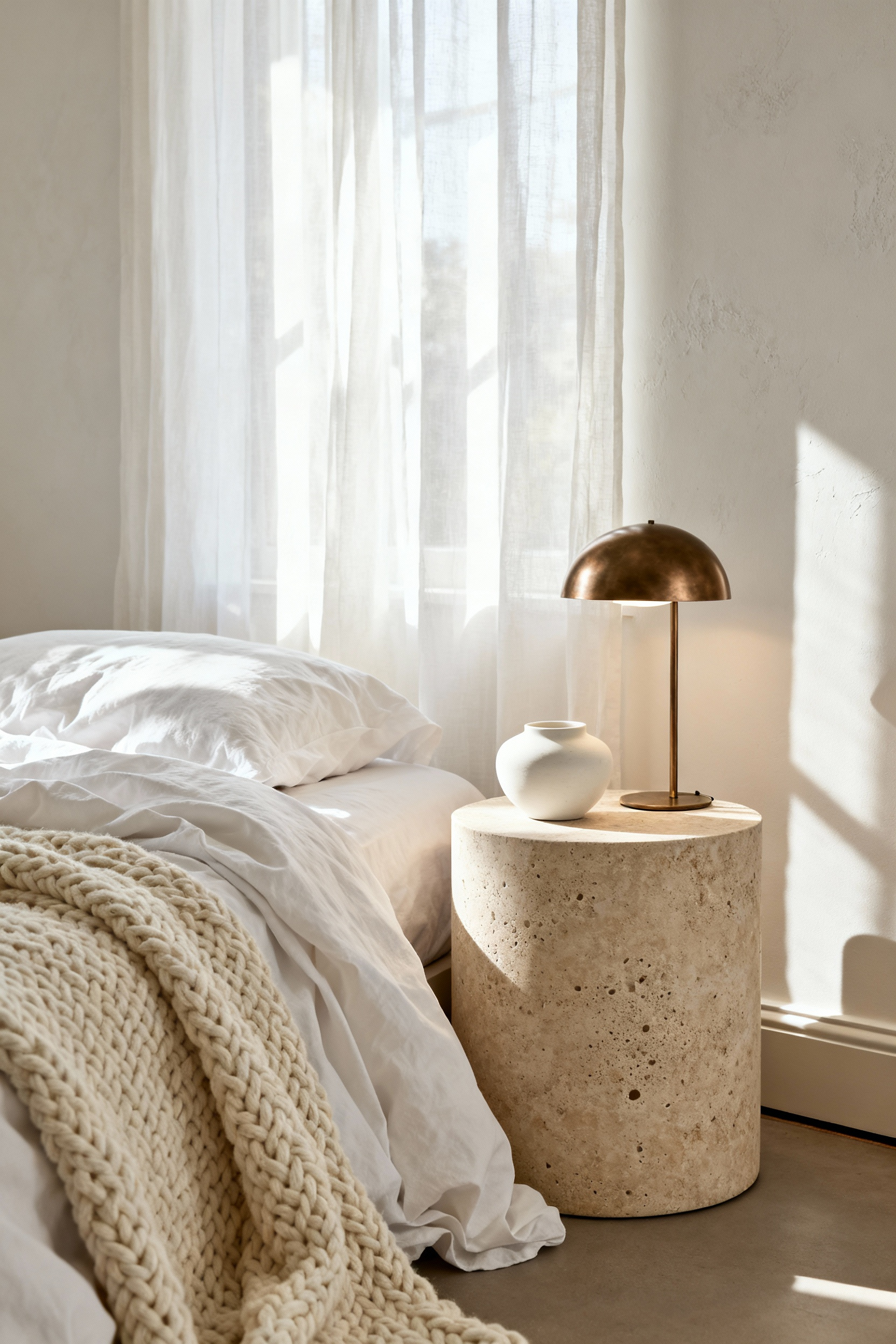
However, this natural beauty demands mindful stewardship. Because travertine is porous, it interacts intimately with its environment.
- Seal regularly: Apply a high-quality stone sealer to block the absorption of common bedside spills like tea or lotions.
- Wipe immediately: Keep the surface dry to prevent etching from standing water.
Treat this “quiet statement” piece with care, and it will remain a sophisticated, grounding force in your bedroom for a lifetime.
12. Matte Ceramics: Styling with unglazed clay vessels that absorb rather than reflect light
Intense desert sunlight teaches us that matte surfaces offer necessary relief from the glare. Apply this architectural principle to your white bedroom by selecting unglazed clay vessels. These porous, bisque-toned pieces absorb light rather than reflecting it, creating velvety shadows that ground the space. This creates a sophisticated, organic feel, avoiding the sterile atmosphere often found in monochrome designs.
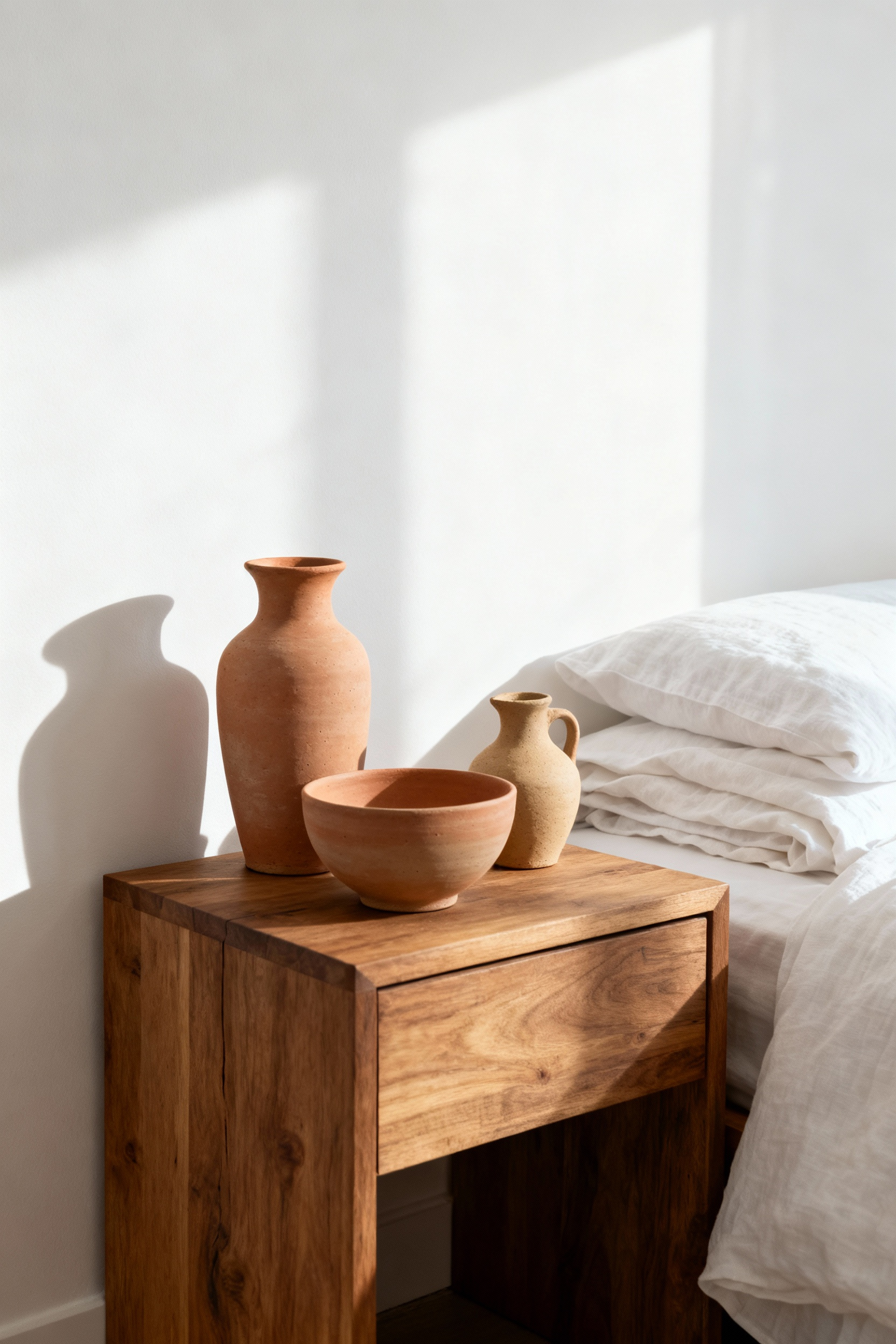
To maximize impact, layer these raw textures against sleek finishes:
- Contrast Materials: Place a rough, handmade vase on a high-gloss bedside table to highlight the difference in grain.
- Embrace Asymmetry: Choose sculptural, Wabi-Sabi forms to disrupt clean lines and add artisanal warmth.
By deliberately mixing these finishes, you create a tactile experience that feels both ancient and modern.
13. Woven Accents: Integrating cane, rattan, or jute for dry, organic contrast
While white bedrooms can lean clinical, the integration of cane, rattan, or jute disrupts this sterility with essential warmth. These materials offer a “dry,” organic texture that breathes life into a space without adding visual weight. Drawing from my background in desert architecture, I value how these breathable fibers encourage air circulation while grounding a room. Anchor your design with a cane headboard in natural, sandy-brown tones. This creates an immediate, tactile focal point that vibrates against crisp white linens.
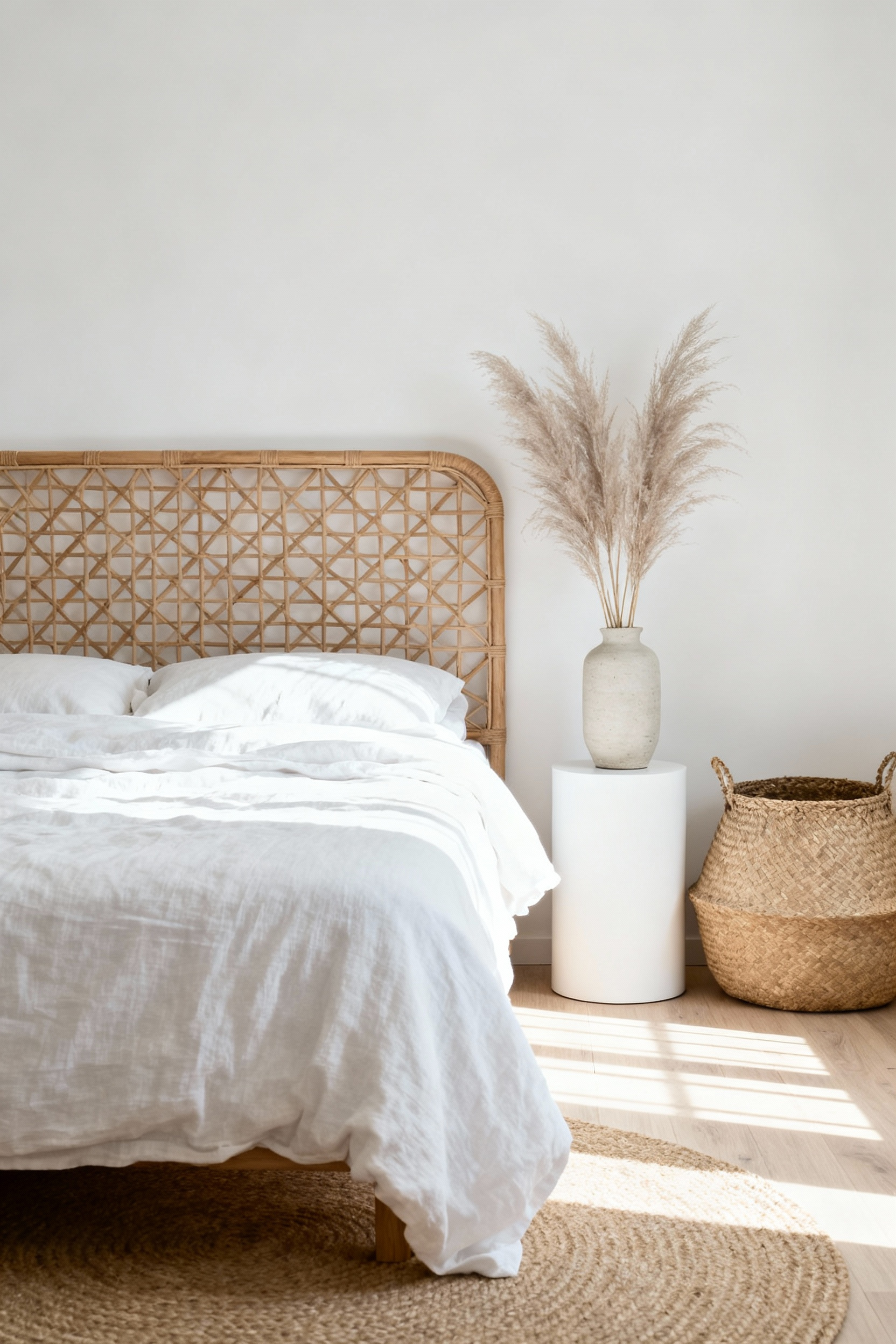
Once the focal point is set, look to the floor and accessories to distribute this earthy contrast. A large jute rug acts as a durable foundation, adding roughness to sleek flooring. Layer small, sculptural accents to soften modern angles. Consider these functional additions:
- Suspend an oversized woven pendant light to diffuse illumination warmly.
- Place a jute pouf near a window for casual, low-profile seating.
- Stow extra bedding in decorative wicker baskets to reduce clutter.
By selecting these renewable materials, you champion sustainable design while achieving a sophisticated, collected look.
Movement IV: Light & Life — Sustainable White Bedroom Design Harmony
Painting walls and ceilings in pure white or off-white tones instantly expands your visual space. This technique creates a canvas that catches every sunbeam, transforming even dim corners into bright sanctuaries. Just as white limestone architecture reflects the intense desert sun to keep interiors cool yet luminous, you can apply this ancient wisdom to your own bedroom for natural climate control. To manage this brightness, hang sheer curtains made from organic linen. These fabrics filter harsh rays into a soft, ethereal glow without sacrificing illumination.
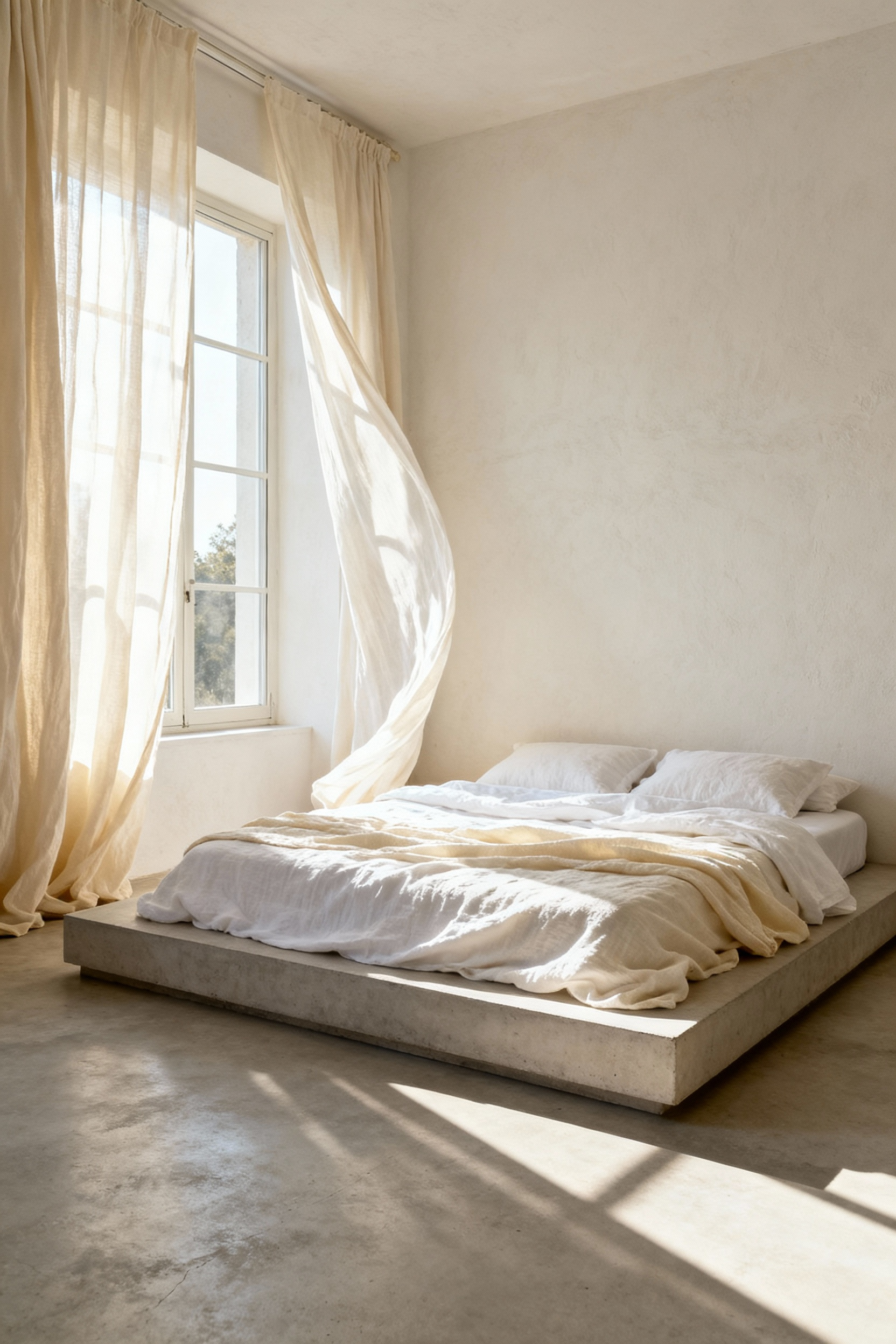
To ensure the room never feels sterile, ground the airy aesthetic with sustainable textures that introduce “life” and tactile warmth. Instead of synthetic fillers, curate your sanctuary with these conscious elements:
- Furniture: Select low-lying pieces crafted from reclaimed wood or rattan to add history and reduce carbon impact.
- Textiles: Layer bedding made from certified organic cotton or bamboo to promote breathability and better air quality.
- Greenery: Position a sculptural potted plant near the window to purify the air and connect the indoors with nature.
By prioritizing these materials, you build a retreat that respects the environment while nurturing your well-being.
14. Sculptural Flora: Styling with dried branches and pampas grass for permanent, water-wise structure
For those valuing décor that endures without straining resources, introduce dried pampas grass or architectural branches to soften the clinical edge of an all-white space. These botanical sculptures offer cloud-like texture and lasting verticality without demanding a single drop of water. You gain a permanent, organic focal point that creates warmth while respecting the environment.
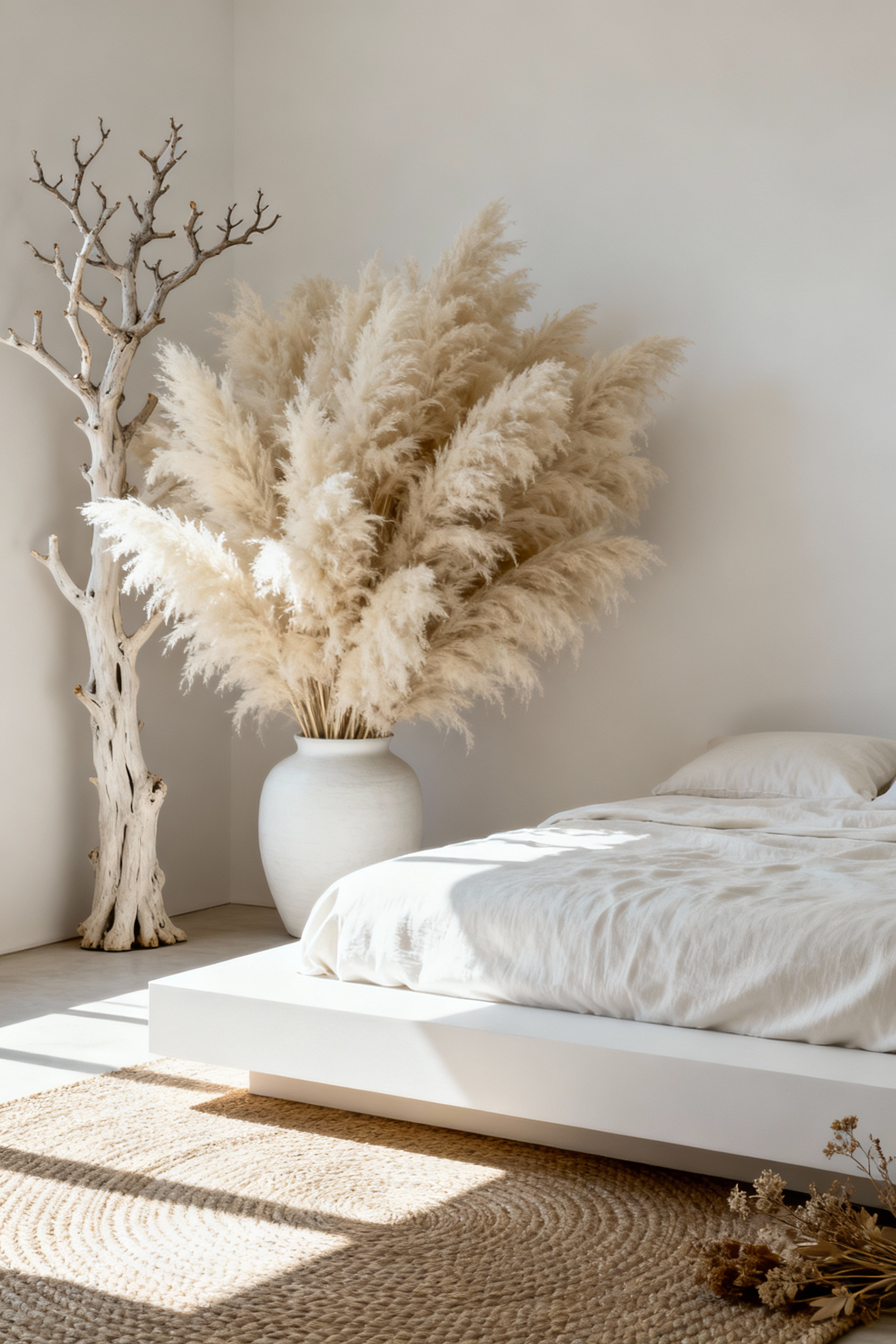
To maintain this refined look, treat the arrangement as you would a piece of art. Anchor the stems in a matte, textured ceramic vase to contrast against the airy botanicals. Then, maximize their lifespan with two simple steps:
- Fluff for volume: Use a hairdryer on a low, cool setting to gently expand the plumes.
- Seal the style: Mist the arrangement with high-hold hairspray to halt shedding and preserve the silhouette for years.
15. The Olive Tree: Introducing silvery-green foliage that complements a low-contrast palette
The olive tree acts as an elegant bridge between my Middle Eastern roots and the restraint of Scandinavian minimalism. Its silvery-green foliage offers a soft, dusty hue that whispers against a white or beige backdrop. Unlike the jarring vibrancy of tropical plants, this muted tone preserves the serenity of a low-contrast palette. Choosing a high-quality faux tree respects the species’ need for intense, arid sunlight while eliminating water consumption in the home.
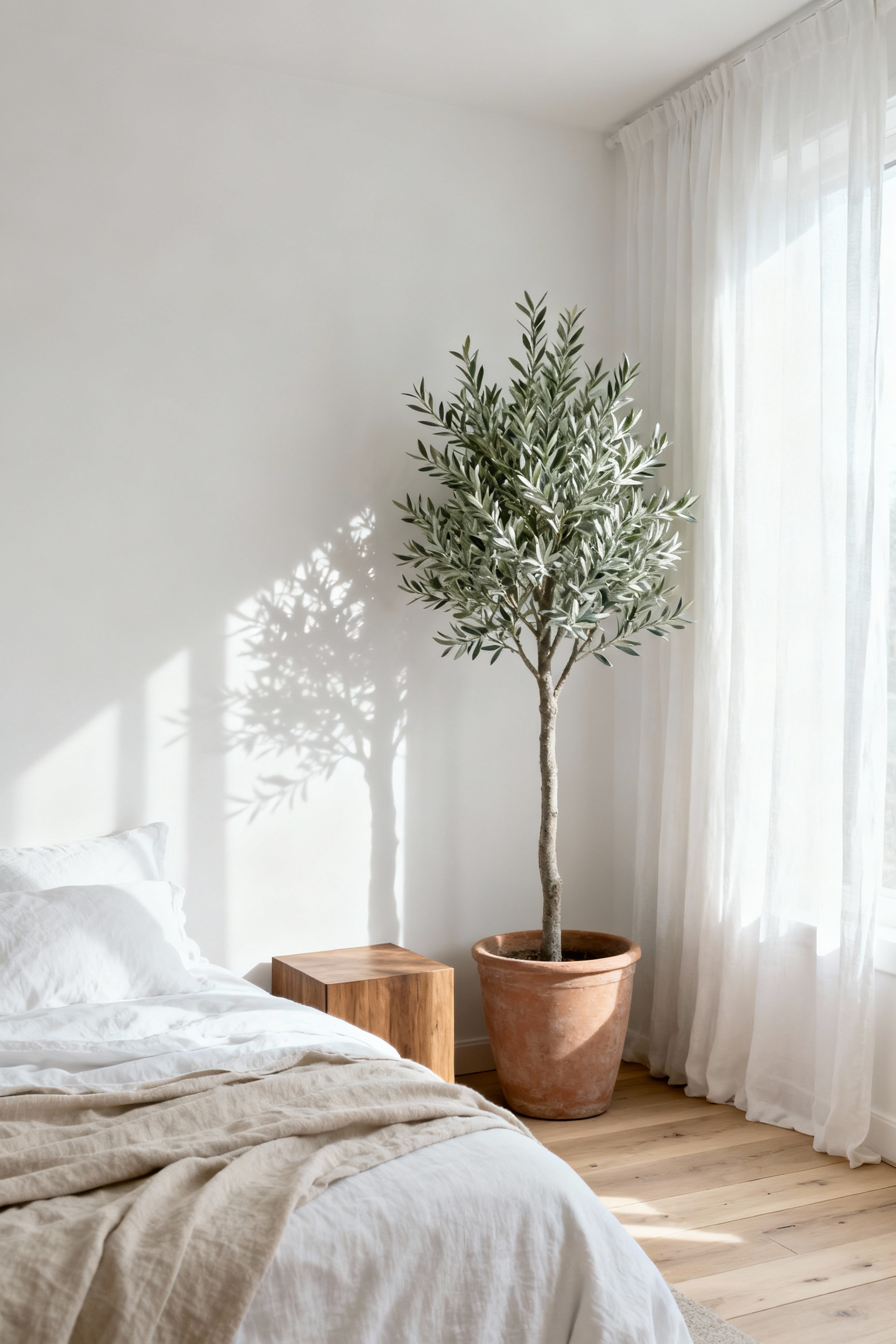
Place your tree in a well-lit corner to create a natural focal point without visual clutter. However, the vessel defines the success of this look. A standard plastic base often ruins the illusion. Instead, use these styling cues to ground the aesthetic:
- Select a textured planter: Opt for aged terracotta or matte ceramic to introduce earthy warmth.
- Mask the artificiality: Cover the base with preserved moss or river stones for a realistic, finished appearance.
- Layer textures: Flank the planter with linen textiles or a boucle chair to complement the tree’s organic structure.
16. Warm Kelvin Lighting: Ensuring artificial light mimics the golden hour (2700K) rather than blue daylight
The transition from blazing daylight to the soft dusk dictates our daily rhythm. Bring this natural wisdom indoors. Artificial light should mimic the golden hour, not the harsh midday sun. Swap standard cool LEDs for 2700 Kelvin (K) bulbs immediately. This specific temperature transforms a white bedroom from a clinical box into a cozy, creamy sanctuary. Furthermore, the warmth signals your biology to rest, reducing the blue light exposure that disrupts melatonin production.
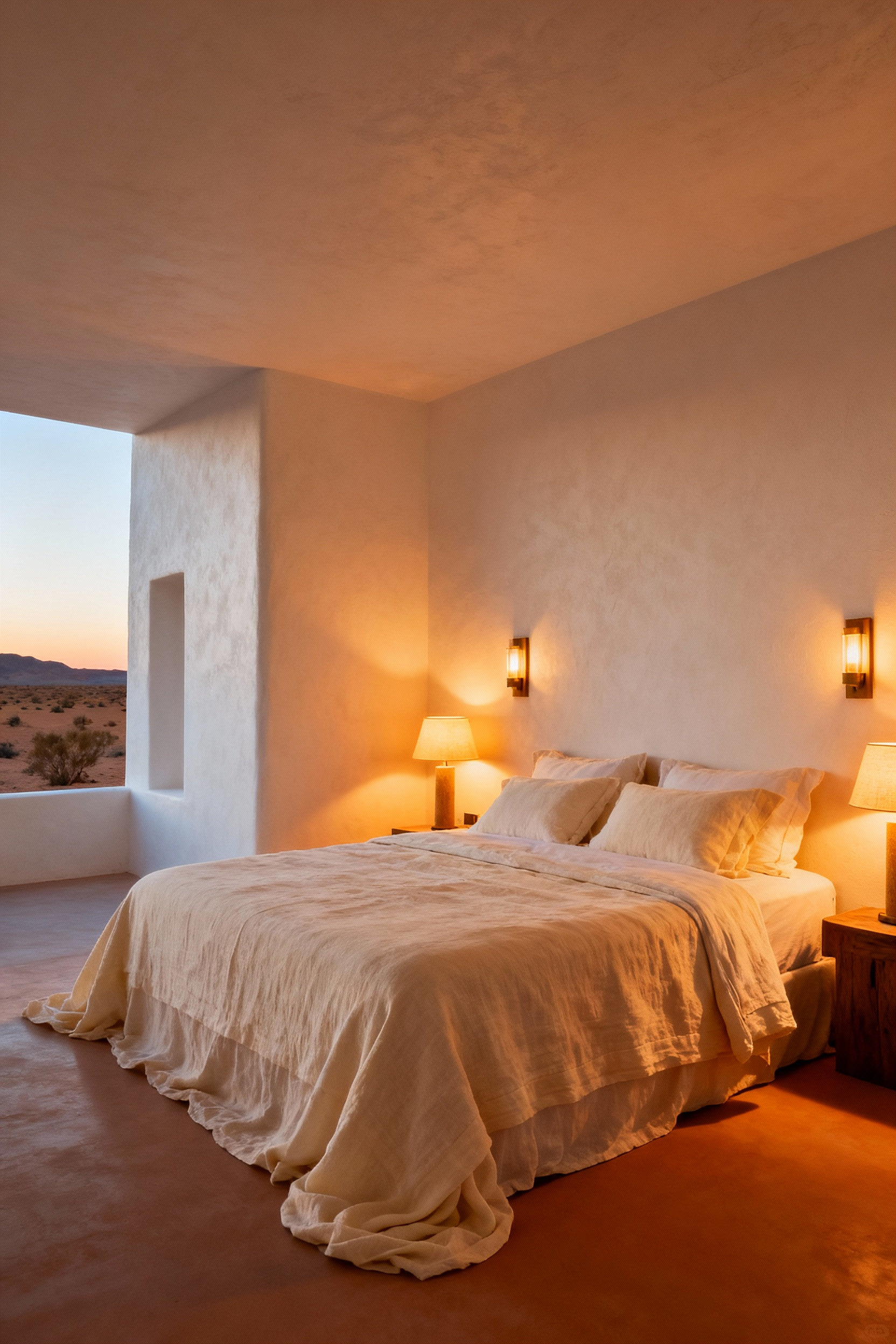
Refining this glow requires technical precision. Treat light as a tangible material by following these steps:
- Select dim-to-warm fixtures that drift from 2700K down to a candle-like 1800K for late-night relaxation.
- Test white paint samples under these specific bulbs to ensure the light warms the pigment without creating unwanted yellow undertones.
- Reserve cooler 3000K bulbs strictly for focused task lamps, ensuring you extinguish them well before sleep.
Ultimately, lighting dictates the emotional temperature of your minimalism.
17. Mirror Placement: Strategic positioning to bounce natural light into dark corners without creating glare
Harnessing the sun is a delicate art I learned by studying both scorching desert courtyards and dimly lit Nordic winters. Treat your mirror as a passive design element that reduces electrical dependency. To manipulate this natural resource effectively:
- For maximum brightness: Position a full-length mirror directly opposite your main window.
- To fill dark corners: Mount the mirror on an adjacent wall and tilt it slightly to redirect the beam.
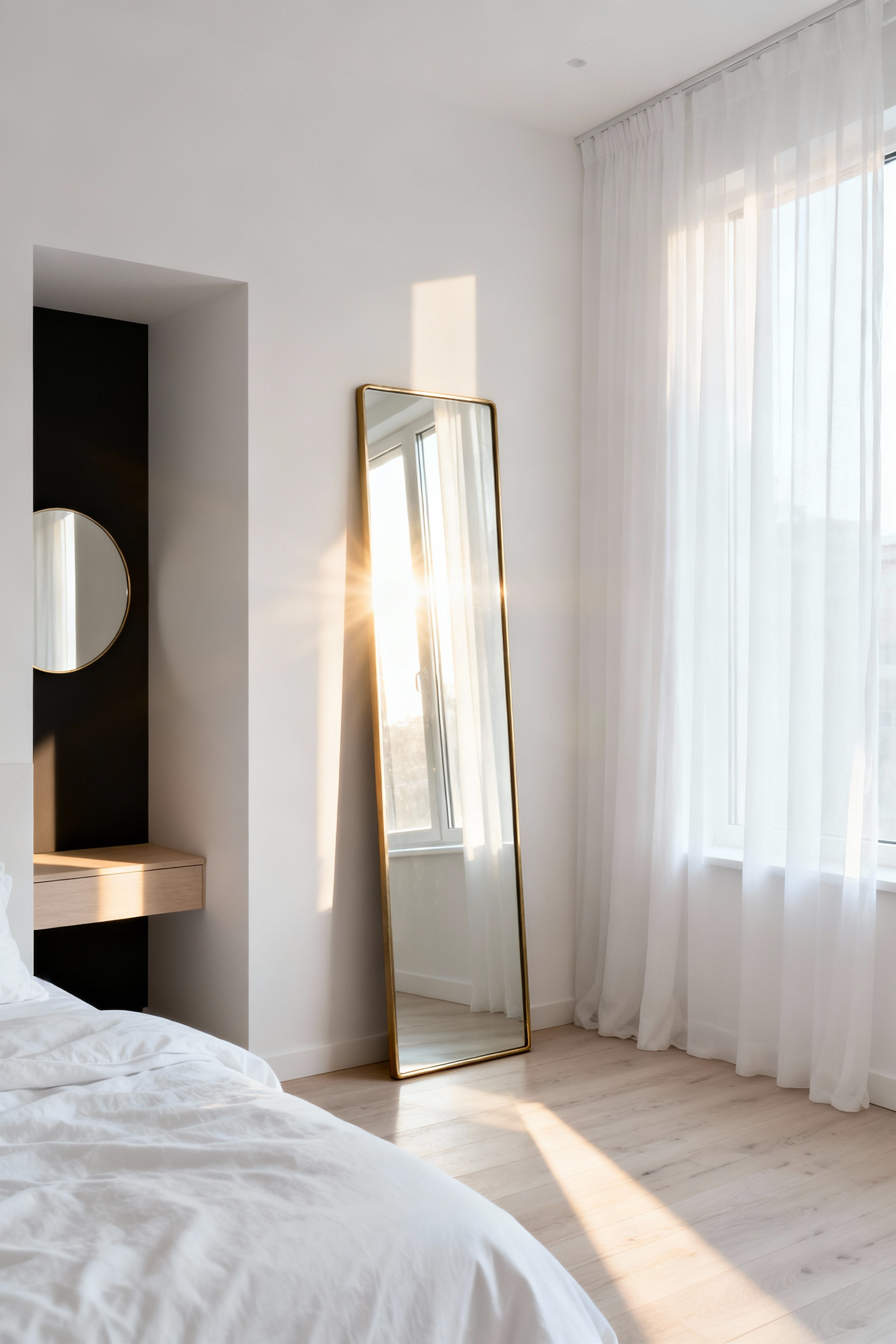
Precision is vital. Unchecked light creates harsh glare, so test your placement during peak sunlight hours. Ensure the reflection hits the ceiling or a blank wall, never your eyes while you rest. Curate the view by aligning the mirror to catch a glimpse of the sky or a white piece of art. By reflecting nature rather than clutter, you cultivate a serene, breathable atmosphere.
18. Negative Space as Luxury: The discipline of leaving walls empty to let the shadows dance
True luxury breathes. It demands the confidence to leave walls bare. Drawing from the sun-drenched architecture of the Middle East, I treat negative space as a cooling, calming necessity rather than an oversight. View your white walls as dynamic canvases. When you resist the urge to fill every inch, you invite natural light to paint for you. Shadows from a swaying branch or a sculptural lamp become transient, priceless art that shifts with the passing day.
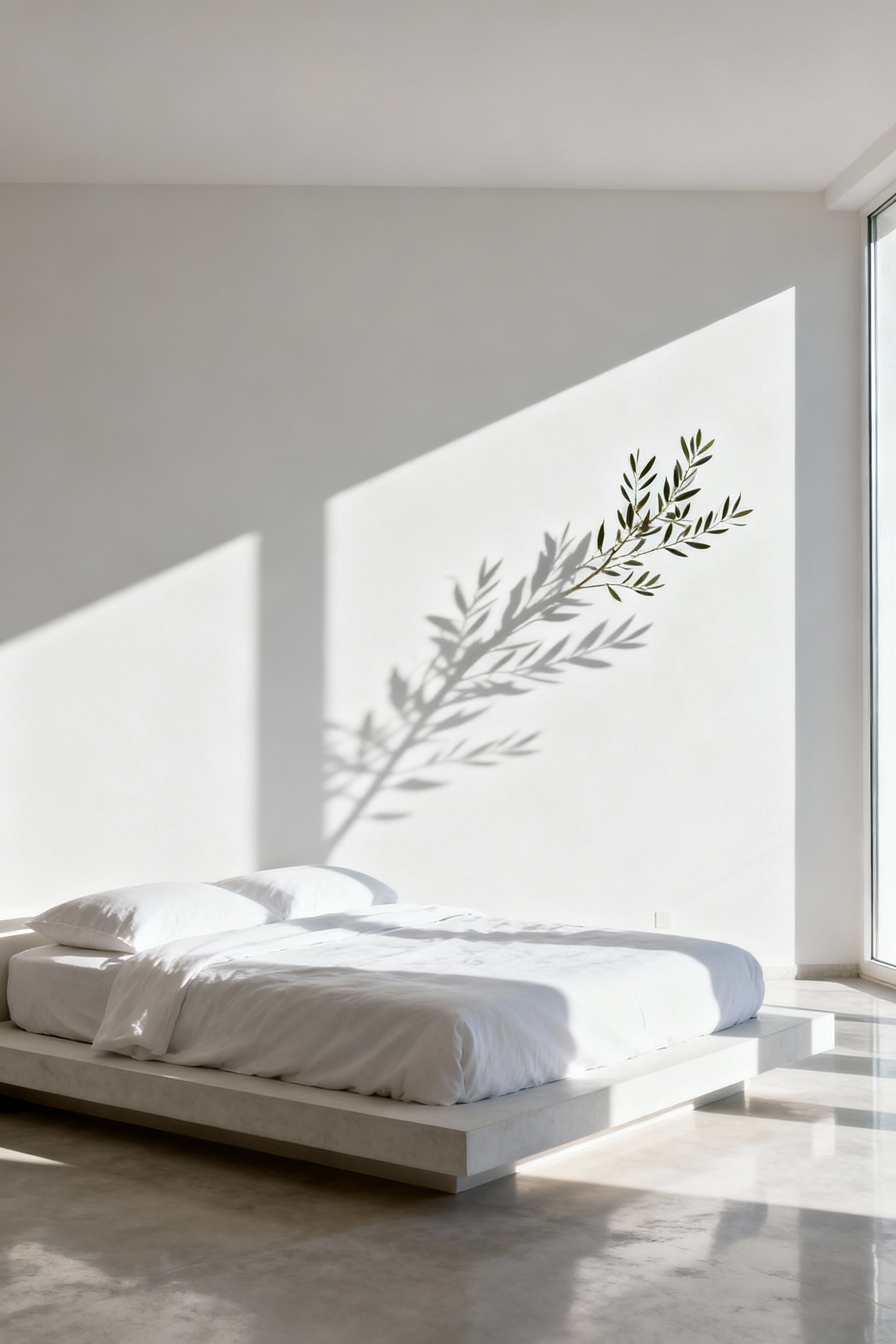
To prevent this minimalism from feeling stark, prioritize texture and specific lighting choices. Flat walls often feel unfinished, but walls treated with purposeful restraint feel expensive.
- Select a high-quality matte paint or subtle millwork. These surfaces catch soft shadows, adding depth without visual noise.
- Invest in one statement light fixture. An abstract floor lamp casts graphic lines across the empty expanse, turning the wall into a living installation.
- Leave the space above the bed void. This forces the eye to rest solely on the luxurious textures of your bedding.
By honoring the void, you transform your bedroom into a sanctuary where light, not clutter, dictates the mood.
Frequently Asked Questions About White Bedroom Ideas
How do I make a white bedroom feel warm and not sterile?
The key to preventing sterility is prioritizing texture and warm undertones. Avoid pure, stark blue-based whites in favor of creamy, bone, or ivory shades for your paint and textiles. Layer tactile materials such as thick linen, chunky knit throws, shearling rugs, and warm, pale woods (like bleached oak) to create necessary shadows and visual friction, ensuring the space feels inviting rather than clinical.
What is the best shade of white paint for a bedroom?
The “best” shade depends on your natural light exposure, but generally, warm whites are preferred for bedrooms. Look for whites with subtle yellow, beige, or red undertones (often described as “off-white,” “eggshell,” or “linen”). These colors absorb the light gently and promote a cozy, soft atmosphere, especially when illuminated with warm 2700K lighting.
How can I keep an all-white bedroom clean and dust-free?
While white rooms expose clutter and dust, careful material selection minimizes maintenance. Opt for washable, durable textiles like pre-washed linen, which hides wrinkles and softens over time. Choose flooring like honed limestone or light wood that can be easily swept. Most importantly, incorporate sufficient enclosed storage to reduce exposed surfaces where dust can settle, maintaining the clean aesthetic.
Can I introduce color into a minimalist white bedroom?
Absolutely. Minimalism should not be devoid of life. Introduce color strategically and in low-saturation, earthy tones to maintain serenity. Ideal colors include soft sage green (via a plant like an olive tree), deep terracotta or rust (in small ceramic pieces), or a dusty taupe in an area rug. These grounding colors connect the room to nature without disrupting the overall tranquil, low-contrast palette.
By embracing this philosophy—prioritizing tactile texture over flat color, incorporating the warmth of pale woods, and strategically manipulating light—you transform what could be a sterile space into a breathing sanctuary. These curated white bedroom ideas prove that true luxury doesn’t require loud pigments; it relies on the tactile experience, the quiet contrast between smooth and rough, and the soft, diffused light that invites deep rest. Your finished room will be an enduring testament to serenity and sophistication.