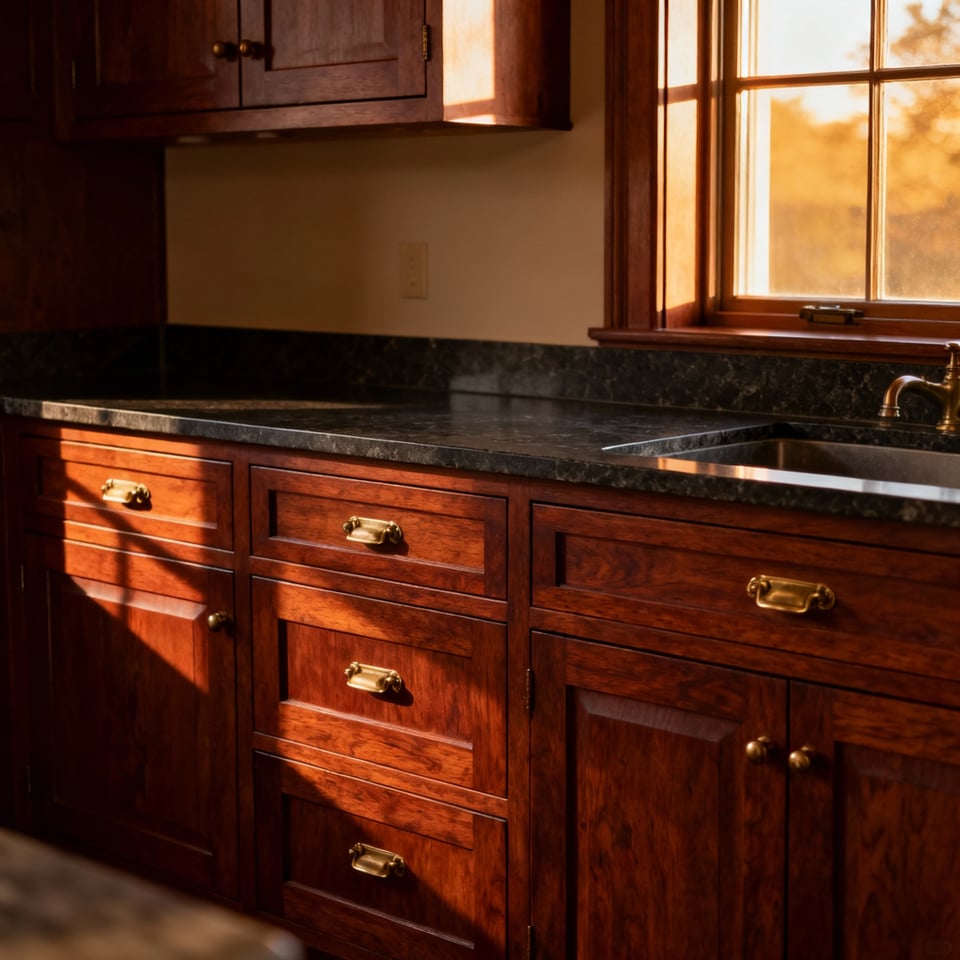
Growing up, my family’s kitchen wasn’t defined by seamless, wall-to-wall boxes; it was anchored by heirlooms. If you are seeking durable, beautiful storage, traditional kitchen cabinets offer the ultimate blend of quality and function. I remember running my fingers across the intricate carvings of a heavy teak sideboard in my grandmother’s home—a standalone masterpiece that held spices with the same reverence as jewelry. This memory mirrors a distinct Western lineage: the historic British “unfitted” kitchen. For centuries, craftsmen in grand estates treated kitchen storage not as built-in utility, but as fine furniture, distinct and movable.
Today, however, we often confuse “traditional” design with merely “looking old.” True heritage design avoids artificial distressing or trendy rustic paint in favor of authenticity. We must shift our focus from superficial aging to structural integrity and architectural respect. By honoring this lineage, we elevate the kitchen from a functional workspace to a room grounded in history. This approach honors the past without turning your contemporary home into a dusty museum.
In this guide, we will explore how to reclaim that sense of high craftsmanship. You will learn to design cabinets as distinct furniture pieces using architectural details like bun feet and intricate crown molding. We will also prioritize enduring natural woods and period-appropriate hardware over fleeting “antique” finishes. Let’s bridge the gap between old-world charm and modern function to create a space that feels timelessly curated.
The Philosophy of Permanence: Treating Cabinetry as Heirloom Furniture
Treat your cabinetry not as temporary fixtures, but as heirloom furniture destined to outlast fleeting trends. In my design practice, I often recall the heavy teak cupboards of my grandmother’s home, which stood resilient against decades of bustling family gatherings and monsoon seasons. To replicate this multigenerational durability, prioritize material integrity over fast fashion. Solid hardwoods like cherry or maple improve with age, developing a rich patina that transforms daily wear into character rather than degradation.
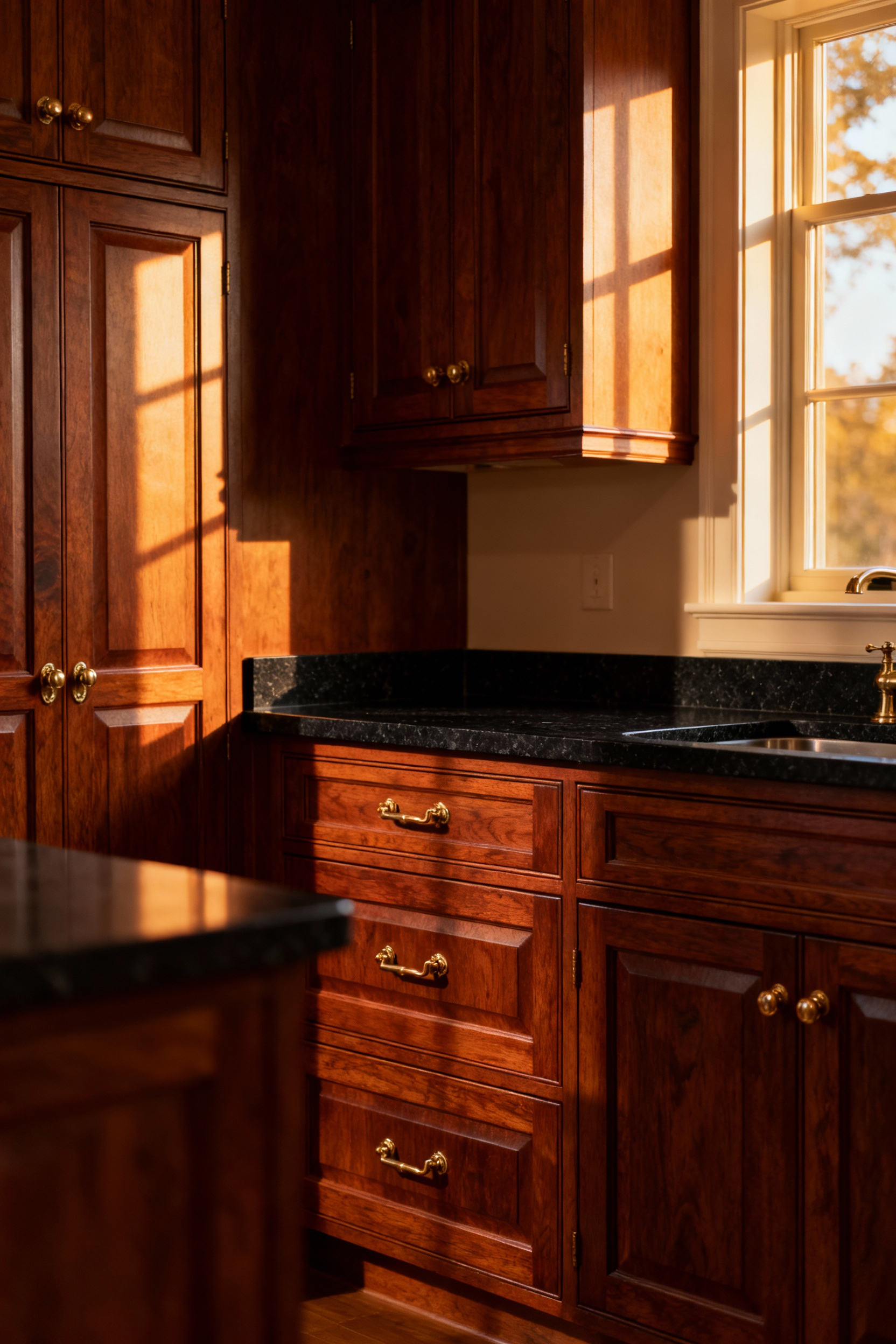
Your investment must focus on construction details that ensure structural survival. Before purchasing, scrutinize the craftsmanship to guarantee the piece acts as a sustainable asset:
- Demand superior joinery: Insist on dovetail or mortise-and-tenon joints to withstand decades of heavy use.
- Select timeless silhouettes: Choose Shaker or Raised-Panel styles to seamlessly blend vintage warmth with modern minimalism.
- Plan for renewability: Ensure solid wood frames allow for future sanding and refinishing.
By choosing quality, you create a sustainable legacy. These cabinets become silent storytellers, anchoring your home’s narrative long after the installation is complete.
The Inset Door Distinction: Flush-Set Joinery vs. Overlay Styles
True luxury resides in the details. Inset cabinetry defines traditional elegance through flush-set joinery, where the door nests perfectly inside the frame rather than resting on top. This technique mirrors the exacting standards of heirloom furniture, reminiscent of both bespoke British millwork and the intricate woodwork found in South Asian heritage homes. This seamless look typically commands a 15–30% price premium over modern overlay styles because you are investing in architectural artistry that turns the cabinet frame into a featured design element.
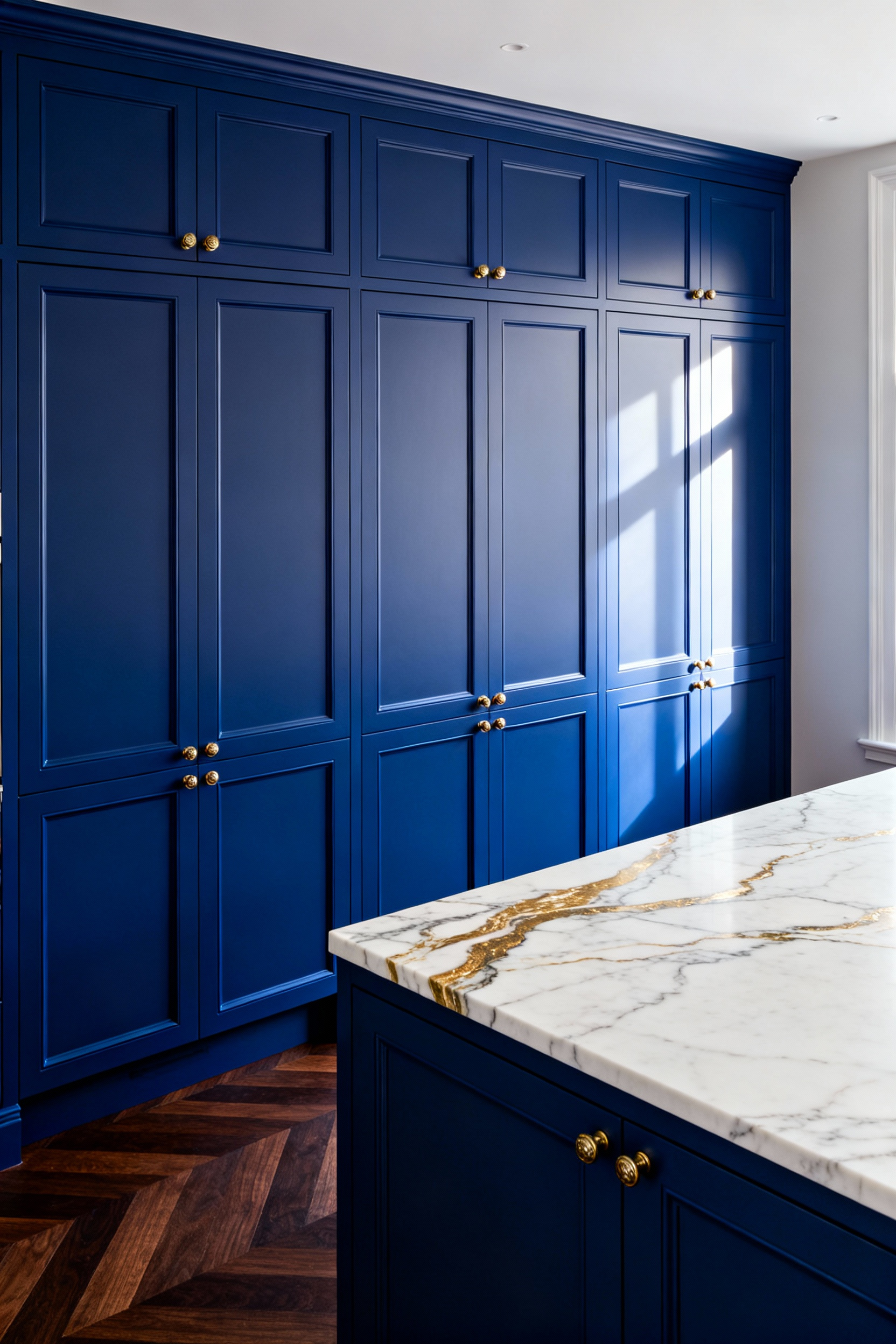
Authentic craftsmanship requires practical foresight. Before committing to this timeless aesthetic, consider these realities:
- Control the Climate: Wood reacts to its environment; inset doors may stick in high humidity without precise HVAC regulation.
- Accept the Trade-off: The flush design slightly reduces usable interior width compared to overlay doors.
- Elevate the Hardware: Utilize the exposed frame to showcase decorative, period-style hinges.
By accepting these nuances, you create a space that honors the past while functioning beautifully for the present.
Material Integrity: Moving Beyond MDF to Solid Hardwoods
True traditional kitchen cabinets demand the tactile warmth of genuine timber. While MDF offers a smooth, uniform finish, it often lacks soul. Conversely, solid hardwoods like Red Oak or Walnut provide a rich, grained texture that inherently invites touch. This material choice safeguards your financial investment. Solid wood remains a renewable asset, allowing you to sand and refinish surfaces over decades, whereas MDF swells irreparably when exposed to water. In my own family home, heavy Teak furniture aged gracefully alongside British joinery, proving that authentic materials deepen in beauty rather than degrading.
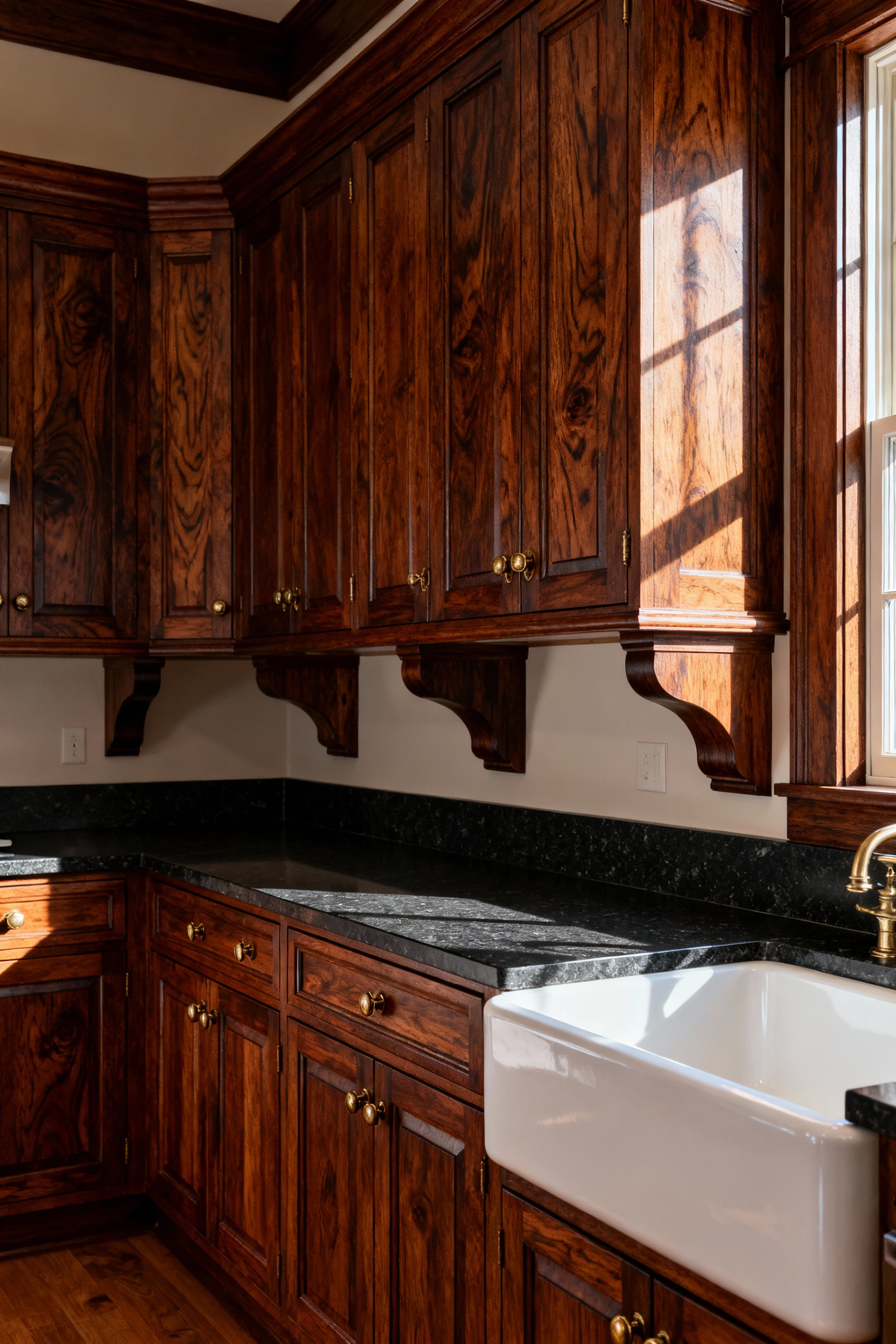
To balance this luxury with modern structural stability, adopt the “Hybrid-Integrity” approach. Use moisture-resistant plywood for concealed cabinet boxes, but reserve solid timber for the elements you engage with daily.
- Select Walnut or Teak for island accents to create a natural, high-end focal point without the need for heavy staining.
- Prioritize solid wood for doors and frames to ensure the visible face of your kitchen withstands daily wear.
This strategy honors the craftsmanship of the past while creating a resilient space for contemporary life.
The Art of the Joint: Exposed Dovetail Drawers
In the homes of my childhood, where sturdy British joinery met the sheer weight of heavy brass *handis* and cast iron cookware, a drawer’s worth depended entirely on its construction. The exposed dovetail joint serves as the ultimate litmus test for this artisanal quality. These tight, interlocking pins and tails create a superior mechanical bond that resists warping and withstands decades of heavy pulling. The presence of this joinery signals a builder’s commitment to excellence beyond the visible cabinet door, acting as a reliable shorthand for high-end custom work.
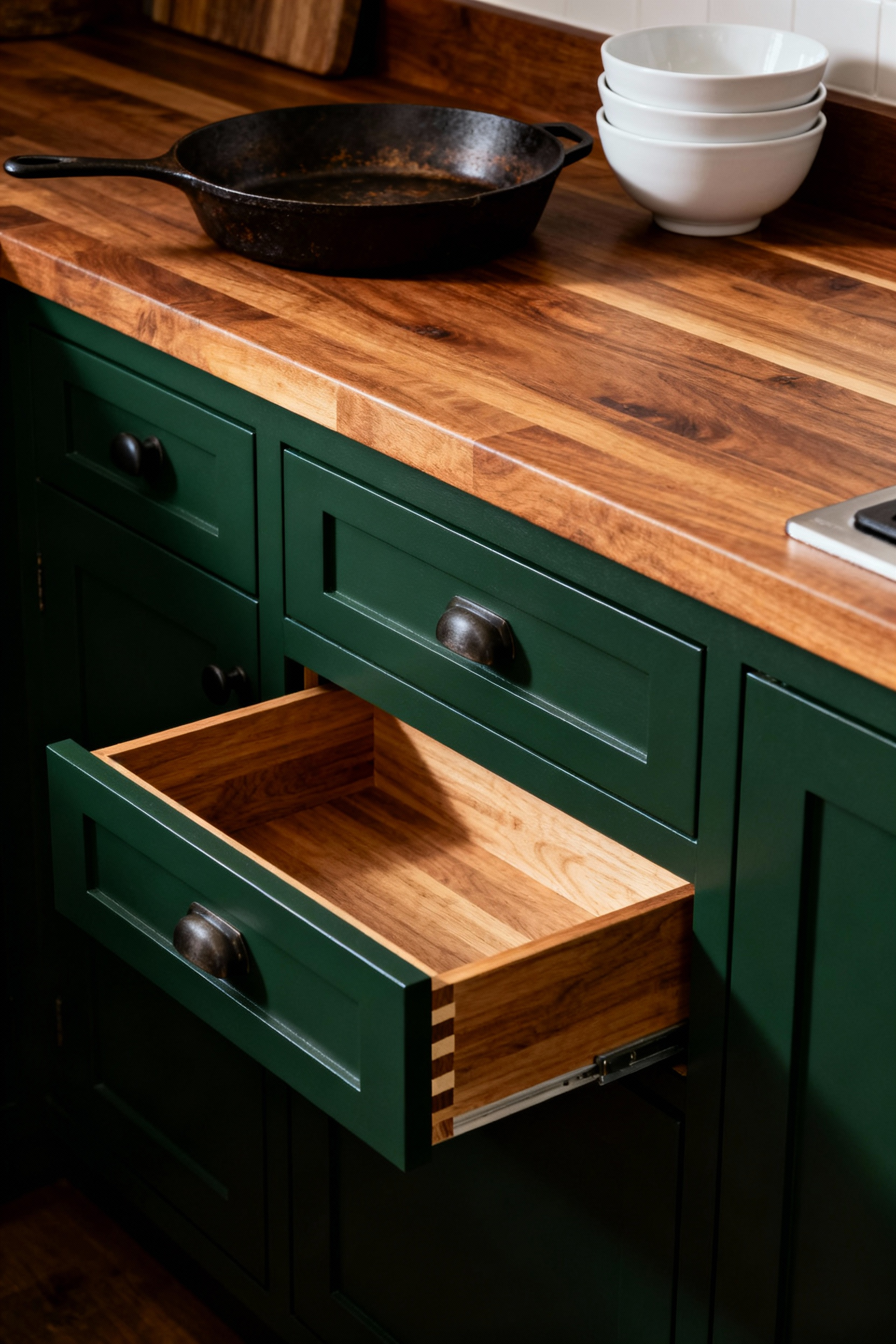
To ensure you invest in longevity rather than just aesthetics, scrutinize these details before purchasing:
- Material Integrity: Insist on solid hardwood (like maple) or Baltic Birch; avoid dovetailing on particleboard, which negates the joint’s structural strength.
- Precision Fit: Inspect the angles for gaps; a seamless, tight fit indicates exceptional precision in the manufacturing process.
- Joint Style: Specify “half-blind” joints for a clean drawer face or “through” dovetails to display the show-wood craftsmanship on all sides.
Ultimately, this functional beauty secures your investment and elevates the entire home’s resale potential.
Architectural Mouldings: Cornices, Crowns, and Light Rails
Treat architectural mouldings like the intricate zari embroidery on a fine sari; they define the silhouette and finish the look with sophistication. Match your cornice profile to the room’s scale to maximize impact. For soaring ceilings, employ a stacked crown assembly to draw the eye upward, bridging the gap between cabinet and plaster with elegant authority. Conversely, choose a lower-profile moulding for intimate spaces to avoid a cramped, top-heavy feel.
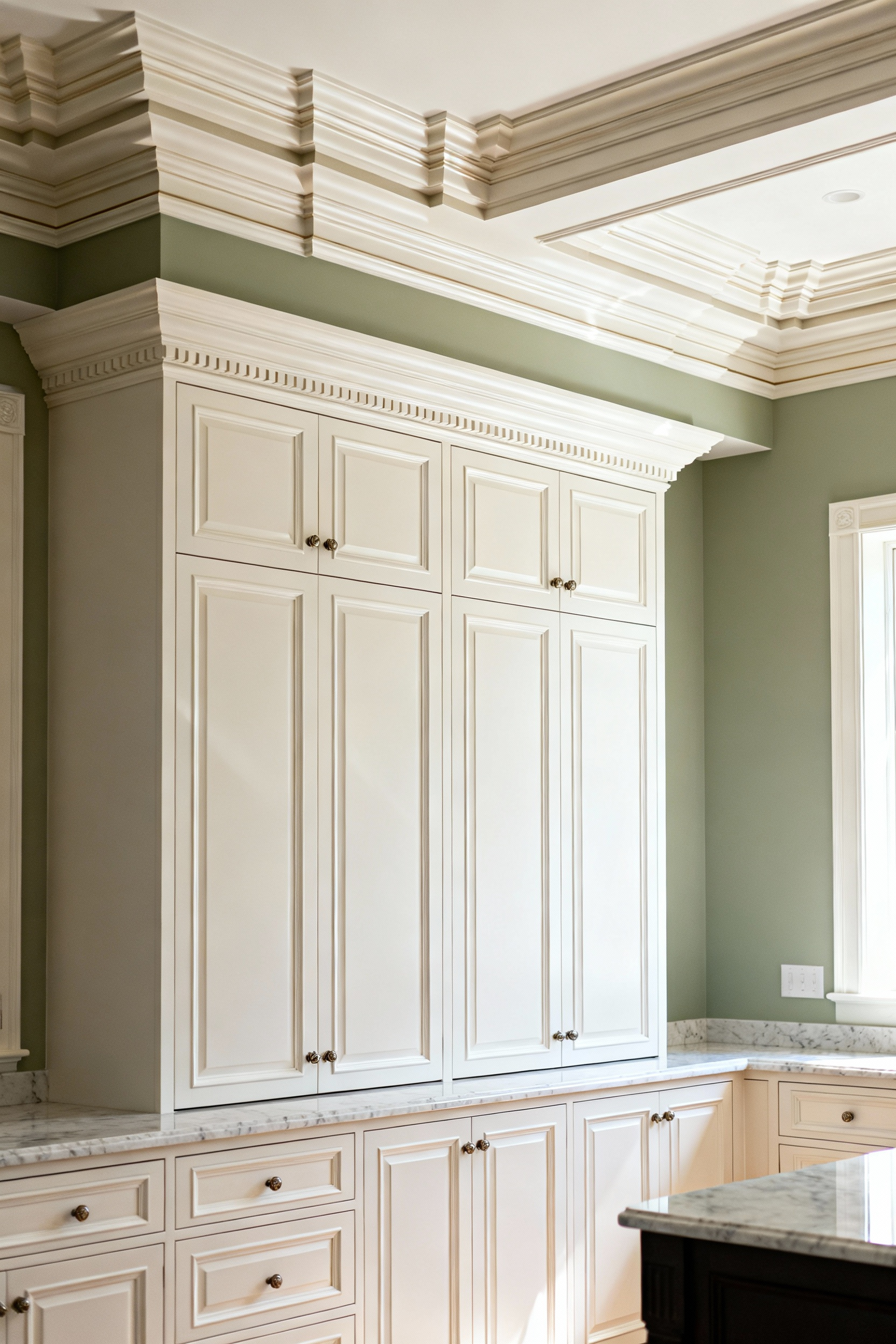
While cornices command attention above, the light rail works tirelessly below. I often use this decorative trim to bridge the gap between heritage design and modern necessity. Specifically, a properly installed light rail conceals:
- Modern LED strips to eliminate glare and hide wiring.
- Plug molds mounted under the cabinet, keeping your artisanal backsplash free of unsightly electrical outlets.
This strategic detailing ensures your kitchen honors traditional craftsmanship while seamlessly accommodating contemporary life.
The Return of the Larder: The Standalone Pantry Cupboard
Treat the standalone larder as a distinct piece of art, not just storage. Embrace the “deconstructed kitchen” trend by selecting a finish that contrasts intentionally with your main cabinetry, such as a rich walnut unit set against pale, painted shaker cabinets. This choice transforms the cupboard into a focal point, honoring the freestanding furniture tradition of historic British homes. In my own kitchen, where English heritage meets South Asian culinary depth, the larder is indispensable; it offers the robust capacity needed for bulk basmati rice and an extensive spice collection while keeping the overall aesthetic refined.
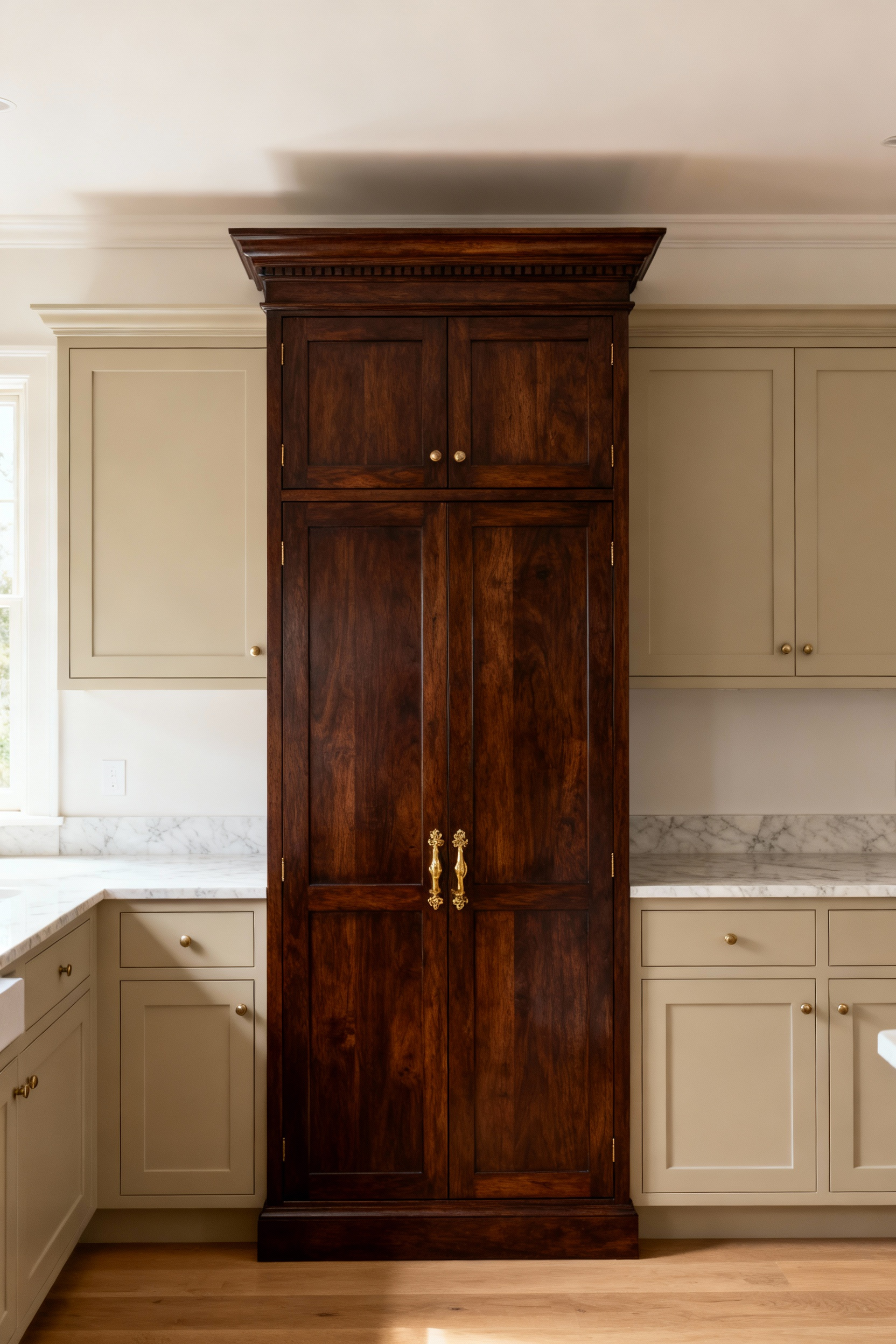
Plan the interior to function as a hidden “lifestyle station.” This strategic organization keeps modern clutter invisible behind elegant joinery.
- Design a counter-height shelf to operate as a breakfast hub, concealing coffee makers or rice cookers.
- Install door-mounted racks to display spices or tea blends for immediate access.
- Incorporate deep pull-out baskets to organize dry goods and linens efficiently.
This approach allows you to enjoy the convenience of modern appliances without disrupting the visual harmony of your space.
Heritage Hues: Deep, Saturated Palettes
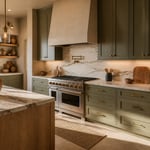
Depart from the clinical chill of all-white cabinetry. Instead, embrace the grounding power of “heritage” colors to instill character and luxury. Deep, nature-inspired shades like British Racing Green offer a timeless alternative that rivals any neutral, evoking the comfort of a classic English estate. To maintain visual balance, anchor these saturated hues on lower cabinets or a central island, reserving crisp off-whites for upper storage. Furthermore, elevate the design with unlacquered brass or copper hardware; the warm metal provides a sophisticated, historic glint against the dark paint.

For a truly personalized narrative, look beyond green to the warmth of the spice cabinet. Blending my appreciation for classic British joinery with my South Asian roots, I often utilize deep, yellow-based pigments to create a spirited focal point. Consider these high-impact applications:
- The Butler’s Pantry: Drench the compact space in Spiced Turmeric for an unexpected embrace of warmth.
- A Freestanding Hutch: Apply rich Terracotta or Mustard to complement traditional wooden elements.
These earthy, saturated choices honor cultural craftsmanship while injecting a deeply organic, mood-setting character into the heart of the home.
The Brushstroke Finish: Hand-Painted vs. Factory Spraying
True luxury often resides in subtle imperfections. While factory spraying delivers a flawless, plastic-like veneer, the hand-painted brushstroke finish offers depth and tactile warmth. This texturing anchors cabinetry, lending it the gravitas of heirloom furniture rather than mere storage. In my work blending British joinery traditions with the vibrant, artisanal textures of South Asian heritage, I find that a visible brushstroke effectively breaks the monotony of a modern space and signals authentic craftsmanship.
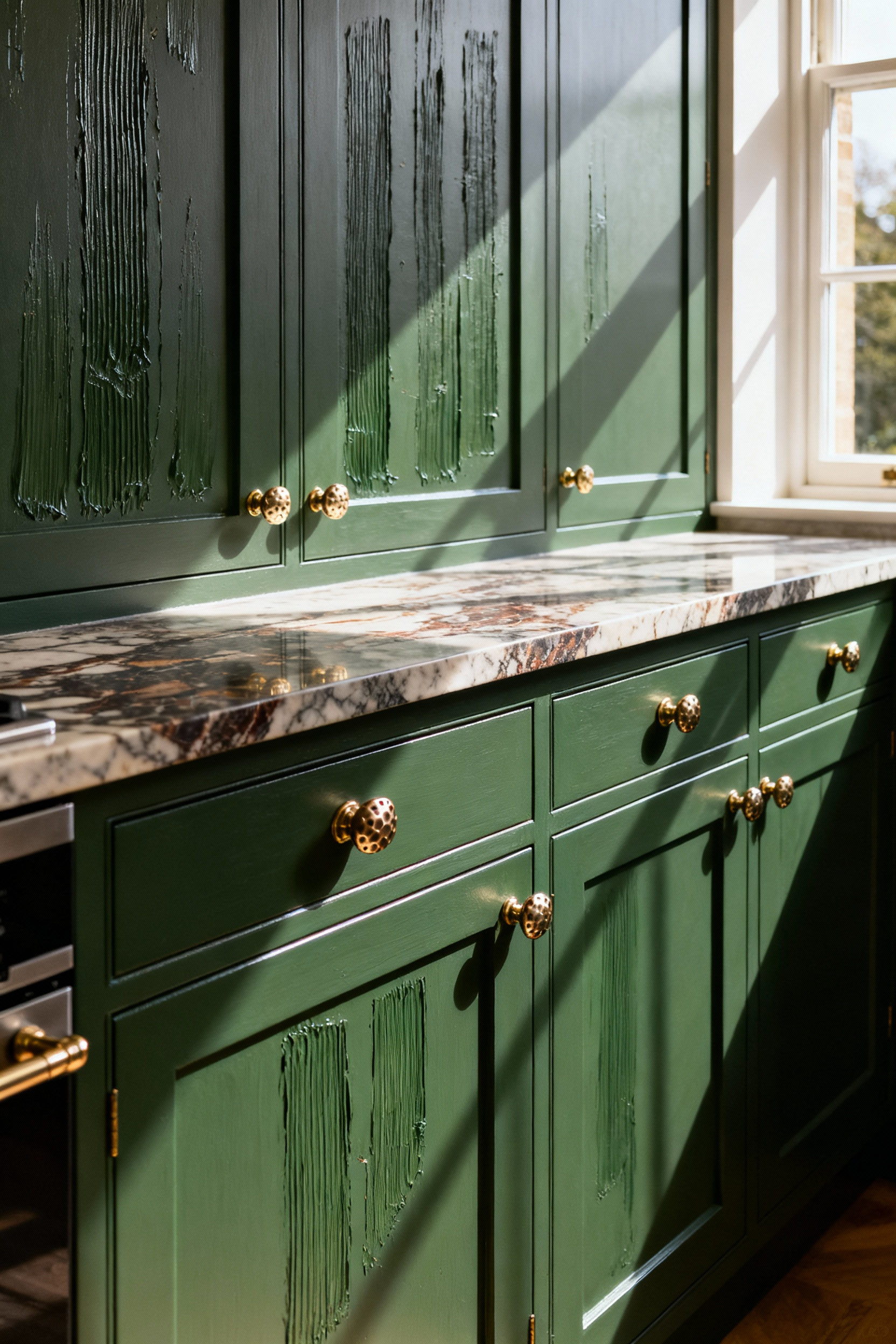
Choosing a hand-painted finish grants you practical control over your investment. Unlike brittle factory lacquers that often require professional door removal for major repairs, you can seamlessly touch up a brush-finished cabinet on-site. Consider these strategic benefits:
- Future-Proofing: Scratches or chips blend away with a simple dab of paint, avoiding the visible “patching” common with repaired spray finishes.
- Bespoke Color: You gain access to unlimited palettes, allowing you to match specific heritage shades rather than settling for factory standards.
Choose this finish to escape the sterile, uniform look of mass production and to ensure your kitchen ages gracefully with your home.
Hardware with History: Unlacquered Brass and Copper
Select unlacquered brass or raw copper to embrace the passage of time within your home. Unlike sealed “antique” finishes, these raw metals develop a “living patina” that darkens and creates depth with daily use. This evolving warmth beautifully counterbalances cool-toned British cabinetry or dark wood joinery. Avoid lacquered products that lock in a static color. Instead, choose authentic materials that chronicle your kitchen’s activity through their changing surface.
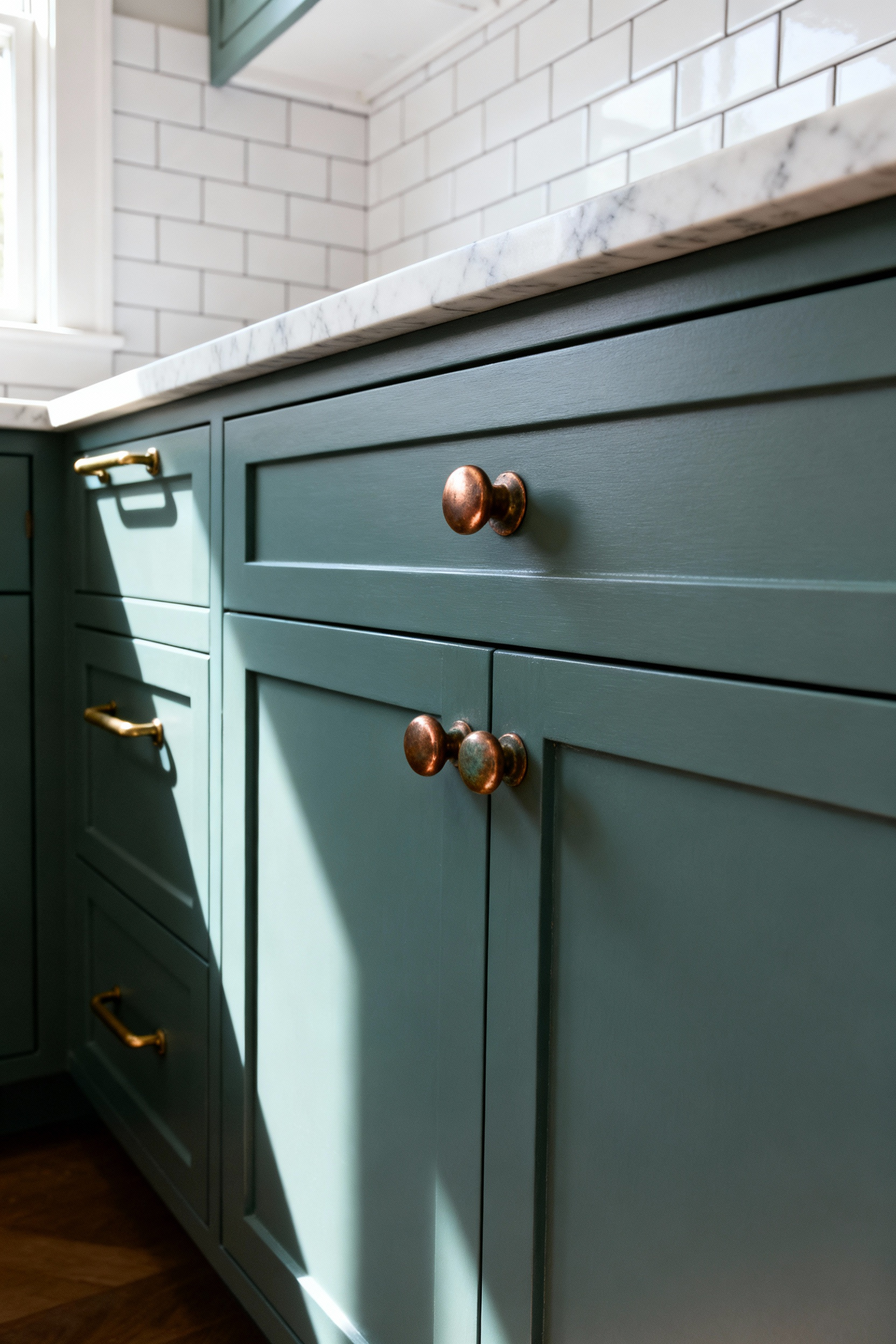
In my own family, we have long treasured brass vessels not just for their luster, but for their utility. Integrating this heritage into a modern kitchen is effortless when you understand the material’s unique behavior:
- Expect uneven aging: Frequently touched drawer pulls will deepen in color faster than rarely used knobs, creating a truly bespoke finish.
- Value the hygiene: Copper and brass possess natural antimicrobial properties that begin neutralizing bacteria immediately upon contact.
Simply let the metal tarnish for a low-maintenance, historic aesthetic, or polish it back to its original shine to reset the story.
Glazed Galleries: Mullioned Glass Doors
Transform standard upper cabinets into sophisticated “glazed galleries” that honor your heritage. The traditional wooden grid of mullioned doors acts as a picture frame, elevating humble artisanal ceramics into art. In my own kitchen, I display heavy South Asian brass spice boxes alongside delicate Stoke-on-Trent china, letting the joinery visually bridge these two worlds. To replicate this curated aesthetic, treat the cabinet interior like a museum display:
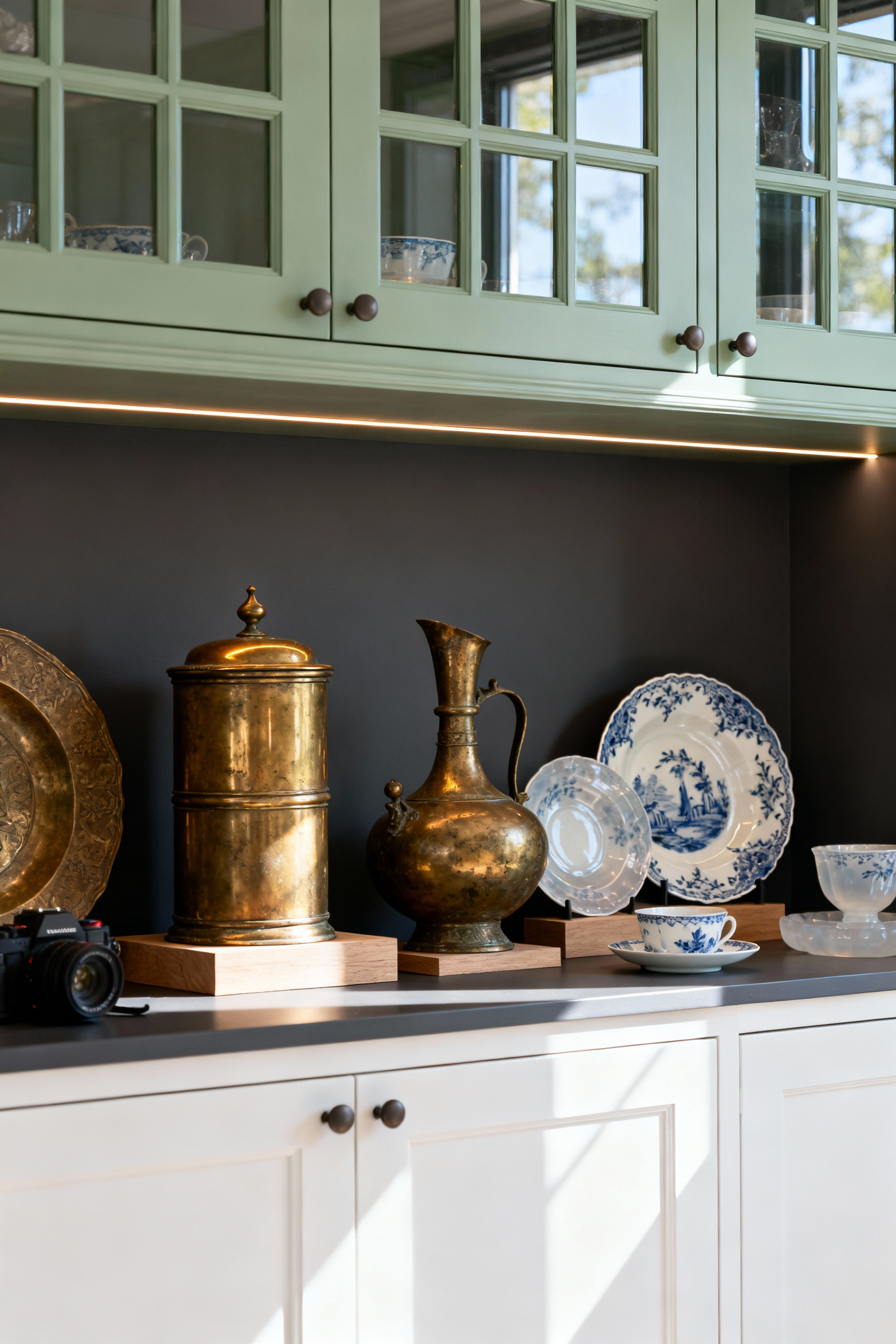
- Curate the Backdrop: Line the back panel with deep-toned paint or textured wallpaper to make lighter artifacts pop.
- Control the Light: Install warm white LED strips to spotlight textures and turn the cabinetry into an evening focal point.
- Select Forgiving Glass: Choose reeded or fluted glass to softly blur contents, hiding minor clutter while maintaining elegance.
Practice restraint by leaving negative space around key items. This “less is more” approach prevents overcrowding and ensures every heirloom commands the attention it deserves.
The Hearth Focal Point: Range Hoods as Chimney Breasts
The hearth has historically anchored the home, from the humble clay *chulhas* of my grandmother’s kitchen to the imposing fireplaces of British country estates. You can recreate this soulful gravity by treating your range hood as an architectural chimney breast rather than a mere appliance. First, prioritize scale. Extend the hood structure at least six inches wider than your range and carry it to the ceiling to mimic the grandeur of a traditional masonry flue. This commands attention.
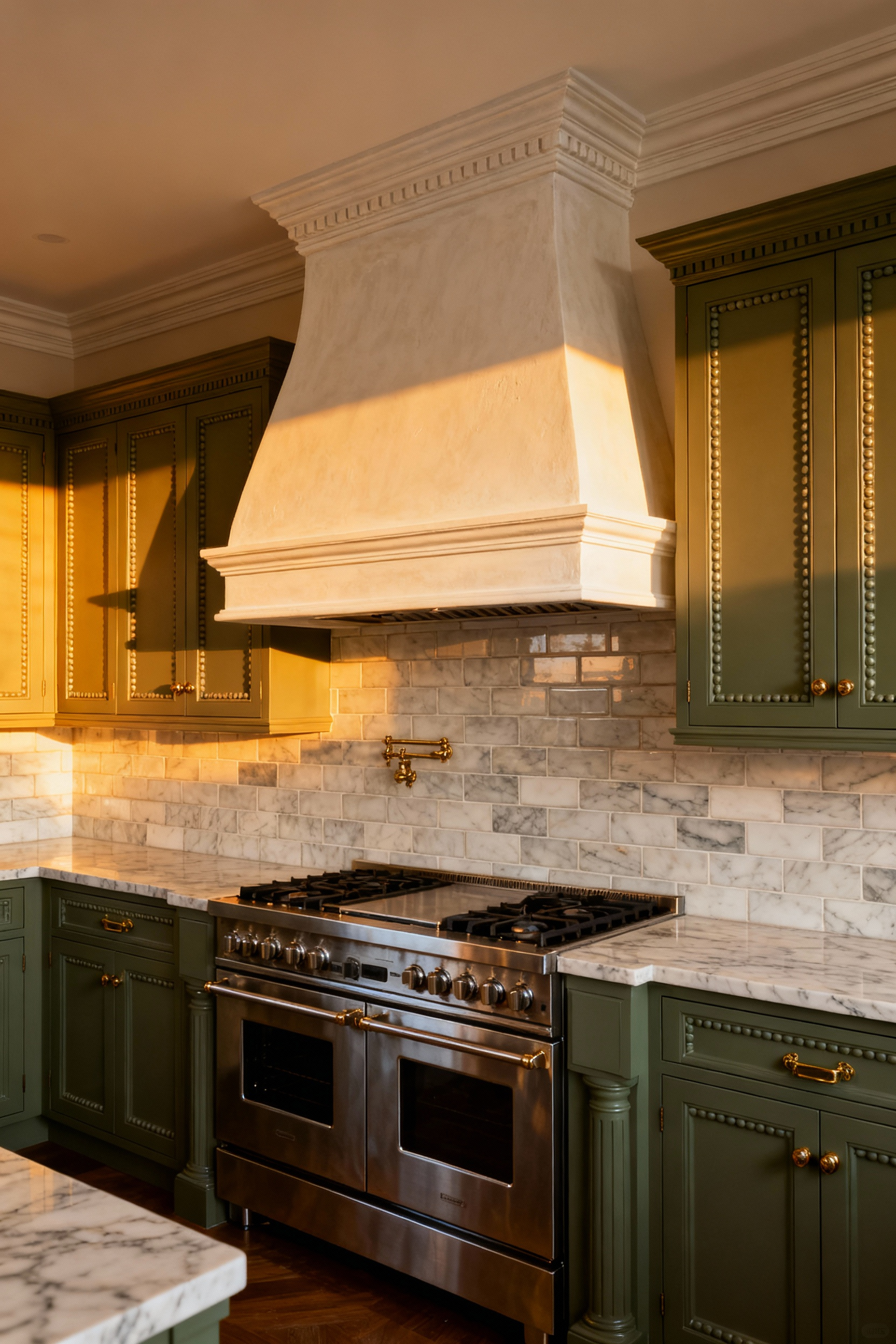
To soften this imposing structure, layer in tactile details that bridge craftsmanship with function. Consider these design moves to build character:
- Integrate custom millwork that matches your cabinetry’s door panels and crown molding for a seamless, built-in aesthetic.
- Install decorative corbels beneath the mantel shelf to suggest structural support and add vintage charm.
- Apply contrasting materials like smooth plaster, cast stone, or patinated copper to distinguish the “hearth” from surrounding cupboards.
This approach transforms a utilitarian necessity into a sophisticated focal point. It honors the ancient spirit of the communal fire while serving the needs of a modern culinary workspace.
Countertop Textures: Honed Marble and Soapstone
High-gloss synthetics often feel sterile in a space meant to convey history. They reflect light aggressively and lack the warmth of age. Instead, prioritize tactile authenticity by selecting materials that welcome the wear of daily life. In my family’s home in Jaipur, the stone surfaces felt cool and smooth, softened by generations of preparing spices. You can recreate this grounded, organic aesthetic by avoiding the “showroom” shine of modern composites and choosing surfaces that age gracefully.
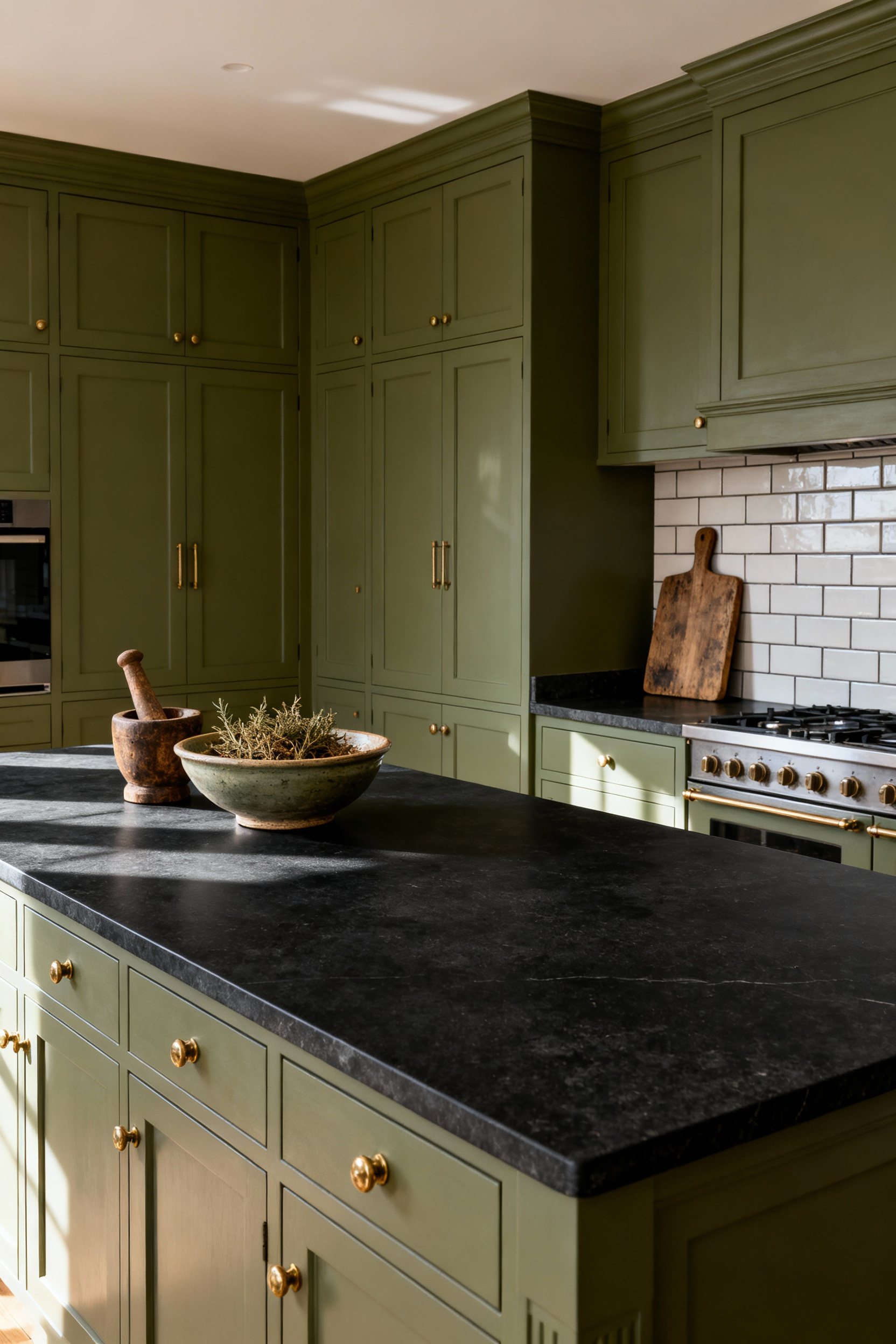
Embrace the imperfections of natural stone to anchor your design.
- Select soapstone to watch a deep, charcoal patina develop, or accelerate the process with mineral oil for an instant heirloom look.
- Specify a honed finish on marble to diffuse light, creating a soft matte texture that elegantly complements painted cabinetry.
These choices reduce visual noise and prove that a kitchen is for living, not just looking.
Furniture-Style Islands: Turned Legs and Open Shelving
Transform your kitchen island from a utilitarian block into a curated masterpiece. Continuous built-in cabinetry often creates a heavy, monolithic visual; treating the island as a standalone piece of heirloom furniture breaks this uniformity. Introduce turned legs with intricate detailing to echo the craftsmanship found in traditional English sculleries or the ornate woodwork of South Asian havelis. This specific design choice immediately elevates the space, offering a sophisticated focal point that contrasts beautifully with standard perimeter counters.
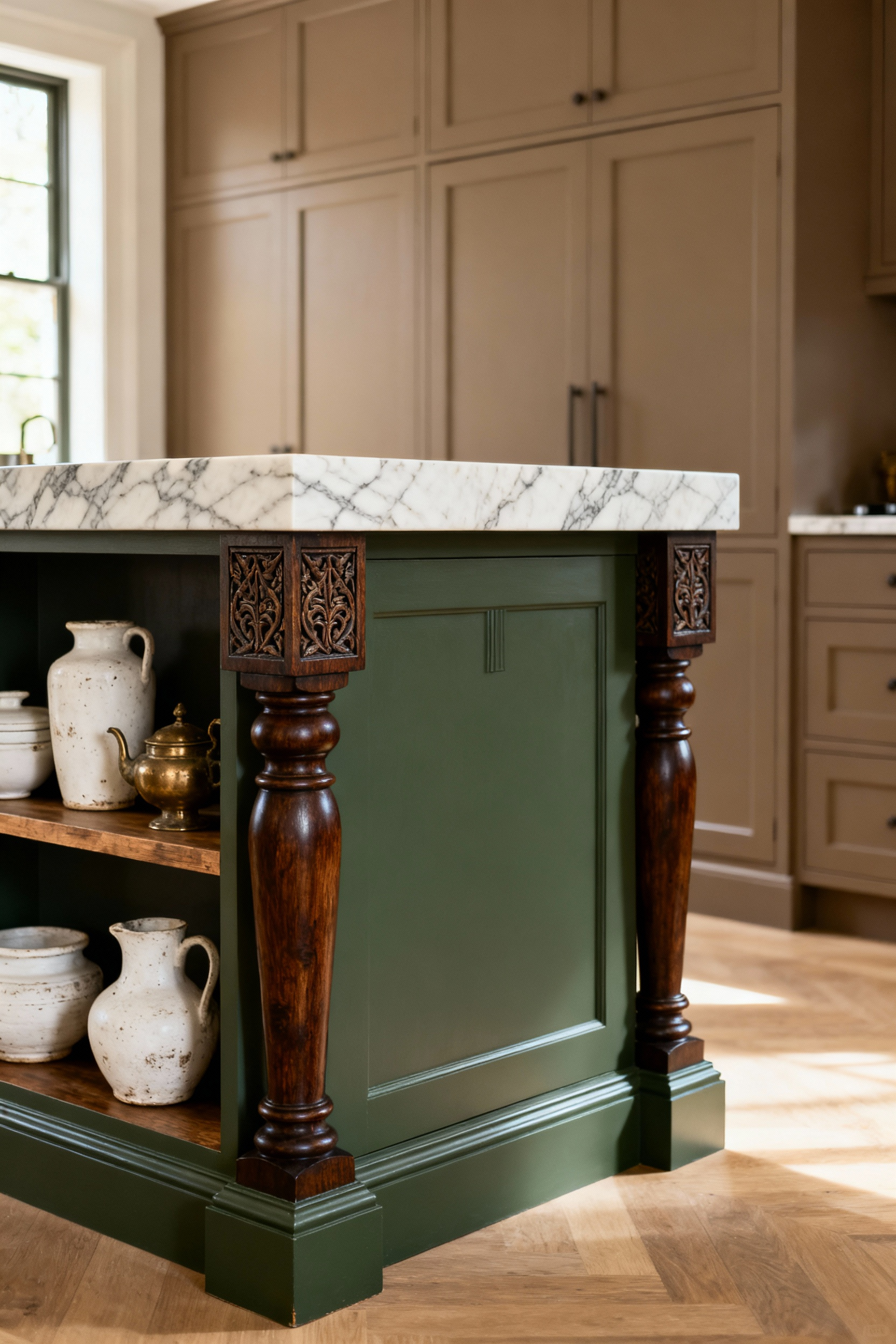
You must soften the room’s visual weight by integrating open shelving. A solid box dominates a room, but open ends create essential breathability. Use these shelves to display meaningful items—perhaps artisan pottery or vintage brass spice jars—to add texture and personal narrative. To truly master this aesthetic:
- Select a contrasting finish, such as a deep walnut stain or a bold heritage paint hue, to distinguish the island from the main cabinetry.
- Prioritize balance by keeping drawers on the working side and decorative shelves on the social facing side.
This strategy ensures your kitchen feels less like a fitted showroom and more like a collected, living space.
Hidden Modernity: Concealing High-Tech Appliances
True luxury whispers rather than shouts. To preserve the visual serenity of a heritage-inspired kitchen, cloak high-tech mechanics in traditional craftsmanship. This approach transforms the room from a utilitarian workspace into a furnished sanctuary, honoring the social heart of the home common in both British and South Asian cultures. Prioritize “panel-ready” refrigerators and dishwashers at the very start of your design process. These models accept custom fronts, allowing heavy appliances to vanish into the woodwork seamlessly.
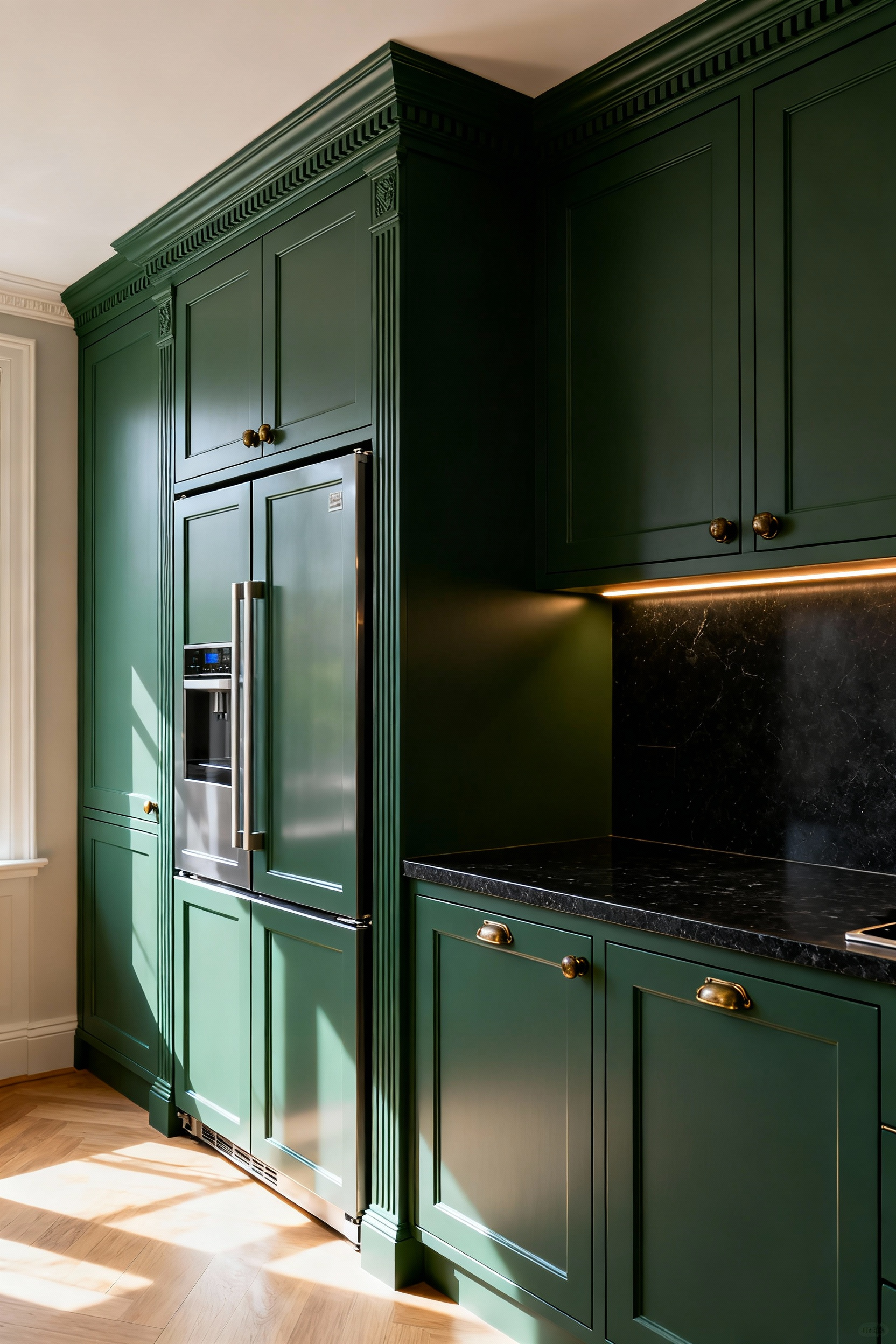
Manage countertop clutter to maintain this meditative flow. I often design specific “appliance garages”—cabinets with retractable doors—to house essential but unsightly gadgets like electric spice grinders or espresso machines. Consider these integration tactics for a truly seamless finish:
- Power from within: Install electrical outlets inside the appliance garage so machines remain plugged in and ready for use without cluttering the main workspace.
- Hide the hood: Select an insert range hood and encase it in custom carpentry to mimic a classic chimney breast or seamless cabinetry.
- Utilize the island: Relocate disruptive tech, such as microwave drawers or wine coolers, to the island’s unseen faces to keep your primary sightlines uninterrupted.
Textile Integration: Softening Hard Wood Surfaces
Traditional cabinetry provides a dignified structure, yet it often feels austere without the intervention of soft furnishings. Counteract these hard surfaces by introducing tactile elements that invite lingering, much like the welcoming, layered textiles found in South Asian homes. I frequently soften the severity of classic British joinery by designing upholstered banquettes that balance luxury with practicality.
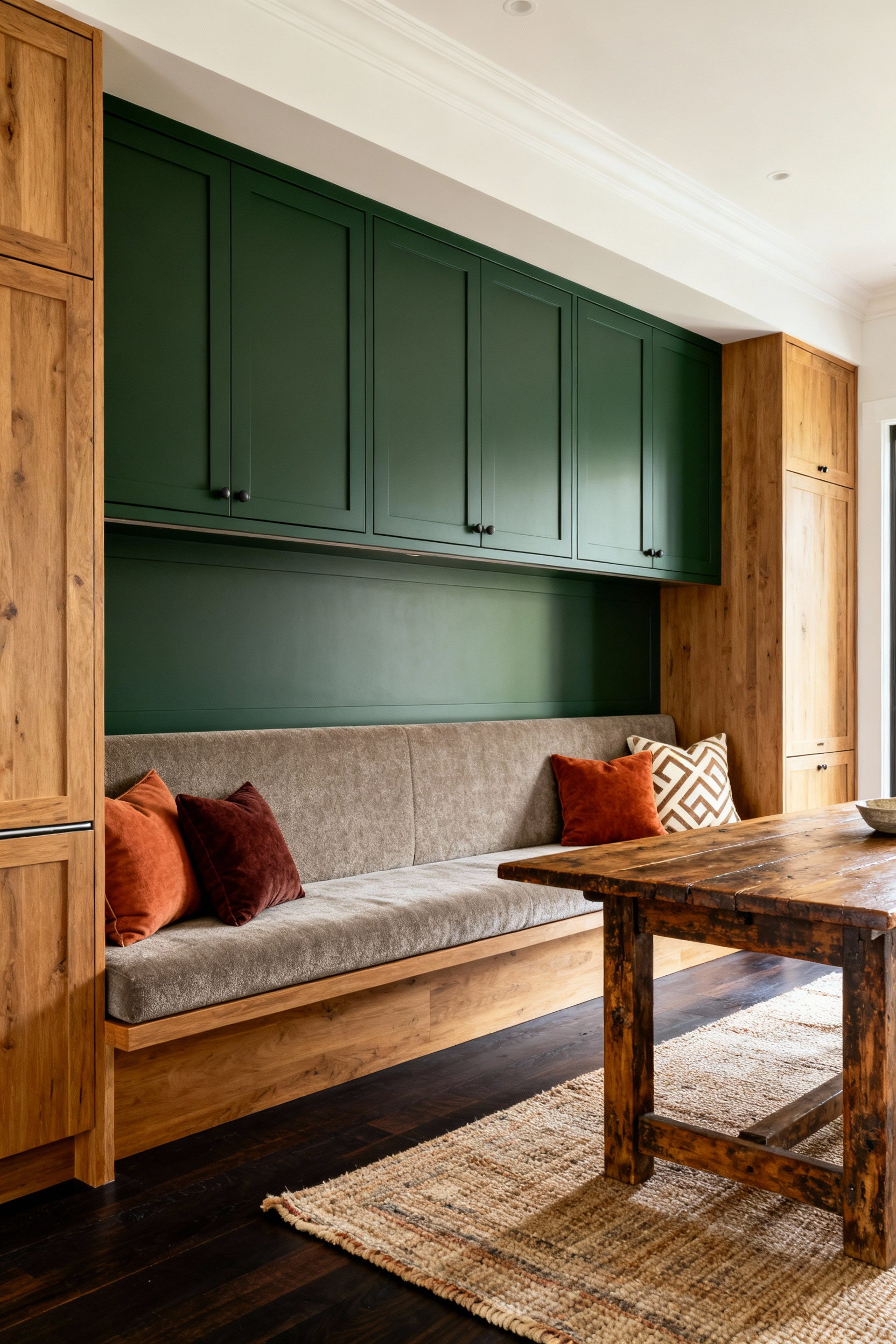
- Select high-performance fabrics: Use decorative vinyl or stain-resistant velvet in muted olive or taupe to withstand spills while adding rich texture.
- Maximize utility: Build hidden drawers or flip-up seats beneath the cushions to maintain a clutter-free aesthetic.
Finally, ground the space with a woven runner. Natural fibers or modern washable styles add essential warmth underfoot, effectively dampening acoustics and bridging the gap between heritage craftsmanship and contemporary comfort.
Global Accents: Styling Traditional British Cabinets
Treat your Shaker or Inset cabinetry as a sophisticated, neutral canvas. The understated elegance of traditional British joinery perfectly grounds the vibrant energy of South Asian design. To build this narrative, place “jewel-toned” artifacts in deep emerald or ruby as focal points on open shelving. I often remind clients that this deliberate contrast transforms a kitchen from a simple workspace into a curated gallery of heritage.
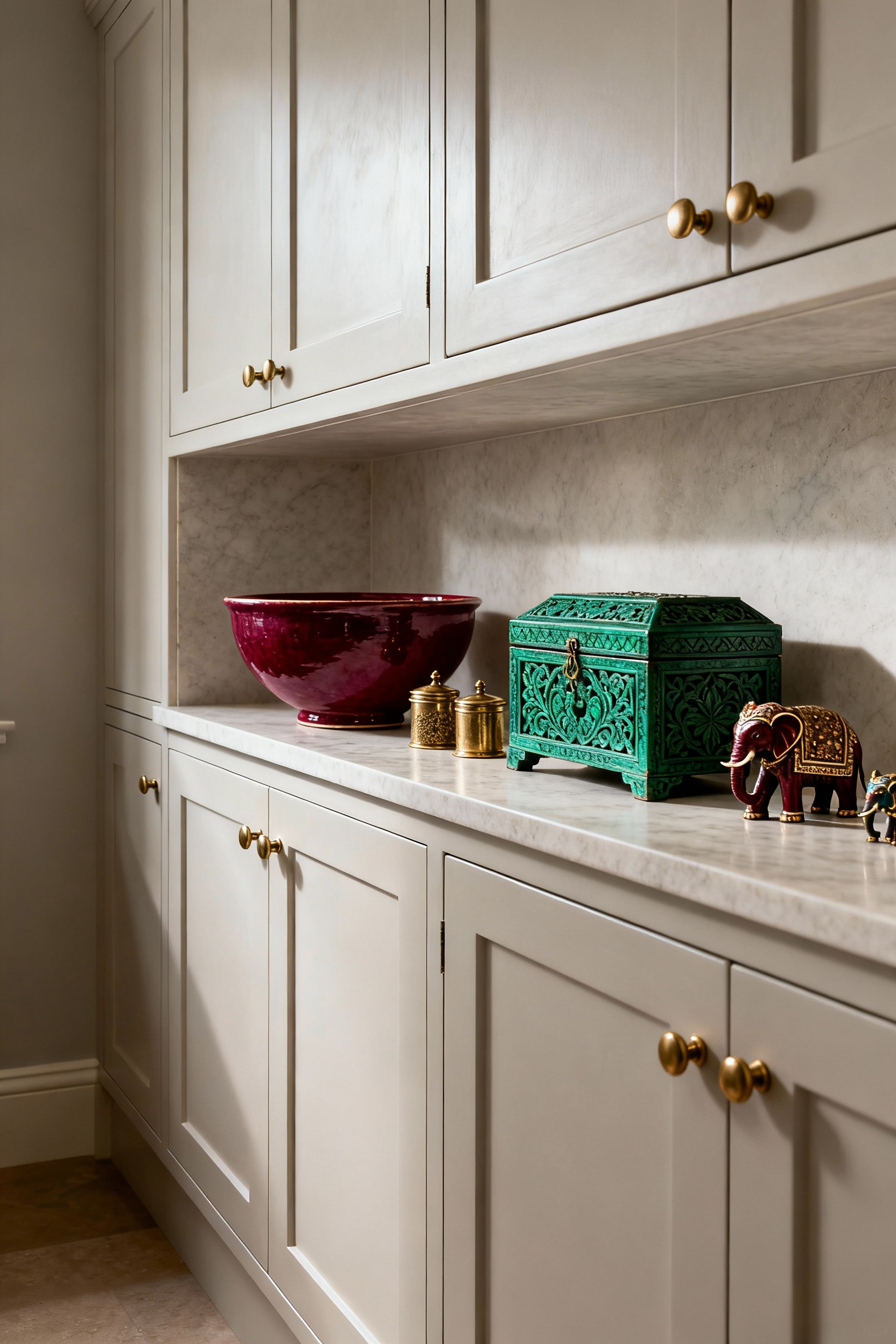
Celebrate the culinary story by bringing spices out of hiding. Swap standard plastic containers for authentic vessels that bridge function and art. Specifically, incorporate these tactile elements to achieve a collected aesthetic:
- Display heritage metals: Group spices in a traditional brass *Masala Dabba* or copper canisters to add warmth against dark navy or charcoal paint.
- Update touchpoints: Install hardware with subtle floral or *jaali* (lattice) motifs to mimic intricate metalwork.
- Soften the lines: Drape a hand-blocked Indian cotton runner over a counter edge to break up the rigid structure of the wood.
This thoughtful mix of heavy metals, soft textiles, and sturdy cabinetry ensures the space feels historically rich yet perfectly adapted for modern life.
Frequently Asked Questions about Traditional Cabinetry
What are the defining characteristics of traditional kitchen cabinets?
Traditional kitchen cabinets are defined by architectural integrity and craftsmanship reminiscent of fine furniture. Key characteristics include detailed millwork (such as crown molding and cornices), period-appropriate door styles (like Shaker, Raised Panel, or Inset), and visible construction details like decorative feet or turned legs. They prioritize natural materials like solid hardwoods and feature hardware, such as brass or copper, that develops a rich patina over time.
Is inset cabinetry a hallmark of high-end traditional design?
Yes. Inset cabinetry—where the door and drawer fronts sit flush within the cabinet frame—is widely considered the highest level of traditional design quality. This technique requires meticulous craftsmanship and precision joinery, leading to a higher cost (typically 15% to 30% more than overlay styles). Its clean, seamless lines evoke classic, bespoke British millwork and signal an authentic commitment to heirloom quality.
What woods and hardware create an authentic traditional aesthetic?
For wood, the most authentic traditional aesthetic is achieved using solid hardwoods such as Cherry, Maple, Red Oak, or Walnut. These materials ensure longevity and develop a rich patina over decades of use. For hardware, select unlacquered metals (raw brass or copper) that are allowed to naturally tarnish, or opt for simple period styles like porcelain knobs and cup pulls. Avoid highly lacquered or static “antique” finishes.
Conclusion: Renovation vs. Restoration
True stewardship of a home implies a dialogue between eras, not a choice between a museum and a showroom. Do not freeze a space in time; allow it to evolve. Restore the sturdy bones of original cabinetry to honor their craftsmanship, but ruthlessly update their interiors for modern utility. Break the monotony of fitted runs by treating islands or pantries as distinct furniture pieces. This approach preserves the architectural soul while accommodating the demands of the present-day cook.
The secret to this balance lies in concealment and tactility. Hide contemporary appliances behind custom paneling to maintain a cohesive visual history, but counterbalance these hidden modernities with authentic, grounding details. Select unlacquered brass or simple porcelain hardware that will patina beautifully over time. These small, culturally resonant touches anchor the design, ensuring that necessary updates feel intentional rather than intrusive.
Ultimately, your kitchen should function as a living archive. When investing in high-quality traditional kitchen cabinets, look closer at what exists before you demolish. Find the sturdy frame, the historic layout, or the unique detail that deserves a second life. Curate a home that feels inherited yet entirely your own.