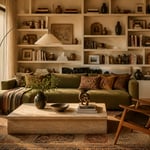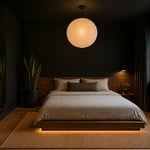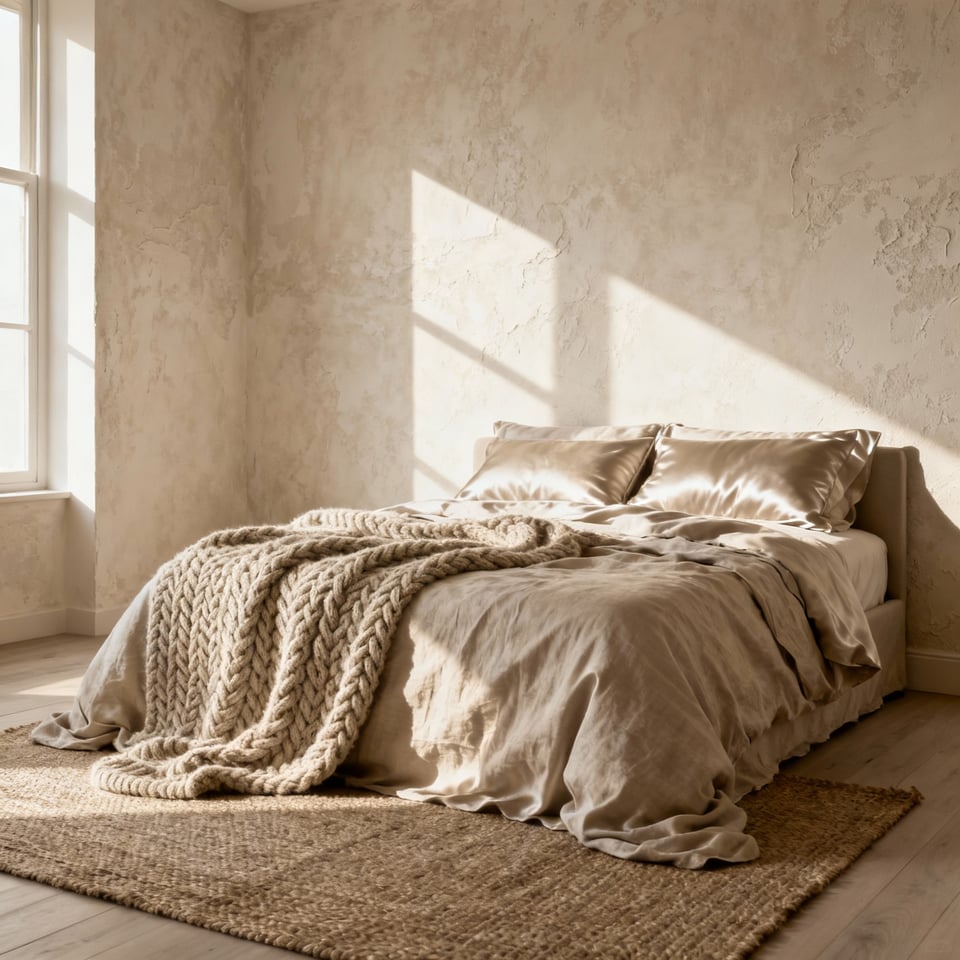
Many designers and homeowners worry that the beige bedroom aesthetic will inevitably feel “sad,” bland, or devoid of personality. The popular critique of “Sad Beige” suggests that without bright pigment, a space lacks life. However, this perspective treats neutral tones as a mere absence of color rather than a deliberate design choice. It overlooks the potential of sand and stone hues to create a sanctuary that balances Scandinavian restraint with the earthy warmth found in traditional Middle Eastern architecture.
A successful neutral palette simply requires a shift in focus from color to texture and contrast. Beige acts as a rich, versatile foundation when handled with intention. By layering tonal shades like oatmeal and caramel, and introducing tactile materials such as woven jute or velvet, you build depth that paint alone cannot achieve.
Strategic elements, like sleek black accents or fresh olive greenery, break the visual monotony and ground the space. This approach transforms a flat backdrop into a sophisticated environment that captures light and exudes calm.
This guide covers the essential techniques to curate a modern beige bedroom that feels dynamic and inviting. We will look at prioritizing rugged and soft textures to shatter the “flat” look and using dark contrasts to anchor the room. You will also discover how to utilize organic greenery to bring vibrancy to the palette and treat neutral walls as a gallery-style canvas for bold statement art. Let us redefine beige not as a default choice, but as a complex, warm medium for modern living.
The Truth About Neutrals: Why Texture Matters More Than Pigment
In a monochromatic space, texture functions as your primary color wheel. When you limit pigment to beige tones, a lack of tactile variety risks making the room feel flat or institutional. You must replace color contrast with physical depth.
This approach shifts the focus from visual shock to tactile comfort, requiring the eye to linger on how light interacts with different surfaces. Without distinct variations in material, a neutral room loses its sense of luxury and becomes indistinguishable from a blank canvas.
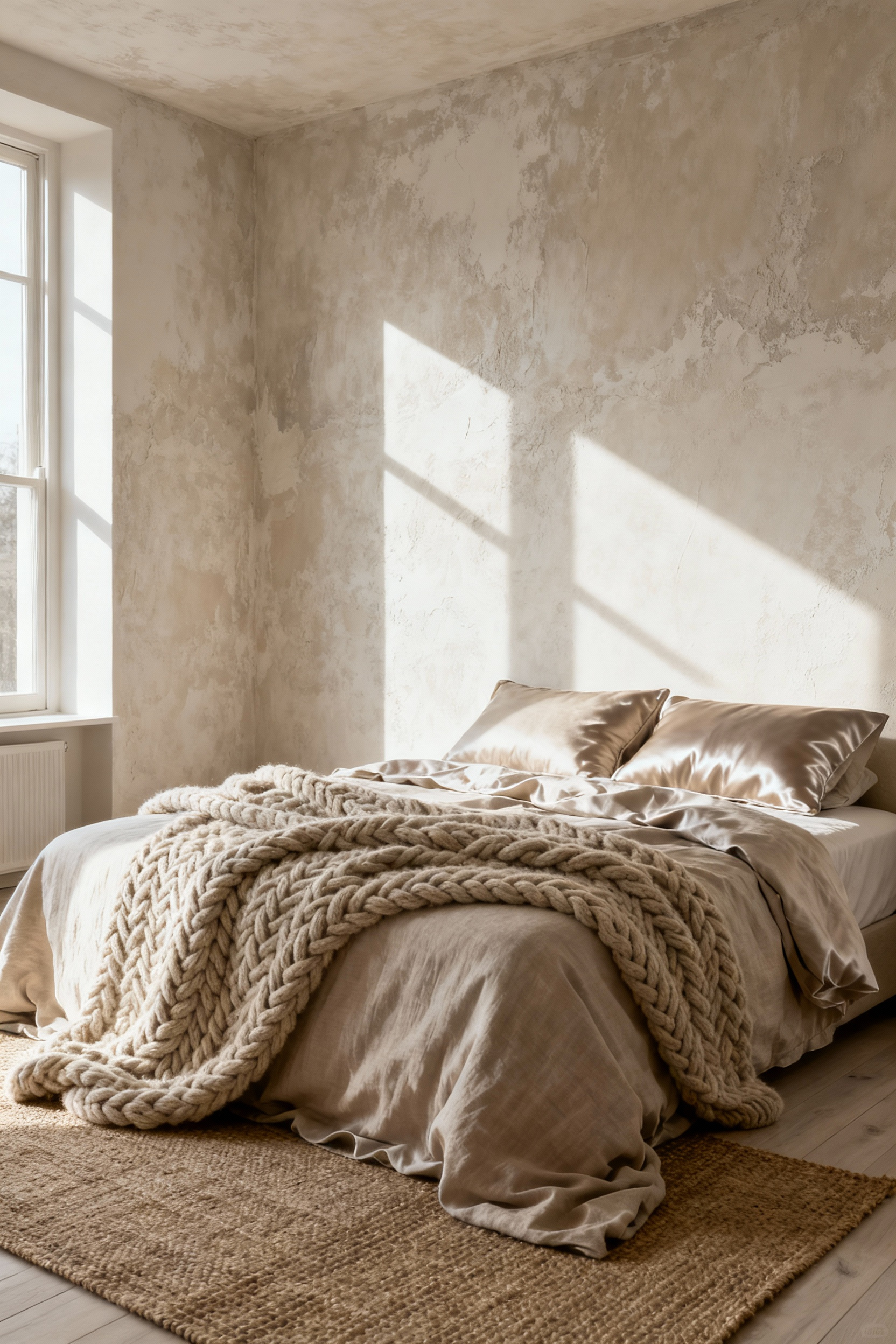
To successfully execute this aesthetic, try layering materials that oppose one another. Treat the bed as a landscape by mixing soft, plush elements like bouclé and chunky knits with crisp, organic textures such as raw linen or brushed cotton.
Extend this contrast to hard surfaces by pairing sleek, polished finishes—like a lacquer nightstand—against rough, matte materials like a jute rug. To prevent these airy tones from “floating away,” anchor the room with dark accents. Introducing espresso wood or a matte black lamp in roughly 10 to 20 percent of the decor creates a necessary visual boundary that grounds the lighter elements.
Finally, proper illumination validates these textural choices. Beige is a chameleon that turns gray or washed out under cool lighting. Prioritize bulbs in the 2700K–3000K warm white range and ensure they possess a high Color Rendering Index (CRI). High CRI lighting allows the subtle undertones of wood grain and the intricate weave of fabrics to read true, ensuring the room feels warm and dimensional rather than sterile.
1. The Psychology of Sand: Why Warm Neutrals Calm the Mind
Warm neutrals do more than just brighten a room; they signal safety to the primal brain. By mimicking the natural hues of stone, sand, and earth, these colors provide a deep physiological sense of stability and grounding.
This low-contrast palette creates a “restorative visual field” that significantly reduces sensory overload. When the eyes encounter fewer jarring colors, the mind quiets down more quickly, making this aesthetic essential for improved sleep quality and relaxation.
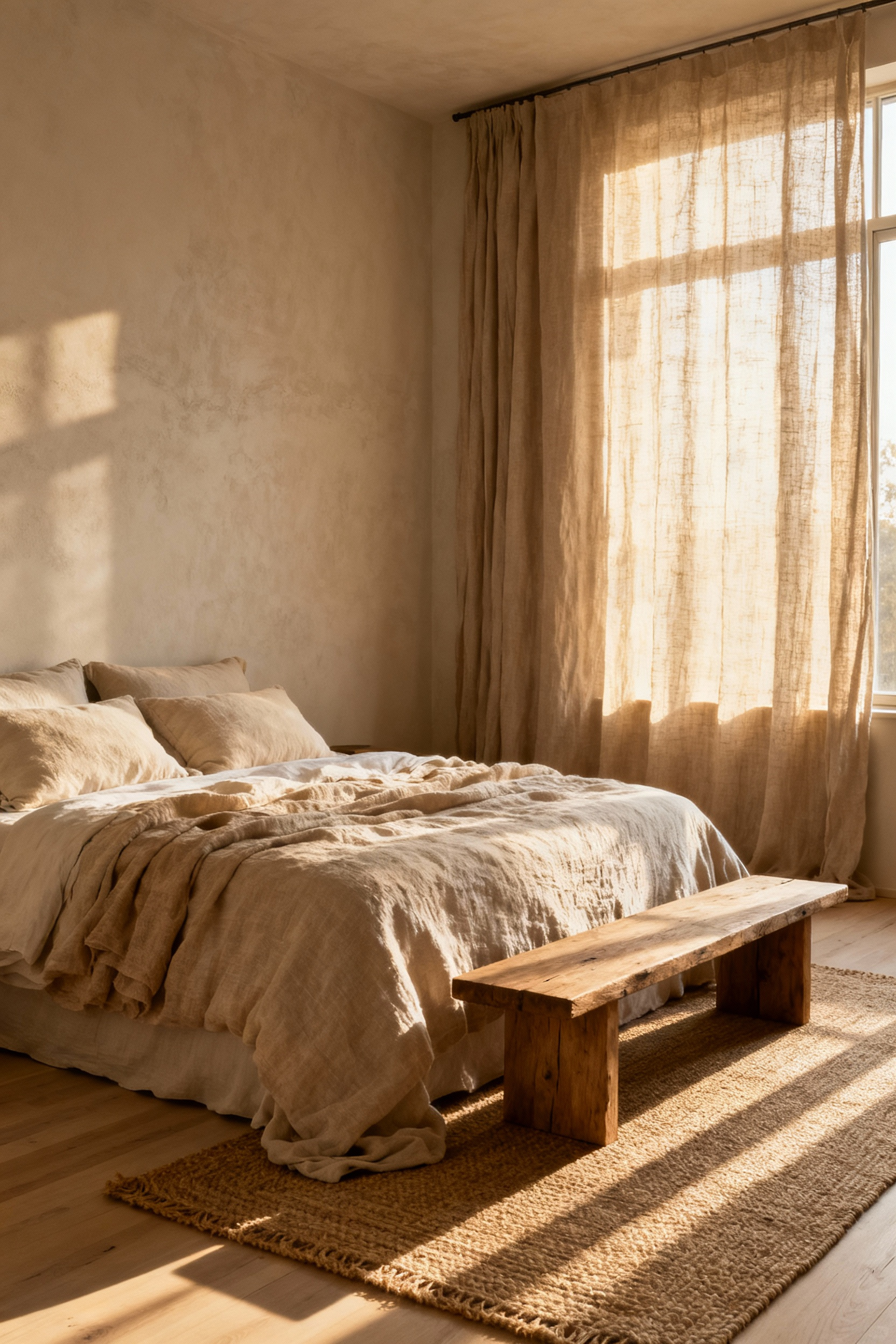
To get this right, focus on selecting the correct undertones and textures to avoid a sterile environment. Prioritize rich, complex shades like soft taupe, greige, or warm cream over flat beiges or cool whites.
Because the color palette is simple, the design relies on tactile variety to create coziness. Layer natural materials such as linen, boucle, wool, and raw wood to add depth and comfort without introducing visual chaos.
To finalize the sanctuary effect, integrate subtle accents that respect the room’s calm foundation. Complementary colors rooted in nature, such as pale sky blue or muted sage green, pair perfectly with a sandy base. These tones are known to lower heart rates and blood pressure, physically reinforcing the room’s purpose. By balancing a warm neutral backdrop with soft, organic touches, you build a space that actively promotes mental rest.
2. Limewash and Plaster: Creating Depth Without Paint
Standard flat paint often leaves neutral bedrooms feeling sterile or flat. To introduce warmth and history to a minimalist space, consider utilizing limewash or plaster finishes.
These materials create a velvety, organic texture that shifts with natural light. The resulting variation prevents the walls from looking bland and establishes a nurturing, custom atmosphere. Select colors such as “soft clay,” off-white, or dusty beige. These tones maintain an airy, spacious feel while grounding the room with a sense of earthy elegance.
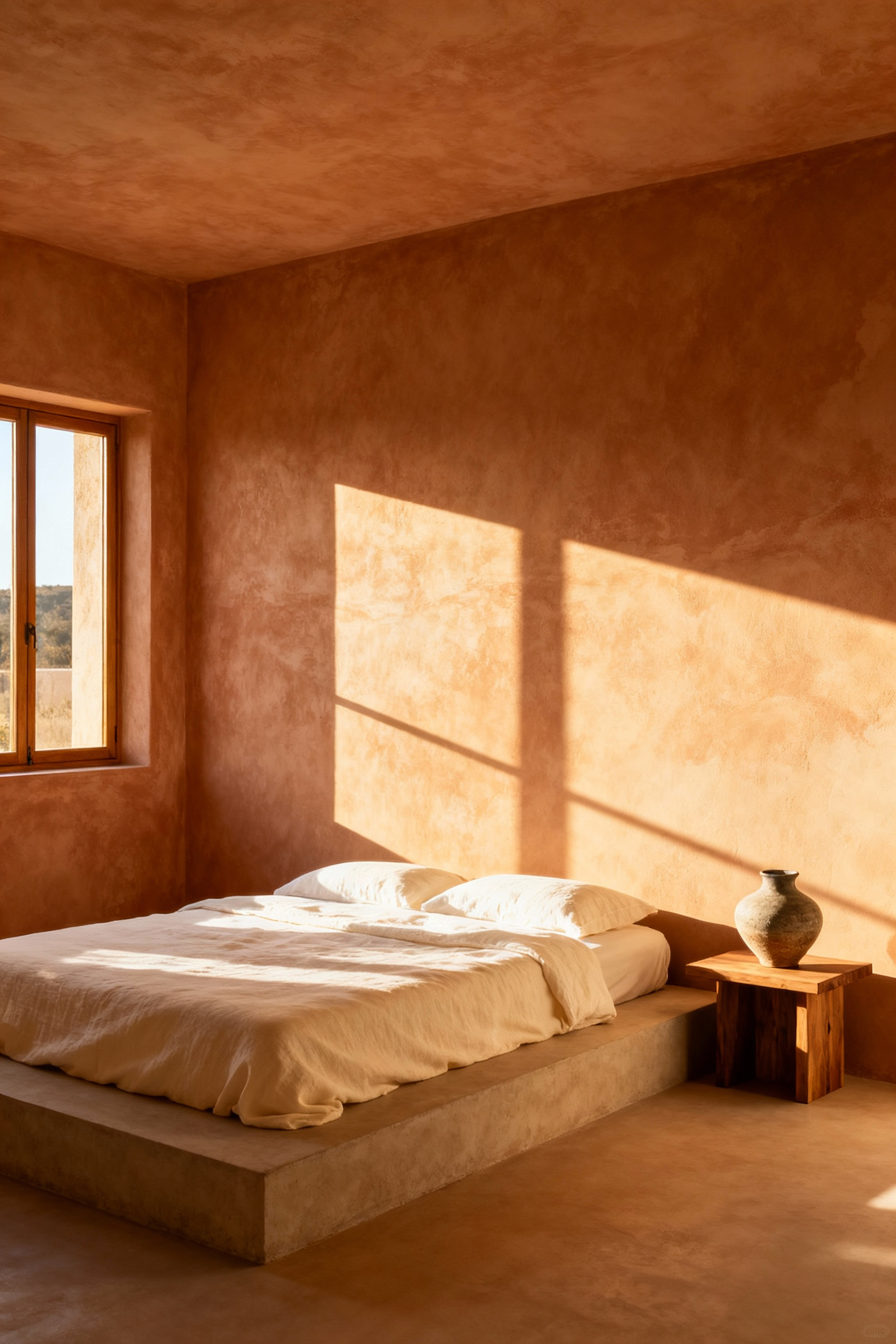
Achieving this aesthetic requires specific application techniques. Use a large block brush to apply the product in random, overlapping X-patterns. This cross-hatch motion creates the signature “cloud-like” movement and prevents rigid lines.
Restrict your application to one or two coats. While it may be tempting to add more, three or more coats will unify the surface too much, eliminating the visual texture you are trying to create.
Patience is critical during the installation phase. Limewash appears significantly darker and more translucent when wet. Allow the product to cure completely to reveal its true, lighter tone. Once dry, this textured backdrop invites specific material pairings. Complement the walls with linen textiles, oak wood, woven rugs, and stone accents. These natural elements harmonize with the plaster’s depth to create a cohesive, tactile environment.
3. The ‘No-Paint’ Wall: Utilizing Natural Clay Finishes for Humidity Control
Adopting a “no-paint” approach using natural clay plaster transforms your bedroom walls into a functional, living system. Unlike synthetic paints that seal surfaces, clay is breathable and actively regulates indoor humidity.
The material absorbs excess moisture and releases it when the air becomes dry, naturally maintaining an ideal humidity range of 40–60%. This moisture buffering significantly reduces the environment for mold and bacteria, supporting better respiratory health.
Additionally, clay is strictly composed of natural materials, eliminating the Volatile Organic Compounds (VOCs) and synthetic binders found in conventional paints. This results in a zero-off-gassing environment, essential for a true non-toxic sleep sanctuary.
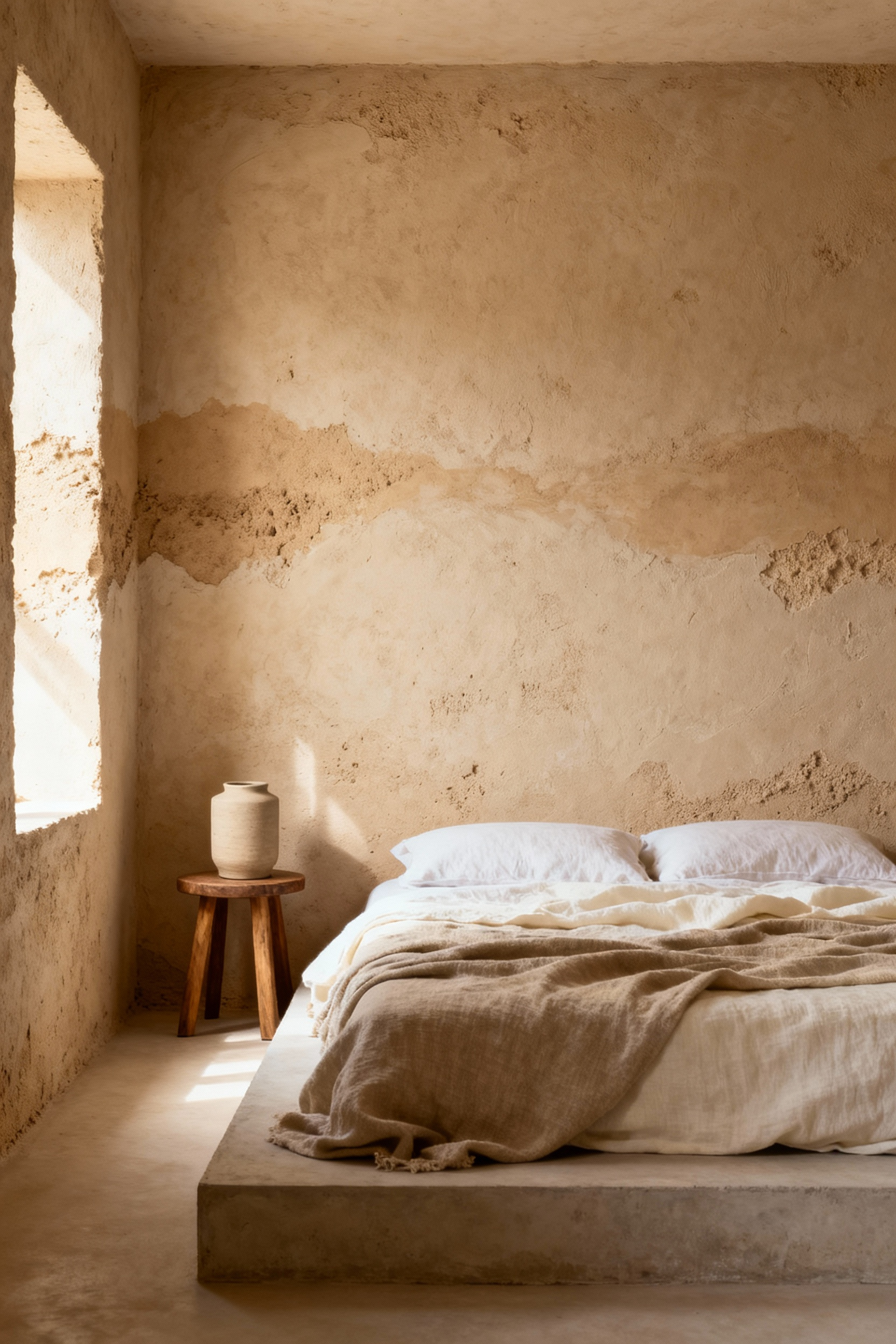
From a design perspective, clay finishes offer an organic depth that flat, synthetic paints cannot replicate. The material provides an inherently matte, “cloudy” texture that adds visual interest to a minimalist palette without relying on bold colors.
To achieve a grounded aesthetic, select natural hues like soft beige, earthy taupe, or pale terracotta. You can customize the application to create specific effects:
- Smooth Finish: Offers a clean, contemporary look that aligns with Scandinavian simplicity.
- Rustic Texture: Provides a “rammed earth” feel that adds handcrafted character and warmth.
- Thermal & Acoustic Buffering: The dense material dampens sound for a quieter room and provides mild thermal mass, keeping the space cooler in summer and warmer in winter.
4. Understanding Undertones: The Art of Balancing Taupe, Oatmeal, and Ecru
Designing a monochromatic space requires careful balance to avoid a “muddy” visual effect. You must establish a clear hierarchy to build depth.
Use Ecru, a warm off-white, for your largest surface areas like walls and bed linens to maintain airiness. Anchor the room with Taupe, a deep brown-gray hybrid, applied to substantial elements such as headboards or rugs.
Oatmeal serves as the essential bridge between these extremes. You can introduce this mid-tone through soft textiles or by utilizing natural materials; a light oak dresser or rattan chair represents the Oatmeal family organically, creating a cohesive, “dipped-in-color” aesthetic.
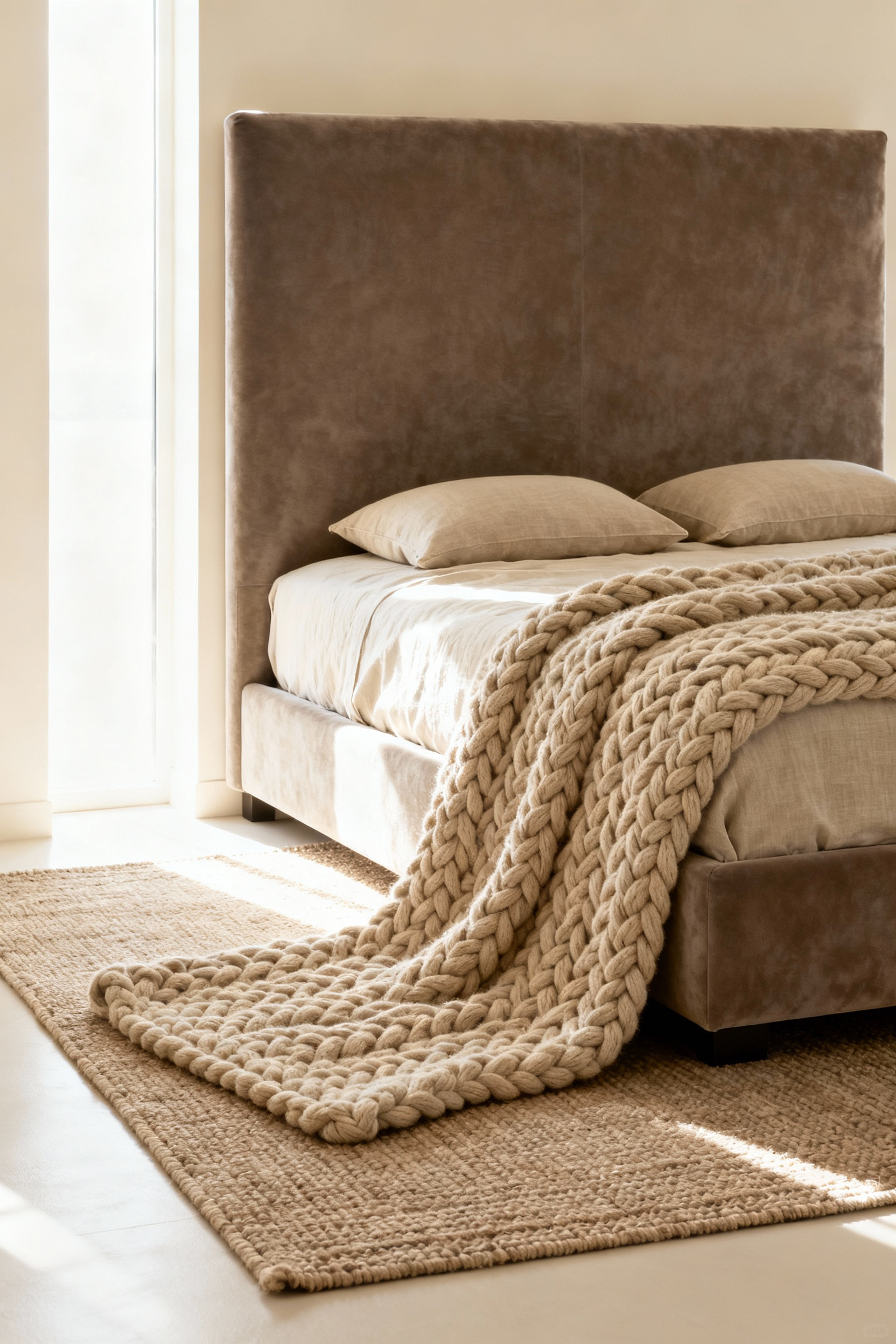
When the color palette is restrained, texture acts as the primary delineator of space. Differentiating these similar shades through materiality prevents a flat, one-dimensional look.
Contrast is key here. Pair crisp, smooth Ecru linen sheets with a chunky, nubby Oatmeal knit throw. Introduce a deep, velvet Taupe cushion for visual weight. This tactile layering ensures that even subtle tonal shifts remain distinct, adding architectural interest without creating visual clutter.
Finally, lighting conditions should dictate your specific shade selection. While Ecru and Oatmeal generally retain a warm, creamy consistency, Taupe is complex and reactive. To master the balance of undertones, assess the natural light in your room:
- Northern Exposure: Cool light can make neutrals look drab. Choose a warm Taupe with pink or red undertones to counter the blue light and maximize the coziness of your Ecru and Oatmeal layers.
- Southern Exposure: Warm light can oversaturate beige tones. Opt for a cooler, gray-leaning Taupe to introduce a tranquil contrast that balances the sun’s natural heat.
5. The Travertine Revival: Anchoring the Room with Raw Stone
Travertine brings an undeniable sense of history and grounding to a beige bedroom. Its natural palette—spanning cream to warm beige with subtle sun-baked undertones—serves as the perfect foundational hue for the space.
To maintain the serenity required for rest, prioritize honed finishes over polished surfaces. A matte texture diffuses light rather than reflecting it, softening the stone’s visual impact and allowing it to blend seamlessly with the room’s quieter elements.
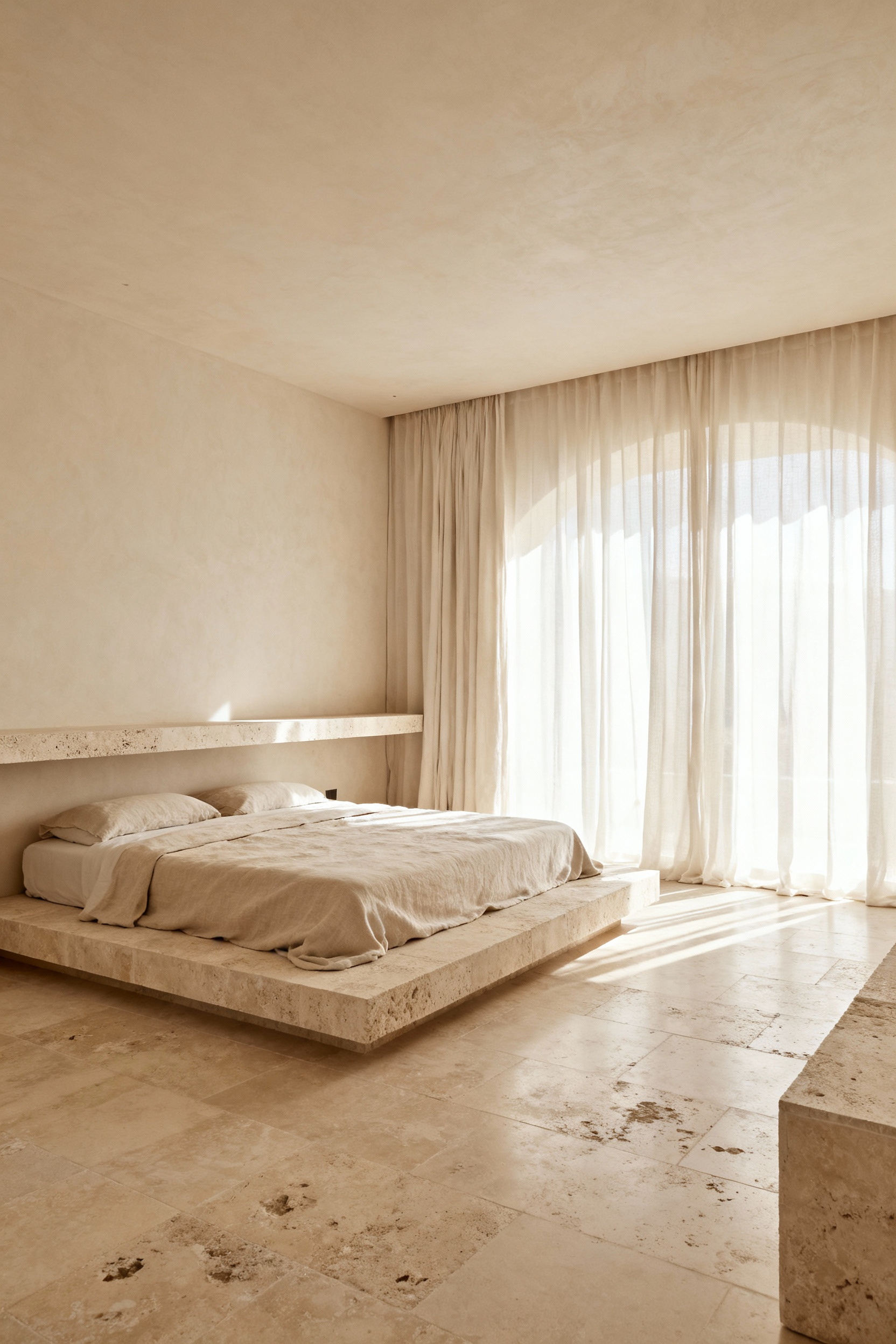
You can introduce this raw material through bold architectural gestures or curated furniture pieces. For a dramatic effect, apply travertine slabs to the wall behind the bed. This creates a powerful focal point that anchors the sleeping area without overwhelming the floor plan.
Alternatively, incorporate sculptural furniture to add weight on a smaller scale. A fluted travertine bedside table or a low-profile console introduces the stone’s porous texture without the commitment of permanent construction.
Balance is essential when working with organic stone. Because travertine feels cool and hard to the touch, you must offset it with softness to retain a cozy atmosphere. Layer the room with tactile materials that contrast against the rock’s pitted surface. Pair a stone backdrop with a braided wool rug, heavy linen bedding, or a bouclé armchair. These plush textures interact with the stone’s raw nature, elevating the beige palette from flat to luxuriously dimensional.
6. Low-Profile Platform Beds: A Modern Nod to Middle Eastern Floor Living
The low-profile platform bed offers a contemporary interpretation of the traditional Middle Eastern *Majlis*, or floor seating. By positioning the sleeping area closer to the ground, you create an intimate atmosphere that physically lowers the room’s center of gravity and promotes tranquility.
This design choice also maximizes vertical space, making the bedroom appear airier and less cluttered—a crucial component of modern minimalist bedroom decor. To align with a beige palette, select bed frames crafted from light-toned solid woods like acacia or upholstered in cream linen fabrics. These materials introduce organic warmth while maintaining clean, architectural lines.
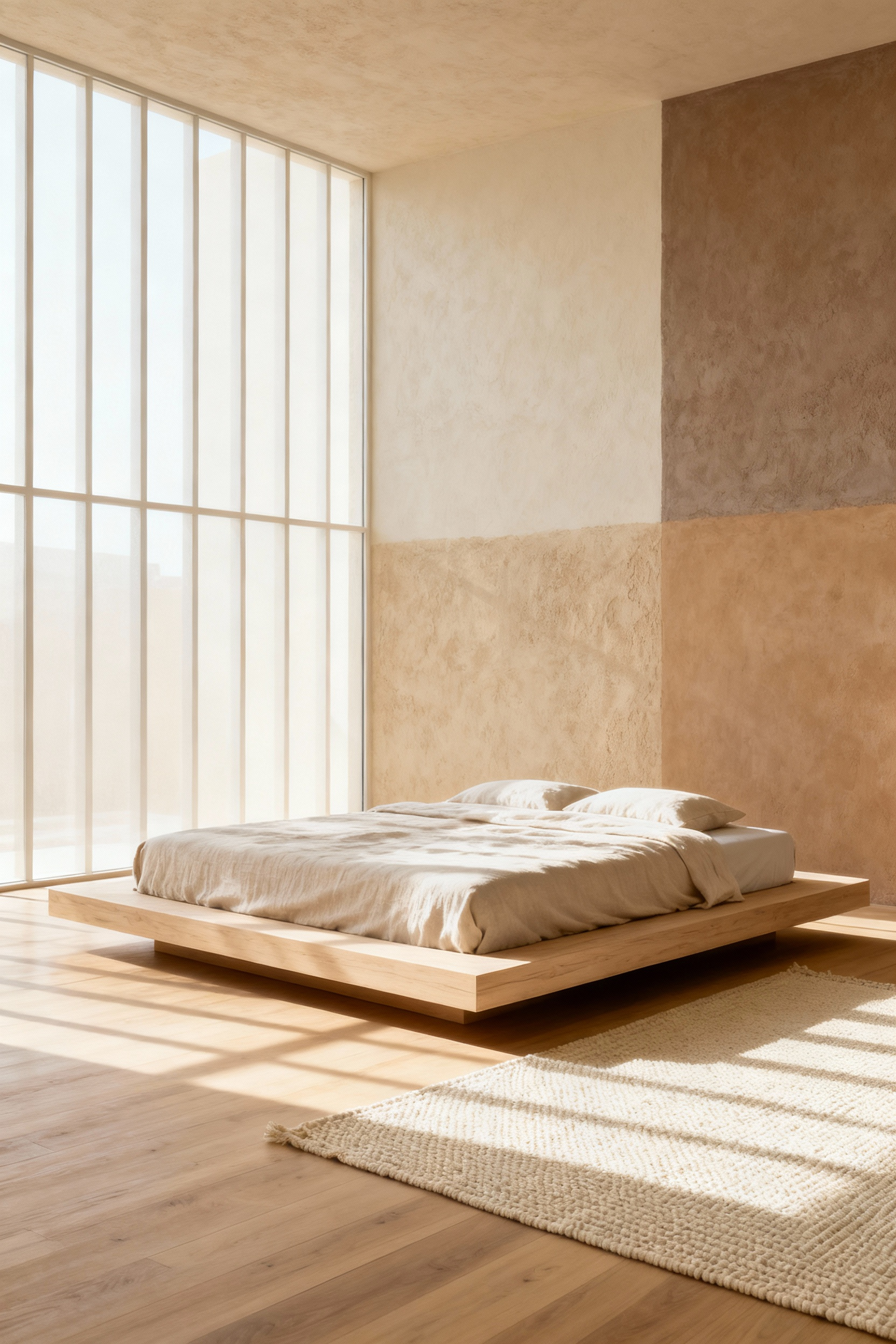
While the bed frame itself provides structure, soft textiles define the comfort level. Mimic the inviting nature of regional floor living by layering bedding with diverse textures in monochromatic beige tones. Incorporate chunky linen throws, wool knits, and velvet accent pillows to add depth without breaking the neutral color scheme.
Anchor this arrangement with a large, high-pile rug, such as a Moroccan-style *Beni Ourain* or a woven jute mat. Placing a rug beneath the platform softens the visual impact of the floor and emphasizes the bed as the room’s focal point.
Keeping proportions consistent is key. Standard-height furniture often disrupts the horizontal flow of a low-profile arrangement, so pair the bed with short, wide nightstands or floor-sitting side tables. Select low-slung table lamps to keep the lighting aligned with the furniture’s elevation. By ensuring all elements exist on a similar horizontal plane, you preserve the room’s grounded perspective and achieve a cohesive, restful environment.
7. The Art of Imperfection: Selecting Wabi-Sabi and Reclaimed Wood Finishes
Wabi-Sabi philosophy grounds an airy beige palette with history and weight. To achieve this, prioritize reclaimed wood pieces that remain unpolished, unglazed, or feature a limewash finish.
Matte surfaces expose natural grain and knots, offering a tactile experience that contrasts beautifully with soft textiles. Actively seek salvaged timber with character, such as subtle cracks, worn edges, or color variations. These visible “flaws” tell a story and prevent a monochromatic room from feeling sterile or overly manufactured.
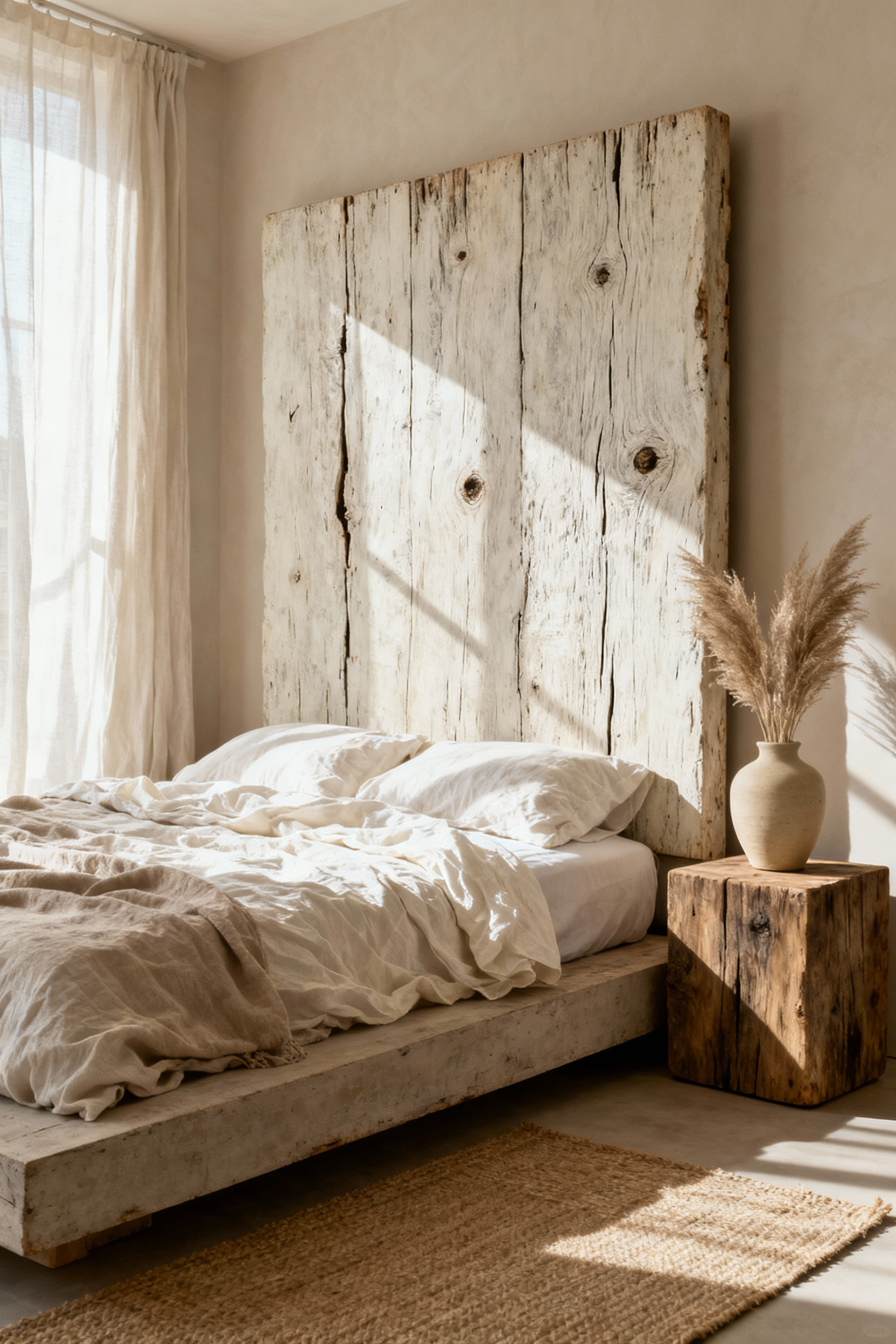
Restraint is crucial when incorporating rustic elements into a modern space. Avoid covering every surface in wood to prevent a heavy, cabin-like atmosphere. Instead, designate a single focal point to anchor the room. A low-profile platform bed, a simple dresser, or a wall-mounted headboard serves this purpose effectively. This focused approach ensures the reclaimed material adds authenticity without overwhelming the serene atmosphere.
Highlight the wood’s aged aesthetic through thoughtful lighting and hardware selection. Pair reclaimed surfaces with muted metals that develop a natural patina, such as antique brass or aged copper. The organic aging of these metals aligns with the narrative of passing time.
Finally, illuminate these textures with soft, diffused lighting. Position paper lanterns or linen-shaded lamps near the wood features. While harsh light flattens texture, soft and warm light casts gentle shadows that emphasize the wood’s unique grain and imperfections, creating an inviting ambiance.
8. Layering Linens: Why Breathable Fabrics and Wrinkles are Essential
Select 100% natural, breathable fabrics like linen or cotton for your base layers. In a beige aesthetic, rely on shades like cream, sand, or natural linen to anchor the palette.
These materials serve a dual purpose; they provide the visual warmth required for a minimalist space and regulate body temperature for genuine comfort. A restful bedroom relies on this functional foundation just as much as its visual style.
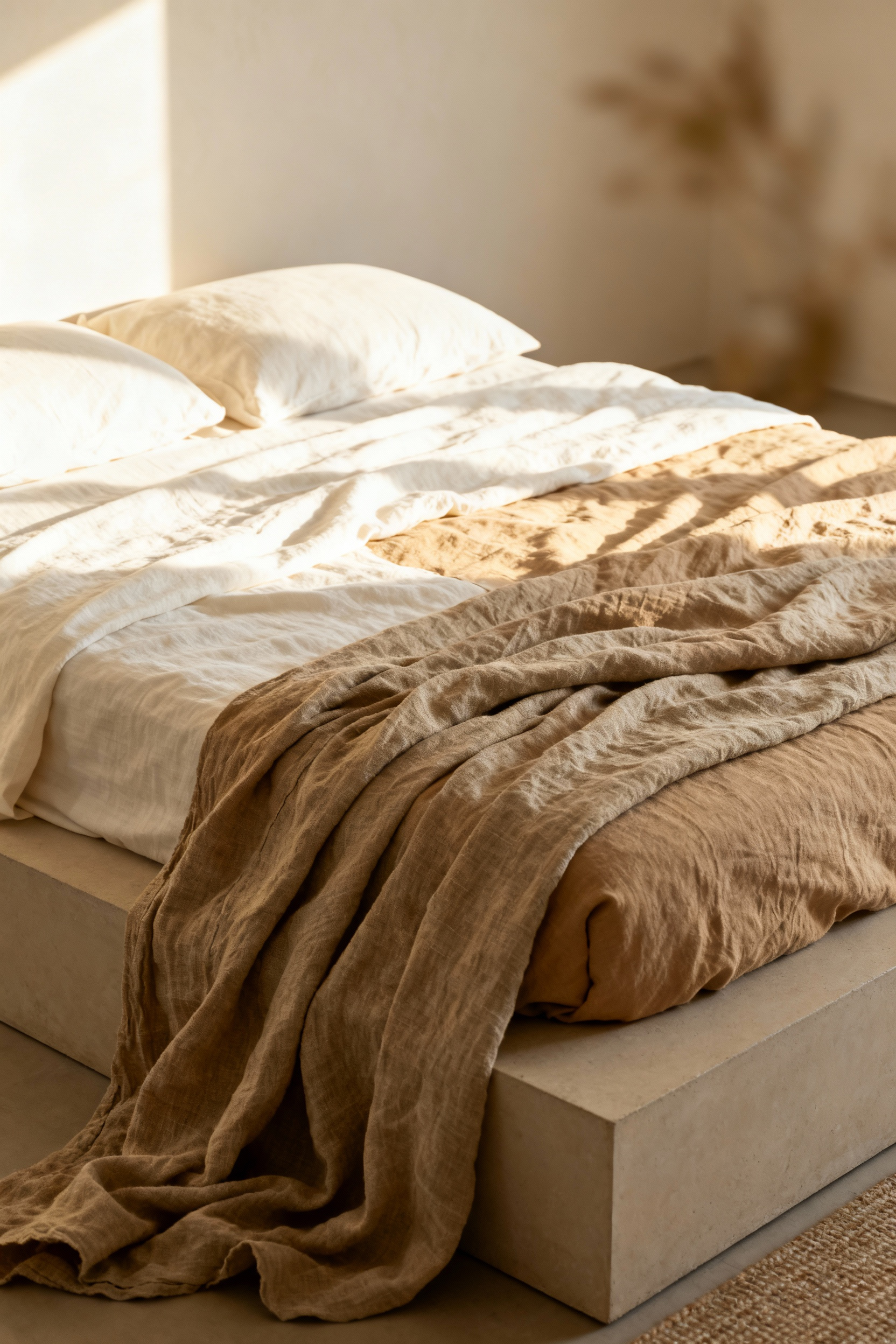
Embrace the natural, subtle rumpled texture of high-quality linen. Skip the iron, as the gentle wrinkles create a relaxed, organic atmosphere that defines the “effortless” look.
Since the color palette is monochromatic, you must rely on tactile contrast to create depth. Layer smooth cotton sheets against a slightly rougher linen duvet, then introduce a chunky knit, waffle weave, or muslin throw. This variation in surface texture prevents the neutral scheme from appearing flat or sterile.
Avoid overly neat styling to maintain a soft, inviting atmosphere. Fold the duvet or quilt down one-third to reveal the sheet layer underneath, adding immediate visual complexity. Finally, casually drape a throw blanket diagonally across the foot of the bed rather than folding it tightly. This technique adds necessary height and volume, resulting in a plush finish that feels curated yet livable.
9. Sculptural Bouclé: Softening Hard Architectural Lines with Texture
Modern bedrooms often rely on sharp angles and clean lines, but these features can sometimes feel cold. To counterbalance this rigidity, prioritize bouclé pieces with soft, rounded, or asymmetrical silhouettes.
A curved headboard or a spherical armchair introduces necessary organic movement, effectively breaking up the angularity of walls and windows. When you select a large item like a low-slung bed frame in cream or sand, it serves as a tonal anchor. This creates a focal point of visual warmth that softens the room’s structure without disrupting a minimalist beige palette.
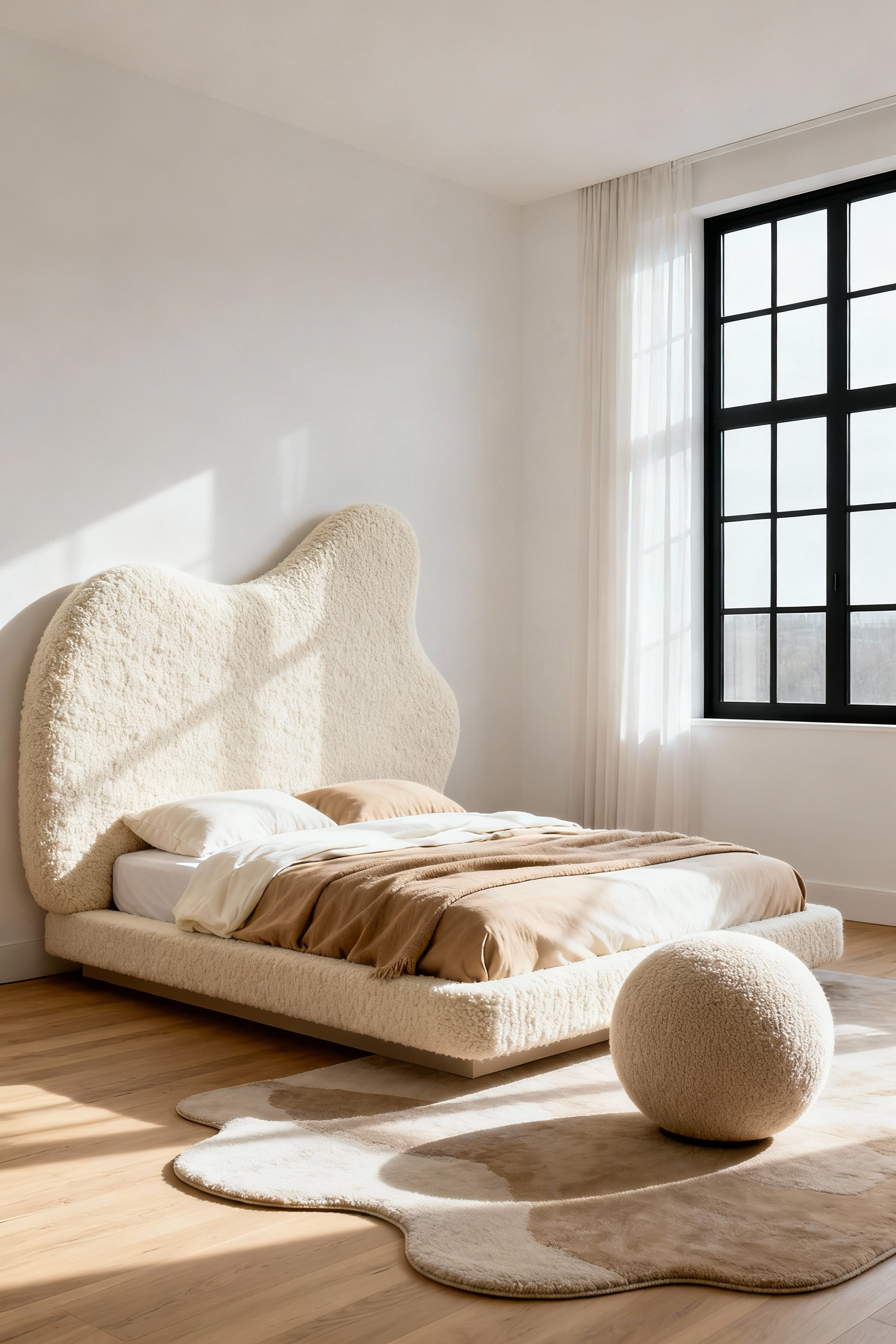
Elevate the nubby texture of bouclé by deliberately contrasting it against polished surfaces. Pair a plush armchair with hard, sleek elements common in modern architecture, such as a black metal side table or a marble-top dresser. This juxtaposition emphasizes the softness of the fabric while maintaining a refined edge.
For a “quiet luxury” aesthetic, use the bouclé as a grounding base for layering. Mix in smooth materials like raw linen bedding or a velvet pillow in deep taupe to build depth without adding visual clutter.
You don’t need massive furniture to achieve this effect. Introduce small, architectural accents such as a round footstool or a low-profile storage ottoman for a subtle impact. Placed at the foot of the bed or in a reading nook, these compact pieces add significant tactile interest. They effectively interrupt flat planes and offer a sense of cocoon-like comfort, proving that even minor additions of sculptural texture can transform the atmosphere of a disciplined space.
10. The Architectural Arch: Creating Built-in Niches for Visual Interest
Transform flat walls into sculptural features by incorporating the soft geometry of arches. A large, headboard-sized niche directly behind the bed creates an immediate focal point and frames the sleeping area.
To enhance depth, apply a slightly deeper shade of beige or a textured finish, such as limewash or fluted paneling, inside the recess. This technique adds architectural weight and visual interest without introducing harsh color contrasts that might disrupt the room’s serenity.
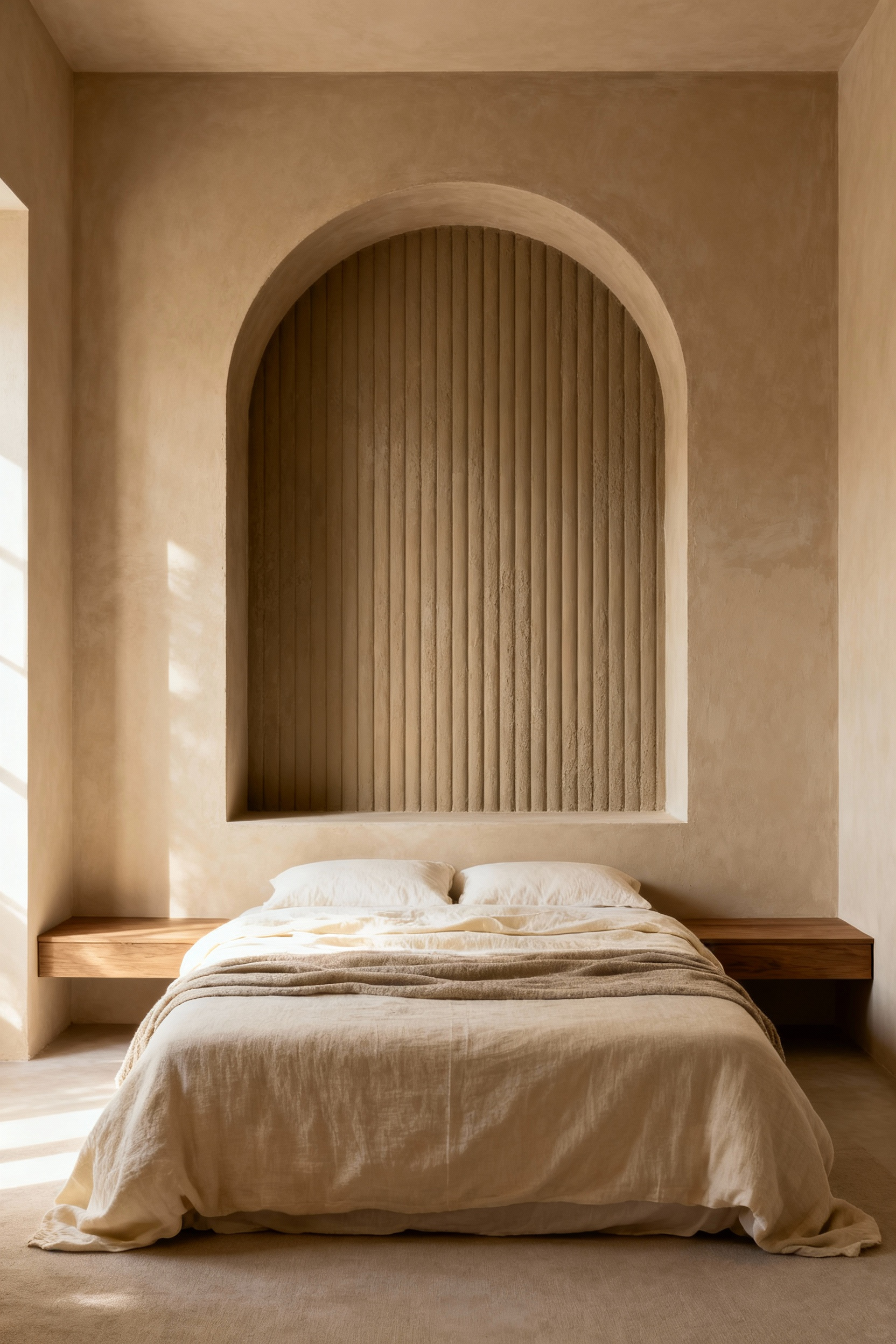
Lighting defines architectural form and elevates the mood. Install warm LED strip lighting along the upper interior curve to cast a soft, ambient glow that emphasizes the arch’s shape.
Alternatively, mount chic black or brass wall sconces on either side of the niche. This approach highlights the craftsmanship of the design and provides essential task lighting, ensuring the bedroom remains functional for reading while maintaining a relaxing atmosphere.
Integrate functionality directly into the architecture to preserve a minimalist profile. In compact spaces, symmetrical arched niches flanking the bed effectively replace bulky traditional nightstands. Install floating shelves within these recesses using contrasting materials like light-stained wood or creamy marble. This prevents the all-beige scheme from falling flat and offers a clutter-free surface for essentials, keeping the floor plan open and airy.
11. Ceramic Lighting: Hand-Thrown Pottery as Functional Art
Hand-thrown ceramic lamps bridge the gap between sculpture and utility, effectively acting as functional art within a sleeping space.
To maintain a cohesive minimalist aesthetic, prioritize natural or matte finishes in earth tones such as bone, cream, or light grey. These unglazed surfaces reduce glare and reinforce a sense of calm, aligning perfectly with wabi-sabi principles. By choosing a bold, urn-inspired silhouette, you transform a simple nightstand necessity into a unique statement piece that grounds the room.
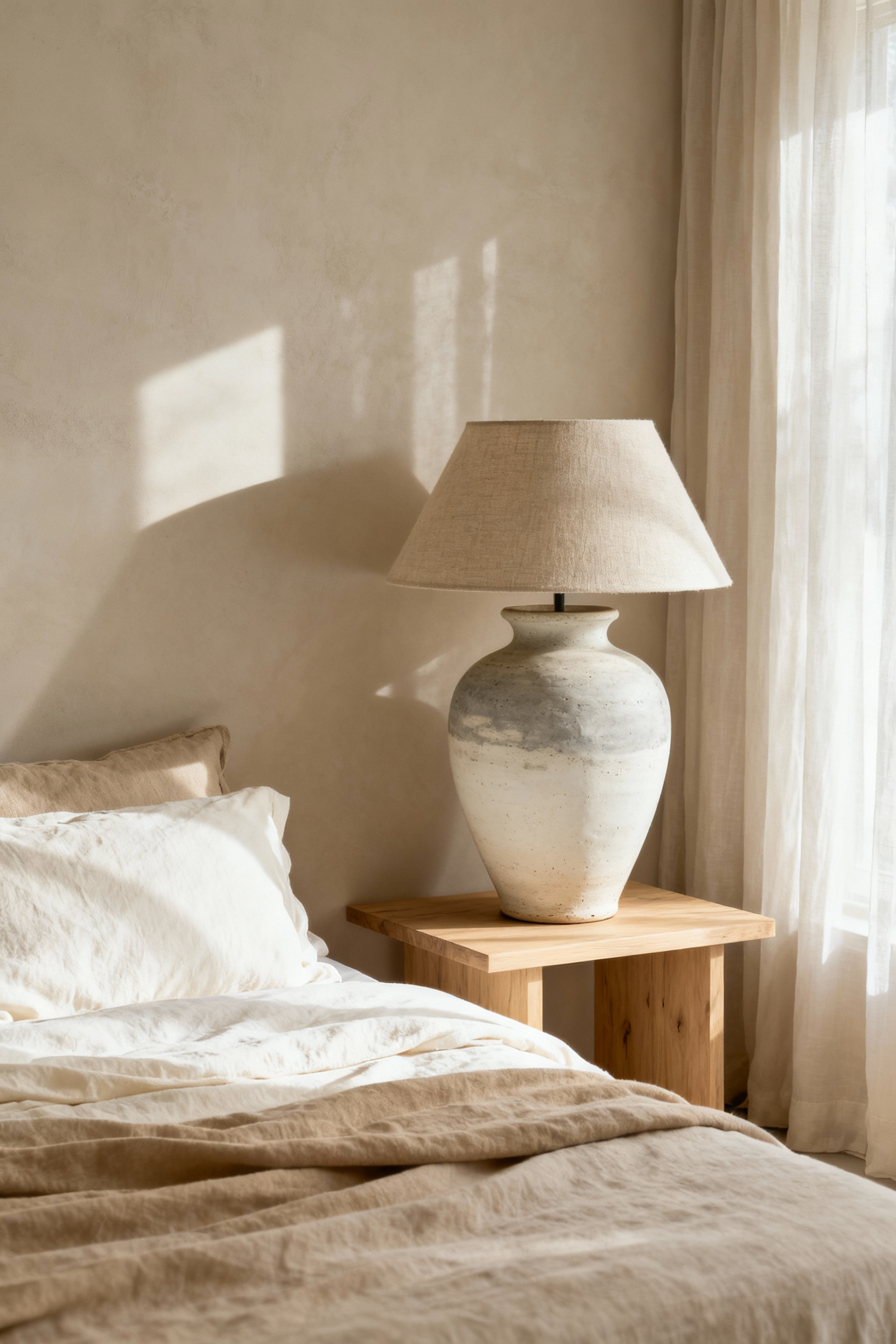
Texture prevents a monochromatic beige palette from feeling flat or sterile. The imperfect ridges and tactile surfaces left by a potter’s wheel create essential visual depth when placed against smooth wall finishes and crisp bed linens.
Complete the look by pairing the pottery base with a shade made from natural materials, such as beige linen or off-white cotton. This combination diffuses light into a warm, ambient glow, softening the room’s atmosphere while keeping the color scheme tightly integrated.
12. Dried Botanicals: Sustainable Styling with Native Grasses and Branches
Incorporating dried botanicals anchors the beige bedroom aesthetic in organic realism. This styling choice blends tactile texture with a commitment to sustainability. Select plants that naturally dry to soft, muted tones like cream, ivory, and earthy browns.
Materials such as bleached ruscus, pampas grass, or natural lunaria effortlessly complement a neutral palette. Unlike fresh blooms that require frequent replacement, dried arrangements last for years. This longevity dramatically reduces waste and maintenance, offering a practical, eco-friendly design solution.
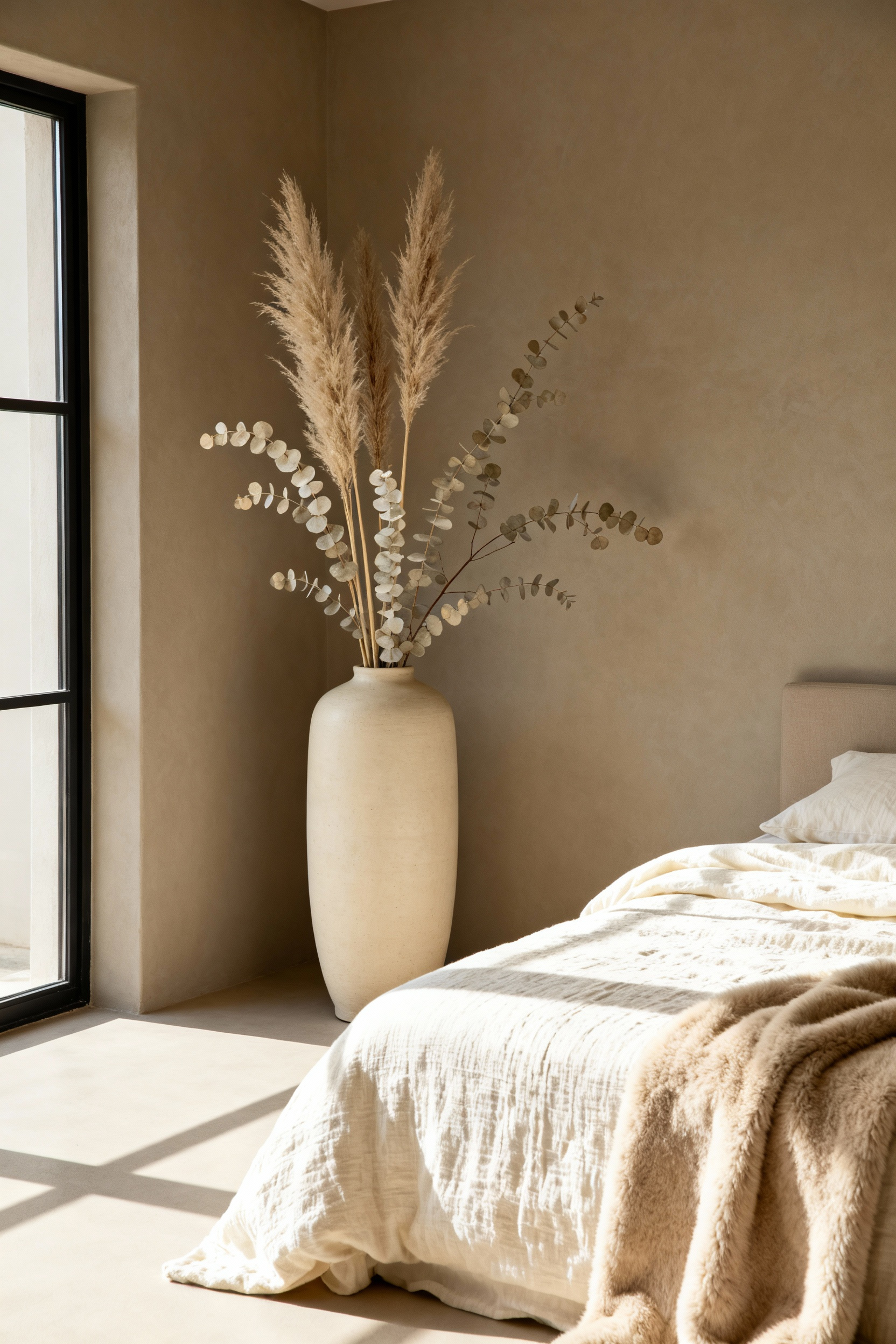
Adopt a “less is more” approach to arrangement. Instead of dense, cluttered bouquets, place a single, dramatic branch—such as a dried olive branch or a tall native grass plume—into a floor vase. This creates sculptural interest and vertical height without overwhelming the room.
Pair these elements with textured, organic vessels. Matte ceramics, terracotta, or rustic wooden vases reinforce the earthy theme significantly better than transparent glass or high-gloss finishes.
Extend this botanical texture to vertical surfaces for a cohesive architectural look. Preserved, flat grasses or branches function exceptionally well as unique wall art. Consider framing pressed specimens or creating a minimalist, tiered installation directly above the headboard. These techniques add depth to the room while maintaining the serene, monochromatic atmosphere essential to a restful space.
13. The Jute Foundation: Grounding the Space with Organic, Woven Rugs
In a monochromatic beige bedroom, texture acts as the primary tool to prevent the design from feeling flat or sterile. A jute rug introduces an essential organic element, utilizing its coarse nature to add visual depth without disrupting a neutral color palette.
Select a rug with a distinct woven pattern, such as a chunky braid, boucle, or tight knot. These textures catch the light differently than smooth floors or crisp linens, providing a rugged, earthy counterpoint that instantly warms the minimalist aesthetic.
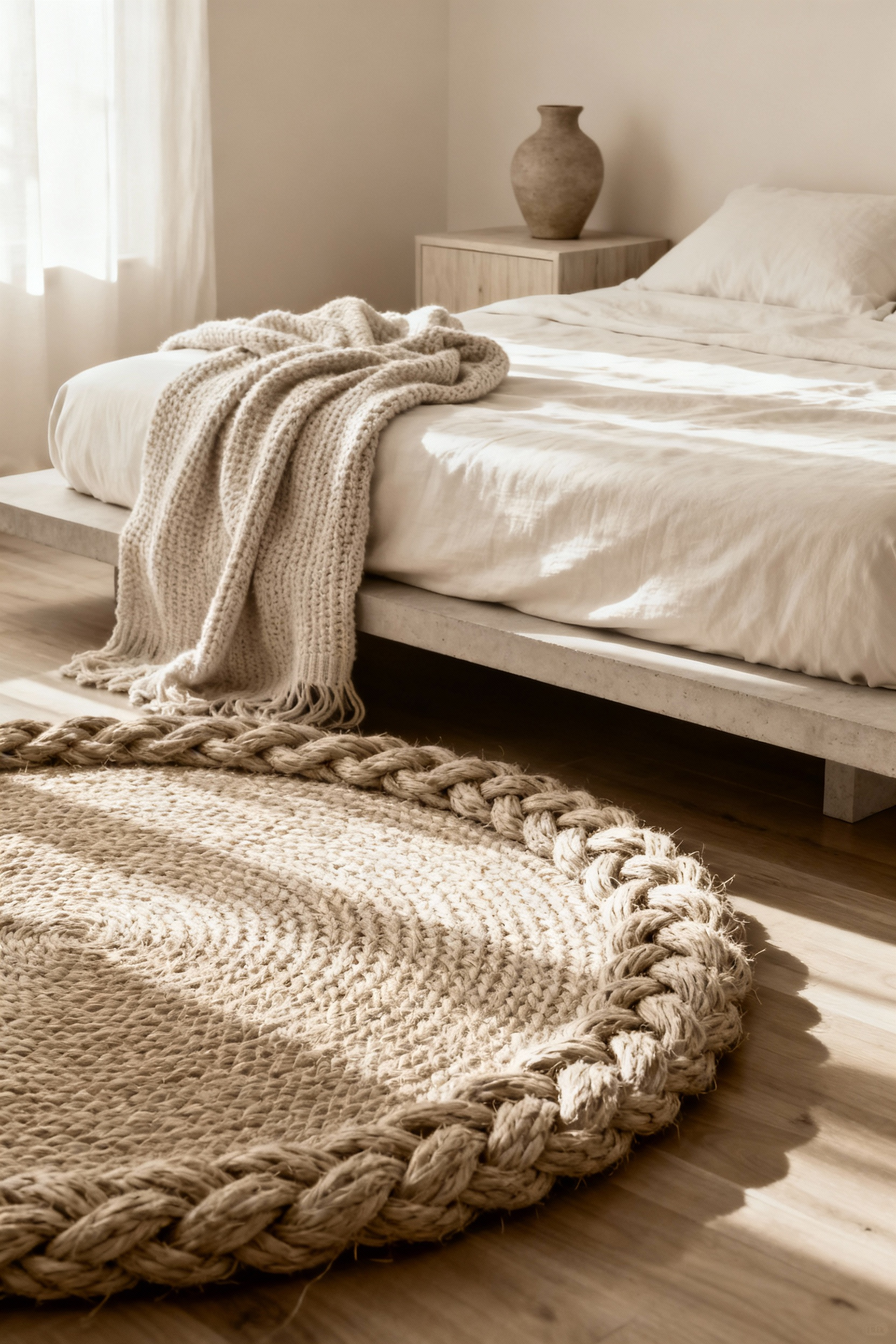
While the look of pure jute is architecturally grounding, its natural roughness can be unforgiving on bare feet. To balance durability with bedroom comfort, opt for a jute-cotton or jute-wool blend. These mixtures soften the fibers while retaining the desired natural appearance.
Alternatively, treat the jute rug solely as a foundation by layering a smaller, softer rug on top. A plush cream wool or cotton rug placed over the jute base offers immediate underfoot softness, while the underlying jute frames the area with necessary structure and scale.
Getting the size right is crucial for a cohesive layout. A rug that is too small will make the furniture feel disconnected. Ensure your jute foundation extends at least 12 to 18 inches beyond the sides and foot of the bed. Position the rug under the bottom two-thirds of the bed frame to visually unite the sleeping area. This placement “grounds” the room, directing the eye to the center of the space and establishing a sense of calm stability.
14. Solar-Conscious Window Treatments: Filtering Harsh Light with Sheer Layers
Managing intense natural light requires a strategic approach to window dressing. Implement a dual-layer system to achieve maximum control over both illumination and temperature.
Install sheer curtains on the innermost rod to filter harsh daytime glare, creating a soft, diffused glow that protects the interior from direct heat. Layer solid beige or mocha blackout drapes on the outer rod to provide necessary thermal insulation and ensure complete darkness for sleep.
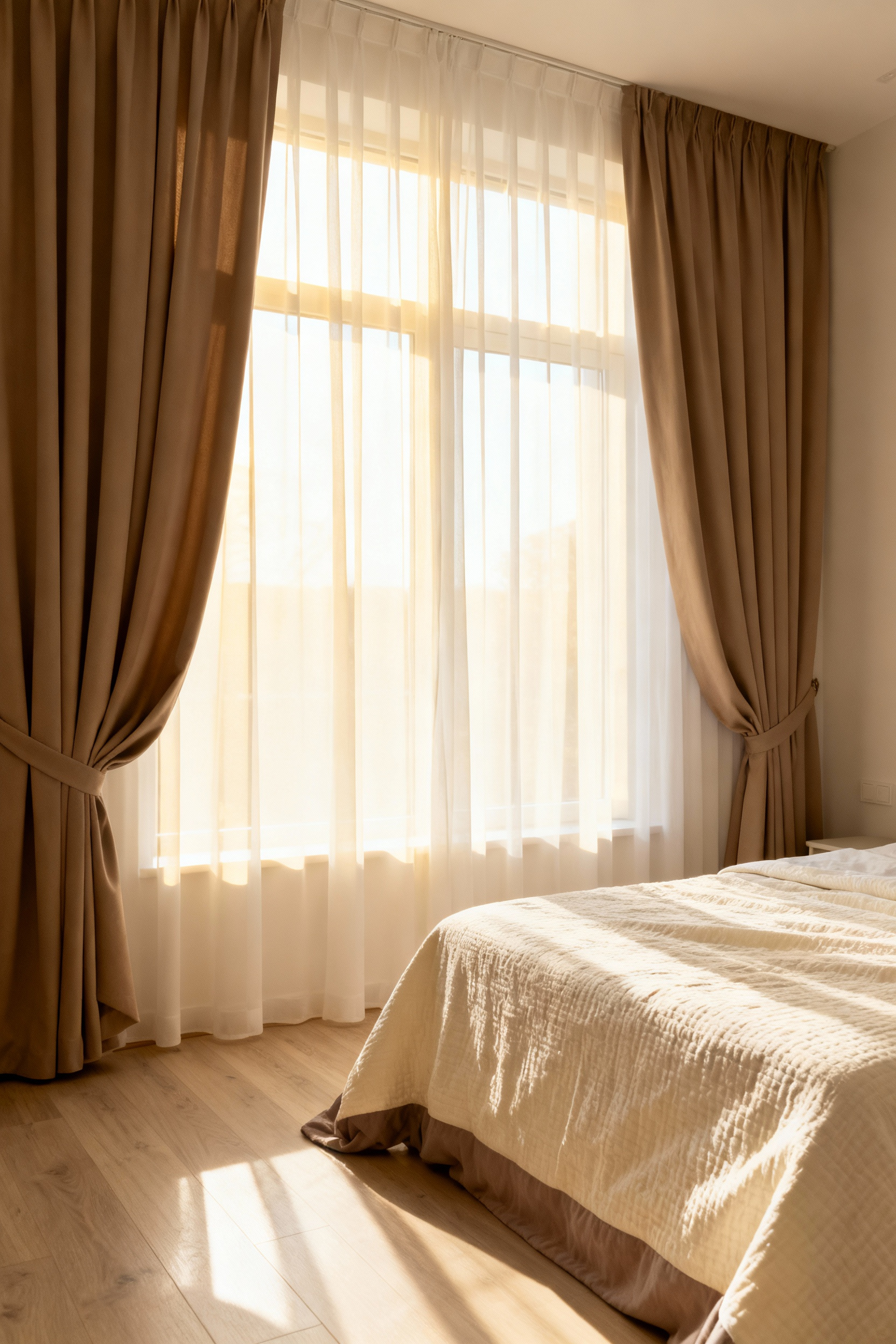
Material selection plays a pivotal role in maintaining a cohesive design. Opt for natural, textured fabrics like gauzy linen, voile, or faux linen. These materials soften the architectural lines of the window and add organic dimension without visual clutter.
Prioritize warm tones such as cream, light beige, or oatmeal rather than stark white for your sheer layer. This specific color choice filters incoming sunlight to cast a “sun-kissed” tint across the space, enhancing the serene atmosphere of the room.
15. Minimalism as Temperature Control: How Decluttering Promotes Airflow
Minimalism serves a functional purpose beyond aesthetics by reducing physical mass that traps heat. Clutter acts as insulation, absorbing thermal energy and restricting the natural movement of air.
To combat this, prioritize clear floor space and ensure the area beneath your bed remains empty to establish unrestricted circulation zones. This openness allows cooling systems and fans to operate efficiently rather than forcing air around obstacles.
Additionally, limit decorative objects on bedside tables and dressers to one or two curated items. A surface with fewer objects retains less heat and contributes to a room that feels physically and mentally cooler.
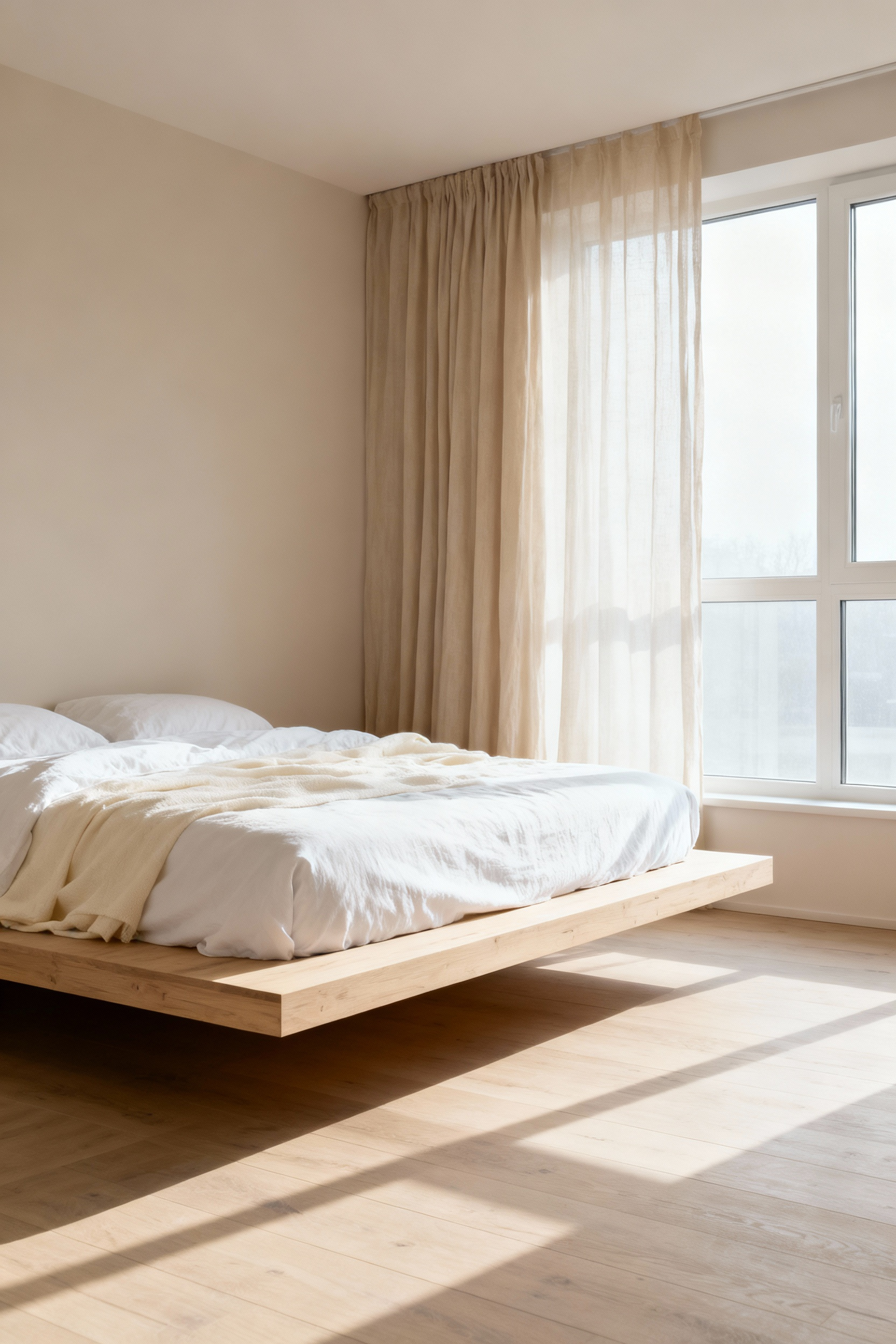
Strategic furniture placement and material selection further enhance this passive temperature control. Maintain at least one foot of distance between large pieces, such as bed frames or dressers, and your air vents or radiators to prevent blockages.
Utilizing low-profile furniture creates a larger volume of unobstructed air in the upper portion of the room, promoting better circulation. Complement this layout with breathable beige textiles, such as cotton or linen. Linen offers a textural element central to the minimalist look while naturally regulating temperature for year-round comfort.
A streamlined room also means better indoor air quality. Fewer items on surfaces mean fewer collection points for dust, which can otherwise cycle through the room and HVAC system. Regular dusting becomes a quick task rather than a chore, significantly reducing airborne irritants. Maintaining a dust-free, decluttered space supports respiratory health and creates the calm, clean atmosphere essential for restorative sleep.
16. Scent-Scaping: Completing the Aesthetic with Dry Woods and Amber
A visually cohesive space requires sensory depth to feel truly finished. Scent-scaping acts as an invisible layer of texture within a neutral bedroom, reinforcing the serenity of a beige palette.
Just as you layer linen and wool to prevent a monochromatic room from appearing flat, you must layer fragrance to build atmosphere. Dry woods, such as cedarwood or sandalwood, provide a rugged, earthy foundation. Amber adds a resinous, glowing warmth. Together, these notes mirror the tactile materials of the room, transforming a simple color scheme into a sophisticated, grounding environment.
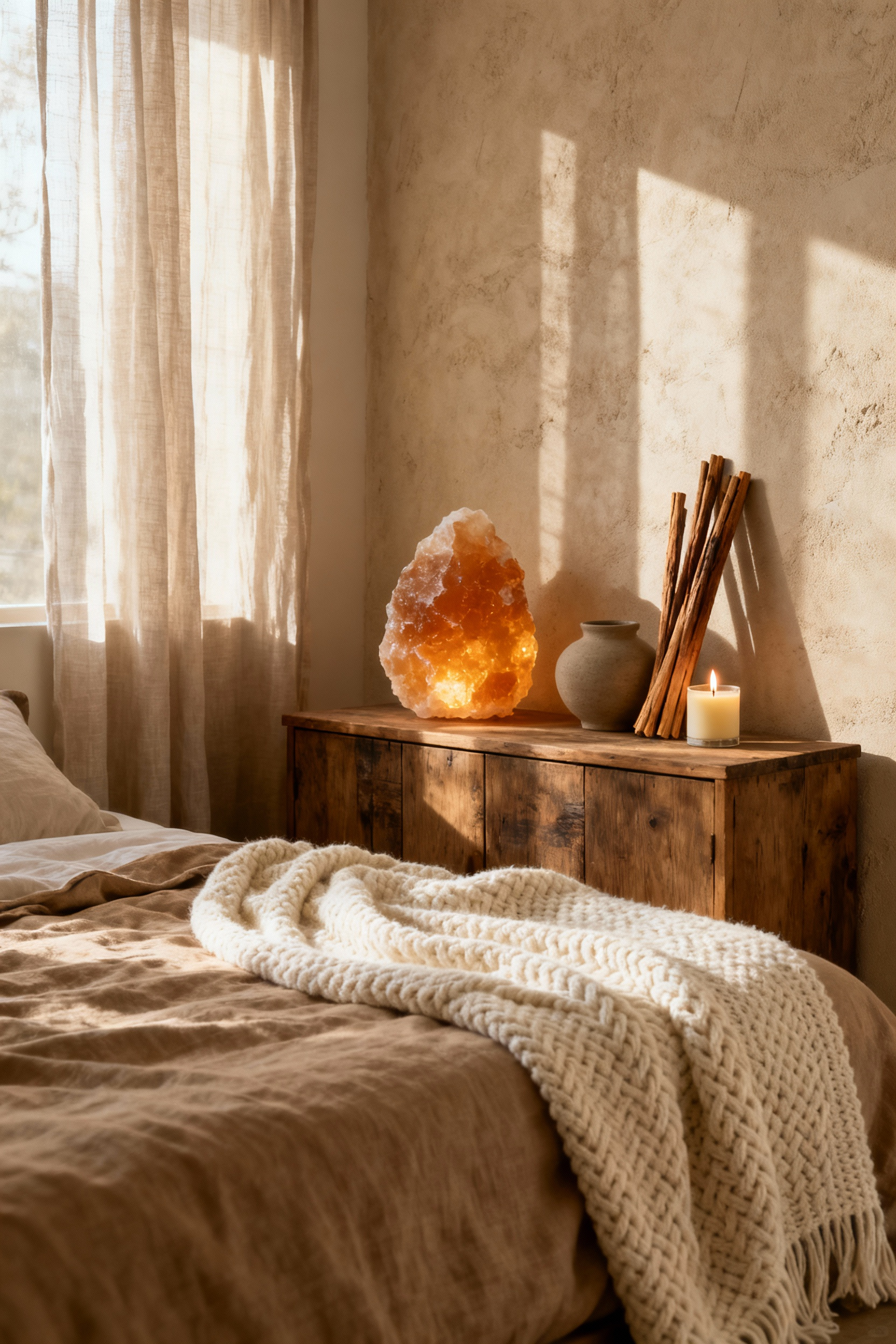
Select fragrances that enhance comfort rather than overwhelm the senses. Look for amber-wood blends containing accent notes like vanilla, patchouli, or soft musk. These elements soften the starkness of dry wood, ensuring the profile remains sweet and inviting. This specific olfactory combination serves as a powerful mood cue. It signals to the brain that the bedroom is a dedicated space for retreat and meditation, aligning perfectly with the principles of sophisticated escapism.
The method of delivery is just as important as the scent itself. To maintain a tranquil atmosphere, avoid strong, volatile fragrances that clutter the air. Instead, prioritize long-lasting, low-intensity application methods:
- Reed Diffusers: Use these for a consistent, background aroma that anchors the room’s identity without fluctuation.
- Linen Sprays: Apply these directly to bedding for a fleeting, intimate scent experience that enhances the perception of cleanliness and calm.
Conclusion: Cultivating a Sanctuary, Not Just a Trend
True minimalism creates presence through intentionality rather than emptiness. When you look beyond beige as a mere color trend, you discover a design language rooted in tactile luxury and architectural balance.
By anchoring your space in enduring styles like Scandi or Japandi, you prioritize the integrity of materials—linen, walnut, wool—over fast-fashion decor. This shift builds depth through natural texture rather than pigment, turning a simple bedroom into a grounded, breathable retreat that reflects your personal narrative through carefully selected mementos.
Your sanctuary should evolve alongside your lifestyle, offering a stable foundation for daily restoration. A sophisticated neutral palette provides the versatility to welcome changing seasons and fresh perspectives without requiring constant reinvention.
Start by checking your current textiles for touch and authenticity. Remove synthetic, trend-based accessories and invest in a single, high-quality natural fiber element, such as a heavy linen throw. If you are seeking further visual inspiration, review our essential list of beautiful beige bedroom ideas. This commitment to tangible quality establishes the standard for a home designed to last, cementing the refined appeal of the beige bedroom aesthetic.
Frequently Asked Questions
How do I make a beige room look less boring or bland?
The key to avoiding blandness in a beige room is maximizing textural contrast. Since you lack color pigment, focus on depth by layering opposing materials. Pair rough elements (like jute rugs, limewash walls, or reclaimed wood) with soft elements (like velvet, bouclé, or chunky wool knits). Anchor the room by incorporating small, strategic accents of dark colors, such as matte black lamps or espresso furniture, to provide necessary visual grounding.
What accent colors go well with a beige bedroom aesthetic?
The best accent colors for a beige aesthetic are those found naturally in the earth or sky, as they reinforce the calming, grounded nature of the space. Consider muted sage green, pale sky blue, dusty terracotta, or deep olive. For architectural contrast, deep charcoal or matte black provides a sophisticated, modern boundary that prevents the neutrals from looking washed out.
Is the beige color aesthetic considered luxurious?
Yes, the beige aesthetic is frequently associated with “quiet luxury.” Unlike loud colors, beige relies on the inherent quality of materials to convey wealth and sophistication. When executed correctly using high-end, tactile materials like natural linen, cashmere, travertine, or custom plaster finishes, the monochromatic beige palette feels bespoke, intentional, and profoundly luxurious.