For generations, a pristine expanse of monoculture grass represented the ultimate standard of residential luxury. This vision of the “perfect” lawn—emerald green, uniform, and aggressively manicured—served as a rigid symbol of order and status. Homeowners continue to dedicate immense resources to maintaining this aesthetic, striving for a carpet-like finish that deliberately separates the home from the natural world. However, this pursuit of visual perfection creates a sterile environment that stands in direct opposition to sustainable living.
Today, discerning homeowners are transitioning away from sterile greens toward a resilient, luxurious lawn garden that balances contemporary aesthetics with ecological responsibility. The traditional monoculture lawn functions as a “biological desert.” It creates a barren landscape that fails to support diverse insect populations, effectively destroying habitats for vital pollinators like bees and butterflies.
The cost of this artificial uniformity extends beyond biodiversity loss. Maintaining these spaces requires excessive irrigation that drains freshwater supplies, while the chemical fertilizers and herbicides necessary for a weed-free appearance create toxic runoff that pollutes local waterways. The ecological price of the perfect turf is simply too high. A sophisticated cultural shift is now dismantling this outdated ideal.
The emerging “anti-lawn” and re-wilding movements favor rich textures, native plants, and xeriscaping over water-intensive turfgrass. This guide examines the transition away from the monoculture myth toward a landscape that embraces biodiversity and resilience. We will explore actionable steps, such as allowing early bloomers like clover to thrive, to create an outdoor sanctuary that balances contemporary aesthetics with ecological responsibility. For further reading on creating a self-sustaining outdoor space, review our guide on regenerative strategies.
Phase I: Architectural Zoning & Flow
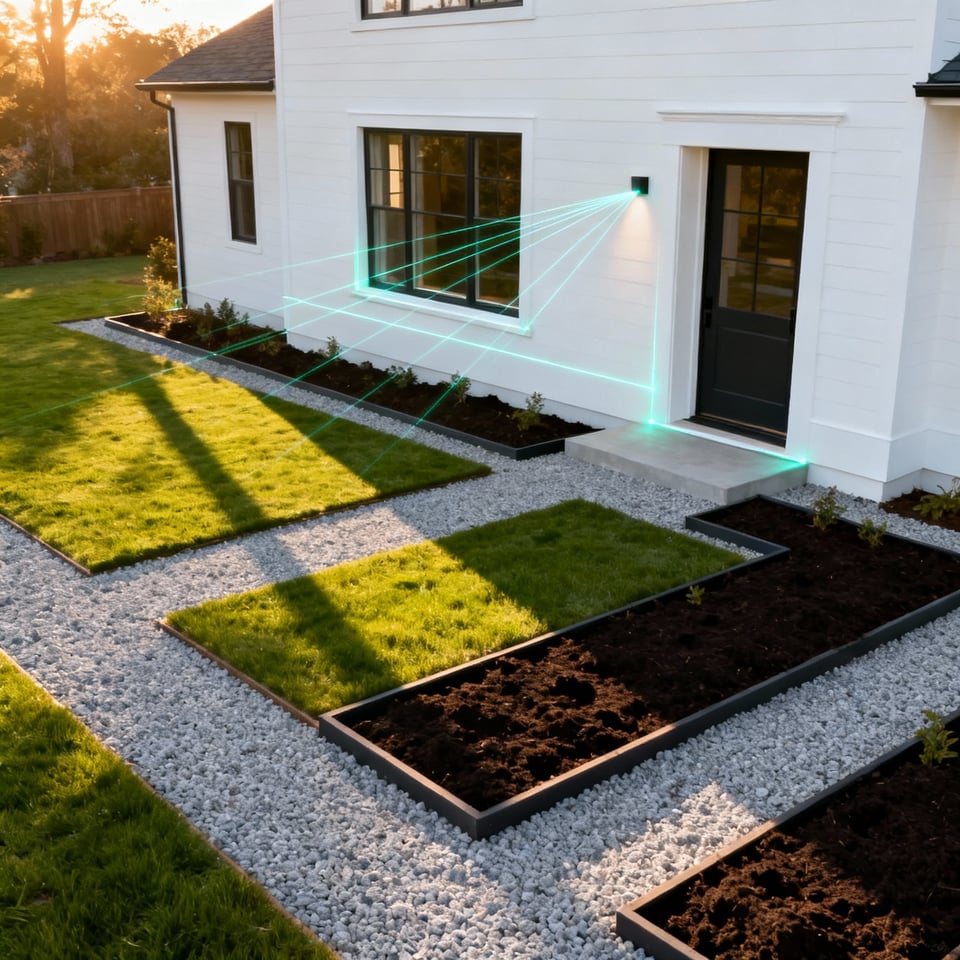
Successful garden design begins by treating the landscape as an immediate extension of the architecture. To ground the layout, establish a “regulating line” projected from the home’s key features. Extend imaginary lines from a main doorway, window edge, or building corner outward into the garden space to define the boundaries of the lawn, walkways, and planting beds. This alignment ensures the garden creates a cohesive visual dialogue with the structure, preventing the outdoor space from feeling like a separate, disjointed entity.
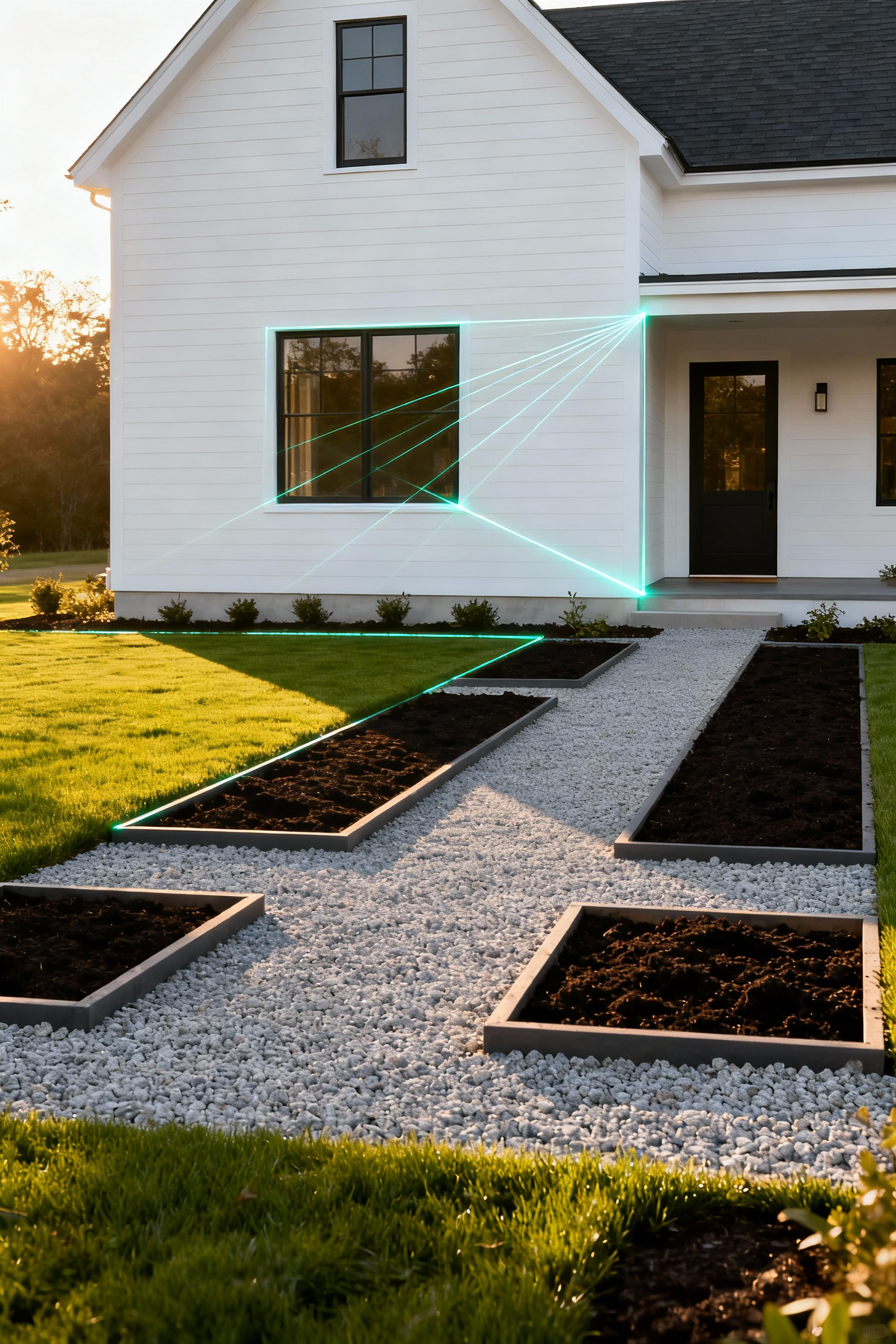
Once the structural lines are set, organize the site into distinct functional zones. Separate the layout into public entrance areas, private living spaces, and utility zones for tasks like composting or storage. Maximizing the impact of public zones requires attention to productive front yard decor ideas that redefine curb appeal. Grouping compatible activities maximizes utility and prevents spatial conflicts.
To visualize this, sketch the property outline and use colored markers to designate areas for active play versus relaxation. Connect these zones with pathways placed where foot traffic naturally occurs, such as the direct route from a patio to a gate. Choose curved lines to induce a relaxed rhythm or straight lines to provide formal, direct access to a focal point.
Finally, determine the appropriate scale of the lawn relative to hardscaping and planting beds. A large, open lawn demands substantial, integrated planting zones to maintain visual balance; small, isolated beds often cause a spacious yard to feel sparse or monotonous. While current trends favor reducing lawn size for water-wise planting or expanded patios, the remaining turf must remain proportionate to the building’s mass. This balance anchors the house to the land and supports a seamless flow between indoor and outdoor living.
1. The Dissolving Threshold: Creating seamless transitions between interior living and exterior green space
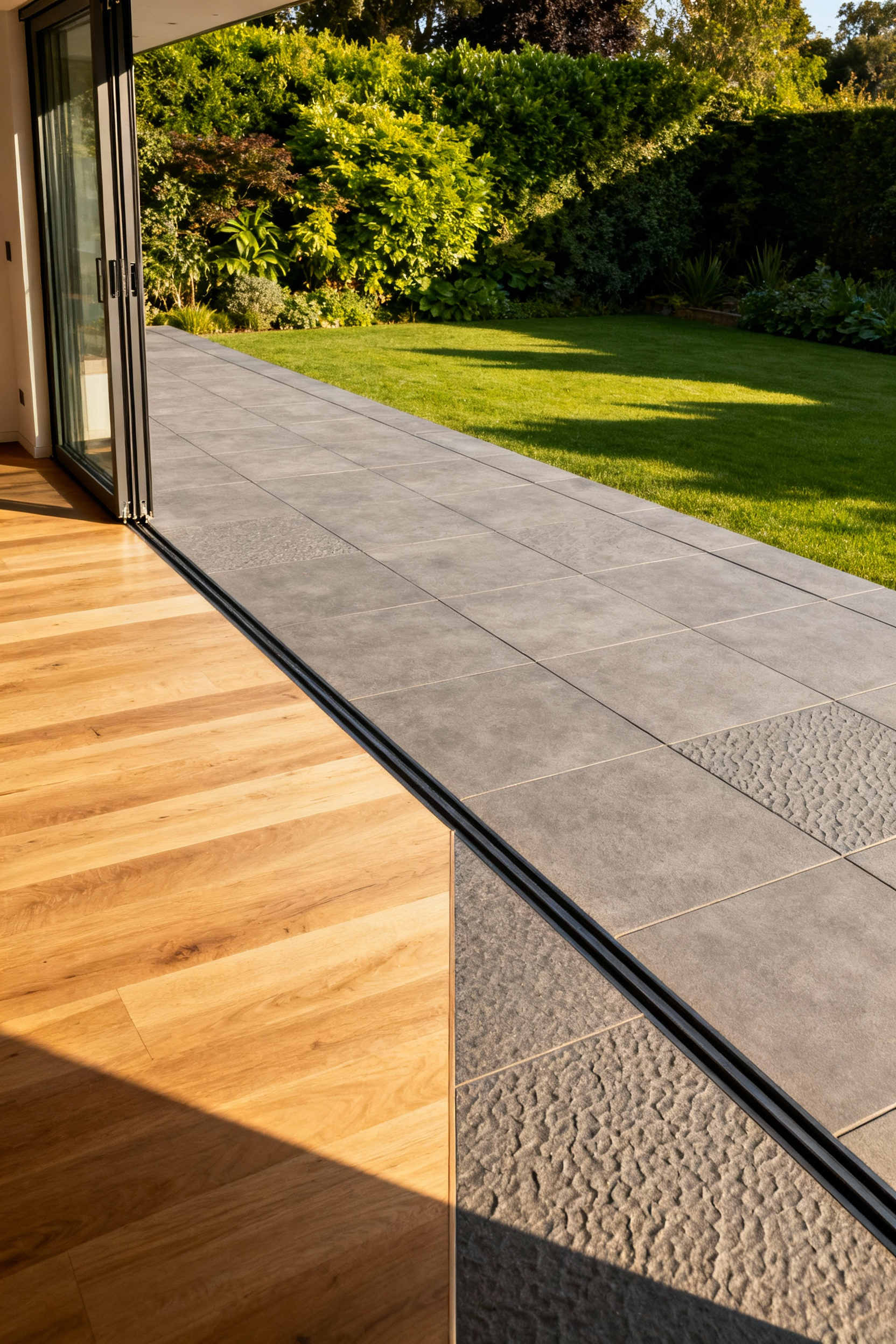
To truly merge your home with the garden, you must first remove the physical barriers that define the perimeter. Install full-width, zero-threshold bi-fold or sliding pocket doors that retract completely. This architectural choice physically merges the interior living space with the adjacent patio or deck. For a seamless effect, ensure the bottom track sits flush with both floor levels. This eliminates tripping hazards and creates an uninterrupted floor plane.
You should further enhance this visual flow by extending your flooring aesthetic. Use the same weather-resistant material, such as large-format porcelain tile or natural stone, for both the indoor and outdoor surfaces. When the floor material continues without a break, the eye perceives the exterior as a vital extension of the interior room. This creates a powerful biophilic bridge between spaces.
Treat the transition space as a functional “outdoor room” rather than a separate entity. Design this area with durable, comfortable seating and elements of indoor comfort, such as a pergola for shelter. Carry your interior color palette and primary materials, including wood tones and stone accents, into your outdoor furniture to ensure thematic consistency. Position this furniture to face the lawn garden. This layout guides traffic flow and draws the eye outward from the main indoor viewing area toward the green space.
Finally, soften the boundary by echoing exterior greenery inside the home. Incorporate large potted plants or vertical plant walls indoors that visually complement the colors and textures of your lawn and garden. To complete the connection, place a striking garden focal point, such as a water feature or a specimen tree, directly in line with a key window or door. This serves as an anchor point that naturally pulls the gaze out from the interior, firmly establishing a relationship between the luxury of the home and the vitality of the garden.
2. Negative Space Planning: Redefining the lawn as a ‘void’ that frames sculptural hardscaping
In contemporary landscape design, stop viewing the lawn as mere leftover space and start treating it as a deliberate “void.” This negative space is essential for visual balance, acting as a calm counterpoint to the heavy textures of patios and retaining walls. By embracing intentional asymmetry, you allow the open expanse to provide visual rest. This creates a sophisticated “ma” or interval that prevents the garden from feeling cluttered, ensuring that every square foot serves a specific architectural purpose.
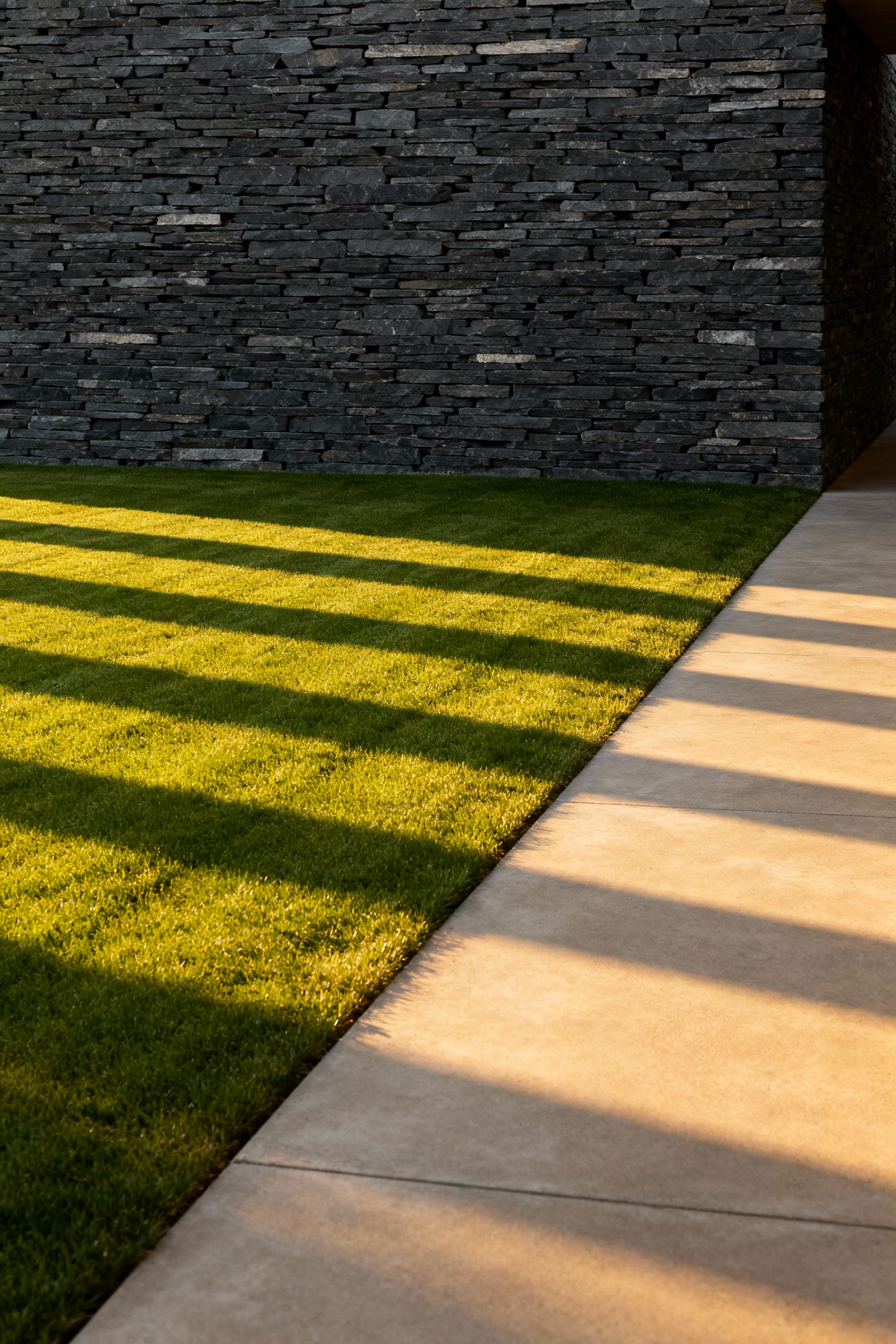
To achieve this effect, the void requires a distinct, disciplined shape. Do not rely on vague transitions; instead, install high-quality metal or stone edging to create crisp, continuous lines. These edges define the boundary between the flat, soft void and the structured “positive” elements of the hardscape. Whether you employ dramatic curves or strict geometric angles, this precision creates the necessary contrast against large-format concrete pavers or smooth-cut natural stone.
Once defined, this negative space transforms into a canvas that isolates and highlights specific focal points. Use the void to frame sculptural hardscaping, such as a modern fountain, a custom corten steel art piece, or a massive boulder. Placing a singular, three-dimensional element at a key junction within the open space turns the garden into a living gallery. This approach ensures the hardscaping commands attention, creating a luxurious, high-impact aesthetic rooted in clarity and restraint and supporting the overall architectural integrity of the design.
3. Levels of Luxury: Utilizing sunken seating pits or raised platforms to break visual monotony
A flat lawn often lacks visual interest and spatial definition. To counter this, introduce dynamic level changes that break the monotony and create purposeful “outdoor rooms.” Altering the grade, even by a single step, adds energy to the landscape by providing varied vantage points. Consider positioning a raised deck or patio immediately off the house. This acts as a grand viewing platform, offering an unobstructed perspective of the garden while creating a seamless extension of your interior living space.
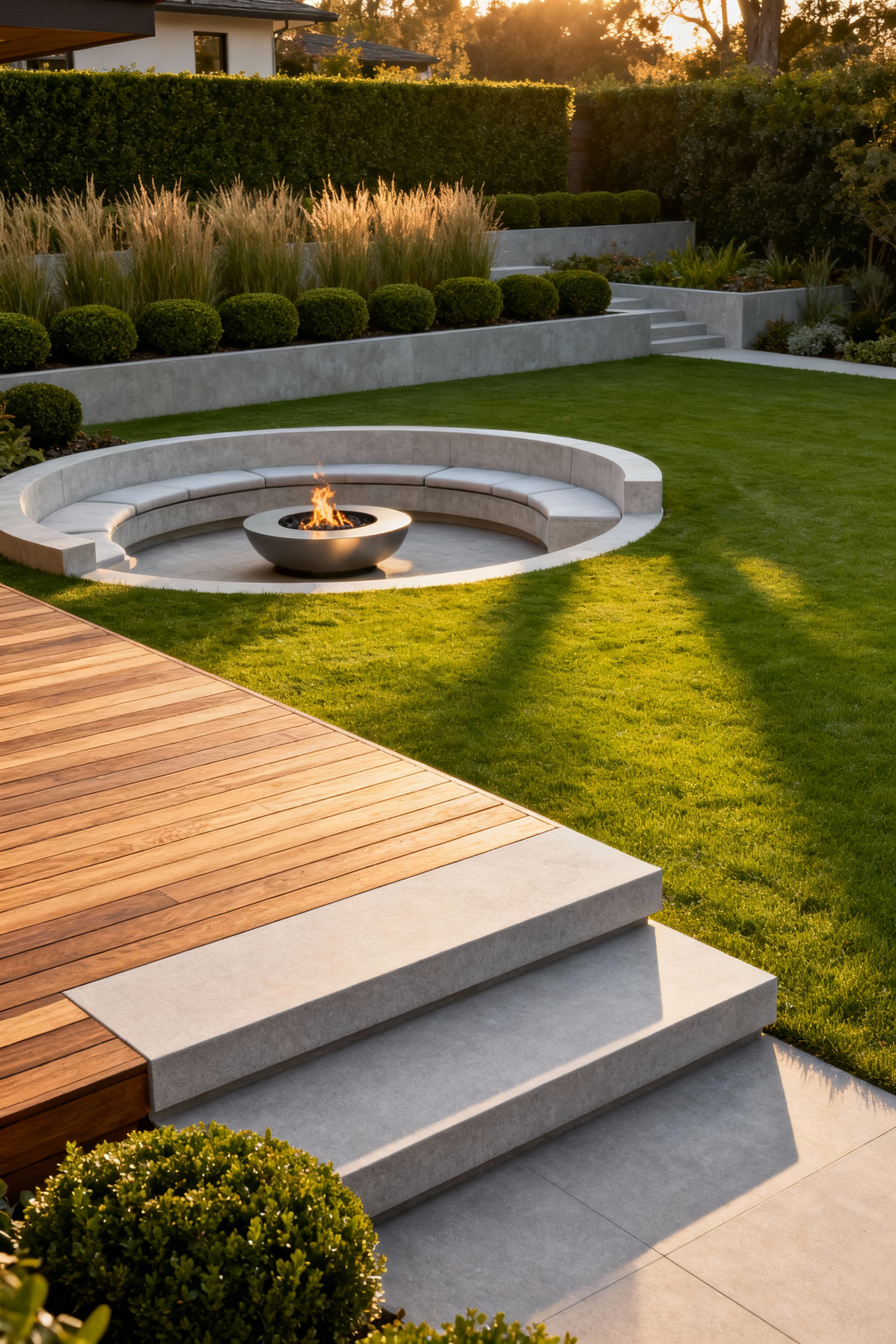
For a more intimate setting, incorporate a sunken seating pit into the lawn. Lowering the grade creates a sheltered “conversation pit” that feels like a secret retreat distinct from the wider garden. Design this area with cozy, built-in bench seating—preferably curved to encourage social interaction—and anchor it with a central fire pit. This configuration not only offers privacy but also extends the usability of your garden into cooler seasons.
Differentiate these zones further through the strategic use of contrasting luxury materials. Visual separation reinforces the change in function. For instance, use rich, warm wood decking for the raised platform to echo interior flooring, while selecting porcelain pavers or natural stone for the sunken pit. This material shift clearly defines the aesthetic of each level, ensuring the garden feels structured, luxurious, and intentional.
4. The Permeability Principle: Choosing high-end porous pavers to manage tropical rainfall and runoff
In tropical climates, heavy rainfall demands more than just surface drainage; it requires immediate infiltration. To manage this water volume effectively, move away from solid concrete slabs that create dangerous sheet flow. Instead, prioritize high-end Permeable Interlocking Concrete Pavement (PICP) or dense natural stones, such as granite and bluestone, set with wide, aggregate-filled joints. These permeable systems reduce surface runoff by 70–90% compared to traditional hardscapes.
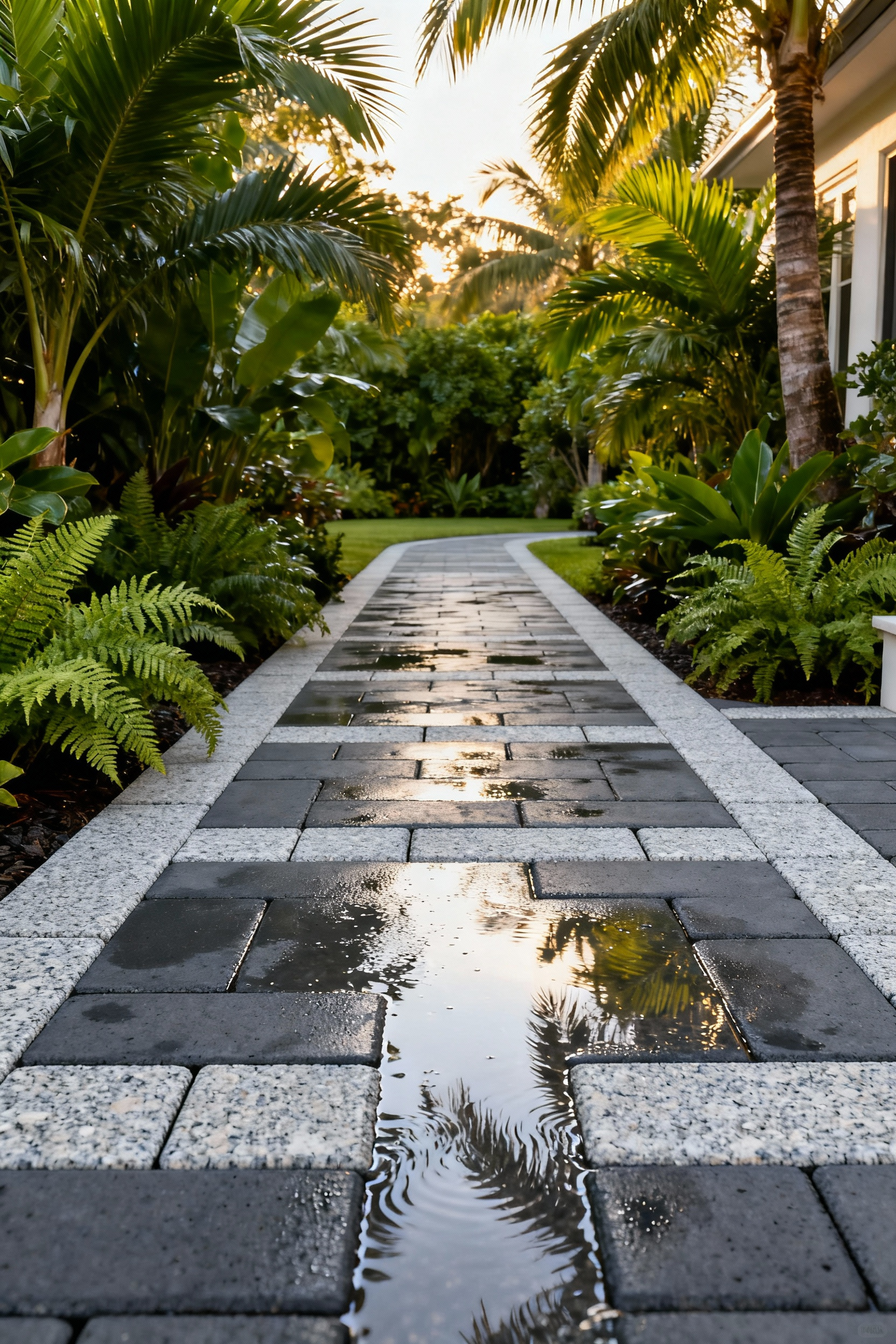
By intercepting water where it falls, you prevent soil erosion in adjacent garden beds and stop flash flooding from overwhelming municipal drains. The success of these systems relies heavily on what lies beneath the surface. You must mandate a multi-layered, deep base reservoir composed of uniformly sized crushed stone. This engineered sub-base acts as a temporary underground tank, holding massive volumes of stormwater before slowly releasing it to recharge the groundwater and hydrate surrounding vegetation.
For driveways or secondary paths, utilize high-end turf or lattice-grid pavers. These structures provide necessary load-bearing stability while allowing grass or gravel to integrate visually, maintaining a lush “lawn garden” aesthetic that merges hardscape with nature. To ensure these porous surfaces function correctly over time, implement a strict maintenance routine. In high-sediment tropical environments, organic debris and fine particles can quickly clog the joint material, which is the primary cause of system failure. Schedule regular vacuum sweeping or vigorous brushing to keep the joints clear. This simple preventative measure preserves the high infiltration rate, protecting both the structural integrity of the patio and the ecological health of the garden.
Phase II: The Sustainable Softscape
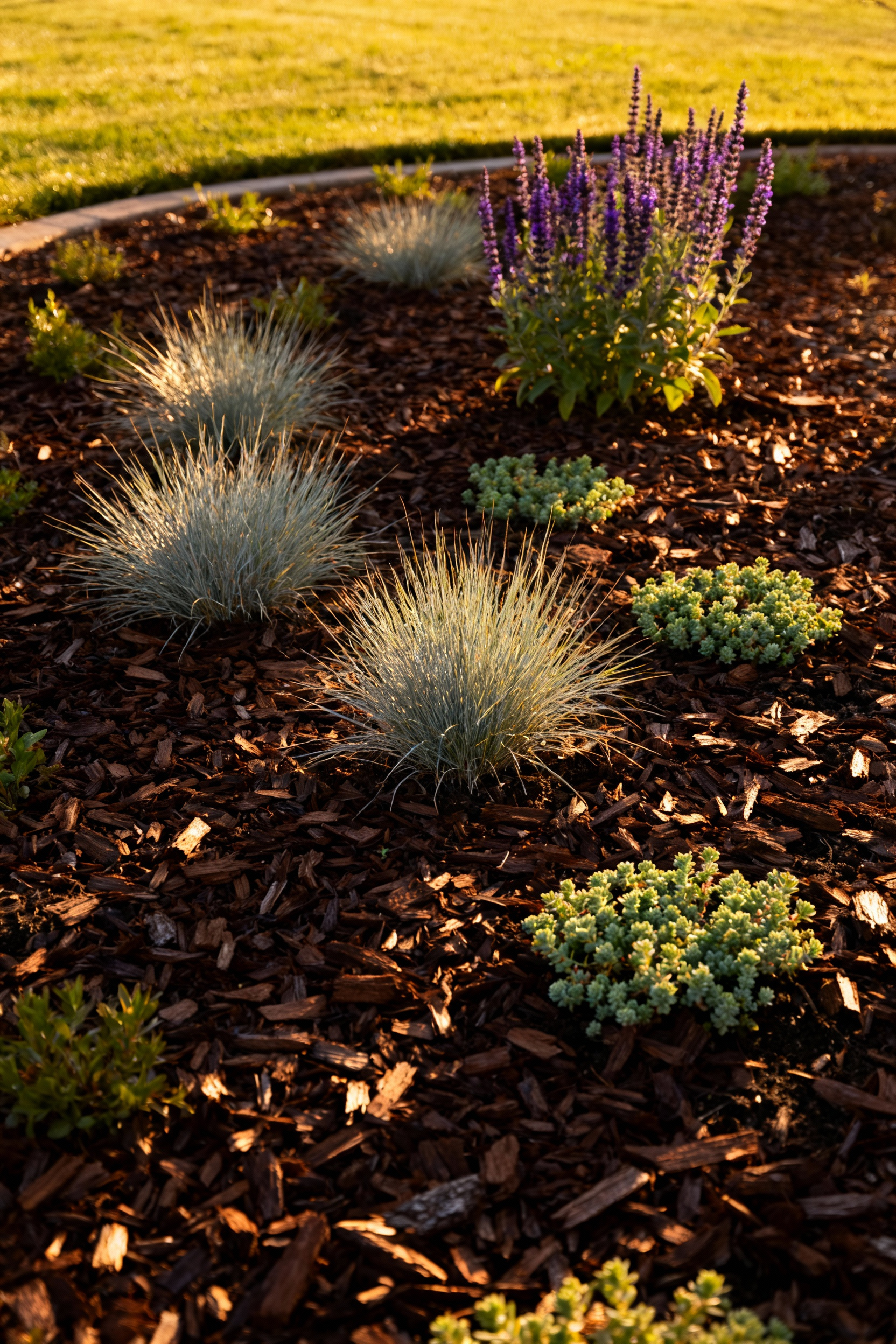
Transforming the softscape begins with the soil and plant selection. Replace high-water lawn areas with native or climate-resilient species through xeriscaping. These plants adapt naturally to local rainfall patterns, which significantly reduces the need for fertilizers and pesticides. To ensure their survival and reduce maintenance, apply organic mulch like wood chips to a depth of two to three inches. This layer conserves essential soil moisture, regulates temperature, and effectively suppresses weeds.
Water management requires precision rather than volume. Install drip irrigation systems or soaker hoses to deliver moisture directly to the root zones, eliminating the waste associated with traditional sprinklers. Upgrade to smart irrigation controllers that automatically adjust watering schedules based on real-time weather data. For a fully closed-loop system, incorporate rainwater harvesting tools, such as rain barrels, to capture runoff and reuse it for watering garden beds.
Finally, design the living elements to support the local ecosystem actively. Dedicate specific zones to pollinator-friendly plants and edible landscaping, integrating herbs and vegetables directly into ornamental designs for functional beauty. When maintaining remaining turf areas, practice “grasscycling” by leaving clippings on the lawn after mowing. This simple action returns nitrogen to the ground and improves soil structure, reducing reliance on chemical additives and creating a self-sustaining biological cycle.
5. The New Turf Standard: Selecting drought-resistant, deep-root varietals over water-hungry fescues
The definition of a luxurious lawn has evolved beyond surface aesthetics to prioritize biological resilience. We no longer rely on shallow-rooted varieties that demand constant irrigation to maintain their color. Instead, the “New Turf Standard” centers on selecting grass species with deep root structures capable of reaching moisture reservoirs 12 to 48 inches below the ground. By tapping into these deeper resources, you significantly reduce the need for supplemental water and synthetic fertilizers, creating a landscape that is both sustainable and robust.

Selecting the correct varietal for your specific climate is critical for success. In warm regions, prioritize species like Bermudagrass, Zoysiagrass, or Bahiagrass, which naturally possess extensive root systems. For cool or transition zones, specify improved turf-type Tall Fescues or Texas-Kentucky Bluegrass hybrids rather than generic seed mixes. These modern cultivars are bred specifically to drive roots up to four feet deep, allowing them to withstand heat and enter protective dormancy during droughts without dying.
Once established, you must train your turf to utilize this root structure through “deep and infrequent” watering. Soak the soil to a depth of 4-6 inches, then withhold water until the grass shows early signs of stress, such as a dull blue-green hue. This process forces roots to grow downward in search of hydration. For landscapes in arid climates, consider native alternatives like Buffalograss or Blue Grama. These low-mow options thrive on natural rainfall alone, representing the ultimate shift toward high-performance, low-maintenance design.
6. The Rewilded Periphery: Replacing manicured borders with biodiverse native meadow transitions
Transform ecologically barren lawn edges into high-impact ecosystems through the concept of the “Rewilded Periphery.” This strategic conversion maximizes biodiversity while maintaining a necessary sense of order for suburban settings. To ensure the design reads as intentional rather than neglected, define the boundary with a crisp, mowed-turf “frame.” This clear delineation signals a deliberate design choice to neighbors and HOAs, rendering the wilder interior vegetation acceptable and aesthetically pleasing.
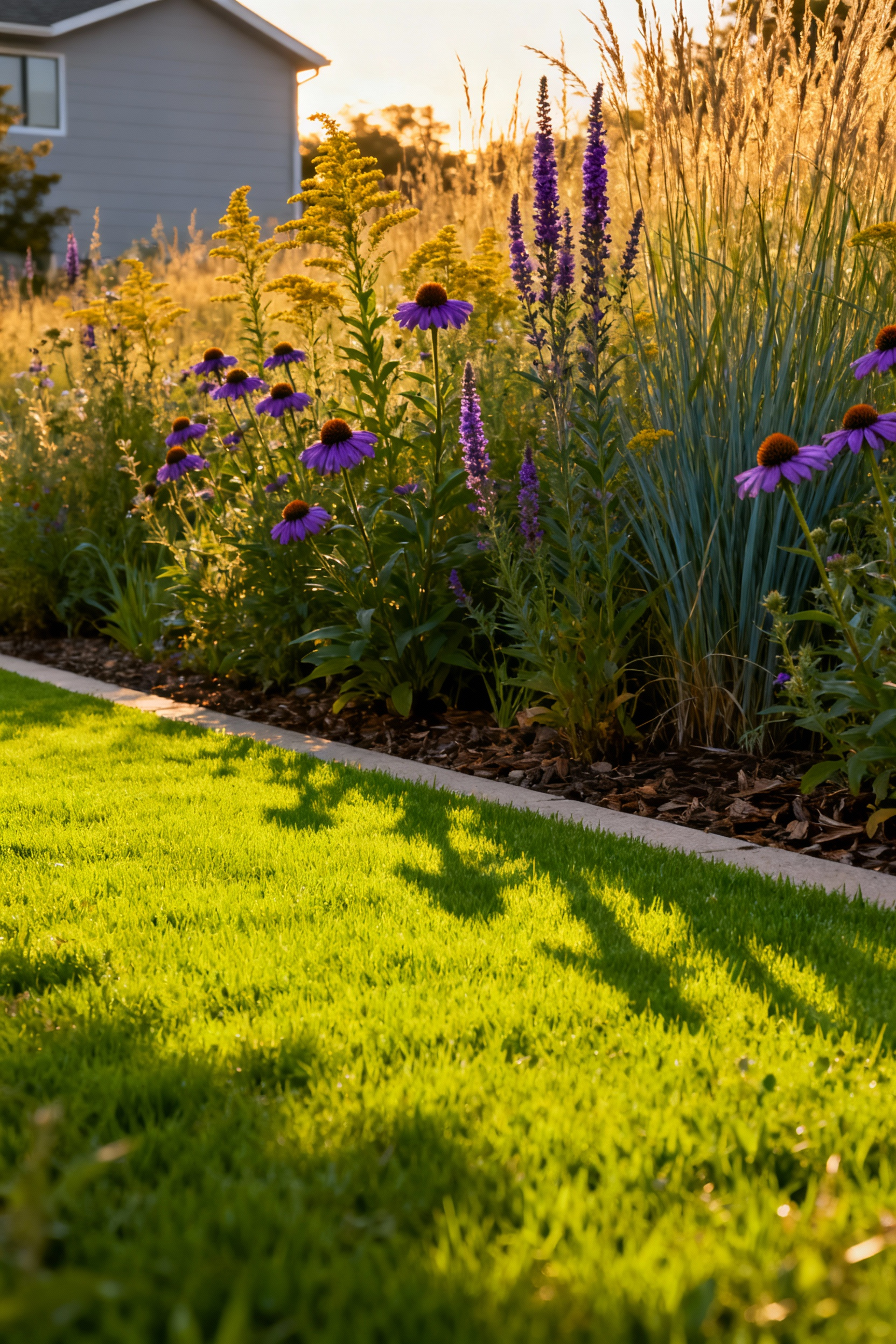
Building a successful meadow transition requires a specific planting strategy and site preparation. Do not rely solely on wildflowers; the structural backbone of a resilient ecosystem lies in native grasses and sedges. These “matrix” plants, such as Little Bluestem or Sideoats Grama, provide deep root systems for carbon sequestration and essential winter habitat. When preparing the soil, strictly reject amendments. Native plants thrive in low-fertility conditions, and adding compost or fertilizer only encourages aggressive weeds to outcompete your desired species.
Implementation and long-term care rely on minimal intervention. Prepare the site without chemicals by using sheet mulching: smother the existing lawn with wet cardboard and wood chips to kill the grass and suppress weed seeds without tilling. Once established, maintenance shifts dramatically from weekly chores to a single annual event. Mow the meadow area just once in late winter or early spring. This schedule reduces emissions and water usage while preserving the landscape’s natural rhythm.
7. Architectural Fronds: Integrating structural tropicals (Strelitzia, Alocasia) for dramatic scale
To disrupt the visual flatness of a manicured lawn, introduce large-scale specimens like *Strelitzia* or *Alocasia* as living sculptures. These plants serve as essential architectural elements that anchor the landscape rather than merely decorating it. The lush, oversized foliage of an *Alocasia* provides a necessary foil against the spare, straight lines of modern hardscaping or rectangular grass verges. By placing a single, mature specimen at the corner of a lawn or near a pathway, you establish an immediate focal point that draws the eye and adds vertical drama to horizontal spaces.

Strategic placement further transforms a flat garden into an immersive environment. Avoid relegating these architectural fronds solely to the background; instead, position tall *Strelitzia* in the mid-ground of planting beds to create a “jungle clearing” effect. This layering technique forces perspective, making the garden appear deeper and more adventurous. In larger gardens, opting for a mass planting of *Alocasia* generates a more powerful impact than isolated stems, enveloping the viewer in a wall of exotic foliage that softens the boundary between the built environment and nature.
For climates prone to frost or properties with limited planting areas, container cultivation offers essential flexibility. Growing structural tropicals in substantial, geometric pots allows you to define a chic, modern aesthetic on a patio or deck adjacent to the lawn. This approach facilitates mobility, enabling you to move sensitive plants to protected interiors during winter months. Consequently, you maintain the architectural integrity of the design during the summer while preserving the health of the specimen year-round.
8. Canopy Conditioning: Strategic tree placement for passive cooling and natural UV protection
Harnessing the natural power of trees creates a sophisticated temperature control system known as canopy conditioning. This process relies on two simultaneous actions: blocking solar radiation and facilitating evapotranspiration, where trees release cooling water vapor into the air. Grouping large canopy varieties maximizes this effect, creating a distinctive microclimate where air temperatures remain significantly lower than the surrounding environment. This approach transforms the garden from a purely visual element into an active, sustainable cooling asset.
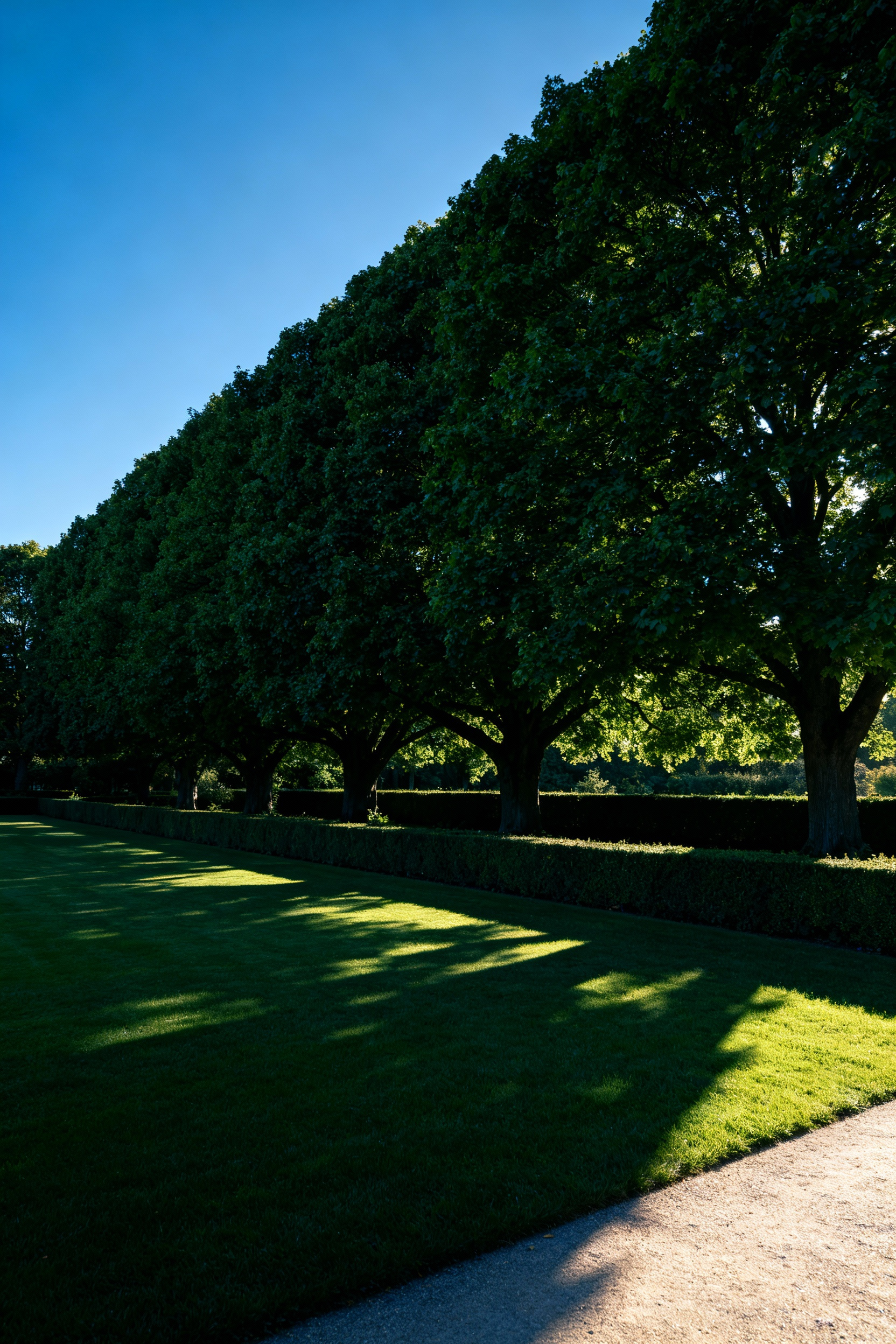
Strategic placement dictates the efficiency of this system. Prioritize planting deciduous trees, such as Maples or Oaks, on the south and west sides of the property. These species provide high-density shade against the intense, low-angle afternoon sun during summer but shed their leaves to allow passive solar heating in winter. Placing dense, lower-branching canopies on the west side specifically targets the most severe heat gain, offering critical UV protection for outdoor living areas during peak hours.
To fully optimize the microclimate, extend the canopy beyond the lawn to cover heat-absorbing hardscapes like patios and driveways. Shading these surfaces reduces radiated heat, while shading an air conditioning condenser can improve its operating efficiency by up to 10 percent. However, precise planning is required to protect the home’s structure. Select trees with non-invasive root systems and plant large varieties at least 10 to 15 feet from foundations and utility lines to prevent damage while securing the benefits of a lush, cooling canopy.
9. Hydro-Zoning Strategy: Grouping botanicals by water dependency to eliminate irrigation waste
Hydro-zoning represents a shift from arbitrary planting to precision landscape management. This strategy involves grouping botanicals with similar moisture requirements to eliminate the common inefficiencies of mixed-bed irrigation. By ensuring each plant receives its exact water requirement, you eliminate the stress of overwatering—which frequently causes root rot—and underwatering. Implementing this approach typically reduces landscape water consumption by 20% to 50%, with savings reaching as high as 80% when paired with full xeriscaping practices.
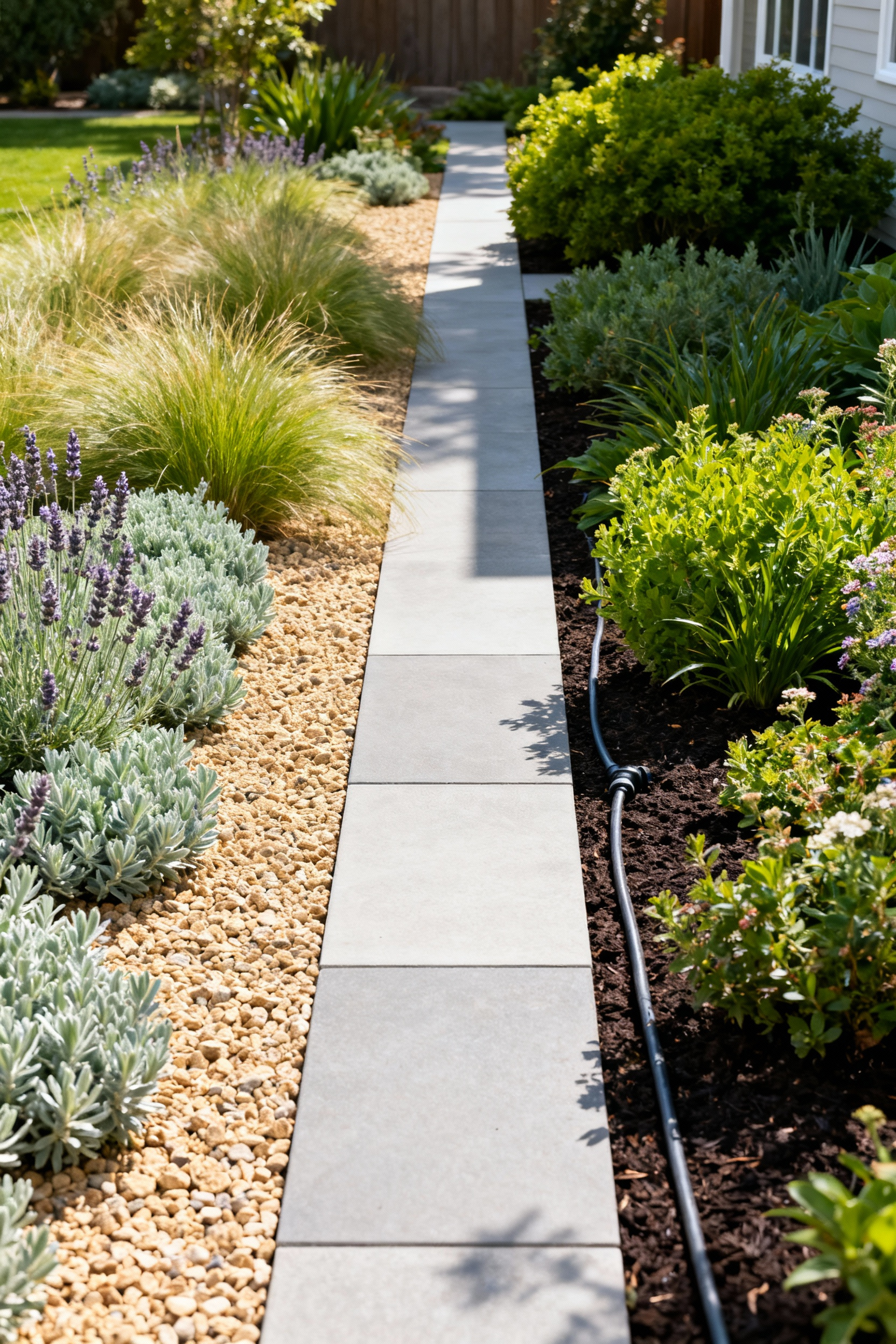
To apply this effectively, map your landscape into three distinct tiers of water intensity. Establish a high-use “Oasis Zone” closest to the residence for thirsty tropicals, annuals, or vegetable beds. Transition outward to moderate-use zones for general shrubs, and reserve the perimeter for low-use, drought-tolerant native species like succulents. This layout not only conserves resources but also creates a logical, sustainable flow that anchors the home within its natural environment.
Technical execution requires separating turfgrass from all other vegetation types. Lawns demand frequent, shallow watering, whereas established trees and shrubs require less frequent, deep hydration to thrive. You must control each newly created zone with a separate irrigation valve. This separation allows you to install sprinklers for turf and drip lines for planting beds, enabling customized schedules that deliver water only when and where it is necessary.
Phase III: Sensory & Biophilic Integration
True luxury engages more than just sight; it requires transforming the garden into a multi-sensory sanctuary. Start by dissolving the physical barrier between interior living spaces and the outdoors to support the inherent human need for connection with nature. Use large glass doors or consistent flooring materials to extend the home outward seamlessly. Once outside, activate all five senses through strategic zoning. Position aromatic plants like lavender or rosemary near seating areas to stimulate the sense of smell, and incorporate ornamental grasses or bamboo to add tactile texture and the sound of rustling leaves. For integrating small-scale green elements into hardscapes, review these essential patio gardening tips.
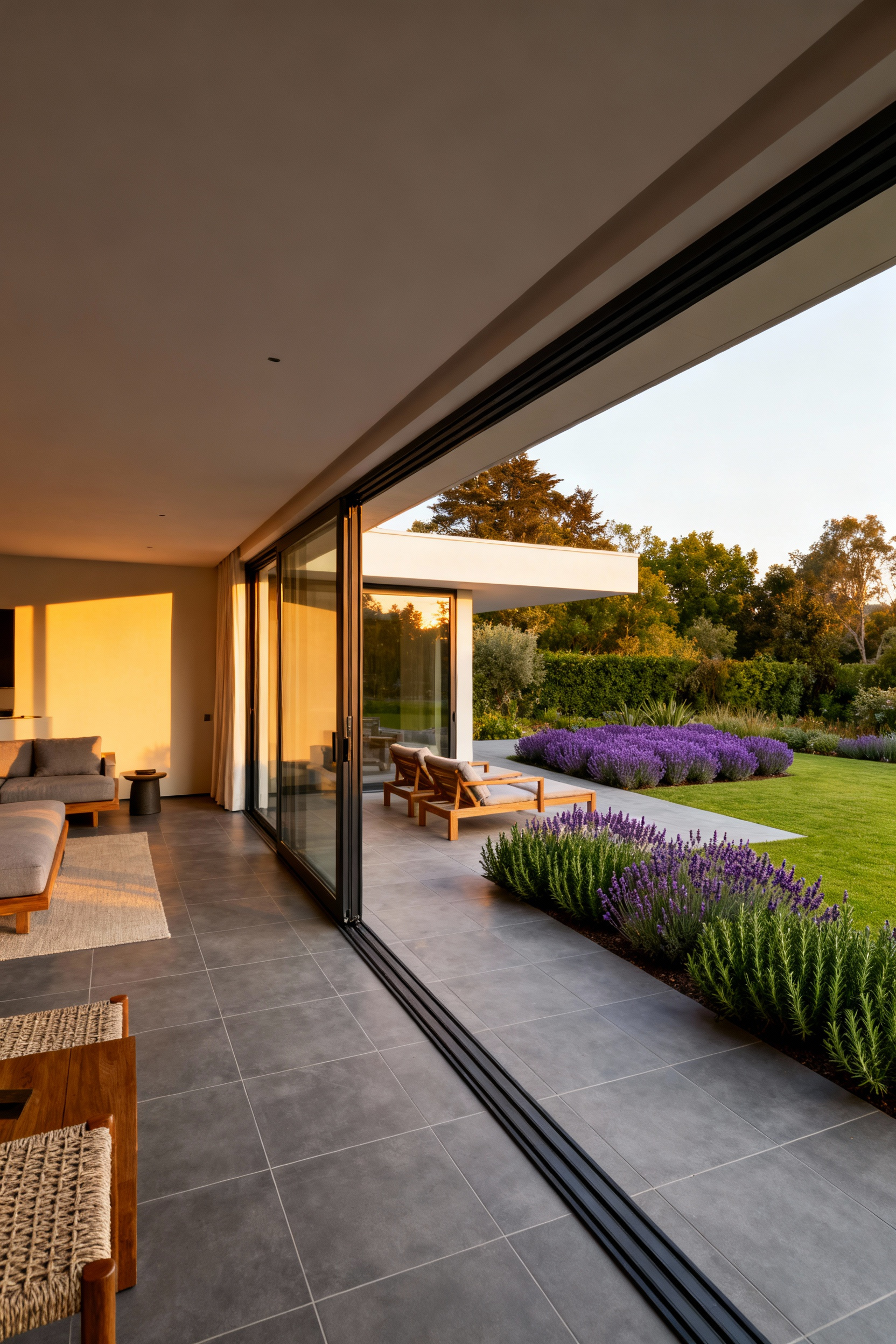
Ground the design in the natural world through thoughtful hardscaping. Avoid synthetic finishes in favor of tactile, authentic materials like stone pavers, wood decking, or terra cotta. These elements blur the line between the built environment and the landscape, creating a cohesive aesthetic. To further enhance tranquility, introduce a dynamic water feature. A small, trickling fountain or a rain garden masks urban noise with the soothing sound of moving water, making the space feel like a genuine restorative retreat.
Finally, cultivate a biodiverse ecosystem to support local wildlife and ensure sustainability. Select native, pollinator-friendly plants adapted to the local climate to create diverse microenvironments. This approach attracts beneficial life, such as birds and bees, which encourages natural pest control and significantly reduces maintenance needs. Prioritizing a self-sustaining, living landscape deepens the connection to the environment and anchors the design in responsible luxury.
10. Acoustic Buffering: Using dense bamboo screens or vertical hedging to silence urban noise
Effective acoustic control requires mass and strategic placement. Thin fences often fail to stop urban noise, so prioritize dense, living barriers. Position your screen as close to the noise source as possible. A tall barrier placed near a busy road obstructs the sound path significantly better than one situated close to the living area. Ensure the foliage grows thickly from the ground up. Gaps allow sound to penetrate, which reduces the overall effectiveness of the buffer.
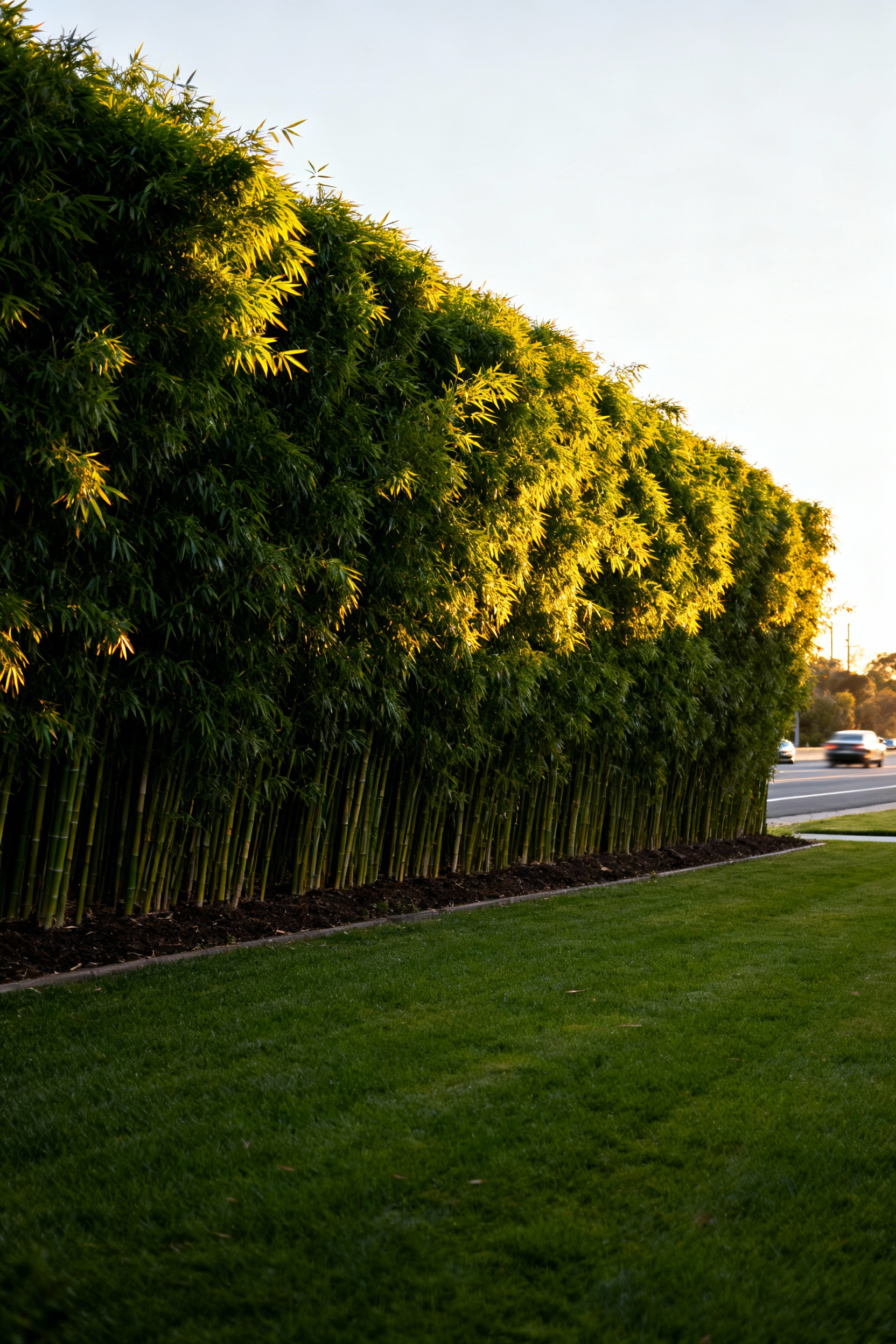
Select plant species known for their acoustic density and sustainability. Clumping bamboo varieties, such as *Bambusa*, offer a luxurious tropical aesthetic without the invasiveness of running types. For a more structured appearance, layer mixed evergreens like Holly, Cherry Laurel, or Arborvitae. To maximize the effect, plant these in staggered rows rather than a single line. This creates a thick, multi-layered screen that traps and deflects sound waves more efficiently than a flat wall.
Beyond physical blocking, these biological barriers utilize sound masking to enhance the atmosphere. The rustling of bamboo leaves or dense hedging generates pleasant white noise. This natural sound distracts the ear from high-frequency traffic or neighborhood activity. This dual approach—blocking distinct noise while masking the remainder—transforms a loud urban garden into a tranquil sanctuary.
11. Water as Sculpture: Incorporating recirculating rills or eco-ponds for cooling capability and calm
Water features transform a static lawn into a dynamic, cooling retreat. By incorporating a recirculating rill or small waterfall, you create necessary movement that maximizes evaporative cooling. This process effectively reduces the ambient temperature in the immediate area by an estimated 4–8°F. This distinct microclimate invites outdoor living even during peak heat. Treat the feature as a linear architectural element to divide space or anchor the view, blending structural precision with the fluidity of nature.
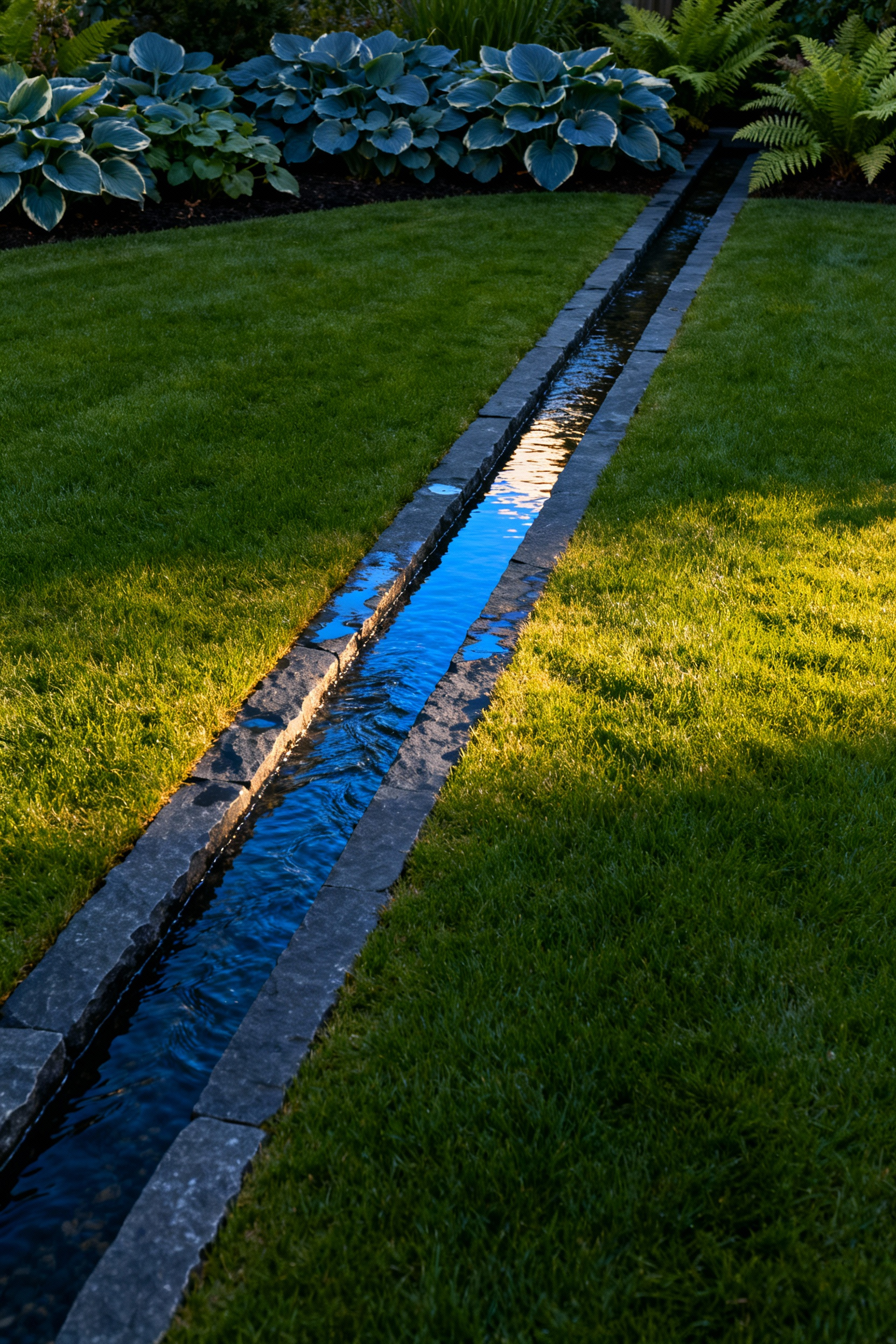
Beyond temperature control, water acts as a powerful acoustic tool. The gentle, consistent sound of flowing water masks disruptive urban noise, such as traffic or neighbors, to establish a tranquil soundscape. For a softer, more organic approach, implement an eco-pond or natural swimming pond. These chemical-free systems utilize a planted regeneration zone for natural filtration. This fosters a self-sustaining ecosystem that attracts local wildlife, such as birds and dragonflies, adding vitality to the serene atmosphere.
To align luxury with sustainability, design these features using a recirculating pump system with a concealed reservoir. This technical approach hides the mechanics to maintain a clean, sculptural aesthetic. It ensures the water remains a continuous visual and auditory presence with minimal water loss. This method secures the longevity of the design while respecting resource conservation.
12. Dark-Sky Illumination: Low-impact, architectural lighting that respects nocturnal biodiversity
True luxury in a modern garden implies a harmony between design and nature, extending even into the hours of darkness. Implementing Dark-Sky principles shifts the focus from general floodlighting to precise, architectural illumination that respects the nocturnal ecosystem. To achieve this, prioritize warm-colored LED lights with a temperature of 2700 Kelvin or lower. Cooler, blue-rich light interferes with the circadian rhythms and navigation of bats and insects, whereas warmer hues provide safety without disrupting local biodiversity.
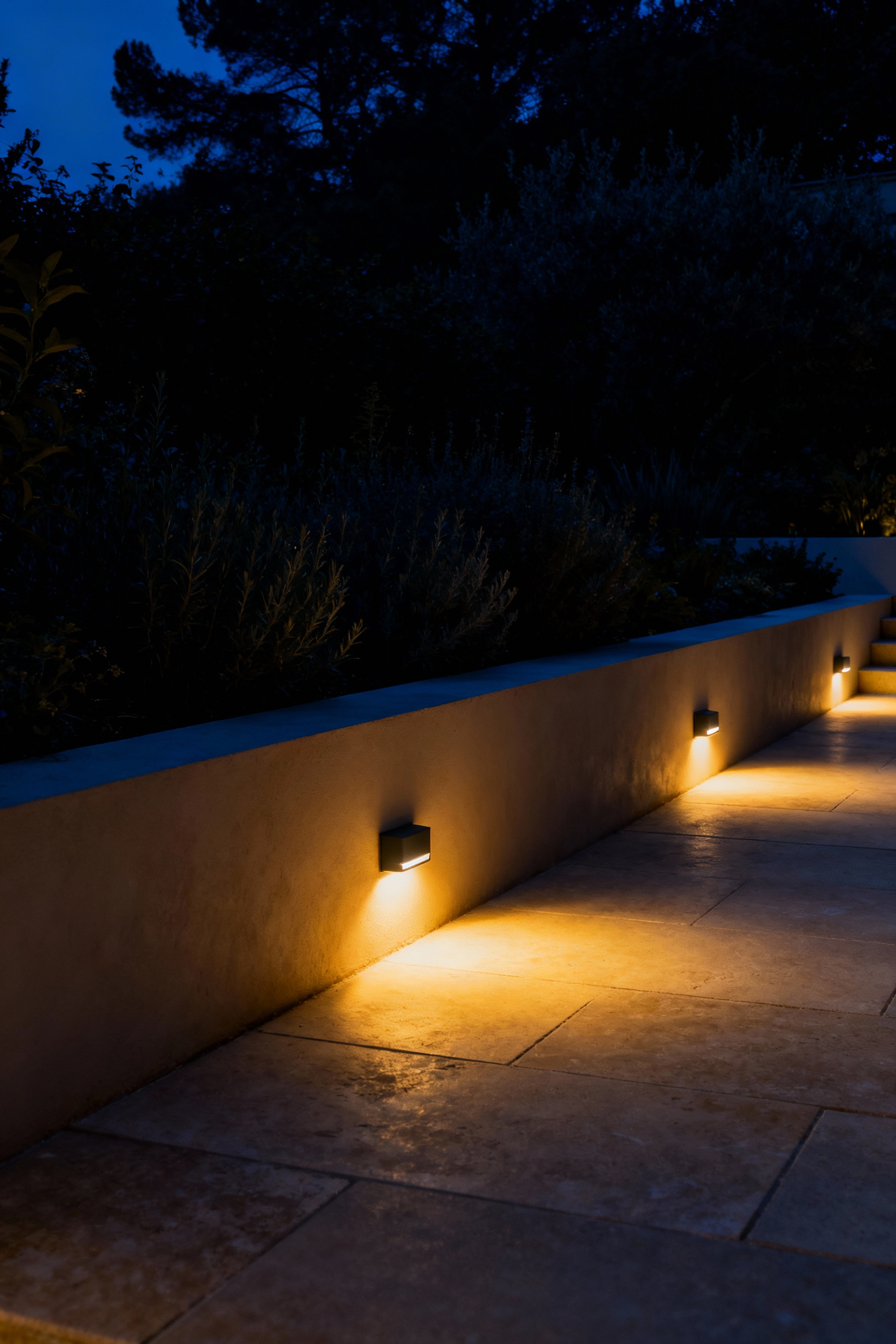
The geometry of your fixtures plays a critical role in containing light pollution. Select full cut-off fixtures that shield the bulb completely and direct the beam strictly downward onto paths or features. This approach eliminates sky-glow and prevents light from spilling into neighboring habitats, which can disorient migrating birds. Simultaneously, opt for low-lumen bulbs to maintain a subtle, sophisticated atmosphere. High-intensity lighting is rarely necessary for navigation and often destroys the natural drama of a moonlit landscape.
Finally, operational discipline ensures your lighting remains sustainable. Install timers to automatically extinguish decorative architectural lights after peak viewing hours, such as midnight. For security needs, rely on motion detectors (PIR sensors) rather than constant illumination. These adaptive controls minimize the duration of artificial light exposure during sensitive periods for wildlife, allowing your garden to function as a true sanctuary for nature.
13. Tactile Grounding: Incorporating sensory paths of river stone, moss, or reclaimed timber
Design your garden path as an intentional destination rather than a simple route. A sensory path encourages you to slow down and walk barefoot, acting as a daily wellness ritual known as “tactile grounding.” To maximize this effect, prioritize texture variation in your material selection. A successful design deliberately shifts the underfoot sensation, transitioning from smooth, cool surfaces to softer, organic textures. This variety forces the mind to focus on the physical connection with the earth, effectively reducing stress and anxiety.
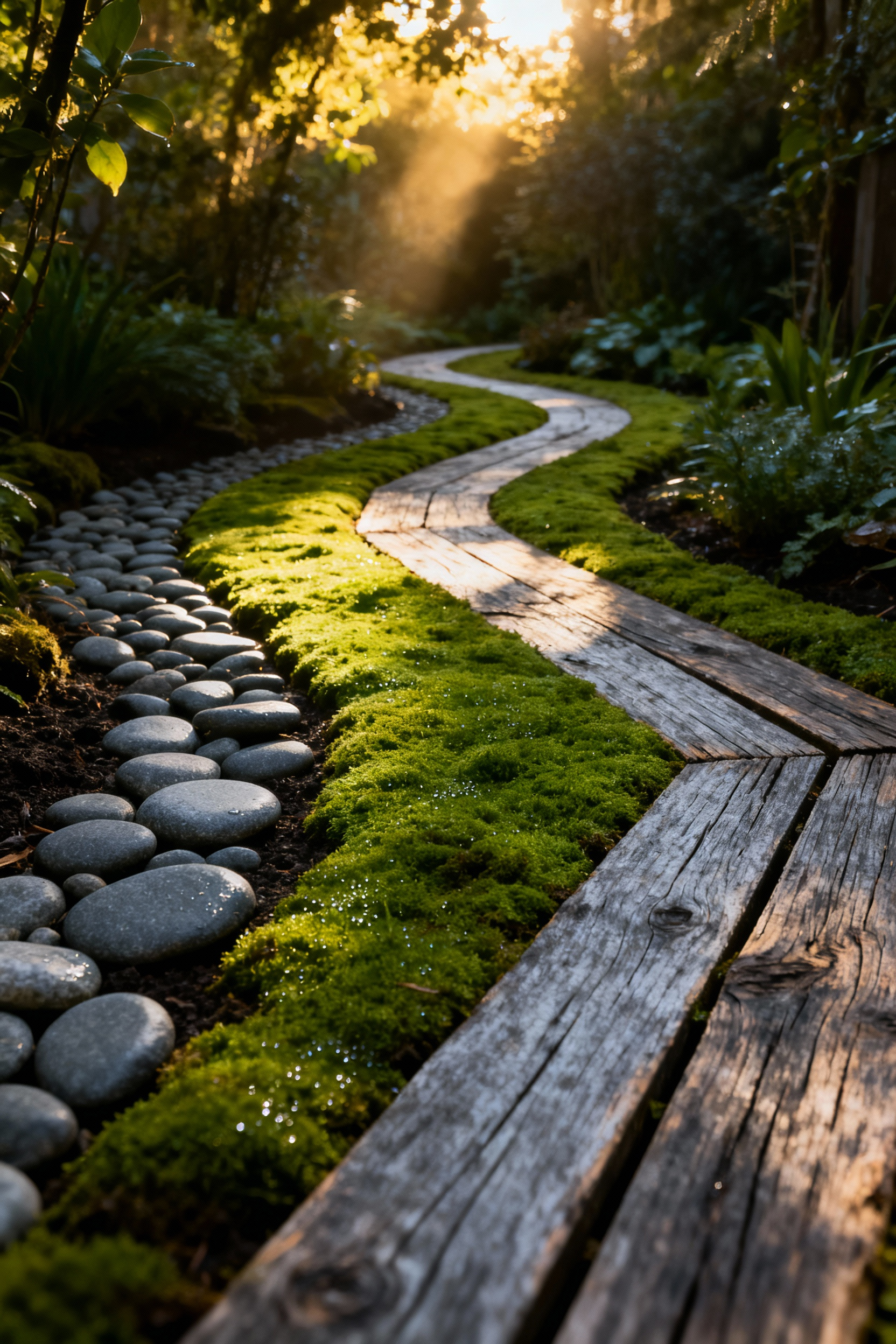
Select sustainable materials that offer distinct tactile experiences. Reclaimed timber planks or salvaged log slices create a rustic, eco-friendly boardwalk, particularly useful in areas with damp soil or uneven terrain. The aged knots and worn grain provide a nostalgic, rough texture that contrasts well with stone. For a smoother experience, install a “pebble river” feature using polished river stones set in sand. This mimics the look of a dry stream bed and adds an element of Zen-inspired calm, offering a rounded, massaging surface for the feet.
Soften the hard edges of your hardscaping to blend the path into the surrounding garden. Lay flat natural stones, such as flagstone or slate, with wide gaps between them. Fill these spaces with durable, low-growing species like moss or creeping thyme. These plants act as a soft-touch counterpoint to the rigid stone and release calming fragrances when stepped on. By integrating these living elements, you transform a utilitarian walkway into a comprehensive sensory experience that connects luxury with nature.
Phase IV: Curating the Lifestyle Experience
The industry has evolved beyond the simple transaction of plants and tools; Phase IV focuses on curating a complete, personalized lifestyle. Consumers no longer view the garden as a separate entity but as a multifunctional extension of their interior living space. This shift demands a design-led approach where retailers and landscapers create distinct outdoor rooms. We must move past generic displays and instead curate specific environments: the Outdoor Kitchen for entertainment, the Wellness Sanctuary for mental health, or the Permanent Garden Office for productivity. By connecting products to these desired functions, we elevate a purchase into an investment in a better way of living.
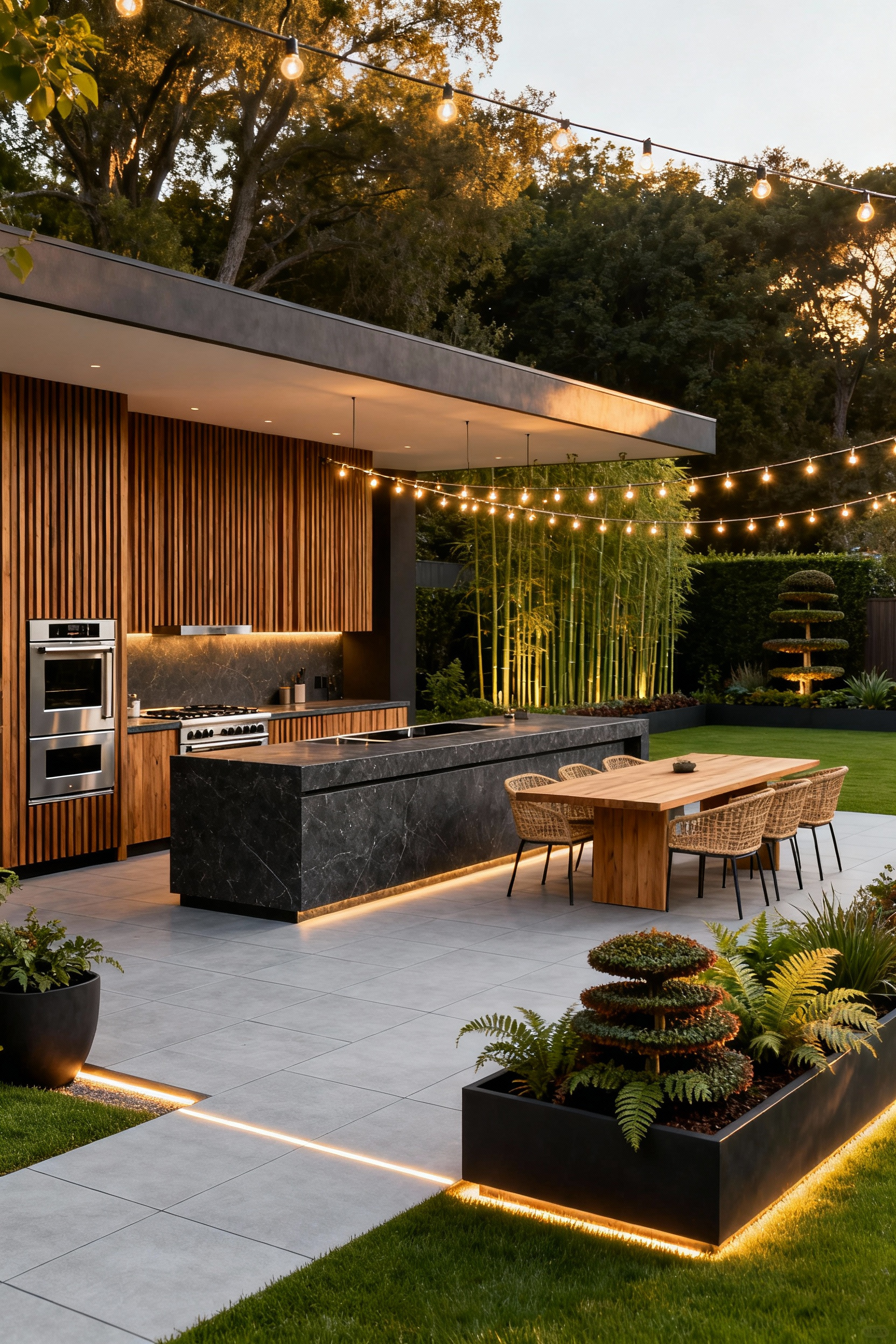
To effectively capture this market, prioritize experiential retail that allows customers to envision the final lifestyle. Shoppers seek inspiration and a departure from hyper-manicured uniformity in favor of personal expression and well-being. Transform the retail floor from a warehouse of inventory into a series of thematic “vignettes” that tell a story:
- The Urban Balcony Oasis: Group compact furniture with calming, scented plants to demonstrate how small spaces provide respite.
- The Pollinator Paradise: Combine educational opportunities with native flora to appeal to eco-conscious buyers.
- The Respite Zone: Showcase DIY water features alongside comfortable seating to visualize a meditation corner.
Finally, support this curation with smart technology and a seamless digital journey. Modern clients desire sustainability and luxury but often lack the time for intensive maintenance. Bundle low-water native plants with smart irrigation systems and ergonomic tools to offer “set-it-and-forget-it” convenience. Leverage digital platforms to showcase these curated projects online, using high-quality imagery to drive traffic to the physical site. This omnichannel strategy ensures the inspiration begins on the screen, but the commitment happens when the customer can physically experience the quality and tranquility of the proposed design.
14. Climate-Proof Furnishing: Investing in marine-grade materials that withstand humidity and sun
True luxury in outdoor living requires furniture that survives the elements without constant maintenance. Humidity and intense UV rays degrade standard materials quickly. To combat this, prioritize High-Density Polyethylene (HDPE), often known as synthetic resin wicker. This non-porous polymer contains UV stabilizers that inherently resist fading, cracking, and rotting. For a sustainable design choice, select products made from recycled HDPE to ensure an eco-friendly investment that requires zero maintenance.
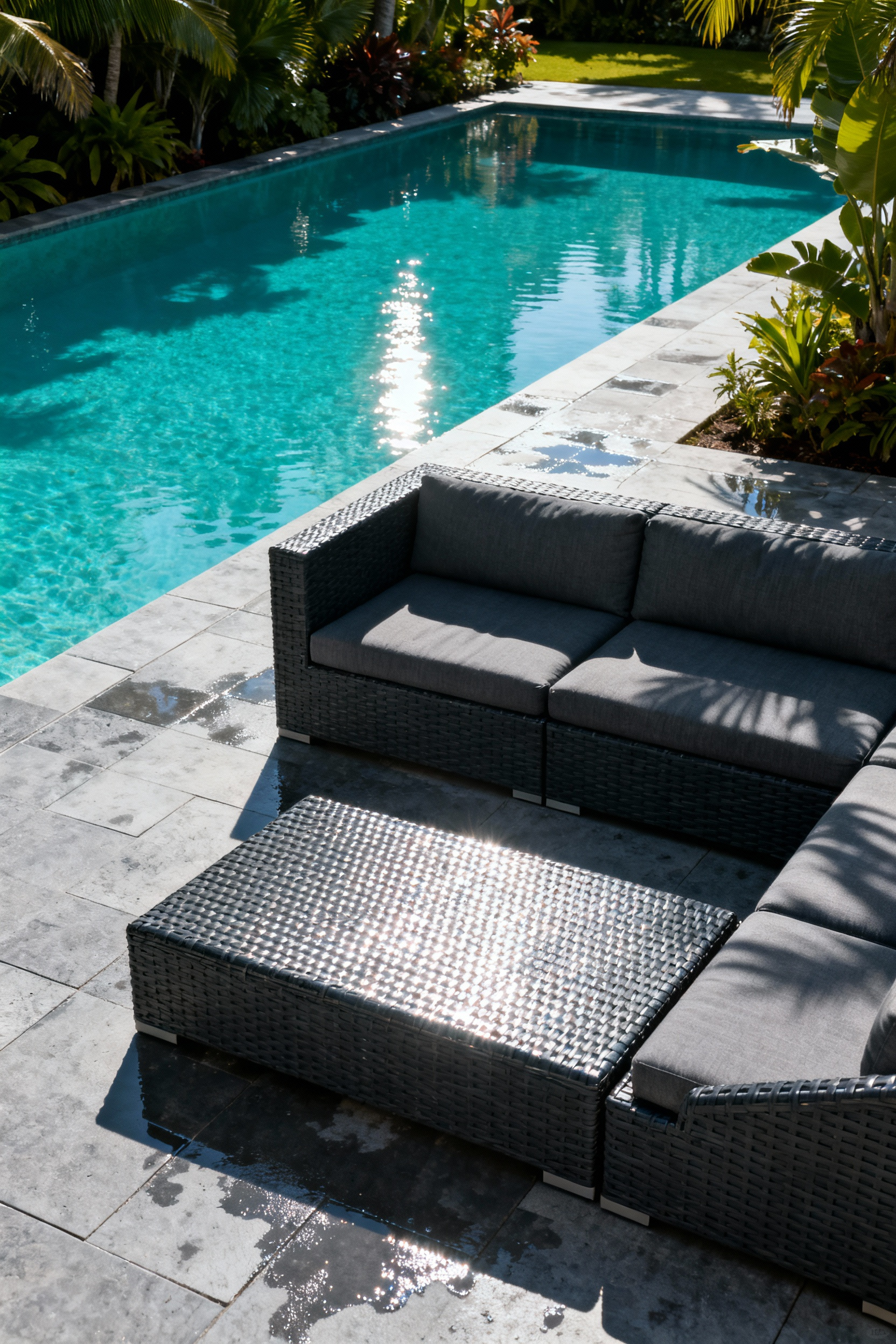
Structural longevity depends heavily on the quality of the metal framework. Powder-coated aluminum offers a lightweight, rust-proof solution perfect for flexible layouts. However, environments with heavy salt spray or high humidity demand Grade 316 Stainless Steel. This marine-grade alloy provides superior corrosion resistance compared to standard metals. Always verify frame materials before purchasing, and remember that metal heats up in direct sunlight, so strategic placement in shaded zones helps maintain comfort.
If your design aesthetic leans toward natural textures, teak stands as the gold standard for durability. The wood’s high content of natural oils creates a built-in barrier against water intrusion, pests, and warping. Unlike other hardwoods, teak does not require frequent chemical sealing to maintain its strength. Be aware that it will weather to a sophisticated silvery-gray patina over time. This visual transformation is a natural process and does not compromise the structural integrity of the piece.
15. The Social Hearth: Modern fire features as the anchor for evening circulation
Establish the fire feature as the primary destination for evening circulation by defining its footprint with distinct hardscaping. Contrast the surrounding soft lawn with non-combustible materials like concrete pavers, flagstone, or locally sourced pea gravel. This material shift creates a stable, safe surface and visually guides guests toward the gathering spot. Arrange deep-seated, all-weather furniture in a circular or semi-circular layout to foster a natural “conversation circle.” Always maintain ample clearance behind the seating zone to allow for fluid foot traffic without obstructing views or access to the flames.
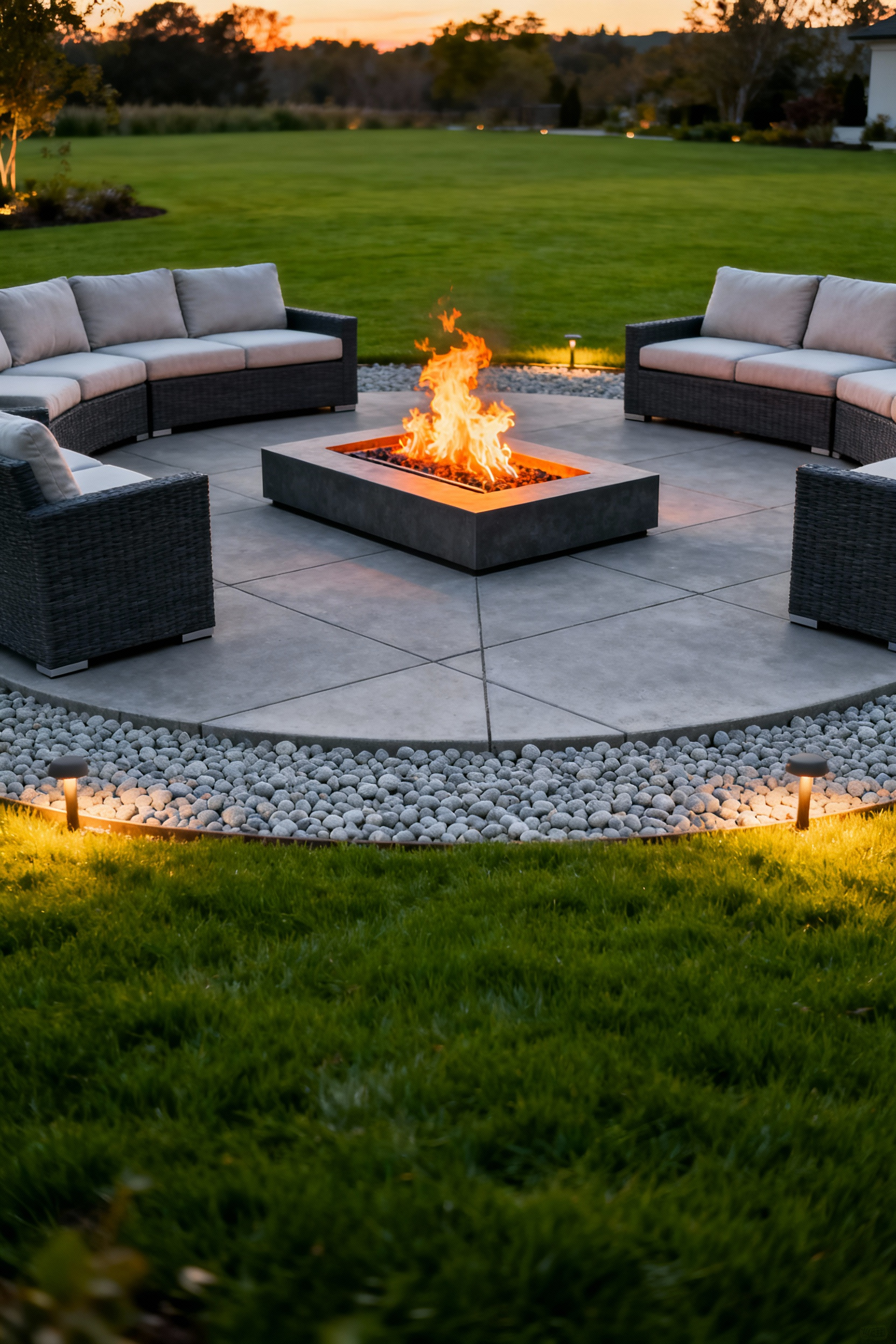
Select a fire feature that offers multifunctional utility to maximize the space’s usability throughout the day. Modern designs often prioritize versatility, featuring built-in ledges for drinks or convertible covers that function as standard tables when the fire is unlit. For a seamless user experience, prioritize units with smart technology integration. App-controlled flame height, automatic timers, and integrated audio systems allow you to manage the entire evening ambiance from a single interface, ensuring the hearth serves as an efficient, high-performance anchor.
Relying solely on the glow of the fire creates safety hazards during transit. Implement a layered lighting strategy to support safe movement to and from the hearth. Install low-voltage path markers to clearly outline the route from the main structure to the garden social zone. Complement this with soft, ambient lighting—such as hanging lanterns or overhead string lights—to illuminate faces and facilitate interaction. This balanced approach extends the usability of the garden into the night and ensures guests can navigate the circulation paths securely.
16. Vertical Vitality: Living walls and trellises to maximize green square footage in compact plots
Maximize the potential of compact outdoor areas by expanding upward rather than outward. Utilizing vertical airspace through living walls and trellises can increase your usable green space by up to 300%, effectively transforming neglected fences and walls into vibrant ecosystems. Beyond adding volume, these structures serve a critical architectural function. Dense vining plants, such as jasmine or climbing roses, create natural privacy screens that define distinct outdoor “rooms,” mitigate urban noise, and provide passive cooling for nearby living spaces.
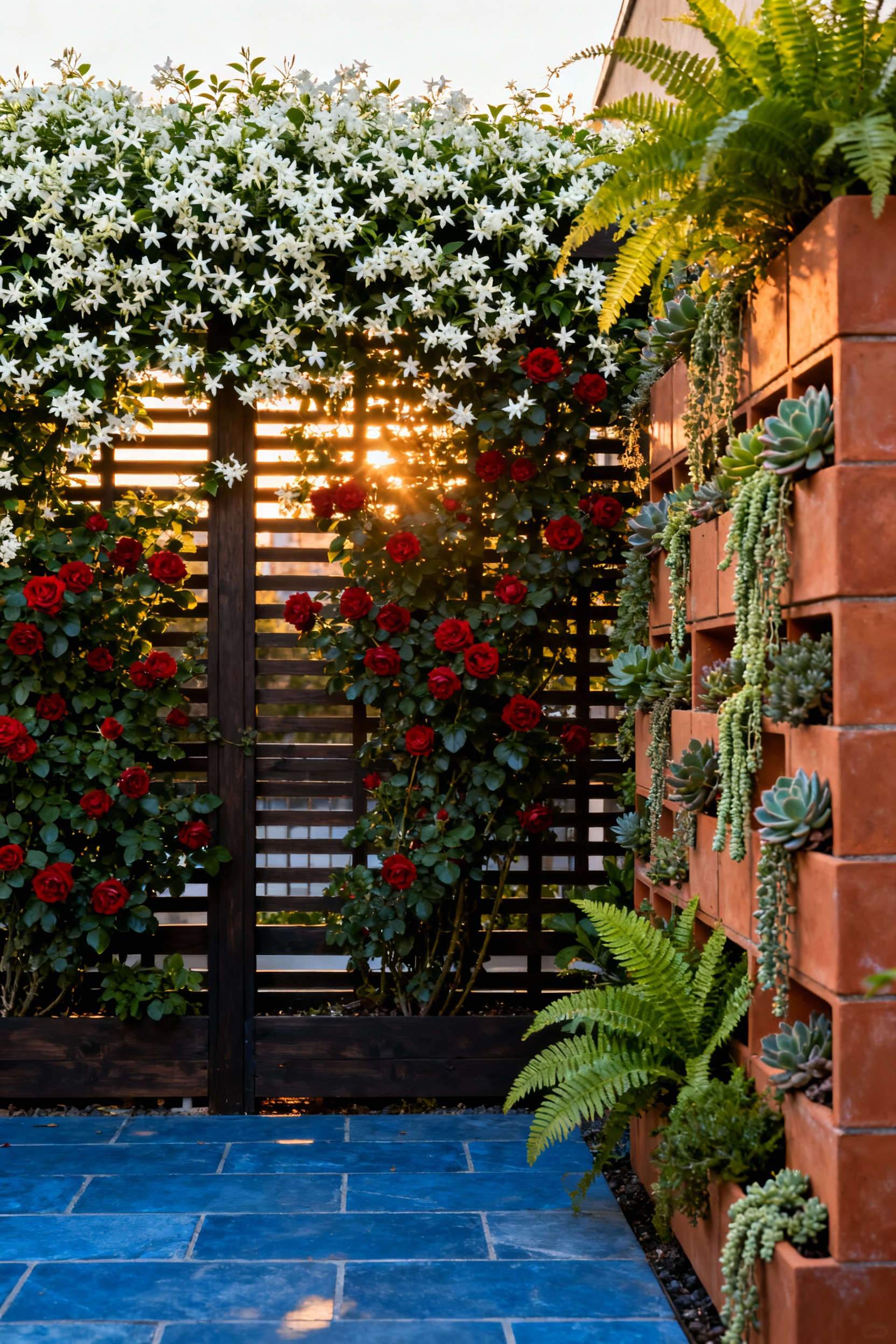
Strategic plant selection dictates the success of these vertical features. For modular living walls and stacked planters, prioritize species with shallow root systems that adapt well to confined soil volumes. Herbs like basil and mint, diverse succulents, and compact annuals like petunias perform best in these pockets. In contrast, use trellises to support vigorous climbers. Train vining edibles, such as pole beans, peas, or indeterminate cherry tomatoes, to grow vertically, allowing for high yields without sacrificing ground-level square footage.
To sustain this vertical vitality, engineering must accompany design. Vertical gardens dry out significantly faster than in-ground beds due to gravity and increased airflow. Therefore, the installation of an automated drip irrigation system is not optional; it is essential. Drip lines or self-watering containers ensure consistent hydration for high-density planting, preventing plant loss and eliminating the burden of daily manual watering. This approach secures a lush, luxurious aesthetic with minimal maintenance.
17. The Smart Garden Brain: Implementing weather-sensing automation for precise resource management
The “Smart Garden Brain” transforms irrigation from a static schedule into a dynamic, responsive system. Central to this approach is the use of weather-based smart controllers that calculate daily Evapotranspiration (ET) rates. These systems measure the specific water loss caused by wind, temperature, and sunlight to determine exactly when the soil requires replenishment. Newer models leverage Artificial Intelligence (AI) to analyze historical patterns and real-time forecasts, allowing the system to preemptively adjust for heatwaves or storms. This predictive precision protects plant health and can reduce outdoor water usage by 30-50%.
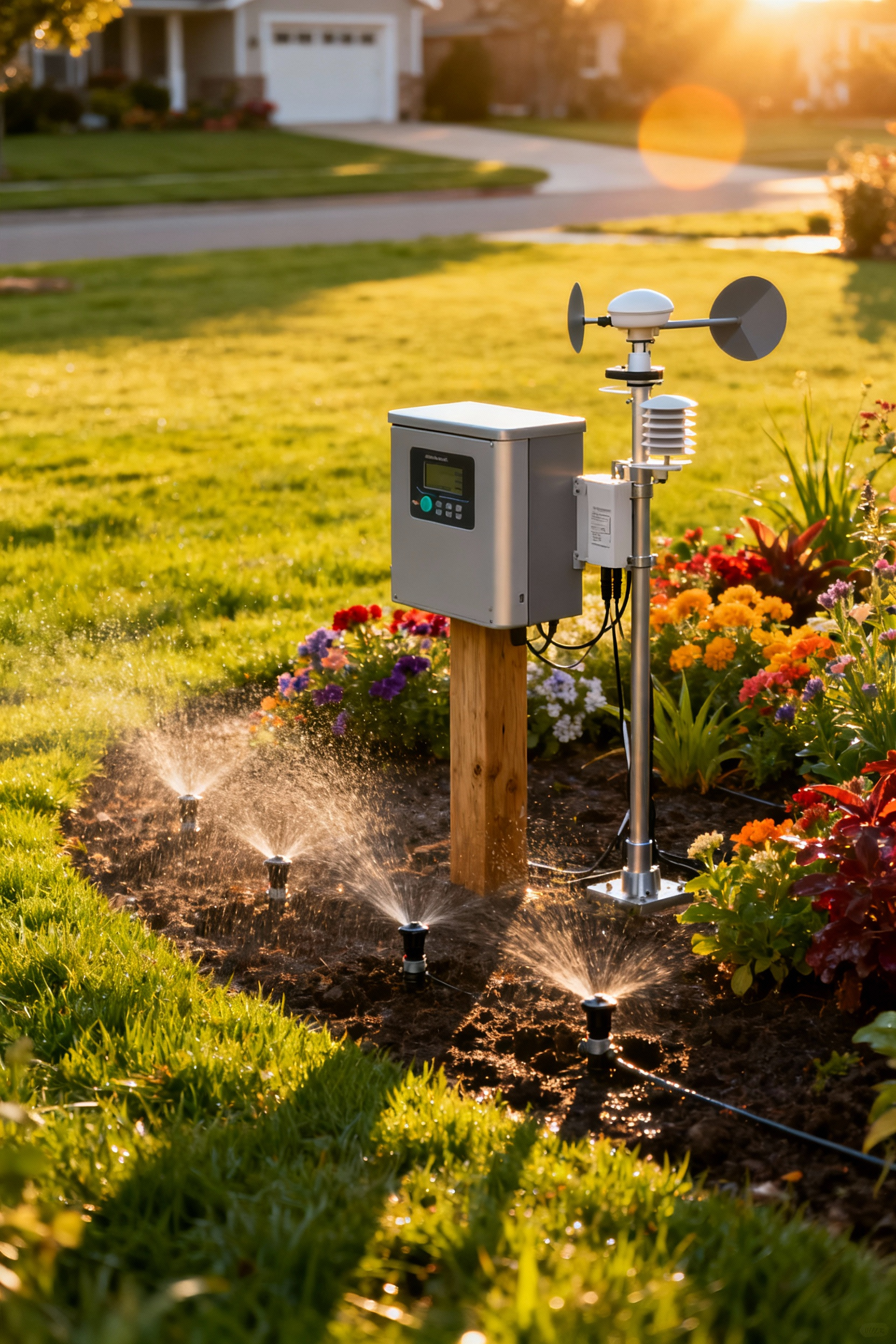
To achieve maximum efficiency, you must bridge regional data with on-site reality. While internet-connected controllers provide general forecasts, integrating local sensors—such as soil moisture or rain/freeze monitors—accounts for your garden’s specific microclimate. This prevents the system from watering ground that is already saturated. This data also supports holistic resource control beyond irrigation; for instance, automation can delay fertilizer application before heavy rain to prevent runoff or adjust watering times during high humidity to reduce fungal growth on foliage.
Implementing this technology is often more accessible than homeowners realize. When selecting hardware, prioritize EPA WaterSense certified smart irrigation controllers. These devices meet rigorous performance standards and frequently qualify for rebates or tax credits through local utility conservation programs. By utilizing these incentives, you can offset the initial cost of installation, ensuring your landscape management is both financially sound and ecologically responsible.
Conclusion: From Maintenance to Retreat—The Lawn as a Living Ecosystem
Transitioning your lawn from a labor-intensive monoculture to a vibrant ecosystem redefines the concept of modern luxury. By prioritizing deep-rooted native plants and nurturing the soil foundation, you move beyond superficial aesthetics toward genuine resilience. This strategic shift reduces the burden of weekly maintenance, allowing natural cycles to replace synthetic inputs and excessive irrigation. A biodiverse landscape offers more than just a view; it creates a self-sustaining habitat that thrives with minimal intervention, effectively turning a demanding chore into a restorative retreat.
Embracing this living ecosystem connects your indoor experience with the vitality of the outdoors. As we look toward a future that demands environmental stewardship, the true value of a property lies in its ability to support life and withstand climatic shifts. Your lawn garden should serve as a sustainable sanctuary for both the resident and the local ecology. Begin by identifying a low-traffic corner of your property today and commit to rewilding it with native species, observing how quickly life returns to the soil.
Frequently Asked Questions
What defines a high-performance lawn garden for discerning homeowners?
A high-performance lawn garden moves beyond mere visual perfection (monoculture) to prioritize biological resilience, sustainability, and low maintenance. It features deep-rooted, drought-resistant grass varietals, utilizes architectural zoning to integrate with the home, and incorporates native plants to support local biodiversity, ensuring year-round robustness with minimal resource input.
What materials should I use for luxury, low-maintenance hardscaping?
For the luxury market, prioritize materials known for durability and minimal upkeep. This includes Grade 316 marine-grade stainless steel or powder-coated aluminum for furniture frames, High-Density Polyethylene (HDPE) synthetic resin wicker, and natural woods like teak. For pathways, choose permeable interlocking concrete pavement (PICP) or dense natural stone (granite, bluestone) set with aggregate joints to manage water runoff effectively.
How can I reduce my lawn’s water usage while maintaining its appearance?
The best strategies are selecting drought-resistant turf varieties (like Zoysiagrass or Tall Fescue hybrids), training the turf through “deep and infrequent” watering, and implementing hydro-zoning (grouping plants by water needs). Installing a Smart Irrigation Controller that monitors real-time weather (Evapotranspiration or ET rates) can also reduce water consumption by 30-50% while protecting plant health.