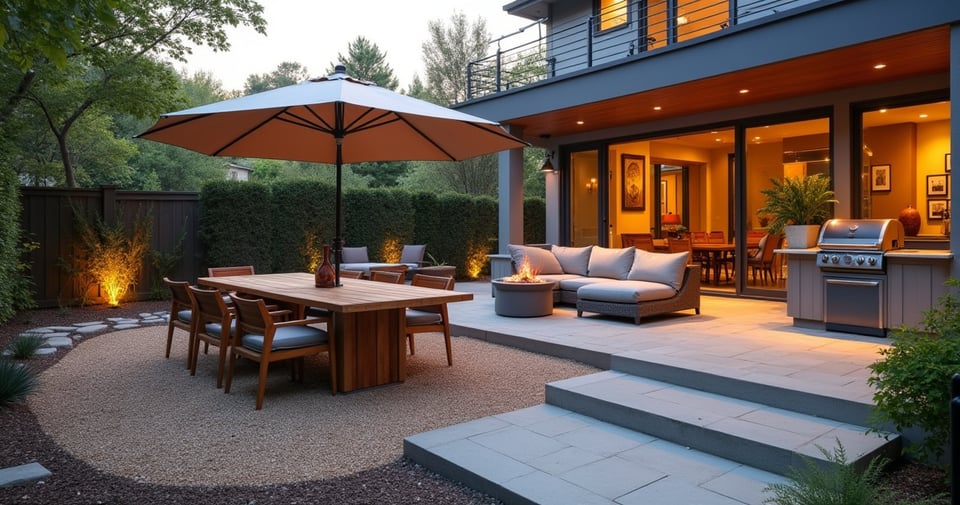
You know what people always ask me about patios? They have a Pinterest board overflowing with pristine, minimalist concrete slabs and perfectly matching grey furniture. They show it to me, all excited, and ask, “Can we do this?” And I always have to bite my tongue a little before I answer.
Because here’s the secret no one tells you: those catalogue-perfect patios are often completely soulless. They’re beautifully sterile, I’ll give them that. But they have no life, no story. A truly beautiful outdoor space isn’t just an extension of your house; it’s an extension of your life. It’s the scent of jasmine on a warm evening, the rich texture of a hand-thrown pot, the deep comfort of a cushion that invites you to stay for hours. It should feel like a sanctuary, a place steeped in personal history, whether that’s the reclaimed London brick under your feet or the pattern on a cushion that reminds you of a trip to Jaipur. So, let’s toss out the boring rulebook and talk about how to create an outdoor space that actually feels like you.
Foundational Planning & Smart Design
Before you fall in love with a single tile or chair, we have to talk about the bones. This is the unglamorous part, I know. It’s the architecture of the space. But getting this right is the difference between a patio you use a few times a year and one that becomes the true heart of your home all summer long. Think of it as preparing a canvas—you can’t create a masterpiece on a flimsy, ill-conceived frame.
1. Ditch ‘Activity Zones.’ Think in ‘Moments.’
The corporate-speak is to “define activity zones.” It sounds so rigid. I prefer to think of it as designing for moments. Where will you have your quiet morning chai? Where will the family gather for a noisy, joyful meal? Where is that one perfect corner to curl up with a book, hidden from the world? Thinking in terms of moments instead of zones naturally creates a more organic, inviting flow.
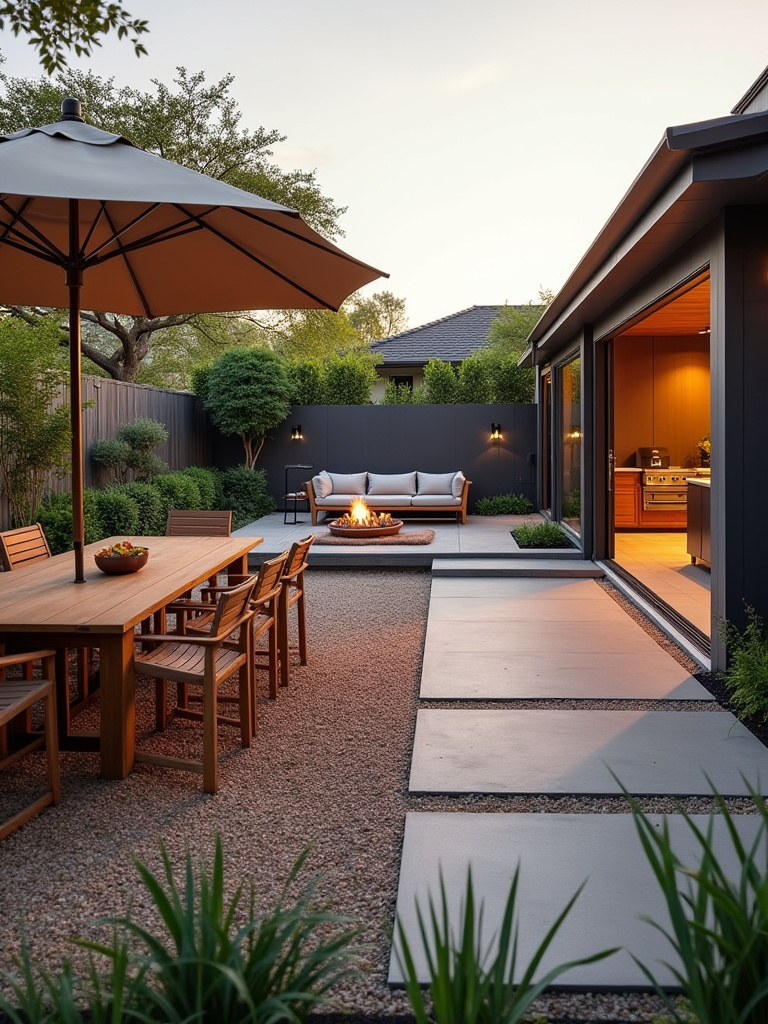
Instead of a monolithic slab, you might create a slightly raised deck area for dining and a sunken gravel corner for a fire pit. This approach creates distinct moods. Think of a traditional Indian haveli courtyard—it’s one space, but different corners serve different purposes throughout the day, dictated by the movement of the sun and the needs of the family. That’s the feeling we’re after: a space that lives and breathes with you.
2. Learn Your Garden’s Secrets (Sun & Wind)
I once had a client who spent a fortune on a gorgeous, built-in seating area. The problem? It was in a natural wind tunnel. They barely used it. Before you place a single stone, you need to become an observer. Spend a few days watching your garden. Where does the morning sun land? Where is the last golden light in the evening? Is there a spot that’s naturally sheltered from the wind?
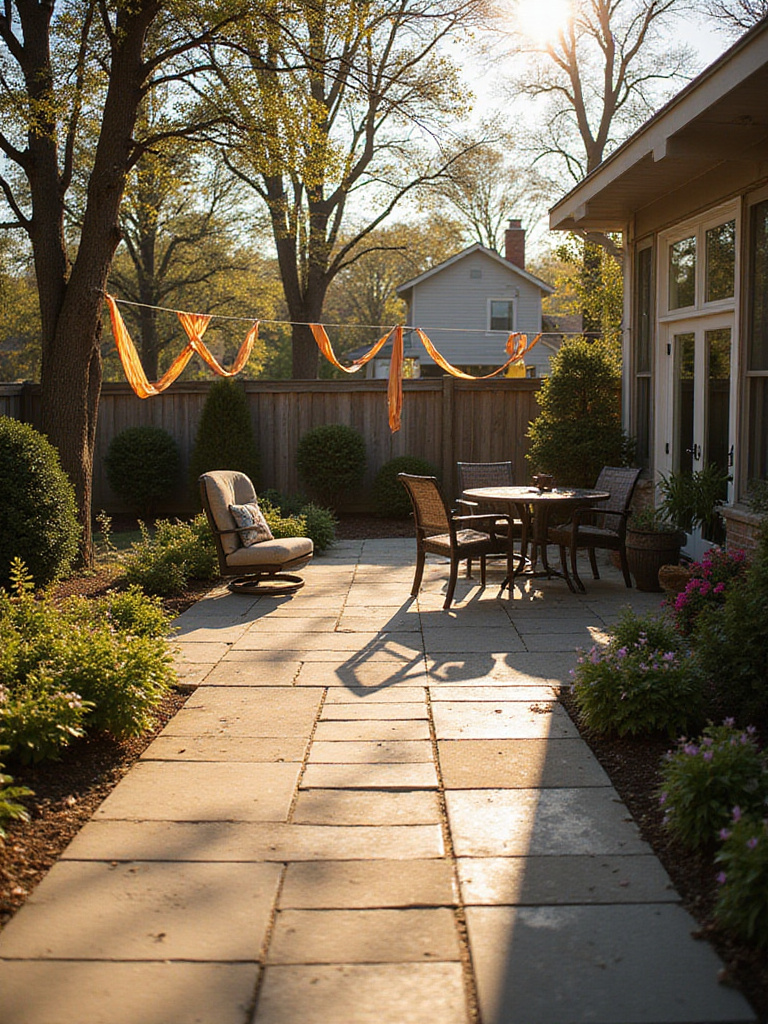
Don’t just fight the elements; work with them. A windy corner might be the perfect spot for some beautiful, tall grasses that will dance in the breeze rather than fight it. A sun-drenched wall is begging for a climbing rose or a bougainvillaea. Your garden is already telling you how it wants to be used. You just have to learn to listen.
3. Have an Honest Chat About Money
Let’s talk about budget. Everyone pretends it’s a simple spreadsheet calculation, but it’s more emotional than that. The biggest piece of BS is the idea that you have to do everything all at once to have a ‘finished’ patio. You don’t. A far better approach is to invest in the bones of the space: excellent foundations and high-quality, soulful paving that will last a lifetime.
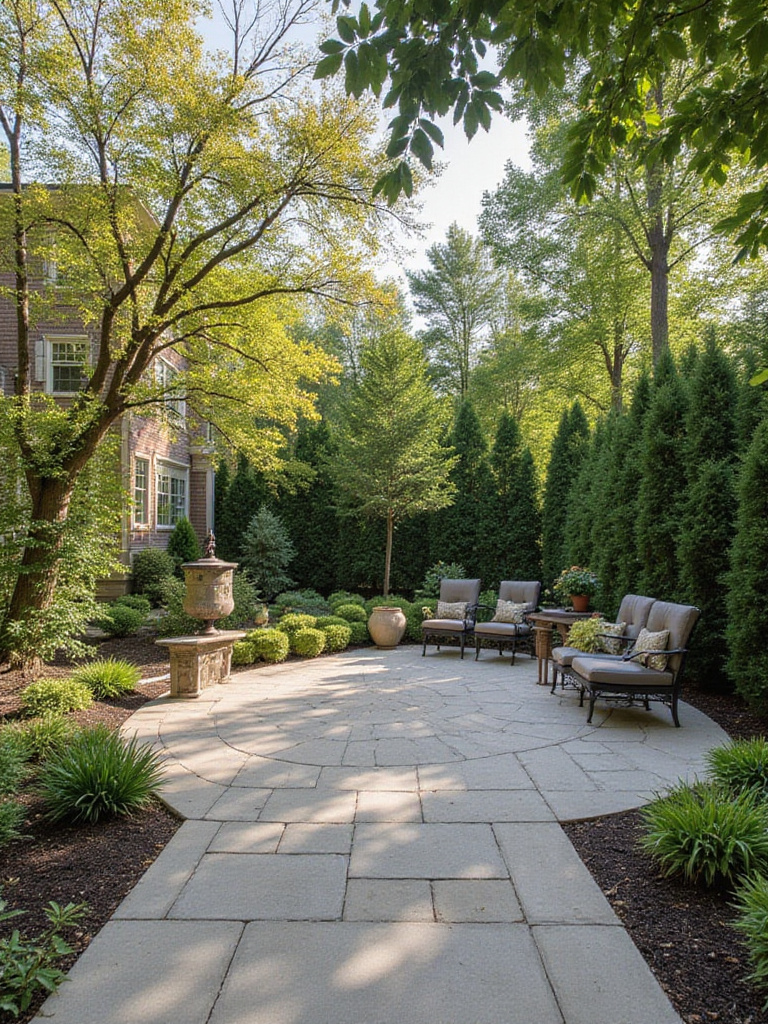
I always tell my clients to find one ‘hero’ piece they absolutely love. It could be a stretch, financially. Maybe it’s a set of exquisite, handmade tiles for a small feature wall, or a beautifully crafted wooden bench from a local artisan. Spend your money there. You can get by with simpler furniture for a few seasons. Quality lasts. And a single, beautiful element will bring you more joy than a patio full of cheap, disposable things ever could.
4. Choreograph the Dance of the Garden
Designers call it “traffic flow.” A far more elegant way to think of it is as a dance. How do you want to move through the space? You don’t want a straight, boring path from the back door to a table. You want to create a sense of journey, even in a small British garden. You want meandering lines that invite exploration.

The easiest shortcut is to grab your garden hose or a long piece of rope. Lay it out on the ground to mock up the edges of your patio and your main pathways. Live with it for a day or two. Walk the paths. Does it feel graceful? Does it lead your eye to a beautiful view? This simple step costs nothing and can save you from creating a layout that feels clunky and awkward.
5. Deal with the Red Tape (And Then Forget It)
I won’t linger on this, because it’s the least inspiring part. But you absolutely must check local building codes and see if you need planning permission, especially if you’re building a large structure, a raised deck, or something close to a boundary. It’s a box-ticking exercise, but it’s a non-negotiable one.
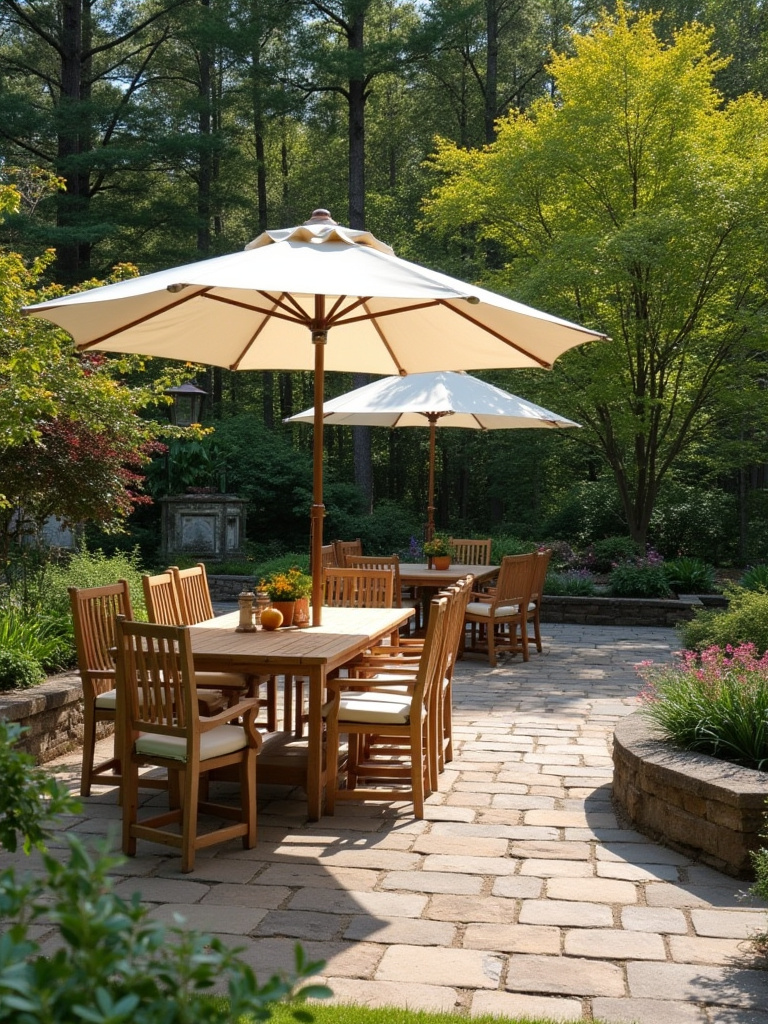
Do it first. Get it out of the way. It prevents headaches, angry neighbours, and potentially having to tear down your beautiful work. Think of it as the responsible, grown-up step that clears the way for all the creative fun to follow.
6. Create a Conversation, Not a Carbon Copy
Everyone says your patio style should “complement your home’s architecture.” That’s true, but it’s often misinterpreted as “make it match.” So, you see Victorian houses with fussy, Victorian-style patios. It can feel a bit stagnant. I believe the goal is to create a conversation between the house and the garden. They should speak to each other, not say the exact same thing.
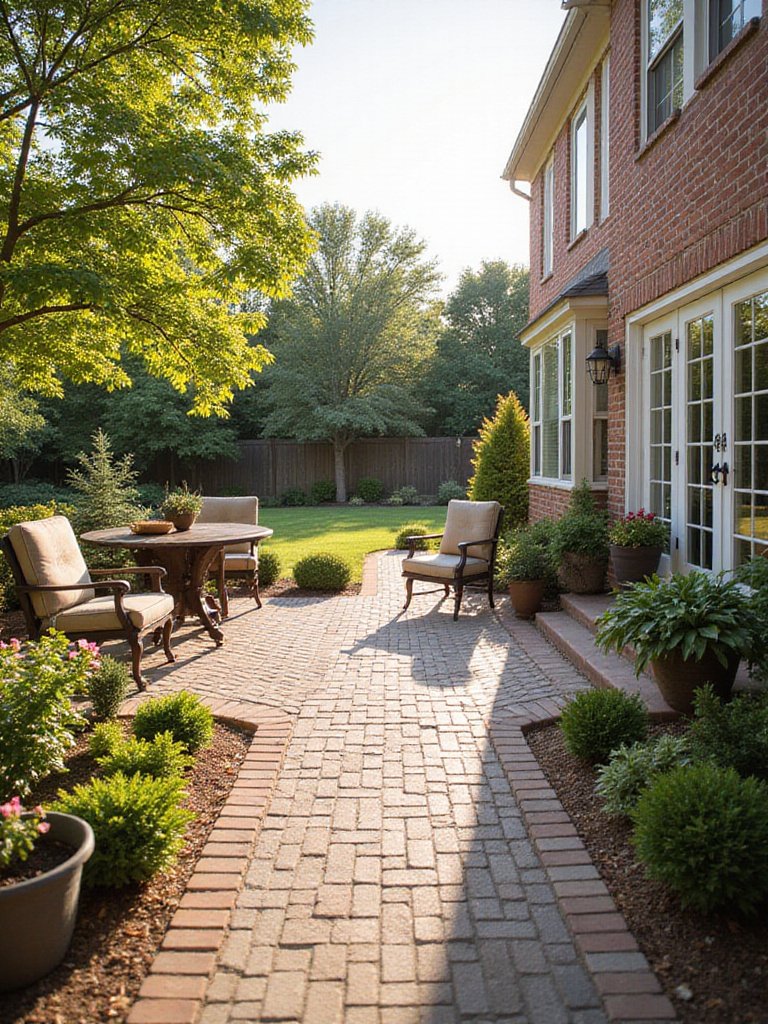
A sleek, contemporary glass extension can lead out to a patio paved with wonderfully textured, reclaimed York stone. The contrast is what makes it exciting. A traditional brick townhouse can be the perfect backdrop for a patio with clean lines and accents of Jodhpur blue. The key is to find a common thread—a colour, a material, a line—that connects the two, allowing them to be distinct yet harmonious.
Now that we’ve established the soul and skeleton of your space, we can start dressing it. This is where we bring in the textures, the materials, and the core pieces that will turn your well-planned layout into a tangible reality.
Materializing Your Patio with Core Elements
This is the phase where your patio gets its personality. The materials you choose will define the entire feel of the space, from the sensation under your bare feet to the way they catch the evening light. This is about choosing materials with character that will age beautifully.
7. Choose Paving with History
Durability is important, of course. But you can have durability and beauty. Please, I beg you, look beyond the standard-issue grey concrete pavers. Your patio floor is the largest surface out there—make it sing. Think about materials that get better with age. Reclaimed London brick laid in a herringbone pattern has an instant warmth and history that new materials can’t replicate.
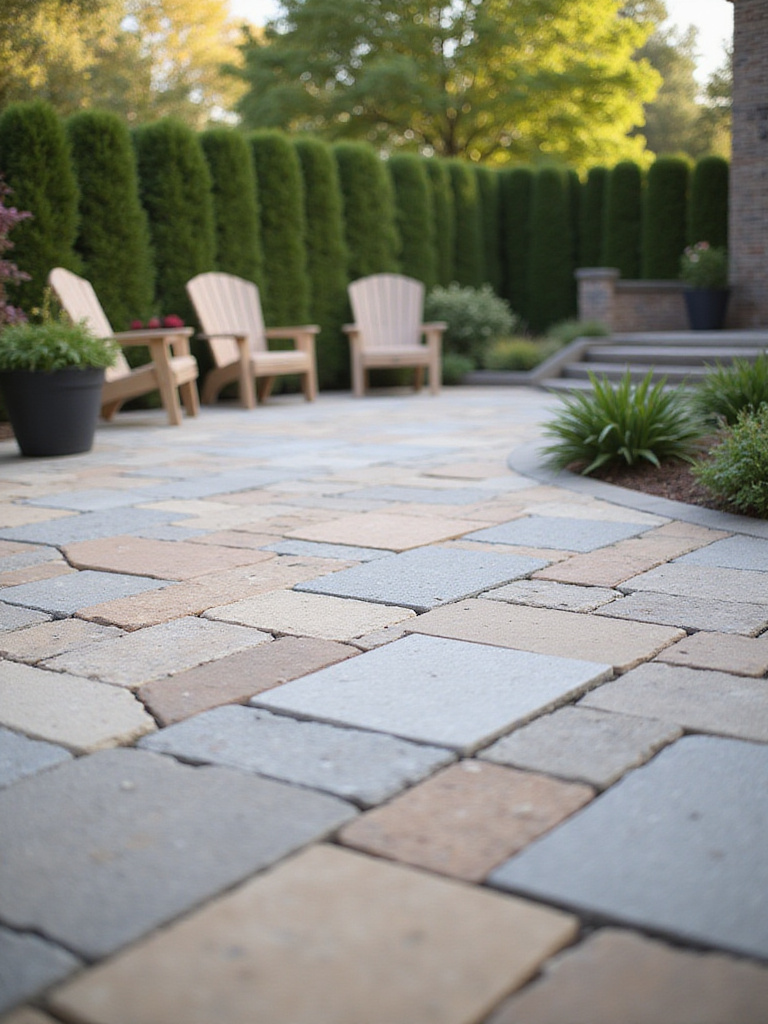
Or, for a touch of more exotic heritage, consider patterned cement tiles for a small, sheltered area. They have a chalky, handmade feel that is incredibly chic. And if the budget allows, natural stone like slate or sandstone has a richness and variation in colour that connects your patio directly to the earth. The story I learned the hard way? A client chose cheap, perfectly uniform pavers. Within two years, a few were chipped, the colour had faded unevenly, and the whole thing just looked sad. Investing in quality paving is never a mistake.
8. Consider Permeable for a Softer Touch
This might sound technical, but the concept is beautifully simple. Permeable paving allows rainwater to soak through into the ground below, rather than running off into the drains. From a design perspective, this allows for a much softer, more integrated look. Think gravel patios, or pavers with wide gaps planted with creeping thyme.
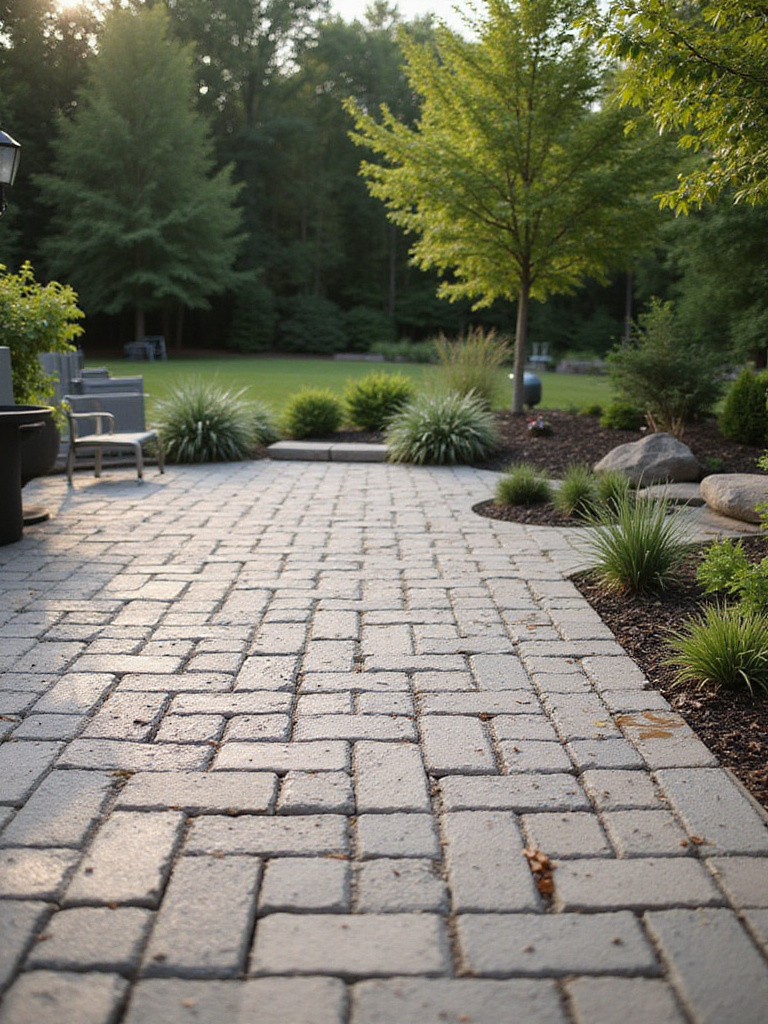
This approach is not only better for the environment, but it breaks up the hardness of a traditional patio. A client with a small urban garden was worried about paving over too much of their precious green space. We used permeable pavers set wide apart, which allowed them to have a solid surface for furniture while maintaining a lovely, green, cottage-garden feel. It’s the perfect compromise between hard landscaping and a lush garden.
9. Don’t Skimp on the Unseen Foundation
I know, I know, another unglamorous point. But here’s the unvarnished truth: the most beautiful, expensive stone in the world will look terrible in three years if it’s laid on a poorly prepared sub-base. It will sink, shift, and become a wobbly, uneven mess. The success of your patio is 80% what you don’t see.
This is where you should spend money on professional labour if you’re not an experienced DIY-er. A proper sub-base involves digging out, laying hardcore, and compacting it properly to create a solid, stable, and well-draining foundation. It’s the literal bedrock of your investment. Skipping this step is like buying a couture gown and wearing it with cheap, ill-fitting underwear. It just ruins the entire effect.
10. Make Water Your Friend, Not Your Enemy
Poor drainage is the silent killer of beautiful patios. If water pools on the surface or, even worse, runs back toward your house, you’re in for a world of problems—from slippery moss and algae to serious damp issues in your home. The key is to ensure a gentle, almost imperceptible, slope away from any buildings.
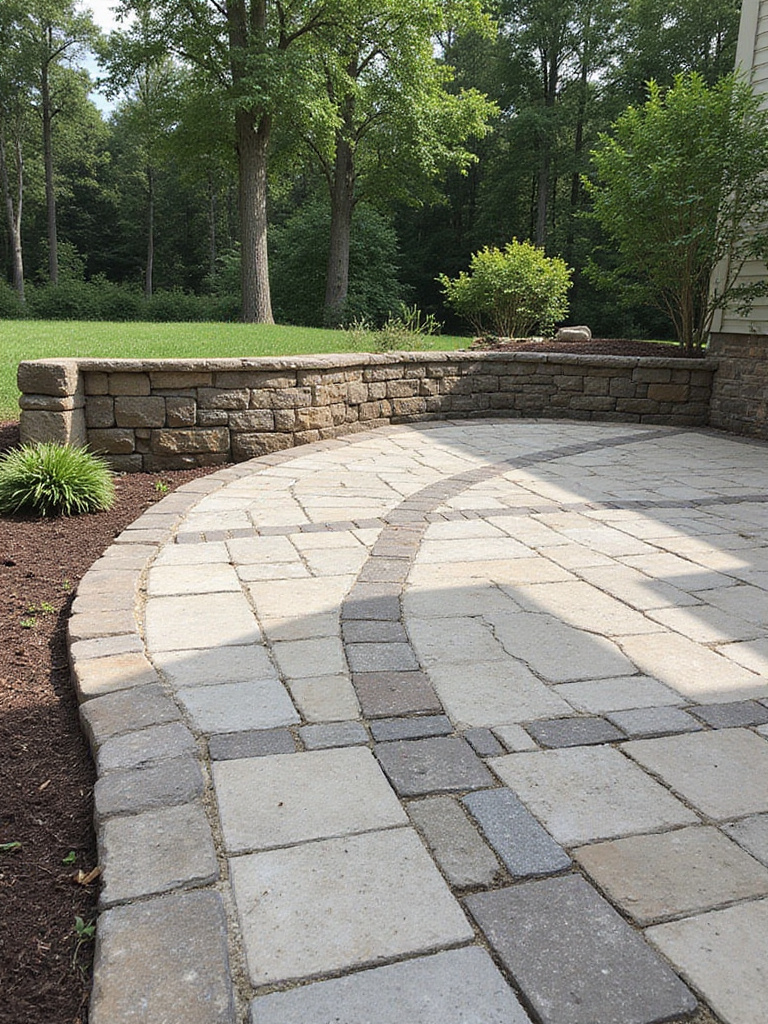
For larger spaces, a discreet channel drain can be a lifesaver, collecting water and piping it away. But for a more design-led approach, I love integrating a rain garden. This is essentially a shallow, planted depression that your patio drains into. It becomes a beautiful feature filled with water-loving plants, turning a practical necessity into a garden focal point.
11. The Power of a Perfect Edge
Edging is the sharp tailoring of your patio. It’s what gives it a crisp, defined, and intentional look. Without a proper edge, pavers can shift, and gravel will spill out into your lawn, creating a messy, blurred line. It’s a small detail that makes a massive difference, elevating the entire project from amateur to professional.
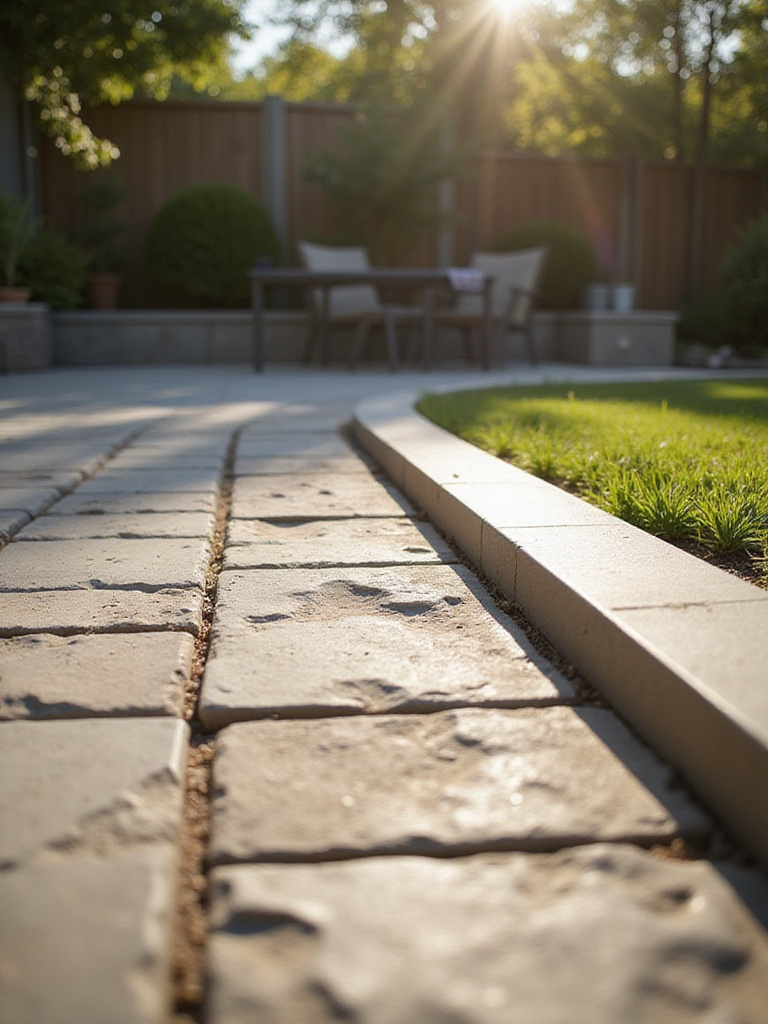
While plastic edging is functional, I prefer using materials that add to the aesthetic. A line of reclaimed granite setts, a sleek band of corten steel that will rust to a beautiful deep orange, or a border of inset bricks can all serve as a beautiful frame for your patio, proving that even the most practical elements can be objects of beauty.
12. Create a Journey with Stepping Stones
If you have a lawn or gravel area connecting to your patio, stepping stones are a wonderfully whimsical and practical way to create a path. They create a sense of rhythm and invite you to slow down as you move through the garden. The key is in the spacing—place them for a natural, comfortable stride.
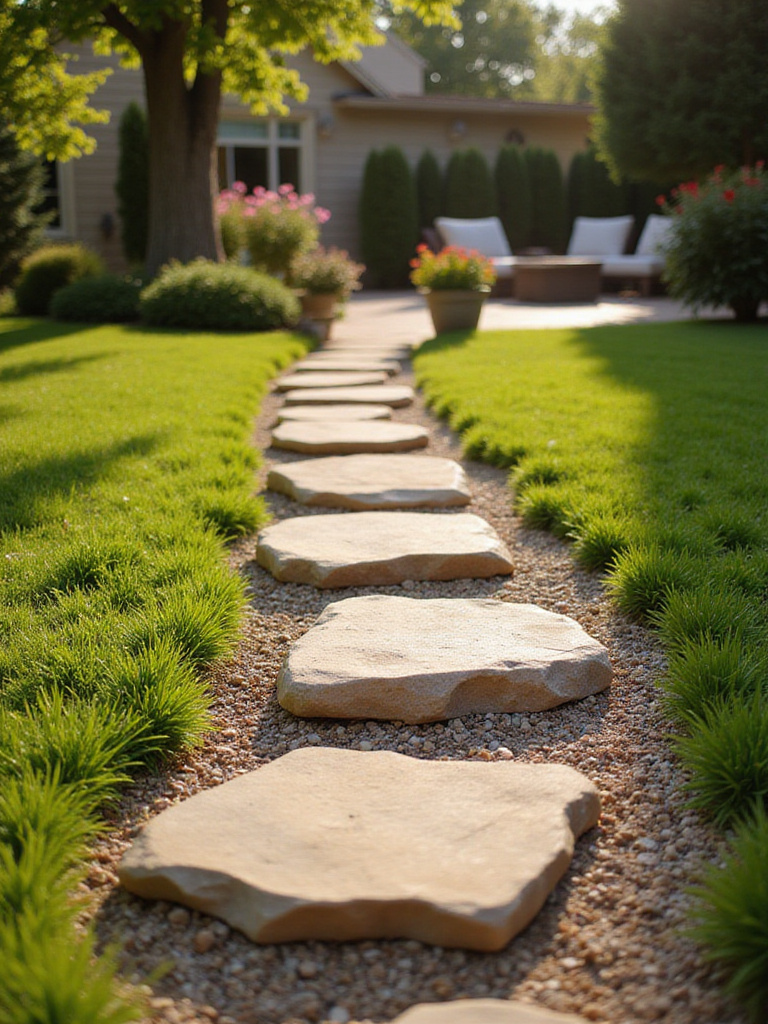
I adore using large, irregular slabs of slate or flagstone for a very organic feel. In a recent project, we connected a sleek, modern patio to a wilder part of the garden using enormous, round slices of a tree trunk set into the lawn. They are weathering beautifully and feel like magical portals from the cultivated to the untamed. It’s about adding a touch of storytelling to the simple act of walking.
With the heavy lifting done, it’s time to furnish the space. This is where we layer in the elements that provide comfort and make the patio a truly functional, livable room.
Boosting Functionality & Enhancing Comfort
Your patio is built. It’s solid and beautiful. Now, how do we make it a place you never want to leave? It’s about adding the human elements: places to sit, to cook, to gather. This is how we transform it from a handsome surface into an outdoor living room.
13. Build In Your Seating for a Courtyard Feel
There’s something incredibly luxurious and architectural about built-in seating. It immediately makes a patio feel more permanent and integrated. A low masonry wall that doubles as a bench, perhaps topped with beautiful hardwood, can define the edge of your space while providing masses of seating without the clutter of individual chairs.
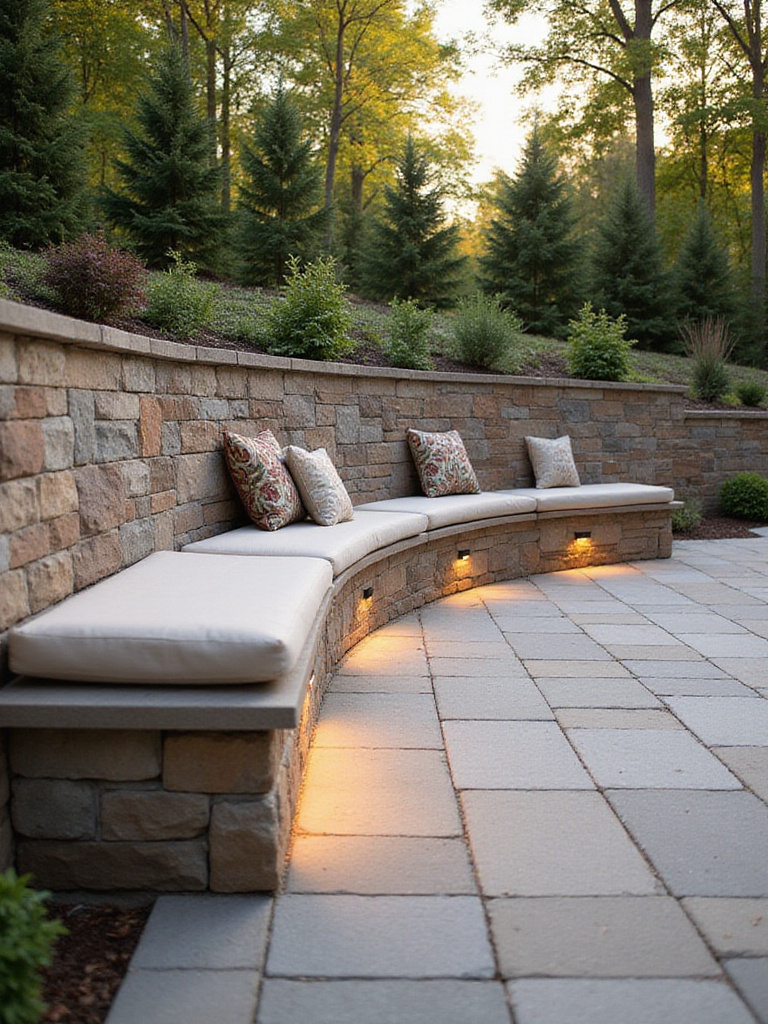
This is a classic feature in Mediterranean and South Asian courtyards, and for good reason. It’s space-efficient and encourages communal gathering. To soften the look and add that layer of supreme comfort, pile it high with deep, comfortable cushions in rich, weather-resistant velvets or block-printed cottons. It becomes an outdoor sofa you can really lounge on.
14. An Outdoor Kitchen Is a Game-Changer
If you love to entertain, an outdoor kitchen moves beyond a simple BBQ and transforms how you host. It’s not about replicating your entire indoor kitchen. Often, a well-designed station with a good quality grill, a bit of counter space for prep, and a small sink is all you need.
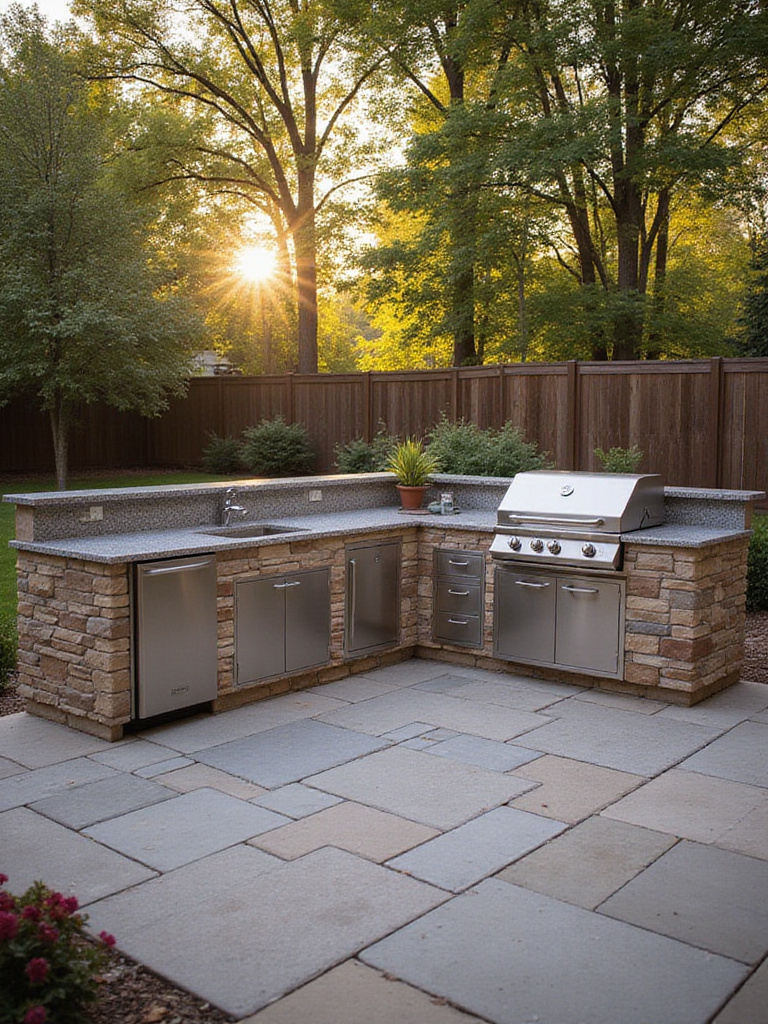
The real value is that it keeps the host in the heart of the party. You’re not running back and forth to the house, missing the conversation. The cooking becomes part of the social experience. I recently designed a compact kitchen unit clad in the same dark wood as the nearby fence, so it felt like a sleek, integrated piece of furniture rather than a collection of appliances.
15. A Fire Pit Is the Ultimate Gathering Point
Fire is elemental. It draws people in. A built-in fire pit creates an anchor for your patio, a natural focal point for evenings. It extends the use of your garden into the cooler nights of spring and autumn, turning your patio into a three-season room. It’s where stories are told and connections are made.
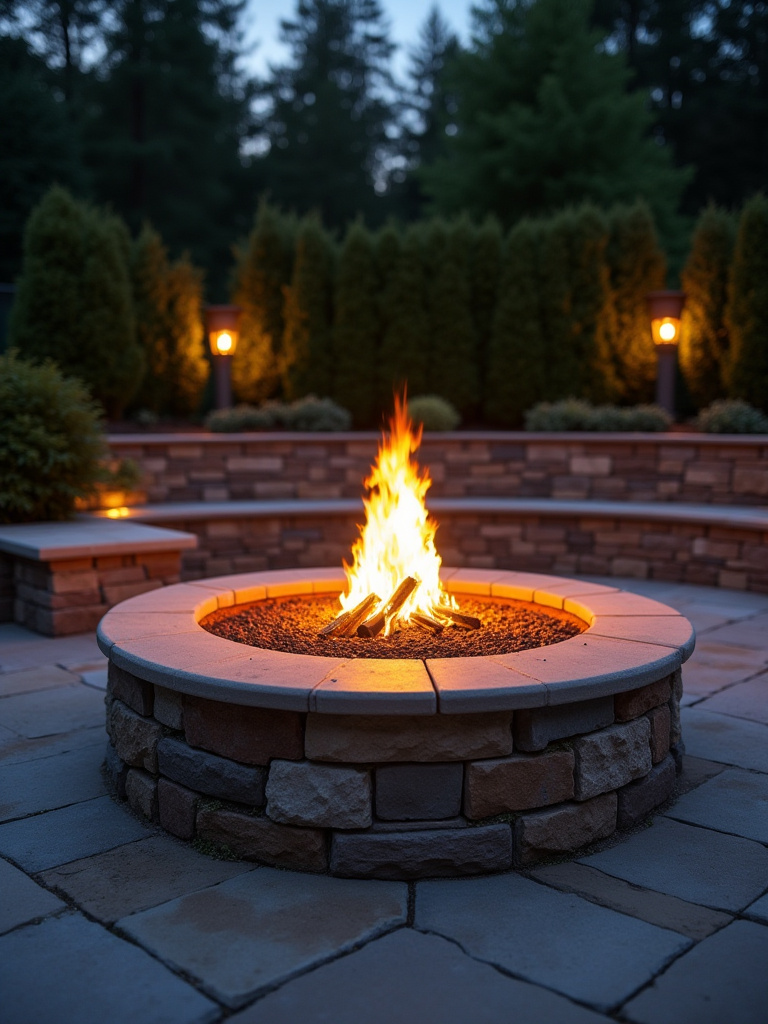
While a wood fire has a primal appeal, a gas-fuelled fire pit offers incredible convenience. With the flick of a switch, you have instant warmth and ambiance without any of the smoke or clean-up. A low, round fire pit surrounded by deep, comfortable seating creates an intimate and irresistibly cosy setting.
16. The Gentle Sound of Water
You don’t need a giant, crashing waterfall to make an impact. In fact, a small, subtle water feature can be far more effective. The goal is to introduce the gentle, soothing sound of moving water, which has a wonderfully calming effect and helps to mask less desirable background noise.
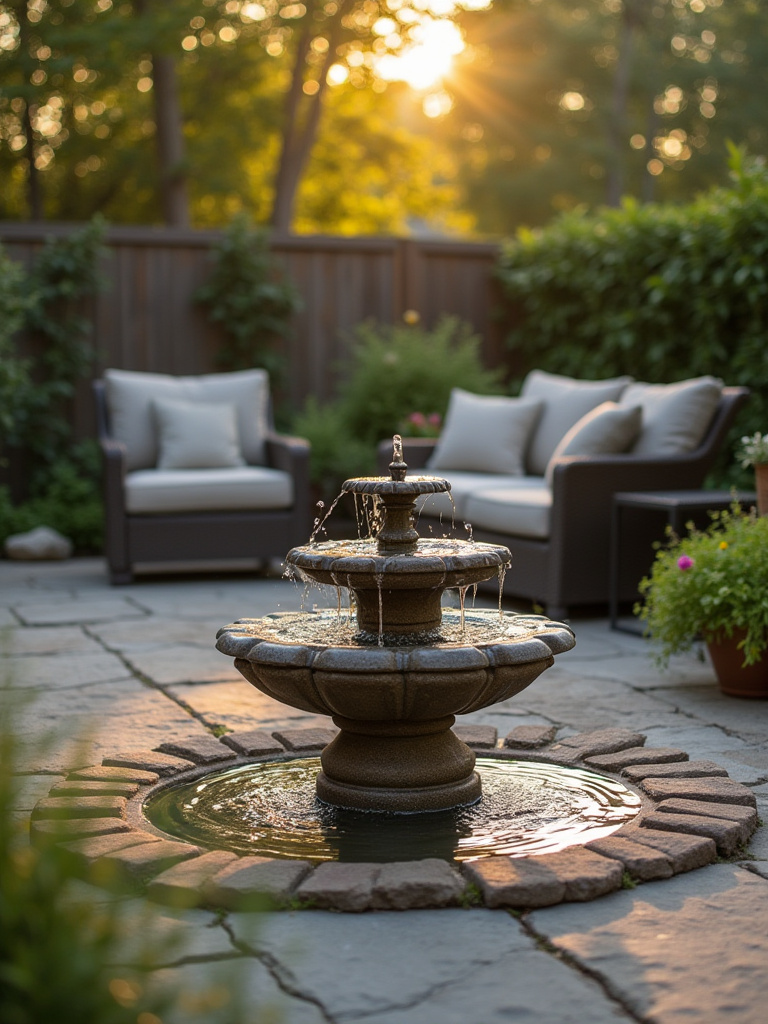
Think of the small, bubbling fountains in a Moroccan riad. It’s more about the sound than the sight. A simple stone bowl with a small, discreet pump, or a wall-mounted spout trickling into a small basin, can be enough to transform the entire atmosphere of your patio, lending it a meditative, serene quality. It’s a sensory detail that adds a profound layer of tranquillity.
17. An Outdoor Cinema for Magical Nights
This sounds incredibly grand, but it’s surprisingly achievable. Forgetting a permanently mounted TV, which can look a bit clunky, the simplest solution is a good quality projector and a plain, light-coloured exterior wall or a simple pull-down screen. It turns your patio into an open-air cinema on warm nights.

Imagine gathering friends, wrapped in blankets with bowls of popcorn, to watch a film under the stars. It’s a truly memorable experience. This isn’t about creating a high-tech media room; it’s about using technology in a simple, low-fi way to create a bit of magic and a new way to enjoy your outdoor space together.
18. Create a Ceiling with a Pergola
A pergola is the single most effective way to create the feeling of an ‘outdoor room.’ It defines the space, gives a sense of enclosure and intimacy, and provides a framework for shade and greenery. It provides a ‘ceiling’ that makes a seating or dining area feel grounded and purposeful.
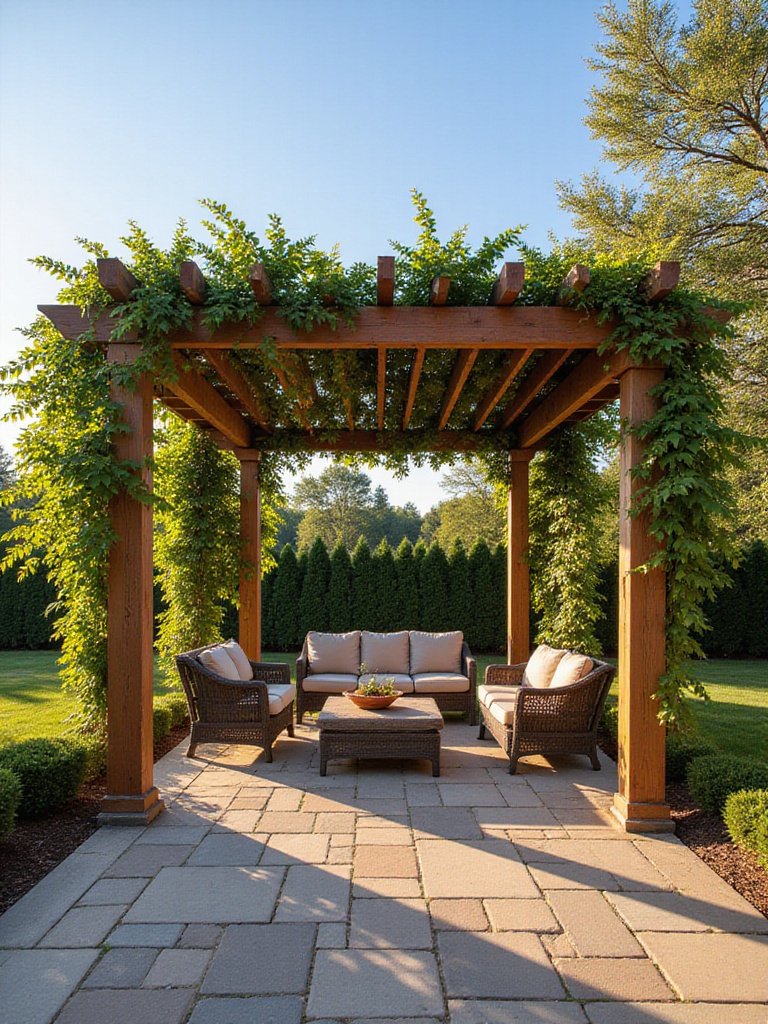
Left bare, a sleek metal or dark-stained wood pergola can be a strong architectural statement. But I love to soften them by growing climbers up the posts—think fragrant jasmine, wisteria, or a climbing rose. You can also drape sheer, weather-resistant fabrics through the rafters for a soft, tent-like effect that provides dappled shade and a touch of romance.
The foundations are laid, the furniture is in place. The final layer is about atmosphere. It’s the jewellery, the art, and the styling that brings your personality to the forefront and makes the space utterly enchanting, day and night.
Ambiance, Aesthetics & Long-Term Enjoyment
This final stage is all about seduction. It’s how you light the space, the textiles you choose, and the living greenery you introduce. This is where we add the final touches of soul that make your patio a place you are drawn to instinctively, a space that feels deeply personal and restorative.
19. Paint with Light for Evening Drama
Please, step away from the harsh security floodlights. Outdoor lighting isn’t about obliterating the darkness; it’s about creating mood and mystery. Think in layers. You need low-level lighting along paths and steps for safety, of course, but the real magic comes from accent lighting.
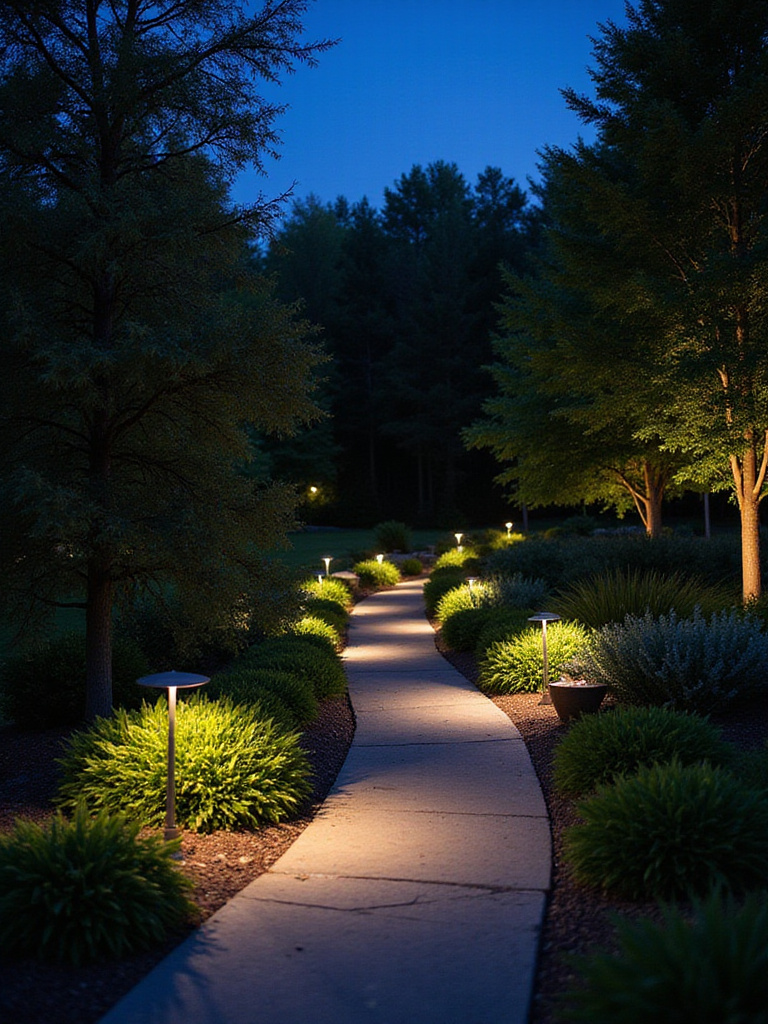
“A garden is a lovely thing, God wot! Rose plot, fringed pool, ferned grot— The veriest school of peace; and yet the fool contends that God is not.”
– Thomas Edward Brown. Good lighting helps you appreciate this peace, even at night.
I always tell clients to use uplighters to highlight the beautiful texture of a stone wall or the dramatic shape of a specimen tree. Use warm, soft light. And don’t forget candles. Nothing beats the gentle flicker of candlelight. A collection of beautiful lanterns—perhaps with intricate metal fretwork like you’d find in a Souk—can cast beautiful, dancing patterns and create an incredibly romantic atmosphere.
20. Use Uplighting to Tell a Story
This is a specific form of ‘painting with light’ that deserves its own mention. It’s the single most effective way to add drama and sophistication to your garden after dark. By placing a spotlight at the base of a beautiful feature, you’re essentially curating what the eye is drawn to in the darkness.
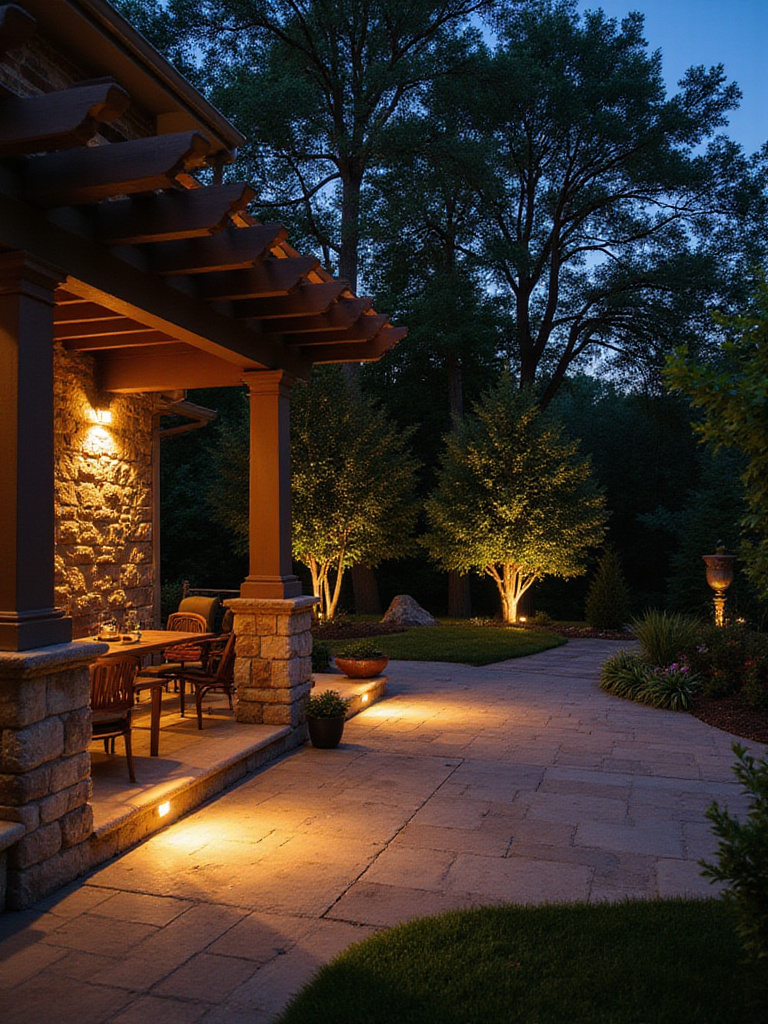
It’s about making a hero of your best features. A gnarled old olive tree, a piece of sculpture, or the columns of your pergola can all be transformed into stunning focal points at night. This technique creates depth and dimension, making your garden feel bigger and more intriguing than it does in the daytime.
21. Bring the Greenery Onto the Patio
A patio shouldn’t feel separate from the garden; it should feel nestled within it. The easiest way to achieve this is to bring the plants right onto the hardscaping with lush planters and pots. This softens the hard edges and infuses the space with life, colour, and scent.
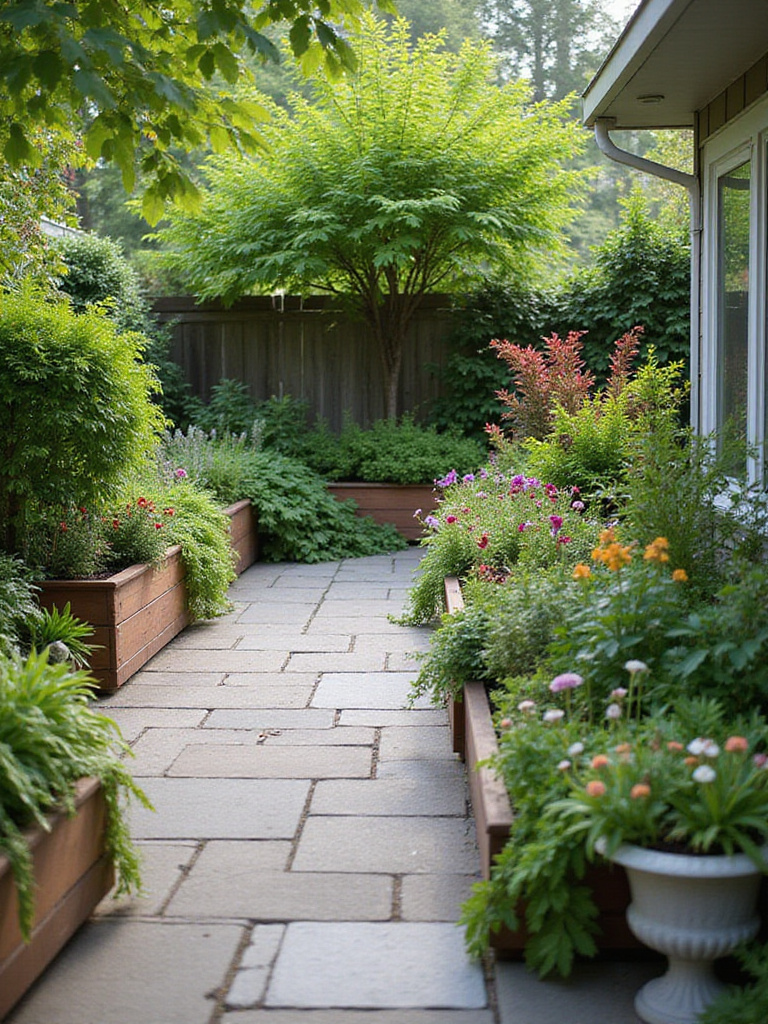
Play with scale. Use a few very large, statement pots rather than a clutter of small ones. An old, weathered terracotta pot planted with a cloud of lavender, or a sleek, modern container with a single, sculptural Acer tree, can have a huge impact. And don’t forget herbs—a collection of pots with mint, rosemary, and basil near your dining area is practical, beautiful, and will smell divine.
22. Invest in Furniture You Want to Sink Into
Your outdoor furniture should be as comfortable as your indoor sofa. This is not the place for flimsy plastic or stiff, uninviting metal. Look for deep seats and invest in the best quality, weather-resistant cushions you can afford. The shortcut I swear by? Look for solution-dyed acrylic fabrics like Sunbrella—they hold their colour for years and resist mildew.
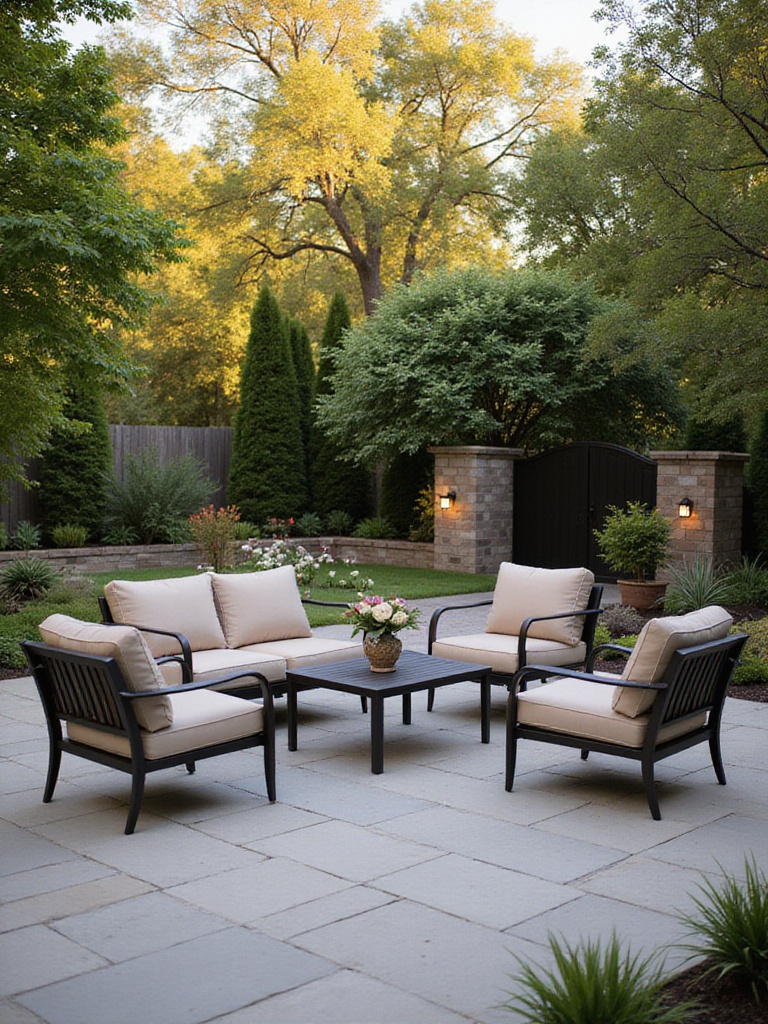
I love to mix styles. A contemporary sofa from a British designer can look incredible piled with cushions covered in vibrant, hand-blocked Indian textiles. For a touch of relaxed, bohemian style, a classic woven daybed, or charpai, is the perfect spot for an afternoon nap. It’s about creating an outdoor living room that truly prioritises comfort.
23. Lay Down a Rug to Anchor the Space
An outdoor rug is the quickest way to make a patio feel like a finished room. It defines a seating or dining area, adds a welcome layer of texture and softness underfoot, and provides a wonderful opportunity to introduce colour and pattern. It’s the one item that can single-handedly pull a collection of disparate furniture pieces together.
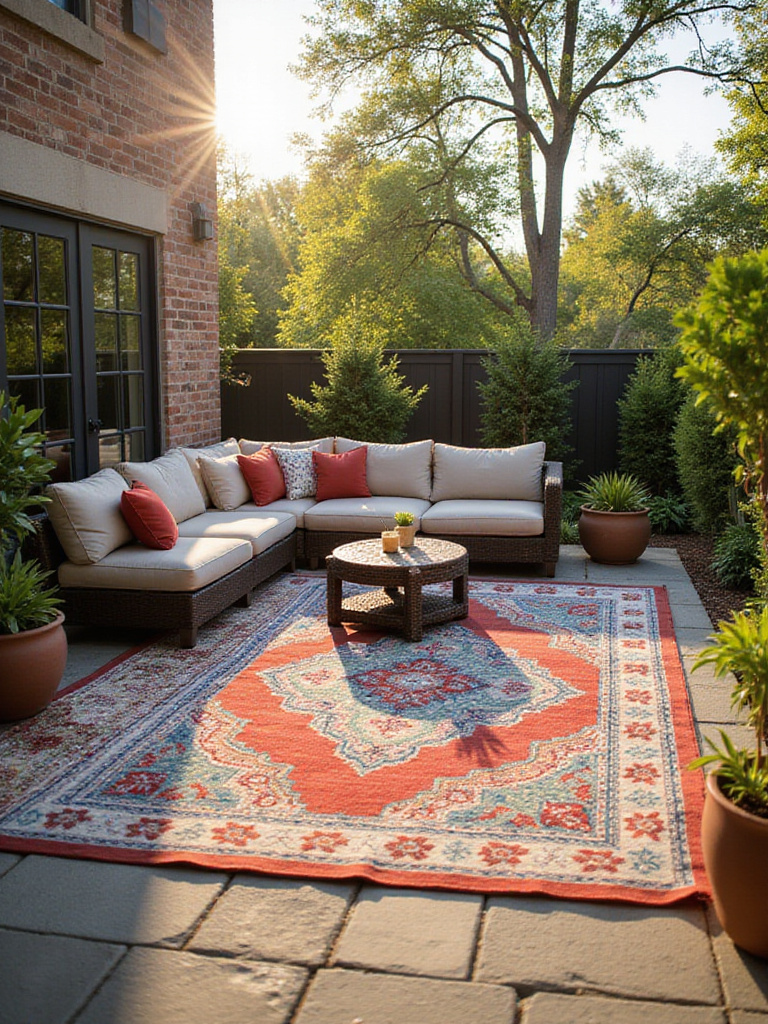
There are fantastic, durable options made from recycled plastics that look and feel surprisingly like natural woven fibres. A beautiful outdoor dhurrie or kilim can bring a wealth of personality and warmth to a plain stone or wood patio. Choose a rug that’s large enough for at least the front legs of all your seating to rest on; this makes the space feel generous and well-grounded.
24. The Romance of Outdoor Curtains
For instant privacy and a huge dose of glamour, nothing beats outdoor curtains. Hung from a pergola or a simple frame, they can transform a patio into a private, tent-like sanctuary. They billow beautifully in the breeze and soften the hard lines of the architecture, adding a touch of softness and romance.
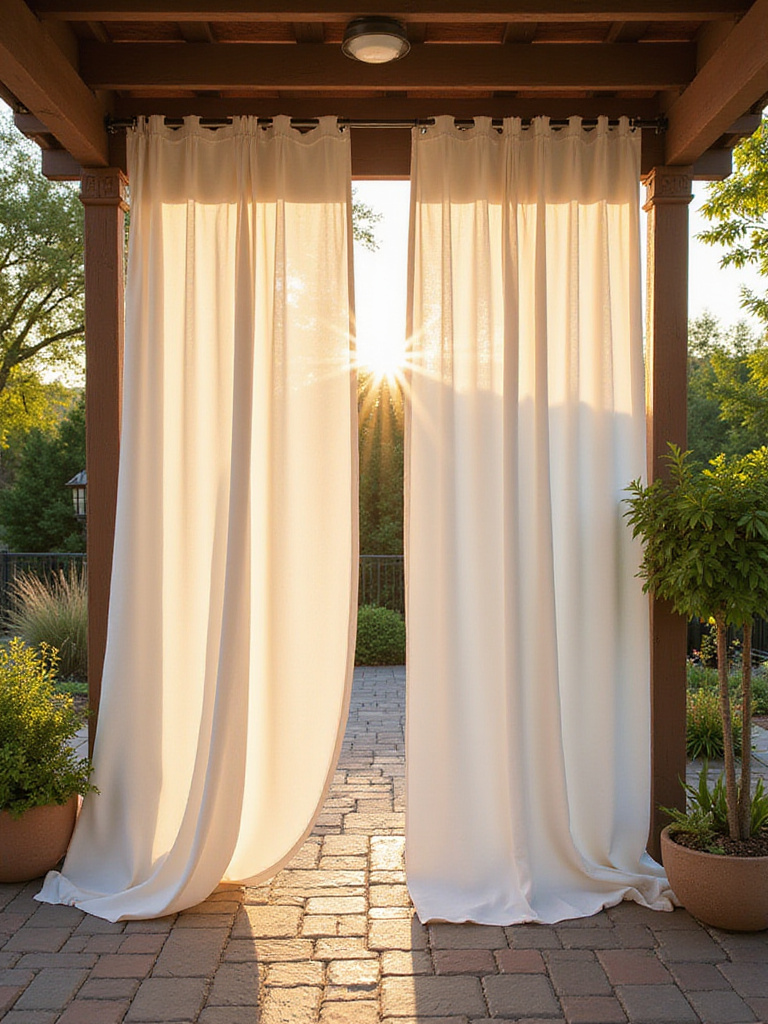
Choose a sheer, lightweight, weather-resistant fabric that will let dappled light filter through. It’s not about blocking the space off completely, but rather about creating a sense of intimacy and enclosure. It makes your outdoor area feel like a secret escape, a luxurious private cabana right in your own back garden.
A Final Thought
Creating a patio with soul is a journey, not a weekend project. It’s about layering textures, stories, and moments over time. It’s about finding the beauty in imperfection—the moss growing on old stone, the weathering of natural wood, the comfortable fade of a much-loved cushion. Don’t chase the sterile perfection of the catalogues. Instead, create a space that reflects your life, your travels, and your loves. Build a sanctuary that invites you to slow down, to gather with people you cherish, and to connect with the simple, quiet beauty of the outdoors. Now go on, create a space that tells your story.