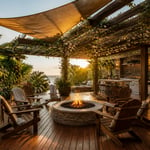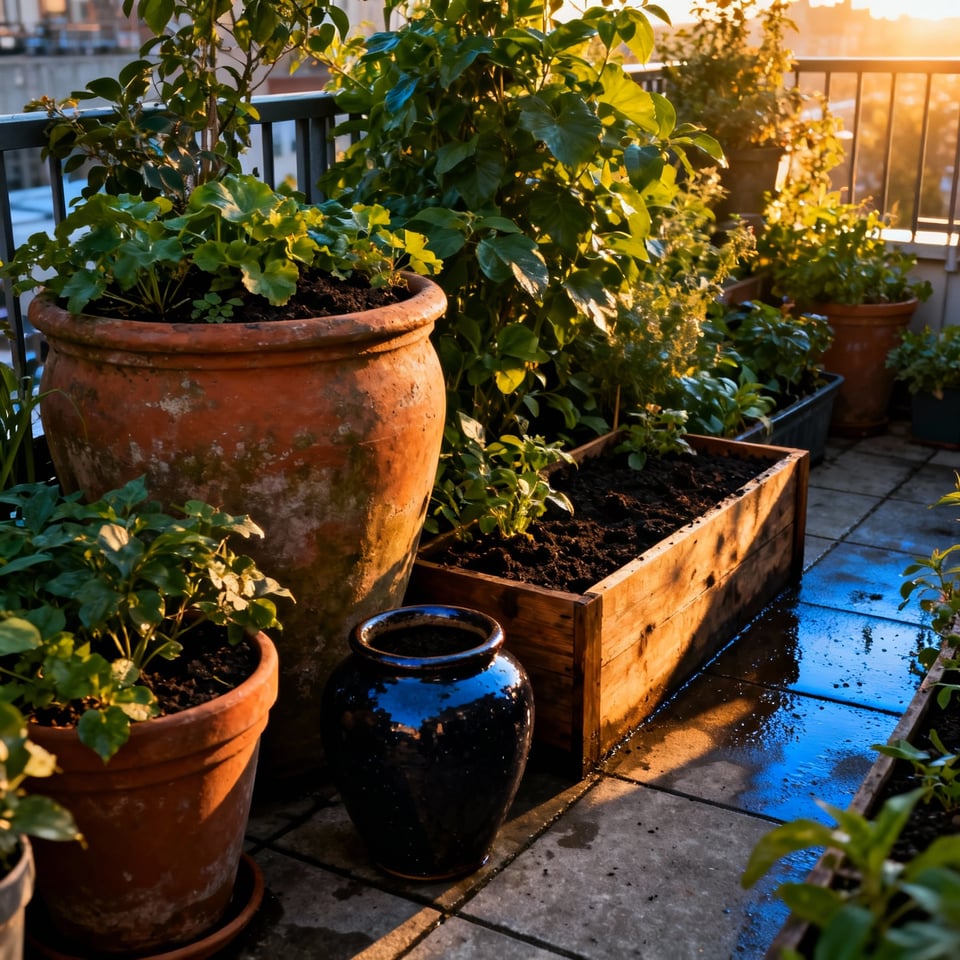
Many aspiring gardeners believe true abundance requires a sprawling backyard. Indeed, we culturally associate a successful harvest with vast acreage. But for the discerning homeowner, maximizing yield per square foot is the new measure of agricultural success. This guide redefines urban gardening. It focuses on sophisticated systems and structural integrity. Ultimately, achieving a thriving oasis of high-performance balcony plants is entirely possible within a limited footprint.
Ancient civilizations utilized courtyards to feed cities, proving that density often drives productivity. In fact, small urban Victory Gardens produced 40% of U.S. vegetables during World War II. Therefore, limited space is not a barrier to agricultural success. Balconies actually offer superior environmental control through managed microclimates and reduced pest pressure. Thus, the modern grower trades raw area for precision.
This guide explores the design principles behind high-density, vertical gardening. We will examine how to maximize the “Z-axis” to multiply your effective growing space. Additionally, we uncover the benefits of custom soil blending for container health. Abundance is defined by yield per square foot, not total land mass. Modern design allows you to integrate a productive harvest into any living space.
Phase 1: Foundation & Microclimate Analysis
Successful balcony gardens begin with structural safety, not just aesthetics. Primarily, you must calculate the “live load” capacity of your specific space. Most residential balconies support between 50 and 100 pounds per square foot. However, a dangerous paradox exists regarding soil density. Saturated garden soil often weighs up to 100 pounds per cubic foot. As a result, a single deep, wet planter can instantly exceed your balcony’s design limits. Therefore, you must utilize lightweight potting mixes rich in porous perlite or pumice. Additionally, position your heaviest containers directly near load-bearing walls to distribute weight safely.
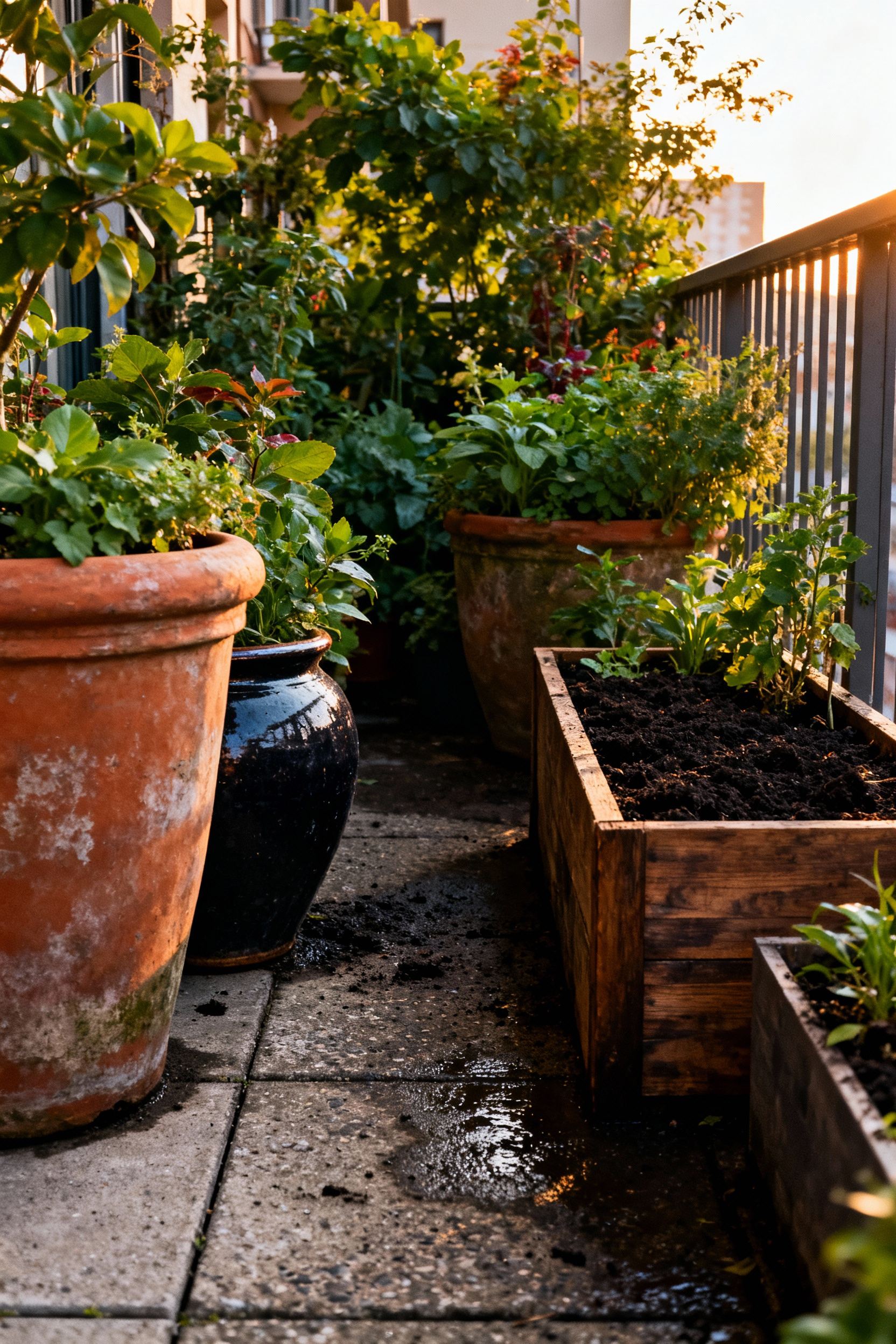
Beyond weight, you must analyze your unique atmospheric conditions. Notably, elevation creates a challenging phenomenon known as physiological drought. In this scenario, high winds strip moisture from leaves faster than roots absorb it. Furthermore, adjacent buildings often create wind tunnels, intensifying this stress. Thus, establishing windbreaks with screens or hardy “shelterbelt” plantings is crucial for survival. Without this protection, delicate foliage will dehydrate rapidly.
Finally, urban materials fundamentally alter temperature dynamics. Concrete floors and masonry walls act as thermal masses. They trap solar radiation and release intense radiant heat at night. In fact, this creates a microclimate up to 15 degrees Celsius hotter than ground level. Ideally, track this variance using a min-max thermometer before planting. Accordingly, leverage this “heat island” effect by placing crops like tomatoes against warm walls. Conversely, tuck tender herbs into the shady, cooler pockets created by railings.
1. Mapping the Concrete Heat Island: Understanding your balcony’s unique thermal retention and wind tunnels
A balcony environment operates differently than a ground-level garden. Primarily, this is due to concrete’s high thermal mass. During the day, masonry absorbs significant solar energy. Instead of reflecting it, the material stores heat like a dense battery. Consequently, this creates a “nocturnal heat reservoir.” The floor releases trapped warmth slowly after sunset. Therefore, plant roots experience temperatures significantly higher than the ambient air, preventing vital overnight recovery.
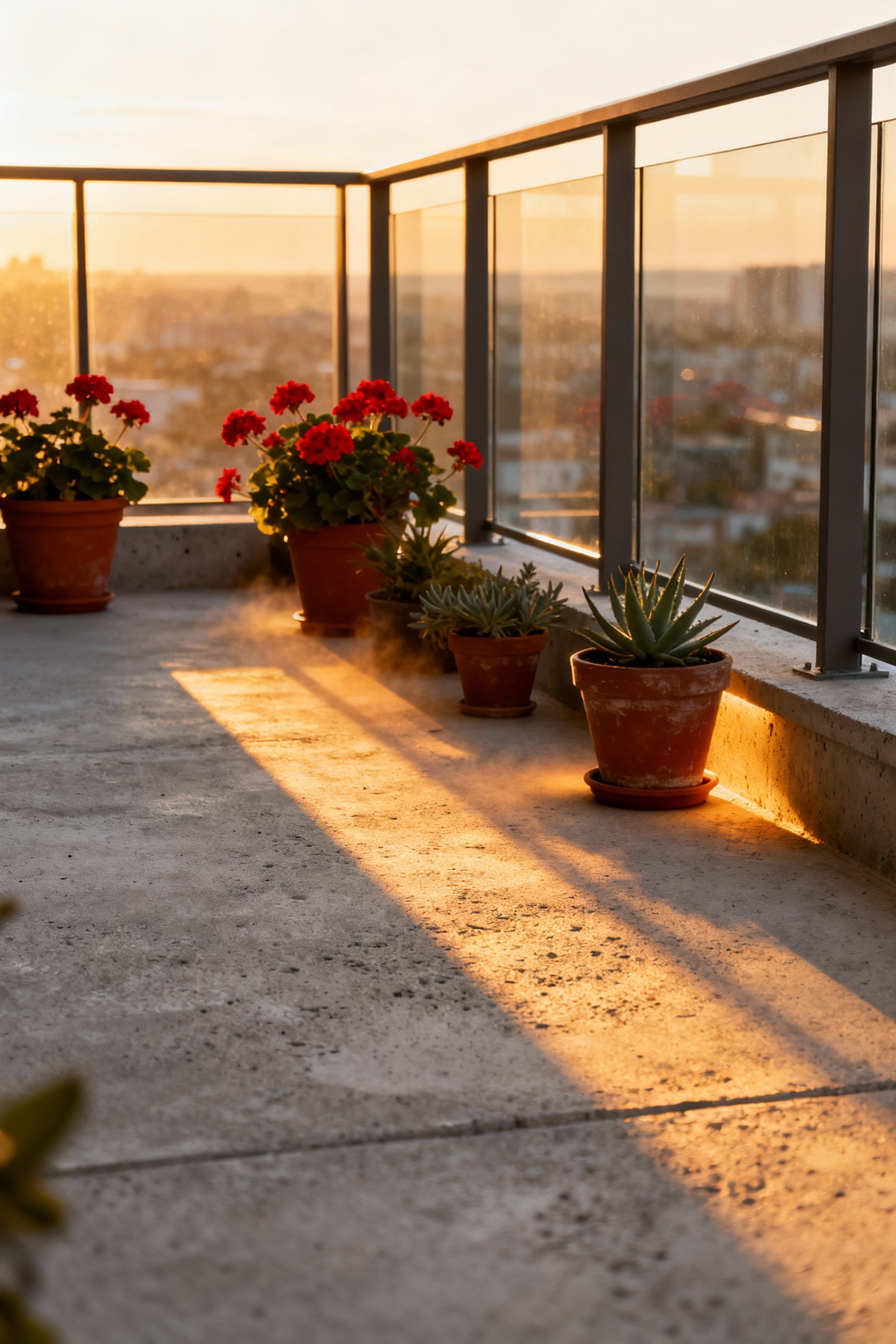
Simultaneously, you must navigate urban airflow dynamics. High-rise structures often create wind tunnels, known as the “Venturi effect.” Here, air accelerates through narrow gaps. Unfortunately, this constant breeze is not refreshing for foliage. In fact, it acts as a desiccating force. It rapidly strips moisture from leaves through accelerated evapotranspiration. Thus, plants face a dual threat: radiant heat from below and dehydrating winds from above.
However, your design choices can mitigate these extremes. Strategic plant placement essentially maps these micro-zones. For instance, inner corners often trap heat, while railings suffer wind exposure. Introducing dense foliage acts as a biological shield. The plants provide shade for the concrete and release water vapor, effectively cooling the surrounding air.
2. The ‘Pot-in-Pot’ Insulation Technique: Protecting root systems from extreme temperature fluctuations
Balcony environments lack the natural insulation of in-ground soil. Consequently, direct sunlight on containers creates lethal thermal extremes. In summer, dark sidewalls absorb massive heat. Internal temperatures often exceed $104^\circ\text{F}$ ($40^\circ\text{C}$). In severe cases, they reach a scorching $130^\circ\text{F}$ ($54^\circ\text{C}$). Unfortunately, this heat cooks tender roots near the edge. As a result, plants suffer from a “dead zone,” losing up to one-third of their root volume. This stress forces plants into an unwanted summer dormancy.
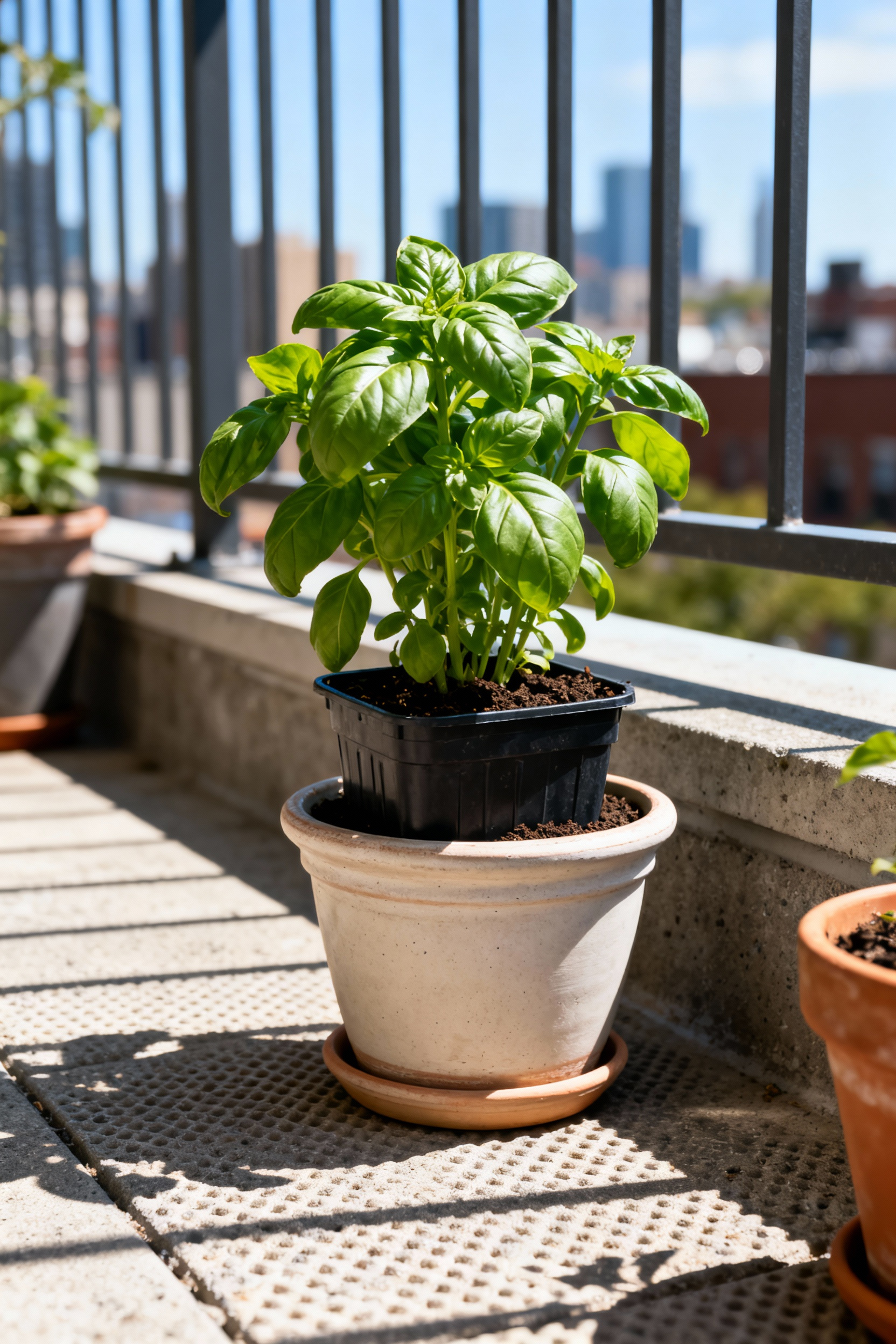
However, the “Pot-in-Pot” (PIP) technique solves this thermal crisis. Originally developed by commercial nurseries, this method is remarkably effective. Simply, you insert a utilitarian “liner” pot into a larger, decorative “socket” pot. Crucially, the air gap or insulation material between them acts as a shield. Therefore, direct solar load on the inner pot is drastically reduced.
In fact, studies show this sheathing effect lowers root zone temperatures by $20^\circ\text{F}$ to $25^\circ\text{F}$ ($11^\circ\text{C}$ to $14^\circ\text{C}$). Thus, roots remain viable rather than baking. Furthermore, this method protects against winter freeze-thaw cycles. Exposed pots often freeze solid, killing young roots. Conversely, the buffer prevents rapid freezing. From a design perspective, this also preserves expensive ceramics. Since wet soil isn’t expanding directly against the outer wall, valuable pottery is less likely to crack. Ultimately, this technique marries horticultural health with aesthetic durability.
3. Structural Screening: Clumping Fargesia Bamboo for non-invasive natural privacy
Many urban gardeners understandably fear bamboo. However, the *Fargesia* genus effectively eliminates the risk of invasive roots. These plants possess a unique clumping rhizome system. Unlike aggressive running varieties, they expand slowly outward, moving only two to twelve inches per year. Consequently, this natural containment makes them ideal for structural screening on shared balconies. You gain natural density without the typical liability.
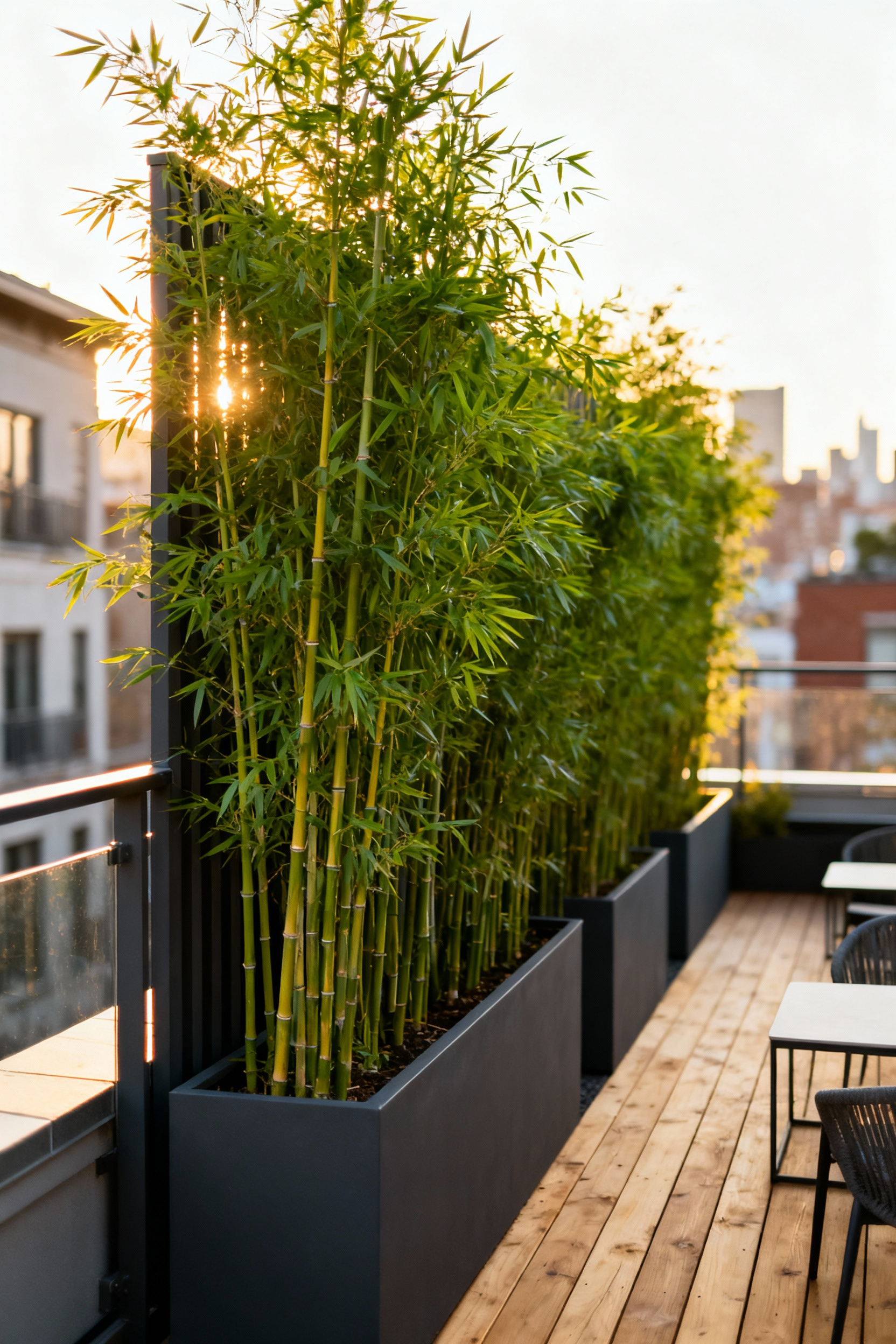
Furthermore, *Fargesia* offers reliable year-round utility. Because it is evergreen, it provides a constant visual barrier unlike deciduous shrubs. In fact, hardy varieties like *F. robusta* ‘Campbell’ resist leaf-curling during cold snaps. Thus, your privacy screen remains lush even in winter. Structurally, this variety creates a formal, upright “living wall” perfect for modern designs. Conversely, *F. rufa* offers a softer, weeping habit for a relaxed, bushy aesthetic.
To succeed, however, you must prioritize the container’s integrity. Specifically, select a sturdy pot at least 18 to 24 inches wide. Strong materials like concrete are mandatory to withstand long-term outward root pressure. Additionally, these dense screens are incredibly thirsty. Therefore, consistent watering is crucial to prevent dehydration and maintain leaf volume. Ultimately, a well-maintained *Fargesia* screen serves as both a windbreak and an effective acoustic buffer.
Phase 2: The Edible Layer (Accessible Productivity)
Maximizing productivity requires rejecting the single-plane garden. Instead, view your balcony as a dynamic 3D volume. You must reclaim unused cubic space with wall-mounted trellises or hanging baskets. For example, trailing strawberries and ‘Tiny Tim’ tomatoes thrive in these elevated zones. Furthermore, lifting these plants improves vital air circulation, reducing fungal risks.
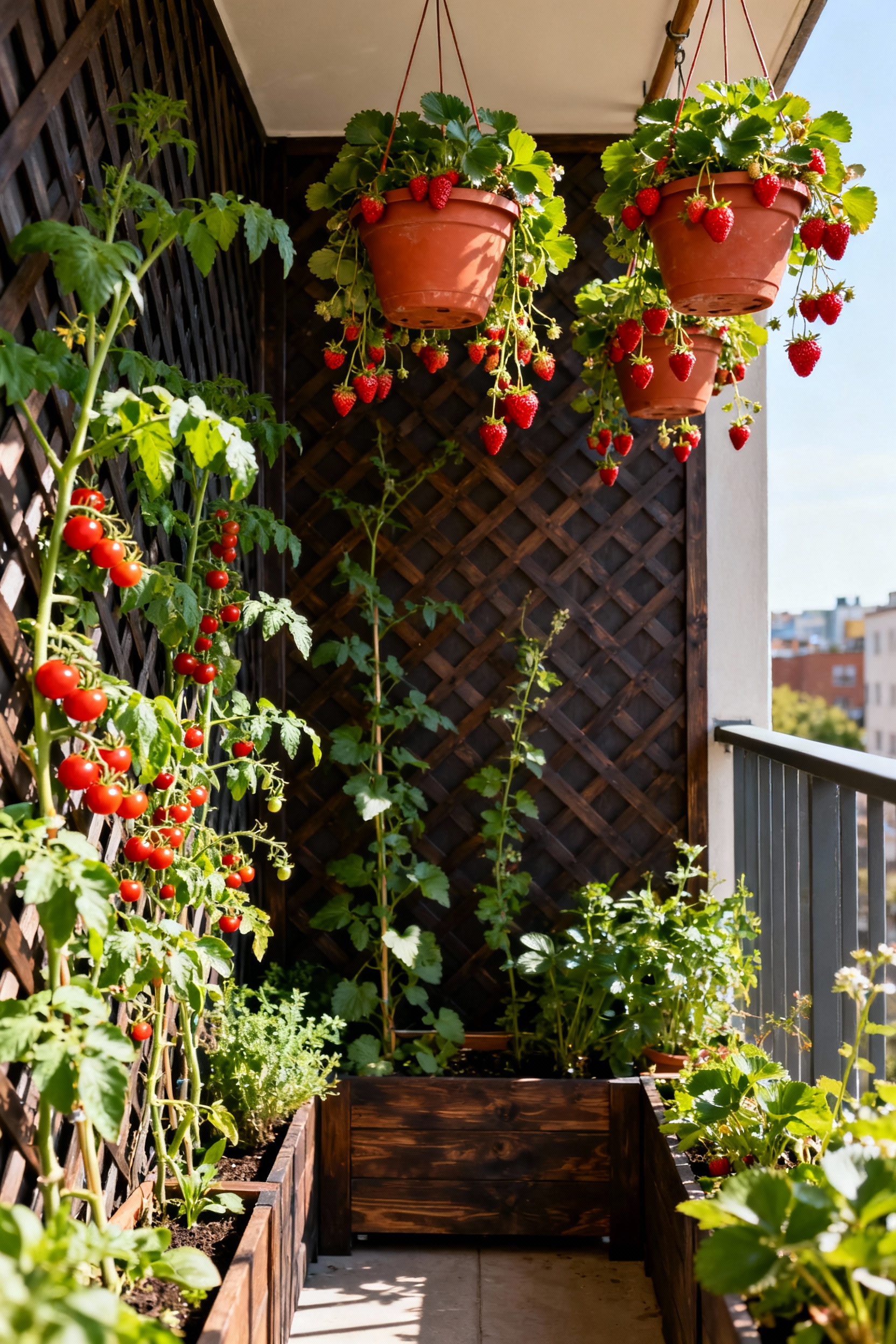
However, structural integrity remains a priority during this phase. Therefore, position heavy containers for dwarf citrus near load-bearing walls. Additionally, opt for lightweight fabric pots over heavy terracotta to manage the total load.
Next, prioritize crops offering the highest return on investment. Notably, leafy greens like kale and Swiss chard are foundational choices. Their “cut-and-come-again” nature ensures continuous harvests from shallow soils. Moreover, herbs like rosemary and basil add aromatic depth to the design. Practically, this provides immediate culinary utility just steps from your kitchen.
Finally, remember that containers constitute a volatile ecosystem. Because nutrients wash out rapidly, frequent feeding is mandatory. Likewise, wind exposure increases water demand significantly. Thus, self-watering containers are technical essentials for maintaining consistent moisture. Success lies in managing these unique microclimates effectively.
4. The Windbreak Herbs: Using woody perennials like Rosemary and Thyme to shelter delicate greens
In exposed balcony settings, successful design relies on structural hierarchy. Woody perennials like Rosemary serve as essential anchors. Unlike soft-stemmed annuals, their stiff stems and needle-like foliage diffuse strong gusts effectively. Consequently, they do not snap under pressure like fragile plants might. Instead, they create a semi-permeable filter that breaks the wind’s velocity.
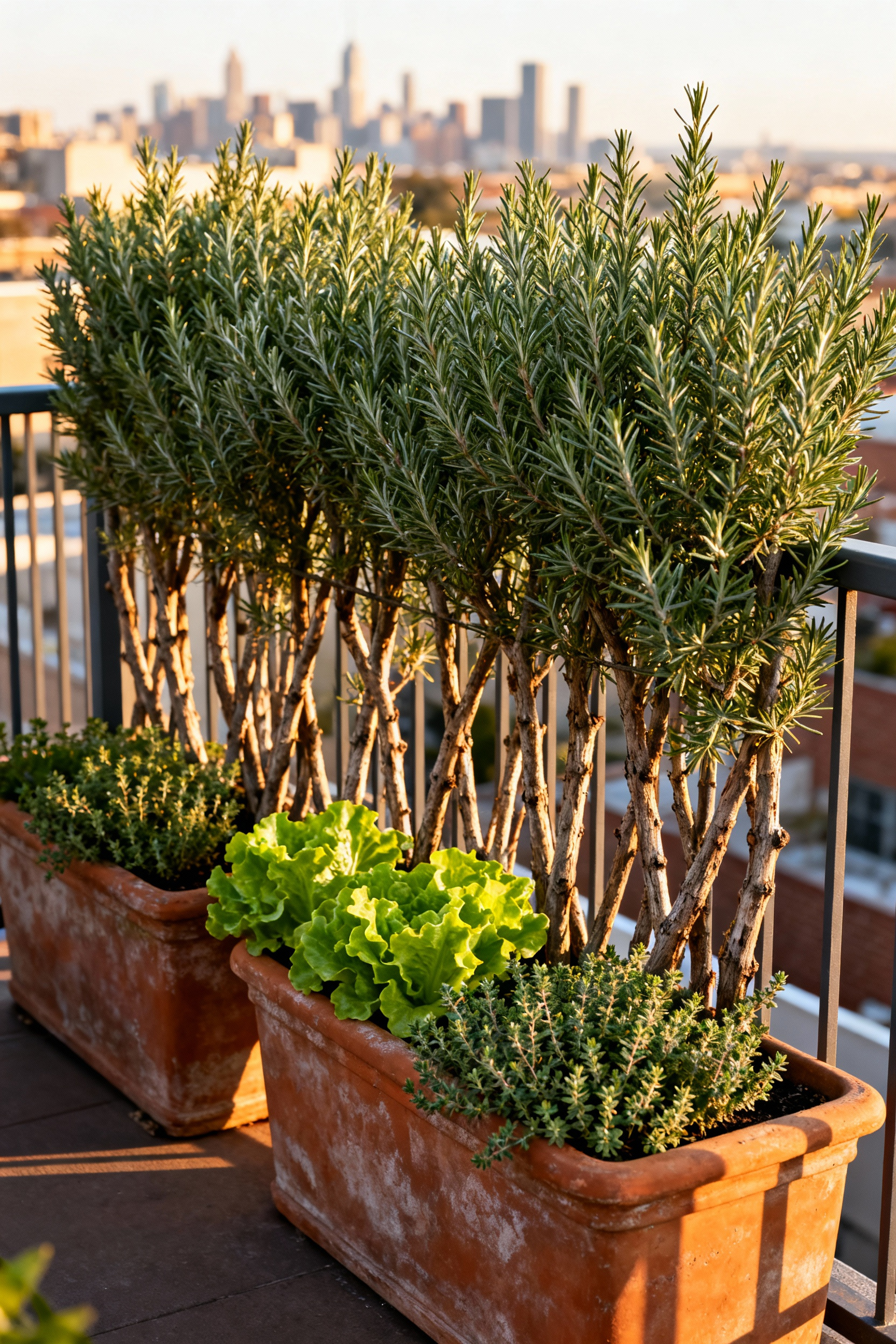
This rigidity offers a critical shield for delicate greens positioned downwind. When constant wind hits a broad leaf like basil, it causes rapid water loss. Therefore, plants physiologically close their leaf pores, or stomata, to survive. Unfortunately, this defensive shutdown limits carbon dioxide intake necessary for photosynthesis. As a result, growth slows significantly, potentially reducing leafy yields by over 50%.
To combat this, you can utilize the ecological “Nurse Plant” effect. By placing upright Rosemary varieties upwind, you create a buffered microclimate. Effectively, this dense canopy lowers ambient air temperature. Furthermore, it traps humidity around the soil surface, protecting sensitive foliage from desiccation.
Beyond physical structure, the sensory experience also changes. While delicate lettuce might whip violently, established Thyme and Rosemary merely rustle. Additionally, these Mediterranean herbs release volatile essential oils like Thymol. Thus, they act as a dual-purpose biological defense, repelling pests from your edible sanctuary.
5. Cut-and-Come-Again Stations: Designing perpetual harvest salad bowls
Transforming a balcony into a perpetual salad bar requires a shift in perspective. A “Cut-and-Come-Again Station” operates as a managed, living system rather than a static crop. Consequently, the design must blend technical agricultural precision with aesthetic layering to create a daily edible tapestry.
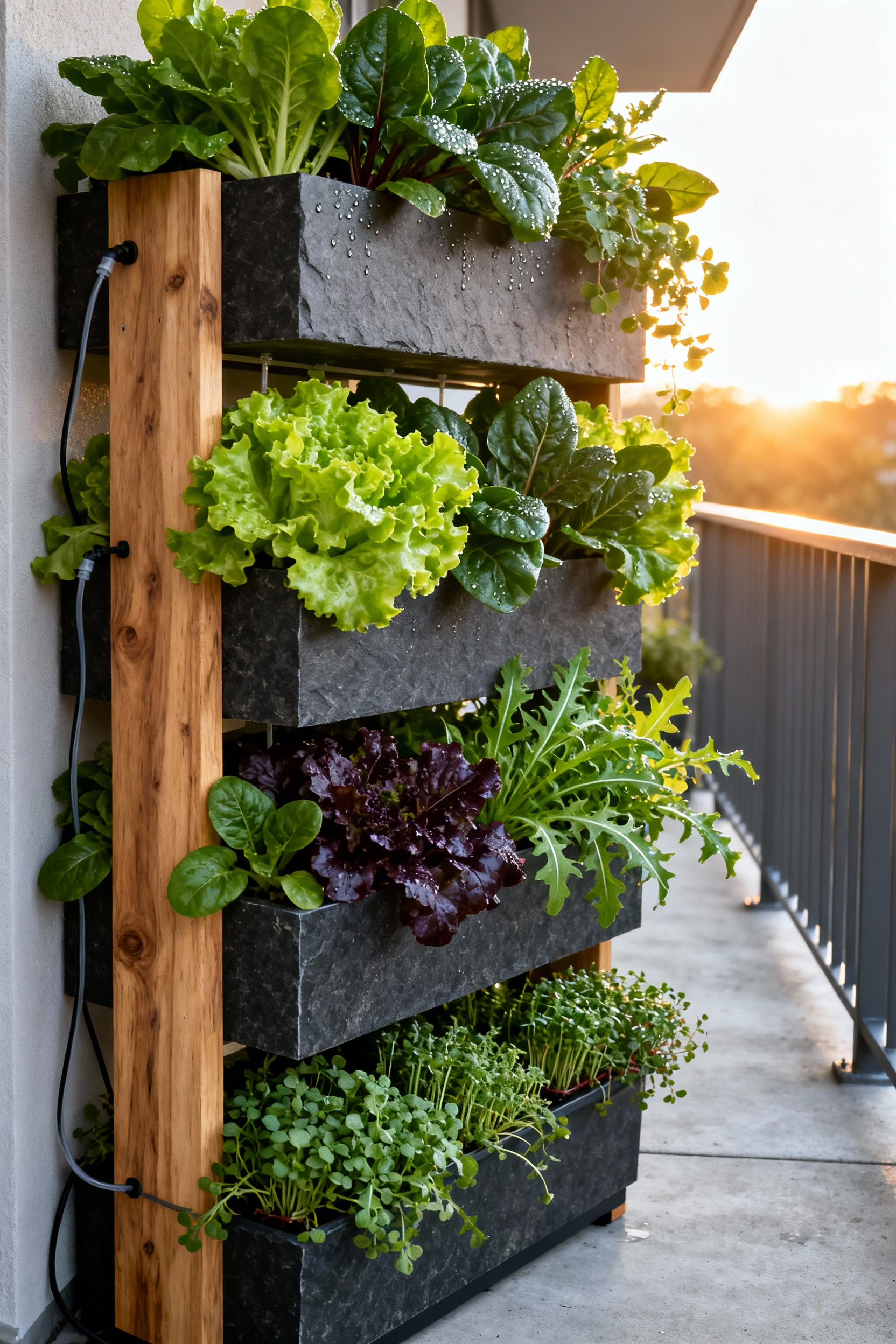
First, successful stations utilize vertical integration for smart light management. On a balcony, direct sunlight is often a harsh constraint. Therefore, utilize the “Canopy Effect” by placing sun-loving plants, like dwarf tomatoes, on higher tiers. Subsequently, position your leafy greens in the partial shade cast below. This strategic interplanting protects delicate lettuces from bolting during intense summer heat.
Furthermore, a true perpetual yield relies on a “conveyor belt” approach. Ideally, divide your station into distinct planting zones. As you harvest Zone A, Zone B reaches peak maturity, while Zone C germinates. Thus, you eliminate the common feast-or-famine cycle. However, this rapid regrowth creates high biological demand. Since the plant must constantly rebuild foliage, you must replenish the soil. Apply a nitrogen-rich liquid feed every week to ensure leaves remain tender rather than fibrous.
Finally, curate your station as a visual and flavor palette. For instance, combine crimson Oak Leaf lettuce with the citrus tang of red-veined sorrel. Visually, this creates a stunning, multi-textured display. When harvesting, shear the leaves exactly one inch above the soil. This precision preserves the growing crown, granting you “zero-minute freshness” that supermarket greens simply cannot match.
6. The Compact Orchard: Selecting grafted dwarf citrus for high-yield container life
To truly integrate food production into a limited footprint, one must understand horticultural architecture. The secret to a viable micro-orchard lies in the rootstock. For container life, the authoritative choice is often *Poncirus trifoliata*, known as ‘Flying Dragon.’ This rootstock creates a necessary dwarfing effect by restricting the tree’s overall vigor. As a result, the tree remains architecturally manageable, typically staying between six and ten feet.
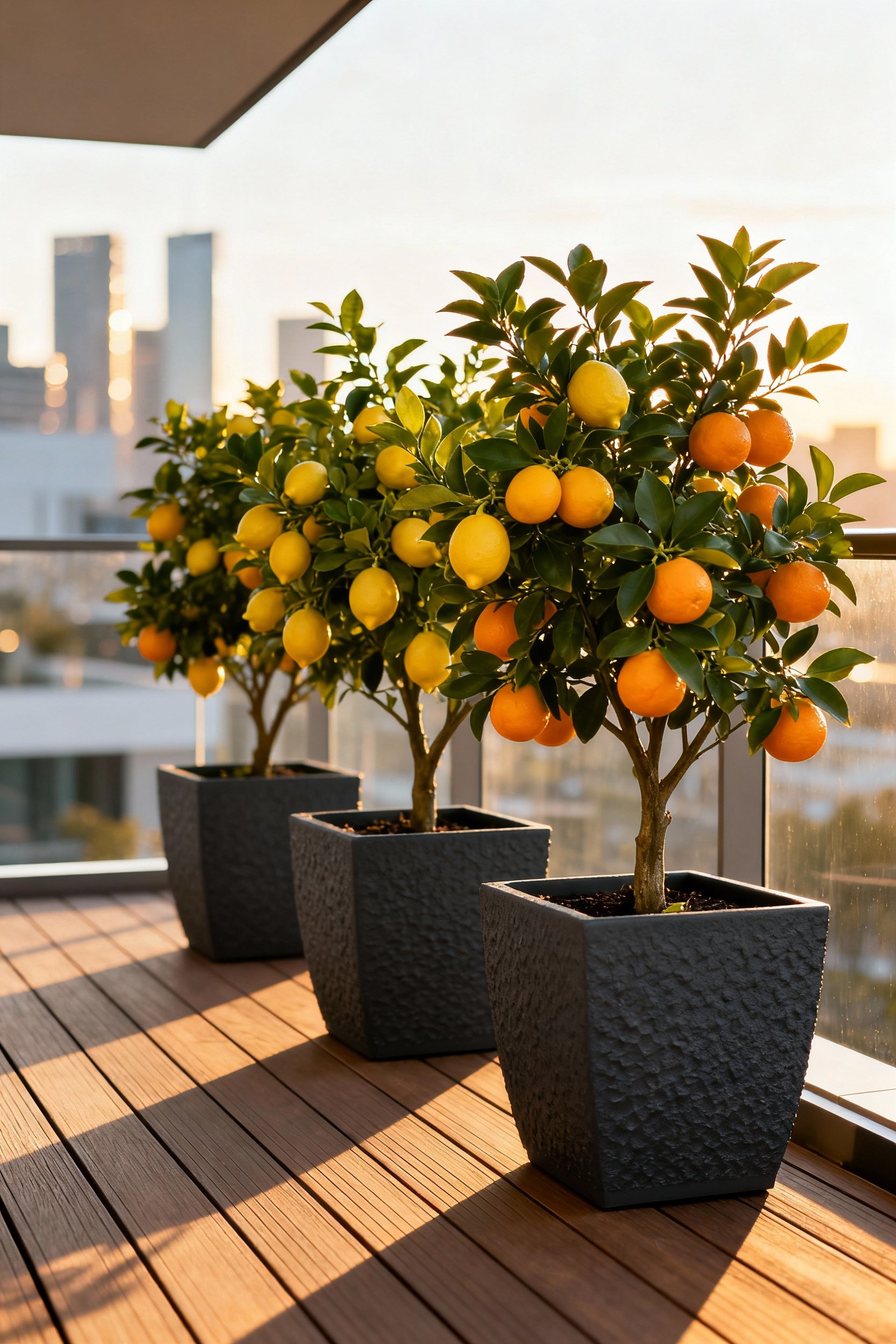
However, a fascinating “yield paradox” occurs here. While the tree shrinks, the fruit size and quality remain identical to full-sized counterparts. Therefore, you achieve a higher yield per unit of canopy volume. Furthermore, the rootstock enhances resilience against temperature fluctuations, which is critical for exposed balconies.
Beyond size, grafting secures your timeline. Unlike unpredictable seedlings, grafted trees offer immediate gratification. In fact, they often produce fruit within just one to three years. Additionally, this process guarantees genetic fidelity. Consequently, a scion like the ‘Improved Meyer’ Lemon will always taste exactly as expected. Relying on seeds, conversely, risks producing bland or unproductive trees. Thus, for the balcony gardener, grafting is non-negotiable.
Finally, selecting the “scion”—the fruiting top—allows for sensory curation. For example, the ‘Improved Meyer’ is an aromatic all-star. It blends lemon and mandarin notes for a sweeter, versatile juice. Alternatively, consider the Calamondin Orange for its design impact. Its highly fragrant blossoms act as a natural perfume for small spaces. Moreover, the seedless ‘Bearss’ lime provides a continuous, year-round harvest. These sophisticated selections turn a simple balcony into a productive, living ecosystem.
7. Vertical Verticality: Utilizing railing-mounted trellises for Scarlet Runner Beans
Historically, gardeners prized Scarlet Runner Beans strictly as ornamentals for trellises and arbors. Today, however, they bridge the gap between elegant design and productive urban agriculture. Utilizing railing-mounted trellises transforms a standard balcony perimeter into a dynamic vertical farm.
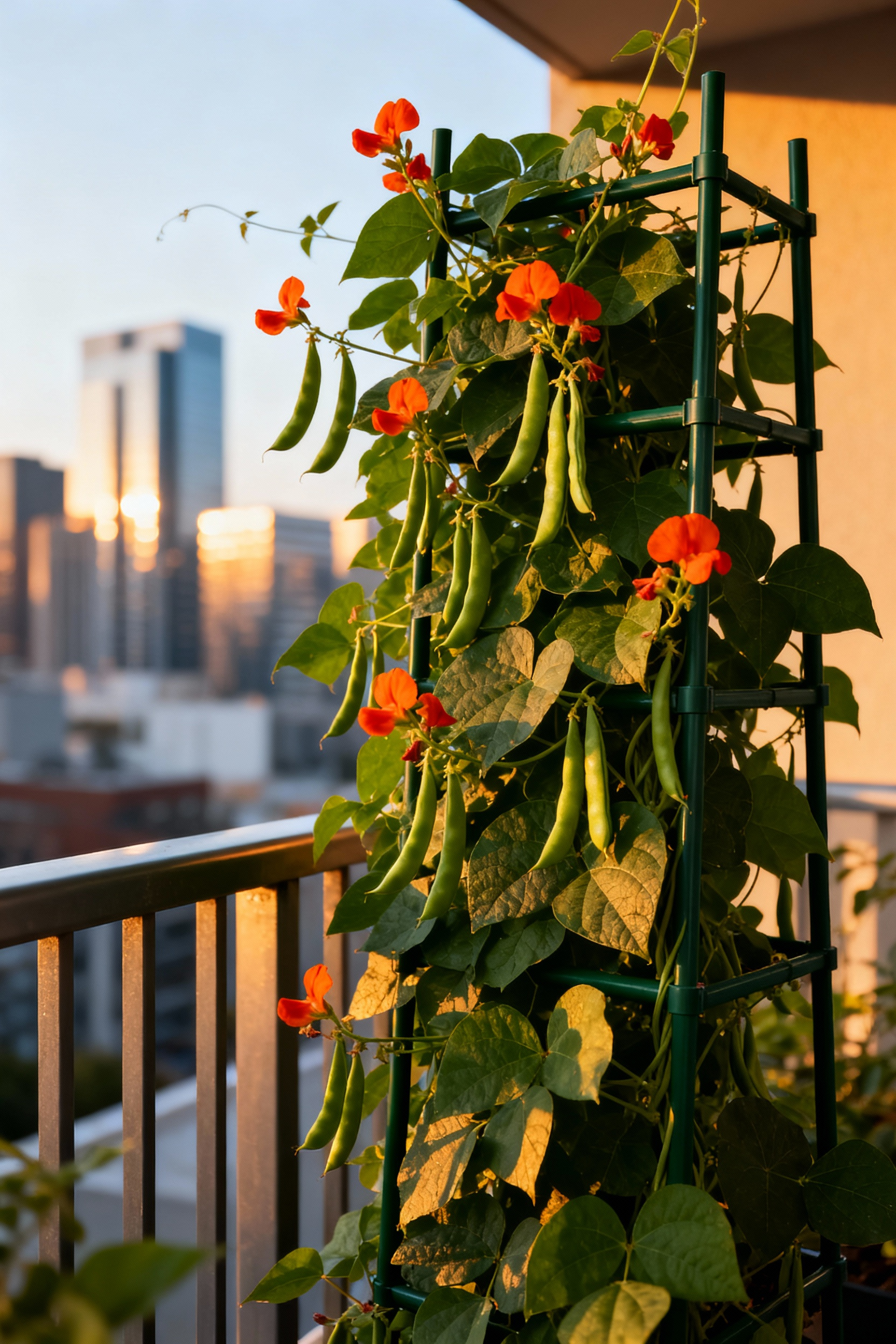
Yet, structural integrity is paramount. These vigorous “rank vines” can easily reach twenty feet in length. Consequently, they create a significant dynamic load on balcony fittings. A dense wall of foliage acts like a sail in high winds. Therefore, safety requires redundant anchoring strategies. Instead of flexible netting, choose rigid materials like galvanized metal mesh or weather-resistant lattice. Furthermore, pair the trellis with heavy, deep ceramic containers to effectively lower the center of gravity.
Once established, the vines offer immediate sensory benefits. Visually, the bright scarlet flowers attract hummingbirds and vital pollinators. Functionally, the dense greenery acts as a seasonal privacy screen. In fact, it even softens the harsh sounds of urban traffic to alter the balcony’s ambiance. To maximize density, pinch out the growing tips once they reach railing height. Finally, enjoy the versatile harvest. Pick young pods for tenderness, or wait for the stunning black-and-purple dried seeds.
Phase 3: Advanced Systems & Vertical Integration
Phase 3 transforms the balcony from a recreational space into an autonomous micro-farm. This shift involves adopting closed-loop hydroponic or aeroponic systems. Unlike soil-based gardening, these precision units recycle nearly all water. Consequently, users often report a 90% reduction in usage compared to conventional methods. Furthermore, the removal of potting soil eliminates soil-borne pests. Instead, plants anchor in sterile mediums like rockwool, creating a clean, modern aesthetic. This effectively turns the system into a “living piece of art.”
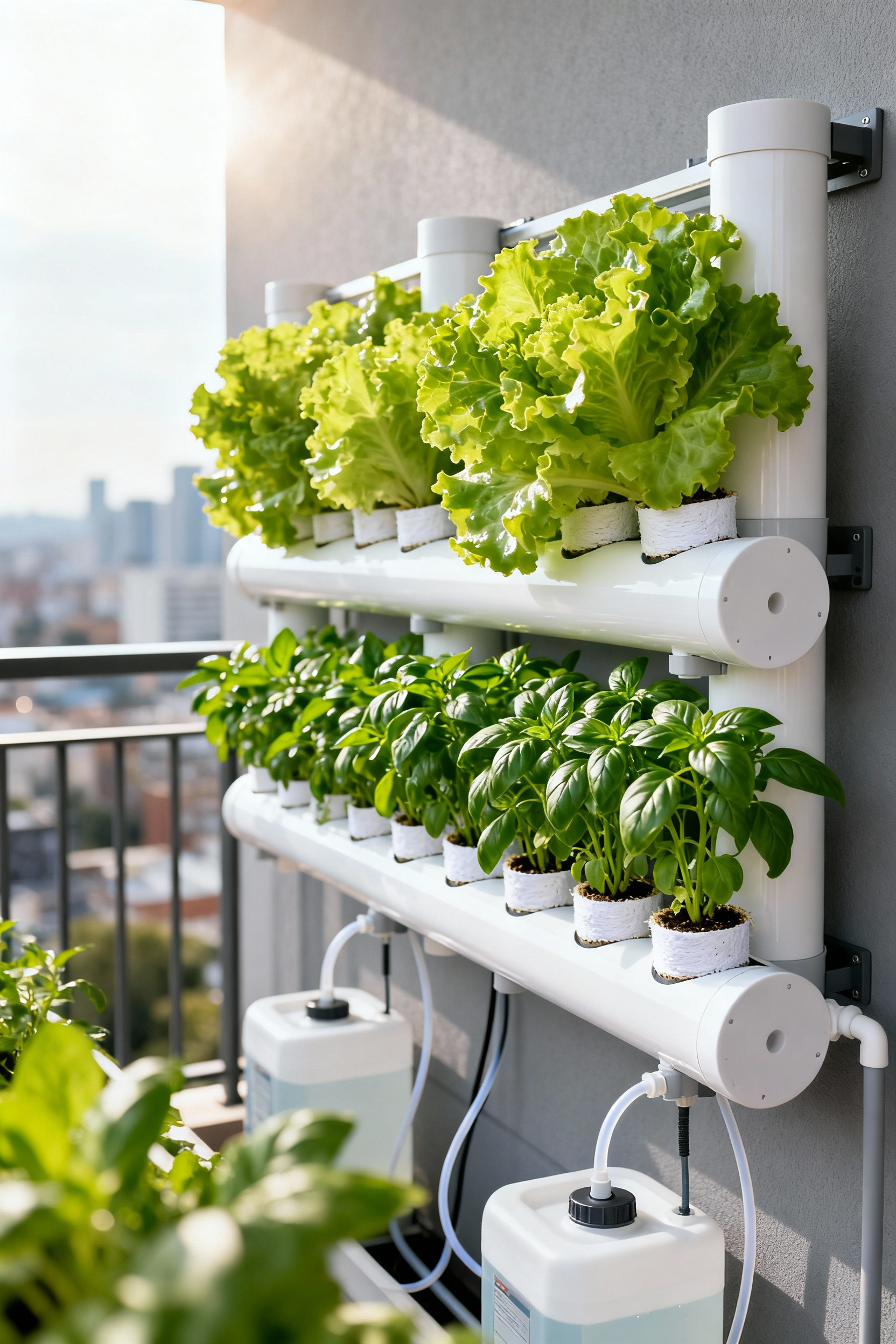
Additionally, vertical integration maximizes the architectural footprint. Stacking towers allows for a 30% greater harvest within tight constraints. Moreover, these structures act as a “productive façade.” They help mitigate urban heat while filtering local air pollutants. Simultaneously, technology manages the daily care. For instance, integrated sensors monitor pH levels and light intensity continuously. Then, AI assistants adjust nutrient delivery to ensure faster growth.
Ultimately, this approach redefines the supply chain. In effect, the producer and consumer become one entity. Therefore, food miles disappear entirely. You harvest leafy greens moments before eating them. As a result, the flavor profile and nutrient density are superior to retail produce. This investment creates a high-yield, self-sustaining ecosystem right at home. For more inspiration on transforming your entire space, explore these transformative balcony ideas.
8. The Living Wall: Implementing felt-pocket systems for moisture-loving ferns or leafy greens
Modern living walls often utilize felt-pocket systems derived from recycled Polyethylene Terephthalate (PET) fibers. This material science creates a unique hydrodynamic environment. Through capillary action, moisture wicks horizontally and vertically, ensuring uniform hydration throughout the panel. Consequently, roots are not restricted by rigid plastic containers. Instead, they grow directly into the porous felt, developing an “unbound” structure that boosts plant health. Eventually, the foliage thickens to conceal the pockets, creating a seamless, lush vertical tapestry.
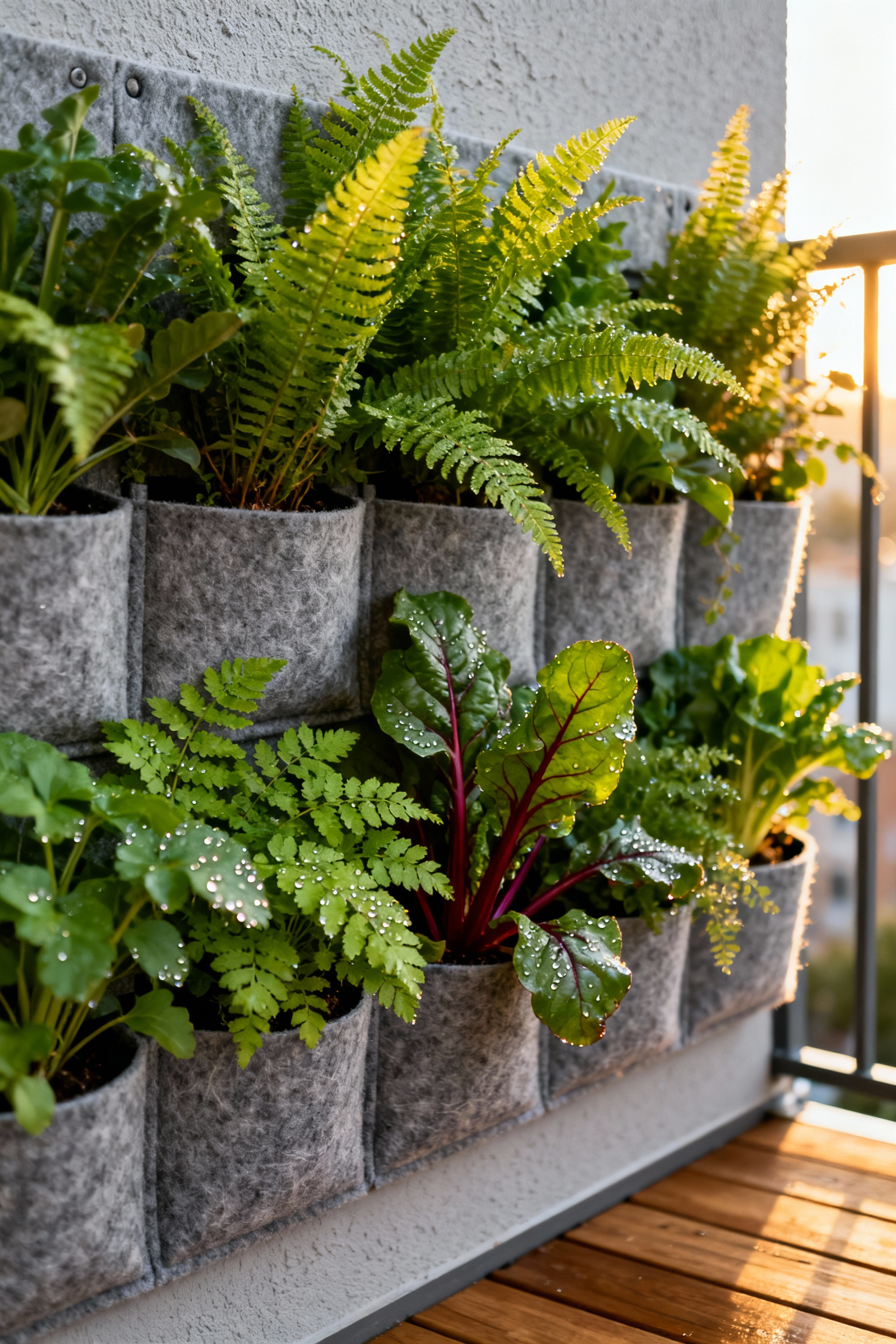
However, cultivating moisture-loving plants like Boston ferns or tender leafy greens requires precise water management. Balconies naturally accelerate evaporation due to increased wind and sun exposure. Therefore, relying solely on hand-watering is largely impractical for these thirsty varieties. In fact, maintaining the necessary moisture levels often requires irrigation cycles two to four times daily. Thus, installing an automated, top-fed drip system is a necessity rather than a luxury.
Furthermore, these systems solve historical maintenance issues through a clever “root-wrap” technique. You simply wrap the root ball in a small felt layer before insertion. As a result, swapping out bolted lettuce or rearranging the aesthetic design becomes effortless. This modularity allows you to “paint with plants” without disturbing the overall structure. It ultimately blends agricultural utility with high design.
9. High-Density Berry Production: Strawberry towers that maximize vertical footprint
The strawberry tower represents a significant design evolution for small spaces. It transforms a standard balcony into a high-density, vertical production micro-system. By efficiently capitalizing on vertical air rights, you achieve yields that far surpass traditional horizontal planters. In fact, advanced towers can host up to 52 plants per square meter of floor space. Consequently, this density offers three to five times more fruit than standard linear setups.
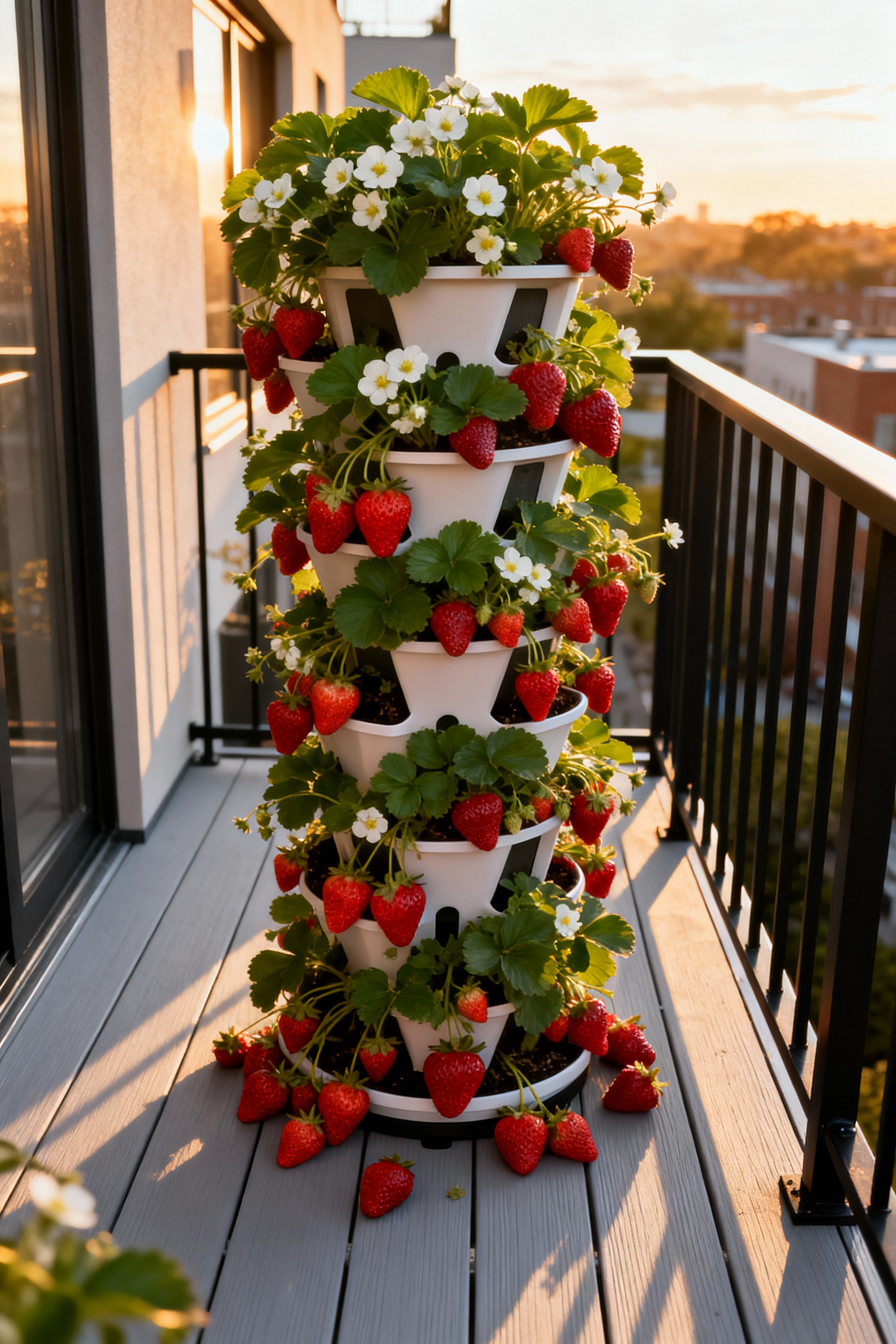
Simple DIY towers often use stacked terracotta pots filled with soil. However, the true apex of high-density growing lies in aeroponic innovation. Here, roots are suspended in mist rather than heavy earth. Therefore, oxygenation is optimized, potentially boosting crop yields by nearly 50%. Furthermore, the sensory experience is elevated within this controlled environment. Research indicates that aeroponic strawberries can achieve significantly higher BRIX sugar levels than field-grown counterparts.
Visually, the tower creates a stunning, edible centerpiece. To ensure success, select day-neutral varieties like *Albion* or *Tristar*. Unlike sprawling June-bearing types, these compact plants produce fruit continuously throughout the season. Additionally, the vertical elevation naturally mitigates common fungal issues and ground-based pests. Ultimately, this approach merges productivity with aesthetics, creating a lush, functional sculpture for your home.
10. Shadow Dwellers: Hostas and Heucheras for north-facing urban canyons
North-facing balconies, often called “urban canyons,” frequently intimidate gardeners. These deep-shade pockets lack direct sunlight. However, this environment creates a unique horticultural opportunity. For instance, blue Hostas actually require this protection to thrive. Their signature blue hue comes from a delicate waxy coating called a glaucous bloom. Unfortunately, direct sun or high heat melts this wax, fading the color. Therefore, cool, shadowed balconies preserve varieties like ‘Halcyon’ perfectly. As a result, they remain intensely saturated and vibrant.
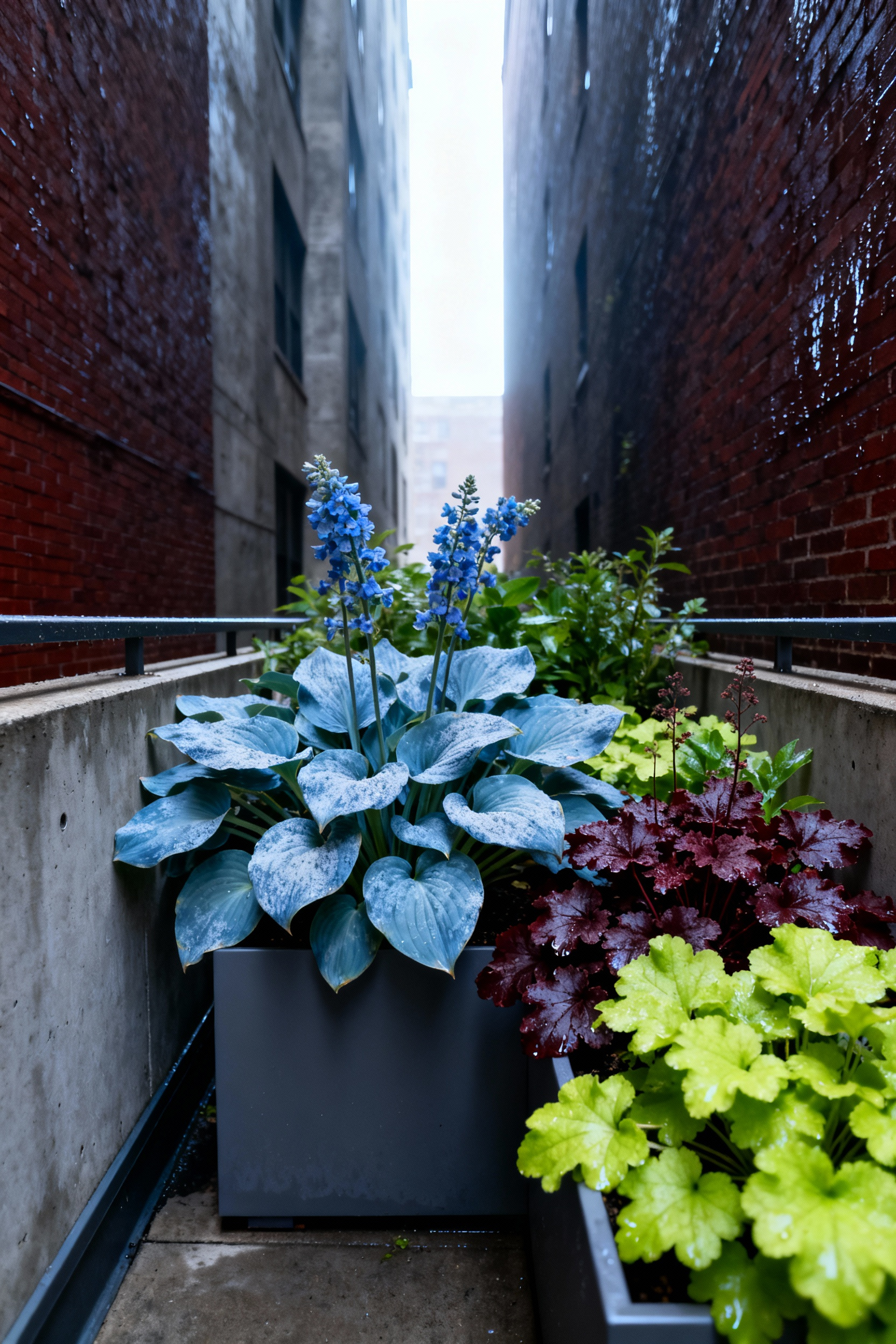
Conversely, Heucheras act as your chromatic light sources. Varieties like ‘Lime Marmalade’ inject electric chartreuse into dark corners. Effectively, they function as a high-contrast foil against the deep greens. Beyond color, the pairing offers a masterclass in texture. Hostas act as the visual anchor. Their broad, puckered leaves provide lush, tropical mass. In contrast, Heucheras serve as the frilled accent. Their airy, mounded form sits perfectly in the foreground of containers.
Furthermore, this combination offers enduring financial and aesthetic value. Unlike short-lived annuals, these are hardy perennials. They return every spring, establishing a permanent design foundation. To thrive, simply simulate a forest floor within your pots. Use high-quality potting mix that retains moisture yet drains well. This transforms a dark void into a luminous retreat.
11. The Pollinator Pathway: Native wildflowers to invite biodiversity to the nth floor
The “Pollinator Pathway” is more than a mere gardening trend. Originally pioneered by designer Sarah Bergmann, this sophisticated concept frames urban balconies as critical ecological “stepping stones.” These green spaces combat habitat fragmentation by linking isolated biological islands. Surprisingly, altitude is rarely a barrier for determined insects. In fact, thriving rooftop hives in dense cities prove that pollinators can forage effectively at significant heights. Therefore, your “nth floor” balcony can successfully bridge the gap between ground-level parks and rooftop gardens.
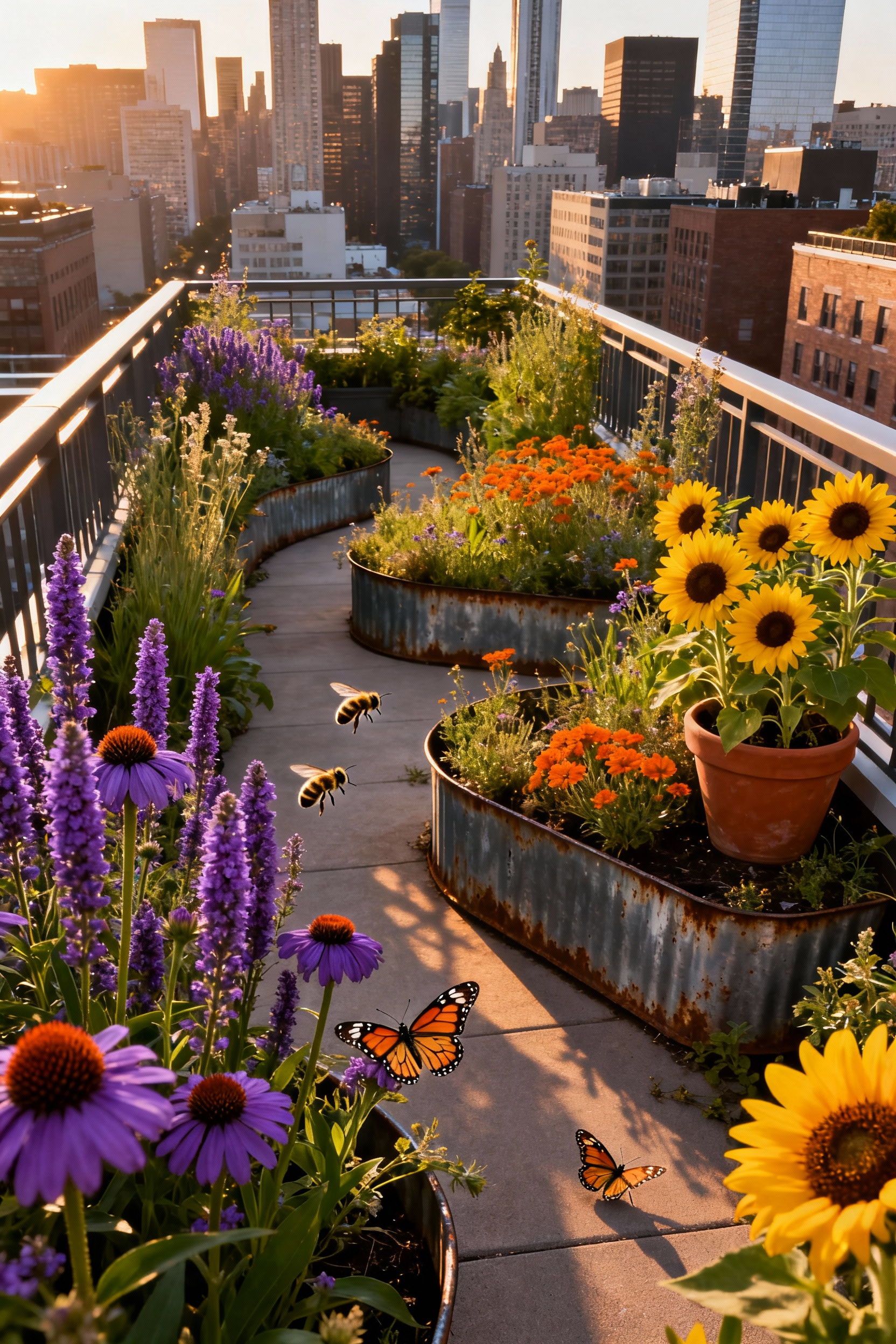
Success hinges on selecting resilient native wildflowers. Consequently, you must choose species naturally adapted to the harsh wind and intense sun of high-rise living. For instance, Black-Eyed Susans offer extreme drought resistance alongside their cheerful yellow blooms. Similarly, Butterfly Milkweed provides a vital lifeline for Monarch caterpillars while withstanding exposed, windy conditions. Furthermore, fragrant options like Virginia Mountain Mint act as powerful sensory beacons. Its potent minty aroma helps insects locate your small habitat amidst the vast concrete city.
Effective design also requires a continuous “cafeteria” for these visitors. Ideally, select plant varieties that bloom sequentially from early spring through late autumn. Additionally, mimic nature’s vertical complexity through layering. Place tall, structural blooms behind low ground-covers to create varied microclimates and shelter. Finally, water is a non-negotiable accessory. Because high-floor balconies are often drier, a shallow dish filled with pebbles offers a safe hydration station. Ultimately, these intentional design choices transform a simple terrace into a thriving, vital biological corridor.
Phase 4: Sustainability & Tech Integration
The modern balcony garden is evolving beyond simple aesthetics into a frontier of high-tech sustainability. We are witnessing the rise of the “Internet of Plants” (IoP). Here, precision horticulture replaces intuition. For instance, IoT planters use embedded soil sensors to monitor moisture and pH levels in real-time. Subsequently, AI algorithms analyze this data to alert the gardener or trigger automated watering. This communication between plant and human is a game-changer. In fact, smart irrigation systems can reduce water consumption by up to 70%. Therefore, we effectively end the cycle of thirsty guesswork.
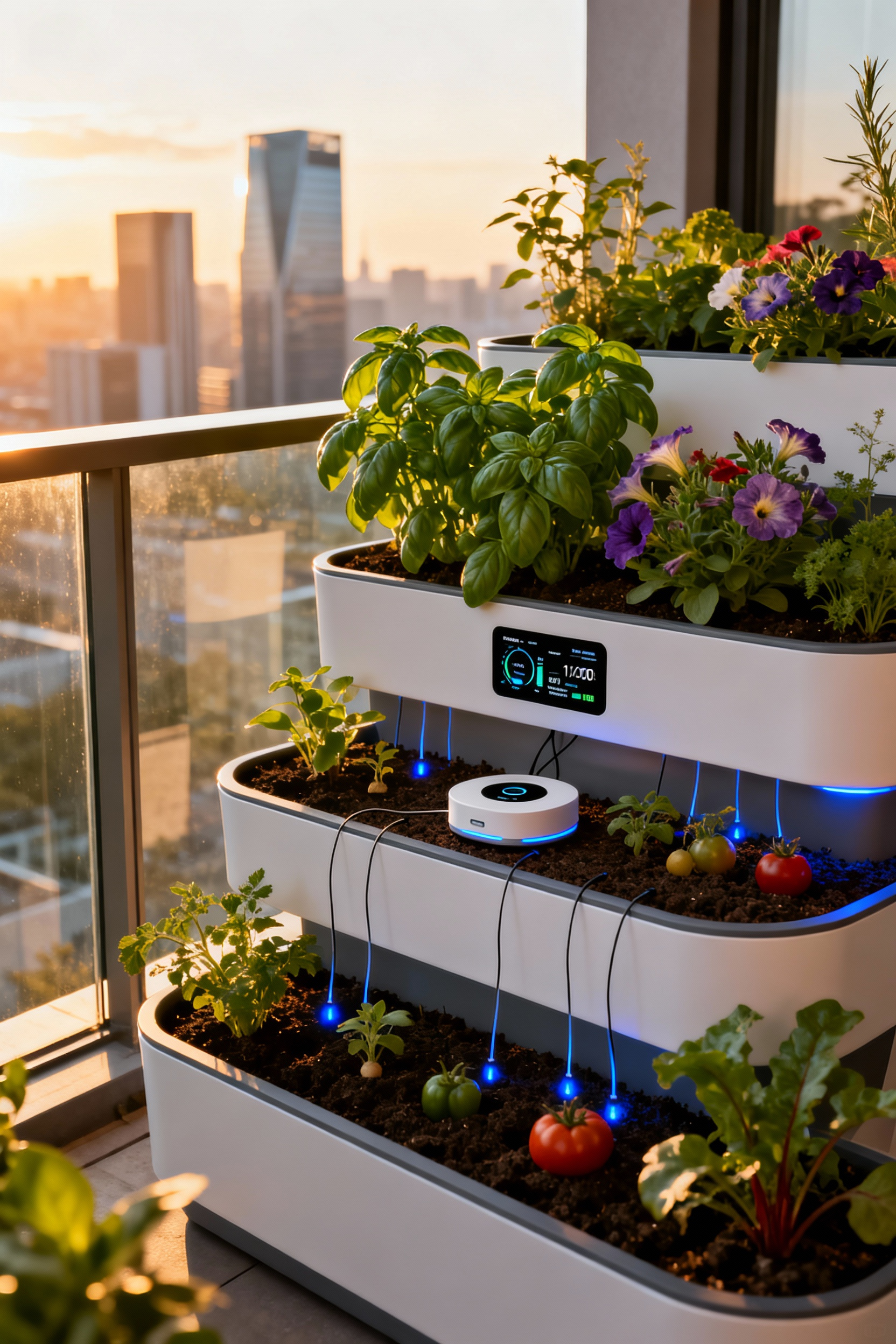
Beyond water conservation, technology also addresses the constraint of limited urban space. Notably, vertical farming and soilless methods like hydroponics maximize yield. These systems allow crops to grow in stacked layers without heavy soil. Consequently, a small ten-square-foot balcony can mimic the output of a much larger garden. Furthermore, these setups help cool buildings, combating the urban heat island effect.
Finally, true sustainability means creating a closed-loop system. Ideally, your balcony becomes a mini-circular economy hub. For example, vermicomposting converts kitchen scraps directly into nutrient-rich soil. Thus, organic waste avoids the landfill. Additionally, simple rainwater harvesting reduces reliance on chemically treated tap water. These practices transform a decorative space into a resilient, productive micro-factory.
12. The Closed Loop: Integrating disguised vermicomposting seating for zero-waste soil health
The concept of “Vermiculture Furniture” transforms the utilitarian worm bin into a seamless design element. This involves encasing the composting unit within a structural shell, such as a timber bench. Consequently, this disguise solves the aesthetic challenge typical of high-visibility balconies. Furthermore, the surrounding material offers a crucial technical benefit: thermal buffering. Red Wiggler worms require environmental stability to thrive. Therefore, the insulated structure protects them from the harsh heat of direct sun, preventing system failure.
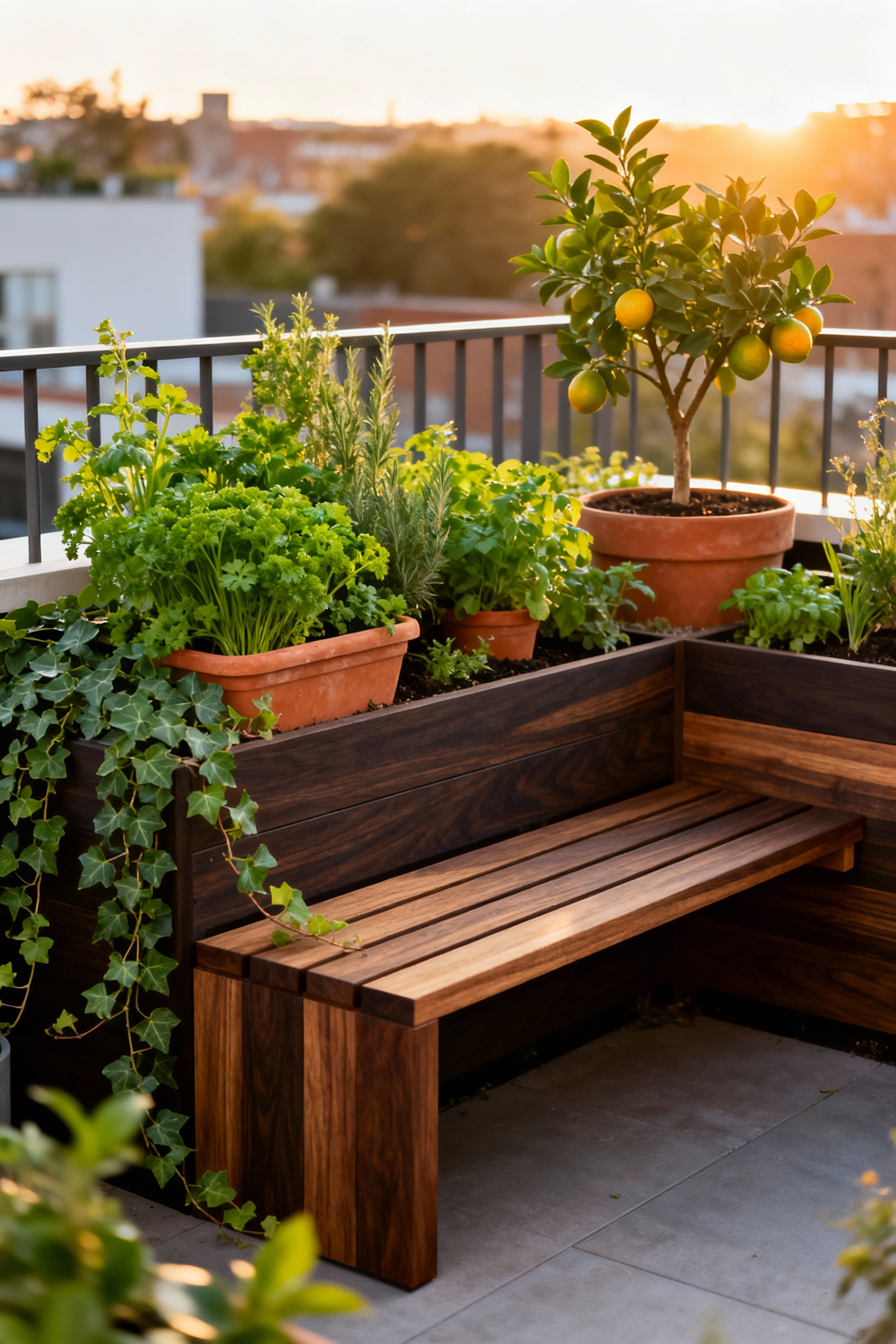
Beyond design, the biological output creates superior soil health. In fact, vermicastings are frequently termed “black gold” due to their potency. Unlike synthetic fertilizers, these castings teem with beneficial microbes and essential enzymes. Thus, they revitalize container soil that often becomes biologically stagnant over time. Additionally, the system generates liquid “worm tea” rich in natural growth hormones like auxins. This byproduct provides an immediate nutrient boost for hungry container plants.
Ultimately, this integrated approach establishes a true urban permaculture loop. You effectively divert over 90% of household organic waste from municipal streams. Hence, the balcony becomes a self-sustaining producer of fertility rather than just a consumer of resources. This shift grants the urban gardener significant autonomy while drastically reducing their ecological footprint. Need more ideas for small balcony furniture?
13. Water Wisdom: DIY Olla irrigation systems for drought resistance
Olla irrigation elegantly bridges the gap between ancient agricultural wisdom and modern urban design. Historically, this technique supported civilizations in arid climates for over 4,000 years. Today, it effectively drought-proofs vulnerable balcony containers. Fundamentally, the system utilizes simple, unglazed clay vessels buried within the soil. It relies on soil moisture tension to function.

Water seeps through microscopic pores only when the surrounding dirt becomes dry. Consequently, roots naturally pull hydration on demand. This self-regulating mechanism makes overwatering virtually impossible. Moreover, the efficiency is remarkably high for small spaces. In fact, ollas use 60% to 70% less water than traditional surface watering. Because moisture remains subsurface, evaporation is nearly eliminated.
Therefore, busy urban gardeners enjoy a forgiving refill cycle of just once a week. Furthermore, the consistent moisture prevents issues like blossom end rot in tomatoes. For a DIY approach, simply seal a terracotta pot’s drainage hole with non-toxic silicone. Then, bury it neck-deep and use a saucer as a lid. Ultimately, your plants will develop dense, resilient root webs around these hidden reservoirs.
14. Tech-Integrated Growing: Small-scale hydroponic rail planters for soil-free efficiency
Hydroponic rail planters might appear futuristic, yet they utilize established agricultural history. These systems adapt the Nutrient Film Technique (NFT), pioneered by Dr. Allen Cooper in 1965. Fundamentally, the design maintains a very shallow film of water over bare roots. Therefore, the upper root mass remains exposed to air, ensuring vital oxygen intake.
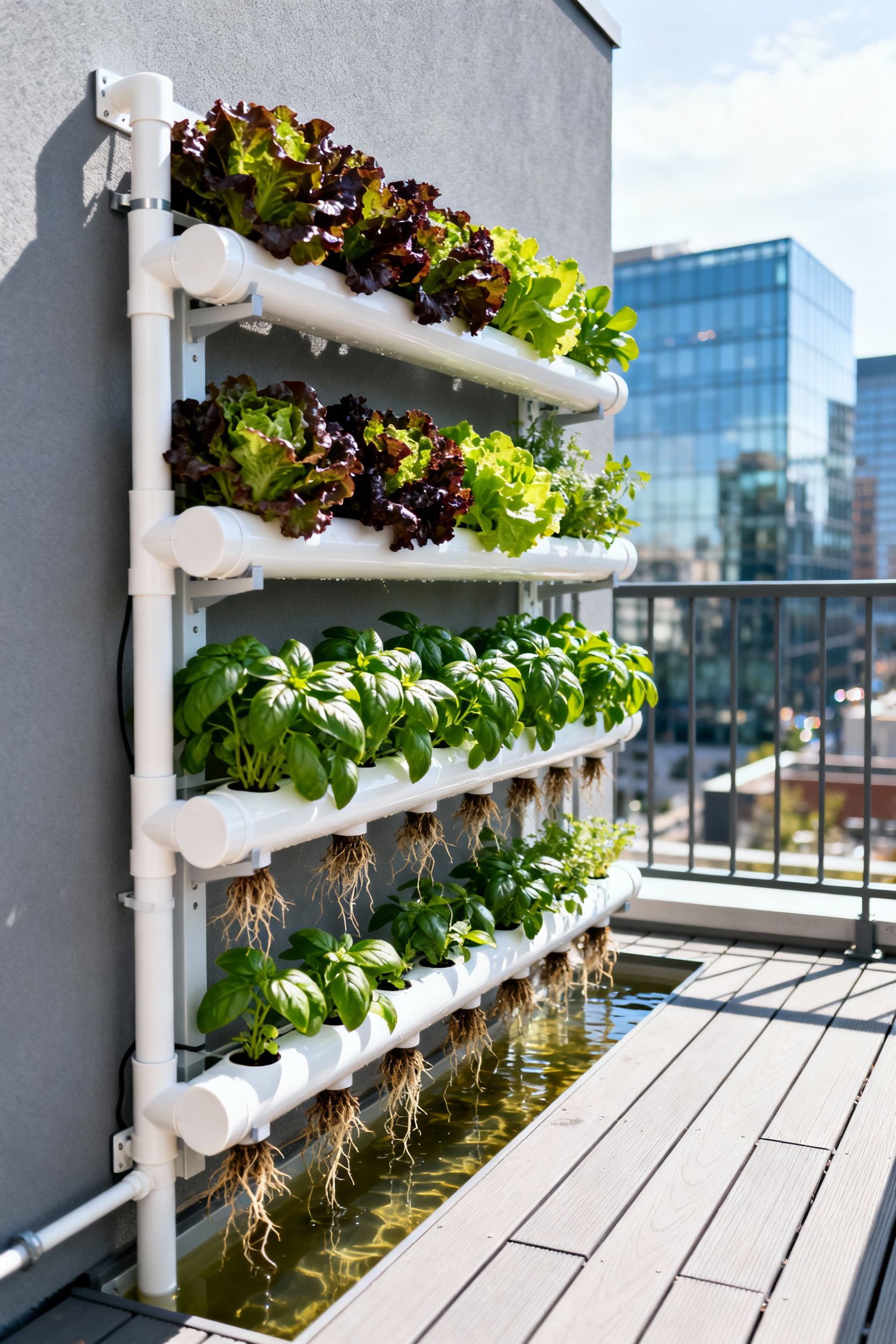
For the design-conscious grower, this efficiency is transformative. Remarkably, these closed-loop systems use up to 90% less water than soil gardening. Furthermore, plants receive nutrients instantly, meaning they grow roughly 40-50% faster. In fact, leafy greens often reach harvest maturity in just four weeks.
Spatially, the vertical rail design is incredibly dense. Consequently, a small balcony setup can support 28 plants in under one square meter. Additionally, the sensory impact is subtle. Unlike noisy air pumps, the water pump is submerged and virtually silent. Thus, the dominant sound is merely a gentle, pleasant trickle.
However, users must accept a technical trade-off. Unlike soil, these rails lack a moisture buffer. Therefore, a power outage can dry out roots quickly. Despite this vulnerability, the system remains a pinnacle of modern, productive home design.
15. Season Extension: Cold frame adaptations for year-round balcony harvesting
Success with a balcony cold frame requires a shift in perspective. You must treat your apartment’s exterior wall as a critical “fifth wall.” Unlike garden frames banked with soil, a balcony structure relies on this adjacent heat sink. Consequently, placing your frame against a south-facing heated wall captures escaping radiant energy. To retain this warmth, you need thermal mass. However, traditional earth is too heavy for balconies. Therefore, we adapt by placing black-painted water jugs inside the frame. These vessels absorb solar gain during the day. Subsequently, they release that stored heat overnight, stabilizing the root zone temperatures.
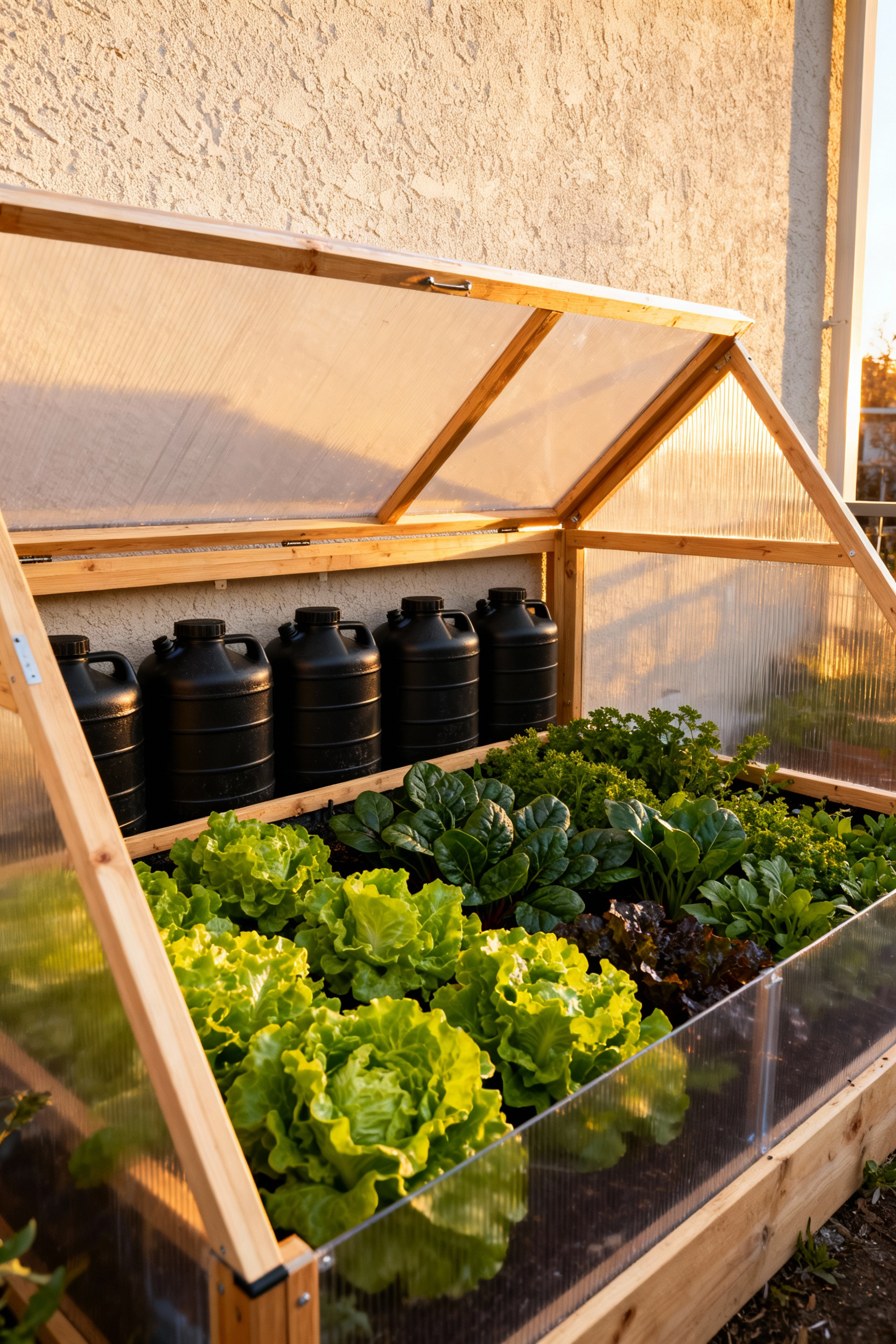
Once built, the strategy shifts from cultivation to preservation. In fact, deep winter gardening is less about growth and more about “living storage.” This phase, often called the “Persephone Period,” occurs when days shorten below ten hours. Thus, plants like ‘Winter Density’ lettuce act as refrigerated inventory rather than active growers. Crucially, you must only harvest these greens after they have fully thawed in the afternoon sun. Touching frozen leaves causes cellular damage and rot.
For further insurance, consider modern adaptations of the Victorian hotbed. For instance, electric soil mats or Phase Change Materials (PCMs) can replace traditional manure pits. These engineered materials melt and freeze at precise temperatures. Ultimately, these bio-engineered layers provide a maintenance-free thermal buffer for your year-round harvest.
Conclusion: Transforming the Concrete Slab into a Regenerative Urban Lung
We must stop viewing the balcony as mere square footage. Instead, we should see it as a high-performance ecological machine. By shifting from passive sustainability to active regeneration, these spaces actively heal the city. Living soil filters toxins while foliage cools the surrounding microclimate. Therefore, the concrete slab transforms into a functioning “Urban Lung.” This shift empowers us to become vital stewards of our local air quality. In fact, even a single balcony can reconnect fragmented urban habitats.
Looking forward, the distinction between architecture and agriculture will continue to blur. Your living space will inevitably prioritize biological function alongside aesthetic beauty. Thus, embracing this regenerative model enhances both mental well-being and urban biodiversity. To begin, audit your current planter setup for dense, living soil health. Then, introduce a native pollinator species to anchor your new ecosystem. Finally, treat your outdoor space as a sanctuary that gives back, curated by beautiful and productive balcony plants. This is the future of resilient urban living.
Frequently Asked Questions
1. How much weight can a typical apartment balcony safely hold for heavy planters?
The average residential balcony is structurally designed to handle a “live load” between 50 and 100 pounds per square foot. Since saturated soil can weigh up to 100 pounds per cubic foot, it is critical to use lightweight potting mixes (like those containing perlite or pumice) and place the heaviest containers directly against load-bearing walls or structural columns. Consult your building’s engineering specifications to confirm maximum load capacity before investing in large, deep planters.
2. Which low-maintenance balcony plants thrive year-round in different urban climates?
For year-round greenery, look to woody perennials and certain evergreen herbs. Clumping *Fargesia* bamboo provides excellent structural screening. Hardy Mediterranean herbs like Rosemary (*Salvia rosmarinus*) and Lavender are highly drought-resistant once established. In colder climates, consider specialized cold-hardy edibles like ‘Winter Density’ lettuce or perennial chives grown in adapted cold frames for continuous harvesting.
3. What are the best methods for protecting balcony plants from high winds and excessive sun exposure?
To mitigate high winds, establish structural windbreaks using dense, upright plants like clumping bamboo or woody herbs (Rosemary/Thyme) positioned along the perimeter to diffuse air velocity. To combat excessive heat absorption from concrete and dark containers, employ the “Pot-in-Pot” insulation technique, placing dark nursery pots inside larger, light-colored ceramic cachepots to shield the root zone. Automated drip systems are essential to compensate for increased evapotranspiration caused by wind and heat.