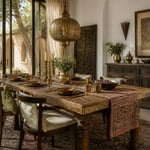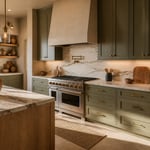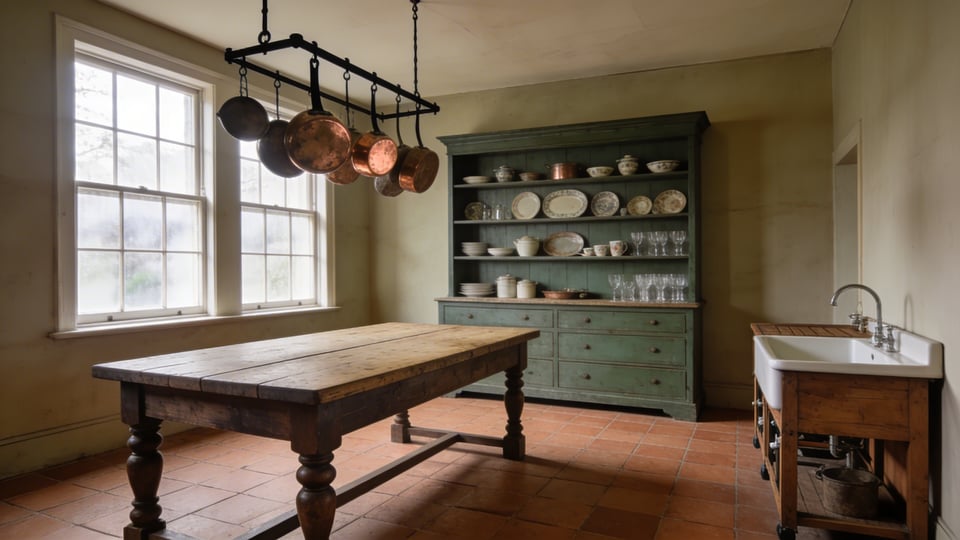
Many see the traditional, “lived-in” kitchen as just a cozy aesthetic choice. They often mistake rustic elements for mere farmhouse style. However, this design represents a deeper, subconscious pursuit of social authority. Indeed, we crave spaces that prioritize visual authenticity over pristine, staged perfection. This guide reveals how the Authority-Heritage Framework builds lasting emotional value by exploring essential traditional kitchen ideas.
Historically, this authority stems from the sacred hearth. For millennia, the fire served as the household’s absolute lynchpin. Consequently, it provided essential heat, light, and communal safety. Furthermore, it acted as the moral center for preserving family lineage. Today, substantial design elements like heavy islands reclaim this commanding role.
Crucially, this framework relies on the legacy of patina. Time transforms simple physical wear into valuable storytelling. Therefore, materials like burnished brass or worn wood gain “temporal depth.” These elements distinguish a habitable environment from a sterile showcase. We will define the kitchen as the home’s most honest, uncurated archive.
Theme 1: Architectural Foundations & The Unfitted Aesthetic
The unfitted aesthetic isn’t a new trend. Historically, it represents a significant return to pre-industrial traditions. Specifically, it rejects the sterile “laboratory” model popularized by the 1926 Frankfurt Kitchen. Before that era, kitchens relied on movable furniture like heavy dressers and worktables. Therefore, this revival prioritizes the room’s social identity over strict manufacturing efficiency. It effectively restores the kitchen’s status as a welcoming, distinct room. Understanding this concept is central to improving your overall kitchen aesthetic.
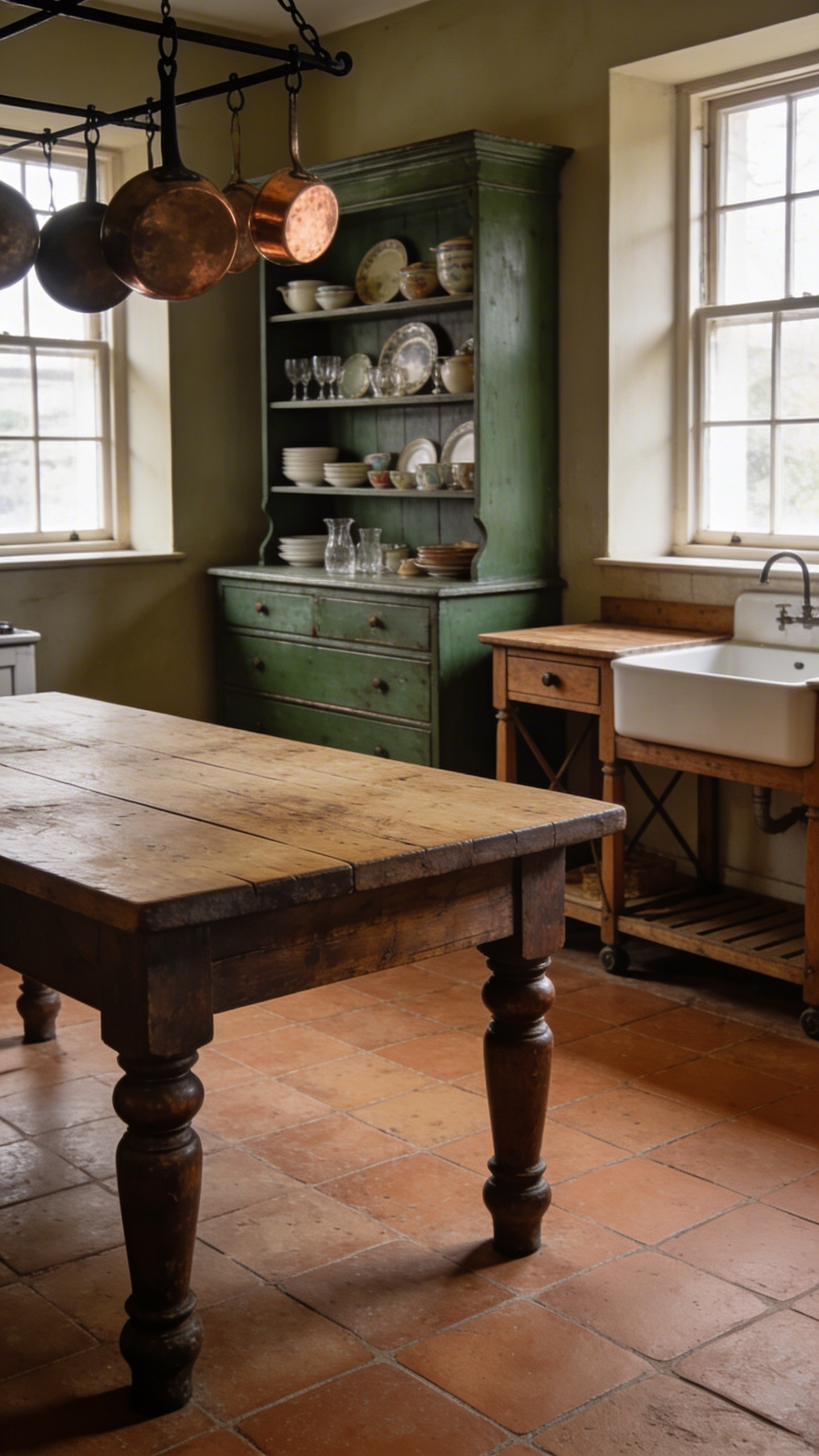
Architecturally, this approach celebrates structural quirks rather than hiding them. Unlike fitted cabinetry, freestanding units do not require perfectly flat, continuous walls. Consequently, existing elements like uneven plaster or original fireplaces become celebrated focal points. For instance, a substantial range cooker often occupies the central hearth. It acts as a visual anchor. Additionally, exposing the flooring beneath furniture highlights materials like wide-plank wood or flagstone. This emphasizes the room’s permanent architectural shell.
Finally, the sensory foundation relies on intentional eclecticism. This style mixes textures to prevent a mass-produced appearance. For example, smooth new marble might contrast with rustic, distressed wood beams. Moreover, incorporating vintage pieces introduces a necessary patina. Scratches and wear tell a story that factory finishes simply cannot replicate. Thus, the space feels curated, substantial, and deeply personal.
1. The Return of Freestanding Joinery: Moving Beyond the Wall-to-Wall Built-in
The seamless, built-in kitchen is a relatively modern concept. In fact, it largely stems from the 1926 Frankfurt Kitchen’s push for industrial standardization. Conversely, the historical kitchen was inherently an “unfitted” space. It relied on individual, functional furniture pieces rather than fixed architecture. Today, design is pivoting back toward this traditional archetype. Specifically, homeowners are trading monolithic uniformity for individual character.
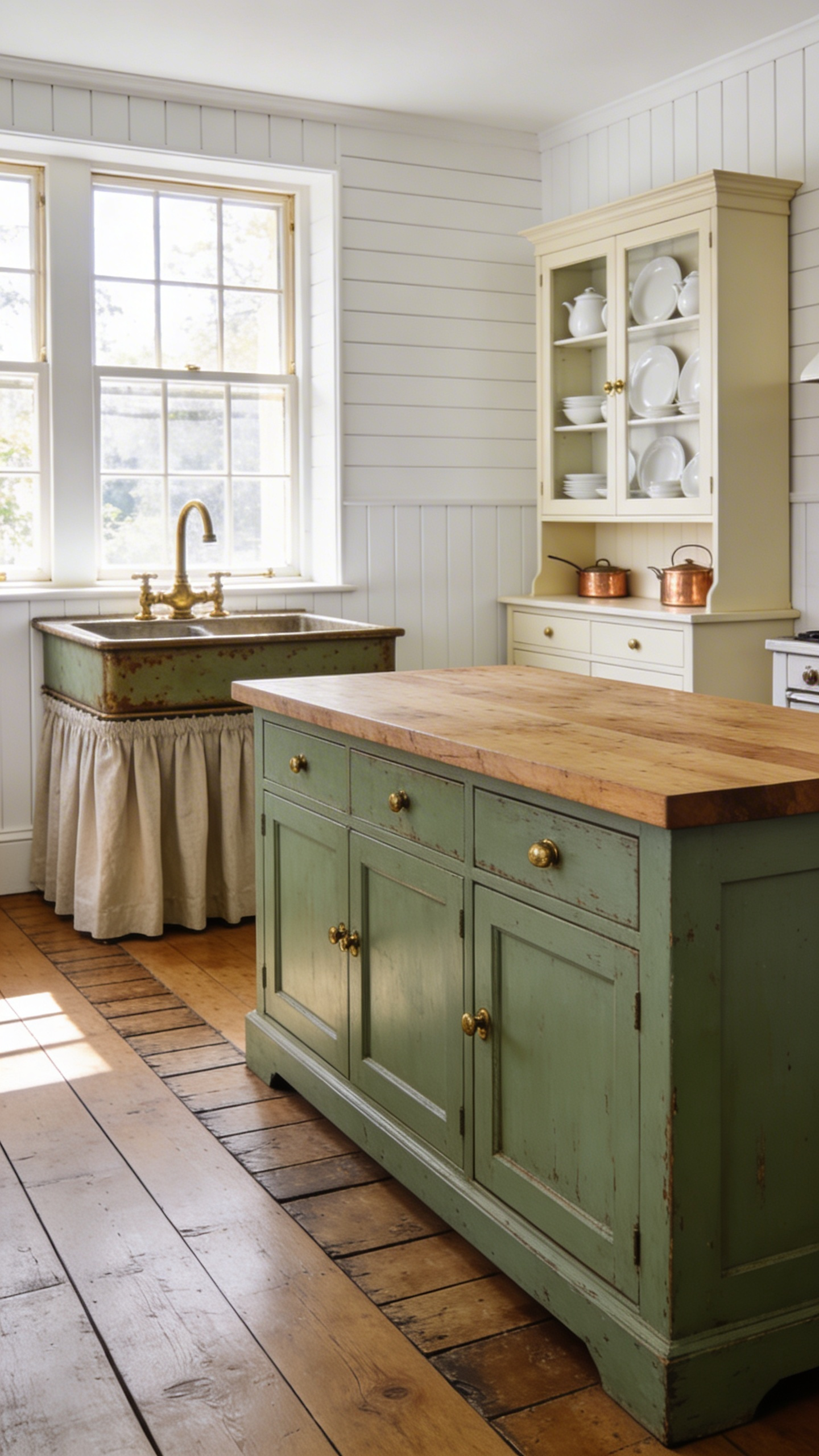
Aesthetically, this approach treats storage as fine furniture. Consequently, the room feels curated rather than mass-produced. For example, a Welsh dresser displays ceramics with open elegance. Similarly, an antique butcher’s block introduces a time-worn patina. Thus, the kitchen gains a layered, eclectic warmth impossible to achieve with fitted suites. Furthermore, hardware choices like unlacquered brass age beautifully over time.
Beyond aesthetics, the unfitted kitchen offers immense practical adaptability. Because units are not fixed to walls, layouts are easily reconfigured. Moreover, these pieces function as transferable financial investments. Unlike fitted cabinets, you can take freestanding joinery with you when moving. Additionally, deep cleaning is significantly more straightforward. You can simply move a unit to clean the flooring behind it. Ultimately, this style marries historical charm with modern flexibility.
2. The Larder Cupboard: Reviving the Georgian Pantry for Modern Storage
Modern kitchens are witnessing a sophisticated revival of the Georgian larder. In fact, this resurgence moves beyond simple storage solutions. It reconnects us to purposeful, pre-refrigeration design principles.
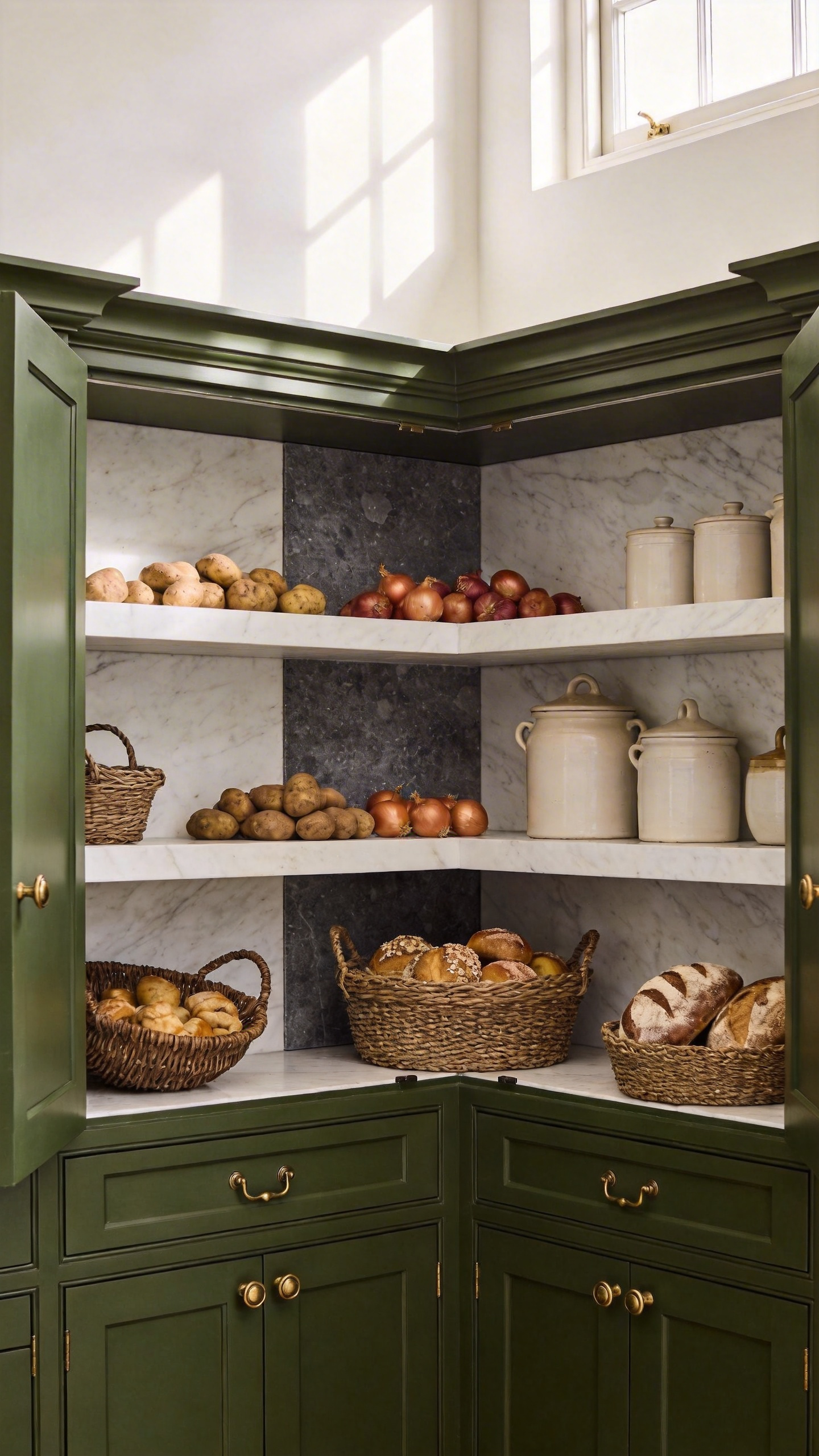
Historically, larders utilized north-facing walls and cold stone to preserve perishables. Today, we reinterpret this mechanism by incorporating solid marble or granite shelving. Consequently, these designated “cool zones” are perfect for storing root vegetables or delicate pastries. They maintain a stable temperature away from the main kitchen’s ambient heat.
Furthermore, proper ventilation remains a critical design element. Traditional cross-ventilation is now mirrored in elegant louvered doors or discreet hidden vents. Specifically, this airflow is essential when the cupboard serves as a concealed “breakfast station.” It allows steam and heat from kettles or toasters to escape safely.
Ultimately, the new larder functions as a curated culinary sanctuary. High-end bespoke joinery often features slide-and-hide pocket doors that reveal a fully equipped workspace. Conversely, when closed, they instantly restore a sense of visual calm. Moreover, this accessible format encourages mindful, sustainable consumption. Bulk ingredients decanted into glass jars turn simple provisions into a beautiful, organized display. Therefore, the larder becomes an active participant in the rhythm of daily cooking.
3. Architectural Weight: Integrating Crown Moldings and Cornice Details
The perception of architectural weight in a kitchen is never arbitrary. Historically, this concept is rooted in Classical Architectural Orders. Specifically, designers often rely on a precise rule for scale. Ideally, cornice height should be approximately 1/15th of the floor-to-ceiling height. Consequently, adhering to these proportions lends an innate sense of stateliness to the room.
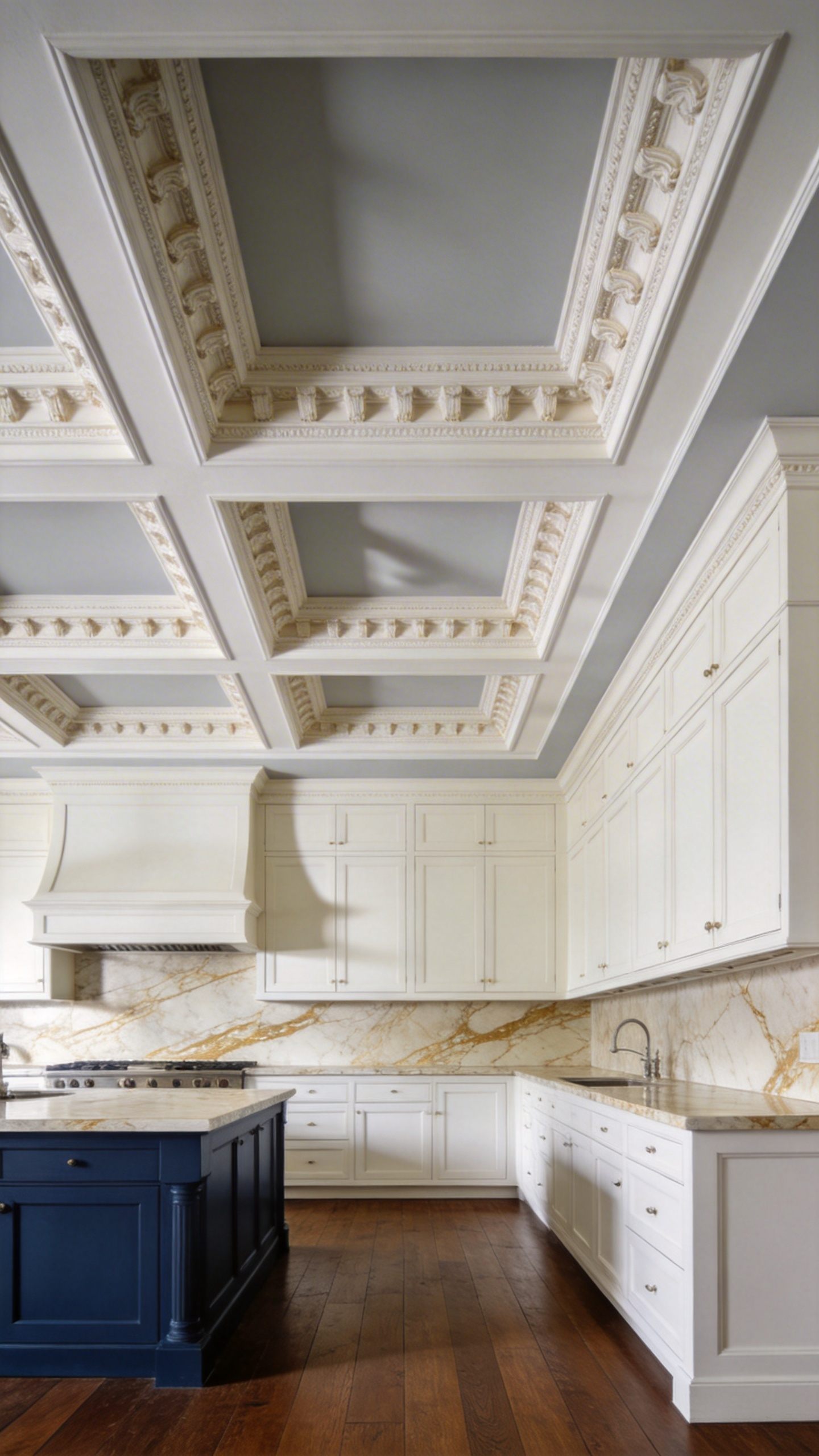
However, a single strip of molding rarely achieves this desired weight. Instead, professionals employ the technique of cornice stacking. This method combines distinct profiles, like frieze boards and ogee curves, to increase vertical dimensions. Furthermore, this built-up detail effectively bridges the gap between cabinetry and uneven ceilings. Ultimately, this technique diminishes the utilitarian, “boxy” appearance of standard cupboards.
Therefore, the moldings transform separate boxes into a monolithic furniture piece. Additionally, this detailed trim recalls the high-end *boiserie* of historic French architecture. Thus, the entire composition gains a sense of visual order and sophisticated completion.
4. The Hearth Concept: Framing the Range Cooker as the Room’s Anchor
Historically, the hearth served as the home’s vital center for light, warmth, and sustenance. Today, the traditional range cooker assumes this crucial architectural and emotional role. Unlike sleek, integrated appliances designed to disappear, a range cooker is built to stand out. In fact, its substantial size and robust cast-iron construction provide necessary visual gravity. Consequently, this appliance grounds the entire room’s design. It effectively balances the surrounding cabinetry with its heritage-inspired aesthetic.
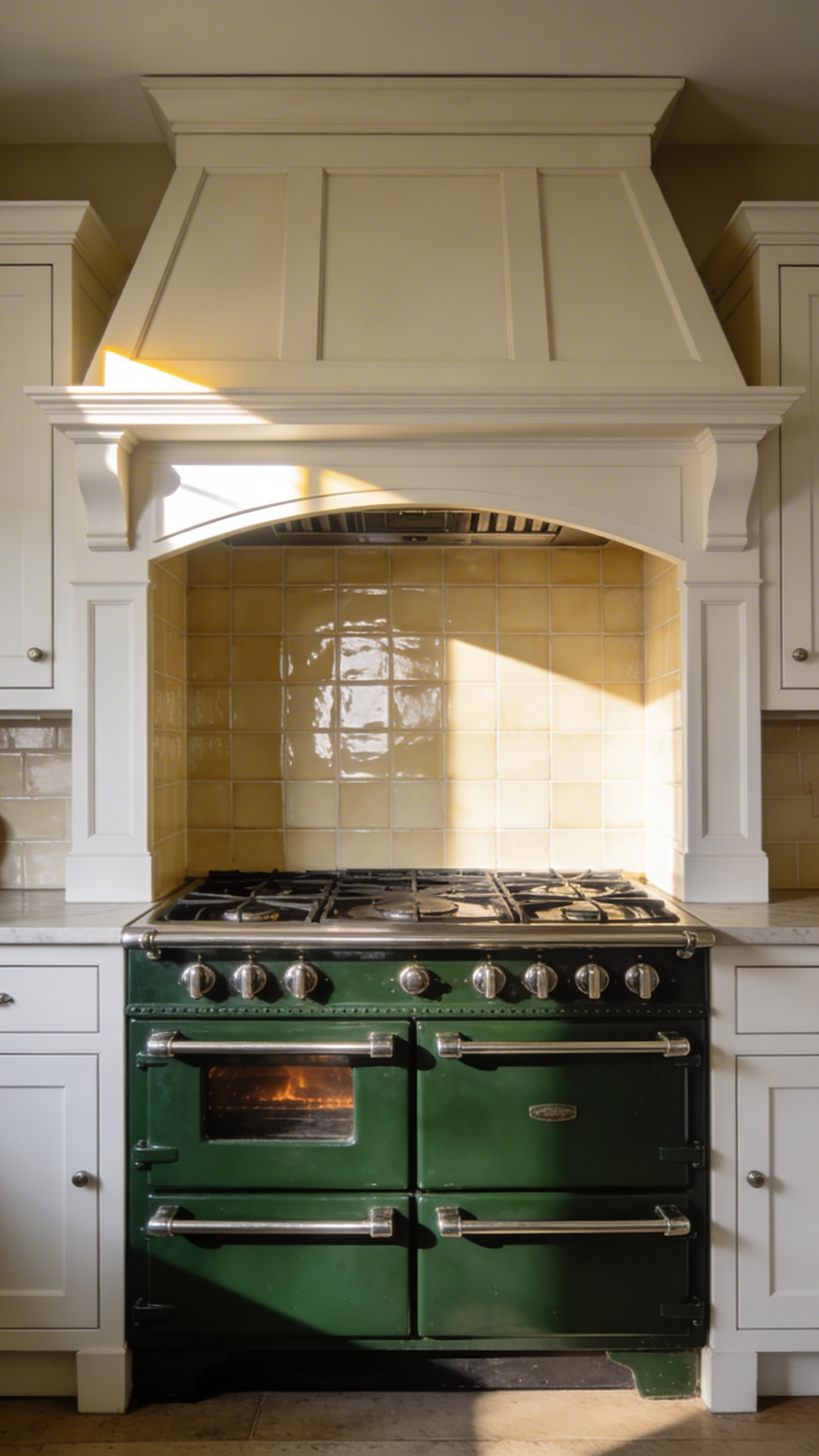
To emphasize this status, designers rarely treat the cooker as a simple slot-in unit. Instead, we deliberately frame it to mimic a traditional chimney breast. Specifically, custom plasterwork or cabinetry is built to create a deep, vertical recess around the appliance. Furthermore, classical joinery details like corbels or decorative paneling often enhance this dedicated “hearth niche.” These elements elevate the cooking zone from a mere workspace into a functional monument. Thus, the cooker’s distinctive finish often dictates the kitchen’s entire color palette.
Beyond aesthetics, the range cooker contributes a unique sensory quality to the home. Notably, classic cast-iron models are renowned for emitting a steady, gentle background warmth. This radiant heat turns the immediate vicinity into a comfortable microclimate. It effectively invites family members to gather close. Moreover, practical details like warming rails for towels foster a tactile, lived-in atmosphere. Ultimately, the constant warmth and sounds of simmering pots transform the kitchen into a true emotional refuge.
Theme 2: Material Integrity & Living Finishes
True traditional kitchens exist at the intersection of structural strength and visual evolution. Specifically, this design philosophy prioritizes “material integrity” paired with “living finishes.” Consequently, authentic materials are selected not just for durability, but for how they age gracefully.
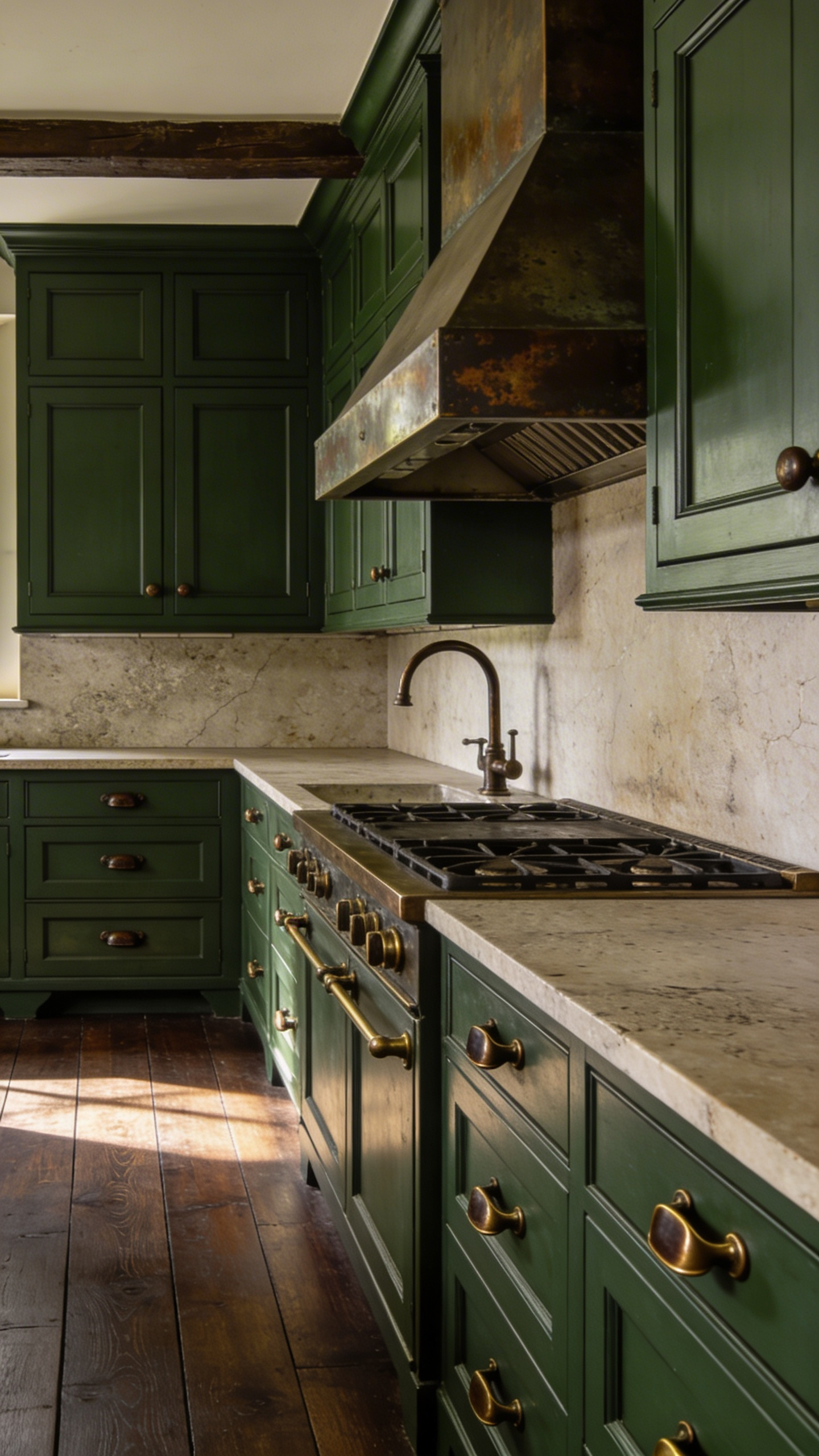
For instance, unlacquered brass is a staple in these spaces. Unlike coated alternatives, raw brass interacts directly with air and oils. Therefore, it develops a complex, darkened patina over time. In fact, this oxidation serves as an autobiography of the room. Frequently touched faucet handles darken quickly, while rarely used pulls remain bright. Thus, the hardware creates a variegated, organic map of daily life.
Similarly, soapstone counters offer a distinct blend of softness and resilience. Geologically, high talc content creates a unique, smooth tactility. However, the stone’s true integrity lies in its non-porous nature. As a result, it is impervious to staining acids and extreme heat. Although soapstone scratches, these marks are easily oiled away or left to deepen the finish. Ultimately, this ethos rejects sterile perfection. Instead, it values enduring character, where wear and tear actively enhance the room’s history.
5. Stone with Stories: Embracing the Patina of Marble and Soapstone
In the realm of traditional design, perfection is often less desirable than authenticity. Consequently, natural stone surfaces are chosen specifically for their ability to age. This visual evolution, known as patina, transforms wear into a narrative of family life.
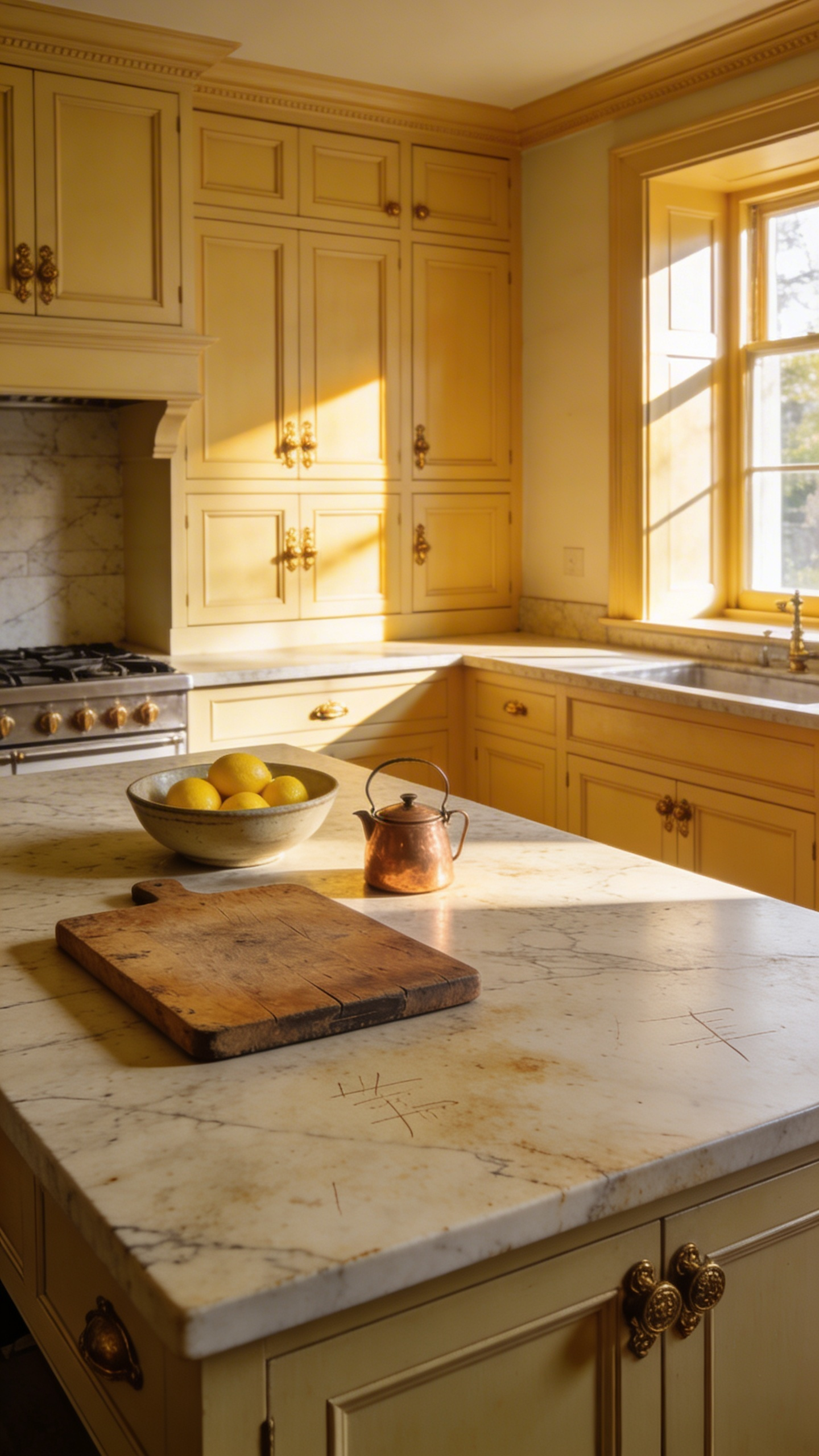
Consider the unique properties of marble. Chemically, its calcite composition reacts to everyday acids like lemon juice or wine. Therefore, contact creates “etching,” which strips away the microscopic polish. Rather than viewing this as damage, traditionalists embrace it as a badge of honor. Over time, these marks accumulate. As a result, the stone transitions from a cold, glossy finish to a soft, velvety satin texture.
Soapstone offers a different, darker allure. Composed mainly of talc, this stone darkens naturally through oxidation or the intentional application of mineral oil. Historically, it served as a durable workhorse in Colonial homes. Its non-porous surface is incredibly heat-resistant. Furthermore, it possesses a “self-healing” trait. Minor scratches blend into the patina with a simple re-oiling, adding to its old-world gravitas.
Ultimately, choosing these materials is a philosophical stance against sterile, engineered surfaces. Designers often employ a mixed-material strategy to maximize this effect. Specifically, durable soapstone lines the perimeter near the stove, while marble anchors the central island. Thus, the kitchen becomes a living journal. It records memories through the organic evolution of its surfaces.
6. The Tactile Floor: Reclaimed Timber and Hand-Fired Terracotta
Combining reclaimed timber with hand-fired terracotta establishes a profound tactile dialogue within a kitchen. Specifically, this pairing juxtaposes the continuous warmth of antique oak against the cool, irregular surface of baked earth. Consequently, the floor becomes a deliberate architectural strategy rather than a monolithic surface.
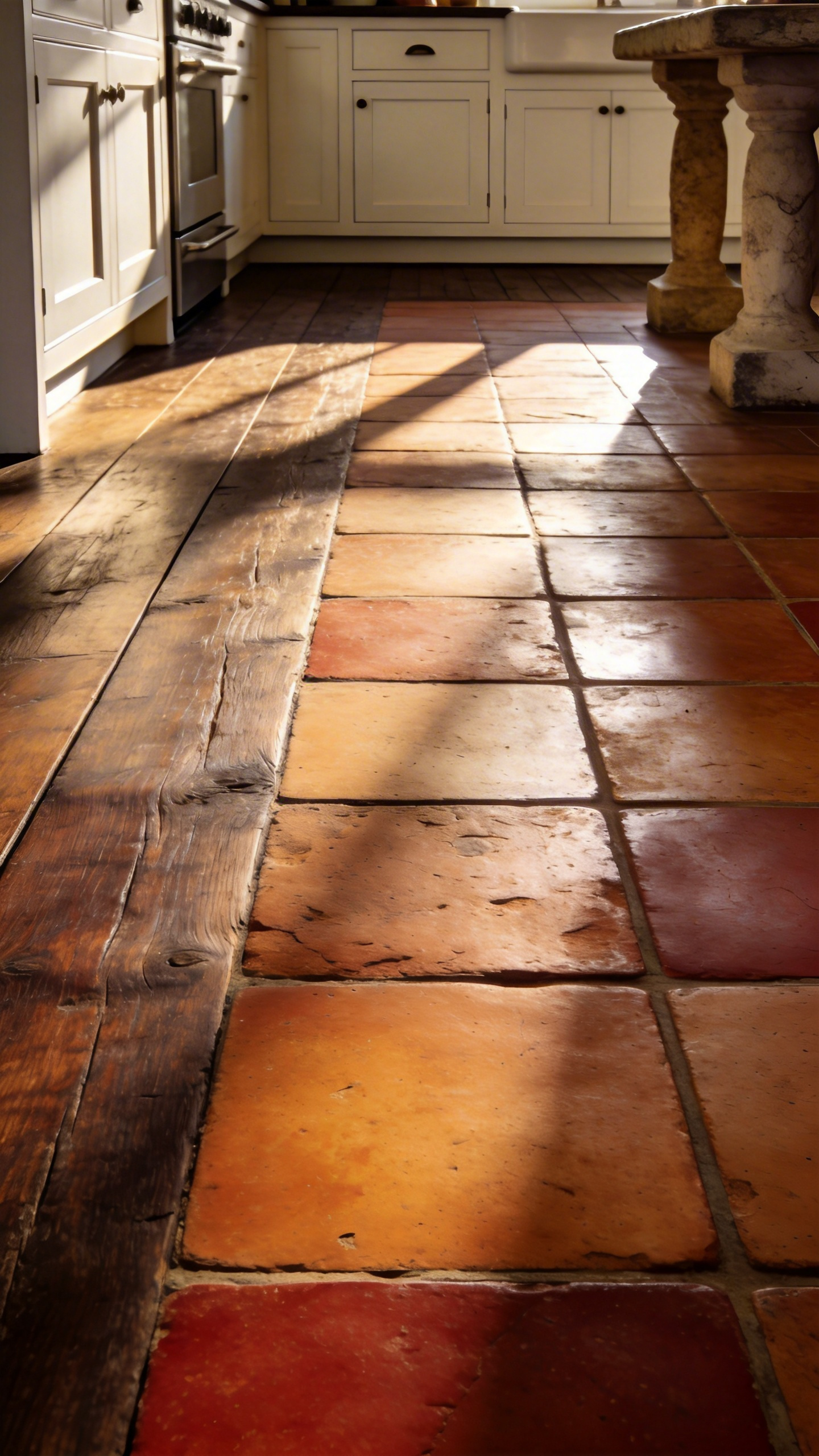
Functionally, this blend addresses the distinct needs of different zones. For instance, terracotta is exceptionally durable and water-resistant. Therefore, it is perfectly suited for high-traffic areas like the sink run or island perimeter. Conversely, reclaimed timber introduces softness and acoustic absorption to calmer dining nooks or thresholds.
Beyond utility, these materials contribute an authentic sense of provenance. Hand-fired tiles display a natural, multicolored variance derived from the kiln’s heat. Similarly, reclaimed wood bears a patina that feels layered and lived-in. In fact, these imperfections prevent the space from feeling sterile or mass-produced.
However, executing this design requires careful technical foresight. Notably, vintage terracotta is often significantly thicker than wood planks. Thus, you must plan sub-floor levels early to ensure a perfectly flush finish. Furthermore, designers often avoid rigid straight lines at the meeting point. Instead, allowing hexagonal tiles to visually “leak” into the timber creates an organic, custom aesthetic. Ultimately, this seamless integration results in a floor that feels historically rooted yet sophisticated.
7. Living Metals: Why Unlacquered Brass Hardware is Essential for Age
Unlike static, plated metals, unlacquered brass is defined as a “living finish.” Specifically, it lacks the protective coating found on conventional hardware. Consequently, this absence allows the metal to evolve and interact directly with your environment. Over time, exposure to oxygen and natural oils creates a rich patina. In fact, this oxidation process acts as a physical record of your kitchen’s history.
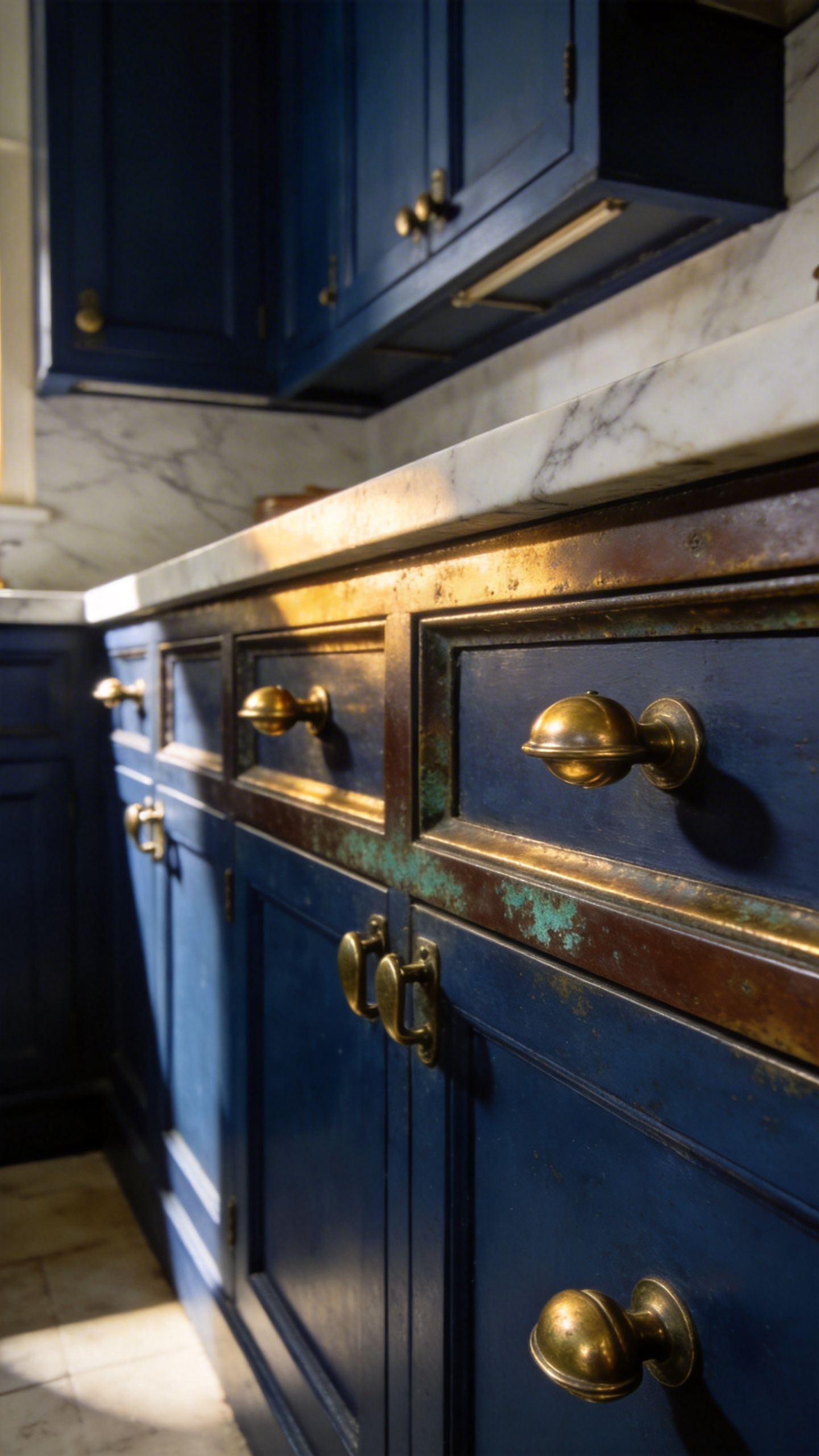
For instance, frequent touches on a specific cabinet pull create a unique “wear map.” Thus, the hardware develops a personalized narrative based on your daily rhythm. Initially, the metal appears bright and polished. However, it gradually deepens into sun-warmed honey, bronze, and amber tones. Ultimately, you “earn” this finish, distinguishing it from pre-manufactured antique looks.
Furthermore, this material provides a sensory counterbalance to cooler surfaces like veined marble or stainless steel. Visually, the warm, matte sheen softens the sharp lines of painted millwork. Historically, this choice grounds a new space in authentic heritage. Therefore, it bridges the gap between modern construction and the charm of 19th-century interiors. By selecting a material that improves with age, you create an heirloom quality in the making.
8. Hand-Painted Cabinetry: The Depth of Brushstrokes vs. Factory Spray
Selecting a finish is a defining moment for any traditional kitchen design. Fundamentally, this decision balances industrial uniformity against artisanal character. For bespoke joinery, a hand-painted finish creates an unmistakable sense of depth and luxury. Specifically, the subtle visibility of brushstrokes prevents the cabinetry from appearing flat or inert. In fact, this texture complements the intricate moulding of Shaker or French Provincial styles perfectly. For a deep dive into the foundational elements of storage, consider these timeless ideas for traditional kitchen cabinets.
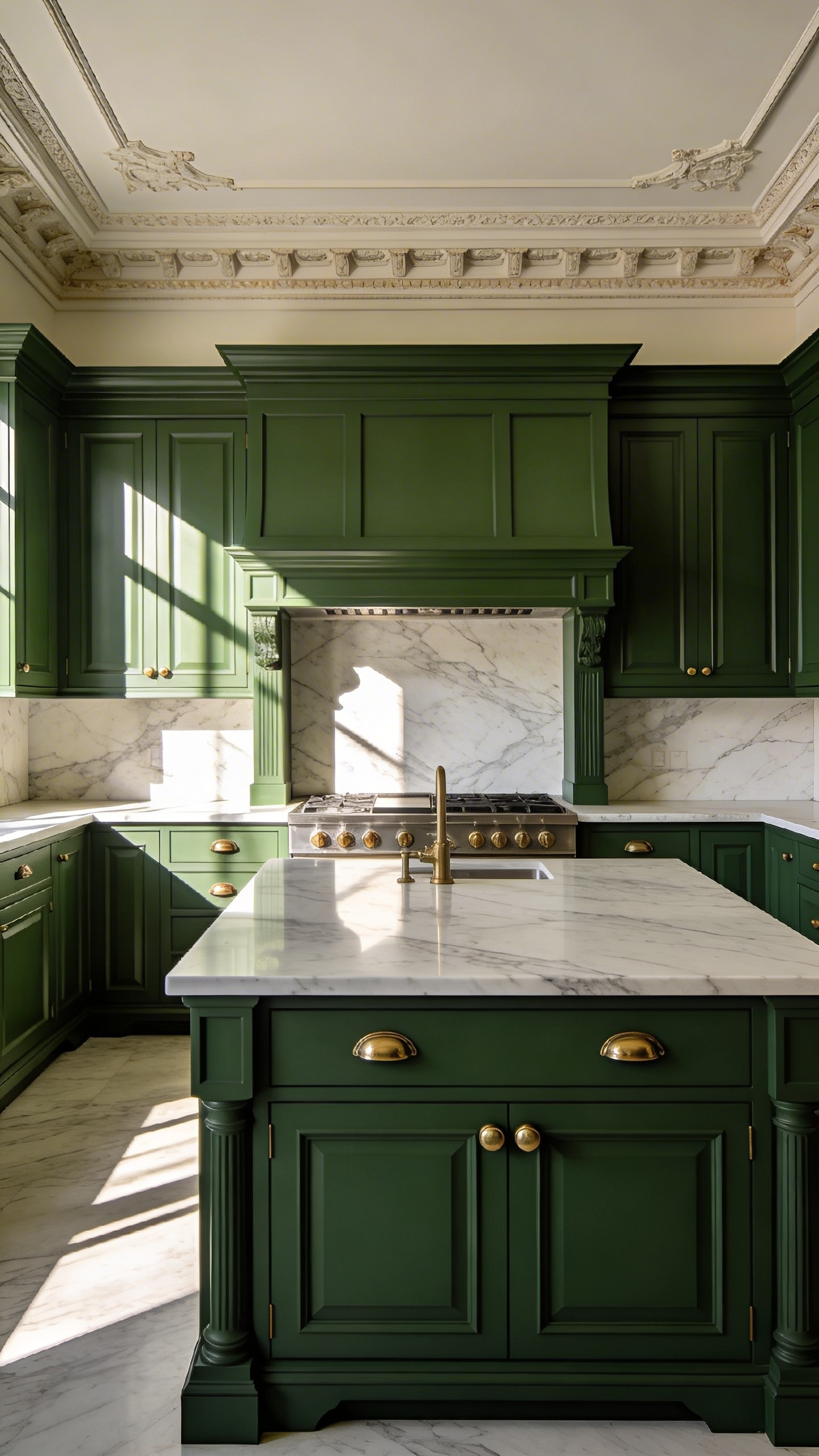
Conversely, factory-sprayed finishes aim for flawless, mechanical smoothness. While this consistency suits minimalist contemporary designs, it often feels artificial on traditional wood. Consequently, the cabinetry can lose its organic warmth and appear distinctly “plasticy.”
Moreover, the practical benefits of hand-painting are significant regarding long-term maintenance. Notably, these surfaces are easily repaired *in situ*. If a door suffers a minor chip, a simple touch-up blends seamlessly into the existing brushwork. On the other hand, repairing a pristine sprayed finish is notoriously difficult. Usually, blemishes on sprayed doors require professional off-site resurfacing to avoid visible, stark patches. Therefore, hand-painted cabinetry offers a truly “future-proof” investment for the home. Ultimately, this approach allows the kitchen to develop a rich, living patina rather than fighting to remain sterile.
Theme 3: The Artisanal & Global Layer
Traditional kitchens are rarely mono-cultural; rather, they reflect a rich tapestry of global trade. For example, the presence of Spanish terracotta or Indian brass often speaks to ancient routes of exchange. Consequently, these imported materials provide a durable, earthy foundation that grounds the entire space. However, the raw material is only the beginning of the story. The artisanal layer ultimately defines the final texture and atmosphere. Specifically, hand-painted Talavera tiles or hammered copper sinks introduce necessary, beautiful imperfections. These tactile details connect the user to human craftsmanship. They contrast sharply with smooth, mass-produced surfaces.
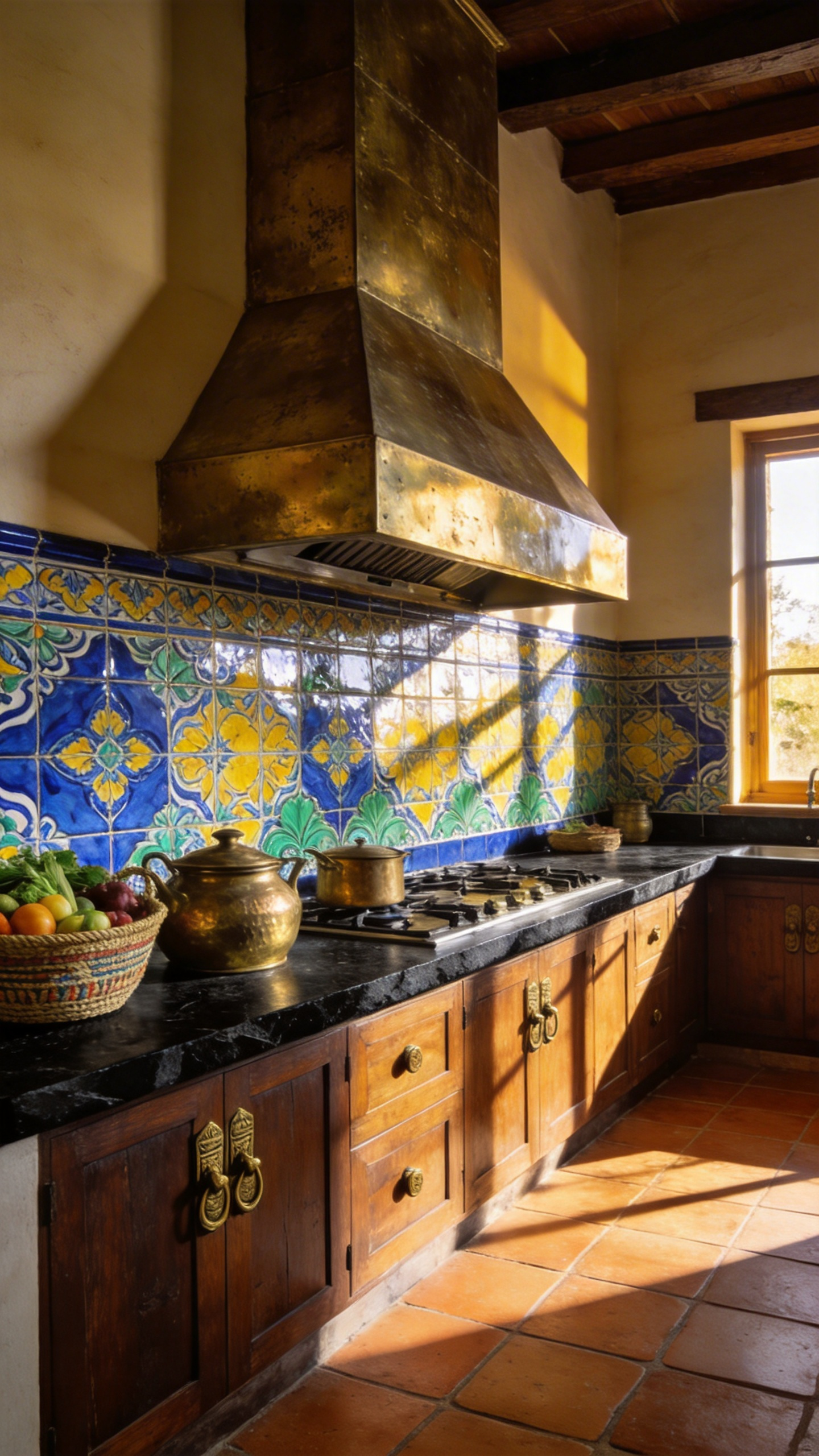
Furthermore, specific culinary habits directly dictate the room’s physical form. In South Asian-inspired designs, for instance, specialized joinery is essential for organizing extensive spice collections. Similarly, integrating a wood-fired hearth or tandoor anchors the room in authentic heritage. Therefore, the design becomes a working cultural station rather than just a static display.
Ultimately, the goal is a sophisticated fusion of eras and origins. Designers frequently repurpose ancient artifacts, such as turning a carved stone basin into a functional sink. By pairing these storied pieces with sleek, contemporary cabinetry, the kitchen gains a deep narrative. Thus, the space successfully bridges the gap between historical artistry and modern functionality.
9. Global Pattern Play: Hand-Blocked Textiles and Cafe Curtains
The “traditional” kitchen aesthetic is often fueled by a surprisingly global history. Specifically, the bold botanicals found in British design trace back to the 17th-century trade of Indian *Chintz*. Consequently, incorporating hand-blocked textiles represents a rich dialogue between Eastern artisans and Western interiors. Today, craftsmen in regions like Jaipur still use hand-carved teak blocks to stamp intricate designs onto cotton. Unlike machine-made fabrics, these prints possess charming, human imperfections. For instance, slight variations in color saturation reveal the maker’s meticulous touch. Therefore, choosing these textiles adds a tactile, narrative layer that modern uniformity simply cannot replicate.
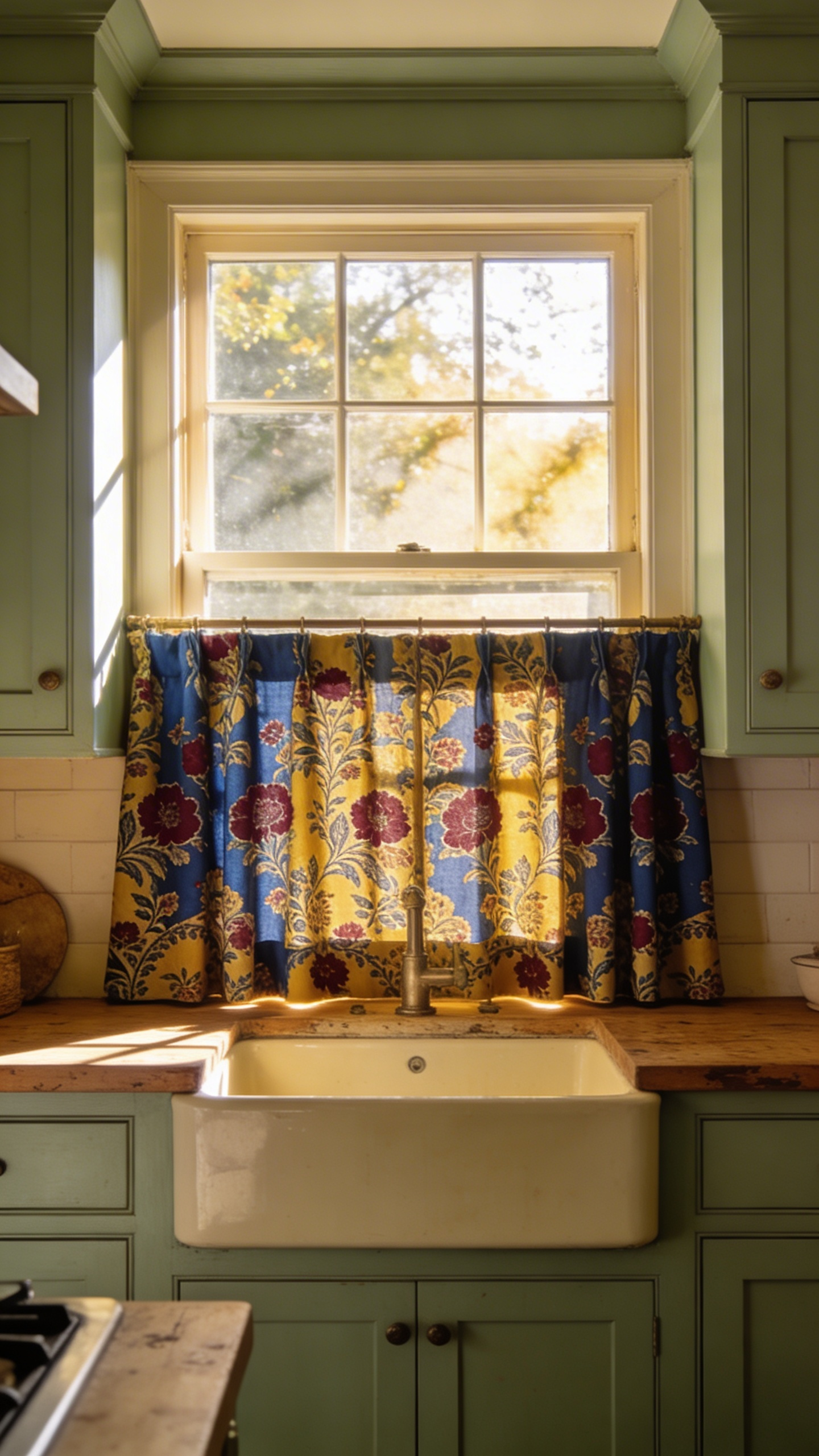
To showcase these patterns, the café curtain remains the ideal vessel. Historically, this style originated in 19th-century Viennese bistros to balance privacy with natural light. Practically, hanging fabric halfway up the window screens the view while allowing sunshine to flood the workspace. Furthermore, the casual drape of light-weight linen creates a gentle, informal movement. Ultimately, this combination softens the hard lines of appliances. Thus, blending South Asian craft with European utility creates a kitchen that feels sophisticated yet authentically lived-in.
10. The Curator’s Backsplash: Zellige Tiles and Artisanal Ceramics
Modern kitchen design increasingly values narrative depth over factory precision. Consequently, Zellige tiles have emerged as a premier choice for discerning homeowners seeking authenticity. Originating in 10th-century Fez, Morocco, these glazed terracotta tiles are crafted by master artisans known as *maâlems*. Specifically, the process begins with natural clay that is hand-kneaded and sun-dried.
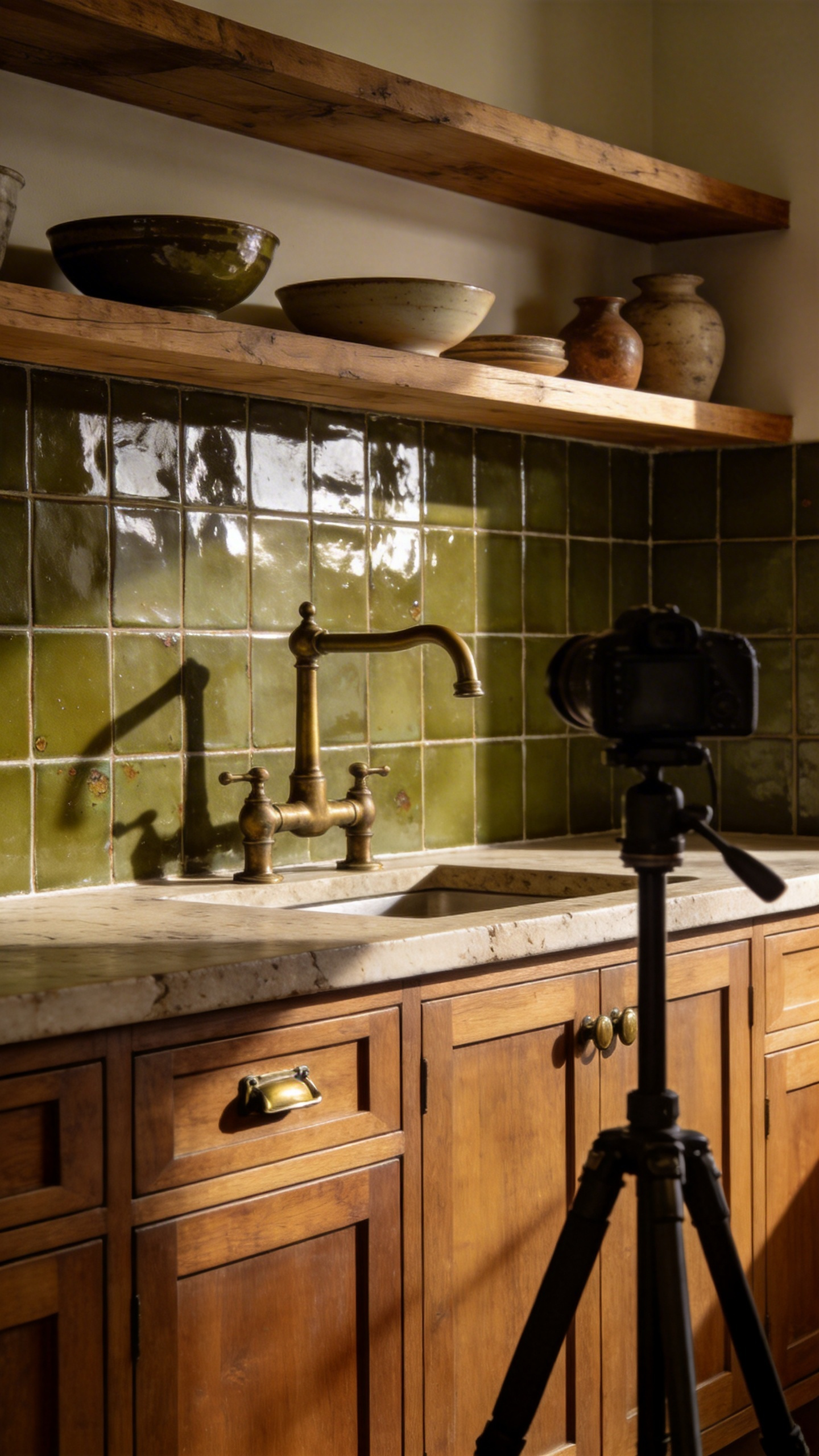
Subsequently, artisans hand-dip or brush each piece with mineral-based glazes. During firing, the tile’s specific position in the kiln dictates its final shade. Therefore, subtle color shifts occur across a single batch, ensuring no two tiles are identical. This labor-intensive method results in surface ripples, variations in thickness, and minor pitting. In fact, these irregularities are celebrated as the material’s “soul” rather than manufacturing flaws.
Visually, this unique texture creates a dynamic interplay with light. The uneven surface refracts illumination, giving the backsplash a lively, almost glowing quality throughout the day. Thus, Zellige transforms a flat wall into a living surface that machine-made ceramics cannot replicate.
For the “curator” mindset, this material offers a sophisticated alternative to cookie-cutter designs. Furthermore, these tiles serve as an ideal textural counterpoint within traditional spaces. They effectively soften the high polish of marble or enhance the natural warmth of wood cabinetry. Finally, the low-energy production and natural materials represent a form of sustainable luxury. Ultimately, choosing Zellige adds deep cultural history and artistic intent to the heart of the home.
11. Displaying Heritage: The Plate Rack and Open Scullery Shelving
The plate rack serves as a compelling visual record of a home’s history and function. Historically, these vertical displays were not merely storage solutions for the kitchen. Instead, they acted as evolving galleries for a family’s prized possessions, such as imported Chinese porcelain.

Specifically, the design relies on a striking material contrast to achieve its sophisticated aesthetic. Warm, rustic wooden dowels frame the cool, glossy surfaces of earthenware or fine china. Consequently, this juxtaposition turns everyday dishware into a deliberate architectural feature.
Beyond aesthetics, the traditional plate rack offers genius functionality derived from pre-industrial efficiency. Traditionally positioned above deep sinks, the open slats allow wet dishes to air-dry immediately. Furthermore, vertical storage protects fragile edges from the chips and scrapes common in horizontal stacking. Therefore, treasured heirlooms remain safe yet readily accessible for daily use.
In contrast, open scullery shelving tells a purely utilitarian story. Historically, the scullery served as the discreet “backstage” for heavy-duty cleaning by household staff. As a result, these shelves prioritize rapid inventory and accessibility over curated beauty. They typically hold utilitarian overflow, such as large stockpots or bulk pantry goods. Today, this separation supports the modern desire for a “messy kitchen.” Ultimately, relegating clutter to the scullery allows the main kitchen to remain a pristine social hub.
12. Copper and Clay: Exposing the Tools of the Trade
To begin, the pairing of copper and clay offers a striking visual and functional dialogue. Specifically, this combination represents the complete timeline of culinary history. Clay serves as the kitchen’s earliest storyteller. Historically, the invention of the pot transformed how humans gathered to eat. Uniquely, the material’s porous nature regulates moisture during slow cooking. In Indian traditions, for example, earthenware is prized for distinctly improving a dish’s flavor profile. Consequently, these humble vessels ground the aesthetic in artisanal heritage.
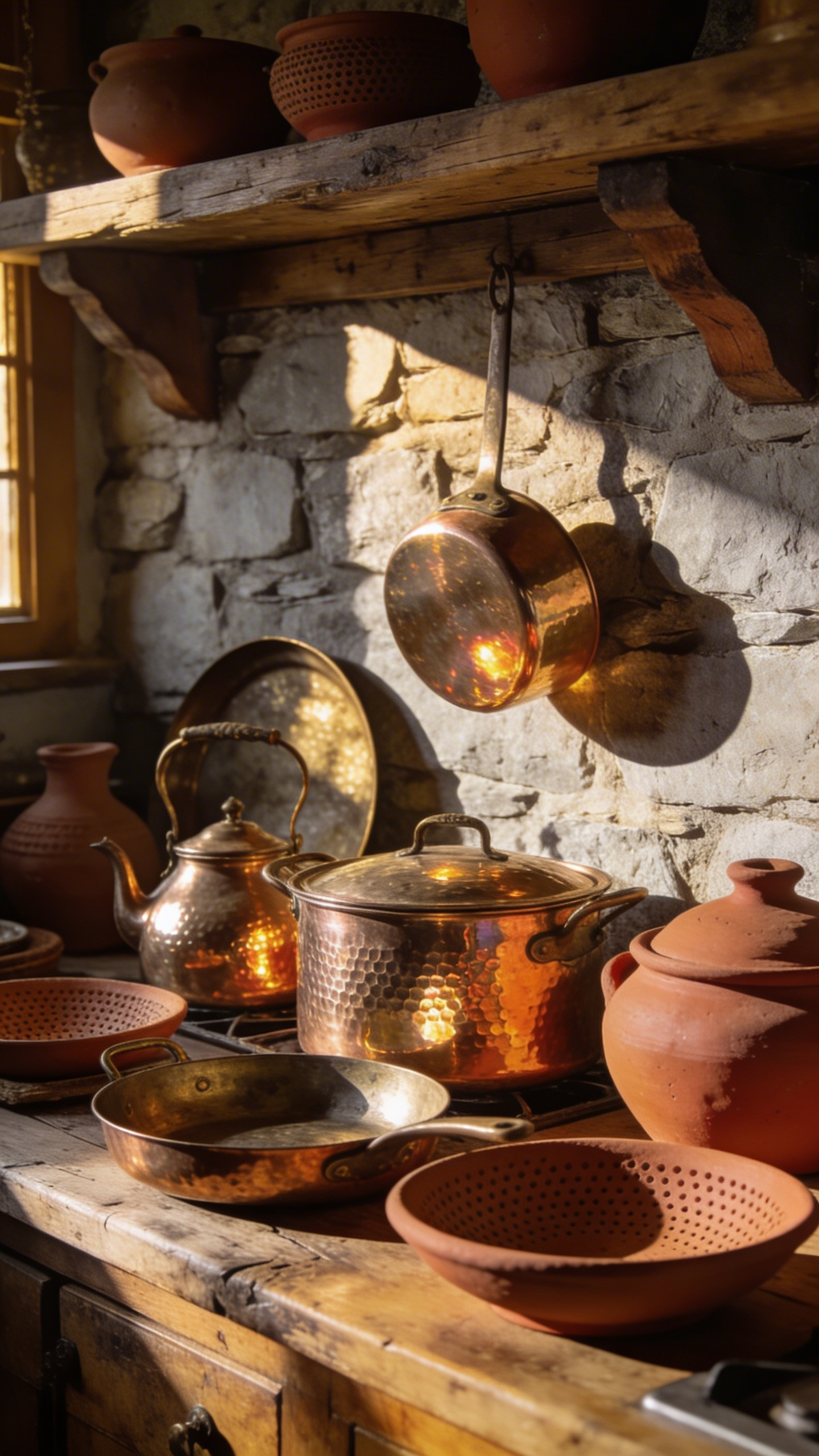
Conversely, copper represents the pursuit of technical precision. Because it is a superior thermal conductor, it allows for unparalleled heat control. This responsiveness is essential for mastering delicate French sauces or simmering stews. However, raw copper reacts with acidic ingredients. Therefore, traditional pans must be lined with tin to ensure safety. Naturally, this skilled maintenance cements copper’s status as a luxury investment.
Ultimately, placing these materials together creates a profound sensory contrast. The matte, earthen texture of clay balances the sun-like, reflective surface of metal. Furthermore, both materials embody the concept of heirloom quality. Over time, they develop a unique patina that chronicles every meal cooked. Thus, exposing these tools connects a modern design to ancient, shared roots.
Theme 4: Modern Function, Traditional Form
This design philosophy strategically integrates 21st-century efficiency with classical architecture. Specifically, the goal is creating “visual silence” within the home. Consequently, modern appliances must perform a disappearing act to maintain the traditional facade. For example, panel-ready refrigerators and dishwashers are concealed behind custom millwork. Thus, the machinery vanishes, allowing the cabinetry’s craftsmanship to take center stage. If you are planning a complete overhaul, consider these enduring kitchen ideas remodeling for a conscious home.
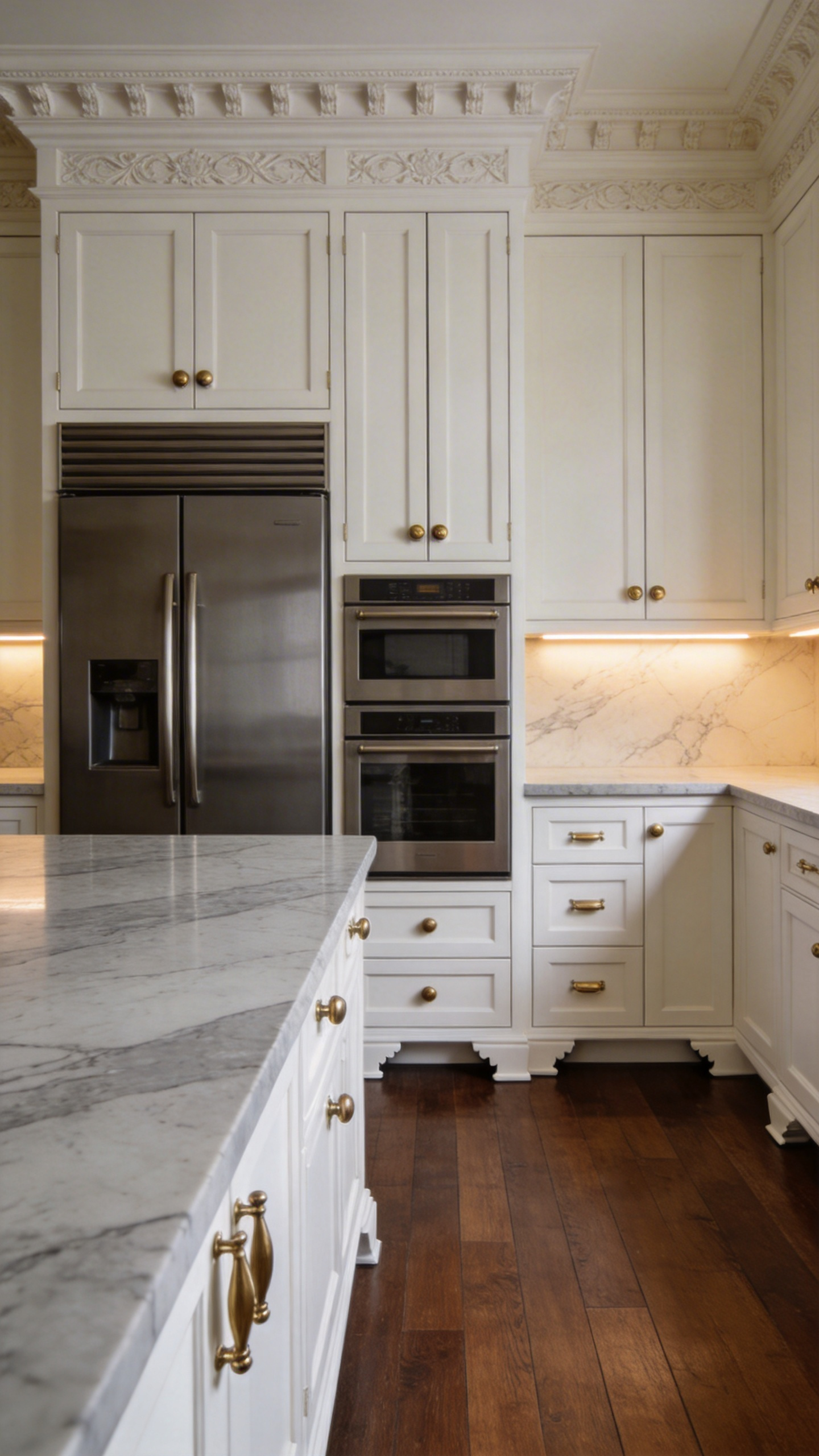
Moreover, modern function is often felt rather than seen. In fact, true luxury comes from unseen ergonomics like soft-close drawers. Therefore, the kitchen remains a space of quiet comfort, contrasting with industrial noise. Simultaneously, lighting serves as a critical bridge between eras. While vintage pendants provide character, concealed LED strips offer brilliant, modern task lighting.
Finally, successful designs rely on curated material contrasts. Typically, designers pair warm, matte wood finishes with cool, durable surfaces like quartz. Notably, a sleek waterfall edge on an island can modernize a classic space. Furthermore, updating hardware to matte black or brushed nickel anchors the look. Ultimately, this balance ensures the kitchen feels timeless yet fully equipped for modern life.
13. The Bridge Faucet and Pot Filler: Industrial Roots, Elegant Execution
Historically, the bridge faucet was a purely mechanical necessity. It bridged separate hot and cold lines into a single spout. However, contemporary design elevates this exposed plumbing into an architectural statement. In fact, the horizontal bar often acts as the sink’s visual centerpiece. Specifically, this structure celebrates the mechanics of water distribution rather than hiding them.
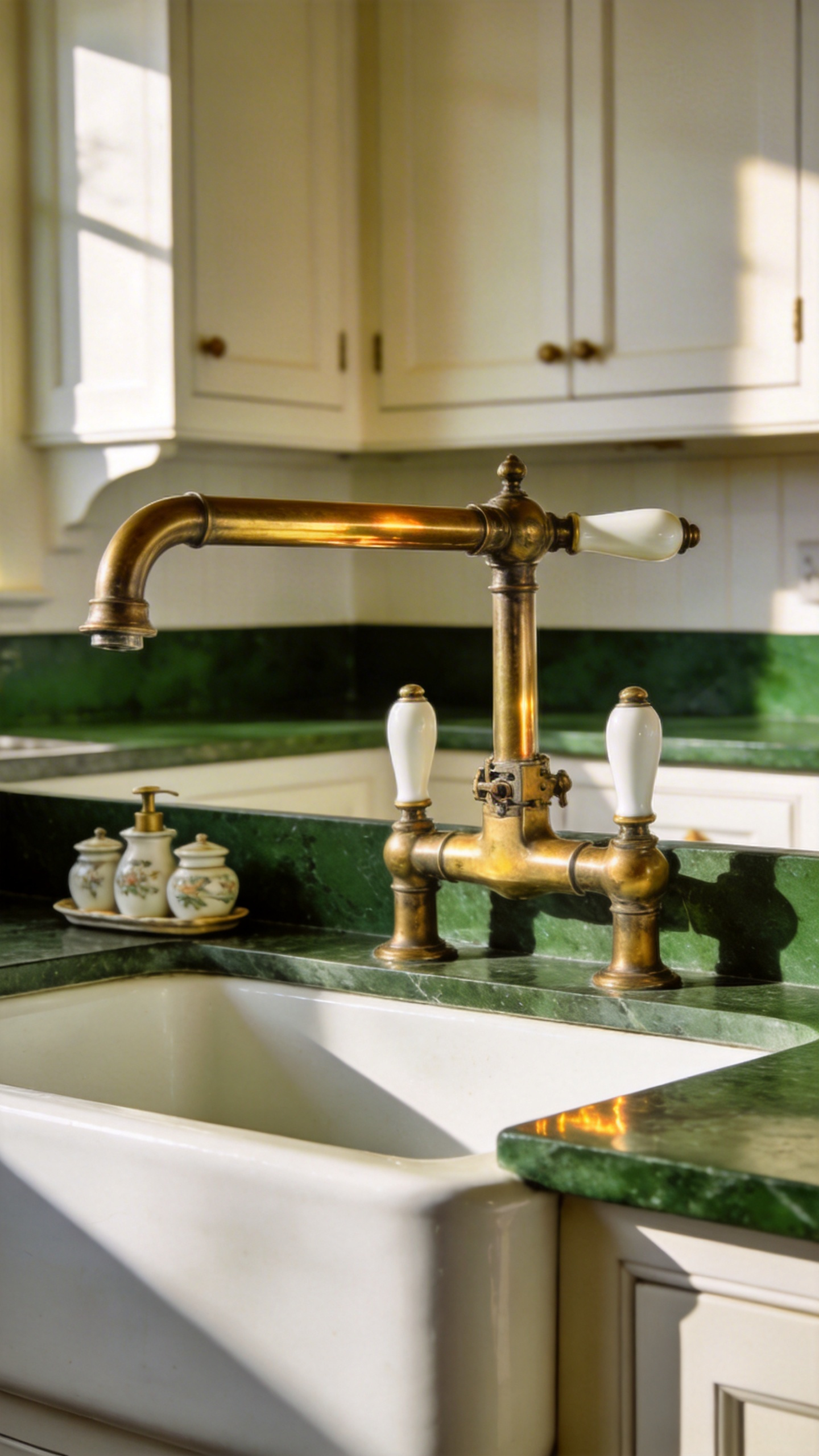
To soften this industrial framework, traditional iterations utilize distinctive design elements. For example, high-arching gooseneck spouts provide essential clearance for large cookware. Additionally, cross handles often feature porcelain index buttons to add tactile detail. Similarly, the pot filler has evolved from a commercial utility into “functional jewelry.” Originally designed to eliminate carrying heavy stockpots, it now serves as a curated accent. Consequently, its articulated arm acts as a sophisticated visual hinge above the range.
Finally, the choice of finish grounds these fixtures in history. Unlacquered brass is particularly prized for its authenticity. Because it remains uncoated, it develops a “living patina” through daily use. This oxidation tells a story of permanence and active family life. Alternatively, polished nickel offers a warmer, champagne-like reflectivity compared to chrome. Ultimately, these fixtures prove that practical machinery can be executed with profound elegance.
14. Concealed Tech: Hiding the Dishwasher Behind Bespoke Paneling
Ideally, a traditional kitchen evokes a timeless, pre-industrial atmosphere. However, standard appliances often disrupt this careful visual continuity. Therefore, concealing the dishwasher becomes a vital modern design solution. Specifically, this seamless illusion relies on “panel-ready” models. These units are engineered to accept a custom cabinet facade. Consequently, the appliance disappears behind a door that mimics adjacent cabinetry. Furthermore, heavy-duty springs support the added weight of the bespoke panel to ensure balance.
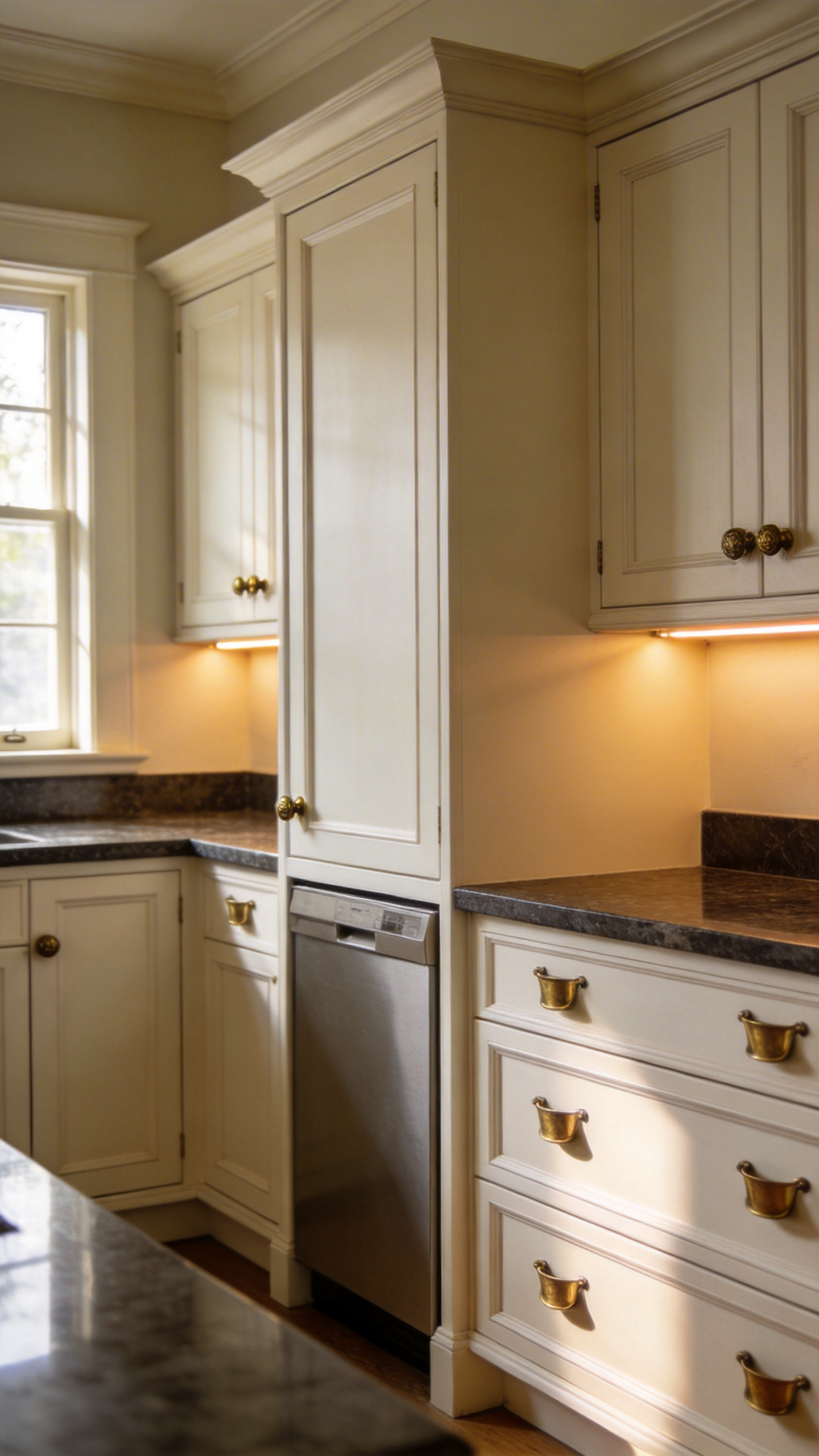
Often, the facade includes a dummy drawer front for visual rhythm. Crucially, decorative hardware must align perfectly with neighboring units. Thus, the appliance wall functions as elegant, uniform furniture rather than a workstation. Additionally, silence reinforces this sophisticated visual trick. High-end models operate quietly to maintain the open-plan space’s calm. However, hidden controls create a minor functional dilemma regarding the cycle’s status. To solve this, manufacturers utilize an “InfoLight” beam projected onto the floor. Ultimately, this preserves the aesthetic purity without sacrificing modern convenience.
15. Lighting Layers: Pendants and Sconces with Historical Provenance
In early 20th-century kitchens, lighting schemes were notably sparse compared to modern standards. Specifically, a single central fixture often provided the only ambient illumination. Today, we look to the iconic “Schoolhouse” pendant to recreate this aesthetic effectively. Historically, these fixtures utilized opaque milk glass to imitate expensive porcelain. Consequently, the material acted as a revolutionary light filter. It gently blurred harsh bulb filaments into a soft, shadow-free halo. Therefore, placing milk glass pendants over an island introduces a warm, non-clinical glow that instantly softens the room.
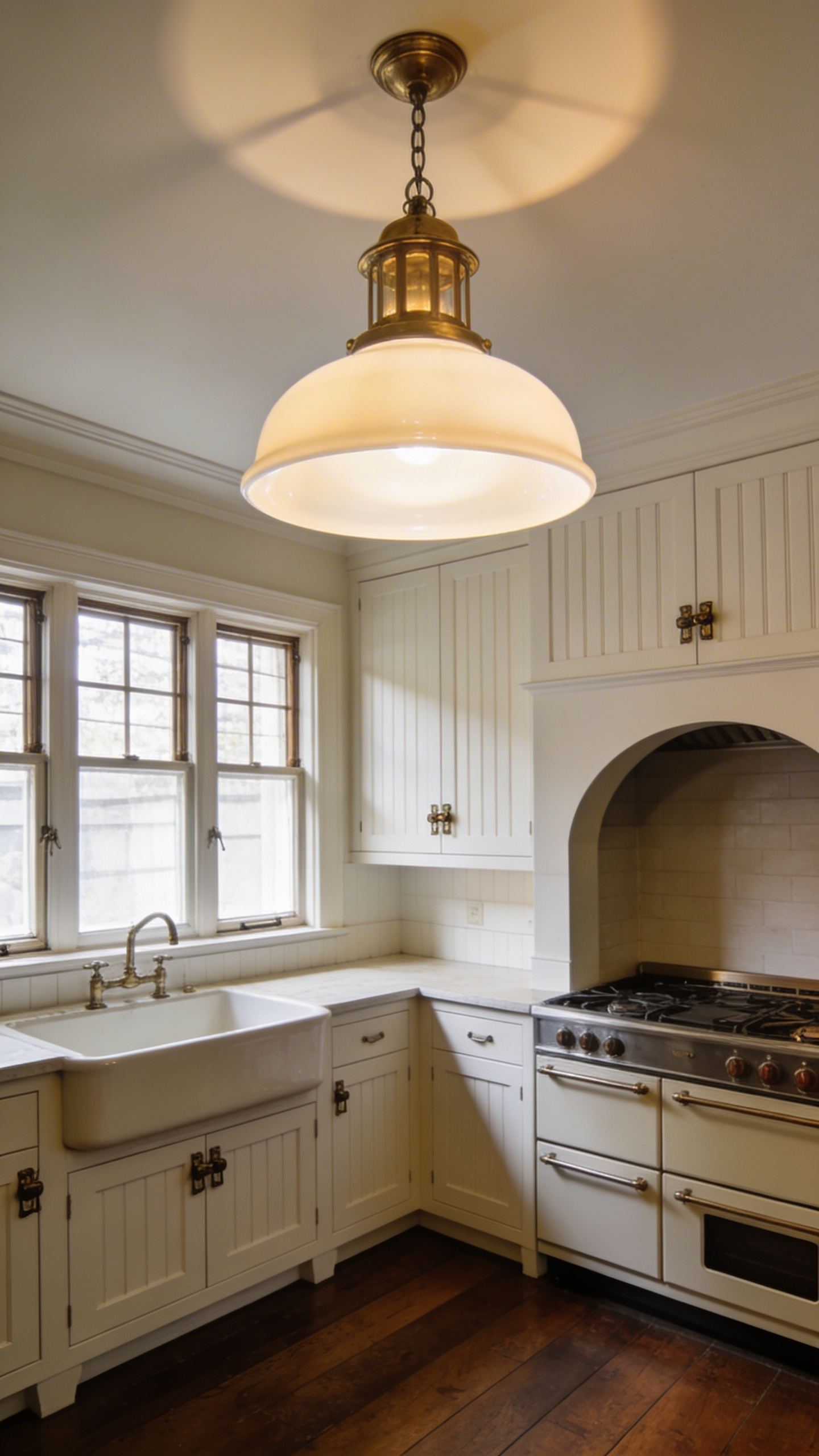
However, ambient light requires functional support to meet contemporary needs. This brings us to the historical wall sconce. Originally, a single bulb mounted over the sink served as the primary “task light.” Modern safety standards, of course, demand significantly higher brightness levels for chopping and prepping. Thus, authentic sconces now serve a re-cast role in the design. They act primarily as decorative accents or mood lighting. Meanwhile, hidden under-cabinet LEDs handle the true, high-lumen culinary work.
Regarding materials, porcelain sconces offer deep historical provenance. During the 1920s, these fixtures were prized specifically for being “sanitary” and easy to clean. As a result, they fit perfectly near wet zones like sinks or pantry doorways. Alternatively, metal gooseneck styles nod to the era’s industrial utility. Ultimately, layering these provenance-rich fixtures creates a space that feels curated, not just constructed.
16. The Masala Daba & The Spice Drawer: Organizing with Cultural Intent
The *Masala Dabba* represents significantly more than simple kitchen storage. In fact, this circular container often serves as a cherished family heirloom. Traditionally, mothers pass these iconic boxes down to new brides as part of a trousseau. Consequently, they symbolize a tangible connection to culinary heritage and family continuity. Beyond history, the physical object facilitates a sensory ritual. Specifically, lifting the single lid releases a complex blend of aromas immediately. This action effectively signals the true beginning of meal preparation.
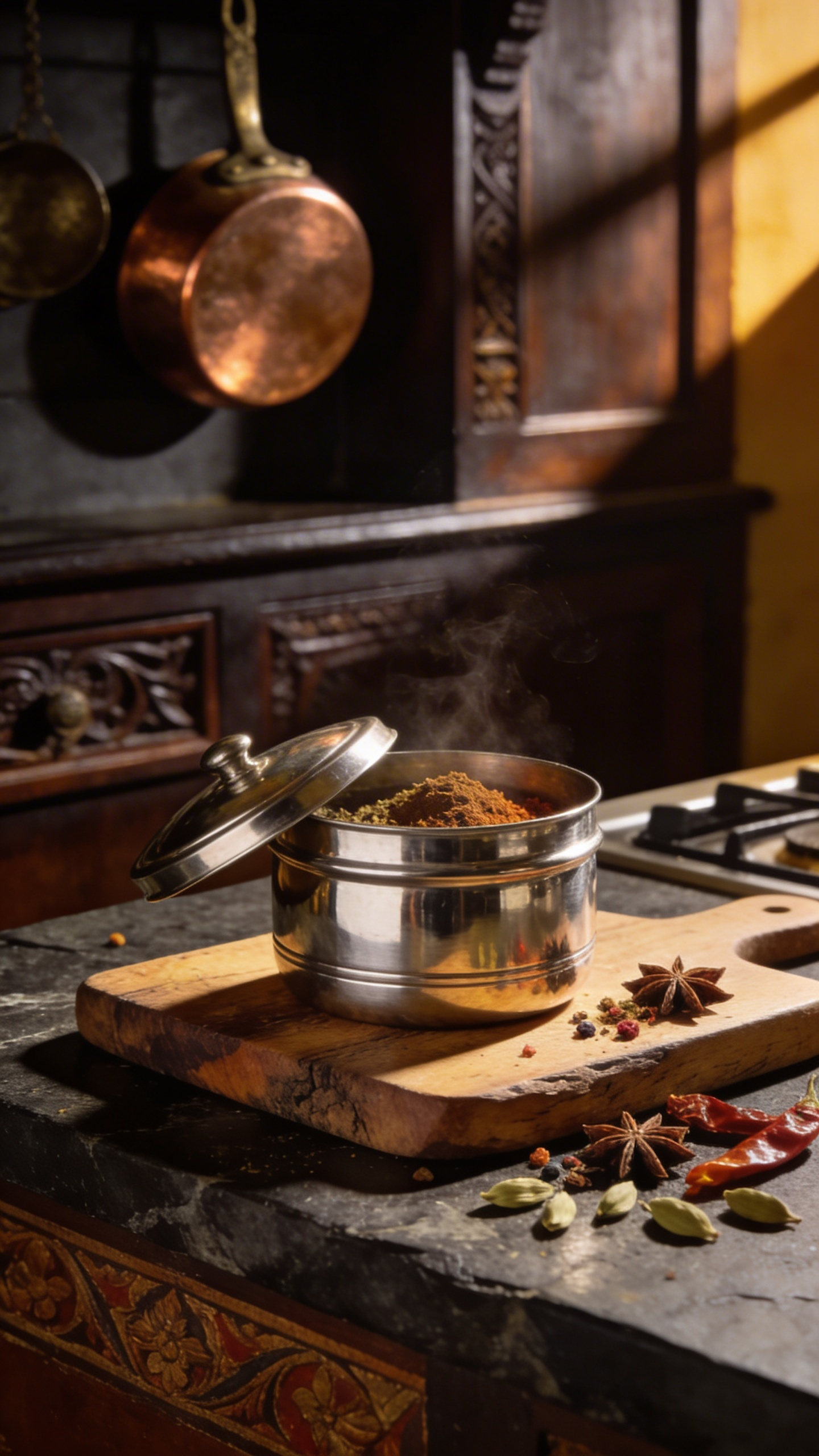
Functionally, the *dabba* supports the rapid, high-heat technique of Indian cooking. Conversely, Western spice drawers often function as extensive inventories requiring individual searching. The *Masala Dabba* prioritizes curation and deployment. For instance, the *tadka* or tempering process requires split-second timing to prevent burning. Therefore, having simultaneous, one-handed access to 5-7 essential spices is critical. You cannot fumble with multiple jar lids when hot oil is waiting. Thus, the design is purely intentional, favoring speed and absolute efficiency.
Furthermore, the internal structure addresses specific climate challenges. The small, removable cups intentionally hold limited quantities. As a result, cooks must refill them frequently from a larger, airtight pantry supply. This practice ensures that the spices in daily use remain consistently fresh and potent. Historically, materials like wood were utilized to manage humidity, though stainless steel is now standard. Ultimately, incorporating a *Masala Dabba* brings cultural intent to your countertop. It transforms cooking from a chore into a seamless, aromatic art form.
17. The Furniture Island: Treating the Prep Surface as an Antique Heirloom
In contemporary interior design, the “fitted” kitchen often dominates with seamless lines and uniformity. However, the concept of the furniture island offers a compelling, sophisticated alternative. Specifically, this approach treats the central island as a distinct, freestanding antique rather than a continuation of built-in millwork. It champions the “unfitted” kitchen aesthetic, prioritizing character over standardization. Consequently, the space feels less like a sterile laboratory and more like a curated, historical living area.
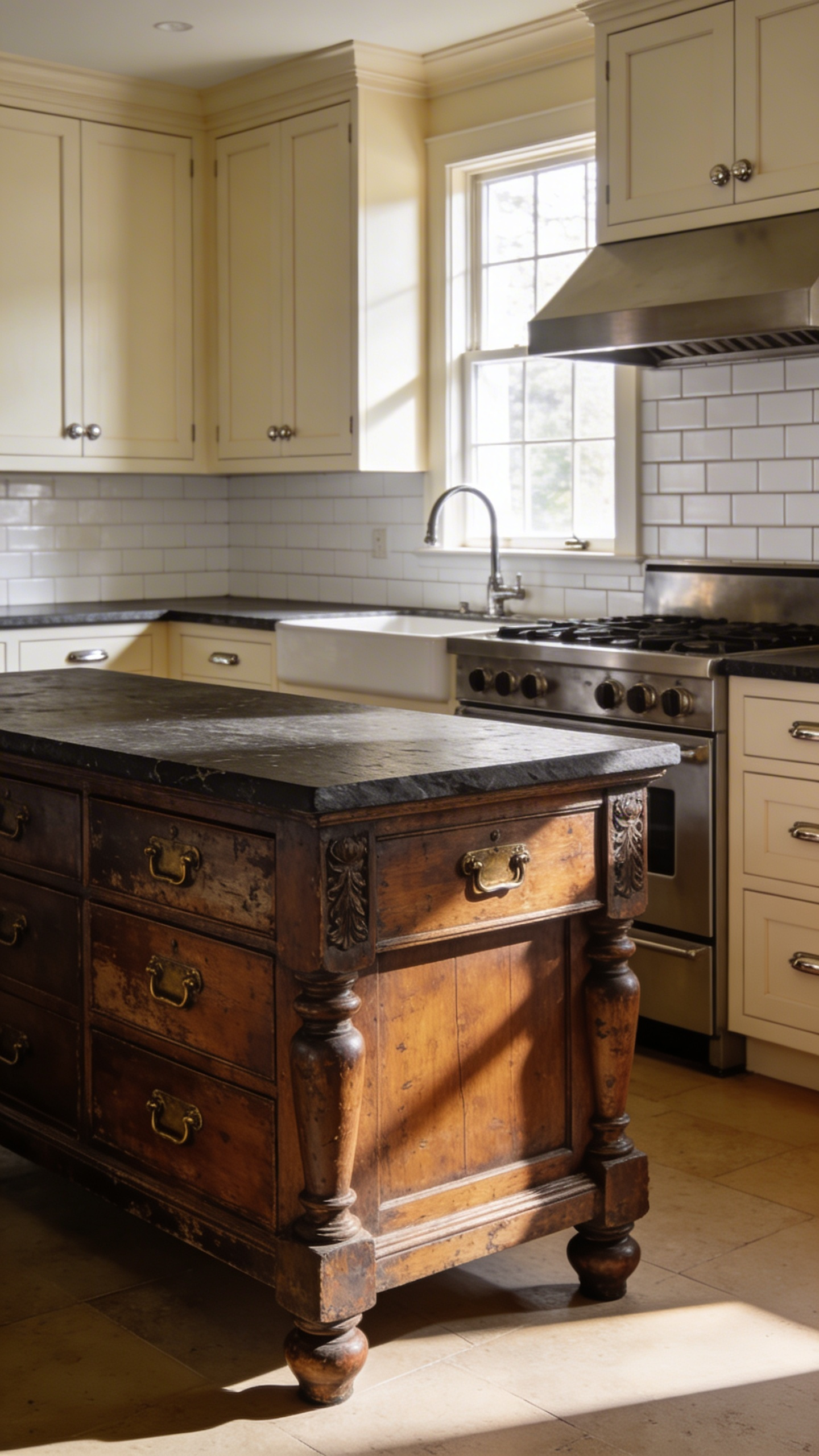
Furthermore, this design philosophy embraces the narrative of “planned patina.” Rather than seeking pristine, impenetrable surfaces, homeowners accept authentic imperfections. For example, a massive, oil-finished end-grain butcher block naturally darkens and scars with daily use. Similarly, materials like unlacquered copper or soft marble develop a rich visual history over time. Therefore, every scratch, etch, and chop mark becomes an aesthetic asset. These marks tell a unique story of culinary life.
Stylistically, this technique thrives on contrast. Ideally, designers pair a heavy, distressed timber worktable with sleek, modern perimeter cabinetry. Thus, the island serves as a grounding force. It adds warmth and tactile depth to the room. This juxtaposition underscores the piece’s status as a brought-in treasure. Ultimately, treating the prep surface as an heirloom infuses the kitchen with emotional resonance. It transforms a utilitarian workspace into a sustainable, enduring focal point for family gatherings.
Conclusion: Why the ‘New Traditional’ is a Return to Soul
Ultimately, the “New Traditional” aesthetic represents a profound psychological shift away from sterility. It rejects the emotional void of stark minimalism. Instead, it fully embraces the sensory depth of our living spaces. Consequently, we now crave tactile materials like unlacquered brass and warm wood. These organic elements effectively ground us in reality. In fact, natural imperfections in stone or millwork tell a distinct, human story. Therefore, this design movement successfully reclaims the kitchen as a true social hearth. For more inspiration on crafting a space with lasting appeal, explore these ways to grow a living, lasting traditional kitchen interior.
Looking ahead, this philosophy offers a necessary antidote to our increasingly digital world. It prioritizes genuine connection over cold, futuristic efficiency. Thus, your home should evolve to reflect your personal identity and heritage. Specifically, the kitchen must invite real, tangible interaction. Begin by introducing one element with deep patina, such as vintage bronze hardware. Alternatively, incorporate a hand-carved detail that celebrates craftsmanship. Finally, allow your space to prioritize soul over perfection. By focusing on quality, provenance, and the timeless appeal of authentic materials, you integrate the best traditional kitchen ideas into your home. This ensures it remains a sophisticated, enduring sanctuary for generations.
Frequently Asked Questions
What are the defining characteristics of a truly traditional kitchen design?
A traditional kitchen is defined by its use of classical architecture, rich detailing, and materials that age gracefully. Key characteristics include inset cabinetry, detailed crown molding and cornices (architectural weight), period-appropriate fixtures like bridge faucets, and living finishes such as unlacquered brass or honed natural stone (patina). The emphasis is on warmth, craftsmanship, and a furniture-like, rather than utilitarian, appearance.
Is an all-white traditional kitchen still considered current, or are darker colors preferred?
While all-white remains a timeless choice, the modern interpretation of the traditional kitchen often embraces deep, rich, heritage colors (like deep greens, blues, or charcoal grays) on the lower cabinets or islands. These darker tones add necessary visual depth and contrast. They ground the space and emphasize the custom joinery and natural materials more effectively than an entirely monochrome white scheme.
How can I make my traditional kitchen look luxurious and high-end?
Luxury in traditional design stems from authentic materials and craftsmanship, not sheer size. Focus on bespoke joinery (inset or framed doors), choose “stone with stories” like marble or soapstone over engineered quartz, and invest in unlacquered brass or aged bronze hardware that develops a rich patina. Finally, ensure your appliances are concealed behind custom panels to achieve “visual silence.”
“`json
“`