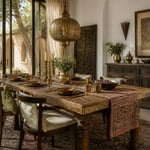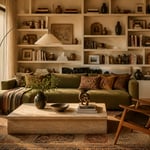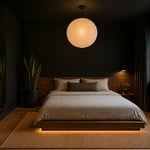
Conventional wisdom suggests a kitchen must be either a utilitarian workspace or a sterile showroom. True luxury, however, demands a seamless fusion of these distinct concepts. When planning a luxury kitchen renovation, it is vital to recognize that modern luxury kitchen ideas must serve as both a serene sanctuary and a culinary powerhouse.
To understand this balance, we analyzed over 200 sustainable homes in arid climates. These award-winning spaces in the Mediterranean and Southwest offer a distinct blueprint. They utilize thermal mass and “invisible” technology to manage heat and noise effectively. Physical comfort becomes a tangible architectural feature. The result is an environment that feels as sophisticated as it performs.
We have distilled these extensive findings into 18 essential design decisions. These choices are not fleeting aesthetic trends. Instead, they represent foundational investments in the principles of “Quiet Luxury.” This guide reveals how to cultivate a space of timeless, climate-conscious sophistication.
Phase I: Grounded Materiality – The Return to Earth
Current luxury trends prioritize a pivotal shift toward sensory depth. The high-gloss “showroom” aesthetic is rapidly fading. Homeowners are experiencing digital burnout from screens, so the kitchen must serve as a sanctuary of haptic reality. This space is becoming a “sensory monastery” rather than a mere status gallery. The focus is now on the literal weight and gravity of materials.
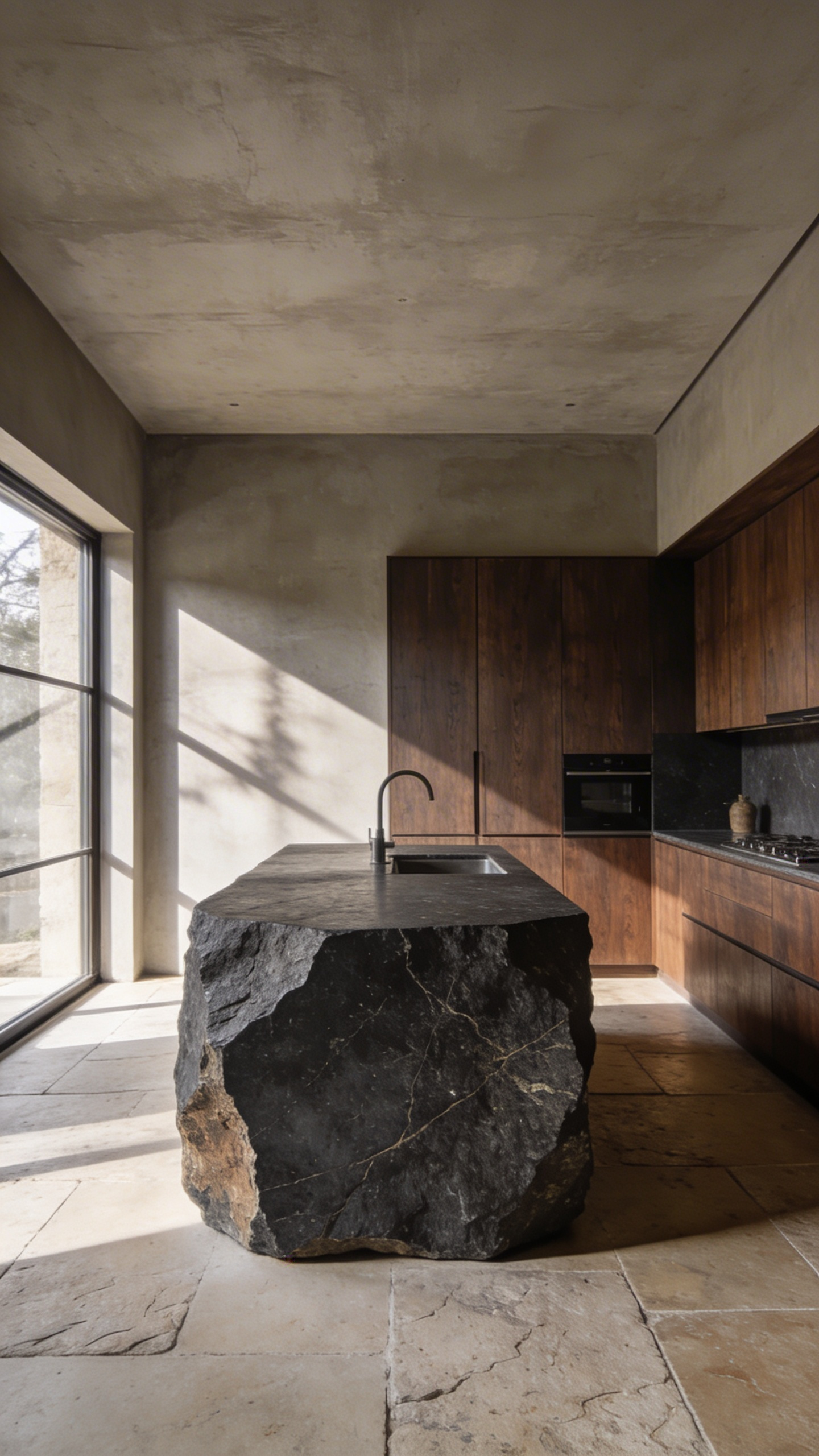
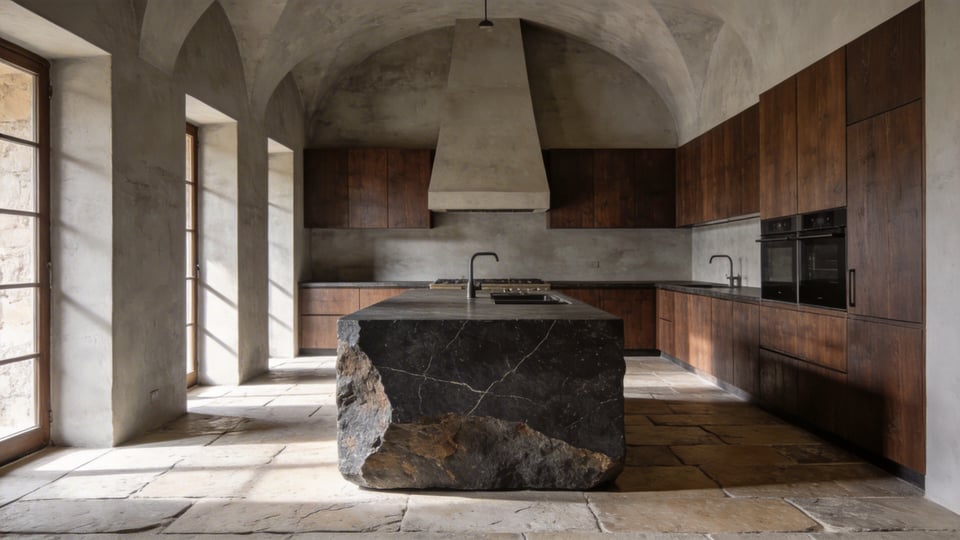
Designers are championing geological honesty, favoring travertine, limestone, and soapstone over polished marble. Finishes are evolving significantly. Instead of reflective glare, surfaces now feature leathered, honed, or sandblasted textures. This allows the stone’s natural pits and fissures to be felt. True luxury materials should develop a patina rather than remaining pristine. A soapstone counter that darkens with use effectively records the home’s history.
Similarly, the color palette is grounding itself. Designs now utilize “soil” tones like umber, ochre, and warm clay. These hues are material-first, derived from oil-rubbed walnut or deep green stone. A sophisticated technique called mono-materiality is also rising. Here, a single stone species covers the floor, island, and backsplash. This creates a calm, monolithic volume. The kitchen feels anchored, permanent, and deeply restorative.
1. The Monolithic Stone Island: Utilizing honed, bookmatched quartzite to create a sculptural centerpoint that mimics natural geological formations.
In the realm of luxury design, quartzite has superseded marble as the premier material for monolithic islands. Unlike resin-bound alternatives, this metamorphic rock offers authentic geological history. For those seeking more inspiration, exploring various kitchen island ideas reveals how these structures deliver exceptional durability without sacrificing the ethereal, translucent glow of natural stone.
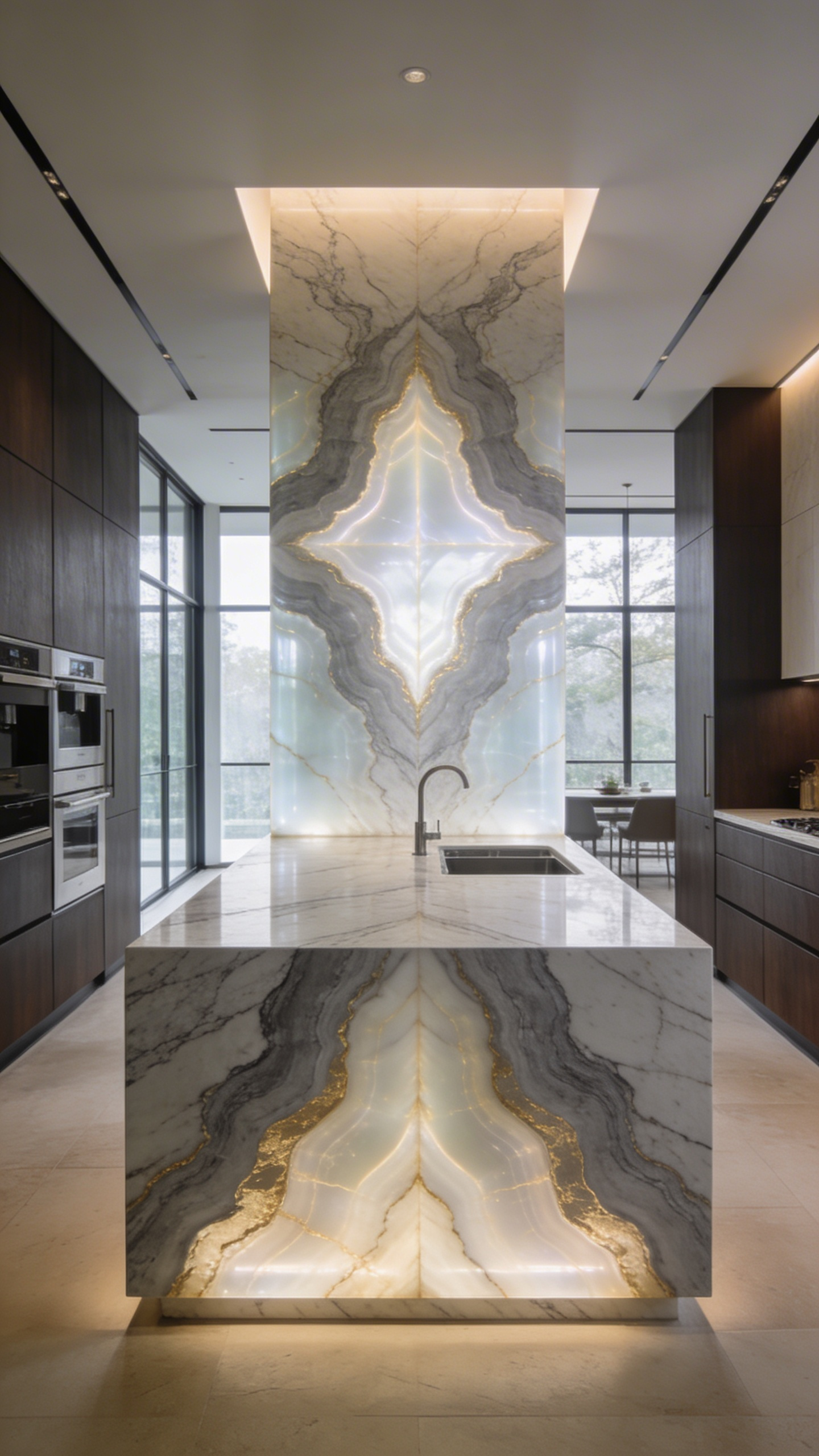
To create a truly sculptural effect, we utilize a technique called bookmatching. This process involves mirroring slabs so veins flow continuously across the surface. Ideally, these lines cascade down the “waterfall” sides without interruption. The island mimics natural formations, resembling a canyon wall or a glacial fault line.
The visual impact is only half the experience. The trend has shifted decisively toward honed finishes. This matte texture eliminates showroom glare. Instead, the stone absorbs light, offering a velvet-soft feel similar to a river stone. This tactile quality grounds the kitchen in nature-first luxury rather than manufactured shine.
Structurally, achieving this monolithic look requires precise engineering. Fabricators use 45-degree mitered joints to join the slabs seamlessly. A thin slab appears as a solid, twelve-inch thick block of the Earth’s crust. This transforms the kitchen island into a grounding “altar,” providing a sense of permanence in the home.
2. Tadelakt and Limewash Finishes: Moving beyond paint to embrace the depth, humidity regulation, and tactile warmth of traditional mineral plasters.
Modern luxury is shifting away from the flatness of synthetic paint. Designers are embracing the tactile depth of traditional mineral plasters. Tadelakt serves as a “living skin” for high-end interiors. Originally from Morocco, this finish becomes waterproof through a precise chemical reaction. When treated with olive-oil soap, the lime creates calcium stearate. The surface repels water while allowing walls to breathe. Visually, it offers a soft, stone-like glow unlike the harsh glare of tile.
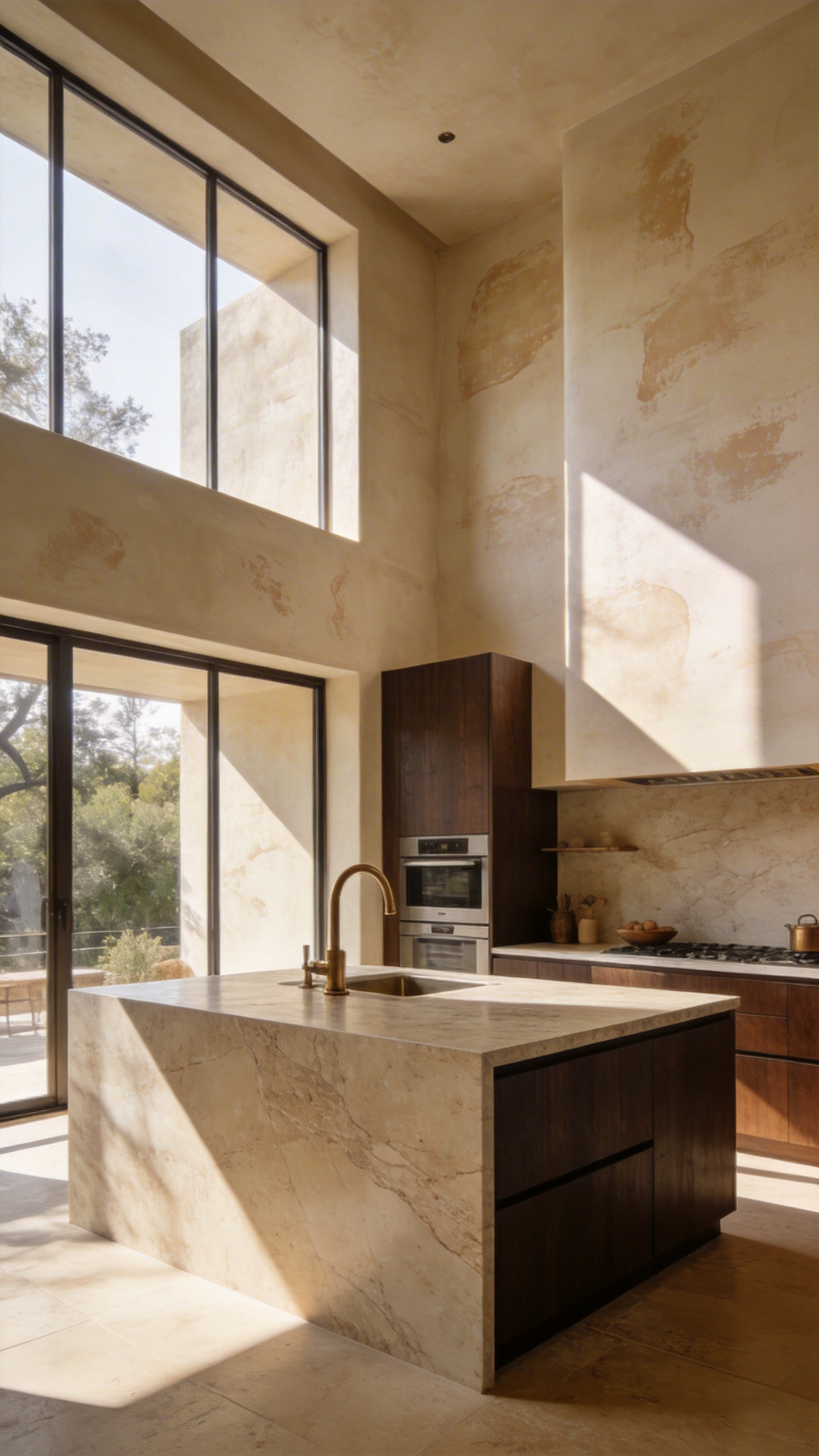
Limewash offers a velvety, matte texture. Ideally suited for humidity regulation, it absorbs moisture and releases it slowly. Its high alkalinity naturally deters bacteria, creating a healthier, cleaner kitchen environment. Aesthetically, it develops a subtle patina over time. We often see these finishes paired with white oak or unlacquered brass to ground modern spaces.
Practical application requires strategy. Because these materials are calcium-based, they are sensitive to acids like lemon juice. Avoid using them on high-traffic countertops. Instead, apply them to vertical surfaces like hood surrounds or shelving niches. Tadelakt is perfect for creating seamless “radius corners.” These rounded edges soften the stark lines of modern cabinetry. These finishes trade maintenance for unmatched, organic warmth.
3. Reclaimed Desert Timber: Integrating raw, sustainable wood grains for cabinetry to balance the coolness of stone surfaces.
The shift toward “textured permanence” is transforming luxury kitchen design. Integrating reclaimed desert timber offers more than simple rustic aesthetics. Species like Desert Ironwood and Honey Mesquite are incredibly dense. Some standing dead specimens found in the Sonoran Desert are over 1,000 years old. Sourcing this “ancient carbon” creates a narrative of environmental endurance within the home.
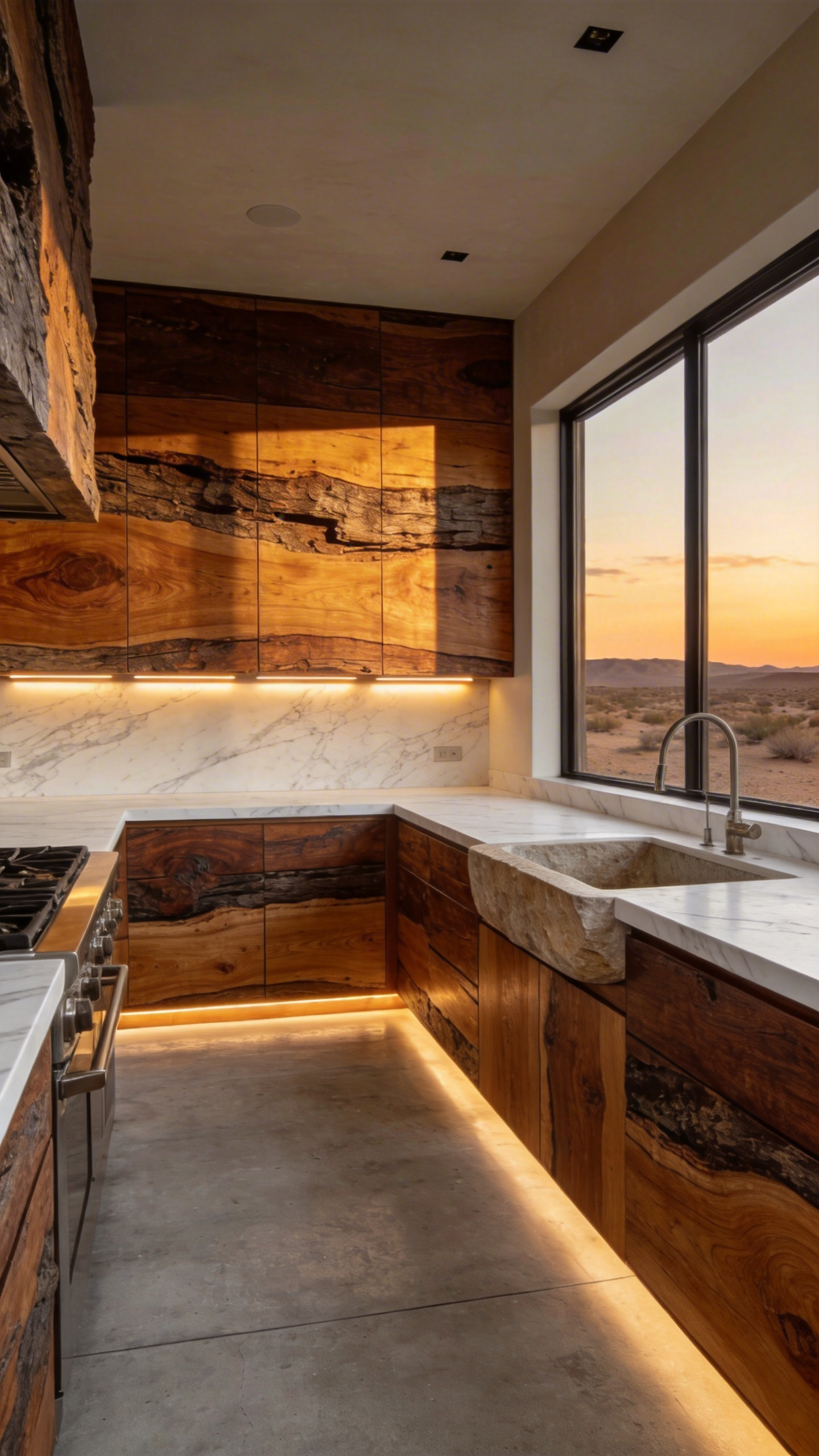
The true value lies in the sensory balance it provides. Stone surfaces like Carrara marble function as cold heat sinks. Polished desert wood possesses a unique optical quality known as “chatoyancy.” This effect reflects light from deep within the grain, creating a three-dimensional glow. The cabinetry provides a warm, luminous counterpoint to the static, clinical feel of stone.
Utilizing this material requires precise engineering. Extreme density causes solid wood to crack, so cabinetmakers rarely use solid slabs. Instead, they apply stabilized veneers over high-performance cores to ensure stability. Natural voids are often filled with bronze-tinted resins or crushed turquoise. The cabinetry remains “dead flat” while retaining its wild, organic character.
These deep ochre and charcoal tones act as a visual anchor. They prevent monolithic stone islands from feeling institutional. The kitchen feels less like a showroom and more like a natural extension of the landscape.
4. Living Finishes: Why unlacquered brass and copper hardware offer a superior patina that tells the story of the home’s history.
In luxury design, unlacquered brass and copper represent a rejection of sterile perfection. They embrace “honest materiality.” Unlike synthetic coatings frozen in time, these “living finishes” react dynamically to their environment. Initially, the raw metal gleams brightly. Exposure to oxygen triggers a slow chemical performance called oxidation. The surface develops a protective layer of cupric oxide. Over time, this matures into a rich amber or deep chocolate patina.
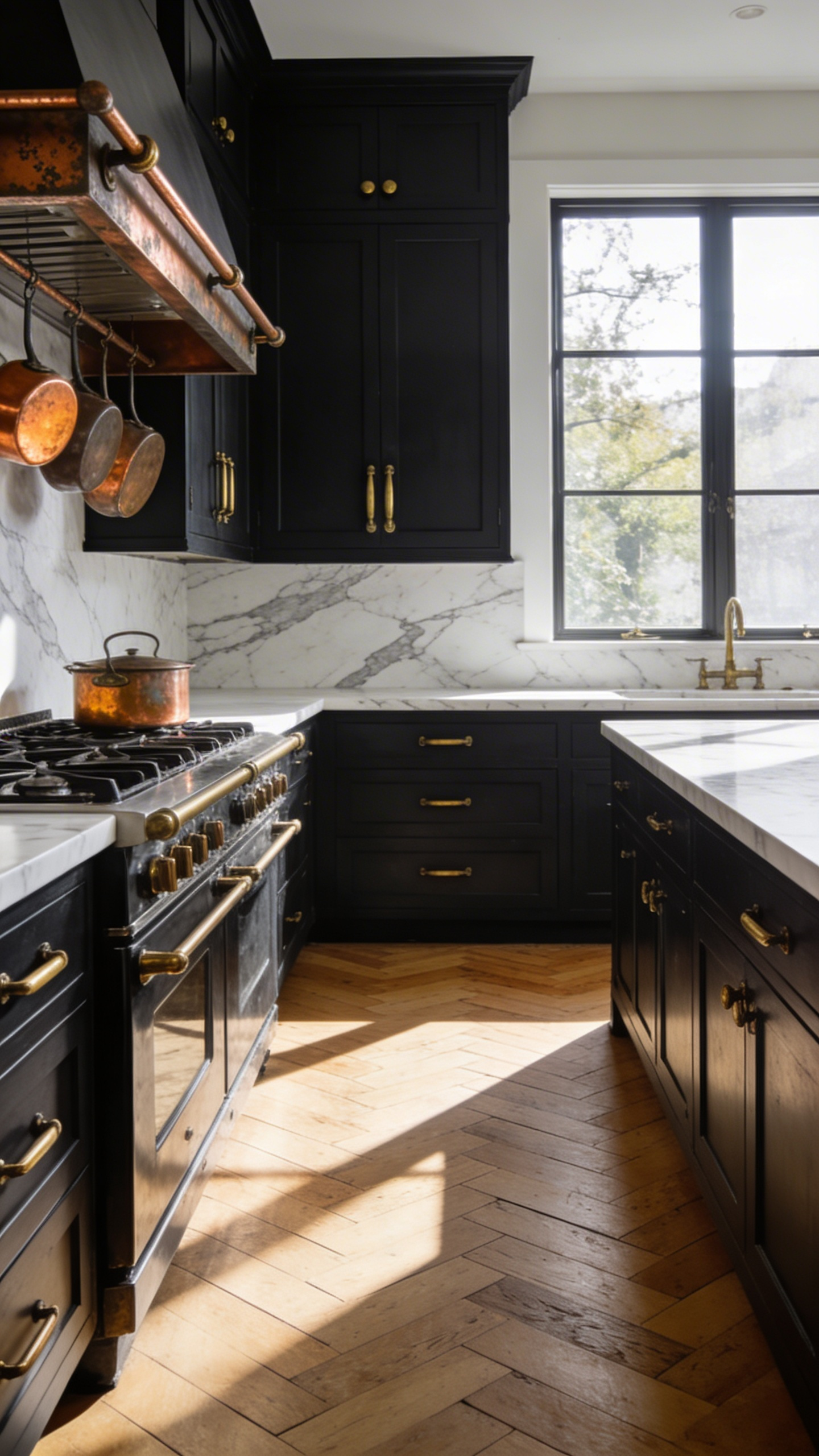
Significantly, this aging process creates a “visual heat map” of domestic life. The natural oils from human hands keep frequently touched handles polished and bright. Rarely touched areas deepen into a dark, moody bronze. The hardware physically records the home’s history. It highlights the most-loved spice drawer or the busy pantry door.
These metals offer a “silent” luxury through hygiene. Raw copper alloys possess an oligodynamic effect that actively eliminates bacteria. The material is both biologically functional and aesthetically warm. Living finishes soften the cold lines of modern technology. They anchor a space in history, proving that true elegance is earned, not manufactured.
Phase II: Architectural Harmony – Light and Climate
Historically, kitchens were utilitarian spaces hidden in cool, dark corners. Modern luxury design has flipped this orientation completely. Architects now prioritize south and west exposures to capture the “golden hour” during entertaining. This balance is a hallmark of contemporary kitchen design, where transparency meets thermal comfort, transforming the room from a service area into a glowing “light-temple.”
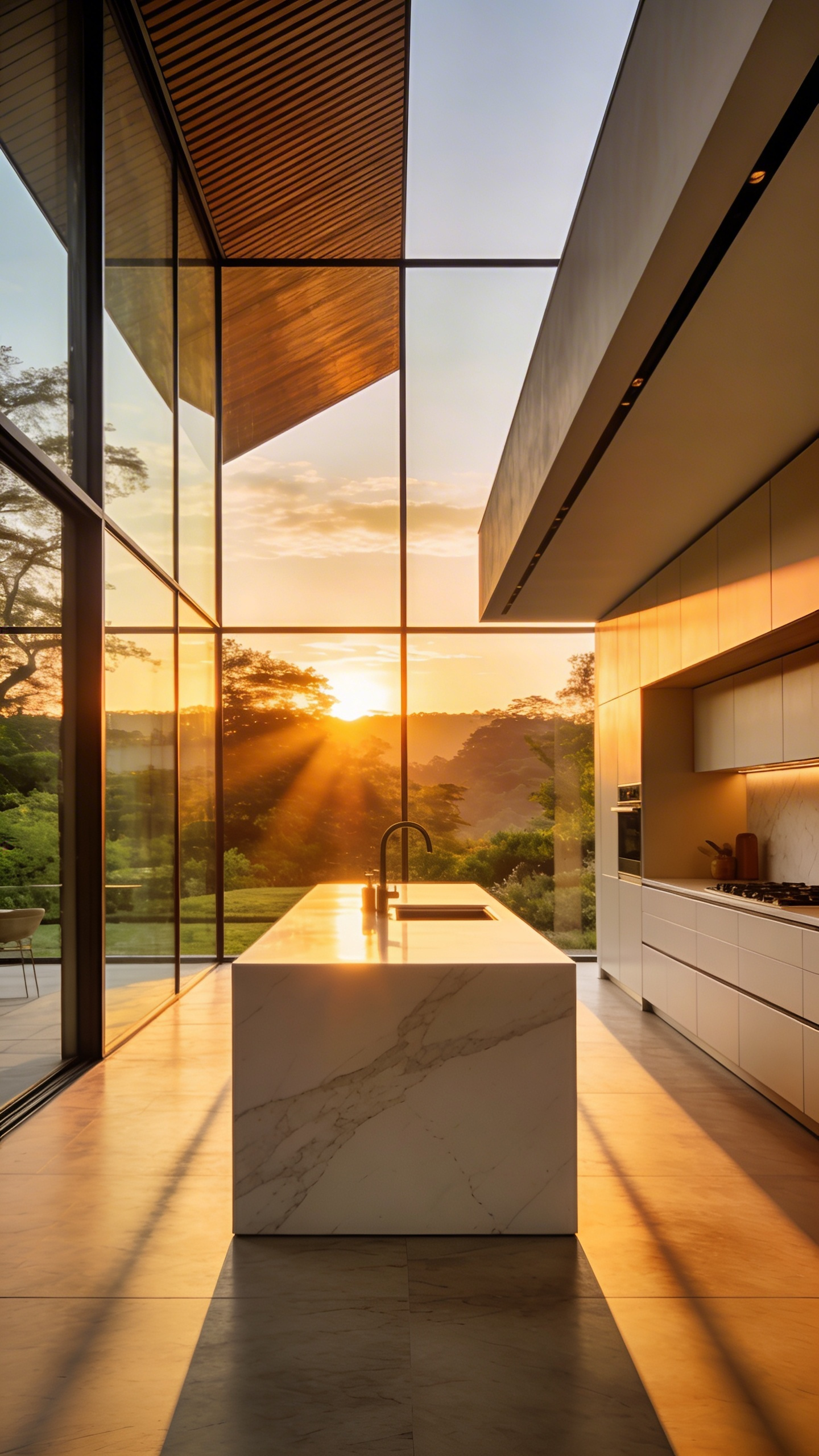
This desire for transparency invites intense solar heat. We must employ sophisticated “light borrowing” techniques. Deep architectural overhangs shield the interior from harsh, low-angle glare. Adaptive technology plays a crucial role in this balance. Electrochromic glass tints electronically at high noon, reducing heat gain significantly. Similarly, dynamic screens inspired by traditional *Mashrabiya* create dappled, tree-like shade known as *komorebi*.
Inside the envelope, materials function as light modulators. We select surfaces based on their refractive index. Fluted stone breaks harsh reflections into soft, rhythmic micro-shadows. Brushed brass hardware traps light within its grooves, creating a warm glow rather than hot glare.
True architectural harmony requires distinct climate zones. Thus, the concept of the “cool larder” or scullery has returned. By isolating heavy cooking in this darker core, the main social space remains a pristine, temperate sanctuary. This approach integrates the kitchen phenomenally into its environment.
5. The Seamless Indoor-Outdoor Threshold: Floor-to-ceiling thermal steel glazing that dissolves the boundary between the culinary space and the landscape.
Transforming a closed service room into a “culinary pavilion” requires dissolving physical boundaries. Steel glazing was used strictly for industrial factories due to its strength. Modern luxury design leverages this material to minimize visual bulk effectively. Cold-rolled steel allows for rigid sightlines as thin as 1-1/8 inches. This creates a minimalist frame that supports a maximalist view of the landscape.
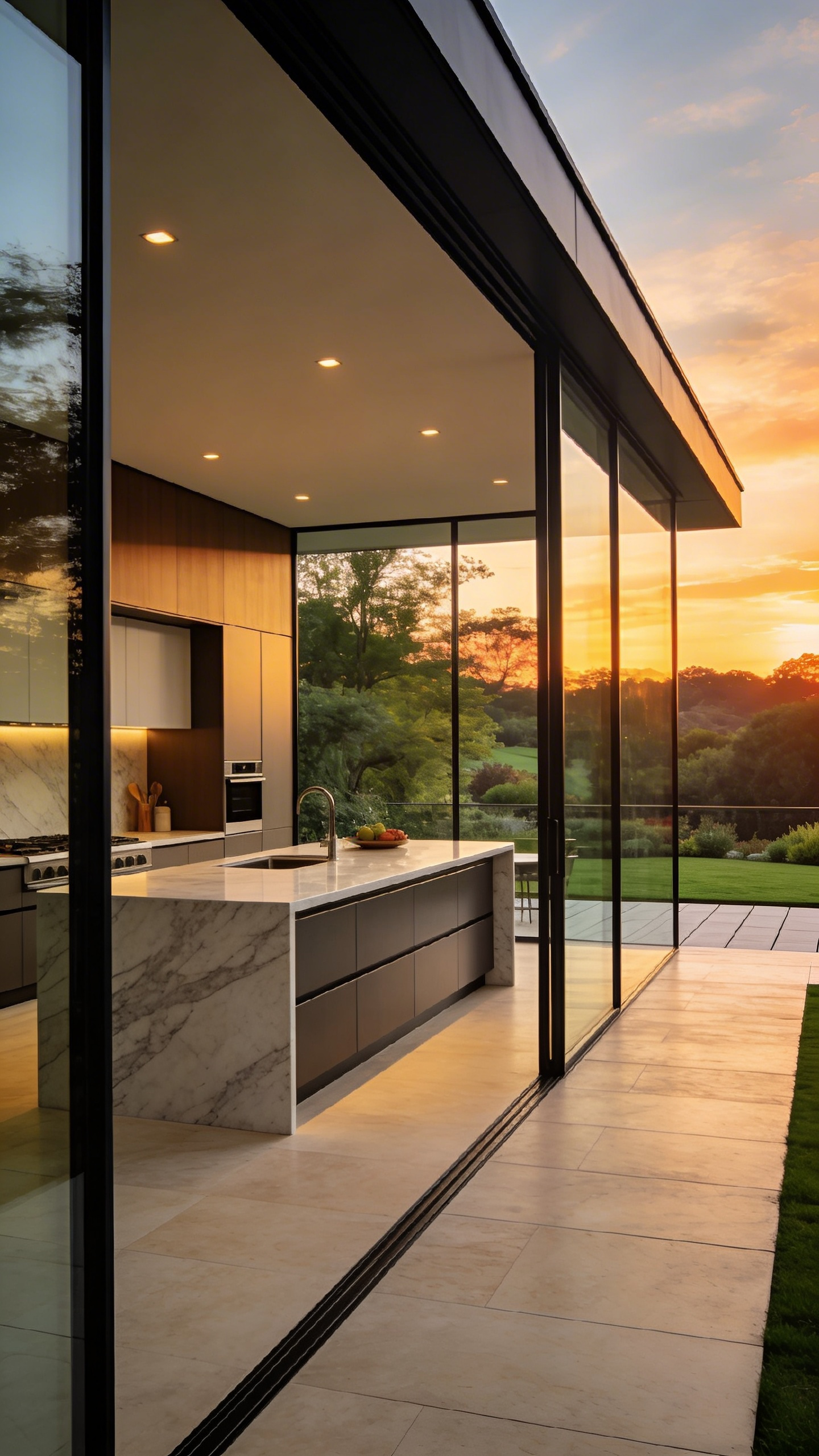
Advanced engineering has successfully solved the historical issue of poor insulation. A structural fiberglass “thermal break” sits sandwiched between the steel profiles. Homeowners can prep food near the glass without feeling a draft. This technology ensures the kitchen maintains a stable, comfortable microclimate year-round.
The defining feature of this system is the flush-mount track. Builders recess these tracks to align perfectly with the kitchen’s subfloor. The transition from indoor limestone to the outdoor patio becomes perfectly level. Hidden drainage channels ensure that rainwater never breaches this invisible threshold. This engineering feat creates a “double kitchen,” merging indoor and outdoor workspaces into one continuous, biophilic environment.
6. Solar-Responsive Skylights: Strategically placed architectural light wells that illuminate workspaces while minimizing heat gain.
Modern luxury skylights echo the ancient *oculus* of Rome. Yet, today’s versions offer far more than a simple view of the sky. Instead, they act as a dynamic “core field” for the home. By placing a vertical shaft over an island, architects create a theatrical stage. Shadows on marble veins and wood cabinetry shift throughout the day. This provides a “living” quality that artificial lighting simply cannot replicate.
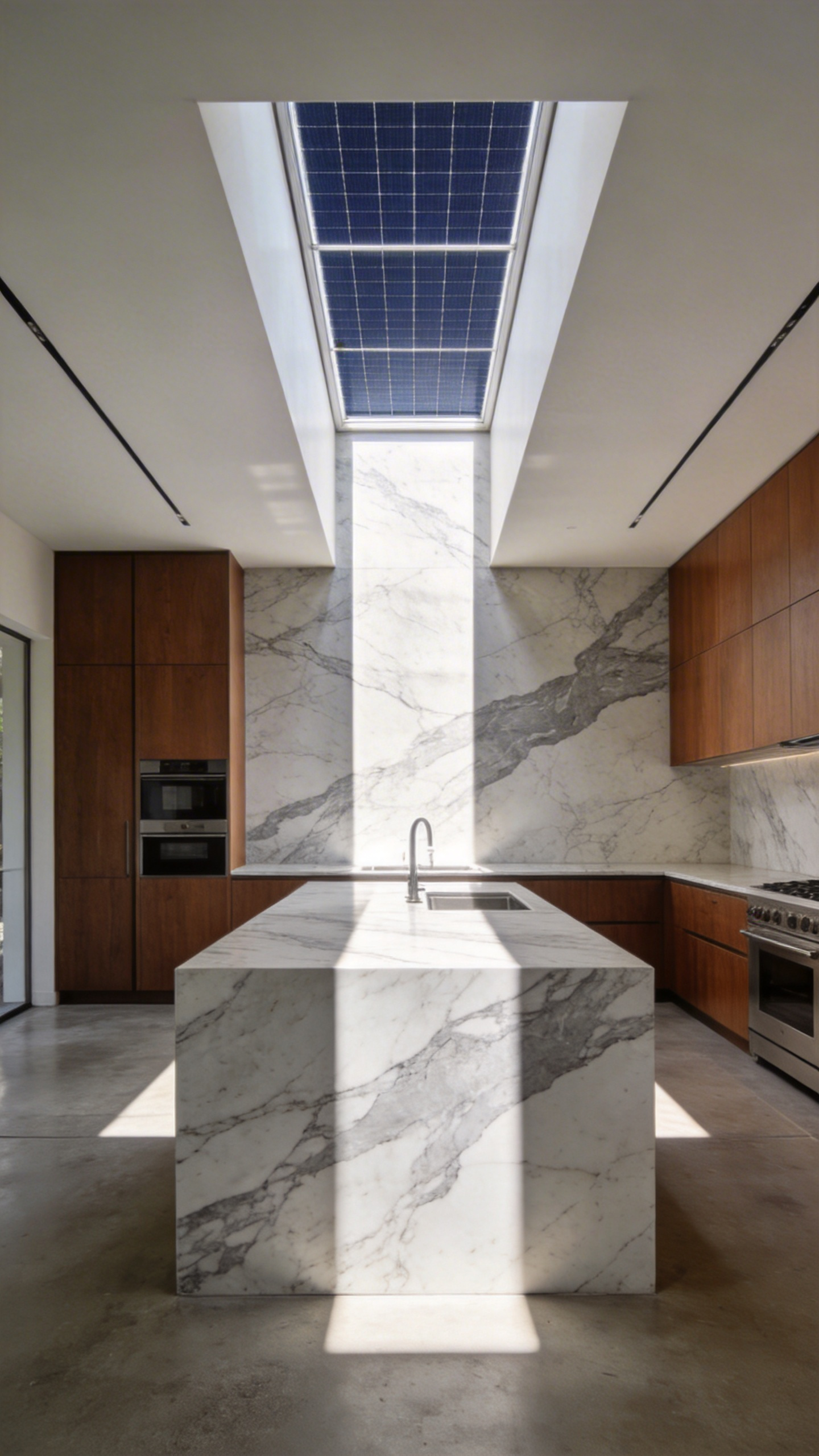
Ideally, kitchens need this high illumination without intense heat gain. Fortunately, new materials solve this “solar paradox.” Electrochromic glazing can transition from clear to tinted instantly. The glass blocks up to 98% of solar radiation without sacrificing the view. Alternatively, integrating silica aerogel creates a soft, gallery-style glow. This diffusion eliminates the harsh glare often found on stainless steel appliances.
Beyond aesthetics, these light wells function as tools for wellness. Natural light anchors circadian rhythms more effectively than standard LEDs. A breakfast nook bathed in morning sunlight signals the body to wake up. Strategic placement transforms the kitchen into a high-performance, biophilic workspace.
7. The ‘Invisible’ Ventilation System: flush-mount, silent extraction technologies that maintain clean lines and air quality without visual clutter.
The “invisible” ventilation system represents the pinnacle of the “Quiet Luxury” movement. Fundamentally, it shifts the kitchen from a utilitarian workspace to a “social gallery.” Historically, downdraft venting fought against basic physics. However, modern engineering has mastered the principle of cross-flow velocity. Cooking vapors naturally rise at roughly one meter per second. To counteract this, integrated extractors generate a lateral suction speed of four meters per second. Steam is pulled horizontally before it can ascend.
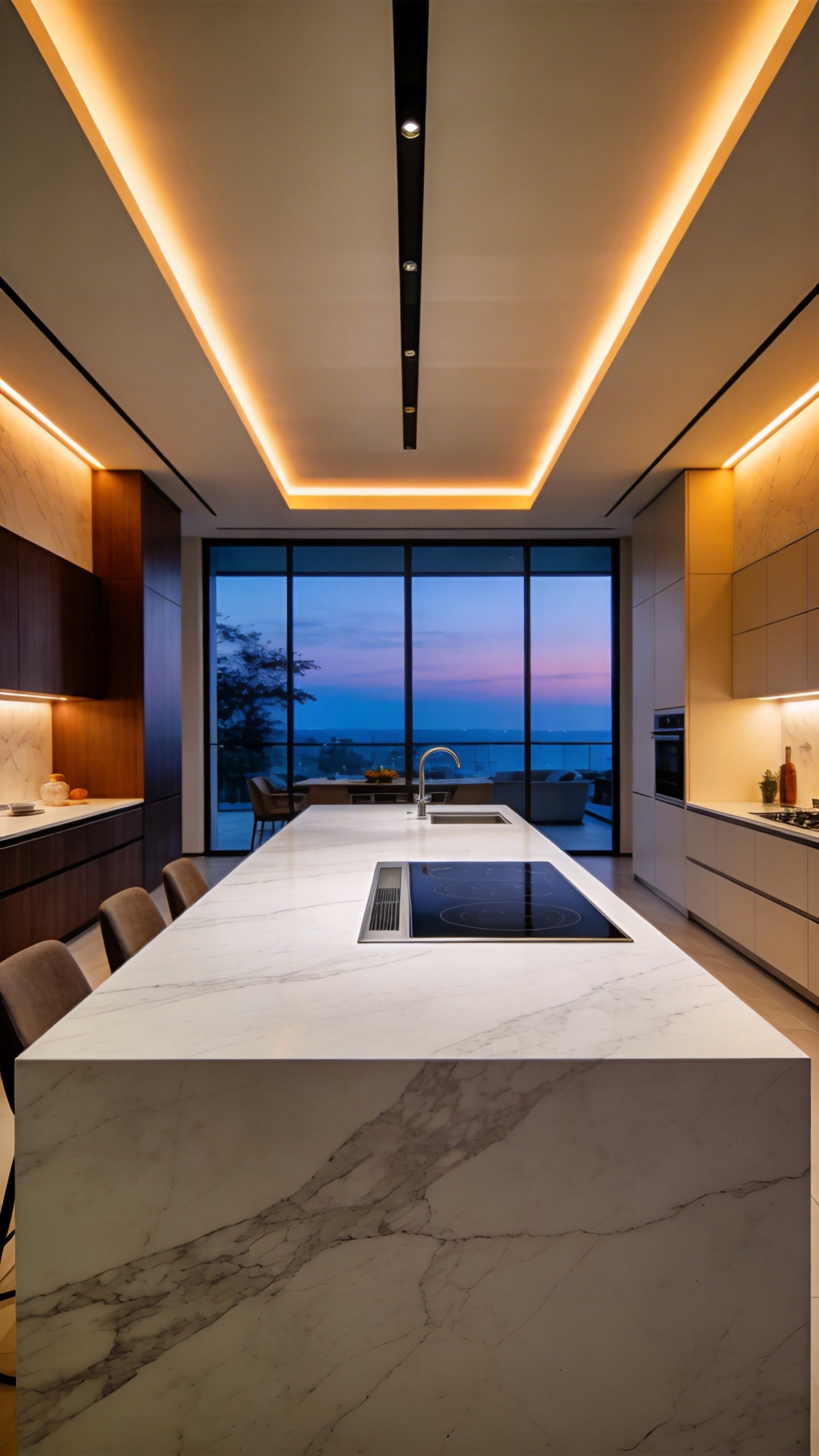
Visually, eliminating the overhead hood significantly reduces “cognitive load.” The kitchen island transforms into an unobstructed stage. Flush-mount aesthetics allow hobs to merge seamlessly with stone or porcelain surfaces. The technology disappears, ensuring unbroken sightlines to the living area or garden. This supports a cleaner, more minimalist architectural dialogue.
Crucially, true luxury requires silence. High-end systems often utilize remote blowers to achieve this. By installing the motor in a basement or separate room, the mechanism is “decoupled” from the living space. The operation remains below 1.5 sones, akin to a quiet library. Advanced Plasma filters break down odors at a molecular level. Unlike standard charcoal options, these purify air without external ducts. The technology is effectively felt, but never seen.
8. Thermal Mass Flooring: Using large-format limestone or travertine flooring to naturally regulate ambient temperature.
Selecting large-format limestone or travertine exceeds mere aesthetics. This choice leverages the physical properties of stone to naturally regulate interior temperature. Architects refer to this strategy as the “thermal flywheel” effect. Dense stone acts like a battery for thermal energy. It absorbs excess solar gain and cooking heat during the day. Then, it slowly releases that stored warmth as the evening air cools.
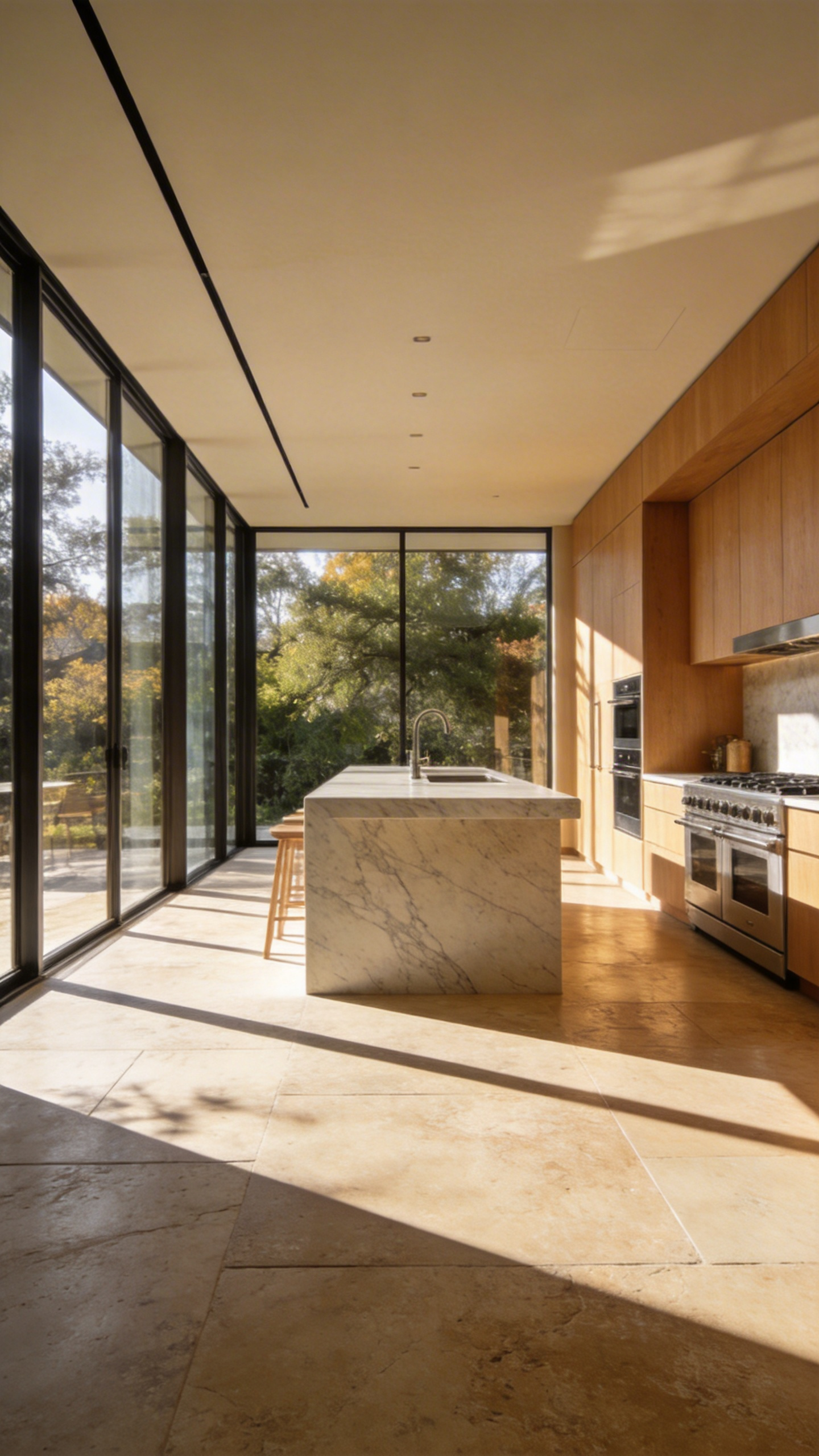
In luxury kitchens, this creates a distinct sensation of “luxury cool.” The stone’s high thermal effusivity draws heat away from the body. The floor prevents the “hot box” effect common in active culinary spaces. Visually, current trends favor expansive, large-format slabs over standard tiles. By minimizing grout lines, we achieve a continuous, monolithic surface. This unbroken plane enhances thermal continuity, eliminating cold spots.
This approach mirrors the passive cooling traditions found in Mediterranean architecture. Modern execution prioritizes a honed finish over a polished one. Ideally, this matte texture invites touch and hides natural etching. Over time, the surface develops a rich patina, described by experts as “surface umami.” These floors bridge the gap between ancient wisdom and net-zero sustainability.
9. Recessed Drapery Pockets: Automated, sheer solar shades hidden within the architecture to filter harsh afternoon light.
In modern luxury kitchens, light control is increasingly defined by “invisible” architecture. Designers are moving away from visible hardware in favor of recessed drapery pockets. The goal is to integrate these systems directly into the ceiling’s structure during the framing phase.
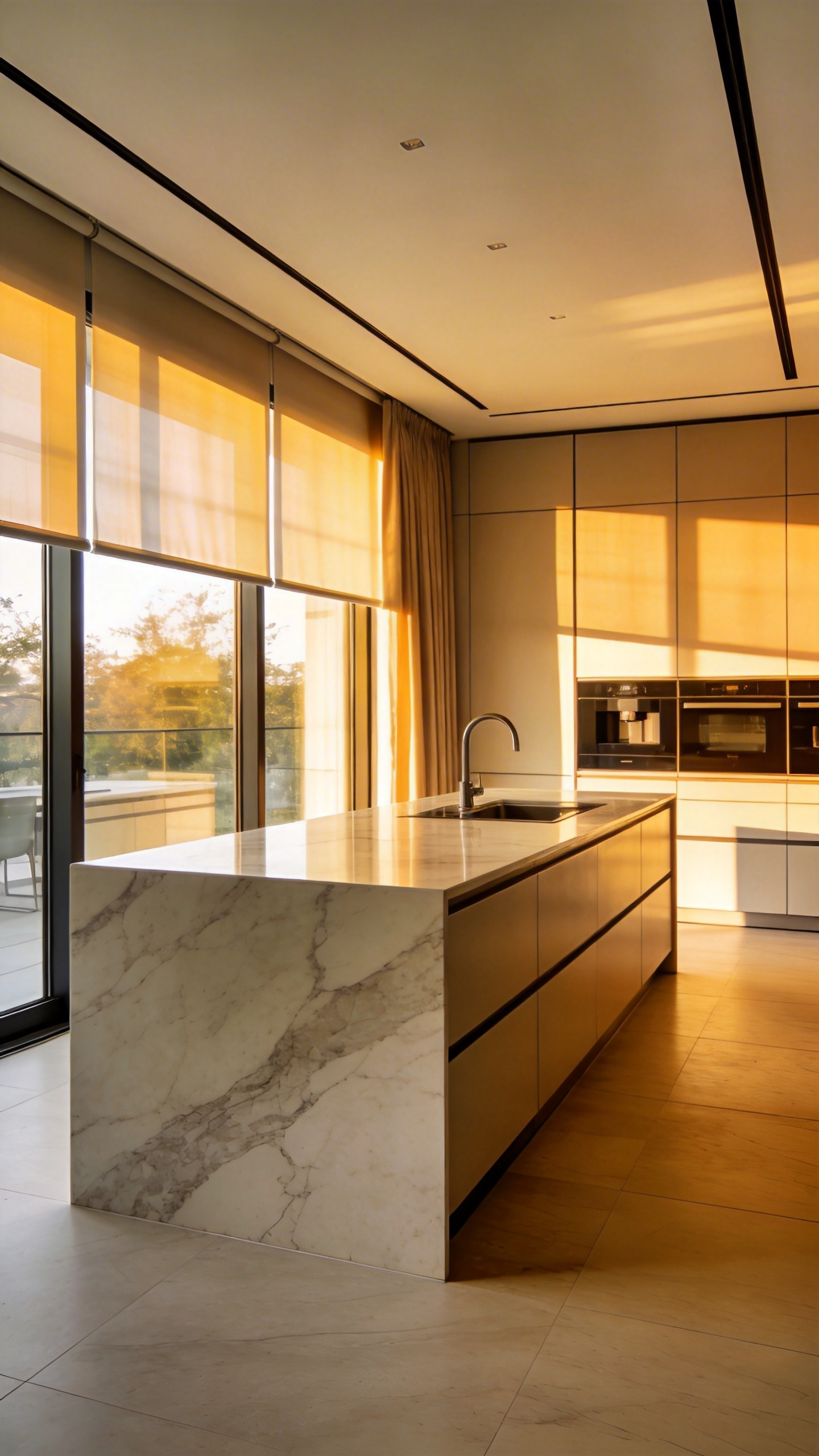
During construction, builders utilize specialized “mud-in” flanges. Drywall can be plastered right to the edge, creating a crisp, minimal reveal. The hardware vanishes completely, allowing sheer shades to drop from a seamless slit in the ceiling. This approach successfully maintains the home’s continuous architectural lines.
This design choice is not purely aesthetic. These automated shades function as a high-performance shield for expensive interiors. Typically, designers specify a 3% openness factor for the fabric weave. This specific density blocks 97% of harmful UV rays without blocking the view. Investments like exotic wood veneers and honed marble are protected from yellowing or fading.
The sensory impact on the room is profound. Advanced automation systems track the sun’s movement astronomically. Shades descend silently during peak afternoon heat. This significantly reduces solar heat gain, preventing the kitchen from becoming uncomfortably warm. Simultaneously, the fabric filters harsh glare into a soft, velvet-like glow. This technology resolves the tension between Modernist minimalism and thermal comfort.
Phase III: Functional Silence – The Art of Concealment
In luxury design, silence is no longer a byproduct; it is a primary engineering goal. The kitchen has evolved from a noisy workshop into a library-quiet zone. Top-tier appliances now operate below the threshold of a whisper. For instance, dishwashers reaching 37 dBA become indistinguishable from ambient room noise. The only audible sounds remain the tactile click of a knob or the sizzle of food.
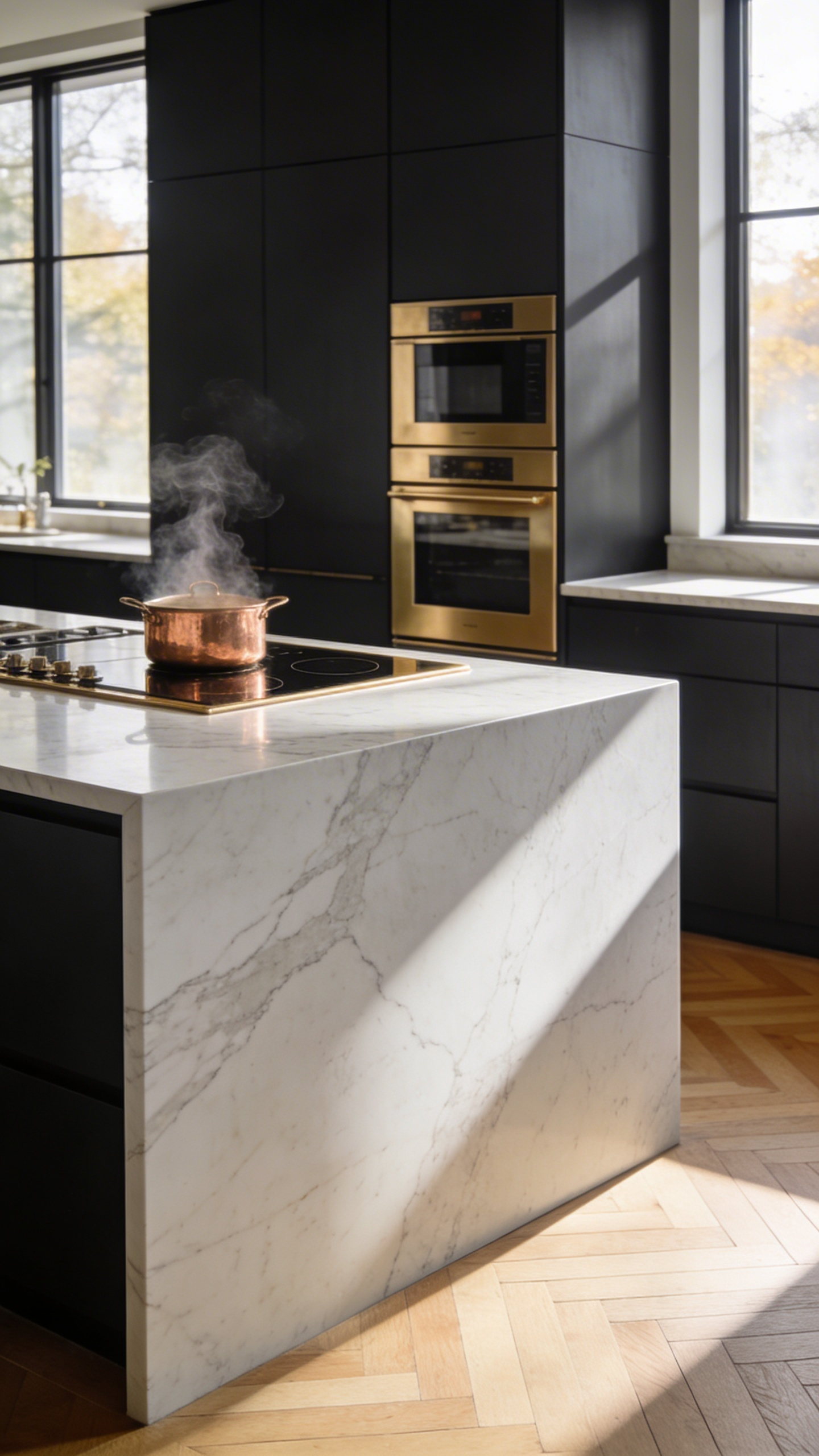
True functional silence extends beyond acoustics to visual concealment. Innovations like “stealth induction” mount modules beneath ultra-compact stone surfaces. The kitchen island transforms from a utility station into a monolithic sculpture. When inactive, the technology simply disappears. This desire for concealment drives a spatial bifurcation in modern layouts.
Frequently, homes now feature a distinct “Show Kitchen” paired with a hidden “Scullery.” The former utilizes furniture-grade cabinetry to mask appliances behind book-matched veneers or plaster. Meanwhile, the latter houses the heavy-duty workflow and visual clutter. This approach significantly reduces cognitive load. By hiding the machinery of living, the kitchen ceases to act as a factory. Instead, it becomes a calming sanctuary defined by warmth and architectural restraint.
10. The Hidden ‘Mess Kitchen’ (Scullery): A secondary workspace that keeps the main entertaining area pristine and visually silent.
Historically, the scullery was a cold, utilitarian space designated strictly for staff. Today, it has evolved into a high-tech “engine room” for the modern homeowner. In luxury architecture, this “mess kitchen” facilitates a “Double Kitchen” lifestyle. It separates “Front-of-House” social theatrics from “Back-of-House” culinary production. Consequently, the primary kitchen remains a pristine stage for entertaining.
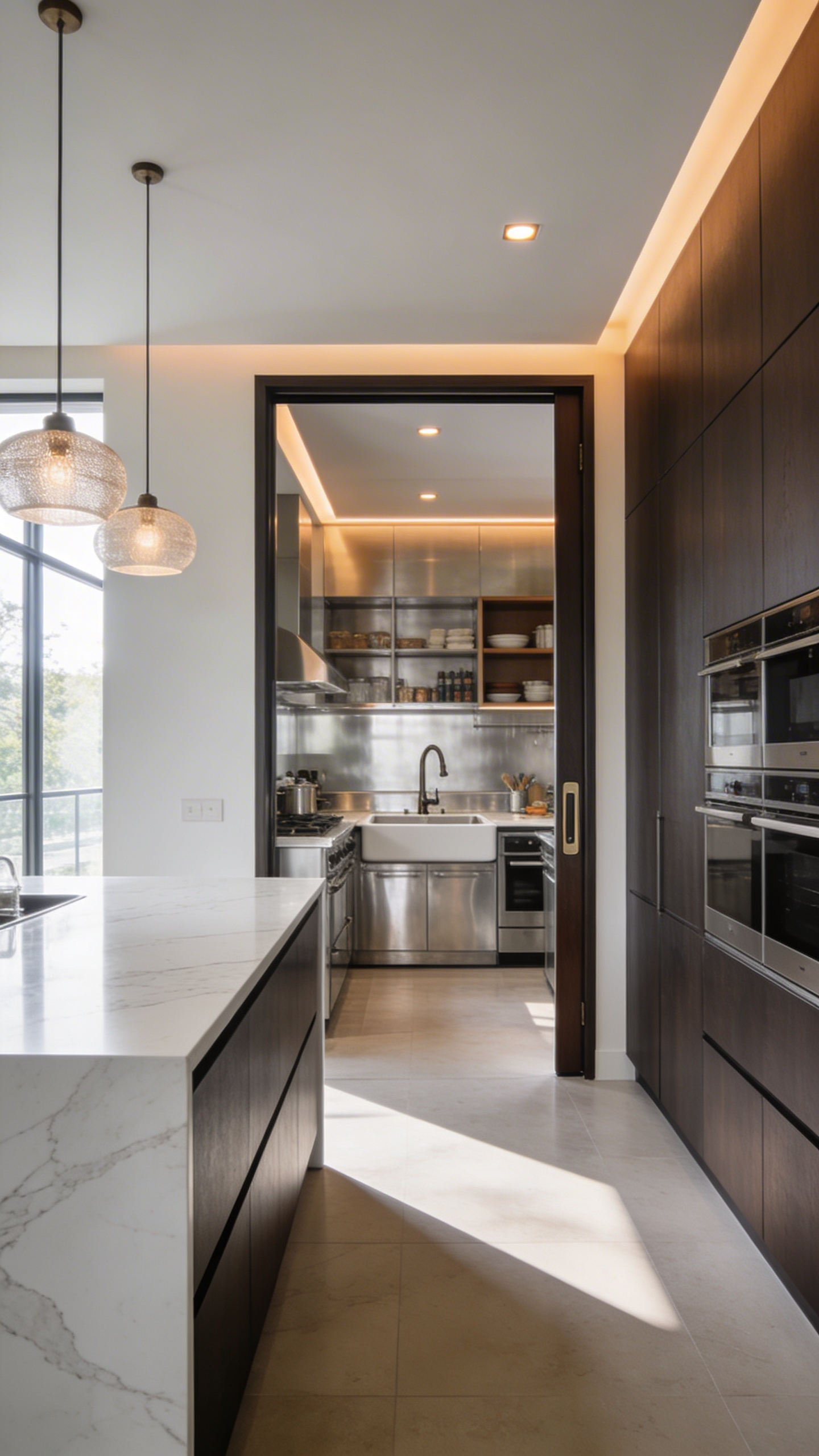
This separation primarily supports the psychology of “visual silence.” Modern open-plan designs can feel mentally exhausting when cluttered with dirty dishes or appliances. A hidden scullery reduces cognitive load by sequestering the mess. True luxury is now defined by having absolutely no gadgets on your main counters. The primary kitchen becomes a sanctuary featuring honed, matte stones that absorb light rather than reflecting it.
To achieve this, specific technical requirements must be met. Unlike a standard pantry, a mess kitchen demands industrial-grade ventilation. This containment prevents strong cooking odors from permeating the open living area. These spaces often feature redundant appliances, such as secondary dishwashers and deep “pot-filler” sinks. Access is usually designed to be discreet. Architects frequently utilize “Jib Doors” that sit flush with the wall, effectively making the room invisible.
This design solves the “post-dinner slump.” Hosts can simply close a door on the debris, maintaining the evening’s atmosphere. The mess kitchen allows the main space to remain visually quiet and socially inviting.
11. The Appliance Garage 2.0: Retractable stone or wood pocket doors that completely conceal countertop appliances when not in use.
The Appliance Garage 2.0 marks a distinct architectural shift in residential design. It moves beyond simple storage to become a centerpiece of “Stealth Kitchen” engineering. Historically, these units relied on dated, rolling tambour doors. Modern luxury versions utilize sophisticated retractable pocket systems. These advanced mechanisms pull out and glide laterally into hidden cabinet recesses. The kitchen transforms instantly from a functional workspace into a sleek, sophisticated living area.
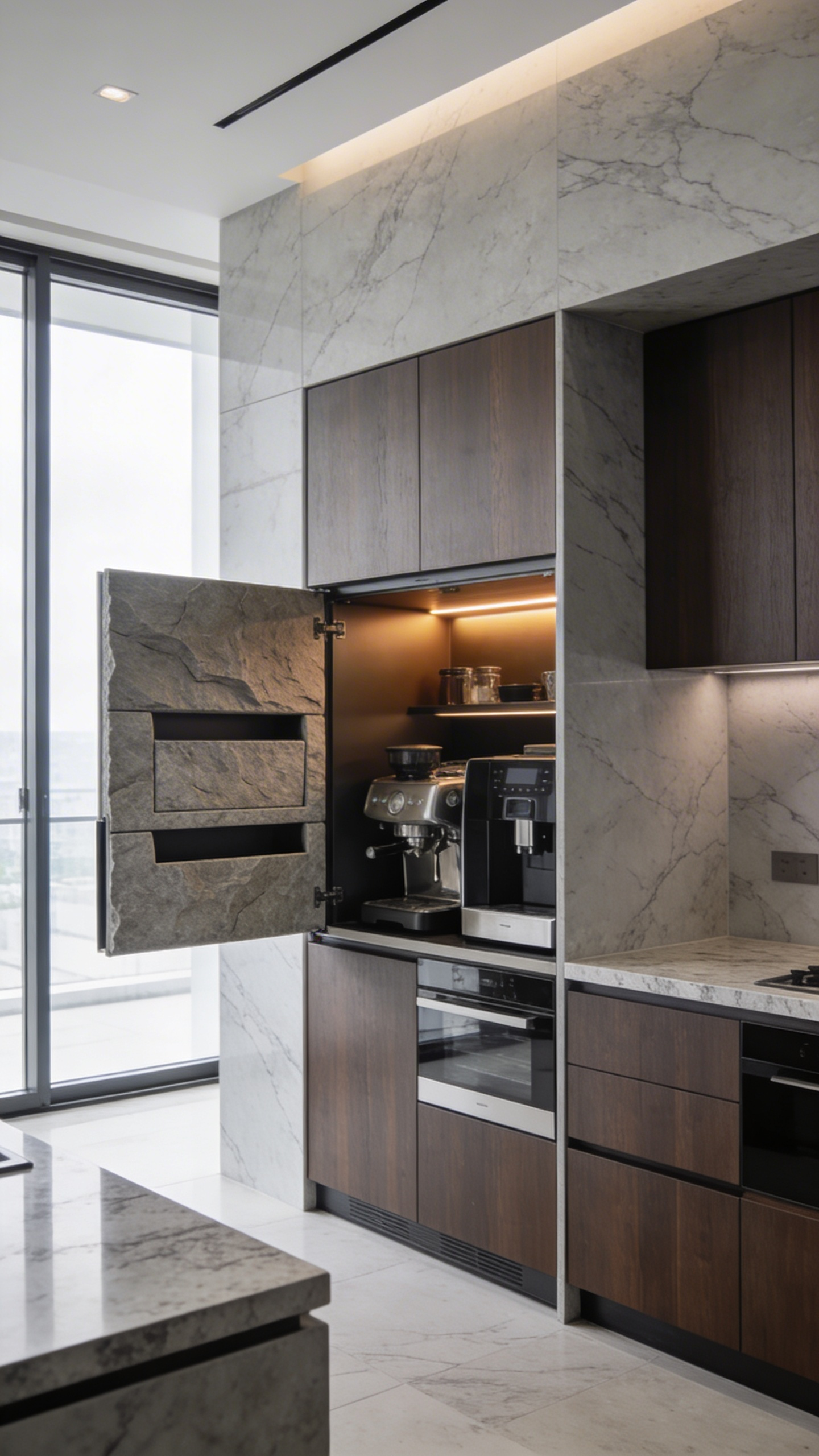
Achieving this monolithic look requires precise material innovation. Integrating stone onto moving parts presents a significant weight challenge. Designers utilize ultra-thin sintered stone or veneers reinforced with aluminum honeycomb. This engineering allows heavy, eight-foot panels to disappear into side pockets with a single, soft touch.
The user experience focuses heavily on sensory contrast. Opening a cool, monolithic stone door might reveal a warm, walnut-lined coffee bar inside. This juxtaposition effectively balances clean Scandinavian lines with inviting, tactile textures. Concealing visual noise like cords and appliances creates a calm, open-concept environment perfect for social connection.
12. Integrated Climate-Controlled Wine Walls: Glass-encased storage that serves as both art installation and preservation system.
In modern luxury design, the integrated wine wall has evolved beyond a simple appliance. It functions as a complex intersection of thermodynamics and art. To achieve a seamless, glass-encased aesthetic, engineers utilize triple-paned, argon-filled glass. This prevents condensation from forming in warm kitchen environments. Thermal-break frames are essential. These specialized frames ensure the chilled interior never directly touches exterior heat. Consequently, the installation remains clear and efficient.
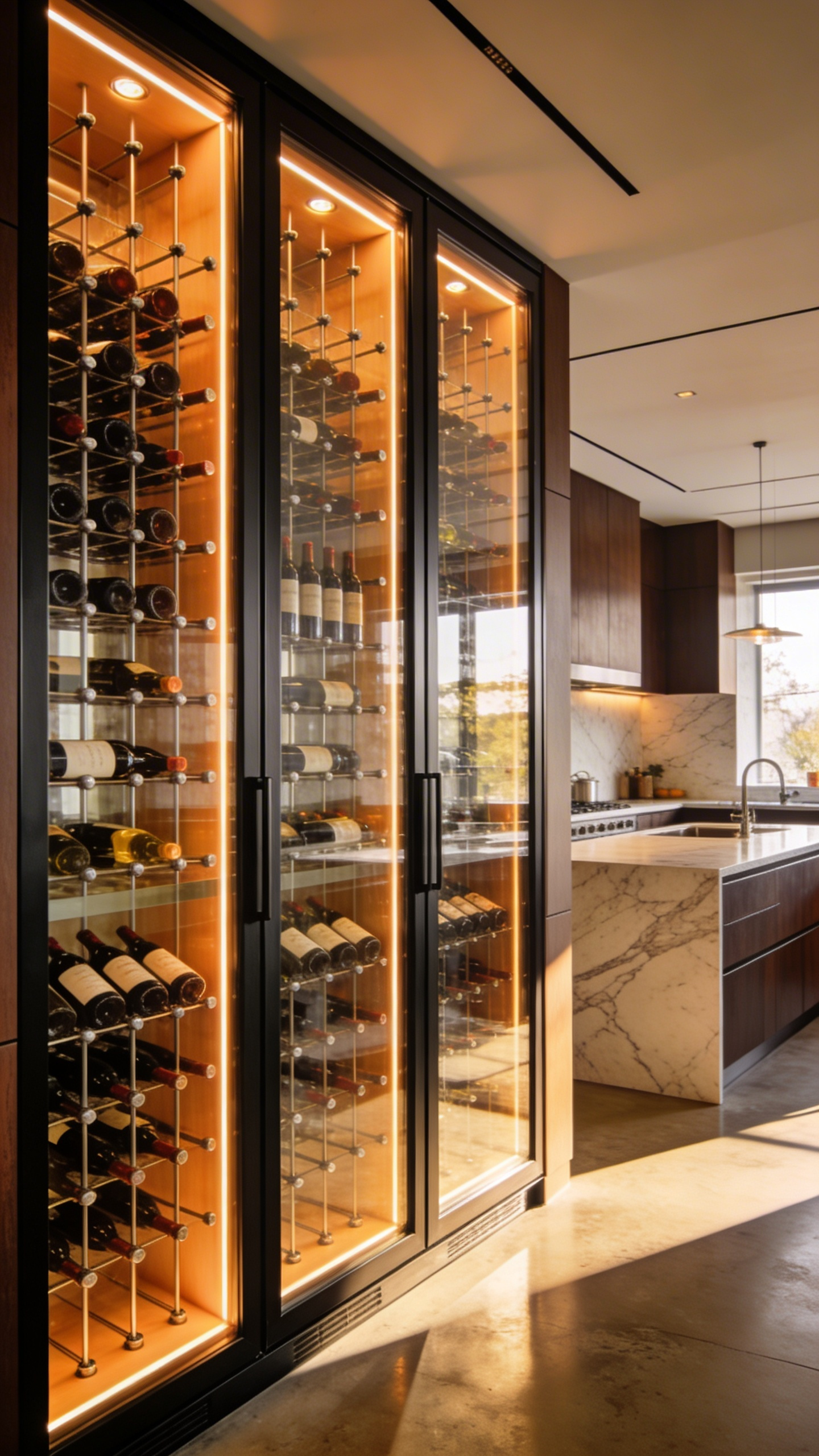
Beyond the glass, the mechanics must remain invisible. Luxury systems employ ducted split cooling units. These remote systems place noisy compressors in separate mechanical rooms. As a result, the kitchen remains a quiet social hub. Additionally, this eliminates vibration, which is critical, as constant vibration can damage wine sediment.
Visually, the focus shifts from storage to theater. Minimalist metal pins create an illusion of floating bottles. The collection becomes a curated gallery. Lighting plays a vital preservation role. Designers use recessed, UV-free LED strips to prevent chemical damage.
Function dictates the design strategy. Ideally, these walls house a “drinking collection” for near-term enjoyment. Deep storage for aging remains in subterranean cellars. This duality allows the kitchen wall to serve as a stunning, accessible centerpiece.
13. Smart Water Stations: Filtered, sparkling, and boiling water taps integrated directly into stone surfaces to eliminate kettle clutter.
True luxury in modern kitchen design is defined by the absence of visual noise. The traditional electric kettle is rapidly disappearing from high-end countertops. In its place, integrated smart water stations offer a sophisticated, architectural solution. These systems essentially function as miniature “server rooms” hidden discretely beneath the sink.
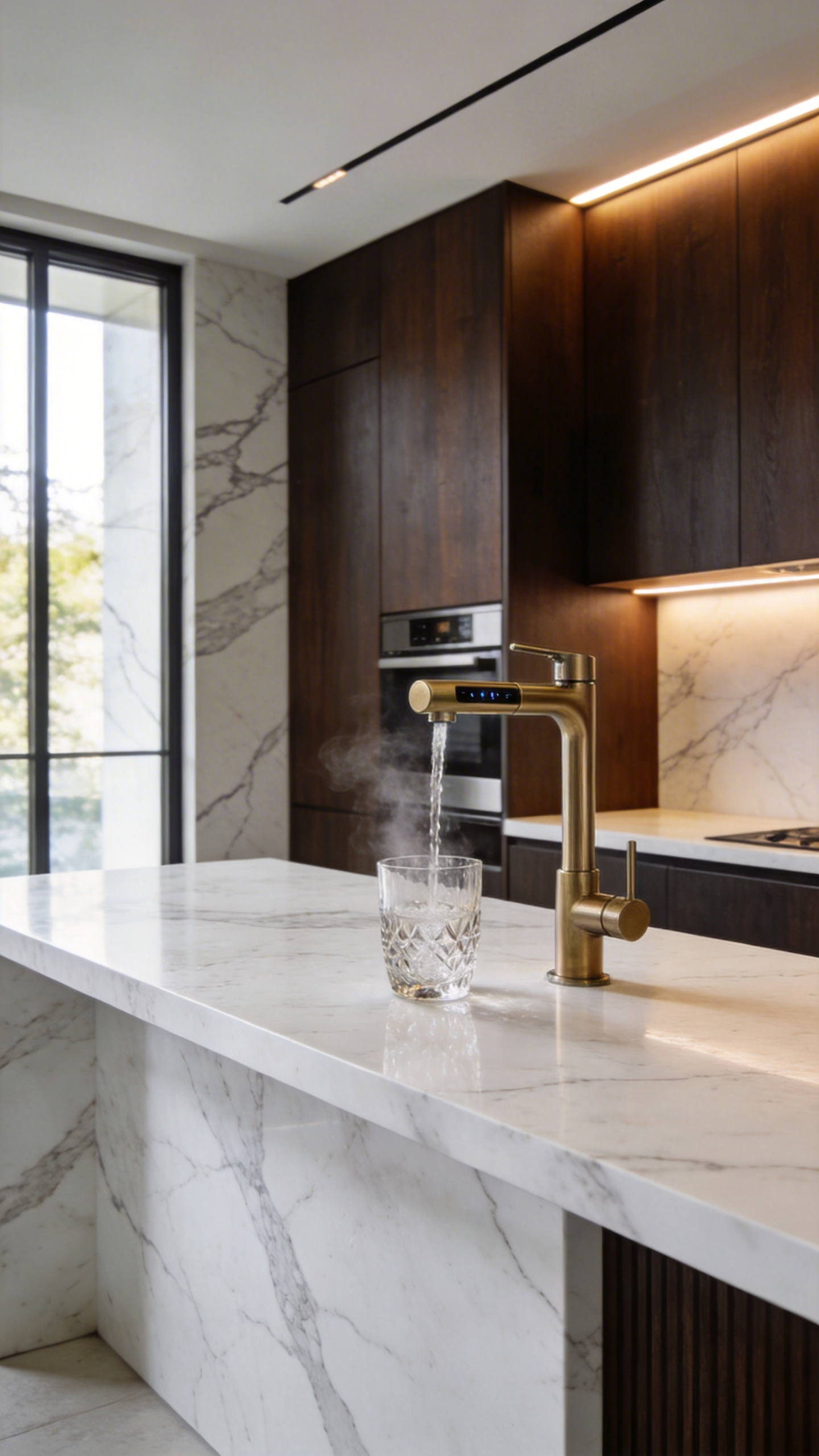
Top-tier units utilize aerospace-grade vacuum insulation. Therefore, they maintain water at 110°C while consuming less standby energy than a standard Wi-Fi router. These stations master the physics of refreshment. Advanced chilling plates ensure carbonation profiles rivaling premium mineral water. Crucially, the user experience is designed for absolute silence. Specialized aerated streams, known as laminar flow, prevent the splashing and hissing often associated with standard instant-hot taps.
Visually, the hardware blends seamlessly into the surrounding architecture. Innovators now offer retractable taps that sit flush with the stone surface when idle. Similarly, brands like Zucchetti clothe control dials in matching marble or quartzite. The interface becomes tactile and nearly invisible, adhering to strict monolithic design principles.
This technology supports a “clear counter, clear mind” philosophy. By eliminating clutter, the kitchen island transforms from a utility zone into a social gathering point. Guests can effortlessly serve themselves sparkling water or tea without disrupting the host. This shift turns the simple act of hydration into a refined, shared ritual.
Phase IV: Curated Living – Soul and Atmosphere
Phase IV represents the critical transition where a kitchen ceases to be a mere culinary laboratory. It becomes an emotional refuge. Historically, luxury kitchens were hidden, utilitarian spaces. The modern approach embraces a “furniture-grade evolution.” Designers now move away from standard cabinetry toward individual “solitaires” that blend seamlessly into living areas. This strategy effectively removes visual noise. The atmosphere is defined by art and conversation rather than industrial function.
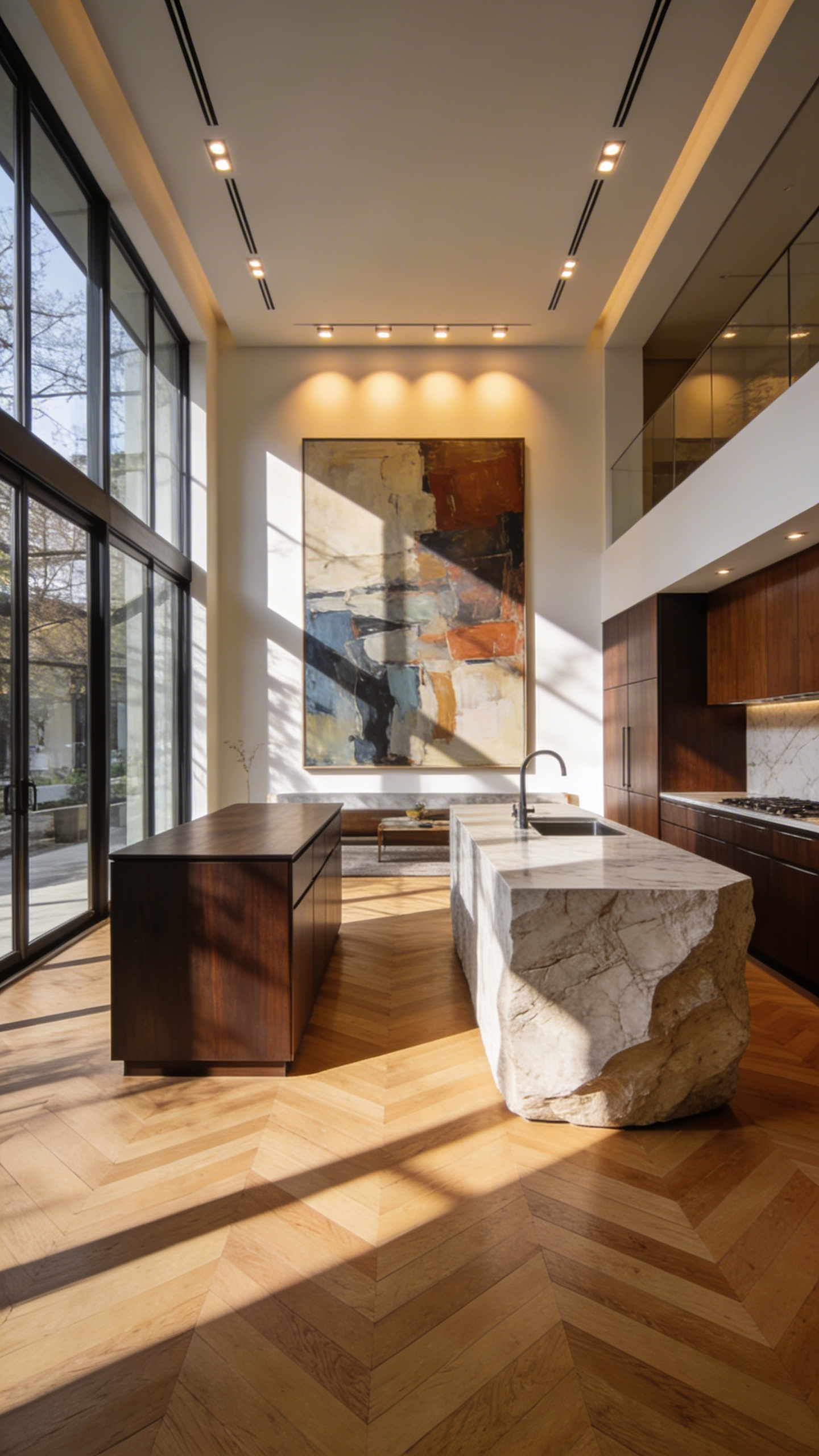
Creating this atmosphere requires “invisible infrastructure.” We integrate sound-absorbing materials behind veneers to dampen the harsh clatter of cooking. Lighting strategies shift toward “museum-grade” execution. We utilize low-Kelvin accent lights to highlight natural stone textures. Other areas remain in soft shadow, creating a lounge-like intimacy.
True soul comes from autobiographical curation, not anonymous staging. Adding the finishing touches with curated kitchen decor ideas ensures the space feels lived-in and soulful. We introduce “perfectly imperfect” elements like patinated metals or reclaimed wood. These materials age over time. Thus, they tell a unique, “lived-in” narrative. We practice the aesthetics of restraint. By subtracting clutter, we allow subtle material junctions to speak. We often employ a “borrowed landscape” approach to connect interiors with the outdoors. This grounds the homeowner, turning the kitchen into a space for sharing a lifestyle.
14. The Internal Atrium: integrating a small, glass-encased drought-resistant garden directly into the kitchen layout for biophilic connection.
The internal atrium reimagines the ancient Roman *domus* for modern living. Atriums once served as open-air social hubs. Today, designers invert this concept by creating climate-controlled glass vessels directly within the kitchen layout. The kitchen transforms into a site of wellness rather than mere utility.
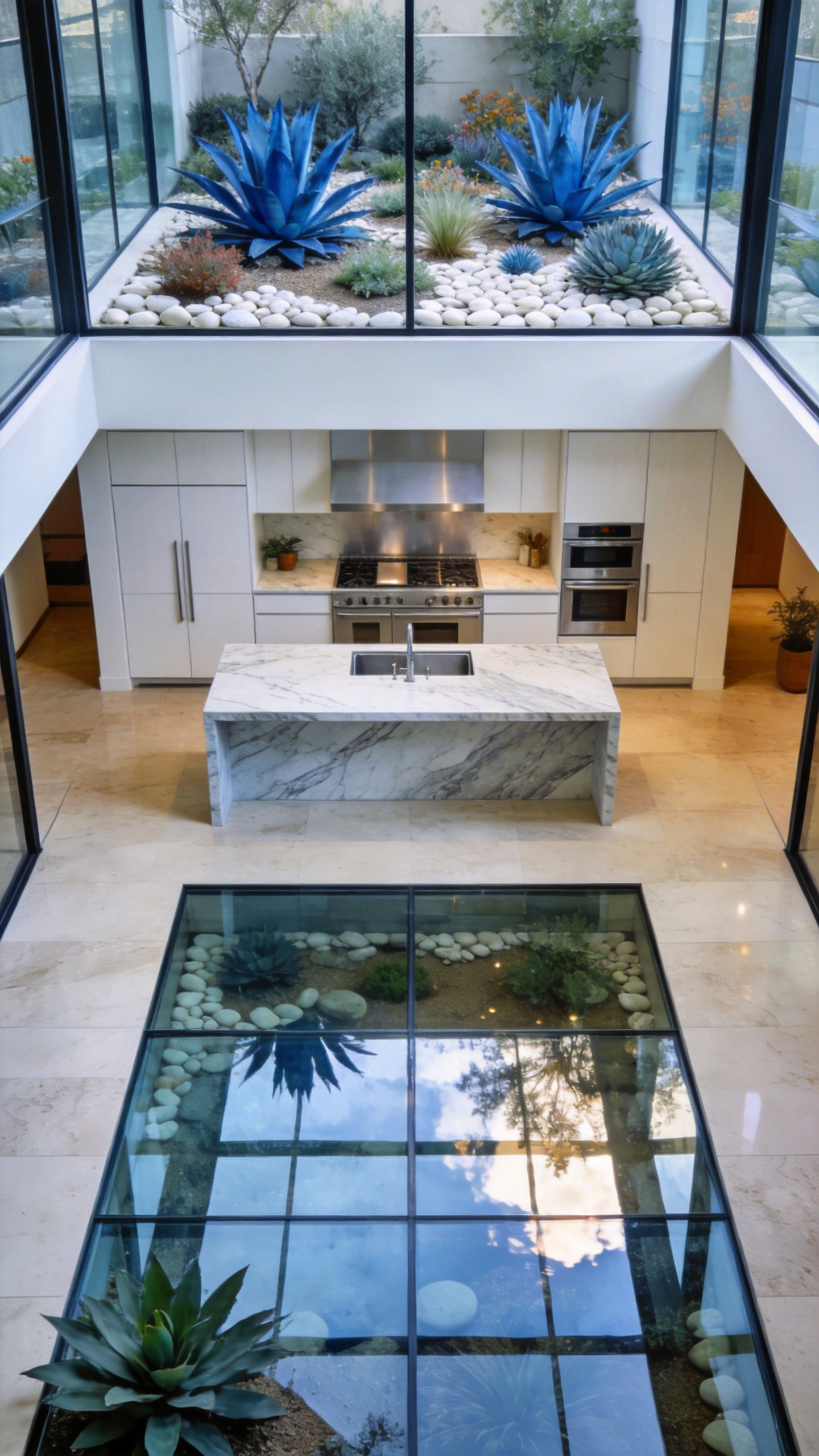
These designs favor xeriscaping over unruly tropical aesthetics. Designers select drought-resistant flora with strong geometric profiles. For example, *Agave attenuata* or New Zealand Flax offer a “frozen in time” sculptural quality. Utilizing gravel or volcanic rock instead of soil maintains hygiene. This choice effectively eliminates earthy odors or pests in sensitive food preparation zones.
Integrating nature near high-heat appliances requires advanced engineering. Luxury installations often utilize triple-pane, Low-E glazing. This creates a necessary thermal buffer against intense oven heat. Additionally, glass coated with titanium dioxide provides a self-cleaning surface. Reacting with UV light, it chemically breaks down airborne grease particles before they can fog the view.
This feature serves a profound psychological purpose. According to environmental psychology, observing nature significantly lowers cortisol levels. Even a forty-second “micro-break” provides mental relief during high-pressure cooking tasks. The atrium acts as a visual sanctuary. It balances the chef’s stress without requiring them to ever leave the room.
15. Gallery-Style Floating Shelves: Minimalist open shelving specifically designed to display artisanal ceramics and global artifacts.
Gallery-style floating shelves mark a sophisticated shift in kitchen design. They transform the room from a service area into a storytelling sanctuary. Rather than utilitarian storage, these shelves function as museum-like displays for cherished objects. Achieving this “weightless” aesthetic requires significant engineering. High-end installations utilize concealed internal steel skeletons within the wall. These robust systems can support upwards of 175 lbs per bracket. This strength allows for displaying heavy solid walnut or monolithic stone slabs. Micro-adjustment leveling ensures a zero-tolerance horizontal plane. Without this technical precision, visual sag ruins the clean, minimalist lines.
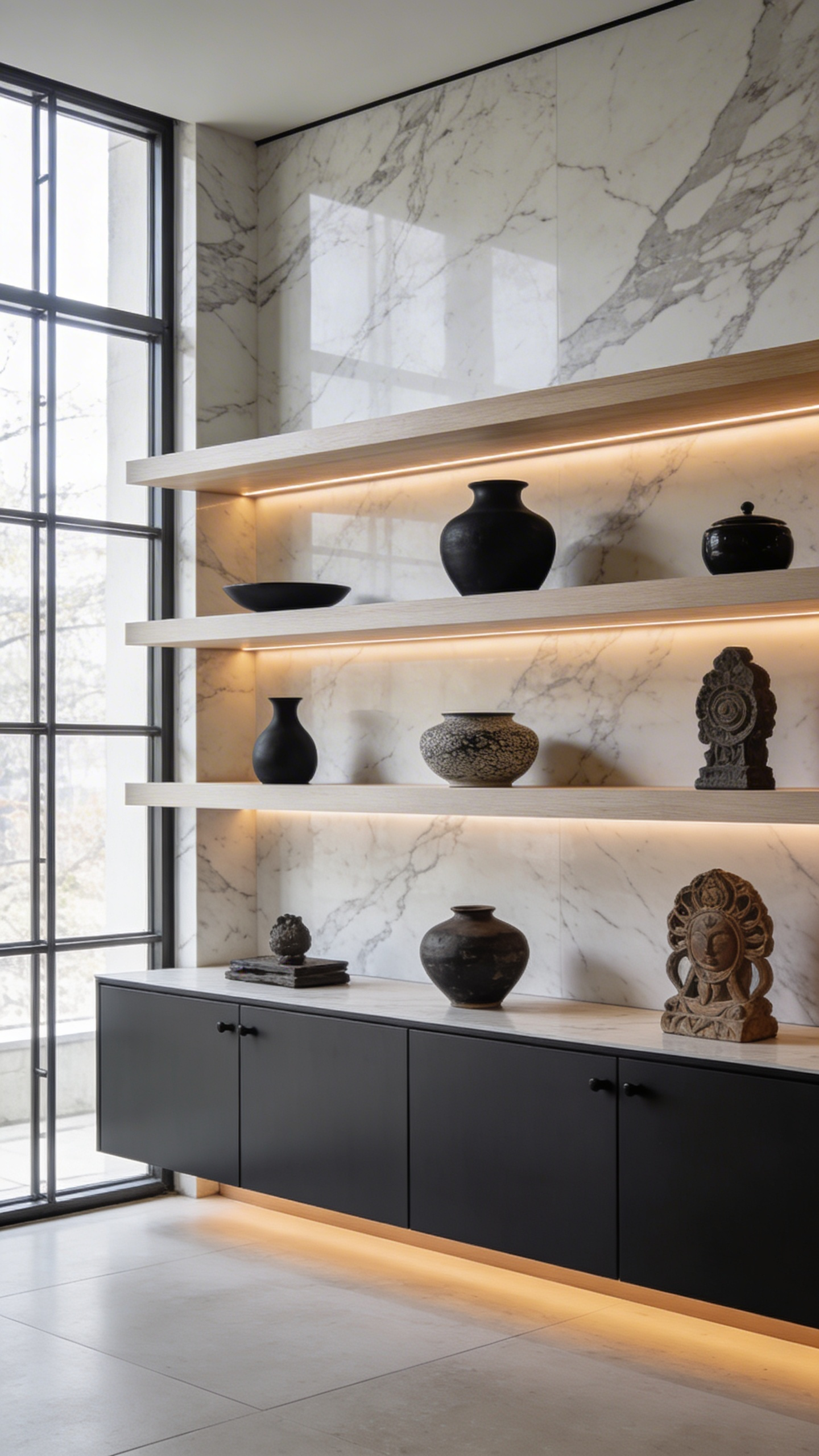
Psychologically, this trend embraces the ethos of “quiet luxury.” It creates a stage for personal and cultural narratives. Displaying Moroccan Terracotta or Japanese Kintsugi adds soulfulness to the space. These textured artifacts provide necessary warmth against cold quartz surfaces. The curation must remain intentional. Designers strictly apply the “Rule of Thirds,” embracing generous negative space. A single Danish vase commands the room’s full attention. Lighting plays a pivotal role in this presentation. High-CRI LEDs are often integrated underneath to strictly highlight these textures.
This design choice reshapes the room’s architecture. Long, linear shelves replace the oppressive weight of traditional upper cabinets. The kitchen feels significantly more expansive and airy. This aligns with the emerging “Warm Minimalism” aesthetic. Expect to see amber ceramics set against rich smoked oak. In essence, these shelves bridge the gap between a functional kitchen and a curated art gallery.
16. The Social Hearth: replacing the traditional breakfast nook with low-slung, lounge-style banquettes upholstered in performance linen.
Historically, the breakfast nook was a space designed for quick, utilitarian turnover. The modern “Social Hearth” completely reimagines this zone. This trend replaces upright dining chairs with low-slung, lounge-style banquettes. Consequently, the energy of the room shifts from high-task to high-repose.
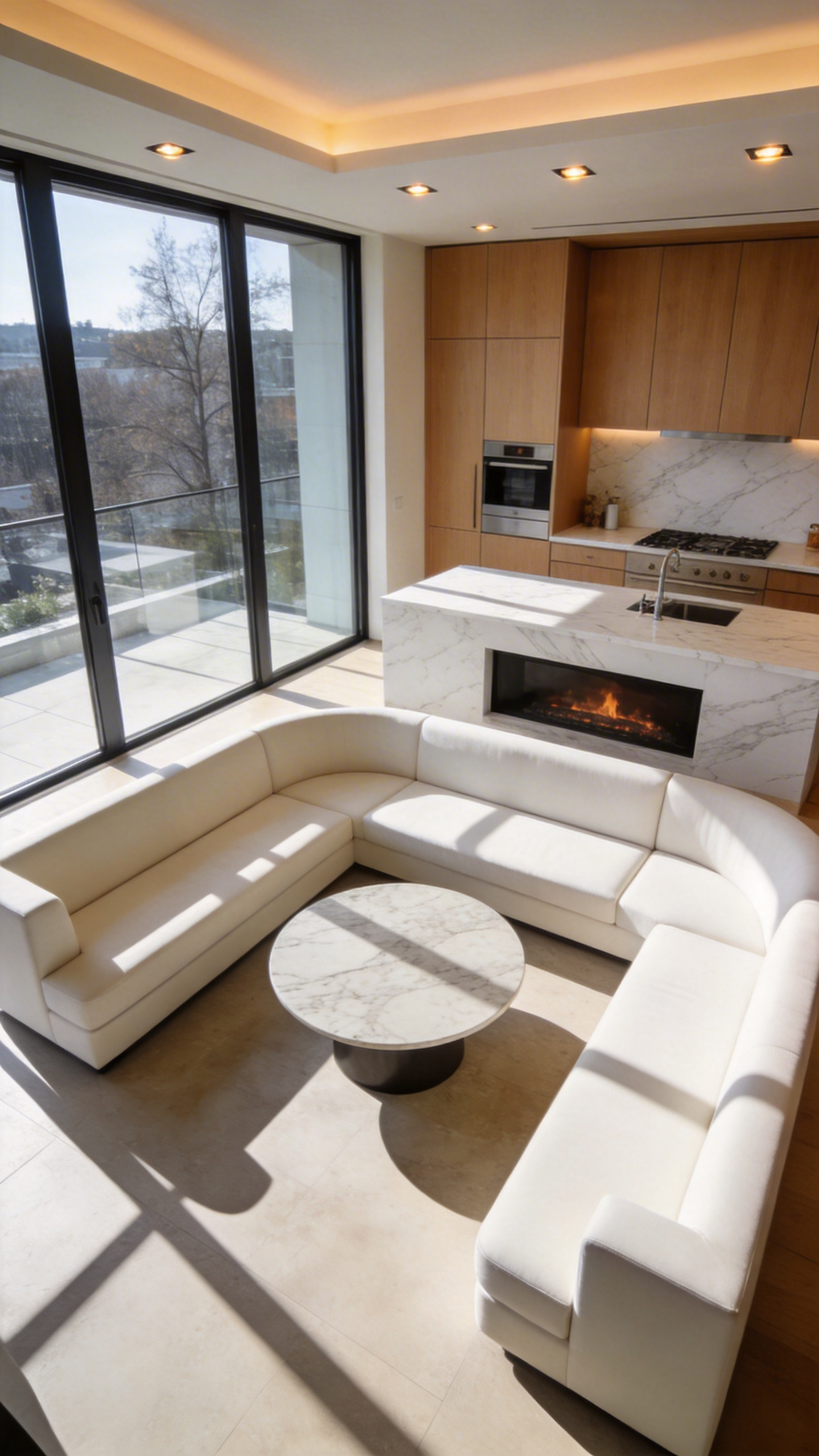
Technologically, these pieces borrow geometry from high-end Italian sofas rather than standard kitchen furniture. Seat heights drop to 15 inches, inviting a comfortable sinking sensation. The back pitch reclines to a relaxed 110 degrees, encouraging a “slow linger” over morning coffee.
Crucially, the choice of upholstery must balance tactile softness with extreme durability. Designers are turning to performance linen. Often made from solution-dyed acrylics, these textiles offer a “perfectly imperfect” visual texture. Yet, they remain hydrophobic at a molecular level, easily repelling wine or oil. The fabric provides a warm, matte counterpoint to cold stone surfaces without fearing daily messes.
Lighting plays a pivotal role in defining this “room-within-a-room.” Typically, designers pair these hearths with low-hanging fabric pendants to create intimacy. This transforms a culinary workspace into a cozy den for authentic connection.
17. Layered Lighting Zones: A hierarchy of light from task lighting to ambient toe-kick glows that transform the kitchen from workspace to evening lounge.
Truly sophisticated kitchen design relies on a strict hierarchy of light. Designers categorize illumination into three psychological tiers: “Doing,” “Knowing,” and “Feeling.” The foundation is task lighting, or the “Doing” layer. Ultra-slim LED strips are recessed into the front lip of upper cabinetry. This strategic placement eliminates user shadows on the prep surface. High-end specifications demand a Color Rendering Index (CRI) above 95. Fresh produce appears vibrant and appetizing rather than sterile or gray.
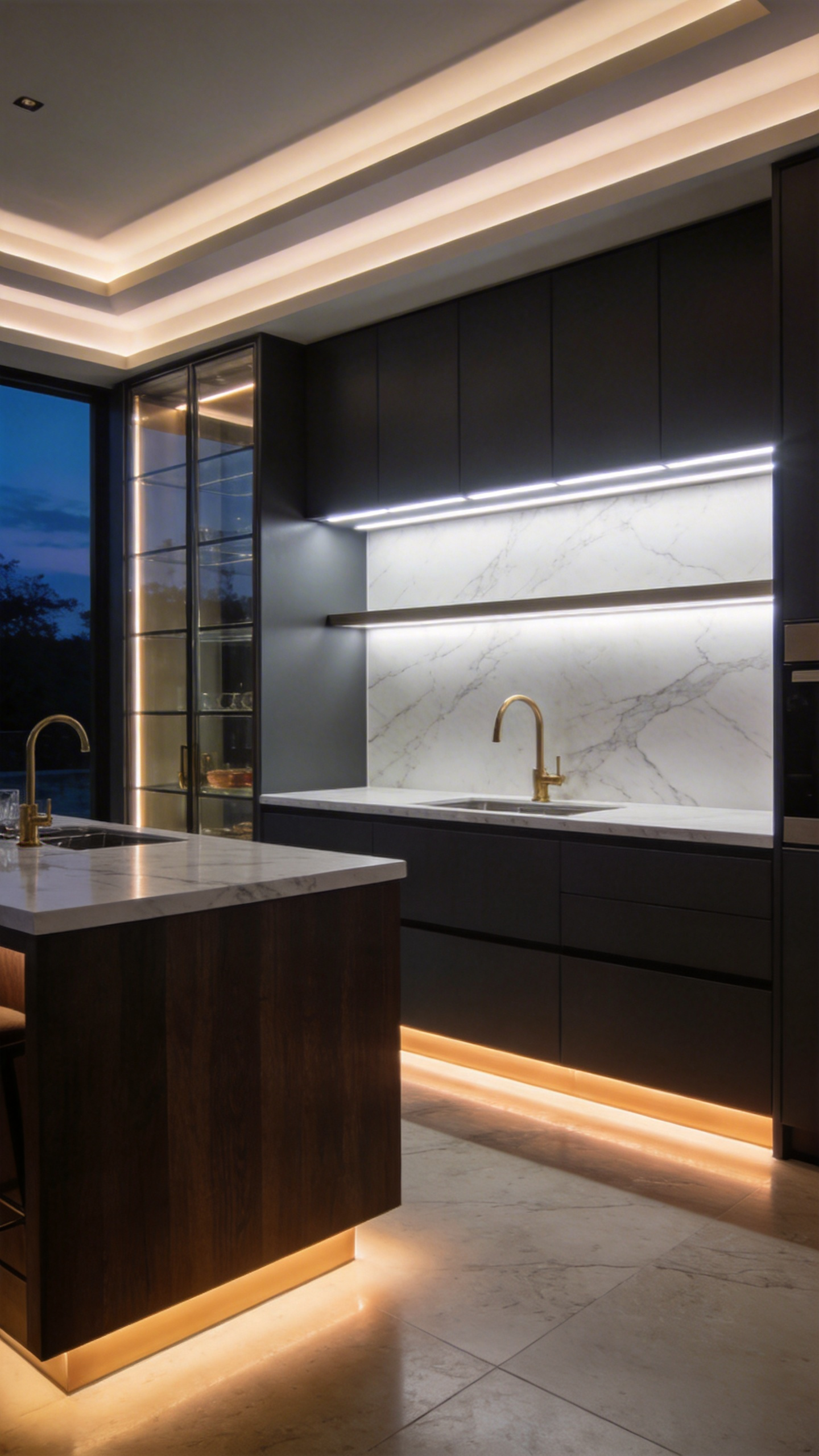
Next, architectural interest is built through the “Feeling” layer, particularly at the floor level. Ambient toe-kick lighting creates a visual “floating” narrative. By installing warm LED tape under base cabinets, heavy marble islands seem to hover weightlessly. Technical precision is key to avoiding a “motted” reflection on polished floors. Designers utilize COB (Chip on Board) strips with opaque diffusers. This creates a seamless, continuous line of light rather than distracting hot spots.
Finally, smart technology orchestrates the transition from high-energy workspace to evening lounge. During the day, cool color temperatures boost alertness for cooking tasks. As the sun sets, tunable systems shift to a warm, candle-like 2200K glow. The lighting effectively signals to the brain that the workday has ended. This layering transforms the room from a utilitarian laboratory into a furnished gallery.
18. Conclusion: True luxury is not about excess, but about the seamless integration of natural beauty and high-performance function.
The era of the “trophy kitchen” is definitively ending. True luxury is not defined by industrial-grade excess or status appliances. Instead, it is defined by “visual silence” and seamless architectural integration. The modern kitchen is no longer a separate, utilitarian workshop. It effectively disappears into the living space, prioritizing social flow over clutter. Exploring these luxury kitchen ideas reveals that high-performance technology remains hidden beneath the beauty of the slab.
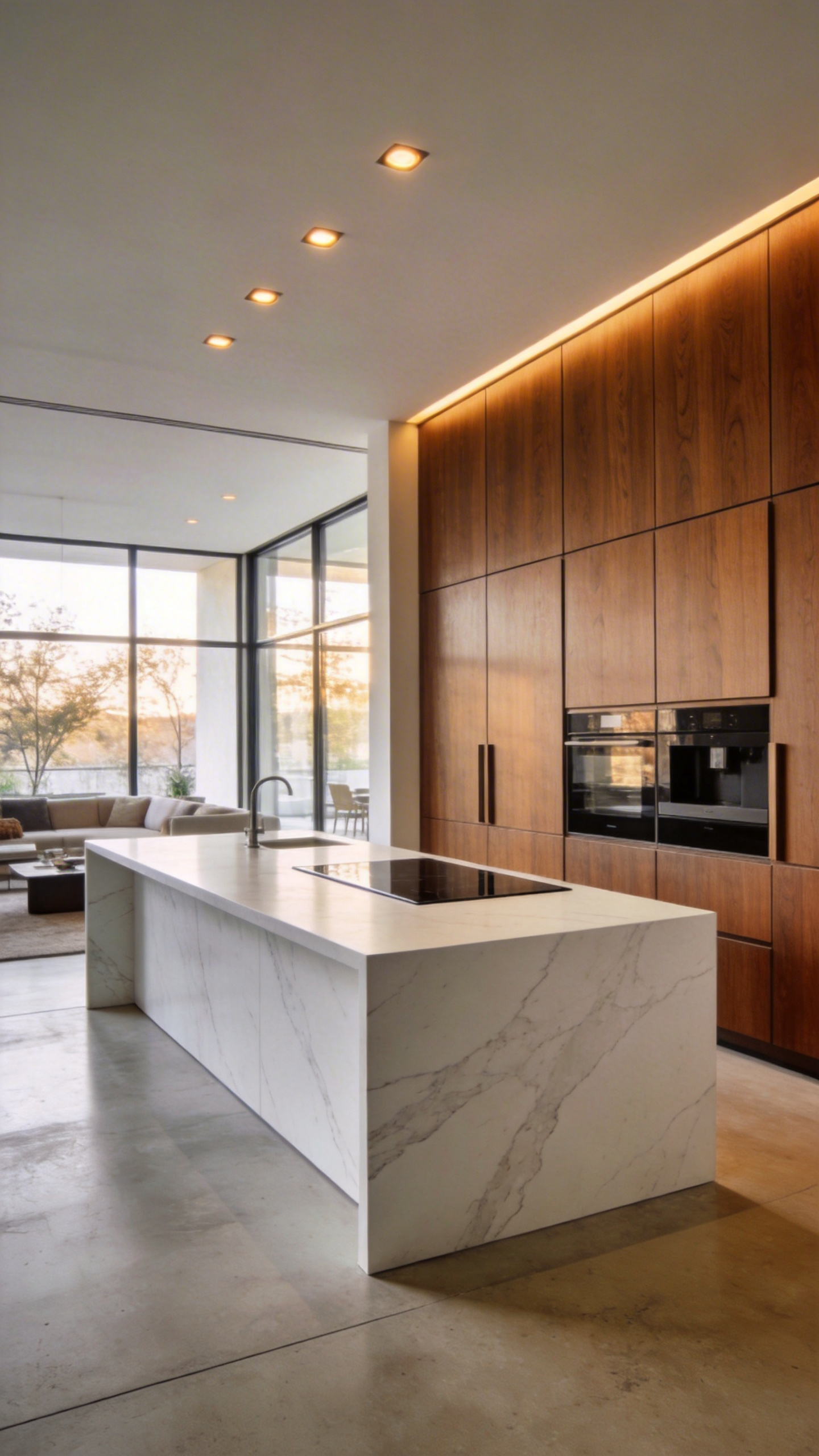
Innovations like “invisible induction” allow users to cook directly on stone surfaces. The material selection process now balances authenticity with durability. Architects often favor natural marble for its emotional, tactile depth. Conversely, sintered stone offers invincible performance against heat and UV rays. The choice depends on the desired narrative of the home.
Well-being has become a critical functional metric in luxury design. Biophilic elements, such as circadian lighting, mimic the sun’s natural daily rhythms. “Living finishes” like unlacquered brass oxidize to create a personal narrative of time. The space feels warm and human rather than sterile. This approach realizes the modernist ideal where form and function are truly one. Luxury is the quiet harmony of organic beauty and precise performance.
Frequently Asked Questions
What defines a luxury kitchen in 2026?
In 2026, luxury is defined by “Quiet Luxury” and “Visual Silence.” This means moving away from flashy showroom aesthetics toward grounded materiality (like honed stone and mineral plasters), integrated invisible technology, and a layout that prioritizes biophilic connection and acoustic comfort.
How do I incorporate biophilic design into my kitchen?
Biophilic design can be integrated through internal glass-encased atriums with drought-resistant plants, floor-to-ceiling windows that dissolve indoor-outdoor thresholds, and the use of solar-responsive skylights that anchor the room’s atmosphere in natural light cycles.
What are the best materials for a high-end kitchen island?
Honed, bookmatched quartzite is currently the premier choice for luxury islands due to its durability and natural geological beauty. Other high-end materials include unpolished dark basalt, travertine, and reclaimed desert timbers for a more tactile, grounded feel.