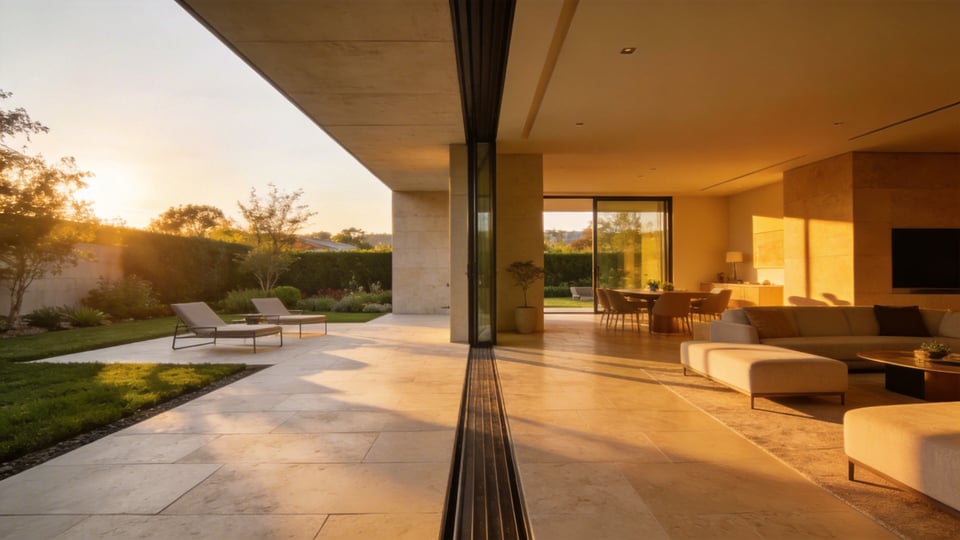
Most homeowners view their outdoor space as a separate destination. While many seek basic patio decorating ideas to fill the space, a functional patio requires more than just weather-resistant furniture. Unfortunately, this common mindset creates a disjointed living experience. The garden remains a detached entity rather than a seamless extension of the home.
To achieve true architectural harmony, we must look beyond simple accessories. Instead, we must embrace a philosophy of “erasing the edge.” Indeed, the secret to a high-end exterior lies in creating a unified environment. Here, the boundaries between the interior and the landscape effectively dissolve.
Historically, this concept represents a rebellion against “cellular” living. Pioneers like Richard Neutra argued that homes should grow from their sites. They utilized steel framing to turn landscapes into living wallpaper. Today, we achieve this continuity through technical “Level-Plane Transitions.” Therefore, indoor flooring meets outdoor pavers without a visible step. Furthermore, extending ceiling materials past the glass line pulls the eye outward. Thus, the physical and psychological threshold effectively dissolves.
This guide reveals the engineering behind this “invisibility.” Specifically, we will explore how “flush threshold drainage” prevents water ingress. Next, we discuss syncing “color temperature” to anchor your sensory experience. Moreover, we examine “spatial mirroring” to align indoor and outdoor furniture zones. Finally, we define the “biophilic” elements that reduce transition stress. Ultimately, you will learn to create a unified space that breathes as one entity.
Phase 1: Architectural Foundations & The Erasure of Boundaries
True outdoor living begins by structurally erasing the physical divide between “in” and “out.” Historically, this concept mirrors the Japanese *Engawa*. This liminal space effectively mediates between shelter and nature. Consequently, these modern backyard patio designs prioritize a “flush threshold” over the traditional step-down. By maintaining a single, uninterrupted floor plane, the eye perceives the patio as essential interior square footage.
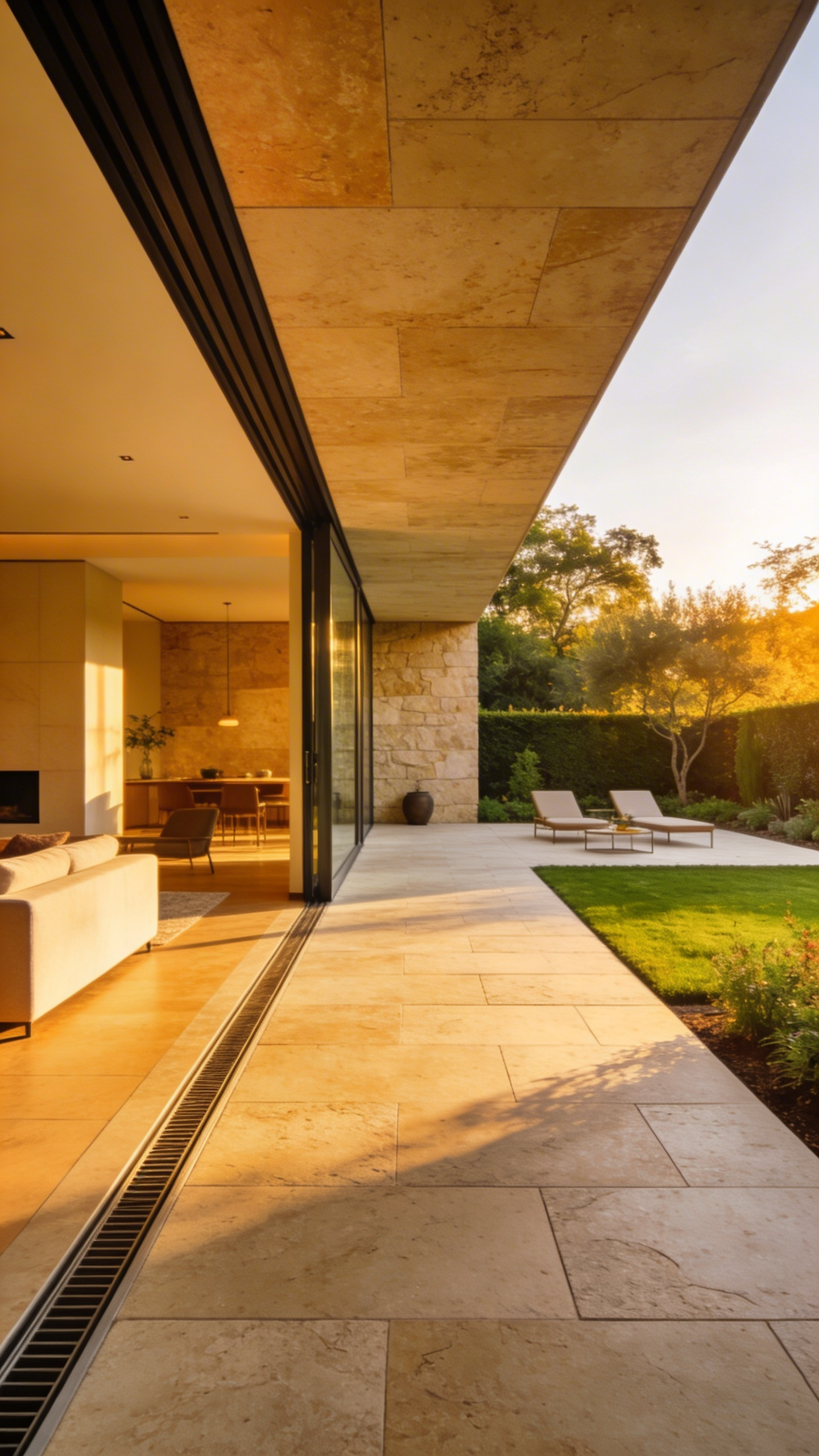
However, achieving this seamlessness demands invisible engineering. Specifically, stainless steel “slot drains” must be installed against door tracks. This manages rainwater without visual interruption. Furthermore, hidden thermal breaks prevent temperature transfer. Thus, sustainability allows for material continuity from the living room to the terrace.
Beyond the floor, we must also address vertical barriers to truly invite the outdoors in. Ideally, structural cantilevers replace obstructive corner posts. This allows glass doors to pocket completely into walls. As a result, the corner of the house vanishes. Visually, the ceiling merges with the patio overhang. Finally, sensory consistency is paramount for this illusion. Therefore, lighting color temperatures must match exactly—typically a warm 2700K. This prevents creating a visual wall at night. Ultimately, these architectural foundations satisfy our biophilic need for refuge and prospect before furniture is even introduced.
1. The Infinite Floor: Extending indoor tiling materials to the patio for seamless visual continuity
The concept of “The Infinite Floor” transcends simple paving. In fact, it dissolves the psychological boundary between shelter and nature. Historically, architects like Richard Neutra achieved this connection through expansive glass. Today, however, we utilize advanced material science. Specifically, matched-collection porcelain creates a continuous visual axis from the kitchen to the horizon. Consequently, this optical illusion expands perceived space. It significantly reduces the claustrophobia often found in urban floor plans.
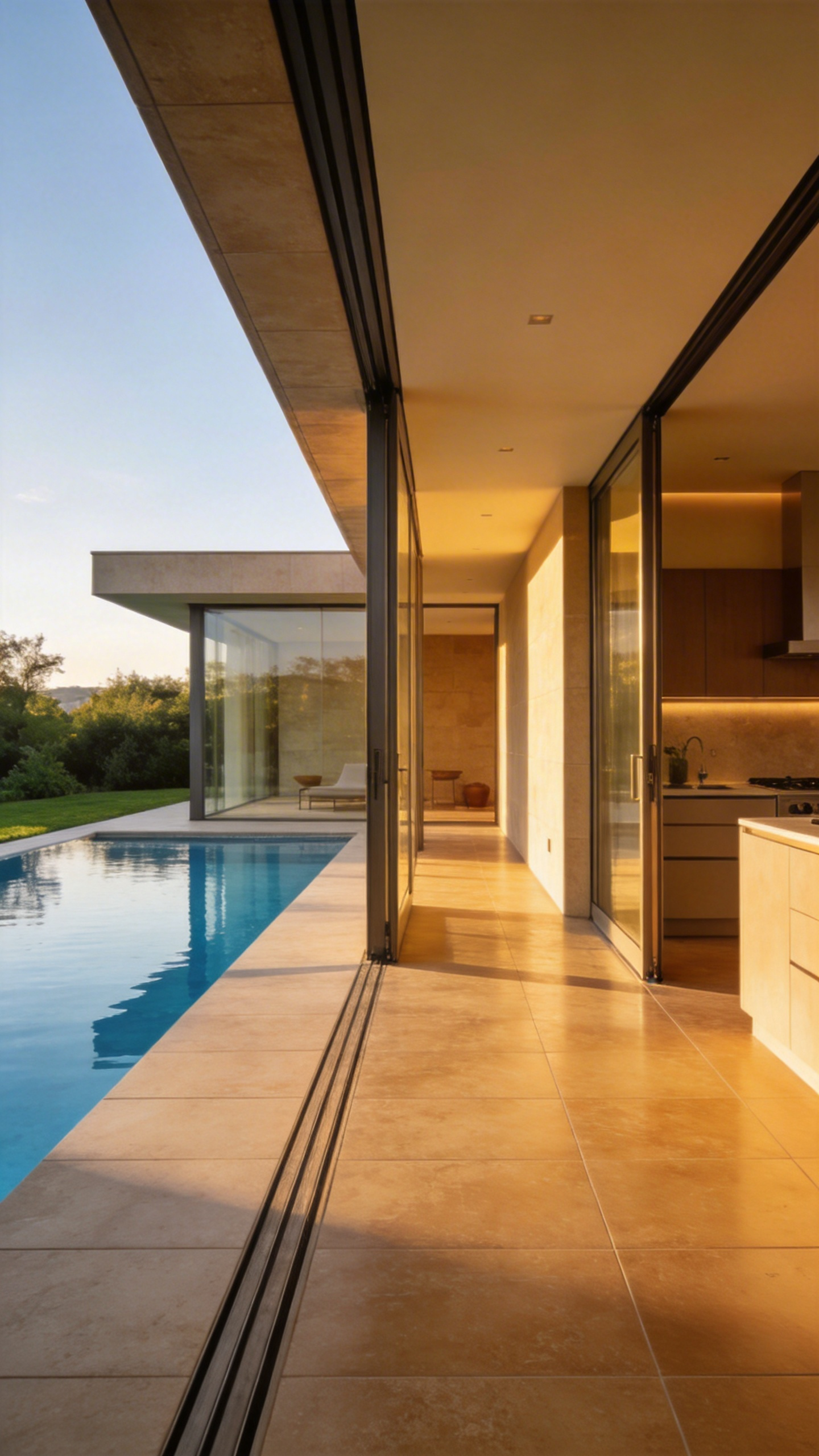
Achieving this seamlessness requires technical precision. Ideally, the threshold must remain perfectly flush to maintain the illusion. Therefore, top-tier designers utilize linear slot drainage systems hidden directly beneath the door track. Furthermore, contractors must carefully balance subfloor depths. This is necessary because outdoor “pavers” are typically 20mm thick. Indoor tiles, however, remain a standard 10mm.
Beyond structure, texture creates a unique sensory challenge. Outdoors, safety dictates a high slip resistance rating, usually R11. Conversely, indoor surfaces remain smoother. Thus, manufacturers employ “Safetouch” technology. This innovation allows the surface to provide grip under pressure while looking identical to the smooth interior tile.
Finally, long-term maintenance is critical for visual continuity. Outdoor elements cause standard grout to weather and discolor. To prevent a visible “seam” at the door, experts recommend using non-porous epoxy grout on the patio. Ultimately, this strategy leverages the “Prospect and Refuge” theory. By visually claiming the exterior, the home lowers cortisol levels. It offers safety while embracing the view.
2. Bioclimatic Shading: Installing adjustable louvered pergolas that respond to sun angles and ventilation needs
Bioclimatic shading shifts patio design from simple decoration to high-stakes engineering. Specifically, adjustable louvered pergolas utilize the Venturi Effect to actively manage heat. Unlike static umbrellas, which often trap hot air, tilted louvers force breezes through narrow openings. Consequently, this airflow acceleration creates a zone of negative pressure. Effectively, the system sucks rising heat out. It replaces it with cooler, lower-level air. Therefore, perceived temperatures can drop by nearly 12°F compared to solid roofs.
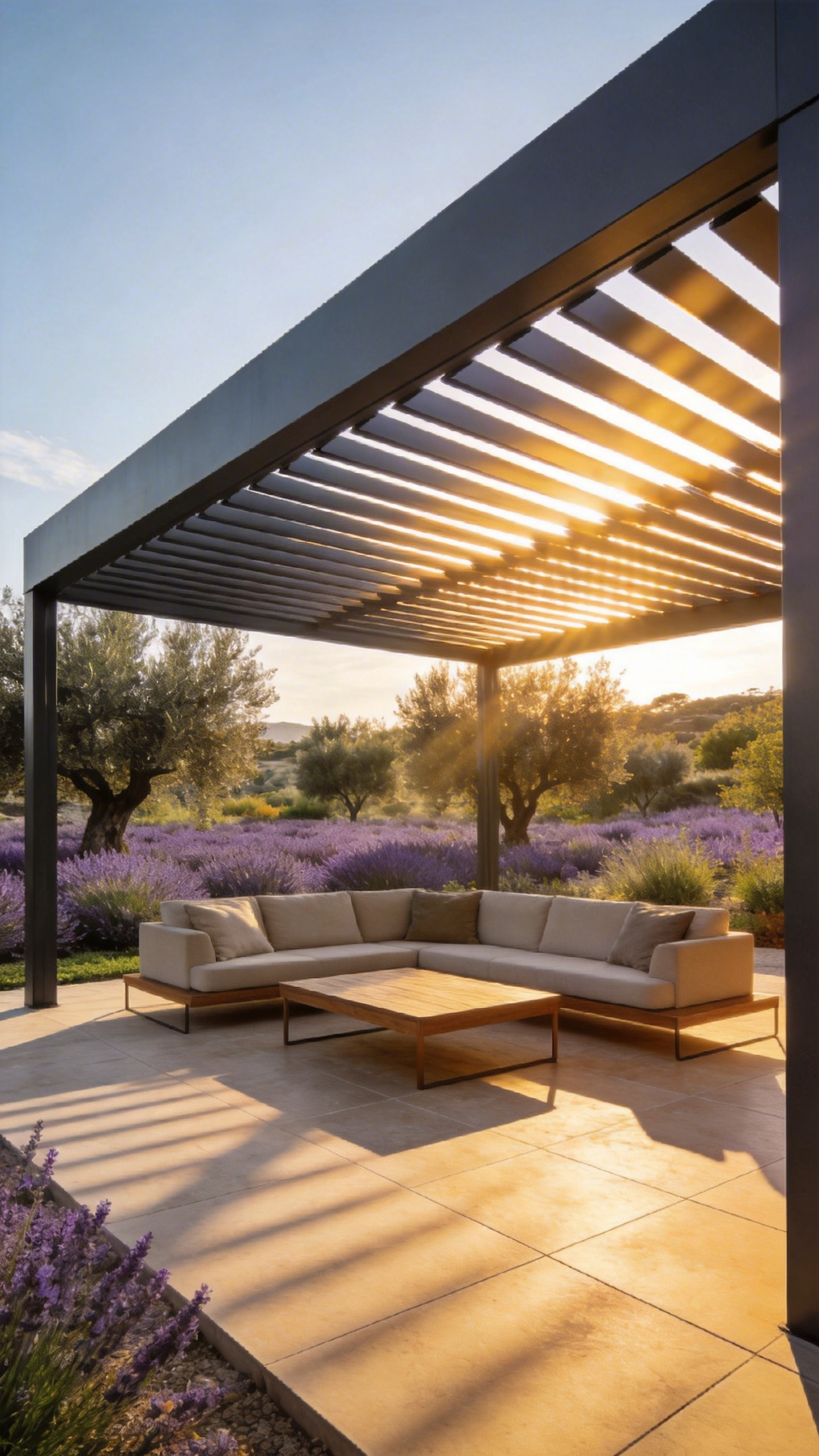
Beyond thermodynamics, these structures satisfy a deep psychological instinct known as “Prospect-Refuge.” In short, humans naturally crave physical protection while maintaining a clear view of their surroundings. Adjustable slats provide this flexible shelter perfectly. Furthermore, the shifting patterns of light and shadow induce “soft fascination.” This state gently engages the brain. It allows the mind to recover from focused attention and stress.
Structurally, the technology has evolved from medieval wooden vents to smart, marine-grade aluminum systems. Because wood warps, rigid aluminum is necessary for precise, water-tight seals. Moreover, modern slats often contain injected foam to dampen acoustics. Thus, a heavy rainstorm becomes a quiet, ambient hum rather than a loud drumming. Additionally, these pergolas function as a thermal buffer for the main house. By blocking the sun before it hits glass windows, indoor cooling costs may decrease by 30%. Ultimately, this creates a luxurious, sustainable extension of the living space.
3. The Living Wall: Utilizing vertical hydroponic gardens as lush, functional privacy screens
Vertical hydroponic gardens offer significantly more than simple visual greenery. In fact, they function as sophisticated, biological architectural shields. Unlike wood fences that reflect sound, living walls act as acoustic sponges. Consequently, they reduce ambient noise by up to 15 decibels. They effectively absorb sound waves through varied leaf textures. Additionally, the process of evapotranspiration creates a localized micro-climate. Thus, the immediate patio temperature drops by 3–7°C. This effectively transforms hot urban spaces into cool, lush retreats.
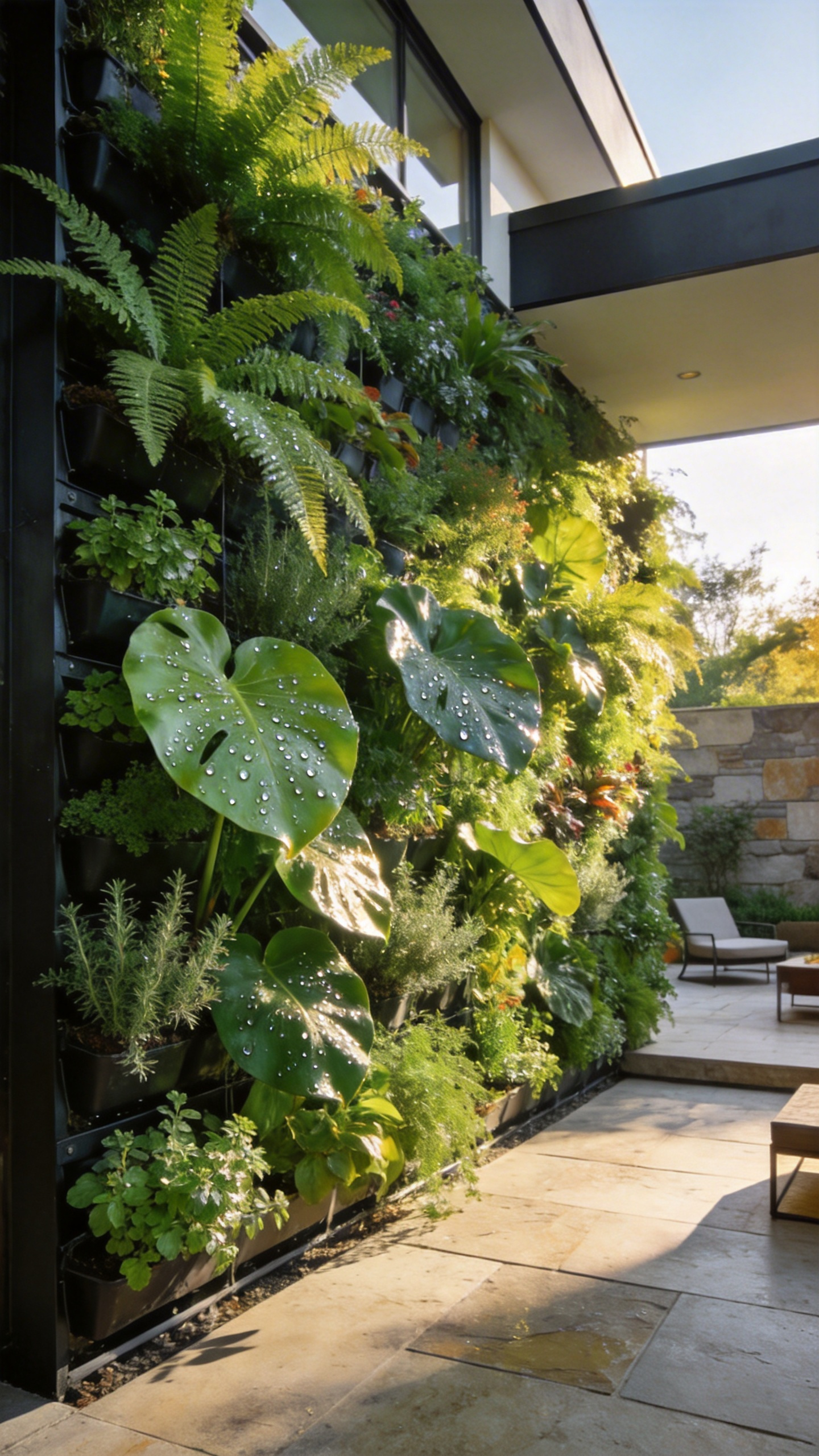
To achieve total privacy, the structural design is critical. Specifically, designers often prefer modular felt-pocket systems over rigid plastic. These setups facilitate a “shingled” planting style. Therefore, foliage overlaps seamlessly from top to bottom. This ensures zero sightlines through the screen. For immediate results, fast-growing crops like *Paris Island Cos Lettuce* provide a dense temporary cover. Alternatively, upright evergreens like *Podocarpus macrophyllus* offer permanent architectural structure. Moreover, integrating *Star Jasmine* creates a “scent screen.” This adds a powerful psychological boundary through fragrance.
Modern innovation has also revolutionized placement. Currently, freestanding mobile units allow residents to move their privacy screen as the sun shifts. Furthermore, automation solves the historical maintenance burden. High-end systems now utilize AI-driven irrigation to monitor moisture and pH levels remotely. Ultimately, this technology ensures the “functional privacy screen” remains a vibrant, self-sustaining asset rather than a chore.
4. Sustainable Decking: Selecting FSC-certified teak or composite bamboo that withstands humidity without sacrificing warmth
Designing a sustainable outdoor space requires looking beyond simple weatherproofing. Specifically, you must examine the material’s internal chemistry to ensure longevity. For instance, FSC-certified teak relies on a unique “internal pharmacy” of natural rubber and silica. Consequently, these oils create a biological barrier against high humidity. Unlike other hardwoods that warp or cup, teak remains dimensionally stable. Historically, this reliability is why the British Royal Navy mandated its use on ship decks. Furthermore, the high silica content provides a natural non-slip grip underfoot.
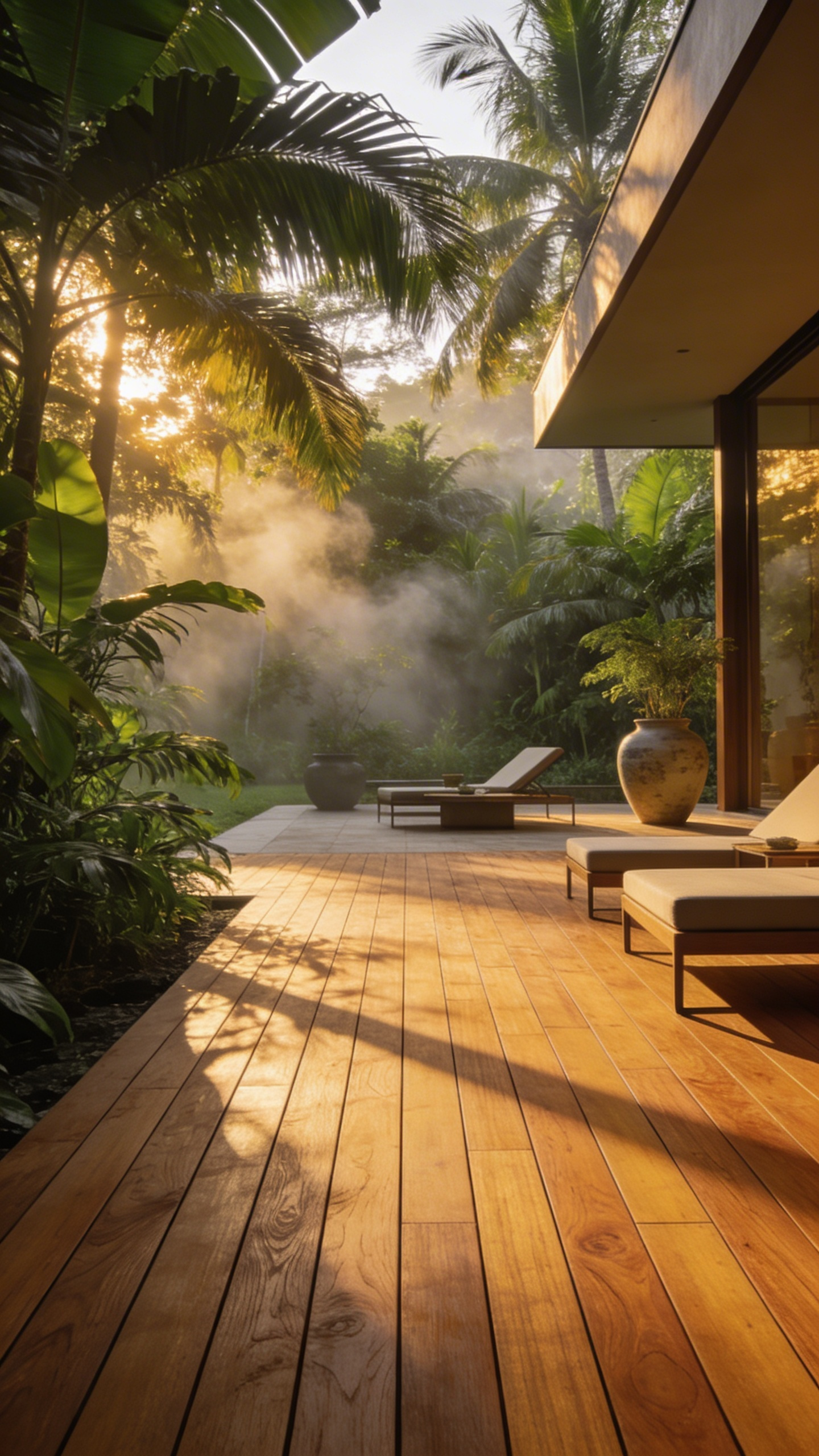
Alternatively, densified bamboo offers a rigorous “grass into steel” narrative. Here, manufacturers compress carbonized bamboo strands under extreme pressure to remove sugars. As a result, the board becomes significantly harder than Ipe wood. Because the sugars are removed, there is no organic food source for mold or fungi. Crucially, this creates a material that withstands intense tropical humidity without rotting.
Beyond durability, “warmth” is also a distinct acoustic experience. In fact, solid materials produce a grounded, muted thud instead of a hollow plastic clack. However, selecting the right material grade is vital for this effect. Therefore, always specify Grade A Heartwood for teak to ensure maximum natural oil content. Similarly, look for end-matched bamboo boards to create a seamless, endless floor. Ultimately, whether you maintain the honey tone or accept the silvery-gray patina, these materials age gracefully alongside the home.
Phase 2: The ‘Outdoor Living Room’ Philosophy
Phase 2 represents a fundamental shift in how we interact with our immediate environment. It transforms a functional concrete slab into a psychologically resonant, lifestyle-centric sanctuary. Indeed, this evolution relies on dissolving the “clumsy” barrier between inside and out.
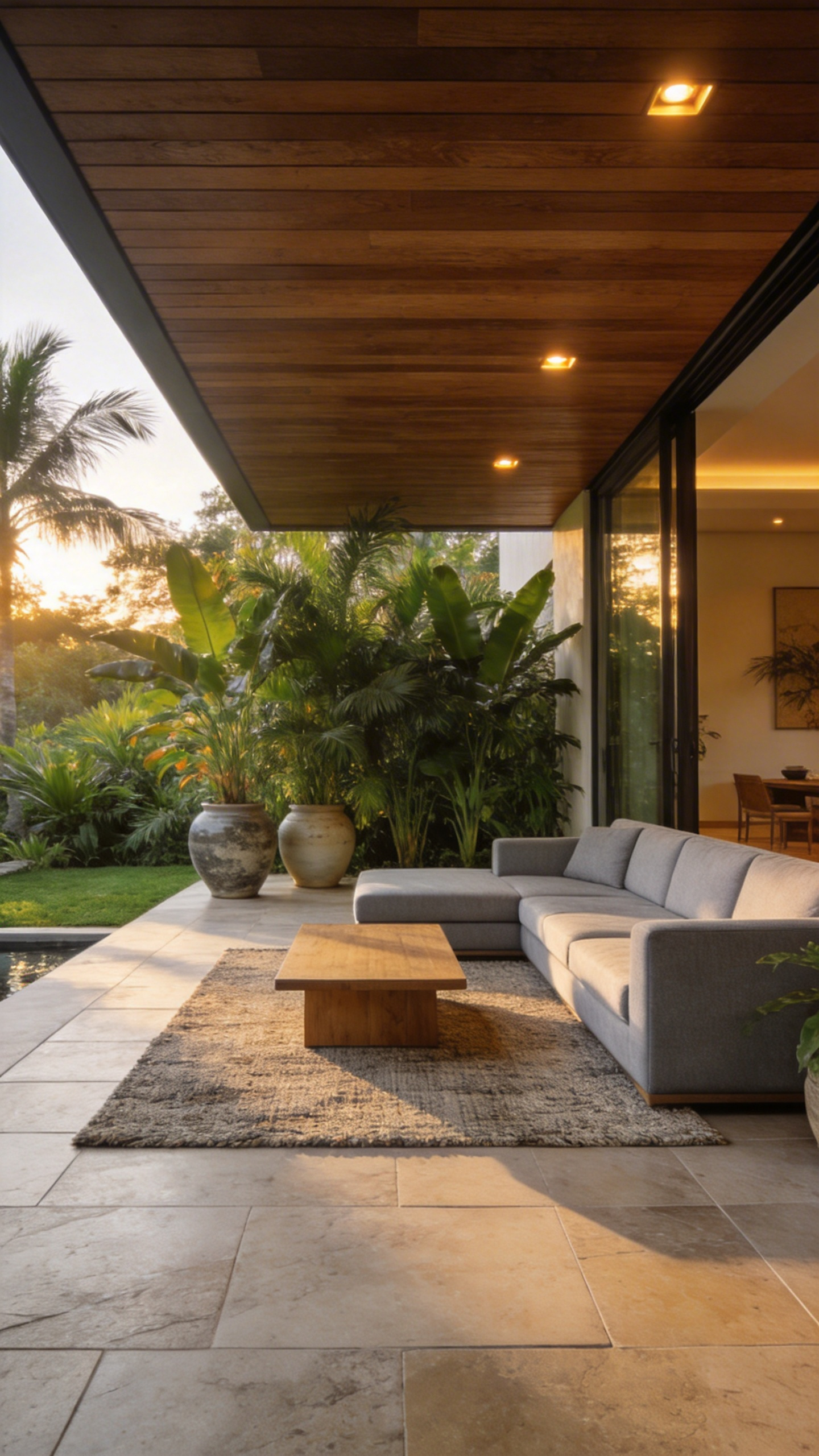
The journey begins at the threshold. Architects utilize the concept of “compression and release” to transition users outdoors. Specifically, we might extend the indoor ceiling line past the exterior wall to blur boundaries. Furthermore, using level-entry flooring creates a seamless flow without physical steps. Consequently, the brain perceives the horizon, rather than a door, as the room’s true wall.
Once outside, the layout must satisfy ancient human instincts. In fact, the “Prospect and Refuge” theory dictates the strategic placement of furniture. We often position L-shaped sectionals against privacy walls to offer a feeling of protection. Simultaneously, this orientation allows a clear view of the open garden, often enhanced by strategic backyard patio lighting ideas. Thus, a fire feature acts as a “hearth,” anchoring the space securely while you observe nature.
Beyond layout, material selection communicates directly with the senses. For instance, stone offers cool permanence, while wood invites warm, tactile engagement. Ultimately, a true outdoor living room flips the “Maintenance-to-Leisure Ratio.” Unlike historical “Victory Gardens” that required constant labor, modern design aims to serve the user. Therefore, homeowners stop merely looking *at* the backyard and start living *within* it.
5. Low-Profile Modular Lounging: Grounding the space with deep-seated, architectural sofas that mimic indoor luxury
Low-profile modular lounging fundamentally changes how we perceive outdoor space. Specifically, it redefines the relationship between the home and the horizon. Standard furniture often acts as a visual barrier to scenic views. In contrast, low-slung sofas ensure the design effectively “disappears” against the landscape. Consequently, the patio feels like an uninterrupted, open-air gallery. This “invisible architecture” allows vertical elements, like trees or the sky, to breathe.
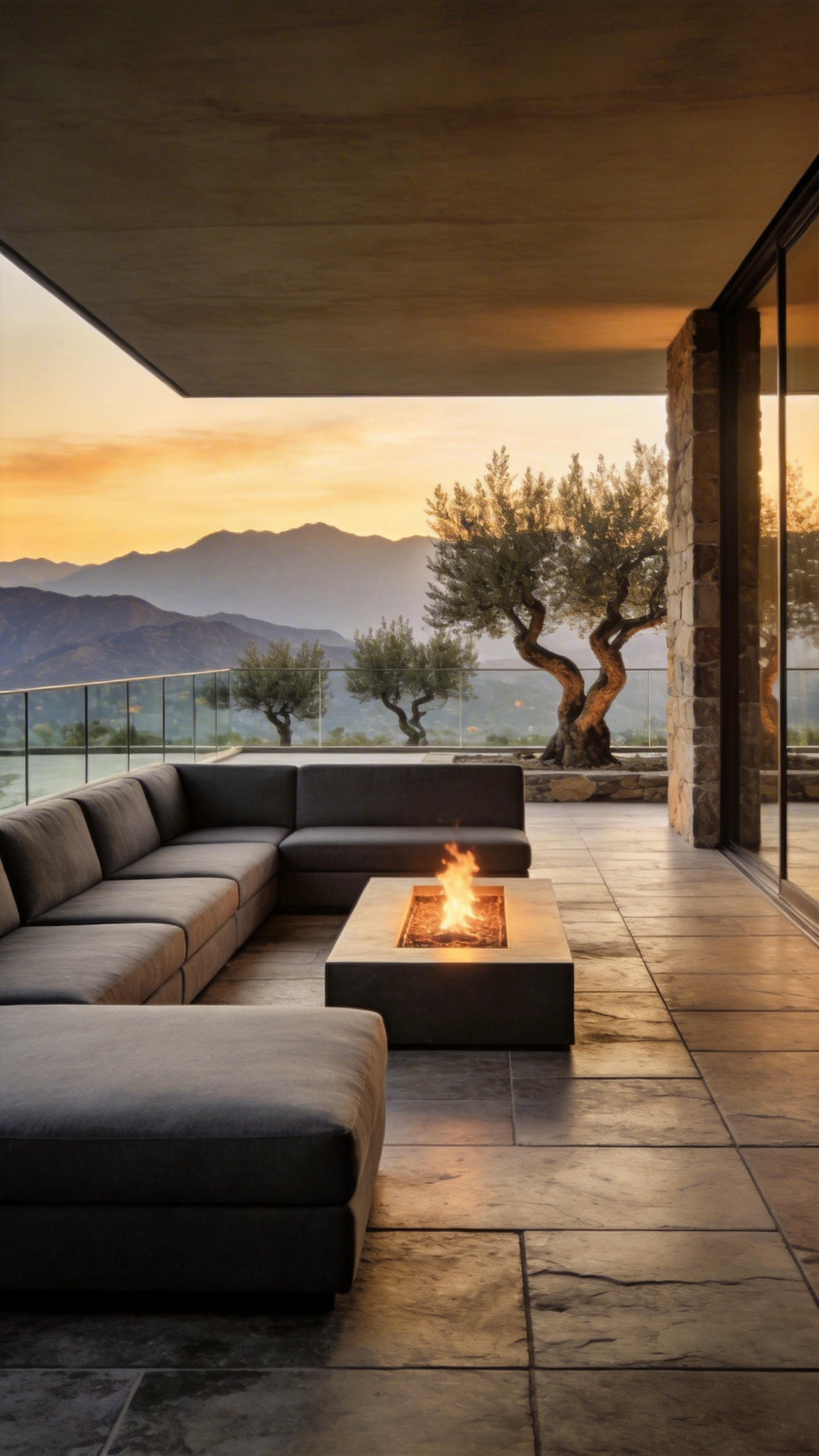
Historically, this level of intimacy was achieved through sunken conversation pits. Today, modern modular sets mimic that psychological “hug” without permanent excavation. Therefore, sitting lower to the ground fosters a more relaxed social dynamic. In fact, this shift in gravity creates a calming “nesting” effect for users. Guests are naturally inclined to stretch out rather than sit upright.
Technically, this illusion of indoor luxury relies on high-performance materials. For instance, open-cell “Dryfoam” and solution-dyed acrylics allow for a fully upholstered aesthetic that withstands rain. These soft forms often rest on architectural platforms made of teak or stone. Furthermore, these extended bases function as built-in tables, effectively reducing accessory clutter. Ultimately, these elements soften hard patios and bridge the gap between indoor comfort and the natural world.
6. The Sculptural Fire Element: Incorporating smokeless bio-ethanol concrete bowls for clean, ambient warmth
To achieve a truly luxurious finish, material choice is paramount. Specifically, designers prefer Glass Fiber Reinforced Concrete (GFRC) over standard pre-cast options. Unlike traditional concrete, GFRC contains internal fibers that act like microscopic rebar. Consequently, this creates a resilient structure capable of withstanding high heat without cracking. Furthermore, these bowls age beautifully, gaining character and strength over time.
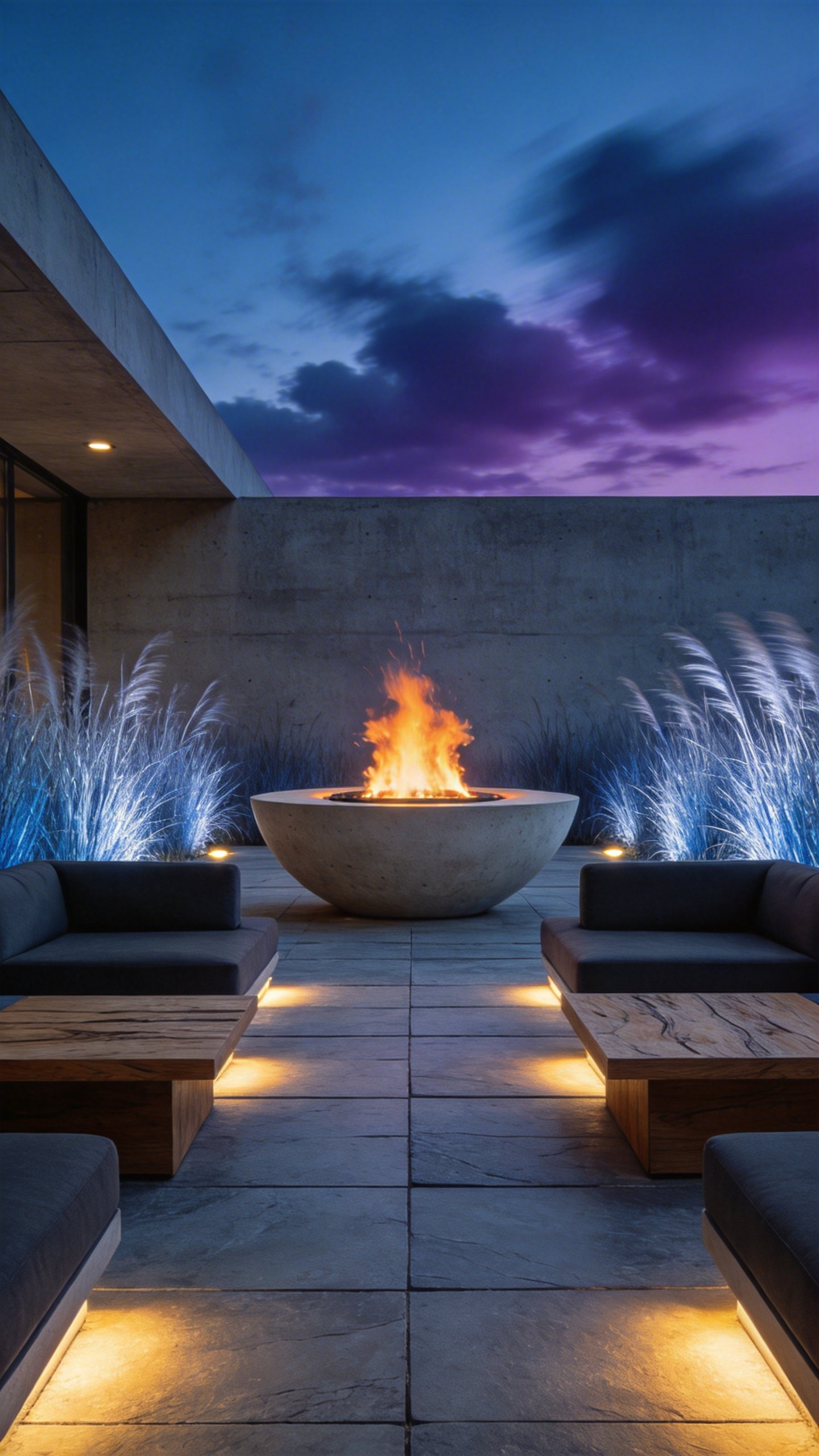
Visually, these elements introduce a sophisticated duality to the patio. In fact, the heavy, raw concrete anchors the space with Brutalist permanence. Conversely, the bio-ethanol flame offers a weightless, pure orange light. This combination turns a functional heat source into a captivating sculpture. Moreover, the sensory experience shifts from primal to curated. Because bio-ethanol burns without smoke, there is no lingering campfire smell to cling to clothing. Therefore, the natural fragrances of your garden remain center stage.
Finally, this approach aligns perfectly with sustainable design principles. Bio-ethanol is a renewable energy source derived from fermented crops like sugarcane. Thus, it represents a responsible, closed-loop carbon cycle. Additionally, the smokeless nature of this fuel eliminates the need for clearance zones. As a result, these sculptural bowls offer unmatched versatility for balconies or covered decks. Ultimately, they provide instant, clean warmth for the modern urban garden.
7. Textile Layering: Softening hardscapes with performance velvets and recycled PET rugs that defy the elements
Historically, outdoor textiles felt like stiff, waxy military canvas. However, modern design has moved well beyond mere utility. Now, we soften cold stone hardscapes using high-pile performance velvets. Specifically, these fabrics rely on a “carrot vs. radish” engineering principle. Unlike traditional piece-dyed cloths, the color pigment is integrated before the fiber forms. Therefore, the hue runs completely through the material. Consequently, these luxurious velvets resist UV fading and even withstand bleach solutions.
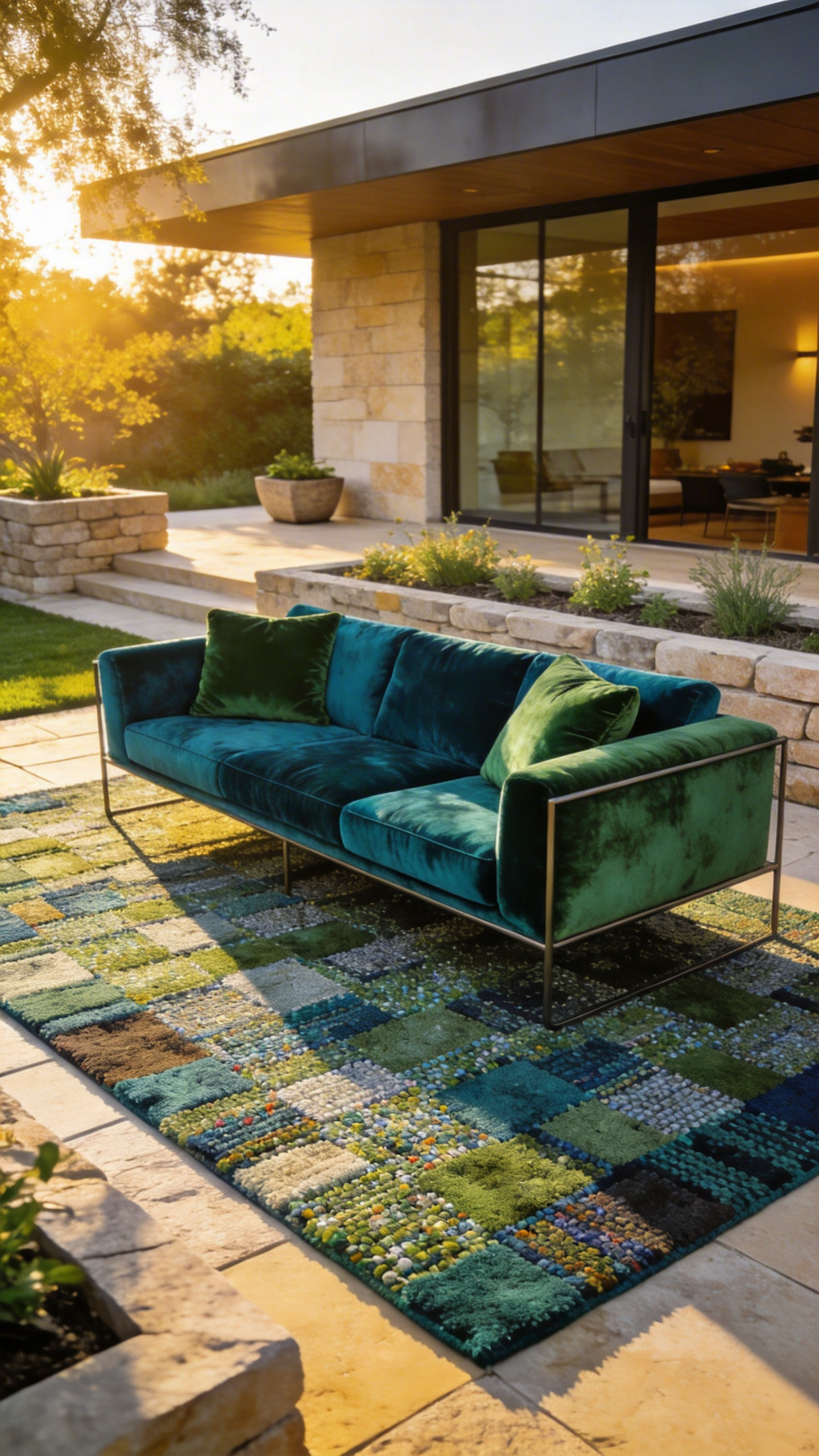
Furthermore, the foundation of this “softscaping” strategy is the recycled PET rug. Remarkably, a single rug can divert over 450 plastic bottles from landfills. Technically, PET fibers are hydrophobic. Thus, they do not absorb moisture, allowing rain to drain instantly. Unlike natural wool, which may rot, these rugs remain pristine outdoors.
Ultimately, this combination offers more than just durability. In fact, it provides essential “sensory nutrition.” The plush velvet absorbs echoing noise, while the rug adds organic texture. As a result, these tactile layers signal safety to the brain, significantly reducing cortisol levels. In short, layering textiles transforms an open-air terrace into a true sanctuary.
8. The Statement Pendant: Hanging oversized, weather-safe woven rattan fixtures to lower the visual ceiling
In open-air environments, patios often lack a defined vertical boundary. Consequently, these expansive areas can feel architecturally “leaky” or exposed. To remedy this, designers use oversized pendants to establish a “visual ceiling.” Specifically, suspending a large fixture compresses the vertical volume significantly. This technique signals to the brain that the area is an intimate, protected zone.
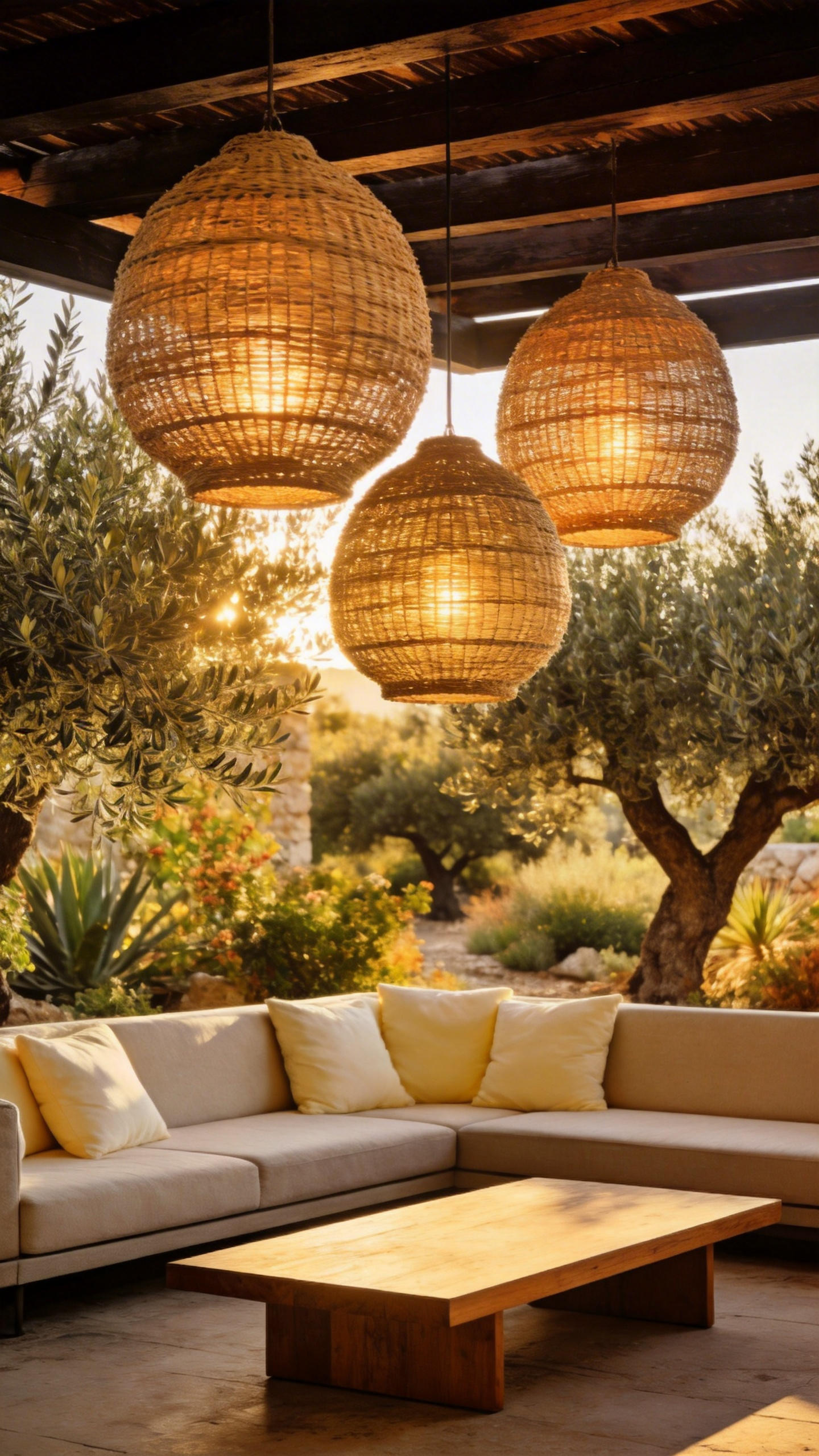
However, durability dictates the material selection. Although natural rattan implies tropical authenticity, it remains highly hygroscopic. Thus, it absorbs moisture and risks molding quickly. Alternatively, high-density polyethylene (PE) offers a resilient solution. Unlike PVC, this synthetic weave withstands UV exposure and rain for years. Therefore, it maintains that crucial statement look without degrading.
Furthermore, the impact extends beyond mere illumination. In fact, the true design power lies in the shadows. A tight diamond lattice casts rhythmic, sharp patterns on the floor below. Conversely, a looser nest-style weave creates a dappled, constellation-like effect. This “dance of light” mimics firelight, encouraging guests to linger longer.
Finally, consider the scale carefully. Ideally, the pendant’s width should measure at least one-third of the dining table below. For higher ceilings, clustering multiple fixtures creates a dynamic, sculptural focal point. Ultimately, these oversized elements act as jewelry for the patio, grounding the furniture effectively.
9. Curated Surfaces: Replacing glass tabletops with honed natural stone or terrazzo for tactile richness
Moving away from glass tabletops signifies a profound shift from visual minimalism to sensory-first luxury. Specifically, this trend addresses a growing fatigue with the sleek, characterless surfaces of our digital devices. Instead, designers are prioritizing the “haptic memory” found in honed natural stone. This material provides a grounding, primal connection that inert glass simply cannot match.
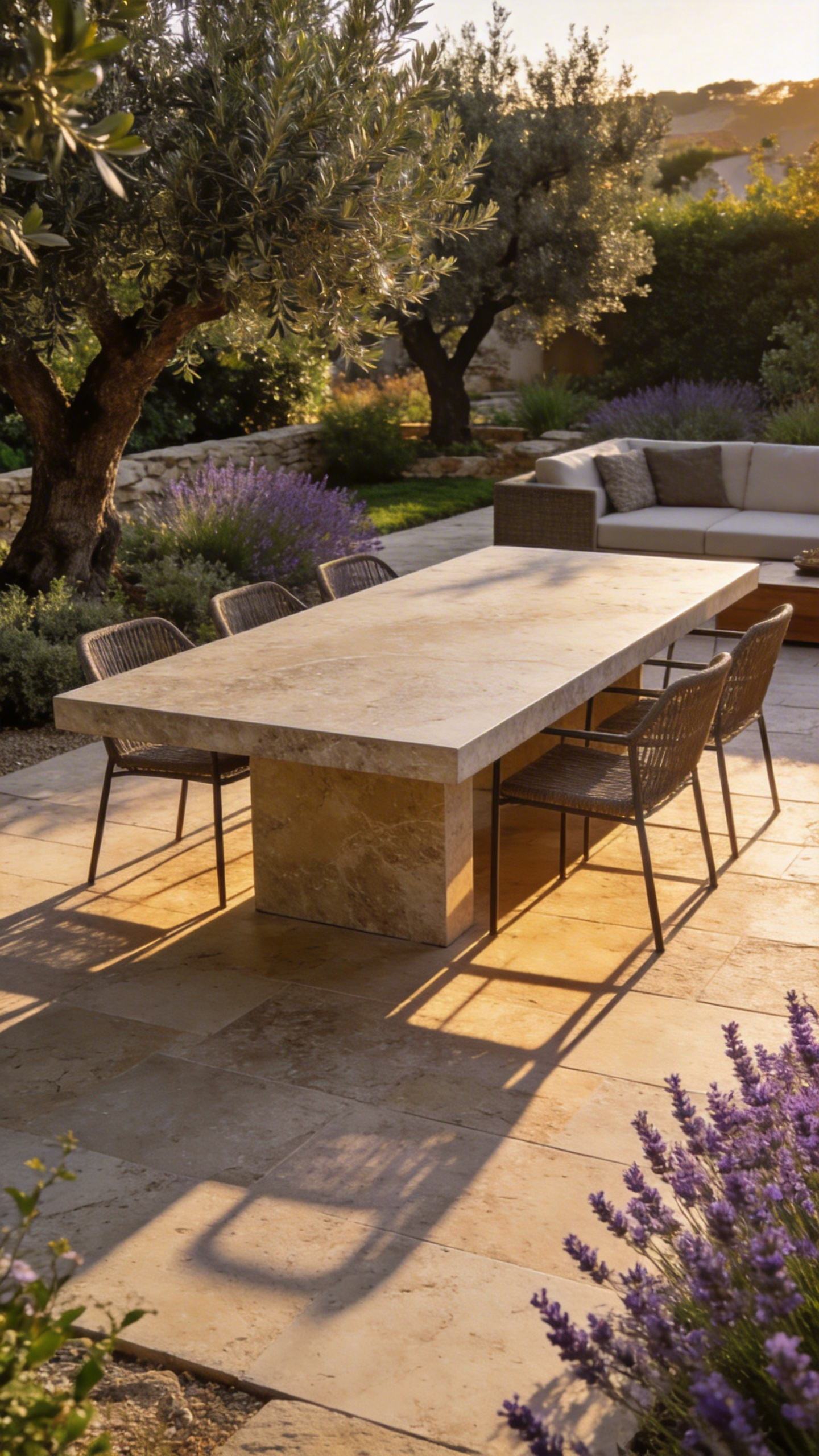
Furthermore, the mechanical finish plays a crucial role in creating this tactile experience. A honed finish stops just before polishing, creating a soft, velvety texture. Consequently, this matte surface absorbs light, mitigating the blinding glare often caused by reflective glass. For even greater depth, some homeowners opt for “leathered” stone with a dimpled, organic feel.
Beyond solid stone, terrazzo offers a compelling, historical narrative for the modern patio. However, successful outdoor applications require cement-based mixtures rather than epoxy to effectively resist UV damage. This ensures the material “breathes” and develops a weathered character over time.
Additionally, natural stone functions as a passive heat source during cool evenings. Its high thermal mass absorbs afternoon sunlight, slowly releasing warmth to comfort lingering guests. Therefore, the table offers physical comfort alongside aesthetic beauty. Finally, these curated surfaces embrace the “patina of use.” Rather than failing when scratched, stone records the history of shared outdoor moments.
Phase 3: Biophilic Integration & Sensory Design
Phase 3 transforms your patio from a static structure into a restorative, living environment. Fundamentally, this stage prioritizes “non-rhythmic sensory stimuli” over mere decoration. Specifically, this involves incorporating elements that move unpredictably, such as swaying Mexican Feather Grass. This turns your space into a thriving patio plant oasis. Consequently, these subtle, stochastic movements engage the brain to effectively reduce mental fatigue.
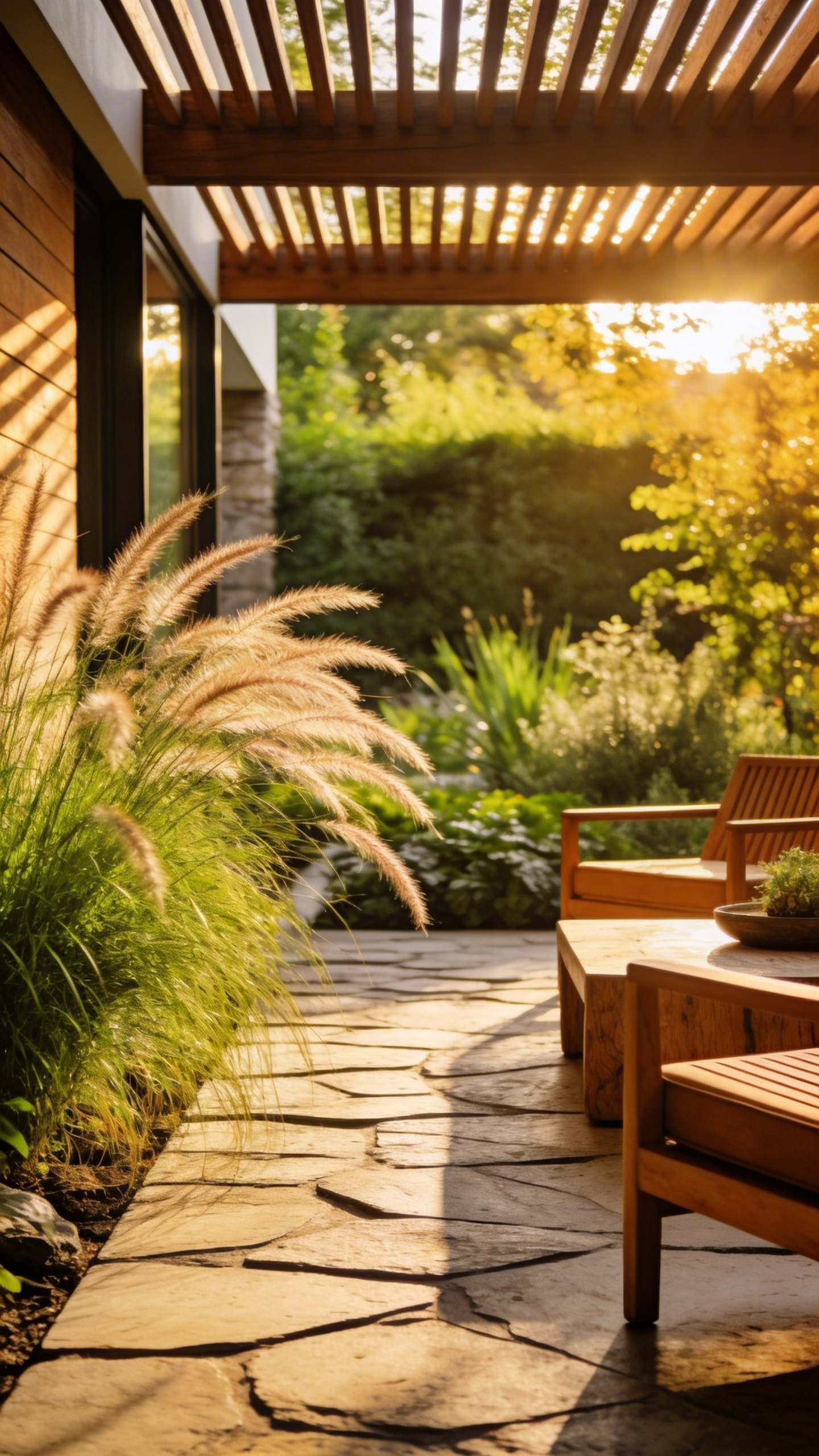
Next, we must consider the “micro-climate” by avoiding perfectly uniform environments. Instead, create “dynamic and diffuse light” using pergolas or tree canopies. In fact, this dappled light mimics a forest floor, keeping the nervous system gently engaged. Furthermore, the selection of materials should emphasize a “living finish.” For example, choose raw stone or FSC-certified hardwoods like Teak that age gracefully. Surprisingly, studies show that touching visible wood grain can actually lower a person’s heart rate.
Finally, successful design must curate the invisible layers of sound and scent. Therefore, position water features strategically to act as “acoustic masks” against urban noise. Simultaneously, integrate fragrant plants to trigger the limbic system’s natural relaxation response. Ultimately, this phase reclaims the patio as a true restorative interface for the homeowner.
10. The ‘Jungle’ Perimeter: Layering varying heights of tropical foliage (Monstera, Bird of Paradise) to create depth
The “Jungle Perimeter” is more than simple decoration; it essentially constructs a psychological “room” within your garden. To achieve this, we often apply a sophisticated botanical hierarchy known as the “King and Queen” strategy. Specifically, this utilizes distinct species of Bird of Paradise to create authoritative depth. First, the Giant White Bird of Paradise (*Strelitzia nicolai*) acts as a structural anchor. Its massive, paddle-shaped leaves provide an architectural ceiling and necessary high-level privacy. Consequently, this vertical stratification mimics the protective density of a real rainforest canopy.
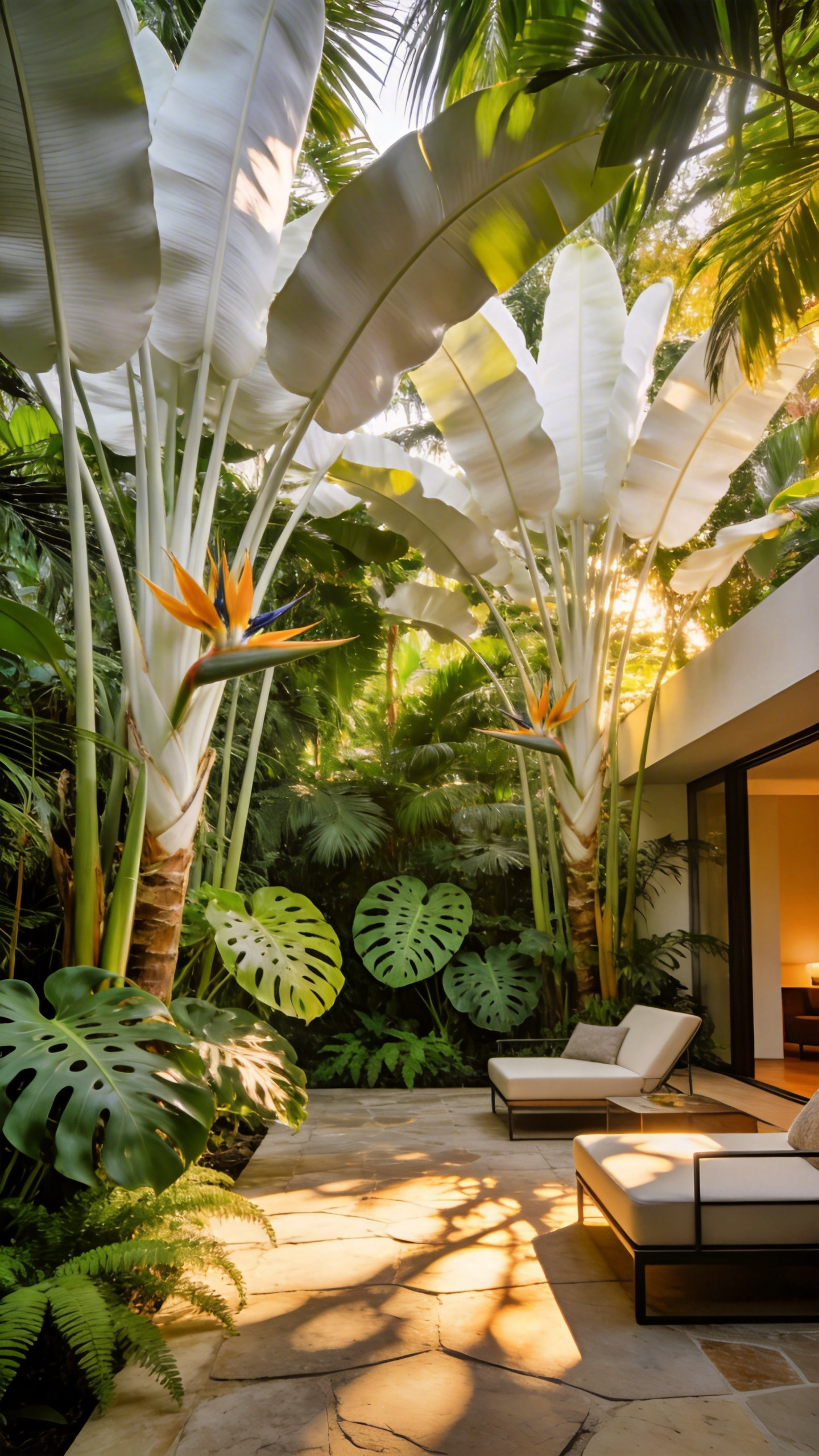
Furthermore, we manipulate visual depth through careful light engineering. For example, placing *Monstera deliciosa* in the foreground utilizes its natural leaf holes, known as fenestrations. These openings function like a living trellis. Therefore, sunlight filters through to create dynamic “dappled light” rather than heavy, dark shadows. Additionally, this dense layering serves a crucial acoustic function. Unlike reflective brick walls or wooden fences, thick tropical leaves diffuse sound effectively. In fact, the gentle rustle of rigid foliage creates natural white noise. Thus, the perimeter softens the harsh urban soundscape. It transforms a standard backyard into a secluded, sensory retreat.
11. Acoustic Water Features: Using minimalist recirculating fountains to mask urban noise with white sound
Acoustic water features serve as the “invisible architecture” of sophisticated patio design. Fundamentally, these minimalist elements function as sculptural focal points and sonic shields. However, effective noise masking relies on “pink noise” rather than “white noise.” White noise often sounds tinny, resembling radio static. In contrast, pink noise mimics the deep frequencies of rushing rain. Therefore, we utilize basalt columns or rain curtains to produce richer, more immersive tones.
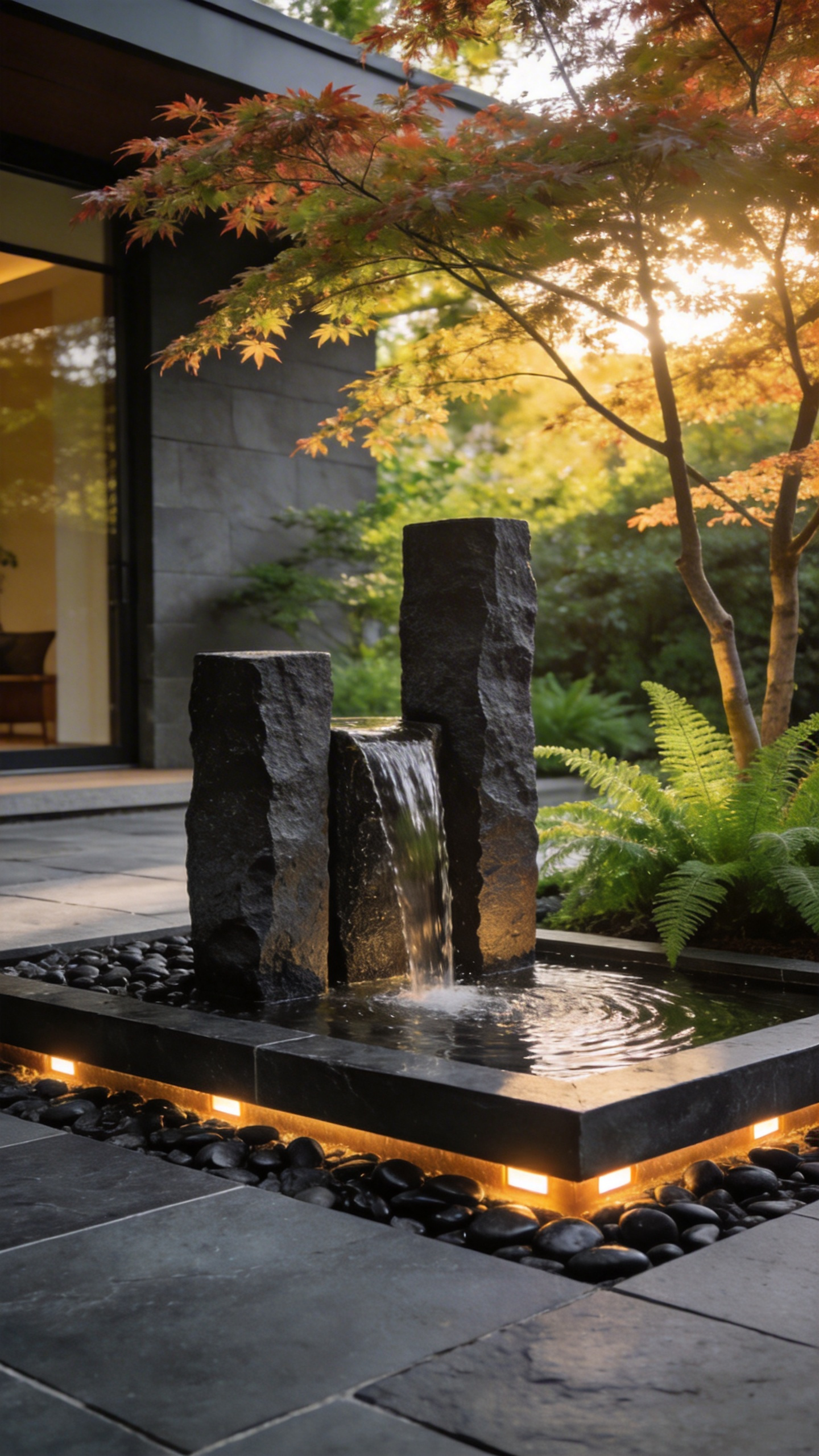
Furthermore, the chosen material dictates the acoustic texture. For instance, water striking Corten steel creates a bright, sharp splash. Conversely, natural stone surfaces generate a warm, complex gurgling. Consequently, concrete vessels offer a mid-range fullness, effectively masking the hum of air conditioning units.
Ultimately, authority in design comes from strategic placement, not just volume. Because sound intensity decreases rapidly, you must position the fountain within three to five feet of seating. Specifically, this creates a “Zone of Exclusion.” Inside this acoustic niche, the water’s rhythm triggers “soft fascination.” As a result, the brain diverts attention from urban chaos. This effectively creates a sanctuary of psychological relief.
12. Solar Pathfinding: Integrating flush-mount solar LEDs for subtle, navigational luminescence
Flush-mount solar LEDs represent a significant shift toward “invisible” technology in landscape architecture. Specifically, the hardware disappears to prioritize the light’s functional and emotional impact. By utilizing low-horizon illumination, these fixtures mimic the subtle, non-intrusive glow of a moonlit path. Consequently, the eye navigates using peripheral cues rather than adjusting to the blinding glare of traditional stake lights.
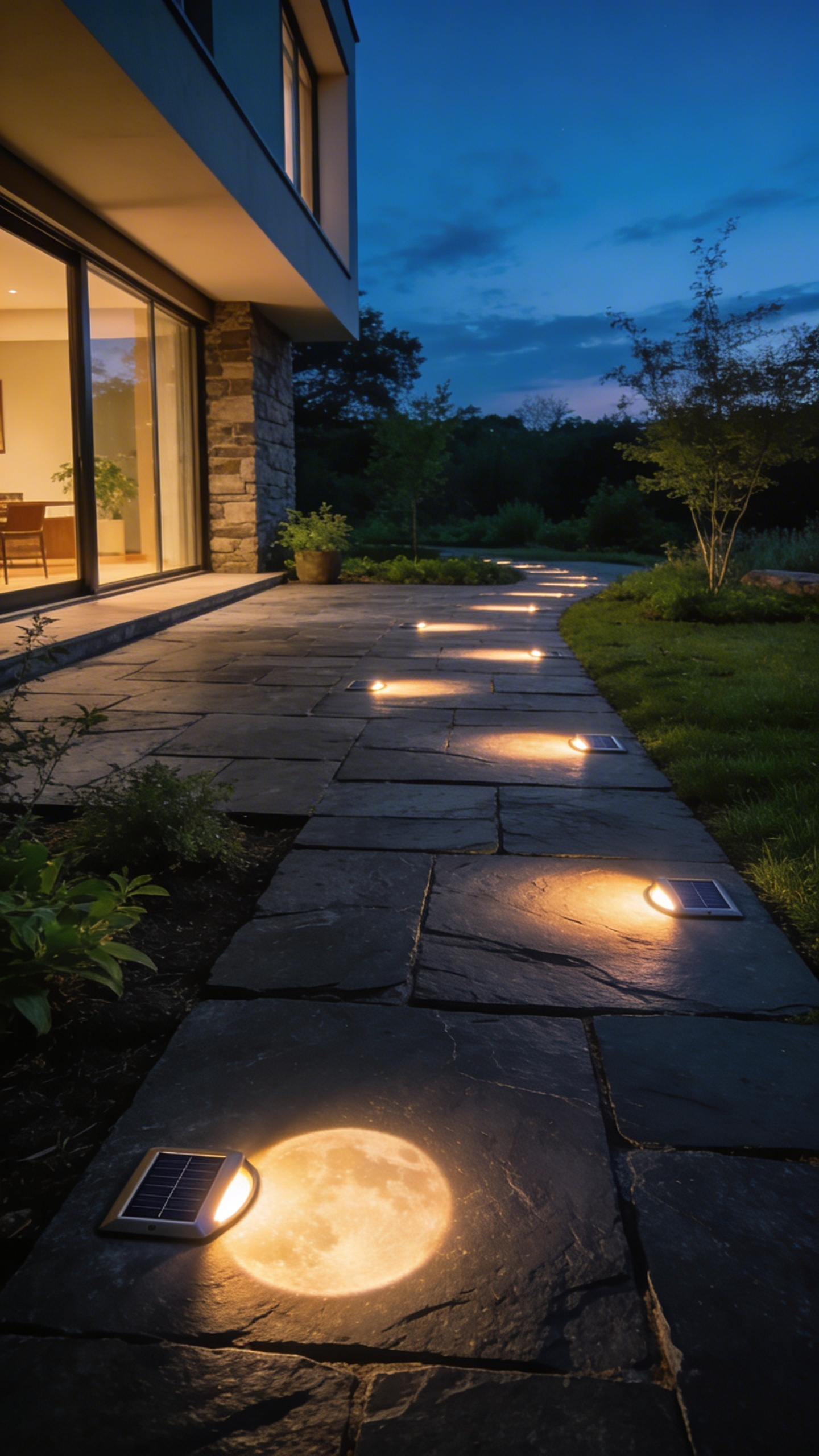
Durability remains a critical factor for these walkable surfaces. Therefore, modern high-end units utilize tempered borosilicate glass instead of standard resin. Unlike plastic, this glass resists yellowing and scratching from daily foot traffic. Furthermore, an IK10 impact rating ensures the housing withstands heavy loads, including vehicles. To manage temperature shifts, silicone gaskets allow the unit to “breathe” within the stone without cracking the masonry.
Architecturally, these lights serve as essential punctuation for outdoor spaces. For instance, designers place them to define thresholds where hardscape meets soft landscape. This effectively eliminates “edge anxiety” by clearly marking safe walking zones. Additionally, the spacing dictates the atmosphere. Irregular intervals create a naturalistic rhythm, while uniform placement suggests a formal, modernist aesthetic.
Finally, the installation process supports a seamless, luxurious narrative. Through core-drilling, lights are embedded directly into existing pavers or stone. Thus, they create a zero-trip environment suitable for universal design. During the day, the dark monocrystalline cells resemble decorative obsidian inlays. However, at dusk, they provide autonomous, dark-sky compliant navigation without disrupting local wildlife rhythms.
13. The Outdoor Gallery: Displaying weather-treated sculptures or ceramic art to elevate the aesthetic beyond ‘garden’
Transforming a patio requires shifting from simple landscaping to high-end curation. Specifically, this concept moves away from mass-produced accents toward site-specific installations. In essence, the outdoor space becomes a “green cube,” echoing the intellectual depth of indoor galleries. However, displaying fine ceramics or stone outdoors requires overcoming the destructive freeze-thaw cycle.
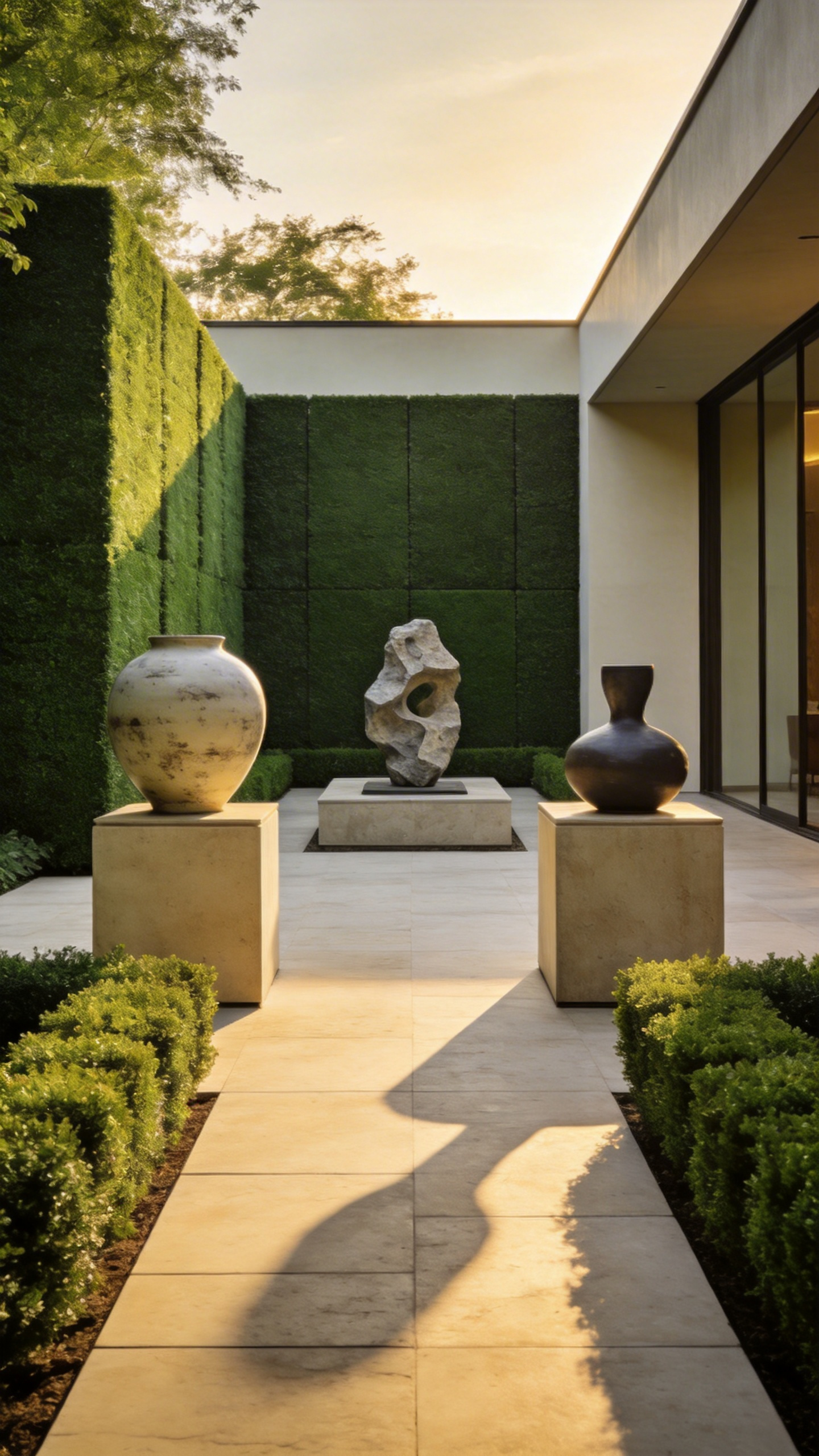
Fortunately, innovations like liquid quartz nano-coatings now solve this technical challenge. These breathable sealants prevent moisture absorption while preserving the material’s natural texture. Additionally, expert ceramicists often increase “grog” content. This creates a capillary network that withstands internal expansion.
Beyond durability, proper presentation is vital for achieving a gallery aesthetic. Placing a sculpture directly on the ground inevitably categorizes it as a mere lawn ornament. Therefore, utilizing a plinth is essential to elevate the piece to eye level. A floating or recessed base adds modern lightness, distinguishing the art from the garden floor.
Finally, lighting orchestrates the emotional atmosphere of this “shadow gallery.” Designers utilize 3000K warm light to enhance the earthy patina of bronze or stone. Conversely, cooler temperatures suit the clean lines of stainless steel. Ultimately, this careful layering of light and form creates a true sanctuary of the senses.
Phase 4: Functional Luxury & Social Flow
At this stage, the focus shifts from construction to choreography. Consequently, Phase 4 transforms a static patio into a cohesive, high-performance extension of the home. This transition relies heavily on “social flow,” which is the invisible science of movement and conversation. For instance, expert designers typically implement a primary traffic lane measuring 48 inches wide. This “Main Street” connects the interior threshold to outdoor destinations. It ensures guests move without interrupting seated groups.
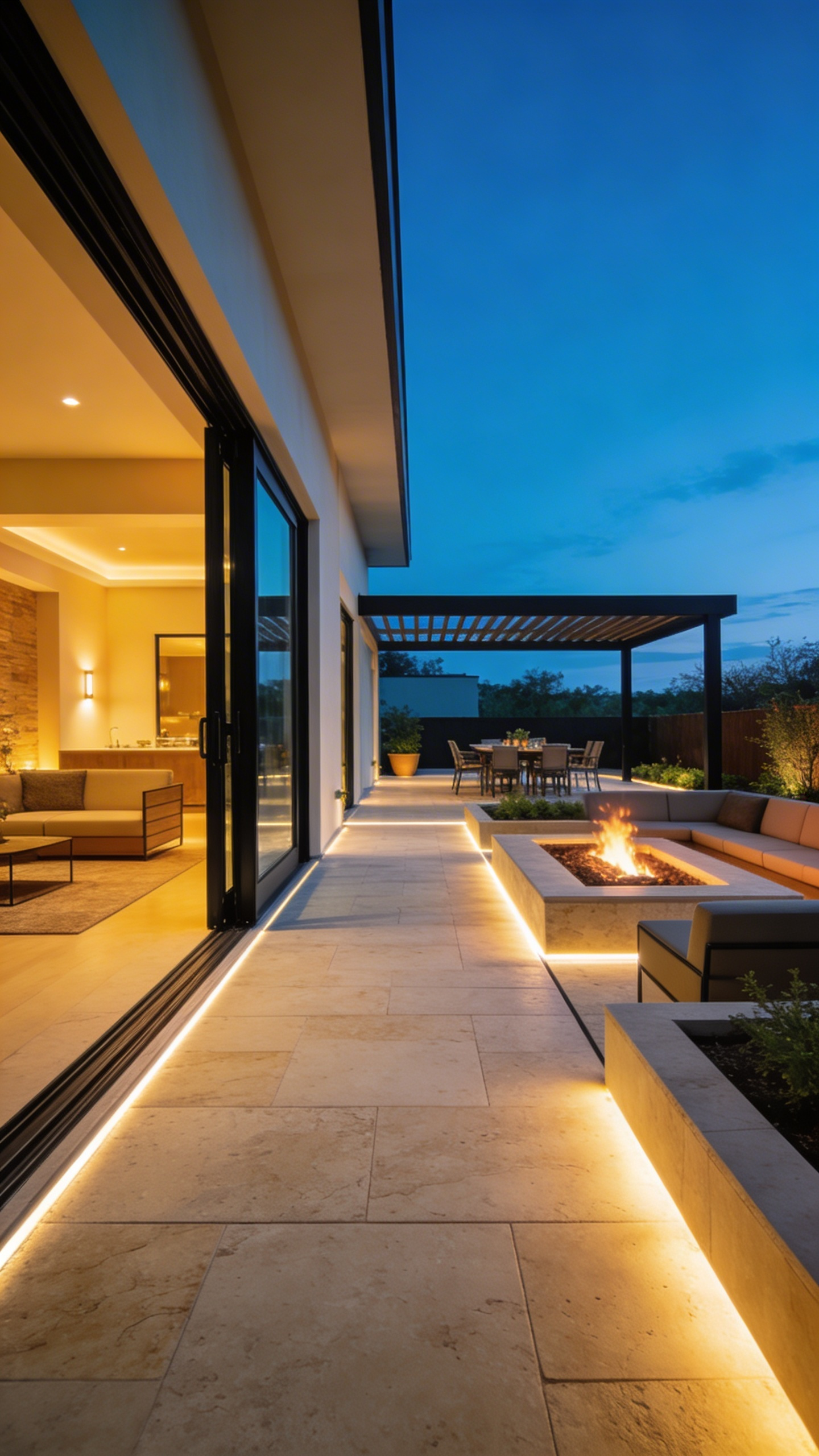
Furthermore, spacing requires mathematical precision to ensure comfort. Specifically, coffee tables should sit exactly 18 to 24 inches from a sofa. This distance allows for legroom while keeping drinks within easy reach. Therefore, the layout supports natural human interaction rather than hindering it.
Beyond spatial planning, “functional luxury” integrates high-end materials that perform under duress. Thus, we reject fragile decor in favor of durability that mimics indoor refinement. Notably, designers now utilize solution-dyed acrylics that offer the texture of velvet but remain bleach-cleanable. In fact, these textiles allow for deep-seated cushions that resist UV fading.
Moreover, true luxury involves controlling the elements. Integrated climate systems, such as flush-mounted infrared heaters, warm people instead of the air. Conversely, automated misting systems can drop ambient temperatures by 20°F without wetting furniture. Finally, a three-layered lighting strategy balances function with ambiance. Ultimately, these elements work together to elevate the backyard from a utility space into a sensory lifestyle hub.
14. The Al Fresco Bar: Designing a compact, built-in station with sustainable cooling for effortless hosting
The modern al fresco bar has evolved significantly. It is no longer merely a poolside cooler. Instead, it serves as a sophisticated architectural hub. To maintain open views, we often utilize a linear or L-shaped placement along the perimeter. Specifically, adhering to the “25/75 Rule” establishes a bar depth of 24 to 27 inches. Consequently, this compact footprint preserves valuable patio space. Yet, it remains deep enough to house professional-grade equipment. For example, stainless steel speed rails keep spirits within arm’s reach for effortless hosting.
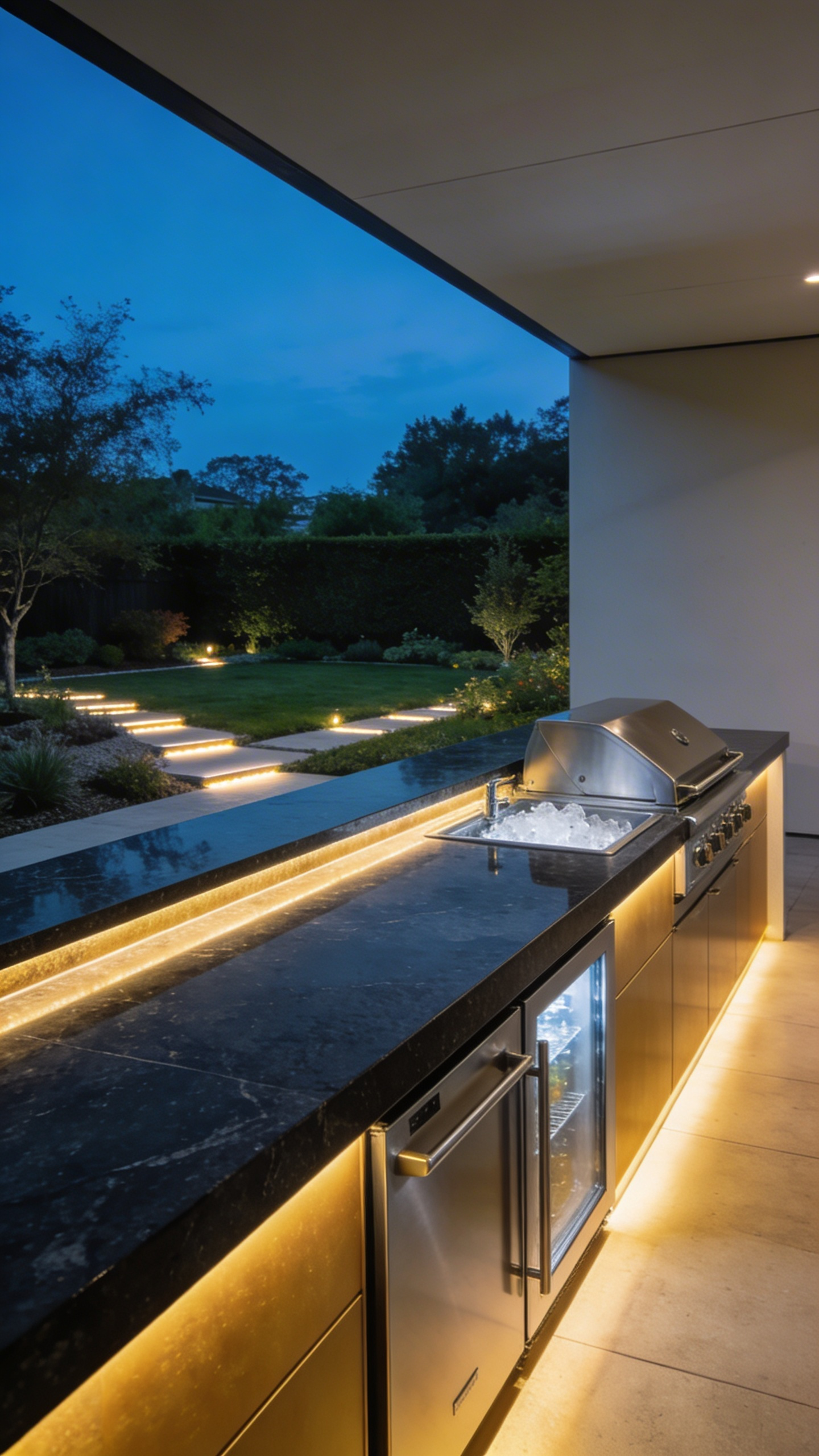
Furthermore, true luxury requires silence. Traditional refrigeration compressors are often too noisy for intimate gatherings. Therefore, sustainable design is pivoting toward thermoelectric cooling. Utilizing the Peltier effect, these units operate without moving parts. Thus, the soundscape remains pure, dominated only by conversation or nature. Alternatively, in arid climates, we might integrate a “Zeer Pot.” This ancient, low-tech method uses evaporative cooling to chill wine without electricity.
Finally, the chosen materials must bridge the indoor-outdoor divide effectively. “Leathered” Granite is a preferred countertop choice among designers. Its textured finish minimizes solar glare and hides fingerprints better than polished stone. Moreover, integrating vertical “cocktail gardens” allows hosts to pluck fresh garnishes instantly. Ultimately, these elements combine to create a sensory, sustainable oasis.
15. Communal Dining Geometry: Utilizing long, raw-edge timber tables to anchor large gatherings
Long, rectangular tables fundamentally alter the geometry of outdoor socializing. Unlike wide round tables, which often force a single, loud conversation, linear designs facilitate “nested” social clusters. Consequently, this arrangement supports the “propinquity effect,” allowing diners to engage intimately with their immediate neighbors without shouting. Furthermore, combining these tables with bench seating creates an egalitarian atmosphere. This effectively abolishes outdated status hierarchies associated with the “head of the table.”
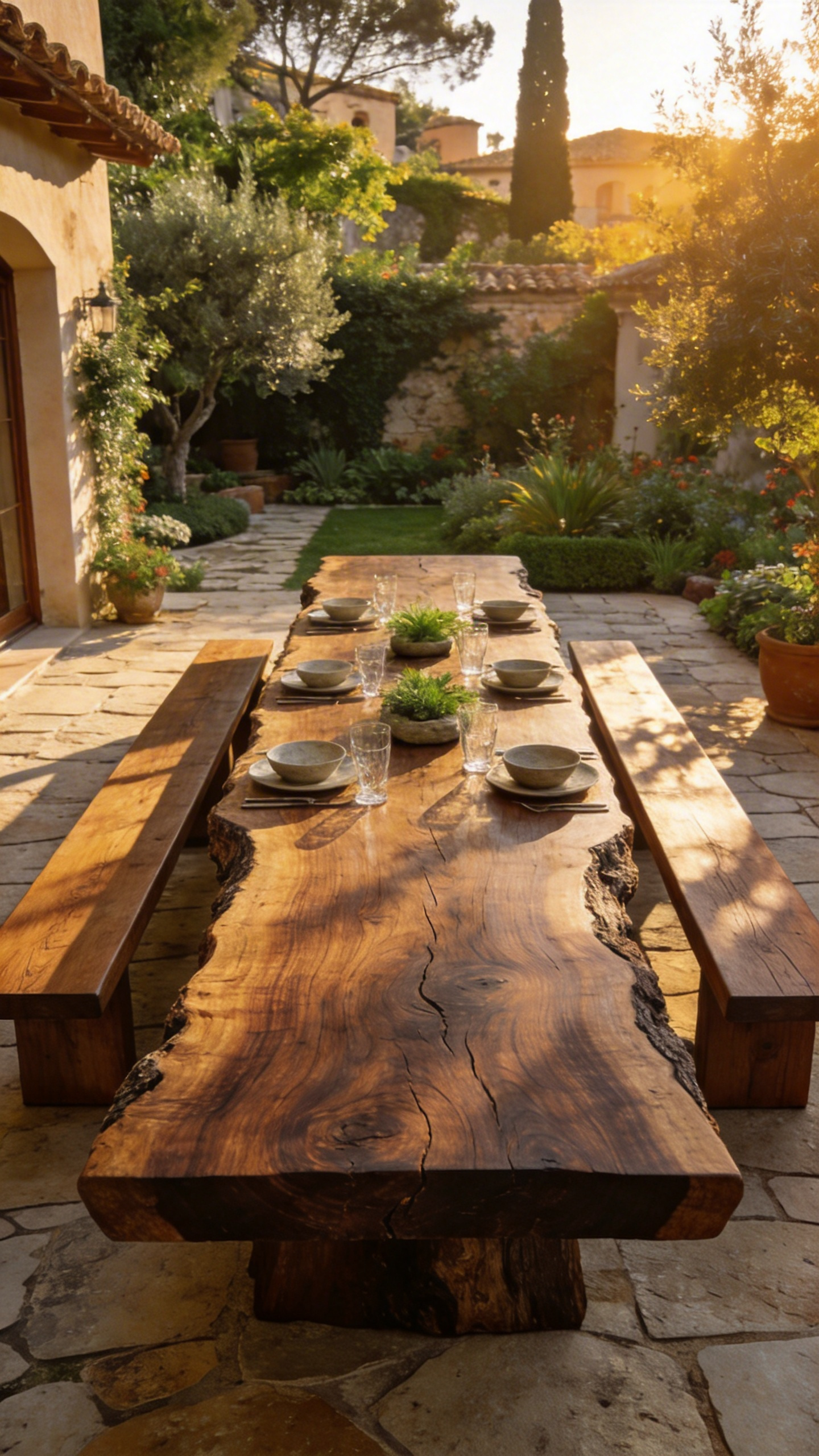
Beyond psychology, these substantial pieces serve as essential “spatial mass” within the landscape architecture. Specifically, a heavy, raw-edge timber table anchors the patio. This prevents furniture from appearing to “float” in open spaces. Ideally, designers select dense species like Teak or Western Red Cedar for their inherent durability and tactile properties. For instance, preserving the “waney” or live edge offers a sensory connection to the surrounding gardens. Moreover, natural imperfections like knots or stabilized cracks are viewed as storytelling elements rather than flaws.
Regarding maintenance, penetrating oils are preferable to thick varnishes, allowing the wood to breathe and age gracefully. Eventually, the timber creates a visual bridge between the structured home and the organic outdoors. Ultimately, this durability facilitates the Latin tradition of *sobre-mesa*, or the time spent chatting after eating. Therefore, the table becomes a permanent, grounding stage for lingering conversation long after the meal ends.
16. The Solitary Retreat: designating a corner for a hanging egg chair or hammock as a dedicated mindfulness zone
The “Solitary Retreat” transcends simple patio trends. In fact, it applies complex environmental psychology to outdoor living. Historically, Arne Jacobsen designed the original Egg Chair to provide privacy in exposed, public spaces. Subsequently, suspending this design transforms the seat into a floating sanctuary. Therefore, positioning a hanging chair in a corner capitalizes on the “Prospect and Refuge” principle. This placement protects your back, while the pod shape acts as a sensory cocoon.
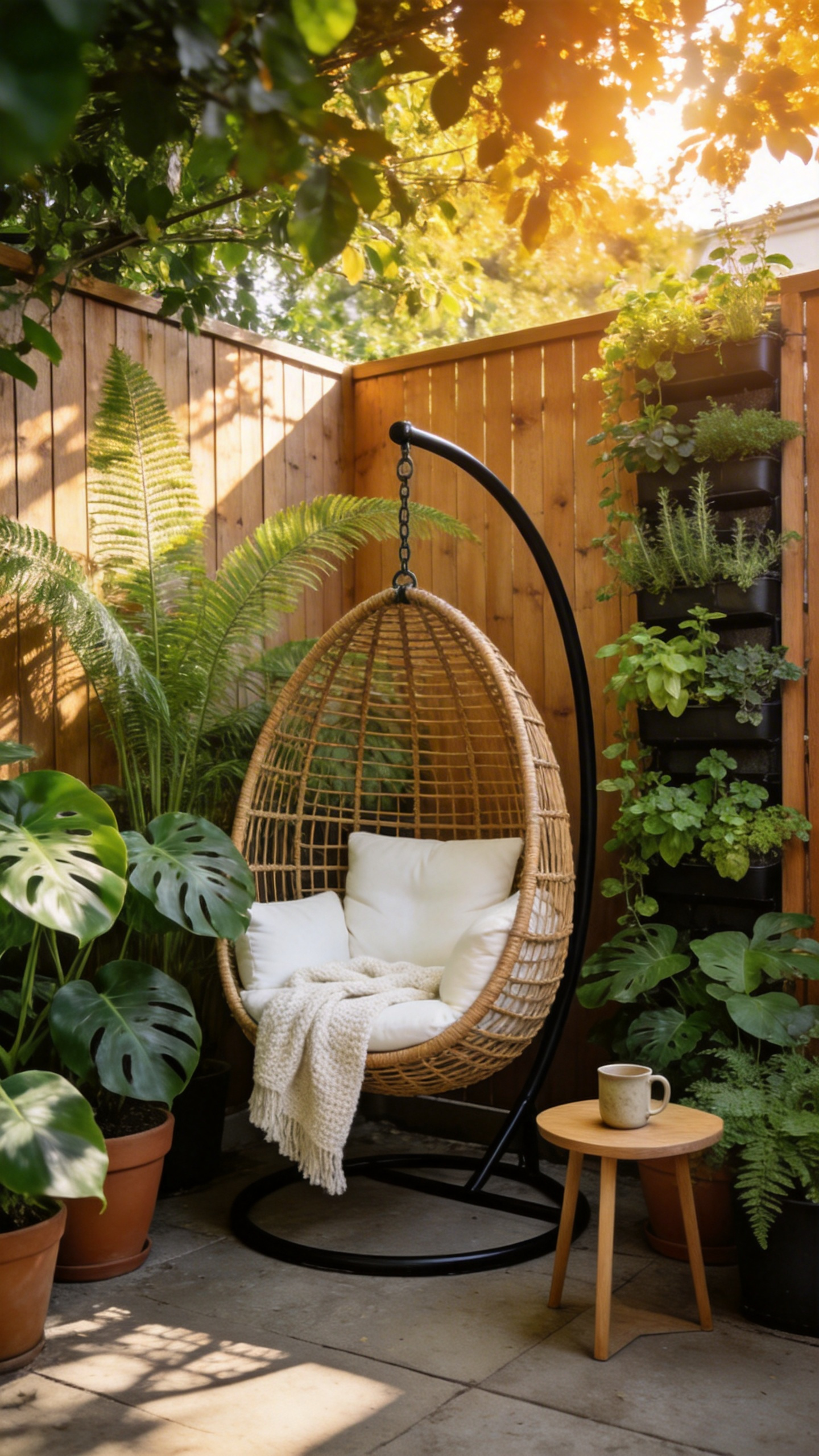
Moreover, the biological benefits are significant. Studies show that passive rocking stimulates the vestibular system. Consequently, this rhythmic motion synchronizes brainwaves to induce a meditative state quickly. To achieve this, technical integration is key. Specifically, introduce tactile anchors like high-pile rugs to soften the hard patio environment. Furthermore, the reclined posture naturally discourages phone use. Ultimately, this creates a physical barrier against digital distractions, enforcing a true mindful reset.
17. Climate Control Integration: Discreetly installing misters or infrared heaters to extend the patio’s seasonal lifespan
Consequently, modern high-end design prioritizes absolute “visual harmony.” We now treat climate control as structural architecture rather than added appliances. Specifically, flush-mount infrared heaters sit recessed within Type X fire-rated pockets. Thus, the bulky unit disappears, leaving only a minimalist heating element visible. Unlike traditional gas heaters, these electric systems utilize radiant heat physics. Effectively, they transfer warmth directly to people and furniture, mimicking the sensation of natural sunlight.
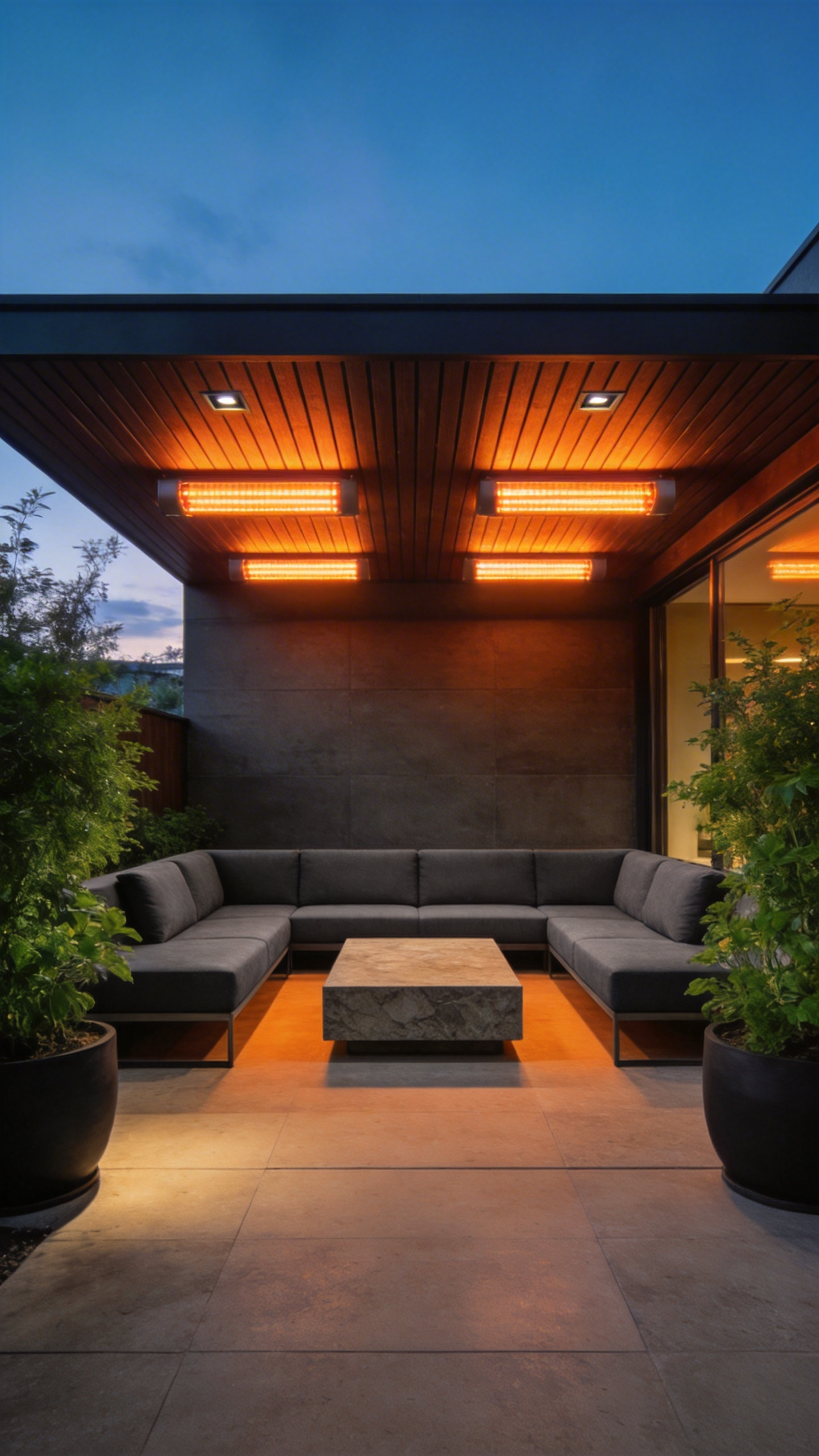
Similarly, architects hide high-pressure misting lines inside custom-milled beam channels. Operating at over 1,000 PSI, these advanced pumps achieve “flash evaporation.” Therefore, atomized droplets absorb thermal energy instantly. As a result, the ambient temperature drops by up to 30°F without ever wetting the flooring. Furthermore, integrating these elements into smart home ecosystems allows for automated “Climate Scenes.” Ultimately, this “Invisible Architecture” transforms a seasonal patio into a permanent “Third Space.” In fact, this approach extends the outdoor living season from merely three months to nearly ten.
Frequently Asked Questions
How do I make my patio look expensive?
To achieve a luxury aesthetic, prioritize architectural consistency over trendy accessories. Utilize “Infinite Flooring” by matching your indoor tiles with outdoor porcelain pavers. Opt for oversized, high-quality materials like natural stone or FSC-certified teak, and ensure all lighting uses a consistent warm color temperature (2700K) to create a seamless indoor-outdoor flow.
What are the best plants for a luxury patio?
For a sophisticated “Jungle Perimeter,” layer varying heights of foliage. Use Giant White Bird of Paradise (*Strelitzia nicolai*) for structural height and privacy, paired with *Monstera deliciosa* for textured mid-levels. Incorporating a vertical hydroponic garden or a “patio plant oasis” with architectural species like Japanese Maples or Olive trees adds immediate value and restorative biophilic benefits.
How can I create privacy on my patio without a fence?
Biological privacy shields are more effective and aesthetically pleasing than traditional fencing. Install vertical living walls or high-density “Jungle Perimeters” using tropical plants. Alternatively, use oversized planters with tall ornamental grasses or adjustable louvered pergolas to create visual boundaries while maintaining airflow and a sense of openness.
Conclusion: Moving beyond decoration to create a sustainable ecosystem that enhances daily well-being.
Ultimately, a patio must serve as more than just a visual stage. Instead, we should view these high-end patio decorating ideas as components of a dynamic, living ecosystem. By prioritizing biodiversity, thermal comfort, and architectural unity, the space performs actual ecological work. It simultaneously serves as a sanctuary for the homeowner. Consequently, the design shifts from purchase-heavy decoration to restorative connection. It quiets the mind through fractal patterns and cools the surrounding air. Therefore, true luxury is not merely seen in a photograph, but deeply felt in every moment spent within the space.
In fact, this holistic approach redefines the future of modern living. It seamlessly bridges the gap between structured interiors and wild nature. Thus, your home becomes a resilient shelter against constant modern stress. To start, simply audit your current selection of materials and plants. Specifically, replace one inert plastic object with a native, living species. In doing so, you cultivate a sanctuary that truly heals.