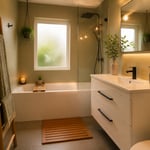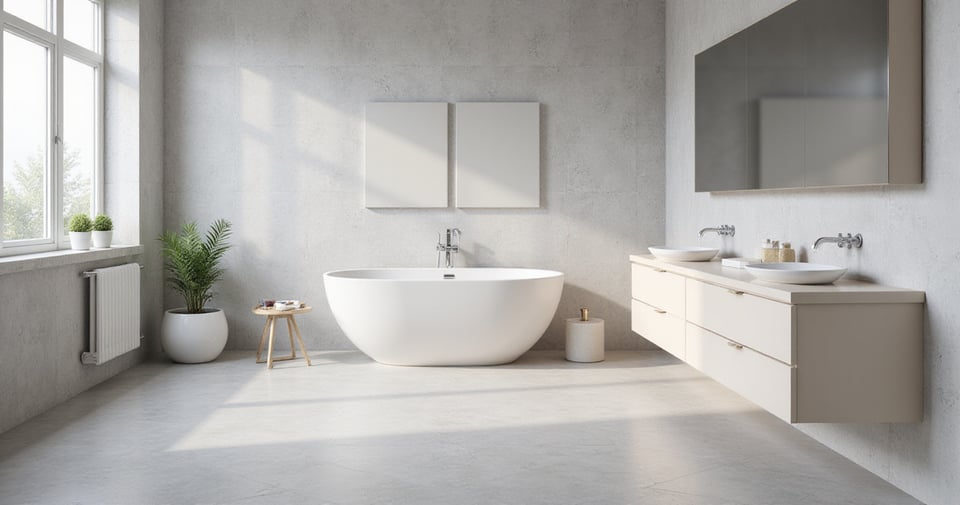
You know what people always ask me? They have these gorgeous Pinterest boards filled with spa-like bathrooms, but when it comes time to actually design their own, they freeze. They fixate on a tile pattern or a fancy sink, and the most important part—the cabinets—becomes an afterthought. And that’s how you end up with a bathroom that’s beautiful but completely useless. A pretty prison of bad storage and countertop clutter.
As an artist, I see space differently. Every room, especially one as essential as the bathroom, needs to function like a well-organized studio. It needs good bones. It has to support your daily rituals, not get in the way of them. The secret isn’t just picking a style; it’s about making smart, foundational choices that allow the style to emerge naturally. We’re going to design a space that works as hard as you do, a place that’s both a sanctuary and a high-functioning workshop for your life.
Foundational Planning & Smart Layout Strategies
This is the part everyone wants to skip. The un-sexy stuff. But I promise you, this is the equivalent of prepping your canvas. If you don’t get this right, no amount of expensive paint (or tile, in this case) is going to save your masterpiece. Mess this up, and you’re in for a world of hurt and wasted money.
1. Accurately Measure Your Bathroom Space for Perfect Fit
Can we just agree to stop eyeballing things? Your tape measure is your most important tool right now—more than any style guide. Last year, I had a client who was convinced they could fit a 36-inch vanity in a specific spot. They bought it, paid for delivery, and surprise, the bathroom door couldn’t open all the way. A half-inch miscalculation created a thousand-dollar headache.
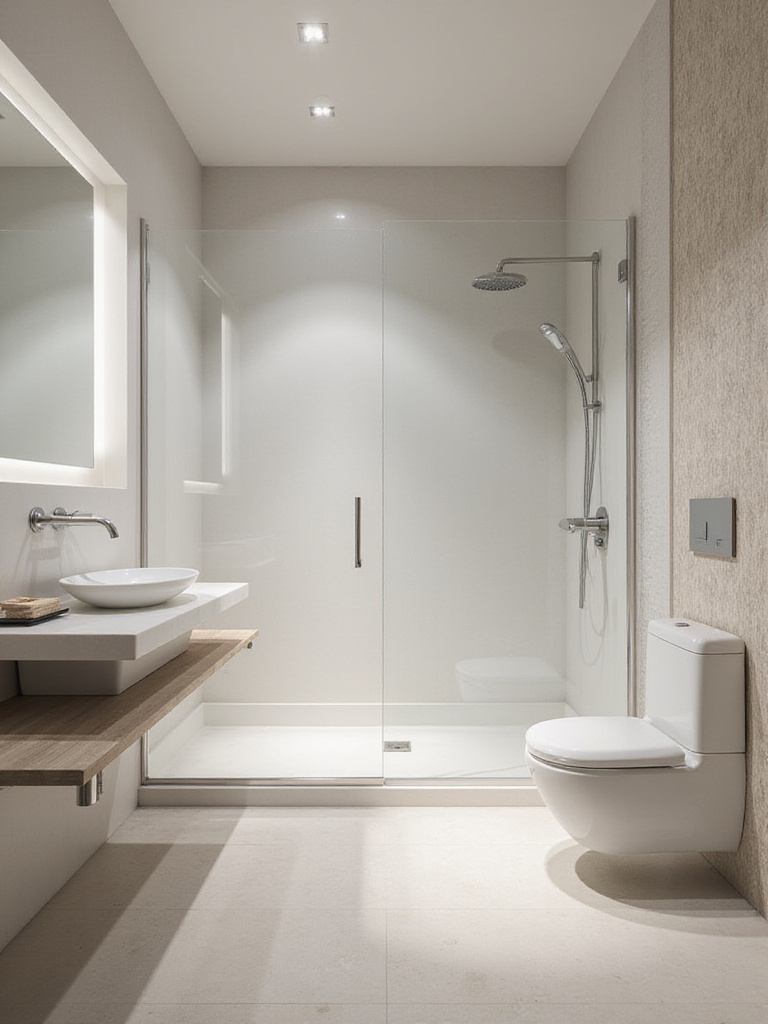
So, here’s what actually matters: measure everything. Three times. The width, the depth, the height. And not just in one spot—walls are rarely perfectly straight. Note where your pipes and outlets are, because you can’t just wish them away. The real shortcut here isn’t a fancy app; it’s getting a second person to double-check your numbers. This simple step separates the pros from the people who end up with a cabinet that blocks the shower door.
Once you have your map of the space, you can start deciding what kind of furniture will live there.
2. Choose Between Wall-Mounted or Freestanding for Optimal Layout Versatility
This decision is all about visual weight. Think of it like a composition. Do you want your main piece to be grounded and solid, or do you want it to float and create a sense of airiness? A freestanding vanity is like a piece of sculpture; it’s a strong, defining focal point. It can have a ton of character, feel like a real piece of furniture, and often offers deep, substantial storage. It has presence.
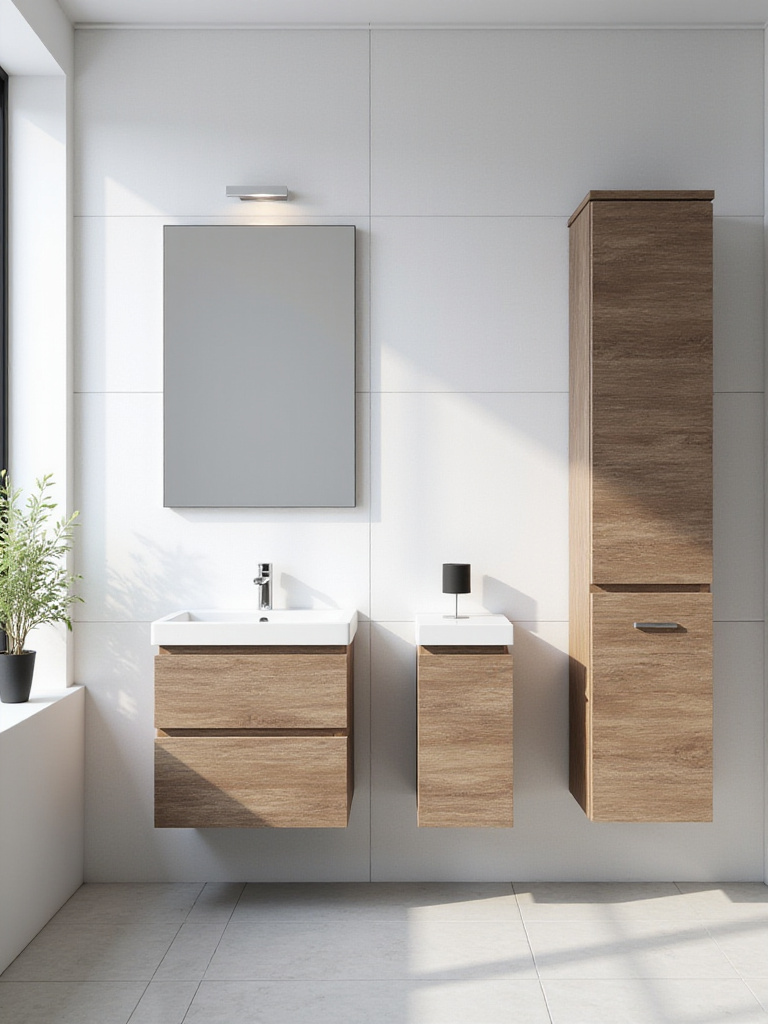
Wall-mounted, or “floating,” vanities are my go-to for small spaces. Lifting the cabinet off the floor is a visual magic trick. It instantly makes the room feel bigger because your eye can see the floor underneath, creating an illusion of more space. It’s the design equivalent of leaving white space on a canvas—it lets everything else breathe. Plus, cleaning under it is a dream. The BS to ignore? That one is “better” than the other. The right choice depends entirely on your space and the feeling you want to create.
And speaking of what’s right for you, let’s talk about the cold, hard cash.
3. Define Your Budget Clearly to Guide Material and Style Selections
I get it. Talking about money feels restrictive when you’re in a creative flow. But creativity doesn’t have a price tag, and cabinetry absolutely does. The biggest mistake I see is falling in love with a custom, solid-walnut vision on a stock, flat-pack budget. It’s a recipe for disappointment. A clear budget isn’t a creativity killer; it’s a focusing lens. It tells you where you can afford to splurge and where you need to get resourceful.
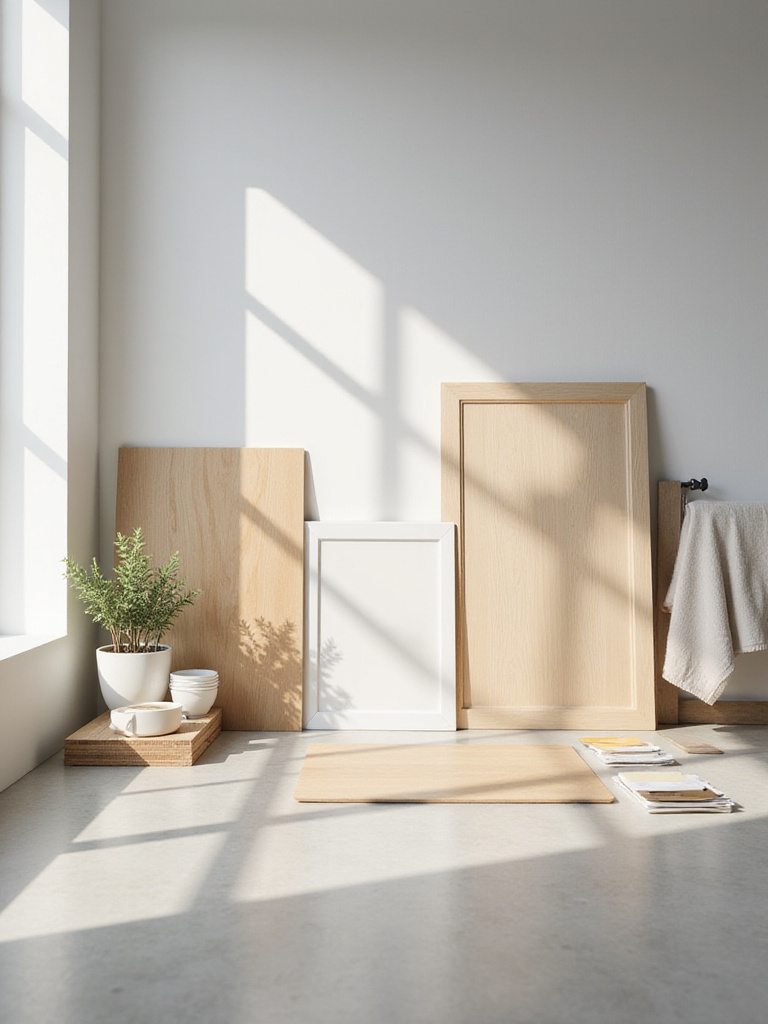
Start by researching the general costs for stock, semi-custom, and fully custom cabinets. Be honest about what you can spend. And for the love of all things sacred, build in a 15-20% contingency fund. Unforeseen things always happen. The shortcut here is to prioritize. Do you need the solid wood construction, or can you get a high-quality MDF box with a solid wood door and killer hardware for a fraction of the cost? A well-defined budget frees you up to make smart, creative choices within your means.
With your budget set, it’s time to get brutally honest about all your stuff.
4. Prioritize Your Specific storage needs to Optimize Internal Configuration
Please, do not buy a single cabinet until you have taken every single item out of your current bathroom and put it on the floor. I’m serious. Take stock of what you actually own and need to store. Are you a person with a thousand tiny makeup pots? Then a single, deep drawer is your enemy. Do you buy jumbo-sized shampoo bottles? Then you need tall cabinet space. You can’t design a home for things you haven’t accounted for.
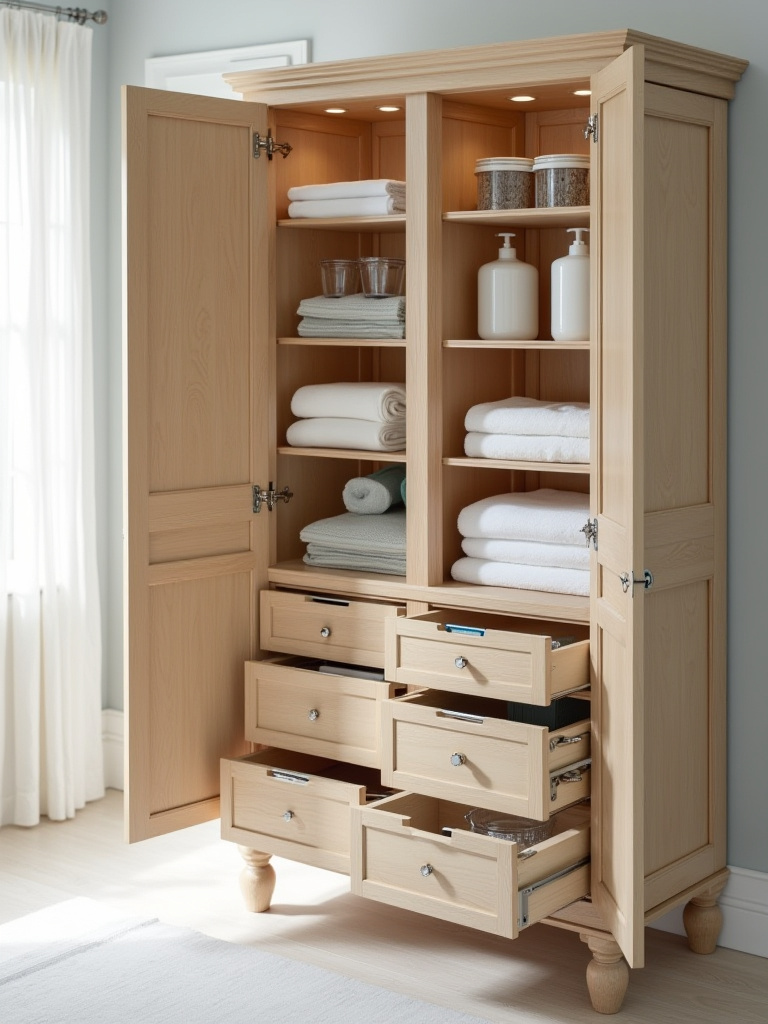
I once worked with a couple who bought a stunning vanity with these beautiful, slim drawers. The problem? They had a collection of bulky electric toothbrushes and hair tools that didn’t fit anywhere. Countertop clutter was inevitable. You have to design the inside of the cabinet first. Group your items by size and frequency of use. The stuff you use every day needs to be at arm’s reach. The stuff you use once a month can go higher up or further back. Your cabinet’s job is to serve your stuff, not the other way around.
Now that you know what’s going in the cabinets, let’s think about how you move around them.
5. Evaluate Bathroom Traffic Flow for Safe and Convenient Cabinet Placement
A bathroom has its own choreography. There’s the path from the door to the sink, from the sink to the toilet, from the toilet to the shower. Cabinet doors, drawers, and even you—you’re all part of this dance. A poorly placed cabinet can feel like a constant, clumsy partner, always getting in your way. You need to ensure there are clear, comfortable pathways for movement.
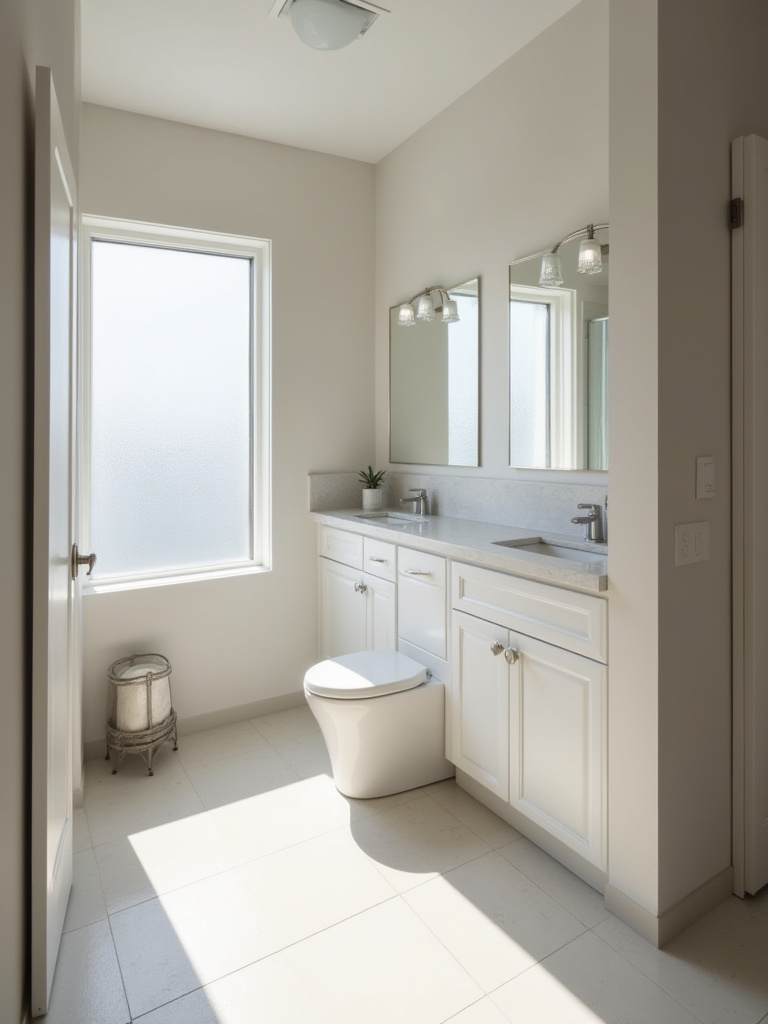
The noise you can ignore is that you have to fill every empty wall with storage. No, you don’t. Negative space is your friend. The real-world shortcut is to use painter’s tape. Before you commit to anything, tape the outlines of your proposed cabinets on the floor. Cut out cardboard boxes to their dimensions. Then, walk through the space. Open the imaginary doors. Pretend you’re drying your hair or helping a kid brush their teeth. If it feels tight or awkward, it is. Fix it now, on the floor with tape, not after it’s installed.
Material & Style Selection for Aesthetic and Durability
Okay, you’ve done the hard work of planning. Now we get to the fun part: picking the materials and finishes that will bring your vision to life. This is where you layer in the personality and texture, but always with an eye on practicality. After all, a bathroom is one of the harshest environments in your home.
6. Select Moisture-Resistant Materials for Long-Term Durability and Easy Maintenance
This is non-negotiable. Your bathroom is a steam room, a splash zone, a humidity chamber. Using materials that can’t handle moisture is like making a sculpture out of sugar and leaving it in the rain. I’ve seen standard MDF cabinets—the stuff used in cheap office furniture—literally swell and disintegrate into a pulpy mess within a few years. It’s a complete waste of money.
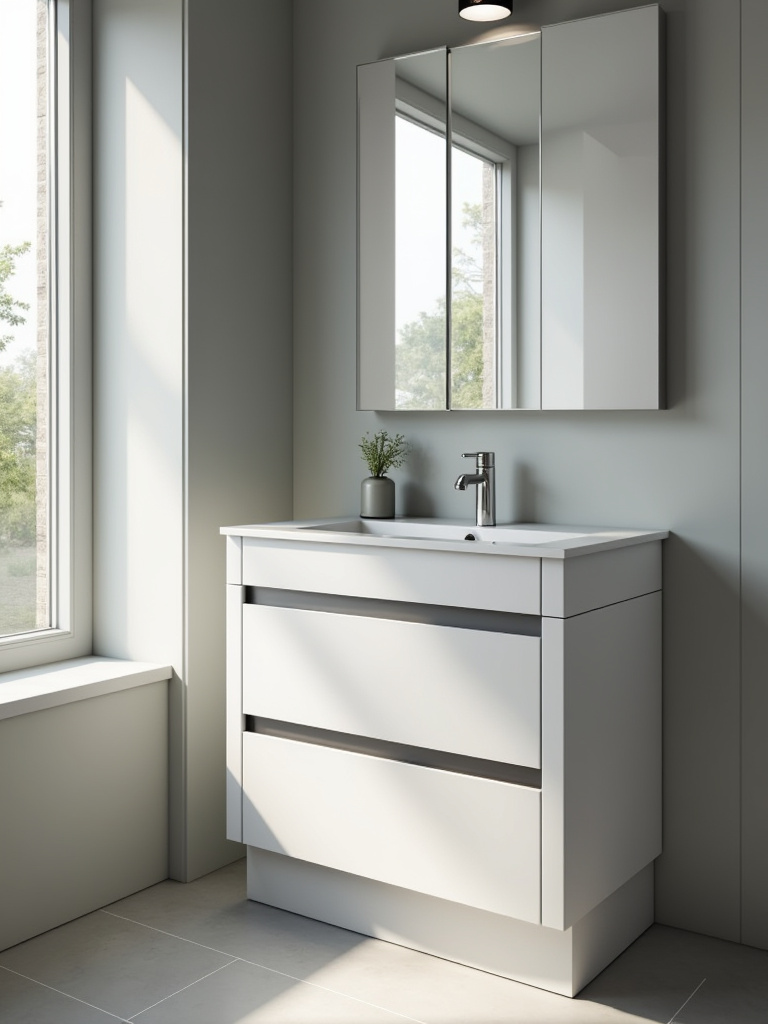
The BS to call out is the idea that “a good coat of paint” will protect a non-water-resistant material. It won’t. Moisture gets into seams and unpainted edges. You need to start with a solid core. Marine-grade plywood is fantastic. PVC is basically indestructible. Even high-quality, moisture-resistant MDF (often called MR-MDF) is a solid choice. Your first line of defense is the core material; the finish is the second. Don’t cheap out here unless you enjoy replacing your cabinets every five years.
Once you’ve chosen a tough material, you can focus on making it look good.
7. Align Cabinet Style with Your Bathroom’s Overall Design Aesthetic
Now we talk style. Think of your cabinet style as the foundational rhythm of your design—it sets the tone for everything else. Are you going for a clean, modern vibe? Flat-panel doors are your friend. A cozy, rustic farmhouse feel? Shaker-style doors with a slightly distressed finish are perfect. Your cabinet doors, the finish, and the hardware should all speak the same language as your tile, your lighting, and your fixtures.
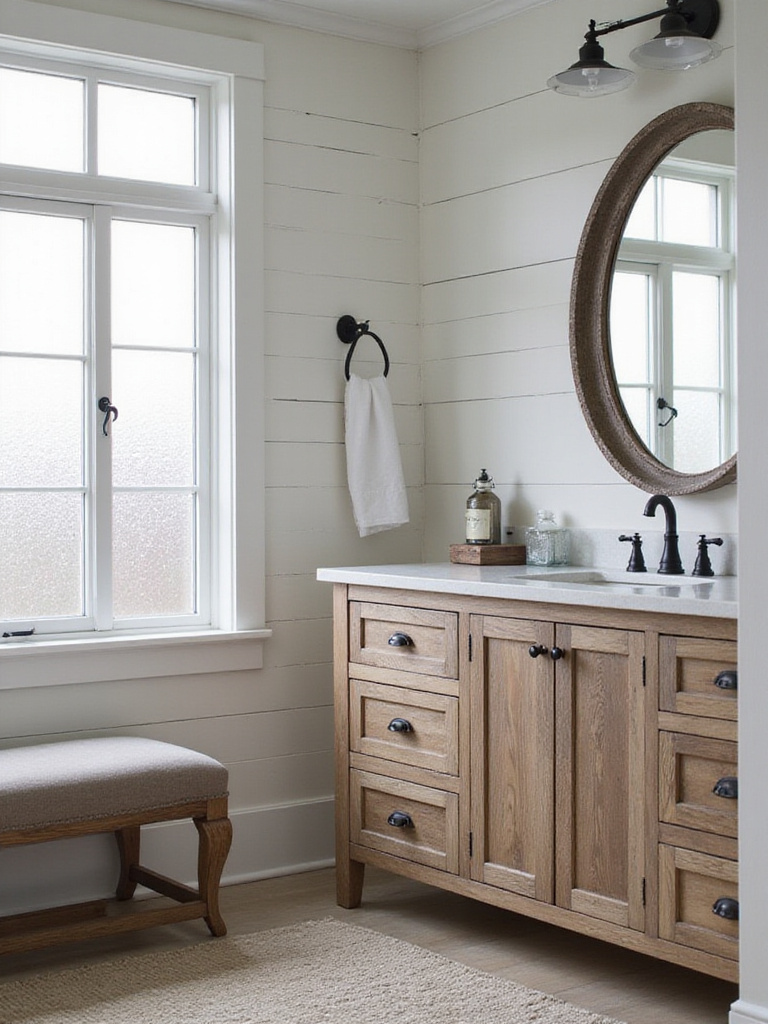
The key is to create a mood board. Not just on Pinterest—get physical samples. Lay a cabinet door sample next to your floor tile, your faucet, and your paint swatch. See how they look together in your bathroom’s actual light, which changes throughout the day. A client once fell in love with a cool, gray cabinet online, but in their warm-toned bathroom, it just looked dead and out of place. Seeing the samples together in the space saved them from a huge, costly mistake.
To keep the room from feeling like a solid block of wood, let’s introduce some air.
8. Incorporate Open Shelving or Glass Fronts for Decorative Display and Lightness
Solid cabinets everywhere can feel heavy and monolithic, especially in a small bathroom. Sprinkling in some open shelving or glass-front doors breaks up that visual bulk and adds a sense of lightness. It forces you to be intentional. Think of it as a mini-gallery within your bathroom. It’s a spot to display beautiful towels, a vintage bottle, a small plant, or your prettiest products.
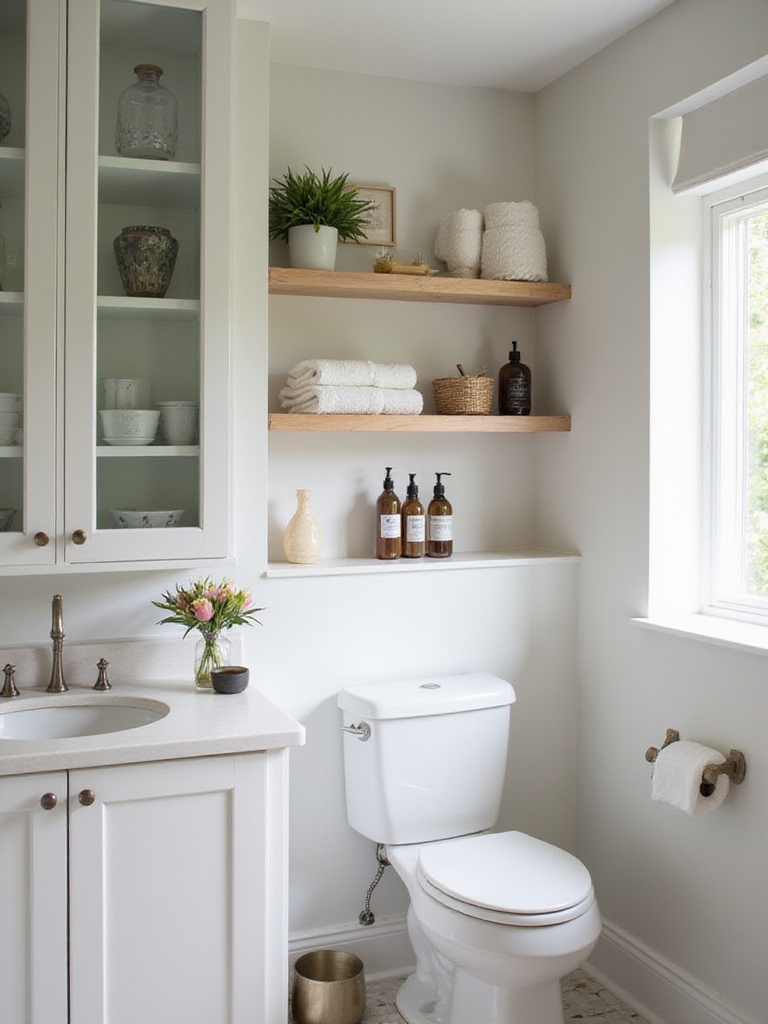
But here’s the tough love: open shelving is for your curated, beautiful things—not your half-empty bottle of generic mouthwash and a jumble of bobby pins. The common misconception is that you can just throw stuff on there and it will look effortlessly chic. It won’t. It requires discipline. The shortcut is the 80/20 rule: 80% of your stuff gets hidden behind solid doors, and the beautiful, curated 20% earns its spot on the open shelves. This gives you the best of both worlds—practical concealment and a touch of curated style.
The final layer of style comes from the details that tie everything together.
9. Choose Cabinet Finishes that Complement Existing Fixtures and Hardware
This is the jewelry of your bathroom. The hardware and finishes are what make the space feel truly polished and intentional. The biggest mistake is treating these as separate decisions. Your cabinet pulls, faucet, showerhead, and light fixture all live in the same room; they need to have a conversation. They don’t have to be identical—in fact, mixing metals can be incredibly chic—but they do need to be complementary.
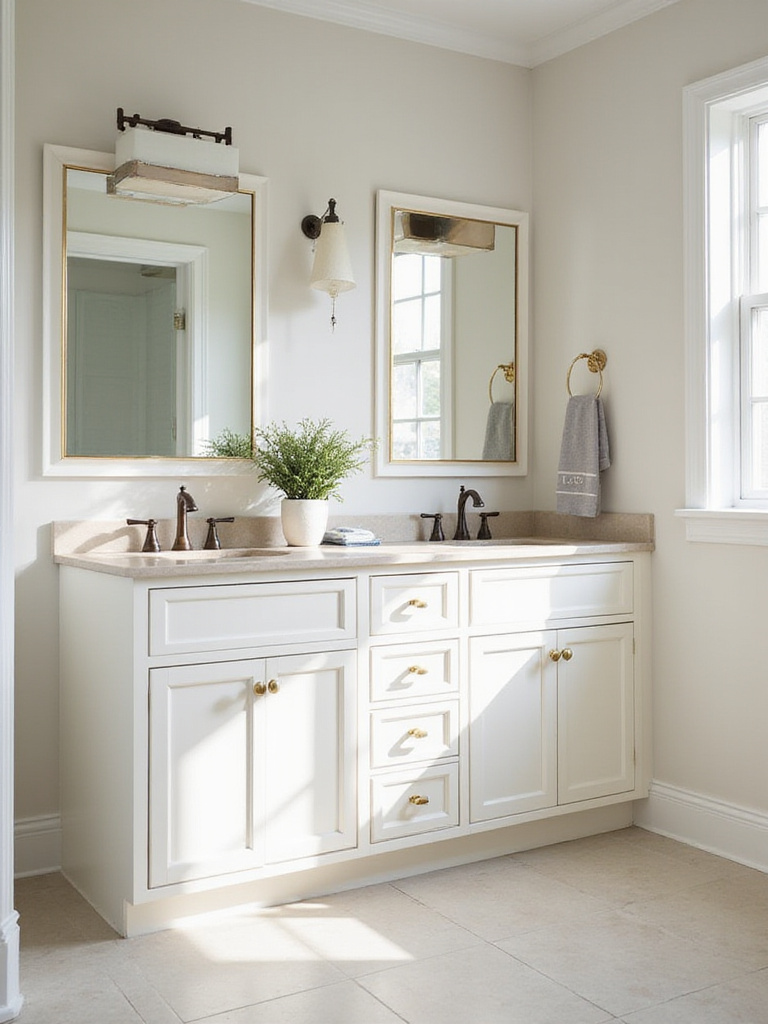
A good rule of thumb is to stick to two, or at most three, metal finishes. Maybe you have matte black fixtures and cabinet pulls, with a touch of warm brass in your light fixture. The key is to look at their undertones. A brushed nickel has a warm undertone that clashes with a cool, stark chrome.
“Get samples of everything. Hold a brushed brass knob next to your matte black faucet under your bathroom light. The way they interact will tell you everything you need to know.”
This simple act of comparison is what separates a disjointed, chaotic look from a cohesive, professionally designed space.
Smart Internal Organization & Accessibility Solutions
A beautiful cabinet is only half the story. The real magic—the thing that will make you love your bathroom every single day—is what happens when you open the doors and drawers. This is the secret to a clutter-free countertop and a morning routine that feels effortless.
10. Utilize Pull-Out Drawers for Easy Access to Deep Storage Items
Let’s be honest: the deep, dark back of a standard under-sink cabinet is where products go to expire. It’s an abyss. You have to get on your hands and knees and perform an archeological dig just to find a bottle of cleaner. Pull-out drawers completely solve this problem. With one gentle tug, the entire contents of the cabinet glide out to meet you. Nothing gets lost in the back.
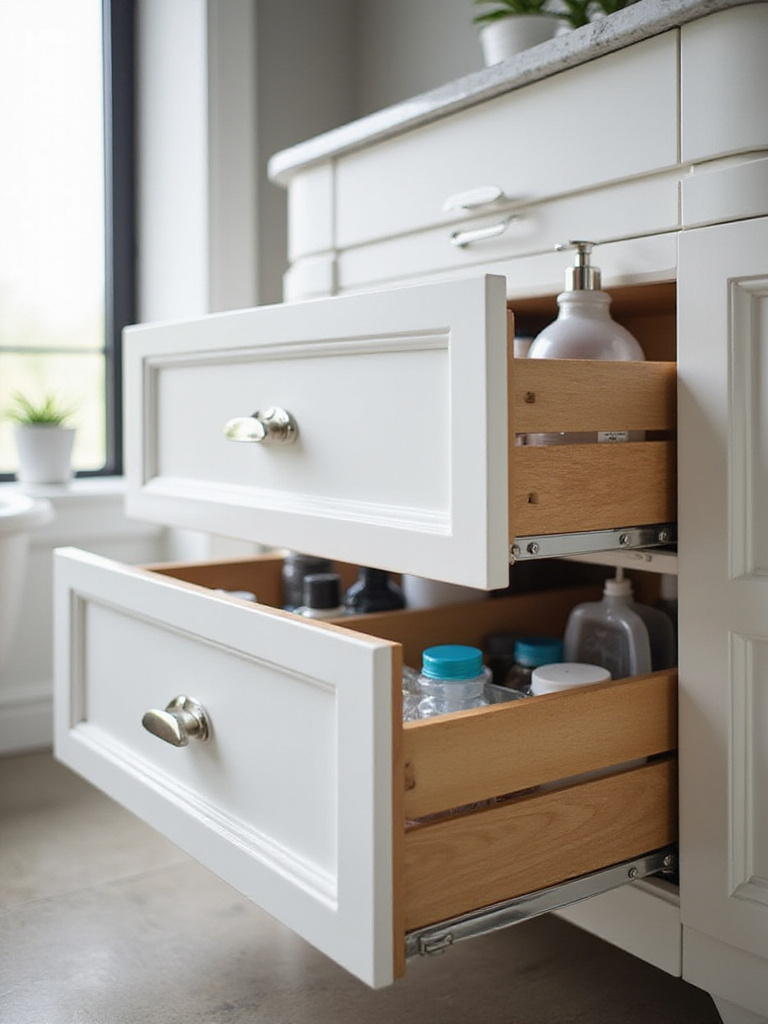
This is a game-changer, especially for anyone with a bad back. The BS idea is that they are a complicated, expensive luxury. They’re not. You can buy retrofittable pull-out systems at most home improvement stores. The single best investment you can make for under-sink cabinets is a U-shaped pull-out that fits around your plumbing. Suddenly, that awkward, chaotic space becomes the most functional part of your vanity.
Next, let’s tackle the vertical chaos.
11. Incorporate Adjustable Shelves for Flexible Storage of Various Item Heights
You know that moment of frustration when you buy a new, economy-sized bottle of shampoo and it’s a quarter-inch too tall to fit on the shelf? Fixed shelves are the worst. They dictate what you can buy and how you can store it. Adjustable shelves give you back that power. They are the definition of functional, future-proof design.
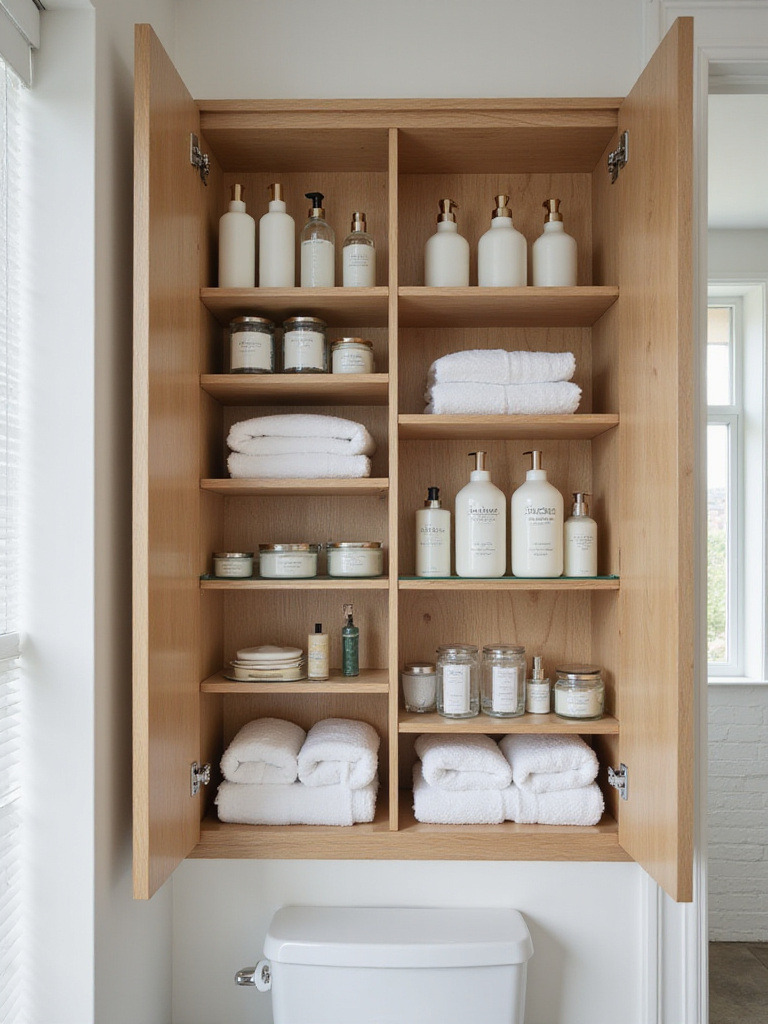
A cabinet interior lined with peg holes is a thing of beauty. It means you can move shelves up or down in tiny increments, customizing the space perfectly for what you own today. When you change products tomorrow, you can change your shelves in minutes. This is how you eliminate that awkward, wasted airspace above your shorter items and ensure every vertical inch is working for you. It’s such a simple feature, but it has a massive impact on your cabinet’s total usable capacity.
While shelves handle the big stuff, we need a plan for the little things.
12. Add Interior Drawer Organizers to Keep Small Essentials Tidy and Separated
A drawer without dividers is just a box of chaos. Every time you open it, everything—your makeup, your contact lenses, your cotton swabs—slides around into a jumbled mess. Drawer organizers are the key to taming this chaos. They create a specific “home” for every small item, turning a junk drawer into a command center.
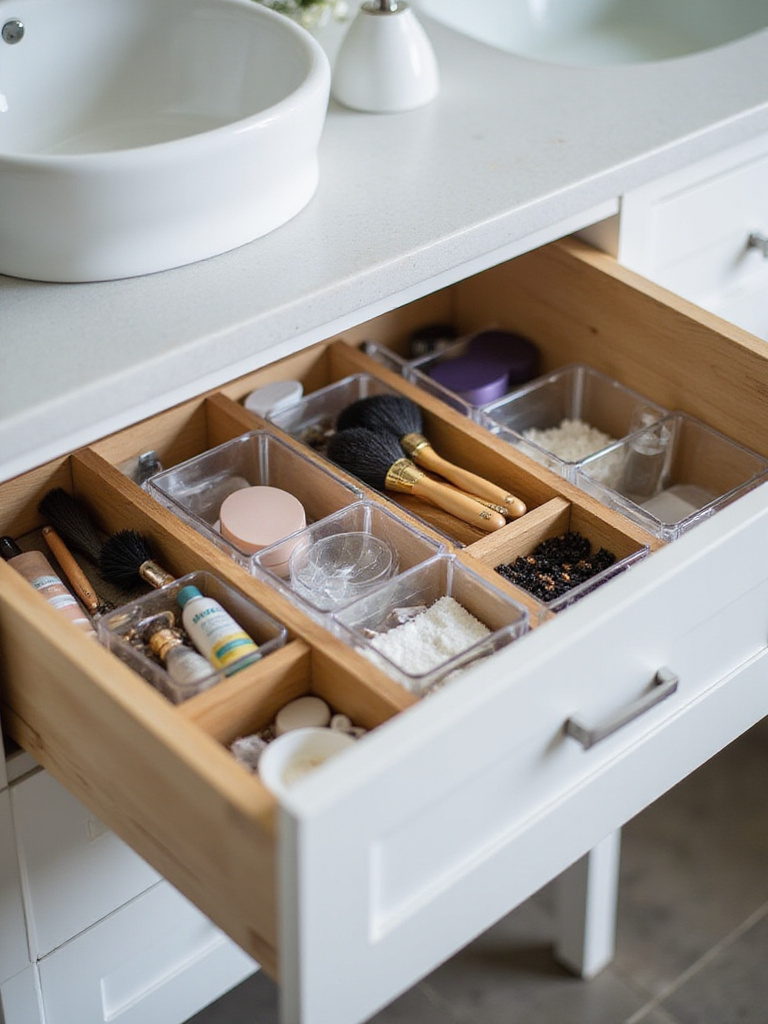
Forget those flimsy, one-size-fits-all plastic trays. The real shortcut is to use modular, expandable organizers. I love using a mix of bamboo or clear acrylic trays in different sizes. You can configure them like a puzzle to perfectly fit your drawer and your items. A client of mine, a makeup artist, used this system to lay out her products by use—a section for prep, foundation, eyes, lips. She said it cut her getting-ready time by nearly ten minutes.
Now let’s plug in some modern convenience.
13. Install In-Cabinet Power Outlets for Convenient Charging of Appliances
Your countertop is not a charging station. A tangle of cords from an electric toothbrush, a razor, and a water flosser is visual noise that kills any sense of tranquility. The solution is brilliantly simple: move the outlet inside the cabinet. Hiding a charging station inside your medicine cabinet or vanity drawer is one of the most satisfying upgrades you can make. Your devices are out of sight, always charged, and ready to go.
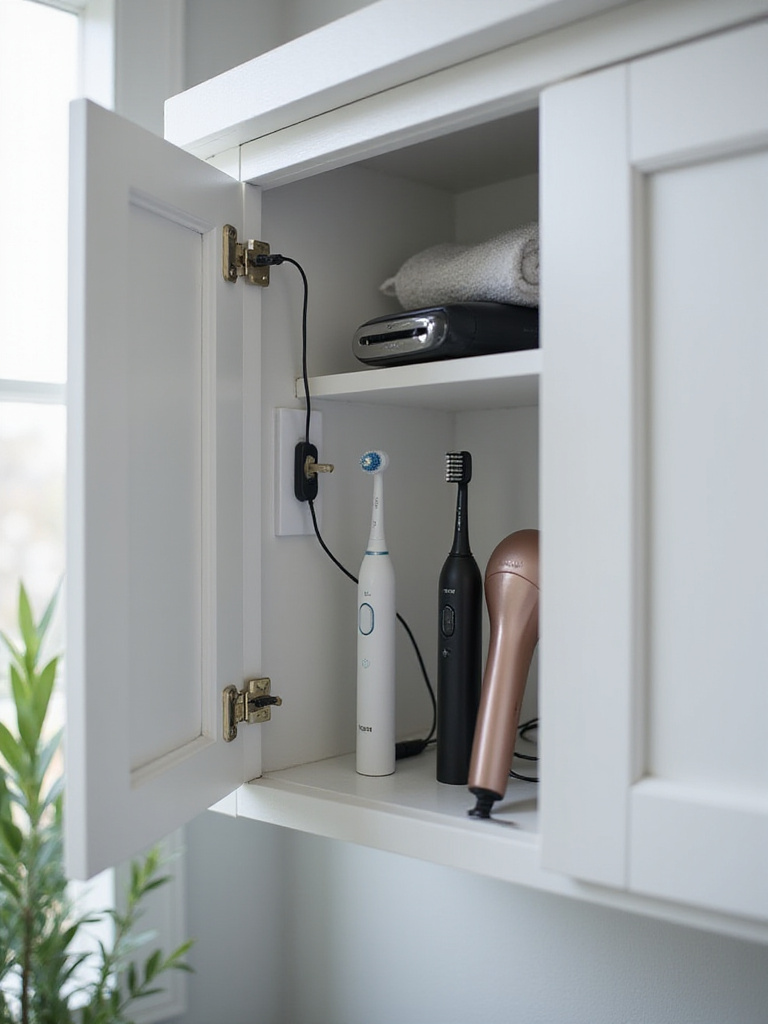
The critical, non-negotiable rule here: this is a job for a licensed electrician. You’re dealing with electricity in a wet environment, so it needs to be done right, with GFCI-protected outlets to meet safety codes. There are even specialized, purpose-built outlet kits designed to be installed in drawers that have safety features to prevent overheating. It’s a small investment for a massive improvement in both safety and daily zen.
Space-Saving & Bespoke Customization Options
Sometimes, you’re dealing with a really tricky space—a tiny powder room, an awkward attic bathroom with sloped ceilings. This is where we get to be truly resourceful. Standard-issue solutions won’t cut it. It’s time to think like a sculptor and carve out storage from unexpected places.
14. Design Recessed Cabinets to Maximize Floor Space in Small Bathrooms
This is the ultimate space-saving magic trick: steal space from inside your walls. A standard wall has about 3.5 inches of empty space between the studs. A recessed cabinet uses that dead space to give you storage that doesn’t jut out into the room. For a small bathroom where every square inch of floor space matters, this is a game-changer. It gives you all the storage of a medicine cabinet without taking up any visual or physical space.
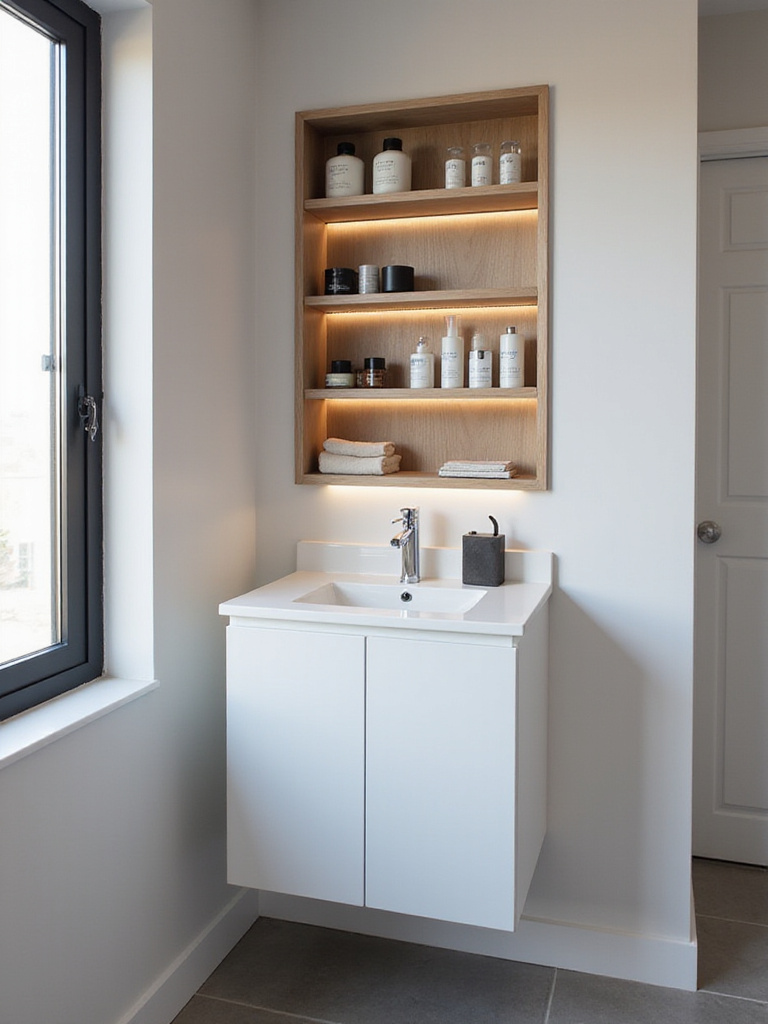
I designed a tiny 4×6 foot powder room for a client where a standard over-the-toilet cabinet would have made the room feel incredibly cramped. Instead, we built a tall, shallow recessed cabinet right into the wall. It held all their extra toilet paper and soaps, looked incredibly sleek, and made the room feel twice as big. The shortcut is to use a stud finder to locate the empty bays in your wall—just be sure to check for hidden pipes or wiring before you start cutting.
When you can’t go in the wall, you can still go slim.
15. Implement Slimline Cabinets for Narrow Walls and Tight Spots
Every bathroom seems to have one: that weird, narrow strip of wall next to the toilet or between the doorframe and the shower that’s too small for anything useful. Wrong. That’s the perfect home for a slimline cabinet. These ultra-shallow cabinets are designed specifically for those awkward, tight spots. They can be as shallow as 4 or 5 inches deep—perfect for storing toiletries, medicine bottles, or rolled-up hand towels.
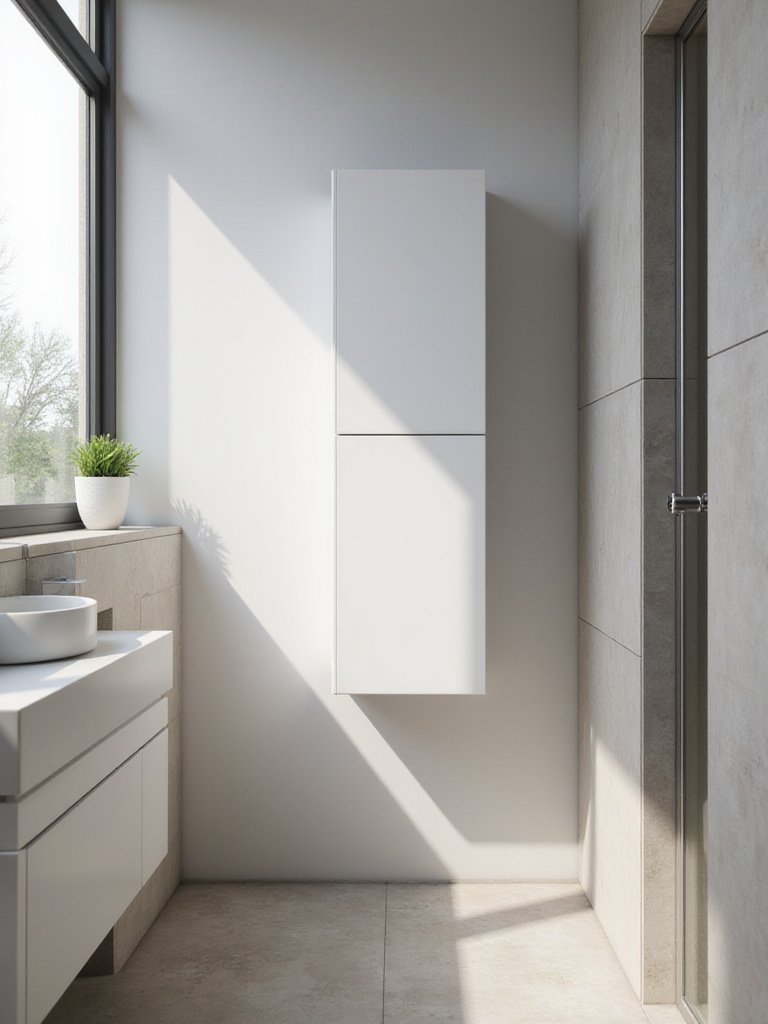
You can find slimline tower cabinets that go floor-to-ceiling, maximizing vertical storage, or even slim pull-out pantry-style cabinets that make every item easily accessible. This is about seeing potential where others see a problem. I once saw a 6-inch gap next to a vanity turned into a full-height, pull-out grooming station. It was genius. It proves that there’s no such thing as wasted space, only a lack of imagination.
And when you’ve truly run out of off-the-shelf options, it’s time to go custom.
16. Explore Custom Built-Ins for Unique Architectural Spaces and Personalized Fit
Custom built-ins are the ultimate solution for spaces with personality—the attic bathrooms with sloped ceilings, the nooks and crannies of an old house. Instead of fighting the weird architecture, you embrace it. A good cabinet maker can turn an awkward, unusable corner into a masterpiece of bespoke storage. The slanted wall becomes a series of perfectly stepped drawers. The weird nook becomes a set of deep, built-in shelves.
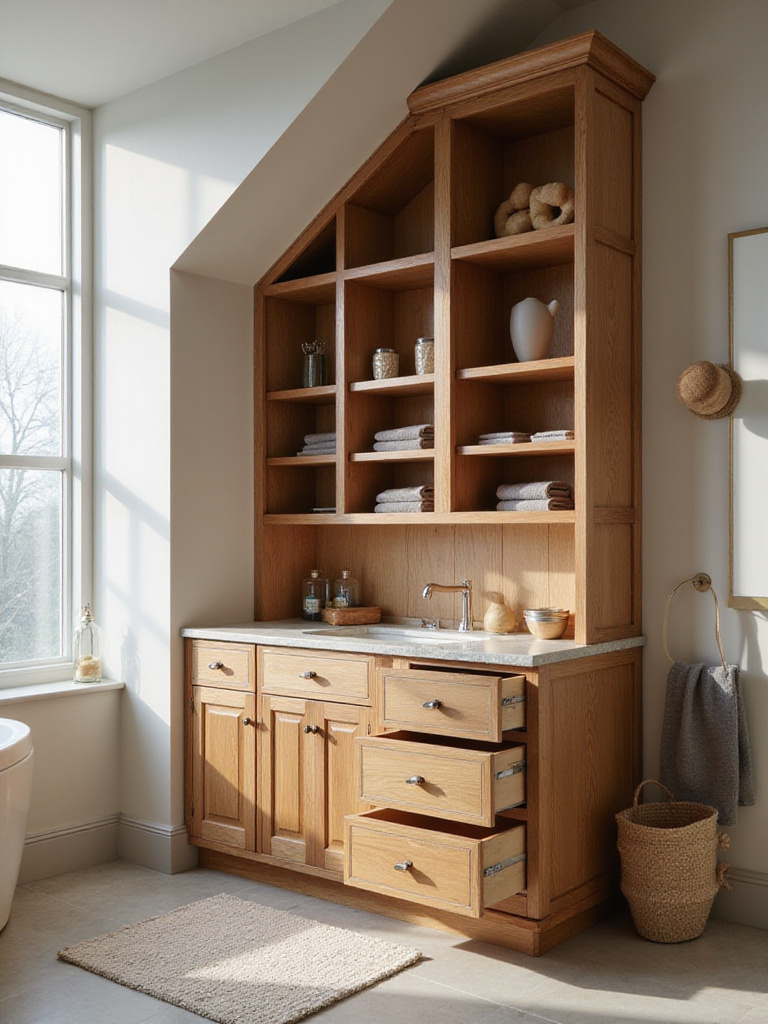
The BS here is that “custom” always means “astronomically expensive.” It’s an investment, for sure, but think about the value. You’re getting a one-of-a-kind solution that maximizes every single inch of your space, something no stock cabinet ever could. I worked on an attic bathroom where we built drawers and cabinets directly into the knee wall under the eaves. It transformed what was essentially a useless void into an entire wall of seamless, accessible storage, effectively doubling the functionality of the room.
Advanced Features & Longevity Tips
You’ve designed your masterpiece. The cabinets are in, and they look amazing. Now, let’s talk about the final details that elevate the experience and the simple habits that will protect your investment for years to come.
17. Integrate Soft-Close Hinges for Quiet and Gentle Door Operation
Slamming cabinet doors are an assault on the senses. It’s a jarring, cheap-sounding noise that instantly shatters the tranquil vibe you’re trying to create. Soft-close hinges are a small, affordable luxury that makes a world of difference. They catch the door in the last few inches of its swing and guide it to a gentle, silent close. It’s a detail you’ll appreciate every single day.
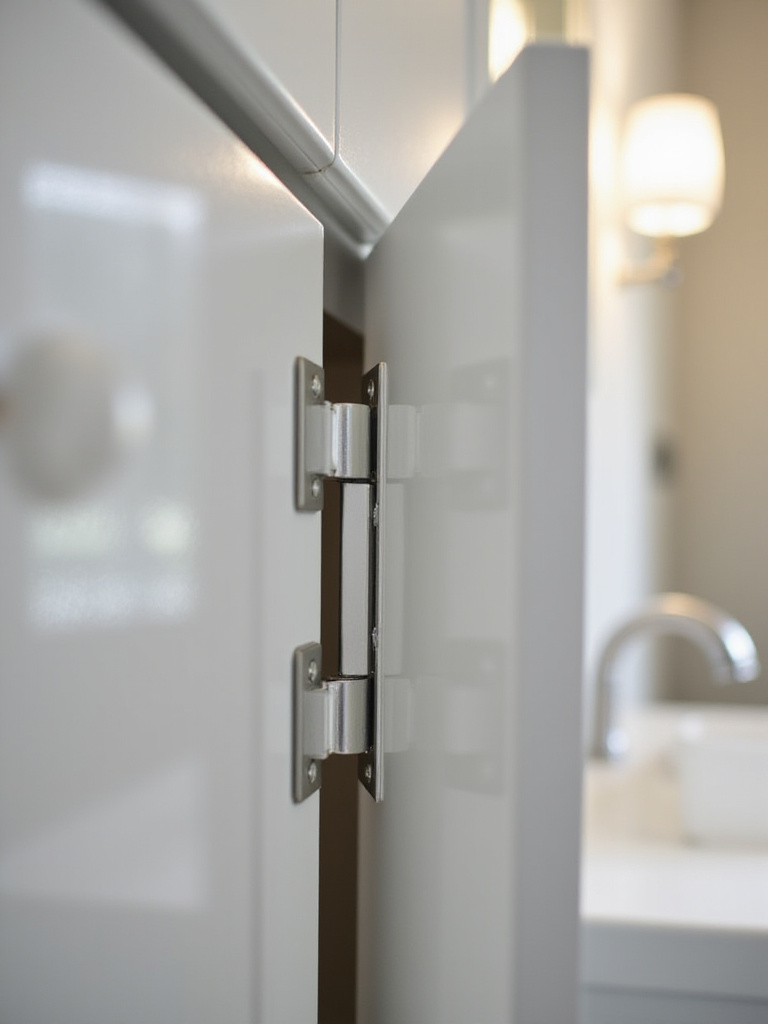
It also protects your cabinets. That constant slamming puts stress on the hinges and the cabinet frame over time. Soft-close mechanisms are standard on most mid-to-high-end cabinets now, but they can also be easily retrofitted onto existing doors. Trust me, once you have them, you’ll wonder how you ever lived without them. For a complete experience, get soft-close slides for your drawers, too. The sound of silence is pure luxury.
Let’s move from quiet to clear.
18. Select Anti-Fog Mirrors on Cabinet Doors to Maintain Clear Reflections Post-Shower
There is nothing more annoying than stepping out of a hot shower, ready to get on with your day, only to be faced with a completely fogged-up mirror. You wait, you wipe it with a towel (leaving streaks), you get frustrated. An anti-fog mirror, usually one with a gentle heating pad built into the back, completely eliminates this daily irritation. It stays perfectly clear, no matter how steamy the room gets.
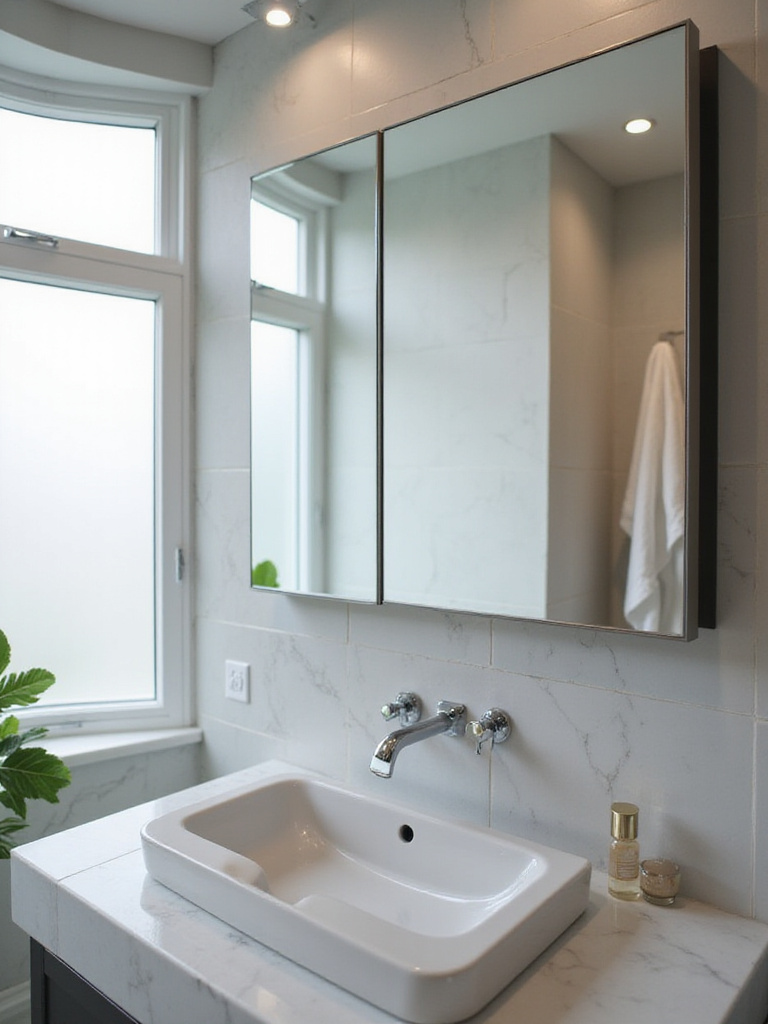
This is one of those “how did I ever live without this?” features. The best way to do it is to have the heating element wired to the same switch as your main bathroom light or exhaust fan. That way, it turns on automatically when you enter the room, so it’s always ready when you need it. It’s a touch of hotel-level luxury that has a real, practical impact on your daily routine.
Finally, a little care goes a long way.
19. Learn Simple Cleaning and Maintenance Tips for Cabinet Longevity and Appeal
You wouldn’t leave a finished painting out in the rain, so don’t neglect the beautiful cabinets you just invested in. The number one killer of bathroom cabinets is moisture and harsh cleaners. The rule is simple: wipe up splashes immediately with a soft, dry cloth. Water left to sit will eventually find its way into seams and ruin the finish.
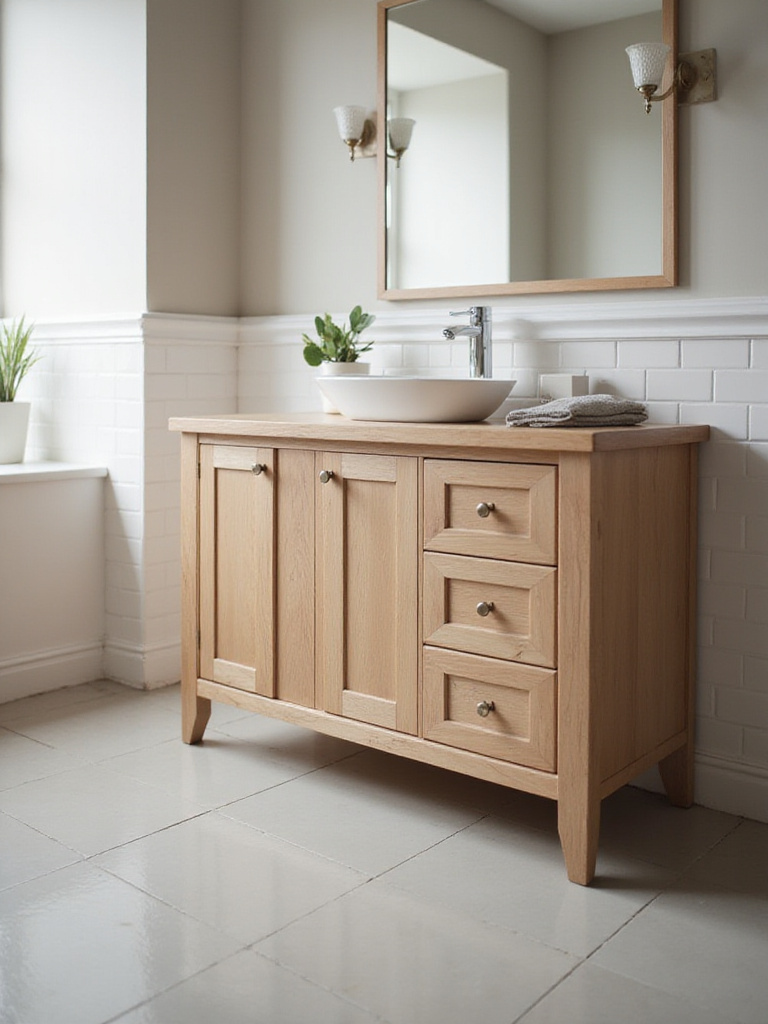
For regular cleaning, forget the harsh chemical sprays. A soft, damp microfiber cloth with a drop of mild dish soap is all you need. Wipe, then immediately dry with a separate clean cloth. The most important pro tip? Run your exhaust fan. Use it during your shower and for 15-20 minutes afterward. Reducing the overall humidity in the room is the single best thing you can do to protect your cabinets, prevent mildew, and ensure they look fantastic for years.
Conclusion: Your Space, Your Sanctuary
See? It’s not just about picking a cabinet. It’s about designing a system that supports your life. It’s a process of weaving together the practical and the poetic—the precise measurements with the perfect finish, the smart storage with the personal style. When you get that balance right, your bathroom transforms. It stops being a cluttered utility space and becomes a genuine extension of your creative self—a place of calm, order, and inspiration.
Don’t be afraid to get your hands dirty. Start with the measurements, do the inventory, and create a mood board that feels like you. Think like an artist. See the potential in every nook, question every choice, and build a space that’s not just beautiful, but brilliantly functional. This is your canvas. Now go create something amazing.