Picture this: You’re standing in your kitchen after a long day. The countertop is a graveyard of mail, half-used bags of quinoa, and that fancy blender you swore you’d use daily. You open a cabinet to find a can of pumpkin from three Thanksgivings ago, and when you reach for a pan, an avalanche of lids crashes to the floor. Sound familiar? We’ve all been there. It’s that feeling that your kitchen is working against you, making one of the most essential parts of life—feeding yourself and your family—feel like a chore.
The real problem isn’t a lack of space. It’s a lack of intelligent design. Your kitchen isn’t just a room; it’s a living ecosystem. It’s where you turn raw ingredients from the earth into nourishment. A well-designed kitchen, starting with your cabinets, can completely change your relationship with your home and your food. It’s not about buying more stuff or gutting the whole place. It’s about making your space work for you, creating flow, reducing waste, and turning chaos into a calm, productive hub. Let’s get into how to actually make that happen.
Foundational Planning for Smart Cabinetry
Before you even think about new organizers or a single cabinet door, you have to do the groundwork. This is the unsexy part that makes all the beautiful, functional magic possible later on. Skipping this is like trying to plant a garden in concrete.
1. Identify Your Kitchen’s Existing Storage Pain Points Before Buying
Can we talk about the real reason your kitchen is a mess? It’s usually not a single thing, but a collection of tiny, daily frustrations. It’s the drawer that’s too shallow for your ladle, the corner cabinet where Tupperware goes to die, or the spice jars you have to empty out just to find the paprika. Before you spend a dime, you have to become a detective in your own kitchen. For one week, just notice what makes you sigh, swear, or waste time.
I once had a client who was convinced she needed a massive pantry extension. After we spent a week just observing, we realized her real problem was that her kids’ snacks, her coffee, and her dog’s food were all in a tangled mess by the back door, creating a permanent bottleneck. The “pantry” wasn’t the issue; the lack of a “grab-and-go” zone was. Solving that one pain point saved her about $10,000 and made her mornings infinitely calmer. That’s the power of figuring out the real problem first.
With your specific frustrations in mind, it’s time to get brutally honest about what you actually own.
2. Conduct a Thorough Inventory of All Kitchen Items for Storage Needs
Okay, this is the part where you have to channel your inner Marie Kondo, but with a practical, zero-waste spin. You need to pull everything—and I mean everything—out of your cabinets and drawers. This isn’t just about tidying up; it’s a reality check. You can’t design storage for things you don’t even know you have, or worse, things you don’t even need. Create three piles: Keep, Donate/Compost, and Relocate (for those things that just don’t belong in the kitchen).
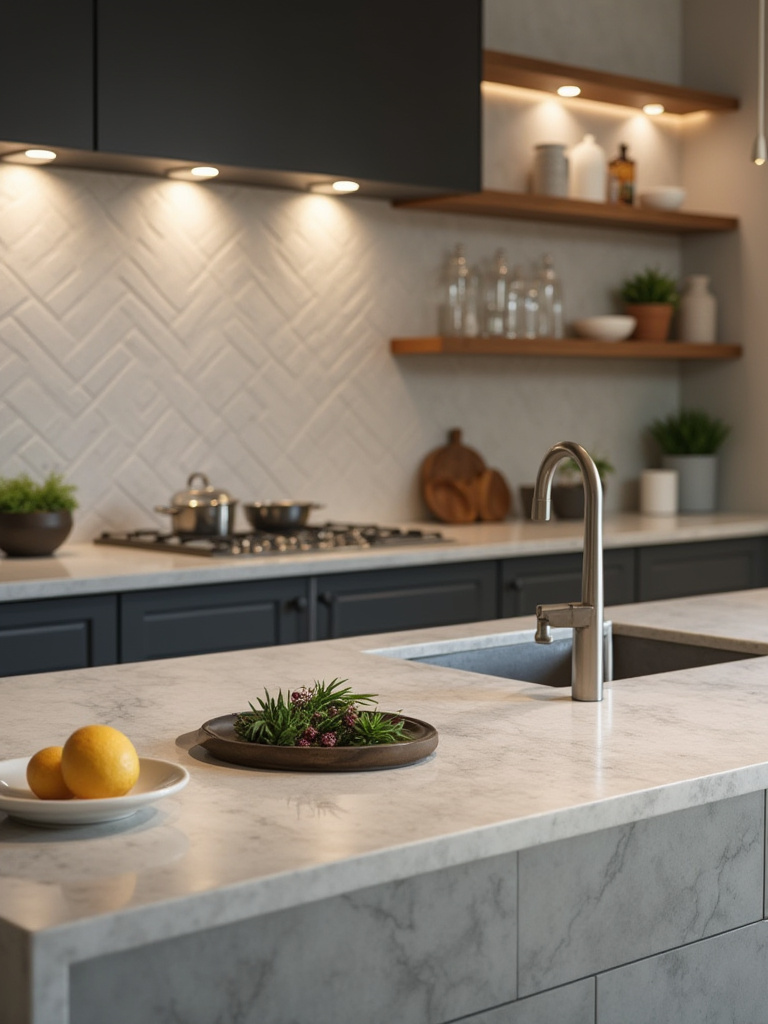
The “keep” pile is what actually matters. This is your true inventory. How many small appliances? What’s your bulkiest pot? How many mismatched mugs have you accumulated? This list is your blueprint. Don’t build a beautiful, expensive home for that novelty hot dog toaster you used once. Everyone says to “organize your kitchen,” but they skip the most important step: editing it down to what actually serves your life now. That’s the shortcut—designing for the life you have, not the stuff you’ve accumulated.
Now that you know what needs a home, you have to figure out the size of the house.
3. Precisely Measure Your Available Kitchen Space for Custom Cabinets
This sounds obvious, but it’s where so many DIY dreams go to die. You cannot wing it with measurements. A quarter-inch difference can mean a custom cabinet doesn’t fit, an appliance door can’t open fully, or you’re left with an awkward, dust-collecting gap. You need a steel tape measure, a pencil, and some graph paper (or an app, if you’re fancy). Measure everything. Twice.
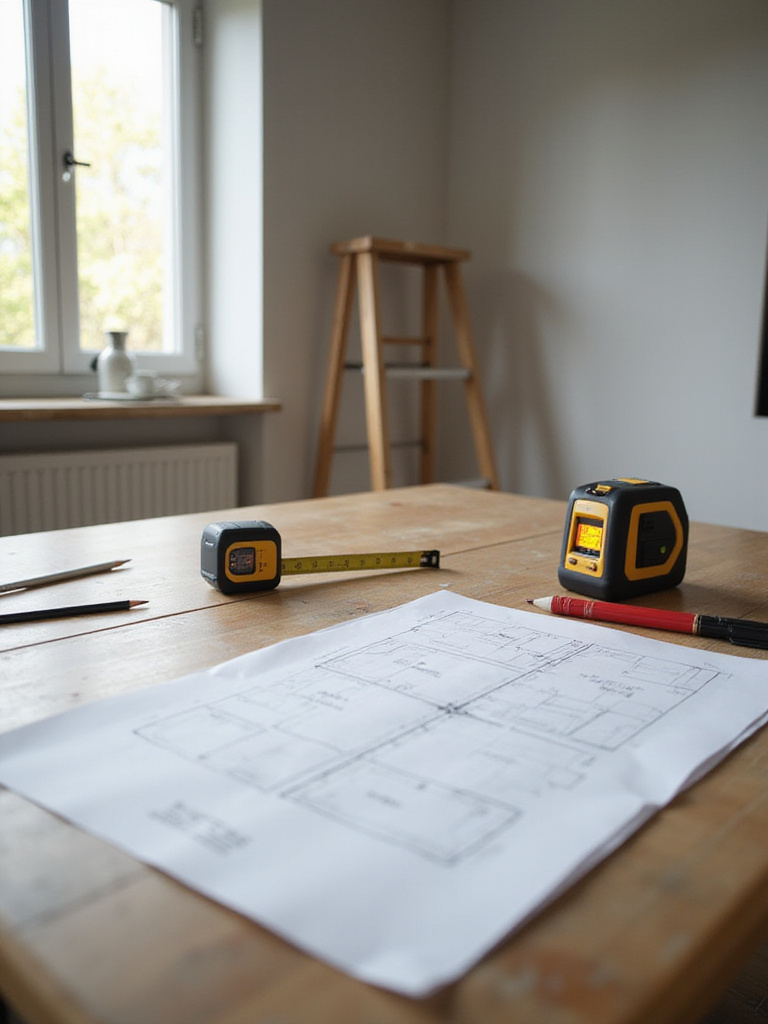
I learned this the hard way on one of my first projects. I measured the walls for a bank of cabinets but forgot to account for the slight bow in the old plaster wall. When the cabinets arrived, they fit at the bottom but not at the top. The entire installation was delayed by two weeks while we had a custom filler scribed to the wall—a costly, stressful mistake that a few extra measurements would have prevented. Don’t be me. Measure height, width, and depth in at least three different spots for every opening and every wall.
With accurate numbers in hand, we need to talk money.
4. Define a Realistic Budget for Durable, Functional Cabinet Solutions
Let’s be real: defining a budget is about more than just a number. It’s about deciding where to put your money to get the most impact. Cabinets are usually the biggest expense in a kitchen remodel, and it’s easy to get seduced by pretty finishes while skimping on what truly matters: durability and function. Do you want gorgeous doors that hide a chaotic mess, or solid, smooth-gliding drawers that make your life easier every single day?
The BS I hear all the time is from people trying to sell you the cheapest option. But cheap cabinets with flimsy hardware will sag and break down in a few years, and you’ll just have to replace them. My advice is to always prioritize the bones. Spend your money on:
- Plywood boxes over particleboard.
- Full-extension, soft-close hardware for drawers and pull-outs.
- Durable internal organizers.
You can always upgrade your cabinet fronts later, but you can’t easily fix a collapsing drawer box. Always, always set aside a 10-15% contingency fund for the surprises. Because there are always surprises.
Your budget and layout are intertwined, so let’s make sure the flow is right.
5. Optimize Cabinet Placement for Seamless Workflow and Traffic Flow
A truly brilliant kitchen is one where you barely have to think. Your hand just instinctively knows where to go for the salt, the spatula, the bowls. This isn’t magic; it’s zoning. The core idea is the “work triangle”—the path between your fridge (cold zone), your sink (wet zone), and your stove (hot zone). You want this path to be clear and efficient, with everything you need for each task stored right where you perform it.
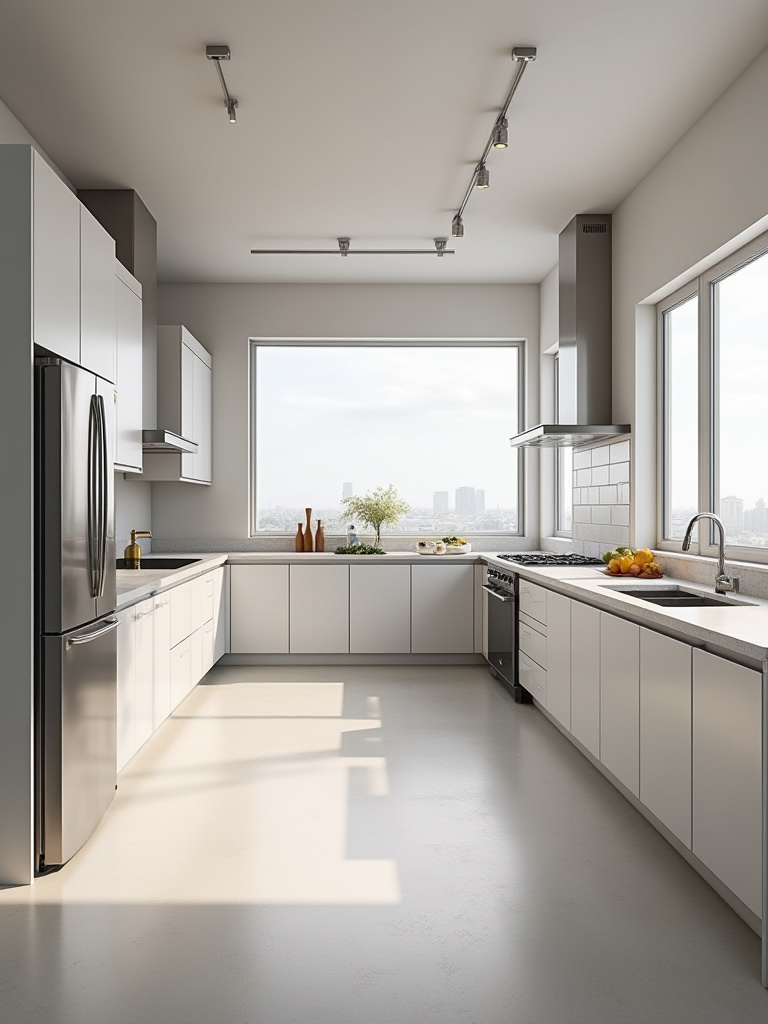
Pots, pans, and cooking utensils? In the cabinets and drawers next to the stove. Dishes and glassware? Near the dishwasher, so you can unload without walking across the entire kitchen. Food storage and pantry items? Near the fridge, where you gather your ingredients. It sounds simple, but I’ve seen so many kitchens where the dish cabinet is on the opposite side of the room from the dishwasher. That’s a design flaw that adds thousands of extra steps to your life every year. Take tape and mark your zones on the floor. Walk through making a cup of coffee or a simple pasta dish. Where do you trip up? Fix it now, on paper, before it’s built in wood and stone.
Once the big picture is set, it’s time to geek out on the inside of the cabinets.
Maximizing Interior Cabinet & Drawer Space
This is where the real fun begins. A good cabinet layout is the foundation, but smart interior organizers are what turn a basic box into a productivity powerhouse.
6. Install Pull-Out Trays for Effortless Access to Deep Cabinet Contents
You know that deep base cabinet where you have to get on your hands and knees and excavate past old pots to find what you’re looking for? It’s a black hole, and it’s terrible design. The single most transformative thing you can do for those cabinets is to install pull-out trays. They bring the back of the cabinet right out to you, so you can see and reach everything you own.
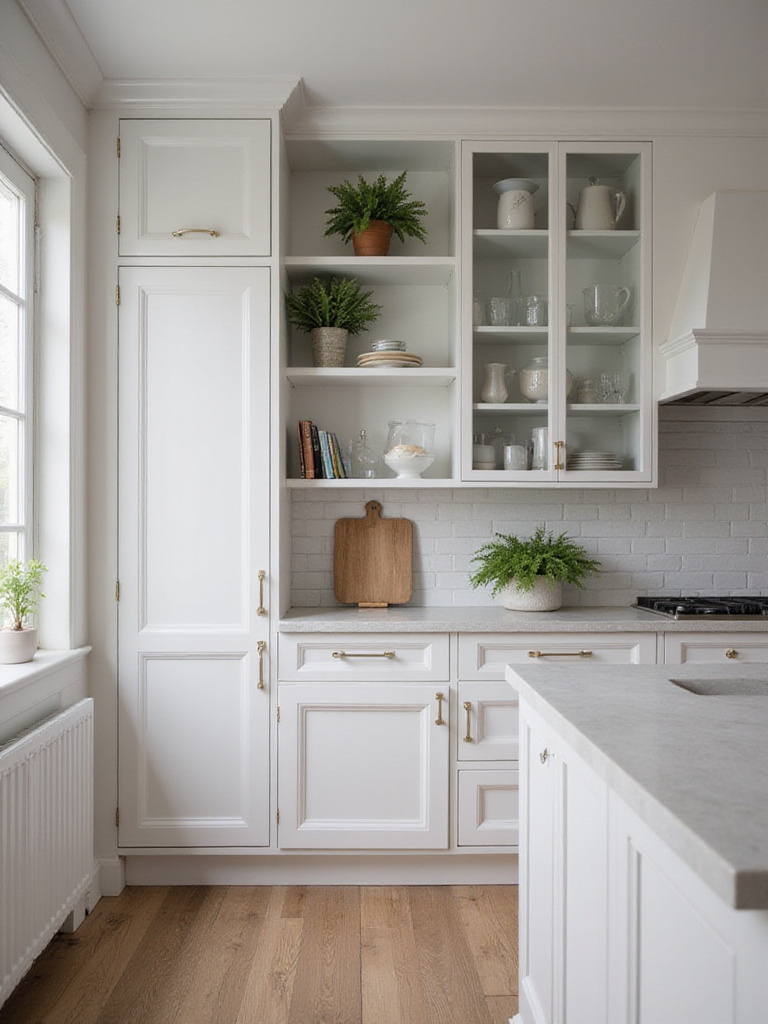
This isn’t just about convenience; it’s about reducing waste. When you can see that bag of lentils or the extra jar of tomato sauce, you actually use it. I’ve seen clients effectively “gain” an entire cabinet’s worth of storage just by making it accessible. For heavy items like a stand mixer or a Dutch oven, these are non-negotiable. It saves your back and makes you so much more likely to use your favorite tools.
From the big black holes, let’s move to organizing those flat, clattery items.
7. Integrate Vertical Dividers to Neatly Organize Baking Sheets and Platters
The sound of a leaning tower of baking sheets crashing down is a universal kitchen tragedy. Stacking them is a nightmare—you always need the one at the bottom, and they scratch each other up. The solution is so simple it’s almost insulting: store them vertically, like files in a filing cabinet. Simple, sturdy vertical dividers (either built-in or a sturdy wire insert) will change your life.
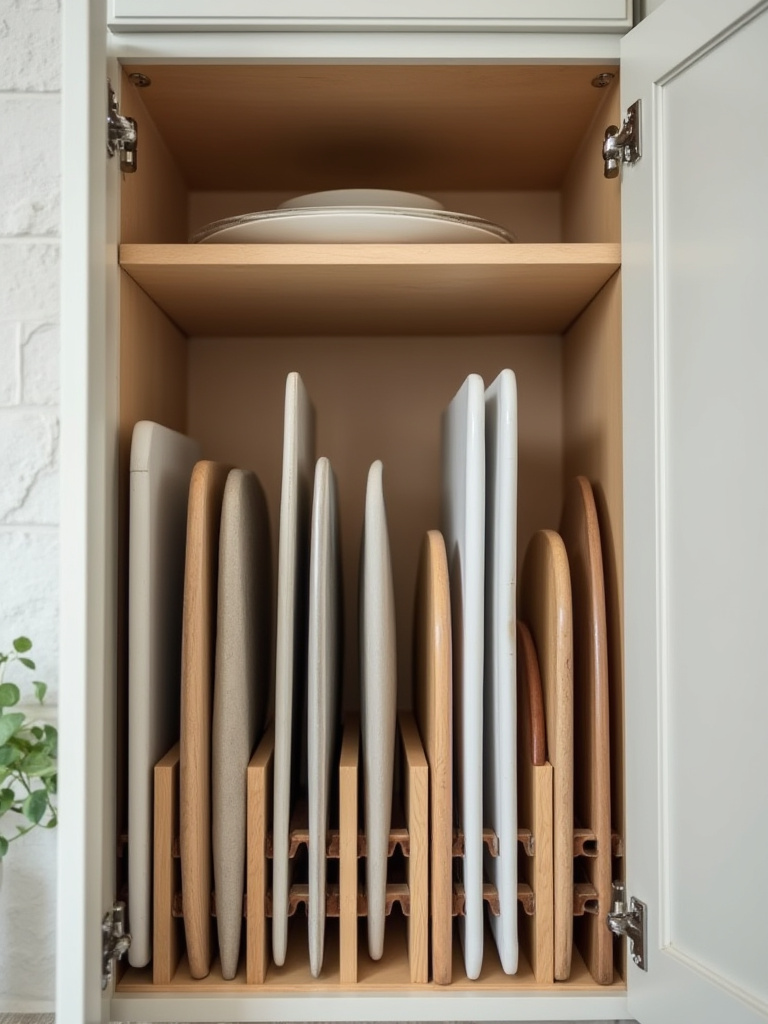
This is the perfect use for that awkward cabinet above the fridge or oven. Because it’s a “file-and-retrieve” motion, you don’t need to see everything at eye level. Suddenly, your cookie sheets, cutting boards, muffin tins, and serving platters are all neatly organized and individually accessible. No more clatter. No more scratches. Just slide out what you need. It’s a five-minute fix that solves a daily frustration.
Your drawers deserve the same level of attention.
8. Maximize Drawer Space with Custom Cutlery and Utensil Organizers
Please, I’m begging you, throw away that flimsy, one-size-fits-none plastic cutlery tray. You know the one—it slides around in the drawer, the compartments are too small for your whisk, and there’s a wasteland of dead space all around it. Your drawers are some of the most valuable real estate in your kitchen, and they deserve a solution that uses every single inch.
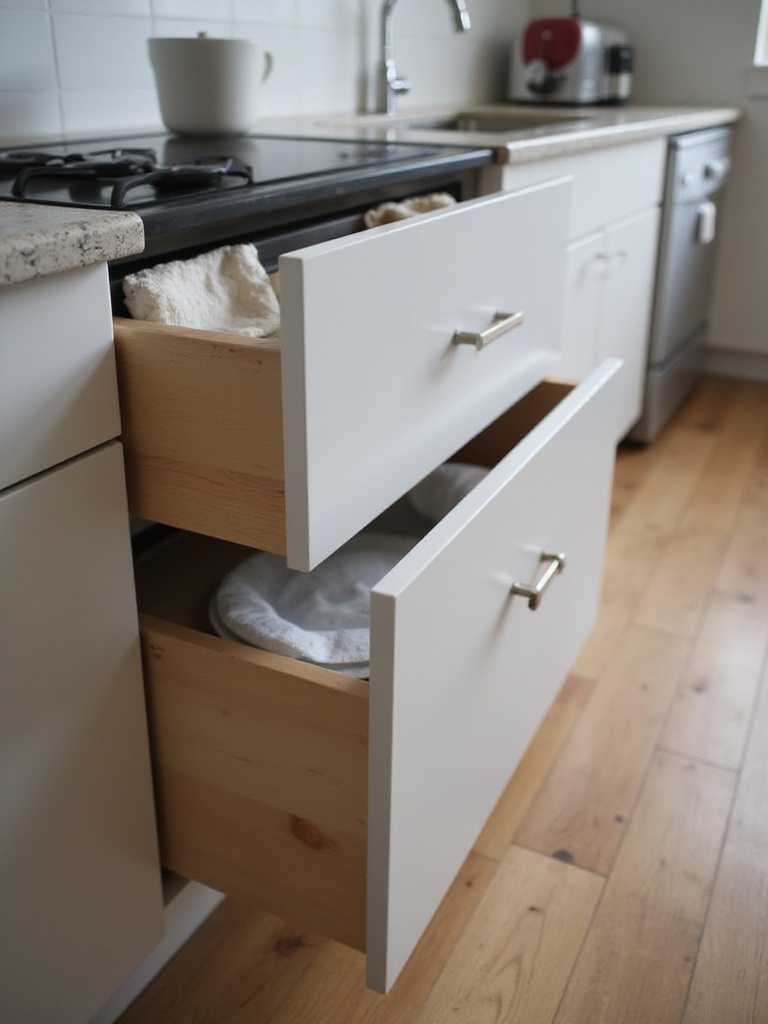
This is where custom or modular drawer organizers come in. Whether it’s a beautiful bamboo insert with adjustable dividers or a set of interlocking bins you can configure yourself, the goal is to create a specific home for every single item. A two-tiered drawer is even better—flatware on top, less-used serving pieces below. This isn’t just about looking tidy; when you can find your peeler in three seconds flat, you feel more in control and cooking becomes less of a frantic search-and-rescue mission.
And don’t forget the inside of your cabinet doors!
9. Add Back-of-Door Racks for Convenient Storage of Spices or Lids
The inside of a cabinet door is the most undervalued space in the entire kitchen. It’s a blank canvas! Adding simple racks to the back of a door can instantly create a home for small, hard-to-organize items. It’s the perfect spot for your collection of spices, freeing up an entire shelf or drawer. No more buying a third jar of cumin because you couldn’t find the first two.
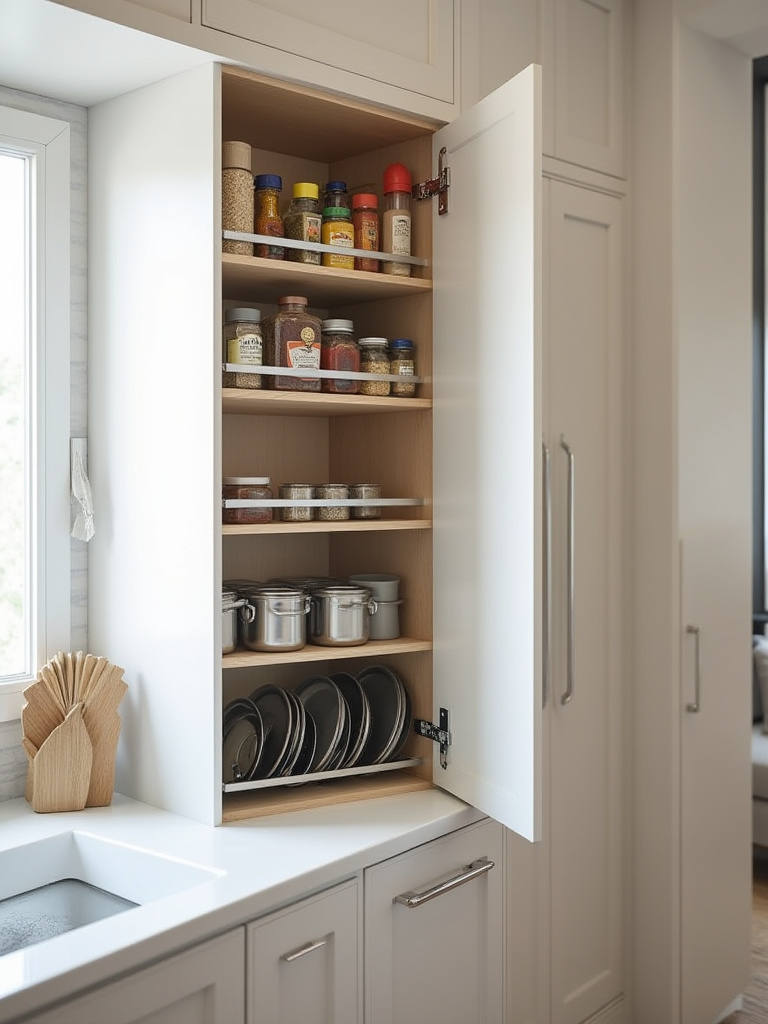
This is also my secret weapon for taming the monster that is pot lid storage. A few simple, U-shaped holders mounted to the inside of your pots-and-pans cabinet door keeps them organized, accessible, and out of the way. You can stack your pots neatly without lids getting in the way, and you can always find the right match. It’s a tiny change that has a huge impact on your daily workflow.
Now let’s apply that “use all the space” logic to the height of your shelves.
10. Utilize Tiered Shelf Risers to Double Usable Cabinet Space
Open a typical wall cabinet and look at all that air above your stack of plates or mugs. That’s wasted space. Tiered shelf risers are the simplest way to conquer it. These little wire or acrylic shelves instantly create a second level inside your cabinet, effectively doubling your usable surface area for things like dishes, glasses, and canned goods.
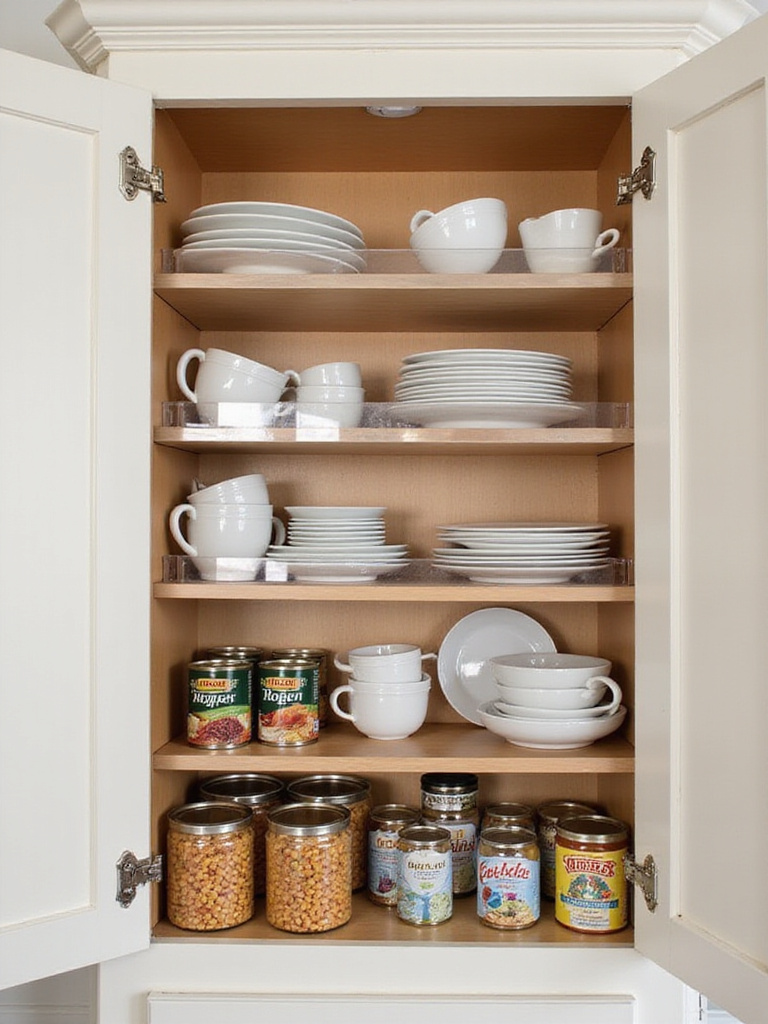
I especially love these for dishware. You can have your dinner plates on the bottom and your salad plates or bowls on the riser above. No more wobbly, precarious stacks that you have to lift off to get to the plate you need. It also protects your dishes from chipping. For pantry cabinets, tiered risers are brilliant for canned goods, letting you see the rows behind the front one so you don’t end up with a collection of 12-year-old water chestnuts.
For the pantry itself, we can go even bigger.
11. Implement Dedicated Pantry Pull-Outs for Easy Food Inventory Management
If you have a deep pantry cabinet, you know the struggle. The front is what you see and use; the back is a mysterious cavern of forgotten foods. Dedicated pantry pull-outs, whether it’s a single shelf or an entire floor-to-ceiling system, are the ultimate solution. Like the smaller pull-out trays, these bring the entire contents of your pantry out into the light.
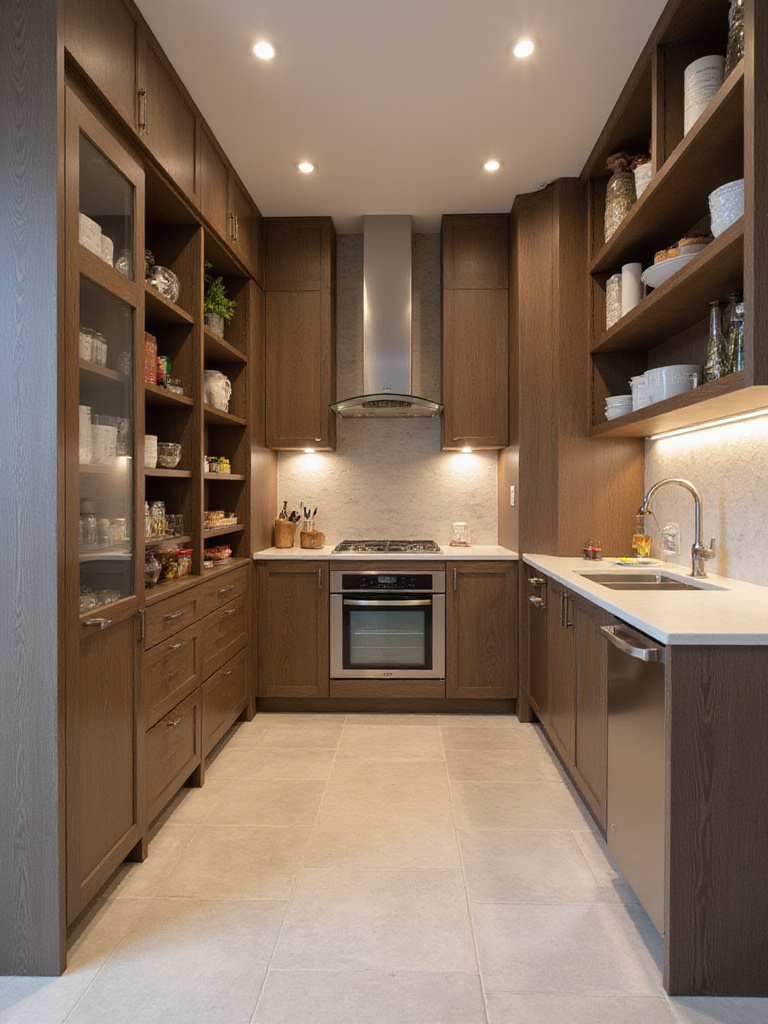
This is my number one recommendation for anyone serious about reducing food waste. When you do your grocery list, you can pull out the shelf and see exactly what you have. No more guesswork. No more duplicate purchases. You eat what you own because you can see it. It transforms your pantry from a passive storage box into an active inventory system you can manage at a glance. It’s a bigger investment, but the savings in wasted food and frustration pay for it over time.
With the interiors mastered, let’s zoom back out to the big-picture cabinet choices.
Strategic Cabinet Types & Layout Optimization
The type of cabinets you choose and where you put them sets the rhythm for your entire kitchen. This is about being strategic with your major pieces.
12. Designate Specific Cabinet Zones for Dishes, Cookware, and Dry Goods
We touched on this in the planning phase, but it’s worth repeating because it’s so fundamental. You want to create “stations” in your kitchen. Think of it like a professional kitchen, but for your home. Everything you need for a specific task should be clustered together.
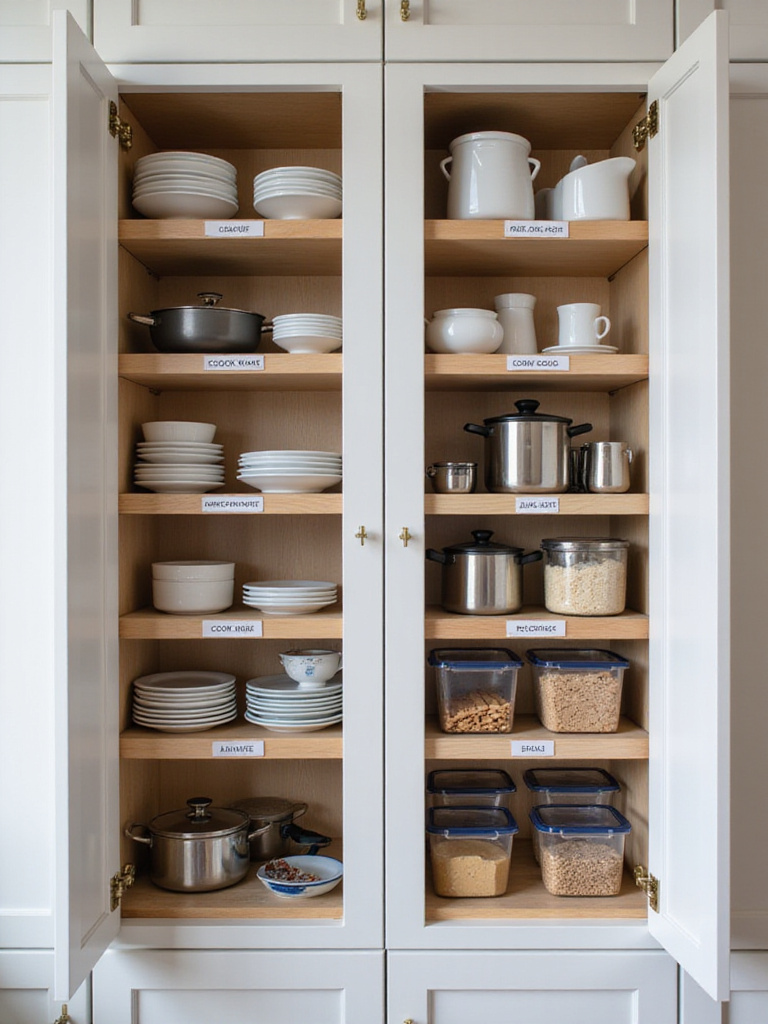
- The Cooking Zone (by the stove): Pots, pans, baking sheets, cooking oils, spices, spatulas, and spoons.
- The Prep Zone (by a clear stretch of counter): Knives, cutting boards, mixing bowls, and maybe even a trash pull-out right underneath for scraps.
- The Cleaning Zone (by the sink/dishwasher): Dish soap, sponges, drying racks, and your everyday plates and glasses so you can put them away with minimal effort.
- The Consumables Zone (pantry/fridge): Dry goods, canned goods, breakfast items.
When your kitchen is zoned properly, your body learns the space. You move with an easy, efficient rhythm instead of constantly backtracking. It makes the entire space feel intuitive.
The heart of your consumables zone is often a tall pantry.
13. Integrate Tall Pantry Cabinets for Bulk Storage and Streamlined Grocery Access
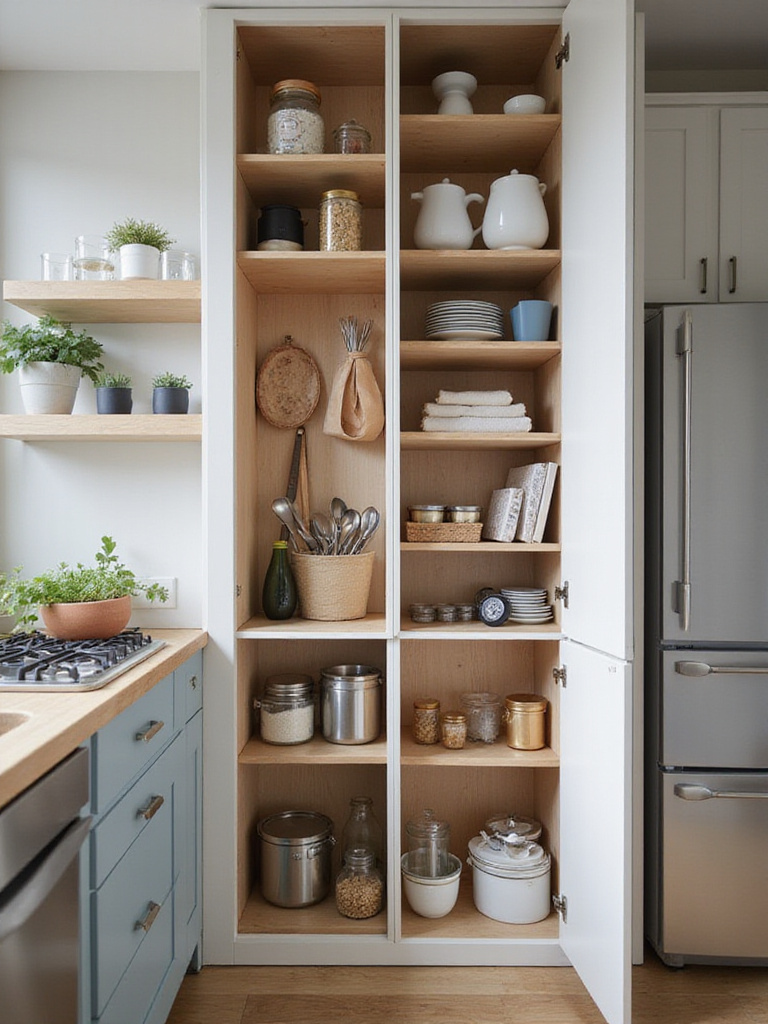
If you have the space, a tall, floor-to-ceiling pantry cabinet is a game-changer. It consolidates all your non-perishable food into one central command center. No more searching through three different upper cabinets for the pasta. This is especially brilliant for people who like to buy in bulk from places like Costco or belong to a CSA. You have a dedicated spot for everything.
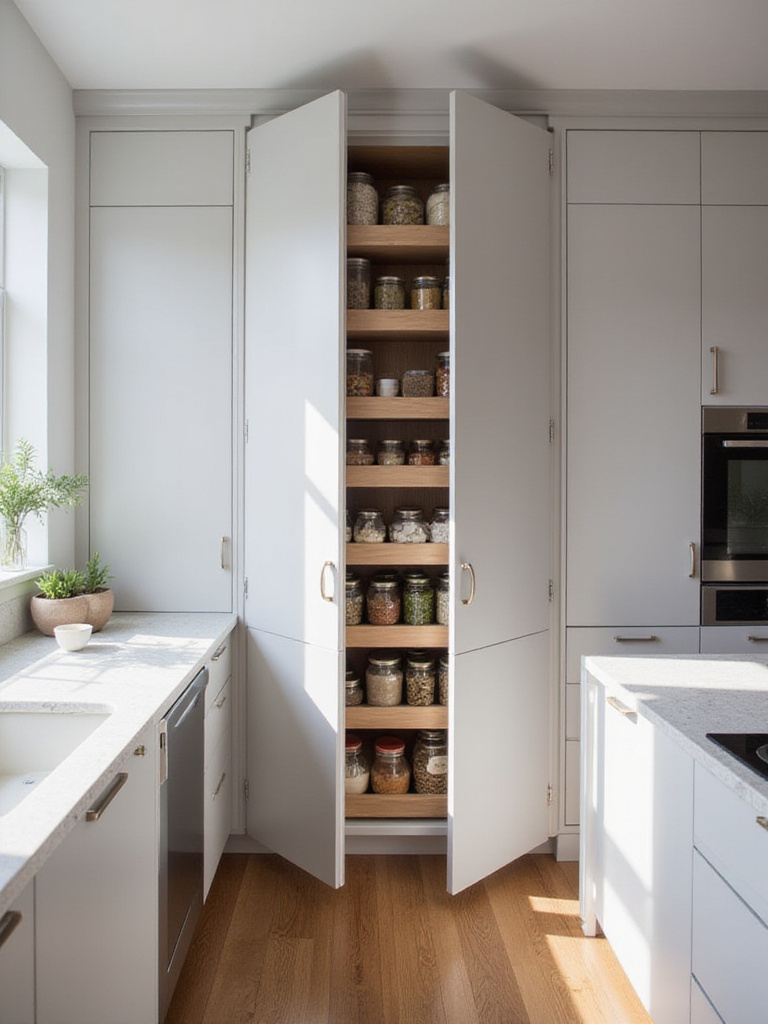
The secret to a great tall pantry is making the inside smart. Don’t just settle for deep, fixed shelves. That just creates a taller version of the “black hole” cabinet. You need to fill it with the tools we’ve already talked about: pull-out shelves, back-of-door racks, and clear bins. That way, you’re using all that amazing vertical space in a way that’s completely accessible from top to bottom.
Now, let’s tackle everyone’s least favorite cabinet.
14. Optimize Corner Cabinets with Smart Lazy Susans or Pull-Out Systems
Ah, the corner cabinet. The Bermuda Triangle of the kitchen. For decades, the only solution was a clunky, wobbly Lazy Susan where things would inevitably fly off the back. The good news is, we have much better options now. Modern hardware has completely revolutionized this awkward space.
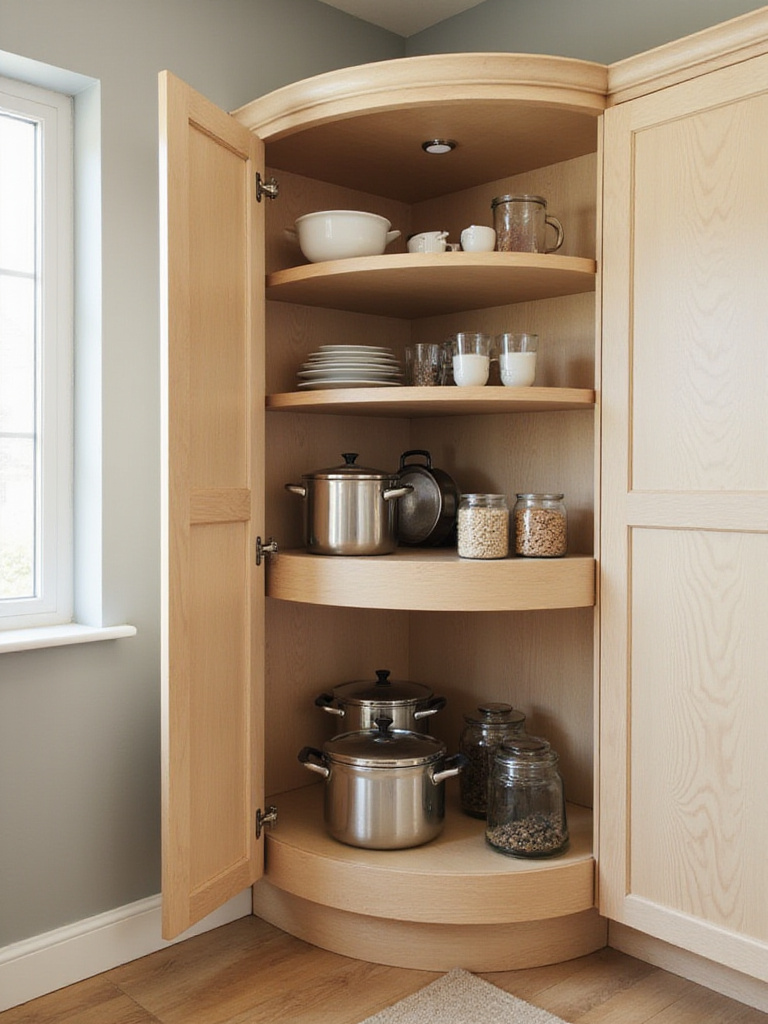
There are incredible pull-out systems that snake out of the blind corner, presenting you with a series of shelves you could never have reached otherwise. Think “Magic Corner” or “LeMans” units. They are an investment, for sure, but they can reclaim up to 80% of that dead space and make it fully functional. If you’re on a tighter budget, a new, sturdy Lazy Susan is still a massive improvement over a fixed shelf. Just don’t leave that corner to die. It’s valuable real estate.
Look up! There’s more real estate right above your head.
15. Elevate Wall Cabinets to the Ceiling for Maximized Vertical Storage
That dusty, greasy gap between the top of your cabinets and the ceiling is a black mark on kitchen design. It’s a wasted opportunity and a magnet for clutter and grime. Taking your upper cabinets all the way to the ceiling is one of the best things you can do for both storage and aesthetics. It makes the room feel taller, more finished, and more custom.
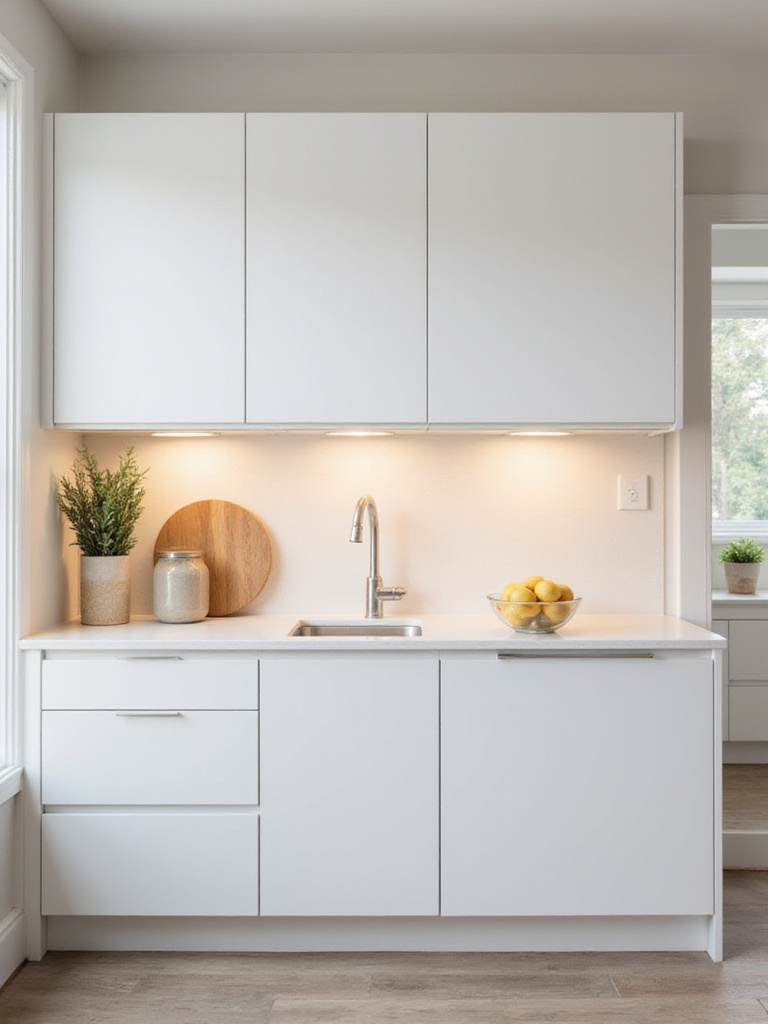
That top row of cabinets becomes the perfect home for things you don’t use every day: holiday platters, your big canning pot, the ice cream maker. You’ll need a sturdy step stool, but that’s a small price to pay for reclaiming all that vertical space. And the best part? No more dusting up there. Ever. It’s a clean, streamlined look that maximizes every available inch.
And while we’re talking about clearing things away…
16. Incorporate Dedicated Appliance Garages to Keep Countertops Clutter-Free
Your countertop should be a workspace, not a parking lot for small appliances. The coffee maker, the toaster, the blender—they are essential, but they create so much visual noise. An appliance garage is simply a dedicated cabinet, often sitting right on the countertop, that hides these items away. It might have a lift-up, pocket, or tambour door that disappears when open.
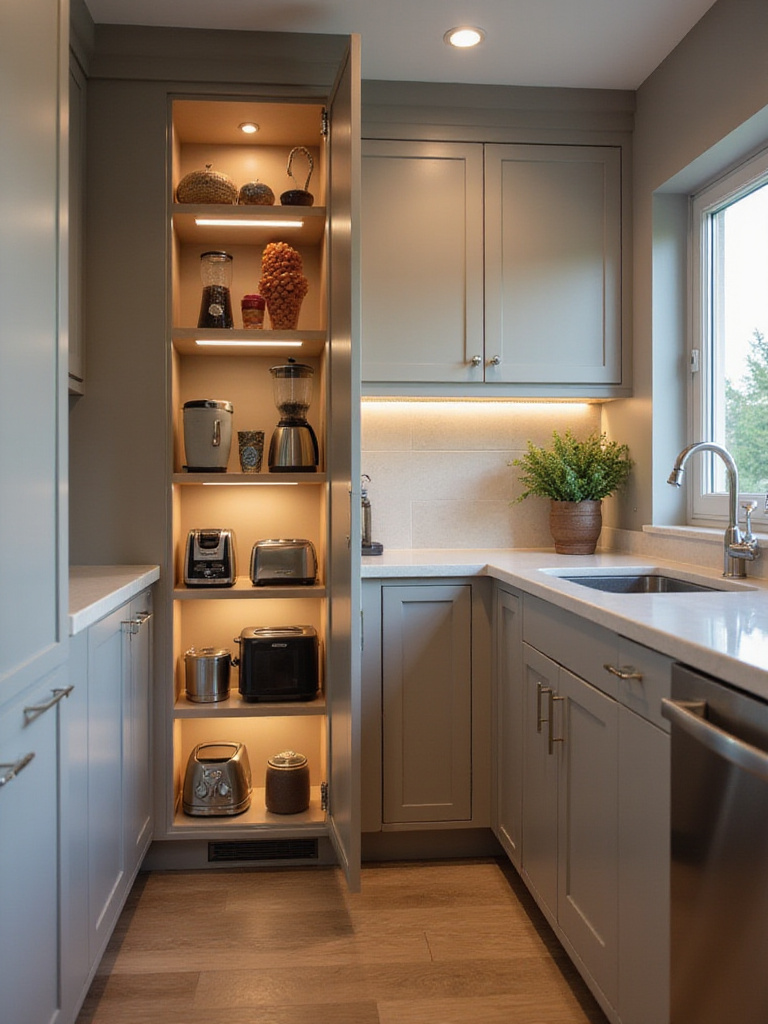
The best ones have electrical outlets built right inside, so you can use the appliances in place and then just close the door when you’re done. Imagine your countertops being completely clear. It not only looks amazing but makes cleaning a breeze. You just wipe down a single, flat surface. This one feature can single-handedly make your entire kitchen feel more serene and organized.
Let’s hide one more ugly-but-necessary item.
17. Select Base Cabinets Featuring Built-in Waste and Recycling Pull-Outs
A freestanding trash can is often smelly, ugly, and in the way. Hiding your waste and recycling bins inside a pull-out base cabinet is one of those simple luxuries that you will appreciate every single day. It keeps odors contained, it keeps the dog’s nose out of the trash, and it keeps your kitchen looking sleek and clean.
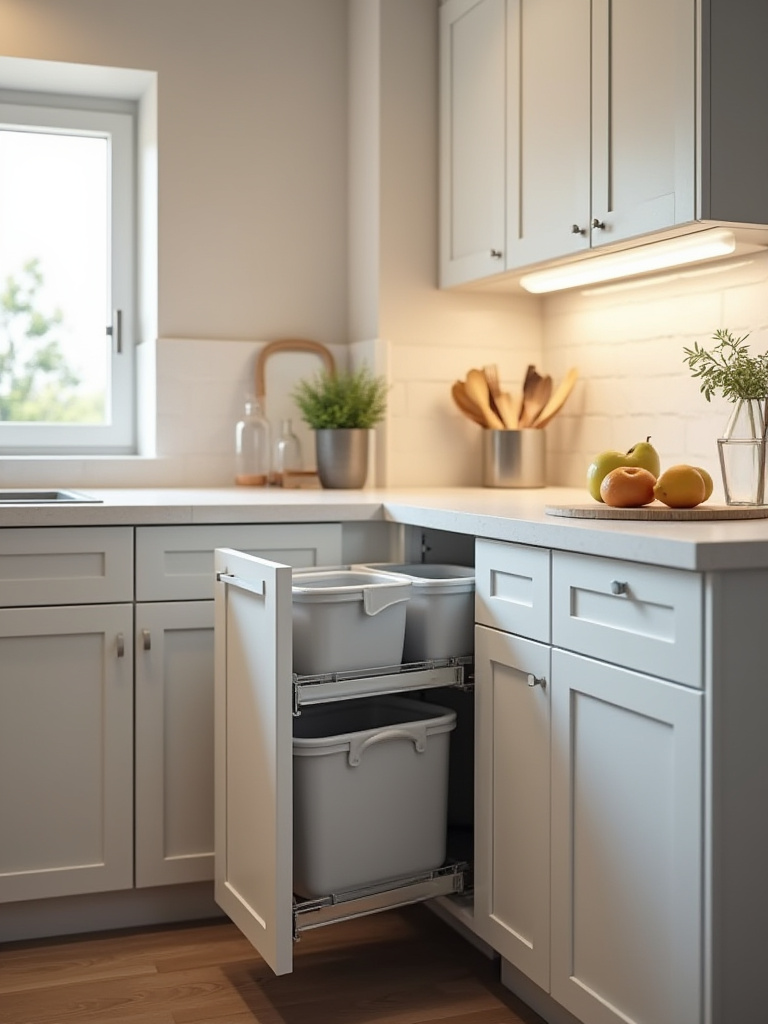
This is a must-have for the “Prep Zone.” Place it next to your sink or main workspace, and you can sweep vegetable peels and other scraps right into the bin without dripping across the floor. Most systems have a dual-bin setup, making it incredibly easy to separate recycling from trash on the fly. This promotes better habits and turns a chore into a seamless part of your workflow.
Now for some of the more creative moves that really personalize a space.
Creative & Specialty Cabinet Solutions
This is where we go beyond the standard to find clever pockets of space and add solutions that reflect how you really live.
18. Explore Toe-Kick Drawers to Maximize Undervalued Base Cabinet Space
Look at the very bottom of your base cabinets. That four-inch recessed space, the toe-kick, is almost always dead space. But it doesn’t have to be. Toe-kick drawers are shallow drawers that fit right into that space, perfect for storing flat items. Think baking sheets, serving trays, place mats, or even a collapsable step stool to reach those high cabinets we just talked about.
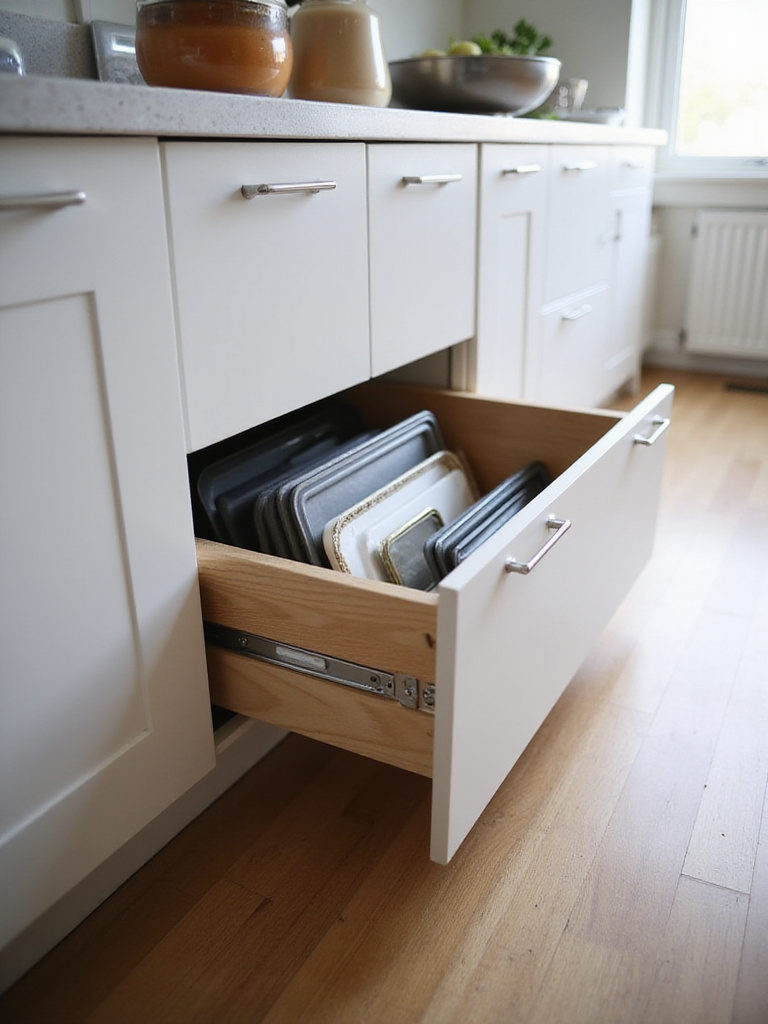
These are a stealthy way to add a surprising amount of storage, especially in a small kitchen where every inch counts. They are often equipped with push-to-open hardware, so there are no visible handles, making them completely disappear into the design. It’s the ultimate “secret” storage that turns an architectural feature into a functional asset.
Let there be light! Inside your cabinets, that is.
19. Implement Integrated LED Lighting Within Cabinets for Enhanced Visibility
Why should all the good lighting be on the outside of your cabinets? Putting integrated LED lighting inside your cabinets, especially deep ones or pantries, is a game-changer. No more using your phone’s flashlight to see what’s in the back. A simple motion-activated or door-activated LED strip illuminates the entire space, so you can find what you need instantly.
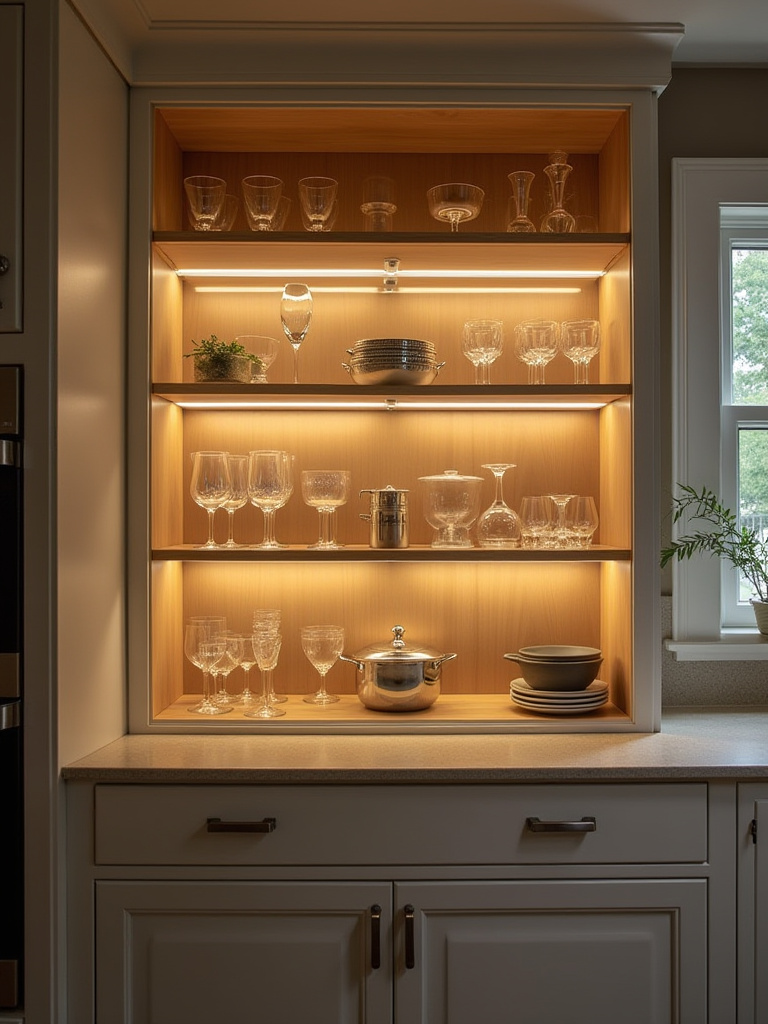
This is fantastic for glass-fronted cabinets, where it can create a beautiful, gallery-like display for your favorite dishes or glassware. But even in a dark pantry, it’s a purely functional upgrade that makes a huge difference. It’s an affordable luxury that feels incredibly high-end and enhances usability tenfold. It’s not just about looks; it’s about making your organized system actually visible and easy to use.
An island can be more than just a surface; it can be your storage workhorse.
20. Design Custom kitchen island Cabinetry for Extensive Additional Storage
An island shouldn’t just be a block in the middle of your kitchen. It’s an opportunity to create a multi-functional hub with hyper-specific storage. A custom-designed island can house everything from deep drawers for pots and pans on the side facing the stove, to a pull-out trash bin, to bookshelves for your cookbook collection on the end.
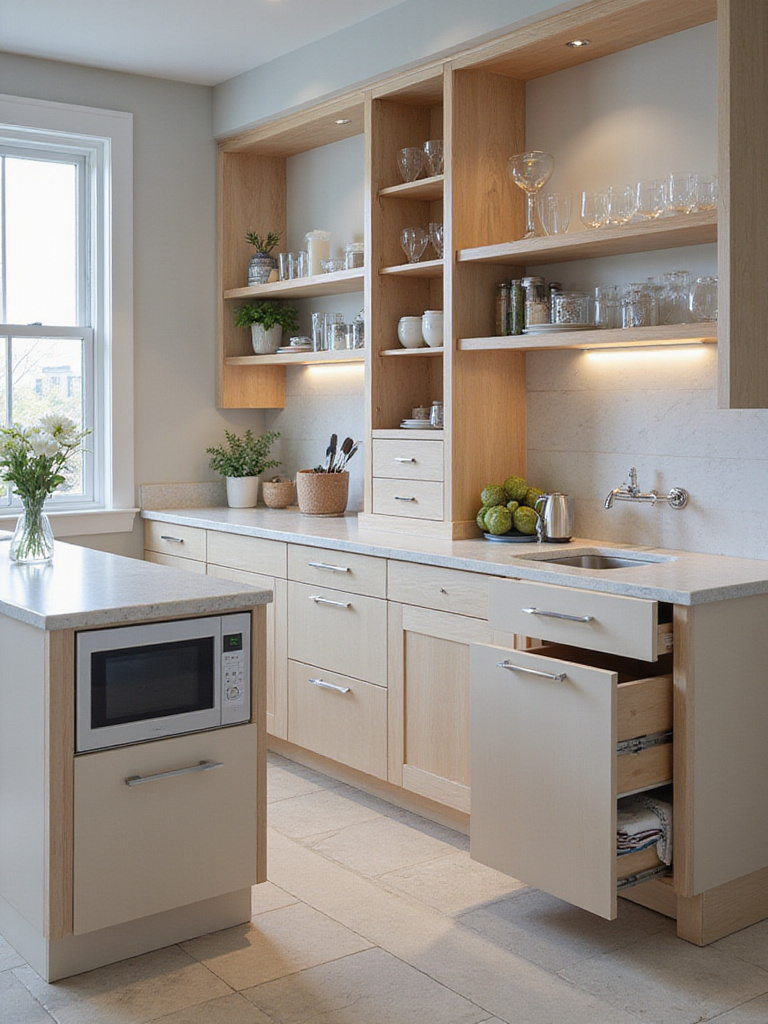
Think about the tasks you’ll perform at the island. If it’s your baking station, design a drawer with a built-in flour bin and a spot for your stand mixer on a heavy-duty lift. If it’s where the kids eat breakfast, have shallow drawers with bowls and spoons. The island is your chance to solve your most specific storage problems and create a true centerpiece for your kitchen’s ecosystem.
If you enjoy a glass of wine, let’s give it a proper home.
21. Include Built-In Wine Racks or Bottle Storage within Cabinet Designs
For wine lovers, proper storage is key to protecting your bottles. And for everyone else, bottles of oil, vinegar, and other beverages can quickly create clutter. Integrating dedicated bottle storage into your cabinet design is a clean, beautiful solution. This can be a classic diamond-shaped or lattice wine rack, or simple scalloped shelves.
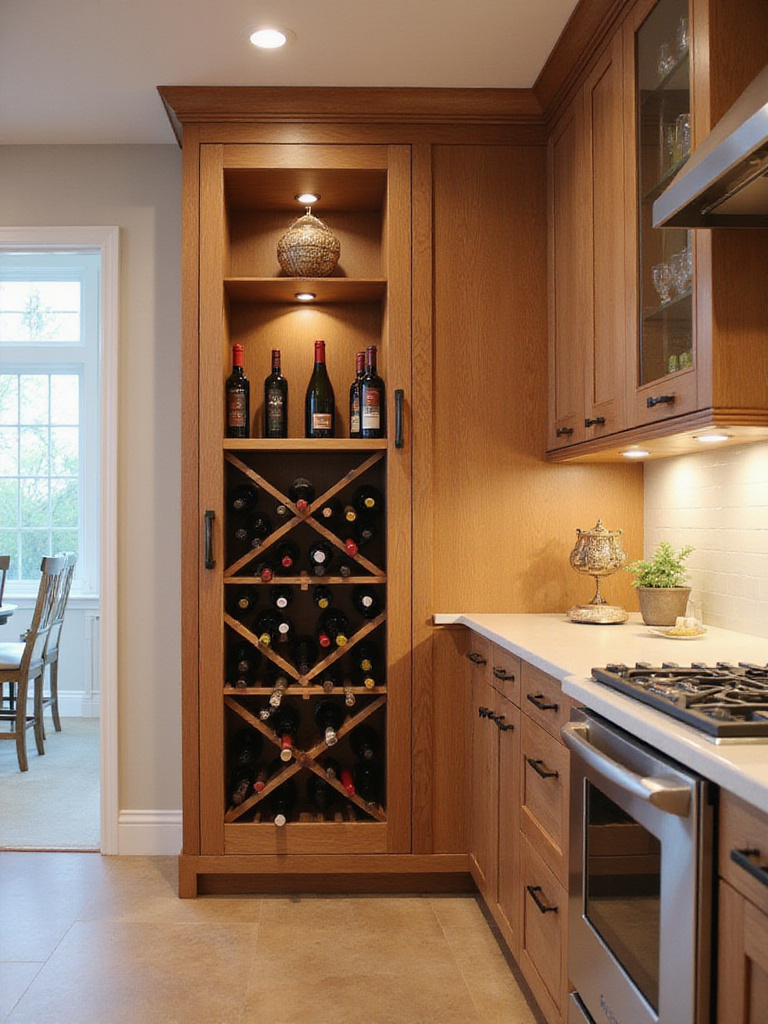
This not only keeps your bottles organized and, in the case of wine, stored correctly on their side, but it also elevates the look of your kitchen. It can be a design feature at the end of an island or a bank of cabinets, turning simple storage into a sophisticated statement. It says you’ve thought about every detail of how you live and entertain in your space.
Now, for a slightly controversial but beautiful option.
22. Leverage Open Shelving for Easy Access and Decorative Item Display
Open shelving gets a bad rap because people think it will look cluttered. But here’s the secret: open shelving isn’t for everything. It’s for the beautiful and useful things you use every single day. Your everyday dishes, your favorite handmade mugs, a beautiful crock of utensils, a few well-loved cookbooks, and a small plant. That’s it.
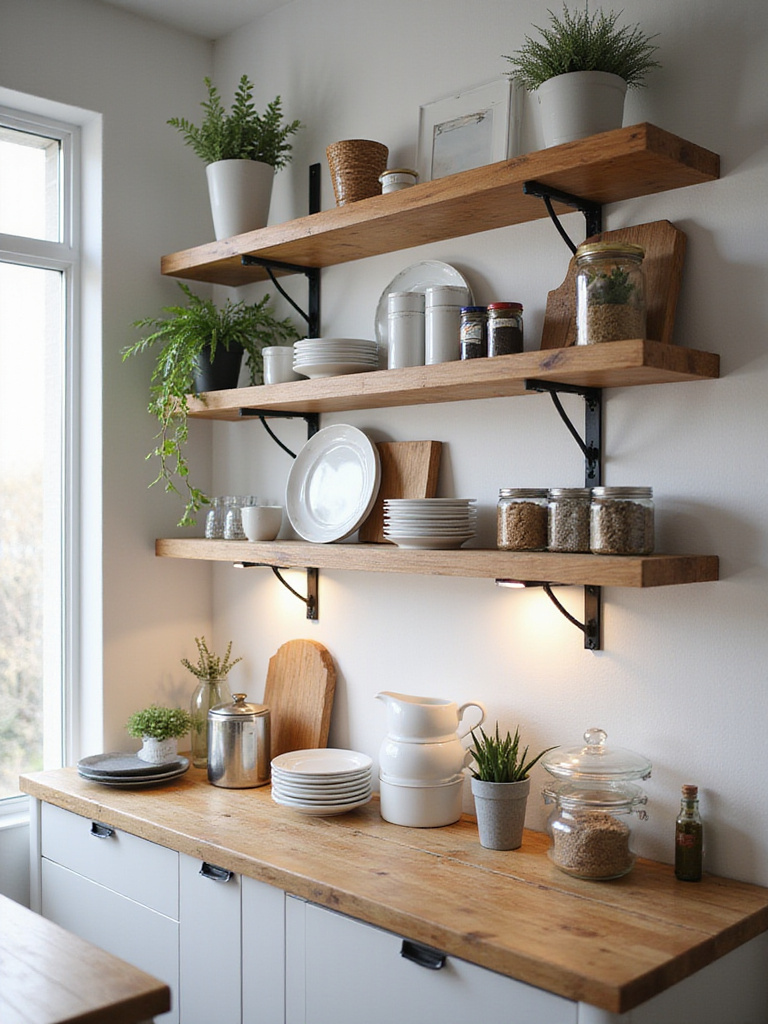
By swapping out a bulky upper cabinet for a few open shelves, you can make a small kitchen feel so much more open and airy. It forces you to be curated and mindful about what you own. It adds personality and warmth, breaking up the monotony of solid cabinet doors. The trick is to treat it like a display, not a dumping ground. It’s a chance to let your home’s ecosystem breathe.
Finally, let’s talk about how to keep all this good work from falling apart.
Ongoing Optimization & Cabinet Maintenance
Getting organized is a project. Staying organized is a practice. Here’s how to make sure your beautiful, functional system lasts.
23. Regularly Declutter and Reorganize Cabinets for Lasting Efficiency
Your kitchen is not a museum. Life happens. Things get put back in the wrong place, you try a new recipe and buy a weird ingredient you’ll never use again, the kids’ snack preferences change overnight. A quick “reset” is essential for long-term success. You don’t have to do the whole kitchen at once. Just commit to tackling one cabinet or one drawer every month.
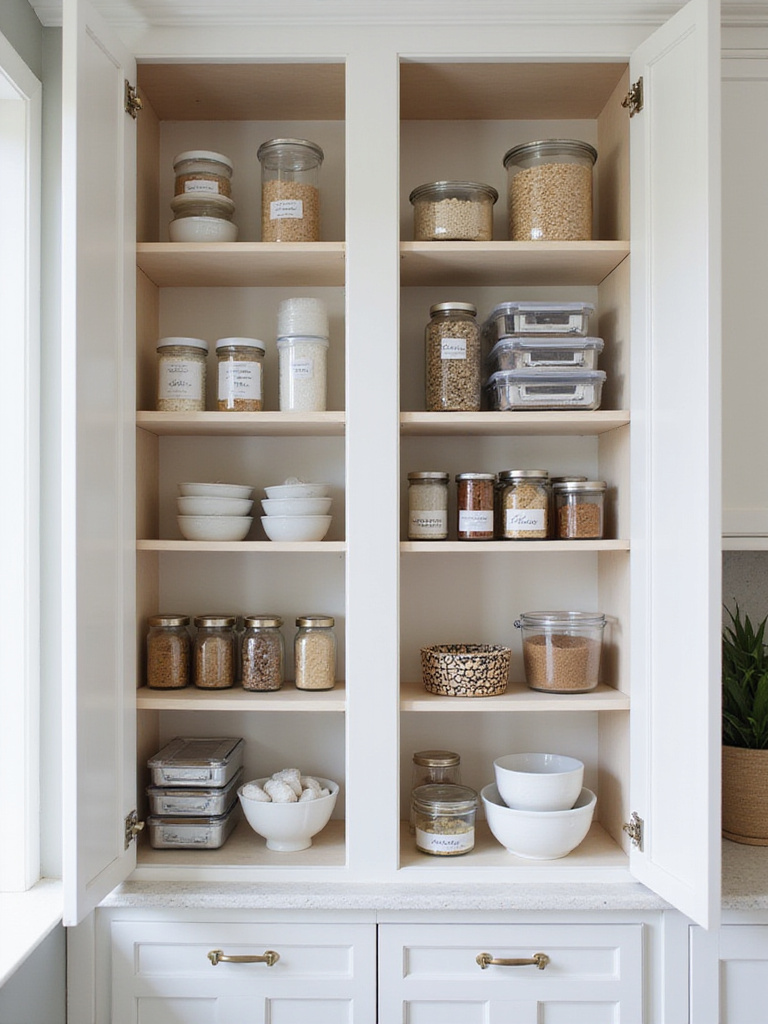
Take five minutes to pull everything out, wipe it down, and put back only what belongs there. This is also your chance to do a quick inventory check—notice what you’re low on and what you have too much of. I live by the “one in, one out” rule. If I buy a new travel mug, an old one gets donated. This simple habit prevents the slow creep of clutter and keeps your systems working as designed.
And the final piece of the puzzle: make things obvious.
24. Employ Smart Labeling Systems for Instant Content Identification
This is the final touch that makes an organized system foolproof, especially for other people in your household. You don’t need to go crazy with a fancy label maker (though it can be fun). A simple piece of masking tape and a marker will do. Label your clear containers in the pantry: “Quinoa,” “Almond Flour,” “Lentils.” Include the purchase or expiration date.
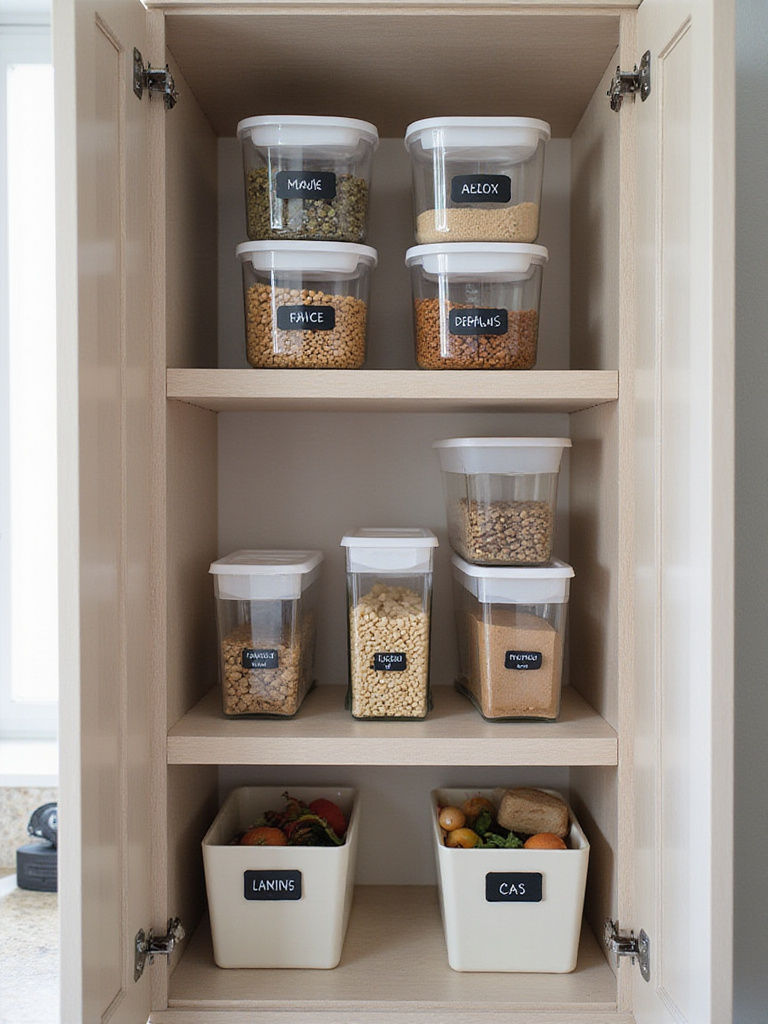
I love to label the shelves themselves. A small label that says “Baking Supplies,” “Canned Goods,” or “Pastas & Grains” acts as a map for your pantry. It makes it easy to find things, and more importantly, it makes it easy for everyone to put things away in the right spot. It removes the guesswork and makes your entire system self-sustaining. It’s the last step in turning your kitchen from a source of stress into a source of ease and joy.
It’s All About Creating a Kitchen That Nurtures You
Ultimately, organizing your kitchen cabinets is about so much more than just finding a place for your stuff. It’s about creating a space that supports your well-being. It’s about reducing the daily friction that wears you down, saving money by not wasting food, and making the act of preparing a meal feel creative and joyful instead of chaotic and stressful.
By thinking of your kitchen as a living ecosystem, you can design a space that truly flows—one that’s efficient, sustainable, and beautiful. Don’t feel like you have to do all 24 of these things at once. Just pick one. Tackle that one frustrating drawer or that one chaotic cabinet. The momentum from that small win will inspire you to keep going. Before you know it, you’ll have a kitchen that not only looks great but actively makes your life better.