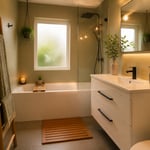
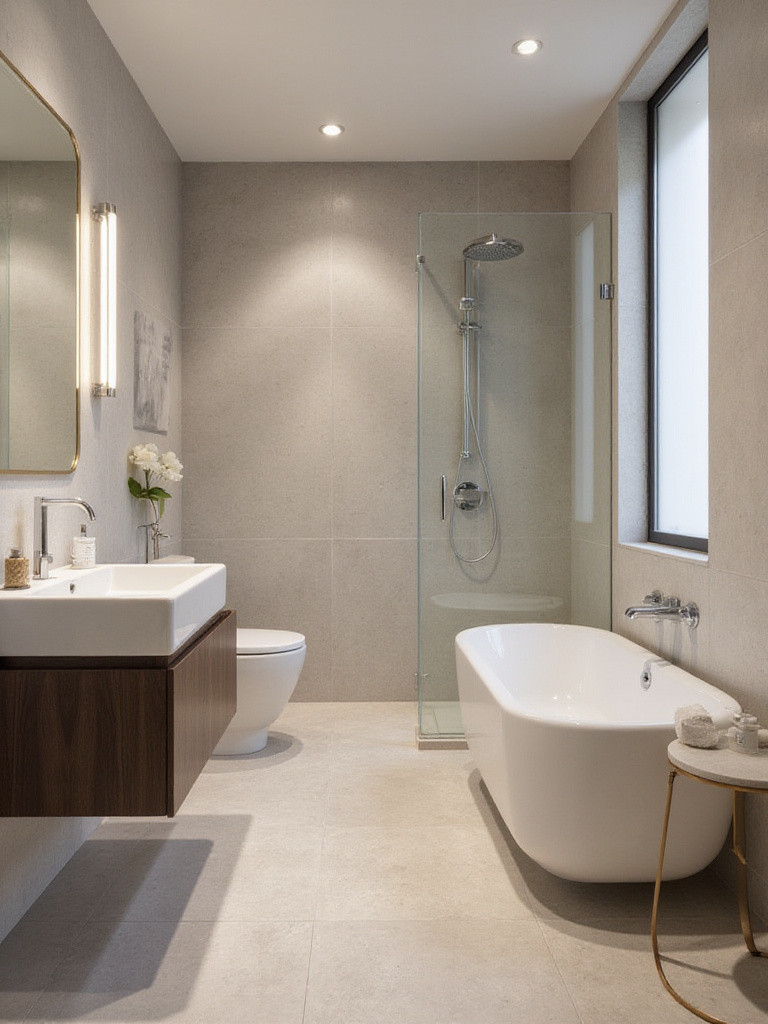
Picture this: You step into a space that feels like a private escape in Costa Rica, yet with the refined edge of a London flat. The air is fresh, mingling with the scent of eucalyptus. Warm light filters through a frosted window, illuminating a seamless stone floor that flows directly into a curbless, open shower. A single, lush monstera leaf unfurls in the corner. This isn’t just a bathroom; it’s a daily ritual, a sanctuary. You asked me how to achieve this, so let’s get real. Forget the generic blog posts. This is how we create spaces that don’t just look good, but feel transformative.
This is about creating a haven that connects you back to nature and to yourself, blending that raw, tropical soul with sharp, contemporary elegance.
Foundational Planning & Smart Budgeting
Alright, before you even think about tile, we need to talk strategy. This is the unglamorous part that everyone wants to skip, and it’s precisely why so many renovations go off the rails. Getting this foundation right is what separates a space that just looks expensive from one that is truly luxurious, functional, and built to last.
1. Define Your Core Renovation Goals to Guide Decisions
Can we please stop talking about “goals” like it’s a corporate meeting? What we’re really talking about is defining the feeling you want to create. People always tell me they want a “modern bathroom,” but what does that mean to you? Do you want a space that energizes you for the day ahead, or a tranquil grotto where you can decompress at night? Is it a quick, efficient family hub, or a private spa for one? Don’t just list features; write down how you want to feel when you’re in there.
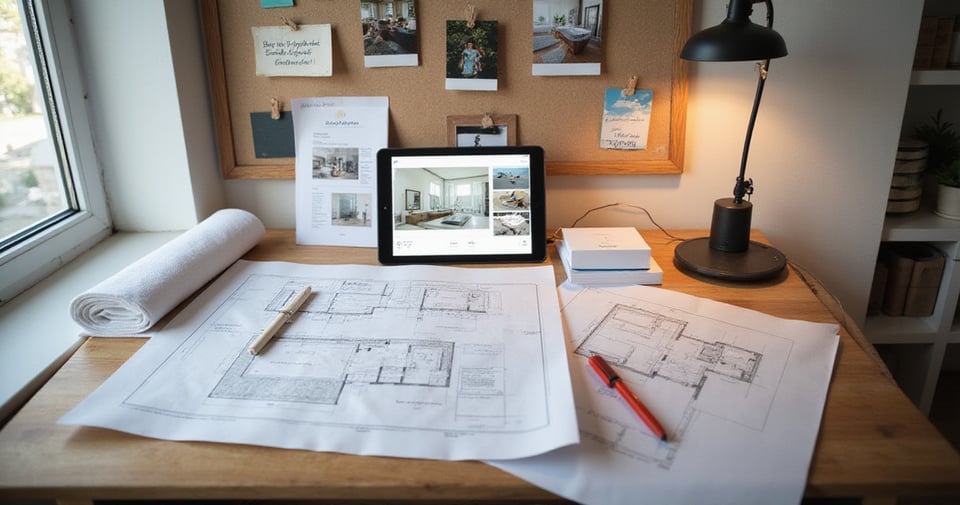
That feeling becomes your North Star. A client in Notting Hill once told me her goal was “to feel like I’m showering in a jungle cenote, but with good water pressure.” That single, powerful image guided every single choice we made, from the dark slate tile and recessed lighting to the ridiculously oversized fern we hung above the tub. When you’re clear on the why, every “what” and “how” falls into place, and you avoid those expensive detours into trends that have nothing to do with your soul.
With that feeling crystalized, you’ll have the clarity you need to handle the money side of things.
2. Set a Realistic Budget: Prioritize Spending Categories Wisely
Let’s be honest: budgets are not sexy. But what’s even less sexy is running out of money halfway through and having to compromise on the things that truly matter. So here’s the real talk. You need to research local costs for labor and materials—not national averages—and then you must, must add a 15-20% contingency fund. This isn’t for “if” things go wrong; it’s for when they do. That crumbling pipe behind the wall doesn’t care about your spreadsheet.
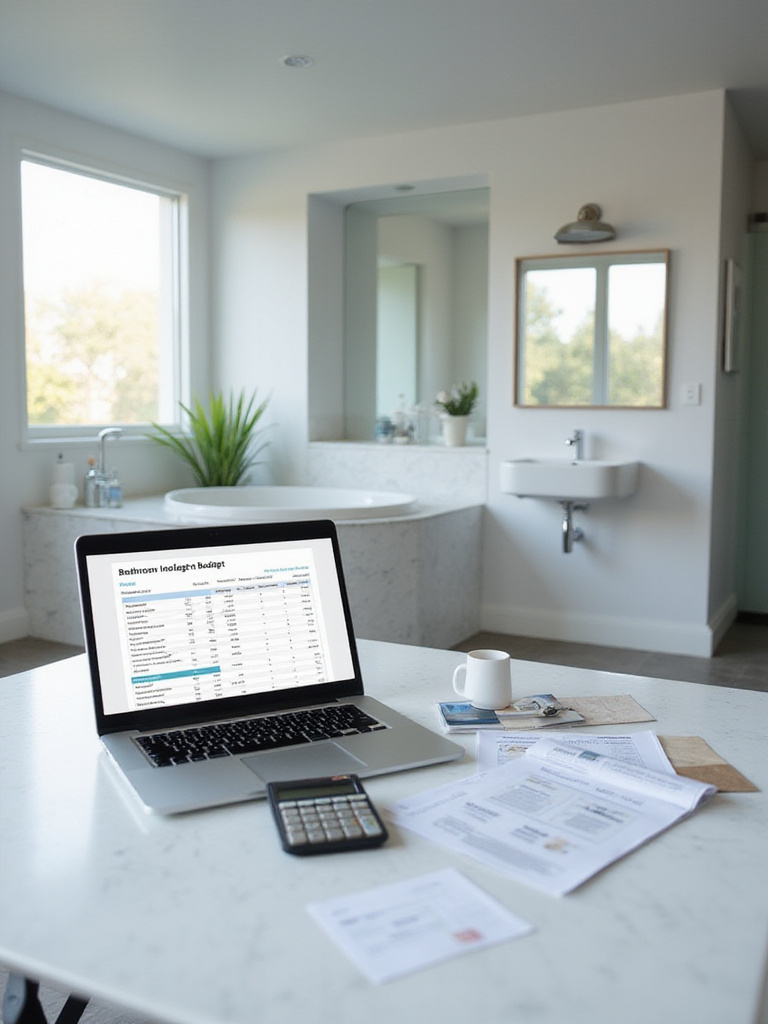
The real trick is to prioritize your spending based on that feeling we just talked about. If your dream is that “jungle cenote,” you allocate a bigger chunk to the statement tile and the high-end, rainfall showerhead. You can save money on a simpler vanity or more modest fixtures. Don’t spread your budget thinly across a dozen “nice-to-have” items. Go big on the one or two elements that will define the space and deliver that emotional impact every single day. That’s how you get luxury without an unlimited bank account.
Once your financial plan is solid, the fun part begins: gathering the right kind of inspiration.
3. Research Modern Design Trends for Inspirations and Style
Okay, a confession: I used to despise the word “trends.” It felt like chasing fads. But then I realized it’s not about copying what’s on Pinterest; it’s about understanding the new tools and materials available to bring your vision to life. The noise is all the fast-fashion stuff—that one tile shape that’s suddenly everywhere. The real signal is in the materials: the rise of durable, natural materials like travertine, zellige tiles with their imperfect, soulful character, and fluted wood panels that add texture and warmth.
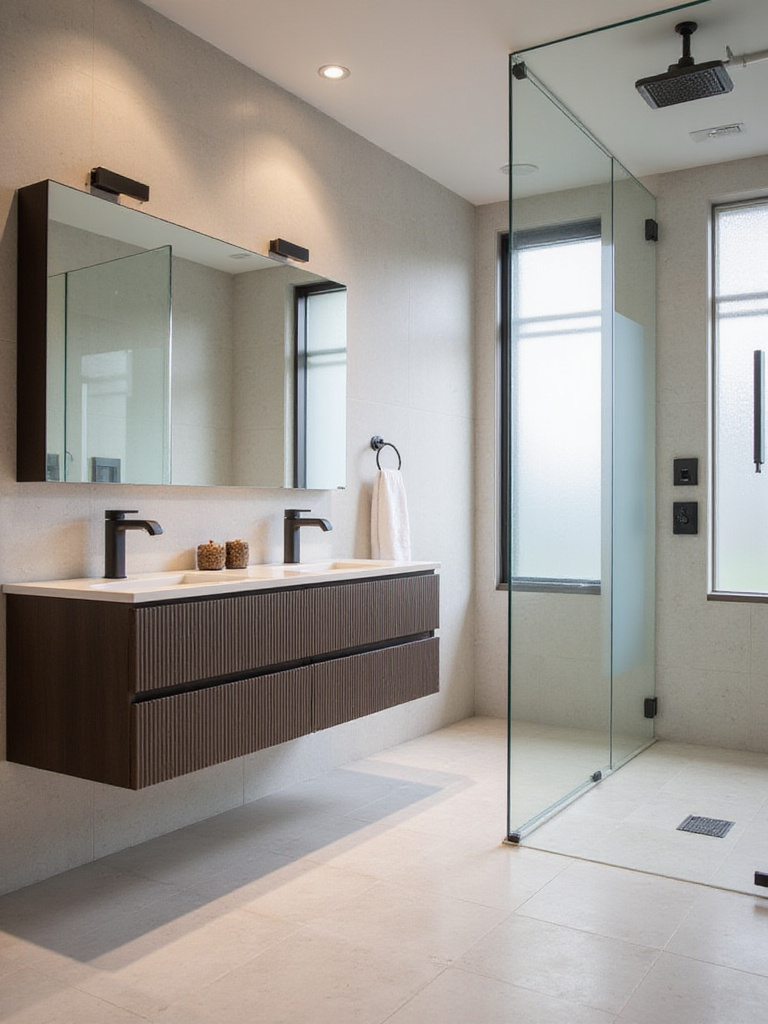
My approach blends the organic textures and earthy tones of Latin America with the clean, architectural lines of British design. Think rustic, handmade terracotta tile paired with a sleek, minimalist brass fixture from a British designer. It’s that tension between raw and refined that creates real magic. Create a mood board, but be brutal. Ask yourself: does this align with my core feeling, or am I just saving it because it’s popular? Focus on timeless textures and forms, not fleeting patterns.
Now, let’s pull our heads out of the clouds and get back to the less-glamorous, but utterly essential, guts of your house.
4. Assess Plumbing and Electrical Infrastructure for Upgrades
I watched a client lose thousands—and I mean, thousands—of pounds because they fell in love with a design before we looked behind the walls of their beautiful Victorian terrace. They wanted to move a toilet. Sounds simple, right? Wrong. The old cast iron soil stack was brittle and embedded in a solid wall. Moving it meant re-plumbing half the house. Their “simple” refresh just got incredibly complicated and expensive.
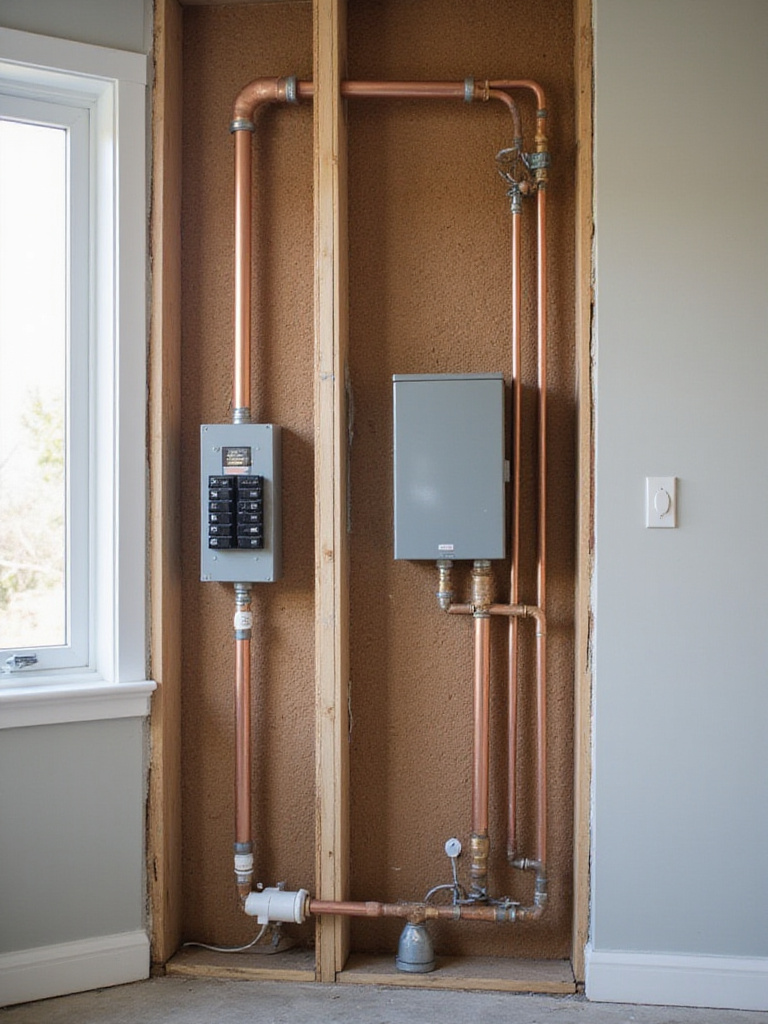
Please, I’m begging you: before you hire a designer, before you pick a single tile, hire a licensed plumber and an electrician to do an assessment. Especially in older homes. They need to tell you if your gorgeous new smart shower with 12 body jets can actually run on your current water pressure, or if your plan for moody, layered lighting requires a new electrical circuit. It’s the single most important preliminary investment you can make. It’s not an “if,” it’s a “must.”
This infrastructure check goes hand-in-hand with understanding the rules of the game.
5. Consider Local Building Codes Before Initial Demolition
Here’s a pet peeve of mine: people who think permits and codes are just bureaucratic red tape designed to slow them down. They’re not. They are the collected wisdom of everything that can go wrong in a building—fires, floods, structural collapses. They are there to protect you, your investment, and anyone who lives in that house after you. Thinking you can skip this step is the height of arrogance.
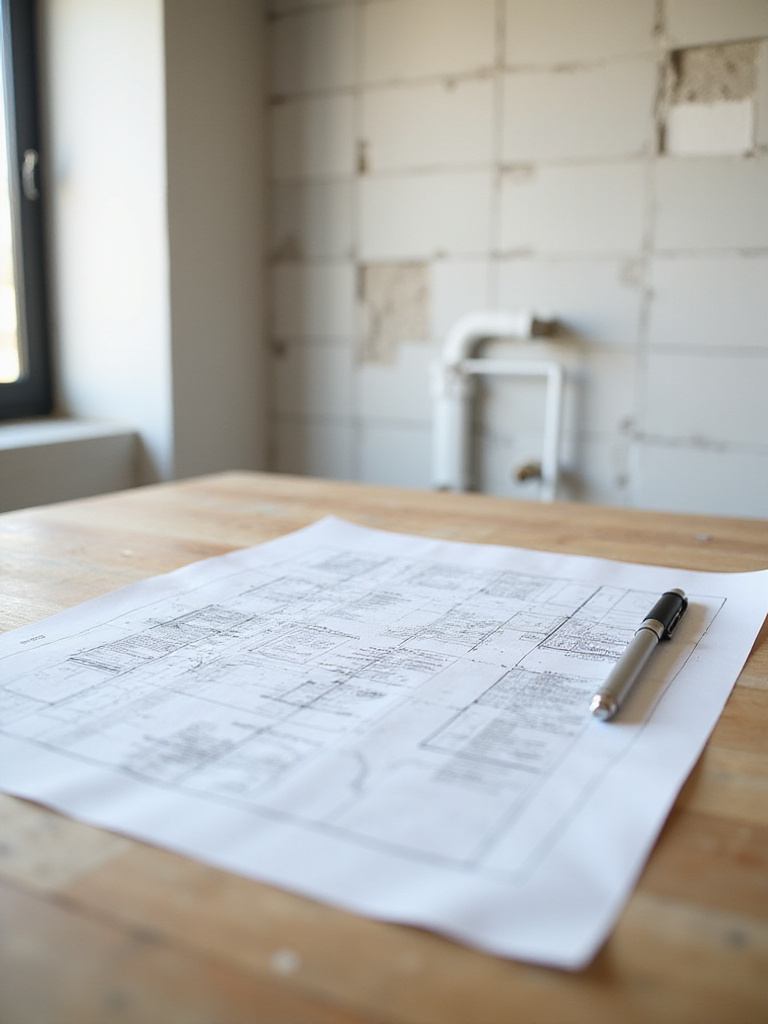
Don’t start demolition until you know the rules. Are you moving a wall? You might need a structural engineer. Are you changing the plumbing layout or adding new electrical? You will almost certainly need a permit and inspections. It seems like a hassle, but a stop-work order from the local council halfway through your project is infinitely more painful and expensive. A great contractor handles this for you, which is why it’s so vital to hire a true professional.
With the serious planning done, we can finally get into shaping the space itself.
Sleek Design Elements & Optimized Layouts
This is where the vision starts to become a reality. We’re moving from spreadsheets and inspections to the physical form of the room. It’s about more than just picking pretty things; it’s about making deliberate choices that create a sense of flow, spaciousness, and effortless elegance.
6. Optimize Your Layout for Spaciousness and Practicality
The single biggest mistake people make is thinking a bathroom renovation means just replacing old things with new things in the exact same spot. Your current layout is probably not the best one; it’s just the one you inherited. We need to think about how you move in the space. Does the door swing open and nearly hit the toilet? Do you have to squeeze past the vanity to get to the shower? That’s bad design.
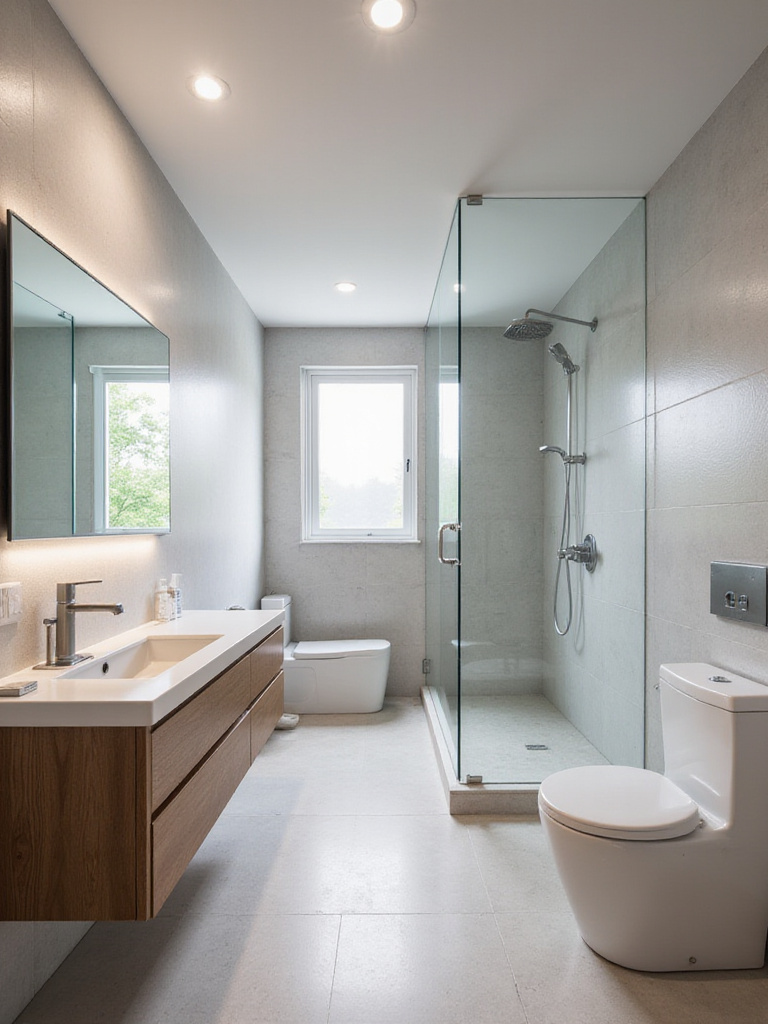
We want to create clear “zones” and generous pathways. Sometimes, the most luxurious thing you can add to a bathroom is empty space. A “wet room” concept, where the shower area is open and flows into the main floor, is a fantastic way to make a small room feel enormous. Or replacing a bulky tub with a spacious walk-in shower. Before you commit, get some painter’s tape and mark the new layout on the floor. Walk around in it. Does it feel right? This simple five-minute exercise can save you from a decade of daily annoyance.
Your layout is the canvas, and the vanity is often the first and most important brushstroke.
7. Select Minimalist Vanities for Sleek Aesthetic and Storage
Can we agree that clunky, floor-standing vanities with fussy doors and faux drawers are a thing of the past? For a modern, airy feel, you have to go with a floating vanity. Mounting it to the wall so you can see the flooring run underneath is a classic designer trick. It instantly makes the room feel larger and—a bonus for those who value clean living—it’s infinitely easier to clean under.
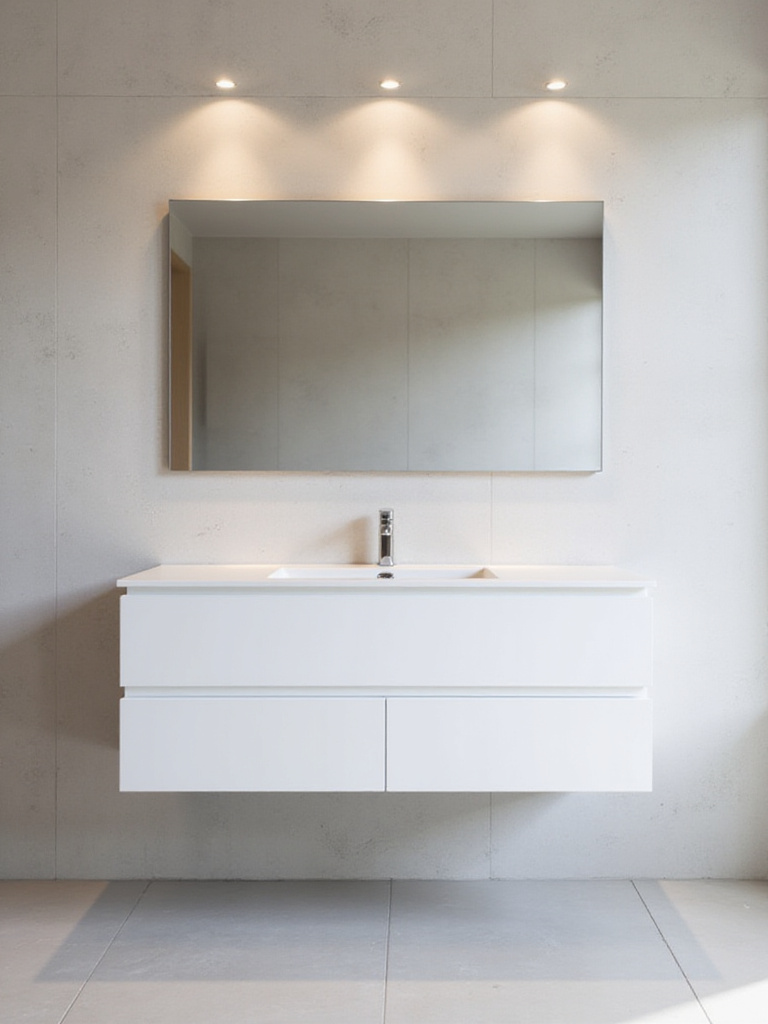
The key is to find that perfect balance of streamlined looks and hyper-functional storage. I love vanities made from warm, sustainable woods like teak or bamboo, paired with a simple quartz top. But the magic is inside: deep, full-extension drawers with smart dividers. This isn’t just storage; it’s organization. A place for everything, so your countertop can remain a clutter-free, serene surface. It’s the physical manifestation of a clear mind.
And the perfect companion to a beautiful vanity is lighting that makes you look and feel your best.
8. Choose Contemporary Lighting to Enhance Mood and Function
Relying on a single, harsh overhead light is a design crime. It casts unflattering shadows and makes a space feel flat and sterile. A truly beautiful bathroom needs layers of light, just like a high-end living room. You need at least three types: ambient, task, and accent. Ambient is your general, soft-glow overhead lighting (always on a dimmer). Task lighting is for getting ready—this is usually vertical sconces on either side of the mirror to illuminate your face without shadows.
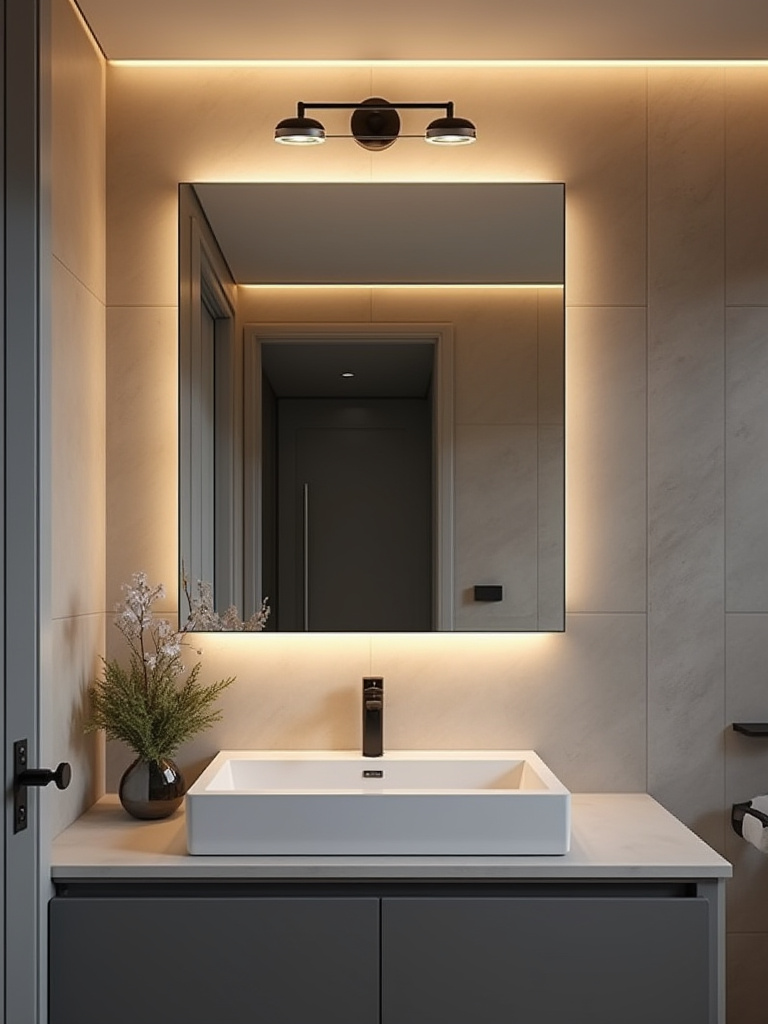
Accent lighting is where the poetry happens. It’s the secret ingredient. Think about washing a textured wall with a soft glow, or placing a small, waterproof light in a shower niche. My personal favorite is integrating a warm LED strip under a floating vanity. It provides a gentle, hotel-like glow that’s perfect for late-night trips to the bathroom and makes the vanity look like it’s levitating. It’s a small detail with a huge impact.
The right lighting will make your materials sing, especially if you’ve chosen stunning tiles.
9. Integrate Large-Format Tiles for Seamless, Expansive Look
If you want your bathroom to feel like a luxurious, serene spa, you need to minimize visual noise. And the biggest source of visual noise? Grout lines. Ditching tiny mosaic tiles for massive, large-format porcelain slabs is one of the most effective moves you can make. I’m talking about tiles that are 24×48 inches, or even larger single slabs for shower walls.
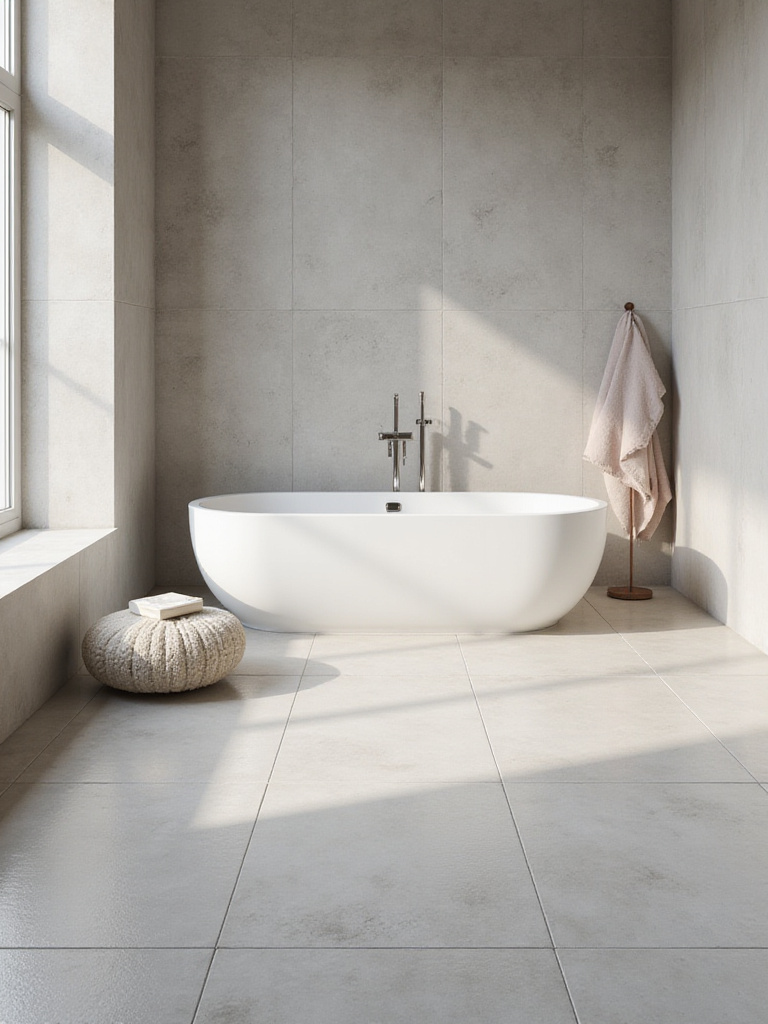
When you have fewer grout lines, you create a seamless, monolithic surface that makes the space feel bigger, calmer, and much, much easier to clean. Think of a wall or floor as a single, uninterrupted plane of beautiful texture. This is especially powerful in smaller spaces. And here’s the shortcut I wish I’d known earlier: always use rectified tiles—they have perfectly straight edges, allowing for the thinnest possible grout lines—and match the grout color to the tile. The goal is to make the grout disappear.
This philosophy of clean lines and visual space extends to every fixture, especially the toilet.
10. Explore Floating Toilets for Space-Saving Elegance
Everyone gets excited about showers and vanities, but let me tell you, a wall-mounted, floating toilet is one of the chicest and most practical upgrades you can make. The tank is hidden inside the wall, and the bowl hovers above the floor. It’s a game-changer. Suddenly, that clunky fixture disappears, and you gain back precious visual and physical floor space.
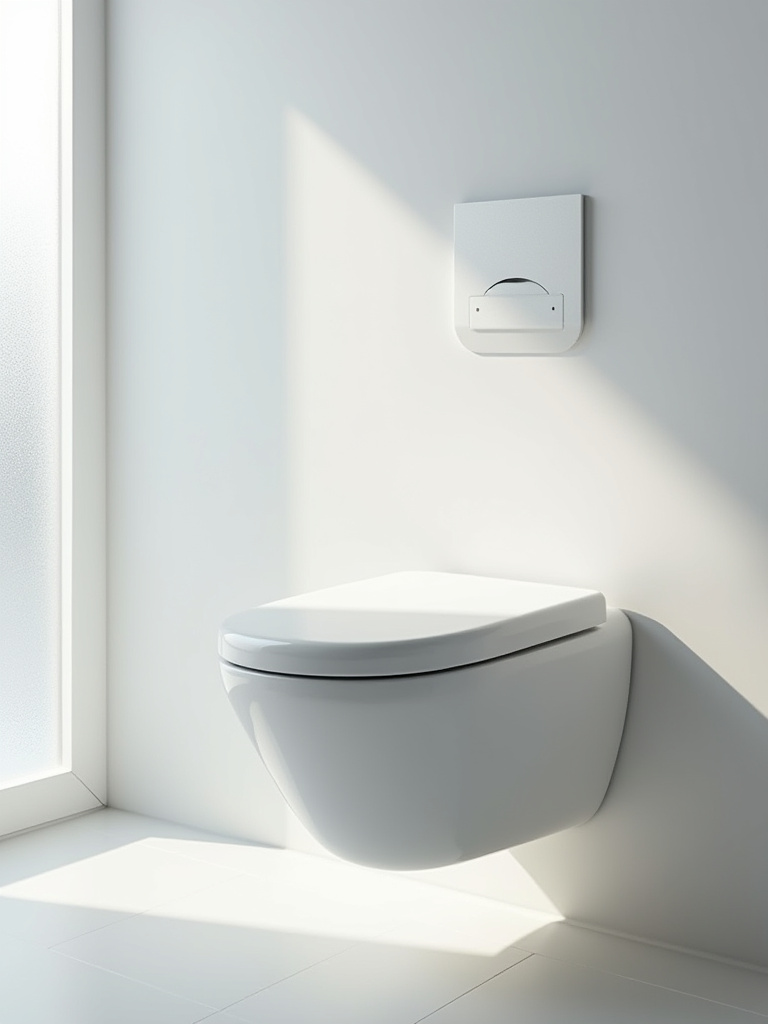
From a design perspective, it’s a slam dunk for any minimalist or contemporary aesthetic. The uninterrupted floor line makes the room feel so much more expansive. And from a practical, day-to-day living standpoint? It’s a dream to clean. No more awkward crouching to clean around the base. It might require a bit more planning with your contractor to ensure the wall framing is right, but the payoff in elegance and hygiene is more than worth it.
These sleek elements set the stage for bringing in truly next-level technology.
Integrating Innovation & Smart Technology
Don’t let the phrase “smart technology” scare you. This isn’t about turning your bathroom into a spaceship. It’s about using technology in subtle, intuitive ways to make your daily routines more comfortable, hygienic, and even a little more magical.
11. Embrace Smart Toilets for Hygiene and Efficiency Upgrades
The world has embraced the bidet, and for good reason. A smart toilet with an integrated bidet function is a quantum leap in personal hygiene and comfort. It’s not just about the cleaning—it’s the heated seat on a cold morning, the gentle nightlight, the water-saving dual-flush. Once you experience it, a standard toilet feels archaic.
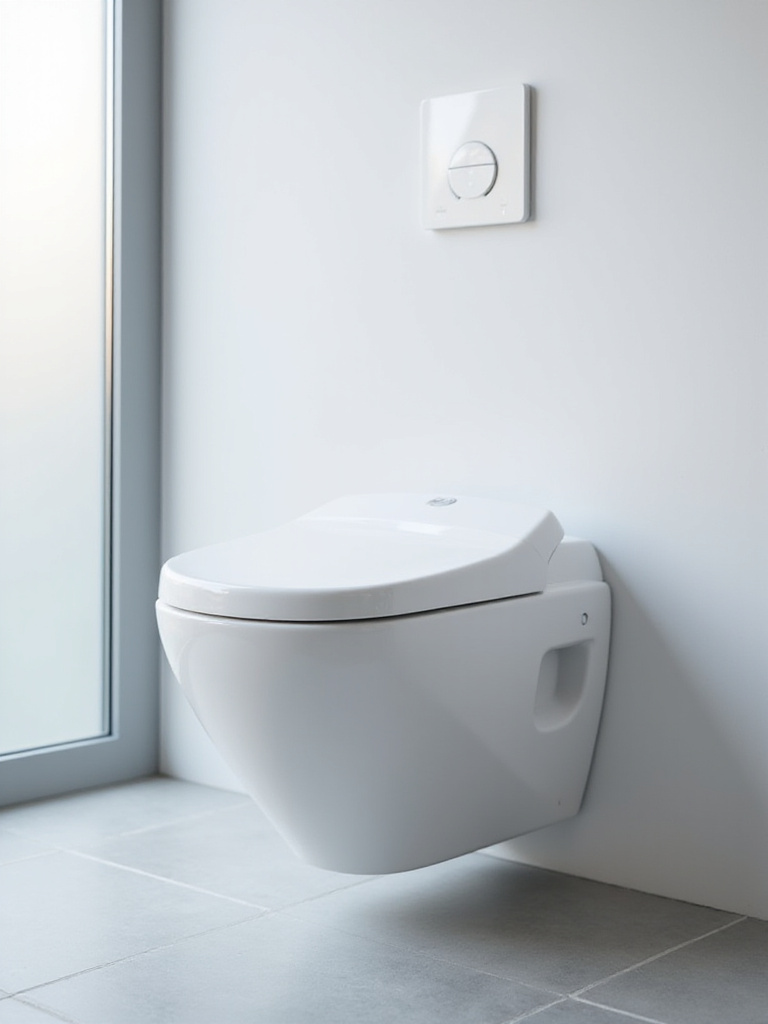
You don’t have to get the top-of-the-line model with a dozen features you’ll never use. The most important functions for most people are the bidet, heated seat, and an efficient flush. The key is to plan for it early. These units require a GFCI electrical outlet nearby, so make sure that’s part of your electrician’s plan from day one. It’s a simple addition during the rough-in phase but a major pain to add later.
Just like your toilet can be smarter, so can your lighting.
12. Install Dimmable LED Lighting with Motion Sensors
Here’s an observation: we have incredibly different lighting needs in the bathroom throughout the day. In the morning, you need bright, clear light to wake up and get ready. At night, that same bright light is a jarring assault on the senses. The solution is simple: every single light in your bathroom should be a dimmable LED, and they should be on smart controls.
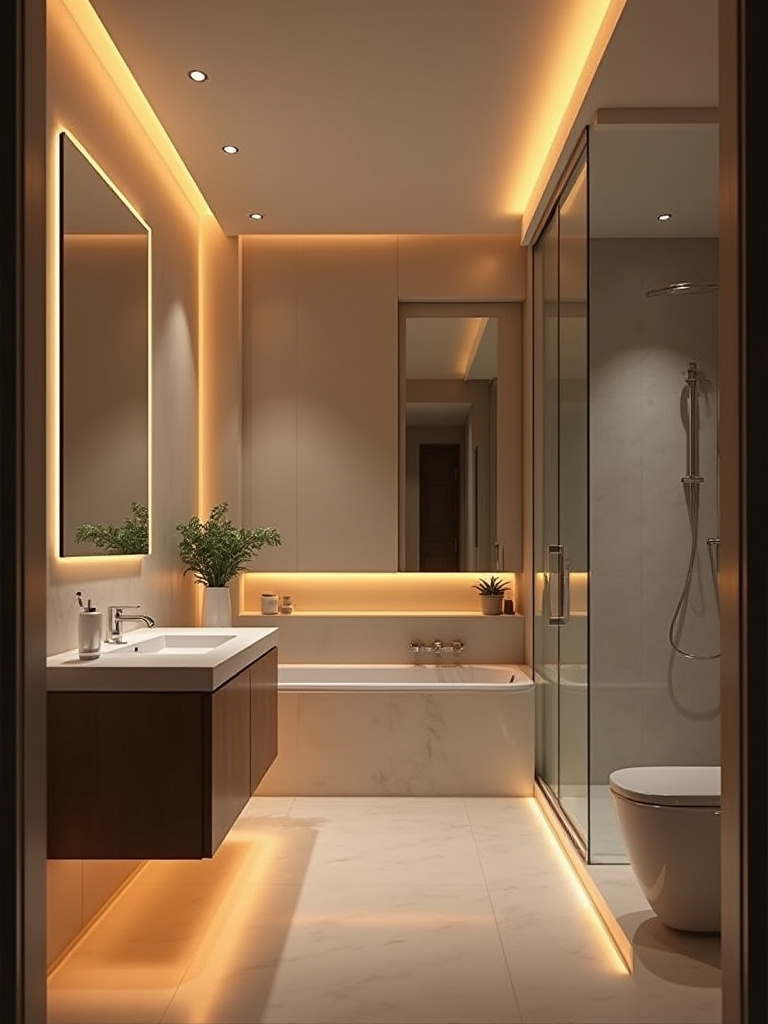
Pairing dimmers with motion sensors is where the real luxury kicks in. Imagine walking into the bathroom in the middle of the night. Instead of fumbling for a switch and being blinded, the lights automatically turn on to a pre-set, gentle 10% glow. It’s functional, safe, and feels incredibly sophisticated. And using tunable-white LEDs, which let you change the color temperature from a cool, energizing blue-white to a warm, relaxing candlelight glow, is the ultimate in customization.
That same level of personalization can extend to your daily shower.
13. Discover Smart Shower Systems for Personalized Experience
A smart shower isn’t about being flashy; it’s about perfect consistency and control. It’s for the person who knows they like their shower at exactly 39 degrees Celsius. A digital thermostatic valve allows you to set the precise temperature, and it will hold it there, even if someone flushes a toilet elsewhere in the house. No more frantic leaping out of a scalding or freezing stream of water.
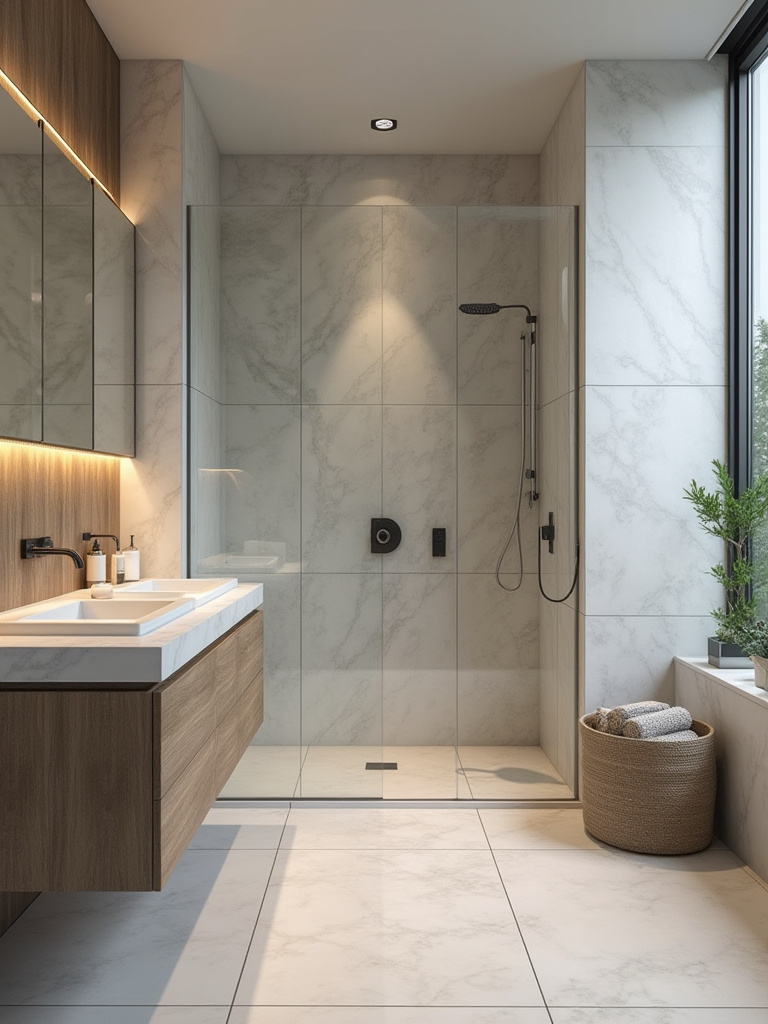
The best systems allow you to create presets for different users or moods. Your “Morning Rush” setting might be a quick, warm blast from the overhead rain shower, while an “End of Day” setting could be a longer, less intense flow from the body jets. For my clients, I often pair this with a sound system. Linking your shower to a waterproof speaker to play a calming playlist or a morning podcast is a simple integration that completely elevates the experience.
But all this amazing tech is useless if you don’t have a place to put your things.
14. Plan for Integrated Storage Solutions to Declutter Effectively
Your bathroom should be a retreat, not a storage locker for half-used bottles of shampoo. The key to maintaining that serene, clutter-free feeling is to design storage that is both ample and invisible. We’re talking about building it right into the architecture of the space. That dead space between studs in a wall? That’s a perfect spot for a tall, recessed niche for towels or toiletries.
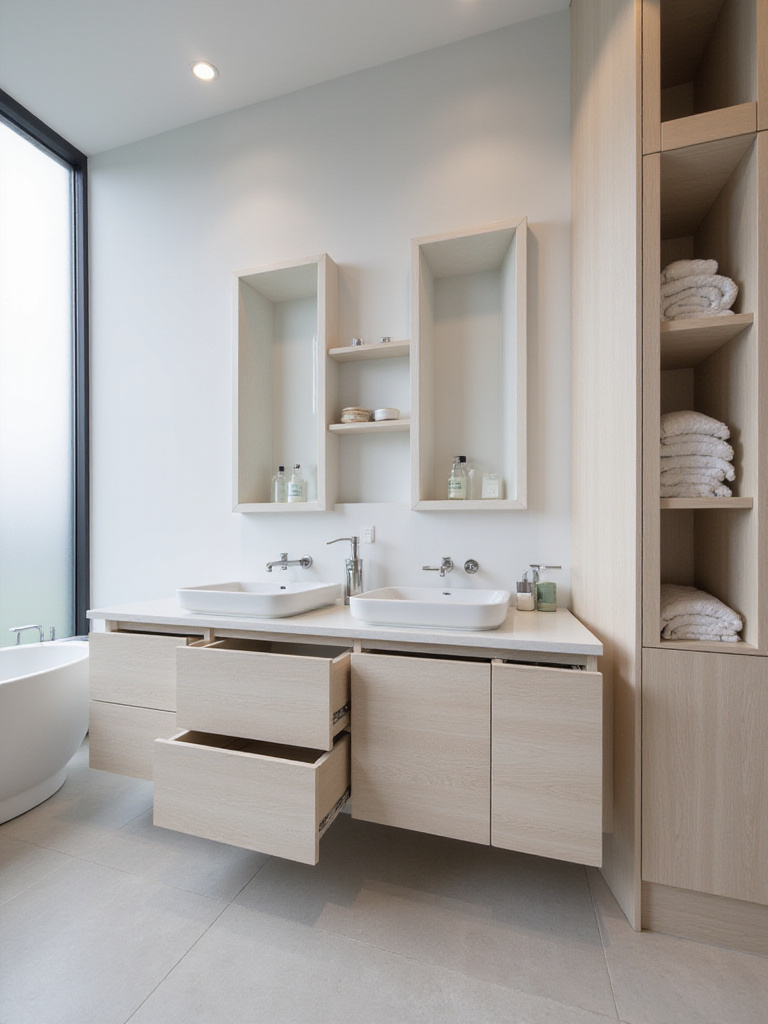
The area under the sink is a classic storage zone, but most people just get a standard cabinet. Don’t! Get custom pull-out drawers that are built around the plumbing pipes. This maximizes every single cubic inch of space. And here’s the pro move: install a GFCI outlet inside your medicine cabinet or vanity drawer. This way, your electric toothbrush and shaver can charge completely out of sight. No more cords cluttering up your beautiful countertop.
Getting all these details right comes down to having the right team to build it.
Flawless Execution & Long-Term Durability
You can have the most brilliant design in the world, but if it’s executed poorly, it’s all for nothing. This final phase is about turning the vision into a high-quality, durable reality that will stand the test of time. Don’t drop the ball on the final play.
15. Vet Experienced Contractors for Quality Workmanship and Trust
Everyone says to “get three quotes.” But what they don’t tell you is that you should never, ever just pick the cheapest one. A low bid is often a sign of desperation, inexperience, or a plan to hit you with change orders later. The right contractor is a partner. You are trusting them with a significant investment in your home. Vet them like you’re hiring a CEO.
Check their license and insurance—call the insurance company to make sure it’s active. Scrutinize their portfolio. And most importantly, call their references. Ask the hard questions: “Did they stick to the budget? Did they show up on time? How did they handle it when something went wrong?” Their answers will tell you everything you need to know. A detailed contract that outlines a clear payment schedule tied to project milestones is your best friend.
A great contractor will insist on doing the next step properly, because their reputation depends on it.
16. Prioritize Waterproofing for Long-Term Durability and Peace of Mind
Let’s talk about the single most destructive force in any home: water. The BS everyone falls for is thinking that tile and grout are waterproof. They are not. Water-resistant drywall is not waterproof. Cement board is not waterproof. They are simply materials that don’t fall apart when they get wet. The actual waterproofing is a membrane system that gets installed behind all of that.
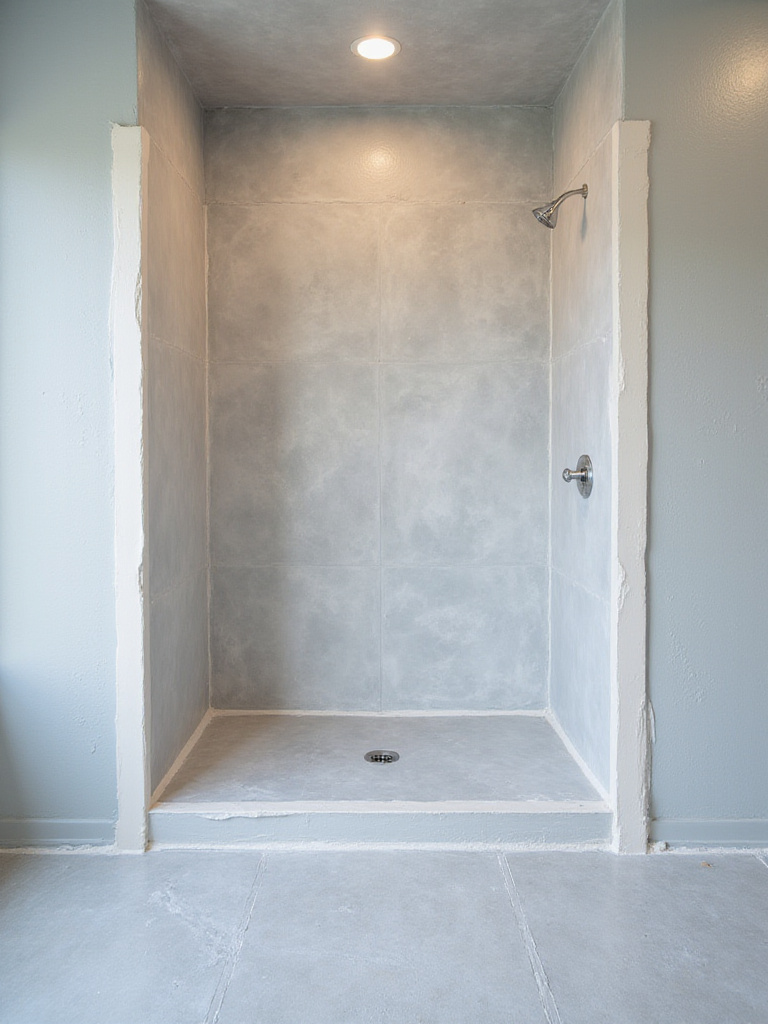
This is the most critical, and most often botched, part of a bathroom renovation. If this step is done incorrectly, water will find its way into your walls and subfloor, leading to hidden mold and thousands in structural repairs down the road. Insist that your contractor uses a modern, high-quality waterproofing system and performs a 24-hour flood test of the shower pan before any tile is laid. If they push back, find another contractor. It’s that serious.
Proper waterproofing protects the structure, but choosing the right surface materials protects your sanity.
17. Select Durable, Low-Maintenance Materials for Longevity
A luxurious bathroom shouldn’t require a team of servants to keep it looking good. The goal is to choose materials that are as durable and low-maintenance as they are beautiful. For flooring and walls, porcelain tile is my go-to. It’s incredibly dense, non-porous, and resists everything from stains to scratches. For countertops, quartz is a workhorse—it gives you the look of stone without the maintenance headache of sealing it.
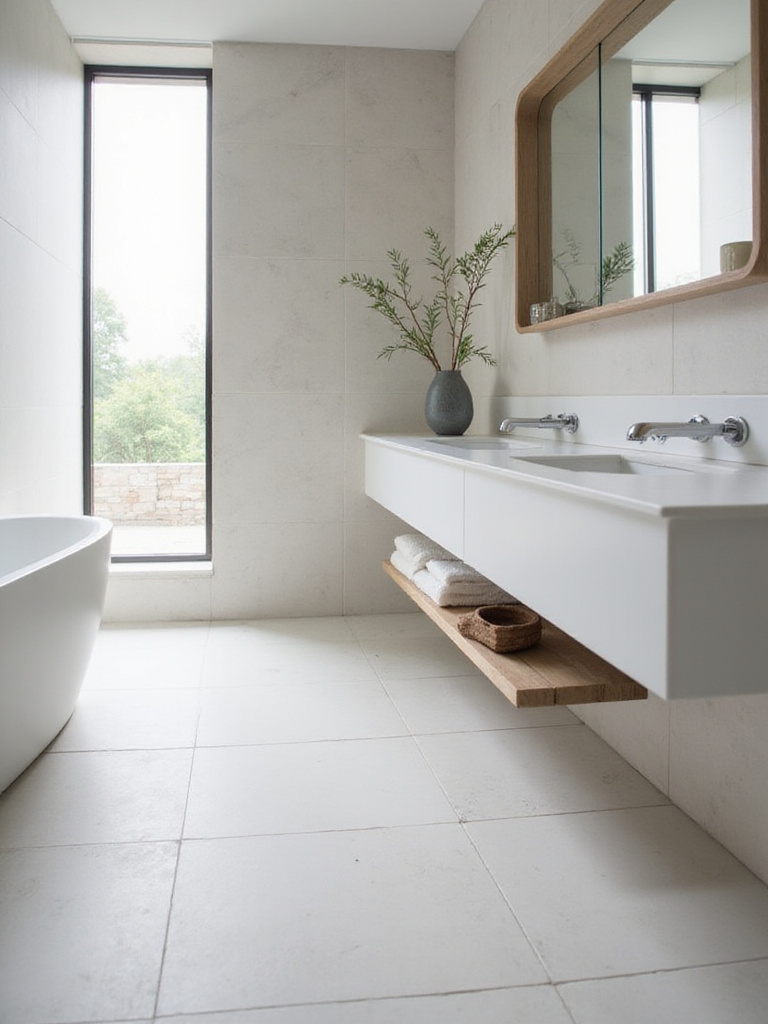
Be brutally honest about your lifestyle. Do you have kids? Are you a bit lazy about cleaning? Then that gorgeous, porous marble you saw in a magazine might not be the right choice for your shower floor. Always test samples. Spill some red wine or makeup on them and see what happens. Your bathroom is a high-traffic, high-moisture environment. Choose materials that are built for the job.
With a durable foundation, you can bring in the soft, living elements that truly make a space breathe.
18. Incorporate Biophilic Elements for Natural Ambiance and Calm
As someone whose design heart is split between lush Latin America and urban Britain, this is everything to me. Biophilic design is more than just putting a plant in the corner. It’s about fundamentally reconnecting our indoor spaces with the natural world. Humans have an innate need to be near nature; it lowers our stress levels and improves our well-being. And the bathroom, our most private ritual space, is the perfect place for it.
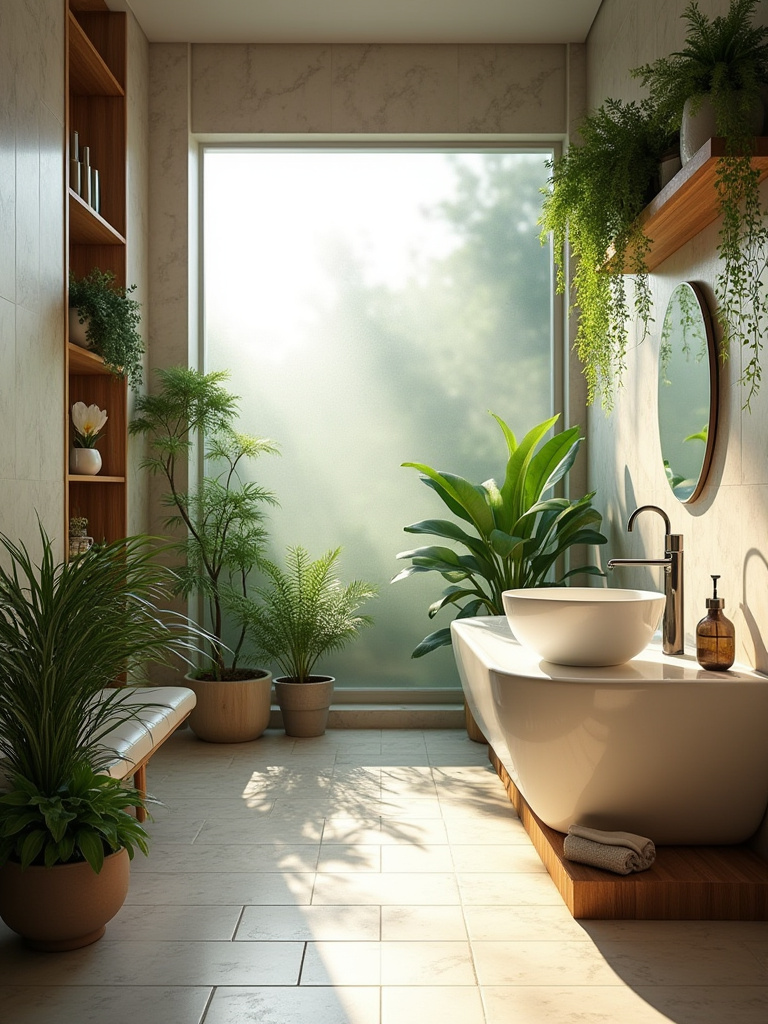
Maximizing natural light with a larger window or a skylight is the first step. Using natural materials like wood (teak and cedar are fantastic in wet environments), stone, and slate connects us through texture and pattern. And yes, plants! Choose varieties that thrive in humidity and lower light, like ferns, orchids, or a snake plant. Even a single, beautiful vase with fresh eucalyptus can transform the entire feel of the room into something alive and breathing.
This brings us to the very last, but crucial, step.
19. Execute a Final Walkthrough Checklist for Perfection
The project is done, the dust has settled, and you’re thrilled. But don’t sign that final check just yet. You and your contractor need to do one last, meticulous walkthrough together. Create a “punch list”—a detailed checklist of every single item, from the tiny scratch on a faucet to a patch of grout that looks uneven. Be picky. This is your last chance to get things fixed easily and without argument.
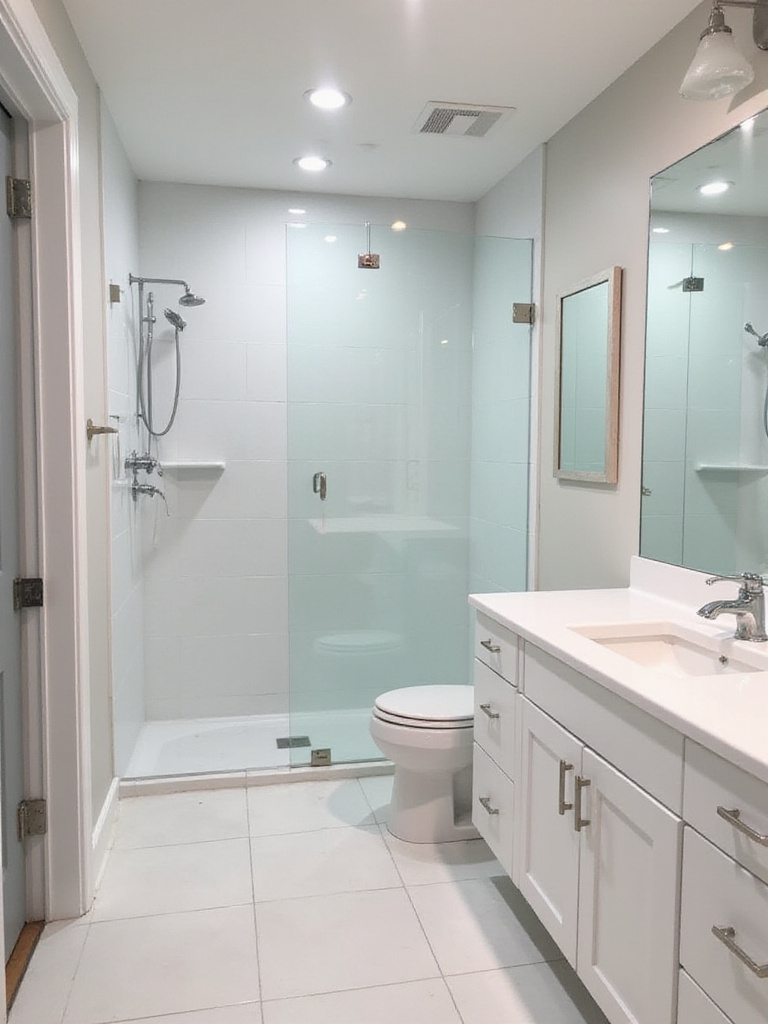
Test everything. Turn on every light. Run the shower at full pressure. Flush the toilet multiple times. Open and close every drawer. Look at the paint finish from different angles. A great contractor will expect and welcome this level of scrutiny because they are proud of their work. Once every single item on the punch list is addressed to your satisfaction, then you can make the final payment and pop the champagne.
The Beginning of a New Ritual
A bathroom renovation, when done with intention, is so much more than a construction project. It’s an opportunity to create a space that genuinely nurtures you. It’s a chance to design a daily ritual that can energize you in the morning and calm you at night. By blending smart planning, sustainable choices, and a deep connection to nature, you’re not just increasing your home’s value; you’re investing in your own well-being. You’re crafting a personal sanctuary. And you deserve that.