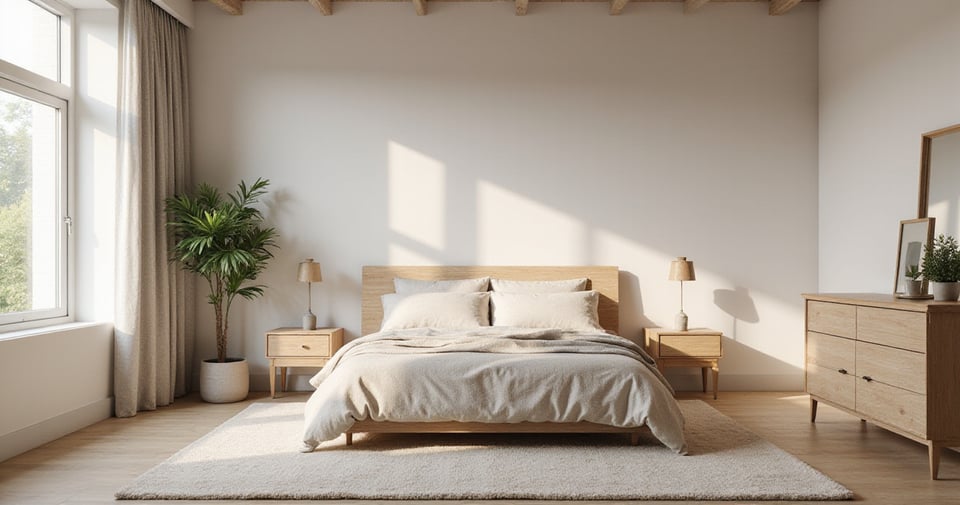
Picture this: You’re waking up, not to an alarm, but to the gentle rustle of palm leaves just outside your floor-to-ceiling sliding doors. The air is fresh. Sunlight is dappling across a floor made of cool, reclaimed timber, and your feet land on a soft jute rug. The whole room feels like it’s breathing with you. This isn’t a five-star resort in Costa Rica; this is your bedroom. Your sanctuary.
You asked me how to get there, and the answer isn’t just about buying stuff. It’s about curating a feeling. Most articles give you a shopping list. I’m going to give you a philosophy. Forget the sterile, trend-chasing nonsense. Your bedroom should be the one place on earth that’s entirely, unapologetically you—a space that nurtures you and connects you back to nature.
Let’s dive into how we make that happen, starting with the foundation.
Strategic Planning for Your Dream Bedroom Layout (Part 1)
This is the part everyone wants to skip, but trust me, five minutes of thoughtful planning saves five months of regret. This is where we lay the groundwork for a room that doesn’t just look good, but feels right. It’s about creating flow, energy, and a deep sense of calm before a single piece of furniture even enters the room.
1. Measure Your Space Like You Mean It
Look, I know measuring feels like a chore, but it’s the silent backbone of great design. Last year, I watched a client in Knightsbridge try to shoehorn a massive, dark mahogany four-poster bed they’d bought on impulse into a beautiful but modest-sized room. It sucked all the light and air out of the space. They ended up paying a fortune to have it disassembled and returned. A total disaster, all because they didn’t measure.
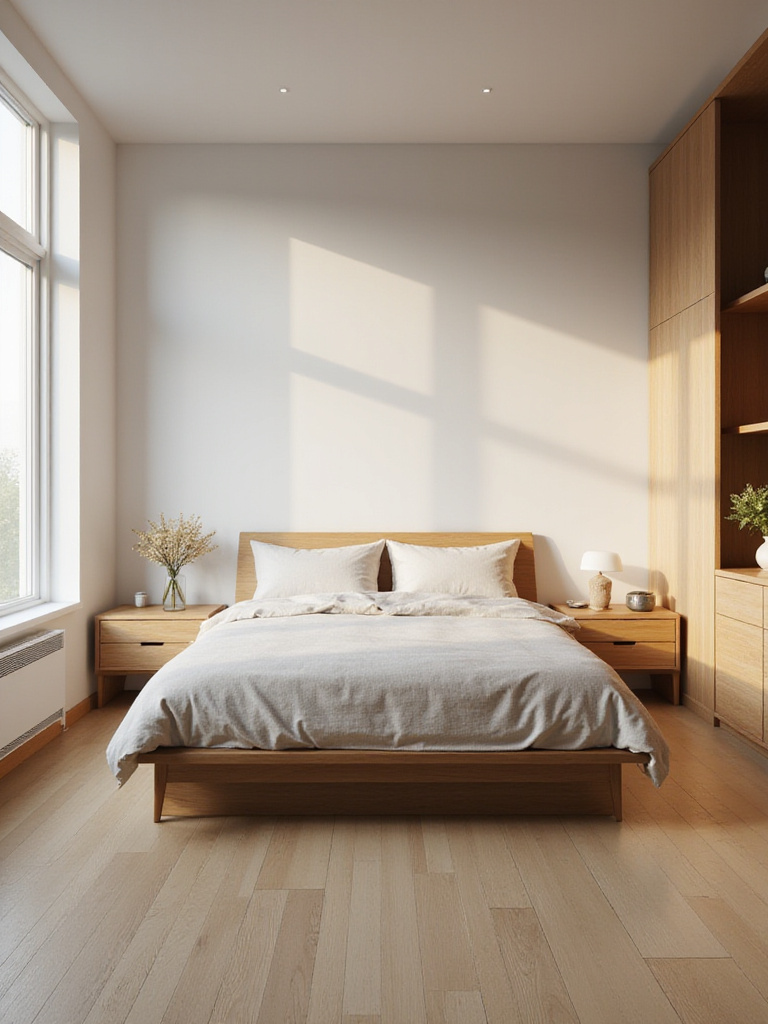
So, get a real measuring tape—not an app on your phone—and measure everything. Walls, windows, door swings, the height of the sills. Know exactly how much space you have for a bed, for nightstands, and critically, for walking around. The real luxury isn’t a giant bed; it’s the space to breathe around your furniture. What truly matters is ensuring at least 75cm of clearance for your main pathways. That’s the magic number for flow.
The common BS is just measuring wall-to-wall. Don’t forget radiators, skirting boards, or light switches. My shortcut? Use painter’s tape to mark out the footprint of your key furniture on the floor. Live with it for a day. See how it feels to walk around it. This gives you a gut check that no floor plan app ever will.
2. Find Your Personal Vibe
Please, can we stop talking about what’s “trending”? Trends are fleeting. Your sanctuary is forever. You know what people always ask me? “Gabriel, what’s my style?” I tell them to forget the labels like “boho” or “minimalist” and instead, answer this: How do you want to feel when you walk into your bedroom? Serene? Energized? Cozy? Start with the emotion.
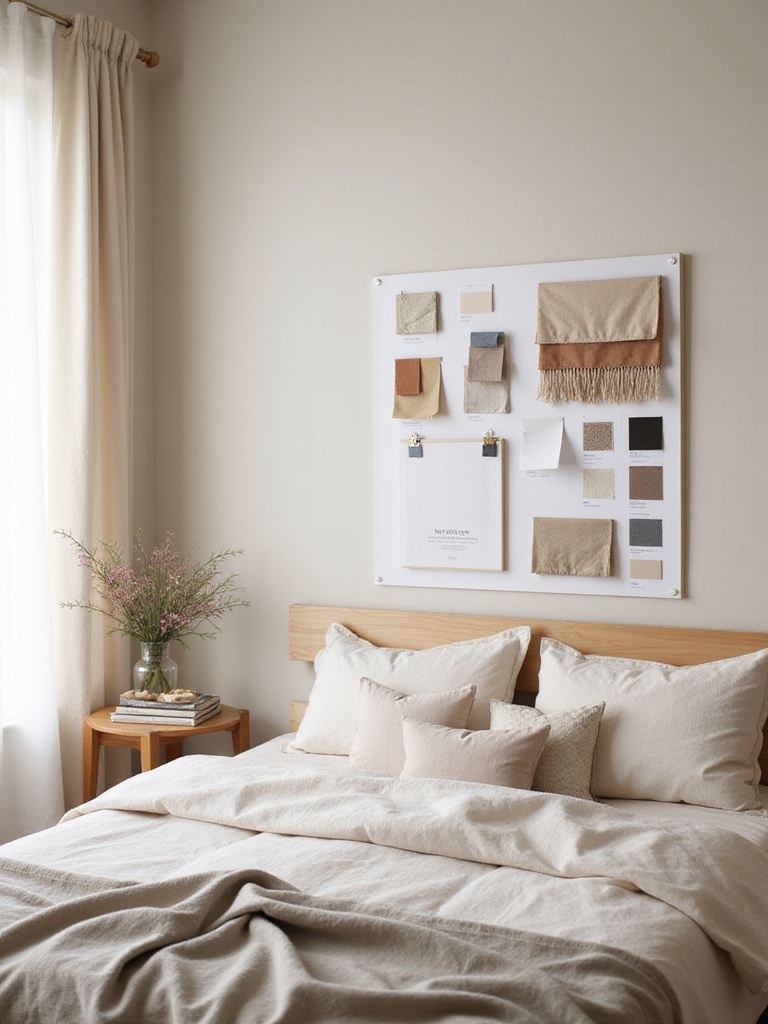
Then, look for clues in your own life. Open your closet. What colours and fabrics do you love to wear? That’s your palette. Think about your most cherished travel memory. Was it a breezy beach house in Bahia or a chic, earthy retreat in the British countryside? That’s your vibe. Create a Pinterest board, but be ruthless. Don’t just pin pretty rooms; pin rooms that make you exhale. Notice the common threads—is it natural light, raw materials, or plush textures? That’s your roadmap.
I used to think designing a room was about putting beautiful objects in it. Then I designed a space for a writer that was technically perfect but felt cold. I’d missed the point entirely. We scrapped half of it and filled it with his personal library, worn leather, and art he’d collected. Instantly, it became his haven. The lesson? Your room should tell your story, not mine.
3. Edit Your Current Collection
Before you even think about buying something new, you need to be a ruthless editor of what you already own. Go into your bedroom and look at every single piece of furniture with fresh eyes. Does this serve you? Does it bring you joy? Does it fit the feeling you just defined? Be honest. That clunky dresser you inherited might have sentimental value, but if it oppresses the space, it has to go.
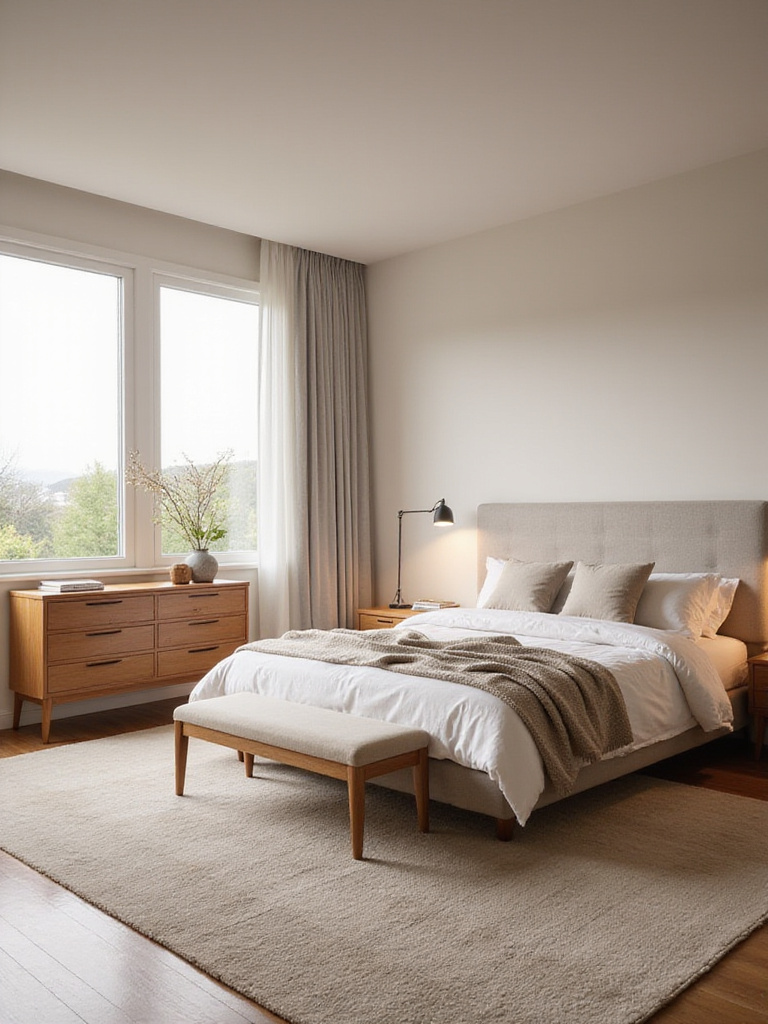
The shortcut here is the simple ‘Keep, Repurpose, or Release’ method. ‘Keep’ what you absolutely love and what works. ‘Repurpose’ pieces with good bones that could be transformed with a coat of sustainable, low-VOC paint or new hardware. I once turned a client’s dated, dark wood armoire into a stunning focal point with a soft, chalky white finish and beautiful brass handles—it completely changed the room’s energy. ‘Release’ everything else. Sell it, donate it, give it away. Create a vacuum for good things to enter.
What matters is starting with a clean slate. Everyone else will tell you to just buy new stuff to fix your problems. That’s just noise and consumption. Real luxury is intentionality. Assessing what you have is the most sustainable—and smartest—first step you can take.
4. Set a Smart Budget
Let’s talk money. A budget isn’t a restriction; it’s a creative tool that forces you to be intentional. Without one, you’ll end up splurging on one ‘wow’ piece—like a wildly expensive light fixture—and then have nothing left for a quality mattress, which is arguably the most important thing in the entire room. Your well-being depends on it.
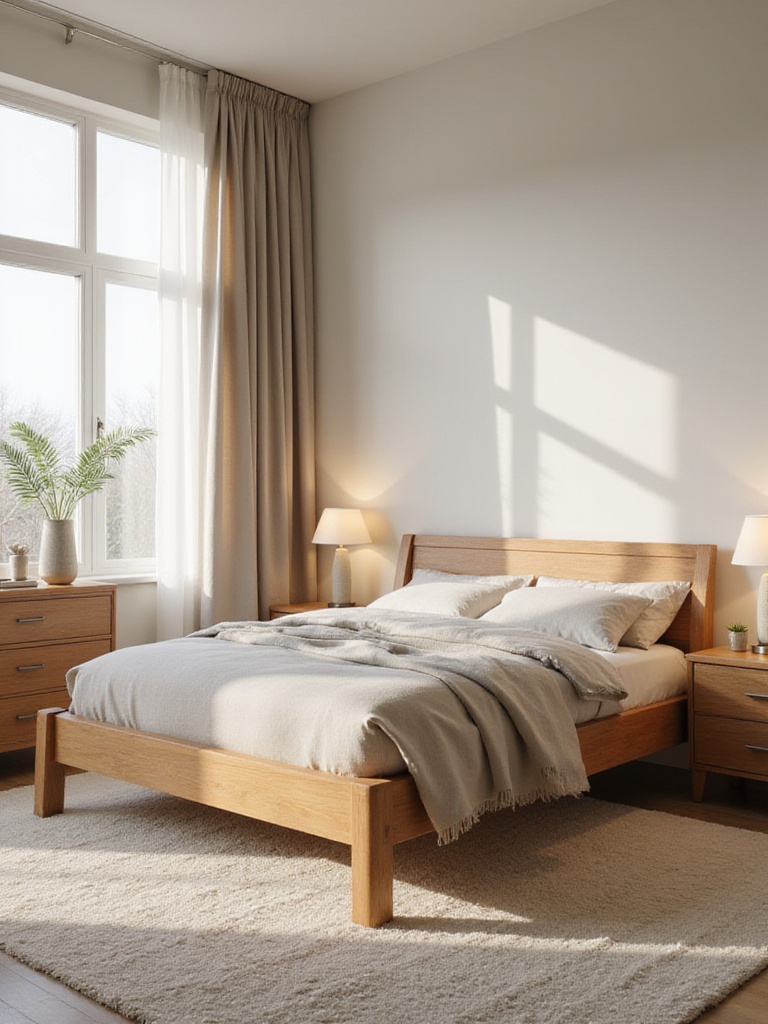
So, figure out what you can realistically spend, and then prioritize. My rule is simple: allocate the biggest chunk of your budget to the things you touch every day. That means your mattress, your bedding, and the hardware on your dresser. These are the elements that impact your daily experience and well-being. A high-quality organic mattress will last a decade and improve your health. Cheap, trendy decor won’t.
The BS everyone falls for is thinking you need to buy everything at once. You don’t. A beautifully curated room is built over time. My shortcut is to invest in the foundational “forever pieces” first—the bed, the storage—and then layer in smaller items as you can afford them. Your bedroom is a journey, not a one-time transaction.
Strategic Planning for Your Dream Bedroom Layout (Part 2)
Alright, now that we’ve cleared the decks and have a vision, it’s time to get tactical. This part is about translating that feeling we talked about into a physical layout. It’s the bridge between the dream and the reality, ensuring your room functions as beautifully as it looks.
5. Sketch It Out for Flow and Function
You don’t need to be an architect to do this. Grab a piece of graph paper or use a simple online tool, but get that room layout out of your head and onto paper. A sketch is your playground. It’s where you can experiment without breaking your back moving a heavy wardrobe three times. This is how you discover that if you put the dresser there, you can’t fully open the closet door.
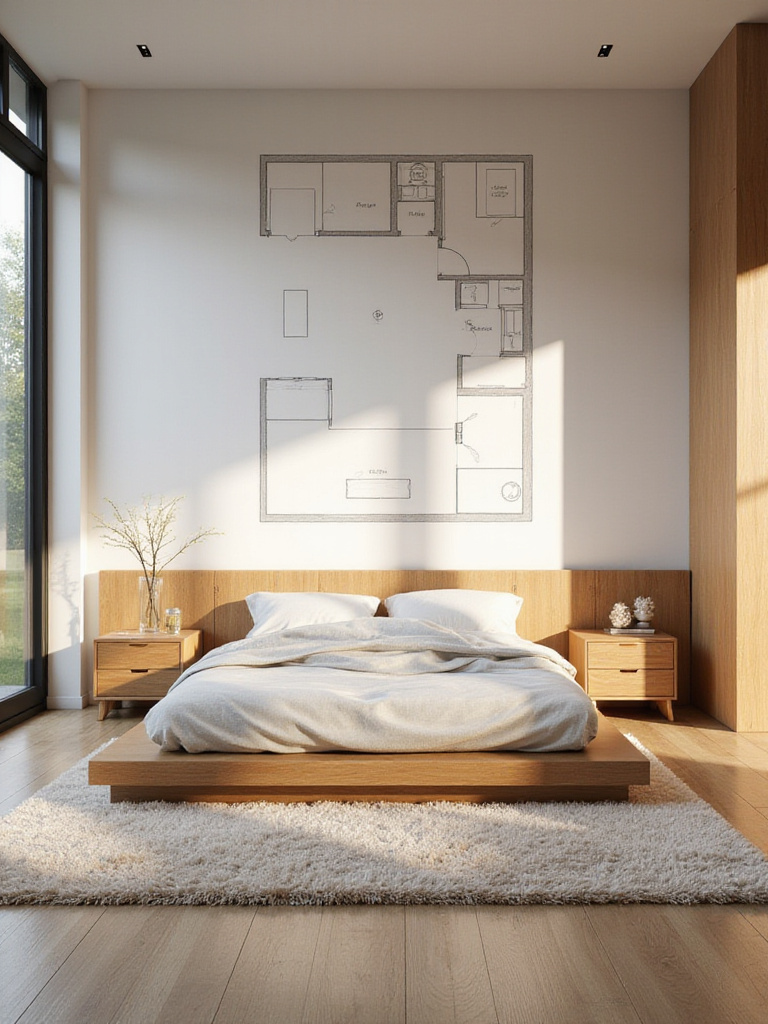
Start with the star of the show: the bed. Ideally, you want it on a solid wall, facing the entrance, so it feels commanding and welcoming. Then, arrange the other key pieces, ensuring you have those clear pathways we talked about. Think about your daily rituals. Where will you get dressed? Where will you put your book down at night? Your layout should support these simple, daily movements effortlessly.
A few years ago, working on a project in Primrose Hill, the client insisted on placing her bed under a gorgeous bay window. It looked lovely in photos, but it was a disaster in practice. It was draughty in the winter, too bright in the morning, and she could never fully open the windows. We moved it to the opposite wall. The room immediately felt more balanced and, more importantly, it functioned a hundred times better. Aesthetics must always serve function, especially in the bedroom.
6. Embrace Multi-Functional Pieces (Especially in Small Spaces)
Can we all agree that “single-use” is a dirty word now? Especially when it comes to furniture in a space-conscious home. Every piece should work hard for its spot. In a smaller bedroom, multi-functionality isn’t a “nice-to-have”; it’s a non-negotiable principle of sustainable and intelligent design. It’s about making your space work smarter, not harder.
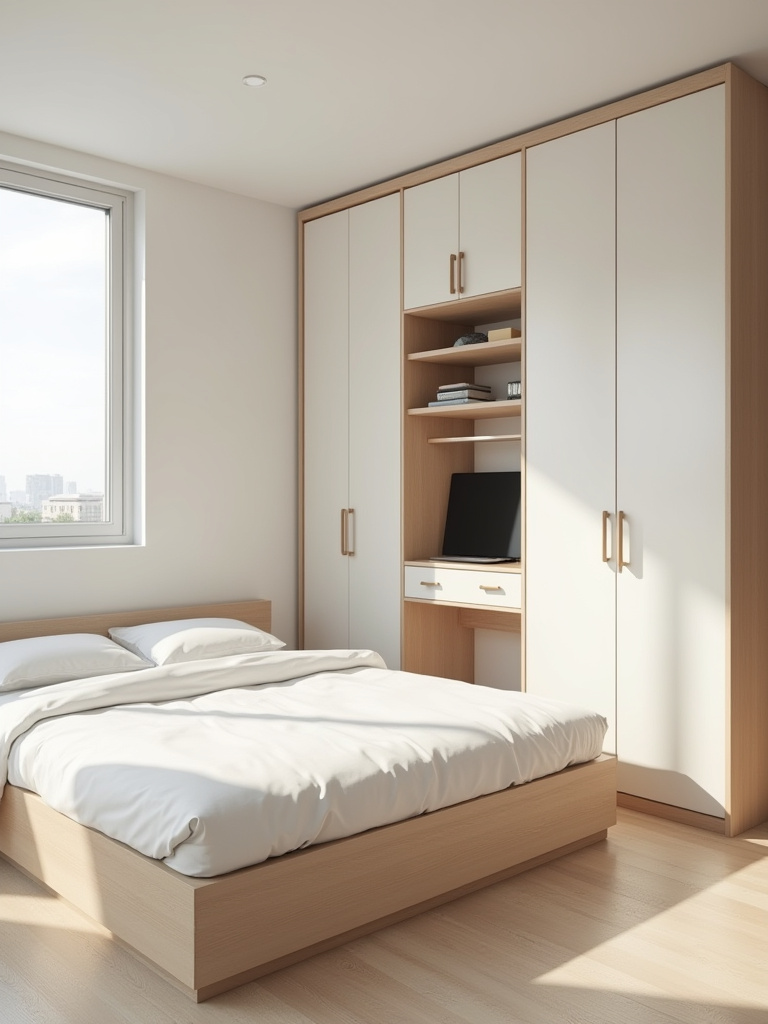
Think beyond the obvious. A beautiful, deep bench at the foot of your bed can store extra linens and serve as a place to sit. A nightstand could be a small writing desk. I’m a huge fan of platform beds with built-in drawers underneath—they provide an incredible amount of storage without adding any visual bulk. This is about being clever and intentional, choosing pieces that offer more than one benefit.
Forget the flimsy, cheap multi-functional junk you see everywhere. Invest in quality pieces where the function is seamlessly integrated into beautiful design. The shortcut here is to look for clean lines and hidden mechanisms. The best multi-functional furniture doesn’t scream “I have a secret compartment!” It whispers of quiet, elegant efficiency.
Selecting & Arranging Core Bedroom Furniture Essentials (Part 1)
Now for the fun part: choosing the key players. These are the foundational pieces that define the room’s character. My philosophy here is simple: choose natural, choose quality, and choose pieces that tell a story. This isn’t just about filling space; it’s about investing in your comfort and creating a healthy, non-toxic environment.
7. Choose a Bed Frame That Breathes
The bed frame is the anchor of your room, both visually and energetically. Forget heavy, oppressive frames that dominate the space. Think lighter, more natural materials that bring a sense of the outdoors in. A low-profile platform bed made from reclaimed teak or sustainable mango wood can feel both grounding and airy. For a softer touch, an upholstered headboard in natural, unbleached linen or organic cotton adds texture and warmth.
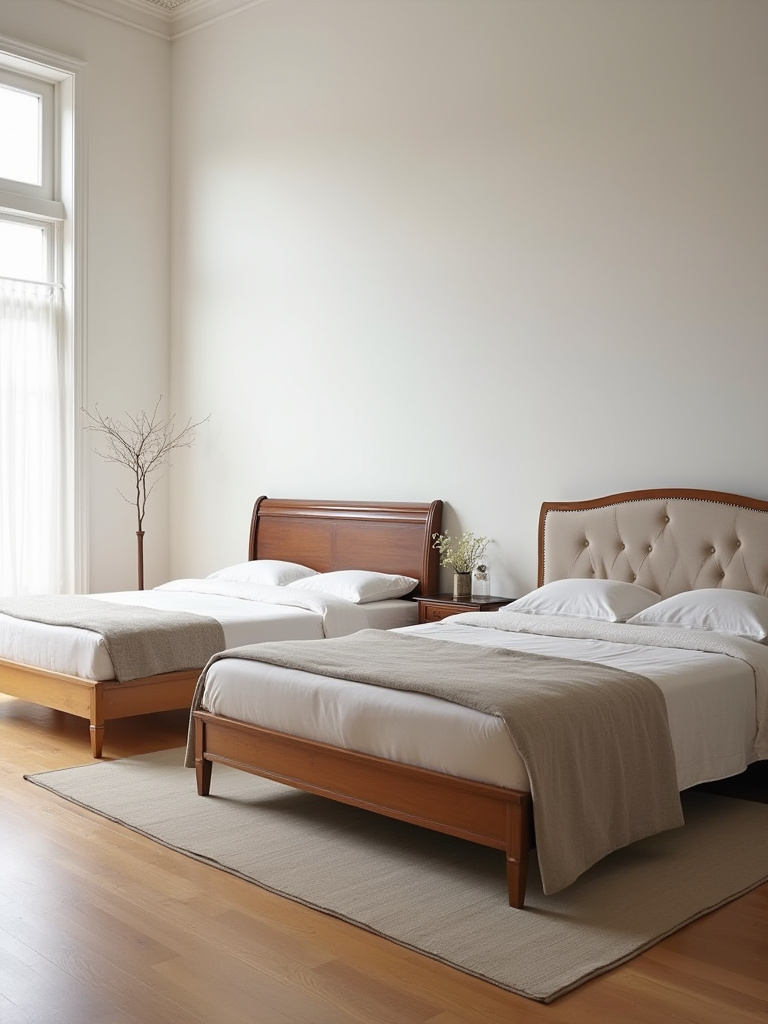
What really matters here is selecting a material you connect with. I love working with rattan and bamboo; they bring that beautiful, light-filled tropical sensibility into a space, creating intricate patterns with light and shadow. They are also incredibly sustainable and lightweight. It’s about finding that balance between a statement piece and something that promotes a sense of tranquility.
I learned this the hard way on an early project where I specified a stunning, but very angular and cold, metal bed frame to fit a “contemporary” brief. The clients hated it. They said it felt like sleeping in a gallery. We swapped it for a simple, handcrafted oak frame with a woven headboard, and the entire feeling of the room softened. The lesson: the bedroom is for comfort, not just for show.
8. Your Mattress Foundation is Your Health Investment
Okay, let’s get serious. People spend thousands on a fancy mattress and then place it on a cheap, flimsy foundation or an old, sagging box spring. This is like buying a Porsche and putting budget tires on it. It completely undermines the whole investment. Your foundation is what allows your mattress to do its job: support your body for eight hours a night.
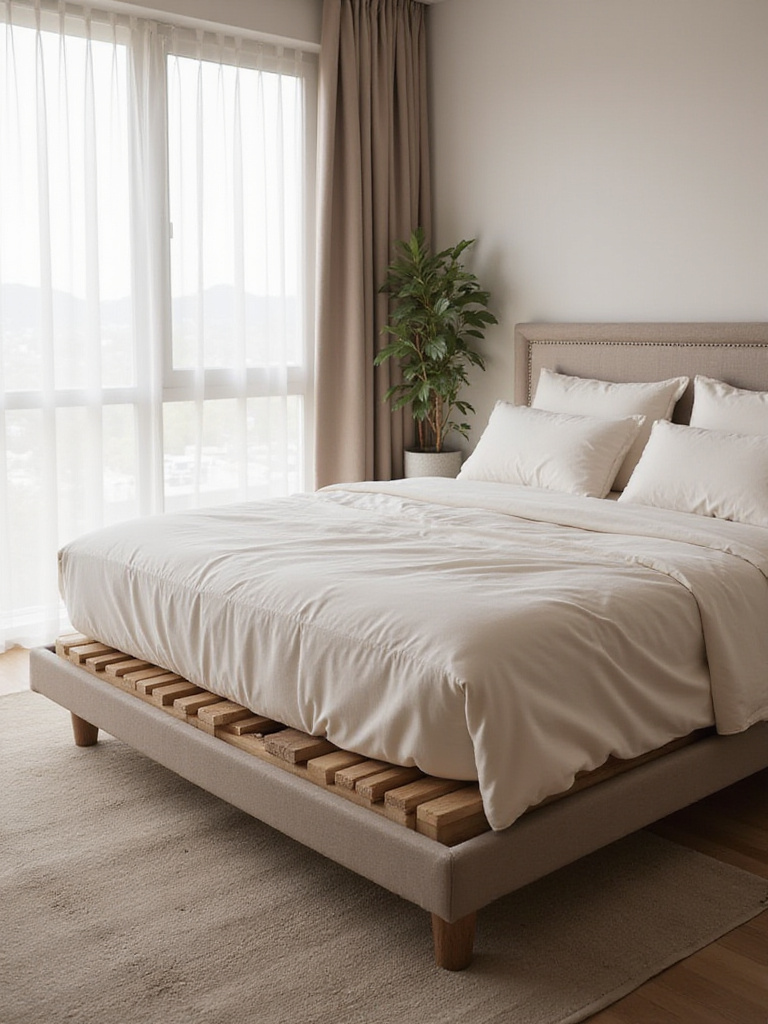
The BS here is that any flat surface will do. Not true. Memory foam and latex mattresses, which are fantastic for their lack of toxins, need a solid, breathable base or slats that are no more than 7cm apart to prevent sagging and ensure proper air circulation. A poor foundation not only kills your mattress years before its time but can also lead to mold and mildew buildup—the last thing you want in your sleep sanctuary.
My shortcut is to always buy the foundation specifically recommended by your mattress manufacturer. They’ve done the research. Or, invest in a solid platform base made from untreated, FSC-certified wood. It’s a simple, sustainable, and incredibly effective solution that supports both your mattress and your health. This is not the place to cut corners.
9. Rethink the Nightstand
The humble nightstand is an opportunity for personality. Forget buying a matching set with your dresser; it can make a room feel static and predictable, like a hotel catalog. Instead, think of them as a pair of earrings—they should complement, not match perfectly. This is where you can bring in unique materials and textures.
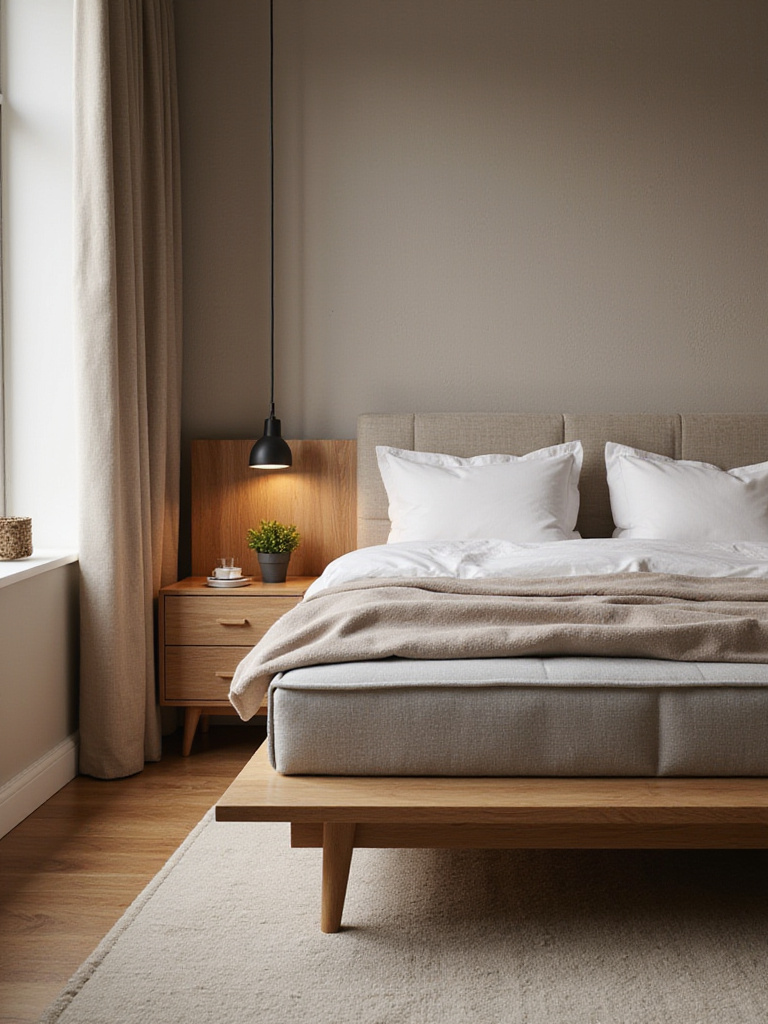
Consider using something unexpected. A stack of beautiful art books, a small antique stool, a live-edge piece of wood mounted to the wall as a floating shelf. What matters is that it’s the right height—level with the top of your mattress—and provides just enough space for your essentials: a glass of water, a book, and maybe a small plant. It’s about function and beauty in equal measure.
I once worked with a client who had two mismatched, chunky nightstands that crowded her bed. We replaced them with two wall-mounted floating shelves made from a single slab of reclaimed walnut. It freed up the floor space, made the room feel instantly wider, and brought in a gorgeous, organic element. The visual impact was huge, but the effort was minimal.
10. Choose Storage That Calms, Not Clutters
Your storage pieces—your dresser or armoire—should be calm, quiet workhorses. Their job is to contain your belongings beautifully, reducing visual noise and creating a sense of order. When choosing one, think about scale and material. A piece that is too large will overwhelm the room, while one that is too small will look lost.
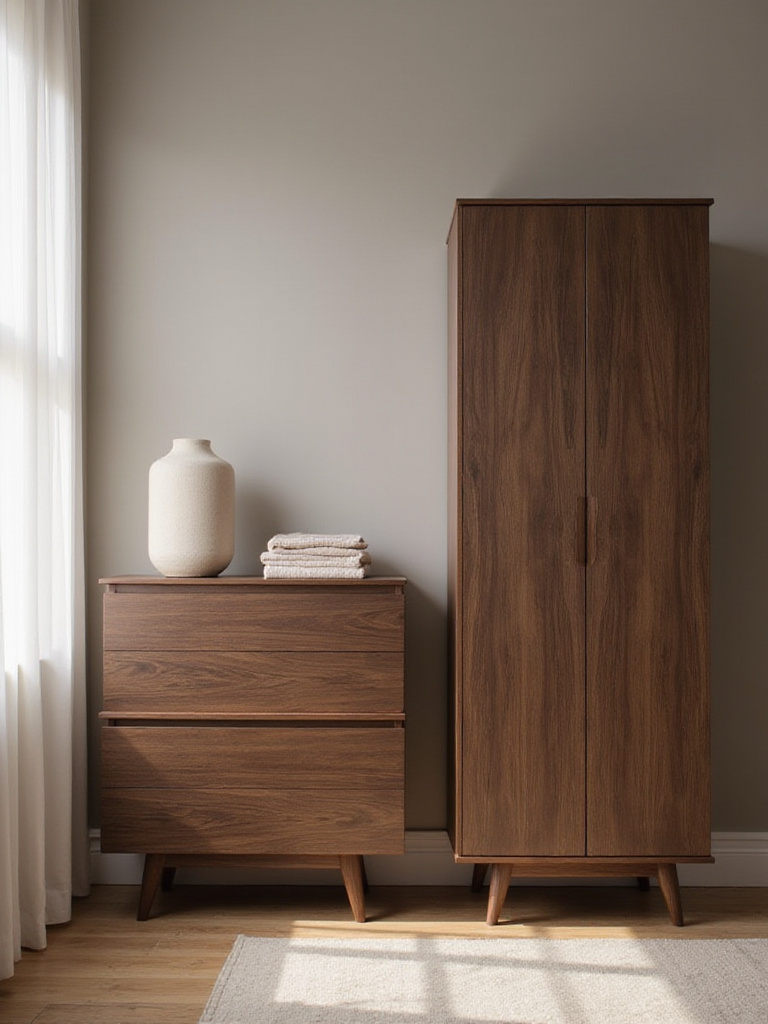
I’m partial to pieces that feature natural textures. A dresser with louvred doors allows clothing to breathe—a trick I learned from classic tropical design—and adds subtle textural interest. Look for sustainable woods and quality craftsmanship, like dovetail joints. This isn’t just a box to hold your socks; it’s a piece of furniture you should love to see and touch every day.
The biggest mistake I see is people buying storage that doesn’t actually fit what they need to store. Before you buy, take stock. Do you have more hanging clothes or folded clothes? Do you need deep drawers for jumpers or shallow ones for smaller items? Function first. A beautiful armoire that can’t fit your dresses is just an expensive, frustrating sculpture.
Selecting & Arranging Core Bedroom Furniture Essentials (Part 2)
We’ve picked our core pieces. Now, let’s talk about arranging them to create a space that flows. This is where the magic really happens—where we move beyond individual items and start creating a holistic, harmonious environment. It’s about relationships: the relationship between objects, and the relationship between you and your space.
11. Arrange for Light and Air
Your furniture placement should honor and maximize the room’s natural assets: its light and its airflow. This is a core principle of tropical living that translates beautifully to any climate. Don’t block your windows with bulky furniture. Don’t create dead zones where air can’t circulate. The goal is to create a layout that feels open, breezy, and alive.
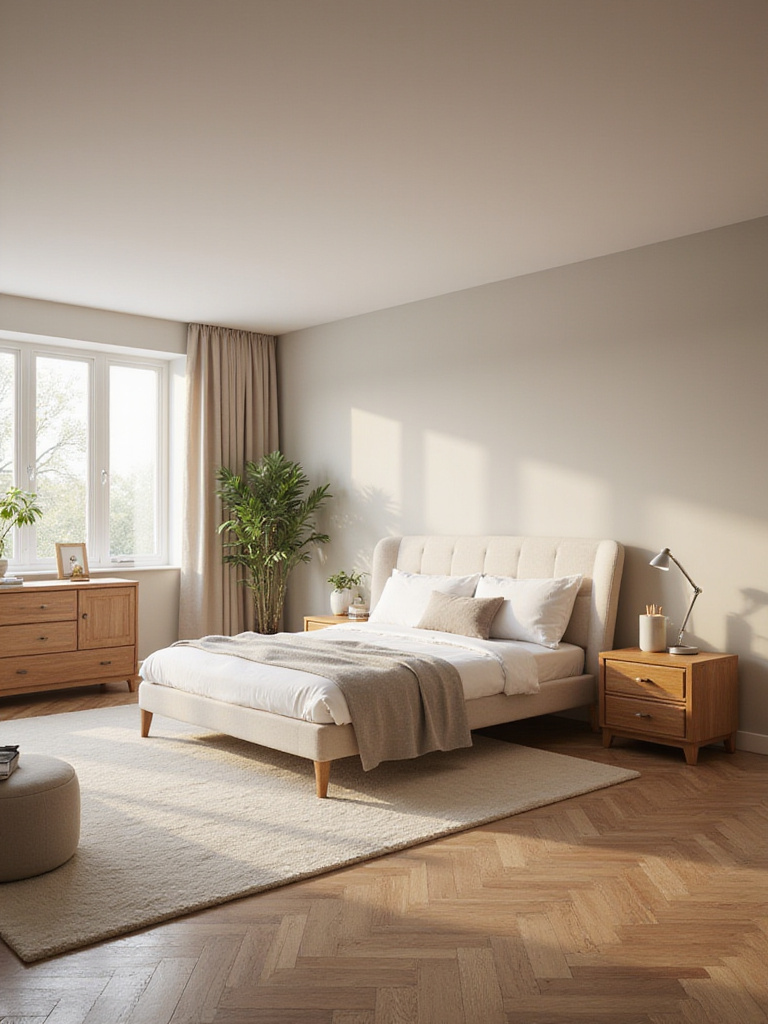
Start by positioning your bed to get the best of the morning light—but not so it’s blasting you in the face. Then arrange other pieces to support a natural flow. Think about the path from the door to the bed, from the bed to the closet. It should be effortless. There’s a reason high-end wellness retreats feel so calming; every element is placed with intention to create unimpeded movement.
“The true sign of luxury is not what you can add, but what you can take away. Space, light, and air are the ultimate luxuries.”
This philosophy is about more than just practicality. Creating a layout that breathes allows energy to move freely through the space, which has a profound effect on your own well-being.
12. Harmonize Your Materials
A cohesive bedroom isn’t about matching everything. It’s about creating a harmonious conversation between different materials and finishes. Think of it like creating a beautiful meal; you want flavours that complement and contrast, not a plate of just one thing. This is what gives a room depth and soul.
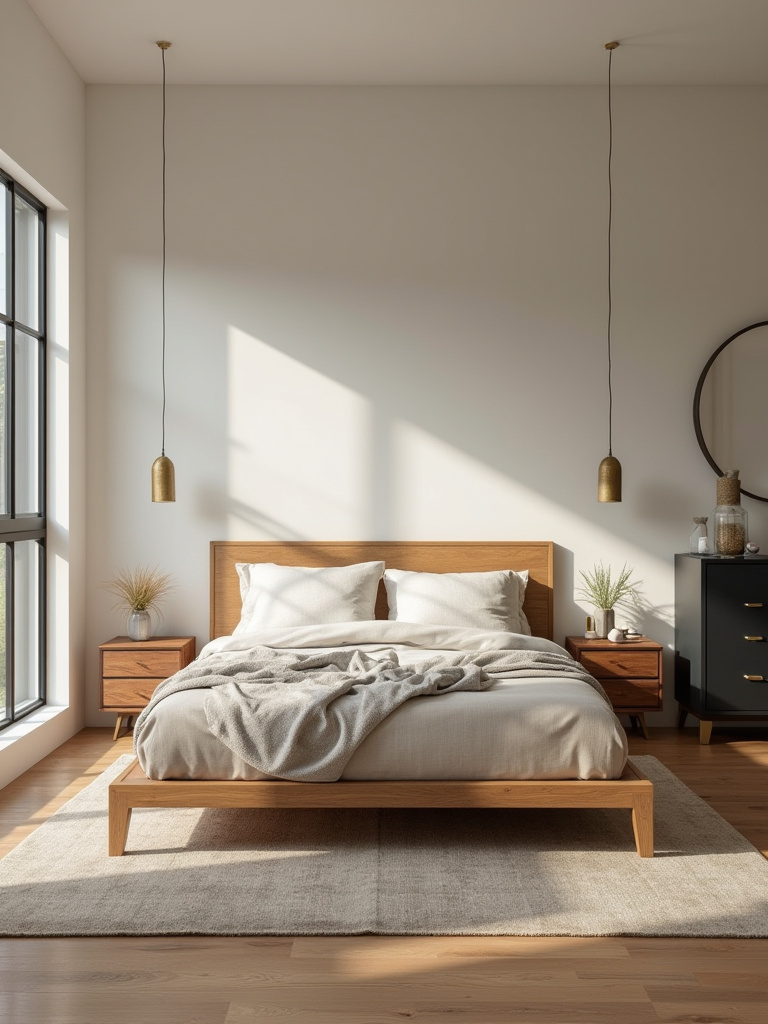
My shortcut for this is the “Rule of Three.” Pick a dominant material—say, a warm, natural oak. Then introduce a second material, like a textural linen for your headboard and curtains. Finally, add a third accent material, like a touch of aged brass or matte black metal in your light fixtures and hardware. This simple framework creates a palette that is layered and sophisticated, yet feels completely cohesive.
The biggest BS is the fear of mixing woods. You absolutely can, and should! The trick is to stick to woods with similar undertones. Pair warm woods (like oak, teak, mahogany) together, and cool woods (like ash, maple, or grey-washed pine) together. This ensures they feel like part of the same family, even if they aren’t identical twins.
Enhancing Ambiance & Personalizing Your Space with Accents (Part 1)
With the foundation set, it’s time to layer in the personality and atmosphere. This is where we add the sensory elements—light, comfort, and personal touches—that transform a well-designed room into a soul-stirring sanctuary. These are the details that make the space uniquely yours.
13. Layer Your Lighting for Mood
Can we talk about the tyranny of the single overhead “boob light”? It’s the fastest way to kill the mood in any room. Your bedroom lighting should be layered, flexible, and warm. You need different kinds of light for different activities: soft ambient light for relaxing, focused task light for reading, and maybe a gentle accent light to highlight a piece of art.
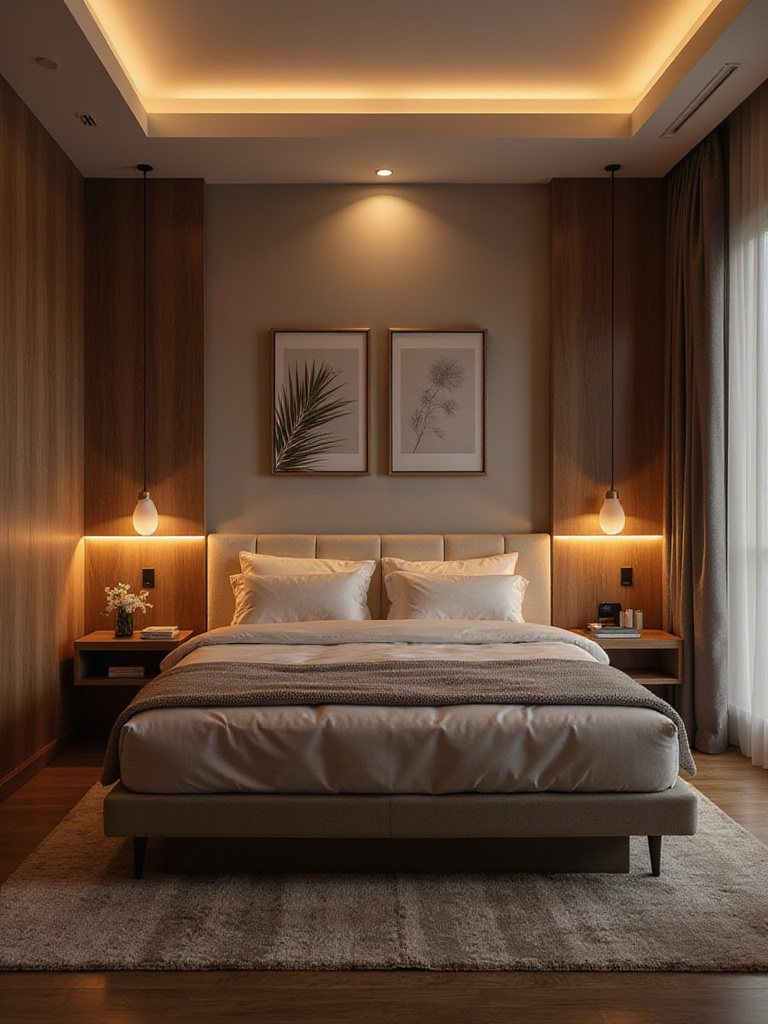
Start with your ambient light—a beautiful pendant made from natural materials like raffia or capiz shells can cast a warm, diffused glow. Then, add task lighting. Sconces mounted on either side of the bed are fantastic because they free up space on your nightstand. Finally, consider a floor lamp in a corner to create a cozy reading nook. And the most important shortcut of all: put everything on a dimmer. Being able to control the intensity of light is the ultimate mood-setter.
I always recommend warm-toned bulbs (around 2700K). This is the colour of golden hour, of candlelight. It’s flattering, calming, and signals to your brain that it’s time to wind down. Cold, blue-toned light has its place in a laboratory, not in your sanctuary.
14. Carve Out a Zone for Repose
Your bedroom shouldn’t just be for sleeping. If you have the space, dedicating a small corner to quiet repose—a space that isn’t your bed—is a game-changer for your well-being. It creates a powerful psychological boundary. Your bed is for rest; this other zone is for unwinding. It could be for reading, meditating, or simply sitting with a cup of tea.
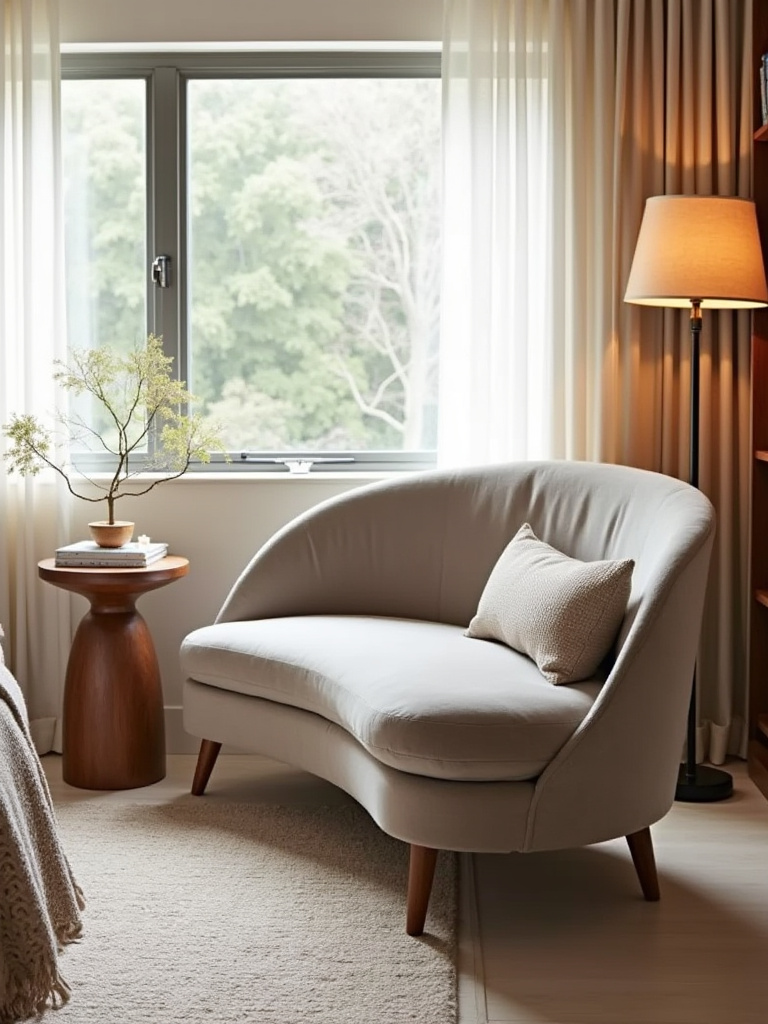
This doesn’t have to be elaborate. A single, comfortable armchair with a good reading light, a small pouf, or even just a collection of floor cushions can define the space. The key is to make it an invitation. Place a soft throw blanket over the chair. Put a small table nearby for your book. Make it a destination.
I remember a client, a busy CEO in London, who felt she could never switch off. We took a small, unused corner of her master bedroom and turned it into a “digital-free zone” with a beautiful chaise lounge, a stack of her favorite magazines, and a plant. She later told me that spending 15 minutes there each evening before bed became her most important ritual for disconnecting from work and finding calm.
15. Weave in Your Story
Now we get to the soul of the room: your personal mementos. A room without them feels like a soulless hotel. Your sanctuary should be a gallery of your life, filled with objects that hold meaning and bring you joy. This isn’t about clutter; it’s about curating with intention.
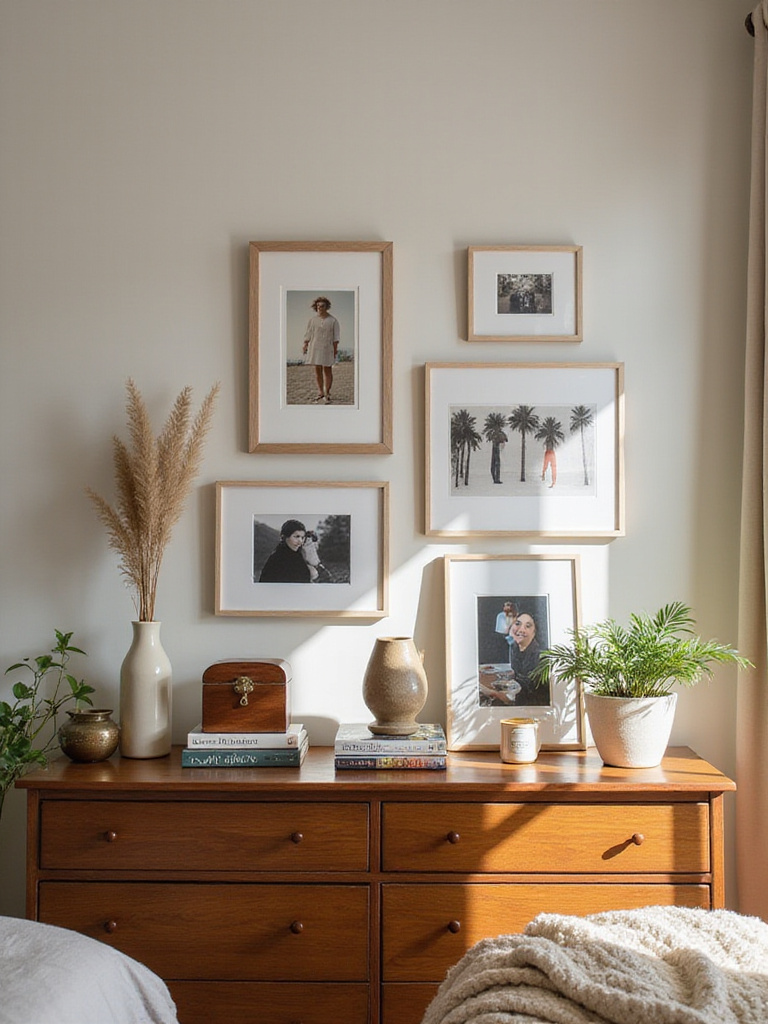
So, frame that photograph from a trip you loved. Display the handmade bowl you bought at a local market. Let your personality shine. The common misconception is that everything has to be expensive or “designer.” Nonsense. The most beautiful and compelling objects are often the ones with a story.
My favorite shortcut for styling is to group items in vignettes. On top of your dresser, create a little collection: a small tray to ground the items, a framed photo, a beautiful scented candle, and something organic, like a piece of driftwood or a small vase of fresh foliage. Vary the heights and textures. This feels intentional and artful, rather than just messy.
16. Use Mirrors to Amplify Light, Not Clutter
Mirrors are magic. They are the oldest trick in the book for making a space feel larger and brighter, and for good reason—they work. But their power has to be wielded carefully. The cardinal rule of mirrors is this: be mindful of what you are reflecting.
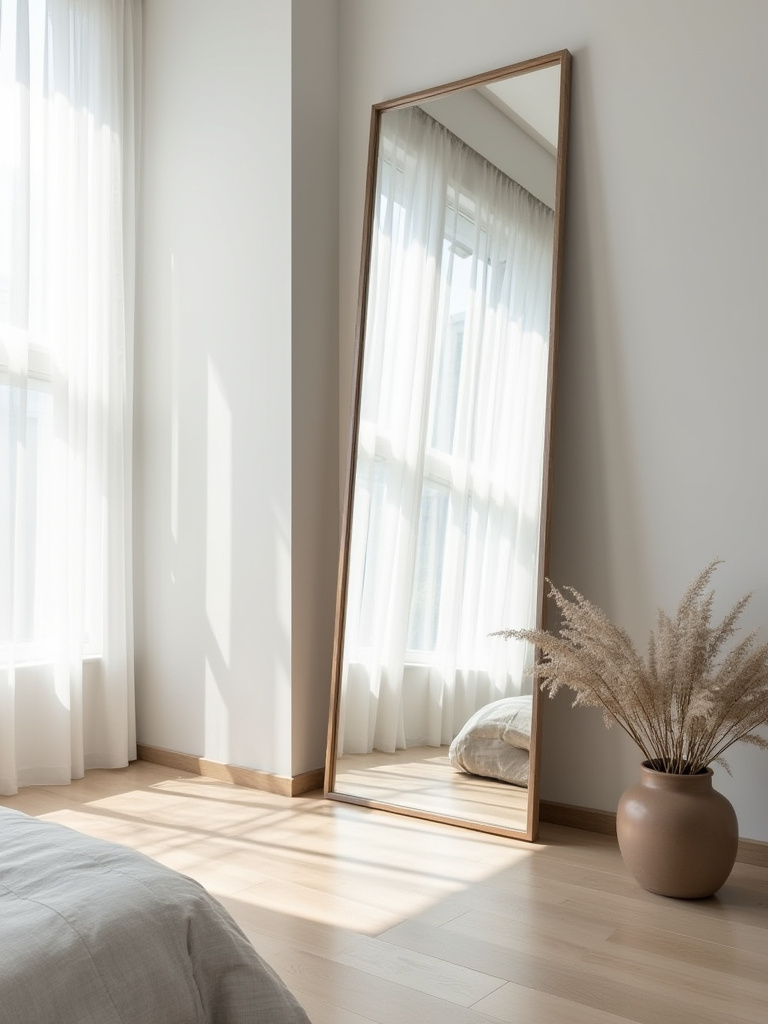
A mirror should reflect something beautiful—a window with a view of the trees, a stunning piece of art, or the warm glow of a lamp. It should never reflect a cluttered corner, the door to the toilet, or a blank, boring wall. Place a large, floor-leaning mirror opposite your main window to essentially double your natural light and bring the outdoors in.
The other BS is that you need a heavily ornate frame. Sometimes, a simple, thin-framed or even a frameless mirror is more powerful because it creates an uninterrupted illusion of space. It’s less about the mirror itself and more about the light and view it captures. It’s a window you can place anywhere.
Enhancing Ambiance & Personalizing Your Space with Accents (Part 2)
We’re in the home stretch. Now it’s about adding those final, transformative layers of texture and personality. These are the elements that engage the senses—touch and sight—and complete the story of your personal retreat.
17. Embrace Natural Textiles
Textiles are the soul of a cozy, inviting bedroom. They add softness, absorb sound, and provide the tactile comfort we instinctively crave. My rule is to always choose natural fibers: linen, organic cotton, wool, jute. They breathe, they feel incredible against your skin, and they are far more sustainable than their synthetic counterparts like polyester, which is essentially plastic.
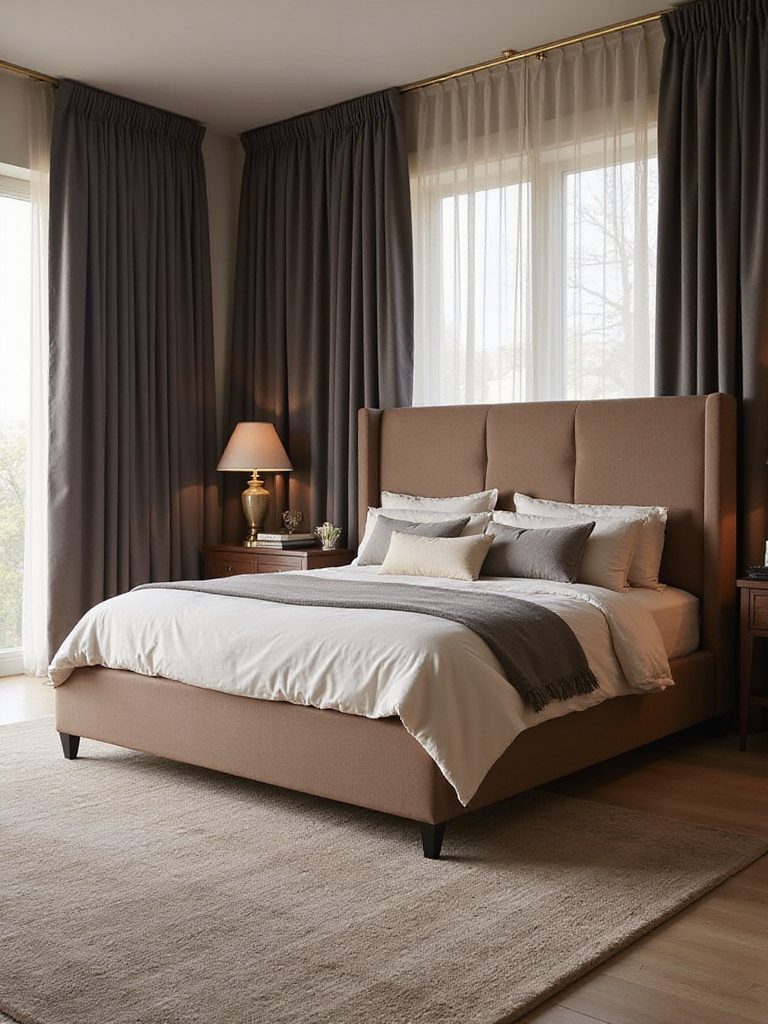
Start with the floor. A large jute or wool rug grounds the space, adds immense warmth, and feels wonderful underfoot. Make sure it’s big enough to sit at least halfway under your bed and extend on either side. A small, floating “rug island” is a common design mistake that visually shrinks the room. Then, think about your windows. Simple, unlined linen curtains that filter light beautifully and move with the breeze add a sense of life and airiness to the room.
Finally, layer your bed with a mix of textures. A crisp organic cotton duvet, a chunky knit wool throw, and a few linen pillows. This isn’t just about looks; it’s about creating a sensory experience. This is how you achieve that effortless, luxurious “hotel-at-home” feeling, but in a way that’s sustainable and healthy.
18. Let Your Walls Speak
Your walls are a blank canvas, so why leave them empty? This is your prime opportunity to infuse the room with your personality. And I’m not just talking about hanging a generic print from a big-box store. Think bigger. Think more personal.
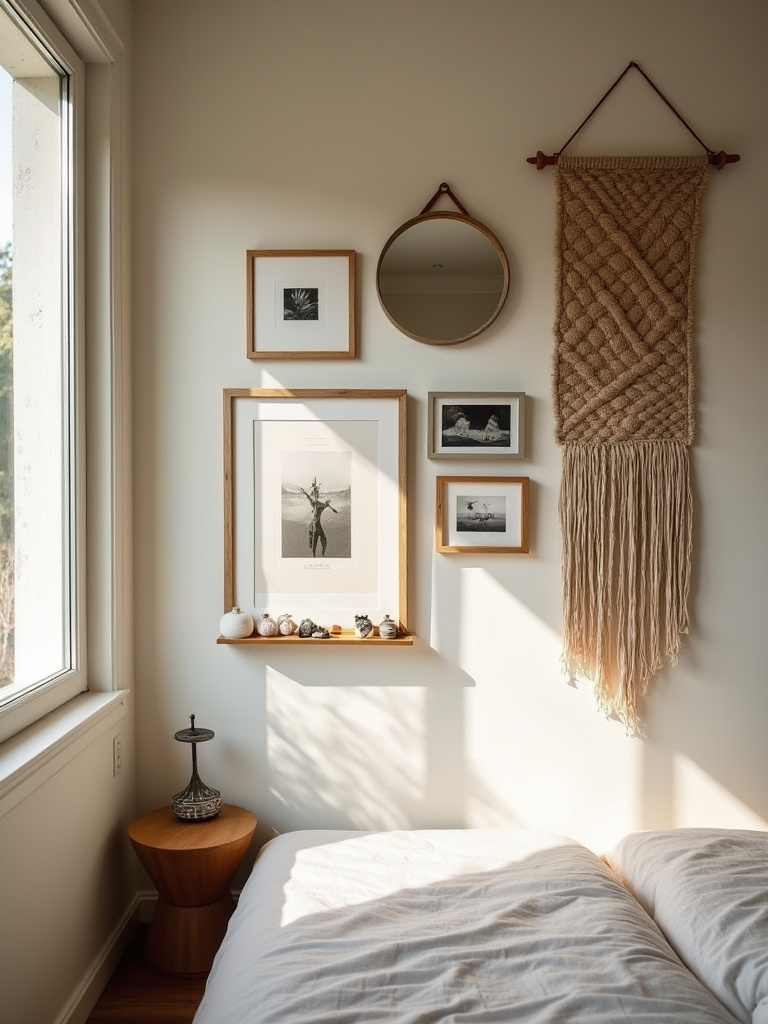
A gallery wall can be stunning, but the shortcut to making it feel authentic is to mix your media. Combine framed photographs with a small woven textile, a pressed botanical print, or a vintage map of a place you love. This creates a rich, personal tapestry that tells a story.
Another powerful idea is a single, large-scale piece of art or photography. It creates a powerful focal point and sets the tone for the entire room. Or, for a softer approach, consider a beautiful, textured wall covering on the wall behind your bed, like grasscloth or linen wallpaper. It adds incredible depth and warmth without shouting for attention. The goal is to choose something you will love looking at every single day.
Advanced Styling Techniques & Long-Term Furniture Care (Part 1)
Alright, your space is beautiful. Now, let’s make sure it’s also brilliantly functional and that your beautiful investments last a lifetime. These are the pro-level techniques that keep a room feeling organized, dynamic, and fresh for years to come.
19. Go Vertical with Your Storage
When floor space is limited, the only way to go is up. Using vertical space is the smartest way to maximize storage without making a room feel cramped. Think tall, narrow bookcases instead of low, wide ones. Or a beautiful armoire that draws the eye upward.
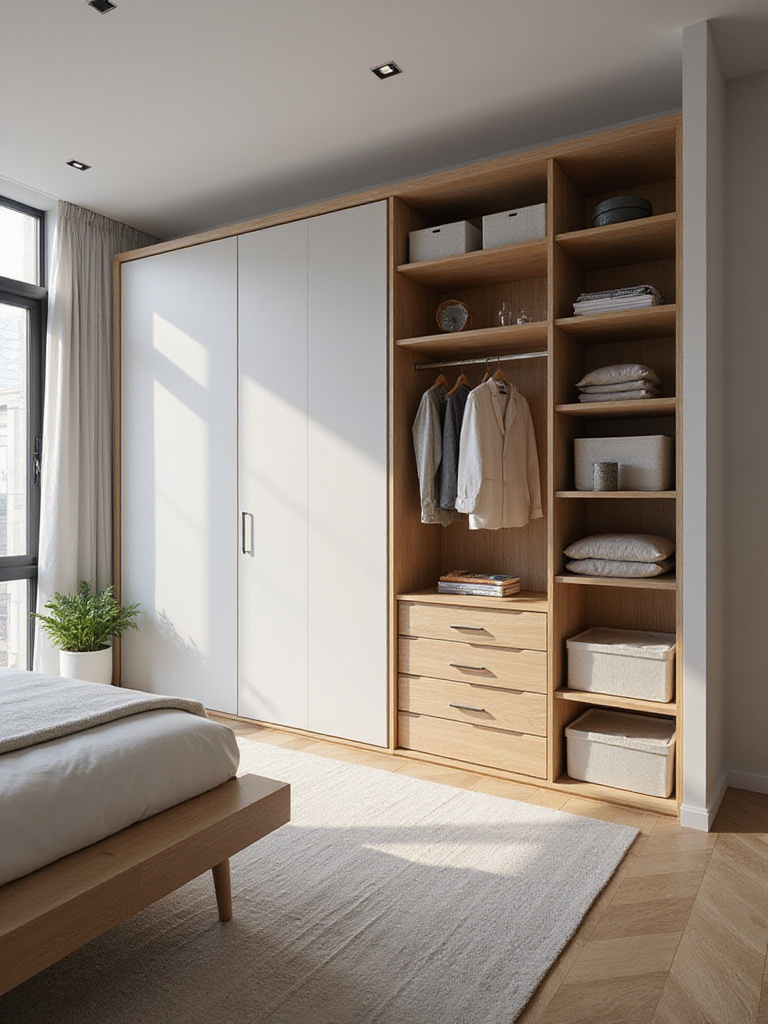
I absolutely love incorporating open shelving. Yes, it requires some curation, but it’s a wonderful way to display beautiful objects and plants while storing books. A collection of lush, cascading plants on high shelves brings life and clean air into the room, creating that vital connection to nature. This makes storage a feature, not just a function.
The common fear is that tall furniture will make a room feel smaller. The opposite is often true. By drawing the eye upward, you create an illusion of height and spaciousness. Just remember the golden rule: always, always anchor tall furniture securely to the wall. It’s a simple safety measure that is completely non-negotiable.
20. Master the Art of Hidden Storage
The secret to a serene, clutter-free bedroom is having a place for everything. Especially the “stuff”—the extra blankets, the remote controls, the chargers. This is where clever, hidden storage comes in. It’s the art of having immense functionality that is completely invisible.
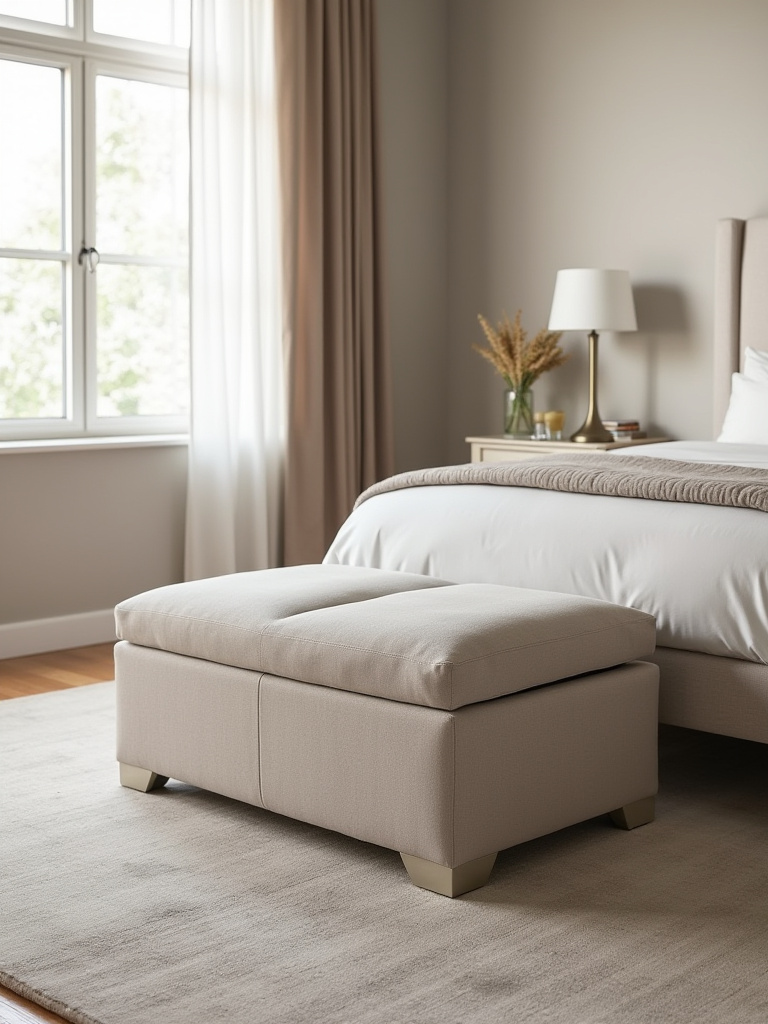
A storage bench at the foot of the bed is my number one recommendation for every project. It’s elegant, provides seating, and can swallow an enormous amount of clutter. A beautiful ottoman with a removable lid can do the same. These pieces work hard without looking like they’re trying.
The key is to integrate storage into pieces you would have anyway. Look for nightstands with drawers instead of just open shelves. Choose a bed frame with built-in storage. This approach keeps your surfaces clear, which is the fastest way to make a room feel calm and organized. Your sanctuary should be a place of peace, not a landscape of visual clutter.
21. Give Old Furniture a New Soul
One of the most sustainable—and soulful—things you can do is to breathe new life into an old piece of furniture. There is so much character in vintage and antique pieces that you simply cannot replicate with something new. A simple coat of eco-friendly paint or a hardware swap can completely transform a dated dresser into a bespoke masterpiece.
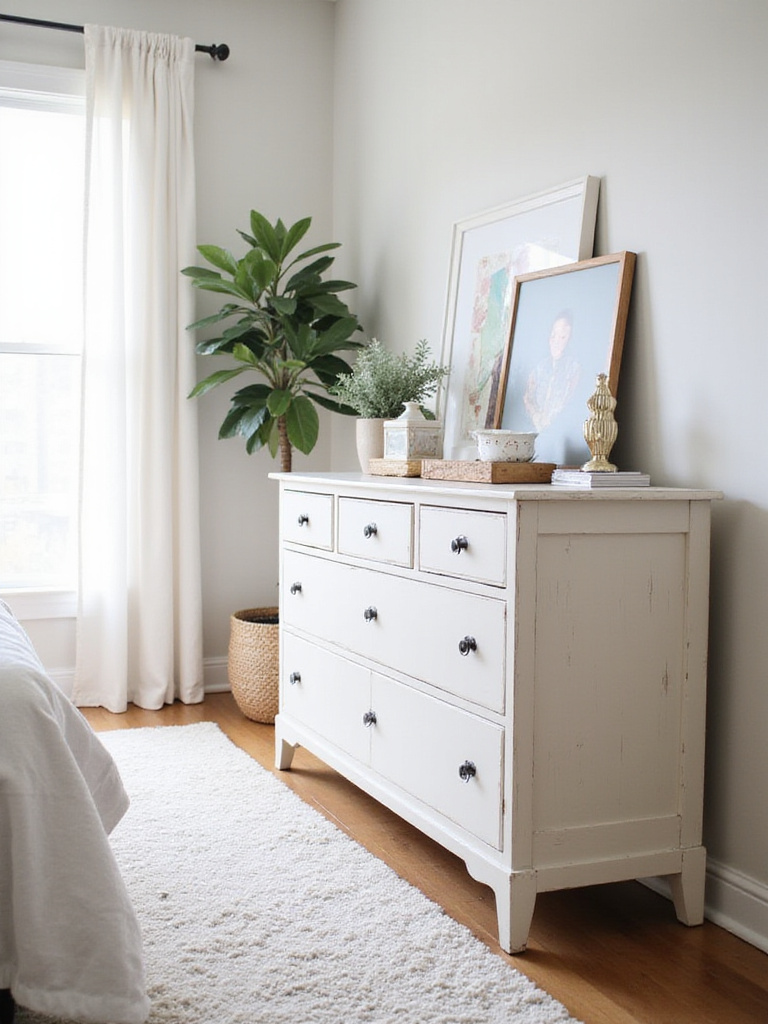
Before you throw anything away, ask yourself: does it have good bones? If the piece is solid wood and well-made, it’s a candidate for a second life. I love the look of a classic, ornate piece of furniture painted in a single, contemporary matte colour. The contrast between the old shape and the modern finish is stunning.
This isn’t just about saving money; it’s about rejecting a throwaway culture. It’s about creating a home with history and story. A piece you’ve lovingly restored will always mean more to you than anything you can buy off a showroom floor. It carries a piece of your own energy within it.
22. Designate a ‘Moment’ for Yourself
We touched on this before, but it’s worth a dedicated spot. Whether you work from home or just need a space to think, carving out a specific zone for a key activity is a powerful design tool. It could be a small writing desk in the corner or, my favorite, a dedicated reading nook.
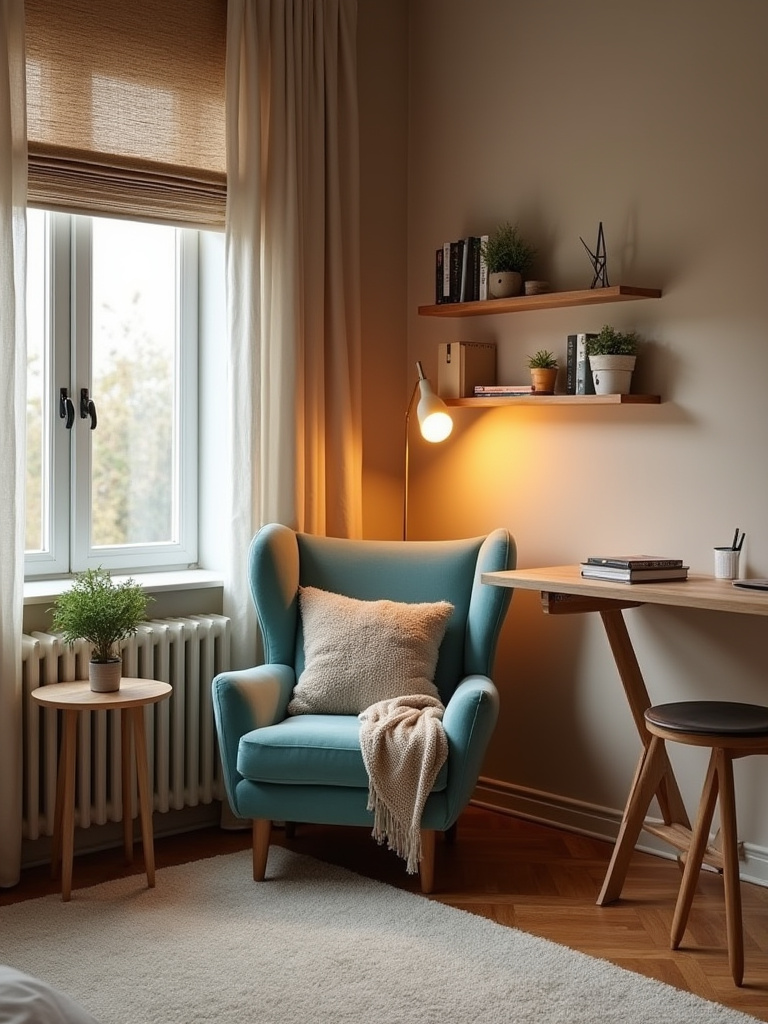
For a reading nook, all you really need is a comfortable chair, good light, and a small surface for a cup of tea. It’s about creating an intentional space that signals to your brain: “this is a place for quiet.” For a workspace, look for a slim, floating desk that doesn’t eat up floor space. Hang shelves above it for storage. The goal is to integrate these functions seamlessly so they don’t dominate the room.
This is what elevates a bedroom from a single-use space to a truly personal retreat. It’s a room that supports all facets of your life—rest, reflection, and even productivity—while maintaining an overarching sense of peace and purpose.
Advanced Styling Techniques & Long-Term Furniture Care (Part 2)
Your dream bedroom is complete. Now, the final—and most important—step is to care for it. This isn’t about drudgery; it’s about respecting the beautiful, natural materials you’ve invested in and keeping your sanctuary feeling fresh and alive, season after season.
23. Know How to Care for Your Materials
Different materials have different needs. You wouldn’t wash a wool sweater the same way you wash a cotton t-shirt, and the same goes for your furniture. Knowing how to properly care for wood, upholstery, and natural fibers will extend their life tenfold.
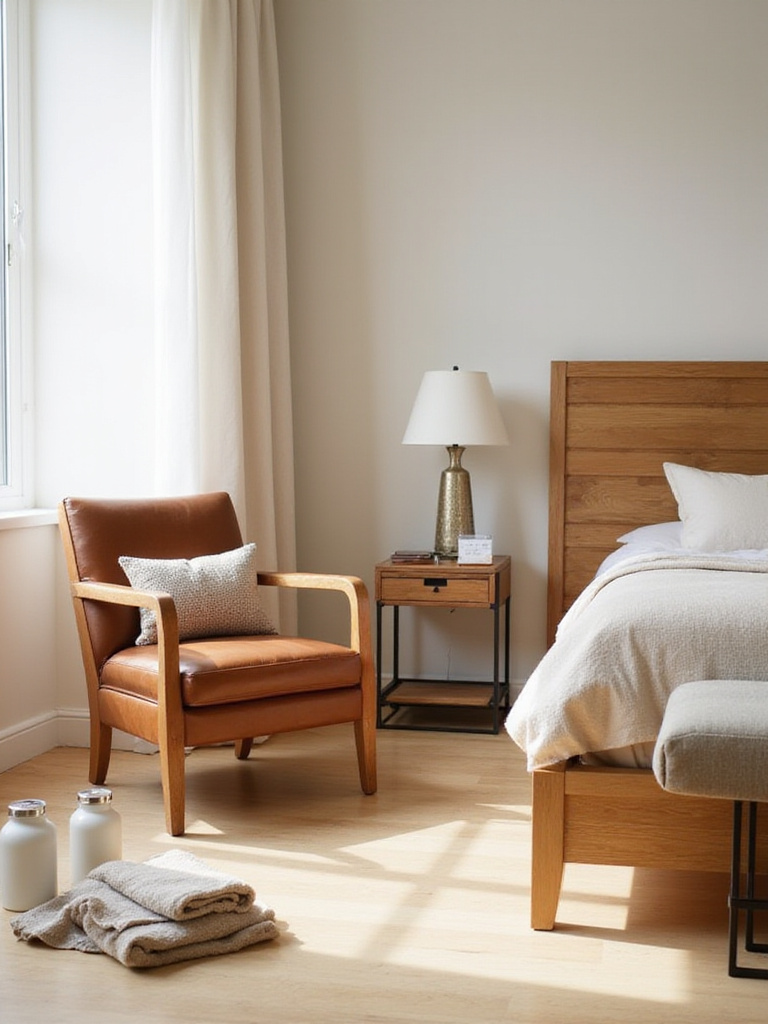
For natural wood furniture, dust with a soft, dry cloth. Avoid chemical-laden polishes. A simple mix of olive oil and vinegar is often all you need to clean and condition. For linen and cotton upholstery, regular vacuuming is key. Treat spills immediately by blotting, not rubbing. For jute or seagrass rugs, vacuum regularly and never, ever saturate them with water.
This is the kind of knowledge that turns a purchase into an heirloom. It’s the difference between furniture that lasts five years and furniture that lasts a lifetime. Make a small “care card” for each new piece you bring into your home. It takes two minutes and will save you years of regret.
24. Refresh with the Seasons
Your sanctuary shouldn’t be static. The best spaces evolve with the seasons, just as nature does. A simple seasonal refresh keeps your bedroom from feeling stale and allows you to adapt the space for comfort.
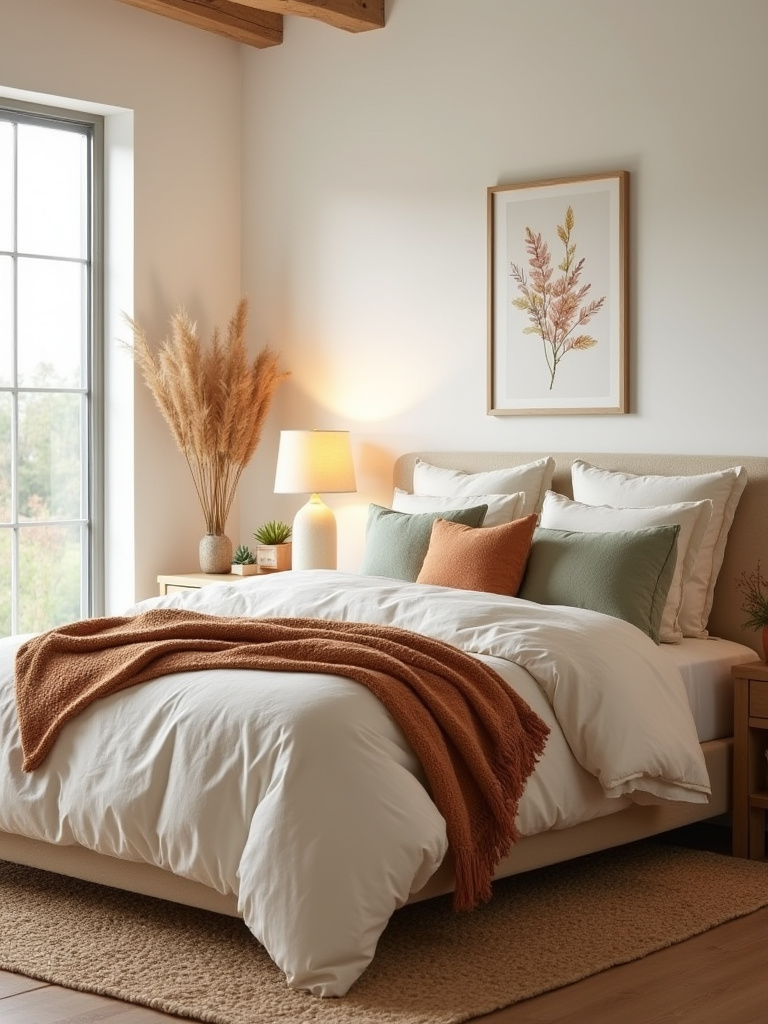
In the spring and summer, swap out heavy wool throws for light cotton or linen blankets. Bring in fresh flowers or green branches. Switch to lighter-colored cushion covers. The focus is on making the room feel airy, light, and cool. In the autumn and winter, do the opposite. Bring back the chunky knits, add a plush sheepskin rug next to the bed, and switch to warmer, spicier scents for your candles. It’s about creating a cozy, hygge-filled nest.
This simple ritual doesn’t have to be expensive or time-consuming, but it has a massive impact on how your room feels. It keeps you connected to the natural rhythms of the year and ensures that your bedroom is always a welcoming, dynamic, and deeply nurturing space to come home to.
Your Sanctuary Awaits
So, there you have it. Creating a dream retreat isn’t about a checklist or a shopping spree. It’s a mindful process of discovering your own vision and bringing it to life with intention, quality, and a deep respect for natural materials. It’s about building a space that feels less like a decorated room and more like a living, breathing extension of who you are. A space that calms your mind, restores your body, and nurtures your soul every single day.
Now go create your beautiful sanctuary. You deserve it.