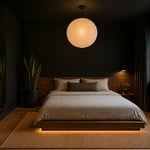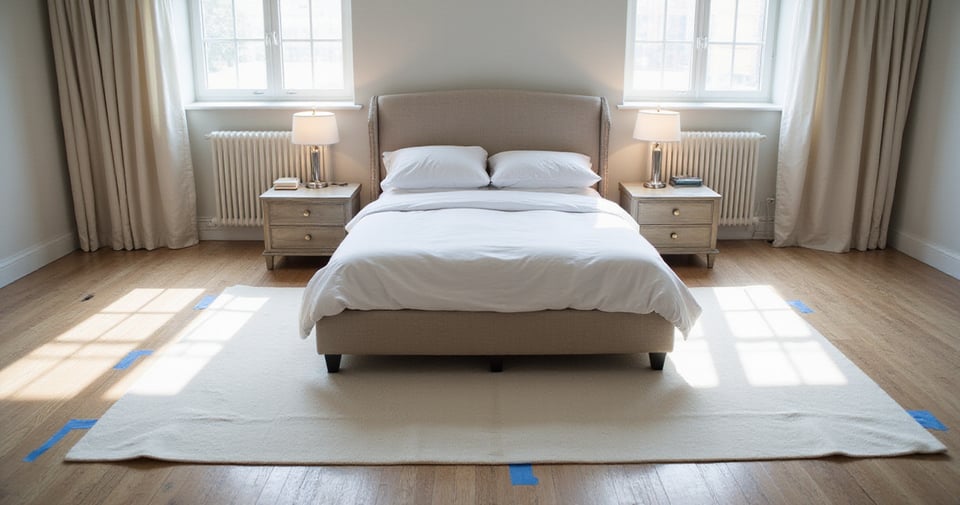
Can we please talk about the ‘postage stamp’ rug? You know the one. That sad little rectangle floating forlornly at the foot of a magnificent bed. It’s a design crime I see far too often, and honestly, it’s a symptom of a much larger misunderstanding. Most people believe a rug is just a decorative afterthought, something you throw down to add a pop of colour. Interior magazines might even show you rooms like that.
Here’s what they’re not telling you: as a designer who spends my life weaving the soul of South Asian artistry into the clean lines of contemporary British homes, I can tell you the rug isn’t the accessory. The rug is the anchor. It’s the foundational piece of art for the floor, the very soul of the room. It’s the difference between a collection of furniture and a curated sanctuary. These 18 bedroom rug idea concepts will show you how to choose a rug that doesn’t just decorate your room, but defines it.
Essential Planning for Your Perfect Bedroom Rug (Part 1)
Before you fall in love with a pattern or texture, we need to lay the groundwork. Think of this as drawing the map for your sanctuary. A rug that is stunning in a showroom can become a disaster in your own space if you haven’t considered the fundamentals of size, function, and flow. Getting this part right is the shortcut to avoiding that sinking feeling of a costly mistake.
1. Evaluate Your Room Size and Bed Proportions
Everyone thinks the biggest mistake is choosing the wrong colour. It’s not. The biggest mistake, hands down, is choosing the wrong size. An undersized rug makes your entire room look smaller and your furniture feel disconnected. The goal isn’t to put a mat near your bed; it’s to create a foundation for your bed. It should be generous enough to feel luxurious underfoot when you wake up.
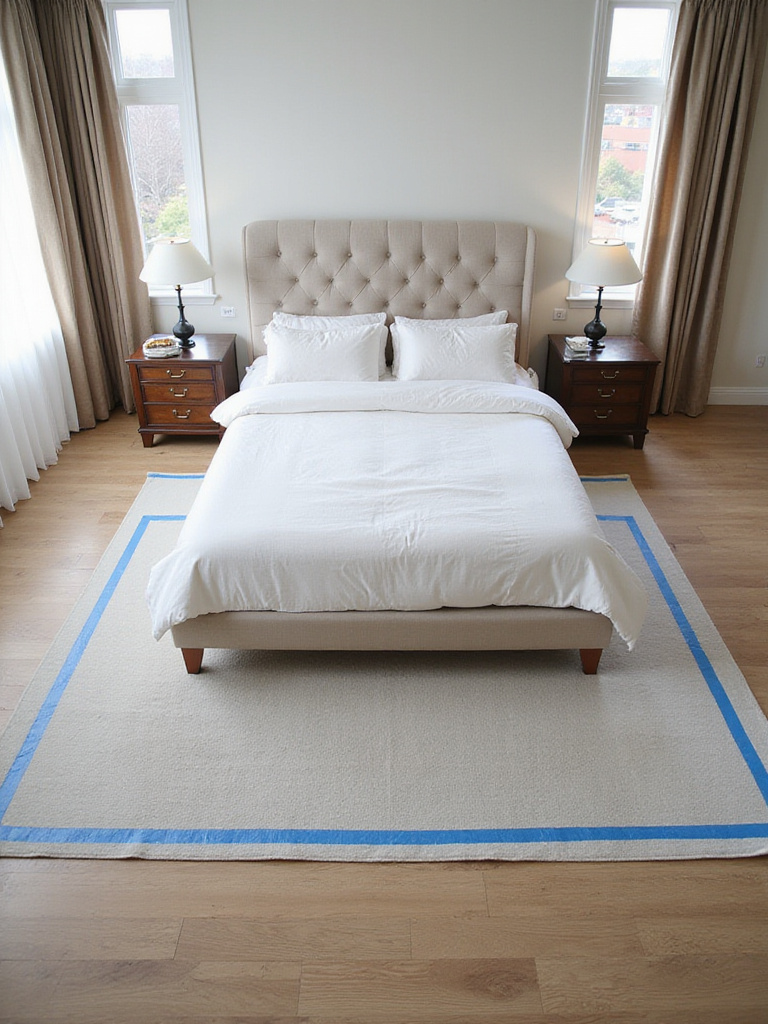
I once worked with a client who had a beautiful, airy bedroom with a king-sized bed, but their 5×7 rug made the whole setup look like a giant standing on a tiny raft. We swapped it for a 9×12, and the room instantly felt more expansive, grounded, and impossibly chic. Don’t be timid. For a queen or king bed, the rug should extend at least 18-24 inches on either side and past the foot. The nightstands should sit comfortably on it, unifying the entire sleep zone. My best tip? Use painter’s tape to mark the dimensions of a potential rug on your floor. Live with it for a day. It’s the easiest way to feel the scale before you commit.
This initial step of correct sizing is the bedrock upon which all other beautiful design choices are built, ensuring your final selection feels intentional rather than accidental.
2. Define the Rug’s Primary Purpose
Now, a little soul-searching. What do you really want from this rug? Is this purely about the feeling of sinking your toes into something plush every morning? Is it a piece of art meant to be the showstopper of the room? Or, in a modern home with lots of hard surfaces, is its main job to absorb sound and create a hushed, peaceful atmosphere? Your answer dictates everything.
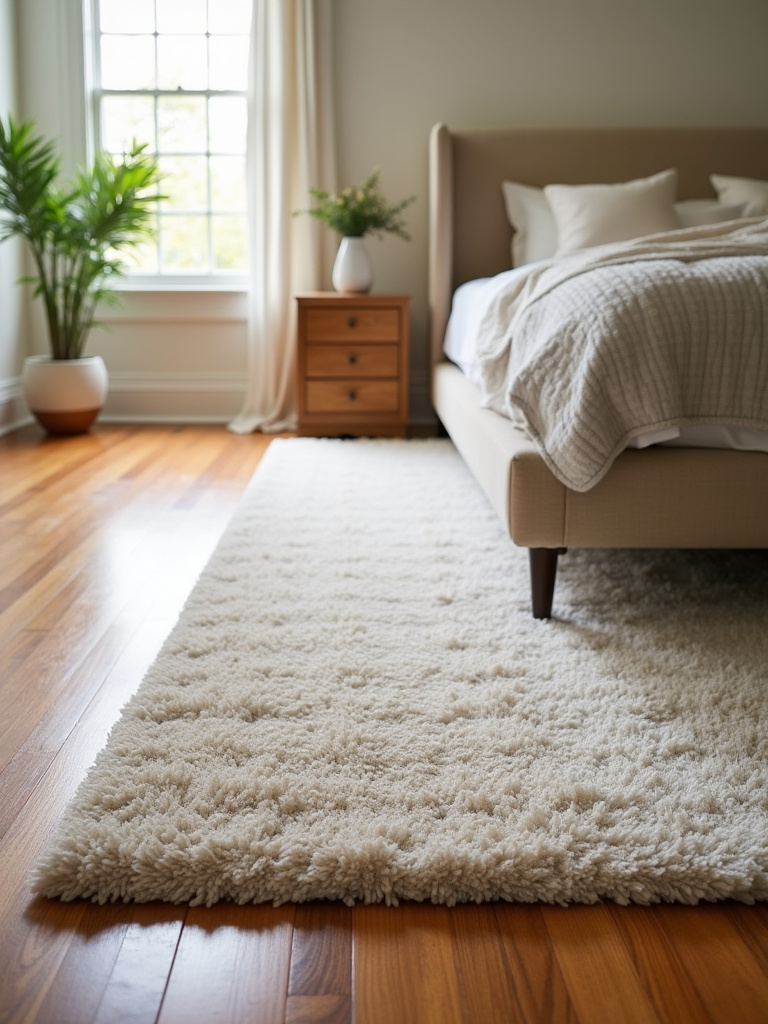
Don’t just say “all of the above.” Pick one primary function. If comfort is king, you’ll be looking at high-pile wool or a luxurious shag. If it’s a style statement, you can explore lower-pile but visually stunning options like a vintage Turkish kilim or a bold block-printed dhurrie from Jaipur. If it’s acoustics, the density of the weave and a thick felt pad are your top priorities. Being honest about its job saves you from falling for a beautiful but impractical choice. You wouldn’t hire a poet to do an accountant’s job, right? Same principle.
Knowing its purpose sharpens your focus, turning an overwhelming search into a clear and targeted mission.
3. Consider Your Furniture and Footpaths
Take a moment and watch how you move through your bedroom. Where do you walk from the door to the closet? From the bed to the en suite? A rug should never, ever become an obstacle course or a trip hazard. It needs to respect the natural flow of the space. It should feel like it belongs there, not like it’s intruding on your path.
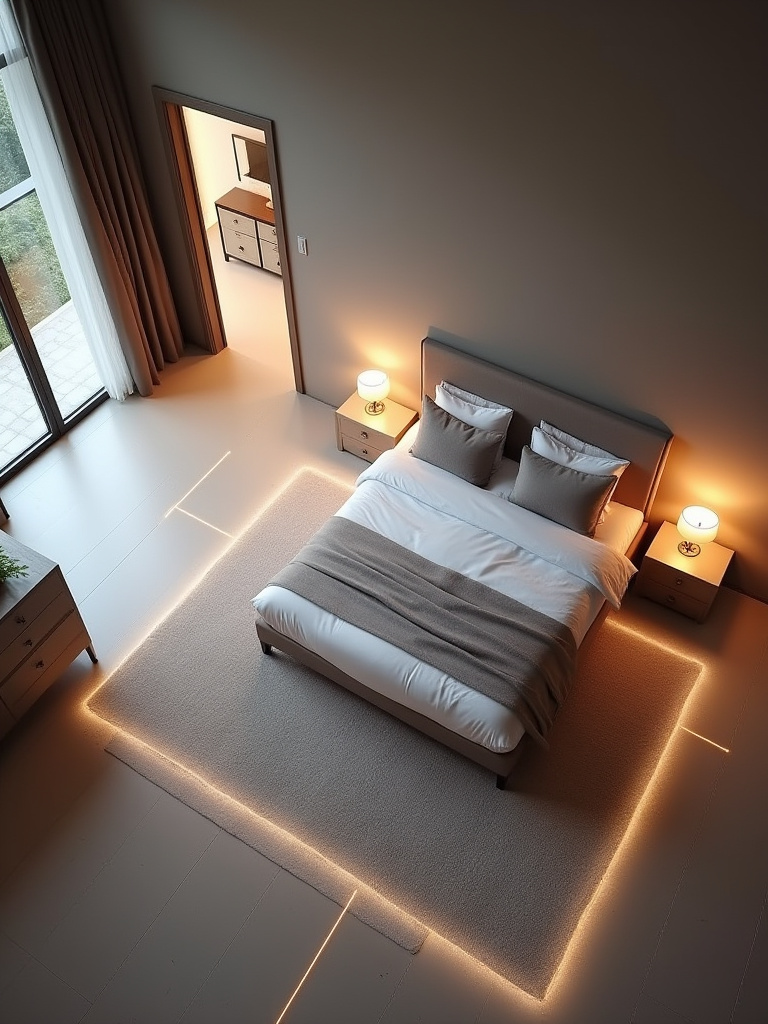
This is why drawing a quick sketch of your layout is so crucial. A beautiful rug that gets caught on the bottom of a door every time you open it will quickly lose its charm. Make sure your main footpaths are either entirely on the rug or entirely off it. A “one foot on, one foot off” situation is just awkward. This is especially true for runners—ensure they are wide enough for a comfortable gait and long enough to guide you from one point to another, like from the side of the bed to the dressing area.
Properly placing a rug in relation to your movement makes the room feel more intuitive and thoughtfully designed.
4. Settle on an Aesthetic and Colour Story
Before you even open a single browser tab for rugs, decide on the story your room is telling. Is it a serene, minimalist retreat? A vibrant, eclectic haven? Or a deeply romantic space with moody colours and rich textures? Your rug needs to be a character in that story, not a random plot twist. I advise my clients to create a mood board—it’s not frivolous, it’s essential.
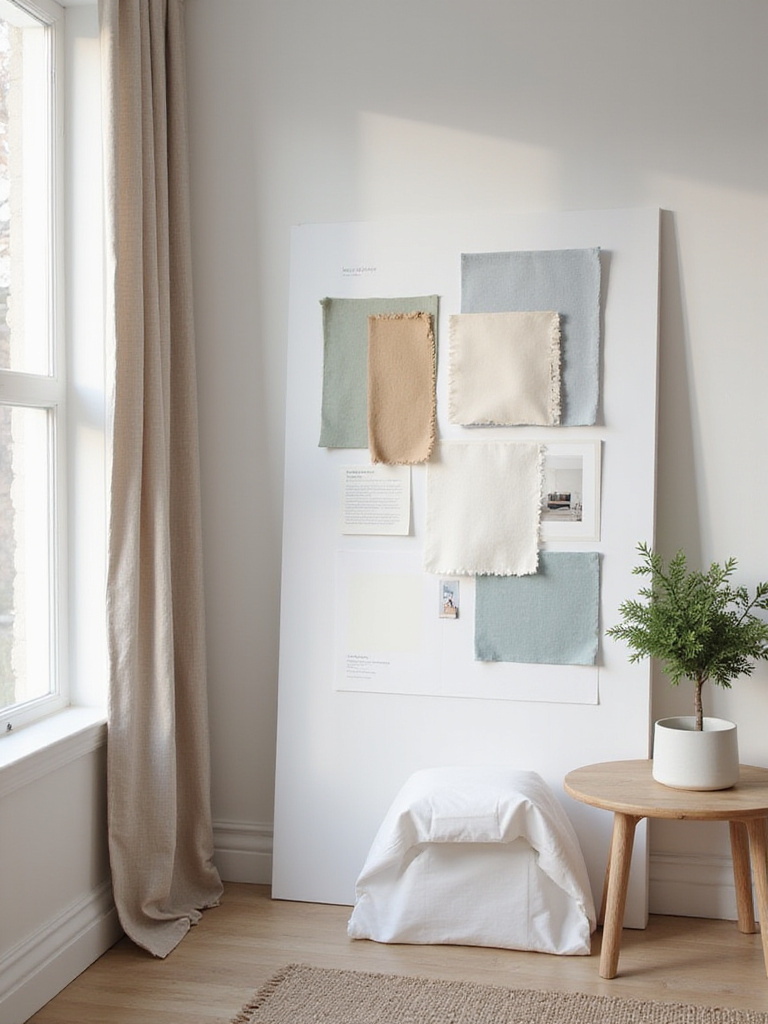
Pull together images of rooms you love, swatches of your wall colour, your bedding, and curtain fabrics. From there, you can decide if the rug should be a quiet, unifying neutral or the main source of pattern and energy. A common piece of BS is that a patterned rug will make a room too busy. Nonsense. A brilliant patterned rug, like a Mughal-inspired floral, can be the very thing that pulls a simple room together and gives it a commanding presence. Just be sure to pull an accent colour from the rug to use in a cushion or throw to create a sense of cohesion.
This clarity of vision will act as your compass, guiding you through endless options to find the one piece that truly completes your personal sanctuary.
Essential Planning for Your Perfect Bedroom Rug (Part 2)
We’ve established the visual and functional map. Now, let’s talk about the investment itself. A quality rug is not a disposable item; it’s a piece you should have and love for years, perhaps even generations. This means approaching your budget with a focus on longevity and the value of true craftsmanship.
5. Budget for Quality and Longevity
Can I be frank? A cheap rug is one of the most expensive mistakes you can make. It will fade, flatten, and fall apart within a few years, and you’ll be right back where you started. A well-made rug, on the other hand, is an investment that pays dividends in beauty, comfort, and durability. I would always rather see a client buy a smaller, higher-quality rug than a massive, low-quality one.
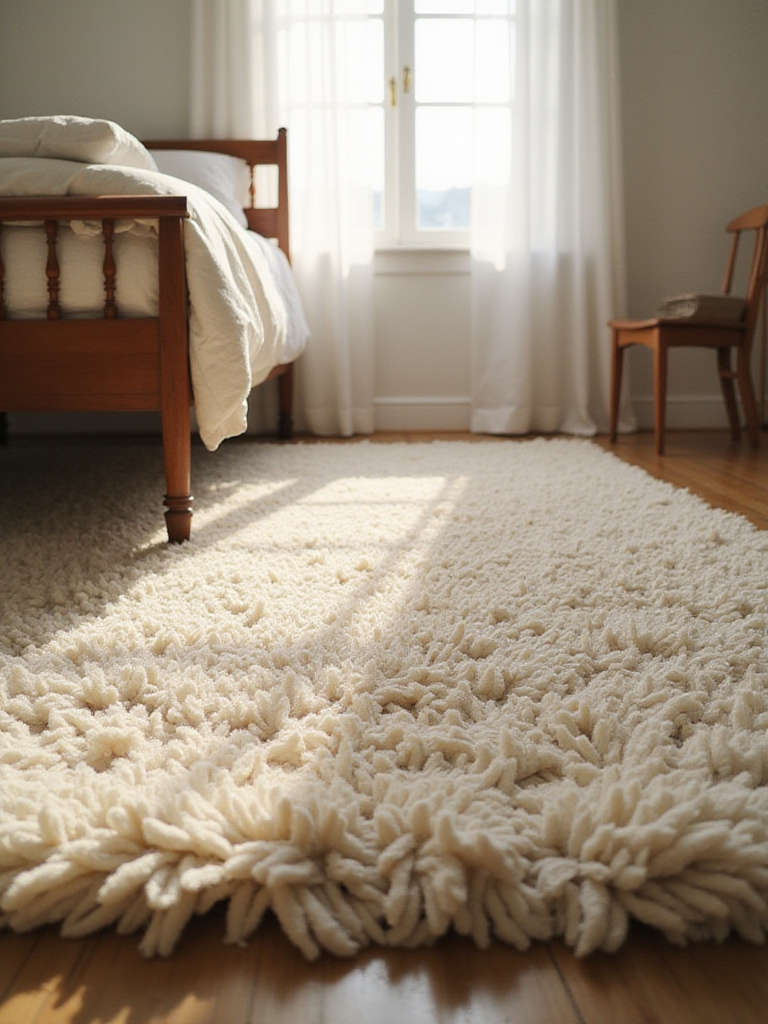
When I talk about quality, I’m often talking about natural fibres like wool, which is naturally stain-resistant, flame-retardant, and incredibly resilient. A hand-knotted woollen rug from Kashmir or Persia isn’t just a floor covering; it’s a piece of heritage that gets better with age. The colours mellow, the fibres soften. It tells a story. When you’re budgeting, think about the cost per year of enjoyment. That flimsy synthetic rug might seem like a bargain, but it’s a false economy.
Choosing to invest in quality means you’re choosing a piece that will anchor your sanctuary for a decade or more, not just a season.
Selecting the Right Rug and Mastering Placement (Part 1)
With the planning complete, the exciting part begins: choosing the perfect piece and placing it with the confidence of a seasoned designer. This is where we delve into the sensual, tactile qualities of the rug itself—the material under your feet, the shape that guides your eye, and the pile that whispers comfort.
6. Choose a Material That Speaks to You
The material of your rug defines its tactile character. In a bedroom, this is paramount. Your first and last steps of the day will be on this surface, so how do you want it to feel? Wool is my go-to for its unparalleled softness and durability, but there are so many other beautiful options. A silk blend can add an incredible lustre that plays with the light, while a natural jute or sisal provides a grounded, earthy texture perfect for a more organic aesthetic.
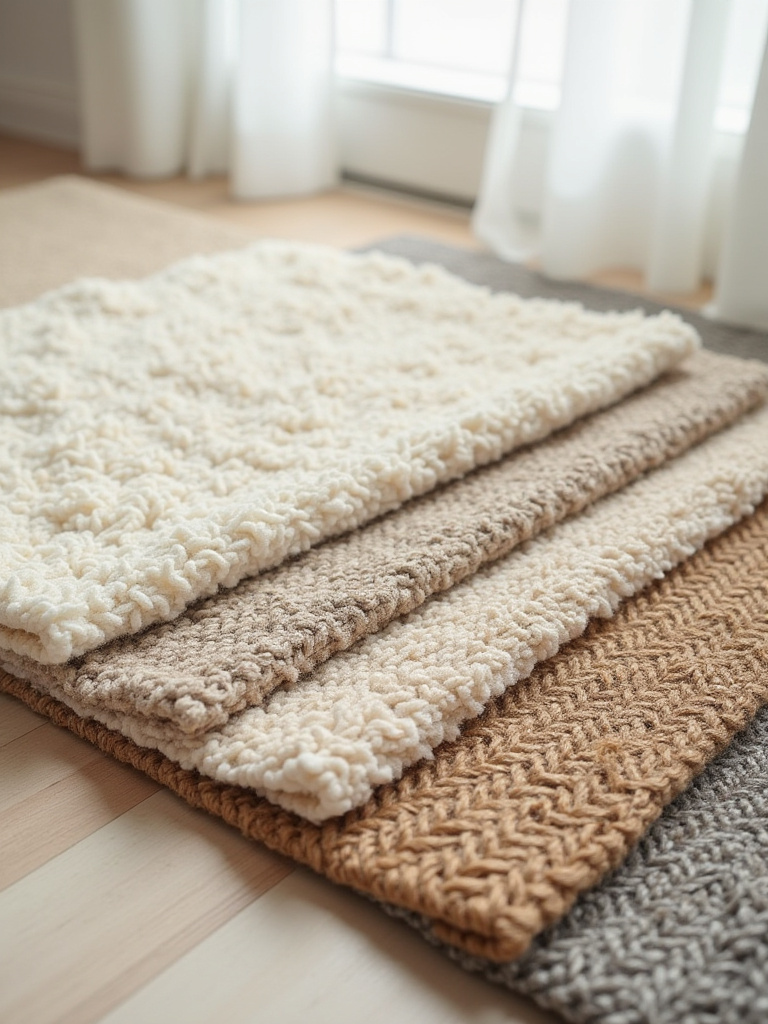
I love using materials that tell a story of their origin. A hand-loomed cotton dhurrie, for example, is light, often reversible, and carries the spirit of Indian craftsmanship in its flat, graphic weave. They are perfect for layering. For ultimate indulgence, nothing beats a plush sheepskin thrown at the bedside. It’s a primal, comforting texture that instantly signals relaxation. The key is to think beyond just the look and consider how the material will contribute to the feeling of your sanctuary.
Let the texture be an essential part of your room’s sensory experience, adding a layer of comfort that goes beyond the visual.
7. Think Beyond the Rectangle
While a rectangular rug is a classic for a reason, don’t feel constrained by four corners. The shape of your rug can completely alter the energy and flow of your room. A round rug, for instance, is brilliant for softening the hard lines of modern furniture and can create a lovely, gentle focal point under a seating area or in the center of a smaller room.
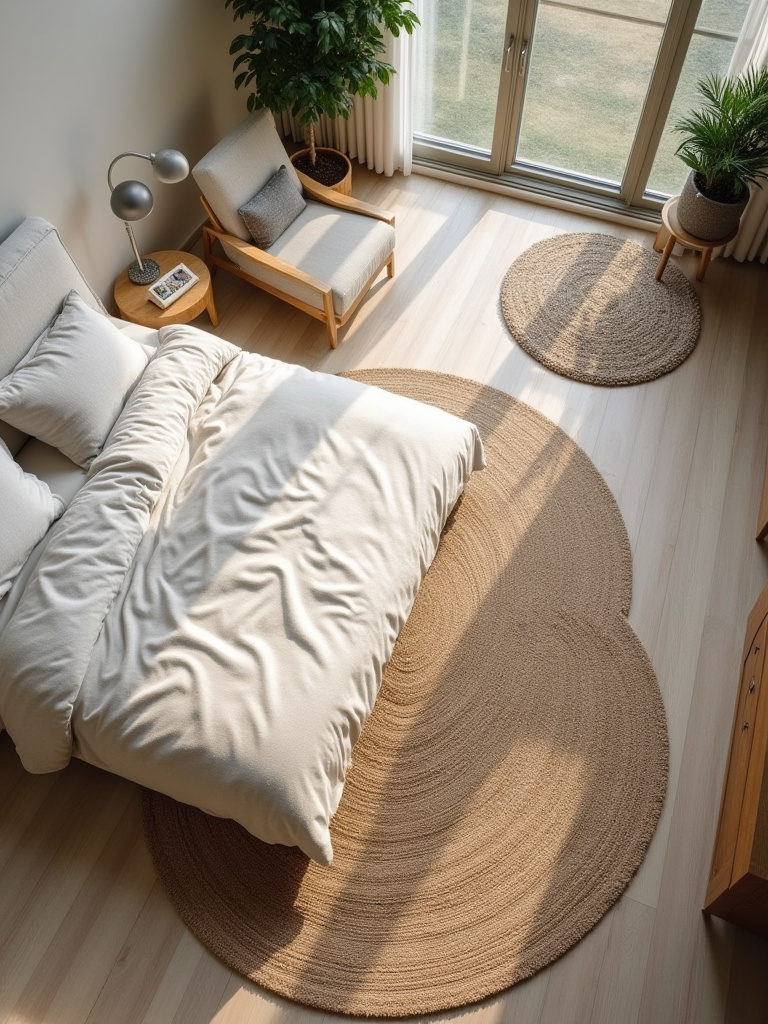
I often use this technique in more angular, contemporary British spaces to introduce a touch of organic softness. An irregularly shaped rug, like a cowhide or a free-form abstract design, can feel like a piece of modern art on the floor, adding a dynamic and unexpected element. You can even create an interesting effect by placing a rectangular bed diagonally over a larger rectangular rug—it’s a bold move that can make a boxy room feel far more interesting.
Embracing a unique shape is a powerful way to inject personality and creative flair into your design.
8. Perfect the Placement Around the Bed
There are three classic, designer-approved ways to place a rug around a bed. Getting this right is what separates an amateur look from a professional one. You don’t have to follow trends, but you do have to respect proportion.
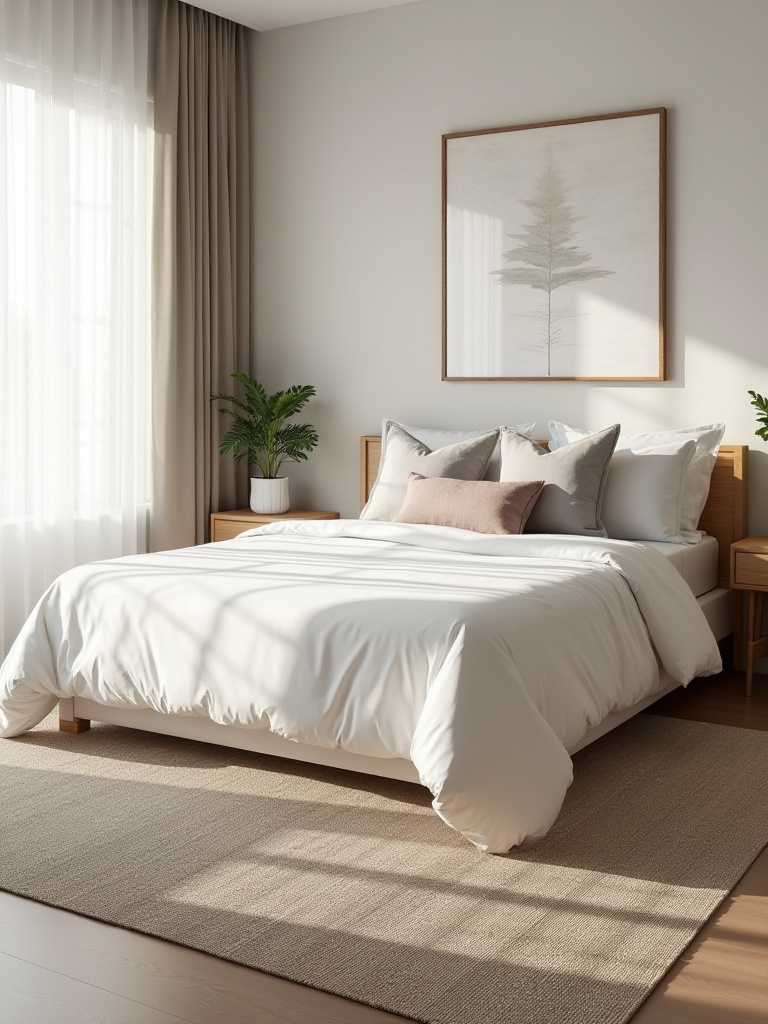
Option 1: The Full Anchor. The rug is large enough to sit completely under the bed and the nightstands, with at least 18-24 inches of rug showing around the sides and foot. This is the most luxurious, cohesive look and works best in larger rooms.
Whichever you choose, be decisive. The “postage stamp” at the foot of the bed is not an option. It doesn’t ground anything and just looks lost.
Mastering this placement ensures your rug and furniture exist in harmony, creating a visually satisfying and unified composition.
9. Select a Pile Height for Comfort and Practicality
The pile height—the thickness of the rug’s fibres—is a crucial decision that balances plushness with practicality. In a bedroom, the desire for a deep, soft, high-pile rug is strong. A shaggy or plush wool rug feels incredible underfoot and is excellent for absorbing sound, creating that coveted quiet, cocooning effect.
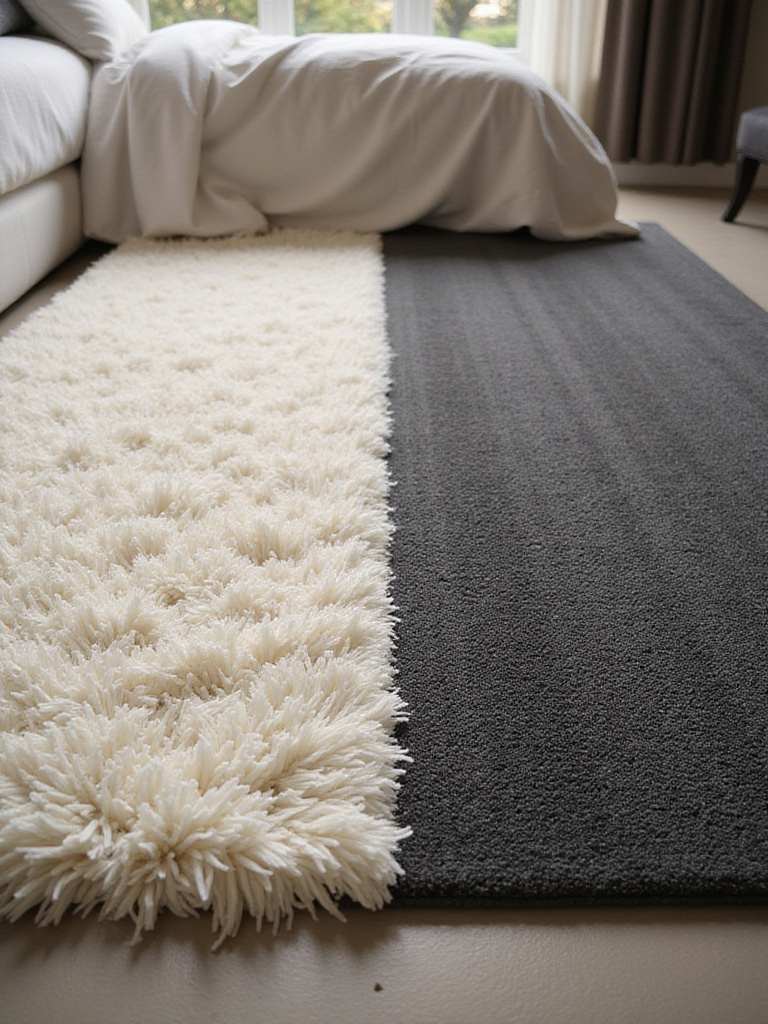
However, you must be practical. A high-pile rug can be more difficult to vacuum and may show footprints more readily. If your bedroom is also a high-traffic route to an office or closet, a medium-pile might be a better choice. I love using a low-pile, hand-woven wool rug as a base and then layering a small, high-pile sheepskin right where your feet land in the morning. You get the best of both worlds: durability across the room and a targeted touch of pure indulgence.
This thoughtful choice ensures your rug delivers the sensory experience you crave while still fitting seamlessly into your daily life.
Selecting the Right Rug and Mastering Placement (Part 2)
We’re moving into the final layers of refinement. These details may seem small, but they are what truly elevate a room’s design, ensuring safety, harmony, and a deeply personal touch. It’s about making sure your beautiful rug performs as wonderfully as it looks.
10. Don’t Ever Skip the Rug Pad
This is non-negotiable. A rug pad is not an upsell; it is an essential component. First and foremost, it’s about safety. A rug slipping out from under you is a genuine hazard. A good quality pad with a rubber backing will grip the floor and keep your rug firmly in place. It’s the single most important thing you can do to prevent accidents.
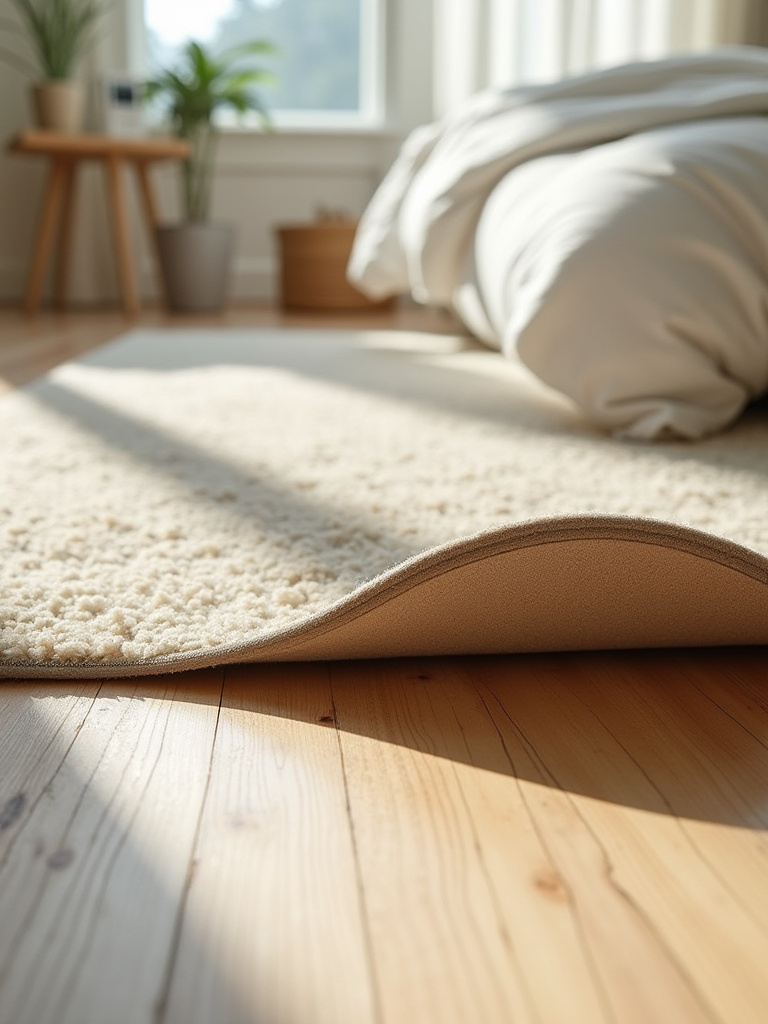
Beyond safety, a pad protects both your rug and your floor. It prevents the rug from rubbing against the floor, which causes premature wear to the rug’s backing. It also protects your hardwood floors from scratches and even colour transfer from certain dyes. Finally, a quality felt pad adds an extra layer of cushioning and sound insulation, making your rug feel even more luxurious and your room even quieter. Always trim the pad to be about an inch smaller than the rug on all sides so it remains completely hidden.
Think of the rug pad as the silent, hardworking partner that ensures your rug’s safety, longevity, and comfort.
11. Harmonise Patterns and Textures with Your Decor
Here is where the magic really happens. Integrating a rug is a dance between complementing and contrasting. If your bedroom is already full of pattern—say, in your wallpaper or bedding—a richly textured but solid-coloured rug can provide a moment of calm. A hand-knotted piece with a subtle, tonal pattern can add immense depth without creating visual chaos.
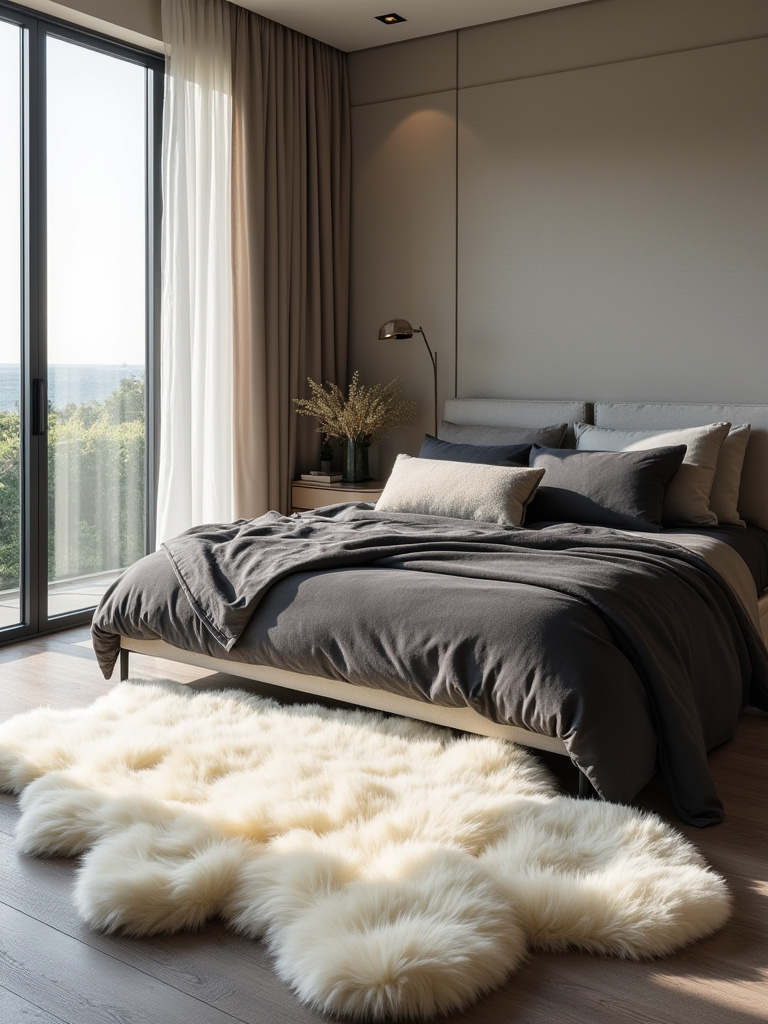
Conversely, if your room is a sea of calming neutrals, the rug is your opportunity to introduce a bold statement. I adore bringing a traditional Bokhara or a vibrant Suzani-patterned rug into a clean, contemporary space. The juxtaposition is stunning. The key is to ensure there’s a thread of connection. Pull one minor colour from the intricate pattern and echo it in a vase or a piece of art. This creates a dialogue between the elements, making the choice feel intentional and sophisticated, not random.
This balance is the hallmark of a thoughtfully curated space, where every piece works together to tell a single, beautiful story.
Elevating Your bedroom style with Strategic Rug Enhancements (Part 1)
Now that we have the foundations firmly in place, let’s explore how to use rugs in more dynamic and strategic ways. A rug can be more than just a foundation; it can be an active tool to shape your space, add layers of personality, and solve common design dilemmas like acoustics and lack of focus.
12. Define Different ‘Zones’ in a Large Room
In a large master suite that includes a seating area or a small workspace, a rug is the most elegant way to define these zones without putting up walls. Placing a distinct rug under your bed and nightstands clearly demarcates the “sleep zone.” Then, a separate, perhaps smaller or circular rug, can anchor a reading corner with an armchair and a lamp.
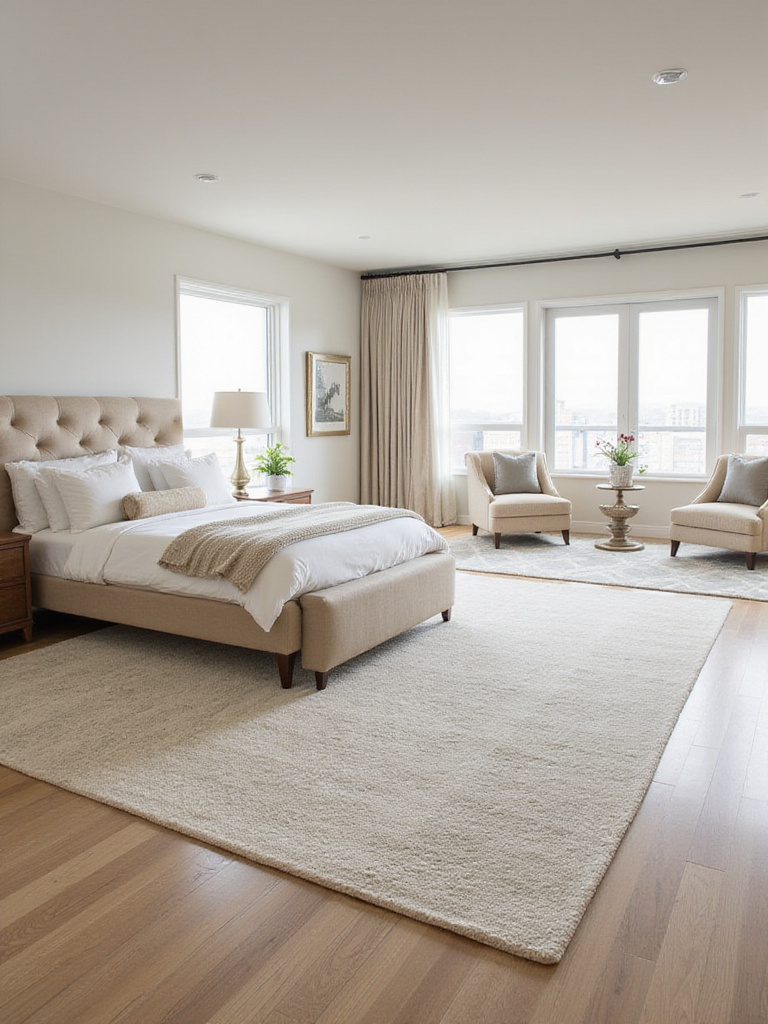
This technique transforms a vast, potentially cold space into a series of intimate, functional areas. You can use coordinating rugs from the same collection for a subtle distinction, or you can be bolder. A textured neutral under the bed paired with a more colourful vintage piece in the seating area can work beautifully, as long as they share a complementary feel or a common colour note. It adds a layer of design sophistication that makes a large room feel both grand and cosy.
Zoning with rugs is an expert move that brings both order and intimacy to an open-plan bedroom.
13. Layer Rugs for Richness and Character
Layering textiles is a practice deeply rooted in South Asian and Middle Eastern cultures, and it translates beautifully to modern design. Placing a smaller, more decorative rug over a larger, neutral base rug adds incredible texture, warmth, and a bespoke feel to a room. This is my absolute favourite way to add personality.
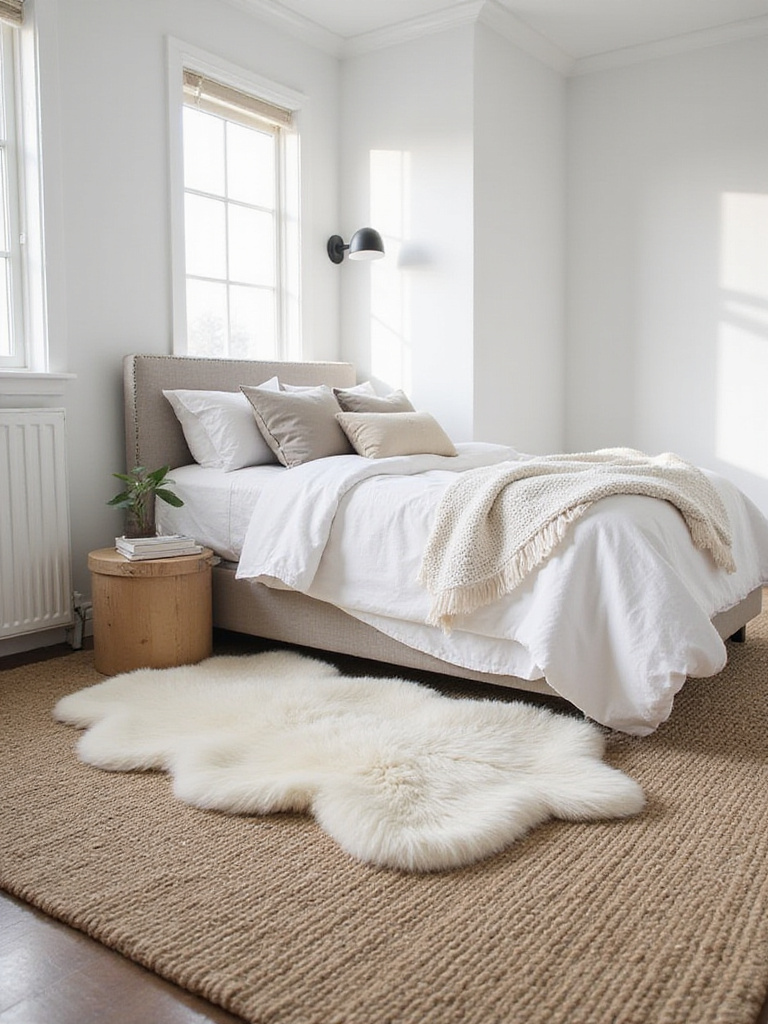
A large, inexpensive jute or sisal rug can cover the majority of the floor, providing a fantastic textural base. Then, you can layer a smaller, more precious piece on top—perhaps a jewel-toned silk rug, a family heirloom, or a faux hide. The contrast in textures is divine. This technique also allows you to use a smaller, more expensive rug that you love without having to splurge on a massive version. It’s both economically savvy and aesthetically brilliant.
This simple act of layering instantly adds a curated, well-travelled depth to your bedroom.
14. Make a Statement with Bold Colour or Pattern
Sometimes, a bedroom needs a jolt of energy, a single piece that commands attention and sets the entire tone. A rug with a bold, saturated colour or a large-scale graphic pattern can be that hero piece. It’s a declaration of confidence and style.
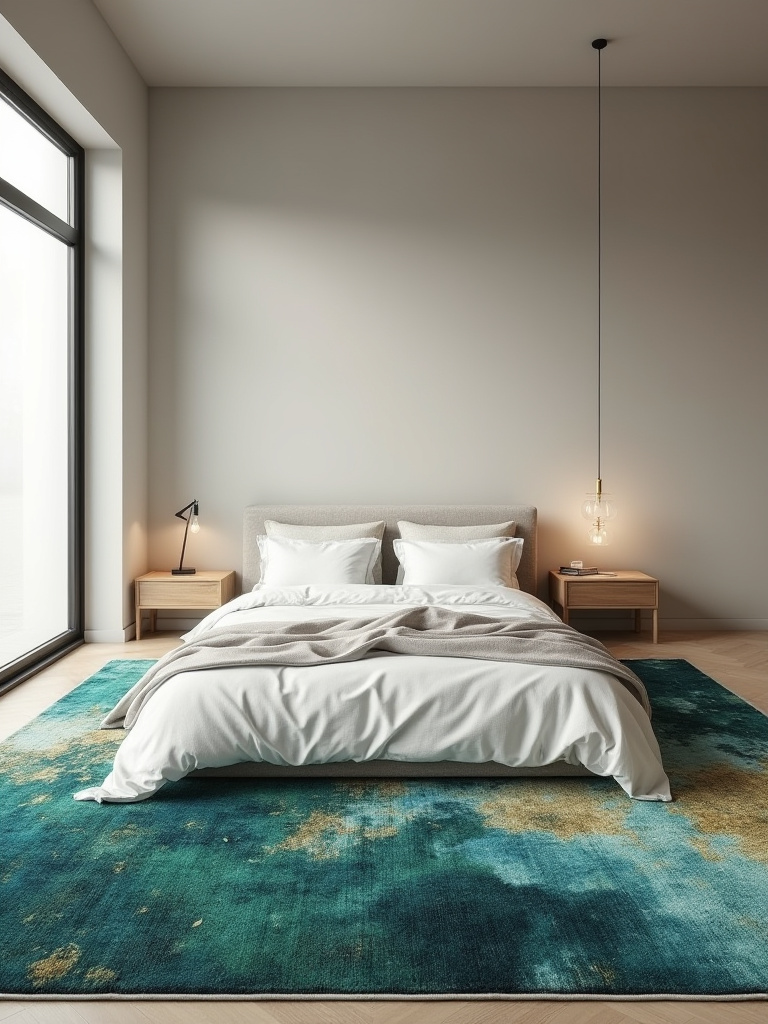
If you choose to go bold with the rug, allow it to be the star. Keep the bedding relatively simple and the walls neutral to avoid a sensory overload. Let the rug do the talking. A deep sapphire blue, a vibrant emerald green, or a dramatic abstract pattern can anchor the room and provide a stunning foundation from which the rest of the decor can spring. I often find that a bold rug can make a room feel larger and more intentional than a collection of quiet, safe choices.
Don’t be afraid to let your floor be the canvas for a major work of art.
15. Improve Acoustics and Create a Quiet Haven
In our noisy world, the bedroom should be a place of quiet refuge. Rugs are one of the most effective tools for sound absorption. Hard surfaces like wood or tile floors reflect sound, creating echo and amplifying noise. A thick, plush rug, especially one made of wool and paired with a dense felt pad, will absorb that sound beautifully.
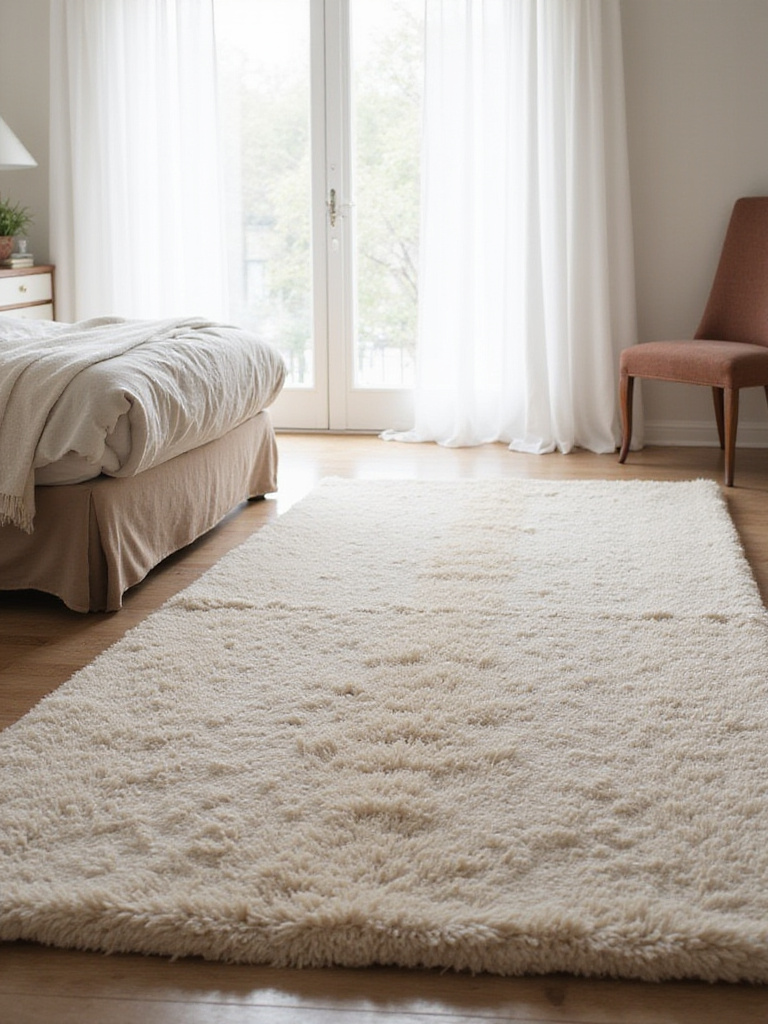
This is especially critical in apartments or homes with rooms below the bedroom. It muffles the sound of footsteps and helps to deaden ambient noise from both inside and outside. The difference in a room’s ambient sound level after adding a substantial rug is not just noticeable; it’s palpable. The space instantly feels calmer, more private, and more conducive to restful sleep.
Using a rug to control sound is a functional benefit that profoundly enhances the feeling of sanctuary in your bedroom.
Elevating Your Bedroom Style with Strategic Rug Enhancements (Part 2)
We are now in the final phase of refinement. This is about the subtle interplay of light, colour, and maintenance—the details that ensure your chosen rug not only looks perfect on day one but continues to bring beauty and harmony to your space for years to come.
16. Coordinate Your Rug with Walls or Furnishings
To achieve a truly cohesive, high-end look, your rug must speak the same language as the other elements in your room. This doesn’t mean it has to match perfectly—in fact, a “matchy-matchy” look can feel dated. Instead, aim for harmony. A multi-tonal rug can be a brilliant unifier, picking up the colour of your walls, your headboard, and your accent cushions.
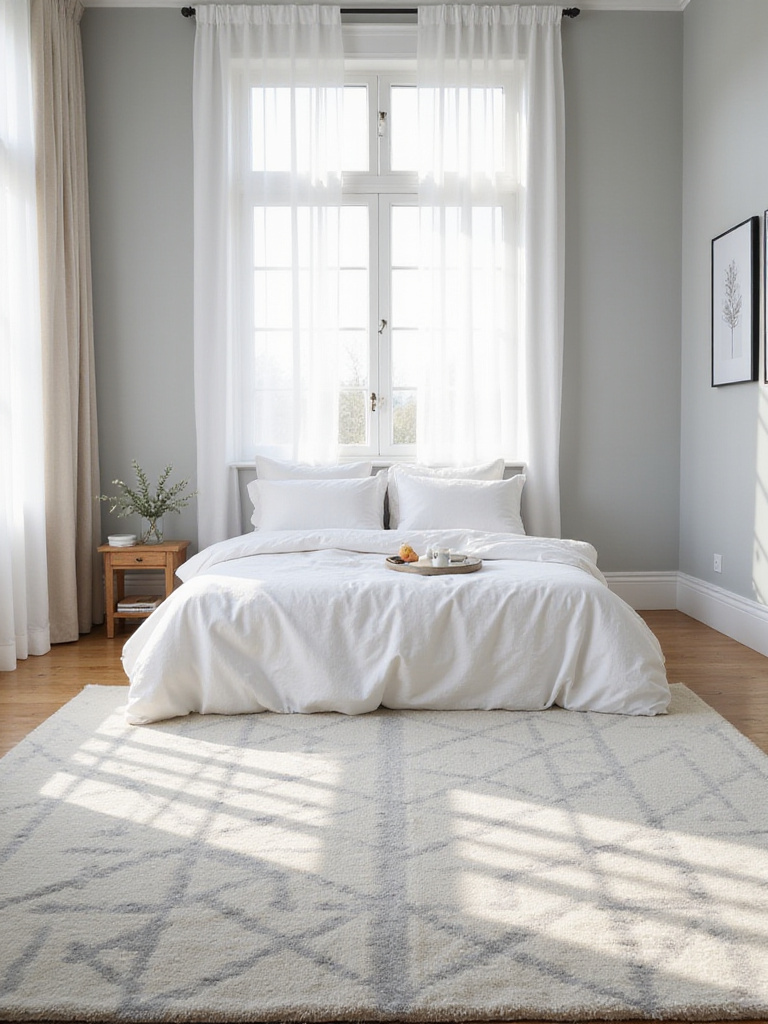
Look at the undertones. If your walls are a cool grey, a rug with warm, yellow-beige tones might clash. Stick to rugs with cool undertones like blue, silver, or lavender. Another sophisticated approach is tone-on-tone: if your walls are a soft cream, choose a rug in a slightly deeper shade of biscuit or taupe. This creates a serene, layered effect that is incredibly elegant and calming.
This thoughtful colour coordination is what elevates a room from simply being decorated to being truly designed.
17. Use Lighter Rugs to Maximise Natural Light
If your bedroom is small or doesn’t get a great deal of natural light, a light-coloured rug is a designer’s secret weapon. Dark floors absorb light, making a room feel smaller and dimmer. A rug in a cream, ivory, soft grey, or pale pastel will do the opposite: it will reflect light around the room, making the entire space feel brighter, bigger, and more airy.
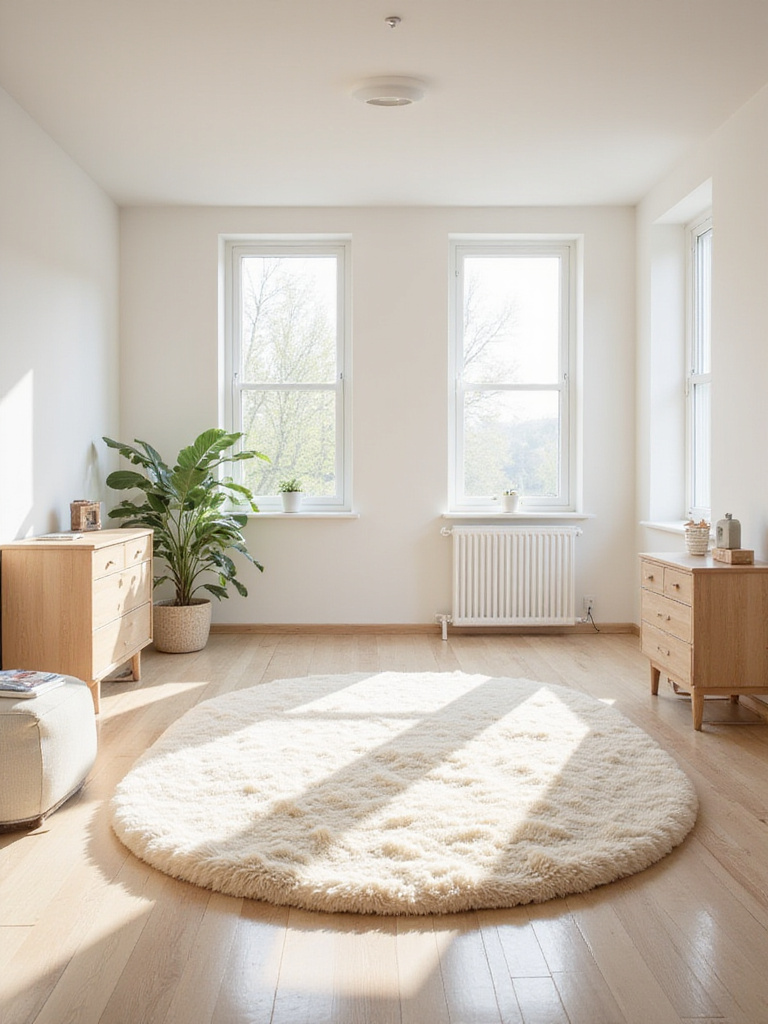
I often use this trick in city apartments where light is a precious commodity. A large, light-coloured rug can single-handedly transform a gloomy room into a bright and uplifting space. Don’t worry about maintenance; many modern rugs, particularly those made from wool blends or advanced synthetics, are surprisingly stain-resistant. The aesthetic benefit of a brighter, more open-feeling room is almost always worth the little extra care.
Let your rug work with the light, not against it, to create an atmosphere of expansive calm.
18. Commit to a Regular Cleaning Schedule
A beautiful rug deserves respect. And that means regular care. This isn’t just about aesthetics; it’s about hygiene and longevity. A consistent cleaning routine prevents the build-up of dust, allergens, and abrasive dirt particles that can damage the fibres over time and impact your indoor air quality. When you own a beautifully crafted rug, you are not just cleaning a floor; you are being a custodian of its story.
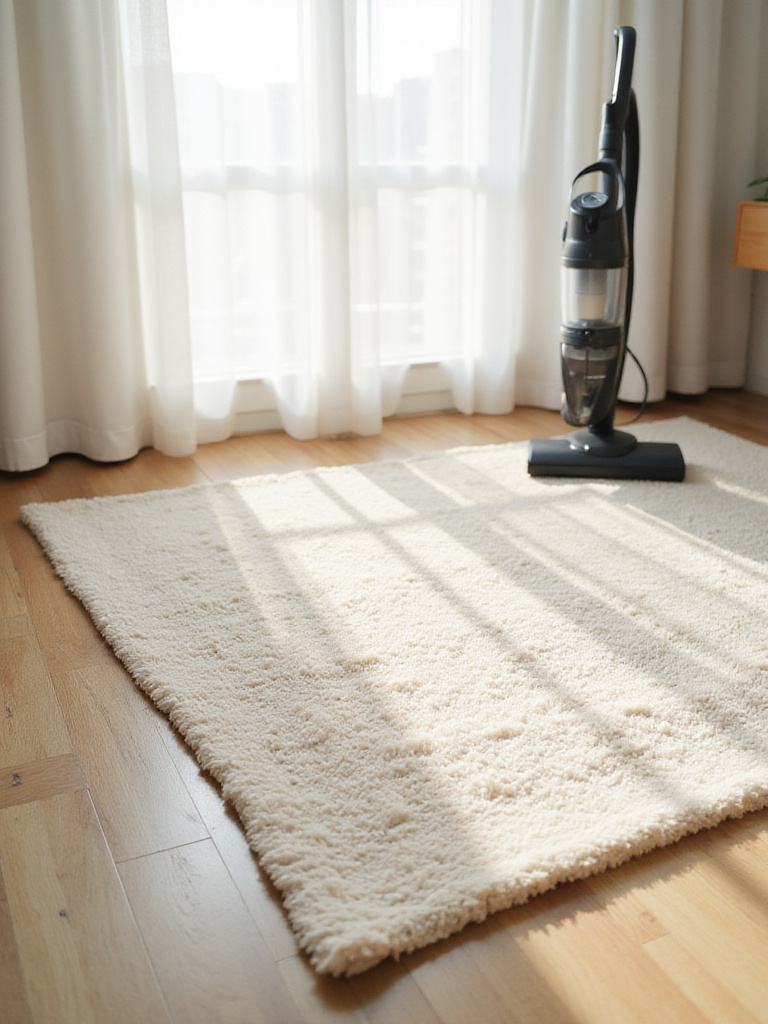
Vacuum at least once a week (without the beater bar on delicate or high-pile rugs). Deal with spills immediately by blotting, never rubbing. And most importantly, have your rug professionally cleaned every 12-18 months. This removes the deep-down grit that vacuums can’t reach and revitalises the fibres. Finally, rotate your rug 180 degrees once a year to ensure even wear and sun exposure. This simple act can add years to its life.
Caring for your rug is the final, essential step in ensuring it remains a beautiful and healthy foundation for your sanctuary for many years to come.
Conclusion
So you see, a rug is never just a rug. It is the narrative thread that weaves together the story of your personal sanctuary. It can be a quiet poem or a bold exclamation, but it must be chosen with intention. From the grand gesture of a room-defining anchor to the subtle whisper of a perfectly layered texture, these ideas are designed to empower you to think beyond the floor and see the potential at your feet.
You now have the insights to choose a piece that not only pleases the eye but also calms the mind and comforts the body. The next step is simply to begin. Look at your room with fresh eyes, consider which of these ideas resonates most deeply with you, and take the first step toward transforming your bedroom from just a room into a retreat that is profoundly, beautifully, and unapologetically yours.