You know what people always ask me about bedroom wallpaper design? It’s always some version of, “Isn’t it… a lot?” They see these incredible rooms online—awash in lush botanicals or sophisticated textures—and they assume it’s some impossibly complex secret known only to designers. They think it’s just about picking a pretty pattern and hoping for the best.
That’s where they get it all wrong. It’s not about slapping a trend on a wall. It’s about creating an atmosphere, a feeling. I’ve seen clients spend a fortune on a breathtaking, hand-printed wallpaper made from sustainable grasscloth, only to have it look flat and lost because they missed the real essentials. The truth is, creating a space that feels like a five-star eco-lodge in Costa Rica mixed with the quiet refinement of a London townhouse is less about the wallpaper itself and more about how you bring it to life. Forget the corporate blogs and forget the noise. I’m going to tell you what actually matters.
Strategic Planning for Your Perfect Bedroom Wallpaper (Part 1)
Before you fall in love with a single pattern, we need to talk strategy. This is the part everyone wants to skip, and it’s the single biggest reason projects fail. Think of this as laying the foundations for a house. You wouldn’t build on sand, so don’t hang expensive paper on an unprepared plan.
Getting this part right means the difference between a room that sings and one that just… hums quietly out of tune. Let’s get the blueprint right so the masterpiece can follow.
1. Assess Room Dimensions & Natural Light for Impact
People love to talk patterns and colors, but the real conversation starts with light. I’ll never forget standing in a client’s flat in London, where the soft, grey northern light made a sample of what she thought was a warm taupe look utterly lifeless and cold. The same paper in my sun-drenched design studio in Brazil would have looked completely different. Your room’s size and, more importantly, its light are the two non-negotiable truths that dictate everything.
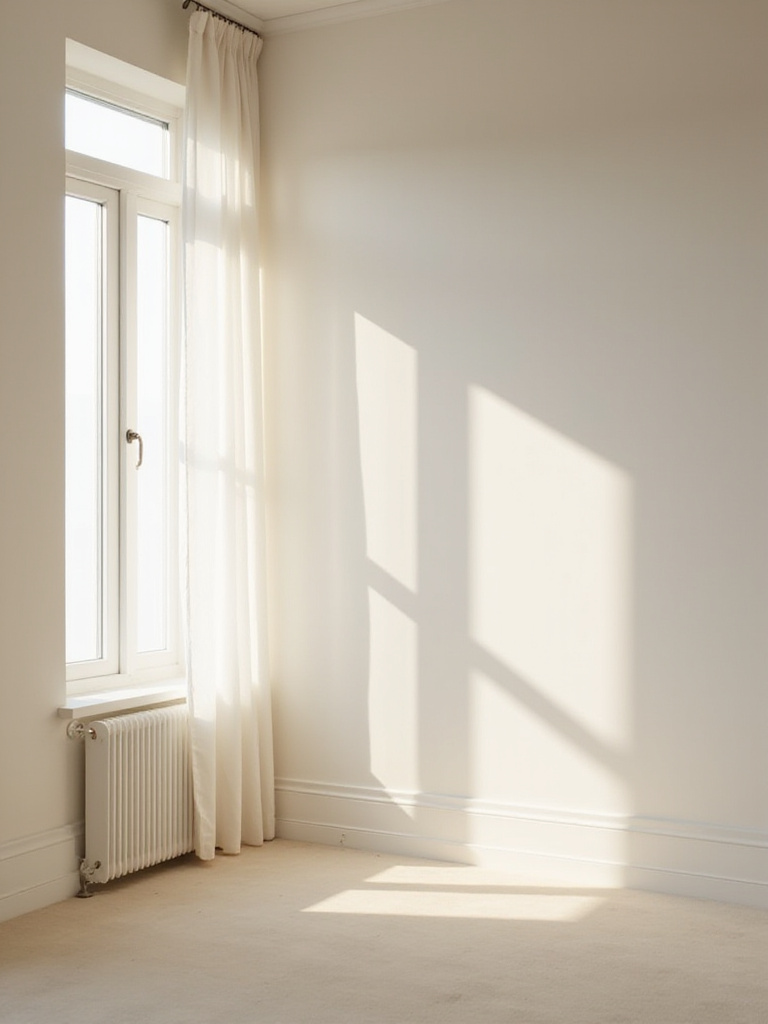
Don’t just measure your walls; observe your room. Spend a day in there. How does the morning light hit the wall behind your bed? What happens in the afternoon? A small, darker room doesn’t mean you can’t go bold, but you might choose a design with a metallic sheen to bounce what little light you have around. A vast, bright room might need a large-scale pattern in a deeper hue to feel less like an empty hall and more like an intimate retreat. This isn’t just measuring; it’s understanding the soul of your space.
Now, with that understanding, you can start making choices that feel authentic and intelligent, rather than just chasing a look you saw on Pinterest. This foundation allows everything else we do to build on solid ground.
2. Define Your Desired Mood & Personal Style Vision
Okay, can we stop talking about “styles” for a second? The real question isn’t whether you’re “bohemian” or “minimalist.” It’s “How do you want to feel when you walk into this room?” Your bedroom is your sanctuary, the one place in the world that is entirely yours. Do you want it to feel like a calm, restorative spa? A vibrant, creative escape? A sexy, dramatic hideaway? The wallpaper is the backdrop for that feeling.
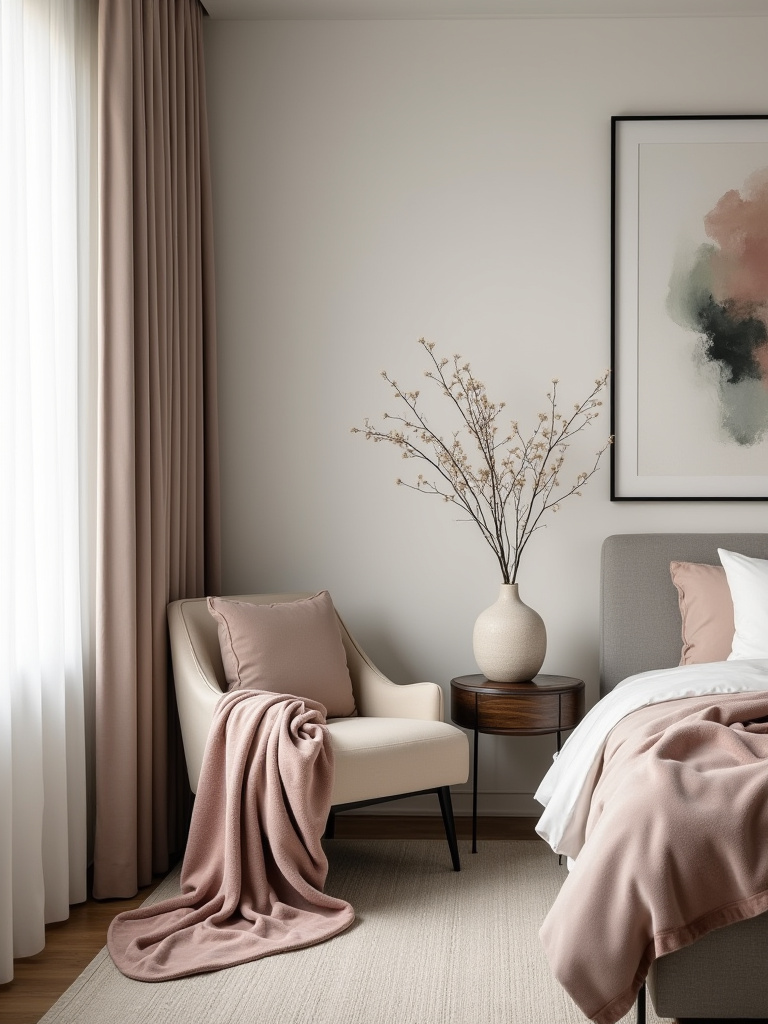
Before you look at a single roll, write down five words that describe your ideal bedroom mood. Serene. Lush. Sophisticated. Grounded. Alive. Now, look at your existing furniture. That heavy, dark wood bed frame you inherited? It speaks a different language than a light, modern rattan chair. The wallpaper you choose needs to be the brilliant translator that makes them all part of the same beautiful conversation. Create a mood board—not just of wallpapers, but of textures, colors from nature, and feelings. This becomes your North Star.
Once you know the feeling you’re chasing, picking the pattern becomes ten times easier. It’s the shortcut to cutting through thousands of options and finding the one that speaks your room’s language.
3. Establish a Realistic Budget Breakdown for Your Project
Let’s talk money, because being sustainable and luxurious also means being smart. Everyone budgets for the wallpaper rolls themselves, but they almost always forget the real costs: professional installation (which is often non-negotiable for high-end papers), wall prep materials like primer, and a crucial contingency fund for the unexpected. A project’s beauty can be instantly ruined by cutting corners on the execution.
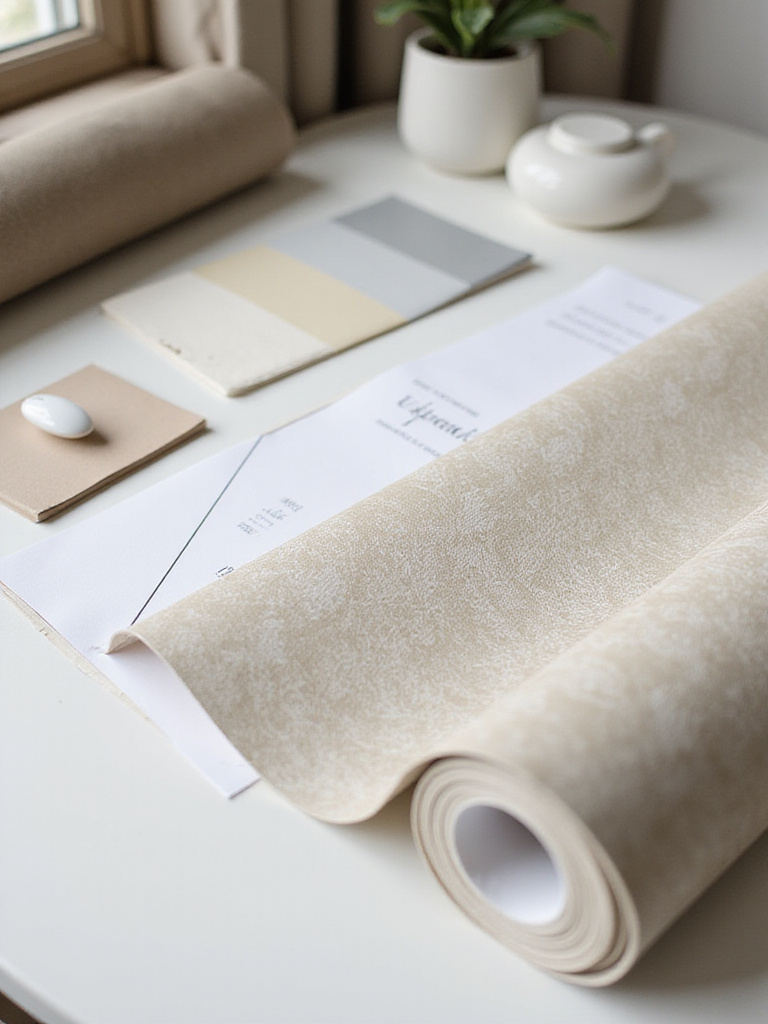
Here’s my shortcut: Expect the cost of professional installation to be roughly equal to the cost of the paper itself. For high-end, textured, or complicated papers, it can be even more. Factoring that in from the start changes the game. It might mean you choose to do a stunning accent wall with an expensive, responsibly-sourced paper instead of four walls in something cheaper that you have to pay to fix later. True luxury isn’t about spending the most; it’s about investing wisely where it has the most impact.
With a real budget in hand, you can make choices from a place of power, not panic. Now, let’s make sure we buy the right amount of that gorgeous paper you’re going to choose.
4. Accurately Measure Walls for Minimal Waste & Perfect Fit
“Measure twice, cut once.” It’s a cliché because it’s true, and I once watched a client lose a thousand pounds because they “eyeballed it” and came up one roll short on a custom-dyed batch of wallpaper. When the new roll arrived, the color was a fraction of a shade off. Barely noticeable to some, but to them? It screamed from the wall forever. Don’t let this be you.
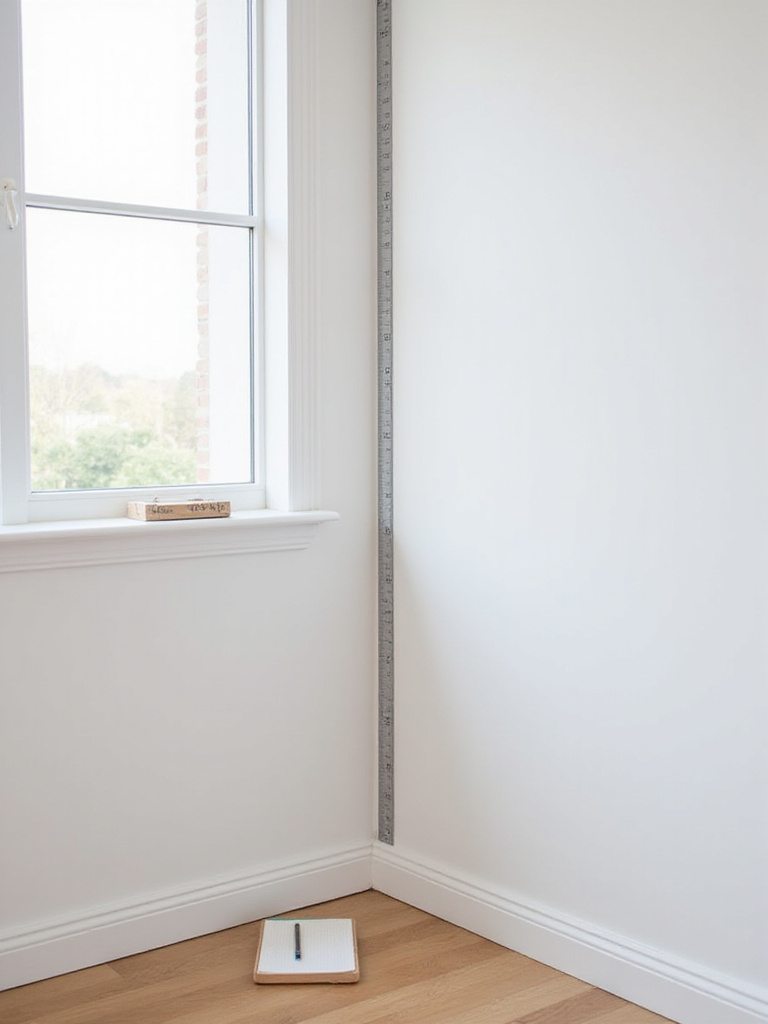
Precision here is non-negotiable. Measure the height and width of each wall. But here’s the part people miss: you have to account for the “pattern repeat.” Look at the wallpaper label; it will tell you how many inches or centimeters it takes for the pattern to repeat. You must add one full repeat to your wall height for every single strip you cut to ensure you can line everything up perfectly. Professionals automatically add 15% to their material order just for this. Do the same. It’s the cheapest insurance policy you’ll ever buy.
This isn’t just about avoiding waste; it’s about respecting the artistry of the paper and the integrity of your design. Let’s move on to making sure that design works with what you already own.
Strategic Planning for Your Perfect Bedroom Wallpaper (Part 2)
We’re moving from the abstract plan to the real world. This is where your vision starts to meet reality. Your bedroom isn’t a blank canvas; it’s a space filled with furniture, memories, and existing decor. The magic happens when the wallpaper doesn’t just coexist with these things but elevates them into a cohesive, intentional design.
5. Integrate Existing Furnishings & Decor Seamlessly
Here’s a piece of BS I hear all the time: “Just pick what you love and it will all work out!” That’s a lovely thought, but it’s a terrible design strategy. A breathtaking tropical print wallpaper is fantastic, but if it’s fighting with your plaid wool curtains and a geometric rug, your bedroom will feel less like a sanctuary and more like a shouting match. Your wallpaper must complement what’s already there.
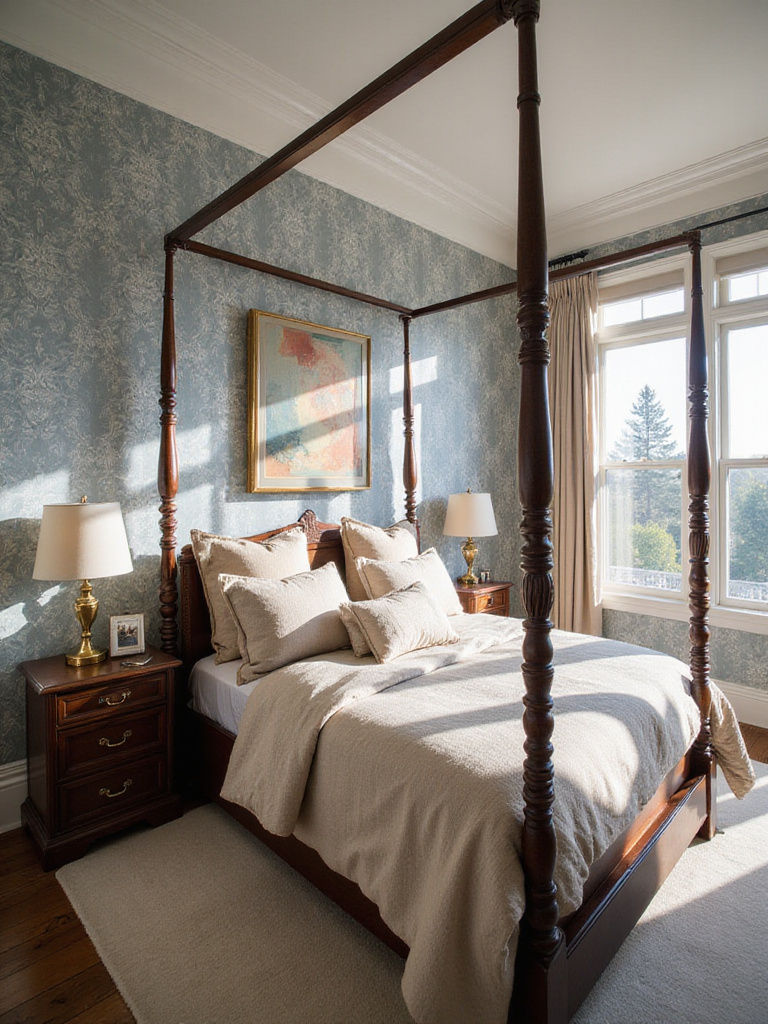
The trick is to find a common thread. Look at your existing furniture and textiles. Find the secondary or tertiary color—that little fleck of gold in your duvet, the warm undertone in your oak dresser—and look for a wallpaper that picks up on that. It creates a subtle, sophisticated harmony that feels intentional and custom. A great wallpaper makes your existing pieces look even better, like they were all chosen together.
When this is done right, the result is pure alchemy. It’s the secret to a room that feels curated over time, not decorated in a weekend.
Choosing Your Perfect Wallpaper: Patterns, Colors & Materials (Part 1)
Now for the fun part. With our strategic foundation in place, we can finally dive into the glorious world of patterns, colors, and textures. This is where your personal aesthetic gets to shine, but we’re going to make these choices with intelligence and purpose, not just on a whim.
6. Master Pattern Scale for Room Harmony & Balance
The number one mistake I see amateurs make is getting the scale wrong. They’ll put a tiny, busy, intricate pattern in a huge, grand room, where it just dissolves into a visual hum. Or worse, they’ll put a massive, bold, graphic print in a tiny room, and it feels like the walls are closing in. The scale of the pattern needs to be in conversation with the scale of your room.
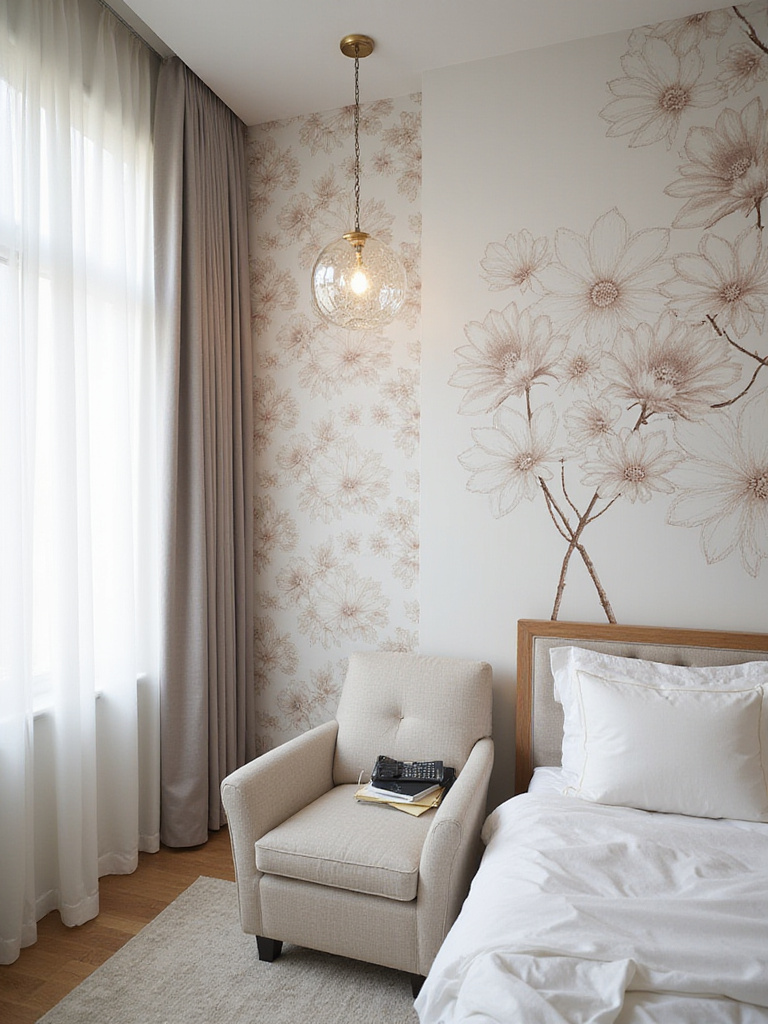
Here’s the shortcut: Large, spacious rooms can handle and often demand large-scale patterns. Think massive banana leaves, oversized florals, or bold architectural geometrics. These patterns have room to breathe and make a confident statement. For smaller, more intimate spaces, a smaller-scale pattern adds texture and interest without overwhelming your eye. Vertical stripes, for example, can be a small room’s best friend, drawing the eye upward and creating an illusion of height. Always get a large sample and see how it feels in your actual space.
Mastering scale is what separates a designer’s touch from a DIY guess. It’s an intuitive skill you build by observing and testing.
7. Leverage Color Psychology for Bedroom Serenity & Calm
Color isn’t just decoration; it’s a feeling. Your bedroom is where you begin and end your day, and the colors on your walls have a tangible effect on your mood and even your sleep quality. This isn’t just new-age talk; it’s science. Blues are known to lower blood pressure, while greens connect us to the calming, restorative feeling of being in nature.
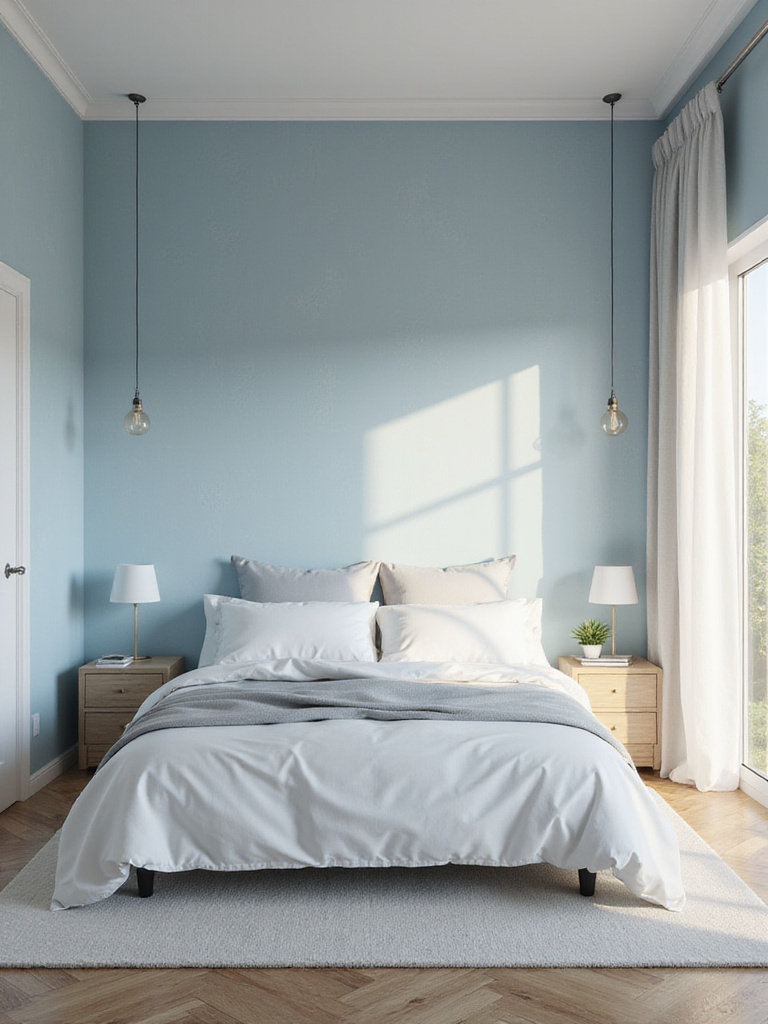
But don’t just pick “blue” or “green.” Think about the nuance. A vibrant, electric blue creates a very different energy than a soft, dusky, grey-blue. For a truly serene bedroom, look for muted, desaturated tones—colors that feel like they’ve been filtered through a gentle haze. Think sage green, pale terracotta, dusty rose, or the color of the sea on a cloudy day. These colors are complex and sophisticated, and they create a perfect backdrop for rest.
This is about crafting an environment that actively supports your well-being. Your walls can either be passive bystanders or active participants in your daily restoration. Choose wisely.
8. Explore Textural Wallpapers for Added Depth and Interest
If you want to instantly elevate your bedroom to a level of true luxury, forget flat patterns for a moment and embrace texture. This is my secret weapon. Running your hand over a wall covered in grasscloth, raw silk, cork, or even an embossed paper adds a sensory dimension that changes everything. It’s the difference between looking at a picture of a forest and actually being in one.
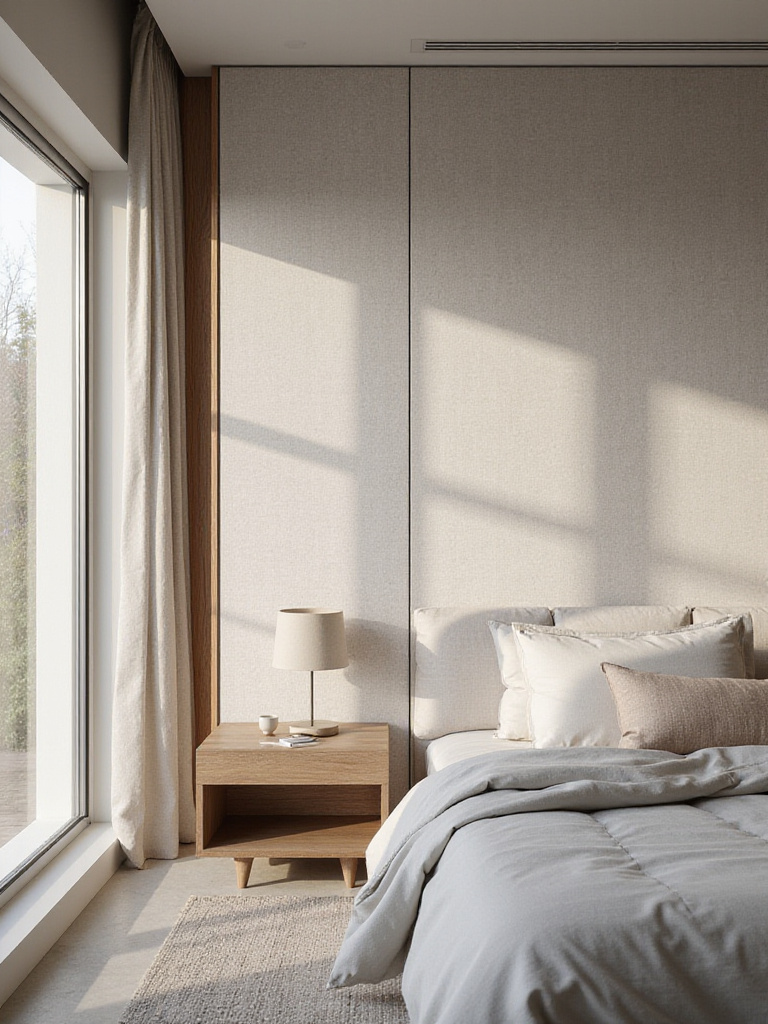
Textured wallpapers absorb light differently than flat ones, creating subtle shifts in shadow and highlight throughout the day. A simple grasscloth can make a room feel warmer, quieter, and infinitely more sophisticated. I love using these materials because they connect a space back to the natural world. They feel organic and alive. It’s a quiet luxury, one that you feel as much as you see.
This is how you add soul to a room. A flat, printed wall is a statement; a textured wall is an experience. It invites you to touch, to feel, to connect with your surroundings on a deeper level.
9. Differentiate Wallpaper Types for Durability & Ease of Use
This might sound a bit technical, but trust me, it’s critical. All wallpaper is not created equal. The material it’s made from dictates how easy it is to hang, how durable it is, and—crucially—how easy it will be to remove one day. Most of what you see is noise, so let me give you the essential breakdown.

The one you want to look for is Non-Woven. This is the modern standard for high-quality papers. It’s made from a blend of natural and synthetic fibers, which means it’s breathable (good for preventing mildew), tear-resistant, and—here’s the magic part—it’s ‘paste-the-wall.’ You apply the paste directly to the wall, not the paper, which makes installation infinitely cleaner and easier. It also strips off in a single sheet when you’re ready for a change. For bathrooms or kids’ rooms, Vinyl is a workhorse—scrubbable and tough. But for the bedroom, the quality and feel of a non-woven paper is almost always the right choice.
Don’t get seduced by a pretty pattern on a cheap, old-school paper backing. You will pay for it later in frustration, I promise. Prioritizing a quality material is a sustainable choice that respects both your time and your walls.
Choosing Your Perfect Wallpaper: Patterns, Colors & Materials (Part 2)
We’ve covered the fundamentals. Now we’re getting into the refined details that make a good project truly great. This is about making a final commitment and ensuring that what you’ve envisioned translates perfectly from a small sample to a full, glorious wall.
10. Always Sample Wallpaper in Your Space’s Lighting
I’m going to say this again because it is the most important rule: Never, ever, under any circumstances, choose a wallpaper from a tiny sample in a store or from a picture on your laptop. You are designing for your space, with your light. I insist my clients buy the largest sample available—at least two feet by two feet—and live with it for a few days.
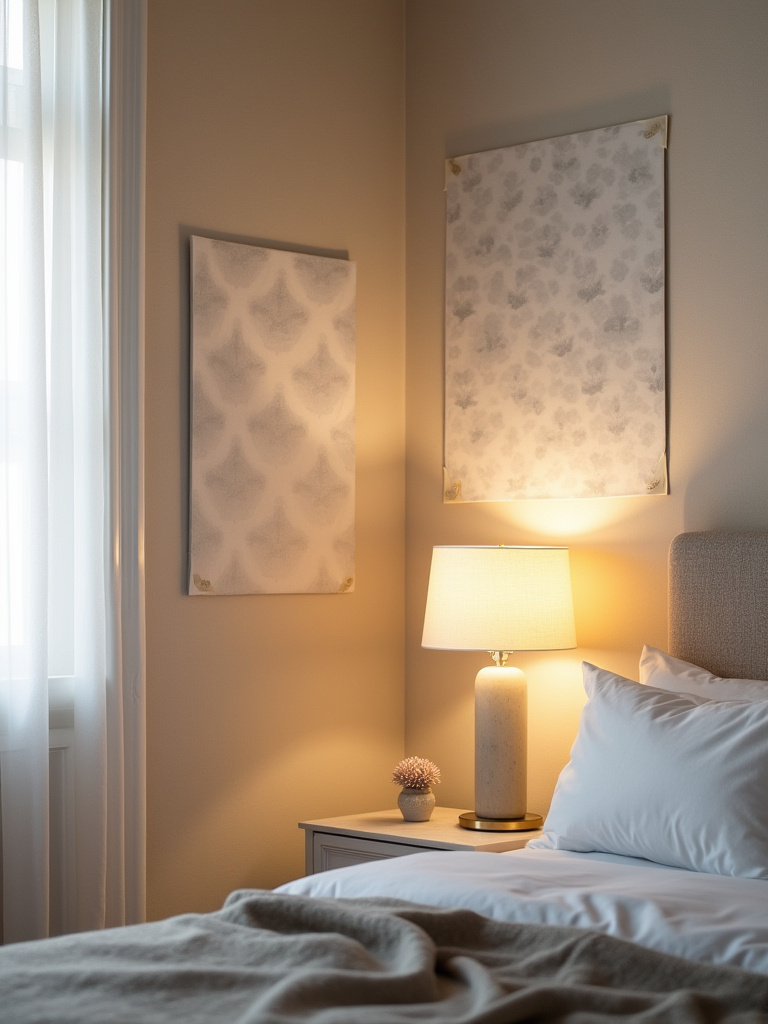
Tape it to the wall you plan to cover. Watch it in the morning, at noon, and at night with the lamps on. How does the color shift? Does the metallic thread you loved in the store create a distracting glare with your bedside lamp? A client of mine fell in love with a deep charcoal grey, but when she sampled it, she realized that in her low-light bedroom, it just looked black. We pivoted to a slightly lighter grey with a subtle texture, and it was perfect. That little test saved her from a very expensive, moody mistake.
This step removes the guesswork and replaces it with certainty. It’s the final check before you commit, and it’s the one that ensures you’ll love the result.
11. Design a Strategic Accent Wall for a Powerful Statement
If the thought of covering all four walls in a bold pattern feels intimidating, then the accent wall is your new best friend. This isn’t a design cop-out; it’s a powerful, strategic move. By focusing all that pattern and energy onto a single surface—typically the wall behind your bed—you create a stunning focal point without overwhelming the serene feeling of the room.
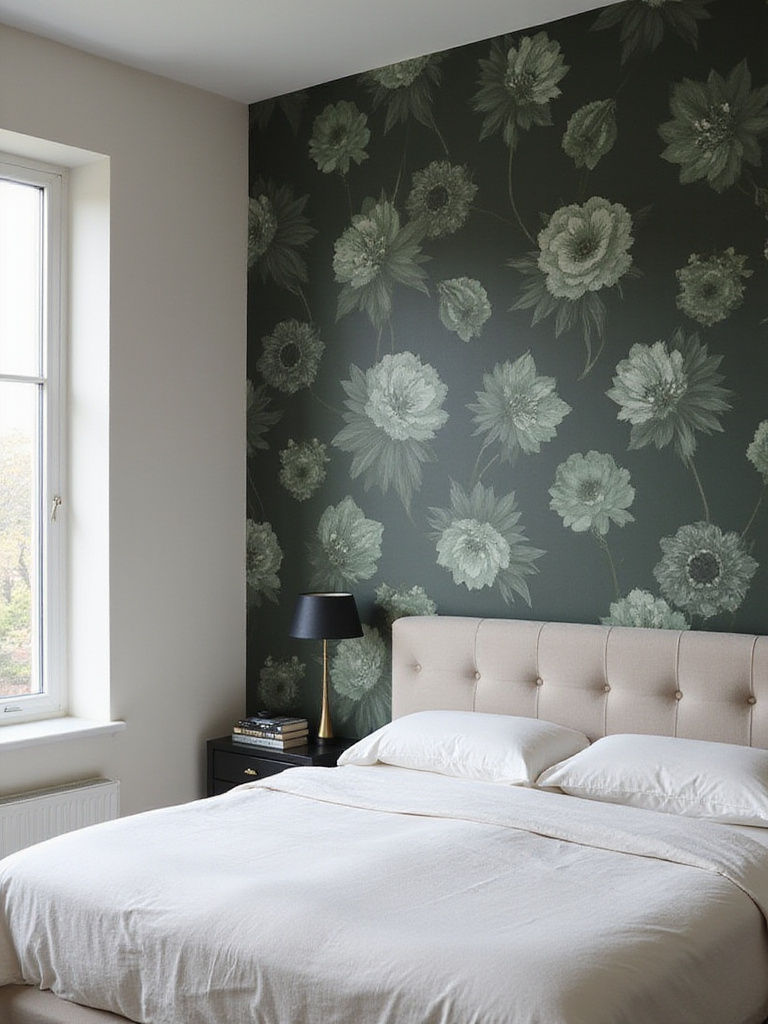
“An accent wall acts like a piece of large-scale art. It anchors the room, gives it a clear center of gravity, and allows you to be much bolder than you might otherwise be.”
Think of it as the best of both worlds. You get the drama, the color, and the personality of a wild tropical print or a sophisticated mural, but the other three walls can remain a calm, quiet color. This balances the energy perfectly, creating a space that is both exciting and restful. It’s also a brilliant budget-friendly strategy, allowing you to splurge on a truly spectacular paper for one wall that will have more impact than a less expensive paper on all four.
It’s the perfect fusion of British restraint and Latin American vibrancy—a single, powerful gesture that says everything it needs to say.
Achieving Flawless Installation & Seamless Integration (Part 1)
This is where the vision becomes reality. The success of all your planning hinges on flawless execution. You can have the most beautiful, sustainable wallpaper in the world, but if it’s hung poorly, with peeling seams and visible bubbles, the magic is lost.
12. Thoroughly Prepare Walls for Optimal Adhesion & Smoothness
You can’t put a silk shirt on over a muddy body. It’s the same with wallpaper. Applying beautiful paper over a wall that’s dusty, lumpy, or greasy is a recipe for disaster. The paper will bubble, seams will lift, and every tiny imperfection underneath will be magnified tenfold. Wall preparation is the tedious, unglamorous work that ensures a glamorous result.
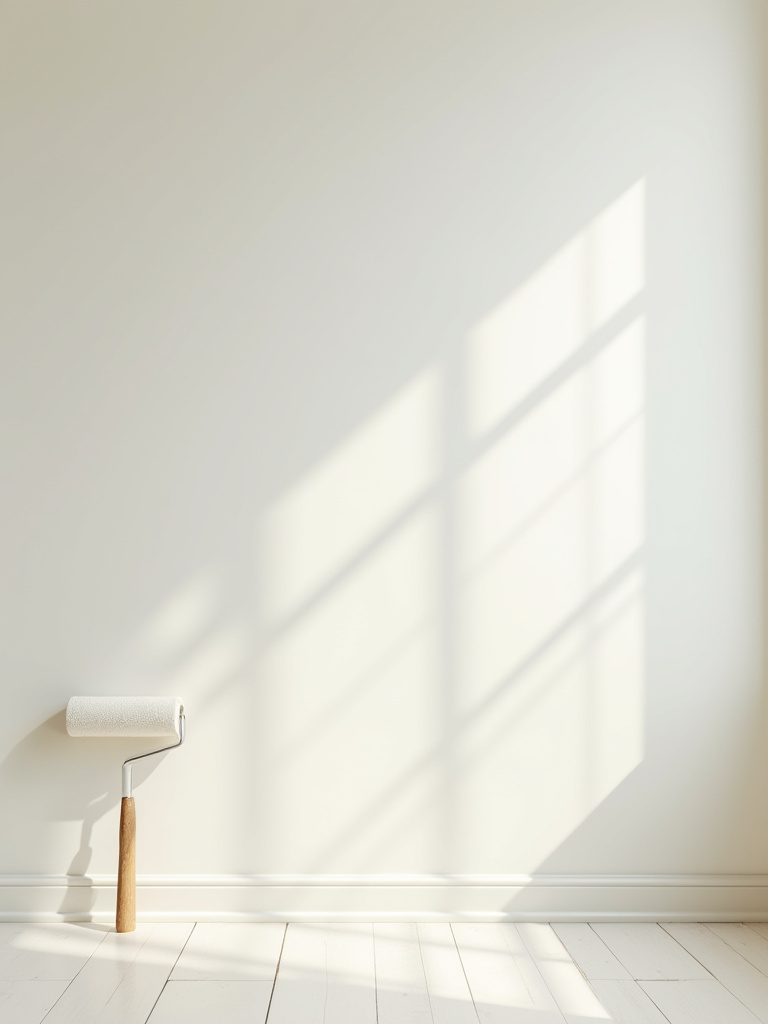
At a minimum, you must wash the walls with a special sugar soap solution to remove any residue, fill and sand any cracks or holes until the surface is glassy smooth, and then—this is the step everyone skips—apply a dedicated wallpaper primer, often called “sizing.” This does two things: it seals the wall so the paste doesn’t just get absorbed, and it creates the perfect surface for the paper to grip onto. It also makes removal much, much easier down the line.
Respect the process. Giving your walls this time and attention is a sign of respect for the beautiful materials you’re about to apply.
13. Gather the Essential Tools for a Smooth Installation Process
Please, for the love of all things beautiful, do not try to hang wallpaper with your kitchen scissors and a credit card. Using the wrong tools is the fastest way to tear expensive paper, create bubbles, and end up with a mess. Assembling a proper, dedicated toolkit is a small investment that pays massive dividends in the quality of your finish.
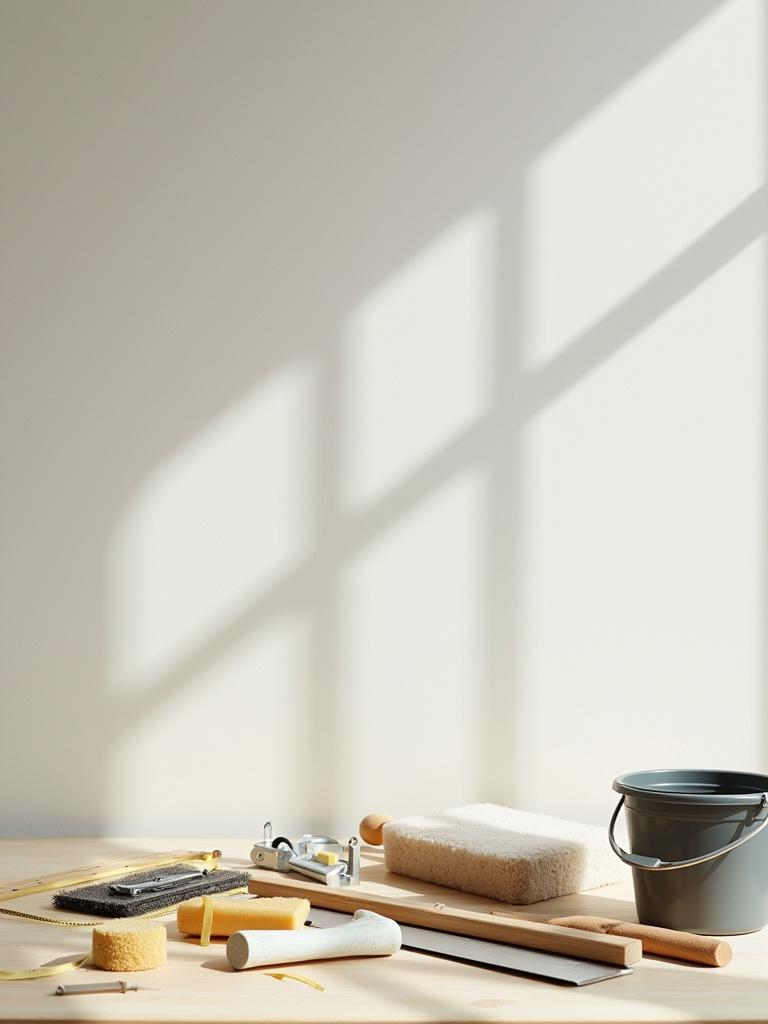
You don’t need a lot, but what you need has to be right. The non-negotiables are: a sharp utility knife with plenty of snap-off blades (a sharp blade is everything!), a wallpaper smoothing brush (not a plastic scraper, which can damage delicate papers), a seam roller, a plumb bob or a laser level to get your first strip perfectly straight, and a pasting table if you’re not using paste-the-wall paper.
Think of it like cooking. A great chef needs great knives. A great wallpaper installation requires great tools. It’s about doing the job with precision and care.
14. Understand Pattern Match & Repeats for Professional Seams
Remember when we talked about the “pattern repeat” during the measuring phase? This is where that knowledge becomes critical. If your wallpaper has a pattern—anything other than a solid color or simple texture—you have to match it from one strip to the next. Failing to do this is what makes a wallpaper job scream “amateur.”
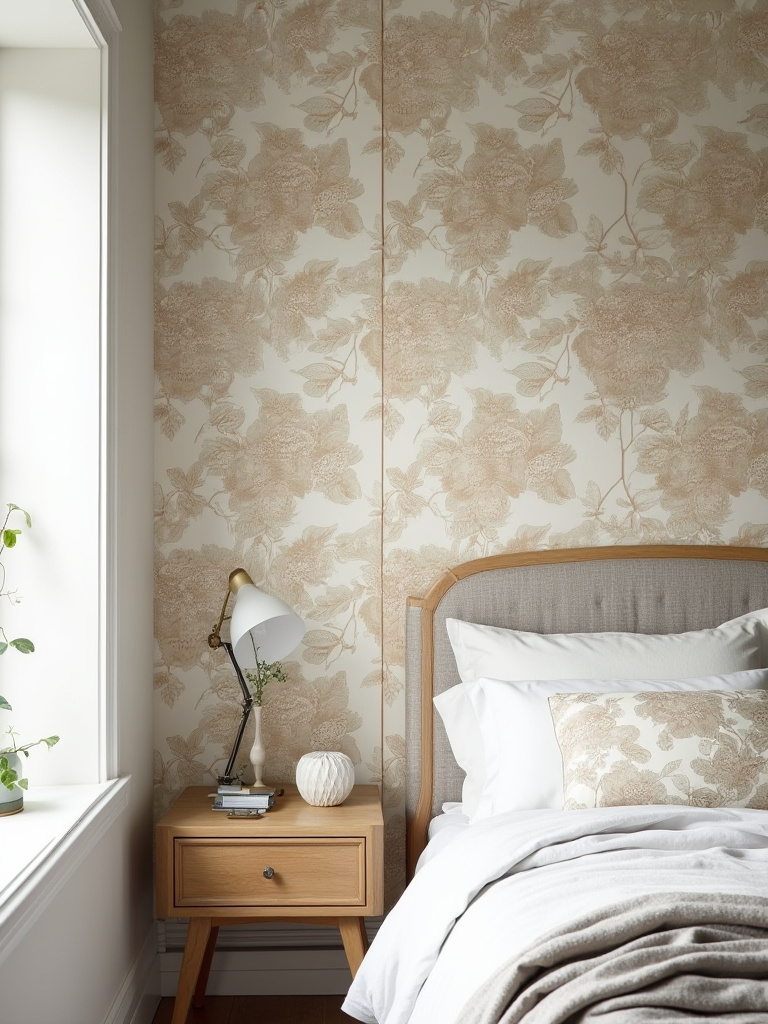
Lay two strips side-by-side on the floor before you hang them to see exactly how they line up. For a “straight match,” the pattern aligns directly across. For a “drop match,” you’ll have to slide the second strip down, usually by half the height of the repeat, to get it to lock in. This sounds complicated, but it’s just a puzzle. Take your time. It’s incredibly satisfying when you get it right and the seam between two strips becomes virtually invisible.
This is the artistry of paper hanging. It’s a methodical, calming process that, when done with care, results in a seamless, flowing wall of pattern that looks like a single piece of fabric.
15. Master the Technique of Edge Trimming & Bubble Smoothing
The final moments of hanging each strip are what define its professional look. After you’ve gently smoothed the paper from the center outwards with your brush, you’ll have excess at the ceiling and baseboard. The trick to a perfect cut is to use a wide putty knife as a guide. Press it firmly into the crease, and then run your ultra-sharp utility knife along it in one smooth, confident motion. One strip, one new blade. That’s the rule. A dull blade will snag and tear the wet paper.
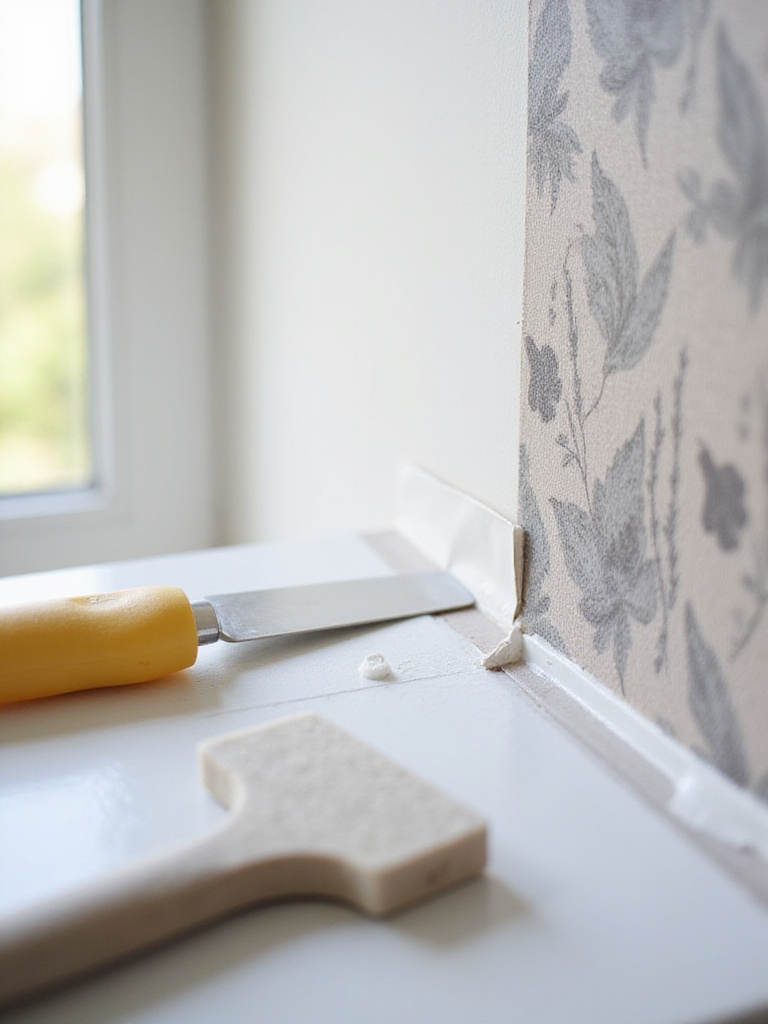
For smoothing, the goal is to work all air from the center out to the edges. Don’t press too hard, especially on textured or delicate papers. Let the brush do the work. If you find a stubborn bubble, you can sometimes prick it with a pin and gently smooth the air out. After you hang two or three strips, stand back. Look at your work from a distance to spot any imperfections before the paste dries.
These finishing touches are the difference between “I did it myself” and “Who was your installer?” It’s all in the details.
Achieving Flawless Installation & Seamless Integration (Part 2)
There are moments when passion and enthusiasm for a project need to be paired with the wisdom of knowing your limits. True luxury is not just about beautiful materials; it’s about a flawless finish, and sometimes that means calling in a professional.
16. Know When to Entrust Installation to Experienced Professionals
I’m all for the spirit of DIY, but let me be direct: some wallpapers are not DIY jobs. Period. If you have invested in a very expensive paper—like hand-painted silk, delicate grasscloth, a complex mural, or anything with metallic foil—hire a professional paperhanger. You are not saving money by attempting it yourself; you are risking your entire investment. These materials are unforgiving, and one mistake can ruin a whole panel.
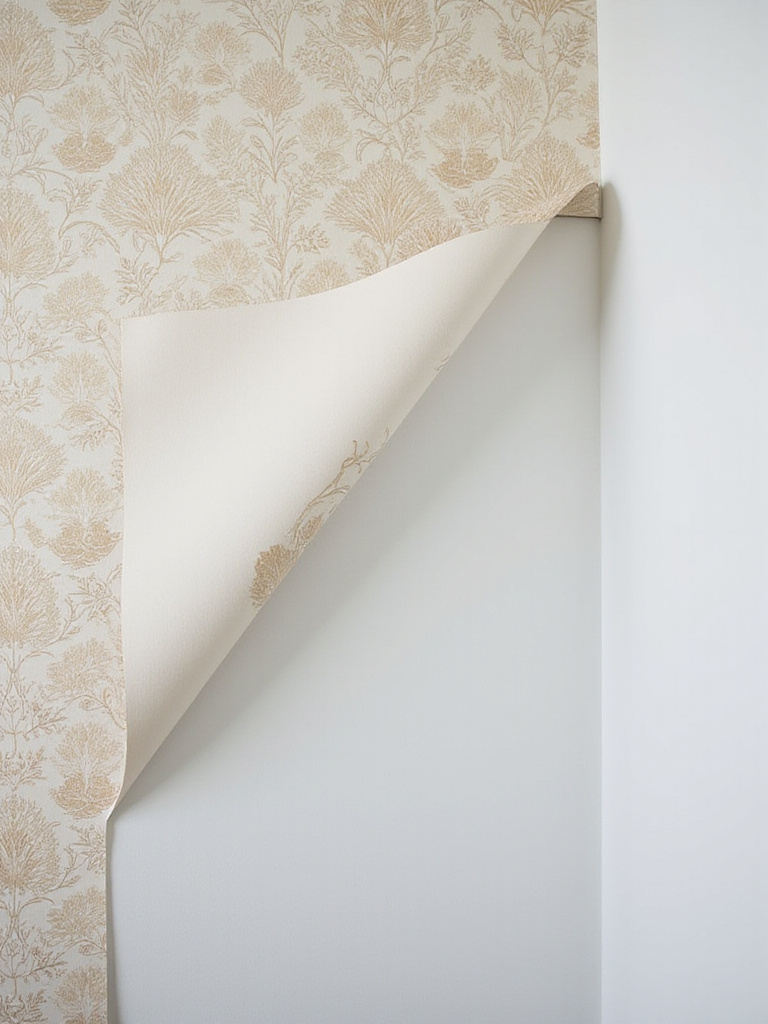
Professionals aren’t just faster; they have years of experience dealing with tricky corners, uneven walls, and delicate materials. They know how to prep, how to handle the paper without damaging it, and how to make seams completely vanish. My rule of thumb? If the cost of a single roll makes you nervous, you need a professional. The peace of mind is worth every single penny.
Think of it this way: you wouldn’t tailor a couture suit yourself. Give your walls the same respect. It’s the smart, sustainable choice to ensure a perfect, lasting result the first time.
Enhancing & Maintaining Your Wallpaper Masterpiece
The wallpaper is on the wall, and it looks spectacular. But the work isn’t done. Now, we curate the rest of the room to elevate that wallpaper from a background feature to the star of a complete, cohesive design. Then, we protect that investment with proper care.
17. Harmonize Wallpaper with Complementary Textiles & Decor
Your wallpaper is the leading actor, but it needs a brilliant supporting cast. This is where you bring in textiles and decor that speak the same design language. Look at your wallpaper and pull out two or three of its accent colors. Use those colors for your throw pillows, your bedding, a vase on the nightstand, or the frame on a piece of art.
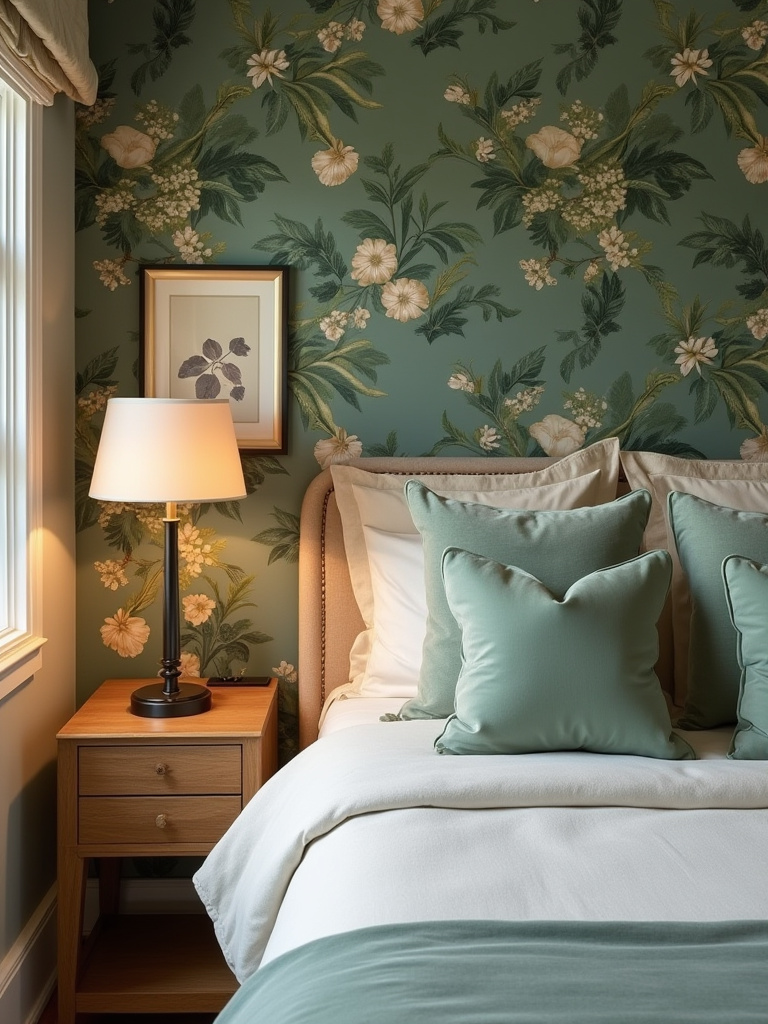
Layering is key. If your wallpaper has a busy, organic pattern, choose solid-colored textiles in rich textures like velvet or linen. If your wallpaper is a simple, calming texture like grasscloth, you can afford to bring in more pattern in your rug or curtains. This creates a beautiful balance of visual interest. It’s a dance between pattern and texture, color and calm.
This is how a room develops depth and character. Each element should feel like it was chosen for the others, creating a harmonious ecosystem where every piece plays its part perfectly.
18. Utilize Lighting to Spotlight Wallpaper’s Unique Qualities
You can have the most incredible textured or metallic wallpaper, but if you light it with a single, harsh overhead bulb, its unique qualities will be completely lost. Lighting is the final, magical ingredient. It’s what brings your walls to life, especially at night.
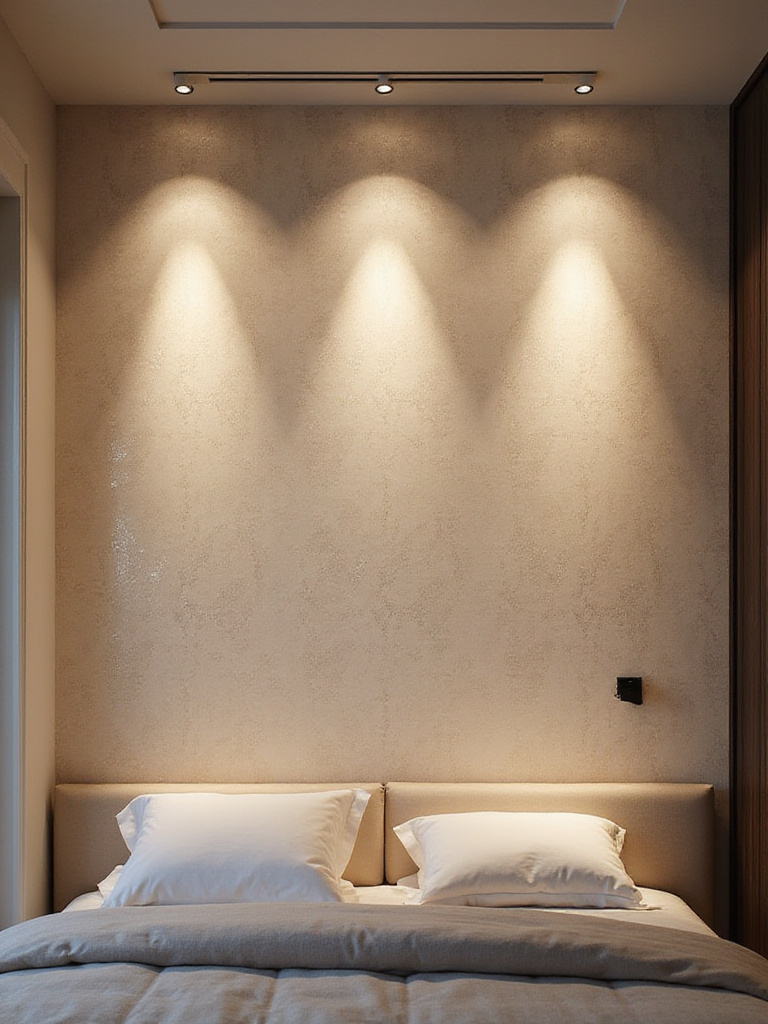
For textured papers, the secret is “wall grazing.” This is where you place lights—like recessed spotlights or a picture light—close to the wall so the light skims down the surface, creating beautiful tiny shadows that accentuate the texture. It’s incredibly dramatic and sophisticated. For metallic wallpapers, you want softer, more diffuse light from shaded lamps to create a warm, shimmering glow rather than a harsh glare. Always use dimmers, so you can adjust the mood from bright and functional to soft and romantic.
Good lighting doesn’t just illuminate your wallpaper; it celebrates it. It turns a beautiful wall into a dynamic, living piece of your home’s architecture.
19. Implement Proper Cleaning & Maintenance Routines for Longevity
Think of your wallpaper like a fine cashmere sweater. It’s beautiful and luxurious, but you wouldn’t throw it in the wash with your jeans. Gentle, regular maintenance is the key to keeping your wallpaper looking pristine for years, protecting your investment and the beauty of your space. The number one thing you can do is regular, gentle dusting with a soft microfiber cloth or a feather duster. This prevents the slow buildup of grime that can dull the colors over time.
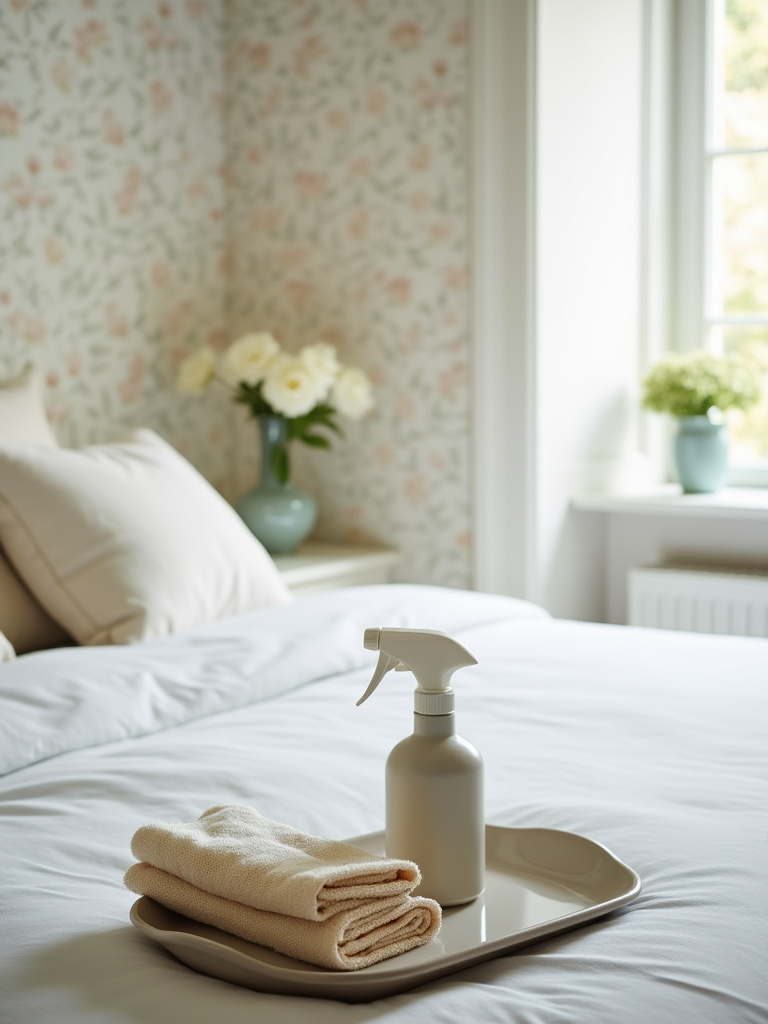
For any spots or spills, act immediately. Check the wallpaper’s instructions—if it’s “washable” or “scrubbable” (like a vinyl), you can use a slightly damp sponge with a tiny drop of mild dish soap. Blot, never rub. For delicate, non-washable papers like grasscloth or silk, you’re better off calling a professional cleaner. And please, avoid all harsh chemical cleaners; they can strip the color right off the paper.
This isn’t about obsessive cleaning. It’s about mindful care. By treating your walls with respect, you ensure they remain the beautiful heart of your sanctuary for a long, long time.
20. Avoid Common Pitfalls for Lasting Aesthetic Appeal & Integrity
We’ve covered a lot, so let’s end with the vital cheatsheet. Avoiding these common mistakes is 90% of the battle. If you remember nothing else, remember this:
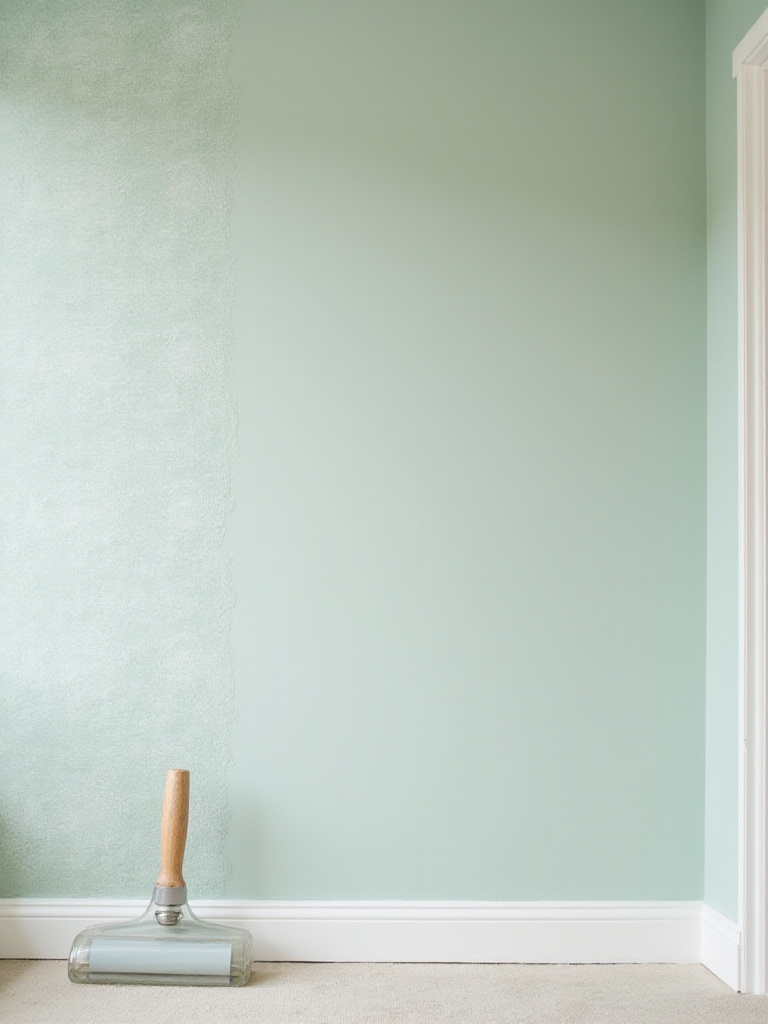
First, prepare your walls religiously. Clean, smooth, and prime. No exceptions. Second, buy more paper than you think you need. That extra 15% for pattern repeats and mistakes is your safety net. Third, always use a fresh, sharp blade for every few cuts. And finally, respect your limits. If you’re using an expensive, delicate paper, hire a pro. Rushing the process or cutting corners is the surest path to regret.
Wallpaper isn’t just a product; it’s a process. By embracing each step with care and intention—from planning and prep to the final, loving maintenance—you’re not just decorating a room. You are mindfully crafting a personal sanctuary that will restore and inspire you every single day. That is the real power of beautiful design.
Conclusion
So, is wallpaper “a lot”? Yes. It’s a lot of intention, a lot of personality, and a lot of impact. But it doesn’t have to be a lot of hassle. As you can see, the journey to a transformed bedroom is a series of deliberate, thoughtful steps. It’s about understanding light and mood before you even think about pattern. It’s about choosing sustainable, quality materials and giving them the flawless installation they deserve. More than just covering a wall, this is about curating an experience—a space that truly supports your well-being. This is how you create a home that is not only beautiful but also deeply, authentically yours. Now go create your sanctuary.