Can we talk for a moment about why so many “modern” kitchens feel completely devoid of a soul? I see it all the time. Endless glossy white boxes, sterile surfaces, and an atmosphere that feels more like a laboratory than the heart of a home. Everyone is chasing this minimalist ideal, but they’ve confused “minimalism” with “emptiness.” And the result is a space that feels cold, impersonal, and frankly, a bit forgettable. It’s a huge missed opportunity.
The secret everyone else seems to be missing is that contemporary design isn’t about stripping away personality; it’s about creating a beautiful, uncluttered canvas where your personality can truly shine. I once had a client who was terrified of losing her vibrant Indian heritage in a modern British home. She thought she had to choose between clean lines and the rich colours and textures she grew up with. I told her that was absolute nonsense. The most beautiful spaces are born from that exact tension—the blend of old and new, sleek and soulful.
So let me show you how to do it. Forget the sterile white boxes. We’re going to create a space that feels sophisticated, modern, and deeply, authentically you. It’s about being intentional. It’s about texture. And it’s about telling your story.
Laying the Groundwork: Core Principles of Contemporary Kitchen Decor
Before we even think about fixtures or finishes, we have to get the foundation right. This is about establishing a sense of calm and flow. Think of it as creating the perfect stage—once it’s set, the beautiful details we add later will have so much more impact. It’s the quiet part, but it’s the most important.
1. Select a Minimalist Color Palette for Serene Sophistication
Let’s be clear: a minimalist palette doesn’t have to mean clinical white. Instead of thinking of paint swatches, think of natural materials. Picture the warm, chalky whites of Rajasthani limestone, the soft, earthy greys of a monsoon sky, or the deep charcoal of burnished wood. These neutrals have an inherent depth and warmth. They create a serene backdrop that feels grounded and timeless, allowing the true stars of your kitchen—the textures, the craftsmanship, the light—to take centre stage. It’s about creating a whisper, not a shout.
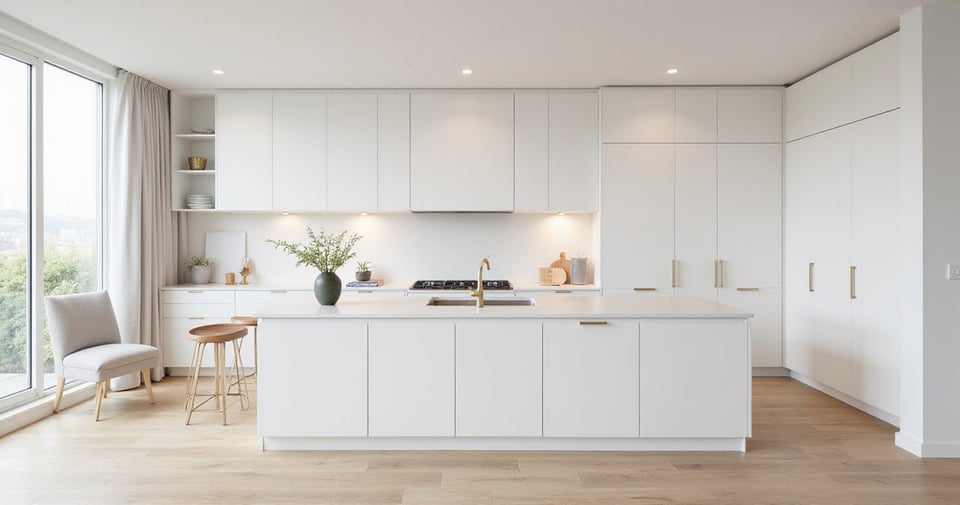
A space grounded in a palette like this instantly feels more expansive and calm. When you remove the visual noise of too many competing colours, the quality of your design speaks for itself. It’s a philosophy I learned from studying traditional South Asian architecture, where the simple, elegant forms of the buildings were brought to life by the play of light on plaster and stone. The real beauty was in the material itself. A client of mine used a soft, troweled plaster finish on her walls in a warm beige, and the kitchen was instantly transformed. It felt modern, yes, but also ancient and incredibly soothing.
This calm canvas then becomes the perfect foundation for introducing seamless materials that create a sense of elegant flow.
2. Embrace Sleek, Integrated Materials for Seamless Transitions
The soul of contemporary design lives in its seamlessness—the way one surface flows into the next without interruption. Imagine a countertop that waterfalls elegantly down the side of an island, or a backsplash made from the very same slab of stone, creating a single, monolithic piece of art. This isn’t just a design trick; it creates a profound sense of calm and luxury. When you eliminate the visual clutter of seams and joints, the eye can travel freely, making a smaller space feel vast and a larger space feel truly grand.
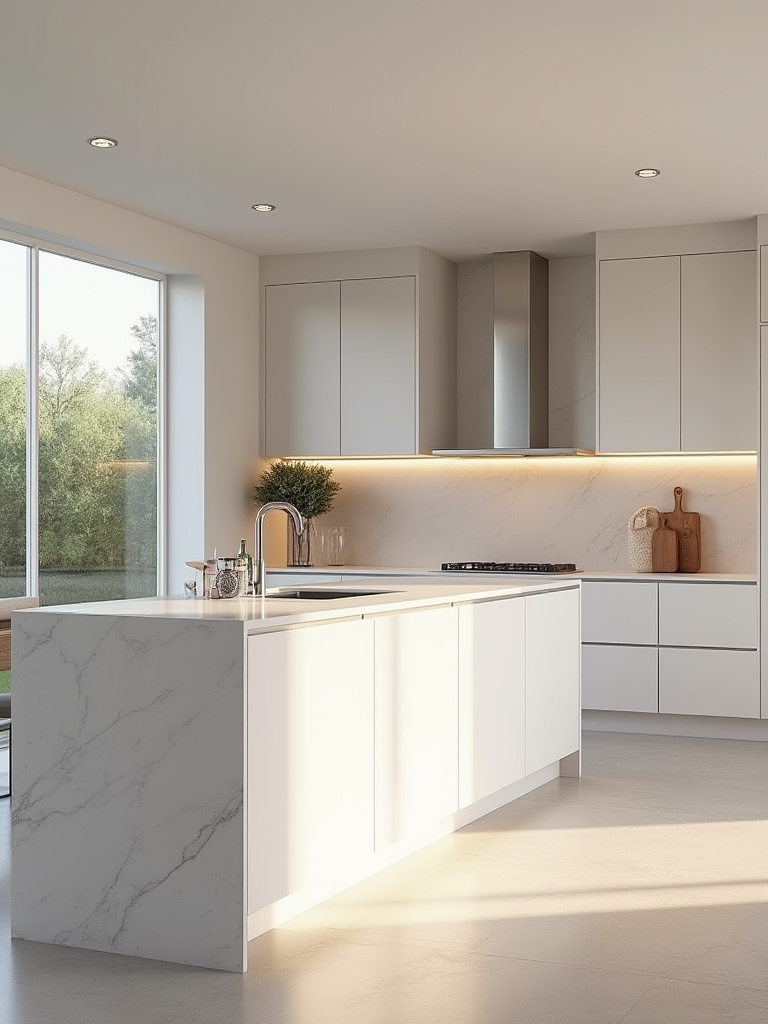
The real magic here is that this sleekness lets the material itself do the talking. Instead of a busy, patterned granite, you might choose a quartzite with soft, subtle veining that meanders across the surface like a riverbed. Or perhaps a honed marble whose velvety texture invites touch. These materials become the feature. It reminds me of the beautiful, seamless floors in old British manor houses—the beauty was in the sheer expanse of polished wood or stone. By choosing high-quality, integrated materials, you’re not just designing a kitchen; you’re sculpting a space.
This devotion to clean, uninterrupted surfaces naturally leads to one of the most important principles of modern living.
3. Prioritize Clean Lines and Uncluttered Countertops for Spaciousness
Now, when I say uncluttered, I don’t mean empty. An empty countertop is a sad, missed opportunity. An uncluttered countertop, however, is curated. It’s the difference between a cluttered charity shop and a beautiful gallery. The key is to design fiercely efficient storage so that all the daily chaos—the toaster, the blender, the mail—has a home out of sight. This is non-negotiable. Because once the decks are clear, you create the space for one or two truly beautiful things to exist.
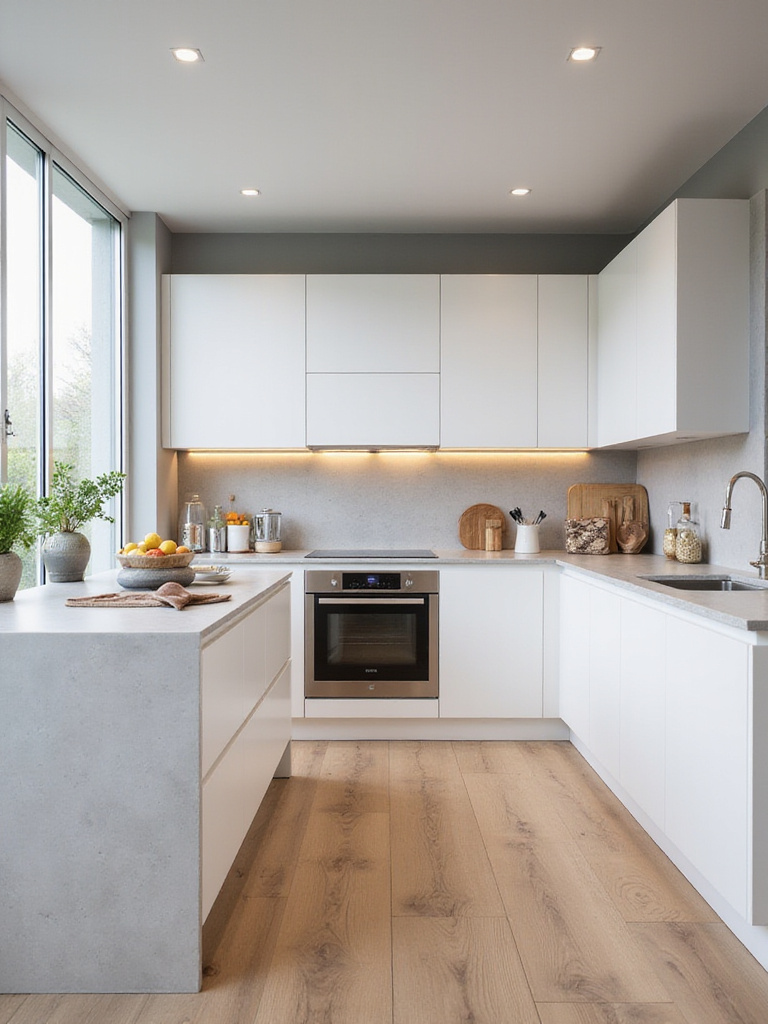
This is where you tell your story. Instead of a plastic fruit bowl, perhaps you have a single, hand-carved wooden vessel. Instead of a block of random knives, you have one exquisite chef’s knife on a magnetic strip. One client of mine keeps a single, antique brass lota (a traditional water vessel) on her counter with a few fresh flowers in it. It’s simple, personal, and profoundly beautiful. It transforms her kitchen from a workspace into a personal sanctuary. This is the goal: not emptiness, but intentionality.
This sense of space is only truly brought to life by the most crucial, and free, design element we have.
4. Integrate Natural Light Effectively to Enhance Modern Ambience
Light is everything. In both contemporary British architecture and traditional Indian homes, light is treated not just as illumination, but as a living material. Think about how a traditional haveli is built around a central courtyard, designed to draw light deep into the home. Or how latticed jali screens break up the harsh sun into a thousand soft, dappled patterns that dance across the floors. This is the spirit we want to capture. It’s about creating a space that feels alive and connected to the rhythms of the day.
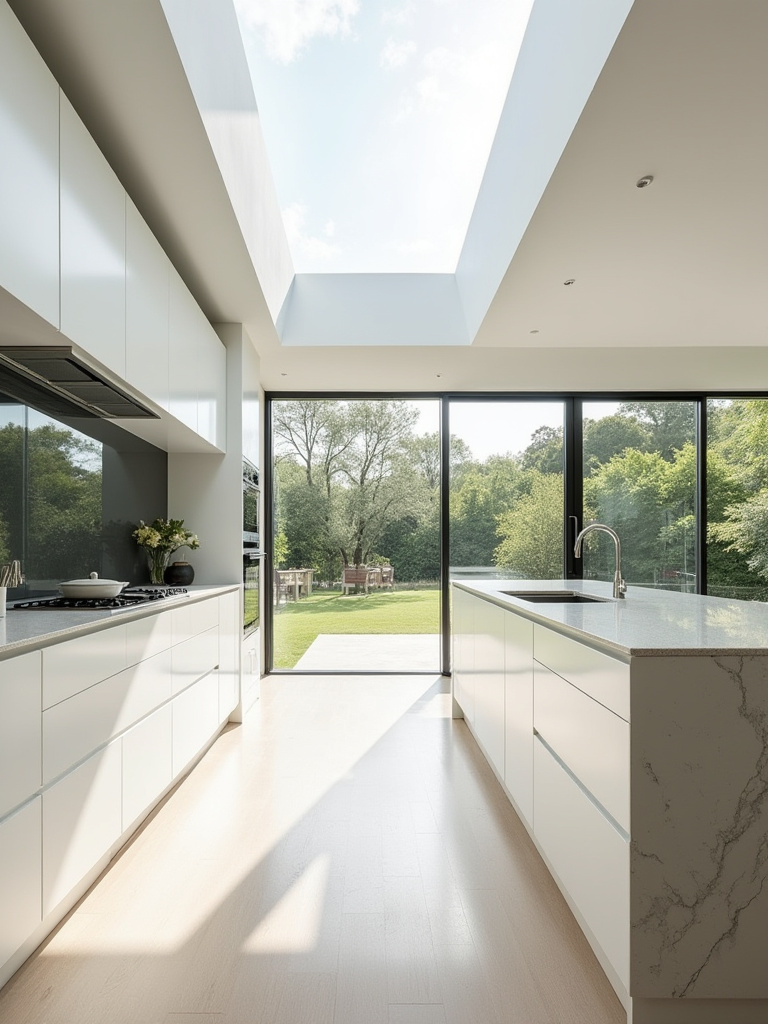
Your goal should be to maximize natural light wherever you can. Perhaps that means extending a window, adding a skylight, or replacing a solid door with a glass one. But it’s also about how you use that light. Choose surfaces that will gently reflect it, like a honed marble countertop or cabinetry with a soft satin finish. Avoid anything too glossy, which can create a harsh glare. You want the light to wash over the room, highlighting textures and softening lines. One of the most beautiful kitchens I ever designed had a long, narrow skylight positioned directly over the island, so the workspace was bathed in natural light from morning till evening. It felt like cooking outdoors.
With that beautiful, natural foundation in place, we can begin to layer in the key elements that will define your kitchen’s character.
Mastering Key Fixtures: Selecting Core Elements and Built-Ins
This is where the vision starts to become a tangible reality. Choosing the right built-in elements is like selecting the perfect ensemble of musicians—each one must play its part beautifully on its own, but also work in perfect harmony with the others. The cabinetry, the lighting, the appliances—they all need to sing from the same hymn sheet to create that seamless, sophisticated whole.
5. Opt for Handleless or Integrated Cabinetry for a Seamless Look
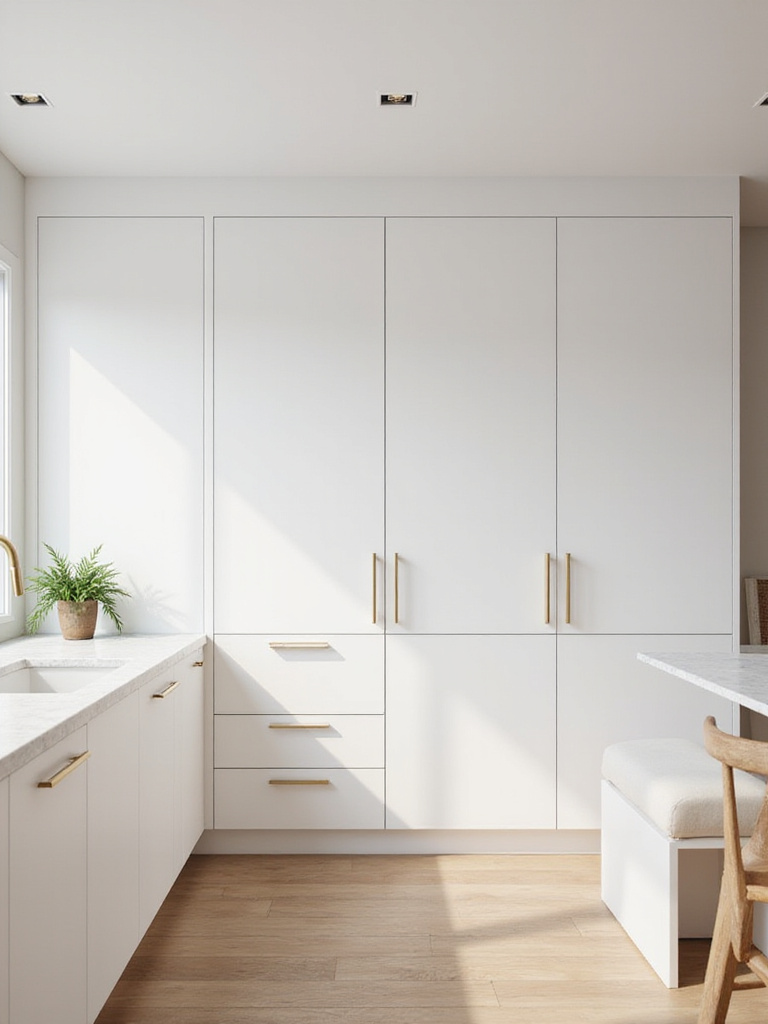
Handleless cabinetry is the ultimate canvas. By eliminating the visual clutter of knobs and pulls, you create a pure, uninterrupted surface that allows other elements to shine. This is what allows your incredible stone backsplash to become the art piece, or your statement light fixture to truly command the room. The cabinetry recedes, becoming a quiet, architectural backdrop rather than a feature in itself. The look is incredibly sophisticated and gallery-like.
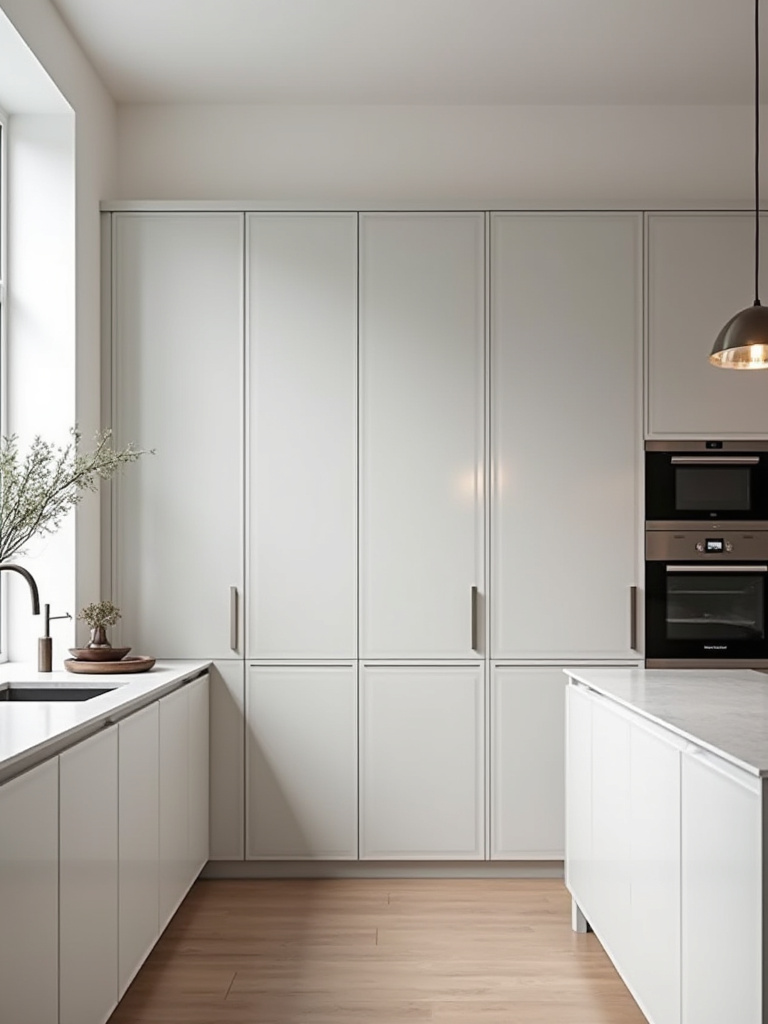
I particularly love using this style to showcase incredible wood grain or a beautiful lacquered finish. Without hardware to break up the surface, you can run a single piece of book-matched veneer across an entire bank of cabinets, and the effect is breathtaking. It feels less like kitchen cabinetry and more like bespoke furniture. For a project blending British and Indian aesthetics, we once used handleless cabinets in a deep, rich teak. The clean lines felt perfectly contemporary, while the warmth and history of the wood provided the soul.
With such a clean canvas, the lighting you choose becomes absolutely pivotal—it’s what will bring the whole composition to life.
6. Choose Statement Lighting Fixtures to Add Architectural Interest
Lighting is the jewellery of a room, and in a minimalist kitchen, it’s your chance to make a truly bold statement. Forget recessed spotlights as your main event. Think of a light fixture as a piece of sculpture suspended in space. This is where you can inject personality, warmth, and a touch of drama. A single, beautifully crafted pendant over an island can anchor the entire room and serve as a stunning focal point.
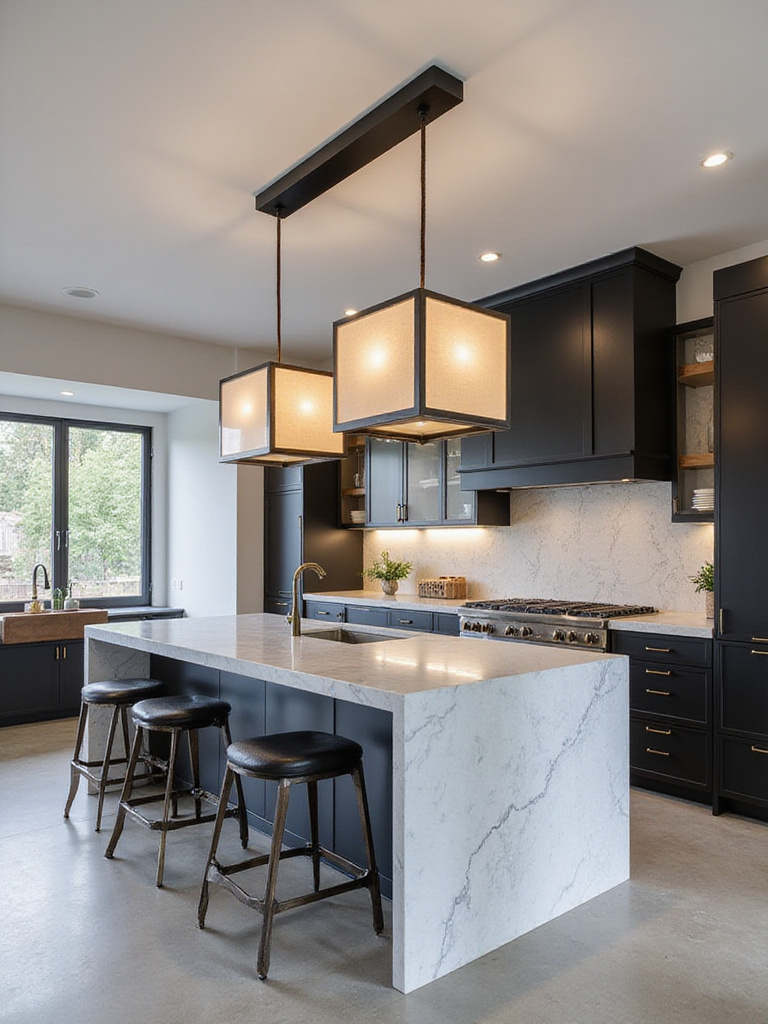
This is also a perfect opportunity for cultural fusion. Instead of a generic fixture, look for something with a story. I adore using fixtures in brushed brass or antique bronze, materials that echo the beautiful metalwork of traditional Indian temples and households. A modern, geometric pendant that casts shadows like a jali screen can add a layer of texture and mystery to the room. I once sourced a stunning, oversized lantern made of blackened steel and seeded glass for a client’s high-ceilinged kitchen. It felt modern, industrial, and yet faintly reminiscent of a colonial-era lamp, a perfect nod to their family’s history.
This beautiful light will, in turn, illuminate the largest surface in your kitchen—the countertops.
7. Install Large-Format Countertops in Durable, Monochromatic Finishes
Nothing says modern luxury quite like a vast, seamless countertop. Using large-format slabs of stone or quartz means you can eliminate most, if not all, of the seams, creating a stunning, monolithic surface that flows uninterrupted. This visually expands the space and provides a beautiful, clean canvas for both cooking and displaying your few curated objects. It is the epitome of understated elegance.
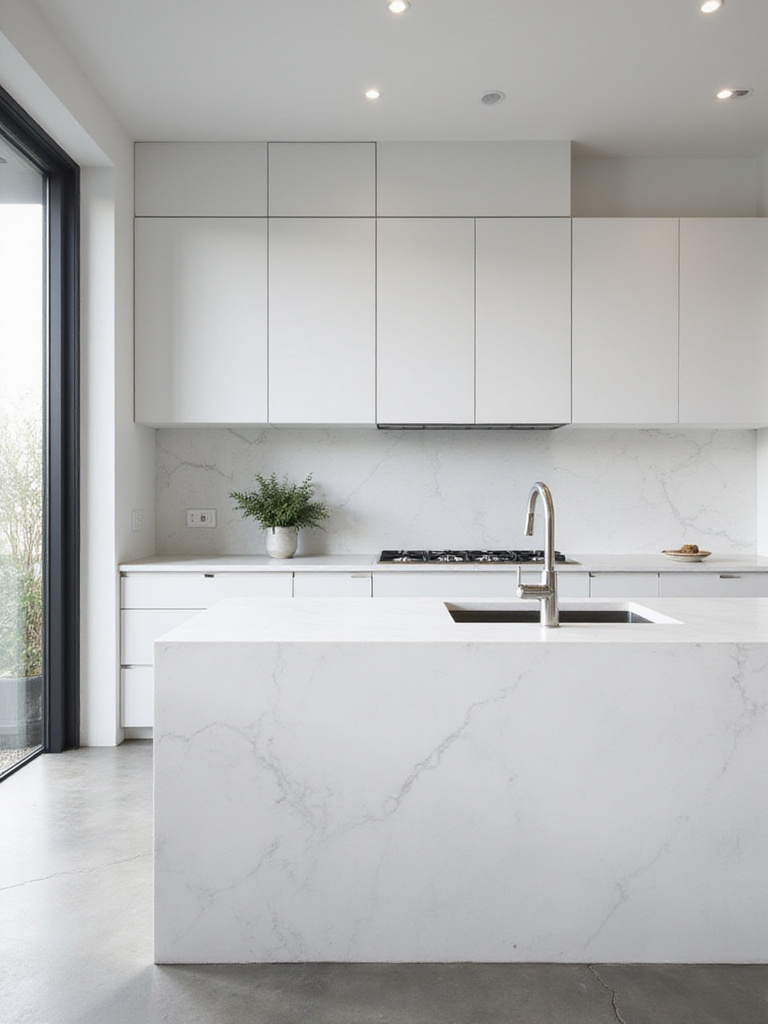
While pure white is classic, I encourage clients to look at monochromatic finishes with a bit more soul. Think of a soft, honed grey quartz that feels like river stone, or a porcelain slab that mimics the subtle texture of concrete. A waterfall edge, where the material flows down the sides of an island to the floor, is the ultimate expression of this look. It transforms the island from a mere piece of furniture into a powerful, sculptural element that anchors the entire space. It’s a bold move, but one that pays dividends in sheer visual impact.
The seamlessness of your countertops should be mirrored by the appliances embedded within and around them.
8. Select Energy-Efficient, Integrated Appliances for Sleekness
The most sophisticated technology is the technology you don’t see. Integrated appliances are the key to creating a kitchen that feels less like a workspace and more like a serene living area. When your refrigerator, dishwasher, and even your oven can disappear behind custom panels that match your cabinetry, the effect is transformative. The visual “noise” of stainless steel and black glass vanishes, leaving you with a calm, seamless wall of beautiful joinery.
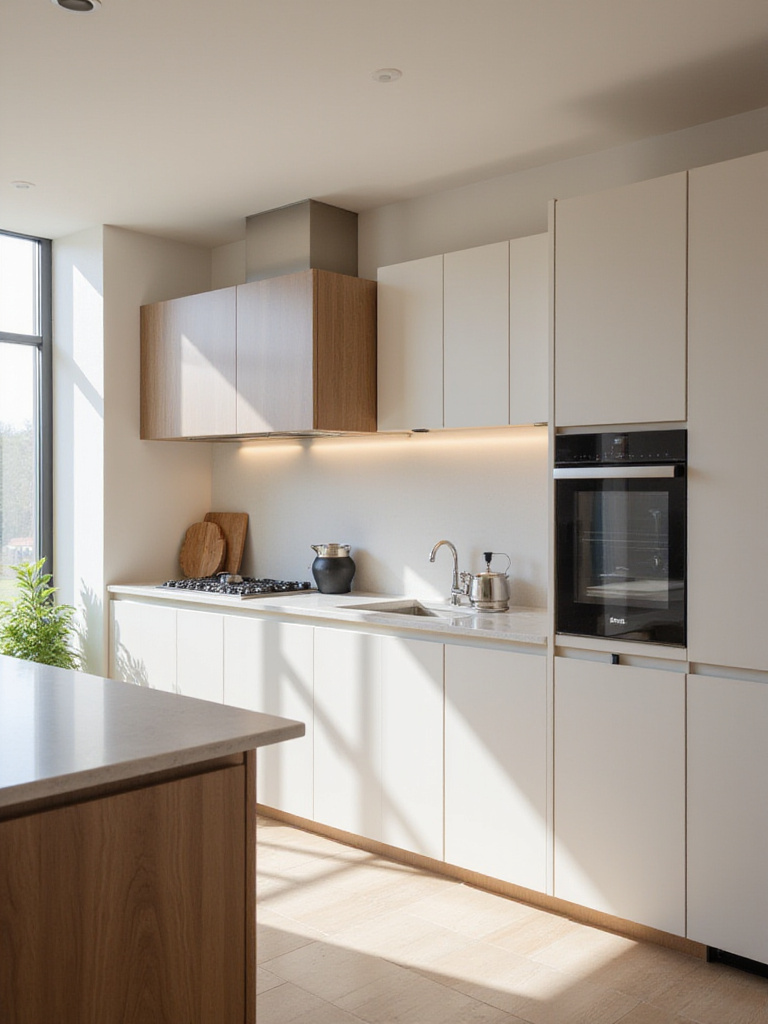
This is a non-negotiable for creating a truly high-end, contemporary feel, especially in open-plan homes. The goal is to blur the lines between the kitchen and living areas. When your kitchen looks like beautifully crafted furniture, it feels like a natural extension of your living room. I always advise clients to invest in the best integrated, energy-efficient appliances they can afford. They are quieter, perform better, and their seamless integration is a design choice you will appreciate every single day.
Central to this integrated vision is the kitchen island, which serves as the social and functional heart of the modern kitchen.
9. Incorporate Functional Islands with Purposeful Seating or Storage
The island is the modern hearth—the place where everyone gathers. It’s a prep station, a dining table, a homework spot, a bar. As such, it needs to be designed with incredible purpose. Think about how you truly live. Do you need deep drawers for pots and pans? A wine fridge for entertaining? A small prep sink to create an efficient work zone? The most successful islands are hardworking hubs that are meticulously planned.
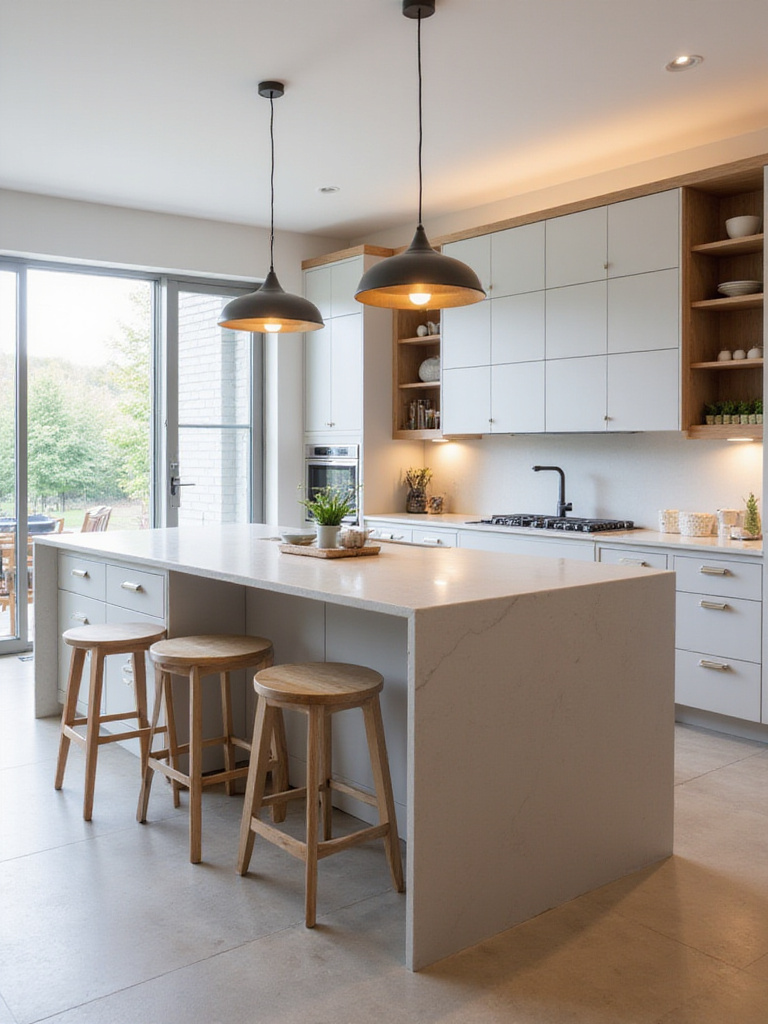
But functional doesn’t mean boring. The island is a wonderful opportunity to introduce a contrasting material or texture. I love cladding the front or sides of an island in a different finish, like fluted wood or a hand-troweled plaster. For one multicultural family, we designed a sleek quartz waterfall island but incorporated an inset breakfast bar made of reclaimed Burmese teak. It created a warm, inviting spot for casual meals and visually broke up the large stone mass, adding a layer of history and texture that felt deeply personal.
With the major elements in place, it’s the smaller, more tactile details that will truly begin to define your space.
Strategic Accents: Elevating with Finishes and Decor
This is the fun part. The foundation is laid, the major pieces are in place, and now we get to add the layers of personality that make the space truly yours. These are the details that catch the eye, invite touch, and tell the story of who you are. A little goes a long way here; it’s all about choosing pieces with intention and soul.
10. Upgrade Hardware to Matte Black or Brushed Metals for Modern Appeal
Hardware is a small detail with an enormous impact. While matte black is certainly a chic and modern choice, I almost always guide my clients towards the timeless warmth of brushed metals, particularly brass and bronze. These materials have a weight and history to them that feels luxurious and soulful. In South Asia, brass has been used for centuries in everything from cookware to ceremonial objects, and it brings that same sense of heritage and warmth into a contemporary space.
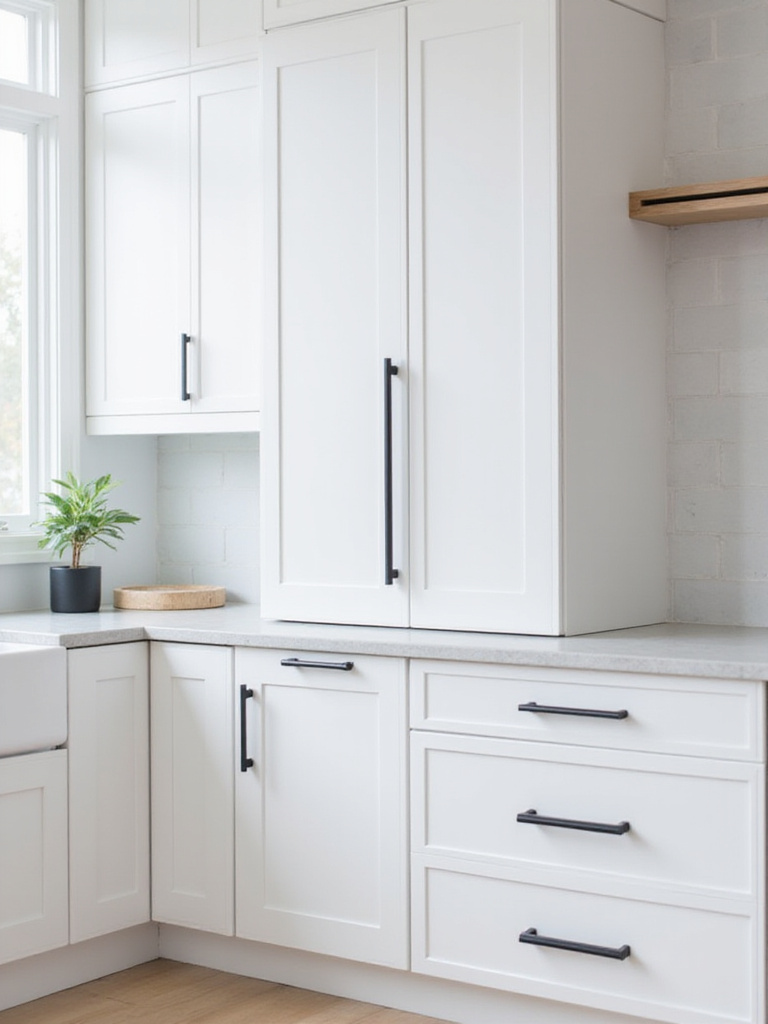
Imagine sleek, handleless cabinetry, and then just a hint of a recessed channel pull lined with brushed brass. It catches the light so beautifully and provides a subtle, warm contrast to cool stone or smooth lacquer. It’s a quiet touch of luxury that elevates the entire design. It feels considered and bespoke, proving that you don’t need ornate details to create a rich and inviting atmosphere. A friend of mine simply swapped the chrome handles on her very standard kitchen for antique bronze pulls, and the entire room was instantly elevated.
This touch of metal is often the perfect companion to the artistic heart of the kitchen—the backsplash.
11. Design a High-Impact Backsplash with Unique Textures or Patterns
If the cabinetry is the canvas, the backsplash is the art. This is your single greatest opportunity to inject texture, personality, and craftsmanship into your kitchen. Please, I implore you, step away from the basic subway tile. Think instead of tiles with story and soul. My absolute favourites are handmade Zellige tiles from Morocco; their subtle imperfections and luminous glaze reflect light in the most mesmerising way, adding depth and movement.
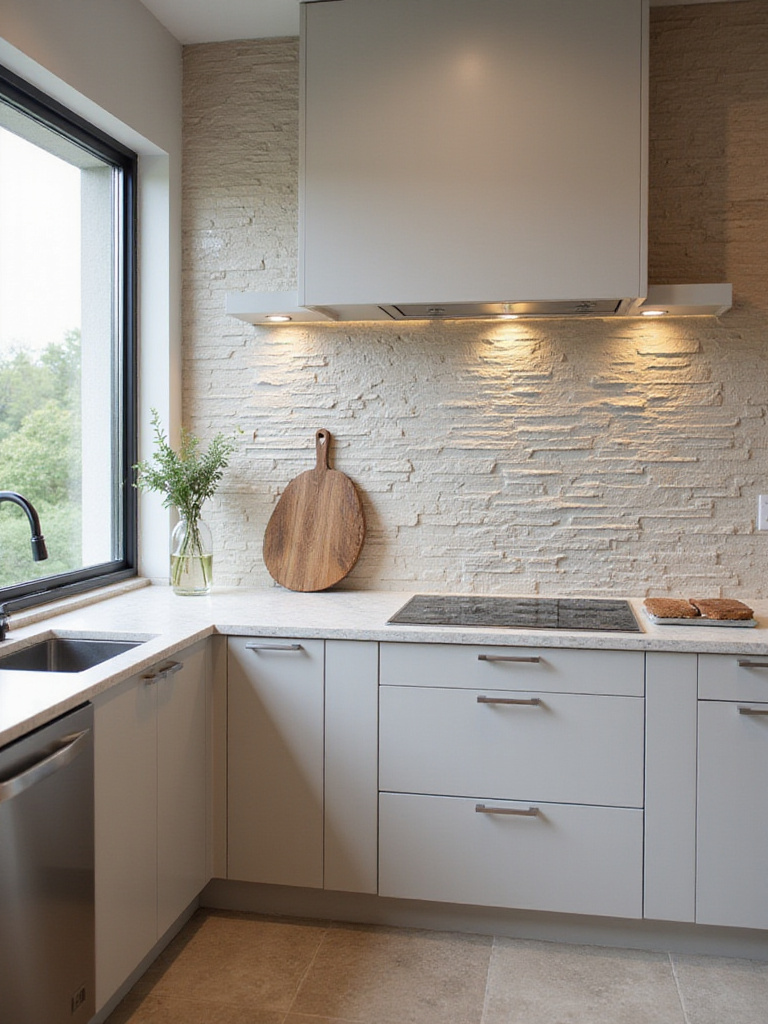
Another incredible option is to use a full-height slab of a dramatic, beautifully veined stone. It creates a powerful, art-like focal point that is both timeless and utterly modern. For one project, we sourced a stunning marble with deep, earthy red veins—it felt like an abstract painting and was the perfect, dramatic nod to the client’s love for the rich colours of India. The key is to choose something that feels unique and tactile. You want to create a wall that you can’t help but run your hand over.
This beautiful backdrop is the perfect stage for displaying a few carefully chosen objects.
12. Utilize Open Shelving to Display Curated, Minimalist Objects
Open shelving is not for everyday clutter. It is a stage. It’s a place to break up a monotonous wall of cabinets and create a moment of lightness and personality. Use it to display a small, curated collection of objects that are both beautiful and meaningful. This is where your heritage can truly be put on display in a modern, elegant way.
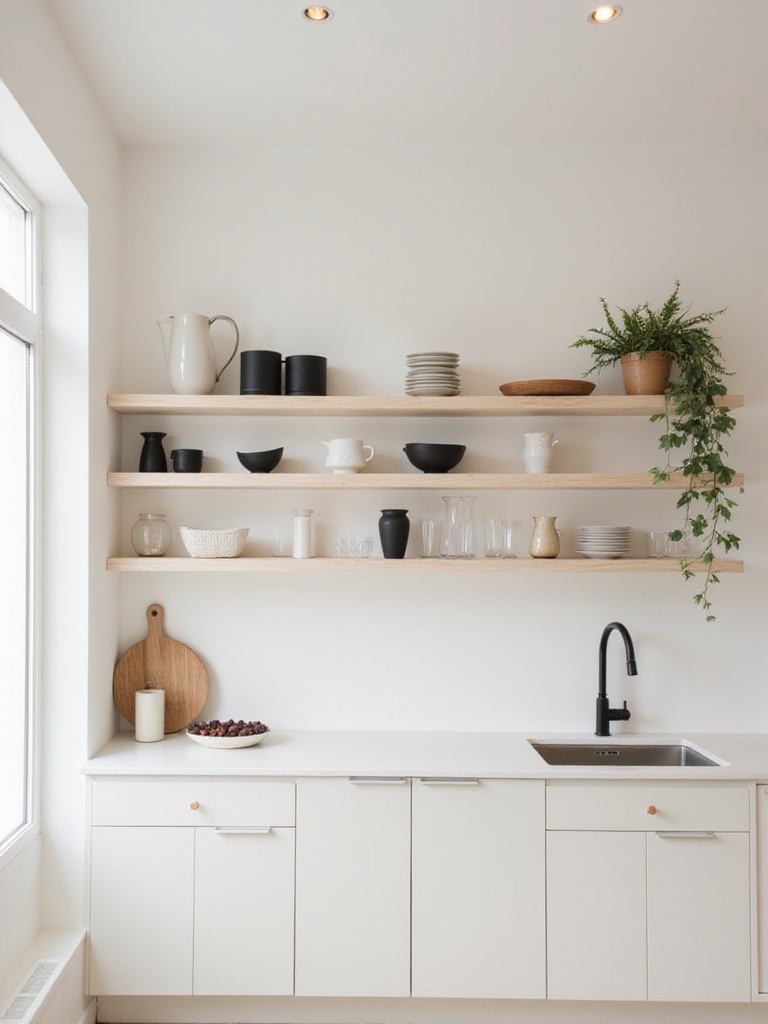
Think about a few pieces of hand-thrown pottery, a small stack of your favourite cookbooks with beautiful spines, a vintage brass tea set from your grandmother, or a single piece of art. The trick is to embrace negative space. Don’t cram the shelves full. Arrange items in small groupings, vary their height and texture, and let them breathe. We installed two thick, floating shelves of reclaimed oak in a client’s kitchen and she used them to display her collection of blue-and-white porcelain. Against the modern, clean lines of the kitchen, they looked absolutely spectacular—a perfect bridge between her British home and her Chinese heritage.
To bring this display to life, you need the final touch of nature.
13. Introduce Greenery and Live Plants for Organic Contrast
Every single room needs something living in it. In a kitchen, with its hard surfaces and clean lines, plants are absolutely essential. They are the simplest way to introduce organic shape, vibrant colour, and a sense of life and vitality. A splash of green instantly softens the space and prevents a contemporary design from feeling too sterile or rigid. It’s a connection to the natural world that is incredibly grounding.
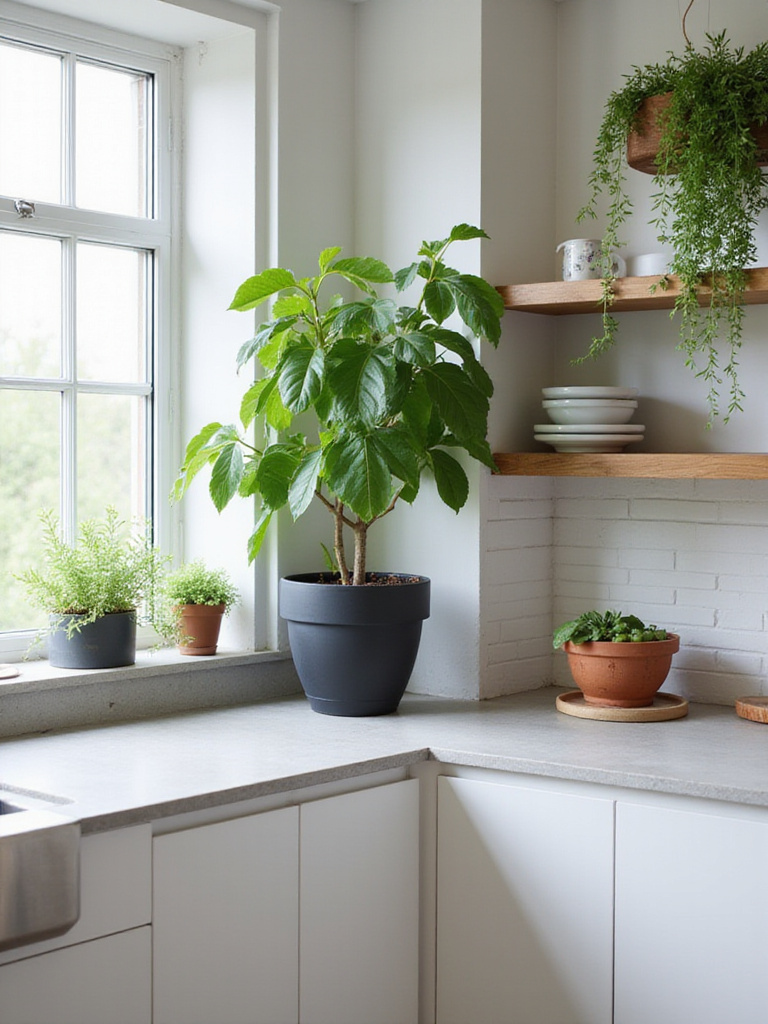
Choose plants that will thrive in your kitchen’s light and humidity. A sculptural fiddle leaf fig in a corner can add drama and height, while a pot of fresh herbs on the windowsill is both beautiful and practical. I particularly love using trailing plants like Pothos on open shelves or on top of cabinets; they cascade down gracefully, softening the hard architectural lines. Paired with beautiful terracotta or ceramic planters, they become small, living sculptures that breathe life and energy into your home.
This concept of living sculpture extends to the functional objects we choose to surround ourselves with.
14. Incorporate Functional Art or Sculptural Elements Strategically
The most sophisticated designs blur the line between function and art. Why have a boring kettle when you can have one with a beautiful, sculptural form? Why use a generic salt cellar when you can have a hand-carved marble one? This is about being intentional with every single object that is allowed to live on your countertops. Each piece should earn its place by being not only useful but also exceptionally beautiful.
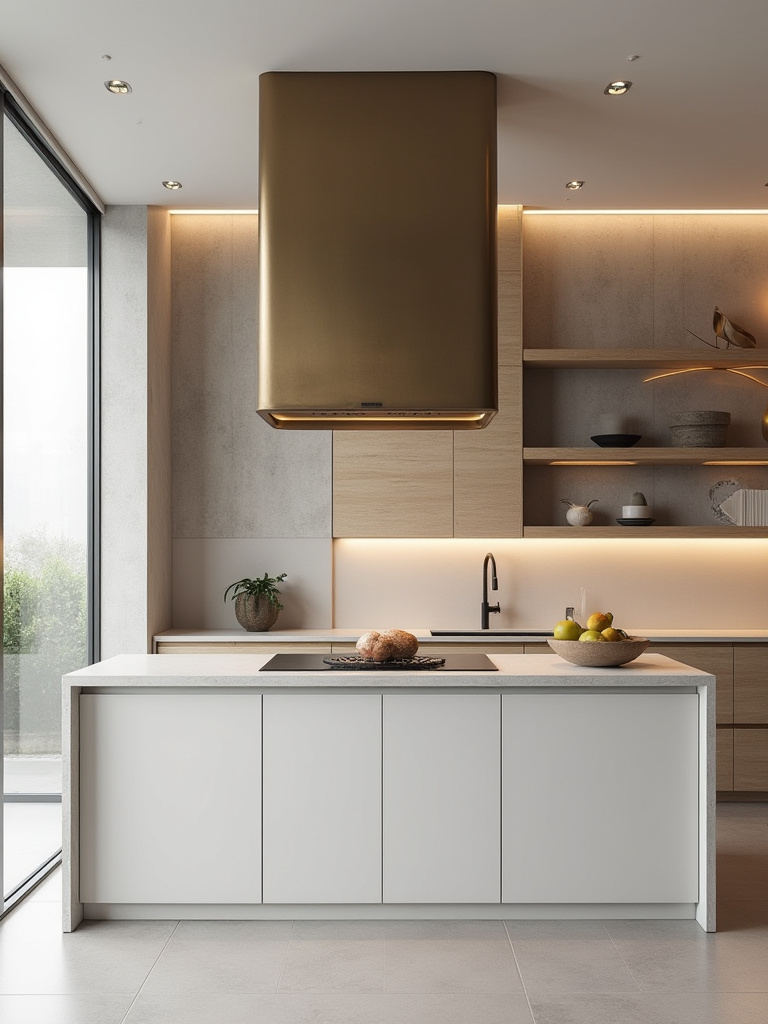
This could mean a sculptural designer tap, a stunning range hood that looks like a piece of modern art, or even a beautifully crafted wooden pepper mill. These are the pieces that elevate the everyday. For one kitchen, we sourced a custom-made range hood wrapped in aged brass. It was utterly breathtaking and became the commanding focal point of the entire room, proving that even the most functional of appliances can be a work of art.
These beautiful objects need a backdrop of impeccable order to truly stand out, which is where intelligent design comes in.
Optimizing Utility: Smart Solutions and Functional Flow
A beautiful kitchen that doesn’t work well is just a pretty room. The true genius of contemporary design is when sublime aesthetics are married with flawless functionality. This is the invisible architecture of the space—the smart storage, the discreet technology, and the intuitive layout that makes the act of cooking and living feel effortless and graceful.
15. Implement Smart Storage Solutions to Maintain a Clutter-Free Space
This is the secret weapon. Brilliant storage is what allows for that serene, uncluttered aesthetic. You cannot achieve a truly contemporary look without it. This means thinking about what you own and designing a specific, designated home for every single thing. Pull-out pantries, deep drawers with custom dividers, blind corner solutions that make every inch accessible—these are not luxuries; they are necessities.
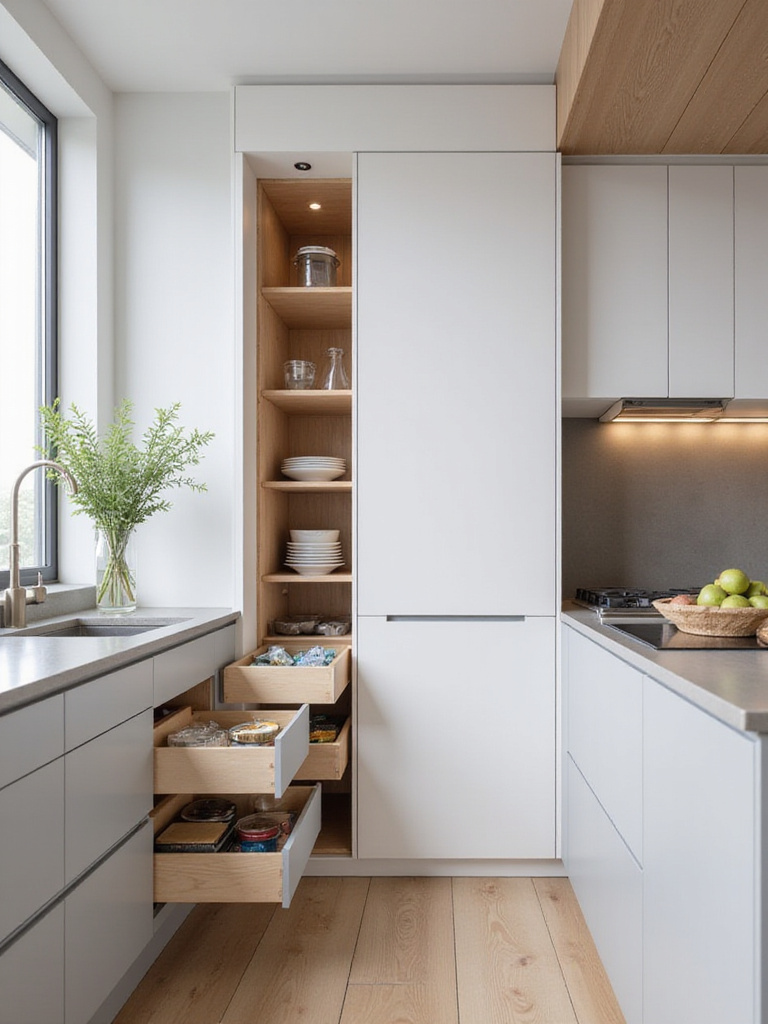
My favourite trick is the “appliance garage,” a section of cabinetry that sits on the countertop with a door that lifts up or slides away. Inside, you can keep your toaster, coffee maker, and mixer plugged in and ready to go, but completely hidden from view when not in use. It is a complete game-changer for maintaining those beautifully clear surfaces. By investing in smart storage on the inside, you are investing in visual peace and calm on the outside.
This behind-the-scenes cleverness should also apply to the technology you bring into your home.
16. Integrate Smart Technology Discreetly for Enhanced Convenience
Like a good butler, smart technology should be present and helpful but never intrusive. The best integrations are almost invisible. Think of under-cabinet lighting that turns on with a wave of your hand, a tap that dispenses boiling water instantly, or outlets that pop up from the countertop only when needed. It’s about adding layers of convenience that simplify your life without cluttering your space with gadgets and wires.
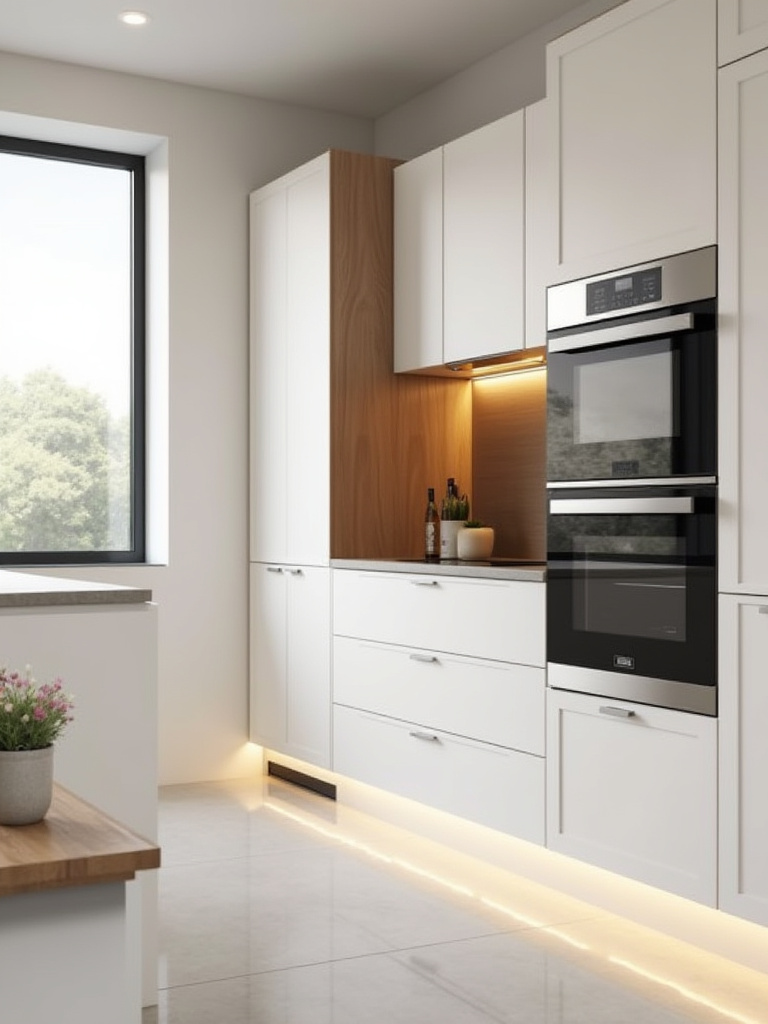
The key is planning for it early. If you want a charging drawer for your devices or an integrated tablet for recipes, this needs to be designed into the cabinetry from the beginning so all the wiring can be concealed. I love using smart lighting systems that can be adjusted via voice command. You can ask for bright, clear light for cooking, then a soft, warm glow for dinner. It’s a simple luxury that has a huge impact on the mood and functionality of the space, all without a single visible switch.
Ultimately, this seamless technology should serve a kitchen that is laid out with perfect, ergonomic precision.
17. Optimize Workflow Zones for Efficient meal preparation and Cleanup
A well-designed kitchen should feel like a dance. Your movement from the fridge (storage zone) to the sink and counter (prep zone) to the hob (cooking zone) should be fluid and intuitive, with minimal wasted steps. This is the classic “work triangle,” and it’s a principle that still holds true. Keeping these three key areas in an efficient relationship is the foundation of a kitchen that is a joy to work in.
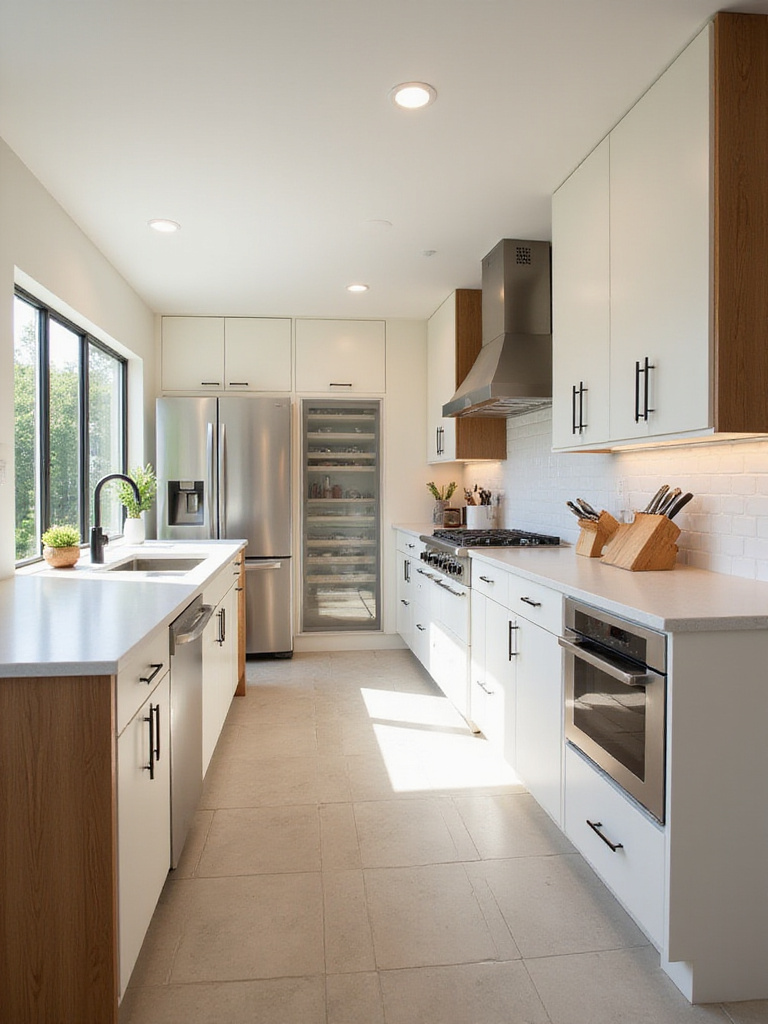
But we can take it further by creating dedicated zones for specific tasks. If you bake often, create a baking station with your mixer, flour, and sugar all stored in one place. If you entertain, a separate beverage area with a wine fridge and glassware can keep guests out of the main cooking zone. In a client’s family kitchen, we created a small secondary prep sink on the island. It was revolutionary. It allowed two people to work comfortably at the same time, completely transforming their experience of cooking together.
This beautiful, functional, soulful space is then ready for its final, and most important, layer.
18. Add Personal, Subtly Sophisticated Touches without Over-Decorating
This is the final edit. It is the art of knowing what to add, but also what to leave out. A modern contemporary kitchen doesn’t need a lot of “stuff.” It needs a few, very personal, and very beautiful things that tell your story. This is the difference between a house in a magazine and a home with a heart. Resist the urge to fill every surface. Embrace the power of negative space.
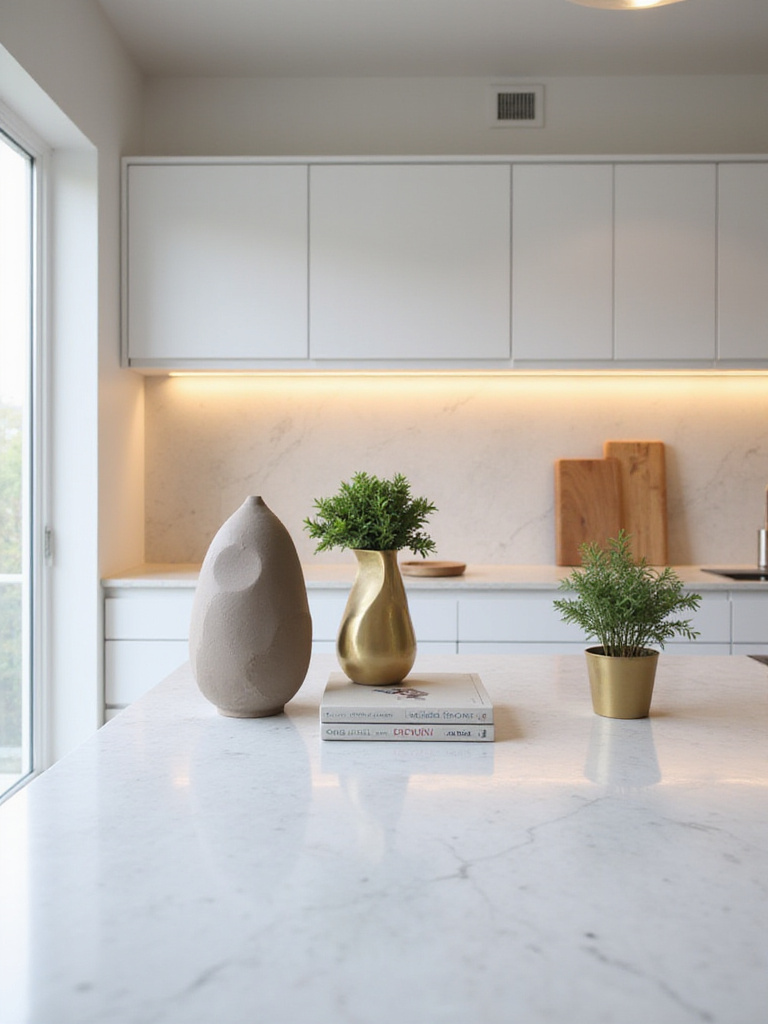
Choose one or two things that are deeply meaningful to you. It could be a small, framed piece of art leaning against the backsplash. A collection of beautiful wooden spoons in a ceramic crock. A single, elegant orchid. For my client who wanted to honour her Indian heritage, we placed a single, antique hand-carved wooden panel on one wall. It was the only decorative object in the room, and its impact was immense. It provided texture, history, and soul, perfectly balancing the sleek, modern lines of the kitchen. This is the ultimate goal: a space that is clean but not cold, minimal but not empty, and modern but rich with personal history.
The Art of a Soulful Kitchen
Creating a truly exceptional contemporary kitchen is an act of curation. It’s about a ruthless dedication to clean lines and functionality, softened by layers of texture, warmth, and personal story. It’s a delicate dance between the sleek precision of modern design and the soulful imperfection of handcrafted objects. By embracing a calm, natural palette, championing seamless materials, and making space for the things you truly love, you can create a kitchen that is not just a beautiful showpiece, but the true, vibrant heart of your home.
This isn’t about following trends; it’s about defining your own sense of modern elegance. It’s a space that works tirelessly for you, but does so with grace, beauty, and a quiet confidence. This is a kitchen that will not only stand the test of time but will also feel more like home with each passing year. It’s a space where memories are made, stories are shared, and life is savoured. Your perfect culinary sanctuary is waiting.