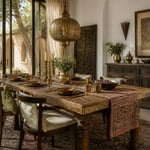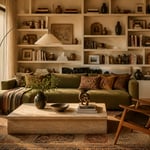
Integrating modern kitchen decor into a premium home requires more than just picking high-end appliances. It demands a deep understanding of how textures, light, and natural materials interact. Today, the kitchen is no longer just a utility zone. Instead, it has become a curated sanctuary. It reflects a true commitment to tactile materiality and biophilic principles. By focusing on foundational elements, we bridge industrial precision with organic warmth. Ultimately, this creates spaces that feel both cutting-edge and timelessly grounded.
Phase I: Foundational Materiality (Setting the Organic Modern Canvas)
In an organic modern kitchen, foundational materiality bridges industrial precision and natural chaos. Specifically, this textural canvas defines the room’s soul before any decor is added. I always prioritize living finishes, like unlacquered brass, to establish deep authenticity. Naturally, these metals oxidize over time. They create a protective patina against the environment. In fact, this aging process records the daily history of the people living there. For instance, a cabinet pull becomes lighter where you touch it every morning. Conversely, it darkens in untouched crevices. This creates genuine memory.
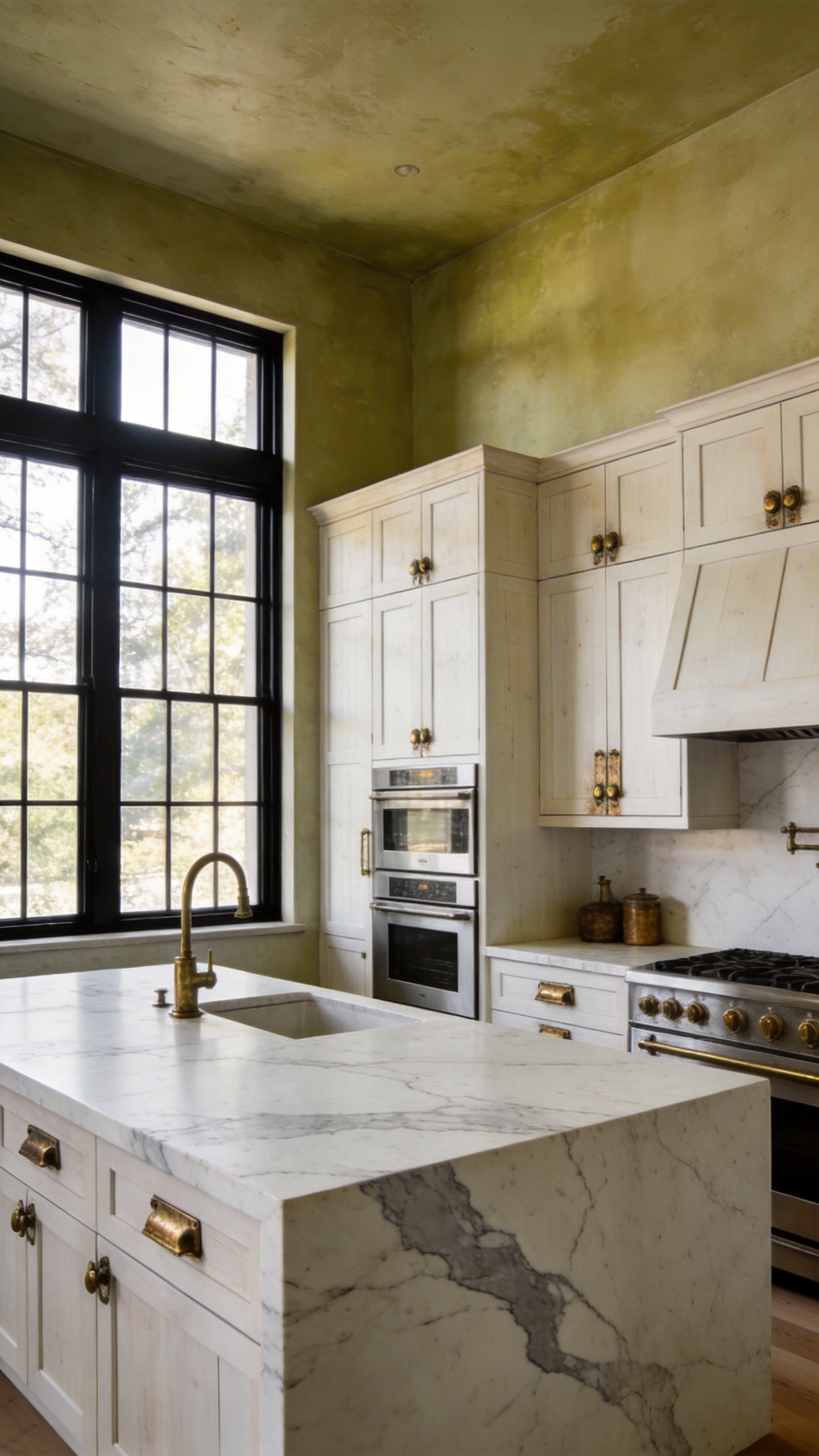
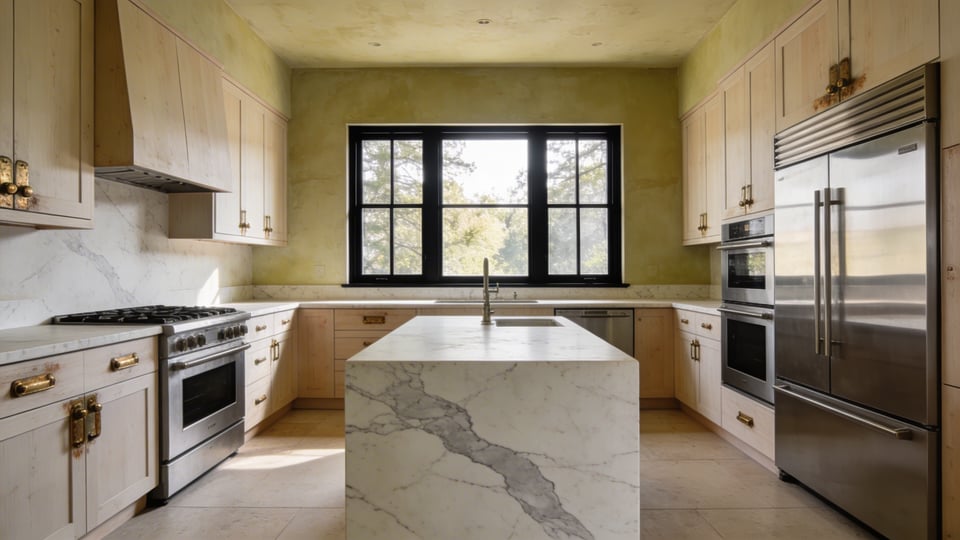
Next, we select exceptionally dense stones for their thermal mass properties. For example, honed soapstone or limestone acts as a passive temperature regulator. Importantly, these stones absorb heat slowly to prevent damaging thermal shock. These matte surfaces also act as essential acoustic dampeners. Indeed, they significantly soften the echoing clatter common in open-plan spaces. We typically reject high-gloss surfaces because they create distracting visual glare. Instead, honed finishes allow natural materials to absorb shifting sunlight. Ultimately, this creates a breathing palette rooted in biophilic design.
Remarkably, incorporating these natural materials lowers occupant cortisol levels significantly. In fact, recent studies show an impressive twenty-two percent reduction in household stress. Therefore, we rely heavily on deliberate material layering to achieve this balanced environment. First, a seamless concrete or stone floor anchors the space with undeniable gravity. Next, flat-slab white oak cabinetry softens the cold foundational base. It adds necessary tactile warmth. Finally, hand-troweled clay plaster bridges the gap using irregular organic textures. Thus, this raw and refined juxtaposition generates engaging visual friction. Consequently, the materials themselves do the heavy lifting without extra decoration.
1. Honed Natural Stone and Travertine Focal Points: Prioritizing tactile, matte surfaces over high-gloss finishes for grounded sophistication.
Historically, the pinnacle of luxury kitchens featured high-gloss granite. Consequently, these highly polished surfaces felt cold and clinical. Today, modern kitchen design embraces a more grounded philosophy. Specifically, we are shifting toward honed natural stone and travertine. This organic modernism prioritizes raw, tactile beauty over manufactured perfection.
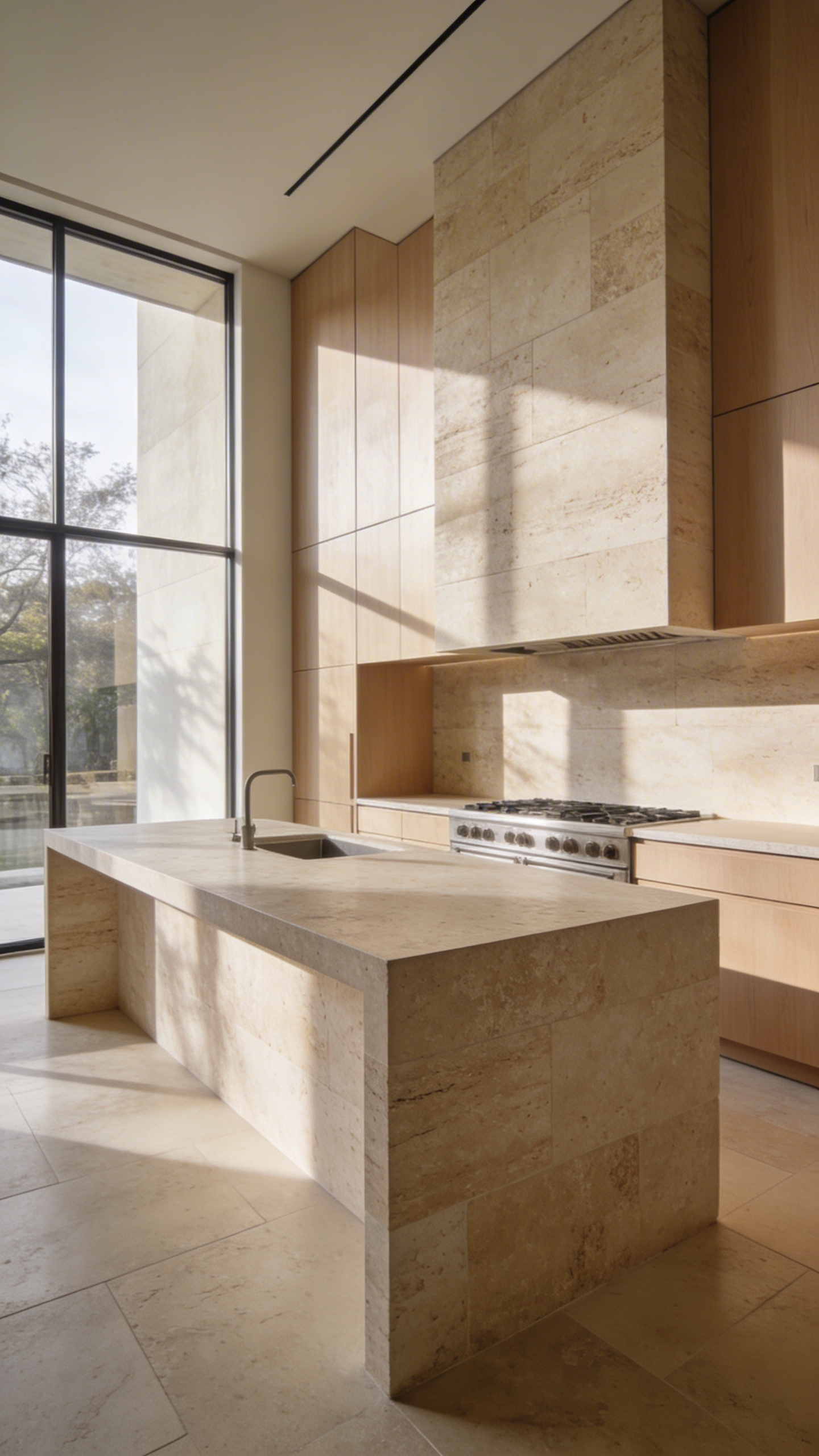
Technically, a honed finish stops between 100 and 600 grit. Therefore, it lacks the mirror-like glare of polished stone. Instead, it absorbs light to create visual silence. In fact, matte surfaces feel psychologically warmer to the touch. This earthy texture provides necessary tactile anchoring. Naturally, filled travertine maintains food hygiene while preserving ancient geological beauty.
Architecturally, we now treat these stones as monolithic elements. For instance, designers craft integrated sinks from single travertine blocks. Thus, the stone acts as a structural anchor rather than mere decoration. This approach blends Middle Eastern warmth with Scandinavian minimalism.
Admittedly, honing opens the microscopic pores of the stone slightly more. Consequently, these surfaces require diligent sealing every six to twelve months. However, this velvet finish easily conceals daily fingerprints and small scratches. Ultimately, modern designers encourage clients to embrace inevitable acid etching. Indeed, this living patina creates a rich, authentic narrative of use.
2. Continuous Tadelakt and Mineral Plaster Walls: Creating a breathable, seamless backdrop that absorbs and softens natural light.
Traditional Moroccan Tadelakt perfectly bridges Middle Eastern warmth and Scandinavian minimalism. Specifically, this ancient mineral plaster creates a striking, continuous backdrop. Unlike synthetic paints, these plasters offer a rare technical paradox. They are entirely waterproof yet remarkably vapor-permeable. Artisans achieve this by rubbing olive oil soap into curing lime. Thus, a chemical reaction called saponification forms a hydrophobic membrane. The walls act like a third lung for the kitchen. Naturally, they absorb excess cooking humidity and release it later. Indeed, the high alkalinity makes the surface inherently mold-resistant.
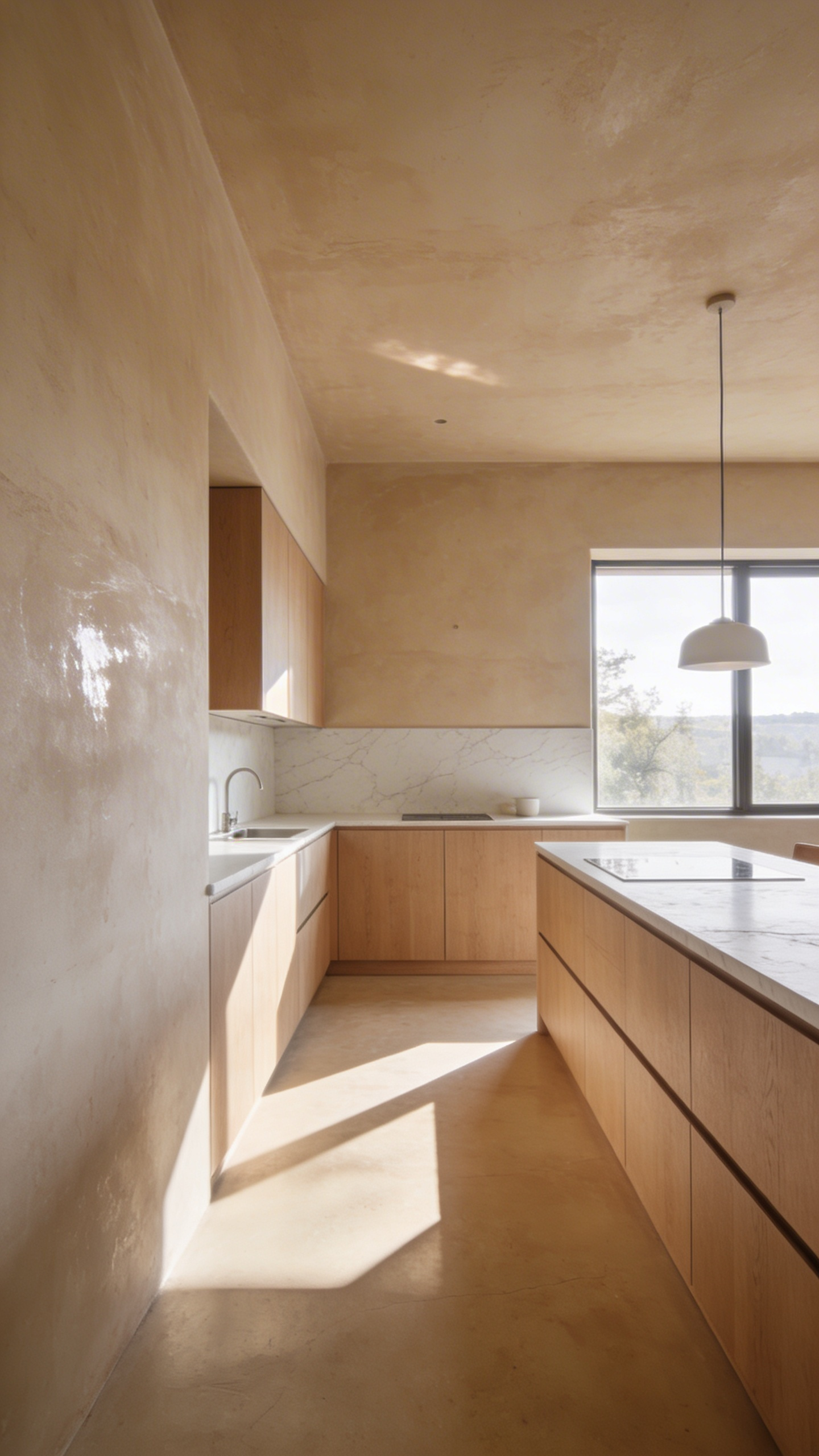
Visually, mineral plasters replace clinical glare with optical softness. Calcium carbonate micro-crystals allow light to penetrate and scatter beautifully. Therefore, the walls emit a gentle, cloudy glow across the space. Removing traditional tile grout lines eliminates distracting visual noise. Indeed, this monolithic transition makes small kitchens feel much larger. The material does require a mindful approach to daily maintenance. For example, acidic spills like lemon juice can etch the finish. However, I often encourage clients to embrace this through a Wabi-Sabi lens. Ultimately, these subtle imperfections create a beautiful, lived-in patina. Touching the wall reveals a silky texture. Yet, the underlying material retains the profound hardness of stone.
3. Fluted and Ribbed Wood Cabinetry Profiles: Introducing architectural rhythm and warmth without creating visual clutter.
Wood cabinetry profiles bring tactile warmth to modern kitchens. Specifically, designers utilize fluted and ribbed textures to introduce architectural rhythm. Interestingly, these terms describe very different visual speeds. Fluted profiles feature concave grooves. They create a soft, quiet rhythm. Conversely, convex ribbed details produce sharp highlights and deep shadows. Therefore, ribbed textures work best on smaller focal points like kitchen islands.
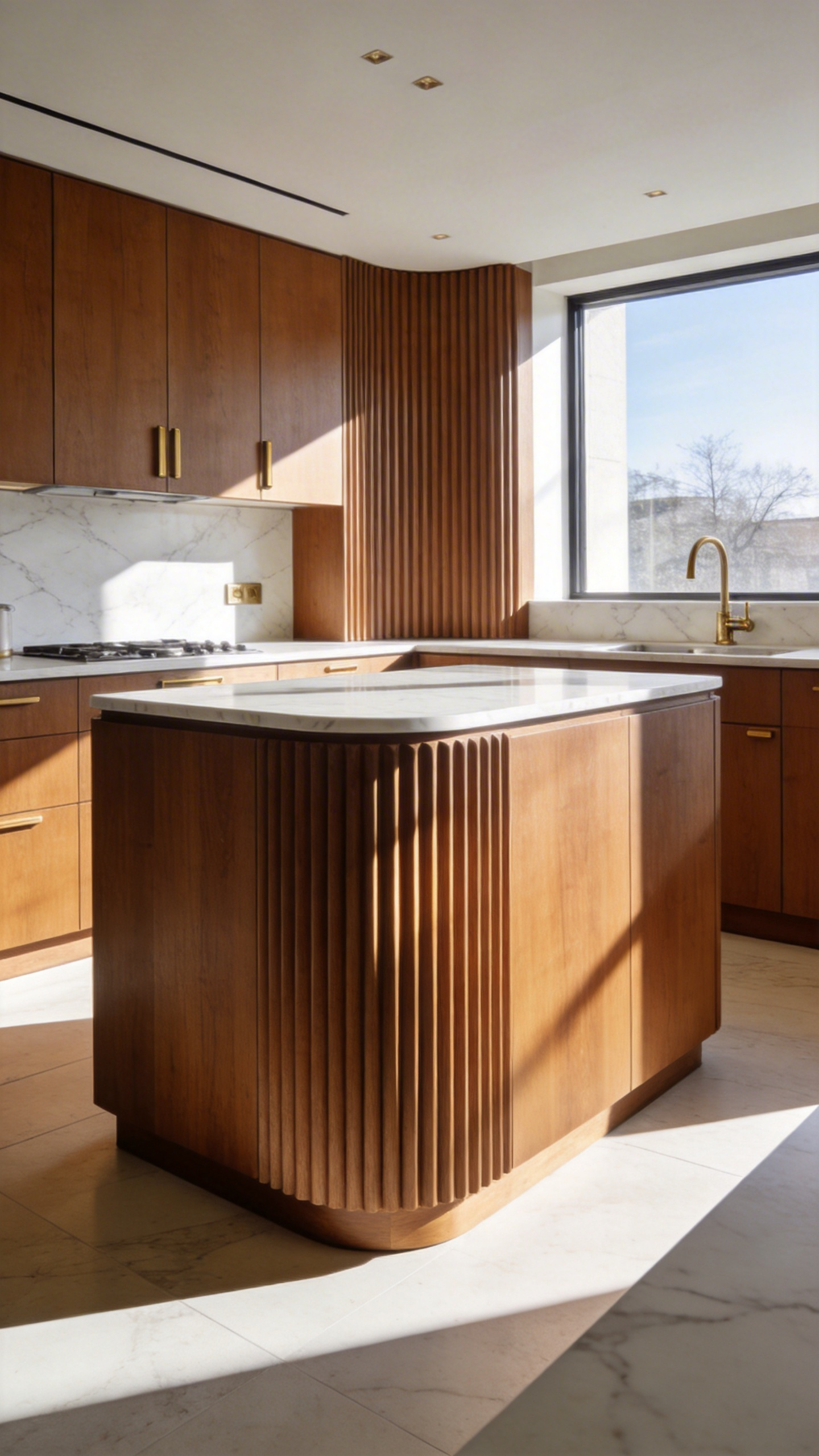
Fluting acts as a visual stabilizer in heavily horizontal spaces. Next, these continuous vertical lines draw the eye upward. This effectively makes standard ceilings feel significantly loftier. Visually, this monolithic appearance allows utility kitchens to blend easily into living areas. In fact, textured wood adds crucial sensory warmth to minimalist environments. Flat cabinets look completely identical throughout the day. However, fluted wood changes dynamically as shifting sunlight alters shadows. Naturally, these rounded haptic edges invite human touch. They successfully soften the harsh, cold angles of stone countertops.
Ultimately, designers rely on selective saturation to prevent visual noise. Typically, we pair seventy percent flat cabinetry with thirty percent texture. Specifically, utilizing integrated push-to-open mechanisms keeps the aesthetic exceptionally clean. Thus, traditional hardware never competes with the vertical wood lines. Finally, these repetitive profiles essentially disguise daily fingerprints and micro-scratches. Consequently, active household cabinetry maintains a clean appearance for much longer.
4. Climate-Adaptive Terracotta and Stone Flooring: Anchoring the kitchen with earthy, heat-responsive materials that age gracefully.
Earthy floors beautifully anchor a minimalist kitchen with organic warmth. Specifically, terracotta and natural stone function as remarkable thermal batteries. They possess high thermal mass but low thermal diffusivity. Consequently, they absorb daytime solar heat through large windows. They then release that warmth slowly as nighttime temperatures drop. Indeed, this thermal flywheel effect regulates room temperatures without mechanical systems.
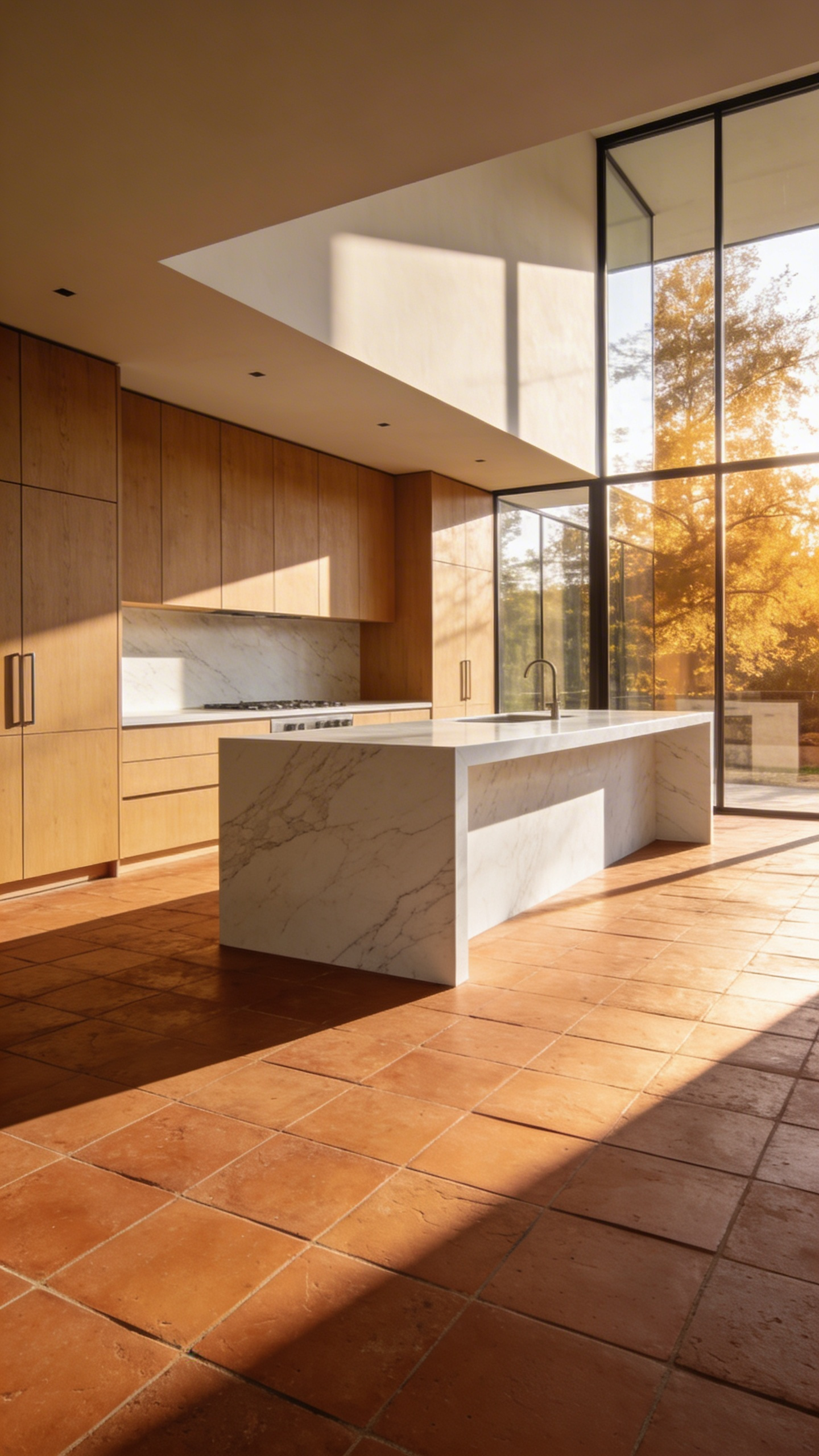
Conversely, denser stones like slate pull heat away quickly. This provides a passive cooling feature perfect for desert climates. In fact, these earthy materials offer profound sensory and acoustic benefits. Unglazed terracotta naturally diffuses sharp sound waves. Therefore, it easily softens the acoustic clatter of modern kitchens. Similarly, a honed stone finish provides a velvety tactile experience. It perfectly grounds the space against sleek, clinical cabinetry.
Ultimately, we choose these natural surfaces because they age gracefully. I often call this developing patina the surface equivalent of umami. Indeed, porous terracotta absorbs light, oils, and daily friction. It slowly mellows from bright orange into deep, burnished siennas. Likewise, the edges of limestone subtly round in high-traffic zones. This organic aging cures the perfection fatigue of stark interiors. Strategically, designers place these floors in sun-drenched kitchen zones. Next, wider grout joints allow terracotta to breathe and expand. Together, these choices unite Scandinavian climate consciousness with Middle Eastern vernacular wisdom.
5. The Disappearing Act of Integrated Hardware: Mastering the invisible pull and push-to-open mechanisms for uninterrupted sightlines.
The shift toward invisible hardware is an architectural revolution. Specifically, it transforms functional utility into pure, uninterrupted sculpture. This modern disappearing act actually began in 1988 Italy. Back then, Scilm introduced the Gola profile, meaning canyon or rift. Consequently, designers moved the handle directly to the cabinet carcass. By mounting a continuous aluminum channel, they created clever shadow gaps. Therefore, fingers could easily grip the warm, solid cabinet doors. Indeed, this rhythmic line connects Middle Eastern spatial flow. It pairs perfectly with the serene restraint of Scandinavian minimalism.
Today, achieving these clean sightlines requires mastering hidden motion physics. For instance, mechanical systems utilize a precise 2mm trigger path. Alternatively, electronic servo-drives use 24V motors for heavier luxury drawers. Thus, a simple knee-touch effortlessly opens a heavy wood panel. Ultimately, removing protruding handles significantly reduces visual noise and clutter. The kitchen suddenly masquerades as crafted, high-end living furniture. Next, integrating LED strips into these channels creates a striking floating effect.
Finally, the greatest challenge involves hiding massive, heavy appliances. Traditionally, refrigerators required sturdy pulls to break their vacuum seals. However, specialized flex systems now motorize this initial opening force. As a result, professional-grade refrigerators vanish entirely behind minimalist matte lacquer. Ultimately, this mastery prevents anyone from distinguishing the refrigerator from the pantry.
Phase II: Architectural Palette & Illumination (Crafting the Atmosphere)
The transition from structural utility to emotional resonance relies on deliberate material choices. Ultimately, modern design defines an architectural palette through light interaction rather than mere pigment. Specifically, the shift toward honed and leathered stone replaces clinical high-gloss surfaces. Consequently, these matte finishes absorb light to create a grounding, velvety sanctuary. In fact, pairing cool concrete with warm white oak beautifully balances the spatial temperature.
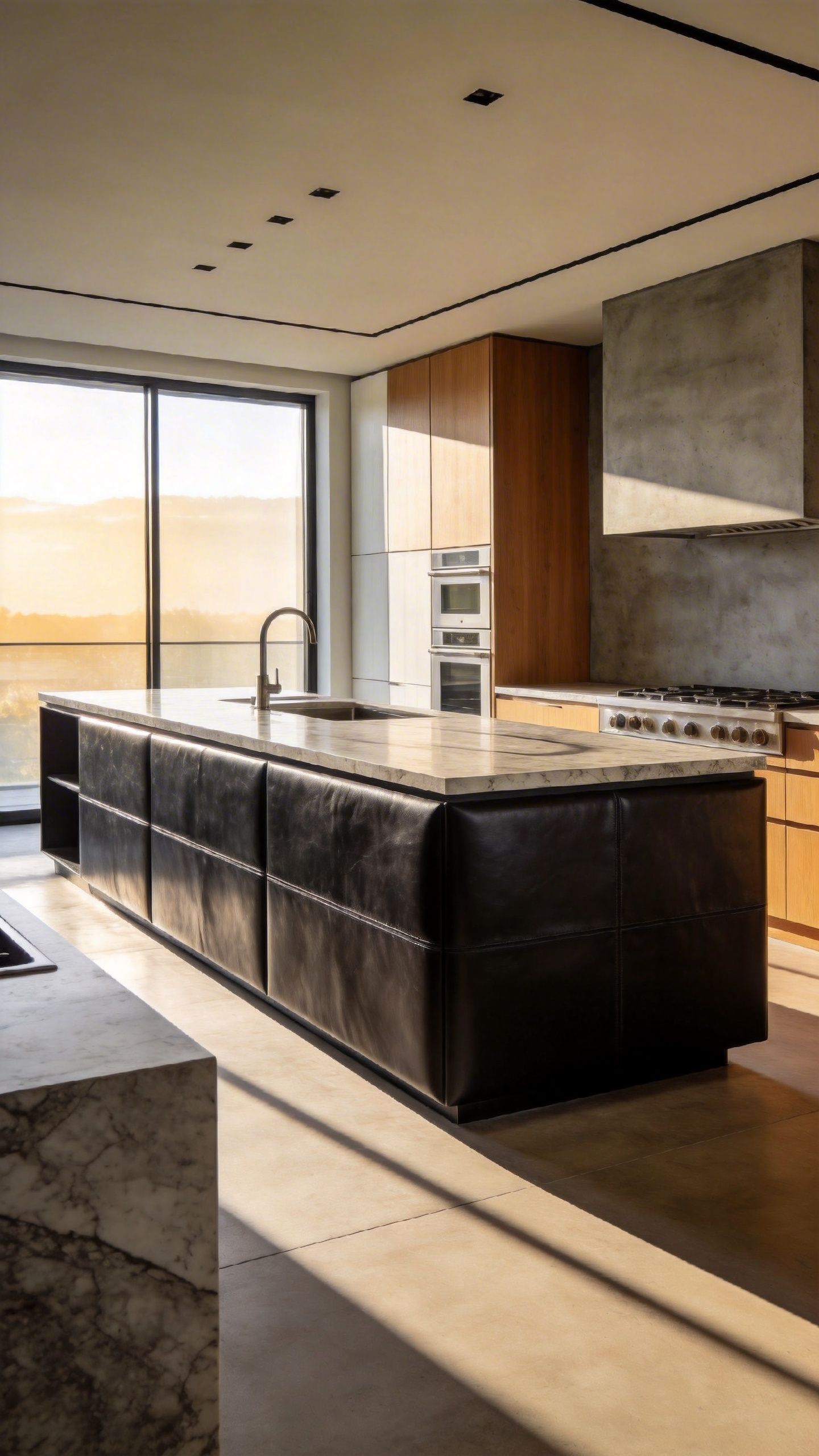
Meanwhile, modern kitchen lighting has evolved entirely away from decorative, distracting fixtures. Instead, integrated structural channels make the harsh light source disappear. For example, flush plaster-in profiles use opal diffusers to mimic soft architectural sunlight. Next, placing hidden LED channels inside toe-kicks makes heavy stone islands visually levitate.
Thus, human-centric lighting treats the space as a biological support system. Specifically, tunable white technology adjusts color temperatures automatically throughout the day. Morning prep benefits from crisp, blue-toned light to naturally boost human alertness. Conversely, the system shifts to warm amber tones to signal evening relaxation. Naturally, a high color rendering index ensures vibrant vegetables look entirely authentic.
Finally, contrasting light and texture effortlessly defines distinct territories without physical walls. By layering task, ambient, and focal beams, we carefully sculpt intimate micro-environments. Therefore, shifting from dark cabinetry to warm timber creates comforting psychological order.
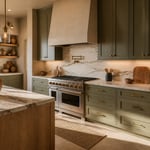
6. Earthy Modern Color Drenching: Moving beyond stark whites to embrace monochromatic, desert-inspired hues like sand, sage, and baked clay.
For years, modern Scandinavian kitchens relied on stark white surfaces. However, this clinical aesthetic often lacks emotional warmth. Therefore, we are now embracing modern kitchen colors that favor earthy saturation. Specifically, this color-drenching approach creates grounded sanctuaries. Unlike reflective whites, desert-inspired palettes absorb light beautifully. Consequently, these low-reflectance hues craft a cocooning atmosphere. For instance, baked clay tones evoke communal earthen fires. Psychologically, these sunset hues stimulate appetite and spark deep conversation. Meanwhile, desaturated sage acts as a calming biophilic anchor. Indeed, modern sand hues provide a soft-focus, powdery neutrality.
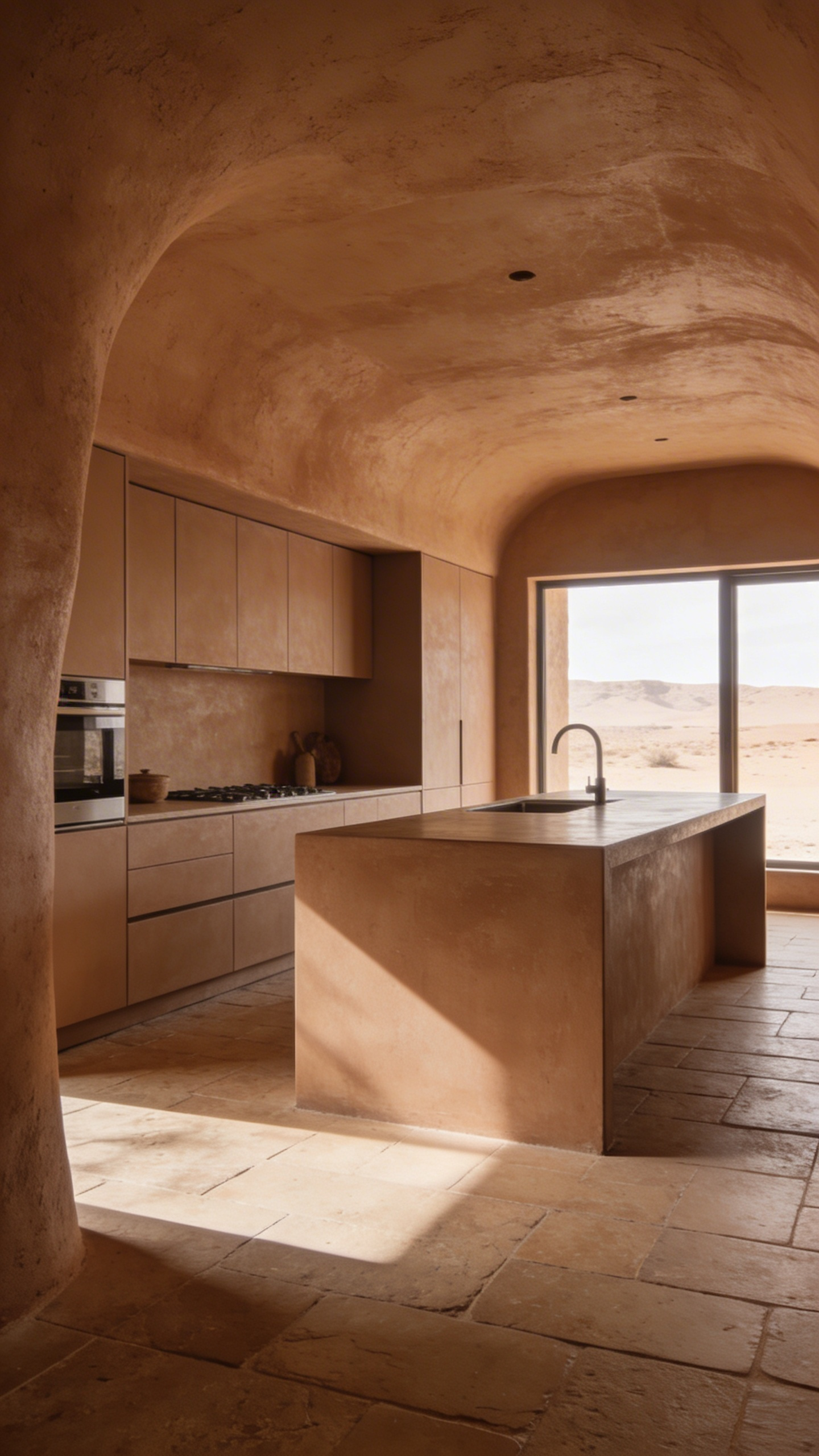
Naturally, drenching a room in one color risks visual flatness. Thus, we prevent this through deliberate, tactile material diversity. In practice, designers apply the exact same hue in varying sheens. For example, matte-painted cabinetry pairs perfectly with glossy Zellige tiles. Next, limewash and Venetian plaster introduce shifting mineral textures. Ultimately, these dynamic finishes mimic sunlight crossing desert dunes. Similarly, curved alcoves soften the room like traditional Middle Eastern adobe.
Crucially, these modern palettes strictly eliminate cool blue undertones. Instead, warm greiges and mushroom tones dominate the space. Consequently, the kitchen avoids feeling gloomy on rainy days. In fact, aged brass or matte black hardware sharply anchors the room. Thus, the monochromatic design retains a clean, tailored edge. Ultimately, these quiet desert colors elevate slow daily cooking rituals. Indeed, the kitchen transforms into a sensory living room.
7. Solar-Conscious Window Treatments: Utilizing natural woven shades to filter harsh sunlight while maintaining an ethereal, diffused glow.
Modern kitchens often feature flat, reflective surfaces like quartz and steel. Consequently, sunlight easily becomes harsh in these minimalist spaces. Natural woven shades solve this through the physics of light scattering. Specifically, organic fibers possess microscopic surface irregularities unlike synthetic meshes. Therefore, they break intense sunlight into beautifully diffused, non-directional beams. This creates a volumetric glow rather than clinical brightness.
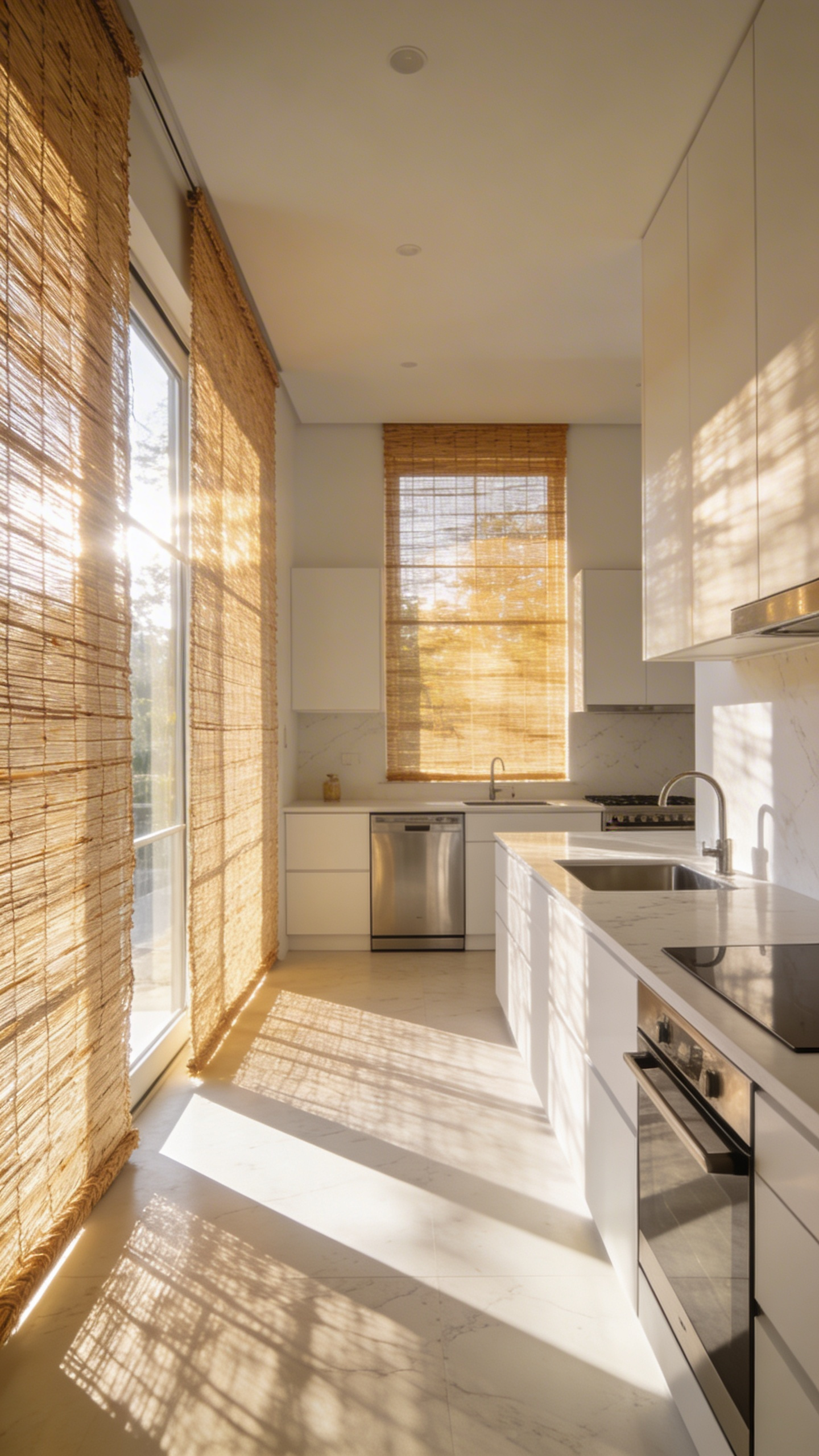
Next, these treatments act as a highly effective thermal barrier. In fact, natural reeds contain hollow, porous cellular structures. Thus, they trap air to create a passive cooling system. This remains essential for climate-conscious design in sun-drenched environments. Specifically, solar-conscious shades can block up to 99% of UV rays. As a result, they protect expensive marble and custom cabinetry from fading.
Similarly, woven materials introduce essential soft textures to hard architectural spaces. For example, balancing clean lines with organic warmth creates truly inviting interiors. Particularly, rigid bamboo complements Scandinavian minimalism with its clean vertical grain. Conversely, textured jute absorbs light deeply to create a richer desert-modern ambiance. Indeed, these irregular weaves effectively dampen harsh acoustic echoes from tile floors. Finally, warm LED lighting interacts beautifully with natural plant lignin at night. Ultimately, this makes the organic shades glow softly from the inside out.
8. Concealed Task Lighting Architecture: Designing layered illumination that provides functional brightness without exposing the fixture.
Traditionally, task lighting meant bulky fixtures disrupting the harmony of a room. Conversely, modern architecture treats light as an invisible structural tool. Specifically, architects carve intentional shadow gaps directly into the ceiling. These reveals allow light to cascade downward. Consequently, heavy oak cabinetry appears to float effortlessly. Next, trimless plaster-in profiles embed aluminum channels right into the surrounding drywall. This creates a razor-thin, flush aperture for clean illumination.
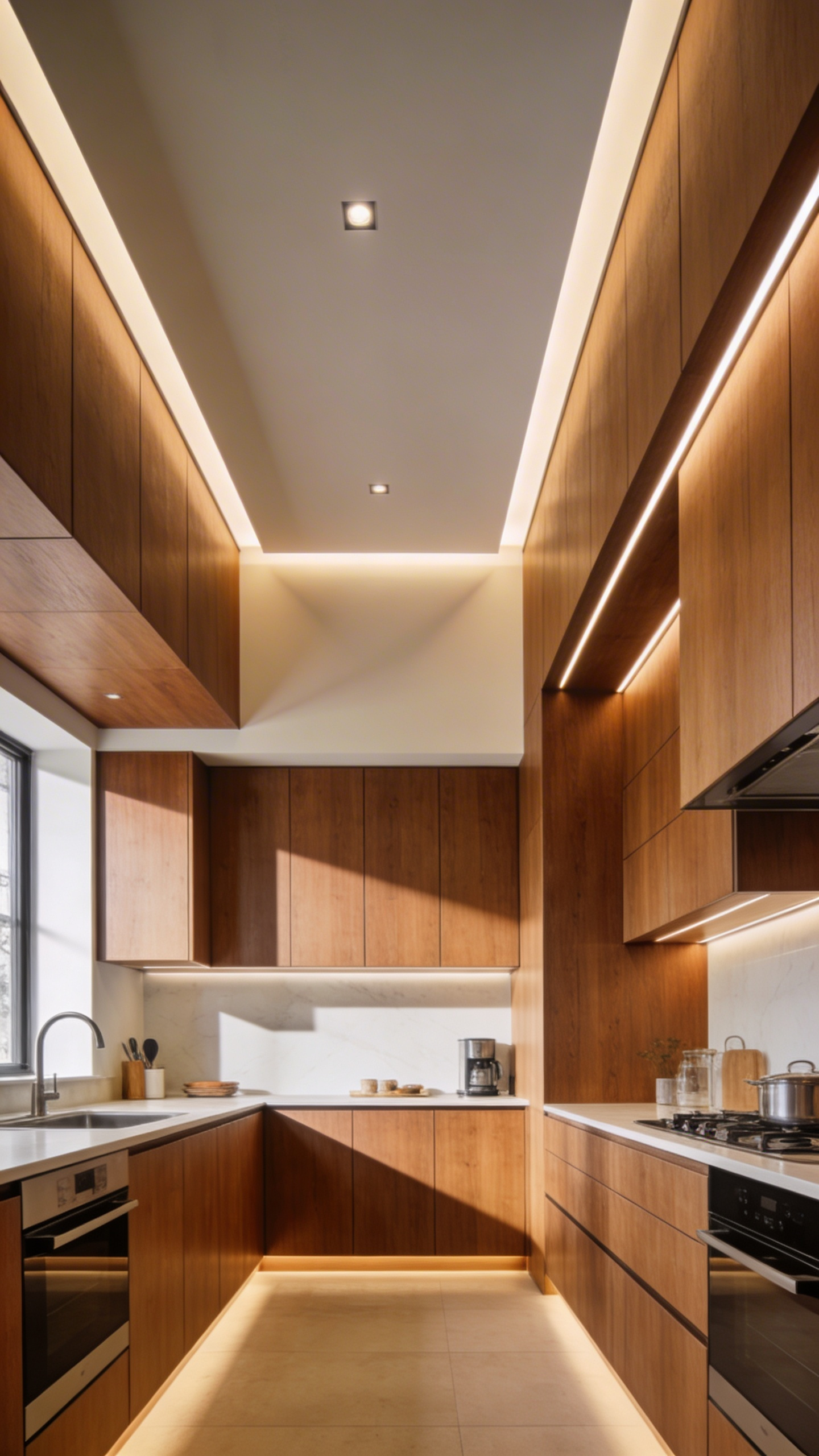
However, highly polished stone countertops often act like giant mirrors. Therefore, exposed LED diodes create harsh, unsightly reflections. To fix this problem, designers utilize deep channels paired with milky diffusers. Essentially, these specialized opal diffusers scatter the light internally. This transforms harsh glare into a warm, inviting linear glow. In fact, downward grazing techniques highlight the intricate texture of handmade Middle Eastern tiles. Wall-tucked fixtures create rich depth. Standard overheads would simply flatten these beautiful surfaces.
Ultimately, this hidden architectural approach cultivates a profound sense of visual quiet. The space transitions easily from a high-intensity workspace into a relaxing living area. Crucially, these enclosed systems demand high-grade aluminum heat sinks for longevity. Otherwise, trapped thermal energy causes premature fixture failure. Fortunately, modular snap-in systems ensure easy maintenance access. Indeed, delicate components pop out quickly without dismantling the surrounding wooden cabinetry.
9. Sculptural, Raw Material Pendants: Anchoring the kitchen island with statement lighting crafted from unglazed ceramic, alabaster, or aged brass.
Modern kitchens often feature high-gloss, non-porous surfaces. Consequently, these clinical spaces require deliberate sensory disruptors for visual balance. Specifically, unglazed ceramic pendants introduce a primitive, architectural element. This matte clay embodies the tactile beauty of wabi-sabi. Naturally, the fired earth saturates with light when illuminated. Thus, it creates a visceral, desert-like warmth above the island.
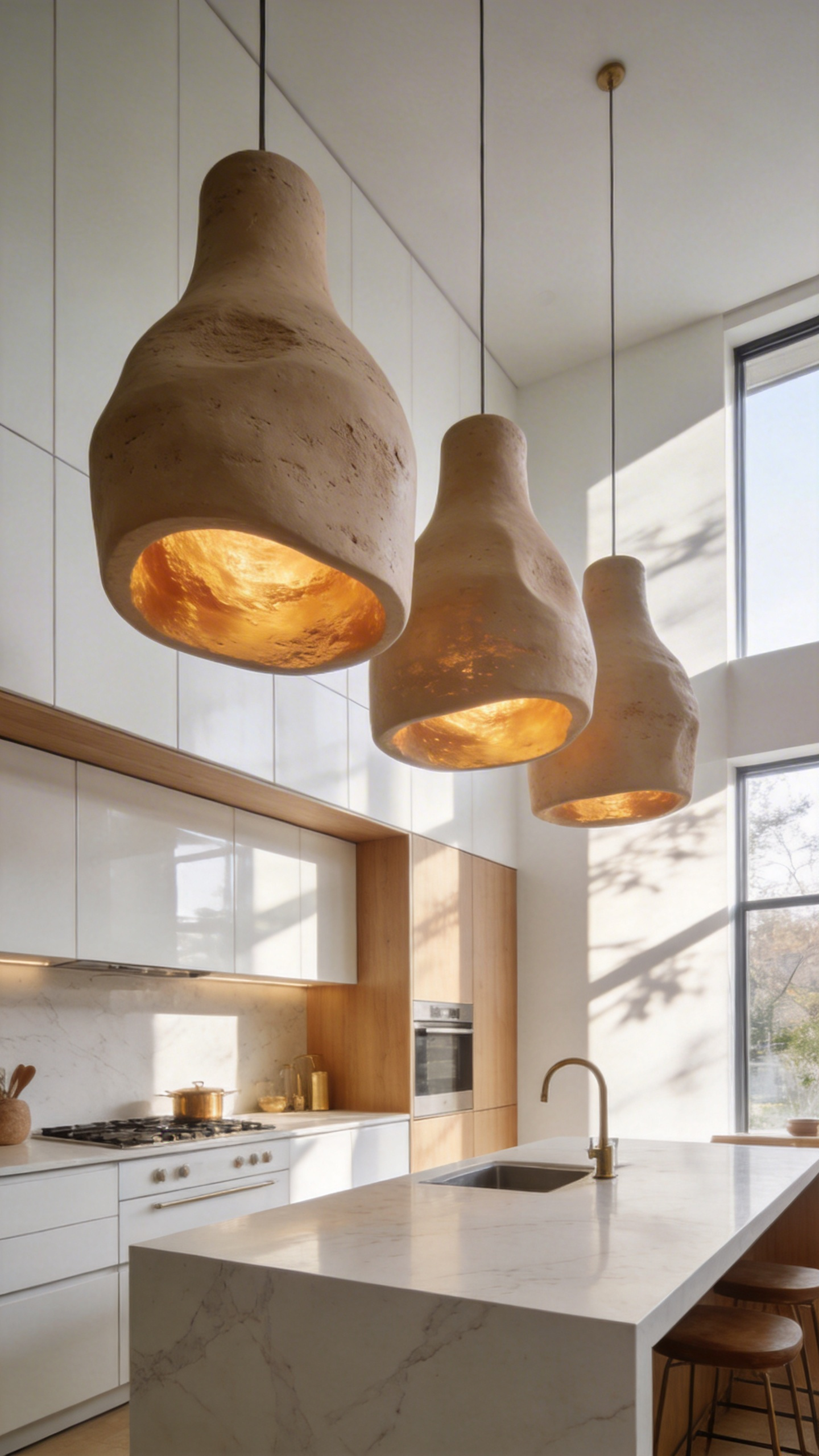
Alternatively, alabaster provides an ethereal heft to the space. Historically, ancient builders used thin stone slabs to filter sunlight. Today, an alabaster fixture functions as a luminous stone window. Particularly, it softens harsh LED lighting into a creamy, amber glow. Indeed, no two pieces share the exact same cloud-like veining.
Meanwhile, aged brass introduces the subtle passage of time. Indeed, this unlacquered living finish reacts with the active kitchen environment. Therefore, it develops a unique patina over the prep zone. Aesthetically, its dark tones create a strong sculptural silhouette against lighter backsplashes. Consequently, this metal bridges industrial coldness with comforting human warmth.
Ultimately, these raw materials serve as vital spatial anchors. Functionally, they delineate the social hub without relying on interior walls. Traditionally, designers relied on the standard rule of three for lighting. However, modern desert-minimalism often favors a single, oversized monolith of light. Overall, this crude texture perfectly grounds the surrounding sleek cabinetry.
10. Living Metallic Accents: Integrating unlacquered brass and copper fixtures that develop a natural, personalized patina over time.
Incorporating unlacquered brass and copper fixtures shifts a kitchen away from static perfection. Specifically, these raw alloys feature a living finish that evolves with your daily routines. Over time, exposure to air and moisture creates a chemical defense mechanism. Consequently, this oxidation forms a self-sealing patina of rich amber and umber tones. In fact, asymmetric aging creates a beautiful usage map across your hardware. High-touch handles stay brilliantly polished from the natural oils of your hands. Conversely, untouched crevices deepen into dark shades that factory finishes cannot replicate.
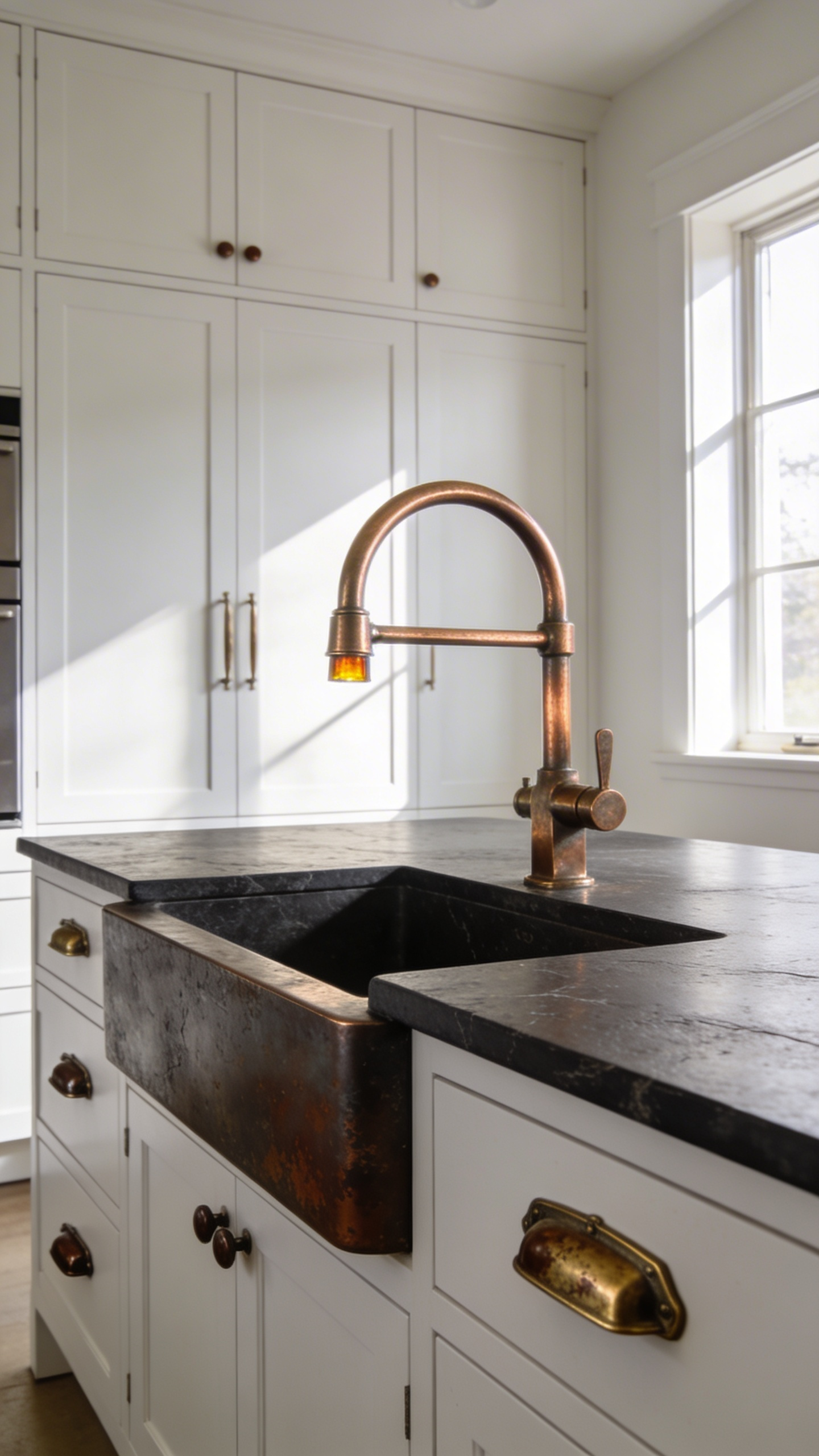
Beyond aesthetics, living metals introduce distinct sensory dimensions to minimalist spaces. For example, heavy-gauge copper sinks provide natural sound-dampening against running water. Therefore, they soften the hard acoustic edges often found in modern open-concept layouts. Next, both brass and copper possess intrinsic antimicrobial properties for healthier surfaces.
Integrating these materials requires embracing an organic, climate-conscious design philosophy. Naturally, acidic foods like lemon juice will strip the patina and leave bright spots. However, I often celebrate this chemical reset as the visual history of a shared meal. Soon, the bright spots will naturally re-oxidize to blend back into the dark metal.
Ultimately, living metals create vital visual tension against sleek Scandinavian cabinetry or cool stone. Indeed, their golden tones bridge cool stainless appliances and warm desert-inspired floors. Thus, these fixtures ground modern minimalism with a profound sense of historical craftsmanship.
Phase III: Biophilic Integration & Styling (Breathing Life into the Space)
Phase III marks a critical transition from decorating to designing for life. Specifically, this phase creates a restorative, breathing ecosystem. In my desert-modern practice, plants become living infrastructure rather than cluttered accessories. Consequently, trough-integrated islands replace traditional potted plants. This Scandinavian approach maintains exceptionally clean visual lines. Simultaneously, it puts functional aromatics like rosemary within arm’s reach. Thus, meal prep transforms into a meditative, sensory ritual.
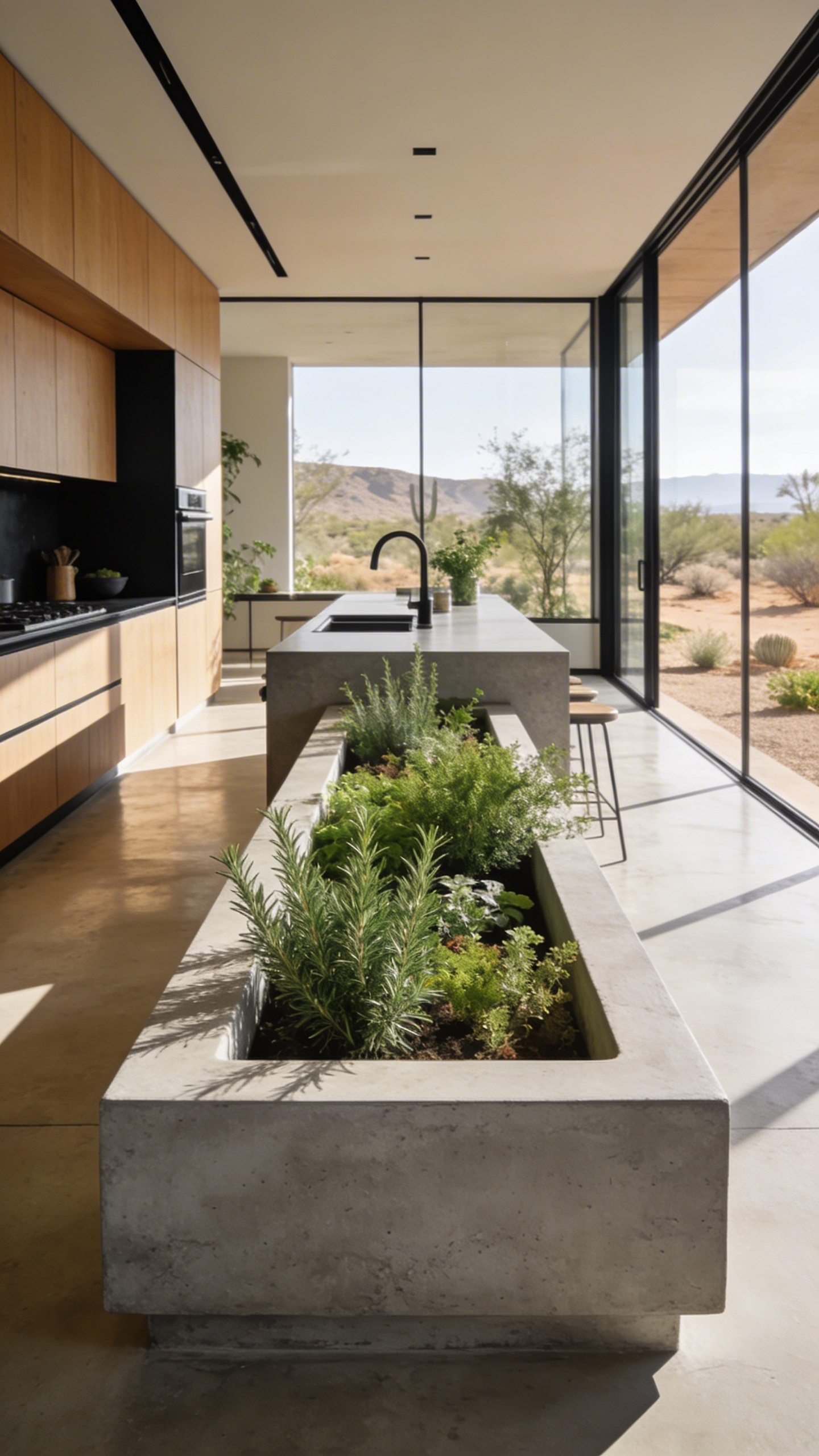
Indeed, the human brain seeks comfort in natural fractal patterns. Therefore, we actively avoid perfectly uniform surfaces here. Instead, we champion geological and tactile honesty. For example, leathered stone with heavy veining provides a grounding, haptic connection. Naturally, this earthy texture contrasts beautifully with minimalist cabinetry. As a result, viewing these organic patterns significantly reduces mental stress.
Next, a truly restorative space must embrace functional silence. Remarkably, we prioritize whisper-quiet appliances operating below 40 decibels. Consequently, the harsh industrial hum is eliminated entirely. Rather, subtle, non-rhythmic sensory stimuli take center stage. For instance, you might hear the gentle rustling of sculptural indoor foliage. Then, lighting shifts from sterile visibility to biological entrainment. Accordingly, circadian systems adjust from morning brightness to a warm evening amber. Next, low-glare accents create a shadow play mimicking a lush canopy.
Historically, kitchens functioned strictly as hidden utility zones. However, this intentional integration reclaims the room as a spiritual hearth. Indeed, it merges modern precision with an ancient, nature-centered refuge. Ultimately, this climate-conscious approach anchors the home deeply in our digital world.
11. Drought-Resistant Botanical Sculptures: Replacing fussy florals with architectural branches, olive trees, and structural desert greenery.
Modern kitchen design is moving away from perishable, fussy floral arrangements. Instead, designers embrace drought-resistant botanical sculptures to anchor open-concept spaces. Specifically, large-scale branches and desert greenery offer striking biophilic minimalism. Consequently, these elements interact directly with the architecture of the room.
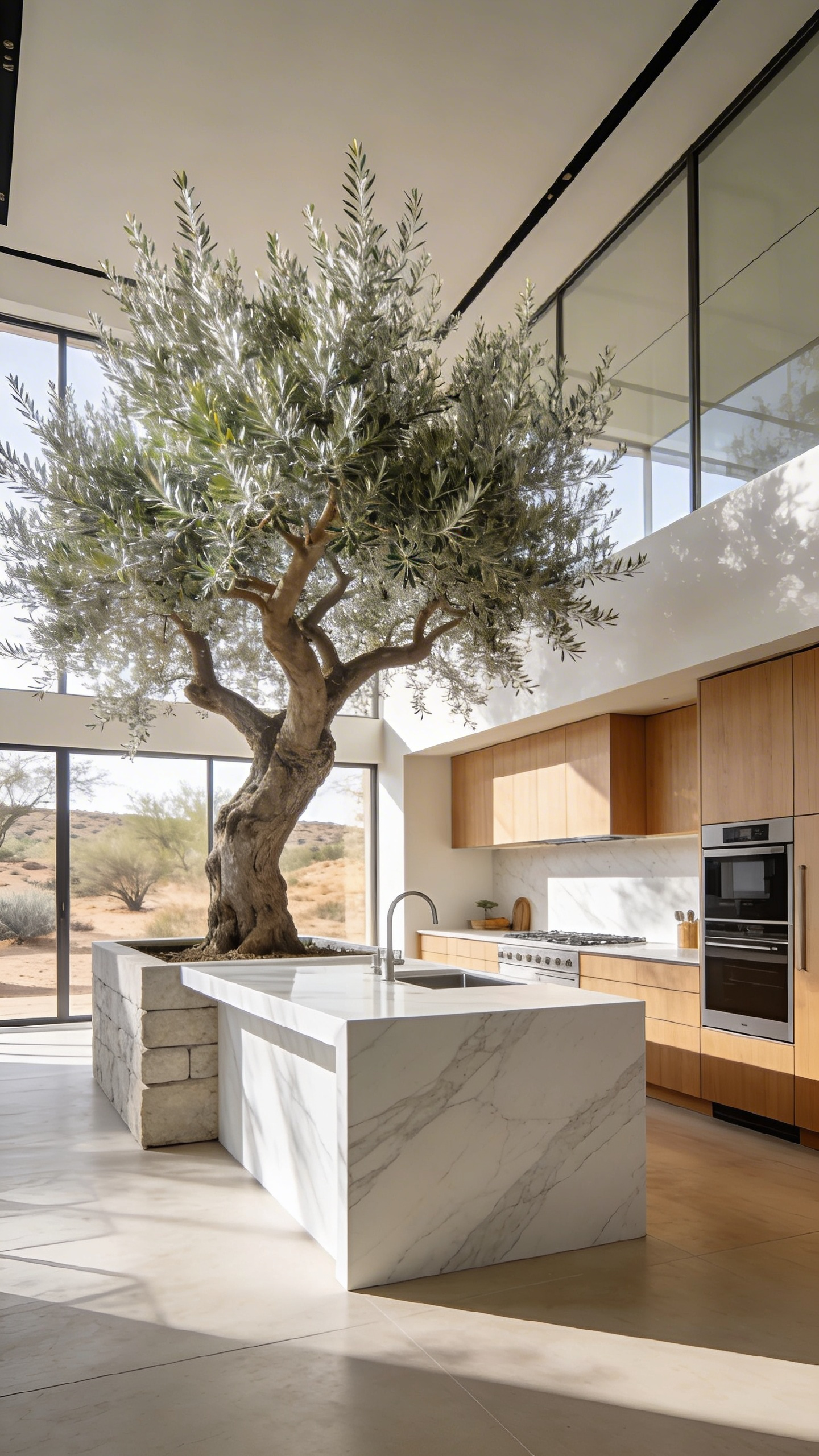
For instance, an indoor olive tree acts as a perfect living sculpture. In fact, its muted, silvery-green foliage beautifully warms up minimalist cabinetry. This perfectly balances Scandinavian clean lines with Middle Eastern desert resilience. Next, utilizing open-center pruning techniques creates a hollow interior canopy. As a result, natural light passes through to highlight the twisted trunk. Importantly, this weathering evokes the Japanese concept of wabi-sabi.
Similarly, structural desert greenery provides sharp, geometric forms. For example, the rigid leaves of a Fox Tail Agave mimic modern architectural lines. Alternatively, foraged Manzanita branches add dramatic, winding movement. Ultimately, styling these botanical elements relies on the single statement rule. Therefore, place one oversized, heavy ceramic vessel on the kitchen island. This minimizes visual clutter while creating a permanent design anchor. Finally, position these branches near light sources to cast shifting, dramatic shadows across the space.
12. The Art of Intentional Negative Space: Styling open shelving with a minimalist, gallery-like approach that values empty space as much as objects.
Open shelving transforms the kitchen wall into a curated canvas. Importantly, this gallery approach embraces the Japanese concept of Ma. Rather than a mere gap, empty space becomes a meaningful pause. Consequently, this intentional void acts as a gateway for light. In practice, designers manage this emptiness through careful visual weight. For instance, modern luxury kitchens often utilize the 70/30 rule. Therefore, seventy percent of the shelving remains completely open air.
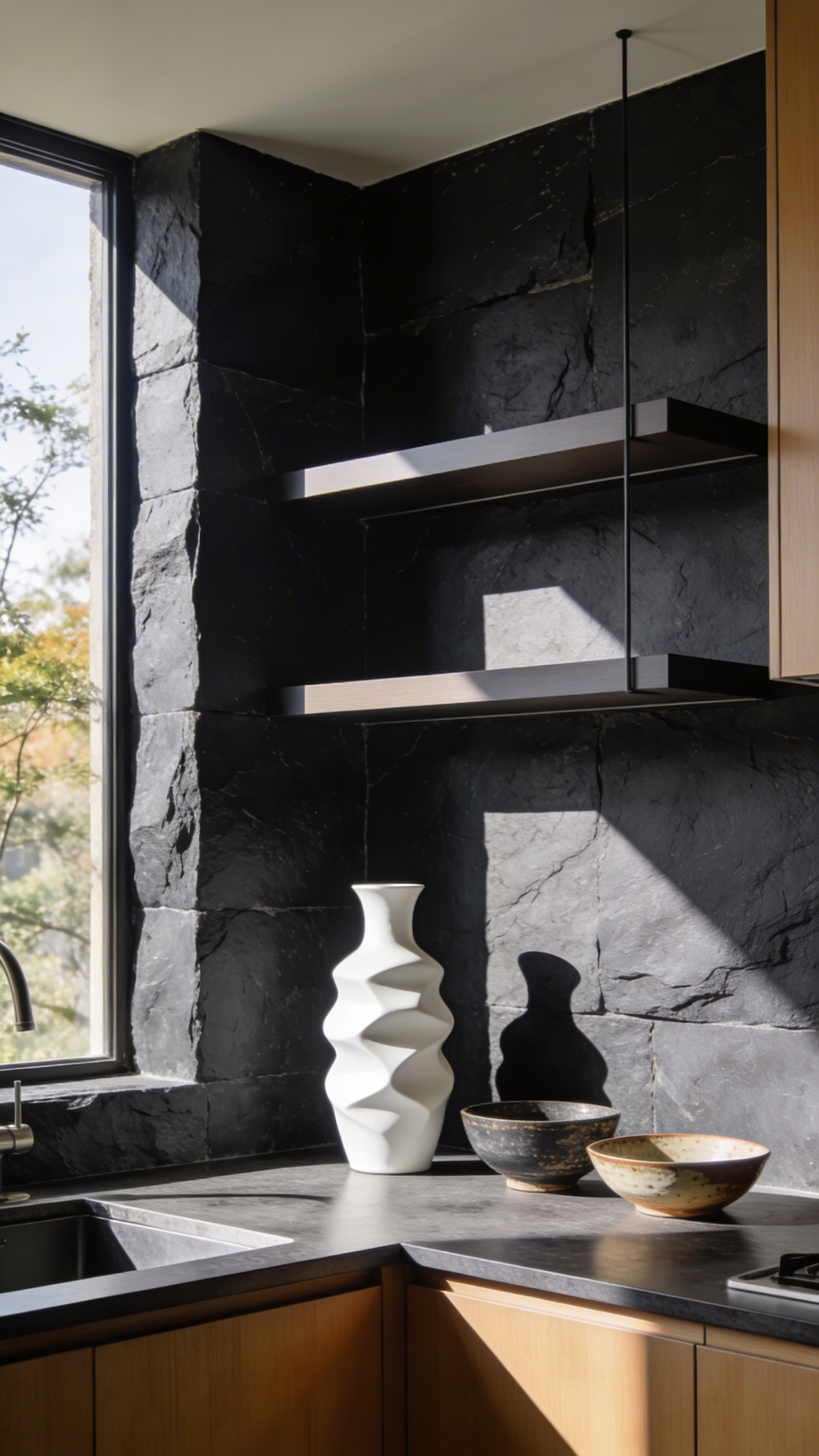
Darker matte stoneware carries a significant amount of visual mass. Thus, these heavy items require much more surrounding negative space. Next, asymmetrical placement prevents the display from feeling overly rigid. Instead, place your sculptural objects along a subtle diagonal path. As a result, the viewer’s eye naturally travels across active voids. Indeed, architectural lighting sculpts this empty space beautifully. Specifically, soft LED wash lighting illuminates the back wall. Consequently, ceramic objects are pushed into striking, quiet silhouettes.
Warm minimalism demands refined shapes and deeply tactile materials. For example, pair raw Middle Eastern ceramics with sleek Scandinavian glass. Next, concealed floating brackets are essential to reduce visual noise. A thick-cut white oak shelf frames the emptiness with true warmth. Conversely, blackened steel provides a sharper architectural boundary. Ultimately, this intentional curation vastly reduces your daily cognitive load. The kitchen therefore becomes a restorative space of mindful ritual.
13. Hand-Thrown Artisanal Vessel Collections: Elevating daily utility by displaying climate-conscious, handcrafted pottery and ceramics.
The modern kitchen has evolved into a curated sanctuary. Specifically, hand-thrown artisanal vessels anchor this transformation. Indeed, these pieces reject sterile uniformity for tactile warmth. Each vessel carries the visible mark of its maker. Consequently, throwing rings and thumbprints tell a distinct story. This authenticity beautifully softens the clean lines of minimalist spaces.
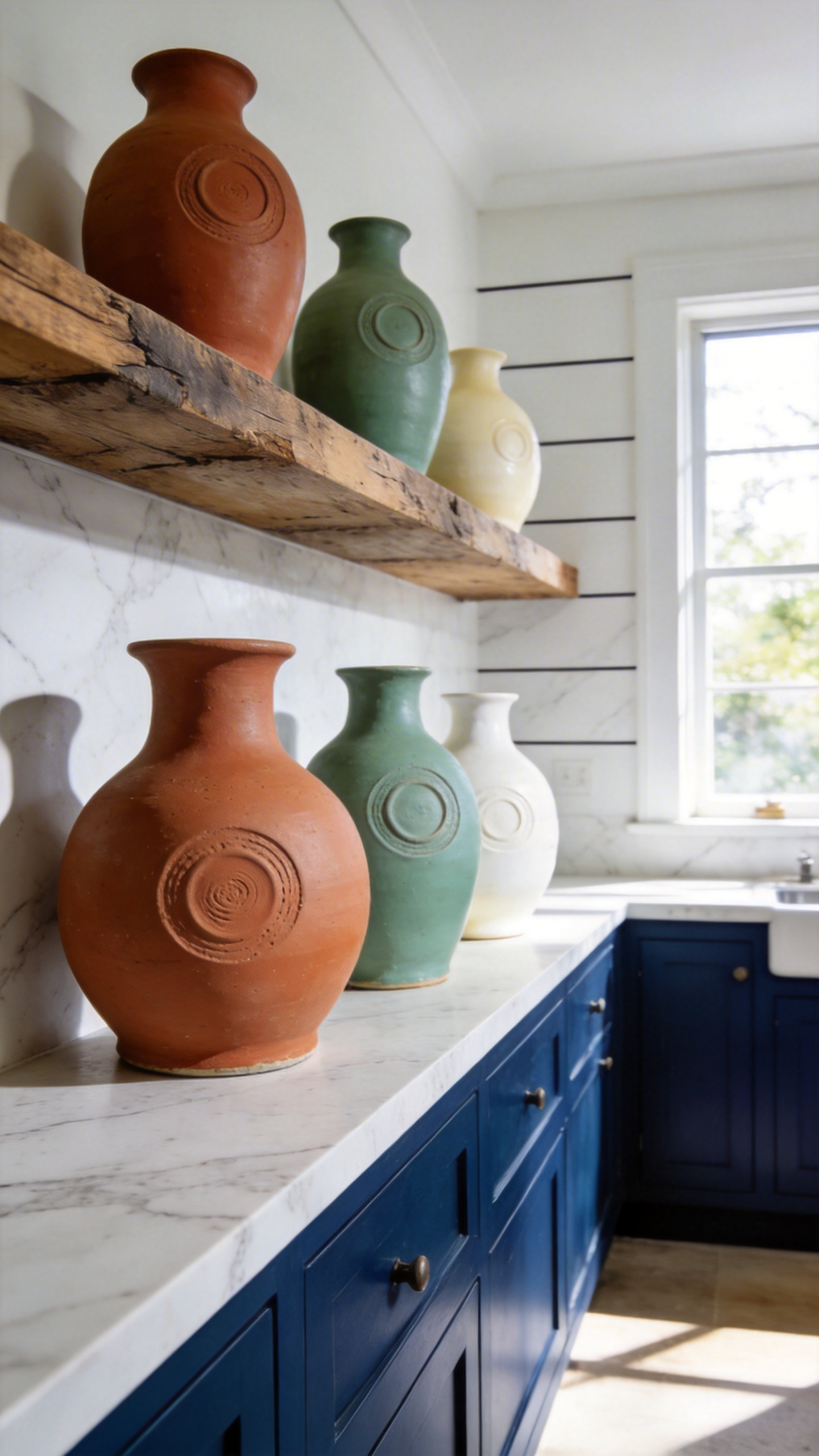
Crucially, this movement embraces climate-conscious principles. Artisans increasingly source wild clay from their immediate geography. Therefore, they drastically reduce the carbon footprint of heavy transport. Many potters also employ raw single-firing techniques. Impressively, skipping the secondary firing reduces energy consumption by half. Lead-free glazes ensure these daily items remain non-toxic.
Next, these vessels engage our sensory architecture. A heavy, unglazed stoneware mug grounds your morning ritual. In fact, the contrast against a smooth interior sparks mindfulness. This tactile feedback fosters emotional durability. Ultimately, you keep one beloved bowl instead of replacing many. To honor this craft, designers utilize open shelving. Accordingly, earth-toned bowls and pitchers become functional art. We embrace the weathered elegance of authentic imperfection. Thus, daily utility is elevated through a deep connection to the earth.
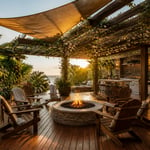
14. Indoor-Outdoor Harmony Zones: Blurring the boundary between the kitchen and exterior spaces through continuous flooring and retractable glass.
Modern kitchens increasingly function as permeable membranes. Specifically, they dissolve the traditional walls separating interior and exterior. This architectural philosophy draws heavily from mid-century California Modernism. Today, we achieve this harmony through sophisticated retractable glass walls. However, a true continuous flow relies on mastering the flush threshold. Typically, standard construction requires a bulky step to block water. Instead, high-end systems utilize a hidden, recessed drainage track. Consequently, water falls through a narrow slit into a sloped tray. Next, polyamide thermal breaks inside the frame prevent cold transfer. This climate-conscious engineering balances Scandinavian minimalism with high thermal efficiency.
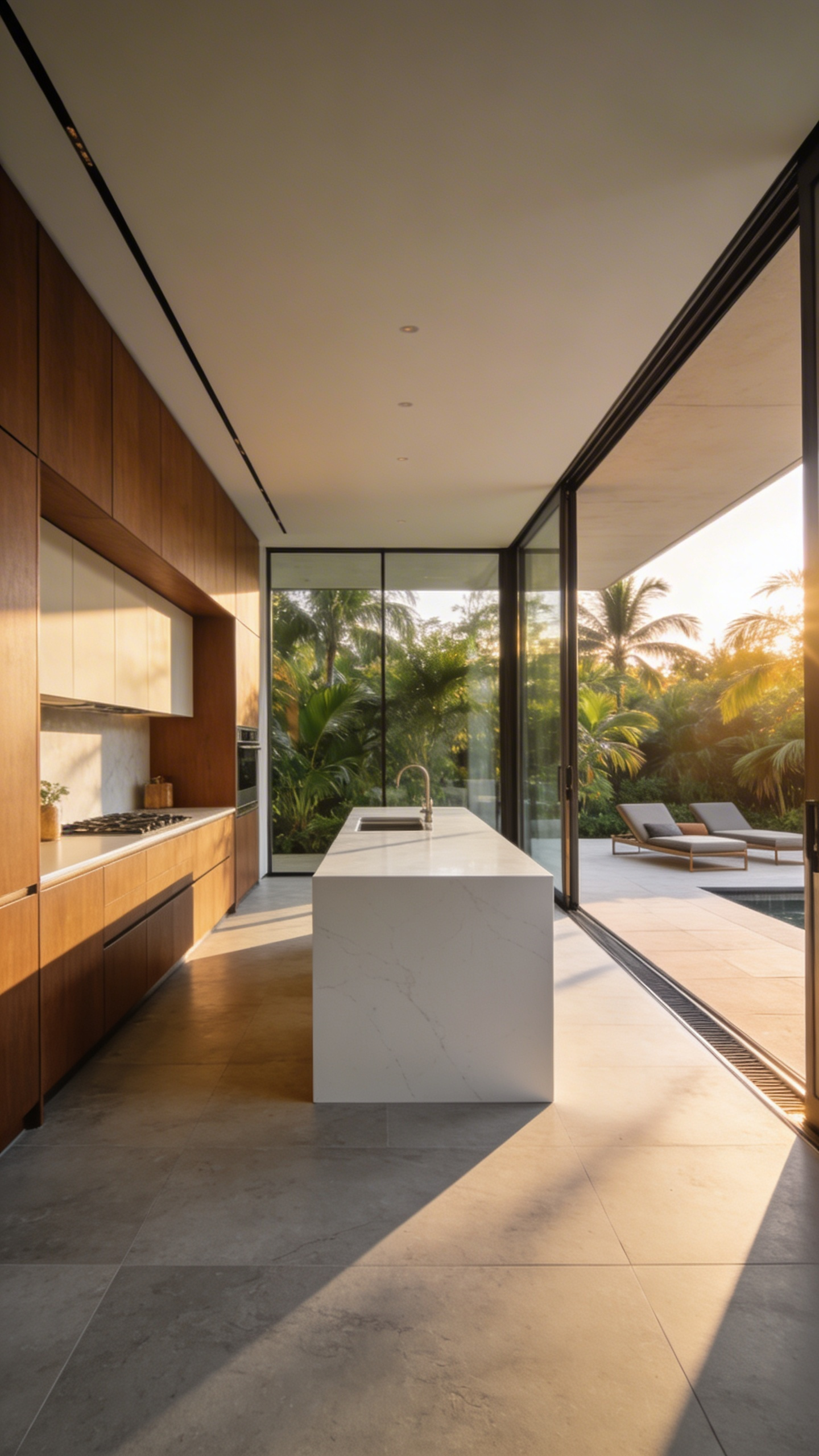
Visually, the flooring must act as a single, continuous plane. Therefore, designers use a clever twin finish material strategy. Indoors, smooth R9 porcelain provides a clean, easily washed surface. Conversely, the exterior features a matching R11 textured tile. This tactile variation ensures vital slip resistance against seasonal rain. Crucially, perfectly aligned monochromatic grout lines maintain the optical illusion. Laying these planks lengthwise pulls the eye outward beautifully.
Meanwhile, extending a warm wood-slatted ceiling outside softens harsh acoustics. This subtle Middle Eastern hearth concept creates a true social pivot. Consequently, the cook effortlessly engages with guests on the patio. Naturally, this architectural beauty requires dedicated routine upkeep. For instance, flush tracks demand regular vacuuming to remove damaging grit. Ultimately, applying dry silicone spray keeps these massive glass panels gliding silently.
Phase IV: Mindful Functionality & Lifestyle (The Unseen Sophistication)
Modern kitchen design is entering a mindful new phase. Specifically, we are seeing the rise of the “un-kitchen.” This aesthetic prioritizes invisible performance to reduce cognitive clutter. For example, under-counter induction systems transform solid stone slabs into continuous workspaces. Therefore, you can prep, cook, and dine on one uninterrupted surface. Culturally, this creates beautiful visual silence. Indeed, the Gestalt principle of continuity proves that monolithic surfaces lower our daily stress.
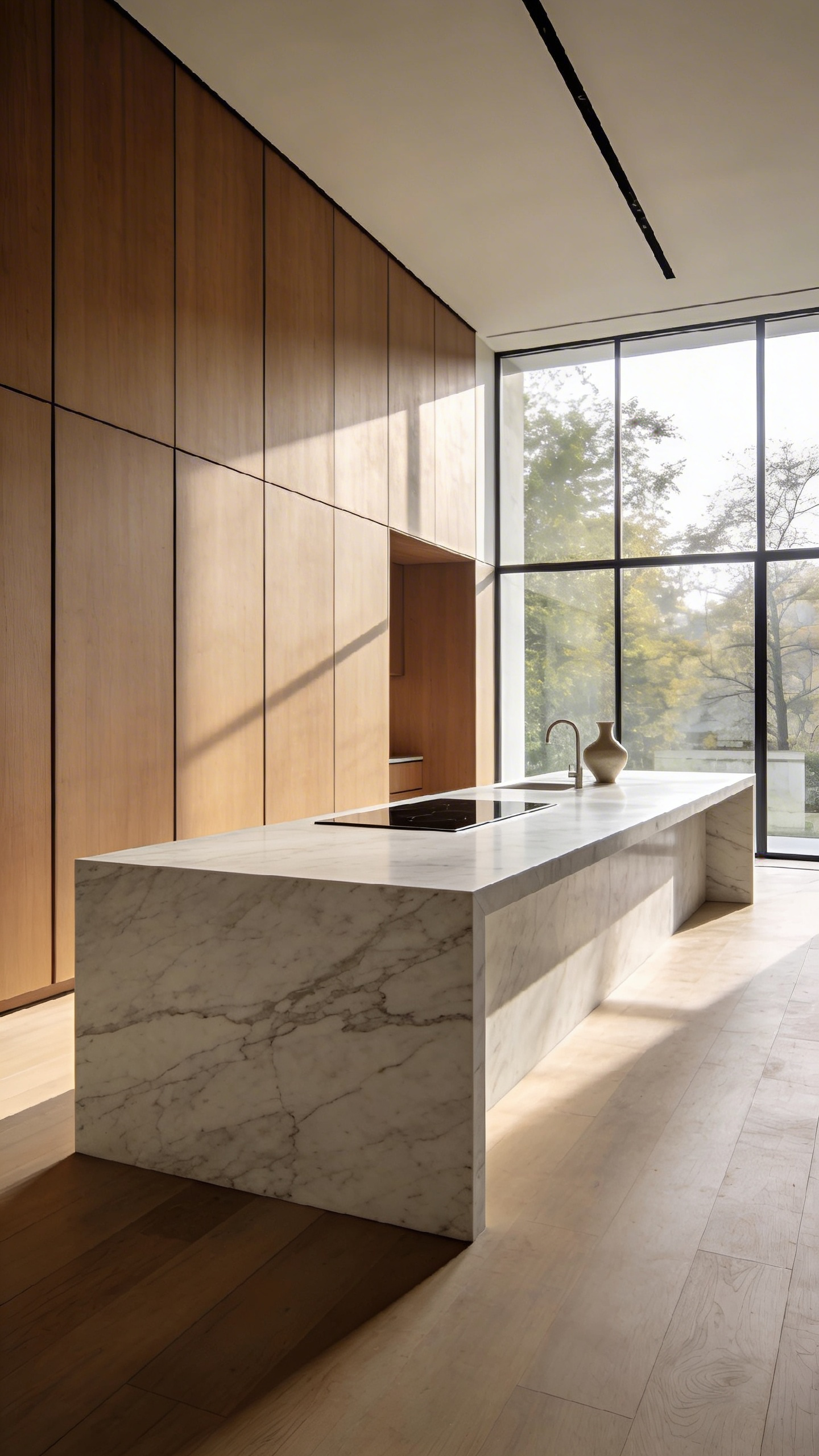
Next, mindful functionality must address our invisible sensory experiences. Acoustic management is now a basic requirement. Consequently, designers integrate sound-absorbing fluted timber and silent ventilation systems. Similarly, circadian smart lighting mimics the natural sun. Lighting shifts from cool morning tones to warm amber hues. Thus, the environment signals your body to wind down. Tactile materials like honed stone offer a physical contrast to cold digital screens.
Naturally, our daily choreography shifts from simple efficiency toward meaningful ritual. For instance, dedicated morning reset stations hide behind minimalist bifold doors. Meanwhile, messy labor moves into hidden prep pantries. Ultimately, the main kitchen remains a pristine stage for hospitality. However, this unseen sophistication introduces a maintenance paradox. Integrated technologies often require specialized technicians for basic repairs. Yet, creating a restorative sanctuary justifies this complex trade-off.
15. Climate-Responsive Material Zoning: Strategically placing cool stone for prep areas and warm wood for gathering and dining zones.
In modern kitchen design, climate-responsive material zoning creates thermodynamic ergonomics. Specifically, this approach balances high-performance tasks with social comfort. For high-energy task zones, natural stones like marble provide vital thermal mass. Consequently, these surfaces absorb heat slowly and wick warmth away from ingredients. Therefore, professional bakers rely on stone to maintain temperatures below ambient room levels. This cool surface keeps butter solid during delicate pastry lamination.
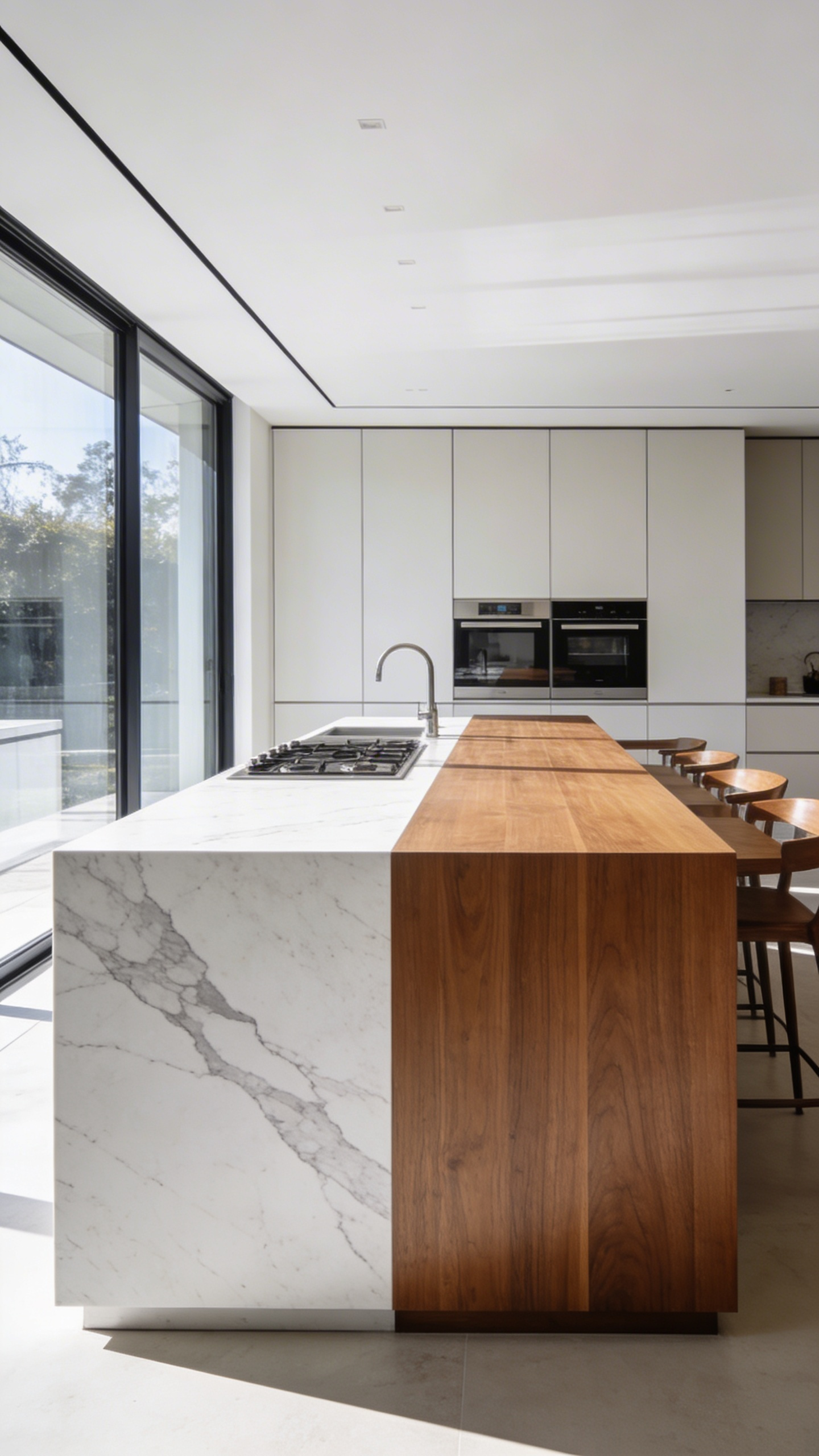
Conversely, wood serves a very different psychological and physical purpose. In Scandinavian and Middle Eastern traditions alike, wood anchors the gathering spaces. In fact, wood is a natural insulator with low thermal conductivity. As a result, it feels inherently warm to the human touch. This thermal neutrality invites guests to linger comfortably at the island.
Naturally, the most striking designs blend these materials into a hybrid layout. For example, a split-material island marries a rugged stone prep area with an oak dining edge. Alternatively, designers often inlay a cool marble slab directly into a warm wooden counter. Ultimately, these tactile cues provide distinct haptic wayfinding for the user. Historically, this mimics the ancient logic of cool larders and warm hearths. Indeed, the stone acts as a thermal battery to regulate ambient room temperatures. Thus, this thoughtful zoning unites clinical functionality with essential human warmth.
16. The Concealed Scullery or ‘Messy Kitchen’: Designing secondary prep pantries to maintain the main kitchen as a serene, minimalist sanctuary.
The open-plan kitchen now functions as a minimalist sanctuary. Consequently, the modern concealed scullery has become an architectural necessity. This secondary workspace handles the chaotic reality of cooking. Specifically, it separates aesthetic form from utilitarian function. In Scandinavian design, visual quiet is essential for daily relaxation. Therefore, heavy preparation and cluttered appliances migrate behind closed doors.
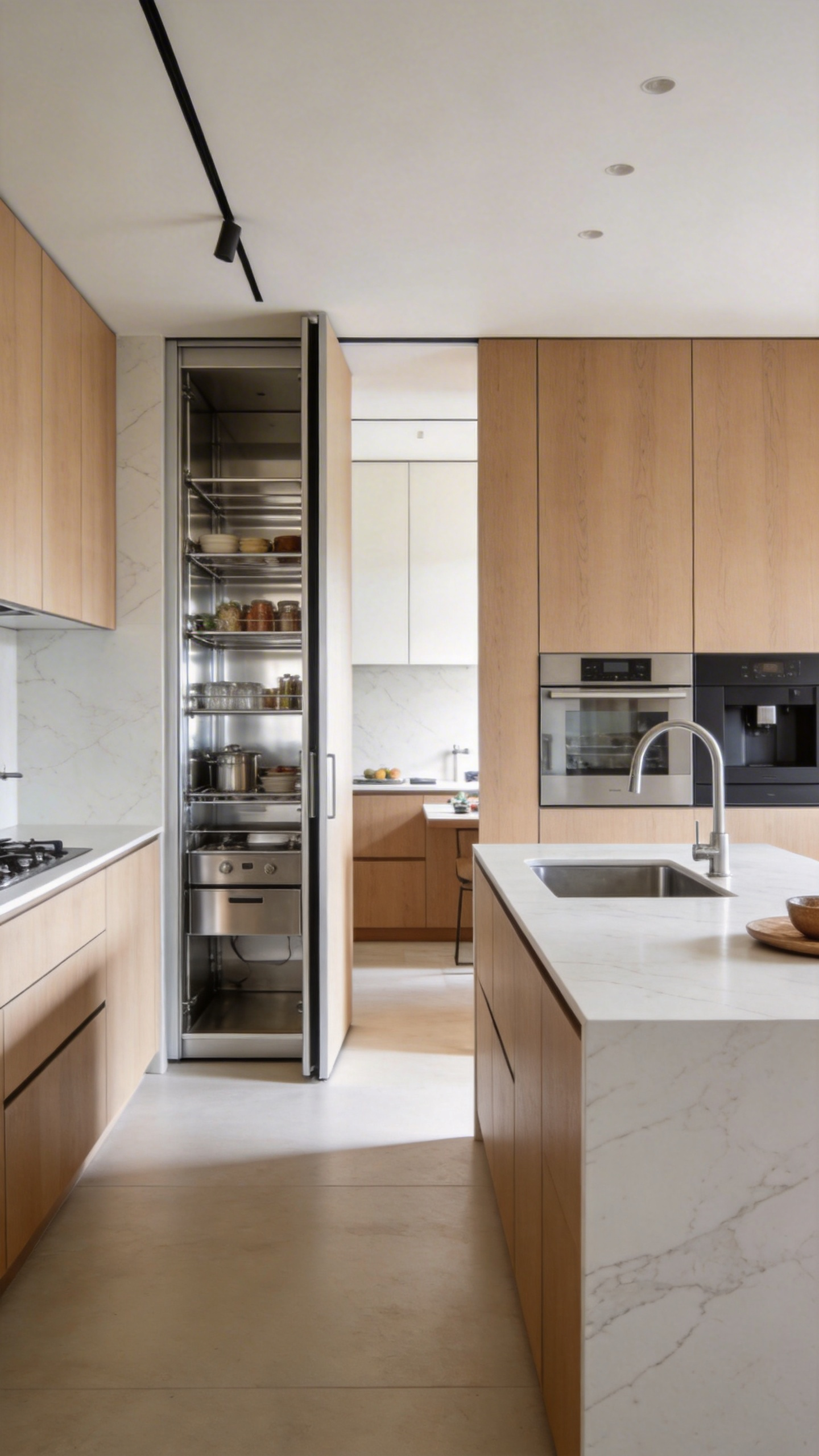
Middle Eastern hospitality often involves elaborate, highly aromatic feasts. Thus, negative pressure ventilation in the scullery extracts potent cooking odors. Next, acoustic isolation muffles loud dishwashers and high-decibel blenders. This ensures the main social stage remains completely peaceful. Indeed, these messy kitchens stay entirely hidden from your guests. For example, flush jib doors blend perfectly into warm wood cabinetry. Specialized concealed hinges eliminate the need for distracting visible hardware.
Inside the scullery, the focus shifts to high-output durability. Naturally, resilient stainless steel and quartz replace delicate marble surfaces. Wide workstation sinks efficiently contain the mess of meal preparation. In fact, hidden power strips support multiple small appliances running simultaneously. Ultimately, this intentional separation greatly reduces your cognitive load. It catches the chaotic labor of entertaining like a culinary mudroom. Consequently, the primary kitchen remains a serene, welcoming space.
17. Heirloom-Quality Wooden Prep Stations: Positioning robust, natural-grain butcher blocks as central, functional art pieces.
Modern minimalist kitchens often rely on cold surfaces like quartz. Therefore, an heirloom-quality wooden prep station restores essential warmth. Specifically, these heavy end-grain blocks act as functional art. They ground the room both physically and emotionally. In fact, a massive central block provides an organic architectural anchor. Consequently, the complex end-grain mosaic softens sterile lines.
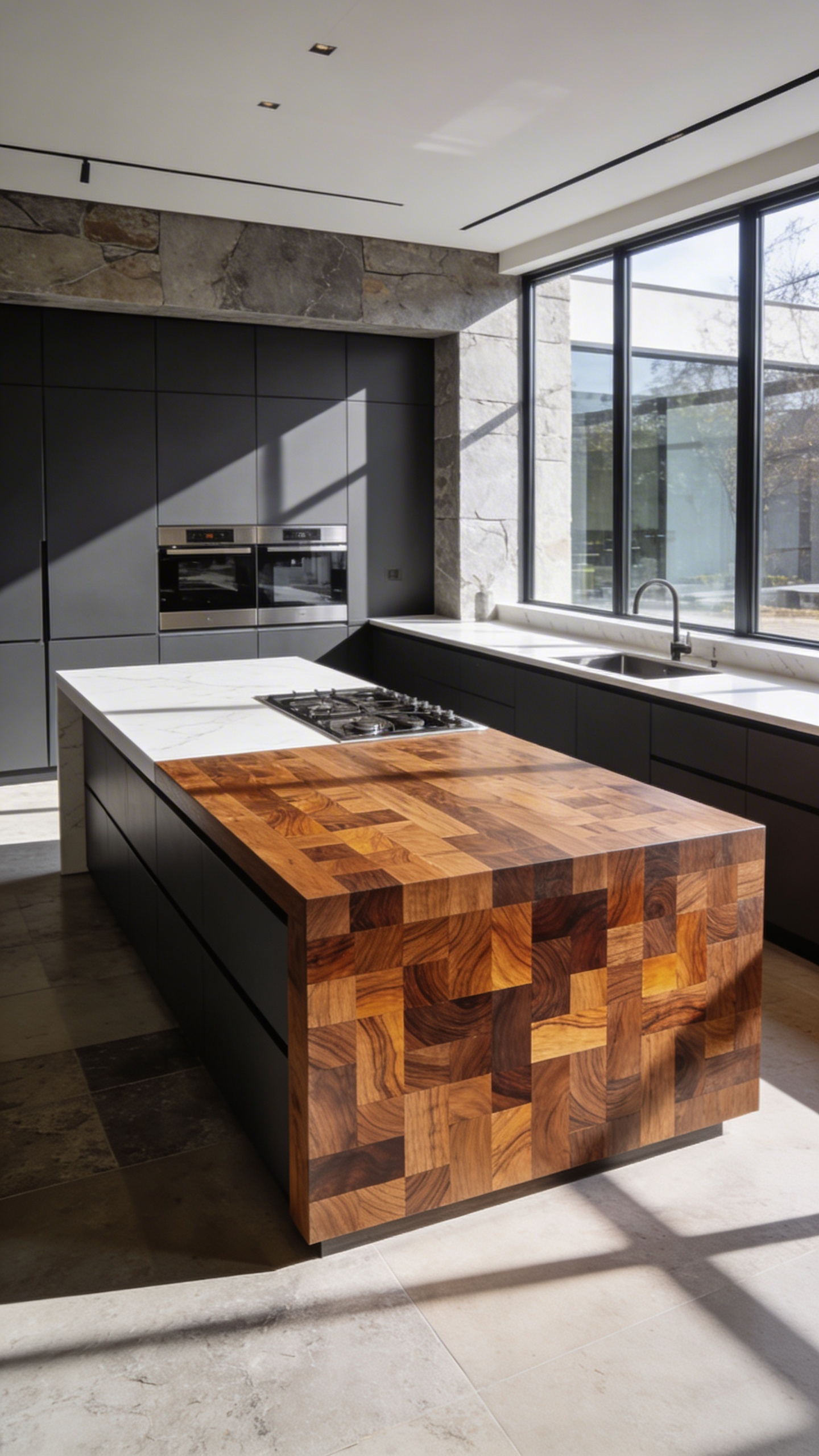
End-grain construction is the absolute standard for these robust stations. Structurally, the wood fibers stand vertically like bundled straws. As a result, knives slide between fibers rather than severing them. This creates a self-healing surface that preserves delicate steel blades. Indeed, this dense construction offers profound acoustic dampening. It replaces the harsh clack of plastic with a muted, grounded thud.
Surprisingly, scientific research proves wood is far more hygienic than plastic. Namely, the porous fibers pull bacteria inward where they dehydrate. Beyond pure utility, these massive pieces invite mindful, slow living. Ultimately, maintaining the wood with beeswax becomes a grounding tactile ritual. Meanwhile, inevitable minor dents build a beautiful, storytelling patina. For instance, dark walnut naturally mellows into a rich, golden honey-brown. Thus, these natural imperfections transform a simple prep tool into a biographical object. They beautifully record the culinary history of a home.
18. Sustainable, Minimalist Countertop Curation: Banishing appliance clutter in favor of a single, beautiful espresso machine or stone fruit bowl.
Modern kitchens often suffer from severe gadget creep. Consequently, multiple small appliances create visual noise and elevate stress. Alternatively, we can treat the counter as a curated gallery. Specifically, this approach leverages visual anchoring through a singular hero object. Therefore, the eye easily rests on one significant, beautiful item. For instance, an artisan stone bowl replaces a chaotic row of machines. Historically, this reflects a neo-Bauhaus philosophy of curated luxury.
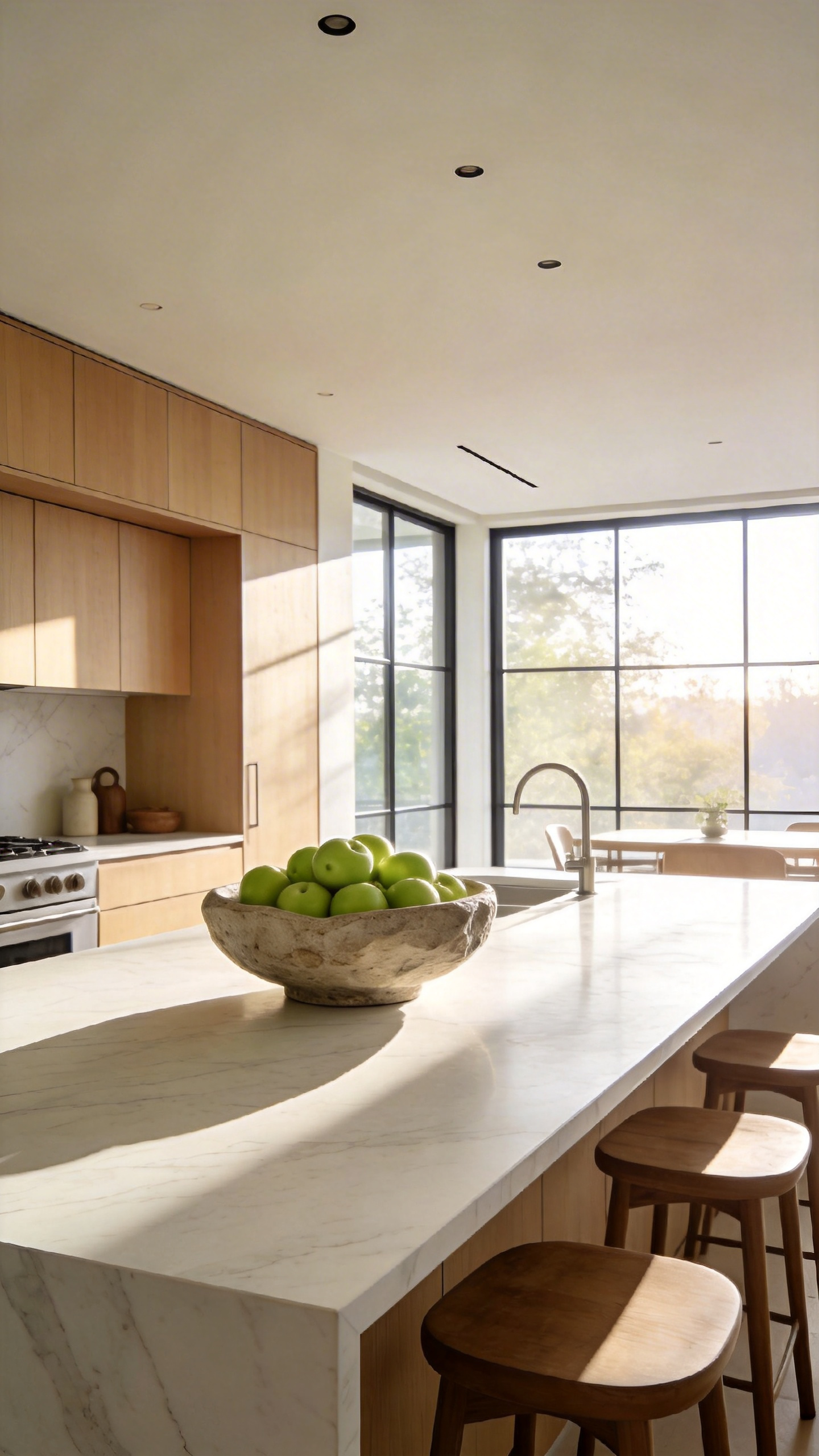
Naturally, a heavy travertine or onyx bowl beautifully grounds the space. Indeed, the pockmarked texture feels delightfully raw and ancient. Thus, it adds vital Middle Eastern warmth to Scandinavian clean lines. Crucially, the natural stone remains thermally active and cool. As a result, it preserves citrus and stone fruits much longer. Subtly, this natural nudge promotes healthy dietary choices through elegant design.
Conversely, a premium stainless steel espresso machine anchors the room perfectly. Functionally, this choice eliminates the clutter of disposable plastic pods. Ultimately, minimalist curation promotes sustainable modern kitchen design through mechanical heirloom engineering. Indeed, modern luxury machines prioritize a strict repair-not-replace design philosophy. Next, their integrated insulated boilers reduce daily energy consumption significantly. In fact, solid steel construction guarantees a lifespan of several decades. Hence, we actively reject the global crisis of electronic waste.
Finally, this careful curation introduces profound haptic design into daily life. Namely, you physically feel cold stone contrasting against warm brushed metal. Accordingly, morning routines shift from rushed convenience into mindful slow living. Ultimately, removing the clutter of choice beautifully streamlines your daily workflow. Instead, a singular tactile interaction dictates the peaceful morning beat. In short, form follows function while retaining a deep, resonant soul.
In the pursuit of refined living, modern kitchen decor acts as the bridge between architectural precision and the warmth of a well-lived life. Honestly, by prioritizing natural stones, hidden technologies, and biophilic textures, we can cultivate spaces that transcend mere utility. Ultimately, the kitchen becomes a lasting sanctuary of wellness and sophisticated design.
Frequently Asked Questions
What are the key elements of modern kitchen decor for 2026?
The 2026 aesthetic focuses on “monolithic minimalism.” It features handleless cabinetry, integrated appliances, and a heavy reliance on natural materials like travertine and white oak. The trend is moving away from high-gloss surfaces toward matte, tactile finishes. These offer a more grounded, organic feel.
How do natural materials influence the feel of a modern kitchen?
Natural materials like stone and wood provide essential “thermal mass” and acoustic dampening. This makes a kitchen feel more physically comfortable. Psychologically, using organic textures and biophilic elements naturally lowers cortisol levels. In fact, this creates a profound sense of calm in open-plan living spaces.
Why is lighting crucial in a minimalist kitchen?
Lighting in a minimalist kitchen is no longer just decorative. Instead, it is architectural. Concealed LED channels and tunable white technology allow the space to shift easily. It moves from a high-intensity work environment into a relaxing evening retreat. By mimicking natural circadian rhythms, lighting guides the mood without the clutter of visible fixtures.