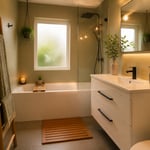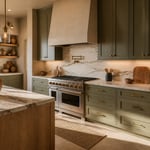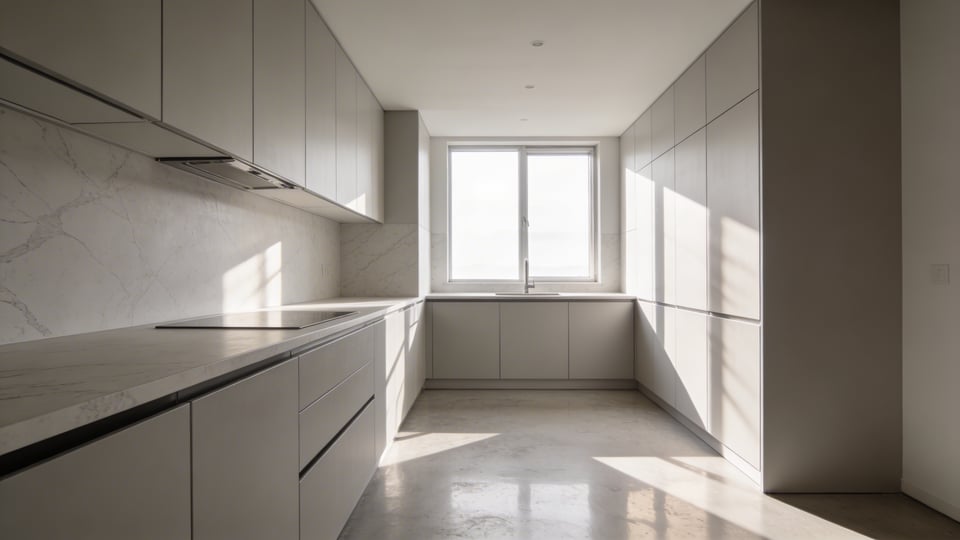
I’ve learned that mastering apartment kitchen decorating requires balancing high-end aesthetics with strict rental constraints. Your kitchen isn’t just a utility room. Indeed, it becomes a sanctuary where bespoke interiors meet real daily needs.
Phase I: The accessible foundation (Preparing your culinary canvas)
Preparing an apartment kitchen begins by rejecting its clinical roots. The 1926 Frankfurt Kitchen treated this room like a rigid laboratory. However, we must soften that harsh utilitarian legacy. We call this process “de-kitchening.” Specifically, creating a monochromatic base reduces distracting visual noise. A clean visual canvas naturally lowers cortisol. Therefore, it sparks genuine creative flow. By exploring sophisticated apartment kitchen ideas, we transform these layouts. They become seamless extensions of your main living area.
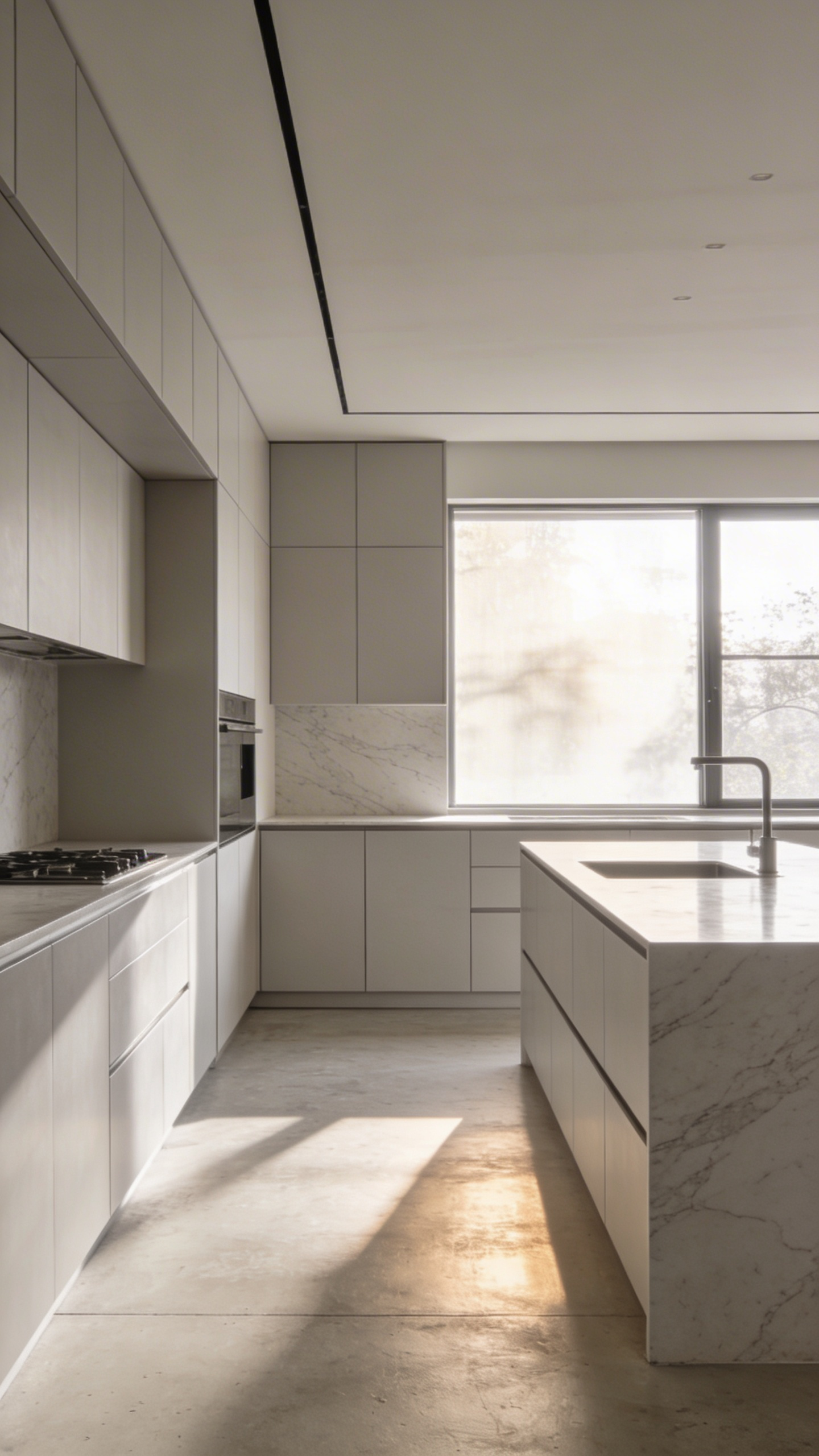
Next, mental re-mapping becomes essential in small living spaces. I always tell clients to abandon the traditional work triangle. Instead, create dedicated functional zones. For example, utilize vertical magnetic strips for your essential tools. This pulls items right into your immediate ergonomic reach. Indeed, defining small twelve-inch landing spaces creates stability during cooking. Therefore, your limited counter space remains completely clear for actual prep work.
Next, you must address the physical surfaces of your rental. Previously, renters used thin contact paper to hide shelf wear. Fortunately, modern architectural films offer tactile micro-grooves mimicking real oak. However, preserving your security deposit remains a primary concern. To achieve this, employ a clever double-layer foundation strategy. First, apply low-tack paper beneath heavier peel-and-stick vinyl. In fact, this thick vinyl application provides vital acoustic dampening. The room finally loses its tinny utility clatter. Next, do not ignore the hidden physical foundation of the space. Lubricating drawer glides and adding felt bumpers removes daily friction. Therefore, these quiet touches make your kitchen respond like a true studio.
1. The gallery blank slate: Selecting light-reflecting matte hues for confined kitchens
I view confined apartment kitchens as literal blank canvases. Traditionally, flat matte paints absorbed light in small rooms. These confined spaces often felt heavy and dead. However, modern paint formulations have completely changed this dynamic. Specifically, advanced gallery whites now utilize spherical pigment particles. These particles reflect ambient light without creating harsh glare. This luminous matte finish actually solves the visual clutter problem. High-gloss surfaces act like mirrors, reflecting every stray appliance. In contrast, a matte finish diffuses overhead lighting evenly. Therefore, it induces a much-needed sense of visual quiet. The walls become a soft, tactile backdrop rather than a feature. This mimics a gallery and lets your space breathe. Designers target a light reflectance value between 75 and 85. Anything higher feels far too clinical and sterile.
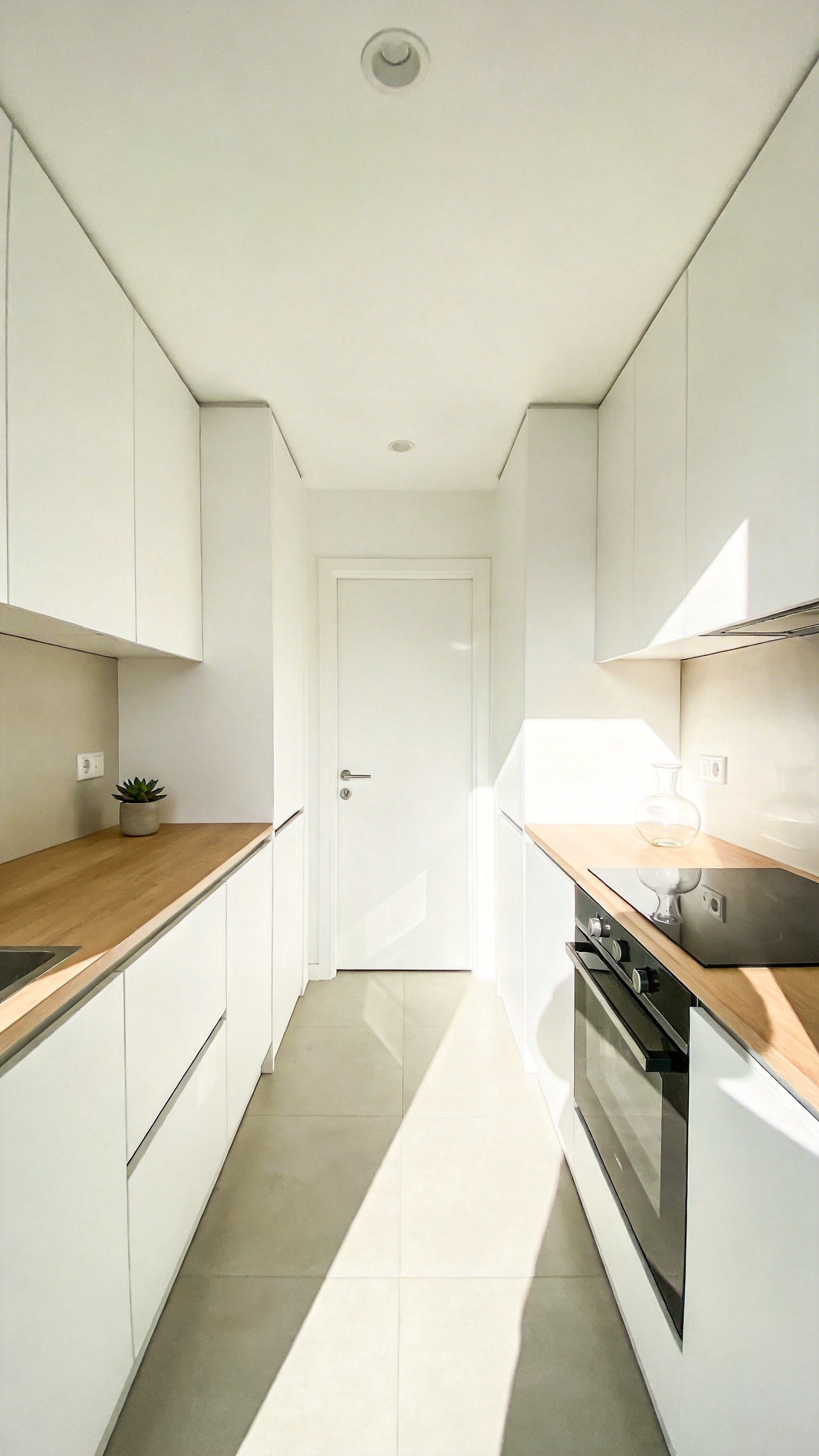
Selecting the perfect blank slate requires careful environmental nuance. In fact, small kitchens heavily amplify chromatic induction. This simply means your walls soak up surrounding cabinet tones. North-facing kitchens often lack warm, direct sunlight entirely. Therefore, pure cool-toned whites easily turn a dead grayish-blue. Instead, choose transitional whites containing subtle yellow pigment. Next, you must consider your countertop temperature carefully. Warm butcher-block counters require bone or oatmeal mattes.
Application technique matters just as much as the pigment. I highly recommend utilizing the “enveloping” strategy for tight layouts. Simply apply the identical hue across both walls and cabinetry. However, vary the sheen slightly to ensure surface durability. This clever approach completely erases harsh spatial boundaries. Visually, the vertical lines of the cabinets disappear into the wall. Therefore, the brain perceives a single, unbroken expansive plane. Next, add high-contrast matte black hardware to ground the design. These details act as punctuation marks on your pristine blank page.
2. Peel-and-stick masterpieces: Artist-approved temporary backsplash transformations
The modern peel-and-stick backsplash represents a major shift in apartment design. Specifically, these products have evolved far beyond 1970s flat vinyl. Indeed, professional designers now utilize high-fidelity architectural veneers. For renters creating live-work spaces, this technology is incredibly useful. Modern tiles utilize specialized polyurethane resins to create tactile realism. These 3D layers mimic the exact sensory depth of artisanal ceramics. They actually offer the subtle pillowing and grittiness of real grout. In fact, recent advancements include paper-thin natural stone bonded to adhesive. Therefore, renters experience the cold touch of actual slate without the weight.
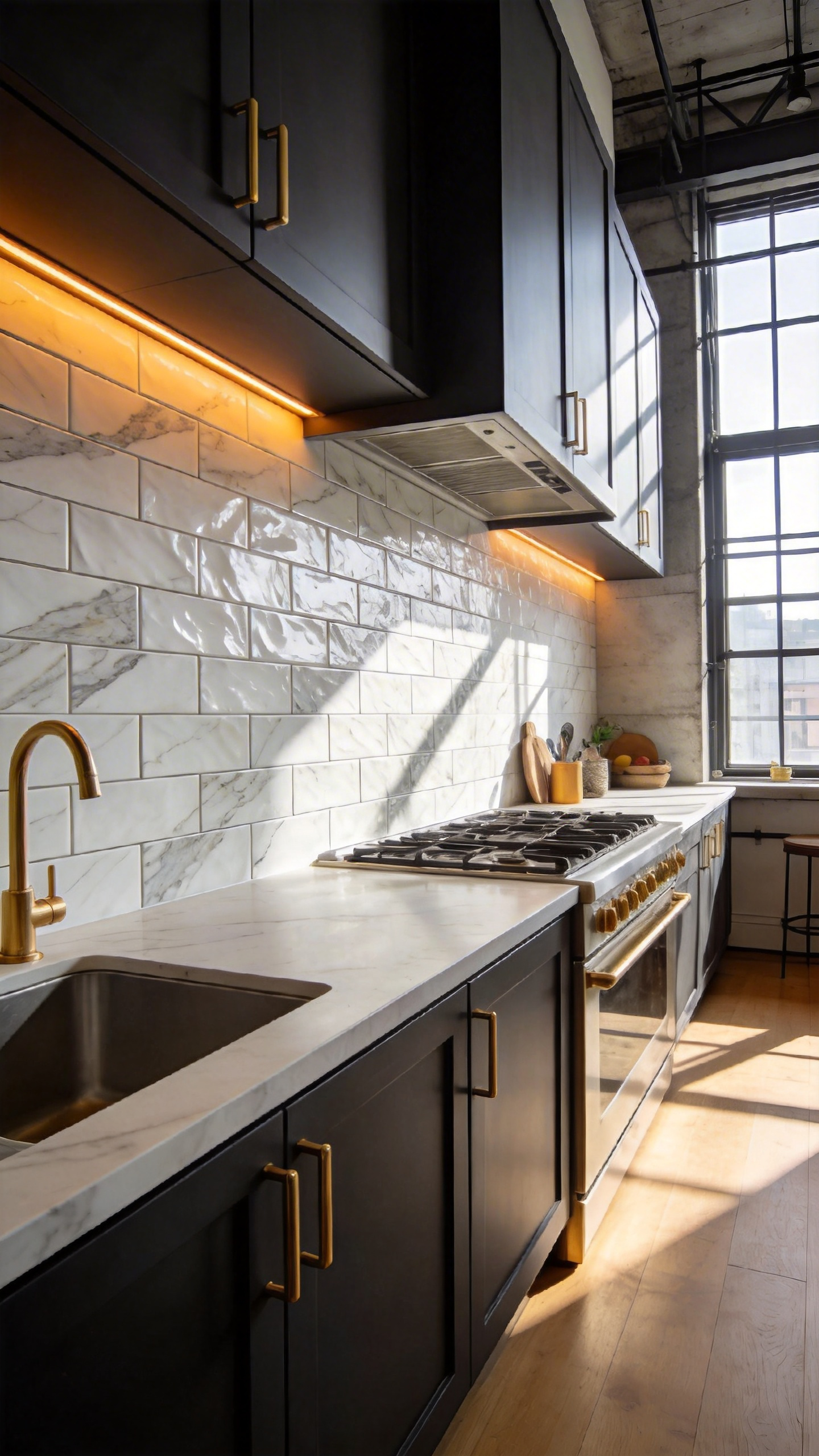
Temporary installations empower apartment dwellers to embrace bold creative decisions. For example, dark marble murals easily replace boring white walls. Previously, these expressive aesthetics required expensive and permanent ceramic orders. However, upgrading an outdated kitchen reduces urban visual noise. It genuinely makes cooking feel less like a chore.
However, achieving a permanent look requires stealth installation techniques. First, completely strip hidden cooking grease using a heavy-duty degreaser. Next, find the focal center of the stove and work outward. This symmetrical approach perfectly mimics traditional professional masonry. Finally, running a thin bead of silicone caulk hides raw sticker edges. Indeed, this simple trick provides the structural shadow line of authentic tile.
3. Task lighting as sculpture: Swapping builder-grade pendants for plug-in statement sconces
Builder-grade pendants often act as floating eyesores in small apartments. They vertically bisect your room and dictate rigid furniture layouts. However, swapping these fixtures for plug-in sconces reclaims valuable airspace. Specifically, an articulated swing arm introduces a dynamic horizontal axis. Therefore, you can easily choreograph light over a worktable. Modern LED technology completely liberates lighting from bulky bulb buckets. Instead, these minimalist fixtures function as independent art objects. In fact, they trace elegant line drawings across your studio space.
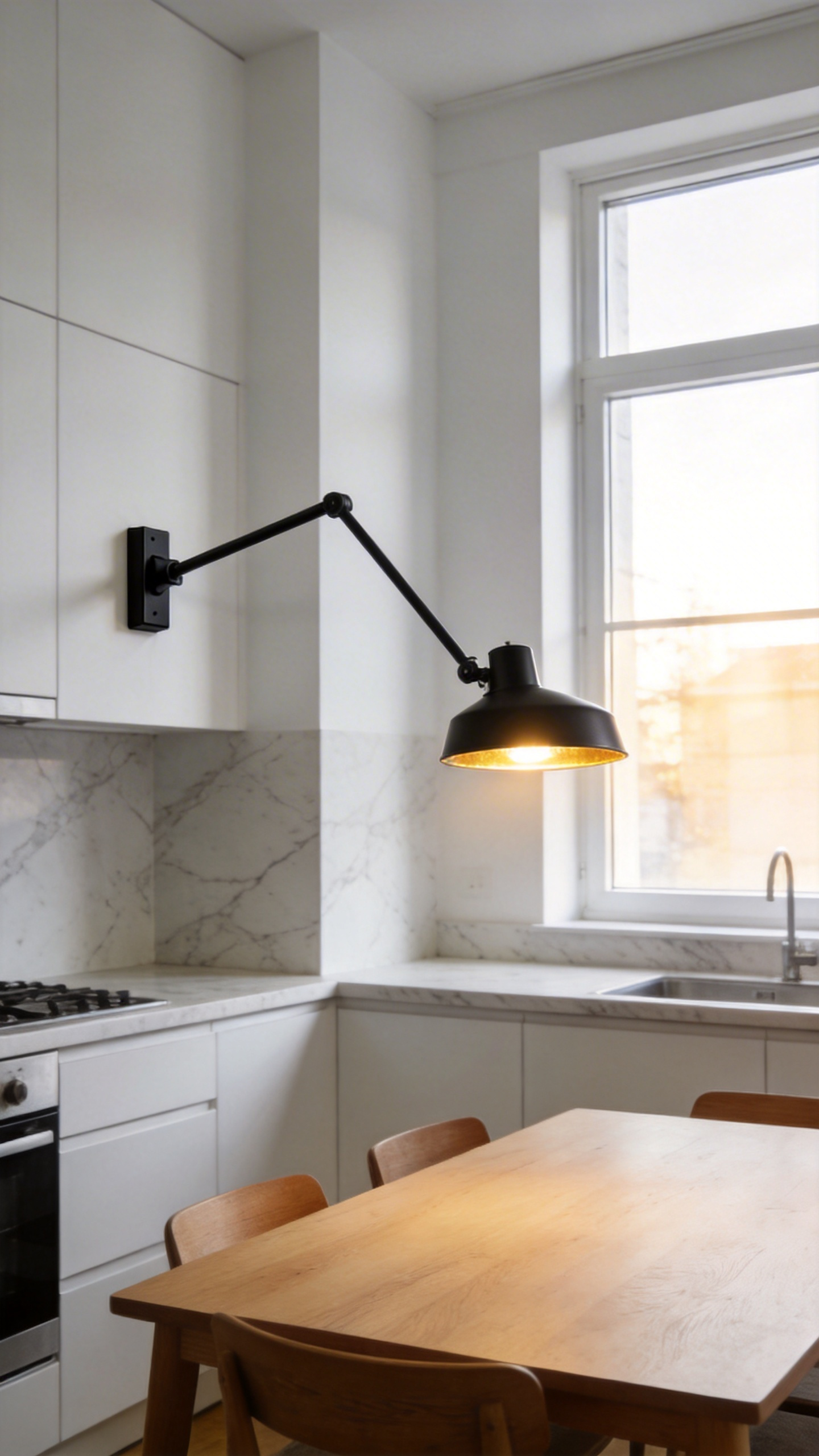
Next, you no longer need to hide unsightly electrical cables. In fact, a fabric-wrapped cord acts like a deliberate pencil stroke. The drape of a matte black flex adds striking visual rhythm. Tactile materials like hand-poured plaster beautifully ground a temporary rental space. Indeed, these rich finishes age with a warm patina over time. High-end LEDs with a CRI above 90 ensure your food looks vibrant. These sculptural sconces also cast shifting architectural shadows across plain drywall. Therefore, a premium plug-in sconce becomes a highly portable investment. Unlike hardwired lighting, you can safely take it to your next home.
4. The floor canvas: Grounding the space with high-impact, washable runner rugs
I view the kitchen floor as another blank canvas. Specifically, a washable runner rug provides a vital design intervention. Often, apartment kitchens feature cold surfaces and cramped footprints. Therefore, a long, lean runner acts as a visual elongator. By leaving a small floor border, you create necessary breathing space. Indeed, this optical illusion makes the room feel significantly larger. Horizontal stripes can push narrow galley walls outward. Meanwhile, repeating geometric patterns transform short kitchens into grand corridors.
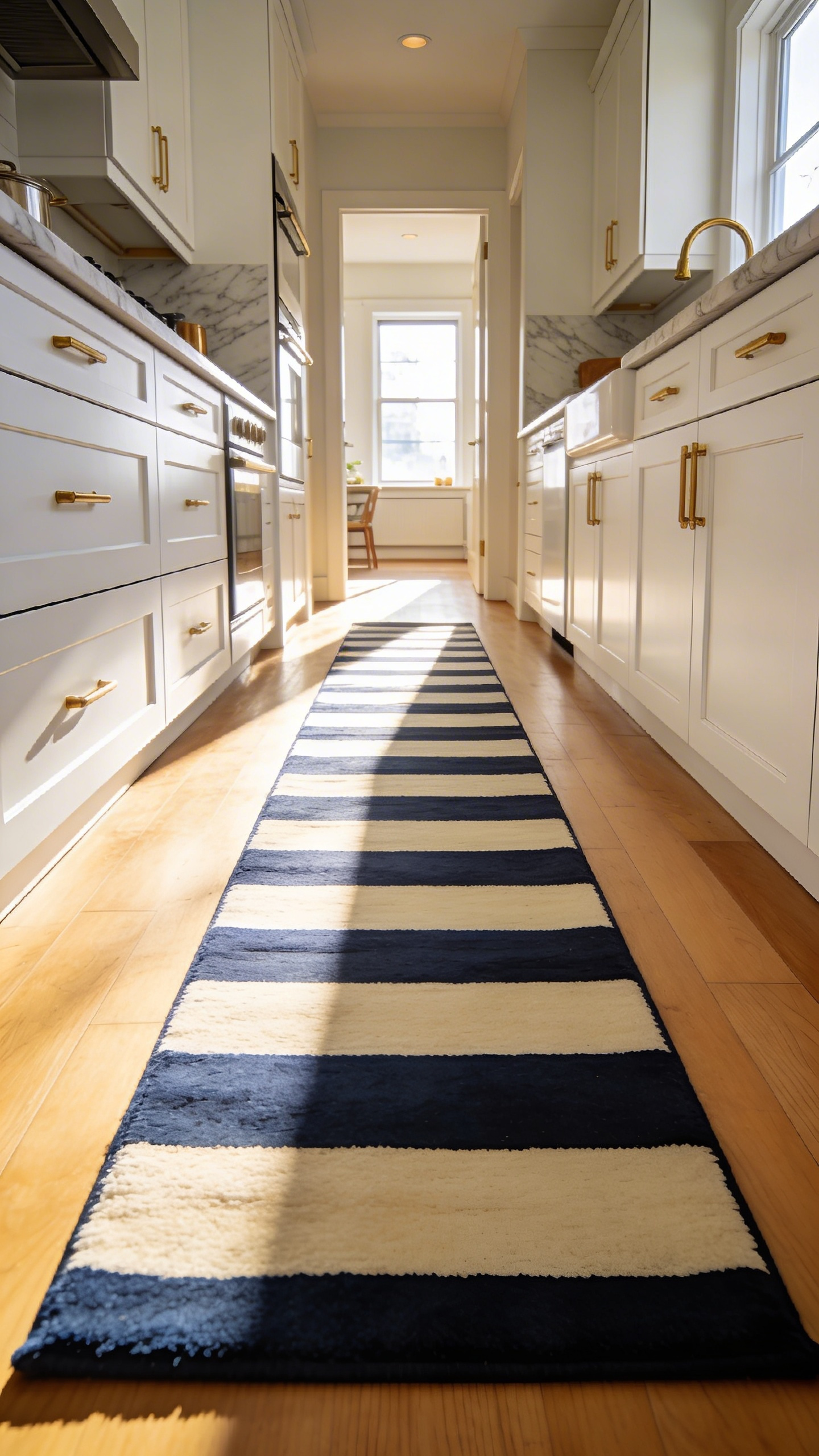
Historically, natural fiber kitchen rugs trapped grease and ruined aesthetics. Fortunately, modern polymer science has engineered highly functional textile art. Today, high-impact runners utilize solution-dyed polyester and polypropylene. Therefore, vibrant pigment is embedded before the fiber is spun. These vivid pieces are entirely bleach-cleanable. Next, integrated thermoplastic rubber backings provide a crucial non-slip grip. They easily clear low cabinets without needing bulky pads.
Sensory zoning softens the sterile, cold workroom environment. Indeed, a soft-touch runner introduces much-needed tactile warmth. It balances the harsh dominance of steel and stone. This textile also acts as an essential acoustic sink. It beautifully absorbs clattering pots and echoing footsteps. Therefore, this modern piece updates the tradition of painted oilcloths. Renters can safely protect permanent floors and secure deposits. In fact, you can re-floor your creative space without renovation tools.
Phase II: Intermediate development (The art of visible storage)
In intermediate apartment design, I treat kitchens exactly like working studios. Specifically, your everyday tools become primary aesthetic assets. Historically, this approach mirrors Julia Child’s famous pegboards. Her visible copper pots created a rational, structured gallery. Today, this intentional curation effectively prevents functional chaos. Displaying tools openly actually reduces daily decision fatigue. Seeing your spices immediately helps your brain jump to creative cooking. Embracing modern kitchen decor principles allows us to prioritize spatial optimization beautifully.
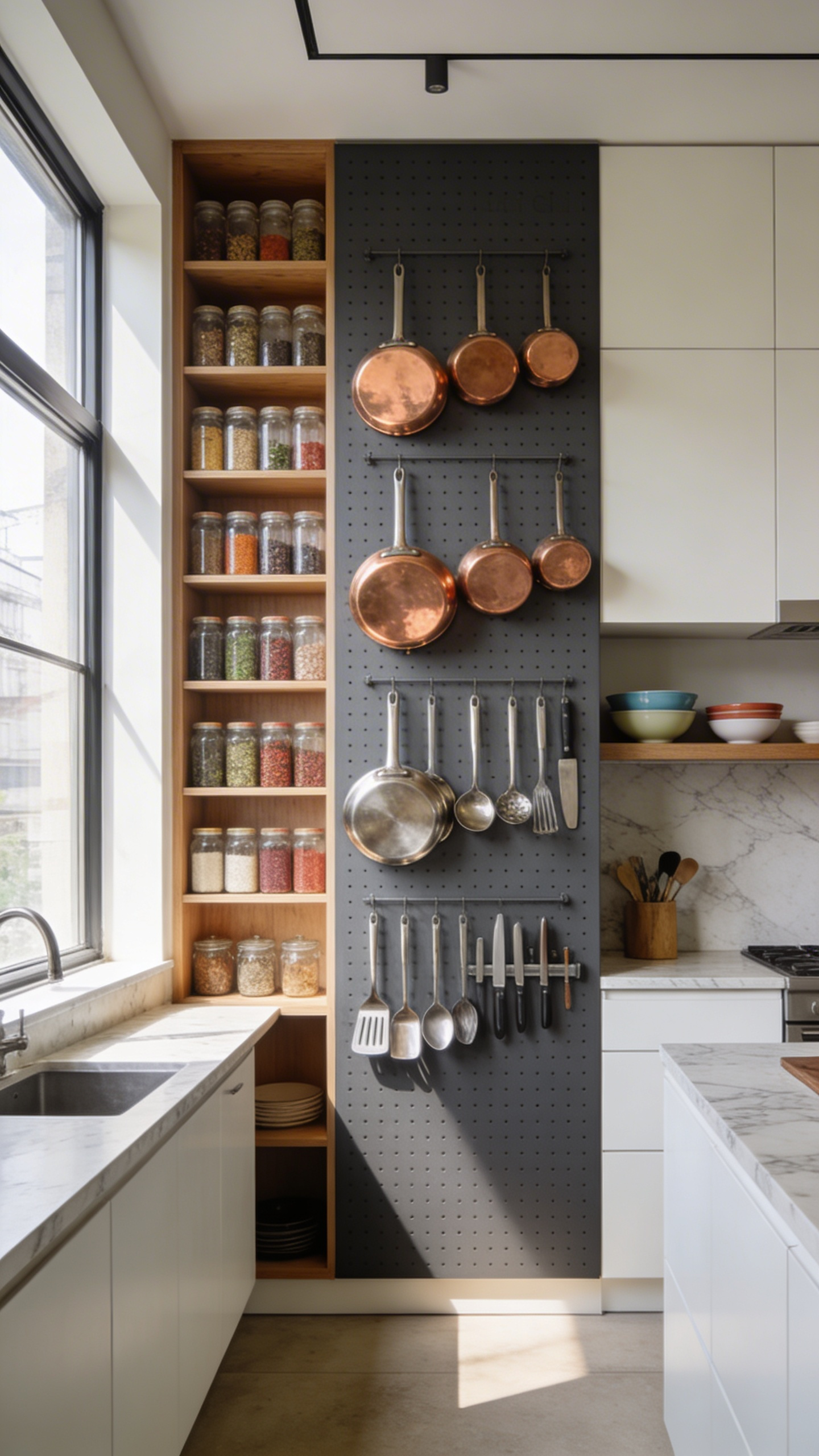
However, visible storage demands careful visual rhythm to avoid clutter. Therefore, designers rely on strict geometric principles. For instance, the 3-5-7 rule dictates grouping objects in odd numbers. Next, the triangle principle staggers similar materials across different shelf heights. This visual movement guides the eye and creates necessary depth. Leaving shelves only eighty percent full provides essential negative space. Indeed, these crucial gaps distinguish a curated collection from sheer overflow.
Apartment kitchens often blend directly with comfortable living areas. Therefore, they require intentional sensory architecture to feel truly inviting. Soft items like woven baskets actively absorb harsh echoing sounds. Meanwhile, pairing cold stainless steel with warm olive wood builds tactile landscapes. Functionally, we organize these tools into distinct vertical reach zones. Everyday objects stay perfectly positioned right at eye level. Next, adding integrated LED lighting highlights these vignettes beautifully. In fact, these techniques transform basic shelves into a comforting workspace.
5. Vertical tool display: Installing magnetic knife strips as culinary art installations
In small-space cooking, verticality is your greatest luxury. Specifically, I love utilizing the golden zone between waist and eye level. Therefore, the magnetic knife strip becomes a culinary art installation. Historically, these strips began as simple industrial workshop utilities. However, modern apartment cooks now treat them as interactive galleries. High-quality strips feature hidden neodymium magnets inside the wood. These rare earth magnets securely hold heavy cleavers. Ergonomically, this wall setup allows for a safe side-pull motion. Indeed, this simple lateral peel prevents repetitive wrist strain.
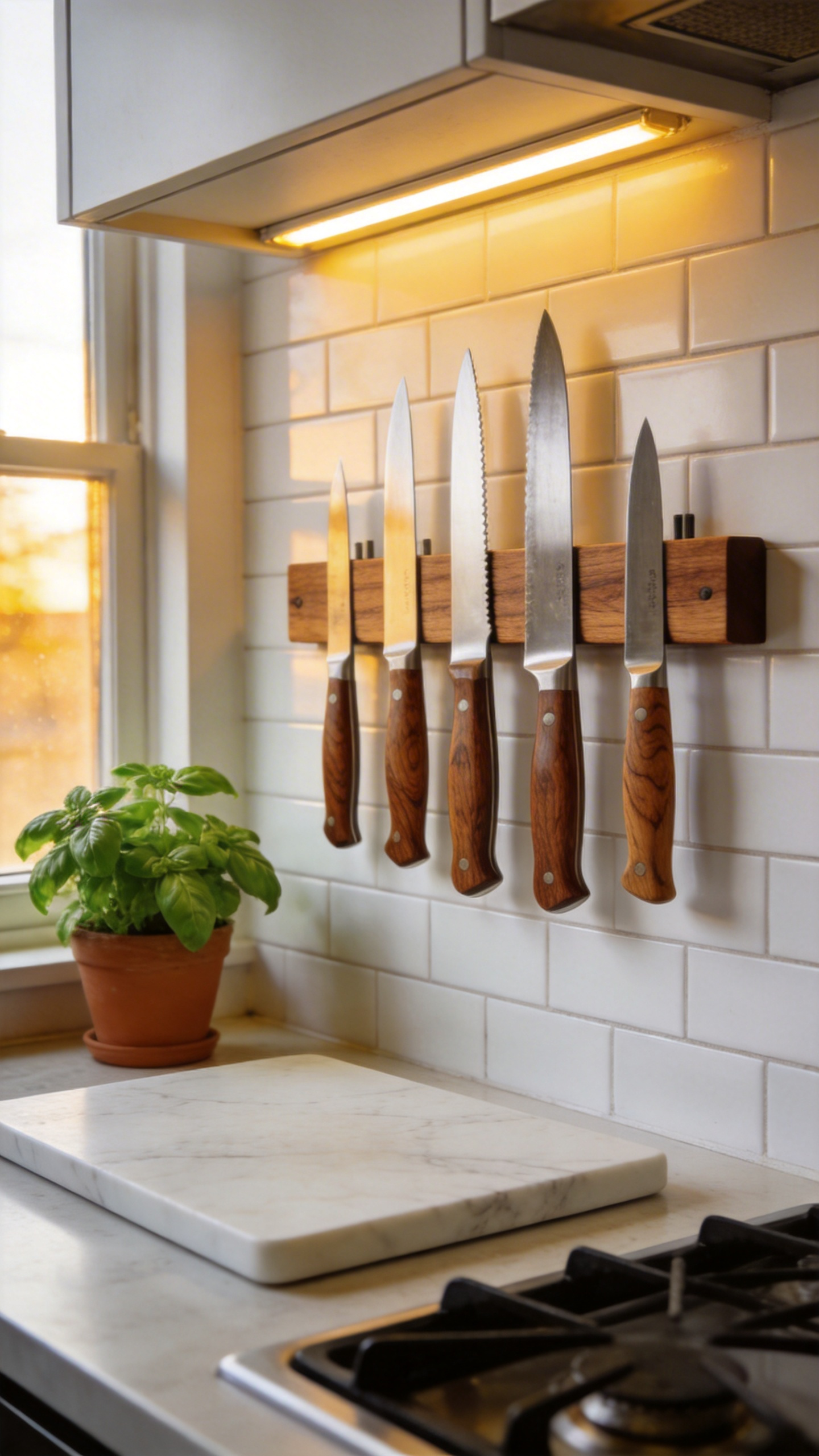
Choosing the right material dictates your kitchen’s sensory atmosphere. For instance, artisanal hardwood strips act as a natural buffer. Wood actively protects delicate Japanese blade edges from microscopic chipping. Olive wood even retains a faint Mediterranean scent of oil. Visually, your knife arrangement creates a striking culinary biography. Indeed, displaying hand-forged Damascus steel creates an instant centerpiece. Organizing tools by ascending height visibly reduces cognitive load. Therefore, your brain stays in a highly creative flow state.
Thoughtful placement remains absolutely essential for this transformation. Adding a hidden LED backlight casts dramatic shadow lines. Your culinary tools suddenly appear to float weightlessly against the wall. Alternatively, recessed magnetic discs allow for a scattered constellation layout. Therefore, each individual blade becomes framed artwork in your home.
6. Open shelving curation: Balancing negative space with everyday dishware
Curating open shelving is ultimately about choreographing sightlines. In a dual-purpose studio, every single object carries distinct visual weight. The void around an item acts as a vital design tool. Specifically, the Japanese concept of Ma treats emptiness as a deliberate pause. Therefore, leaving thirty percent of your shelf bare reduces cognitive load. Indeed, this intentional visual breath provides the eye a place to rest.
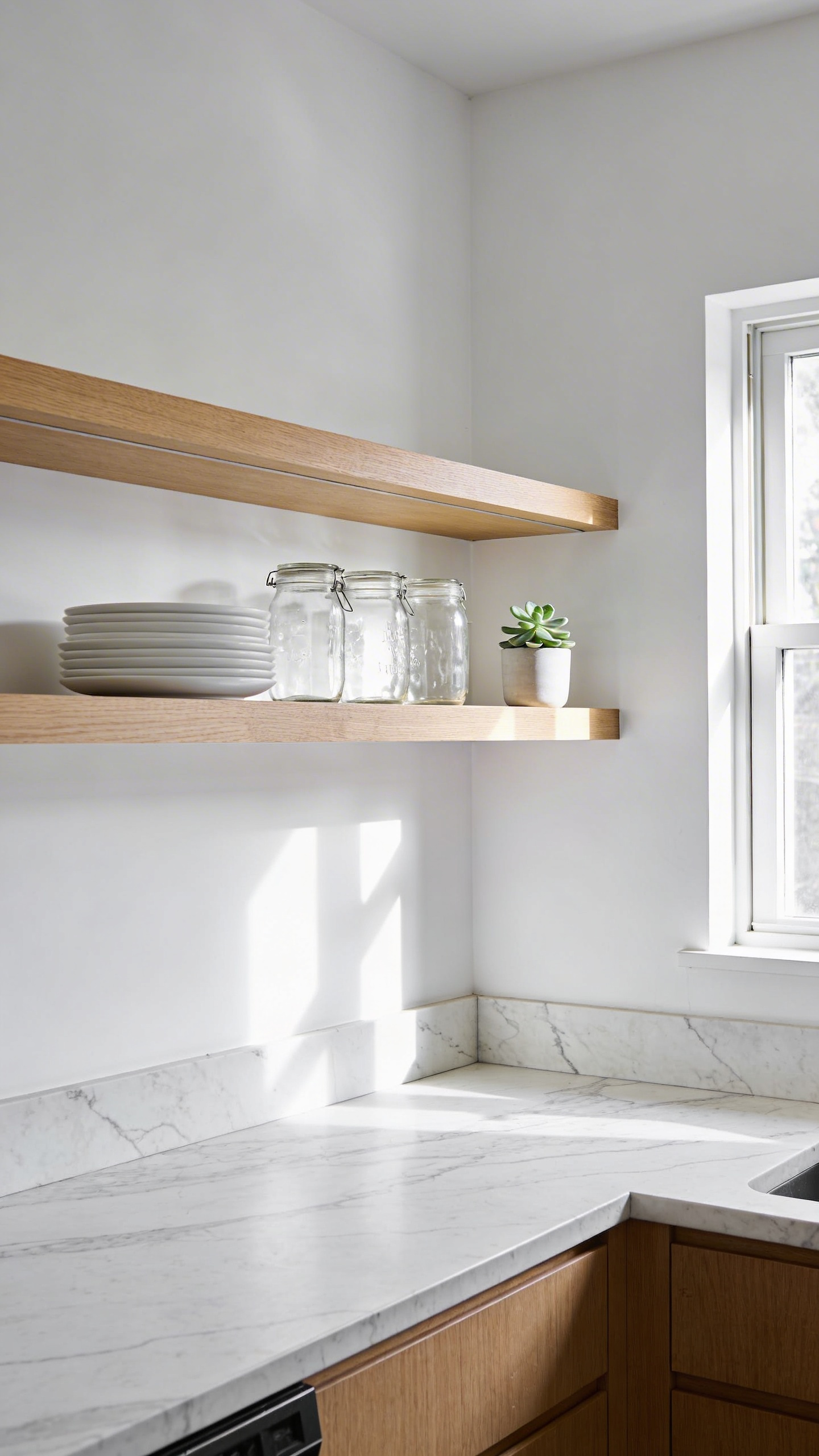
Authoritative curation relies strictly on the sixty-forty principle. Generally, you should conceal sixty percent of your bulkier kitchen goods. Next, display the remaining forty percent openly to showcase daily rituals. Otherwise, a compact apartment kitchen quickly mimics a cluttered warehouse. Material choices actively manipulate the visual gravity of your setup. For example, opaque stoneware ceramics create heavy, solid blocks of color. Conversely, clear glassware effectively functions as usable negative space. It allows natural light to pass directly through to the wall.
Your everyday dishware should act as your primary artistic decor. The Japanese aesthetic of Zakka beautifully celebrates these humble, functional items. Grouping these pieces in odd numbers generates a dynamic vertical rhythm. Placing frequently used mugs at eye level creates a living curation. As a final artist’s signature, pull objects an inch from the wall. Indeed, this tiny shadow gap adds depth to window-starved quarters.
7. The studio pegboard hack: Adapting maker-space storage for pots, pans, and utensils
The adaptation of pegboards for domestic use stems from the 1950s. Specifically, Julia Child solidified its culinary legitimacy. Her husband famously adapted industrial pegboards for their Cambridge kitchen. They utilized a clever shadow mapping technique. By tracing pan outlines, they ensured a perpetual state of readiness. Today, this concept perfectly mirrors culinary mise-en-place.
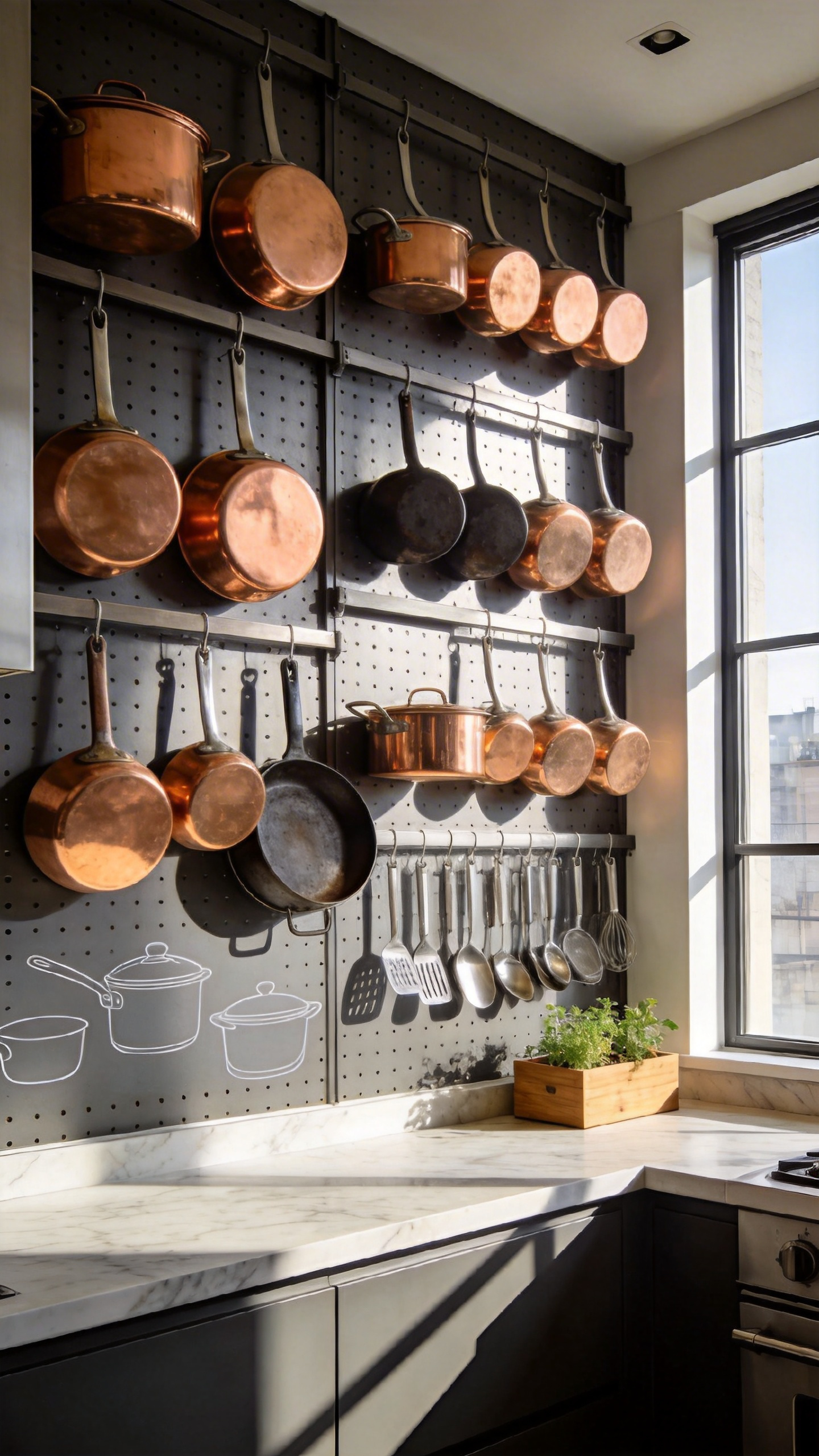
Adapting a maker-space system treats the kitchen as a functional workshop. Therefore, this design hack prioritizes high-frequency accessibility. Daily culinary tools remain at an effortless zero-reach distance. Modern studio designs often upgrade to heavy galvanized steel panels. These metal boards offer incredible weight capacity behind your range. Well-organized spacing creates a comforting rhythm of silence. Indeed, tools never touch, which beautifully eliminates harsh metallic clanging.
Visible storage always requires careful curation to reduce visual stress. Maintaining twenty percent negative space provides necessary breathing room. I love painting the board a deep matte charcoal. Therefore, warm copper cookware pops beautifully as curated functional art. Hanging heavy cast iron pans requires proper wall support. Specifically, wooden furring strips create an essential one-inch air gap. This structural gap allows the metal hooks to seat properly.
Alternatively, renters can utilize versatile clamp-on pegboard units. The bespoke maker influence continues to evolve rapidly today. For instance, creators now use 3D printing for custom tool saddles. Rare-earth magnets securely hold small spice tins without traditional hooks. Ultimately, blending birch plywood with oversized dowels softens the industrial feel.
8. Curated countertop vignettes: Containing clutter on elevated wooden plinths and trays
In a small apartment, countertop clutter feels like pure visual noise. This scattered mess definitely increases decision fatigue and daily stress. Therefore, placing everyday necessities on a wooden tray creates a visual anchor. Specifically, this simple frame signals your brain to see one intentional unit. By containing the chaos, the eye finally has a place to rest.
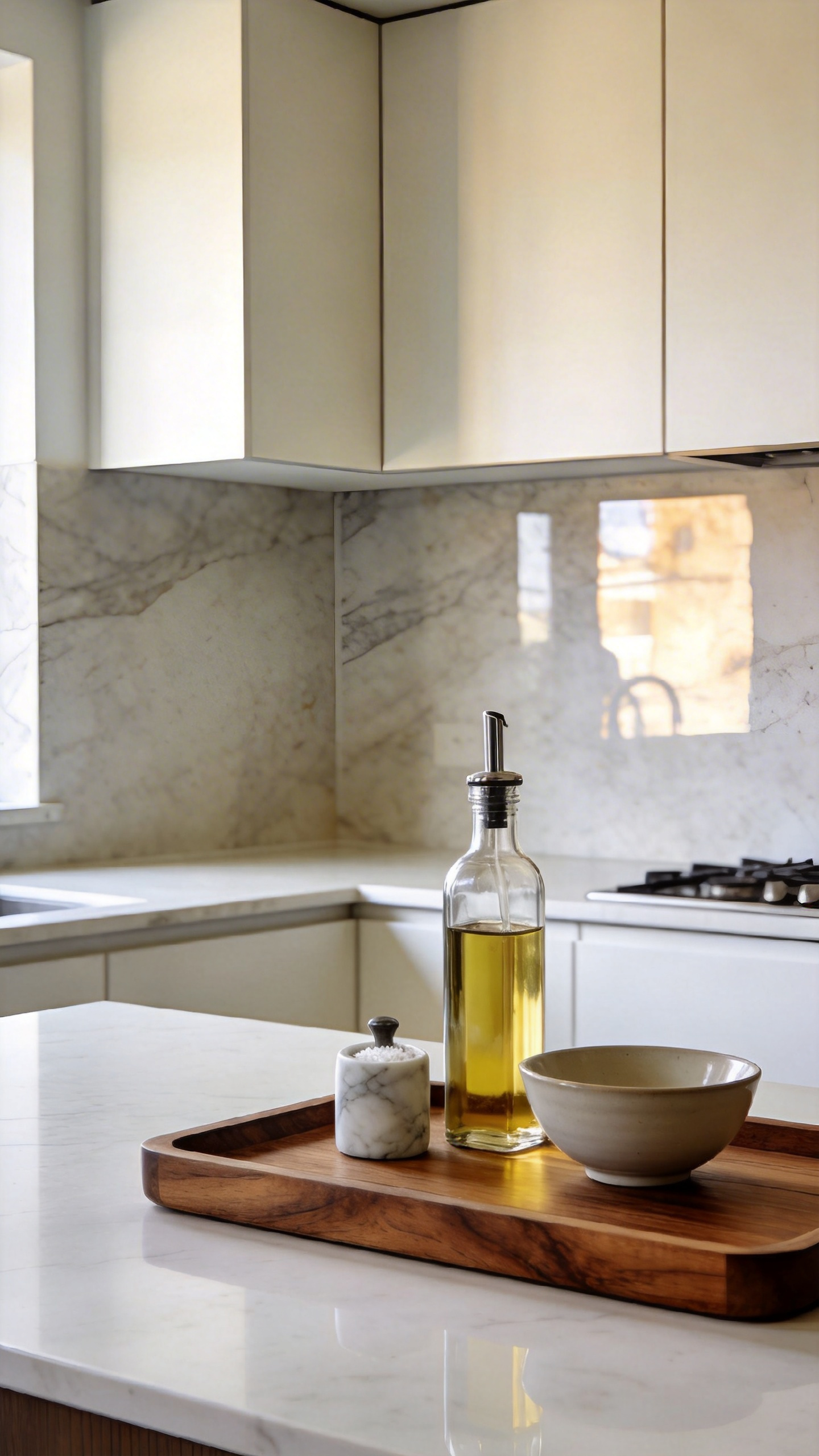
Modern kitchens are usually dominated by cold, sterile stone surfaces. In contrast, elevated wooden plinths introduce an organic, tactile warmth. For example, rich acacia or reclaimed oak absorbs ambient sound beautifully. These woods actively soften the harsh clatter of glass jars. Over time, high-quality wood even develops a beautiful living patina. Therefore, this natural texture helps a temporary rental feel like home.
Flat decorating remains a surprisingly common mistake in limited spaces. Instead, artists and designers use footed trays as visual elevators. This vertical hierarchy creates essential depth in narrow galley kitchens. Successful vignettes always follow the classic rule of three. For instance, you might group a tall pepper mill with a salt dish.
Historically, wealthy households used flat wooden trays known as salvers. Today, these crafted trays save our kitchens from utilitarian sterility. Naturally oily woods like teak resist water and unexpected leaks perfectly. Alternatively, reclaimed oak provides rustic imperfections prized in Japandi design. Elevating your supplies turns daily cooking into a grounded, ritualistic moment.
Phase III: Advanced application (Multi-use zones & workspace optimization)
Kitchen layouts historically relied entirely on a rigid work triangle. However, modern apartment decorating embraces the highly flexible Zone Method. I design these spaces as adaptable living laboratories. Here, every element becomes an exercise in architectural nuance. Mastering the fundamentals of kitchen interior design ensures these zones remain fluid yet distinct.
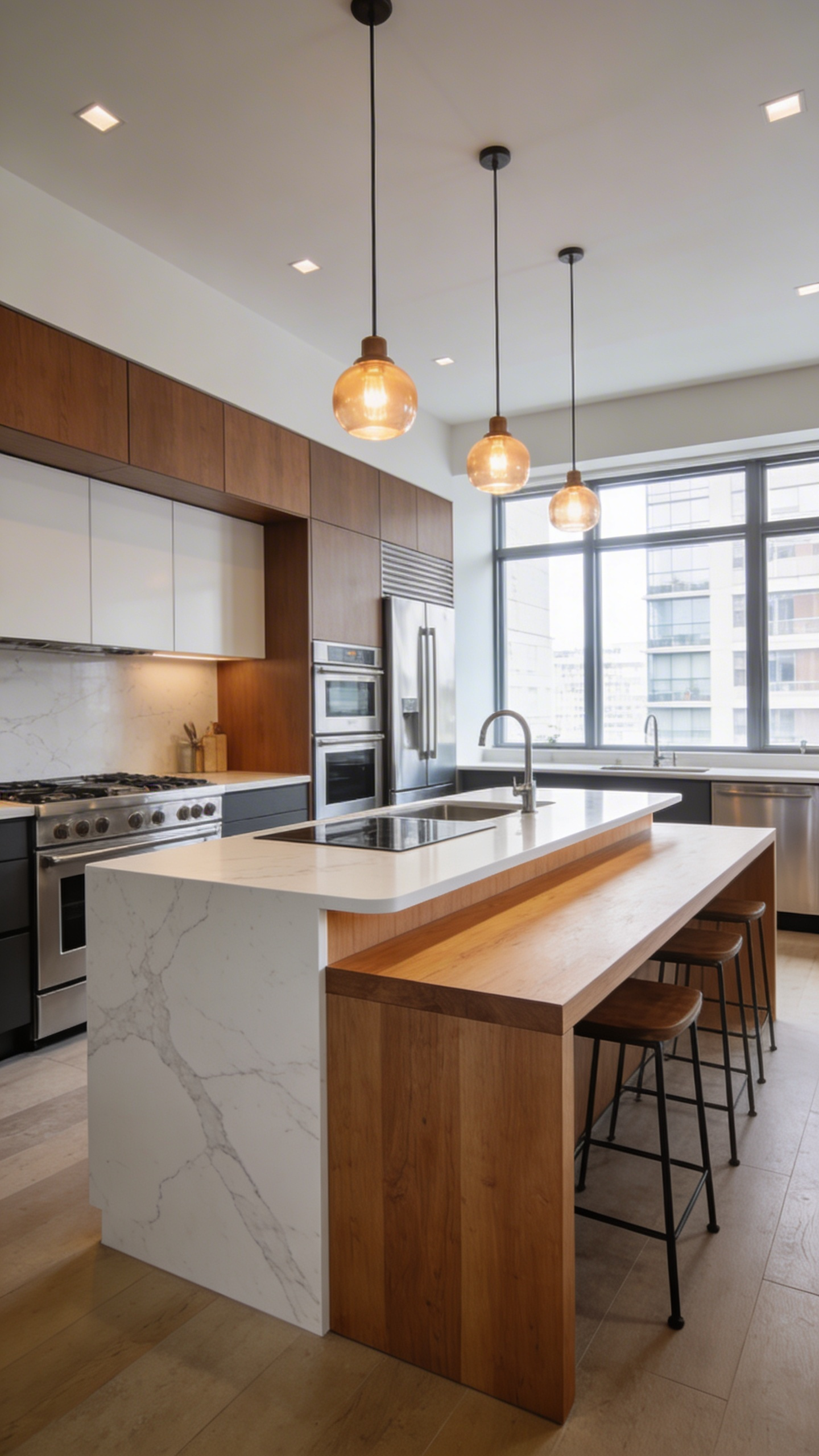
Specifically, central islands now serve as professional-grade creative workspaces. Advanced decorators frequently utilize ergonomic split-level counter heights. A 36-inch prep surface easily supports comfortable standing work. Meanwhile, a raised 42-inch tier hides cluttered project materials from the living area. Tactile zoning helps residents mentally transition between different daily tasks. For example, cool quartz counters stimulate alertness in the prep zone. In contrast, integrated warm wood edges invite relaxed laptop work.
Careful sensory layering prevents disruptive chaos in compact multi-use apartments. Specialized acoustic underlays and fabric-wrapped panels seamlessly absorb harsh environmental noises. Bookshelves placed on island backs act as unexpected but excellent sonic diffusers. Dynamic Kelvin lighting smoothly shifts the room’s atmosphere on demand. Crisp neutral lights naturally boost mental focus during intense working hours. Later, warm dimmable pendants immediately signal that the workday has officially ended.
Modular freestanding furniture provides ultimate spatial adaptability for urban dwellers. Heavy industrial casters allow entire workspace modules to expand or contract seamlessly. Therefore, the traditional boundaries between professional productivity and comfortable living completely disappear.
9. The mobile cart studio: Utilizing a rolling bar cart for coffee equipment and pantry overflow
Historically, rolling carts served as elegant vessels for cocktail hours. Today, they act as satellite studios for modern remote workers. Dedicating a heavy cart to coffee creates necessary psychological boundaries. It mimics a café experience without consuming valuable counter space. However, choosing a flimsy cart remains a surprisingly common decorating mistake. You must engineer this creative workspace for true physical stability. Heavy espresso machines and high-speed grinders create intense dynamic loads. Therefore, I highly recommend steel frames and locking industrial casters. The cart feels solid and successfully resists annoying vibrations.
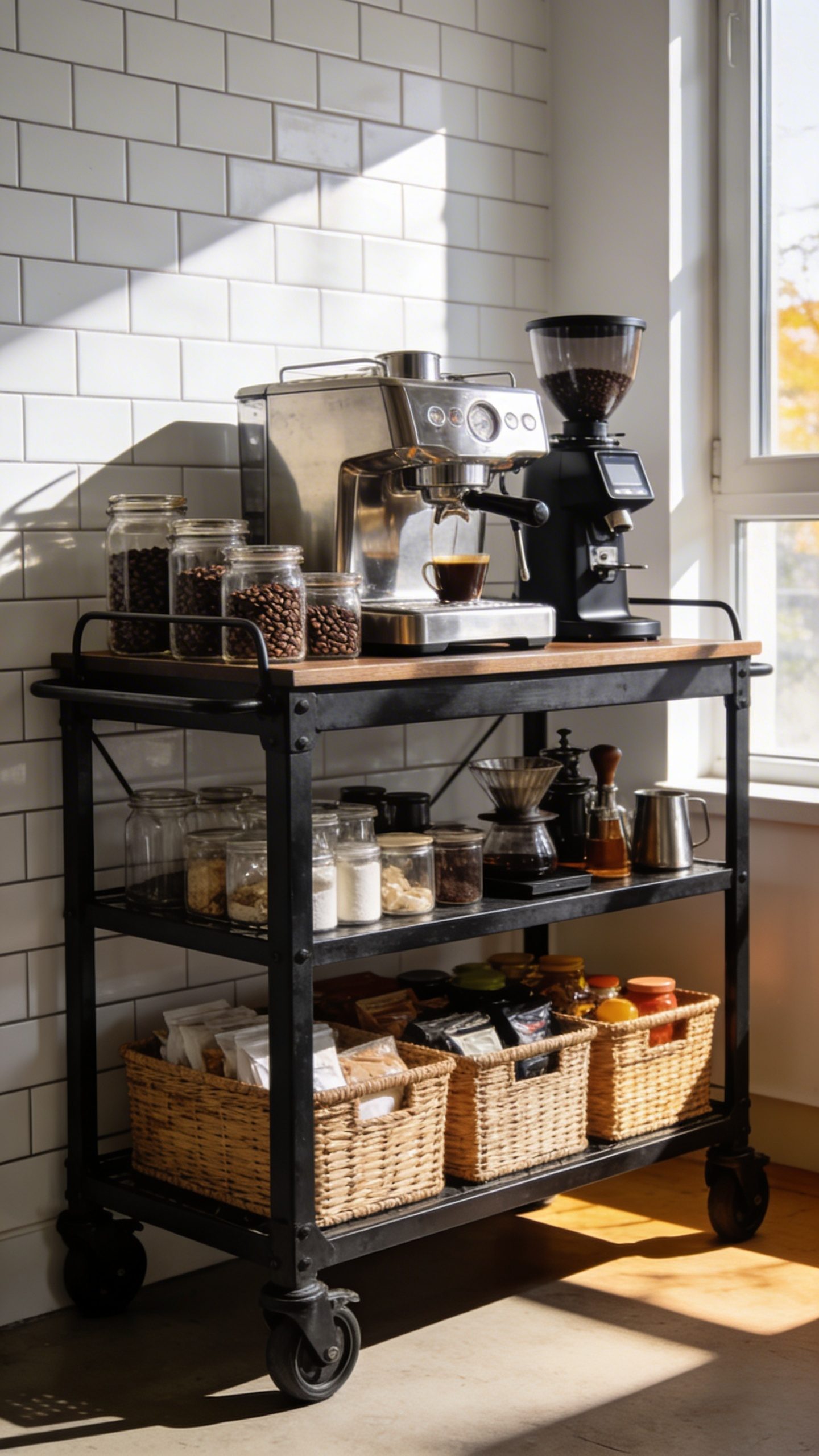
Meanwhile, the lower shelves elegantly manage your bulky pantry overflow. Indeed, this setup introduces a parallel work zone to kitchens. You easily offload repetitive tasks from your main countertops. Decanting dry goods into glass jars completely eliminates cluttered packaging. Specifically, a cohesive texture palette emerges against the industrial metal. Adding a piece of butcher block top dampens loud glass clinking. This thoughtful sensory detail deeply elevates your daily brewing ritual.
These mobile studios often face a frustrating cable management hurdle. Fortunately, I advocate for a hidden one-plug power philosophy. First, mount a heavy power strip underneath the top shelf. Next, plug all appliances into this single hidden hub. The entire coffee station now requires just one external cord. Therefore, your curated workspace remains beautifully versatile and completely mobile. Placing a silicone mat underneath hot espresso machines prevents metal warping.
10. The butcher-block extension: Introducing a freestanding prep station that doubles as a dining bar
I always appreciate materials that work as hard as I do. Therefore, the butcher-block extension serves as a perfect architectural bridge. Historically, these were massive, heavy industrial tools. Today, they transform small apartment kitchens into highly functional spaces. Specifically, a freestanding unit with a drop-leaf expands beautifully. It shifts easily from a compact prep station to a spacious dining bar.
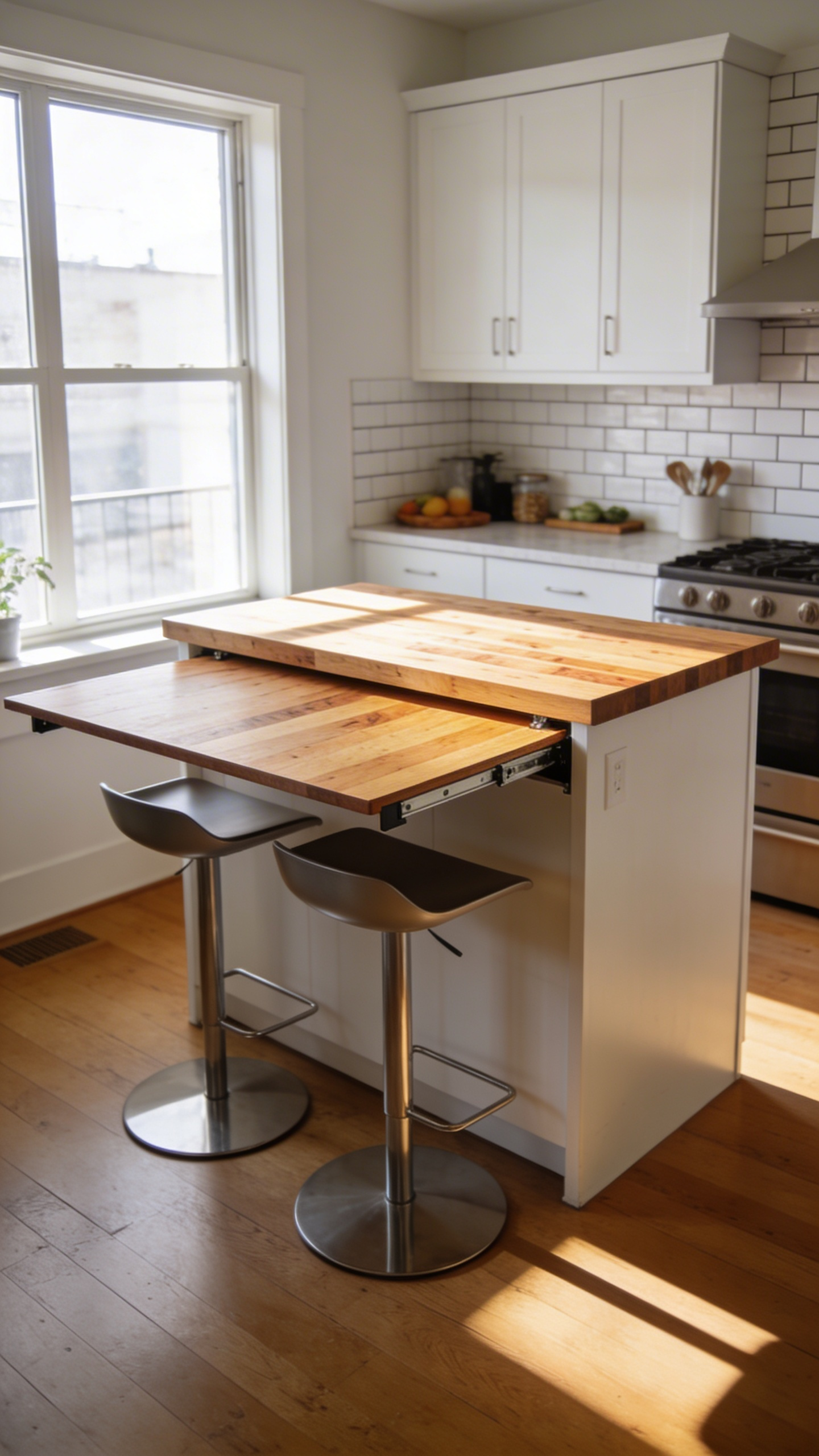
However, the success of this dual-purpose piece relies heavily on verticality. Standard dining tables cause back strain during intensive kitchen tasks. Conversely, a 36-inch counter height hits the ergonomic sweet spot. At this height, your shoulders drop and wrists remain perfectly neutral. This elevation also accommodates standard counter stools perfectly. Guests can comfortably sit at eye level while you prep.
Naturally, selecting the right wood grain impacts durability and acoustics. For instance, end-grain construction acts like a self-healing mosaic. The knife slides between vertical fibers instead of cutting them. The surface stays quiet and shows far fewer marks. Alternatively, edge-grain pieces visually expand small rooms with continuous lines. Hard maple provides a very clean, contemporary look. Meanwhile, black walnut offers a rich, living warmth. In fact, walnut retains ambient room heat for a furniture-like feel.
These freestanding stations remain incredibly renter-friendly. By adding heavy-duty locking casters, you gain ultimate layout flexibility. Simply roll the unit against a wall to clear open space. Any accidental scratches can be easily sanded away. Therefore, this piece seamlessly blends studio utility with comfortable living.
11. Suspended resourcefulness: Hanging woven produce baskets to reclaim counter real estate
I constantly seek ways to reclaim prime real estate in tight environments. Specifically, hanging woven produce baskets masterfully blends functional storage with living art. This vertical approach elevates your fresh ingredients into a dynamic visual display. The resulting merchant aesthetic introduces tactile softness to cold kitchen surfaces. Therefore, these organic textures create a biophilic calm essential for a creative home.
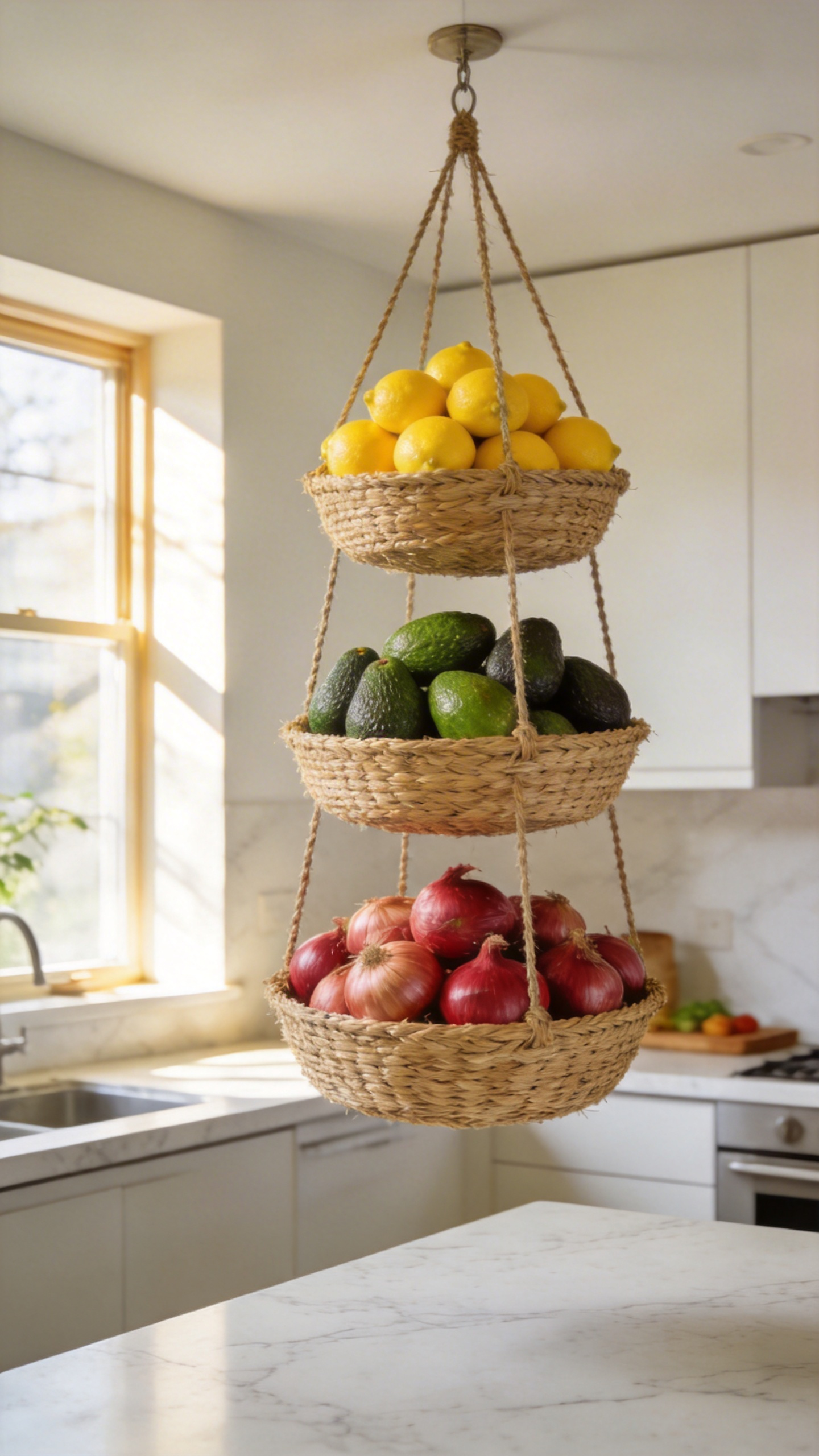
These suspended pieces provide a critical technical advantage for food preservation. Indeed, flat bowls trap ethylene gas against fruit skins, which accelerates decay. Natural woven materials like jute or seagrass act as semi-permeable membranes. This allows 360-degree airflow that prevents moisture buildup and rot. The gentle pendulum motion from ambient kitchen air currents prevents bruising. In fact, this suspended utility traces back directly to traditional maritime hammocks.
Practically, renters can easily install these floating pantries without drilling holes. For instance, a heavy-duty tension rod across a window frame supports the weight securely. Naturally, you must distribute the load correctly to maintain structural stability. Place heavy tubers at the bottom, citrus centrally, and delicate garlic up top. However, be mindful of where you hang them to avoid blocking lighting. Offset placement over a sink reclaims dead vertical space. Therefore, your counters stay perfectly clear.
12. Camouflaging the utilitarian: Designing custom linen skirts to hide open lower cabinets
Modern apartment kitchens often feel cold and incredibly sterile. Hard materials like stone and tile typically dominate the space. Therefore, adding a custom linen skirt provides much-needed sensory relief. Heavyweight linen above 350 GSM actually acts as an acoustic baffle. It absorbs sound to make small kitchens feel significantly quieter. Pure flax linen thrives in high-moisture under-sink zones. Its hollow fibers naturally wick away dampness to prevent mildew. Flax fibers are actually 30 percent stronger when wet. Indeed, the fabric withstands frequent washing without unsightly pilling.
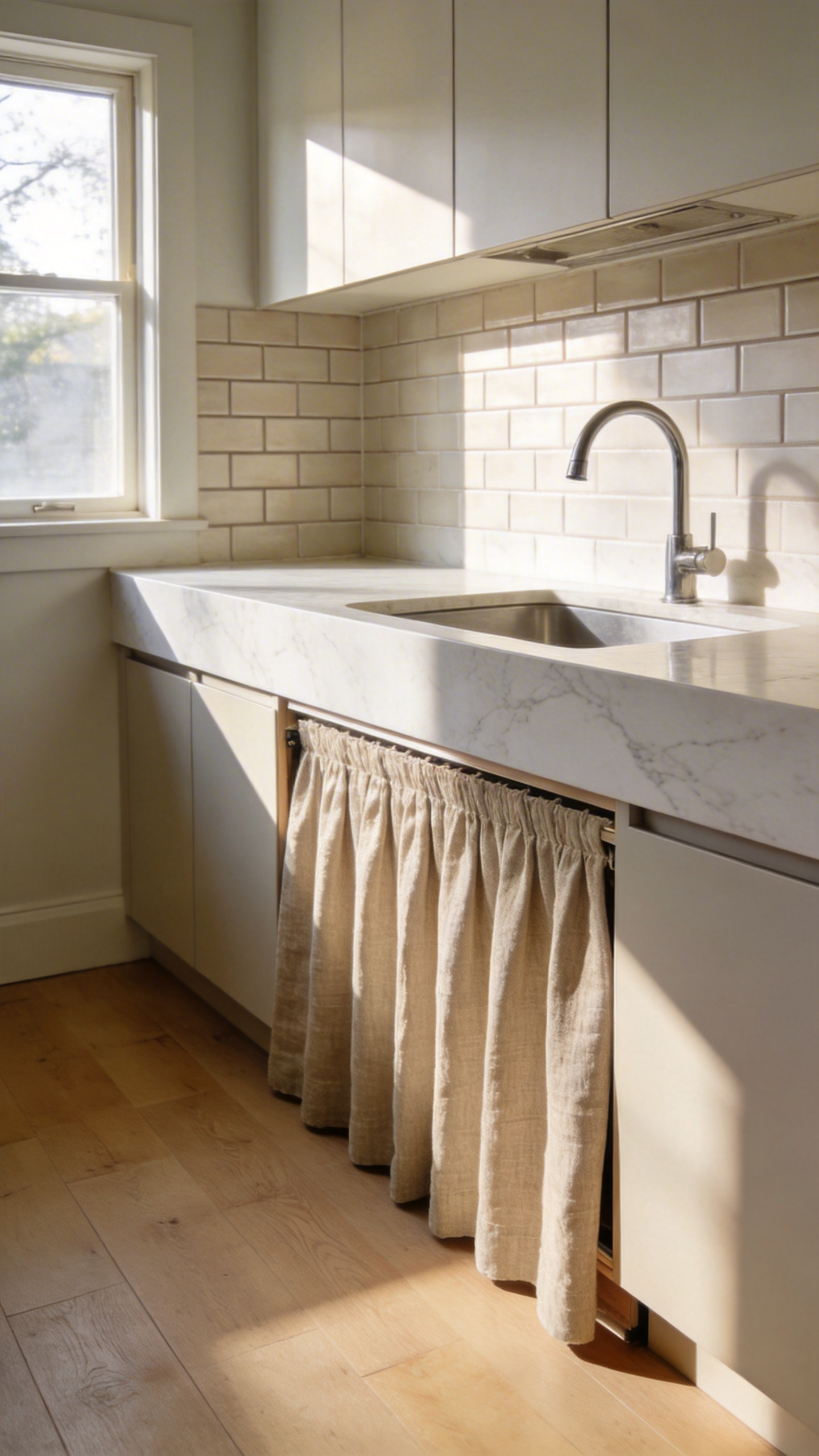
The construction of the skirt defines the room’s overall aesthetic. For example, structured box pleats offer a high-end furniture appearance. Alternatively, knife pleats emphasize verticality to make low cabinets feel taller. To avoid a skimpy look, always use a 2.5-times fullness ratio. This generous volume ensures the fabric drapes quite luxuriously. Historically, these simple skirts hid unsightly plumbing in the 1800s. Today, they serve as a highly sophisticated visual camouflage tool. Indeed, they perfectly hide bulky air fryers and mismatched bins.
Renters often struggle to personalize rigid modular kitchen layouts. Fortunately, this specific design solution requires absolutely zero permanent alterations. Specifically, tension rods and adhesive Velcro tracks replace drilled hardware. This soft fabric barrier allows for effortless seasonal adaptation. For instance, you can easily swap heavy winter oatmeal linen. Then, simply hang a breezy white flax for the summer. The space quickly becomes a curated and highly adaptable environment.
Phase IV: Mastery integration (Personalized flourishes & artist’s touches)
The final phase of kitchen design moves beyond mere function. I want to transform the workspace into a curated personal sanctuary. In professional artistry, tools remain as beautiful as the work itself. Therefore, treat utilitarian objects as curated kitchen exhibits. For example, group a bright task lamp with a potted herb and a ceramic bowl. This creates a functional triad with a distinct dialogue of touch. Rough wooden cutting boards contrast beautifully against cold quartz countertops.
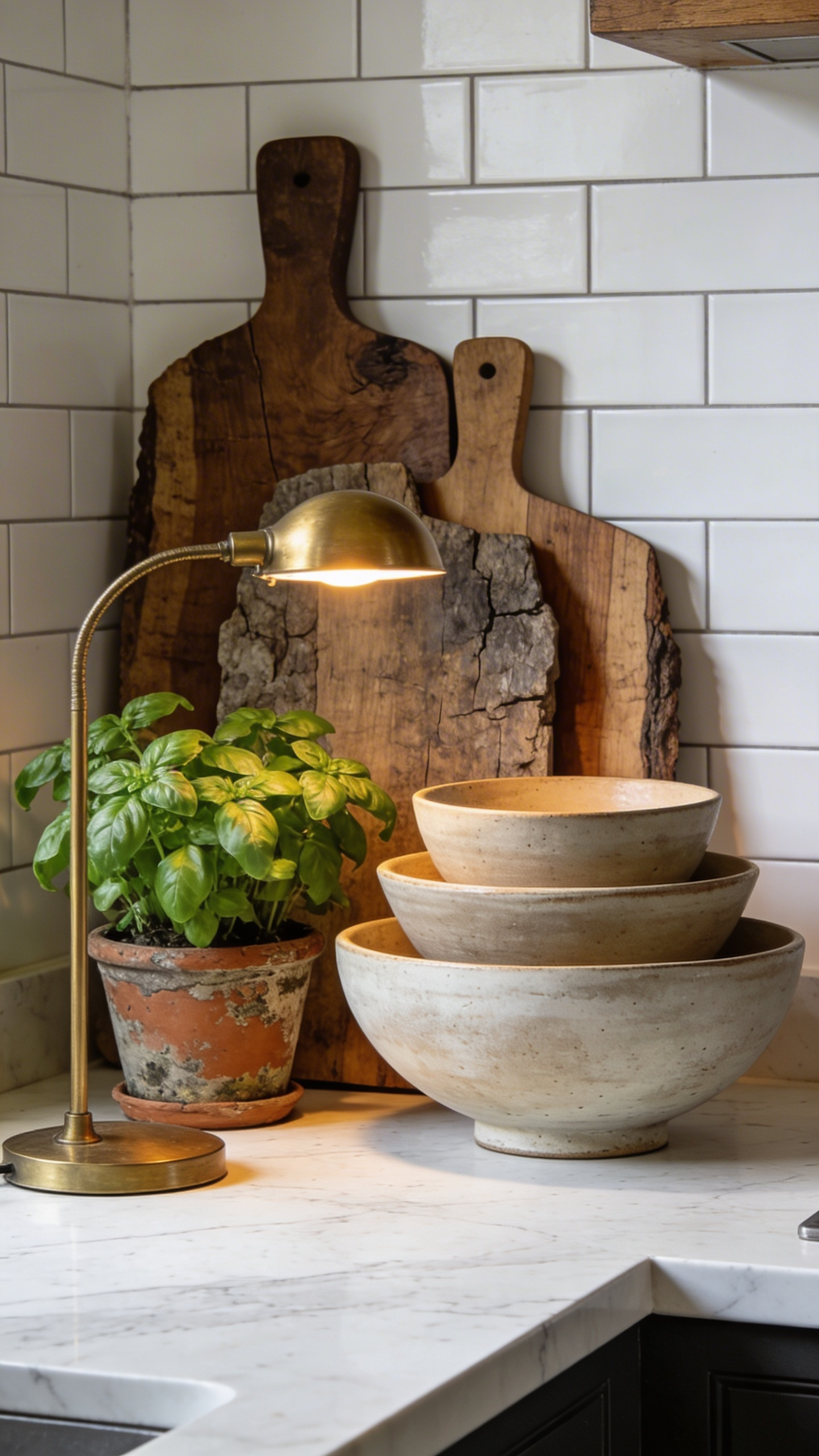
Proper lighting is equally vital for this atelier atmosphere. Museum-grade bulbs with a 90+ Color Rendering Index make fresh produce look wonderfully vibrant. Plug-in sconces above open shelving act as the room’s glowing jewelry. Scent also serves as an invisible architectural divider in small apartments. Placing a citrus diffuser ten feet from the stove clearly defines the lounge boundary.
The space should foster intimate social interaction while you cook. Instead of hiding everyday tools, hang quality copper cookware on a visible pegboard. This creates a functional mural honoring your daily culinary process. Embrace intentional imperfection to reject a sterile showroom look. Indeed, weathered copper bowls and unlacquered brass hardware provide authentic patina over time. As a final artist’s signature, always add one completely non-functional item to the room. For instance, a framed abstract photograph grounds the workspace beautifully. Your apartment kitchen becomes a true reflection of lived-in artistry.
13. Renter-friendly hardware swaps: Elevating standard cabinets with artisan brass or leather pulls
Interior design often refers to hardware as the jewelry of a room. However, in a rental kitchen, its impact feels highly psychological. Replacing hollow builder-grade pulls creates a vital haptic upgrade. Therefore, every time you open a cabinet, you experience true tactile ownership. Artisan materials completely shift the atmosphere of an apartment. For instance, unlacquered solid brass provides a beautiful living finish. Over time, this material develops a unique patina from your touch. Copper-based alloys are naturally antimicrobial for added daily functionality. Alternatively, vegetable-tanned leather pulls offer a completely different sensory experience. Indeed, cognac-colored leather introduces organic warmth into otherwise sterile environments. These soft loops beautifully break up harsh geometric cabinetry lines.
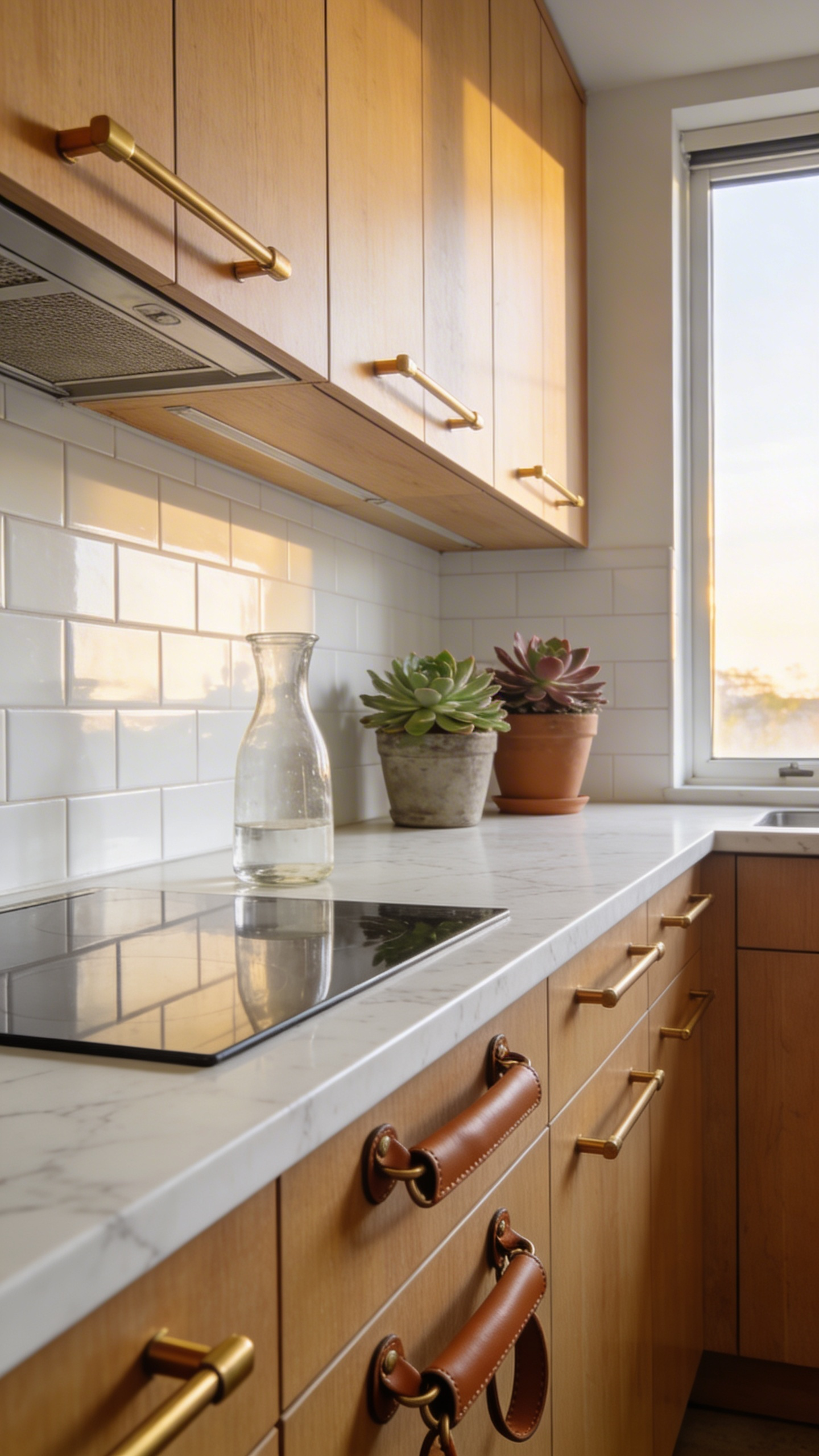
Before purchasing, measure the exact distance between existing screw holes. Standard builder-grade cabinets typically use a rigid three-inch measurement. Next, consider placing a small brass washer behind your new hardware. This simple trick protects the cabinet face and adds bespoke layered detail. You can also utilize a high-low design strategy to maximize your budget. Specifically, upgrade only the eye-level upper cabinets or heavy-use drawers. This focal point method successfully fakes the look of a custom kitchen. Finally, always store the original screws and pulls in a labeled bag. This protocol protects your valuable security deposit upon move-out.
14. Unconventional containers: Repurposing handmade ceramic studio pottery for utensil storage
In a cramped apartment kitchen, surface chaos remains the primary enemy. Lightweight metal or plastic utensil holders often topple over when holding heavy blenders. Conversely, handmade studio pottery offers a beautiful, grounded solution. Specifically, heavy-fire stoneware pieces feature a deliberate, thick-turned clay foot. This dense base naturally provides a much lower center of gravity. The unglazed foot ring creates tactile friction on slippery countertops. Therefore, your collection of wooden spoons stays securely anchored.
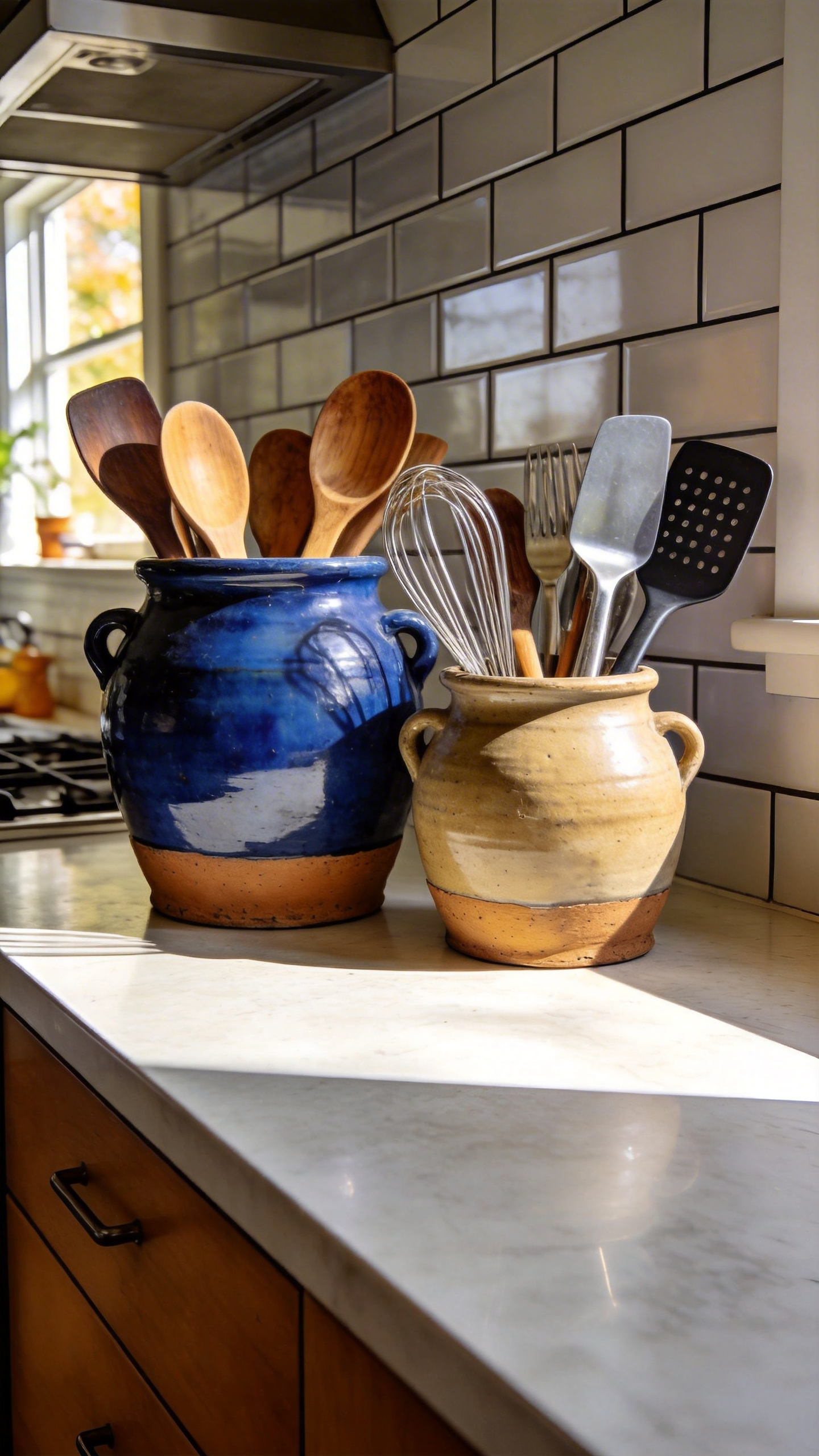
Repurposing ceramics deeply honors the early Studio Pottery movement. Pioneers like Bernard Leach championed ethical, highly functional everyday objects. These handmade vessels introduce intentional wabi-sabi imperfection to standard builder-grade apartments. For instance, a reactive ash glaze offers visually soothing fractal patterns. These natural, non-repeating visual textures actually help reduce daily cortisol levels. Thick clay provides excellent acoustic dampening within a noisy kitchen space. Dropping tools into a stoneware jar yields a quiet, satisfying thud. Mass-produced metal bins create loud, jarring hollow clacks.
However, you must always choose your specific ceramic vessel carefully. I recommend selecting straight-sided fermentation crocks rather than narrow, tapered vases. This specific geometry keeps your kitchen tools upright instead of splaying outward. Next, seek out gloss-stable interior glazes that resist heavy wear. Metal whisks can then glide effortlessly without scratching your usable art. This chemically inert heirloom piece quickly becomes a lasting architectural constant.
15. The gallery wall expansion: Hanging original art and vintage prints in awkward above-cabinet spaces
The often-neglected gap above kitchen cabinets offers prime real estate for art. Migrating a gallery wall upward reclaims completely dead space. This vertical expansion alters the room’s proportions dramatically. According to environmental psychology research, perceived high ceilings trigger relational thinking. Therefore, drawing the eye upward encourages genuine abstract creativity. It transforms a cramped utilitarian work cell into an expansive gallery.
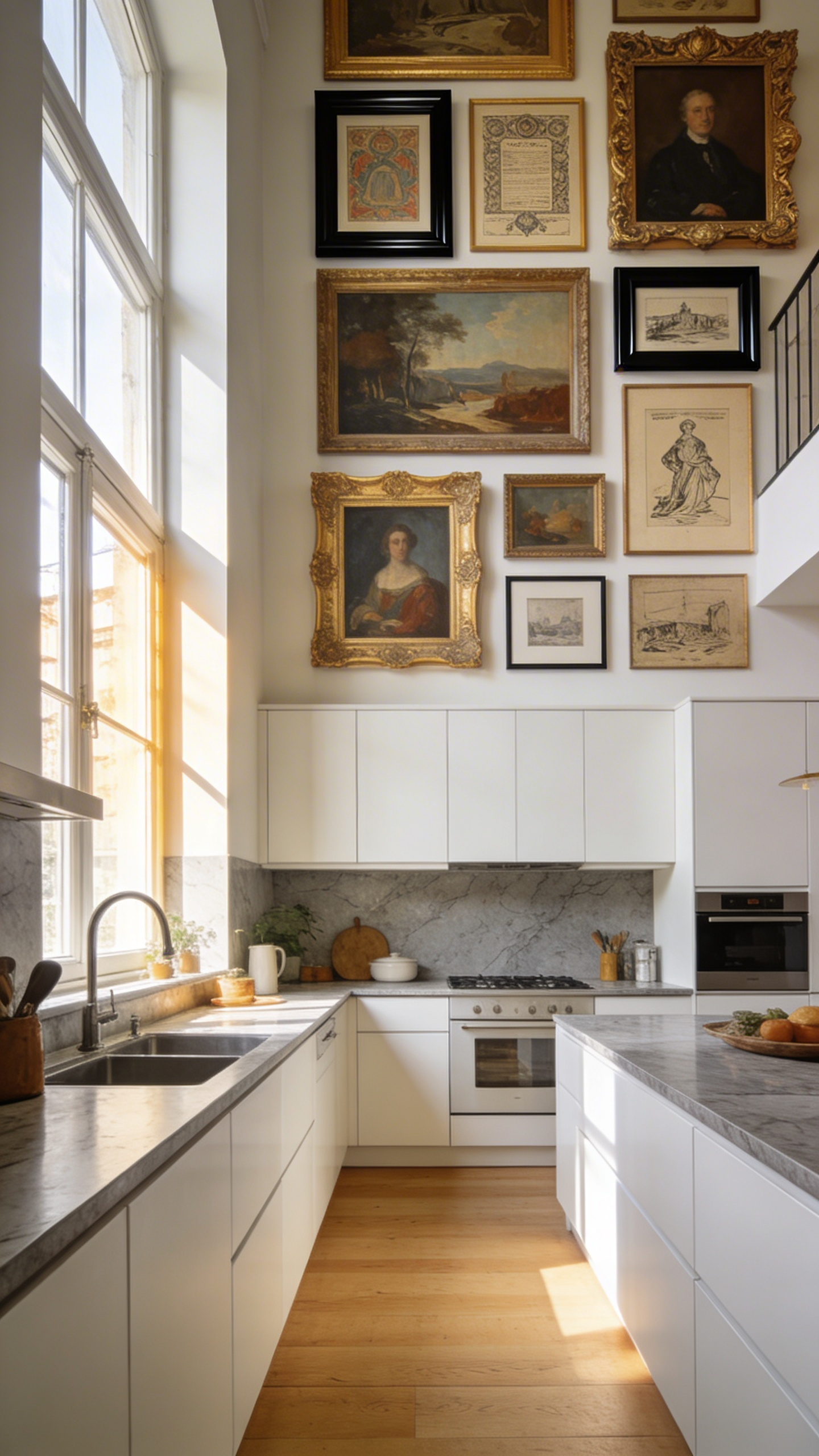
However, the kitchen environment presents unique preservation challenges. Airborne grease and steam create a very harsh micro-climate. For this reason, I recommend museum acrylic instead of traditional glass. Shatter-proof acrylic actually traps less humidity in these high zones. You should absolutely avoid hanging breathable original oil paintings here. Instead, rely on vintage prints or digital reproductions sealed securely. Therefore, you can safely wipe these surfaces down during deep cleans.
Stylistically, modern curation favors nostalgic, moody botanical studies and vintage photography. To anchor these visually disconnected pieces, align the frame bottoms horizontally. Alternatively, use monochromatic frames to create a cohesive visual window. If your space features slanted ceilings, traditional wire hanging will fail. Instead, secure frames flush against the slope using T-lock hangers. Next, illuminate your curation with recessed LED strips. Bouncing light off the ceiling creates a soft ambient halo. For renters, magnetic rechargeable picture lights offer brilliant, wire-free spotlights.
16. The atmospheric finish: Integrating hidden LED strip lighting to transition from workspace to sanctuary
The transition from an active workspace to a restful sanctuary requires deliberate lighting control. Specifically, modern sanctuary lighting relies heavily on Warm Dimming technology. Unlike static LEDs, this dynamic system physically mimics incandescent filaments. The color temperature shifts from 4000K down to a honeyed 1800K. This deep amber glow signals the brain to enter a relaxed state. Designers must always insist on a Color Rendering Index above 90. High CRI ensures that rich wood tones never look muddy when dimmed.
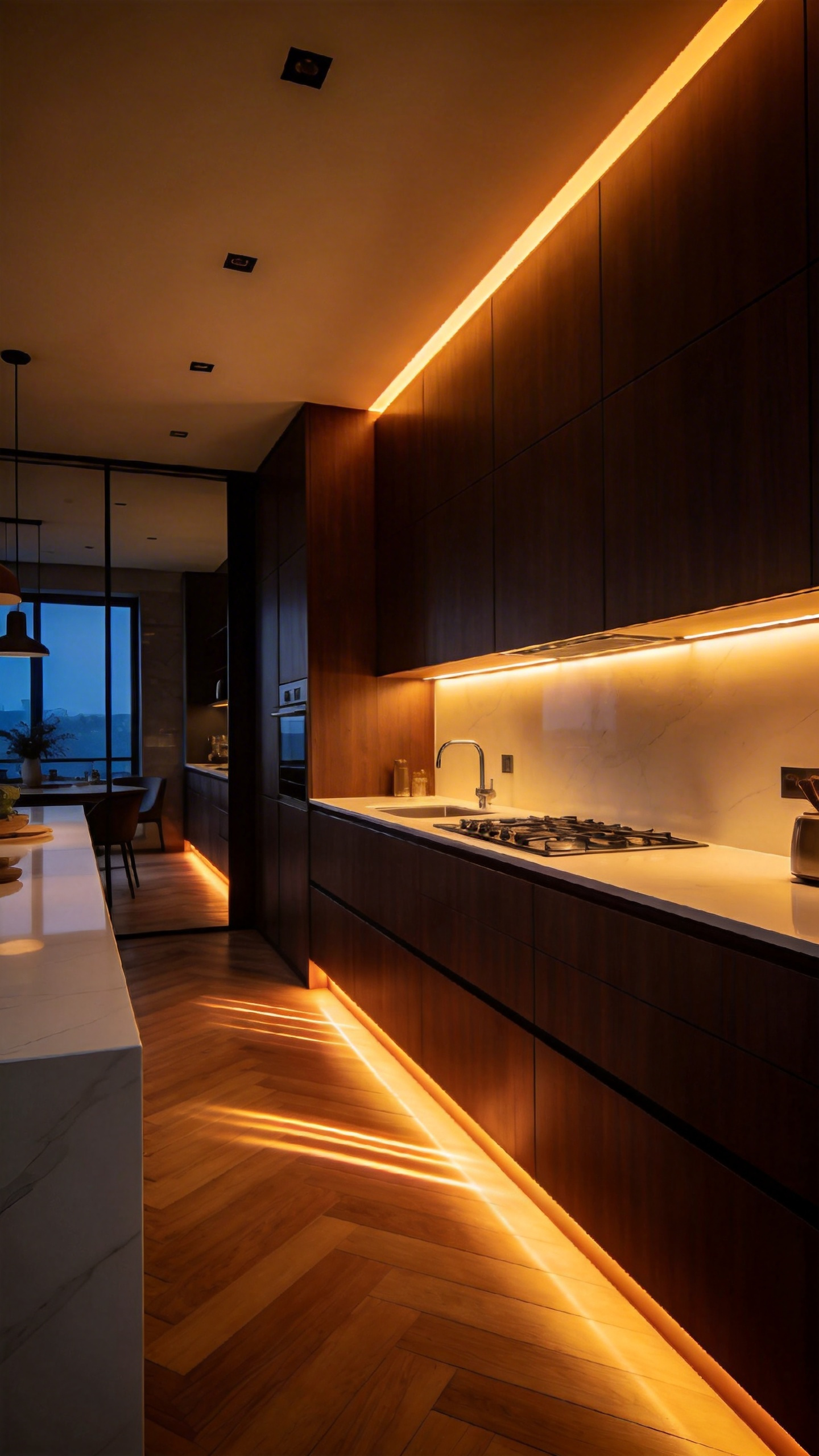
Indeed, this lighting shift moves the room from prospect to refuge. Hidden LED strips successfully avoid the direct glare that triggers alertness. Installing indirect toe-kick lighting encourages natural melatonin production. Visually, recessing these lights underneath an island creates a floating monolith effect. Hiding the light source within a deep aluminum channel is absolutely crucial. Deep channels with frosted diffusers eliminate the harsh reflections of individual diodes. This creates a perfectly diffused wash of soft light. Therefore, this illumination silences the visual noise of heavy appliances and hardware.
Achieving this atmosphere requires impeccable technical execution behind the scenes. For instance, remote LED drivers should be hidden in ventilated pantries. This completely prevents any low-frequency hums from disrupting the auditory peace. Smart scenes allow a single tap to alter the room’s purpose. Sophisticated apartment kitchen decorating is not merely about aesthetic upgrades. Instead, it offers a holistic approach to spatial optimization that honors your personal culinary ritual.
Frequently Asked Questions
How can I decorate my apartment kitchen without losing my security deposit?
To protect your security deposit, focus on reversible changes. I recommend high-quality peel-and-stick architectural films for backsplashes and countertops. Next, utilize tension rods for hanging storage. Always store original hardware in a labeled bag so you can reinstall it before moving out.
What is the best lighting strategy for a windowless apartment kitchen?
A layered lighting strategy is absolutely essential. Combine high-CRI LED strips for under-cabinet task lighting with a warm-dimming overhead fixture. Integrating mirrored surfaces or light-reflecting matte paints can also help bounce ambient light throughout the space. This beautifully mimics the feel of natural illumination.
How do I maximize counter space in a small rental kitchen?
Reclaim your culinary real estate by utilizing verticality. Install magnetic knife strips, wall-mounted pegboards, and hanging produce baskets. Next, use elevated wooden plinths or trays to group essential items into organized vignettes. This drastically reduces visual clutter and provides more room for meal preparation.