Many people view living room rugs as mere decorative floor coverings. However, true sophisticated design demands much more than simple visual appeal. In fact, these inherited textiles carry a deep cultural history. They bridge traditional weaving rituals with the modern demand for slow interiors. By selecting high-quality living room rugs, you invest in a foundational architectural element. Ultimately, this choice defines both the character and acoustic harmony of your space.
Historically, weavers never treated the loom as a simple industrial machine. Instead, South Asian artisans viewed it as a sacred entity. They believed it carried highly protective energy. Today, this rich history acts as a strong psychological anchor. It easily grounds the scattered energy of our fast-paced British homes. Next, heritage textiles bring the artisan’s community directly into your living room. The subtle natural dye variations offer a striking counterpoint to mass-produced furniture. Hand-knotted wool also works wonders for dampening sound in noisy open-concept rooms.
Meanwhile, designers use advanced techniques to create textured high-low piles. Therefore, these ancient crafts adapt and survive beautifully in modern contexts. Stepping onto a hand-woven rug actually transforms an open space into a quiet retreat. Next, we will explore how to integrate these cultural elements naturally. This guide reveals how a heritage textile shapes a room’s character. In turn, it effortlessly complements your broader luxury living room decor choices.
Beyond the Border: Decoding the Geometry of South Asian and Persian Motifs in Modern Design
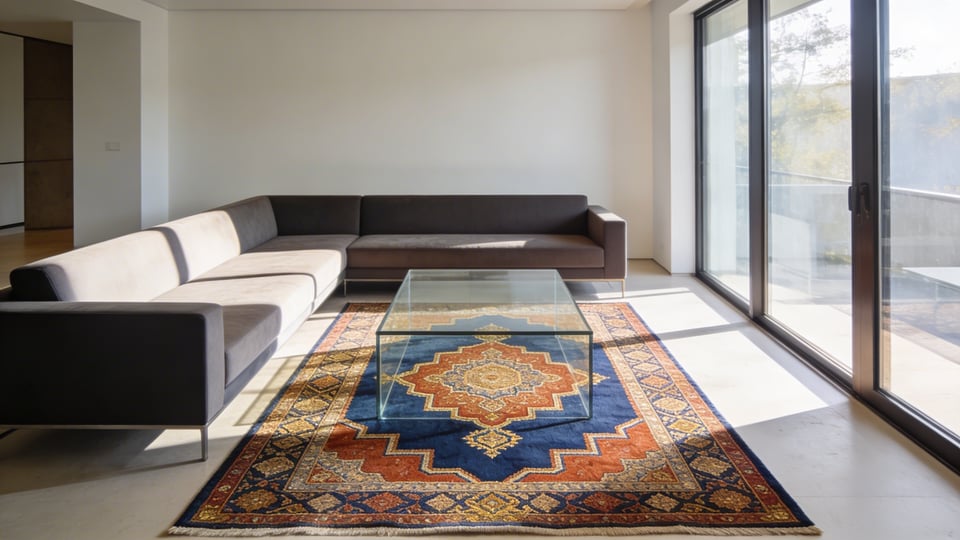
Beyond the physical threads lies a sophisticated mathematical language. Persian geometry, in fact, often expresses ancient Sufi mysticism. For example, living rooms frequently feature the classic Lachak Toranj layout. Here, a central medallion anchors the visual center of the room. The corner brackets act as partial quarter-medallions. Placed together, four identical rugs would theoretically form an infinite pattern. In modern spaces, this repeating geometry provides a calming visual order. However, the true appeal actually lies in symmetry-breaking. Hand-knotted rugs naturally contain human errors and varying tension. Designers often call this “perfect imperfection” a form of soulful modernism. Ultimately, these slight irregularities beautifully ground spaces filled with factory-perfect furniture.
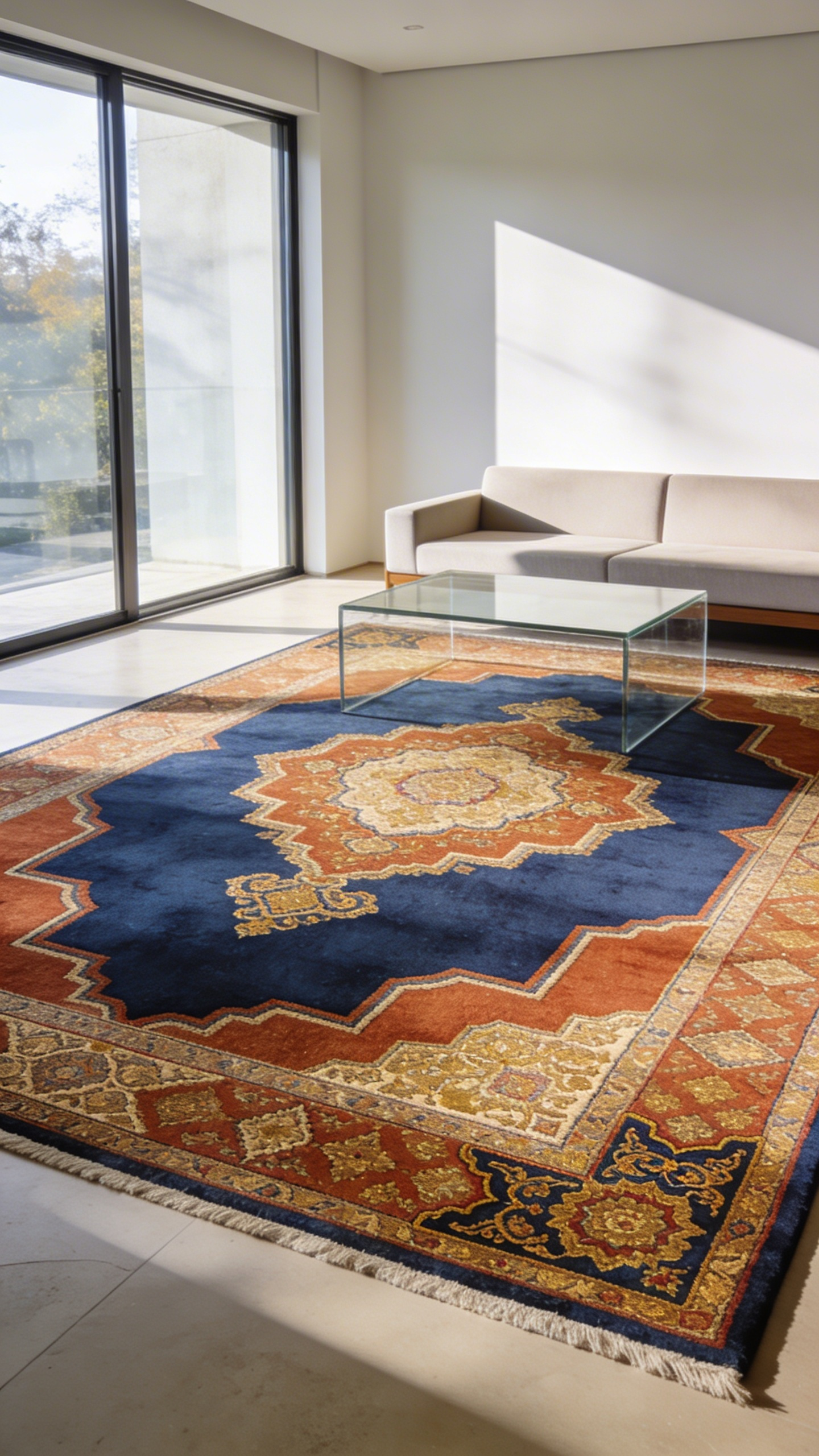
Contemporary design also embraces the evolution of the Chobi style. Traditionally, Persian rugs from Tabriz featured incredibly dense, busy patterns. Today, sleek floor plans can easily feel cluttered by this intense density. To fix this, South Asian weavers scaled up these historic patterns. They stripped away secondary details to create a newer, airy aesthetic. Muted vegetable dyes now offer a breathable focal point. Meanwhile, modern adaptations focus strongly on rich sensory textures. Artisans often use hand-carving to create a distinct three-dimensional effect. A silk Herati diamond, for instance, might feature a high pile. The surrounding wool background is then sheared quite low. Naturally, this sculpted surface allows geometric motifs to physically pop. Monochromatic rooms suddenly feel rich without needing harsh contrast.
Modern homeowners increasingly seek pieces that tell a story. Historically, specific geometric shapes functioned as protective talismans. The eight-pointed star represents deep spiritual balance. Similarly, the Kashmiri S-motif symbolizes a fierce protective dragon. Woven diamond shapes traditionally worked to ward off the evil eye. Today, placing these patterned pieces indoors signals intentional harmony. They easily blend rich South Asian heritage with minimalist aesthetics.
The Artisan’s Fingerprint: How to Recognize Authentic Hand-Knotted Excellence
A good rug fundamentally anchors a living space. However, the modern market is flooded with cheap machine-made replicas. To identify true hand-knotted excellence, look closely at the fringes. Authentic fringes are actually the exposed vertical warp threads. They run through the entire body of the textile itself. Machine-made rugs, on the other hand, use glued or sewn-on decorative fringes. Next, examining the knots reveals the weaver’s distinct rhythm. If the underside grid looks perfectly uniform, a machine made it. Instead, you want to see slight variations in the knot sizes.
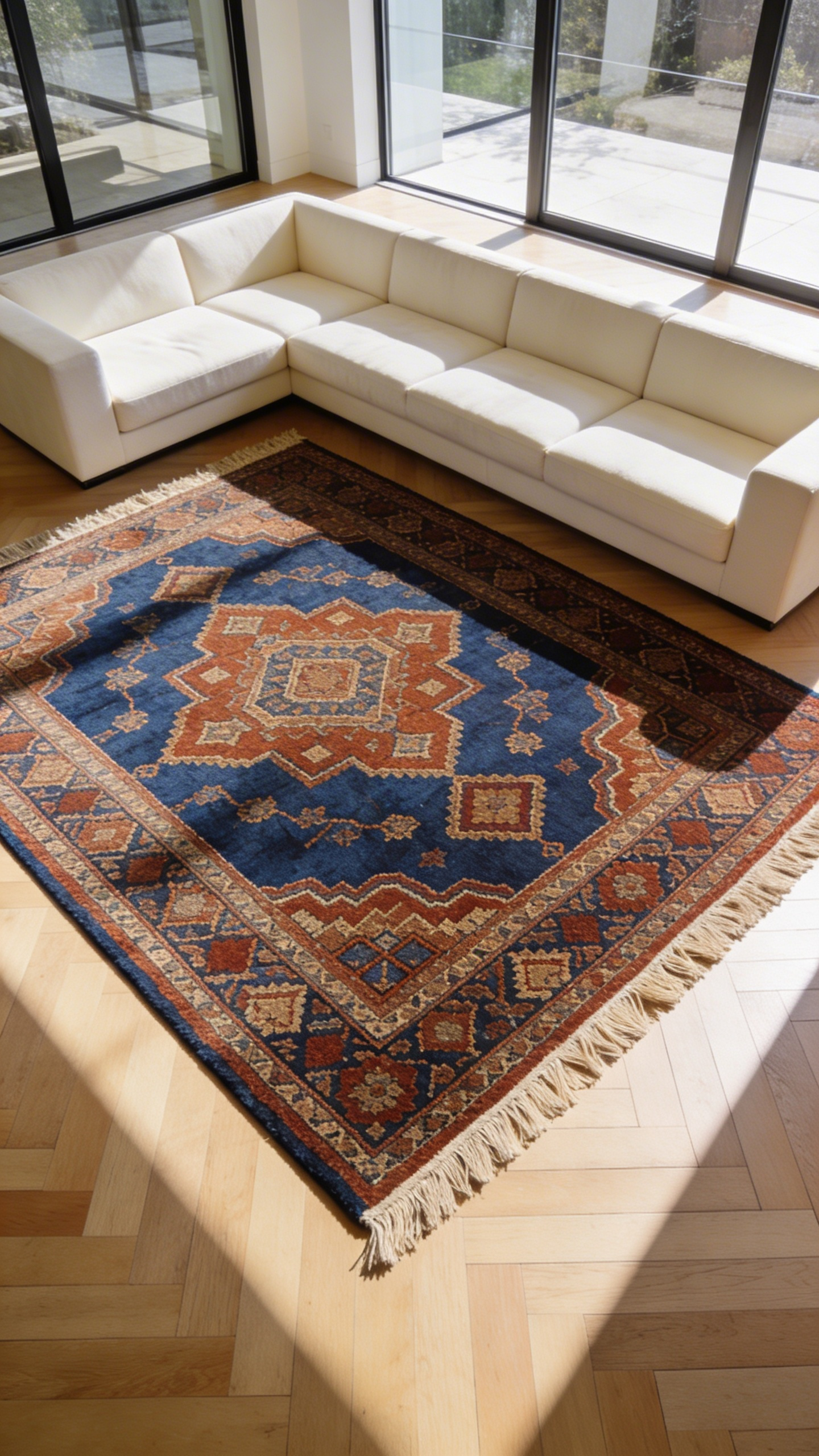
Next, consider the natural texture of hand-spun wool. Hand-spinning preserves the wool’s protective lanolin shield beautifully. This waxy coating provides immense resilience against heavy furniture. Small-batch dyeing also creates beautiful horizontal color bands known as abrash. Novices might see these dye shifts as flaws. Connoisseurs, however, recognize this chromatic depth immediately. Ultimately, these organic variations elegantly mask daily wear and minor spills.
Finally, authentic rugs embrace intentional imperfection. Often called the “Persian Flaw,” this subtly breaks rigid symmetrical patterns. Weavers deliberately alter tiny motifs to maintain spiritual humility. These gentle anomalies constantly remind us that a real person made the piece. In a crisp contemporary room, this woven heritage adds genuine warmth.
Navigating the Era Clash: Pairing Antique Heritage Textiles with Ultra-Modern Furniture
In a contemporary living room, an “era clash” is never a failure. Rather, it creates a highly sophisticated aesthetic. Pairing antique textiles with ultra-modern furniture builds incredible visual interest. The human eye actually craves the surprise of juxtaposition. Therefore, placing a sleek polycarbonate chair on a Persian Tabriz works seamlessly. Your brain receives two completely distinct data points. One piece represents industrial perfection, while the floor offers organic history. The antique rug acts as a vital historical anchor. It warms up ultra-modern furniture that might otherwise feel sterile. When choosing living room furniture, just ensure your pieces respect the rug’s border.
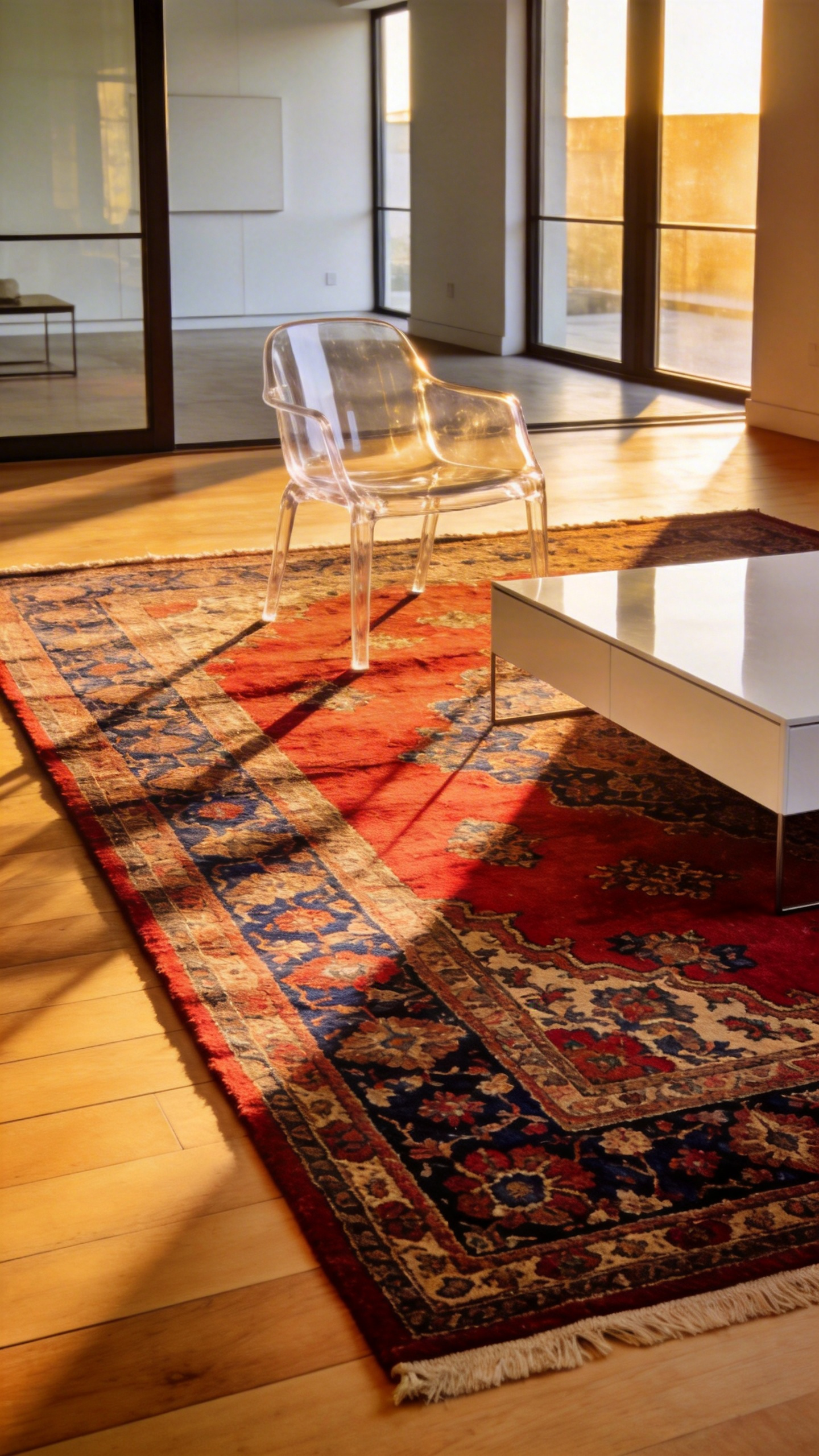
The sensory contrast between these eras is also compelling. Antique rugs feature that beautiful tactile irregularity known as abrash. Because hand-spun wool absorbs vegetable dyes at varying rates, you get shifting color bands. Modern spaces, conversely, rely heavily on factory-perfect chrome and glass. The abrash effect injects much-needed organic texture into the room. It actively prevents your space from feeling like a clinical laboratory. Natural vegetable dyes also possess a unique transparent quality. They reflect ambient light directly from within the woolen fiber. As a result, these textiles glow warmly even under modern LED lighting.
Modern furniture often prioritizes negative space and floating shapes. Because of this, airy pieces require a heavy visual foundation. An antique Oushak rug provides this grounding anchor beautifully. Finding geometric alignment also helps bridge these contrasting periods. Many tribal South Asian and Caucasian textiles feature bold, rigid patterns. In fact, these primitive motifs actually inspired early twentieth-century modernism. Choosing a rug with strong architectural composition creates immediate harmony. The room’s design quickly becomes a deliberate, historically rich lineage.
The New Heirloom: Sourcing Living Room Rugs That Appreciate in Narrative and Value
Finding an investment-grade living room rug requires looking past mere aesthetics. True heirlooms always start with high-altitude, hand-carded wool. This highly resilient fiber contains abundant protective lanolin. Over time, heavy foot traffic massages this built-in wax to the surface. The resulting patina imparts a literal, sophisticated glow. Vegetable dyes like madder root and indigo also penetrate the fiber core. These organic colors naturally oxidize and mellow into nuanced shades. Interestingly, a perfectly uniform appearance is often less valuable. Ultimately, these luxury living room rugs represent a lasting investment in craftsmanship.
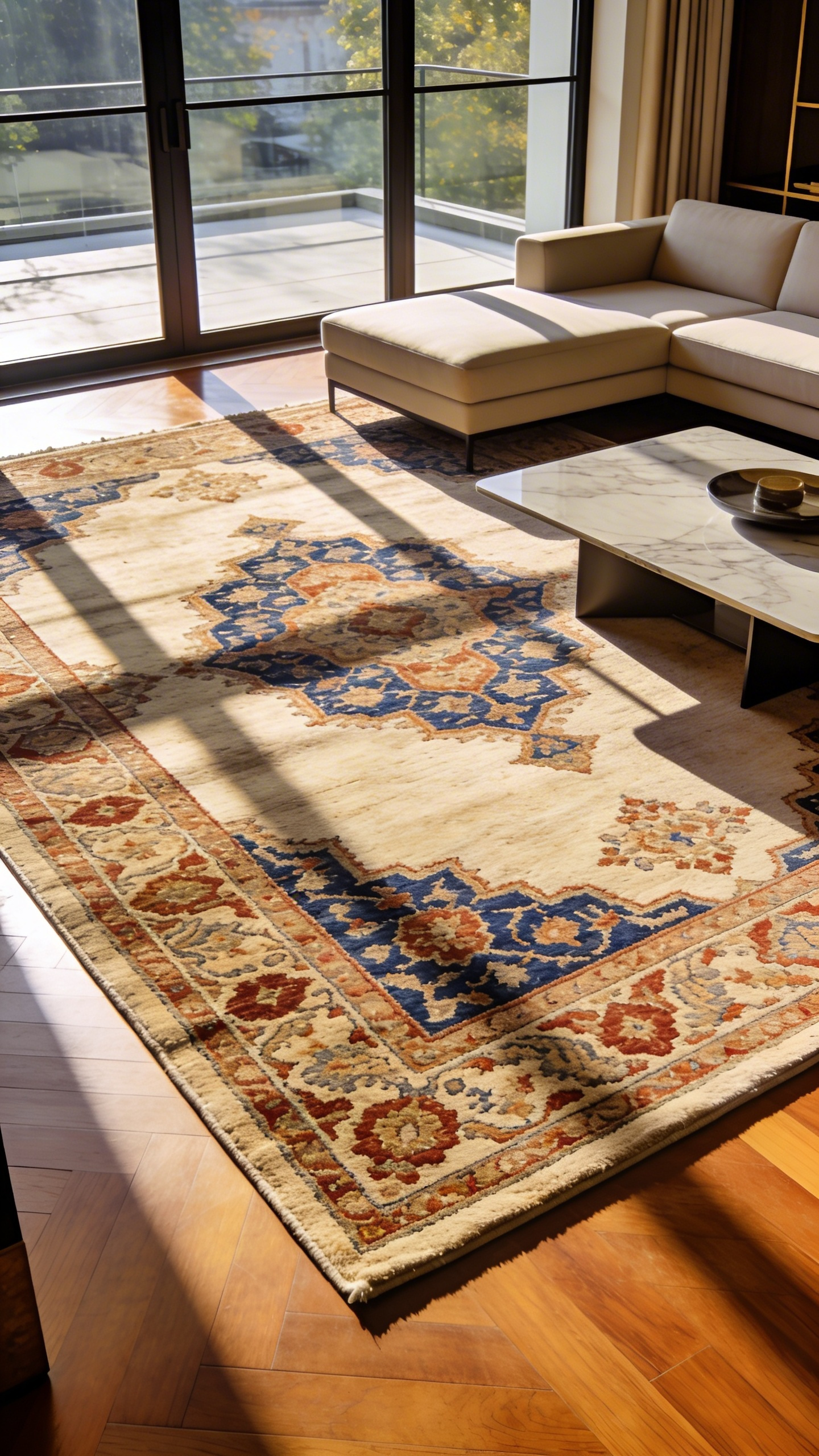
Subtle color shifting provides a unique, authentic fingerprint. Collectors now increasingly prize tribal motifs over rigid, mass-produced symmetry. A spontaneous pattern change simply tells a better human story. Meanwhile, the modern artisanal revival movement is crafting the antiques of tomorrow. Weavers use historical techniques to produce pieces with dense, heavy handles. Sourcing ethically made rugs with transparent origins also adds tremendous value. Interestingly, a bustling living room actually enhances these textiles. Hand-knotted wool naturally tightens and breaks in beneath heavy furniture. The dense foundation also acts as a brilliant acoustic sponge. For maximum appreciation, look for large-format rugs with versatile, all-over patterns. They easily adapt across different architectural eras and future home moves.
Silk and Wool Marriages: Balancing Luxurious Luster with Everyday Durability
Blending silk and wool solves a major design dilemma in modern homes. This partnership perfectly balances palace aesthetics with everyday resilience. Historically, this highlighting technique stems from 16th-century Mughal Empire craftsmanship. Artisans use robust wool for the rug’s primary foundation. They then reserve shimmering silk exclusively for intricate floral outlines.
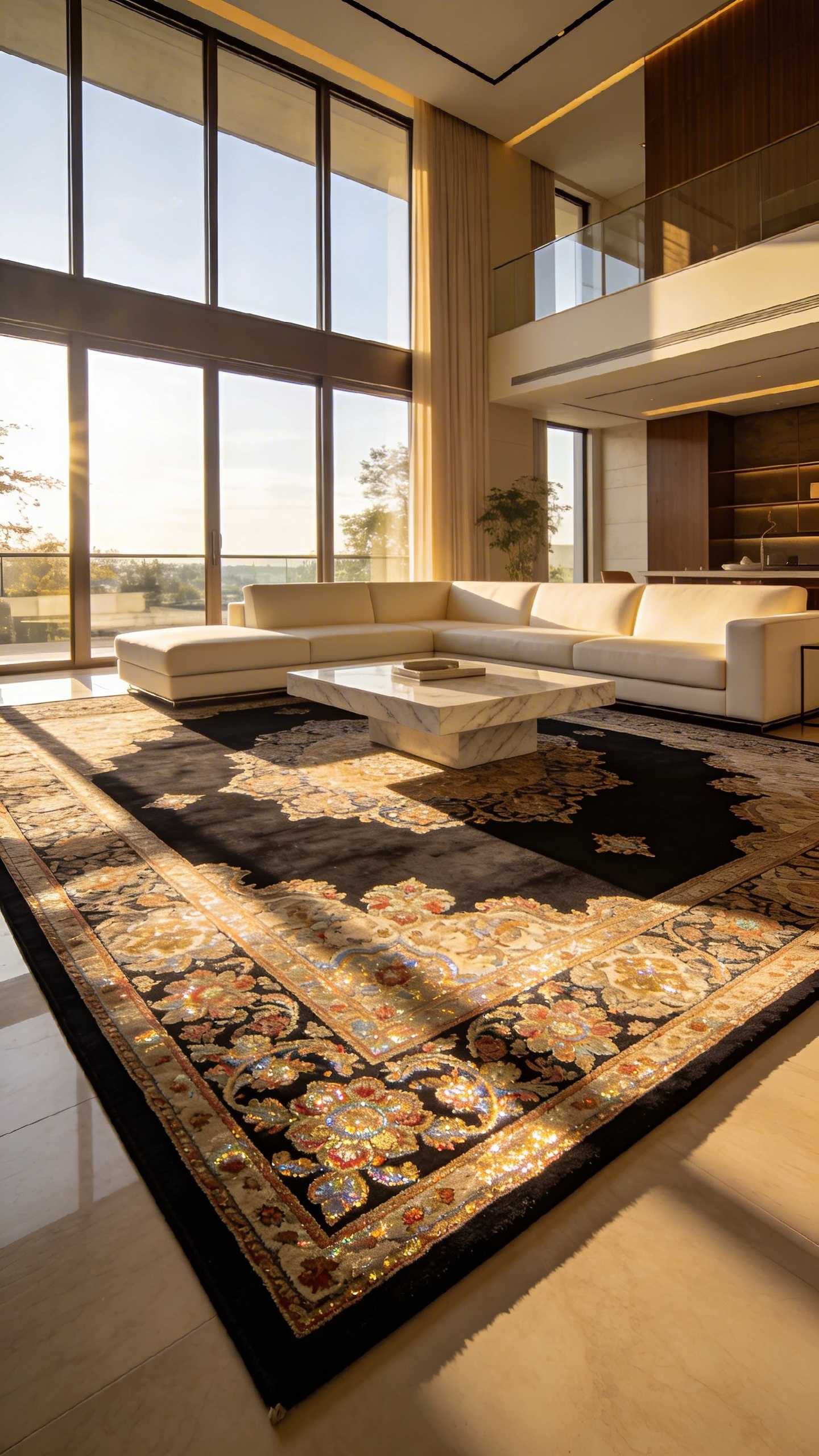
This pairing creates a brilliant tactile and visual hierarchy. Physically, the two materials interact with light in very different ways. Wool features a scaly, cylindrical structure. Therefore, it scatters light to provide a grounded, matte appearance. Silk, conversely, boasts a triangular, prism-like shape. It refracts light to create a deep, moody luster.
This duality transforms your living room throughout the day. Under cool morning light, the wool absorbs glare and feels incredibly cozy. Later, beneath warm evening lamps, the silk highlights suddenly activate. The intricate patterns appear to dance beautifully across the floor.
Practically, this hybrid approach easily manages everyday household wear. Wool possesses a natural crimp that bounces back from heavy furniture. Its inherent lanolin also offers excellent resistance to accidental spills. Delicate silk, however, can lose twenty percent of its tensile strength when wet. Using wool as the primary workhorse base protects those fragile silk accents.
Maintaining this material marriage does require specific care. Standard alkaline detergents will severely yellow and ruin delicate silk fibers. Wool, meanwhile, thrives in slightly acidic environments. Homeowners must therefore rely on neutral pH professional hand-washing. This careful maintenance preserves the quiet luxury of both materials.
The Jute and Sisal Renaissance: Elevating Natural Fibers in Formal Living Spaces
People traditionally viewed jute and sisal as mere utilitarian materials. We used them primarily for grain sacks and maritime rope. Today, however, these raw fibers establish a beautiful foundation for high-end quiet luxury. They represent a deliberate rebellion against sterile, mass-produced synthetic rugs. This design renaissance embraces the unpredictable imperfections of organic growth. Sisal provides a precise, architectural base for formal living spaces. Luxury brands now even weave agave fibers into complex, silk-like jacquard patterns. These tight weaves gently whisper elegance without overwhelming your statement furniture.
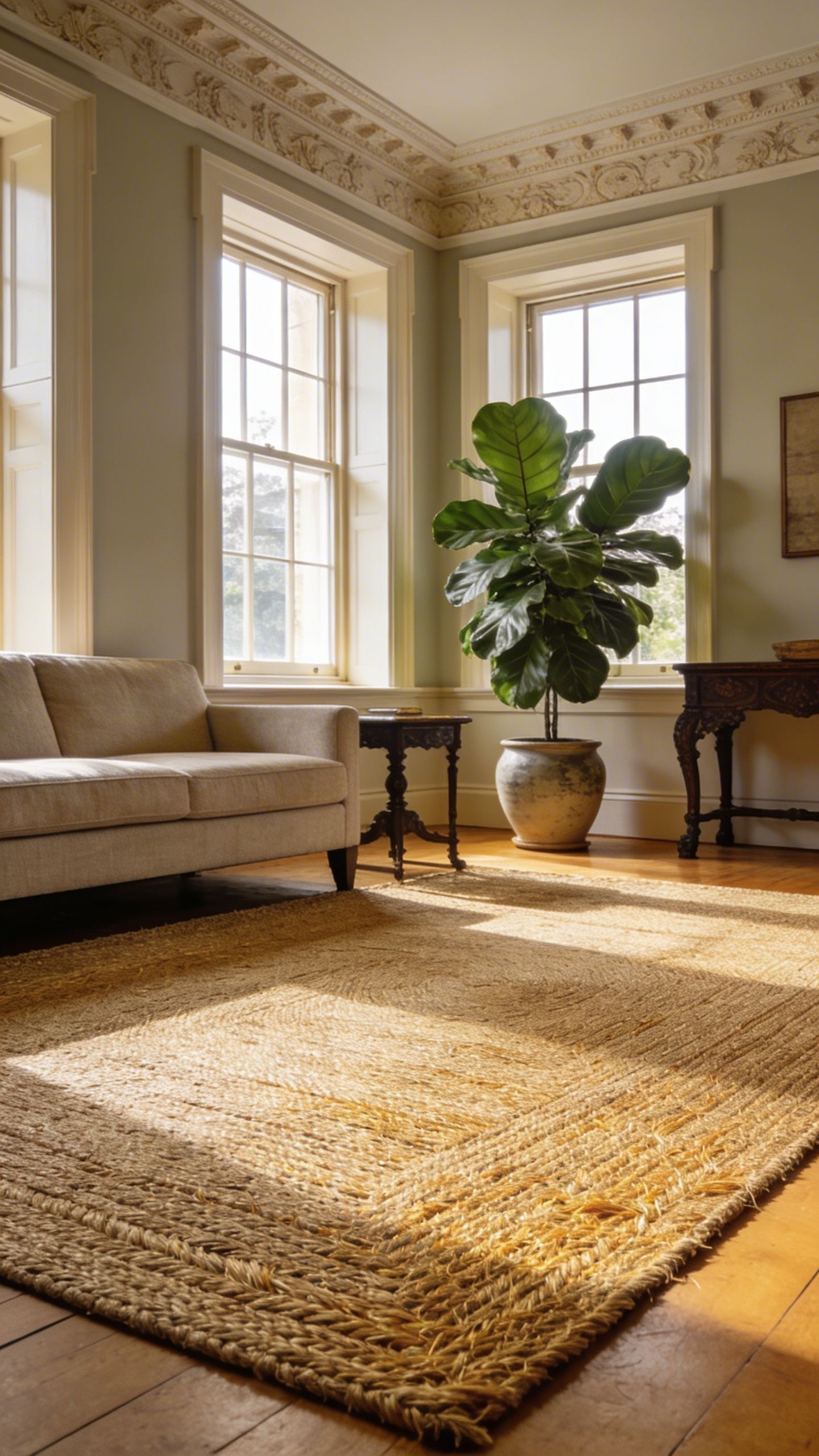
Jute, on the other hand, introduces a soft, golden sheen. Artisans soak this South Asian fiber extensively to break down its rigid lignin. The resulting chunky, hand-braided bouclé feels remarkably similar to fine wool. These tactile textures can actually reduce ambient stress through sensory grounding. A large natural rug beautifully anchors floating furniture in grand, high-ceilinged rooms.
Designers elevate these pieces further through sophisticated edge refinements. Instead of casual raw fringes, edges are often finished with wide leather bindings. These tailored borders create a bespoke, refined aesthetic. Purposeful layering also transforms these organic carpets into high art. A massive sisal base simply acts as a durable, textural stage. Next, you can place a delicate antique Persian rug right on top. This pairing perfectly merges rich heritage with contemporary formality. The living space achieves a deeply layered, multidimensional look.
Pile Height Psychology: How Tactile Texture Manipulates the Perceived Warmth of a Room
Interestingly, perceived warmth involves much more than just the thermostat. It relies heavily on a physical phenomenon called thermal effusivity. Flat-weave dhurries or sleek sisal rugs possess high thermal conductivity. They actually pull heat away from your body quickly. High-pile rugs, however, trap microscopic pockets of stagnant air. This acts as a brilliant natural insulator against cold floors. Sinking your feet into a plush rug also increases skin contact. This sensory depth is essential for a cozy living room design that feels truly inviting.
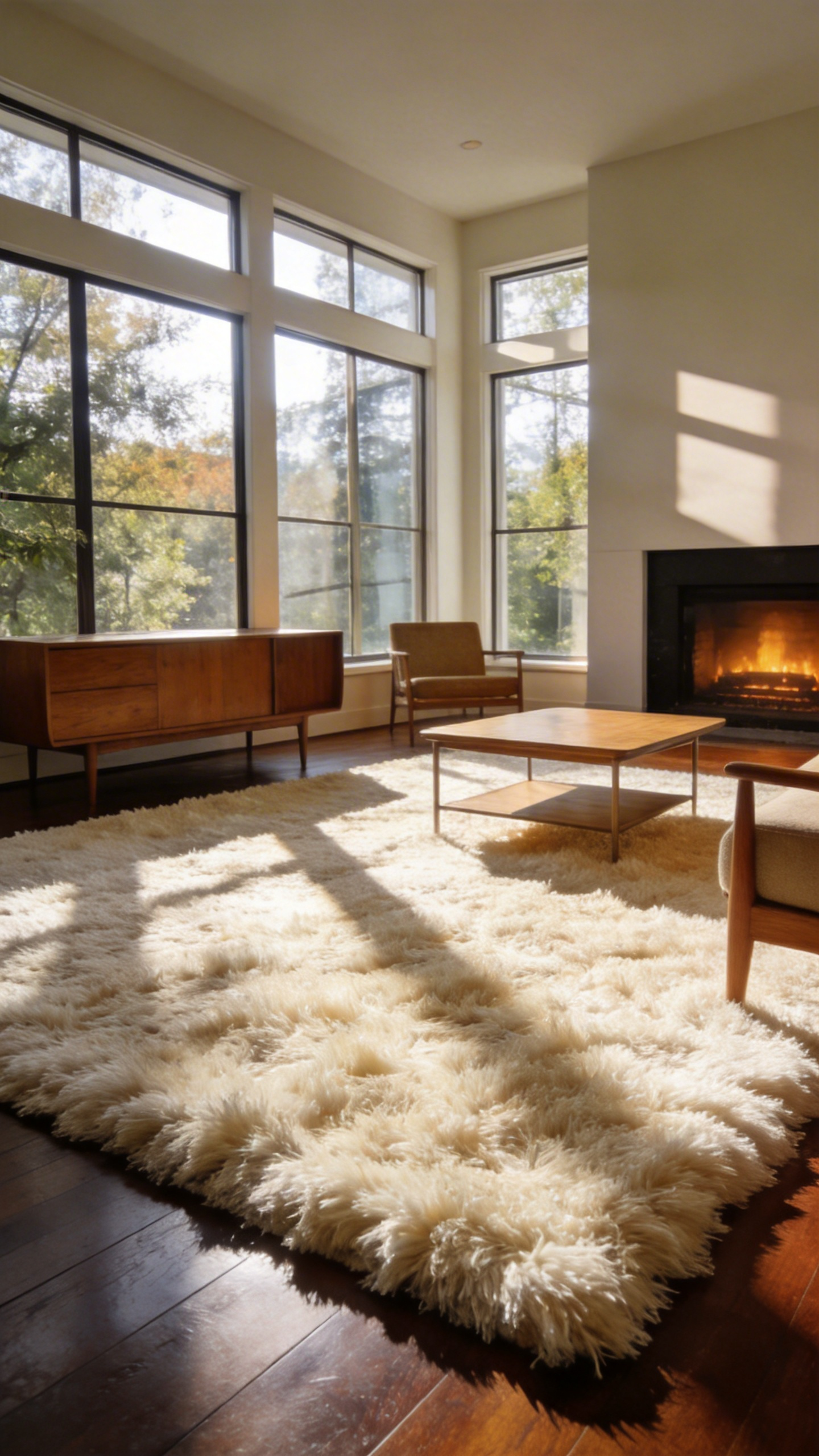
Beyond touch, we actually “feel” warmth with our eyes. Neuroaesthetic research proves our brains automatically link shaggy textures with heat. Deep rug valleys absorb light rather than reflecting it. This matte effect visually reduces the room’s overall volume. As a result, the space feels far more intimate and enclosing. Acoustics also play a crucial role in this sensory illusion. Hard surfaces bounce high-frequency echoes around the room. We naturally associate echoing sounds with cold, cavernous spaces. Thick carpets, conversely, dampen these sharp noises beautifully. They create a still, quiet environment that feels inherently warmer.
Historically, this preference for softness stems from our evolutionary past. Heavy pile textiles mimic the comforting warmth of animal fur. This tactile texture actually triggers oxytocin release and relaxes our nervous system. Nomadic tribes utilized heavy textiles as markers of domestic security. Today, we map these exact sensory responses directly to interior design. Low-pile rugs signal cool, clean boundaries perfect for home offices. Medium-pile options offer a durable baseline for active social areas. High-pile rugs, however, transform a seating area into a private sanctuary. They firmly anchor the space as the emotional heart of the home.
Ethical Threads: Navigating the Landscape of Fair-Trade and Sustainable Artisan Weaving
True luxury extends far beyond simple visual appeal. Understanding the exact origins of our textiles is absolutely paramount. The term “handmade” requires careful navigation in modern retail. Hand-tufted rugs are accessible, but they rely on mechanized guns and latex glues. Unfortunately, these glues can emit volatile organic compounds into your home. Traditional hand-knotted rugs, however, remain entirely mechanical and glue-free. They offer a truly hypoallergenic, heirloom-quality foundation for your space.
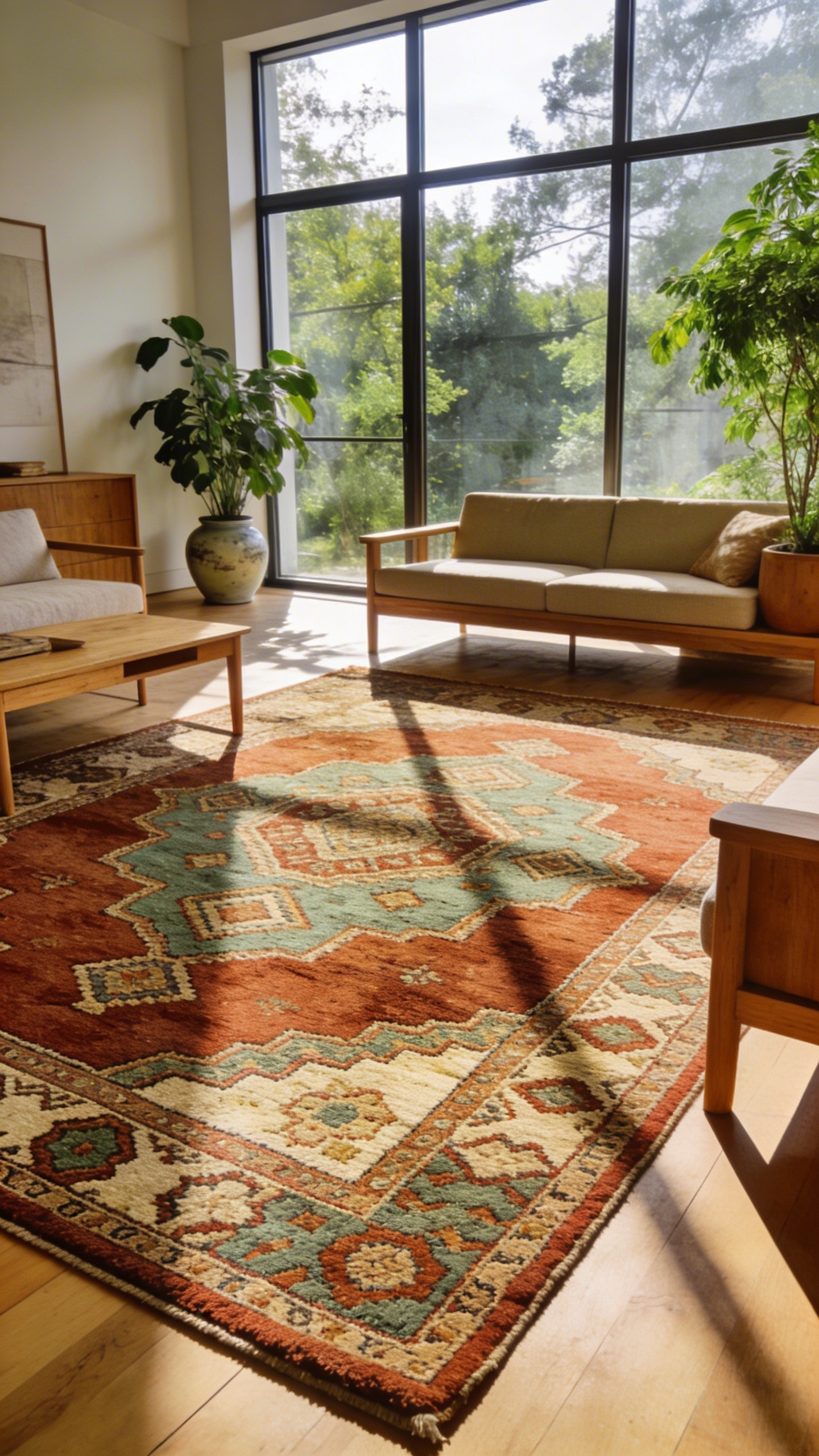
True sustainability also challenges our assumptions about natural materials. Traditional natural dyes, for instance, often demand excessive water consumption. Creating a deep madder red requires double the water of modern alternatives. Cultivating these natural dyestuffs also occupies vast tracts of arable land. Because of this, many ethical artisans now embrace GOTS-certified synthetic dyes. These safe synthetics deliver vibrant colors while actively protecting precious water resources.
Navigating this landscape requires seeking out rigorous, transparent certifications. The GoodWeave seal, for example, ensures unannounced inspections at home-based looms. This guarantees strict protection against child labor in complex cottage industries. Truly ethical brands also embrace direct, fair partnerships with makers. By cutting out multiple middlemen, they ensure much greater wealth distribution. This model keeps most of the rug’s value directly within weaving communities. Your living room can reflect impeccable styling while genuinely supporting global empathy.
The Alchemy of Overdyeing: Giving Traditional Global Patterns a Contemporary Edge
Overdyeing is a fascinating, transformative process. It beautifully bridges ancient textile heritage with modern-day minimalism. Traditional vintage rugs often feature chaotic, highly saturated palettes. These busy designs can easily overwhelm a contemporary living room. The overdyeing alchemy begins with intentional subtraction. First, artisans apply a specialized wash to strip away vibrant pigments. Next, they shear the wool pile down to its absolute base. This process reduces visual noise while exposing the architectural foundation.
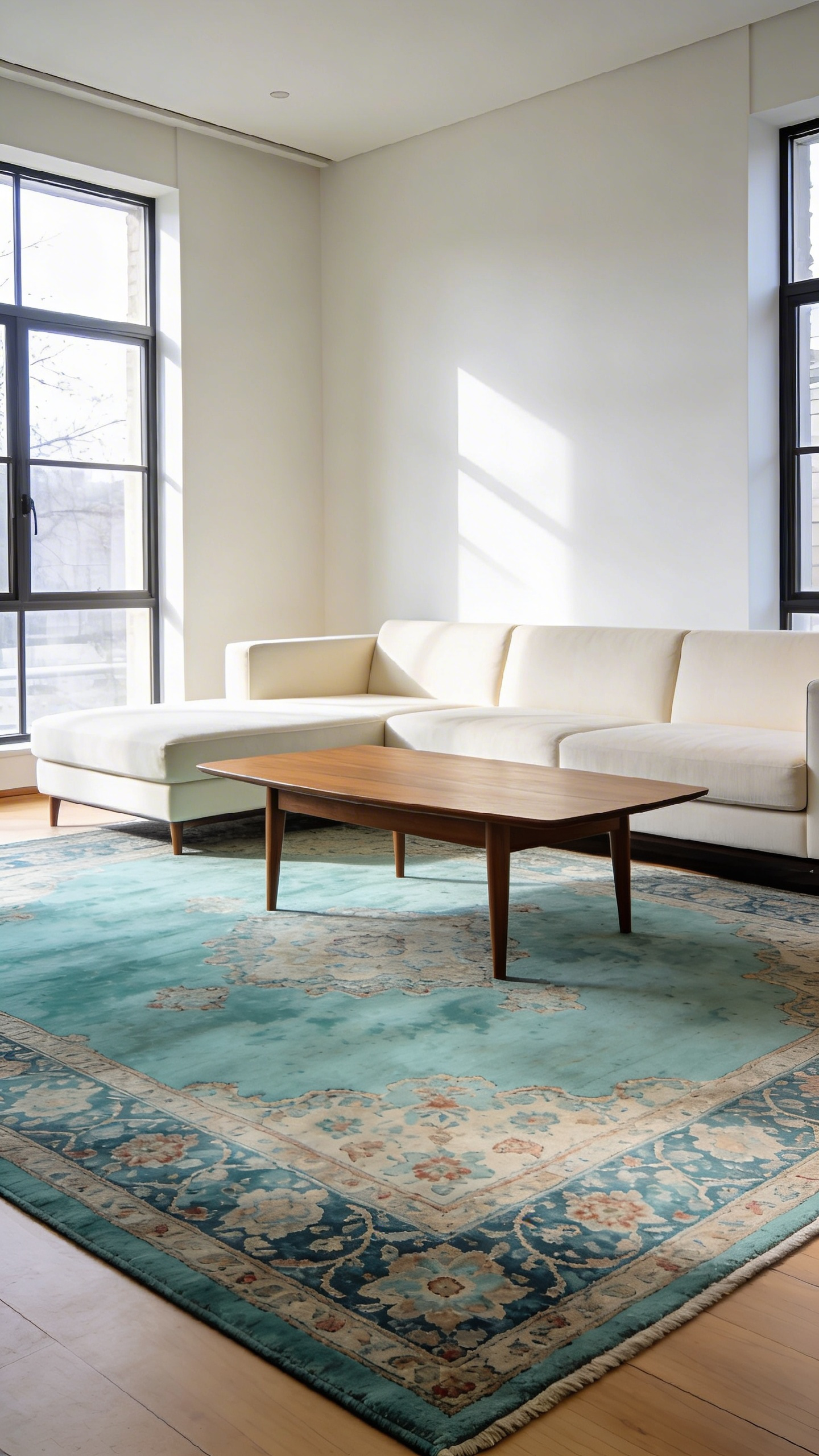
Next comes the dramatic saturation stage. The neutralized piece is fully immersed in a single bold color. Because different wools absorb dye uniquely, flat colors never occur. Instead, subtle tonal variations emerge across the ghostly floral motifs. Modern makers also sometimes physically carve into the textured wool. They trace the ancient patterns with electric sculpting tools. This physically transforms the rug into a tactile floor sculpture.
This monochromatic upcycling serves as a strong narrative anchor. By unifying the pattern, it grounds modern furniture perfectly. It honors historic craftsmanship without demanding pristine, unapproachable perfection. Ultimately, your space achieves a sophisticated sense of lived-in luxury.
The Front-Leg Fallacy: Rethinking Traditional Living Room Rug Placement Rules
In interior design, the “front-leg rule” is often treated as unbreakable law. However, this beloved guideline is actually a modern fallacy. Historically, this rule was born purely out of post-war necessity. Suburban living rooms expanded rapidly during the mid-century housing boom. Machine-made rugs, meanwhile, remained fixed in standard, restrictive sizes. Designers started tucking sofa legs over tiny rugs just to anchor them. This budget hack perfectly hid the jarring “postage stamp” effect.
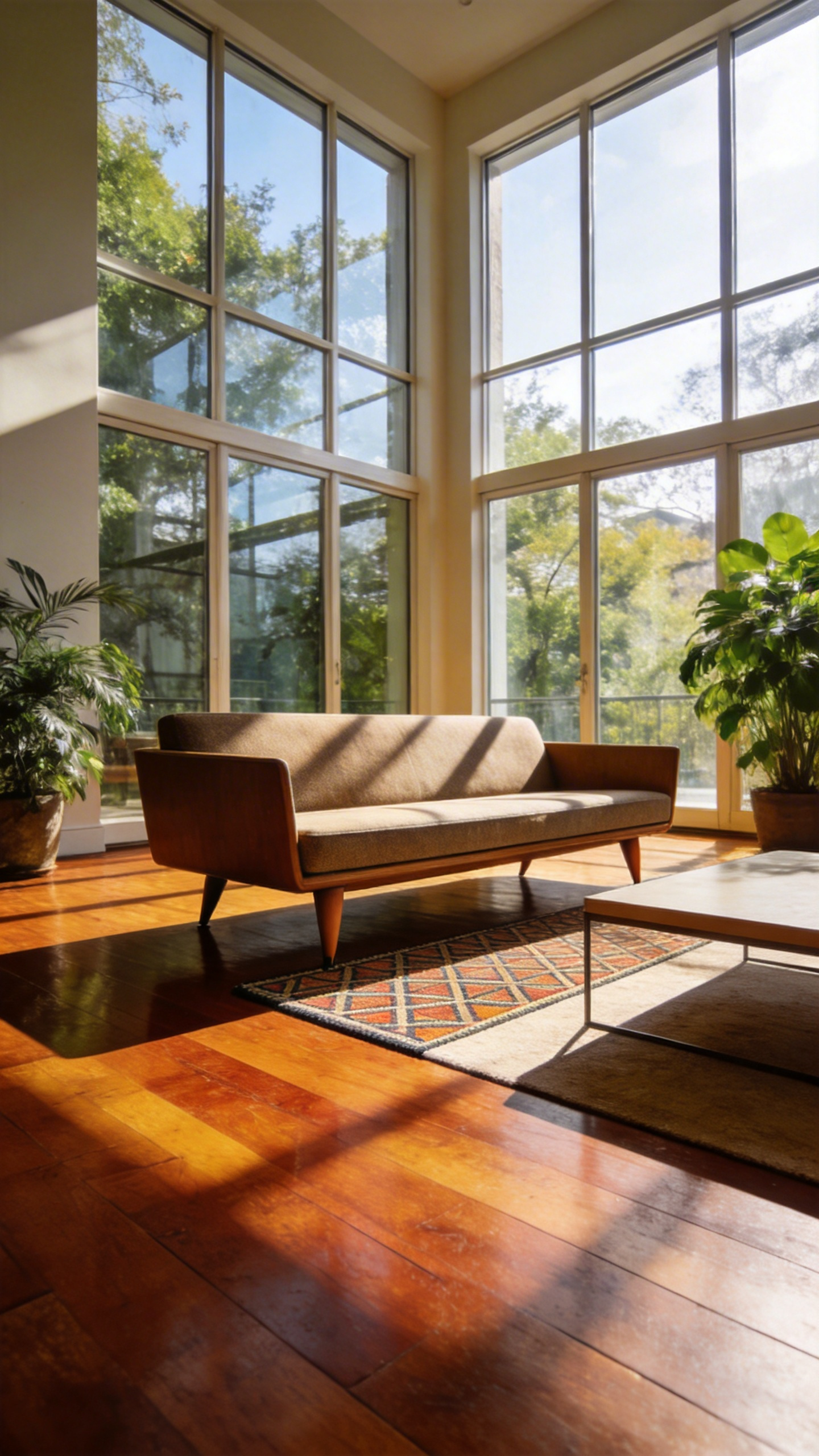
Sadly, this old compromise severely disrupts a room’s structural harmony. Resting half your furniture on a rug causes awkward visual shear. This elevation gap also breaks elegant architectural seating silhouettes. Physically, a thick wool rug creates a very precarious height disparity. Lightweight chairs will suffer from awkward wobbling over time. Designers even have to hide shims under back legs to fix the instability.
Subconsciously, a partially covered seating zone feels inherently transient. Environmental psychology actually views area rugs as crucial spatial anchors. Contemporary designers therefore demand an “all-in” approach. Placing all four legs on the rug creates a cohesive, grounded sanctuary. Plus, your feet will never transition to a cold floor while seated.
Alternatively, we can bypass the rule entirely through strategic layering. Lay down a large, accessible natural sisal base first. Next, float a vibrant silk dhurrie fully on top. This layered approach beautifully restores both architectural intent and luxurious permanence.
Floating Furniture Dynamics: Sizing Area Rugs Masterfully for Open-Concept Floor Plans
In modern open-concept spaces, the area rug acts as invisible architecture. It replaces the traditional hearth as the room’s primary structural anchor. Floating furniture requires careful textile sizing so it doesn’t look adrift. Ideally, all four legs of your seating should rest firmly on the rug. This setup creates a cohesive, psychological island of safety. However, tucking just the front eight inches works if space is extremely tight. This visual link prevents the pieces from appearing entirely disconnected.
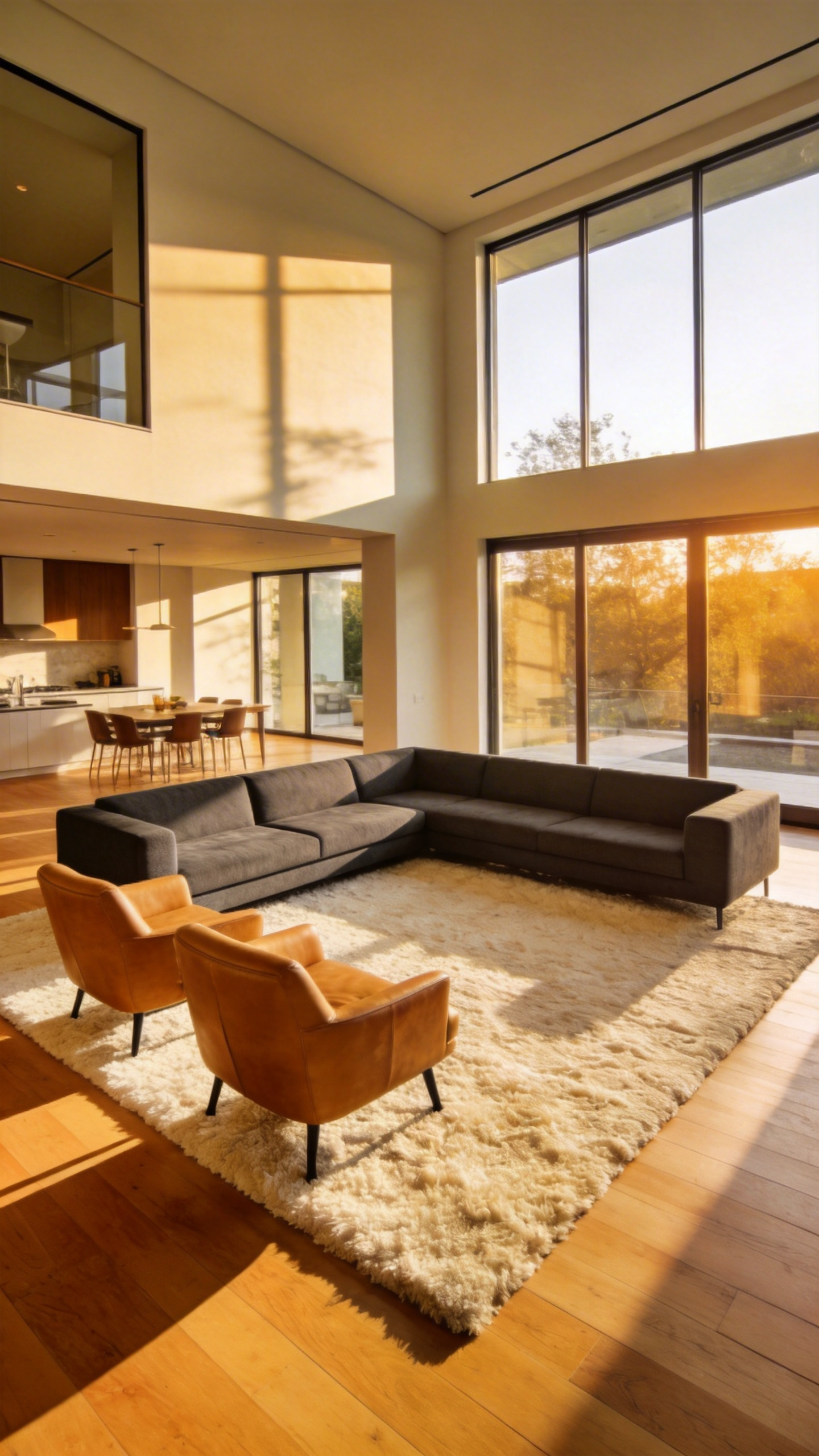
Beyond aesthetics, these rugs serve as vital acoustic engineering tools. Expansive open rooms often echo unpleasantly off hard floors. Layering thick textiles effectively controls this distracting acoustic flutter. I frequently recommend starting with a large, flat-weave natural jute base. Next, top it with a plush, jewel-toned wool rug. This dual-layer strategy dampens noise while adding cultural richness. Stepping from cool oak to warm wool also provides essential sensory grounding. Your brain instantly reads this textural boundary as a distinct living zone.
Finally, size your rug in proportion to the furniture grouping itself. Don’t worry about measuring the entire room. Instead, focus purely on framing the immediate seating area. Leaving a generous bare walkway behind the sofa prevents awkward heel-catching. The surrounding exposed floor will beautifully preserve the open-plan atmosphere.
The Art of Textile Layering: Combining Foundation Jutes with Statement Vintage Pieces
Laying a structural jute foundation fundamentally anchors a modern room. This rich material primarily hails from the Bengal region. Artisans have historically revered this golden fiber for its natural strength. Unlike synthetic backings, natural jute breathes to help regulate a room’s micro-climate. Visually, it creates an earthy canvas that neutralizes the floor.
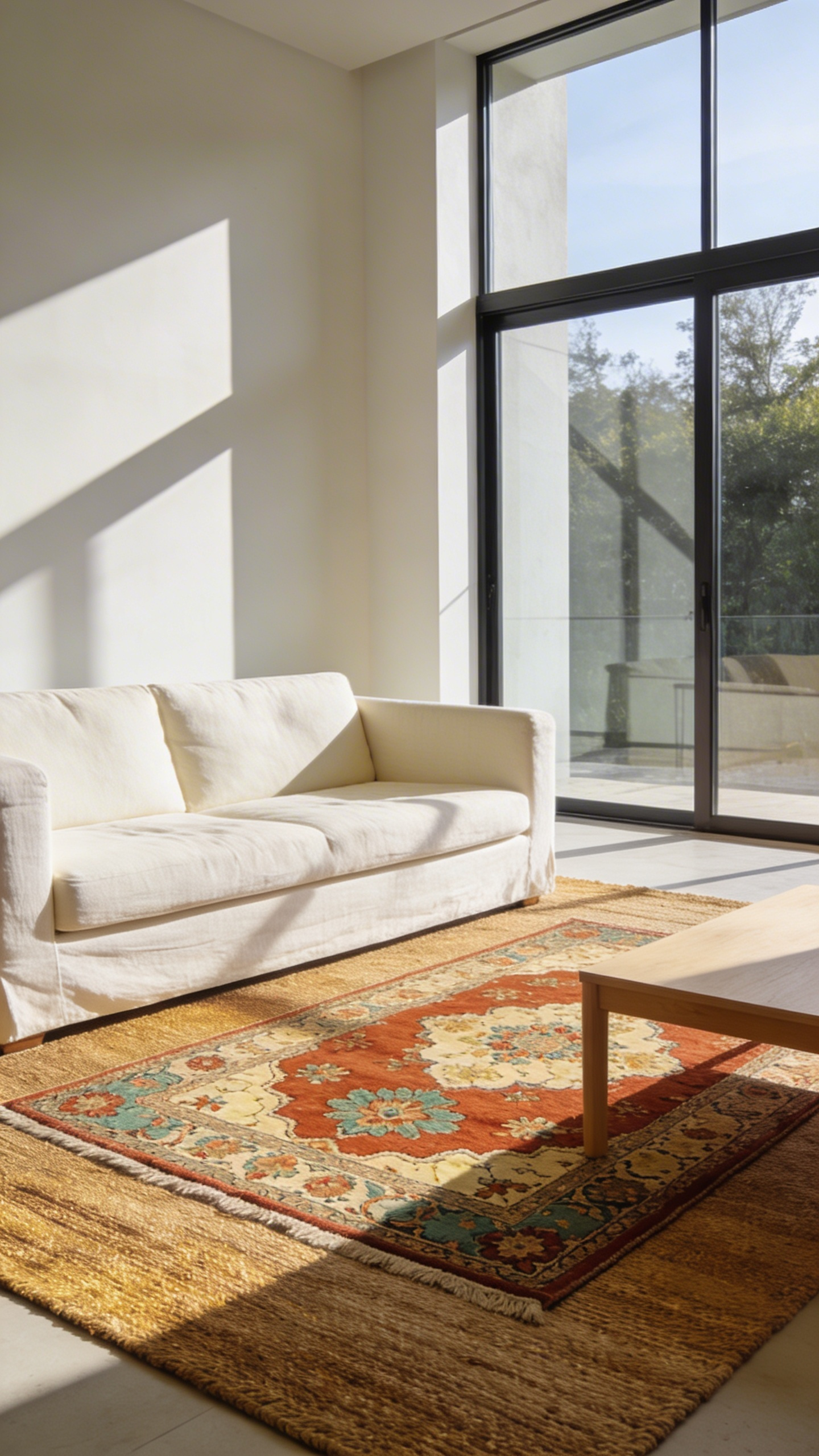
This neutral landscape makes a storied vintage rug pop. An antique Oushak, for instance, can act as the room’s main protagonist. The matte jute brilliantly contrasts with the lustrous vintage wool. This combination easily blends utilitarianism with nomadic Silk Road artistry. Placing a Persian motif over raw plant fibers creates deep organic connectivity.
Designers also rely on specific mathematical ratios for visual harmony. Typically, the vintage statement piece should be two-thirds the foundation’s size. This proportion leaves a textured frame of twelve to eighteen inches around the edge. This exact framing perfectly anchors furniture and unifies the conversation area.
Stacking these organic textiles does require some technical maintenance. Over time, natural jute shedding inevitably creates abrasive grit. This hidden friction can actually wear down delicate vintage knots. Therefore, always insert a breathable felt rug pad between the two textiles. You should also try to keep room humidity below sixty percent. Otherwise, trapped moisture will permanently degrade the structural jute fibers.
Asymmetrical Anchoring: Integrating Irregular and Free-Form Rugs into Structured Spaces
Modern living rooms are often grid-locked by rigid right angles. Standard rectangular rugs unfortunately act as secondary, confining walls. Asymmetrical rugs serve as vital interrupters in these structured spaces. Their plush, free-form shapes effortlessly dissolve harsh interior sightlines. The room immediately feels fluid instead of strictly boxed-in. Neuroscience even suggests that our brains interpret organic curves as calming. This softness beautifully echoes the fluid courtyards of traditional architecture.
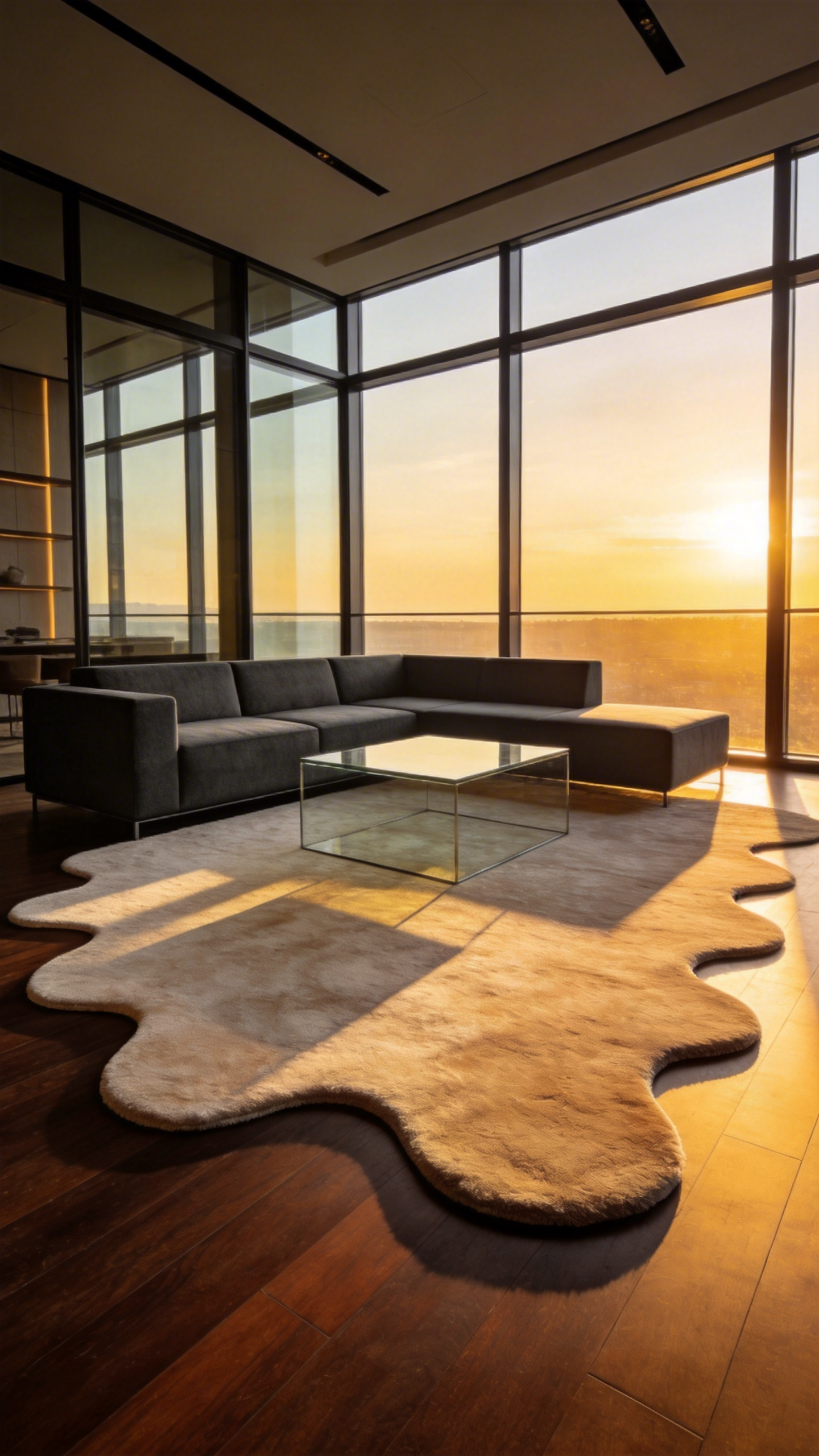
However, anchoring an irregular rug requires distinct technical precision. Designers frequently use an L-shaped sectional to frame the piece. The sofa anchors two straight edges while textured curves spill outward into the room. The “front-legs-only” rule is actually essential for these unique silhouettes. Placing only the front legs prevents burying the rug’s sweeping edges. Pairing the rug with a similarly curved coffee table also helps immensely. This shape mimicry creates a highly cohesive visual dialogue.
Historically, these designs evolved from expressive mid-century artistic movements. Today, robotic tufting turns biophilic rug shapes into multi-level sculptures. Their dense pile provides excellent acoustic softening in open floor plans. Leaving a wide frame of bare floor around them is absolutely crucial. This fluctuating negative space generates a dynamic visual effect. The room breathes, feeling much larger than its actual footprint. Stepping onto this plush wool boundary instantly signals restful calm.
Taming the Open Space: Using Multiple Distinct Rugs to Define Functional Zones
In modern homes, solid interior walls have largely vanished. Living room rugs now act as vital movable architecture. Historically, nomadic cultures used thick rugs to define clear boundaries. Grand Safavid courts also relied on sprawling carpets to choreograph royal movement. Today, multiple rugs can restore structural order within open-plan spaces. Rectangular shapes provide grounding stability for main seating areas. A simple round rug, meanwhile, beautifully softens rigid contemporary architectural lines.
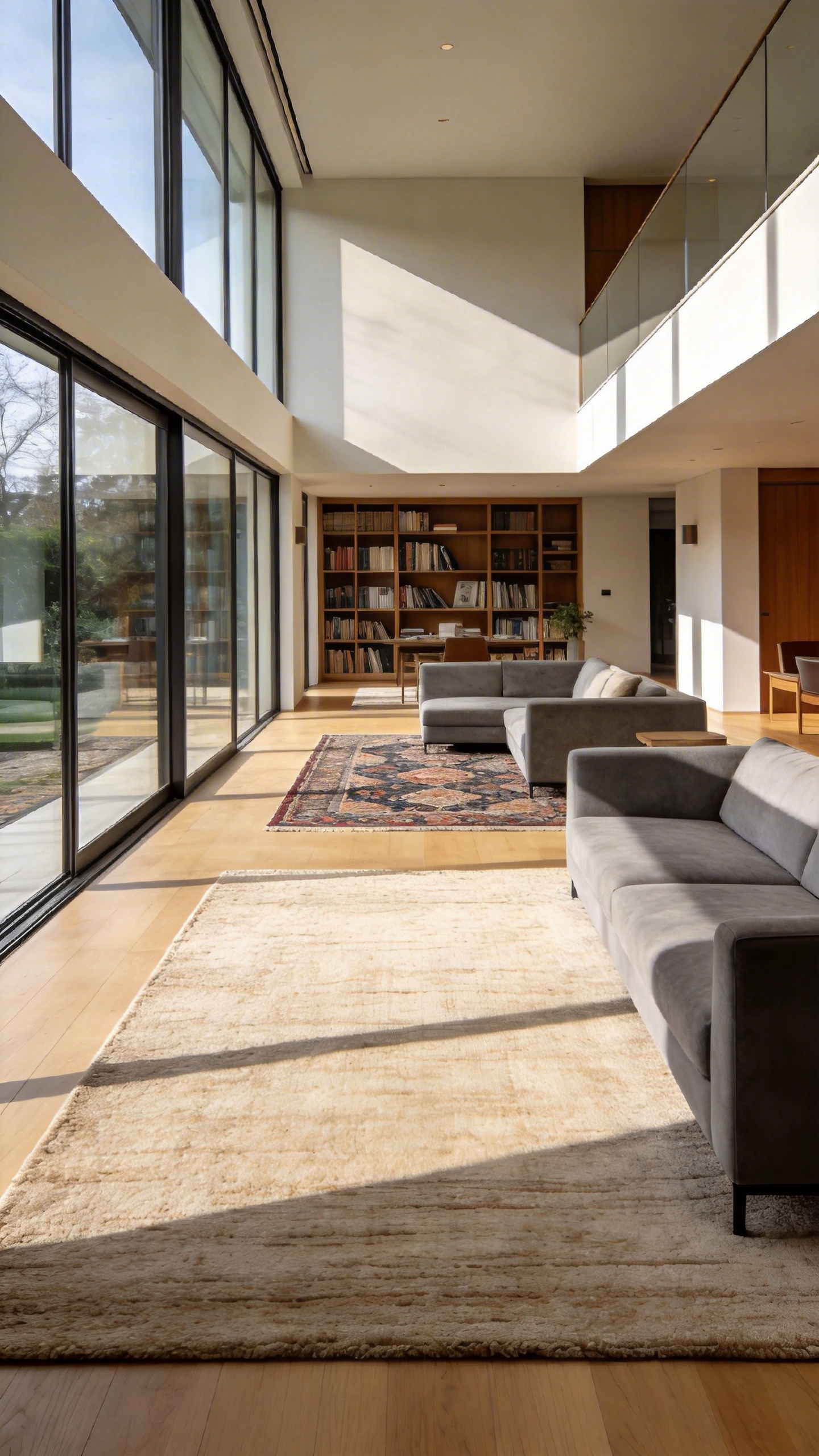
Subtle textural differences also delineate these functional zones. A plush high-pile wool rug immediately signals a cozy lounge space. A flatweave Indian dhurrie, on the other hand, perfectly anchors a formal dining table. Stepping between these contrasting textures subconsciously mimics crossing a physical doorway. Dense wool pads also act as completely invisible acoustic buffers. You can easily create a quiet conversational sanctuary within a bustling room.
Precise spatial spacing remains absolutely crucial for open-plan harmony. You should maintain a gap of twelve to eighteen inches between distinctive area rugs. Also, ensure at least one-third of your furniture sits completely upon the fabric. This specific ratio firmly integrates the sofa into its functional island. A shared accent color can elegantly bridge varying patterns across the room. Ultimately, these strategic flooring layouts provide intuitive directional cues for guests. Sprawling floors instantly transform into inviting, perfectly structured living spaces.
Navigating the High-Traffic Paradox: Selecting Elegant Textiles That Withstand Real Life
Selecting an elegant rug for a busy space requires balancing resilience with aesthetics. Durability is actually dictated by density rather than pile height. A dense knot count resembles a tightly packed forest. Because they stand shoulder-to-shoulder, fibers support each other against heavy footsteps. Experts generally recommend looking for a high knot count for busy rooms. Keeping the pile under half an inch also prevents severe matting. This yields a crisp, architectural tactile experience that lasts.
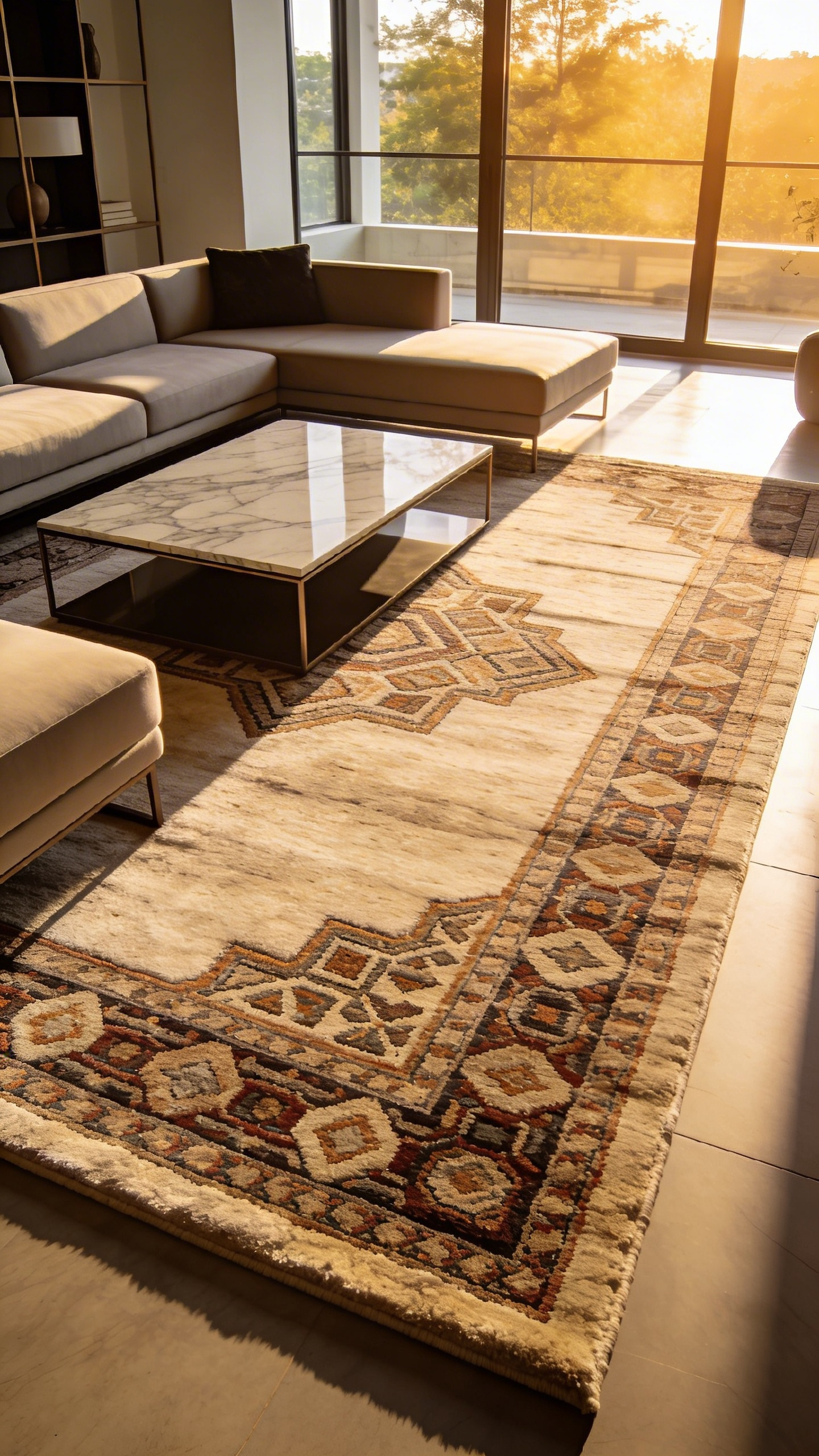
Fiber origin also plays a major role in resilience. New Zealand wool features a highly resilient microscopic crimp. The fibers naturally bounce back after heavy compression from shoes or furniture. High-altitude Tibetan wool is incredibly rich in natural lanolin. This waxy shield actively repels liquid spills upon contact. Instead of fraying, these premium fibers develop a graceful patina over time.
The physical structure of the knot also dictates longevity. The symmetrical Turkish knot locks yarn very securely in place. As a result, it excels at withstanding harsh daily wear. The asymmetrical Persian knot, however, allows for highly intricate motifs. This sheer density actively prevents dirt from penetrating the rug’s backing.
Finally, modern luxury now includes solution-dyed performance fabrics. Unlike surface-level vat dyes, solution-dyeing colors the liquid polymer completely. These innovative fibers resemble a carrot rather than a radish. This actually grants a light-colored rug near invulnerability to harsh cleaners. Advanced heat-setting still ensures the material feels remarkably like soft linen.
The Visual Weight Equation: Balancing Bold Global Patterns with Minimalist Architecture
Minimalist architecture celebrates stark, airy volumes. Glass and steel structures, however, can easily feel cold and sterile. Designers must humanize these industrial skeletons to create livable spaces. Modernist icons like Le Corbusier perfectly understood this sensory tension. He frequently softened his concrete architecture using deep-pile Moroccan rugs.
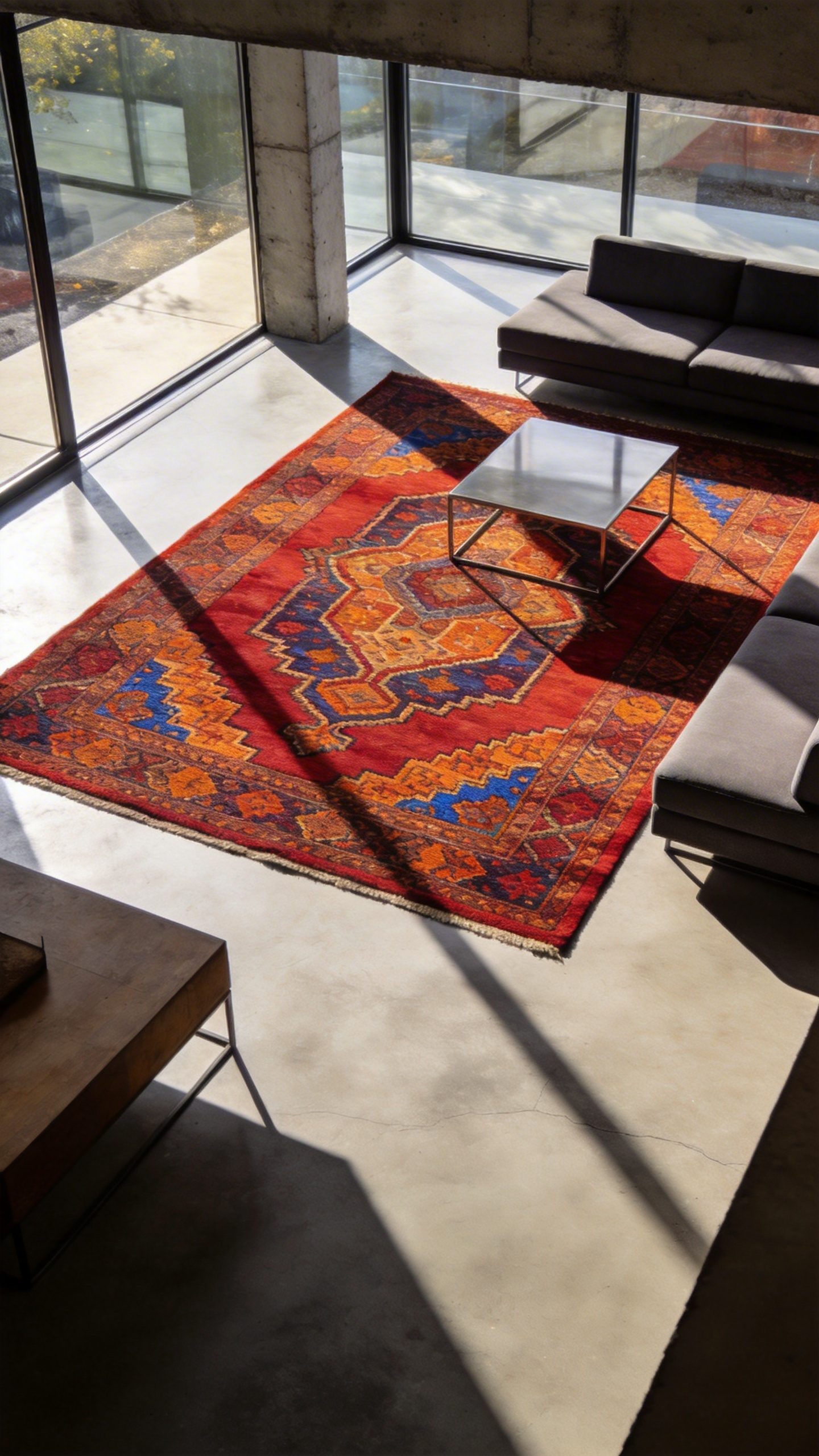
Bringing rich textiles into modern rooms requires careful balancing of visual weight. This conceptual equation relies heavily on scale, texture, and complexity. Large geometric patterns possess a low-frequency visual weight. They feel deeply stable and highly architectural. Small, intricate patterns carry much more visual weight. Your eye must simply work harder to process those tiny details. Tactile density also matters immensely in minimalist design. A thick hand-knotted wool rug anchors modern, floating furniture. It physically grounds rooms that feature high, airy ceilings.
Design consensus often relies on an eighty-twenty spatial ratio. You should ideally keep eighty percent of the architectural surfaces neutral. The remaining twenty percent becomes your high-impact zone. The rug functions beautifully as this vital visual anchor. A common minimalist mistake involves choosing undersized floor coverings. Small rugs actually generate irritating visual noise across the floor. They break the continuous floor plane into fragmented little pieces. Large-scale rugs, alternatively, absorb the heavy visual weight of the furniture.
You can evaluate this balance using the classic “squint test.” Squinting blurs the room so you can easily spot heavy dark blocks. If the rug creates an unbalanced dark mass, the room visually tilts. Finally, global rugs bring crucial symbolic density and meaning. Tribal talismans and abrash dyes offer immense intellectual weight. This instantly transforms sterile architectural galleries into warm, intentional homes.
Curating the Conversation Pit: How Your Rug Selection Ultimately Shapes Social Interaction
In modern open-plan spaces, living room rugs perform a vital architectural feat. They act as non-physical walls to anchor floating furniture. This arrangement creates a subconscious social island based on human proxemics. A properly sized rug literally defines the territory of your conversation. These textiles also serve as an essential sonic cocoon. High-ceilinged homes frequently suffer from harsh flutter echoes. A thick wool rug absorbs up to sixty percent of that ambient noise. Because the room is quieter, people naturally lower their voices and lean in closer. This facilitates the deep sharing found in classic sunken conversation pits.
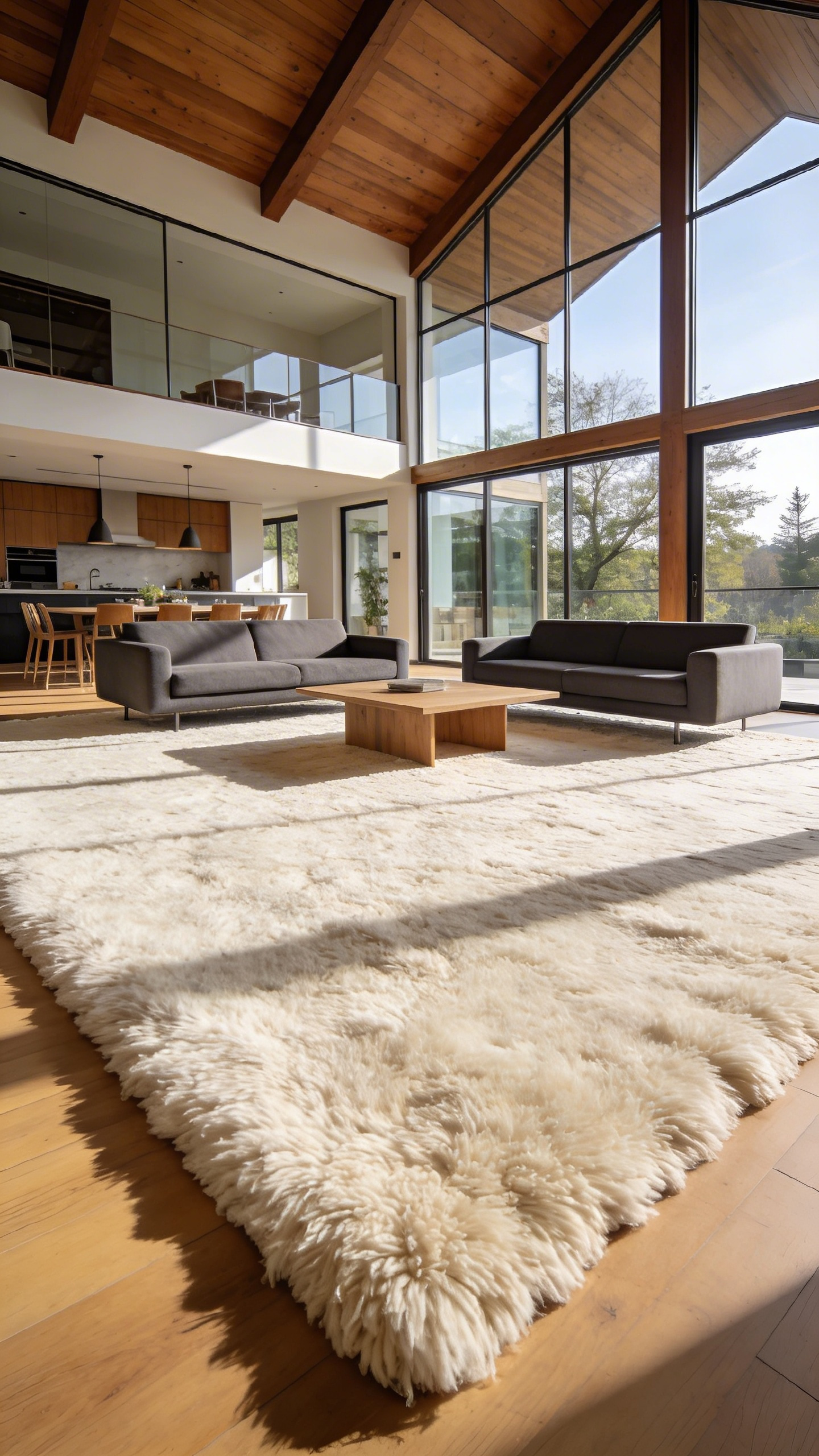
Visually, traditional rugs use central medallions to draw the eye inward. This inward-facing design acts as a grounding hearth for the entire room. Strong borders also establish a clear boundary between walkways and engagement zones. Texture even dictates the postural formality of your gathering. A plush rug silently invites guests to kick off their shoes and relax. This physical grounding lowers the eye level and reduces perceived social hierarchy. A flatweave sisal rug, conversely, maintains a much more formal, upright atmosphere.
Finally, thermal comfort drastically influences how long your guests will linger. Rich wool fibers trap warm air to prevent radiant heat loss. This well-crafted comfort transforms a mere transit space into a lasting destination. Choosing the right living room rugs fundamentally changes how a room operates. It turns a mere house into a curated sanctuary that reflects your personal design philosophy.
Frequently Asked Questions
How do I choose the right size living room rug?
For a balanced look, ensure the rug is large enough for all furniture legs to rest upon it. In smaller spaces, placing at least the front legs of sofas and chairs on the rug can create a cohesive anchor without overwhelming the room.
Are hand-knotted living room rugs worth the investment?
Yes. Hand-knotted rugs are considered heirloom-quality textiles. Their density, natural lanolin-rich wool, and lack of synthetic adhesives make them more durable, hypoallergenic, and likely to appreciate in value compared to machine-made alternatives.
What is the best material for a high-traffic living room rug?
Hand-spun wool is the premier choice for high-traffic areas. Its natural elasticity allows fibers to bounce back from compression, while inherent oils repel spills and dirt, ensuring the rug maintains its beauty over decades of use.