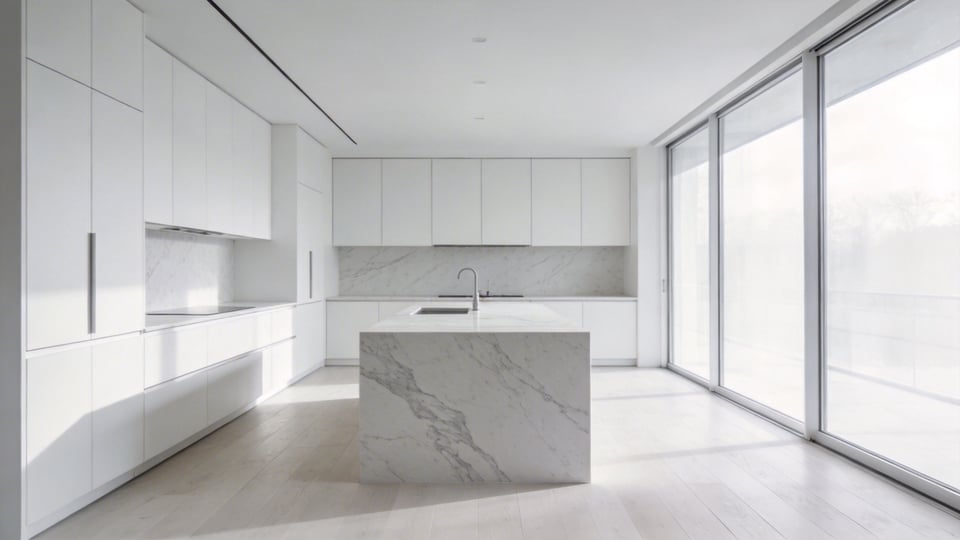
To truly understand a white kitchen, we have to look past surface trends. I always find it fascinating that early designers originally used white to rebel against heavy Victorian gloom. Today, when researching dream kitchen ideas white, that rebellion translates into a sanctuary against modern digital clutter. Specifically, a white room offers a deliberate psychological reset. In Japanese philosophy, this pure negative space is called “Ma.” An all-white room is never truly empty. Instead, it becomes a canvas packed with potential. When exploring 15 Sophisticated Dream Kitchen Ideas for the Modern Home, you realize this visual void allows the mind to finally exhale. Therefore, this quiet environment actively reduces our daily cognitive load.
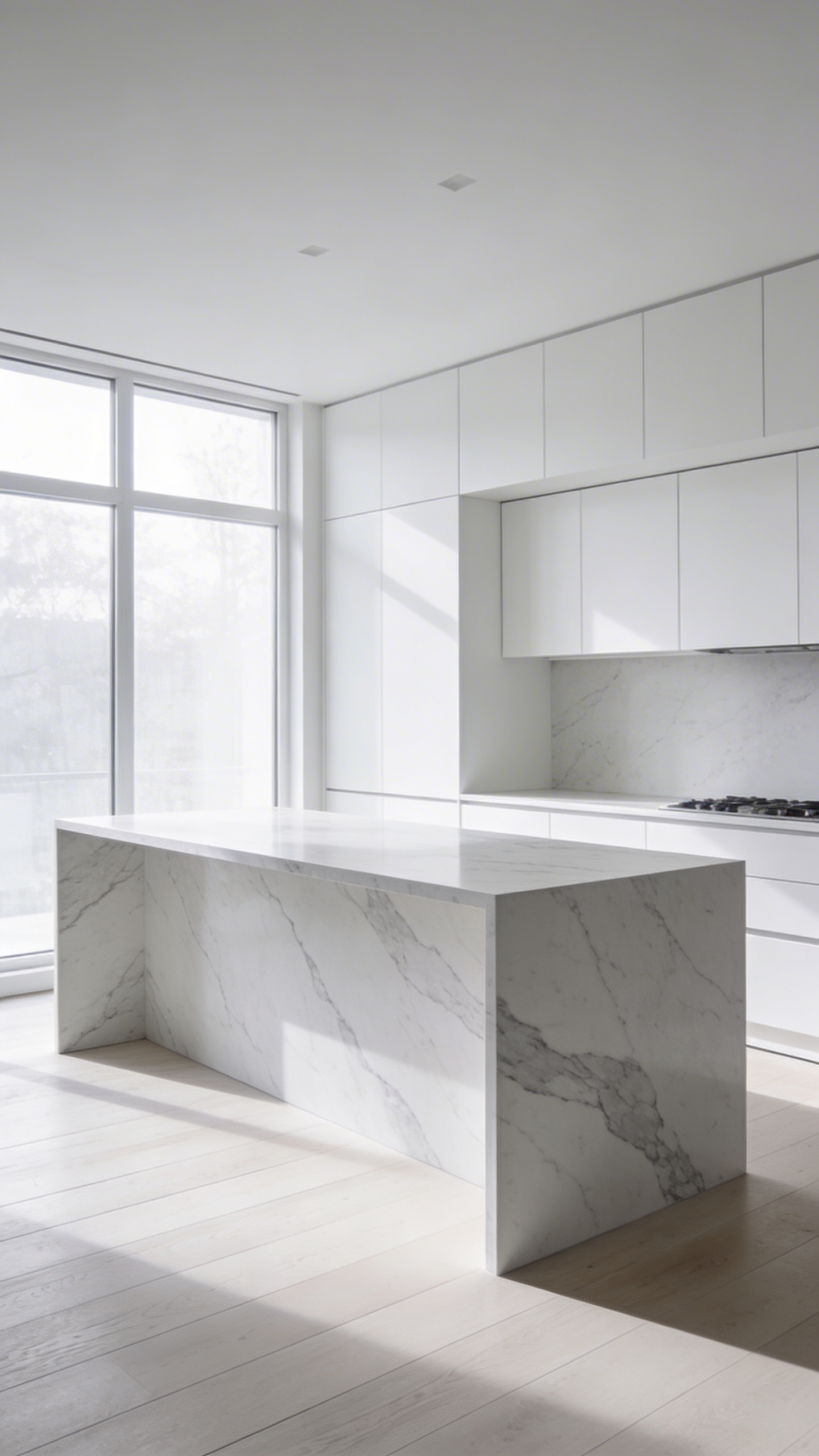
I know what you are thinking: keeping a white kitchen clean sounds exhausting. In fact, maintaining this pristine space often acts as a form of active meditation. Homeowners with white kitchens generally spend more time organizing. However, this maintenance rarely feels like a tedious chore. Wiping down a marble island simply becomes a grounding daily ritual. Next, as you clear the physical visual field, your mental state clears right along with it.
White also acts as a crucial sensory scaffold. Specifically, it provides a blank stage for other natural materials to stand out. For instance, a rough-hewn oak shelf gains incredible tactile power against a pale wall. Indeed, the pure background makes the wood feel instantly warmer. Therefore, choosing a nuanced soft white prevents the space from feeling clinical. This quiet foundation allows the messy beauty of daily life to take center stage.
1. The Canvas of Calm: Embracing White as Negative Space (Ma) in the Kitchen
Western design typically treats white walls as a simple blank slate. However, Japanese philosophy embraces the concept of Ma. Essentially, this principle defines the intentional pause between functional elements. Therefore, white acts as structural silence rather than an empty void. By resisting the urge to install wall-to-wall cabinetry, the room finally gets a chance to breathe.
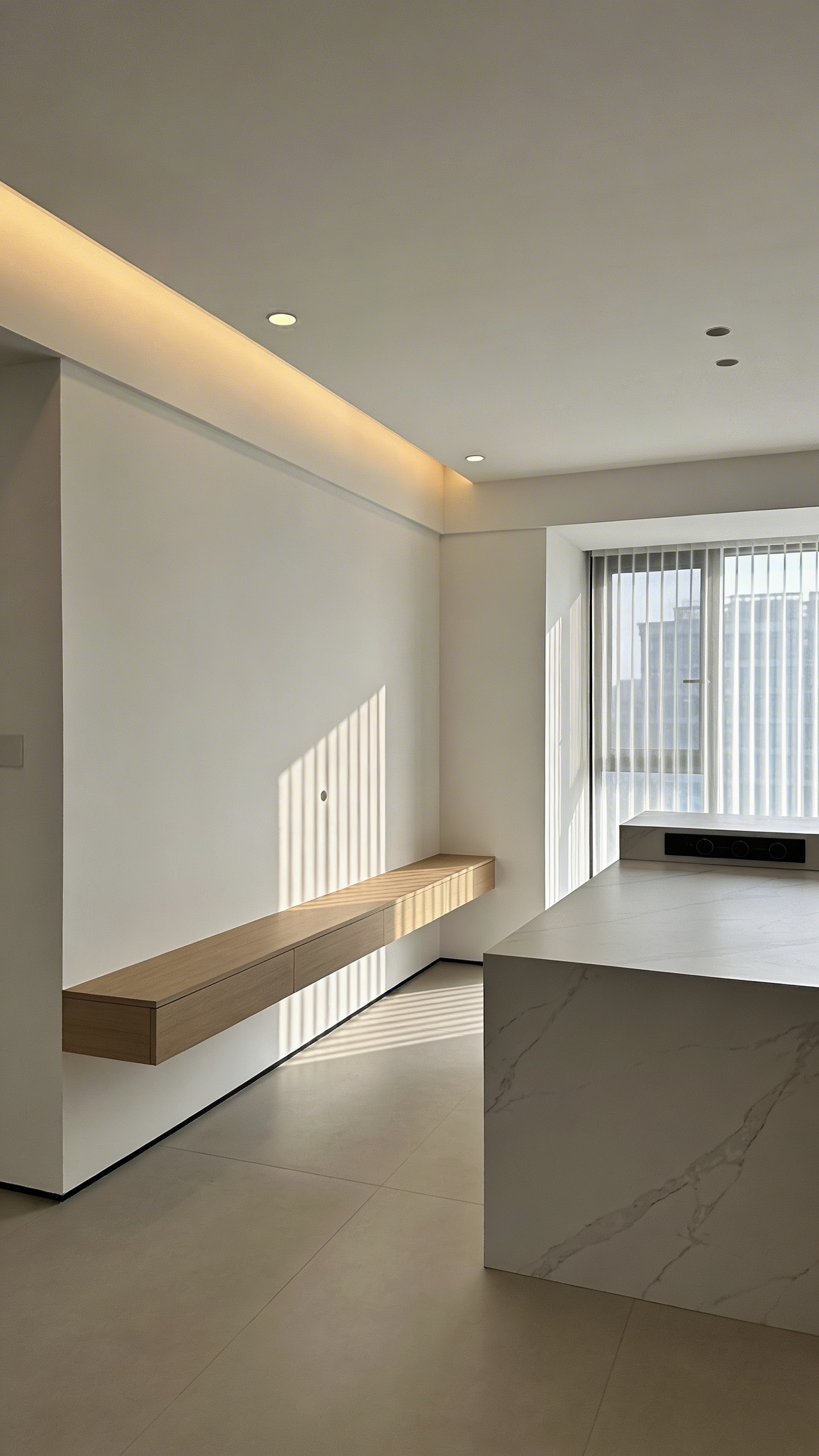
To achieve this serenity, precise lighting control is absolutely vital. Specifically, experts recommend a Light Reflectance Value (LRV) between 82 and 92. This specific range helps prevent harsh glare and annoying eye fatigue. Next, matching your cabinet tones to the walls makes physical boundaries seemingly vanish. Without bright colors to rely on, texture must provide the necessary depth. In fact, hand-molded Zellige tiles cast subtle, shifting micro-shadows that look incredible. Similarly, honed white marble absorbs light to create a velvety negative space.
Modern functionality often requires us to conceal everyday visual clutter. Therefore, integrated appliance suites and pocket doors are perfect for hiding technology. This seamless design approach significantly lowers your overall cognitive load. Indeed, touch-to-open cabinets remove hardware interruptions from your calming canvas. I love how a minimalist environment acts as a sensitive clock for natural light. In fact, pale gallery surfaces track the sun’s movement perfectly throughout the day. Morning light casts crisp blue tones to spark some daily energy. Later, golden hour shadows sculpt the room with warm apricot hues.
2. Visual Quiet: Using Monochromatic White to Reduce Digital and Mental Overwhelm
In our hyper-connected era, the brain constantly battles digital saturation. Therefore, your kitchen needs to be a calming neurological balm. Specifically, we can look to the Japanese concept of Shibui, meaning subtle beauty. This design philosophy embraces emptiness as a form of spatial therapy. A monochromatic white palette creates a continuous, unbroken emotional field. This approach aligns perfectly with the latest 18 Sophisticated Luxury Kitchen Ideas for 2026, which prioritize mental well-being. Indeed, this sensory uniformity actively lowers our daily mental stress. In fact, it allows the mind to rest instead of constantly processing contrasting stimuli.
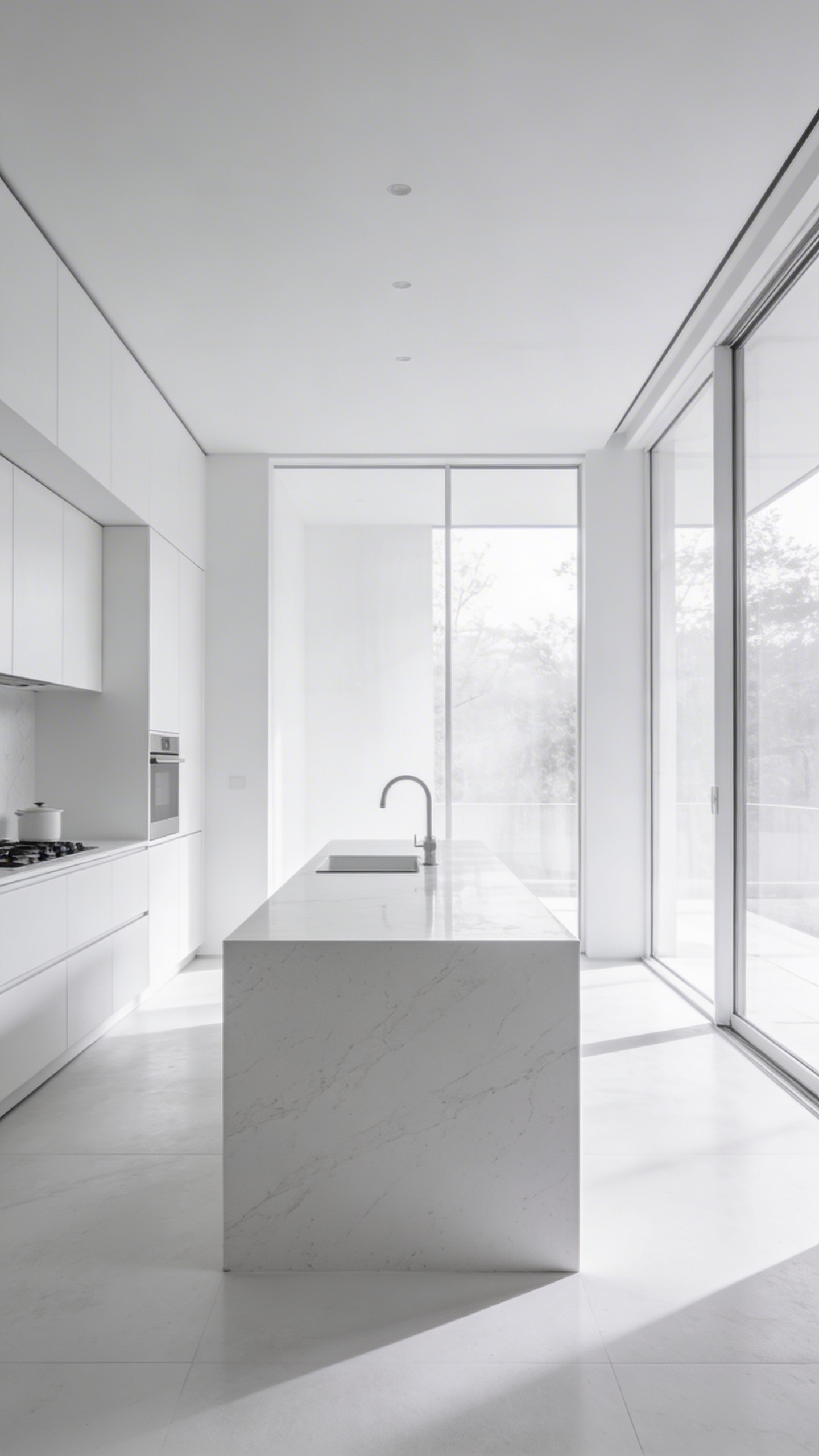
However, achieving true visual quiet requires some precise technical execution. Highly reflective stark surfaces, for example, can easily cause eye strain. Therefore, I recommend selecting wall paints with an LRV between 75 and 78. Next, always prioritize matte finishes over high-gloss alternatives. Matte surfaces absorb light and can reduce visual fatigue by up to 32 percent. Gloss, on the other hand, simply amplifies the chaotic visual noise of daily life. To add essential warmth, you must actively avoid a purely clinical atmosphere. Specifically, apply the 70/20/10 rule for thoughtful tonal layering. For example, blend primary matte cabinetry with subtle textured stone and warm oak accents.
True serenity also demands invisible functionality throughout the entire space. For instance, panel-ready stealth appliances erase utilitarian kitchen clutter entirely. Similarly, shadow-gap cabinetry completely removes the need for traditional metal hardware. These uninterrupted lines let the human eye rest effortlessly as you scan the room. Next, make sure to maintain a warm lighting temperature between 3000K and 3500K. Indeed, this mindful approach crafts a deeply restorative modern sanctuary.
3. The Psychology of Undertones: Selecting the Perfect White for Your Natural Light Exposure
Selecting the perfect white is rarely about the actual color itself. Rather, it involves how your brain responds to reflecting light. In fact, white spaces promote a powerful feeling of mental clarity. Homeowners actually spend roughly twenty-three percent more time organizing in these environments. This serene purity perfectly supports highly mindful culinary precision. However, you must carefully avoid crossing the dreaded sterility threshold. Specifically, stark cool tones can quickly make a space feel deeply clinical.
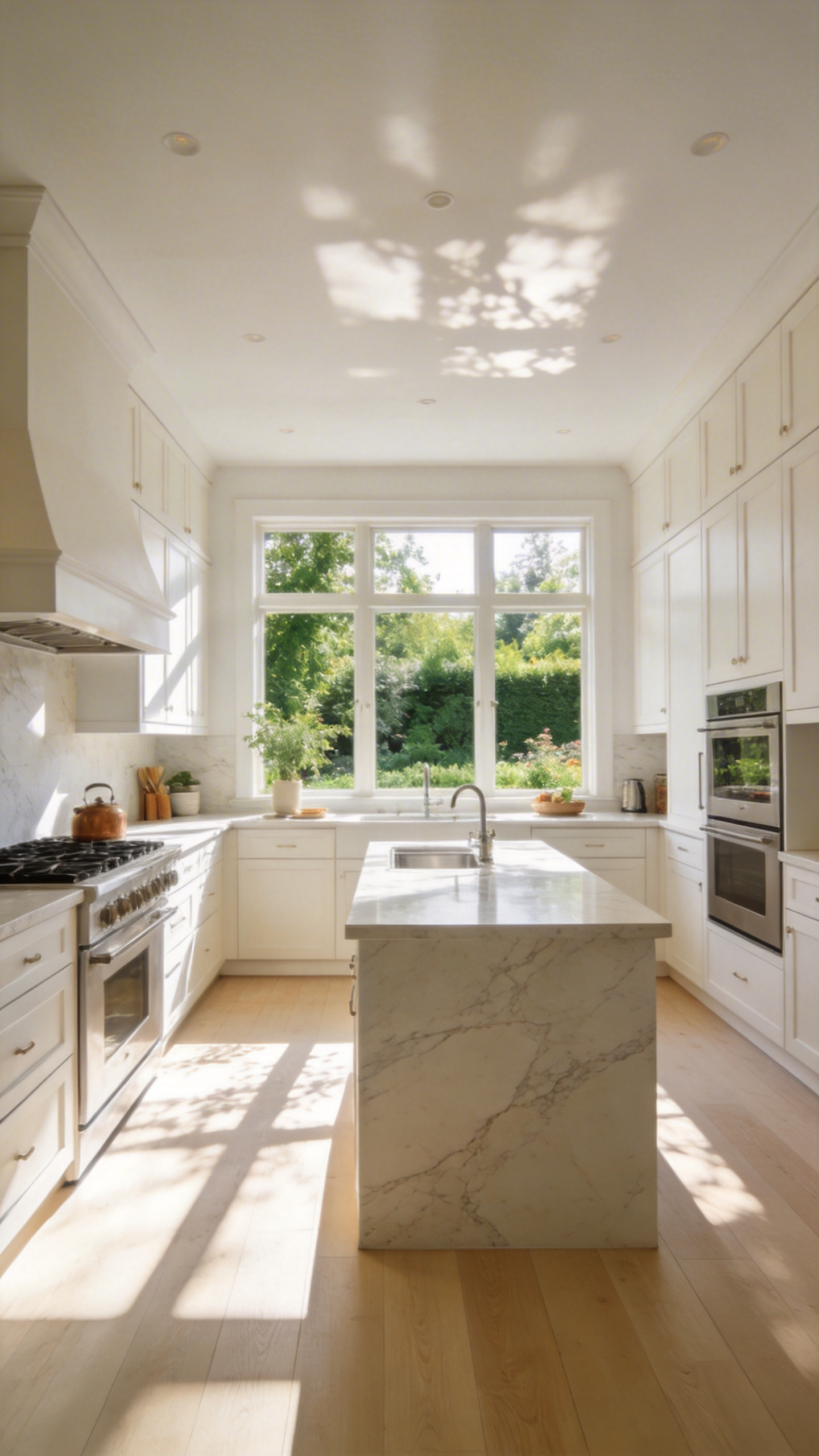
Therefore, your kitchen’s geographic exposure should dictate your chosen undertone. North-facing rooms generally receive indirect, bluish natural light. Because of this, they require warm whites with very subtle peach undertones. These hints of yellow artificially synthesize the missing natural sunlight. South-facing kitchens, however, are often flooded with intense, golden heat. Here, designers apply cool whites to subtly quench that overwhelming warmth. Meanwhile, transitional east or west rooms demand perfectly neutral color balances.
We often forget that white surfaces act as passive observers to their surroundings. For instance, a lush green garden outside will inevitably cast green reflections indoors. Therefore, nuanced whites are required to neutralize this colorful environmental spillage.
Historically, pure titanium white simply signaled extreme wealth and status. Modern designs, however, prioritize wellness-focused comfort over stark social signaling. A high Light Reflectance Value can significantly reduce your daily stress levels. Indeed, an LRV above eighty makes any space feel incredibly airy and light. Next, try layering matte walls against satin or gloss cabinets to prevent visual flatness. This subtle contrast in texture creates a deeply serene, beautifully modern sanctuary.
4. Acoustic Serenity: Integrating Sound-Dampening Materials in Minimalist White Spaces
Indeed, minimalist white kitchens heavily favor hard, non-porous surfaces like polished quartz. Specifically, these sleek stone elements act as harsh acoustic mirrors. They bounce sound waves indefinitely, creating a chaotic sensory phenomenon called aural confusion. This high-frequency reverberation actually subconsciously raises our stress and cortisol levels. Therefore, a true zen space demands invisible acoustic treatments to align the auditory experience with visual calm.
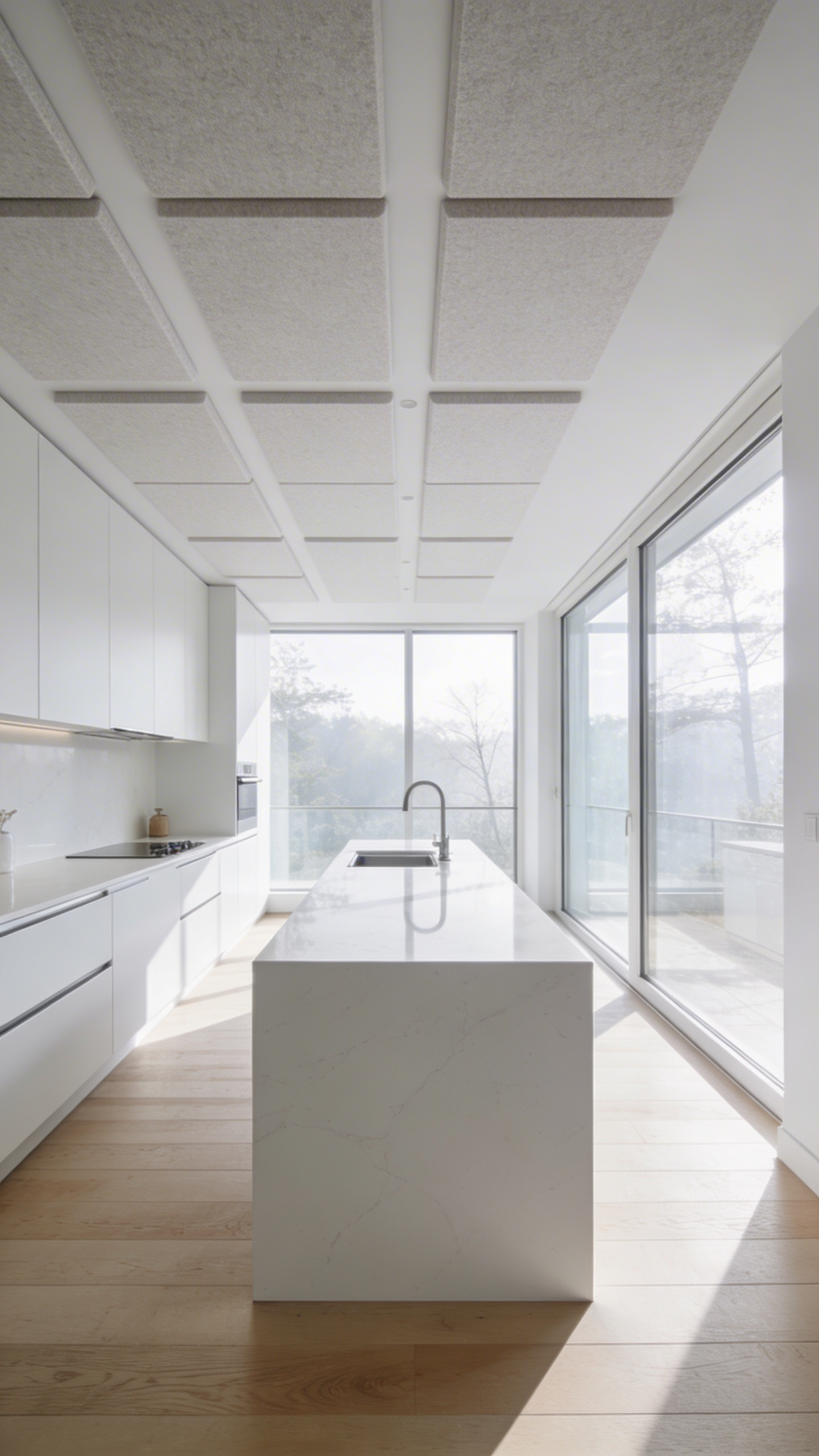
Fortunately, modern material technology provides some brilliant solutions for the digital age. For instance, microporous acoustic plaster looks exactly like pristine white drywall. However, its hidden mineral wool core effectively traps and absorbs ambient noise. High-end cabinetry now frequently embraces micro-perforated surfaces using precision laser technology. These virtually invisible apertures dissipate acoustic energy through gentle air friction. Next, specialized mineral paints ensure these acoustic panels can continue to breathe properly. Standard latex paint would simply seal the vital pores, rendering the surface reflective again.
To manage this complex environment, architects integrate a choreographed dual-surface strategy. White marble floors and stone countertops remain functionally hard for daily food preparation. The ceilings and upper wall planes, however, are converted into powerful sound sponges. Therefore, speech intelligibility improves dramatically inside the room. This allows gentle whispers to easily cut through heavy appliance noise. In fact, this thoughtful sensory integration successfully transforms the modern kitchen into a deeply relaxing social sanctuary.
Phase II: Material Exploration (Texture Over Color)
In traditional Japanese design, the concept of wabi-sabi celebrates the beauty found in imperfection. Specifically, a serene white kitchen relies heavily on tactile depth rather than flat color. I often see modern designers avoiding machine-perfect subway tiles entirely. Instead, they favor handmade Moroccan Zellige terracotta tiles. Each hand-chiseled piece reflects light uniquely, creating a beautiful liquid shimmer across the backsplash. Therefore, this subtle texture grounds modern spaces in authentic, ancient craftsmanship.
Fluted cabinetry introduces another essential layer of visual rhythm to the room. These vertical grooves create a high-frequency interplay of light and shadow. In fact, this fluting gives flat-panel cabinets necessary architectural weight without feeling visually heavy. The choice of stone also heavily influences the kitchen’s overall atmospheric temperature. Polished marble tends to feel very cool and highly formal. However, honed marble offers a much softer, velvety matte finish.
This softer surface absorbs light to produce a calming, low-stress glow. Pairing honed stone with living finishes like unlacquered brass allows for graceful aging. Next, wood elements provide crucial biological warmth within our digital-age homes. For instance, rift-sawn oak delivers a clean, linear grain without chaotic natural patterns. When treated with a thin whitewash, this wood beautifully retains its tactile integrity. Ultimately, layering these gritty, sensory details prevents clinical sensory deprivation. Therefore, embracing texture over flat color transforms an unanchored white box into an intimate sanctuary.
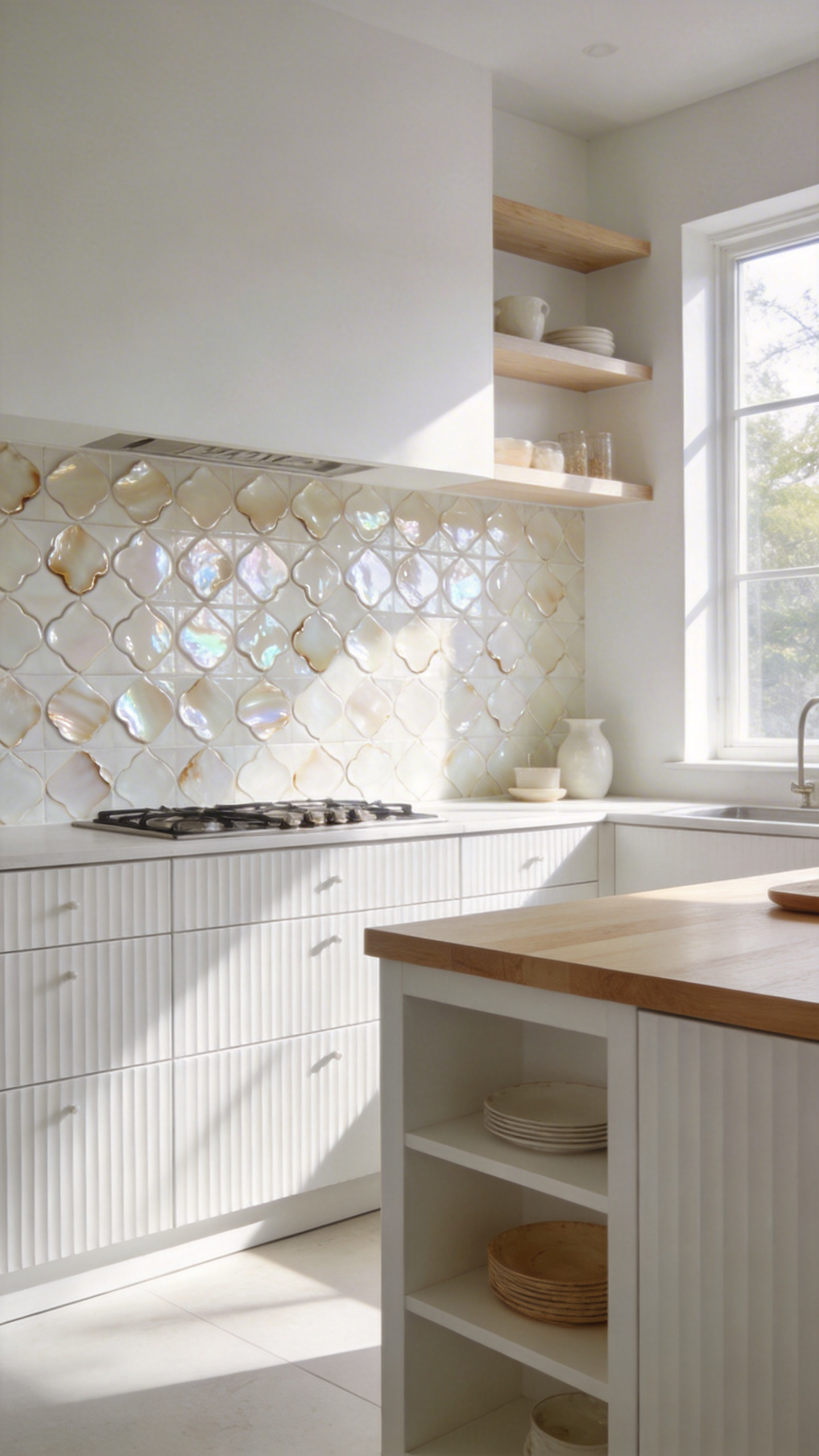
5. Tactile Warmth: Grounding Matte White Cabinetry with White Oak and Ash Accents
Combining matte cabinetry with natural wood is a highly deliberate sensory strategy. This curated pairing effortlessly roots a modern home in organic Japandi principles. A high-quality matte finish naturally creates a soft, consistent glow. Unlike stark high-gloss surfaces, these velvety doors rely entirely on diffuse reflection. This subtle light scattering effectively reduces harsh, eye-fatiguing glare throughout the serene space. Next, modern excimer technology gives the cabinet surface a microscopic, petal-like touch. Indeed, this tactile warmth instantly humanizes the often clinical white color palette.
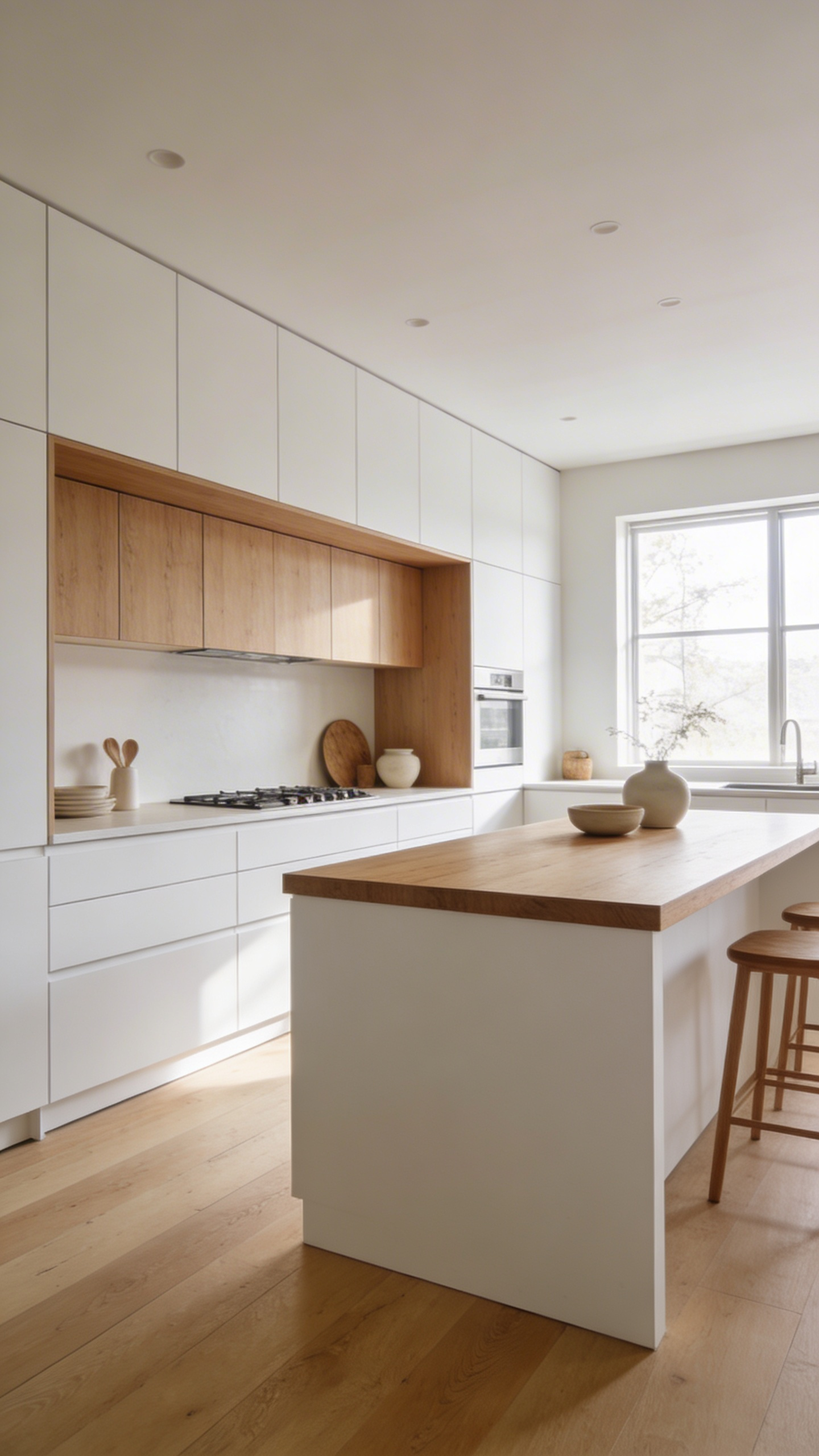
Introducing distinct wood grains adds some essential psychological grounding to the room. White oak specifically provides strong architectural gravity and rich, heirloom permanence. Its innate water resistance suits high-touch island bases and heavy-use zones perfectly. Ash accents, however, offer a much cleaner, minimalist Scandi elegance. The uniform pinstripe grain of natural ash brightens open shelving without feeling visually heavy. Therefore, the human brain perceives a calming break from manufactured, plastic perfection. In fact, this intentional biophilic contrast directly lowers everyday stress and cortisol levels.
On a practical level, this balanced palette quietly supports the demands of modern family life. Indeed, matte surfaces beautifully camouflage oily fingerprints and daily micro-scratches. Similarly, dense white oak securely anchors spill-prone zones with remarkable, lasting durability. This thoughtful approach builds a serene space that beautifully embraces real, functional living.
6. The Plaster Effect: Utilizing Limewash and Tadelakt Finishes for Breathable Depth
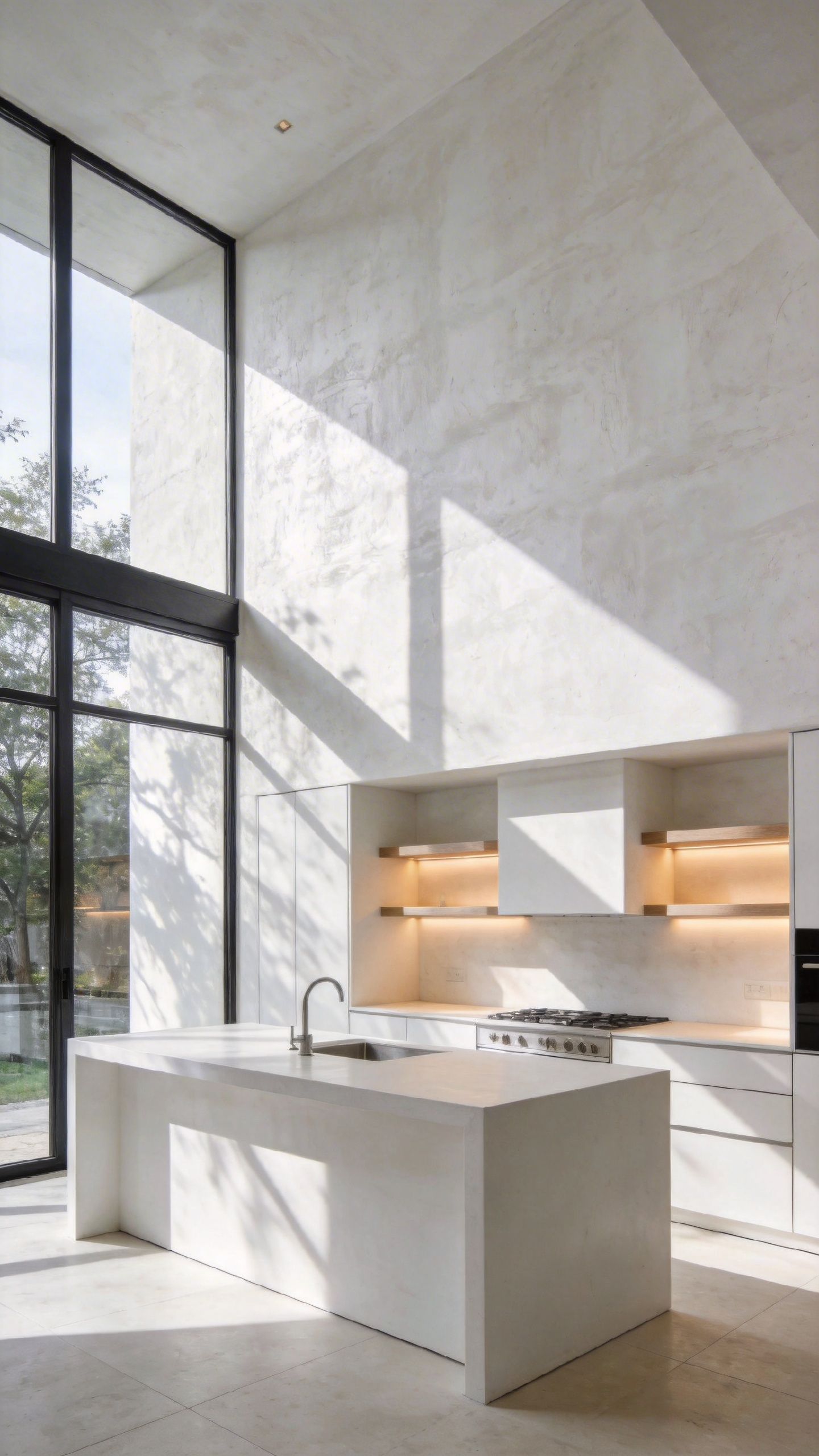
The quest for a pristine white kitchen often risks creating a completely sterile environment. Specifically, designers avoid this visual flatness by using living finishes like Limewash and Tadelakt. These traditional plasters introduce an essential tactile depth to modern, rigid spaces. The walls then interact dynamically with shifting daylight and modern LED lighting. Tadelakt, for instance, offers a seamless, monolithic aesthetic rooted deeply in Moroccan tradition. During application, artisans polish the lime plaster using black olive oil soap. This chemical reaction creates a velvety, waterproof surface without any distracting grout lines.
Similarly, Limewash provides a cloud-like diffusion of light across your kitchen walls. The plaster absorbs carbon dioxide to cure into a breathable, mottled texture over time. Micro-crystals of calcite within the wash actually refract light in multiple directions. This sensory depth beautifully softens the hard edges of contemporary smart appliances. Importantly, both of these historic finishes are vapor-permeable and naturally alkaline. Therefore, they prevent trapped humidity and offer an invisible layer of antibacterial hygiene.
Naturally, these mineral surfaces require thoughtful placement in heavy cooking zones. For instance, Tadelakt is absolutely ideal for primary wipeable backsplashes. However, you can apply Limewash on upper walls to maximize the room’s overall breathability. Next, a frameless sheet of tempered glass safely protects limewashed areas directly behind heavy-use ranges. Ultimately, this organic minimalism transforms a flat white room into a deeply human-centric sanctuary.
7. Honed vs. Polished: The Zen Approach to White Marble and Quartzite Countertops
Choosing between honed and polished stone feels like a philosophical decision to me. Specifically, this choice dictates exactly how your kitchen reflects modern light. In Zen-inspired design, the primary goal is kanso, or simplicity. Selecting the right 22 Kitchen Countertops That Make White Cabinets Sing becomes essential in your tranquil sanctuary. A polished finish acts much like a highly reflective glass mirror. It bounces sharp, high-energy glares right back at your tired eyes. A honed finish, however, acts as a gentle, calming light diffuser. Matte surfaces absorb light to create a soft, velvety glow. Therefore, honed white marble or quartzite significantly reduces your daily visual stress.
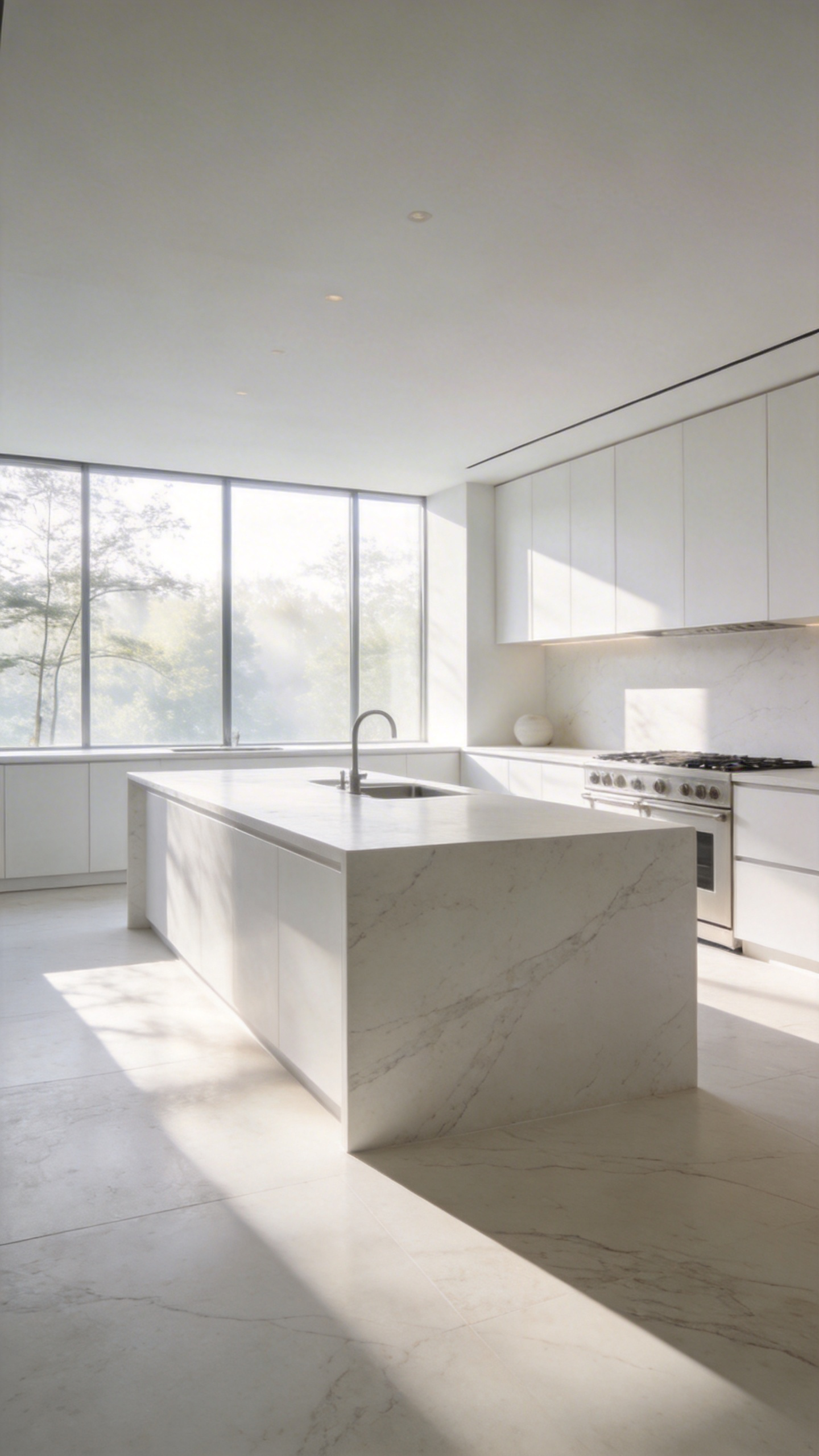
Tactile experiences also help anchor a serene, minimalist digital-age kitchen. Belgian architect Vincent Van Duysen utilizes this warm minimalism incredibly effectively. Polished stone usually feels quite cold and hard to the touch. However, a honed finish offers a surprisingly warm, inviting subtle grip. Removing those high-gloss distractions naturally highlights the stone’s frozen, organic movement.
Maintenance also separates these two distinct countertop lifestyle finishes. Polished stone requires frequent buffing just to maintain its pristine, flawless gleam. Instead, a honed surface perfectly embodies the wabi-sabi design philosophy. This mindset finds inherent beauty in the imperfect and the transient. Because the surface is matte, new everyday scratches blend into the stone naturally. Over time, the stone develops a beautifully lived-in family patina. Admittedly, honed stone does require more frequent sealing against modern wine or oil spills. Yet, this routine care can become a mindful cleaning ritual called soji. Wiping down a matte surface creates a lovely spiritual spatial reset. Therefore, honed quartzite provides the perfect durable, Zen-inspired modern compromise.
8. Wabi-Sabi Ceramics: Displaying Imperfect, Hand-Thrown White Pottery as Functional Art
Integrating Wabi-Sabi ceramics easily transforms a sterile white kitchen into a living gallery. Specifically, hand-thrown white pottery introduces a perfectly imperfect layer to modern, rigid spaces. At the core of this aesthetic is the ancient Kohiki glazing technique. Historically, this method layers a dark stoneware base with liquid white clay. It creates a soft visual warmth rather than a harsh, clinical finish. Unpredictable pink blooms, known as Gohon, often emerge naturally from the firing kiln. Indeed, these subtle blushes provide a vital human pulse against flat modern cabinetry.
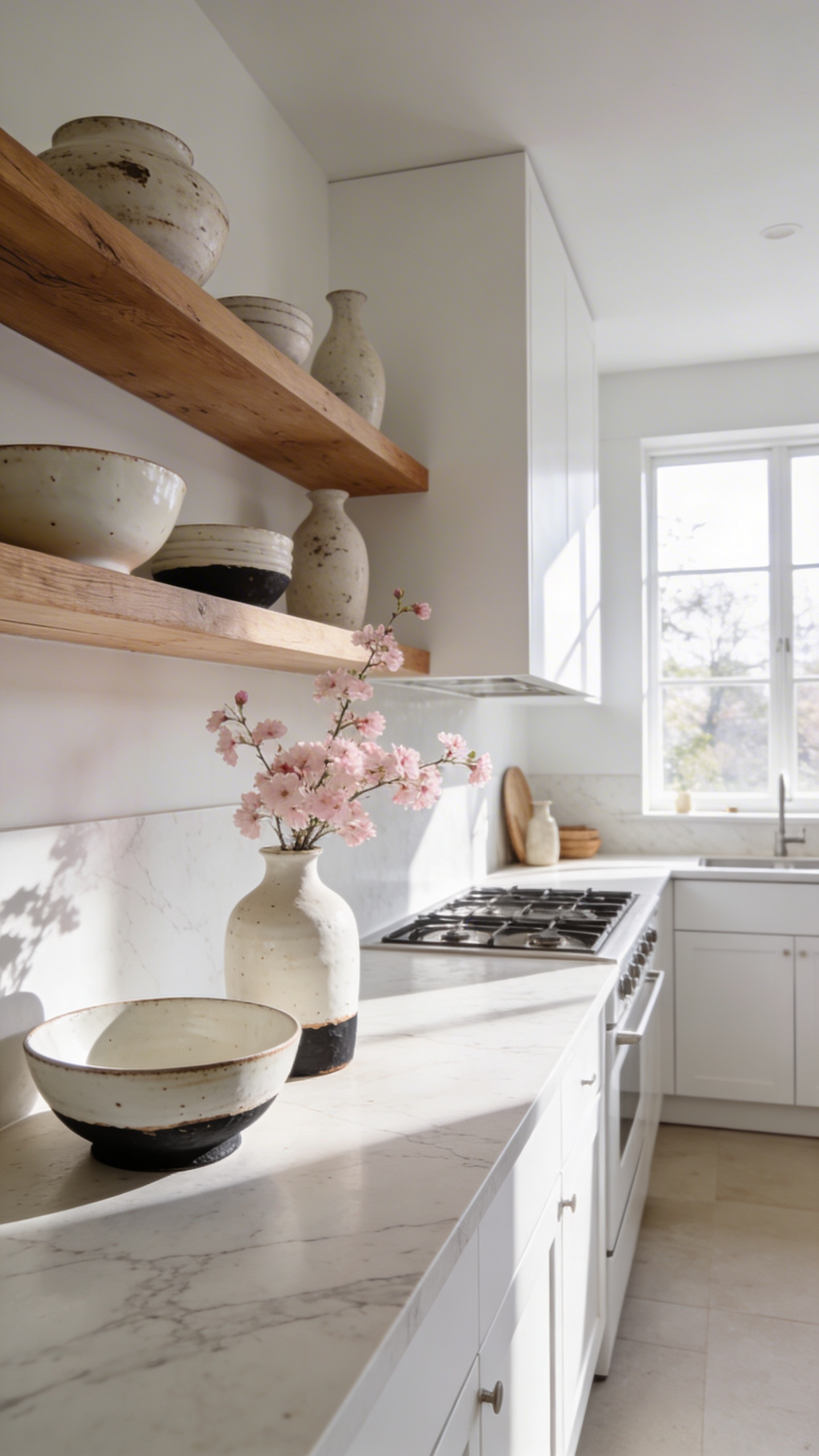
In monochromatic spaces, visual depth relies heavily on tactile, gritty textures. For example, potters sometimes intentionally induce glaze crawling to create a citrus-like skin. Fine spider-web crazing adds a shifting, organic landscape under changing sunlight. Importantly, these pieces function as living art rather than cheap, static decor. Before use, owners often perform a traditional seasoning ritual called medome using starchy water. Over time, the fine cracks darken naturally with tea or coffee stains. Therefore, a simple bowl gradually becomes a chronological diary of your daily life.
When displaying these ceramics, always embrace the concept of Ma, or negative space. Instead of overcrowded shelves, try showcasing just three distinct vessels of varying heights. Next, position soft under-cabinet lighting to gently rake across the textured glaze. Naturally, this angled illumination highlights slight asymmetries and visible maker thumbprints beautifully. However, remember that true Wabi-Sabi design is never an excuse for sloppy craftsmanship. A structurally sound piece balances high-firing durability with delicate visual softness. Mixing these subtle, bone-white variations creates a highly sophisticated, curated kitchen environment.
9. Shoji-Inspired Diffusion: Incorporating Frosted Glass and White-Slatted Cabinet Fronts
I find that traditional white kitchens can often feel a bit cold. Shoji-inspired design, however, beautifully diffuses this visual noise. It deeply embraces the Japanese concept of Ma. This philosophy, specifically, honors the meaningful empty space between objects. Frosted glass cabinet fronts act much like traditional Washi rice paper. The material softens harsh glare into a deeply serene, ambient glow. It provides veiled storage that cleverly obscures cluttered interior contents. The bright colors of your dishes simply bleed through as soft, watercolor tints.
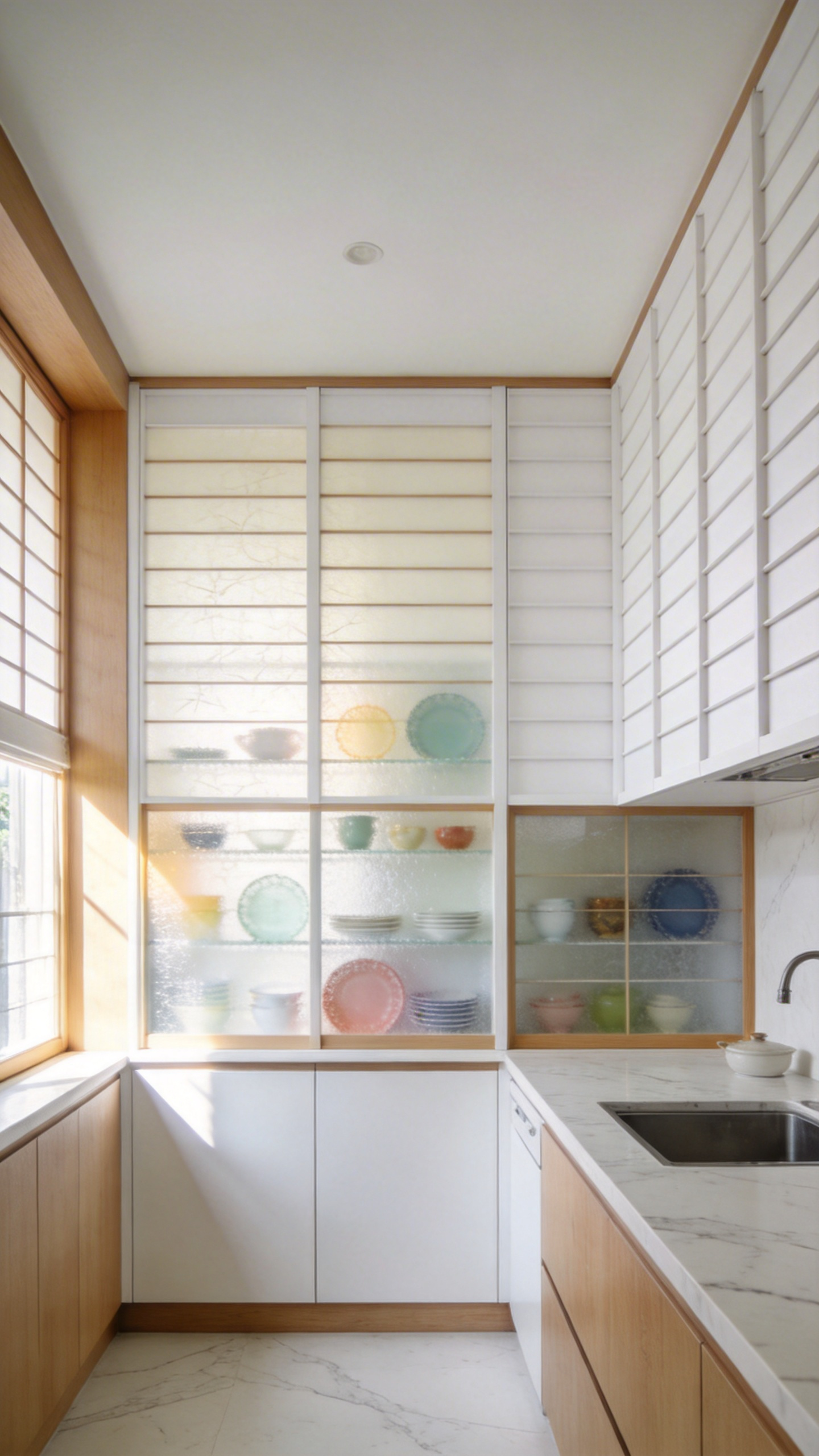
White-slatted cabinet fronts closely mimic the ancient woodworking craft of Kumiko. These vertical lines naturally draw the eye upward toward the ceiling. In fact, this simple technique visually increases the perceived height of the room. The textured slats also create beautifully shifting shadows throughout the day. Designers often call this subtle ornamentation “drawing with material.” You must pair these wood textures with proper internal cabinet lighting. Back-lighting the cabinets, therefore, transforms them into glowing architectural fixtures. Warm LEDs placed behind the glass create incredible evening ambient lighting.
Pure, stark white cabinets, however, can easily feel aggressive and clinical. I highly recommend using a warm-leaning neutral paint like Shoji White. This tone successfully bridges sterile modernism with softer organic elements. It pairs absolutely perfectly with white oak or natural ash accents. Modern kitchens also require highly durable materials to withstand intense daily humidity. Therefore, designers often use powder-coated aluminum instead of fragile paper or bamboo screens. Sliding pocket doors can conceal messy coffee stations with elegant ease. This functional design approach builds a true, lasting psychological refuge.
Phase III: Spatial Application (Light and Architecture)
Traditional Japanese design always honors fluid, open boundaries. Therefore, modern white kitchens require very mindful spatial application. Specifically, light can act as a brilliant invisible partition. We can use clever illumination instead of heavy, blocking room dividers. High-intensity downlights, for example, create a striking vertical light curtain. This smartly separates clinical work zones from relaxed, intimate dining areas.
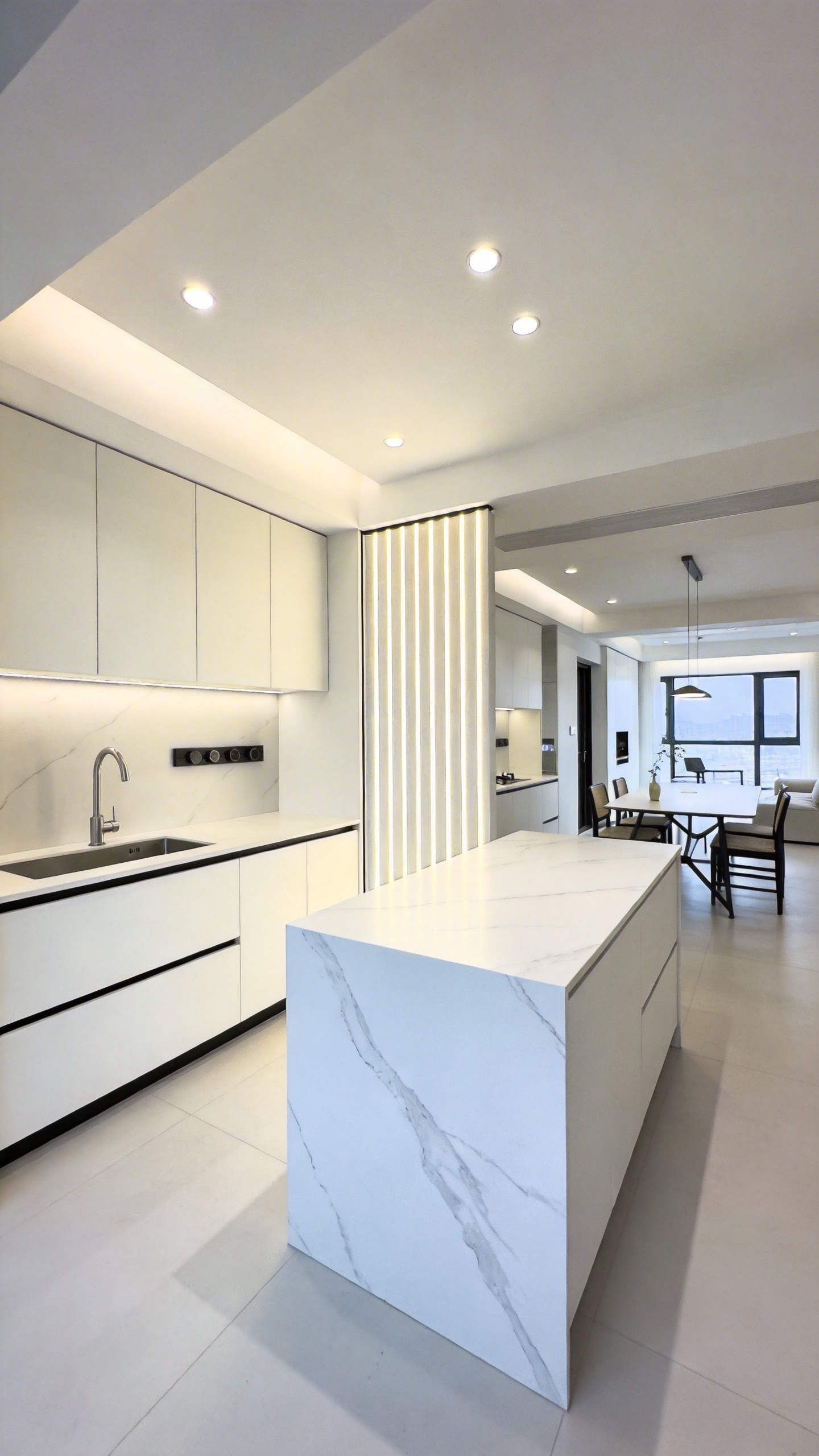
A purely white kitchen always risks feeling visually flat. Therefore, we must actively sculpt the physical space with light. For instance, wall grazing places lighting fixtures very close to vertical surfaces. This steep angle reveals the subtle, tactile grain of fluted cabinetry. Wall washing, conversely, visually expands even the tightest enclosed spaces. Broad, diffuse lights create a uniform, soft glow across the walls. Blending these two methods successfully grounds the ethereal white color palette.
Next, your physical interaction with light switches should feel meditative. For example, high-end haptic dimming transforms daily habits into small rituals. Heavy knurled knobs provide a deeply satisfying, mechanical click when turned. Naturally, this smoothly transitions bright task lighting down to a warm amber glow. Meanwhile, living metallic finishes like unlacquered brass age beautifully over the years. Over time, these touch-heavy fixtures develop a rich, personalized patina.
Natural window placement also plays a crucial functional role here. Reflective white surfaces interact dynamically with the shifting, moving sun. Therefore, modern windows often sit neatly tucked beneath upper cabinets. This clever placement blurs the strict line between interior and exterior landscapes. Polished surfaces then bounce that organic light deep into dark corners. Indeed, the pristine space remains vibrant and serene continuously throughout the day.
10. Sculpting with Shadows: How Smart, Tunable Lighting Transforms a Monochromatic Kitchen
In any monochromatic white kitchen, the primary design challenge is always flatness. Specifically, the human eye often fails to perceive depth without heavy color contrast. Therefore, top lighting designers now treat light as a vital fifth building material. Smart lighting moves way beyond simple illumination to actively sculpt spaces. Historically, traditional Japanese spaces relied on hearth fires to cast deep, moody shadows. Today, tunable LED technology restores this soulful shadow-play through highly mindful fixture placement. For example, wall grazing places lights very close to vertical surfaces. This steep angle beautifully exaggerates micro-imperfections in handmade tiles or natural stone. Wall washing, however, pulls the primary light source further back into the room. This uniform spread eliminates shadows entirely to make small rooms feel infinitely airy.
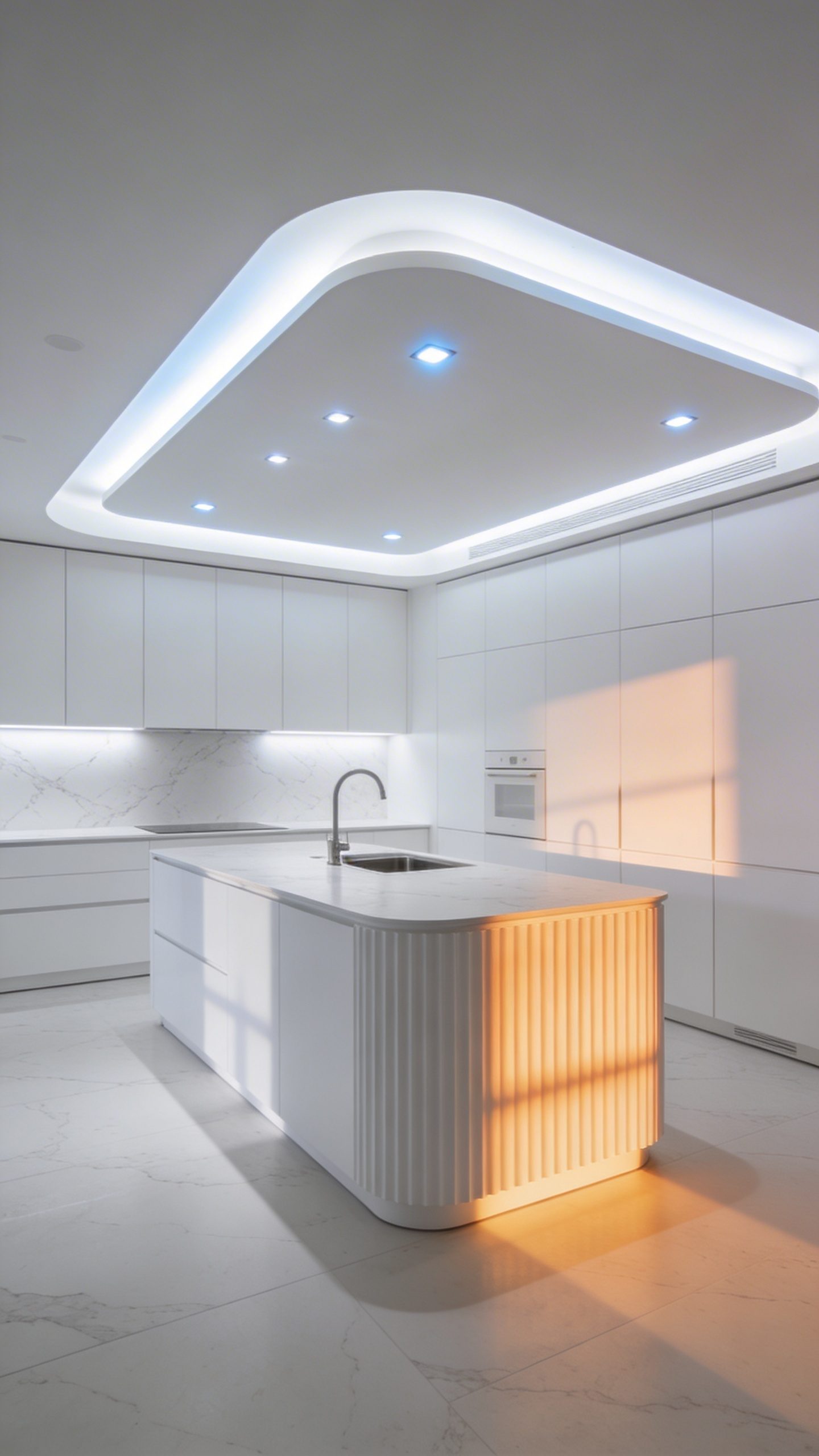
Smart systems also prevent a stark white kitchen from feeling like a hospital. Tunable white technology automatically adjusts color temperatures to support natural human circadian rhythms. In the morning, crisp cool lighting mimics the bright sun for precise cooking tasks. Later, the system seamlessly transitions into a warm, candle-like evening glow. This subtle shift turns stark white surfaces into an inviting, creamy bone tone. High-fidelity lighting completely changes how we perceive mixed white architectural finishes. For instance, tiny accent lights across leathered stone counters create rugged, beautiful micro-landscapes. Indeed, these intentional shadows break the flat monotony of standard modern cabinetry. Therefore, modern technology and traditional principles merge perfectly to craft a serene sanctuary.
11. The Invisible Edge: Handleless Cabinetry and Push-to-Open Systems for Seamless Flow
The concept of the “invisible edge” transforms the kitchen into a serene architectural element. Specifically, true handleless design relies on a continuous rail built directly into the cabinet. This recessed Gola profile creates a highly consistent horizontal shadow line. Therefore, this structural rhythm grounds bright white cabinetry and prevents a flat, cheap appearance.
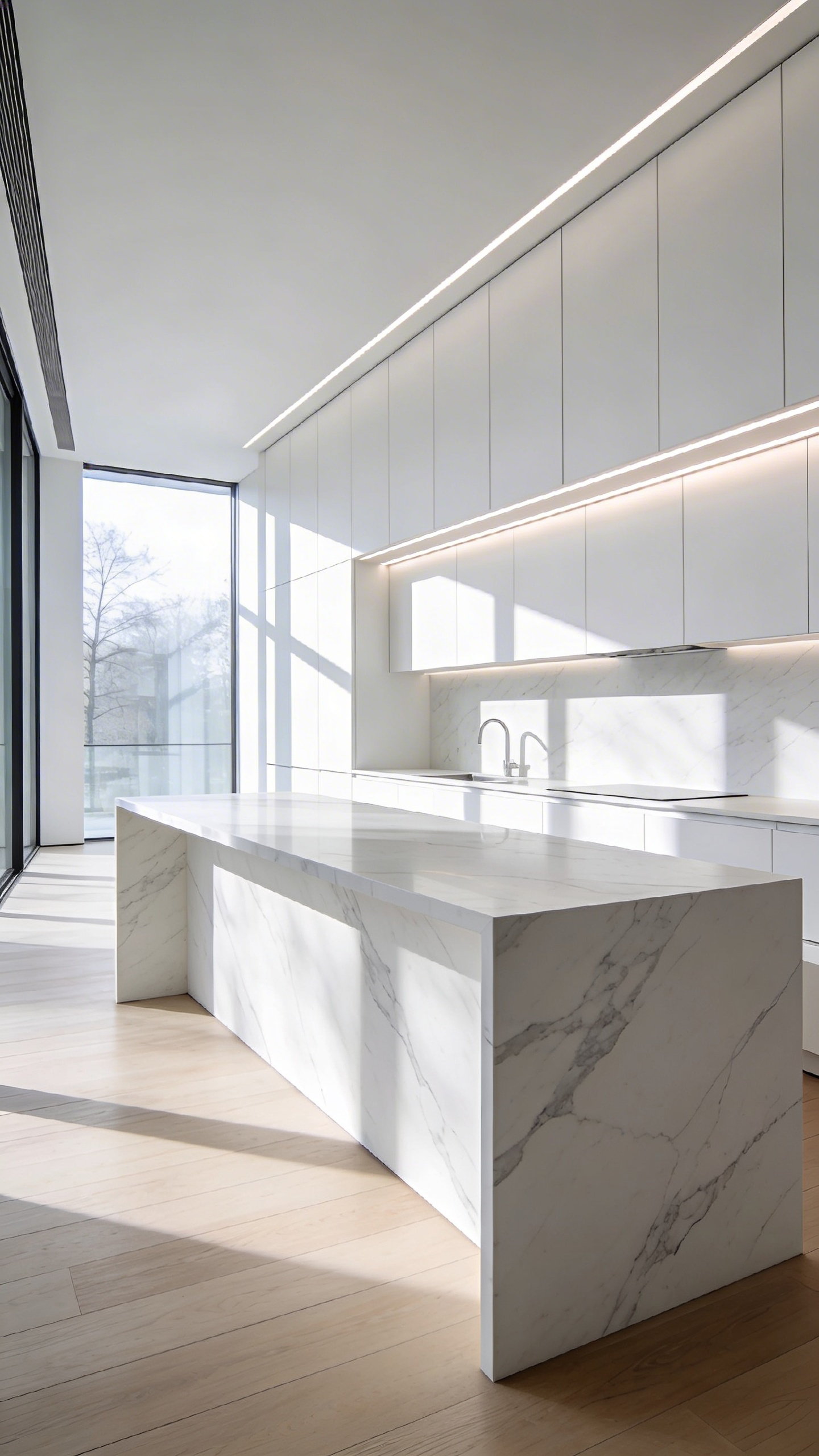
Modern push-to-open systems truly define the sensory experience of a peaceful home. Advanced electric drive systems allow heavy pots-and-pans drawers to open with a gentle nudge. For instance, a hip or knee can easily activate the mechanism when your hands are full. High-end mechanical systems now also feature dampened, utterly silent closing movements. Removing aggressive slamming sounds naturally enhances the psychological calm of the entire space.
Psychologically, eliminating metal hardware removes visual noise and erratic, distracting shadows. The uninterrupted white cabinetry simply mimics custom wall paneling or fine furniture. Open-plan spaces greatly benefit from this seamless visual flow into adjacent living areas. However, interacting directly with cabinet faces does introduce a distinct physical challenge. Glossy finishes, unfortunately, often highlight oily smudges and daily fingerprints. Therefore, modern designs embrace matte or satin lacquers treated with anti-fingerprint technology. These soft finishes diffuse light gently while effectively masking everyday family wear.
Paradoxically, handleless surfaces prove much easier to keep perfectly clean. Without intricate hardware to navigate, flat faces wipe clean in one mindful, sweeping motion. Removing protruding metal handles also creates a much safer, snag-free cooking environment. Similarly, touch-based operation supports universal design principles for users with limited hand grip strength. In fact, this invisible technology beautifully harmonizes high-end aesthetics with quiet, inclusive functionality.
12. Biophilic Contrast: Framing Drought-Resistant Indoor Plants Against a Pure White Backdrop
Modern kitchen design often treats drought-resistant plants as bold architectural interventions. Specifically, hardy species like the Snake Plant act as literal living sculptures. These plants brilliantly break up the rigid, sharp geometry of modern cabinetry. Their thick, waxy leaves create a deep, highly saturated color contrast against the white. I find this approach provides a wonderful organic antidote to our daily digital fatigue. Furthermore, choosing low-maintenance greenery purposely reduces the mental load for busy homeowners.
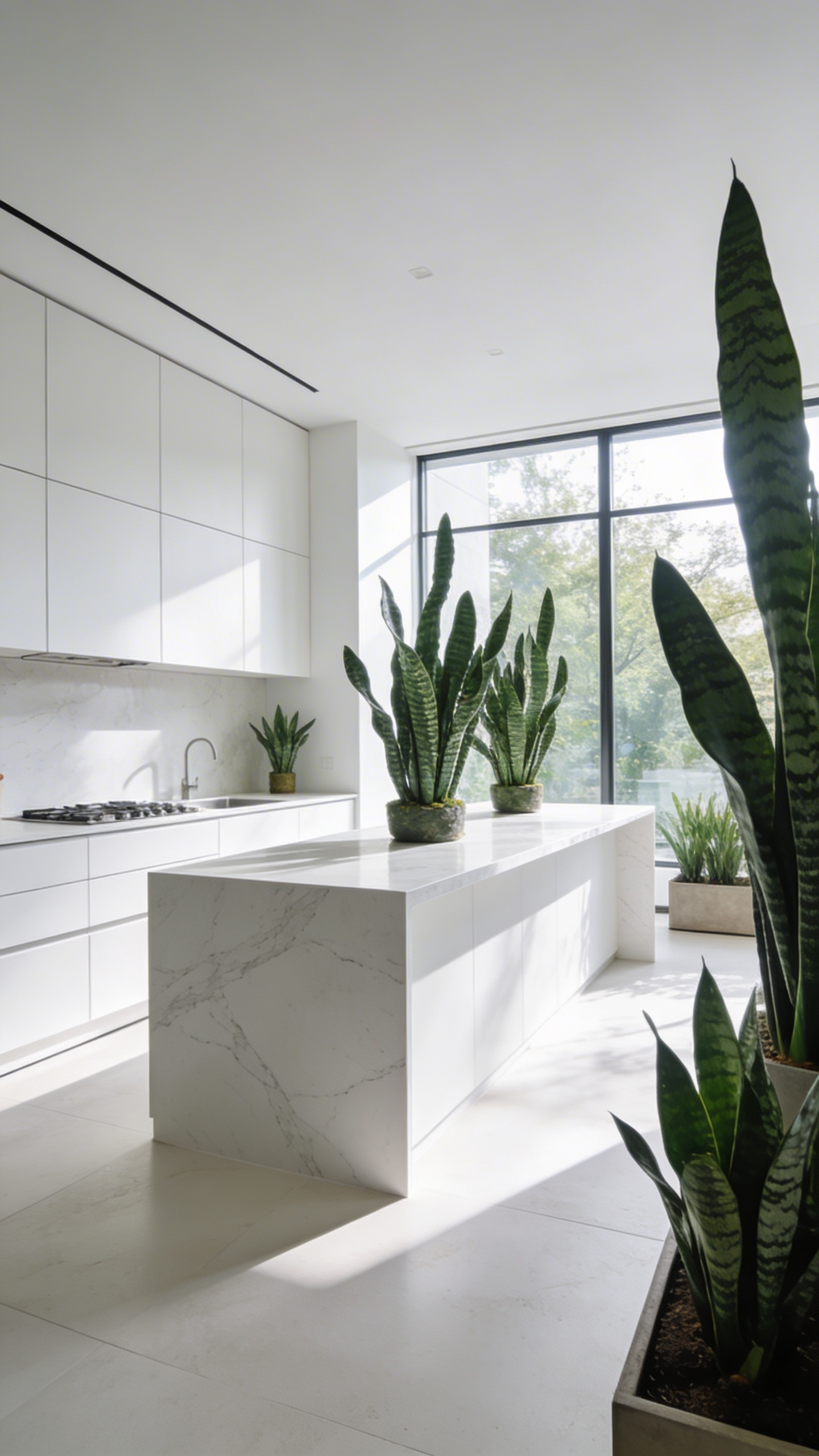
The white backdrop essentially functions as a clean, museum-grade substrate for the plants. However, the specific finish of this white surface matters greatly. For instance, matte walls absorb light and eliminate harsh, distracting glare. Therefore, the intricate fractal patterns of the foliage can truly stand out. High-gloss cabinets, conversely, can strategically mirror the greenery like a pond. This simple visual trick instantly doubles the perceived amount of nature in small rooms. Designers also utilize clever shadow play to enhance this serene atmosphere. Wall washing techniques cast dynamic, moving foliage silhouettes across blank wall spaces. Indeed, this creates a lovely secondary garden of zero-maintenance texture.
Critics often argue that pure white kitchens feel far too clinical. Yet, high-contrast biophilic design effectively solves this persistent modern problem. Deep green plants instantly inject much-needed warmth, life, and soul into the room. Therefore, we achieve a perfectly serene balance of warm, breathable minimalism.
13. Floating Elements: White Architectural Shelving That Appears to Defy Gravity
Currently, architectural floating shelving completely embodies stealth luxury in modern kitchen design. Intense structural engineering often hides quietly behind extreme visual simplicity. Architects integrate heavy, continuous steel sub-frames directly into the hidden wall studs. Therefore, the shelf acts as a literal structural extension of the room’s skeleton. Master carpenters also use a highly precise installation technique called scribing. They carefully shave the shelf’s back edge to perfectly match subtle, wavy wall imperfections. This creates a seamless, monolithic transition without any ugly hairline gaps. Utilizing solid surfaces like white Corian also entirely eliminates visible material seams. Next, by selecting specific shades from calibrated whitescale palettes, designers can masterfully manipulate light. A slightly lighter shelf top catches ambient illumination and psychologically lifts the ceiling.
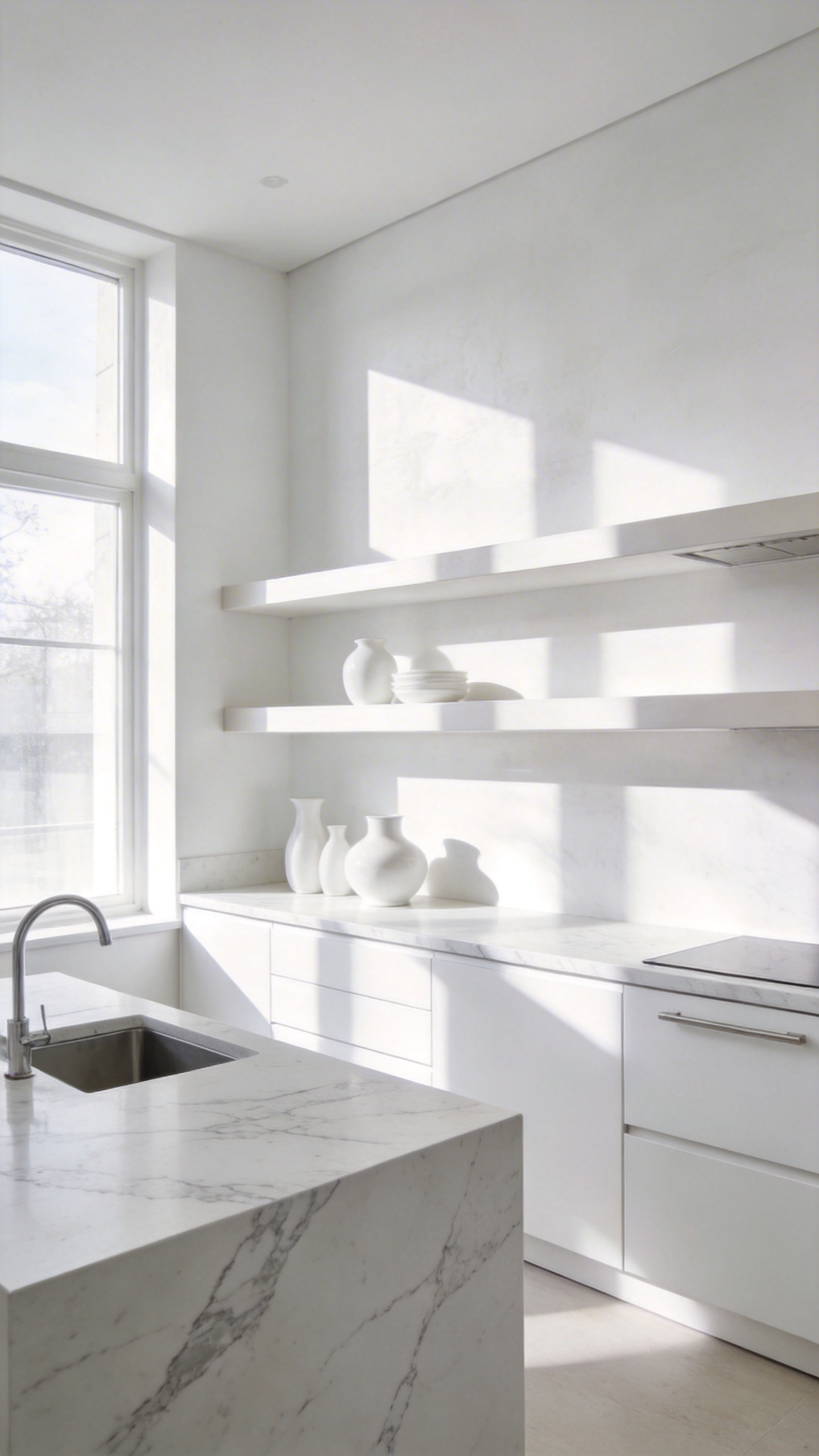
However, the true secret to this levitation effect lies in intentional negative space. Typically, architects leave a deliberate 5mm shadow gap near the adjacent side walls. Visually, this dark recessed line beautifully detaches the white shelf from its surroundings. Simultaneously, these minimalist structures can seamlessly integrate advanced digital technology. For example, recessed aluminum channels house beautifully diffuse LED lighting strips. Remarkably, gesture-controlled sensors let users adjust this illumination with a simple hand wave. Therefore, the room shifts smoothly from crisp task lighting to a warm, inviting glow.
These gravity-defying planes ultimately offer profound psychological relief to the homeowner. Instead of imposing, heavy upper cabinets, they introduce essential visual breathing room. This complete, open exposure naturally encourages a lifestyle of highly curated minimalism. In fact, your everyday ceramic cereal bowls suddenly transform into serene, rotating art displays.
14. The Monolithic Island: Creating a Pure, Uncluttered Centerpiece for Culinary Focus
The concept of the traditional kitchen island is actively and rapidly evolving. It now frequently stands as a pure, monolithic sculptural altar in the room. This solid architectural form perfectly anchors the best dream kitchen ideas white. Historically, central workspaces were heavily cluttered with exposed sinks, drying racks, and bulky appliances. However, the modern monolith completely rejects this chaotic visual noise. It purposefully creates a quiet, pristine blank slate for pure culinary focus.
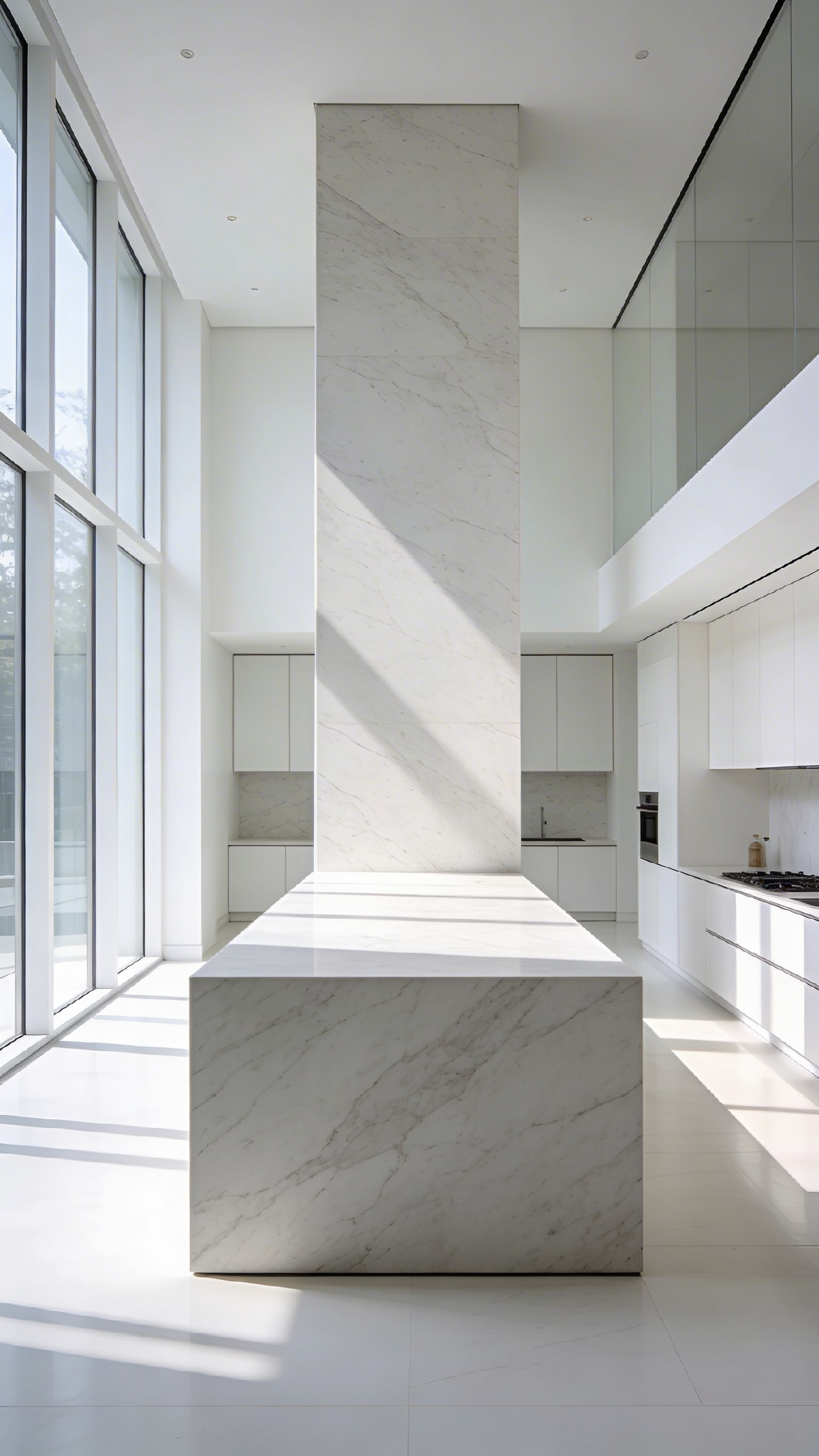
Physically, achieving this pristine, solid illusion requires incredibly precise stone engineering. Fabricators must carefully utilize mitered aprons to seamlessly join the heavy slabs. They meticulously bookmatch delicate stone veins across every single geometric corner. Therefore, a standard countertop surface beautifully transforms into one massive, unbroken visual block.
Sensory details matter deeply in these modern Zen-inspired living spaces. A honed white stone finish, for instance, feels exactly like soft, calming parchment paper. This matte texture gently absorbs ambient light to instantly cultivate a sense of absolute serenity. This unparalleled visual silence directly encourages a deeply creative, uninterrupted cooking flow.
Yet, necessary modern functionality is never actually sacrificed for sheer, impractical aesthetics. To maintain minimalist purity, expert designers cleverly conceal all essential daily utility. For example, cutting-edge invisible induction cooktops now rest entirely hidden beneath the porcelain slab. The pristine island remains a completely flat block until active cooking actually begins. Next, flush pop-up cylinders effectively disguise your necessary electrical outlets from view. Meanwhile, touch-to-open cabinetry seamlessly eliminates any distracting metallic hardware along the seating edges.
Naturally, authentic Calacatta marble remains a breathtakingly beautiful traditional material choice. Unfortunately, this highly porous natural stone easily suffers from permanent acidic wine and lemon etching. Because of this, ultra-durable sintered stones like Dekton are rapidly gaining massive global popularity. Ultimately, these advanced modern materials provide incredible everyday resilience while gracefully preserving architectural peace.
Phase IV: Lifestyle Integration (Living in the Serene Dream)
Living in an all-white kitchen requires a mindful shift in your daily perspective. Specifically, cleanliness transforms from a dreaded weekly chore into an effortless daily micro-habit. This immediate attention prevents the gross buildup of invisible grease over time. Reducing visual clutter also actively lowers your daily stress and cortisol levels. Therefore, this minimalist space acts as a crucial sensory reset after long, chaotic workdays.
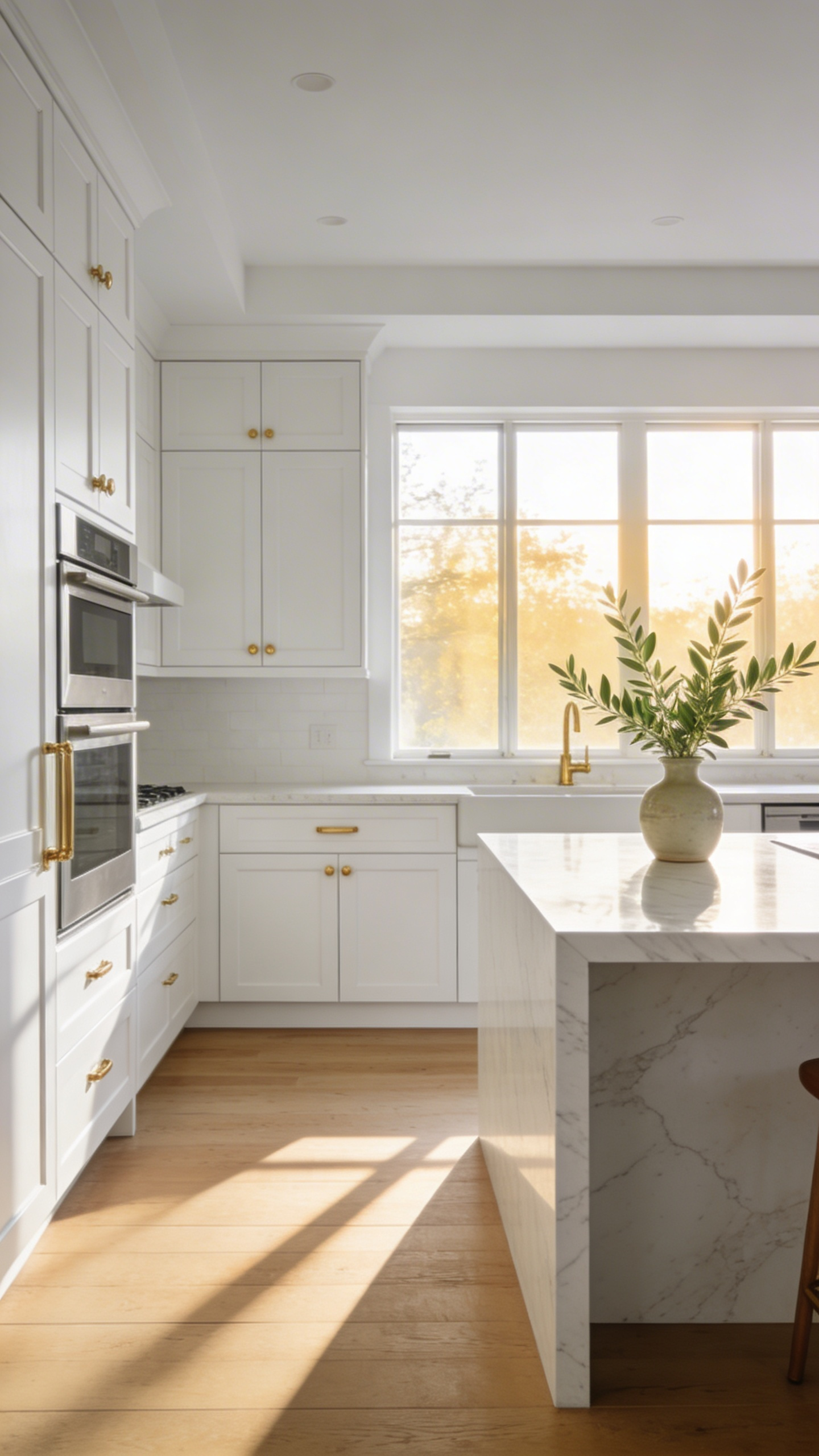
However, a truly serene space must avoid clinical, sterile hospital coldness entirely. I always recommend layering varying shades of off-white to establish deep, inviting tactile warmth. Honed surfaces also offer a much more velvety touch compared to harsh, glossy materials. Authentic tranquility requires invisible acoustic softening to dampen sharp, echoing room noises. For example, integrating fluted white oak wall panels subtly absorbs the loud clatter of modern living.
True lifestyle integration demands careful spatial planning for the next decade. Indeed, crisp white surfaces paired with dark bronze hardware provide excellent, timeless visual anchoring. Specifying UV-stable finishes ensures your expensive cabinetry resists ugly yellowing from daily sun exposure. Over time, this neutral canvas naturally evolves into a highly curated, lived-in gallery. Everyday items, like a simple copper tea kettle, suddenly become striking sculptural elements. Therefore, the human inhabitant remains the most dynamic, colorful presence within the serene home.
15. Mindful Workflow: The ‘Invisible’ Appliance Integration Technique for Modern Zen Living
I constantly notice how traditional appliances break the visual calm of a white kitchen. Therefore, achieving true visual silence requires fully integrated, hidden technology. Flush cabinetry panels create a monolithic, seamless white surface across the entire wall. This visual quiet allows the brain to shift into a mindful, relaxed state. Zero-clearance hinges reduce awkward cabinet gaps down to a mere three millimeters. Indeed, the room resembles a serene art gallery instead of a sterile cooking laboratory.
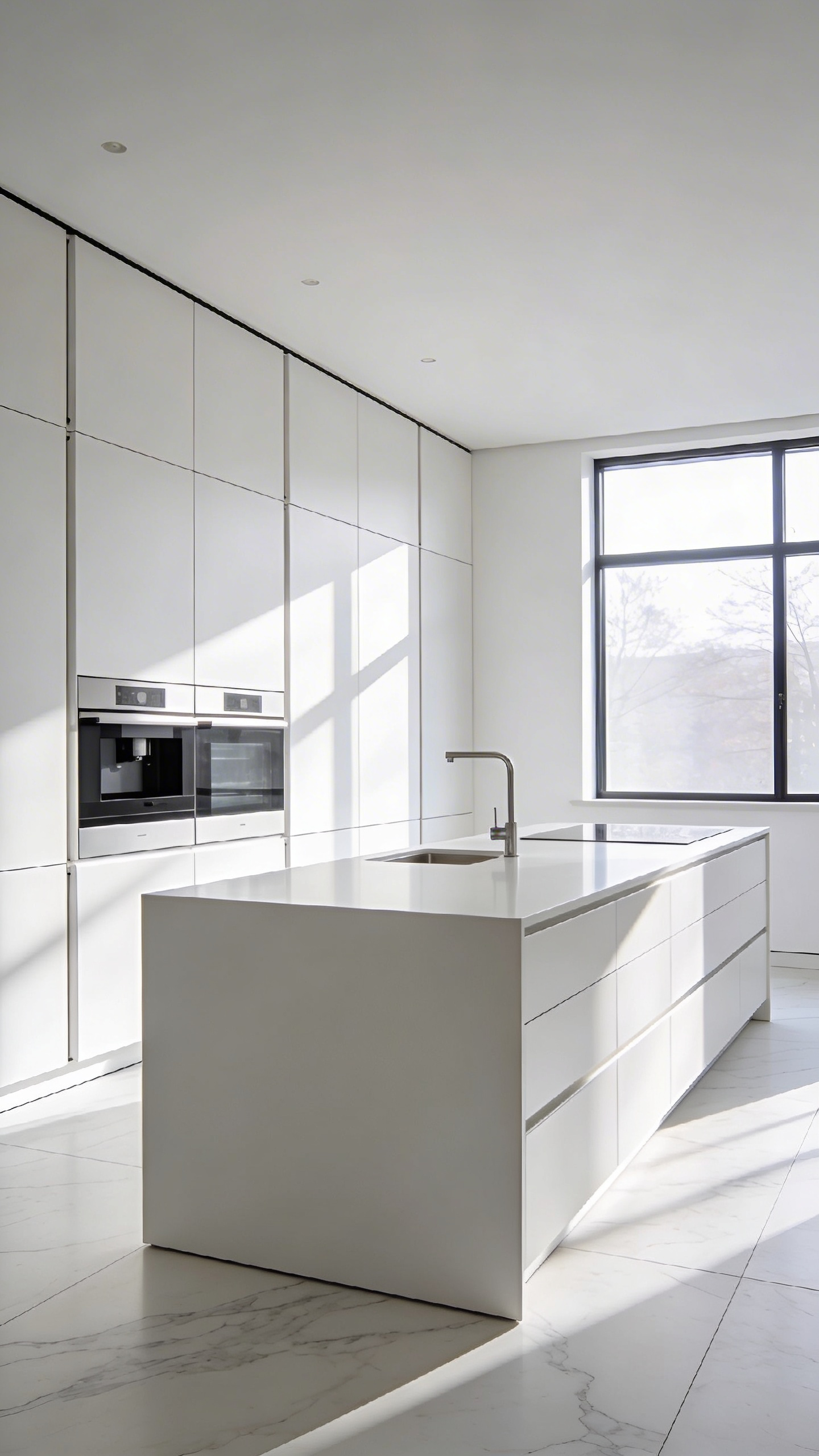
Managing small countertop appliances is also vital for maintaining strict zen minimalism. Fortunately, modern pocket door systems elegantly solve this annoying clutter problem. Floor-to-ceiling cabinetry can hide entire, fully functional preparation workstations out of sight. When the messy meal prep finishes, you simply pull the tall doors shut. This simple physical ritual instantly resets the pristine white living space.
Modern zen designs increasingly eliminate traditional metal cabinet hardware entirely. Instead, handleless haptic technology introduces a purely sensory, magical touch experience. For instance, integrated hidden dishwashers now require only a gentle double-knock on the wood panel. A motorized latch then opens the heavy door with a soft, precisely engineered click. Naturally, this mindful interaction eliminates jarring visual and auditory kitchen clatter.
Hidden induction cooktops represent the ultimate invisible kitchen technique available today. Specifically, powerful induction coils sit entirely beneath a solid, heat-resistant porcelain slab. The pristine white stone reveals absolutely no visible burners or glass rings. Therefore, the kitchen island easily transforms into a highly versatile zen altar. You can prepare messy food and immediately pivot to hosting guests around a clean table.
Finally, tunable white lighting acts as a brilliant, invisible architectural guide. Integrated ceiling LEDs shift automatically to match healthy human circadian rhythms throughout the day. Ultimately, warm evening illumination ensures the stark space remains a cozy, ethereal sanctuary.
16. Contemporary Tea Ceremony Stations: Dedicated Ritual Spaces in Soothing Neutral Tones
A contemporary tea station creates a deliberate, beautiful architectural pause in a busy kitchen. Specifically, it draws deep inspiration from the traditional Japanese Mizuya preparation area. This backstage zone keeps utilitarian tools hidden to maintain strict aesthetic purity. Today, designers achieve this stunning minimalism using smooth retractable pocket doors. Opening these sleek white doors suddenly reveals a surprisingly warm, inviting oak interior. Modern functionality, however, demands highly precise interior plumbing solutions. Dedicated reverse osmosis lines completely remove harsh chlorine and hard water minerals. Therefore, the delicate, grassy notes of ceremonial matcha remain perfectly preserved.
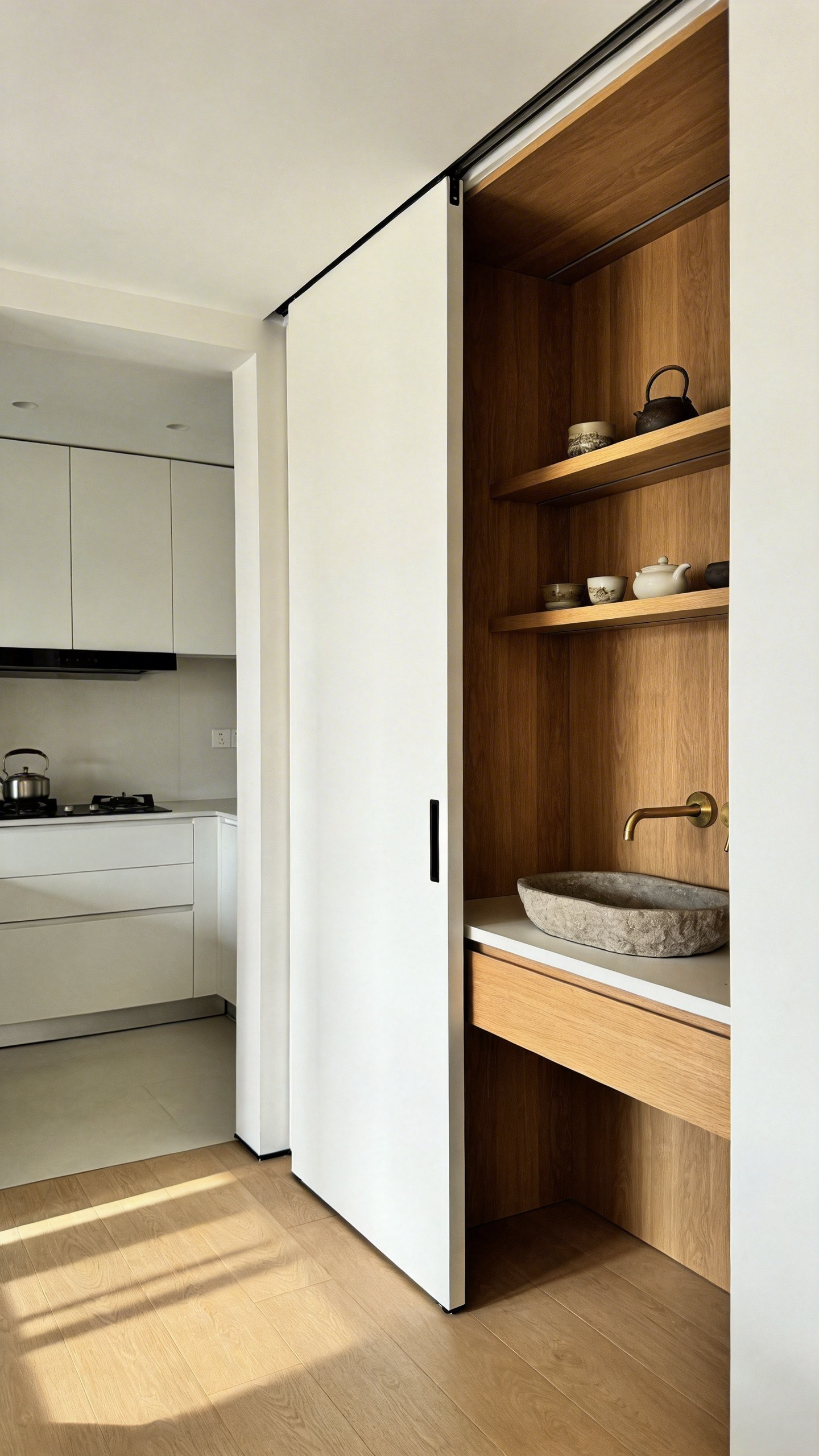
Material choices also play a crucial role in these tiny, dedicated spaces. For instance, honed marble counters provide a wonderful cooling thermal mass for hot pots. Slatted wood backsplashes, conversely, introduce some essential acoustic dampening to the nook. This wood beautifully softens the sharp, high-pitched sounds of clinking ceramic bowls. Temperature control is also vital for a proper, relaxing zen tea ritual. Built-in modern taps instantly deliver filtered water at exactly 175 degrees. Meanwhile, hidden recycled cork panels absorb the low hum of nearby heavy appliances. In fact, users get to enjoy a quiet, perfectly insulated acoustic bubble.
Of course, authentic tea culture involves many beautiful seasonal objects. To avoid overwhelming clutter, micro-lit niches should display only three carefully curated items. This intentional visual rotation honors the Ichi-go Ichi-e philosophy of unique, fleeting encounters. Finally, the station’s interior color palette often shifts slightly away from clinical white. Instead, designers feature soothing greige or warm oyster white tones inside the cabinet. These soft neutrals actively promote a deep, parasympathetic relaxing state for the user. Therefore, the vibrant green matcha becomes the true, singular visual focus.
17. The Concealed Scullery: Hidden Prep Pantries to Maintain the Minimalist Illusion
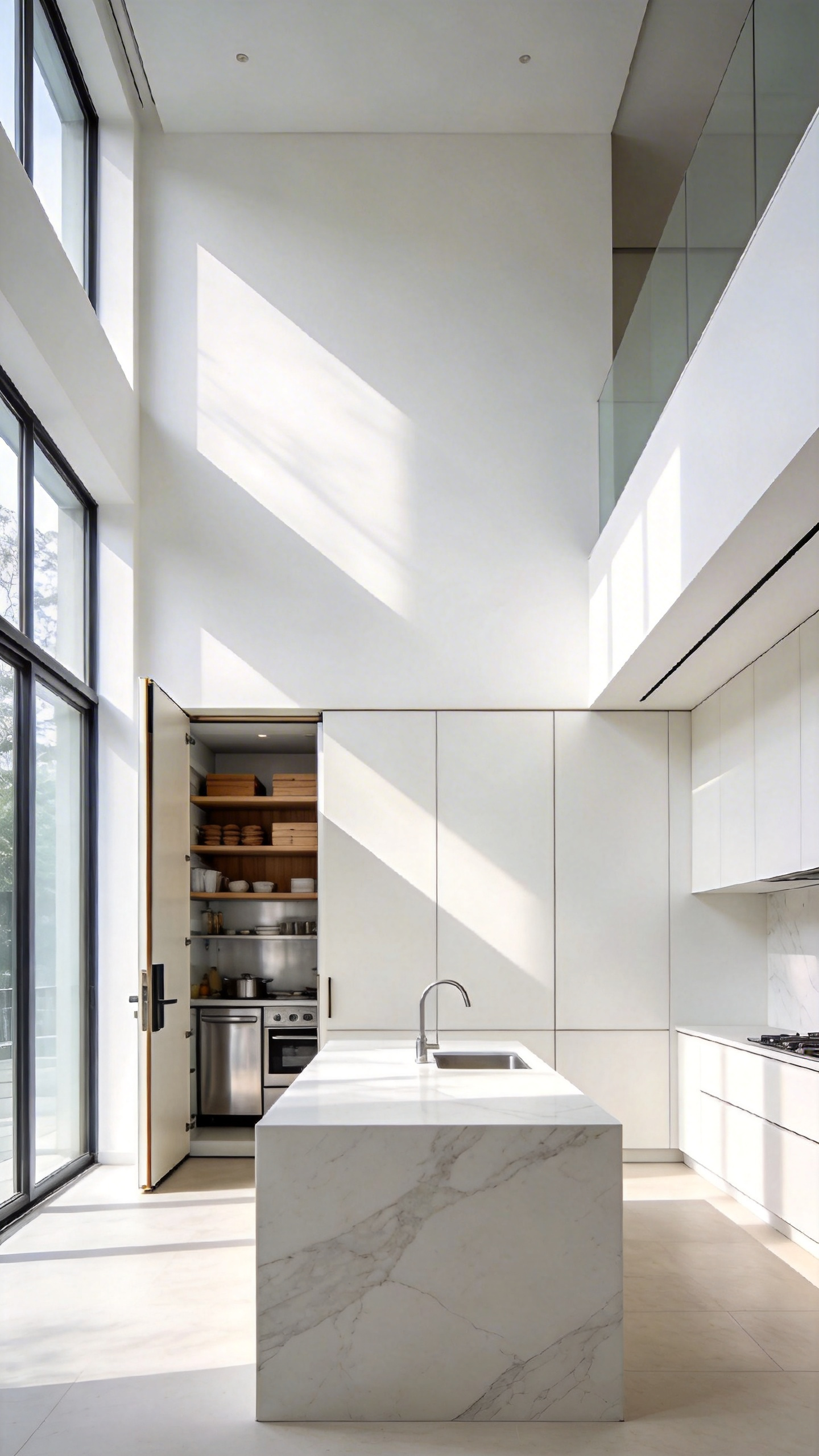
An open-plan white kitchen is undeniably aesthetically breathtaking. However, this beautiful illusion shatters instantly when the messy chaos of daily life unfolds. Because of this, leading architects are rapidly shifting toward smart dual-zone layouts. The concealed scullery serves as the loud, messy operational engine of the modern home. Meanwhile, the front-facing white kitchen acts purely as a serene lifestyle gallery. Specifically, this clever separation mirrors the ancient zen principle of balanced duality. Designers employ highly sophisticated jib doors to maintain absolute visual continuity across the room.
These hidden doors integrate seamlessly into expansive floor-to-ceiling matte white cabinetry. Subtle, dark shadow gaps completely replace traditional bulky trim and visible metal hinges. Therefore, the doorway simply looks exactly like another sleek cabinet panel. Inside, this hidden workshop manages all the chaotic sensory byproducts of cooking. For instance, loud blenders and dishwashers operate safely behind thick, insulated walls. High-heat cooking and messy vegetable preparation also happen exclusively in this functional zone. This protects the expensive white marble out in the gallery from tough turmeric or wine stains. Deep utility sinks are also smartly relocated to this hidden backstage area. Indeed, the main kitchen island remains a perfectly unbroken expanse of calm stone. Ultimately, the concealed scullery provides some truly essential invisible infrastructure. It perfectly balances modern culinary functionality with tranquil, enduring minimalism.
18. Sustaining the Serenity: Selecting Tech-Forward, Maintenance-Friendly White Finishes
Traditional high-gloss white cabinets tend to create incredibly harsh visual noise. Specifically, those sharp, mirror-like reflections cause subtle but real daily eye fatigue. Therefore, modern tech-forward finishes now heavily utilize “smart matte” materials. Electron-beam cured acrylics, for example, scatter incoming light absolutely beautifully. This diffuse reflection yields a velvety, highly ethereal glow across the cabinetry. This soft, matte illumination provides some very essential visual rest for our brains. While white is obviously a staple, exploring 23 Kitchen Cabinet Colors That Transform Your Space reveals exactly why this specific palette remains the ultimate choice for timeless longevity.
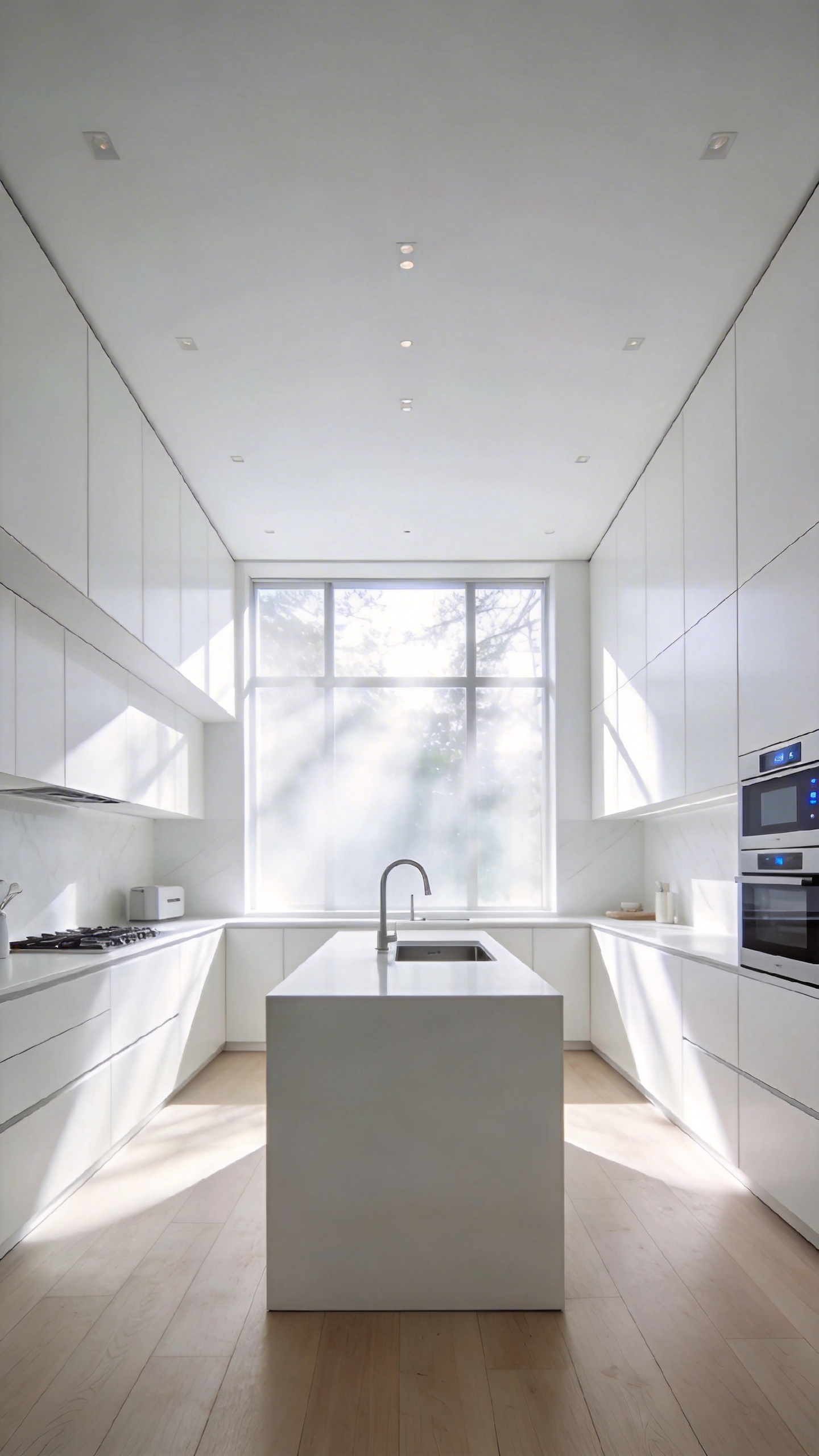
These incredible modern surfaces also completely transform the tactile kitchen experience. Historically, pristine white kitchens felt cold, plasticky, or overly sterile to the touch. Modern sintered stones, conversely, feel remarkably warm and highly organic. In fact, their advanced oleophobic properties actively repel gross, oily fingerprints. Therefore, the space easily maintains a pure, smudge-free sanctuary without constant scrubbing.
Naturally, a serene space still has to withstand heavy daily family life. A decade ago, a single deep scratch could completely ruin pristine white cabinetry. Today, however, advanced resins contain incredible memory-retaining thermoplastic molecules. Remarkably, simple household heat can completely heal these tiny microscopic wounds. Specifically, a damp cloth and a warm clothing iron can magically restore the original surface. This amazing tech ensures that sudden kitchen accidents never permanently shatter your domestic peace.
Unseen hygiene technology also actively preserves this deeply calming environment. Embedded silver ions within the countertops effectively halt bacterial growth upon contact. Similarly, advanced titanium dioxide coatings smartly harness natural UV light entering from the windows. They actually naturally decompose organic surface grime and gross airborne pollutants. Ultimately, these invisible self-cleaning technologies easily sustain the breathtaking beauty found in these dream kitchen ideas white.
Frequently Asked Questions
How do I stop an all-white kitchen from looking clinical?
To prevent a sterile atmosphere, I recommend focusing on layering physical textures rather than flat colors. Incorporate natural, gritty elements like white oak shelving, hand-chiseled Zellige tiles, and honed stone countertops. These specific materials introduce beautiful micro-shadows and tactile warmth that instantly humanize the stark space.
What is the best white paint for a north-facing kitchen?
North-facing rooms receive cool, bluish natural light, which can quickly make stark whites feel gray or icy cold. Opt for “warm whites” featuring subtle peach or yellow undertones to artificially synthesize the missing sunlight. Conversely, south-facing rooms benefit greatly from cool-toned whites to help balance out the intense, warm golden light.
Are white kitchens still in style for 2026?
Yes, white kitchens absolutely remain a massive cornerstone of premium design because they act as a vital “psychological reset.” For 2026, the overall trend has evolved from flashy high-gloss “status” kitchens toward deeply “wellness-focused” calming spaces. Designers are utilizing smart-matte finishes and high-contrast biophilic elements to actively reduce our daily cognitive load and stress.