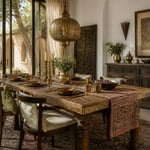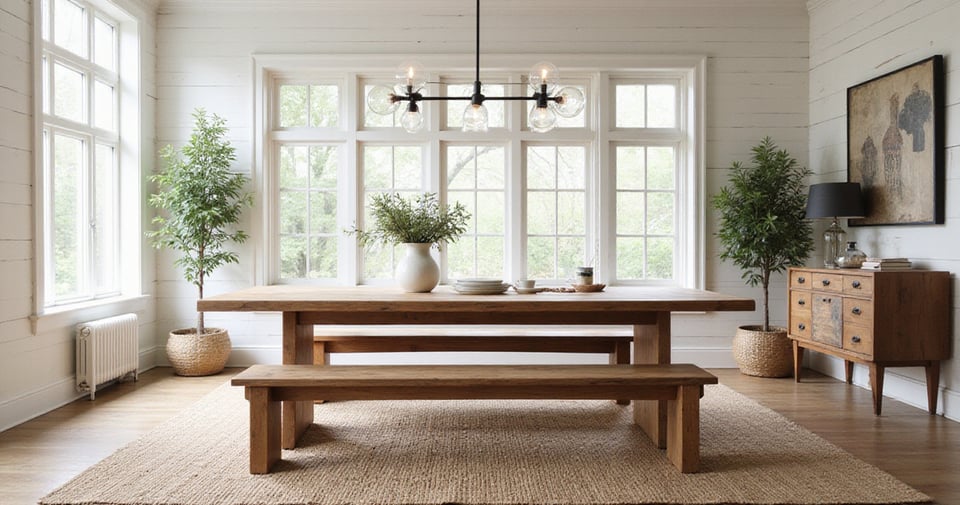
Can we just talk about “rustic” for a second? People always ask me about it, and my pet peeve is that the word has been hijacked. It’s been flattened into a catalogue look: a vaguely farm-like table, some metal chairs, and a sign that says “EAT.” That’s not rustic; that’s a theme park version of a home. It’s completely devoid of the very thing it’s meant to celebrate: life, texture, and history.
The real heart of a rustic space—especially a dining room, the place we gather to connect—is a feeling of grounded warmth. It’s the beautiful tension between raw and refined, old and new. It’s a space that tells a story, your story, not one copied from a big-box store. Forget the noise and the corporate checklists. Here’s what actually matters when you’re trying to create a rustic dining room with genuine soul.
Setting the Foundation: Planning Your Rustic Retreat (Part 1)
Before you even think about buying a single piece of furniture, we need to lay the groundwork. So many people skip this part and then wonder why their room feels… off. It’s because they started buying beautiful things without a map. A great design isn’t a collection of nice items; it’s a cohesive vision. This is where we create that vision, ensuring every choice you make from here on out feels intentional and contributes to the retreat you’re building.
1. Define Your Specific Rustic Style Sub-Niche for Cohesion
First things first: “rustic” is not a style. It’s a category. Saying you want a “rustic” dining room is like saying you want a “dog”—are we talking about a sleek Doberman or a scruffy Irish Wolfhound? You have to get specific, or you’ll end up with a mess. This isn’t just noise; it’s the single most important step to prevent your space from feeling chaotic and disconnected. Is your vibe more “Modern Farmhouse” with its clean lines and warm woods, or “Coastal Rustic” with sun-bleached tones and woven textures? Maybe it’s “Industrial Rustic,” celebrating raw brick and forged metal.
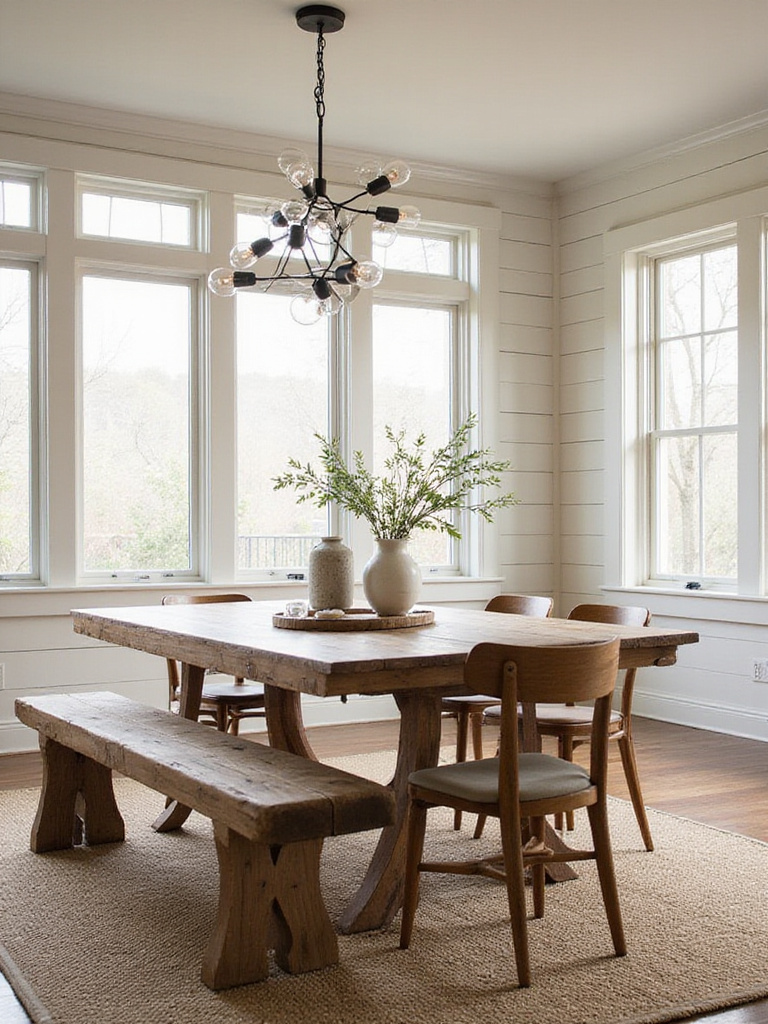
I learned this the hard way on an early project in the Cotswolds. The client kept saying “rustic,” and I brought in these incredible, heavy reclaimed timbers. But what she actually wanted was more of a “Rustic Chic” feel—something lighter, more refined, with a touch of French country. We had to pivot, which cost time and money. The shortcut is to create a mood board. Pin images you love and find the common thread. Is it the color palette? The materials? The level of polish? Define it in one sentence, like, “I’m creating a warm, industrial-rustic space that feels like a renovated London warehouse.” Now you have a compass.
Defining your lane is the foundation. Everything that follows—the colors, the textures, the very soul of the space—builds from here.
2. Embrace Natural, Untreated Materials for Furniture and Accents
This is where the magic really begins. Authentic rustic design is all about celebrating materials that are honest and have a story to tell. Think solid wood with its grain and knots on full display, natural stone, hand-thrown pottery, and fabrics like linen and wool. These materials have a weight and a texture that you just can’t fake with veneers and polyester. They ground a space and connect it back to the natural world, which is a principle I hold dear, whether I’m designing in a bustling city or overlooking the Caribbean.
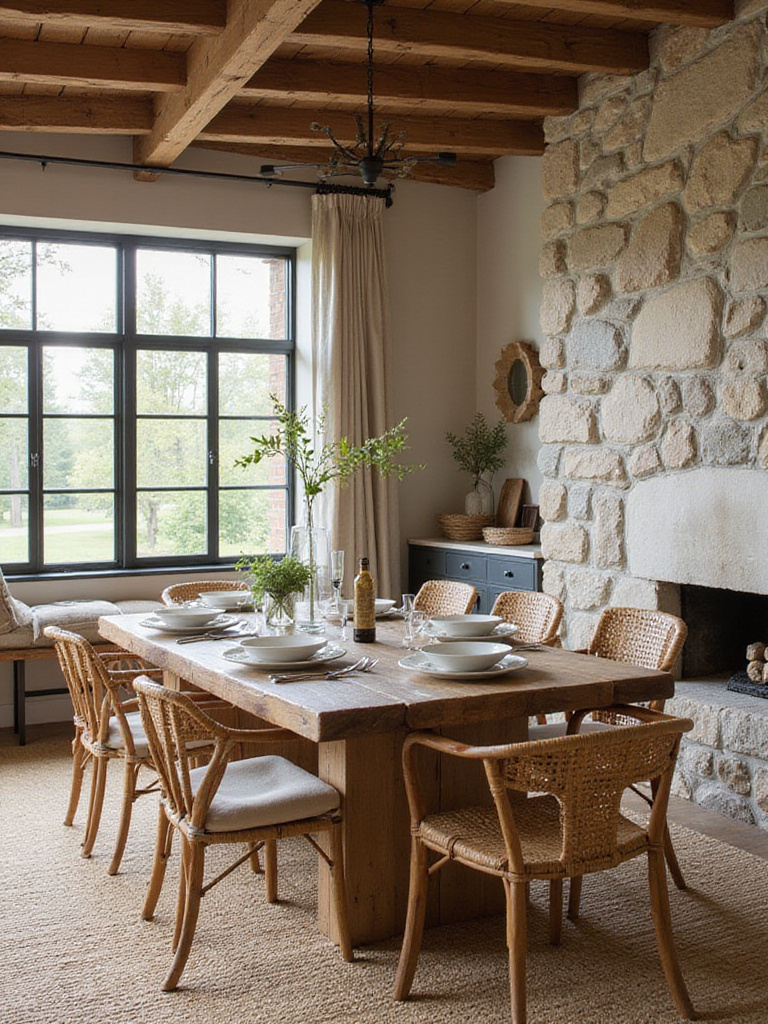
A lot of people think rustic means rough and splintery. That’s the BS version. The real goal is to find pieces where the material’s natural beauty is the star. It might be a smoothly sanded but un-lacquered oak table or a set of stoneware plates where you can feel the potter’s hand. I once specified a massive single-slab dining table from a fallen Guanacaste tree in Costa Rica. It wasn’t perfect—it had whorls and a live edge—but that was its power. It breathed life into the room. Don’t be afraid of imperfections; they are the signature of authenticity.
When you bring these honest materials into your home, you’re not just decorating; you’re building a sensory experience. The next step is to look at what stories your home already has to tell.
3. Assess Existing Architectural Features to Enhance Rustic Charm
Before you add anything new, you need to become a detective in your own home. What character is already hiding in plain sight? So many people cover up the very features that would give their room the soul they’re trying to buy. Look for exposed brick behind drywall, original hardwood floors under that dated carpet, or ceiling beams that have been painted over a dozen times. These elements are pure gold. They give you a historical anchor that is impossible to replicate.
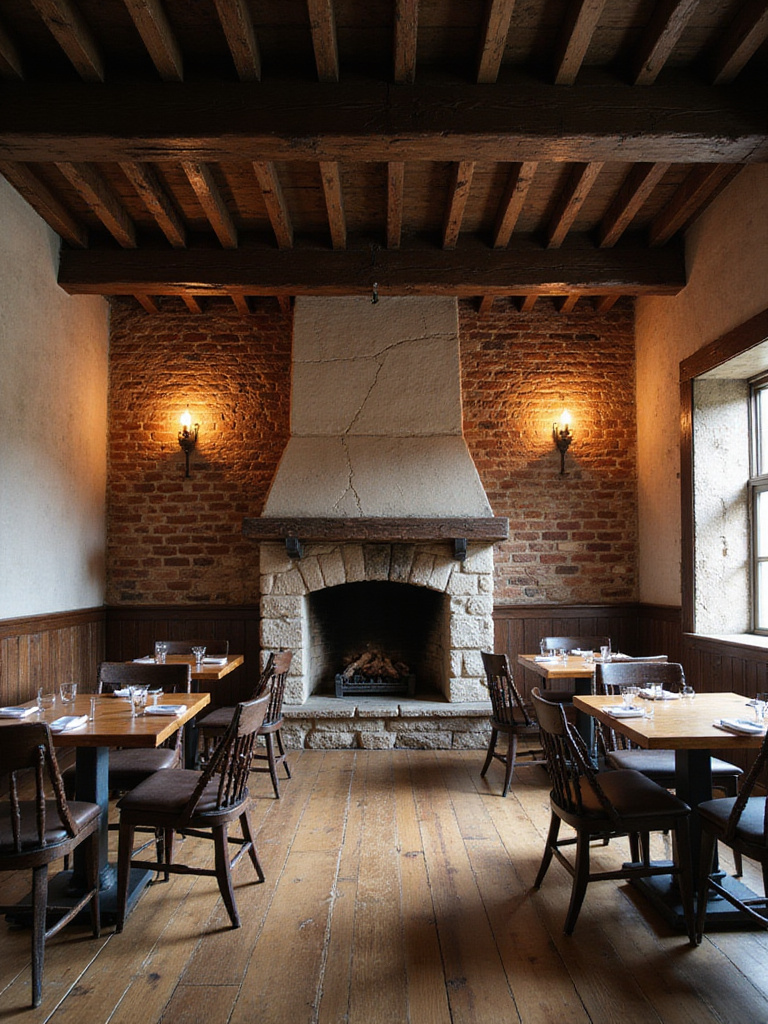
I was once consulting on a project where the owners were about to spend a fortune on reclaimed wood cladding for an accent wall. I had a hunch, so we did a little exploratory surgery on the plasterboard. And there it was: a beautiful, original 19th-century brick wall. All it needed was a good clean and a seal. They got ten times the character for a fraction of the cost. The shortcut? Look at the age and style of your home. A Victorian terrace might have hidden brickwork, while a mid-century home might have beautiful wood panelling you can restore. Highlighting what’s already there is the most sustainable and authentic way to build your rustic foundation.
Once you know the materials and bones of the space, you can paint a picture with a color palette that ties it all together.
4. Strategically Plan a Warm and Inviting Color Palette
Can we please declare a moratorium on cold, sterile grey in rustic spaces? For a decade, everyone was obsessed with these cool tones that completely fight against the warmth of natural wood and stone. The key to a rustic palette isn’t about being beige or boring; it’s about choosing colors that feel like they came from the earth. Think about the colors of a walk in the woods or along a windswept coastline: mushroom, mossy green, faded terracotta, stormy blues, and creamy whites that feel like worn linen.
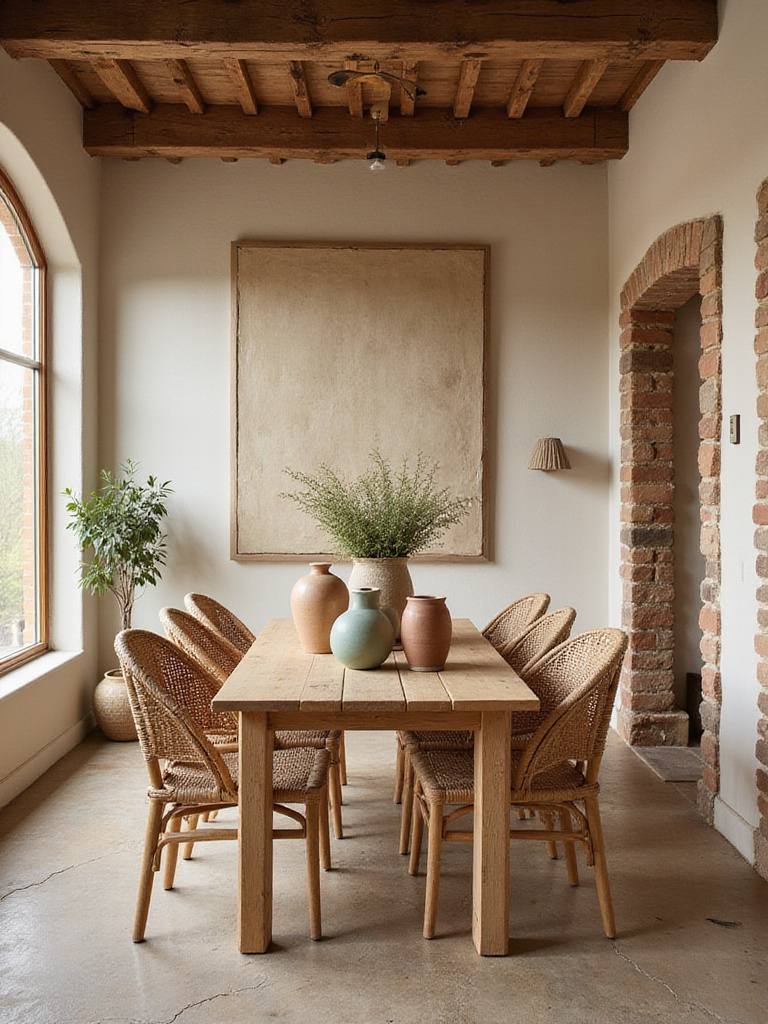
Your palette should feel like a warm embrace. I always start by pulling colors directly from the core materials in the room—the golden tones in an oak table, the charcoal in a slate fireplace, the deep red of an old brick wall. Use these as your starting point for the walls and textiles. Everyone else says to just pick a neutral, but the secret is picking a neutral with the right undertone. A warm white or a “greige” with a subtle green or brown undertone will feel infinitely more cohesive and inviting than a crisp, blue-toned white. Paint large swatches on your walls and live with them for a few days. See how they change with the light. This little bit of patience will pay off enormously.
With a clear vision and a warm palette, you’re ready to start building the functional heart of your room.
Setting the Foundation: Planning Your Rustic Retreat (Part 2)
Now that you’ve done the deep thinking—defining your style, assessing your materials, and setting a mood with color—we can get into the tangible. A beautiful room is useless if it doesn’t work for your life. This is about making sure your rustic retreat is as practical as it is beautiful, creating a space that flows effortlessly and supports everything from quiet family dinners to lively gatherings with friends.
5. Prioritize Functionality without Sacrificing Rustic Aesthetic
A beautiful dining room that no one uses is a tragedy. A common mistake is buying delicate, fussy furniture that you’re afraid to actually live with. Rustic design, at its core, is about durability and purpose. Farm tables were built to withstand generations of use. Benches were made to squeeze in extra guests. Your space should embody this spirit. Every piece should be able to take a knock, a spill, or a happy gathering in stride.
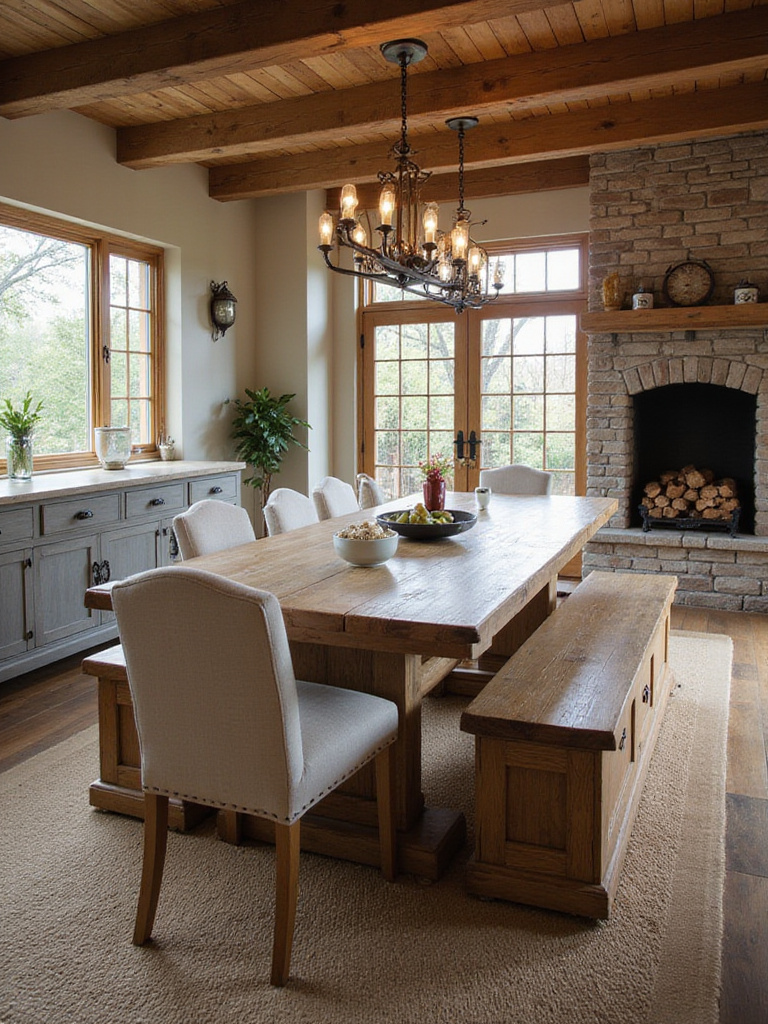
When you’re choosing furniture, ask yourself: Is this comfortable enough to linger over a long meal? Is this table finish durable enough for my family? Is there enough storage to keep the space from feeling cluttered? Think about a solid wood sideboard that can double as a serving station or chairs with slipcovers you can throw in the wash. I always tell my clients that true luxury isn’t about delicacy; it’s about a beautiful space that makes your life easier. That’s the balance we’re aiming for.
A functional space also needs to have a sense of flow, a clear path that makes it feel open and easy to navigate.
6. Create an Open and Welcoming Floor Plan for Flow
You don’t need to knock down walls to create flow. It’s really about the invisible pathways in your room. The goal is to make it feel effortless for people to move around the table, to get from the kitchen to their seat, or to grab something from the sideboard. The number one killer of flow is a table that’s too large for the room. Everyone gets seduced by the idea of a massive 12-person table, but if you can’t walk around it, the room feels cramped and stressful, not generous.
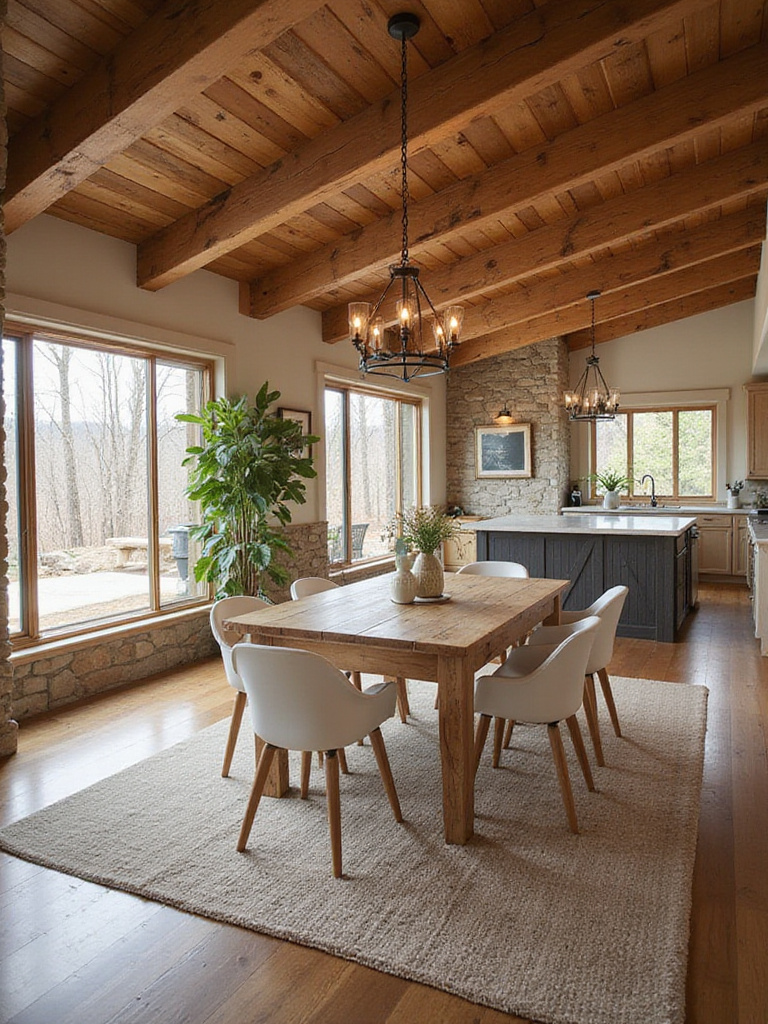
The shortcut is simple: grab a tape measure. You need a minimum of 36 inches (about 90cm) of clear space between the edge of your table and any wall or piece of furniture. That’s the golden number for comfortable movement. If you’re tight on space, consider a round table, which has a smaller footprint and no sharp corners, making it easier to navigate. Another trick is to use furniture with legs you can see under, like a trestle table or chairs with slender spindles. This creates visual space and makes the room feel larger and more open than it is.
With the foundational planning complete, we can finally dive into the most exciting part: choosing the core pieces that will define your space.
Core Elements: Furnishing and Lighting Your Rustic Space (Part 1)
This is where your vision starts to become a reality. We’re moving from the abstract to the tangible, selecting the hero pieces that will anchor your rustic dining room. Think of these as the main characters in your story. Everything else will be the supporting cast, but these elements—your table, seating, and primary light source—are what set the entire scene and make the first, most powerful impression.
7. Select a Statement Reclaimed Wood Dining Table as Your Centerpiece
This is it. The single most important piece in your rustic dining room. A reclaimed wood table isn’t just furniture; it’s the soul of the room. It’s a piece with a past, crafted from wood that has lived a whole other life in a barn, a factory, or a ship. Every knot, nail hole, and saw mark tells a story, giving it a depth and character that you can’t buy new. It immediately says “this space is authentic.” It’s also an incredibly sustainable choice, giving old materials a new, beautiful purpose.
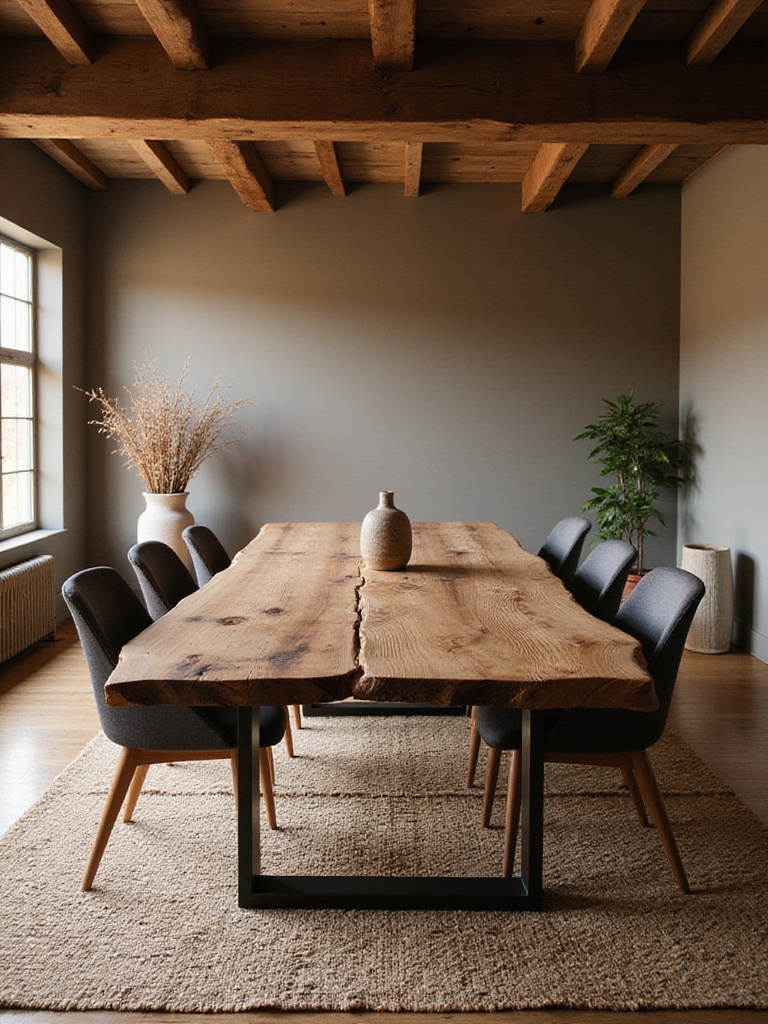
Don’t get hung up on perfection. I had a client who was hesitant about a beautiful reclaimed pine table because it had a dark stain from an old iron nail. I told her that was the best part! That mark is a piece of its history; it’s what separates it from a million other tables. When you choose a reclaimed piece, you’re not just buying an object; you’re becoming the next chapter in its story. Focus on a solid build and a finish that feels good to the touch. A simple wax or oil finish is often best, as it lets the wood’s natural beauty shine through.
This hero piece deserves a dynamic supporting cast. That’s where your seating comes in.
8. Incorporate Mismatched Wooden Chairs for Eclectic Charm
Please, I beg you, step away from the matching dining set. Nothing says “I bought this all in one go from a catalogue” like a perfectly matched table and six identical chairs. The most charming and soulful rustic spaces feel collected over time. Mismatched chairs are the easiest way to achieve this. It adds instant personality and a layer of visual texture that is so much more interesting. It tells a story of pieces found at flea markets, inherited from family, or picked up on your travels.
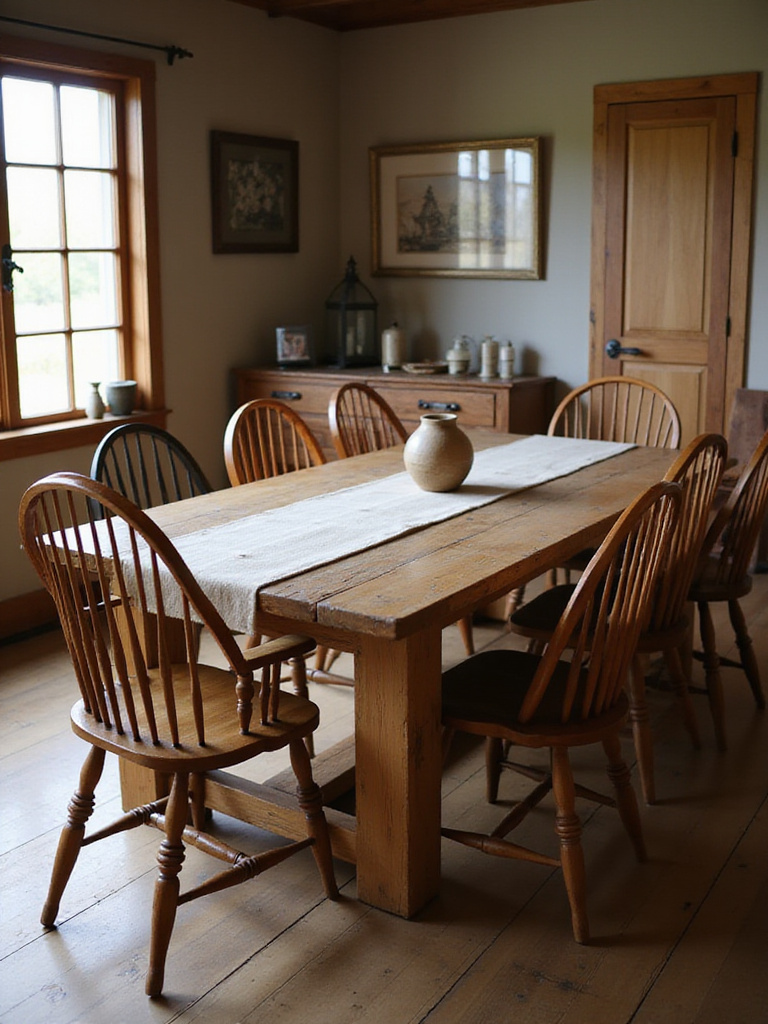
The trick to making it look chic and intentional—not like you just ran out of chairs—is to find a unifying element. Maybe all the chairs are different styles, but you paint them the same moody black. Or maybe they are all different wood tones, but they share a similar scale and height. My favourite approach is to have two matching “captain’s chairs” at the ends of the table for a sense of order, and then a playful mix of styles along the sides. It creates a beautiful balance between consistency and character.
Now that we have the grounding elements in place, it’s time to look up and set the mood.
9. Choose Ambient Lighting with Industrial or Farmhouse Fixtures
Lighting is not an accessory; it is everything. It sets the mood, defines the atmosphere, and can make or break a space. Harsh, overhead lighting is the enemy of an intimate dining room. You want to create a warm, inviting glow, and the fixture itself should feel like a piece of functional sculpture. For a rustic aesthetic, industrial or farmhouse-style pendants and chandeliers are a perfect fit. They’re made from honest materials like aged iron, dark bronze, and reclaimed wood, reinforcing the room’s character.
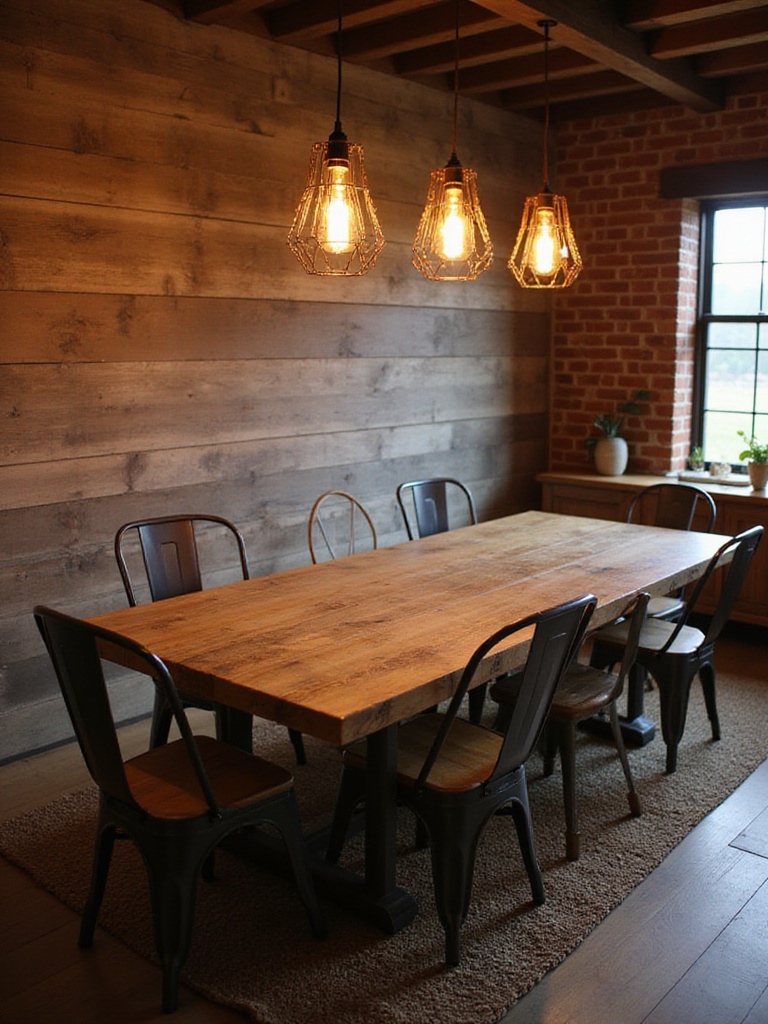
“A great light fixture over a dining table acts like a punctuation mark for the entire room. But the real secret isn’t the fixture itself—it’s the dimmer switch.”
Seriously, a dimmer is non-negotiable. It’s the single most impactful, low-cost upgrade you can make. It gives you the power to go from bright, functional light for cleaning or homework to a low, intimate glow for a dinner party. Always choose warm-toned bulbs (look for 2700K on the box) to mimic the gentle flicker of firelight. This single choice will do more to create a cozy atmosphere than almost any other element.
With the heavy-hitters sorted, we can now add the layers of function and texture that will make the room truly liveable.
Core Elements: Furnishing and Lighting Your Rustic Space (Part 2)
We’ve established the anchors of the room: the table, chairs, and main light fixture. Now, we’ll round out the core elements by addressing two critical needs: practical storage that enhances your aesthetic and the softening touch of window treatments. These pieces are essential for making your rustic dining room not just beautiful to look at, but a dream to live in.
11. Introduce a Rustic Sideboard or Buffet for Storage and Display
A dining room without storage is a room that’s destined for clutter. A sideboard or buffet is an absolute workhorse, and a rustic one can be a stunning statement piece. This is where you store your table linens, serving platters, and extra candles—all the things you need for hosting, kept right where you need them. It keeps your dining table clear and serene when not in use and declutters your kitchen cabinets. Its surface also provides the perfect stage for creating beautiful vignettes.
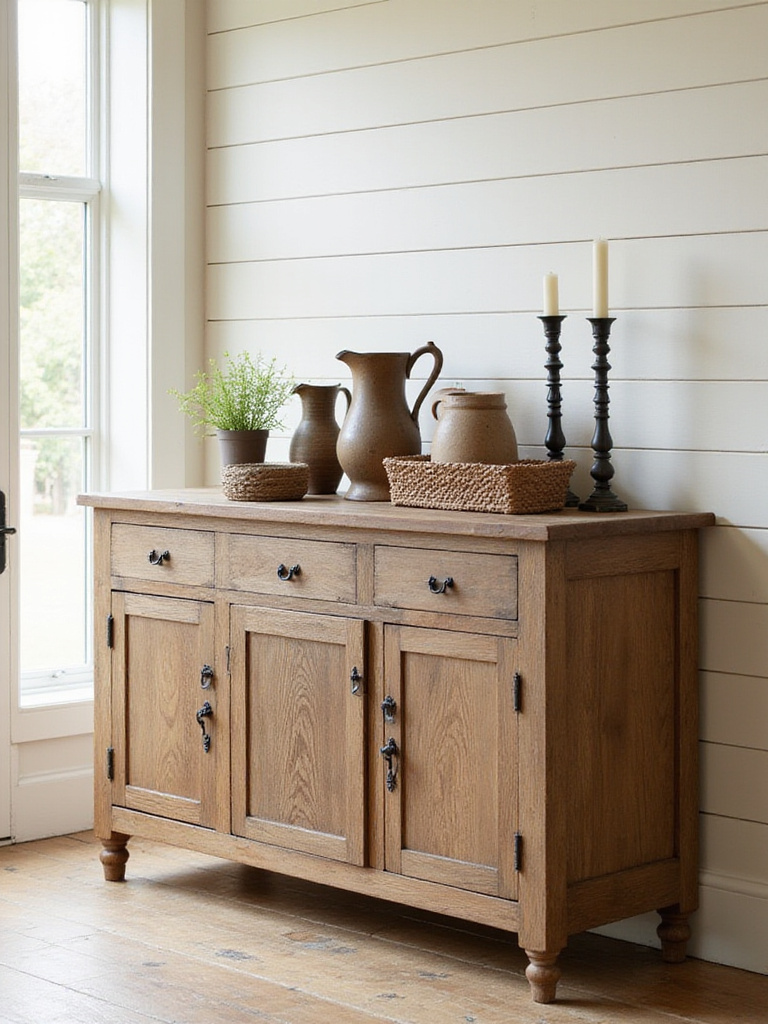
Look for a piece that complements your dining table but doesn’t perfectly match it. Maybe it’s a distressed pine hutch if your table is dark oak, or a metal and wood industrial console. This is another opportunity to bring in a piece with history—an antique dresser or a vintage workshop cabinet can make an incredible buffet. I love using the top as a serving station for drinks or dessert during a party, or as a place for a beautiful lamp and a collection of pottery to create a warm, welcoming glow in the corner of the room.
Now, let’s address the hard edges of the room—the windows—and give them the softness they deserve.
12. Integrate Natural Fiber Window Treatments for Softness and Privacy
Bare windows can make a room feel cold, unfinished, and exposed. Window treatments are the key to adding a final layer of softness and texture, controlling light, and providing privacy. For a rustic space, steer clear of anything too fussy or formal. We want to continue the theme of natural, honest materials. Woven wood or bamboo shades are fantastic—they offer a beautiful, organic texture and filter the light into a warm, dappled glow.
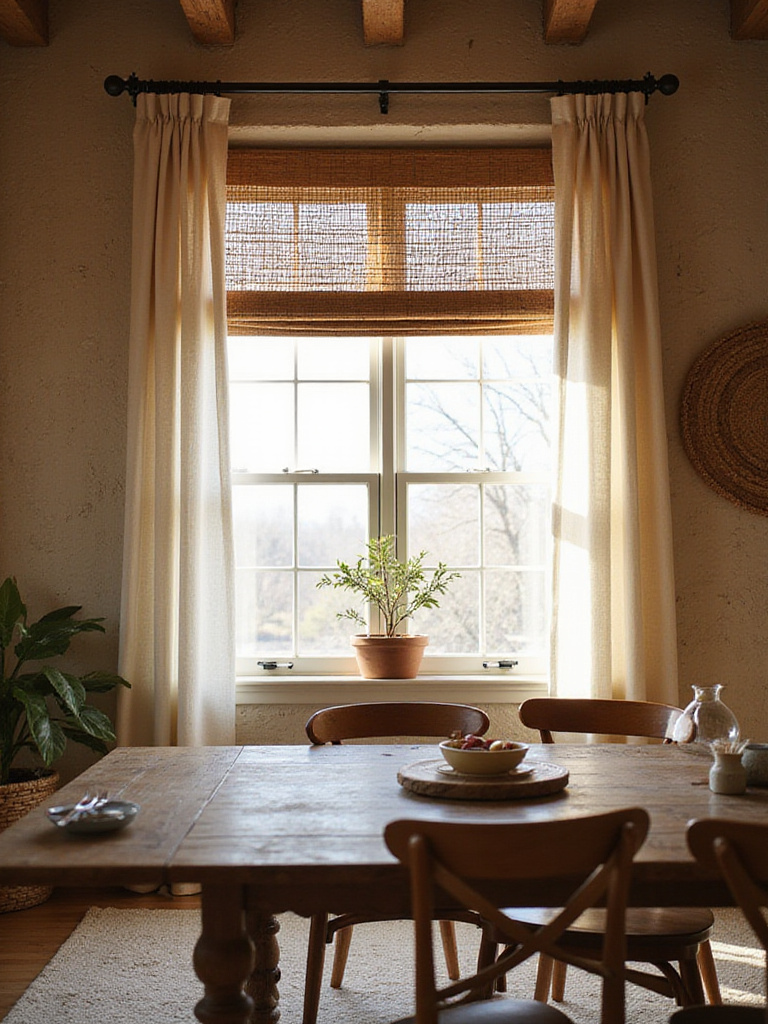
Linen curtains are another brilliant choice. Their slightly nubby texture and beautiful drape add a touch of relaxed elegance. I always recommend hanging curtains high and wide—mounting the rod several inches above and beyond the window frame. This brilliant trick makes your windows feel larger and more grand, and allows the maximum amount of natural light in when the curtains are open. Layering is also a powerful tool here. You could use woven shades for privacy and light control, flanked by soft linen panels for extra texture and warmth.
Your room is now fully furnished. The next step is to breathe life into it with the final, personality-driven layers.
Finishing Touches: Styling and Enhancing the Rustic Vibe (Part 1)
This is the most personal and, for me, the most joyful part of the process. Your room has its foundation and its core pieces, but now we get to layer in the details that make it uniquely yours. These are the elements that tell your story, that add history, life, and sensory richness. It’s the foliage, the art, and the objects on your table that will transform your dining room from a well-designed space into a soulful home.
13. Accessorize with Organic Elements Like Foliage and Stoneware
A room without life is a room without soul. The easiest and most powerful way to inject that life is with organic elements. This is central to my design philosophy—bringing the outside in. Get a big vase and fill it with branches from your garden. Place a collection of potted herbs along the windowsill. Create a centerpiece from a beautiful piece of driftwood or a bowl of river stones. These touches cost next to nothing but provide an invaluable connection to nature.
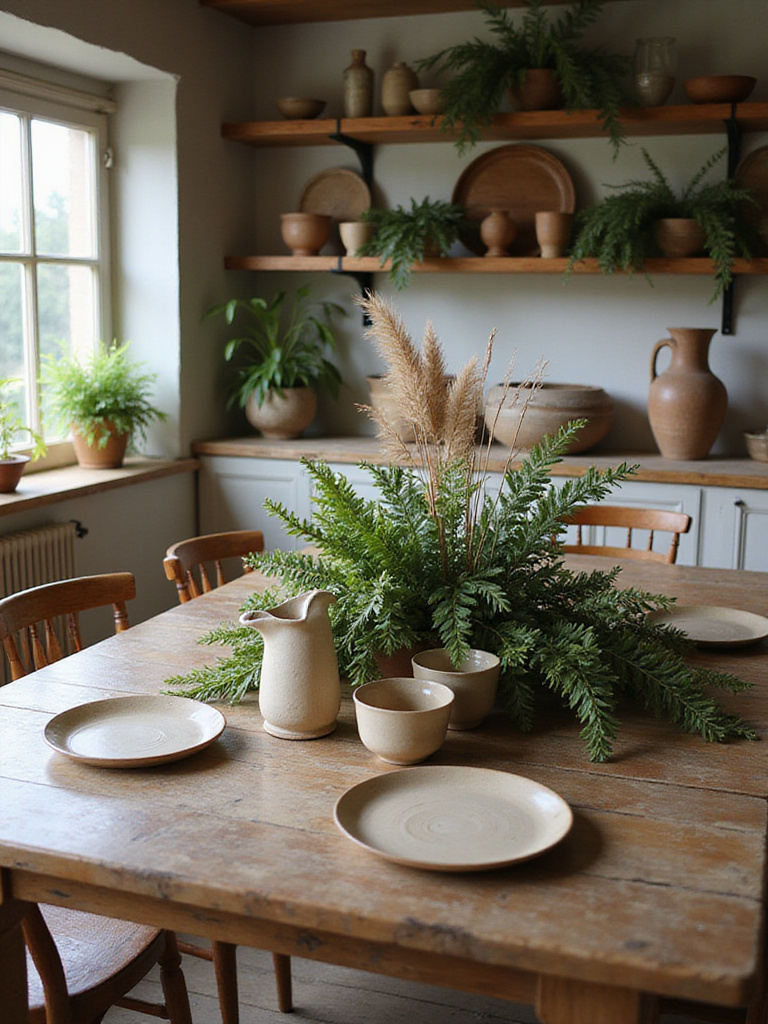
Pair these natural elements with stoneware. Hand-thrown ceramic vases, chunky earthenware bowls, and rustic platters add a human touch. Their slight imperfections and earthy textures are the perfect counterpoint to the wood and metal in the room. I love to scour local pottery markets and artisan shops for these unique pieces. A simple stack of stoneware plates on an open shelf or a beautiful pitcher filled with wildflowers on the sideboard can be more impactful than any expensive piece of art.
These elements provide tactile beauty. Now let’s think about the story you want to tell on your walls.
14. Curate Rustic Wall Art Featuring Nature or Vintage Finds
Please, no generic, mass-produced “art.” Your walls are an opportunity to tell a story. For a rustic space, look for pieces that feel personal and have a sense of history. This could be a collection of vintage botanical prints, an old framed map of a place you love, or even a beautiful architectural salvage piece like an old window frame hung as an object. Think of yourself as a curator, not just a decorator.
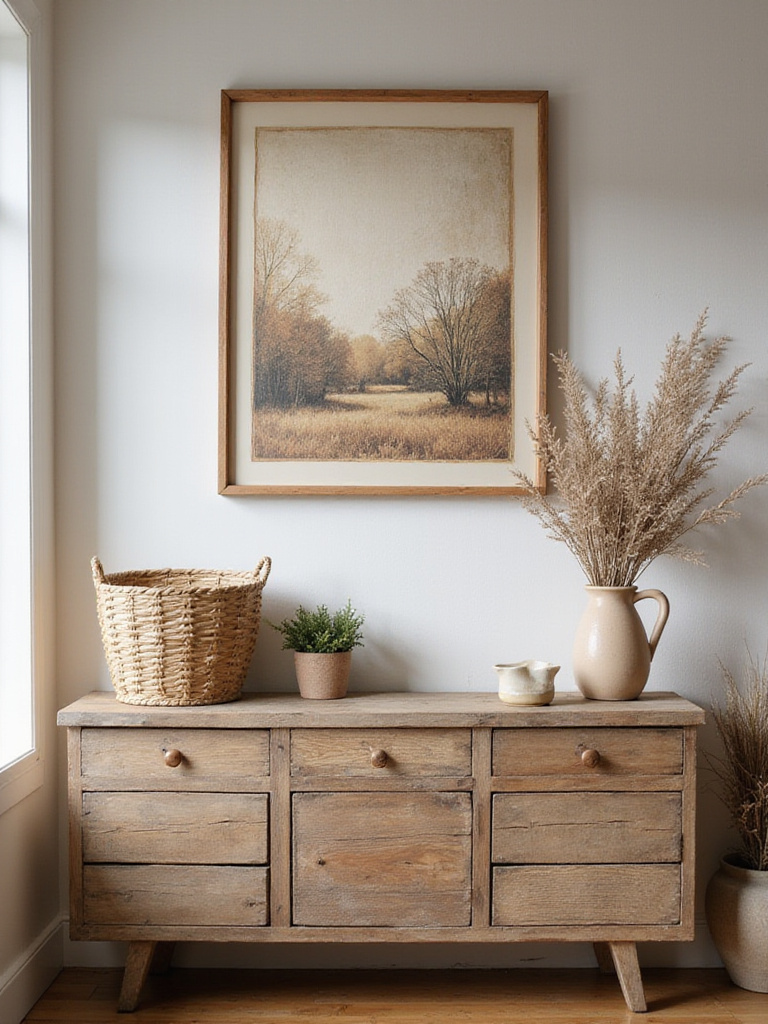
One of my favorite shortcuts is framing unexpected things. A collection of pressed leaves from a meaningful walk, a beautiful piece of antique fabric, or even a child’s early drawing can become stunning, personal art. Flea markets and antique shops are treasure troves. Look for landscape oil paintings with a bit of wear and tear, or black-and-white photographs that feel timeless. Don’t be afraid to mix and match frames to enhance that “collected over time” feeling. The art should feel like a window into your world.
Let’s bring that same level of intention down from the walls to the tabletop itself.
15. Select Tabletop Decor with a Handcrafted or Artisanal Feel
The details on your table set the tone for every meal. This is where you can truly lean into that artisanal, handcrafted feel. Swap out standard-issue placemats for ones made of woven jute or thick linen. Use cloth napkins with a beautiful, natural texture. Look for candle holders made of forged iron or carved wood. These small touches make a huge difference in how the space feels, elevating a simple meal into a special occasion.
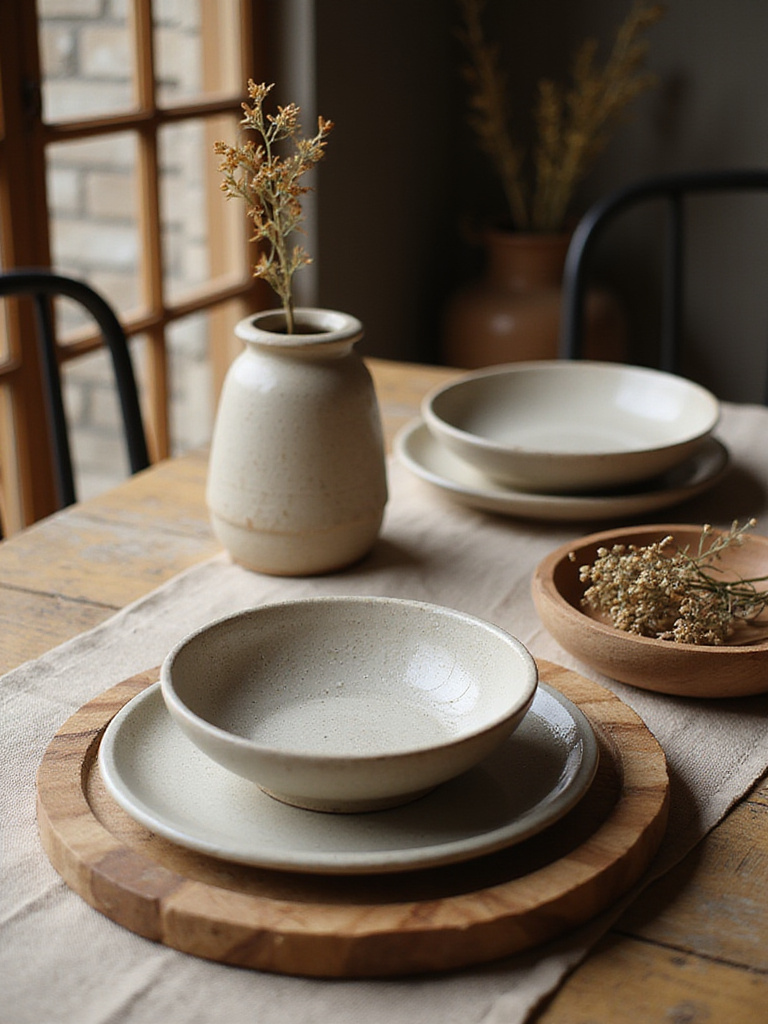
I am a huge advocate for supporting local artisans. Find a local potter and invest in a set of serving bowls, or a weaver for a beautiful hand-loomed table runner. These pieces bring a story and a human connection directly to your table. They are conversation starters. When a guest admires a bowl, you can say, “I got that from an incredible artist just down the road.” This creates a deeper sense of place and personality that you simply cannot buy off the shelf.
Now, let’s wrap the entire room in a final layer of comfort.
16. Add Comfort and Warmth with Rustic Textiles and Throw Blankets
Even the most beautiful wooden chair can become uncomfortable during a long, lingering dinner party. Textiles are the final touch that adds a crucial layer of physical and visual comfort. Drape a soft, chunky knit or a sheepskin throw over the backs of one or two chairs. If you have a bench, line it with a long cushion upholstered in a durable, textural fabric like a nubby wool or a heavyweight linen.
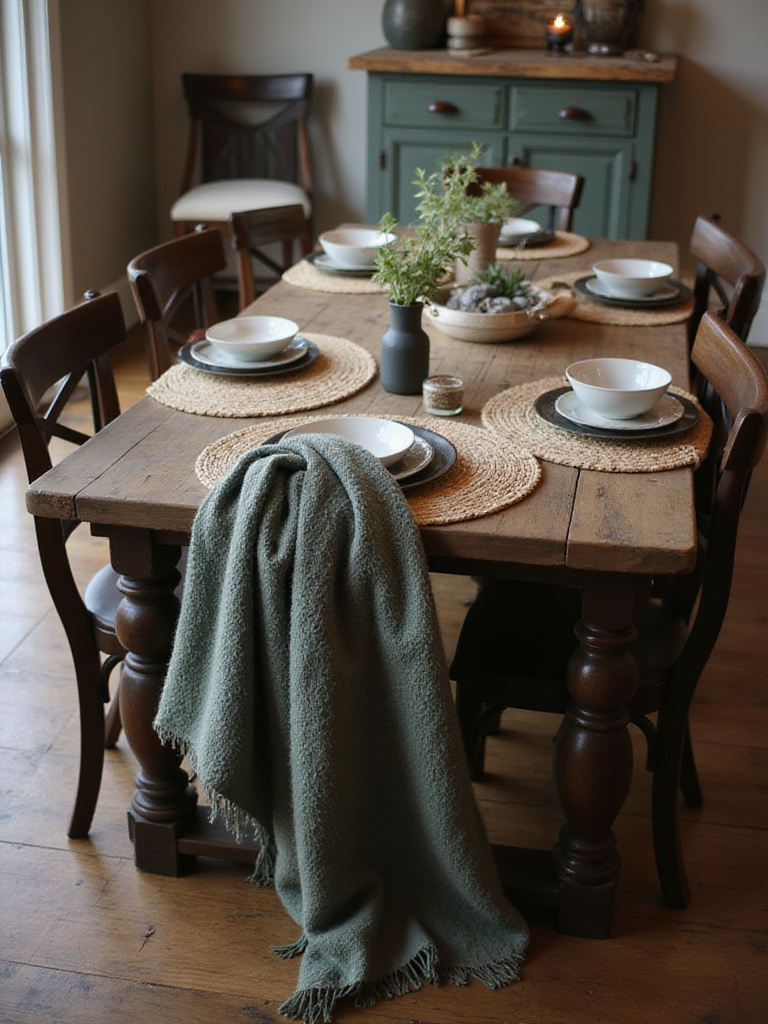
These elements invite people to settle in and stay awhile. They soften the hard edges of the wooden and metal furniture and absorb sound, making the room feel quieter and more intimate. A simple linen table runner adds a layer of softness to the table itself. Don’t be afraid to mix textures—a coarse linen placemat, a smooth cotton napkin, and a fuzzy wool throw create a rich, sensory landscape. This is the final step in making your dining room not just a place to look at, but a place to truly live in and enjoy.
With these tactile layers in place, we’ll perfect the ambiance with the final, most transformative touches of all.
Finishing Touches: Styling and Enhancing the Rustic Vibe (Part 2)
We are at the finish line. All the pieces are in place, the textures are layered, and the stories are beginning to emerge. This final section is about dialing in the atmosphere with two of the most powerful tools in a designer’s arsenal: historical accents that add a deep layer of soul, and the masterful manipulation of light to create an unforgettable mood.
17. Incorporate Strategic Antique or Vintage Accents for Character
This is different from your wall art; these are the three-dimensional objects that bring a sense of history into the room. A single, well-chosen antique or vintage piece can give an entire room a sense of gravity and authenticity. It’s the antidote to a room that feels too new or “decorated.” Look for items that have a story and a beautiful patina that only time can create. This could be a set of old balancing scales on the sideboard, a collection of vintage pewter mugs on a shelf, or an antique wooden toolbox used as a centerpiece to hold candles.

The key word here is “strategic.” This isn’t about creating a cluttered antique shop. It’s about choosing one or two hero objects that can stand on their own. The contrast between an old, weathered object and the cleaner lines of your other pieces is what creates that beautiful visual tension. My confession? I am obsessed with antique dough bowls. They are incredibly versatile—perfect for holding fruit on a table, magazines on a shelf, or just standing on their own as a sculptural piece. One great vintage find adds more character than a dozen new accessories.
Now for the final, most crucial element: crafting the perfect glow.
18. Optimize Ambiance with Dimmable Lighting and Strategic Candlelight
We’ve talked about the importance of a good overhead fixture with a dimmer, but to truly elevate the ambiance, you need to layer your light. The final layer is the most intimate and magical: candlelight. Nothing makes a dining room feel more special, warm, and inviting than the flickering glow of candles. It’s a primal comfort. The light is soft, flattering, and dynamic, encouraging people to lean in and connect.
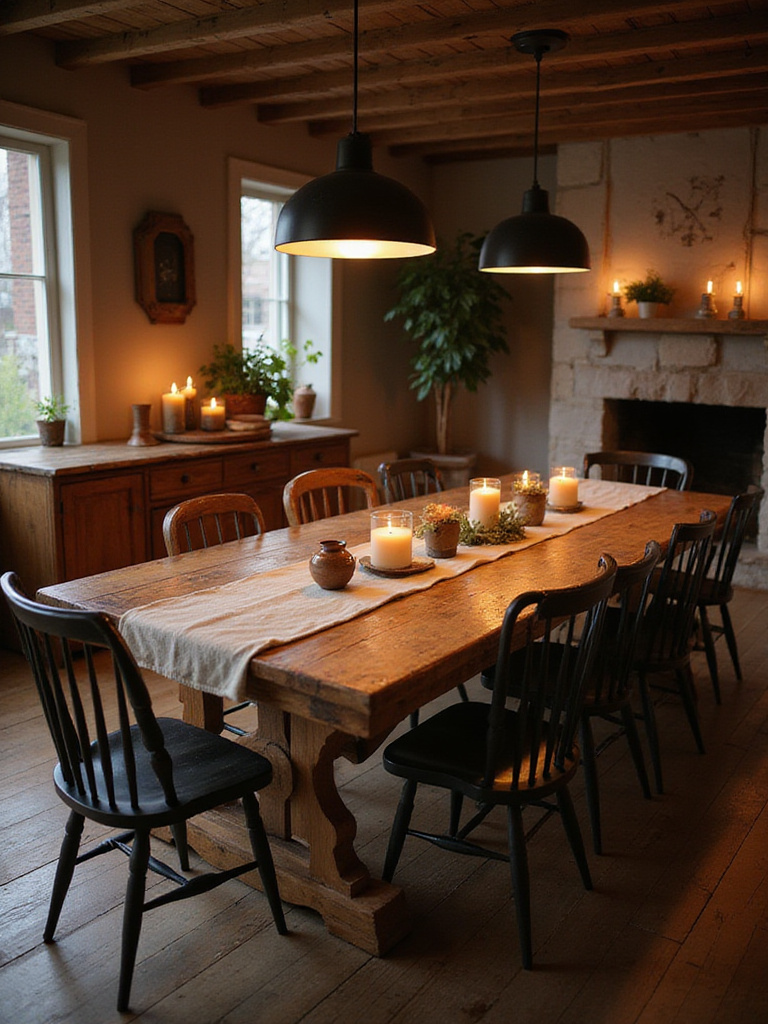
Invest in a variety of candles and holders. Tall, elegant tapers in simple iron holders for a more formal feel; chunky pillar candles of varying heights clustered on a tray for a more casual centerpiece; small votives scattered along the sideboard for a twinkling effect. On a normal Tuesday night, maybe you just dim the overhead light to 50%. But when you have friends over, dim it down to 20% and light the candles. The transformation is immediate and profound. It signals that this moment is special, that it’s time to slow down, connect, and enjoy.
Conclusion
There you have it. Building a rustic dining room with genuine soul isn’t about following a rigid set of rules or buying a specific set of items. It’s an exercise in curation and storytelling. It’s about celebrating natural materials, honoring history, and layering textures to create a space that feels deeply personal and incredibly inviting. It’s about creating a retreat within your own walls—a place where meals are savored, conversations flow, and memories are made.
The journey starts not with a shopping trip, but with a vision. Think about how you want to feel in that room. Let that feeling be your guide. Start small. Find one incredible handcrafted bowl or a beautiful linen table runner. See how it changes the room. This process should be a joy, a slow and intentional gathering of things you love. Your dining room is waiting to tell your story. Now is the time to start writing it.