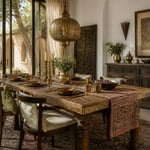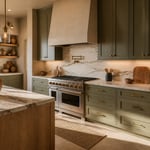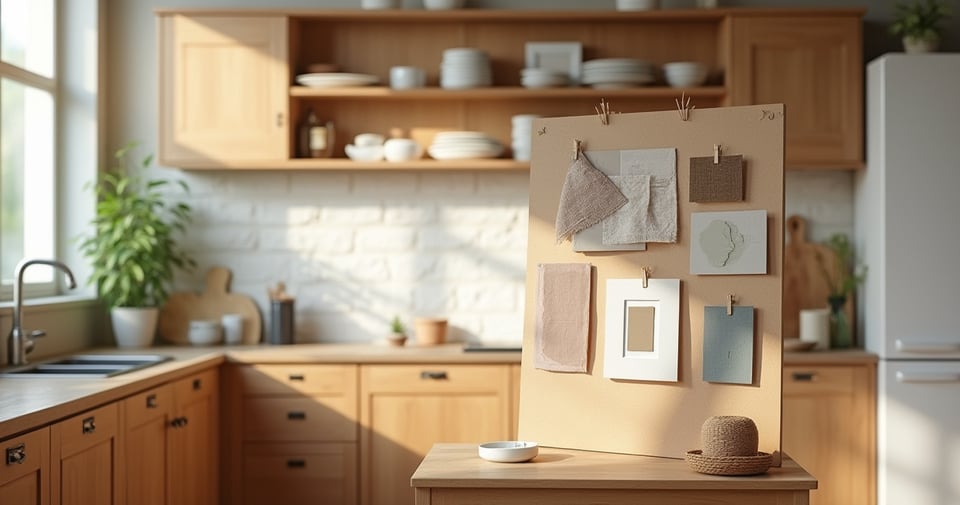
Can we talk about my biggest pet peeve? It’s the kitchen that looks like it’s been designed by an algorithm. You know the one—perfectly staged, sterile, with every object placed just so. It feels cold, like no one actually lives there, let alone chops an onion or spills some wine. So often, we get caught up in making our kitchens look good for a photo that we forget to make them feel good for our lives.
The kitchen is the heart of a home, a principle that echoes from the open-hearth kitchens of Scandinavia to the communal courtyards of the Middle East. It’s a place of nourishment, conversation, and warmth. Its walls shouldn’t just be blank canvases to fill with trends; they should tell the story of who you are and support the life you want to live.
After years of designing desert homes where every material choice is a negotiation with the climate, I’ve learned what actually matters. It’s not about cluttering your walls with a dozen different “ideas.” It’s about making a few intentional, beautiful choices that are both functional and meaningful. This isn’t about just decorating. This is about building a soul for your space.
Let’s cut through the noise. Here are the real ways to bring your kitchen walls to life.
Laying the Groundwork: Planning Your Kitchen Wall Aesthetics (Part 1)
Before you hang a single thing, you must pause and listen to your home. The most beautiful spaces aren’t created by impulse buys, but by a thoughtful plan that respects the architecture and the people within it. This foundational work is what separates a transiently trendy room from a timeless one.
1. Assess Your Kitchen’s Existing Style & Color Palette
People often think this means just matching paint chips. But it’s a much deeper conversation. You need to understand the bones of your space—the quality of the light, the finish on your cabinets, the feeling of the floor under your feet. These elements are fixed, and they have a voice in the design. Ignoring them is like ignoring the climate; you’ll always be fighting it.
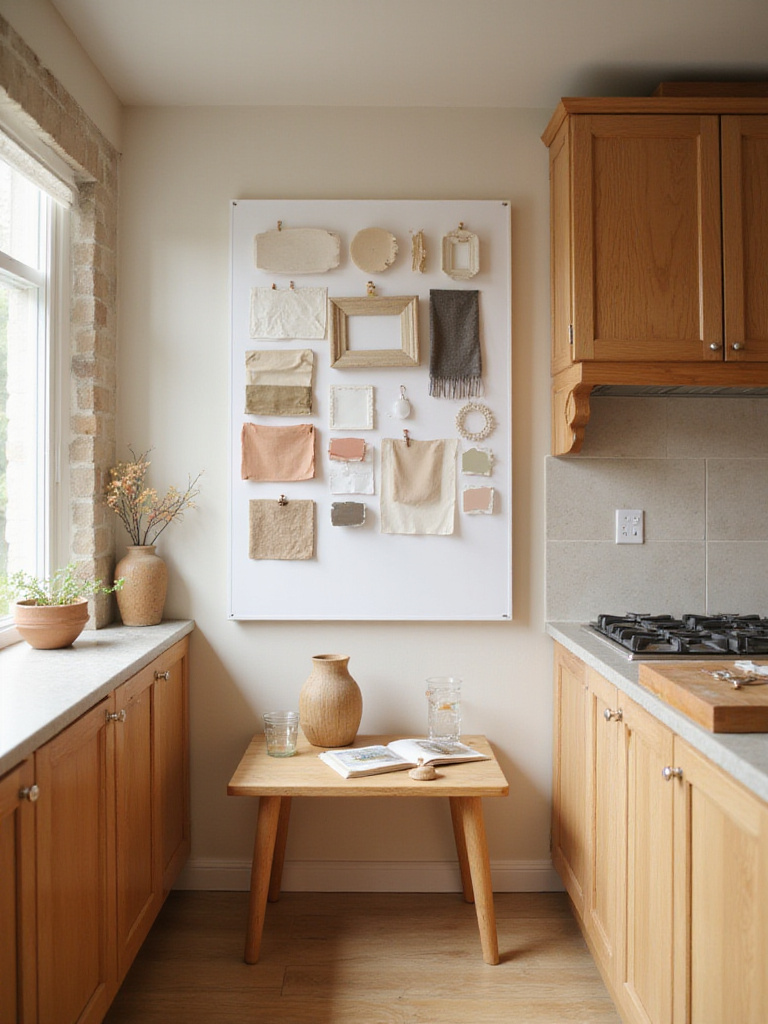
I once worked on a project in a historic adobe home where the previous owner had installed sleek, glossy white cabinets. They fought everything—the earthy texture of the walls, the deep-set windows, the warm terracotta tiles. My first step wasn’t to add decor; it was to acknowledge the material honesty of the space. We chose wall elements with texture and warmth that spoke the same language as the adobe, and suddenly, even the modern cabinets felt more grounded.
Once you’ve listened to your space, you can begin to define its story.
2. Define Your Kitchen Decor Theme: Farmhouse, Modern, Rustic?
“Theme” can feel like a restrictive word. I prefer to think of it as a narrative. What story do you want your kitchen to tell? Is it one of Scandinavian simplicity, where function and light are celebrated? Or does it tell a story of desert warmth, rich with texture and handmade objects? Your walls are the pages on which this story is written.
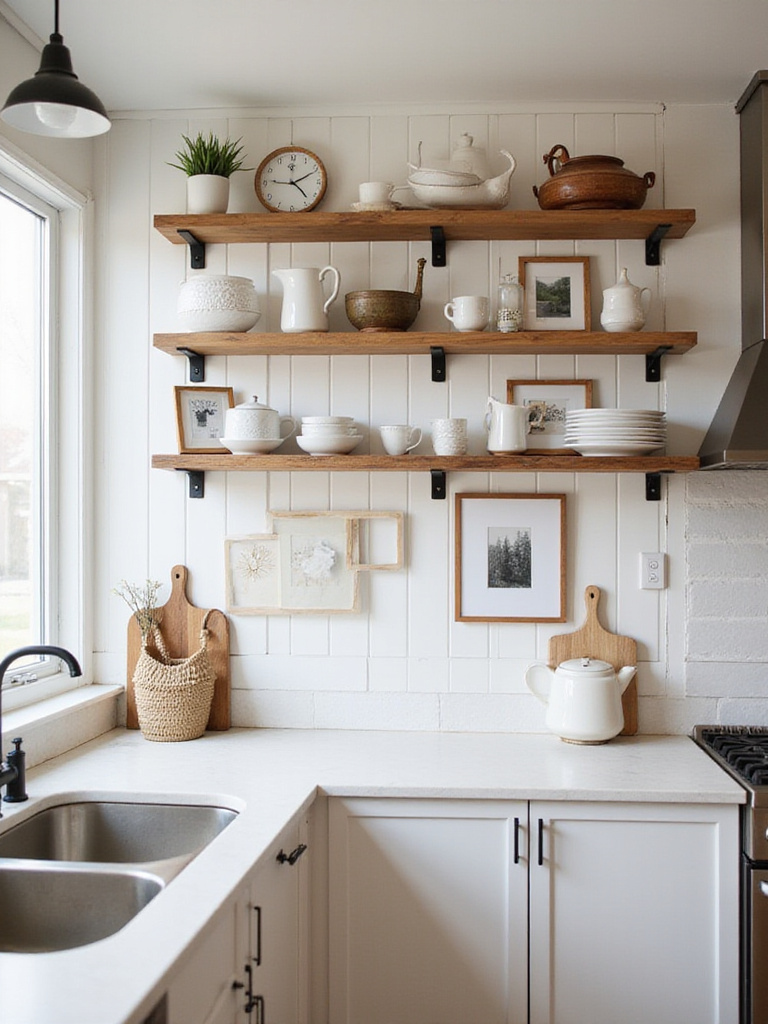
The mistake I see most often is people trying to tell too many stories at once. A little bit of industrial, a dash of farmhouse, a pinch of boho—it becomes a jumble of disconnected sentences. Instead, choose a core narrative. One client wanted warmth but loved clean lines. We defined her narrative as “a desert modernist’s retreat.” That simple phrase became our guide for everything, from the art to the open shelving.
With a clear narrative, you’ll know exactly where the main chapters should unfold.
3. Evaluate Wall Space: Identifying Prime Areas for Impact
Not all walls are created equal. In desert architecture, we are keenly aware of how light moves through a space during the day. That wall that gets the golden morning light? That’s your prime real estate. The small, shadowy wall between two doorways? That’s your supporting cast. Identify the wall you see first when you walk in—that’s your hero wall.
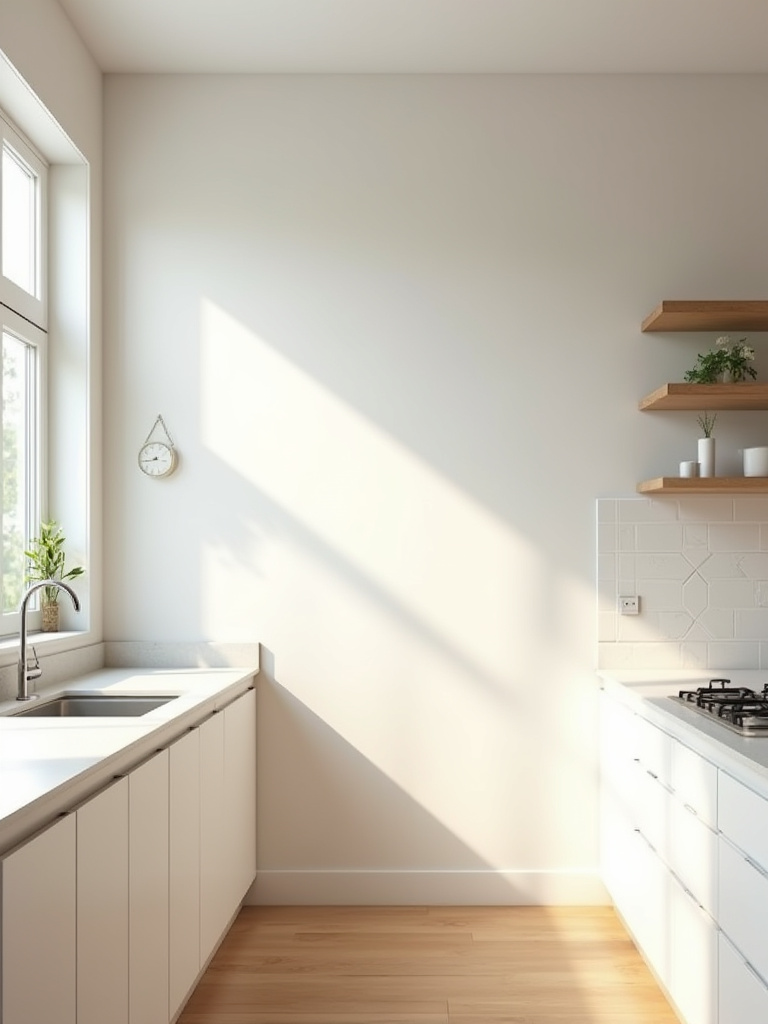
Don’t feel pressured to decorate every surface. Negative space is essential; it’s the pause in a conversation that gives the words meaning. In both Scandinavian and Middle Eastern design, this “breathing room” is crucial. It allows the chosen objects to have power and prevents the eye from becoming overwhelmed. Mark out one or two key areas for impact and let the other walls be quiet.
Once you know where you’ll be adding elements, you must decide how to allocate your resources.
4. Set a Functional Decor Budget for Quality Pieces
This isn’t about limiting yourself; it’s about empowering your choices. I would always rather a client invest in one piece of handmade pottery from a local artisan than ten mass-produced vases. A considered budget encourages you to prioritize quality over quantity—a core principle of sustainable design.
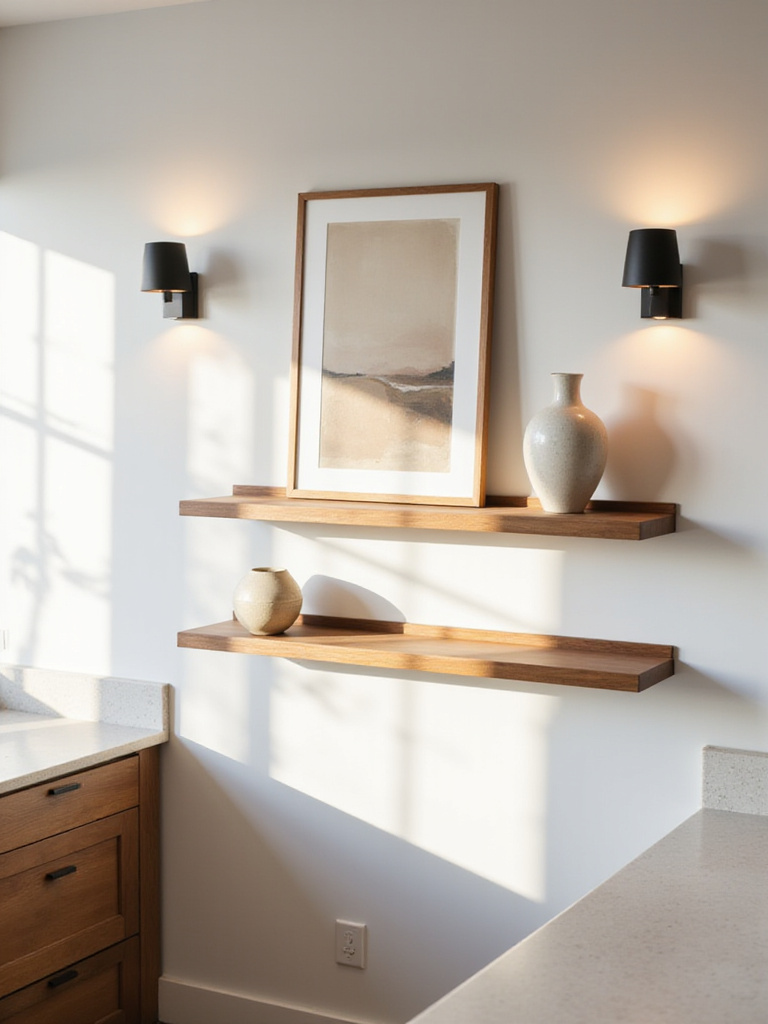
Here’s the shortcut I wish I’d known earlier: allocate about 80% of your budget to your primary “hero” wall. Let that be where you invest in a stunning piece of art or beautiful, well-crafted shelving. The remaining 20% can be used for smaller, complementary accents elsewhere. This approach ensures your spending creates a powerful focal point rather than being diluted across a dozen insignificant items that will end up in a landfill in a few years.
Laying the Groundwork: Planning Your Kitchen Wall Aesthetics (Part 2)
Now that you have the broad strokes—the story, the location, the resources—we can refine the purpose of these walls. This is where we bridge the gap between abstract ideas and daily life.
5. Prioritize Wall Needs: Storage, Visual Interest, or Both?
This is the ultimate Scandinavian question: What is its function? Before you add anything, ask what your kitchen truly needs from its walls. If your countertops are constantly cluttered, your walls need to work harder for you by providing storage. If you have ample cabinet space but the room feels sterile, your walls need to provide soul and visual interest.
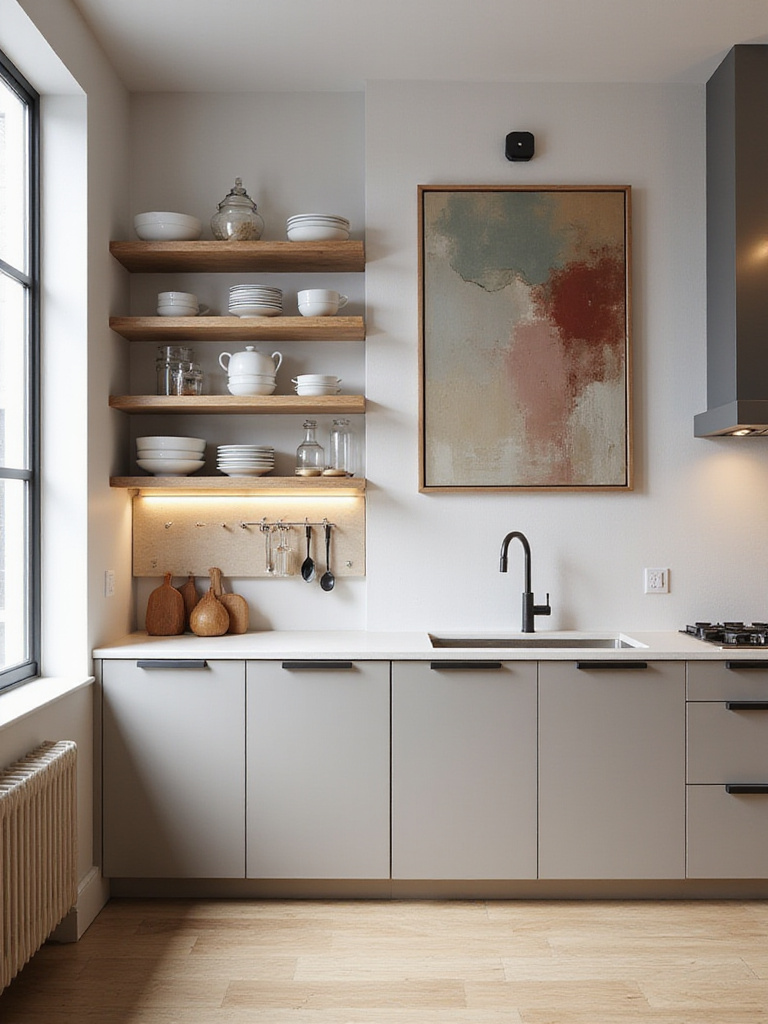
Often, the answer is a blend of both. I once worked with a family in a compact home where every inch mattered. They craved beauty but desperately needed storage. The solution was a wall of meticulously crafted wooden shelves. We displayed their most beautiful, functional items—a stack of handmade ceramic bowls, a line of spices in glass jars, their most-used cookbooks. The wall became both a stunning visual feature and the hardest-working storage in the house. It’s not a compromise; it’s a synthesis.
Bringing Walls to Life: Creative Decor Selection & Arrangement (Part 1)
With a solid plan, the creative part becomes infinitely more joyful and less overwhelming. Here, we move from the abstract to the tangible, selecting the elements that will bring your kitchen’s story to life.
6. Curate a Gallery Wall with Culinary-Inspired Artwork
Let’s be honest: most gallery walls are just chaotic clutter. The secret to a truly beautiful one is restraint and personal meaning. A gallery wall should be a collection of memories, not just a random assortment of “art prints” you bought online. Frame a treasured family recipe, a beautiful photograph you took on a trip, or even a simple sketch of your favorite vegetable.
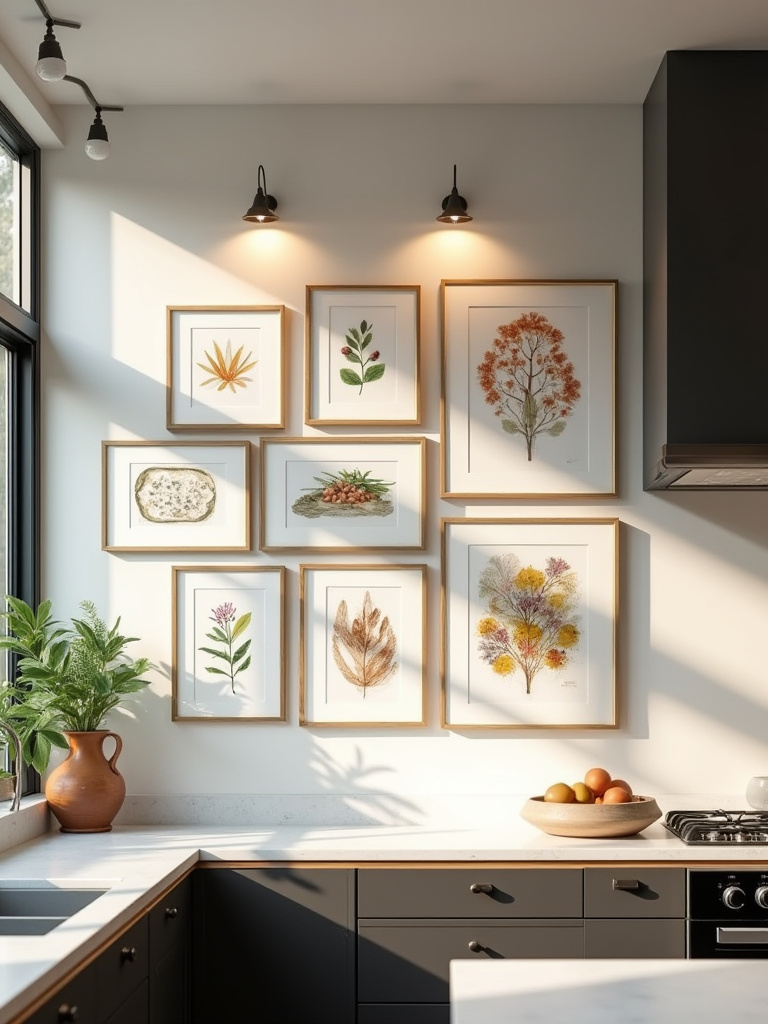
Instead of cramming dozens of small frames together, choose fewer, larger pieces and give them space to breathe. Vary the textures—mix a framed print with a small, beautifully crafted cutting board or a vintage silver utensil. Think of it less as a gallery and more as a curated collection of meaningful objects that tell a part of your story.
If a full gallery wall feels too busy, consider a more integrated approach to display.
7. Integrate Open Shelving for Functional Display
Open shelving is my absolute favorite solution for kitchens, but it comes with a warning: it demands mindfulness. It’s a commitment to owning only things you find beautiful or useful, preferably both. This is not the place for mismatched plastic cups or branded mugs. It is a place to celebrate the simple beauty of your everyday tools.
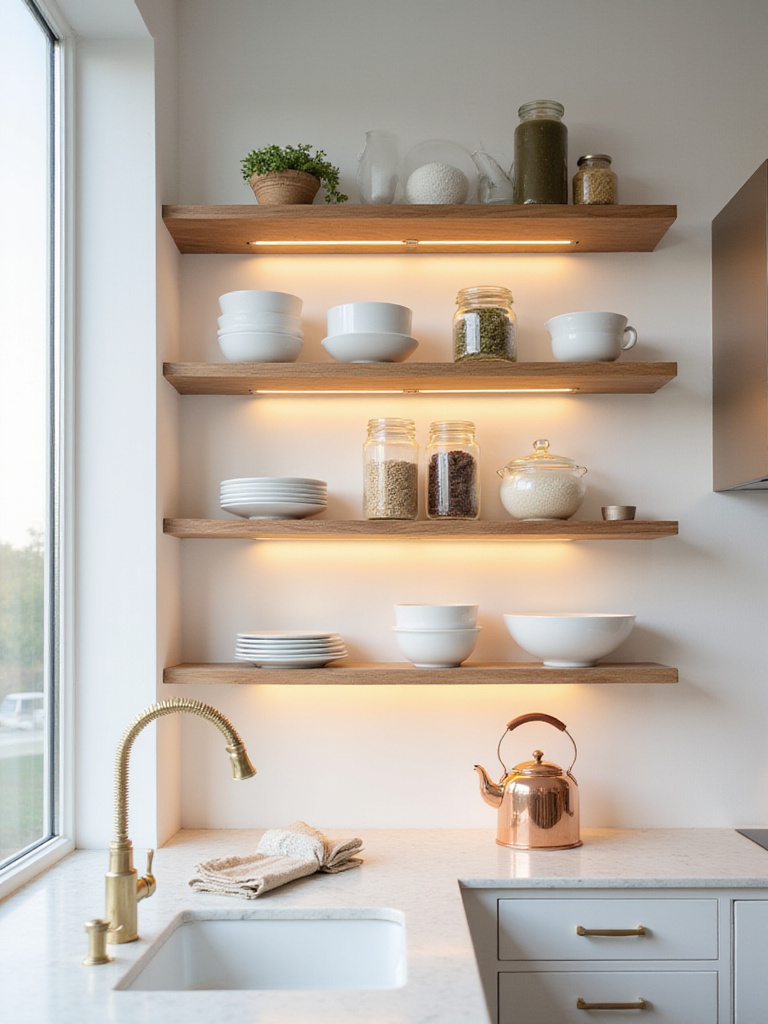
Stack your white ceramic plates, line up your glassware, and decant your grains into simple glass jars. This approach, rooted in Shaker and Scandinavian principles, finds beauty in utility. I learned this the hard way in my first apartment. I installed open shelves and filled them with clutter, and they just gave me anxiety. Now, I tell clients to edit their collection down by half before putting it on a shelf. The result is calm, functional, and deeply honest.
Whether you choose shelving or art, the materials you use are just as important as the objects themselves.
8. Choose Durable, Wipeable Materials for Kitchen Environments
In a kitchen, every surface has to work hard. There is no room for preciousness. This is where ancient design wisdom is so valuable. Traditional Middle Eastern kitchens have long used Tadelakt—a waterproof lime plaster—that is not only stunningly beautiful but incredibly durable and hygienic. It develops a patina over time, becoming more beautiful with age.
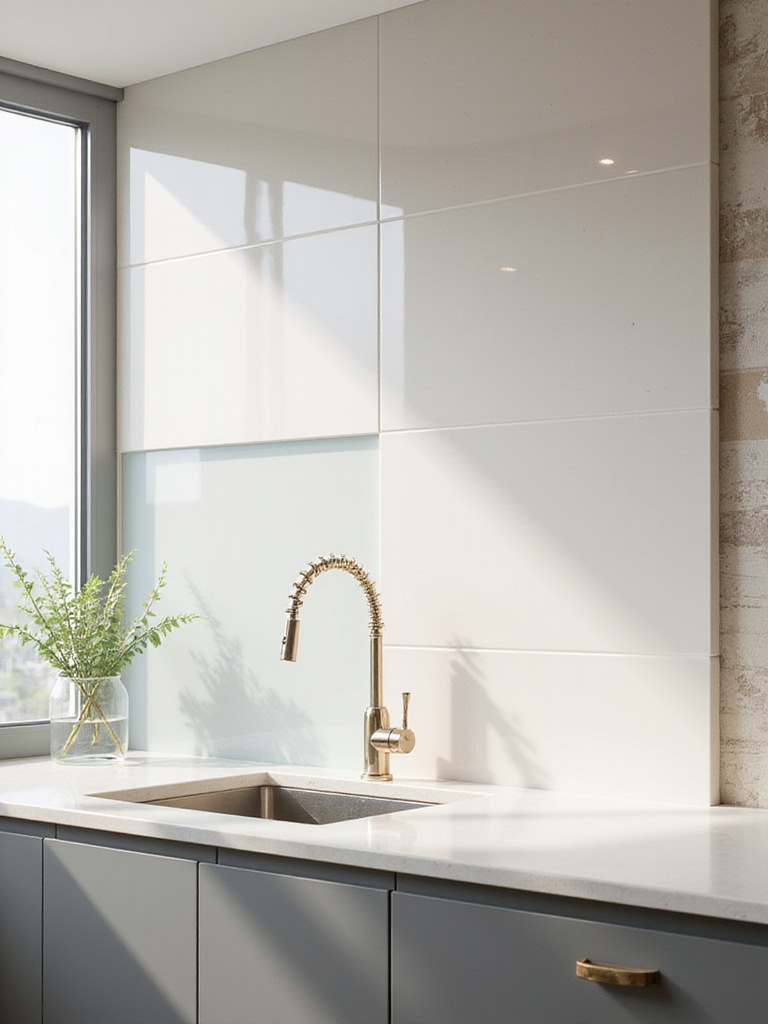
While Tadelakt might be a major commitment, the principle remains: choose materials that can withstand life. Think beyond standard paint. A backsplash of Zellige tile, handmade in Morocco, brings texture and soul while being incredibly practical. Even a high-quality semi-gloss or limewash paint provides a durable, textural finish that elevates the entire space and can be gently cleaned for years to come. Durability is sustainability.
Just as important as the wall surface itself is how you light it.
9. Incorporate Statement Lighting to Create Ambiance
Light is everything. In Scandinavia, where winter light is scarce, every fixture is designed to maximize warmth and glow. In the desert, where the sun can be harsh, lighting is about creating cool, shaded retreats and soft evening ambiance. A statement light is not just a source of illumination; it is a piece of sculpture that shapes the feeling of the room.
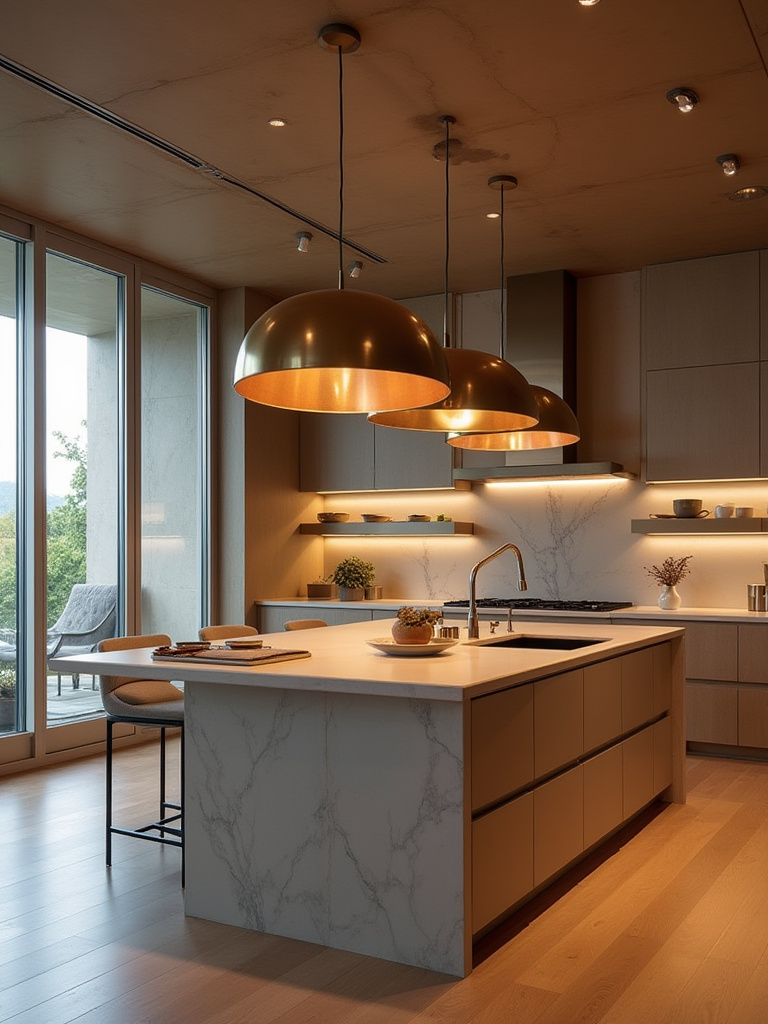
Forget a grid of generic recessed lights that flattens everything. Hang a single, beautiful pendant over your island or table. I love fixtures made from natural materials—woven rattan, terracotta, or hand-blown glass. Install it on a dimmer switch. This is non-negotiable. The ability to shift from bright, functional task light to a low, warm glow for dinner is the single biggest factor in creating an inviting atmosphere.
Bringing Walls to life: Creative Decor Selection & Arrangement (Part 2)
We continue to build layers, adding pieces that are both artistic and hard-working, turning your kitchen walls into a true reflection of a life well-lived.
10. Utilize Large-Scale Wall Clocks as Functional Art
In our digitally saturated world, there is something grounding about a beautiful analog clock. It’s a functional object, but when chosen thoughtfully, it becomes a piece of minimalist sculpture. Look for a clock with a simple, clean face and beautiful materials—a warm wood, a cool slate, or a quiet brass.
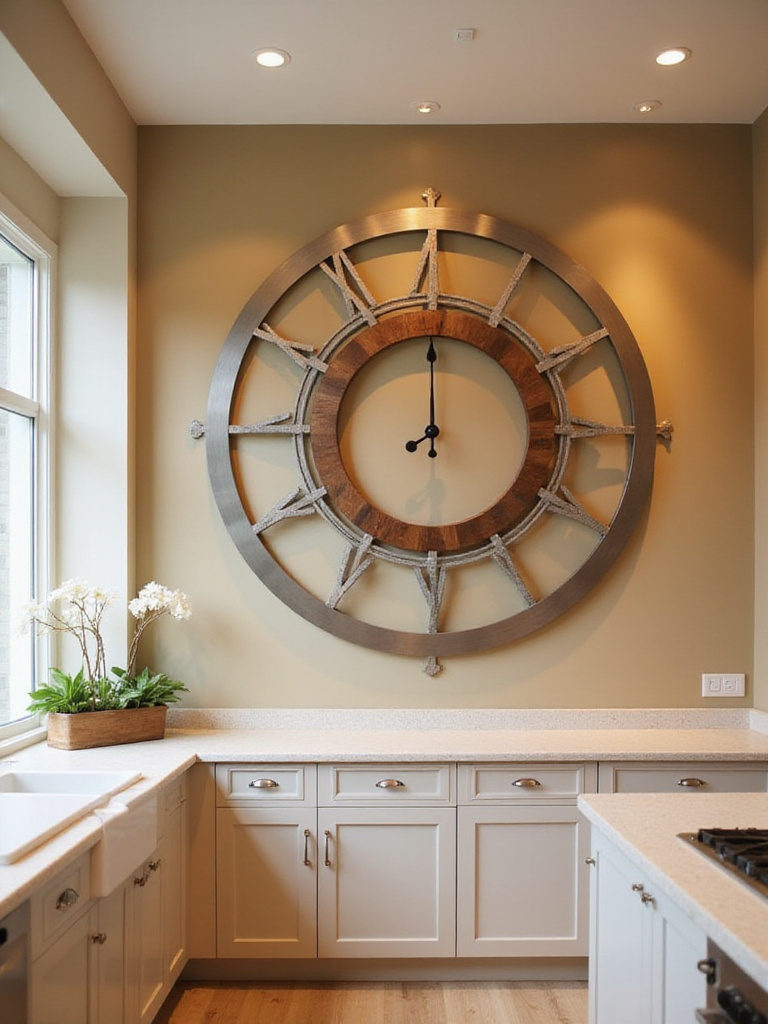
This is a perfect example of the Scandi principle of lagom—not too much, not too little. A single, oversized clock on a large wall makes a far greater impact than a dozen smaller items. It has presence and purpose. It anchors the wall, provides a function, and introduces a pleasing geometric form without adding any clutter.
While a clock offers quiet function, some walls can be more interactive.
11. Add a Chalkboard or Whiteboard for Dynamic Messaging
I’ll confess, I used to think chalkboards were a bit cliché. Then I saw a client use chalkboard paint to cover an entire wall from floor to ceiling. It became a living, breathing part of their family life—covered in grocery lists, doodles from their kids, and messages to each other. It was a backdrop of beautiful, ever-changing chaos.
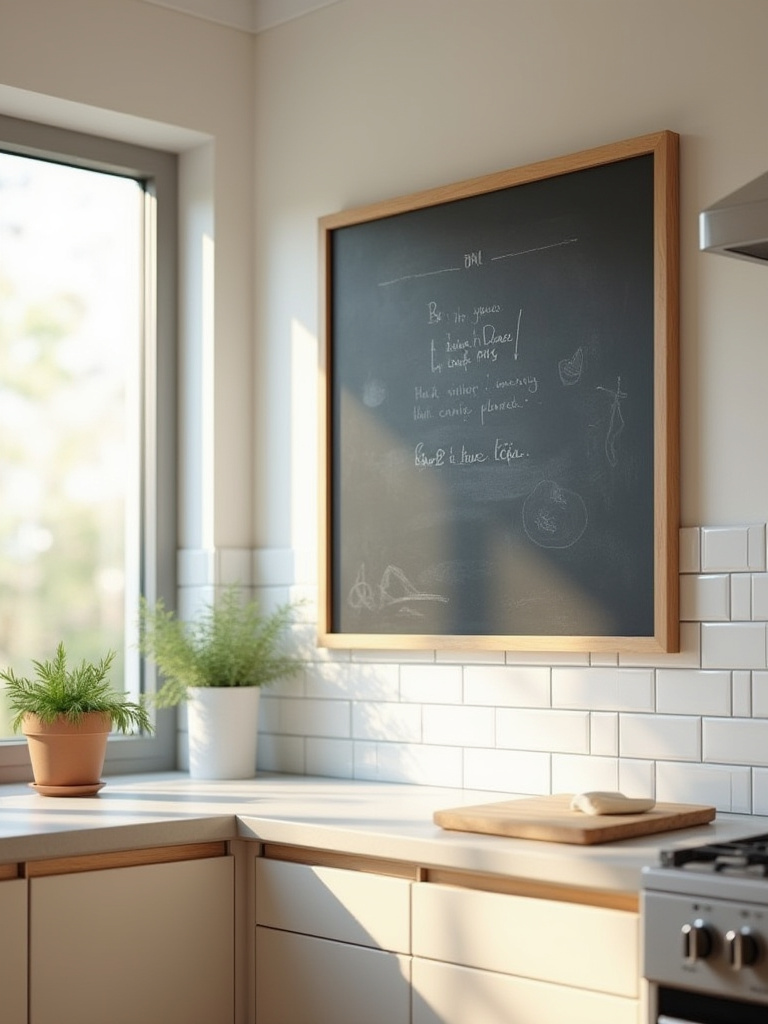
If you choose this route, commit to it. Don’t hang a small, dinky board. Integrate it architecturally. Paint a whole wall or the side of a pantry cabinet. It transforms a simple tool into an interactive feature of the home itself, adding a layer of informal, creative energy to the heart of the home.
Another way to embrace functional beauty is to display the tools of the trade.
12. Maximize Vertical Space with Hanging Pot Racks
There is an honesty to a hanging pot rack that I find deeply appealing. It says, “this is a kitchen where cooking happens.” Like open shelving, it requires that you own cookware you love looking at—beautiful copper pans, sturdy cast iron, simple stainless steel. The tools themselves become the decor.
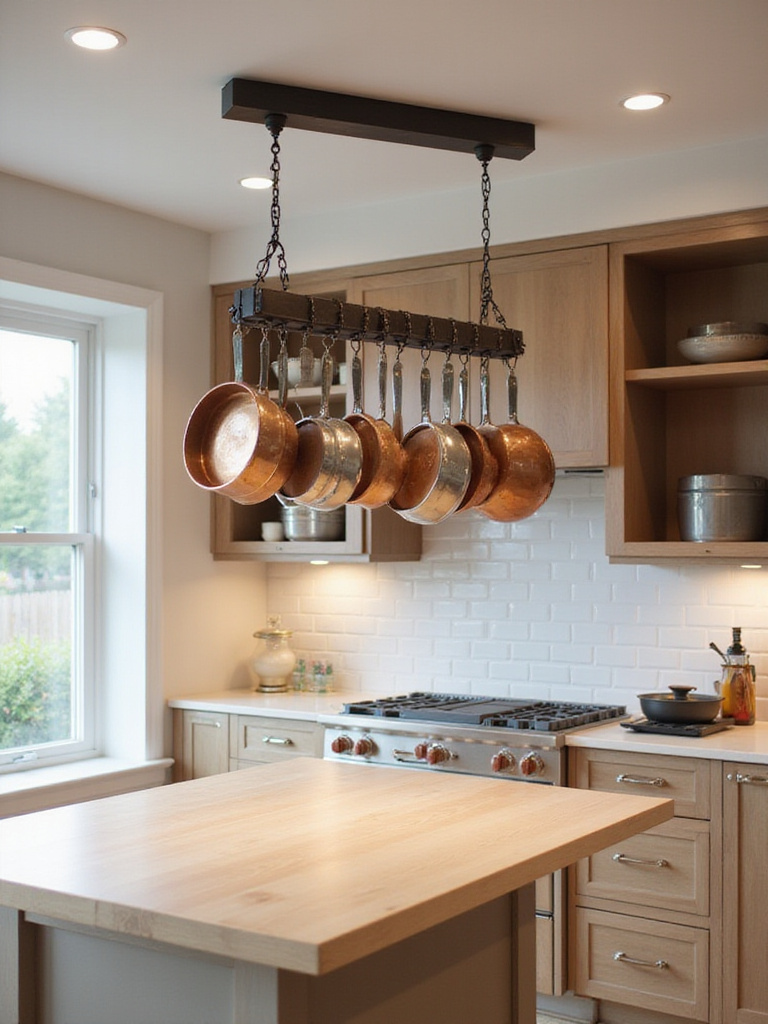
This is a fantastic solution for smaller kitchens, as it frees up an incredible amount of cabinet space. Mount it over an island or against a solid wall. It creates a sense of a professional, working kitchen and puts your most-used items right where you need them. It’s the ultimate expression of form following function.
Elevating Your Kitchen’s Look: Advanced Styling and Practical Touches (Part 1)
Now we get into the more subtle, refined layers—the details that take a kitchen from well-designed to truly special.
13. Introduce Mirrored Surfaces for Amplified Light and Space
A mirror is a classic trick for a reason, but it must be used strategically. In a desert home, a poorly placed mirror can create unbearable glare. Instead of a large, plain mirror, consider using antiqued or smoked mirror tiles for a backsplash. They amplify light in a soft, diffused way, adding depth and a touch of glamour without being overwhelming.
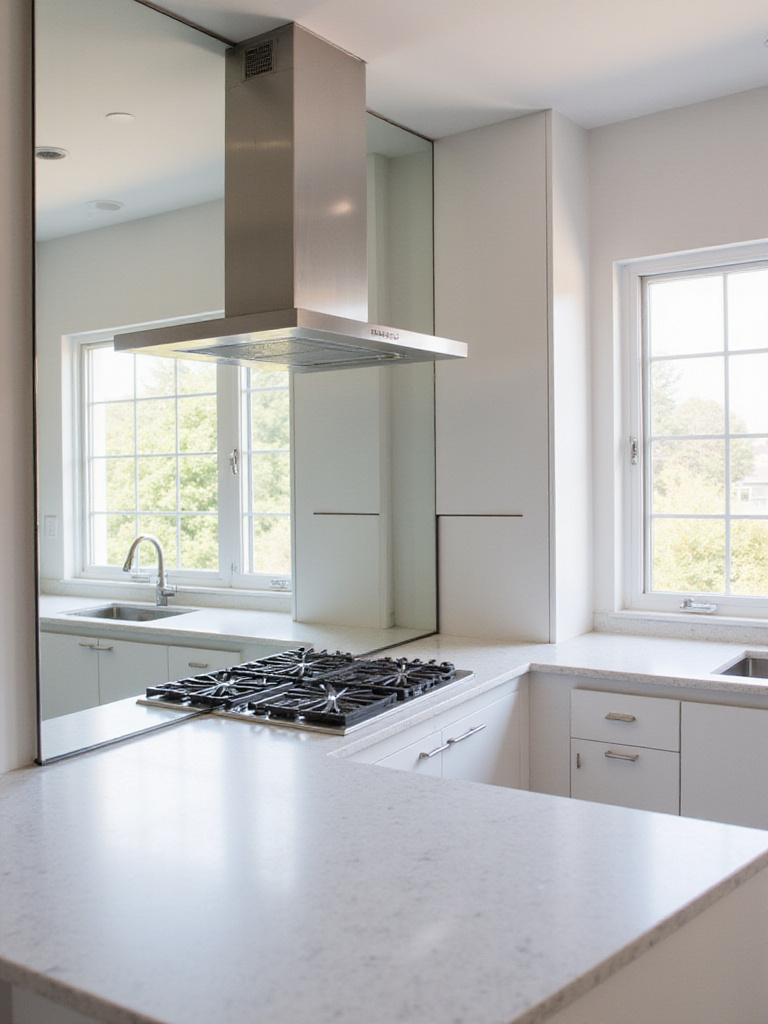
The reflection doubles the candlelight during an evening meal and reflects the greenery from a window, bringing the outside in. It’s a way to manipulate light and space that feels both modern and timeless, reminiscent of the reflective pools found in Moorish courtyards.
From reflection, we move to collection.
14. Group Decorative Plates and Platters for an Elegant Display
This is a beautiful way to honor heritage and craft. Instead of buying generic “wall plates,” display pieces that have meaning—plates from your grandmother’s wedding china, a platter you bought from an artisan on vacation, or a collection of locally made ceramics. This connects your kitchen to a lineage of makers and memories.
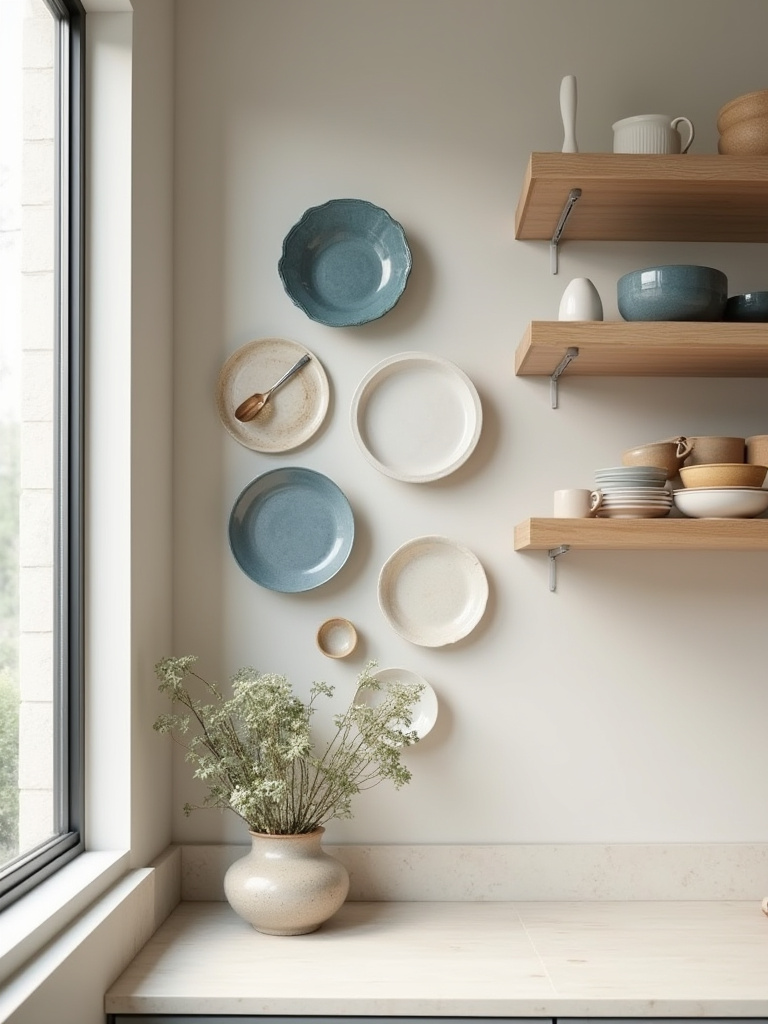
The key to making it look sophisticated, not cluttered, is to group them thoughtfully. Find a common thread—a consistent color palette or material. An asymmetrical cluster feels more organic and modern than a rigid, symmetrical grid. Let this be a testament to your taste and your history.
While hard surfaces like plates add character, soft textures add essential warmth.
15. Hang Textural Elements like Woven Baskets or Tapestries
This is where my two worlds—Scandinavian and Middle Eastern—meet perfectly. Texture is essential for creating warmth and soul. A wall of flat, painted drywall feels dead. But hang a collection of shallow woven baskets or a beautiful wool tapestry, and the room instantly feels softer, quieter, and more human.
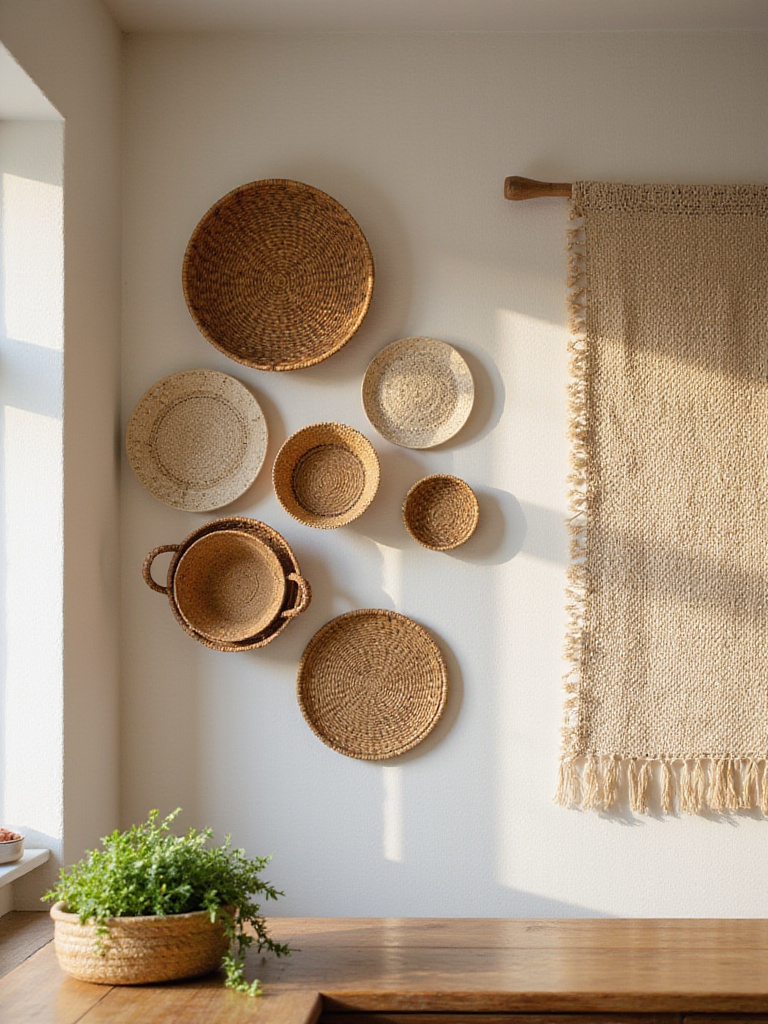
Woven elements absorb sound, which is a huge functional benefit in a room full of hard surfaces. They bring in natural, organic materials that connect us to the earth. In a minimalist space, a single, large-scale textile can provide all the color and pattern you need while adding a layer of profound comfort.
Comfort also comes from seamless organization.
16. Implement Smart storage solutions: Magnetic Strips and Hooks
The most serene kitchens are the most organized. Clearing your countertops of clutter is the single best thing you can do for your peace of mind. A simple magnetic knife strip is a perfect example of this. It’s clean, hygienic, and displays your knives like functional sculpture, freeing up an entire square foot of counter space.
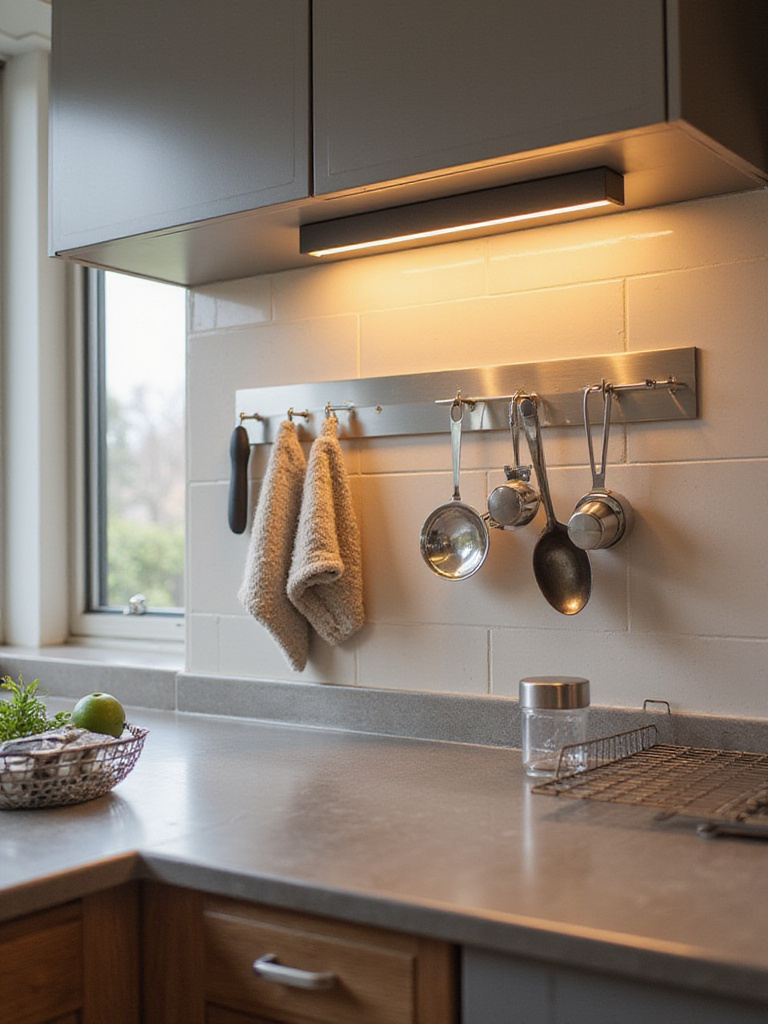
Use simple, beautiful hooks for things you reach for constantly: a pair of scissors, your oven mitts, a small cutting board. Arrange them in a clean, intentional line. This isn’t about just sticking things to the wall; it’s about creating an elegant, intuitive system for your daily rituals. The beauty lies in the order and ease it provides.
Elevating Your Kitchen’s Look: Advanced Styling and Practical Touches (Part 2)
Finally, let’s explore two powerful ways to bring dynamic, living energy into your kitchen—one temporary and transformative, the other natural and life-giving.
17. Refresh Walls with Peel-and-Stick Wallpaper or Decals
I’ll be upfront: as someone who advocates for durable, natural materials, I have a complex relationship with temporary solutions. However, I understand their value, especially for renters or for those who love to frequently change their environment. If you’re going to use peel-and-stick wallpaper, choose wisely.
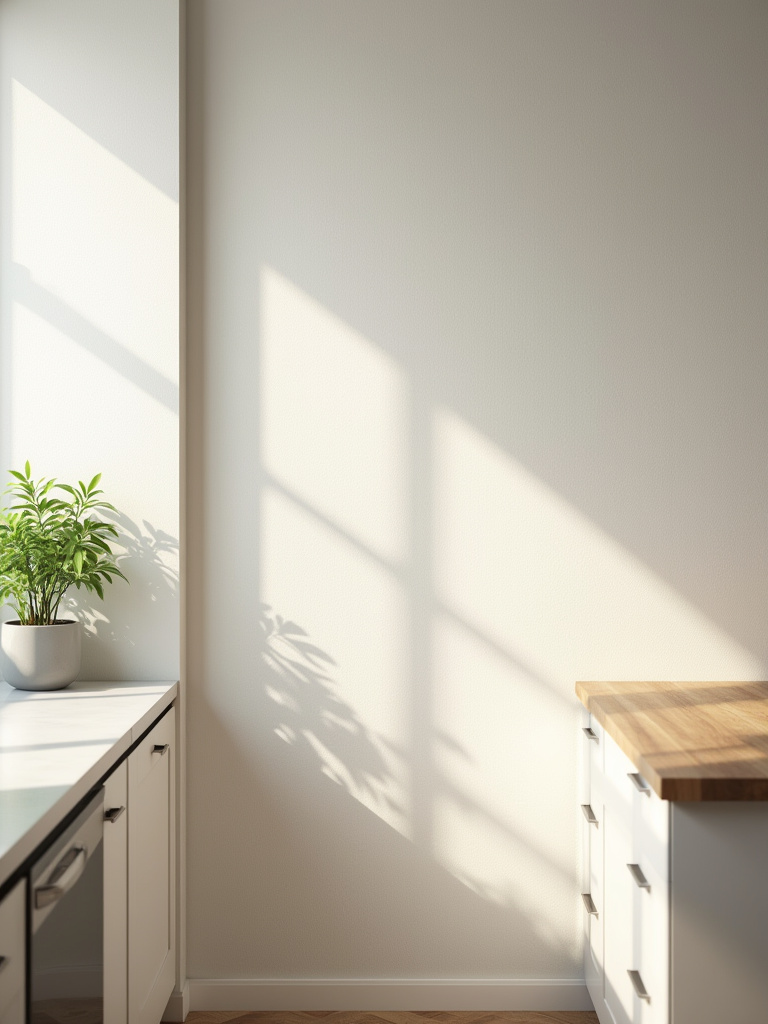
Opt for high-quality, vinyl-free options with designs that mimic natural textures—a subtle linen pattern, for example, or a large-scale botanical print that acts as a mural. Use it strategically on an accent wall, like the one behind your breakfast nook, to create a powerful focal point without overwhelming the space. Think of it as a low-commitment affair with pattern, not a long-term relationship.
For a more enduring source of life, look to nature itself.
18. Arrange Live or Faux Greenery to Add Freshness
Every space needs life. In the desert, bringing green indoors is a vital connection to nature. A kitchen is a perfect place for it. Mount a few small wall planters with herbs near a window—they are beautiful, fragrant, and you can snip them for cooking. This is the epitome of functional decor.
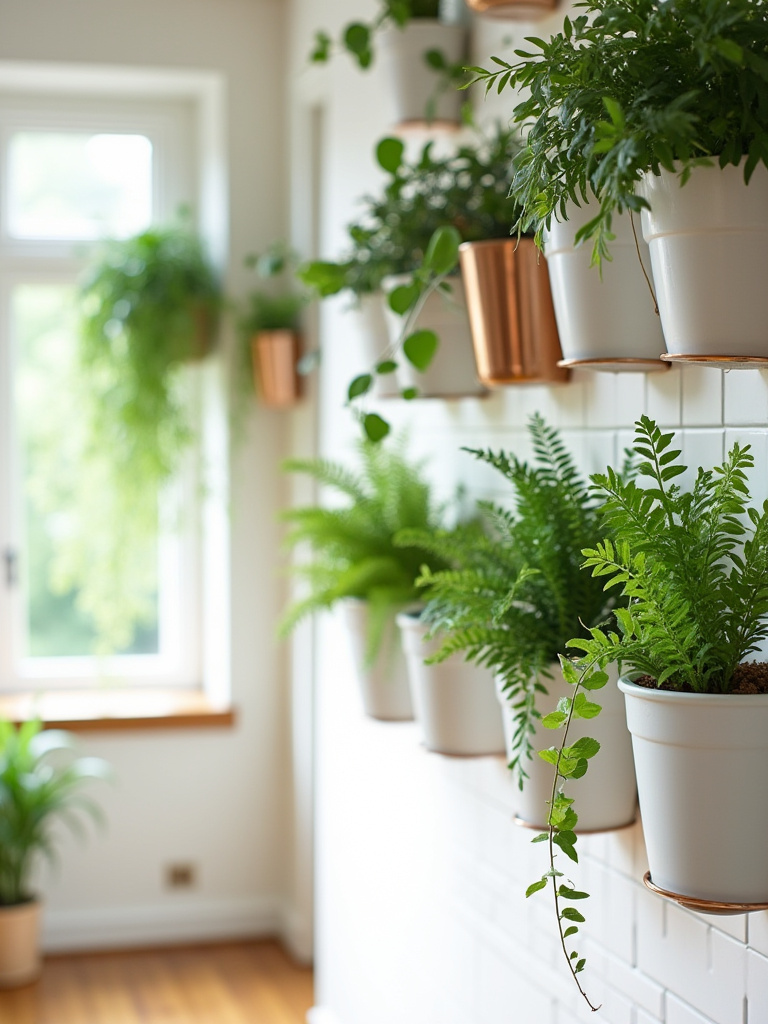
If your kitchen lacks natural light, don’t be afraid to use high-quality faux plants. A good faux trailing vine or a fiddle leaf fig can provide the visual benefit of greenery without the stress of maintenance. The goal is that feeling of vitality and freshness. Placing greenery against a clean, simple wall adds a burst of organic shape and color that makes the entire room feel more alive.
Conclusion
As you can see, creating a kitchen with soul has very little to do with following trends and everything to do with making conscious choices. Your walls are not just structural dividers; they are storytellers. They can tell a story of rushed, thoughtless consumerism, or they can tell a story of intention, beauty, and a life lived with purpose.
Start small. Choose one wall. Ask it what it needs. Does it need to work harder with storage? Does it need the quiet beauty of a single piece of art? Does it need the living energy of a plant? Trust your intuition. The goal isn’t to create a showroom but to cultivate a sanctuary—a warm, welcoming heart for your home that nourishes you in every sense of the word. Take one of these ideas and make it your own. Begin today.