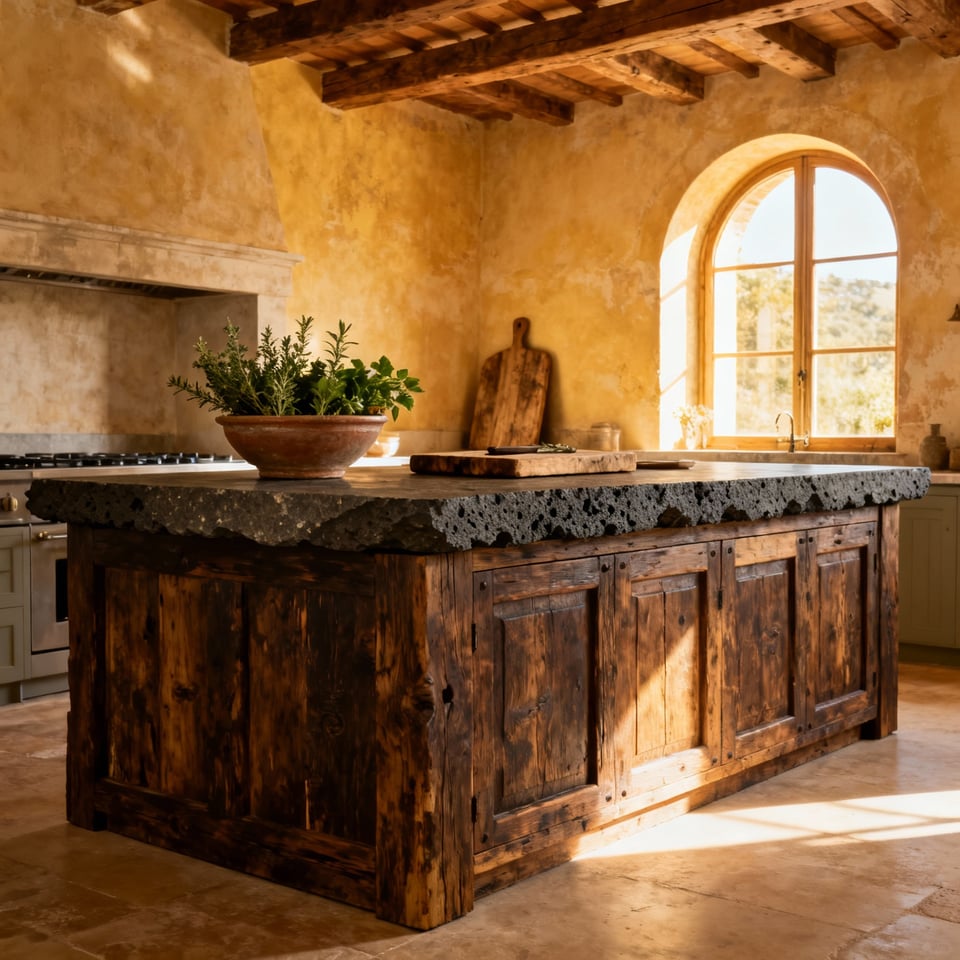
For as long as there have been homes, there has been a centre—a place where hands work, conversations begin, and life is shared. I’ve seen this echoed everywhere, from the great oak tables of English country kitchens to the bustling central courtyards of homes in Jodhpur. The modern farmhouse kitchen island descends from this same truth. It has evolved from a simple, utilitarian necessity into the indispensable social and culinary heart of the home.
In my own work, blending the clean lines of contemporary British design with the rich, storied traditions of South Asia, I am constantly exploring this idea of a central anchor. Today’s most sophisticated spaces understand that such a focal point must not only orchestrate the daily ballet of cooking but also resonate with an authentic sense of place and heritage. What truly separates a soulful, lasting island from a merely functional unit are twenty principles that, I’ve found, haven’t changed in generations. They are about honouring material, celebrating craft, and, above all, making space for life itself.
Cultivating Authenticity: The Philosophical Roots of a Farmhouse Island (Part 1)
Before we speak of wood and stone, we must understand the idea of the island. It’s about more than just a place to chop vegetables; it is the philosophical centre of the room. Here, we look at the quiet principles that give this piece its enduring spirit, ensuring its foundation is built on something far more meaningful than trends.
1. Deciphering the Enduring Allure of Provençal Grande Tables as an Island Precedent
The soul of the farmhouse island began with pieces like the magnificent grande tables of Provence. These weren’t simply furniture; they were the stages upon which daily life unfolded. Bread was kneaded, harvests were shared, and stories were passed down across their worn wooden surfaces. The core idea is one of generous, unpretentious community—a spirit that values shared experience over ornamentation. This is why their essence feels so timeless.
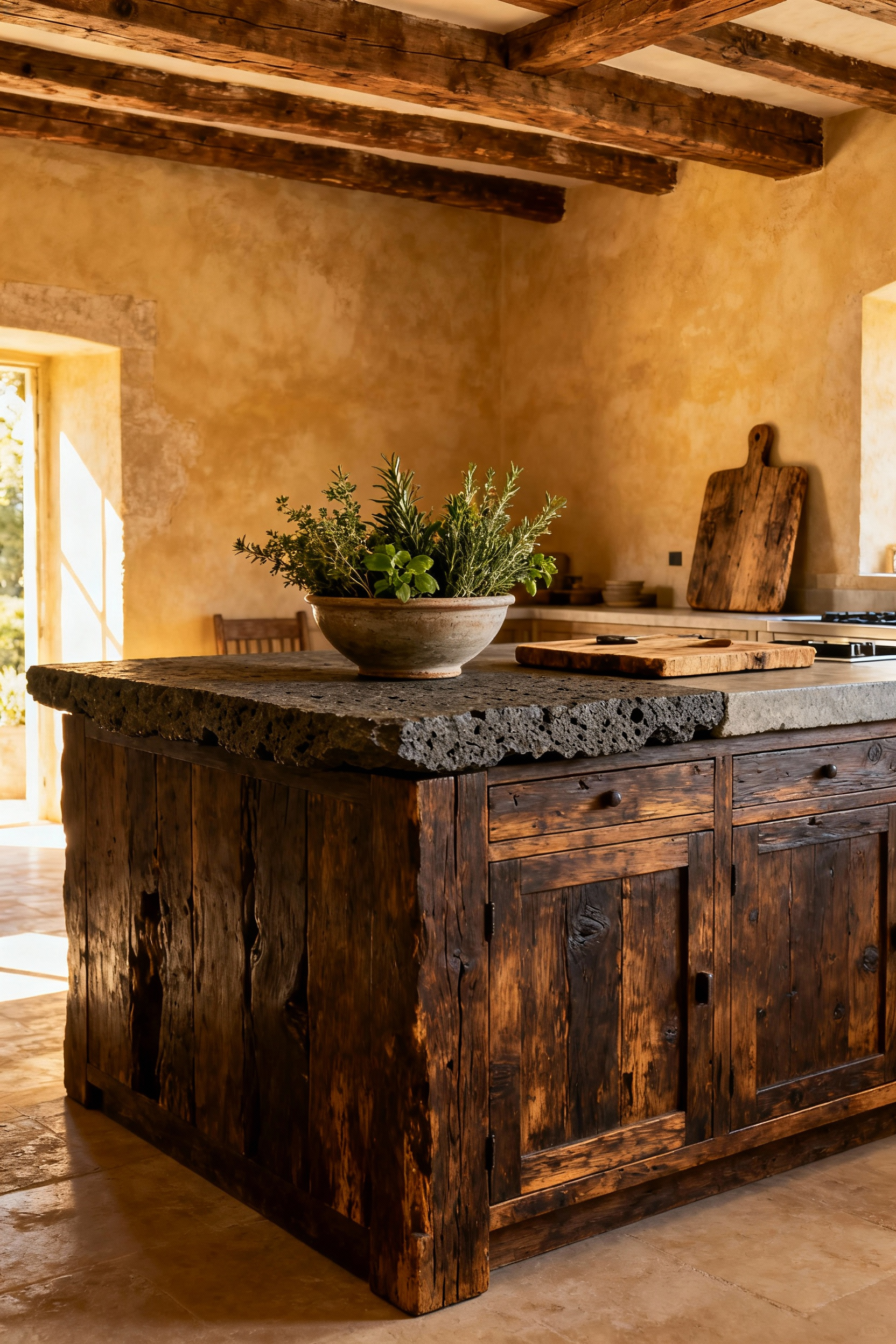
This philosophy demands an honesty of material. They were built from what was near—robust oak, elm, or pine—and finished simply, allowing the wood’s own story to be told through its knots and grain. In my practice, I always tell clients that this is where authenticity begins: letting the material speak for itself. An island that channels this spirit doesn’t just fill a space; it creates an invitation. A generous slab of walnut or a plank-top pine, its surface beckoning, transforms the kitchen’s heart into a place where connection is not just possible, but inevitable.
2. Embracing the Wabi-Sabi Aesthetic in Weathered Woods for Patinaed Serenity
Building on that history, the Japanese philosophy of Wabi-Sabi gives us a beautiful language for appreciating imperfection. It asks us to find peace in things that are transient, modest, and gracefully worn. Instead of chasing a flawless, factory-sheen, we learn to cherish the character that only time and use can bestow. A scratch isn’t a flaw; it’s a memory. A slight fade in the wood isn’t damage; it’s evidence of life.
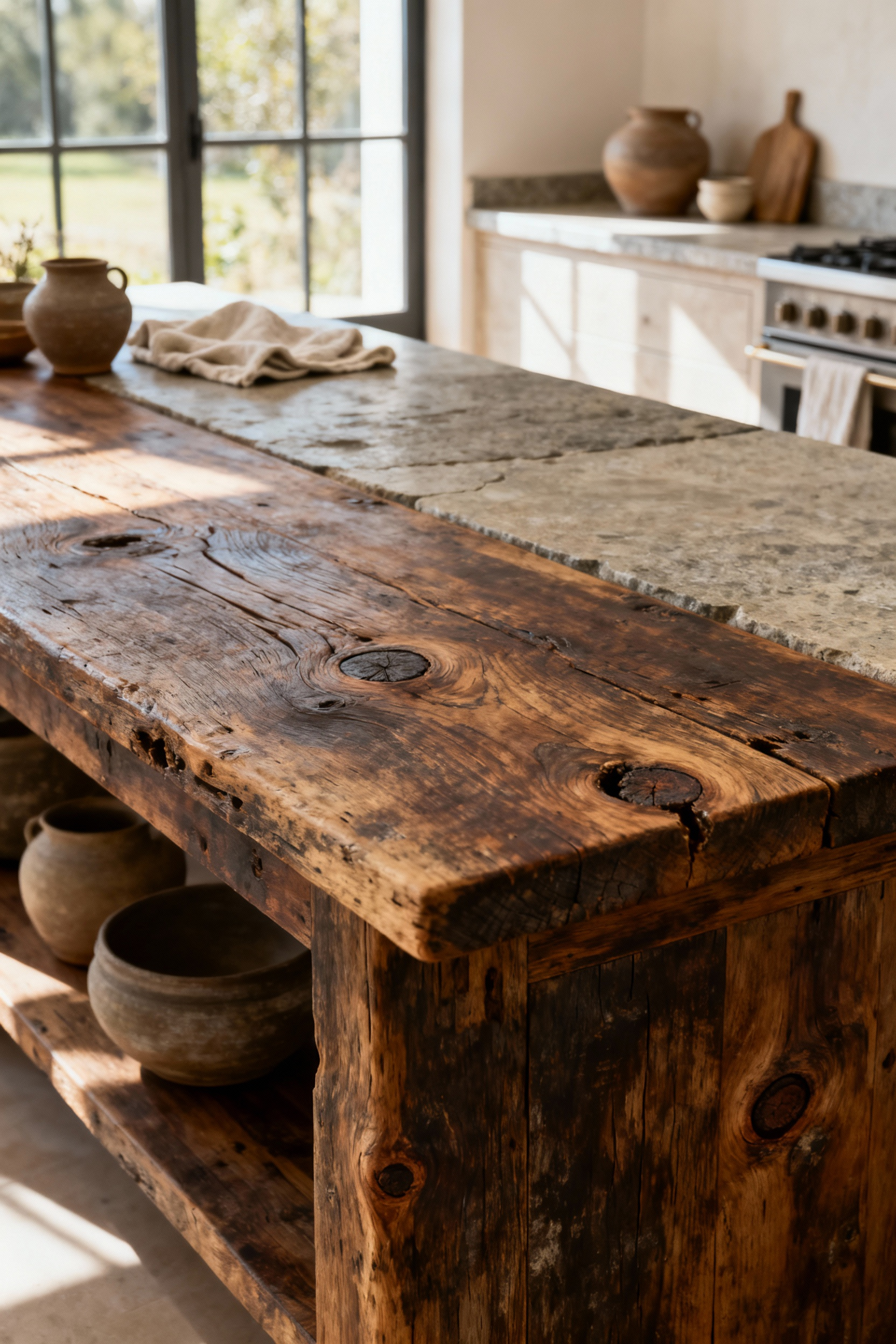
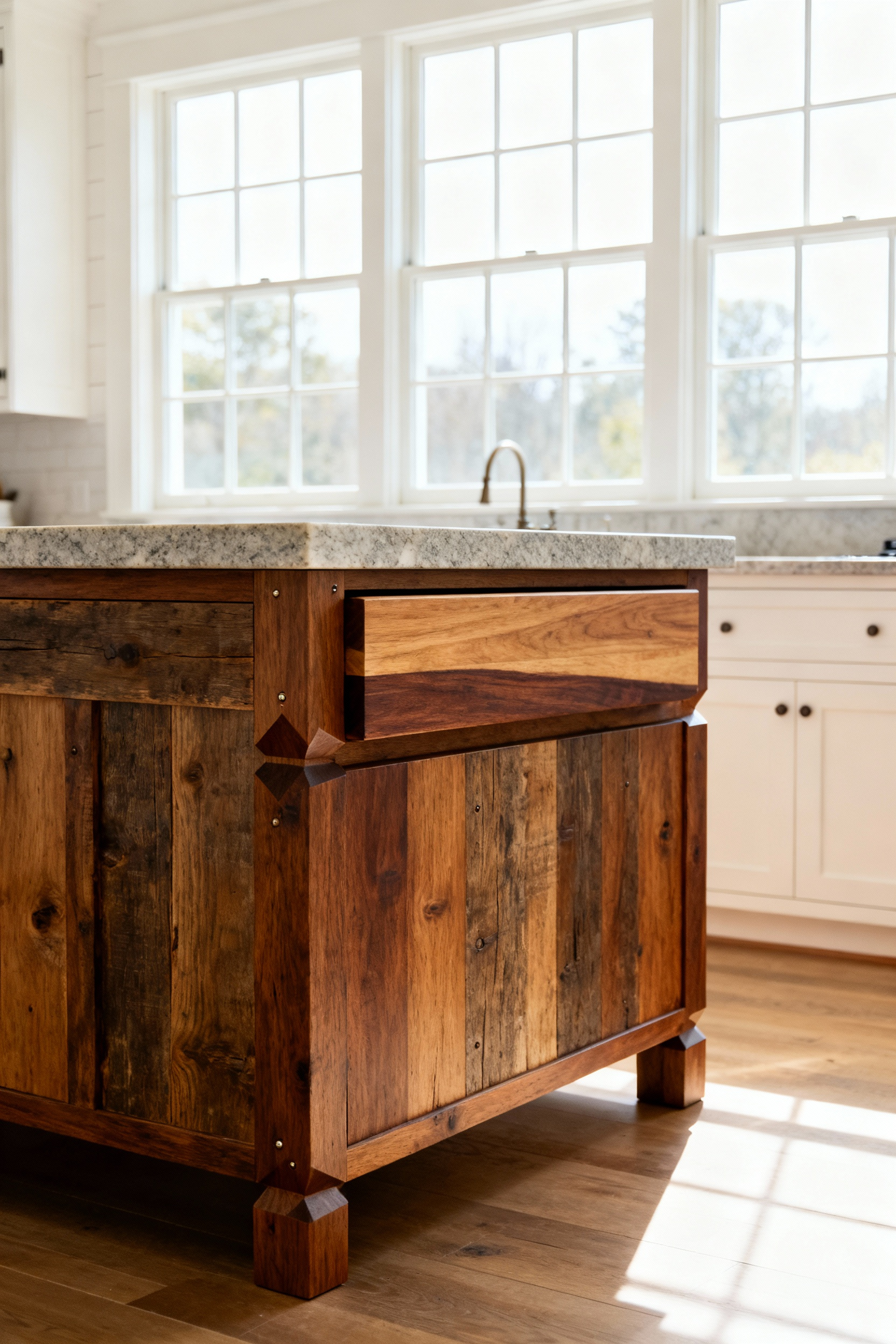
I find this deeply connected to the South Asian reverence for heirlooms—objects that carry the touch of generations. When selecting wood for an island, think of reclaimed barn wood or salvaged timbers. Their deepened grain and softened edges introduce a tactile narrative that pristine surfaces lack. A solid oak island, its surface gently worn by countless family meals, becomes a canvas depicting a continuous story. It’s a quiet rebellion against the new, a commitment to an elegance that is unassuming and profoundly genuine.
3. Integrating Historic Joinery Techniques to Evoke Generational Craftsmanship
The true artistry of a piece is often revealed in how it is held together. Historic joinery is a celebration of that integrity. Techniques like dovetails or mortise and tenon are not meant to be hidden; they are honest articulations of strength and skill. It’s a language of craftsmanship that speaks across cultures, from an English timber-framed barn to the intricate wooden lattices of a haveli.
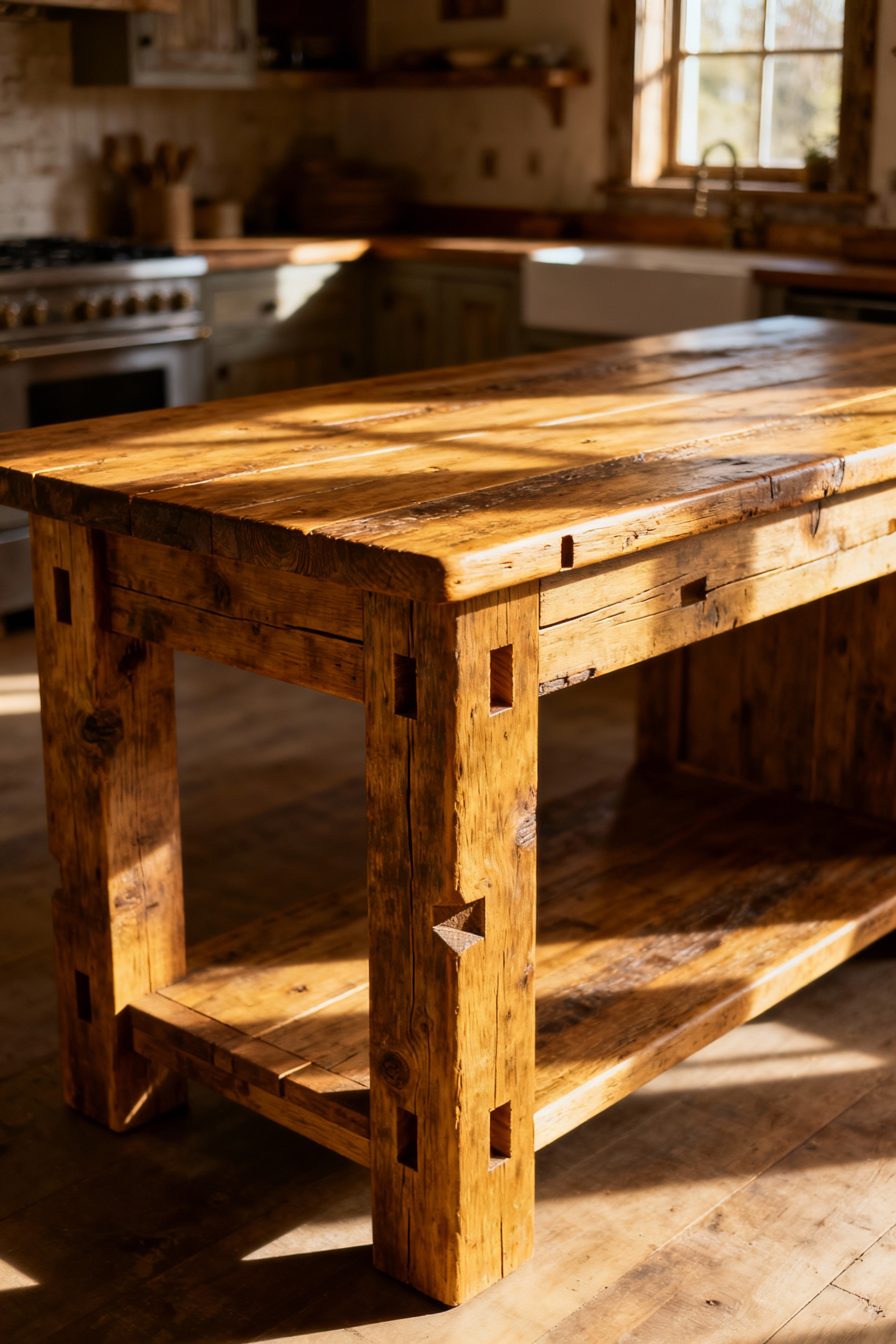
What I tell my clients is that seeing the hand of the maker connects us to a piece in a powerful way. When you see the perfectly fitted joints of a drawer or the clean, strong lines of the leg structure, you appreciate that this object was made with intention and designed to last. It is a commitment to enduring quality, a choice to invest in something that tells a story of its creation. A farmhouse island built this way isn’t just a utility; it is a piece of functional sculpture, whispering of human touch and timeless skill.
4. Articulating the Visual Language of a Working Hearth with Purposeful Symmetry
Think of the traditional hearth—the absolute nucleus of the home, a source of warmth and sustenance. It was a space of controlled power, visually balanced and inviting. A well-designed island can become the modern expression of that hearth. It must have a certain gravitas, an intentional symmetry that grounds the entire room and creates a sense of stability and order.
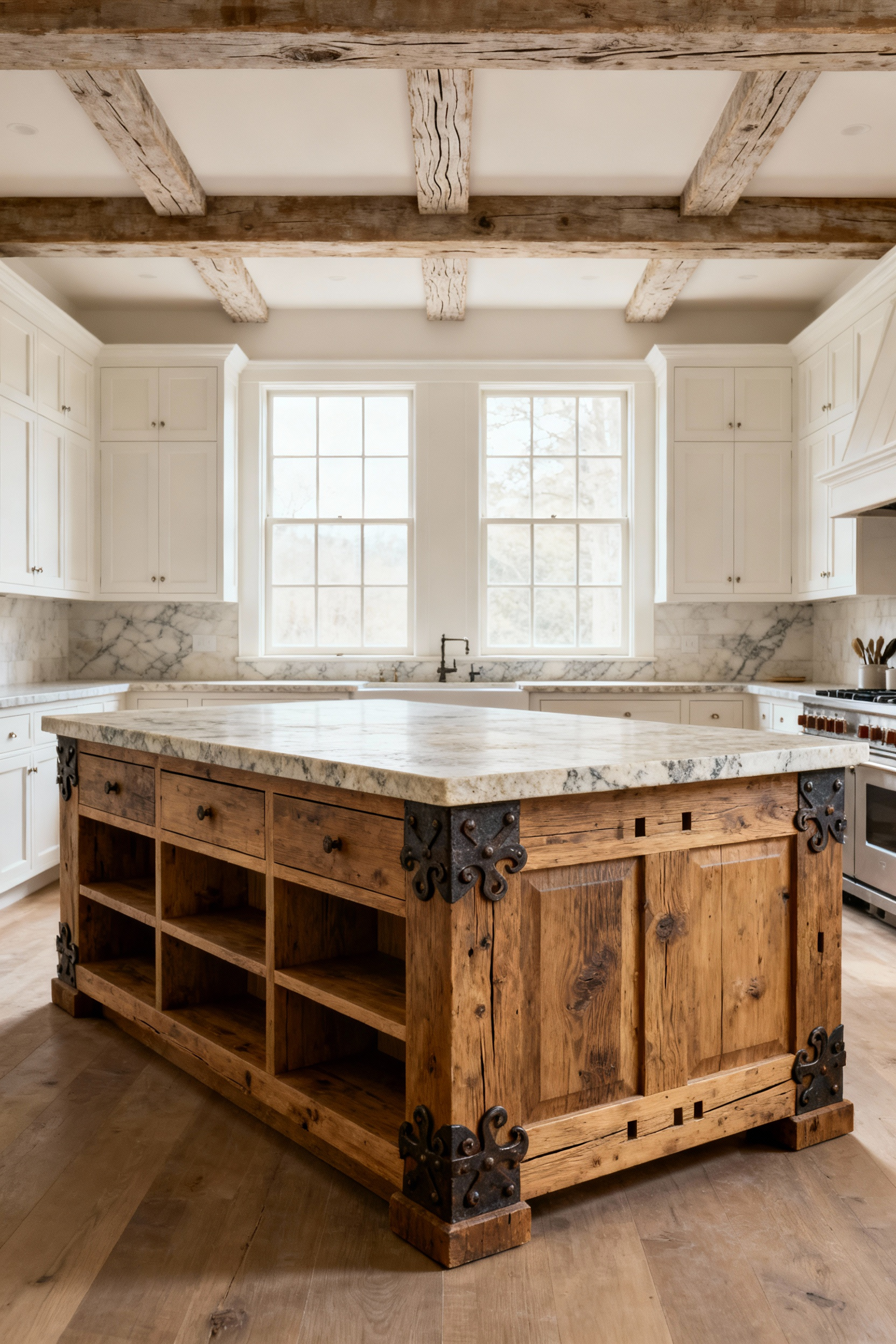
This isn’t about cold, rigid formality. It’s about a harmonious balance that feels both grand and welcoming. Visually, this means materials with presence—robust timber, perhaps with stone or metal accents that nod to fireboxes and old cookware. Spatially, it translates to a design with considered balance: identical sets of drawers, evenly spaced shelving, or a commanding work surface flanked by matching supports. Such an island inherently encourages communal activity, drawing people into its orbit, just as the hearth did for centuries before.
Cultivating Authenticity: The Philosophical Roots of a Farmhouse Island (Part 2)
As we continue, we see how the echoes of history must be harmonized with the demands of today. The most soulful spaces are not museums; they are living environments where the past enriches, rather than dictates, the present.
5. Harmonizing Contemporary Functionality with Pre-Industrial Silhouettes for Timeless Appeal
The real art of designing a farmhouse kitchen island today is not in replication but in translation. It’s about capturing the spirit of pre-industrial objects—where form was honest, materials were local, and everything was built with purpose—and weaving that spirit into the rhythm of a modern home. This is where I find the most creative energy in my own work: balancing an ancestral presence with contemporary needs. It is about imbuing modern convenience with a soul.
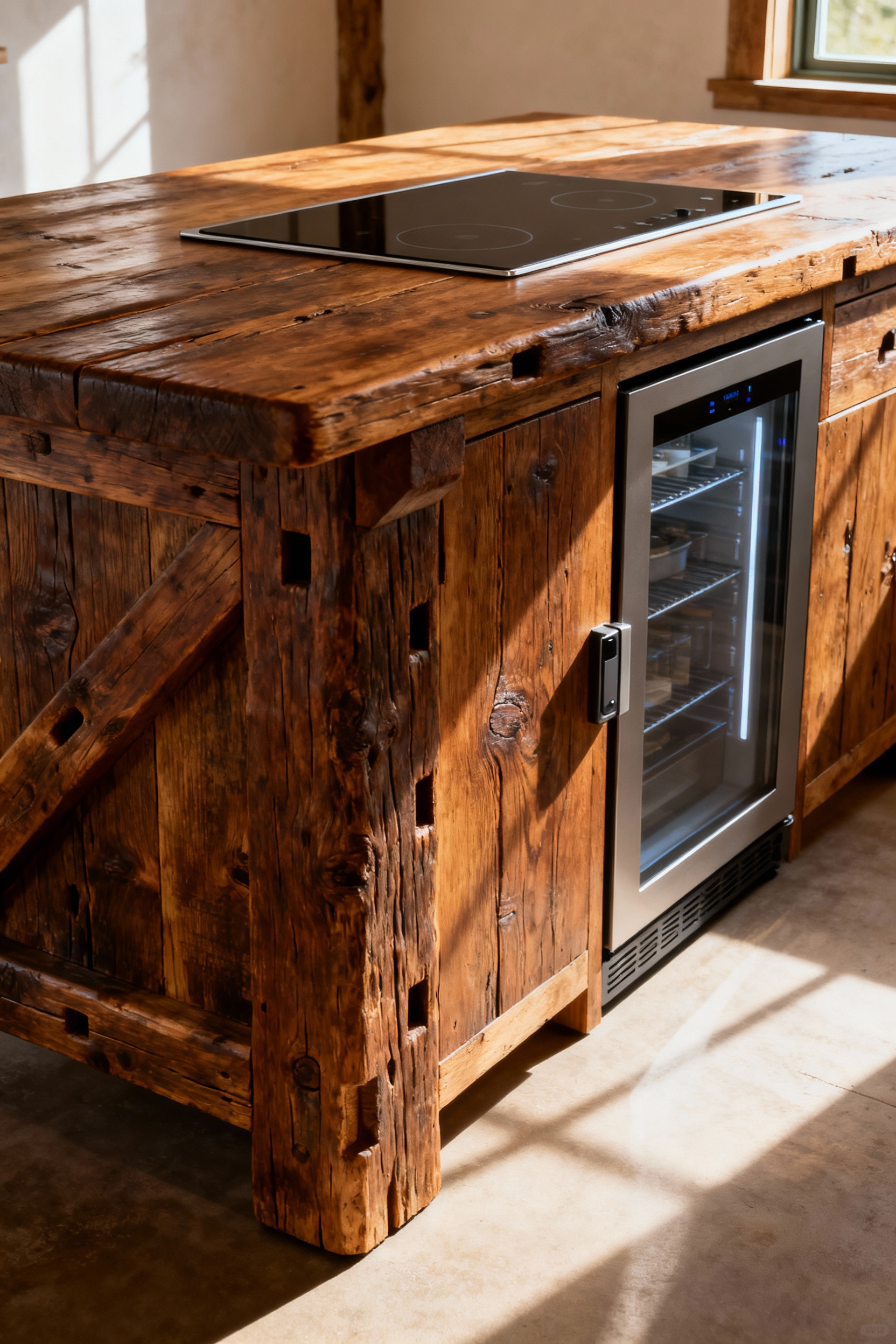
So, while the silhouette of your island might echo an antique mercantile counter or a sturdy worktable, its interior can be masterfully engineered. The warmth of reclaimed oak or the stoic beauty of a soapstone counter can sit alongside the quiet hum of a concealed dishwasher or a charging station tucked inside a drawer. The island’s form offers a comforting nod to the past, while its function serves you completely in the present. This beautiful tension is what keeps the farmhouse aesthetic feeling vital and relevant, never merely nostalgic.
The Artisanal Palate: Exploring Enduring Materials and Finishes (Part 1)
An island’s character is written in its materials. It’s here that we can create a connection to the natural world and the hand of the artisan. The choices we make are not just aesthetic; they define the tactile experience of the kitchen and imbue the space with authenticity.
6. Specifying Native Hardwoods for their Inherent Grains and Durable Resilience
A design’s integrity often begins with a profound respect for its primary material. For a farmhouse island, native hardwoods are the quintessential choice. Woods like oak, maple, or walnut possess a vital energy, a story told in their grain, knots, and colour. They aren’t just building materials; they are characters that will grow and deepen with your home. The tight, resilient grain of maple is perfect for a working surface, while the rich, complex patterns of oak lend a rustic grandeur.
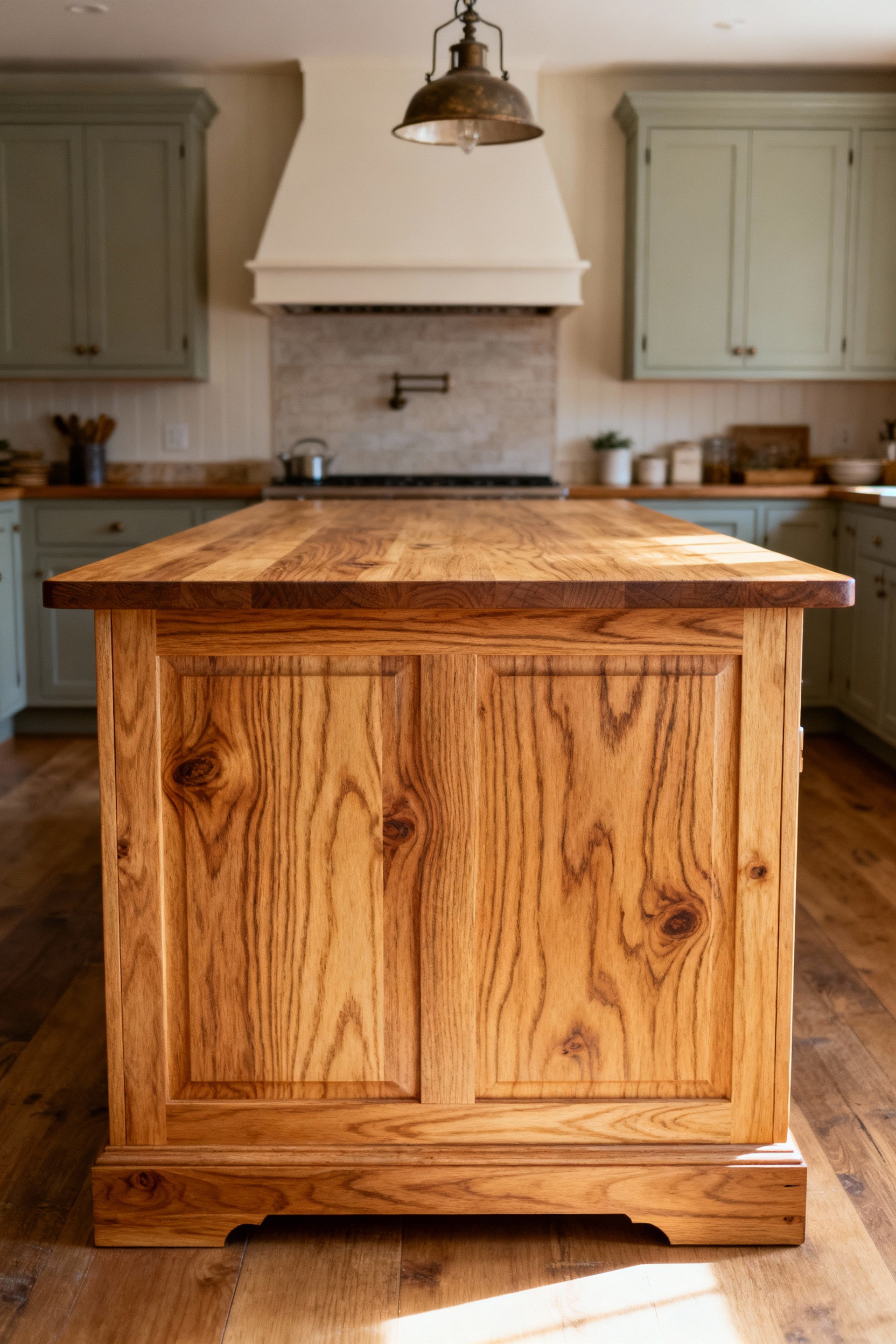
These woods ground the entire structure with an undeniable sense of provenance. I’ve seen this play out when a client touches the surface of a solid wood island for the first time—there is an immediate, visceral connection. Choosing these materials is a commitment to longevity. An island forged from native hardwood doesn’t just endure daily life; it absorbs it, developing a cherished patina that tells the story of countless meals and conversations. It becomes an heirloom in the making.
7. Cultivating the Rich Patina of Oil-Rubbed Bronze or Unlacquered Brass Hardware
Hardware is the jewellery of your cabinetry, and it should age as gracefully as the rest of the piece. This is why I always gravitate towards living finishes like oil-rubbed bronze and unlacquered brass. They are not static but are designed to interact with you and your environment. Each touch contributes to a unique patina, telling a quiet story of use.
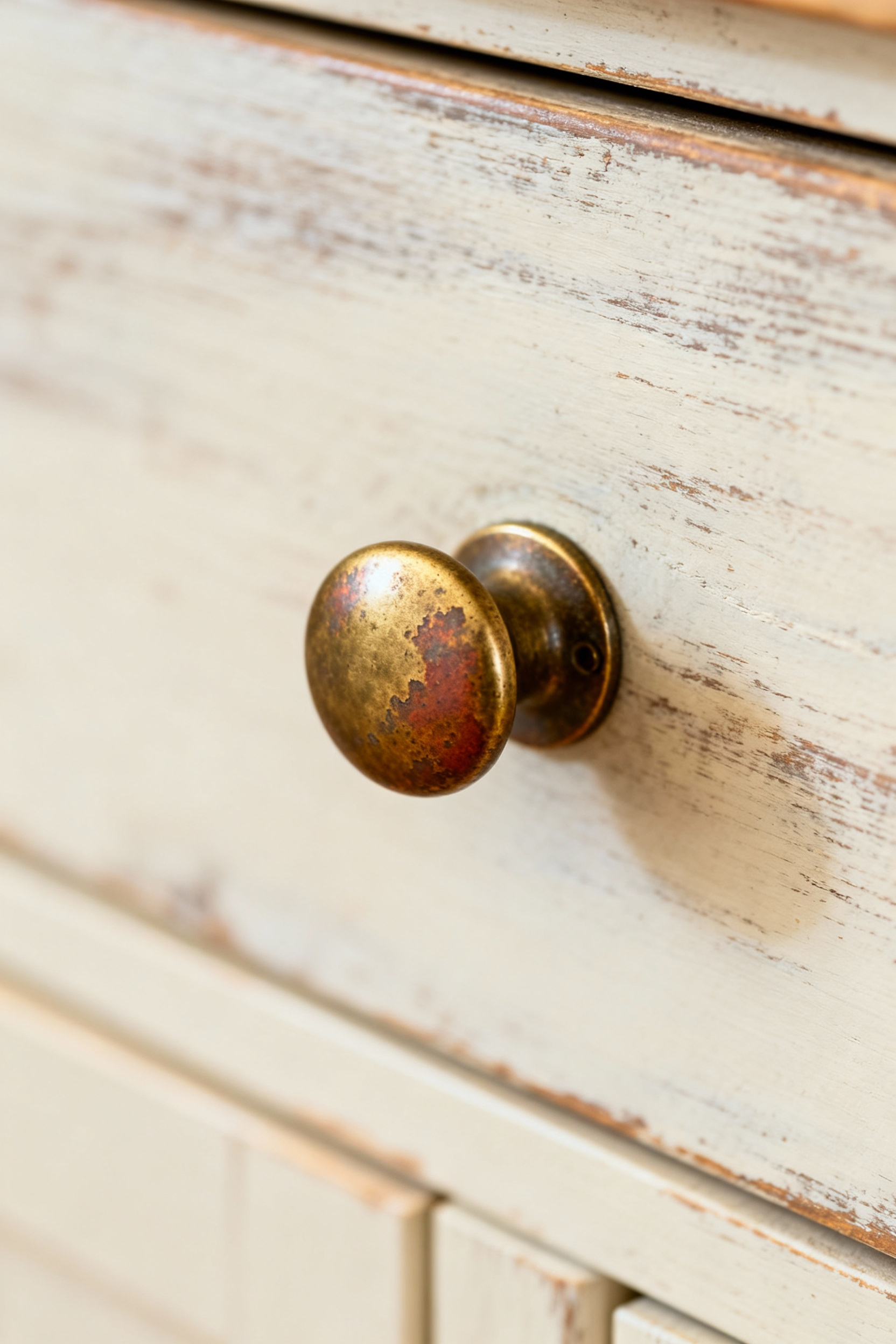
The philosophy behind this is a beautiful one—it embraces the marks of life. Oil-rubbed bronze will slowly reveal its coppery undertones where hands rest most often. Unlacquered brass begins with a bright gleam but gradually deepens to a warm, mellow gold. From my work with British-Asian fusion, I am always reminded of how prized this sense of age is in so many cultures. It signifies a rejection of the superficial in favour of the substantial and authentic, turning a simple knob or pull into a small, evolving work of art.
8. Juxtaposing Hand-Hewn Beams with Refined Stone Countertops for Tactile Depth
Some of the most compelling interiors create a dialogue between contrasting textures. For a farmhouse island, pairing the raw, elemental character of a hand-hewn beam with the cool, refined elegance of a stone countertop is a masterful move. It creates an invigorating tension between the rustic and the sophisticated, enriching the entire sensory experience of the kitchen.
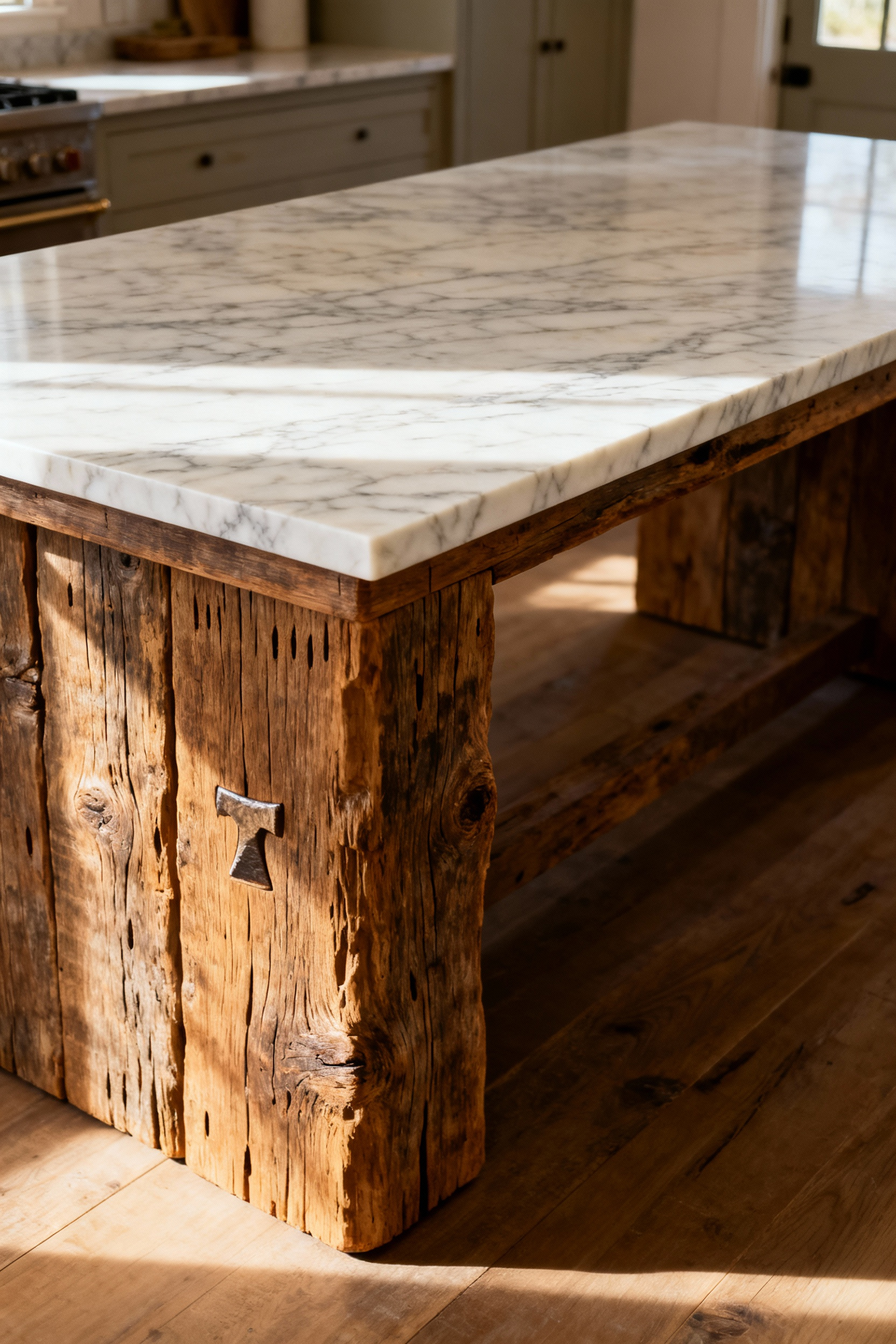
Imagine the rough, storied surface of a reclaimed wooden beam forming the island’s structural support, its history legible in the marks of an adze. Above it, a cool, smooth expanse of honed marble or soapstone offers a quiet, elegant counterpoint. It’s a design choice that celebrates both raw nature and human refinement. What I tell my clients and readers is that this juxtaposition creates a visual and tactile journey, transforming an everyday workspace into a place of constant, subtle delight.
9. Employing Milk Paint or Limewash Finishes for an Evocative, Softly Muted Presence
The final finish is like the island’s complexion; it sets the emotional tone. Instead of the hard uniformity of modern synthetics, historic finishes like milk paint or limewash offer a softer, more atmospheric presence. They are composed of natural pigments and minerals that create a breathable, exquisitely matte surface with beautiful, subtle variations in tone.
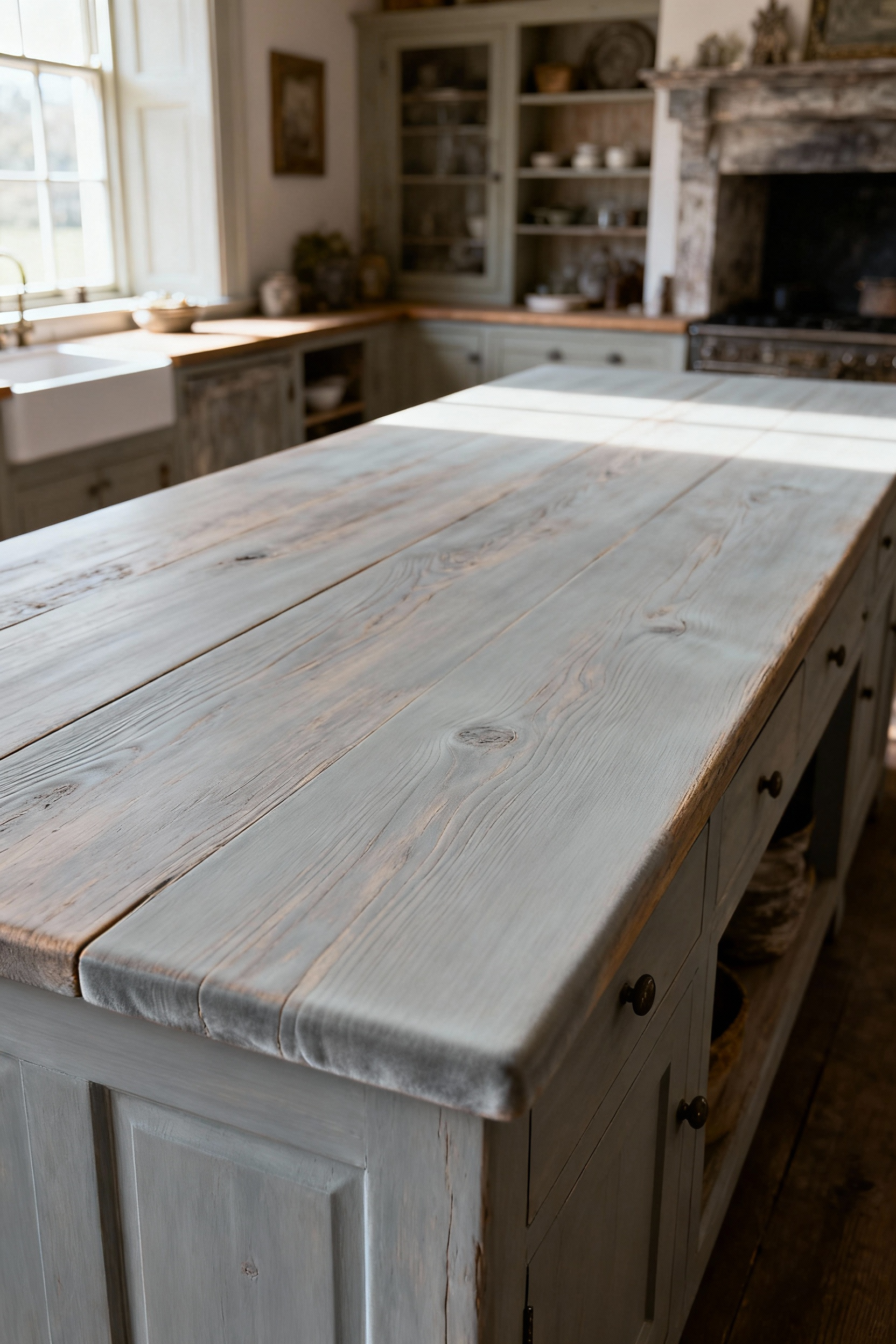
What’s so special about these finishes is how they wear. Milk paint has a tendency to gently chip over time, revealing layers of colour and history—a desired effect that speaks to authenticity. Limewash creates a soft, chalky appearance with a nuanced mottling that shifts with the light. I’ve found these finishes are transformative; they allow an island to feel like an integrated part of the home’s architecture, not a new addition, imbuing the room with a serene and soulful quality.
The Artisanal Palate: Exploring Enduring Materials and Finishes (Part 2)
Our material exploration now moves to surfaces designed for active use, where utility and organic elegance must meet. These are the elements that create a direct and authentic connection between craftsmanship and daily life.
10. Designing for Integrated Butcher Block Elements with End-Grain Resilience and Warmth
There is a profound beauty in designing a surface that is meant to be used, not just admired. An integrated end-grain butcher block on a farmhouse island is the ultimate expression of this idea. Unlike edge-grain, end-grain presents the wood fibres vertically, which is far more forgiving to a knife’s edge and has an incredible, self-healing quality. The checkerboard pattern of the wood rings creates a rich, textural mosaic that is both beautiful and exceptionally resilient.
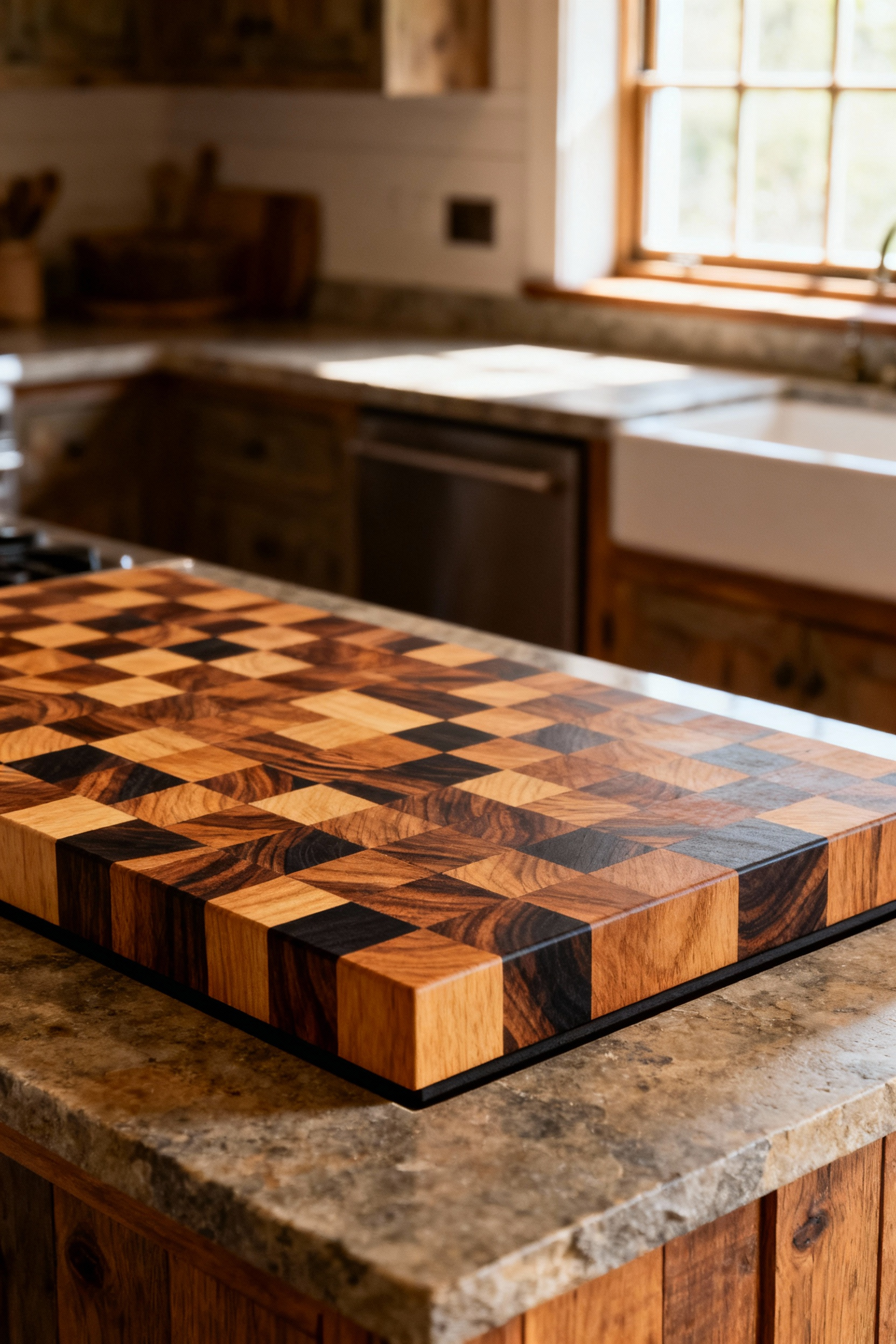
Strategically placing an end-grain section—perhaps near the main prep area—creates a dedicated, unparalleled workstation. Its substantial presence visually anchors the island, while its inherent warmth offers a pleasing contrast to cooler stone surfaces. Caring for it, by oiling the wood, becomes a mindful ritual. It’s a surface designed not for perfection but for evolution, intended to develop a unique patina that narrates every meal and gathering. It becomes a steadfast companion in your culinary journey.
Harmonizing Form and Function: Integrating the Island within Culinary Spaces (Part 1)
The most beautiful kitchens operate like a seamless ballet. The island is the principal dancer, and its relationship to the rest of the room must be perfectly choreographed. Here, we delve into how to integrate this centerpiece so it nurtures both sustenance and fellowship.
11. Strategically Sizing the Island for Unobstructed Culinary Workflow and Circulation
Before a single piece of wood is cut, the most important decision is one of scale. The central philosophy of good kitchen design is spatial intelligence. An island must honour the flow of the room, not obstruct it. Too large, and it creates friction and makes the space feel cramped; too small, and it loses its gravitas. The dance of cooking—moving from sink to stove to refrigerator—should be graceful and unencumbered.
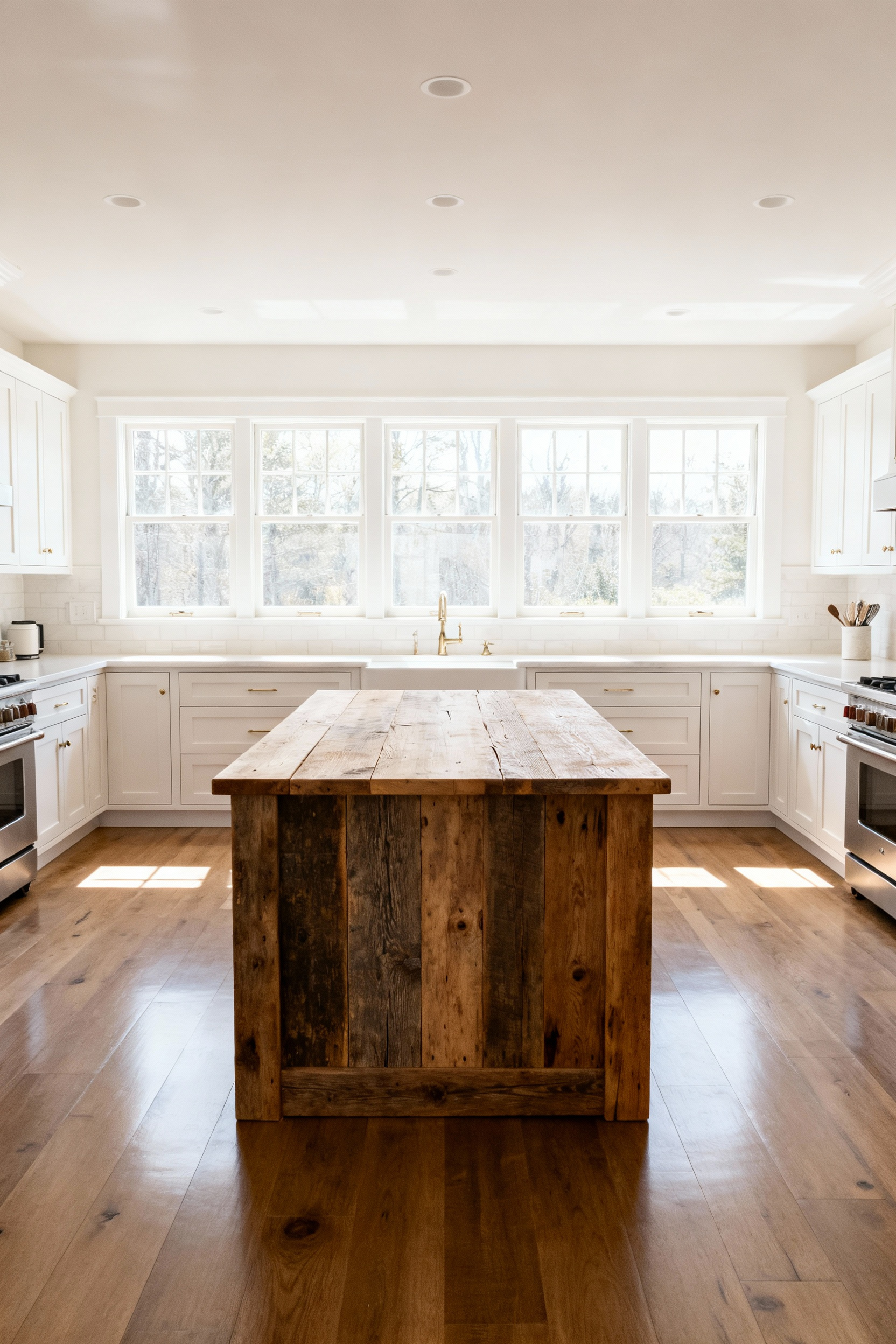
The guidelines of 36 to 42 inches of clearance are not just numbers; they represent the wisdom of ergonomics. I learned this when I worked on a restoration project where the original kitchen had an oversized table that, while beautiful, made the room impossible to work in. We replaced it with a slightly smaller, better-proportioned island, and the entire energy of the space was transformed. A properly scaled island becomes the gravitational center of the kitchen, anchoring the design while guiding movement, turning the experience from chore to cherished ritual.
12. Engineering Integrated Storage Solutions for Discretely Accommodating Modern Appliances
A farmhouse kitchen evokes an era of elegant simplicity, yet our modern lives are filled with appliances. The art is in concealed utility—engineering sophisticated storage so that technology serves the aesthetic without overpowering it. This means thinking of the island not as a single block but as a highly functional piece of bespoke furniture.
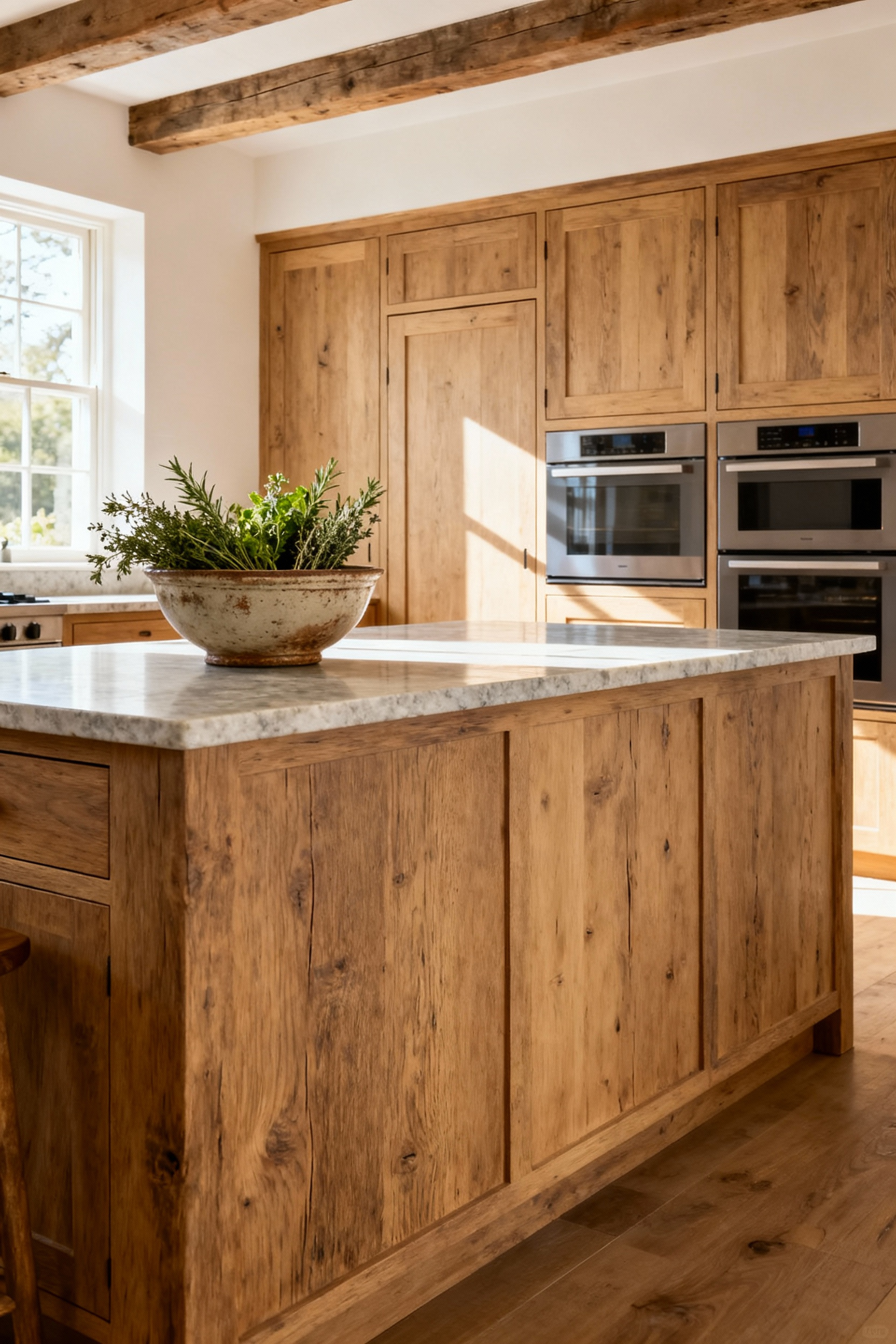
The goal is to have modern conveniences feel utterly seamless. A microwave drawer can vanish into lower cabinetry. A wine fridge can hide behind custom panels that match the island’s facade. My favourite trick is an appliance garage with a pocket door, where a coffee maker or stand mixer is always accessible yet never clutters the counter. This thoughtful engineering liberates the island’s surface, allowing it to be a clear, beautiful space for work, gathering, or a simple vase of flowers.
13. Crafting Bi-Level Surfaces to Delineate Preparation Zones from Conversational Hubs
A bi-level island is a sophisticated acknowledgement that a kitchen serves multiple roles simultaneously. A single, monolithic surface can feel imposing, but by creating different levels, we can subtly delineate zones for different activities. It’s an elegant way to honour both the earnest work of cooking and the joy of conversation.
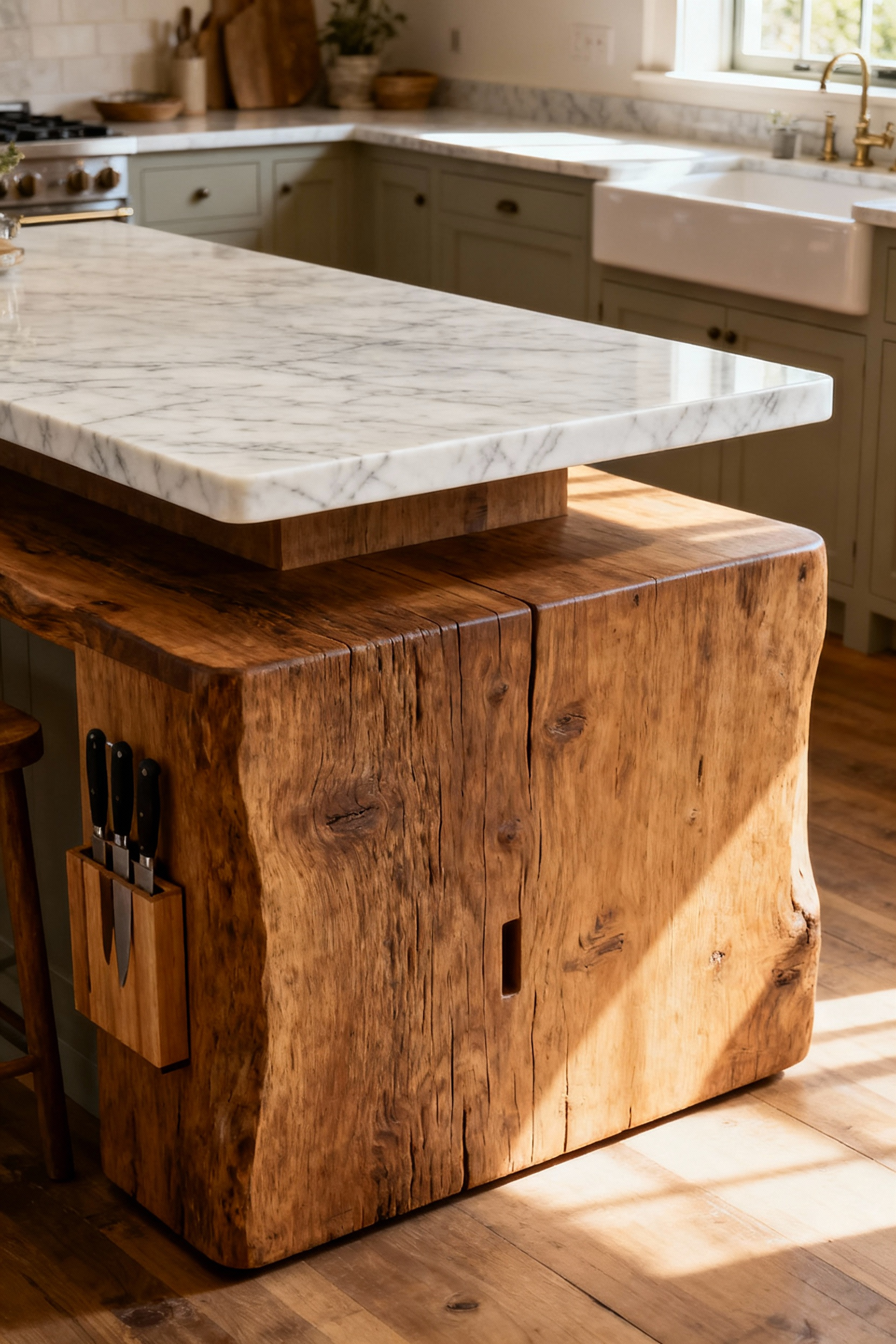
Often, this means a lower, durable work surface—perhaps in butcher block or resilient quartz—for the messy tasks of food preparation. A raised tier, often in a more refined material like marble or warm wood, creates a comfortable bar-height area for guests or family to sit and interact with the cook without being in the way. This clever design acts as a subtle visual shield for any kitchen clutter while creating an inviting social hub. It is the perfect solution for the contemporary kitchen, allowing for both focused work and effortless hospitality.
14. Positioning Task-Specific Lighting to Accentuate the Island’s Craftsmanship and Utility
Light is the final, crucial element that brings an island to life. It’s not just for illumination; it sculpts the space and celebrates the materials. The goal is to orchestrate a blend of ambiance and efficacy, ensuring the lighting highlights both the island’s utility and its beauty. Poor lighting can render even the most exquisite materials flat and lifeless.
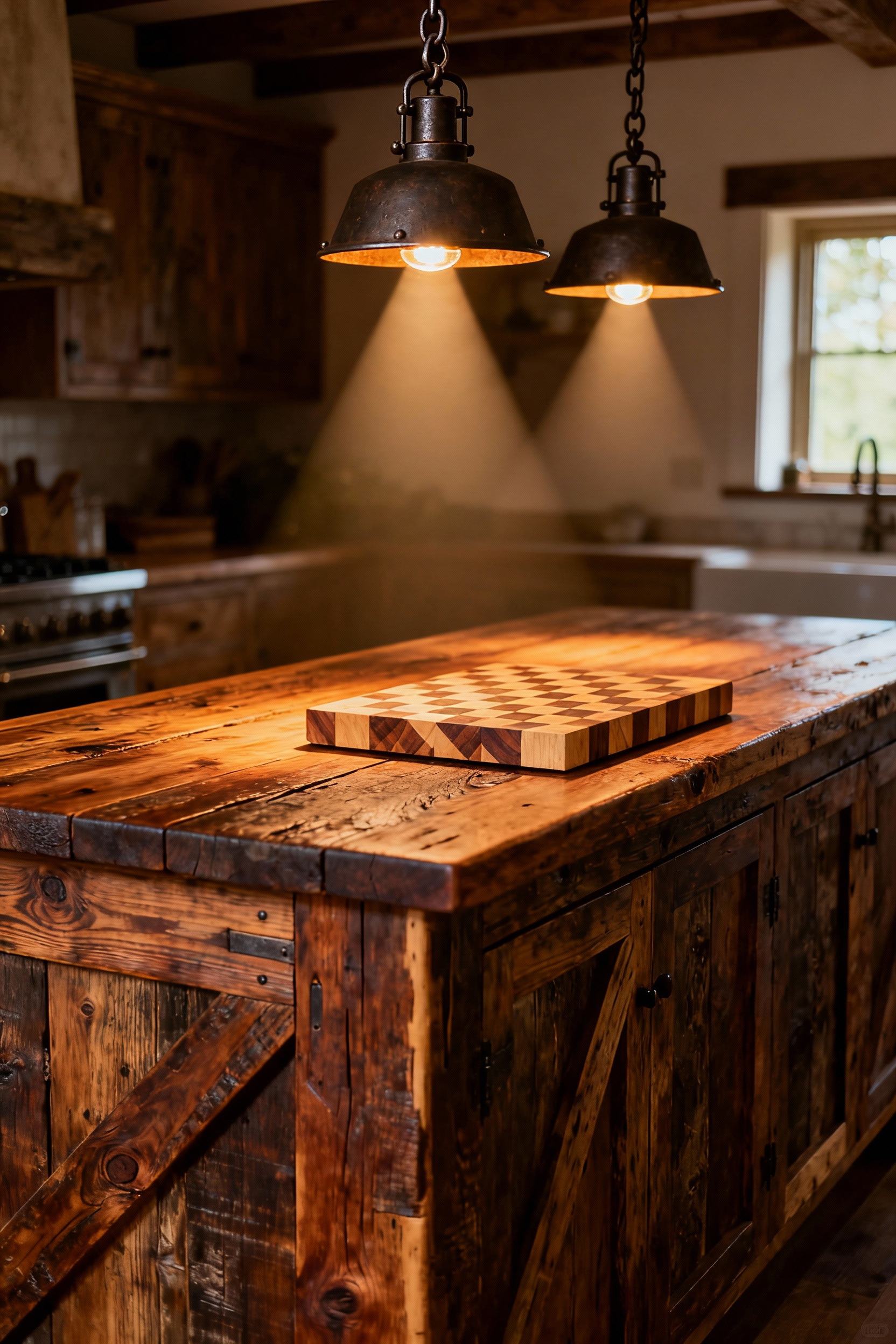
A pair of thoughtfully chosen pendants, hung at the correct height, can cast a focused, shadow-free glow on the main work surface. This is your task lighting. But it is just as important to consider the quality of that light. A warm, soft light will beautifully accentuate the grain of wood or the veining in a piece of stone. It’s this attention to detail that elevates the design, allowing the island to shift effortlessly from a bright, functional workstation to a warm, welcoming gathering spot in the evening.
Harmonizing Form and Function: Integrating the Island within Culinary Spaces (Part 2)
As we refine our understanding, we focus on the foundational details that define a space’s inherent grace. It is often the quietest elements—the turn of a leg, the line of an apron—that lend the most character and anchor the piece within its home.
15. Calibrating Leg Details and Apron Design to Ground the Island Aesthetically within the Room
The legs and apron are the foundation of the island, not just structurally, but visually. They determine its character, its sense of permanence, and how it connects to the floor. These are the details that communicate whether the island is a piece of fine furniture or simply a block of cabinets. In my experience, getting this calibration right is what grounds the piece and makes it feel as though it truly belongs.
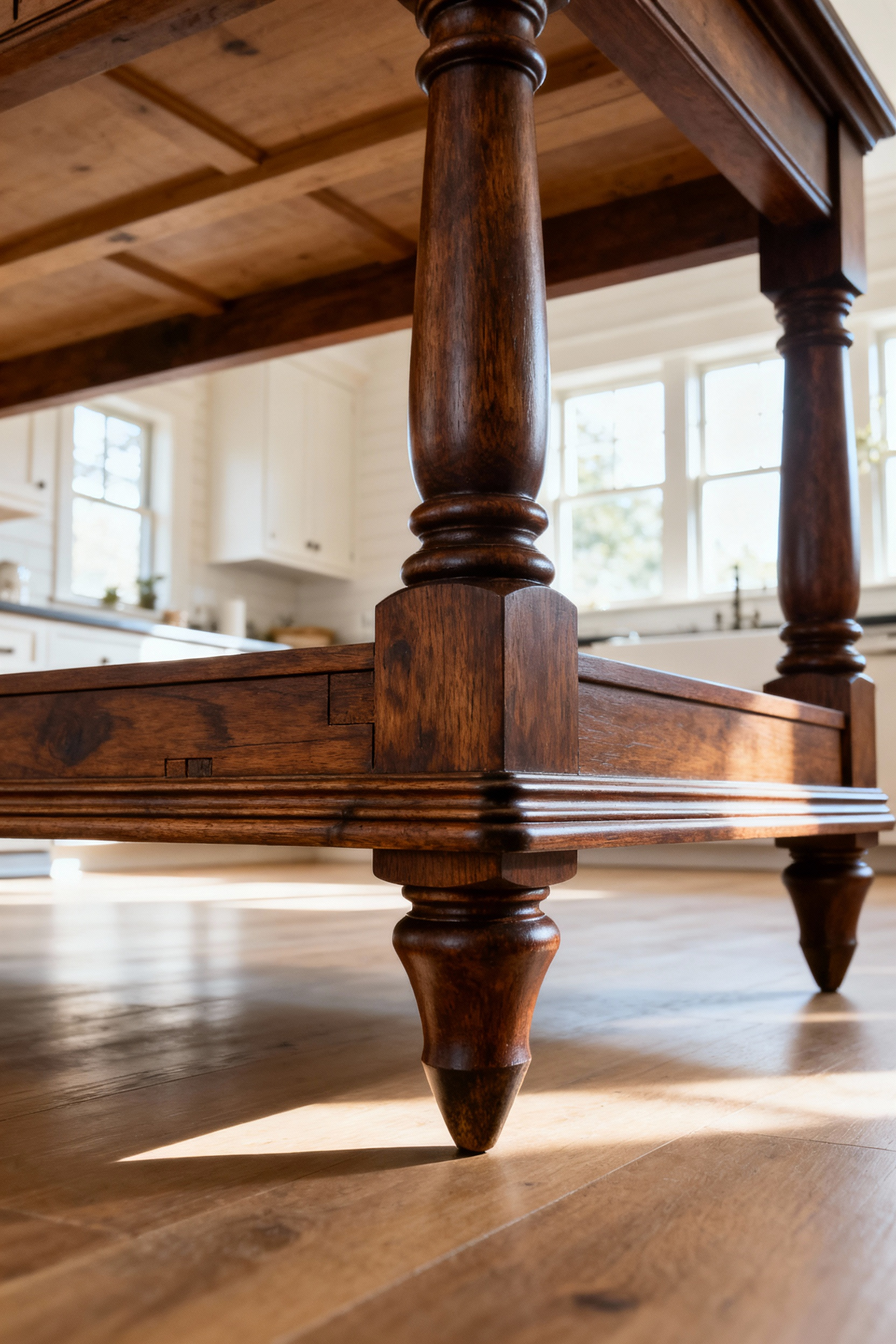
The options here tell a story. Robust, turned legs in reclaimed oak speak to a rustic, agrarian charm. More slender, tapered legs in a limewashed maple suggest a refined, almost Scandi-farmhouse elegance. The apron—the horizontal band below the countertop—further defines this language. A simple, flat apron lets the wood grain shine, while a beaded or paneled one connects the island to the surrounding cabinetry. It is in these details that the true spirit of the farmhouse aesthetic—warmth, function, and enduring quality—finds its most profound expression.
The Heartbeat of Home: Curating Lived Experience around the Farmhouse Island (Part 1)
An island is more than wood and stone; it is the stage for our lives. It’s where daily rituals unfold and memories are made. The most successful designs anticipate this, creating a space that is not only beautiful but deeply resonant with human experience.
16. Cultivating a Narrative of Inherited Charm through Curated Decorative Artifacts
The most compelling spaces whisper stories. A farmhouse island provides the perfect canvas for this. It’s about more than decoration; it’s about curating a collection of artifacts that feel personal and imbued with soul. It’s a gentle rejection of the mass-produced in favour of objects with history and character—a hand-thrown ceramic pitcher, a vintage wooden cutting board scarred with use, a stack of treasured family cookbooks.
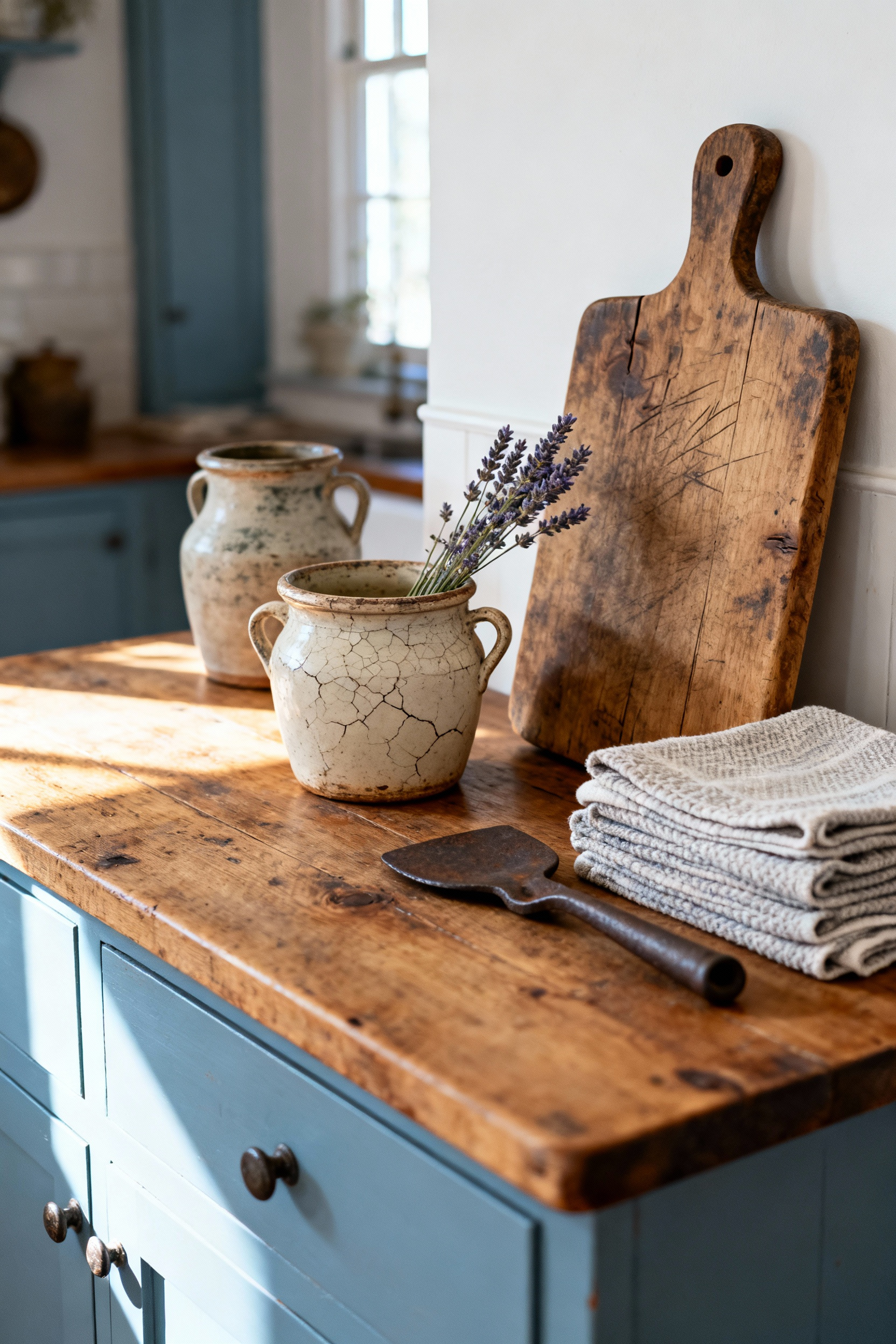
The key is to create small, evocative vignettes rather than perfectly symmetrical displays. Think of a trio of objects with varying heights and textures. In my work, I love balancing something old and rustic with something sleek and new—it creates a beautiful dialogue. A collection of items on an island shouldn’t feel static; it should feel like a living, breathing part of the home, inviting conversation and contemplation. It is this personal layer that transforms a beautiful kitchen into a truly cherished home.
17. Designing an Alcove for Cherished Cookbooks to Elevate the Island beyond Pure Utility
Integrating a small alcove for cookbooks into the island itself is a beautiful statement. It signals a reverence for culinary tradition and elevates the island from a simple workspace to a hub of learning and inspiration. Rather than being hidden away, the books become part of the room’s intellectual and sensory fabric. It’s a detail that says, “This is a home where food, stories, and knowledge matter.”
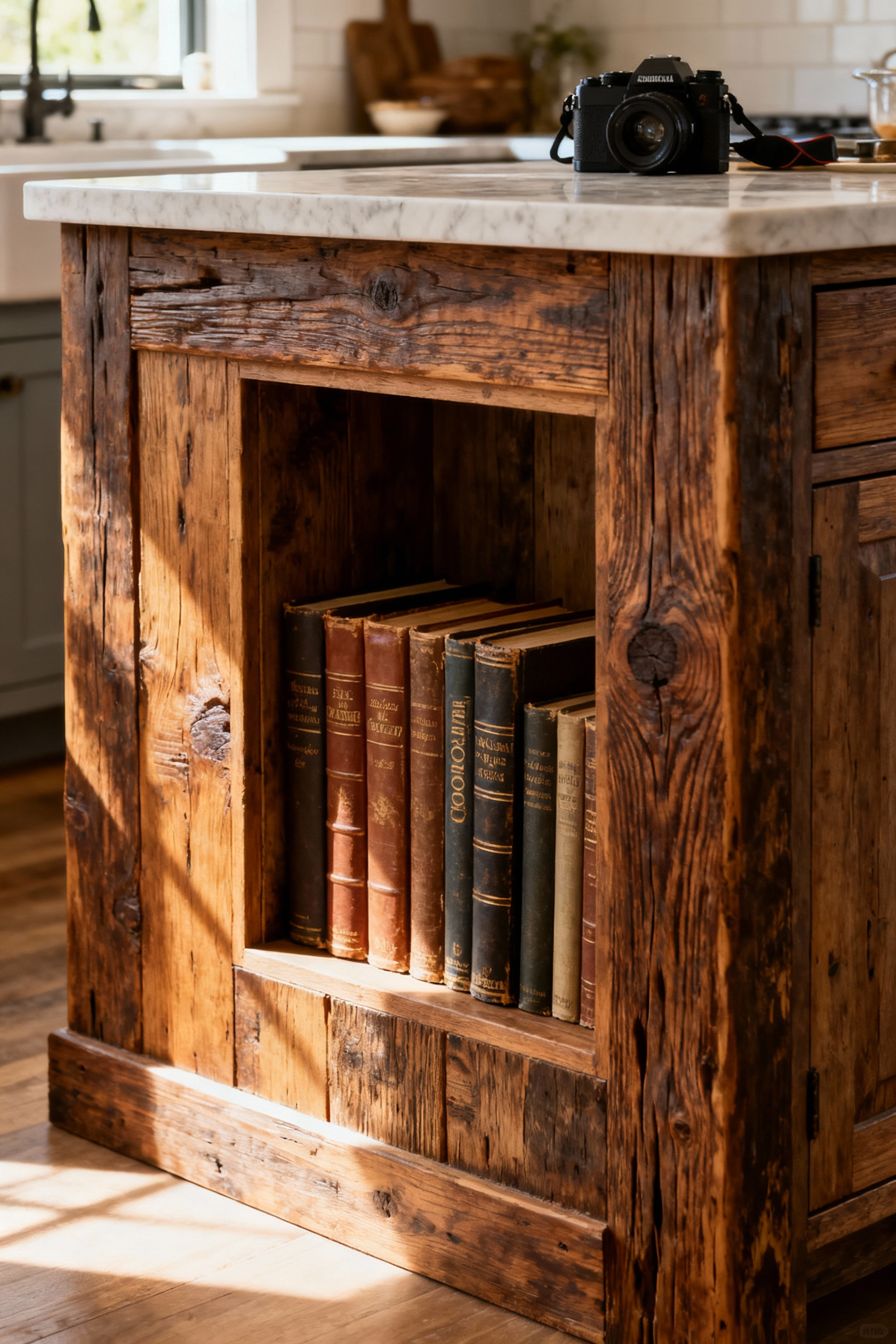
The execution should feel seamless, with custom millwork that matches or complements the island’s material. A recessed nook at one end or an open cubby on a side can beautifully house a curated collection of beloved tomes. It becomes a small library at the heart of the home, its presence encouraging a deeper engagement with the art of cooking. The island is no longer just for creation, but for contemplation too.
18. Concealing Integrated Power Solutions for Seamless Connectivity without Visual Intrusion
In today’s world, accessible power is a necessity, but visible outlets can disrupt the timeless feel of a farmhouse kitchen. The solution is discreet integration, where modern functionality serves the design without being seen. The goal is quiet efficiency—technology that is present but never imposing.
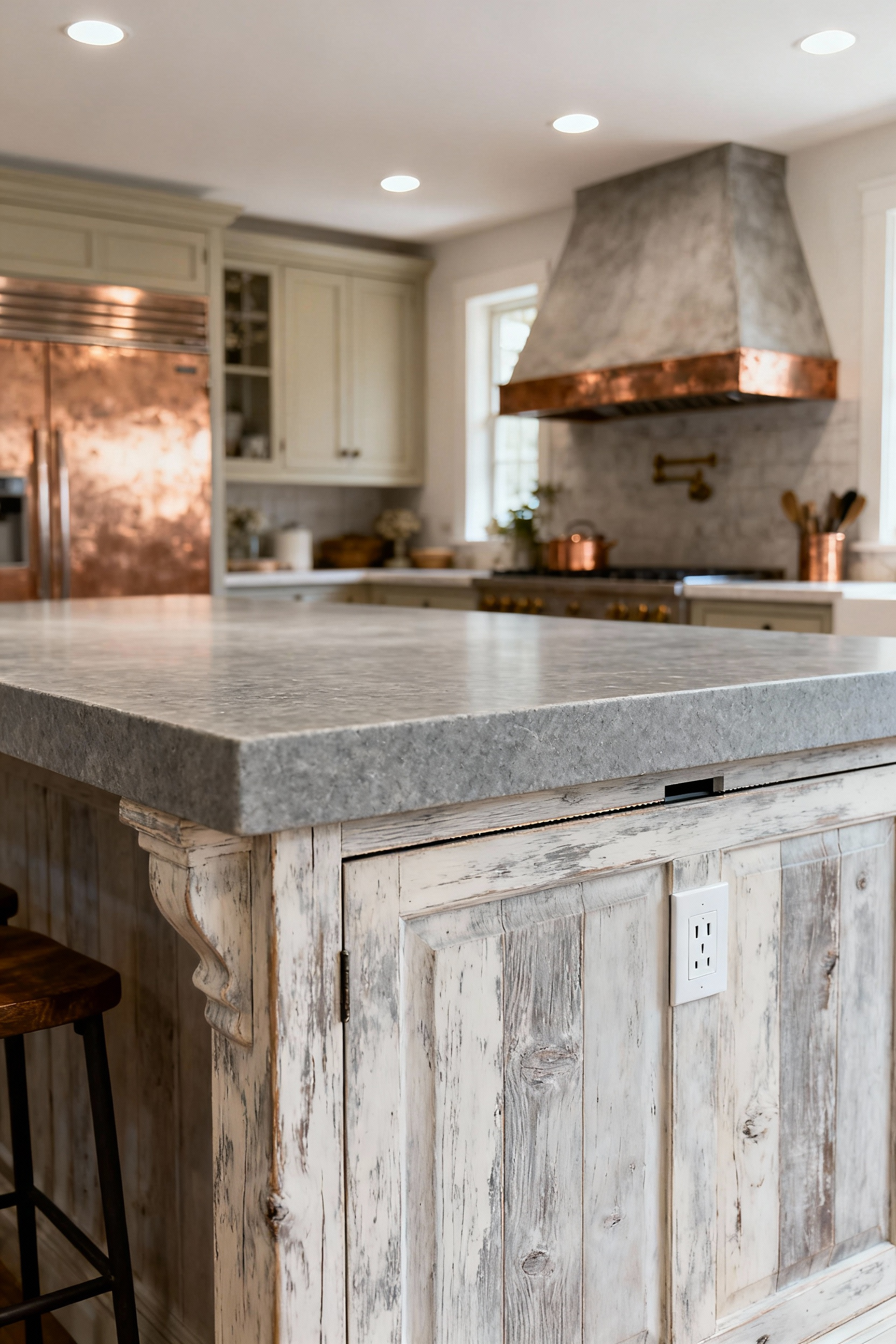
I often specify pop-up outlets that rise from the countertop only when needed, or charging stations with USB ports hidden inside a shallow drawer. For a truly seamless look, custom panels matching the cabinetry can slide or pivot to reveal power strips. This careful planning ensures the island can be a versatile hub for a laptop, a stand mixer, or charging phones, all without compromising its elegant, heirloom appearance. It is the perfect marriage of timeless aesthetics and modern life.
19. Establishing Thoughtful Seating Arrangements that Encourage Familial Connection and Dialog
Ultimately, an island’s greatest success is its ability to bring people together. The seating should be designed not just for perching, but for lingering. The island is the modern hearth, a magnet for gathering, and the seating must encourage comfortable, intimate conversation.
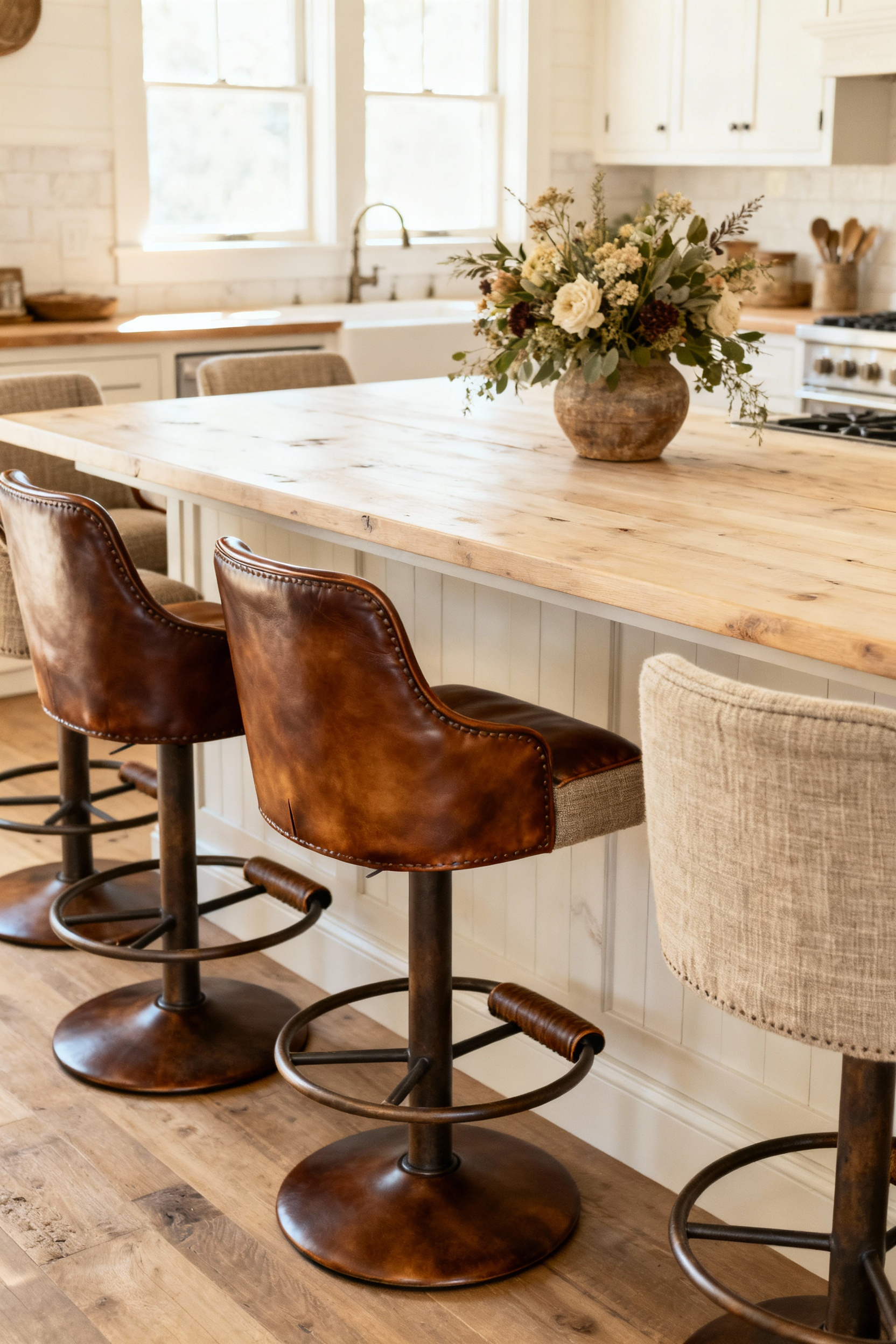
Comfort is paramount. Think of sturdy wooden stools with upholstered seats in durable linen or aged leather. Consider arrangements that orient people toward each other—placing two stools at a corner, for instance, instead of in a straight line. Ample knee space and a footrest are non-negotiable for real comfort. I have always found that when the seating is generous and thoughtfully arranged, the island becomes the natural stage for everything from homework sessions to long conversations over a glass of wine, truly solidifying its role as the heartbeat of the home.
The Heartbeat of Home: Curating Lived Experience around the Farmhouse Island (Part 2)
A truly remarkable island doesn’t just serve the present; it gracefully anticipates the future. It’s designed with the foresight to accommodate the shifting rhythms of family life, becoming a quiet testament to enduring, adaptable design.
20. Ensuring Future Adaptability through Modular Design for Evolving Household Dynamics
The most enduring homes are not rigid but benevolent and flexible, able to mature alongside their inhabitants. This idea can be beautifully applied to a farmhouse island, transforming it from a fixed monument into a responsive partner in domestic life. Designing for adaptability ensures that the investment you make today remains relevant and cherished for years to come.
This could mean an island composed of a fixed prep area and a movable trolley that can be wheeled out for extra surface space when entertaining. Or it could be as simple as designing interior cabinets with adjustable shelving that can pivot from storing baking supplies to housing children’s art materials. In a more ambitious approach, modular sections could allow for future expansion. This foresight allows the island to gracefully evolve with the family, forever ready to embrace the next chapter of life within the home.
Conclusion
So you see, the journey to creating the perfect farmhouse kitchen island is about so much more than dimensions and materials. It’s a thoughtful composition of history, craft, and personal narrative. Across these twenty principles, a single truth remains: a truly exceptional island is never just assembled; it is conceived with soul. It stands as a modern hearth, a place where the artistry of cooking meets the warmth of human connection.
To me, the most beautiful design honours the past while serving the present with grace. A farmhouse island at its best does exactly that. It becomes a cultural artifact within your own home, reflecting a life of considered choices and a deep appreciation for things that last. I hope you will use these ideas not as strict rules, but as inspiration to create a focal point that anchors your home’s story—a beautiful, functional, and deeply resonant testament to a life thoughtfully lived.