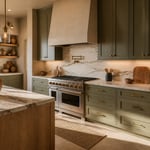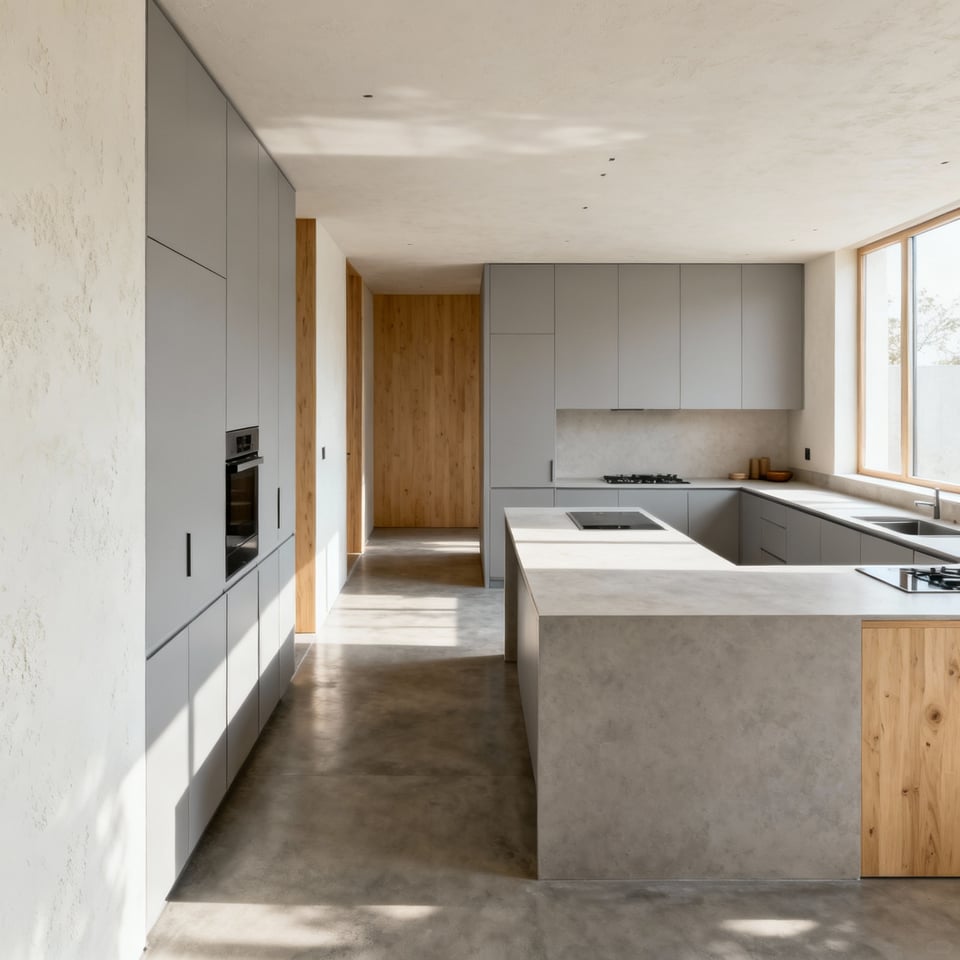
The way we shape our homes is an act of self-revelation. Every choice reflects not just a surface preference, but a deeper statement about how we believe life should be lived. The most compelling kitchens aren’t merely installed; they are authored. They tell a story of intention, clarity, and harmony. These twenty principles separate a truly serene space from one that is simply well-appointed. For you, the goal is to find kitchen remodeling ideas that build not just a room, but a sanctuary.
Part I: The Philosophy of Space
Before we speak of materials or layouts, we must begin with intention. These principles are the philosophical bedrock upon which a truly mindful kitchen is built. They govern the feeling of the space, turning architecture into atmosphere.
1. Cultivating Ma (The Art of Negative Space)
The foundational concept in Japanese design is Ma (間)—the intentional space between things. It isn’t about emptiness; it’s about giving objects, thoughts, and moments room to breathe. In the kitchen, Ma is the uncluttered countertop that invites you to create, not the one covered in appliances. It is the generous pathway that allows for effortless movement, transforming the act of cooking into a graceful dance.
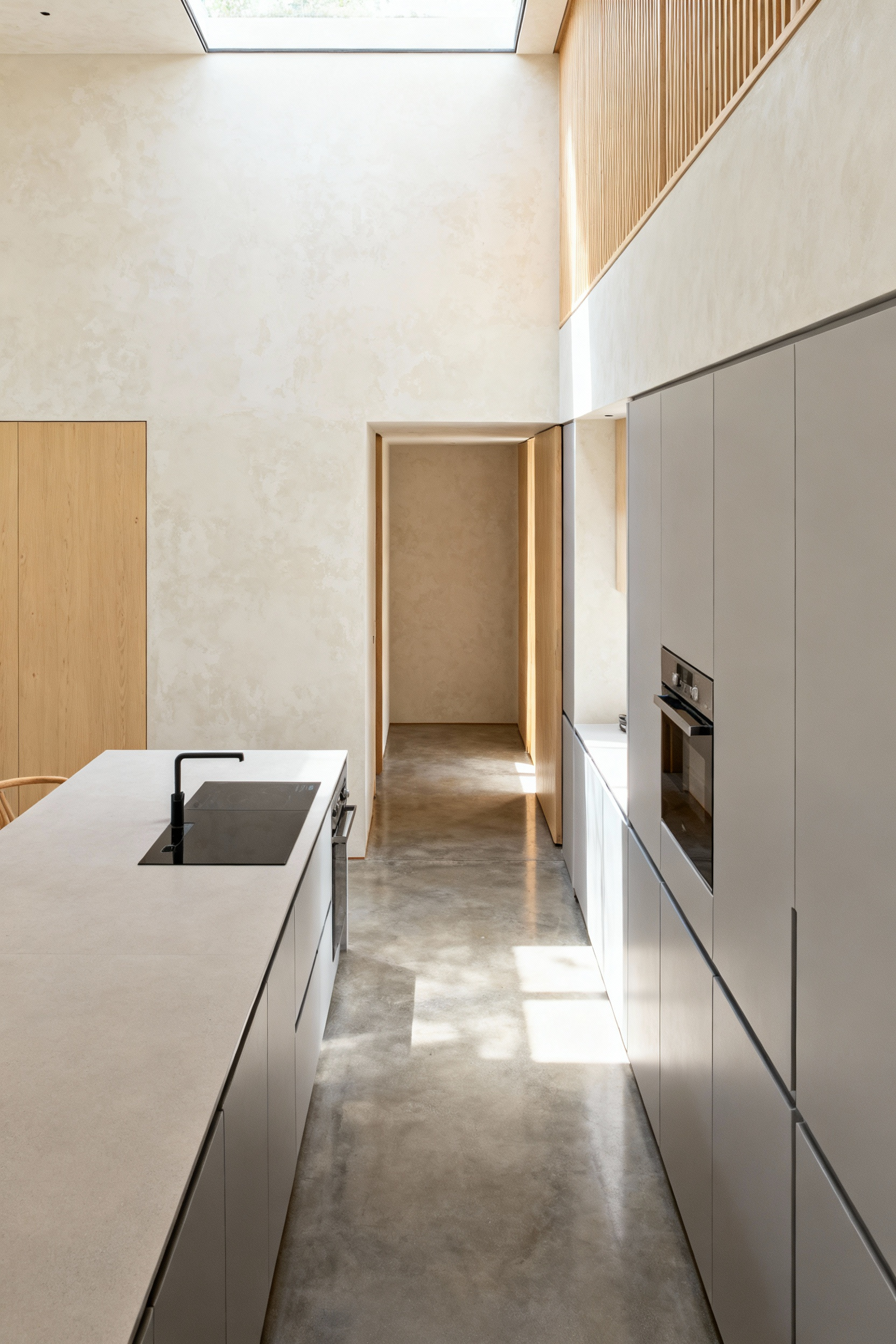
Resist the modern urge to fill every void. Think of cabinetry that feels more like a quiet architectural element than a block of storage. In my practice, the biggest breakthroughs often happen when we remove something. I’ve seen a kitchen transform not by adding an expensive feature, but by taking out a set of bulky upper cabinets. Suddenly, the light flowed in, and the entire room could exhale. That is the power of Ma.
2. Embracing Wabi-Sabi (The Beauty of Imperfection)
While Western design often chases flawless perfection, Wabi-Sabi finds profound beauty in imperfection and the authenticity of age. It’s a respect for materials that tell a story. In your kitchen, this isn’t an excuse for sloppiness; it’s a deliberate choice. It is the single plank of reclaimed wood with a story etched into its grain, or the handcrafted tile with subtle variations that show the maker’s hand.
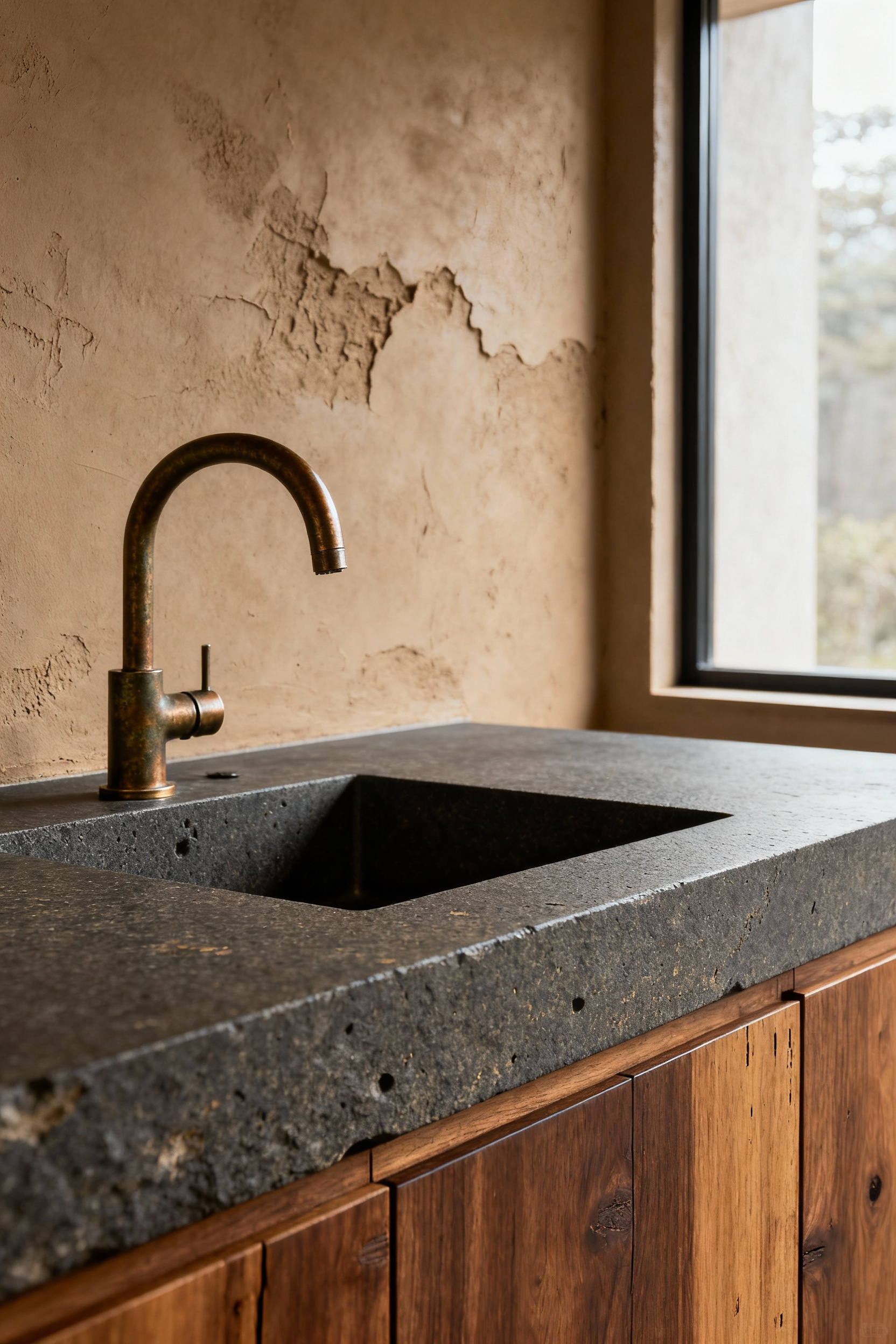
A wabi-sabi kitchen chooses a honed slate countertop that will develop a rich patina over decades of use, rather than a synthetic surface that will look the same on day one thousand as it did on day one. It embraces the signs of a life well-lived. What I tell my clients is this: don’t fear a scratch on a wooden table. It’s now part of your home’s story. That mindful acceptance is the heart of a calm space.
3. Designing for Biomimetic Flow
Nature is the ultimate engineer of efficiency. Biomimicry simply means learning from its systems. A kitchen shouldn’t be a rigid triangle of appliances you must navigate; it should flow like a stream. Think about the natural choreography of cooking: from refrigerator, to sink, to prep space, to cooktop. This path should be fluid and intuitive, without obstacles or awkward turns.
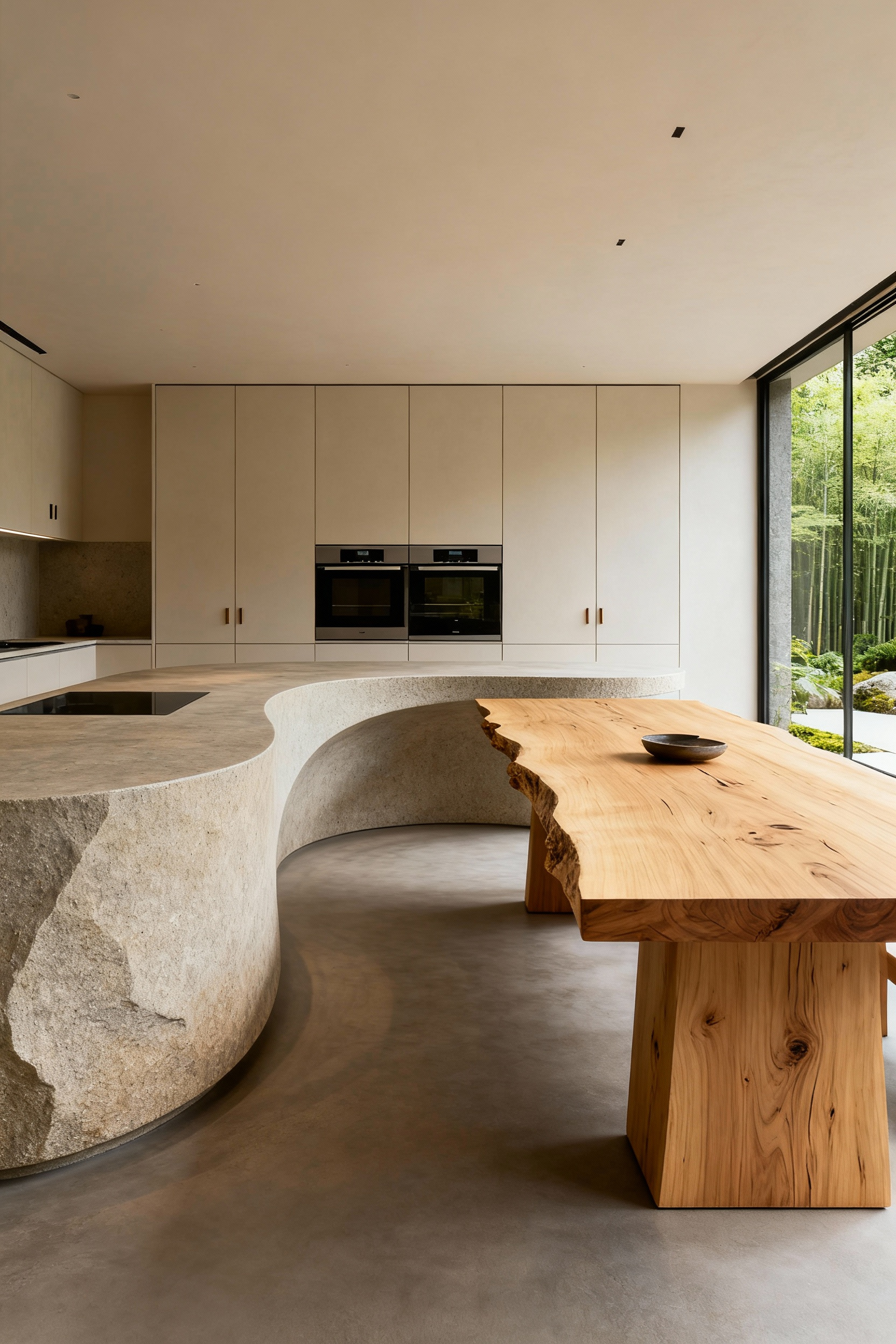
This might mean creating a circular path around an island or placing a small prep sink where you actually chop vegetables. Ergonomics are key—counter heights adjusted for you, drawers that glide open effortlessly. The goal is to make the physical work of cooking feel so natural that you can focus entirely on the creative act itself. It’s about removing friction between you and your work.
4. Integrating the Five Elements for Balance
Traditional Eastern philosophy uses the five elements—Wood, Fire, Earth, Metal, Water—as a framework for creating harmonious energy. You don’t need to be a mystic to appreciate the logic. It’s about creating balance. Placing a “fire” element like a cooktop directly opposite a “water” element like a sink can create a subtle sense of conflict.
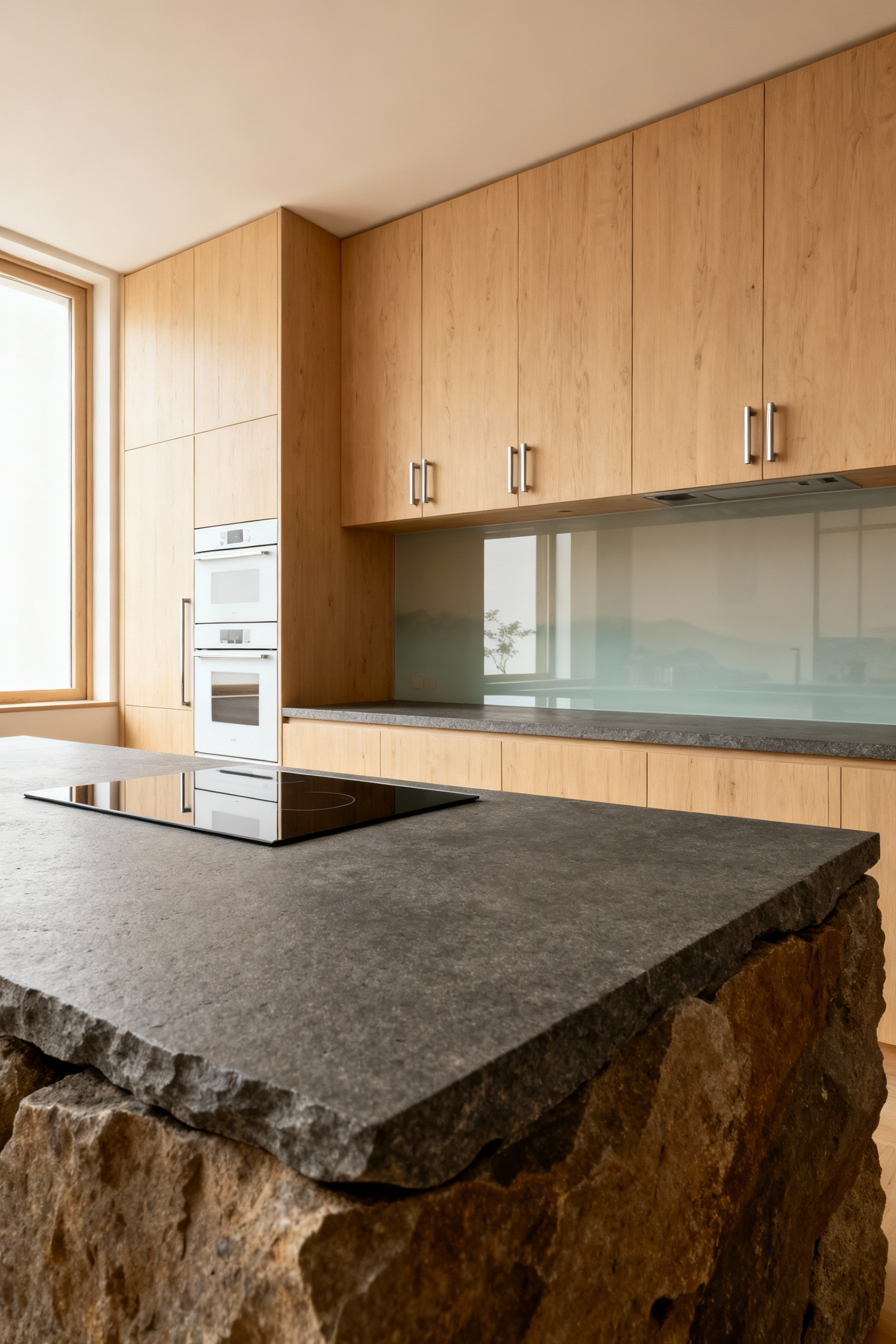
Instead, use a mediating element. Separate them with an “earth” element, like a stone countertop, or a “wood” element, like a butcher block. Wood cabinetry provides growth and vitality. The stove is the heart, the fire. Stone or tile grounds the space with earthy stability. Metal appliances and fixtures add precision, while the sink represents cleansing and flow. Intentionally balancing these energies creates a room that just feels right, even if you can’t put your finger on why.
Part II: The Language of Materials
The surfaces you touch and see every day define the character of your kitchen. Material choice is not decorative; it is fundamental. Here, we choose materials for their integrity, their sustainability, and their quiet beauty.
5. Achieving Visual Silence
A Zen kitchen is visually quiet. This is achieved through strategic concealment and a disciplined minimalist approach. It’s about reducing the cognitive load that comes from a cluttered environment. Handle-less cabinetry with touch-to-open mechanisms creates an unbroken, monolithic surface. Integrated appliances disappear behind panels, refusing to visually shout for attention.
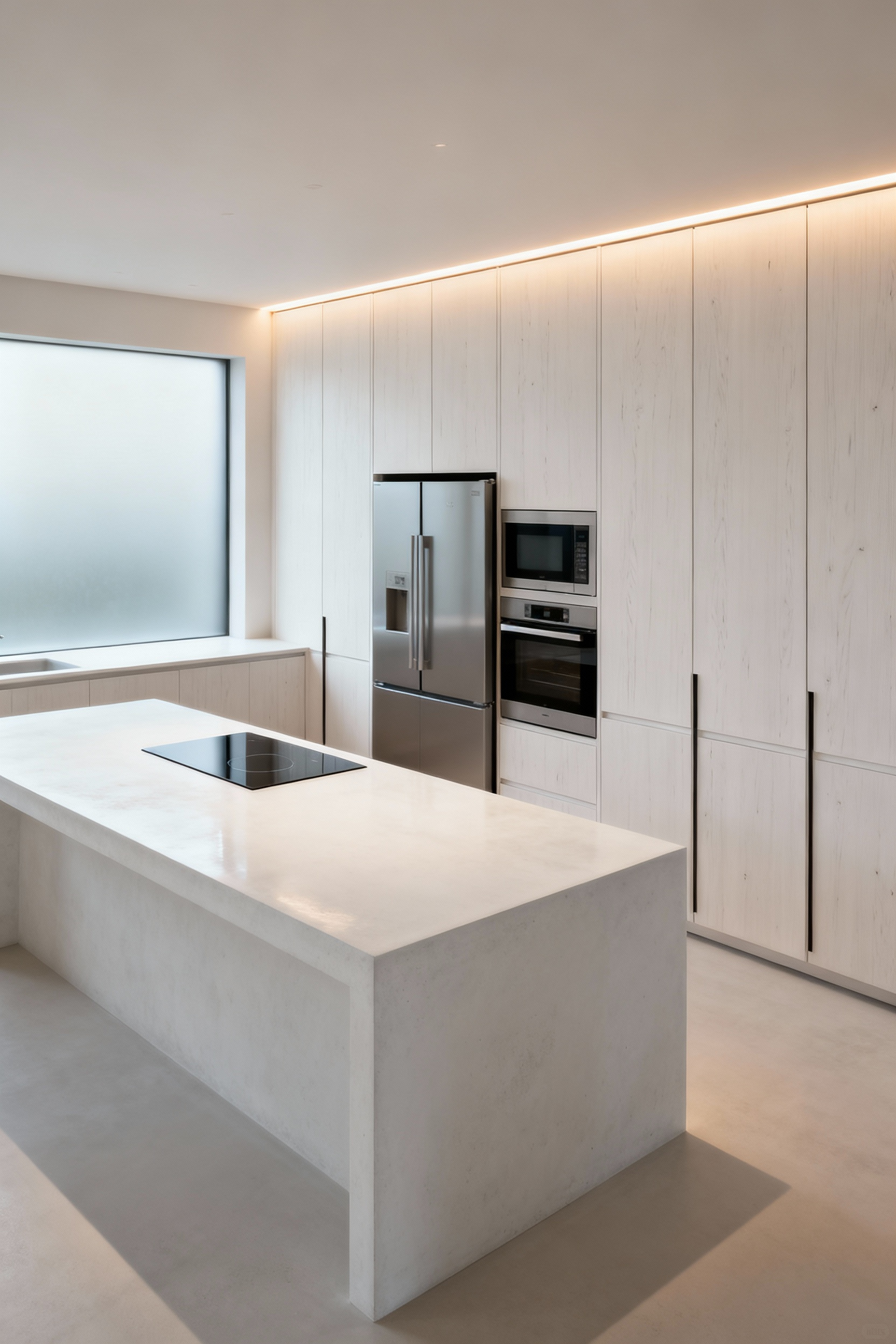
Think of it as an architecture of calm. An appliance garage with a pocket door can hide the toaster and blender, leaving your countertop as a serene, open plane. This isn’t just about being tidy. What I’ve learned from designing mindful spaces is that visual silence gives your mind the permission to be silent, too. It’s a prerequisite for focus and peace.
6. Using Regenerative Limestone and Tadelakt
For walls and backsplashes, look beyond conventional tile. Regenerative limestone, ethically sourced, and Tadelakt, a traditional Moroccan lime plaster, create seamless, breathing surfaces. Tadelakt is polished by hand with river stones, resulting in a finish that is waterproof, soft to the touch, and has a subtle, luminous depth.
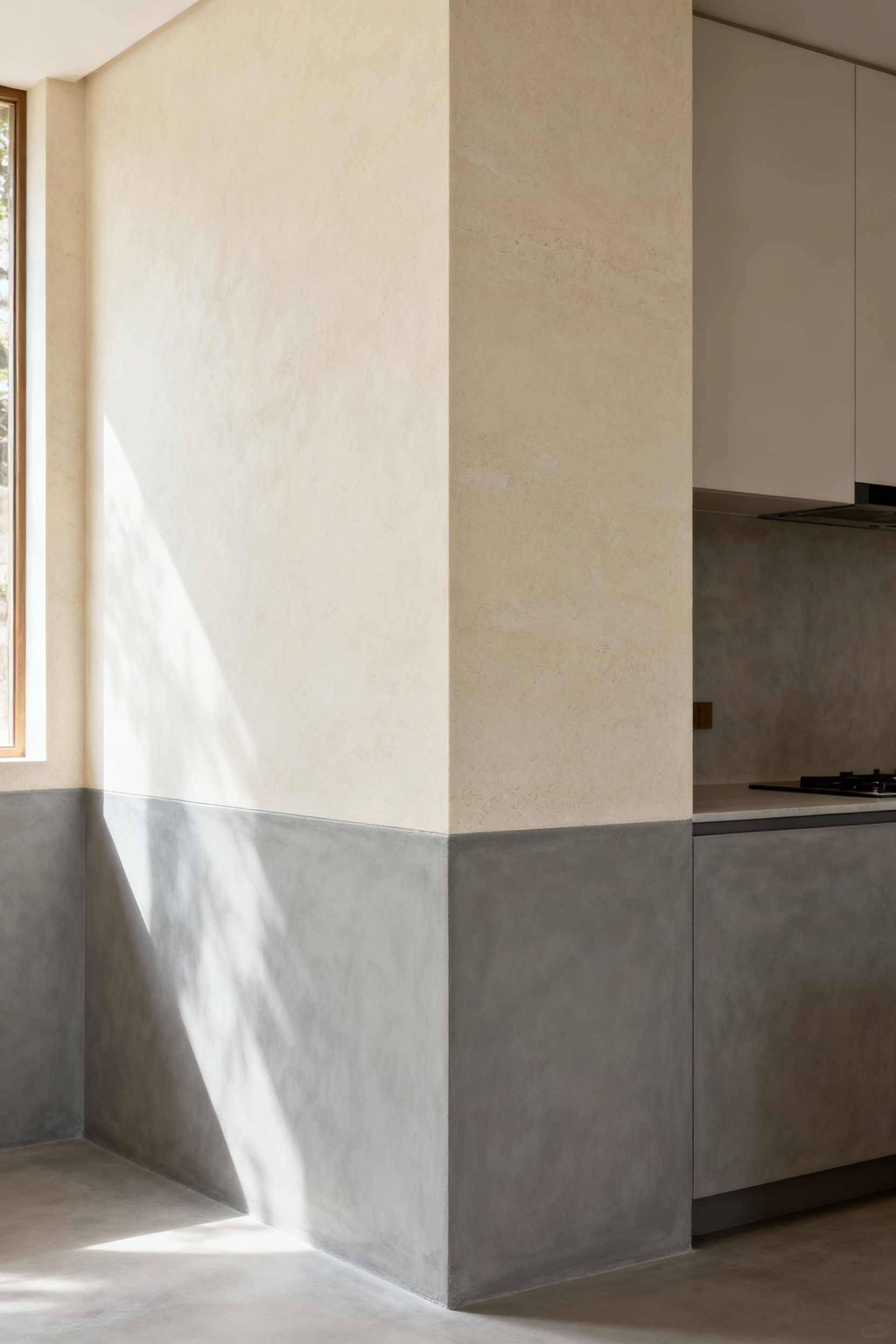
These materials eliminate the visual static of grout lines, creating a monolithic calm. Their natural composition also helps regulate humidity, contributing to a healthier indoor environment. It’s a choice that connects the room back to the earth in a very tangible way, providing a serene backdrop for daily life.
7. Evoking Patina with Reclaimed Wood and Shou Sugi Ban
To bring warmth and history into a minimalist space, consider reclaimed hardwoods treated with Shou Sugi Ban (or yakisugi). This ancient Japanese technique involves charring the surface of wood to preserve it. The result is a stunningly beautiful, deeply textured finish—from matte black to a silvery alligator skin—that is naturally resistant to pests and rot.
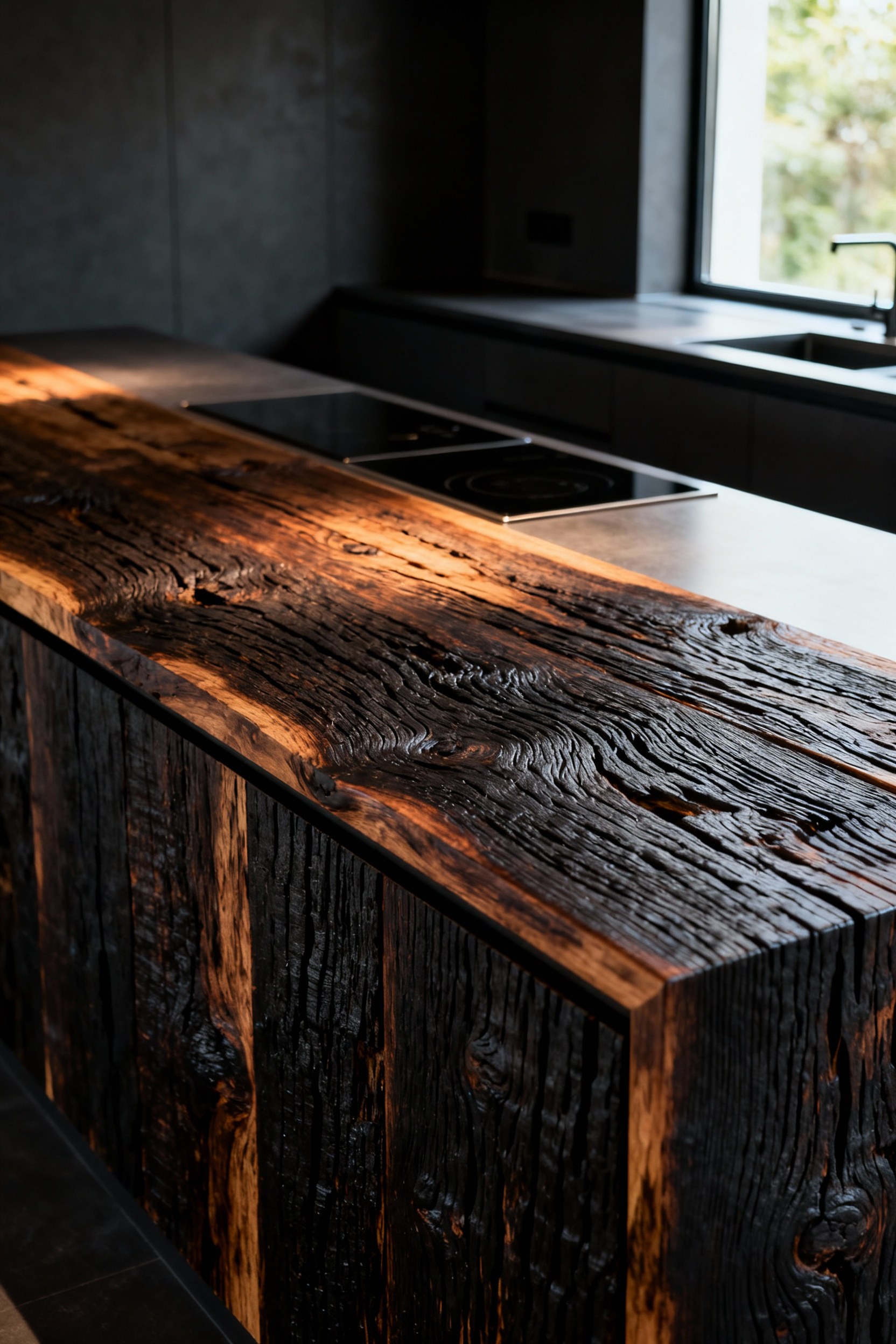
Using this for cabinetry fronts or an island base creates a powerful focal point that feels both ancient and modern. It’s a perfect example of wabi-sabi, as the charring highlights the wood’s grain and imperfections. I learned the power of this when I designed a kitchen with shou sugi ban cabinets against a pale plaster wall. The contrast was dramatic yet deeply calming, a testament to material with soul.
8. Specifying Engineered Quartz for Modern Practicality
A Zen sanctuary must also function in the real world. While we revere natural materials, some modern challenges require modern solutions. High-quality engineered quartz is a respectful nod to practicality. It offers the visual serenity of natural stone but with a non-porous, hygienic, and virtually indestructible surface.
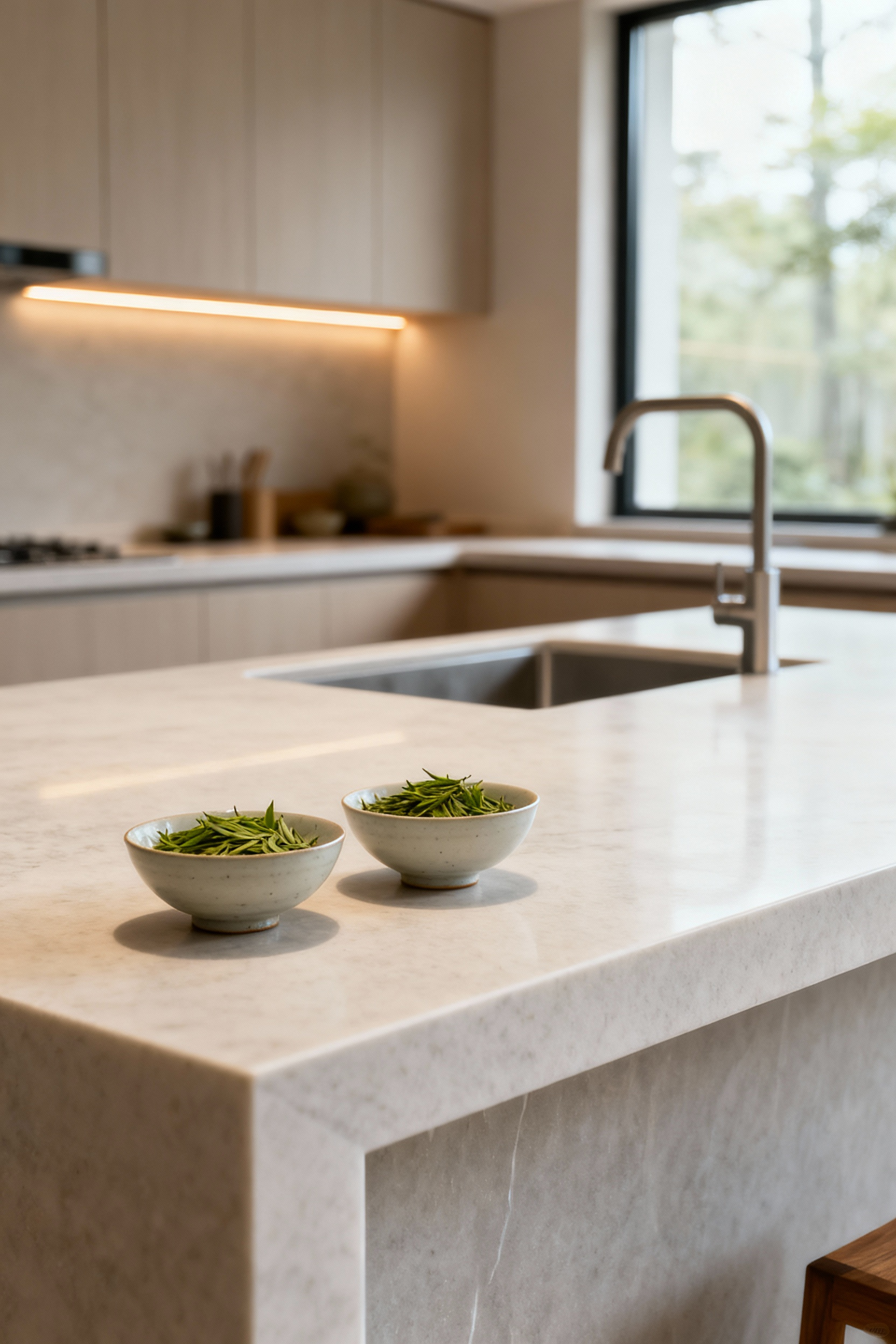
This is where the tech-savvy aspect of my philosophy comes in. There is no serenity in worrying about a wine spill staining your marble. A sleek, monolithic quartz countertop provides peace of mind through performance. It is an intentional choice that liberates you from maintenance, allowing you to simply live in and enjoy your space without anxiety.
9. Incorporating Ceramic-Reinforced Veneers
For cabinetry that must withstand the rigors of a busy home, ceramic-reinforced veneers offer an incredible fusion of technology and aesthetics. These are not your grandmother’s laminates. Thin layers of porcelain are fused to a stable substrate, creating a surface that is virtually immune to scratches, heat, and fading.
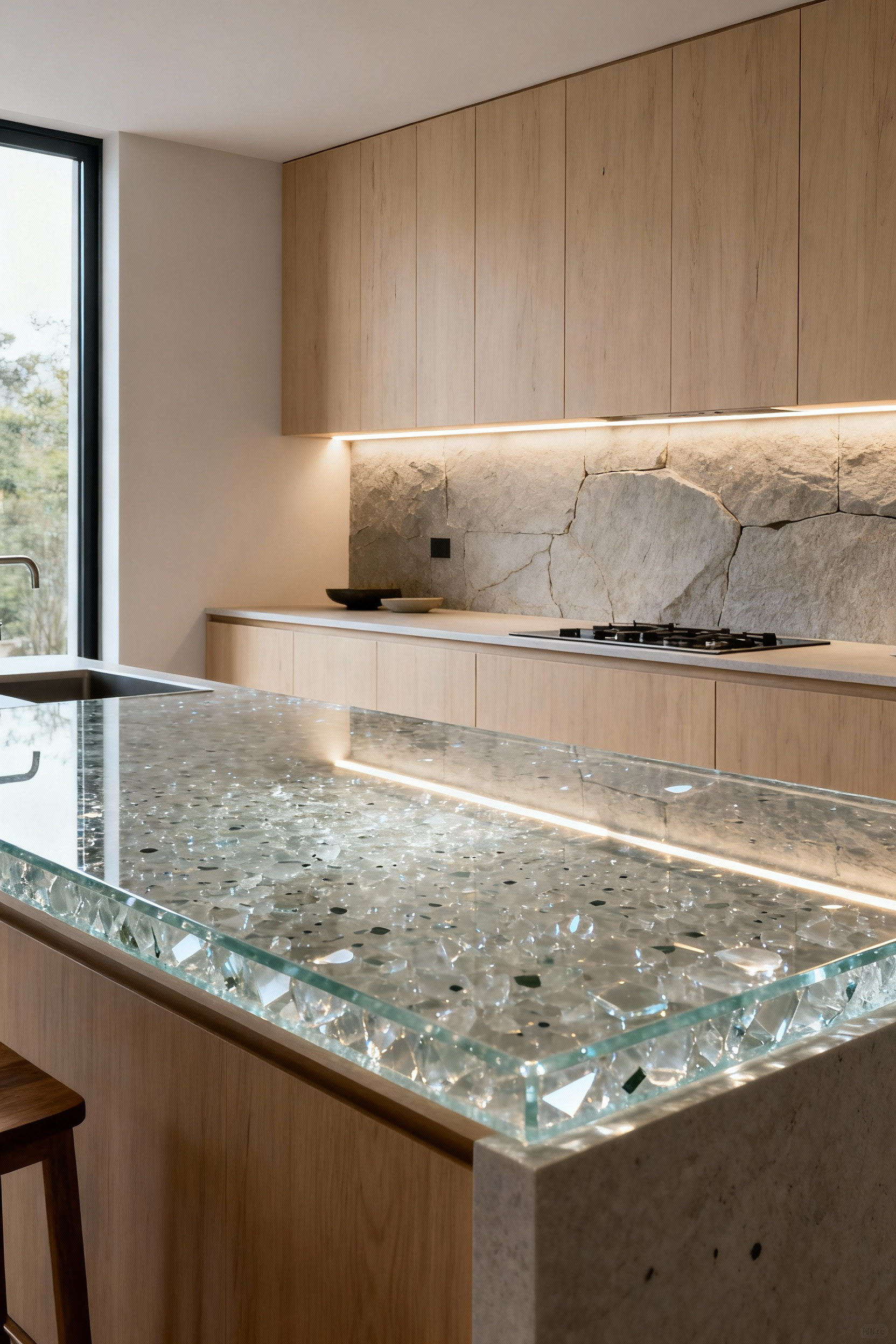
This technology allows you to have the perfect, uninterrupted look of rare marble or raw concrete without any of the associated fragility or upkeep. The doors on your cabinets can be perfectly aligned, with razor-thin tolerances, creating a precise architectural statement. It is a long-term investment in unchanging beauty and effortless living.
10. Choosing Recycled Glass for Luminous Sustainability
A commitment to mindful living includes a commitment to the planet. Recycled glass countertops are a beautiful expression of this principle. Made from post-consumer glass set in a binder, they offer a unique, luminous quality. Depending on the glass fragments used, the surface can subtly shimmer or display bold flecks of color.
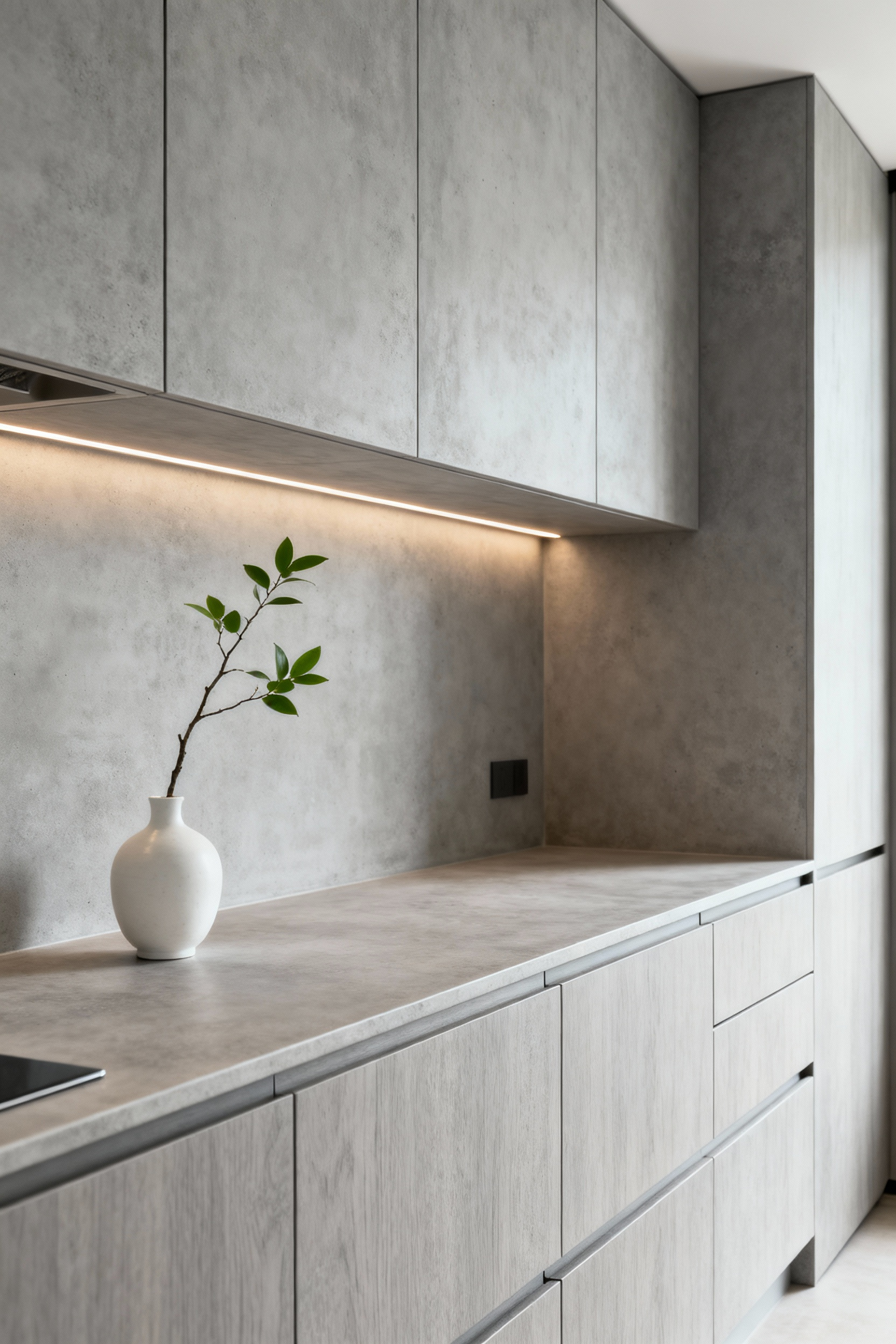
These surfaces catch the light in a way no other material can, adding a bright, expansive feeling to the kitchen. Like quartz, they are non-porous and durable. Choosing a material like this is a statement. It says that beauty and responsibility can, and should, coexist.
Part III: The Choreography of Flow
A well-designed kitchen feels less like a workstation and more like a stage for a beautifully choreographed performance. Intelligent optimization isn’t about cramming more in; it’s about making every movement purposeful and effortless.
11. Orchestrating a Kinetic Work Zone
Forget the rigid “work triangle.” Modern cooking is more dynamic. I think of it as a kinetic work zone, where the flow between tasks is paramount. Your layout should support your personal culinary dance, whether you’re a baker, a weeknight meal prepper, or an avid host. This might mean having a long, unbroken island for prep or dedicated zones for specific tasks.
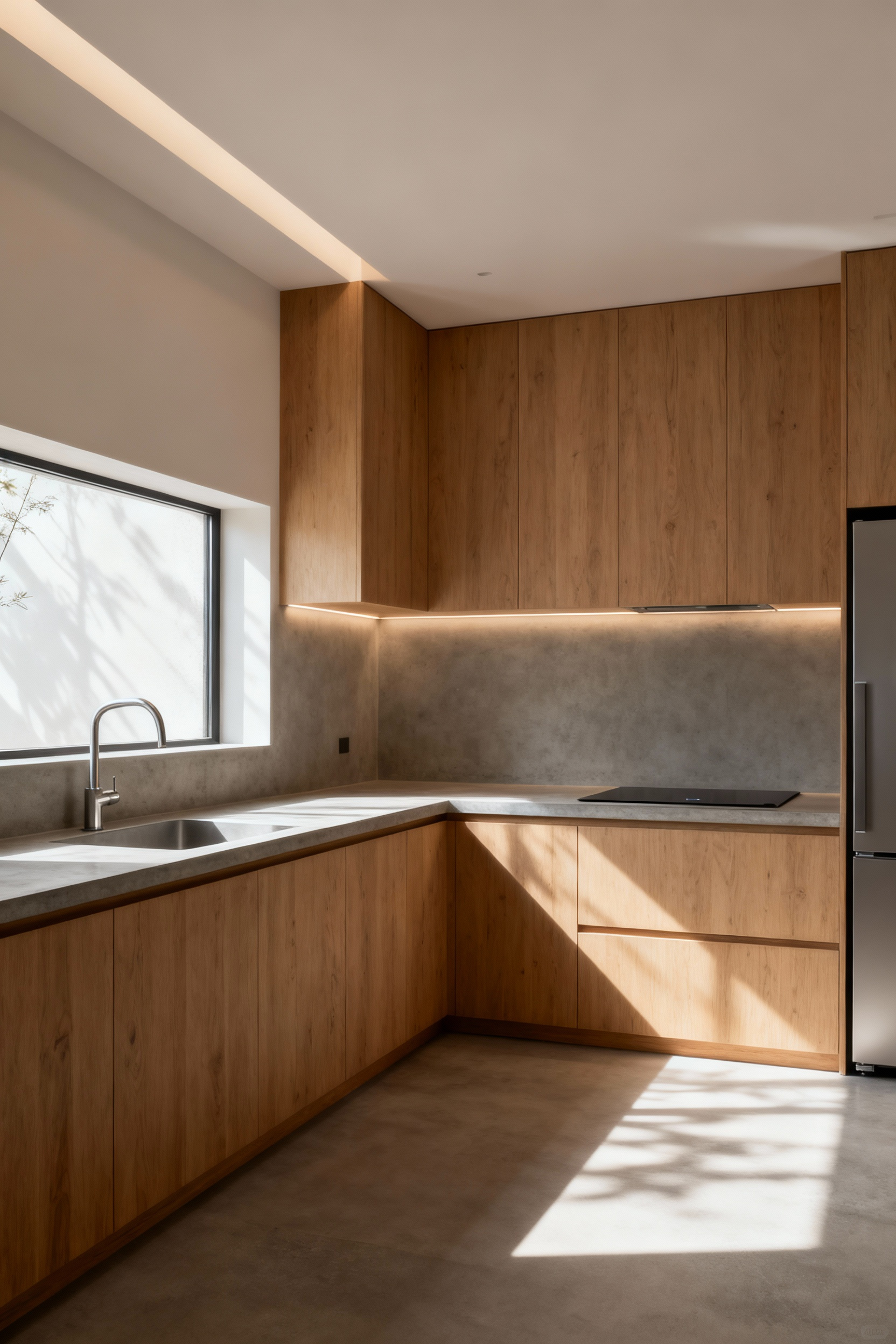
The goal is to minimize wasted steps and mental friction. When your layout is intuitive, your body moves on autopilot, freeing your mind to be creative. In my professional experience, mapping out how a client actually cooks—not how they think they should—is the key to unlocking the perfect flow for them.
12. Integrating Tiered, Ergonomic Storage
True serenity comes from knowing that everything has its place and is easily accessible. Ergonomic, tiered storage is the answer. This means deep drawers with internal organizers that present your tools to you, rather than shallow cabinets where things get lost in the back. Pull-out pantries and corner systems that swing out bring the contents to you, eliminating bending and searching.
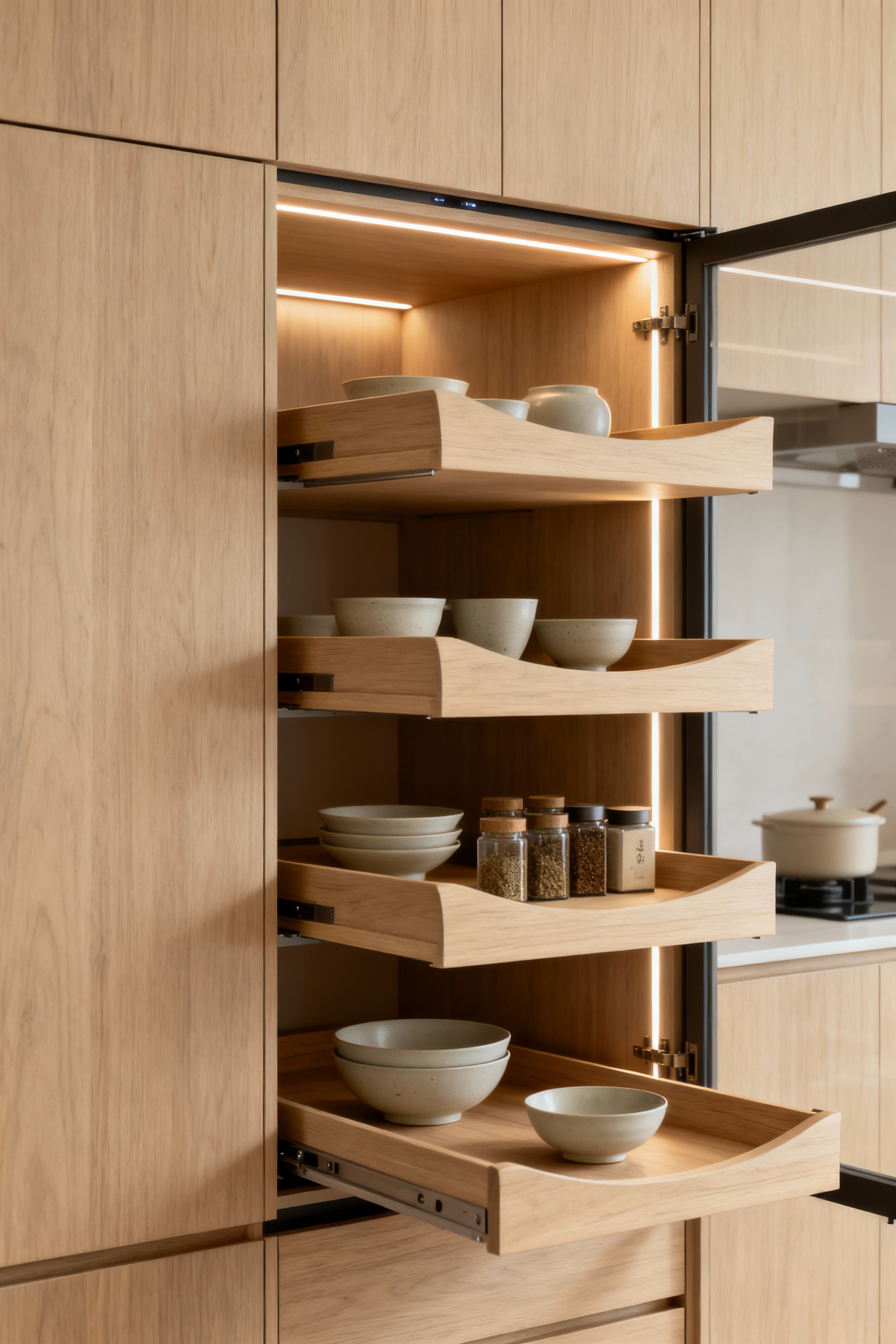
The feeling of gliding open a perfectly organized drawer is a small, daily moment of joy. It’s a form of respect for your tools and your time. I tell my clients that great storage design is like having a silent assistant in the kitchen, anticipating your every need before you even realize it.
13. Concealing High-Performance Ventilation
A powerful ventilation system is non-negotiable for a clean and healthy home, but a bulky range hood can dominate a room visually. The elegant solution is concealment. Today’s technology offers incredibly effective options that disappear. Downdraft systems that rise from the countertop only when needed, ceiling-flush units, or extractors built directly into induction hobs keep the air clean without breaking the serene sightlines of your kitchen.
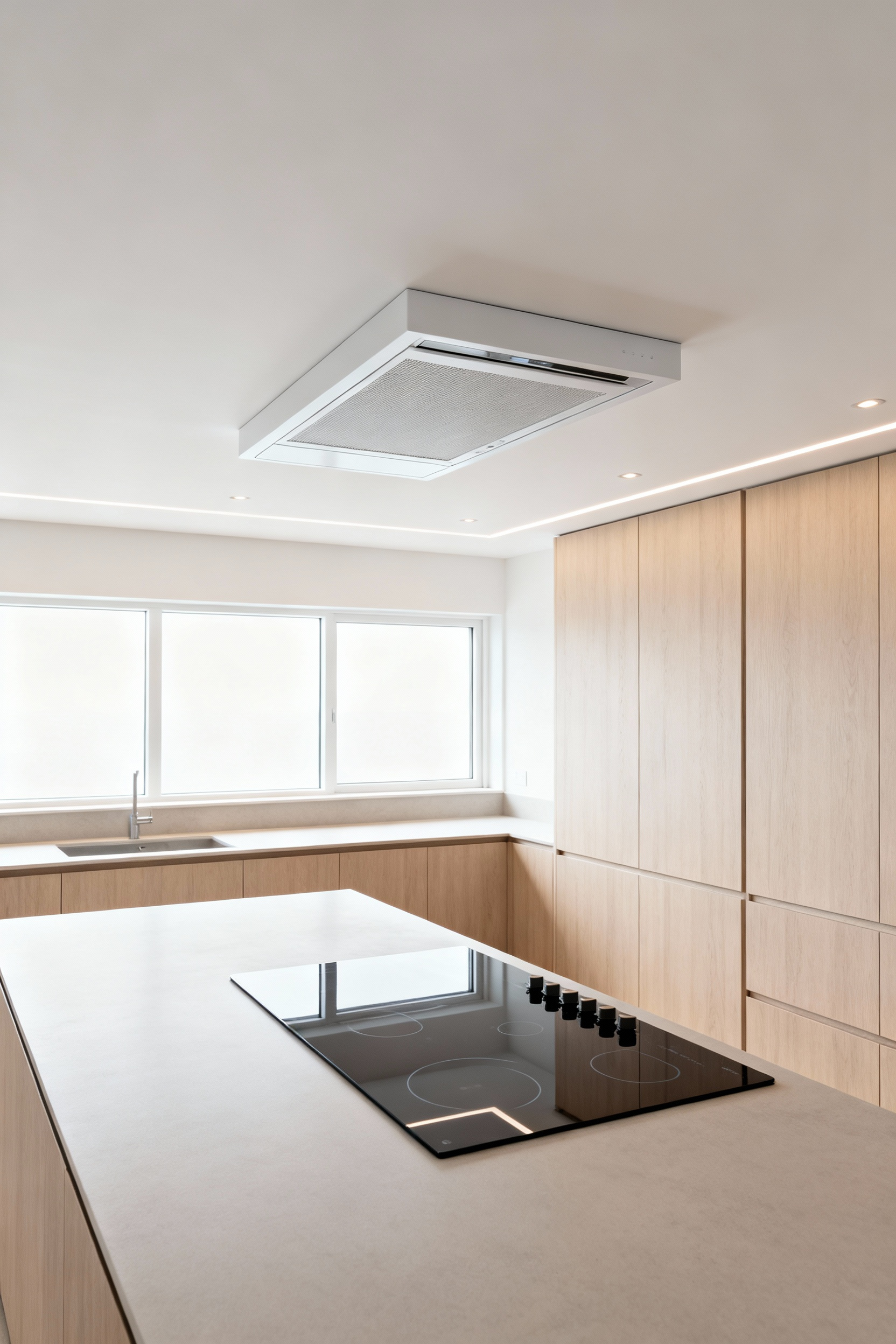
This is a core principle of modern zen design: function should be powerful but invisible. By integrating utilities seamlessly into the architecture, you preserve the visual peace of the space. The result is an environment that feels fresh and open, perfect for both cooking and gathering.
14. Designing a Multifunctional, Dynamic Island
The kitchen island is the modern hearth. Make it adaptable. A multifunctional island can change its purpose to suit the moment. Imagine a section of the countertop that can electronically raise to bar height for entertaining, then lower to standard table height for family meals or a comfortable desk height for working from home.
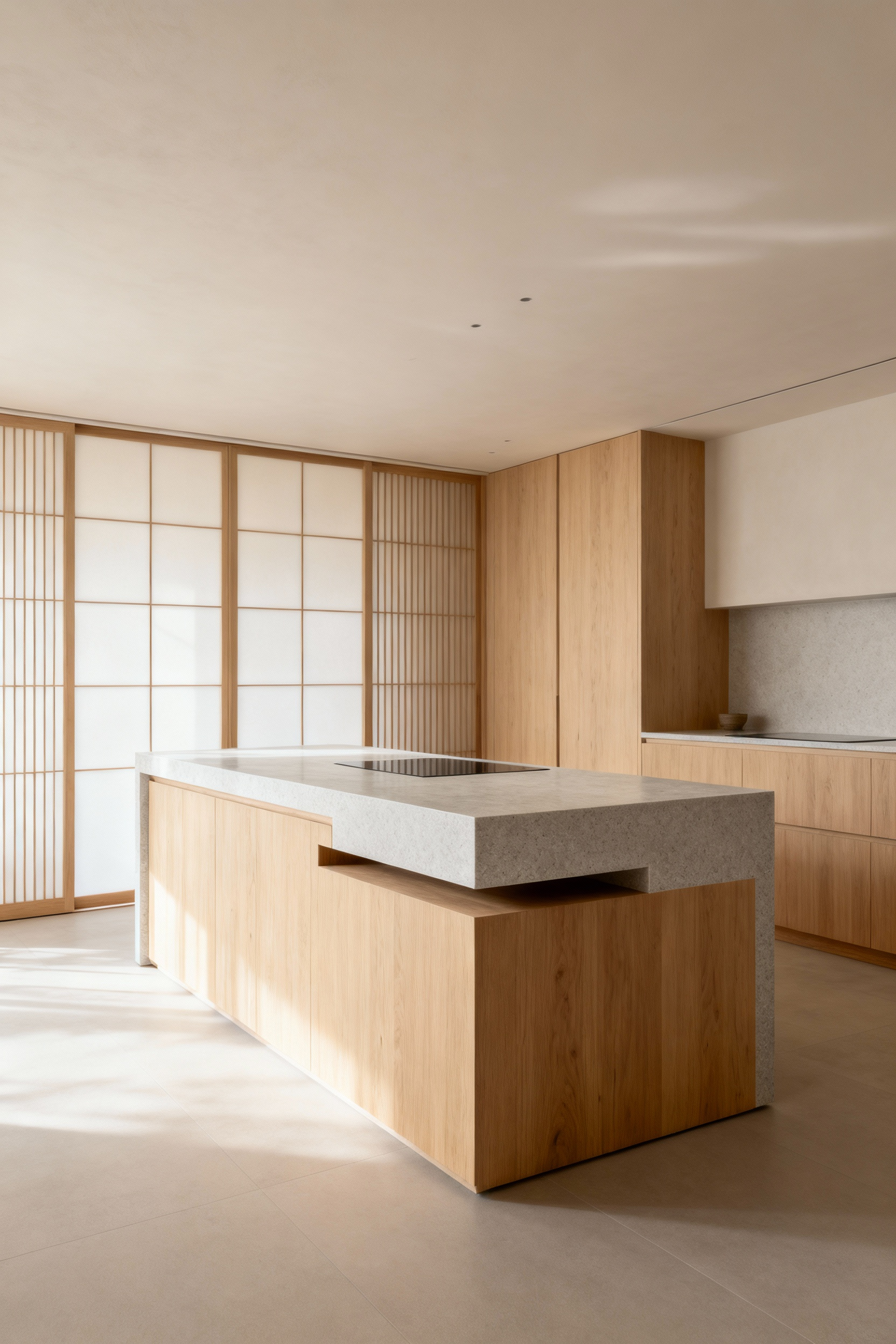
This is ultimate flexibility, allowing one beautiful piece to serve multiple functions, thereby reducing the need for more furniture. Material changes can delineate these zones—a cool stone for prep next to a warm wood for dining. This intelligent, responsive design ensures the heart of your home truly serves the dynamic flow of your life.
15. Establishing Task-Specific Micro-Zones
Within your overall kitchen flow, creating micro-zones for specific tasks brings another layer of intuitive organization. A dedicated coffee and tea station can house your machine, mugs, and supplies, keeping your main counters clear. A baking zone could have a lower marble countertop perfect for rolling dough, with dedicated storage for flour, sugar, and pans right below.
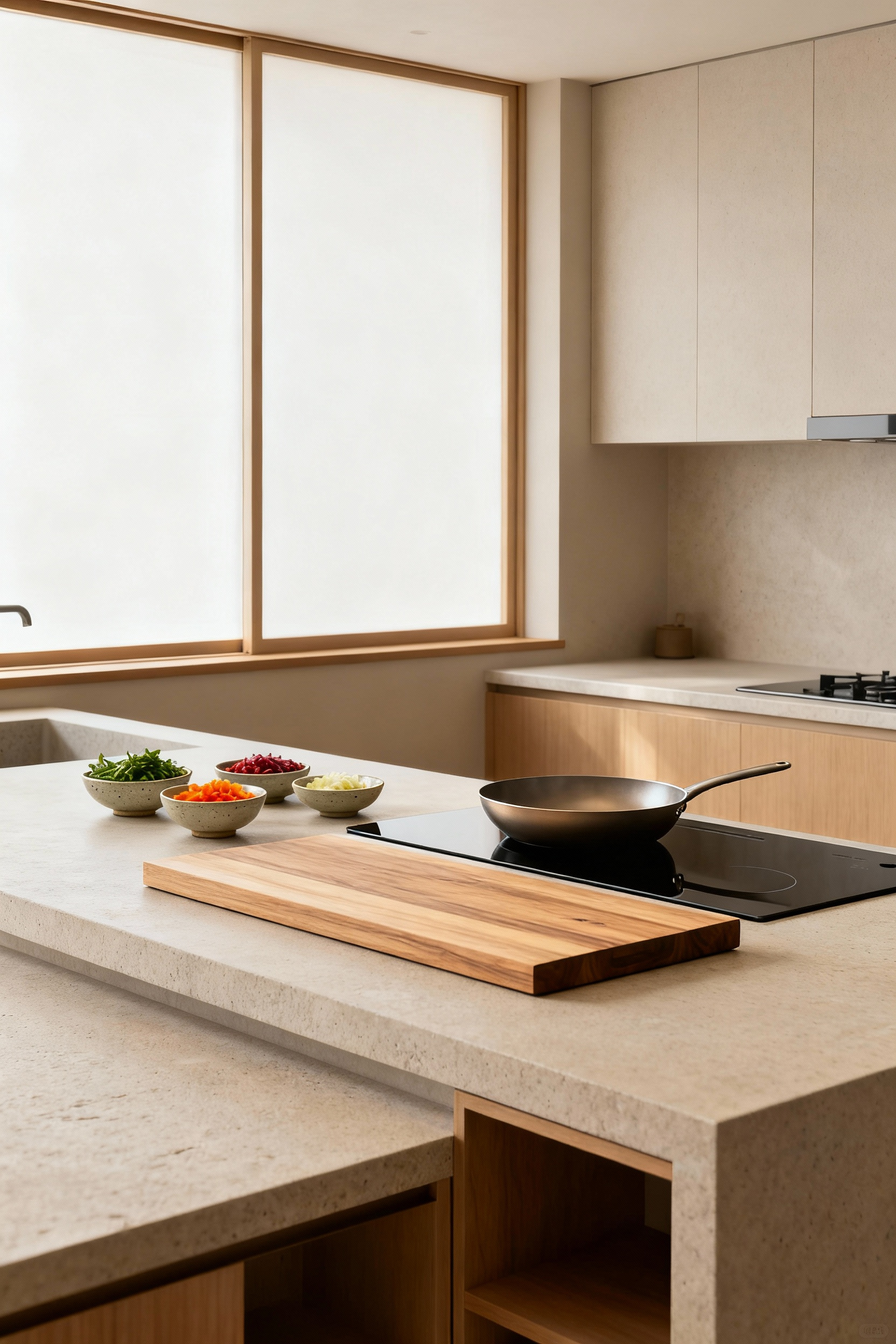
These zones don’t need to be large, but they need to be intentional. They gather everything you need for a specific activity into one compact, efficient space. This compartmentalization reduces mental clutter and makes complex cooking processes feel far more manageable and enjoyable.
Part IV: The Unseen Integration
The most sophisticated technology is the technology you don’t notice. In a Zen kitchen, it works silently in the background, removing friction from daily life and elevating your rituals without demanding attention.
16. Embedding Inductive Charging Zones
Our devices are part of our lives, but their cords are a source of constant visual clutter. Embedding wireless inductive charging zones directly into your countertops or a dedicated “tech drawer” is a simple but transformative move. Place your phone down on a specific spot on the island while you cook, and it charges.
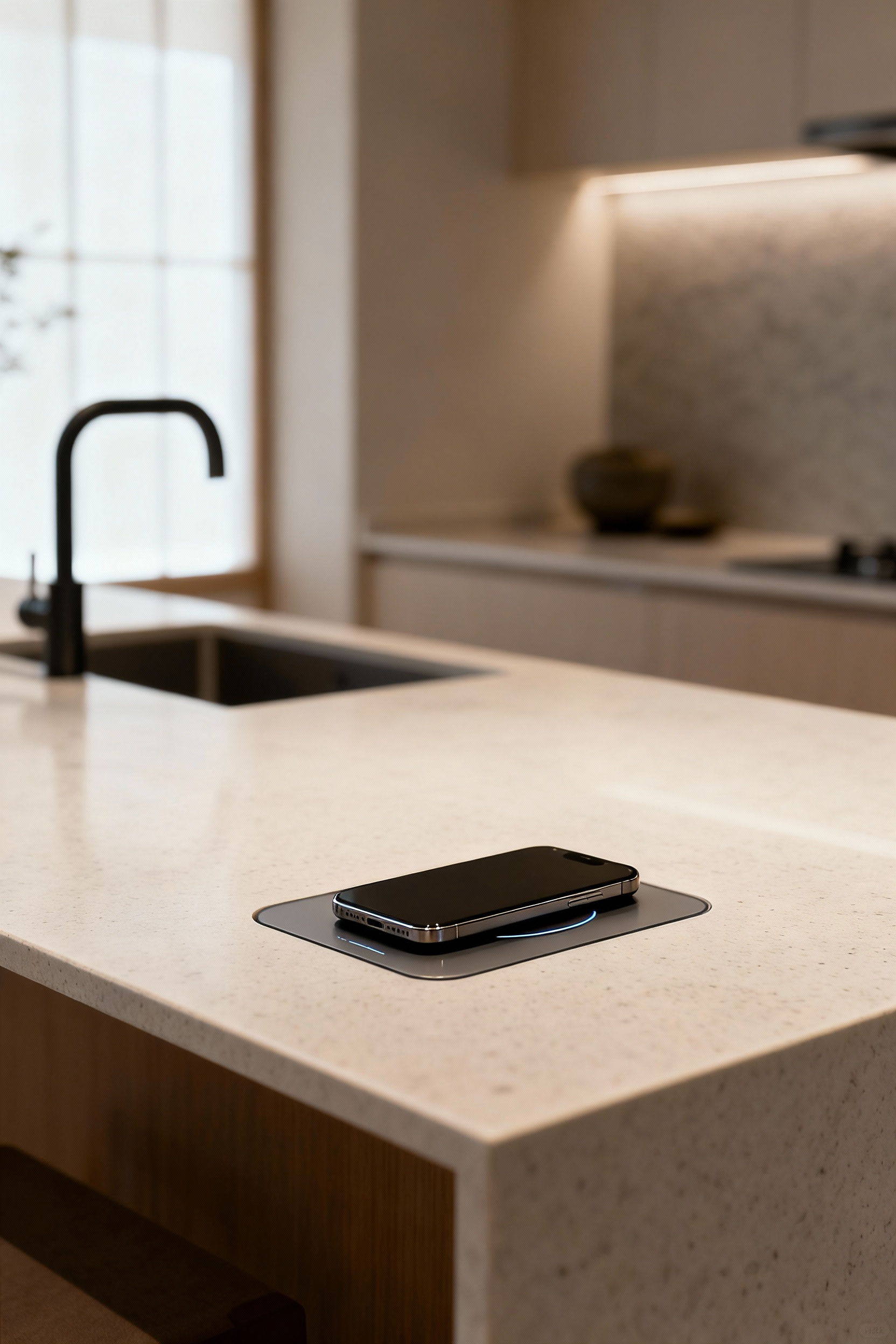
The technology is completely hidden beneath the surface. There are no wires, no plugs, just effortless function. It’s a small detail that makes a huge difference in maintaining an uncluttered environment, allowing you to stay connected without sacrificing the serene aesthetic.
17. Implementing Automated Water Systems
Elevate the simple act of getting a glass of water into a refined ritual. Integrated systems can deliver purified, chilled, and even carbonated water directly from a single, elegant tap. This eliminates the need for plastic water bottles, refrigerator filters, and countertop carbonators.
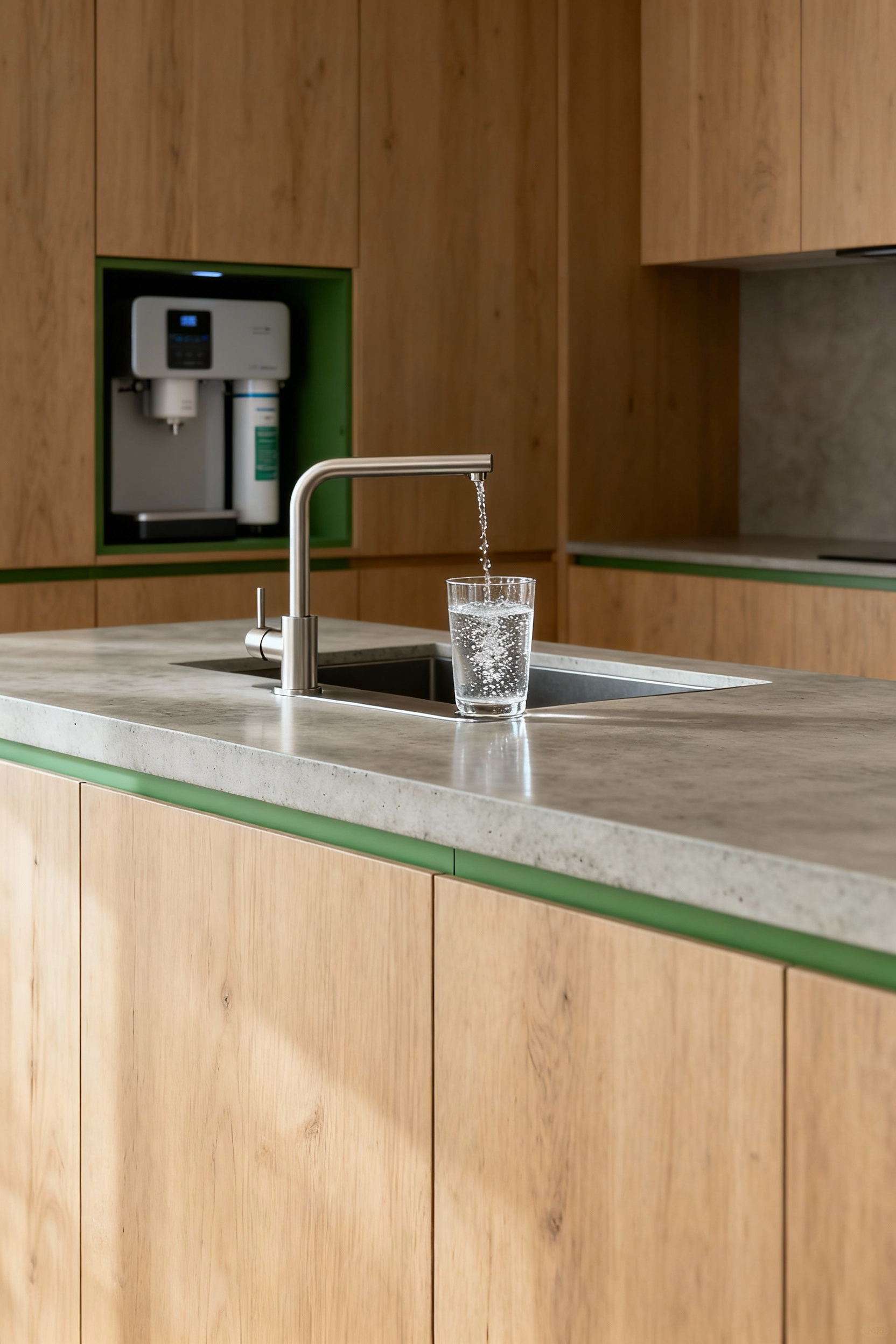
It’s about having pristine water on demand for drinking, cooking, or making tea. When a basic daily need is met with such elegance and efficiency, it contributes to an overall sense of well-being and effortless luxury. The technology is hidden under the sink, leaving only a beautiful, minimalist faucet in view.
18. Integrating Food Preservation Hubs
Extend the life of your fresh ingredients and reduce waste with advanced preservation technology. This can mean dedicated refrigerator drawers with precise temperature and humidity controls that keep herbs and produce fresh for weeks. For the more adventurous, it could be a small, temperature-controlled cabinet for fermenting foods like kimchi or kombucha.
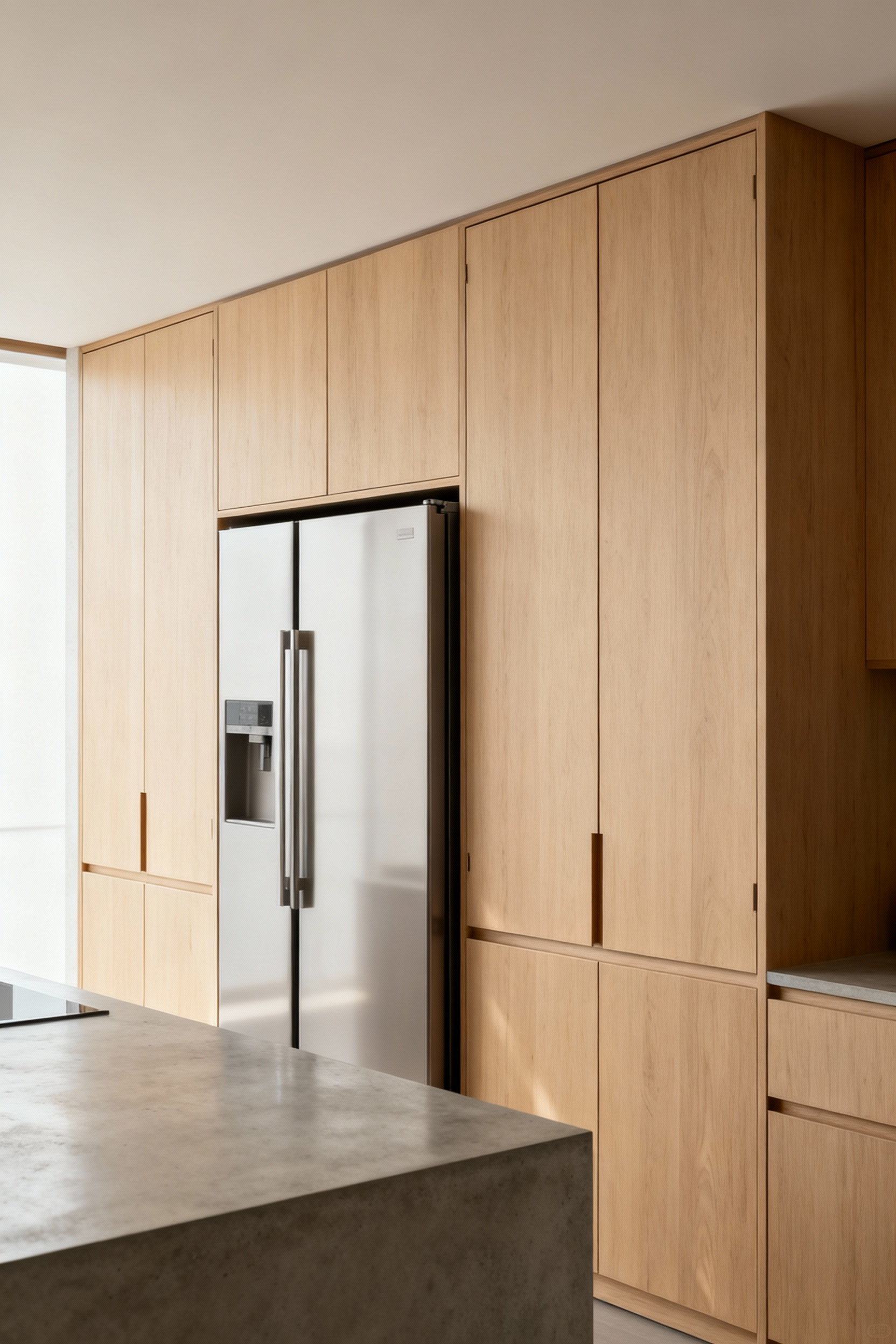
This integration reflects a deeper respect for our food. By giving ingredients the specific environment they need to thrive, we get better flavor and less waste. This technology, hidden within your cabinetry, empowers a more sustainable and mindful approach to eating.
19. Deploying Intelligent Waste Management
Even waste can be handled with grace. An integrated system with automated sorting and composting capabilities transforms a messy chore into a clean, seamless process. A motion-activated lid opens a cabinet to reveal bins for recycling, compost, and trash. Some systems even include compactors to reduce volume.
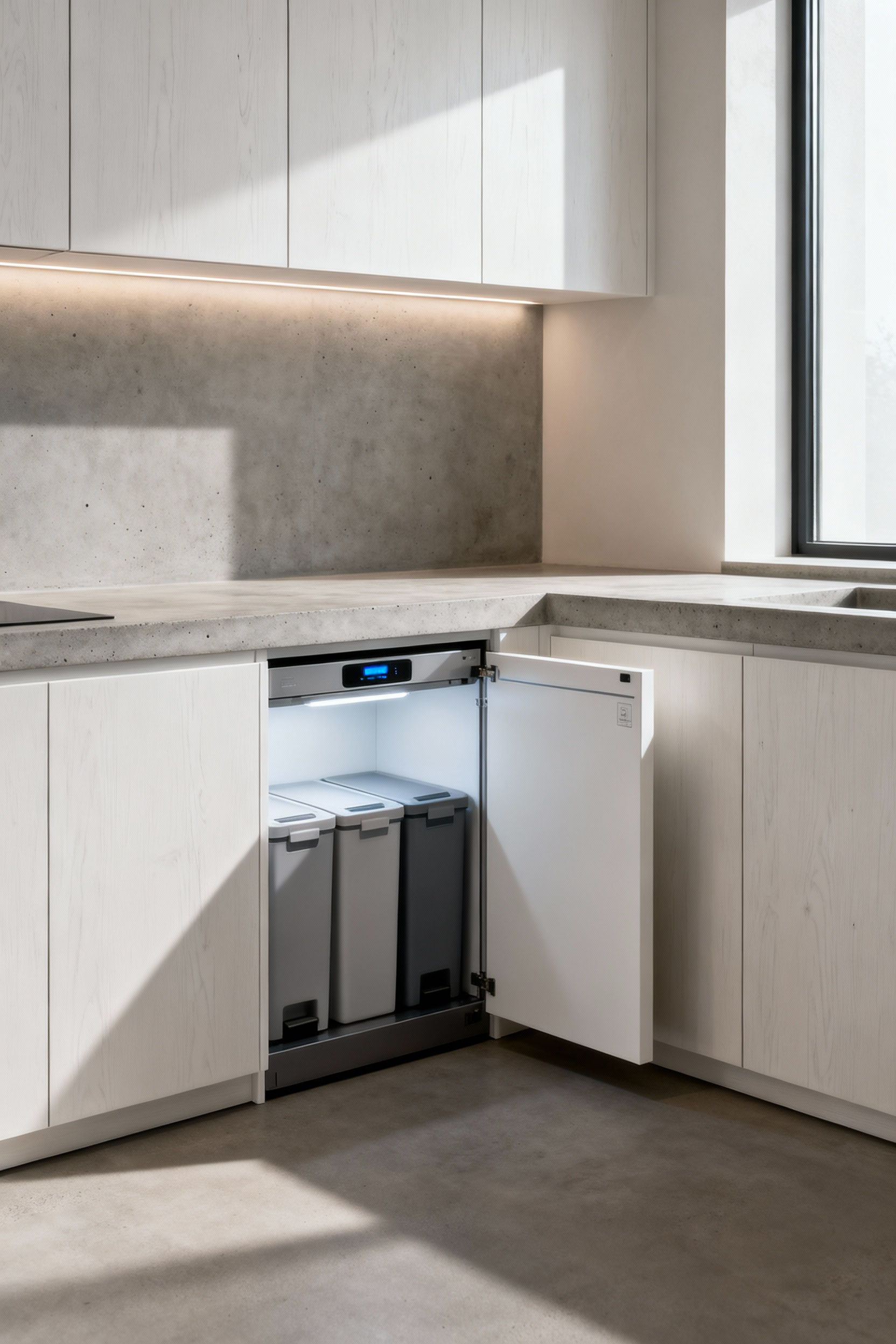
Placing this near your primary prep zone makes it intuitive to use. This isn’t the most glamorous part of a remodel, but what really gets me is how much calmer a kitchen feels when waste is handled invisibly and hygienically. It’s the final step in a truly circular and mindful culinary process.
20. Cultivating Human-Centric Lighting
Lighting is perhaps the most powerful tool for shaping the atmosphere of a room. Human-centric, or circadian, lighting systems adjust their color temperature and intensity throughout the day to support your natural biological rhythms. The light is crisp and blue-toned in the morning to help you wake up, and shifts to a warm, soft amber glow in the evening to help you wind down.
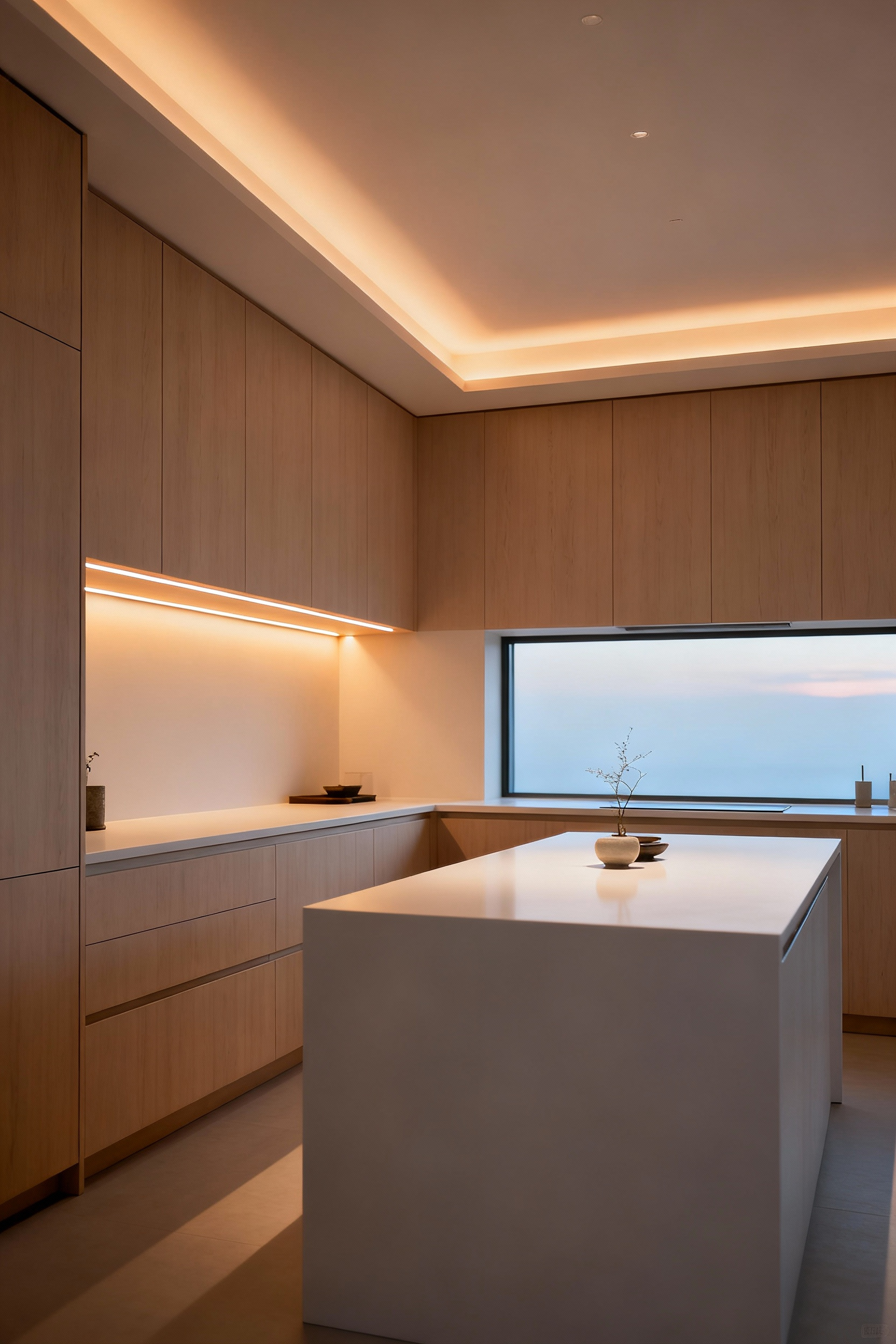
This isn’t just about dimmers. It is a smart, responsive system that makes your kitchen feel more connected to the natural world. Layers of light—ambient, task, and accent—all controlled from a single interface, allow you to craft the perfect mood for any activity, from focused cooking to a relaxed dinner. It’s the ultimate synthesis of technology and well-being.
Conclusion
In redesigning your kitchen, you are crafting the backdrop for your daily life. These kitchen remodeling ideas are not a prescription, but a series of invitations—to embrace space, to honor materials, to refine your movements, and to integrate technology with grace. The goal is to create a space that feels like a natural extension of yourself: calm, efficient, and filled with quiet beauty.
A truly modern Zen kitchen doesn’t reject technology; it subsumes it. It doesn’t enforce sterile minimalism; it invites warmth and life. It is a space of balance. As you move forward, I hope you see this not as a project of construction, but as a practice of intention. The result will be more than a kitchen. It will be a sanctuary.