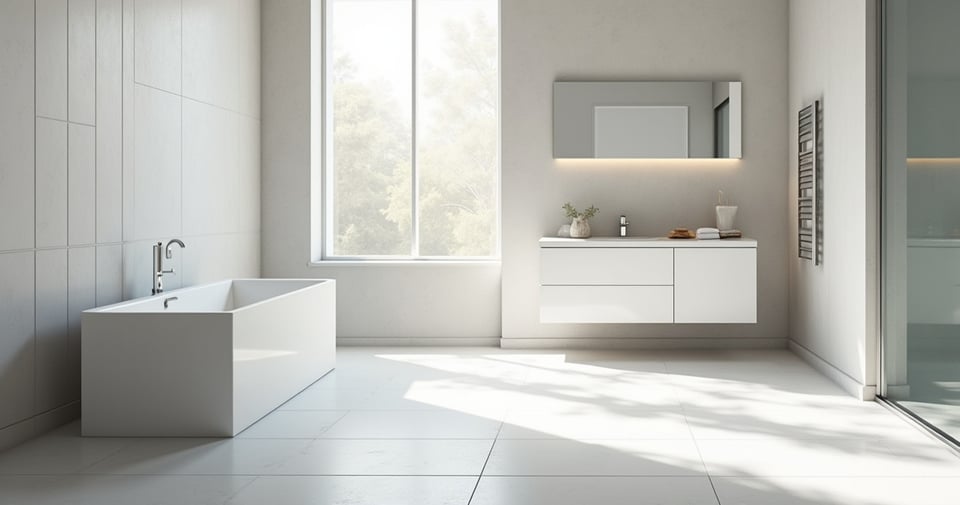
Can we talk about why everyone gets bathrooms wrong? You flip through a magazine or scroll online and see these pristine, all-white sanctuaries that look like they’ve never seen a speck of dust, let alone a splash of India ink or a smear of clay. That’s a fantasy. For those of us who live and breathe creativity, a bathroom isn’t just a place to unwind—it’s a critical part of the studio. It’s where you wash pigment from your hands, soak fabrics, or just stare at the wall waiting for an idea to strike. It has to be both a sanctuary and a workhorse.
Most design advice ignores this reality, pushing sterile concepts that would be ruined by our beautifully messy lives. But I see things differently. I’ve built my career designing spaces for artists, makers, and creators, and I know that the most successful rooms serve both your work and your well-being. Your bathroom should be a canvas. It needs to be tough, functional, and deeply personal. Forget the corporate speak and the influencer trends. I’m going to show you how to think like an artist and build a bathroom that truly works for your creative life.
foundational planning & Aesthetic Conception (Part 1)
Before you fall in love with a tile or a tap, we need to handle the unsexy stuff. Think of this as your initial sketch. Every good piece of art starts with a solid composition, a deep understanding of the space you’re working with, and a clear intention. Rushing this part is like starting a painting without prepping the canvas—the whole thing can fall apart later. This is where we build the logic of the room so the beauty can shine.
1. Conduct a Thorough Space Audit and Needs Assessment
Forget a formal “audit.” This is about becoming a detective in your own home. Before you measure a single thing, just observe. Where do you trip over the laundry basket? What corner is always dark? Where do you instinctively set down your mug in the morning? An artist’s greatest tool is observation, so apply that keen eye here. For us, a “needs assessment” goes deeper than just “more storage.” It’s asking, “Can this sink handle me washing a silkscreen?” or “Is there a spot to hang this wet, dyed shirt without staining the entire wall?”
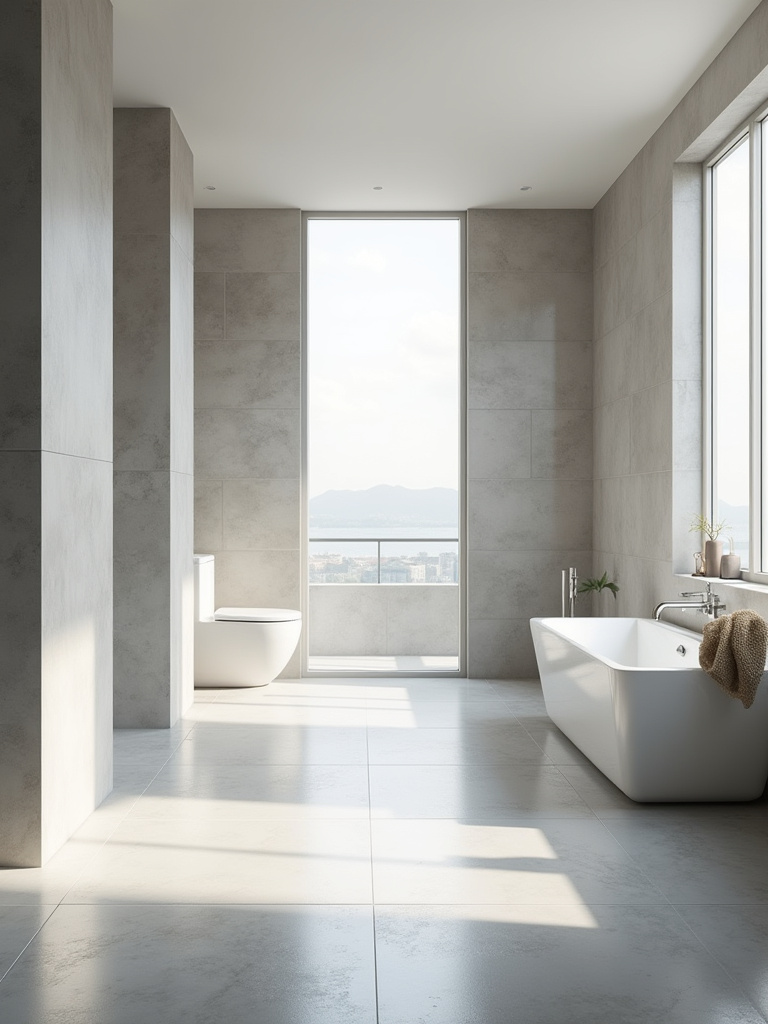
I once had a sculptor client who was convinced she needed a bigger bathroom. But after we talked, she realized her core frustration was the tiny, shallow sink that made cleaning her tools an exercise in frustration and splash-zone management. We threw out the original plan and designed the entire room around a deep, wide basin you’d normally find in a utility room. It changed her whole workflow and made the space infinitely more functional for her. That’s what really matters—solving the problems you actually have.
The transition from a problem to a solution always starts with asking the right questions. Once you know what’s not working, you can gather the visual language to express what will work. This isn’t about picking out items yet; it’s about collecting feelings.
2. Develop a Cohesive mood board for Your Desired Style
I want you to step away from Pinterest for a minute. Digital images are flat, and our lives are not. Artists work with materials, so your mood board should too. Grab paint chips, sure, but also find a piece of wood with a grain you love, a smooth river rock, a swatch of linen, a piece of rusted metal. The screen can’t tell you how a matte tile feels under bare feet or how light hits a textured surface. Your mood board should be a small, tactile art installation that captures the feeling you’re after.
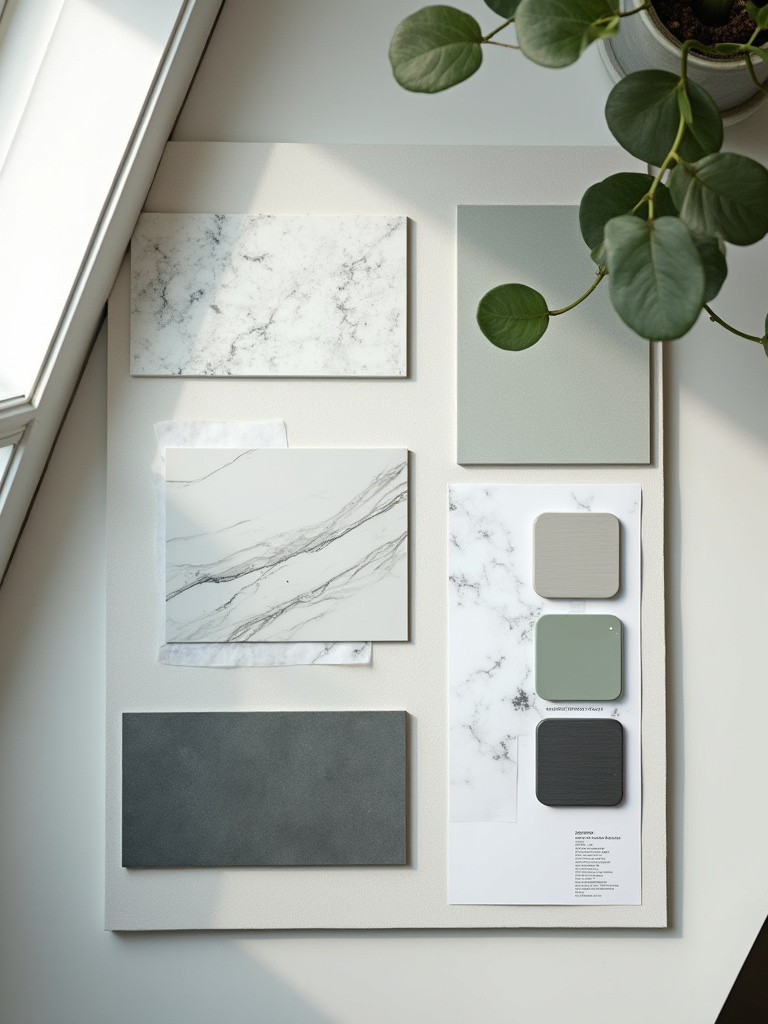
Here’s the shortcut I wish I’d known earlier: Before you collect a single image, write down three to five words that define the space. Are you going for “Earthy, raw, and serene” or “Industrial, moody, and warm”? Every single element you consider, from the faucet to the light switch, has to answer to those core words. This becomes your creative brief. It’s the anchor that stops you from getting distracted by a million shiny objects and ensures the final room feels intentional and whole.
With your vision defined, you can start mapping it onto the physical space. The layout isn’t just about where things fit; it’s about choreographing your daily movements and making them effortless.
3. Craft a Strategic Layout for Optimal Flow and Functionality
Think of your bathroom layout in terms of movement, like a dance. What is the path from the door to the sink to the shower? It should feel easy and intuitive, not like an obstacle course. Architects talk about the “work triangle” in a kitchen; I think about the “ritual path” in a bathroom. And please, for the love of all that is sacred, do not put the toilet as the first thing you see when you open the door. No one wants that to be the grand reveal. It’s bad composition.
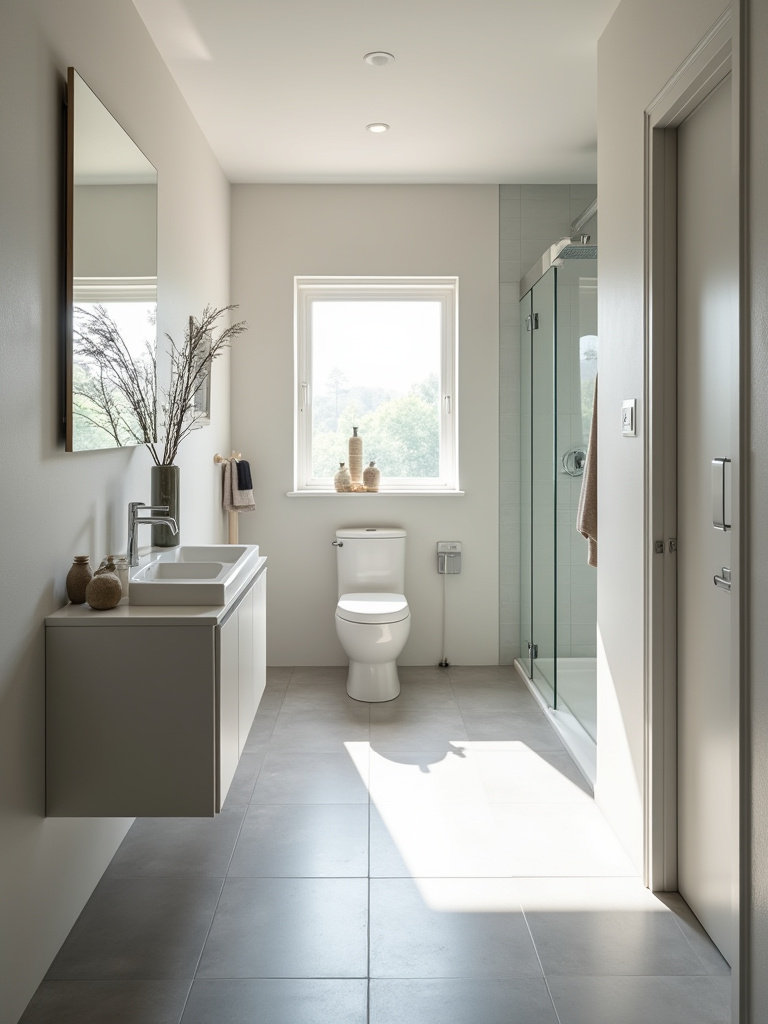
The secret ingredient here is negative space. Just like in a painting, the empty areas are what allow the important elements to breathe. A wall-hung “floating” vanity is pure magic for this—it keeps the floor clear and makes the room feel so much bigger and lighter. I did this in a tiny 5×8 bathroom for a painter, and lifting the vanity and toilet off the floor transformed it from a cramped box into a space that felt open and airy. It’s all about creating visual breathing room.
This planning phase is all about intention, but let’s be real—intention doesn’t pay the bills. You need a rock-solid plan for your resources before you start swinging a hammer.
4. Establish a Detailed Budget and Contingency Fund
Alright, let’s talk about the part everyone wants to skip. Money. A budget isn’t a creative buzzkill; it’s a healthy creative constraint. It forces you to make smart choices. Think of it like buying your materials before a big commission—you need to know what you can afford to work with. List everything. And I mean everything. The tile, the toilet, the plumber’s time, the new towels, the permit fees. Get real about the numbers.
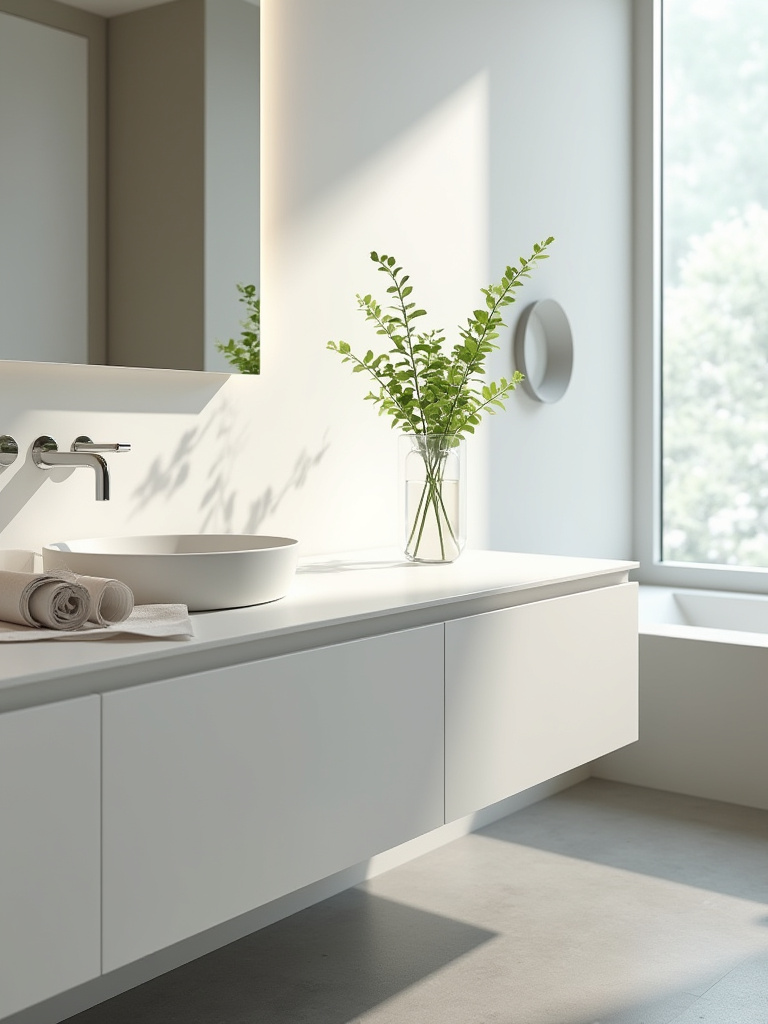
Here’s the part you can’t ignore: the contingency fund. This is your “happy little accidents” money, for when you open a wall and find pipes from 1920 or a little mold problem. I tell every single one of my clients to set aside 15% of the total budget for surprises. The one who didn’t ended up having to replace her entire subfloor, which ate the money she’d saved for the beautiful handmade tile she’d been dreaming about for years. Don’t be that person. Having that fund turns a potential catastrophe into a manageable hiccup.
Foundational Planning & Aesthetic Conception (Part 2)
We’ve got our sketch, our brief, and our budget. The foundational logic is set. Now we get to play with color and light, the elements that will define the entire atmosphere of your bathroom. This is where you set the emotional tone.
5. Choose a Harmonious Color Palette for Tranquil Ambiance
Can we please bust the myth that dark colors make small rooms feel smaller? It’s complete nonsense. I have designed tiny powder rooms in deep, inky blues and rich charcoal grays, and they feel like dramatic little jewel boxes—intimate and enveloping. It’s not about light versus dark; it’s about cohesion. A chaotic mix of “light” colors will feel much smaller than a deliberate, moody palette. Start by pulling three or four colors from a piece of art or a photograph of a landscape you love. Let that be your guide.
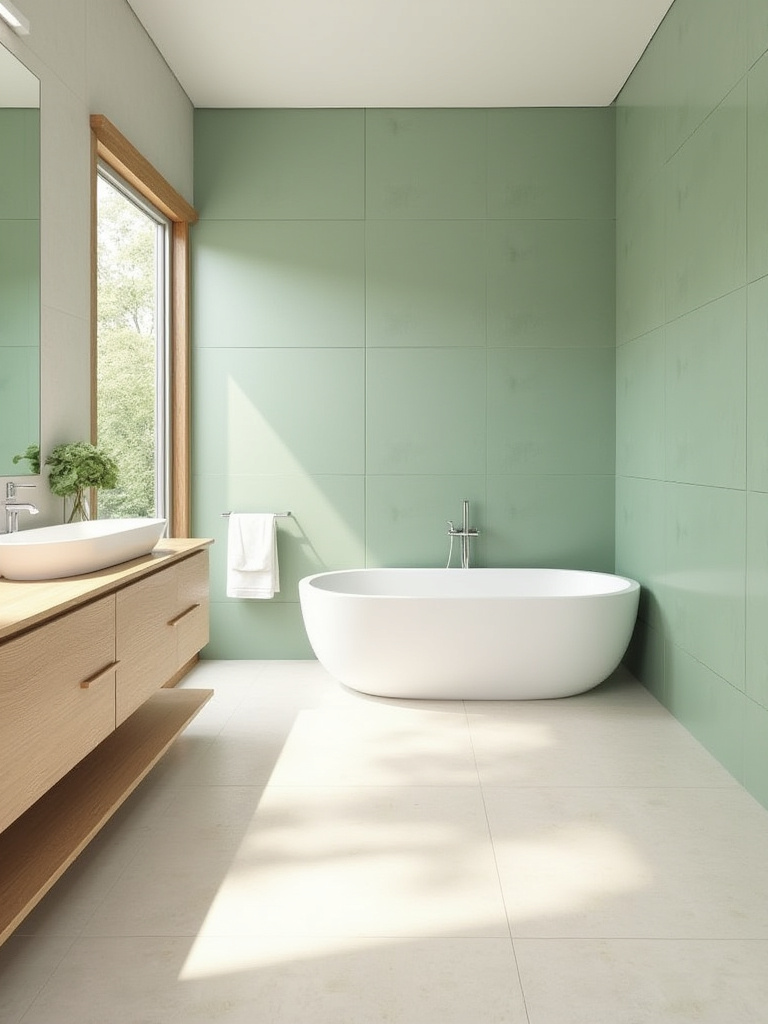
Here’s the artist’s trick: pay ruthless attention to undertones. A “white” tile isn’t just white. It might have a cool, blueish undertone or a warm, creamy one. If you pair a cool white with a warm beige, the whole room will feel subtly “off,” and you won’t know why. Get physical samples of everything—your tile, your paint, your vanity finish—and look at them together, in the actual light of the bathroom, at different times of day. It is the only way to see the truth.
Core Element Selection & Functional Integration (Part 1)
With the mood set, it’s time to choose the big, tactile elements of your room. These are the workhorse surfaces—the floor you’ll stand on, the vanity you’ll lean on, the fixtures you’ll touch every single day. They need to be beautiful, of course, but more importantly, they need to be tough enough for your real life.
6. Select Durable and Water-Resistant Flooring Materials
For a creative person, “durable” has a very specific meaning. It means: “Will a splash of acrylic paint scrub off this?” “Will grout cleaner strip the finish?” “Will clay dust turn this into a permanent haze?” This is why I almost always recommend porcelain tile or sealed concrete. They are practically indestructible. They laugh in the face of spills. Forget precious, high-maintenance materials that will make you anxious. Your floor is a utility surface first, a design element second.
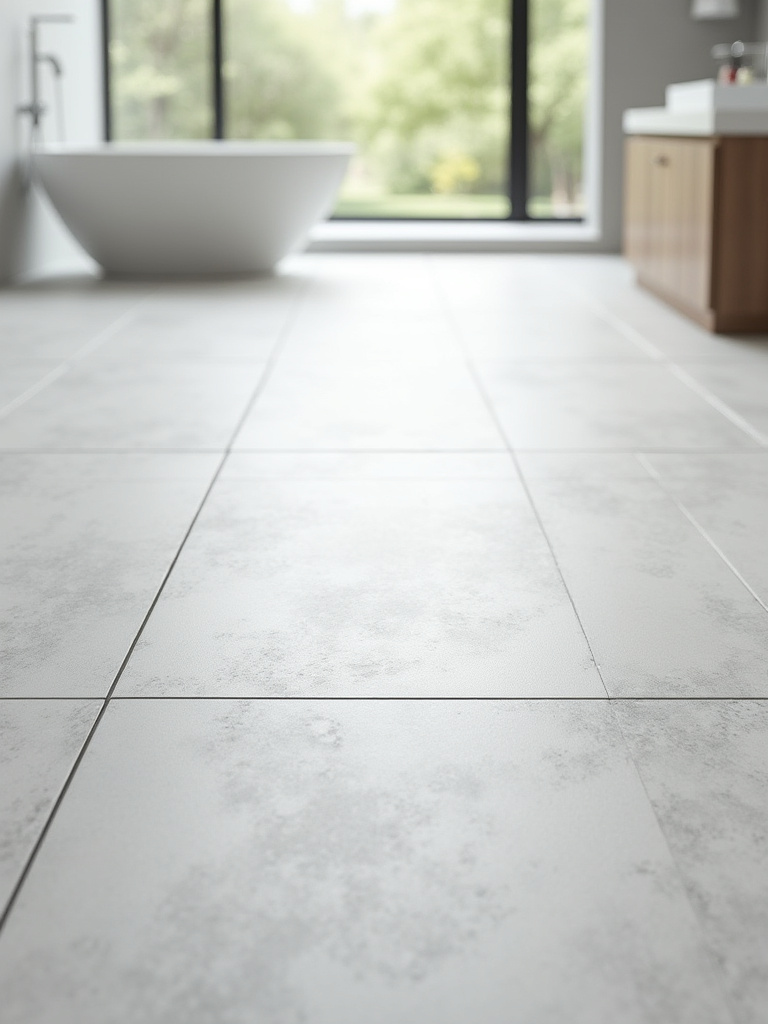
Here’s a shortcut that will save you so much scrubbing: use large-format tiles. The bigger the tile, the fewer grout lines you have. Fewer grout lines mean less cleaning and a cleaner, more expansive look. And ask your tile setter for a darker, epoxy-based grout. It resists stains and is a million times easier to maintain than traditional white grout, which is basically a magnet for every speck of dirt and pigment. Trust me, dark grout is your best friend.
A solid floor grounds the space. Next, we need to create order out of the potential chaos with storage that works as hard as you do.
7. Optimize Storage with Integrated Vanities and Shelving
Clutter is the evil twin of creative chaos. While a messy studio can feel inspiring, a cluttered bathroom just feels stressful. The solution is ruthlessly smart storage that hides the necessary mess. I’m a huge fan of deep drawers in a vanity instead of a big, dark cupboard where things go to die. Also, recessed medicine cabinets that are set flush into the wall are brilliant—they provide tons of storage without taking up any visual space.
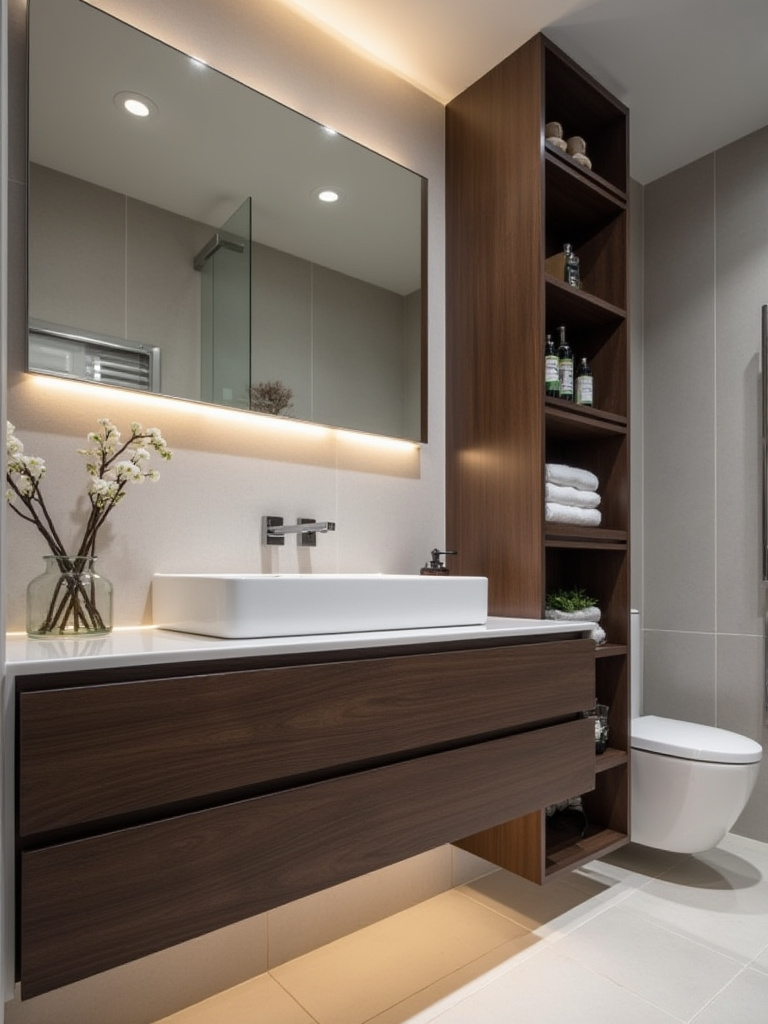
Here’s a creative approach to storage: divide and conquer. Use closed storage—drawers and cabinets—for the chaos: the half-empty bottles, the cleaning supplies, the mess. Then, use open shelving sparingly and treat it like a gallery display. This is where you put the beautiful, curated objects: rolled towels in a color you love, a small plant, a piece of your own pottery. It gives the room personality and soul without looking cluttered.
Storage organizes your things. Lighting organizes your vision. It dictates what you see, what you don’t, and how everything feels.
8. Layer Lighting for Functionality, Safety, and Mood
Let’s be clear: a single light fixture in the middle of the ceiling is a design crime. It casts harsh shadows on your face and makes the room feel flat. Lighting is everything, and it needs to be layered. You need bright, clean task lighting around the mirror for practical things. Then you need soft, general ambient lighting to fill the room. Finally, a little bit of accent lighting, like a small light pointed at a piece of art or in a shower niche, adds that final touch of magic.
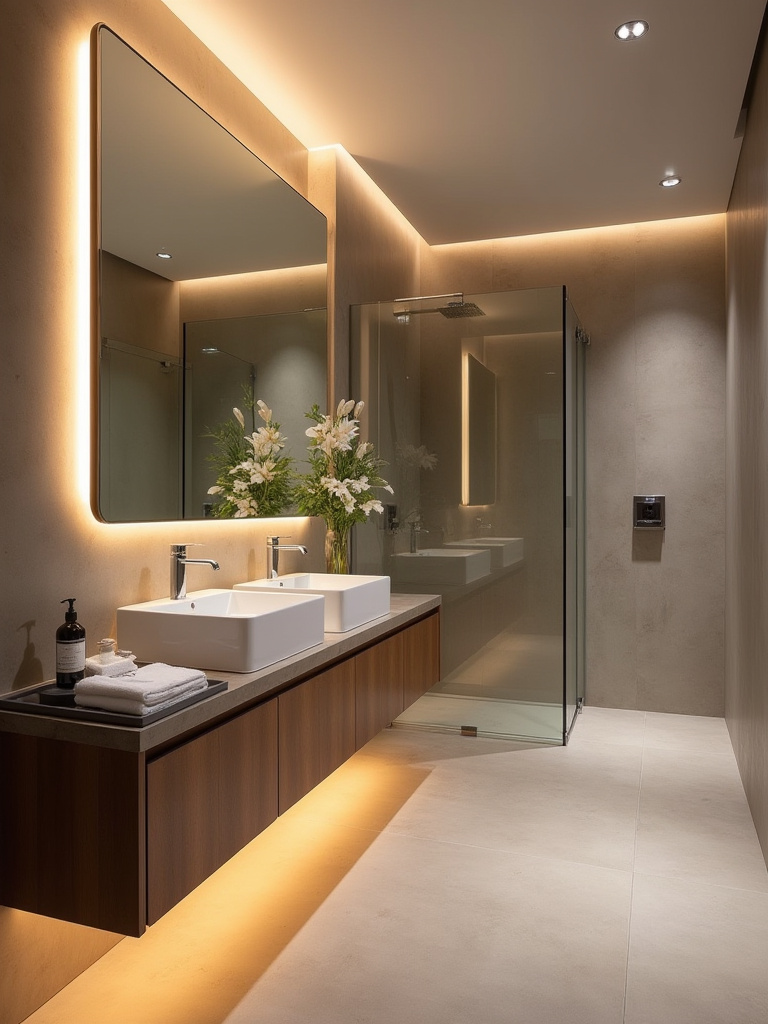
Seriously. The main light, the sconces by the mirror, the light in the shower—everything. It’s a relatively inexpensive upgrade that gives you the power to transform the space from a bright, energetic prep station in the morning to a dim, candle-lit sanctuary at night. It is the ultimate tool for controlling the emotional temperature of a room, and I refuse to design a bathroom without it.
“The single most impactful thing you can do to control the mood of your bathroom? Put every single light on its own dimmer switch.”
Your lighting illuminates the details, and no detail gets more daily interaction than your plumbing fixtures. They’re the primary tools of the room.
9. Choose Efficient and Stylish Plumbing Fixtures
Think of your faucet as a piece of sculpture you get to use every day. But it’s also a tool. Before you choose one based on its finish, think about how you’ll use it. A high-arc “gooseneck” faucet gives you space underneath to wash your hair, your brushes, or fill a small bucket. A single-handle faucet is a lifesaver when your hands are covered in paint or clay and you need to nudge it on with your wrist or elbow. Function first.
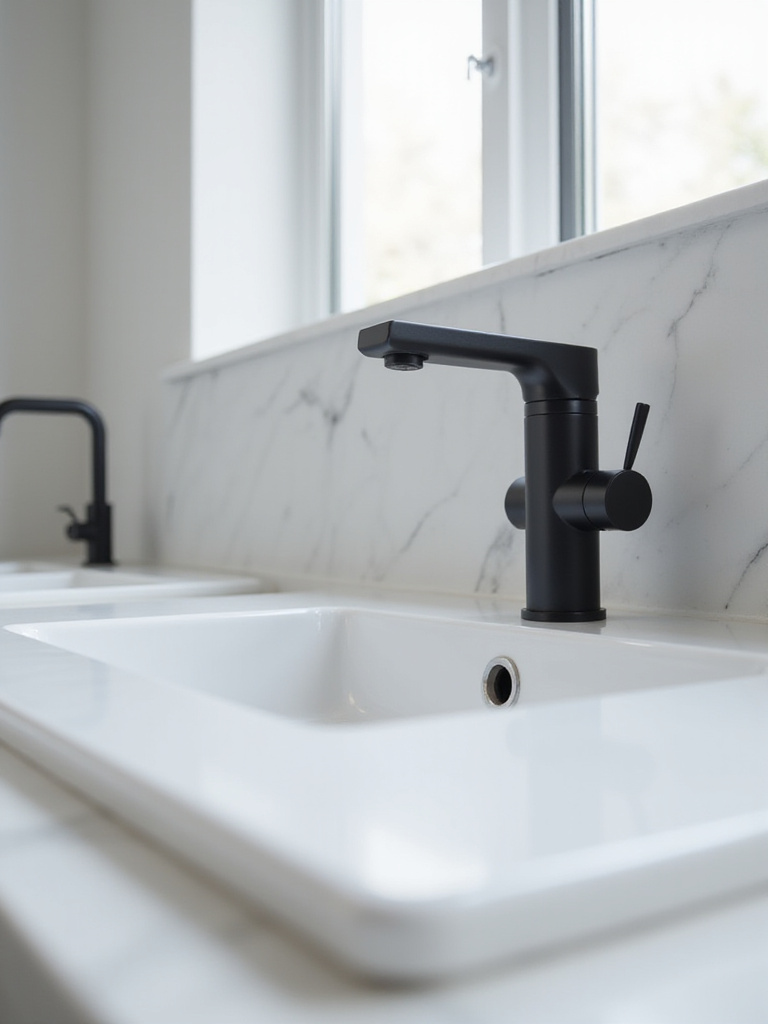
The finish, however, is where you can make a strong statement. Chrome is classic, but it’s not your only option. Matte black feels modern and industrial and does a great job of hiding fingerprints and water spots. Brushed brass or gold adds instant warmth and a touch of vintage character. I once swapped out basic chrome fixtures for unlacquered brass in a client’s bathroom. Over time, it developed a beautiful, unique patina that told the story of its use. It gave the whole room soul.
Core Element Selection & Functional Integration (Part 2)
We’ve covered the tangible elements. Now let’s talk about the invisible forces that define a space: the quality of the air you breathe and the play of light and reflection. Getting these right is subtle but has a massive impact on how a room feels to be in.
10. Install High-Performance Ventilation to Combat Humidity
A loud, rumbly bathroom fan that barely works is worse than useless, because no one will ever turn it on. This is not the place to save a few bucks. You need to invest in a modern fan that is sized correctly for your room, is whisper-quiet, and ideally, has a humidity sensor. This little piece of genius means the fan will turn on automatically when the air gets moist from a shower and turn itself off when the job is done. You don’t even have to think about it.
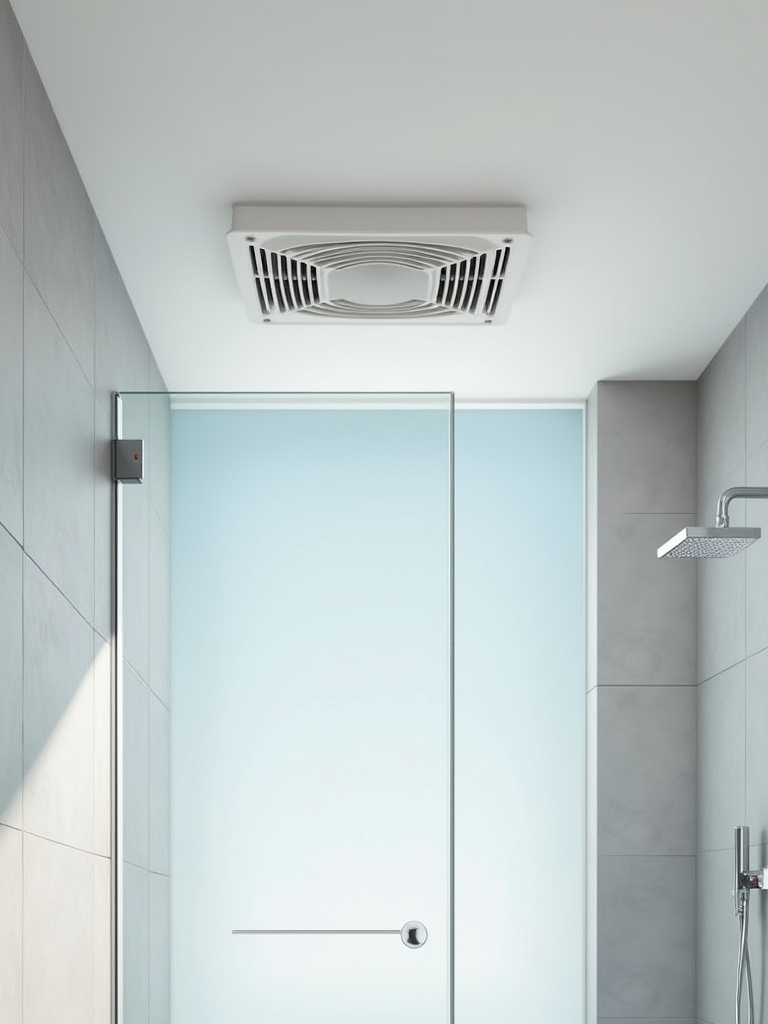
This is non-negotiable for creative spaces. If you’re rinsing screens, developing photos, or doing anything that introduces extra moisture or chemicals into the air, you need a fan that can handle it. Think of it as essential studio safety equipment. It protects the room—and your lungs—from mold, mildew, and stale air. A healthy room is a creative room.
Just as a good fan clears the air, a well-placed mirror can clear your sightlines and expand your sense of space.
11. Incorporate Strategic Mirror Placement for Perceived Space
A mirror is so much more than a place to check your reflection. It’s an artist’s tool for manipulating light and space. Placing a large, simple mirror across from a window will literally double the amount of natural light in your room and make a small bathroom feel expansive. But don’t feel constrained by the typical rectangle over the sink. A collection of small vintage mirrors, an oversized round mirror, or an ornately framed one can become a major piece of wall art.
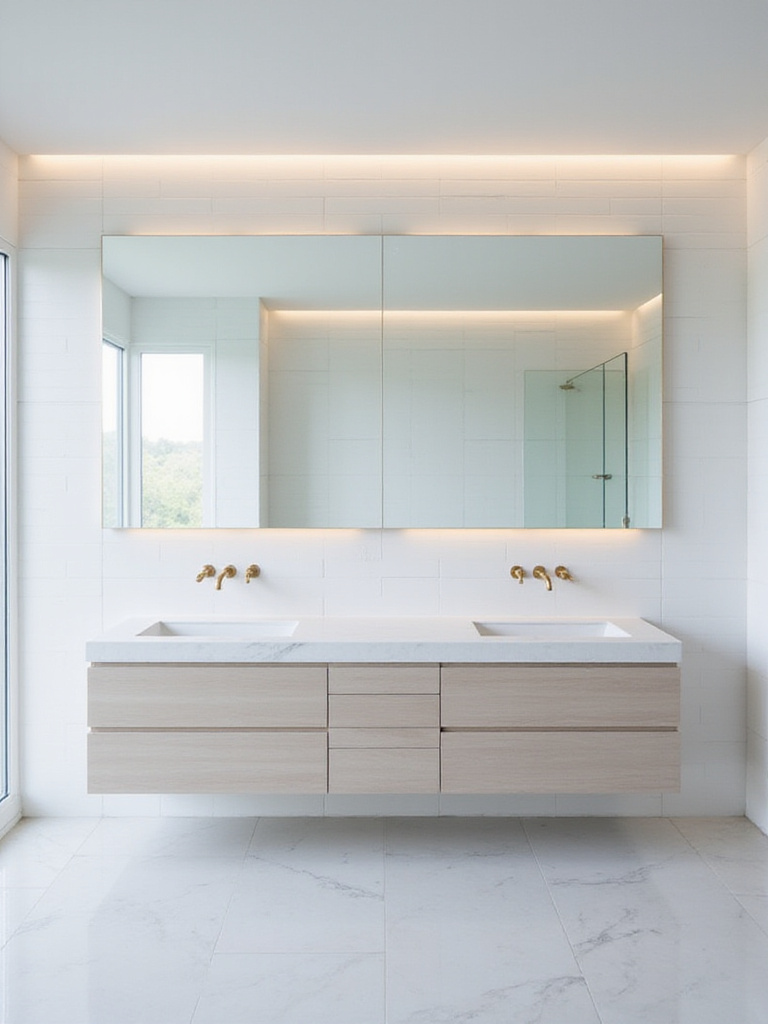
Here’s one of my favorite tricks: If you have a window with a nice view or a piece of art you love on one wall, hang a mirror on the opposite wall. It will capture and reflect that beauty, essentially giving you two views for the price of one. It creates a dynamic conversation between the different sides of the room and adds layers of depth.
Refined Styling & Aesthetic Enhancements (Part 1)
The room is built, it’s functional, the light is right. The bones are good. Now, we give it a soul. This is the final layer of styling, where you add the textures, colors, and personal objects that make the space uniquely yours.
12. Introduce Natural Elements for a Spa-Like Retreat
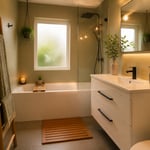
Hard, sterile surfaces can feel cold and unwelcoming. You need to counteract that with the warmth and imperfection of nature. This is non-negotiable for creating a sanctuary. It can be as simple as adding one humidity-loving plant—a snake plant or a pothos is almost impossible to kill. Or, you can bring in a small wooden stool next to the tub, place a piece of beautiful driftwood on a shelf, or keep a bowl of smooth river stones on the vanity.
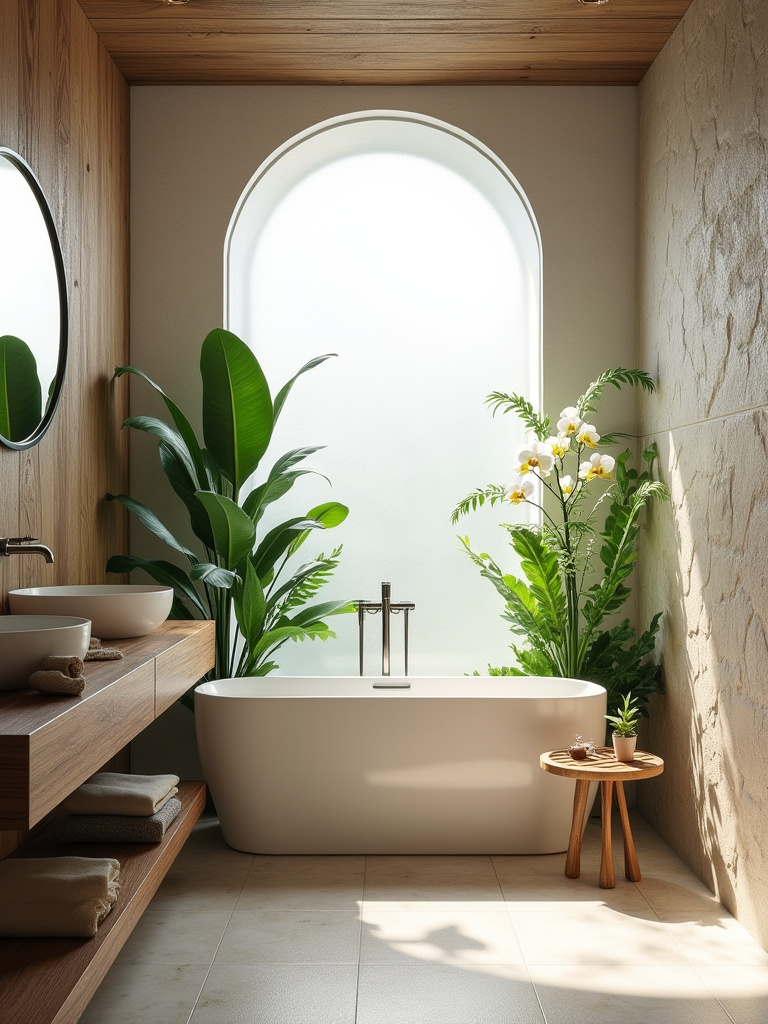
These small touches of life ground the space and connect it to the outside world. They remind us of something real and organic. My go-to move is adding a simple wooden bath tray that rests across the tub. Even if you only use it to hold a candle, it sends a powerful psychological signal that this is a place for rest and care.
Nature adds warmth, but a bold artistic statement can add energy and focus. That’s where your walls come in.
13. Select Eye-Catching Wall Treatments and Finishes
I want you to pick one wall—just one—to be your showstopper. This is your focal point. It could be a wall of dramatic, textured tile that creates an amazing play of shadow and light. It could be a bold, graphic wallpaper (they make fantastic water-resistant vinyl versions now). It could simply be a coat of deep, saturated paint that provides a backdrop for a beautiful mirror. This one act of courage gives the room a center of gravity.
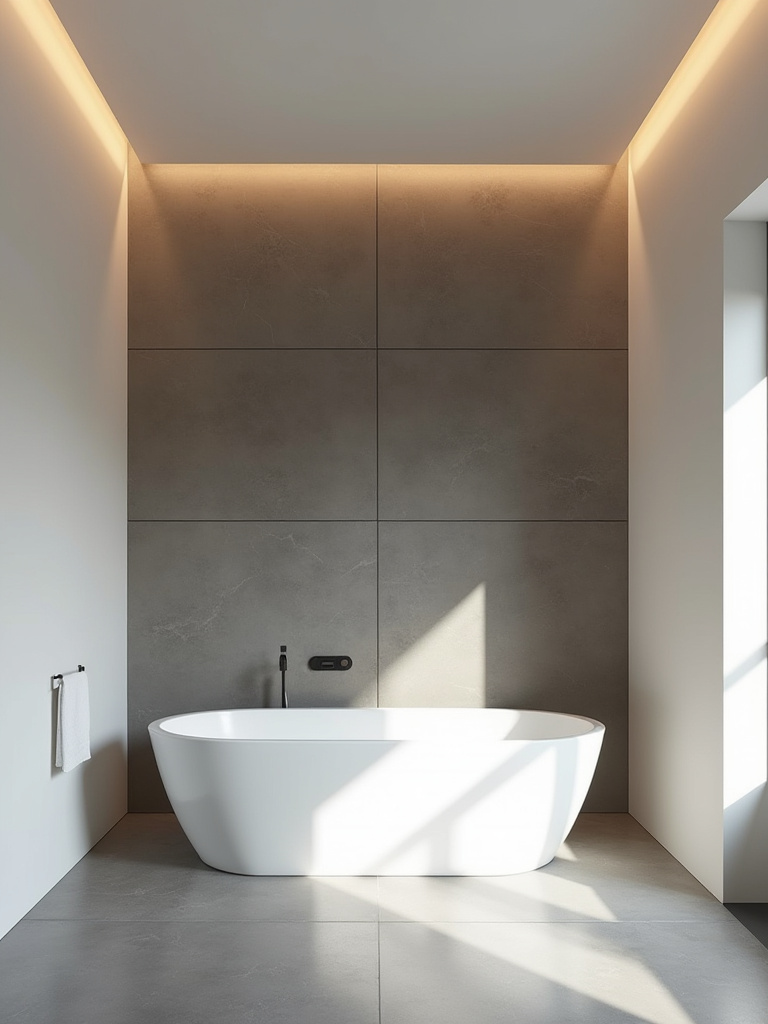
A word of warning: resist the urge to do something dramatic on every single wall. When everything is shouting for attention, nothing is heard. A room with four accent walls is just a loud, chaotic mess. One confident statement wall draws the eye and makes the whole space feel more deliberate and designed. The rest of the walls should be the quiet, supporting cast.
An accent wall is a bold gesture. The final touches are about adding those small, intimate details that tell your personal story.
14. Personalize with Art, Plants, and Decorative Accents
Please, please hang real art in your bathroom. It breaks my heart to see a beautifully designed room with a generic “Live, Laugh, Love” sign on the wall. A small original painting, a framed sketch, or a meaningful photograph can completely elevate the space. The key is to frame it properly with a good mat and sealed back to protect it from humidity. This is your space. It should be filled with things that you love, things that inspire you.
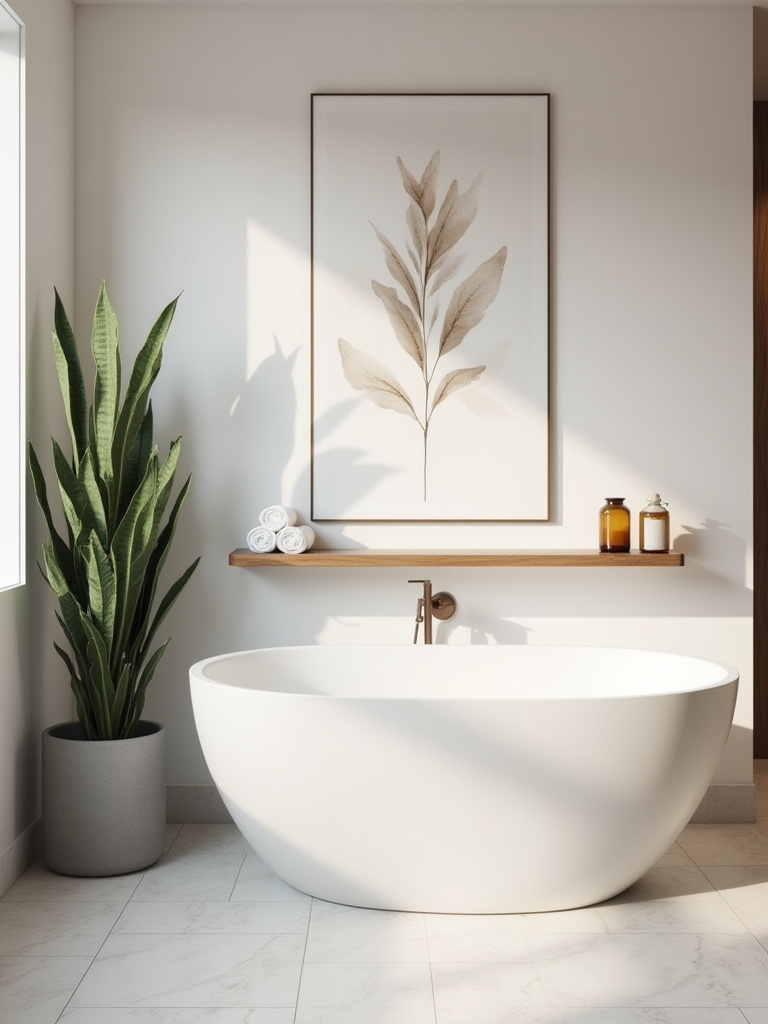
I used to be so precious about art, thinking a bathroom was no place for it. Then a client insisted on hanging this small, moody oil painting of a coastline above her toilet. It was an unconventional choice, but it absolutely made the room. It added a layer of soul and story that you could never get from a mass-produced print. Now I encourage it for everyone.
Art tells your story, and the small, functional objects you touch every day contribute to that narrative in a quiet, tactile way.
15. Upgrade to Designer Hardware for an Elevated Look
Hardware—your cabinet pulls, drawer knobs, towel bars, and hooks—is the jewelry of the bathroom. It’s a small detail, but it has an enormous impact on the perceived quality of the room. Think about it: these are the things you physically touch every day. Upgrading from flimsy, builder-grade knobs to heavy, solid brass or matte black pulls makes the whole space feel more substantial and luxurious.
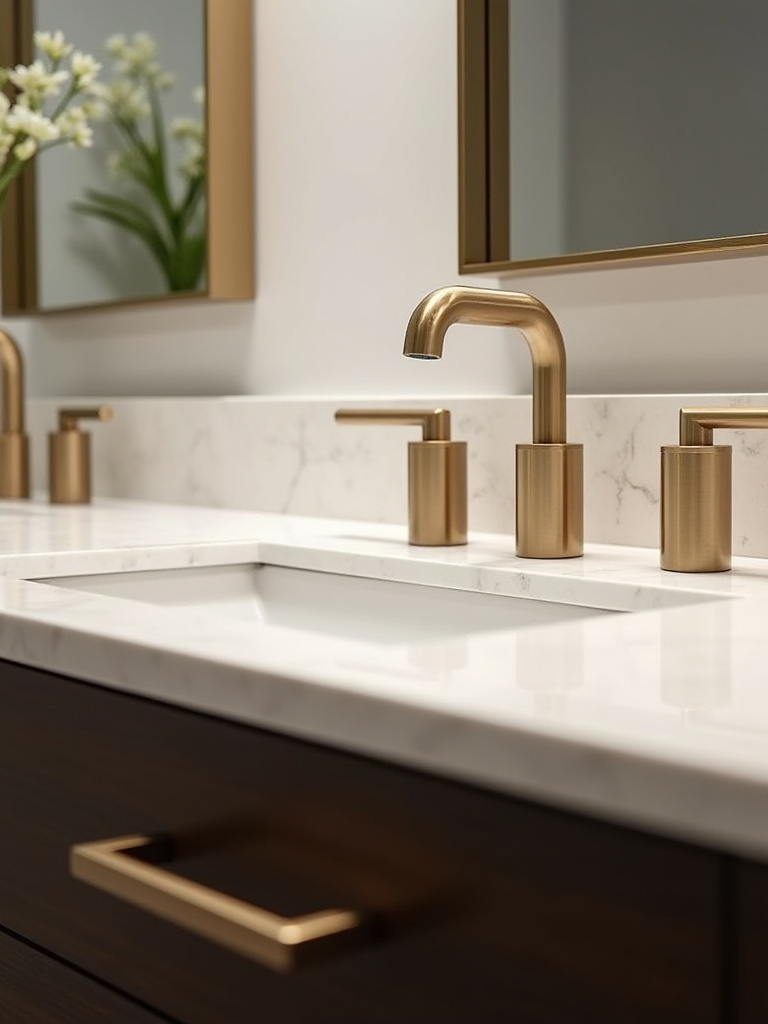
This is one of the easiest and most cost-effective ways to make a big impact. You can change out all the hardware in your bathroom in a single afternoon with just a screwdriver. It’s the perfect weekend project and can instantly make a generic, off-the-shelf vanity look like a custom piece of furniture. It’s all in the details.
Refined Styling & Aesthetic Enhancements (Part 2)
We’re almost there. The final touches are about engaging the senses beyond just sight. It’s about how things feel against your skin, completing the sensory experience that transforms a room from just a space to a sanctuary.
16. Integrate Luxurious Textiles and Towel Selections
Life is too short for thin, scratchy towels. This is a hill I will die on. Investing in a set of high-quality, plush, absorbent towels is an act of daily kindness to yourself. And aesthetically, a stack of beautiful, matching towels in a color that complements your palette looks intentional and serene. A jumble of mismatched, faded towels just looks chaotic and kills the whole vibe you’ve worked so hard to create.
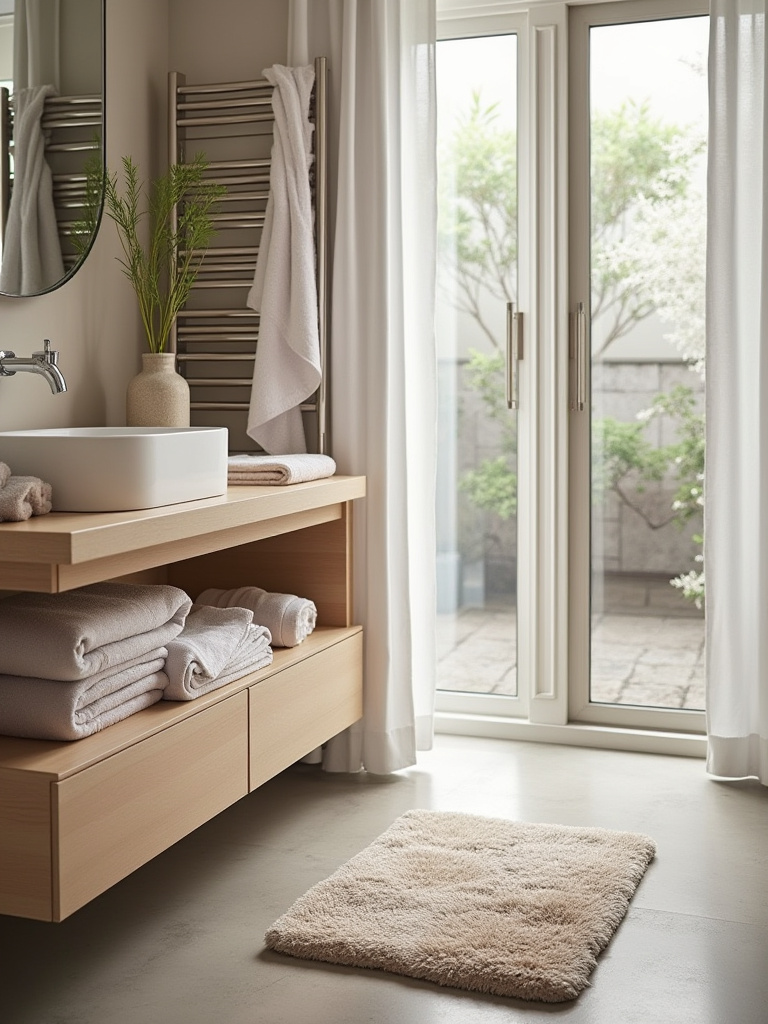
Don’t forget what’s underfoot. Stepping out of a warm shower onto a thick, soft, weighty bath mat instead of a flimsy, slippery rug is a small but profound luxury. The textiles are the soft counterpoint to all the hard surfaces in a bathroom. They absorb sound, add texture and warmth, and are crucial for making the room feel comfortable and inviting.
Smart Solutions & Long-Term Optimization
You’ve created a beautiful, functional space. The last step is to make sure it stays that way. This is about future-proofing your design, making it smarter, more efficient, and easier to care for, so you can enjoy your sanctuary for years to come.
17. Explore Smart Bathroom Technology for Modern Convenience
When I say “smart,” I’m not talking about a TV in your mirror or a toilet that talks to you. For me, smart technology needs to solve a real, human problem. A heated floor on a simple timer so the tiles are warm for your bare feet on a cold morning? That’s smart. A faucet that you can tap on with the back of your hand when you’re covered in gunk? That’s smart. That humidity-sensing fan we talked about? Genius.
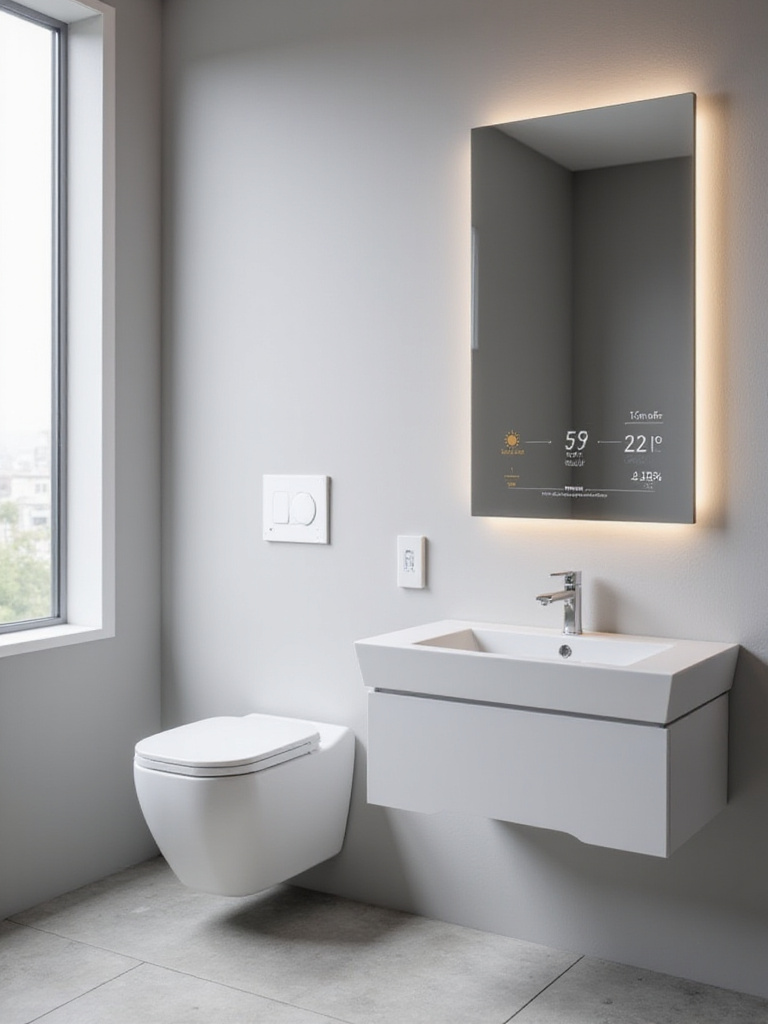
My advice is to skip the gimmicks and focus on things that add genuine comfort or convenience. If you want a taste of luxury without breaking the bank, a heated toilet seat can give you 80% of the blissful experience of a high-end smart toilet for about 10% of the cost. Start there. It’s a small thing that makes a huge difference on a winter morning.
Technology can make your daily routine better, and a philosophy of inclusivity can make your space better for everyone, for a lifetime.
18. Implement Universal Design Principles for Future Accessibility
“Universal design” sounds clinical, but it’s really just a beautiful philosophy: design spaces that are easy for everyone to use, regardless of their age or ability. In a bathroom, this means things like a shower with no curb to step over, a comfortable bench to sit on, and stylish grab bars that look like chic towel bars. It’s not about making your bathroom look like a hospital; it’s about making it safer and more comfortable for every body.
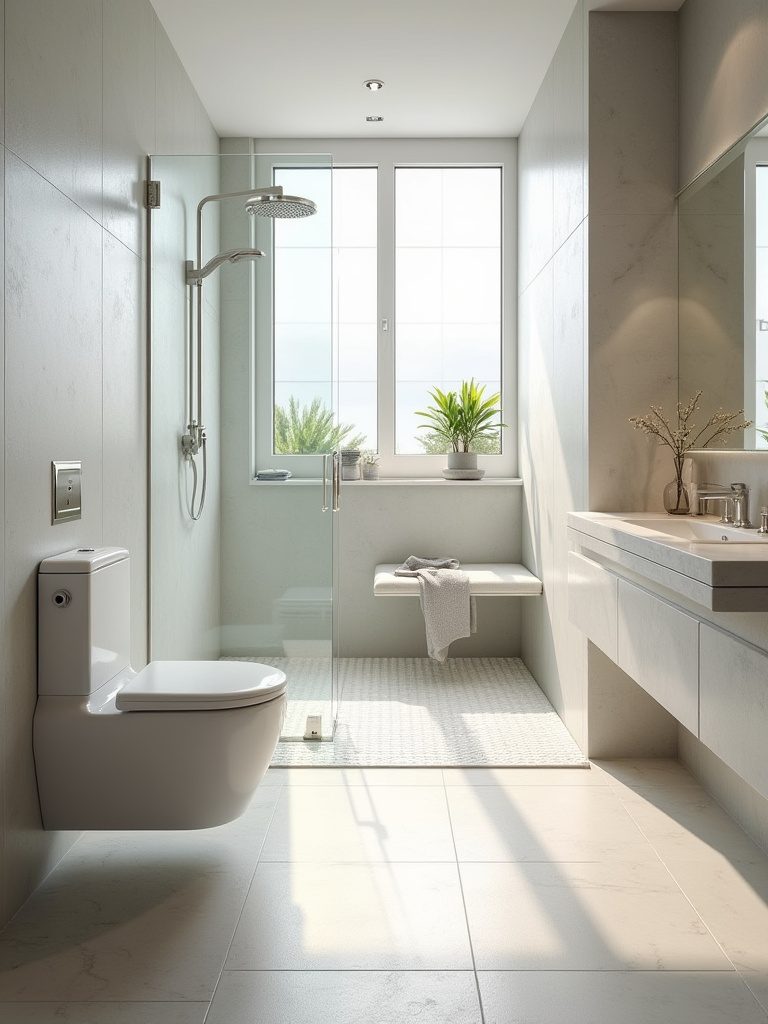
Here’s the secret bonus: universal design features are often just better design, period. A curbless, “zero-entry” shower is fantastic for accessibility, but it also makes a small bathroom feel enormous because your flooring can run uninterrupted through the entire space. It’s an aesthetic power move disguised as a practical feature. Good design, it turns out, is for everyone.
Designing for everyone should also include designing for the planet we all share. Making conscious choices matters.
19. Prioritize Eco-Friendly Choices for Sustainable Design
This isn’t about chasing trends; it’s about making thoughtful, conscious choices. It’s choosing low-flow faucets and toilets that are engineered to work beautifully with less water. It’s using paints with no VOCs that won’t off-gas chemicals into the air you breathe. It’s choosing a vanity made from reclaimed wood that already has a history and a story. It’s about creating a space that is healthier for you and for the planet.
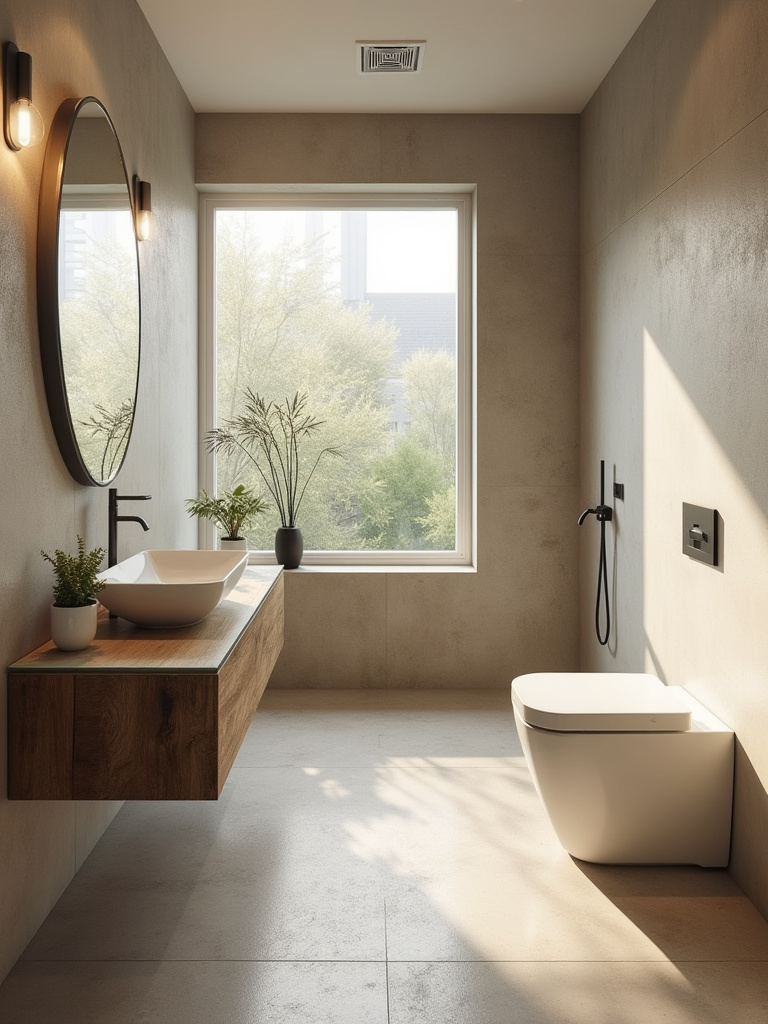
My favorite way to be eco-friendly is to go vintage. A beautiful old mirror with a bit of patina or a salvaged wooden stool has more character, soul, and story than anything you can buy brand new. It’s the ultimate form of recycling, and it guarantees that your space will have a unique element that no one else has.
You’ve built this beautiful, thoughtful space. The final act is to create a plan to care for it.
20. Develop a Maintenance Schedule to Preserve Your Investment
You’ve poured your heart, your time, and your money into creating a piece of functional art. Now you have to take care of it. This isn’t about drudgery; it’s about stewardship. A simple maintenance plan prevents small issues from becoming big, expensive problems. It’s about the small, consistent rituals: wiping down the shower glass after you use it, checking the caulking once a year, cleaning out the vent fan every few months.
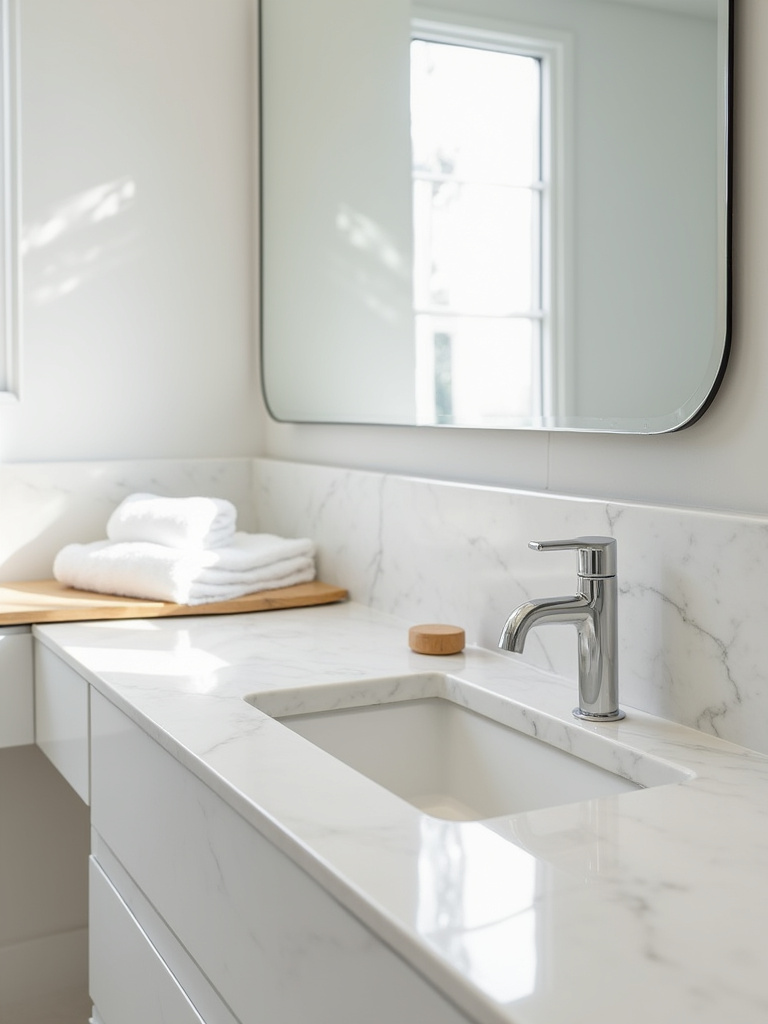
My one absolute rule for maintenance: be gentle. You wouldn’t scrub an oil painting with a scouring pad, right? Treat your surfaces with the same respect. A simple pH-neutral cleaner or a mix of vinegar and water is all you need for most things. Using harsh, abrasive chemicals is the fastest way to ruin beautiful finishes. Your sanctuary deserves better.
Conclusion
So there it is. A bathroom isn’t just a grid of fixtures on a floor plan. For a creative soul, it’s a vital space—a decompression chamber, a thinking spot, and yes, a clean-up station. The goal isn’t to copy a perfect photo from a magazine; it’s to create an environment that truly supports and inspires you. It’s about building a room that’s tough enough for your messiest days and serene enough for your most reflective moments.
Don’t feel like you have to do everything at once. Start with what bothers you most. Trust your artist’s eye to guide you. Listen to the space and to your own daily rhythms. Whether you’re doing a full gut renovation or just upgrading your towels and adding a plant, every intentional choice moves you closer to a room that feels like a true extension of yourself. Now go make something beautiful.