Many renters experience the stifling sensation known as “White Box” paralysis. You stand in a kitchen surrounded by flat, “landlord white” paint. The space often feels sterile, clinical, and visually uninspiring. It lacks the necessary texture to spark a creative mind. However, achieving a sophisticated look through kitchen wallpaper on a budget allows for a dramatic change. Best of all, it requires no permanent commitment.
Yet, the fear of losing a security deposit frequently halts renovation plans. Consequently, tenants often accept this sensory deprivation as a fixed condition of leasing. But this state of clinical neutrality creates a jarring disconnect. A kitchen should feel like a hearth, not a cold laboratory.
Fortunately, the technology behind temporary design has evolved significantly since the 1970s. We have moved beyond toxic wheat pastes. Now, high-tack breathable vinyl offers a durable, “wipeable” solution for the modern renter. Indeed, this innovation allows for the reclamation of your home’s most vital room through curated kitchen wallpaper designs.
This guide reveals how budget-friendly wallpaper serves as a primary tool for aesthetic agency. We will explore the psychological impact of transforming a transitional space. Furthermore, we examine the technical shift toward micro-suction adhesives. Finally, we discuss how to mimic luxury materials like marble without the high cost. It is time to turn that hollow white box into an intentional studio for living.
Defining the Canvas: Why modern peel-and-stick is an artist’s best tool for temporary transformation.
Modern peel-and-stick wallpaper has evolved far beyond its humble origins as cheap contact paper. In fact, its roots lie in Hollywood set design. There, rapid, non-permanent transformation is essential. Founders Jennifer Matthews and Julia Au adapted this “movie magic” specifically for residential use. Consequently, they turned permanent architectural decisions into flexible performance tools.
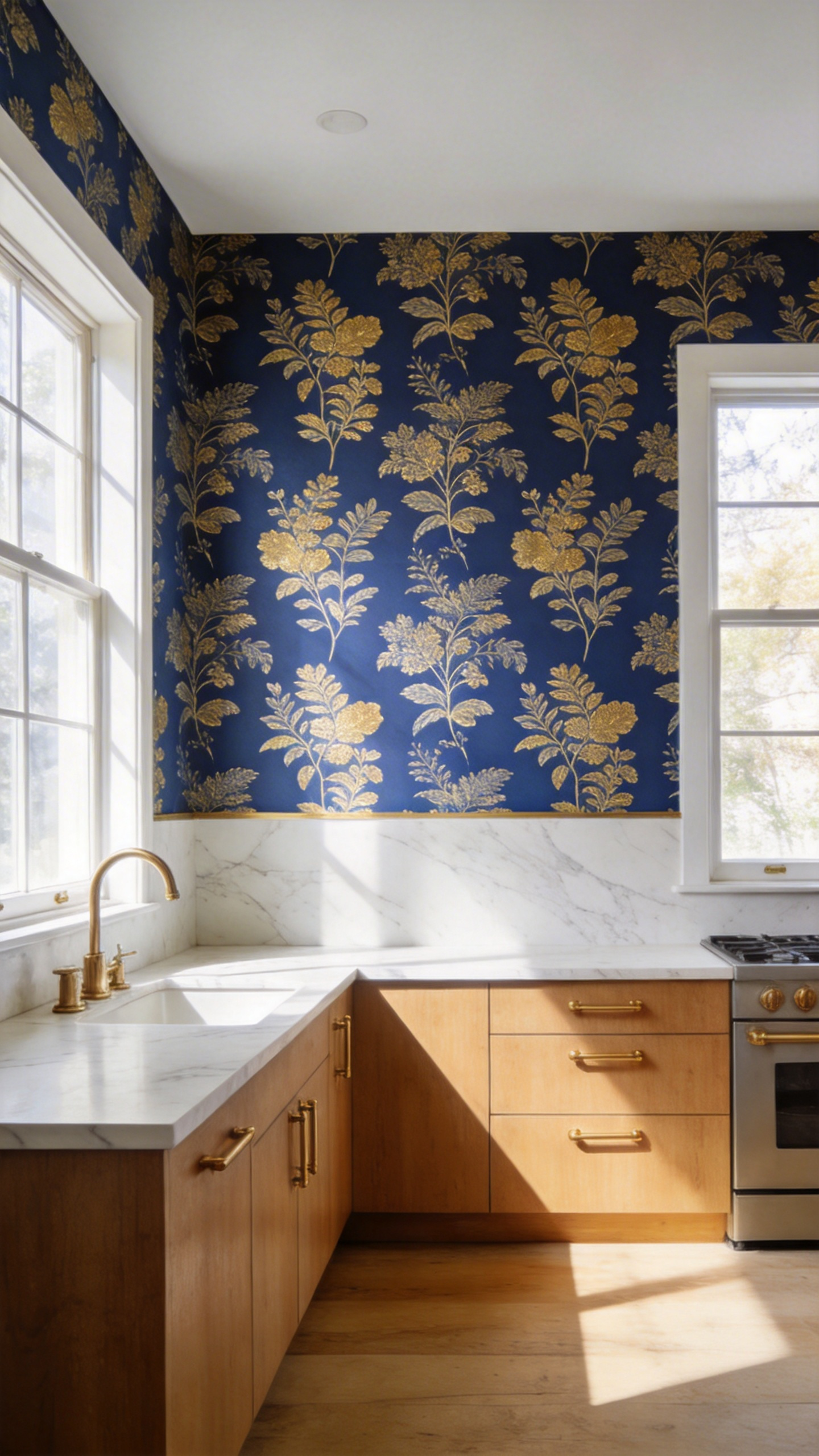
The real game-changer, however, is the molecular engineering behind the adhesive itself. Unlike traditional pastes that harden quickly, modern options use Microsphere Pressure Sensitive Adhesives (PSAs). Specifically, these tiny acrylic spheres create a stable yet “low-tack” bond. This technology allows for the “artistic pivot.” You can reposition sheets until the pattern aligns perfectly. Therefore, the user becomes an artist rather than a laborer fighting a drying clock.
Furthermore, the materials themselves have graduated from a plastic sheen to tactile sophistication. Manufacturers now utilize raised ink technology. This mimics authentic textures like matte plaster. Moreover, many high-end brands favor vinyl-coated non-woven papers. This hybrid approach ensures the material “breathes.” It effectively prevents mold in humid kitchen environments.
Ultimately, this medium offers a form of psychological “creative rebellion.” Because the commitment is temporary, you are free to choose bold, risky patterns. Thus, a simple roll of paper transforms your kitchen into a genuine canvas for expression.
Phase 1: The Accessible Foundation (Quick Wins & Materials)
The modern “Quick Win” in kitchen renovation relies heavily on material science. Specifically, the shift to non-woven and vinyl-coated substrates changes the landscape. Unlike traditional kitchen wall paint, these materials utilize pressure-sensitive adhesives. Consequently, they allow for “outgassing.” This prevents wrinkles in humid cooking environments.
Furthermore, high-quality budget vinyls now feature “embossed-in-register” technology. This provides a tactile experience mimicking linen. It effectively softens the kitchen’s hard surfaces.
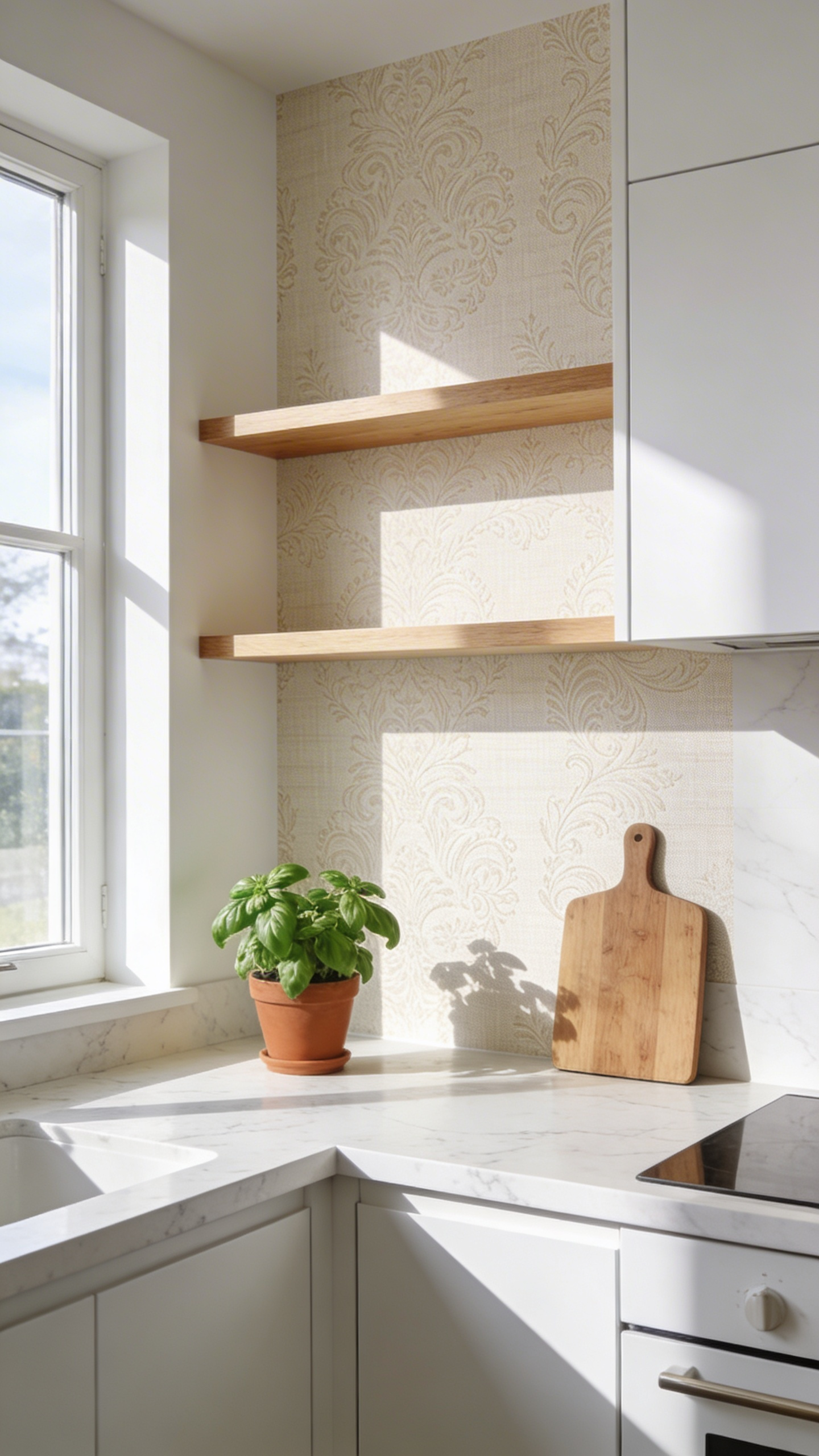
However, a durable installation requires proper preparation. Kitchen walls often harbor invisible layers of aerosolized grease. Therefore, professional installers insist on a TSP (Trisodium Phosphate) wash before application. This step creates the necessary “tooth” for the adhesive to bond. Additionally, if dealing with textured “orange peel” walls, opt for thicker vinyls. In fact, busy botanical prints offer “visual camouflage.” They hide imperfections without the cost of professional skimming.
For immediate impact, consider limited applications over full-room wraps. For example, the “Shadow Box” effect involves wallpapering only the interiors of glass-front cabinets. This creates a “jewelry box” moment when doors open. It transforms generic shelves into personal statements. Ultimately, this approach champions a holistic kitchen design on a budget. Because modern peel-and-stick is truly removable, it acts as a low-stakes prototype. You can safely test a bold aesthetic before committing to permanent, expensive tile.
1. The Vinyl Advantage: Selecting moisture-resistant materials that survive the ‘splash zone’.
In a functional kitchen renovation, wallpaper serves as a sacrificial barrier. It is not just a decorative layer. Specifically, solid vinyl acts as a zero-permeability shield against daily exposure to steam and grease. Unlike breathable paper, high-quality vinyl falls under Category V or VI of ASTM F793 standards. Consequently, it withstands aggressive cleaning. You can effectively scrub away sauce splatters with a stiff brush without damaging the surface.
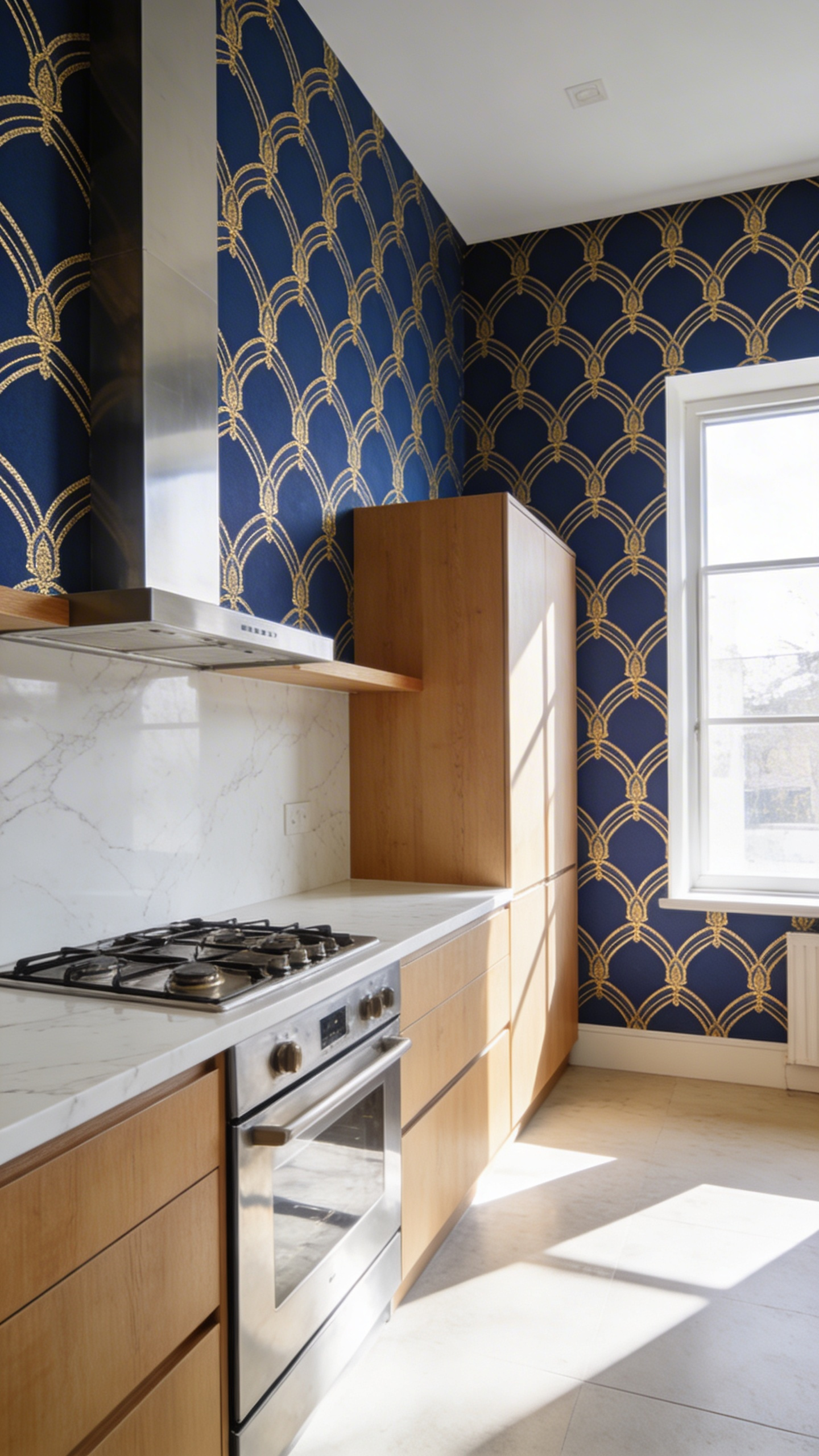
Furthermore, modern vinyl offers a distinct sensory advantage through “hot-embossing.” This manufacturing technique creates physical ridges. These mimic the tactile feel of Zellige tile or Belgian linen. In fact, these textured surfaces effectively mask water spots and mineral deposits through light refraction.
A flat, matte paper would show every dried drop of tap water. Conversely, an embossed vinyl hides these imperfections within its valleys. Beyond aesthetics, vinyl provides essential dimensional stability in the “heat zone” near the range. Synthetic materials do not expand or contract drastically with humidity. Therefore, the material remains flat and secure. Ultimately, selecting vinyl acknowledges that the kitchen is a rigorous workspace first.
2. Faux-Texture Theory: Using trompe-l’oeil brick or tile patterns to add architectural weight without the renovation costs.
Historically, *trompe-l’oeil* was a tool reserved for high-art frescoes. However, the industrial revolution democratized this technique. This allows homeowners to purchase architectural weight rather than build it. Consequently, utilizing faux-texture patterns today imbues modest kitchens with established gravitas. It mimics the masonry of a historic estate.
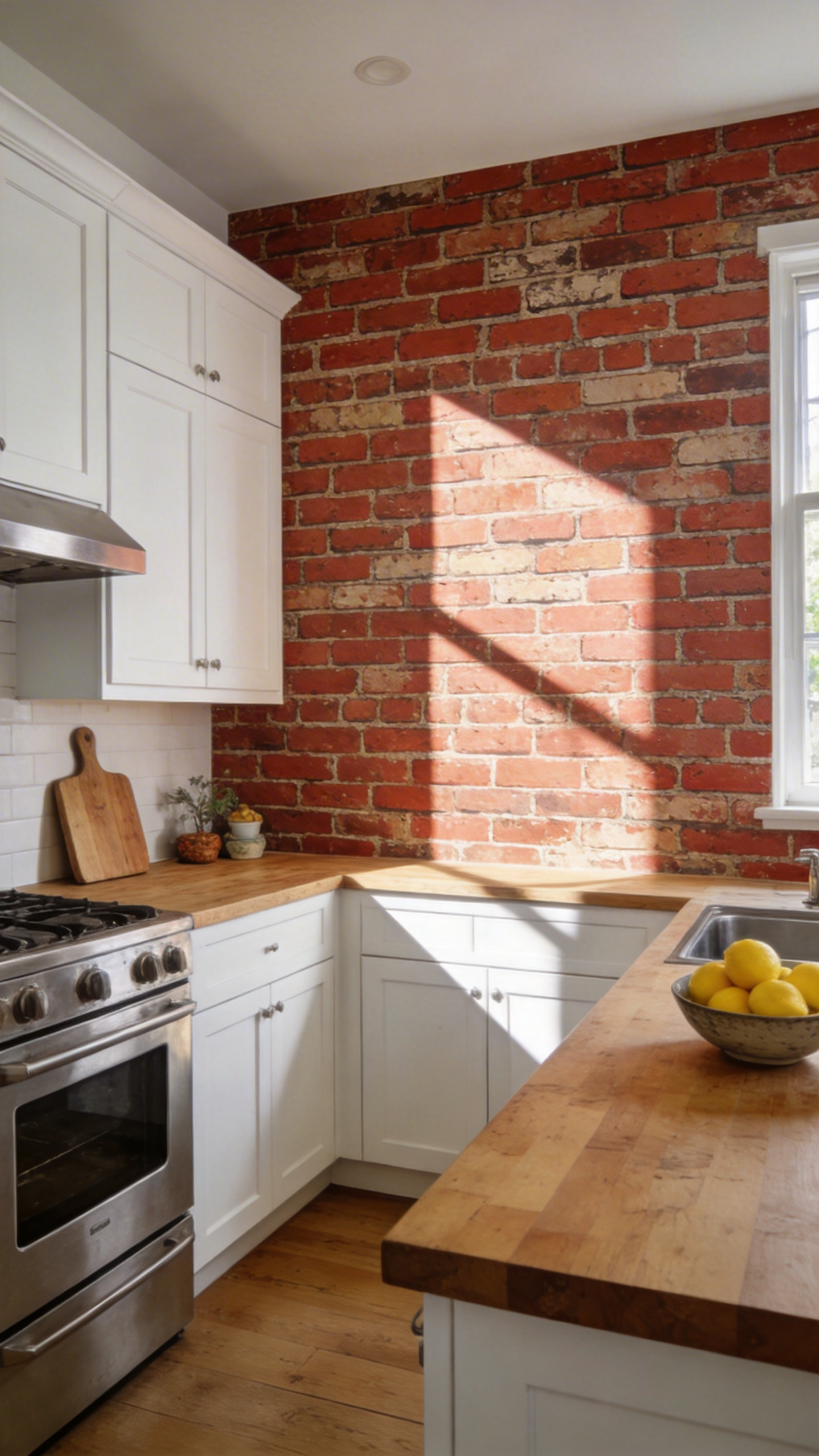
Specifically, this design strategy relies on the principle of visual weight. Heavy materials like brick or stone act as psychological anchors within a room. Conversely, smooth drywall often feels light and temporary. Therefore, applying a textured, brick-patterned wallpaper grounds the space. It makes modern cabinetry feel more permanent.
Fortunately, digital advancements have eliminated the flat, sticker-like look of the past. New “Dimense” printing technology uses structural inks. This creates actual 3D relief. Furthermore, high-definition shadowing mimics the crumbling mortar found in real materials. This visual trickery creates a convincing third dimension without the mess.
Structurally, this approach offers significant liberation. Real brick creates a heavy load. In contrast, faux textures provide the same aesthetic impact at a fraction of the weight. However, you must navigate the “Uncanny Valley” carefully. Repetitive, short patterns break the illusion immediately. Instead, prioritize wallpapers with a long pattern repeat of at least 20 inches. Additionally, always select matte finishes. Real masonry absorbs light, whereas glossy finishes look undeniably plastic.
3. The Backsplash ‘Zone Defense’: Focusing investment on the area between counter and cabinet for maximum impact.
The “Backsplash Zone Defense” treats the gap between counters and cabinets as critical visual real estate. Historically, this area was merely a four-inch utility lip designed to catch water. However, modern design recognizes this 18-inch vertical plane as the horizontal center of gravity. Consequently, focusing your budget here yields the highest aesthetic return.
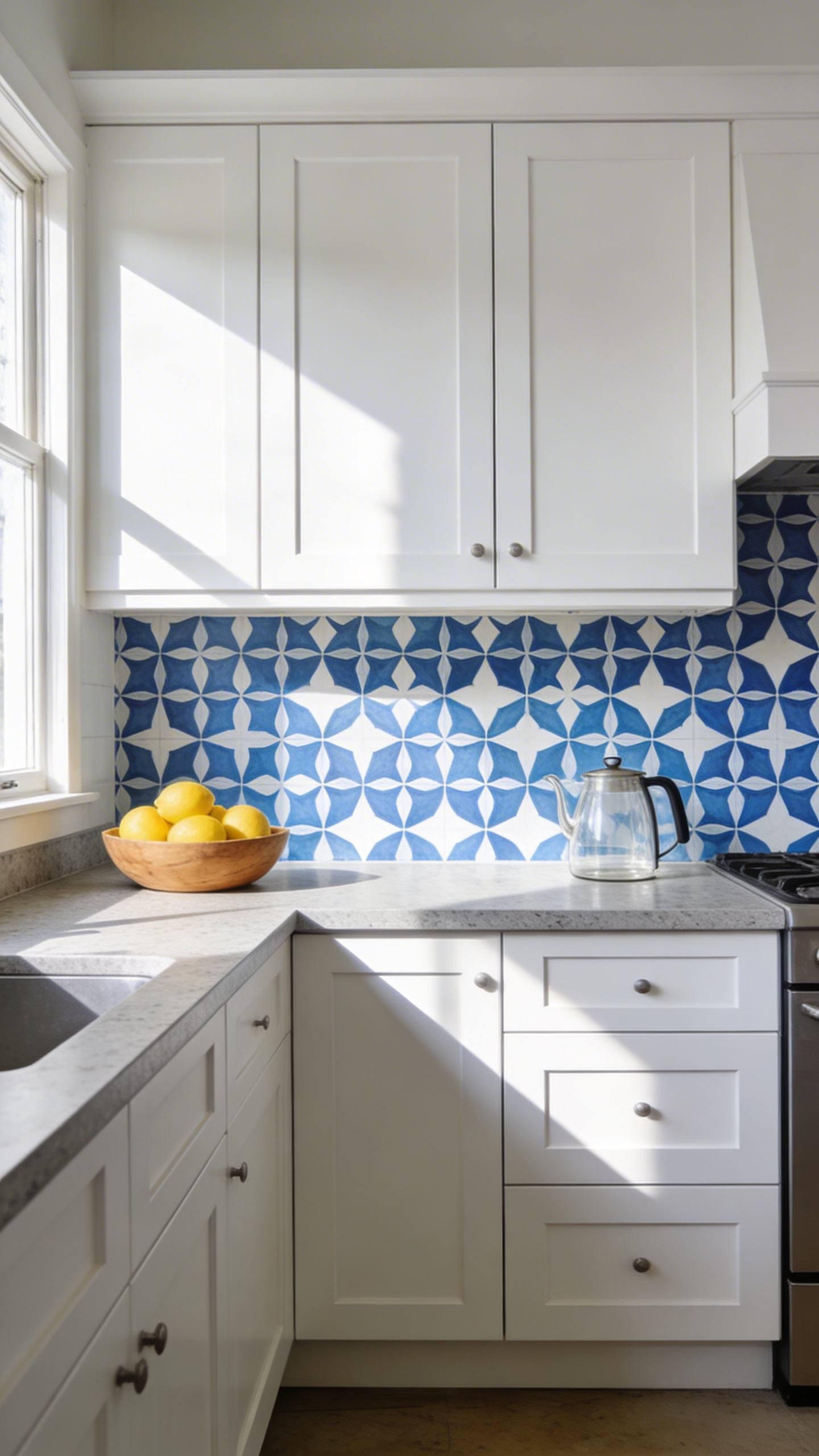
Psychologically, this area functions as the primary “eye-level impact zone.” Without a distinct material change here, visual fatigue occurs. Therefore, applying a patterned wallpaper creates a necessary resting place for the eye. Furthermore, luxury kitchens often rely on “tactile tension.” Since budget cabinets are smooth and counters are cold, a textured wallpaper introduces warmth.
Specifically, embossed vinyls or metallic flecks catch under-cabinet lighting. This creates depth through micro-shadows. Economically, this strategy allows for the “Single Roll Secret.” Because the backsplash area is small, usually under 20 square feet, you can splurge on designer paper. Thus, a single roll of luxury material elevates the entire room. Finally, durability remains manageable. Experts suggest using Type II scrubbable vinyl or sealing standard paper with a dead-flat varnish.
4. Cabinet Door Inlays: Utilizing wallpaper scraps to turn generic shaker fronts into bespoke features.
Shaker cabinets often feel generic in modern interiors. However, their recessed panels offer a perfect, readymade frame. Historically, the Shaker style strictly avoided ornamentation. Conversely, utilizing wallpaper scraps allows homeowners to creatively subvert this history. This approach transforms a utilitarian storage unit into a piece of bespoke artistry.
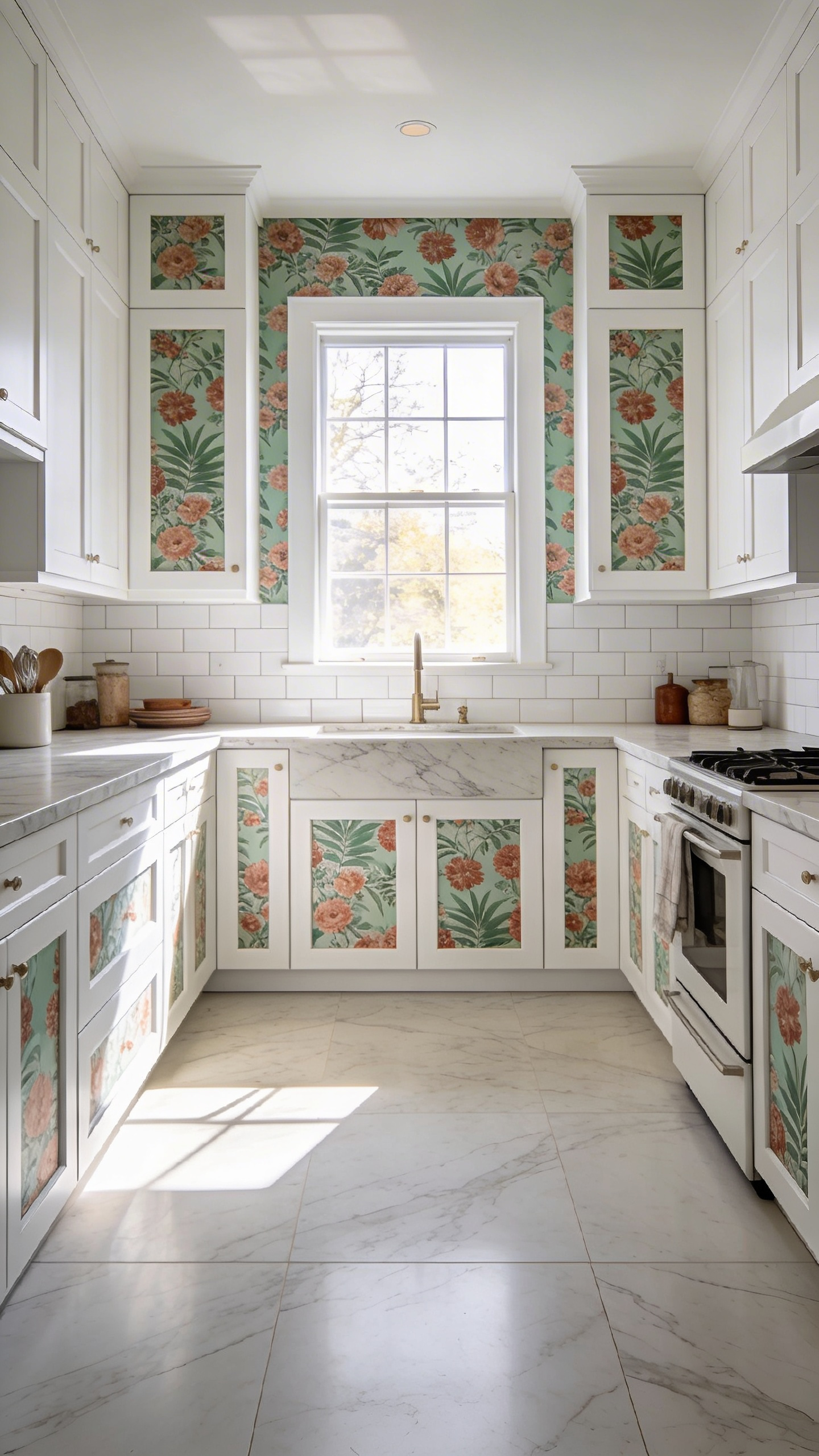
Consequently, successful installation requires technical precision. Specifically, durability is paramount in the “splash zone” near sinks or stoves. Peel-and-stick vinyl is popular for its ease of use. Yet, extreme temperature shifts near ovens can cause adhesive creep. Therefore, experts often use a blow dryer to heat-activate the bond permanently.
Additionally, applying a bead of clear silicone seals the edges against moisture. Beyond mechanics, this technique introduces essential sensory details. Most kitchens suffer from “sterile” feelings due to hard, flat surfaces. Thus, introducing grasscloth or jute scraps adds necessary organic warmth. Furthermore, metallic papers act as light-boosters for under-cabinet LEDs. Finally, pattern placement differentiates a quick hack from custom design. Centering the motif creates an intentional, sophisticated focal point.
5. The Drawer Liner Upgrade: Adding a secret pop of pattern for daily joy (and protecting surfaces).
Historically, drawer liners served a strictly defensive purpose within the home. Specifically, 18th-century “sugar paper” protected fabrics from rough wood splinters. Today, however, we transform these hidden spaces to spark daily joy. Designers often view the drawer interior as a crucial “liminal space.” Consequently, finding a vibrant botanical print triggers a “micro-moment” of happiness.
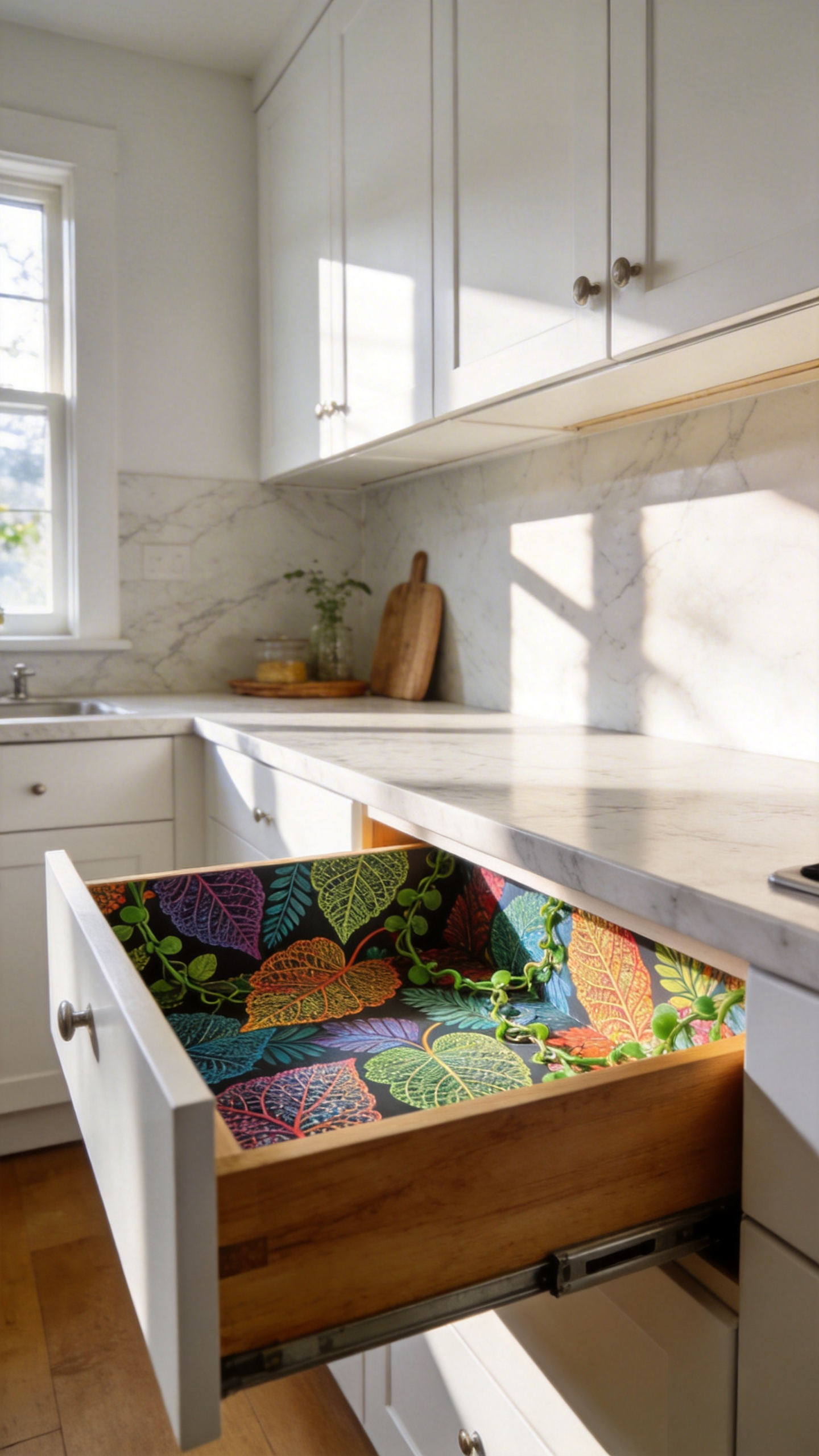
Beyond psychology, high-quality liners offer tangible acoustic benefits for the kitchen. In fact, heavy-weight vinyl absorbs the harsh clatter of silverware effectively. To maximize durability, avoid adhering wallpaper directly to the drawer bottom. Instead, experts recommend the “hardboard hack.” Simply wrap your chosen paper around a removable 1/8-inch board. This method ensures the liner remains cleanable and easily replaceable.
Furthermore, a topcoat of water-based polyurethane adds essential moisture resistance. Regarding sourcing, discontinued sample books often provide enough material for small drawers. However, exercise caution with true vintage wallpapers found in thrift stores. Surprisingly, older green pigments may contain traces of arsenic or lead. Therefore, always prioritize modern, VOC-free papers for any food-prep areas.
Phase 2: Intermediate Design (Creative Placement & Optical Illusions)
Moving beyond simple accent walls, intermediate design treats wallpaper as an architectural tool. Specifically, this phase relies on *Trompe l’oeil*, or “deceiving the eye.” Historically, this technique allowed homeowners to mimic expensive materials like wood or marble. Today, high-resolution murals offer similar benefits for budget kitchens. However, the finish is crucial for authenticity. For instance, a matte finish absorbs light like real stone. Conversely, glossy paper immediately breaks the illusion.
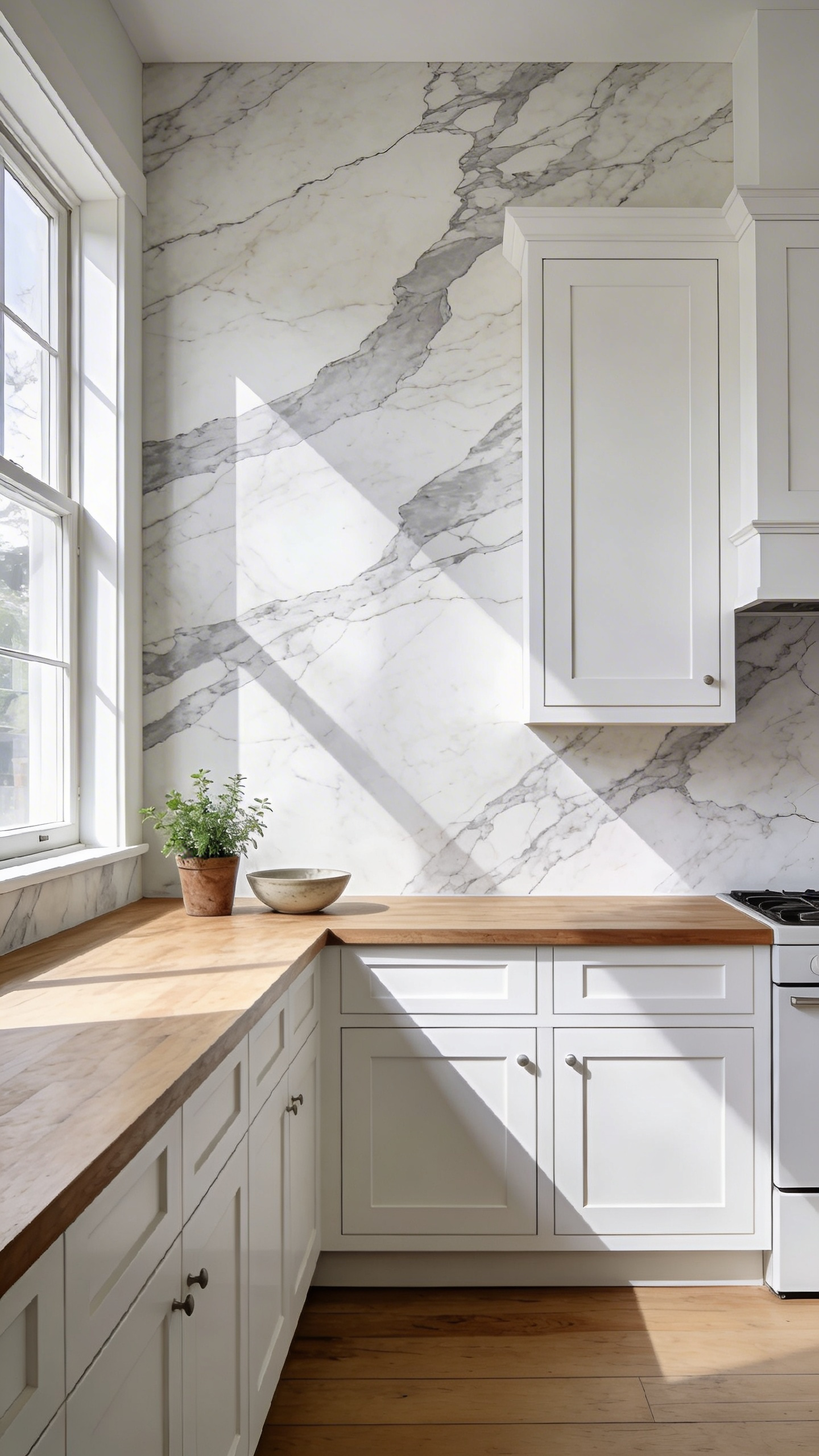
Furthermore, wallpaper can correct “flat” kitchen layouts. By applying paper above a chair rail, you create implied structure. Consequently, this technique effectively masks a lack of architectural detail. To support this visual trick, lighting plays a vital role. In fact, experts recommend lights with a Color Rendering Index (CRI) of 90+. Otherwise, low-quality light washes out the printed shadows that create depth.
Beyond the main walls, consider “stealth” placement. Wallpapering a pantry interior transforms a utilitarian zone into a focal point through creative kitchen wall decoration. Thus, opening a door reveals a sensory surprise. Finally, material choice impacts functionality. Thick, embossed vinyl creates a tactile sophistication over uneven walls. Therefore, it masks minor cracks without the need for expensive plaster work.
6. Visual Alchemy: Using vertical stripes to visually lift low ceilings in compact kitchenettes.
Visual alchemy in a compact kitchenette requires calculated spatial manipulation. Specifically, it involves leveraging verticality to “lift” low ceilings. Three-dimensional rooms react powerfully to lines. In fact, design psychology indicates a perceived height gain of nearly 25% with vertical patterns. Consequently, the human eye naturally follows these continuous paths upward.
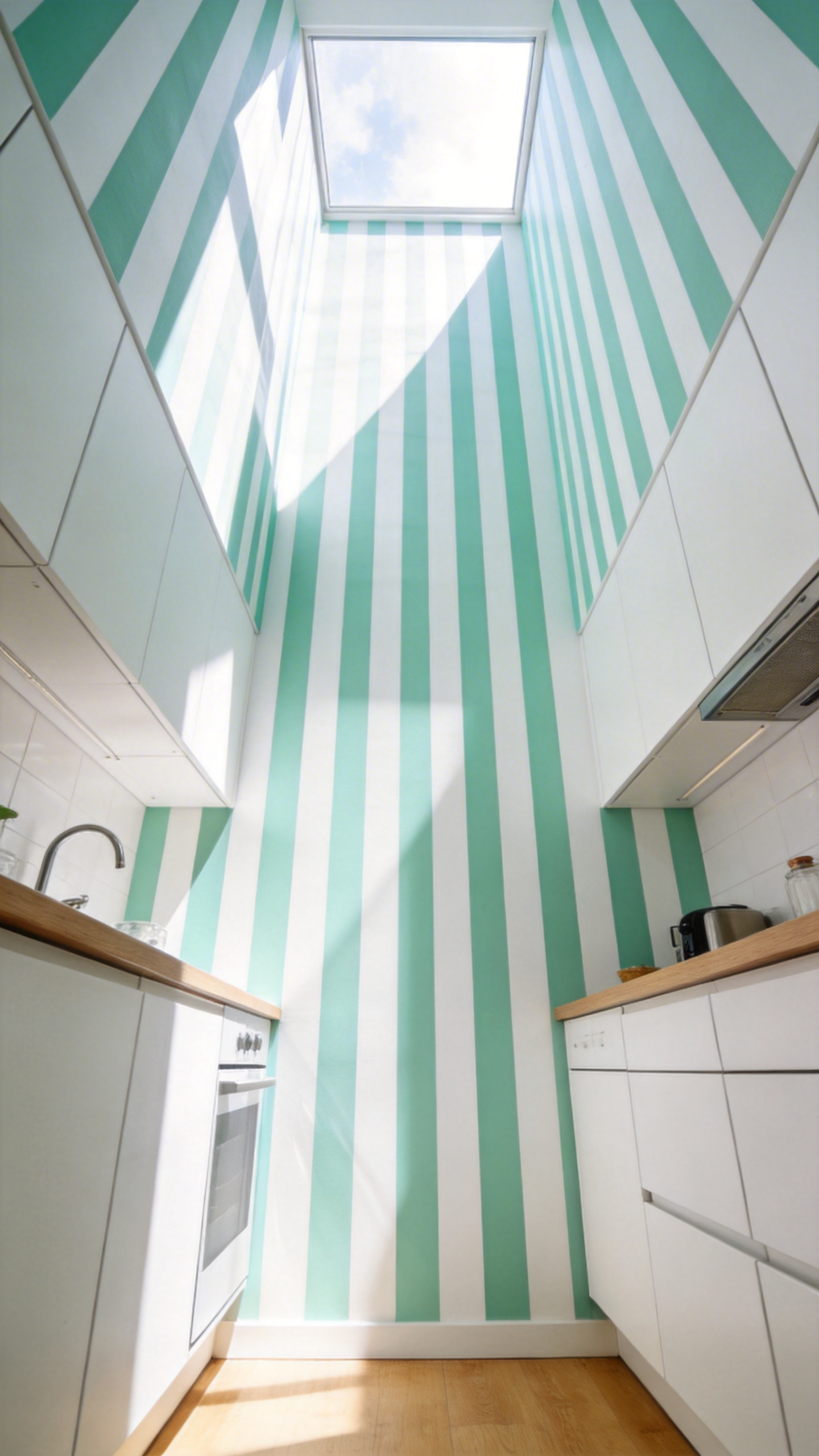
This optical trick is particularly essential in cooking spaces. Typically, horizontal planes like countertops and upper cabinets “slice” the room. Therefore, vertical wallpaper acts as a necessary visual bridge. It forces the gaze to jump across these horizontal breaks toward the ceiling. Additionally, this vertical rhythm counteracts the visual weight of heavy appliances. Thus, the room feels cohesive rather than cluttered.
For the most effective application, prioritize texture over high contrast. Ideally, choose “ghost stripes” where the stripe tone differs only slightly from the background. As a result, the wall mimics the look of expensive fluted wood paneling. Furthermore, using a satin finish creates a “visual ladder” for light. Reflections bounce upward from under-cabinet LEDs. This effectively blurs the boundary between wall and ceiling.
7. The ‘Open Shelf’ Backdrop: Creating depth behind dishware to mimic the look of custom joinery.
Standard stock cabinets often reveal their budget nature through thin, flimsy backing panels. Specifically, these visual voids lack the architectural weight of custom joinery. However, applying a high-texture wallpaper offers a sophisticated solution. For instance, materials like grasscloth or embossed vinyl add immediate visual density. In effect, this “structural illusion” mimics the solid, 3/4-inch wood backing found in bespoke furniture.
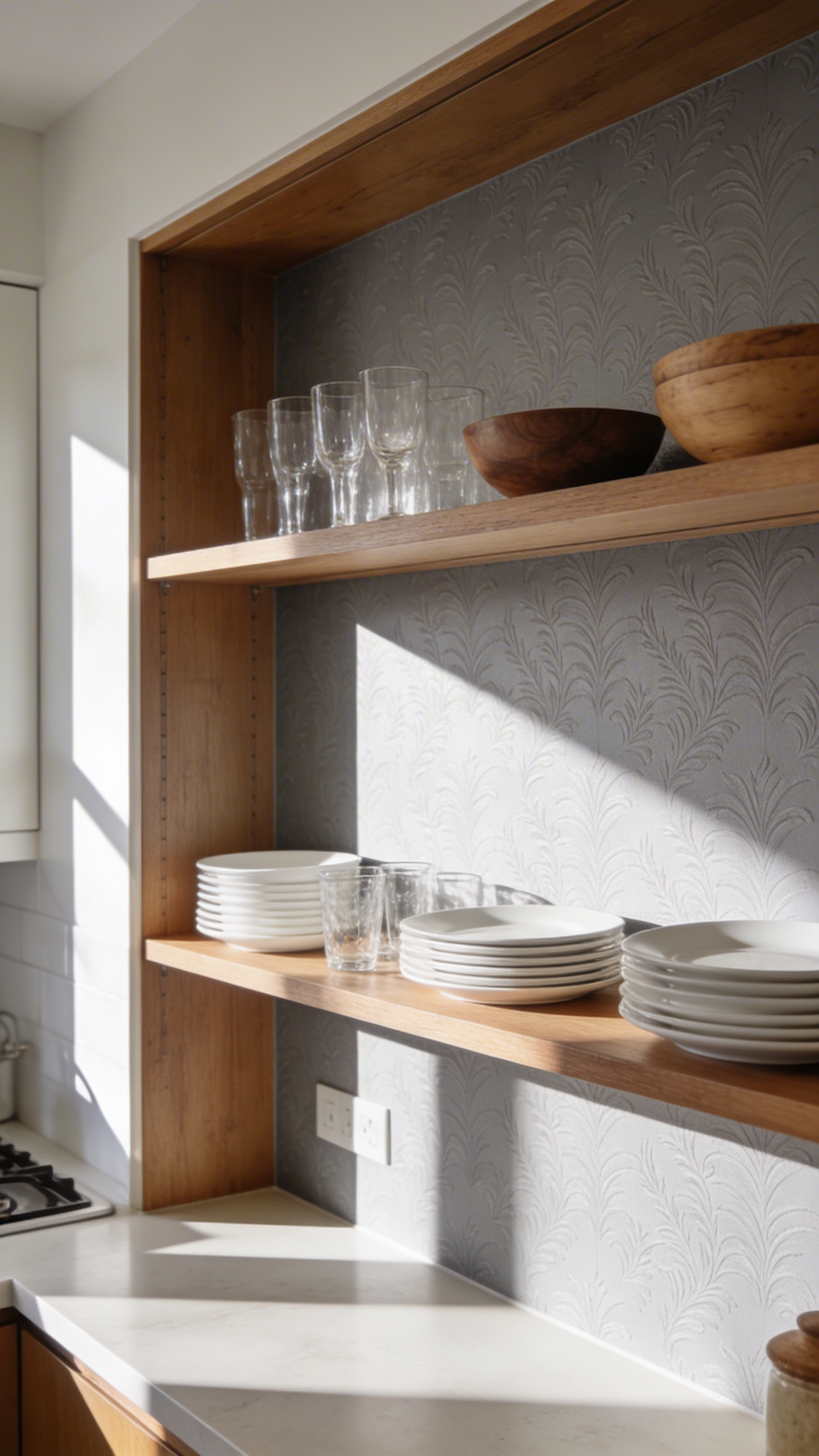
Furthermore, natural textures introduce a paneled effect similar to larder cupboards lined with fine fabric. Consequently, the subtle inconsistencies in the weave suggest hand-crafted artistry. Beyond texture, color choice plays a pivotal role. Notably, dark, moody backdrops absorb light to create a receding visual void. Therefore, light-colored ceramics pop against this shadow, appearing more like curated art.
Additionally, this contrast creates a *trompe l’oeil* effect. It makes shallow shelves feel significantly deeper. Finally, lighting creates the ultimate sensory layer. When directional LEDs graze the surface, they highlight the wallpaper’s unique weave. As a result, this interaction creates rich micro-shadows that flat paint simply cannot replicate.
8. The Appliance Wrap Hack: Camouflaging a dated fridge or dishwasher with metallic or matte solid vinyls.
Transforming a kitchen doesn’t always require purchasing expensive new units. Specifically, the appliance wrap hack borrows durable vinyl technology directly from the automotive industry. For instance, metallic vinyls often feature multiple layers. These mimic the depth of factory stainless steel. Additionally, their integrated “diamond sparkling” flakes diffuse light. This effectively hides minor dings in older metal bodies.
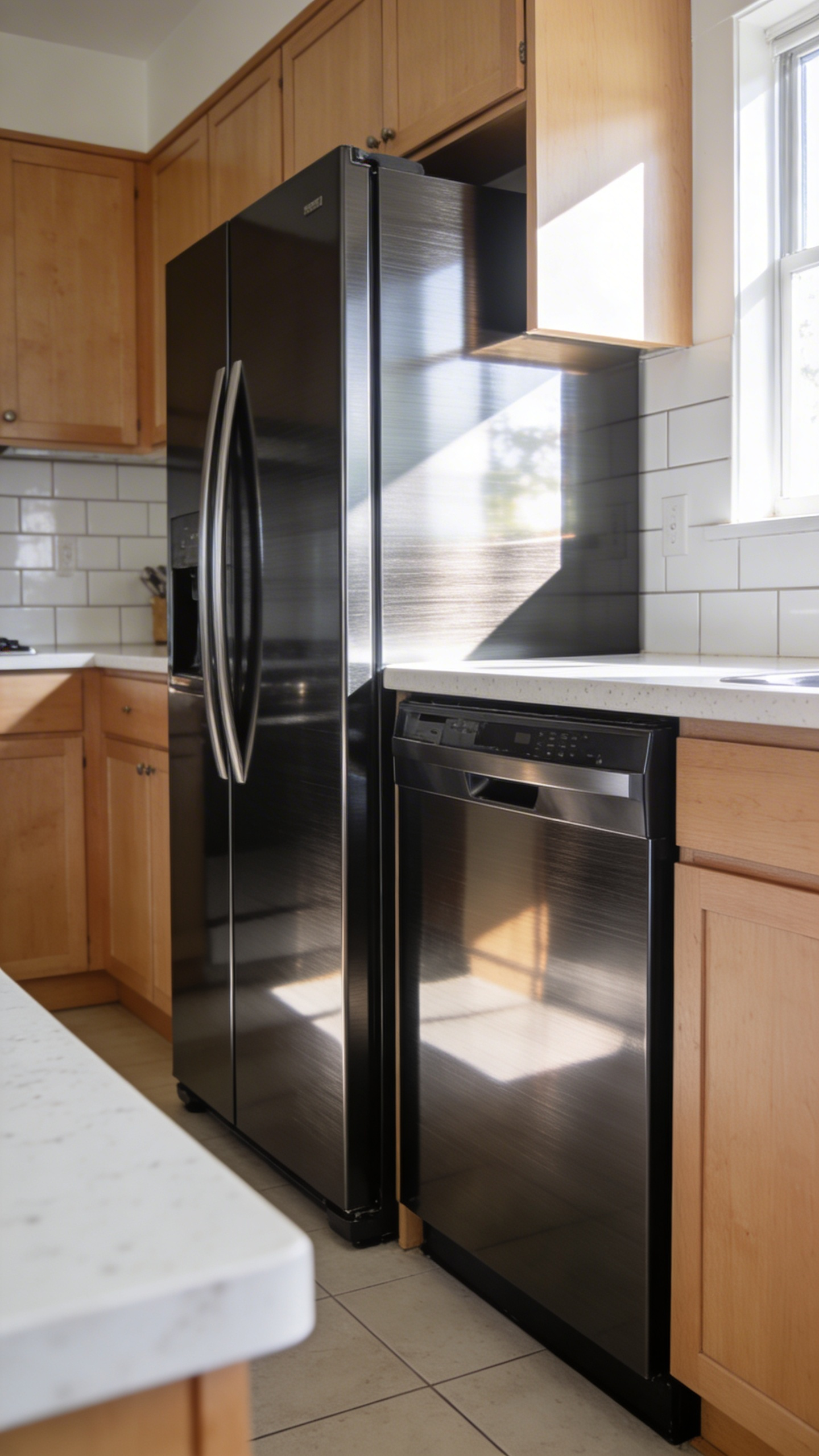
Conversely, matte solid vinyls offer a modern, soft-touch finish. This completely neutralizes visual noise and reflections. However, successful execution requires using architectural vinyl rather than standard wallpaper. In fact, high-quality vinyl is engineered to withstand temperatures up to 225°F. Therefore, the finish remains durable even on dishwashers facing high heat.
Furthermore, modern films utilize air-egress technology. This allows trapped air to escape to prevent unsightly bubbles. Ultimately, this approach serves a vital dual purpose. First, it creates a psychological “halo effect,” elevating the room’s perceived value. Simultaneously, it prevents massive e-waste by extending the lifespan of functional equipment.
9. The Breakfast Nook ‘Zoning’: Defining an eating area within a multi-use room using a bold feature wall.
In modern open floor plans, the stress of the kitchen often bleeds into dining areas. Consequently, the noise and mess of cooking can disrupt a peaceful meal. To fix this, designers use “Visual Enclosure” to create distinct zones without construction. Specifically, a bold feature wall acts as a strong sensory anchor. By altering the visual texture on one specific wall, you signal a clear psychological shift to the brain.
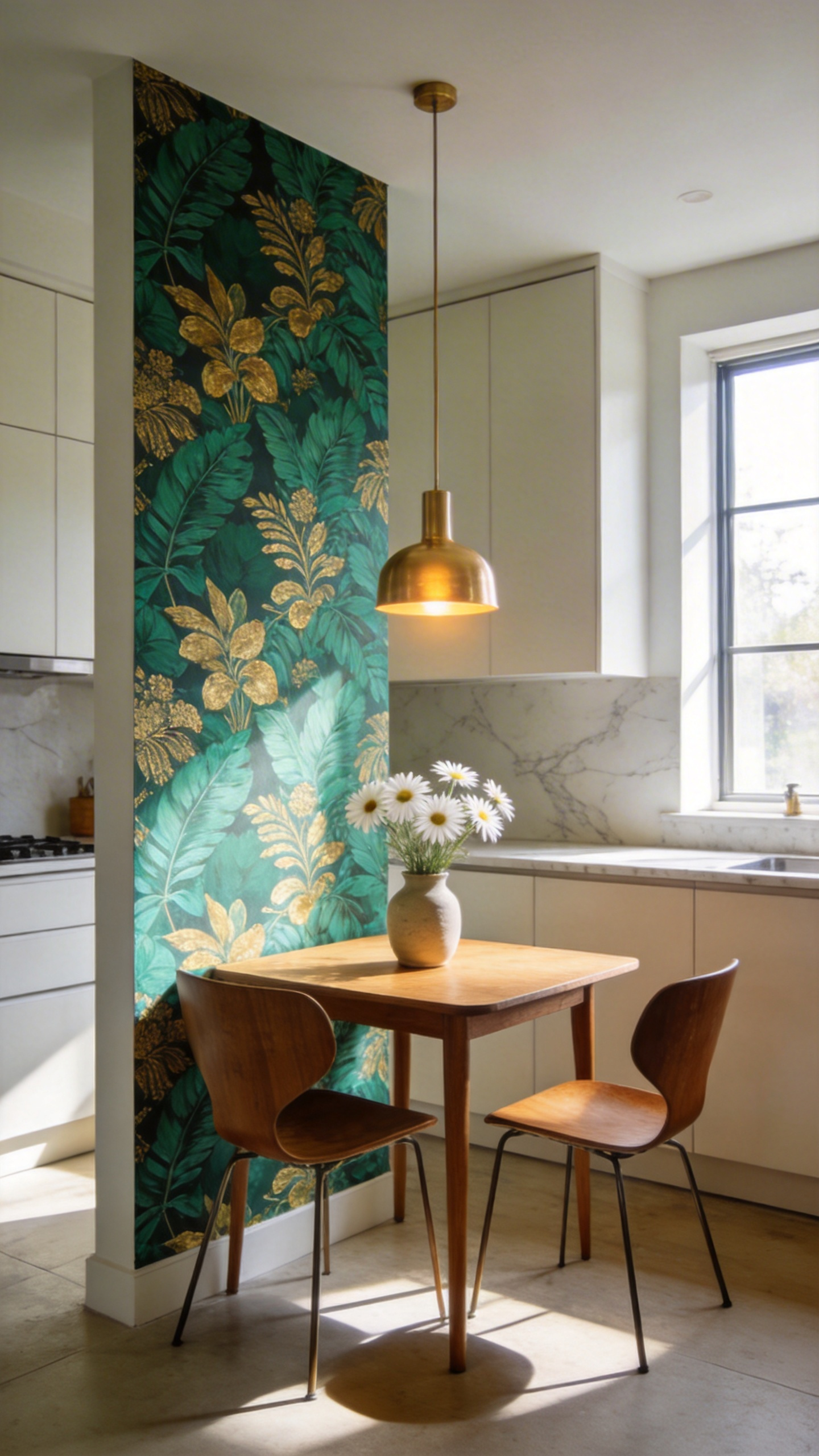
Historically, breakfast nooks were defined by architectural alcoves. However, bold wallpaper creates “architectural depth” where no physical walls exist. This application grounds the furniture. The table and chairs do not appear to float aimlessly. Furthermore, this focused application is remarkably budget-friendly. Because the surface area is small, you often need only one roll of premium paper.
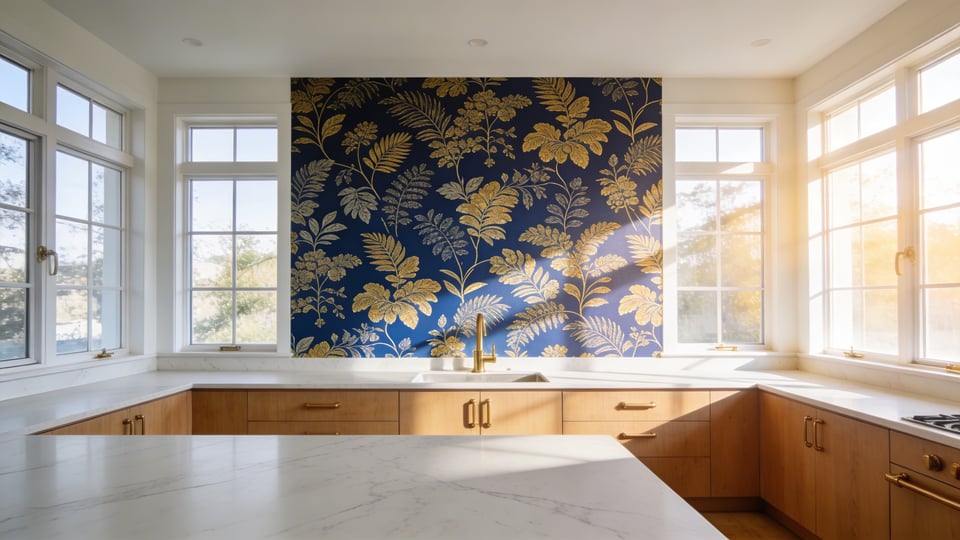
Surprisingly, small zones benefit most from bold, oversized patterns. For instance, large-scale botanicals or geometrics create a comforting “hugging” effect. Conversely, small, busy prints can make the space feel cluttered. Ideally, the paper should create a vertical column of color. When seated facing the art, the utilitarian kitchen simply disappears behind you. Thus, your breakfast nook becomes a true restorative retreat.
10. Window Reveal Framing: Wallpapering the inner jambs for a subtle, designer-grade detail that uses minimal material.
Wallpapering the recessed inner jambs of a window is a masterclass in “micro-design.” Specifically, this technique creates a “jewel box” effect within the kitchen. Because the pattern is not immediately visible from every angle, it creates a sense of discovery. When approaching the sink, the hidden pattern reveals itself. This transforms a standard architectural element into intentional art.
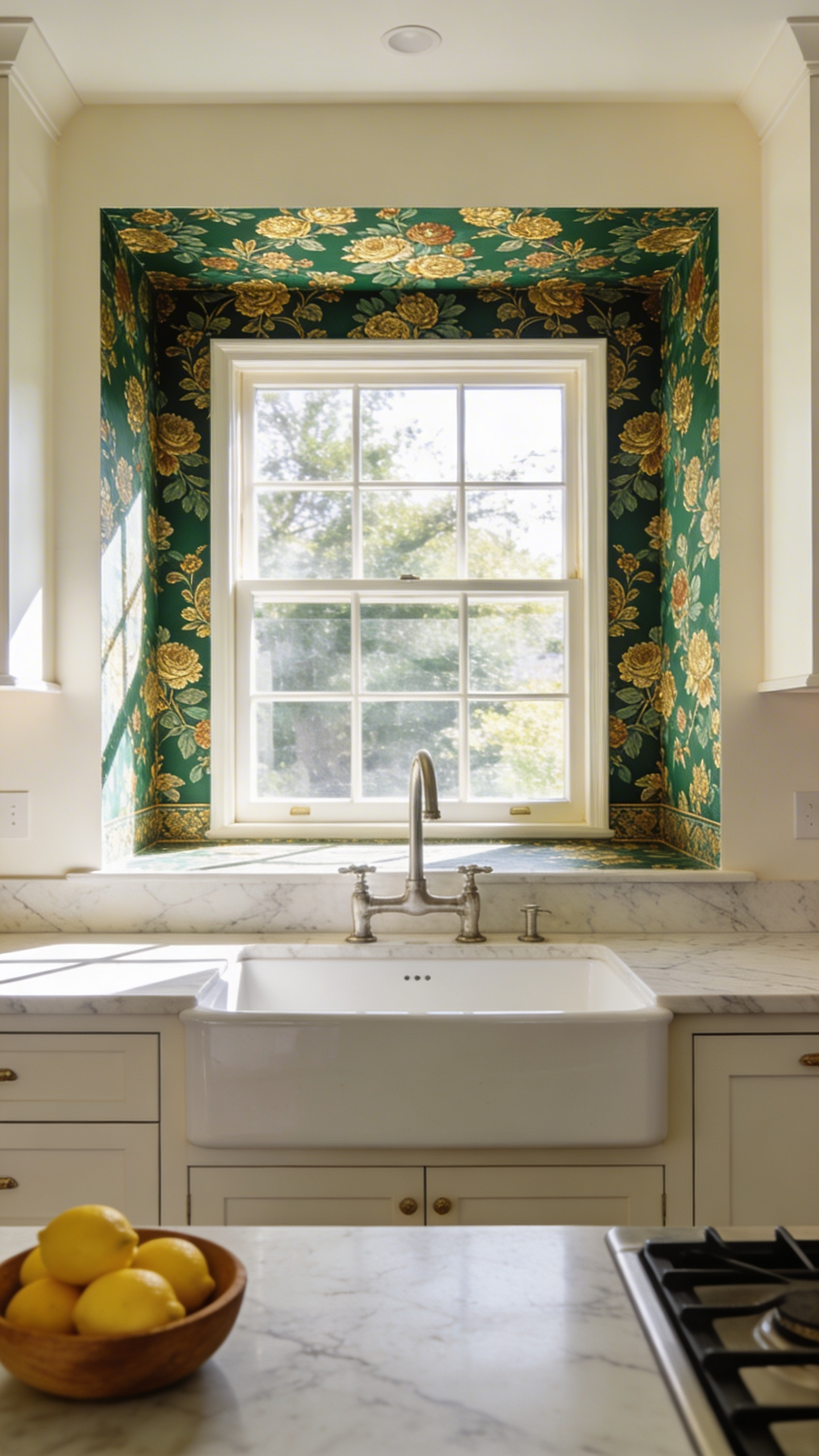
Consequently, designers often select intricate, small-scale prints for these intimate surfaces. Furthermore, the wallpapered return catches angled light. It effectively “paints” the room with soft, patterned reflections. Beyond aesthetics, this detail creates a transitional frame between the interior and the exterior. For instance, a botanical print acts as a visual bridge to a garden view.
Financially, this approach uses minimal material. In fact, homeowners can often utilize high-end “end-of-roll” remnants for a fraction of the cost. However, technical precision is required for a seamless look. Ideally, installers should use a “double-cut” method to wrap corners without gaps. Moreover, durability remains paramount in moisture-prone cooking zones. Therefore, experts recommend using scrubbable Type II Vinyl. Ultimately, this ensures the bespoke detail withstands the rigors of a working kitchen.
11. The ‘Fifth Wall’ Solution: Wallpapering the ceiling to draw the eye up and away from dated flooring.
The “Fifth Wall” strategy effectively recalibrates a room’s focus by wallpapering the ceiling. Specifically, this design maneuver acts as a “visual redirect” in budget renovations. Consequently, it pulls attention away from expensive-to-replace elements like dated 1970s linoleum. Instead, the wallpaper creates a high-impact “theatrical canopy” overhead.
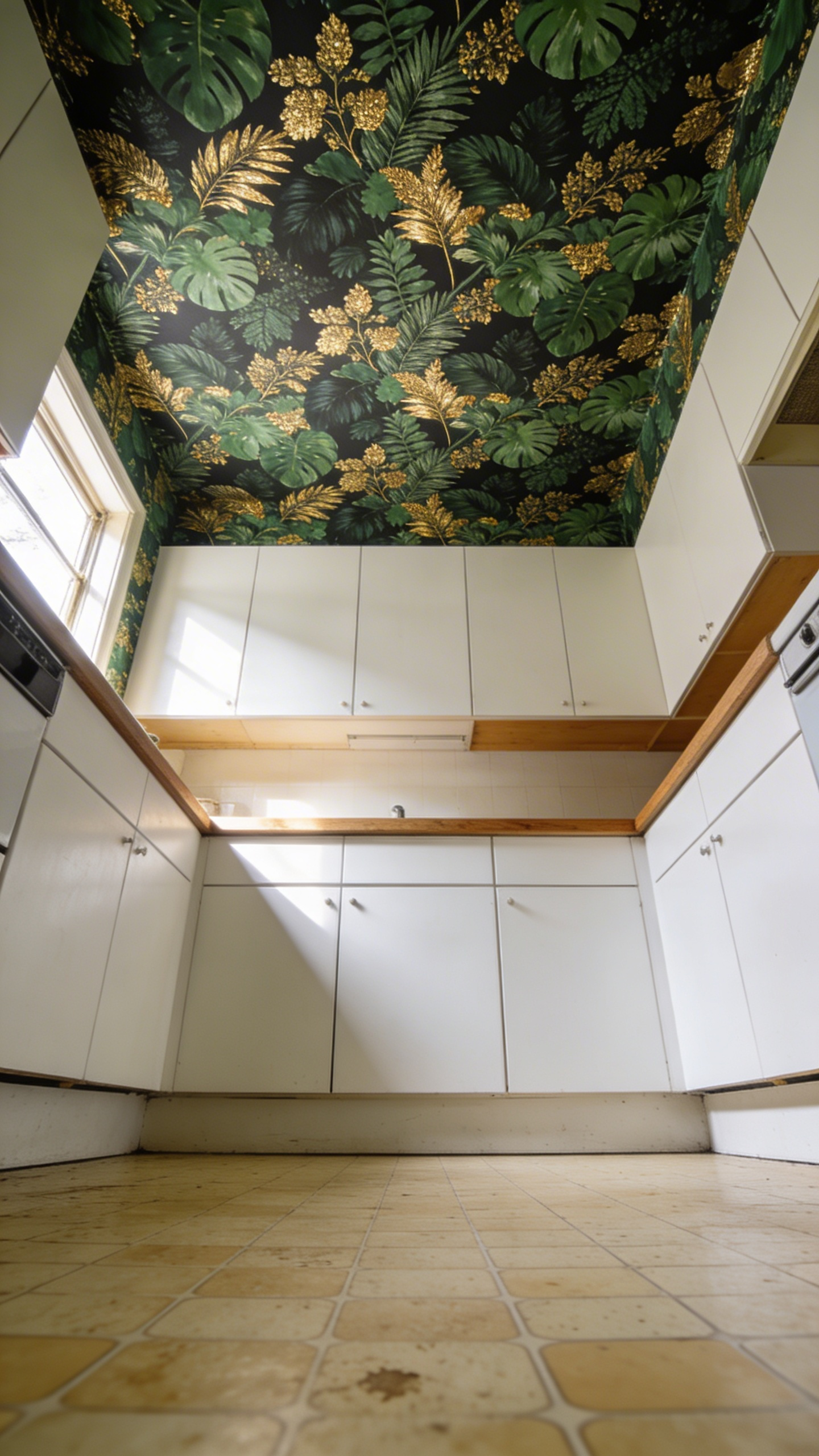
Psychologically, the human eye naturally seeks the most vibrant visual information in a space. Therefore, placing a complex pattern on the ceiling forces the viewer to bypass the flooring entirely. In fact, this technique creates an uninterrupted canvas that ties disparate elements together.
However, selecting the right pattern is critical for success. Expert consensus suggests using non-directional geometric shapes. Because a ceiling is viewed from multiple angles, these designs ensure the pattern never appears upside down. Additionally, metallic wallpapers can function as a secondary light source. They reflect the glow from pendant lights.
Furthermore, kitchen environments present unique challenges regarding grease and humidity. Therefore, standard paper is often unsuitable as it absorbs odors. Instead, experts recommend using vinyl-coated wallpaper for durability. Crucially, installation requires a “forensic clean” with Trisodium Phosphate (TSP). Finally, this area is perfect for luxury “end-of-roll” remnants. Since ceiling surface areas are often small, high-end materials become surprisingly affordable.
Phase 3: Mastery Integration (Artist-Level Details & Longevity)
True mastery transforms budget materials into permanent fixtures. Specifically, success begins with the bond. Professionals rely on a ritual called “booking.” After applying heavy-duty vinyl adhesive, fold the paper paste-to-paste. Consequently, the fibers relax and expand before hitting the wall. This crucial step prevents the dreaded “seam-shrinkage” often seen in amateur work.
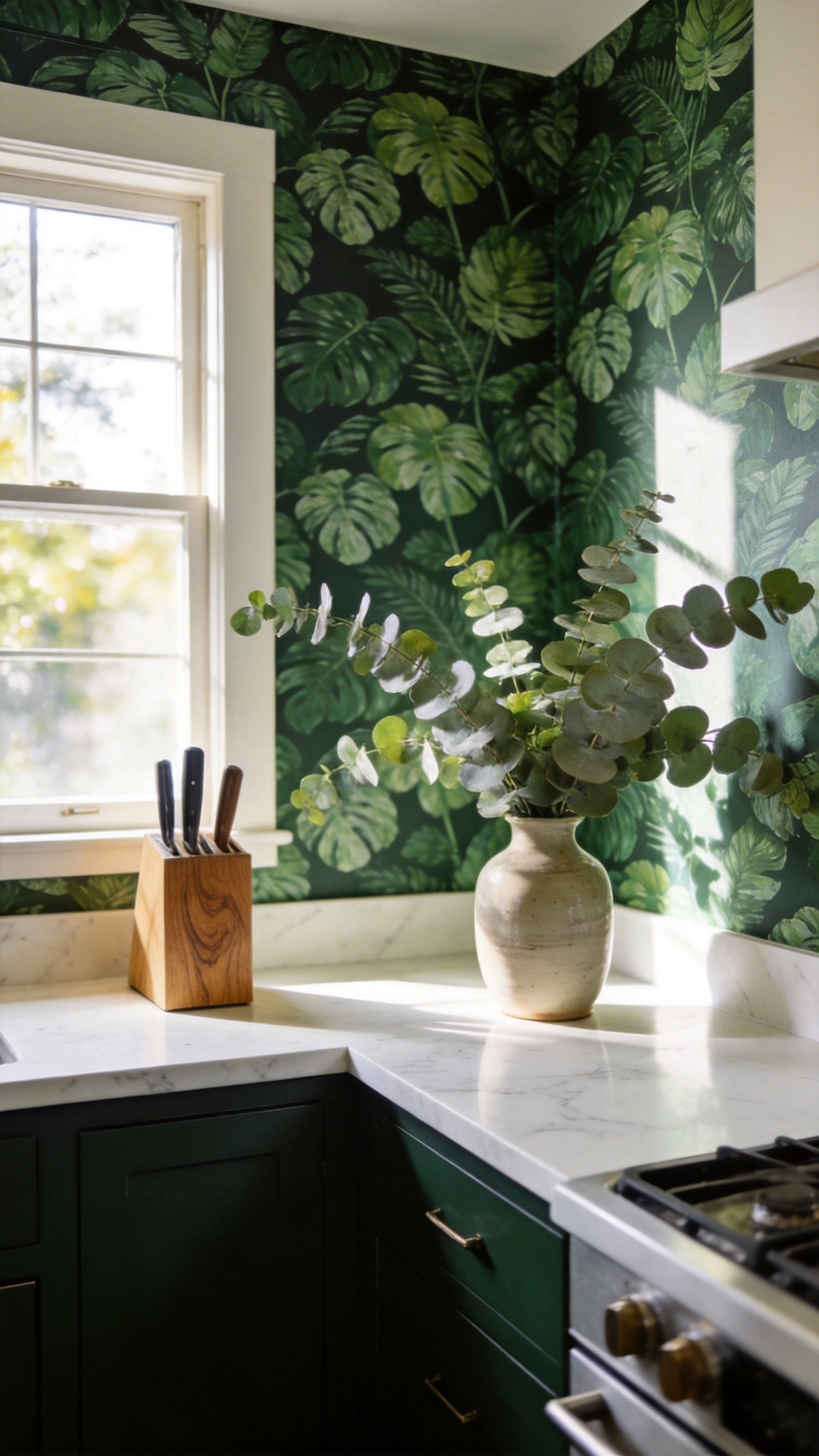
Next, you must protect the art. Since kitchens are hostile environments, we employ the “Invisible Shield” technique. This involves a layering strategy known as the “Satin-to-Matte Sandwich.” First, apply two coats of satin varnish. This provides structural integrity against steam and grease. However, satin can appear plastic. Therefore, apply a final topcoat of dead flat varnish. This eliminates synthetic sheen.
Finally, treat your wallpaper like a museum piece. Instead of covering an entire wall, use architectural framing. Specifically, frame a bold mural section with inexpensive molding painted to match your cabinetry. This technique effectively hides vulnerable edges. Furthermore, it creates a focal point similar to a framed masterpiece. Ultimately, these details bridge the gap between a temporary DIY and bespoke artistry.
12. The Art of Scale: Rules for mixing wallpaper patterns with your existing kitchen textiles.
Creating a cohesive kitchen requires understanding visual hierarchy. Specifically, designers often rely on the 10:30:60 rule to prevent visual clutter. First, view your wallpaper as the “lead” actor. It should occupy 60% of the visual space. Ideally, select a large-scale botanical or geometric print to anchor the walls.
Next, consider your secondary elements, such as curtains or seat cushions. These should feature medium-scale patterns. They act as a visual stepping stone between walls and small items. Finally, reserve micro-patterns for high-utility accents like tea towels. Because these items move around, small prints prevent them from clashing.
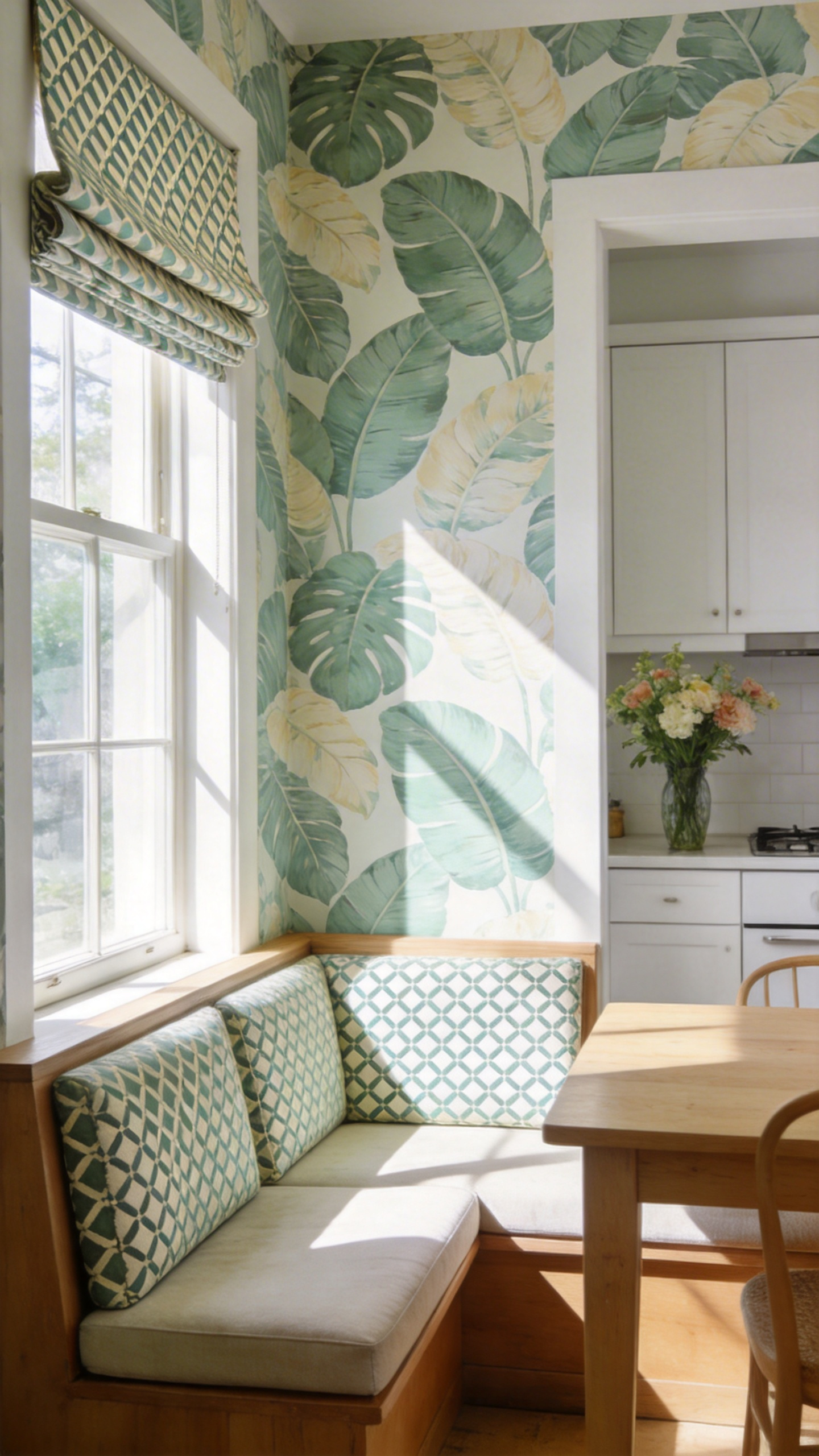
Beyond simple math, texture plays a crucial role in balancing scale. For instance, a flat, matte wallpaper pairs beautifully with rugged, woven textiles. In fact, this contrast adds warmth to hard kitchen surfaces like tile or steel. However, you do not need to replace every textile to match a new wall covering. Instead, utilize the “color anchor” technique. Simply match the background color of your wallpaper to the base tone of your fabrics. Consequently, this shared negative space allows different scales to coexist.
13. Sealing the Deal: Using clear silicone caulk to waterproof edges for a permanent look with temporary removal.
Transforming a budget kitchen requires attention to detail. Specifically, the transition point where wallpaper meets the countertop is critical. Without a seal, this junction is vulnerable to peeling, water damage, and grease. Therefore, applying clear silicone caulk creates an essential “invisible bridge.” Unlike white caulk, crystal-clear formulas disappear completely once cured.
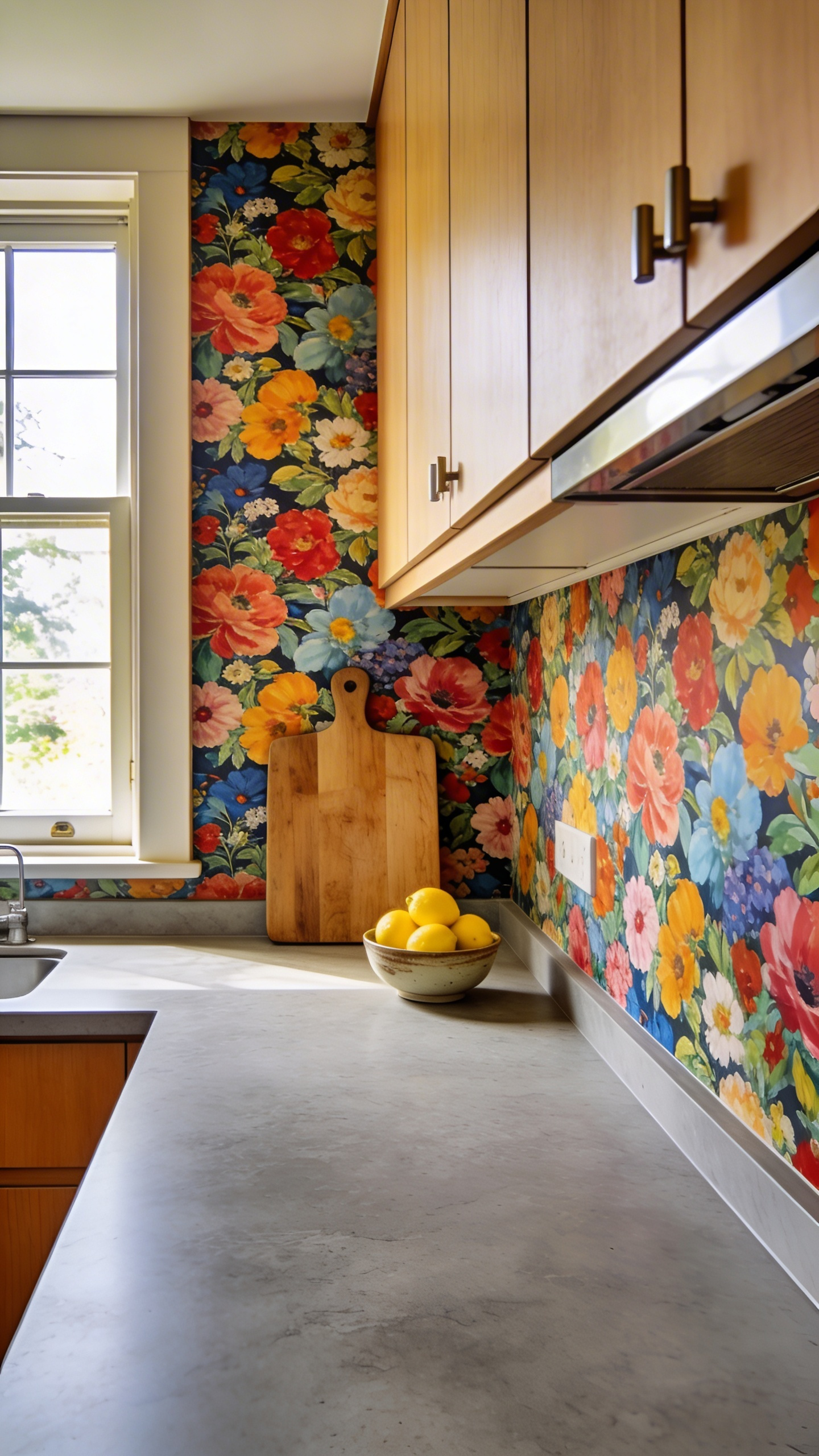
Applying this barrier is a distinct sensory experience. Initially, you may notice a sharp, vinegar-like scent. This indicates the chemical bond is forming a waterproof shield. However, fresh silicone is notoriously tacky. To achieve a smooth, professional finish, use the “wet finger” technique. Simply dip your fingertip in soapy water before smoothing the bead. Thus, you compress the sealant without creating a sticky mess.
Functionally, silicone outperforms acrylic because of its inherent flexibility. In fact, it moves with your kitchen’s temperature shifts without cracking. Furthermore, it is hydrophobic. It actively repels water to protect the adhesive beneath. Despite this durability, removal remains surprisingly simple. Localized heat from a hairdryer softens the bond back into a gel. Then, use a plastic razor blade to peel it away safely.
14. Heat-Safe Radius: Navigating the stove area safely with tempered glass covers over wallpaper.
The primary threat to kitchen wallpaper isn’t always direct flame. It is actually thermal degradation. Consequently, trapped heat slowly breaks down delicate adhesives and pigments. To prevent this, creating a “thermal buffer zone” is essential. Therefore, experts recommend maintaining a 2mm to 4mm air gap behind the glass. This spacing prevents the glass from acting as a conductive heat sink.
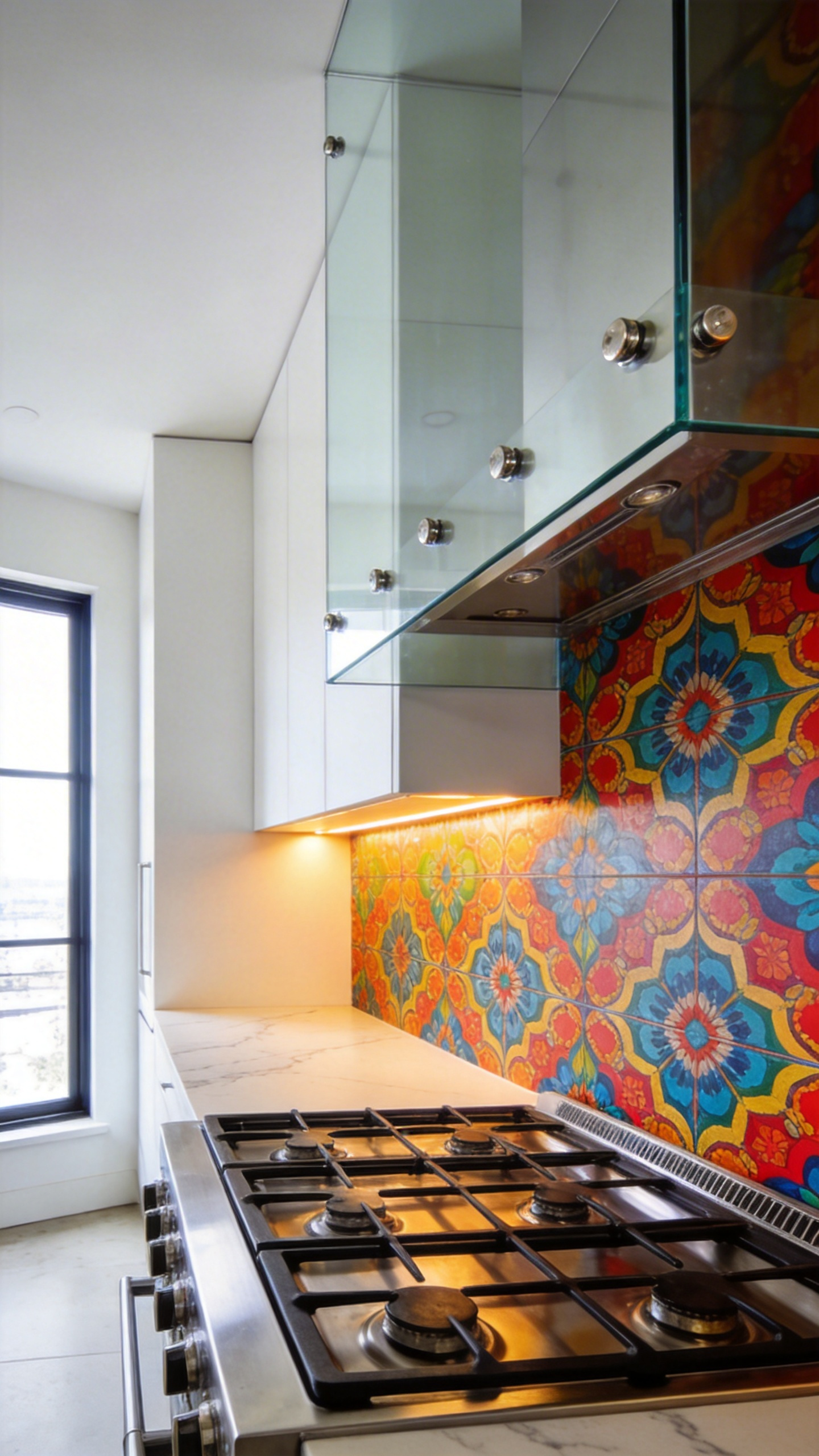
Furthermore, the heat source dictates the size of your protective radius. For instance, gas burners create a wide, V-shaped heat plume. Thus, protection must extend at least 150mm horizontally. Conversely, induction cooktops allow for a tighter aesthetic footprint. They primarily require shielding against steam rather than intense radiated heat.
Aesthetically, material selection matters immensely. Standard glass often casts a green tint, muddying crisp wallpaper designs. Instead, utilize low-iron “Optiwhite” glass to ensure the wallpaper remains optically clear. Finally, avoid chemical adhesives. They can peel under the glass’s weight. Rather, rely on mechanical fixings like edge-clamping rails. This method effectively transforms the splashback into an interchangeable gallery frame.
15. Corner Continuity: Master techniques for wrapping patterns around complex kitchen soffits and corners.
Mastering corner continuity requires looking beyond simple “peel and stick” instructions. Specifically, kitchen soffits present a unique architectural challenge. Often, amateurs try wrapping one continuous sheet over these dropped ceilings. However, professionals treat the soffit as a distinct, separate entity. To maintain visual flow, you can utilize the “Scrap-Patch Method.” Simply paste small scrap elements over mismatches to bridge gaps. Because soffits sit in shadow, the eye ignores the seam.
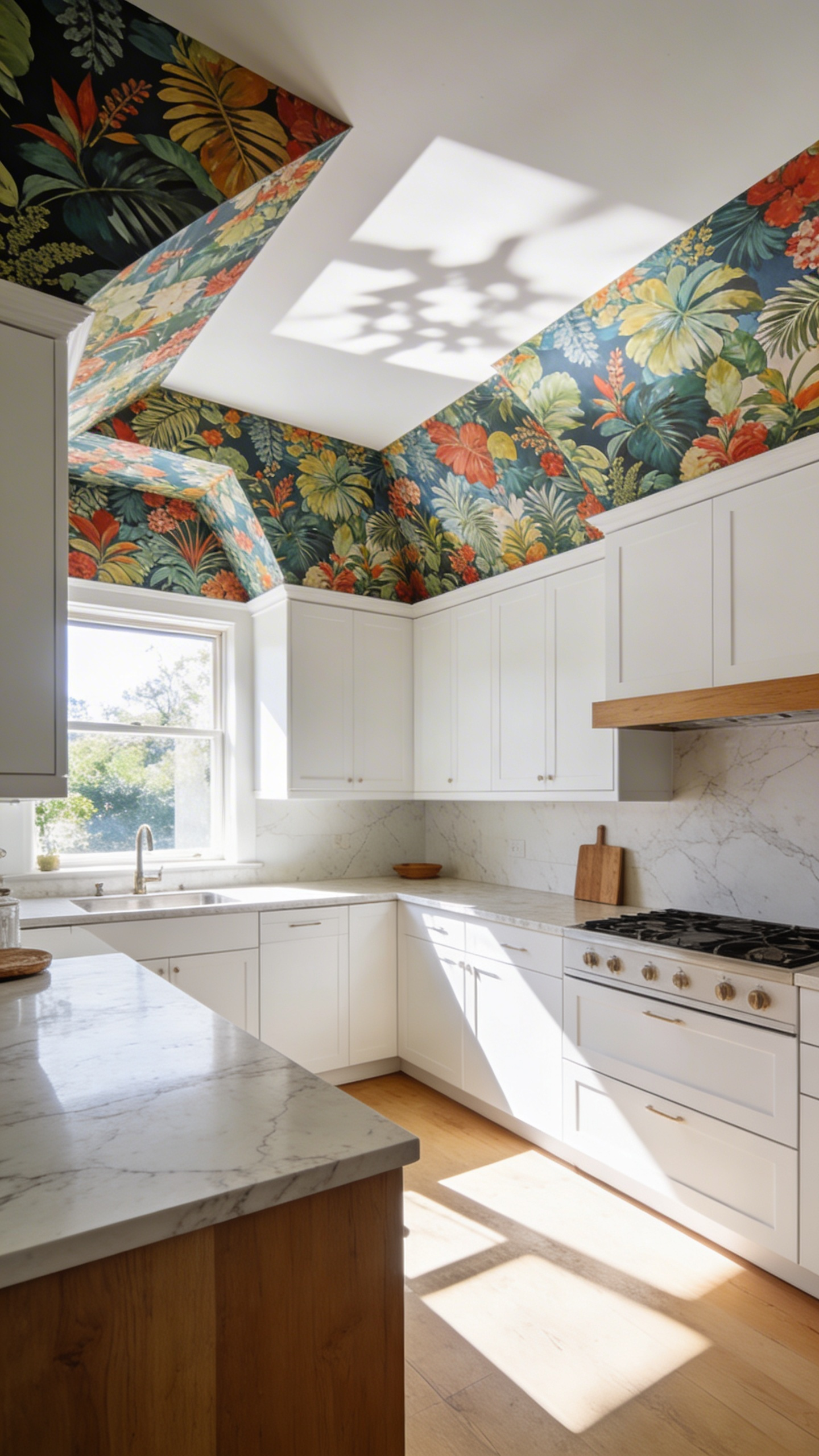
Furthermore, successfully navigating internal corners involves the physics of friction. Since budget vinyl is thermoplastic, it creates distinct molding opportunities. Rapidly rub a plastic smoothing tool into the corner crease. Consequently, the friction-generated heat softens the material. It molds perfectly to the angle. This technique prevents the “bridge effect,” where hollow pockets form later.
Additionally, you must choose between wrapping and double-cutting. For standard corners, never wrap the full sheet width. Instead, extend only a tiny 1/8-inch tail onto the adjacent wall. Then, overlap the next strip over this anchor. Alternatively, use the “Double-Cut” method for complex geometric patterns. Overlap two strips and slice through both for a seamless joint. Finally, employ 45-degree relief cuts when approaching cabinetry. These diagonal snips release structural tension.
16. Lighting Interaction: Choosing finish (matte vs. gloss) based on your kitchen’s natural and artificial light sources.
Selecting the correct wallpaper finish involves more than just style preferences. In fact, it is a technical decision regarding how a room handles illumination. Glossy surfaces function like miniature mirrors through “specular reflection.” Consequently, they bounce light into dark corners. This effectively doubles the perceived space in small areas. However, this high reflectivity can highlight uneven wall textures.
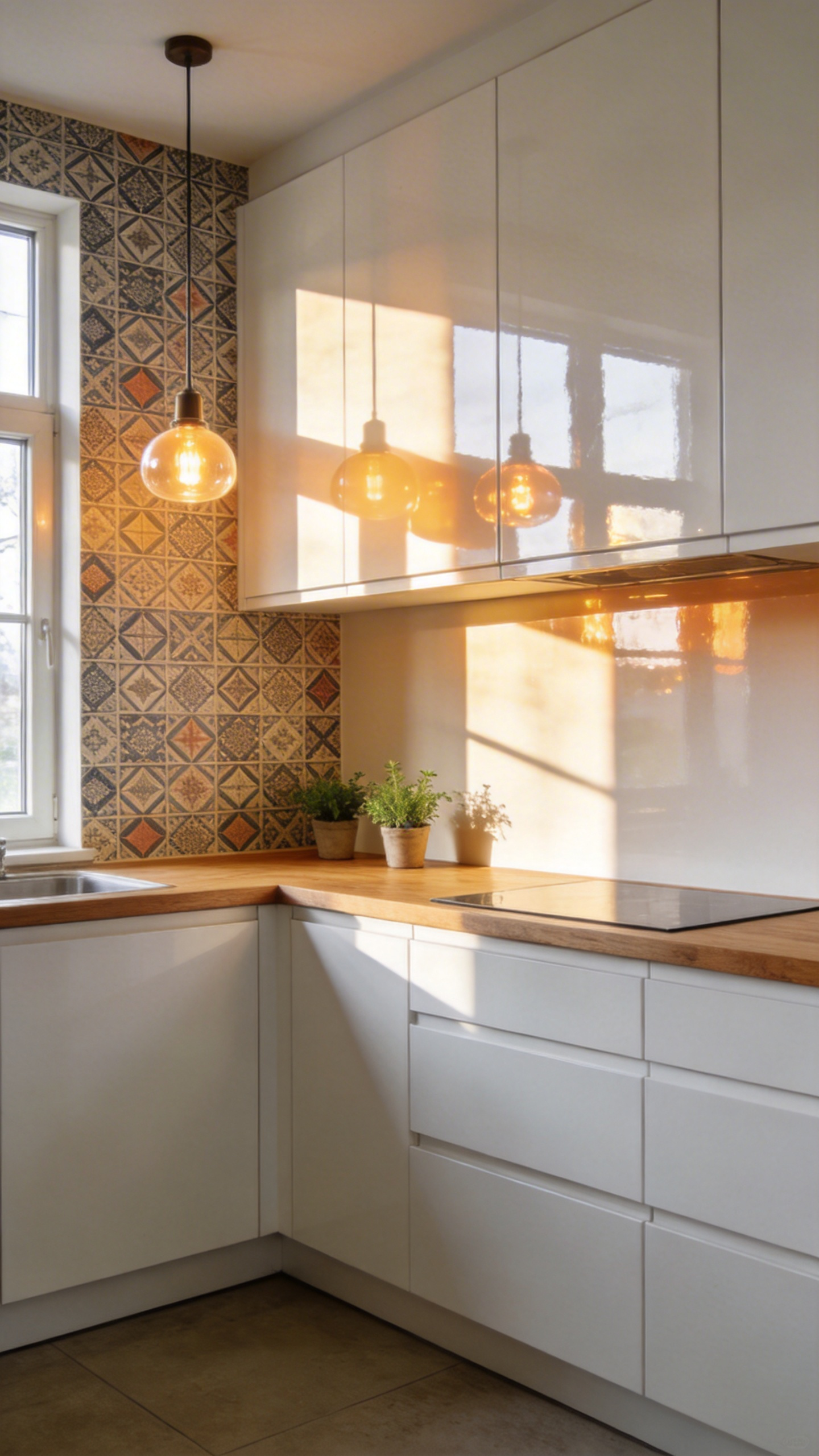
Conversely, matte finishes create a “diffuse reflection.” They scatter light photons in every direction. As a result, the wall produces a soft, velvety glow. Furthermore, matte papers excel at smoothing out visual hotspots caused by under-cabinet LED task lighting. Therefore, your kitchen’s window direction should dictate your final choice.
Specifically, North-facing kitchens often suffer from dim, cool shadows. Thus, a gloss or high-satin finish helps amplify the available light. In contrast, South-facing rooms typically receive intense, direct sunlight. Here, a matte finish is essential to “tame” the sun’s brightness. For a versatile middle ground, consider pearlescent or satin finishes. Ideally, these options offer a subtle shimmer without the unforgiving glare of high-gloss vinyl.
Frequently Asked Questions
Is kitchen wallpaper durable enough for high-moisture areas?
Yes, modern vinyl-coated and solid vinyl wallpapers are engineered for high-humidity environments. These materials are non-permeable and often scrubbable. They withstand steam and grease effectively. For the best results, ensure the wall is properly cleaned with TSP before application to ensure a strong adhesive bond.
How can I apply wallpaper to my kitchen on a budget without it looking cheap?
Focus on high-impact zones like the backsplash or cabinet inlays. Splurging on a single roll of luxury, textured wallpaper for a small area creates a more upscale look than covering the entire room in a lower-quality print. Using matte finishes and long-pattern repeats also helps mimic expensive architectural materials.
Can you safely use peel-and-stick wallpaper behind a kitchen stove?
While modern vinyl is heat-resistant, direct exposure to intense heat can cause peeling. It is highly recommended to install a clear tempered glass splashback over the wallpaper in the “heat zone” behind the stove. This protects the adhesive and the design while maintaining a seamless aesthetic.
Curating Your Culinary Studio
Ultimately, transforming a rental kitchen requires more than simply covering bland walls. In fact, it demands a fundamental shift from passive tenant to active curator. By selecting textured, breathable materials, you claim psychological ownership of the territory. Consequently, the space ceases to feel like a temporary station. Instead, it becomes a functional studio that supports your creativity.
Looking ahead, this environment creates a backdrop that elevates simple meals into curated events. Furthermore, mastering scale and zonal curation prepares you for future design decisions. You no longer need to wait for a “forever home” to express your identity. Now, embrace the freedom of this low-stakes, high-impact experimentation. Begin your journey with kitchen wallpaper on a budget by auditing your kitchen today. Identify one specific “vignette” zone, and select a bold, large-scale sample to test immediately.