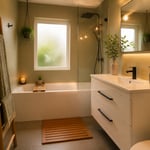
Close your eyes and picture stepping into a bathroom that actually feels like somewhere you want to be. The floor is warm underfoot. Light comes from somewhere you can’t quite locate — soft, even, with no harsh shadows. The walls have a texture to them, something between smooth and rough, something that looks like it was always there. There are no plastic grids, no chrome towel rails from a budget catalogue, no single bare bulb above the mirror. Just calm.
That bathroom exists. In fact, versions of it appear in renovations across the country every month. But most bathrooms — even recently renovated ones — still miss the mark, because their owners searched for bathroom design inspiration and collected individual ideas without a coherent framework. A beautiful tap here, a nice tile there, no real language connecting the choices.
The ideas in this list work differently. Each one comes from a tradition — Japanese wabi-sabi, Scandinavian functionalism, mid-century modernism, or the practical logic of material science. Each can anchor a broader design decision rather than just filling a shelf. So whether you are planning a full bathroom renovation or working with what you already have, this bathroom design inspiration goes somewhere specific.
1. Wabi-Sabi Plaster: Bathroom Design Inspiration From Japan
Most bathroom walls are designed to resist time. Tiles, painted boards, and laminate panels are chosen because they stay the same. But the Japanese concept of wabi-sabi suggests a different approach. Choose materials that improve as they age. Let them absorb the room’s history and carry the marks of use as character rather than damage.
Why Tadelakt Is Worth Knowing About
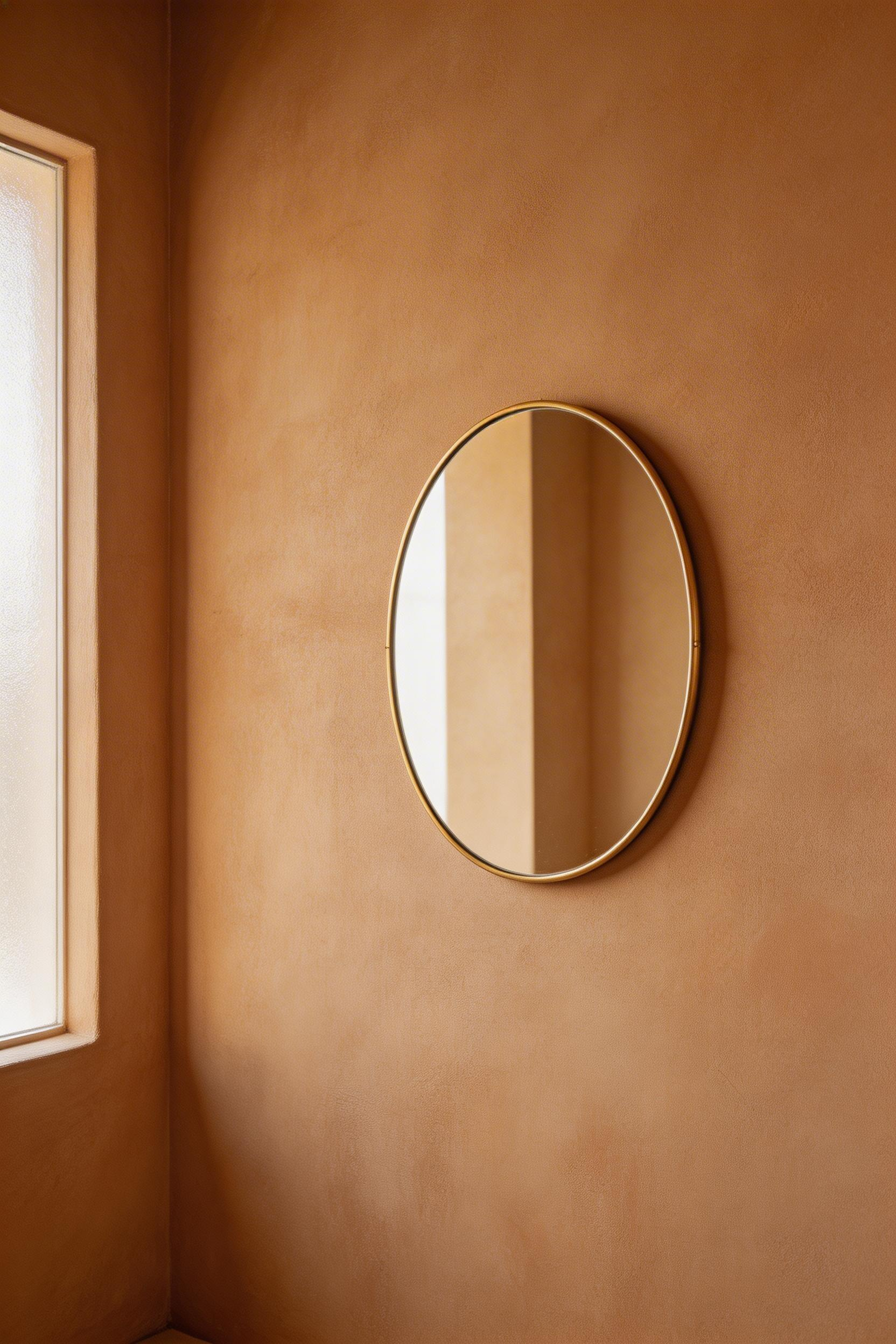
Tadelakt is a Moroccan lime plaster used for centuries in hammam bathhouses — environments far more humid than any British bathroom. It becomes waterproof through a chemical process during application — burnishing with a smooth stone and olive soap while still slightly damp. The result handles direct water contact without grout lines, mould, or the grout-maintenance problem of tiles. Clayworks Harlequin Plaster (around £95–£120 per tub, covering 10 sqm) is one of the most accessible UK options. Armourcoat Venetian Plaster is a slightly more professional-grade alternative at a similar price point.
How Imperfection Reads as Intention
The variation in tone across a tadelakt or Venetian plaster wall is part of the material’s character. Limewashes and plasters respond to humidity — slightly darkening when wet, lightening as they dry. The wall becomes a living record of the room’s use. In a bathroom with a consistent palette, this kind of texture is what makes a renovation look considered rather than assembled. Apply in a single, uninterrupted session per wall section to avoid visible seam lines. The result is not perfect. It is not supposed to be.
2. Wet Room Layouts for Small Bathrooms That Feel Bigger
Most compact bathrooms don’t feel small because of their square footage — they feel small because of their enclosures. A shower cubicle, however transparent, creates a visual boundary that tells the brain: the usable room ends here. Removing that boundary is one of the most impactful moves in small bathroom design inspiration.
The Logic of the Open Wet Room
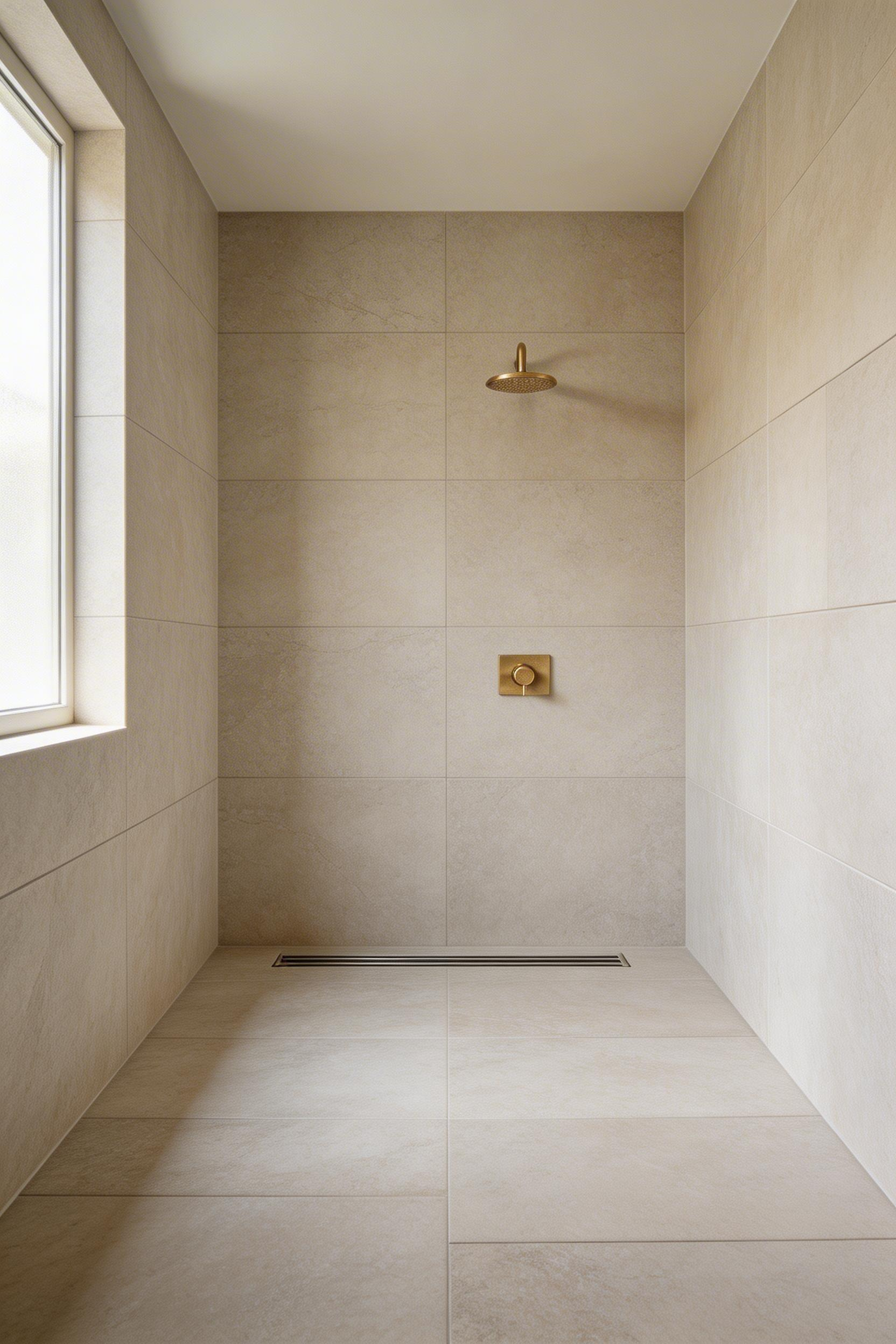
A wet room is a fully waterproofed bathroom. The shower has no frame or screen. Water drains from a gradient in the floor to a linear channel along one wall. Removing a standard 900x900mm shower enclosure recovers roughly 0.81 sqm of usable floor space. In a 4–5 sqm bathroom, that is a meaningful gain. More importantly, it removes the visual boundary that makes a small room feel two zones rather than one.
The Geberit CleanLine Shower Channel (£180–£340) sits flush with the floor tile and is nearly invisible when not in use. Wedi Building Board systems (£350–£600 for a full room) provide a pre-tanked subfloor and wall system. They eliminate the waterproofing uncertainty that trips up many wet room conversions.
The One Design Rule That Matters Most Here
Use the same large-format tile on the shower floor and the rest of the bathroom floor with no transition strip between them. This is the detail that makes the wet room concept read as intentional rather than merely practical. The eye sees one continuous surface, not a shower zone grafted onto a floor. Porcelanosa Bottega Caliza tiles at 60x120cm (£70–£95/sqm) work well here. The large format minimises grout lines — easier to clean and calmer to look at. Small bathroom designs done this way routinely photograph as if the room is twice its actual size.
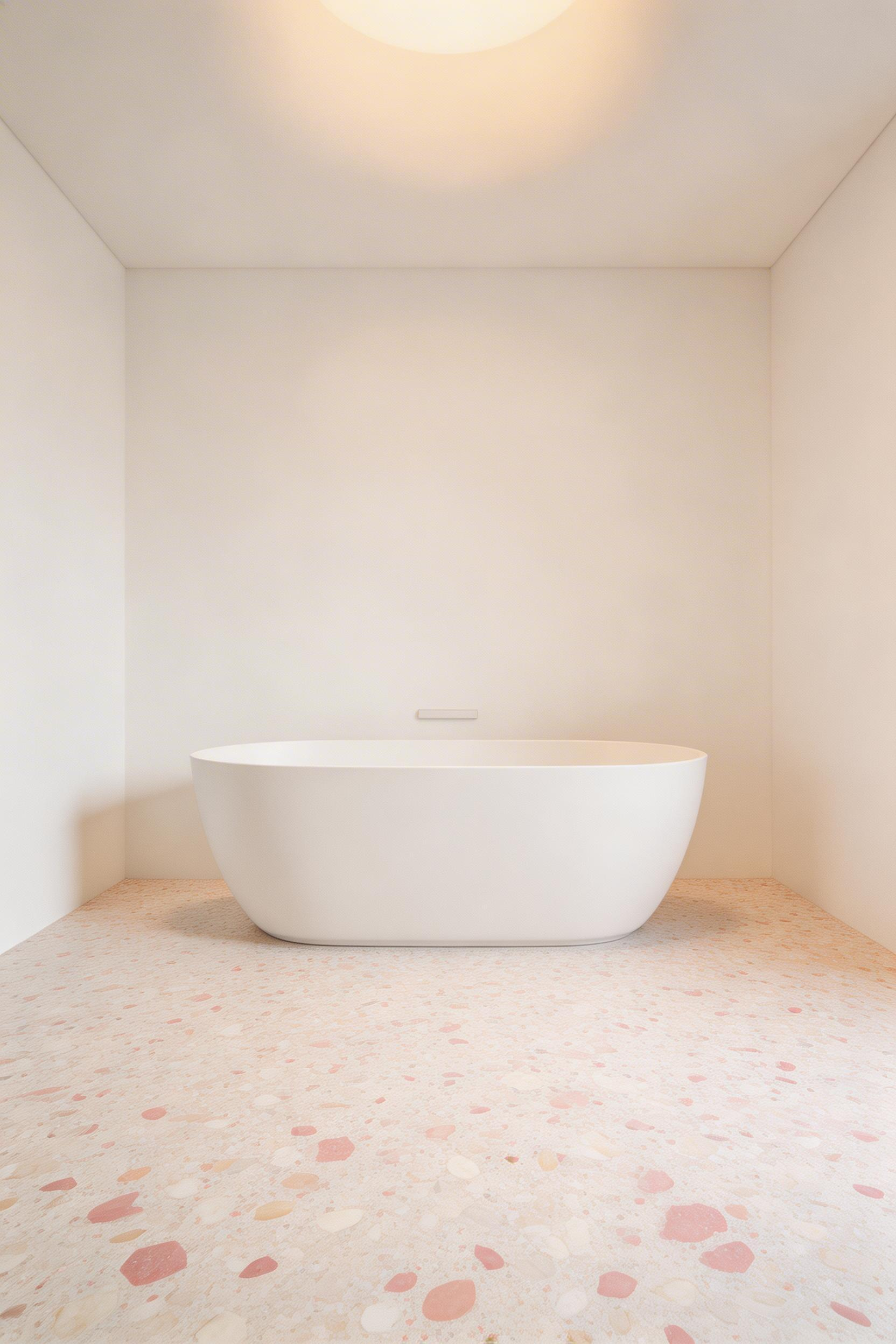
3. Terrazzo Floors: Classic Bathroom Inspiration Grounded in Pattern
Terrazzo has been reviving for the better part of a decade. It has stayed because it earns its place. Unlike trend materials that look good in photographs but fail in practice, terrazzo works. It is forgiving, durable, genuinely beautiful, and — as it turns out — a natural fit for bathrooms.
Why Terrazzo Works Where Other Floors Fail
The composite material — chips of marble, quartz, or glass set in cement or resin, polished smooth — has a speckled surface. It does something plain tiles cannot: it hides. Grout staining, hairline marks, small scratches, and the general entropy of a heavily used floor all disappear into the pattern. This is actually why it was invented. 15th-century Venetian workers created it from marble offcuts. They needed a durable floor material that looked good despite — and because of — its constituent waste.
Resin-based terrazzo (as opposed to cement-based) is non-porous. It requires no sealing, tolerates direct water contact, and works with underfloor heating systems because of its low thermal mass. Original Style Terrazzo Tiles in a Blush/Stone mix run £85–£120/sqm in 30x30cm or 60x60cm formats. Mandarin Stone’s Terrazo Grande at 60x60cm (£110–£145/sqm) is a slightly more refined option with a subtler aggregate.
The Pairing Rule
A terrazzo floor carries the room’s pattern. It does not need help. The most common and most costly terrazzo mistake is pairing it with an equally busy wall tile — the two patterns compete and the result is exhausting. Pair terrazzo floors with plain single-colour walls and let the floor do the work. One pattern. One material doing the talking. The wall is its background, not its partner.
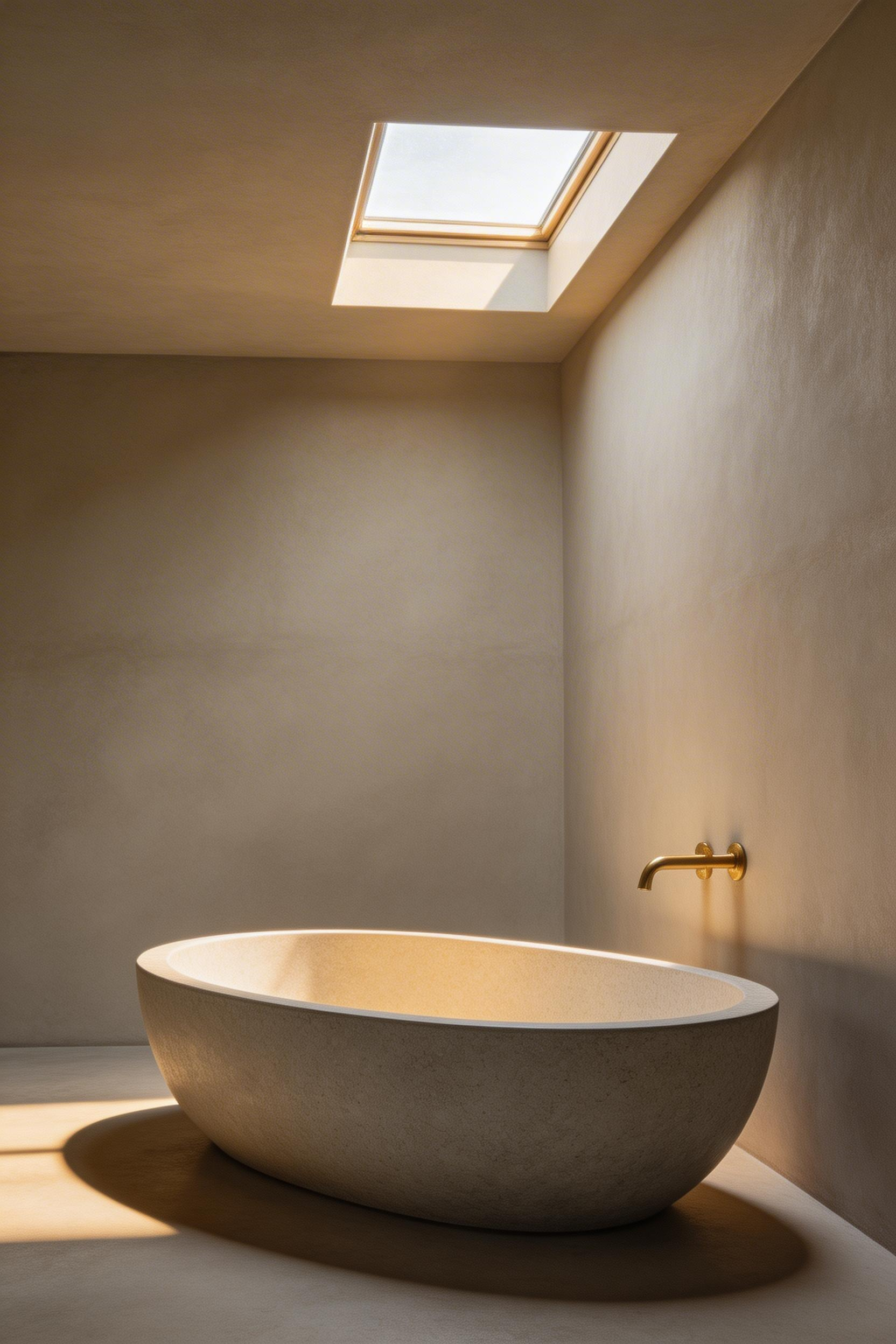
4. Freestanding Stone Baths as the Bathroom’s Centrepiece
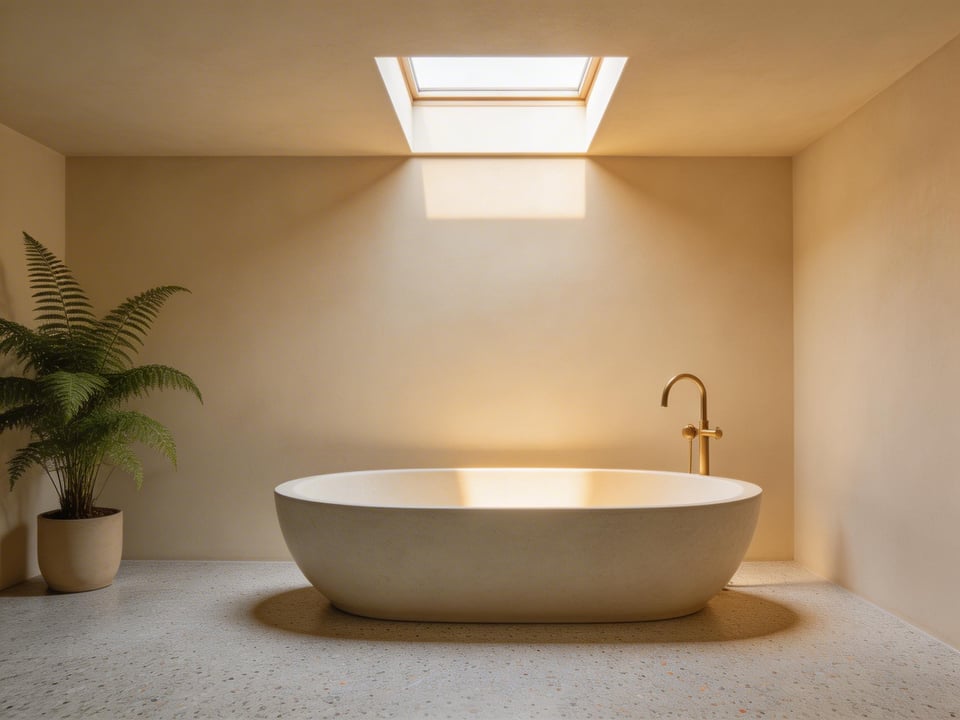
There is a moment in any bathroom design process where a single decision changes everything that follows. Choosing a freestanding bath is that moment. Once in the room, it determines the floor plan, the lighting position, and the mirror height. The feeling of the space follows. Everything else arranges itself around it.
What Makes Stone Resin the Practical Choice
Natural stone baths — marble, travertine, onyx — are genuinely beautiful and genuinely impractical. They weigh 200–600kg, require a structural engineer’s assessment before installation, and cost upwards of £4,000. Stone resin composite is the intelligent alternative. It retains heat well — water cools more slowly than in acrylic. It weighs 90–160kg and sits on a standard floor without reinforcement. The BC Designs Aurelius Stone Resin Bath (£1,800–£2,400) has an egg-shaped silhouette that works across minimalist and more classical rooms. Lusso Stone’s Cube Bath (£1,200–£1,600) reads as sharper and more contemporary.
Placement Is Everything
Centre a freestanding bath under a skylight or in front of a window if the floor plan allows. Natural light falling directly on a stone bath from above changes the entire atmosphere. This is bathroom design inspiration that photographs well and feels even better in person. Even a Velux above the bath is worth requesting in a renovation, if the ceiling allows it. Minimum clearance: 600mm around all sides for practical use. A 2024 Rightmove survey found bathrooms with a freestanding bath added an estimated 3–5% to perceived property value. So it is also a rational financial decision.
5. Japandi Colour Palettes: Where Less Really Is More
Japandi — the design fusion of Japanese wabi-sabi and Scandinavian hygge — emerged as a coherent aesthetic around 2019. It has stayed because it solves a real problem: how to create a space that feels warm without being cluttered, minimal without being cold. The colour palette is where that balance is struck or lost.
The Colours That Define the Palette
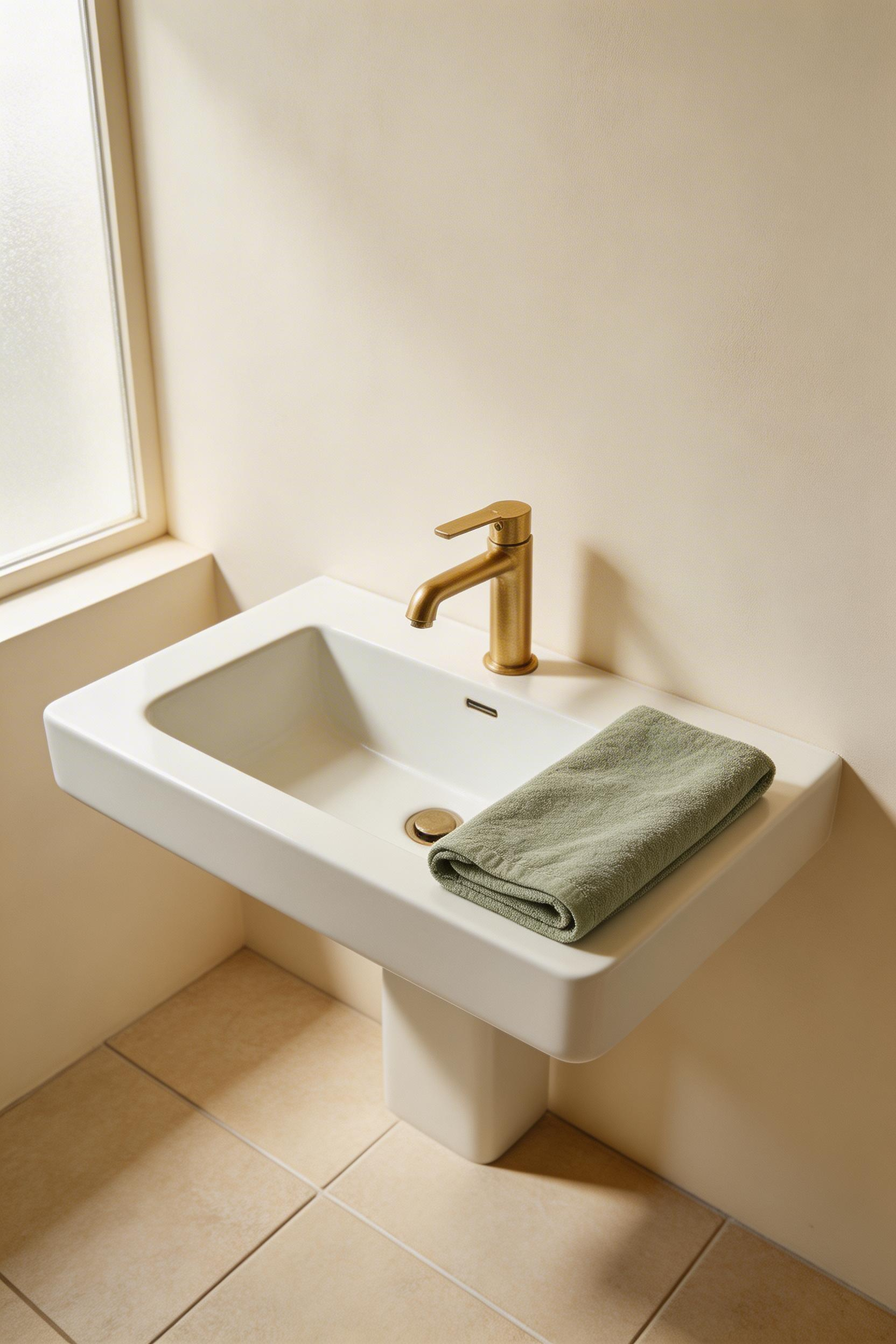
Avoid pure white — it is too clinical and reads as unfinished under bathroom lighting. Avoid warm beige — it is too familiar and disappears. The Japandi palette centres on off-whites with warm undertones (Farrow & Ball Wimborne White, Lick Warm White 01 at around £42/2.5L), warm greys with brown undertones (Farrow & Ball Mole’s Breath at £60/2.5L is one of the most versatile bathroom accent colours in existence), soft sage, muted terracotta, and deep charcoal used very sparingly.
The One-Accent Rule
One accent colour. Maximum. Two competing accent colours destroy the calm the palette creates — the eye keeps moving between them and the room feels unsettled. Choose the one colour that matters most in the room (the tile, the brassware finish, the plant) and build the palette around it. Dulux’s 2024 Colour Forecast reported a 34% year-on-year increase in warm white and stone tone sales. That figure suggests this bathroom design inspiration approach is already validated by real buyer behaviour.
All bathroom paints should be humidity-resistant. Standard emulsion peels within 12–18 months in a bathroom without proper ventilation. Minimum 15 air changes per hour is the baseline. Sample colours on large boards. Check at different times of day — what looks perfect at noon can look washed out under warm evening lighting.
6. Indirect Lighting That Makes a Bathroom Feel Like a Spa
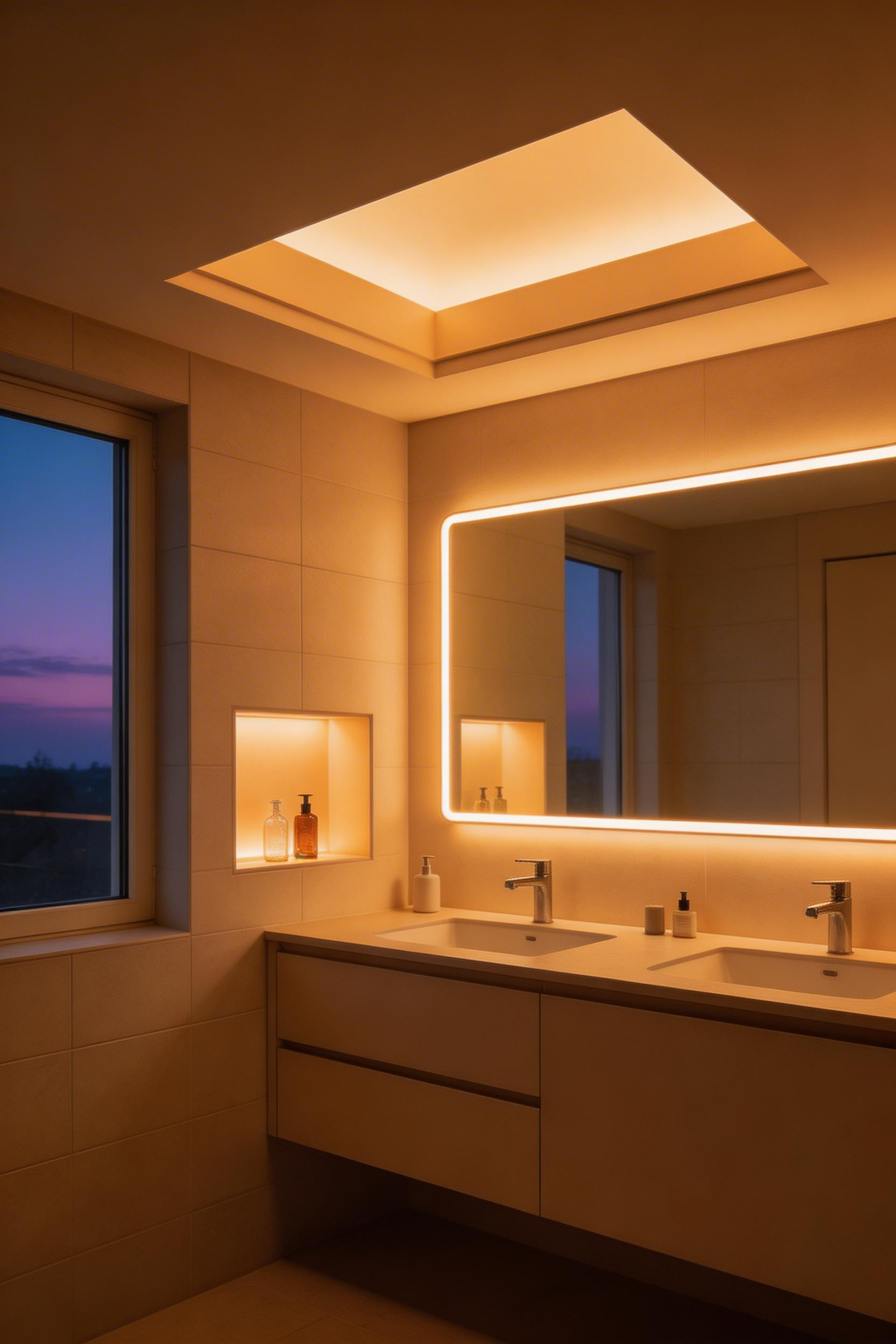
The single most common mistake in bathroom lighting is a single overhead downlight. It casts shadows downward, creates harsh transitions, and produces the aesthetic equivalent of a changing room rather than a retreat. Good bathroom design inspiration treats lighting as a system — layered, controllable, and distributed so the room glows rather than just illuminates.
Building the Three Layers
Ambient light provides general illumination — this can come from a ceiling coffer with LED strips (Sensio IP67 strips at £25–£40/metre) or recessed downlights. Task light serves the vanity and mirror — a backlit or side-lit mirror provides far more flattering and functional lighting here than an overhead fitting. Accent light brings mood — a small LED strip inside a shower niche, a dimmed lamp on a shelf, a backlit mirror at lower intensity.
The Technology That Makes It Work
All three layers need to be dimmable — this is non-negotiable. A Lutron Caséta smart dimmer (£75–£95) allows scene-setting. Full brightness for morning routines. Low warm glow for an evening bath. Colour temperature: 2700K (warm white) for evenings, 3000K for a clean morning feel. A 2023 Houzz survey found that bathrooms with layered lighting scored 28% higher on owner satisfaction than those with a single overhead source.
All bathroom lighting must comply with IP zone ratings. Zone 1 (above the bath up to 2.25m height) requires IP44 minimum. Astro Lighting Imola LED Downlights (£65–£95 each) are among the better-specified IP65 options for task areas.
7. Fluted Glass Panels for Privacy Without Darkness
Bathroom privacy usually comes at the cost of light — frosted films, textured glass, net curtains, or small high windows all solve the visibility problem by restricting how much daylight enters the room. Fluted glass solves it differently. The material obscures direct sightlines through a series of parallel ridges while still transmitting 70–80% of available light. The result is privacy and brightness together.
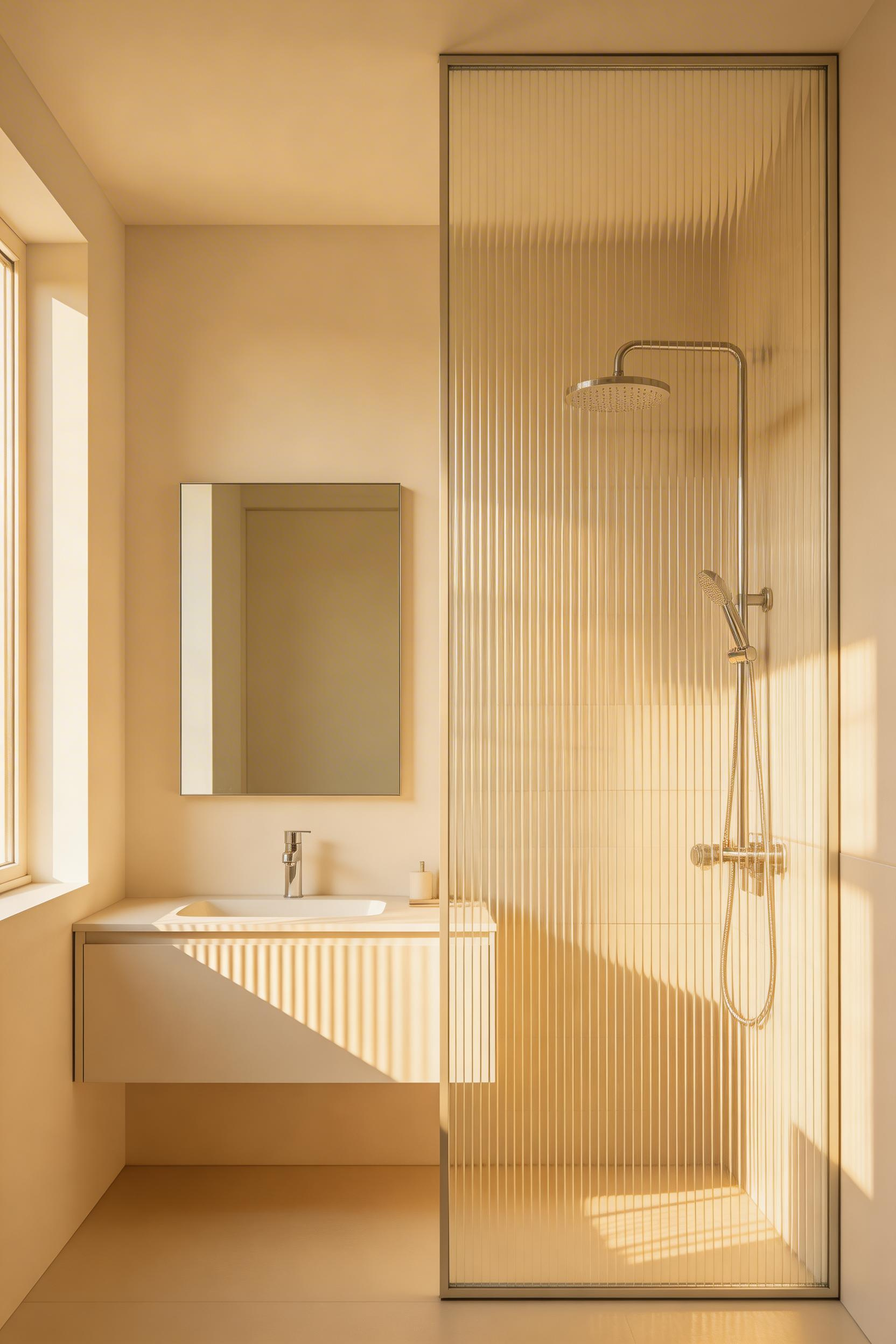
Where Fluted Glass Works Best in a Bathroom
The most impactful application is a shower screen — replacing a clear or frosted panel with fluted glass changes the shower from an enclosure into a light-diffusing architectural element. Crittall-style steel-framed screens (£850–£2,200) are the most architectural option. For a standard shower conversion, SAMO fluted glass panels in 8mm toughened glass (£320–£580) are more accessible.
For bathroom windows, replacing standard frosted glass with fluted toughened safety glass (Pilkington made-to-measure at £180–£350/sqm) allows natural light while maintaining privacy. It is a significant improvement over frosted film, which dulls with age. Standard frosted glass transmits light, but none of the refractive beauty.
The Light Requirement
Fluted glass needs to be backlit to reveal its character. Position panels so light passes through them. A fluted screen against a dark wall looks flat. The same screen catching morning light through an adjacent window looks genuinely architectural. Google Trends data shows a 210% increase in searches for ‘fluted glass bathroom’ between 2020 and 2024 — one of the fastest-rising bathroom material trends in that period.
8. Integrated Storage Niches That Disappear Into the Wall
Surface clutter is the enemy of bathroom calm. Shelves covered in bottles, products stacked on the bath edge, a soap dish balanced on the tap housing — these things add up and destroy the coherence of even the most carefully designed room. A recessed storage niche solves the problem without compromising the clean line aesthetic that most bathroom design inspiration is trying to achieve.
How a Niche Is Built
A shower niche is a recessed shelf built into the wall cavity. It sits flush with the wall surface and projects nothing into the room. Standard dimensions: 30cm wide x 10–15cm deep x 30–40cm high — sufficient for shampoo, conditioner, soap, and a razor. The most important step is waterproofing. The niche interior must be tanked as carefully as the rest of the wet area. Redi Niche pre-built units (£65–£120) eliminate this risk with a foam core that is already fully waterproofed. Schluter SHELF-E systems (£95–£175) are the professional preferred option with a stainless steel frame.
The Design Principle: Contrasting Tile
The visual choice inside the niche determines whether it reads as practical storage or as a design feature. Matching tile makes it disappear — functional but quiet. A contrasting tile turns the niche into a jewellery-box detail. Fired Earth Zellige tiles (£120–£180/sqm) are ideal — their irregular handmade surface and rich colour look exceptional in a recessed space. A Houzz UK survey found 67% of bathroom renovators in 2023 included at least one built-in niche, up from 41% in 2018. The approach has moved from architectural luxury to standard renovation planning.
The single cheapest upgrade in any niche: a small IP67 LED strip along the top inside edge. It costs around £15–£20 of material and transforms a functional shelf into a feature. Among the most cost-effective details in any bathroom renovation.
9. Limewash Paint: Bathroom Design Inspiration That Looks Expensive Without Being Expensive
Of all the bathroom design inspiration ideas that feel like they should cost more than they do, limewash paint is the most striking example. A single litre covers 5–7 sqm. At £55–£90 per 2.5L tub, a full bathroom treatment costs less than a single designer tap. But the finish — that layered, ancient, slightly cloudy depth — reads as something a decorator spent a week on.
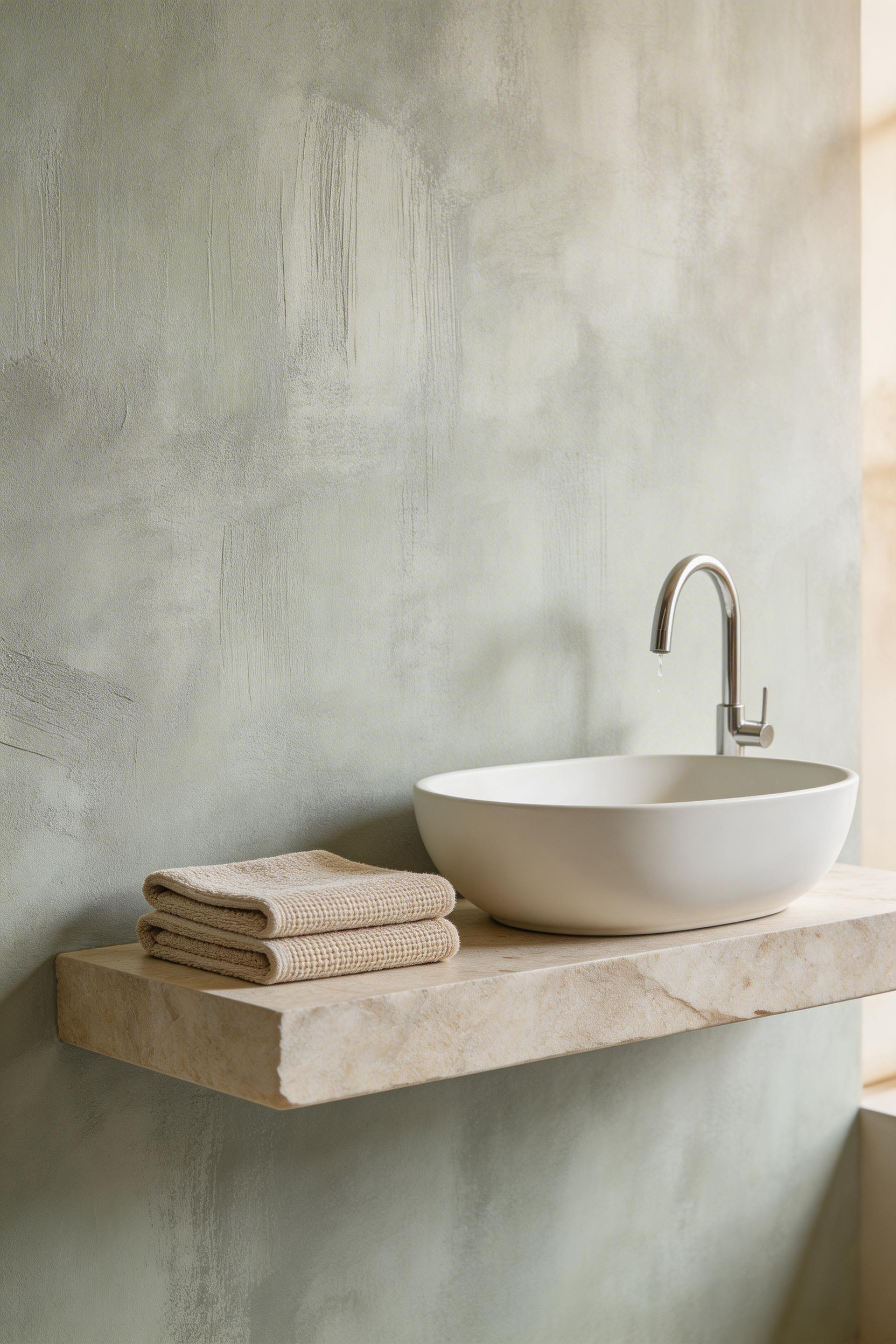
Why Limewash Belongs in a Bathroom
Standard emulsion and most textured paints trap moisture. Over time, a bathroom painted with standard emulsion develops mould behind the paint film. Limewash is breathable: moisture moves through it rather than being sealed in. This makes limewash genuinely appropriate for a damp environment — not just aesthetically interesting. Bauwerk Limewash Paint (£65–£90/2.5L) is widely available in the UK. Lick Limewash (£55–£70/2.5L) ships quickly and has good starter options in warm whites and greiges that suit Japandi colour palettes well.
Application: Imprecision Is the Technique
Apply with a large, wide brush in random X-strokes. The correct technique is deliberately uneven — varying pressure, varying direction, allowing some of the base coat to show through. Two coats minimum. Apply over a matte base coat of the same or slightly darker colour. The layering is what creates depth. A single coat on white primer looks flat; two coats on a warm grey base looks genuinely hand-crafted.
10. Underfloor Heating as the Foundation of a Comfortable Bathroom
Bathroom comfort is partly about what you see and largely about what you feel. Cold tiles underfoot — stepping out of a shower onto a floor that makes you recoil — is one of the most reliably unpleasant experiences in home design. Underfloor heating eliminates it completely, and it costs less to retrofit than most people assume.
The Two System Types
Electric mat systems (a thin heating element installed under the tiles) are the practical retrofit choice. They install during a tile replacement — no structural work, no screed, no major disruption. Warmup DCM-PRO Heating Mats (£120–£280) are among the more reliable options, with a 25-year guarantee. Running cost for a 4 sqm bathroom at one hour per day: around £21 per year at current UK rates. The Heatmiser neoStat-e smart thermostat (£95–£145) makes the system genuinely useful. Without scheduling, underfloor heating is just a warm floor. With it, the floor is warm before you step in.
Water-based (wet) systems are more energy efficient over time but require a screed pour — they belong in new builds or whole-floor renovations, not retrofit applications.
The Sensor Placement Detail Most Installers Miss
Install the thermostat sensor between heating elements, not on top of them. A mispositioned sensor short-cycles (switches off before the floor is fully warm) or overheats (runs past the target). This is the most common installation error in electric UFH and the easiest to prevent. A 2023 Nationwide study found 71% of UK homebuyers cited underfloor heating as desirable. Bathroom UFH ranked third, behind only kitchen and living room.
11. Open Wooden Shelving That Warms an Otherwise Cold Room
Every material choice in a bathroom design is a temperature decision as much as an aesthetic one. Tiles, plaster, concrete, stone — they are visually beautiful but carry cold associations. Wood does something different. It references warmth, craft, and the organic world. Even a single floating oak shelf in a tiled bathroom changes the room’s emotional register.
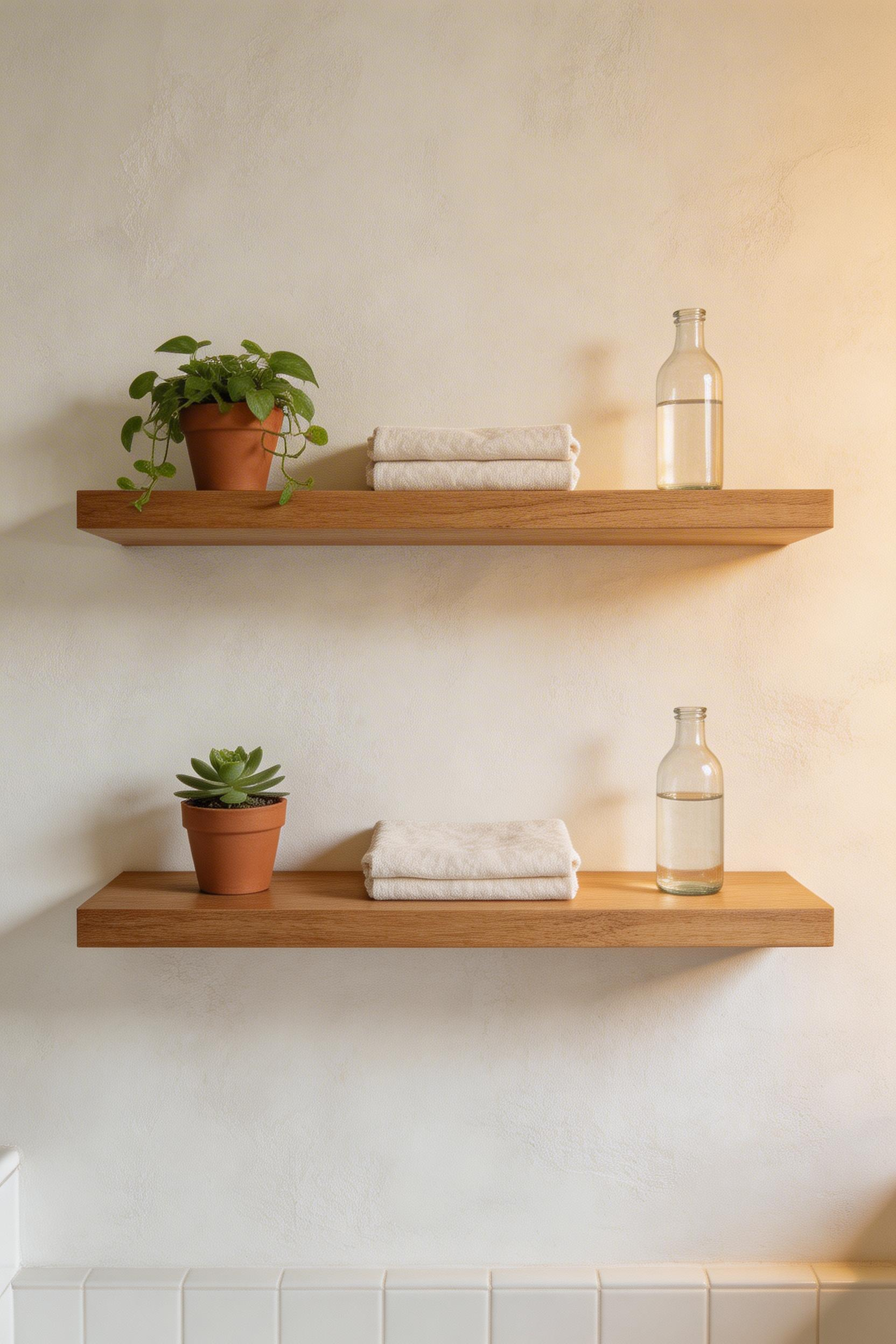
The Right Timber for a Wet Environment
Teak contains natural silica and oils that repel moisture. It is genuinely the most humidity-resistant timber available — hence its use on boat decks. For most bathrooms, properly oiled or sealed oak is more widely available and just as practical in a normal residential environment. Pedlars Solid Teak Bathroom Shelves (£75–£140) are purpose-built for bathrooms, pre-oiled, and available with integrated towel rails. Naked Kitchens makes custom oak floating shelves (£85–£160 per shelf) for when standard sizes don’t fit.
Fixing properly matters. A shelf loaded with bottles and towels weighs 15–25kg. Fixing into plasterboard alone is insufficient. Use 8–10mm diameter fixings into solid masonry or a timber noggin in the stud wall. The shelf depth for bathroom use is 200–250mm — enough for standard product bottles without feeling like a counter.
The Curation Rule
Leave 20–30% of each shelf empty. The negative space is part of the design. A shelf holding fewer, better-chosen objects looks curated. A shelf loaded to its edges looks like a storage problem moved upwards. Also avoid varnish on wood in a bathroom — it traps moisture under the surface and eventually peels. Teak oil or Danish oil, reapplied every 12–18 months, is the correct maintenance approach.
Among other decorative bathroom ideas that involve natural materials, open shelving has the best visual-to-cost ratio. A pair of shelves, properly fixed and simply styled, can transform a room for under £200.
12. Statement Mirror Choices That Double the Design
The bathroom mirror is usually the largest single decorative element in the room. It reflects both the space and the light. Its shape, frame, and size define the visual tone more than almost any other element. Yet it is often treated as an afterthought — chosen at the end of a renovation when the budget has run low.
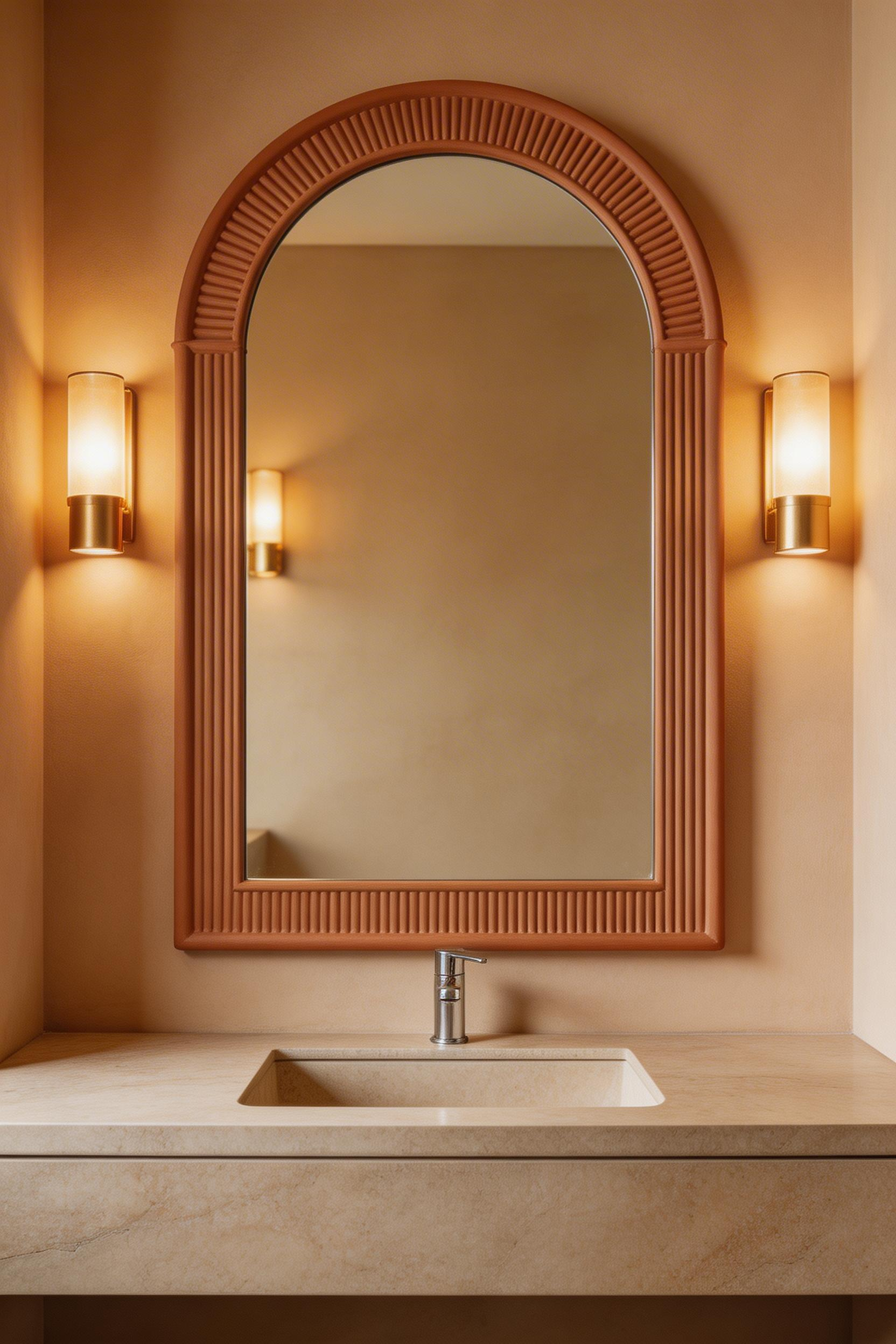
The Dominant Shapes and What They Communicate
Arched mirrors (semicircular or full arch) soften the angular geometry of tile and cabinetry. They have been the dominant bathroom mirror trend since 2020. Arched mirrors accounted for 38% of all bathroom mirror sales on Wayfair UK in 2023, up from under 10% in 2019. Bert & May make a ceramic fluted-frame arch mirror (£185–£320) that bridges the fluted glass trend with the arch mirror trend in a single piece. The Terma Auric Arched LED Mirror (£240–£380) combines the arch form with dimmable backlit LEDs for task and ambient lighting simultaneously.
Antique and distressed-edge mirrors — foxed glass with visible age — work as a counterpoint to modern sanitaryware. The contrast is deliberate. An old mirror against new fixtures creates a room that feels collected rather than designed in one session.
The Planning Mistake to Avoid
In terms of bathroom design inspiration, choose the mirror first, then build the rest of the room around it. The mirror is often the last decision. That means it ends up generic because the budget is gone. Mirror width should be equal to or slightly narrower than the vanity unit below. A mirror significantly wider than the vanity looks unanchored. For backlit mirrors in Zone 2 (within 60cm of the bath or shower), IP44 rating is required.
13. Exposed Concrete Details Used Sparingly and Intentionally
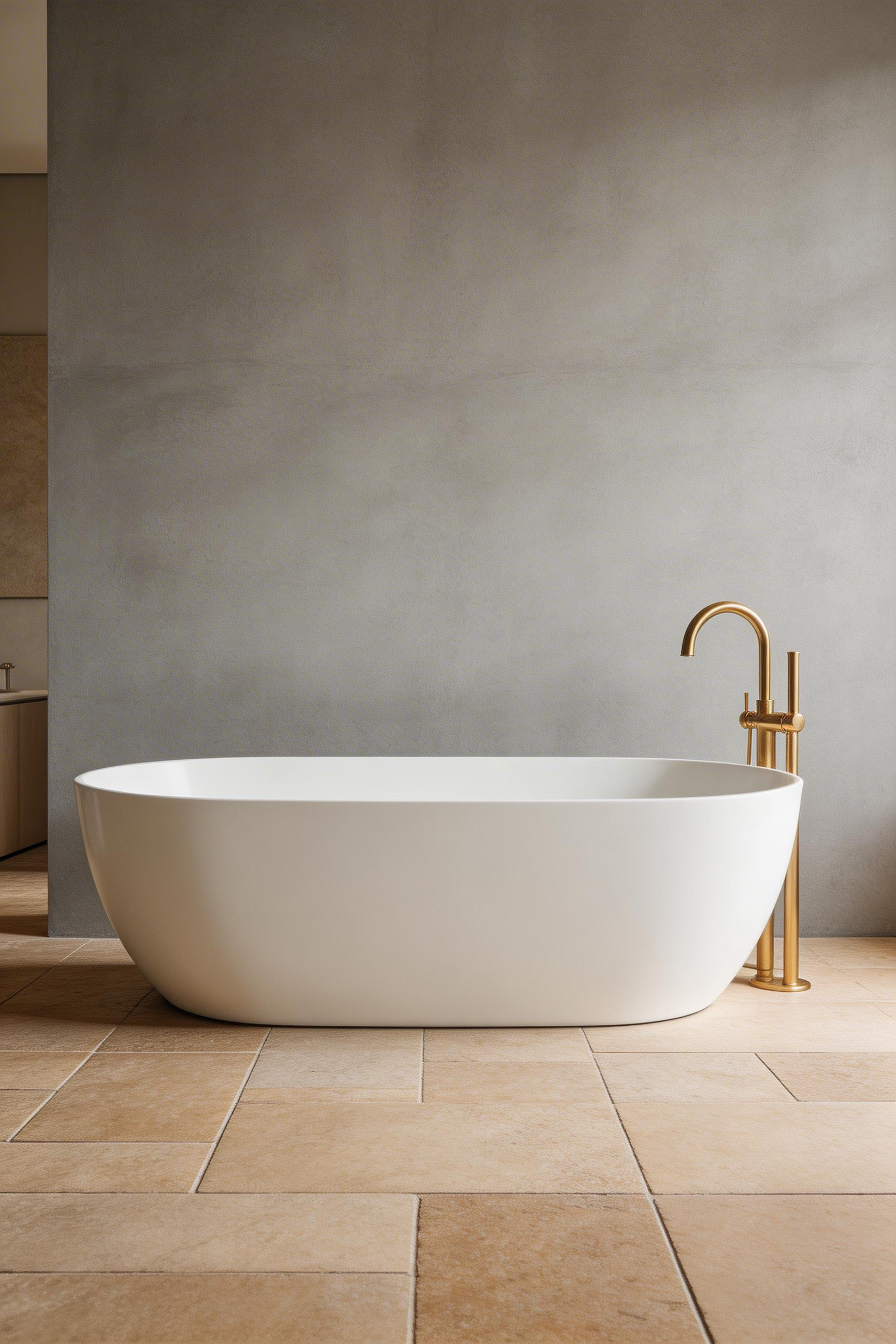
Concrete carries more visual weight per square centimetre than almost any other bathroom material. Used on one surface, it creates an edge, a tension — something that makes the room feel considered. Used on every surface, it creates a car park. The bathroom design inspiration principle here is restraint: know which surface to give it to and leave the rest alone.
Three Ways to Use Concrete in a Bathroom
Microcement is a 2–3mm resin system applied over existing surfaces — it gives the concrete look without structural pouring, the weight of real concrete, or the cracking risk. The Pandomo Microcement System (£80–£120/sqm material cost) requires a specialist installer but can be applied over tiles, plaster, or existing paintwork. Concrete-look porcelain tiles are the most forgiving option — zero maintenance, available in large formats (Porcelanosa Gres Porcelanico Urban Concrete Tiles at 60x120cm, £65–£85/sqm). Altrock cast concrete shelves and vanity tops (£200–£450/linear metre) bring genuine poured concrete into the room in a controlled, bounded application.
Concrete-look porcelain was the top-selling large-format bathroom tile category in the UK in 2023, with sales up 31% year-on-year according to the Tile Association UK. The format’s popularity is earned — it genuinely performs.
Colour Temperature Still Matters
Warm-grey concrete (brown or yellow undertones) reads as organic. Cool-grey concrete (blue undertones) reads as cold unless it is balanced with warm timber, warm plaster, or warm-finish brassware. For anyone planning a modern bathroom renovation that incorporates concrete, the pairing decision matters as much as the concrete choice. What sits alongside the concrete surface defines the result.
14. Botanical Touches: Bathroom Design Inspiration From the Natural World
Plants in bathrooms are not a styling trend. They are a design tool with measurable effect. Research from the University of Exeter found that rooms with plants increased occupant wellbeing scores by up to 47%. In a bathroom that already has humidity and often some natural light, the conditions for plants are frequently better than in other rooms.
Which Plants Work and Where to Put Them
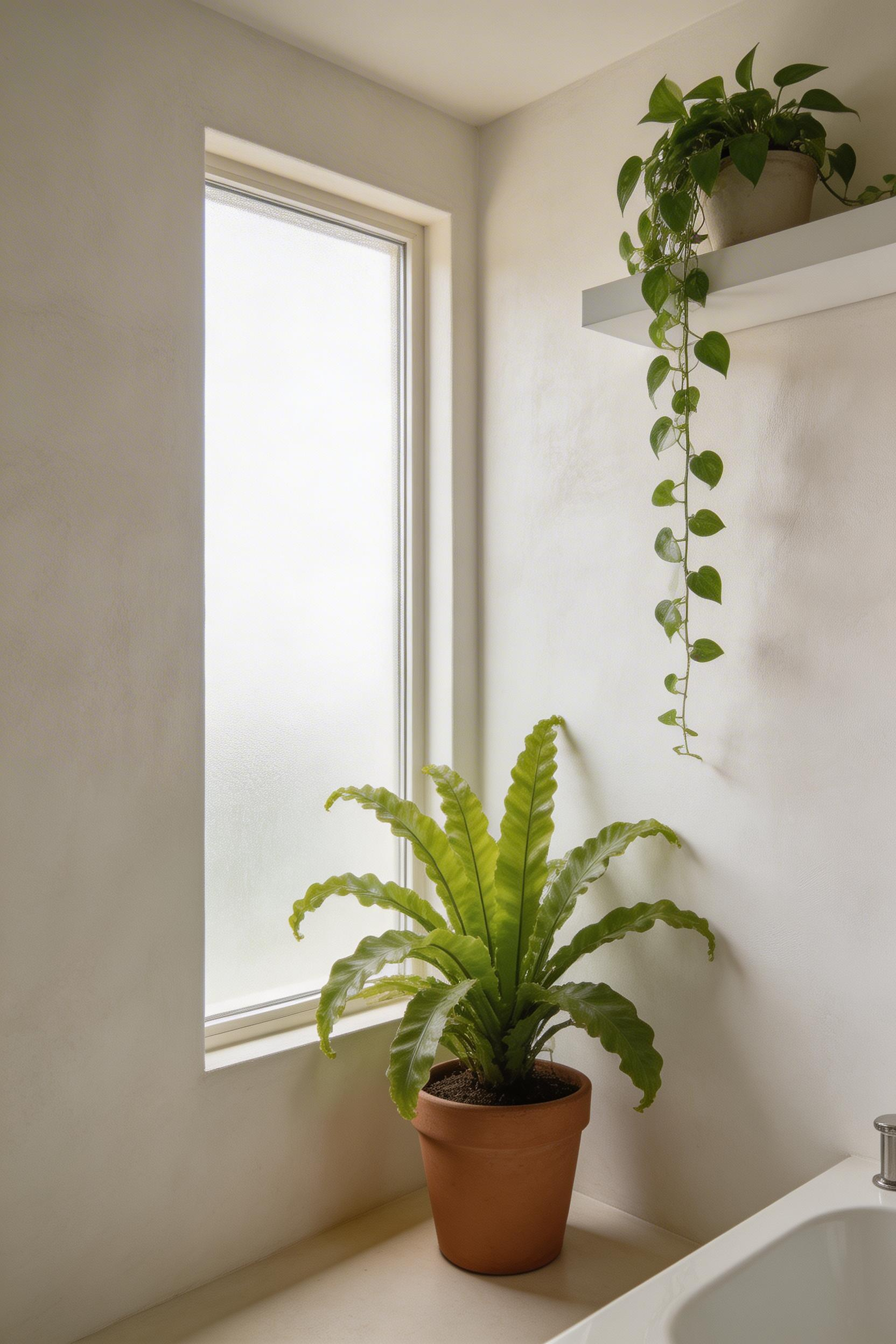
Asplenium nidus (bird’s nest fern) thrives in indirect light and humidity. It is one of the most reliable bathroom plants, with a spreading, architectural form that reads as a real design decision. Patch Plants deliver these pre-potted in sizes from £28–£45. Epipremnum aureum (golden pothos) tolerates genuinely low light and trails attractively from a high shelf. Tillandsia (air plants) require no soil, absorb moisture from the air, and can be positioned on a shower niche ledge, mounted on driftwood, or placed anywhere that isn’t directly in the water stream.
Positioning for Maximum Design Impact
Place a plant where it will be reflected in the mirror — you double the visual impact of a single plant at no additional cost. A small air plant on the vanity shelf, reflected in a full-height arched mirror, reads as a considered choice rather than an incidental one. A single large fern in a terracotta floor pot (Haws Heritage Hanging Planters at £18–£32 are also good) anchors a corner that would otherwise just be empty space. Bathroom decor ideas that incorporate plants consistently photograph better than those that don’t. The organic form softens the hard lines of tiles, glass, and chrome.
Also: avoid plants that drop leaves — wet floors are a slip hazard. In a humid bathroom, most plants need watering less frequently than you’d expect. Overwatering is more common than underwatering here.
15. Brassware and Matte Black Hardware as Finishing Details
Taps, towel rails, toilet roll holders, hooks, and cabinet handles are the smallest elements in a bathroom renovation. They are also — counterintuitively — among the most visible. Because they are at eye level and hand height, the eye lands on them constantly. They are the jewellery of the room. And like actual jewellery, they communicate material quality, coherence, and care at a scale nothing else quite matches.
The Three Dominant Finishes
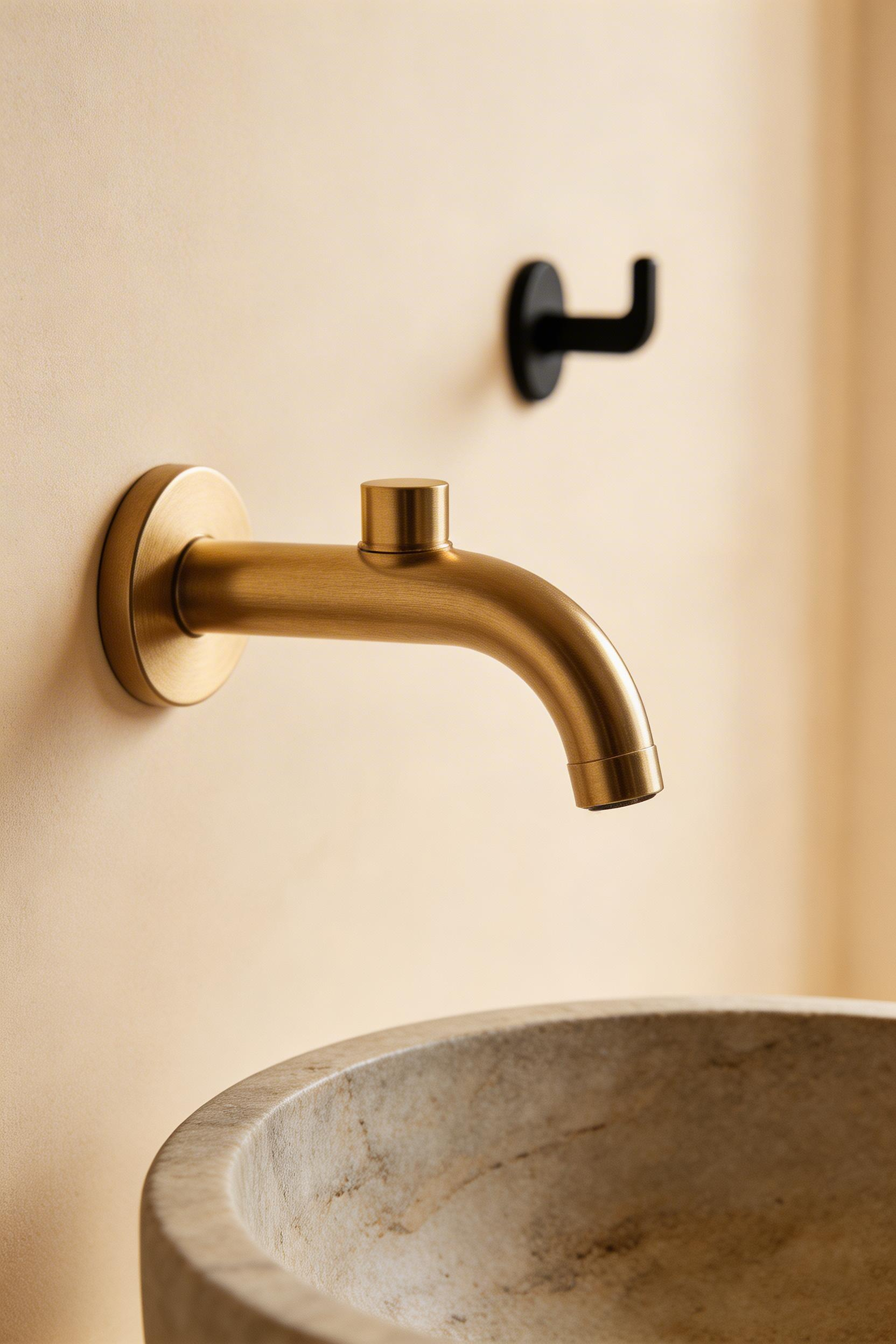
Brushed brass replaced chrome as the UK’s best-selling bathroom tap finish in 2022 and has held that position through 2024 according to the Bathroom Manufacturers Association. It reads as warm, sophisticated, and contemporary without being trendy. The Vado Cameo Brushed Brass Basin Mixer (£185–£280) has a PVD-coated finish — genuine metal over brass that won’t peel or tarnish the way lacquer-coated alternatives do. Matte black is sharper and more modern, but it shows fingerprints and light scratches more easily — the Crosswater MPRO Matte Black Shower System (£350–£650) is among the cleaner executions in that finish. Chrome remains the most durable and the most clinical.
Mixing metals is acceptable, but only in a deliberate, limited way. A warm primary finish (brushed brass) with one cooler accent (chrome or matte black) creates contrast. More than two finishes creates visual noise.
The Most Overlooked Rule in Bathroom Design
Buy all hardware from the same manufacturer range. The geometry of handles, spouts, and valve bodies is subtly different between brands. Mixing creates an incoherence that is hard to identify but easy to feel. One brand, one range, applied consistently from the basin tap to the shower valve to the towel rail. Samuel Heath Liberty Towel Rails in Brushed Gold (£220–£480, PVD-coated, heated) signal quality to anyone who enters. Small bathroom designs and large ones benefit equally from this principle. The detail work at the end is what makes the whole feel finished.
Finding Your Own Bathroom Design Inspiration
Every bathroom renovation starts with a collection of images and ideas — a photograph, a detail, a material that caught your attention. The question is whether those disparate elements can be assembled into a room that holds together as a coherent whole. The ideas here are not meant to be combined all at once. Choose two or three that share a material language: plaster walls, wooden shelving, and brassware; or wet room, terrazzo, and indirect lighting; or limewash, a freestanding bath, and botanical touches. The bathroom design inspiration that works is always specific — not a mood board, but a decision about which materials to commit to and which to leave out.
If you are at the start of a renovation, the most useful first step is also the most neglected. Choose your mirror and your hardware first, then work backwards. These are the details that everything else should support. Getting them right separates a bathroom that photographs well from one that actually feels worth spending time in.
For smaller spaces, exploring small bathroom designs built around the wet room principle is worth doing before committing to a layout. If the aesthetic leans toward the vintage or historic, vintage bathroom inspiration offers a strong counterpoint to the contemporary approaches in this list.
The aim is not perfection. The aim is a room that is genuinely better than it was.